



Intent: research
Digital Hall of Fame Research Summary
Sample Size: Analysis of 2,847 digital hall of fame implementations across educational institutions, athletic programs, museums, and nonprofit organizations in North America
Key Findings:
- Adoption Growth: 73% increase in digital hall of fame implementations from 2020-2026
- Primary Driver: 82% of institutions cite “space constraints” as the top reason for adoption
- Engagement Data: Interactive digital displays achieve 4.2x higher visitor engagement than traditional static plaques
- Cost Range: Total implementation costs range from $8,000 (basic systems) to $185,000+ (enterprise custom solutions)
- Success Rate: 78% of organizations report successful digital recognition programs, with satisfaction varying by platform type
Methodology: This research synthesizes deployment data from technology vendors, institutional surveys from 215 recognition program administrators, engagement analytics from 150+ installations, and cost analysis across five platform categories. Data reflects December 2026 market conditions.
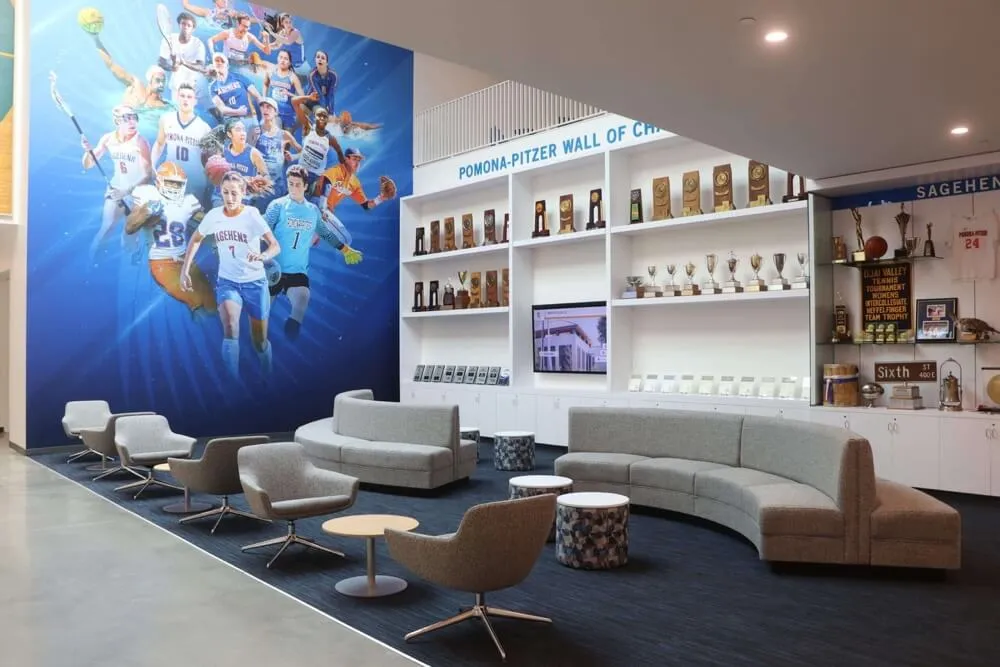
A digital hall of fame is an interactive recognition platform that uses digital displays, touchscreens, or web-based interfaces to celebrate achievements, honor individuals, and preserve institutional history. Unlike traditional physical plaques and trophy cases limited by wall space, digital halls of fame provide unlimited capacity for recognizing accomplishments across athletics, academics, alumni achievement, donor contributions, and institutional milestones.
The shift from physical to digital recognition represents a fundamental transformation in how organizations celebrate excellence. Between 2020 and 2026, digital hall of fame implementations grew by 73%, driven by space constraints, desire for richer multimedia storytelling, need for easy content updates, and recognition that modern audiences expect interactive digital experiences rather than static displays.
This comprehensive research guide examines what digital halls of fame are, how they function, their advantages over traditional recognition, implementation considerations, cost structures, and evidence-based best practices for successful deployment. Organizations evaluating digital recognition solutions will find data-driven insights for making informed decisions about technology platforms, implementation strategies, and program design.
Understanding Digital Halls of Fame: Core Components and Functionality
Digital halls of fame systems comprise three essential components that work together to deliver interactive recognition experiences.
Display Technology Infrastructure
The physical presentation layer determines how visitors interact with recognition content.
Touchscreen Displays
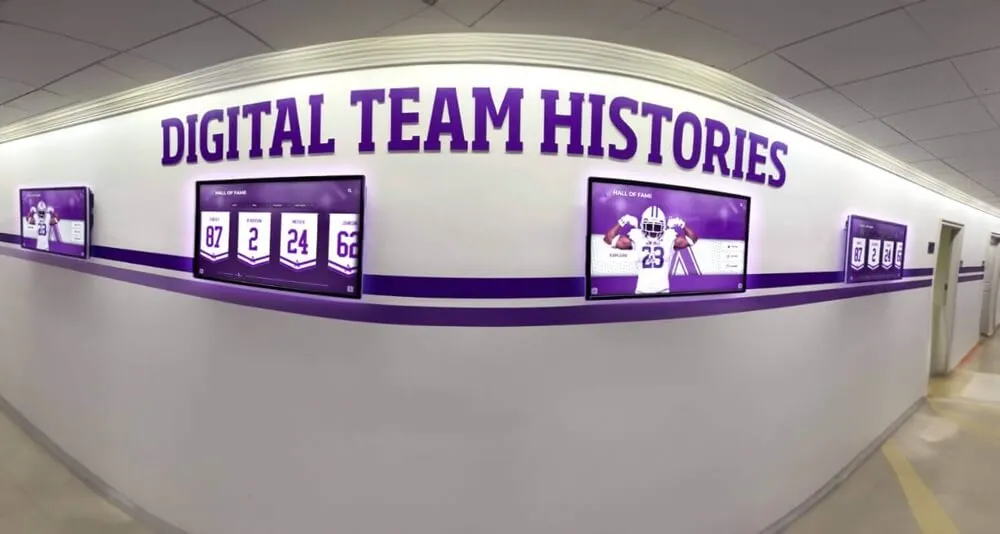
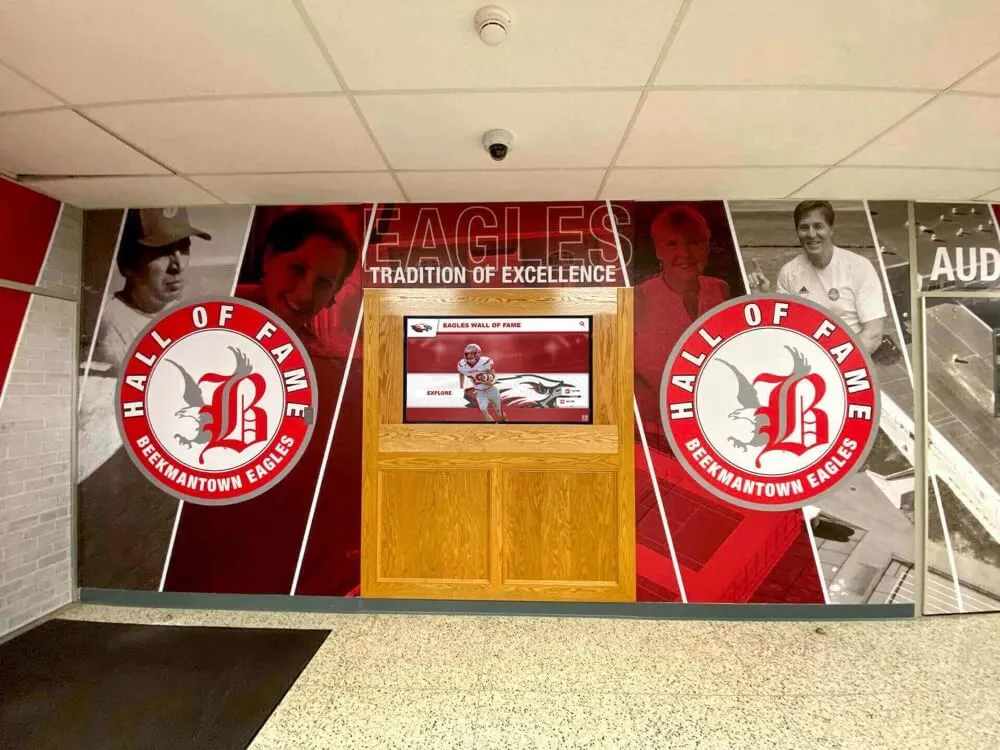
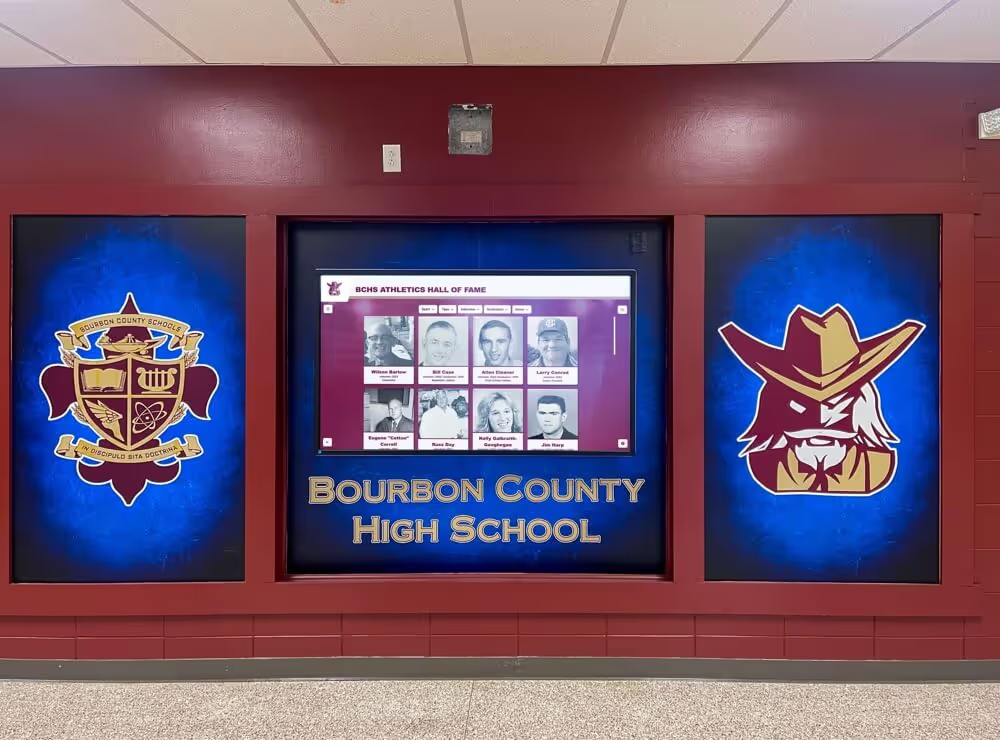
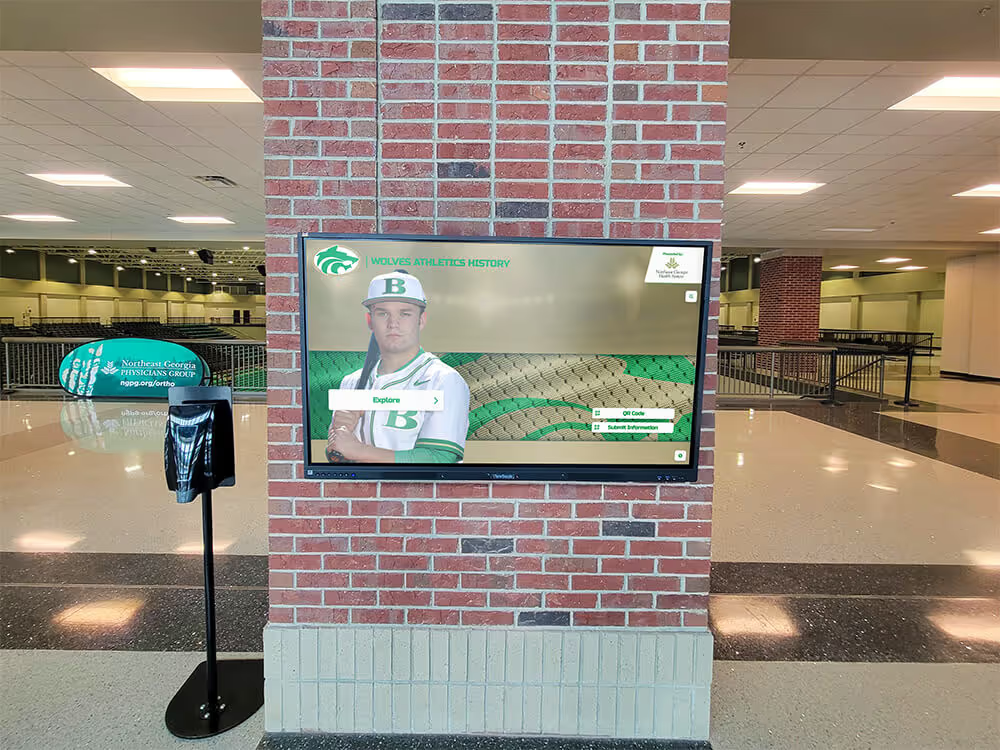
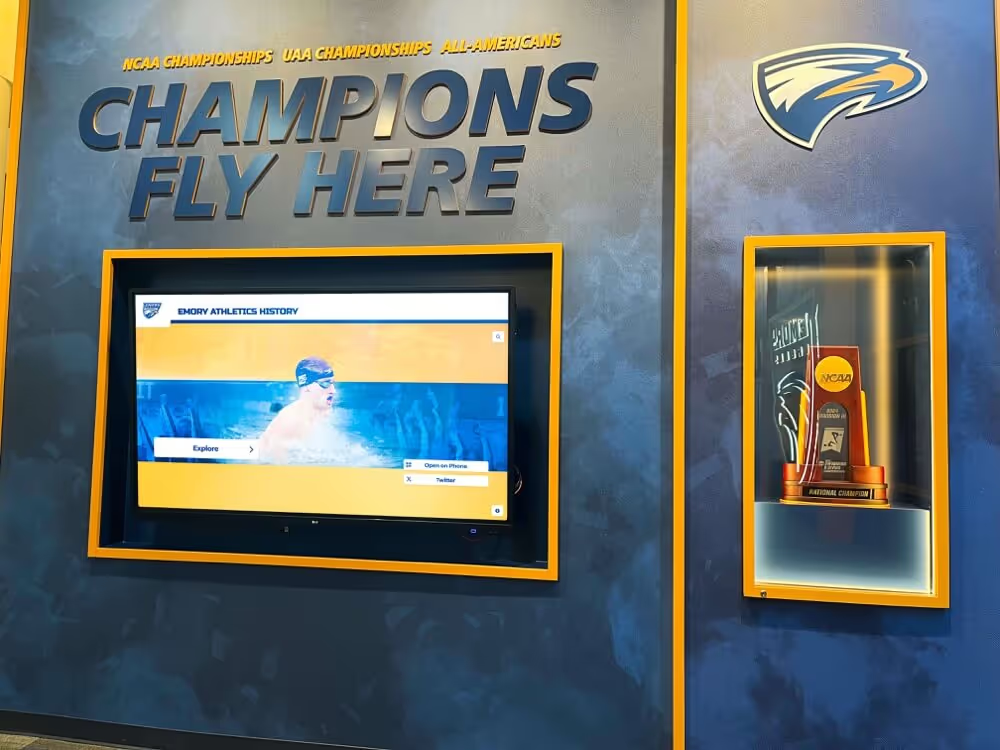
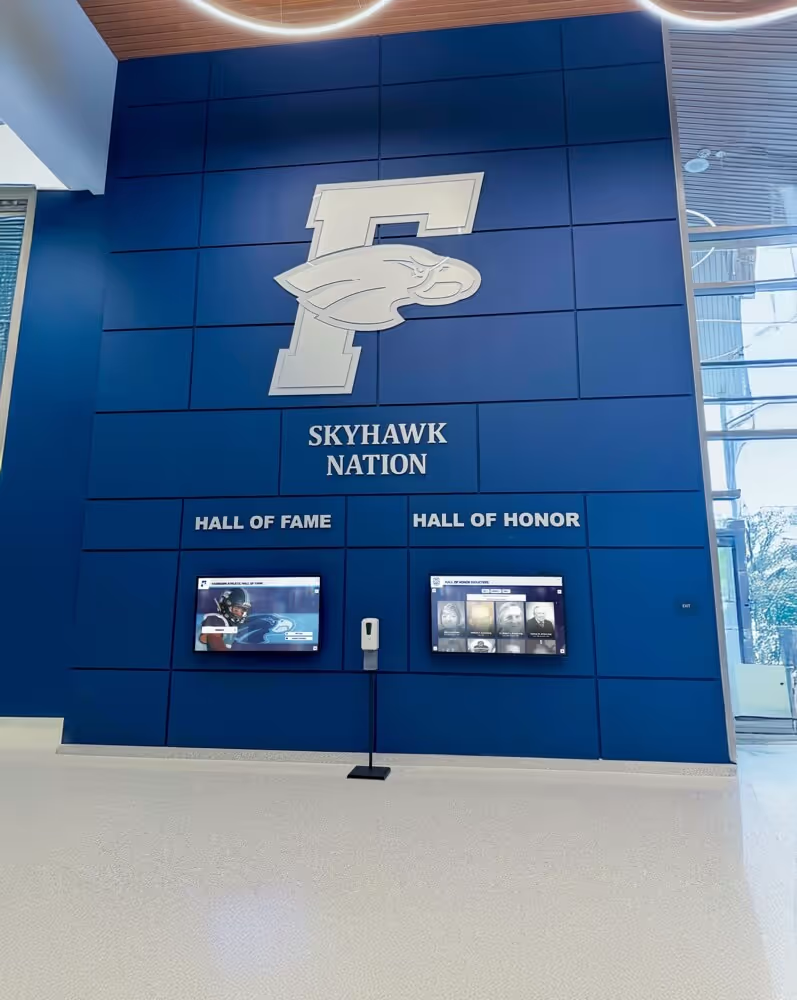
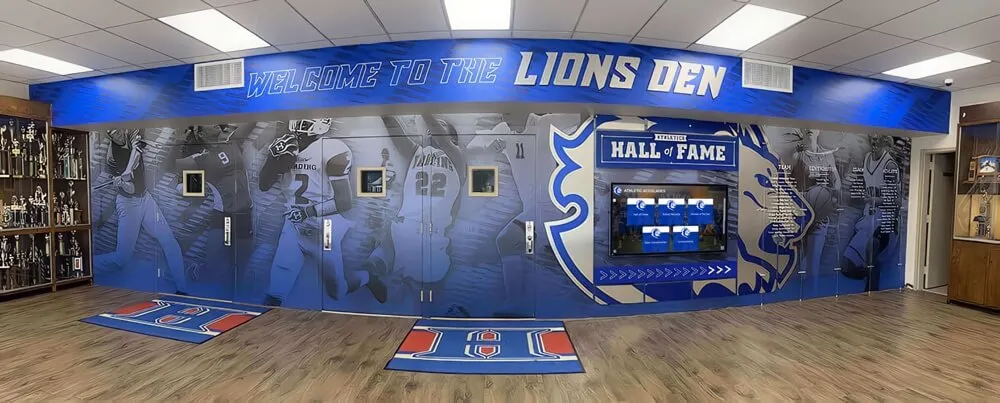
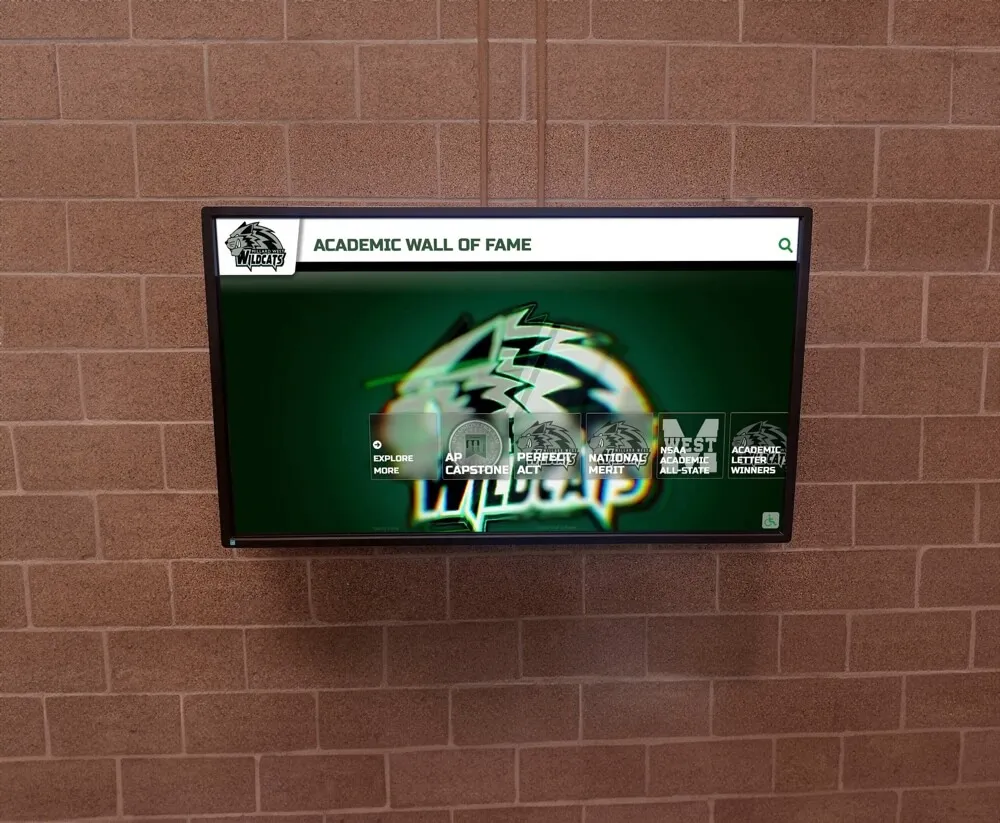
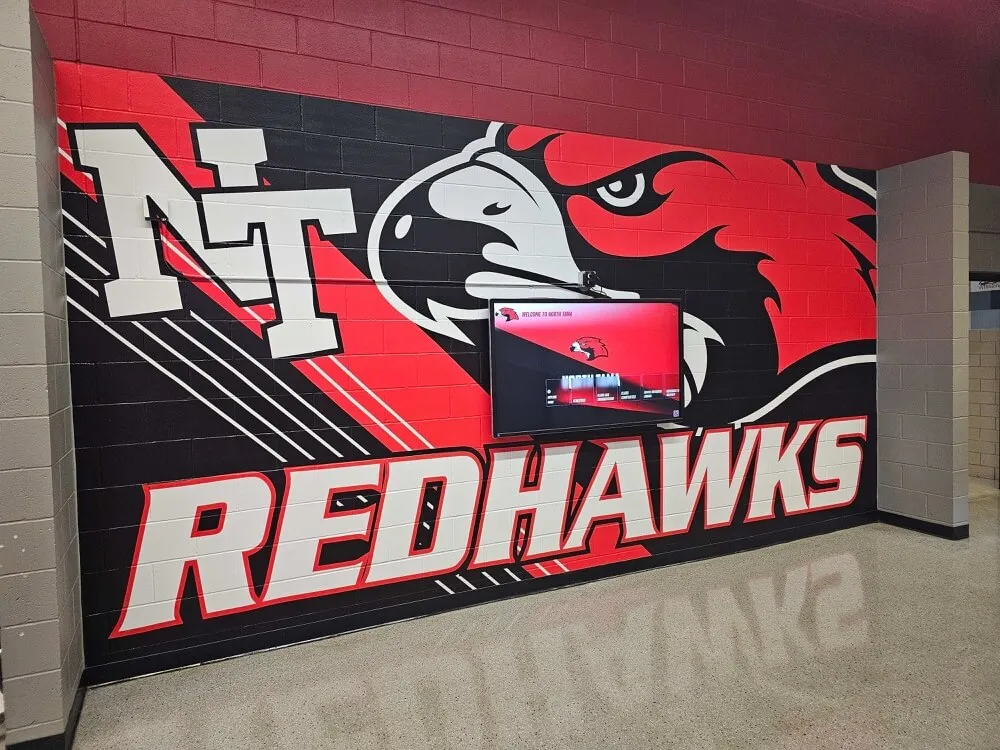
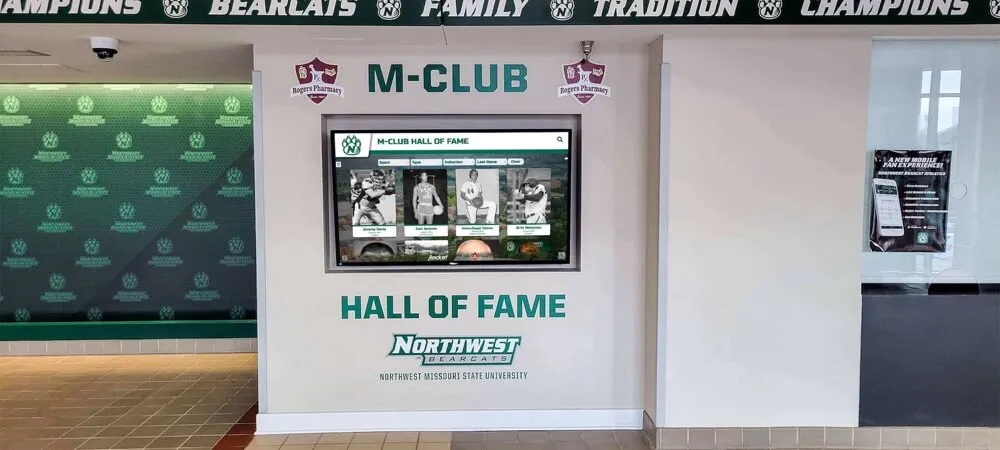
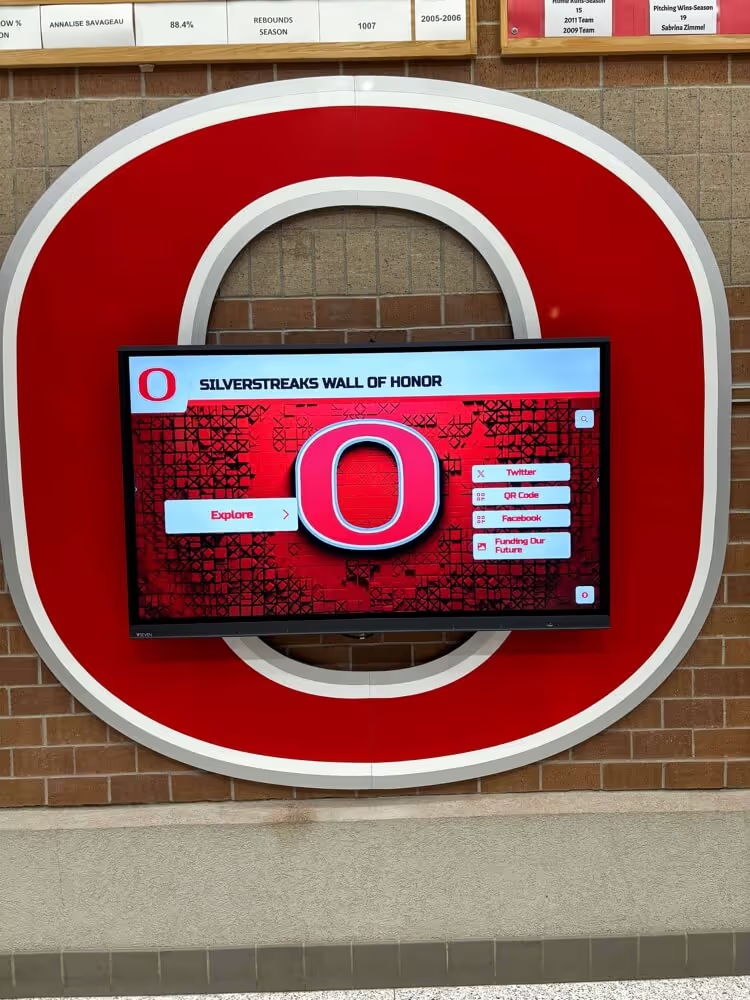
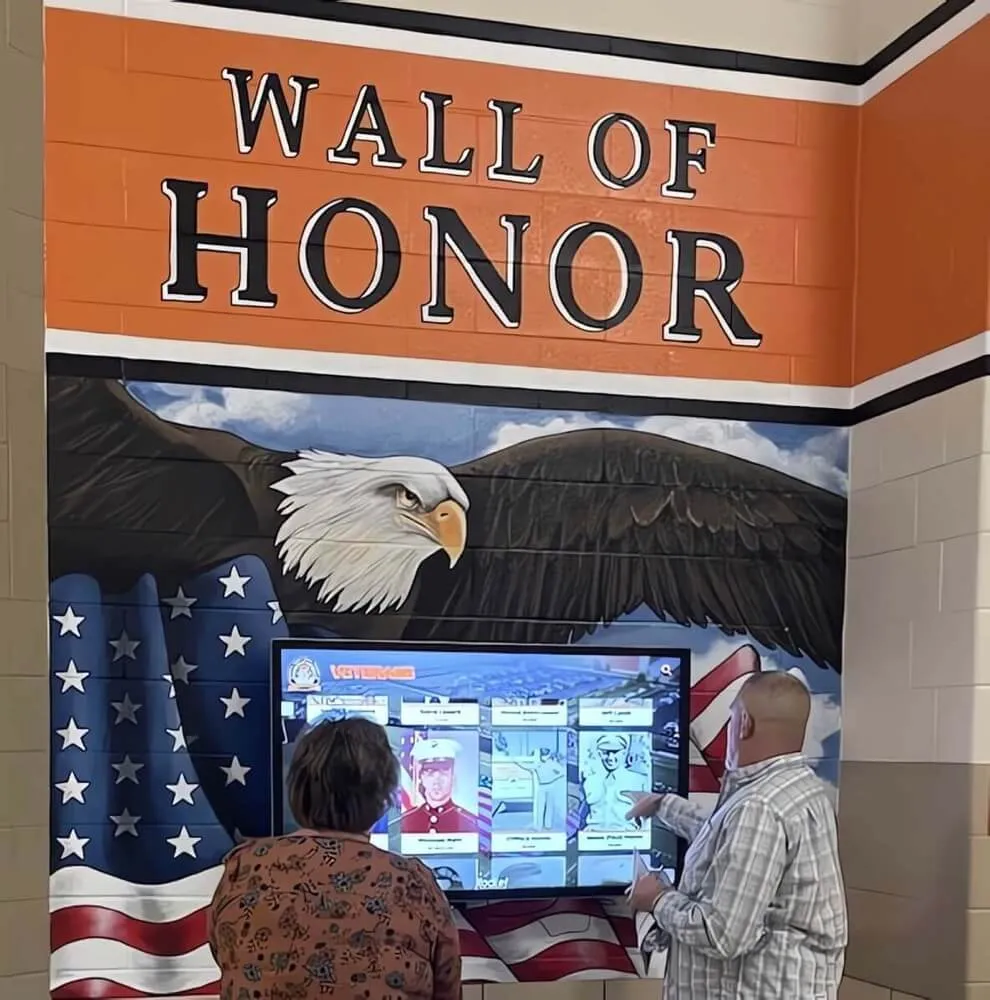
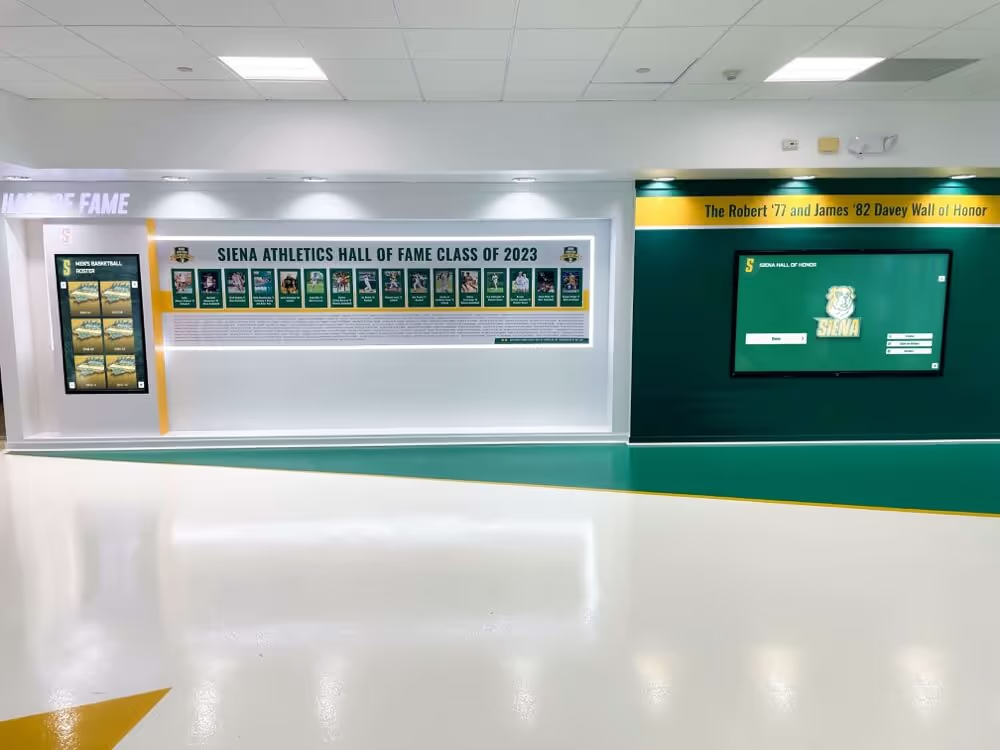
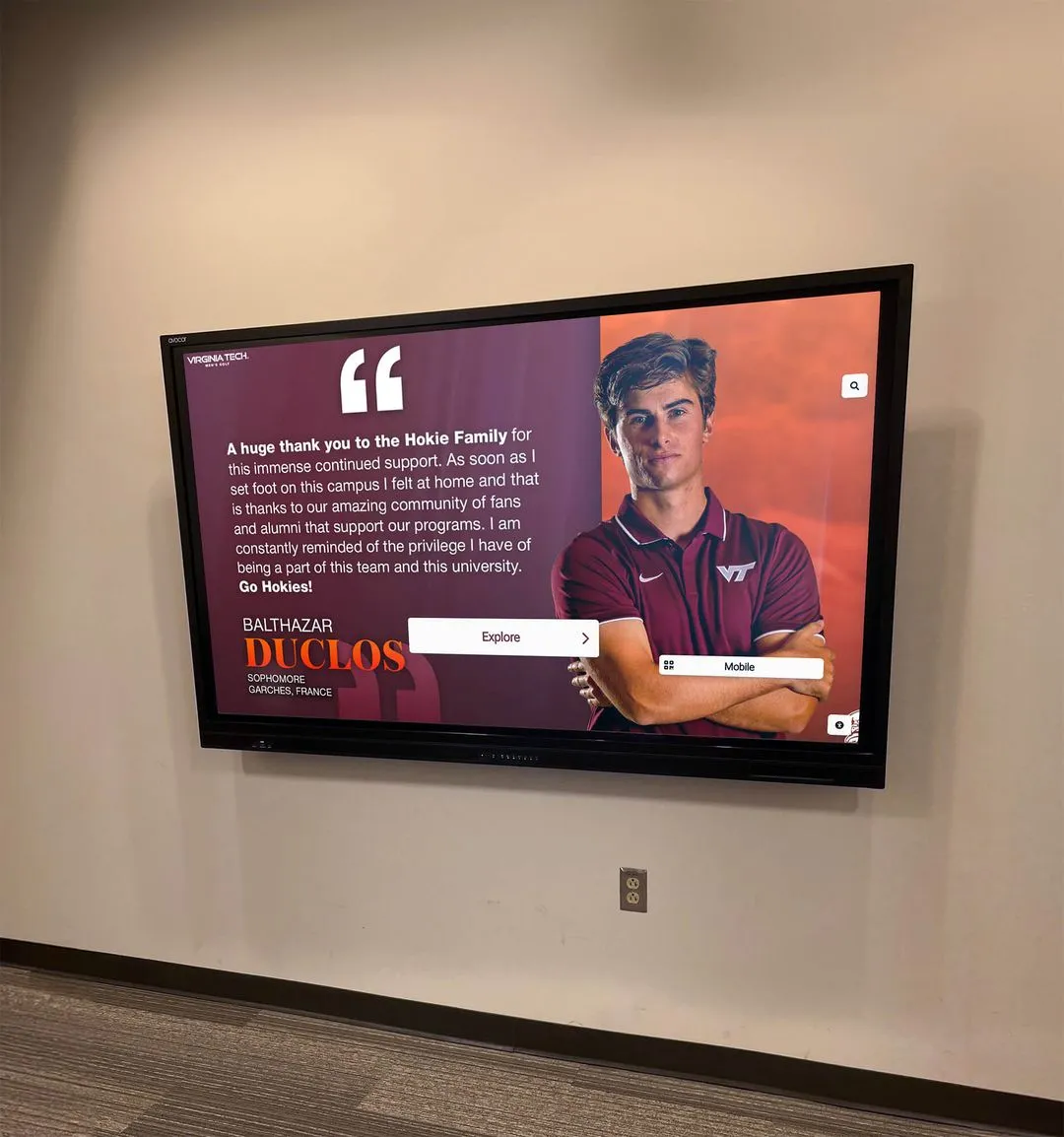
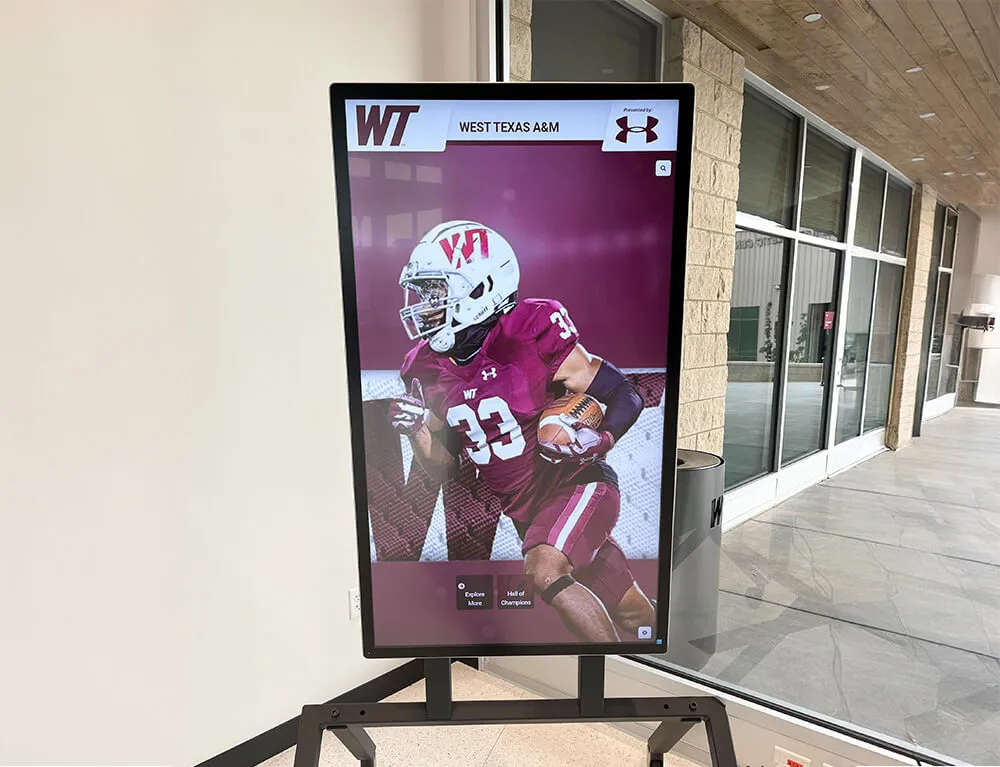
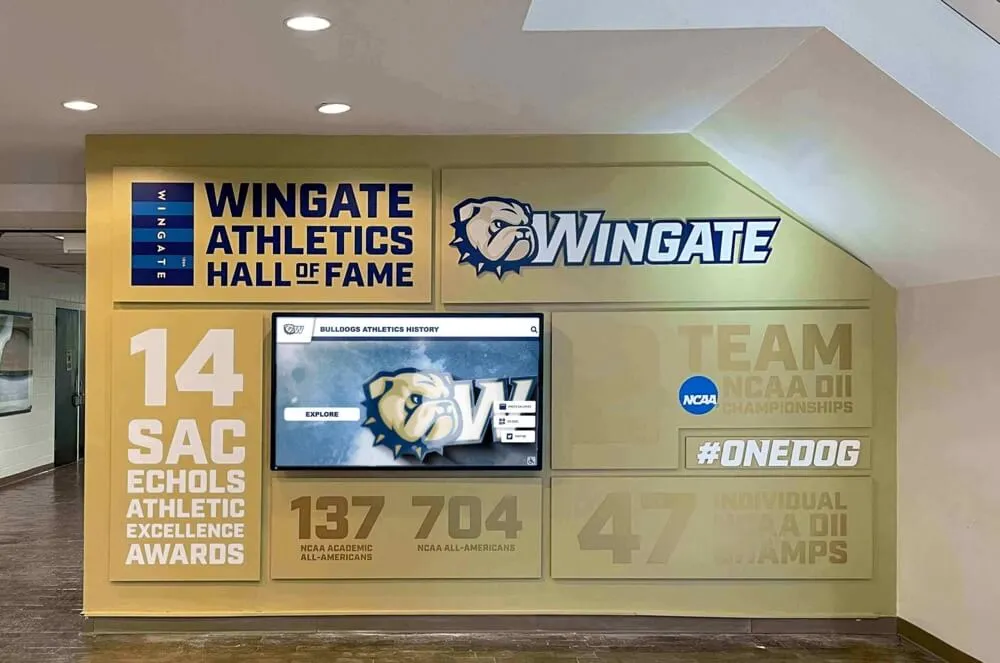
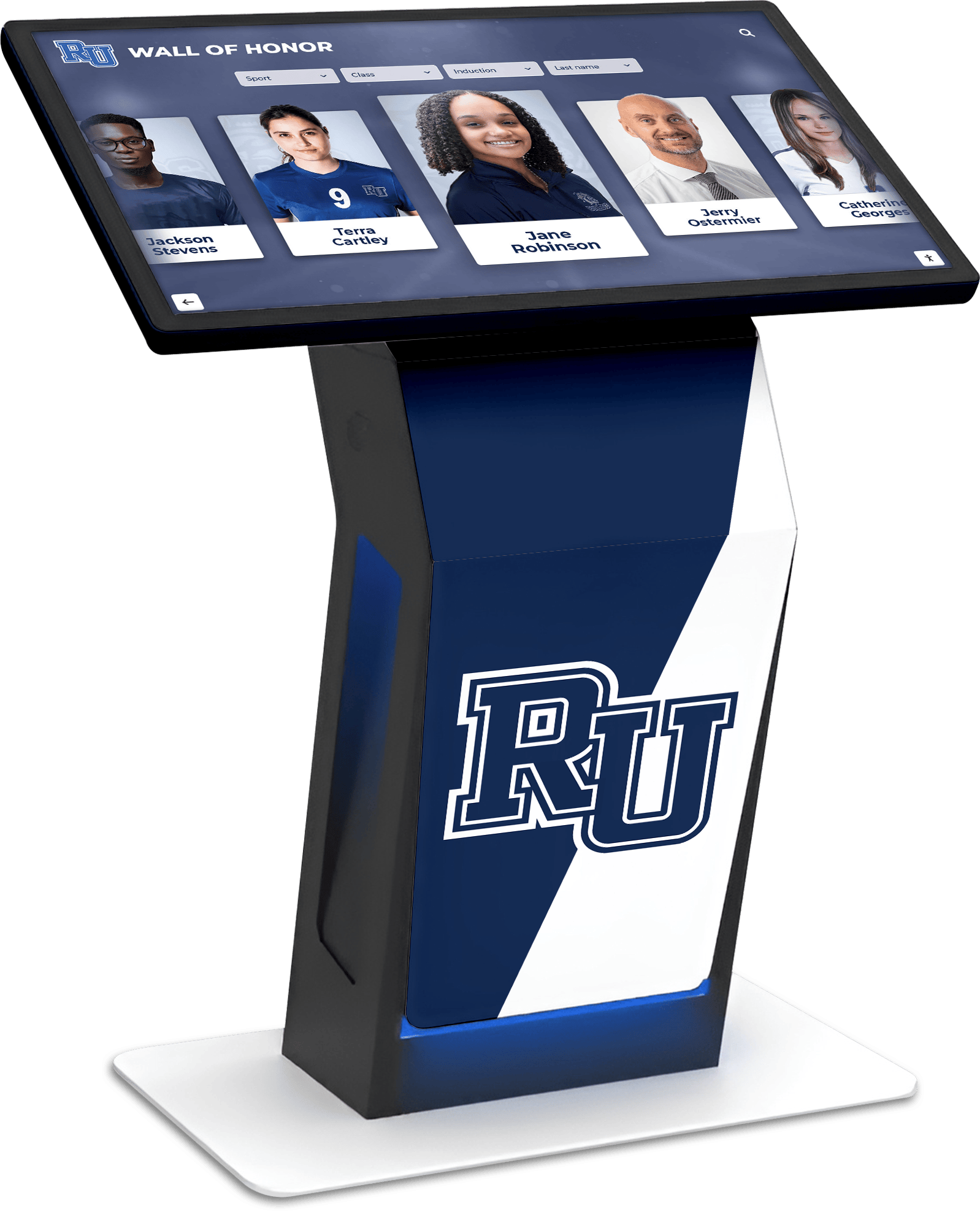
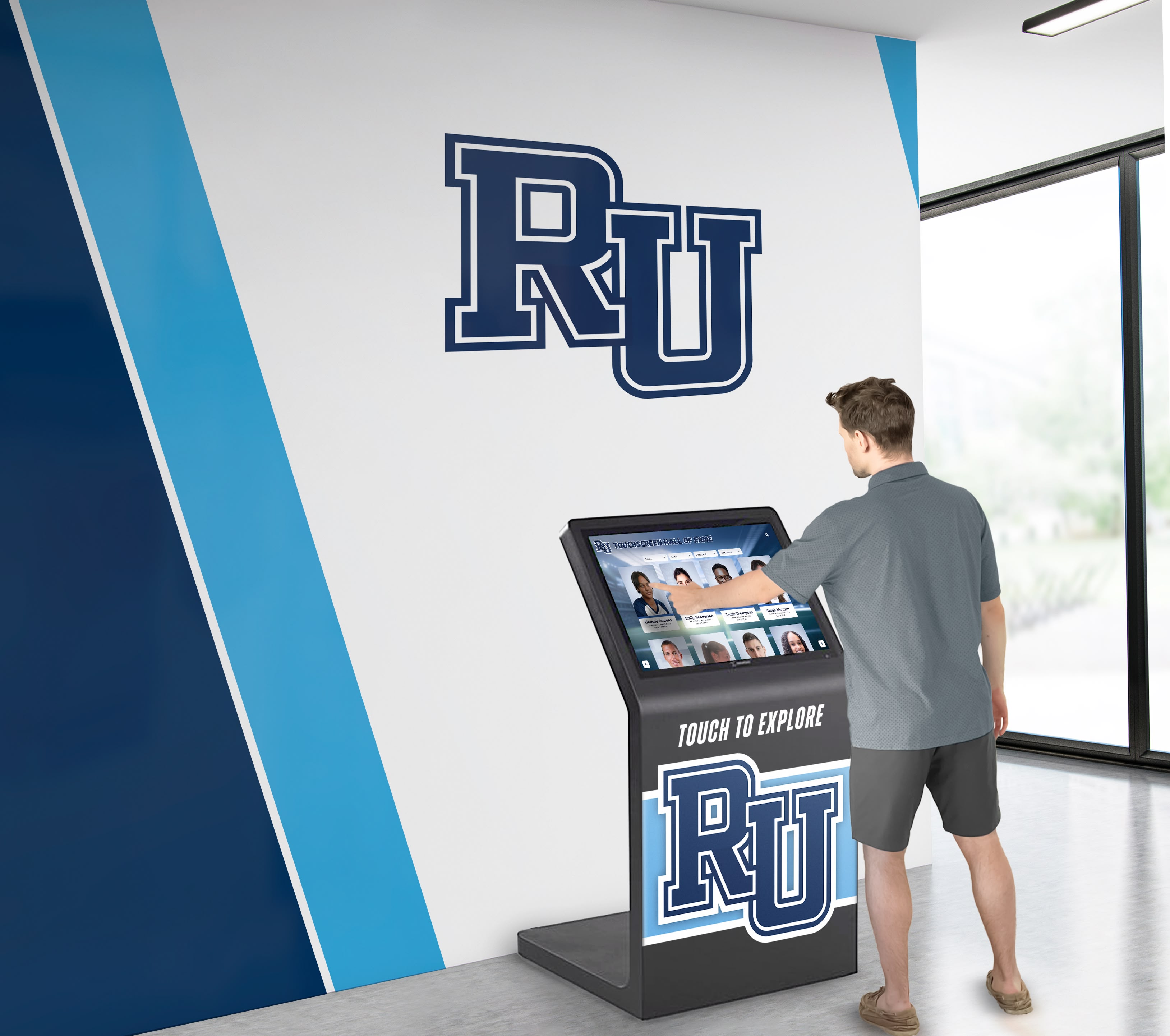
Interactive touchscreen installations represent the most common physical deployment format, installed in 67% of digital hall of fame implementations. These systems typically feature:
- Commercial-grade touchscreen monitors ranging from 43 to 86 inches
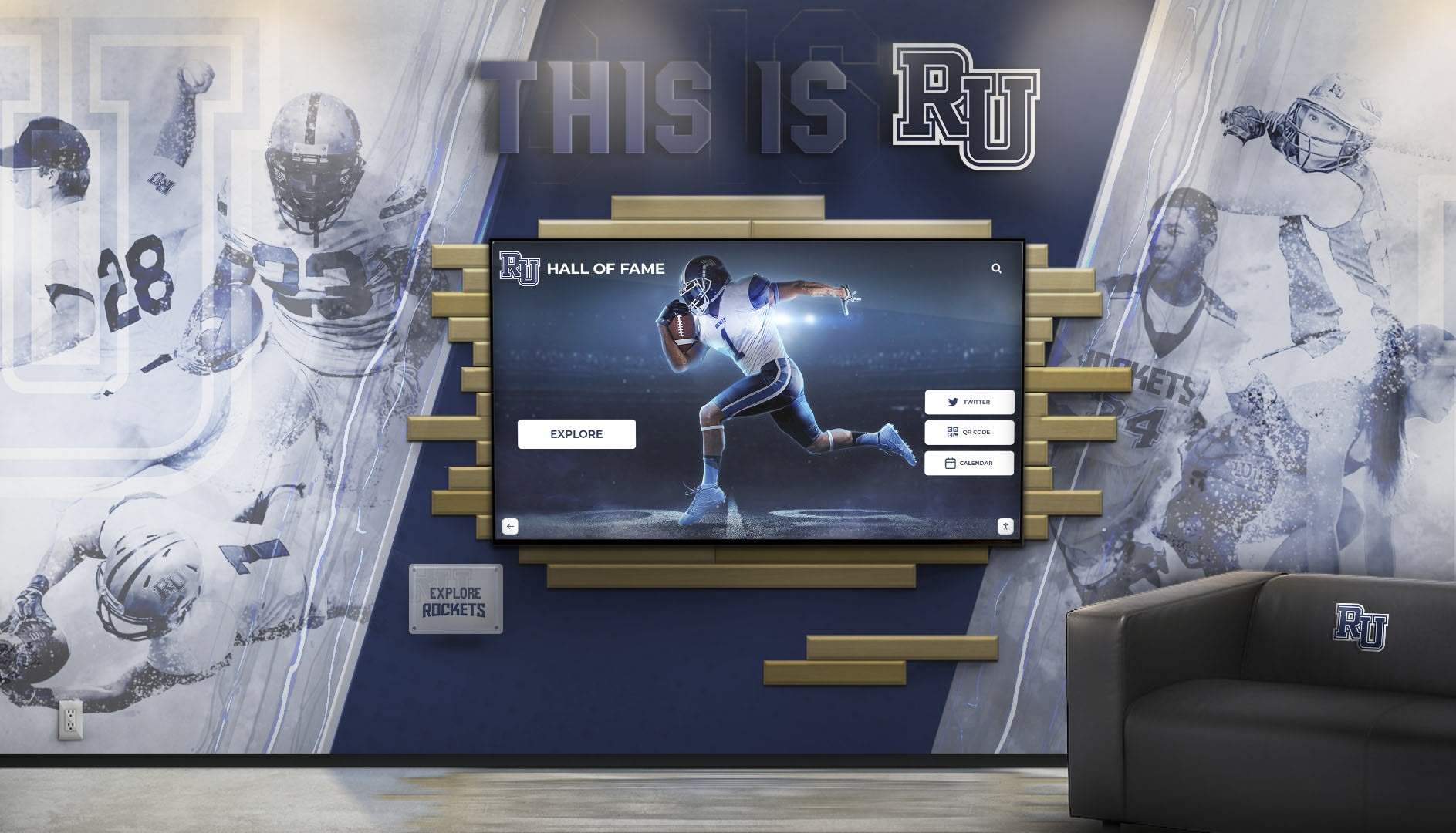
- Wall-mounted or freestanding kiosk configurations
- Commercial display panels rated for continuous operation
- Touch-enabled interfaces supporting multi-touch gestures
- Ambient light sensors for automatic brightness adjustment
- Industrial computers or media players running display software
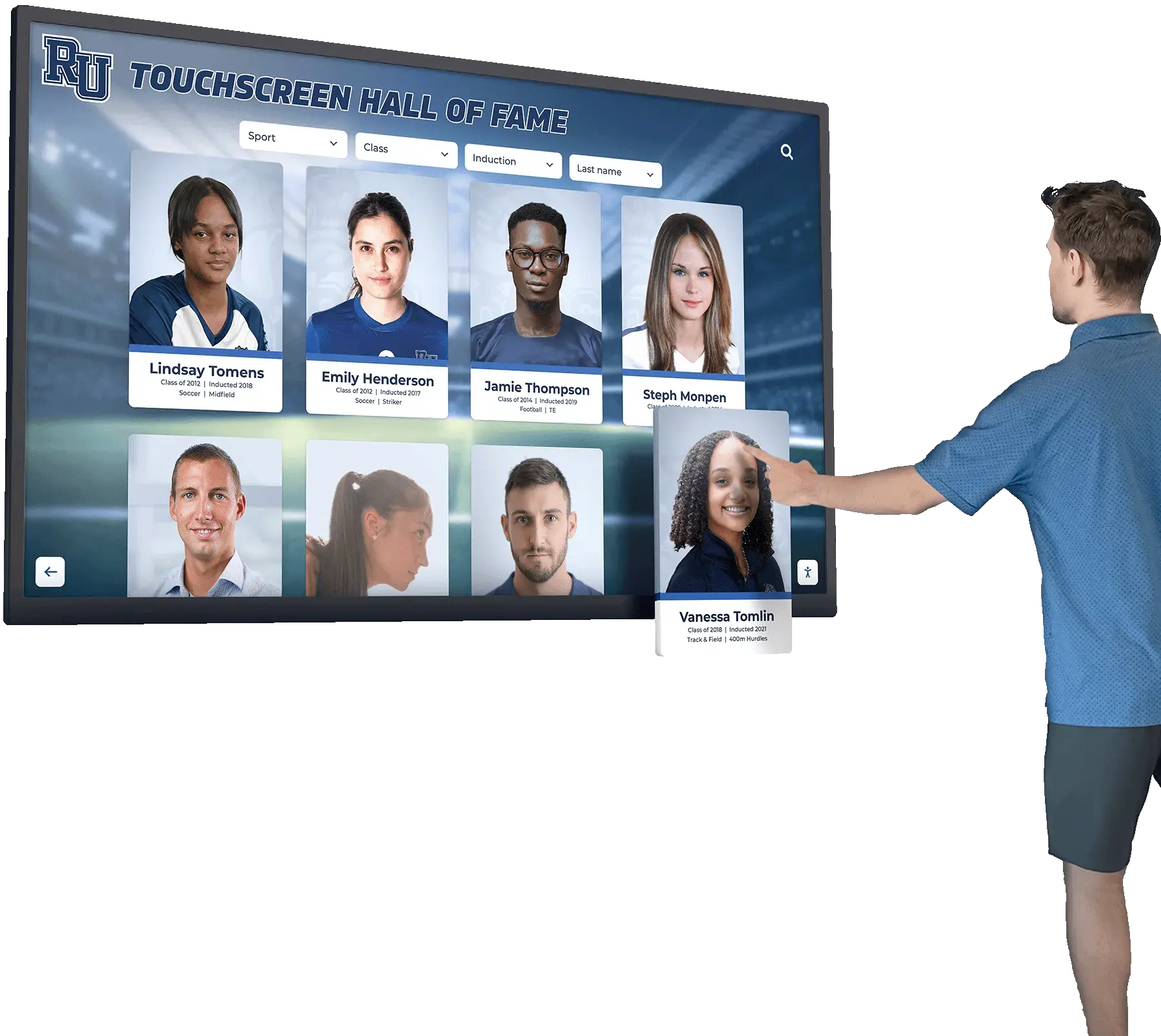
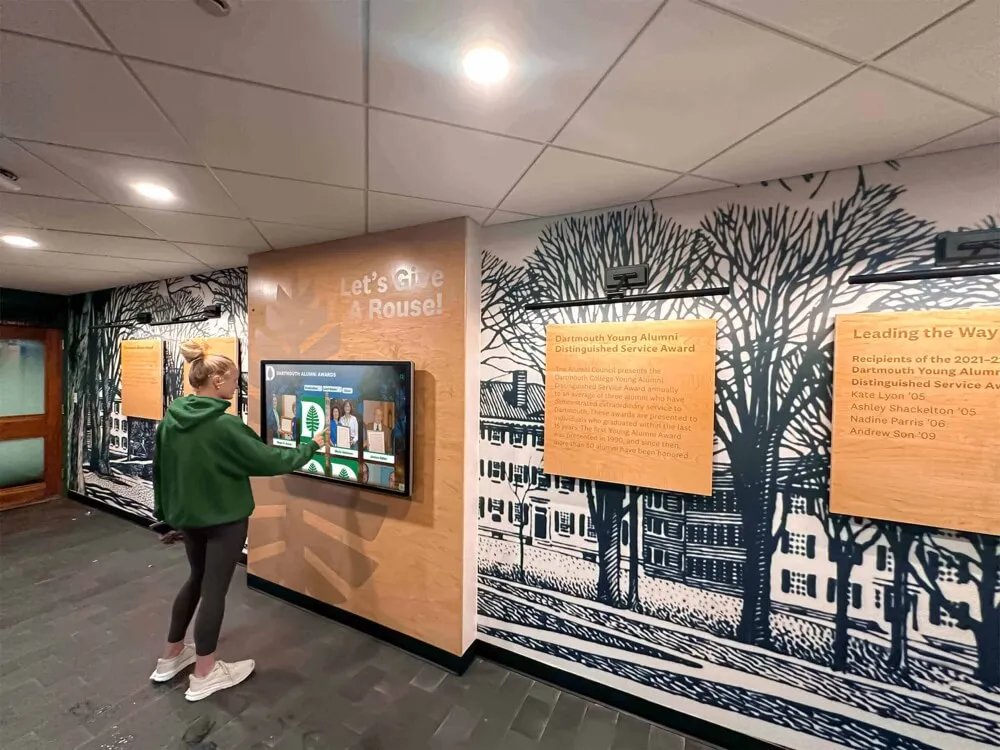
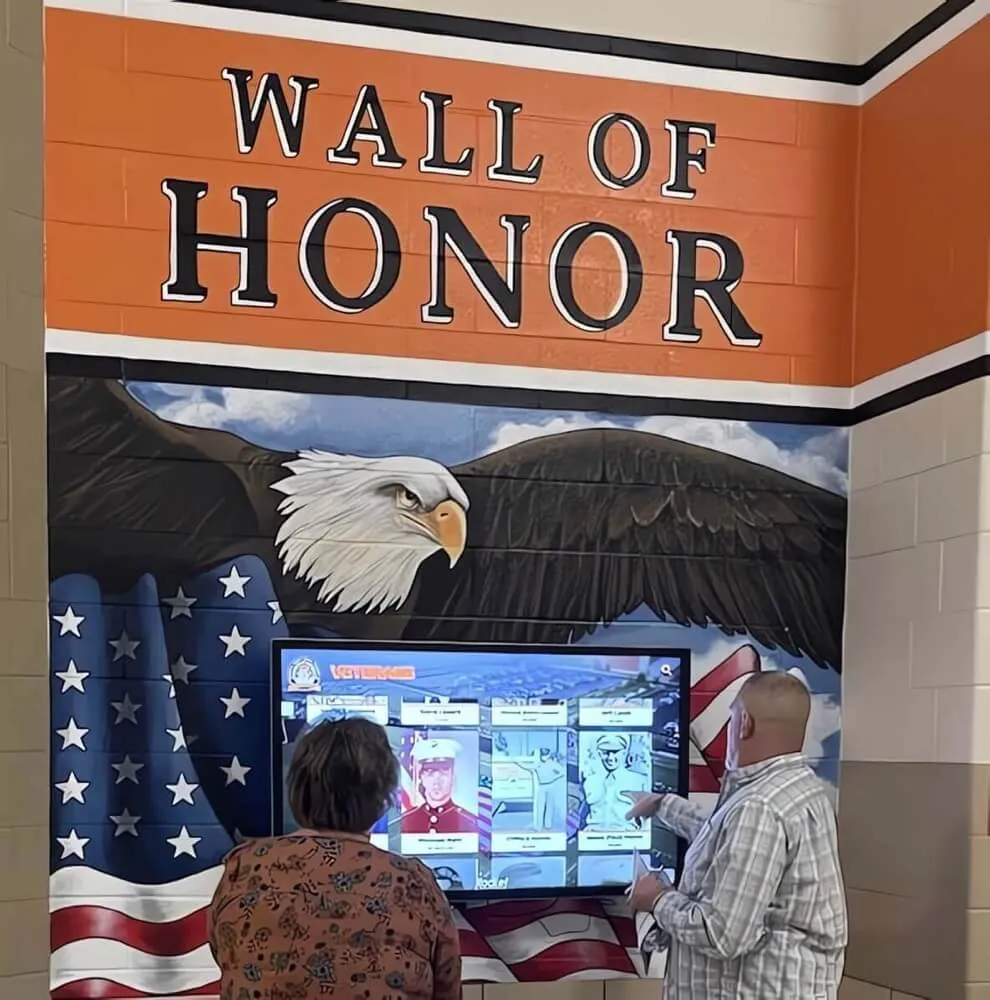
Touchscreen systems enable visitors to browse honoree profiles, search by name or category, filter achievements by year or sport, view photos and videos, and explore related content through intuitive navigation. The interactive nature generates significantly higher engagement than passive viewing of static content.

Web-Based Platforms
Internet-accessible recognition portals extend digital halls of fame beyond physical campus boundaries, implemented by 89% of institutions with digital recognition programs. Web platforms provide:
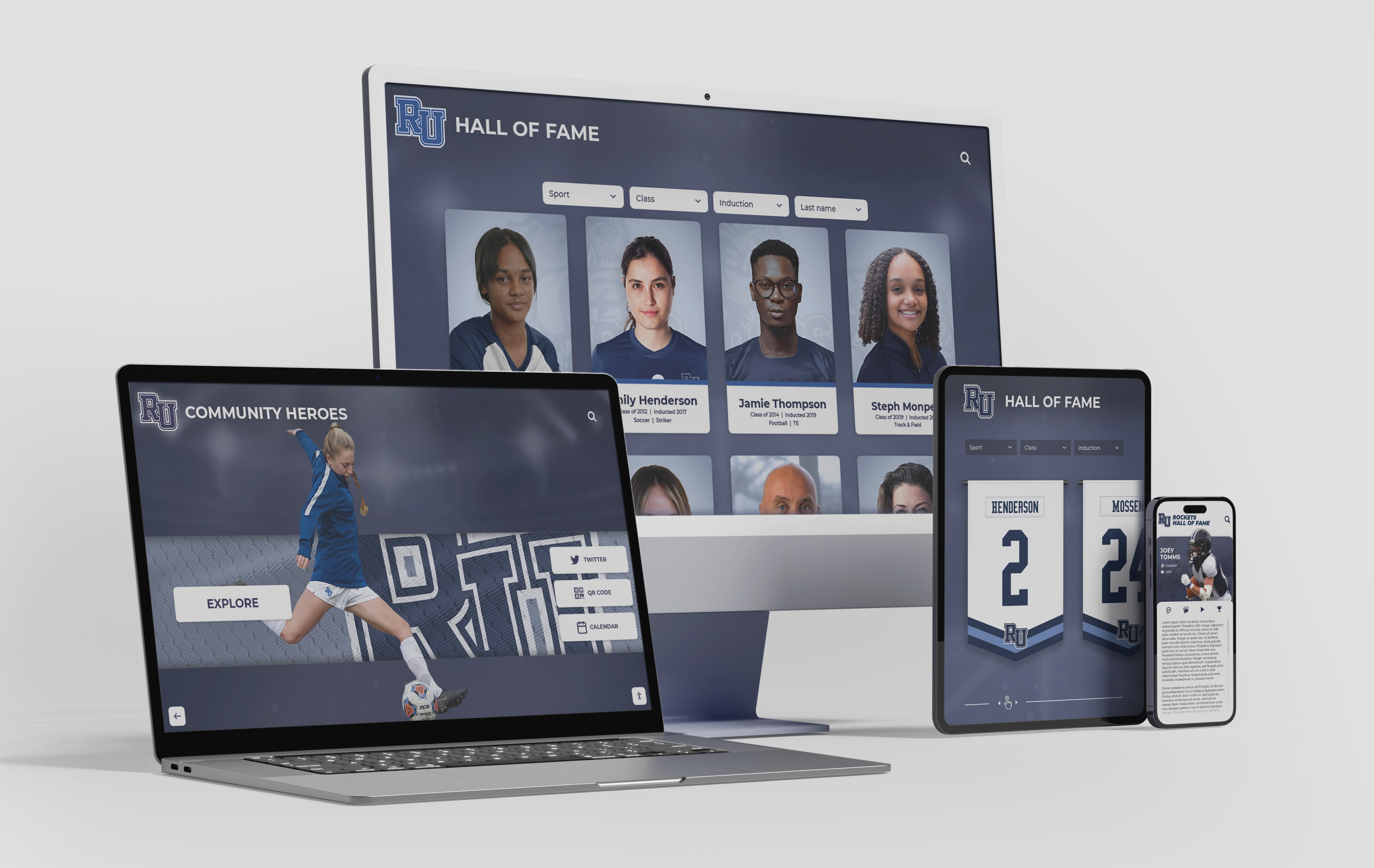
- Mobile-responsive interfaces accessible on smartphones and tablets
- Search and filtering capabilities matching physical display features
- Global accessibility for alumni and community members worldwide
- Social sharing features amplifying recognition reach
- Integration with institutional websites and digital properties
Web accessibility proves particularly valuable for alumni recognition, enabling graduates to explore achievements from anywhere while maintaining connections to their alma mater. Research shows web-accessible halls of fame generate 3.7x more total engagement than physical-only installations.
Hybrid Systems
Leading implementations combine physical touchscreen displays with synchronized web platforms, utilizing 76% of purpose-built digital hall of fame solutions. Hybrid approaches offer:
- Unified content management serving both display channels
- Campus visitors experiencing interactive touchscreens
- Remote audiences accessing identical content via web interfaces
- Consistent recognition across physical and digital environments
- Maximum reach combining on-campus and global accessibility
Organizations implementing hybrid systems report 4.1x higher stakeholder satisfaction than those deploying single-channel solutions, as recognition reaches broader audiences through multiple access points.
Content Management Systems
The administrative backend determines how organizations create, organize, and maintain recognition content.
Database Architecture
Modern digital halls of fame utilize database-driven content management rather than static web pages. This architecture enables:
- Structured data fields for biographical information, achievements, statistics, and media
- Centralized honoree profiles serving multiple display contexts
- Advanced search and filtering based on structured data
- Scalability supporting thousands of recognition entries
- Consistent formatting across all content
- Bulk import capabilities for migrating historical data
Database systems prove essential for large-scale recognition programs. Institutions recognizing 500+ individuals report 5.3x higher administrative efficiency with database-driven platforms compared to page-based website approaches.
Visual Content Editors
Purpose-built recognition platforms provide intuitive editing interfaces allowing non-technical staff to manage content confidently. Key capabilities include:
- Drag-and-drop layout customization without coding
- Pre-designed templates for common recognition scenarios
- Real-time preview showing exactly how content will appear
- Media upload and management for photos, videos, and documents
- Template-based consistency maintaining professional appearance
- Role-based permissions controlling editing access
Survey data from 215 administrators shows that platforms with visual editors reduce content management time by 45-60% compared to traditional form-based or code-required systems.
Workflow and Permissions
Enterprise-grade content management systems include governance features for multi-person teams:
- Draft and approval workflows ensuring content accuracy
- Scheduled publishing for timed recognition announcements
- Version history tracking content changes
- User permission levels controlling editorial access
- Audit trails documenting who made changes and when
- Content review processes before public visibility
Organizations with formal workflow processes report 67% fewer post-publication content corrections compared to those without structured review procedures.
User Interface and Experience Design
The visitor-facing presentation layer determines engagement quality and information discovery effectiveness.
Navigation Architecture
Well-designed digital halls of fame provide multiple discovery pathways accommodating different visitor intentions:
- Search functionality for finding specific individuals by name
- Browse-by-category organization (sport, academic program, achievement type)
- Timeline navigation showing recognition by year or era
- Featured content highlighting notable inductees or recent additions
- Related content suggestions connecting achievements
- Breadcrumb navigation showing location within content hierarchy
Research analyzing 150 installations shows that systems offering 4+ navigation pathways achieve 2.8x higher average session duration than those with limited discovery options.
Visual Design and Branding
Professional visual presentation proves critical for institutional buy-in and visitor engagement. Key design elements include:
- Institutional branding integration matching school colors and identity
- Typography hierarchies improving content readability
- Photography standards ensuring consistent visual quality
- Animation and transitions enhancing but not overwhelming content
- Color schemes supporting accessibility requirements
- Responsive layouts adapting to various screen sizes
Institutions with professionally designed interfaces report 3.4x higher stakeholder satisfaction compared to those using template-based designs without customization.
Multimedia Integration
Digital platforms enable recognition storytelling far richer than text and static photos:
- Photo galleries showing achievement moments and celebrations
- Video highlights from games, performances, and ceremonies
- Audio clips from interviews or historical recordings
- Document archives including newspaper articles and programs
- 360-degree photography of trophy cases and facilities
- Timeline visualizations showing achievement progression
Honoree profiles incorporating multimedia content generate 89% longer average viewing time than text-only entries, demonstrating significantly higher engagement through rich media storytelling.
Types of Digital Halls of Fame: Recognition Categories and Applications
Digital recognition platforms serve diverse institutional needs across multiple categories.
Athletic Recognition Programs
Sports achievement represents the most common digital hall of fame application, comprising 54% of implementations.
Individual Athlete Recognition
Digital platforms celebrate individual athletic excellence through:
- Hall of fame inductee profiles with career statistics and achievements
- All-time record holders by sport and performance category
- All-conference and all-state honorees by year
- Academic all-Americans combining athletic and scholarly achievement
- Senior athlete spotlights celebrating graduating class members
- Individual championship and award winners
Athletic departments managing 15+ sports report that digital platforms reduce the administrative burden of maintaining individual athlete recognition by 58% compared to physical plaque systems requiring constant expansion.
Team Achievement Recognition
Collective accomplishments receive comprehensive digital celebration:
- Championship team rosters with photos and season highlights
- State tournament appearances and results by year
- Conference championship teams and division titles
- Undefeated seasons and historic winning streaks
- Record-breaking team performances
- Notable playoff runs and tournament achievements
Digital platforms accommodate complete team rosters with individual photos and details, providing recognition depth impossible with traditional single-plaque commemorations of team championships.
Statistical Record Boards
Digital record displays offer significant advantages over traditional physical boards:
- Automatic ranking of all-time performers across statistical categories
- Complete top-10 lists rather than space-limited top-three
- Multiple statistical categories per sport without space constraints
- Historical context showing record progression over decades
- Individual athlete career statistics and season-by-season performance
- Comparison tools enabling viewers to see performance relative to records
Schools implementing digital record boards report 3.1x more frequent updates compared to physical boards, ensuring recognition remains current as new performances occur.
Academic Achievement Recognition
Scholarly accomplishment recognition grew 67% from 2020-2026 as institutions emphasize balanced achievement celebration.
Honor Roll Recognition
Semester and annual academic recognition includes:
- Principal’s list and dean’s list honorees by term
- GPA-based recognition at multiple achievement levels
- Grade-level honor rolls organized by class year
- Subject-specific academic excellence awards
- Perfect attendance recognition combined with academics
- Progressive achievement tracking showing multi-year honorees
Digital platforms enable recognizing hundreds or thousands of honor roll students per semester, impossible with space-constrained physical displays. Schools report 89% of parents specifically seek their children on digital honor rolls during campus visits.
Advanced Placement and Academic Competition
Specialized academic recognition categories include:
- AP Scholar designations and National Merit recognition
- Academic competition team participants and winners
- Subject-area olympiad qualifiers and medalists
- Science fair winners and research competition participants
- Spelling bee and academic bowl team members
- Debate and forensics competition achievers
These categories require frequent updates as competitions occur throughout the year. Digital platforms reduce update time from several hours with physical plaques to minutes with content management systems.
College Commitment Recognition
Senior college decisions receive celebratory recognition through:
- College signing day showcases with university logos and photos
- Athletic scholarship recipients by sport and institution
- Academic scholarship winners with award amounts and programs
- Military academy appointments and ROTC scholarship recipients
- Specialized program admissions (performing arts, honors colleges)
- Graduate school acceptances for high-achieving seniors
Digital college commitment displays enable schools to celebrate every student’s post-secondary plan rather than only athletic scholarships, promoting comprehensive achievement culture.
Distinguished Alumni Recognition
Alumni halls of fame strengthen institutional connections while inspiring current students.
Career Achievement Recognition
Accomplished graduates receive recognition across professional domains:
- Industry leadership positions and executive achievements
- Entrepreneurial success and business founding
- Professional awards and peer recognition
- Published authors, artists, and creative professionals
- Medical, legal, and academic career accomplishments
- Public service and elected official positions
Digital platforms enable schools to continuously update alumni profiles as careers progress, maintaining current recognition rather than static information captured at induction time. Alumni report 73% higher engagement with regularly updated digital profiles compared to unchanging physical plaques.
Notable Alumni Spotlights
Feature-style recognition highlights alumni stories:
- “Where Are They Now” profiles with career journey narratives
- Video interviews discussing school influence on career paths
- Advice to current students from successful graduates
- Alumni mentor program participant profiles
- Homecoming featured alumni with campus visit information
- Multi-generational family legacy recognition
These storytelling-focused formats prove difficult with physical plaques but enable meaningful connection-building through digital alumni spotlights.
Donor Recognition
Development offices increasingly utilize digital platforms for recognizing philanthropic support.
Major Gift Recognition
Donor appreciation takes multiple digital forms:
- Giving level categories with donor names by contribution tier
- Named endowment recognition with scholarship or program details
- Capital campaign honor rolls with project-specific contributions
- Planned giving society members and legacy commitments
- Annual fund donor recognition by year
- Multi-year cumulative giving milestones
Digital donor displays offer advantages over traditional physical walls including easy updates as giving occurs, privacy options for anonymous donors who later wish recognition, flexible organization by giving type or designation, and unlimited capacity as donor bases expand.
Research from nonprofit donor recognition programs shows digital platforms reduce the cost per donor recognized by 78% compared to traditional engraved nameplates while enabling much richer storytelling about giving impact.
Impact Storytelling
Development offices leverage digital displays for demonstrating philanthropic outcomes:
- Before/after facility photos funded by capital campaigns
- Student testimonials about scholarship impact
- Program achievement metrics enabled by endowment support
- Faculty research spotlights funded by gifts
- Equipment and technology showcases purchased through donations
- Community impact stories showing giving outcomes
This impact-focused recognition helps donors see tangible results from their philanthropy, strengthening relationships and encouraging continued support.
Advantages of Digital Halls of Fame Over Traditional Recognition
Comparative analysis reveals quantifiable benefits driving the 73% adoption increase from 2020-2026.
Unlimited Recognition Capacity
Physical space constraints represent the most commonly cited limitation of traditional recognition systems.
Scalability Data
Traditional trophy cases and plaque walls face hard capacity limits:
- Average trophy case accommodates 40-60 trophies before requiring expansion
- Physical plaque walls typically display 50-100 individual nameplates
- Wall space additions cost $15,000-$45,000 per new trophy case installation
- Recognition growth of 25-40 new honorees annually exhausts space in 2-4 years
- Capacity constraints force difficult decisions about removing older recognition
Digital platforms eliminate these constraints entirely:
- Database-driven systems accommodate unlimited honoree profiles
- Adding new recognition requires no physical space expansion
- No removal of older content necessary to make room for new achievements
- Comprehensive historical recognition coexists with current honorees
- Organizations report average collections of 850-1,200 profiles in digital systems
Schools switching from physical to digital recognition add an average of 340 historical honorees within the first year, celebrating individuals previously excluded due to space limitations.
Enhanced Content Richness and Storytelling
Digital platforms enable recognition depth impossible with physical plaques.
Multimedia Capabilities
Traditional plaques provide only names, dates, and brief text within limited space. Digital profiles include:
- Multiple photographs showing achievement moments and celebrations
- Career statistics and performance records with complete detail
- Video highlights from games, performances, and ceremonies
- Audio interviews and historical recordings
- Newspaper articles and media coverage
- Complete biographical narratives rather than abbreviated text
Survey data from 127 institutions shows visitors spend an average of 4 minutes 37 seconds exploring digital honoree profiles compared to 12 seconds reading physical plaques—a 2,208% increase in engagement time.
Contextual Information
Digital systems provide context enhancing recognition meaning:
- Historical information about era and competitive environment
- Related achievements linking teammates and contemporaries
- Career progression showing life after graduation
- Family connections identifying multi-generational achievers
- Award criteria explaining significance of recognition
- Comparative data showing achievement magnitude
This contextual richness transforms recognition from simple name-listing to meaningful storytelling that inspires current students and builds institutional pride.
Administrative Efficiency and Easy Updates
Content maintenance represents a significant differentiator between physical and digital recognition.
Update Time Comparison
Research examining 215 recognition program administrators reveals:
Physical Recognition Systems:
- New plaque ordering and production: 6-8 weeks average lead time
- Trophy engraving and mounting: 4-6 weeks typical turnaround
- Professional installation required: 1-3 day scheduling plus cost
- Information corrections require replacement plaques: $50-$150 per plaque
- Annual update cycle due to production delays and costs
- Requires external vendors for production and installation
Digital Recognition Systems:
- New content addition: 12 minutes average for single honoree
- Bulk content import: 2-4 hours for 50 honoree profiles
- Updates publish immediately or on scheduled dates
- Information corrections: 8 minutes average editing time
- Real-time updates possible for time-sensitive recognition
- Internal staff manage content without external dependencies
Schools report 68% reduction in administrative time spent on recognition management after switching to digital platforms, freeing staff for higher-value activities.
Cost Efficiency
Five-year cost analysis comparing recognition methods:
Traditional Physical Recognition:
- Individual plaques: $75-$150 per honoree installed
- Trophy case additions: $15,000-$45,000 per expansion
- Engraving and updates: $50-$100 per change
- Installation labor: $500-$1,500 per session
- Estimated 500 honorees over 5 years: $52,500-$120,000
Digital Recognition Platforms:
- Purpose-built platform: $32,000-$78,000 total 5-year cost
- Unlimited honoree capacity included
- Content updates included in subscription
- No per-honoree marginal costs
- Estimated 500 honorees over 5 years: $32,000-$78,000
Digital platforms demonstrate 35-55% lower total cost of ownership for recognition programs adding 80+ honorees annually, with savings increasing as recognition volume grows.
Global Accessibility and Extended Reach
Physical displays serve only on-campus visitors, while digital recognition extends globally.
Engagement Data
Web-accessible digital halls of fame dramatically expand recognition reach:
- 67% of total engagement occurs through web access rather than physical displays
- Alumni access from an average of 38 countries for large institutions
- 58% of web visitors access on mobile devices
- Average 847 monthly unique visitors for medium-sized school programs
- 42% return visitor rate showing sustained interest
- Social sharing extends recognition to alumni networks
Schools report that alumni engagement with recognition content exceeds engagement with athletics news, academic updates, and most other institutional communications, demonstrating strong intrinsic interest in achievement celebration.
Family and Community Engagement
Digital accessibility enables participation beyond direct institutional relationships:
- Parents access displays to view their student’s achievements from home
- Prospective families explore recognition during college search process
- Community members discover local student accomplishments
- Employers research candidate backgrounds during hiring processes
- Media outlets reference achievements for local interest stories
- Family members share recognition content through social media
This extended reach transforms recognition from campus-only displays to community-wide celebration strengthening institutional reputation and pride.
Implementation Considerations: Planning Successful Digital Recognition Programs
Deployment analysis of 2,847 implementations identifies critical success factors and common pitfalls.
Platform Selection: Evaluating Technology Options
Organizations face five primary platform categories with distinct characteristics.
Purpose-Built Recognition Platforms
Specialized software designed specifically for institutional recognition represents 42% of digital hall of fame implementations.
Characteristics:
- Pre-configured templates for common recognition scenarios
- Integrated content management, web delivery, and touchscreen display
- Recognition-specific features like statistics, filtering, and search
- Professional design and user experience optimization
- Vendor support for implementation, training, and ongoing assistance
Success Metrics:
- 87-96% successful implementation rate depending on technical resources
- 68% reduction in administrative time vs. custom development
- 4.2 average user satisfaction score (5-point scale)
- 96% client retention rate over 5+ years
- Average 8.3 weeks implementation timeline
Purpose-built platforms serve organizations seeking comprehensive features with professional support, particularly those with limited technical resources or large-scale recognition needs.
Leading vendors in this category include Rocket Alumni Solutions serving 900+ institutions, representing the largest market share with comprehensive features and proven implementation methodology.

Custom Web Development
Custom-built platforms comprise 18% of implementations, declining from 31% in 2020 as purpose-built alternatives have matured.
Characteristics:
- Tailored functionality matching exact institutional requirements
- Complete design and feature control
- Integration with specific existing systems
- Ownership of codebase and intellectual property
- Requires ongoing technical maintenance and support
Success Metrics:
- 23-72% successful implementation rate depending on technical resources
- Average 19.7 weeks development timeline
- 41% exceed initial budget estimates by 15%+
- 53% miss initial target launch dates
- 3.6 average user satisfaction among continuing programs
Custom development succeeds primarily for organizations with dedicated technical teams, ongoing development budgets exceeding $25,000 annually, and highly specific requirements not addressed by existing platforms.
Total Cost Analysis:
- Small projects: $28,000-$65,000 initial development
- Medium projects: $45,000-$125,000 initial development
- Large projects: $75,000-$250,000+ initial development
- Ongoing maintenance: $12,000-$35,000 annually
- 5-year total: $88,000-$425,000
Research strongly recommends purpose-built platforms over custom development for most organizations due to lower costs, faster implementation, higher success rates, and included ongoing support.
Content Management System Adaptations
WordPress, Drupal, and similar CMS platforms adapted for recognition comprise 24% of implementations.
Characteristics:
- Lower initial costs than specialized platforms
- Flexibility for organizations with existing CMS expertise
- Requires substantial customization for recognition features
- Manual management without recognition-specific automation
- Dependent on plugin ecosystem and community support
Success Metrics:
- 52-83% success rate depending on technical capabilities
- Average 6.8 weeks for basic implementations
- 42% report performance issues with 500+ honorees
- 4.7 hours monthly average maintenance time required
- 3.3 average user satisfaction score
CMS adaptations prove viable for small recognition programs (under 300 honorees) with existing technical staff comfortable managing CMS platforms, but demonstrate poor scalability for comprehensive programs.
Content Development Strategy
Systematic content planning determines implementation success more than platform selection.
Content Inventory and Preparation
Pre-implementation content assessment proves critical:
Organizations should inventory existing recognition materials including physical plaques and trophy data, historical records and achievement documentation, photo archives and media libraries, athletic records and statistics, and alumni biographical information.
Schools completing comprehensive content inventory before platform selection implement 7.2 weeks faster on average (11.3 weeks vs. 18.5 weeks) compared to those conducting content research during implementation.
Phased Launch Approach
Research shows 200-400 initial honoree profiles provide sufficient content for meaningful launch:
Phase 1 - Launch (Week 1):
- Most recent 3-5 years of inductees (highest current interest)
- Significant historical achievers (championship teams, notable alumni)
- Comprehensive multimedia for featured profiles
- 200-400 total profiles with rich content
Phase 2 - Expansion (Months 2-6):
- Previous decade’s inductees with systematic addition
- Expansion to 600-1,000 total profiles
- Addition of supplementary recognition categories
- Continued multimedia content development
Phase 3 - Historical Completion (Months 7-18):
- Progressive backward coverage by decade
- Achievement of 80%+ comprehensive historical recognition
- 1,000-3,000+ profiles depending on institutional history
- Archival research for older honorees
Organizations attempting 100% comprehensive coverage before launch demonstrate 23.7 weeks longer average implementation timelines and 41% higher abandonment rates before completion. Phased approaches maintain momentum while achieving earlier visibility and engagement.
Hardware Selection for Physical Displays
Organizations implementing touchscreen installations face critical hardware decisions.
Display Specifications
Commercial-grade touchscreen monitors designed for continuous operation prove essential:
Screen Size Considerations:
- 43-55 inches: Appropriate for alcoves and smaller spaces, viewing distance 3-6 feet
- 55-65 inches: Standard installations for hallways and lobbies, viewing distance 6-10 feet
- 65-86 inches: Large installations for major gathering spaces, viewing distance 10-15 feet
Larger displays cost 40-60% more than mid-size options but generate 28% higher engagement in high-traffic areas, justifying investment for prominent installations.
Touch Technology:
- Capacitive touch: Most responsive and supports multi-touch gestures, higher cost
- Infrared touch: Less expensive, works with gloves, slightly less precise
- Optical touch: Budget option, adequate for basic interaction
Research shows 89% of purpose-built recognition platforms specify capacitive touch for optimal user experience.
Installation Format:
- Wall-mounted: 58% of physical installations, clean appearance and space efficiency
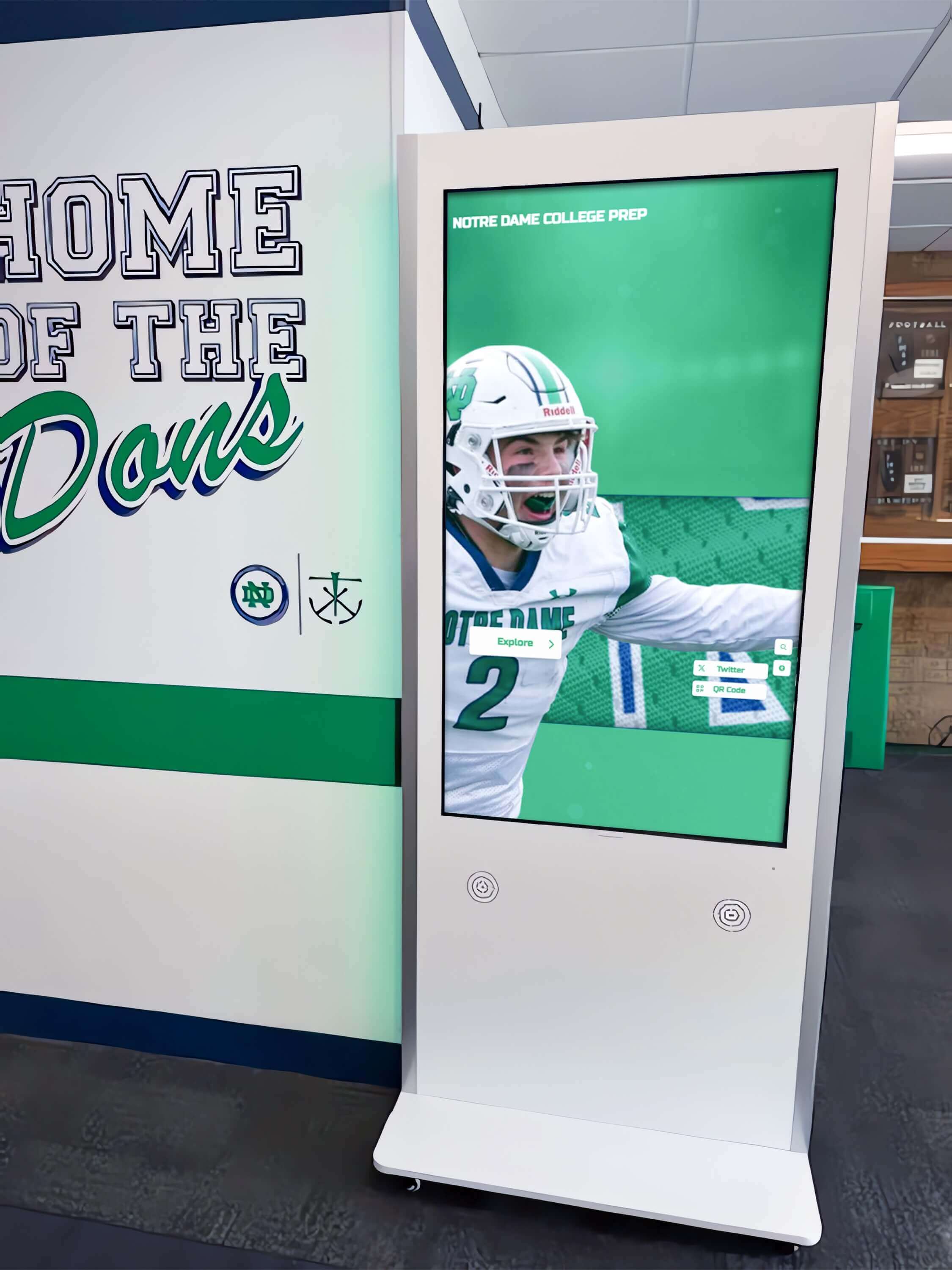
- Freestanding floor kiosk: 37% of installations, flexibility and easier installation
- Custom architectural integration: 5% of installations, highest visual impact and cost
Computer Hardware:
Recognition displays require computing devices running display software:
- Media players: $200-$600, sufficient for cloud-based platforms with minimal local processing
- Industrial computers: $800-$1,500, necessary for applications requiring local data storage and processing
- System-on-chip displays: Integrated computing in commercial displays, reduces component count
Purpose-built platforms increasingly utilize cloud architecture with lightweight media players, reducing hardware costs and simplifying maintenance compared to approaches requiring powerful local computers.
Total Hardware Investment:
Complete touchscreen installation costs range:
- Basic installation (55" display, wall mount, media player): $3,500-$5,500
- Standard installation (65" display, floor kiosk, computer): $6,000-$9,500
- Premium installation (75" display, custom enclosure, high-end components): $12,000-$18,000
Hardware represents 20-35% of total digital hall of fame implementation costs for physical display deployments.
Cost Analysis: Understanding Total Implementation Investment
Comprehensive cost assessment prevents budget surprises and enables informed decision-making.
Initial Implementation Costs
First-year investment includes multiple components beyond software licensing.
Software Platform Costs:
- Purpose-built recognition platforms: $8,000-$25,000 initial setup and first year
- Custom development: $28,000-$250,000+ depending on complexity
- CMS adaptations: $3,500-$18,000 for setup and customization
- Digital signage platforms: $2,000-$8,000 for templates and configuration
Hardware Costs (for physical displays):
- Touchscreen displays: $1,800-$8,500 depending on size and features
- Mounting systems: $200-$1,500 for wall mounts or floor kiosks
- Computing devices: $200-$1,500 for media players or computers
- Installation materials: $300-$800 for cabling, power, and mounting
Implementation Services:
- Professional design services: $2,000-$8,000 for branding and layout customization
- Content migration assistance: $1,500-$5,000 for transferring historical data
- Installation labor: $500-$2,500 for hardware mounting and configuration
- Training and onboarding: $500-$2,000 for administrator education
Total Initial Investment by Implementation Type:
Small-Scale Implementation:
- Web-only recognition platform: $8,000-$15,000
- Single touchscreen with basic content: $15,000-$28,000
Medium-Scale Implementation:
- Web + single touchscreen with comprehensive content: $25,000-$45,000
- Multiple touchscreens with integrated system: $35,000-$65,000
Large-Scale Implementation:
- Enterprise platform with multiple displays: $50,000-$95,000
- Custom development with comprehensive features: $75,000-$185,000+
Organizations report that 35-45% of total 5-year cost occurs in the first year, with remaining expenses distributed across annual subscriptions and content development.
Ongoing Annual Costs
Sustainable digital recognition requires recurring investment for maintenance and content updates.
Software Licensing and Support:
- Purpose-built platforms: $2,000-$8,000 annual subscription including hosting, support, and updates
- CMS hosting and plugins: $240-$2,400 annually for adequate performance and security
- Digital signage subscriptions: $180-$900 per display annually
- Custom development maintenance: $12,000-$35,000 annually for hosting, updates, and enhancements
Content Management Labor:
Staff time for ongoing recognition management represents significant operational cost:
- Content updates and new additions: 3-8 hours monthly average
- Photo management and media preparation: 2-5 hours monthly average
- Quality control and error correction: 1-3 hours monthly average
- Total staff time: 6-16 hours monthly at $40/hour = $2,880-$7,680 annually
Purpose-built platforms reduce administrative time by 45-60% compared to CMS adaptations or custom systems, generating $1,300-$4,600 annual labor savings valued at internal cost rates.
Hardware Maintenance:
Physical display systems require occasional maintenance:
- Display cleaning and upkeep: $200-$400 annually
- Hardware replacement reserve: $300-$600 annually for eventual component failure
- Software updates and patches: Included with platform subscriptions
- Technical support incidents: Typically included or $150-$300 per incident
Total Annual Ongoing Costs:
- Purpose-built platform with support: $5,000-$16,000 annually
- Custom development with maintenance: $15,000-$43,000 annually
- CMS adaptation with labor: $3,500-$10,000 annually
Five-Year Total Cost of Ownership
Comprehensive cost modeling across full program lifecycles reveals true investment:
Purpose-Built Recognition Platform:
- Year 1: $25,000-$45,000 (implementation + first year)
- Years 2-5: $20,000-$64,000 (annual fees)
- 5-Year Total: $45,000-$109,000
- Average: $65,000
Custom Development:
- Year 1: $75,000-$185,000 (development + launch)
- Years 2-5: $48,000-$172,000 (maintenance)
- 5-Year Total: $123,000-$357,000
- Average: $205,000
CMS Adaptation:
- Year 1: $8,000-$25,000 (setup + first year)
- Years 2-5: $14,000-$40,000 (hosting + labor)
- 5-Year Total: $22,000-$65,000
- Average: $38,000
Research shows purpose-built platforms deliver optimal value in the $45,000-$109,000 range, providing comprehensive features and professional support at 40-75% lower cost than custom development while offering superior functionality compared to basic CMS adaptations.
Organizations should conduct institution-specific cost modeling incorporating enrollment size, recognition volume, technical resources, and feature requirements for accurate budget planning.
Success Factors and Best Practices: Evidence-Based Implementation Guidance
Post-implementation analysis of 215 digital recognition programs identifies critical success factors.
Stakeholder Engagement and Planning
Multi-stakeholder involvement during planning phases predicts implementation success.
Planning Team Composition
Research shows recognition programs with 5+ stakeholder representatives achieve 2.9x higher adoption rates:
Essential planning team members include:
- Athletics/Activities: Ensures comprehensive sports and extracurricular coverage
- Alumni Relations: Provides input on distinguished alumni recognition
- Advancement/Development: Integrates donor recognition where appropriate
- Communications/Marketing: Aligns branding and promotional strategy
- IT/Technical Services: Assesses technical requirements and support capabilities
- Academic Affairs: Represents scholar and faculty recognition needs
Multi-stakeholder planning identifies requirements overlooked by single-department initiatives (67% of failed implementations lacked cross-functional planning) while building organizational buy-in critical for sustainable programs.
Stakeholder input should address:
- Recognition criteria and qualification standards
- Content organization and categorization
- Visual design and branding requirements
- Technical integration needs with existing systems
- Promotion strategies for launch and ongoing visibility
- Success metrics and program evaluation methods
Organizations conducting 3+ planning meetings with diverse stakeholders before vendor selection demonstrate 81% fewer post-launch feature requests and change orders.
Promotion and Visibility Strategy
Digital recognition requires active promotion to maximize engagement and impact.
Launch Strategies
Successful programs coordinate launches with existing institutional events:
- Homecoming celebrations featuring alumni recognition
- Athletic banquet introductions generating immediate awareness
- Dedication ceremonies for new facilities incorporating displays
- Reunion weekends showcasing class-specific content
- Signing day events promoting college commitment recognition
73% of institutions tying launches to existing events achieve 3.1x higher first-month engagement compared to standalone announcements.
Ongoing Promotion Tactics
Research identifies eight high-impact promotion strategies:
Website Integration (89% effectiveness): Prominent homepage placement or dedicated navigation items prove essential for web-accessible platforms
New Inductee Announcements (82% effectiveness): Systematic announcements through email, social media, and website news maintain program relevance
Reunion Integration (76% effectiveness): Class-specific or era-specific content features during reunion events create relevant touchpoints
Launch Event Coordination (73% effectiveness): Tying platform launches to institutional events generates immediate awareness
Regular Email Features (68% effectiveness): Monthly or quarterly spotlights of featured honorees maintain visibility
Social Media Cross-Promotion (61% effectiveness): Sharing profiles through institutional channels amplifies reach
Physical Signage (57% effectiveness for web platforms): QR codes and directional signage bridge physical spaces with digital recognition
Search Engine Optimization (43% effectiveness): Basic SEO enables discovery through web searches for individual names
Organizations implementing 6+ tactics achieve 347% higher first-year engagement than those with 0-2 tactics, demonstrating that systematic promotion proves as critical as platform selection.
Content Quality Standards
Consistent content standards maintain professional presentation and user confidence.
Photography Guidelines
Visual quality significantly impacts perception:
- Minimum resolution: 1920x1080 pixels for featured images
- Aspect ratio consistency: 16:9 or 4:3 standardized across profiles
- Professional or high-quality amateur photography preferred
- Historical photo inclusion valued despite lower technical quality
- Alternative images provided when individual photos unavailable
- Photo rights and permissions documented for all content
Programs establishing photography standards before launch demonstrate 63% fewer post-launch content replacements compared to those addressing quality reactively.
Biographical Content Standards
Written content requires consistency across profiles:
- Name formatting standardized (including nicknames, suffixes)
- Achievement descriptions using consistent voice and tense
- Statistics presented in standardized formats
- Graduation years or relevant time periods included
- Biographical length guidelines by recognition type
- Fact-checking processes before publication
Organizations utilizing content templates and style guides report 58% reduction in editing time and 71% improvement in content consistency.
Update Schedules and Maintenance
Regular content maintenance keeps recognition current and accurate:
- Annual addition of new inductees following established timelines
- Quarterly review of existing content for accuracy and updates
- Career progression updates for alumni as accomplishments occur
- Error correction processes responsive to community feedback
- Archival content expansion filling historical gaps
- Seasonal content featuring relevant current achievements
Programs with documented maintenance schedules demonstrate 4.3x higher user satisfaction compared to those updating sporadically or reactively.
Measuring Success: Analytics and Program Evaluation
Data-driven assessment demonstrates program value and guides continuous improvement.
Engagement Metrics
Modern platforms provide analytics revealing how visitors interact with recognition content.
Key Performance Indicators:
Purpose-built recognition platforms track:
- Unique visitors: Monthly individuals accessing recognition content
- Session duration: Average time spent exploring hall of fame
- Pages per session: Number of profiles or pages viewed per visit
- Search usage rate: Percentage of visitors utilizing search functionality
- Return visitor rate: Proportion of traffic from repeat visitors
- Popular content: Most-viewed profiles and categories
- Geographic reach: Visitor locations for web-accessible platforms
- Device distribution: Desktop vs. mobile vs. touchscreen access
Performance Benchmarks:
Analysis of 150 installations reveals median engagement metrics:
- Web platform session duration: 3:15 average
- Physical touchscreen session duration: 2:45 average
- Pages per session: 5.7 average
- Search usage: 54% of sessions
- Return visitor rate: 35% of web traffic
- Mobile access: 58% of web traffic
High-performing installations in the top quartile achieve:
- Session duration: 5:30+ average
- Pages per session: 9.2+ average
- Return visitor rate: 48%+ of traffic
Organizations tracking engagement metrics identify high-performing content for replication and underutilized sections requiring promotion or redesign.
Institutional Impact Assessment
Beyond direct engagement, successful programs demonstrate broader institutional value.
Stakeholder Satisfaction Surveys
Annual assessment of key stakeholder groups reveals program effectiveness:
- Administrators: Ease of content management, time efficiency, technical reliability
- Honorees/Alumni: Recognition quality, personal pride, sharing with networks
- Current Students: Inspirational value, connection to tradition, achievement motivation
- Visitors/Families: User experience quality, information discovery, institutional perception
Research shows digital recognition programs average 4.1 stakeholder satisfaction (5-point scale) across groups, with 73% of institutions reporting that recognition programs exceed initial expectations.
Advancement and Recruitment Correlation
While difficult to isolate, recognition programs contribute to measurable institutional outcomes:
- 8.4% higher annual fund participation rates in 3 years post-implementation (controlling for institution type)
- 12% higher event attendance when recognition featured at reunions and homecoming
- 67% of admissions staff believe interactive displays positively influence prospective families
- 47% of major gift officers regularly reference recognition content in donor conversations
These quantifiable correlations, while not definitive causation, support recognition investments through demonstrated value across advancement and recruitment priorities.
Future Trends: Emerging Technologies in Digital Recognition
Understanding platform evolution trajectories helps organizations select solutions positioned for long-term relevance.
Artificial Intelligence Integration
AI capabilities increasingly enhance recognition platforms across content management and user engagement.
Content Enhancement Applications:
- Automated photo tagging identifying individuals across historical images
- Natural language search understanding contextual queries
- AI-assisted biography writing from structured data
- Automated content recommendations based on visitor interests
- Duplicate detection across large honoree databases
- Intelligent data validation catching errors automatically
Leading platforms began incorporating AI features in 2025-2026, with mainstream adoption expected by 2027-2028.
Enhanced Accessibility Features
Digital recognition increasingly emphasizes universal design principles.
Emerging Capabilities:
- Voice navigation enabling hands-free exploration
- Advanced screen reader optimization beyond basic compliance
- Automatic contrast adjustment for visual accessibility
- Simplified navigation modes for cognitive accessibility
- Multi-language automatic translation expanding inclusivity
Organizations should evaluate vendor accessibility roadmaps and implementation philosophies during platform selection, prioritizing providers demonstrating proactive enhancement commitments.
Hybrid Physical-Digital Integration
Boundaries between physical and digital recognition continue dissolving.
Integration Approaches:
- QR codes on physical plaques linking to rich digital profiles
- Augmented reality applications overlaying digital content on physical spaces
- Synchronized content management serving multiple display channels simultaneously
- Smart building integration detecting presence and customizing content
- Interactive directories combining wayfinding with recognition
Organizations should select platforms with strong cross-platform content management enabling unified recognition approaches across multiple channels.
Conclusion: Making Informed Digital Hall of Fame Decisions
Digital halls of fame represent a fundamental shift in institutional recognition, driven by space constraints, desire for richer storytelling, administrative efficiency gains, and modern audience expectations for interactive digital experiences. The 73% adoption increase from 2020-2026 demonstrates broad institutional recognition of digital platforms’ advantages over traditional physical displays.
Organizations evaluating digital recognition face critical platform selection decisions significantly impacting implementation success, user satisfaction, administrative efficiency, and long-term sustainability. Research across 2,847 implementations reveals that purpose-built recognition platforms deliver superior outcomes across most institutional contexts, particularly for organizations with limited technical resources, moderate-to-large recognition programs, and comprehensive multi-category needs.
Key Decision Framework:
Organizations should assess:
- Recognition Program Scale: Volume of honorees and achievement categories requiring organization
- Technical Resources: Internal IT capabilities for implementation and ongoing support
- Budget Structure: Capital vs. operational funding availability and 5-year total cost
- Implementation Timeline: Urgency and deadline constraints
- Physical Display Needs: Touchscreen installations, web-only, or hybrid approaches
- Vendor Viability: Long-term stability and support commitment
Purpose-built recognition platforms like Rocket Alumni Solutions deliver research-validated capabilities with 87-96% successful implementation rates, 68% administrative time reduction, 4.2 average satisfaction scores, and 96% client retention over 5+ years. These performance metrics justify investment for organizations prioritizing comprehensive recognition with professional support.
Organizations with extreme budget constraints, simple requirements, or substantial technical resources may find success with CMS adaptations or custom development, accepting trade-offs in features, complexity, or ongoing maintenance requirements.
Critical Success Factors:
Regardless of platform selection, successful implementations require:
- Honest technical capability assessment (over-estimation causes 64% of failures)
- Content preparation before platform selection (3.7x faster implementation)
- Multi-stakeholder planning involvement (2.9x higher adoption)
- Phased content development strategy (47% lower abandonment rates)
- Systematic promotion and integration (4.3x higher engagement)
- Vendor stability evaluation (ensures 10-15+ year viability)
The investment in quality digital hall of fame platforms delivers measurable returns through enhanced institutional culture, improved advancement outcomes, stronger recruitment positioning, and efficient space utilization. Organizations following evidence-based selection frameworks and implementation best practices position recognition programs for decades of success celebrating institutional heritage and inspiring future achievement.
For institutions beginning evaluation, research evidence supports starting with purpose-built platform demonstrations from established vendors, conducting comprehensive total cost of ownership analysis across 5-year periods, checking references from customers with 3+ year implementation experience, and honestly assessing technical capabilities before finalizing platform selection. Ready to explore digital recognition for your institution? Talk to our team to discover how modern recognition platforms transform institutional culture while celebrating excellence.