An unsung hero is a person who makes significant contributions to a team, program, or community but receives little or no public recognition for their efforts. In school athletics, unsung heroes are the athletes, coaches, managers, statisticians, and support staff whose behind-the-scenes work makes wins possible—without ever appearing in highlight reels or acceptance speeches. The phrase derives from the literal image of a hero whose deeds go “unsung,” meaning their story has never been told or celebrated publicly.
Understanding what an unsung hero is—and creating deliberate systems to honor them—gives schools a powerful tool for strengthening athletic culture, deepening alumni engagement, and demonstrating that genuine contribution comes in many forms beyond the statistics column.
Unsung Hero Meaning: Definition and Origins
The phrase “unsung hero” has appeared in English literature for centuries. The word “unsung” originally meant “not celebrated in song or verse”—in ancient traditions, great deeds were commemorated through oral epics and ballads. A hero who went “unsung” simply had no bard to tell their story, not because their contributions were minor, but because the spotlight never found them.
In modern usage, an unsung hero is anyone whose contributions are:
- Genuine and significant — their absence would noticeably harm the team or program
- Consistent over time — not a single moment of greatness, but sustained effort across a season or career
- Largely invisible to the public — their work happens in spaces the crowd does not see
- Undercompensated by recognition — the gap between what they contributed and what they were publicly celebrated for is large
The concept carries particular weight in school athletics because the recognition ecosystem—trophies, all-conference teams, scoring titles—naturally rewards visible performance. The point guard who leads the team in assists is at least statistically acknowledged; the team manager who organized every road trip and kept the equipment inventory is not.

Who Qualifies as an Unsung Hero in School Athletics?
Unsung heroes appear across every layer of an athletic program. Recognizing them requires looking beyond the box score.
Role Players and Specialty Athletes
Not every essential contributor starts or accumulates statistics. Role players—athletes who run specific plays, take on defensive assignments against the opposing team’s best scorer, or provide scout team repetitions that sharpen the starters—contribute directly to outcomes without personal statistics to show for it. A basketball player who specializes in transition defense and setting screens, logging 8 minutes per game for four years, may never make the all-league ballot but could be the reason the team won a dozen close games.
Specialty athletes in track, swimming, and field events face similar invisibility. A shot put thrower contributing points at every invitational adds to team scores that accumulate into championships, yet typically receives far less recognition than a sprinter who wins individual events.
Program Support Staff and Student Assistants
Athletic programs run on a network of behind-the-scenes labor that students and staff quietly provide:
- Student athletic trainers who handle injury prevention, taping, and rehabilitation before and after every practice and game
- Team managers who handle equipment, laundry, logistics, and the thousand small tasks that keep a team functioning
- Statisticians and scorekeepers who document program history accurately, creating the data that future record boards depend upon
- Video coordinators who film, edit, and distribute game footage essential for coaching and recruiting
- Uniform and equipment managers who ensure athletes have what they need on game day
These roles often involve more total hours than those of the athletes they support. A student athletic trainer attending every practice and game over a four-year career may log as many program hours as the most dedicated senior athlete.
Coaches and Support Coaches
Assistant coaches, volunteer coaches, and retired coaches who return to mentor young athletes often operate in significant anonymity. Their player development work—the extra repetitions after practice, the film sessions, the calls to struggling athletes—rarely surfaces publicly. Yet their influence on individual athletes and program trajectory can exceed that of any single player.
Faculty Advisors and Administrative Supporters
Athletic programs exist within institutional structures that depend on teachers, principals, and administrative staff who advocate for funding, approve travel, navigate facilities scheduling, and protect programs during budget cycles. The teacher-sponsor of a team’s booster organization who spent thirty years supporting athletics without a single public acknowledgment is a classic unsung hero.
Why Schools Underrecognize Quiet Contributors
Structural forces push recognition toward statistical visibility. Award programs, all-conference teams, and year-end banquets typically reward what can be measured and compared: points, wins, records. This is efficient and defensible, but it systematically excludes contributions that are genuine but non-statistical.
Several barriers prevent schools from recognizing unsung heroes effectively:
No selection framework. Most schools lack criteria for identifying contributors who fall outside standard award categories. Without a defined process, well-intentioned coaches and athletic directors struggle to make defensible, consistent selections.
Recency and familiarity bias. Staff tend to remember recent contributions more vividly, meaning multi-year contributors from earlier seasons may be overlooked unless institutional memory is actively preserved.
Physical display constraints. Traditional trophy cases and plaque walls have finite space. When space runs out, programs are forced to choose, and unsung heroes—who rarely have championships or records attached to their names—are the first to be excluded.
No lasting record. Without a permanent display, an unsung hero award given at a banquet is forgotten within a year. The next generation of athletes never sees those names, and the program loses the inspirational value of the recognition entirely.
Schools that develop deliberate processes for identifying, selecting, and permanently displaying unsung hero recognition overcome each of these barriers in sequence.
Criteria for Identifying and Selecting Unsung Heroes
Effective unsung hero programs establish clear, documented criteria that distinguish genuine quiet contributors from routine participation. Vague standards undermine credibility; defensible criteria create programs athletes and families trust.
Core Selection Criteria
Duration of commitment. Sustained contribution over multiple seasons demonstrates dedication beyond a single effort. A minimum of two or three years of active program involvement is a reasonable baseline for most schools.
Demonstrated impact on program culture. The candidate’s absence or departure should have left a measurable gap. Peer nominations, coach attestations, and specific examples of impact support this criterion.
Consistent reliability. Unsung heroes show up under conditions when no one is watching—early mornings, late games, unprestigious events. Selection committees should look for evidence of sustained reliability across circumstances where quitting would have been easy and unnoticed.
Gap between contribution and recognition received. The defining characteristic of an unsung hero is the disparity between what they gave and what they were publicly celebrated for. Candidates who already received significant recognition—all-state athletes, major award recipients—typically do not meet this criterion.
Character and conduct. Recognition programs serve as institutional endorsements. Selection criteria should require candidates to have represented the program and school with integrity throughout their tenure.
Who Nominates and Who Decides
A straightforward nomination and selection structure helps programs maintain consistency year over year:
- Open nominations — Accept nominations from coaches, athletes, parents, and alumni through a standard form documenting the candidate’s contributions, years of service, and specific examples of impact.
- Coach review — Head coach and relevant assistant coaches verify facts and assess contribution depth.
- Athletic director confirmation — The AD reviews for consistency with program standards and institutional values.
- Annual selection — A small committee (head coach, AD, one alumni representative) selects one to three unsung hero honorees per season or academic year.
This structure provides community input while maintaining institutional accountability for selections.
School Athletics Unsung Hero Examples by Role
Concrete examples help selection committees recognize the full range of contributions that qualify under unsung hero criteria.
The Multi-Sport Team Manager
A student who manages the boys basketball program for four years—maintaining equipment, coordinating road trip logistics, tracking statistics, and supporting injured players during recovery—may log more total program hours than any athlete on the roster. Their contribution is invisible to fans but deeply felt by coaches and teammates. When this student graduates, the program often struggles for a season to replace the institutional knowledge they carried.
The Scout Team Standout
Some of the most valuable athletes on competitive rosters never see significant game time because they excel in practice. A football scout team player who accurately replicates opposing offenses week after week for three seasons prepares the starting defense in ways that directly produce wins. Their statistical line shows nothing. Their contribution is essential.
The Long-Tenured Volunteer Coach
A former athlete who returns to volunteer as an assistant coach for a decade, developing dozens of athletes without compensation or public title, represents a pure unsung hero. Their fingerprints appear in the careers of every athlete they coached, but they appear nowhere in the official record.
The Senior Night Organizer
Every program that hosts meaningful senior night ceremonies has someone behind the logistics—ordering flowers, contacting families, writing individual tributes, coordinating the ceremony run-of-show. This often falls to a parent, an administrator, or a coach who performs this labor without recognition year after year.
The Facilities Advocate
A maintenance staff member or facilities director who ensures athletic spaces remain clean, safe, and functional may never appear in a program’s public recognition. Yet their advocacy for gym floor replacement, their after-hours work setting up for tournaments, and their knowledge of every corner of the athletic facility directly affect athletic outcomes.
Creating a Recognition Workflow for Unsung Heroes
Identifying unsung heroes is only meaningful if the recognition is preserved and made visible. A recognition workflow ensures the honor extends beyond a banquet certificate.
Step 1: Announce and Celebrate at a Live Event
Public acknowledgment at a season-ending banquet, senior night ceremony, or athletic awards dinner gives the honoree a moment of live recognition shared with teammates, family, and the school community. This step matters because it creates an experience for the honoree—not just a record for the institution.
Step 2: Document the Contribution in Writing
Create a written profile for each unsung hero honoree that includes:
- Full name and years of involvement
- Role and specific responsibilities
- Two to three concrete examples of their impact
- A statement from a coach or teammate
- A photograph
This profile becomes the permanent record from which future display content is drawn. Programs that skip documentation find that institutional memory fades within five to ten years, and the recognition becomes hollow.
Step 3: Add to a Permanent Display
The most important step in any recognition workflow is permanence. A plaque wall, digital hall of fame, or alumni recognition wall that includes unsung hero honorees ensures future athletes can discover their predecessors’ contributions. When a freshman team manager sees a display featuring student managers from the past decade, the message is clear: this program values every role.
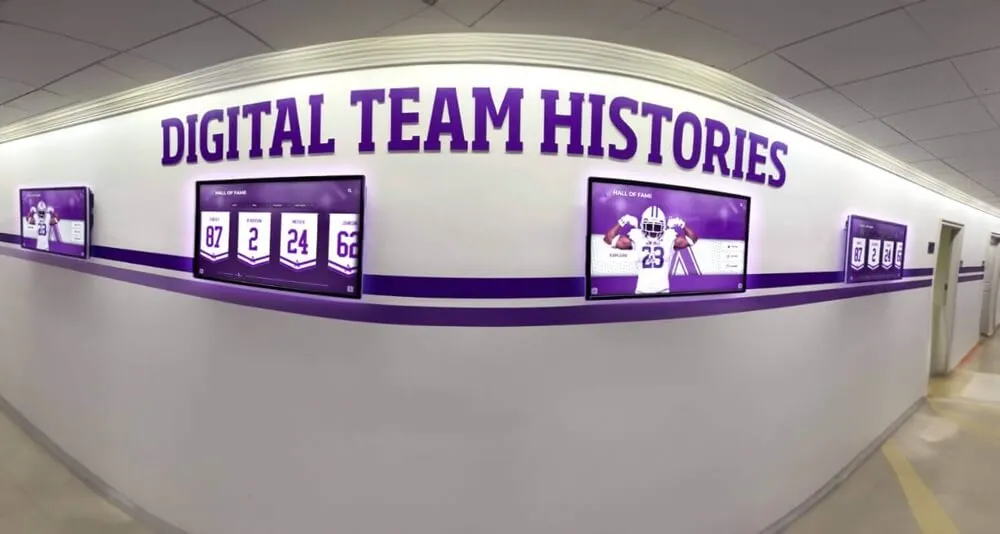
Physical displays face space constraints as programs grow. Digital wall mount displays address this by accommodating unlimited honorees without renovation, updating easily as new selections are made each year.
Step 4: Connect New Athletes to Past Honorees
Assign incoming athletes and student staff to research a past unsung hero during their first season. This practice integrates recognition into the onboarding experience, ensures display content is actually encountered rather than walked past, and creates connections across generations of program contributors.
Digital Recognition Displays for Unsung Heroes
Physical trophy cases and plaque walls carry tradition and permanence. But their fixed capacity becomes a genuine barrier for programs that want to recognize the full range of contributors—including those who will never have a championship trophy attached to their name.
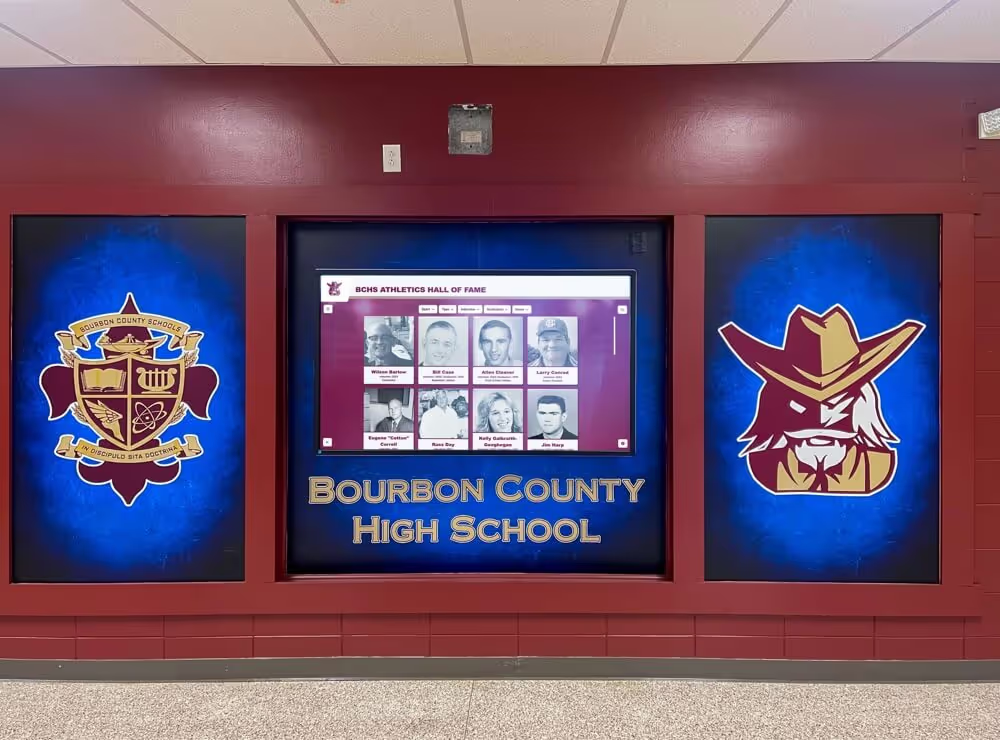
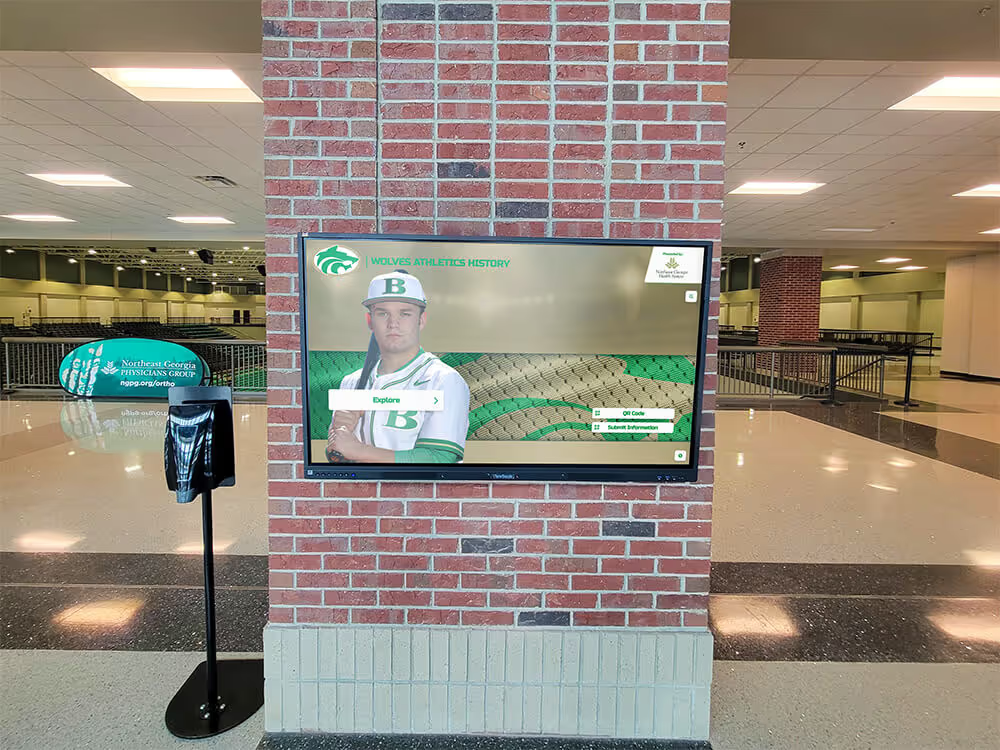
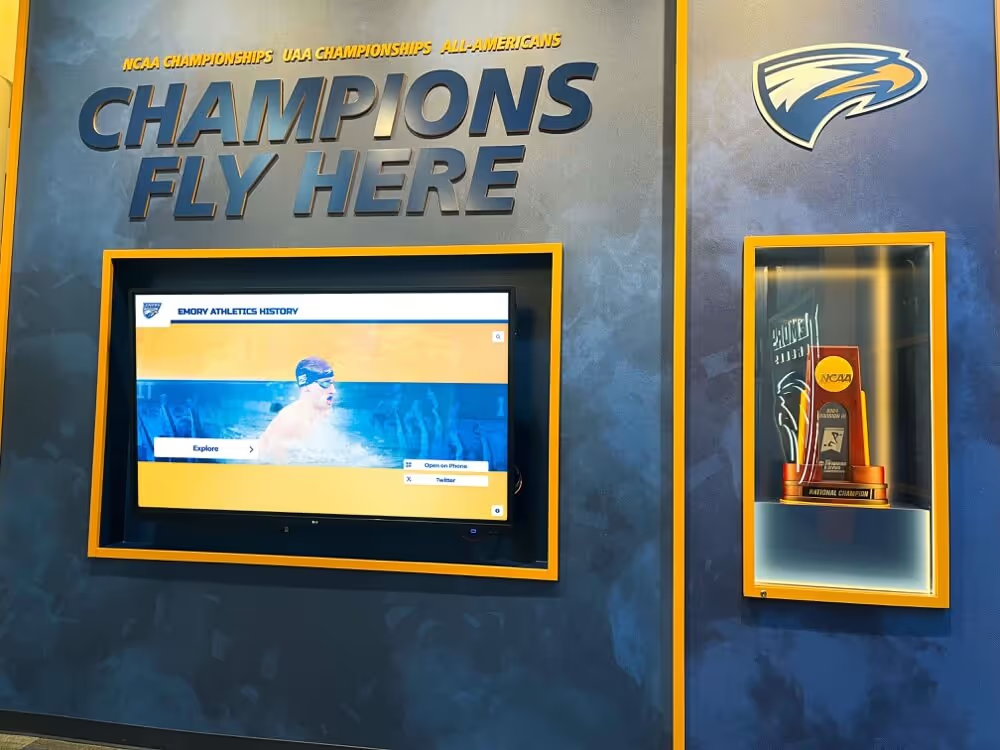
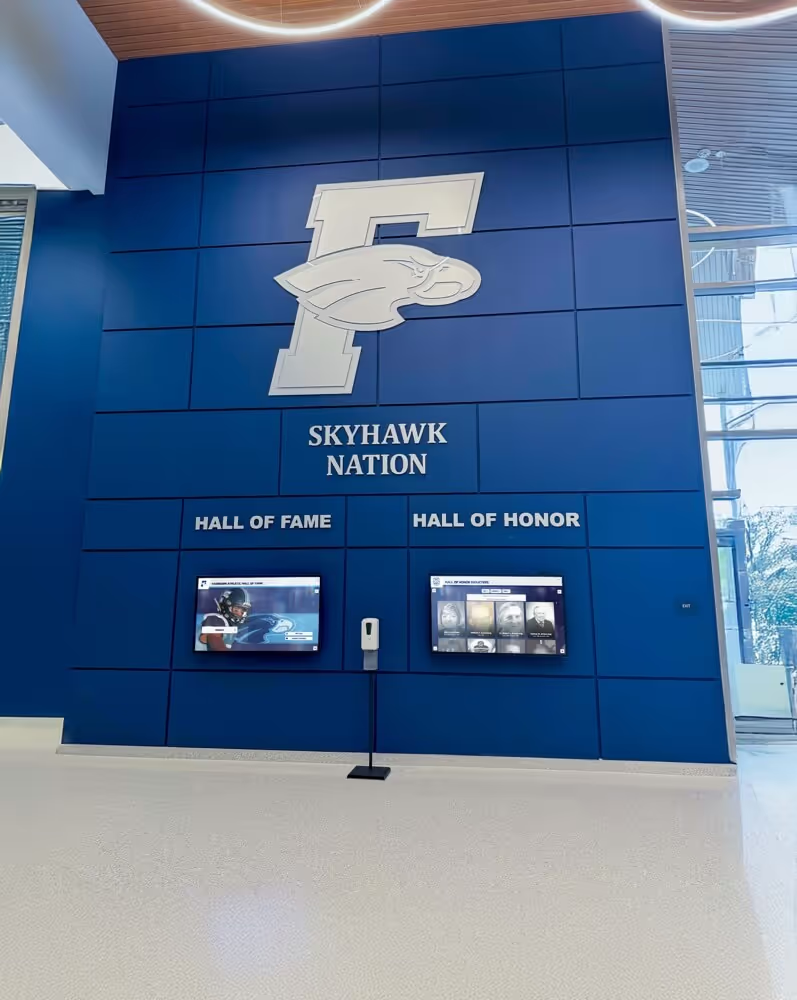
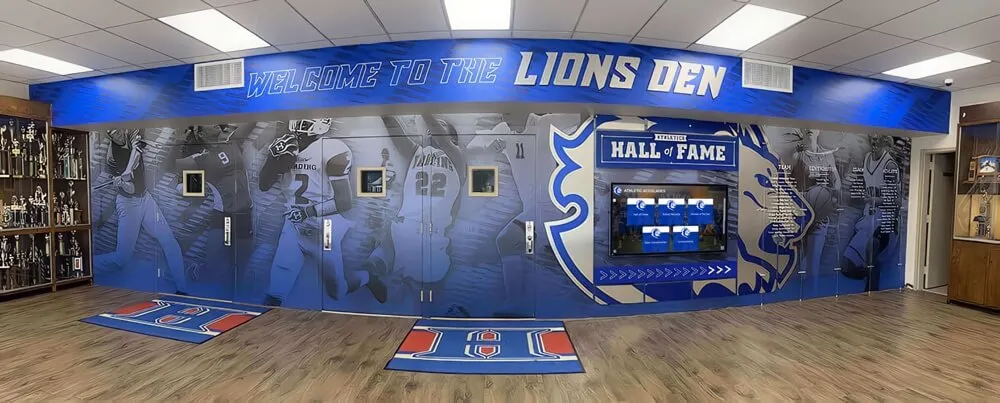
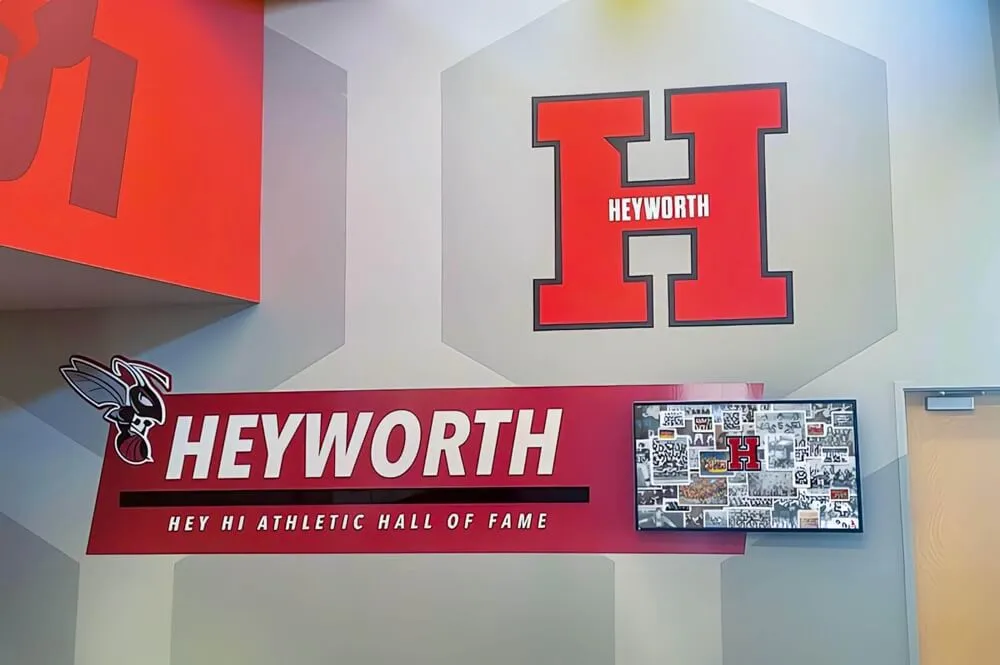
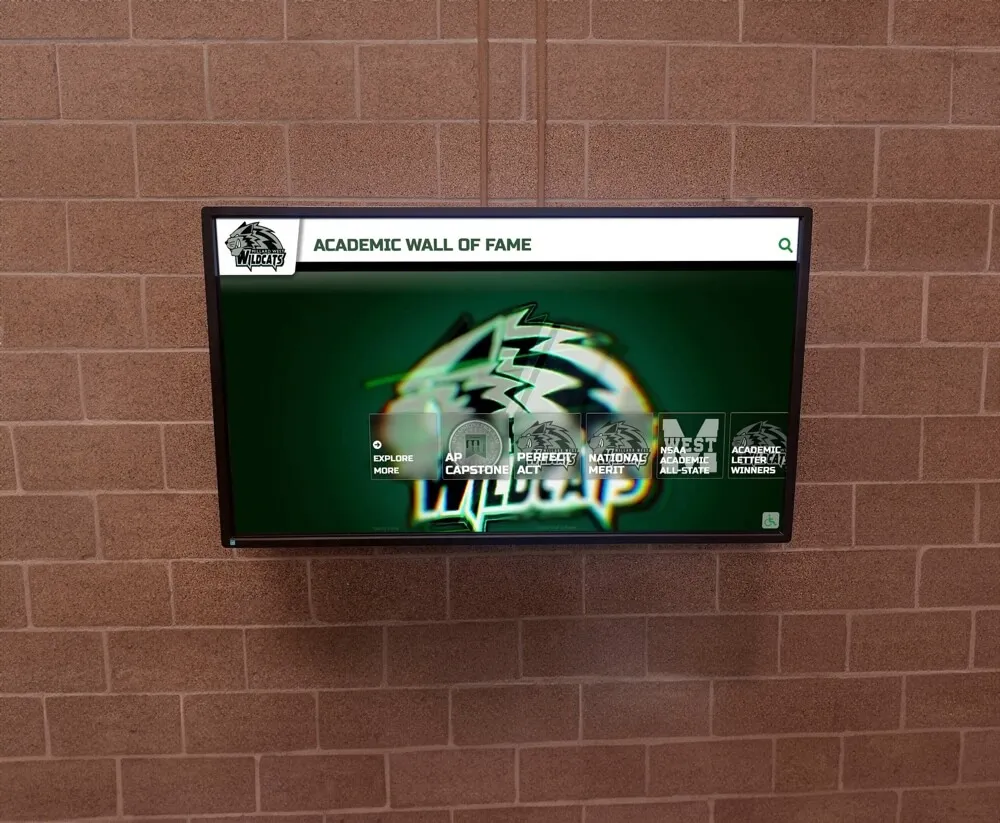
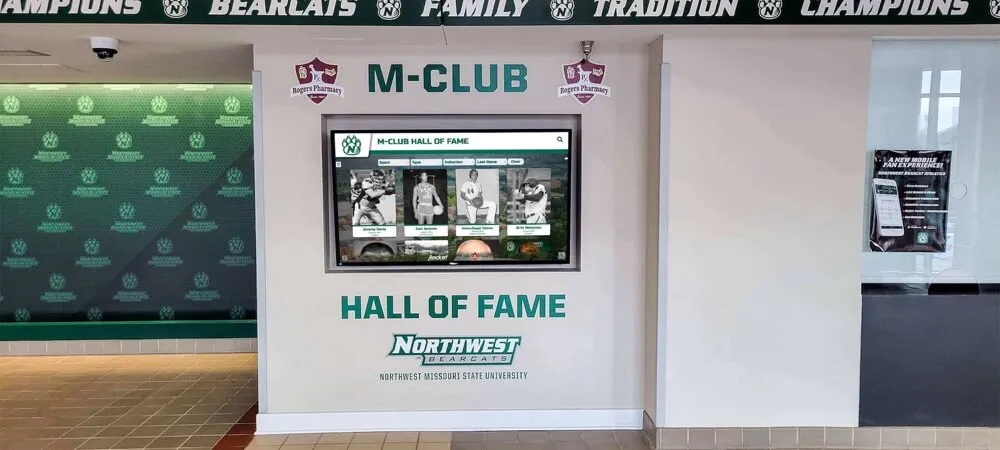
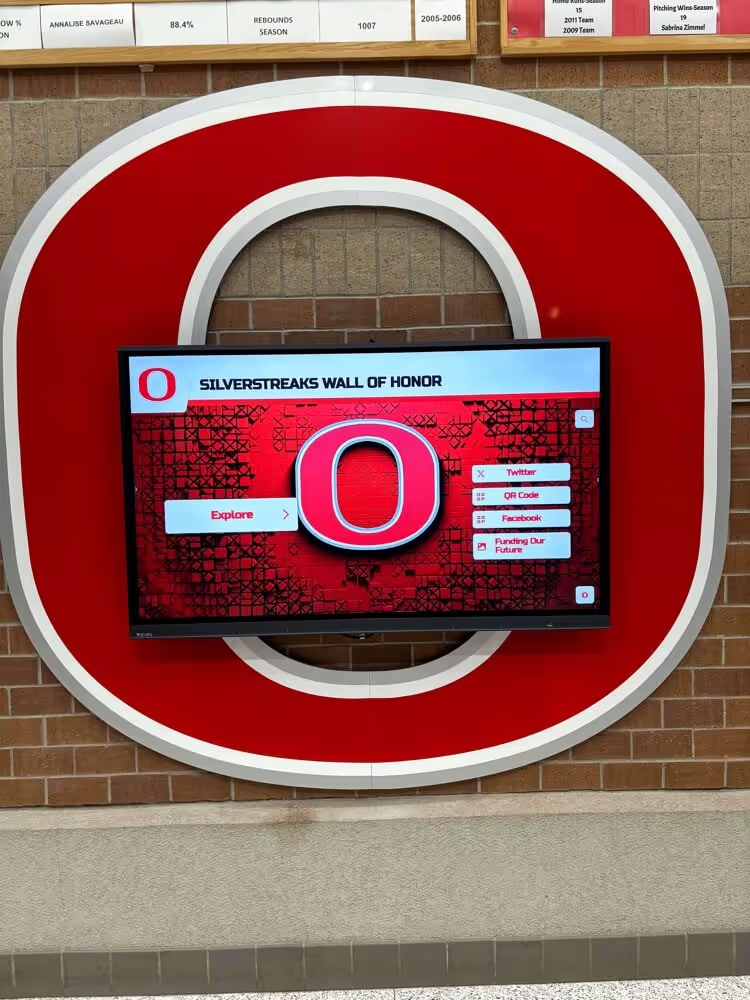
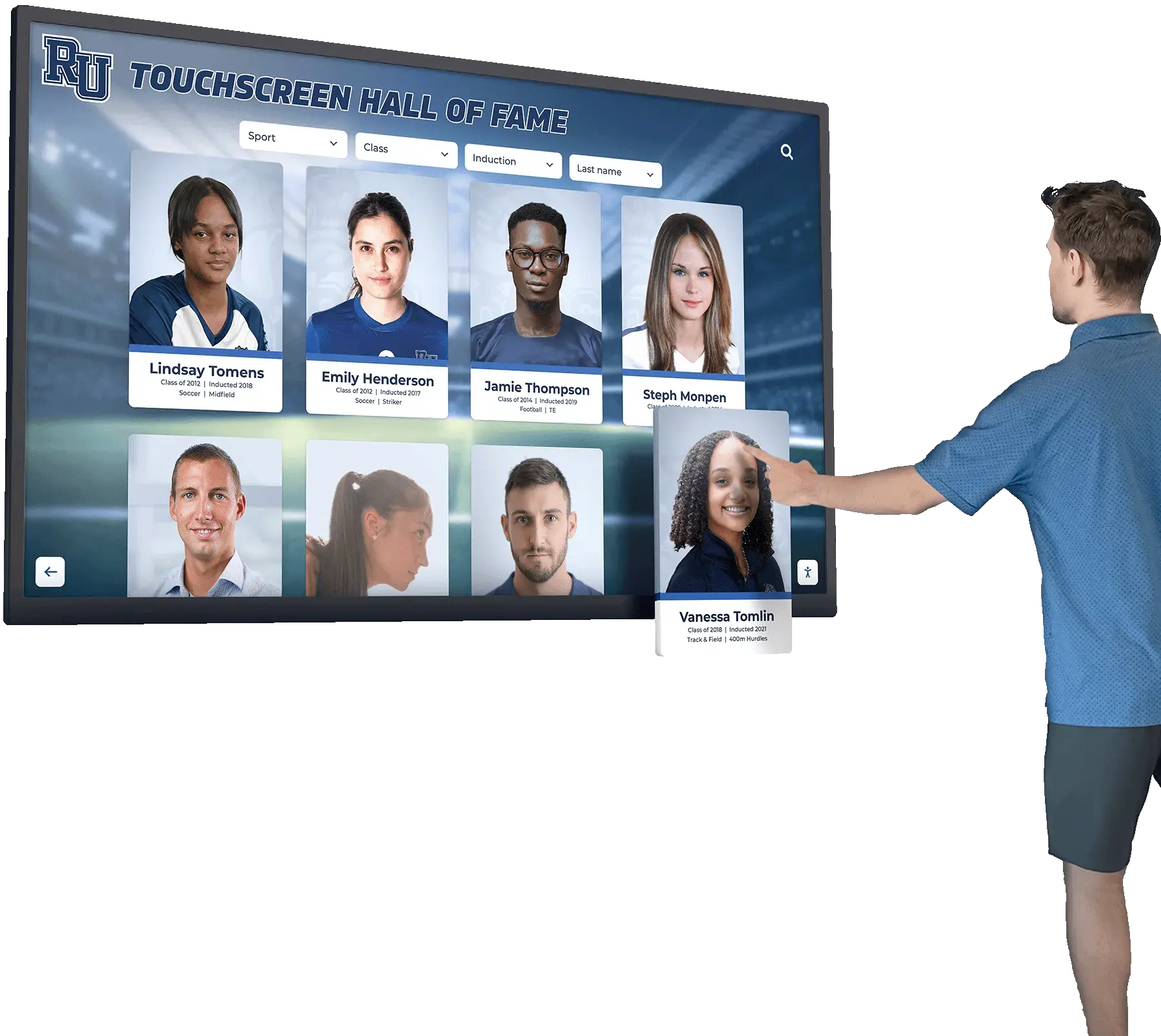
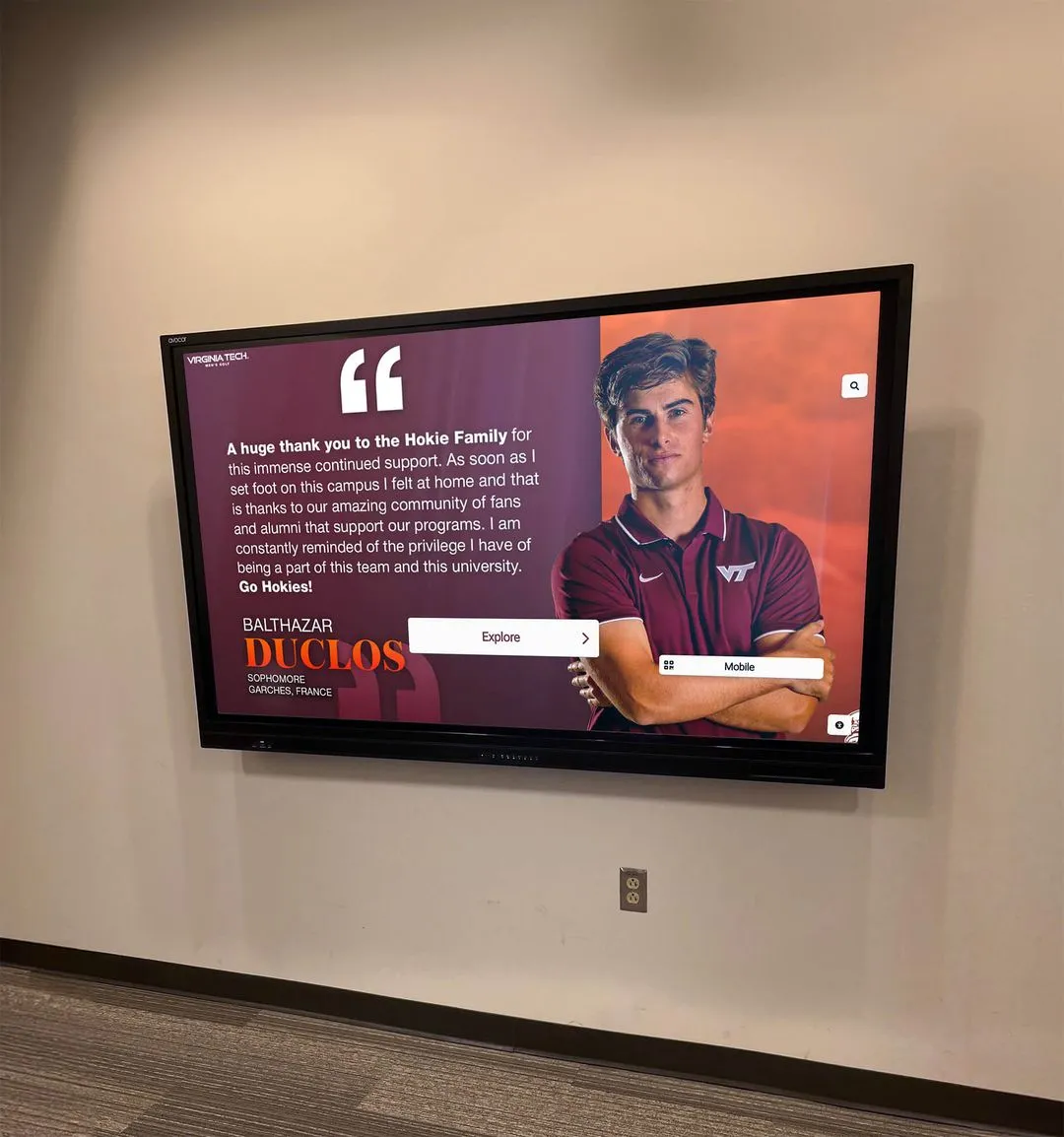
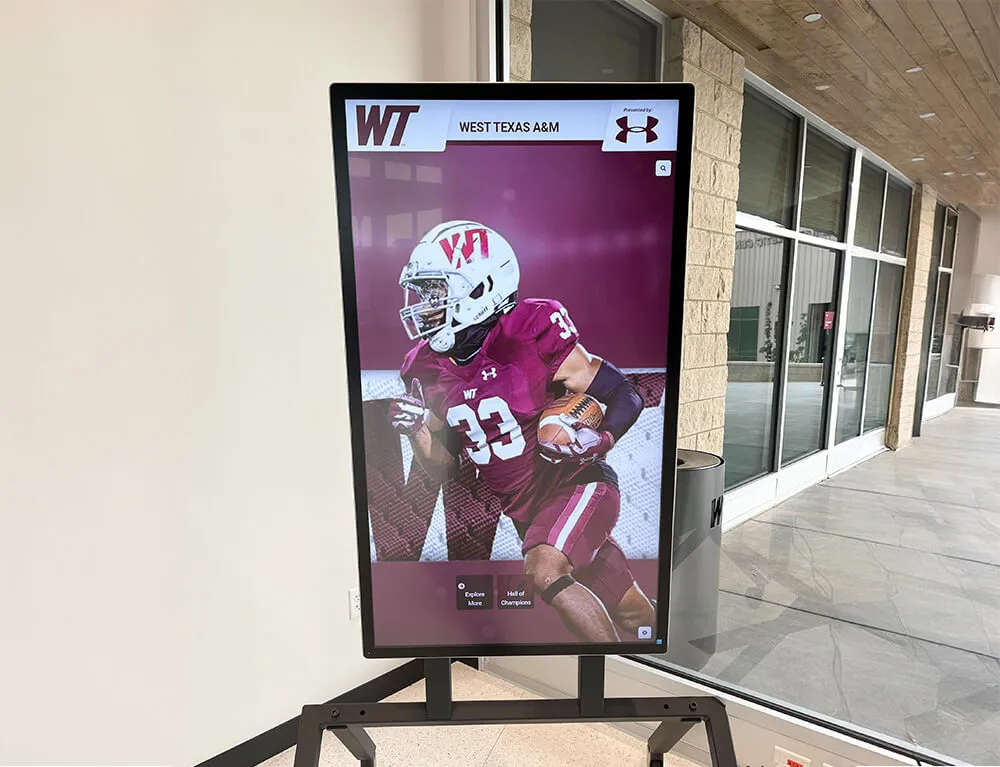
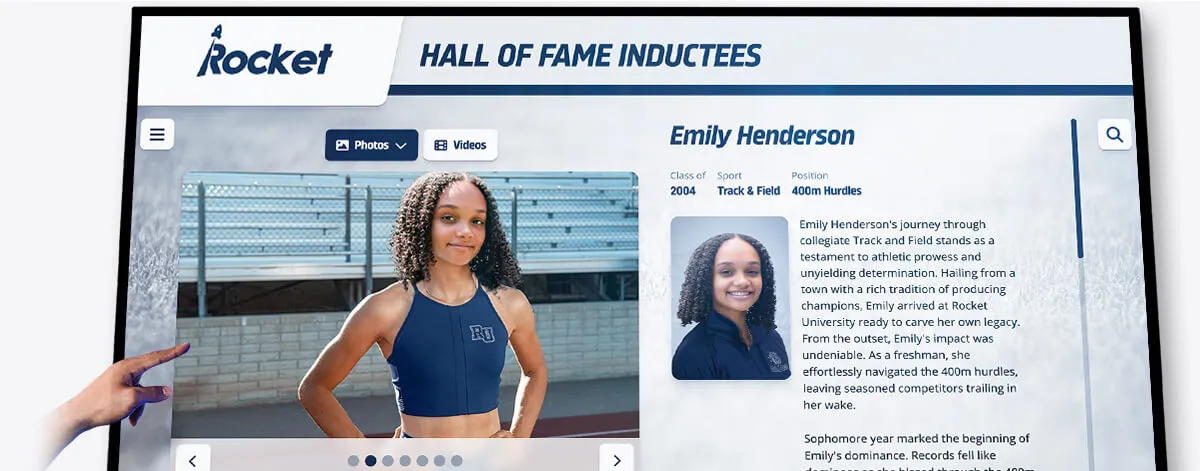

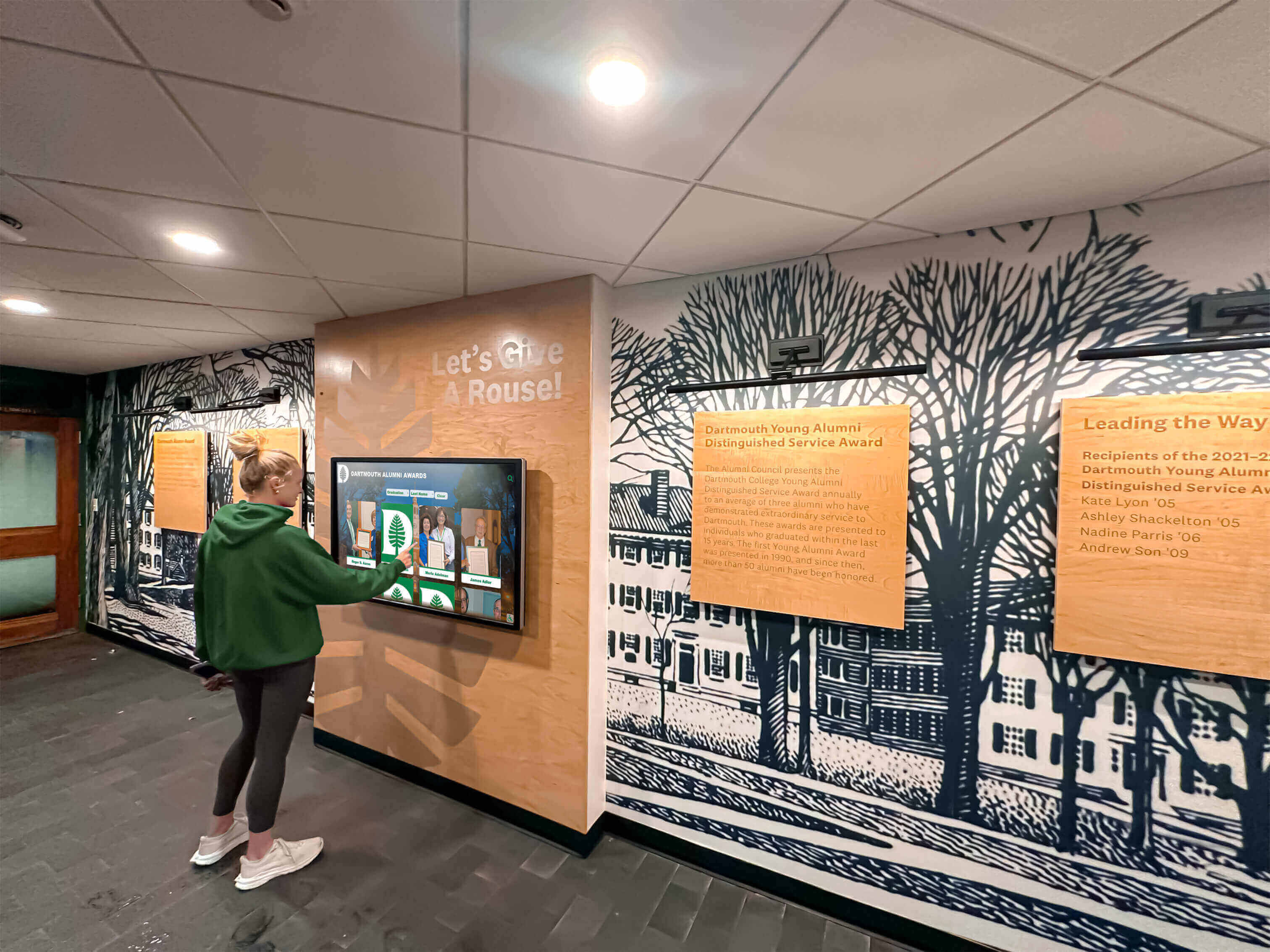
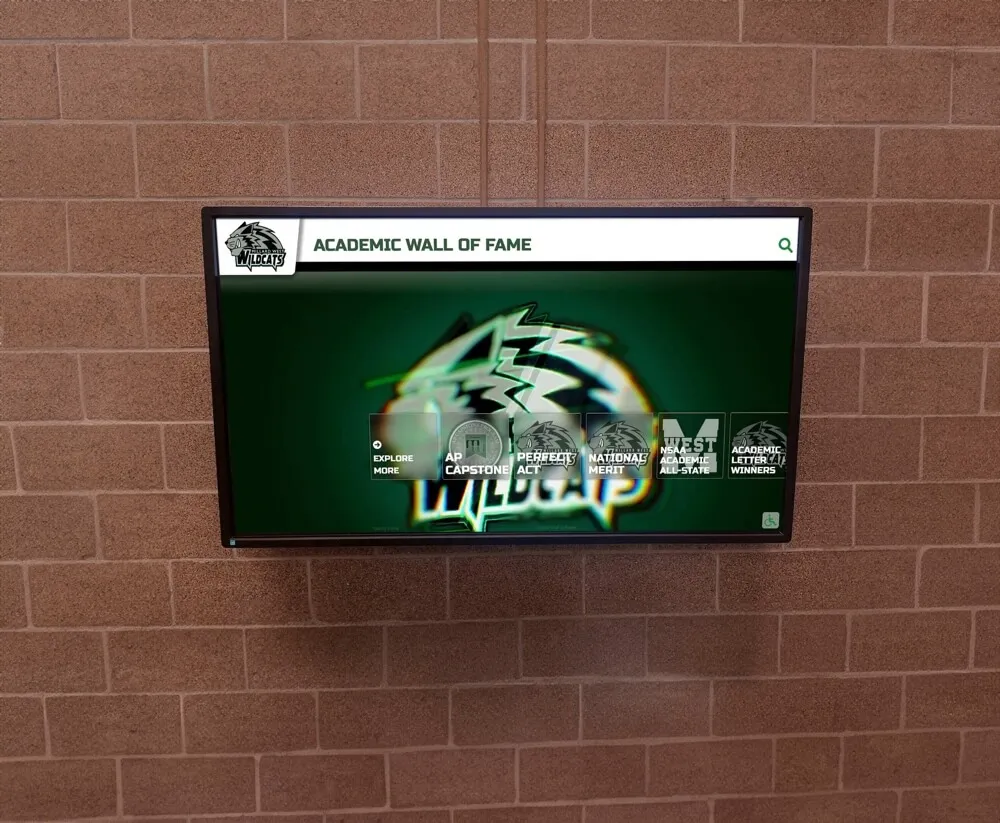
Digital recognition platforms solve the space problem entirely. Interactive touchscreen displays deployed in athletic hallways, lobbies, and common areas can hold complete contributor histories without physical limits. A school with 40 years of unsung hero honorees can display all 40, with full profiles, photographs, and written narratives, without consuming additional wall space.
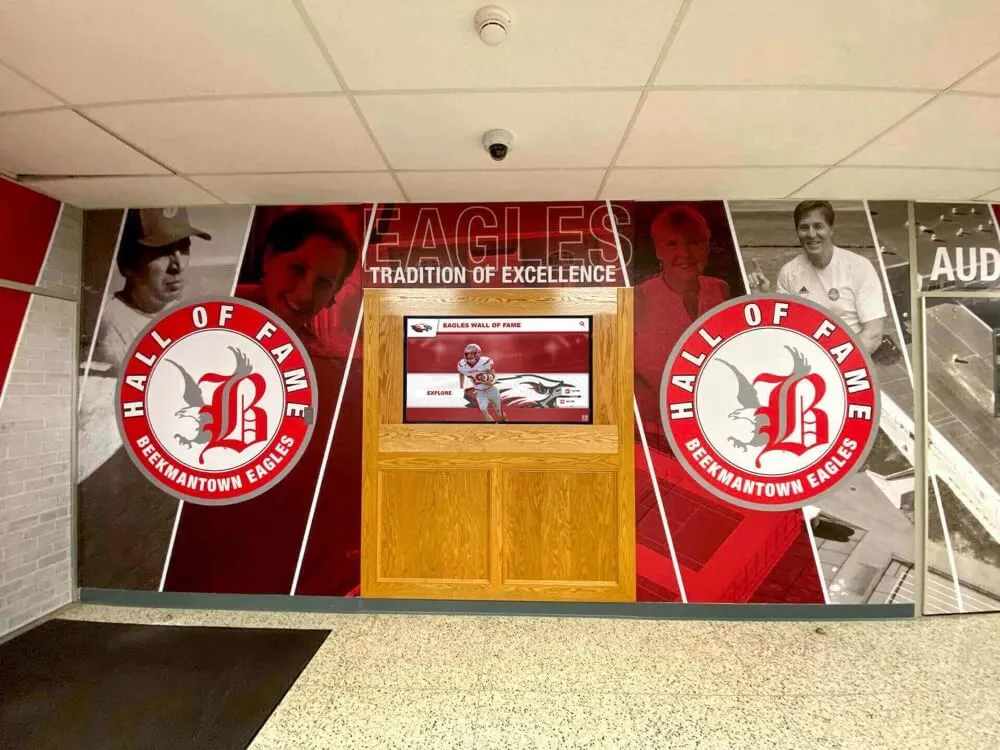
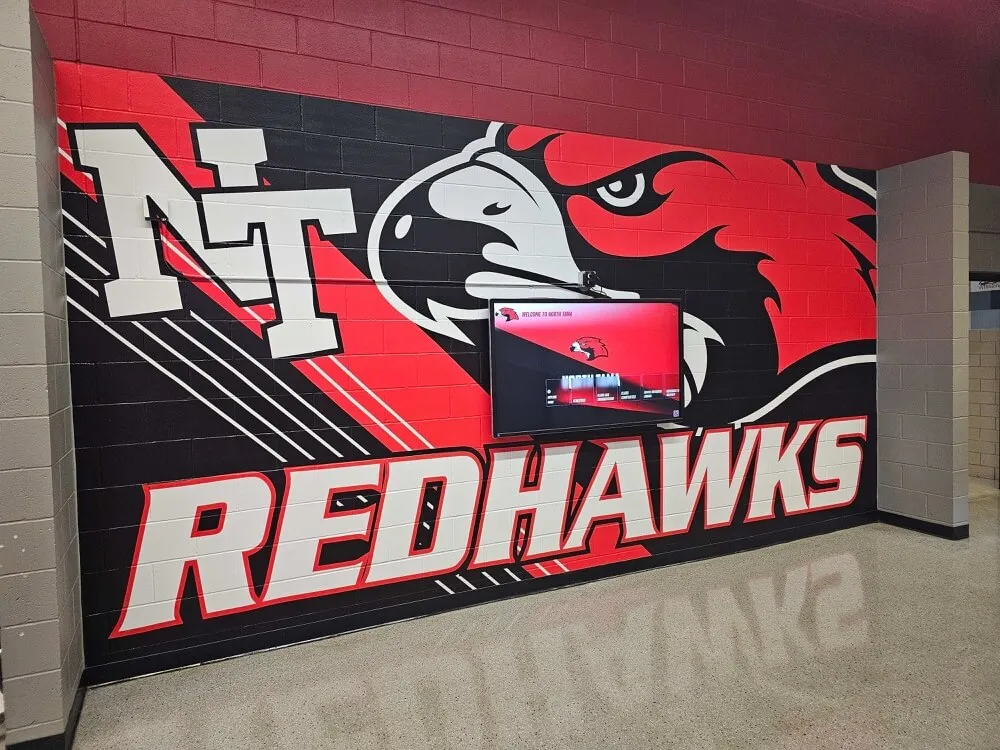
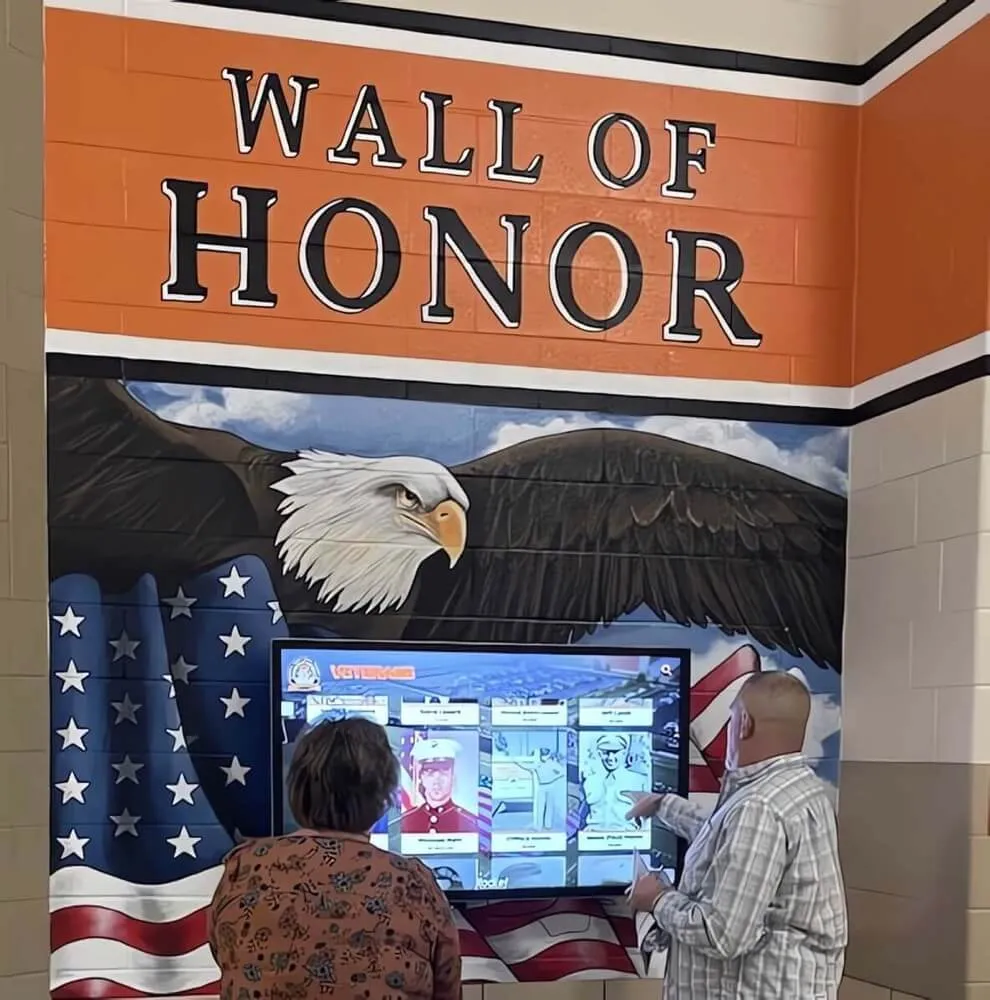
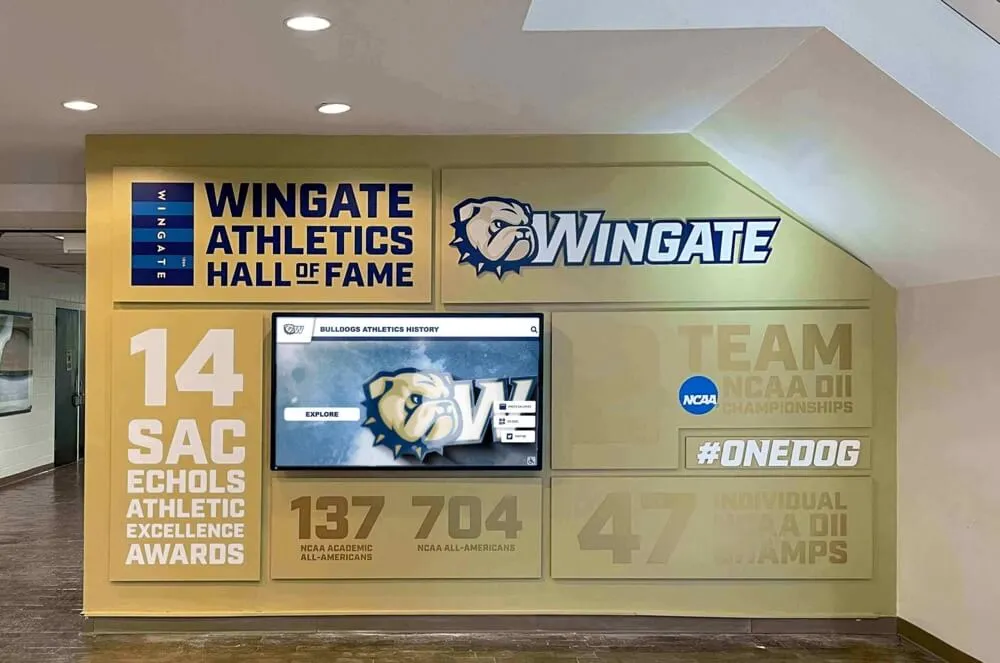
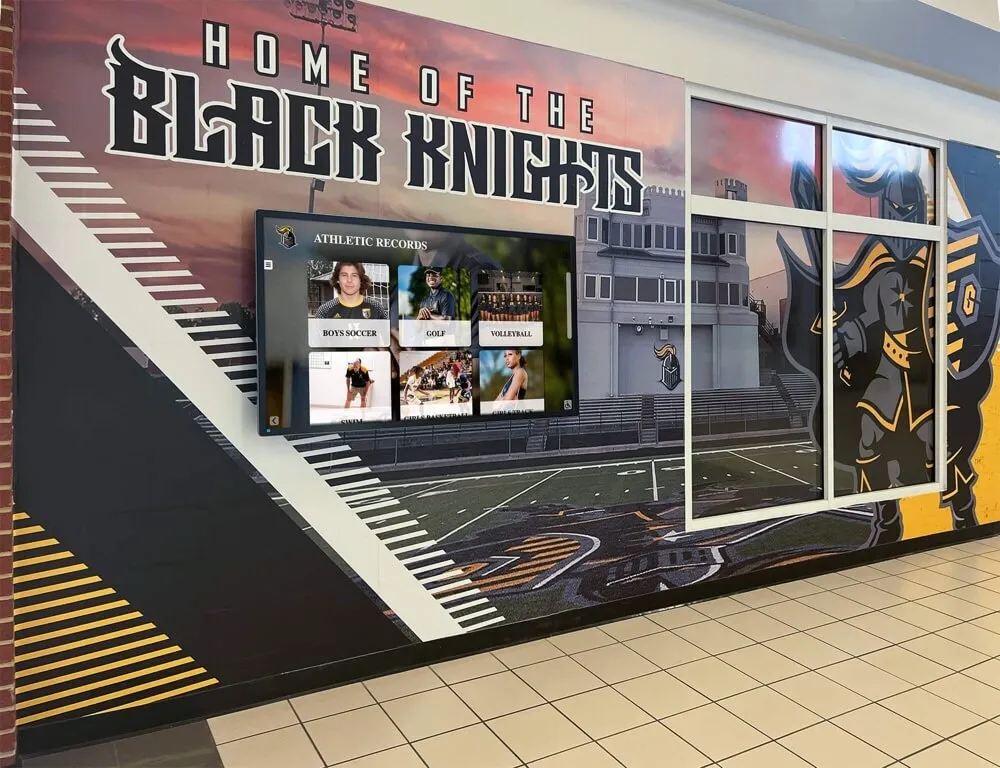
School hallway mural designs combined with digital screens create recognition environments where unsung heroes and championship athletes appear side by side, communicating that program culture depends on both.
Digital platforms have been used at major athletic programs—including at high-profile Ohio high school football state championship programs—to build comprehensive histories that include everyone who contributed to program success, not just the names that appear on scoreboards.
Cheerleading and spirit programs face parallel recognition challenges: squad spirit leaders and choreographers contribute enormously to game-day atmosphere without appearing in athletic statistics. Digital platforms that accommodate these roles alongside traditional athletic recognition create genuinely inclusive program histories.
What a Digital Unsung Hero Display Includes
A well-executed digital recognition display for unsung heroes typically includes:
- Searchable directory — users can find contributors by name, year, role, or sport
- Individual profiles — photograph, role description, years of service, and contribution narrative
- Program history timeline — showing how contributor recognition evolved alongside athletic achievement
- Related content — connecting an unsung hero’s profile to team championship records or alumni networks from the same era
Schools that have documented program histories across school mergers and consolidations find digital platforms especially valuable: when programs merge, the full recognition history of both institutions can be preserved in a single display without either program’s contributors being erased.
Embedding Unsung Hero Recognition in Program Culture
A selection process and display infrastructure create the foundation for recognition. Long-term cultural impact requires embedding the practice into the regular rhythms of the athletic program.
Annual ceremony moment. Make unsung hero announcement a fixed part of the athletic banquet, with the same weight and presentation quality as all-conference selections.
Visible display in high-traffic locations. A recognition display tucked in a rarely-visited corner serves the institution; one placed at the gym entrance serves the culture. Place displays where athletes, families, and visitors naturally gather.
Coach and captain acknowledgment. Include unsung hero recognition in the coach’s season-end address and ask team captains to nominate candidates. When the head coach names an unsung hero publicly and explains why, the entire program learns what the program values.
Alumni engagement. Past unsung heroes who see their names on a permanent display become among a program’s most loyal alumni. They share their profiles, return to events, and connect future athletes to program history. Interactive alumni engagement displays and live events deepen this connection year after year.
The Long-Term Value of Recognizing Unsung Heroes
Programs that systematically recognize quiet contributors develop a distinctive culture: athletes who join understand they are entering a program where all roles matter, where sustained effort in any capacity earns lasting acknowledgment. This shifts program identity from “we celebrate champions” to “we celebrate everyone who made this program what it is.”
That shift produces durable downstream effects. Athletes in support roles stay committed through difficult seasons because they see evidence the program values them. Graduating seniors who filled quiet roles become engaged alumni rather than detached graduates. Families who contributed behind the scenes maintain connections to the program through generations.
The unsung hero is not the exception to the program’s achievement story. They are part of its foundation. The most authentic athletic programs found a way to say so publicly and permanently.
Every school that builds a recognition display knows the challenge: the players and coaches get plaques; the people who made those seasons possible often get nothing. Rocket Alumni Solutions builds interactive recognition displays that can include everyone—state champions and student managers, all-conference honorees and equipment staff—with rich profiles and permanent visibility.
See how schools are building recognition displays that honor every contributor →