



Winter sports in high school represent a crucial season of athletic competition spanning roughly November through March, featuring diverse indoor and ice-based sports that keep student-athletes active during the coldest months. Unlike fall's outdoor football and soccer or spring's baseball and track, winter athletics happen predominantly in gymnasiums, pools, and ice rinks, creating unique competitive environments and passionate fan experiences. Understanding the complete landscape of high school winter sports helps schools, parents, and athletes appreciate the breadth of opportunities available and the remarkable achievements winter athletes accomplish.
This comprehensive guide explores everything about high school winter sports in 2026—from the complete list of winter athletics and their competitive structures to participation trends, championship formats, and innovative ways schools celebrate and preserve winter sports excellence. Whether you're a prospective athlete considering winter sports options, a school administrator planning recognition programs, or simply curious about what defines the winter athletic season, this guide provides practical insights into one of high school's most exciting competitive periods.
The winter sports season occupies a unique position in high school athletics. While fall sports launch the academic year with outdoor competitions under Friday night lights and spring sports conclude the year with long days on fields and tracks, winter sports thrive in the distinct atmosphere of packed gymnasiums with echoing crowds, chlorinated natatoriums with split-second timing, and frigid rinks where breath hangs visible in the air. These sports demand different skills, training approaches, and competitive strategies than their outdoor counterparts, creating specialized athletic cultures within schools.
Winter sports also present distinct logistical considerations. Weather-dependent travel, indoor facility constraints, and competition with professional winter sports for media attention create challenges that fall and spring sports rarely face. Yet these sports consistently generate tremendous school spirit, develop remarkable athletes, and produce championship traditions that communities celebrate for generations.
This guide examines each major high school winter sport, explores participation patterns and competitive structures, and provides guidance for schools creating meaningful recognition experiences that honor winter athletic excellence alongside fall and spring achievements.
Understanding the High School Winter Sports Season
Before examining specific sports, understanding the broader framework of winter athletics helps contextualize how these sports fit within high school athletic programs.
Defining the Winter Season Timeline
The winter sports season typically spans from early November through late February or early March, though exact dates vary by state, athletic association, and specific sport. Most winter sports follow this general timeline:
Pre-Season and Tryouts (October-Early November)
Many winter sports begin official practices in late October or the first week of November. State athletic associations typically establish earliest allowable practice dates to ensure equity across schools and prevent programs from gaining unfair competitive advantages through extended preparation. Tryouts usually occur during the first week of practices, with final rosters established within ten days to two weeks of the season’s start.
Regular Season Competition (November-January)
Core regular season competition runs from mid-November through January. Teams typically compete once or twice weekly, with schedules structured around conference opponents and non-conference matchups. Winter sports schedules often face weather-related complications, with snow, ice, and extreme cold potentially causing postponements that compress competition calendars and create challenging rescheduling situations.
Postseason and Championships (February-March)
Postseason play typically begins in early to mid-February, with conference tournaments followed by district, regional, and state championship competitions. The most successful teams may continue competing into early March, particularly in sports with extensive playoff brackets. State championship events often occur in neutral-site venues capable of accommodating large crowds and providing equitable competitive environments for finalists from different regions.
How Winter Seasons Differ from Fall and Spring
Winter athletics present distinct characteristics compared to other seasonal sports that affect everything from training approaches to spectator experiences.
Indoor Competition Environments
The defining characteristic of most winter sports involves indoor competition. Gymnasiums, natatoriums, and wrestling rooms create controlled environments unaffected by weather but imposing different constraints than outdoor facilities. Spectator capacity may be limited compared to outdoor stadiums and fields. Acoustic environments intensify crowd noise, creating intimidating home court advantages. Climate control maintains consistent temperature and humidity, affecting athletic performance and equipment. Space limitations may restrict the number of simultaneous competitions, extending meet and match durations.
Weather-Related Challenges
Ironically, while most winter sports compete indoors, winter weather significantly impacts these athletic programs through travel complications and safety concerns. School districts may cancel competitions during severe weather, disrupting carefully planned schedules. Long bus trips to distant opponents become more hazardous and stressful during winter months. Outdoor sports like skiing and ice hockey face facility availability issues when natural conditions don’t support competition.
Distinct Fan Culture and Community Support
Winter sports generate unique spectator experiences. Gymnasiums packed with student sections create electric atmospheres that differ from outdoor sports’ expansive settings. Wrestling matches and swimming meets involve extended durations with multiple competitors and continuous action across several hours. Basketball doubleheaders featuring both boys’ and girls’ varsity games create extended evening events that become social gatherings for school communities. Fewer competing entertainment options during winter months may increase attendance compared to fall sports competing with pleasant outdoor weather activities.
Complete List of High School Winter Sports
High school winter sports encompass diverse athletic disciplines requiring different skill sets, training approaches, and competitive structures. Schools offer varying combinations based on facility availability, coaching expertise, budget considerations, and student interest.
Basketball
Basketball ranks as the most popular and widely offered high school winter sport, with nearly every secondary school fielding both boys’ and girls’ teams at multiple competitive levels.
Sport Overview and Competition Format
High school basketball follows standard five-on-five format with four quarters (typically eight minutes each) and shot clocks in many states. Schools usually field varsity, junior varsity, and sometimes freshman teams, providing competitive opportunities across skill and experience levels. Conference regular seasons determine league standings and tournament seedings, followed by district, regional, and state playoff brackets culminating in championship games typically held at collegiate arenas or large venues capable of accommodating thousands of spectators.
Basketball generates tremendous school spirit and community support. Home games create vibrant social events where student sections, pep bands, and cheerleading squads contribute to electric atmospheres. Friday and Saturday night varsity games often represent the week’s premier social gathering for students, families, and community members. Successful teams can galvanize entire communities, with deep tournament runs creating shared experiences that residents remember for decades.

Key Achievements and Recognition Opportunities
Basketball provides numerous recognition opportunities for standout performers including all-conference and all-state team selections, 1,000-point career scorers achieving significant milestone status, single-game and career records for points, rebounds, assists, and steals, Most Valuable Player awards at team, conference, and state levels, and state championship team recognition. Learn more about celebrating basketball milestones in your athletic program.
Wrestling
Wrestling represents one of high school’s most demanding sports, combining intense physical exertion with strategic technique and mental toughness. This individual sport within a team framework creates unique competitive dynamics.
Sport Overview and Competition Format
High school wrestling features weight class competition, with competitors matched by body weight to ensure equitable contests. Standard weight classes typically range from 106 pounds through 285 pounds (heavyweight), though exact structures vary slightly by state and sanctioning organization. Teams compete in dual meets where schools face each other across all weight classes, with team scores determined by accumulated individual results. Championship tournaments use bracket formats where individual wrestlers compete for medals and team points contribute to overall team standings.
Matches consist of three periods with specific rules governing legal holds, scoring positions, and victory conditions. Wrestlers can win by pin (forcing opponent’s shoulders to mat), technical fall (establishing 15-point advantage), major decision (8-14 point margin), or regular decision (1-7 point margin), with different victory types contributing different team points. The sport demands extraordinary physical conditioning, technical skill, weight management discipline, and mental resilience to compete effectively across a grueling season.
Key Achievements and Recognition Opportunities
Wrestling generates distinctive recognition opportunities including state championship medals and placements, career win milestones (100-win careers representing elite achievement), undefeated seasons, pin records, and all-state selections. Many wrestling programs maintain detailed historical records tracking program leaders across multiple statistical categories. Schools can showcase wrestling achievements through specialized recognition displays.
Swimming and Diving
Aquatic sports provide winter athletic opportunities emphasizing individual performance within team contexts, with competitions featuring numerous events across different strokes and distances.
Sport Overview and Competition Format
High school swimming competitions feature events in freestyle, backstroke, breaststroke, and butterfly strokes across various distances (50 yards, 100 yards, 200 yards, 500 yards, and occasionally longer). Relay events combine team members’ performances in exciting collaborative races. Diving competitions occur separately with athletes performing from one-meter and three-meter springboards, judged on technique, difficulty, and execution.
Swim meets involve extended durations with multiple events running sequentially, creating marathon competitions where team depth proves crucial. Swimmers typically compete in two to four individual events plus relays, requiring careful event selection and strategy. Championship formats may include preliminary heats and finals, with top performers advancing to evening championship races determining medalists and record-breakers.
Key Achievements and Recognition Opportunities
Swimming and diving recognition includes state championship medals and placements, school and facility records across individual events, relay record performances, all-state team selections, conference championships, and national qualifying times. The sport’s precise timing to hundredths of seconds creates clear, objective performance measurements that enable detailed historical comparisons across generations of athletes.
Ice Hockey
In regions with sufficient ice facility availability and cold climate traditions, ice hockey represents a premier winter sport combining speed, physicality, and skill in one of athletics’ most exciting competitive environments.
Sport Overview and Competition Format
High school hockey typically follows standard three-period format with either 15 or 17-minute periods depending on state association rules. Teams consist of forwards, defensemen, and goaltenders rotating through shifts due to the sport’s intense physical demands. Competition emphasizes skating skill, puck handling, passing precision, shooting accuracy, defensive positioning, and goaltending excellence.
Some states with strong hockey traditions field teams in every high school, while other regions support club programs or co-operative teams combining students from multiple schools. Playoff formats typically follow bracket structures culminating in state championship games often held at professional or major college arenas, creating memorable experiences for participants and spectators.
Key Achievements and Recognition Opportunities
Hockey recognition includes state championship team honors, all-state and all-conference selections, career goal and point milestones, goaltending achievement records, and selections to regional or national all-star competitions. Elite players may attract college recruiting attention or advancement to junior hockey programs preparing for collegiate or professional careers.
Indoor Track and Field
Indoor track provides winter athletic opportunities for runners, jumpers, and throwers who compete outdoors during spring seasons. The indoor version features modified events suited to smaller facilities.
Sport Overview and Competition Format
Indoor track facilities feature 200-meter banked oval tracks (half the standard outdoor distance) with running events including sprints (55m, 60m, 200m, 400m), middle distance (800m, 1600m), distance (3200m), hurdles, and relays. Field events include high jump, long jump, triple jump, pole vault, and shot put (other throwing events typically occur outdoors only due to space and safety considerations).
Competition formats involve multiple heats for running events, with top performers advancing to finals. Field events may run concurrently with track events, creating complex meet management requiring careful coordination. Team scoring combines individual placements across all events, rewarding programs with depth across diverse event categories.
Key Achievements and Recognition Opportunities
Indoor track recognition includes state championship medals, school and facility records across events, all-state selections, conference championships, and qualifying performances for national or regional elite competitions. The sport’s objective measurement enables precise performance tracking and historical comparison, creating clear recognition milestones as athletes pursue school records established by previous generations.
Competitive Cheerleading
While cheerleading originated as sideline support for other sports, competitive cheerleading has evolved into a demanding athletic discipline with its own winter competition season.
Sport Overview and Competition Format
Competitive cheerleading teams perform choreographed routines combining stunts, tumbling, dance, and cheer elements, judged on technical execution, creativity, synchronization, and showmanship. Routines typically last 2-3 minutes and require extraordinary athleticism, strength, coordination, and teamwork. Teams compete in divisions based on school size and competitive level.
The sport’s competitive season runs parallel to basketball, with teams performing at games while also preparing for and competing in cheerleading-specific competitions. Championship events often feature multiple rounds, with preliminary scores determining finalists who perform again for final placement and championship determination. Competitive cheerleading’s explosive growth has led to increased recognition as a legitimate athletic discipline requiring serious training, coaching expertise, and dedicated resources.
Key Achievements and Recognition Opportunities
Competitive cheerleading recognition includes state and national championship titles, individual and team all-star selections, technical skill achievement milestones, and progression through competitive divisions reflecting improving program quality and competitiveness.
Gymnastics
In schools with appropriate facilities and coaching, gymnastics provides winter athletic opportunities emphasizing individual performance across multiple apparatus in one of athletics’ most technically demanding disciplines.
Sport Overview and Competition Format
High school gymnastics (typically girls’ programs, though boys’ gymnastics exists in some regions) features competition on vault, uneven bars, balance beam, and floor exercise. Athletes perform routines on each apparatus, judged on difficulty, execution, and artistry. Team scores combine individual performances, while individual champions emerge through combined all-around scores or apparatus-specific excellence.
Meets involve rotating teams through apparatus, creating extended competitions where attention alternates between different events occurring simultaneously. The sport demands years of technical training, extraordinary strength-to-weight ratios, flexibility, balance, and mental composure to perform difficult skills under competitive pressure.
Key Achievements and Recognition Opportunities
Gymnastics recognition includes state championship medals, all-state selections, perfect 10.0 scores (rare but prestigious achievements), school records on individual apparatus and all-around scores, and progression through competitive levels reflecting advanced skill development. The sport’s judged nature creates subjective elements, but clear scoring rubrics and historical performance benchmarks enable meaningful achievement recognition.
Bowling
Bowling has gained recognition as an official high school sport in many states, providing accessible winter athletic participation opportunities in climate-controlled commercial bowling centers.
Sport Overview and Competition Format
High school bowling typically features Baker format competition where team members rotate through frames of a shared game, along with traditional individual scoring. Matches occur at bowling centers rather than school facilities, creating unique off-campus competition environments. The sport accommodates participants across diverse physical profiles and abilities, making it accessible to students who might not succeed in more physically intensive winter sports.
Regular season competition usually involves head-to-head team matches, with postseason formats determining conference and state championships. The sport emphasizes technical skill, consistency, strategy, and mental composure under pressure—qualities valuable in athletics and life beyond sports.
Key Achievements and Recognition Opportunities
Bowling recognition includes state championship team and individual honors, perfect 300 games (rare and prestigious achievements), high series scores, all-conference and all-state selections, and average improvement milestones demonstrating skill development across seasons.
Skiing and Snowboarding
In regions with appropriate terrain and snow conditions, skiing and snowboarding provide distinctive winter sports blending individual performance with natural outdoor environments.
Sport Overview and Competition Format
High school alpine skiing and snowboarding competitions typically feature slalom and giant slalom events, with athletes racing through gate courses on timed runs. Nordic (cross-country) skiing involves distance racing emphasizing endurance and technique. Competitions occur at ski resorts or dedicated facilities, creating off-campus events dependent on natural snow conditions and facility availability.
The sports combine speed, technical skill, and courage navigating challenging terrain and varying snow conditions. Team scores typically combine individual race performances, though the sports emphasize individual achievement within team frameworks.
Key Achievements and Recognition Opportunities
Skiing and snowboarding recognition includes state championship medals, all-state selections, course records on specific hills, and progression through competitive ability levels. Elite performers may attract college recruiting attention or advancement to club programs preparing for higher competitive levels.
Regional Variations in Winter Sports Offerings
The specific winter sports available vary significantly by geographic region, climate, facility availability, and local traditions. Understanding these variations helps explain why certain sports dominate particular areas while remaining rare elsewhere.
Climate-Influenced Sport Availability
Northern and Cold-Climate States
Schools in northern states and cold-climate regions often offer the complete range of winter sports including robust ice hockey programs utilizing abundant ice rinks, skiing and snowboarding taking advantage of natural snow and terrain, indoor track providing winter training for spring outdoor athletes, and all standard winter sports (basketball, wrestling, swimming).
These regions often feature particularly strong wrestling and hockey traditions, with extensive community support, youth feeder programs, and passionate fan cultures surrounding winter athletics. Outdoor winter activities enjoy cultural acceptance that supports participation even when competitions require significant travel and logistical coordination.
Southern and Warm-Climate States
Schools in warmer regions typically focus on winter sports feasible with indoor facilities, emphasizing basketball as the dominant winter sport, wrestling programs utilizing gymnasium space, swimming where pools exist, indoor track where facilities permit, competitive cheerleading, and occasionally bowling.
Ice hockey and skiing remain rare or nonexistent except in specific locations with unusual facility access or microclimate conditions. Some southern schools may offer outdoor spring sports during winter months when weather permits, creating different seasonal structures than cold-climate regions follow.
Facility-Dependent Sport Availability
Beyond climate, facility availability significantly determines which winter sports schools can offer.
Swimming Programs
Swimming requires pool facilities, which many schools—particularly smaller and rural districts—lack. Schools without pools may form cooperative programs with neighboring districts, utilize community pools, or simply not offer aquatic sports. Pool construction and maintenance costs create financial barriers that prevent many districts from adding swimming to their athletic offerings. Schools fortunate enough to have natatorium facilities often maintain strong swim programs that become sources of championship success and school pride.
Ice Hockey Programs
Ice hockey requires ice rinks, which involve substantial construction and operating costs. Most high school hockey occurs in regions with either abundant ice facilities supporting multiple schools or cooperative arrangements where multiple schools share ice time and form combined teams. Some schools travel considerable distances for practices and competitions due to limited rink availability. The sport’s equipment costs also create participation barriers that other winter sports don’t face.
Specialized Facilities for Other Sports
Gymnastics requires specialized equipment and trained coaching, limiting availability primarily to schools with established programs and dedicated spaces. Bowling requires access to commercial bowling centers willing to accommodate high school competition schedules. Skiing and snowboarding require proximity to appropriate terrain and snow conditions. Indoor track requires either dedicated indoor tracks or creative use of gymnasium spaces for modified competitions.
Participation Patterns and Trends
Understanding who participates in winter sports and how participation patterns evolve provides insight into these programs’ roles within broader high school athletics.
Overall Winter Sports Participation
Winter sports collectively engage millions of high school students nationwide, though participation rates vary significantly by sport, region, and demographic factors.
Most Popular Winter Sports by Participation
Basketball consistently leads winter sports participation, with boys’ and girls’ programs combined enrolling hundreds of thousands of athletes nationwide. The sport’s universal facility requirements (nearly every school has a gymnasium), minimal equipment costs compared to some sports, and cultural prominence contribute to its participation leadership. Wrestling ranks second in participation among winter sports, particularly strong in traditional wrestling states and regions. Indoor track attracts substantial participation, especially in schools emphasizing year-round track and field development. Swimming engages significant participation where facilities permit, with competitive depth in regions with strong aquatic traditions.
Gender Participation Patterns
Title IX requirements and evolving cultural attitudes have driven substantial growth in girls’ winter sports participation. Girls’ basketball has achieved parity with boys’ basketball in many regions, generating equivalent community support and competitive intensity. Girls’ wrestling represents one of high school athletics’ fastest-growing sports, with separate girls’ divisions emerging in many states previously offering only combined competitions. Swimming and diving show relatively balanced gender participation in most programs offering both boys’ and girls’ teams. Competitive cheerleading remains predominantly female but increasingly includes male participants in some programs.
Multi-Sport Participation Considerations
Winter’s position between fall and spring seasons creates unique multi-sport participation dynamics.
Athletes Transitioning Between Seasons
Many winter sport participants previously competed in fall sports and will transition to spring sports afterward. Basketball players may have competed in fall football, soccer, or cross country, then shift to spring baseball, track, or lacrosse. Wrestlers often participate in fall football, using wrestling to maintain conditioning and competitive engagement during winter. Swimmers frequently compete in multiple seasons, with outdoor water polo in fall, swimming in winter, and returning to pool or distance running in spring. Indoor track specifically serves as winter training for spring outdoor track athletes, providing competition opportunities while preparing for the longer outdoor season.
This multi-sport participation benefits athletes through diverse skill development, injury risk reduction through varied movement patterns, sustained conditioning across academic years, and exposure to different team dynamics and coaching approaches. However, it also creates scheduling challenges, increased injury risk from year-round athletic demands, potential burnout from insufficient rest periods, and difficult decisions when overlapping seasons force sport selection choices.
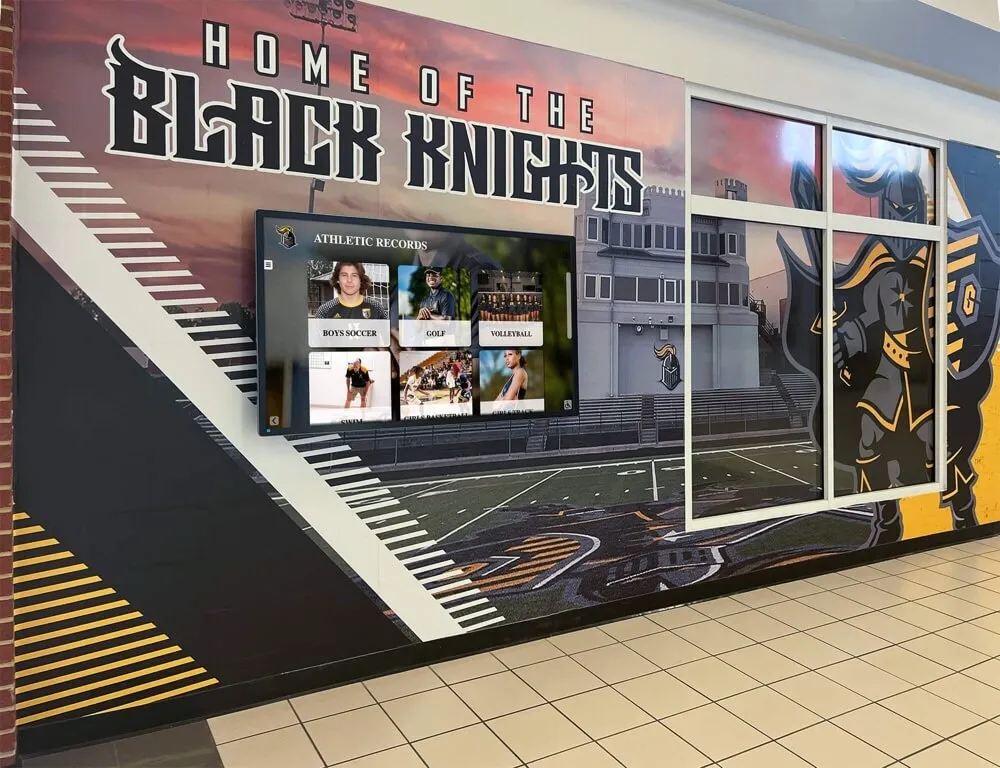
Specialization vs. Multi-Sport Participation
Contemporary youth sports culture increasingly pushes athletes toward single-sport specialization, with year-round training, club participation, and focus on college recruiting advantages. However, research and expert opinion generally favor multi-sport participation during high school years, citing reduced injury risk, broader athletic development, decreased burnout, and improved long-term athletic career outcomes. Winter sports provide crucial opportunities for athletes to maintain conditioning, develop complementary skills, and engage competitively without committing to single-sport specialization that may prove detrimental to long-term development and enjoyment.
Championship Structures and Postseason Competition
Winter sports postseason competition creates the season’s most memorable moments and defines program success in many communities. Understanding championship structures helps appreciate the achievement levels different recognitions represent.
Conference and League Championships
Most high school winter sports begin postseason competition with conference or league championships determining regular season league winners.
Conference Tournament Formats
Basketball typically features conference tournaments, often held at neutral sites or higher-seeded teams’ home courts. Tournament formats usually follow bracket structures with seeding determined by regular season records. Conference tournament championships provide additional recognition beyond regular season titles, though some conferences crown champions based solely on regular season records without tournaments.
Wrestling conference championships typically use tournament formats where all teams compete simultaneously with individual weight class brackets. Team champions emerge through accumulated individual performances, while individual conference champions receive recognition across weight classes. Swimming conference championships bring together league teams for comprehensive meet competition across all events, determining individual event champions and overall team champions based on accumulated points.
State Championship Structures
State championships represent the ultimate achievement in high school winter sports, with formats varying by sport and state association structure.
State Basketball Playoffs
Most states structure basketball playoffs through district, regional, and state tournament brackets. Schools typically enter district tournaments based on regular season records, with winners advancing to regional competition. Regional champions proceed to state tournament venues—often held at collegiate arenas or large neutral sites—where semifinal and championship games determine state champions across different classification divisions based on school enrollment size.
The March Madness-style bracket format creates dramatic single-elimination competition where each game could end a team’s season. This format generates tremendous excitement and unpredictability, with underdog runs to championships becoming legendary moments in school and community history. Learn more about celebrating championship achievements in your program.
State Wrestling Championships
Wrestling state championships typically use tournament formats held at single venues over two or three days. All state qualifiers compete through bracket structures in their respective weight classes, with placement rounds determining champions, runners-up, and medalists through sixth or eighth place depending on state format. Team championships emerge through accumulated individual placement points, creating dual storylines around individual achievement and team success.
Championship wrestling venues create intense environments where thousands of wrestlers, coaches, families, and fans converge for marathon competitions featuring simultaneous matches across multiple mats. The atmosphere combines individual achievement drama with team competition suspense as programs track accumulating points determining which school will claim team championship honors. State championships can explore wrestling recognition ideas to honor grapplers.
State Swimming Championships
Swimming state championships typically feature preliminary and final session formats. Morning preliminary heats determine which swimmers advance to evening championship finals, with top finishers receiving medals and scoring team points. Championship meets often span two days, with different event groups each day. Relay events create particularly exciting moments as team performance combines individual excellence into collaborative efforts.
Other Winter Sports Championships
Ice hockey state championships typically follow bracket tournament formats similar to basketball, with semifinal and championship games determining state champions. Indoor track state championships bring together top qualifiers for comprehensive meets across all events, determining individual champions and team champions through accumulated points. Competitive cheerleading, gymnastics, bowling, and skiing/snowboarding each feature state championship formats specific to their competitive structures and judging requirements, all providing definitive end-of-season achievement recognition.
Training and Preparation for Winter Sports
Success in winter sports requires dedicated training addressing the specific physical, technical, and mental demands each sport presents.
Pre-Season Conditioning and Preparation
Most successful winter sports programs begin preparation well before official practice start dates.
Off-Season Training Programs
Elite winter sports programs typically offer structured off-season training helping athletes maintain conditioning and develop skills between competitive seasons. Summer basketball camps and conditioning programs prepare players for the upcoming winter season. Wrestling programs may offer summer clubs, technique camps, and strength training. Swimmers typically train year-round through club programs or school-sponsored conditioning. Off-season training creates significant competitive advantages, though it also raises concerns about overtraining, burnout, and reduced multi-sport participation as athletes face pressure to commit to single sports year-round.
Strength and Conditioning Focus
Winter sports demand sport-specific physical preparation including explosive power for basketball jumping and quick movements, strength and endurance for wrestling’s intense physical demands, muscular endurance and cardiovascular capacity for swimming’s sustained efforts, and core strength and stability for sports like gymnastics and skiing. Many schools implement strength and conditioning programs supervised by certified specialists, ensuring athletes develop appropriate physical capacities while minimizing injury risk through proper technique and progressive loading.
In-Season Training and Competition Balance
Balancing practice preparation with competition performance presents ongoing challenges throughout winter seasons.
Practice Structures and Skill Development
Effective winter sports practices address multiple development areas including technical skill refinement specific to sport requirements, tactical understanding and strategic preparation, conditioning maintenance during competitive season, and mental preparation for high-pressure competition. Coaches must balance these elements while managing academic demands, preventing overtraining, and maintaining athlete engagement and enjoyment throughout long seasons.
Competition Intensity Management
Winter sports compressed schedules—with some teams competing three times weekly—require careful attention to recovery, rest, and injury prevention. Smart programs implement recovery protocols including proper warm-up and cool-down procedures, nutrition guidance supporting energy demands, sleep education emphasizing recovery importance, and injury prevention exercises addressing common sport-specific issues. Balancing competitive intensity with sustainable training loads separates programs that peak at season’s end from those that fade due to accumulated fatigue, burnout, or injury.
Recognizing and Celebrating Winter Sports Excellence
How schools recognize winter sports achievements significantly affects program culture, athlete motivation, and community engagement with winter athletics.
Traditional Recognition Approaches
Schools have long employed various methods to celebrate winter sports success, though traditional approaches face limitations in today’s environment.
Physical Displays and Banners
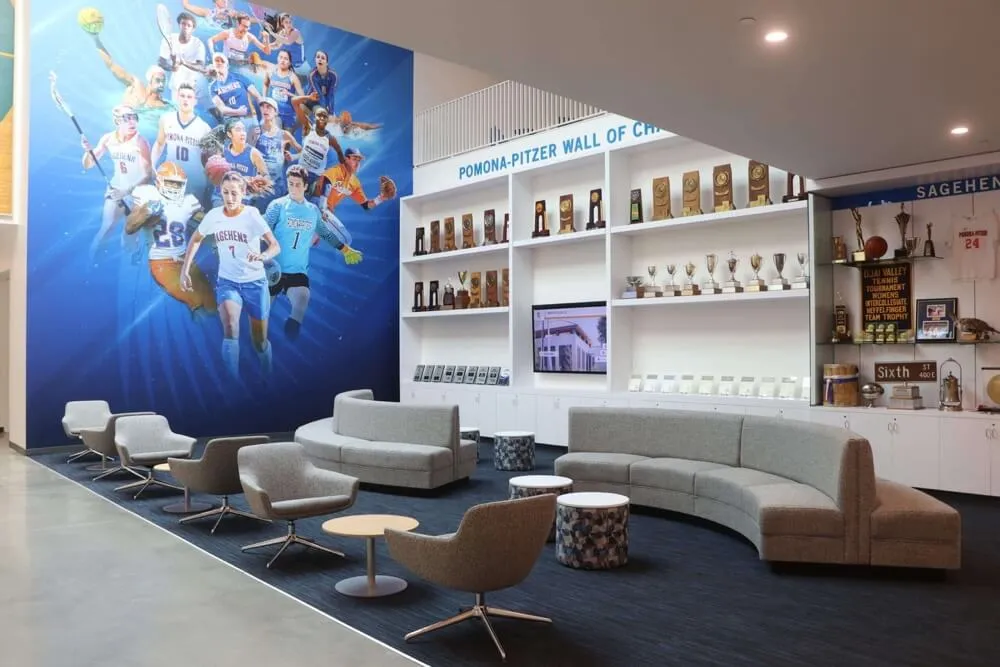
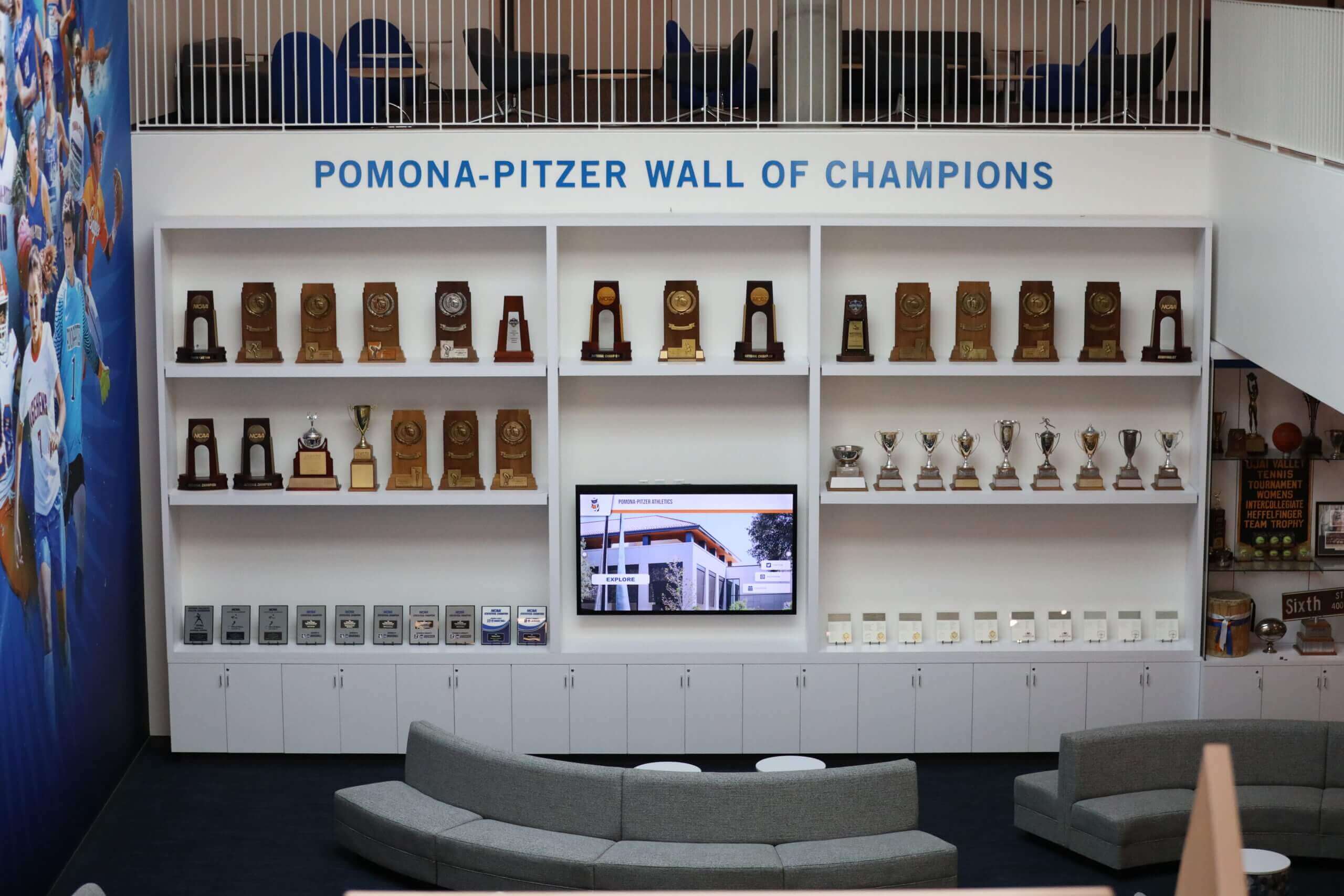
Traditional winter sports recognition includes championship banners hung in gymnasiums, individual and team photos in trophy cases or hallway displays, record boards tracking program statistical leaders, and plaques recognizing all-conference and all-state athletes. These physical displays provide visible reminders of program excellence, creating environments where current athletes see standards established by predecessors and aspire to join the ranks of recognized performers. However, physical displays face space limitations, static presentations that may feel dated, difficulty accommodating comprehensive historical information, and maintenance challenges as materials age or deteriorate.
Awards Banquets and Ceremonies
End-of-season awards banquets provide formal recognition opportunities where teams gather with families to celebrate seasonal achievements. These events typically include coach speeches reviewing season highlights, individual award presentations recognizing statistical leaders and character exemplars, team awards for championships and significant accomplishments, and senior recognition honoring graduating athletes. While banquets create meaningful moments, they’re limited to single events without lasting visibility, may exclude community members unable to attend specific dates and times, and lack ongoing presence reinforcing achievements throughout subsequent years.
Modern Digital Recognition Solutions
Contemporary schools increasingly enhance or replace traditional recognition with digital solutions addressing limitations of physical displays while providing capabilities previous generations lacked.
Interactive Digital Displays
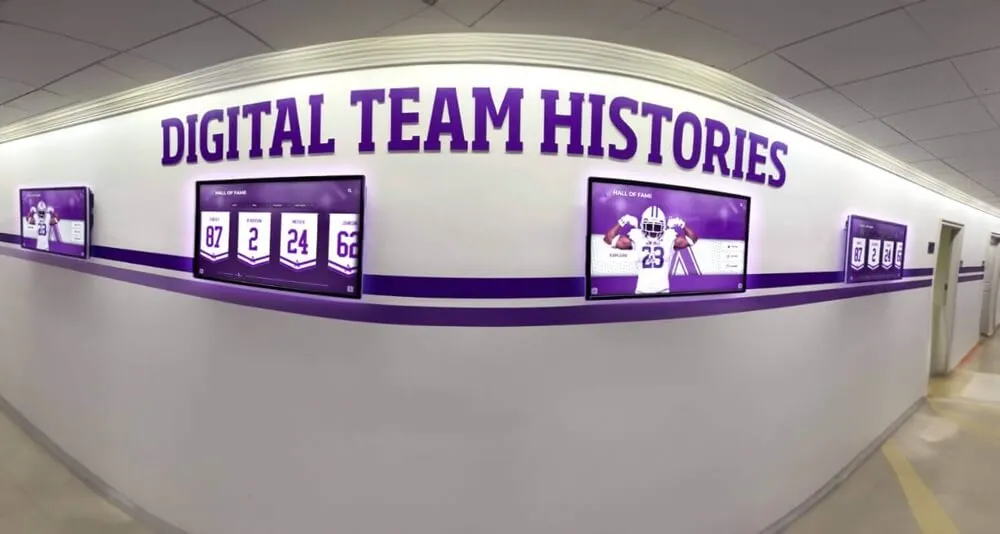
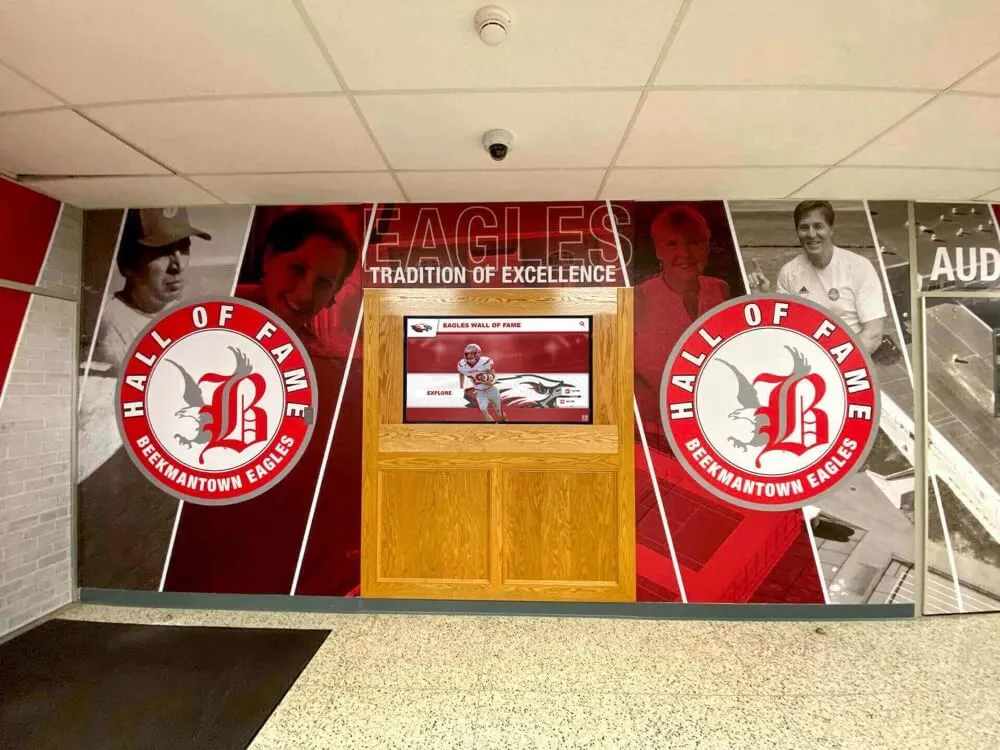
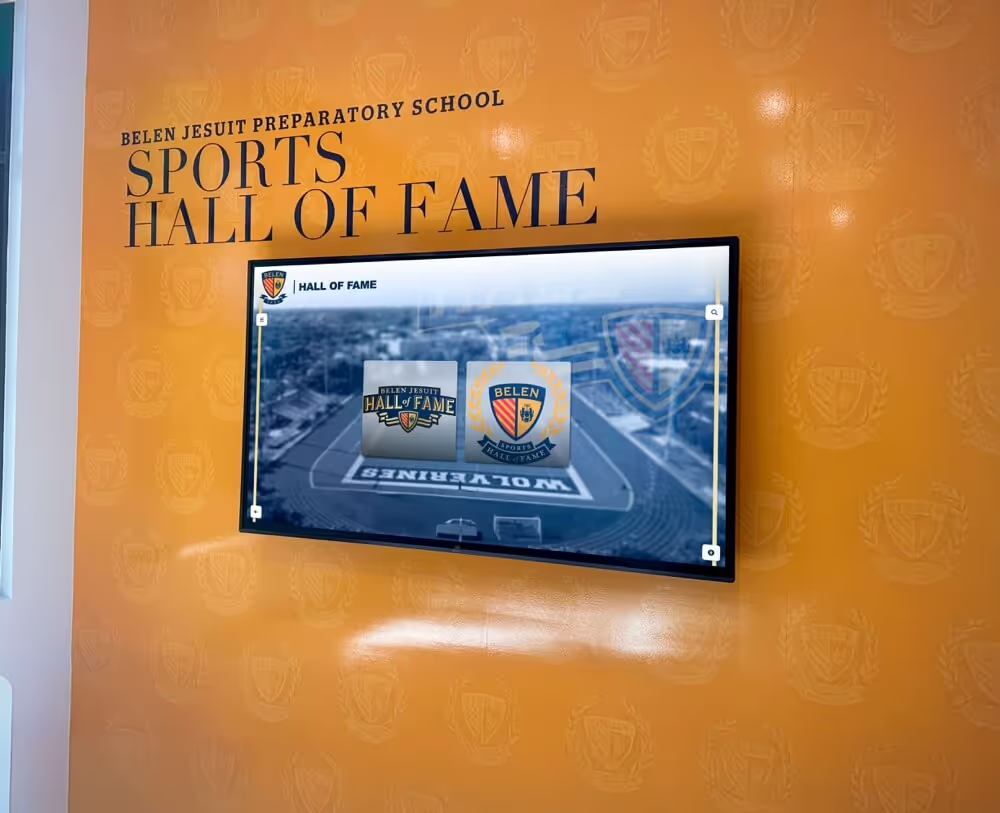
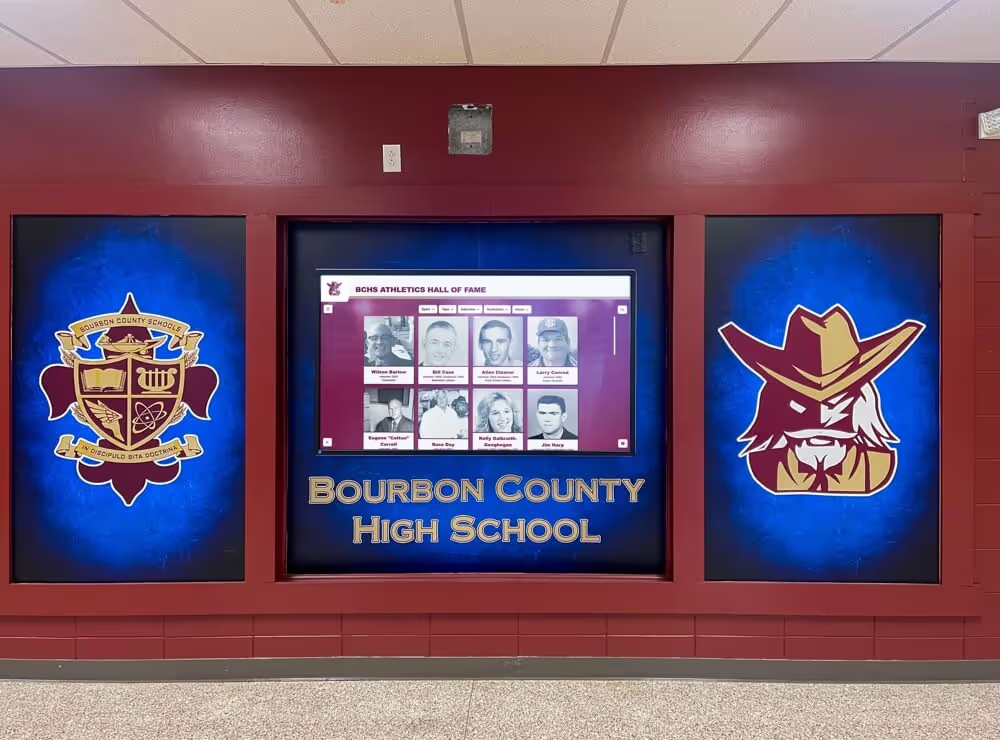
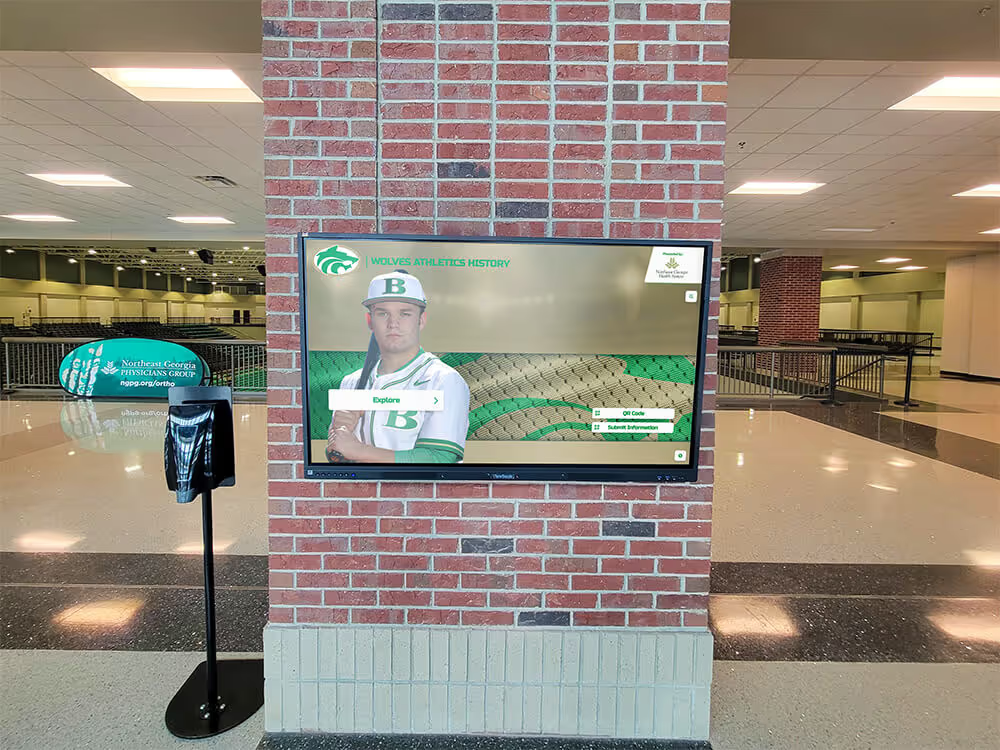
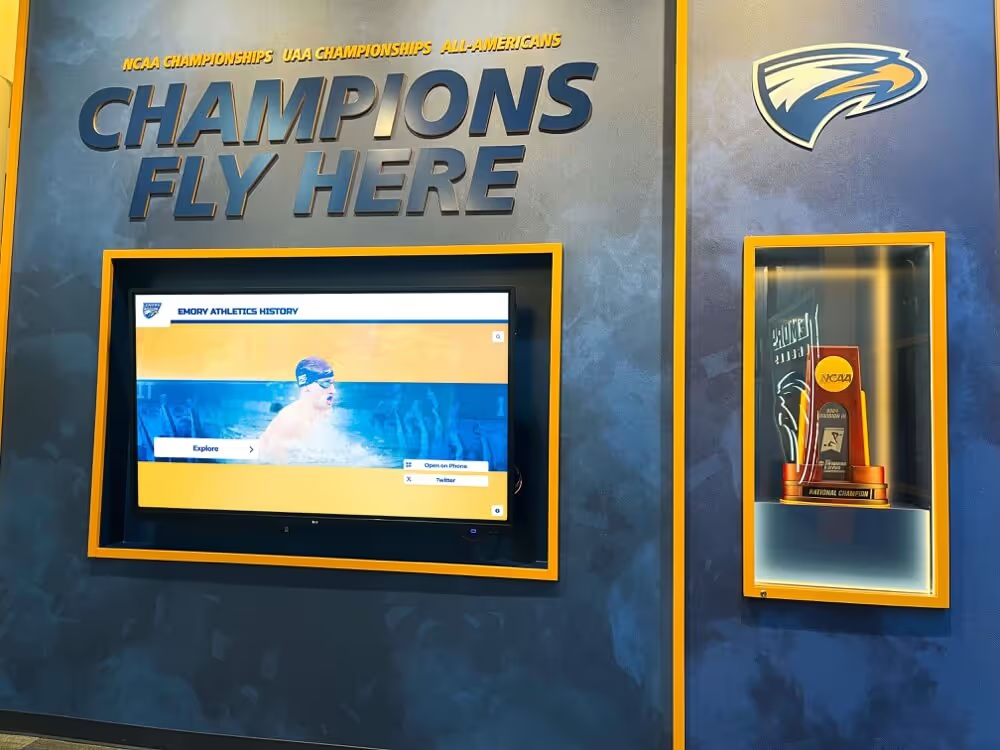
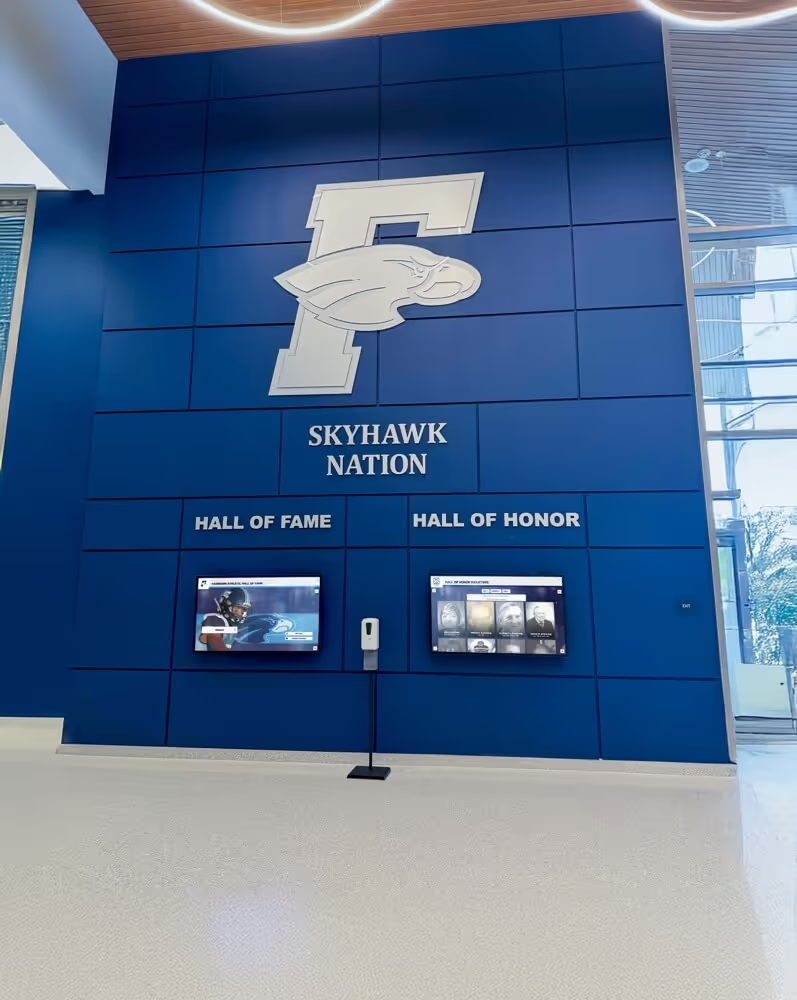
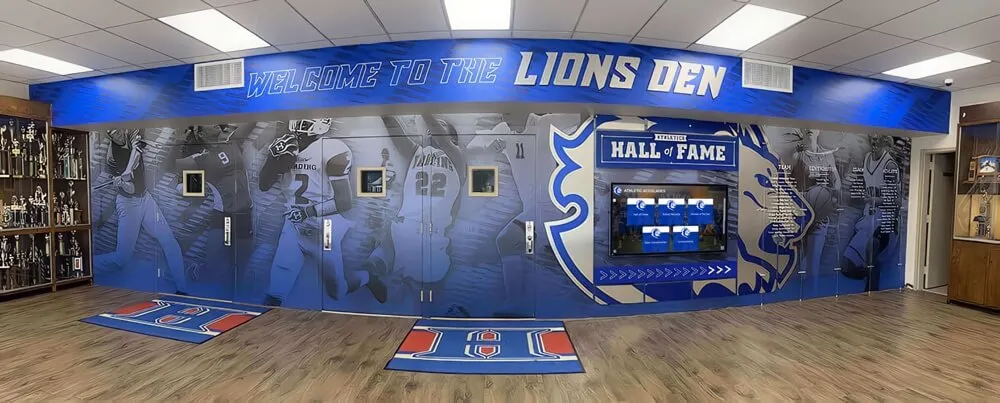
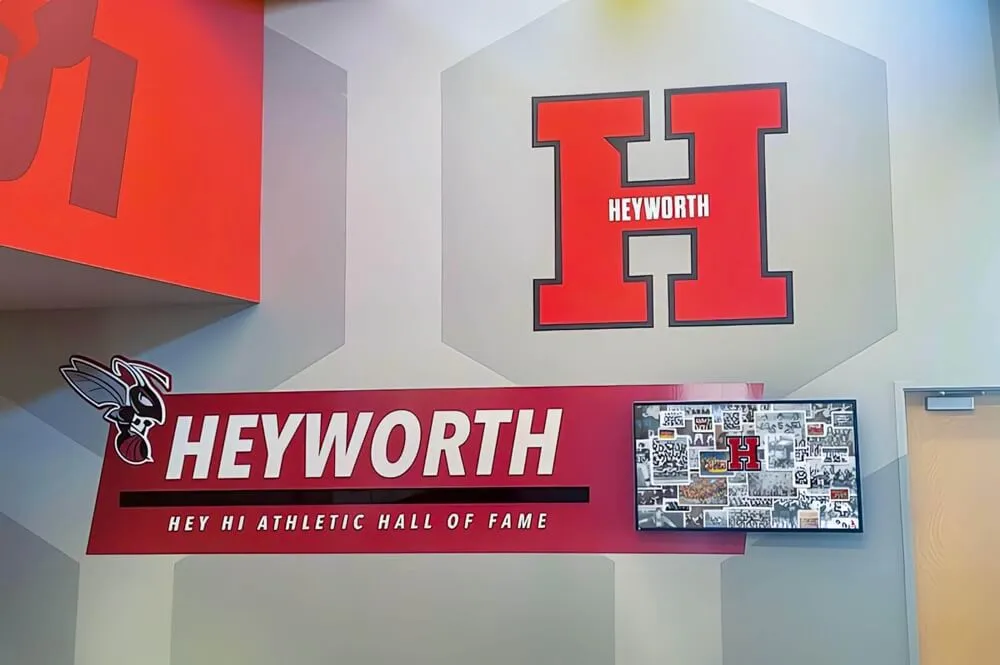
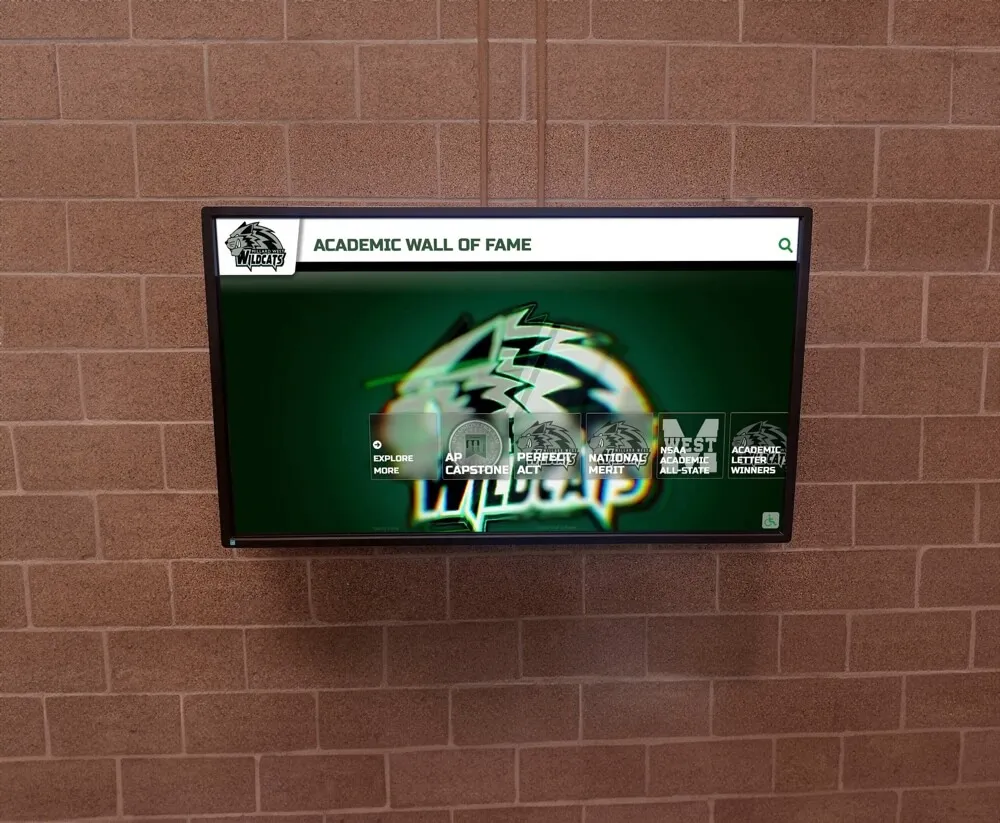
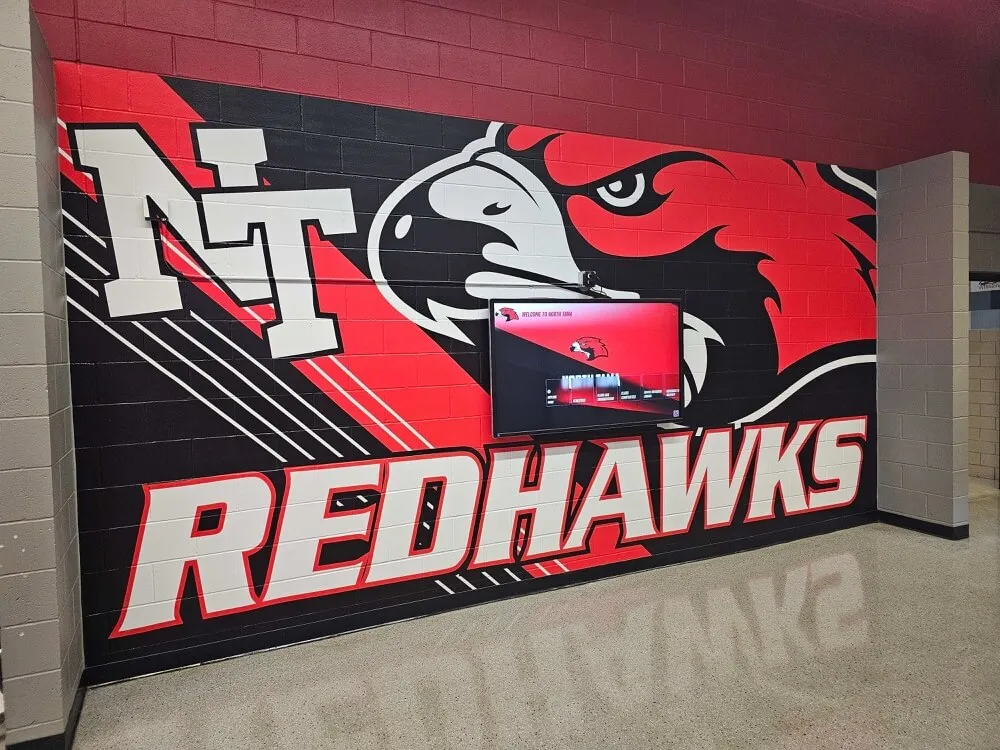
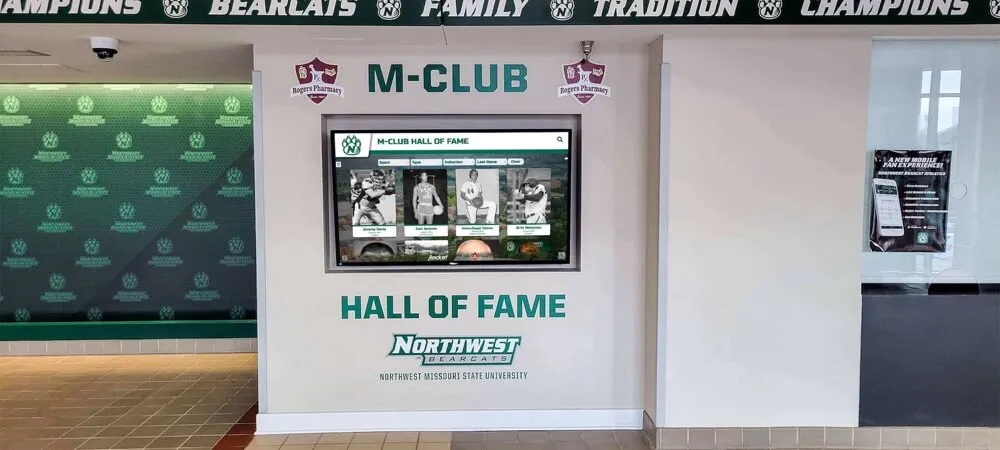
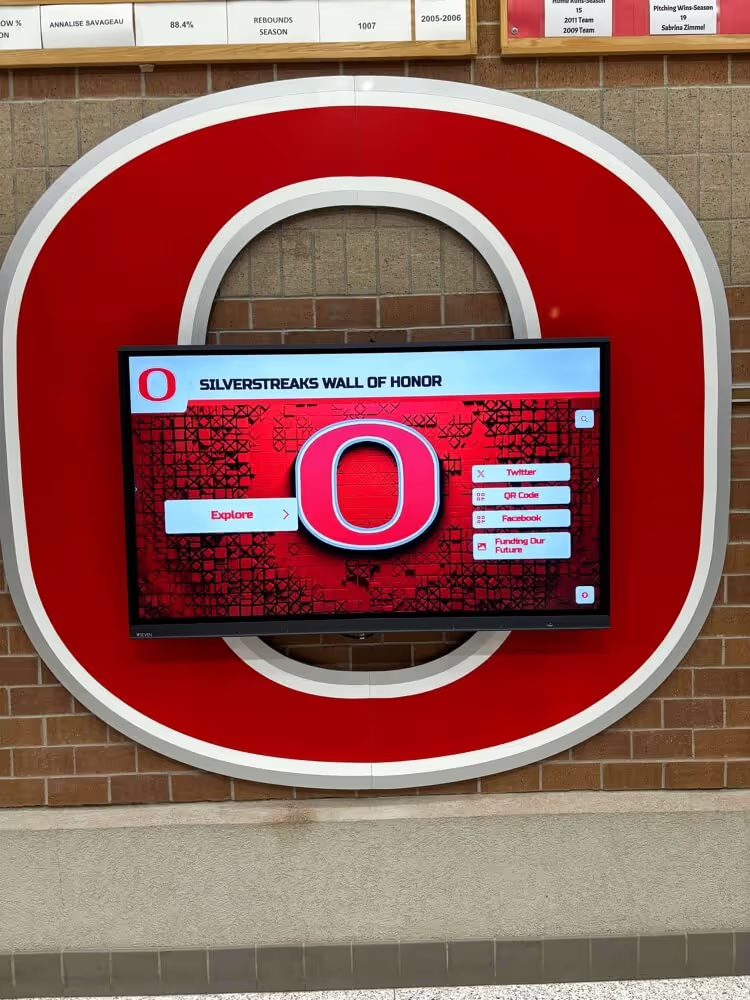
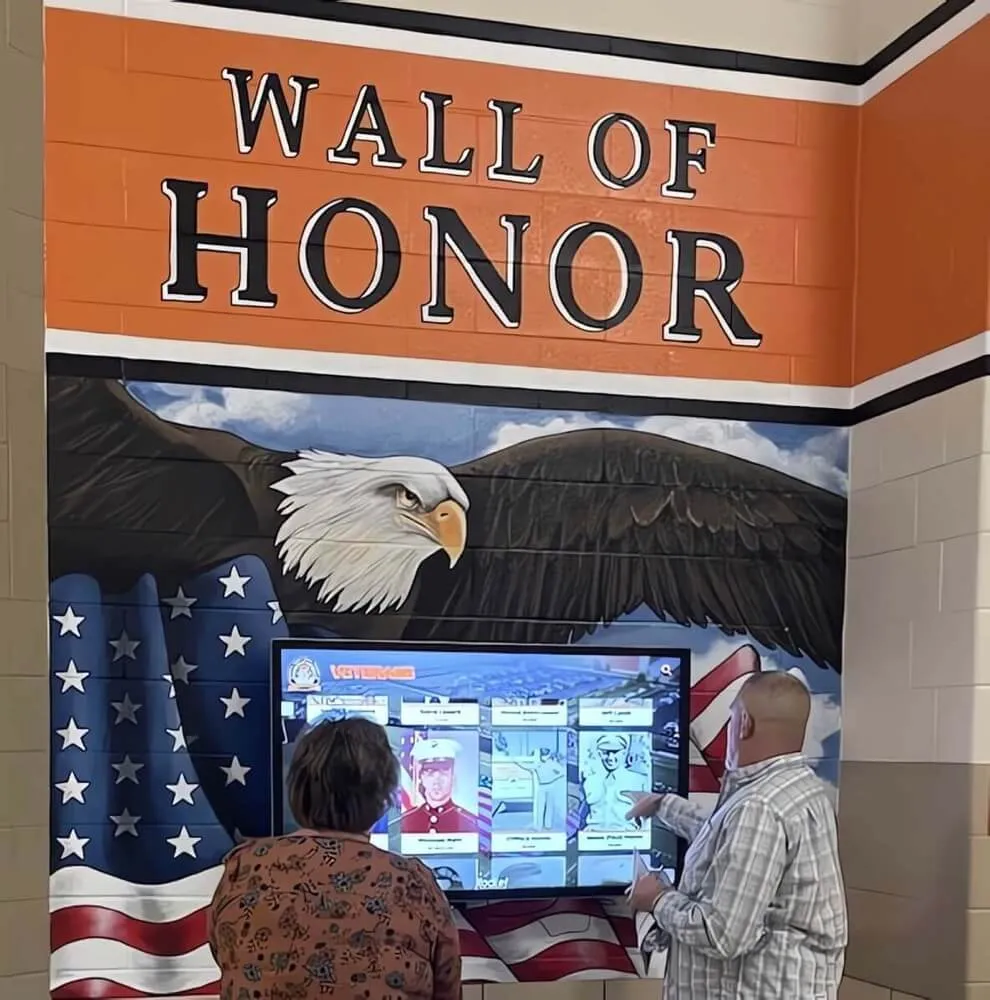
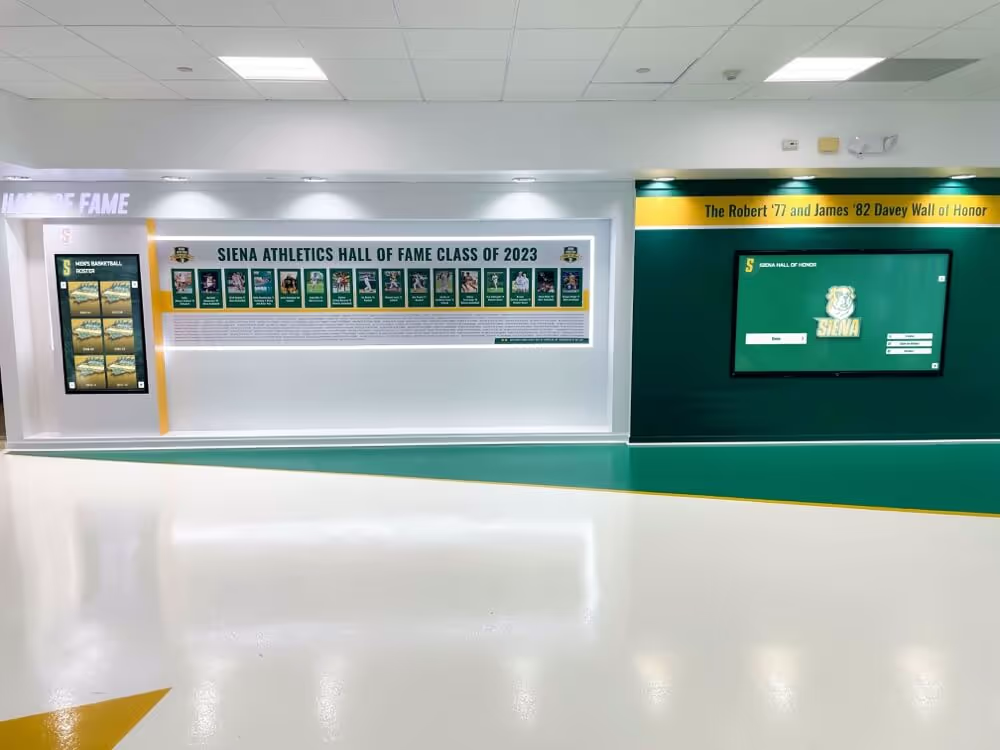
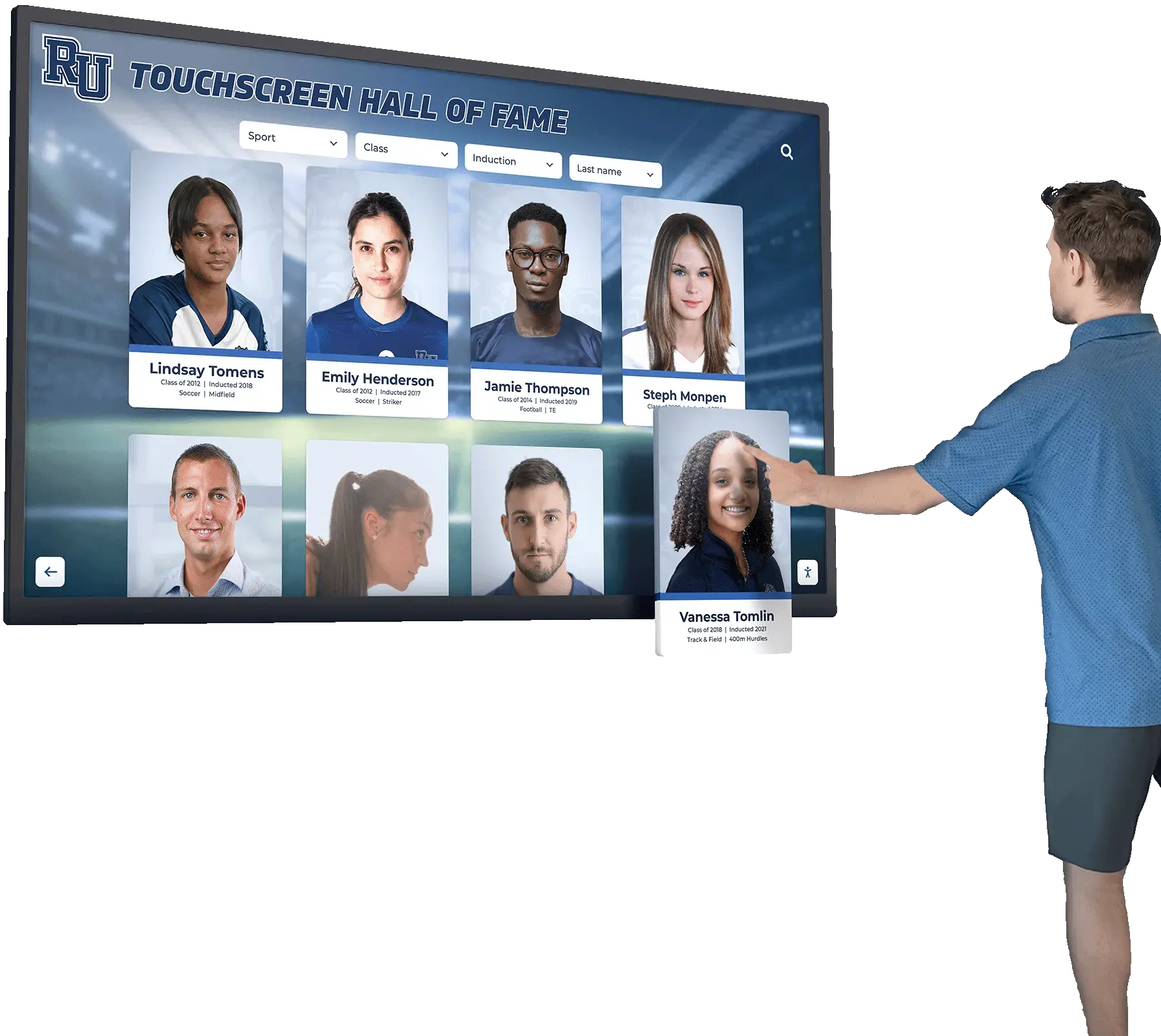
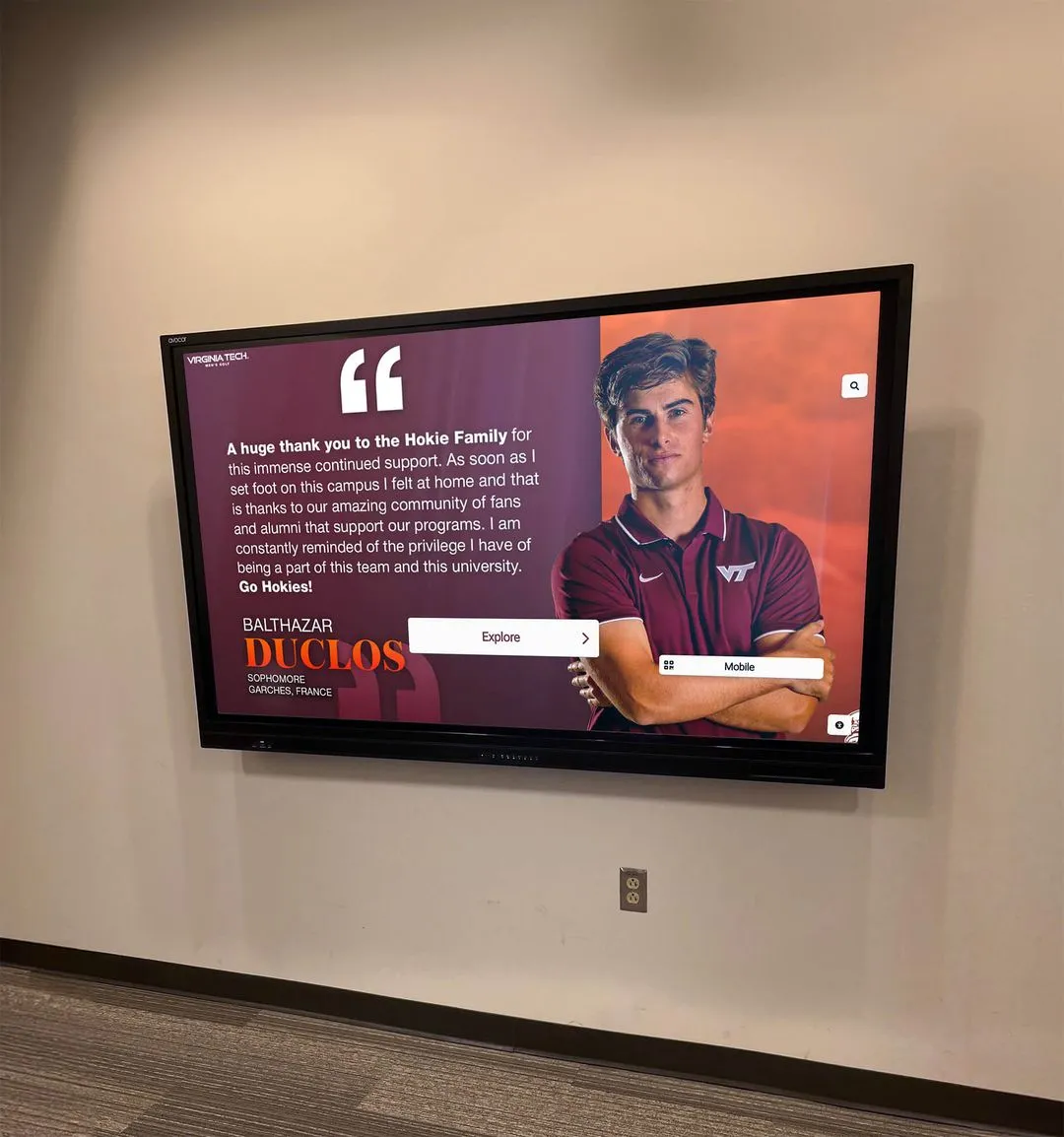
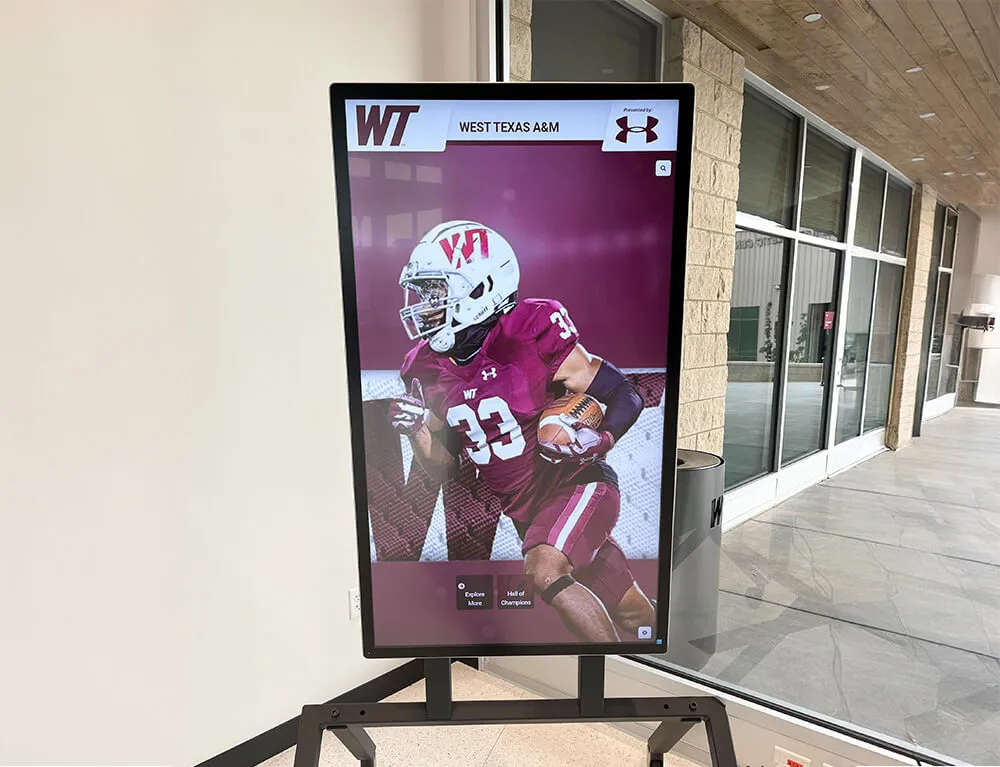
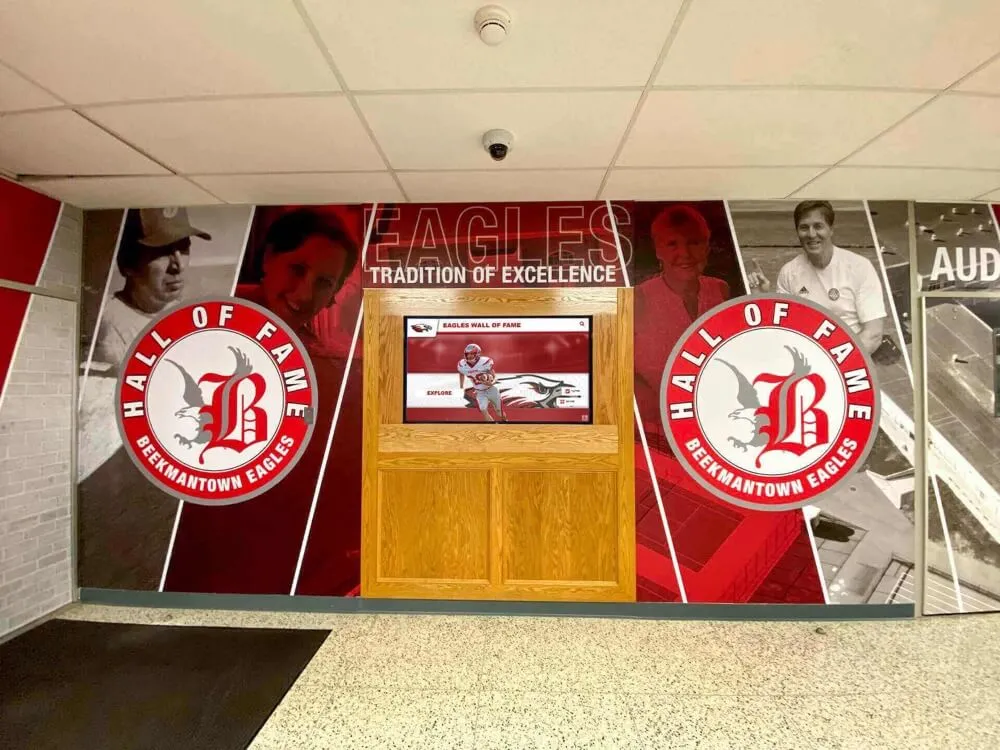
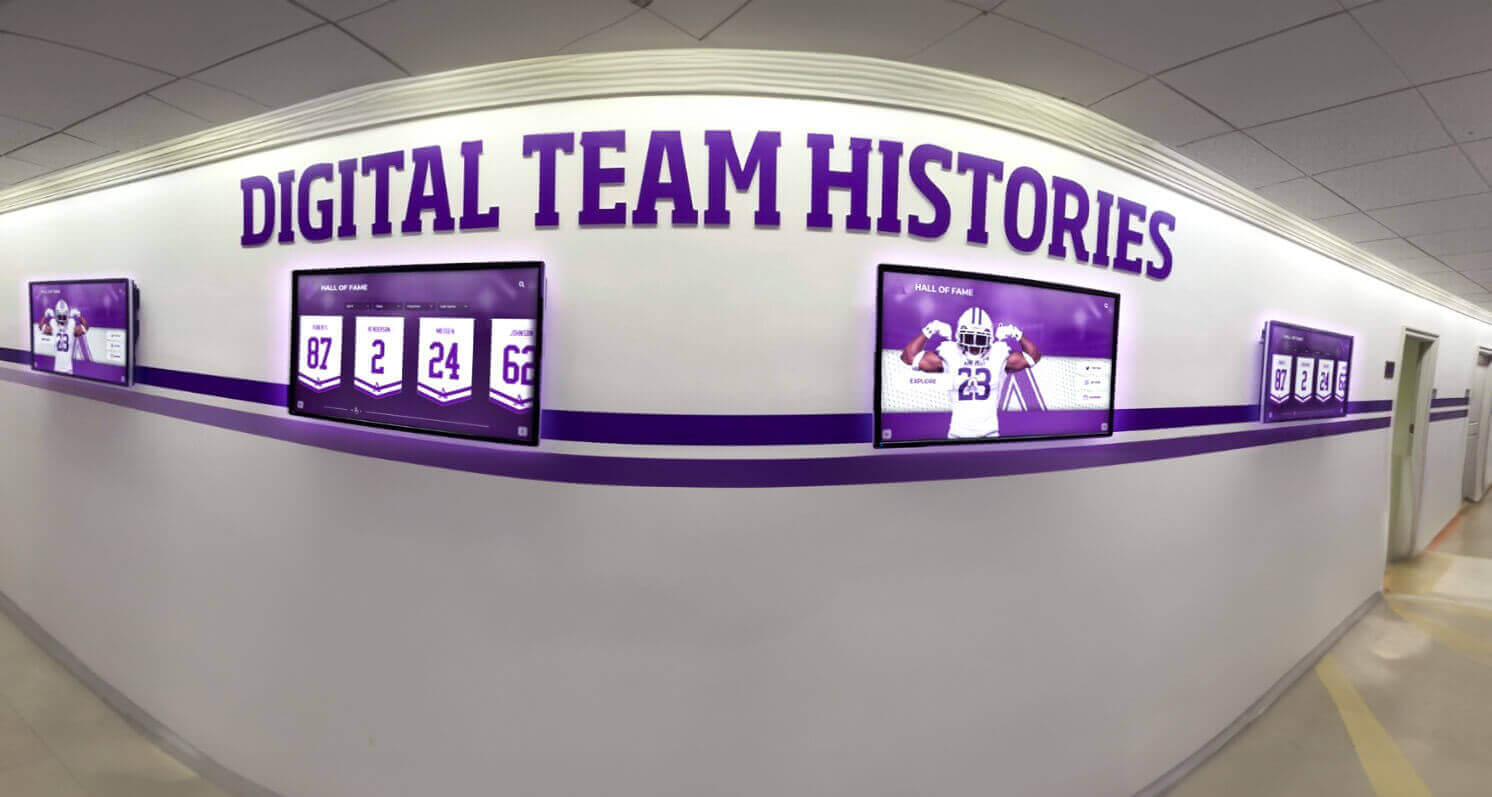
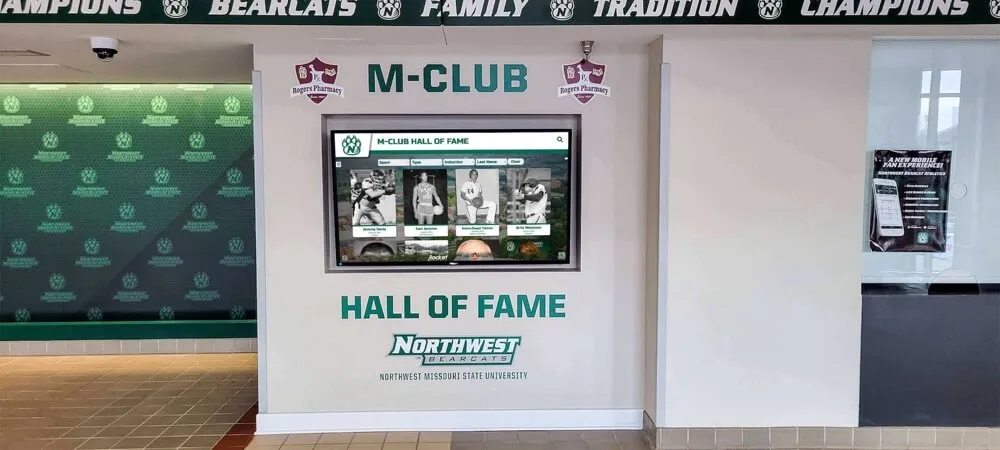
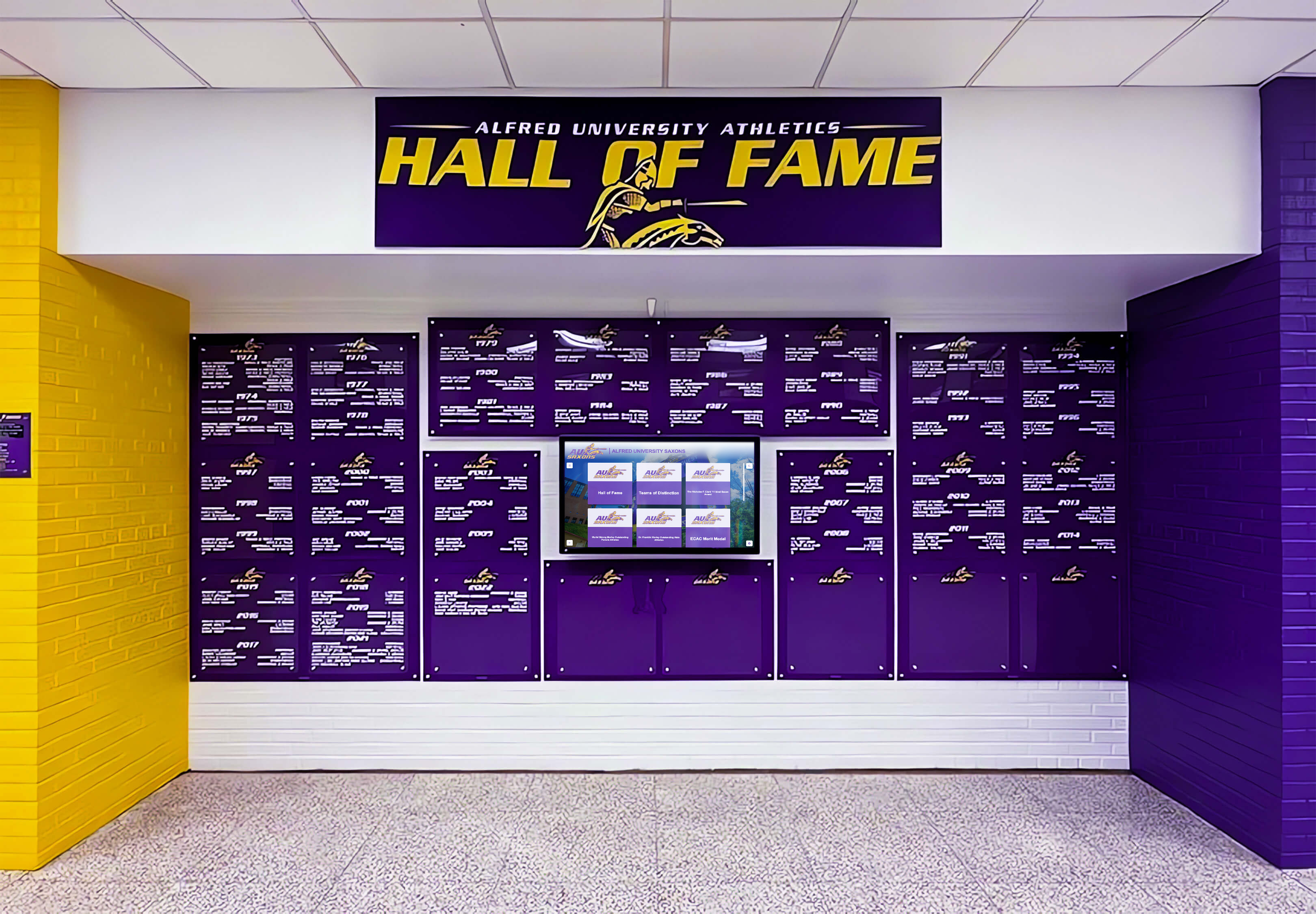
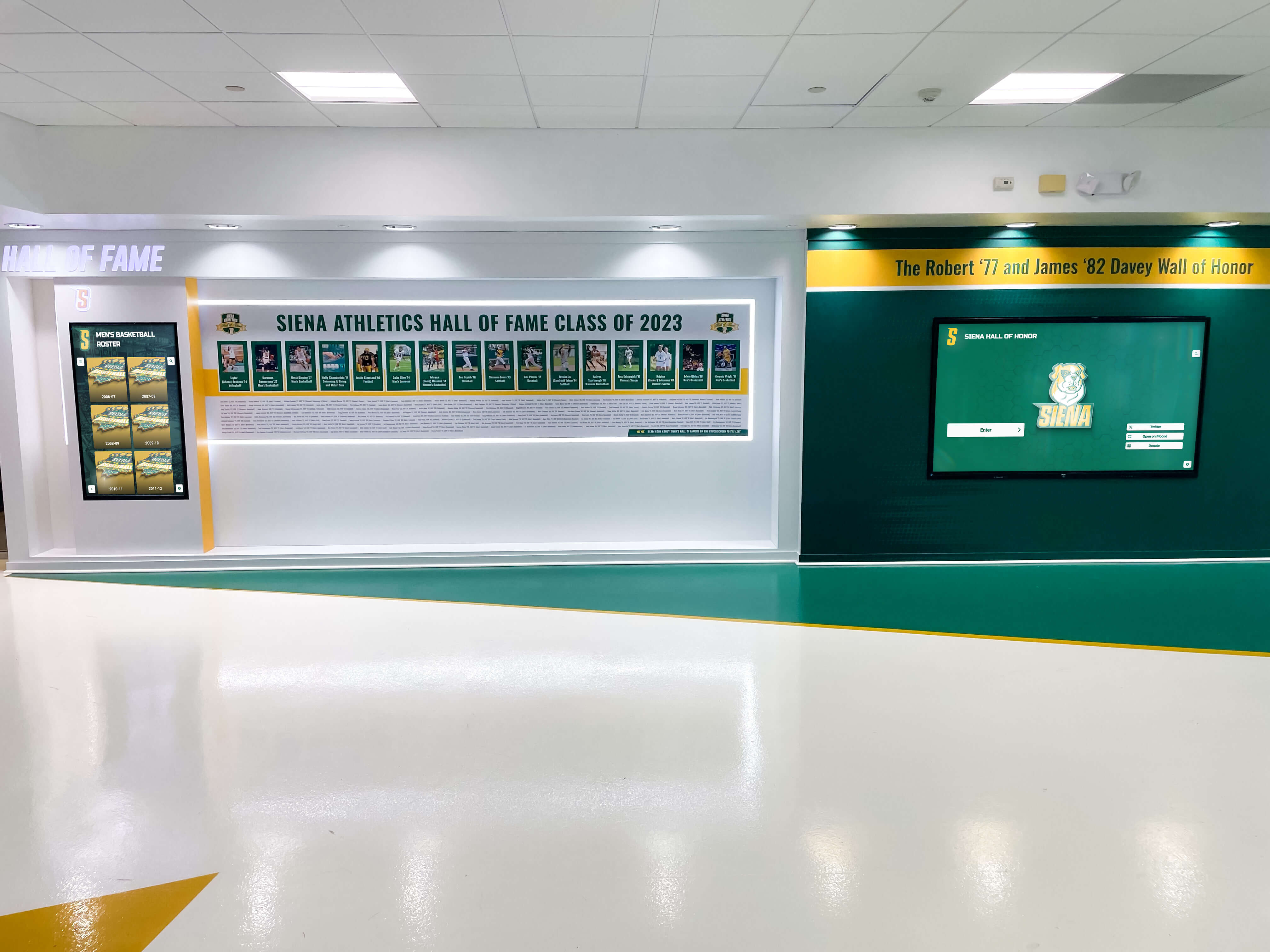
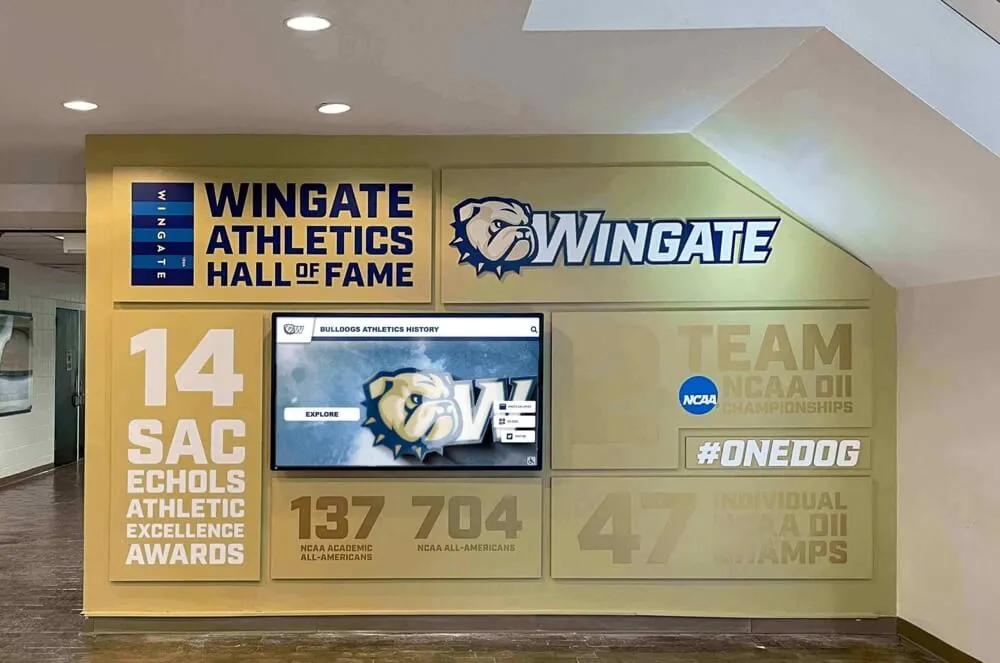
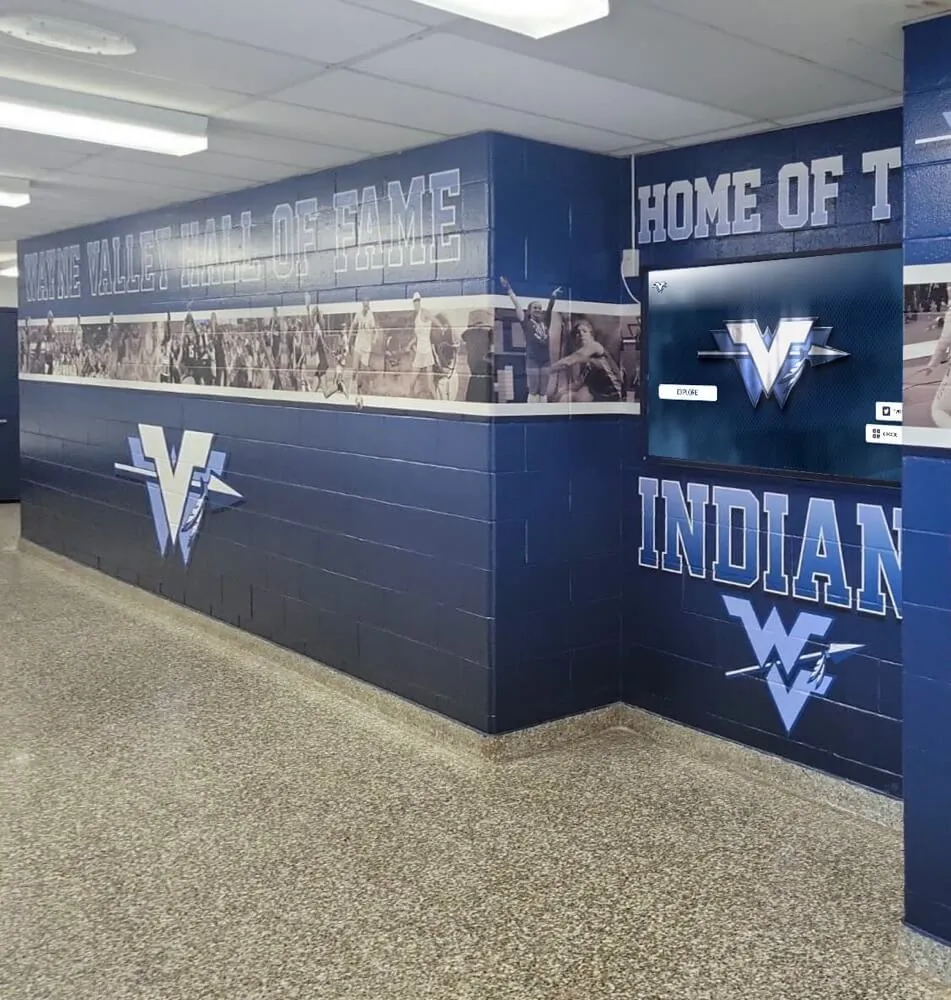
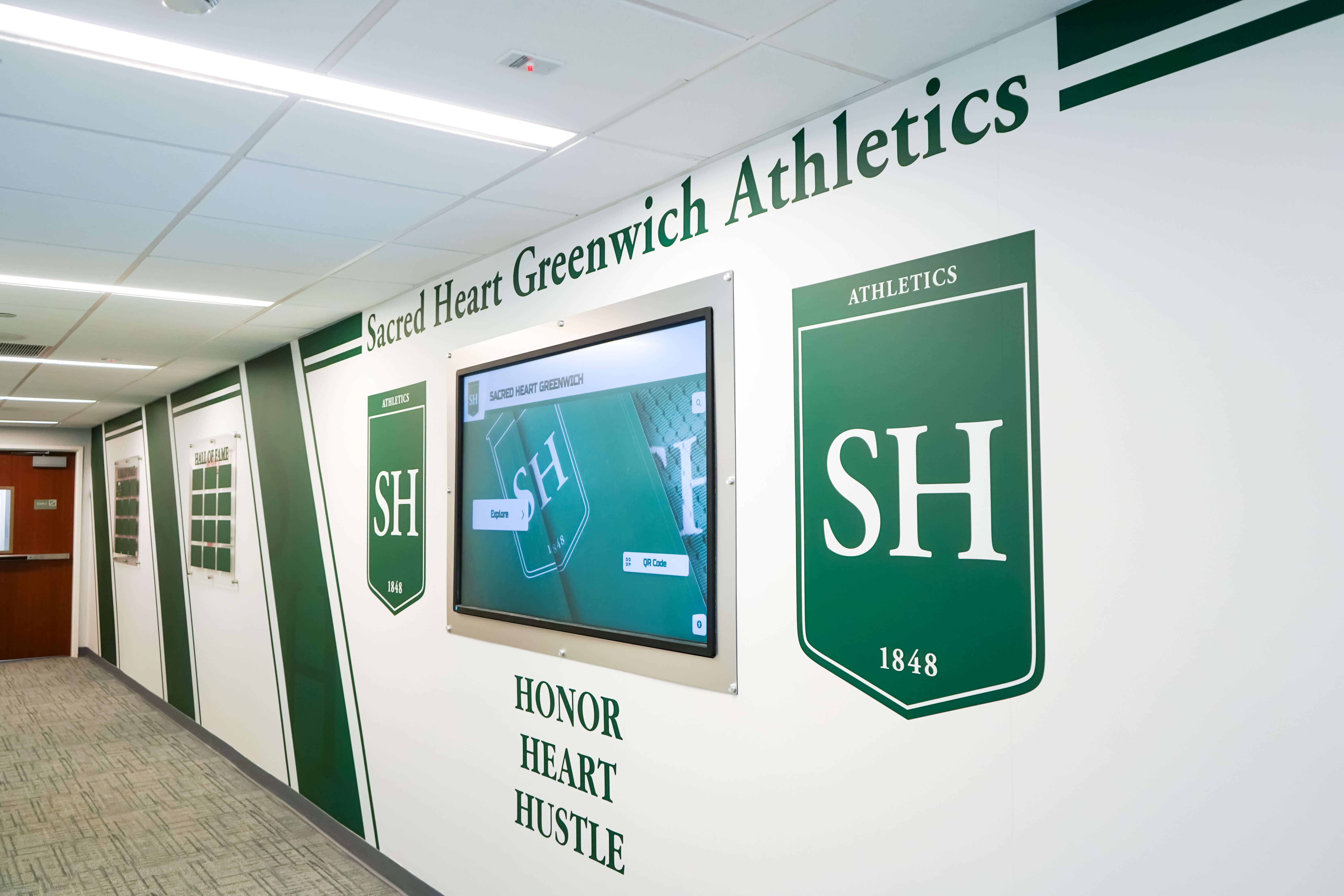
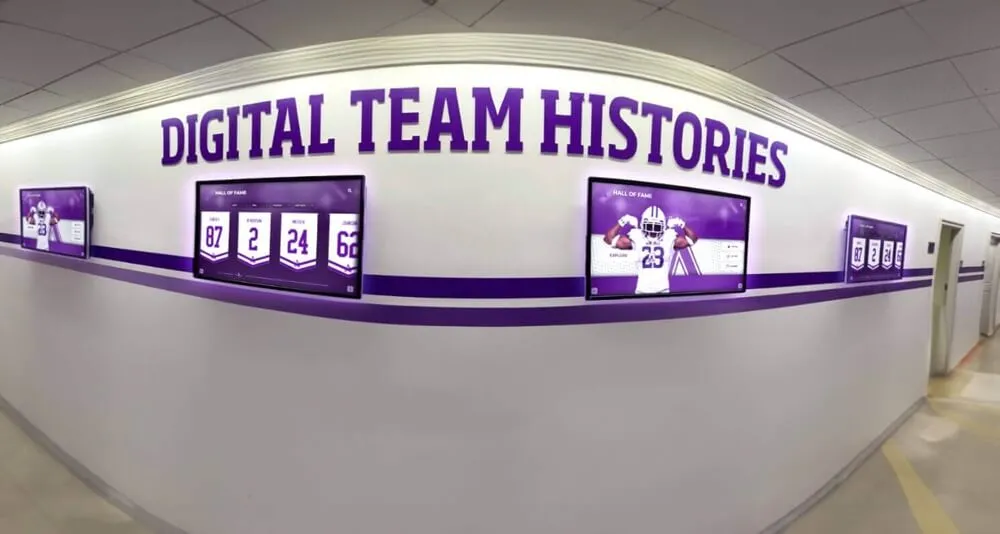
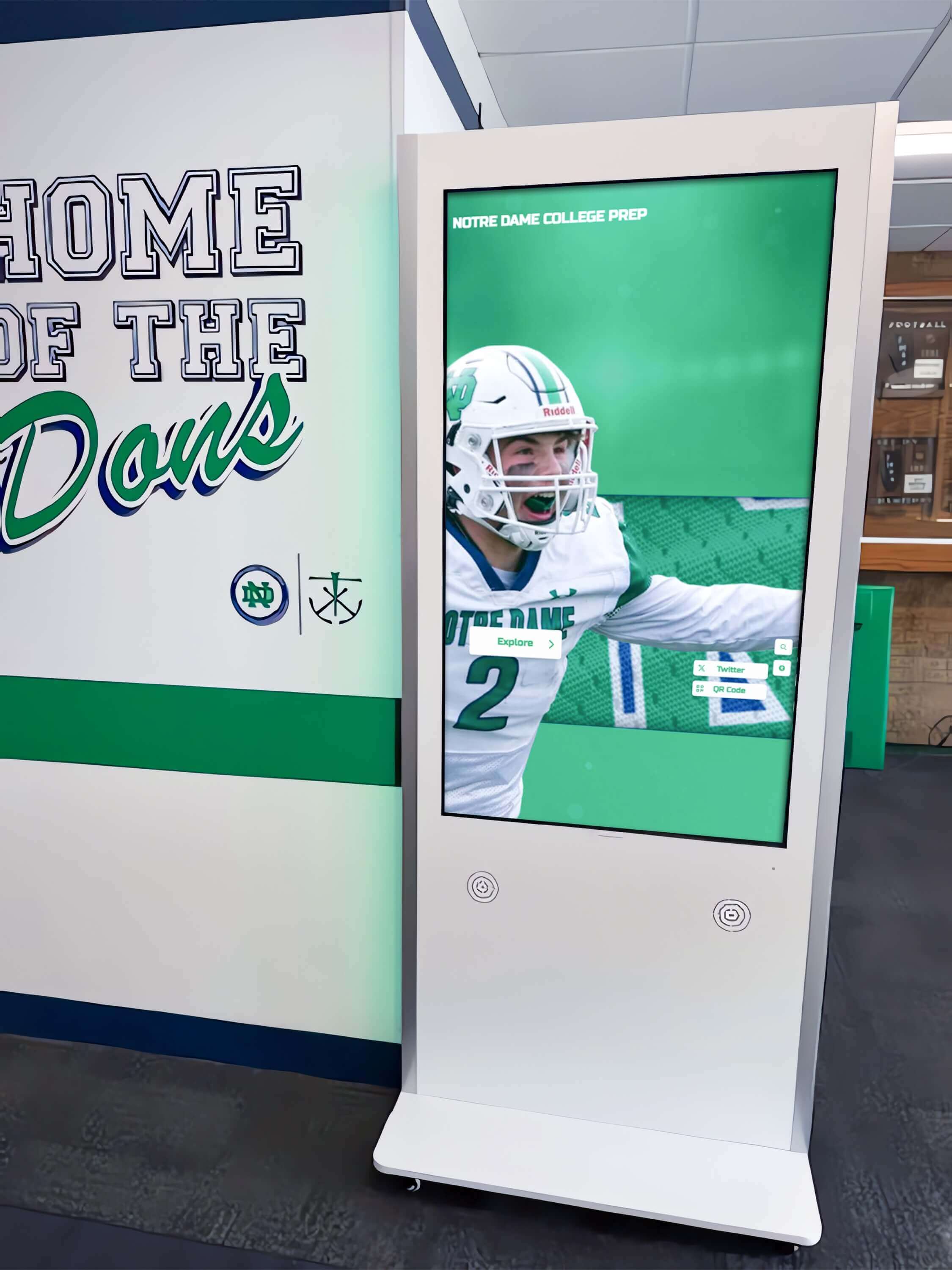
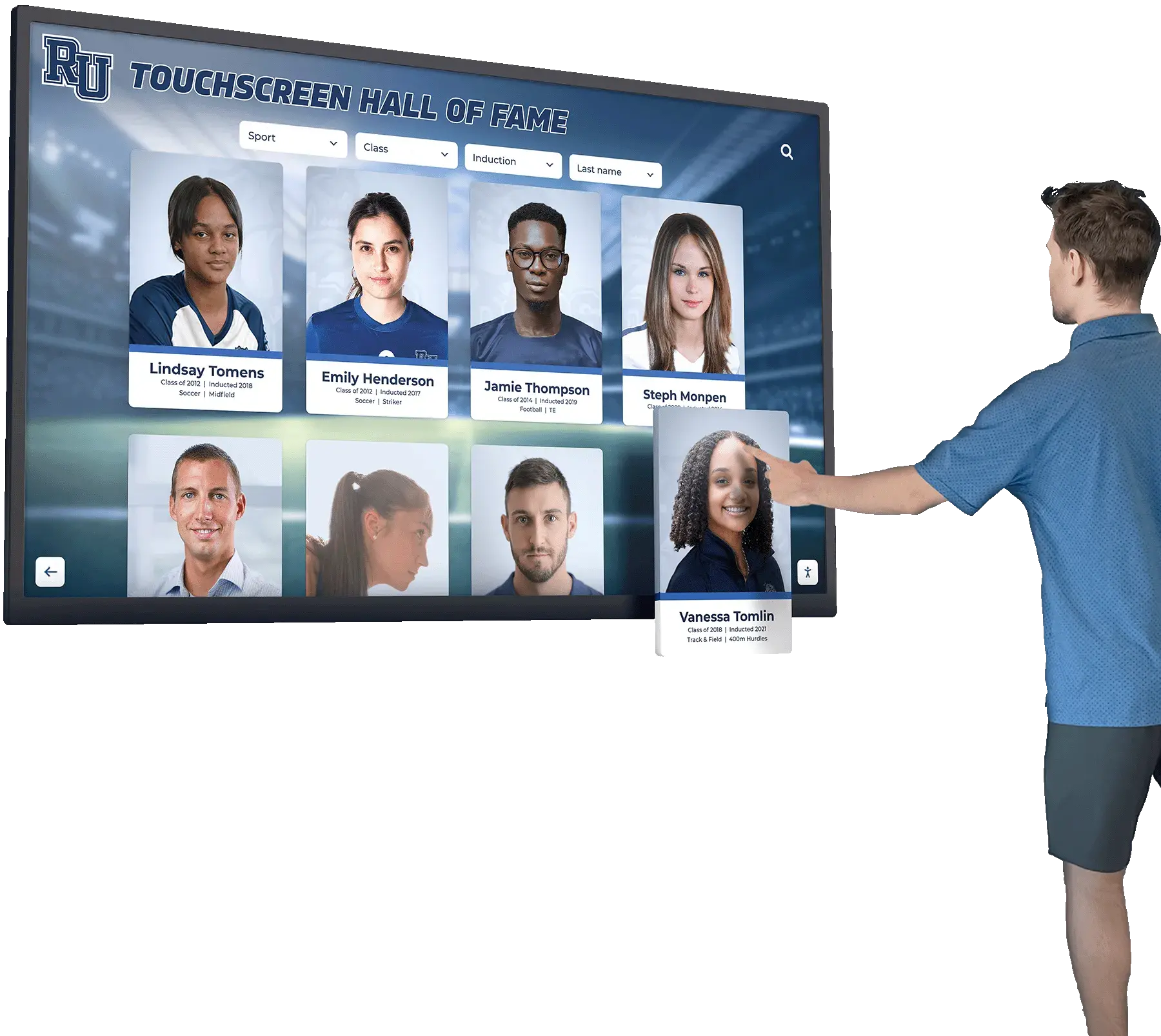
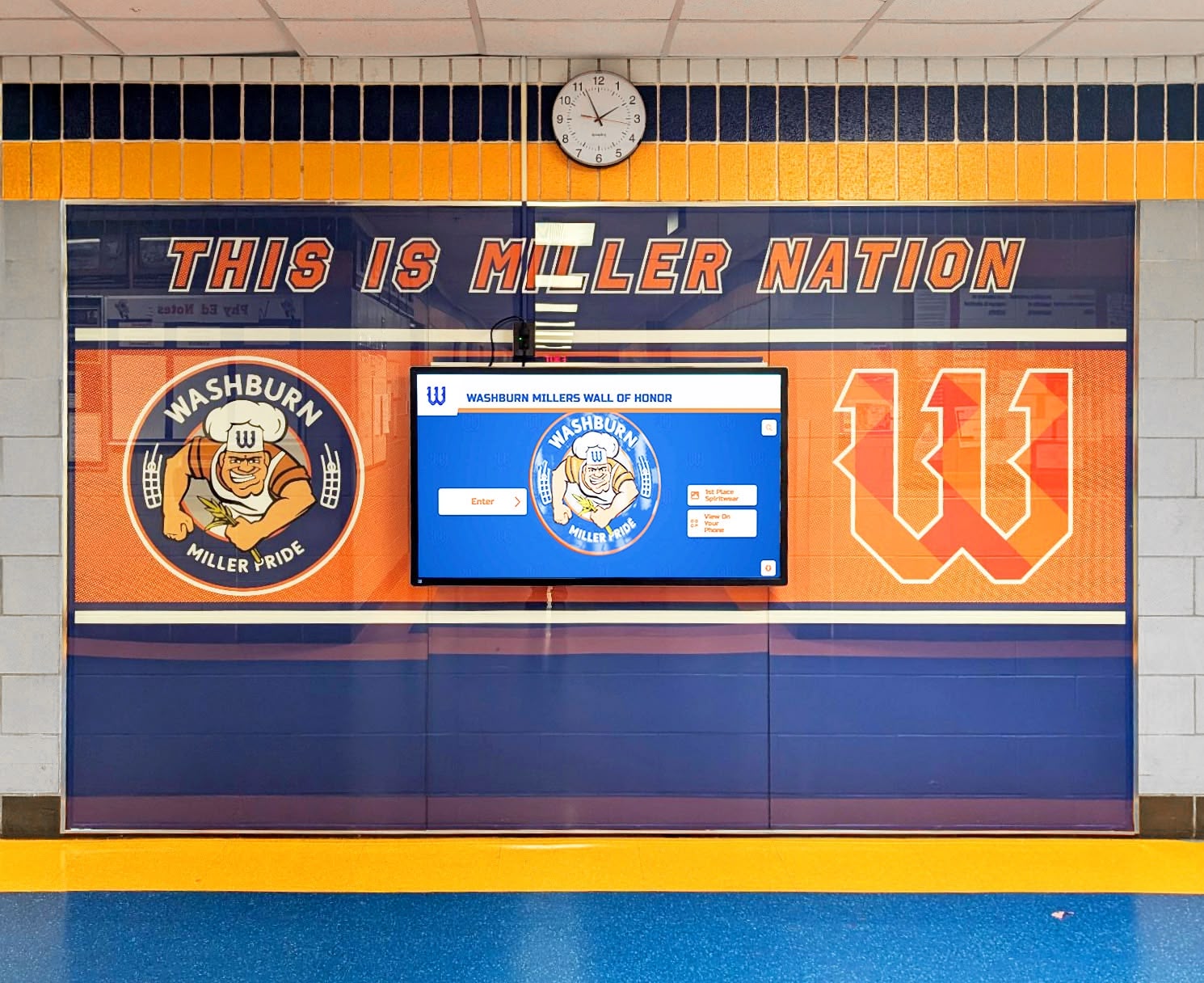
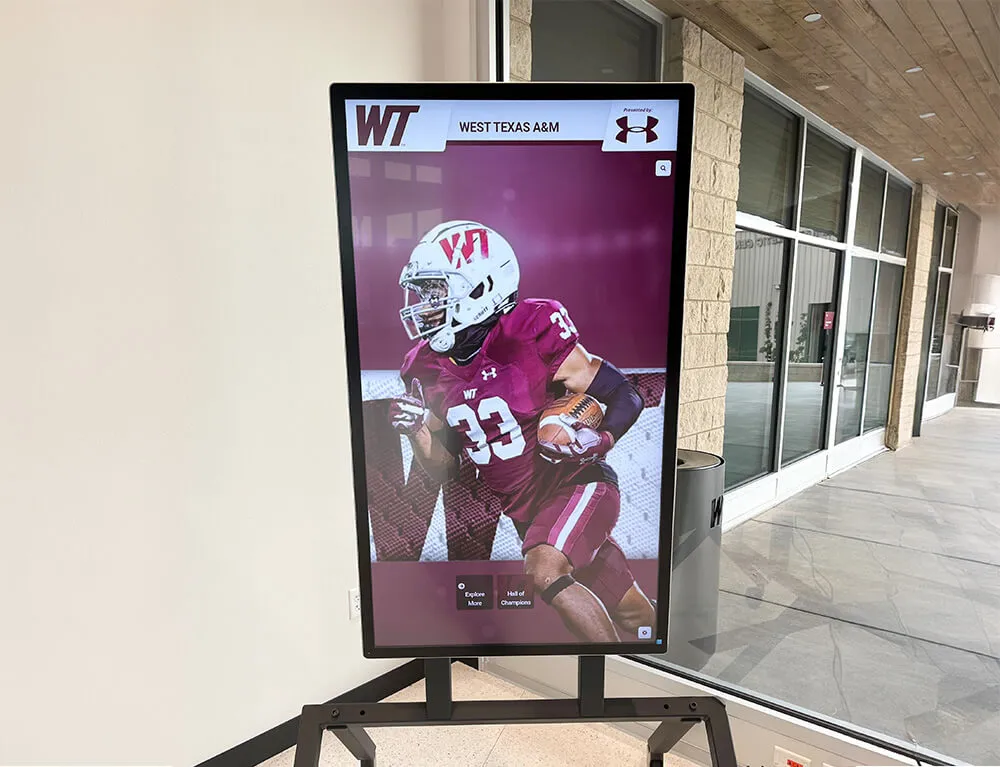
Purpose-built digital recognition platforms enable schools to showcase winter sports achievements more comprehensively and engagingly than traditional methods allow. Interactive touchscreen displays can feature unlimited athlete profiles without space constraints, comprehensive statistical records across program history, photo galleries and video content capturing championship moments, searchable databases enabling exploration by year, sport, or athlete name, and regular updates adding current season achievements without physical modification.
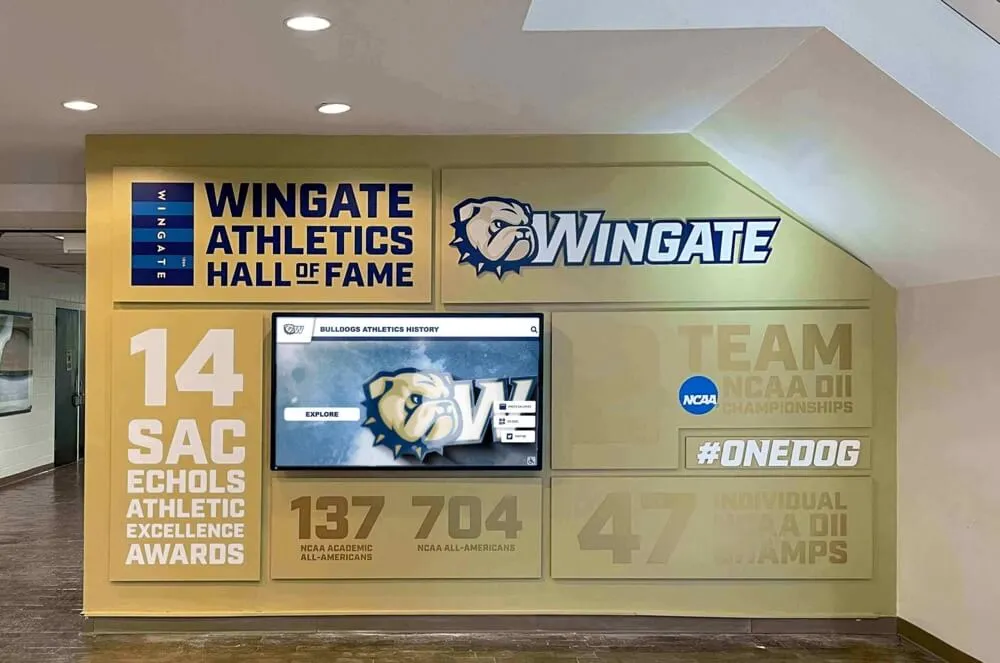
These displays transform underutilized hallway and lobby spaces into engagement centers where students explore athletic history during passing periods, prospective families learn about program excellence during visits, alumni reconnect with their own competitive experiences, and community members celebrate student-athlete achievements. The interactive nature encourages exploration and creates memorable experiences that passive plaques cannot match.
Social Media and Digital Promotion
Schools leverage social media platforms to celebrate winter sports achievements in real-time, extending recognition beyond those physically present at competitions. Effective digital promotion includes live game updates and score reporting, athlete spotlight features throughout seasons, championship celebration posts capturing trophy presentations and team reactions, video highlight compilations showcasing impressive performances, and engagement campaigns inviting community congratulations and support. Strategic social media use builds community awareness of winter sports programs while creating shareable content that athletes, families, and supporters can preserve and revisit.
Web-Based Recognition Platforms
Digital recognition extends beyond physical school locations through web platforms enabling families to share achievements with distant relatives, alumni to explore current team rosters and reconnect with program history, college coaches to evaluate prospective recruits, and media to access information for coverage and promotion. Web accessibility amplifies recognition impact while strengthening connections between schools and broader communities. Learn more about comprehensive approaches to student recognition across seasons.
Rocket Alumni Solutions for Winter Sports Recognition
While generic digital signage can display information, specialized platforms like Rocket Alumni Solutions provide capabilities designed specifically for educational athletic recognition and historical preservation.
Comprehensive Winter Sports Documentation
Rocket’s platform enables schools to preserve complete winter sports history including every team roster across program history, individual athlete profiles with statistics and achievements, championship team recognition with photos and narratives, record performances and milestone achievements, and all-conference and all-state honorees across decades. This comprehensive documentation creates institutional memory preserving program excellence for current and future generations while enabling easy exploration of historical achievements that build program pride and tradition.
Multi-Sport Integration
Effective recognition systems showcase achievements across all athletic seasons rather than isolating winter sports from fall and spring programs. Rocket enables unified recognition featuring athletes’ complete athletic careers across multiple sports and seasons, school-wide record boards and achievement tracking, comprehensive statistical databases spanning all sports, and cross-references showing how athletes contributed across different competitive contexts. This integrated approach celebrates well-rounded athletic excellence while acknowledging that many schools’ most successful athletes compete across multiple seasons.
Intuitive Content Management
Busy athletic directors, coaches, and administrators can maintain Rocket displays without technical expertise through cloud-based management accessible from any device, template-driven content creation requiring only information entry, batch upload capabilities efficiently adding multiple athletes or teams, scheduled publishing enabling advance season preparation, and minimal ongoing maintenance once initial setup completes. This ease of use ensures recognition remains current and comprehensive even for programs with limited staff capacity or technical resources.
Analytics Demonstrating Engagement
Understanding how communities interact with athletic recognition helps administrators demonstrate program value and justify resource investments. Rocket’s analytics reveal session duration and interaction depth, most-viewed athletes and teams showing what resonates with audiences, search patterns indicating what visitors seek, peak usage times informing content strategy, and social sharing activity extending recognition reach beyond physical locations. These insights support continuous improvement while documenting engagement that validates recognition program effectiveness to stakeholders and budget decision-makers.
Supporting Student-Athletes Through Winter Seasons
Beyond competition and recognition, schools play crucial roles supporting winter sport participants’ overall development and wellbeing throughout demanding seasons.
Academic Support and Balance
Winter sports occur during critical academic periods including first semester final examinations, college application deadlines for seniors, standardized testing preparation, and challenging course content requiring consistent attention. Schools support student-athletes through flexible scheduling accommodating travel and competition, academic monitoring identifying struggling students early, tutoring services providing assistance with challenging content, and communication between coaches and teachers ensuring awareness of academic expectations. Maintaining academic eligibility standards communicates that athletic participation requires educational responsibility, preparing students for collegiate expectations where athletic commitment cannot compromise academic achievement.
Mental Health and Wellness Support
Athletic competition’s psychological demands require attention alongside physical training, particularly during winter’s compressed schedules and challenging weather conditions. Supportive programs address stress management strategies helping athletes handle competitive pressure, performance anxiety support for athletes experiencing confidence issues, healthy competition perspectives emphasizing growth over solely outcome-focused thinking, and burnout prevention recognizing signs of excessive stress or diminished engagement. Access to counseling services and mental health professionals enables early intervention when athletes experience challenges that affect wellbeing, performance, or enjoyment.
Injury Prevention and Athletic Training
Winter sports present various injury risks requiring proactive prevention efforts and quality medical support when injuries occur. Effective programs provide certified athletic trainers available during practices and competitions, pre-participation physical examinations identifying health concerns, injury prevention education teaching proper techniques and self-care, rehabilitation programs supporting injured athletes’ recovery, and return-to-play protocols ensuring athletes heal completely before resuming competition. Quality sports medicine support protects athlete health while demonstrating institutional commitment to wellbeing beyond purely competitive outcomes.
The Future of High School Winter Sports
Understanding emerging trends helps schools, coaches, and athletes prepare for evolving winter sports landscapes in coming years.
Technology Integration in Training and Competition
Technology increasingly influences how winter sports prepare and compete, with wearable performance monitors tracking workload, recovery, and physical metrics, video analysis software enabling detailed technique review and tactical preparation, virtual reality training tools providing repetition opportunities without physical wear, and live streaming technology expanding competition access for distant family and community supporters. Strategic technology adoption can enhance preparation quality while maintaining focus on fundamental athletic development and competitive experience that remain central to high school sports’ educational purposes.
Evolving Participation Patterns
Several demographic and cultural trends will likely affect winter sports participation in coming years including growing recognition of sport specialization concerns potentially increasing multi-sport participation, continued growth in girls’ wrestling and other emerging opportunities, increasing diversity in sports like swimming and hockey traditionally showing limited demographic variety, and potential participation challenges from demographic shifts in school-age populations. Understanding these patterns enables proactive program planning rather than reactive responses to changing participation landscapes.
Facility Investment and Modernization
Many school athletic facilities—particularly those built decades ago—require renovation or replacement to support contemporary winter sports programs effectively. Forward-thinking districts prioritize gymnasium modernization with contemporary amenities, pool renovations addressing aging natatorium infrastructure, adding specialized facilities enabling programs currently unavailable, and accessibility improvements ensuring facilities serve athletes across ability levels. Strategic facility investments enable schools to maintain competitive programs while providing safe, appropriate environments for winter athletic participation.
Conclusion: Celebrating the Complete Winter Sports Experience
Winter sports in high school encompass far more than basketball games on Friday nights or wrestling tournaments on Saturday afternoons. These diverse athletic programs engage thousands of student-athletes in demanding pursuits that develop physical skills, mental toughness, teamwork capabilities, and competitive experiences valuable throughout life. From the packed gymnasiums where basketball creates electric atmospheres to the quiet intensity of natatoriums where swimmers chase hundredths of seconds, from wrestling rooms where individual battles determine team outcomes to ice rinks where speed and skill combine in athletic artistry, winter sports provide distinctive competitive environments that complement fall and spring athletics while standing as worthy pursuits in their own right.
Understanding what winter sports high schools offer—the complete range of basketball, wrestling, swimming, hockey, track, cheerleading, gymnastics, bowling, skiing, and other programs—helps students make informed participation decisions while enabling schools to create comprehensive recognition systems that honor excellence across all winter athletic disciplines. Modern digital recognition solutions overcome traditional limitations, enabling schools to preserve program history more completely, celebrate current achievements more visibly, and create engaging experiences that build pride in winter sports traditions spanning generations.
Whether your school boasts championship traditions in multiple winter sports or focuses resources on one or two core programs, the key lies in supporting student-athletes effectively while recognizing their achievements meaningfully. Winter sport participants deserve celebration equal to fall football stars and spring baseball heroes—comprehensive recognition ensuring that wrestlers, swimmers, basketball players, and all winter athletes receive the honor their dedication, achievement, and school representation merit.
Ready to transform how your school celebrates and preserves winter sports excellence? Rocket Alumni Solutions provides comprehensive digital recognition platforms designed specifically for schools, offering unlimited capacity to document winter sports history across decades, intuitive content management requiring no technical expertise, engaging interactive displays that build school pride, and web-based access extending recognition beyond gymnasium walls. Your winter athletes deserve recognition systems as comprehensive and sophisticated as their competitive achievements—ensure these crucial seasons receive celebration and preservation equal to every other athletic season your school offers.
Frequently Asked Questions About High School Winter Sports
What sports are considered winter sports in high school?
The primary winter sports offered in most high schools include basketball (boys’ and girls’), wrestling, swimming and diving, indoor track and field, and competitive cheerleading. Regional variations add ice hockey (primarily in northern states and cold-climate regions), gymnastics (where facilities and coaching exist), bowling (in states recognizing it as an official sport), and skiing/snowboarding (in mountainous regions with appropriate terrain). Basketball and wrestling rank as the most universally available winter sports, found in nearly all high schools regardless of location or size. The specific combination of winter sports any particular school offers depends on facility availability, coaching expertise, regional traditions, student interest, and budget capacity.
When does the high school winter sports season start and end?
High school winter sports typically begin practices in late October or early November and conclude with state championship competitions in late February or early March. Most programs start official practices during the first week of November, with regular season competition beginning mid-November and running through January. Postseason conference tournaments and district/regional playoffs typically occur in early-to-mid February, with state championship events held in late February or early March. The most successful teams may compete into early March for state finals. Exact dates vary by state athletic association, specific sport, and whether schools compete in fall sports that might delay winter season starts. Weather conditions can also affect scheduling, particularly for travel to competitions during winter months.
What is the most popular high school winter sport?
Basketball represents the most popular high school winter sport by virtually every measure—number of schools fielding teams, total athlete participation, spectator attendance, and media coverage. Nearly every high school in America offers basketball programs at multiple levels (varsity, junior varsity, freshman), with both boys’ and girls’ teams enjoying strong participation and community support. The sport’s universal facility requirements (every school has a gymnasium), relatively low equipment costs compared to some sports, exciting gameplay accessible to spectators, and deep cultural roots in American education contribute to its participation leadership. Wrestling ranks second in winter sports participation, particularly dominant in traditional wrestling states and regions. Swimming, indoor track, and ice hockey (in appropriate regions) also engage substantial participation, though not approaching basketball’s near-universal availability and popularity.
Can you play multiple sports during winter season?
Generally, high school policies prohibit competing in multiple sports simultaneously during the same season. When seasons overlap, students typically must choose one sport rather than participating in multiple winter sports concurrently. This restriction exists for practical reasons including practice time conflicts, competition schedule conflicts, athlete health and safety concerns about excessive training loads, and ensuring full commitment to team preparation and competition. However, students can certainly compete in different sports across different seasons—many winter athletes previously competed in fall sports and will transition to spring sports afterward. This multi-sport participation across seasons benefits athletes through diverse skill development and reduced injury risk compared to year-round single-sport specialization. Some schools may accommodate dual-sport participation in specific circumstances, but concurrent participation in multiple winter sports remains uncommon and generally discouraged.
How do you qualify for winter sports championships?
Championship qualification processes vary by sport and state athletic association, but generally follow these patterns: Regular season performance determines postseason tournament seeding and eligibility, with minimum record requirements or conference standings affecting playoff access. Basketball typically uses district tournament formats where teams compete for district championships and advancement to regional playoffs, with regional winners proceeding to state tournaments. Wrestling usually qualifies individuals through conference tournaments and district/regional tournaments, with top placers in each weight class advancing to state championship competition. Swimming qualifies athletes through qualifying time standards or limited entries from conference championships, with state meets bringing together top performers across regions. Most sports use classification systems based on school enrollment size, creating separate championship divisions ensuring equitable competition between schools of similar size. Championship structures aim to balance inclusivity (allowing many deserving teams to compete in postseason) with competitiveness (maintaining high standards for advancement to state-level competition).
What makes a good winter sports athlete?
Excellence in winter sports requires combinations of physical, technical, mental, and character qualities. Physically, winter athletes need sport-specific conditioning and strength, explosive power for sports like basketball and wrestling, cardiovascular endurance for sustained efforts in swimming and track, and flexibility and body control for sports like gymnastics. Technically, athletes must develop fundamental skills specific to their sports through countless practice repetitions, tactical understanding of strategy and competitive situations, and continuous refinement responding to coaching feedback and competitive experience. Mentally, successful winter athletes demonstrate resilience handling competitive pressure and setbacks, focus maintaining concentration during critical moments, competitive drive pursuing excellence and victory, and coachability accepting instruction and making adjustments. Beyond physical and mental qualities, the best winter athletes show leadership supporting teammates and positive team culture, reliability attending practices and fulfilling commitments, academics maintaining eligibility through responsible schoolwork, and character representing schools and communities appropriately. Winter sports’ demanding nature—competing during dark, cold months while managing academic pressures—rewards athletes who bring dedication, toughness, and positive attitude alongside physical talent and technical skill.
How do schools recognize winter sports achievements?
Schools employ various approaches to recognize winter sports excellence, combining traditional and contemporary methods. Traditional recognition includes championship banners hanging in gymnasiums documenting team titles, trophy cases and hallway displays featuring photos and plaques, record boards tracking statistical leaders across program history, end-of-season awards banquets honoring individual and team achievements, and all-conference and all-state certificates recognizing elite performers. Modern recognition enhancements include digital displays featuring comprehensive athlete profiles and historical records, social media campaigns celebrating achievements in real-time, web-based platforms extending recognition beyond physical school locations, and video highlight compilations preserving memorable performances. The most effective recognition programs integrate multiple approaches, ensuring current athletes receive immediate celebration while preserving achievements in permanent systems that honor excellence across program history. Recognition should extend across all winter sports equitably rather than privileging high-profile programs like basketball while undervaluing wrestling, swimming, or other sports deserving equal celebration.