



School administrators face persistent challenges transforming blank hallways and common spaces into environments that celebrate achievement, reinforce institutional identity, and inspire students. Traditional paint and static signage provide basic functionality but lack the visual impact and customization capabilities modern educational facilities require. Wall wraps offer schools a proven solution combining professional aesthetics, institutional branding, and recognition capabilities through high-performance vinyl graphics and custom printed murals.
This comprehensive guide examines every dimension of wall wrap implementation for educational facilities including material specifications, design considerations, installation requirements, cost analysis, and strategic integration with digital recognition systems. Whether establishing initial branding in new construction or transforming existing spaces through renovation, this guide provides actionable frameworks enabling informed decisions about wall wrap solutions.
Educational facilities communicate institutional values through every design element visitors and community members encounter. Hallways, gymnasiums, cafeterias, and lobbies create impressions that shape perceptions about academic excellence, athletic tradition, and organizational professionalism. Schools investing thoughtfully in facility aesthetics demonstrate commitment to excellence that resonates with students, families, and broader communities.
Wall wraps represent sophisticated branding solutions that have evolved substantially beyond basic decals or temporary graphics. Contemporary vinyl technology enables schools to create permanent, high-impact visual displays featuring complex graphics, photographs, institutional branding, and recognition elements that withstand institutional environments while maintaining professional appearance for years. According to industry research from the Specialty Graphic Imaging Association, properly installed wall graphics maintain visual quality for 5-10 years in high-traffic institutional environments when appropriate materials are specified.
Schools implementing wall wrap solutions report multiple simultaneous benefits including immediate facility transformation without extended construction timelines, permanent branding reinforcing institutional identity throughout facilities, recognition capabilities celebrating achievements and history, professional appearance elevating perceptions among visitors and prospective families, and cost-effective alternatives to painting, traditional signage, or expensive architectural modifications. When schools strategically deploy wall wraps as components of comprehensive facility design rather than afterthought additions, these solutions deliver sustained value justifying initial investment.
This guide helps school administrators, facilities directors, and design professionals navigate wall wrap planning, procurement, and implementation to achieve results that strengthen institutional identity while creating environments supporting educational mission.
Understanding Wall Wraps: Materials, Types, and Capabilities
Before addressing specific applications, school administrators benefit from understanding what wall wraps are, how they differ from related solutions, and what capabilities different materials provide.
Defining Wall Wraps and Related Solutions
The term “wall wrap” encompasses various vinyl-based graphic applications schools use for different purposes.
Wall Wraps vs. Wall Graphics vs. Wall Murals: Wall wraps technically refer to vinyl applications covering substantial wall areas or entire surfaces. Wall graphics describe smaller vinyl applications including logos, text, or design elements applied to portions of walls. Wall murals specifically denote large-format printed graphics depicting scenes, images, or complex compositions covering significant wall sections. Schools often use these terms interchangeably, though technical distinctions matter when specifying materials and establishing project scope.
Permanent vs. Temporary Applications: Most school wall wraps use permanent adhesive vinyl designed for multi-year installations. These applications bond firmly to prepared surfaces and require deliberate removal processes. Temporary wall graphics employ removable adhesives enabling installation and removal without surface damage, making them suitable for seasonal displays, event-specific branding, or applications requiring frequent updates. Permanent solutions cost less per installation but lack flexibility, while temporary options enable change but require more frequent replacement.
Surface-Applied vs. Substrate-Mounted Graphics: Direct wall-applied vinyl adheres to existing wall surfaces including painted drywall, concrete block, or finished panels. Substrate-mounted graphics print onto rigid or semi-rigid backing materials subsequently mounted to walls mechanically. Direct application costs less and requires less depth, while substrate mounting provides more consistent appearance on imperfect walls and enables future relocation.
Understanding these distinctions helps administrators specify appropriate solutions matching intended use, budget constraints, and facility requirements.
Material Science: Vinyl Types and Performance Characteristics
Vinyl material selection fundamentally determines wall wrap durability, appearance, and installation success.
Cast Vinyl vs. Calendered Vinyl: Cast vinyl represents premium material manufactured through casting processes creating thin, conformable films with exceptional durability. This material maintains dimensional stability, resists shrinkage, and conforms to textured or curved surfaces effectively. Cast vinyl typically lasts 7-10 years in institutional environments and suits permanent applications where longevity justifies premium pricing. Calendered vinyl uses extrusion manufacturing creating thicker, more rigid films at lower cost. This material works adequately for flat surfaces and shorter-term applications (3-5 years) but proves more susceptible to shrinkage and lifting at edges. Schools must balance cost savings against reduced lifespan when specifying calendered options.
Adhesive Systems and Bonding Strength: Permanent acrylic adhesives create strong bonds to properly prepared surfaces, requiring mechanical removal through scraping or specialized tools. These adhesives cure over 24-48 hours following installation, achieving full bond strength that increases over time. Removable adhesives enable cleaner removal without surface damage but provide weaker bonds more susceptible to lifting or peeling in high-traffic areas. Schools should specify permanent adhesives for long-term installations and removable options only when regular updates justify the compromise in durability.
Finish Options and Aesthetic Effects: Vinyl finishes significantly impact visual appearance and light interaction. Matte finishes eliminate glare and reflections, working well under varied lighting conditions and providing subdued, professional appearance. Gloss finishes create vibrant color saturation with reflective properties that attract attention but may create viewing challenges under certain lighting angles. Satin finishes balance between matte and gloss, offering some color vibrancy without excessive reflection. Textured vinyl options simulate materials including brushed metal, wood grain, stone, and fabric, adding dimensional interest without actual texture depth.
Specialized Performance Features: Contemporary vinyl formulations include features addressing specific institutional requirements. Fire-rated vinyl meets flame spread and smoke development standards required by building codes for educational occupancies. Antimicrobial vinyl incorporates additives inhibiting bacterial growth on surfaces, valuable in health centers or high-touch applications. UV-resistant formulations prevent color fading in spaces with substantial natural lighting. Environmental certifications including Greenguard Gold indicate low VOC emissions suitable for occupied educational environments. Schools should specify required certifications in purchasing documents ensuring installed materials meet facility standards.
Printing Technology and Image Quality Considerations
Contemporary large-format printing enables photographic-quality graphics at architectural scales.
Digital Printing Capabilities: Large-format digital printers using eco-solvent, latex, or UV-curing inks produce graphics up to 16 feet wide in unlimited lengths. These systems reproduce photographs, complex graphics, gradients, and fine typography with resolutions of 720-1440 DPI creating crisp, professional results visible from close viewing distances. Color management systems ensure consistent reproduction matching approved design specifications and institutional brand standards.
Color Accuracy and Brand Consistency: Schools with established brand standards require strict color matching to institutional palettes. Reputable graphics vendors use spectrophotometry and color management workflows ensuring printed colors match Pantone references or brand guidelines within acceptable tolerances. Schools should provide comprehensive brand standards including specific color values (Pantone, CMYK, RGB) during design phases preventing costly reprinting due to color mismatches.
Resolution Requirements for Different Viewing Distances: Graphics viewed from 3-5 feet require higher resolution (at least 150 DPI at actual size) maintaining quality under close inspection. Graphics viewed primarily from 10+ feet function effectively at 72-100 DPI, enabling larger file sizes and faster production. Schools should specify expected viewing distances during design ensuring appropriate resolution without unnecessary file complexity.
Scalability and Reproducibility: Vector graphics including logos, text, and geometric designs scale infinitely without quality loss, making them ideal for large wall applications. Raster images (photographs) require adequate resolution at intended output sizes. A photograph appearing sharp at 24"x36" may pixelate when enlarged to 8’x12’ unless source files contain sufficient resolution. Design professionals should work from high-resolution source materials ensuring quality at final installed sizes.
Strategic Applications of Wall Wraps in Educational Facilities
Schools deploy wall wraps across numerous applications serving different functional and aesthetic objectives.
School Branding and Identity Reinforcement
Consistent institutional branding throughout facilities strengthens school identity and community pride.
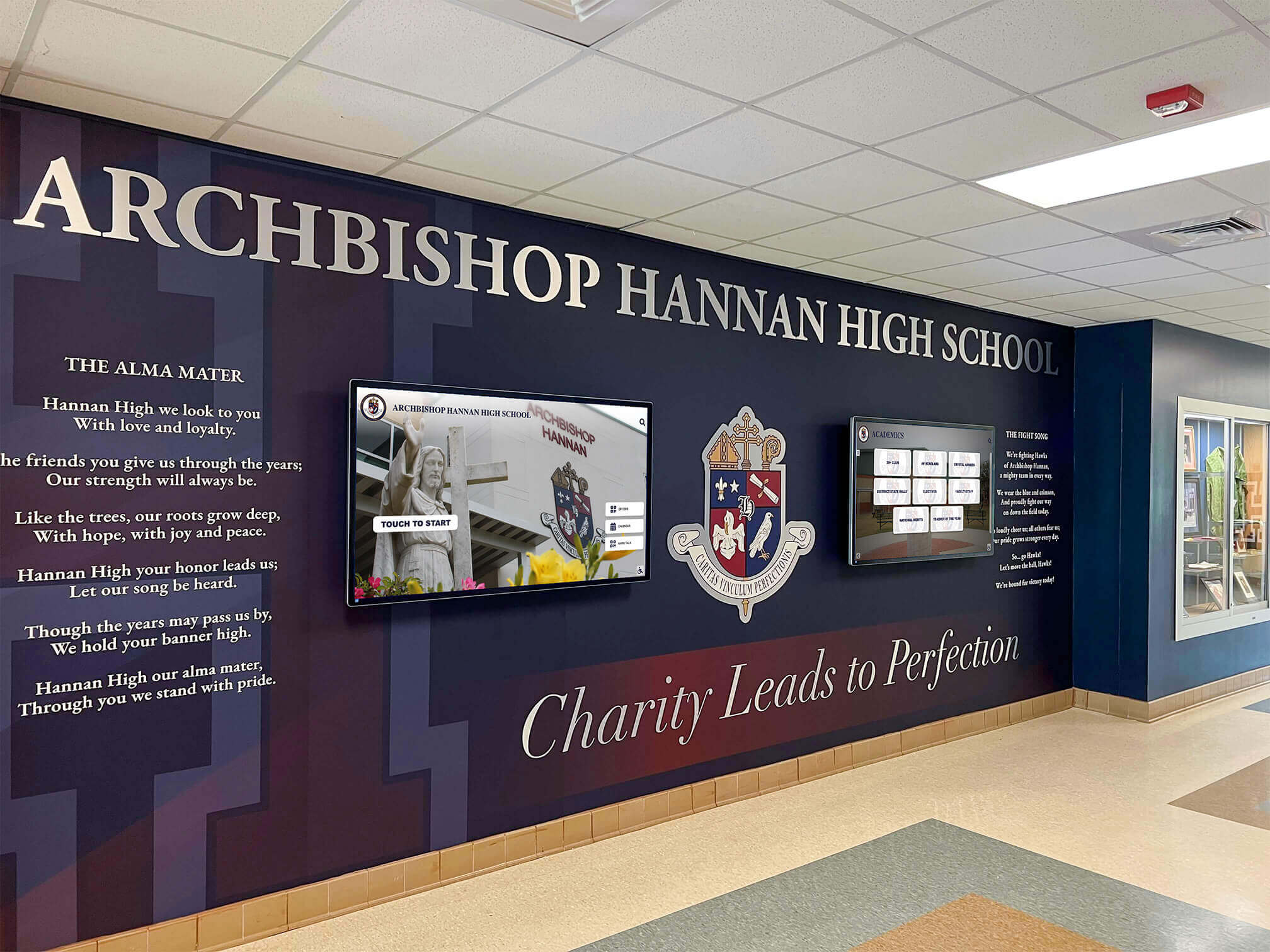
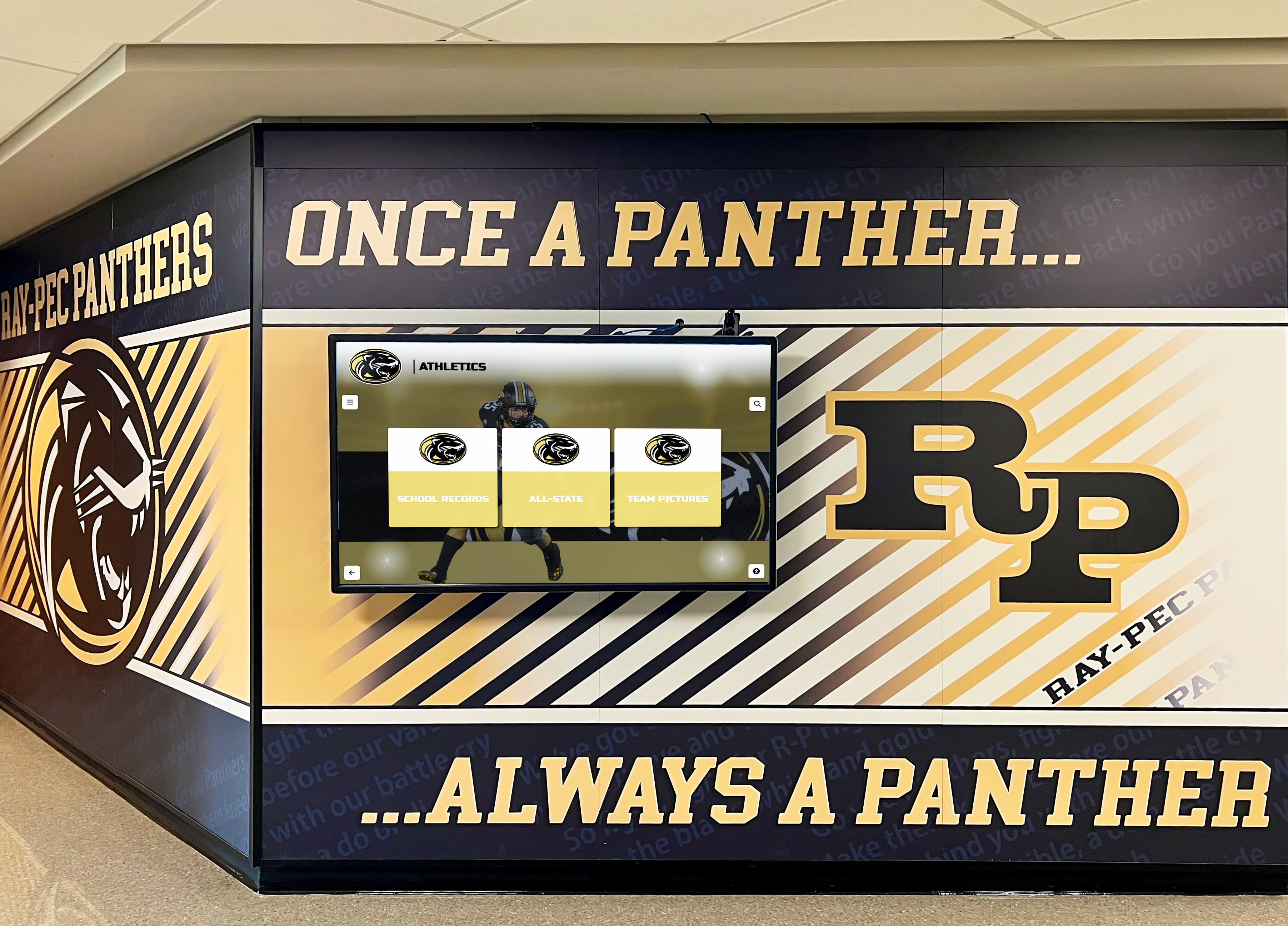
Main Entry and Lobby Branding: First impressions form within seconds of entering facilities. Large-format branded graphics in main entries establish immediate institutional identity through school names, mascots, mission statements, and visual branding elements. These applications typically combine typography, logos, and graphic elements creating focal points visitors remember. Entry branding works particularly well when integrated with wayfinding information helping visitors navigate facilities while absorbing institutional messaging.
Hallway Identity Zones: Extended hallways benefit from periodic branding elements breaking monotony while reinforcing identity. Schools create identity zones featuring mascot graphics, school colors, inspirational quotes aligned with institutional values, and branded graphic elements spaced regularly throughout corridors. These applications transform generic hallways into branded environments supporting school culture.
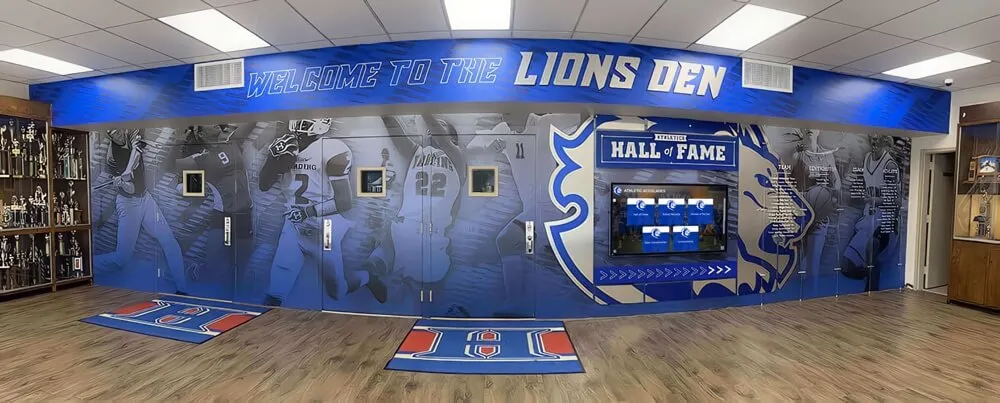
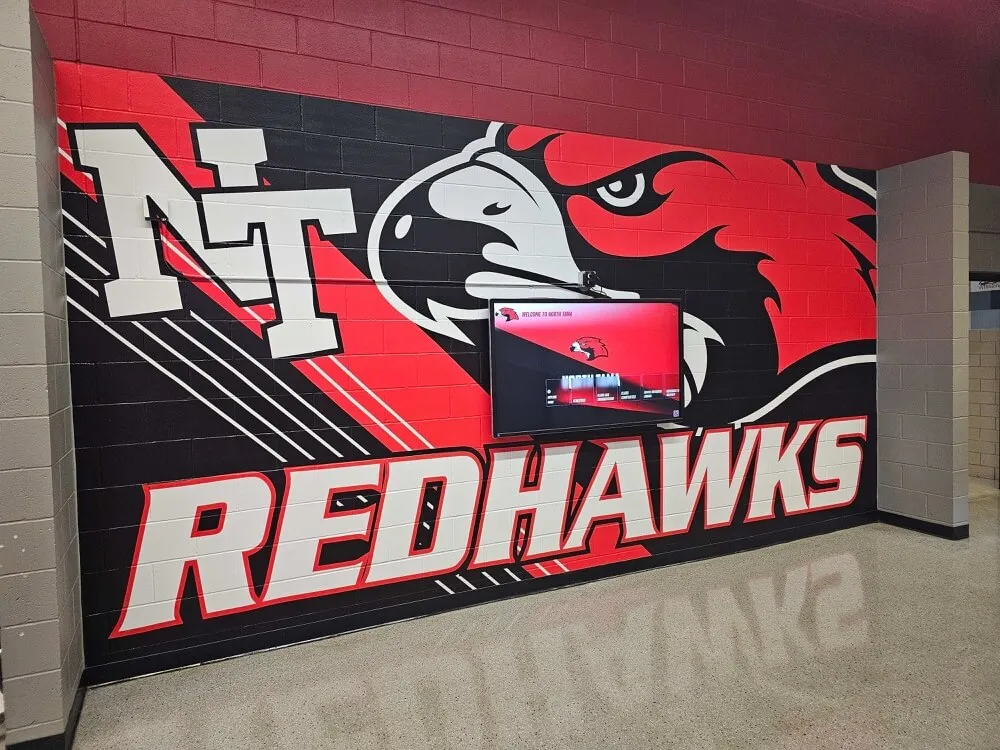
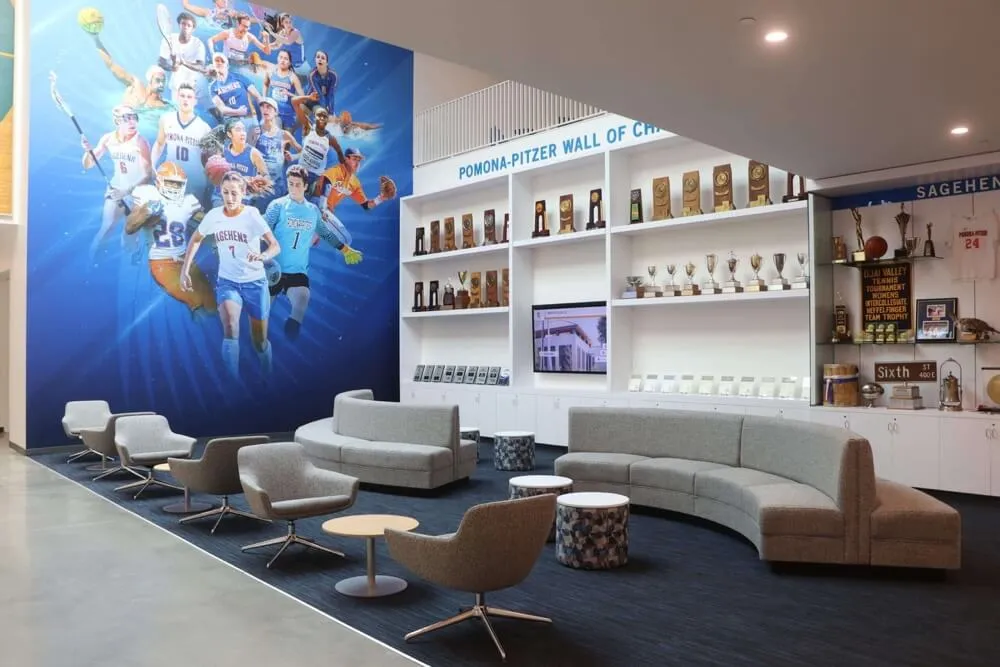
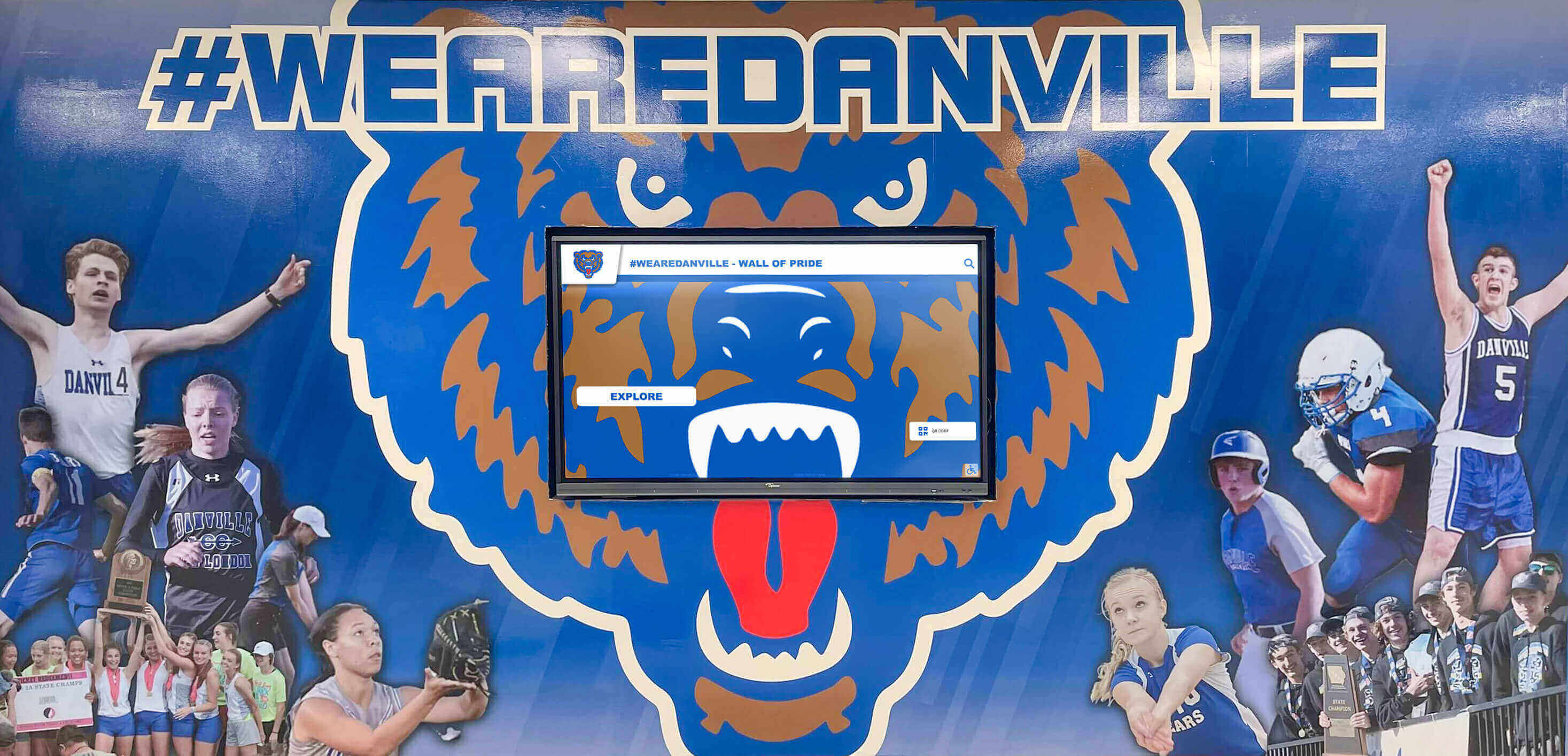
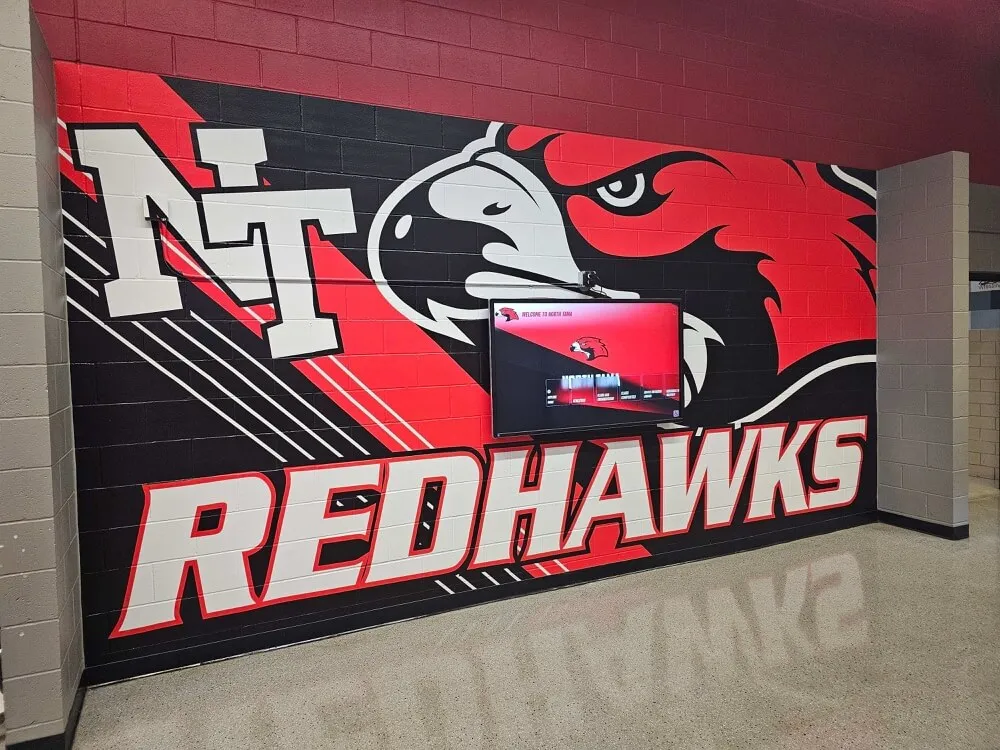
Athletic Facility Branding: Gymnasiums, field houses, and athletic training facilities provide natural opportunities for bold branding that energizes athletes and impresses visitors. Wall wraps in these spaces typically feature oversized mascot graphics, team names and logos, athletic achievement imagery, motivational messaging, and school colors creating visual impact. Athletic facilities visible during recruitment visits and competition events benefit especially from professional branding demonstrating program quality and institutional investment in athletics.
Department and Program-Specific Branding: Academic departments, arts programs, and specialized facilities strengthen identity through targeted branding. Science wings feature graphics related to STEM fields and scientific imagery. Fine arts corridors showcase artwork, theatrical imagery, and creative design elements. Career and technical education spaces incorporate industry-relevant graphics and program branding. This department-specific branding helps students and visitors identify facility areas while celebrating program specializations.

Recognition and Achievement Displays
Wall wraps enable permanent recognition celebrating individual and collective achievements without ongoing maintenance.
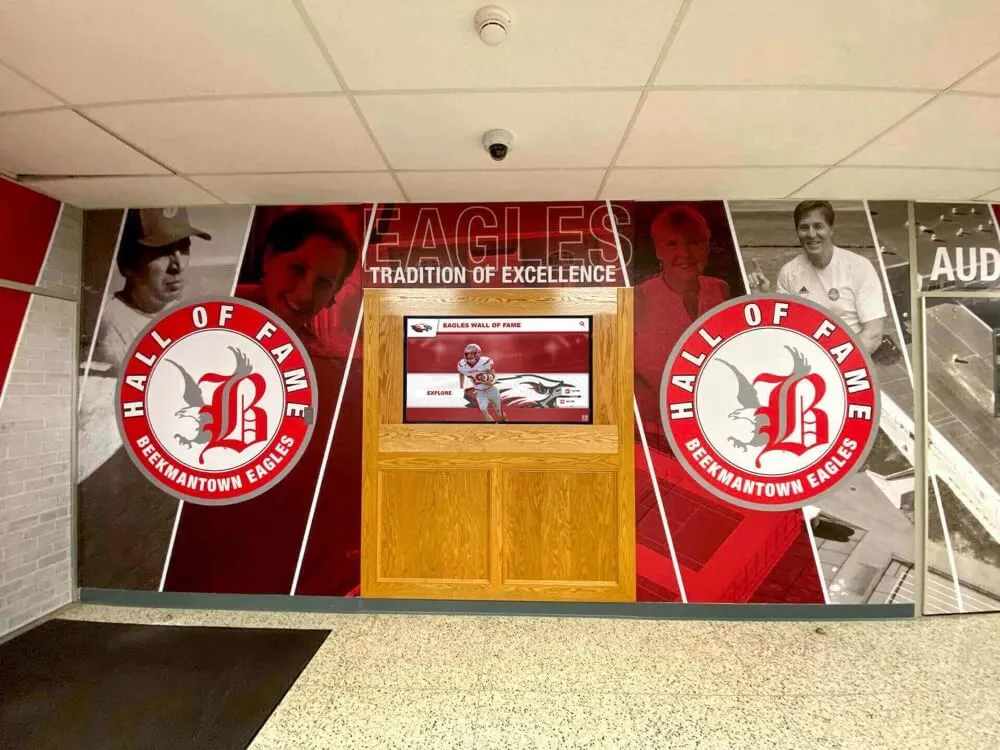
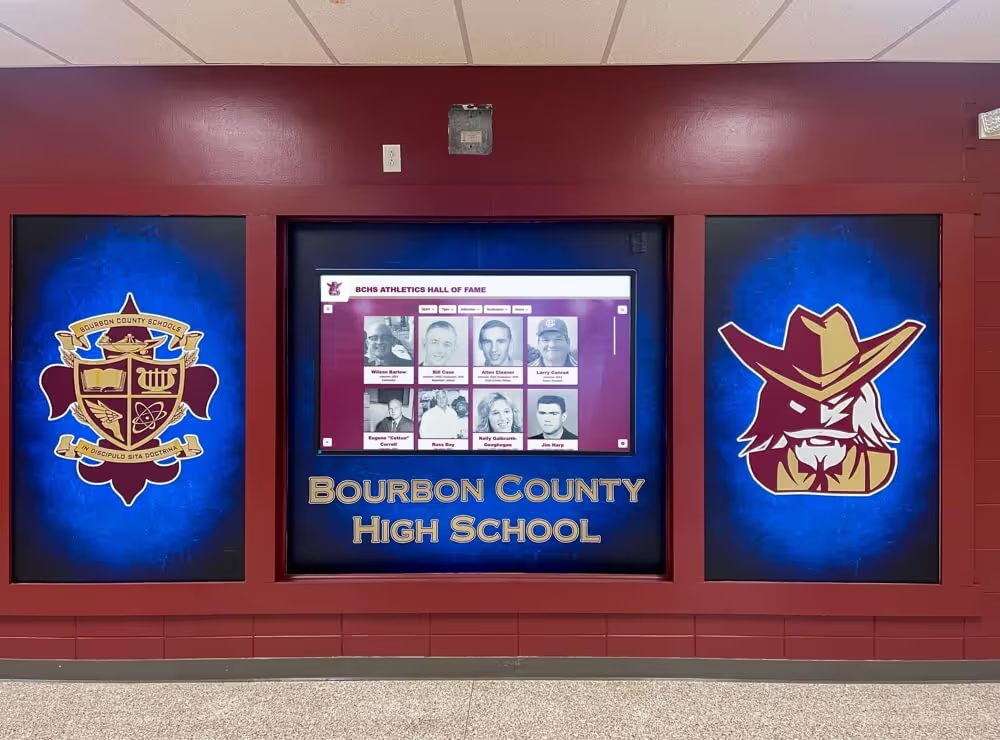
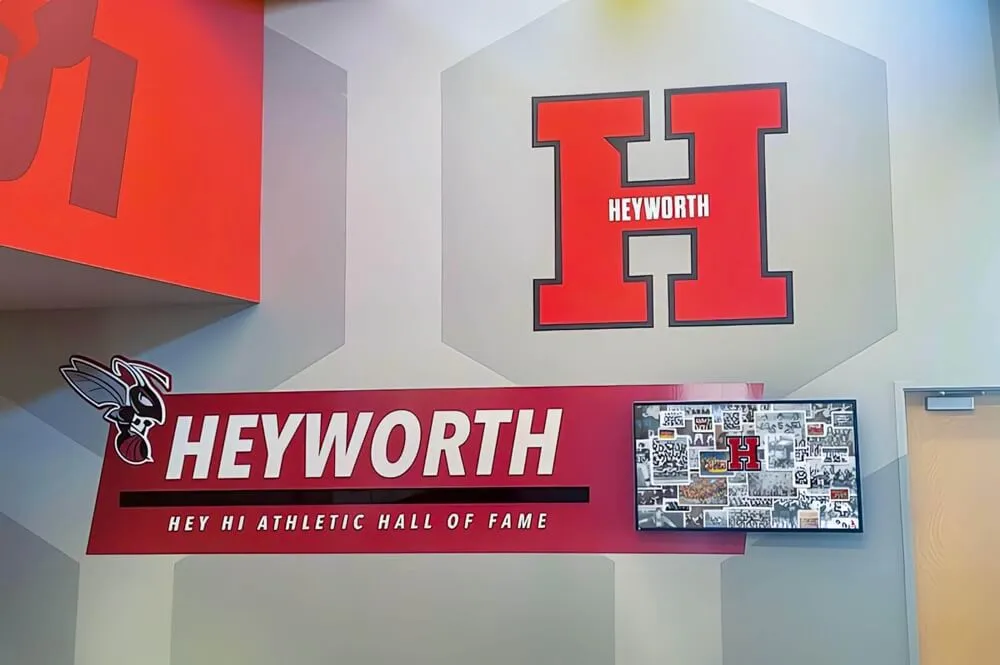
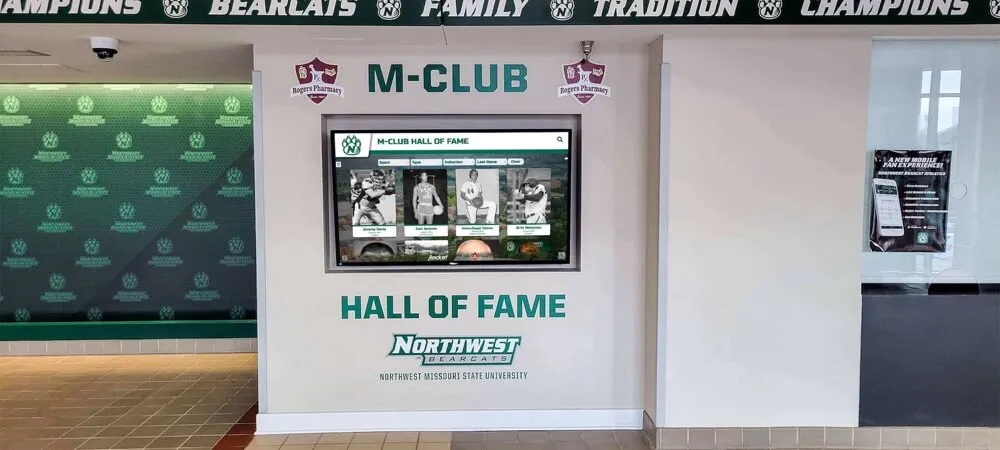
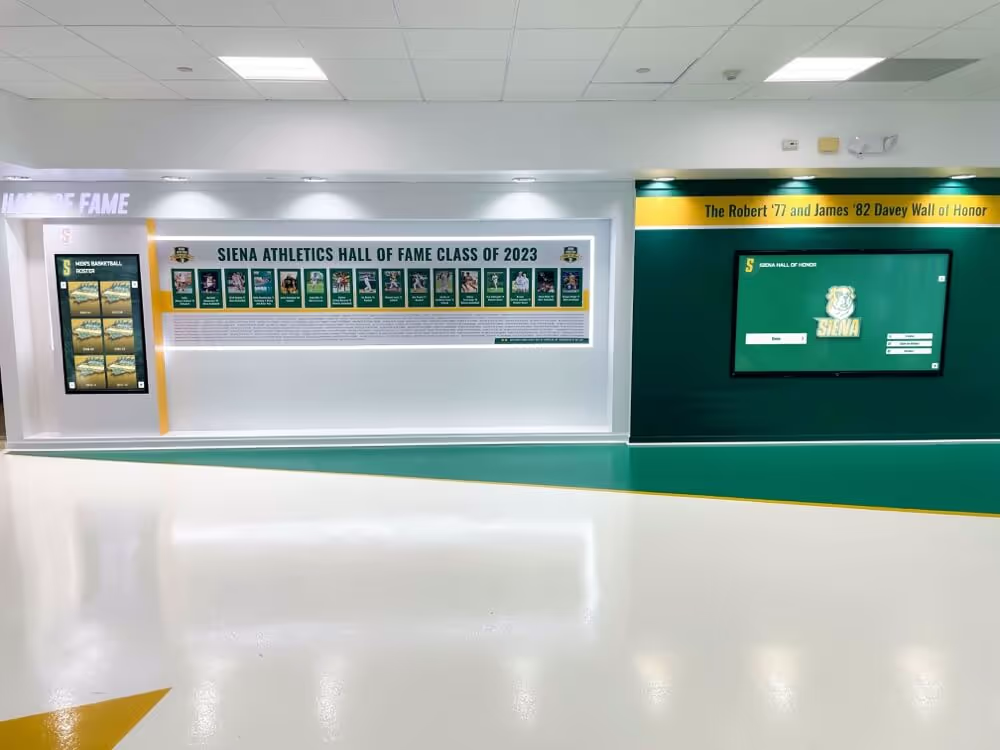
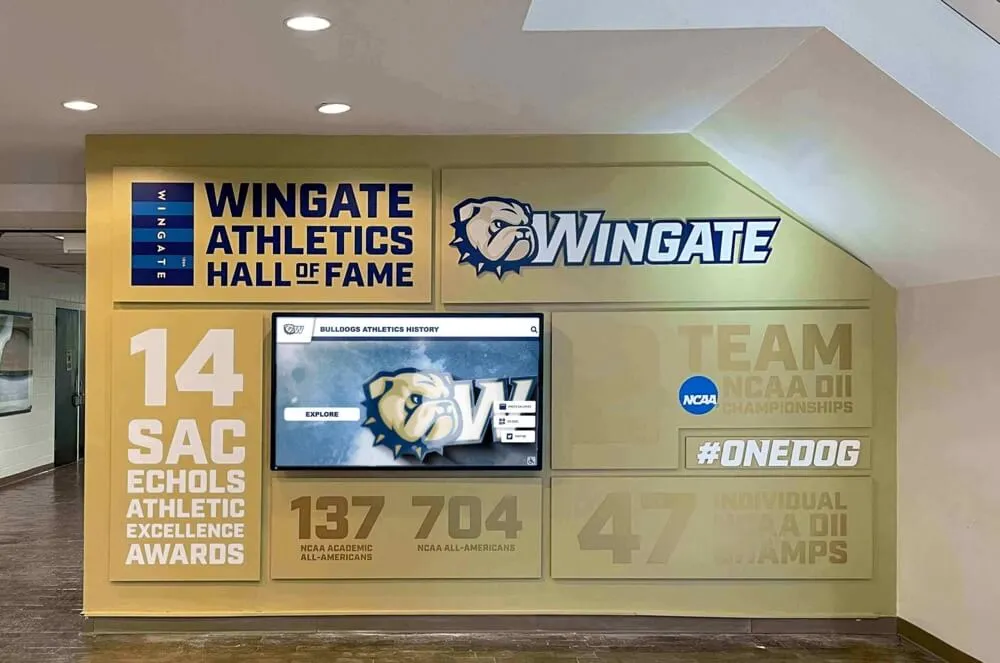
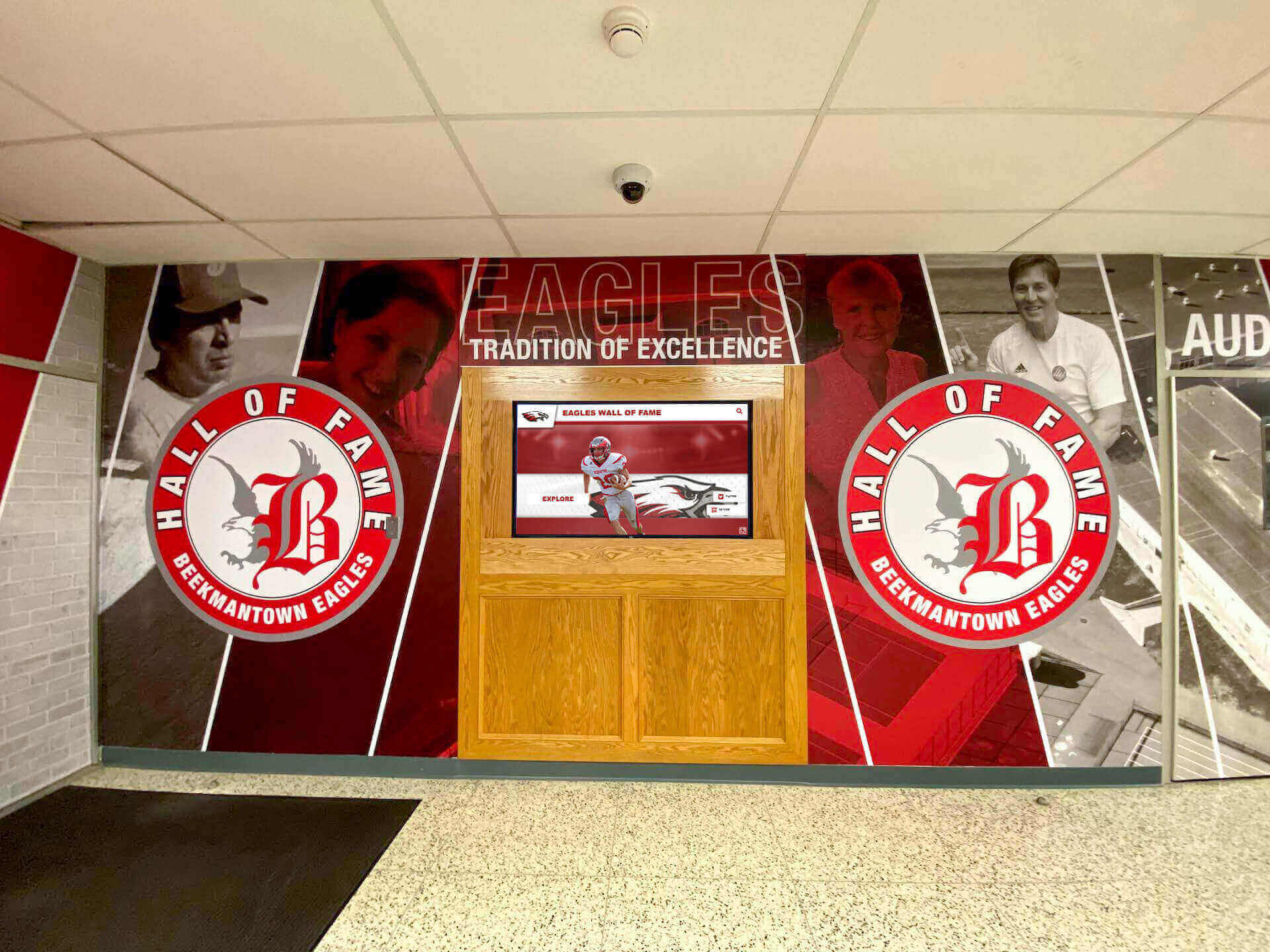
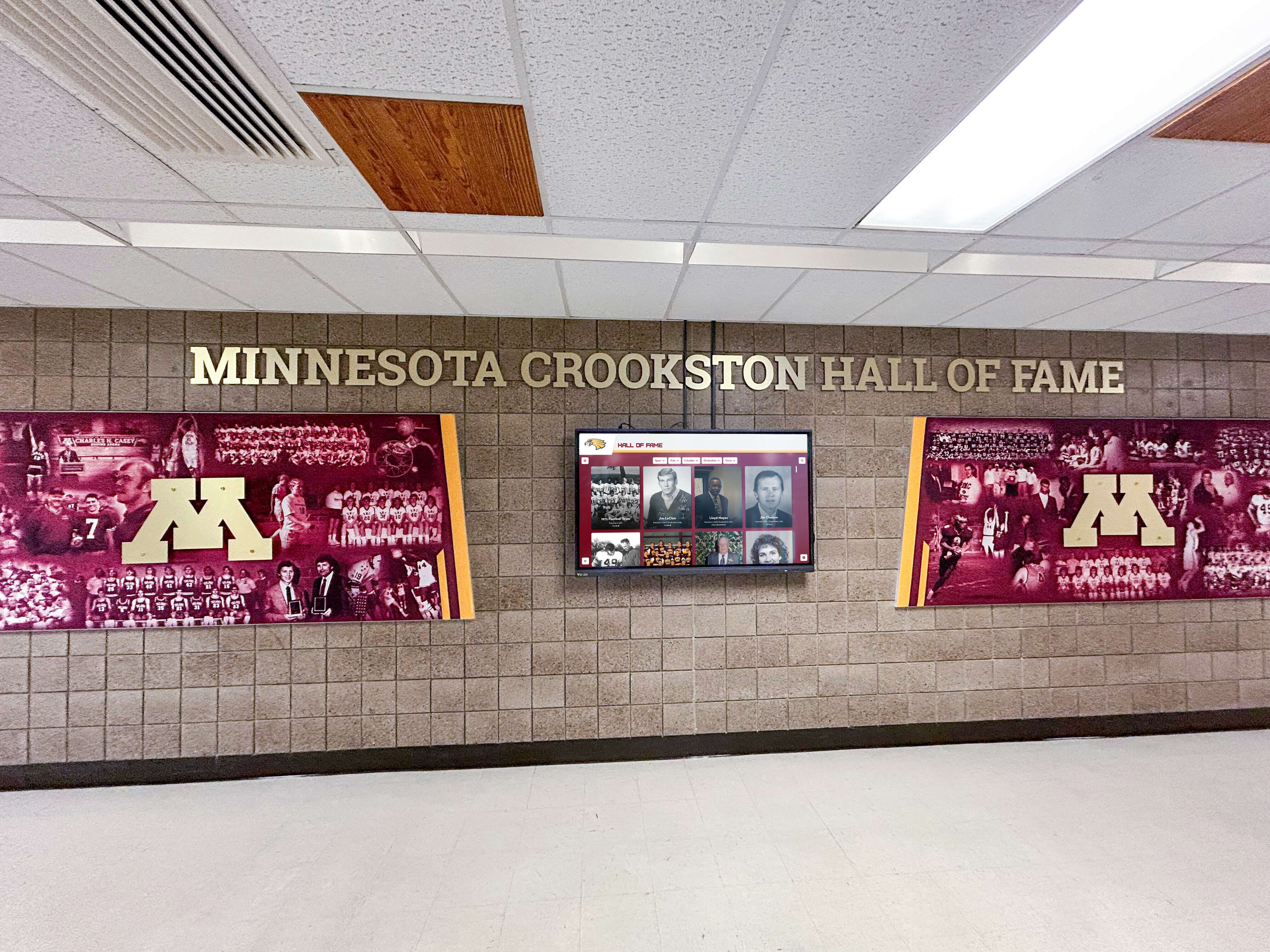
Hall of Fame Wall Graphics: Athletic and academic halls of fame traditionally used individual plaques consuming substantial wall space while limiting total recognition capacity. Contemporary approaches integrate vinyl graphics creating branded backgrounds for plaque displays or incorporating recognition directly into printed graphics. These hybrid solutions combine permanent plaque recognition with branded graphical elements that frame and contextualize individual achievements. Schools can feature hall of fame inductee names, photos, and achievements directly within large-format printed graphics, though this permanent approach prevents future additions without complete graphic replacement. Solutions like Rocket Alumni Solutions provide complementary digital recognition displays that integrate with wall graphics, combining permanent branded aesthetics with unlimited recognition capacity and regular content updates.
Championship and Achievement Recognition: Wall graphics celebrating championship teams, state titles, and significant achievements create permanent reminders of program excellence. These applications typically feature championship year designations, team photos, final standings or scores, and related achievement details. Unlike banners requiring ceiling mounting and periodic replacement, wall-mounted vinyl graphics integrate cleanly into facility architecture while lasting substantially longer.
Historical Timeline Displays: Institutional history comes alive through timeline graphics showing founding dates, facility construction milestones, program establishment, notable alumni achievements, and significant institutional events. Historical timeline displays work particularly well in main entries, administrative areas, and locations visible to visitors, demonstrating institutional legacy and tradition.
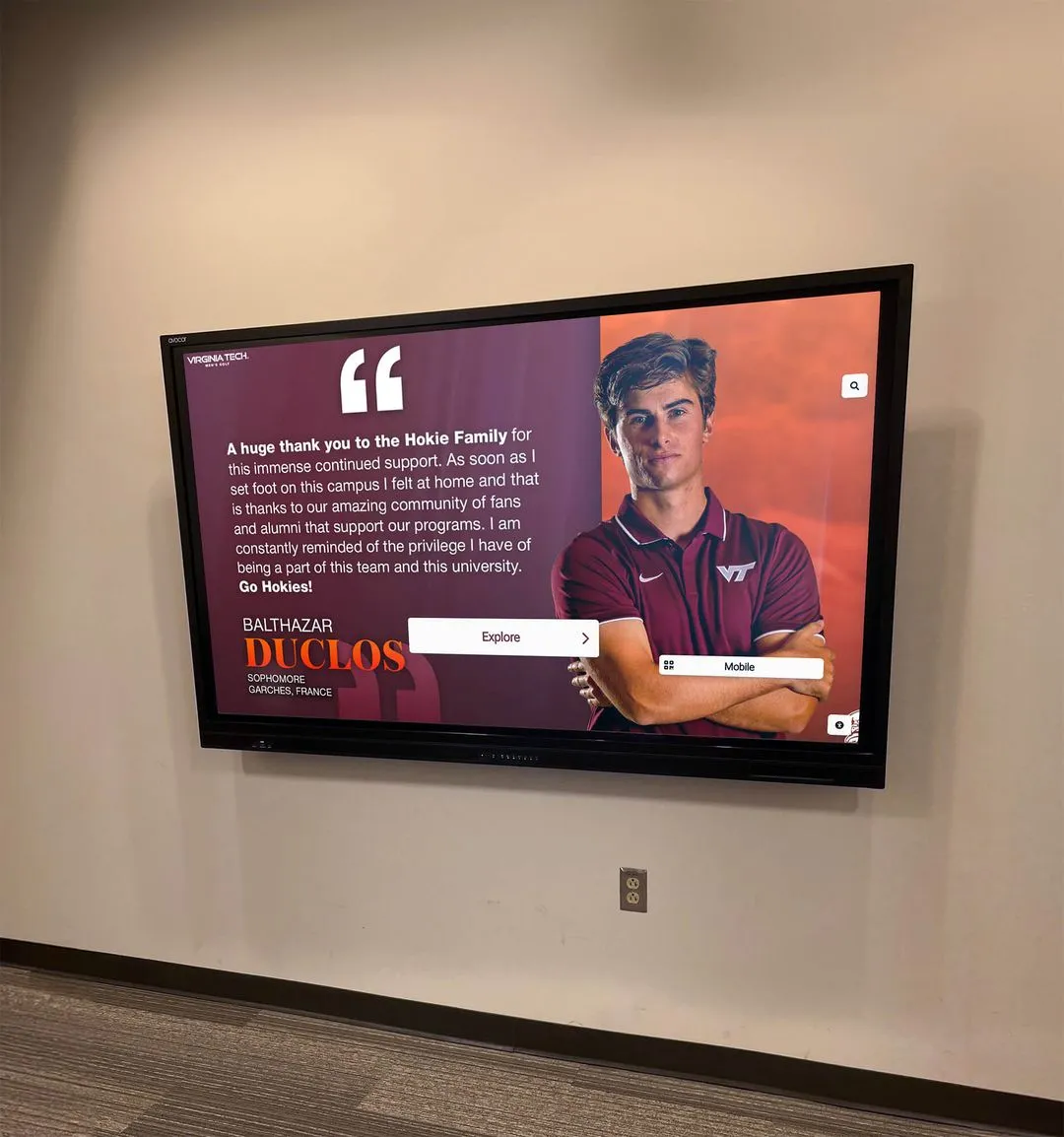
Alumni Recognition Walls: Wall graphics featuring notable alumni profiles, career achievements, and connections to current students inspire achievement while strengthening alumni engagement. These displays typically include alumni photographs, brief biographical information, career highlights, and quotes about their institutional experiences. Permanent vinyl applications work when featuring distinguished alumni unlikely to require frequent updates, while digital alumni recognition systems better serve programs requiring regular content additions.
Wayfinding and Functional Signage
Wall graphics provide intuitive navigation assistance integrated with institutional branding.
Building Directories and Campus Maps: Large-format wall-mounted directories help visitors navigate complex facilities. These applications include building floor plans, room number ranges by corridor, department locations, and key facility features (restrooms, exits, offices). Well-designed directories integrate institutional branding while prioritizing legibility and information clarity.
Room Identification and Department Signage: Individual room identification graphics provide consistent wayfinding while reinforcing institutional brand standards. These applications range from simple room number plaques with branded backgrounds to elaborate graphics incorporating room names, department information, and decorative elements. Consistent design standards across all room identification strengthens professional appearance.
Directional Wayfinding: Corridor graphics provide directional information guiding traffic flow and helping visitors locate destinations. These graphics typically use arrows, distances, and destination names combined with institutional branding elements. Effective wayfinding graphics balance informational clarity with aesthetic integration, providing necessary information without overwhelming visual environments.
Educational and Inspirational Content
Wall graphics transform blank walls into learning opportunities and motivational environments.
Inspirational Quotes and Mission Statements: Schools reinforce values through prominently displayed quotes aligned with institutional missions. These graphics feature quotes from historical figures, leaders, authors, or school founders combined with complementary imagery and typography. Effective inspirational graphics balance message prominence with aesthetic restraint, avoiding overwhelming environments with excessive text.
Educational Content and Reference Materials: Permanent reference materials support learning throughout facilities. Science corridors feature periodic tables, anatomical diagrams, or physics formulas. Mathematics areas display geometric theorems, number systems, or famous mathematicians. Foreign language departments showcase vocabulary, cultural imagery, or grammatical references. These educational graphics extend learning beyond classrooms while filling otherwise blank wall space productively.
Safety and Behavioral Messaging: Graphics communicating safety procedures, behavioral expectations, and facility rules reach audiences consistently. These applications include evacuation route diagrams, emergency procedure summaries, conduct expectations, and facility-specific rules. Graphics-based communication proves more engaging than text-heavy signage while ensuring message visibility.
Themed Environmental Design: Elementary schools particularly benefit from themed environments creating engaging spaces supporting specific age groups. Reading areas feature literary themes, characters, and storytelling imagery. STEM spaces incorporate scientific and technological graphics. Younger grades enjoy colorful, playful designs while older students respond to sophisticated, mature aesthetics. Themed environments transform functional spaces into destinations students enjoy visiting.
Design Considerations for Effective School Wall Wraps
Successful wall wrap implementation requires thoughtful design addressing technical constraints, institutional requirements, and aesthetic objectives.
Color Psychology and Institutional Branding
Color choices fundamentally impact how environments feel and function.
Institutional Brand Consistency: Schools with established brand standards must ensure wall graphics align with official color palettes, typography standards, logo usage guidelines, and design principles. Brand consistency across all applications—from printed materials through facility graphics—strengthens institutional identity and demonstrates organizational professionalism. Design professionals should receive comprehensive brand guidelines before initiating graphic development.
Color Psychology in Educational Environments: Color psychology research demonstrates measurable effects on mood, energy, and behavior. Blue tones promote calm, focus, and productivity, working well in libraries, offices, and study areas. Red and orange create energy and excitement, suiting athletic facilities and high-activity spaces. Green reduces stress and supports concentration, appropriate for testing areas and counseling spaces. Yellow stimulates mental activity and optimism but can cause agitation in large applications. Neutral colors (gray, beige, white) provide professional backgrounds highlighting accent colors without competing visually. Schools should consider color psychology when selecting palettes for different facility areas.
Contrast and Legibility: Graphics communicating important information require sufficient contrast ensuring legibility from intended viewing distances. High-contrast combinations (dark text on light backgrounds or reverse) maximize readability. Low-contrast combinations create subtle effects but reduce legibility, appropriate only for decorative elements not requiring clear reading. Industry standards recommend minimum contrast ratios of 4.5:1 for body text and 3:1 for large display text ensuring accessibility compliance.
Lighting Interaction: Wall graphic appearance changes substantially under different lighting conditions. Graphics in spaces with natural lighting require UV-resistant materials preventing fading while considering how appearance shifts throughout the day. Fluorescent lighting affects color perception differently than LED or natural light. Glossy finishes create reflections and glare under direct lighting while matte finishes remain consistent. Schools should evaluate design mockups under actual facility lighting conditions before final approval.
Typography and Information Hierarchy
Text-based graphics require careful typographic treatment ensuring effective communication.
Font Selection for Distance Reading: Typography visible from significant distances requires specific characteristics supporting legibility. Sans-serif fonts (Arial, Helvetica, Futura) typically work better than serif fonts at distance. Bold or semi-bold weights provide better visibility than light weights. Condensed fonts compromise legibility compared to standard proportions. Script or decorative fonts work only for short text viewed closely, not main messaging. Schools should test type size and font selection at actual viewing distances during design phases.
Text Size and Viewing Distance Calculations: Industry formulas help determine appropriate text sizes for intended viewing distances. As general guidance, 1 inch of text height enables comfortable reading at approximately 10 feet. Schools should calculate primary viewing distances and size text accordingly, with some excess to accommodate older adults or those with visual impairments.
Information Hierarchy and Layout: Effective graphics establish clear visual hierarchy guiding viewer attention systematically. Primary messages (school names, major headlines) use largest type sizes and prominent positions. Secondary information (subtitles, categories) uses medium sizing and supporting positions. Tertiary details (dates, credits, disclaimers) use smallest acceptable sizes. Consistent hierarchy across related graphics strengthens comprehension and professional appearance.
Text Quantity and Visual Balance: Overwhelming graphics with excessive text reduces effectiveness. Industry best practice suggests that graphics should be read in 5-7 seconds, requiring concise messaging and strategic word choice. Substantial text content belongs in printed materials or digital displays rather than permanent wall graphics. Visual balance between text, imagery, and negative space creates professional results avoiding cluttered appearance.
Integrating Wall Wraps with Architecture and Existing Elements
Graphics must respond to architectural features and existing facility elements.
Surface Preparation Requirements: Wall condition fundamentally determines installation success and longevity. Properly installed wall wraps require clean, smooth, dry surfaces free from texture, loose paint, or contaminants. Newly painted surfaces must cure for minimum 30 days before vinyl application. Textured walls require either extensive surface preparation or acceptance that vinyl will conform to underlying texture. Damaged drywall, concrete spalling, or other surface defects telegraph through vinyl, requiring repair before application.
Architectural Feature Integration: Graphics must accommodate doors, windows, electrical outlets, fire alarms, and other architectural elements. Effective designs incorporate these features intentionally rather than treating them as obstacles. Door openings become framed elements within larger compositions. Windows integrate into graphic layouts. Thermostats and outlets align with design elements or occupy intentional negative space. Sophisticated design treats architectural constraints as opportunities for creative problem-solving.
Ceiling Height and Proportion: Ceiling heights affect appropriate graphic scale and proportion. Standard 9-10 foot ceilings suit human-scaled graphics featuring readable text and moderate imagery. Tall spaces (gymnasiums, atriums) accommodate monumentally scaled graphics visible from distance. Low ceilings require restrained graphic height preventing overwhelming confined spaces. Designers should establish appropriate proportions responding to actual ceiling heights and room dimensions.
Existing Finishes and Materials: Wall graphics must complement existing architectural finishes including flooring, ceiling materials, adjacent wall colors, and furnishings. Graphics that clash with permanent finishes create jarring environments requiring either graphic revision or expensive facility modifications. Comprehensive design processes consider entire environmental context rather than treating wall graphics as isolated elements.
Planning for Future Updates and Flexibility
Permanent wall wraps challenge future modifications, requiring strategic planning.
Modular Design Approaches: Modular graphics designed as discrete sections enable partial updates without complete replacement. Schools might implement background branding graphics intended as permanent installations with separate, replaceable sections featuring updatable content including annual achievements, current messaging, or program-specific details. This hybrid approach balances permanent investment with update flexibility.
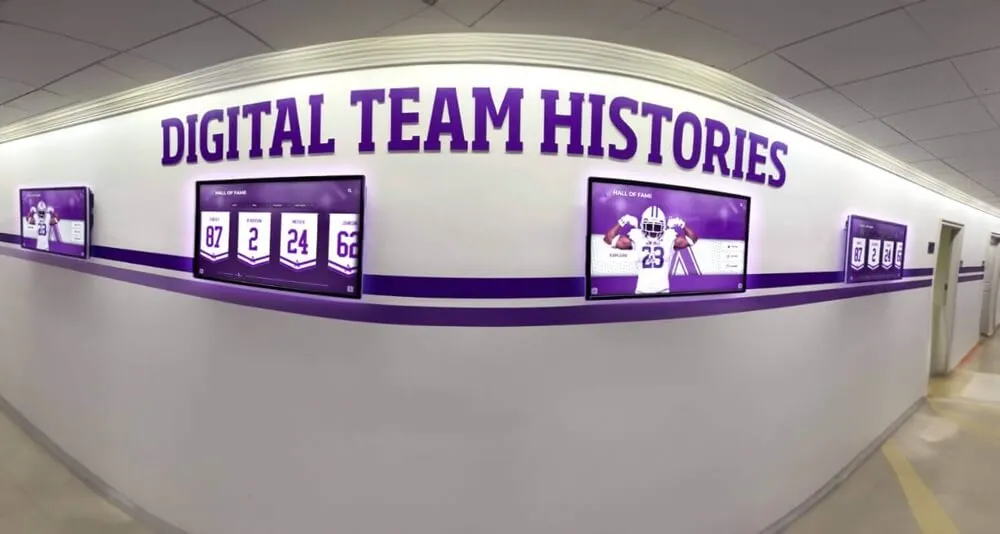
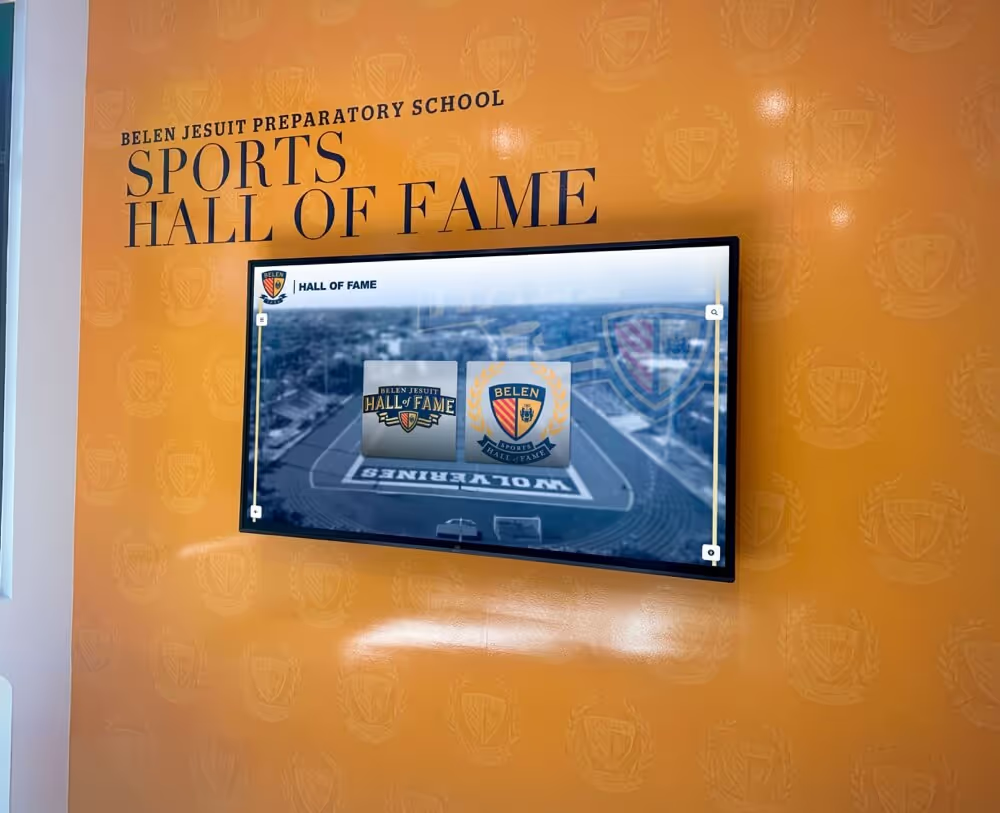
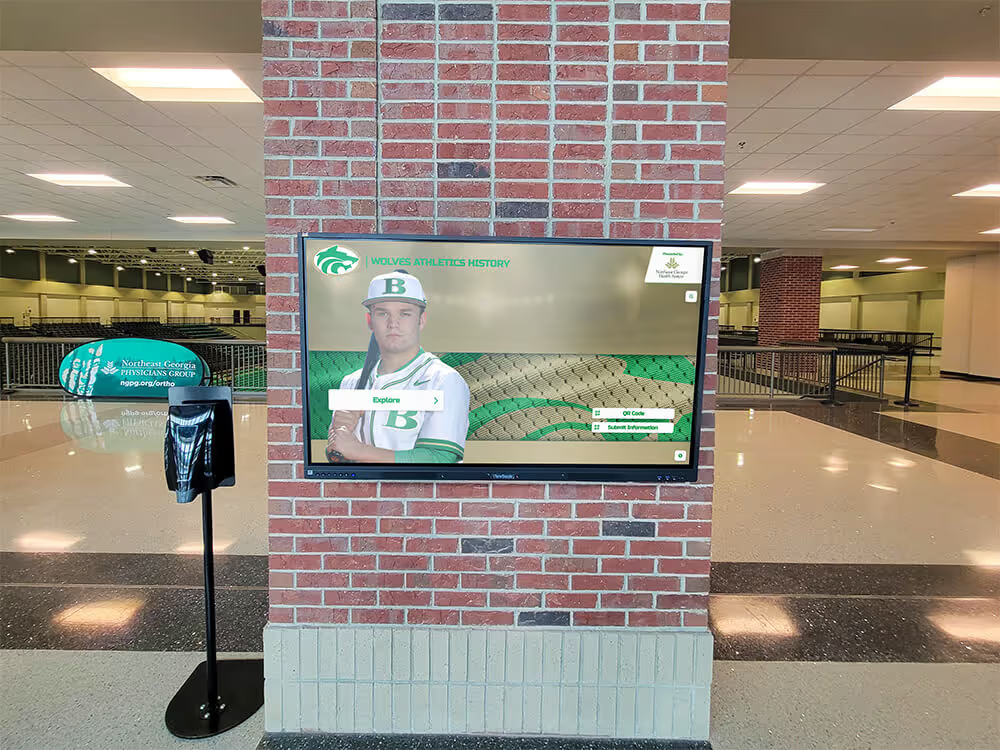
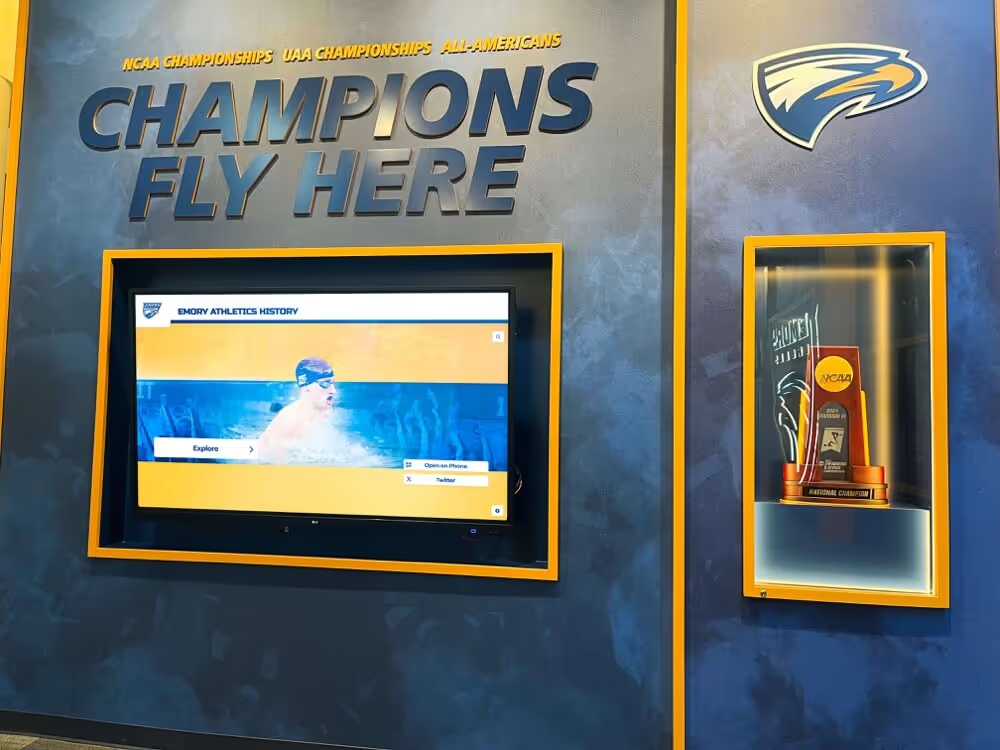
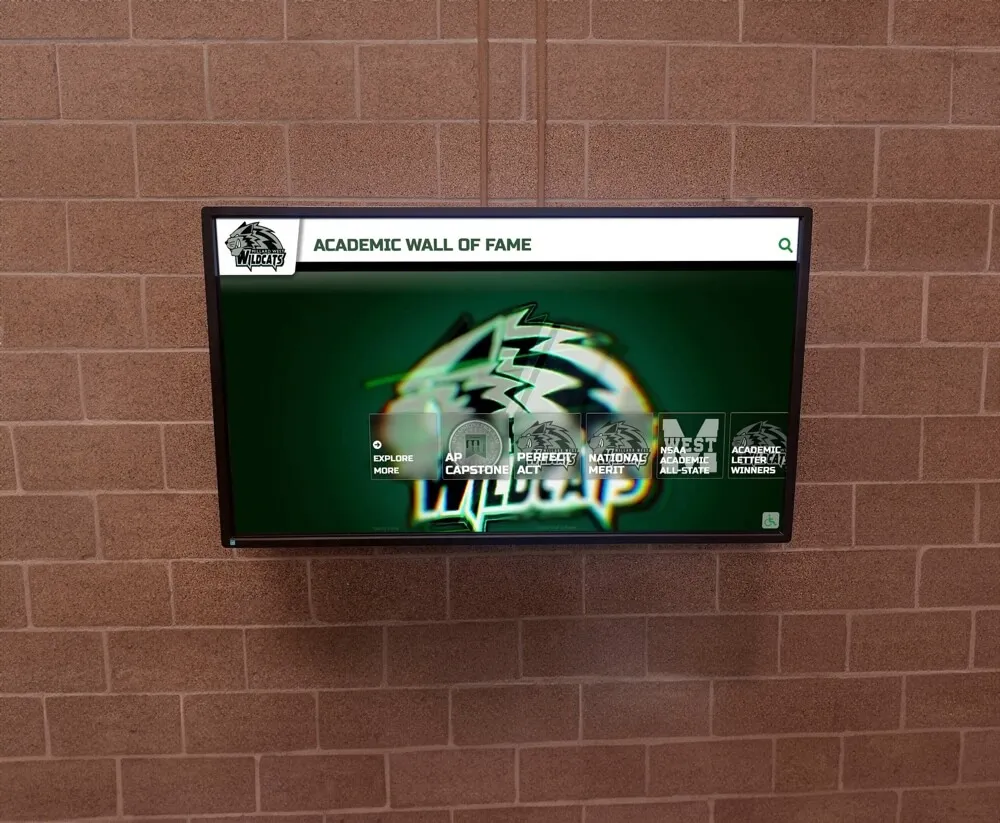
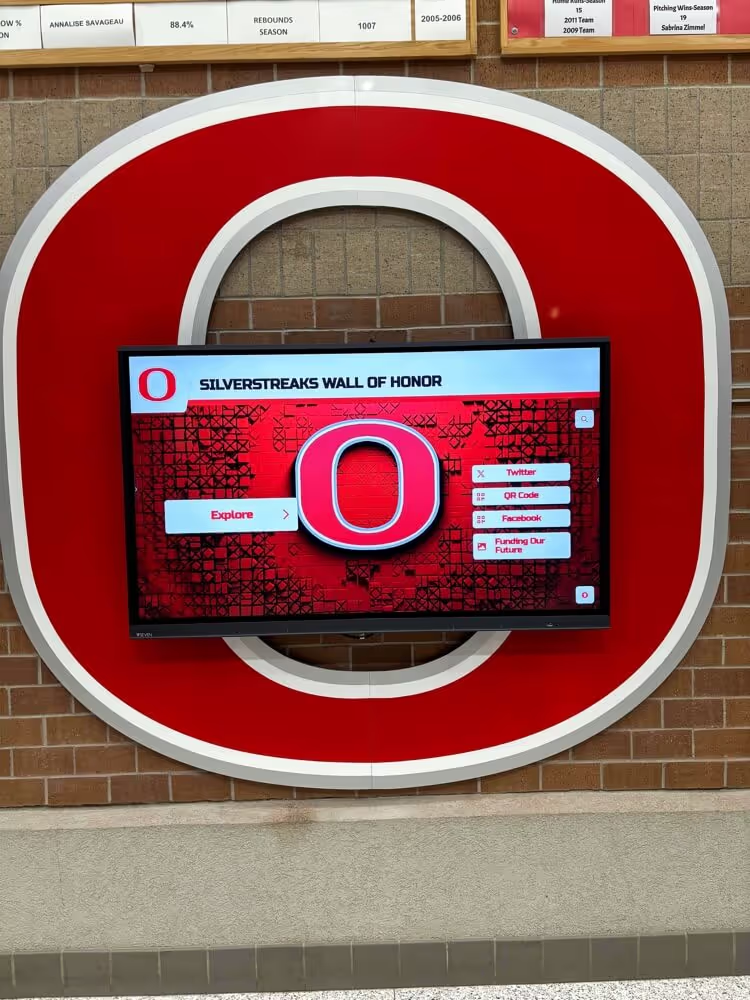
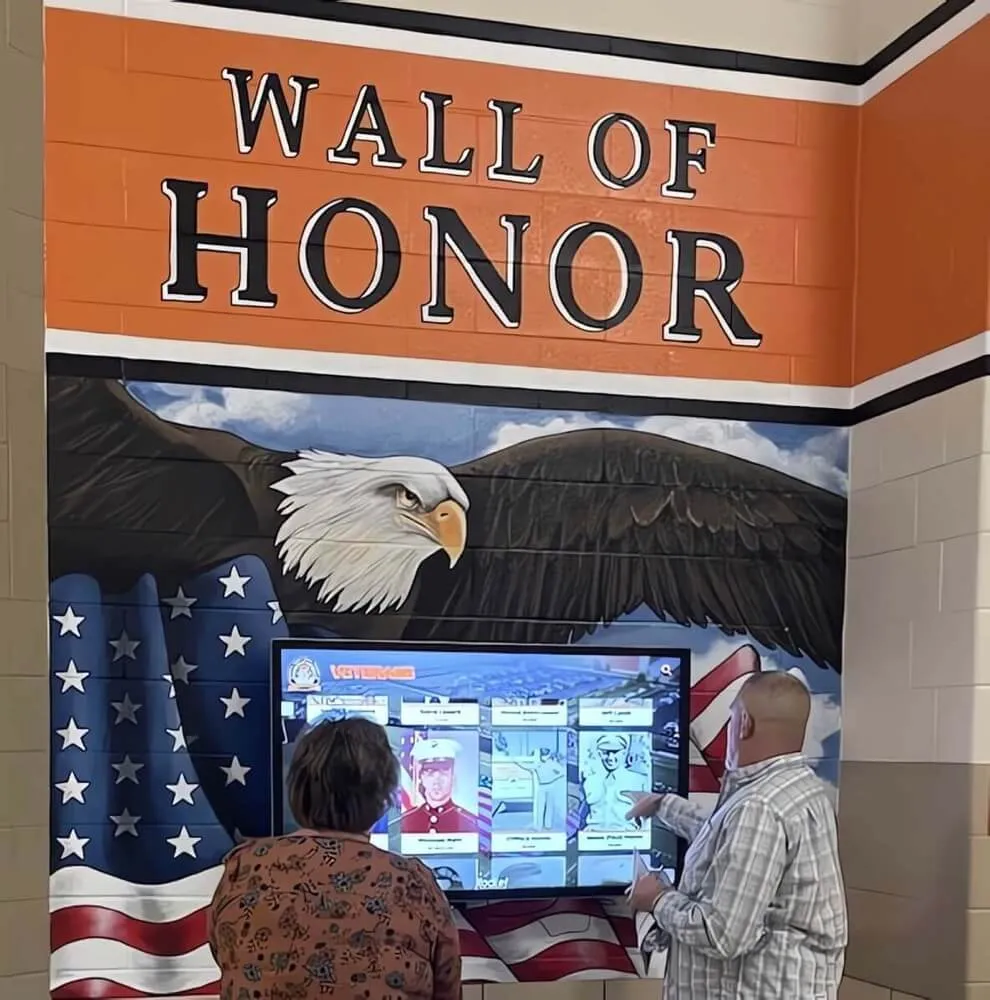
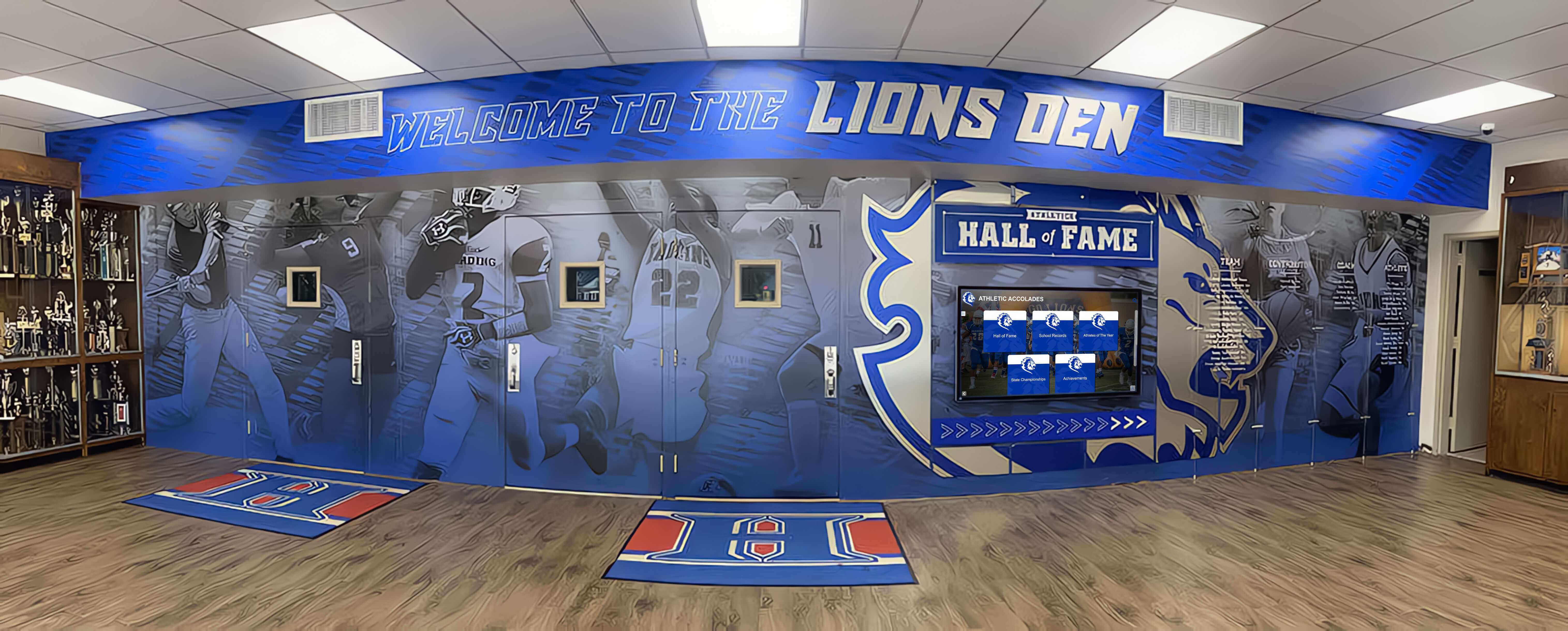
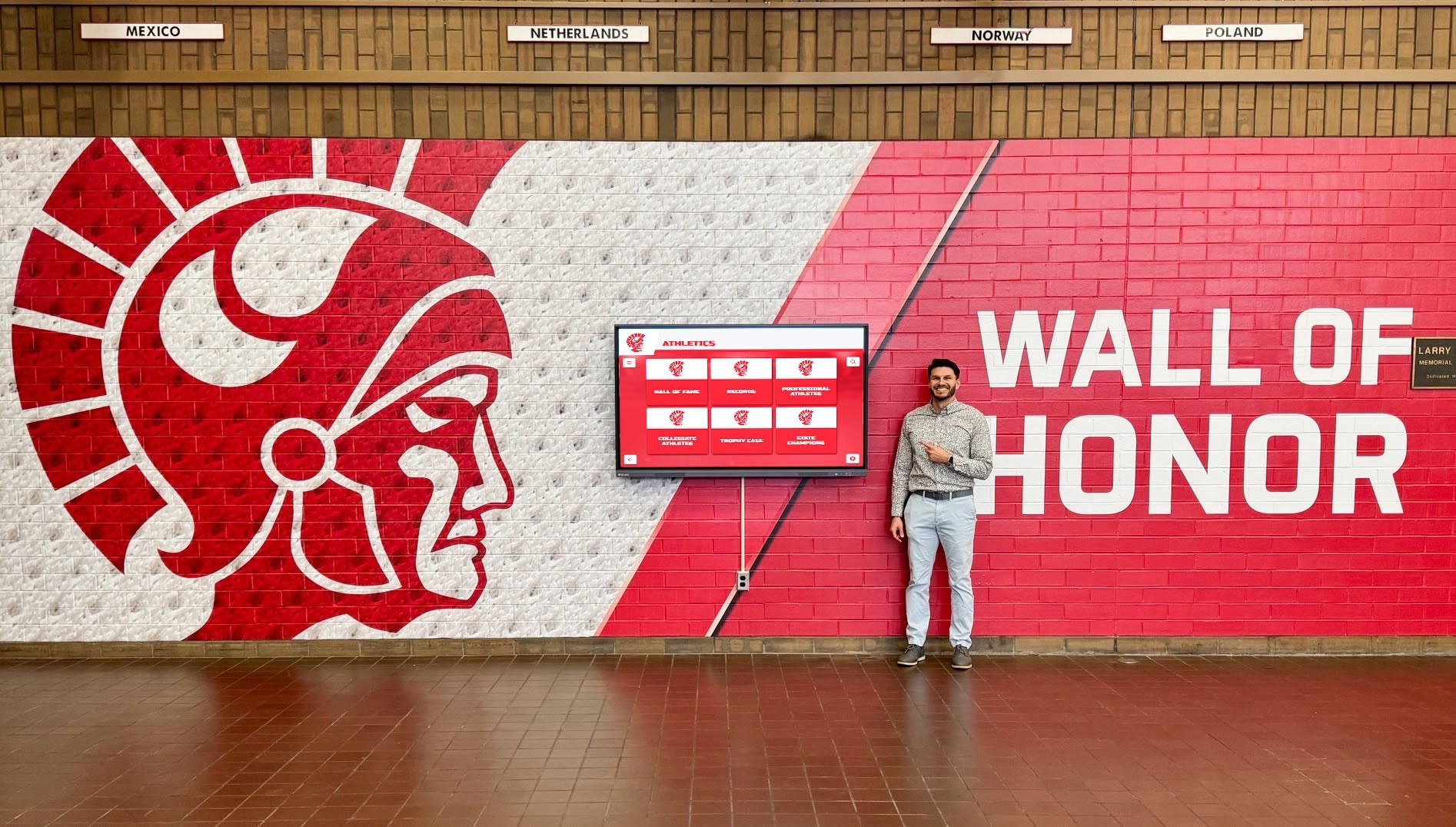
Digital Integration for Dynamic Content: Combining permanent vinyl branding with integrated digital displays creates sophisticated recognition systems. Wall wraps establish branded environments and permanent design frameworks while digital screens provide unlimited recognition capacity, regular content updates, and interactive engagement. This integration delivers advantages of both approaches—permanent branded aesthetics complementing dynamic digital content.
Design Timelessness vs. Trend Relevance: Permanent graphics require careful consideration of design longevity. Contemporary design trends create fresh, current appearance but risk dated appearance within years. Timeless design approaches using classic typography, restrained color palettes, and traditional composition age more gracefully but may appear conservative. Schools must balance desire for contemporary aesthetics against practical reality that replacement represents significant investment. Generally, main branding applications benefit from timeless approaches while smaller, less expensive graphics can embrace contemporary trends.
Replacement Planning and Lifecycle Management: Schools should establish expected lifespans for different graphic applications and budget replacement costs accordingly. High-traffic areas, graphics exposed to sunlight, and applications in harsh environments (cafeterias, gymnasiums) require more frequent replacement than protected corridors. Proactive replacement before graphics appear obviously worn maintains professional appearance, while reactive replacement after visible degradation damages perceptions of institutional quality.
Installation Process, Requirements, and Best Practices
Proper installation determines whether wall wraps achieve expected performance and appearance.
Pre-Installation Planning and Preparation
Installation success begins well before installers arrive on site.
Surface Assessment and Preparation: Professional installers should conduct site surveys evaluating wall conditions, documenting potential challenges, and identifying required preparation. Surveys reveal surface texture requiring mitigation, paint condition necessitating primer or sealing, moisture issues requiring remediation, and architectural features affecting installation. Addressing identified issues before installation prevents failures requiring expensive repairs or complete reinstallation.
Environmental Conditions and Timing: Vinyl installation requires specific environmental conditions for proper adhesion. Optimal temperatures range between 65-75°F with relative humidity below 60%. Cold surfaces prevent adhesive activation while excessive heat causes material stretching and installation challenges. Moisture on surfaces prevents proper bonding and may cause future lifting or bubbling. Schools should schedule installation during appropriate seasons and ensure adequate climate control in installation areas.
Access and Logistics: Large-format graphics require appropriate access equipment including scaffolding, lifts, or ladders enabling safe installer access. Facilities must provide adequate electrical power for tools, proper lighting for quality control, and material staging areas near installation locations. Schools should coordinate installation timing to minimize disruption—during breaks, weekends, or after hours when areas are unoccupied. Extensive installations in occupied facilities require phasing plans minimizing impacts on normal operations.
Installer Qualification and Experience: Installation quality directly correlates with installer skill and experience. Schools should verify installers’ qualifications including manufacturer certification programs, portfolio of similar institutional projects, professional liability insurance coverage, and worker’s compensation insurance. Experienced institutional installers understand educational environment requirements including working around students, maintaining security protocols, and minimizing operational disruption.
Installation Methods and Techniques
Professional installation employs specific techniques ensuring optimal results.
Application Methods: Wet application uses water-based solution as lubricant between vinyl and wall surface, allowing position adjustment before final squeegee and adhesive activation. This method suits large graphics requiring precise alignment but extends installation time as water evaporates. Dry application applies vinyl directly to surfaces using squeegees to eliminate air bubbles and activate adhesive. This faster method works for smaller graphics or experienced installers but allows minimal position adjustment once contact occurs.
Seam Management in Large-Format Applications: Graphics exceeding material width require multiple panels with seams. Professional seaming techniques include butt seams where panels meet precisely without overlap (preferred for most applications), overlapping seams where one panel overlaps another slightly (used when substrate expansion/contraction is expected), and open seams where small gaps between panels accommodate substrate movement. Seam visibility depends on proper alignment, matching print registration, and substrate flatness.
Edge Treatment and Detailing: Proper edge treatment prevents lifting and premature failure. Edges wrapping around corners require adequate material overlap, heating to enable stretching around angles, and firm adhesion securing edges. Edges terminating at architectural features should align precisely with trim, doors, or other elements creating clean transitions. Unsealed edges or inadequate wrap around corners become entry points for moisture and mechanical forces causing lifting.
Post-Installation Conditioning: Freshly installed vinyl requires 24-48 hours for adhesive to cure fully. During this period, surfaces should not be touched, cleaned, or subjected to temperature extremes. Full adhesive bond strength develops over this curing period, after which graphics withstand normal institutional wear. Premature cleaning or contact can compromise adhesion resulting in future failures.

Quality Control and Acceptance Criteria
Professional installations include verification ensuring results meet specifications.
Pre-Installation Approval: Schools should review and approve printed graphics before installation. This inspection verifies color accuracy compared to approved designs, print quality meeting resolution standards, material specifications match purchase orders, and dimensions correspond to measured walls. Identifying problems before installation prevents expensive removal and reprinting.
Installation Quality Standards: Acceptable installation meets specific criteria including smooth application without bubbles, wrinkles, or bridging, precise alignment with architectural features and design intentions, clean seams with proper registration in multi-panel applications, secure edge attachment without lifting, and clean finished edges free from adhesive residue. Schools should establish acceptance criteria before installation, creating objective standards for evaluating work quality.
Warranty and Performance Expectations: Reputable vendors provide warranties covering material defects, printing quality, and installation workmanship. Standard warranties range from 1-3 years for installation quality and 3-7 years for material performance depending on specified materials and environmental conditions. Schools should obtain warranty documentation specifying coverage terms, required maintenance, exclusions, and claim procedures.
Cost Analysis and Budgeting for School Wall Wrap Projects
Understanding comprehensive project costs enables realistic budgeting and value assessment.
Material and Production Cost Factors
Multiple variables affect wall wrap project costs.
Material Selection Impact: Premium cast vinyl costs approximately $3-5 per square foot for materials compared to $1-2 per square foot for economy calendered vinyl. This material cost difference compounds over project scope—a 500 square foot installation uses $1,500-2,500 in cast vinyl versus $500-1,000 in calendered material. However, cast vinyl’s extended lifespan (7-10 years vs. 3-5 years) provides better lifecycle value for permanent installations. Schools should evaluate total ownership costs including expected replacement frequency rather than simply initial material costs.
Design Complexity and Customization: Simple designs using solid colors, basic text, and standard layouts cost less than complex compositions requiring custom artwork, photographic imagery, intricate graphics, or extensive design revisions. Design costs typically range from $500-2,000 for straightforward projects to $5,000+ for extensive custom development. Schools working from existing brand standards and approved designs minimize costs, while projects requiring original design development increase investment.
Print Production Variables: Printing costs range from $2-8 per square foot depending on resolution requirements, color complexity, material type, and production volume. Higher resolutions, specialty inks, textured media, and small quantities increase per-square-foot costs. Volume discounts apply—projects encompassing hundreds of square feet achieve better pricing than small installations. Rush production adds premium charges.
Installation Labor Costs: Professional installation typically costs $3-8 per square foot depending on project complexity, site conditions, access requirements, and regional labor rates. Simple flat wall applications in accessible locations cost less than applications involving high walls, complex seaming, difficult access, or surface preparation. Prevailing wage requirements for public projects increase labor costs compared to private sector projects.
Total Project Budget Development
Comprehensive budgets address all project components.
Typical Budget Breakdown: A representative 500 square foot wall wrap project might include design development ($1,000-2,000), materials and printing ($2,000-4,000 at $4-8/sq ft), installation labor ($1,500-4,000 at $3-8/sq ft), site preparation if required ($500-1,500), project management and coordination ($500-1,000), and contingency reserve (10% of project total). Total investment ranges from $5,500-12,500 depending on specifications and complexity.
Economies of Scale: Larger projects benefit from reduced per-unit costs through material purchasing efficiencies, production setup amortized across more square footage, installation mobilization spread across larger scope, and volume pricing from vendors. Schools planning multiple installations across campuses or implementing phased programs should bundle procurement achieving better overall pricing.
Bidding and Procurement Strategies: Schools procuring wall wrap projects through competitive bidding should develop detailed specifications including material requirements (type, manufacturer, performance ratings), design deliverables and approval processes, installation standards and quality requirements, project timeline and phasing, warranty terms, and acceptance criteria. Detailed specifications enable accurate, comparable bids while preventing vendor confusion about expectations. Inadequate specifications result in wide bid variations reflecting different interpretation of requirements.
Comparing Wall Wraps to Alternative Solutions
Schools should evaluate wall wraps against alternative approaches.
Wall Wraps vs. Traditional Paint: Custom paint murals created by professional artists typically cost $15-50+ per square foot including labor—substantially more than vinyl graphics. Paint provides unlimited design possibilities and authentic artistic character but requires extended production time, creates odors and mess during application, and proves difficult to modify without complete repainting. Vinyl graphics offer cost advantages, faster installation, and easier future modifications. Paint works best for highly artistic, one-of-a-kind installations where budget and timeline permit, while vinyl suits projects requiring efficiency, consistency, and cost control.
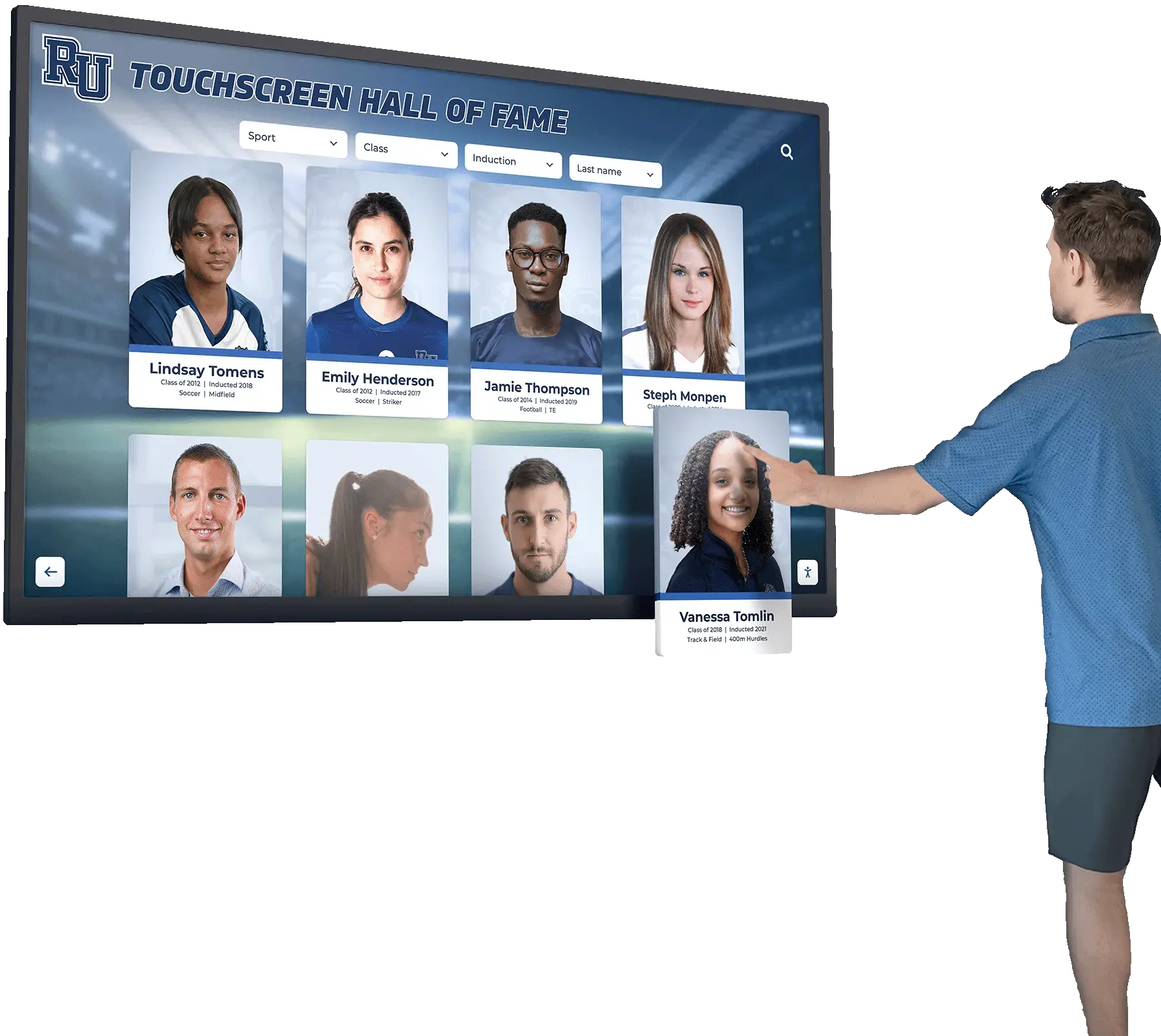
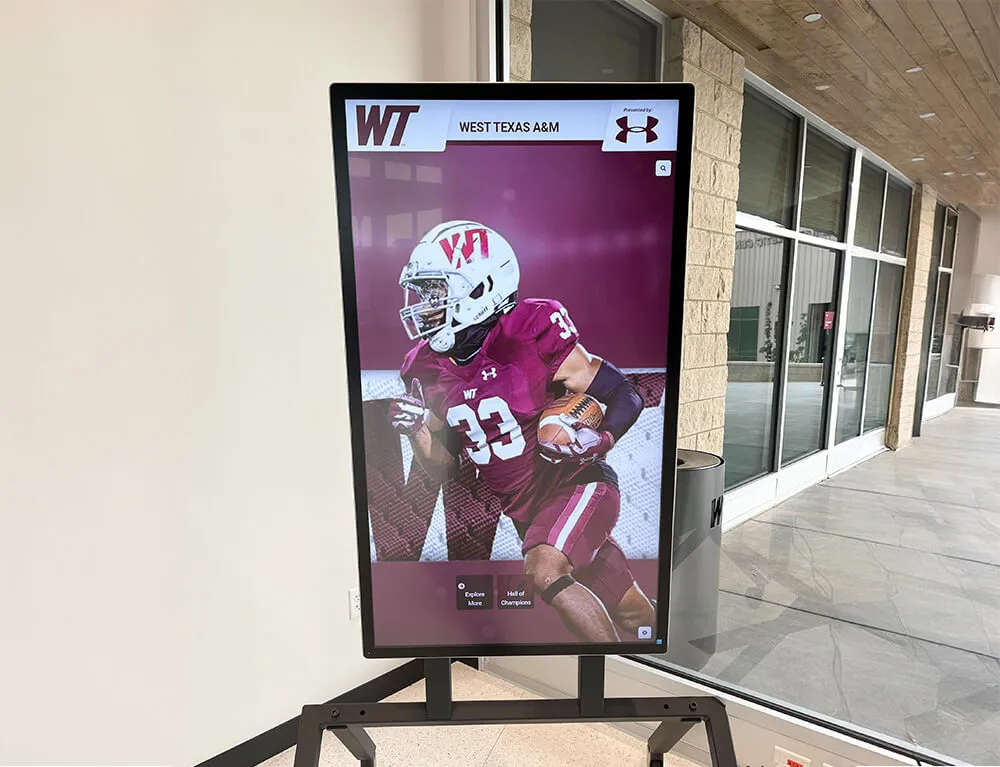
Wall Wraps vs. Digital Displays: Digital recognition systems like interactive touchscreen displays provide unlimited content capacity, regular updates, and interactive engagement but require initial hardware investments ($3,000-8,000 per display), ongoing software costs ($1,000-5,000 annually), electrical infrastructure, and network connectivity. Wall wraps require higher upfront investment per square foot of coverage but no ongoing operational costs. For static branding and permanent recognition, wall wraps prove more cost-effective. For dynamic content requiring regular updates, digital displays justify their operational costs. Many schools implement hybrid approaches combining permanent vinyl branding with integrated digital displays delivering advantages of both solutions.
Wall Wraps vs. Dimensional Signage: Dimensional letters, plaques, and constructed signage elements create premium three-dimensional presence but cost significantly more—typically $100-500 per square foot depending on materials and complexity. These solutions work for main entry statements, donor recognition, and premium applications where budget permits distinctive appearance. Wall graphics provide cost-effective coverage for larger areas where dimensional signage would prove prohibitively expensive.
Lifecycle Cost Considerations
Total ownership costs extend beyond initial installation.
Expected Lifespan and Replacement Cycles: Cast vinyl in protected corridors typically maintains appearance for 7-10 years before fading, edge lifting, or damage necessitate replacement. High-traffic areas, gymnasiums with ball impacts, and locations with direct sunlight exposure may require replacement after 5-7 years. Schools should budget replacement reserves based on expected lifespans—a $10,000 installation lasting 8 years costs $1,250 annually, while a $15,000 installation lasting 10 years costs $1,500 annually. Lifecycle cost calculations reveal true expense compared to initial procurement price.
Maintenance and Cleaning Costs: Properly installed wall graphics require minimal maintenance beyond periodic cleaning with approved methods. Annual cleaning costs typically remain under $1 per square foot, representing minimal ongoing expense. However, damage repairs from impact, vandalism, or inappropriate cleaning require professional attention and potentially section replacement. Schools should establish clear cleaning protocols and damage reporting procedures minimizing maintenance incidents.
Update and Modification Costs: Graphics requiring periodic updates incur ongoing expenses each modification cycle. Simple text changes might cost $200-500 for reprinting and reinstallation of affected sections. Major design revisions essentially require new graphics at full replacement cost. Schools should carefully assess whether planned applications truly warrant permanent solutions or whether dynamic digital systems better serve programs requiring frequent content changes.
Maintenance, Longevity, and Performance Optimization
Proper maintenance extends wall wrap lifespan while maintaining professional appearance.
Cleaning Protocols and Care Guidelines
Appropriate cleaning preserves graphics without causing damage.
Approved Cleaning Methods: Wall vinyl graphics tolerate cleaning with mild soap solutions (pH-neutral dish soap diluted in water), soft cloths or sponges avoiding abrasion, and gentle wiping without excessive pressure. These simple approaches remove dust, fingerprints, and most common contaminants without damaging graphics. Schools should train custodial staff on approved cleaning methods and provide written protocols preventing inadvertent damage through inappropriate techniques.
Products and Methods to Avoid: Certain cleaning approaches damage vinyl graphics including abrasive cleaners containing pumice, silica, or scouring agents, solvent-based cleaners including glass cleaner with ammonia, alcohol-based products, or degreasers, pressure washing or high-pressure spray, abrasive pads, brushes, or scouring implements, and excessive heat from steam cleaners or hot water. These products and methods remove ink, damage adhesive, scratch vinyl surfaces, or cause premature lifting. Custodial protocols should explicitly prohibit these approaches.
Frequency and Routine Maintenance: Light cleaning as needed (typically monthly in high-traffic areas, quarterly in protected locations) maintains appearance without excessive labor investment. Prompt attention to spills, marks, or graffiti prevents permanent staining or damage. Annual comprehensive cleaning and inspection identifies developing problems enabling timely intervention before minor issues become major failures.
Damage Prevention and Protection Strategies
Proactive measures reduce damage incidents requiring expensive repairs.
High-Traffic Area Considerations: Graphics in corridors, near water fountains, and adjacent to athletic facilities face elevated damage risk from contact, impact, and moisture. Protective measures include recessed installations setting graphics back from traffic flow, protective rails or bumpers preventing shopping cart or equipment impacts, overlaminate films providing sacrificial protective layers over printed graphics, and strategic placement keeping graphics above likely impact zones. Schools should identify high-risk locations during design phases implementing appropriate protection.
Vandalism Resistance and Graffiti Protection: Educational facilities unfortunately face vandalism risks requiring protective strategies. Anti-graffiti overlaminate films enable removal of markers, paint, and stickers without damaging underlying graphics. These sacrificial films can be replaced individually at fraction of complete graphic replacement cost. Strategic lighting and surveillance placement deter vandalism in vulnerable locations. Rapid graffiti removal demonstrates intolerance for vandalism while preventing copycat incidents.
Environmental Protection from Elements: Graphics near exterior doors face temperature fluctuations, moisture, and UV exposure accelerating degradation. Protective measures include installation setback from direct door openings, extended overlaminate on exposed graphics, material selection emphasizing durability in challenging conditions, and regular inspection enabling early intervention. Exterior graphics require exterior-rated materials offering superior weathering resistance compared to interior-only products.
Recognizing When Replacement Becomes Necessary
Understanding replacement indicators prevents continued display of deteriorated graphics damaging institutional image.
Visual Deterioration Indicators: Replacement becomes necessary when graphics exhibit color fading making designs appear washed out or discolored, edge lifting creating unsecured sections vulnerable to additional damage, visible seam separation where multi-panel installations separate, bubbling or wrinkling indicating adhesive failure, surface damage including scratches, tears, or punctures, or staining that cleaning cannot remediate. Any of these conditions warrants evaluation of whether repair or complete replacement proves more cost-effective.
Functional Obsolescence: Beyond physical condition, graphics become functionally obsolete when content no longer reflects current institutional reality—outdated branding, recognition of achievements now surpassed, references to programs no longer offered, or aesthetic dated to specific era. Schools should periodically assess whether graphics remain current and relevant regardless of physical condition.
Repair vs. Replacement Decision Framework: Minor damage affecting small sections (under 5% of total area) often justifies section replacement at fraction of complete reinstallation cost. Widespread deterioration, major damage affecting multiple sections, or functional obsolescence typically warrant complete replacement rather than piecemeal repairs. Schools should obtain professional assessment of damage extent and repair options before determining appropriate response.
Strategic Integration with Digital Recognition Systems
Contemporary recognition programs increasingly combine permanent wall graphics with dynamic digital displays creating comprehensive systems.
Complementary Roles of Physical and Digital Elements
Wall wraps and digital displays serve distinct but complementary functions in recognition programs.
Permanent Branding vs. Dynamic Content: Wall graphics excel at permanent institutional branding establishing visual identity that remains consistent for years. Digital displays provide unlimited recognition capacity with regular content updates accommodating growing inductee populations, new achievements, and evolving content without physical modifications. This fundamental distinction guides appropriate application selection—permanent elements suit wall wraps while dynamic content belongs on digital systems.
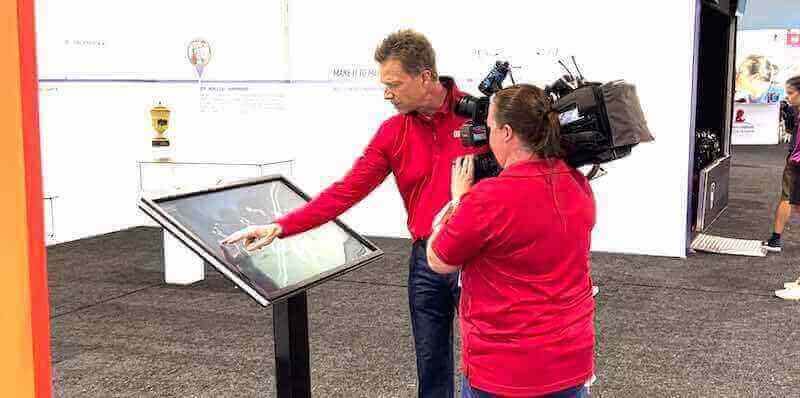
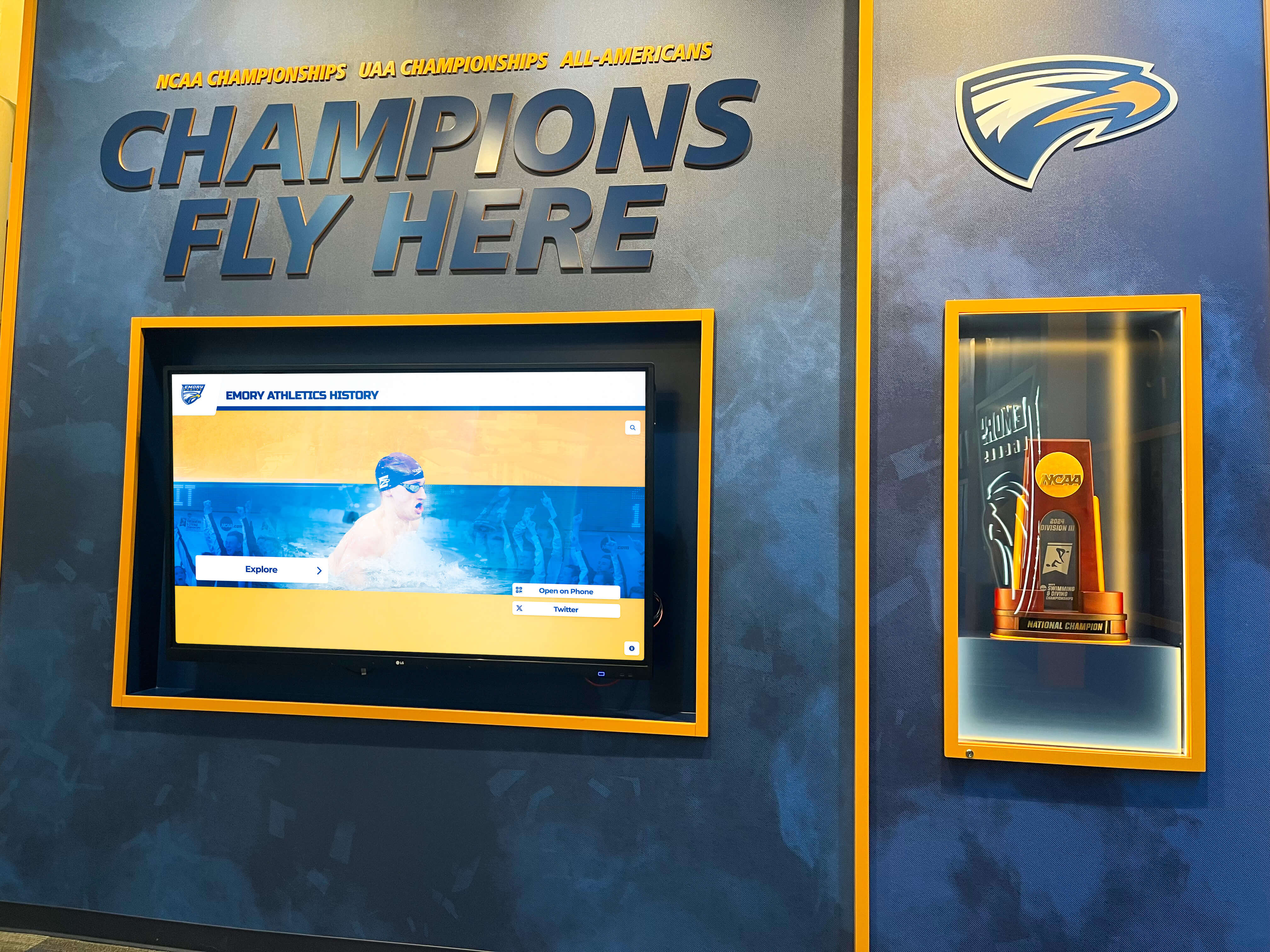
Environmental Design vs. Interactive Engagement: Wall graphics create branded environments and design frameworks establishing aesthetic context. Digital interactive displays enable active exploration, searchable databases, and engagement impossible with static graphics. Together, these elements create sophisticated installations where vinyl graphics establish branded environments while integrated touchscreen kiosks provide the interactive recognition content.
Cost Trade-offs and Value Optimization: Schools with limited budgets must allocate resources strategically between physical and digital elements. Wall graphics deliver maximum visual impact per dollar for permanent branding, while digital systems justify costs through unlimited capacity and update flexibility. Optimal implementations invest in substantial vinyl graphics establishing branded environments with strategically placed digital displays providing recognition content updates. This hybrid approach delivers both immediate visual transformation and long-term recognition sustainability.
Design Integration Strategies
Successful integration requires coordinated design between physical and digital elements.
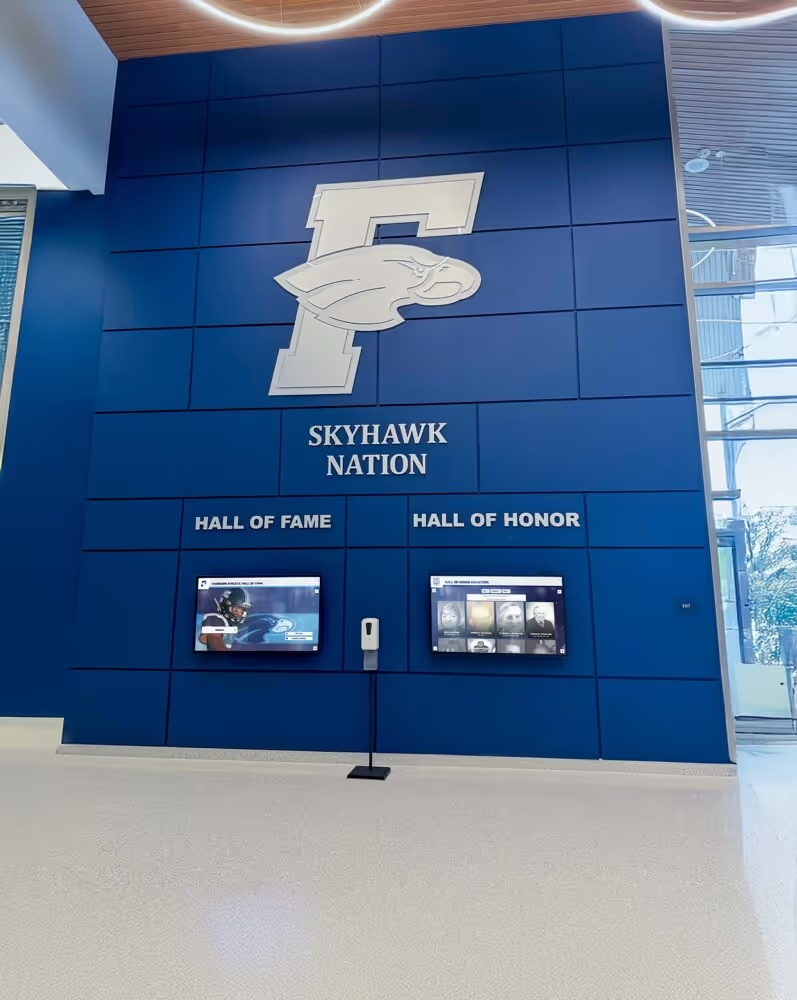
Architectural Framework Approach: Wall graphics create architectural frameworks—branded backgrounds, compositional structure, and visual boundaries—with integrated digital displays occupying designated areas within overall compositions. This approach treats digital screens as designed elements within larger branded environments rather than afterthought additions. Graphics frame displays, establish visual hierarchy, and create cohesive installations appearing professionally designed as unified systems.
Coordinated Brand Expression: Digital content should reflect the same brand standards, color palettes, typography, and design principles as surrounding wall graphics. This consistency strengthens brand expression and creates professional appearance. Schools should provide digital content creators with the same brand guidelines informing physical graphic design ensuring coordinated visual identity across all elements.
Flexible Growth Accommodation: Schools anticipating future digital display additions should design initial wall graphics accommodating planned expansion. Graphics might include designated blank areas for future displays, compositional structures extending naturally with added screens, or modular frameworks enabling sections replacement when adding digital elements. This forward planning prevents complete graphic replacement when technology integration expands.
Technical Considerations for Integrated Systems
Combining physical graphics with digital displays requires attention to technical details.
Electrical Infrastructure Planning: Digital displays require electrical power typically unavailable at desired wall locations. Schools should coordinate electrical rough-in during wall preparation before graphic installation, plan conduit routing concealing wiring behind graphics, and ensure adequate capacity and proper circuit protection. Retrofitting electrical after graphic installation requires removal and reinstallation of affected sections at substantial additional cost.
Mounting Integration and Structural Support: Digital displays require secure wall mounting supporting equipment weight. Wall construction must provide adequate structural support—either through solid backing, blocking installation during construction, or surface-mounted brackets. Schools should verify wall construction capability supporting planned displays before graphic installation. Graphics can conceal mounting hardware and wiring when properly designed with appropriate access provisions.
Thermal Management and Ventilation: Digital displays generate heat requiring adequate ventilation preventing equipment failure. Wall-mounted displays need several inches clearance around equipment enabling air circulation. Graphics immediately surrounding displays must tolerate elevated temperatures without degradation. Schools should verify adequate ventilation exists and select materials rated for these conditions.
Compliance, Safety, and Regulatory Considerations
Educational facility graphics must satisfy various codes and standards protecting occupants.
Fire Safety and Material Requirements
Building codes impose specific requirements for interior finish materials in educational occupancies.
Flame Spread and Smoke Development Ratings: Interior finish materials including wall graphics must meet flame spread and smoke development criteria established by building codes referencing ASTM E84 testing (Steiner Tunnel Test). Educational occupancies typically require Class A materials (flame spread 0-25, smoke developed 0-450). Schools should specify fire-rated vinyl meeting these requirements and obtain manufacturer documentation certifying compliance. Non-compliant materials create code violations and liability exposures if fires occur.
Documentation and Certification: Code officials may request material certification during inspections. Schools should obtain and maintain manufacturer literature specifying flame spread ratings, smoke development values, compliance with building codes, and independent testing laboratory certifications. This documentation demonstrates due diligence and satisfies inspection requirements.
Fire Alarm and Safety Equipment Access: Wall graphics must not obscure fire alarms, pull stations, extinguishers, sprinkler heads, exit signs, or other safety equipment. Graphics should maintain required clearances around this equipment and incorporate design accommodations ensuring visibility. Code officials may require graphic removal or modification if safety equipment access becomes compromised.
Accessibility Compliance
Federal disability law affects certain graphic applications.
ADA Requirements for Signage: Americans with Disabilities Act regulations establish specific requirements for permanent room identification signage and directional signs. Compliant signage must include raised characters and Braille, specific character size and spacing, non-glare finish, and contrasting backgrounds. Most decorative graphics and recognition displays fall outside these requirements, but room identification and wayfinding graphics often require ADA compliance. Schools should consult accessibility specialists ensuring required signage meets all technical standards.
Visual Contrast and Accommodation: Beyond mandatory ADA requirements, accessible design principles suggest high contrast between text and backgrounds enabling reading by people with visual impairments, adequate text sizing for comfortable reading, clear information hierarchy, and lighting design preventing glare interfering with viewing. These practices make graphics accessible to broader audiences regardless of legal requirement.
Environmental and Health Considerations
Material selection affects indoor air quality and environmental impact.
VOC Emissions and Indoor Air Quality: Certain printing inks and adhesives release volatile organic compounds affecting indoor air quality. Educational environments particularly require low-VOC materials protecting student health. Schools should specify materials meeting Greenguard Gold certification or similar third-party verification indicating low VOC emissions. This specification proves particularly important in areas with limited ventilation or continuous occupancy.
Sustainable Materials and Environmental Certifications: Environmentally conscious schools may prefer materials with recycled content, recyclable at end of life, manufactured through sustainable processes, and certified through programs including Forest Stewardship Council, Sustainable Forestry Initiative, or cradle-to-cradle certification. These preferences should appear in specifications ensuring vendors propose appropriate materials.
Off-Gassing and Occupancy Timing: New graphics may release odors immediately after installation as printing inks, adhesives, and materials off-gas remaining volatiles. Schools should schedule installations during unoccupied periods (weekends, breaks) allowing several days ventilation before reoccupancy. Adequate ventilation and time prevent odor complaints while enabling any emissions dissipation.
Case Studies: Successful School Wall Wrap Implementations
Real-world examples demonstrate how schools effectively implement wall wrap solutions addressing specific needs and objectives.
Case Study 1: Comprehensive Athletic Facility Branding
A large suburban high school transformed its outdated gymnasium and athletic complex through extensive wall wrap implementation. The project encompassed main gymnasium walls featuring oversized mascot graphics and school colors, locker room corridors with team-specific branding and motivational quotes, athletic hall of fame wall integrating vinyl graphics with traditional plaques, and training facility branding reinforcing program identity.
The school selected premium cast vinyl rated for gymnasiums with protective overlaminate resisting ball impacts and moisture. Installation occurred during summer break avoiding sports schedule disruption. Total project investment of $35,000 transformed multiple spaces previously featuring deteriorating paint and dated aesthetics. Five years post-installation, graphics maintain excellent appearance requiring only routine cleaning. Athletic director reports the professional facility appearance positively impacts recruitment visits, community perception, and program pride.
Case Study 2: Elementary School Environmental Design
An elementary school serving grades K-5 implemented themed wall graphics creating engaging environments supporting different age groups. Applications included main entrance branding with large-format school name and welcoming imagery, library reading area featuring literary characters and storybook themes, science corridor with educational graphics showing solar system, anatomical diagrams, and scientific phenomena, cafeteria motivational messaging promoting healthy eating and positive behavior, and classrooms customized graphics reflecting grade levels and teacher preferences.
The school emphasized bright colors, playful imagery, and educational content supporting curriculum objectives. Project coordination involved teachers in design development ensuring graphics aligned with educational goals. Implementation occurred in phases over two summers as budget permitted, ultimately investing $25,000 across entire facility. Principal reports transformed environments contribute to positive school culture, reinforce learning, and distinguish the facility from generic institutional appearance common in older schools.
Case Study 3: District-Wide Branding Consistency Initiative
A medium-sized school district spanning 12 buildings implemented coordinated wall graphic standards establishing consistent brand expression while allowing building-specific customization. The district developed comprehensive design guidelines specifying standard color palettes, typography systems, logo usage requirements, and compositional approaches. Individual schools implemented building-specific applications within established frameworks including main entry branding consistent across all buildings, hallway identity graphics customized to each building, recognition displays following standard formats with building-specific content, and wayfinding systems maintaining consistent design language.
This coordinated approach strengthened district brand identity while enabling individual building expression. Centralized procurement achieved volume pricing and consistent quality. The phased implementation over three years invested approximately $150,000 district-wide transforming every facility. Superintendent reports the professional, consistent appearance across all buildings strengthens community confidence, simplifies new staff transitions between buildings, and demonstrates organizational excellence.
Case Study 4: Hybrid Wall Graphics with Integrated Digital Displays
A progressive high school implemented sophisticated hall of fame combining permanent vinyl branding with integrated interactive digital displays. The installation featured large-format wall graphics establishing branded environmental context including school colors, mascot, and recognition themes. Four 55-inch touchscreen displays integrated into graphic composition provided interactive access to comprehensive alumni profiles, athletic achievement records, academic honors, and historical content.
The hybrid approach enabled permanent branded aesthetics without ongoing costs while digital displays accommodated unlimited recognition capacity with regular content updates. Total investment of $45,000 included wall graphics ($15,000), digital hardware ($20,000), software platform ($5,000 initial plus $2,000 annual subscription), and installation/integration ($5,000). School administrators report the system provides best-of-both-worlds solution—impressive branded environment appealing to alumni and visitors combined with unlimited digital recognition capacity satisfying growing inductee population without future physical modifications.
Vendor Selection and Project Management
Successful wall wrap implementation depends on capable vendors and effective project oversight.
Evaluating Graphics Vendors and Installers
Schools should assess prospective vendors across multiple dimensions.
Technical Capabilities and Equipment: Qualified vendors operate professional large-format printing equipment producing high-resolution output, maintain color management systems ensuring accurate reproduction, offer appropriate material options meeting project specifications, and employ experienced graphic designers familiar with large-format applications. Schools should request facility tours, sample work, and technical specifications verifying claimed capabilities.
Institutional Experience and References: Vendors experienced with educational facilities understand unique requirements including working around students and schedules, maintaining security protocols and background checks, minimizing operational disruption, and communicating effectively with school administrators. Schools should request and verify references from similar institutional projects including recently completed installations, projects of comparable scope, and installations several years old demonstrating longevity.
Licensing, Insurance, and Compliance: Qualified vendors maintain appropriate business licensing, general liability insurance ($1 million minimum), workers compensation insurance covering employees, professional liability coverage, and any trade-specific licensing or certifications. Schools should obtain certificate of insurance naming the school as additional insured before work commences. Public projects may require prevailing wage compliance and verification.
Design Services and Capabilities: Full-service vendors offer comprehensive design development services creating custom graphics meeting specifications. Design capabilities should include experienced graphic designers with institutional portfolios, brand management ensuring consistency with standards, mockup and visualization showing designs in context before production, and revision processes incorporating feedback systematically. Schools lacking internal design expertise benefit substantially from vendors offering comprehensive design services rather than print-only providers.
Project Management and Quality Oversight
Effective project management ensures successful outcomes.
Establishing Clear Scope and Specifications: Comprehensive project documentation prevents misunderstandings and establishes accountability. Written specifications should address material requirements and manufacturers, design deliverables and approval processes, installation standards and methods, timeline and phasing, payment terms and schedule, warranty coverage, and acceptance criteria. Detailed specifications enable accurate competitive bidding and provide contractual basis for quality enforcement.
Design Review and Approval Processes: Systematic design review prevents expensive corrections after production or installation. Effective processes include initial concept presentations establishing overall direction, detailed design reviews verifying all content accuracy, color proofs confirming accurate reproduction, full-scale mockups for major installations showing actual appearance, and final approvals authorizing production. Schools should involve all relevant stakeholders—administrators, coaches, graphics committee members, brand managers—in appropriate review stages ensuring comprehensive input before final commitment.
Installation Coordination and Supervision: Schools should designate project coordinators managing vendor relationships, coordinating site access and logistics, monitoring installation quality, addressing problems promptly, and ensuring work proceeds according to specifications and schedules. Coordinator presence during installation enables real-time problem solving and ensures installers receive needed access, information, and support.
Post-Installation Inspection and Acceptance: Final project acceptance should occur only after thorough inspection verifying all work meets specifications and acceptance criteria. Inspections should document conformance with approved designs, installation quality meeting standards, completion of all specified work, proper cleanup and site restoration, and delivery of required documentation including warranties, care instructions, and as-built records. Schools should establish clear acceptance procedures with payment contingent on satisfactory completion.
Emerging Trends and Future Directions
Wall wrap technology and applications continue evolving with new capabilities and approaches.
Technological Advancements in Materials and Production
Innovation creates new possibilities for school applications.
Enhanced Durability and Performance Materials: Material science advances produce vinyl formulations with improved scratch resistance, greater stain resistance, enhanced UV stability, superior adhesion in challenging conditions, and antimicrobial properties inhibiting bacterial growth. These performance improvements extend lifespan and reduce maintenance requirements particularly in demanding institutional environments.
Specialty Effect Materials: Beyond standard flat graphics, specialty materials create dimensional effects and unique aesthetics including metallic finishes simulating brushed aluminum or copper, holographic films creating shifting colors and reflective effects, textured surfaces providing tactile interest, and glow-in-the-dark materials offering visibility without illumination. While premium-priced, these materials create distinctive appearances differentiating facilities from standard installations.
Sustainable and Eco-Friendly Options: Environmental consciousness drives development of PVC-free alternatives, materials with recycled content, bio-based films derived from renewable resources, and products designed for easier recycling at end of life. Schools prioritizing sustainability can specify these materials, though they may carry premium pricing compared to conventional options.
Integration with Digital Technologies
Convergence between physical graphics and digital systems creates new possibilities.
QR Codes and Augmented Reality: Wall graphics increasingly incorporate QR codes linking to digital content—videos, detailed information, interactive experiences—accessed through smartphones. Augmented reality applications overlay digital content on physical displays when viewed through AR-enabled devices. These technologies bridge physical graphics with digital content enabling richer storytelling within physical space constraints.
Adaptive and Changeable Display Systems: Emerging systems combine permanent branded frameworks with modular insert panels enabling content updates without complete replacement. Magnetic receptive substrates accept changeable magnetic graphic panels. SEG (silicone edge graphics) systems use tension fabric graphics in permanent frames. These adaptive approaches provide some update flexibility while maintaining permanent branded aesthetics.
Sensor-Integrated Interactive Graphics: Research explores incorporating capacitive touch sensors, proximity sensors, and other technologies directly into wall graphics creating interactive surfaces without visible hardware. While primarily research-stage currently, these technologies may enable future interactive walls blurring distinctions between physical graphics and digital displays.
Evolving Design Approaches and Aesthetics
Design trends influence how schools approach facility graphics.
Minimalism and Restraint: Contemporary design trends favor clean, minimal aesthetics with substantial negative space, restrained color palettes, simplified typography, and focus on essential elements. This approach creates sophisticated environments avoiding overwhelming viewers while maintaining strong brand presence through refined execution rather than visual complexity.
Storytelling and Narrative Design: Progressive schools use wall graphics not just for branding but as storytelling media conveying institutional history, values, and mission through sequential narratives, historical timelines, and thematic compositions. This content-rich approach transforms graphics from decoration into communication vehicles supporting educational mission.
Community Co-Creation and Student Involvement: Some schools involve students in graphic design through art programs, creating installations featuring student artwork, incorporating student-generated content, or establishing design competitions. This participatory approach builds ownership, celebrates student creativity, and creates unique installations reflecting student perspectives.
Conclusion: Strategic Implementation of Wall Wrap Solutions
Wall wraps provide schools with powerful tools transforming educational environments through professional branding, meaningful recognition, and inspiring design. When implemented thoughtfully with appropriate materials, professional installation, and strategic design, these solutions deliver sustained value strengthening institutional identity while creating spaces students, staff, and visitors remember positively.
Successful wall wrap implementation requires systematic planning addressing institutional objectives and brand standards, material selection matching performance requirements and budget realities, design development balancing aesthetics with functionality and longevity, professional installation ensuring quality and durability, integration with broader facility design and recognition programs, and lifecycle management including maintenance and eventual replacement.
Schools should approach wall wraps as components of comprehensive environmental design rather than isolated projects. The most effective implementations coordinate physical graphics with architectural elements, digital displays, furnishings, and other environmental factors creating cohesive spaces where all elements work together supporting institutional mission. This holistic perspective delivers results transcending what individual components achieve in isolation.
Budget realities require strategic prioritization focusing initial investment on high-impact applications including main entry branding establishing immediate institutional identity, athletic facilities visible to recruits and visitors, main corridors with consistent daily traffic, and recognition displays celebrating achievements. These priority applications deliver maximum value, with subsequent phases expanding graphics throughout facilities as resources permit.
Contemporary recognition programs increasingly combine permanent wall graphics with complementary digital recognition systems, creating sophisticated installations delivering advantages of both approaches. Wall wraps establish permanent branded environments and architectural frameworks while integrated touchscreen displays provide unlimited recognition capacity, regular content updates, and interactive engagement. This hybrid strategy optimizes investment, providing immediate visual transformation through physical graphics while ensuring long-term recognition sustainability through digital systems accommodating growing inductee populations without ongoing physical modifications.
The investment in professional wall graphics demonstrates institutional commitment to excellence visible daily to students, staff, and visitors. Schools creating inspiring, professionally branded environments through thoughtful wall wrap implementation strengthen culture, build pride, and communicate values supporting educational mission. Whether establishing initial facility branding, renovating aging spaces, or implementing comprehensive recognition programs, wall wraps provide versatile, cost-effective solutions transforming educational environments into spaces celebrating achievement and institutional identity for years to come.
Frequently Asked Questions
How long do wall wraps typically last in school environments?
Wall wrap longevity depends primarily on material quality, installation quality, and environmental conditions. Premium cast vinyl professionally installed in protected corridors typically maintains excellent appearance for 7-10 years before replacement becomes necessary. High-traffic areas, gymnasiums with ball impacts, cafeterias with food exposure, and spaces with direct sunlight experience shorter lifespans of 5-7 years. Economy calendered vinyl lasts 3-5 years before fading, shrinkage, or edge lifting necessitate replacement. Proper surface preparation, professional installation, routine maintenance, and damage prevention extend lifespan substantially. Schools should establish expected replacement cycles based on specified materials and actual conditions, budgeting replacement reserves accordingly. Graphics showing visible deterioration damage institutional image and should be replaced proactively before condition becomes obviously poor.
Can wall wraps be removed without damaging walls?
Properly installed wall wraps on appropriate surfaces can be removed, though the process requires care and professional expertise. Removal difficulty depends on adhesive type, substrate material, installation age, and environmental exposure. Recent installations using permanent adhesive typically remove cleaner than aged installations where adhesive has cured extensively. Painted drywall in good condition usually tolerates removal without damage when proper techniques are used including heat application softening adhesive, controlled peeling at shallow angles, and adhesive residue removal with appropriate solvents. Textured surfaces, degraded paint, or poor original surface preparation may result in some paint removal or surface damage during vinyl removal. Schools planning graphics as temporary should specify removable adhesive despite reduced durability. Removal costs typically range $1-3 per square foot professionally, making replacement significantly less expensive than initial installation but still representing meaningful investment.
What surface preparation is required before wall wrap installation?
Successful installation requires clean, smooth, dry, properly cured surfaces. Newly painted walls must cure minimum 30 days (preferably 60-90 days) before vinyl application allowing moisture evaporation and paint hardening. Existing painted surfaces require cleaning removing dust, oils, and contaminants preventing proper adhesion. Loose or flaking paint requires scraping and repair. Damaged drywall needs patching, sanding smooth, priming, and painting before vinyl application. Textured walls require either skim coating creating smooth surfaces or acceptance that vinyl will conform to underlying texture showing through. Concrete block walls need sealing and potentially skim coating depending on porosity and texture. Surfaces with gloss paint may require light sanding creating mechanical tooth for adhesive. Professional installers should conduct site surveys identifying required preparation, though schools can reduce costs by handling some preparation work internally before installer arrival. Inadequate preparation causes adhesive failure, bubbling, and premature graphic failure.
How do wall wraps compare in cost to other school branding solutions?
Wall wraps typically cost $6-15 per square foot installed depending on material quality, design complexity, and installation conditions. This positions wall graphics between basic painted graphics ($1-3 per square foot for simple graphics) and custom painted murals by professional artists ($15-50+ per square foot). Dimensional signage elements like fabricated letters cost substantially more ($100-500+ per square foot) but create premium three-dimensional presence. Digital displays represent different cost structure entirely with hardware investments ($3,000-8,000 per display) plus ongoing software costs ($1,000-5,000 annually) but provide unlimited content capacity and regular updates. For establishing permanent branding across substantial wall areas, vinyl graphics deliver the best balance of professional appearance, reasonable cost, and acceptable longevity. Schools with limited budgets achieve maximum visual transformation per dollar invested through strategic vinyl graphic applications on high-visibility walls.
Can wall graphics incorporate school-specific imagery and custom photography?
High-resolution photography and custom imagery reproduce excellently through large-format printing, enabling completely customized graphics featuring school-specific content. Schools can incorporate team photographs, student achievement imagery, historical photographs, campus aerial views, and custom graphic elements specific to institutional identity. Design services typically include custom composition development integrating provided photography, graphics, and branding elements into cohesive installations. Image quality requirements depend on intended viewing distances—graphics viewed from 10+ feet function effectively with lower source resolution than graphics examined closely. Photography from modern digital cameras (12+ megapixels) generally provides adequate resolution for typical installations. Older photographs, yearbook scans, or other historical materials may require professional scanning and digital restoration achieving acceptable reproduction quality. Schools should work with designers during planning identifying imagery needs, evaluating source material quality, and potentially scheduling professional photography sessions capturing required content at appropriate resolution.
How do schools update wall graphics when information becomes outdated?
Permanent vinyl graphics cannot be updated easily, creating challenges when content becomes outdated. Schools can address this through several strategies including modular design with replaceable sections enabling partial updates without complete reinstallation, timeless design approaches avoiding dated references or time-specific content reducing obsolescence, hybrid systems combining permanent branded graphics with integrated digital displays providing update flexibility, planned replacement cycles budgeting graphic refresh as part of facility maintenance, and accepting that some content permanence aligns with recognition program objectives. Schools recognizing graduating classes, championship achievements, or historical milestones may appropriately choose permanent commemoration. Programs requiring regular content updates including current rosters, active students, or frequently changing information better suit digital displays or removable graphic systems. Design decisions should consider update frequency requirements during planning preventing installation of permanent graphics for applications requiring regular modification.
What design mistakes should schools avoid with wall graphics?
Common design mistakes compromising wall graphic effectiveness include excessive text overwhelming viewers rather than delivering concise messaging, poor color contrast reducing legibility, typography too small for comfortable reading from intended distances, cluttered compositions lacking clear hierarchy and negative space, trendy design elements appearing dated within years, inadequate consideration of lighting conditions affecting appearance, failure to integrate architectural features creating awkward relationships with doors, windows, and other elements, and inconsistency with established brand standards. Schools should engage experienced graphic designers familiar with large-format architectural applications, provide comprehensive brand guidelines, establish realistic project objectives, review designs at actual scale under actual lighting conditions, and involve multiple stakeholders providing diverse perspectives before final approval. Professional design development represents small percentage of total project cost but fundamentally determines whether results achieve intended impact.
Can wall wraps work in gyms and other challenging school environments?
Wall graphics function effectively in gymnasiums, cafeterias, locker rooms, and other challenging environments when appropriate materials are specified. Gymnasiums require protective overlaminate films creating sacrificial surfaces absorbing ball impacts without damaging underlying graphics, premium cast vinyl with superior adhesion resisting humidity and temperature fluctuations, and strategic placement avoiding direct ball strike zones. Cafeterias benefit from stain-resistant materials, protective overlaminate enabling aggressive cleaning, and placement above likely splash zones. Locker rooms require moisture-resistant materials, antimicrobial options when specified, and acceptance of somewhat reduced lifespan compared to protected corridors. Schools should specify enhanced materials for challenging environments and work with experienced installers familiar with institutional applications. While these demanding locations reduce graphics lifespan somewhat, proper material selection and installation enable successful implementations lasting 5-7 years even in high-stress environments.
Ready to transform your school facility through professional wall graphics integrated with comprehensive digital recognition? Explore how Rocket Alumni Solutions combines permanent branded wall aesthetics with unlimited digital recognition capacity, creating sophisticated installations celebrating achievement while establishing inspiring institutional environments for students, staff, and visitors for years to come.