



Volleyball programs thrive through countless contributions extending far beyond kill percentages and block statistics. While offensive firepower certainly matters, championship teams also depend on exceptional passers who set up scoring opportunities, defensive specialists who extend rallies, supportive teammates who elevate practice intensity, and vocal leaders who maintain energy through adversity.
Comprehensive volleyball awards programs acknowledging these diverse contributions accomplish several crucial objectives: they validate athletes whose work doesn’t generate highlight plays but proves essential to team success, communicate program values as powerfully as any mission statement, increase motivation throughout seasons when players understand various achievement types receive recognition, and create inclusive ceremonies where every participant receives meaningful acknowledgment rather than watching only statistical leaders celebrated.
The specific volleyball awards your program implements reveal what you genuinely value. Programs emphasizing character awards alongside statistical achievements demonstrate that personal development matters as much as competitive success. Organizations recognizing academic excellence and community service within athletic recognition signal that athletes’ identities extend beyond sport participation. And schools implementing creative, position-specific categories rather than identical generic awards year after year show thoughtfulness that resonates with athletes who feel genuinely seen.
Offensive Volleyball Awards
Offensive awards recognize the statistical achievements that directly produce points—kills, aces, and smart offensive play that overwhelms opponents. These categories provide objective recognition for athletic performance that families, communities, and athletes themselves readily understand and value.
Most Valuable Player
The MVP award represents the highest team honor, recognizing the athlete whose overall contributions proved most essential to team success. Effective MVP selection considers both statistical production and intangible leadership qualities that don’t appear in box scores but prove equally vital to championship performance.
Selection Considerations: Rather than simply awarding this to leading killers, evaluate comprehensive contributions including offensive efficiency, defensive impact, leadership presence, practice performance, and performance in critical moments. Some programs implement separate offensive and defensive MVP awards, while others maintain a single comprehensive honor requiring excellence across all aspects of volleyball.
Voting Methods: Consider combined approaches using coach evaluation (recognizing practice contributions and intangible qualities), team voting (validating peer respect and teammate recognition), and statistical analysis (ensuring quantifiable achievement receives appropriate weight). This multi-method approach prevents selection from becoming either purely political or excessively statistics-focused.
Kill Leader Awards
Kill statistics provide clear, objective measurement of offensive production—the most visible and celebrated aspect of volleyball performance. Kill leader recognition acknowledges players who consistently put balls away, generating points that appear directly on scoreboards.
Category Variations: Programs can recognize total kills (volume production rewarding availability and opportunity), kills per set (efficiency metric accounting for playing time differences), or hitting percentage (recognizing smart shot selection and offensive intelligence rather than merely swinging frequency). Each metric reveals different forms of excellence—volume leaders demonstrate durability and opportunity maximization, per-set leaders show production concentration, and percentage leaders exhibit intelligent shot selection.
Minimum Qualifications: Establish playing time or attempt minimums preventing small sample sizes from skewing results. A player with three kills in limited action shouldn’t qualify for percentage-based recognition ahead of consistent starters facing full defensive attention across entire matches.
Ace Leader Recognition
Serve aces represent one of volleyball’s most momentum-shifting plays—direct points requiring no teammate involvement while simultaneously demoralizing opponents. Ace leaders demonstrate serving power, placement skill, and mental toughness to maintain aggressive serving despite error risks.
Beyond Simple Ace Counts: While total ace numbers provide straightforward recognition, consider also recognizing serving efficiency—ace percentage balanced against error rates. A player with fifteen aces but thirty service errors contributes differently than someone with twelve aces and eight errors. Some programs implement “positive serve” metrics counting aces plus serves creating poor passes, acknowledging that not all excellent serves result in direct aces.
Clutch Serving Awards: Consider specialty recognition for serving performance in critical moments—late-set situations, playoff matches, or runs that shifted match momentum decisively. Team captain responsibilities often include setting serving tone and maintaining aggressive approaches despite pressure.
Offensive Efficiency Award
Hitting percentage awards recognize intelligent offensive play—athletes who swing aggressively while minimizing errors and tooling blocks effectively. These players understand court awareness, read defensive positioning, and make smart attacking decisions rather than simply swinging hard regardless of circumstances.
Calculation Method: Hitting percentage is calculated as (Kills - Errors) ÷ Total Attempts, providing comprehensive offensive evaluation. While kill totals reward volume, hitting percentage reveals offensive intelligence and consistency—players who contribute positively more often than they hurt teams with unforced errors.
Positional Context: Recognize that middle blockers typically post higher hitting percentages than outside hitters due to receiving more advantageous sets and facing less defensive attention. Consider implementing position-specific efficiency awards or acknowledging these contextual factors when presenting comprehensive offensive efficiency recognition.
Defensive Volleyball Awards
Defense creates opportunities for offense to shine—yet defensive excellence often receives insufficient recognition despite determining match outcomes as significantly as kill production. Comprehensive volleyball awards programs emphasize defensive contributions through multiple recognition categories.
Dig Leader Recognition
Digs extend rallies and create transition opportunities, representing the defensive foundation enabling offensive production. Dig leaders demonstrate court awareness, quick reaction time, relentless effort, and willingness to sacrifice their bodies to keep balls alive.
Statistical Categories: Programs can recognize total digs (volume production showing availability and positioning), digs per set (efficiency measurement accounting for playing time), or error-to-dig ratios (rewarding clean defensive play minimizing unforced mistakes). Leading diggers typically demonstrate exceptional anticipation, reading opponents’ shots before contact occurs.
Defensive Specialist Recognition: Liberos and defensive specialists who rarely attack often lead dig statistics. Ensure these athletes receive prominent recognition since their primary contributions manifest through defensive excellence rather than offensive statistics that typically receive more attention.
Block Leader Awards
Blocking represents volleyball’s most imposing defensive skill—stuffing opponents’ attacks for immediate points while demoralizing opposing hitters. Block leaders demonstrate timing, positioning, court awareness, and the physical presence to close the net effectively.
Block Categories: Solo blocks demonstrate individual excellence and perfect timing, while assisted blocks reveal teamwork and coordinated defensive schemes. Total blocks combine both, providing comprehensive measurement. Some programs separate frontcourt players’ blocking statistics from back-row contributions, acknowledging the different responsibilities.
Beyond Numbers: Consider recognizing blocking efficiency—blocks relative to opportunities or error rates. A middle blocker who consistently closes well without touching nets or committing reaching violations contributes differently than someone accumulating similar block totals alongside frequent errors.
Best Libero Award
The libero position requires unique skills—exceptional passing, defensive consistency, vocal leadership, and the court awareness to anchor defensive systems. Libero-specific recognition celebrates athletes whose specialized role proves essential despite generating fewer headline statistics than attackers.
Evaluation Criteria: Assess passing grades and consistency, dig production and defensive range, serve-receive performance under pressure, communication and leadership qualities, and ability to maintain high-level play across lengthy matches without rotation breaks. Recognition programs should emphasize the libero’s leadership role and defensive anchoring.
Statistical Support: While some libero contributions remain difficult to quantify, track passing grades (systems rating pass quality), reception errors, and total defensive touches providing objective support for subjective assessments about overall defensive excellence.
Defensive MVP
Some programs implement separate defensive MVP awards recognizing the athlete whose overall defensive contributions proved most valuable—whether libero, defensive specialist, or exceptional back-row player from any position. This award celebrates comprehensive defensive excellence beyond single statistical categories.
Selection Approach: Combine dig totals, blocking statistics (for frontcourt players), passing grades, defensive error rates, and coach evaluation of positioning, communication, and leadership. Defensive MVP selection acknowledges that championship defense requires intelligence and teamwork extending beyond individual statistics.
Setting and Facilitating Awards
Setters orchestrate offenses, making decisions that enable attackers to produce kills while managing tempo, reading defenses, and distributing opportunities. Setting awards recognize these playmakers whose contributions create success for teammates rather than generating personal statistics.
Best Setter Award
The setter position demands unique excellence—exceptional ball-handling skills, court vision, decision-making under pressure, and the leadership to manage entire offensive systems. Setter-specific recognition celebrates athletes whose specialized role proves essential despite not leading obvious statistical categories like kills.
Evaluation Criteria: Assess setting accuracy and consistency, assist totals and distribution patterns, offensive decision-making and tempo management, leadership and communication qualities, and ability to perform under defensive pressure. The best setters elevate their hitters’ efficiency while reading defensive schemes and exploiting matchup advantages.
Statistical Measurement: Track assist totals, setting errors, and team hitting percentage when specific setters run offense. Some programs analyze assist-to-error ratios or calculate “second-ball” statistics measuring setters’ ability to create offensive opportunities from imperfect passes.
Assist Leader Recognition
Assist statistics measure setting production directly—quantifying how many kills setters enabled through quality sets. Assist leader recognition provides objective acknowledgment for facilitation excellence that creates teammates’ offensive success.
Category Variations: Total assists reward volume production and availability across seasons, assists per set account for playing time differences, and assist-to-error ratios recognize clean setting minimizing unforced mistakes. Each metric reveals different excellence forms—volume leaders demonstrate consistency across lengthy seasons, per-set leaders show concentrated production, and ratio leaders exhibit careful decision-making.
Beyond Assists: Consider recognizing setting versatility—successful distribution across multiple attackers rather than relying exclusively on single hitters. Setters who spread offense effectively create more unpredictable and difficult-to-defend attacks while developing depth throughout rosters.
Setting Efficiency Award
Setting efficiency measures clean ball-handling and smart distribution—setters who minimize errors while maximizing their hitters’ success. These athletes understand their attackers’ preferences, read defensive positioning, and consistently deliver quality sets enabling offensive production.
Measurement Approach: Calculate team hitting percentage by setter, revealing which setters create the most efficient offensive environments. Track setting errors relative to total attempts, and analyze kill percentage on sets (assists relative to total setting attempts). These metrics reveal setting excellence beyond simple assist totals.
Strategic Setting Recognition: Some programs create awards recognizing strategic excellence—setters who excel at tempo manipulation, back-row setting, or managing out-of-system situations. These categories celebrate intelligence and problem-solving beyond technical setting skills.
Leadership and Character Volleyball Awards
Character awards recognize intangible qualities that don’t appear in statistics but prove equally essential to team success and program culture. These awards communicate program values powerfully while providing recognition for athletes whose primary contributions transcend statistical measurement.
Team Captain Recognition
Leadership awards celebrate athletes who inspire teammates, maintain positive energy through adversity, hold peers accountable, and exemplify program values on and off the court. Effective volleyball leadership manifests through multiple forms—vocal motivation, leading by example, strategic thinking, and emotional support.
Selection Approaches: Team voting provides authentic peer validation of who teammates genuinely respect and follow. Anonymous ballots encourage honest assessment rather than popularity contests. Consider recognizing both vocal leadership (communication, motivation, visible energy) and leadership by example (consistent work ethic, professional behavior, quiet excellence) since both types prove essential in volleyball’s communication-intensive environment.
Captain-Specific Awards: Rather than merely acknowledging the captain title athletes already received, create awards recognizing exceptional fulfillment of captain responsibilities—effective communication between coaches and teammates, successful conflict resolution, meaningful mentorship of younger players, or dramatic leadership growth across seasons.
Most Inspirational Player
Inspirational player awards recognize athletes who elevate teammates’ performance through their passion, energy, and commitment. These individuals may not lead any statistical category but prove indispensable to team chemistry and collective success through their infectious enthusiasm and unwavering positivity.
Identification Characteristics: Athletes who maintain positive attitudes regardless of playing time or circumstances, celebrate teammates’ successes genuinely and enthusiastically, elevate practice intensity making everyone better through daily effort, respond to adversity with resilience rather than negativity, and demonstrate visible passion that energizes entire teams during matches.
Selection Method: Combined coach and teammate voting typically identifies inspirational players most accurately. Coaches observe practice behaviors and attitude consistency, while teammates recognize locker room presence and peer influence that coaches may not fully witness. Many student athlete resume builders highlight leadership qualities alongside athletic achievements.
Hustle and Heart Award
Hustle awards celebrate relentless effort and maximum commitment—athletes who pursue every ball regardless of circumstances, dive without hesitation, maintain intensity throughout lengthy matches, and demonstrate that commitment can match or exceed talent in importance. These players embody the competitive spirit and determination that championship teams require.
Recognition Criteria: Pursuit of balls others consider unplayable, willingness to sacrifice bodies for team success, consistent maximum effort regardless of score or match significance, practice intensity that elevates teammates’ performance, and embodiment of “refuse to lose” mentality that proves contagious throughout rosters.
Cultural Impact: Hustle recognition reinforces that effort represents a choice available to every athlete regardless of natural ability. When programs prominently celebrate maximum commitment, they signal that talent alone proves insufficient without the work ethic to maximize it—messaging that influences entire team cultures.
Coaches Award
The coaches award represents special recognition for athletes who exemplify what programs value most comprehensively—whether leadership, improvement, attitude, work ethic, or overcoming adversity. This flexible category allows coaches to acknowledge deserving athletes whose contributions don’t fit neatly into other award categories.
Selection Philosophy: Coaches awards often recognize athletes who exceeded expectations dramatically, demonstrated exceptional character growth, contributed vitally despite limited statistical production, overcame significant obstacles with grace and determination, or embodied program values so completely that their impact transcends statistical measurement.
Presentation Significance: When presenting coaches awards, share specific stories and examples illustrating why these athletes merited this special recognition. Personal narratives create emotional impact and help audiences understand what made these athletes’ contributions uniquely valuable beyond what statistics reveal.
Best Teammate Award
Volleyball depends on cohesive teamwork and positive chemistry more than most sports due to its rapid play requiring constant communication and coordination. Best teammate awards recognize athletes who prioritize collective success over personal statistics, support others genuinely, and contribute to the positive culture making teams greater than the sum of individual talents.
Evaluation Factors: Celebration of teammates’ achievements without jealousy or resentment, acceptance of coaching decisions and role assignments without complaint, positive influence in locker rooms and team settings, willingness to help teammates improve through encouragement and assistance, and absence of selfish behaviors that damage team unity.
Peer Voting: Best teammate awards carry special significance when selected through team voting, providing authentic validation that teammates genuinely appreciate these athletes’ contributions to collective environment and culture.
Academic and Community Volleyball Awards
Well-rounded programs recognize that athlete identities extend beyond competitive performance. Academic and community awards celebrate achievements demonstrating that volleyball excellence and broader success complement rather than compete with each other.
Scholar-Athlete Recognition
Academic excellence awards celebrate athletes who excel in classrooms while managing volleyball demands. This recognition reinforces that sports participation and academic achievement work synergistically when athletes develop time management and discipline.
Award Structures: Highest team GPA recognition identifying top academic performers, academic all-conference or all-state selections celebrating external validation, significant GPA improvement acknowledging academic growth, or threshold recognition for all athletes maintaining 3.5+ GPAs or honor roll status. National Honor Society students often balance multiple commitments including athletics.
Recognition Significance: Scholar-athlete awards serve multiple purposes—motivating academic effort among athletes who might otherwise prioritize sports exclusively, providing acknowledgment that matters to college-focused families, demonstrating to broader school communities that athletics supports rather than detracts from academic missions, and celebrating time management and discipline that predicts long-term success far better than athletic statistics.
Community Service Award
Community service recognition celebrates athletes who contribute significantly beyond competitive contexts—representing programs positively in schools and communities, participating meaningfully in service initiatives, and demonstrating citizenship extending beyond athletic identity.
Evaluation Criteria: Documented volunteer hours supporting community organizations or causes, leadership in organizing or promoting team service projects, positive representation of programs in school settings and community interactions, and ambassador-like behavior connecting volleyball programs with broader communities.
Program Culture Impact: Community service recognition demonstrates that programs value athletes’ complete development rather than viewing them solely as competitive assets. This messaging attracts families seeking holistic development environments while differentiating programs from purely win-focused alternatives.
Student-Athlete Leadership Award
Some programs create awards specifically recognizing athletes who demonstrate exceptional leadership within broader school contexts—serving in student government, mentoring younger students, organizing school-wide initiatives, or representing athletic programs in administrative or community settings beyond volleyball specifically.
Selection Basis: Student council or class office participation, peer tutoring or academic mentorship, school event organization or volunteer leadership, positive discipline record and behavioral modeling, and recognition from non-athletic faculty and administrators about positive influence extending beyond gyms and volleyball courts.
Position-Specific Volleyball Awards
While many awards translate across positions, specialized categories tailored to specific roles add relevance and demonstrate deep understanding of what makes excellence distinctive within each volleyball position. Position-specific awards ensure athletes whose contributions manifest differently all receive appropriate recognition.
Best Middle Blocker
Middle blockers serve as defensive anchors while providing quick offensive options through the middle. Middle-specific recognition celebrates athletes who excel at this specialized position requiring unique skills, athleticism, and volleyball intelligence.
Evaluation Criteria: Blocking effectiveness and defensive presence, quick-set offensive efficiency, transition play and coverage responsibilities, reading opponents’ offenses and adjusting positioning, and communication coordinating team blocking schemes. Elite middle blockers dominate nets defensively while providing reliable offensive options that prevent defenses from cheating toward outside hitters.
Statistical Support: Track blocking statistics, hitting percentage on quick sets, and transition attack efficiency. Middle blockers typically post higher hitting percentages due to quick-tempo attacks but face challenges in transition situations requiring strong all-around skills.
Best Outside Hitter
Outside hitters typically serve as primary offensive weapons while maintaining all-around responsibilities including passing, defense, and back-row attacking. Outside hitter recognition celebrates athletes who excel at this demanding position requiring both offensive firepower and comprehensive skills.
Assessment Factors: Kill production and offensive efficiency, passing grades and serve-receive performance, defensive contributions and dig statistics, and ability to perform in pressure situations when teams need points. Elite outside hitters deliver offensively while contributing significantly on defense and in passing—demonstrating complete volleyball skills rather than one-dimensional attacking.
Versatility Recognition: The best outside hitters attack effectively from multiple rotations, hit various shot types (line, angle, tip, roll), and adjust approaches based on defensive positioning and set quality. This versatility makes them nearly impossible to defend consistently.
Best Opposite / Right Side
Opposite hitters provide offensive balance while often facing challenging responsibilities including blocking against opponents’ outside hitters and attacking from right side—skills requiring different techniques than left-side hitting. Position-specific recognition celebrates athletes who excel in this often underappreciated role.
Unique Contributions: Offensive production from right side providing balance and unpredictability, effective blocking against opponents’ primary weapons, back-row attacking adding dimension to offenses, and serving effectiveness often emphasized from this position. Strong opposites prevent defenses from focusing exclusively on primary outside hitters while providing defensive support against opponents’ best attackers.

Specialty and Creative Volleyball Awards
Beyond traditional statistical and character awards, creative categories add personality to recognition programs while celebrating specific contributions unique to individual athletes or team cultures. When implemented thoughtfully—avoiding mean-spirited jokes or trivializing genuine achievements—these awards create memorable moments athletes genuinely treasure.
Most Improved Player
Most improved recognition celebrates dramatic skill development and transformation over seasons or careers. These awards provide powerful motivation by demonstrating that dedication and practice produce measurable results, encouraging similar commitment from current and future athletes.
Assessment Approaches: Compare early and late season statistics showing quantifiable improvement, evaluate skill testing results from beginning versus end of season, conduct subjective coach assessments of practice performance evolution, and review playing time progression reflecting increased capability and trust.
Recognition Significance: Most improved awards frequently mean more to recipients than any other recognition since they validate personal growth journeys. While statistical leaders often possess natural talent, most improved winners demonstrate that effort and dedication can transform athletes regardless of initial ability—lessons resonating throughout entire programs.
Rookie of the Year / Best Newcomer
Best newcomer recognition acknowledges first-year athletes who made immediate impacts—whether freshmen, transfers, or late-addition participants. This award celebrates successful transitions and meaningful contributions despite limited program familiarity.
Category Variations: Some programs separate freshman and transfer newcomers into distinct categories since these athletes face different adjustment challenges. Others combine all new participants regardless of classification, focusing on who adapted most successfully and contributed most significantly despite being program newcomers.
Evaluation Focus: Newcomer awards can emphasize either immediate production (statistical impact despite limited experience) or impressive adaptation (learning complex systems quickly, embracing program culture, developing chemistry with established athletes).
Iron Player Award
Iron player awards celebrate availability, durability, and consistency—recognizing athletes who appeared in every match, missed minimal practice, and maintained reliable production despite physical demands of long seasons.
Selection Criteria: Perfect or near-perfect attendance at matches and practices, total sets played demonstrating trust and dependability, consistent performance without extended slumps or injury absences, and demonstrated discipline and self-care enabling sustained availability.
Growing Significance: In an era where injury rates continue climbing and specialization increases overuse problems, durability represents increasingly valuable achievement. Iron player recognition validates smart training, proper recovery practices, and mental toughness keeping athletes available when teams need them most.
Best Serve Receive
Serve receive represents volleyball’s foundational skill—the first contact determining whether teams can run offenses effectively or struggle in system. While passing statistics often distribute across multiple athletes, some excel particularly at handling tough serves and maintaining composure under serving pressure.
Measurement Approach: Track passing grades using standard rating systems (0-3 scales), calculate error rates, monitor reception statistics under pressure situations, and evaluate ability to handle various serve types (floaters, topspin, jump serves). Elite passers enable setters to run full offensive systems rather than limiting options due to poor platform passes.
Recognition Importance: Exceptional passers often receive insufficient recognition since clean passing looks effortless and doesn’t generate highlight plays. Formal recognition ensures these essential contributions receive appropriate acknowledgment even when audiences don’t fully appreciate their difficulty and importance.
Clutch Performer Award
Clutch awards recognize athletes who elevate performance in critical moments—late-set situations, championship matches, playoff pressure, and high-stakes circumstances. These athletes welcome game-deciding opportunities rather than avoiding pressure, consistently delivering when teams need points most desperately.
Performance Tracking: Monitor performance in deciding sets (fifth sets, overtime), track execution in late-set situations (teams at 20+ points), compare playoff versus regular season statistics, and identify game-winning or match-saving plays. Include serving performance under pressure, as service errors at critical moments prove particularly costly while service runs can shift match momentum decisively. Similar to college signing day celebrations, clutch moment recognition creates memorable program milestones.
Best Team Player Award
While “best teammate” recognizes locker room presence and interpersonal contributions, “best team player” specifically acknowledges athletes who accept roles gracefully, prioritize team success over personal statistics, and adapt willingly when team needs require flexibility.
Typical Recipients: Athletes who moved positions when teams needed depth, accepted reduced playing time without complaining when lineups changed, celebrated from benches enthusiastically despite limited personal playing time, or contributed in any way coaches requested rather than focusing exclusively on personal preferences and statistical accumulation.
Best Defensive Play
Rather than recognizing sustained excellence, this specialty award acknowledges the single most outstanding defensive play of the season—an impossible dig, spectacular block, or defensive sequence that shifted match momentum critically.
Selection Approach: Identify standout individual plays where athletes delivered extraordinary defensive performances, track memorable moments that secured crucial victories or prevented certain losses, and celebrate plays that exceeded typical output dramatically. Present these awards with video footage showing the remarkable play while describing its competitive context and significance.
Modern Recognition: Digital Volleyball Award Displays
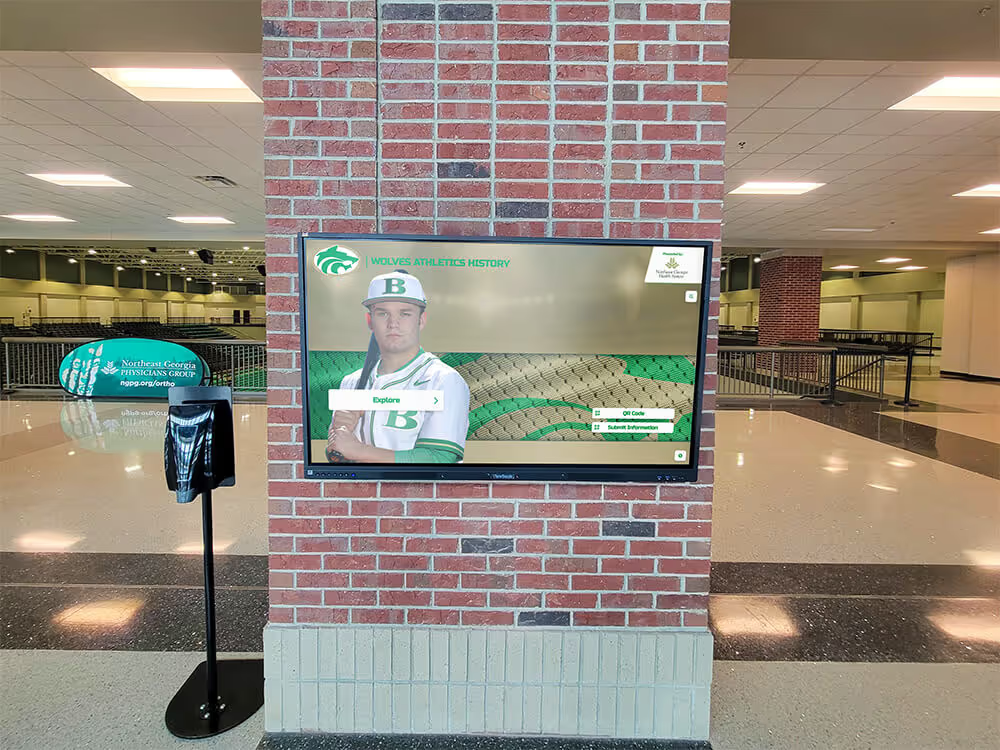
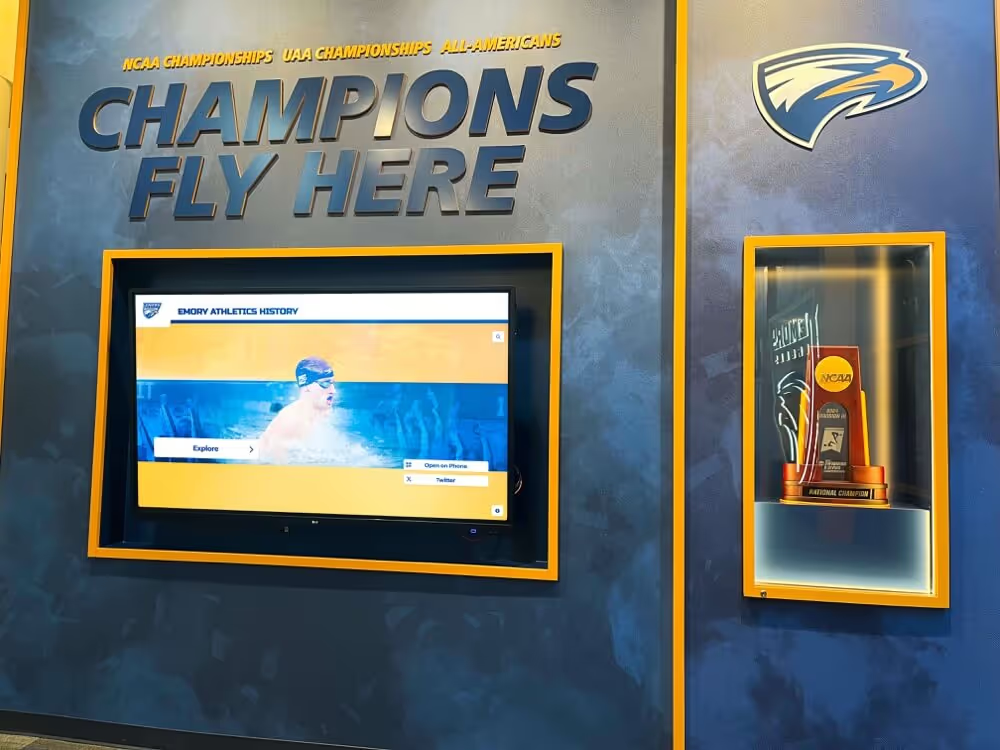
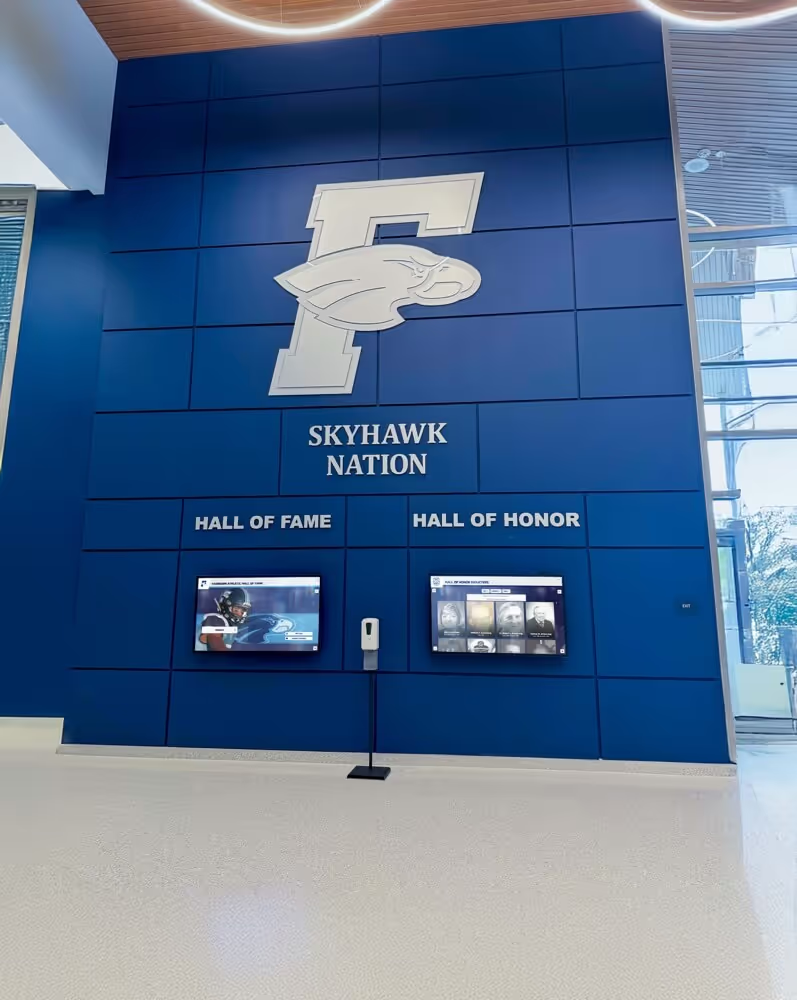
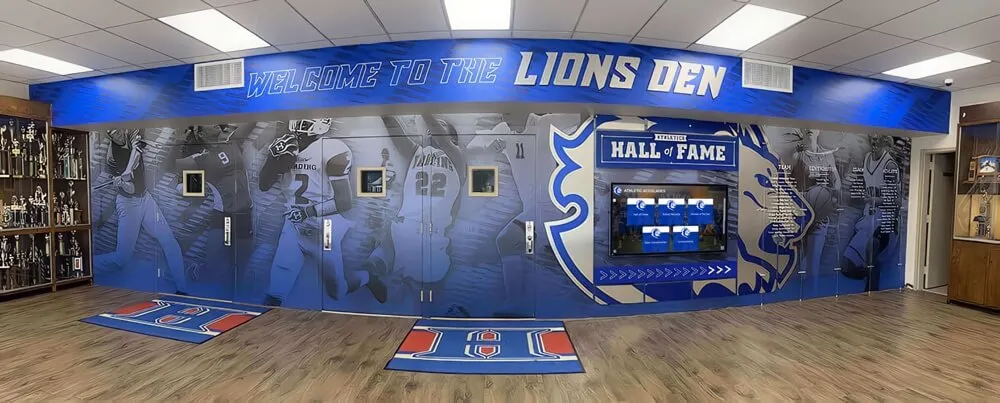
While trophies and certificates provide tangible recognition, modern programs increasingly implement comprehensive digital systems celebrating achievements year-round rather than solely during annual banquets, creating ongoing inspiration and maintaining program visibility.
Limitations of Traditional Physical Recognition
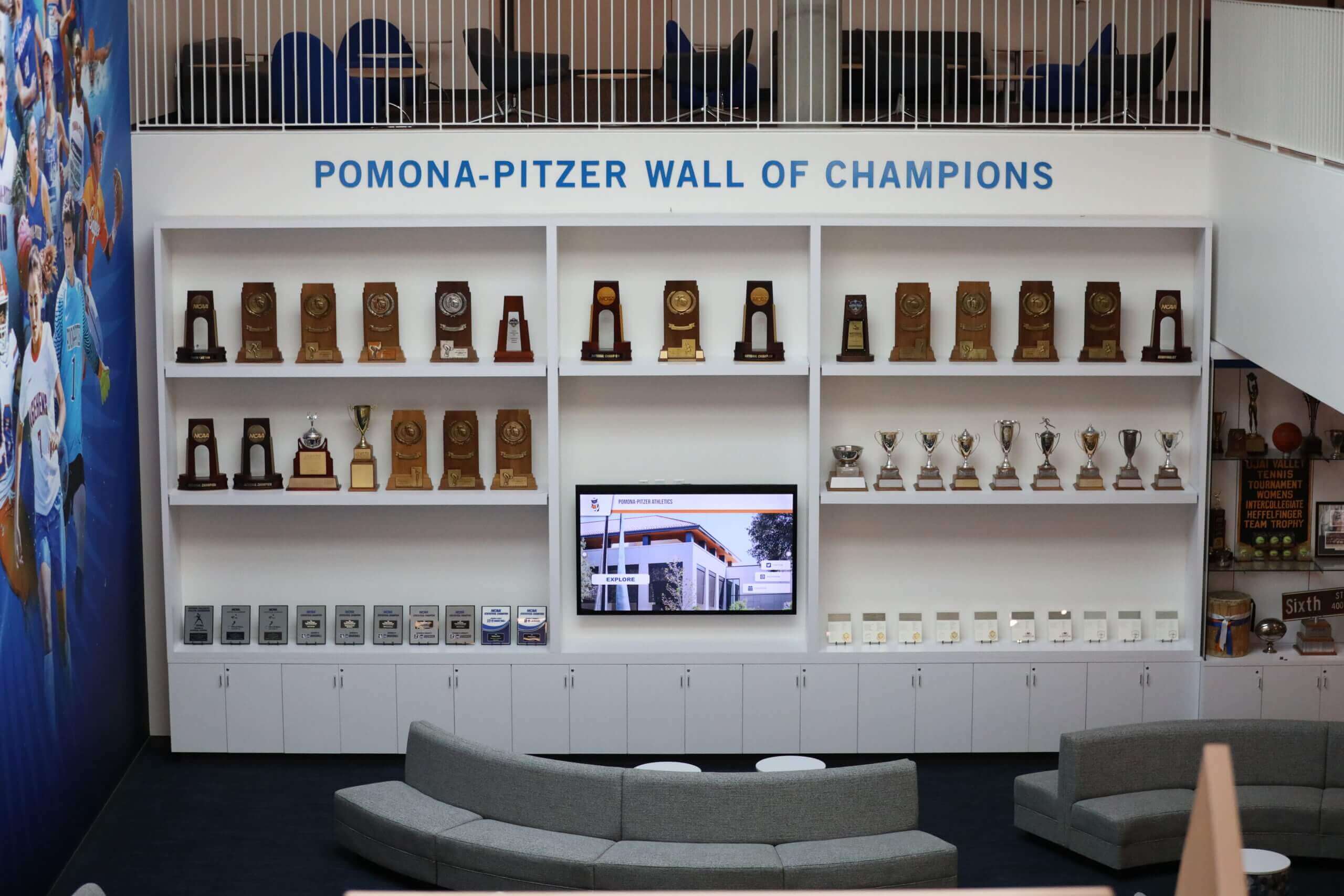
Traditional trophy cases face significant constraints limiting effectiveness for comprehensive volleyball recognition. Limited physical space restricts how many achievements displays can accommodate, forcing difficult decisions about what merits inclusion. Static presentations rarely engage viewers beyond initial installation. Information becomes outdated quickly but proves difficult to update without physical modification. And cost considerations often limit recognition to major achievements, leaving many worthy accomplishments uncelebrated.
These constraints mean countless deserving volleyball achievements never receive lasting recognition simply because physical space and budgets don’t allow unlimited trophy or plaque production. Many athletes whose contributions proved vital to team success receive momentary acknowledgment at banquets, then fade from program memory as new seasons and achievements take precedence.
Digital Recognition Solutions
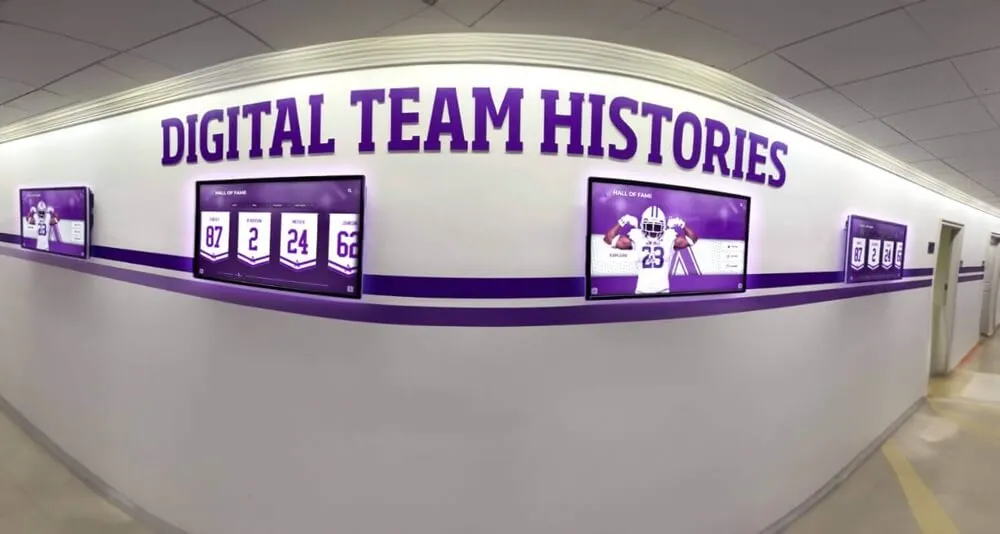
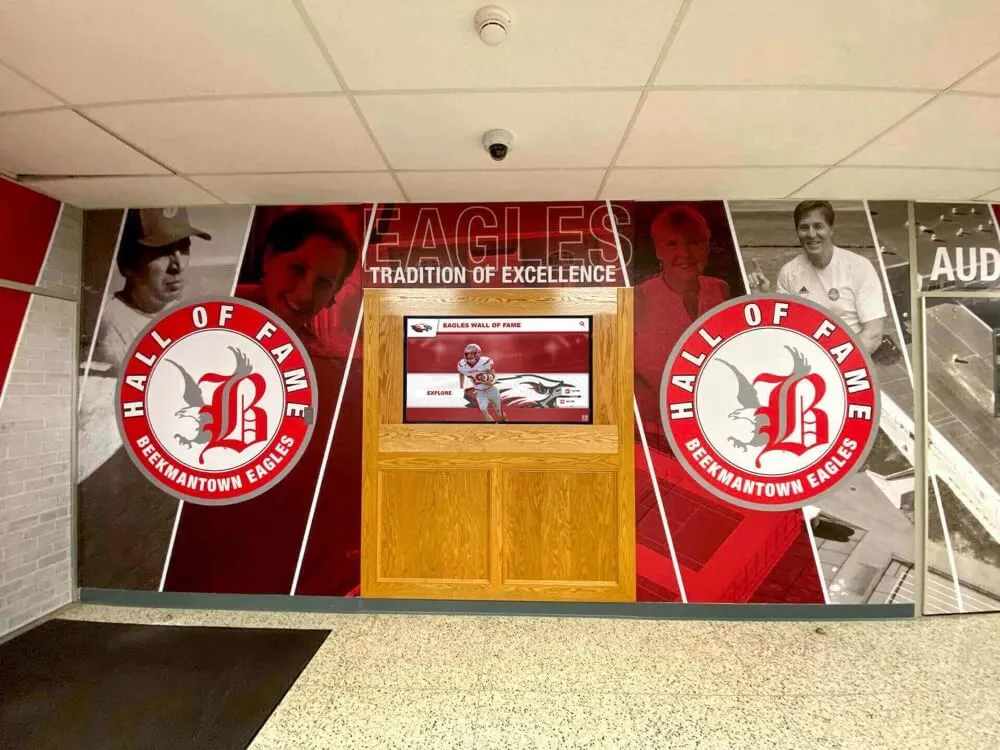
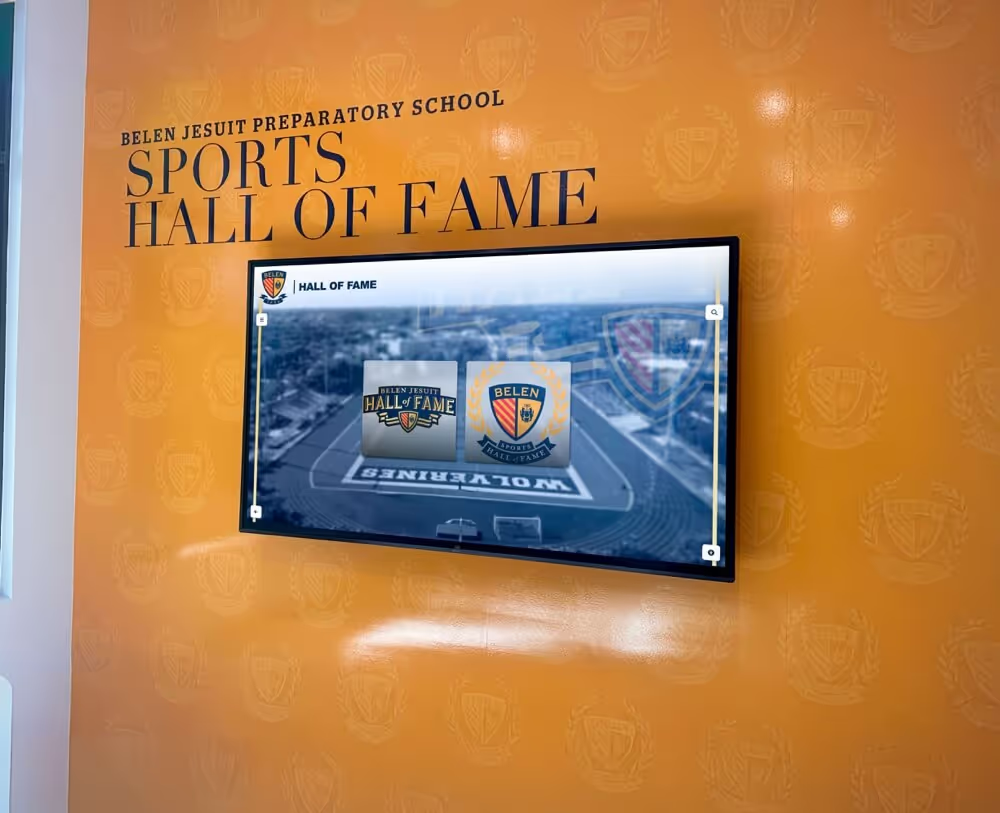
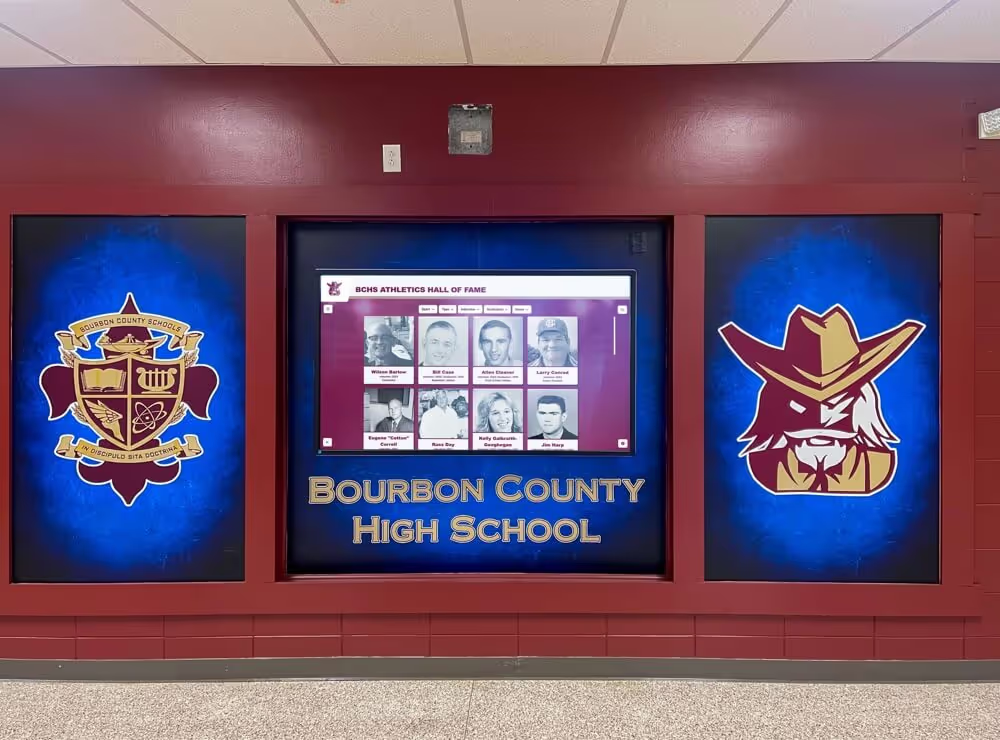
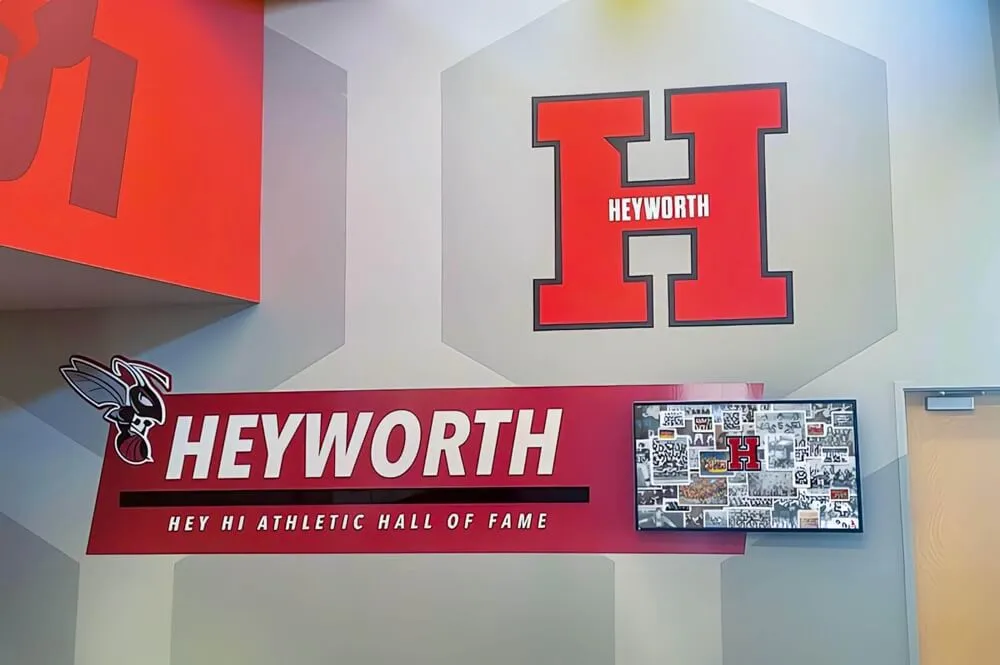
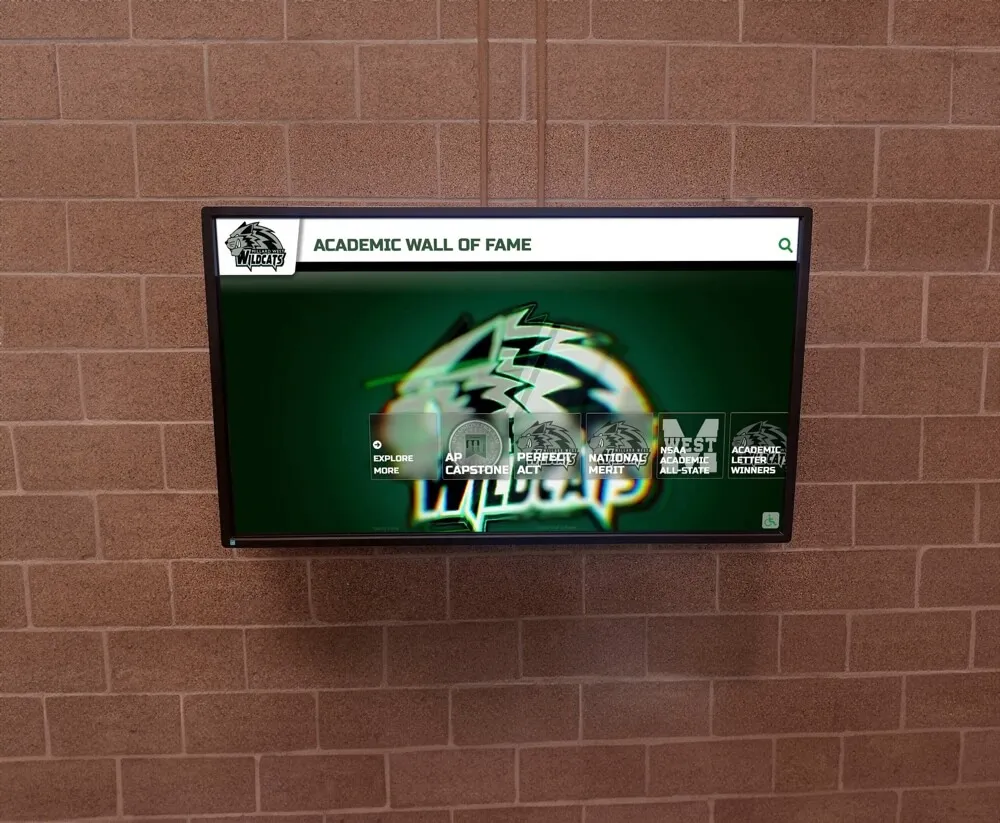
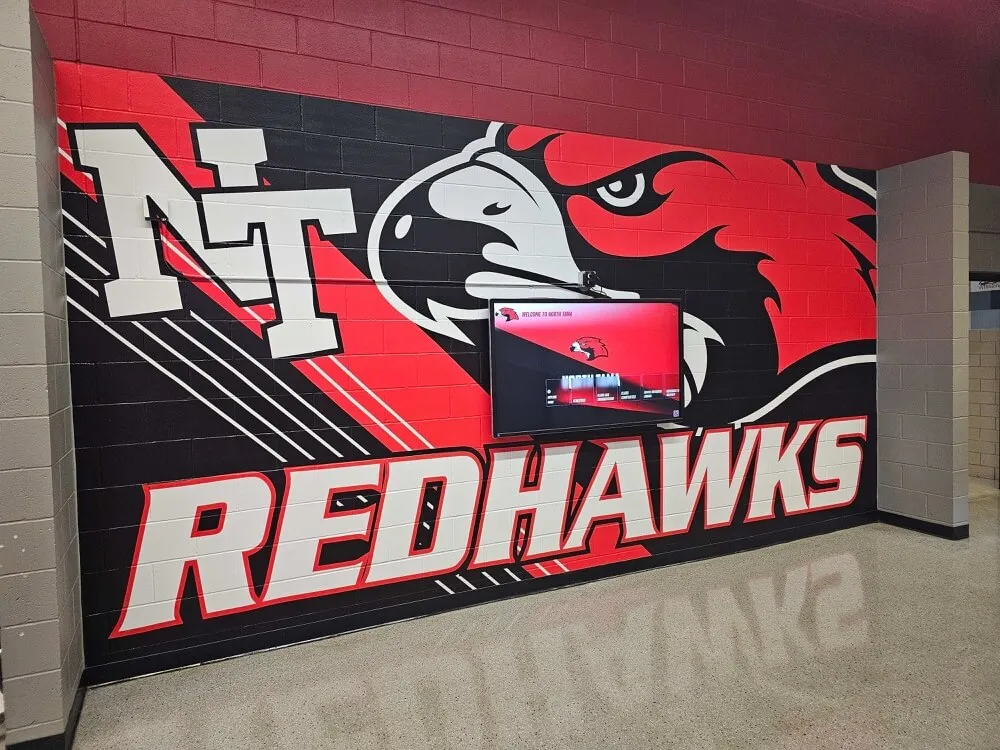
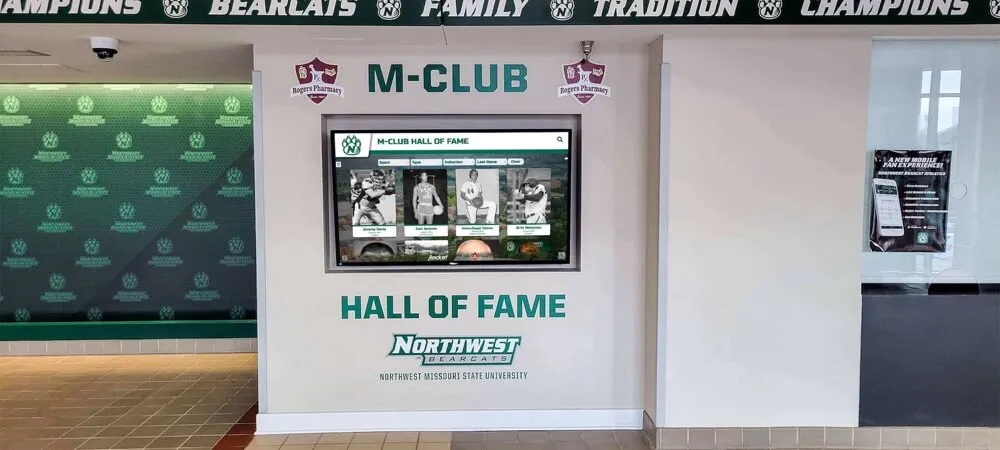
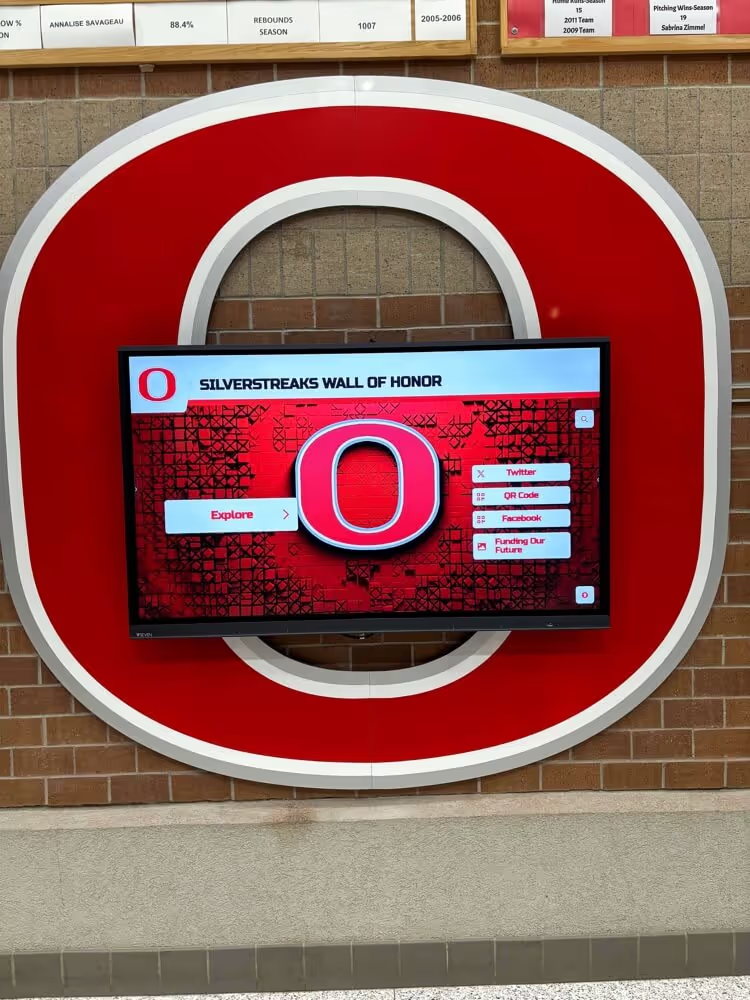
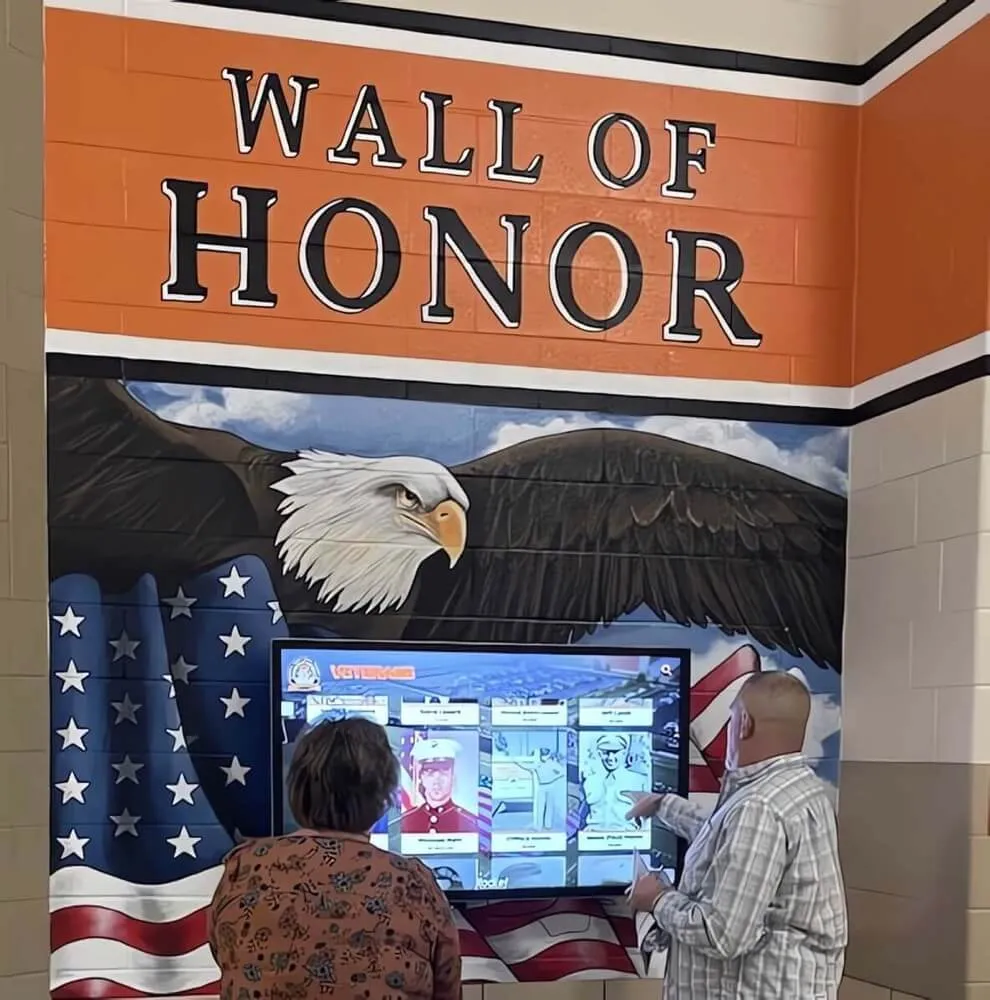
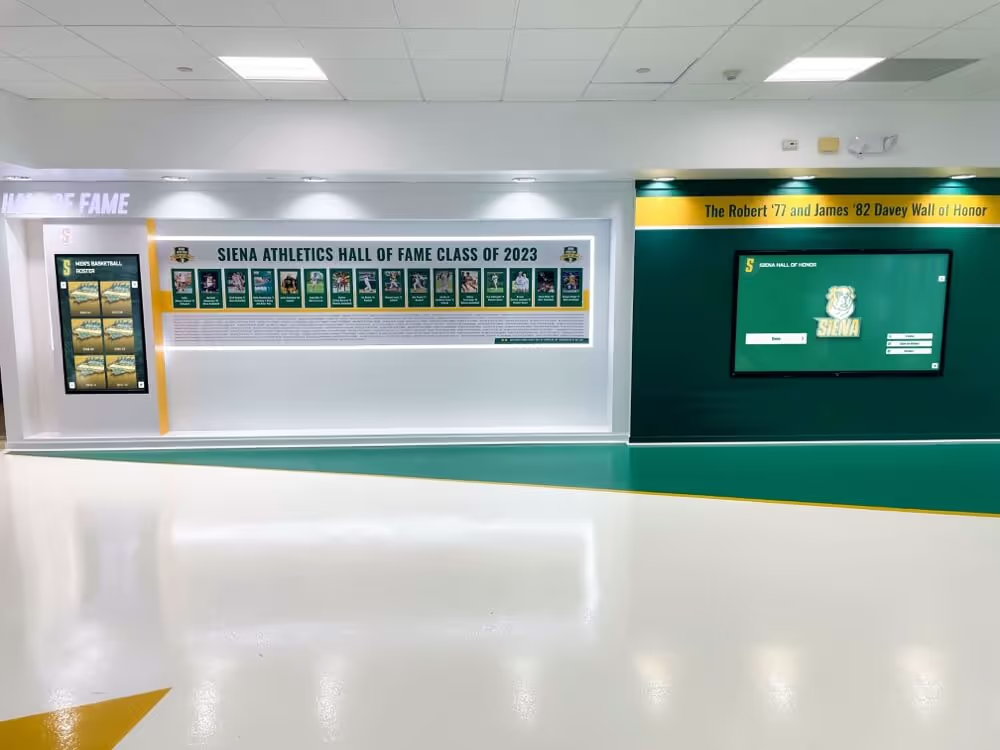
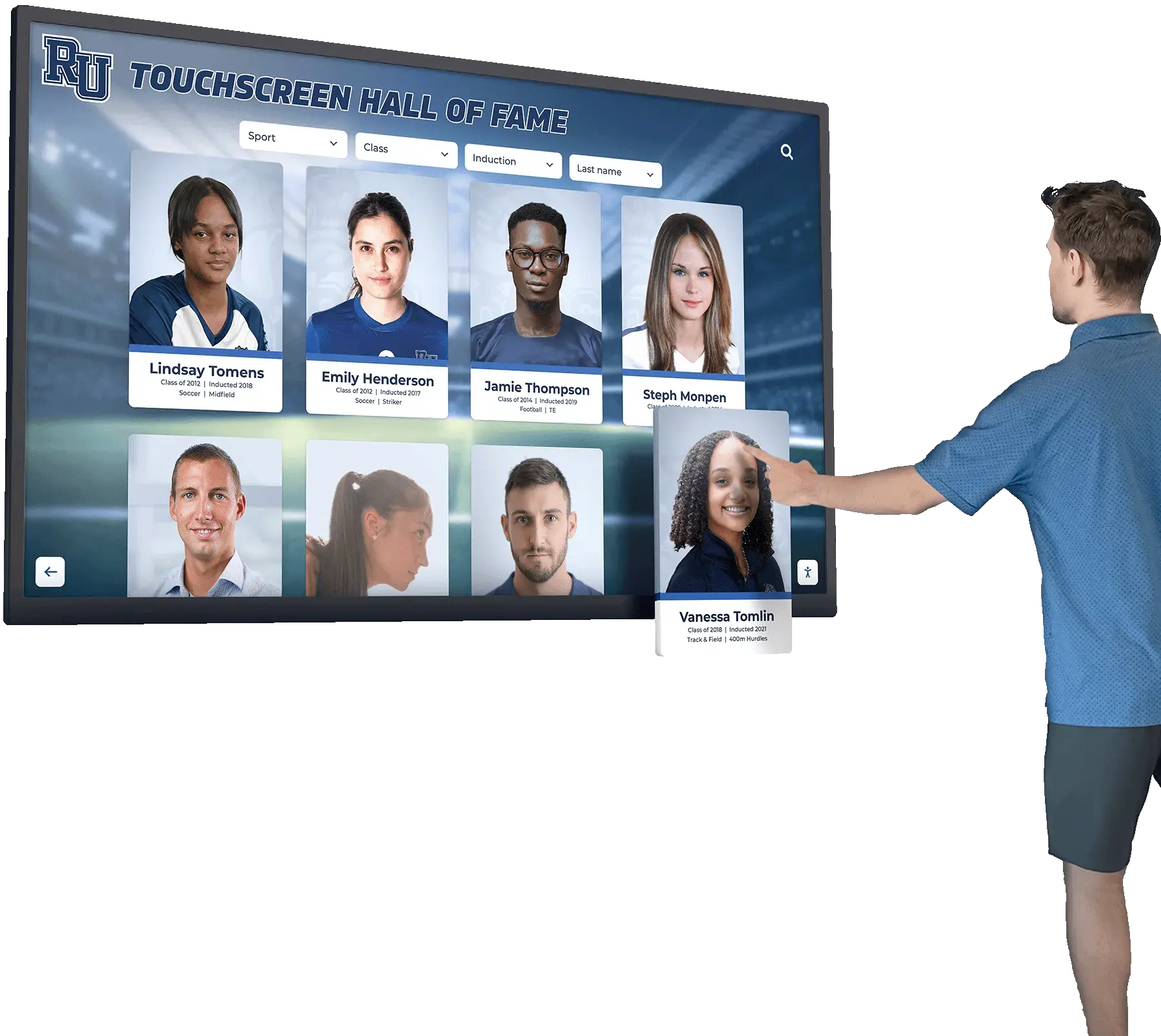
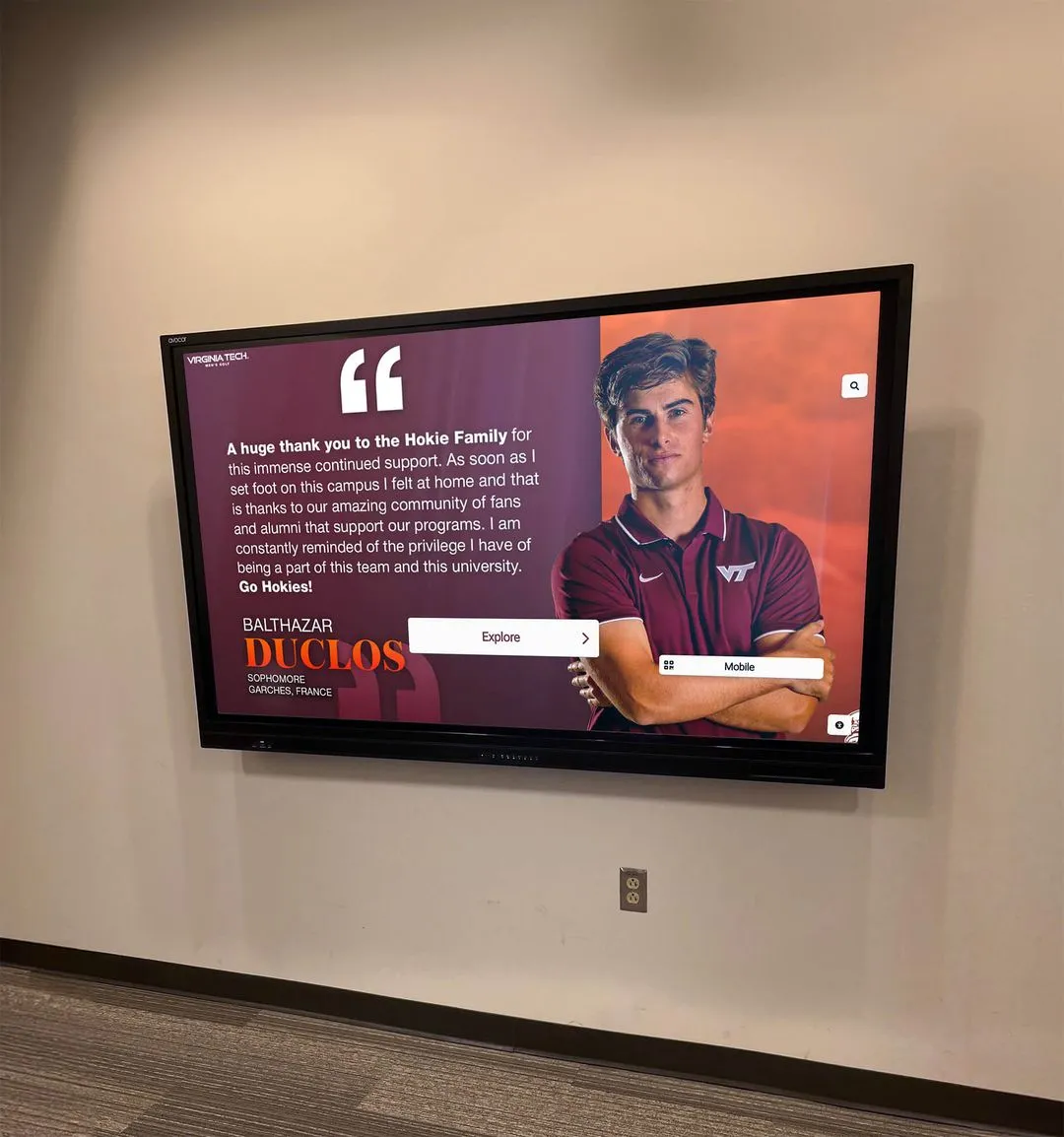
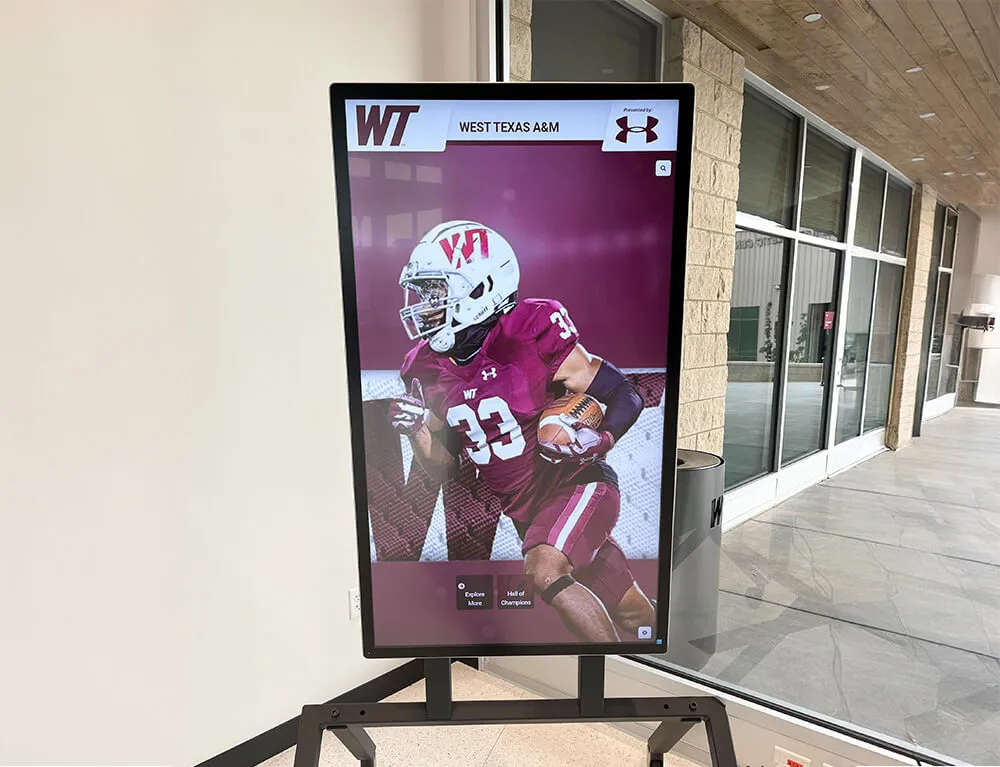
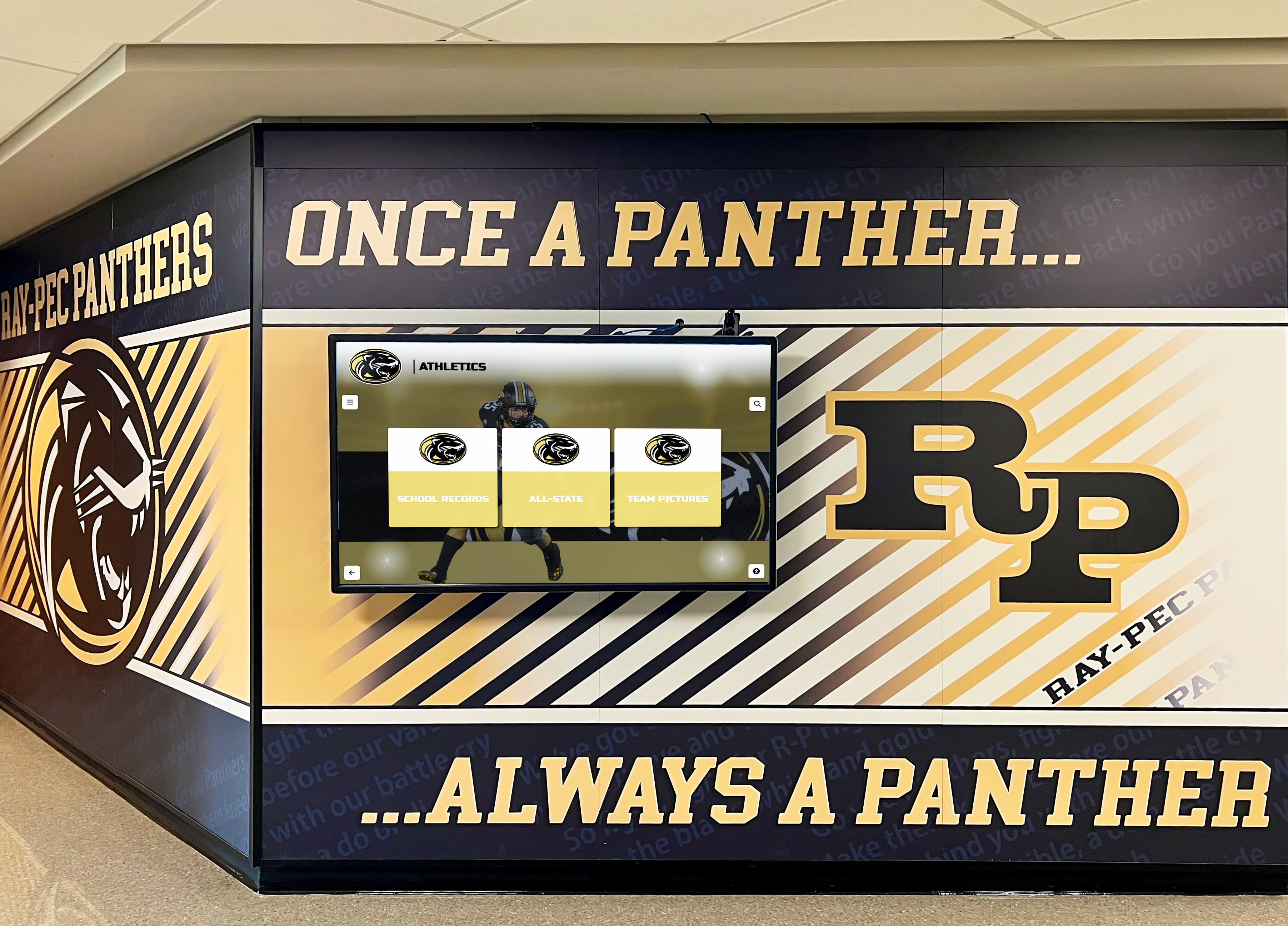

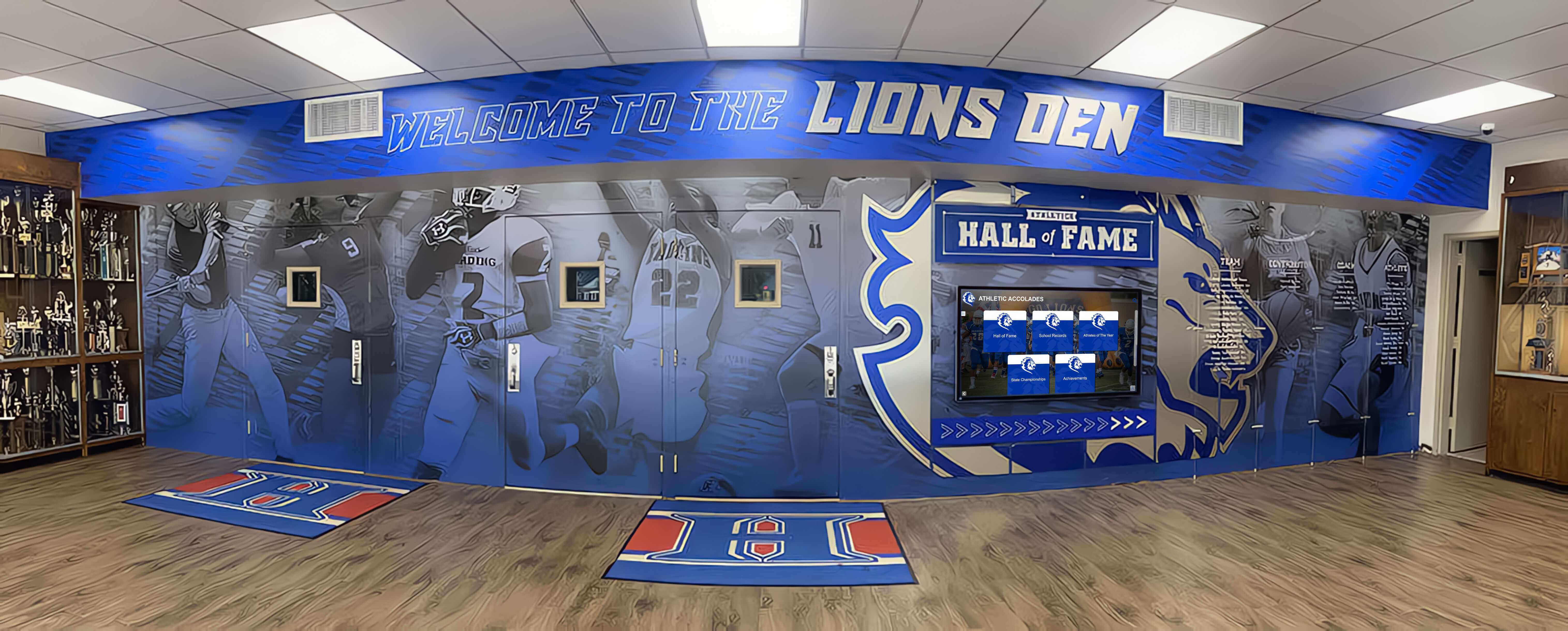
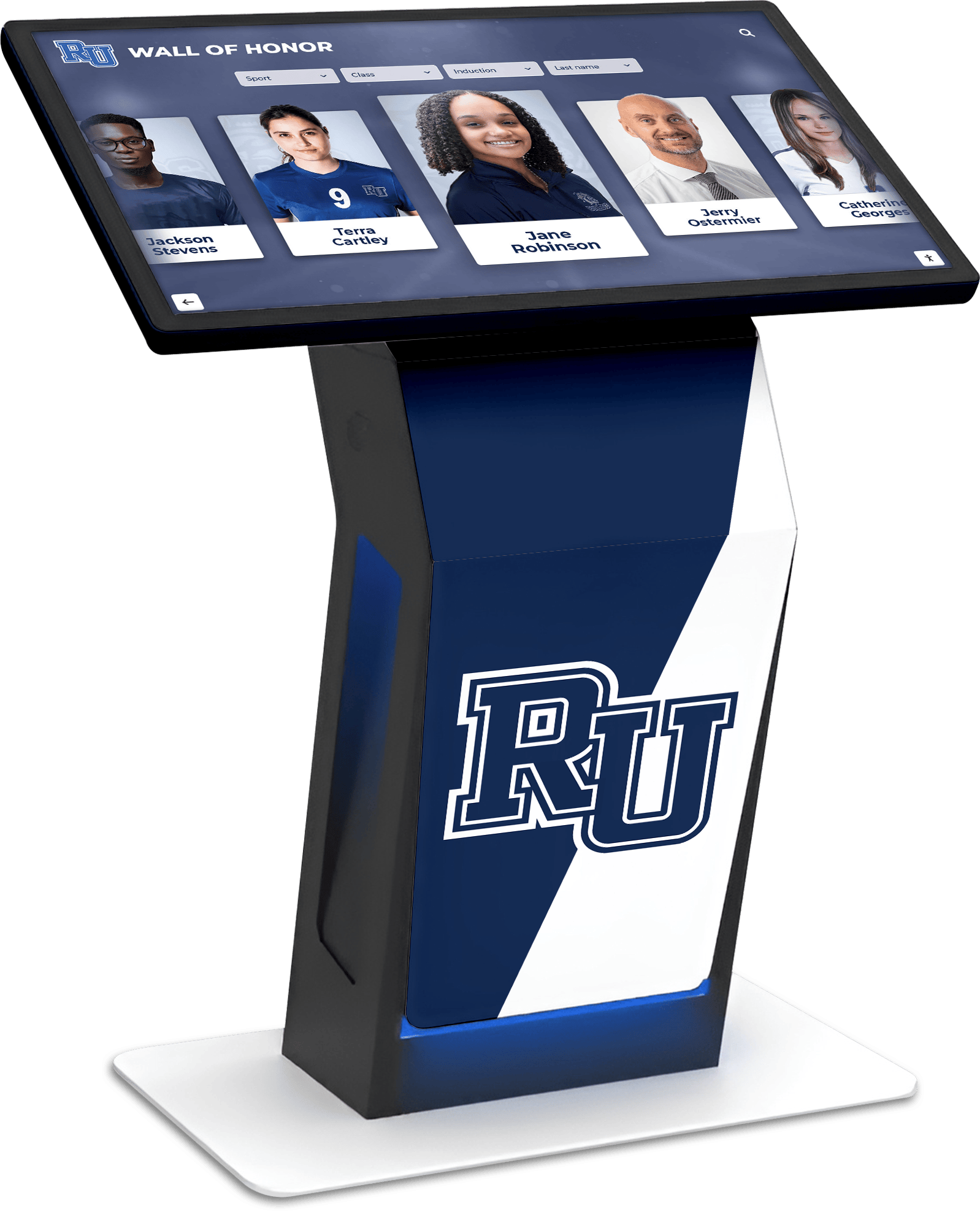
Digital athletic displays solve traditional limitations while providing enhanced engagement and accessibility. Modern touchscreen systems offer unlimited capacity for recognizing achievements across seasons and award categories, interactive exploration enabling visitors to search specific athletes or years, multimedia integration including photos, videos, and detailed statistics, year-round visibility placing achievements prominently in gymnasiums and lobbies, and instant updates adding new achievements without physical construction or installation costs.
Comprehensive Award Documentation: Digital platforms can showcase every award category your program implements—statistical leaders, character awards, position-specific recognition, all-conference selections, academic honors, and specialty categories—providing complete documentation rather than selective highlights constrained by physical space limitations. Athletes exploring these displays discover comprehensive histories celebrating diverse contribution types and achievement forms.
Enhanced Storytelling: Digital recognition enables richer storytelling than static plaques permit. Award presentations can include athletes’ photos from competitive seasons, statistics and accomplishments supporting selections, quotes from coaches or teammates about their impact, video clips showcasing key performances or memorable moments, and historical context showing how achievements compare with program history. Similar comprehensive approaches benefit trophy digital preservation initiatives.
Ongoing Engagement: Unlike trophy cases that visitors glance at briefly, interactive displays encourage exploration and extended engagement. Families investigate their athletes’ profiles during events, prospective athletes visiting facilities discover program excellence and tradition, alumni reconnecting with programs easily locate their accomplishments and teammates, and community members exploring displays during open houses discover program culture and achievement depth.
Rocket Alumni Solutions: Comprehensive Volleyball Recognition
Solutions like Rocket Alumni Solutions provide comprehensive platforms for celebrating volleyball awards within broader recognition systems. These platforms enable schools to showcase individual award winners across all categories and seasons, document team championships and tournament success, display statistical leaders and record progression, celebrate all-conference and all-state selections, recognize academic and community achievement, and maintain permanent, searchable archives connecting current athletes with program legacy.
Digital recognition creates continuous inspiration rather than annual ceremony acknowledgment that fades quickly from daily awareness. Athletes passing displays in hallways and lobbies receive daily reminders of program excellence and tradition, understanding they’re part of something larger than single seasons. This ongoing engagement strengthens program identity, builds community pride, and motivates current athletes to add their names to distinguished histories.
Implementing Effective Volleyball Awards Programs
Creating effective volleyball recognition systems requires thoughtful planning extending beyond simply selecting categories. Consider these implementation strategies separating memorable recognition from obligatory formalities that athletes forget quickly.
Diversify Selection Methods
Rather than relying exclusively on coach decisions or team voting, combine different selection approaches providing checks and balances. Statistical awards utilize objective criteria removing subjectivity and potential bias. Peer voting through anonymous team ballots recognizes qualities teammates value most authentically. Coach selection ensures practice performance and intangible contributions receive appropriate consideration. Captain committees provide leadership development opportunities while distributing selection responsibilities beyond single decision-makers.
Different award types warrant different selection methods. Statistical awards require clear data, character awards benefit from peer validation, and specialized recognition often demands coach insight about practice behaviors or role fulfillment that teammates don’t fully witness.
Establish Clear Criteria and Transparency
Communicate award criteria before seasons begin, helping athletes understand what behaviors and achievements receive recognition. This transparency allows participants to pursue specific awards aligned with their roles and strengths while ensuring selection processes appear fair rather than arbitrary or political.
For statistical awards, publish qualification minimums and selection formulas. For character awards, explain evaluation factors and who participates in selection. For specialized categories, describe what makes performances or contributions worthy of recognition. When athletes understand criteria in advance, awards carry greater credibility and motivational power.
Balance Inclusivity with Significance
Effective programs ensure every athlete receives meaningful recognition while maintaining prestigious awards requiring exceptional achievement. Consider tiered recognition systems where all participants receive some acknowledgment—participation recognition, improvement validation, or specific skill recognition—while elite awards like MVP, kill leader, or defensive player of year require outstanding performance.
This approach avoids both extremes—programs where only top performers receive any recognition (alienating majority of participants) and programs where everyone receives identical recognition regardless of achievement (diminishing award significance and competitive motivation).
Connect Awards to Program Values
Use award categories strategically to reinforce program culture and values. Teams prioritizing defense implement multiple defensive awards sending clear messages about what matters. Programs emphasizing team concepts over individual statistics create numerous teamwork and character recognitions. Organizations valuing academic achievement prominently celebrate scholar-athletes within athletic recognition rather than treating academics and athletics as separate domains.
Your award categories communicate what you genuinely value far more clearly than mission statements or motivational speeches. Athletes notice what receives public celebration, adjusting priorities and behaviors accordingly. When recognition programs align with stated values, they reinforce authentic culture rather than contradicting verbal messaging with actual behaviors.
Create Meaningful Ceremonies
Invest appropriate time and preparation into ceremony planning, avoiding rushed formalities feeling obligatory rather than celebratory. Include specific achievement descriptions rather than merely reading names and award titles. Invite families ensuring honorees celebrate with loved ones who supported their journeys. Incorporate multimedia presentations showing season highlights, memorable moments, or statistical achievements. Create lasting mementos through programs, certificates, or physical awards that recipients treasure.
Well-executed ceremonies create memories athletes carry throughout their lives. Decades after competitive careers end, former athletes vividly remember awards recognition, feelings of validation when coaches and teammates acknowledged their contributions, and pride in achievements their families witnessed.
Document and Maintain Award History
Create permanent records of award winners across all seasons, building program histories that current and future athletes aspire to join. Display past winners prominently through digital platforms, hallway recognition, or program publications—connecting present athletes with program legacy while providing historical context making current achievements more meaningful.
Maintaining comprehensive award histories enables statistical analysis revealing interesting patterns—families where multiple members won similar awards, athletes who earned multiple different recognitions, evolution of program standards over decades, or relationships between specific awards and subsequent success. These insights strengthen program identity while providing development guidance.
Transform Your Volleyball Recognition Program
Comprehensive volleyball awards programs accomplish far more than end-of-season obligations—they shape team culture, validate diverse contributions, communicate program values, and create lasting memories influencing athletes throughout entire lives. The specific award categories your program implements reveal what you genuinely value while motivating excellence across various achievement types.
Ready to elevate how your volleyball program celebrates achievement? Rocket Alumni Solutions provides comprehensive digital recognition platforms that showcase award winners, program history, statistical leaders, and championship teams through interactive displays engaging communities year-round. Discover how modern recognition technology can help your volleyball program celebrate achievements more meaningfully while building lasting traditions that inspire current and future athletes to pursue excellence in all its diverse forms—from statistical dominance to character leadership, from defensive excellence to academic achievement, creating programs where every contribution receives the genuine recognition it deserves.