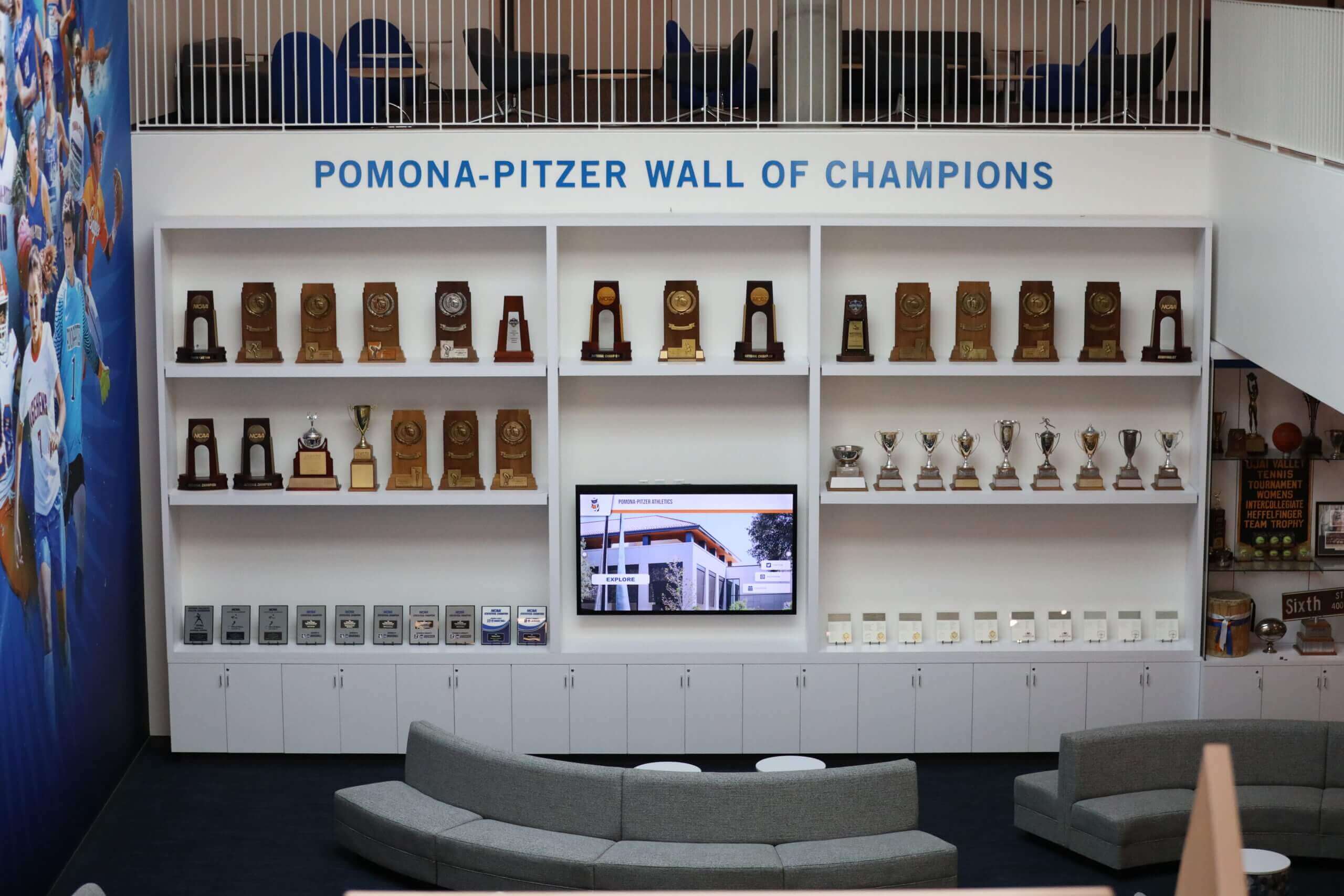




A trophy case for school serves as far more than furniture—it represents institutional pride, celebrates student achievement, and preserves decades of athletic and academic excellence. When students, parents, and visitors walk through your hallways, trophy displays communicate your school’s values, competitive success, and commitment to recognizing accomplishment across generations.
Yet choosing the right trophy case involves navigating numerous decisions about size, placement, security, lighting, maintenance, and long-term scalability. School administrators must balance aesthetic appeal with practical considerations including budget constraints, available space, preservation requirements, and the inevitable challenge of what happens when display capacity fills completely.
This comprehensive guide walks school administrators through every dimension of selecting, installing, and maintaining trophy cases that serve your institution effectively for decades. Whether you’re furnishing a new building, upgrading outdated displays, or exploring modern alternatives to traditional cases, this analysis provides the frameworks and practical insights needed to make informed decisions.
Key Considerations for School Trophy Cases
Before evaluating specific products, understand the critical factors that determine long-term success:
- Available Space: Physical dimensions, hallway width, ceiling height, and traffic flow patterns
- Security Requirements: Protection from theft, vandalism, and unauthorized access
- Lighting Quality: Illumination that showcases achievements without causing glare or heat damage
- Accessibility: Compliance with ADA requirements and viewing height considerations
- Capacity Planning: Current needs plus realistic projections for 10-20 years of additional achievements
- Maintenance Demands: Cleaning requirements, glass replacement, lighting upkeep, and rearrangement frequency
- Budget Reality: Initial purchase costs plus installation, electrical work, and ongoing maintenance
Understanding Trophy Case Types and Configurations
School trophy cases fall into several distinct categories, each offering different advantages, limitations, and suitability for specific institutional needs.

Wall-Mounted Display Cases
Best for: Schools with limited floor space who need displays that don’t obstruct hallway traffic
Wall-mounted trophy cases attach directly to hallway or lobby walls, typically at eye level for optimal viewing. These units range from compact 3-foot single-shelf displays to extensive 12-foot multi-shelf installations that showcase dozens of trophies and awards.
Advantages: Wall-mounted cases preserve valuable floor space in hallways and common areas, making them ideal for schools with narrow corridors or high traffic zones. Installation eliminates tripping hazards and obstacles that freestanding cases might create. These units work particularly well for displaying smaller awards, plaques, and individual trophies from recent seasons.
Limitations: Load-bearing wall requirements mean not all walls can support heavier installations, potentially limiting placement options. Many wall-mounted cases offer less depth than freestanding alternatives, restricting the size of items they can display. Viewing angles may prove challenging for shorter students or visitors in wheelchairs, requiring thoughtful installation height planning to ensure accessibility.
Ideal Specifications: Quality wall-mounted cases feature tempered safety glass front panels, lockable doors with high-security mechanisms, internal LED lighting with low heat output, adjustable shelving to accommodate varying trophy heights, and powder-coated aluminum or steel frames resistant to scratching and corrosion. Expect to invest $800-$3,500 per unit depending on size and features.
Freestanding Floor Cases
Best for: Large lobbies, gymnasiums, and dedicated trophy rooms where floor space isn’t constrained
Freestanding trophy cases rest on the floor without wall attachment, functioning as furniture pieces that can be positioned anywhere space permits. These substantial units typically offer four-sided viewing with glass on all sides, creating impressive centerpiece displays.
Advantages: Freestanding cases provide maximum display capacity with depths of 18-24 inches accommodating large championship trophies, team photos, and bulky awards. Four-sided glass construction allows viewing from multiple angles, making them ideal for lobby centers or open areas where visitors circulate around displays. Relocation remains possible without wall repair if facility needs change, though moving large cases requires significant effort.
Limitations: Floor footprint requirements mean these cases work only in spacious areas with sufficient square footage. Schools with narrow hallways or limited common spaces may find freestanding cases create bottlenecks or accessibility issues. Base-level shelves may prove difficult for wheelchair users or small children to view comfortably, requiring thoughtful arrangement of content by height.
Ideal Specifications: Professional-grade freestanding cases include tempered glass on all viewing sides, reinforced bases preventing tipping, commercial-grade locking systems on all access points, integrated lighting throughout the display area, leveling feet for uneven floors, and solid construction supporting hundreds of pounds of awards. Budget $2,500-$8,000+ for substantial units suitable for high-traffic school environments.
Corner Display Cases
Best for: Maximizing awkward spaces and creating focal points at hallway intersections
Corner cases fit into 90-degree corners, transforming otherwise underutilized spaces into prominent recognition displays. These specialized units feature angled glass fronts that remain visible from multiple hallway approaches.
Advantages: Corner placement capitalizes on space that typically serves no function, making these cases highly space-efficient. The angled configuration creates natural focal points at hallway intersections where students and visitors regularly pass. Many corner cases offer surprising depth and capacity despite their specialized shape.
Limitations: Custom corner units often cost more than standard rectangular cases due to specialized glass cutting and frame fabrication. Fewer manufacturers produce corner cases, limiting selection and potentially extending lead times. Installation requires precise measurement and professional fitting to ensure proper wall attachment on both sides.
Ideal Specifications: Look for cases with equal depth on both walls (typically 15-18 inches per side), tempered glass front panel cut to precise angles, integrated corner lighting, adjustable shelves accommodating varying trophy sizes, and secure mounting on both wall surfaces. Pricing typically ranges $1,200-$4,500 depending on size.

Countertop Display Cases
Best for: Main office areas, administrative spaces, and highlighting specific recent achievements
Smaller countertop cases sit on existing surfaces like office counters, library circulation desks, or classroom shelving. These compact units typically measure 24-48 inches in length with proportionally smaller depth and height.
Advantages: Countertop cases require no installation or wall modification, offering immediate deployment flexibility. Lower costs ($200-$800) make these units accessible for departments with limited budgets. Multiple small cases distributed throughout a building can showcase achievements from different programs—athletics in the gym lobby, academics near the main office, arts in the auditorium entrance.
Limitations: Limited capacity means countertop cases work only for selective recognition of recent or rotating achievements. Security proves more challenging than built-in cases, as entire units could potentially be moved or stolen. Space on existing counters must be available and appropriate for permanent display furniture.
Critical Selection Criteria: What to Evaluate Before Purchasing
Beyond case type, several specific features dramatically impact long-term satisfaction and functionality.
Glass Quality and Safety Specifications
The glass in trophy cases directly affects viewing quality, safety, and maintenance requirements.
Tempered Safety Glass: Tempered glass should be non-negotiable for school environments. If broken, it shatters into small, relatively harmless pieces rather than dangerous shards, significantly reducing injury risk from vandalism or accidents. Tempered glass costs 20-30% more than standard glass but the safety benefits justify the investment unquestionably. Verify that manufacturers provide certification of tempering for all glass panels.
Glass Thickness: Standard 1/4-inch glass proves adequate for most school trophy cases. Larger displays spanning 6+ feet or cases in high-traffic areas benefit from 3/8-inch glass providing additional strength and reduced vibration. Thicker glass costs more but minimizes flexing and improves long-term durability.
Anti-Reflective Coatings: Standard glass creates reflections that obscure trophy visibility under certain lighting conditions. Anti-reflective coatings reduce glare by 60-90%, dramatically improving viewing quality at all angles. While adding $200-$500 to case costs, these coatings prove worthwhile for cases in bright hallways or near windows where glare otherwise makes viewing frustrating.
Locking Mechanisms and Security Features
Trophy theft, vandalism, and unauthorized access create ongoing concerns requiring robust security features.
Lock Types: Basic keyed locks provide minimal security, as generic keys open many models. High-security locks with restricted keyways and pick-resistant cylinders offer substantially better protection, though at higher cost ($50-$150 premium per lock). Consider whether multiple cases should key alike (allowing one master key to open all cases) or separately for department-level control.
Some schools now specify electronic locks with key card or code access, providing audit trails showing who accessed cases and when. These systems cost $300-$600 per case beyond standard pricing but deliver superior accountability and eliminate concerns about lost keys or unauthorized copies. Interactive touchscreen kiosk software can integrate access control with digital display systems.
Glass Retention: Verify how glass panels attach to frames. Quality cases use security screws or concealed fasteners preventing glass removal without proper tools. Inferior cases use standard screws allowing motivated vandals to remove entire glass panels despite locked doors.
Alarm Integration: Schools with existing security systems should discuss integrating trophy cases into alarm monitoring. Specialized contacts detect glass breakage or door opening outside authorized hours, immediately alerting security personnel to potential theft or vandalism.
Lighting Design and Energy Efficiency
Internal lighting transforms trophy cases from storage furniture into compelling displays, but lighting choices significantly impact operating costs and maintenance.
LED vs. Fluorescent: LED lighting has become the clear superior choice for trophy case illumination. LEDs consume 75% less electricity than fluorescent alternatives, generate minimal heat preventing trophy damage, last 50,000+ hours versus 10,000 for fluorescents, and produce superior color rendering showing awards in their true appearance.
While LED-lit cases may cost $150-$300 more initially, energy savings and eliminated bulb replacement costs provide payback within 2-3 years. Schools replacing existing fluorescent-lit cases should prioritize LED conversion during upgrades.
Lighting Placement: Top-mounted downlighting creates the most common configuration, illuminating shelves from above. However, this placement often creates shadows on lower shelves and fails to illuminate awards evenly. Superior designs include top lighting plus side-mounted LED strips providing multi-directional illumination that eliminates shadows and creates more engaging displays.
Controls and Automation: Basic trophy case lighting operates via simple on/off switches, requiring manual operation daily. Better installations include timers or photocells automatically illuminating displays during school hours and turning them off overnight, eliminating forgotten lights wasting energy. Motion sensors represent the most sophisticated approach, activating lighting only when people approach displays—maximizing energy savings while ensuring lights are always on when needed.
Adjustable Shelving and Interior Flexibility
Trophy sizes vary enormously—from 4-inch individual medals to 36-inch championship cups. Cases must accommodate this range both now and as new achievements accumulate.
Shelf Adjustment Systems: Fixed shelves create permanent inflexibility, forcing administrators to work around predetermined spacing that may not match trophy dimensions. Adjustable shelving using pin-and-hole systems or track-mounted supports allows reconfiguration as needs change. Quality cases offer adjustment increments of 1-2 inches throughout the interior height.
Verify adjustment mechanisms are secure—shelves should not sag under trophy weight or shift when bumped. Industrial-grade track systems with locking shelf supports provide the most robust solutions, though at higher cost than simple pin systems.
Interior Depth Utilization: Many trophy cases waste interior depth through poor shelf design. Shallow shelves leave unused space behind trophies, while tiered or stepped shelves allow smaller awards in front with taller trophies behind, maximizing visible capacity. Some manufacturers offer specialized risers and display platforms optimizing vertical space utilization.
Backing and Interior Surfaces: Interior backing affects display quality significantly. Neutral backing in school colors provides branded context without overwhelming awards. Some cases offer fabric-covered backing accepting pushpins for adding name plates, photos, or context without damaging finishes. Mirror backing creates visual depth making displays appear larger, though it can also create confusing reflections. Evaluate backing options considering your intended display aesthetic.
Installation Planning and Professional Setup
Even the finest trophy case performs poorly if improperly installed. Professional installation ensures structural integrity, safety, and long-term performance.
Site Preparation and Structural Assessment
Before ordering cases, verify that intended installation locations can actually support them.
Wall Load Capacity: Wall-mounted cases weighing 100-300 pounds empty—plus another 50-200 pounds of trophies—require substantial structural support. Mounting directly into studs distributes weight properly, but stud spacing may not align with case dimensions. Professional installers should verify wall construction (drywall over studs, concrete block, brick) and specify appropriate anchoring systems.
Older buildings with plaster walls or damaged studs may require reinforcement before case installation. Budget $200-$800 for structural reinforcement if standard mounting proves insufficient.
Electrical Requirements: Lighted cases need electrical connections. Planning electrical rough-in during construction costs far less than retrofitting power in occupied buildings. If cases go in existing spaces without nearby outlets, budget for electrician time running new circuits—typically $300-$1,200 depending on distance and complexity.
Hard-wired cases offer cleaner appearances than plug-in units with visible cords, though they require licensed electricians for code-compliant installation. Discuss electrical preference with case vendors during planning.
Floor Load Distribution: Large freestanding cases may weigh 500-1,000+ pounds fully loaded. Most school floors handle this easily, but elevated installations or older buildings with questionable structural integrity should receive engineering assessment. The last thing any administrator wants is a floor failure caused by trophy case weight.
ADA Compliance and Accessibility Considerations
Trophy displays must serve all members of your school community, including those with disabilities.
Viewing Height Requirements: ADA guidelines don’t specifically mandate trophy case installation heights, but accessibility principles require that displays be viewable by people using wheelchairs. Mounting wall cases with bottom shelves 20-24 inches above floor level and top shelves no higher than 48-52 inches ensures comfortable viewing for seated individuals. Understanding track and field awards recognition systems helps in planning accessible displays for all athletic programs.
Freestanding cases should include lower shelves positioned 15-20 inches from the floor, allowing wheelchair users to view awards at their eye level. Arrange most significant or recent achievements at mid-level heights accessible to the broadest audience.
Protruding Object Regulations: Wall-mounted cases protruding more than 4 inches from walls create obstacles for people using canes or who are blind. Cases exceeding this depth require either recessed installation (mounted into wall cavities) or protective barriers preventing people from walking into protruding edges. Consult ADA compliance specialists if installing cases that extend significantly from walls.
Pathway Clearances: Freestanding cases in hallways must leave adequate width for wheelchair users and emergency egress. Most building codes require minimum 36-inch clear pathways in corridors, with 60 inches recommended for comfortable two-way traffic. Measure carefully before installing floor cases, accounting for the reality that students congregate around displays, further narrowing effective passage width.
Professional Installation vs. In-House Setup
Deciding whether to hire professional installers or handle setup with facilities staff depends on case complexity, team capabilities, and liability considerations.
When to Hire Professionals: Large wall-mounted cases requiring structural anchoring, cases needing electrical hard-wiring, installations in buildings with historic preservation requirements, or situations where improper installation could create safety hazards all warrant professional expertise. Professionals carry liability insurance protecting schools if installations fail or cause injuries.
Professional installation typically costs $400-$2,000 depending on case size, complexity, and your location. This expense proves worthwhile for permanent installations that must perform safely for decades.
When In-House Installation Works: Simple countertop cases, small wall-mounted units in spaces with confirmed stud locations, and freestanding cases requiring only positioning and leveling can often be handled by capable facilities staff. Vendors provide detailed installation instructions, and staff familiar with your buildings may complete straightforward installations more quickly than outside contractors unfamiliar with your facility.
Regardless of who installs cases, insist on final inspection verifying all anchoring, leveling, locking, and lighting functions properly before acceptance.
Maintenance Best Practices for Long-Term Performance
Proper maintenance preserves trophy cases aesthetically and functionally for decades, while neglect leads to dirty glass, malfunctioning locks, and shabby appearances that undermine rather than celebrate achievements.
Cleaning Schedules and Techniques
Trophy cases accumulate dust, fingerprints, and grime requiring regular attention.
Glass Cleaning: Clean interior and exterior glass surfaces monthly at minimum, weekly in high-traffic areas. Use commercial glass cleaners or simple vinegar-water solutions applied with microfiber cloths—never paper towels which leave lint. Spray cleaner on cloths rather than directly on glass to prevent liquid from seeping into frame seals.
Anti-reflective glass requires gentler cleaning than standard glass. Verify cleaning product compatibility with special coatings to avoid damaging expensive glass treatments.
Interior Dusting: Open cases quarterly to dust shelves, backing surfaces, and trophies themselves. Microfiber dusters or soft cloths remove dust without scratching finishes. For trophies with intricate details, consider soft paintbrushes or compressed air removing dust from crevices.
Frame and Hardware Maintenance: Wipe down frames, hinges, and locking mechanisms quarterly with appropriate cleaners for frame materials. Metal polish maintains aluminum frames, while wood-specific cleaners preserve wooden display cases. Lubricate lock cylinders and hinges annually with graphite powder or dry lubricants—never oil which attracts dust and may damage finishes.
Lighting Maintenance and Bulb Replacement
While LED lighting requires minimal maintenance compared to older technologies, upkeep remains necessary.
LED Longevity: Quality LED systems last 50,000-100,000 hours before brightness degrades noticeably. At 12 hours daily operation, that’s 11-23 years of service. However, cheaper LED systems may fail much sooner. Keep purchase documentation including LED specifications to reference if early failures occur within warranty periods.
Replacement Planning: When LEDs eventually require replacement, often entire LED arrays or strips need changing rather than individual bulbs. Contact original manufacturers for replacement parts, as retrofitting alternative LED systems into existing cases may prove difficult. Budget $150-$400 for professional LED system replacement depending on case size.
Wiring Inspection: Every 3-5 years, inspect visible wiring for damage, loose connections, or deterioration. Look for discolored wire insulation, corrosion at connection points, or flickering lights indicating poor connections. Address electrical issues immediately to prevent fire hazards.
Trophy Arrangement and Capacity Management
As achievements accumulate, cases fill up, forcing difficult decisions about what to display and what to store.
Rotation Systems: Rather than permanent static displays, many schools implement rotation schedules cycling awards in and out of cases. Current year achievements might display for 3-5 years before moving to storage, with historic pieces rotating through displays periodically. This approach keeps displays fresh while recognizing that not every award can remain on permanent display given space limitations.
Hierarchy and Placement Strategy: Position most significant achievements at eye level in center positions where they receive maximum visibility. Less prominent awards occupy higher, lower, or side positions. This hierarchy ensures limited space showcases top accomplishments effectively. Schools recognizing academic recognition programs alongside athletic achievements must balance display space equitably.
Archive Storage Solutions: Establish climate-controlled storage for awards removed from displays. Basements, attics, and storage sheds subject trophies to temperature extremes, humidity, and deterioration. Proper archive storage preserves removed awards in good condition for potential future display or historical reference.
The Inevitable Capacity Crisis: Eventually every trophy case fills completely, forcing schools to choose between removing historic awards to make room for new ones, purchasing additional cases (if space permits), or exploring alternative recognition approaches. Planning for this inevitable reality during initial case selection prevents crisis-mode decisions later.
Modern Alternatives: Digital Recognition Displays
Traditional trophy cases face inherent limitations that digital recognition systems elegantly solve, offering compelling alternatives worth considering.
The Fundamental Trophy Case Problem
Physical trophy cases can only display what fits in their finite space. As schools accumulate decades of achievements, difficult decisions arise about which accomplishments deserve recognition and which get relegated to storage. State championships from 1985 may occupy valuable space that 2026 achievements now need, yet removing historic awards feels disrespectful to past champions.
This zero-sum reality means traditional cases inherently exclude worthy achievements. Additionally, physical trophies provide minimal context—a visitor seeing a championship trophy may not know the team’s record, key players, memorable moments, or historic significance without additional research.
How Digital Displays Solve Traditional Limitations
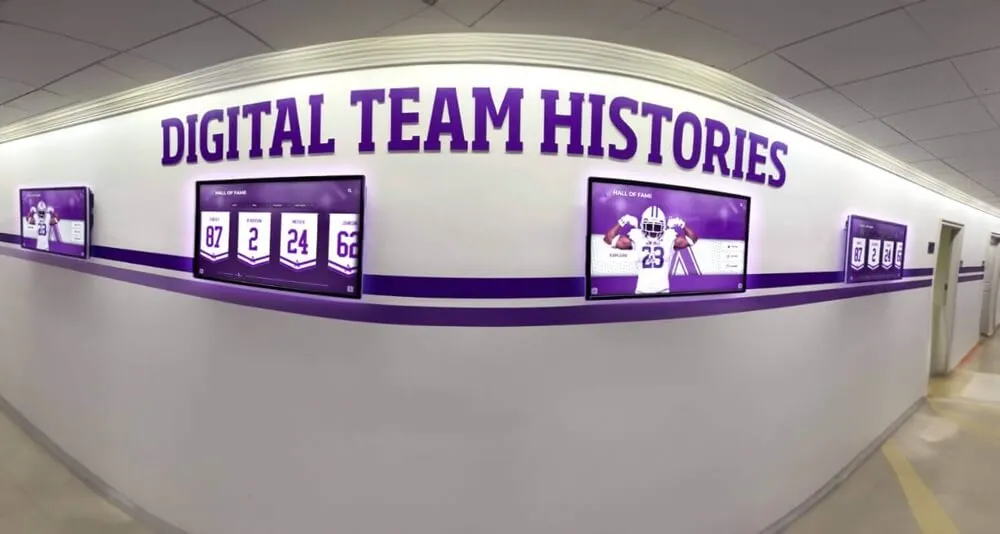
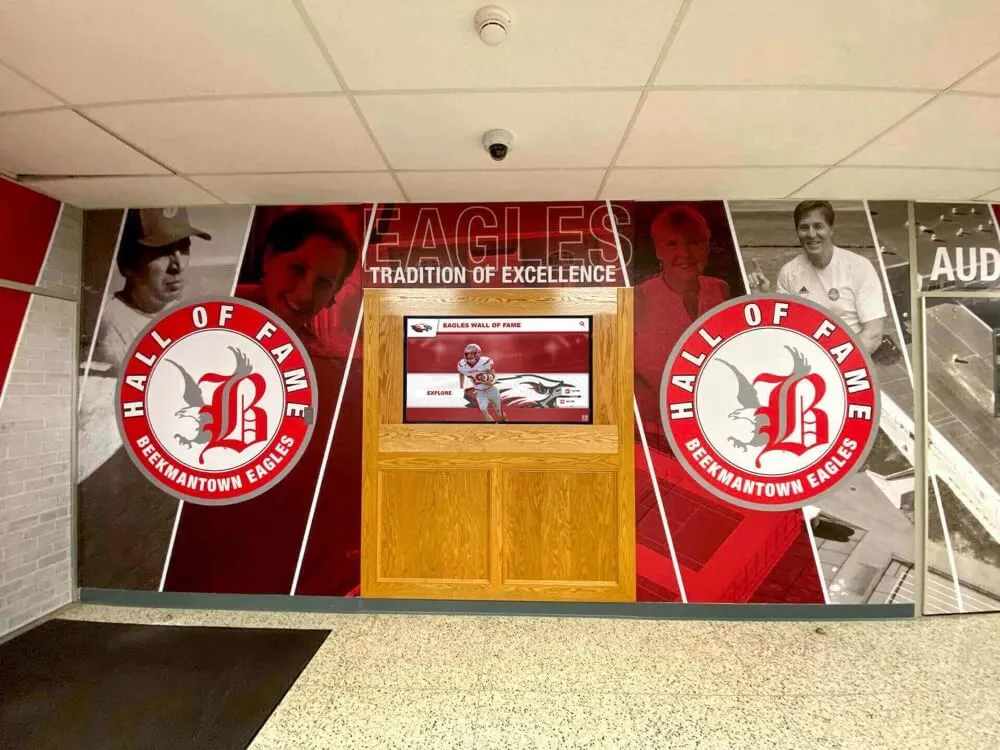
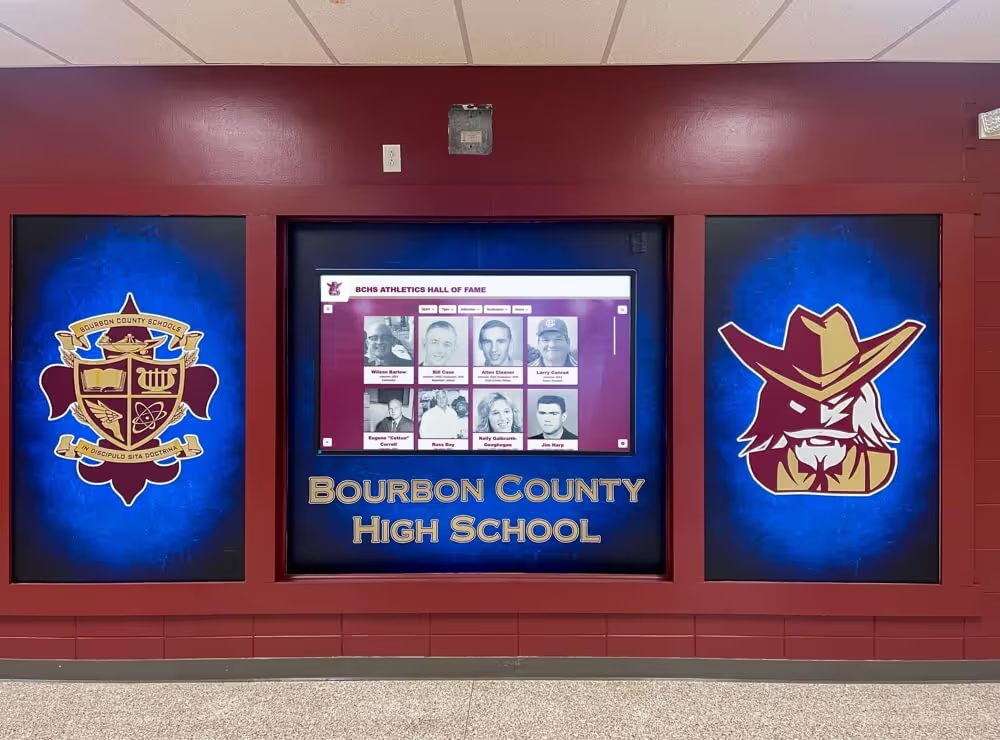
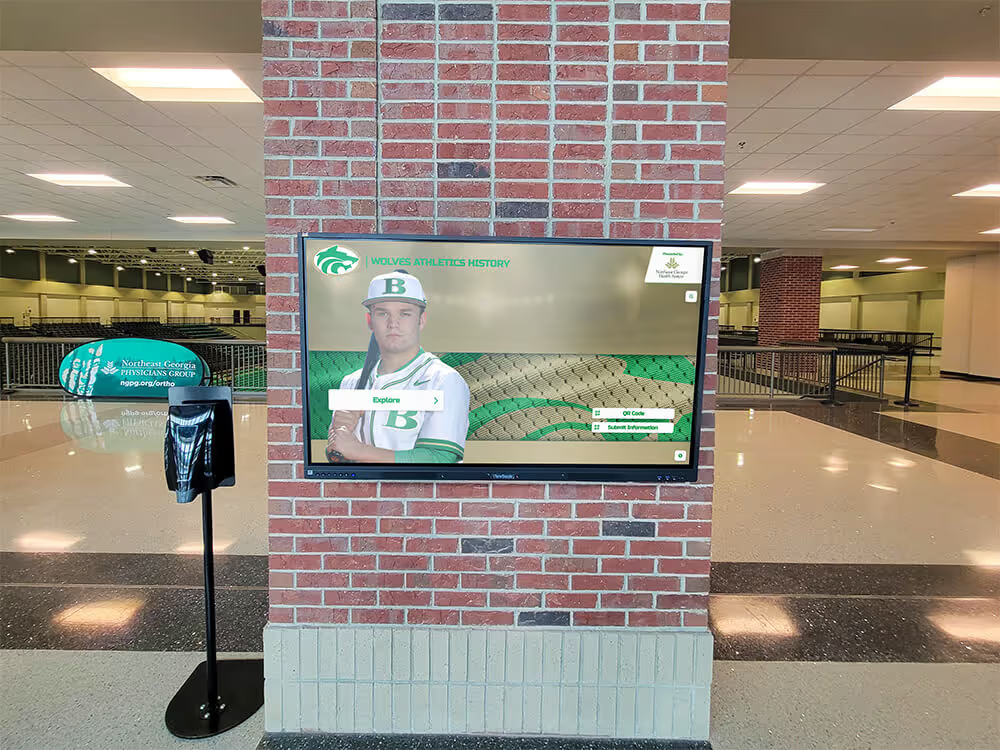
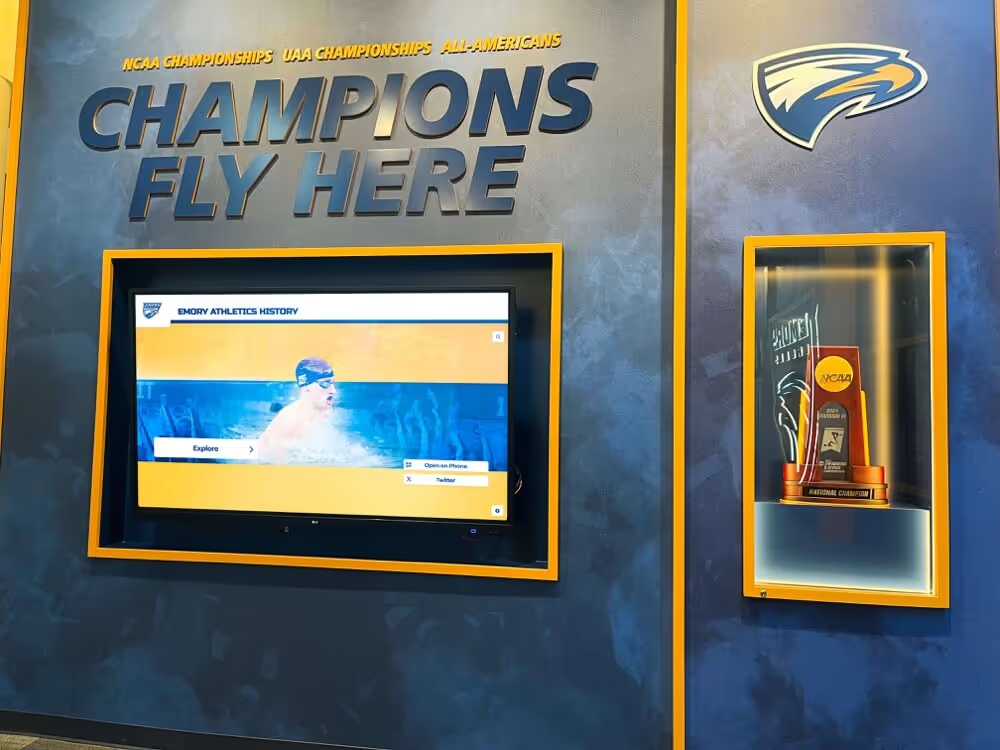
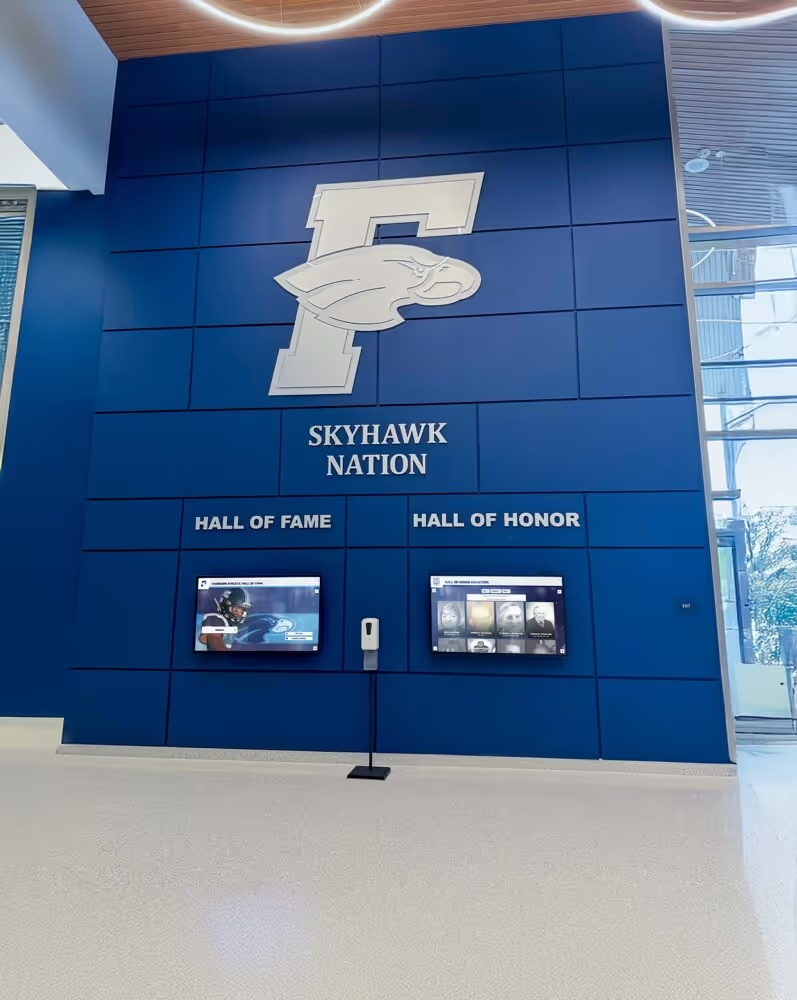
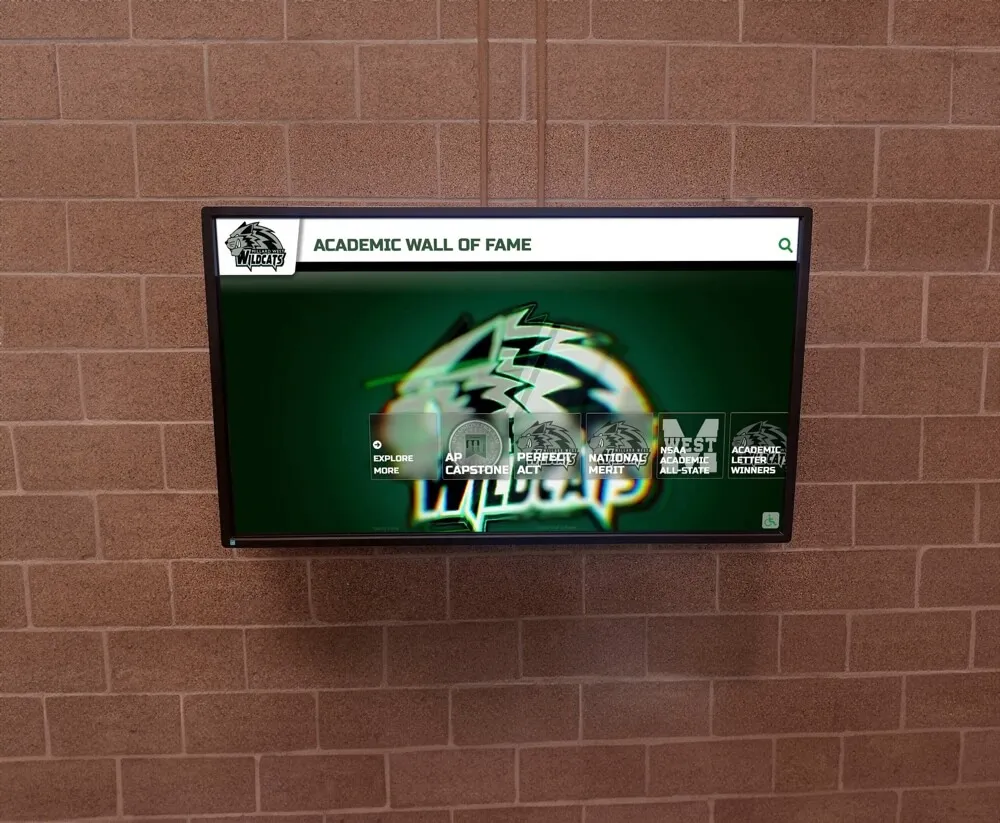
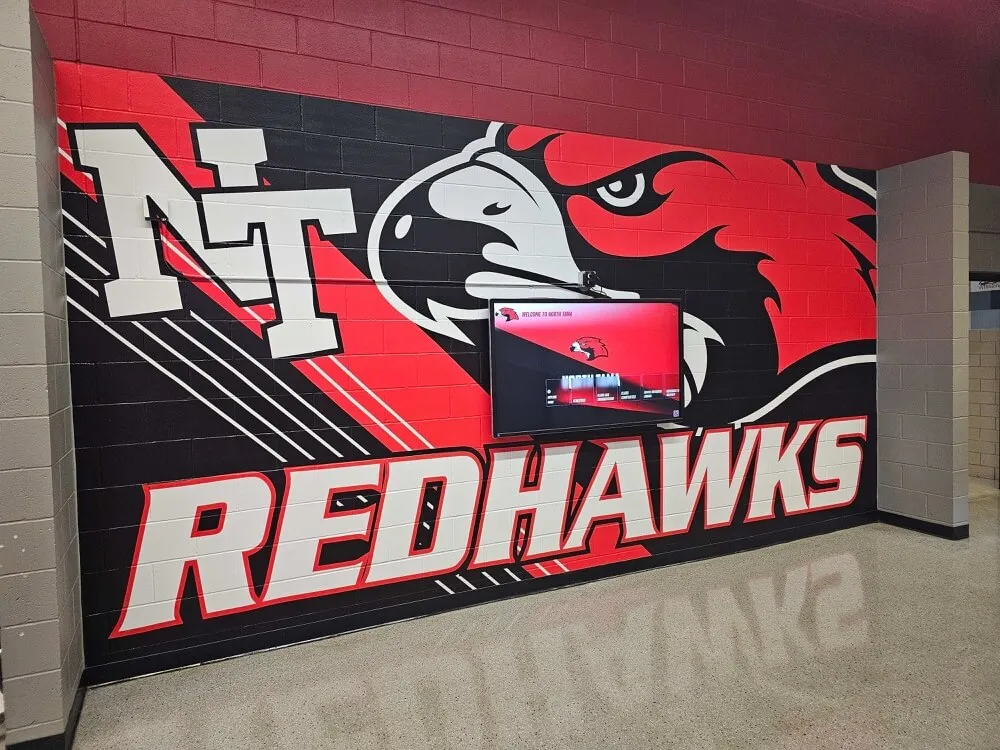
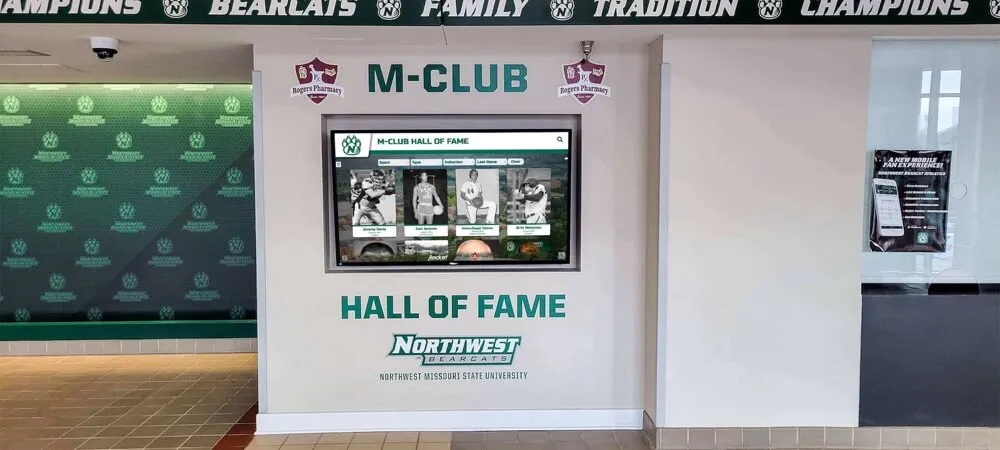
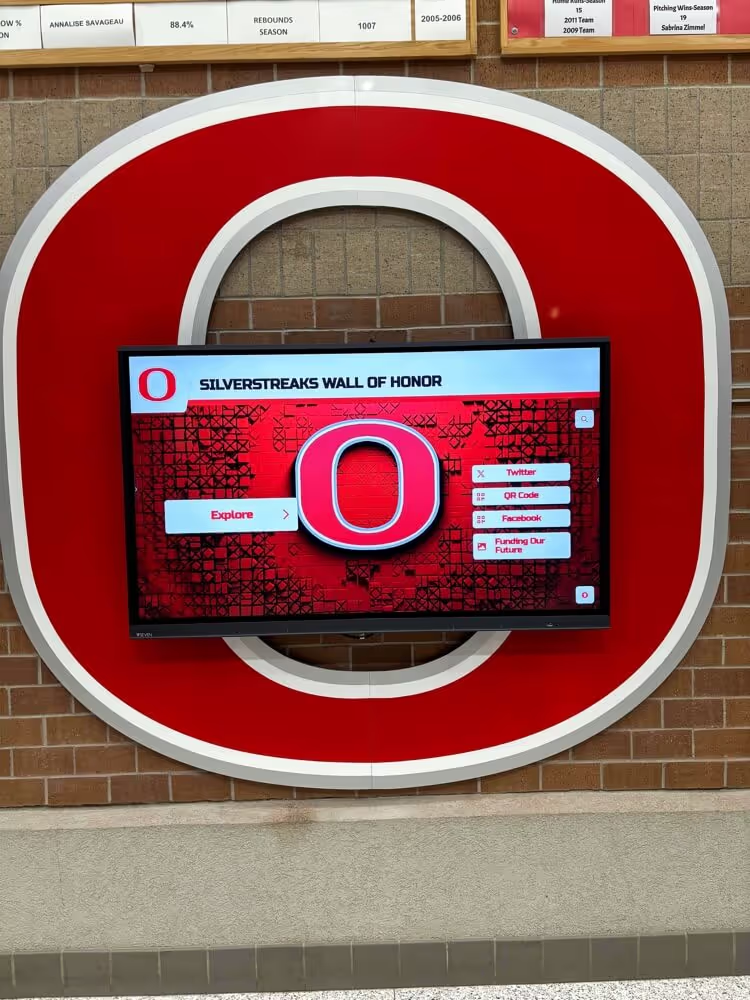
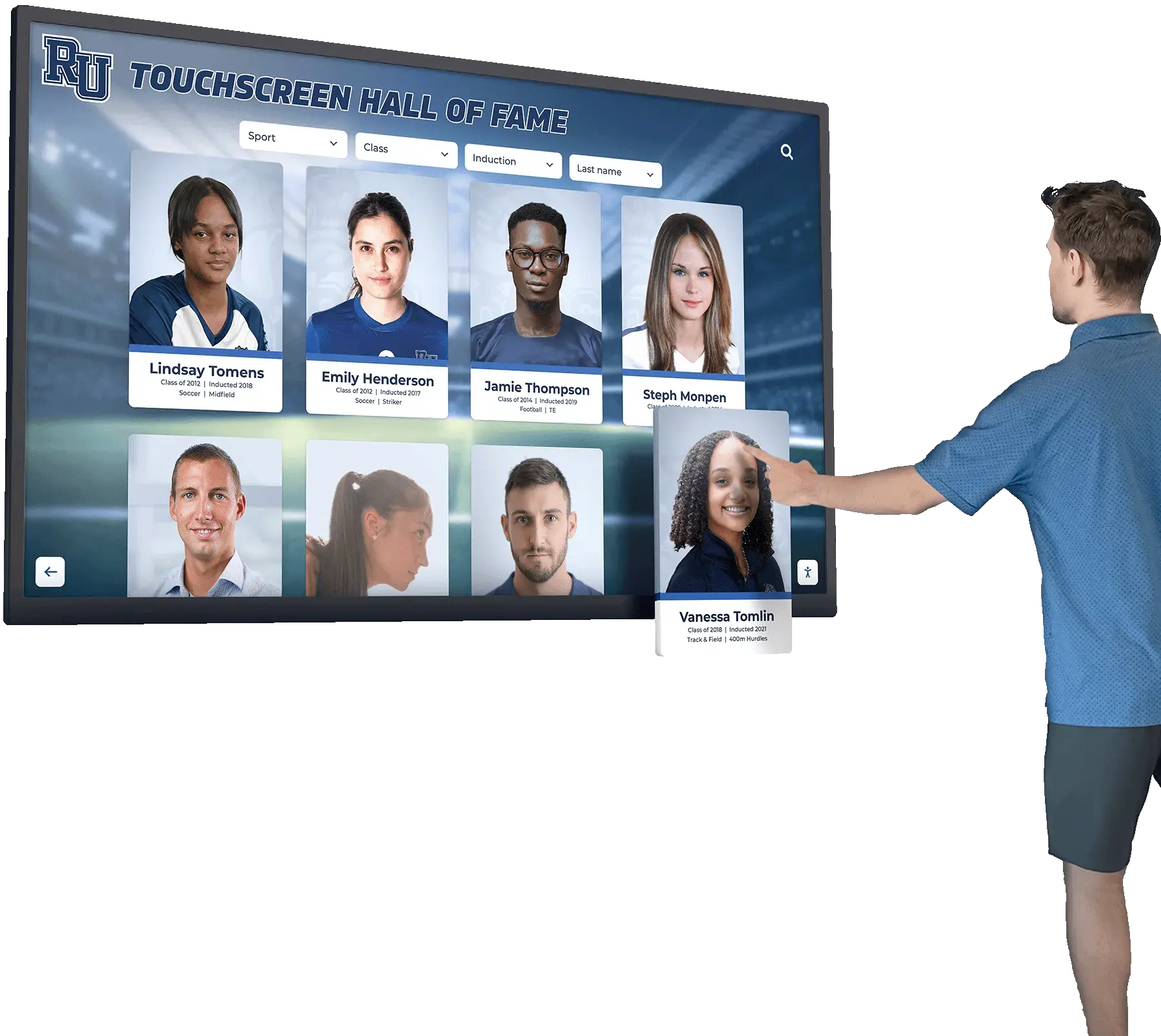
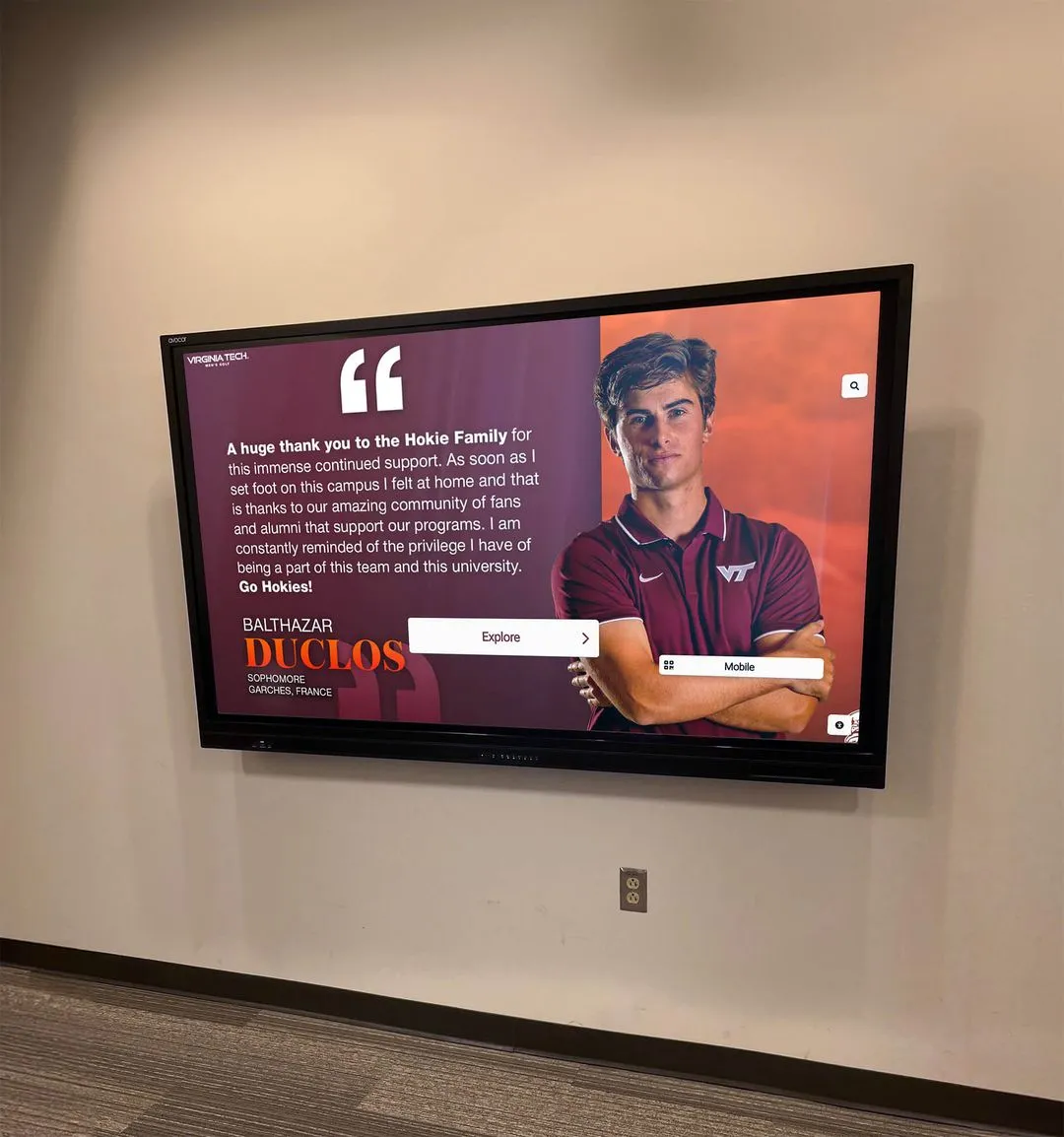
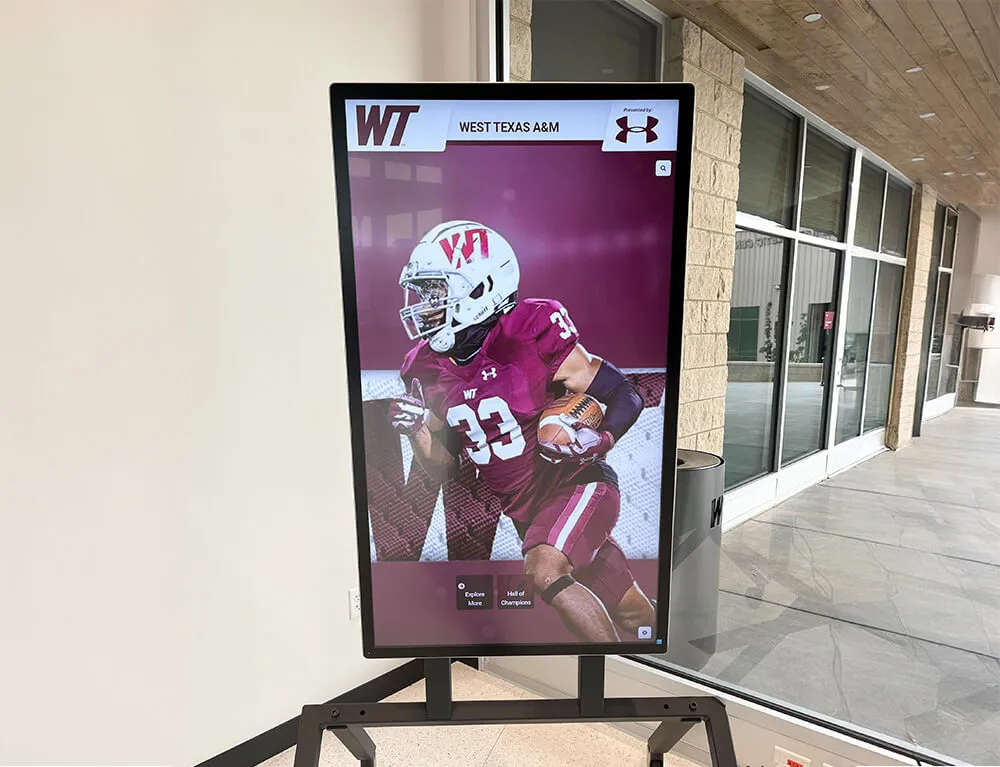
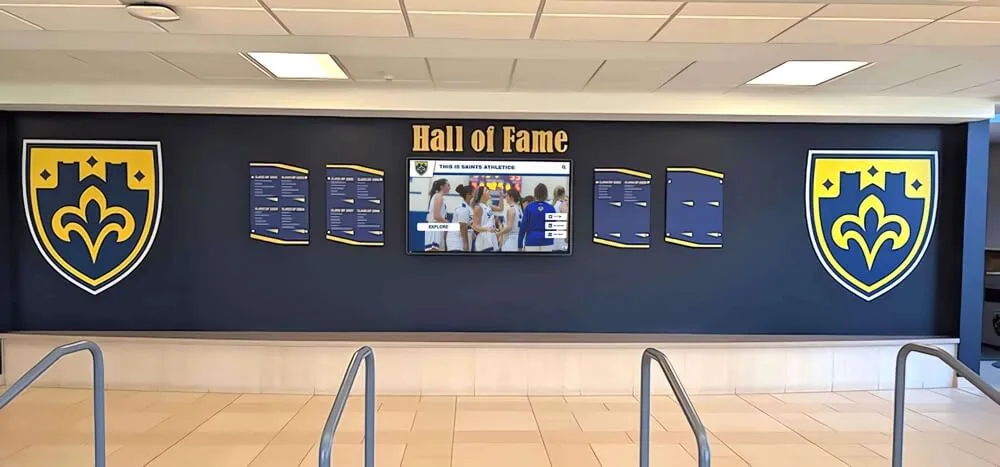
Digital trophy case systems replace or supplement physical displays with touchscreen interfaces showcasing unlimited achievements. Rather than physical space constraints, digital platforms offer essentially infinite capacity for honoring accomplishments across all categories.
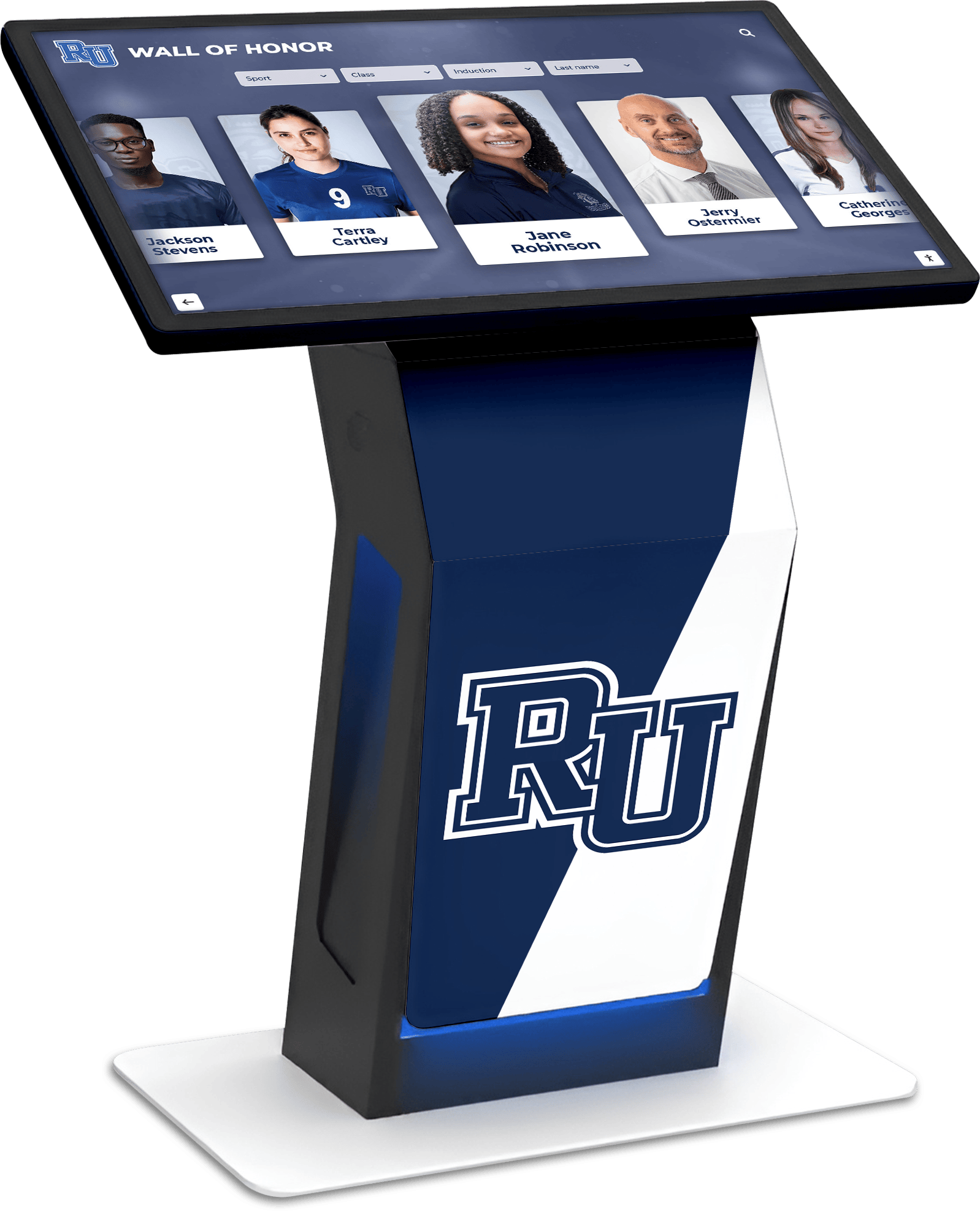
Unlimited Recognition Capacity: Digital systems honor every achievement worth celebrating—individual awards, team championships, academic excellence, arts recognition, community service, and distinguished alumni—without space constraints forcing exclusions. Schools can recognize 50 achievements or 50,000 with equal ease.
Rich Contextual Storytelling: Each digital achievement can include photos, videos, team rosters, statistics, season narratives, and memorable moments providing context that physical trophies never could. Visitors exploring a championship season can see game highlights, read player reflections, and understand what made that team special beyond simply seeing a trophy.
Easy Updates and Additions: Adding new achievements to digital displays requires no physical installation, shelf rearrangement, or space reallocation. Administrators simply upload new content through web-based interfaces, and displays update instantly. This eliminates the ongoing maintenance and logistics that physical trophy management demands.
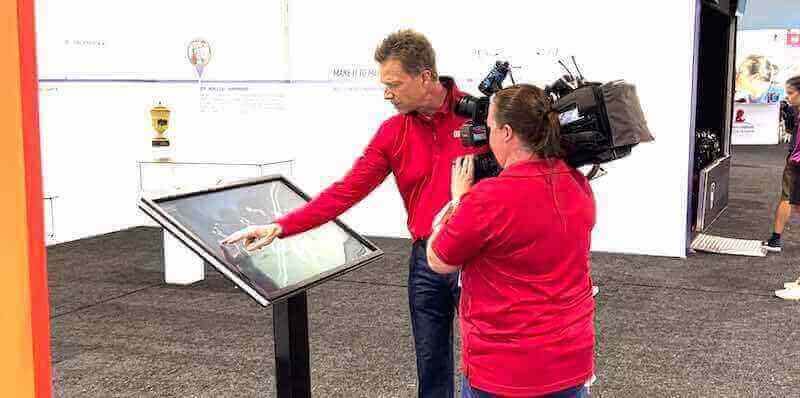
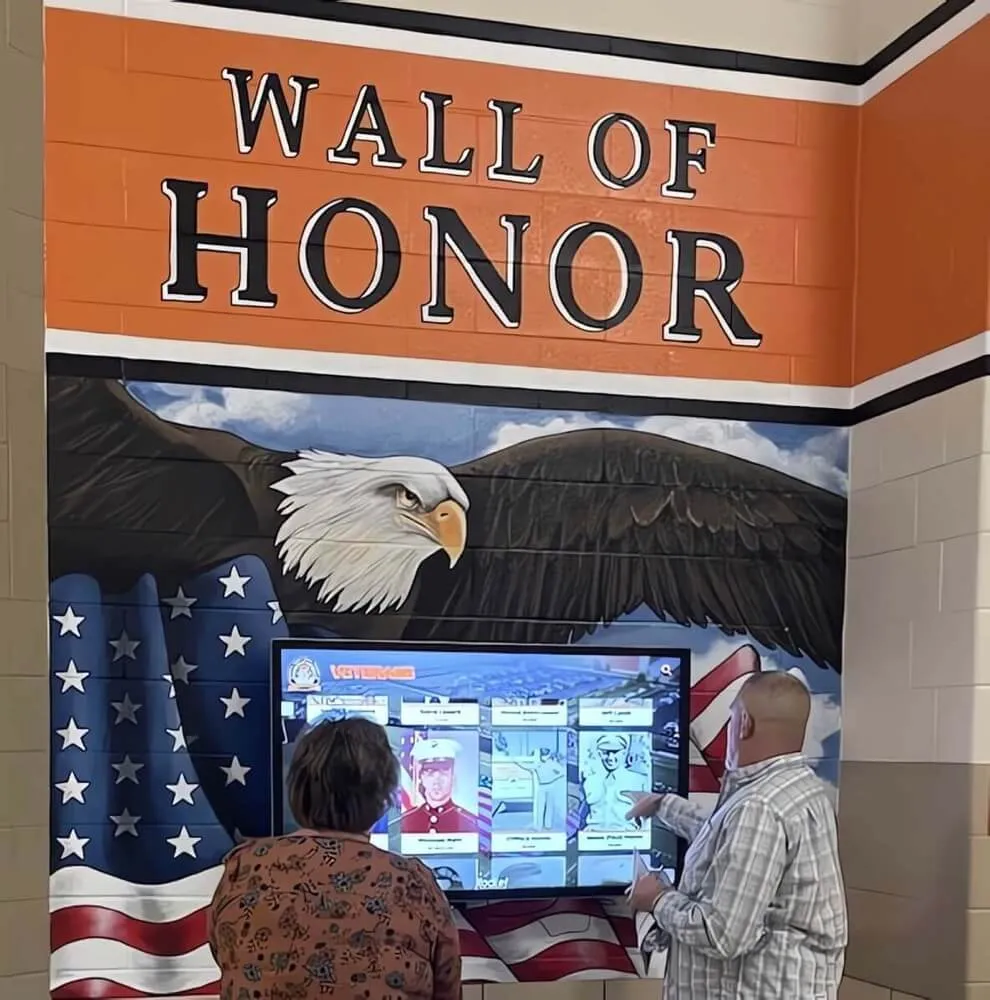
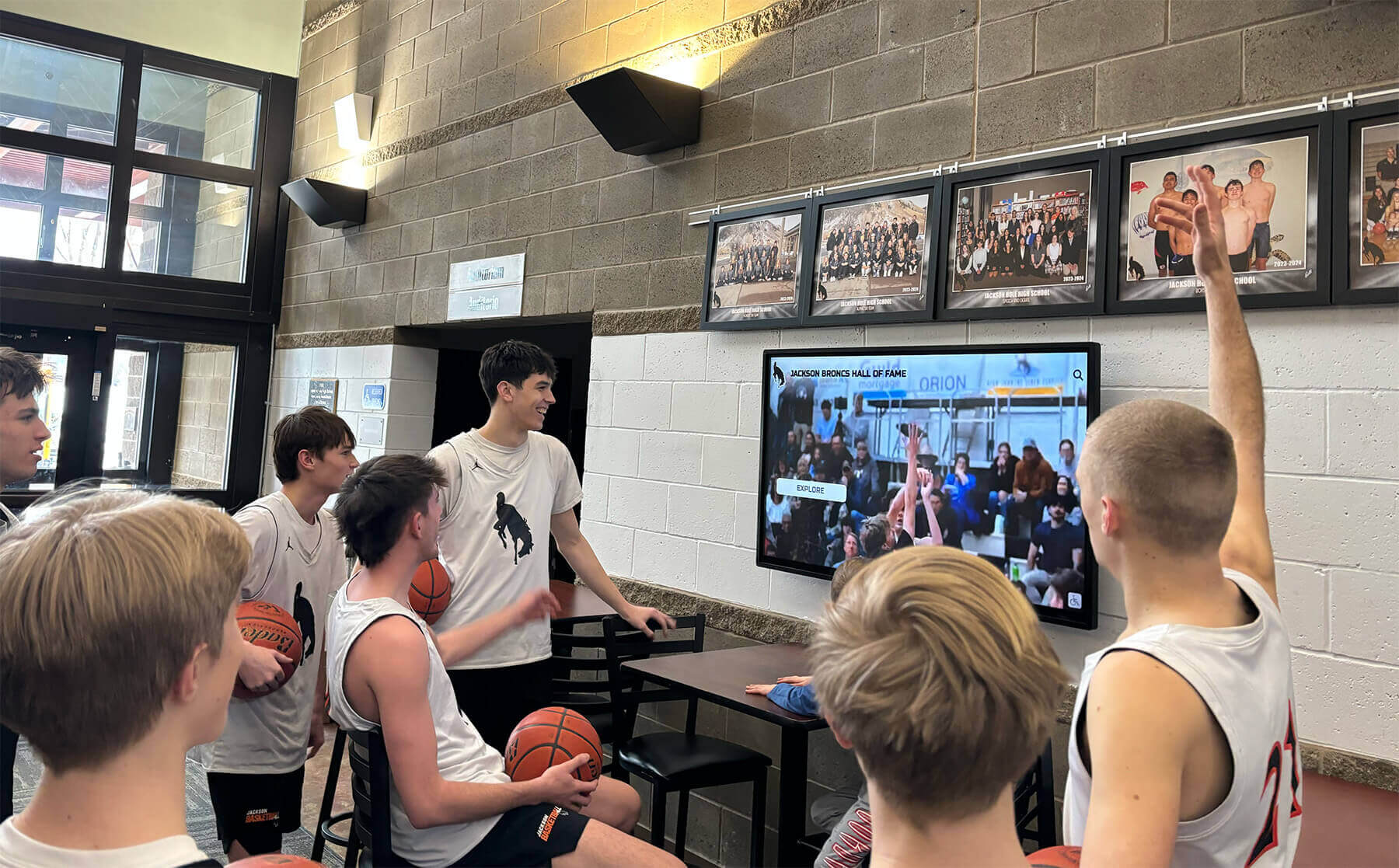
Enhanced Engagement: Interactive touchscreens invite exploration in ways that static displays cannot. Students, alumni, and visitors can search for specific sports, years, or individuals; browse photo galleries; watch video highlights; and discover achievements they’d never notice in traditional cases. This active engagement creates stronger emotional connections with recognition content.
Remote Accessibility: Digital recognition extends beyond physical displays through web-accessible versions allowing alumni worldwide to explore their school’s achievements from anywhere. This expanded reach transforms local recognition into global engagement opportunities supporting alumni relations and fundraising. Understanding digital archives for schools provides context for comprehensive digital preservation strategies.
Hybrid Approaches: Combining Physical and Digital
Many schools implement hybrid strategies preserving physical trophy displays while adding digital recognition for broader achievement coverage.
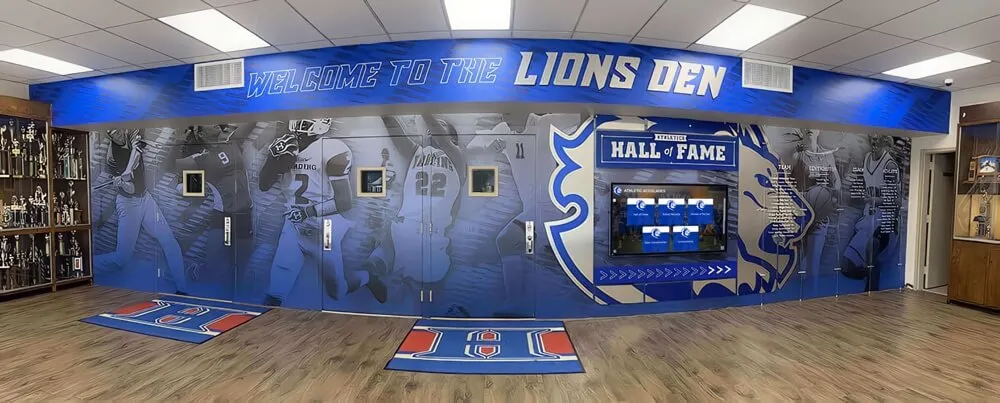
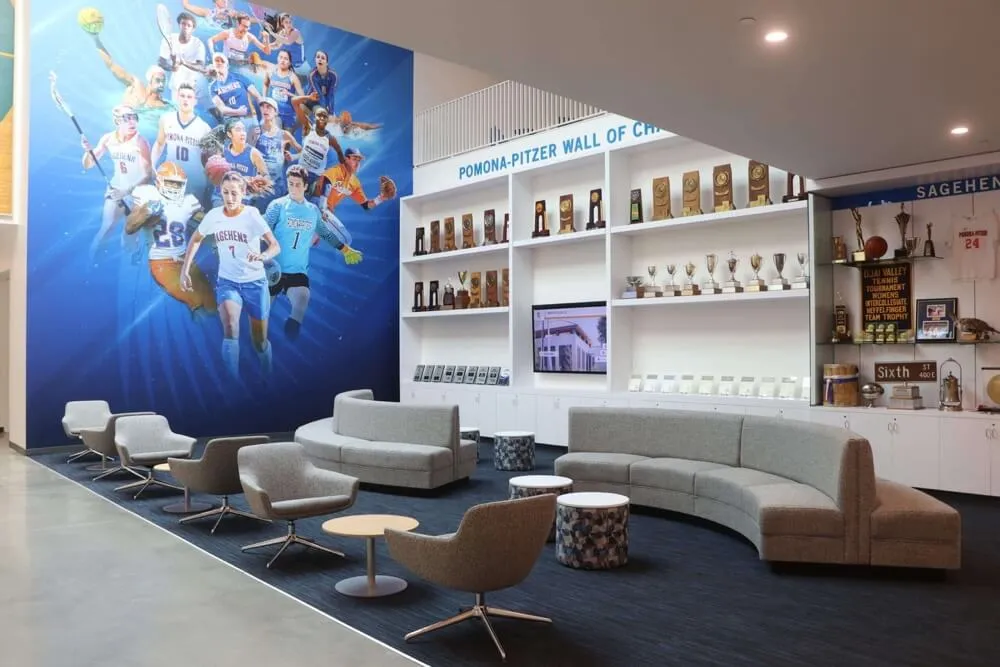
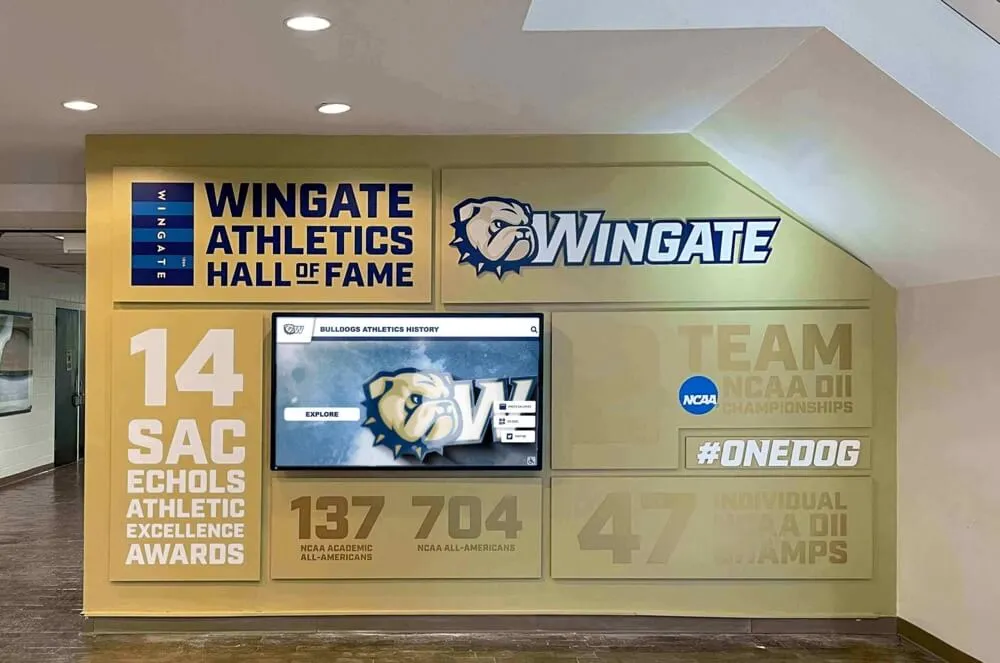
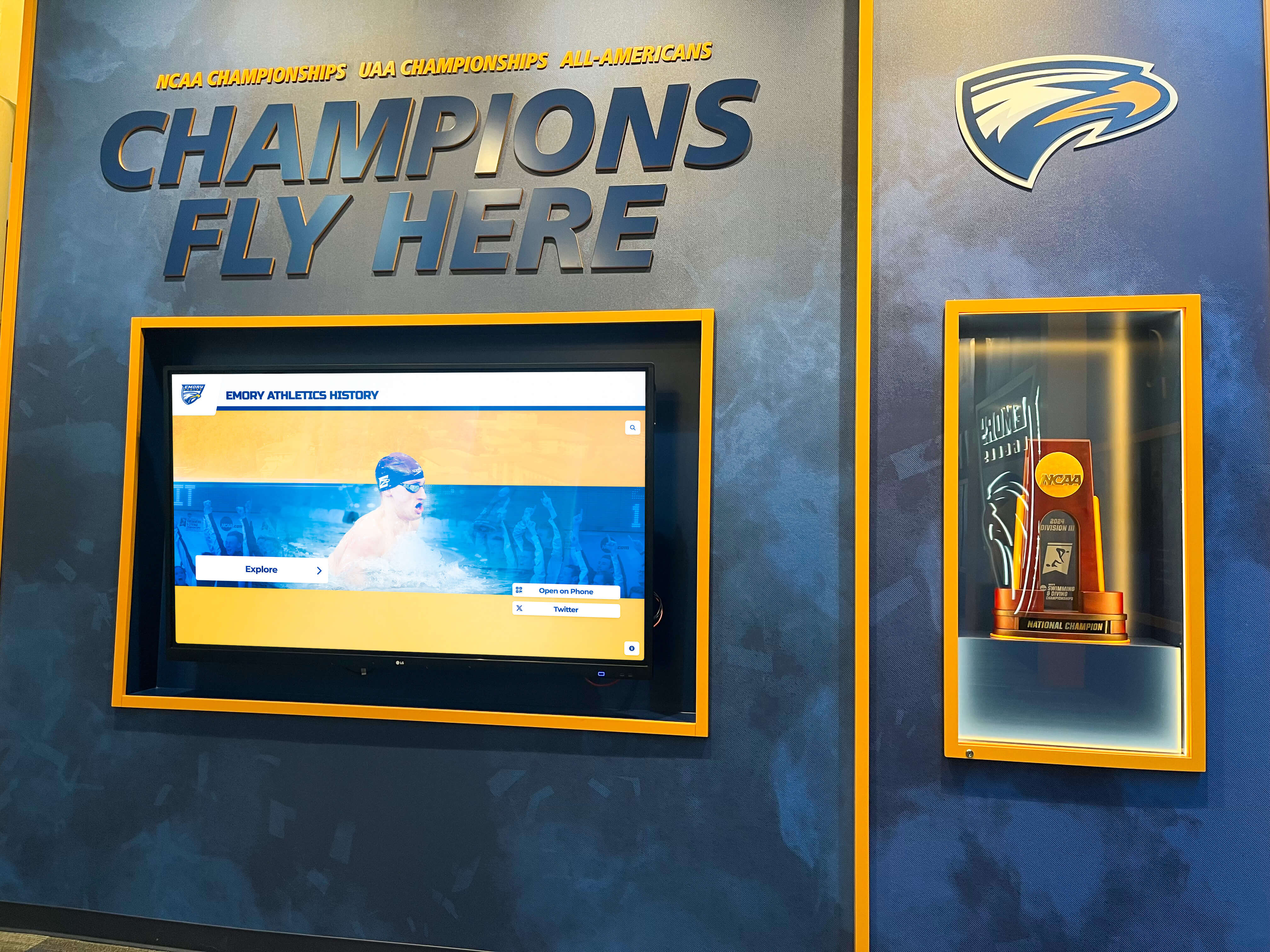
Featured Trophies with Digital Context: Physical cases display most significant championships and historic trophies, while adjacent digital displays provide detailed context about those achievements plus recognition for accomplishments that don’t fit in limited physical space. This combination preserves the tangible impact of seeing actual trophies while solving capacity limitations through digital supplementation.
Rotating Physical Displays Directed by Digital Content: Some schools maintain traditional cases but rotate awards in and out quarterly or annually, with digital displays indicating what’s currently shown and allowing visitors to explore items currently in storage. QR codes on physical displays link to digital content providing full details and context.
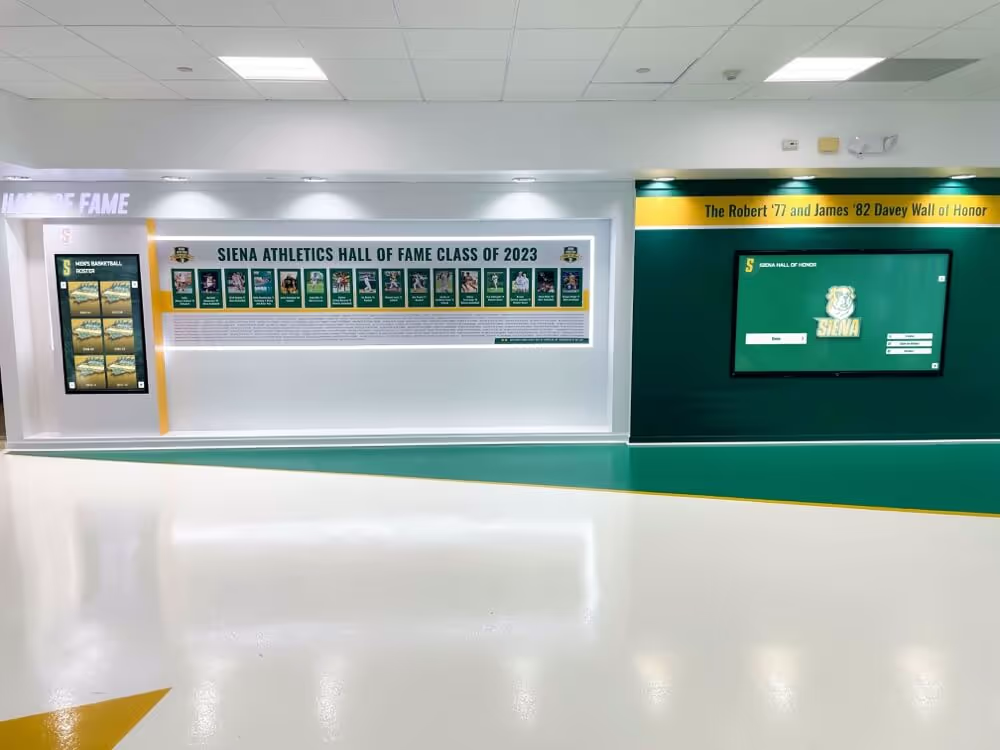
Department-Specific Physical Cases with Centralized Digital Recognition: Athletics might maintain traditional trophy cases in gymnasium lobbies, while centralized digital displays in main entrances honor achievements across all departments—academics, arts, athletics, and service—providing more equitable whole-school recognition.
Budget Planning and Total Cost of Ownership
Understanding complete costs helps administrators plan realistic budgets and avoid unpleasant surprises.
Initial Purchase and Installation Costs
Trophy case expenses extend well beyond sticker prices.
Case Pricing by Type:
- Countertop displays: $200-$800
- Wall-mounted cases (4-6 feet): $800-$2,500
- Wall-mounted cases (8-12 feet): $2,000-$4,500
- Freestanding floor cases: $2,500-$8,000+
- Custom cases: $5,000-$25,000+
Installation Expenses:
- Professional installation: $400-$2,000 per case
- Electrical work: $300-$1,200 if new circuits needed
- Structural reinforcement: $200-$800 if wall support inadequate
- Permit fees: $50-$300 depending on jurisdiction
Freight and Delivery: Large trophy cases ship as freight, costing $200-$800 depending on distance and case size. Some manufacturers include delivery in pricing; others charge separately. Verify whether quotes include delivery to your loading dock or if additional local delivery fees apply.
Ongoing Operating Costs
Trophy cases incur expenses throughout their service life.
Energy Costs: LED-lit cases consume approximately 20-40 watts, costing $15-$30 annually in electricity at typical rates. Fluorescent lighting uses 3-4x more power. Multiple cases across a facility add up—10 cases might cost $150-$300 yearly in electricity.
Maintenance Supplies: Glass cleaner, dusting supplies, lock lubricants, and cleaning labor represent modest but real ongoing costs. Budget $50-$150 annually per case for supplies and regular maintenance.
Repairs and Replacements: Broken glass, damaged locks, failed lighting, and worn finishes require periodic repair. Maintain a repair reserve of $100-$300 per case annually to address these inevitable needs. Glass replacement alone costs $200-$800 depending on size and type.
Opportunity Costs: Staff time spent cleaning, rearranging, updating, and maintaining trophy cases represents labor that could support other priorities. While difficult to quantify precisely, recognize that traditional cases demand ongoing attention.
Comparing Physical Cases to Digital Recognition
When evaluating long-term costs, digital recognition systems often prove more economical than continuously purchasing additional physical cases.
A quality wall-mounted trophy case costs $2,000-$3,000 installed. Schools needing 5-10 cases across various departments and facilities invest $10,000-$30,000+ in physical infrastructure—and still face inevitable capacity limits within years.
Digital recognition systems like those from Rocket Alumni Solutions start at comparable initial costs but offer unlimited recognition capacity, eliminating the perpetual cycle of purchasing additional cases as achievements accumulate. Schools managing athletic hall of fame programs find digital systems particularly valuable for comprehensive recognition.
The total cost of ownership calculation should compare not just initial pricing but the 10-20 year trajectory including inevitable capacity expansion, ongoing maintenance, and the value of features each approach provides.
Common Trophy Case Challenges and Solutions
Even well-planned installations encounter predictable challenges. Anticipating these issues enables proactive solutions.
Challenge: Displays Look Cluttered and Disorganized
Problem: Too many awards crammed into limited space creates visual chaos rather than compelling recognition.
Solutions: Implement strict curation limiting displays to most significant achievements. Use risers and tiered shelving creating visual hierarchy. Add labeled sections organizing awards by category, year, or sport. Consider rotating displays quarterly, featuring different achievements each season while storing others. Better yet, transition to digital systems eliminating physical space constraints.
Challenge: Cases in High-Traffic Areas Suffer Damage
Problem: Hallway cases near gymnasiums, cafeterias, or main entrances get bumped, kicked, and vandalized by student traffic.
Solutions: Specify extra-thick tempered glass and reinforced frames for high-traffic locations. Install cases slightly recessed into walls reducing protrusion into pathways. Add protective barriers or railings preventing direct contact. Consider digital displays with hardened commercial-grade touchscreen glass designed for public environments. Position most vulnerable cases in supervised areas with greater adult presence.
Challenge: Outdated Achievements Dominate Displays
Problem: Historic trophies from decades ago fill cases, leaving no room for current student accomplishments.
Solutions: Establish formal rotation policies cycling older awards to storage after defined periods. Create “historic highlights” sections for select foundational achievements while reserving majority space for recent excellence. Implement digital hall of fame systems honoring all eras without space constraints.
Challenge: Limited Space for Equitable Recognition Across Programs
Problem: Athletics receives prominent trophy cases while academic, arts, and service achievements lack comparable recognition.
Solutions: Audit total display space by category, ensuring equitable allocation reflecting institutional values rather than historical precedent. Recognize that physical cases may inherently favor programs generating physical trophies. Digital recognition systems naturally accommodate diverse achievement types—academic honors, artistic accomplishments, community service, and student leadership—alongside athletic excellence. Schools implementing honor roll displays find digital systems particularly effective for academic recognition.
Challenge: Cases Become Neglected and Dusty
Problem: Without assigned responsibility, trophy cases degrade into grimy, unappealing displays undermining rather than enhancing achievement recognition.
Solutions: Assign specific custodial staff responsibility for regular case cleaning with defined schedules and accountability. Include trophy case maintenance in facility inspection checklists. Consider student leadership opportunities where student government or honor society members maintain cases as service projects, building ownership and ensuring attention. Digital displays eliminate physical dusting entirely while requiring only periodic screen cleaning.
Making the Decision: Traditional Cases vs. Digital Recognition
School administrators ultimately must decide whether traditional trophy cases, digital recognition systems, or hybrid approaches best serve their institution’s needs.
When Traditional Trophy Cases Make Sense
Physical trophy cases remain appropriate when schools have adequate space for current and foreseeable future needs, limited achievements requiring recognition making capacity concerns minimal, strong preference for tangible displays of actual physical trophies, and budgets that cannot accommodate digital systems initially.
Schools with newer athletic programs, limited achievement history, or specialized recognition needs (like a single sport with a few major championships) may find traditional cases perfectly adequate for decades without capacity concerns.
When Digital Recognition Delivers Superior Value
Digital systems prove transformative for schools facing space constraints limiting recognition capacity, diverse achievement types (academic, athletic, arts, service) requiring equitable recognition, desire to provide rich context and storytelling beyond physical trophies, need for easy updates and additions without physical installation, and goals of engaging alumni through remote access to school recognition.
Schools with established programs accumulating achievements faster than display space permits find digital systems solve the fundamental capacity problem while delivering engagement features physical cases cannot match. Understanding trophy display case ideas helps contextualize options across physical and digital approaches.
Hybrid Strategies Combining Both Approaches
Many schools implement thoughtful combinations preserving physical trophy displays for major championships while using digital recognition for comprehensive achievement celebration. This balanced approach honors the tangible impact of seeing actual championship hardware while solving capacity and equity challenges through digital supplementation.
Consider maintaining existing trophy cases for athletics in gymnasium areas while implementing centralized digital recognition in main lobbies honoring achievements across all programs. This strategy respects athletic tradition while expanding recognition breadth. Schools developing school history timelines often find digital systems essential for comprehensive historical preservation.
Taking Action: Next Steps for Your Trophy Case Project
Moving from planning to implementation requires systematic execution across multiple phases.
Phase 1: Assessment and Planning (Weeks 1-4)
- Inventory current display needs and existing trophy collections
- Measure available spaces and assess structural capabilities
- Define recognition scope and institutional priorities
- Establish realistic budget including installation and ongoing costs
- Form stakeholder committee including administrators, coaches, facilities staff, and community members
Phase 2: Research and Selection (Weeks 5-8)
- Request quotes from multiple trophy case vendors or digital recognition providers
- Visit other schools to see installations in person
- Verify references from vendors and speak with current customers
- Compare total cost of ownership across options
- Select vendor and finalize specifications
Phase 3: Installation and Setup (Weeks 9-16)
- Complete any necessary electrical or structural preparation
- Schedule professional installation or coordinate in-house setup
- Conduct final inspection and acceptance testing
- Organize and arrange trophy displays or populate digital content
- Develop maintenance procedures and assign responsibilities
Phase 4: Launch and Communication (Weeks 17-20)
- Announce new recognition displays to school community
- Host dedication ceremony or open house event
- Create signage and wayfinding directing visitors to displays
- Train staff on maintenance procedures or digital content management
- Gather feedback and make adjustments based on initial experiences
Conclusion: Choosing Recognition Solutions That Serve Your School for Decades
A trophy case for school represents more than furniture—it embodies your institution’s values, celebrates student excellence, and preserves achievement across generations. Whether you select traditional physical cases, modern digital recognition systems, or hybrid approaches combining both, the most important factors remain the same: choosing solutions that honor achievements comprehensively and equitably, planning for inevitable growth in achievements over time, maintaining displays properly so recognition remains compelling rather than neglected, and ensuring all members of your community can access and engage with the excellence you’re celebrating.
Traditional trophy cases serve many schools well when carefully selected, properly installed, and diligently maintained. For schools facing space constraints, seeking equitable recognition across diverse programs, or wanting engagement features that physical displays cannot provide, digital recognition systems offer transformative capabilities worth serious consideration.
The recognition choices you make today will shape how your school celebrates achievement for decades. Invest the time needed to understand options thoroughly, involve appropriate stakeholders in decision-making, and select solutions aligned with your institution’s unique needs, values, and resources.
Ready to Transform Your School’s Recognition Program?
Whether you’re exploring traditional trophy cases or investigating modern digital alternatives, Rocket Alumni Solutions provides comprehensive recognition systems designed specifically for educational institutions. Our platform offers unlimited recognition capacity, intuitive content management, engaging interactive displays, and dedicated support helping schools honor achievement effectively.
Schedule a consultation to discuss your specific needs and explore how digital recognition can complement or enhance your current trophy displays—creating recognition solutions that serve your school community for generations to come.