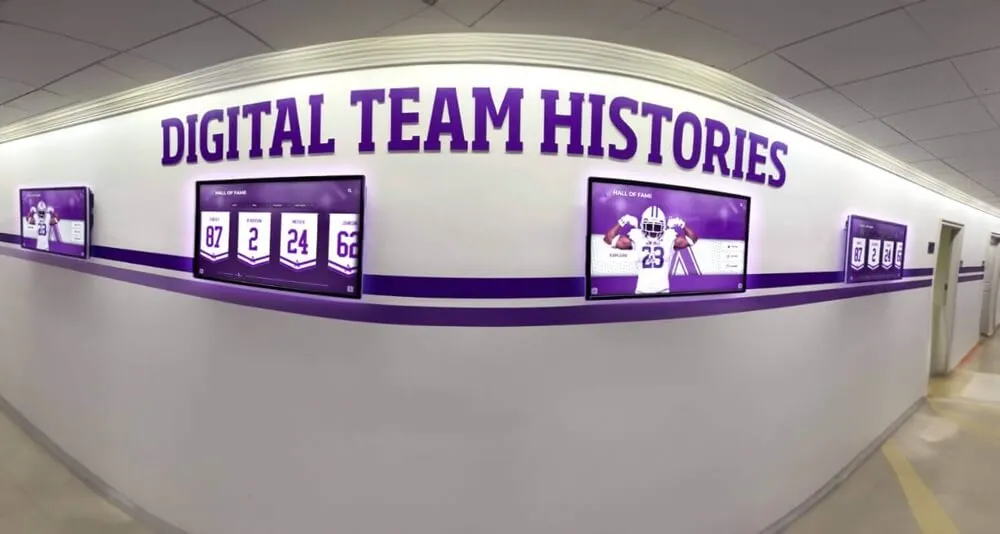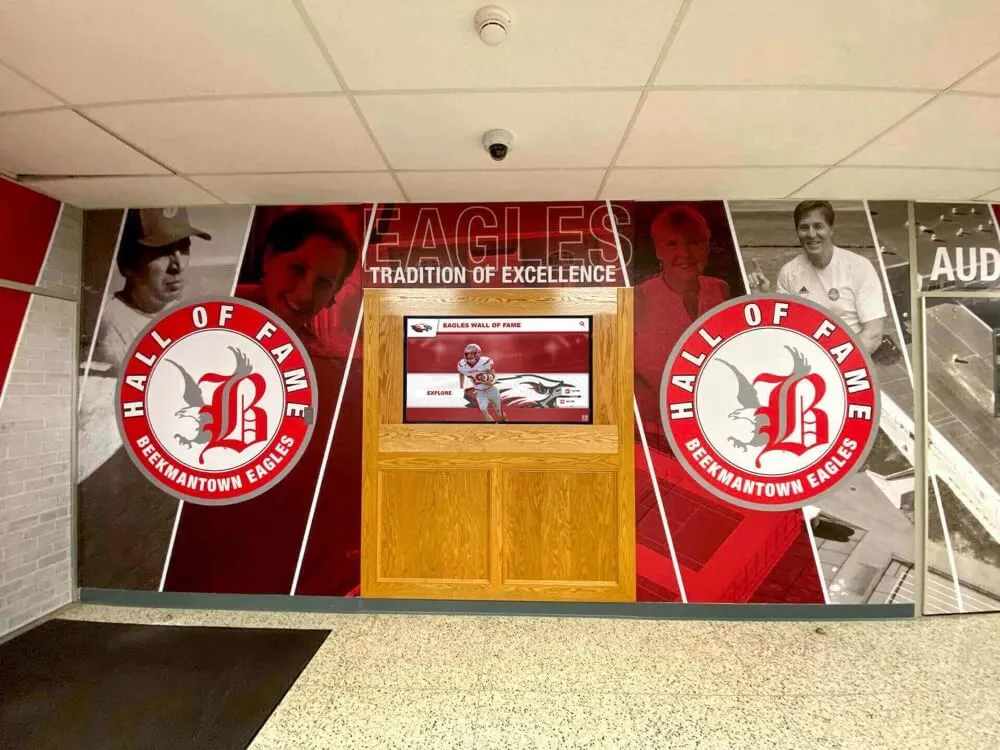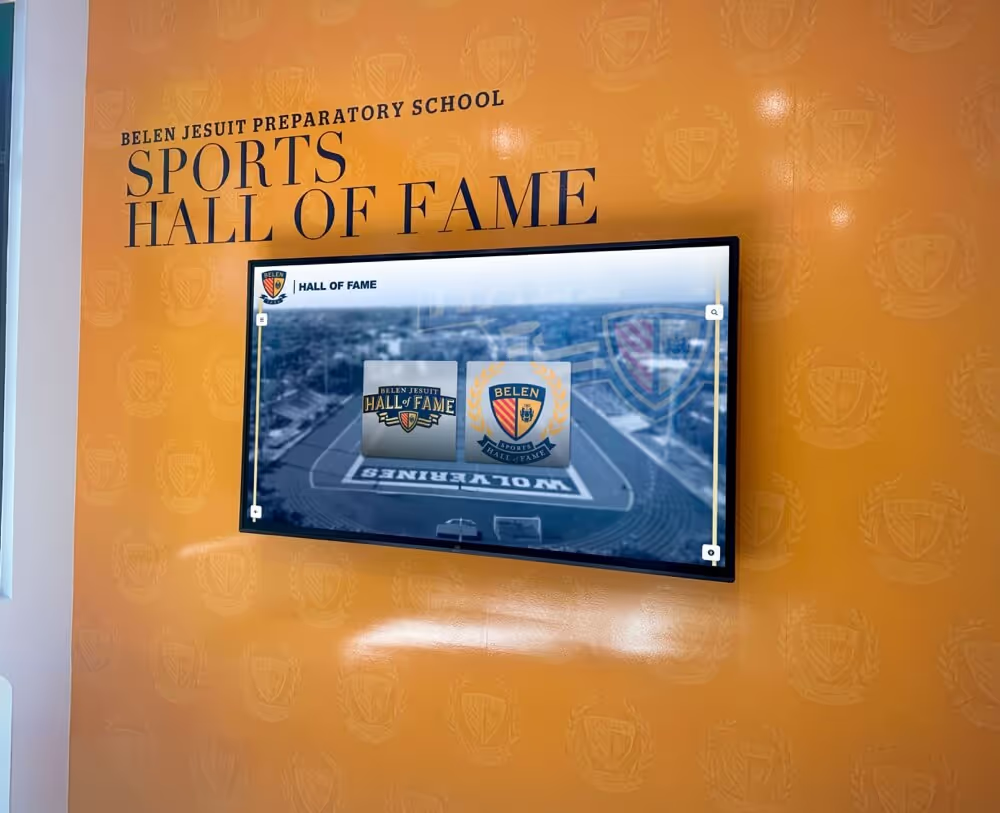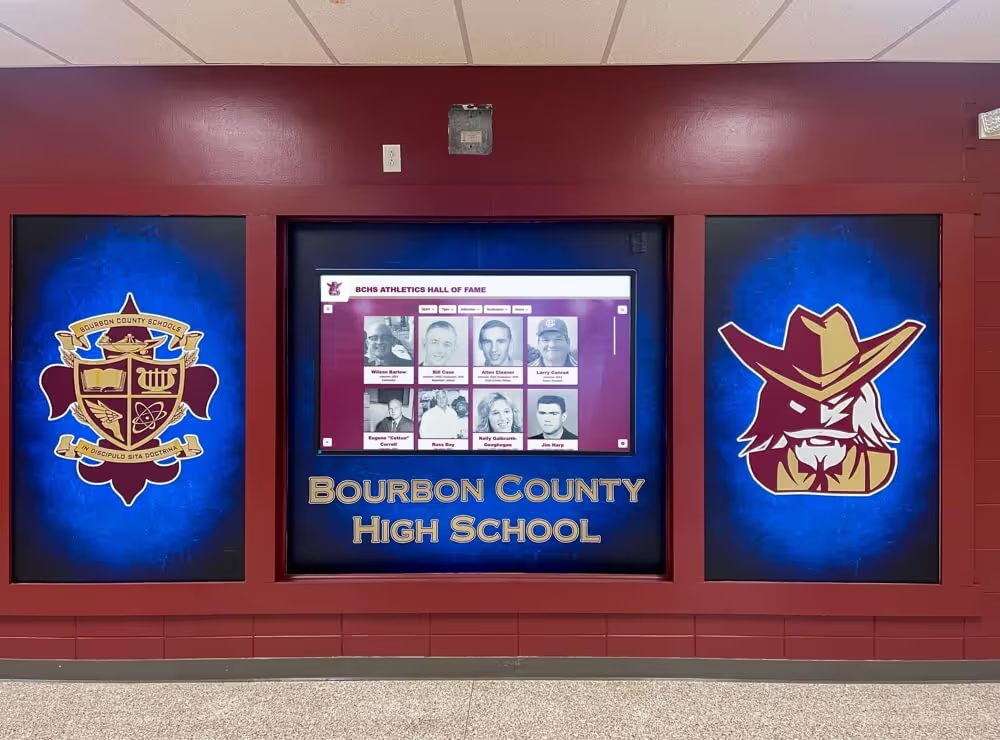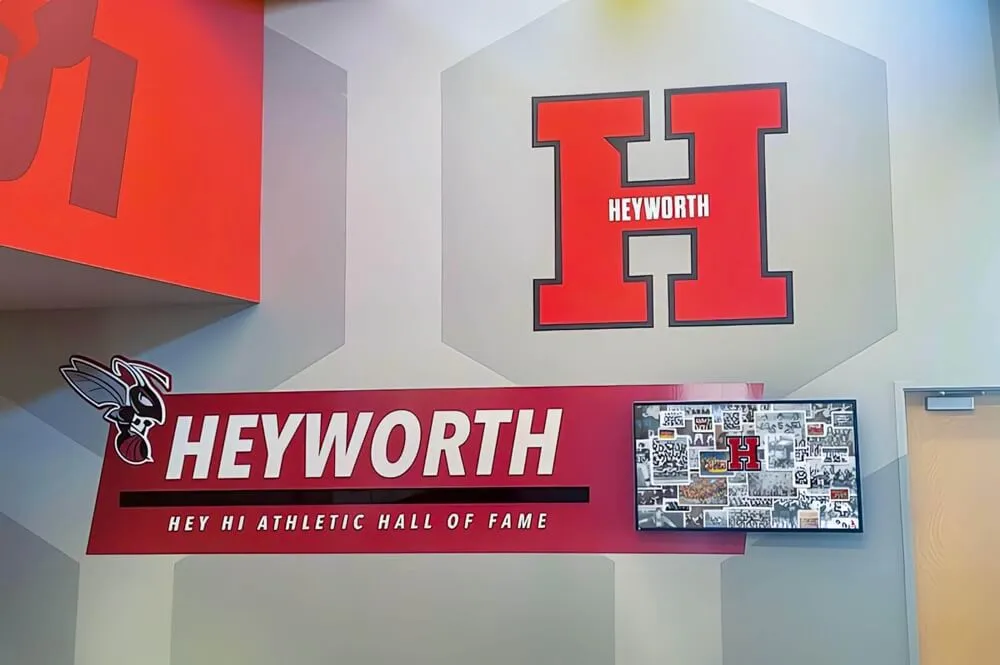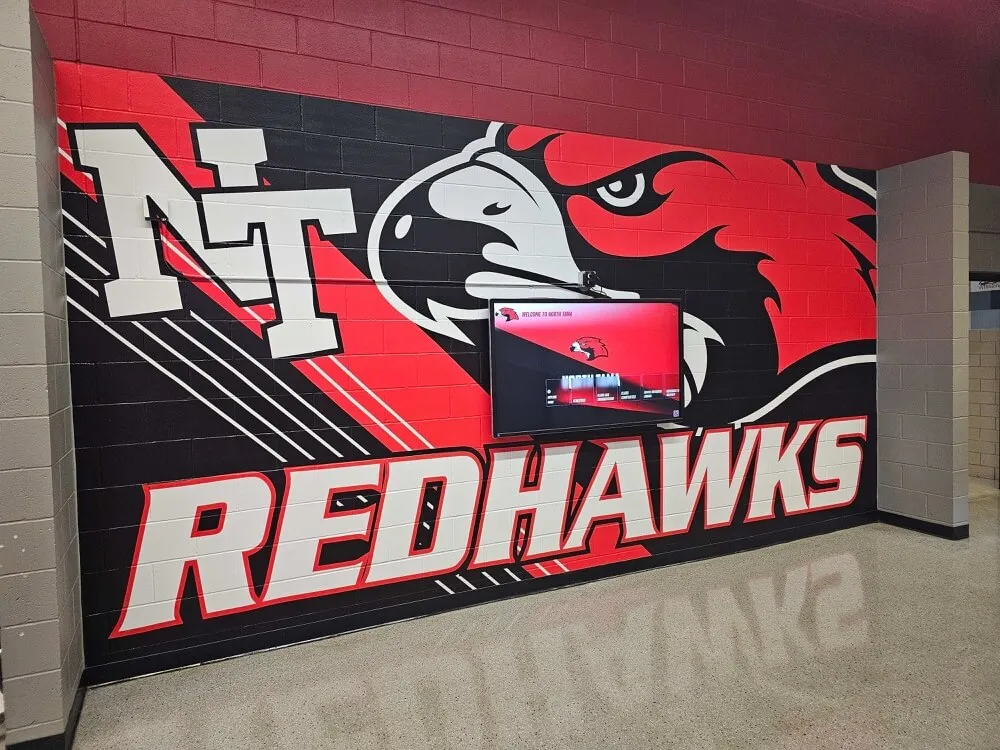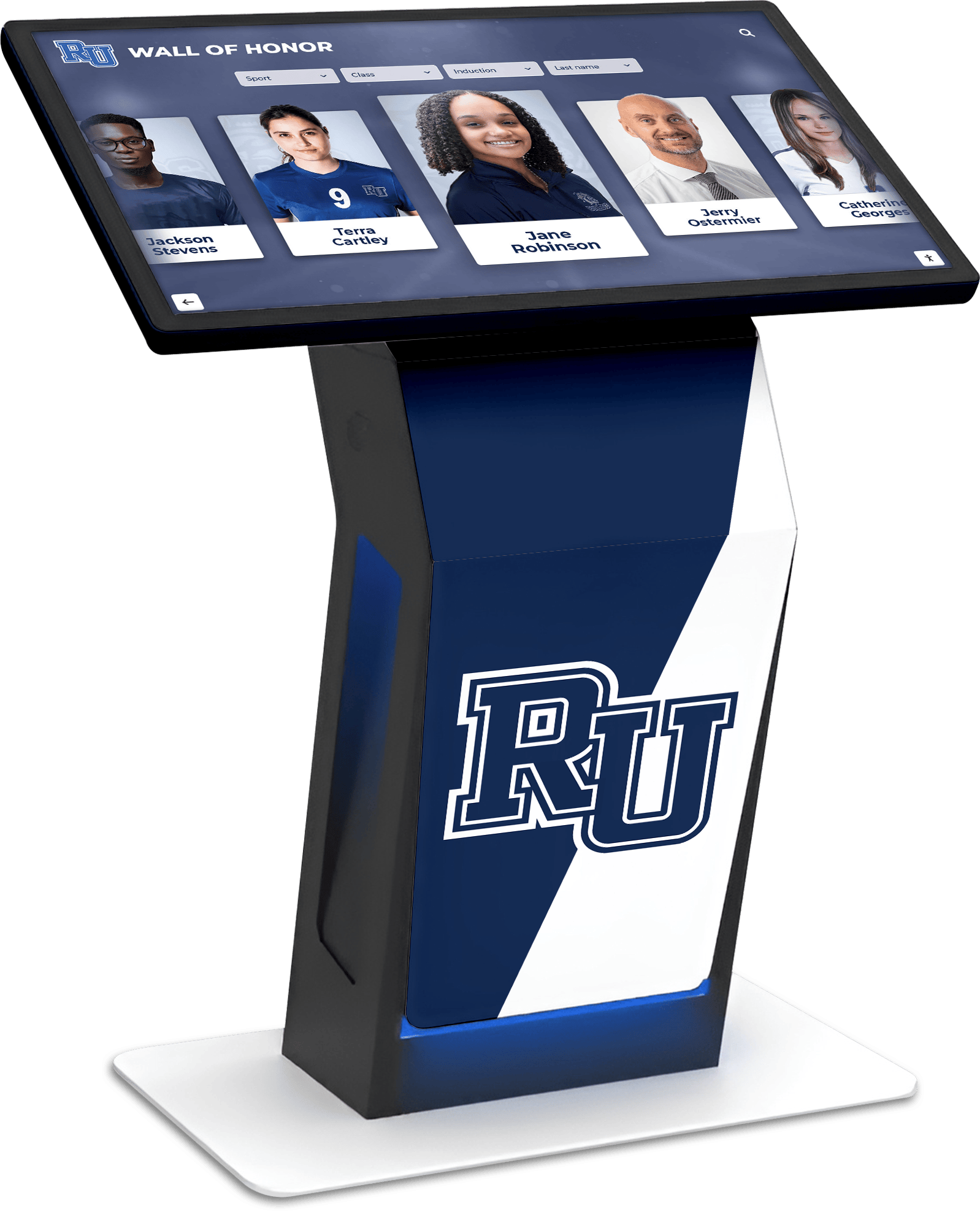




Recognition shapes culture. Whether honoring championship teams, academic achievers, distinguished alumni, or top-performing employees, how organizations celebrate excellence directly influences motivation, pride, and institutional identity. Traditional methods—plaques mounted on walls, trophies in cases, names engraved on bronze—face inherent constraints: limited space, static presentation, restricted storytelling capacity, and inability to engage modern audiences accustomed to interactive digital experiences.
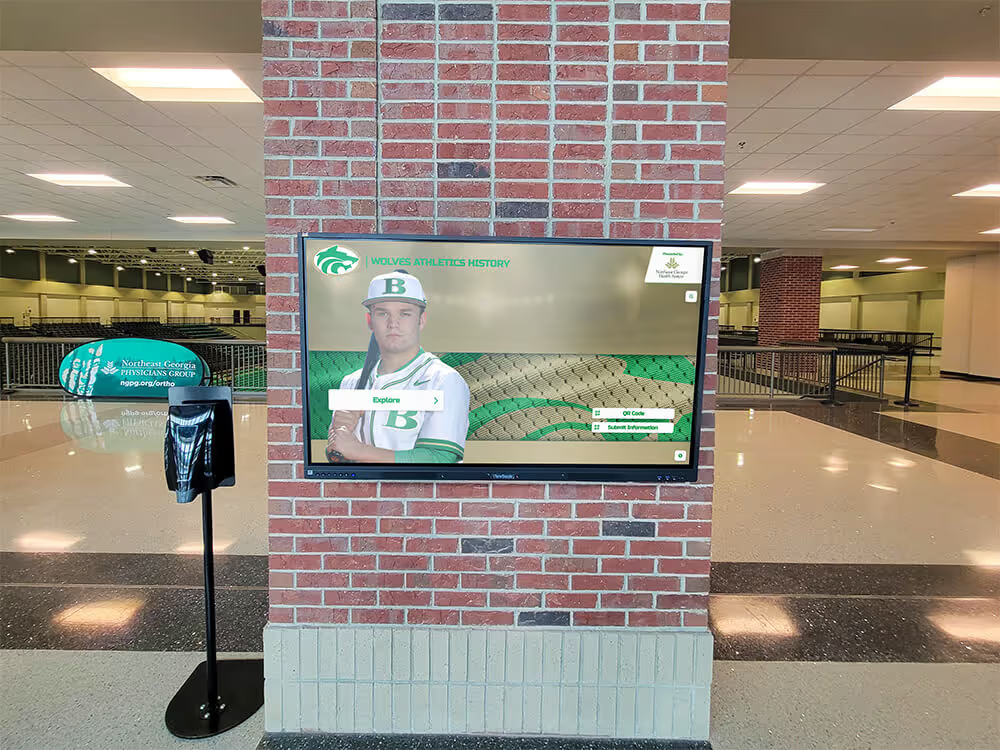
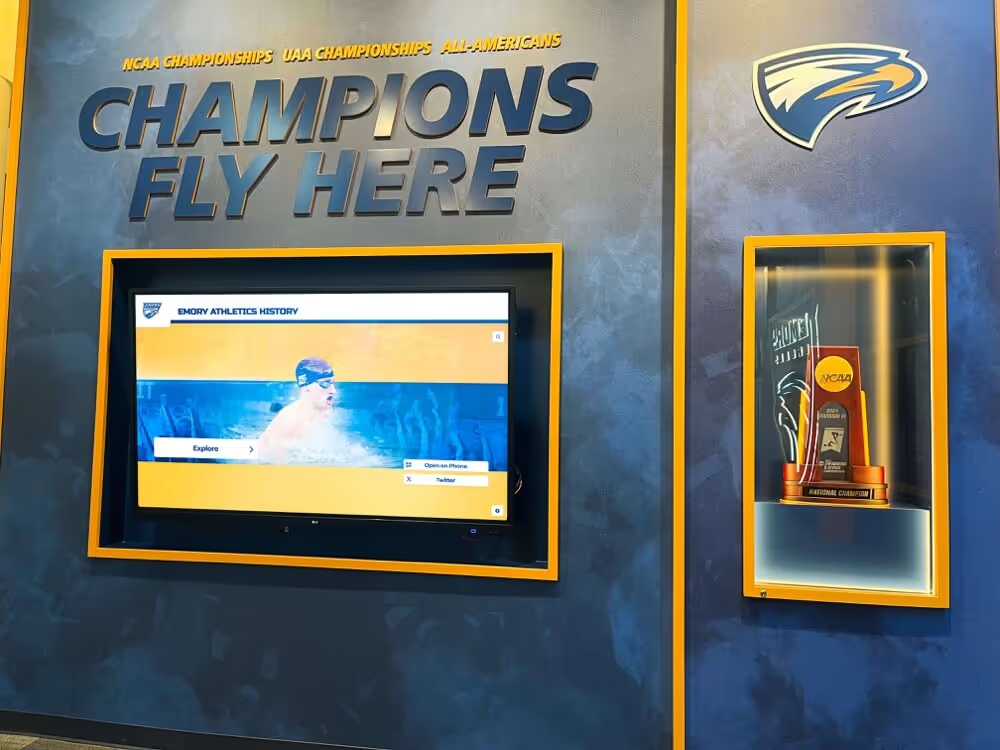
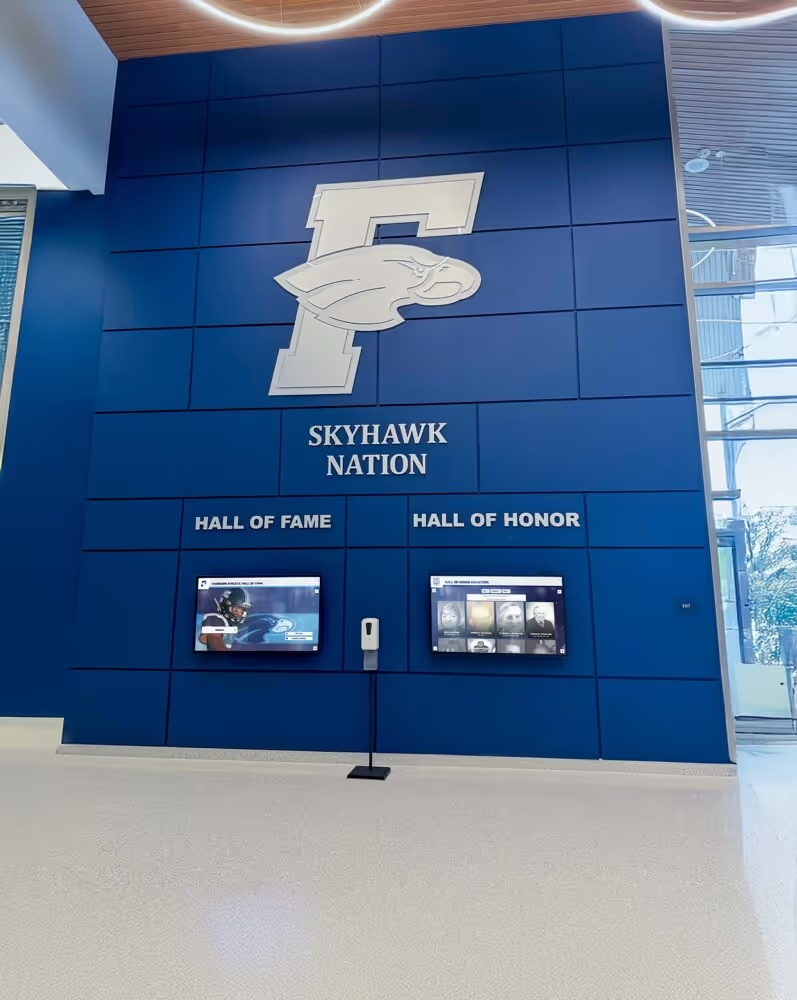
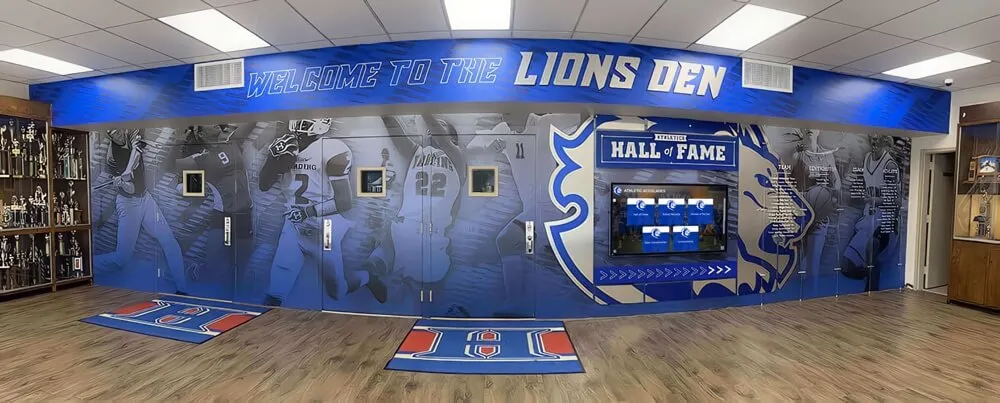
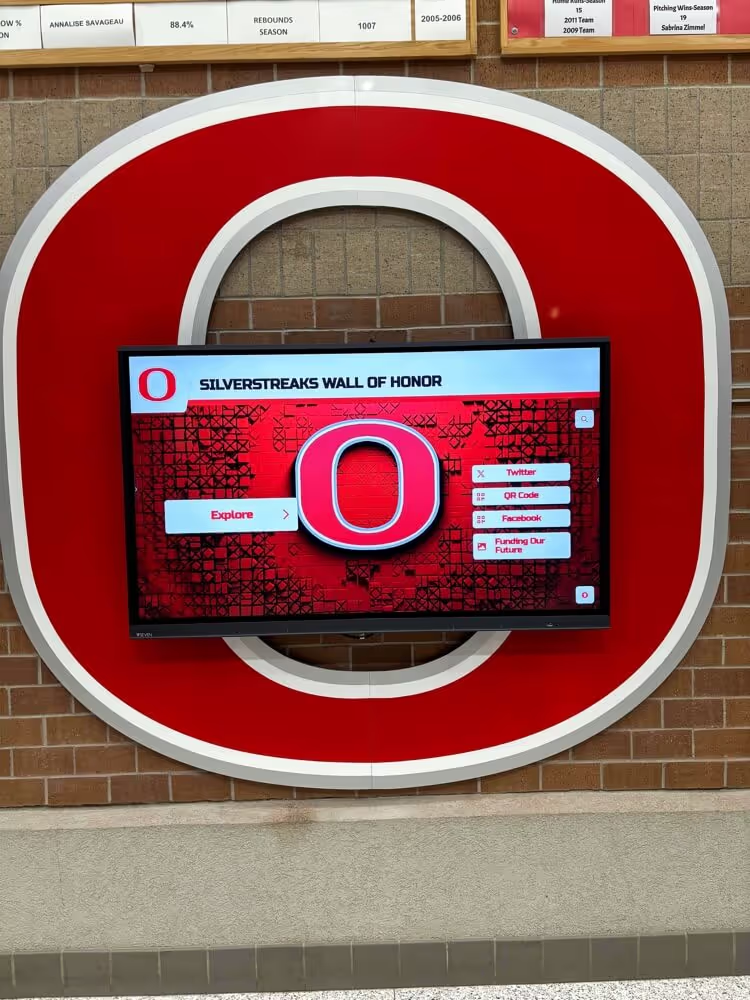
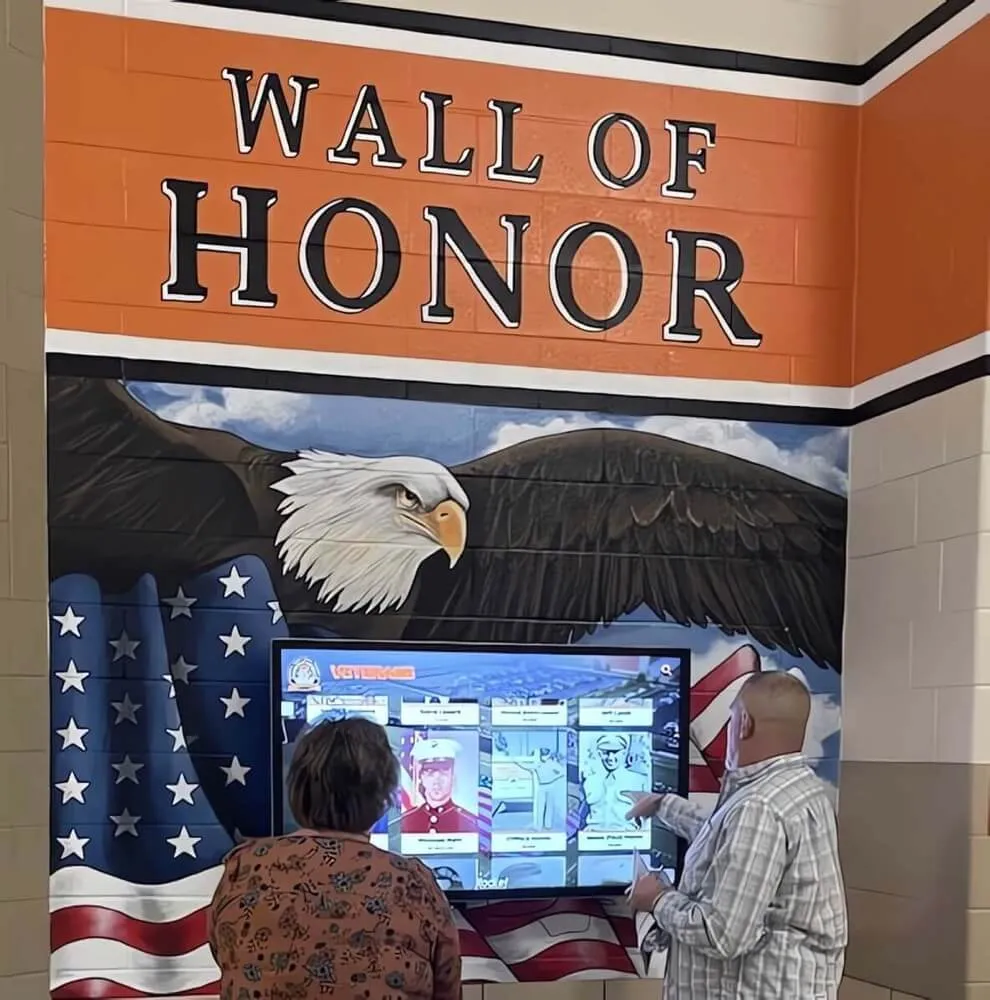
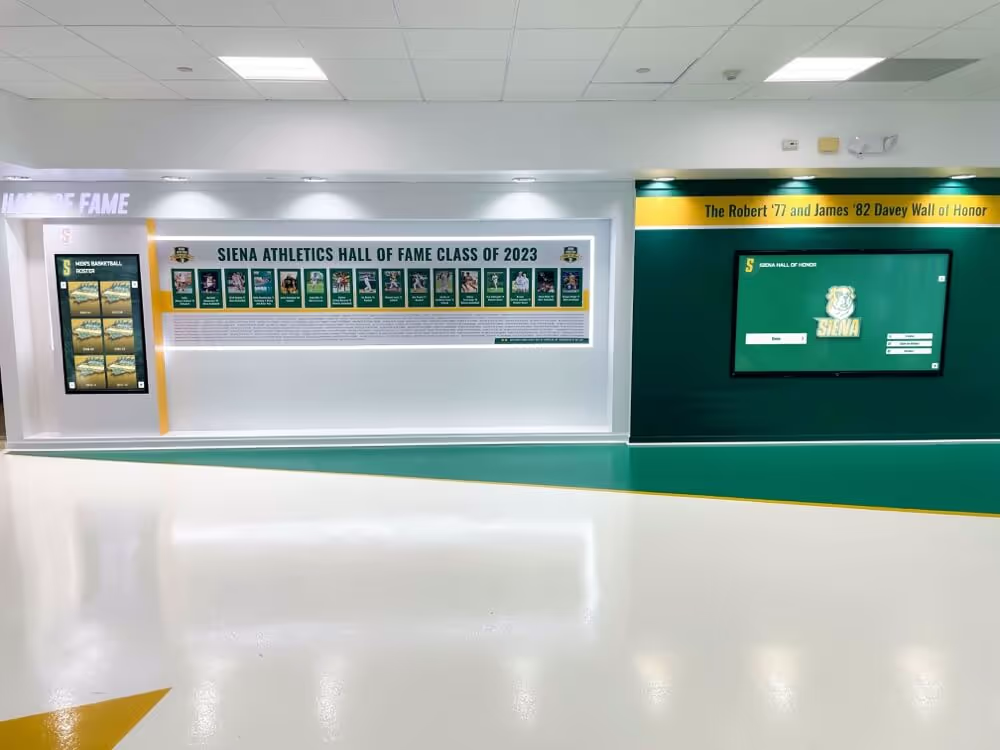
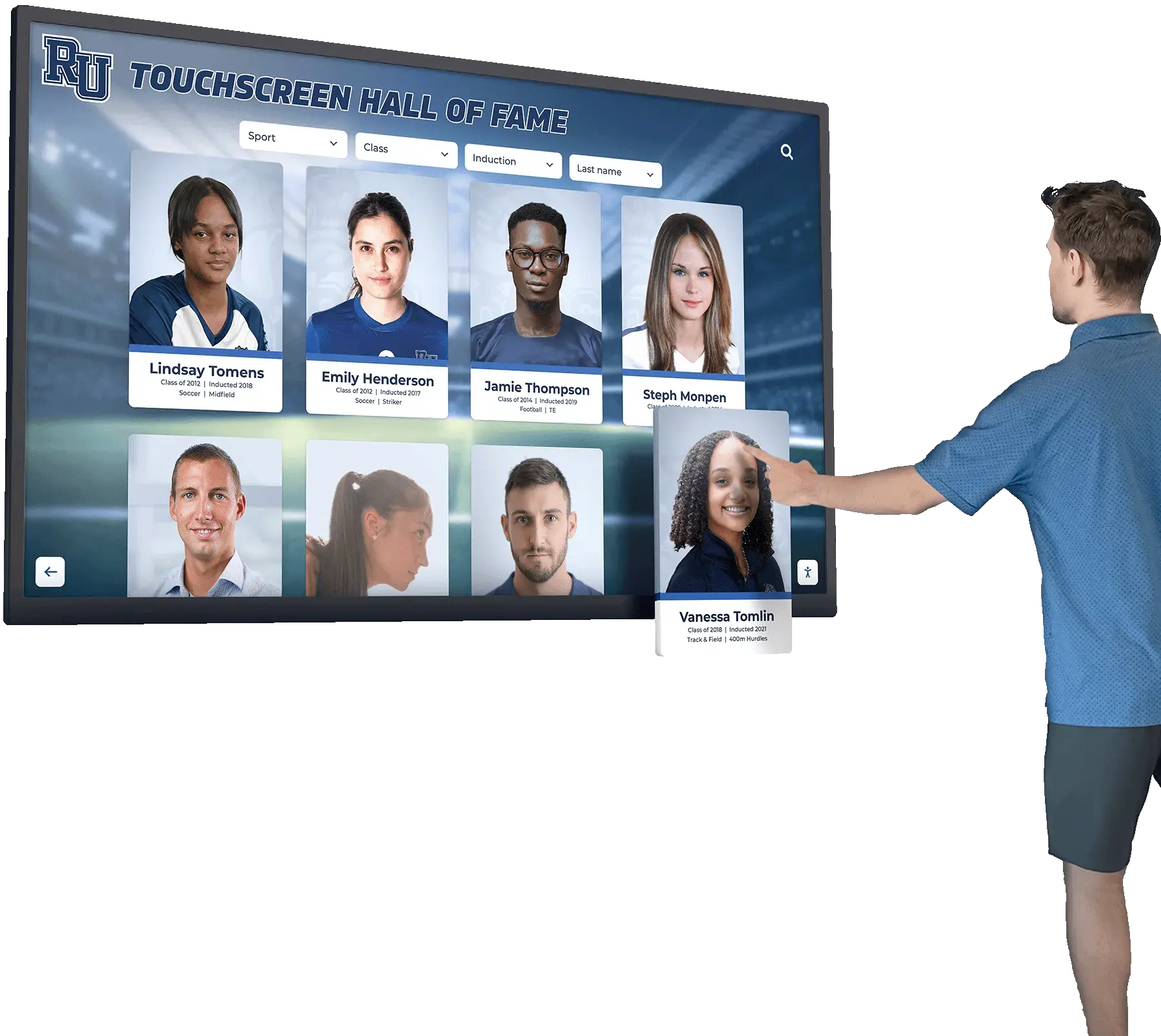
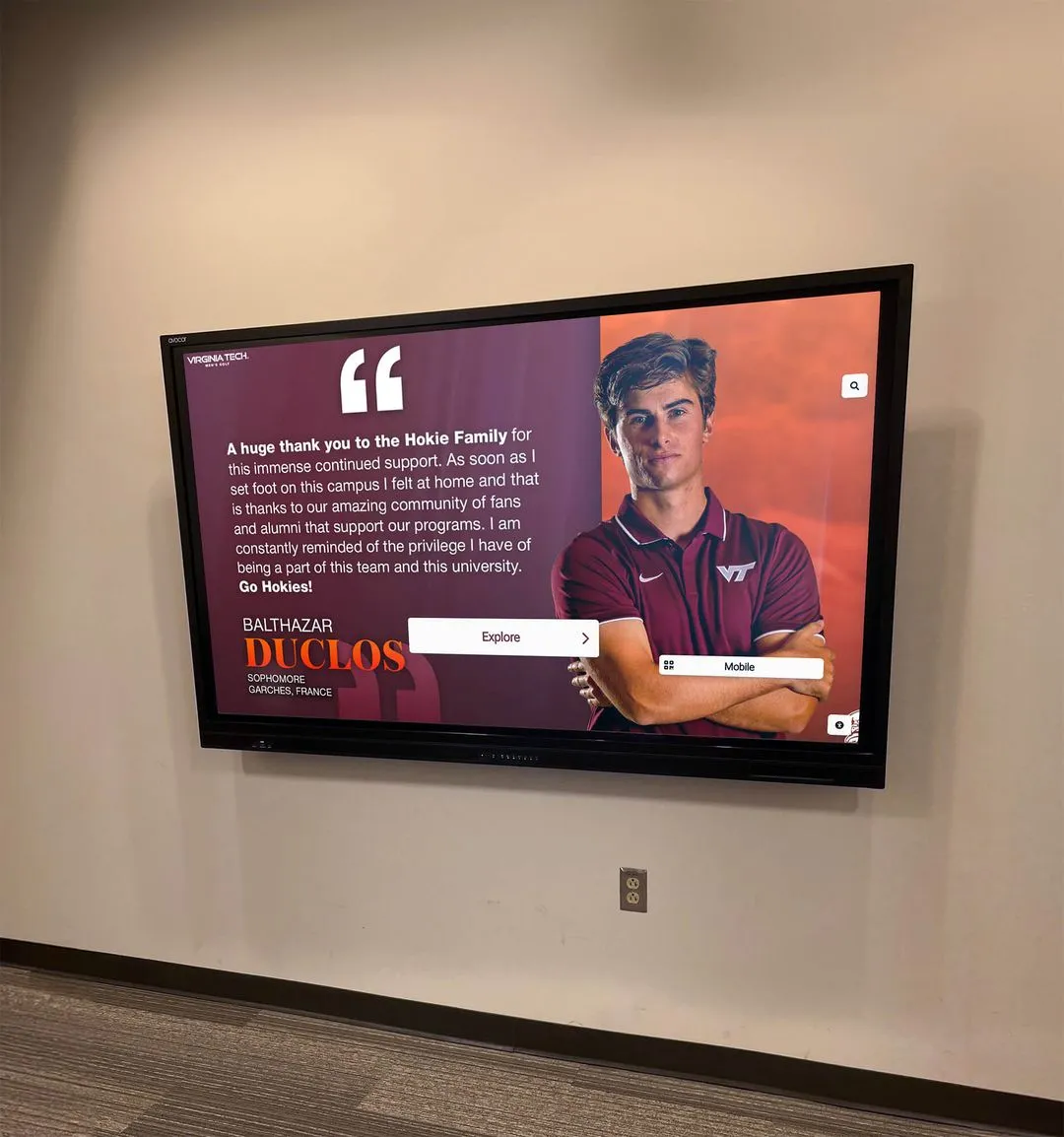
Touchscreen digital hall of fame walls and interactive awards displays transform recognition from passive viewing into active exploration. These systems combine large-format touchscreen technology with specialized software platforms, enabling organizations to create unlimited-capacity recognition programs where visitors search for specific individuals, browse achievement categories, watch video highlights, and discover rich multimedia content celebrating excellence across generations.
The market for interactive recognition technology has matured substantially, with solutions now serving high schools, universities, corporate headquarters, sports stadiums, museums, hospitals, and professional associations. This comprehensive guide examines the technology, features, implementation considerations, and strategic value of touchscreen digital hall of fame and interactive awards systems in 2026.
What This Guide Covers:
- Technology fundamentals: Hardware, software, and system architecture
- Feature comparison: Capabilities distinguishing excellent systems from basic alternatives
- Use case analysis: Applications across education, sports, corporate, and institutional settings
- Implementation planning: Technical requirements, timelines, and deployment strategies
- Pricing frameworks: Total cost of ownership across system categories
- ROI assessment: Quantifiable benefits and value demonstration
- Vendor evaluation: Criteria for selecting providers and platforms
- Future trends: Emerging capabilities shaping next-generation recognition technology
Understanding Touchscreen Digital Hall of Fame Technology
Interactive recognition systems integrate multiple technology components into cohesive solutions replacing or augmenting traditional static displays.
Core System Components
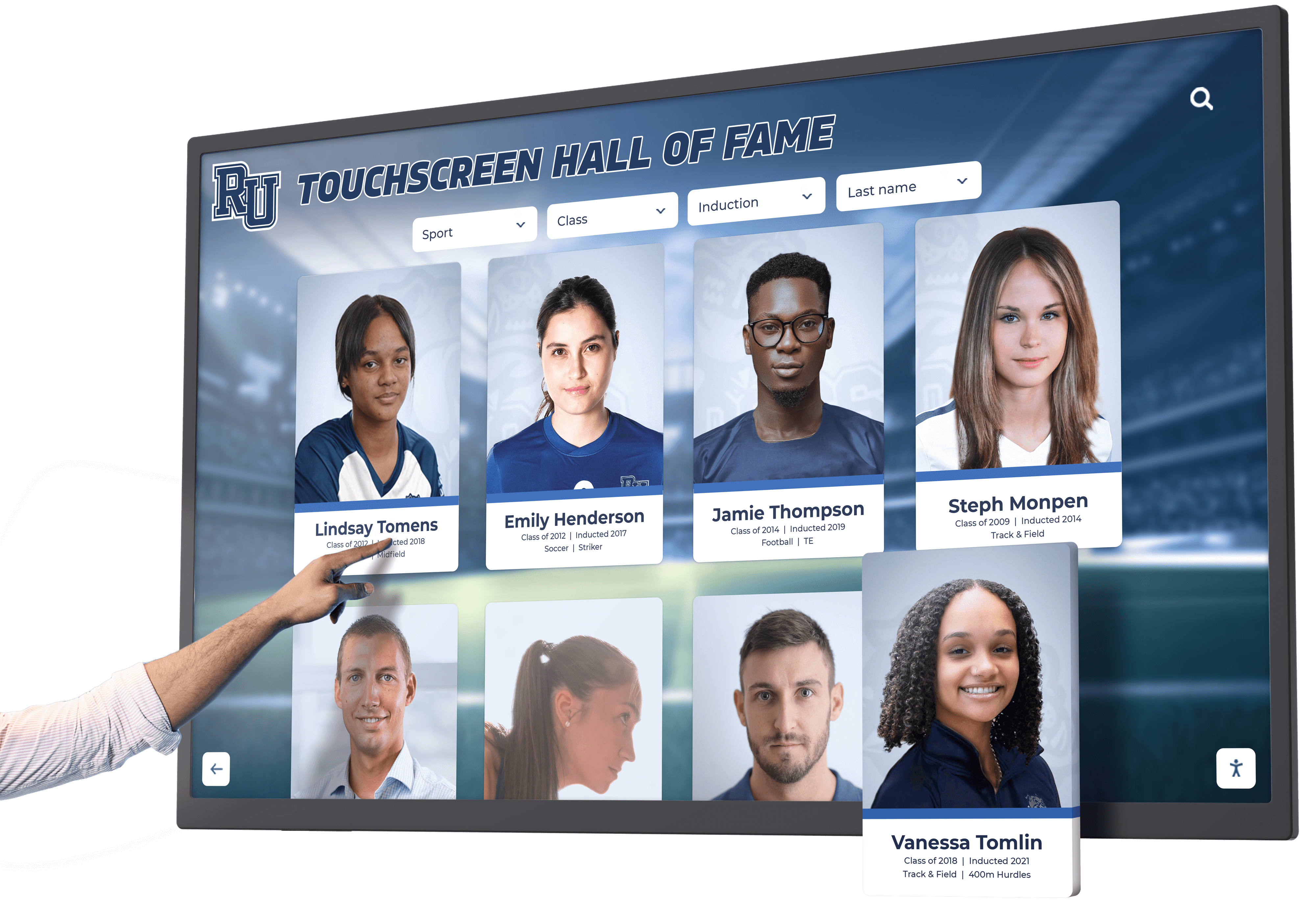
Display Hardware: Commercial-grade touchscreen displays form the physical interface visitors interact with. Professional installations typically deploy displays ranging from 43 inches to 86 inches diagonal, with 55-inch and 65-inch sizes representing the most common deployments. These screens feature capacitive or infrared touch technology supporting multi-touch gestures, anti-glare coatings for various lighting conditions, and commercial durability ratings for continuous operation.
Display specifications matter significantly for user experience quality. Resolution standards have shifted from 1080p to 4K (3840 x 2160 pixels) as the baseline for installations 55 inches and larger, ensuring crisp text readability and high-quality image presentation. Brightness levels of 350-500 nits suit most indoor environments, while installations in high-ambient-light locations require 700+ nit displays maintaining visibility. For guidance on selecting appropriate hardware, explore comprehensive touchscreen software for interactive displays that pairs with various hardware configurations.
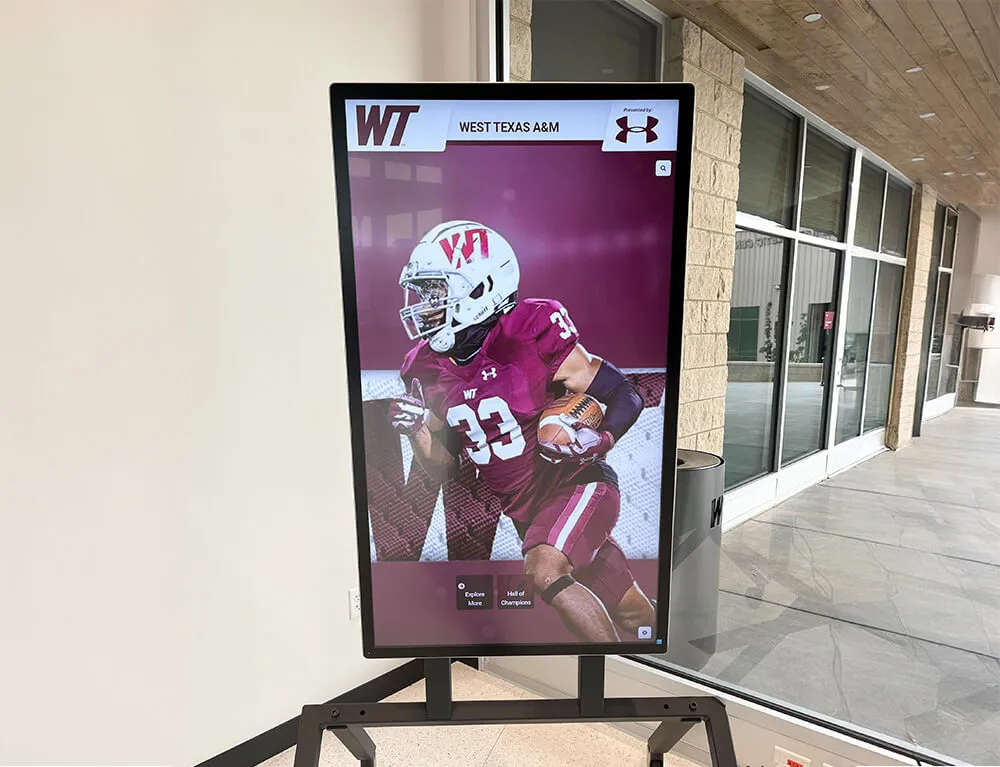
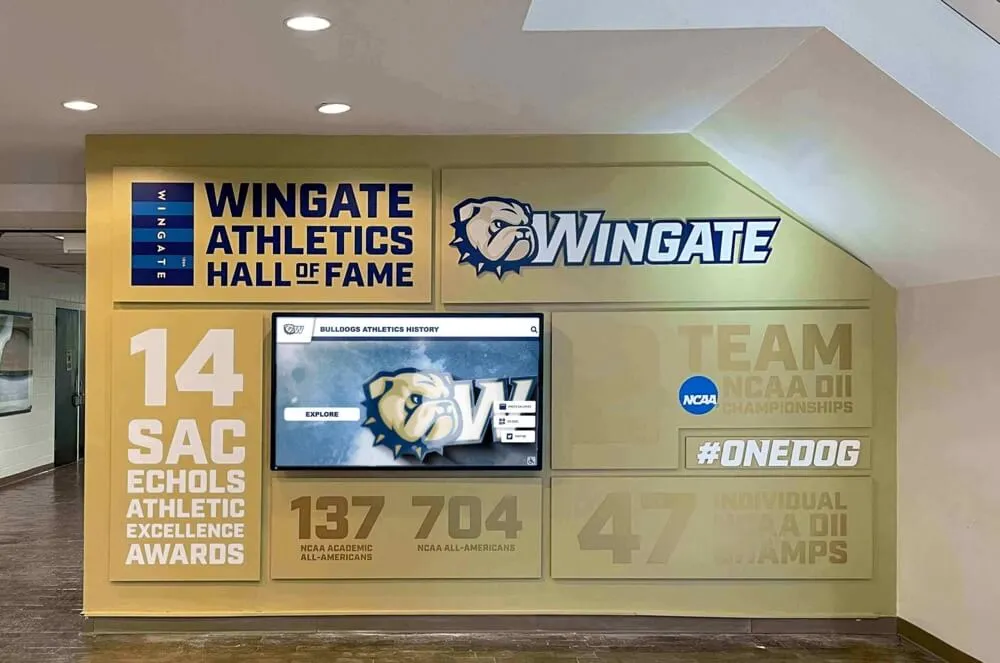
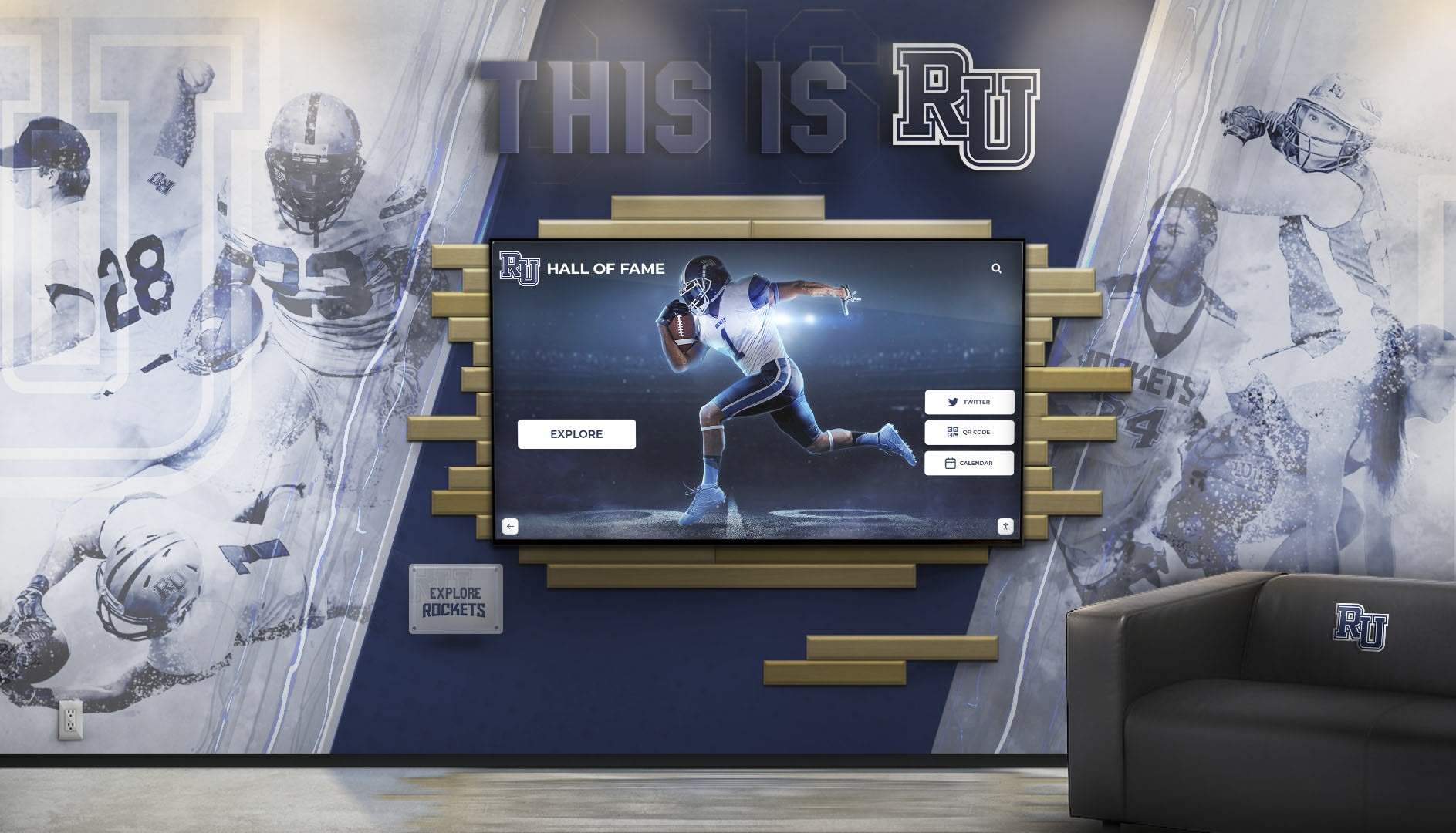
Mounting systems secure displays through various approaches: wall-mounted installations presenting flush profiles in lobbies and hallways, freestanding kiosks providing portable or temporary installations, custom-integrated millwork embedding displays within architectural features, and protective enclosures for high-traffic or outdoor locations. Professional installations include proper ventilation preventing heat accumulation, cable management concealing wiring, and ADA-compliant positioning ensuring accessibility.
Computing Infrastructure: Computing platforms power the interactive experiences and content management. Architecture options include integrated computers built into display enclosures reducing separate hardware requirements, external media players (often mini PCs) offering flexibility for distributed systems, cloud-based platforms processing content remotely with thin clients locally, and hybrid approaches combining local processing with cloud content management.
Hardware specifications required for smooth performance depend on content complexity. Basic text and photo displays require modest computing power, while video-heavy presentations and complex interactive features demand more capable systems. Modern interactive recognition platforms typically specify Intel i5 or equivalent processors, 8-16GB RAM, 256GB+ solid-state storage, and dedicated graphics supporting 4K display output.
Network connectivity enables content updates and analytics collection. Hardwired Ethernet connections provide most reliable performance for permanent installations, while WiFi offers flexibility for temporary or portable deployments. Bandwidth requirements remain modest for most applications—even video-intensive installations rarely exceed 5-10 Mbps sustained usage.
Software Platforms: Specialized recognition software provides the interface, content management, and administrative tools distinguishing interactive systems from generic digital signage. Software architecture varies significantly across providers, with web-based platforms accessed through browsers offering cross-platform compatibility and easy updates, native applications providing enhanced performance and offline functionality, and hybrid solutions combining both approaches.
Content management systems (CMS) enable administrators to add inductees, update achievements, upload photos and videos, organize categories, and modify layouts without technical expertise. Quality platforms provide intuitive visual editors, batch import capabilities, workflow systems for multi-person teams, version control tracking changes, and preview modes testing modifications before publication.
User-facing interfaces determine visitor experience quality. Well-designed systems feature clear navigation structures, powerful search functionality, responsive touch interactions, smooth animations, accessible design meeting WCAG standards, and multilingual support when required. Analytics systems track usage patterns informing content strategy and demonstrating engagement value.
Software Architecture: Cloud vs. Local Systems
Recognition platforms employ different architectural approaches with distinct implications:
Cloud-Based Platforms: Cloud architecture stores content and processes interactions on remote servers, with local devices serving as presentation endpoints. This approach offers continuous automatic updates without on-site technical work, centralized management across multiple displays or locations, remote monitoring and analytics accessible anywhere, reduced local hardware requirements and costs, and simplified backup with inherent redundancy.
Cloud platforms require continuous internet connectivity for operation, raising concerns about network dependency. Modern implementations often incorporate local caching enabling continued operation during temporary outages, with content updates applying when connectivity restores. For most institutional contexts, this architecture provides optimal balance between capability and maintainability.
Solutions like Rocket Alumni Solutions employ cloud-based architecture with extensive local caching, combining centralized management advantages with resilient local performance.
Local/On-Premises Systems: Local architecture stores all content and processes interactions on dedicated on-site servers or computers. This approach provides complete operation independence from internet connectivity, maximum control over data and systems, potential performance advantages for video-intensive applications, and alignment with organizational policies restricting cloud services.
Local systems require substantially more technical expertise for setup, maintenance, security patching, backup implementation, and troubleshooting. Organizations must manage hardware lifecycle, plan replacement cycles, and maintain IT staff capability for ongoing support. For institutions with robust IT departments and specific requirements necessitating local control, this architecture remains viable.
Hybrid Approaches: Hybrid systems combine cloud content management with robust local processing and storage. Content creation and administrative functions occur through cloud platforms accessible anywhere, while displays maintain local content copies ensuring continued operation regardless of connectivity. This architecture delivers convenience of cloud management with reliability of local operation, representing the optimal approach for many implementations.
Key Features Distinguishing Quality Systems
Interactive recognition systems range from basic digital signage showing static content to sophisticated platforms enabling rich interactive experiences. Several capabilities separate excellent solutions from mediocre alternatives.
Search and Discovery Functionality
The most fundamental feature differentiating interactive recognition from passive displays involves search capability enabling visitors to find specific individuals or achievements instantly.
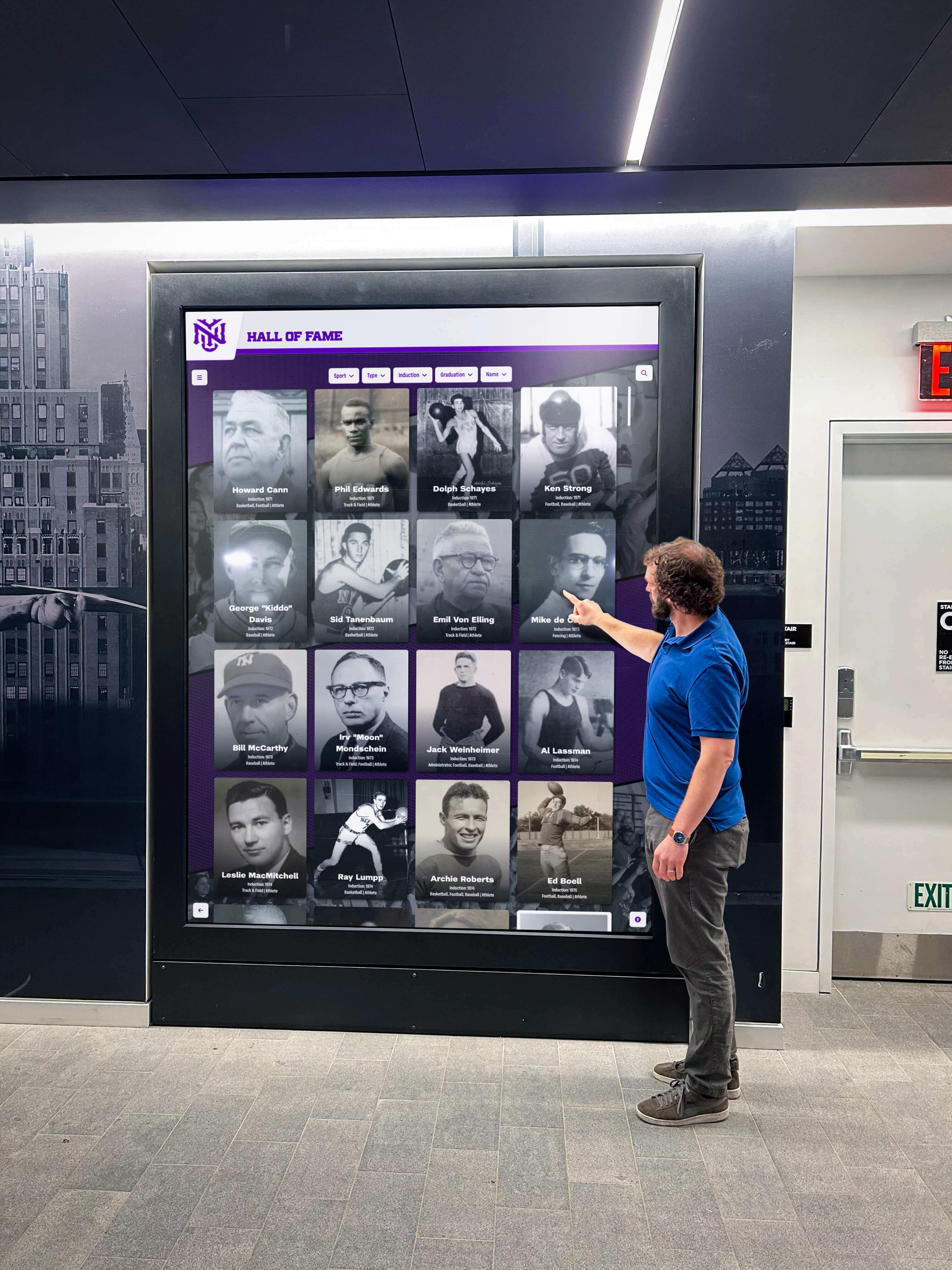
Comprehensive Search: Quality systems provide full-text search across all content including names, achievements, years, teams, categories, and descriptive text. Search should support partial name matching, common misspellings, nickname associations, and multiple search criteria simultaneously. Results should appear instantly with responsive performance even for databases containing thousands of inductees.
Advanced search includes filtering by achievement category (athletic, academic, alumni, professional), time period or graduation year range, specific sports or activities, geographic location for alumni, and achievement type or honor received. Faceted search enables progressive refinement where users apply multiple filters narrowing results to precise interests.
For school athletic recognition systems, search might enable finding all state champions in a specific sport across decades, identifying teammates from particular years, or locating records set within specific time periods. Corporate applications enable searching by department, achievement type, or leadership cohort.
Browse and Explore Modes: Beyond directed search, quality platforms enable exploratory browsing where visitors discover content without specific targets. Browse features include chronological timelines showing inductees by year or decade, category organization grouping similar achievements, featured highlights rotating notable individuals or recent additions, and random selection surfacing unexpected discoveries.
Visual browsing through photo galleries, video collections, or achievement walls encourages serendipitous exploration where visitors engage broadly rather than searching narrowly. This capability particularly benefits reunion events, prospective family tours, and general institutional storytelling where broad exposure matters more than finding specific individuals. Many universities deploy these systems as part of campus directory and wayfinding solutions that serve multiple purposes.
Multimedia Content Integration
Text and static photos represent baseline content, but rich multimedia presentations substantially enhance engagement and storytelling.

Video Integration: Video content transforms recognition from information presentation into emotional storytelling. Applications include highlight reels showing athletic performances or game-winning moments, acceptance speeches from induction ceremonies, career retrospectives featuring interview clips, testimonial videos from teammates or colleagues, and historical footage providing context for achievements.
Quality platforms provide integrated video hosting eliminating dependencies on external services like YouTube or Vimeo. Features should include smooth playback without buffering, support for various video formats and resolutions, automatic transcoding optimizing files for performance, and caption support for accessibility compliance.
Photo Galleries and Slideshows: Beyond single profile photos, gallery features enable presenting multiple images per inductee. Applications include action photographs from competitions or performances, team photos showing relationships and context, candid images from events and celebrations, historical progression showing career evolution, and comparative photos illustrating facility or program changes over time.
Slideshow functionality enables curating collections around themes, time periods, or achievement categories. Automatic transitions with configurable timing create engaging visual presentations suitable for attract loops drawing attention when displays sit idle.
Document and Artifact Display: Scanned documents add authenticity and historical interest to recognition presentations. Examples include newspaper clippings covering achievements, program books from induction ceremonies, certificates and award documents, historical correspondence or records, statistical documentation verifying records, and organizational publications featuring inductees.
Document viewers should provide zooming for detailed examination, multi-page navigation for complete documents, high-resolution display preserving legibility, and contextual presentation explaining document significance.
Customization and Branding Capabilities
Generic templates produce generic results. Quality recognition platforms enable extensive customization aligning displays with organizational brand identity and aesthetic preferences.
Visual Design Control: Design customization should include color scheme configuration matching institutional branding, typography selection reflecting brand guidelines, layout options supporting various organizational approaches, background images and textures adding visual interest, and logo placement reinforcing institutional identity throughout interfaces.
Leading platforms like digital recognition systems provide visual editors enabling non-technical administrators to modify designs without coding expertise, while still supporting advanced customization for organizations with design resources.
Content Structure Flexibility: Organizations structure recognition differently based on priorities and traditions. Flexible platforms accommodate athletic hall of fame organized by sport or decade, academic recognition separated by discipline or achievement type, alumni recognition categorized by profession or geographic region, employee recognition organized by department or achievement category, and custom taxonomies reflecting unique organizational structures.
Systems should support multiple parallel organizational schemes, enabling visitors to browse content through various pathways matching diverse interests and perspectives.
Multi-Category Support: Comprehensive institutional recognition rarely fits single categories. Quality platforms simultaneously manage distinct recognition programs within unified systems: athletic halls of fame celebrating sports achievement, academic recognition honoring scholarly excellence, distinguished alumni highlighting career accomplishments, donor recognition acknowledging philanthropic support, faculty and staff recognition celebrating professional contributions, and special achievement categories unique to specific institutions.
This consolidation eliminates need for multiple separate systems while enabling appropriate presentation for each category’s specific requirements and audience.
Analytics and Engagement Measurement
Understanding how visitors interact with recognition displays informs content strategy and demonstrates program value to stakeholders.
Usage Analytics: Comprehensive analytics track total interactions and session counts, popular content attracting most views, search queries revealing visitor interests, time-on-task metrics showing engagement depth, navigation pathways indicating user behavior, and peak usage periods informing content promotion timing.
For displays deployed across multiple locations, analytics should distinguish performance by installation site, revealing which locations generate most engagement and informing strategic placement decisions.
Reporting and Visualization: Analytics prove useful only when accessible to decision-makers. Quality systems provide visual dashboards presenting key metrics clearly, exportable reports supporting presentations to leadership, historical trending showing performance over time, and comparative analysis between content categories or time periods.
For museum and institutional applications, engagement analytics demonstrate visitor interest in particular exhibits or collections, informing content development priorities and space allocation decisions.
Applications Across Sectors and Use Cases
Interactive recognition technology serves diverse contexts with specific requirements and success factors.
Educational Institutions: Schools and Universities
Educational applications represent the largest market segment for interactive recognition systems, spanning K-12 schools, community colleges, and universities.
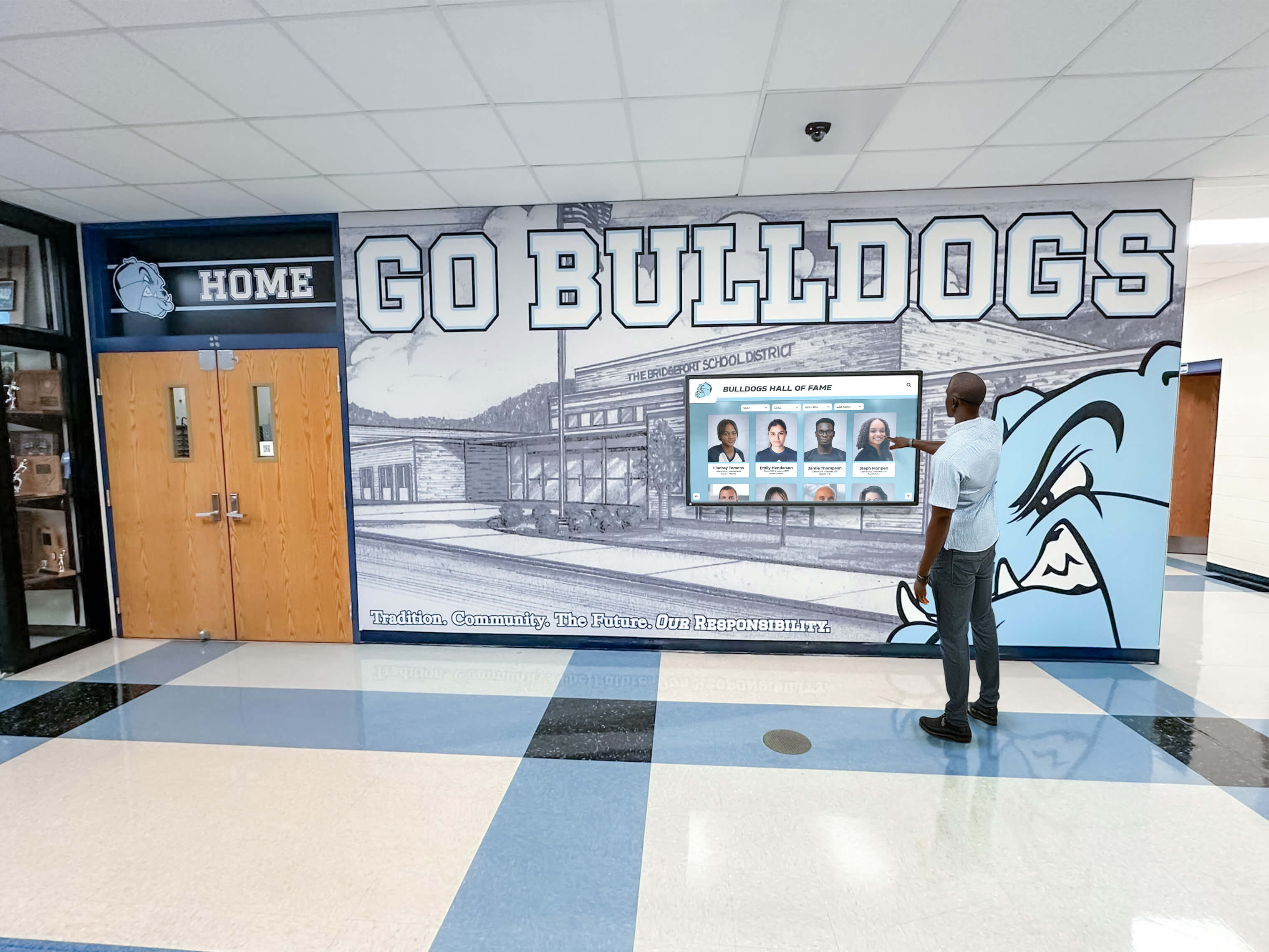
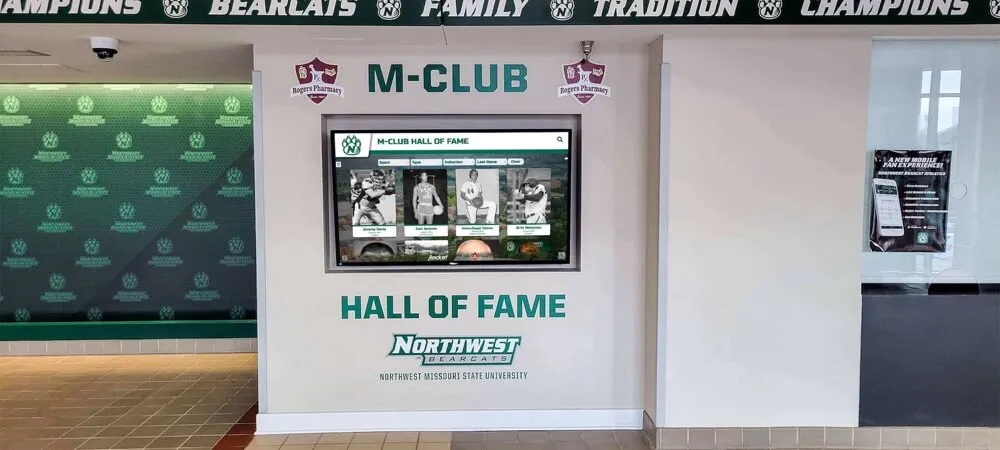
Athletic Recognition: Sports achievement celebration drives many school recognition initiatives. Athletic applications include state championship team rosters across all sports, individual award recipients (all-state, all-conference, MVP), record holders in various statistical categories, distinguished athlete profiles with career highlights, coaching history and hall of fame inductees, and facility dedication and donor recognition integrated with achievement displays.
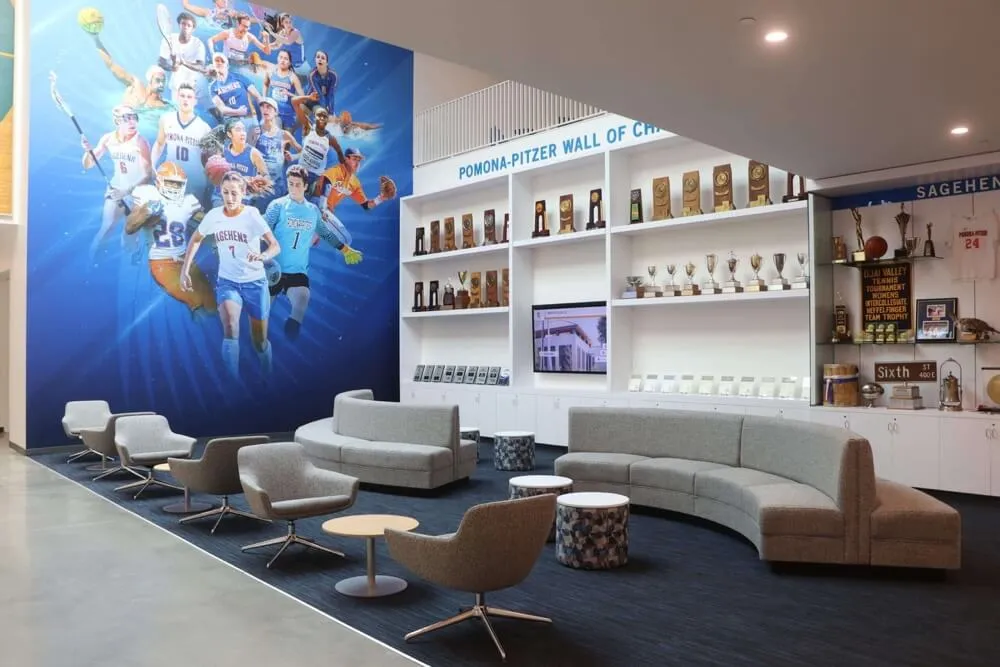
Interactive systems eliminate space constraints limiting traditional trophy cases and wall-mounted plaques. Schools with successful athletic programs generating decades of achievements find digital athletic recognition enables celebrating all accomplishments rather than selective highlights constrained by physical space.
Systems often integrate with athletic facility renovations, with displays positioned in gymnasium lobbies, fieldhouse entrances, or dedicated athletic wings. Large-format installations (65-inch to 86-inch) create impressive focal points appropriate to these prominent locations. For schools looking to upgrade from traditional trophy cases, touchscreen kiosk software provides the foundation for these interactive experiences.
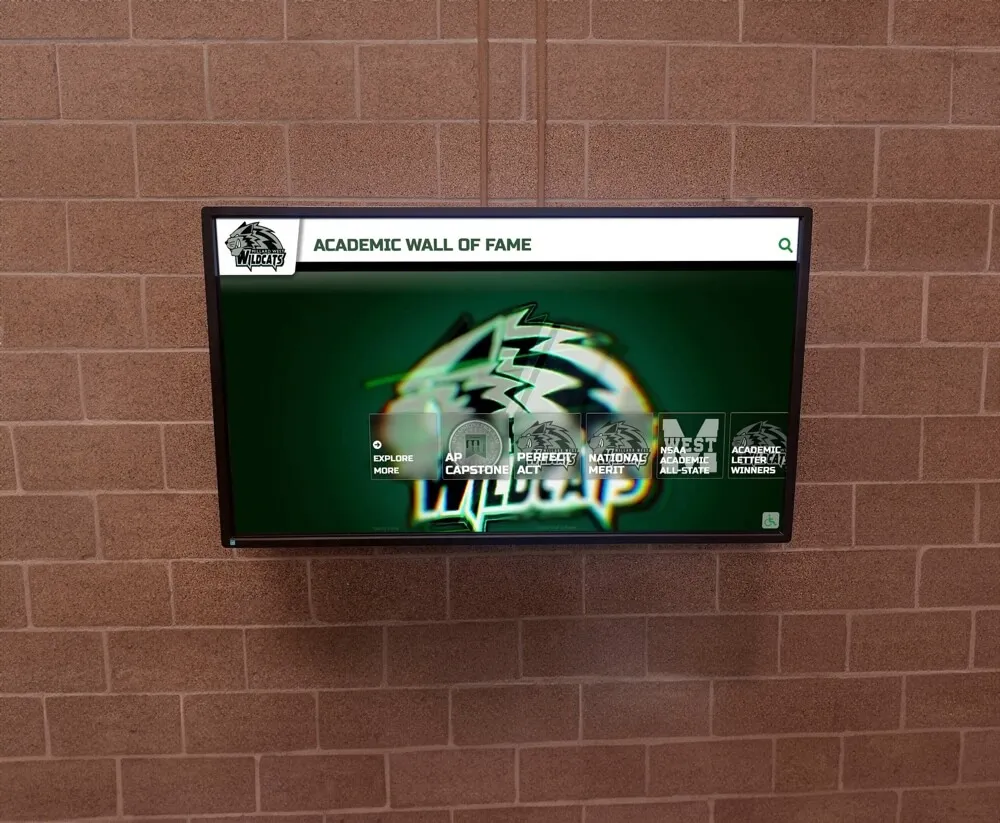
Academic Achievement Recognition: Beyond athletics, schools recognize scholarly excellence through honor roll and academic achievement displays, National Merit Scholars and standardized test accomplishments, valedictorians and salutatorians across graduating classes, academic competition results (debate, science olympiad, math league), perfect attendance and citizenship awards, and scholarship recipients and college acceptances.
Academic recognition displays positioned in main lobbies, libraries, or academic buildings reinforce that schools value intellectual achievement equally with athletic success. Regular updates highlighting current students maintain relevance and student engagement.
Alumni Recognition: Distinguished alumni programs celebrate graduates’ post-graduation accomplishments while strengthening institutional connections. Alumni recognition includes career achievement profiles across professions, distinguished service to institution or community, notable accomplishments in various fields, reunion year class celebrations, multi-generational family attendance, and major donor acknowledgment integrated with achievement recognition.
Alumni recognition serves advancement objectives by demonstrating institutional impact, honoring philanthropic contributors, and inspiring current students through successful role models. Web-accessible versions extend recognition to geographically distributed alumni unable to visit campus regularly.
Historical Preservation: Beyond current recognition, interactive systems preserve institutional heritage through digitized yearbooks spanning decades, historical photographs organized by era and subject, significant events and milestone anniversaries, facility evolution showing campus transformation, leadership history documenting administrators and board members, and oral history interviews with significant community members.
Historical preservation applications transform recognition displays into institutional archives accessible to researchers, supporting curriculum with primary source materials, and strengthening community connections through shared heritage.
Corporate and Professional Environments
Business applications typically focus on employee recognition, company history, and organizational culture reinforcement.
Employee Recognition: Corporate recognition systems celebrate performance excellence and tenure achievements including sales achievement and quota attainment, innovation and patent holders, customer satisfaction awards, safety milestones and incident-free records, service anniversaries and career milestones, leadership development program graduates, and company value exemplars.
Recognition displays positioned in corporate lobbies, cafeterias, or common areas reinforce desired behaviors while building pride in organizational success. For distributed companies with multiple offices, cloud-based systems enable recognition consistency across locations.
Company History and Heritage: Established organizations leverage interactive displays for historical storytelling: founder and leadership profiles, significant business milestones and achievements, product development evolution, major customer relationships and projects, mergers, acquisitions, and growth history, and community involvement and corporate citizenship.
Heritage displays strengthen organizational culture particularly during new employee onboarding, client visits requiring impressive reception areas, and anniversary celebrations marking company milestones.
Industry-Specific Applications: Certain industries have unique recognition requirements served by interactive displays. Healthcare environments celebrate donor recognition in hospitals, physician and nurse excellence awards, research milestones and publications, and patient satisfaction honors. Law firms recognize major case victories, partnership achievements, community service contributions, and bar association honors. Professional associations celebrate member achievements, conference speakers and contributors, volunteer leaders, and research and publication awards.
Sports Facilities and Professional Teams
Professional and semi-professional sports contexts deploy sophisticated recognition systems celebrating athletic excellence.
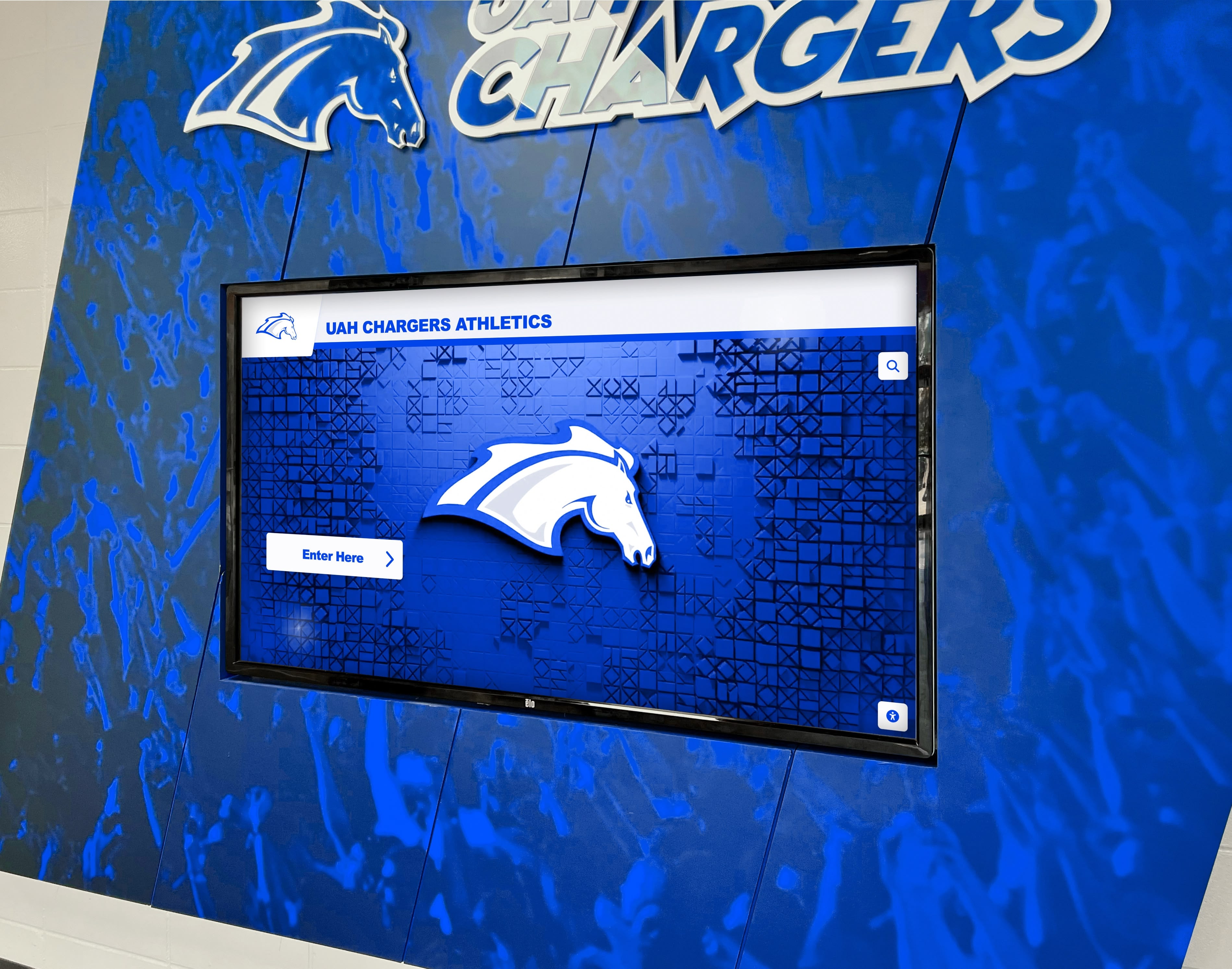
Professional Team Halls of Fame: Professional teams create impressive installations celebrating franchise history through retired number recognition and jersey displays, championship team rosters and highlights, individual award recipients (MVP, Rookie of Year, All-Star), statistical leaders and record holders, ring of honor or franchise legends, and broadcast booth dedications for legendary announcers.
Large stadium and arena installations often feature multiple displays or video wall configurations creating immersive environments. Integration with in-game video production systems enables content reuse across recognition and entertainment applications.
Sports Hall of Fame Museums: Dedicated sports halls of fame combine recognition with museum-style exhibits. Interactive displays enhance visitor experiences through searchable inductee databases organized by sport, era, or achievement, video highlights and documentary content, interactive statistics and record comparisons, and virtual induction ceremony presentations.
For facilities expecting tourist visitors unfamiliar with inductees, attractive user interfaces and rich multimedia content prove particularly important engaging casual visitors beyond dedicated fans.
Museums and Cultural Institutions
Museums increasingly incorporate interactive technology enhancing visitor engagement and content accessibility.
Biographical Exhibits: Interactive displays enable deep biographical presentations about significant individuals: comprehensive biographical narratives with extensive detail, primary source documents and correspondence, multimedia presentations combining photos, video, and audio, and contextual information explaining historical significance.
Touch interfaces enable visitors to control exploration depth, spending time on personally interesting aspects while skipping less relevant content—personalization impossible with static exhibits.
Donor and Patron Recognition: Museums recognize benefactors through interactive systems presenting donor rosters by giving level and campaign, tribute walls for memorial gifts, capital campaign progress and contributor recognition, and historical giving patterns showing patronage evolution.
For institutions conducting ongoing fundraising, digital donor recognition enables updating displays immediately as new gifts close, providing timely acknowledgment reinforcing philanthropic relationships.
Educational Interactives: Beyond recognition, museums deploy touchscreen systems for educational content delivery: detailed exhibit information and artifact provenance, multimedia presentations exploring topics in depth, interactive maps showing historical events or geographic relationships, and multilingual content serving diverse visitor populations.
Implementation Planning and Technical Requirements
Successful deployments require careful planning addressing technical, logistical, and organizational considerations.
Site Assessment and Infrastructure Requirements
Physical Space Evaluation: Installation locations substantially affect system effectiveness. Key considerations include traffic patterns and visitor flow through spaces, sight lines and visibility from approach angles, ambient lighting conditions affecting display readability, available wall space or floor area for mounting, accessibility compliance for wheelchair users and various abilities, and proximity to high-interest areas generating consistent usage.
For school installations, positioning displays in main lobbies, outside gymnasiums, or near athletic training facilities maximizes visibility. Corporate contexts benefit from reception areas, cafeterias, or elevator lobbies where employees and visitors naturally congregate.
Electrical and Network Infrastructure: Technical infrastructure requirements include dedicated electrical circuits preventing overload on shared circuits, appropriate outlets positioned near installation locations, network connectivity (hardwired Ethernet preferred), adequate bandwidth for video content and cloud systems, and cable pathways concealing wiring for professional appearance.
For renovation contexts, infrastructure planning should occur during design phases when modifications remain relatively simple. Retrofit installations in existing buildings often face greater challenges requiring creative cable routing or wireless alternatives.
Environmental Conditions: Displays operate reliably within specified temperature and humidity ranges. Considerations include temperature control preventing excessive heat or cold, humidity management avoiding condensation or excessive dryness, dust and contaminant control particularly in industrial settings, and protection from direct sunlight causing glare or thermal stress.
Outdoor or semi-outdoor installations require weatherproof enclosures, higher-brightness displays, and enhanced environmental protection increasing both equipment costs and installation complexity.
Content Development and Migration
Recognition system value depends entirely on content quality and comprehensiveness.

Content Planning: Systematic content development begins with defining recognition categories and achievement criteria, establishing data fields and information structure, setting quality standards for photos and biographical information, determining historical scope (recent years vs. comprehensive coverage), and planning phased development sequencing categories and time periods.
Organizations typically begin with recent achievements where information and photos remain readily accessible, progressively expanding historical coverage through research and digitization efforts.
Data Collection and Research: Comprehensive recognition requires gathering information from various sources: existing databases and record systems, historical yearbooks and publications, newspaper archives and press coverage, organizational records and documents, and interviews with knowledgeable individuals filling information gaps.
For school recognition projects, alumni engagement efforts often yield valuable photographs, biographical details, and historical corrections improving content accuracy and completeness.
Photo Digitization and Management: Quality photography significantly impacts presentation effectiveness. Photo requirements include high resolution (minimum 1920 x 1080, preferably higher), consistent aspect ratios and cropping approaches, proper lighting and color correction, background removal or cleanup when appropriate, and rights management ensuring usage permissions. Organizations managing extensive historical photograph collections should explore best practices for digital archiving to preserve institutional heritage effectively.
Organizations with historical photograph collections benefit from professional digitization services providing consistent quality and proper file formats for long-term preservation.
Content Organization: Structured content organization enables powerful search and browse functionality. Organization approaches include hierarchical taxonomies (category > subcategory > individual), tag-based systems enabling multiple classification dimensions, chronological organization by year or decade, geographic grouping for distributed organizations, and custom fields supporting specific search requirements.
Timeline and Project Phasing
Implementation timelines vary substantially based on scope, complexity, and organizational readiness.
Typical Project Phases:
Phase 1: Planning and Design (4-8 weeks) Activities include defining objectives and success criteria, assessing sites and technical requirements, selecting vendors and platforms, designing layouts and information architecture, and planning content development approach.
Organizations should allocate adequate planning time rather than rushing implementations risking design compromises requiring expensive corrections later.
Phase 2: Infrastructure and Installation (2-6 weeks) Activities include completing electrical and network infrastructure, installing displays and mounting systems, configuring computing and network systems, and conducting technical testing verifying operations.
Installation timing often coordinates with broader facility renovations, leveraging construction periods when spaces remain temporarily unavailable for normal use.
Phase 3: Content Development (8-24 weeks) Activities include gathering biographical and achievement information, digitizing and processing photographs, recording or acquiring video content, creating written narratives and descriptions, and conducting quality review ensuring accuracy and completeness.
Content development duration varies dramatically based on historical scope, available source materials, and organizational resources allocated. Phased approaches launching with partial content while continuing development prove more practical than delaying launches pending perfect comprehensiveness.
Phase 4: System Configuration (2-4 weeks) Activities include importing content into management systems, configuring layouts and design elements, setting up navigation and organization structures, conducting user acceptance testing, and training administrators on content management.
Phase 5: Launch and Promotion (2-4 weeks) Activities include conducting soft launch with limited audience for final validation, executing public launch with promotional communications, training staff as ambassadors explaining features, and monitoring initial usage addressing issues quickly.
Organizations should plan recognition events coinciding with launches, leveraging unveiling ceremonies for media coverage and community engagement.
Pricing and Total Cost of Ownership
Recognition system costs vary dramatically across approaches and providers. Understanding comprehensive ownership costs enables realistic budgeting and appropriate value assessment.
Hardware Cost Factors
Display Pricing: Commercial-grade touchscreen displays suitable for institutional recognition range from $2,500 to $12,000 depending on size, technology, and features. Typical pricing tiers include 43-inch displays: $2,500-$4,000, 55-inch displays: $3,500-$6,000, 65-inch displays: $5,000-$8,000, 75-inch displays: $7,000-$10,000, and 86-inch displays: $10,000-$15,000.
Premium pricing reflects features including higher resolution (4K vs 1080p), enhanced touch technology (capacitive vs infrared), commercial durability ratings for continuous operation, higher brightness for challenging lighting conditions, and extended warranty coverage beyond consumer-grade products.
Organizations should avoid consumer-grade televisions lacking appropriate durability, proper touch integration, commercial support, and longevity for institutional applications. For schools implementing touchscreen systems, understanding best touchscreen software options helps match hardware investments with appropriate software platforms.
Computing and Media Player Costs: Computing platforms powering displays range from $500 to $2,500 depending on approach. Options include integrated display computers (typically $800-$1,500 premium over non-integrated displays), external media players and mini PCs ($500-$1,200), high-performance computers for complex applications ($1,500-$2,500), and thin clients for cloud-heavy architectures ($300-$600).
Computing specifications should exceed minimum requirements providing performance headroom as content complexity grows over system lifespan.
Mounting and Installation: Physical installation costs include mounting hardware (wall mounts, floor stands, enclosures): $400-$2,000, labor for installation and electrical work: $800-$3,000, cable management and infrastructure: $300-$1,500, and custom millwork or architectural integration: $2,000-$15,000+.
Professional installation proves particularly important for large displays where improper mounting risks expensive damage or safety issues.
Software and Service Costs
Software Licensing Models: Recognition platform pricing employs various models with distinct cost structures:
Subscription/SaaS Pricing: Monthly or annual subscriptions typically range from $150 to $1,500 monthly ($1,800 to $18,000 annually) depending on institution size, feature set, and number of displays. Subscription pricing includes ongoing software updates, cloud hosting and infrastructure, technical support, and typically content storage.
Advantages include lower initial investment, predictable ongoing costs, automatic updates and improvements, included support and maintenance, and flexibility to discontinue if needs change.
One-Time License Pricing: Perpetual licenses range from $5,000 to $50,000+ depending on capabilities and scale. One-time pricing typically requires separate ongoing maintenance agreements ($800-$5,000 annually) covering software updates, technical support, and bug fixes.
Advantages include eventual cost savings for long-term deployments and no recurring subscription obligations. Disadvantages include higher upfront investment and potential future costs for major version upgrades.
Hybrid Models: Some providers combine moderate upfront fees with lower ongoing subscriptions. For example, $3,000-$8,000 initial setup plus $800-$3,000 annually provides balanced approach.
Content Development Services: Professional content development costs depend on scope: biographical research and data gathering: $25-$75 per profile, professional photo digitization: $0.50-$3.00 per image, photo editing and enhancement: $5-$25 per image, video production and editing: $500-$5,000 per video, and written content creation: $50-$200 per biographical profile.
Organizations must decide between allocating internal staff time versus purchasing professional services. For comprehensive projects involving hundreds or thousands of profiles, professional services often provide more cost-effective results than attempting development entirely in-house.
Total Cost of Ownership Analysis
Comprehensive five-year ownership costs for typical installations:
Small Installation: Single 55-inch Display, Basic System
- Hardware and installation: $8,000-$12,000
- Software (subscription model over 5 years): $9,000-$15,000
- Content development: $3,000-$8,000
- Annual maintenance and support: $1,500-$3,000 over 5 years
- Total 5-Year Cost: $21,500-$38,000
Medium Installation: Two 65-inch Displays, Comprehensive Platform
- Hardware and installation: $22,000-$32,000
- Software (subscription model over 5 years): $18,000-$30,000
- Content development: $8,000-$20,000
- Annual maintenance and support: $3,000-$6,000 over 5 years
- Total 5-Year Cost: $51,000-$88,000
Large Installation: Multiple 75-inch+ Displays, Enterprise System
- Hardware and installation: $45,000-$80,000
- Software (subscription model over 5 years): $30,000-$60,000
- Content development: $20,000-$50,000
- Annual maintenance and support: $6,000-$12,000 over 5 years
- Total 5-Year Cost: $101,000-$202,000
These estimates assume subscription software models, professional installation, and moderate content development scopes. Organizations performing more content development in-house reduce costs but increase internal labor requirements.
Return on Investment and Value Justification
Beyond direct costs, organizations should assess comprehensive value delivered through interactive recognition systems.
Quantifiable Benefits
Space Efficiency: Interactive displays eliminate physical space constraints limiting traditional recognition. Organizations can celebrate unlimited achievements without:
- Trophy case capacity limitations requiring selective recognition
- Wall space exhaustion forcing difficult choices about whose names appear
- Physical plaque costs ($75-$300 each) multiplied across hundreds of honorees
- Engraving and mounting labor for ongoing additions
Schools with successful programs generating decades of achievement find space constraints force difficult choices about whose accomplishments merit limited physical recognition. Interactive systems eliminate these limitations entirely.
Recognition Timeliness: Digital systems enable immediate recognition updates compared to weeks or months for physical plaque ordering, engraving, and installation. For time-sensitive recognition like seasonal athletic awards or quarterly employee recognition, rapid updating maintains relevance and appreciation impact.
Content Richness: Physical recognition reduces inductees to names and dates. Interactive presentations include comprehensive biographical information, multiple photographs across career stages, video highlights and interviews, detailed achievement descriptions and context, statistical records and comparative analysis, and related content showing teammates or colleagues.
This richness transforms recognition from minimal acknowledgment into meaningful celebration honoring complete careers and contributions rather than abbreviated summaries.
Engagement Metrics: Analytics from deployed systems demonstrate substantial engagement. Representative metrics include mean session duration of 4-8 minutes indicating deep exploration, search queries demonstrating directed usage seeking specific individuals, video views averaging 60-85% completion rates, and return visitors accessing systems multiple times particularly around reunion events.
For educational institutions, peak usage occurs during campus tours, alumni weekends, athletic events, and graduation celebrations when communities gather celebrating shared heritage and achievements. Schools implementing comprehensive digital trophy displays often report increased visitor engagement and longer dwell times compared to traditional static trophy cases.
Strategic Value
Alumni and Community Engagement: Interactive recognition systems serve advancement objectives by providing compelling content attracting alumni to campus, generating social media engagement when featured inductees share recognition online, supporting fundraising conversations with honored donors, creating newsletter and communication content, and providing reunion programming celebrating class-specific achievements.
Development offices increasingly recognize that comprehensive recognition strengthens donor relationships by demonstrating institutional appreciation and stewardship of philanthropic investments.
Recruitment and Marketing: Prospective families visiting campuses form impressions based on visible tradition and success. Recognition displays communicate achievement culture and high standards, demonstrate program longevity and tradition, showcase successful alumni as aspirational models, and create memorable impression distinguishing institutions from competitors.
Schools report prospective families spending significant time exploring recognition displays during tours, with achievement celebrations reinforcing institutional quality perceptions.
Cultural Reinforcement: Recognition shapes organizational culture by making excellence visible and celebrated. Regular exposure to achievement stories reinforces standards and expectations, demonstrates that organizations remember and honor contributions, creates aspiration among current members working toward recognition, and builds collective identity through shared heritage and values.
For corporate recognition applications, systems reinforce company values while building pride in organizational success.
Accessibility and Inclusion: Interactive systems enable more equitable recognition by eliminating space constraints preventing comprehensive acknowledgment, supporting diverse achievement categories beyond traditional focal areas, enabling search finding any honoree regardless of prominence, and providing complete biographical context preventing reduced representation.
Organizations committed to inclusive recognition find digital systems enable celebrating broader communities rather than exclusively elite achievers who might have dominated limited physical displays.
Vendor Selection and Evaluation Criteria
Choosing appropriate providers substantially affects implementation success and long-term satisfaction.
Key Evaluation Factors
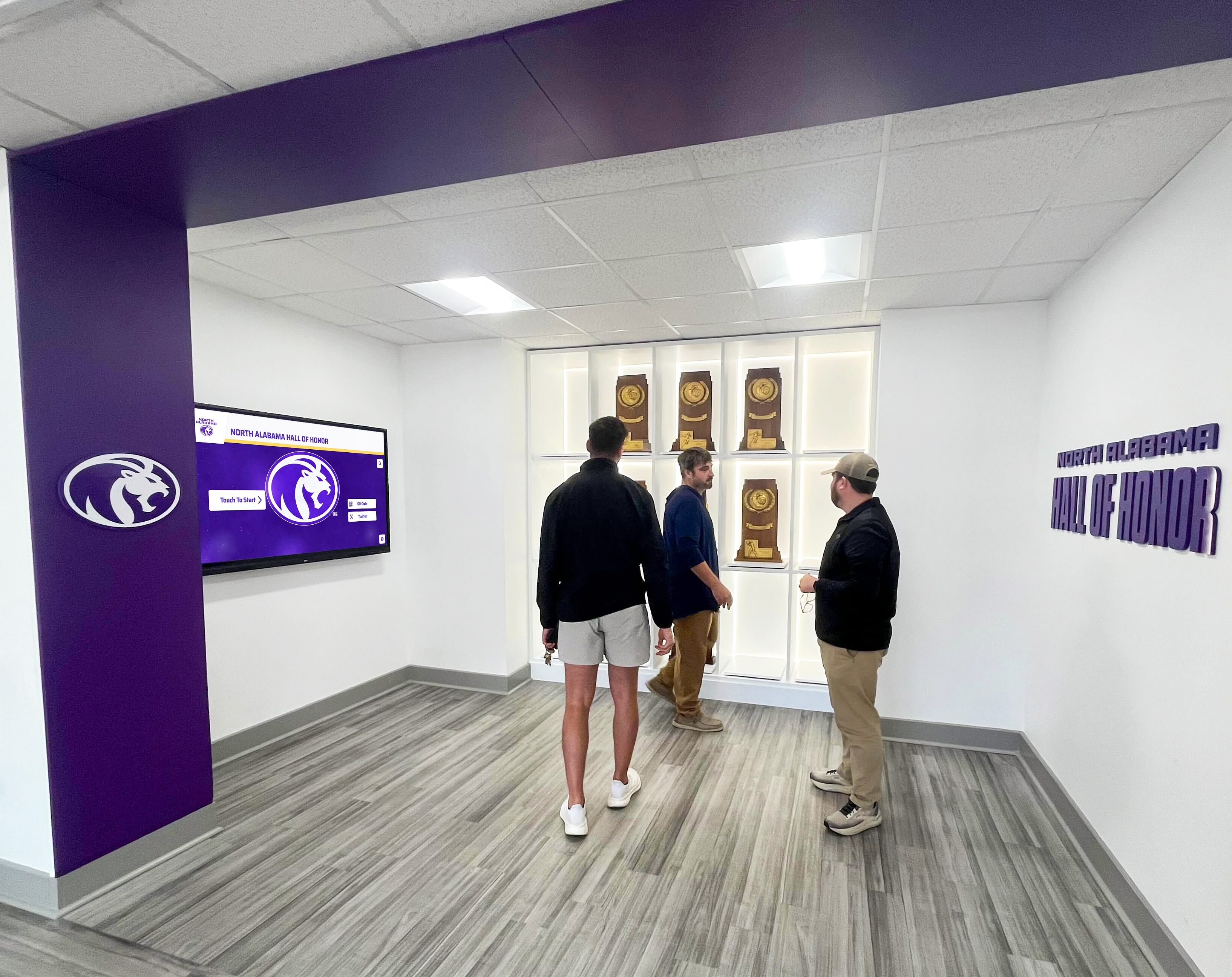
Market Focus and Specialization: Providers range from specialized recognition platforms to generic digital signage vendors adapting general solutions for recognition applications. Factors to assess include whether vendor specifically designs for recognition vs. general applications, depth of feature set supporting recognition requirements, portfolio demonstrating successful recognition implementations, industry knowledge about institutional recognition practices, and longevity and market presence indicating stability.
Purpose-built recognition platforms like Rocket Alumni Solutions typically deliver more appropriate features, better user experiences, and understanding of recognition-specific requirements compared to generic digital signage platforms requiring extensive customization.
Technical Capabilities: Core technical capabilities vary substantially across providers: content management systems suitable for non-technical administrators, search and discovery features enabling effective content exploration, multimedia support including video hosting and presentation, customization flexibility matching organizational branding, analytics and reporting demonstrating engagement value, and scalability accommodating growth without platform changes.
Request demonstrations testing actual usage workflows rather than accepting marketing claims at face value.
Implementation and Support: Ongoing support quality affects long-term satisfaction potentially exceeding initial software selection importance. Assessment factors include implementation assistance and training provided, technical support responsiveness and channels, content migration services from existing systems, design and customization support available, and user community providing peer assistance.
Contact reference customers asking specifically about support experiences when problems occurred, as challenging situations reveal service quality more clearly than routine operations.
Pricing Transparency: Providers vary substantially in pricing approach transparency. Evaluate whether pricing information appears publicly available or requires extensive sales processes, costs scale reasonably with organization size and needs, pricing structure remains clear without hidden fees, long-term costs remain predictable enabling budgeting, and contract terms provide appropriate flexibility.
Organizations should request comprehensive five-year total cost of ownership projections including all hardware, software, implementation, training, support, and anticipated content development expenses.
Integration Capabilities: Recognition systems often connect with other institutional systems. Assess whether platforms integrate with student information systems for automatic data population, alumni databases for biographical information, athletic management software for statistics and rosters, fundraising and advancement systems for donor coordination, and website content management enabling web-accessible recognition.
Integration reduces manual data entry, improves accuracy, and enables streamlined workflows for keeping recognition content current.
Future Trends and Emerging Capabilities
Recognition technology continues evolving with emerging capabilities shaping next-generation systems.
Artificial Intelligence Applications
AI technologies increasingly enhance recognition platforms through automated content creation, enhanced search, and personalization.
Automated Metadata and Tagging: AI image analysis automatically identifies faces in photographs, enabling systems to suggest tagging individuals appearing across multiple images. Optical character recognition extracts text from historical documents, making scanned materials searchable. Natural language processing generates searchable metadata from biographical narratives without manual keyword assignment.
These capabilities reduce administrative burden while improving content discoverability, particularly valuable for organizations with extensive historical photograph collections requiring organization.
Intelligent Search and Recommendations: Natural language search enables conversational queries like “show me basketball players from the 1990s who scored over 1,000 points” rather than requiring structured search forms. Recommendation systems suggest related content based on viewing patterns: “people who viewed this profile also viewed…” Content highlighting surfaces popular or trending profiles attracting increased attention.
Facial Recognition: Advanced systems offer facial recognition enabling visitors to search by uploading photographs. Systems identify matching individuals across extensive photo collections, helping alumni locate classmates or discover historical appearances. Privacy considerations require careful implementation ensuring appropriate consent and control over facial recognition application.
Augmented and Virtual Reality Integration
Immersive technologies create new engagement possibilities beyond traditional touchscreen interfaces.
Augmented Reality Overlays: Mobile applications enable visitors to point smartphones at physical spaces, overlaying historical photos showing previous appearances, highlighting specific achievements or inductees associated with locations, presenting additional multimedia content not visible on displays, and creating interactive scavenger hunts encouraging campus exploration.
AR extensions transform recognition from stationary display experiences into location-aware campus-wide engagement tools.
Virtual Reality Experiences: VR enables recreating historical environments showing campus or facility evolution, experiencing significant events through immersive video, exploring 3D models of artifacts or trophies, and attending virtual induction ceremonies remotely.
While currently premium features requiring specialized equipment, decreasing costs and improving accessibility will mainstream these capabilities.
Social and Collaborative Features
Modern platforms increasingly emphasize participation over passive consumption.
User-Generated Content: Alumni and community contribution systems enable uploading personal photographs to shared collections, adding memories and stories to existing profiles, submitting corrections or additional biographical information, creating personal collections and favorites, and sharing discoveries through social media.
For anniversary celebrations and historical projects, crowdsourced content development leverages distributed community knowledge while building engagement through active participation.
Social Sharing and Virality: Modern recognition systems incorporate sharing features enabling inductees and families to share recognition through social media directly from displays, generating custom graphics optimized for various platforms, tracking social engagement and reach, and creating hashtag campaigns around recognition themes.
Shared content extends recognition visibility far beyond physical installation sites, amplifying institutional brand awareness and generating positive sentiment.
Implementation Best Practices and Success Factors
Organizations implementing interactive recognition systems should follow proven practices maximizing success probability.
Stakeholder Engagement
Recognition systems serve diverse constituencies requiring input and buy-in.
Form Cross-Functional Teams: Successful implementations engage representatives from athletics/activities departments providing achievement information, advancement/alumni relations leveraging recognition for engagement, facilities/IT managing technical infrastructure, communications/marketing ensuring brand alignment, and leadership providing sponsorship and resource allocation.
Cross-functional perspectives prevent blind spots while building organizational commitment essential for sustained content development.
Involve Inductees and Families: For alumni or historical recognition, engage communities early through surveys gathering content preferences and priorities, reunion committees providing feedback during design phases, focus groups testing navigation and interfaces, and volunteer research committees assisting content development.
Community involvement builds anticipation for launches while generating valuable content contributions reducing institutional research requirements.
Content Strategy and Governance
Sustainable recognition requires systematic content management approaches.
Establish Clear Criteria: Organizations should document recognition criteria defining eligibility for inclusion, achievement thresholds warranting recognition, nomination and selection processes, biographical information standards, and photo quality requirements.
Clear criteria ensure consistency while enabling objective evaluation of candidates, particularly important for contentious recognition where subjectivity might generate community disagreement.
Assign Ongoing Responsibility: Recognition systems require continuous content management. Organizations should designate specific individuals responsible for content updates, establish update schedules and deadlines, create workflow processes for multi-person teams, implement review and approval procedures, and allocate appropriate time in job descriptions.
Without assigned responsibility, recognition systems stagnate with outdated content undermining credibility and value.
Plan Long-Term Sustainability: Initial launches generate excitement, but sustained value requires ongoing effort. Sustainability planning includes regular update cycles adding new inductees, content enhancement improving existing profiles, technical maintenance addressing software and hardware issues, promotion and communication maintaining awareness, and budget allocation ensuring continued resource availability.
Organizations should establish five-year roadmaps extending beyond initial implementations, planning content expansion, feature additions, and potential hardware refresh cycles.
Launch and Promotion
Effective launches maximize initial awareness and establish usage patterns.
Coordinate with Significant Events: Launch timing should align with alumni weekends or homecoming events, major anniversary celebrations, facility dedications or building openings, induction ceremonies adding new honorees, or milestone achievements warranting celebration.
Event coordination provides ready audiences while generating media coverage and social media attention amplifying awareness.
Create Multi-Channel Promotion: Announcement strategies should include press releases to local and specialized media, social media campaigns with hashtags and shareable content, email communications to alumni and community members, website features and homepage placement, physical signage directing attention to displays, and ambassador training for staff guiding visitor exploration.
Sustained promotion over weeks maintains attention better than single announcement bursts quickly forgotten.
Measure and Optimize: Post-launch analytics review should assess usage patterns identifying popular content and navigation pathways, search queries revealing visitor interests, engagement depth through session duration and interaction counts, technical issues requiring resolution, and user feedback through surveys or comment systems.
Organizations should plan systematic review cycles (monthly initially, quarterly after stabilization) examining performance metrics and implementing optimizations informed by usage data.
Conclusion: Transforming Recognition Through Interactive Technology
Touchscreen digital hall of fame walls and interactive awards displays represent fundamental evolution in how organizations celebrate excellence. These systems transcend space constraints, enable rich multimedia storytelling, provide engaging interactive experiences, maintain flexibility adapting to changing priorities, demonstrate measurable engagement value, and support institutional objectives from advancement to recruitment.
Organizations implementing interactive recognition consistently report enhanced community pride through visible achievement celebration, stronger engagement among alumni and stakeholders, improved ability to honor comprehensive contributions equitably, simplified administration replacing manual plaque management, and lasting value through systems serving institutions for decades.
The technology has matured substantially, with proven platforms, comprehensive features, accessible pricing, and extensive implementation experience reducing risk while increasing value confidence. Organizations across education, corporate, sports, and institutional contexts have successfully deployed interactive recognition systems demonstrating broad applicability.
For institutions serious about comprehensive, engaging recognition deserving professional presentation, purpose-built platforms provide capabilities justifying investment through extensive features, intuitive management, impressive presentation quality, and ongoing evolution incorporating emerging capabilities as technology advances.
Success requires thoughtful planning addressing technical requirements, content development, stakeholder engagement, and long-term sustainability—but organizations making appropriate investments realize substantial returns through strengthened culture, enhanced pride, and lasting connections between achievements celebrated and excellence inspired.
Ready to explore how interactive recognition can transform your institutional celebration of achievement? Talk to our team about touchscreen digital hall of fame and interactive awards solutions designed specifically for your organization’s recognition needs and strategic objectives.