



Friday night lights don’t just illuminate football fields in Texas—they define community identity, forge lifelong bonds, and create traditions that transcend sport. In the Lone Star State, high school football occupies a cultural space unlike anywhere else in America, where championship seasons become community folklore, legendary coaches achieve near-mythical status, and state championship rings represent achievements celebrated for generations.
Texas high school football history reads like an epic narrative spanning over a century of athletic excellence. Programs like Katy, Southlake Carroll, Allen, Highland Park, and Celina have built championship dynasties that inspire awe across the nation. Small-town programs from every corner of the state punch above their weight, creating championship runs that become defining moments in community history. Individual athletes develop into stars who carry Texas football traditions to college powerhouses and professional leagues.
Yet preserving this rich championship history presents unique challenges for Texas schools. With the University Interscholastic League overseeing the nation’s largest state athletic program, dozens of state championships are awarded annually across multiple classifications and divisions. Championship trophies accumulate, record-breaking performances span decades of competition, and the stories behind legendary championship runs—the dramatic finishes, the record-setting performances, the players who embodied Texas football excellence—risk fading from institutional memory without proper documentation and recognition.

Modern digital recognition solutions transform how Texas schools preserve championship legacies, ensuring that the achievements defining program traditions receive lasting recognition matching their significance to communities, athletes, and the sport that unites the Lone Star State.
The Unique Scale of Texas High School Football
Texas high school football operates at a scale unmatched anywhere in the United States, distinguished by its massive participation numbers, world-class facilities, intense competition, and cultural significance that rivals college football in other states.
The UIL System and Classification Structure
The University Interscholastic League governs Texas high school athletics, overseeing what amounts to the largest state athletic program in America. Unlike states with relatively simple classification systems, the UIL organizes football competition through six classifications (1A through 6A) based on school enrollment, with the larger classifications further divided into Division I and Division II to ensure competitive balance.
This complex structure means that Texas crowns multiple state champions annually—eleven football state champions across all classifications and divisions. A 1A Division I champion from a small rural town experiences the same championship glory as a 6A Division I champion from a massive suburban school, though the paths to those championships differ dramatically in terms of resources, enrollment, and competitive depth.
Understanding this classification context proves essential for properly recognizing historical achievements. Schools move between classifications as enrollment changes, programs compete in different divisions based on two-year enrollment snapshots, and the competitive landscape shifts as suburban areas grow while rural communities shrink. Comprehensive recognition systems provide this important historical context, ensuring visitors understand the competitive circumstances when different championships were won.
Championship Dynasty Programs
Certain Texas programs have established themselves as perennial championship contenders, building dynasties that define excellence in high school football not just in Texas but nationally.
Katy High School stands as perhaps Texas’s most dominant modern program, having captured eight state championships since 1997 with additional titles across different eras. The Tigers’ sustained excellence through multiple coaching eras demonstrates institutional commitment to football excellence that transcends individual personalities.
Southlake Carroll built one of Texas’s most remarkable dynasties in the 2000s, capturing four state championships while compiling a 79-game winning streak that remains one of the longest in national high school football history. The Dragons’ championship era demonstrated how suburban programs with extensive resources and comprehensive youth development pipelines can achieve sustained dominance.
Allen High School established itself among Texas’s elite programs with multiple state championships while gaining national attention through its $60 million Eagle Stadium—a facility demonstrating the extraordinary community investment in Texas high school football. The Eagles consistently rank among the nation’s top high school programs, attracting attention from national media and recruiting services.
Highland Park represents one of Texas’s most storied programs, with championship traditions spanning nearly a century. The Scots’ sustained excellence across multiple generations demonstrates how established programs maintain championship cultures through changing eras and evolving competition.
These legendary programs share common characteristics including exceptional coaching continuity and expertise, comprehensive youth program development pipelines creating consistent talent flows, strong booster organization support providing resources beyond school budgets, state-of-the-art facilities rivaling college programs, and championship cultures where excellence expectations pass from one class to the next.
Schools seeking to build similar championship traditions can learn from how elite Texas programs recognize and preserve their histories. Solutions like Rocket Alumni Solutions help schools create digital recognition displays that make championship traditions visible and tangible, inspiring current athletes while honoring past excellence.
Community Investment and Facilities
Texas high school football facilities often rival or exceed college programs in other states, reflecting extraordinary community investment in athletic excellence. Multi-million dollar stadiums seating 10,000-20,000 fans appear throughout the state, indoor practice facilities enable year-round training regardless of weather, comprehensive weight rooms feature equipment college programs would envy, and film rooms and technology infrastructure support sophisticated coaching approaches.
This investment reflects community values where football success matters deeply, creating environments where championship expectations become realistic goals rather than distant dreams. Understanding this cultural context helps explain why Texas produces more Division I college football recruits than any other state and why Texas high school championship achievements receive recognition and attention comparable to college bowl games elsewhere.
Historic Texas State Championship Programs and Eras
Texas high school football history spans over a century, with championship traditions evolving through distinct eras reflecting changing competition structures, demographic shifts, and football innovation.
Early Championship Era (1920s-1950s)
Texas high school football championships date back to 1920 when the UIL began organizing state football competition. These early championship eras featured dramatically different competitive landscapes than modern Texas football, with smaller school enrollments, single classification systems that eventually expanded as participation grew, regional dominance by certain communities before suburban growth changed competitive balance, and different playing styles reflecting era-specific football philosophy and rules.
Programs establishing championship traditions during these early eras often built sustained excellence lasting generations. Communities where football became central to local identity in the 1920s-1940s frequently maintained competitive programs through subsequent decades, demonstrating how early success creates self-perpetuating championship cultures.
Preserving these historical championships proves especially important as institutional memory fades and fewer community members remember championship eras from 50-80 years ago. Digital recognition systems ensure that championships won generations ago receive documentation honoring their historical significance to programs and communities.
Classification Expansion and Suburban Growth (1960s-1990s)
The UIL expanded its classification system during this era to accommodate Texas’s growing population and ensure competitive balance between schools of dramatically different sizes. This expansion created new championship opportunities as programs previously competing against much larger schools found themselves competing within more appropriate enrollment divisions.
Suburban growth around Texas’s major metropolitan areas fundamentally changed the competitive landscape. Communities like Plano, Arlington, and Katy grew from small towns to large suburban cities, building new high schools with extensive resources and growing enrollment bases that fed consistently competitive programs.

This era saw the emergence of programs that would dominate subsequent decades. Schools that invested early in comprehensive football infrastructure, youth program development, and coaching excellence positioned themselves for sustained success as their communities grew.
Championship achievements during this transformative era deserve special recognition, as programs navigated changing competitive circumstances, adapted to new classification structures, and established cultures that would carry forward into the modern era. Resources about state championship displays show how schools can honor achievements across different eras and classifications effectively.
Modern Championship Era (2000s-Present)
Contemporary Texas high school football represents the sport at its most competitive and sophisticated level. Modern championship programs feature coaching staffs with college-level expertise using advanced analytics and film study, comprehensive training programs including strength, conditioning, nutrition, and sports medicine, sophisticated offensive and defensive schemes adapted from college and professional football, and extensive recruiting attention with top players receiving scholarship offers from major college programs before their senior seasons.
The stakes have intensified as social media, recruiting services, and 24-hour sports coverage bring unprecedented attention to Texas high school football. Championship games broadcast to state and national audiences, top programs schedule inter-state games against national competition, and championship achievements receive documentation and analysis comparable to college football.
This modern era has seen remarkable championship achievements including Southlake Carroll’s 79-game winning streak, Allen’s sustained national prominence and championship success, Katy’s multiple championships across different decades demonstrating sustained excellence, and the emergence of private school powers like Parish Episcopal and Bishop Dunne winning championships alongside traditional public school programs.
Legendary Texas High School Football Coaches
Texas high school football history is inseparable from legendary coaches who built championship programs, developed countless players, and created winning traditions defining generations.
Coaching Dynasties and Career Achievements
The most successful Texas programs typically feature coaching stability and long tenures allowing sustained culture development. Coaches who spend decades at single programs create institutional knowledge, community relationships, and developed systems producing consistent excellence.

Gordon Wood stands as one of Texas high school football’s most legendary figures, coaching for 43 years while compiling 396 wins and nine state championships at multiple schools including Stamford, Rule, Victoria, and Brownwood. Wood’s sustained success across different programs and eras demonstrated coaching excellence transcending specific circumstances or talent advantages.
G.A. Moore built Celina into a small-school powerhouse, winning seven state championships and compiling over 300 career victories while becoming synonymous with small-town Texas football excellence. Moore’s achievements demonstrated how expert coaching, complete community support, and developed systems enable small schools to achieve sustained championship success.
Todd Dodge constructed the Southlake Carroll dynasty that dominated Texas 5A football in the 2000s, capturing four state championships and compiling the remarkable 79-game winning streak. Dodge’s innovative spread offense influenced Texas high school football tactics while his program’s sustained excellence set standards for suburban program development.
These coaching legends share common characteristics including complete commitment to program building beyond simply winning games, development of assistant coach pipelines ensuring program continuity, establishment of youth program relationships creating talent development systems, innovation in training methods and tactical approaches, and ability to adapt while maintaining core program values across changing eras.
Recognizing coaching excellence alongside player achievements ensures complete program history preservation. Schools implementing comprehensive recognition should document coaching milestones including career win totals and championship achievements, coaching tenure milestones and program building contributions, individual coaching honors and awards at district, state, and national levels, and coaching philosophies and approaches that defined their programs and influenced generations of athletes.
For schools looking to honor both athletic and coaching achievements comprehensively, guidance about gym lobby touchscreen displays demonstrates how modern recognition creates engaging experiences in athletic spaces.
Player Development and College Pipeline
The greatest Texas high school coaches excel not just in winning championships but in developing complete student-athletes who succeed at the next level. Texas leads the nation in producing Division I college football recruits, with much of this success attributable to comprehensive high school development systems.
Top Texas coaches emphasize multiple development dimensions including academic preparation ensuring athletes qualify for college admission and athletic eligibility, character development and leadership training preparing young men for college environments and life beyond football, advanced tactical training in schemes and concepts used at college levels, physical development through sophisticated strength, conditioning, and nutrition programs, and recruiting navigation helping athletes evaluate options and make informed college decisions.
Many Texas coaches take pride not just in championships won but in the percentage of players who earn college scholarships, complete college degrees, and succeed in careers and life. Comprehensive recognition systems should document these broader impacts including tracking former players’ college careers and achievements, documenting professional football opportunities for rare athletes reaching that level, recognizing academic achievement and graduation rates among program participants, and celebrating players who return to contribute as coaches, mentors, or community leaders.
Championship Game Traditions and Memorable Moments
Texas state championship games represent the culmination of season-long championship pursuits, creating memorable moments that become permanent parts of program lore and community identity.
AT&T Stadium Championships
Since 2010, the majority of UIL state championship games have been played at AT&T Stadium in Arlington—the home of the Dallas Cowboys. This venue selection reflects Texas high school football’s cultural significance, with championship games played in a world-class NFL facility demonstrating the respect and attention Texas championship football receives.
Playing for state championships in an NFL stadium creates unforgettable experiences for players, coaches, and communities. The journey to AT&T Stadium becomes a goal that motivates athletes throughout seasons, championship game experiences in professional venues create memories lasting lifetimes, and community celebrations around championship runs unite entire towns and cities.
Schools preserve these championship experiences through comprehensive documentation including game film and highlight packages, championship team photographs and commemorative materials, player and coach reflections captured through interviews and oral histories, statistical documentation and game summaries, and most importantly, storytelling that conveys what championships meant beyond simple wins and losses.
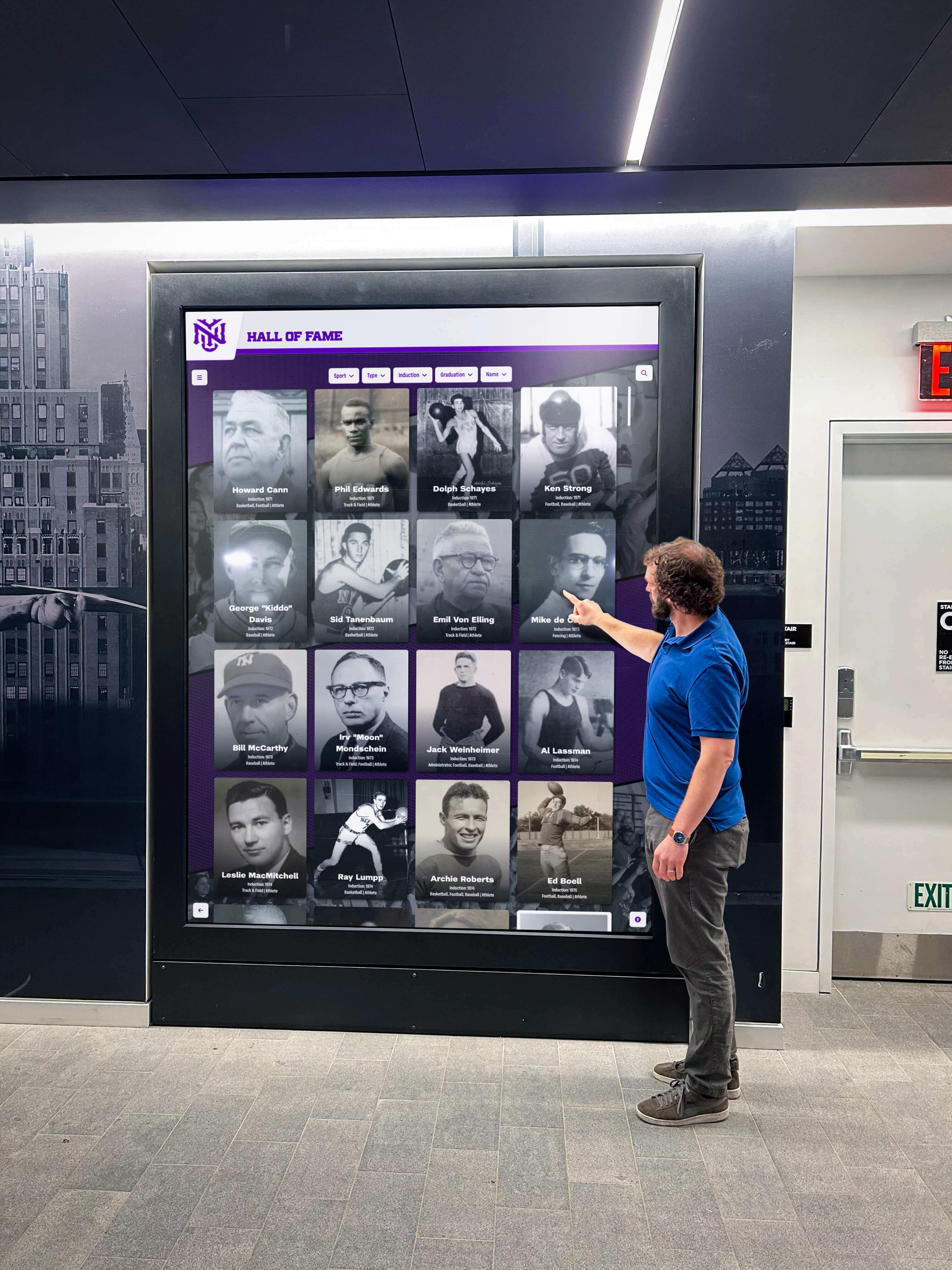
Digital recognition platforms enable rich multimedia presentation of championship stories, combining statistics, narratives, photographs, and video content creating engaging experiences for visitors exploring program histories. When current athletes can watch highlights from previous championship runs, read about how teams overcame adversity to reach AT&T Stadium, and understand what previous players sacrificed to achieve championship success, abstract goals become tangible possibilities.
Historic Championship Games and Seasons
Texas high school football history includes numerous championship games and seasons that transcend normal athletic achievement to become legendary moments in state sports history. These memorable championships typically feature elements including dramatic comebacks or last-second victories decided by single plays, dominant undefeated seasons showcasing exceptional team excellence, rivalry matchups bringing extra intensity to championship stages, record-breaking individual or team performances, and championships that broke long droughts or established new programs.
Documenting these championship stories ensures future generations understand not just that championships were won but how they were achieved and what they meant to programs and communities. Comprehensive recognition enables rich storytelling through combination of detailed statistics and game summaries, personal narratives from coaches, players, and community members, photographic documentation capturing emotional championship moments, video highlights preserving actual gameplay when available, and historical context explaining significance within program and community history.
Classification and Division Championships
With eleven state champions crowned annually across different classifications and divisions, Texas celebrates more championship achievements than any other state. This structure creates unique recognition opportunities and challenges.
Each classification and division championship deserves appropriate recognition as the pinnacle achievement within its competitive context. A 1A Division I champion from a school with 100 students achieved something just as significant within their competitive universe as a 6A Division I champion from a school with 3,000 students—though the paths to those championships differ dramatically.
Comprehensive recognition systems provide important context including documenting which classification and division championships occurred in, explaining competitive circumstances and challenges specific to different classifications, tracking how programs performed across different classification levels as enrollment changed, and presenting complete championship histories showing sustained excellence or breakthrough achievements across all competitive contexts.
Schools throughout Texas benefit from systematic approaches to championship documentation. Resources about sports banner design ideas show traditional recognition methods, while digital solutions enable more comprehensive documentation.
Individual Achievement and Record-Setting Performances
While team championships receive rightful emphasis in Texas high school football, individual achievement and record-breaking performances deserve equal recognition for documenting exceptional talent and inspirational accomplishments.
Career Statistical Leaders
Career statistical records document sustained excellence across multiple seasons, highlighting players who combined talent, durability, and consistency to produce exceptional high school careers. Key career records worth tracking include:

Rushing Records: Total career rushing yards and touchdowns identify the most productive running backs in program history. These records typically require three or four exceptional varsity seasons, making them relatively rare accomplishments worthy of special recognition.
Passing Records: Career passing yards, touchdown passes, and completion percentages document quarterback excellence across multiple seasons. In modern Texas football with its emphasis on passing attacks, these records often feature astronomical numbers reflecting both individual talent and offensive philosophy.
Receiving Records: Career receptions, receiving yards, and receiving touchdowns identify the most productive pass catchers in program history. These records demonstrate consistency and reliability alongside explosiveness.
Defensive Records: Career tackles, sacks, interceptions, and tackles for loss document defensive excellence across multiple seasons. These statistics require both exceptional individual talent and sustained health across multiple campaigns.
Career achievements require comprehensive statistical tracking with season-by-season breakdowns providing complete performance pictures. Schools implementing systematic record-keeping ensure that career records receive accurate documentation that stands up to historical scrutiny.
Single-Season and Single-Game Records
Single-season records measure peak performance levels, documenting exceptional talent concentrated into single campaigns. These records often reflect not only individual excellence but also team success, as statistical dominance typically occurs when players feature in effective offensive or defensive systems producing significant opportunities.
Single-game records celebrate explosive individual performances that become legendary in program histories—the running back who rushed for 400 yards, the quarterback who threw eight touchdown passes, the defensive player who recorded six sacks, or the receiver who gained 300 receiving yards. These performances create lasting memories that inspire future athletes and become cherished parts of program lore.
Documenting game-specific achievements requires systematic record-keeping throughout seasons, with statistical crews tracking comprehensive game statistics, coaches and athletic administrators maintaining official records, and media coverage providing additional documentation and validation. Schools that establish systematic statistical documentation during games create foundations for accurate historical record-keeping.
All-State and All-American Selections
Individual honors recognizing exceptional talent provide important recognition complementing statistical achievements. All-State selections identify the best players at each position across Texas’s various classifications, while rare All-American honors recognize players competing at the highest national levels.

Comprehensive recognition systems should document all selection categories including Associated Press All-State teams recognizing top players across all classifications, Texas Sports Writers Association All-State selections, classification-specific All-State teams, regional and national All-American honors from various selecting organizations, position-specific awards like Mr. Texas Football or Offensive/Defensive Player of the Year, and academic All-State selections recognizing scholar-athletes combining athletic and academic excellence.
These honors provide objective validation of exceptional talent, making them important components of complete achievement recognition alongside statistical records and team championships. For comprehensive approaches to recognizing athletic excellence, explore all-state athlete recognition displays that celebrate individual honors effectively.
College and Professional Success
Texas high school football serves as the foundation for college football careers and professional opportunities. Recognizing players who advanced to play college football, especially at Power Five conference programs, and the individuals who reached the NFL demonstrates program success in developing elite talent.
Documentation should include college scholarship recipients with school and conference affiliations, notable college career achievements including All-Conference and All-American selections, professional draft selections by NFL teams, undrafted free agents who made NFL rosters, professional career highlights and achievements, and return contributions to high school programs as coaches, mentors, or program supporters.
This tracking demonstrates program impact extending beyond high school success to influence players’ entire athletic careers and lives. When prospective athletes and their families see evidence that programs consistently produce college scholarship recipients and professional players, it validates that the program provides genuine pathways to the next level.
Preserving Texas Championship Legacies Through Modern Recognition
Texas schools face a fundamental challenge: how to preserve rich football histories spanning decades or even a century in ways that honor past achievements while remaining relevant and engaging for current students, athletes, and communities.
Limitations of Traditional Recognition Methods
Traditional physical recognition approaches—trophy cases, plaque walls, championship banners—face significant limitations that compromise their effectiveness over time, particularly given Texas football’s extensive championship histories.

Physical space constraints force difficult prioritization decisions about which championships receive prominent display and which must be minimized or eliminated entirely. Programs with multiple state championships across different eras face impossible choices about which achievements deserve featured placement. Update complexity means that adding new championships or records requires expensive materials, professional installation, and weeks or months of delays between achievements occurring and recognition appearing.
Traditional displays offer no search capability, forcing visitors to scan entire walls seeking specific information about particular championships, players, or eras. Storytelling remains limited to what fits on fixed physical space—basic names, numbers, and years with little room for the narratives that make championships meaningful and inspirational. Accessibility limitations mean that traditional displays fail to serve visitors with visual impairments or other accessibility needs.
Perhaps most significantly, traditional displays age visibly as materials fade, designs become dated, and the displays themselves communicate “old” rather than “ongoing tradition.” This aging undermines recognition effectiveness, making program histories feel like relics rather than living traditions inspiring current athletes.
Digital Recognition Solutions for Texas Football Programs
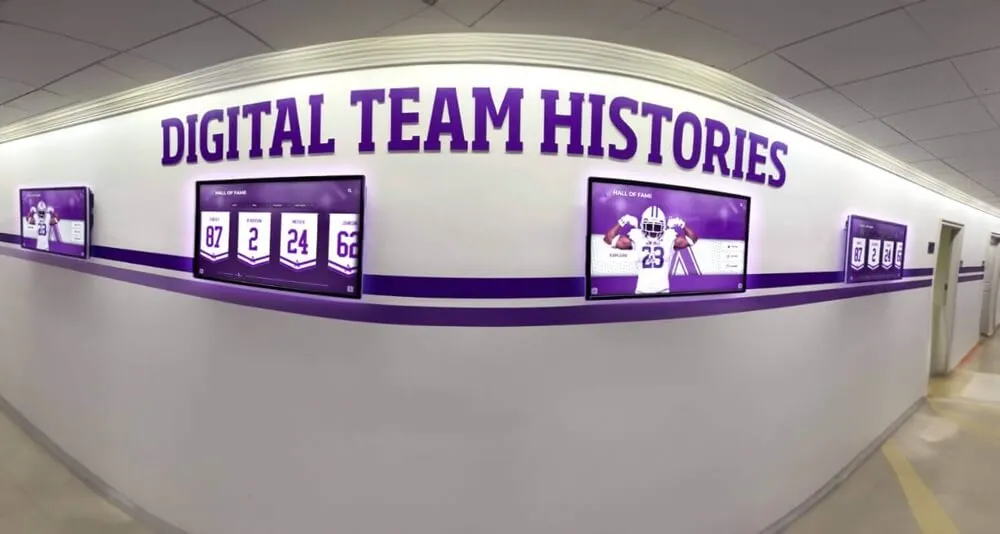
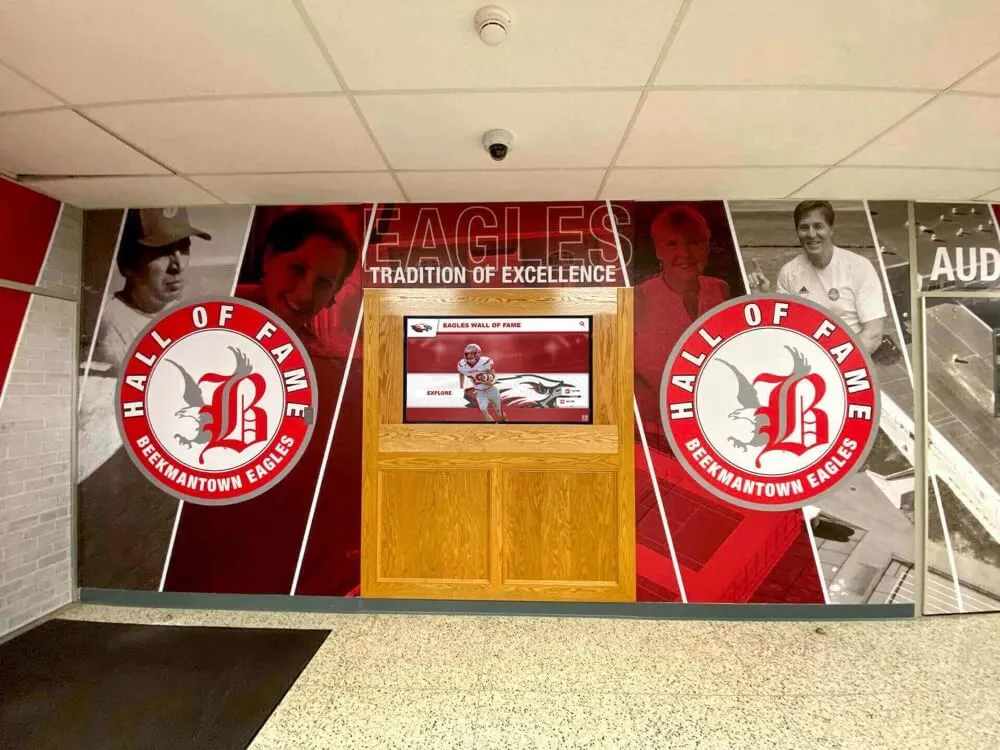
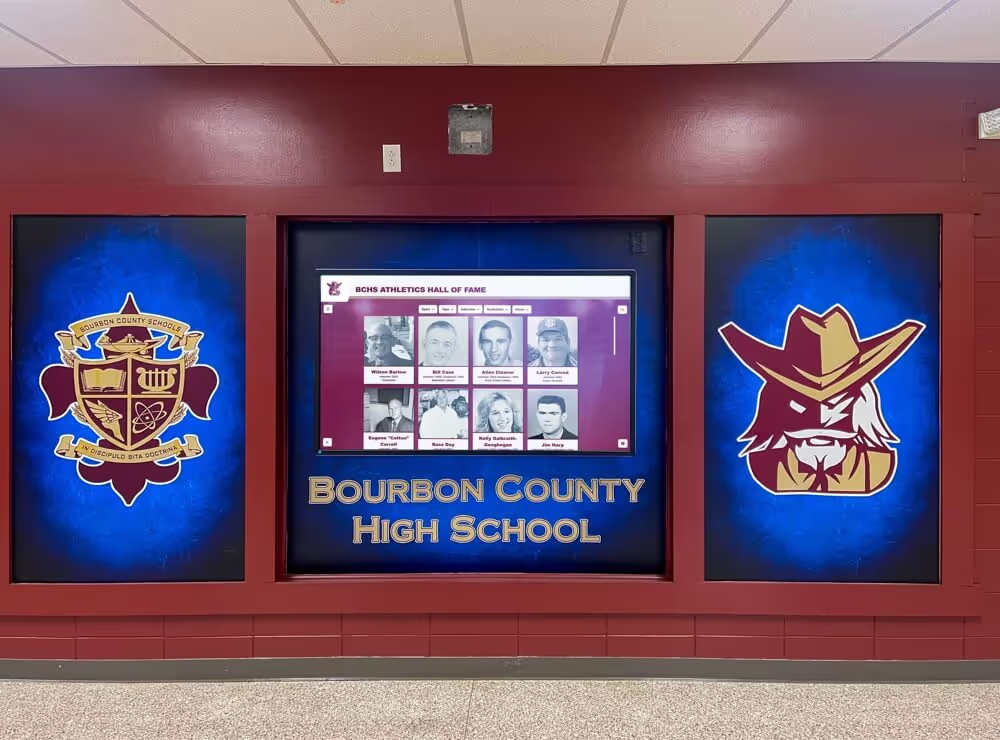
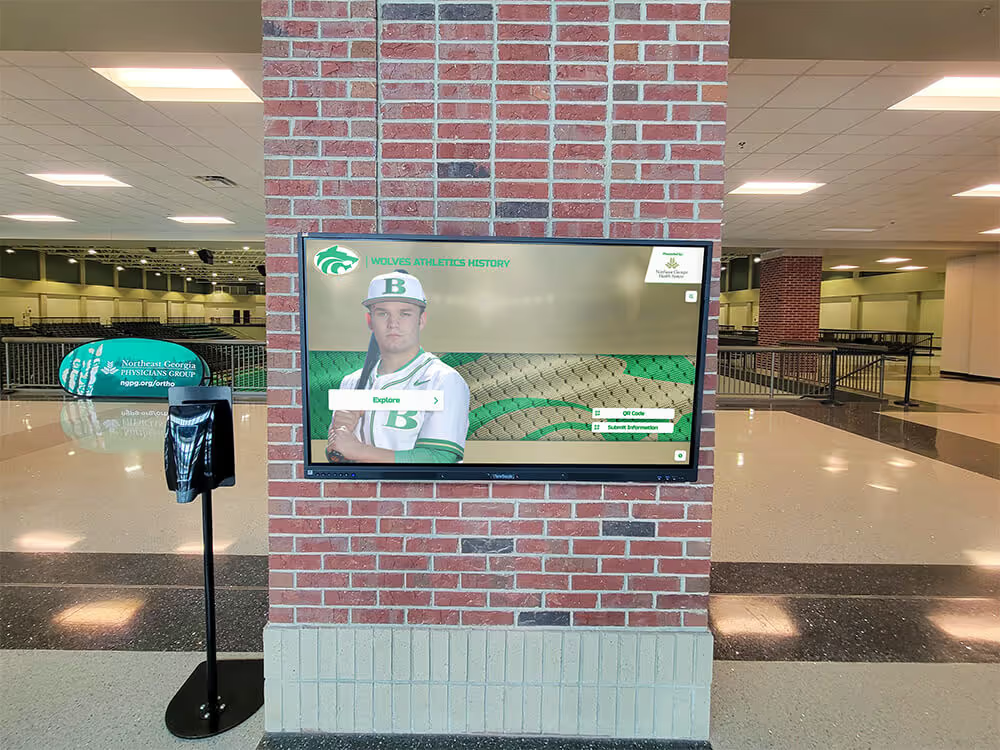
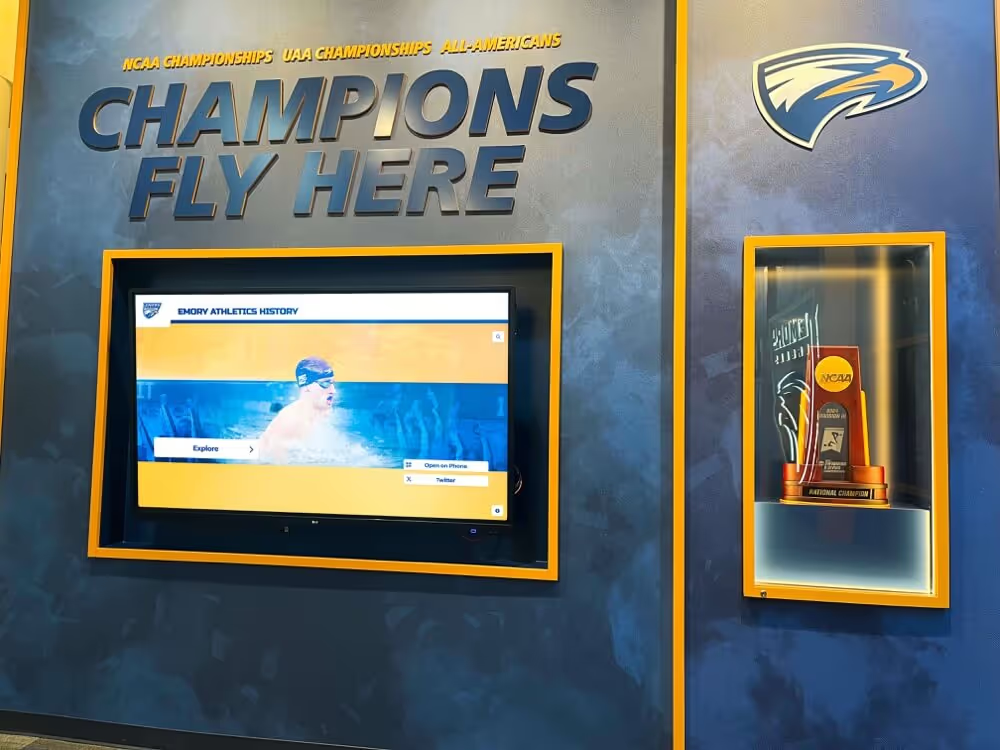
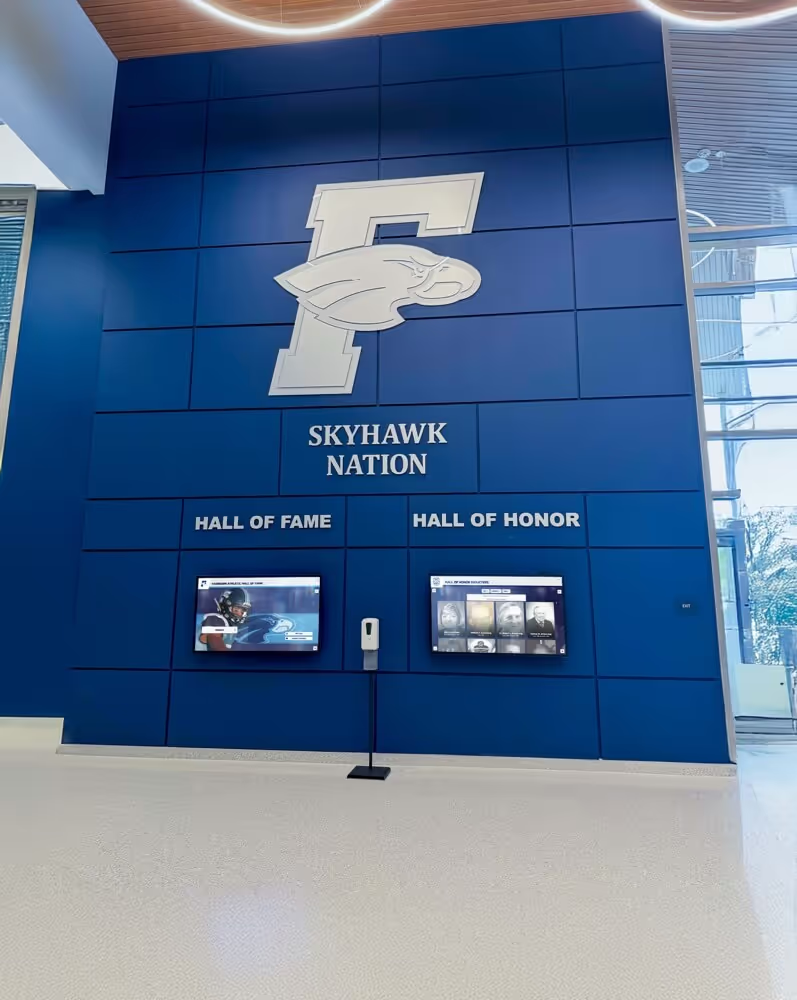
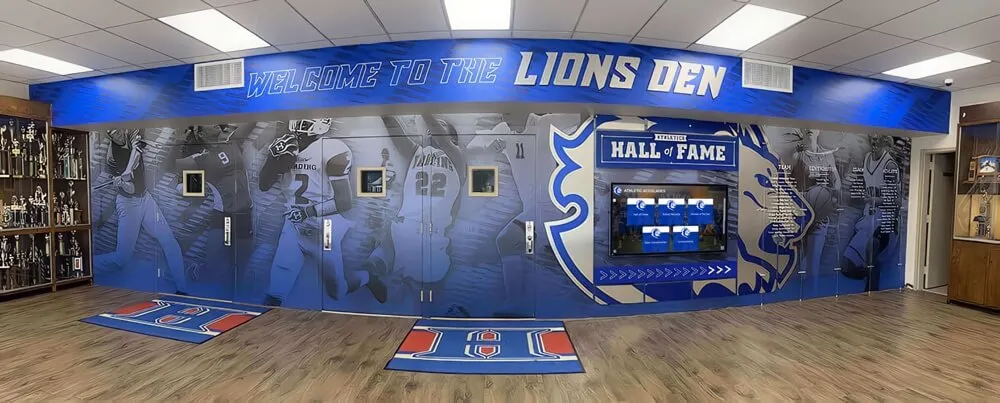
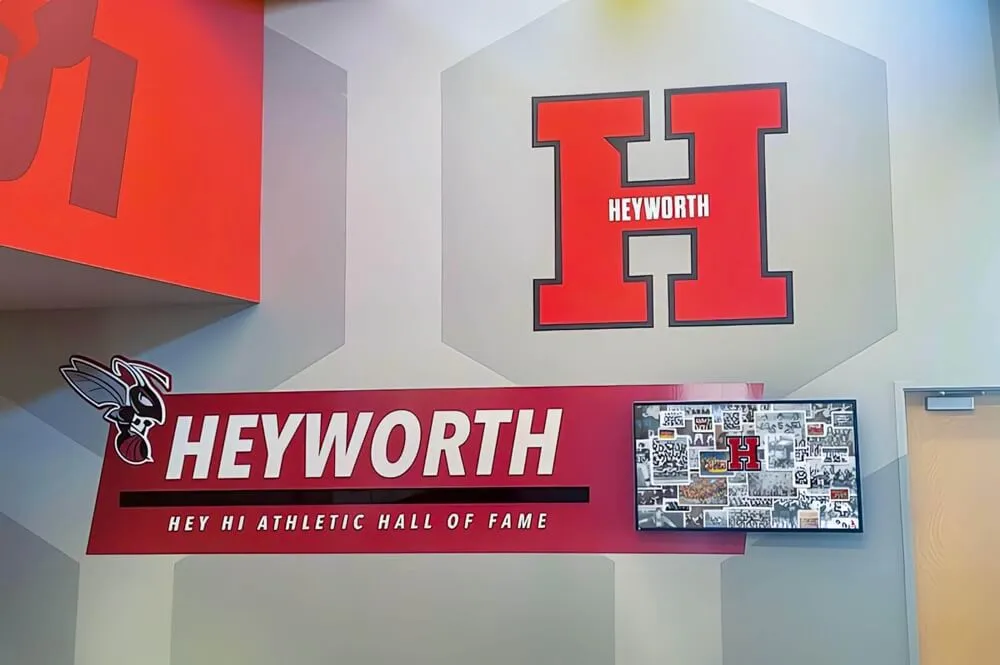
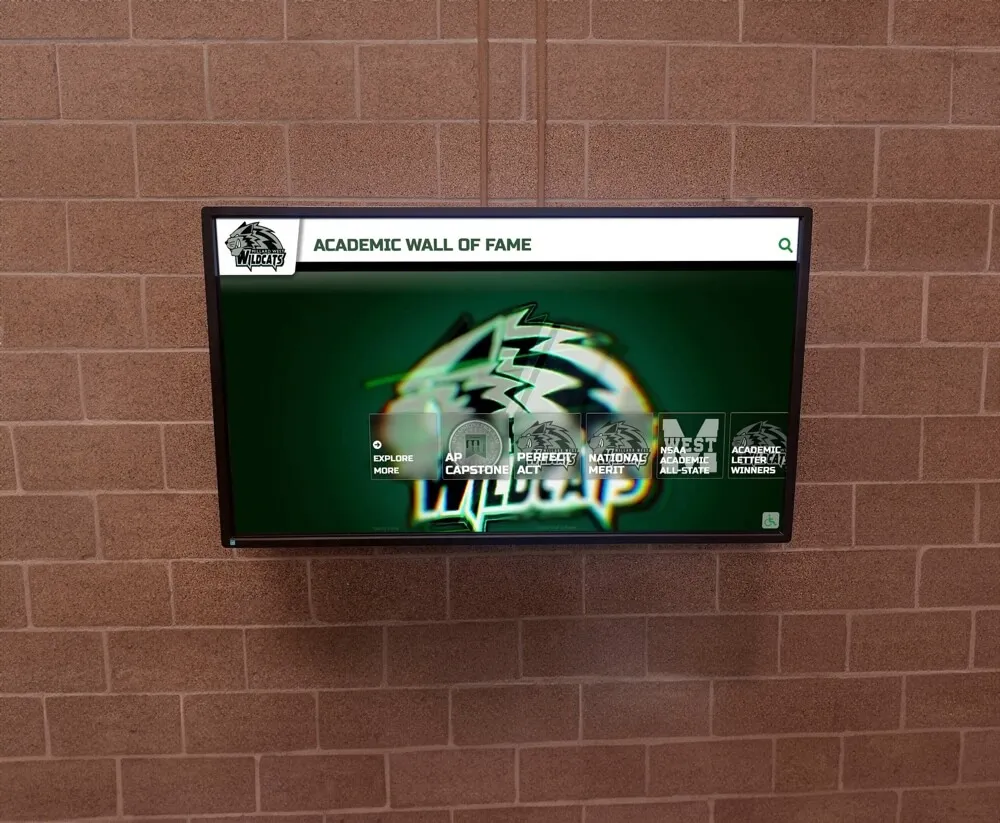
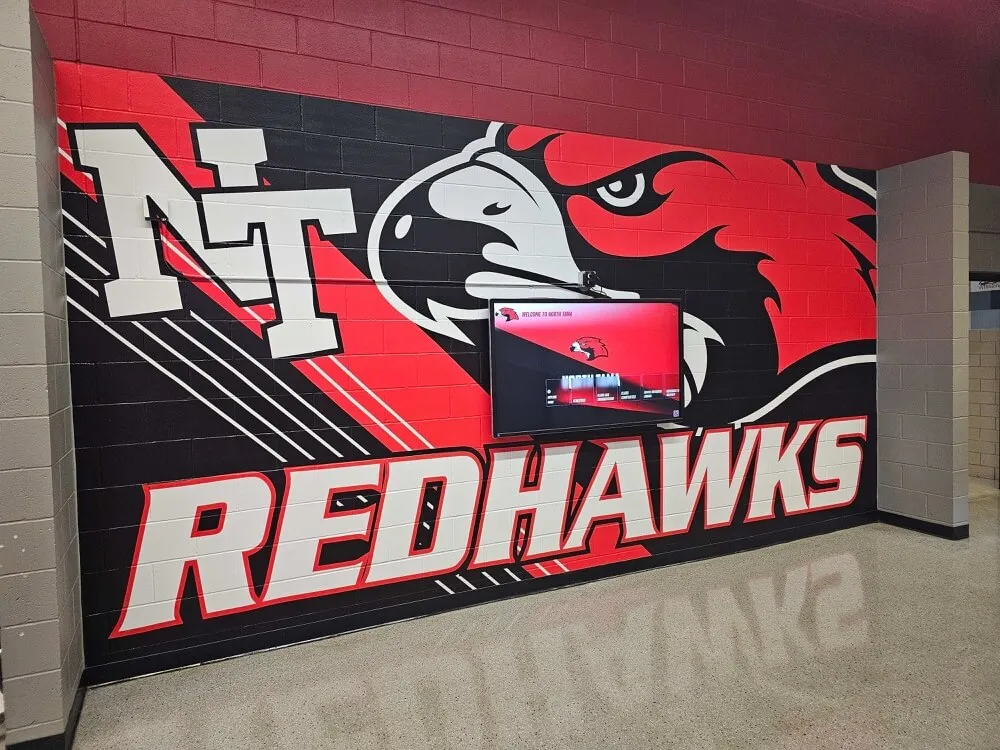
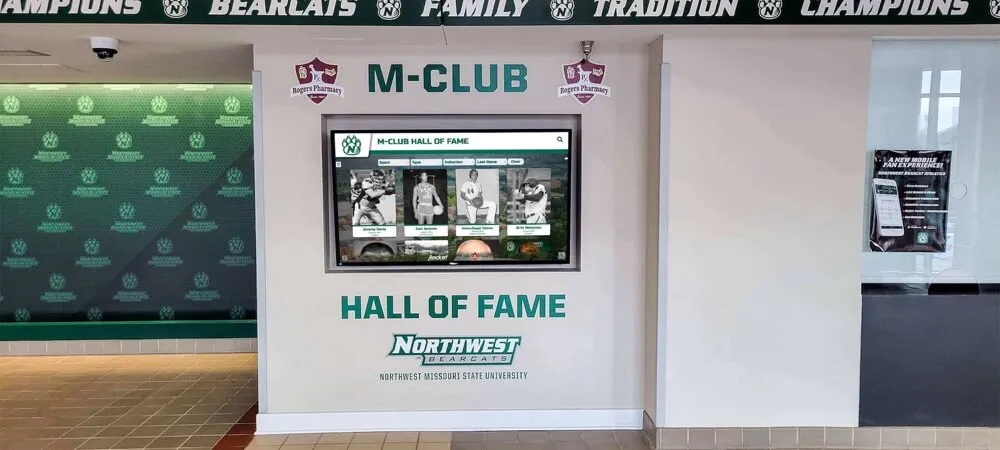
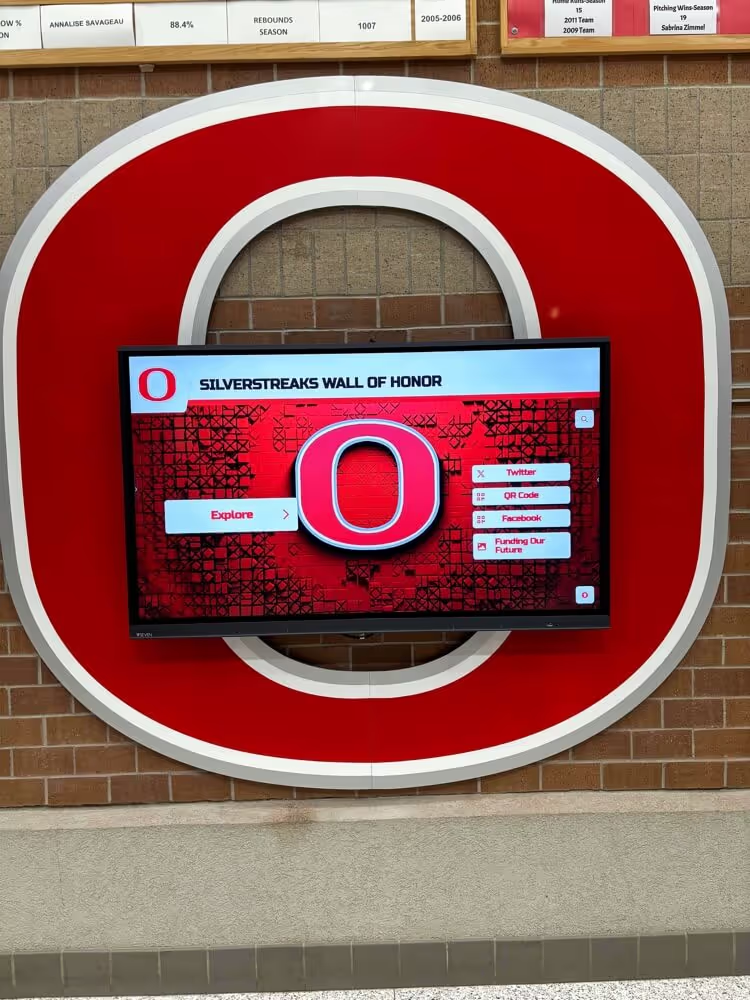
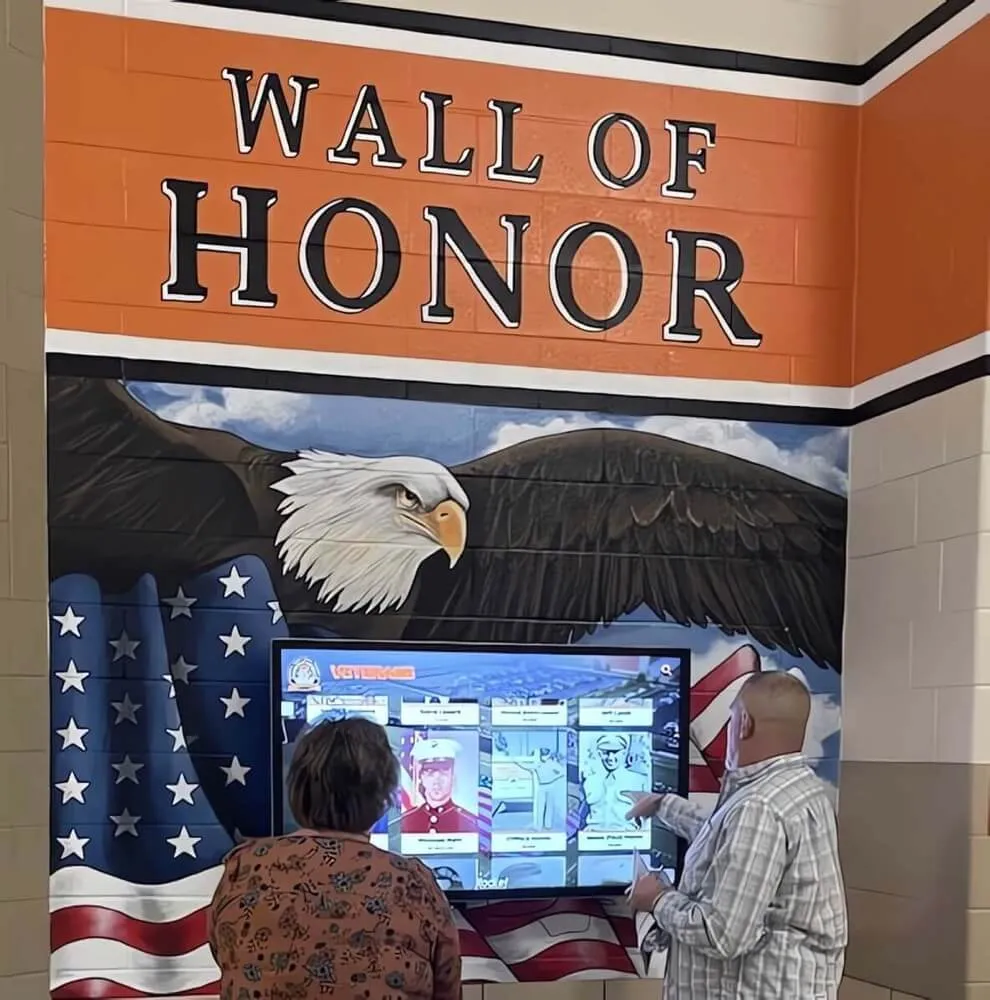
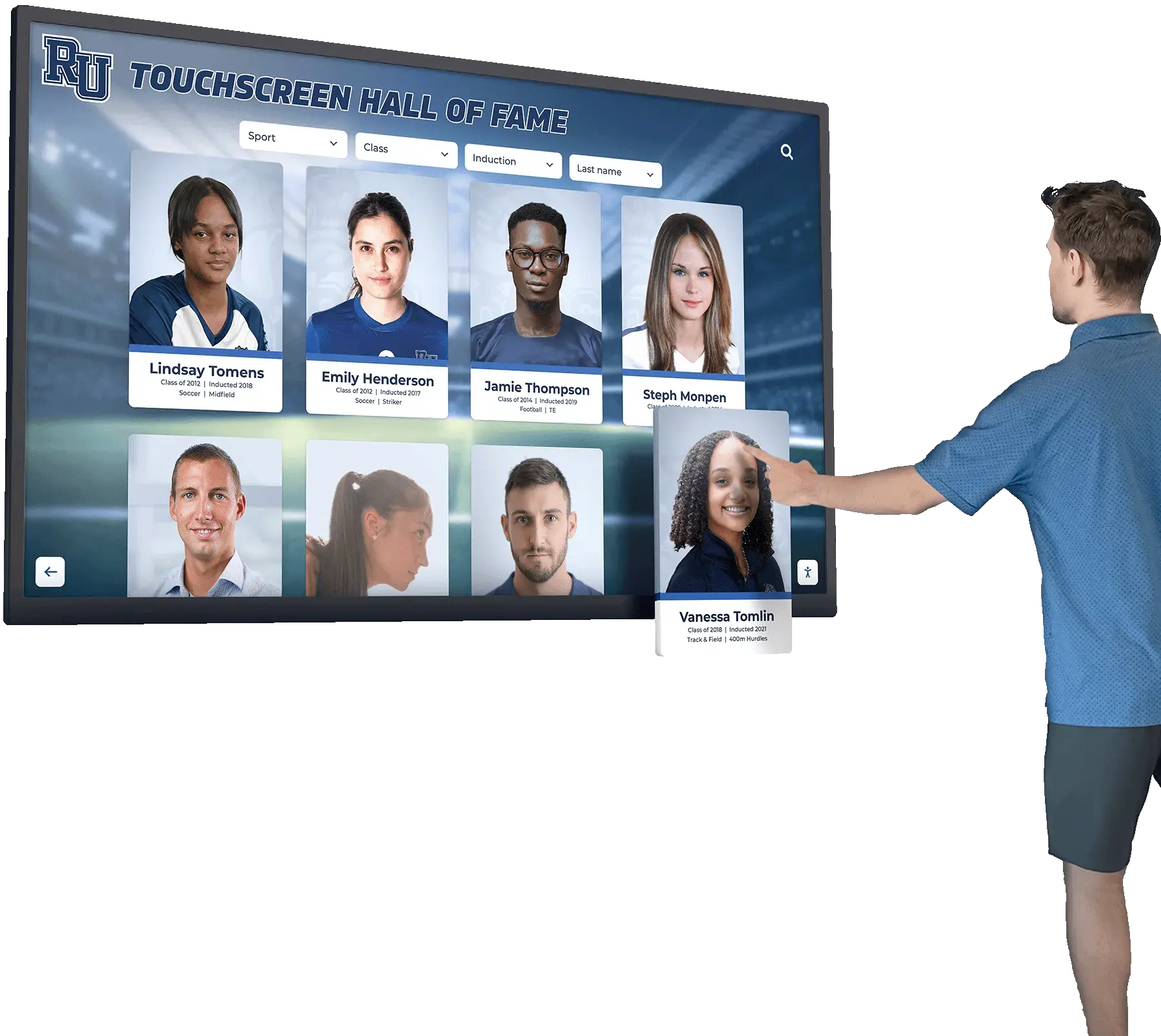
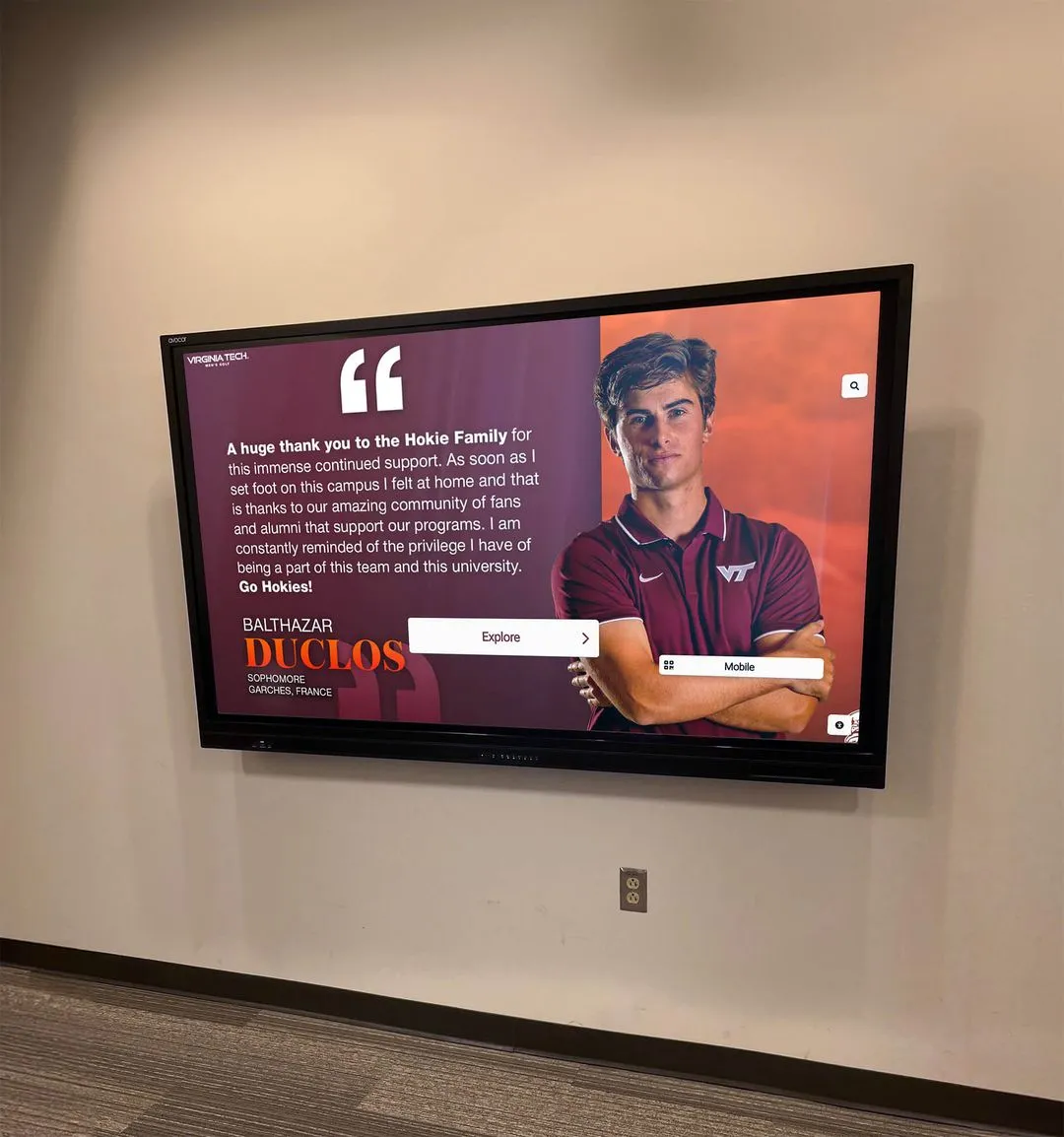
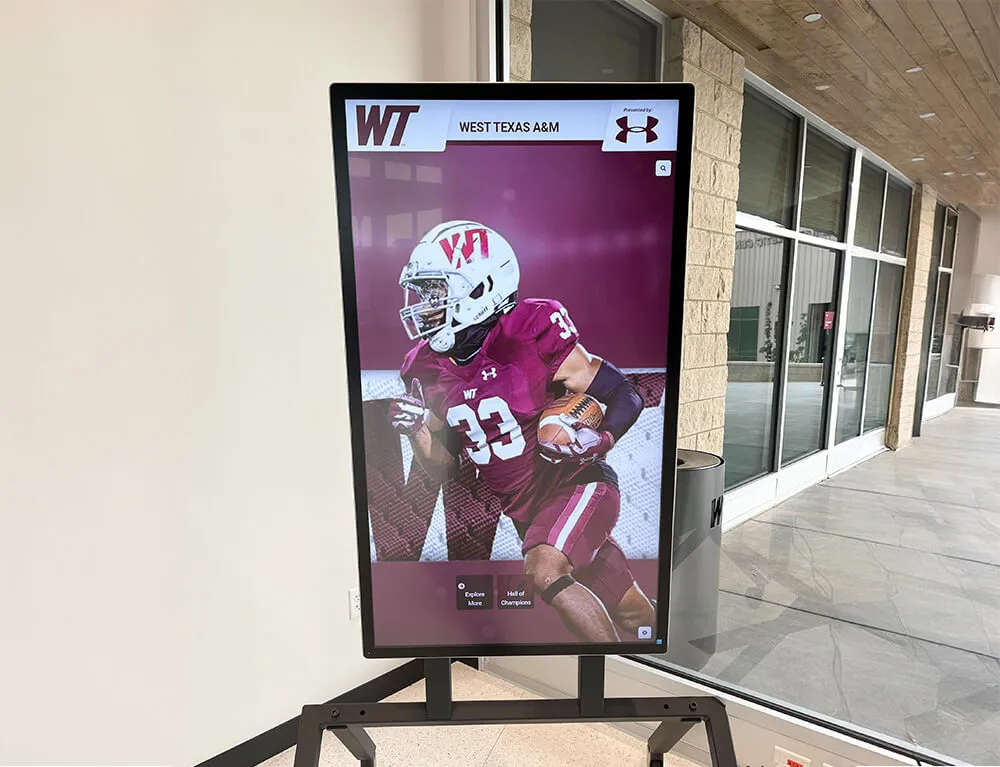
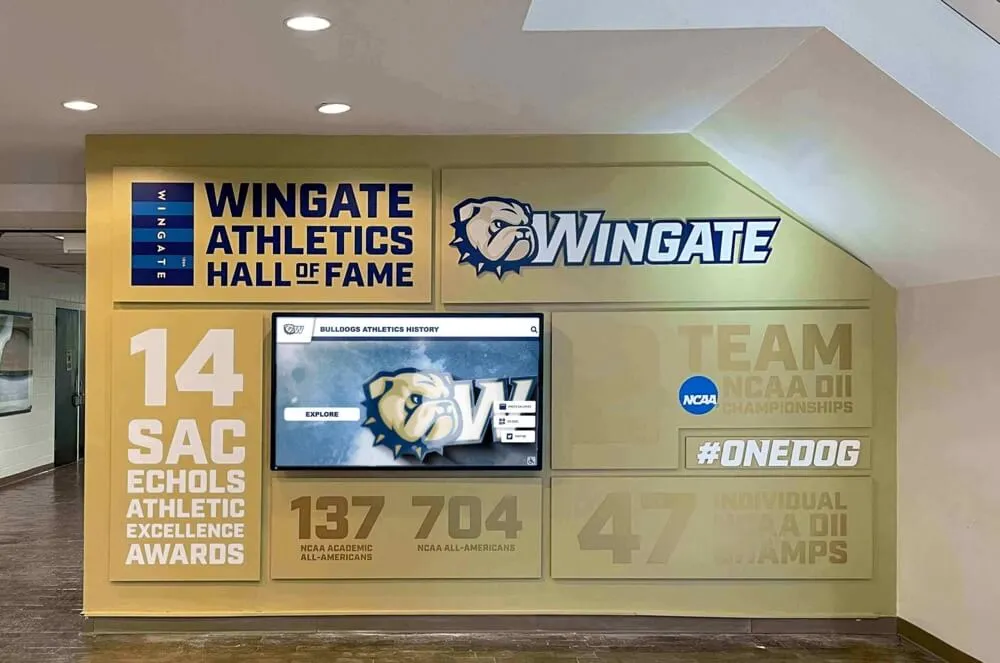
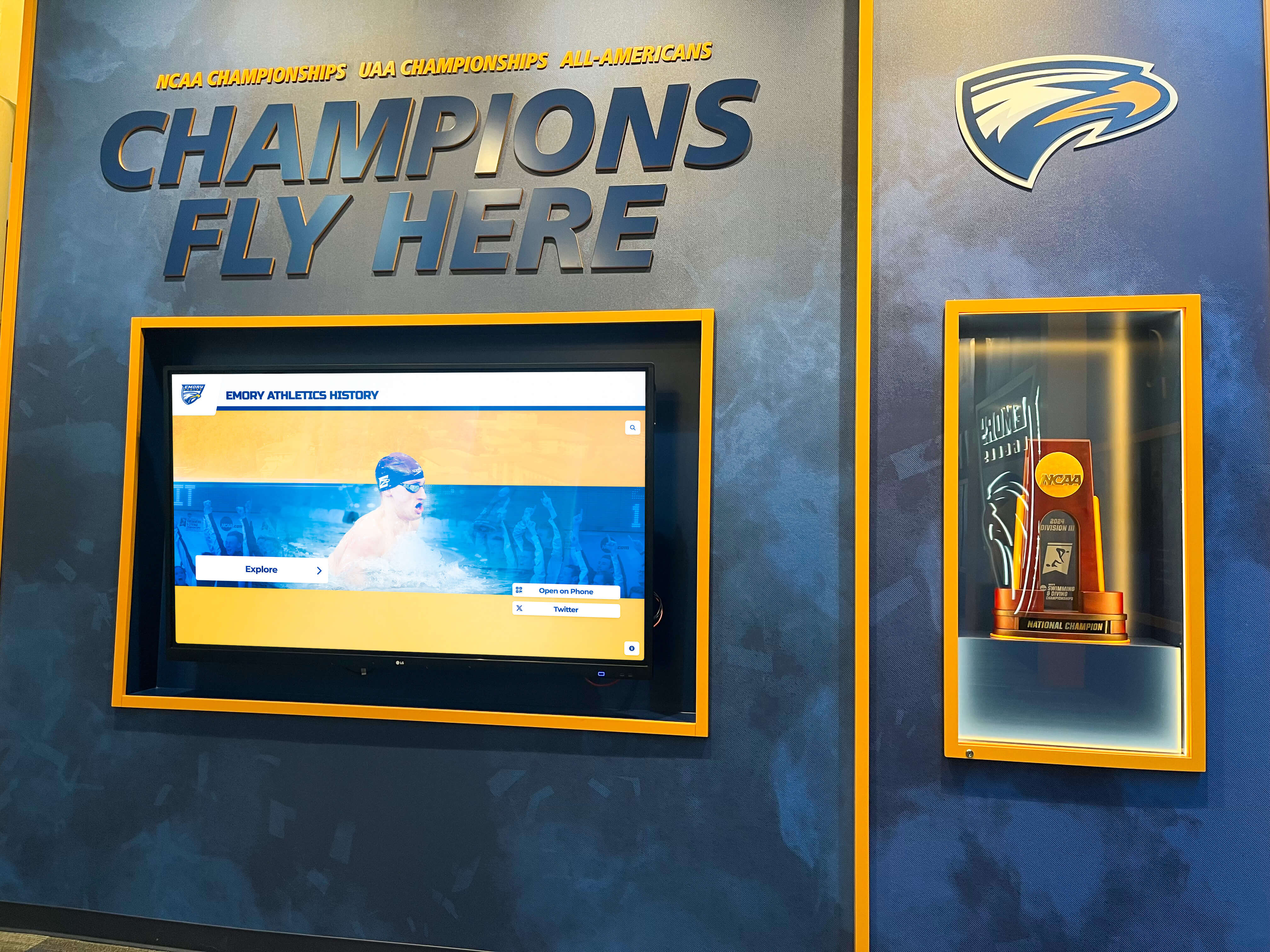
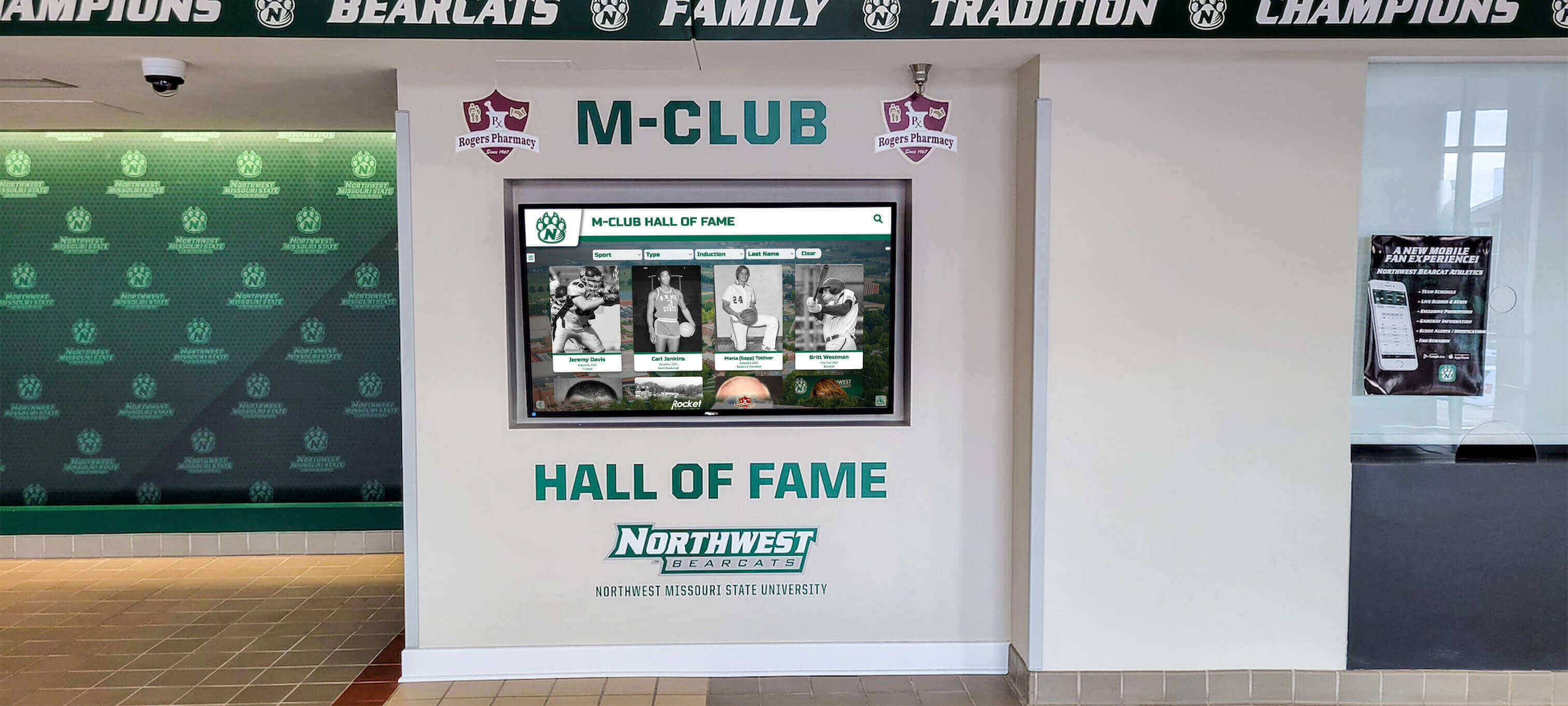
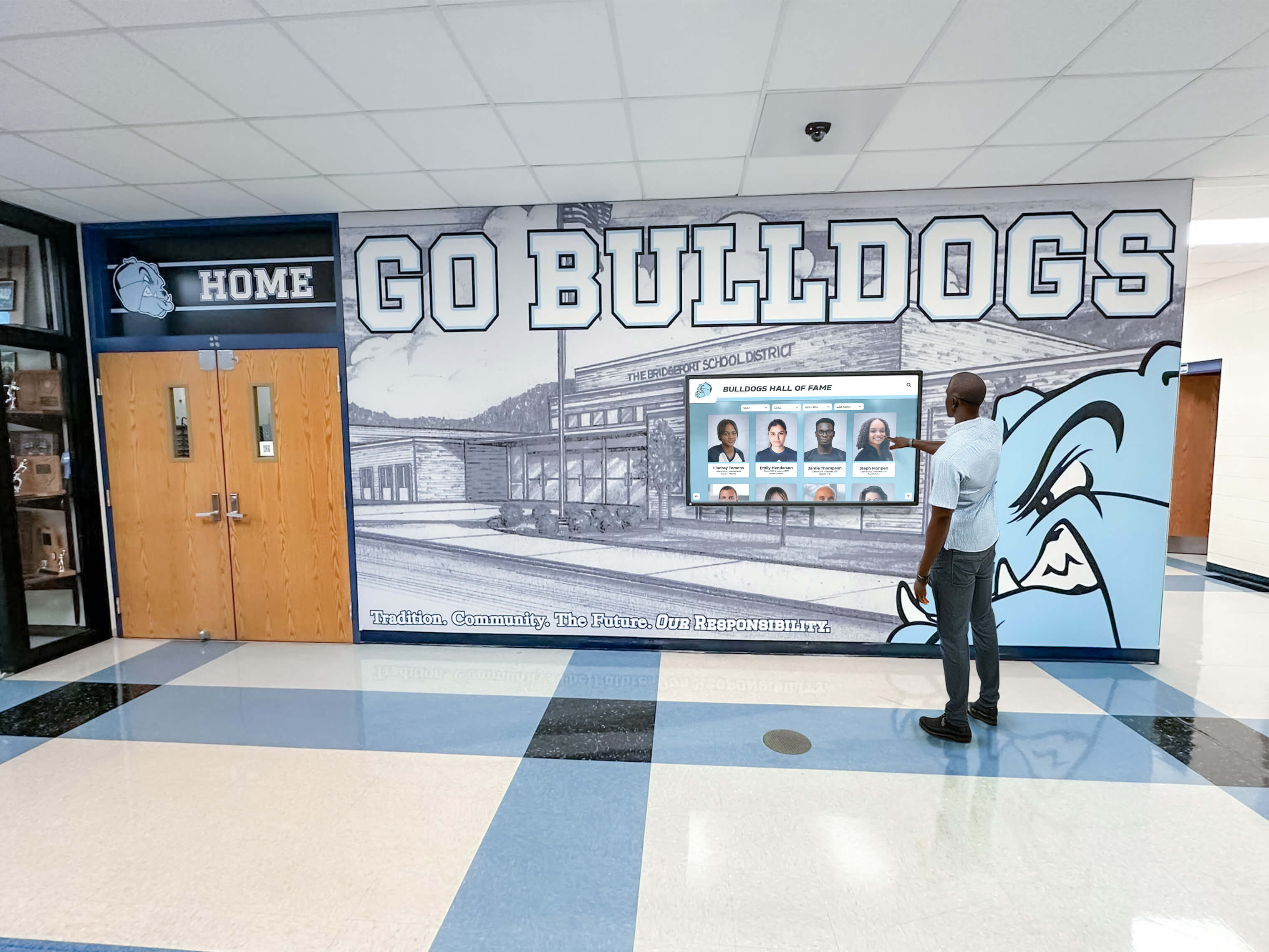
Modern digital recognition technology eliminates traditional approach limitations while introducing capabilities that transform how schools preserve and celebrate football excellence. Interactive touchscreen displays provide unlimited recognition capacity without physical space constraints, enable immediate updates when new championships or records occur, support rich multimedia content including video highlights and extended narratives, offer intuitive search and exploration features engaging visitors, and maintain fresh, contemporary appearances that communicate ongoing tradition rather than historical relic status.
Solutions designed specifically for athletic recognition ensure that football programs receive appropriate emphasis while integrating with broader athletic achievement across all sports. Comprehensive platforms enable schools to document complete program histories including championship achievements across all eras, classifications, and divisions, individual statistical records and career milestones, All-State and award recognition at various levels, coaching achievements and career milestones, memorable game narratives and season summaries providing context and inspiration, and historical context about programs, competitive eras, and changing circumstances.

The transformation from static physical displays to dynamic digital recognition represents more than just technology adoption—it reflects commitment to ensuring championship legacies receive lasting recognition worthy of their significance to programs, communities, and the individuals who built Texas football excellence.
Schools throughout Texas and beyond are discovering how digital solutions enhance recognition programs while solving practical challenges traditional approaches cannot address. Modern platforms enable celebration of extensive championship histories without physical space limitations, immediate recognition of new achievements maintaining engagement and relevance, comprehensive statistical documentation that traditional displays cannot accommodate, and engaging multimedia storytelling that creates emotional connections between viewers and achievements.
Integration with Broader Athletic Recognition
While football deserves appropriate recognition given its cultural significance in Texas, the most effective recognition programs integrate football excellence within comprehensive athletic achievement celebrating all sports. Multi-sport recognition ensures that football receives appropriate emphasis while honoring excellence across basketball, baseball, track and field, volleyball, soccer, and all athletic programs.
This comprehensive approach communicates institutional values celebrating diverse forms of athletic excellence while ensuring football traditions receive their rightful place as cornerstones of school athletic achievement. Digital platforms make integration practical through flexible content organization enabling sport-specific emphasis, intuitive navigation allowing visitors to explore football in depth while accessing other sports, and unlimited capacity ensuring no sport competes for limited physical space.
Beyond athletics, forward-thinking schools integrate academic achievement, arts recognition, service awards, and character honors, creating complete student recognition systems that honor excellence across all dimensions of school experience. This holistic approach reinforces that while athletic excellence matters tremendously, complete student development encompasses academic, artistic, service, and personal growth.
Resources about school trophy case ideas compare traditional and digital approaches, while guidance about high school wall of fame design explores comprehensive recognition planning.
Leveraging Championship History for Program Development
Beyond honoring past achievements, effective recognition systems serve strategic purposes strengthening current programs through recruitment, motivation, fundraising, and community engagement.
Recruitment Impact
In Texas’s intensely competitive football environment, recruitment advantages prove crucial for building and sustaining championship programs. Comprehensive recognition displays provide tangible evidence of program excellence that influences recruitment decisions when prospective athletes and their families evaluate programs.

Visible championship documentation influences recruitment through objective evidence of sustained excellence beyond coach claims, demonstration of pathways to college opportunities through documented scholarship recipients, visible commitment to honoring player contributions creating expectation of lasting recognition, and creation of aspirational environments where athletes imagine themselves achieving similar championship success.
Many coaches report that championship displays become focal points during recruiting visits, with prospective players and families spending significant time exploring program histories, examining individual achievement records, reviewing college placement success, and envisioning themselves as future championship contributors and record-setters.
Motivating Current Athletes
Visible recognition creates concrete goals transforming abstract excellence concepts into specific, measurable targets. When athletes see exactly what championships have been won, what records exist, who set them, and under what circumstances, they gain tangible benchmarks for their own development and achievement aspirations.
Interactive displays can include features showing current team statistics and season progress, how individual players track toward career records and milestones, what specific achievements would earn lasting recognition in program history, and where current seasons rank in historical competitive context. This transparency enables goal-setting far more effective than vague encouragement about “playing your best” or “living up to traditions.”
Building Championship Culture
Programs with comprehensive historical documentation develop cultures where exceptional performance becomes expected rather than rare. When athletes grow up seeing program history filled with championships and exceptional individual achievement, pursuing similar excellence becomes part of program identity rather than unusual ambition.
Championship cultures develop when recognition systems connect current teams to historical success creating expectations that each generation will maintain program standards, document the specific paths previous teams took to championship success providing models for current athletes, celebrate not just championship outcomes but the preparation, sacrifice, and commitment required, and demonstrate that excellence transcends individual personalities to reflect program-wide commitment spanning generations.
This cultural continuity appears particularly strong when displays document sustained achievement across multiple coaching eras and athlete generations, demonstrating that championship expectations reflect institutional commitment rather than individual coach or player talent. For schools building championship cultures, insights about building positive school culture show how recognition supports broader institutional goals.
Alumni Engagement and Fundraising
Football recognition creates natural engagement points for alumni and community members passionate about program traditions. Former players maintain deep emotional connections to programs and championships they contributed to, often seeking ways to remain involved and give back.
Recognition-focused initiatives that successfully engage alumni and generate fundraising support include fundraising campaigns specifically to establish or expand recognition displays honoring championship eras, naming opportunities associated with recognition programs enabling major donors to leave lasting legacies, sponsorship programs supporting annual recognition system operating expenses, and alumni giving campaigns tied to honoring specific championship teams or eras when donors competed.

Championship legacies provide compelling fundraising narratives—donors respond positively to opportunities honoring excellence and preserving program history for future generations. Many Texas schools successfully fund recognition programs entirely through donations from alumni and community members who want to ensure their championship eras receive appropriate documentation and permanent celebration.
Implementation Considerations for Texas Schools
Schools seeking to enhance football recognition should consider several key factors ensuring successful implementations that serve programs effectively for years to come.
Budget Planning and Comprehensive Investment
Understanding investment requirements helps secure necessary funding and plan implementations matching available resources while delivering maximum value. Comprehensive digital recognition systems typically require investment across several categories.
Hardware costs include commercial-grade touchscreen displays sized appropriately for viewing environments, typically ranging from 43-inch to 75-inch screens depending on installation location and viewing distances. Industrial computing modules providing reliable performance in 24/7 operation environments ensure system stability. Professional mounting systems and installation ensure safe, attractive presentation in high-traffic athletic spaces.
Software platform licensing provides the content management system enabling ongoing updates, the user interface delivering engaging exploration experiences, and technical support ensuring system reliability. Content development represents perhaps the most significant investment, including historical research recovering championship information from archived records, photography digitization and organization, video highlight editing and production when source material exists, database population with comprehensive information, and biographical content development about players, coaches, and championship teams.
Ongoing operating costs ensure long-term success including software licensing and platform fees, content update labor for adding new achievements, technical support and system maintenance, and periodic hardware refresh or upgrades as technology evolves.
While these investments may seem substantial, schools should evaluate against alternatives including ongoing costs for traditional physical recognition materials and updates, limited capacity forcing difficult prioritization decisions about which achievements receive recognition, update delays compromising recognition timeliness and relevance, and aging displays requiring complete replacement every 5-8 years as materials deteriorate and designs become dated.
Most Texas programs calculate break-even within 3-4 years based purely on eliminated physical update costs, with ongoing strategic value through enhanced recruitment, improved engagement, and comprehensive documentation substantially exceeding traditional approaches.
Funding Strategies for Texas Schools
Texas schools successfully fund recognition programs through various sources reflecting strong community support for football excellence. Athletic department capital budgets increasingly include digital recognition as infrastructure investment comparable to facility improvements. Booster club campaigns and fundraising initiatives leverage passionate supporter bases willing to invest in honoring program traditions.
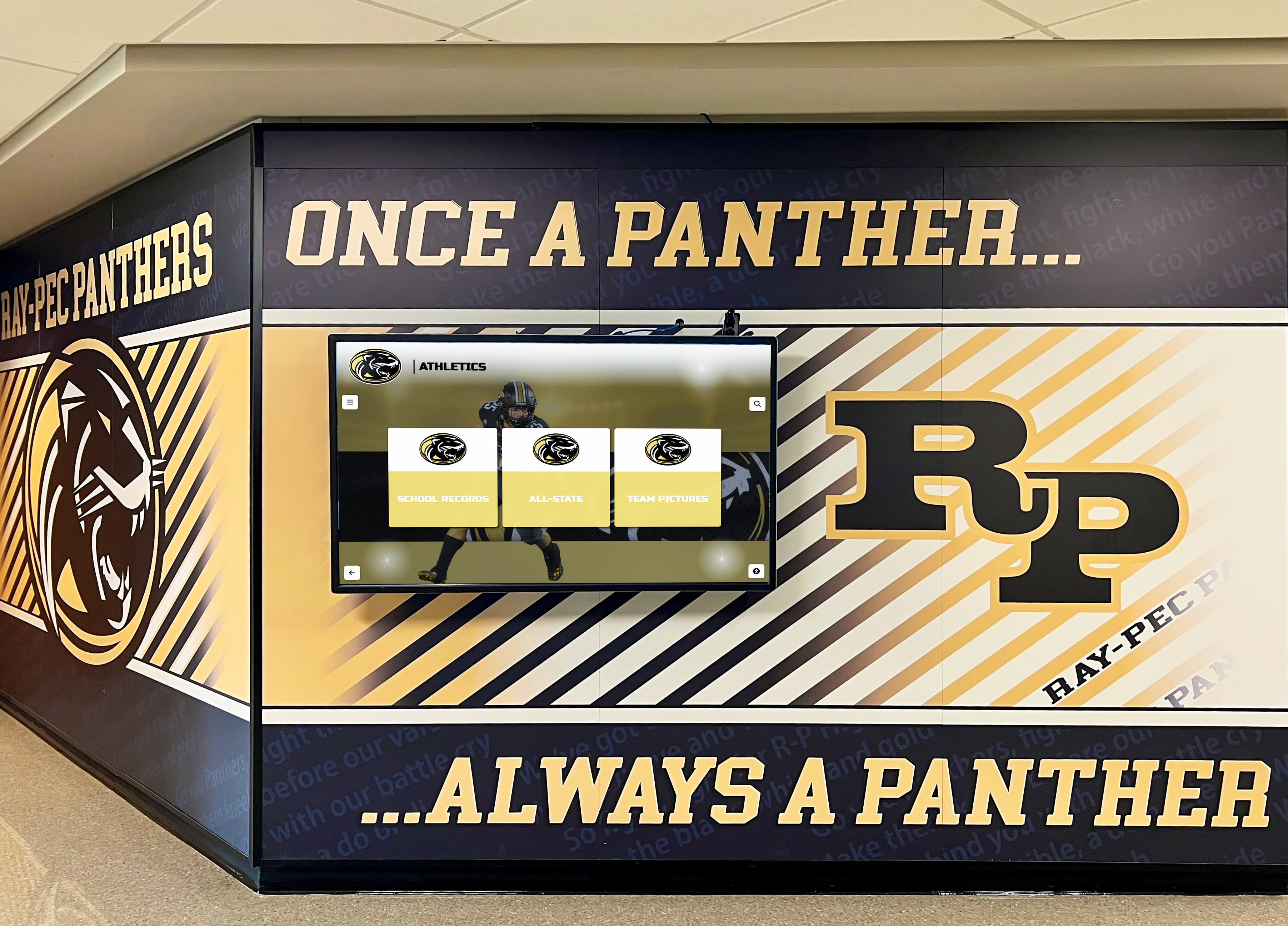
Alumni association support and memorial giving programs create opportunities for former players to contribute to recognition honoring their championship eras. Corporate sponsorships from local businesses wanting association with championship programs provide funding while creating community partnerships. Naming opportunities for major donors enable significant supporters to leave lasting legacies. Crowdfunding campaigns engaging broader school communities enable many smaller donors to collectively fund recognition investments.
Presentation of comprehensive business cases documenting both costs and strategic benefits—recruitment advantages, enhanced community engagement, improved alumni relations, comprehensive historical preservation—helps secure administrative approval and funding commitment from multiple stakeholder groups. For schools planning recognition investments, guidance about subscription pricing and budget options provides helpful planning information.
Content Development Planning
The most challenging implementation aspect often proves to be comprehensive content development rather than technology deployment. Successful implementations require systematic approaches to historical research including reviewing archived game programs, media guides, and athletic department records from championship seasons, consulting local newspaper archives and media coverage documenting championship runs and individual achievements, interviewing former coaches, players, and program supporters who possess institutional knowledge, examining yearbooks and school publications for photographs and biographical information, and researching UIL records and tournament documentation for official championship verification.
Current content development demands establishing workflows for capturing ongoing achievements including game-by-game statistical tracking throughout seasons, post-season award documentation as selections are announced, championship team roster preservation with biographical information, photography and video capture during seasons and championship games, and player biographical information collection enabling rich profile development.
Schools that establish systematic content development processes during implementation create sustainable recognition programs that remain current and comprehensive rather than becoming outdated as new achievements occur. Many Texas schools benefit from professional content development assistance during initial implementation, establishing comprehensive historical foundations while training staff for ongoing maintenance. This approach ensures high-quality initial launches while building internal capacity for sustainable long-term management.
The Enduring Legacy of Texas State Championship Football
Texas high school football state championship history represents more than athletic achievement—it embodies community identity, teaches life lessons, creates lasting bonds, and establishes traditions that define generations. From legendary programs that capture multiple state championships to small-town teams whose single championship runs unite entire communities, Texas state championship football creates memories, builds character, and establishes legacies worthy of comprehensive recognition.
Modern recognition technology has transformed what’s possible in preserving and celebrating these achievements. Texas schools no longer face impossible choices between which championships deserve prominent recognition and which must be minimized due to space constraints. Digital platforms enable complete documentation of every championship across all classifications and divisions, every record-setter, every All-State selection, and every coach who built program excellence—creating comprehensive archives honoring all who contributed to championship traditions.
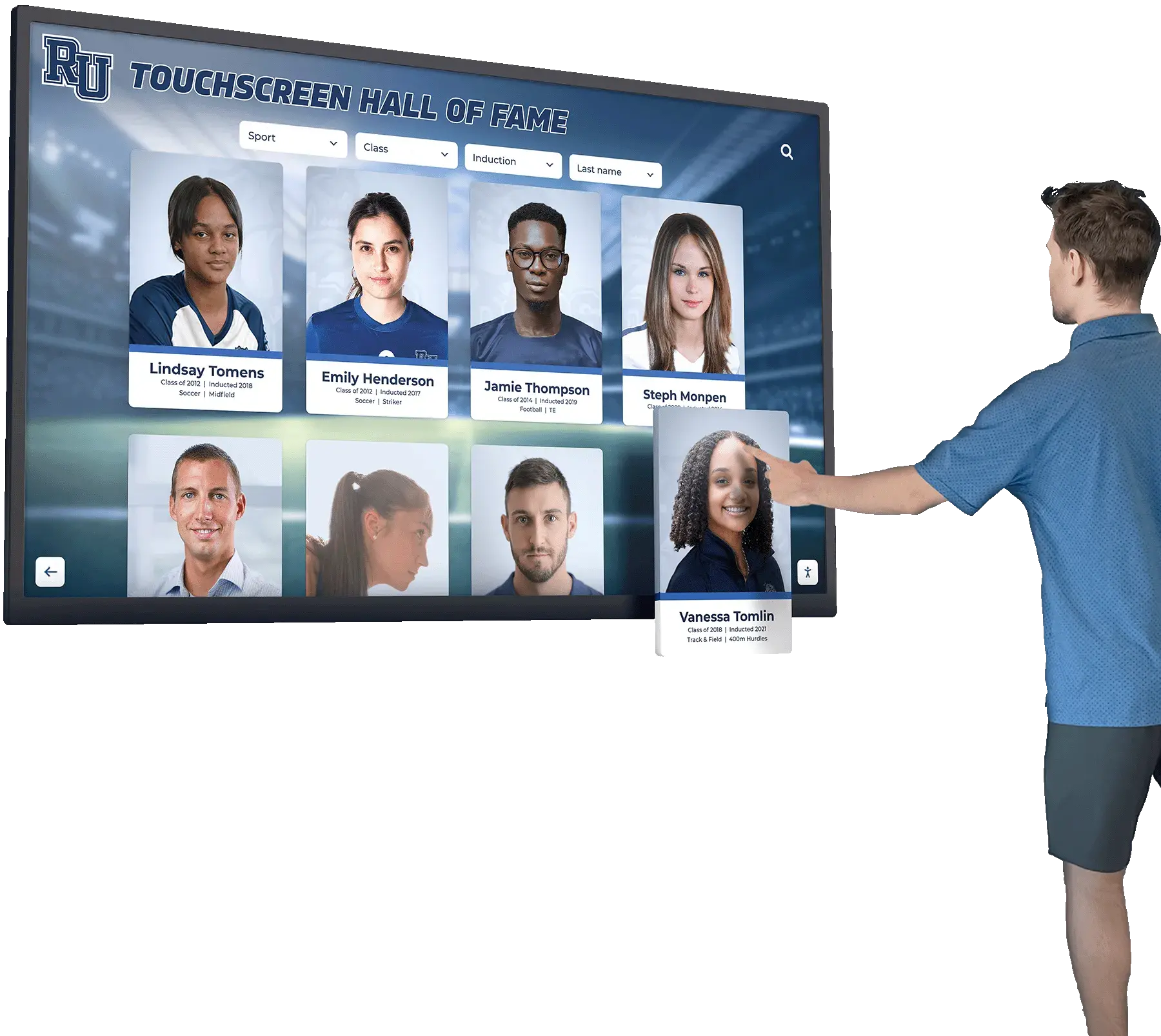
Whether implementing sophisticated digital recognition systems, enhancing traditional displays, or creating hybrid approaches combining both, successful programs share common characteristics including systematic documentation ensuring accuracy and completeness, engaging storytelling that provides context and inspiration beyond simple statistics, strategic placement maximizing visibility and impact in athletic facilities and high-traffic areas, integration with broader athletic and academic recognition, sustainable maintenance ensuring ongoing accuracy and relevance as new achievements occur, and alignment with program goals including recruitment, player development, and community engagement.
For Texas schools committed to honoring the players, coaches, and programs that built championship traditions while inspiring future generations to pursue similar excellence, comprehensive recognition represents an investment delivering returns across multiple dimensions. Every championship won, every record broken, and every individual who gave themselves to program excellence deserves lasting recognition that preserves Texas’s unmatched high school football heritage for generations to come.
The Friday night lights will continue illuminating Texas football fields, championship pursuits will continue defining seasons, and new legends will emerge to add chapters to Texas state championship football history. Schools that implement comprehensive recognition ensure these achievements receive documentation worthy of their significance—honoring the past, celebrating the present, and inspiring the future of Lone Star football excellence.
Ready to preserve your football program’s championship legacy in a way that honors Texas football tradition? Rocket Alumni Solutions provides comprehensive digital recognition platforms designed specifically for athletic programs, combining intuitive content management, engaging user experiences, and dedicated support ensuring your program’s Texas state championship history receives the recognition it deserves. Championship traditions built over decades shouldn’t fade into obscurity—modern recognition systems ensure they inspire athletes for generations to come.