Tennis athletes dedicate countless hours to perfecting technique, developing mental toughness, and competing at their highest level. Recognition validates this commitment while reinforcing the values and achievements that define excellent tennis programs. From traditional end-of-season banquets to modern digital displays celebrating career statistics, the right recognition approach honors individual excellence while strengthening team culture.
This comprehensive guide explores tennis awards ideas across multiple categories—from classic MVP and Most Improved awards to creative recognitions celebrating sportsmanship, leadership, and the unique qualities that make tennis such a distinctive sport. Whether you’re establishing your first formal recognition program or enhancing long-standing traditions, these ideas will help you celebrate tennis athletes meaningfully and authentically.
Understanding Tennis-Specific Recognition Challenges
Before diving into specific award ideas, it’s important to understand what makes tennis recognition uniquely challenging compared to other sports programs.
The Individual-Team Dynamic
Tennis exists at the intersection of individual and team sports. Athletes compete in singles matches representing only themselves, yet their results contribute to team scores. Doubles partnerships add another layer, requiring collaborative skills alongside individual technique. This dual nature means effective recognition programs must honor both personal achievement and team contribution—ensuring star singles players don’t overshadow dedicated doubles specialists or athletes who consistently win team points despite facing tougher opponents.
Position and Ladder Considerations
Most tennis programs use ladder rankings or position systems (playing at #1 singles, #2 doubles, etc.) that create natural hierarchies. While these positions reflect skill level and match competitiveness, recognition programs should avoid perpetually celebrating only top-ladder players. Athletes competing at every position deserve acknowledgment for their contributions, improvement, and commitment—regardless of whether they play #1 or #6 singles.
Seasonal vs. Year-Round Programs
High school programs typically run focused fall or spring seasons, while club programs and many college teams operate year-round with indoor and outdoor seasons. Recognition timing and frequency should match your program structure—seasonal programs often culminate with single award ceremonies, while year-round programs benefit from periodic recognition maintaining motivation across longer timeframes.
Measurable vs. Intangible Contributions
Tennis provides abundant statistical data—match records, games won, winning percentages—making performance-based recognition straightforward. However, intangible qualities like leadership, sportsmanship, mental toughness, and team support prove equally important. Comprehensive recognition programs balance objective performance metrics with subjective acknowledgment of character and contribution.
Traditional Tennis Awards: Time-Tested Recognition
Let’s start with classic tennis awards that have served programs well for generations. These traditional recognitions remain relevant because they honor fundamental achievements every tennis program values.
Most Valuable Player (MVP)
The MVP award recognizes the athlete whose overall contributions most significantly impacted team success. In tennis, MVP consideration should extend beyond simply the player with the best record. Consider overall match win percentage, performance in crucial team matches, leadership and team culture contributions, consistency and reliability throughout the season, and performance against the strongest opponents faced. The best MVP awards honor athletes who elevated their teammates while delivering individual excellence.
Singles Player of the Year
This award specifically recognizes excellence in singles competition. Clear criteria might include best singles match record, highest singles winning percentage, or most wins against ranked opponents. Some programs maintain separate recognition for top performers at different positions—#1 Singles Champion, #2 Singles Champion—ensuring athletes competing at various ladder positions receive acknowledgment rather than focusing exclusively on top-ladder results.
Doubles Team of the Year
Doubles play requires unique skills—communication, court positioning, strategic thinking, and partnership chemistry. Doubles Team of the Year recognizes the partnership achieving the best results, whether a consistent team playing together all season or athletes who excelled with multiple partners. Consider best doubles record, winning percentage, performance in championship matches, and improvement throughout the season.
Most Improved Player
Few awards motivate developing athletes as effectively as Most Improved recognition. This award celebrates players making the greatest progress from season start to finish, regardless of absolute performance level. Improvement can be measured through ladder position advancement, win percentage increases, technical skill development (serve improvement, backhand consistency, net play), or mental game maturation. Most Improved awards send powerful messages that growth and dedication matter as much as innate talent.
Coaches Award
The Coaches Award offers ultimate flexibility, allowing coaching staffs to recognize athletes embodying program values beyond statistical performance. This award might honor exceptional work ethic and practice intensity, positive leadership and team culture building, overcoming adversity or personal challenges, exemplifying sportsmanship and character, or representing the program with distinction. Because coaches control selection criteria, this award adapts to each season’s unique storylines and deserving athletes.
Performance-Based Tennis Recognition
Beyond traditional awards, performance-specific recognition celebrates particular achievements and statistical milestones that tennis athletes pursue throughout their careers.
Win Milestone Recognition
Significant win totals deserve celebration—career milestones like 50, 100, or 150 career wins represent years of commitment and success. Single-season milestones such as 20+ wins in a season or undefeated seasons warrant special recognition. Creating permanent records of these achievements—whether through digital recognition displays or traditional plaques—ensures these accomplishments receive lasting visibility.
Conference and League Championships
Team and individual conference championships represent peak achievement within competitive contexts. Recognition should include team conference championship recognition, individual conference champion (singles/doubles), all-conference team selections, and conference tournament MVP or standout performers. These honors validate success against direct competitive peers and carry special significance for college recruitment and program prestige.
Undefeated Season Recognition
An undefeated season—whether individual or team—represents exceptional achievement worthy of special recognition. These rare accomplishments deserve distinctive acknowledgment that differentiates them from merely excellent seasons. Consider special banners, prominent display in permanent recognition systems, or distinctive award designs that visibly set undefeated seasons apart.
Tournament Success Awards
Beyond regular season play, tournament performance often defines seasons. Recognition categories might include state/regional tournament medalists, individual tournament champions, team tournament achievements, or most tournament wins in a season. Tournament success demonstrates ability to perform under elevated pressure against top competition, making these achievements particularly meaningful.
Match Win Percentage Leaders
Sometimes athletes face tougher opponents due to ladder position despite having lower absolute win totals. Win percentage-based recognition levels the playing field, acknowledging athletes who win consistently regardless of match quantity. Consider overall match win percentage, singles-specific percentage, doubles-specific percentage, or winning percentage against ranked opponents.
Character and Leadership Tennis Awards
Tennis demands mental toughness, integrity, and leadership qualities that deserve recognition alongside performance statistics. These character-based awards celebrate the complete athlete rather than just match results.
Sportsmanship Award
Tennis’s unique tradition of player line calls and self-officiating makes sportsmanship particularly crucial. The Sportsmanship Award recognizes athletes who consistently demonstrate integrity in line calls and match conduct, respect for opponents regardless of competition intensity, grace in both victory and defeat, respect for officials, facilities, and equipment, and modeling positive behavior for teammates and younger players. This award reinforces that how athletes compete matters as much as whether they win.
Mental Toughness Award
Tennis places extraordinary mental demands on athletes—managing momentum shifts, recovering from unforced errors, and maintaining composure across long matches. The Mental Toughness Award recognizes athletes who excel at performing under pressure, bouncing back from deficits or losses, maintaining focus through adversity, delivering in crucial match situations, and demonstrating resilience throughout the season. Consider peer nominations for this award, as teammates often observe mental toughness qualities that don’t appear in statistics.
Leadership Award
Effective team leaders elevate everyone around them through example, encouragement, and genuine investment in team success. Leadership recognition might consider vocally encouraging teammates during matches, mentoring less experienced players, maintaining positive attitude during team challenges, representing the program positively in all settings, or captaining with both accountability and support. Leadership awards can recognize formal captains or athletes who led regardless of official designation.
Team Spirit Award
Team spirit manifests in enthusiasm, encouragement, and energy that makes teams stronger than the sum of individual talents. This award celebrates athletes who consistently support teammates from the sidelines, maintain enthusiasm regardless of personal match outcomes, organize team bonding and culture-building activities, create inclusive team environments, or bring positive energy to practices and competitions. Team spirit awards ensure athletes contributing to team culture receive recognition even if their match statistics don’t lead other categories.
Practice Player Award
Championship seasons are built in practice, not just competition. The Practice Player Award recognizes athletes who bring exceptional intensity and focus to practice sessions, consistently arriving early and staying late, serving as reliable practice partners for teammates, implementing coaching feedback enthusiastically, and modeling work ethic that elevates entire programs. This award validates that consistent practice excellence deserves celebration alongside match performance.
Position-Specific and Role-Based Recognition
Tennis programs include athletes fulfilling different roles and competing at various positions. Recognition systems should acknowledge contributions across the entire roster rather than focusing exclusively on top-ladder players.
Doubles Specialist Award
Some athletes excel specifically in doubles play, demonstrating partnership skills, net play excellence, and collaborative abilities that deserve dedicated recognition. This award celebrates athletes whose doubles performance exceeds their singles results, consistent doubles excellence regardless of partner, exceptional net play and volleys, strategic doubles court positioning, or successful partnership with multiple teammates.
Singles Specialist Award
Conversely, some athletes perform best in singles competition, demonstrating self-reliance, court coverage, and individual mental toughness. This award might recognize athletes whose singles performance significantly exceeds doubles results, consistent singles excellence across the season, exceptional baseline play and court coverage, or successful adaptation to various singles opponents and styles.
Depth Player Award
Teams need depth beyond top ladder positions. This award recognizes athletes who consistently won matches at positions #4, #5, or #6 singles/doubles, provided crucial team points in close matches, stepped up when higher-ladder players were absent or struggling, or improved throughout the season to become reliable contributors. Depth player recognition ensures every roster position receives potential acknowledgment.
Clutch Performer Award
Some athletes elevate their performance in the most important moments. The Clutch Performer Award celebrates athletes who consistently delivered in championship matches or tournaments, won crucial matches that decided team competitions, performed best against the toughest opponents, or excelled in tiebreakers and close matches. Track these performances throughout the season to identify athletes whose biggest performances came when stakes were highest.
Rookie of the Year
First-year athletes making immediate impacts deserve special recognition. Whether incoming freshmen to high school programs or new additions to college teams, Rookie of the Year awards celebrate successful transitions to new competitive levels. Consider overall first-year performance, adaptation to program culture and expectations, improvement throughout first season, or contributions to team success relative to experience level.

Creative and Fun Tennis Awards
While maintaining meaningful recognition standards, lighthearted awards add personality and ensure every athlete experiences celebration. When balanced with serious recognition, fun awards create positive memories without diminishing program significance.
Best Pre-Match Ritual
Tennis players are notoriously superstitious about pre-match routines. Celebrate unique preparation rituals, warm-up routines, or match-day traditions. This lighthearted recognition acknowledges personality while creating fun moments during award presentations.
Most Likely to Break Strings
For power hitters who consistently break strings during matches—a frustrating but oddly badge-of-honor occurrence for aggressive players. This award playfully acknowledges playing style while creating memorable recognition moments.
Best Match Comeback
Recognize the most impressive comeback victory of the season—whether recovering from a set deficit, coming back from break points down, or winning despite seemingly insurmountable odds. These memorable matches deserve celebration even in lighthearted contexts.
Longest Match Award
Tennis matches can extend for hours. Recognize the athlete who competed in the season’s longest match—honoring endurance, determination, and physical conditioning alongside the humor of marathon contests.
Best Court Celebration
Tennis traditionally discourages excessive celebration, making tasteful fist pumps and celebrations particularly memorable. This award playfully recognizes respectful but enthusiastic celebrations following important points or matches.
Most Valuable Equipment Bag
Some athletes arrive with bags containing every possible equipment option. Playfully recognize the player with the most comprehensive (or comically overstuffed) tennis bag, celebrating preparation thoroughness with good humor.
Tennis Fashion Award
Tennis offers unique opportunities for personal style through apparel choices. Consider lighthearted recognition for most stylish on-court appearance, best team spirit apparel, or most creative practice outfit—ensuring fashion recognition remains positive and inclusive.
Senior Recognition and Career Achievement Awards
Senior athletes completing their tennis careers deserve special recognition honoring their complete contributions rather than just final-season performance.
Senior Achievement Award
Recognize seniors for their cumulative contributions across multiple seasons. Consider career win totals and winning percentages, leadership and program building throughout career, representing program values across multiple years, serving as role models for younger players, or overcoming challenges and demonstrating resilience across career arc.
Four-Year Varsity Recognition
Athletes earning varsity letters across four years demonstrate exceptional commitment and sustained performance. This achievement alone warrants distinctive recognition acknowledging persistence, contribution, and program loyalty spanning entire high school or college careers.
Career Statistics Recognition
Create permanent recognition of career achievement milestones—most career wins, highest career winning percentage, most matches played, career doubles wins, or any other significant statistical achievement. Solutions like digital recognition displays enable comprehensive career statistics tracking and permanent visibility impossible with traditional static plaques.
Program Builder Award
Some seniors leave programs stronger than they found them through recruiting efforts, culture building, mentoring younger players, representing program positively, or contributing to facilities, fundraising, or program development. This award recognizes legacy beyond match statistics—acknowledging athletes whose impact will continue affecting programs for years.
Scholar-Athlete Recognition
Tennis attracts exceptional students who balance demanding academics with competitive athletics. Scholar-athlete awards celebrate athletes maintaining specific GPA thresholds while competing at high levels, demonstrating excellence in both academics and athletics, and embodying student-athlete ideals. Consider partnership with academic recognition programs to honor well-rounded achievement.
Implementing Effective Tennis Award Programs
Selecting award categories represents just the first step. Successful implementation requires thoughtful planning around selection criteria, ceremony execution, and sustainable processes that function reliably year after year.
Establishing Selection Criteria and Processes
Define Clear Standards: Every award should have transparent criteria that athletes, families, and coaches understand. Statistical awards benefit from objective thresholds—highest winning percentage, most career wins—eliminating ambiguity. Subjective awards like sportsmanship or leadership require documented evaluation frameworks considering multiple perspectives rather than single-coach impressions.
Involve Multiple Voices: Consider input from coaching staff consensus for most awards, peer voting for teammate-focused awards (sportsmanship, team spirit, best teammate), senior athlete input on junior awards, and even parent or booster observations for community representation awards. Multiple perspectives prevent favoritism perceptions while surfacing observations individual coaches might miss.
Document Decisions: Maintain records explaining award selections. If questioned by athletes or families, specific reasoning demonstrates fairness and thought rather than arbitrary favoritism. These records also help future coaching staffs maintain program consistency and understand recognition traditions.
Communicate Early and Often: Share award categories and criteria at season start, enabling athletes to understand recognition opportunities throughout the season rather than learning about awards only at end-of-season banquets. This transparency allows goal-setting and provides motivation across entire seasons.
Planning Memorable Award Ceremonies
Strategic Timing: Schedule recognition ceremonies within 1-2 weeks of season conclusion while accomplishments remain fresh and team connections persist. Delays beyond three weeks diminish emotional impact and risk declining attendance as athletes shift focus to other commitments.
Appropriate Venues: Select locations accommodating all athletes, families, and program supporters. Common options include school cafeterias or gyms, tennis facility clubhouses, restaurants with private rooms, or outdoor venues at tennis facilities (weather permitting). The venue should match program culture and budget while ensuring comfortable capacity.
Ceremony Flow and Pacing: Structure ceremonies building from broad to specific recognition. Start with team achievements and season highlights affecting everyone, progress through various award categories ensuring recognition distributes throughout team, build toward major awards (MVP, senior recognitions) creating natural ceremony climax, and conclude with forward-looking messages about next season or departing seniors’ futures. Aim for 60-90 minute ceremonies—long enough for meaningful recognition but short enough to maintain energy and engagement.
Personalized Presentations: Generic comments undermine recognition significance. Prepare specific remarks about each award recipient including particular accomplishments, memorable matches or moments, qualities that earned recognition, and what made their contribution unique. Personal touches—handwritten notes on certificates, specific examples of leadership or sportsmanship, references to inside team jokes—dramatically increase emotional impact compared to reading names from lists.
Multimedia Enhancement: Consider season highlight videos, photo slideshows showing practices and matches, statistical presentations celebrating team and individual achievements, or recorded messages from opposing coaches or officials praising particular athletes. These multimedia elements create entertainment value while deepening emotional connections to recognition.
Balancing Inclusivity with Meaningful Standards
Effective tennis recognition ensures all athletes feel valued while maintaining standards that make awards genuinely meaningful rather than participation trophies.
Multiple Recognition Pathways: Create diverse award categories ensuring athletes with different strengths have recognition opportunities—performance awards for top competitors, improvement awards for developing players, character awards for leadership and sportsmanship, role-specific recognition for doubles specialists or depth players, and fun awards ensuring everyone receives some acknowledgment.
Tiered Recognition Levels: Consider tiered systems like varsity letter awards based on participation thresholds, all-conference nominations for strong performance, league all-star recognition for exceptional achievement, and special distinction awards for elite performance. This structure recognizes participation while creating clear achievement levels that maintain motivation.
Participation Acknowledgment: Every athlete should receive at least basic recognition—whether participation certificates, team photos, letters thanking them for contributions, or verbal acknowledgment during ceremonies. This baseline recognition ensures everyone feels valued while distinctive awards honor exceptional contribution.
Modern Recognition: Digital Displays and Social Media
Traditional award ceremonies and physical trophies remain important, but modern technology extends recognition reach and impact far beyond single ceremony moments.
Digital Recognition Displays
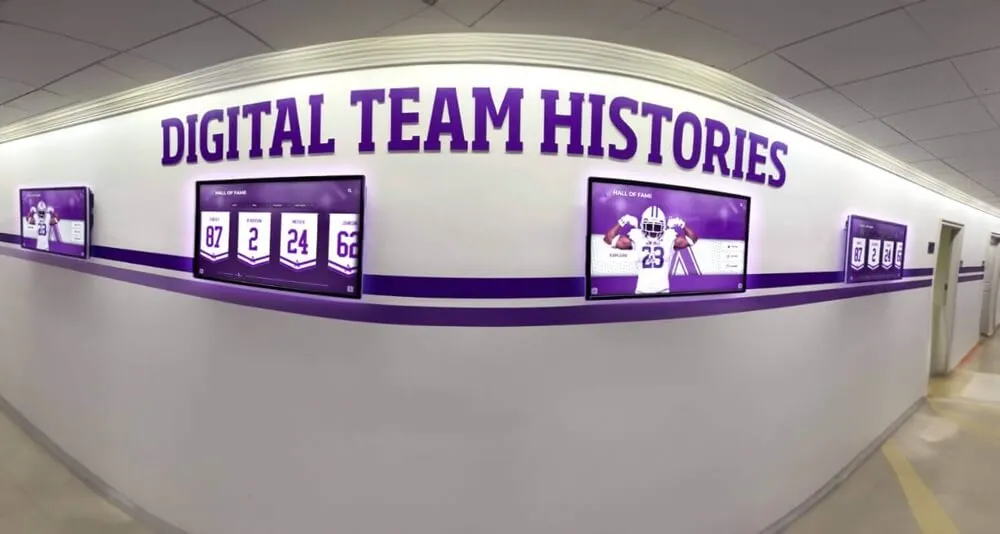
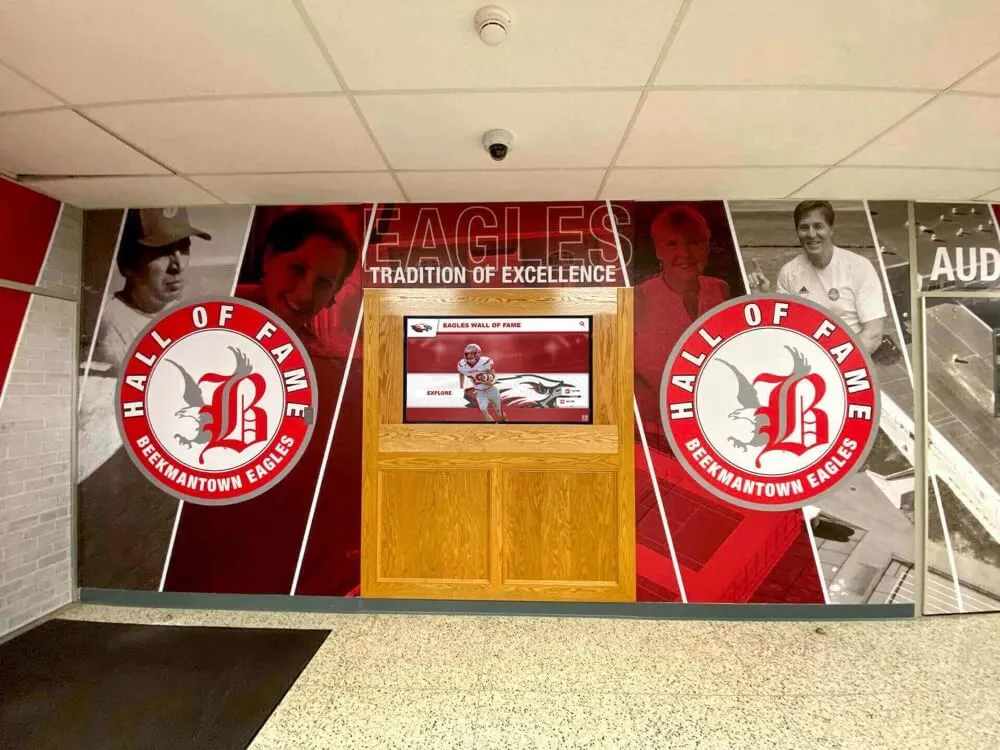
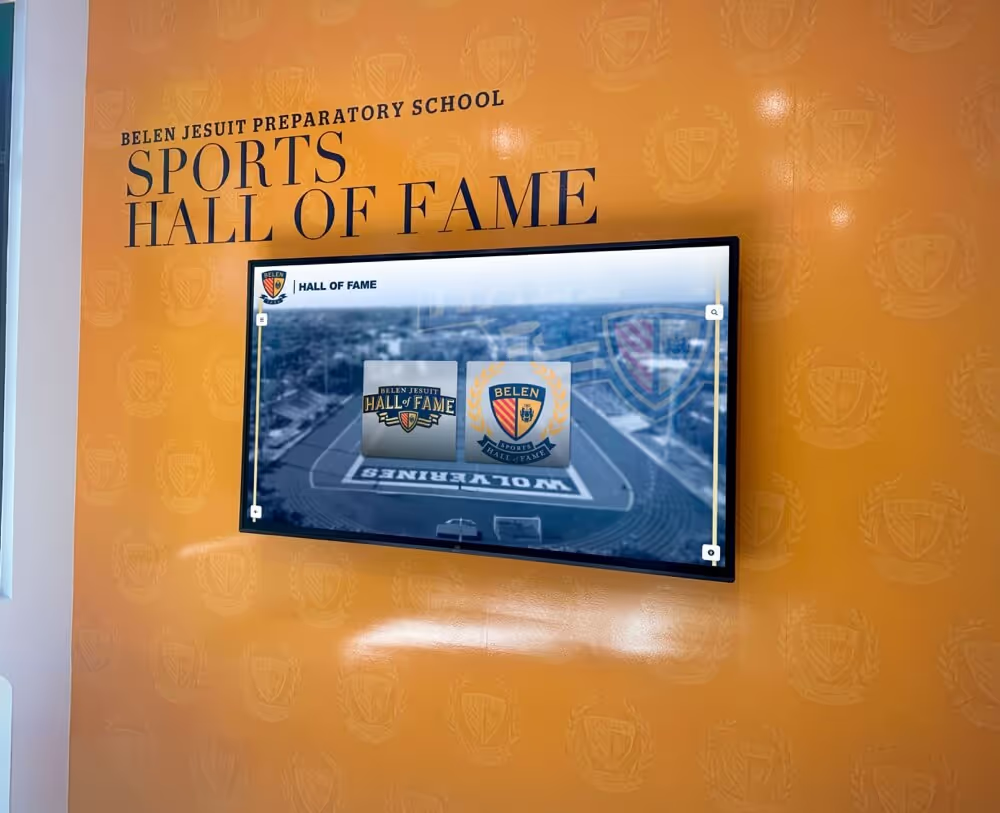
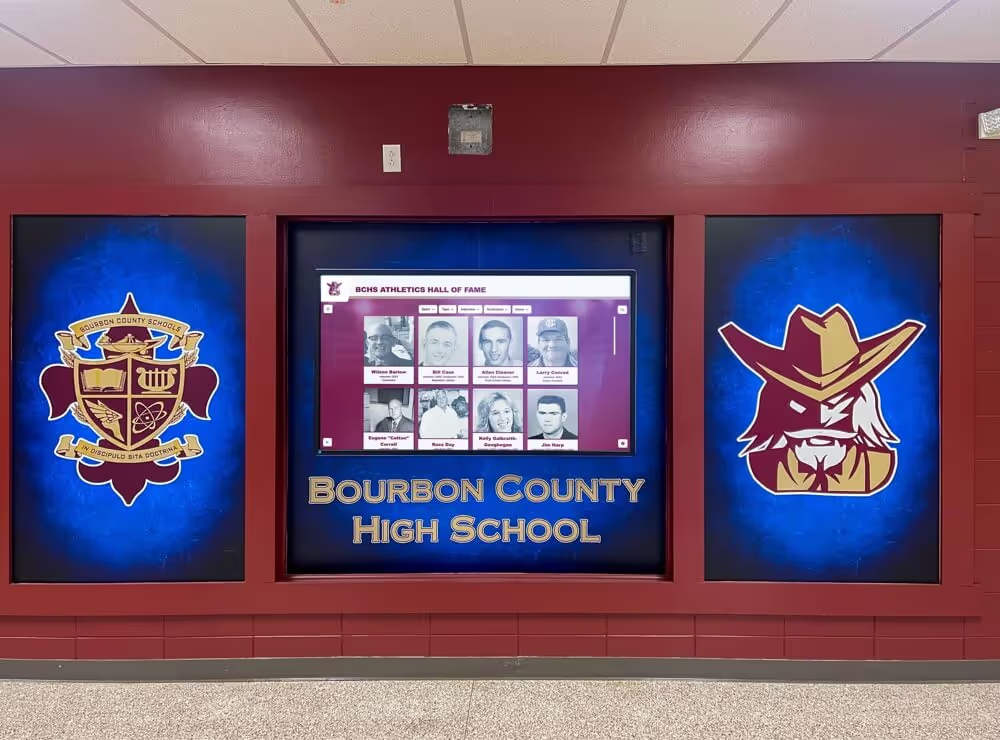
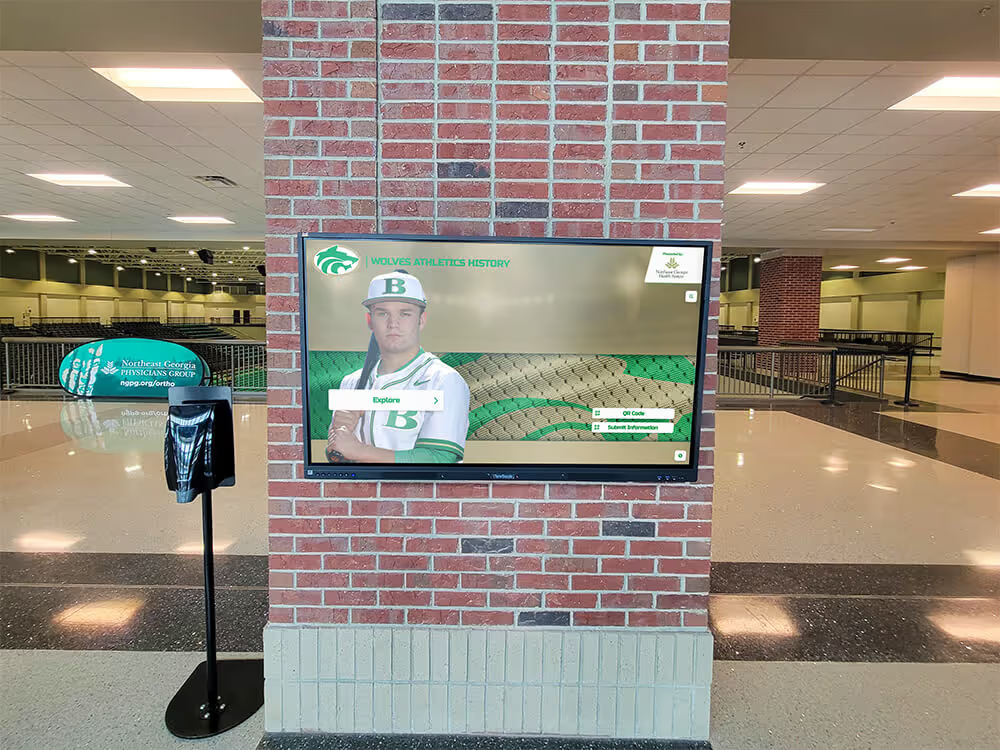
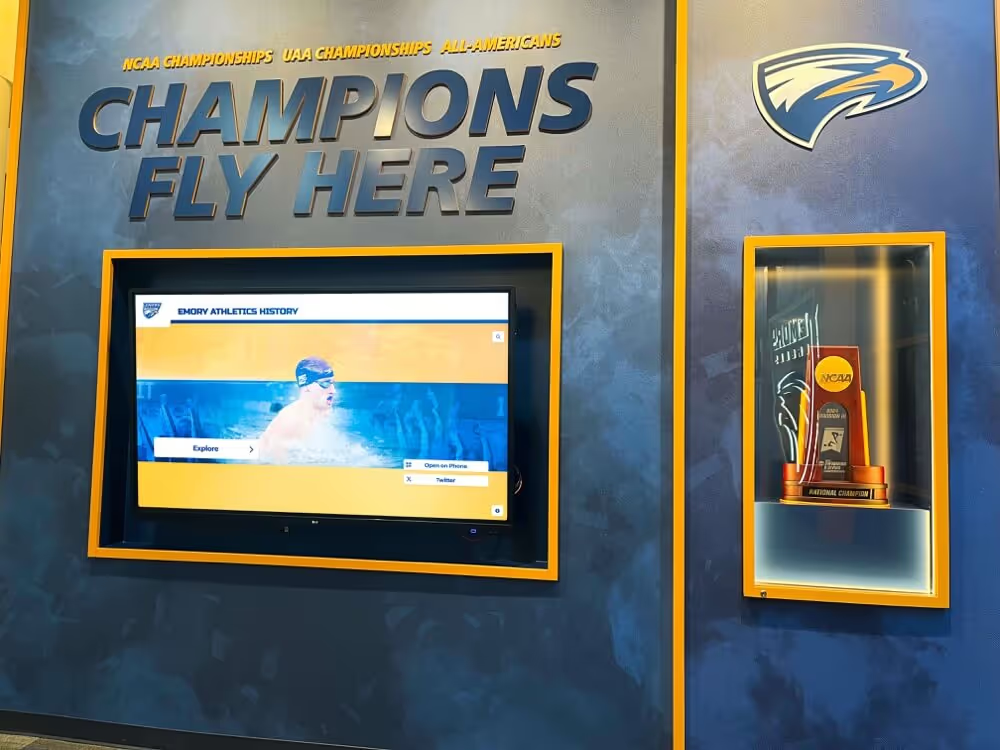
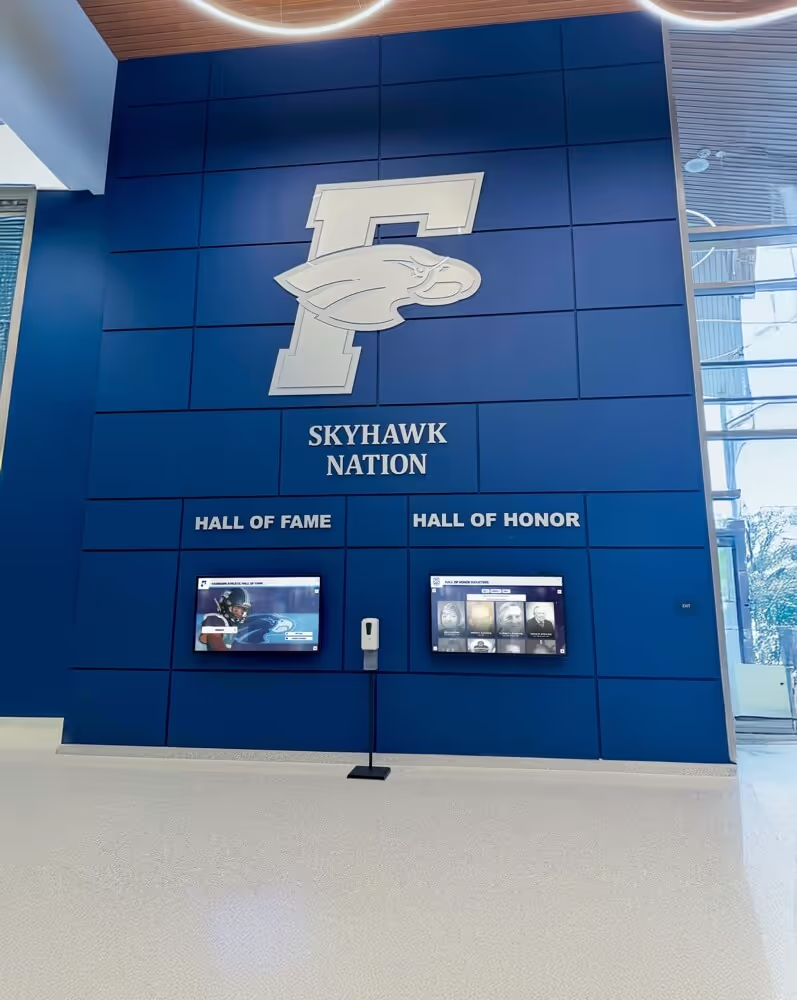
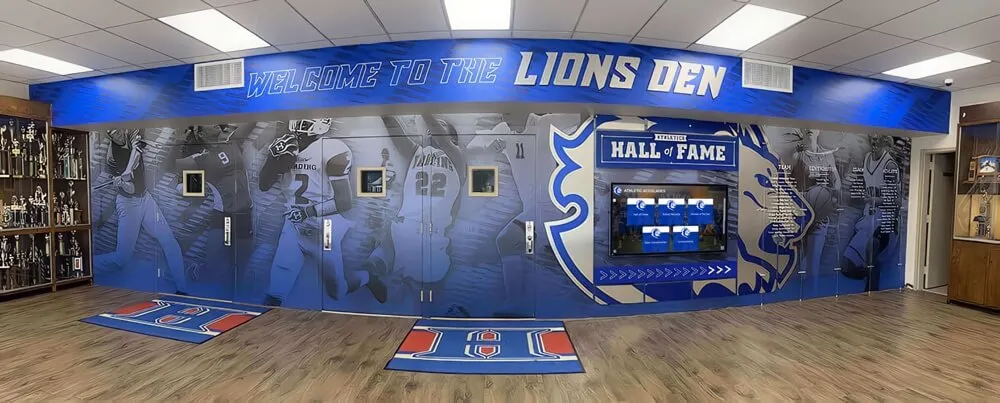
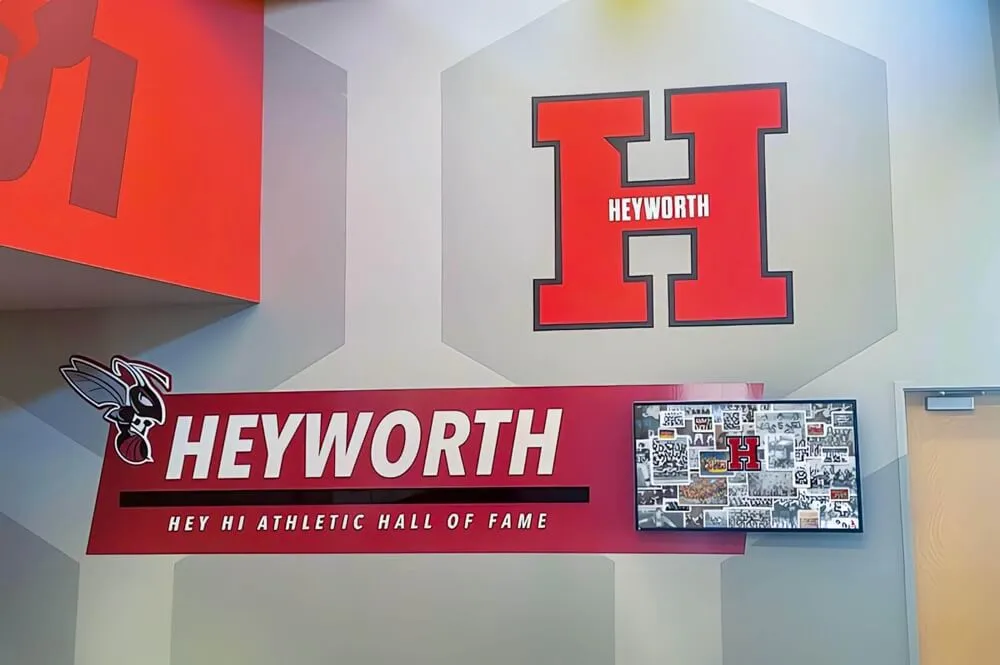
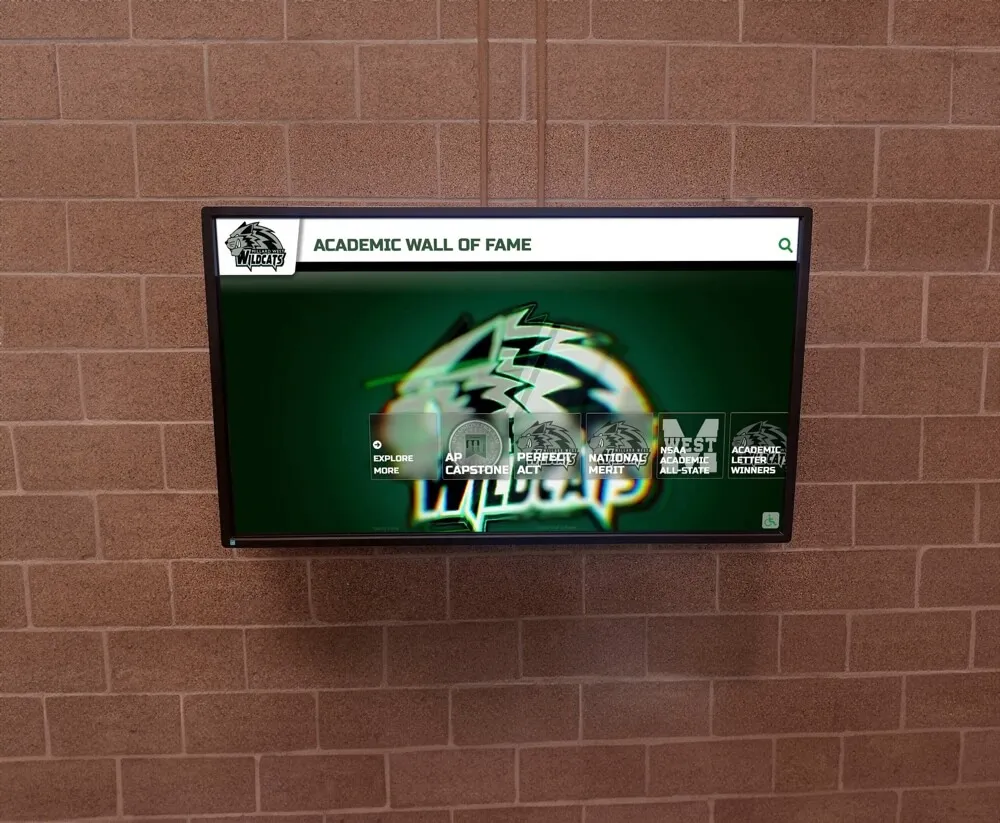
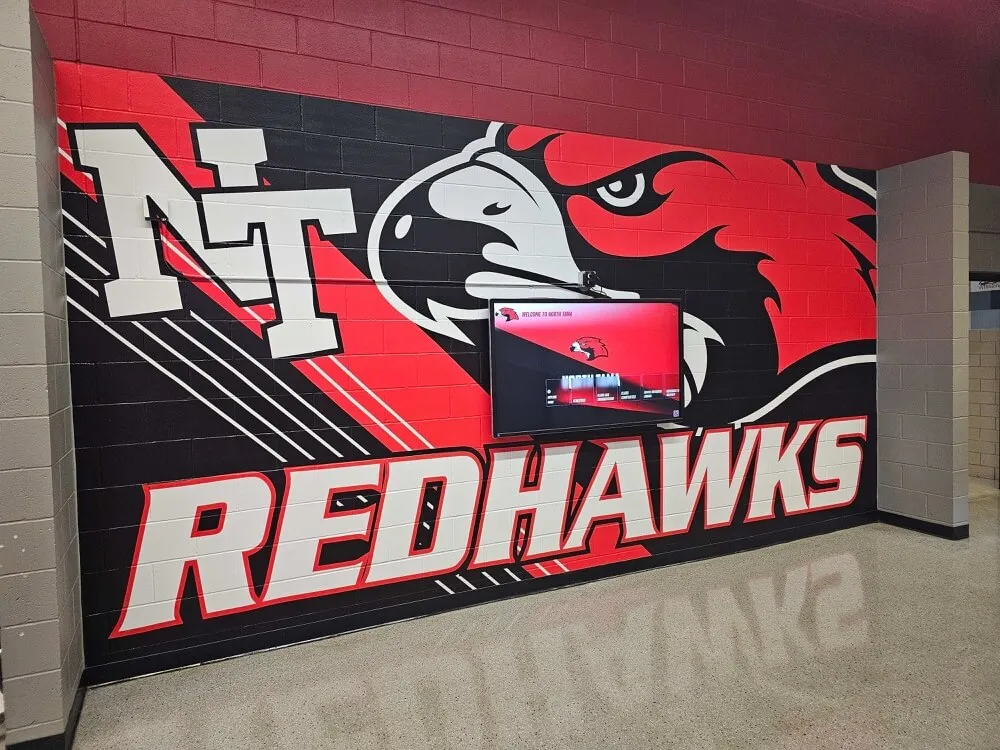
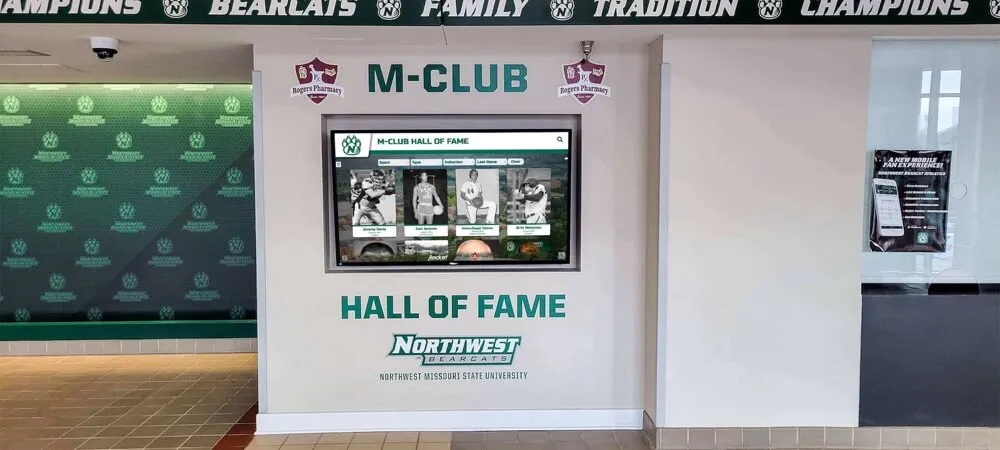
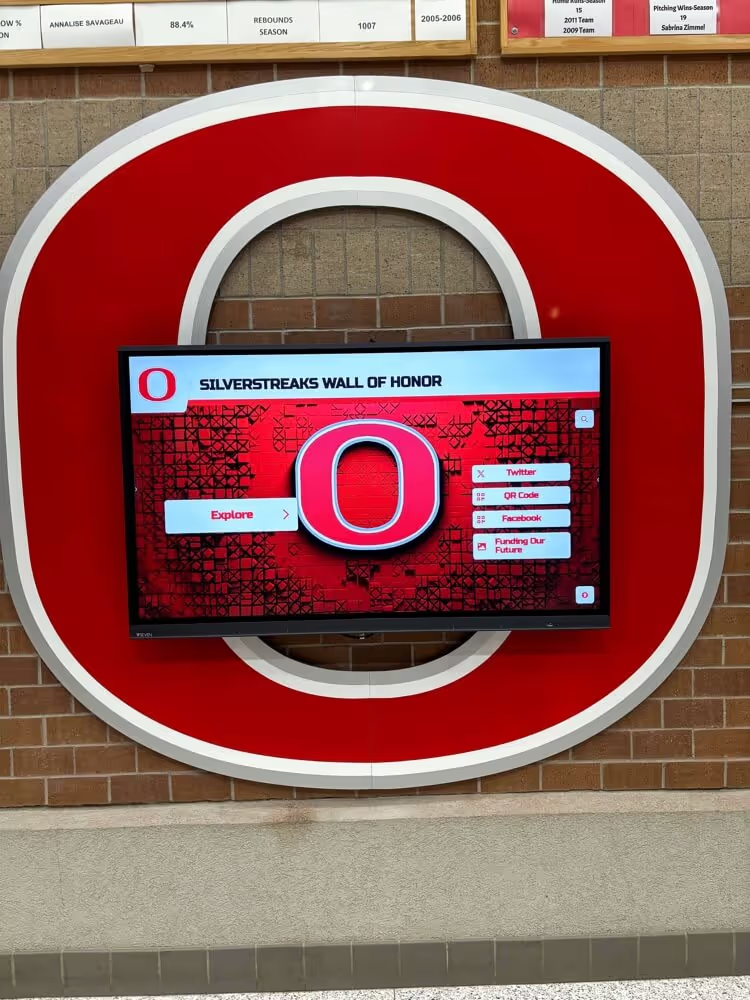
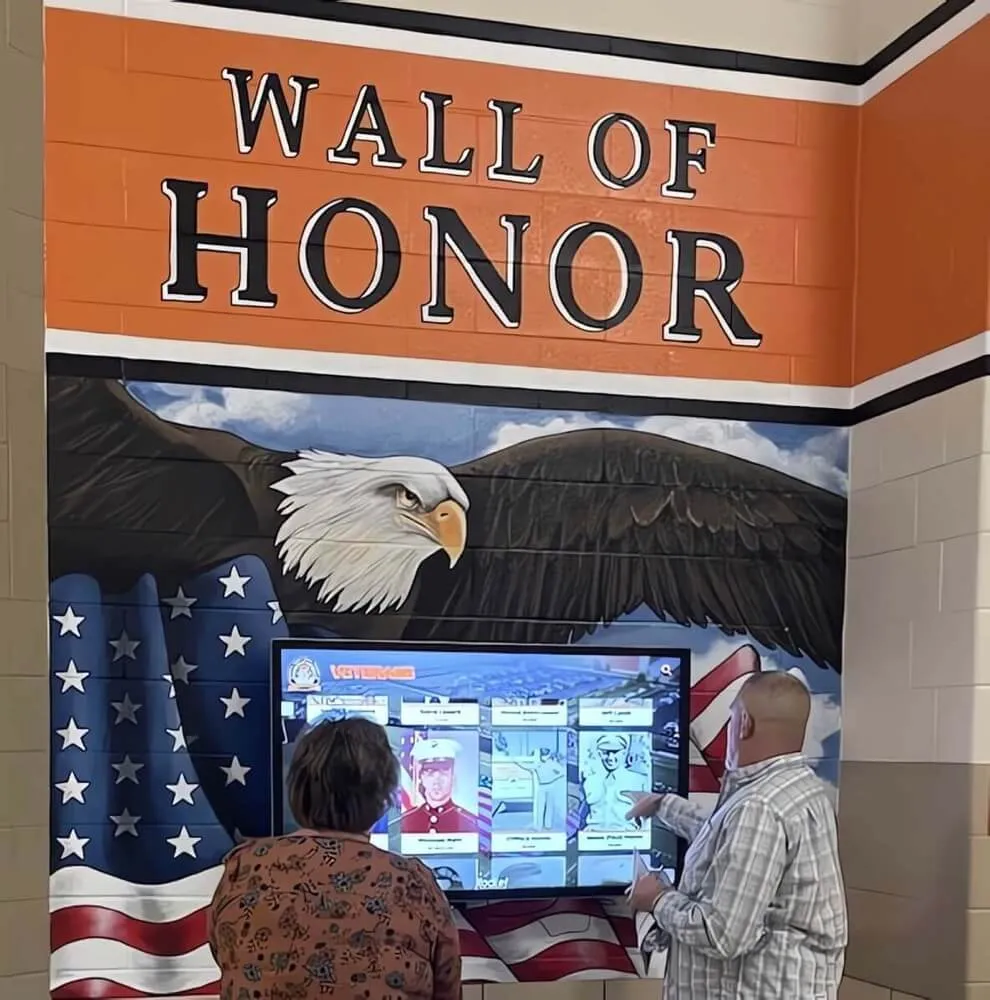
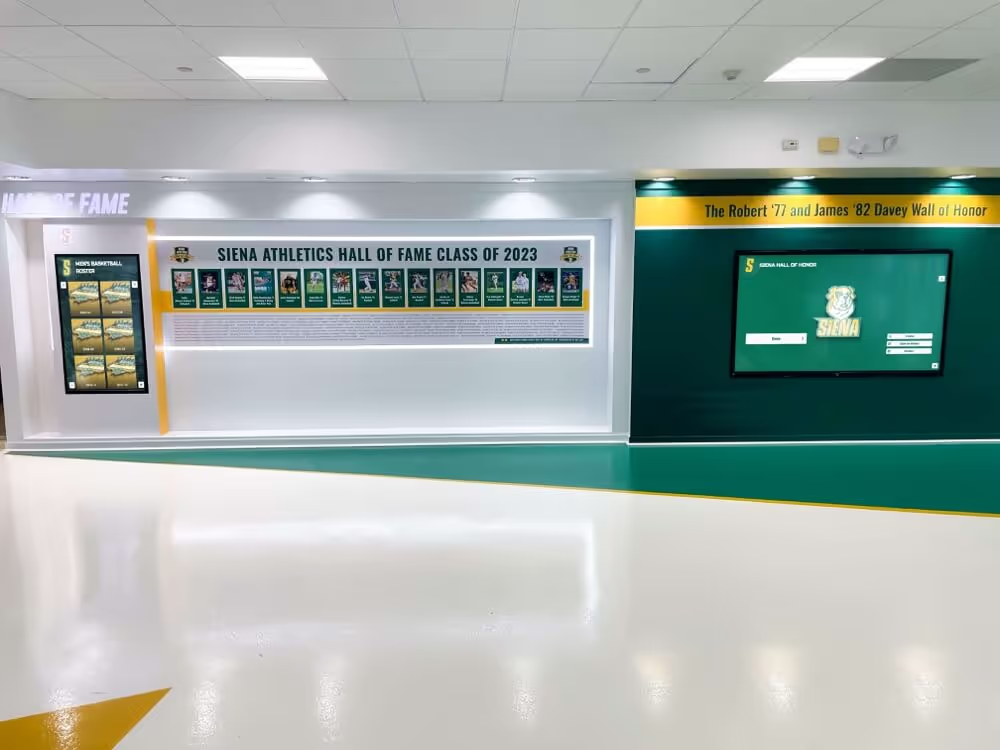
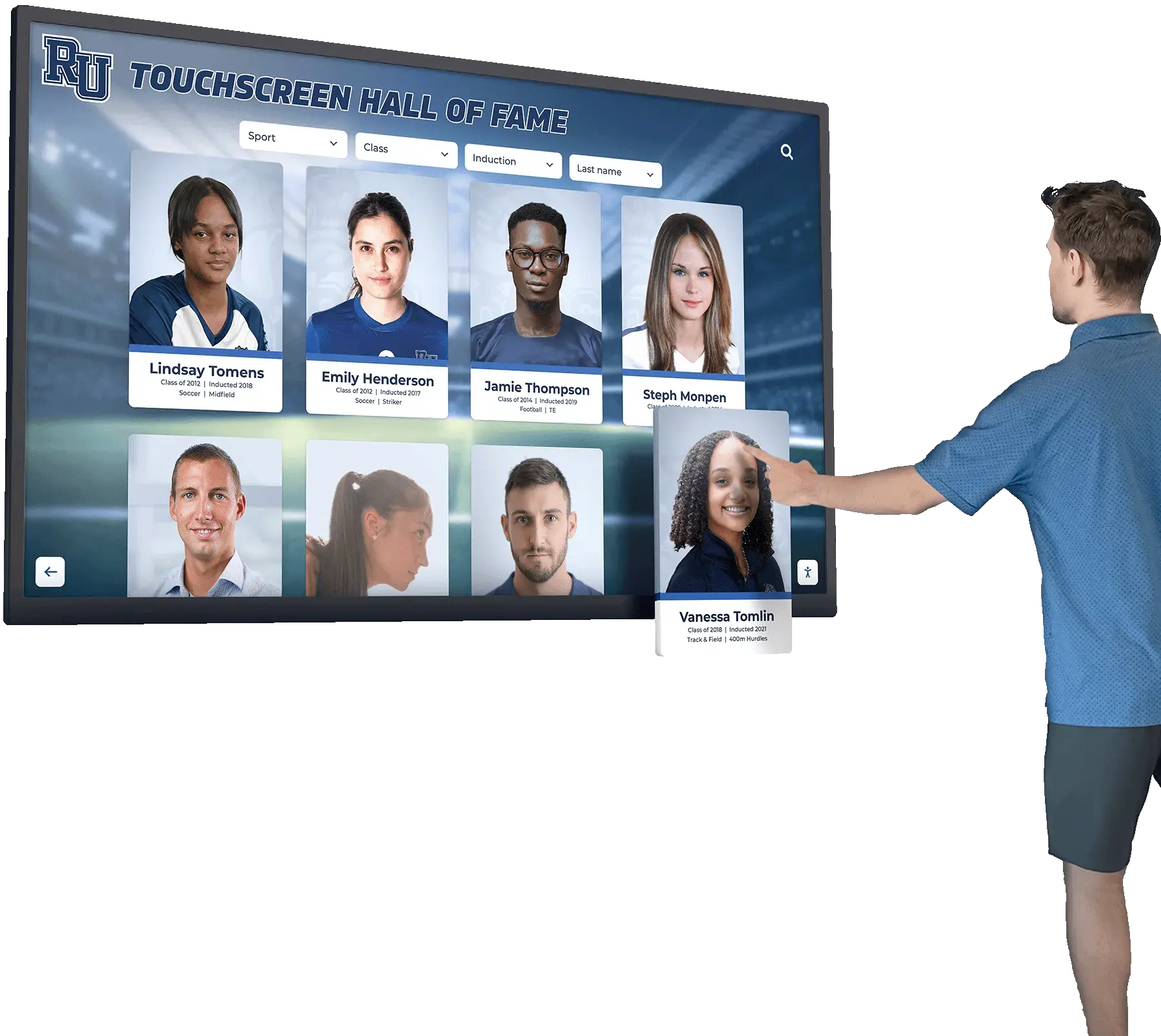
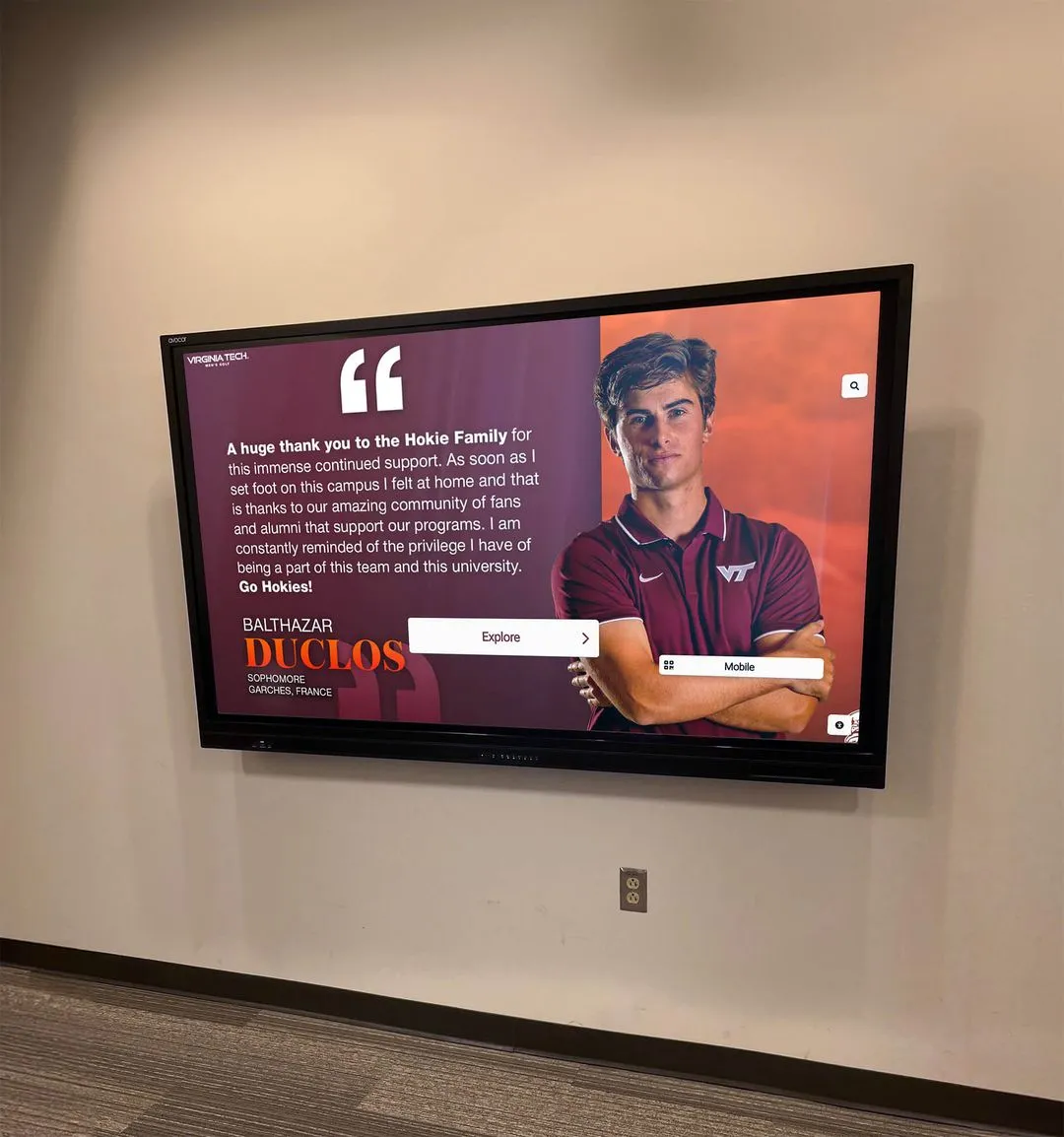
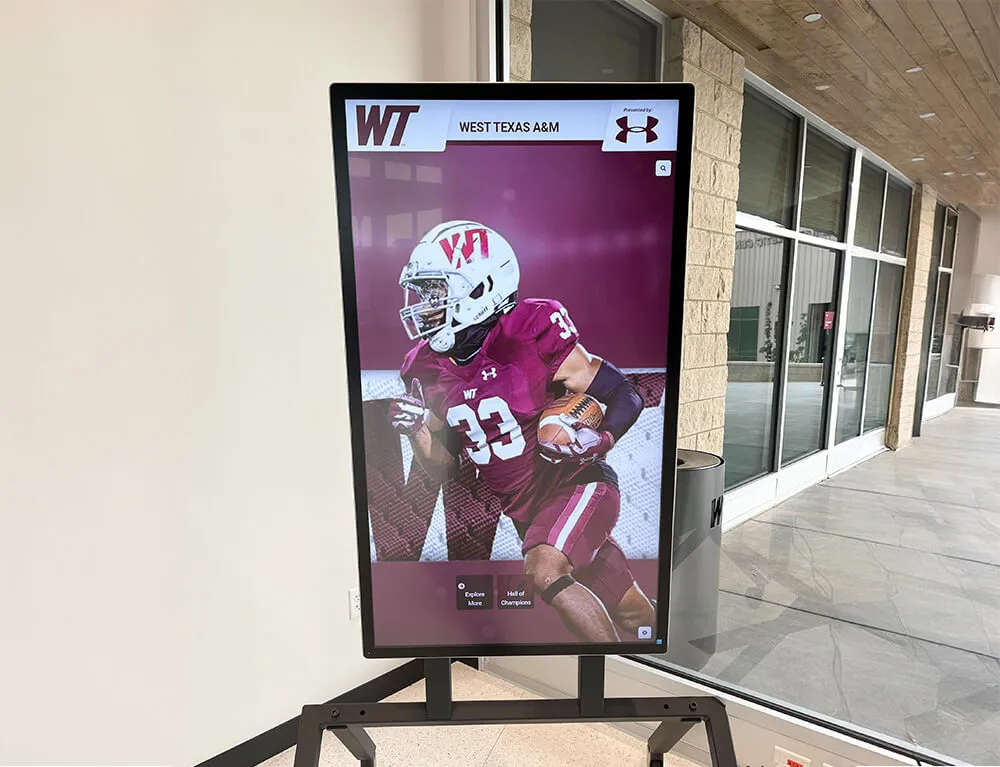
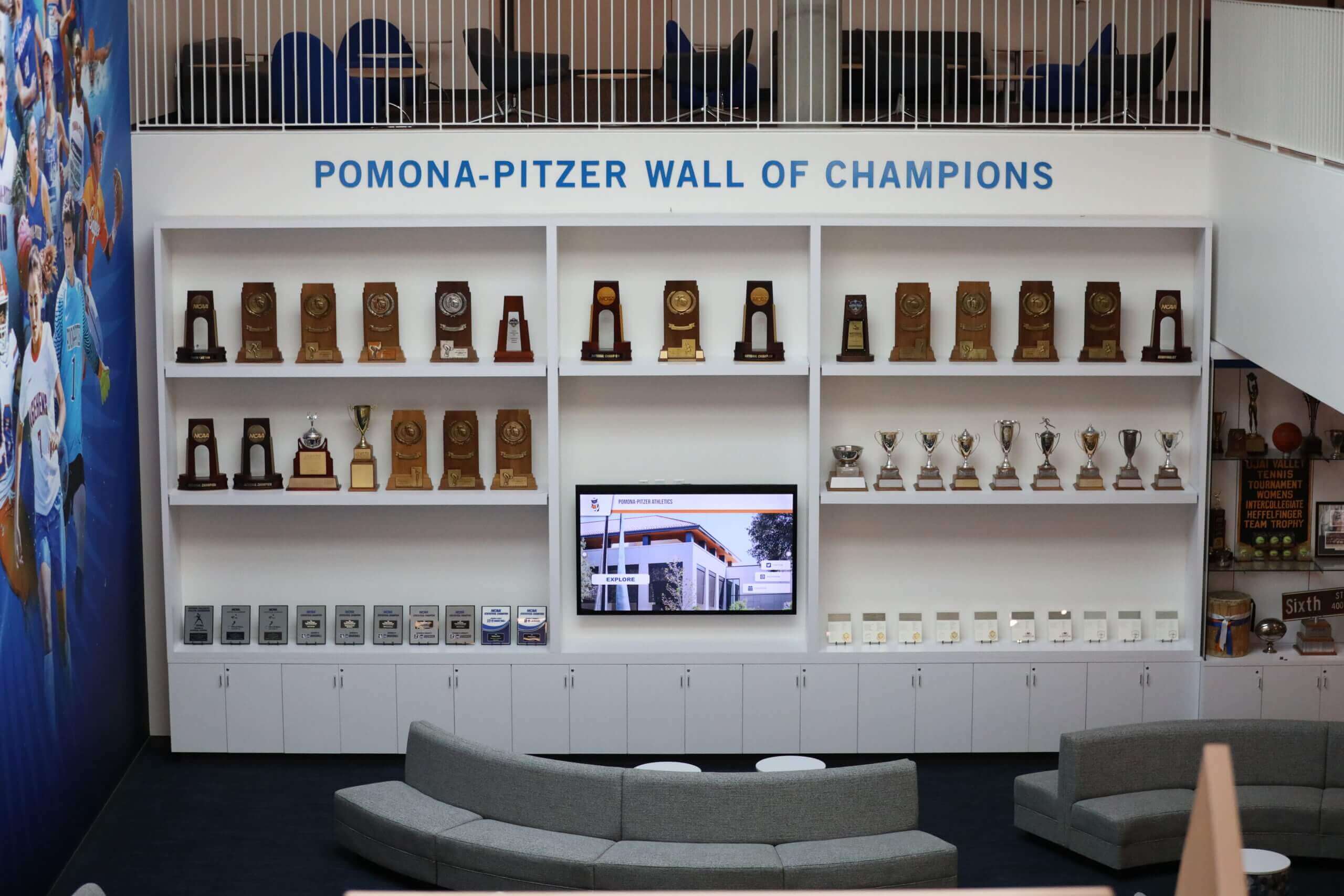
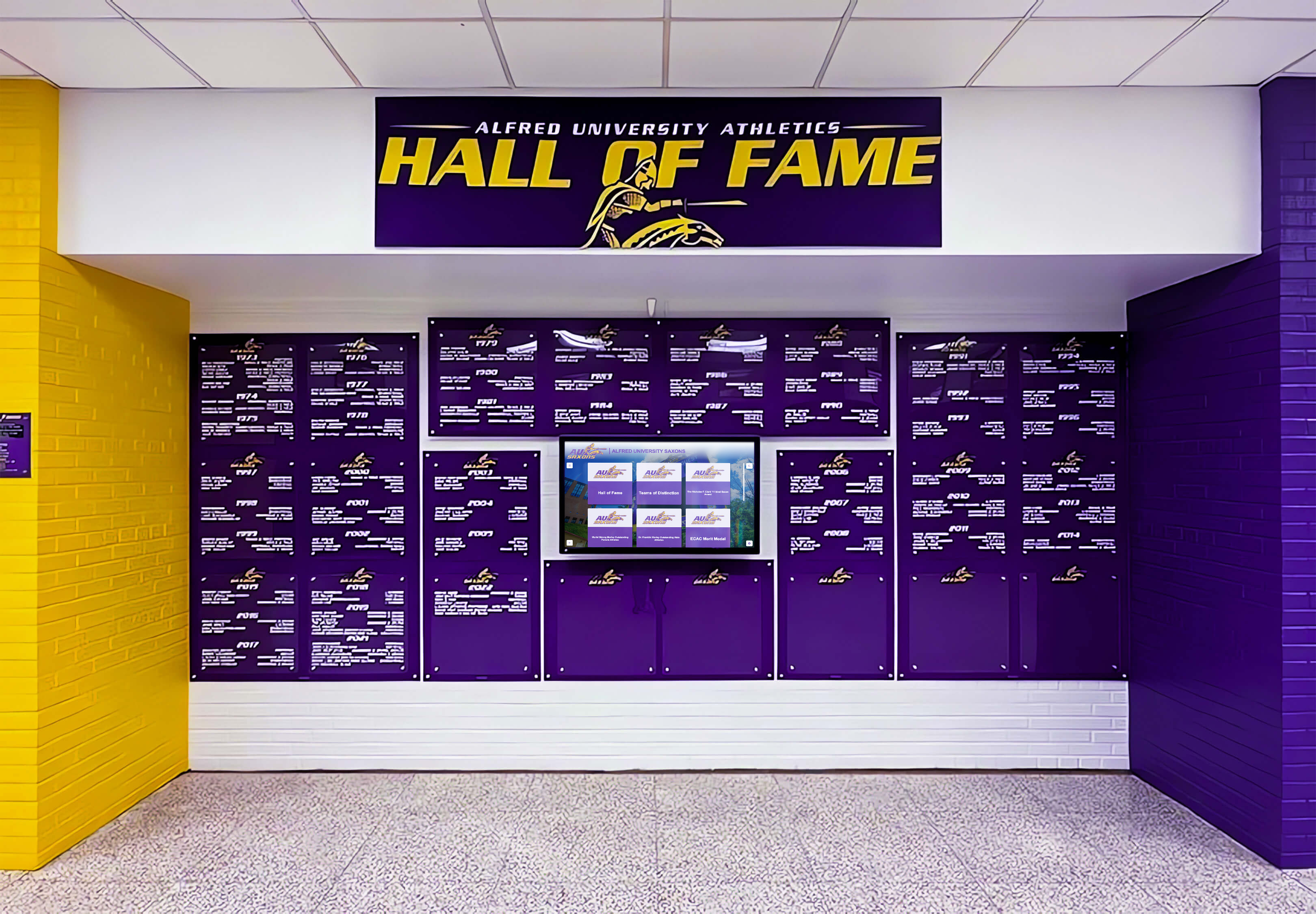
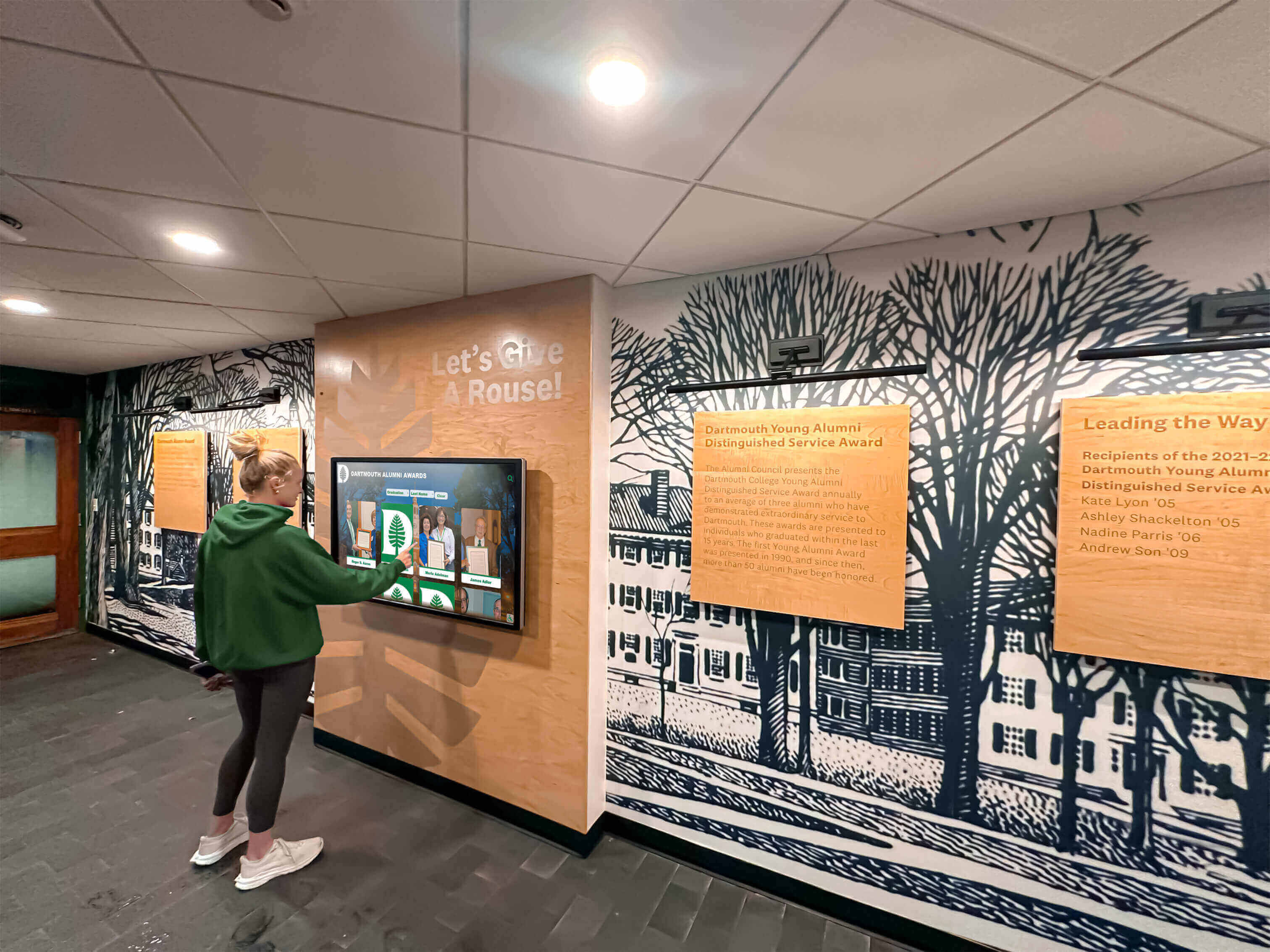
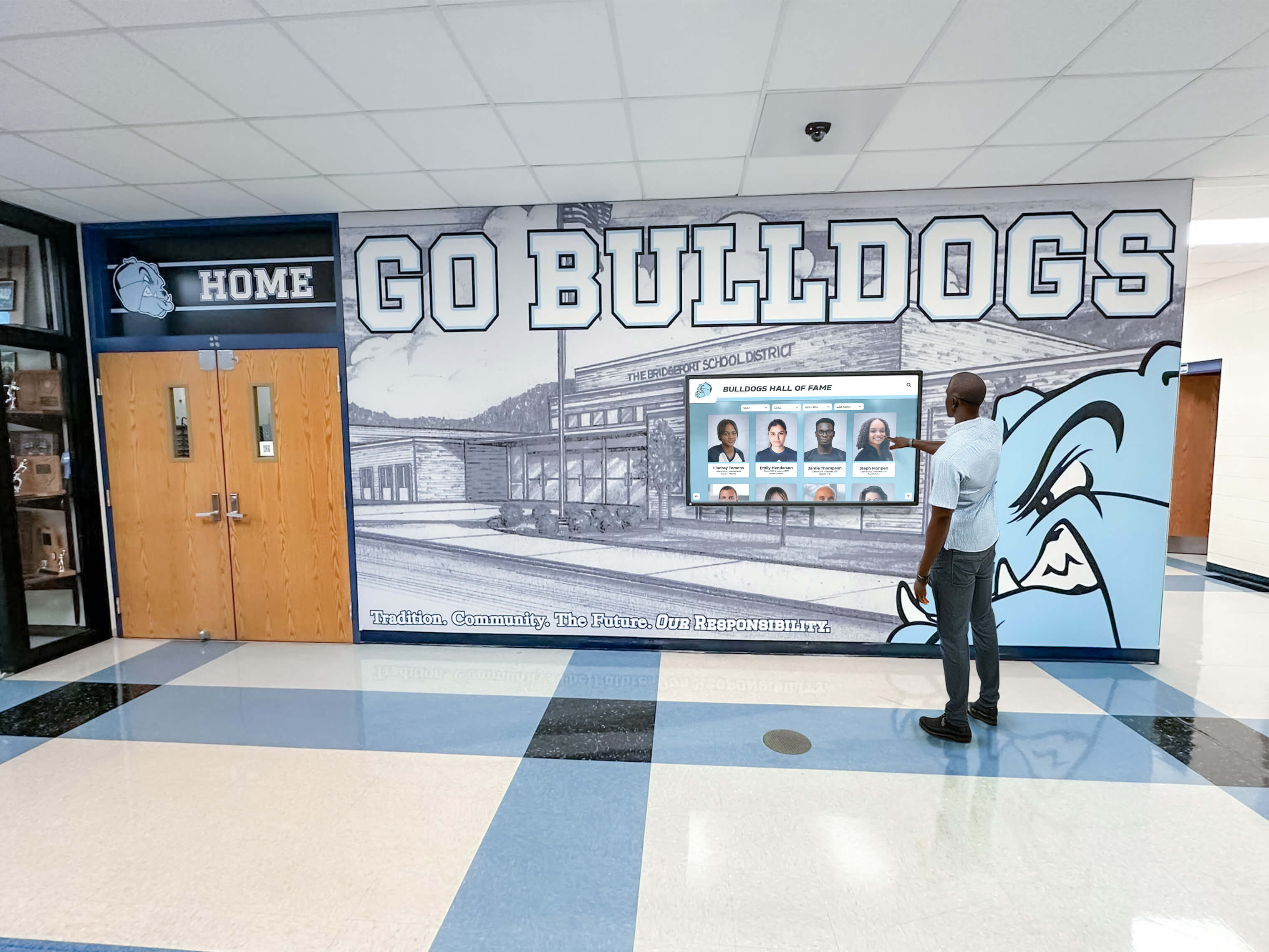
Interactive touchscreen displays transform how tennis programs celebrate achievement. Unlike static trophy cases with limited space, digital systems accommodate unlimited athletes across multiple years without space constraints. These displays might showcase complete career statistics and records, photo galleries from matches and team activities, video highlights of championship points or matches, interactive browsing by year, achievement type, or athlete name, and automatic updates adding new accomplishments throughout seasons.
Strategic placement in school athletic lobbies, tennis facility clubhouses, or athletic hallways ensures continuous visibility. Athletes, families, alumni, and prospective players naturally engage with these displays during unstructured time, building program pride through ongoing exposure to achievement celebration.
Modern platforms designed specifically for athletic recognition—like those provided by Rocket Alumni Solutions—offer comprehensive content management, intuitive interfaces requiring minimal technical expertise, web-based access extending recognition beyond physical locations, and analytics tracking engagement and demonstrating recognition value. These purpose-built solutions prove particularly valuable for programs wanting sophisticated digital recognition without dedicating staff to complex technical administration.
Social Media Recognition
Social media extends recognition reach throughout communities and beyond. Effective social media recognition includes match day highlights and results, individual athlete spotlights with photos and statistics, milestone achievement announcements, behind-the-scenes practice content, senior tributes celebrating careers, and team culture and bonding moments.
The key is consistency and authenticity—regular posts celebrating diverse achievements generate more impact than sporadic updates focusing only on top performers. Tag athletes and families to encourage sharing, extending recognition visibility through their networks.
Program Websites and Digital Archives
Maintain comprehensive recognition records on program websites including all-time records and career leaders, year-by-year team rosters and results, individual athlete profiles with career statistics, photo galleries from each season, championship and award history, and season highlight videos. These digital archives create permanent recognition accessible to current athletes, alumni revisiting their careers, and prospective players exploring program history and culture.
Tennis-Specific Digital Recognition Ideas
Beyond general athletic recognition, tennis programs have unique digital recognition opportunities leveraging sport-specific characteristics.
Interactive Match Statistics Database
Create searchable databases where users can explore head-to-head records between athletes, individual match results across seasons, performance statistics by opponent or venue, championship match histories, or career progression tracking. This statistical depth engages tennis enthusiasts and creates discovery opportunities beyond passive viewing.
Video Highlight Integration
Tennis produces highlight-worthy moments—championship points, incredible rallies, clutch performances. Digital recognition platforms can integrate video highlights linked to athlete profiles, match results, or championship achievements. Visitors exploring a senior’s career achievements can watch their championship-winning point from freshman year—creating emotional connections impossible with text-only recognition.
Alumni Connection Features
Tennis often creates lifelong connections among athletes. Digital recognition platforms can facilitate alumni engagement through commenting on current team news, sharing career updates and accomplishments, mentoring current athletes, or organizing alumni matches and reunions. This ongoing engagement extends recognition value beyond active playing careers.
Recruiting and Program Promotion
Comprehensive digital recognition serves recruiting purposes for competitive programs. Prospective athletes and families exploring programs can discover detailed achievement histories, team culture through photos and videos, career trajectory examples from current and former athletes, and program values through awards and recognition emphasis. Strong recognition systems communicate program quality and culture more effectively than generic recruiting materials.
Budget Considerations for Tennis Award Programs
Award programs span enormous cost ranges. Understanding options at different price points helps programs celebrate athletes meaningfully within financial constraints.
Minimal Budget ($0-$200)
DIY Certificates: Design professional certificates using free templates and quality cardstock printing. Costs typically run $0.25-$1 per certificate depending on paper quality and printing method.
Handwritten Recognition Letters: Personalized letters from coaches to athletes and families acknowledging specific contributions become treasured keepsakes requiring only time investment. Include specific match memories, qualities that made them valuable, and wishes for future success.
Social Media Recognition: Comprehensive social media recognition costs nothing beyond time. Create consistent highlight posts, athlete spotlights, and achievement announcements throughout and after seasons.
Digital-Only Programs: Program websites or free platforms provide recognition visibility without physical award costs. Create athlete profiles, post season summaries, and maintain permanent achievement records accessible to current and future team members.
Community Sponsorship: Local businesses often sponsor youth and school sports awards in exchange for recognition and community goodwill. Approach tennis facilities, sporting goods stores, or general community businesses about funding awards or ceremony costs.
Mid-Range Budget ($200-$800)
Quality Trophies and Plaques: Traditional trophies from specialty vendors typically cost $15-$50 per item depending on size and customization. Order standard designs with program logos and customize with annual engraving plates.
Custom Tennis Awards: Consider tennis-specific awards like engraved tennis balls or rackets, miniature court displays, or sport-themed trophies that reflect tennis culture rather than generic designs.
Team Gifts: Many athletes value useful items over trophies—team apparel, equipment bags, water bottles, or training gear featuring achievement recognition through printing or embroidery.
Enhanced Ceremonies: Invest in ceremony quality—venue rental for nicer locations, catering for recognition dinners or receptions, professional programs or presentation materials, or multimedia production including season highlight videos.
Combination Physical-Digital: Pair modest physical awards with digital recognition providing lasting visibility. Certificate awards gain significance when accompanied by permanent digital recognition profiles ensuring achievements remain visible beyond ceremony moments.
Premium Budget ($800-$3,000+)
Custom Engraved Awards: High-quality crystal awards, custom plaques, or distinctive tennis-specific designs provide premium recognition appropriate for major achievements. Budget $50-$150 per premium award.
Traveling Trophies: Invest in substantial traveling trophies remaining with programs while annual plaques add recipient names permanently. These prestigious awards create program traditions while distributing costs across multiple years.
Digital Recognition Systems: While initial costs run higher, comprehensive digital recognition displays provide multi-year value recognizing hundreds of athletes over system lifespans. Consider these permanent installations celebrating tennis programs comprehensively.
Premium Ceremonies: Formal recognition dinners at quality venues with professional catering, guest speakers (college coaches, professional players, program alumni), professional photography and videography, and elaborate presentation materials create memorable experiences families value beyond physical awards themselves.
Permanent Facility Recognition: Championship banners, painted program records, or dedicated recognition walls in tennis facilities create lasting visibility while honoring achievement permanently.

Common Tennis Award Program Challenges and Solutions
Even well-designed recognition programs encounter predictable challenges. Anticipating common obstacles helps programs navigate them successfully.
Challenge: Balancing Individual and Team Recognition
The Problem: Tennis’s individual-team nature creates tension between celebrating star singles players versus team contributions. Programs risk either over-focusing on top performers or creating participation-trophy systems where excellence receives insufficient acknowledgment.
Solutions: Implement diverse recognition categories ensuring both individual excellence and team contribution receive acknowledgment. Create specific team awards like “Most Team Points Contributor” recognizing athletes who consistently won matches for team scoring. Emphasize team context during individual recognition—acknowledging MVP not just for personal excellence but for how they elevated entire programs. Consider peer-nominated awards allowing teammates to recognize contributions statistics don’t capture.
Challenge: Limited Budget in Smaller Programs
The Problem: Many tennis programs operate with minimal budgets, making comprehensive award programs feel financially impossible.
Solutions: Focus on recognition significance over cost. Handwritten letters from coaches often mean more than generic trophies. Social media recognition costs nothing while providing visibility traditional awards lack. Partner with booster clubs or parents organizations for award sponsorship. Start with minimal core awards—MVP, Most Improved, Coaches Award, Senior Recognition—and expand as resources allow. Consider digital recognition platforms with modest monthly costs providing unlimited recognition capacity impossible with physical awards.
Challenge: Small Team Sizes
The Problem: Small tennis teams (6-10 athletes) make extensive award lists feel forced, with some athletes potentially receiving multiple awards while creating insufficient distinction.
Solutions: Implement focused award programs matching team size—perhaps 4-6 meaningful awards plus universal recognition like senior acknowledgment and participation certificates. Emphasize certificate-based recognition enabling customization describing each athlete’s unique contribution without requiring distinctive awards for every category. Consider rotating award categories year-to-year based on season storylines—implementing leadership awards when standout leaders emerge, but focusing on improvement or sportsmanship in seasons where those qualities defined team narratives.
Challenge: Year-Round Program Recognition Timing
The Problem: Tennis programs operating year-round without clear seasons struggle to identify appropriate recognition timing. Waiting until calendar year-end risks delayed recognition losing motivational impact for accomplishments months earlier.
Solutions: Implement periodic recognition aligned with natural program breaks—perhaps fall indoor season recognition, spring outdoor season recognition, and summer tournament circuit recognition. Supplement seasonal recognition with ongoing celebration through digital displays automatically updating with new accomplishments and social media recognition within days of achievements occurring. Consider having both seasonal and annual awards, recognizing immediate accomplishments while preserving year-end recognition for cumulative achievement.
Leveraging Recognition for Program Building
Effective recognition programs serve purposes beyond simply acknowledging past achievement—they build stronger programs for the future.
Recruiting and Program Promotion
Comprehensive recognition attracts prospective athletes and families. When recruits visit programs or explore websites, visible celebration of achievement communicates program values and quality. Digital recognition systems showcasing career trajectories demonstrate how programs develop athletes across multiple years. Social media recognition reaching prospective athletes creates impressions long before formal recruiting conversations begin.
Alumni Engagement
Recognition creates lasting connections between programs and former athletes. Alumni revisiting their achievements through digital platforms maintain emotional connections years after graduation. Recognition ceremonies inviting alumni create mentoring opportunities between current and former players. Programs celebrating historical achievement through permanent displays honor legacy while building pride that translates into volunteer coaching, donations, and advocacy.
Fundraising and Donor Cultivation
Recognition programs can integrate donor acknowledgment alongside athlete celebration. Digital displays can include donor-funded scholarships or awards, facility naming recognition, or booster club supporter acknowledgment. This integration demonstrates how community support directly enables athlete recognition, strengthening fundraising efforts while celebrating achievement. Explore strategies through resources on modern donor recognition that complement athletic programs.
Building Team Culture and Identity
Recognition defines what programs value. Awards celebrating sportsmanship reinforce cultural expectations about integrity. Leadership recognition encourages athletes to invest in teammates beyond their individual success. Improvement awards communicate that growth matters as much as innate talent. Thoughtfully designed recognition systems actively shape program culture by celebrating behaviors and qualities programs want to cultivate.
Taking Action: Building Your Tennis Recognition Program
For tennis programs ready to establish new recognition programs or enhance existing traditions, start with these practical steps.
Assess Your Current Recognition
Honestly evaluate existing recognition practices: What achievements currently receive recognition, and what’s overlooked? Which athletes receive acknowledgment, and are there patterns suggesting some contributions go uncelebrated? How visible is current recognition to athletes, families, and broader communities? What do athletes, parents, and program supporters say about existing recognition? How much staff time does current recognition consume, and is it sustainable?
This assessment creates baseline understanding of strengths to preserve and gaps to address.
Define Your Recognition Philosophy
Articulate clear principles guiding recognition decisions: Will you prioritize absolute achievement, improvement, or both? How will you balance individual performance with team contribution? Should recognition celebrate only top performers or create pathways for broader recognition? What character qualities deserve equal emphasis alongside performance? How should recognition reflect program mission and values?
Philosophy clarity ensures recognition programs remain aligned with broader program goals rather than existing as disconnected reward systems.
Start Simple and Expand Thoughtfully
Rather than attempting comprehensive systems immediately, consider phased implementation:
Phase 1: Core Awards
- Establish 4-6 essential awards (MVP, Most Improved, Coaches Award, Sportsmanship, Senior Recognition)
- Implement efficient selection processes and documentation
- Create basic but consistent ceremony or presentation approach
Phase 2: Expanded Categories
- Add performance-specific recognition (statistical leaders, milestone achievements)
- Implement character and role-specific awards
- Enhance ceremony production quality
Phase 3: Digital Integration
- Deploy digital recognition displays or comprehensive websites
- Integrate social media recognition systematically
- Create permanent statistical and historical archives
This phased approach builds sustainable programs incrementally rather than implementing complex systems that become overwhelming and get abandoned.
Consider Purpose-Built Recognition Solutions
While programs can implement recognition using basic tools, specialized platforms designed specifically for athletic recognition often provide significantly better experiences with less administrative burden. Modern digital recognition solutions like Rocket Alumni Solutions offer intuitive content management requiring minimal training, comprehensive athlete profiles telling complete career stories, automated statistical tracking and record-keeping, web-based access extending recognition beyond facility walls, engaging touchscreen displays for high-traffic locations, and analytics demonstrating program value and engagement.
These purpose-built solutions prove particularly valuable for programs wanting sophisticated recognition without dedicating staff to extensive technical administration or content management complexity.
Conclusion: Creating Tennis Recognition That Matters
Tennis athletes invest tremendous effort—countless practice hours, physical conditioning, technical development, mental toughness training, and competitive commitment—pursuing excellence in one of sport’s most demanding individual and team environments. Thoughtful recognition validates this investment while celebrating achievements that define successful programs.
The most effective tennis recognition programs share common characteristics regardless of budget or program size. They acknowledge diverse contributions ensuring players across all positions and roles have recognition opportunities. They balance individual achievement with team success, honoring both. They celebrate character and sportsmanship alongside performance statistics. They leverage efficient systems making comprehensive recognition sustainable rather than burdensome. They evolve based on program needs and athlete feedback rather than remaining static traditions.
As tennis programs enter 2026, recognition opportunities have never been richer. Digital technologies enable comprehensive recognition impossible with traditional plaques and trophies alone. Interactive displays showcase complete career statistics, match videos, and achievement stories engaging athletes, families, and communities. Social media extends recognition visibility far beyond those attending ceremonies. Web-based platforms create permanent archives accessible to current athletes, alumni, and future generations.
Yet technology represents only an enabler, not the essence of effective recognition. At its core, tennis recognition succeeds when it authentically communicates what coaches, teammates, and programs already know: that athletes accomplish remarkable things through dedication and perseverance, that achievement deserves celebration, and that every player brings unique value worthy of acknowledgment.
Whether you’re running a small high school program or a large competitive club, whether you have minimal budget or substantial resources, the key lies in implementing recognition systems that genuinely celebrate tennis excellence, remain manageable for busy coaches and administrators, and create the program culture where all athletes can thrive and feel valued.
Ready to transform how your tennis program recognizes achievement? Modern solutions like Rocket Alumni Solutions provide comprehensive platforms designed specifically for athletic recognition, offering intuitive content management, engaging interactive displays, unlimited recognition capacity, and proven approaches helping tennis programs build the recognition culture their athletes deserve. Your tennis players invest countless hours pursuing excellence—comprehensive recognition ensures those achievements receive the celebration and lasting visibility that strengthens team culture for current athletes and future generations.