



Every competitive swimmer knows the feeling: staring at a pool record board before a race, seeing times set years or decades ago, calculating exactly what it would take to claim that record. Swimming’s precise timing creates uniquely tangible targets—you need to touch the wall at 51.69 seconds instead of 51.70. This specificity transforms abstract concepts of excellence into concrete, measurable goals that drive training intensity and competitive focus.
Swimming records exist at multiple levels: world records that redefine what humans can achieve in water, Olympic records that represent the sport’s greatest stage, national records demonstrating country-by-country excellence, and local pool and school records that inspire developing athletes. Understanding this complete ecosystem of swimming achievement provides perspective on how records function as motivational tools while preserving athletic history.
This comprehensive guide explores swimming world records from international legends through school-level recognition systems: the history of record-breaking performances, current record holders across all events, how records are officially verified and maintained, and modern solutions that enable schools to track, display, and celebrate their own swimming achievements with the same professionalism as international governing bodies.
The Evolution of Swimming World Records
Swimming records have evolved dramatically across the sport’s competitive history, reflecting advances in technique, training science, pool technology, and equipment regulations.
Early Era: Establishing Competitive Swimming (1900s-1950s)
Competitive swimming’s formalization began in the early 20th century, establishing standardized distances and timing methods that enabled meaningful record comparisons.
Pioneering Performances:
Johnny Weissmuller dominated 1920s swimming before gaining fame as Hollywood’s Tarzan. His 100-meter freestyle world record of 57.4 seconds (1927) represented revolutionary performance for the era. Weissmuller’s achievements popularized competitive swimming and established freestyle technique fundamentals still taught today.
Early Timing Challenges:
Initial world records relied on hand timing, introducing inevitable imprecision. Stopwatch operators’ reaction times created variations of 0.1-0.3 seconds between recorded attempts. This variability meant early records might reflect timing luck as much as actual performance differences.
Pool Standardization:
Early competitive swimming occurred in pools of varying lengths, temperatures, and configurations. The establishment of standard 50-meter and 25-meter pool specifications enabled fair record comparisons. Turn configurations, lane widths, and depth requirements were standardized to ensure equivalent competitive conditions.

Golden Era Development (1960s-1980s)
Mid-century decades saw systematic training approaches and improved technique dramatically lowering record times.
Mark Spitz’s Munich Dominance (1972):
Mark Spitz’s seven gold medals at the 1972 Munich Olympics, each in world-record time, represented unprecedented Olympic swimming excellence. His performances demonstrated that systematic training could produce excellence across multiple events simultaneously. Spitz’s achievements stood as the Olympic swimming gold standard for 36 years.
East German Swimming System:
East Germany’s state-sponsored swimming program dominated women’s swimming through the 1970s-1980s, setting numerous world records. While later revelations about systematic doping tainted these achievements, the era demonstrated how coordinated national training systems could systematically develop elite performance.
Technique Revolutions:
This period saw significant technique refinements: the dolphin kick’s integration into butterfly and underwater phases, improved flip-turn mechanics, and refined stroke techniques that reduced drag and improved propulsion efficiency. Each innovation contributed incremental improvements that accumulated into substantially faster times.
Modern Technology Era (1990s-2000s)
Late 20th century advances introduced technology that transformed competitive swimming and record progression.
Electronic Timing Systems:
Automatic timing systems using touchpads eliminated human reaction time variability. Timing accuracy improved to hundredths of seconds (0.01), then thousandths for internal systems, creating far more precise record determination. Close finishes that previously produced disputed outcomes now yielded definitive results.
Underwater Camera Analysis:
Video technology enabled detailed stroke analysis impossible with poolside observation alone. Coaches could examine technique frame-by-frame, identifying inefficiencies and optimization opportunities. This analytical capability accelerated technique refinement and training specificity.
High-Tech Swimsuit Era (2008-2009):
Polyurethane and neoprene full-body swimsuits created unprecedented buoyancy and compression, dramatically reducing drag. The 2008-2009 period saw 130+ world records broken as swimmers rushed to set marks before FINA banned the suits. This controversial period demonstrated equipment’s significant impact on performance while raising questions about fairness and record authenticity.
Post-Suit Regulation (2010-Present):
FINA’s 2010 regulations restricted swimsuit materials, coverage area, and thickness. Male swimmers could wear suits only from waist to knees; female swimmers from shoulders to knees. These regulations aimed to return focus to athletic ability rather than technological advantage. Current records reflect performances within these standardized equipment rules.
Current Swimming World Records: The Fastest Humans in Water
World records represent the absolute frontier of swimming achievement. Current marks reflect decades of technique refinement, training science, and individual excellence.
Men’s World Records (Long Course - 50m Pools)
Freestyle Events:
The freestyle represents swimming’s most fundamental stroke, allowing any style but universally performed as front crawl due to its efficiency.
- 50m Freestyle: 20.91 seconds - César Cielo (Brazil, 2009)
- Super-suit era record; fastest textile-suit time: 20.91 seconds
- 100m Freestyle: 46.80 seconds - David Popovici (Romania, 2024)
- Current fastest man in the pool; set at World Championships
- 200m Freestyle: 1:42.00 - Paul Biedermann (Germany, 2009)
- Super-suit era record remaining unbroken 16+ years
- 400m Freestyle: 3:40.07 - Paul Biedermann (Germany, 2009)
- Another enduring super-suit record
- 800m Freestyle: 7:32.12 - Zhang Lin (China, 2009)
- 1500m Freestyle: 14:31.02 - Sun Yang (China, 2012)
- Longest Olympic pool event; ultimate endurance test
Backstroke Events:
Backstroke requires swimmers to maintain straight backward orientation while generating forward propulsion.
- 50m Backstroke: 22.11 seconds - Kliment Kolesnikov (Russia, 2021)
- 100m Backstroke: 51.60 seconds - Thomas Ceccon (Italy, 2022)
- 200m Backstroke: 1:51.92 - Aaron Peirsol (USA, 2009)
Breaststroke Events:
Breaststroke’s unique simultaneous arm pull and frog kick make it swimming’s slowest but most technically demanding stroke.
- 50m Breaststroke: 25.95 seconds - Adam Peaty (Great Britain, 2017)
- 100m Breaststroke: 56.88 seconds - Adam Peaty (Great Britain, 2019)
- Peaty’s dominance includes being first under 57 seconds
- 200m Breaststroke: 2:05.48 - Zac Stubblety-Cook (Australia, 2022)
Butterfly Events:
Butterfly combines powerful dolphin kick with simultaneous overhead arm recovery, demanding significant upper body strength and coordination.
- 50m Butterfly: 22.27 seconds - Andriy Govorov (Ukraine, 2018)
- 100m Butterfly: 49.45 seconds - Caeleb Dressel (USA, 2021)
- 200m Butterfly: 1:50.73 - Kristóf Milák (Hungary, 2022)
- Milák shattered Michael Phelps’s longstanding record
Individual Medley Events:
Medley events require proficiency across all four strokes in sequence (butterfly, backstroke, breaststroke, freestyle), testing versatile swimming excellence.
- 200m Individual Medley: 1:54.00 - Ryan Lochte (USA, 2011)
- 400m Individual Medley: 4:03.84 - Léon Marchand (France, 2023)
- French sensation breaking Phelps’s Olympic record
Women’s World Records (Long Course - 50m Pools)
Freestyle Events:
Women’s freestyle has seen consistent record progression, with Katie Ledecky dominating distance events while sprint records remain from various eras.
- 50m Freestyle: 23.61 seconds - Sarah Sjöström (Sweden, 2023)
- 100m Freestyle: 51.71 seconds - Sarah Sjöström (Sweden, 2017)
- 200m Freestyle: 1:52.85 - Federica Pellegrini (Italy, 2009)
- 400m Freestyle: 3:55.38 - Ariarne Titmus (Australia, 2023)
- Australian star challenging Ledecky’s distance dominance
- 800m Freestyle: 8:04.79 - Katie Ledecky (USA, 2016)
- 1500m Freestyle: 15:20.48 - Katie Ledecky (USA, 2018)
- Ledecky’s distance records remain untouchable
Backstroke Events:
- 50m Backstroke: 26.86 seconds - Liu Xiang (China, 2018)
- 100m Backstroke: 57.33 seconds - Regan Smith (USA, 2019)
- 200m Backstroke: 2:03.14 - Kaylee McKeown (Australia, 2023)
Breaststroke Events:
- 50m Breaststroke: 29.30 seconds - Benedetta Pilato (Italy, 2021)
- 100m Breaststroke: 1:04.13 - Lilly King (USA, 2017)
- 200m Breaststroke: 2:17.55 - Tatjana Smith (South Africa, 2024)
Butterfly Events:
- 50m Butterfly: 24.43 seconds - Sarah Sjöström (Sweden, 2014)
- Super-suit era record
- 100m Butterfly: 55.48 seconds - Sarah Sjöström (Sweden, 2016)
- 200m Butterfly: 2:01.81 - Liu Yaxin (China, 2009)
Individual Medley Events:
- 200m Individual Medley: 2:06.12 - Kaylee McKeown (Australia, 2023)
- 400m Individual Medley: 4:25.87 - Summer McIntosh (Canada, 2024)
- Canadian teenager emerging as medley force
Relay World Records
Relay events showcase national team depth and cooperative strategy. Record-breaking relay performances often feature multiple individual record holders combining efforts.
Men’s Relays:
- 4x100m Freestyle: 3:08.24 - USA (2023)
- 4x200m Freestyle: 6:58.55 - Great Britain (2009)
- 4x100m Medley: 3:26.78 - USA (2024)
Women’s Relays:
- 4x100m Freestyle: 3:27.42 - Australia (2024)
- 4x200m Freestyle: 7:30.87 - China (2023)
- 4x100m Medley: 3:50.40 - USA (2019)
Legendary Swimming Record Holders
Beyond individual record marks, certain swimmers have defined eras through sustained excellence and multiple record-breaking performances.
Michael Phelps: The Most Decorated Olympian
Michael Phelps’s competitive career (2000-2016) produced achievements unlikely to ever be matched:
Olympic Dominance:
- 28 Olympic medals total (23 gold, 3 silver, 2 bronze)
- 8 gold medals at 2008 Beijing Olympics (breaking Spitz’s single-Games record)
- Individual world records across butterfly, medley, and freestyle events
- Consistency across four Olympic cycles spanning 16 years
Training and Technique:
- Underwater dolphin kicking mastery
- Extraordinary body proportions (6'4" height with 6'7" wingspan)
- Legendary work ethic training 80,000+ meters weekly at peak
- Ability to compete at elite level across multiple events simultaneously
Phelps’s legacy extends beyond records to inspiring an entire generation of swimmers. His achievements demonstrated what sustained commitment combined with physical gifts could accomplish.
Katie Ledecky: Distance Swimming Dominance
Katie Ledecky has redefined what’s possible in women’s distance freestyle since emerging as a 15-year-old Olympic champion in 2012.
Unmatched Distance Excellence:
- Current world records in 800m and 1500m freestyle
- Dominance margins exceptional: winning races by 5-10+ seconds
- Breaking 15:30 in 1500m freestyle (equivalent to sub-4 minute mile breakthrough)
- 10 Olympic medals through 2024 (7 gold, 3 silver)
Signature Achievements:
- Won 800m freestyle at five consecutive World Championships
- Set 800m world record at age 15 (2013), improved it twice more
- First woman under 8:05 in 800m, then under 8:05 multiple times
- Competitive longevity spanning 12+ years at elite level
Ledecky’s records in distance events remain so far ahead of competitors that many experts believe they could stand for decades. Her combination of efficiency, endurance, and competitive consistency creates performances that seem to defy normal human limits.
Caeleb Dressel: Sprint Power
Caeleb Dressel emerged as men’s sprint swimming’s dominant force in the late 2010s-early 2020s.
Sprint Excellence:
- 100m butterfly world record (49.45 seconds, 2021)
- 7 Olympic gold medals across 2020 and 2024 Olympics
- Multiple relay world records as Team USA anchor
- Explosive power combining stroke efficiency with underwater strength
Dressel’s training approach emphasizes high-intensity sprint work and mental preparation, demonstrating how sprint excellence requires different preparation than distance events.
Additional Record-Breaking Legends
Ian Thorpe (Australia): Dominated men’s freestyle in early 2000s; known as “Thorpedo” for his massive feet (size 17) that functioned as natural flippers.
Missy Franklin (USA): Backstroke excellence with Olympic and world championship dominance; 6'2" frame creating ideal backstroke mechanics.
Adam Peaty (Great Britain): Revolutionized breaststroke with unprecedented power; first under 57 seconds in 100m breaststroke.
Sarah Sjöström (Sweden): Sprint and butterfly excellence spanning 15+ year career; multiple world records demonstrating remarkable longevity.
How Swimming World Records Are Verified and Recognized
Swimming’s precise timing systems and strict verification protocols ensure record authenticity and fair recognition.
Official Timing Requirements
Automatic Timing Systems:
World records require automatic timing systems meeting FINA specifications:
- Touchpads at both ends of each lane recording finish times to hundredths of seconds
- Backup manual timing systems for verification
- Video recording of all finishes for review
- Starting blocks with backstroke ledges meeting specifications
- Synchronized timing across all lanes
Timing Accuracy:
Primary automatic timing accurate to 0.01 seconds (hundredths), with internal resolution to 0.001 seconds (thousandths) for precise finish order determination. If automatic timing fails, semi-automatic backup systems provide verification. Only if both automatic systems fail do manual times receive consideration—and manual times cannot establish world records.
Pool and Competition Requirements
Records must occur in pools meeting strict specifications:
Pool Dimensions:
- Long course: 50 meters length, minimum 2 meters depth
- Short course: 25 meters length (separate record category)
- 8 or 10 lanes with standardized lane widths (2.5 meters)
- Water temperature: 25-28°C (77-82°F)
- Lighting meeting minimum standards
Competition Standards:
- FINA-sanctioned competition with certified officials
- Minimum number of qualified timers and judges
- Drug testing protocols for record performances
- Electronic recording and documentation requirements
Record Submission and Verification Process
When potential world records occur, systematic verification ensures authenticity:
Immediate Documentation:
- Automatic timing system captures performance
- Officials review video confirmation
- Head timekeeper verifies backup timing systems
- Announcements made pending official verification
Official Submission:
- Meet director submits record claim to national federation
- National federation verifies compliance with all regulations
- Documentation forwarded to World Aquatics (FINA) for final approval
- World Aquatics reviews timing data, pool certification, competition sanctioning
- Record ratification typically occurs within 4-8 weeks
Anti-Doping Requirements:
All world record performances require drug testing immediately following the event. Positive tests void records even after initial ratification. This protocol ensures that recognized records reflect clean athletic performance.
School Swimming Programs: Creating Local Recognition Systems
While world records capture headlines, school and club swimming programs benefit enormously from tracking and celebrating their own records—creating meaningful benchmarks that inspire developing swimmers.
Why School Swimming Records Matter
Creating Tangible Goals for Athletes:
When a high school sophomore sees that their school’s 100-meter freestyle record stands at 51.2 seconds—a time 4.4 seconds slower than the world record but still extremely fast—that creates an achievable yet challenging target. Goals feel more attainable when they’re set by someone who attended the same school, trained in the same pool, and competed on the same team.
School records demonstrate that excellence is possible within your specific context. This accessibility makes records more motivating than world marks that seem impossibly distant for developing athletes.
Building Program Tradition and Culture:
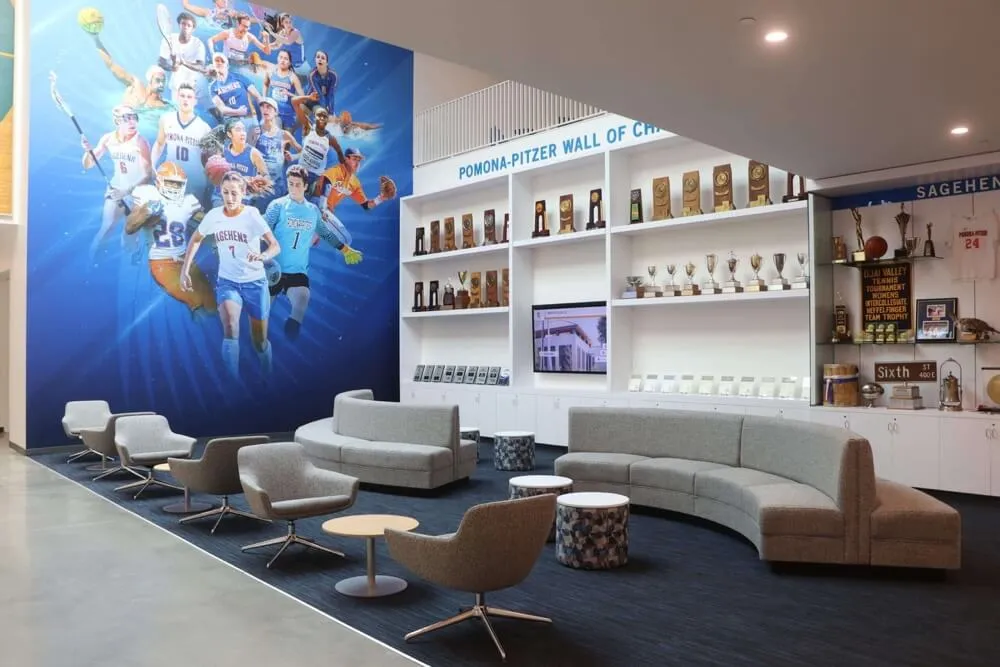
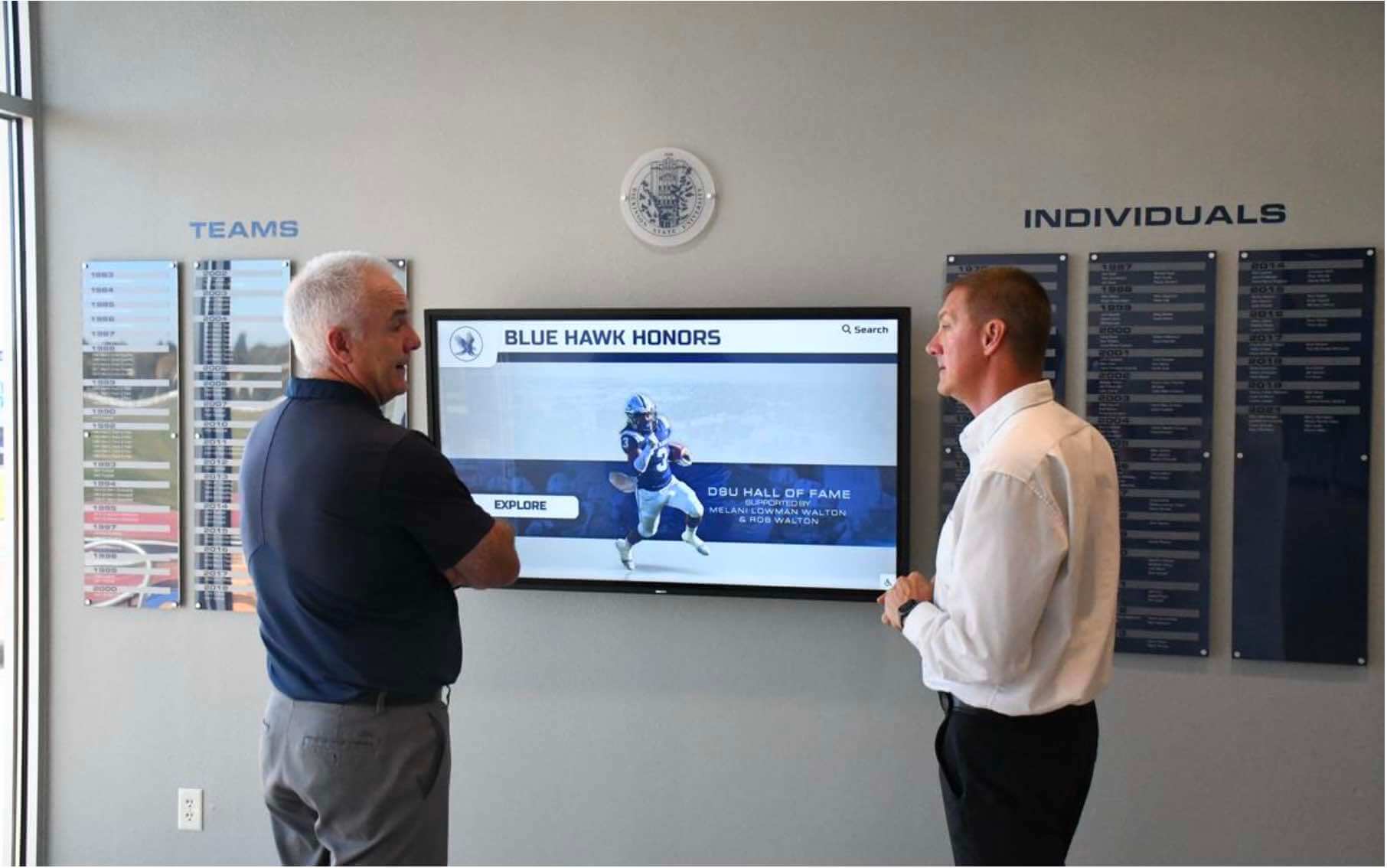
Swimming programs with comprehensive record tracking develop strong traditions. Current swimmers understand they’re part of ongoing legacies connecting past, present, and future generations. Record boards displaying names from decades past create visible continuity demonstrating that today’s efforts contribute to traditions extending beyond individual seasons.
Schools implementing comprehensive swim team recognition systems report stronger team culture, increased participation, and improved competitive performance compared to programs without systematic recognition.
Recruitment and Program Marketing:
Comprehensive record displays provide immediate evidence of program quality to prospective swimmers and families. When families evaluate school options, visible achievement recognition signals commitment to celebrating excellence. Well-maintained record systems suggest organized, professional programs that value athlete contributions.
Essential Records for School Swimming Programs
Comprehensive school swimming programs should track multiple record categories creating recognition opportunities for diverse talent:
Individual Event Records:
- All standard competitive events (50/100/200/500 freestyle, backstroke, breaststroke, butterfly, individual medley)
- Separate boys and girls records
- Both short course (25-yard or 25-meter) and long course (50-meter) where applicable
- Season-best times for current year
Relay Records:
- 200 and 400 freestyle relays
- 200 and 400 medley relays
- Team member names preserved with records
Additional Recognition Categories:
- Most improved swimmers (season-over-season time drops)
- Conference championship qualifiers
- State championship qualifiers and finalists
- All-conference and all-state selections
- Team MVP awards and captain recognition
- Academic all-state swimmers
- Senior class legacy achievements
Traditional vs. Modern Record Display Solutions
Traditional Physical Record Boards:
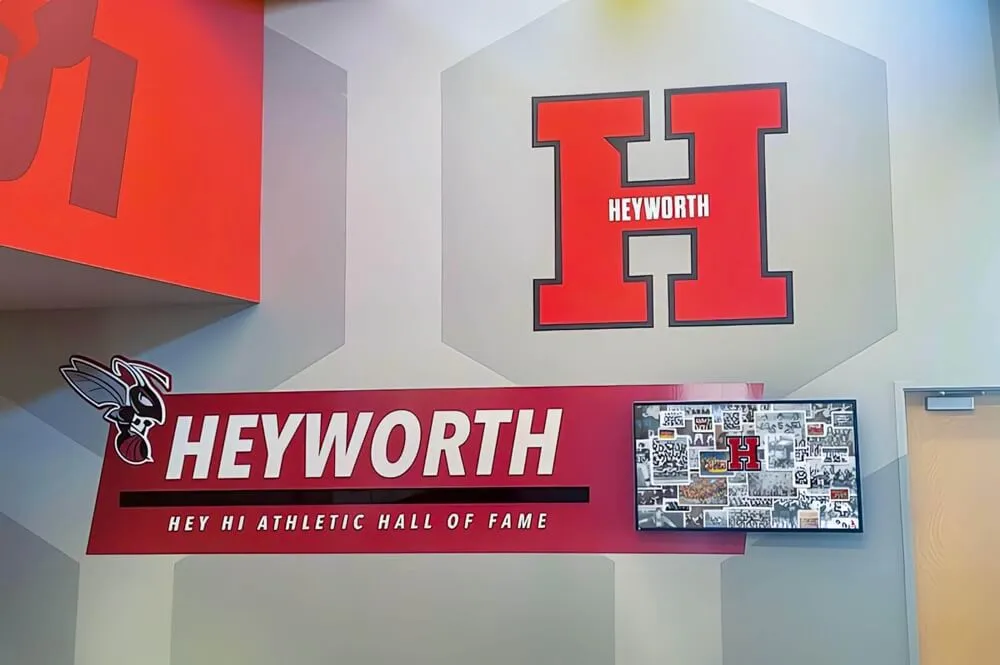
Conventional record boards typically consist of plaques or painted/vinyl lettering displaying records on gymnasium or natatorium walls.
Advantages:
- Permanent visible presence
- No ongoing technology costs
- Simple installation
- Familiar format
Significant Limitations:
- Update Complexity: Changing records requires professional sign services or plaque replacement—expensive and time-consuming processes that often delay recognition by weeks or months
- Space Constraints: Physical wall space limits how many records and achievements can be displayed, forcing difficult decisions about what to include
- Limited Information: Space restrictions typically allow only name, time, and year—no photos, context, or achievement details
- Deterioration: Physical materials fade, peel, and degrade over time, particularly in humid pool environments
Many schools report frustration with traditional boards becoming outdated simply because the effort and expense of updates don’t justify the result. Outstanding performances may not receive proper recognition for an entire season or longer.
Modern Digital Recognition Solutions for Swimming Programs
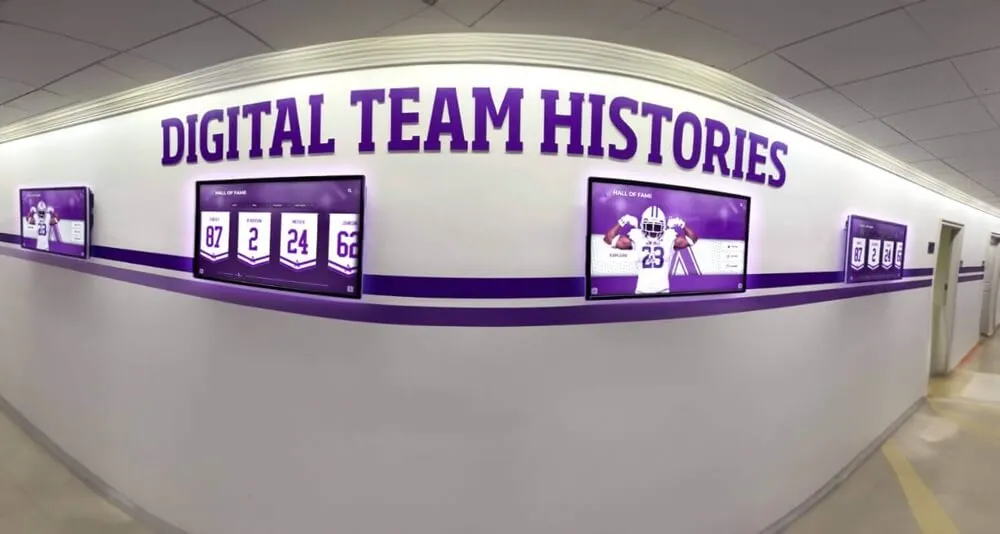
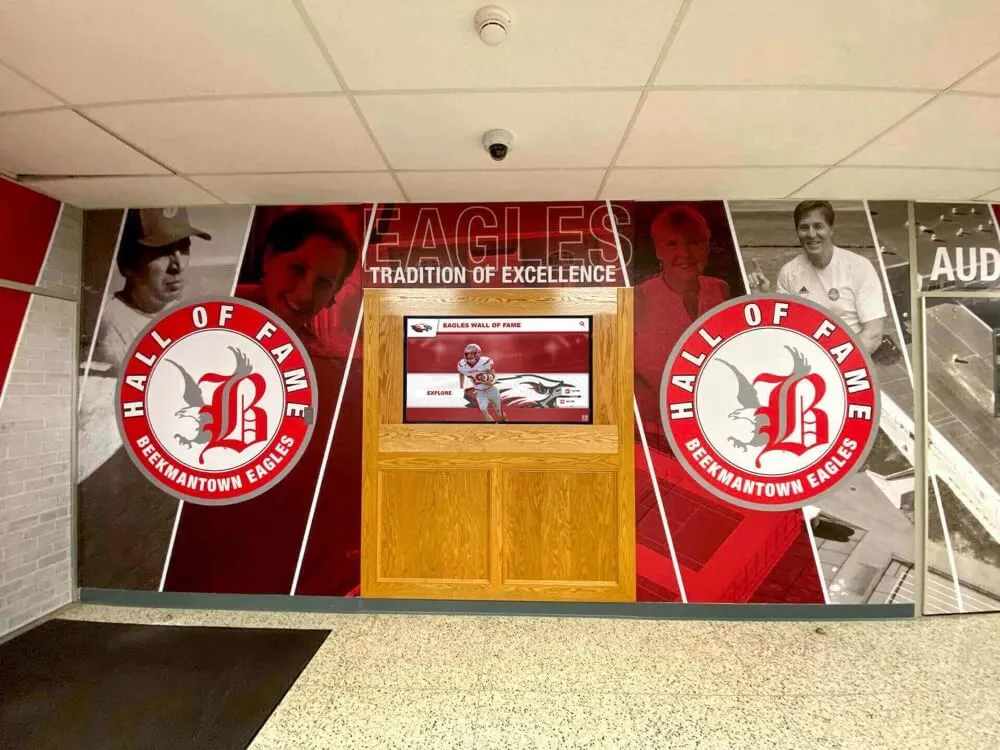
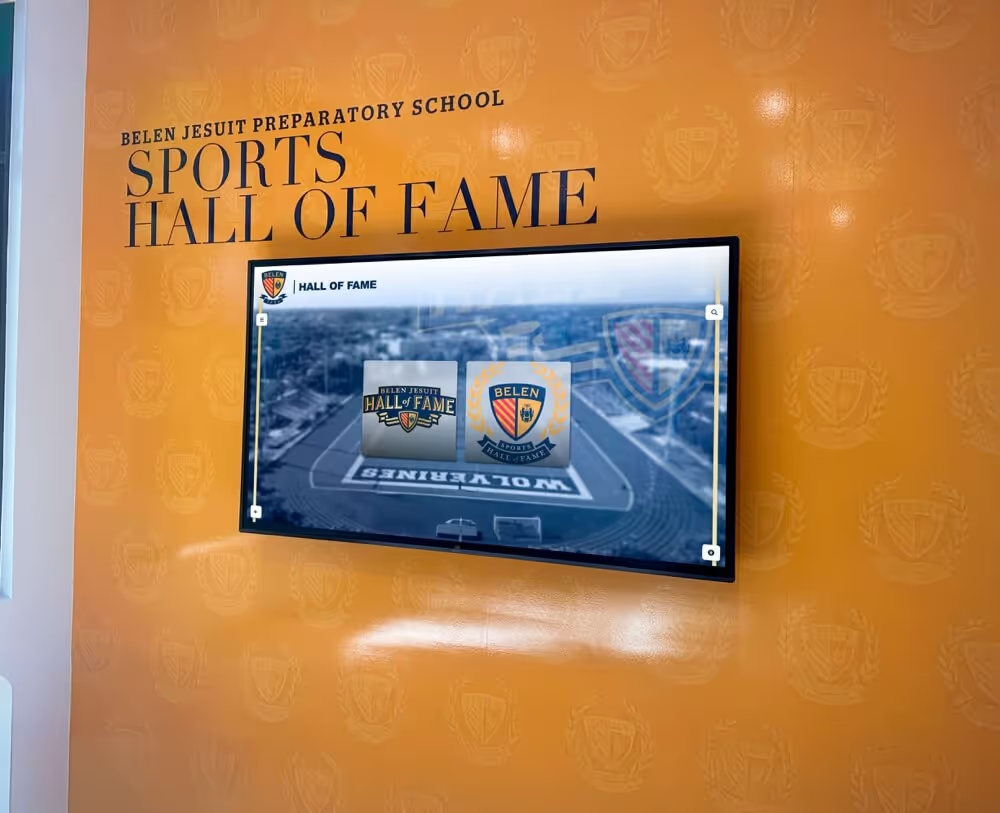
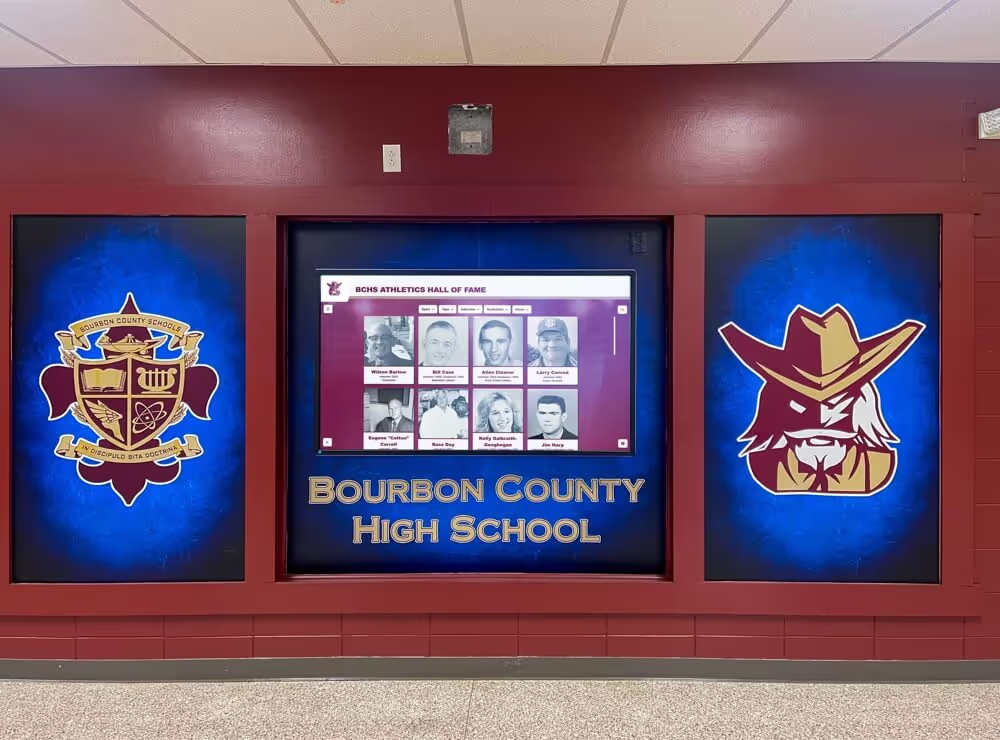
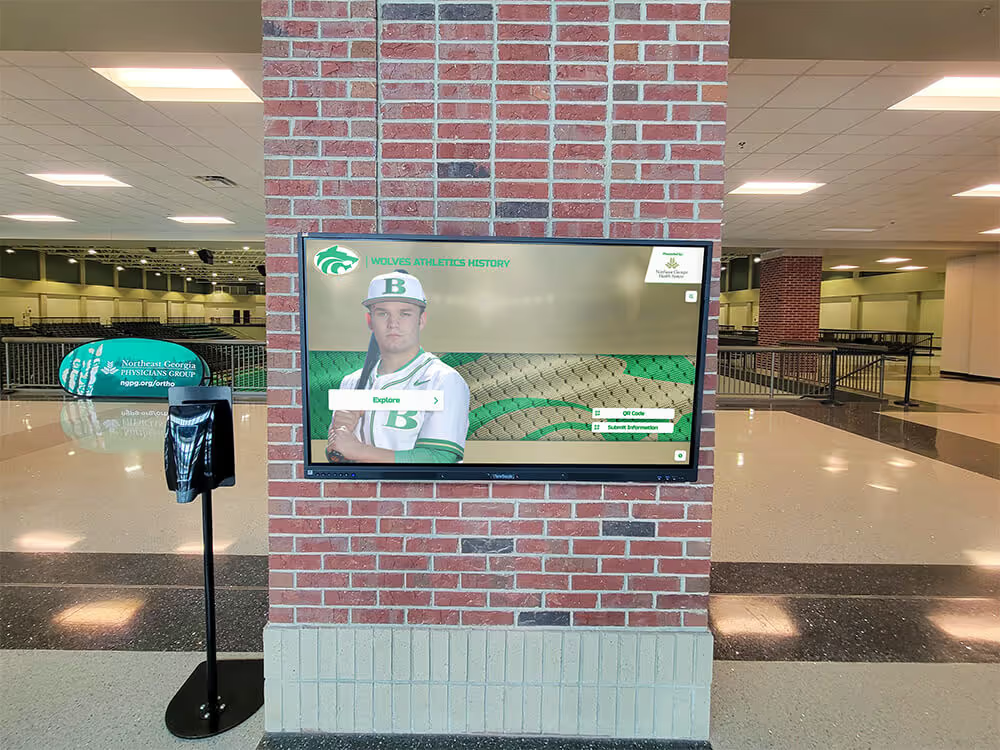
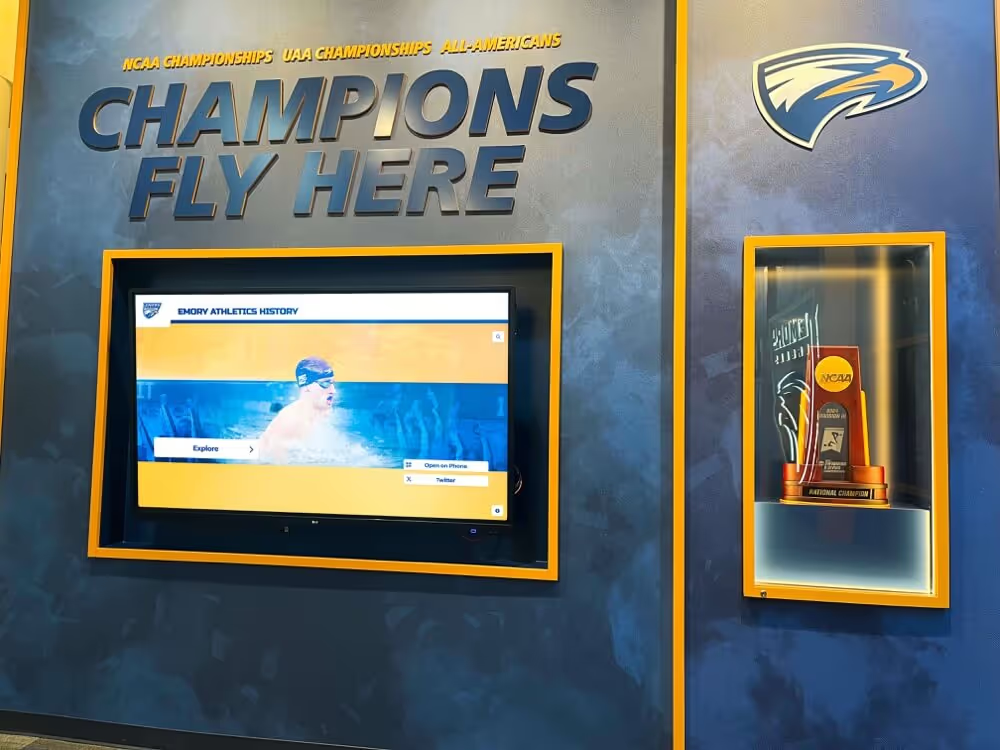
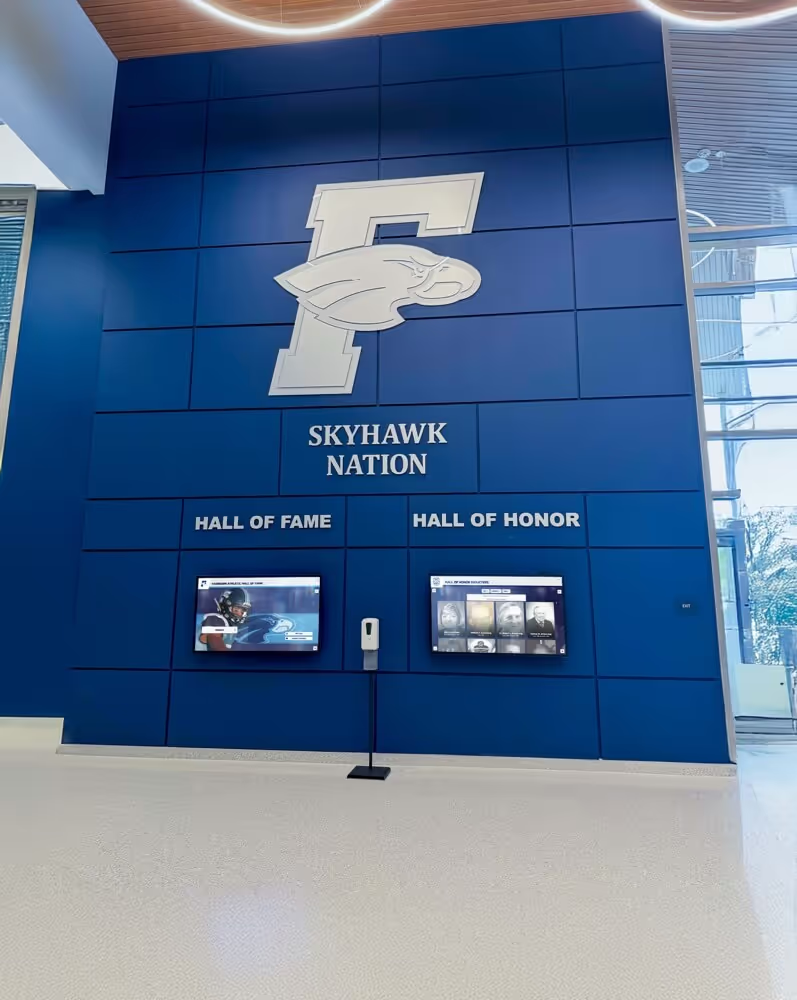
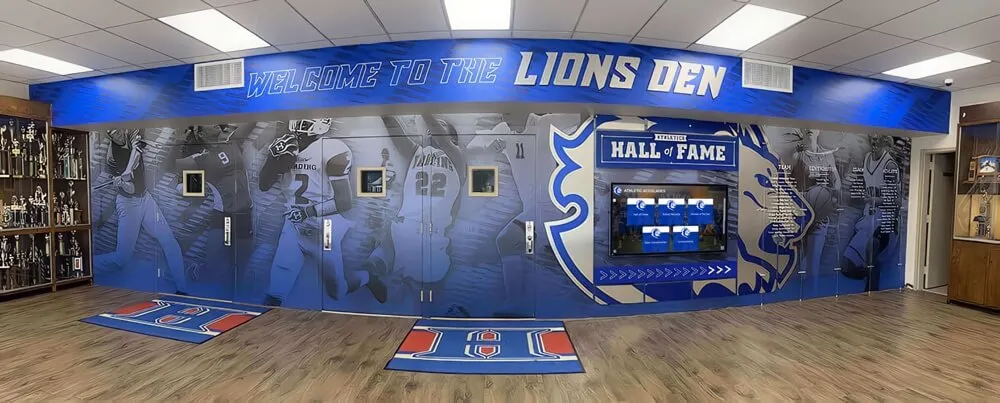
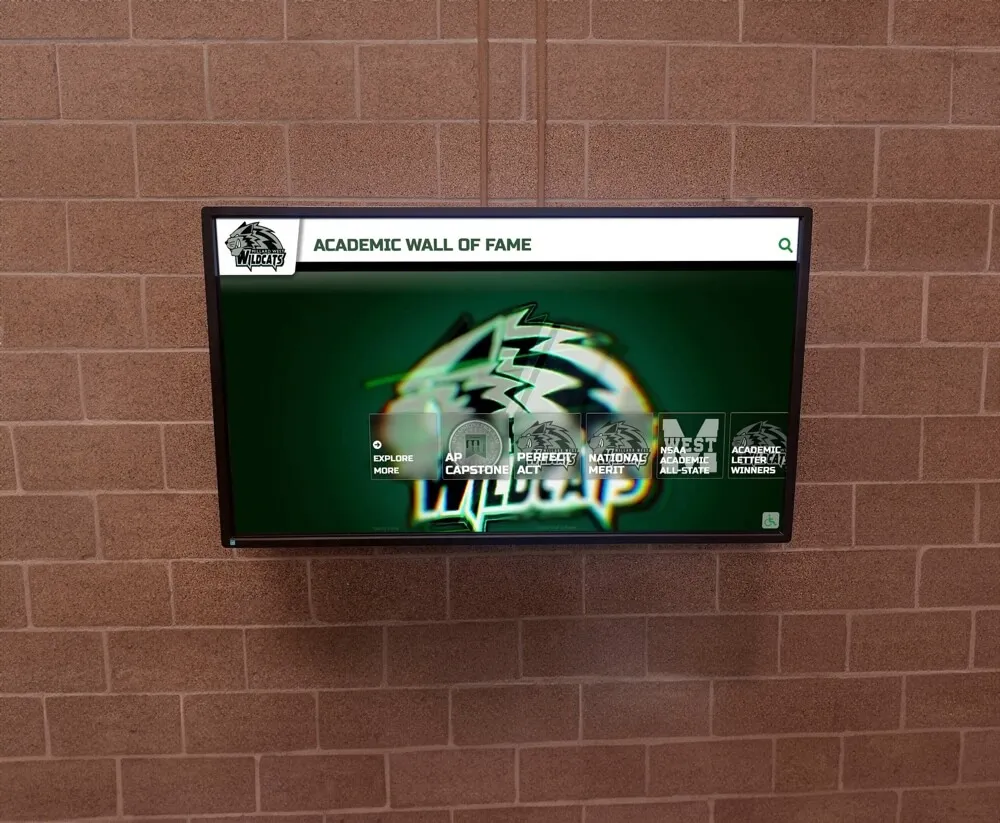
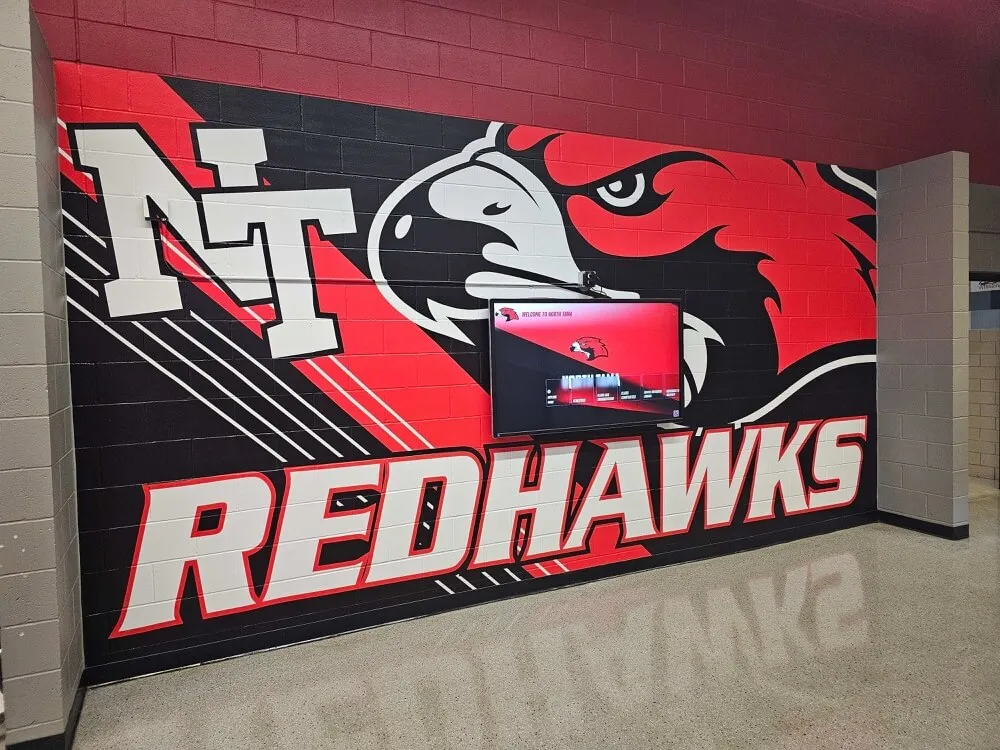
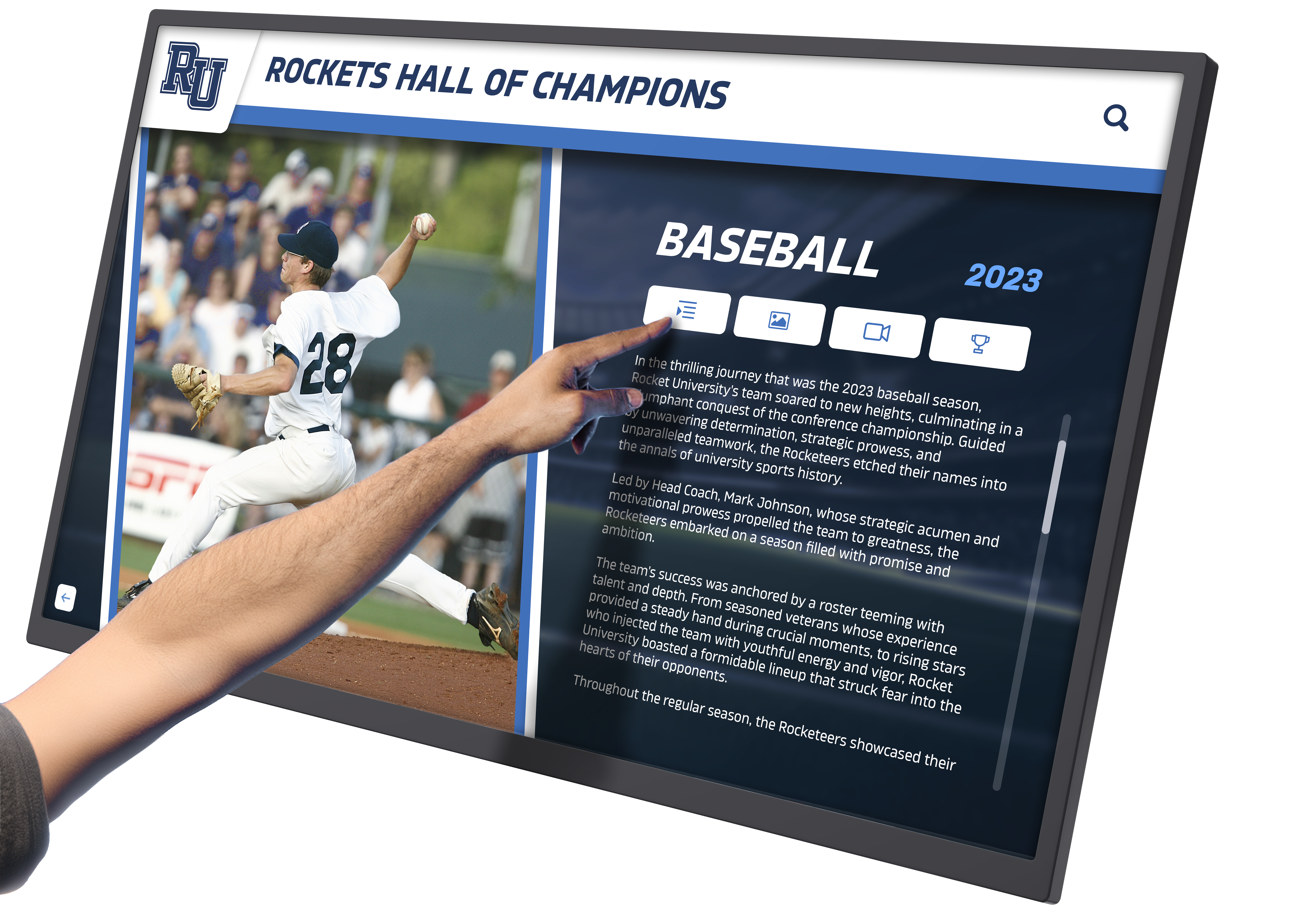
Digital record board systems overcome traditional limitations while creating engaging experiences that transform passive displays into interactive exploration opportunities.
Unlimited Recognition Capacity:
Digital platforms accommodate comprehensive recognition without physical space constraints:
- Display all records across all events and categories
- Include historical records dating back decades
- Recognize both current and historical record holders
- Feature multiple swimmers per record category (top-10 all-time lists)
- Accommodate both individual and relay achievements
- Include photos, times, dates, and achievement context
Instant Updates and Timely Recognition:
Cloud-based content management enables immediate record updates:
- Add new records within minutes after performances
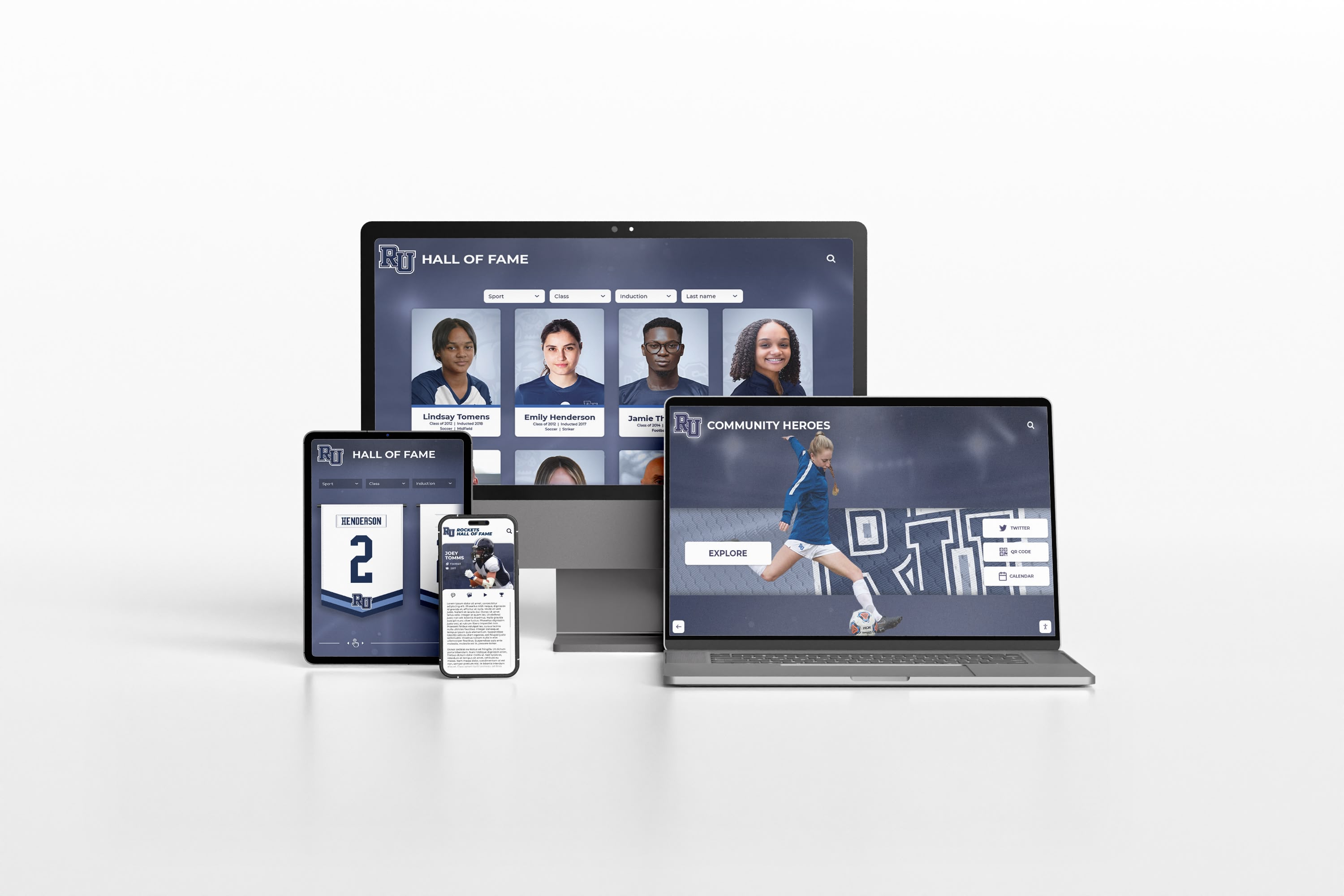
- Update from any internet-connected device (smartphone, tablet, computer)
- Changes appear instantly on displays
- No waiting for physical materials or professional installation
- Timely recognition while achievements remain fresh in team memory
This immediacy means a Friday night record-breaking performance can appear on the display by Saturday morning—creating powerful recognition while excitement remains high.
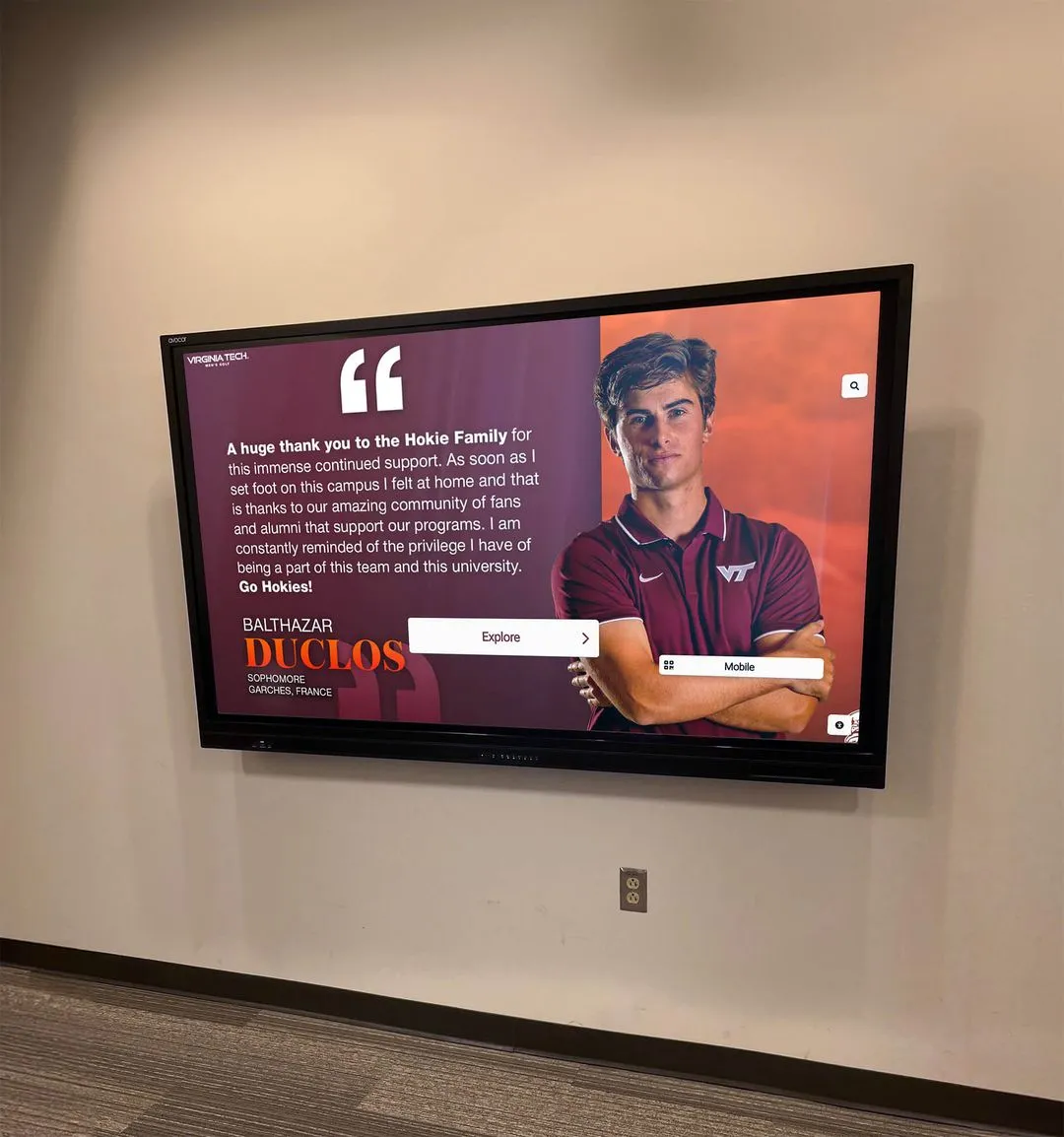
Rich Multimedia Athlete Profiles:
Digital systems enable comprehensive recognition impossible with traditional displays:
- Professional swimmer photographs and action shots
- Complete competitive history with season-by-season progression
- Video highlights of record-breaking performances
- Written profiles sharing personal stories and training approaches
- College commitment announcements and post-graduation updates
- Coach testimonials providing achievement context
- Multiple photos showing development across years
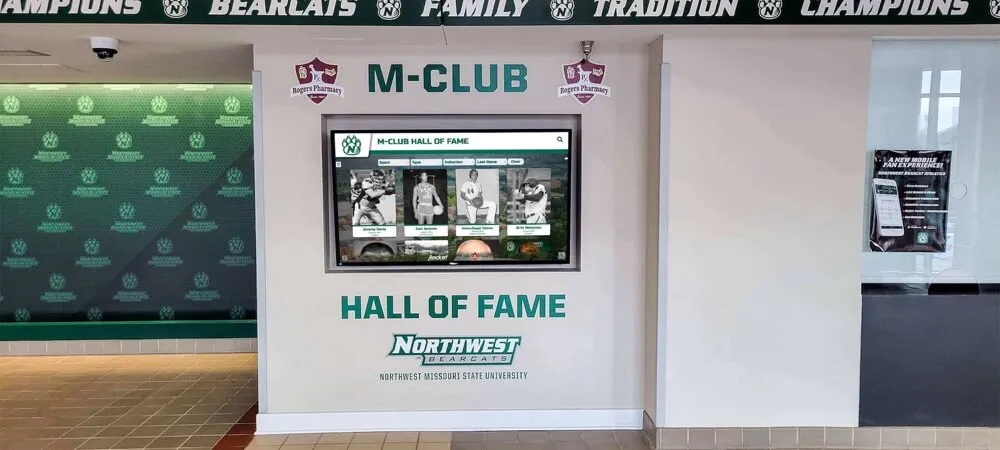
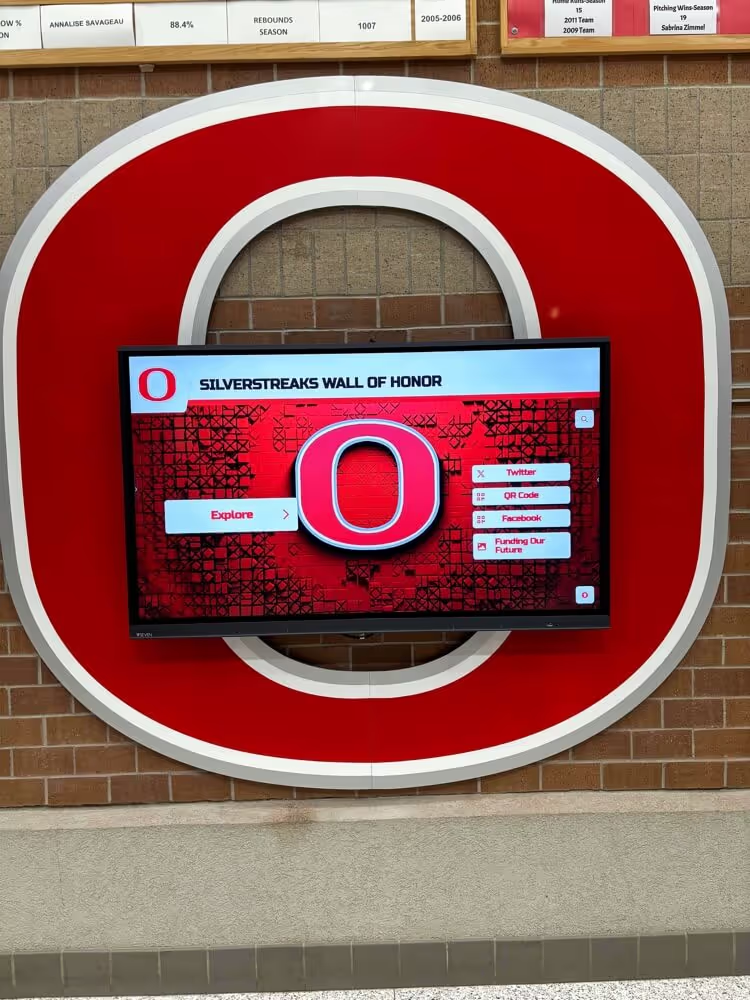
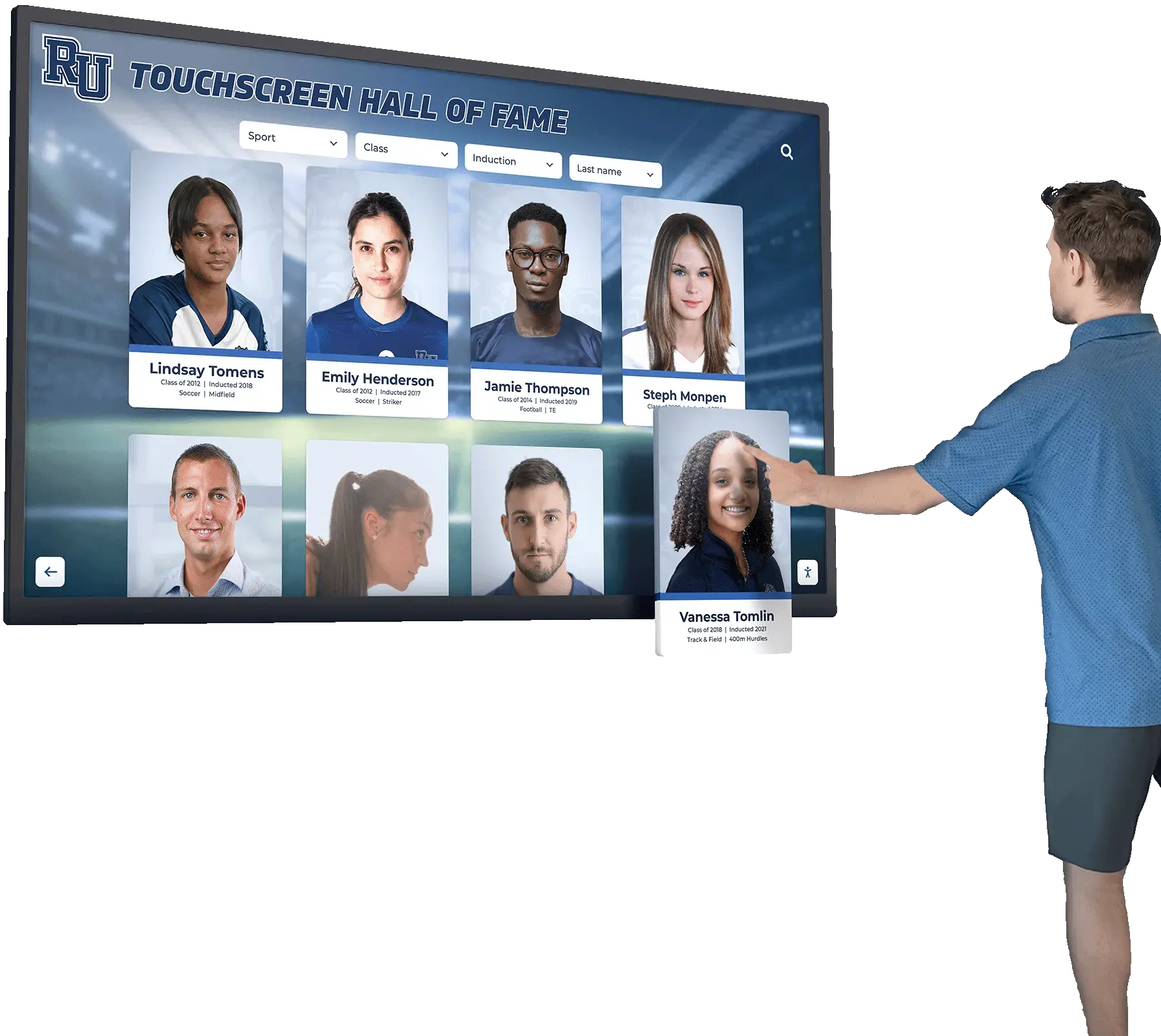
Interactive Exploration Features:
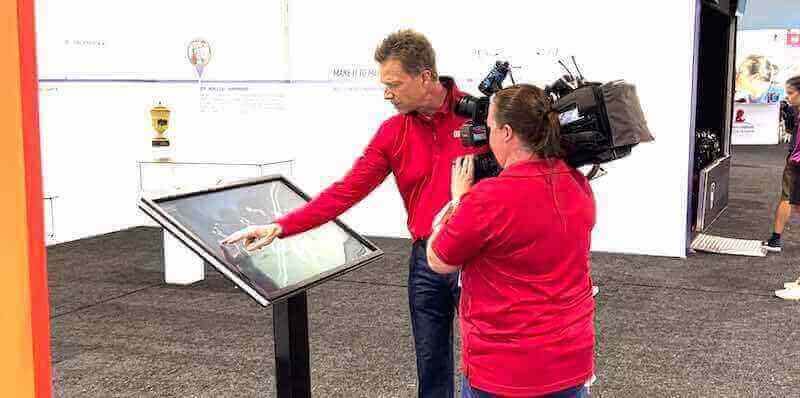
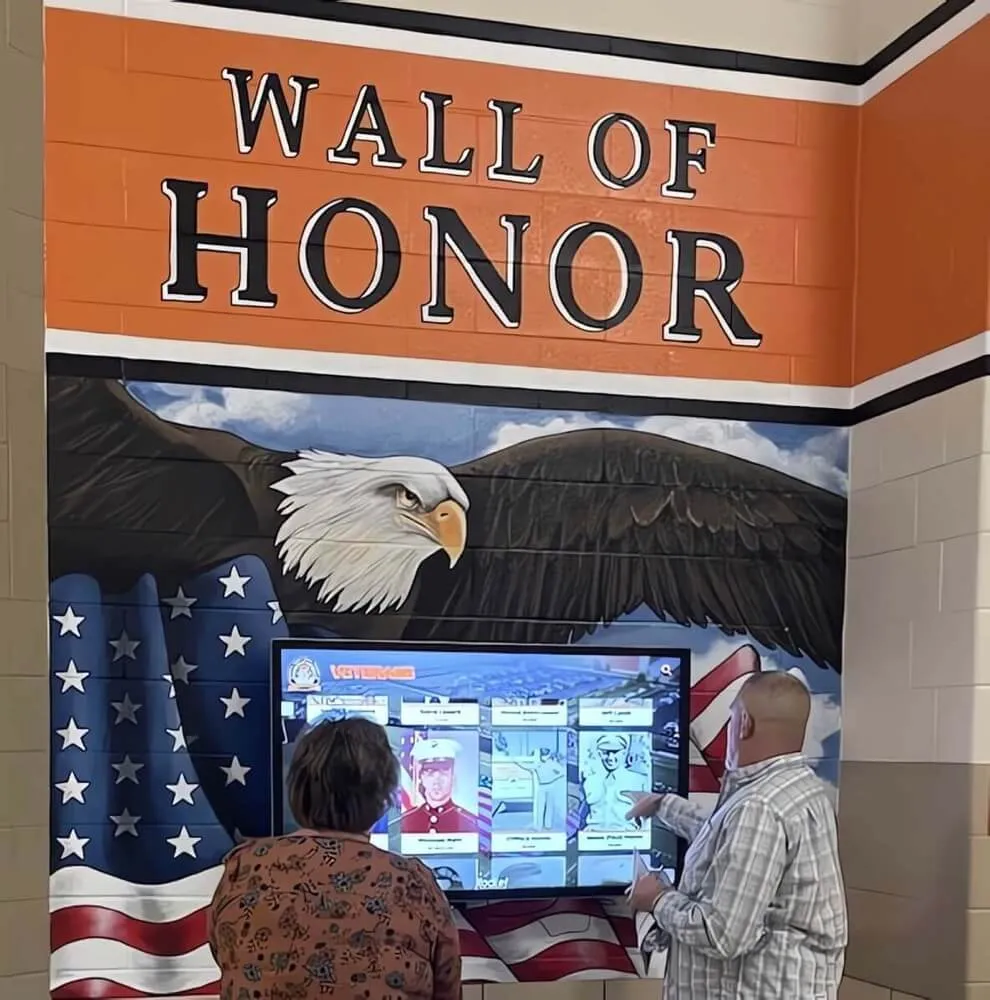
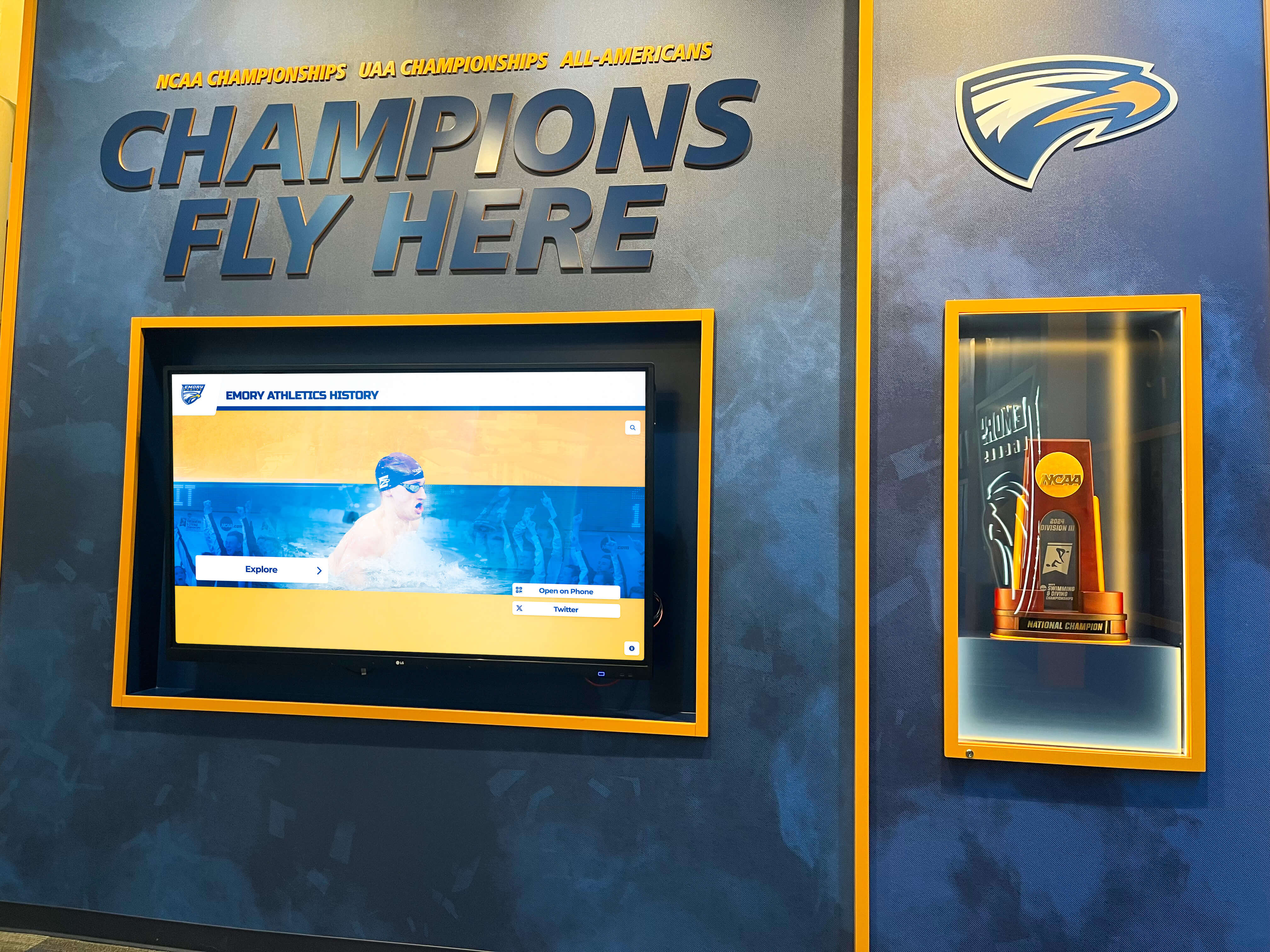
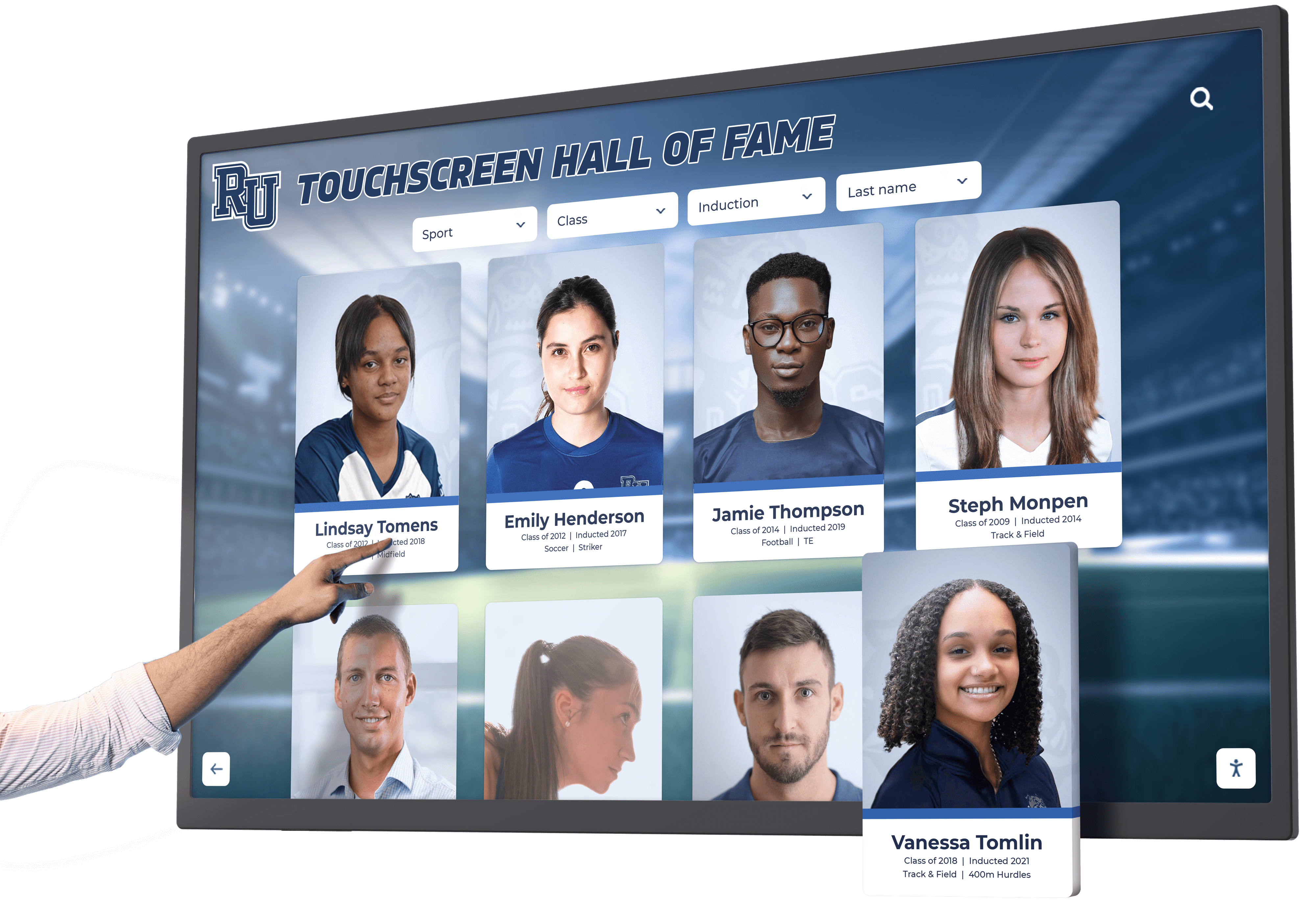
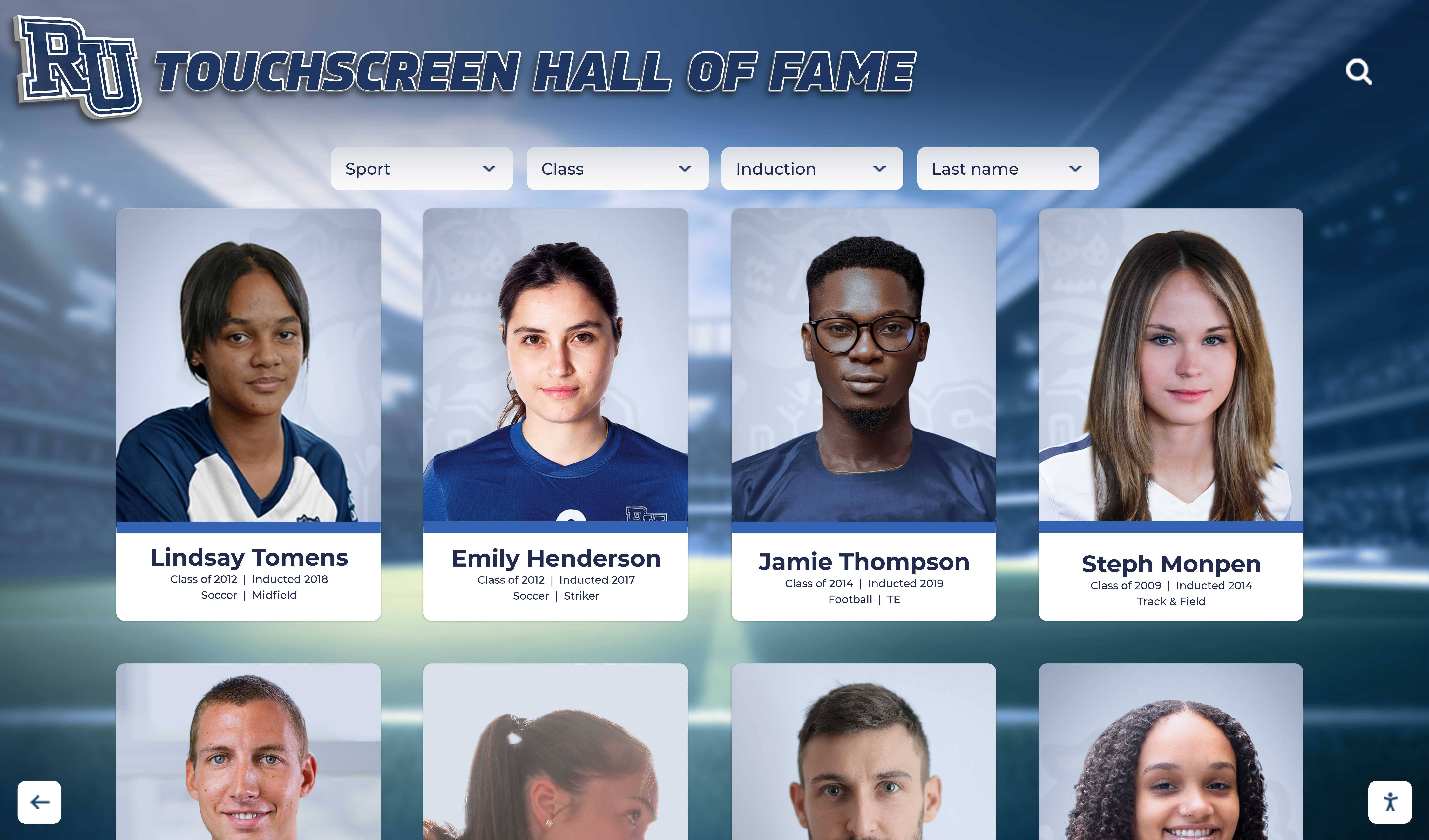
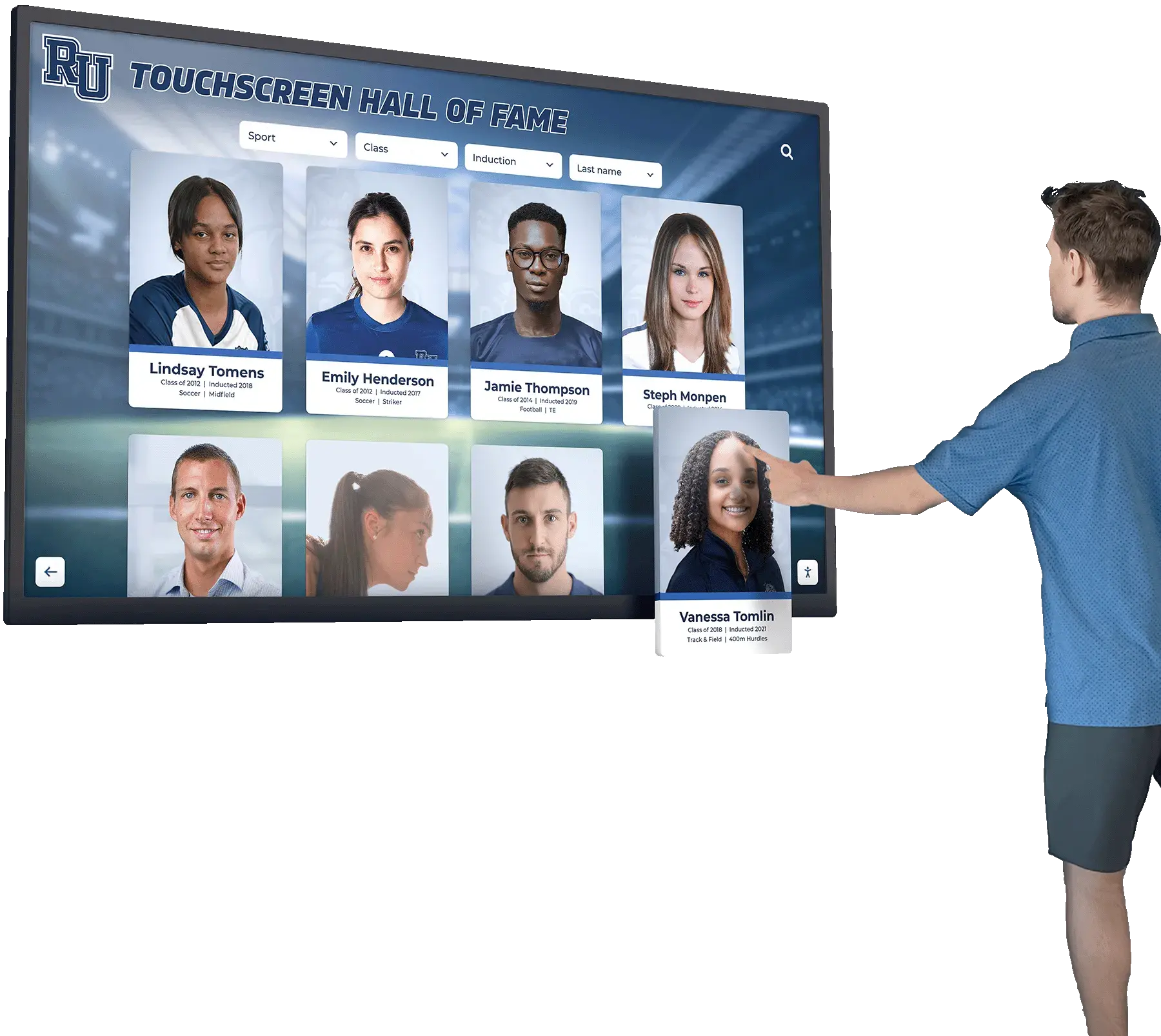
Touchscreen interfaces invite active engagement:
- Search functions finding specific swimmers by name
- Filter by event, year, gender, or record type
- Statistical comparison tools showing progression over time
- Photo galleries browsing program history
- Video playback of memorable performances
- Detailed stroke analysis and technique breakdowns
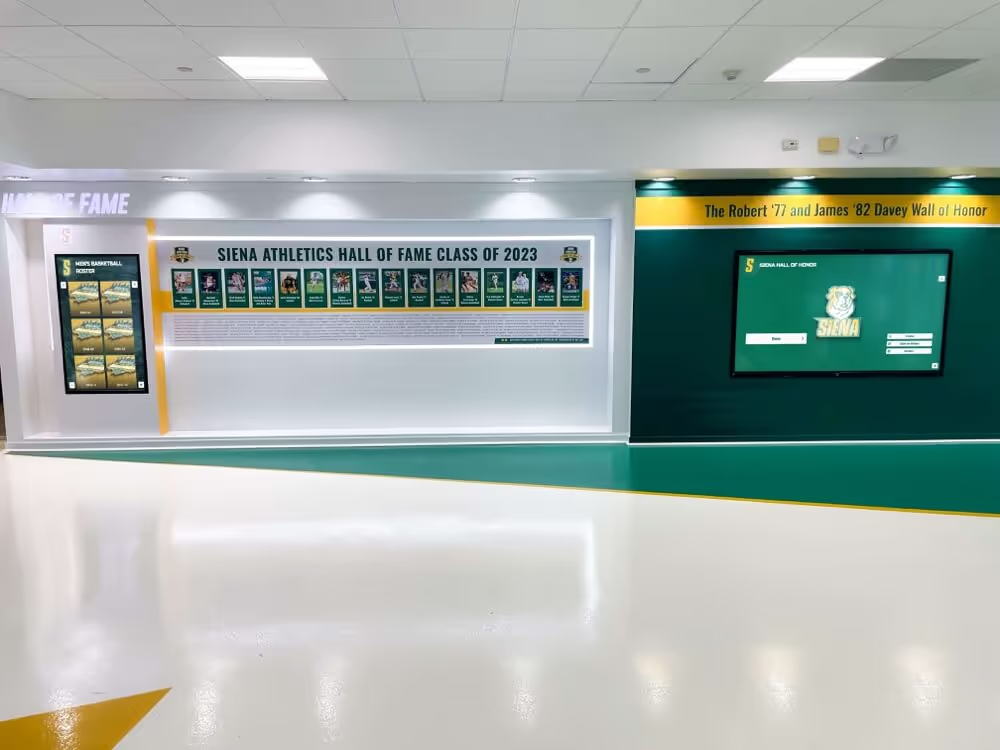
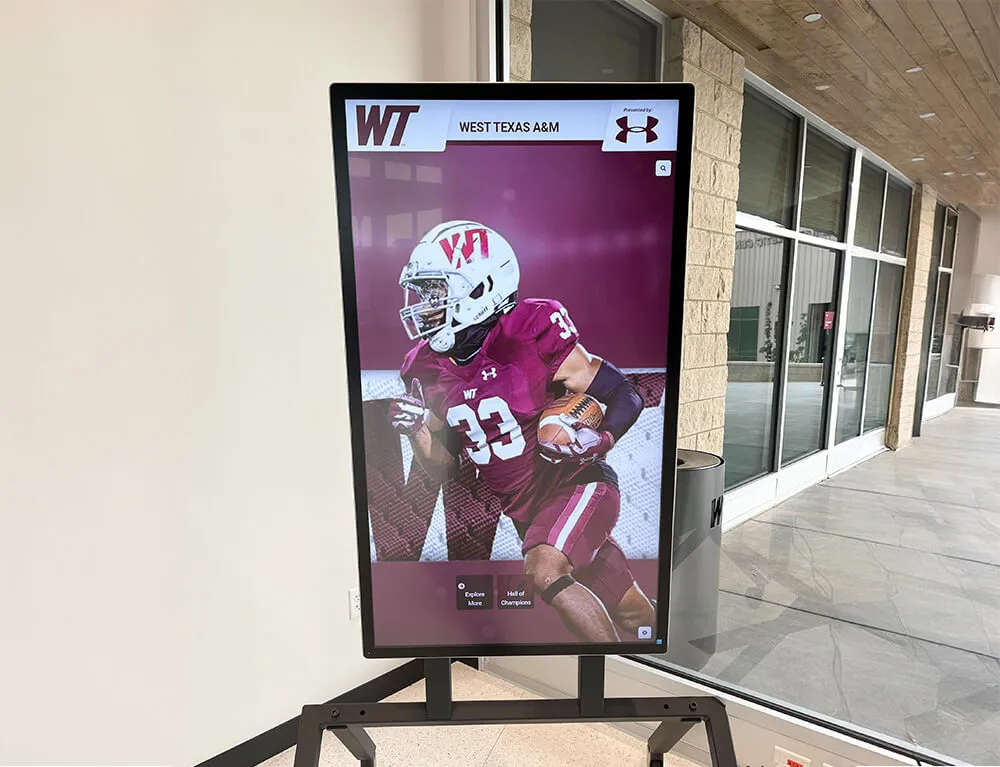
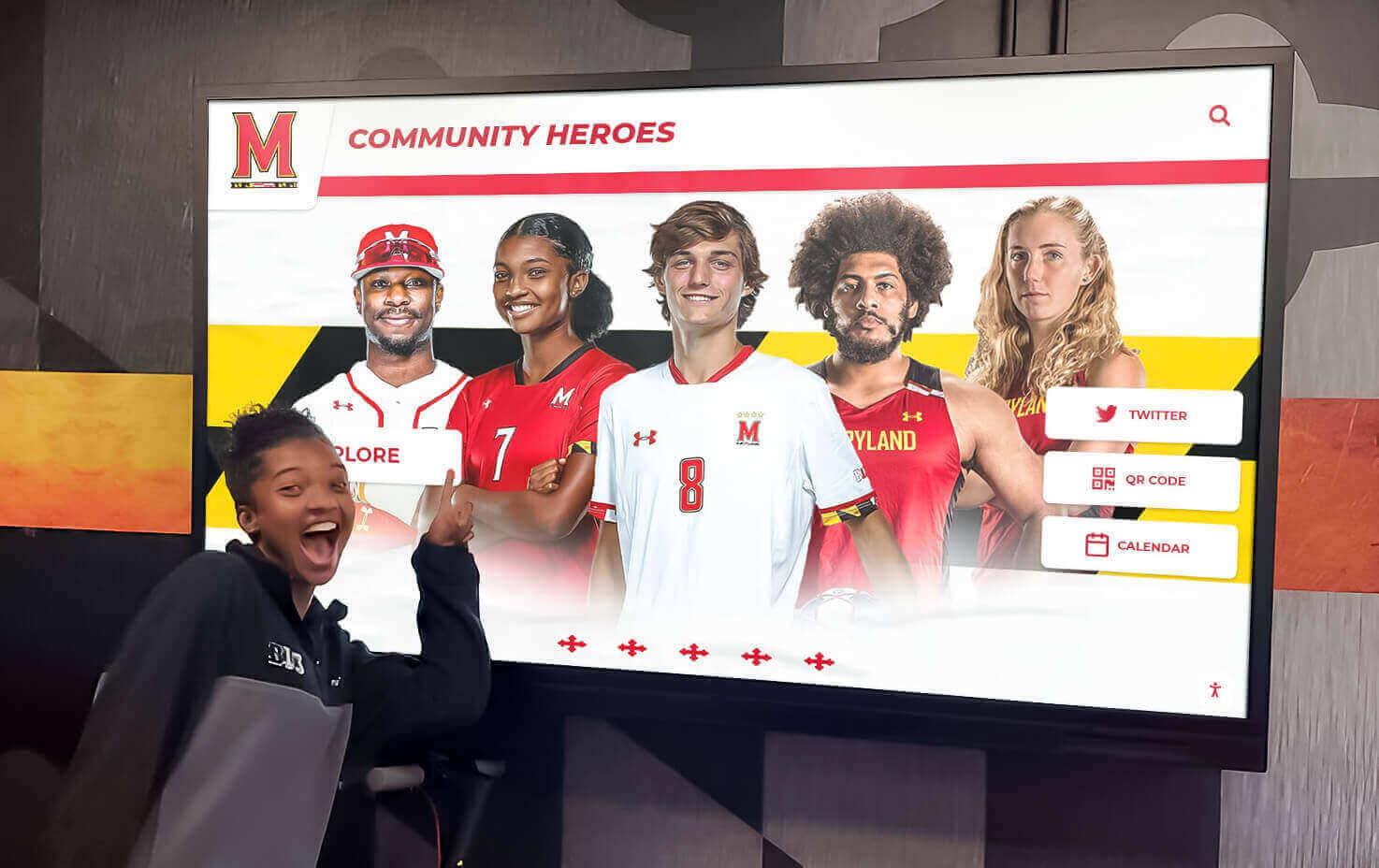
Solutions like Rocket Alumni Solutions provide purpose-built platforms designed specifically for athletic recognition, offering intuitive content management combined with engaging display experiences that require no technical expertise to maintain.
Implementation Strategies for School Swimming Record Systems
Successful swimming recognition programs follow systematic implementation approaches addressing technical, content, and cultural considerations.
Planning Phase: Assessment and Goal Setting
Define Recognition Objectives:
- What achievements deserve recognition (records only, or broader accomplishments)?
- Which audiences are priorities (current swimmers, recruits, alumni, families, community)?
- How will recognition integrate with recruitment and team culture development?
- What time period should initial recognition cover (recent years or full program history)?
Current State Evaluation:
- Document existing record displays and their conditions
- Inventory available content (photos, times, historical records)
- Identify gaps in historical documentation requiring research
- Assess budget and funding sources (athletic department, booster club, alumni donations)
- Evaluate potential display locations (pool deck, lobby, hallway)
Technology Selection:
- Research digital recognition platforms designed for athletic programs
- Compare capabilities, costs, and ongoing support options
- Request demonstrations from potential vendors
- Check references from similar swimming programs
- Verify integration capabilities with existing systems
Content Development: Building Comprehensive Recognition
Immediate Priority Content:
- Current season rosters with swimmer profiles and photos
- All current school records with holder information
- Recent 3-5 years of records and notable achievements
- Championship meet results and qualifiers
- Essential coach and program milestone recognition
Historical Research Process:
- Search institutional archives and yearbooks
- Review local newspaper coverage from past decades
- Contact alumni swimmers for photos and information
- Connect with retired coaches for historical context
- Digitize historical photos and memorabilia
- Document research methodology and sources
Programs implementing comprehensive student athlete recognition create inclusive cultures where achievements at multiple levels receive appropriate visibility.
Installation and Launch
Physical Installation:
- Mount displays in optimal locations with appropriate viewing distance
- Ensure reliable power and network connectivity
- Configure automatic timing system integration if available
- Test all hardware and software thoroughly
- Load initial content and verify display functionality
Launch Event Strategy:
- Time unveiling with significant meet or team event
- Invite current swimmers, families, alumni, and community supporters
- Create ceremony celebrating both technology and achievements
- Feature record holders from different eras connecting past and present
- Generate social media content and local media coverage
- Begin regular update schedule immediately
Ongoing Operation and Enhancement
Regular Maintenance Schedule:
- Update records immediately after each meet
- Add new swimmer profiles and photos throughout season
- Rotate featured content to maintain freshness
- Respond promptly to corrections or additional historical information
- Monitor system performance and address technical issues
- Conduct seasonal comprehensive reviews
Continuous Enhancement:
- Systematically expand historical content over time
- Add video content as performances are recorded
- Enhance existing profiles with additional context and multimedia
- Integrate with team social media and communications
- Measure engagement through analytics when available
- Plan for system expansions as programs grow
Swimming Record Measurement: From Manual Timing to Touchpads
Understanding how swimming times are measured provides context for record appreciation and helps explain why older records might have different characteristics than modern marks.
Evolution of Swimming Timing Technology
Manual Timing Era (pre-1960s):
Early competitive swimming relied entirely on human stopwatch operators:
- Three independent timers per lane for verification
- Average of middle time used for official result
- Timing accuracy limited to one-tenth of a second (0.1)
- Human reaction time variability of 0.1-0.3 seconds
- Close finishes often disputed or resulted in ties
Semi-Automatic Timing (1960s-1970s):
Transitional systems combined manual starting with electronic finish detection:
- Electronic starting signal ensured simultaneous timing starts
- Touchpads at finish wall recorded exact contact moment
- Improved accuracy to hundredths of seconds (0.01)
- Manual backup systems retained for verification
- Gradual adoption across major competitions
Fully Automatic Timing (1980s-Present):
Modern systems integrate starting, finish detection, and data management:
- Electronic starting system synchronized with touchpads
- Finish touchpads in all lanes with backup systems
- Video recording integrated for review and verification
- Real-time results displayed and distributed electronically
- Accuracy to hundredths with thousandths internal resolution
- Backstroke ledge sensors for relay exchanges
This progression explains why comparing records across eras requires context—a 1970s manual-timed record might have been several tenths faster or slower than recorded, while modern automatic times provide absolute precision.
How Timing Affects Record Recognition
Conversion Formulas:
When manual times are converted to automatic equivalent, 0.3 seconds is typically added to account for human reaction time advantage. A manual time of 50.0 seconds converts to approximately 50.3 automatic time. This adjustment prevents manual times from appearing faster than actually performed.
Short Course vs. Long Course:
Swimming recognizes separate records for:
- Long Course: 50-meter pools (Olympic standard)
- Short Course: 25-meter or 25-yard pools
Short course times are significantly faster due to additional turns providing underwater advantages. A swimmer’s 100-meter freestyle might be 50.0 in long course but 48.5 in short course due to turn advantages. Separate record categories prevent unfair comparisons.
Understanding Pool Records vs. Championship Meet Records
Many swimming venues track multiple record categories:
Pool Records: Any performance achieved in that specific pool during any sanctioned competition, regardless of meet importance.
Championship Meet Records: Best performances specifically at conference, regional, or state championship meets—often slower than absolute pool records due to prelim/final format fatigue.
Season Records: Best times achieved during current competitive season, creating annually refreshed recognition opportunities.
This multi-category approach creates diverse recognition possibilities ensuring many swimmers receive acknowledgment for various achievement types.
The Future of Swimming Records and Recognition
Swimming continues evolving through technique innovation, training science advances, and technology integration—all influencing future record progression and recognition approaches.
Emerging Technology in Swimming
Advanced Analytics and Performance Tracking:
Modern training incorporates sophisticated monitoring:
- Stroke rate and distance per stroke analysis
- Underwater velocity tracking through video analysis
- Heart rate and lactate testing for training optimization
- GPS and accelerometer-based motion tracking
- AI-powered technique analysis identifying inefficiencies
These tools enable increasingly specific training targeting exact performance improvements needed for record pursuit.
Pool Design Innovation:
Cutting-edge pool engineering continues reducing resistance:
- Wave-dampening lane line technology minimizing chop
- Deeper pools (3+ meters) reducing turbulence
- Advanced filtration creating clearer, lower-resistance water
- Optimized lighting reducing glare and improving sight lines
- Temperature control systems maintaining ideal conditions
Future pool designs may create even faster conditions enabling new record progression.
Virtual and Augmented Reality Training:
Emerging technologies offer new training possibilities:
- VR simulations for race strategy visualization
- AR-enhanced technique feedback during pool training
- Virtual competition against historical performances
- Immersive mental preparation environments
Artificial Intelligence in Swimming Recognition
Next-generation recognition systems will leverage AI capabilities:
Automated Performance Analysis:
- AI identifying technique strengths and improvement areas
- Automatic highlight video generation from meet footage
- Intelligent content recommendations based on viewer interests
- Predictive analytics forecasting when swimmers might break records
Enhanced Content Creation:
- Automated athlete profile generation from performance data
- Natural language summaries of competitive progressions
- Intelligent photo organization and tagging
- Personalized recognition experiences for different viewers
Smart Record Management:
- Automatic record identification from meet results integration
- Real-time notifications when records break
- Intelligent comparison tools showing record progressions
- Contextual information explaining historical significance
Schools implementing advanced digital athletic recognition position themselves at the forefront of athlete engagement and program marketing.
Mobile and Remote Engagement
Future recognition extends far beyond physical displays:
Mobile Applications:
- Swimmer-specific apps showing personal achievements and progress
- Parent apps tracking athlete development
- Alumni apps maintaining lifelong connection to programs
- Recruit apps showcasing program excellence before campus visits
Social Media Integration:
- Automatic achievement sharing to swimmer social profiles
- Hashtag campaigns around record performances
- Live meet updates with record-breaking highlights
- Alumni network engagement through historical content
Virtual Recognition Experiences:
- 3D virtual tours of physical recognition displays
- Augmented reality bringing static displays to life
- Virtual ceremonies for remote family participation
- Interactive online record books with rich multimedia
Celebrating Swimming Excellence Across All Levels
Swimming records exist at every competitive level, from Olympic podiums to local summer leagues. Each level provides meaningful recognition opportunities that inspire excellence and preserve achievement.
Professional and Olympic Swimming Recognition
Elite swimming achieves global recognition through:
- International Swimming Hall of Fame (Fort Lauderdale, Florida)
- National Olympic committees and sports halls of fame
- Professional sports media coverage and documentaries
- Endorsement opportunities and public speaking
- University hall of fame inductions
- Naming of pools or facilities after legends
University and College Swimming Programs
Collegiate swimming combines athletics with academics, creating unique recognition opportunities:
- NCAA championship recognition and conference titles
- All-American selections and academic honors
- School record boards in natatorium facilities
- Athletic department hall of fame inductions
- Scholarship athlete recognition programs
- Alumni networking through swimming connections
Solutions addressing college advancement and donor recognition demonstrate how athletic achievement displays integrate with institutional development.
High School Swimming Programs
High school swimming provides formative competitive experiences for thousands of athletes annually:
- State championship qualifiers and finalists
- All-conference and all-state teams
- School and pool record recognition
- Senior night celebrations honoring graduating athletes
- Team awards recognizing leadership and improvement
- Academic achievement combined with athletic excellence
Youth Club and Summer League Swimming
Grassroots swimming programs introduce the sport to young athletes:
- Age-group time standards and motivational times
- Championships at local, regional, and national levels
- Individual improvement recognition
- Team relays and collective achievements
- Introduction to stroke technique and competitive fundamentals
Comprehensive recognition at every level creates pathways from beginner through elite performance, maintaining engagement throughout athletic development.
Conclusion: From World Records to Local Pools—Inspiring Excellence Through Recognition
Swimming world records represent humanity’s aquatic limits—the fastest times ever achieved through optimal combinations of genetics, training, technique, and competitive execution. From Michael Phelps’s unprecedented medal hauls to Katie Ledecky’s distance dominance, these performances inspire millions of swimmers worldwide to pursue their own excellence.
Yet for most competitive swimmers, local records prove far more motivating than world marks. The school pool record set by a teammate five years ago, the club age-group standard set last season, or the personal best achieved through a season of dedicated training—these accomplishments provide tangible, achievable targets that drive daily effort and competitive focus.
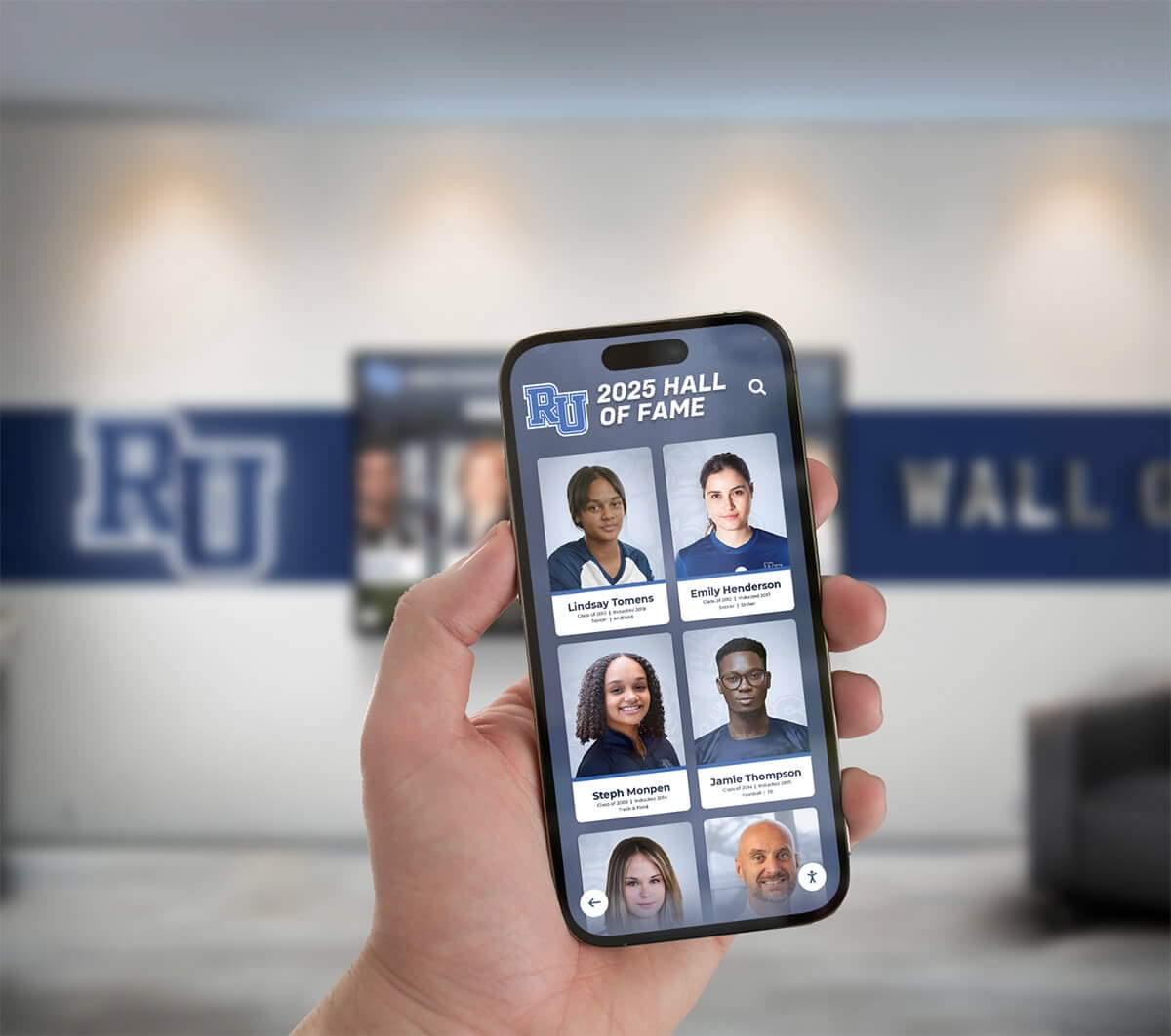
Modern recognition technology enables schools, clubs, and universities to honor swimming achievement with professionalism matching international governing bodies. Digital record boards eliminate space constraints that limited traditional displays, provide instant updates maintaining relevance, incorporate rich multimedia content telling complete achievement stories, and create interactive experiences engaging athletes, families, and communities.
Successful swimming recognition programs share common characteristics: they track comprehensive achievements across multiple categories, maintain accurate verified records, present information professionally through appropriate technology, create memorable recognition ceremonies celebrating outstanding performances, and leverage achievements strategically to build program culture and community support.
Whether your program focuses on competitive excellence, broad participation, or both, effective recognition delivers measurable value through enhanced athlete motivation, preserved institutional history, strengthened program identity, improved recruitment, and deeper community connections. Every swimmer who commits to improvement, works through challenging training, and represents their team with pride deserves recognition that doesn’t fade when the season ends or get stored away in forgotten cabinets.
Modern solutions like Rocket Alumni Solutions enable organizations to honor swimming excellence through intuitive digital platforms combining unlimited recognition capacity with simple content management. These systems create professional displays that inspire current athletes while preserving program history for future generations—ensuring that every record-breaking performance receives lasting acknowledgment matching its significance.