Every school has standout students who deserve more than a brief announcement over the intercom or a name typed on a bulletin board. A well-designed student spotlight template gives recognition real depth — telling the story behind the achievement, putting a face to the name, and keeping the recognition visible long enough to actually inspire other students.
Whether you're coordinating monthly spotlights for an academic honor program, building a rotating display in the gym lobby, or creating a digital recognition wall that showcases student-athletes year-round, the right template structure makes the difference between recognition that disappears in a week and recognition that becomes part of your school's identity. This guide covers the essential fields, format options, display strategies, and transition steps that help schools build spotlight programs worth talking about.
What Makes a Student Spotlight Template Effective
A student spotlight template is more than a blank form handed to a teacher once a month. Its structure determines how much information you capture, how consistently it gets used, and how compelling the final display looks. Effective templates balance completeness with practicality — asking enough to tell a real story without burdening the staff members who fill them out.
The best templates accomplish three things simultaneously. They give recognized students a meaningful, personalized moment of celebration. They provide enough context that other students understand what earned the recognition and can picture themselves pursuing similar achievement. And they create content compelling enough to display prominently rather than tuck away in a binder.
Core Elements Every Student Spotlight Template Should Include
Regardless of whether you’re creating spotlights for athletics, academics, arts, or service, certain fields belong in every template:
Student identification Full name, graduation year or grade level, and the specific recognition category. This sounds obvious, but skipping the category field means losing critical context when reviewing archived spotlights years later.
A quality photo A clear, well-lit headshot or action shot makes a recognition display worth stopping to look at. Whenever possible, take the photo specifically for the spotlight rather than pulling a white-background class photo. For athletes, an in-competition shot adds immediate energy.
Achievement description Two to four sentences explaining what the student accomplished, why it matters, and any relevant context. “Named All-Conference point guard” tells less of a story than “Named All-Conference point guard after leading the team in assists and steals for the second consecutive season.” Specificity creates connection.
A direct quote from the student One or two sentences in the student’s own voice ground the recognition in their experience. Prompts like “what this recognition means to me” or “what I’ve learned from this journey” consistently yield the most genuine responses. This single element separates memorable spotlights from forgettable ones.
Teacher, coach, or mentor endorsement A short quote from a staff member who knows the student well adds credibility and gives families something to share. It also distributes the storytelling work across the people closest to each student rather than placing it entirely on administrators.
Extracurricular and community context A brief list of activities, sports, clubs, or service involvement contextualizes the student beyond the single achievement being spotlighted. Students are more than one data point, and templates that reflect that produce richer, more inspiring displays.

Types of Student Spotlight Templates by Recognition Category
Schools recognize achievement across many domains, and a one-size-fits-all template often produces generic results. Category-specific templates let you ask the right questions and capture the details that matter most for each recognition type.
Academic Achievement Spotlight Template
Academic spotlights work best when they explain the work behind an achievement, not just the credential earned. Beyond the standard fields, add:
- Course load and academic rigor (AP, IB, dual enrollment)
- Subject area or academic passion
- Academic competition involvement (Science Olympiad, debate, math league)
- Challenges overcome or measurable growth demonstrated
- Post-secondary plans and how academics connect to them
For honor roll and GPA recognition, pair the numerical achievement with context. A student who significantly raised their GPA while working part-time tells a more compelling story than raw numbers alone. For schools building out a broader academic recognition framework, this academic recognition programs guide outlines program structures that surface exactly this kind of context.
Athletic Achievement Spotlight Template
Athletic spotlights have the advantage of concrete statistics — include them, but statistics without story feel like a box score rather than recognition. Add fields for:
- Sport and position
- Season statistics and records broken
- Team achievements and the student’s specific role in them
- Coach quote emphasizing leadership and character
- Personal goals for the season
- College signing plans, if applicable
For student-athletes earning all-state or all-conference recognition, the template should capture what statistics alone cannot — the practice habits, the team chemistry, the journey from freshman to standout senior. These are the details that make a display feel like a tribute rather than a scoreboard entry.
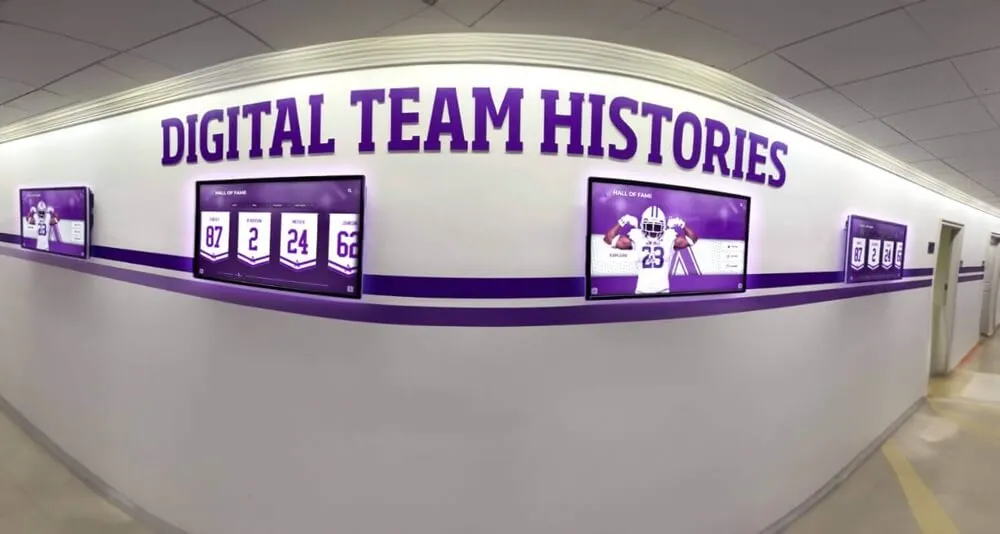
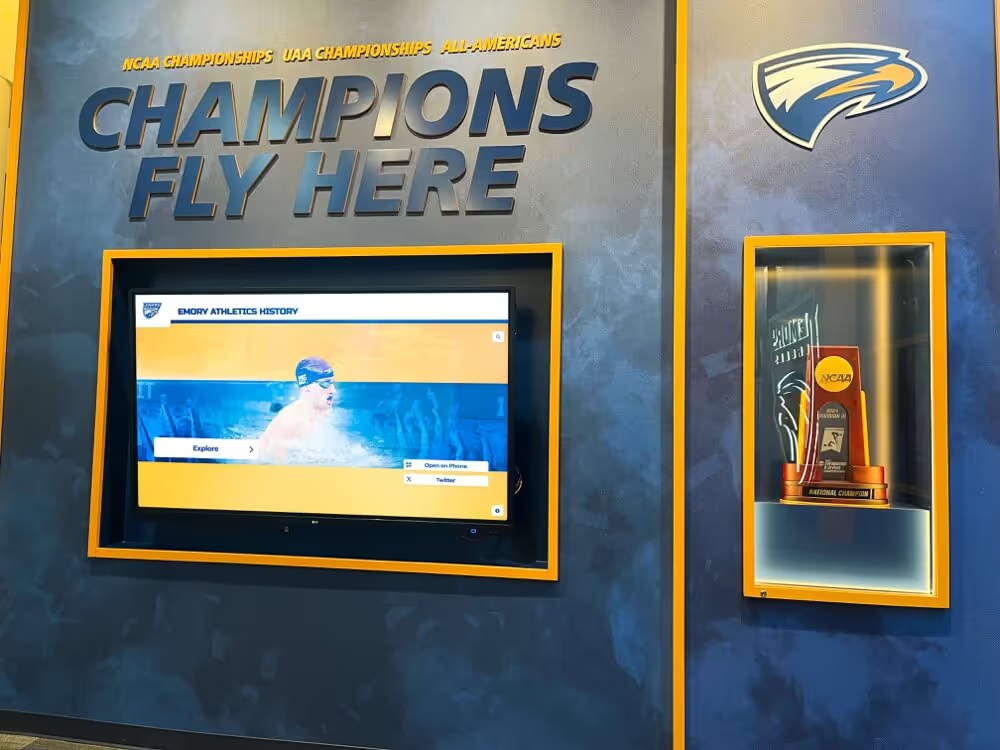
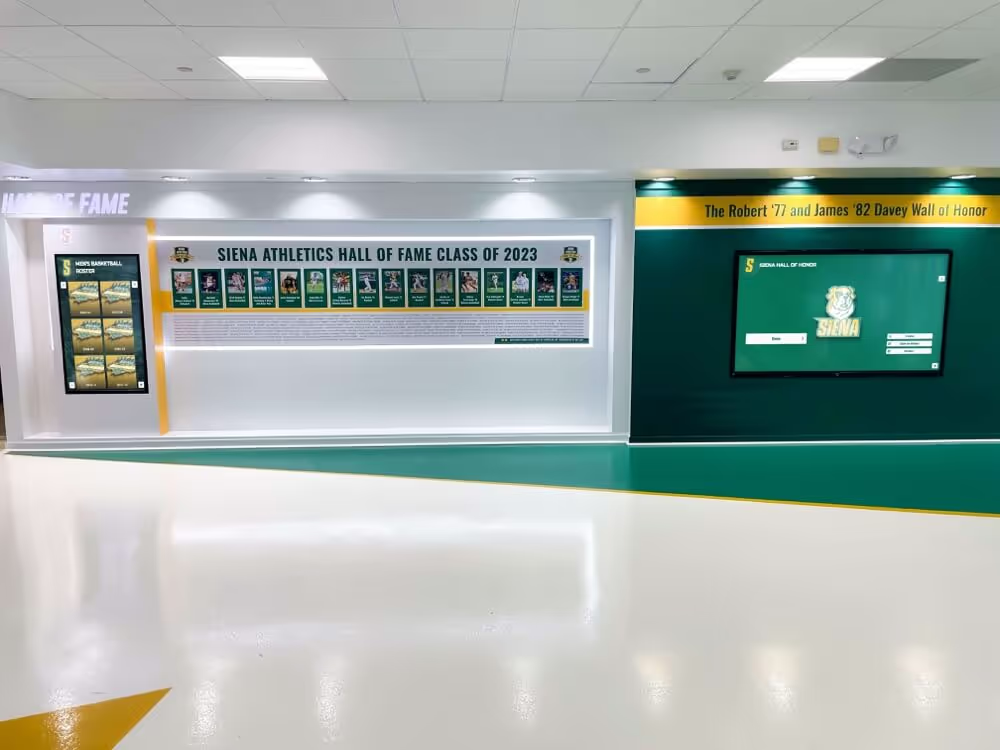
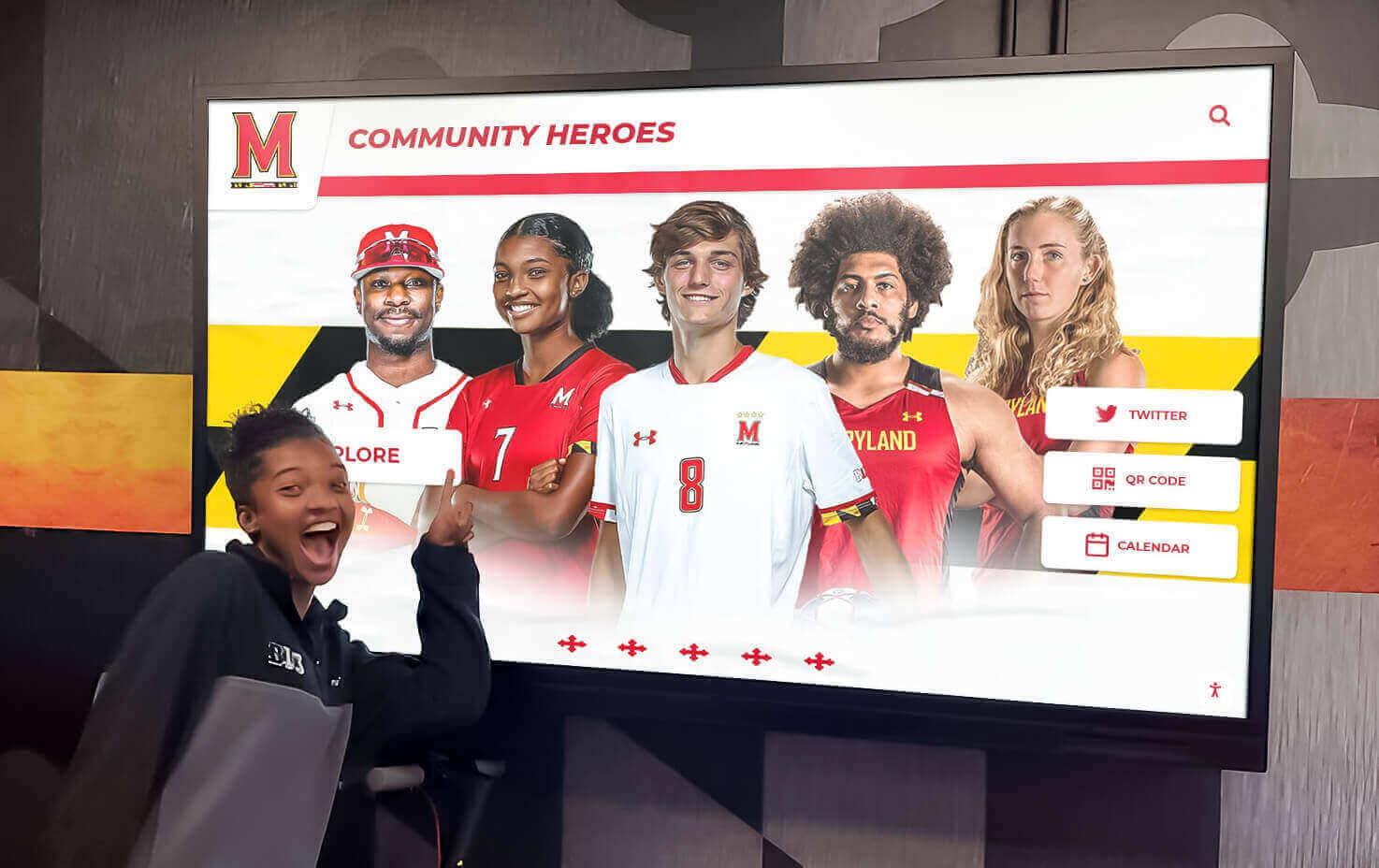
Schools using digital recognition walls can connect athletic spotlights directly to season records, photo galleries, and team histories, creating a depth of recognition no printed bulletin board can match.
Arts and Performance Spotlight Template
Spotlighting students in theater, music, visual art, or dance requires a different framework since their achievements often don’t come with numerical metrics:
- Art form and primary instrument, discipline, or medium
- Specific performance, production, or work being recognized
- Competitions, auditions, or exhibitions (state orchestra, All-State chorus, regional art show)
- Teacher or director quote on artistic growth
- Link to a performance video or portfolio image (for digital displays)
- Future artistic goals and post-secondary plans
Arts recognition is chronically underrepresented in most schools relative to athletics. A thoughtfully designed arts spotlight template signals an institutional commitment to treating creative achievement as equivalent to athletic accomplishment. Schools looking at broader award structures can draw inspiration from how end-of-year awards for students formally bring arts, service, and academics onto the same stage as athletics.
Service and Leadership Spotlight Template
Service spotlights celebrate students contributing to communities and organizations, often with less visible outcomes than a scoreboard or GPA. Effective templates for this category include:
- Organization or initiative the student leads or serves
- Concrete impact created (meals distributed, funds raised, hours served, people supported)
- What motivated the student to pursue this work
- Leadership roles held in student government, clubs, or community organizations
- How the service connects to the student’s values and long-term goals
These spotlights often resonate most deeply with families and community partners who see students acting on values outside the classroom. They also generate strong content for school social media and community newsletters.
Formatting Student Spotlight Templates for Different Display Contexts
The same information looks and functions very differently depending on whether you’re printing spotlights for a bulletin board, creating framed hallway displays, publishing profiles on a school website, or powering a digital touchscreen wall. Template design should account for the destination from the start.
Print and Bulletin Board Formats
For traditional bulletin board spotlights, keep templates compact enough to fit on a single sheet while still telling a meaningful story. A portrait-oriented 8.5×11 design with a photo taking up roughly a third of the space and achievement text filling the rest works well at typical bulletin board viewing distances. Use the school’s brand colors and typography consistently so monthly rotations build a recognizable visual identity rather than looking like unrelated one-offs.
The main constraint of print formats is physical: they reach only students who pass that particular bulletin board, and last month’s honorees disappear when this month’s spotlights go up. Schools using printed spotlights often supplement them with social media posts and newsletter features to extend each recognition’s reach and lifespan.
Framed Hall of Fame Displays
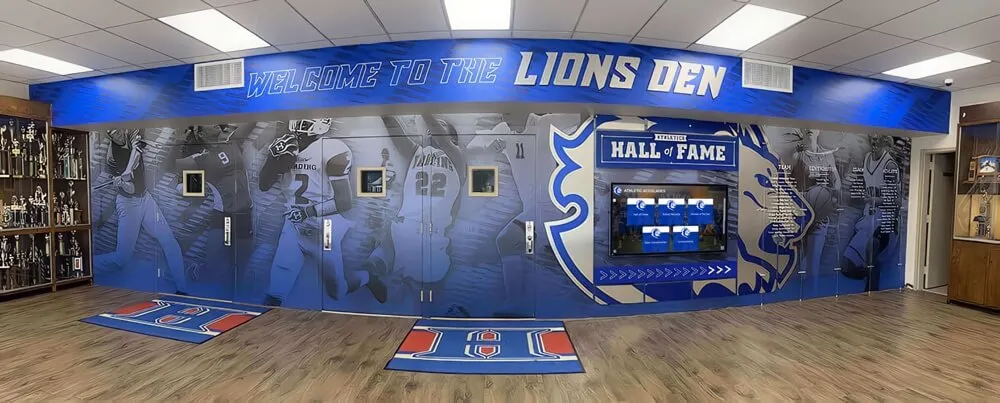
For permanent or longer-term display in hallways, lobby areas, or athletic facilities, a more substantial format fits the space. Framed spotlights can accommodate larger photos, more complete achievement descriptions, and design elements that coordinate with surrounding facility branding. Schools renovating trophy walls often incorporate framed spotlight sections alongside trophy cases and championship banners — a combination that signals academic and athletic achievement belong in the same conversation.
Creative trophy display ideas frequently pair static hardware — engraved plaques, framed photos — with rotating spotlight sections that refresh throughout the year, balancing permanent heritage recognition with timely current achievement celebration.
Digital Display Formats
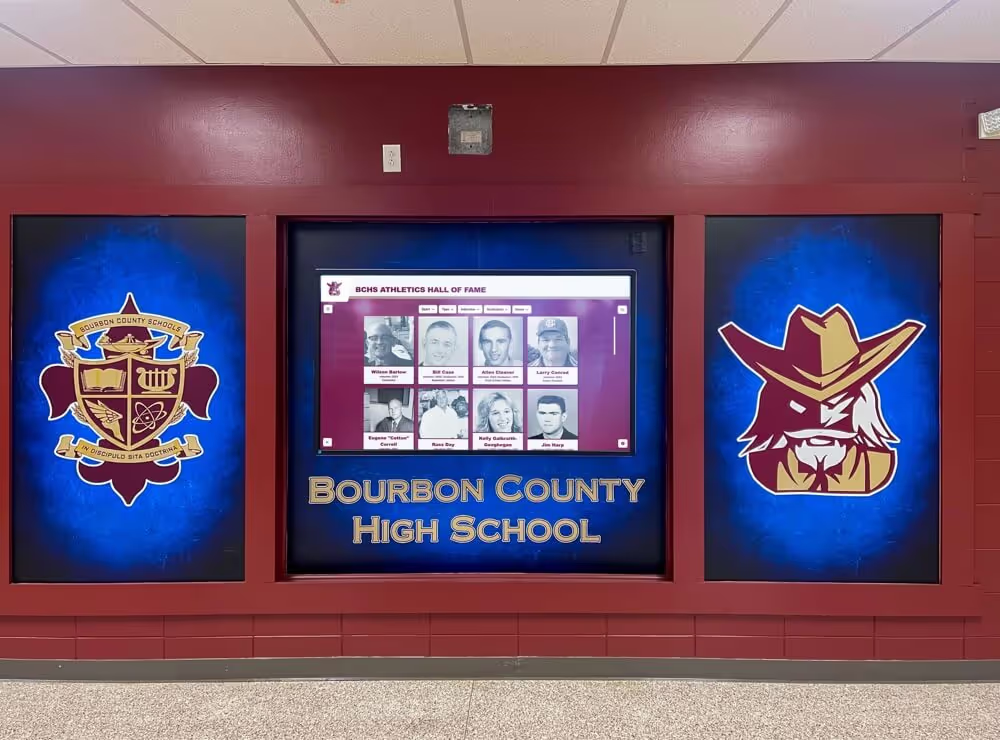
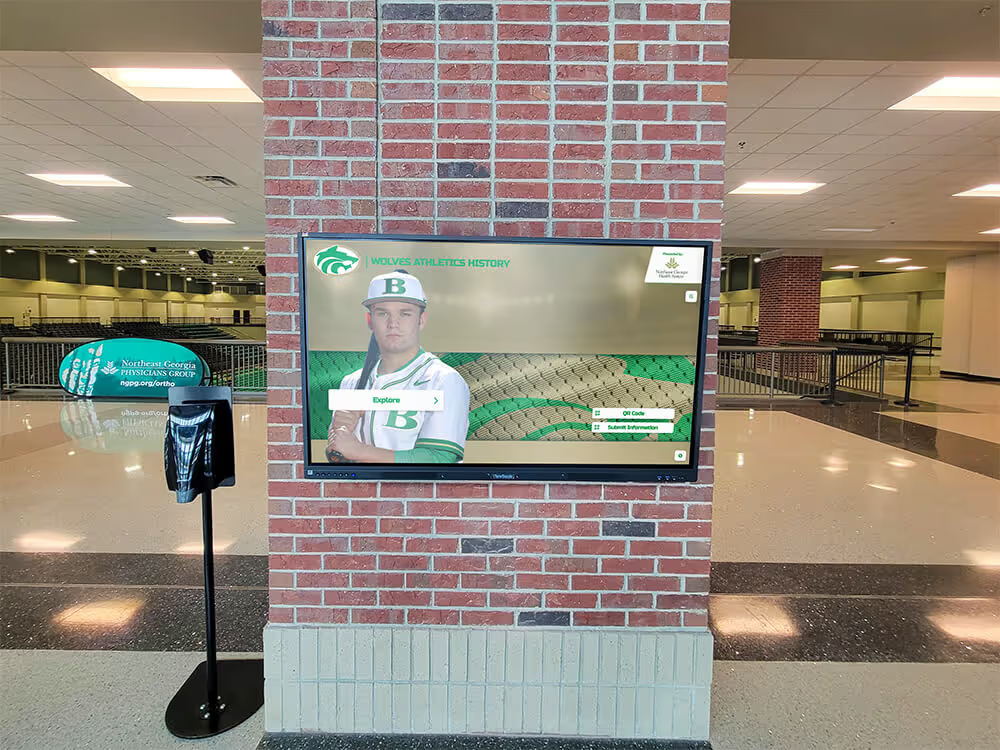
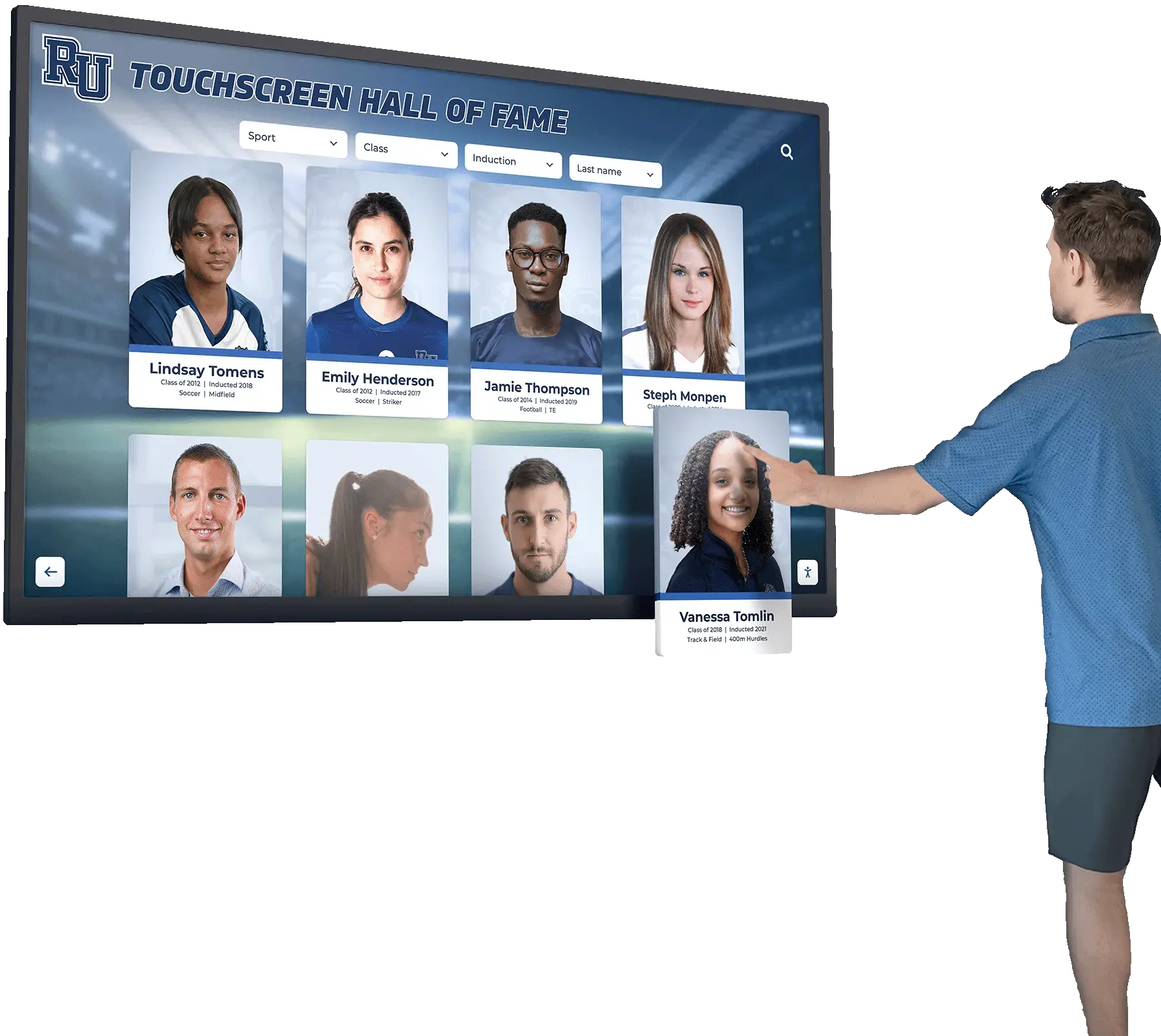
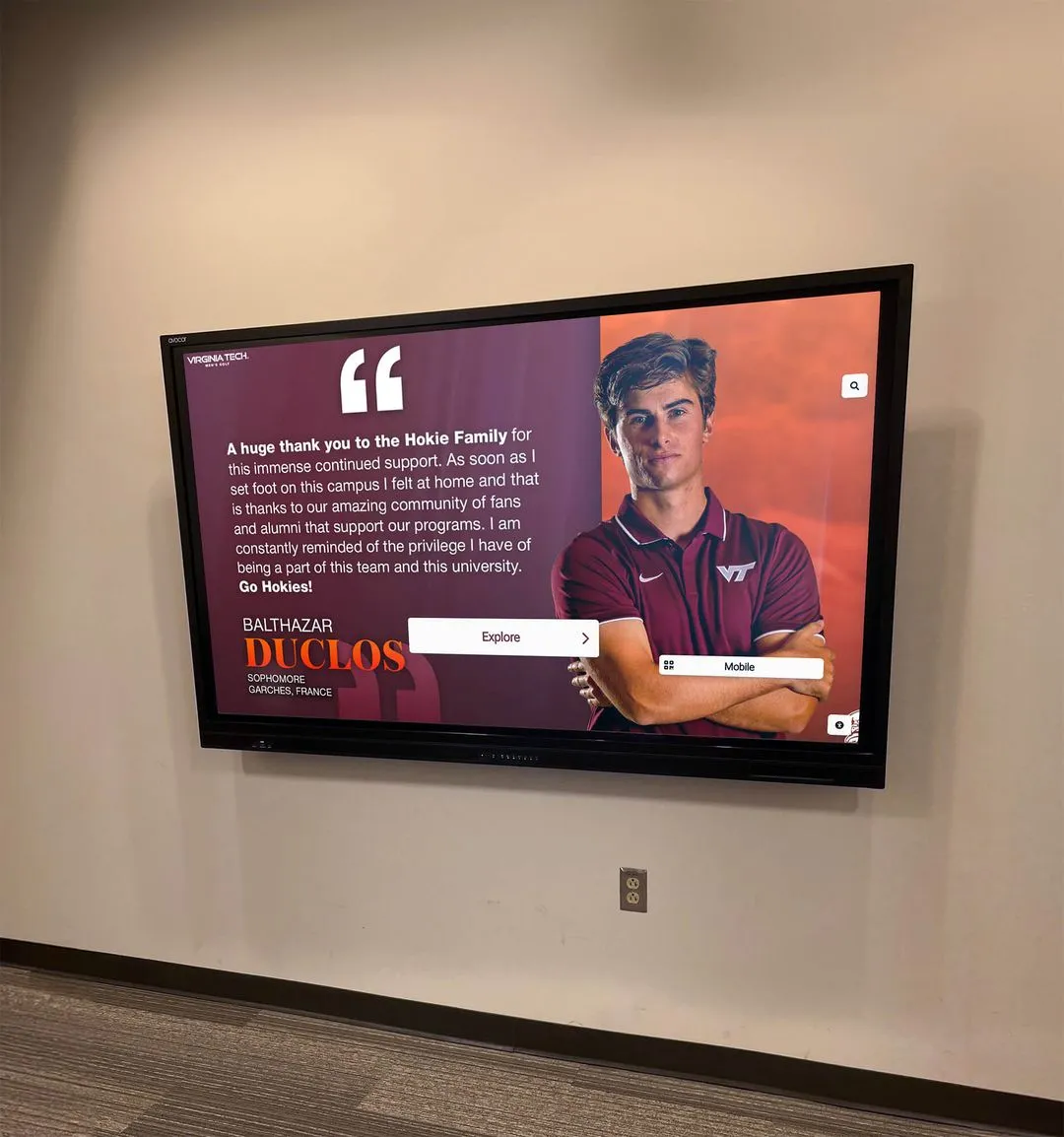
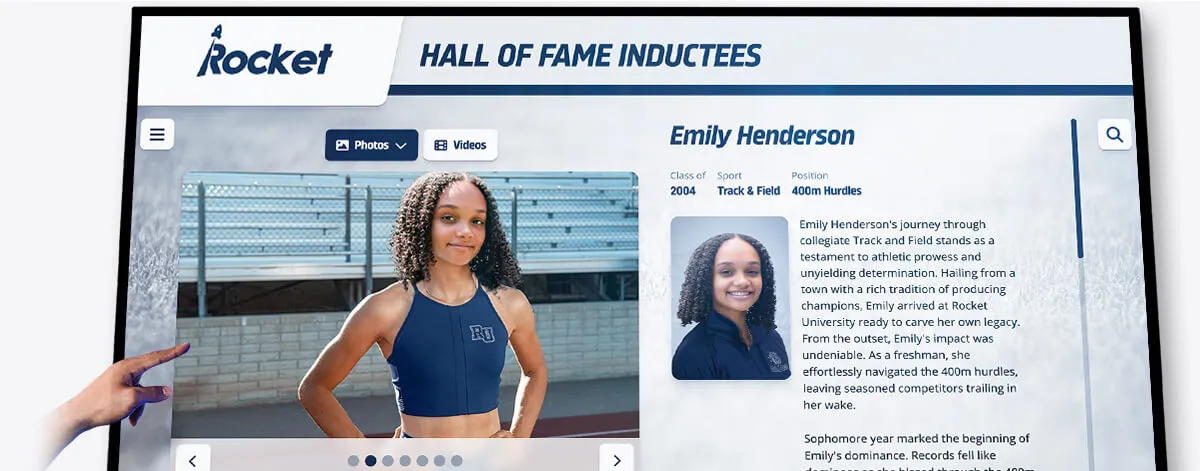
Digital formats remove print’s constraints entirely. A student spotlight on a digital display can include multiple photos, embedded video, expandable achievement histories, and direct connections to related recognition across the school’s full history. The template becomes a data structure rather than a design document — a consistent set of fields that the display software renders into an engaging, interactive presentation.
Digital spotlight templates typically include all of the standard fields above plus:
- Multiple image uploads (action shots, team photos, award ceremony images)
- Video message from the student, coach, or teacher
- Links to related profiles (teammates, classmates recognized in the same category)
- Permanent archive entry ensuring the spotlight persists beyond the current rotation
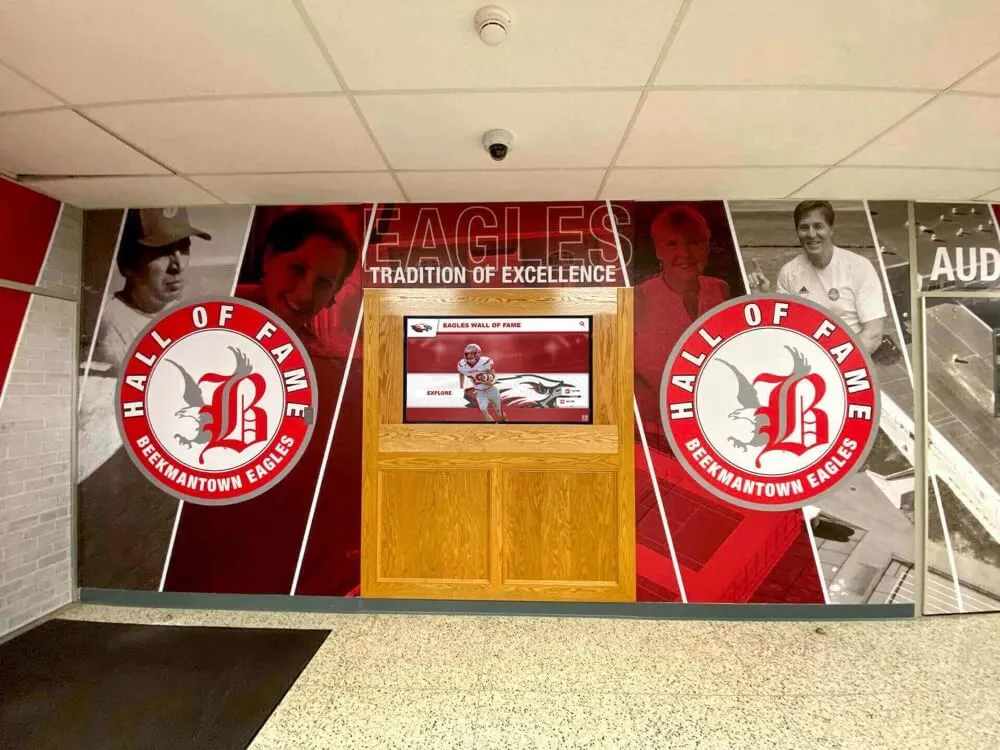
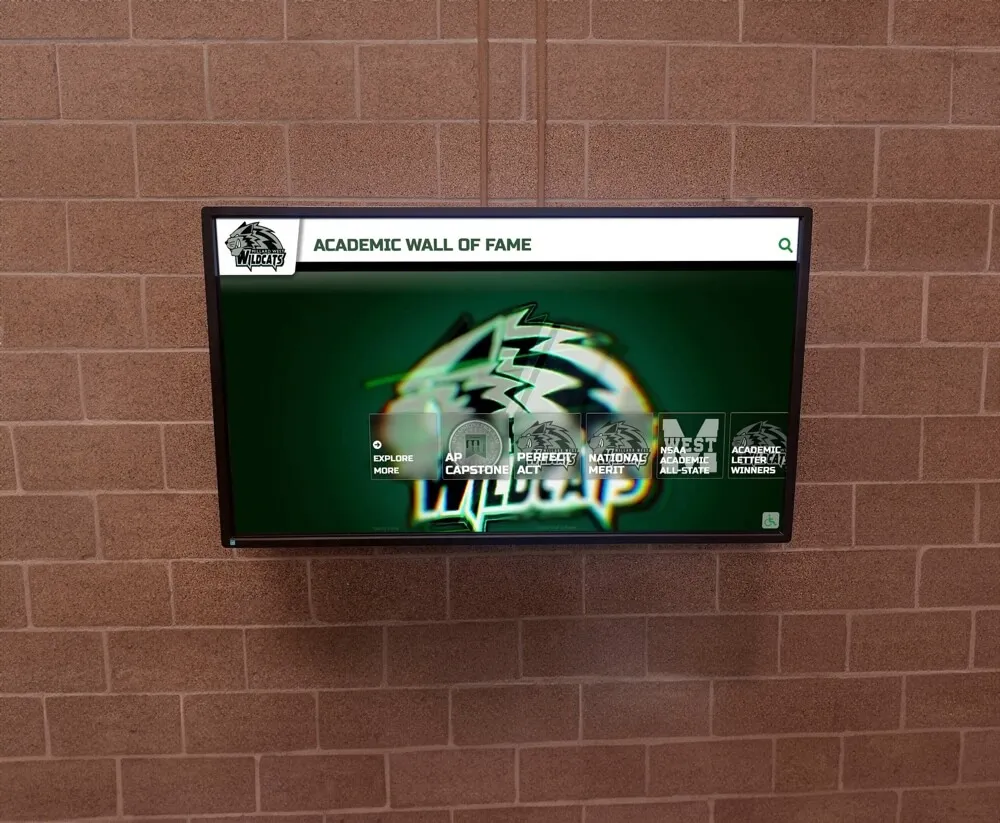
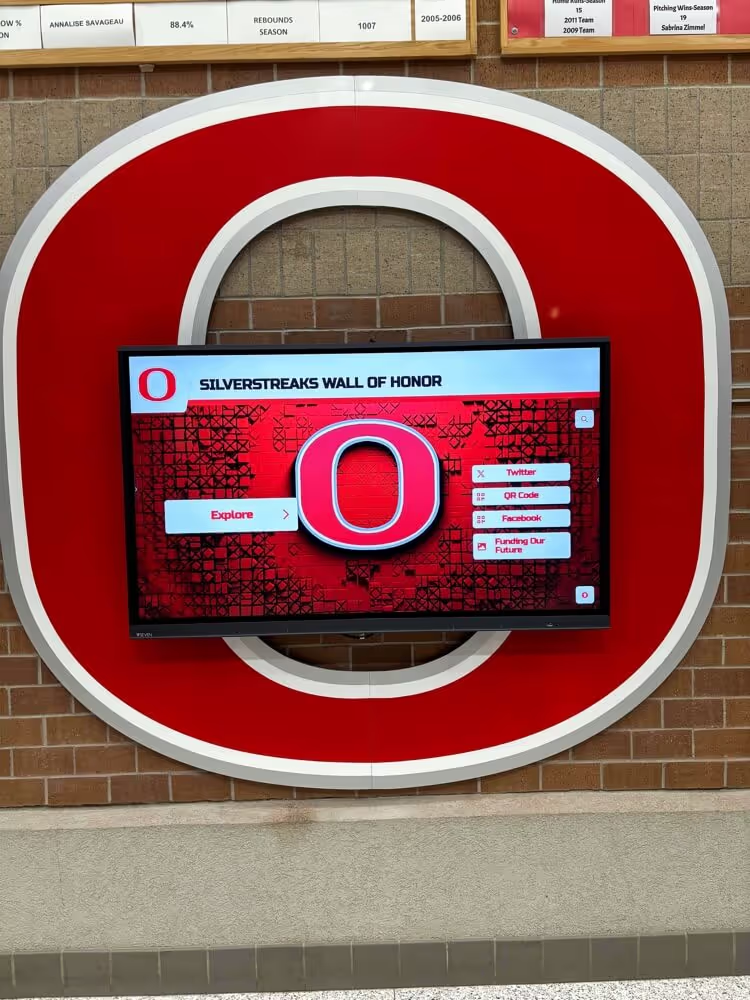
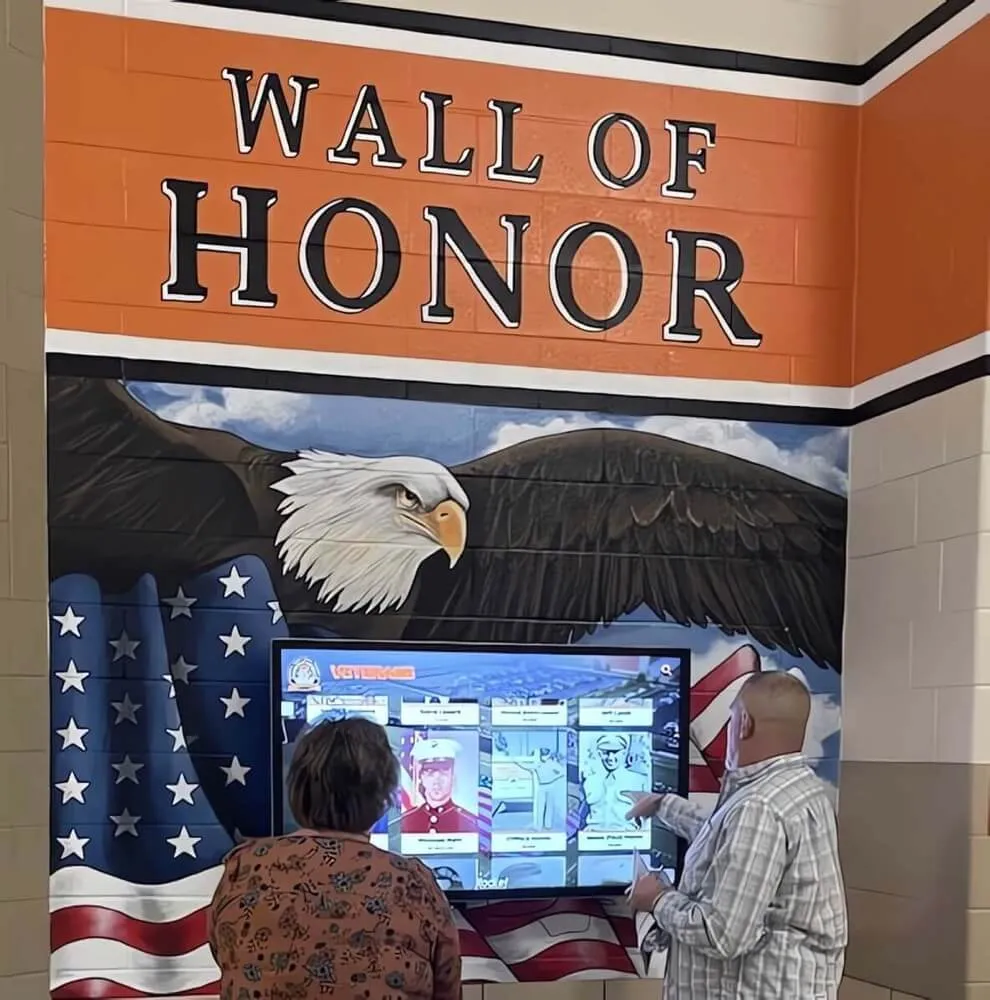

The rise of digital wall of fame displays in schools has been driven largely by this ability to present rich, searchable student profiles — content that tells a complete story rather than printing a name on a plaque that gathers dust after a decade.
Where to Display Student Spotlights for Maximum Impact
Location determines how many students encounter a spotlight, how often, and with what level of attention. Thoughtful placement is as important as template quality.
Main Entrance and Lobby Areas
The school entrance is the highest-traffic, highest-visibility location in any building. Every student, family member, visiting recruiter, and community partner passes through it. A spotlight display in the lobby immediately communicates institutional values — what you choose to highlight here signals what your school believes matters.
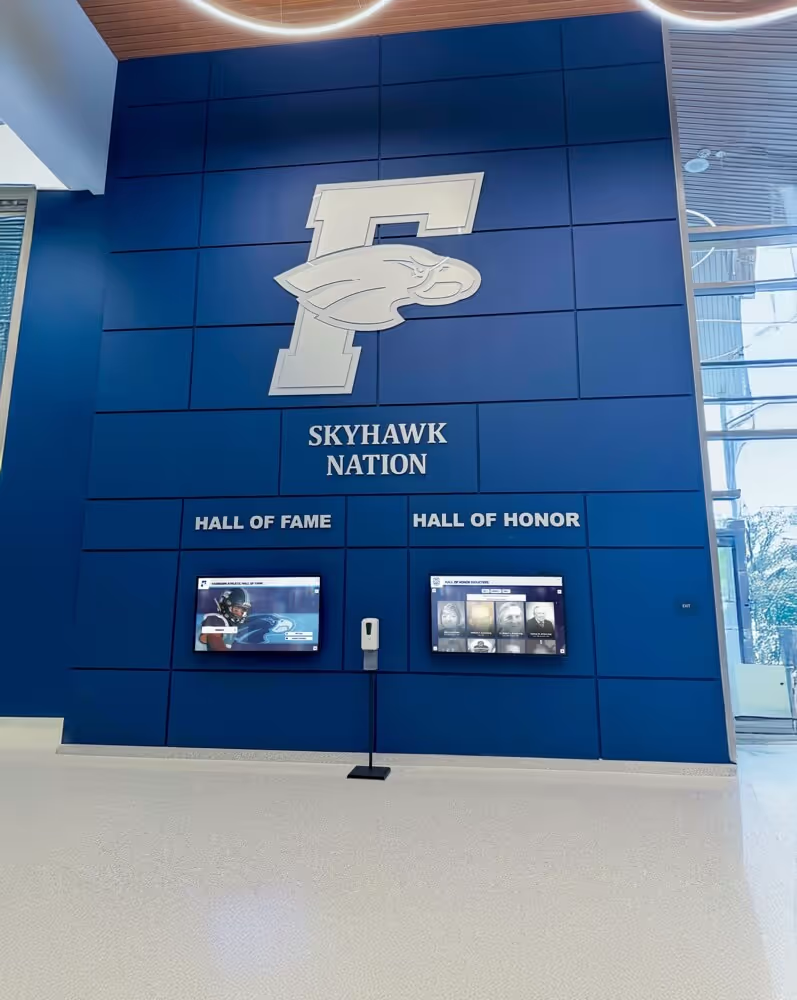
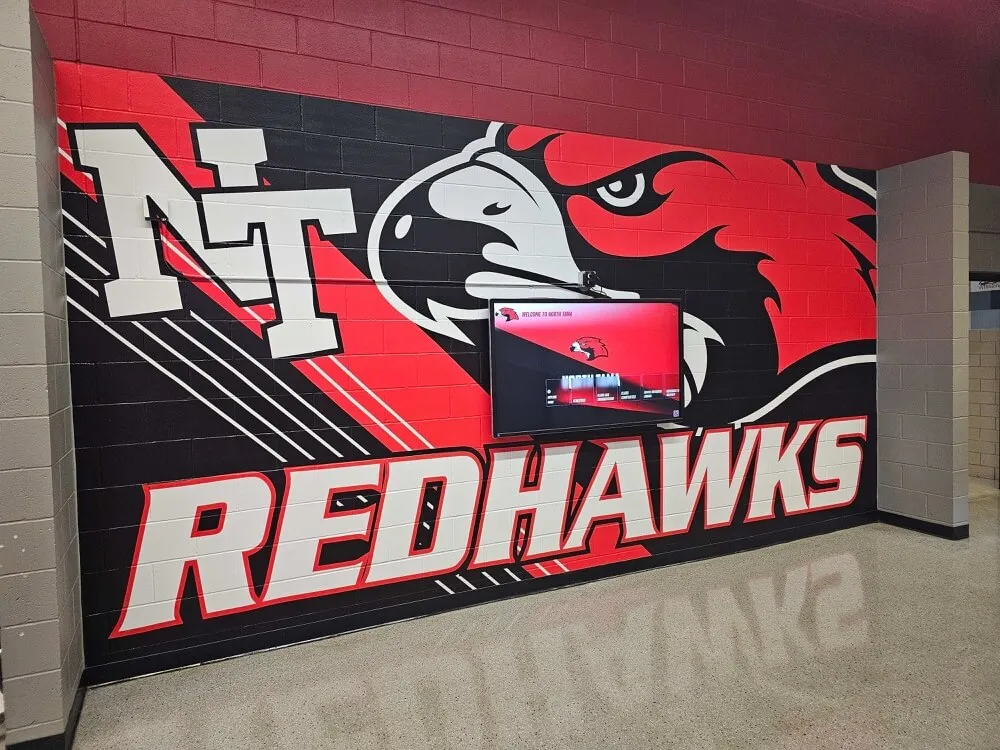
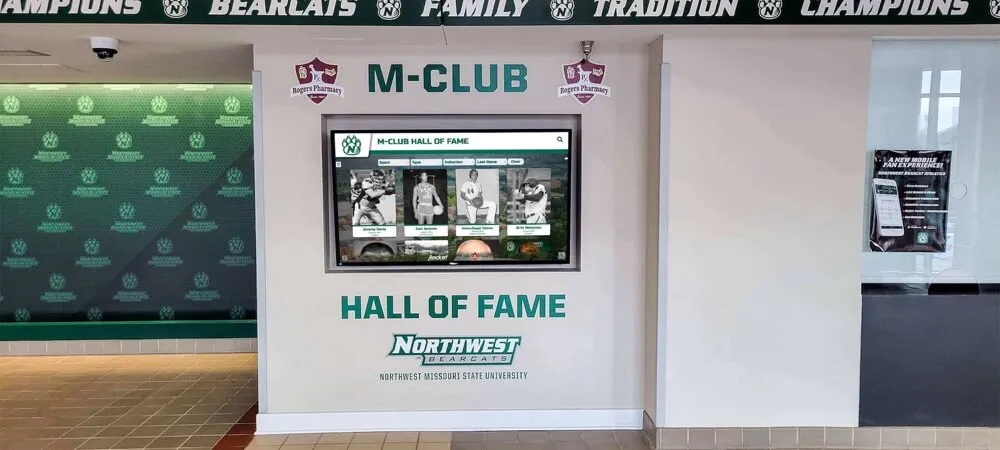
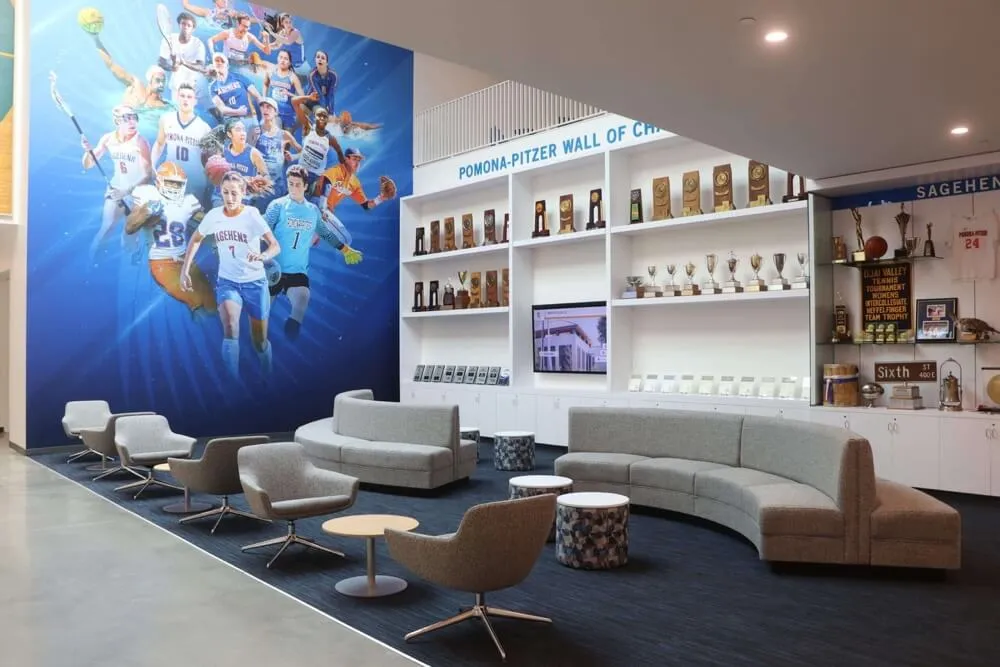
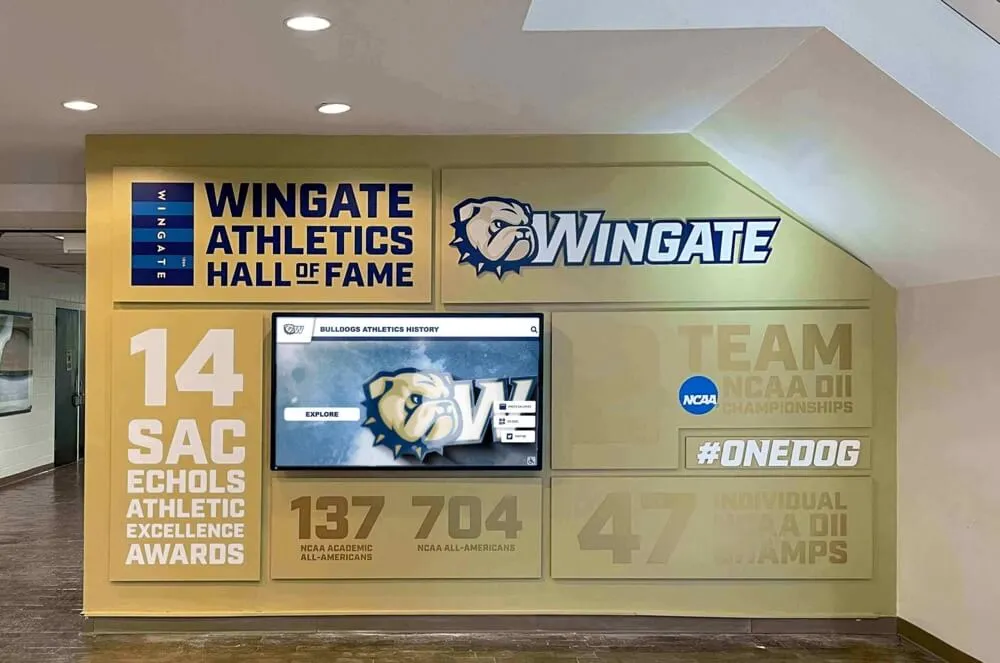
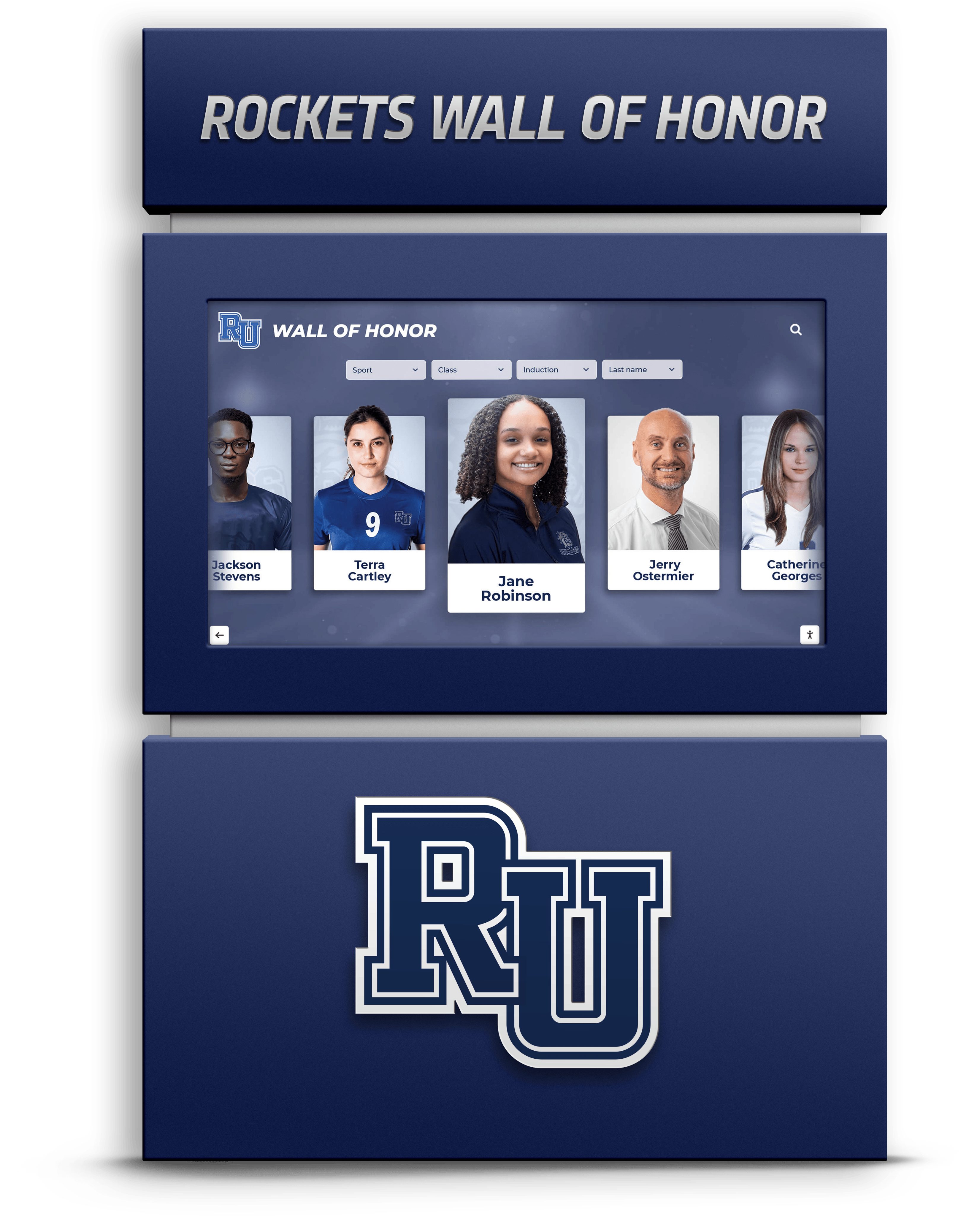
Schools with dedicated lobby recognition walls often rotate current spotlights on digital screens alongside permanent hall of fame content. This combination gives current students prominent visibility while honoring institutional history. Modernizing recognition walls in the lobby is consistently one of the highest-return investments schools can make in their physical recognition infrastructure.
Athletic Facilities and Gymnasiums
Gyms and athletic lobbies are natural homes for athletic spotlights, but the most impactful programs extend beyond sport-specific recognition. Schools that display academic and arts spotlights alongside athletic profiles in athletic facilities communicate that they value the whole student, not just the athlete.
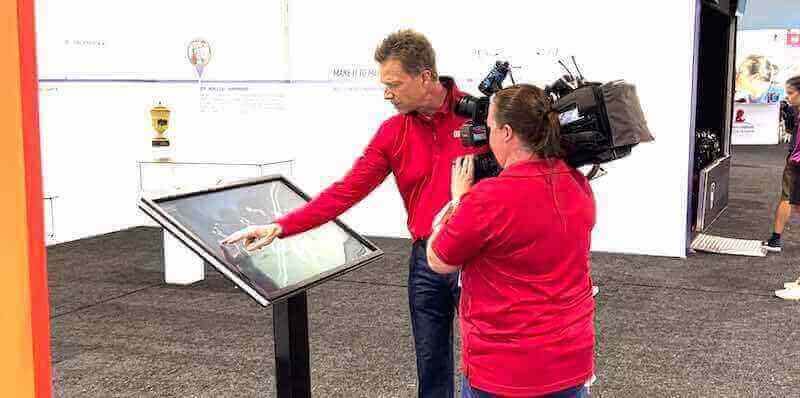
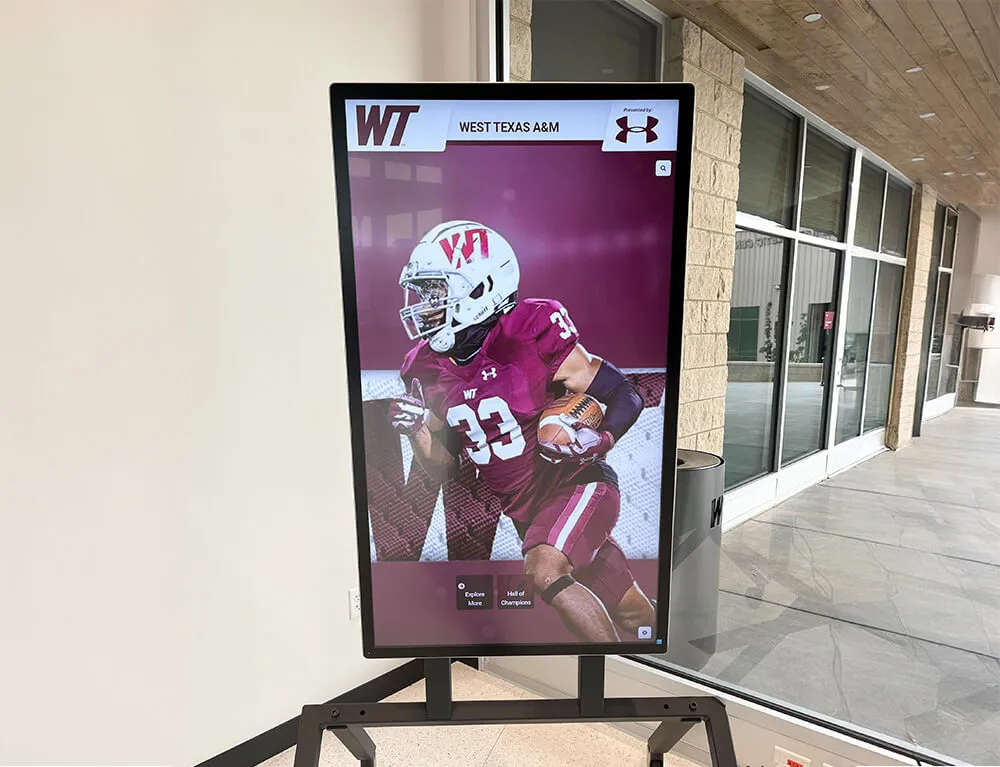
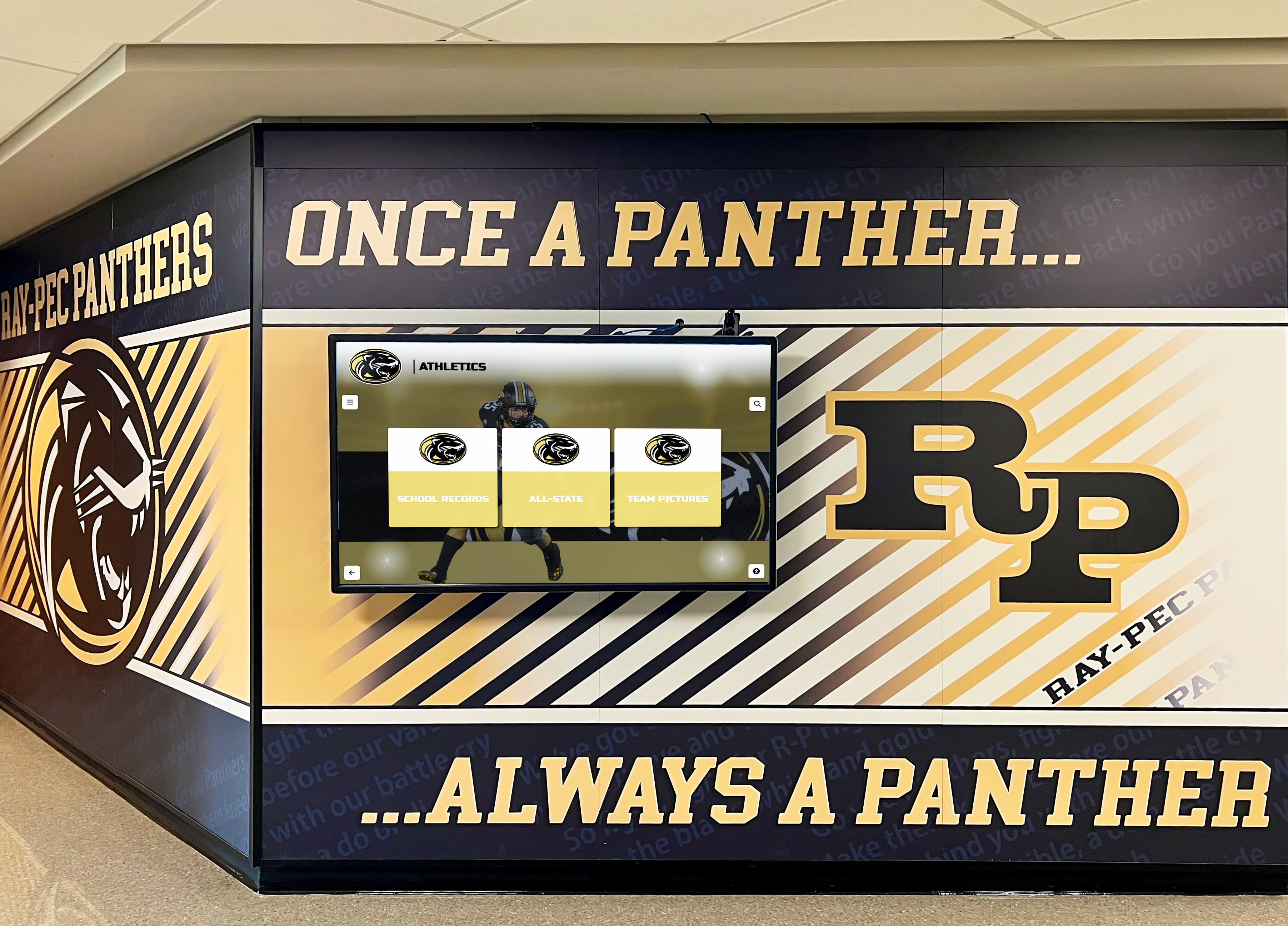
Digital touchscreen systems in athletic lobbies can rotate between student-athlete spotlights, season records, team histories, and senior night recognition — giving every visitor a comprehensive picture of what student achievement looks like at your school.
Hallways and Academic Department Areas
Subject-specific spotlights belong in the hallways closest to their relevant departments. A math department corridor showcasing academic competition winners, a science wing highlighting research achievement, or a performing arts hallway rotating student performers creates ownership and pride within academic communities. These placements ensure that students regularly see recognition directly tied to their own interests and pursuits.
Library and Media Centers
Libraries are gathering spaces where students spend unstructured time — ideal for interactive digital displays that reward deeper exploration. Spotlight displays in libraries can include longer achievement descriptions, video messages, and browsable histories that students can engage with during a lunch period or study hall, rather than the quick glance a hallway display receives.
Building a Sustainable Student Spotlight Rotation Program
The best template fails if the nomination and update process breaks down after three months. Sustainable spotlight programs require clear workflows, distributed responsibility, and systems that reduce rather than multiply administrative burden.
Nomination and Selection Process
Establish a clear, recurring nomination cycle that staff can realistically follow. Monthly is standard, but some schools find quarterly spotlights more sustainable and ultimately more meaningful. Core process elements include:
- A standardized digital nomination form matching your template fields that teachers, coaches, and activity advisors can submit from any device
- Selection criteria communicated in advance so nominators and students understand what earns recognition
- A rotating selection committee that draws from different departments each cycle to prevent the same students from being recognized repeatedly
- A student confirmation step where honorees consent to the spotlight and contribute their personal quote
For athletic recognition, school awards programs often tie spotlight nominations to existing end-of-season award evaluation processes, reducing redundant work by capturing spotlight content while seasonal recognition is already underway.
Content Collection Workflow
Once nominated students are selected, collecting complete template information efficiently requires a reliable sequence:
- Send the student a link to a digital form with their spotlight fields pre-populated from the nomination data already captured
- Schedule a dedicated 15-minute photo session within the week of selection
- Route the completed form to a responsible staff member for a brief review
- Publish to the display system with a target of seven to ten days from selection to public display
This kind of systematic approach keeps the spotlight program credible — students and teachers know that a nomination leads to actual visible recognition rather than a form that disappears into an inbox.
Archiving and Historical Access
Every spotlight your school creates should be preserved in an accessible archive, not retired when the next rotation appears. Over time, this archive becomes one of the most compelling assets in a school’s recognition program — a searchable history of student achievement that alumni can revisit and current students can explore for inspiration.
Digital systems designed specifically for school recognition, like those offered by Rocket Alumni Solutions, build permanent archiving into the platform. Every student profile added to the system becomes part of a growing, searchable database — not a folder of photos that eventually gets cleared off a shared drive when storage runs low.
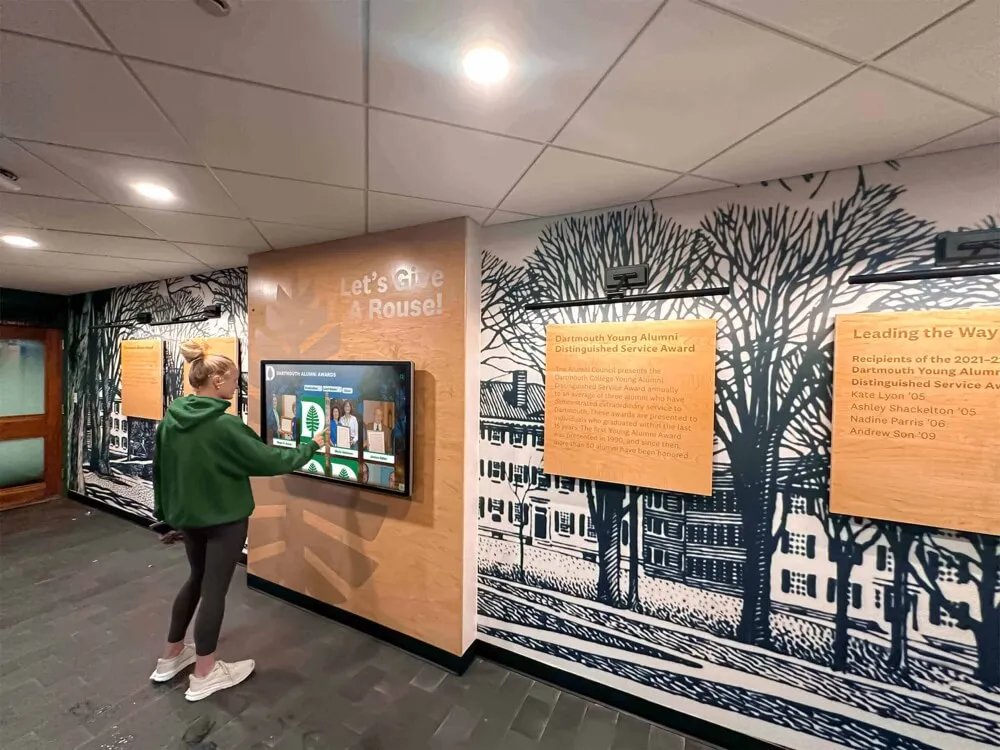
Moving from Print Templates to Digital Spotlight Systems
Many schools start spotlight programs with printed templates and bulletin boards. That’s a reasonable entry point — but at any meaningful scale of ambition, the limitations of print become genuine constraints on what recognition can accomplish.
The shift to digital isn’t about replacing the personal moment of handing a student a certificate or shaking their hand at an assembly. It’s about extending recognition beyond that moment so the achievement stays visible, stays discoverable, and continues inspiring students weeks and months after the initial announcement.
Schools making this transition typically move through three phases:
Phase 1: Digitize the template, maintain print display Create a digital form matching your existing template fields and collect spotlight content digitally even while still printing the final product. This builds a searchable archive and eliminates data re-entry when you eventually shift to digital display.
Phase 2: Add a digital screen in one high-traffic area Start with a single screen in the lobby, gym entrance, or main hallway. Populate it with the digital form data you’ve been collecting. This phase validates the workflow and demonstrates value before committing to a full-campus rollout.
Phase 3: Connect spotlight recognition to a comprehensive digital recognition platform Integrate student spotlights with a broader ecosystem that includes team histories, athletic records, donor recognition, and alumni profiles. At this stage, spotlight recognition becomes part of how your school tells its complete story — not a standalone bulletin board feature that operates in isolation.
Interactive touchscreen display comparisons for schools cover the range of sizes, software capabilities, and price points appropriate for each phase of this transition. For schools planning gym or lobby renovations, indoor sports facility design guides increasingly treat recognition display infrastructure as a design element alongside lighting, flooring, and seating — a sign that the field is moving past treating recognition as an afterthought.
Spotlight Templates for Specific School Programs
Beyond general student recognition, several specific programs benefit from purpose-built template variations.
Principal’s Award and Honor Society Spotlights
High-stakes recognition like the principal award or National Honor Society induction deserves a more comprehensive template than a monthly rotation spotlight. These profiles should include a summary of the student’s multi-year academic record, a principal or counselor’s personal statement on the student’s impact on school culture, and a more prominent display position that visually distinguishes them from standard monthly recognition.
College Signing and Commitment Spotlights
Student-athletes signing to play at the collegiate level represent one of the most visible recognition moments in a school year. A dedicated template for signing-day spotlights should capture the sport, the college or university, the coach’s account of the student’s development, and the student’s goals for their collegiate career. These profiles generate strong social media content and family engagement that extends recognition well beyond the school building.
Academic Competition and Scholarship Spotlights
Students who compete in Science Olympiad, Model UN, debate, or regional academic competitions deserve the same systematic recognition as athletes. A template capturing the competition name, achievement level, team members involved, faculty advisor quote, and future competition or scholarship goals ensures that intellectual competition earns equal standing with athletic achievement across your school’s recognition infrastructure.
Conclusion: The Template Is the Foundation, Not the Ceiling
A student spotlight template provides the structure your school needs to recognize achievement consistently and compellingly. But the template is a starting point. What transforms a template into a recognition program that students genuinely care about is the commitment to make that recognition permanent, make it visible, and make it tell real stories in students’ own voices.
Schools that move from paper forms to digital recognition platforms — where every spotlight becomes part of a searchable, permanent archive accessible from the lobby display or a family member’s phone — discover that recognition starts doing work a bulletin board never could. It motivates students who see themselves in past honorees. It gives alumni a reason to stay connected. It shows prospective families what your school actually values, demonstrated through what you choose to celebrate.
If you’re ready to move your student spotlight program beyond a rotating bulletin board and into a permanent recognition system that grows more valuable every year, explore what Rocket Alumni Solutions builds for schools that take student recognition seriously.
Frequently Asked Questions About Student Spotlight Templates
What fields are essential in a student spotlight template?
At minimum, every student spotlight template should include the student’s name, grade level, recognition category, a quality photo, a two-to-four sentence achievement description, and a direct quote from the student. Teacher or coach endorsements significantly strengthen the profile and are worth the extra coordination required to collect them.
How often should schools rotate student spotlights?
Monthly rotation is the most common cadence, but schools with smaller student bodies or lighter administrative bandwidth often find quarterly spotlights more sustainable while remaining meaningful. The right frequency is the one your team can sustain with consistent quality — an irregular or abandoned program does more damage than no program.
Can one display platform handle multiple spotlight categories?
Yes. Digital recognition platforms designed for schools typically support unlimited categories on a single display. Academic, athletic, arts, service, and leadership spotlights can all coexist in a searchable, filterable system that lets visitors browse by category or explore all achievement types together.
What’s the best way to ensure equitable spotlight recognition across student groups?
Build equity into the nomination process by distributing nomination responsibility across every department and activity advisor, not just head coaches and core subject teachers. Rotating the selection committee and reviewing recognition patterns annually helps prevent unconscious bias from systematically excluding certain student populations from visibility.
How do digital student spotlight systems handle student privacy?
Reputable digital recognition platforms include controls allowing schools to require parent or student consent before publishing profiles, restrict web access to campus-only viewing if needed, and omit personally sensitive information while still celebrating achievement. Review your district’s directory information policies and align your spotlight program’s consent workflow accordingly before launch.