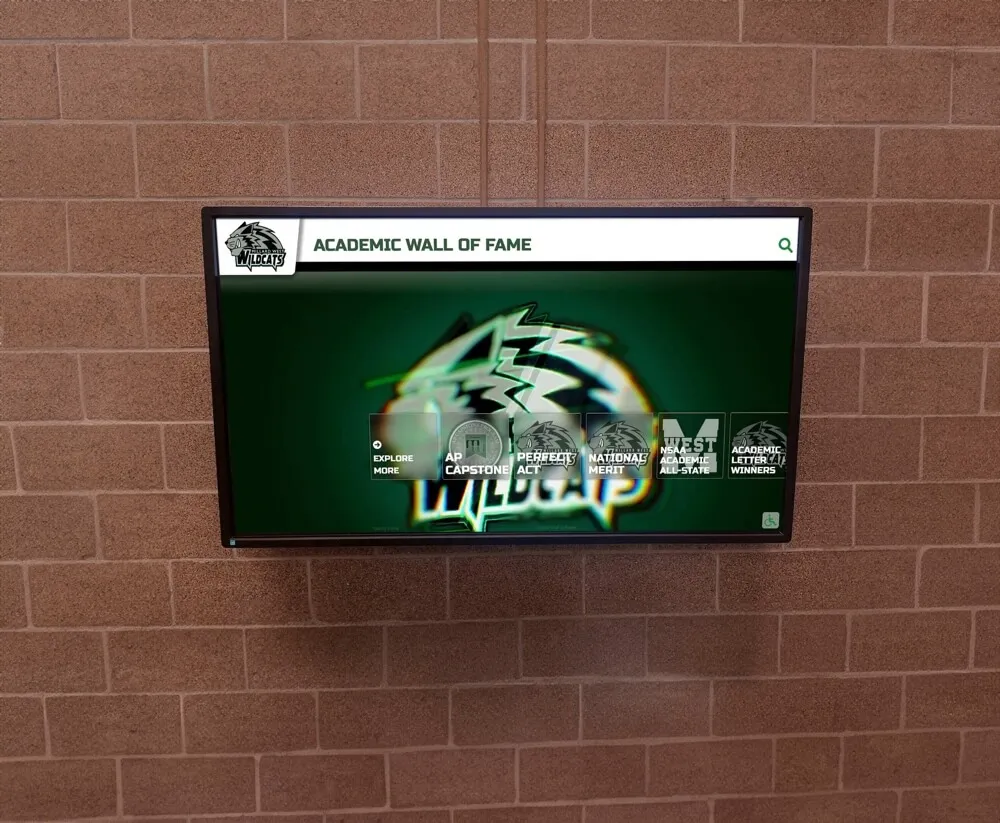




Student achievement recognition serves purposes far deeper than simply acknowledging grades and test scores. Thoughtfully designed displays communicate what schools genuinely value, provide visible role models that inspire peers, create community pride connecting students, families, and staff, motivate continued effort by demonstrating that excellence receives meaningful acknowledgment, and build institutional identity around achievement cultures that persist across generations.
The most effective schools recognize that achievement manifests in countless forms beyond traditional academics—artistic excellence, scientific innovation, community service leadership, athletic accomplishment, character development, and countless other paths where students demonstrate exceptional dedication and growth. Comprehensive recognition systems celebrate this achievement diversity, ensuring every student can envision themselves succeeding and receiving appropriate acknowledgment.
Modern student achievement displays have evolved dramatically beyond simple name lists posted on office walls. Today’s most innovative schools leverage creative design, interactive technology, student voice, and strategic placement to create recognition experiences that genuinely resonate with contemporary students while serving the practical needs of administrators managing recognition programs.
Understanding the Purpose of Student Achievement Displays
Before selecting specific display approaches, schools should clarify what they hope to accomplish through enhanced recognition and which audiences these displays serve.
Building Achievement-Oriented School Culture
The most fundamental purpose of student achievement displays involves creating and reinforcing school cultures where excellence becomes normalized rather than exceptional. When students encounter daily reminders that their peers achieve at high levels academically, participate in competitive activities successfully, contribute meaningfully to communities, and receive genuine recognition for these efforts, they internalize expectations that achievement represents standard behavior rather than rare occurrence.
Creating Visible Expectations: Physical displays communicate institutional values more powerfully than handbook language or administrative speeches. A prominent hallway display celebrating academic achievement sends clear messages that this school prioritizes learning, student effort receives genuine acknowledgment, and excellence comes in diverse forms deserving equal celebration.
Normalizing Excellence: When recognition displays showcase substantial numbers of achieving students across multiple categories and achievement types, they combat damaging narratives suggesting that academic success requires rare innate talent rather than accessible effort. Students seeing dozens or hundreds of recognized peers understand that achievement remains accessible to anyone willing to work consistently toward goals.
Inspiring Peer Motivation: Social psychology research consistently demonstrates that peer behavior influences student choices more powerfully than adult directives. Visible recognition creates informal peer pressure supporting positive behaviors—when students see peers celebrated for achievements, they experience increased motivation to pursue similar recognition themselves.
Honoring Diverse Achievement Types
Effective recognition systems acknowledge that students excel in remarkably varied ways, each deserving appropriate celebration. Limiting recognition to traditional academics like honor roll and GPA inadvertently communicates that the school values only certain achievement types while marginalizing excellence in other domains.
Academic Excellence: Traditional academic recognition remains foundational, acknowledging students who maintain exceptional grades, demonstrate improvement growth, achieve standardized testing excellence, earn academic competition awards, or receive scholarship recognition.
Character and Citizenship: Many schools now emphasize character development equally with academic achievement, celebrating students demonstrating exceptional integrity and ethics, consistent kindness and peer support, community service leadership, attendance excellence and responsibility, or conflict resolution and peacemaking skills.
Artistic and Creative Achievement: Creative domains deserve recognition parallel to athletics, including visual arts excellence and exhibition participation, performing arts achievements in music, theater, or dance, creative writing publications and competition success, film and media production excellence, or innovative design and maker space projects.
Leadership and Service: Student leaders who strengthen school communities merit specific acknowledgment for student government participation and elected leadership roles, club founding and organizational leadership, peer mentoring and tutoring contributions, community service hour accumulation, or advocacy addressing school or community issues.
Schools implementing academic recognition programs that celebrate diverse achievement types report increased student engagement across all domains as more students see pathways to recognition matching their interests and strengths.
Traditional Student Achievement Display Ideas
While digital solutions offer compelling advantages explored later, many effective recognition approaches utilize traditional formats that remain accessible and appropriate for schools at all budget levels.
Honor Roll Display Boards
Classic honor roll boards remain standard recognition approaches in most schools, but thoughtful design elevates these displays from administrative obligation to meaningful celebration.
Rotating Recognition Displays: Rather than static annual displays, implement quarterly or semester rotating recognition that maintains fresh visibility and creates multiple opportunities for students to earn acknowledgment throughout the year. Update boards prominently at marking period conclusions when achievement remains top of mind for students and families.
Achievement Level Differentiation: Many schools distinguish multiple honor roll tiers—High Honors (typically 4.0 GPA or equivalent), Honors (3.5-3.99), and Merit recognition (3.0-3.49)—allowing broader celebration while acknowledging exceptional performance distinctly. This tiered approach ensures recognition accessibility while maintaining aspirational higher achievement levels.
Design That Commands Attention: Elevate honor roll displays beyond simple typed name lists with professional design incorporating school colors and branding creating visual coherence with institutional identity, clear typography ensuring readability from typical hallway viewing distances, achievement level headers distinguishing recognition tiers visually, border designs or decorative elements adding polish, and strategic lighting highlighting displays during evening events or early morning hours.
Strategic Placement: Position honor roll boards in high-traffic locations ensuring maximum visibility including main entrance lobbies where families and visitors first encounter achievement celebration, outside administrative offices where students conduct daily business, cafeteria entrances where entire student bodies pass multiple times daily, or guidance suite areas where students and families discuss academic progress.
Bulletin Board Recognition Ideas
Creative bulletin board designs transform standard school fixtures into engaging achievement celebrations that capture attention while remaining budget-friendly and easy to update.
“Shining Stars” Themed Boards: Create celestial-themed displays where each recognized student receives a star with their name and achievement description. This approach works particularly well for elementary and middle schools, with larger gold stars acknowledging exceptional achievements and smaller silver stars recognizing all honor roll students creating visible achievement constellation.
“Wall of Excellence” Photo Displays: Move beyond name lists by incorporating student photos with brief achievement descriptions. This personal approach helps younger students identify recognized peers and creates displays that families photograph proudly. Include information about the specific achievement—“Sarah Johnson: Perfect Attendance All Year,” “Marcus Chen: State Science Fair Finalist,” “Emma Rodriguez: National Merit Commended Scholar.”
Achievement Timeline Displays: Organize recognition chronologically throughout the school year, creating visual narratives showing accumulating achievement as the year progresses. This approach helps students understand that recognition opportunities occur continuously rather than only at year end, maintaining motivation throughout entire academic years.
Student-Designed Recognition Boards: Engage art students or classes in designing recognition displays, creating authentic investment while developing student design skills. This collaboration ensures displays resonate with student aesthetic preferences rather than reflecting only adult perspectives on appropriate recognition design.
Trophy Cases and Shadow Boxes
Physical trophy cases remain powerful recognition tools when thoughtfully curated and maintained, though they require careful management to avoid becoming cluttered historical archives that fail to inspire current students.
Academic Competition Awards: Showcase trophies and medals from academic competitions including Science Olympiad, Math League, Academic Decathlon, Debate tournaments, Model UN conferences, robotics competitions, and spelling bee championships. These physical artifacts provide tangible proof of competitive excellence while inspiring current students to pursue similar participation.
Scholarship Recognition: Create dedicated displays celebrating scholarship recipients with achievement certificates, scholarship award letters, college acceptance materials, and photographs. This recognition serves dual purposes of honoring individual achievement while demonstrating to underclassmen that college affordability remains accessible through academic excellence and scholarship pursuit.
Rotating Exhibits: Avoid static displays that remain unchanged for years by implementing rotating exhibits that showcase different achievement types, time periods, or academic departments throughout the year. A fall exhibit might highlight summer academic program participants, winter could showcase performing arts achievements, and spring might celebrate athletic and outdoor education accomplishments.
Contextual Information: Include explanatory plaques providing context about competitions, awards, or achievements that visitors might not immediately understand. A Science Olympiad trophy becomes more impressive when accompanied by information explaining that teams compete in 23 different science and engineering events against dozens of schools regionally.
Creative Modern Display Approaches
Contemporary recognition strategies leverage innovative formats that resonate with current students while incorporating student voice and collaborative elements.
Student Achievement Walls
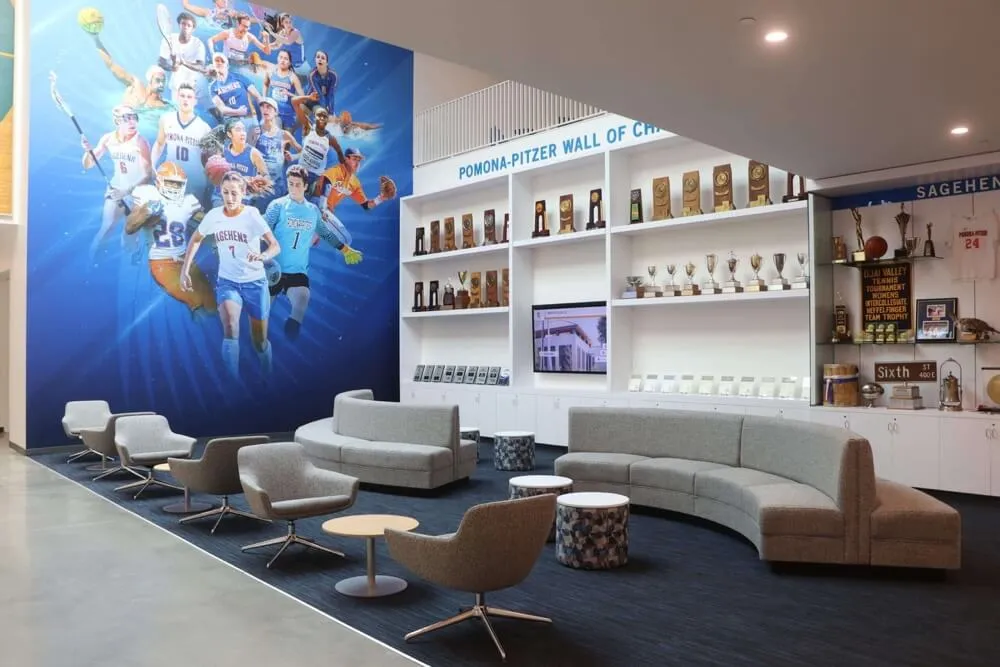
Dedicate prominent hallway wall sections to comprehensive achievement celebration using creative formats that go beyond traditional bulletin boards.
Achievement Tile Mosaics: Create large-scale mosaic installations where each recognized student receives an individual tile (typically 4x4 or 6x6 inches) featuring their photo, name, achievement type, and personal quote about their success or advice for peers. These growing mosaics accumulate achievement across years, creating impressive visual representations of school culture while allowing individual student personality to emerge through personal quotes and optional tile decoration.
Photo Collage Displays: Develop large photo collages celebrating achieving students in action—studying in libraries, presenting projects, accepting awards, working in laboratories, performing in concerts, or participating in competitions. Action photography creates more dynamic displays than formal portraits while communicating that achievement involves active engagement rather than passive receipt of grades.
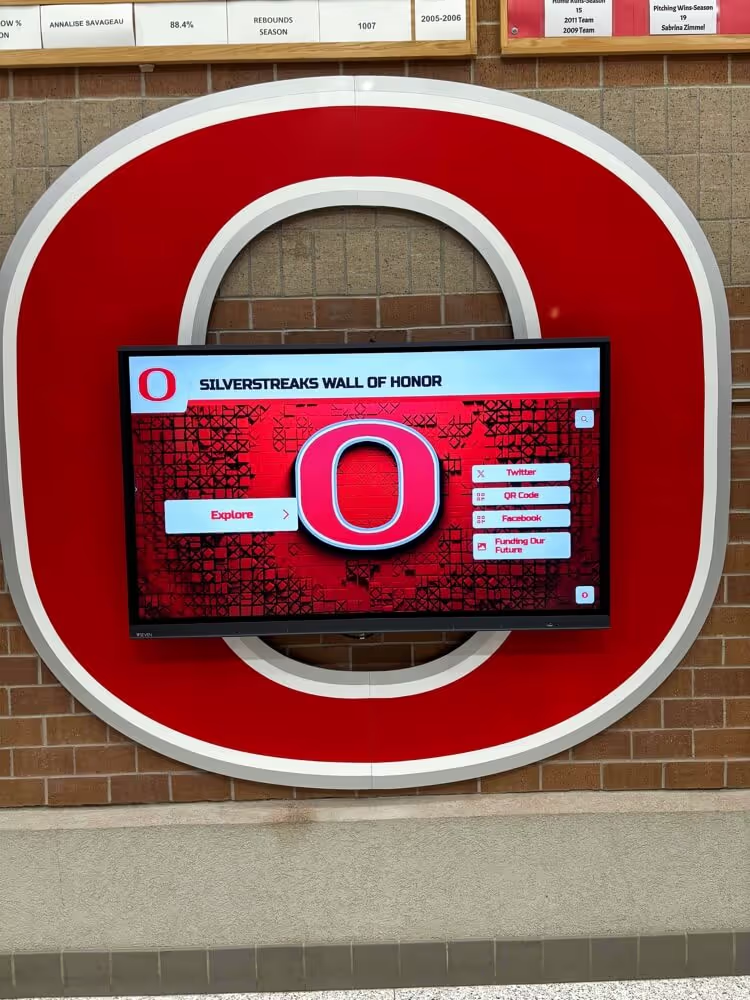
Interactive Recognition: Install elements allowing students to interact with displays rather than simply viewing passively. This might include QR codes linking to student project websites or achievement videos, touch-activated elements revealing additional achievement details, or augmented reality components where smartphone apps reveal expanded content when pointed at physical displays.
Digital Recognition Boards
Modern digital displays offer significant advantages over traditional static recognition, particularly for schools managing extensive recognition programs or serving large student populations.
Scrolling Digital Name Displays: Replace static printed lists with digital screens displaying recognition categories with smooth scrolling through hundreds or thousands of student names. This approach eliminates space constraints that force schools to exclude students or reduce recognition to tiny unreadable text, while creating polished professional presentations that honor achievement appropriately.
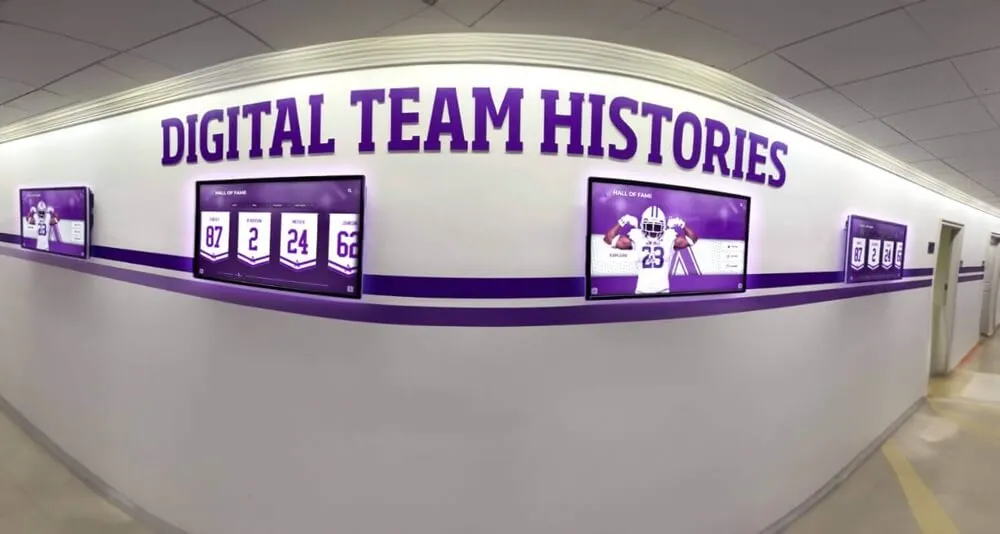
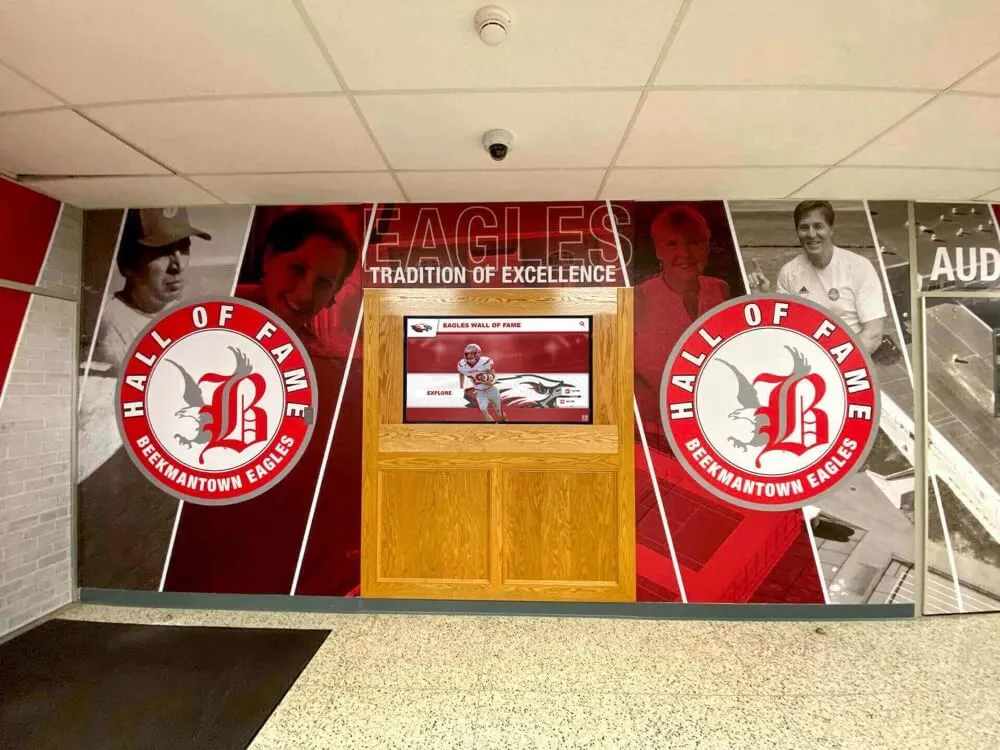
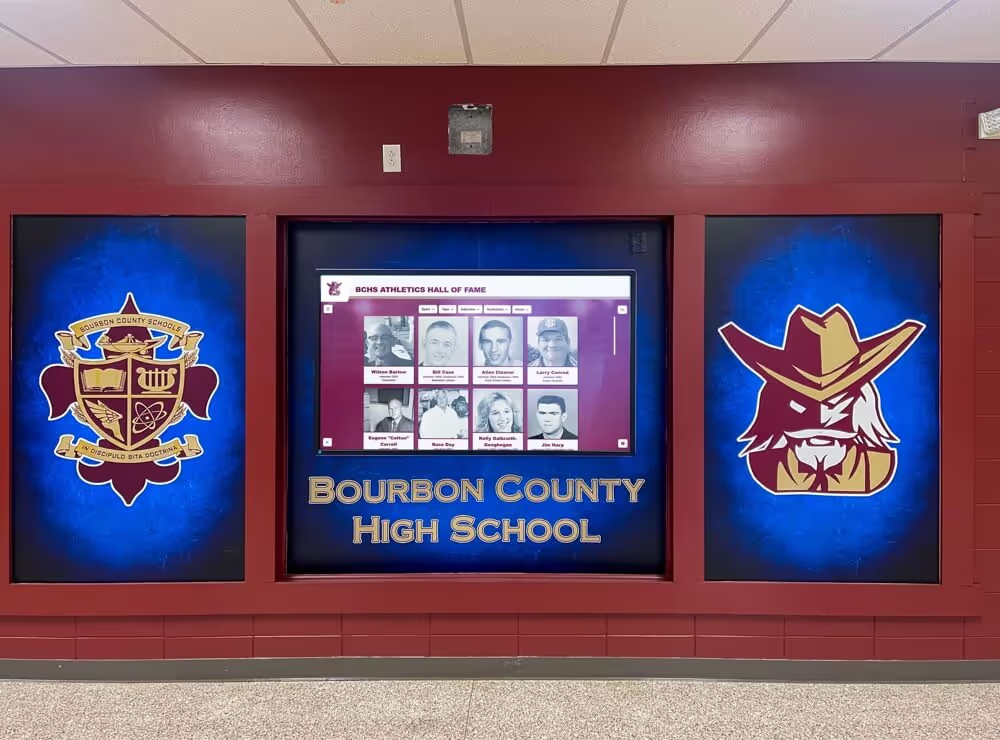
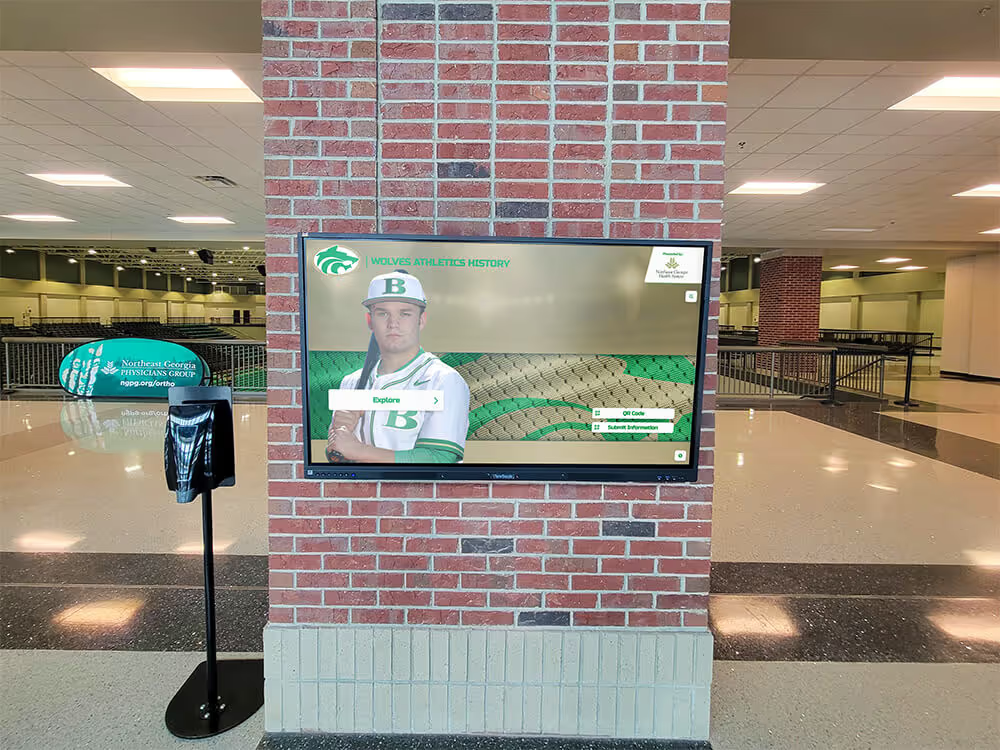
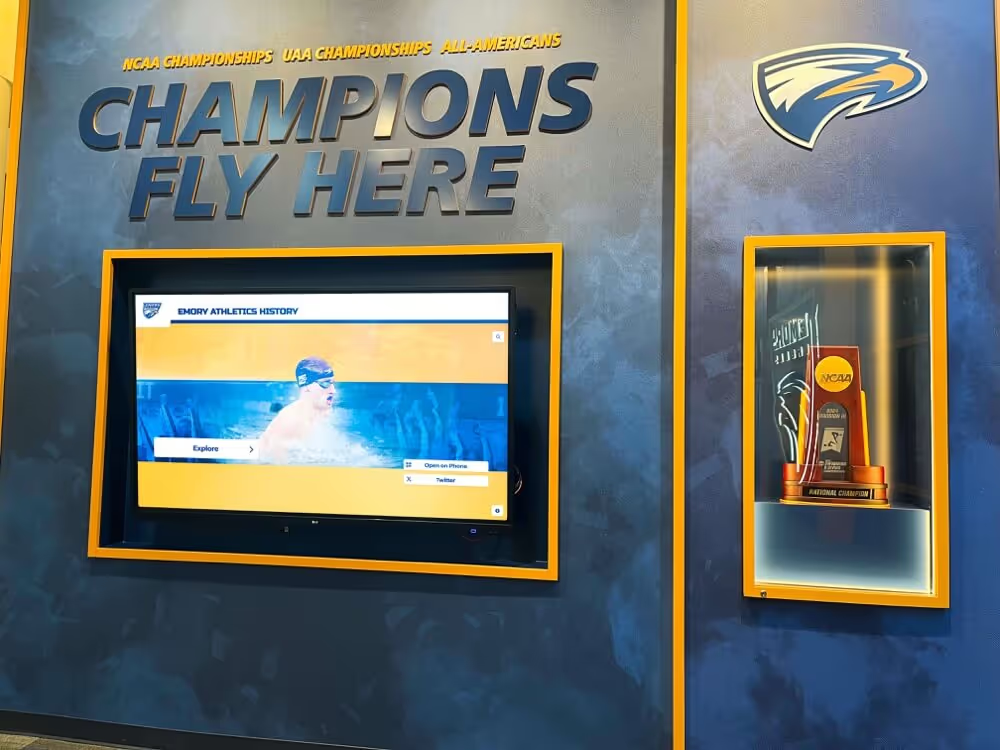
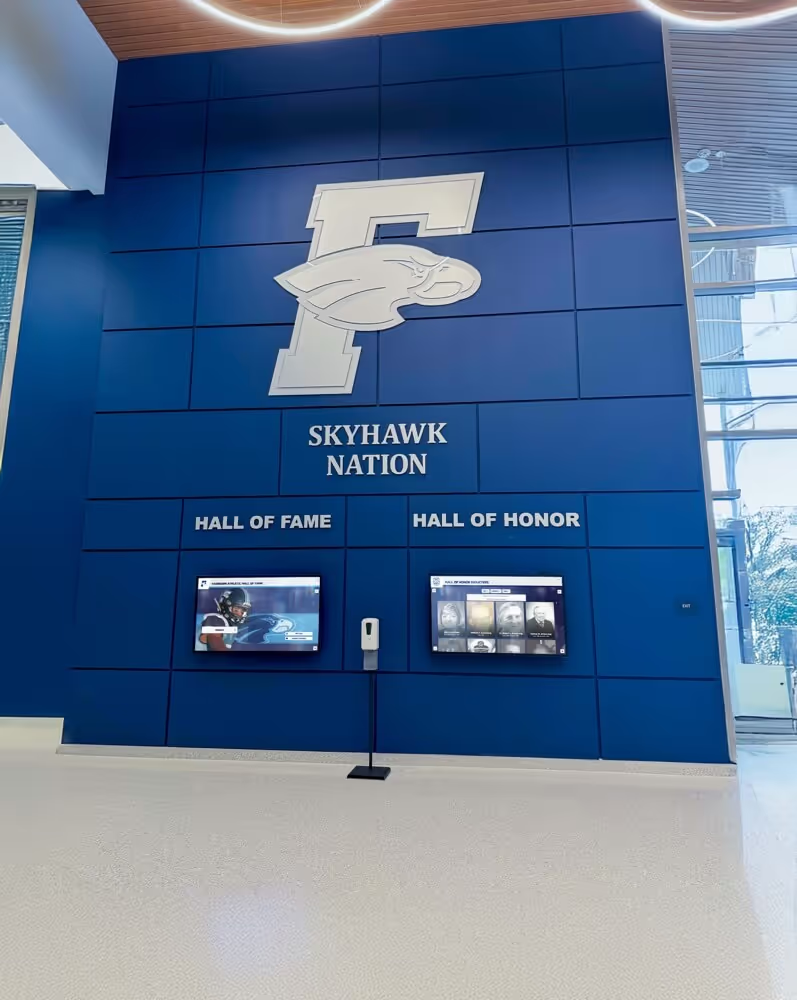
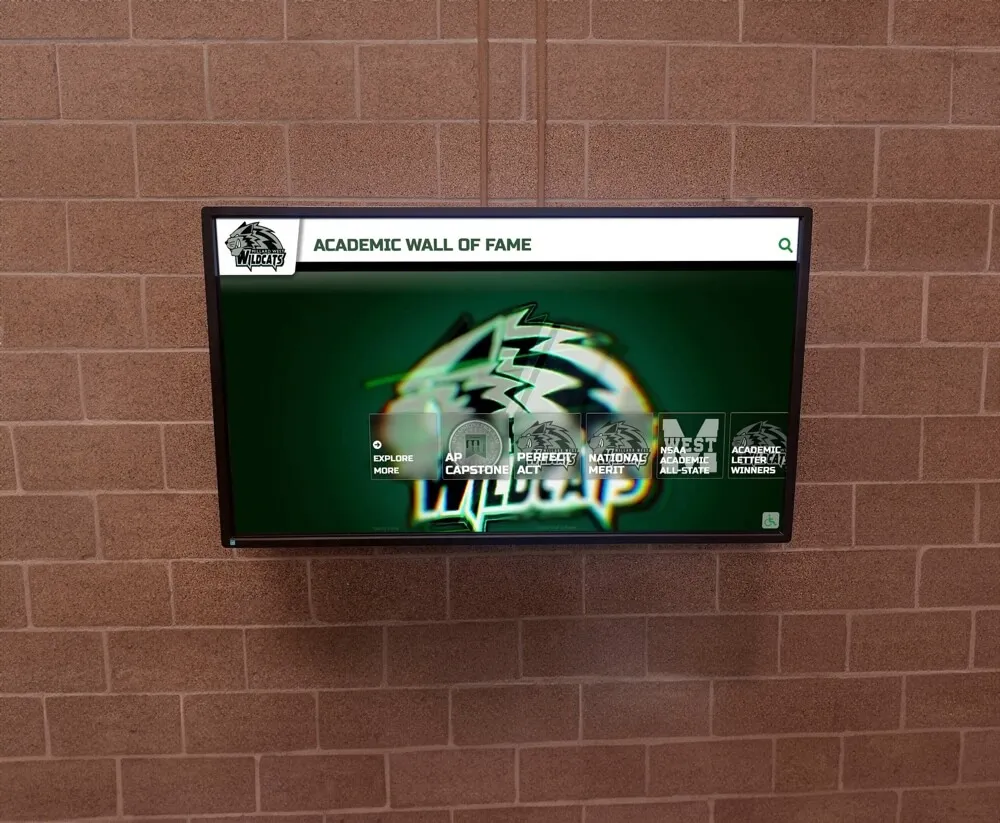
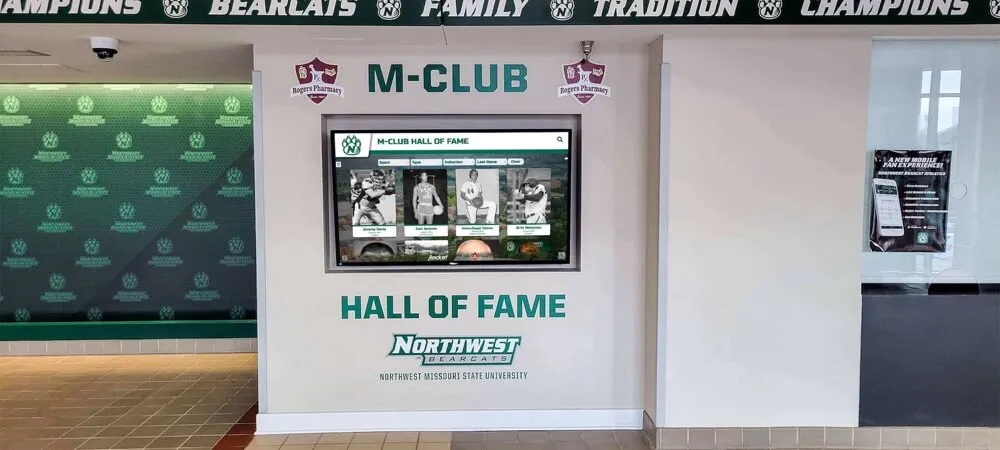
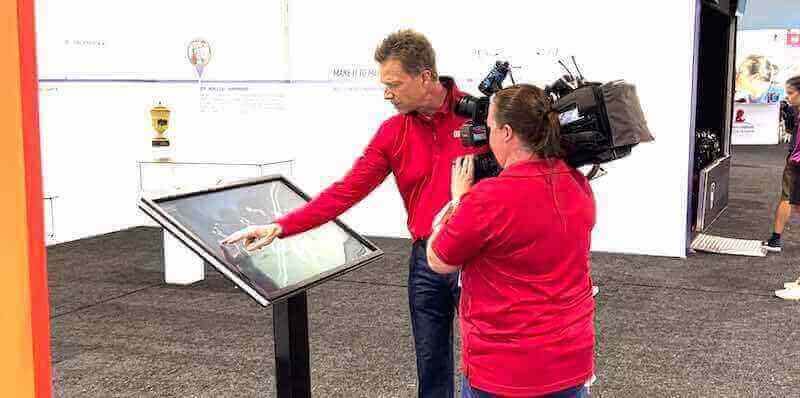
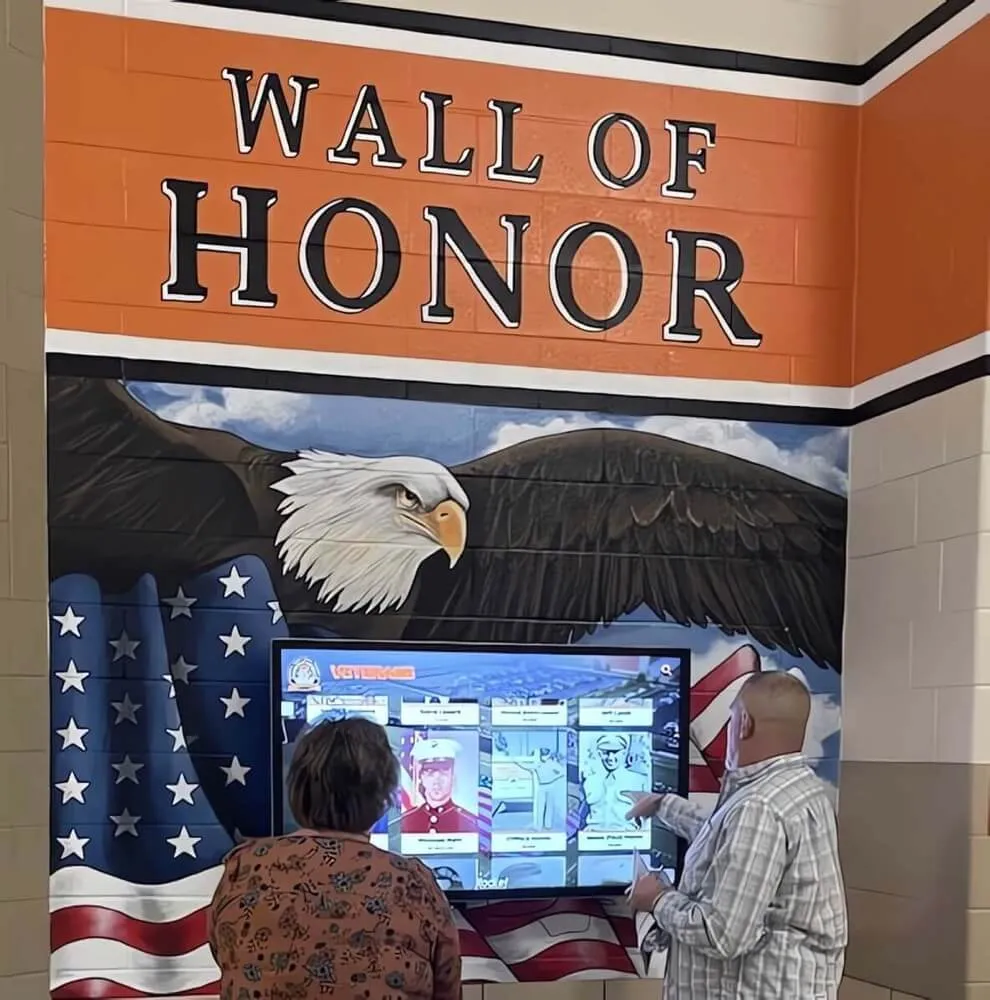
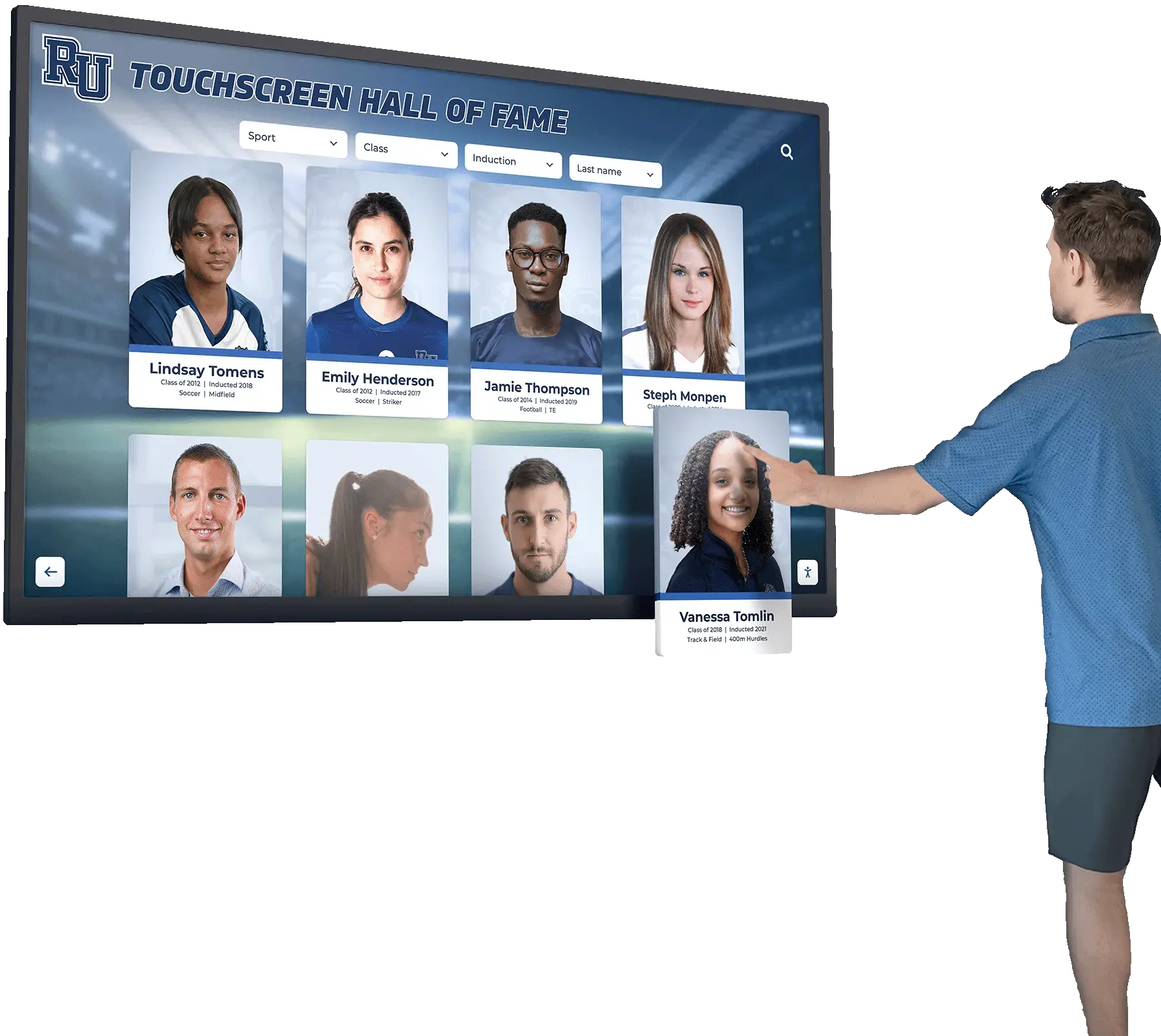
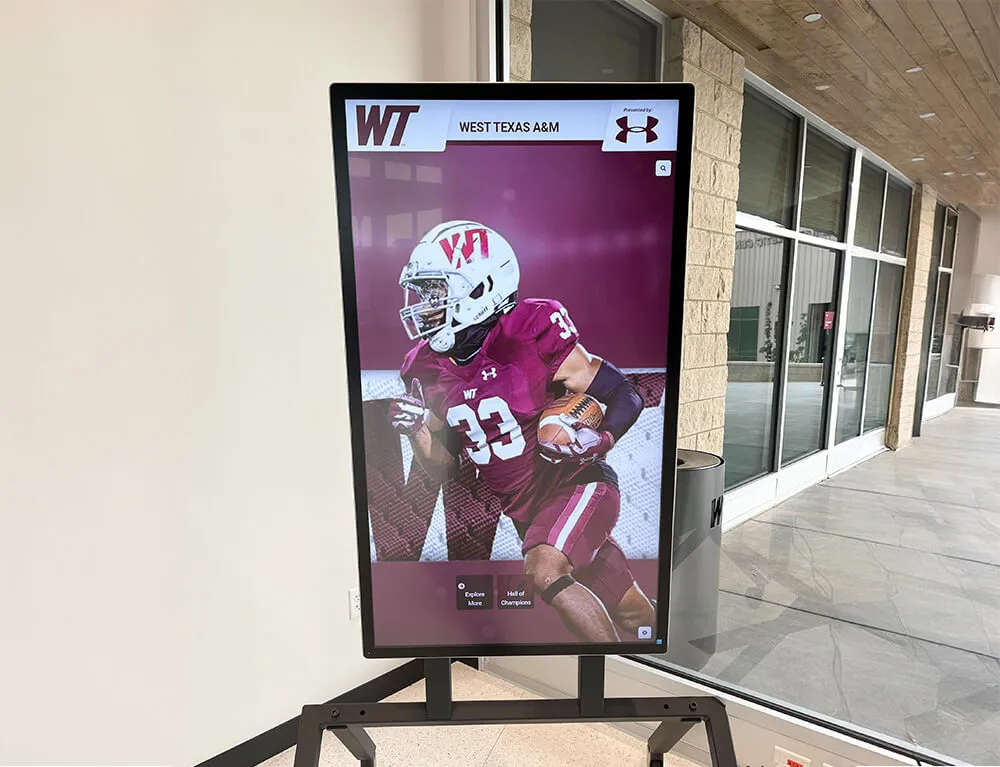
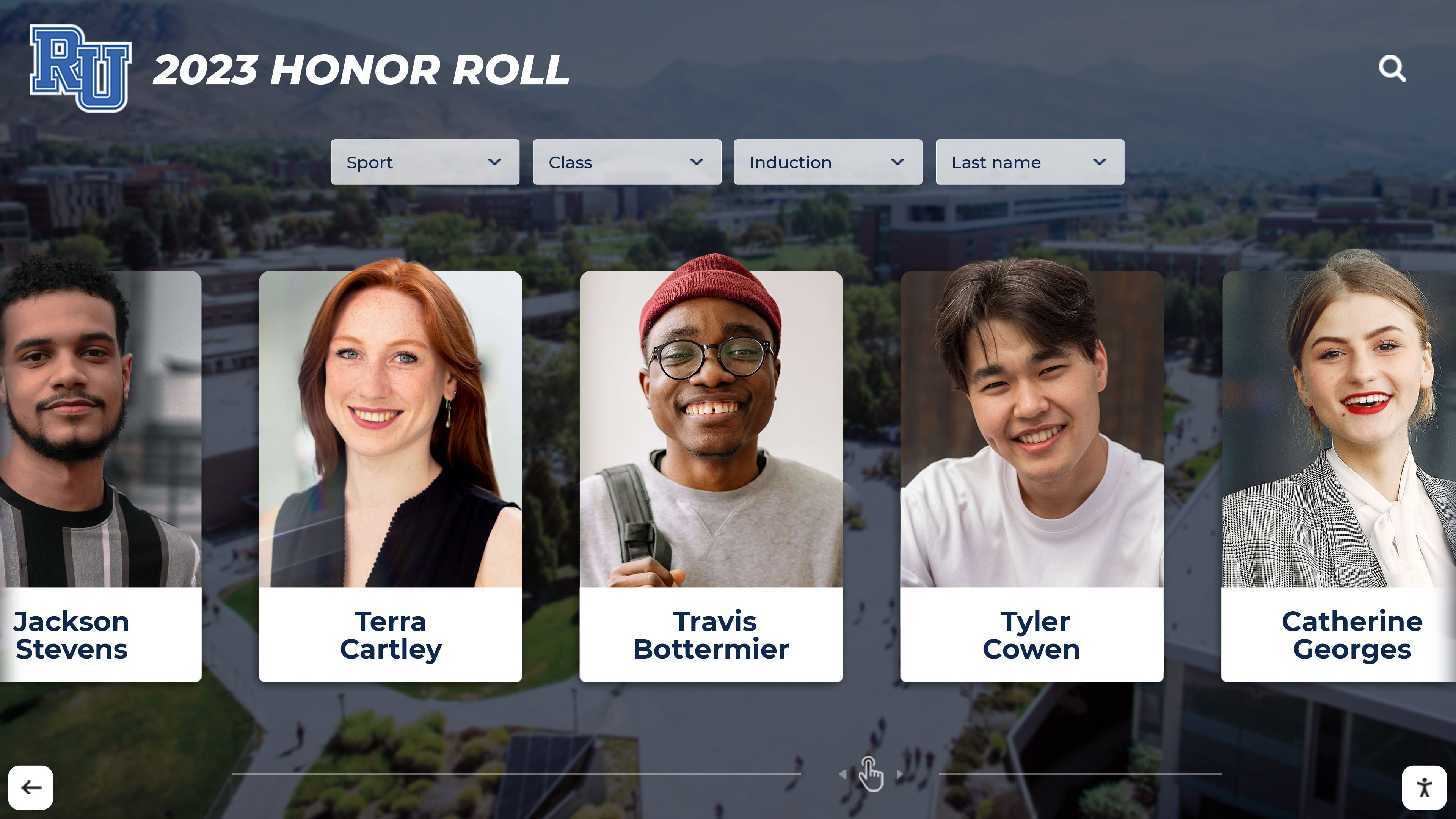
Interactive Touchscreen Recognition: Advanced schools implement interactive touchscreen displays allowing visitors to search for specific students, filter by achievement category, browse by grade level or time period, and access detailed achievement information beyond simple name listings. These systems dramatically increase engagement compared to passive displays while solving capacity constraints inherent in physical recognition formats.
Solutions like those explored in resources about digital tools for recognition demonstrate how technology transforms static acknowledgment into engaging interactive experiences where students actively explore achievement rather than passively viewing curated selections.
Multimedia Achievement Profiles: Digital platforms enable rich storytelling beyond name lists, incorporating student photos and achievement descriptions, video interviews where students discuss their accomplishments and offer advice, project documentation including research papers, creative works, or competition entries, achievement timelines showing student progress across multiple years, and social media integration allowing families to share recognition with extended networks.
Real-Time Updates: Digital systems eliminate the delays inherent in printed recognition materials. Administrators can add newly recognized students immediately following achievement, update information as additional honors accumulate, correct errors instantly without reprinting materials, and feature seasonal content highlighting different achievement types throughout the year.
School Design Integration
The most effective achievement displays integrate thoughtfully with overall school design environments, creating cohesive aesthetic experiences rather than appearing as afterthought additions to otherwise finished spaces.
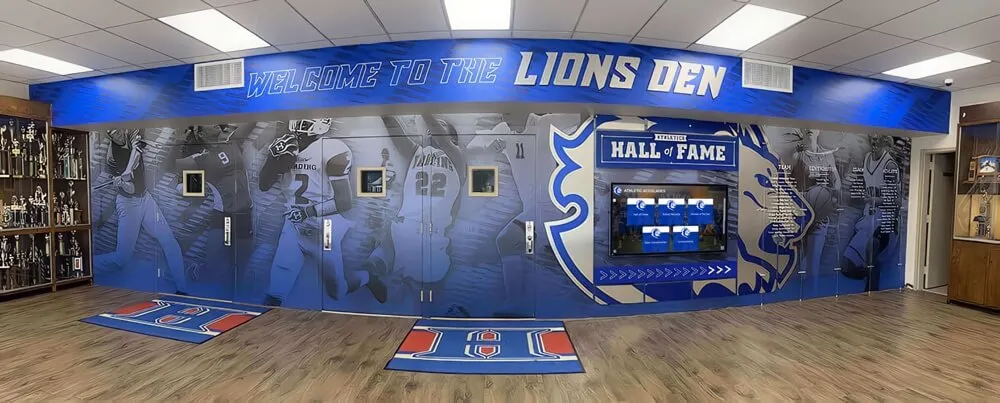
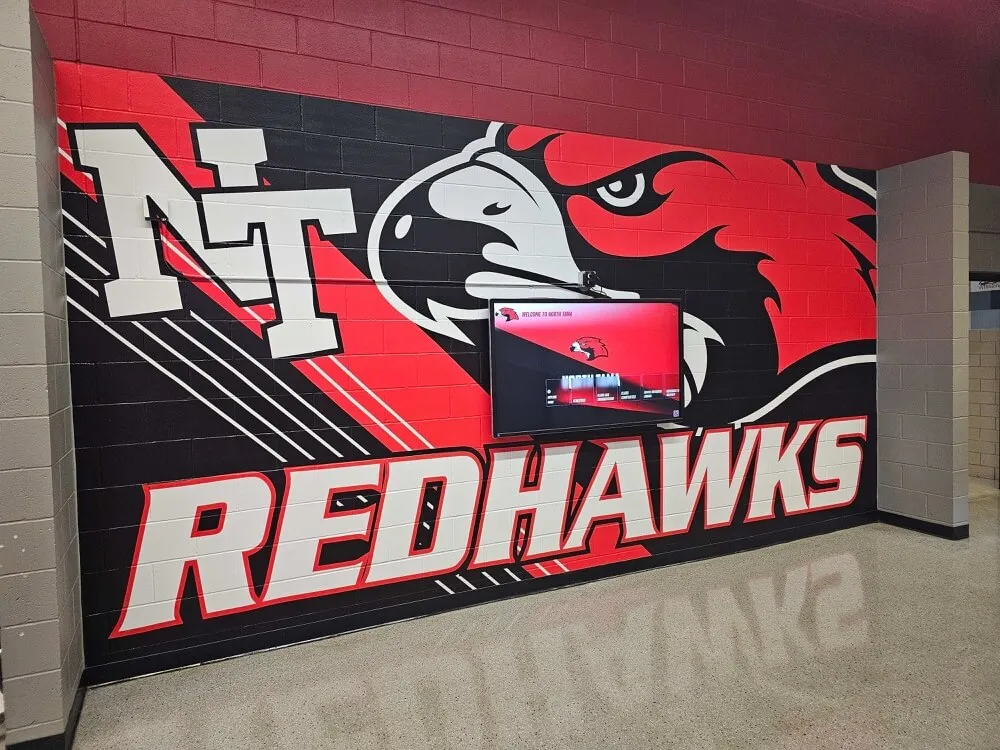
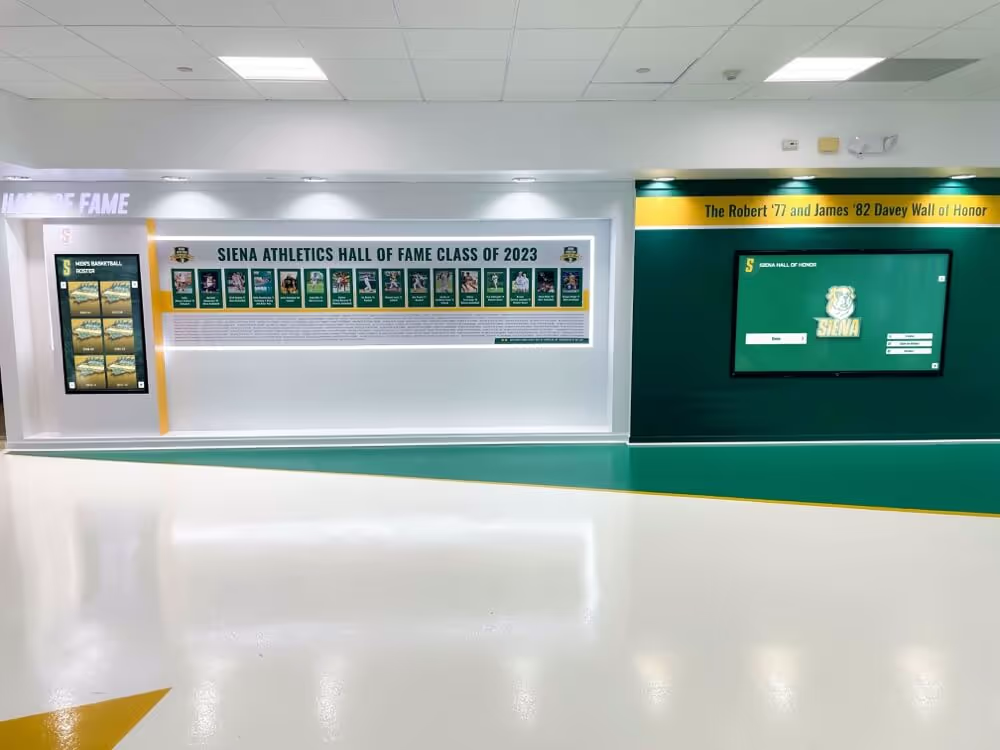
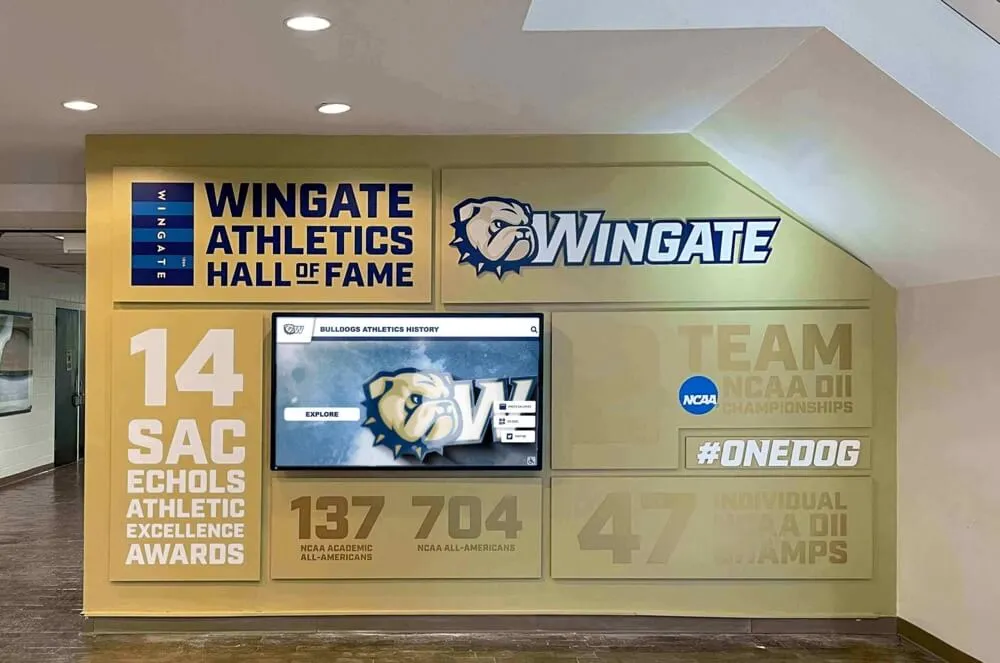
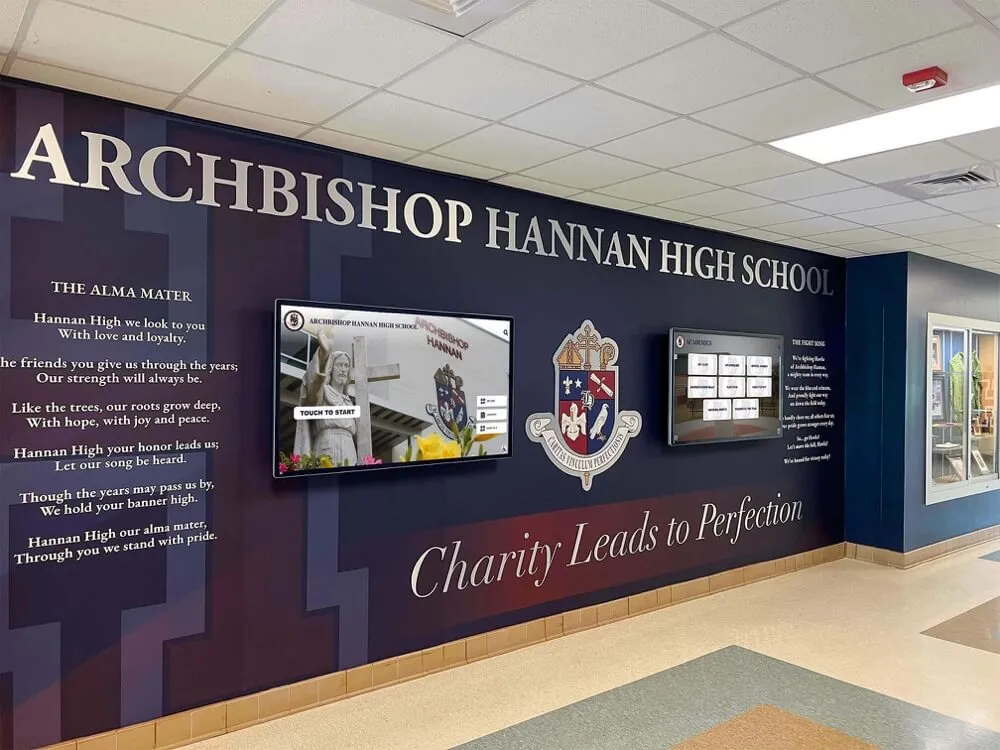
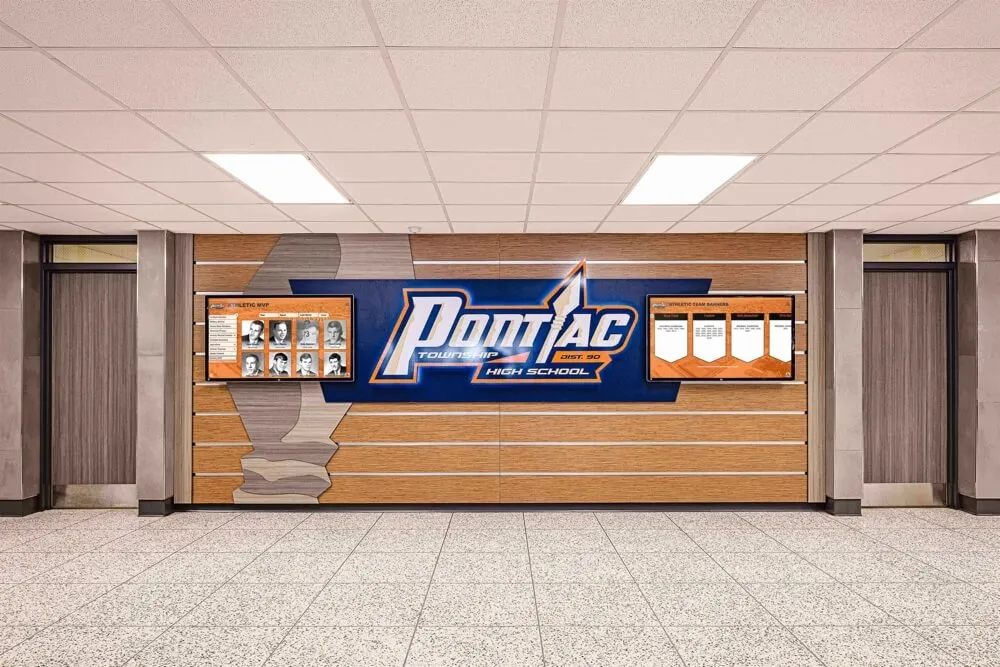
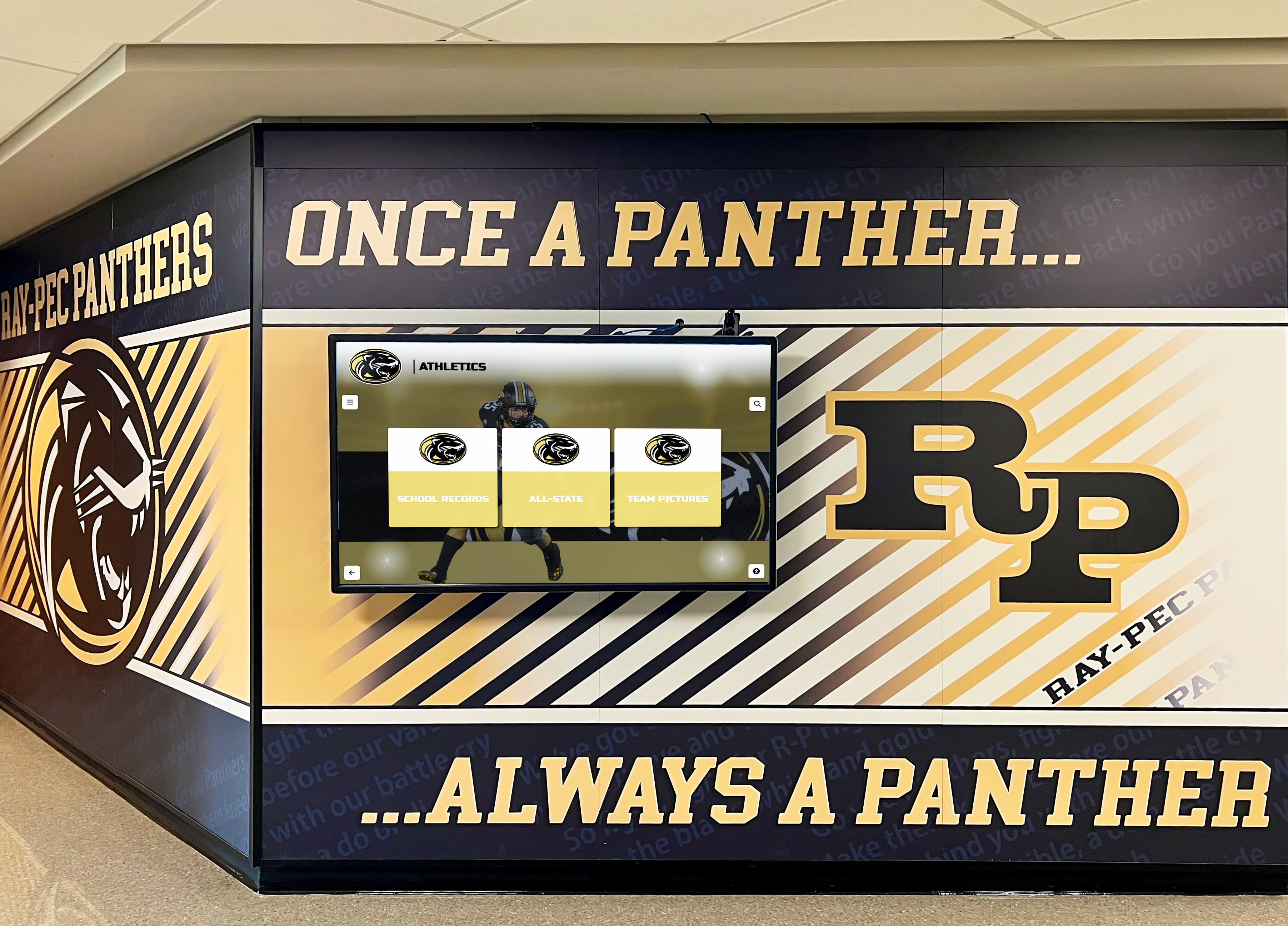
Architectural Recognition Features: New construction or renovation projects should incorporate purpose-built recognition features including recessed display areas with appropriate lighting and secure access, dedicated wall sections with premium finishes suitable for high-quality displays, integrated digital display mounting with concealed wiring and professional installation, or glass-fronted display cases built into architectural elements.
Themed Design Corridors: Designate specific hallways or building areas for particular achievement types, creating thematic coherence. An “Academic Excellence Corridor” might feature all academic recognition, while an “Arts Wing” showcases creative achievements and a “Leadership Hall” celebrates student government and service contributions.
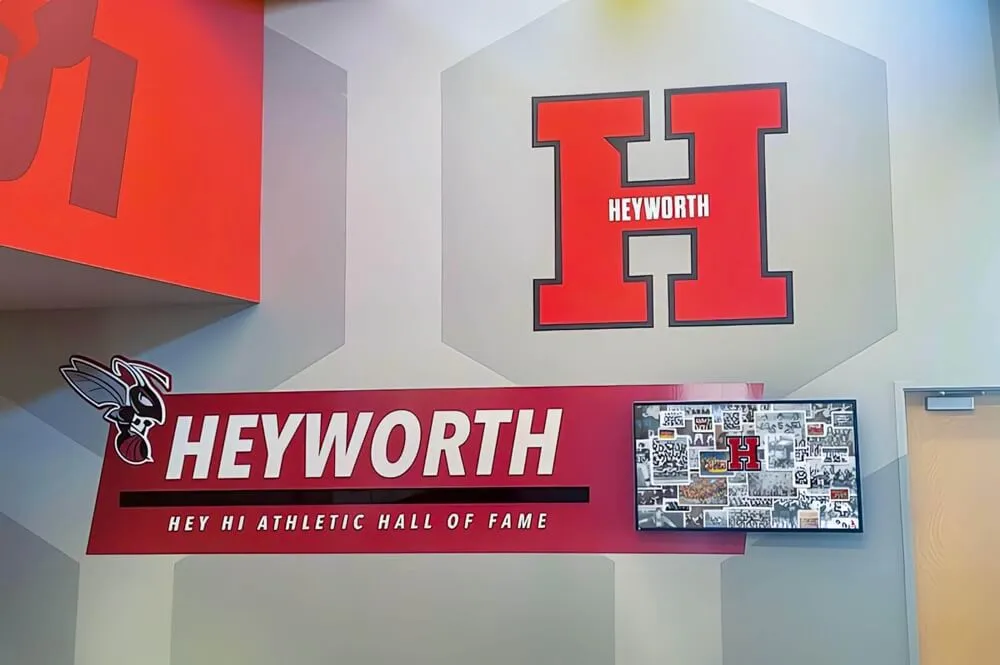
Coordinated Visual Identity: Ensure achievement displays maintain consistent design language with school branding, incorporating official color palettes, typography standards, logo placement, and design elements creating professional cohesive appearance across all recognition formats.
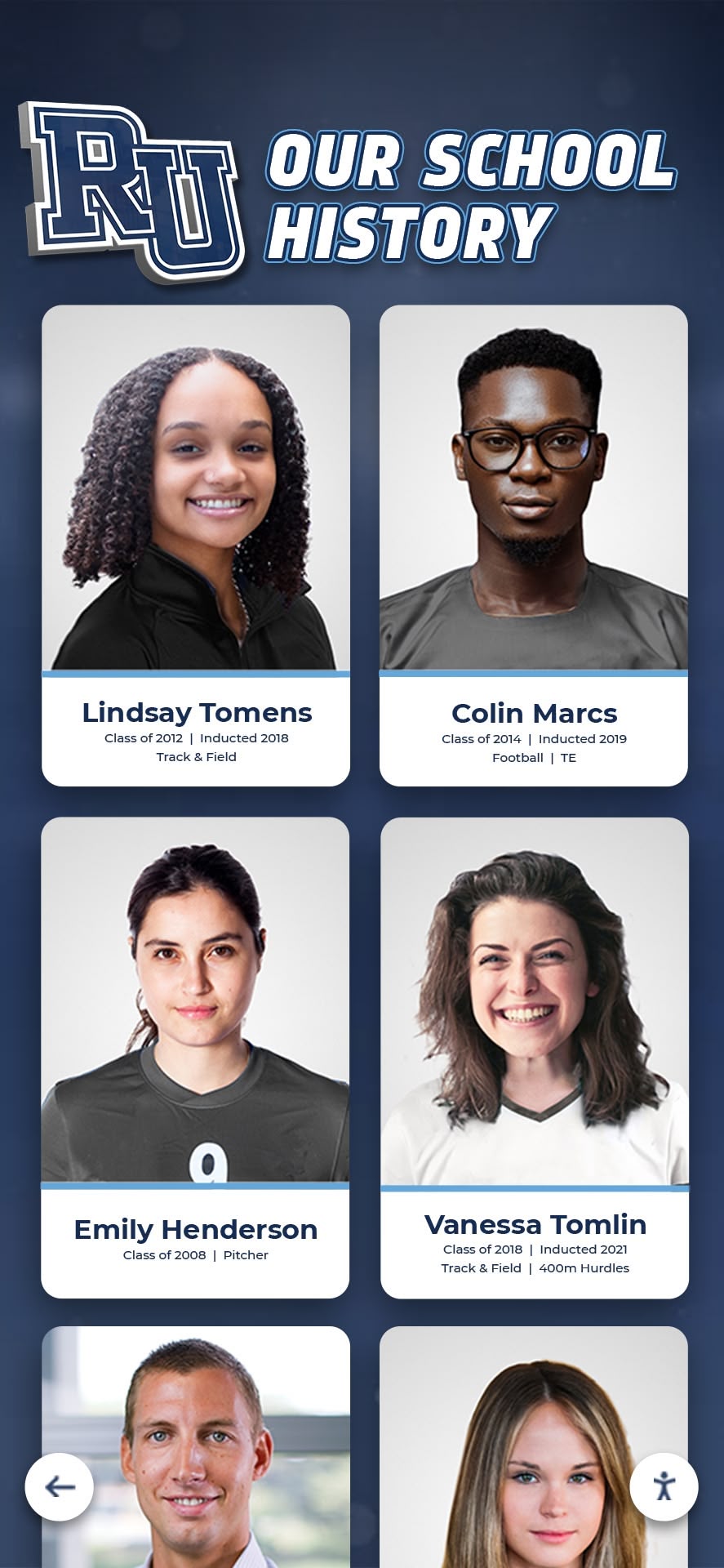
Recognition Categories and Achievement Types
Comprehensive student achievement displays celebrate success across multiple domains, ensuring diverse student strengths receive appropriate acknowledgment.
Academic Performance Recognition
Traditional grade-based recognition remains foundational in most school achievement programs, though effective systems extend beyond simple GPA listings.
Honor Roll Tiers: Implement multiple recognition levels acknowledging varied achievement degrees including Presidential/Principal’s Honor Roll for highest achievers (typically 4.0 unweighted GPA), High Honors recognizing exceptional performance (3.75-3.99), Regular Honors acknowledging solid achievement (3.25-3.74), and Merit recognition celebrating improvement or specific achievement benchmarks.
Subject-Area Excellence: Recognize students achieving exceptional performance in specific academic disciplines rather than only rewarding those excelling across all subjects. This approach honors students with particular academic passions and strengths, celebrating “Math Excellence,” “English/Language Arts Achievement,” “Science Distinction,” “Social Studies Recognition,” or “World Language Proficiency.”
Growth and Improvement Awards: Acknowledge students demonstrating significant academic improvement rather than only recognizing those maintaining high performance. “Most Improved” recognition motivates struggling students by demonstrating that progress receives acknowledgment regardless of starting point, while encouraging all students to focus on personal growth rather than comparison with naturally gifted peers.
Standardized Testing Achievement: Celebrate exceptional standardized test performance including SAT/ACT achievement exceeding benchmark scores, state assessment proficiency and advanced levels, AP exam scores of 3 or higher earning college credit, and National Merit Recognition at Commended, Semifinalist, or Finalist levels.
Character and Citizenship Recognition
Schools increasingly emphasize character development parallel with academic achievement, implementing recognition systems that honor integrity, kindness, and positive contributions to school communities.
Monthly Character Awards: Implement rotating monthly recognition highlighting different character traits or values including respect, responsibility, integrity, perseverance, kindness, courage, or citizenship. Teachers nominate students exemplifying each month’s focus trait, with recognition displays updating throughout the year ensuring continuous fresh celebration.
Attendance Excellence: Recognize students maintaining exceptional attendance records, communicating that consistent presence matters fundamentally. Many schools celebrate perfect attendance annually while others recognize semester or quarterly achievement ensuring recognition opportunities remain accessible even after single absences.
Peer Recognition Programs: Enable students to nominate peers for character recognition, creating powerful acknowledgment that resonates because it originates from fellow students rather than only adults. “Caught Being Kind” programs where students nominate peers who demonstrated unexpected kindness or “Student Shoutout” boards where peers publicly appreciate classmates create recognition cultures driven by student voices.
Service Hour Recognition: Track and celebrate community service participation with milestone recognition at 25, 50, 100, and higher hour accumulation levels. Display recognition communicates that the school values contributions beyond campus boundaries while providing visible role models for service-minded peers.
Schools examining National Honor Society recognition approaches can adapt similar comprehensive frameworks evaluating scholarship, leadership, service, and character rather than academics alone.
Competition and Contest Success
Academic competitions provide structured achievement opportunities deserving dedicated recognition, particularly since these accomplishments often occur outside regular school hours and may not receive attention proportional to their significance.
STEM Competition Achievement: Celebrate success in science, technology, engineering, and mathematics competitions including Science Fair (school, regional, state, and national levels), Science Olympiad team and individual medals, Math League and Mathematics competitions, Robotics competitions (FIRST, VEX, or other programs), Coding competitions and hackathons, and Engineering challenges and innovation contests.
Humanities and Arts Competitions: Recognize achievement in less quantitative but equally rigorous competitions including Debate tournament success and speaker awards, Model United Nations conference awards, Writing contests and publication acceptances, Poetry competitions and slam performances, History Day projects advancing to regional and state levels, and Mock Trial team achievements.
Performing Arts Recognition: Celebrate competitive performing achievements including All-State and Regional ensemble selections in music, Superior ratings at music festivals and competitions, Theater competition and Thespian recognitions, Dance competition placements and choreography awards, and Solo and ensemble competition achievements.
Leadership and Extracurricular Achievement
Student leadership and extensive extracurricular participation demonstrate commitment and character deserving recognition parallel to academic achievement.
Student Government and Class Officers: Recognize elected student leaders with dedicated displays including current officer photos and positions, brief statements about their goals and initiatives, and connection to student government history showing leadership continuity across years.
Club Founders and Presidents: Acknowledge students demonstrating leadership initiative by founding new organizations, serving as club presidents, or leading significant club initiatives and projects. This recognition encourages leadership development and organizational involvement while honoring students who strengthen school communities through voluntary contributions.
Capstone Projects and Senior Exhibitions: Many schools now require senior capstone projects involving extended research, community engagement, or creative production. Showcase exceptional projects through displays featuring project descriptions and significance, process documentation showing development stages, final products or presentation documentation, and student reflections about learning experiences.
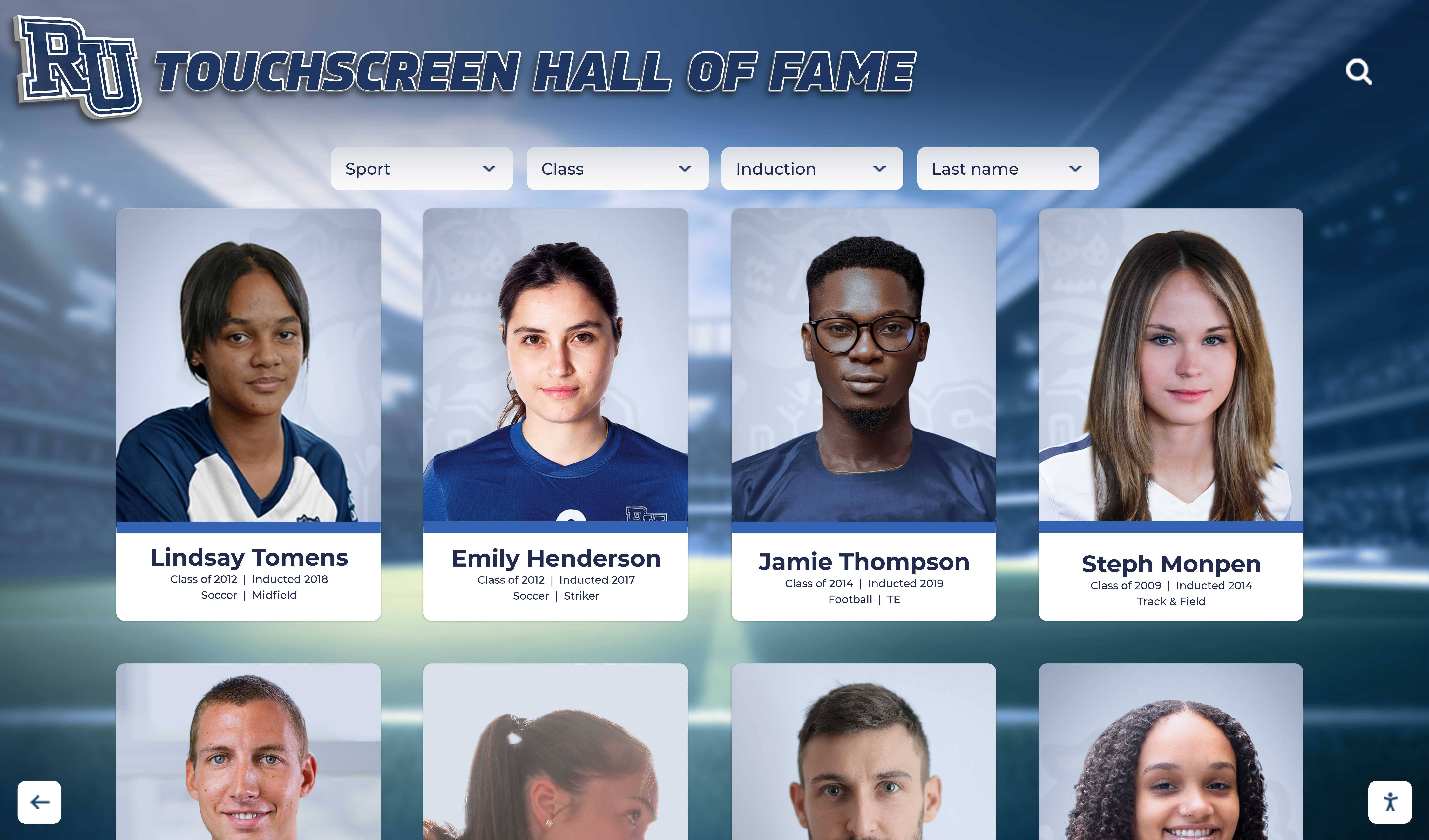
Digital Student Achievement Display Solutions
While traditional physical displays serve important functions, modern digital recognition technology addresses virtually every limitation of conventional approaches while introducing powerful capabilities that enhance how schools celebrate student success.
The Limitations of Traditional Physical Displays
Understanding traditional recognition constraints helps schools evaluate whether digital solutions might better serve their needs and student populations.
Capacity Constraints: Physical displays consume finite wall space, forcing schools to choose between limiting recognized students to small “top achievers” groups, displaying recognition in tiny unreadable text attempting to include everyone, or excluding entire achievement categories due to space limitations. Schools with large enrollments or comprehensive recognition programs quickly exhaust available display space.
Update Challenges: Adding new recognition to physical displays requires printing updated materials, physically accessing display locations, removing outdated content, and installing replacements—processes consuming staff time and creating delays between achievement and recognition. Many physical displays remain unchanged for months or even years due to update burden.
Limited Information Capacity: Space constraints force physical displays to minimal information—typically just student names, achievement categories, and perhaps brief descriptions. Rich storytelling about achievement significance, student journey, or inspirational advice remains impossible within practical physical display formats.
Accessibility Limitations: Physical displays serve only those physically present in specific school locations during limited hours. Students’ families, particularly those unable to visit campus regularly due to work schedules or distance, miss recognition opportunities. Alumni, community members, and extended family networks cannot celebrate achievement remotely.
How Interactive Digital Displays Transform Student Recognition
Modern digital recognition platforms specifically designed for educational institutions address traditional limitations while introducing engagement capabilities impossible with physical displays.
Unlimited Recognition Capacity: Digital systems eliminate space constraints entirely. A single digital display occupying 10-15 square feet of wall space can showcase unlimited student profiles with comprehensive information, solving the fundamental scarcity problem that forces physical displays to exclude deserving students or reduce recognition to minimal acknowledgment.
Rather than selecting 50-100 “top students” from hundreds or thousands of achievers, schools can honor everyone meriting recognition—all honor roll students across all marking periods, every competition participant and award winner, comprehensive service hour leaders, attendance excellence at multiple threshold levels, character award recipients throughout the year, and specialized achievement in arts, athletics, academics, and citizenship.
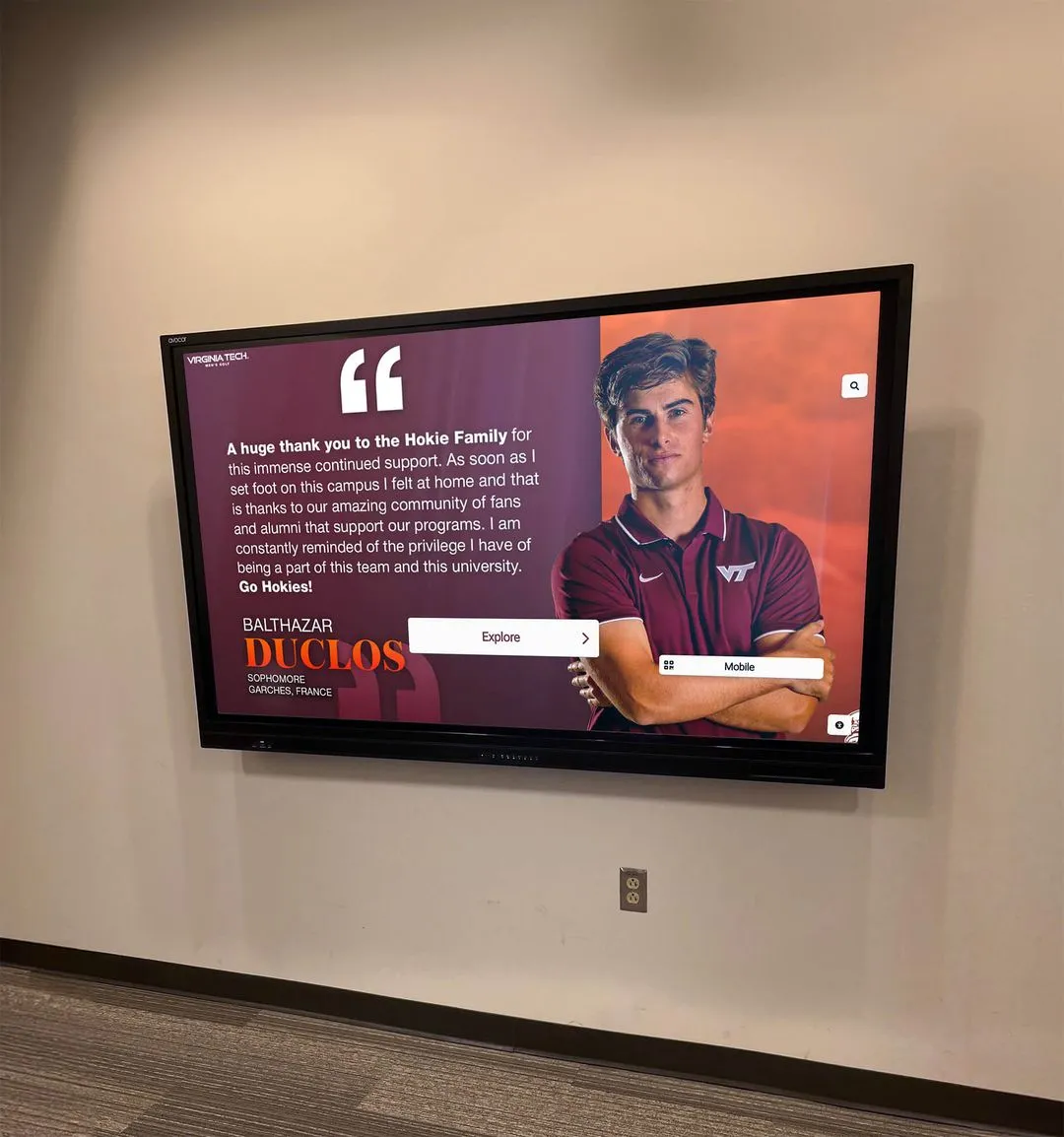
Rich Multimedia Storytelling: Digital platforms enable qualitatively superior recognition incorporating high-resolution student photos, achievement descriptions with context and significance, video interviews where students share advice or discuss accomplishments, project documentation including papers, presentations, or creative works, achievement timelines showing student progress across years, and statistical documentation for quantifiable achievements.
A simple honor roll listing displays minimal information, but a digital profile can share that student’s journey from struggling freshman to exceptional senior, their study strategies and advice for peers, their future educational plans, and the teachers who most influenced their development.
Interactive Exploration and Search: Perhaps most significantly, digital displays transform passive viewing into active engagement. Students, families, and visitors can search by student name to find specific individuals, filter by achievement type to explore particular categories, browse by grade level or academic year, sort by achievement date to see recent recognition, and discover connections between students sharing achievements or interests.
This interactivity dramatically increases engagement duration and depth compared to static displays. Rather than glancing briefly at honor roll lists hoping to spot familiar names, visitors actively explore achievements, discover inspiring stories, and spend minutes rather than seconds engaging with recognition content.
Schools implementing interactive digital recognition systems report engagement metrics showing visitors spend 3-5 minutes actively exploring content compared to 10-20 seconds typical for static physical displays—representing order-of-magnitude increases in recognition impact and effectiveness.
Multi-Platform Accessibility: Modern recognition systems extend beyond physical school displays through web-accessible platforms enabling exploration from anywhere via computer or smartphone, mobile-optimized interfaces providing excellent experiences on tablets and phones, social media integration allowing families to share recognition with extended networks, and email or notification options informing families when students receive new recognition.
This accessibility ensures recognition reaches distributed audiences—parents unable to visit school regularly due to work schedules, grandparents and extended family living in different cities or states, community members and local media interested in celebrating youth achievement, and students themselves exploring peer accomplishments and role models.
Effortless Content Management: Cloud-based content management eliminates technical and logistical barriers that prevent physical displays from staying current. School staff can add newly recognized students immediately following achievement, update student profiles as additional honors accumulate, correct errors or outdated information instantly, feature seasonal content highlighting different achievements or departments, and manage entire recognition programs from any internet-connected device.
This administrative simplicity ensures recognition remains perpetually current. When quarterly honor roll lists are finalized, newly recognized students can appear in digital displays within minutes rather than waiting weeks for printed updates.
Implementation Best Practices
Successful student achievement display programs require systematic planning addressing institutional goals, stakeholder needs, design considerations, and long-term sustainability.
Defining Recognition Philosophy and Scope
Schools should begin by clarifying their recognition philosophy and determining which achievement types deserve celebration and how recognition decisions will be made.
Inclusive vs. Selective Approaches: Decide whether recognition emphasizes broad inclusion celebrating many students achieving various benchmarks, or selective excellence highlighting only highest achievers in each category. Neither approach is inherently superior—inclusive recognition ensures more students experience acknowledgment and motivation, while selective recognition maintains aspirational prestige potentially motivating exceptional effort. Many schools implement hybrid approaches with inclusive participation recognition alongside selective excellence awards.
Achievement Category Selection: Determine which achievement types the school will recognize systematically including traditional academics (GPA, honor roll, class rank), standardized testing (SAT/ACT, AP exams, state assessments), academic competitions (Science Olympiad, Math League, Debate), character and citizenship (attendance, service hours, character awards), performing and visual arts achievements, leadership and extracurricular participation, athletic accomplishments, and specialized recognitions reflecting unique school programs or values.
Recognition Criteria Transparency: Establish clear, transparent criteria for each recognition category, ensuring students and families understand exactly what achievement levels or behaviors earn acknowledgment. Ambiguous or subjective criteria create perceptions of favoritism or unfairness undermining recognition program credibility and motivational impact.
Student Voice Integration: Consider involving student government or representative committees in recognition program design, criterion development, and display creation. This participation creates student investment in recognition culture while ensuring programs resonate with student perspectives rather than reflecting only adult assumptions about what students value.
Strategic Location and Design Considerations
Physical placement and design quality significantly impact recognition visibility, engagement, and perceived importance.
High-Traffic Location Selection: Position achievement displays in areas ensuring maximum visibility including main entrance lobbies creating first impressions for visitors and families, main hallway intersections where students pass multiple times daily, cafeteria entrances where entire student bodies congregate, guidance suite areas where academic conversations naturally occur, and media center or library entrances associating recognition with learning spaces.
Professional Design Standards: Invest in professional-quality displays rather than obviously homemade or budget-limited options that inadvertently communicate that student achievement doesn’t warrant significant investment. Recognition displays represent institutional values visibly—cheap or unprofessional presentation suggests the school doesn’t genuinely prioritize achievement despite rhetoric claiming otherwise.
Appropriate Scale: Size displays appropriately for their locations and functions. Small displays in tight spaces work fine for single-classroom recognition, but whole-school achievement displays in main lobbies require substantial scale commanding attention and conveying appropriate importance. Undersized displays in prominent locations appear tentative or apologetic about celebrating achievement.
Regular Maintenance: Establish clear responsibility and schedules for display maintenance including content updates following each recognition cycle, physical cleaning ensuring displays remain attractive, lighting checks ensuring visibility, and prompt repair of any damage or technical issues. Neglected displays with outdated content, broken elements, or poor appearance communicate that recognition isn’t actually important regardless of stated policies.
Engaging Families and Communities
Maximize recognition impact by ensuring displays reach audiences beyond students physically present during school hours.
Recognition Announcements: When students receive recognition, communicate proactively with families through email notifications listing recognized students with achievement descriptions, social media posts celebrating achievement with appropriate privacy considerations, website features highlighting recent recognition additions, and newsletter articles profiling exceptional achievements or recognition program updates.
Community Event Integration: Leverage recognition displays during community events when broader audiences visit schools including curriculum nights and open houses when parents visit classrooms, athletic events and performances when families fill facilities, school celebrations and assemblies when entire communities gather, and board meetings when district leaders and community members occupy facilities.
Digital Extensions: For schools implementing digital recognition systems, ensure platforms remain accessible beyond physical displays through public web access enabling family viewing from home, mobile-responsive design providing excellent smartphone experiences, shareable links allowing families to directly access their students’ recognition, and optional QR codes at physical displays enabling mobile exploration with richer content than displays alone show.
Balancing Competition and Inclusion
Achievement recognition inevitably involves tensions between motivating exceptional performance and ensuring inclusive acknowledgment that avoids discouraging developing students.
Multiple Recognition Levels: Implement tiered recognition celebrating both exceptional achievement and solid performance, ensuring students at varied ability levels can attain appropriate acknowledgment. This might include Highest Honors (4.0 GPA), High Honors (3.75+), Honor Roll (3.5+), and Merit recognition (3.0+) rather than only acknowledging students achieving perfect grades.
Improvement Recognition: Complement achievement-level recognition with improvement awards celebrating significant progress regardless of absolute performance level. A student improving from 2.0 to 3.0 GPA demonstrates exceptional growth deserving acknowledgment even though their absolute performance remains below highest honors thresholds.
Effort and Character Alongside Results: Balance outcome-based recognition (grades, scores, competition wins) with process recognition (attendance, participation, character, improvement) ensuring students who work hard but face learning challenges or haven’t yet developed academic skills receive appropriate acknowledgment for their efforts and positive contributions.
Diverse Achievement Pathways: Ensure recognition encompasses varied achievement types rather than privileging only traditional academics. Students excel through different strengths—some academic, others artistic, athletic, civic, or social-emotional. Comprehensive recognition celebrating this achievement diversity ensures virtually all students can envision pathways to acknowledgment matching their strengths and interests.
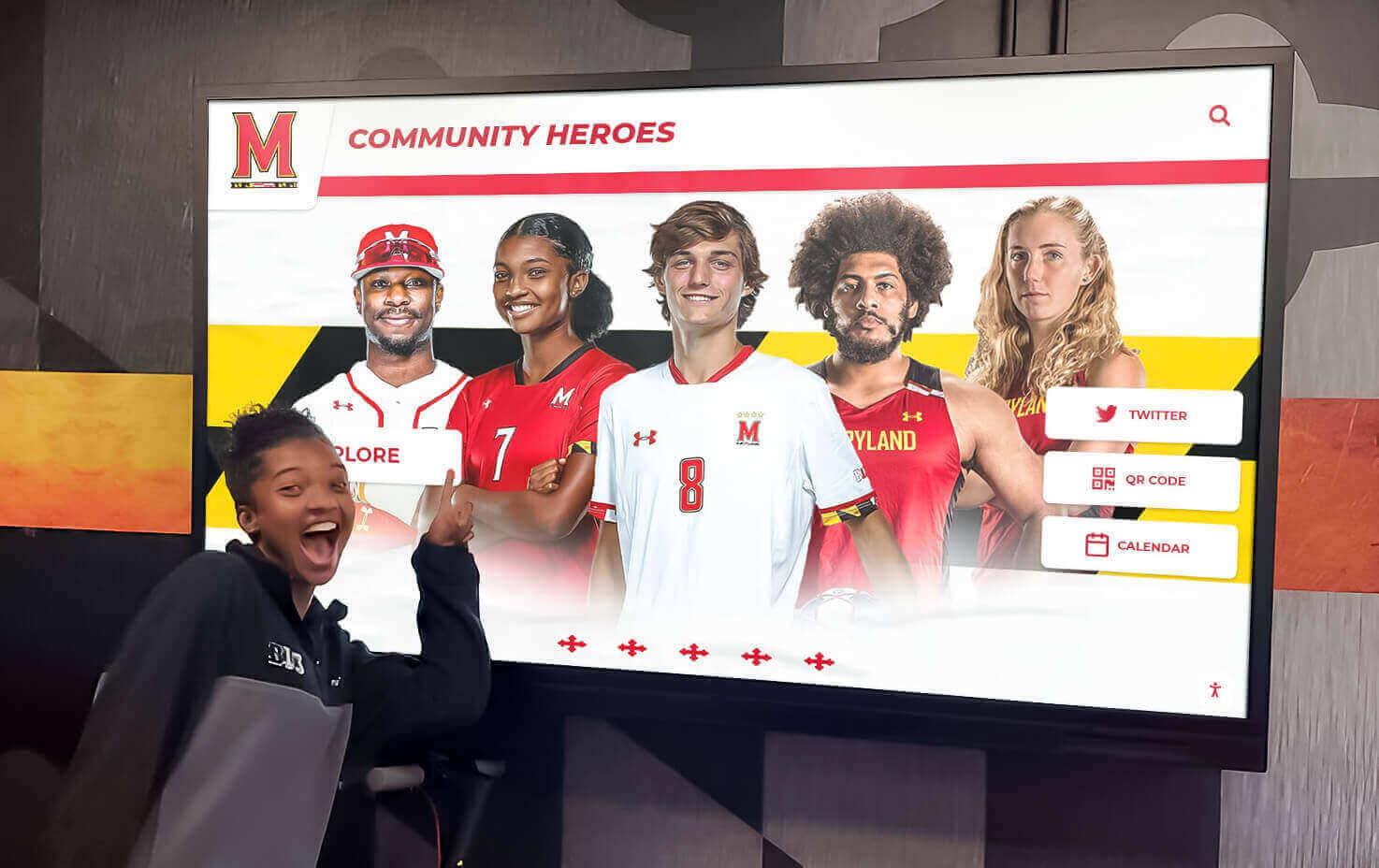
Measuring Recognition Program Impact
Effective recognition programs require evaluation ensuring investments achieve intended objectives of motivating achievement, building positive culture, and creating meaningful experiences for students and families.
Engagement Metrics
Track how students, families, and visitors interact with recognition displays:
Physical Display Observation: For traditional displays, conduct periodic observations during high-traffic periods tracking how many people stop to view displays, how long viewers typically engage with content, which display elements attract most attention, and whether students actively point out recognized peers to friends or family.
Digital Analytics: For digital recognition systems, comprehensive analytics reveal search patterns showing which students or achievements visitors explore, engagement duration indicating average viewing time per session, popular content identifying which student profiles or achievement categories generate most interest, and traffic sources showing whether visitors access recognition through school displays, home computers, or mobile devices.
Social Media Engagement: Monitor recognition-related social media activity including shares of recognition announcements or student features, family comments and congratulations on recognition posts, student tags when sharing their own recognition, and community engagement with school recognition content.
Achievement Impact Indicators
Assess whether enhanced recognition correlates with achievement improvements and cultural changes:
Participation Trends: Track whether recognition improvements correlate with increased participation in honored activities. Do more students pursue academic competitions after implementing competition recognition? Does service hour accumulation increase following service recognition program launches?
Achievement Distribution: Monitor whether achievement becomes more broadly distributed or remains concentrated among small student groups. Effective inclusive recognition programs typically show achievement spreading across wider student populations as more students pursue accessible recognition opportunities.
Student Surveys: Periodically survey students about recognition program effectiveness asking whether they’re aware of recognition programs and criteria, if recognition motivates their own achievement efforts, whether they feel the school genuinely values diverse achievement types, and if recognition programs create positive or negative competitive dynamics.
Family Feedback: Gather family perspectives through surveys or focus groups exploring whether families feel their students receive appropriate recognition, if recognition communication reaches them effectively, whether recognition influences their perceptions of school culture, and what improvements might enhance recognition programs.
Budget Considerations and Cost-Effective Approaches
Meaningful student achievement recognition is possible at virtually any budget level, though investment scope determines sophistication and scale.
Low-Budget Recognition Solutions ($100-$1,000 Annually)
Schools with minimal budgets can still create meaningful recognition:
Creative Bulletin Board Displays: Invest in quality materials including professional design software or templates ($50-$100), lamination equipment or service ($100-$200 annually), decorative borders and display supplies ($100-$200), and photo printing for student recognition ($200-$400).
Printed Certificates and Recognition Letters: Provide individual student recognition through certificate templates and quality paper ($50-$100), frames for outstanding achievement displays ($100-$200), and personalized letters to families celebrating achievement ($50 for printing and postage).
Social Media Recognition: Leverage free platforms for extensive recognition without material costs requiring only staff time for content creation and posting.
Mid-Range Recognition Programs ($1,000-$5,000 Annually)
Schools with moderate budgets can implement more substantial programs:
Professional Display Fixtures: Purchase quality display cases or bulletin board systems ($500-$1,500), professional signage and headers ($200-$500), display lighting enhancing visibility ($200-$500), and decorative elements matching school branding ($200-$500).
Recognition Events: Host achievement ceremonies or recognition receptions including venue rental if necessary ($500-$1,000), refreshments for students and families ($300-$800), printed programs and certificates ($200-$400), and awards or recognition items ($500-$1,000).
Enhanced Materials: Invest in quality recognition products including professional photography for student achievement ($500-$1,000), video production for achievement features ($500-$1,500), printed recognition materials for families ($300-$600), and website enhancements featuring recognition ($500-$1,000).
Comprehensive Digital Recognition Systems ($5,000-$40,000 Initial, $1,000-$5,000 Annual)
Schools prioritizing recognition as strategic investment can implement sophisticated digital solutions:
Interactive Touchscreen Displays: For physical installations featuring commercial-grade touchscreen displays (55"-75") costing $3,000-$8,000, professional installation with mounting and connectivity ($1,000-$3,000), specialized recognition software platforms ($2,000-$5,000 annually), content management systems and training ($1,000-$2,000), and initial content development and setup ($2,000-$5,000).
Web-Based Recognition Platforms: For schools prioritizing accessibility over physical displays including cloud-based recognition platform subscriptions ($1,000-$3,000 annually), website integration and customization ($2,000-$5,000), content management and ongoing updates ($1,000-$3,000 annually), and mobile optimization and social media integration (typically included in platform costs).
Comprehensive Systems: Complete recognition solutions combining physical displays and web access typically involve total initial investments of $15,000-$40,000 for hardware, software, installation, and initial content development, with ongoing annual costs of $2,000-$5,000 for software subscriptions, content management, and technical support.
Organizations exploring comprehensive digital recognition tools benefit from understanding the full range of available solutions and their respective capabilities and investment requirements.
Special Considerations for Different School Levels
Recognition program design should adapt to developmental needs and cultural norms at different educational levels.
Elementary School Recognition (K-5)
Elementary recognition emphasizes broad inclusion and non-competitive celebration:
Universal Recognition Approaches: Implement systems ensuring every student receives regular acknowledgment through monthly classroom recognition where every child earns at least one acknowledgment, rotating “Star Student” programs giving each child featured recognition opportunities, birthday celebrations honoring individual students personally, and whole-class achievement celebrations when groups reach collective goals.
Developmental Appropriateness: Recognize that younger children lack cognitive development for understanding nuanced recognition tiers, so avoid GPA-based honor roll or competitive achievement rankings before upper elementary grades. Instead, celebrate specific skills and behaviors (mastering multiplication tables, reading goal completion, kindness examples, responsibility demonstration).
Visual and Colorful Displays: Elementary displays should embrace vibrant colors, playful design elements, student artwork integration, and engaging themes matching children’s aesthetic preferences rather than adopting corporate professional aesthetics more appropriate for older students.
Family Engagement: Elementary recognition particularly prioritizes family communication since younger children may not independently share school recognition with parents. Implement take-home certificates, photos of recognition displays, weekly communication about classroom recognition, and invitations to school events celebrating student achievement.
Middle School Recognition (6-8)
Middle school recognition balances continued broad inclusion with emerging achievement differentiation:
Beginning Academic Tiers: Introduce multi-level honor roll or achievement recognition preparing students for more competitive high school environments while maintaining inclusive recognition ensuring most students achieving reasonable benchmarks receive acknowledgment.
Peer Recognition Integration: Leverage adolescents’ heightened peer orientation by implementing peer nomination processes, student-selected recognition categories, social media components, and recognition formats that peers find meaningful rather than only adult-defined achievement criteria.
Identity-Based Achievement: Recognize middle school as critical identity development period by celebrating diverse achievement pathways helping students discover domains where they excel, whether academic, artistic, athletic, social, or service-oriented.
Anti-Bullying Considerations: Ensure recognition programs don’t inadvertently create bullying opportunities or social hierarchies where unrecognized students face peer pressure or exclusion. Maintain sufficiently broad recognition that most students receive some acknowledgment while avoiding displays that humiliate struggling students by highlighting their absence from recognition.
High School Recognition (9-12)
High school recognition emphasizes authentic achievement and preparation for post-secondary recognition:
Multiple Sophisticated Recognition Tracks: Implement comprehensive systems acknowledging varied excellence including traditional academics (GPA, class rank, honor roll tiers), standardized testing (SAT/ACT benchmarks, AP achievement), competition success (academic, artistic, athletic competitions), leadership and service, specialized program recognition (Career & Technical Education, arts programs, athletics), and college acceptance and scholarship recognition.
Authentic Achievement Emphasis: High school students typically reject recognition that feels patronizing or participation-based without genuine achievement distinction. Recognition should reflect real accomplishments using legitimate criteria preparing students for college and career recognition standards.
College Connection Messaging: Frame recognition in contexts showing relevance to college admission and scholarship pursuit. When celebrating honor roll achievement, mention that consistent honor roll standing strengthens college applications. When recognizing competition success, note that these achievements demonstrate intellectual curiosity valued by selective universities.
Senior Recognition Emphasis: Provide especially comprehensive recognition for graduating seniors, celebrating their accumulated achievement across years while creating satisfying conclusion to their school experience. Senior recognition displays might include cumulative honor roll achievement, scholarship award totals, college destination information, senior superlatives and awards, and capstone project showcases.
Creating Sustainable Recognition Programs
The most effective recognition programs remain sustainable across leadership changes and budget fluctuations through systematic approaches and institutional commitment.
Establishing Clear Policies and Procedures
Document recognition program elements ensuring consistency and facilitating smooth transitions when staff change:
Recognition Criteria Documentation: Create written criteria specifying exactly what achievement levels, behaviors, or accomplishments qualify for each recognition category, how achievement will be measured or documented, when recognition decisions will be made, who makes selection decisions when subjective evaluation is required, and how students and families can access criteria information.
Update Schedules and Responsibilities: Specify when recognition displays will be updated (quarterly, semester, annually), who holds responsibility for content gathering and display updating, what approval processes apply before recognition publication, and how technical issues or errors will be addressed.
Archive Procedures: Determine how historical recognition will be preserved when displays update with new content, whether schools will maintain permanent digital or physical archives of all recognized students, how long specific recognition remains featured prominently versus moving to historical archives, and how alumni or families can access historical recognition information.
Building Staff Capacity and Buy-In
Recognition program success depends on staff understanding, supporting, and maintaining programs consistently:
Professional Development: Provide training helping staff understand recognition program purposes and research supporting achievement recognition, specific program criteria and procedures, how to nominate students for various recognition categories, technical skills needed to update displays or digital systems, and strategies for integrating recognition into classroom culture and practices.
Distributed Responsibility: Avoid concentrating entire recognition program responsibility on single individuals who may leave or become overwhelmed. Distribute responsibilities across administration (overall program oversight and budget), counselors (academic achievement tracking), activities coordinators (competition and extracurricular recognition), technology staff (digital system maintenance when applicable), and teacher committees (various recognition category oversight).
Recognition Champions: Identify and empower recognition champions—staff members particularly passionate about student achievement celebration—who can advocate for program resources, generate enthusiasm among colleagues, troubleshoot implementation challenges, and maintain momentum when competing priorities threaten recognition program attention.
Continuous Improvement Processes
Establish systematic evaluation and improvement cycles preventing recognition programs from becoming static tradition resistant to necessary evolution:
Annual Program Review: Conduct structured annual reviews examining engagement metrics and achievement data, stakeholder feedback from students, families, and staff, alignment with current school improvement goals and strategic priorities, equity analysis ensuring recognition reaches diverse student populations, and identification of successful elements worth expanding versus ineffective components warranting revision or elimination.
Stakeholder Input Collection: Systematically gather perspectives from multiple stakeholder groups through student focus groups or surveys about program effectiveness, family surveys about recognition communication and impact, staff feedback about program administration and student response, and community member perspectives about recognition program reputation and visibility.
Evolution and Innovation: Remain open to recognition program evolution as student culture, technology capabilities, and educational priorities change. Recognition programs serving schools well a decade ago may need substantial updating to resonate with current students and leverage modern communication and technology capabilities.
Conclusion: Building Achievement Cultures Through Thoughtful Recognition
Effective student achievement displays represent far more than administrative obligations or attractive hallway decorations. Thoughtfully designed and maintained recognition programs fundamentally shape school cultures, communicate institutional values, provide visible role models inspiring peer achievement, motivate continued excellence through meaningful acknowledgment, create community pride connecting students, families, and staff, and honor individual student accomplishments appropriately and memorably.
The most successful schools approach recognition systematically and strategically, carefully defining what achievement types merit celebration and how recognition criteria will be determined, investing appropriately in display quality and placement communicating genuine achievement value, implementing inclusive approaches ensuring diverse student populations can pursue recognition, leveraging modern technology when capabilities and budgets allow, engaging families and communities as recognition program partners, establishing sustainable processes surviving leadership transitions, and continuously evaluating and improving recognition programs based on impact data and stakeholder feedback.
Whether schools implement simple bulletin board displays or sophisticated digital recognition systems, the fundamental principle remains constant: students who feel genuinely seen, valued, and celebrated for their achievements and growth develop stronger connections to educational communities while experiencing increased motivation to continue pursuing excellence across all domains of school life.
Schools ready to transform their student achievement recognition programs can explore modern solutions that eliminate traditional space constraints, enable rich multimedia storytelling, create engaging interactive experiences, and extend recognition reach beyond physical school walls. Rocket Alumni Solutions provides purpose-built recognition platforms specifically designed for educational institutions, helping schools celebrate every achieving student appropriately while creating the technology-enhanced recognition experiences that resonate with contemporary students and families.