Every school’s athletic program is built on the shoulders of the athletes who came before. A well-crafted sports team alumni page honors those individuals by name, preserves the records they set, and keeps a living connection between past competitors and current teams. Yet many programs still rely on a static list of names buried on an athletic department website—missing the full picture of what a proper alumni page can accomplish.
This guide walks school administrators, athletic directors, advancement staff, and communications teams through every element a comprehensive sports team alumni page should contain—from core profile fields and championship records to photo archives and data-collection workflows that keep information current over time.
The Foundation: Core Athlete Profile Fields
Every former athlete deserves a profile that accurately captures their contribution to the program. At minimum, each profile should include:
Full Name and Graduation Year Use the name the athlete was known by during their playing career. If they have since changed names—through marriage or otherwise—list both where the athlete has given permission. Graduation year anchors the individual to a specific era of the program and helps visitors searching for specific teammates or contemporaries.
Sport and Position Multi-sport athletes appear in each sport’s section. Listing the specific position—not just the sport—adds context that matters to coaches, scouts, and fellow alumni. A point guard’s legacy differs from a center’s even within the same program.
Jersey Number For programs with retired numbers or recognized jerseys, this detail is essential. Even where numbers are not retired, jersey numbers appear in archived photos and game footage, making them a useful identifier for historical research.
Years of Participation A four-year letterwinner’s entry reads differently than someone who transferred after one season. Listing the actual years of participation—rather than just the graduation year—gives an accurate account of each athlete’s tenure.
Career Statistics and Highlights Points scored, goals, yards rushed, wins recorded, personal records in track and field, shooting percentages—whatever metrics your sport tracks, they belong here. Where exact statistics are unavailable for older alumni, acknowledge the gap rather than leaving the field blank or inserting inaccurate numbers.
Athletic Records and Championship History
Individual statistics belong in profiles. Records—team bests, school records, and championship finishes—deserve their own dedicated section because they define the program’s trajectory across generations.
School and Program Records Maintain a verified list of individual and team records: single-season scoring leaders, fastest times in each event, most wins in a season, consecutive winning seasons. Each entry should identify who set the record, when, and against whom where known. Records that have been broken should remain visible with a notation—seeing a progression of who held a record and for how long tells a rich story about the program’s development.
Championship Titles and Playoff Appearances List every conference title, district championship, state tournament appearance, and national qualification with the year and final record. Include the coaching staff at the time of each title run. Programs that have won championships in multiple classifications or across different eras may consider organizing this section chronologically or by era.
Retired Numbers and Honorary Distinctions If the program has retired jersey numbers or established similar institutional honors, dedicate space to explaining the criteria and listing honorees. Visitors to the page should understand what each distinction signifies and why it was awarded.
For programs building out a more comprehensive record-keeping infrastructure, resources like this overview of hall of fame tools for athletics programs outline the technology options available for organizing and displaying this kind of historical data.
Awards and Individual Honors
Awards recognize achievement beyond statistics. A complete sports team alumni page catalogs every significant honor a former athlete received—from conference accolades to national recognition.
Conference and Regional Awards All-conference selections, offensive or defensive player of the year awards, and all-region honors deserve their own listed category. Where multiple levels of honor exist—first team, second team, honorable mention—make the distinction clear.
All-State and National Recognition All-state selections, All-American honors, and national rankings tell prospective athletes and donors how the program has measured against the widest competition. If a former athlete finished in the national top rankings in a statistical category, that information belongs on the page.
Academic and Character Awards Student-athlete of the year awards, academic all-conference selections, and scholar-athlete honors reflect the full picture of an athlete’s contribution. Schools that emphasize the academic dimension of athletic participation should feature these prominently rather than relegating them to a footnote.
Team and Program Awards Most valuable player, team captain designations, coaches’ awards, and spirit awards reflect peer recognition that numerical statistics cannot capture. Including these creates a fuller profile of who each athlete was within the team culture.
For a wide-ranging reference on the variety of awards worth cataloging across athletic programs, a guide to youth sports award ideas offers a useful starting framework that translates well to high school and collegiate contexts.

Team Histories, Rosters, and Season Archives
Individual profiles gain meaning when they are embedded within a larger team history. A thorough sports team alumni page preserves the collective record, not just the individual one.
Season-by-Season Records A simple table showing each season’s win-loss record, conference standing, and postseason result gives visitors an immediate sense of the program’s arc. Even a minimally staffed page benefits from having this data going back as far as records are available.
Archived Rosters Full rosters by year allow former teammates to find one another and help families of players from earlier eras verify their connection to the program. Where exact rosters are unavailable, approximate them from yearbook records, press guides, or newspaper archives—and note the source and its limitations.
Coaching History List every head coach, the seasons they led the program, and their cumulative record. If the program has notable assistant coaches who went on to significant careers, mention them. This section honors the people who shaped the athletes and preserves institutional memory that often disappears when a coach retires or moves on.
Milestone Moments First winning season, longest winning streaks, first state championship appearance, facility milestones—these narrative moments add texture to the statistical record. Brief, factual descriptions work best; these are meant to inform and anchor history, not to embellish.
Photos, Video, and Supporting Media
Alumni pages with photographs outperform text-only pages in both engagement and completeness. Photographs verify records, spark memories, and give the page visual identity.
Action Photography Game photographs, practice shots, and competition images anchor individual profiles to specific moments. Even low-resolution scans of older prints are worth including. If photo credit information is known, include it alongside the image.
Team Photos Annual team photos create a visual timeline of the program’s evolution. Where originals are unavailable, yearbooks, booster publications, and archived press guides often contain scanned or reproducible versions.
Championship and Event Photography Trophy presentations, state competition travel, senior night ceremonies, and similar milestone events deserve their own documented archive. These images are often the ones former athletes and families search for most when reconnecting with the program.
Media Coverage and Press Clippings Scanned newspaper articles, digital links to archived coverage, and saved broadcast clips add documentary credibility to the records preserved on the page. Even brief game-day mentions from local newspapers help authenticate statistics and records that might otherwise rest only on institutional memory.
Post-Graduation Career and Life Updates
A sports team alumni page that stops at graduation misses half the story. What former athletes do after leaving the program reflects the program’s influence on their development—and it is information that resonates deeply with current athletes considering their own futures.
Professional and Collegiate Athletic Careers Former athletes who played professionally or at the next competitive level deserve clear recognition. List the organizations, leagues, and approximate years of professional play where the information is a matter of public record.
Coaching and Athletic Careers Many athletes stay in sport as coaches, officials, or administrators. Listing these careers honors continued service to athletics and often creates meaningful recruiting connections between current student-athletes and established program alumni.
Notable Career Achievements Beyond Sport Alumni who have achieved distinction in business, public service, medicine, education, or the arts represent the program’s broader impact. Include these with the athlete’s permission and with the same factual discipline applied to athletic records—describe the achievement accurately without embellishment.
Calls for Updates Post-graduation data is the hardest category to keep current. A dedicated section inviting alumni to submit updates—via a simple form or a designated email address—demonstrates institutional commitment to accuracy and gives former athletes an easy pathway to contribute to their own record.
Programs running structured alumni reconnection events benefit from resources on alumni event planning, which provides practical frameworks for bringing former athletes back to campus in ways that generate both genuine engagement and updated information for the alumni page.
Digital Presentation: Web Pages, Physical Displays, and Hybrid Solutions
How the alumni page is presented shapes how it gets used. Schools face a choice between web-only formats, physical displays in the athletic facility, and hybrid approaches combining both.
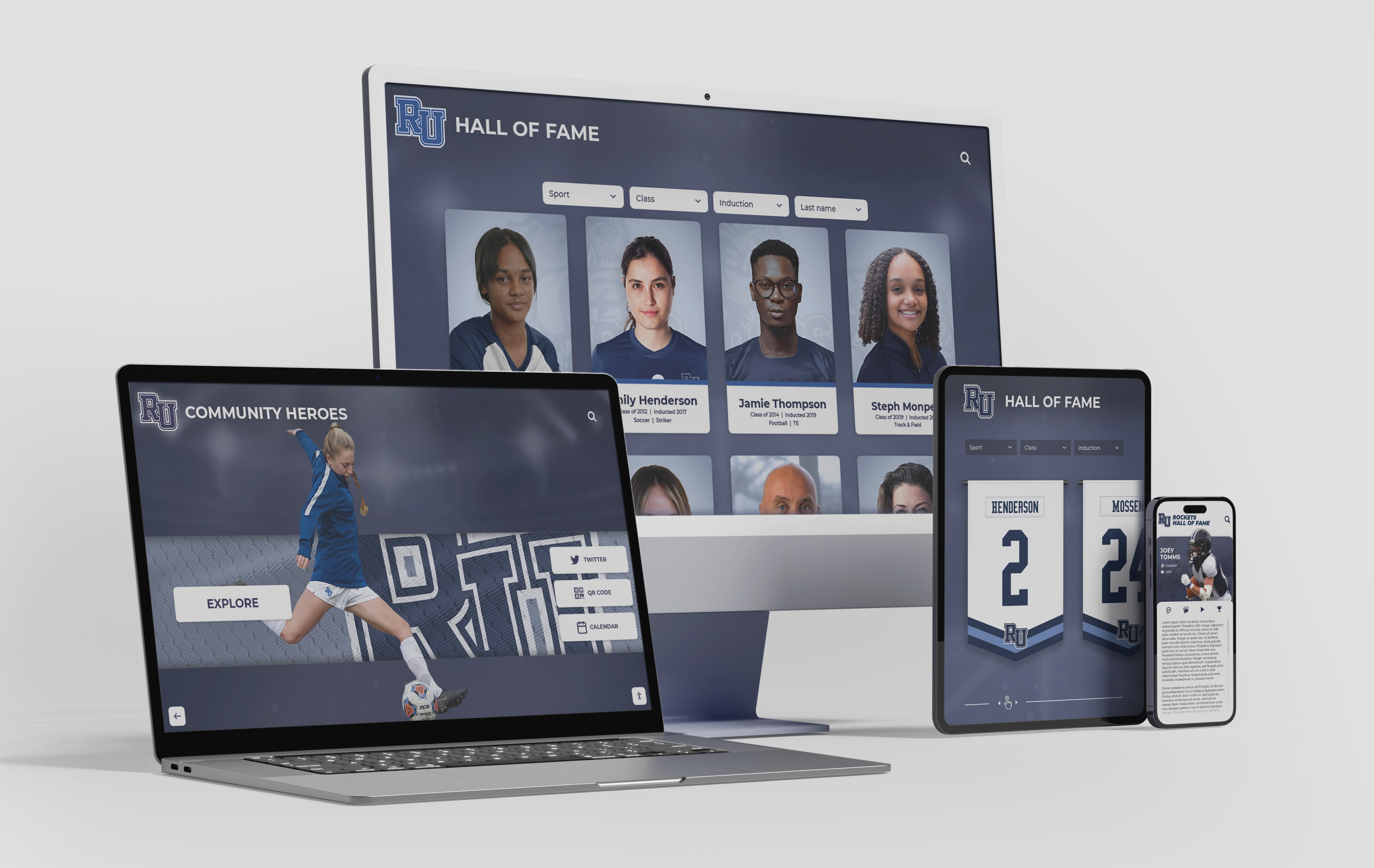
Web-Based Alumni Pages A web-based alumni page is accessible to former athletes anywhere in the world, costs relatively little to maintain, and can be updated without physical installation. The tradeoff: it is only discovered by people who seek it out, and without active promotion it can go unseen by the majority of alumni and campus visitors.
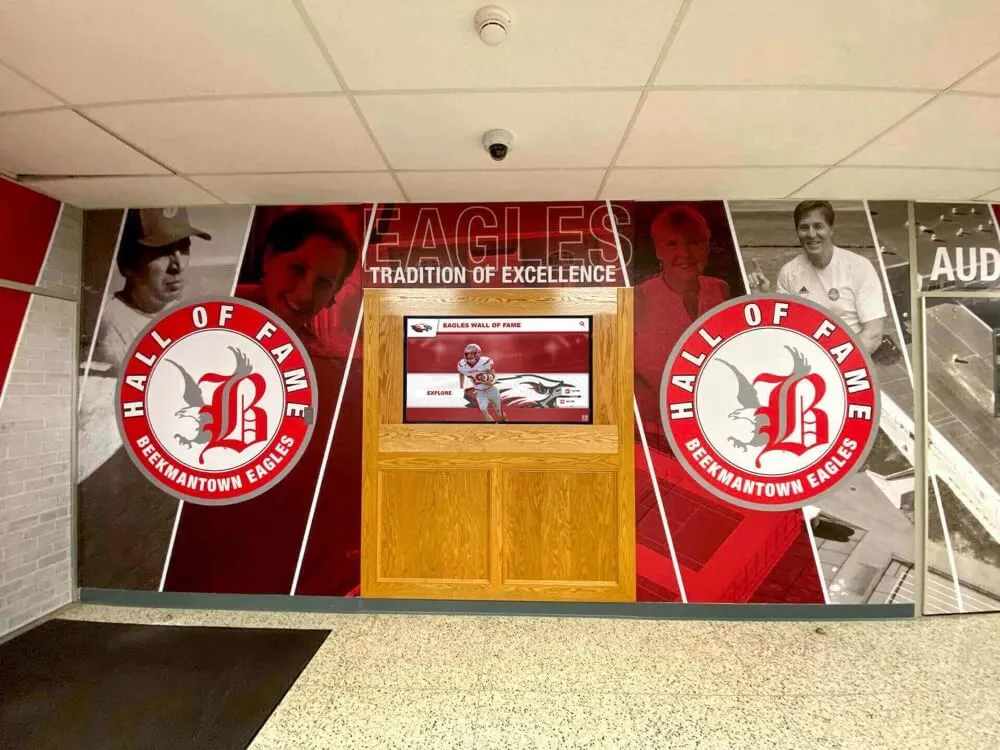
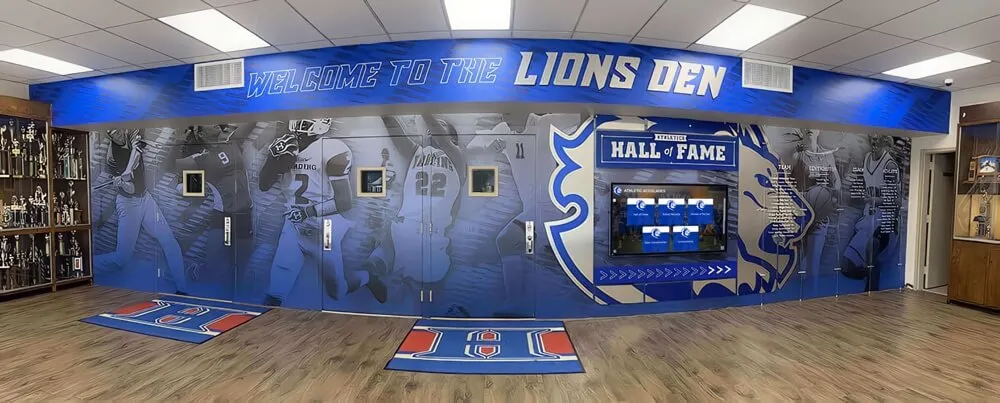
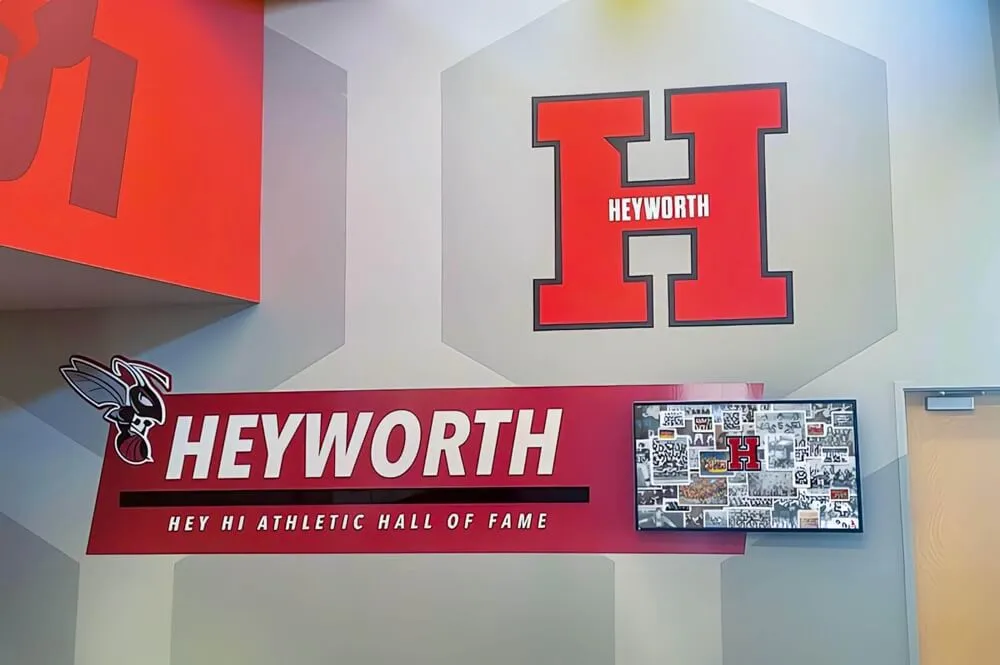
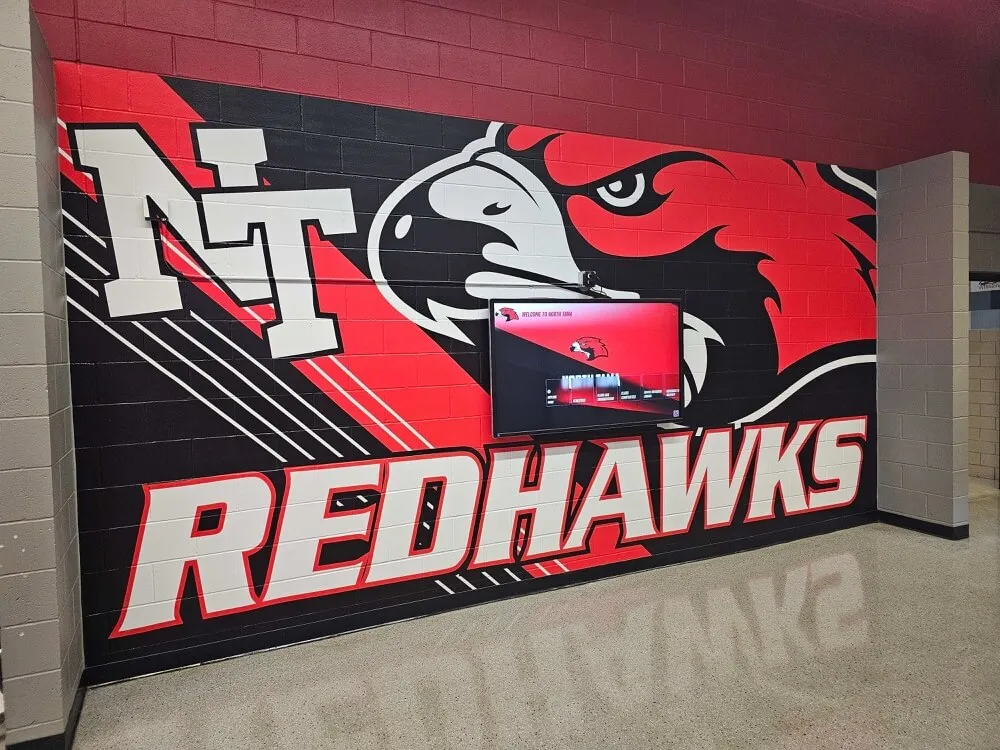
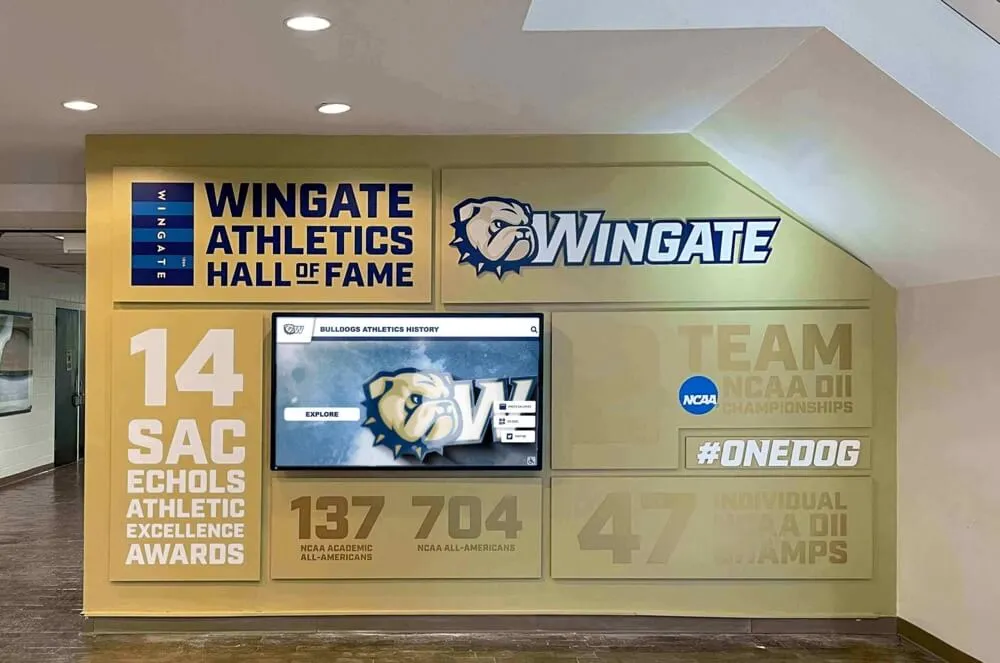
Physical Hall of Fame and Trophy Displays Physical display installations in athletic lobbies, hallways, or dedicated hall of fame spaces create ambient recognition that current athletes, visitors, and recruits encounter naturally. They reinforce program culture during every practice, game day, and campus visit. The limitation is that they require physical space, installation investment, and a deliberate update process to stay current.
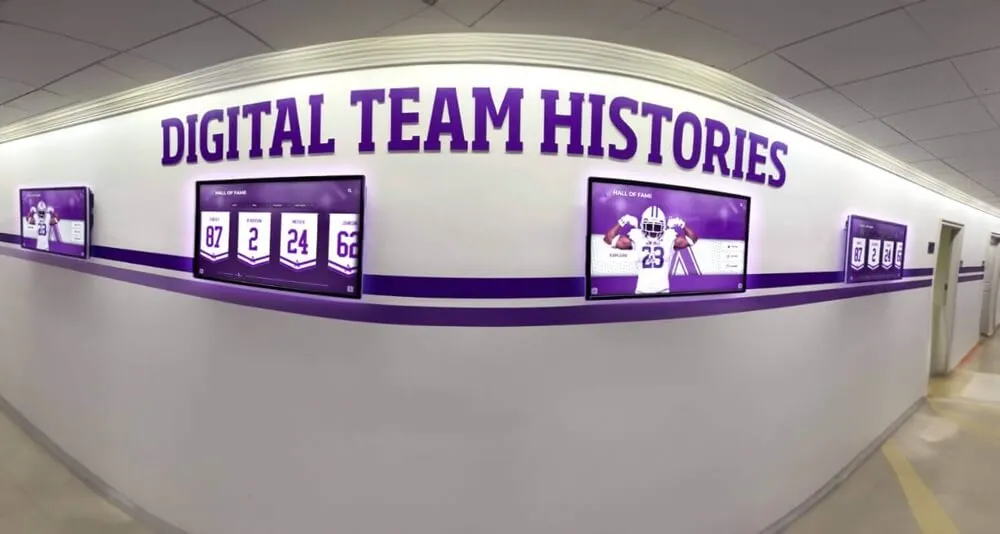
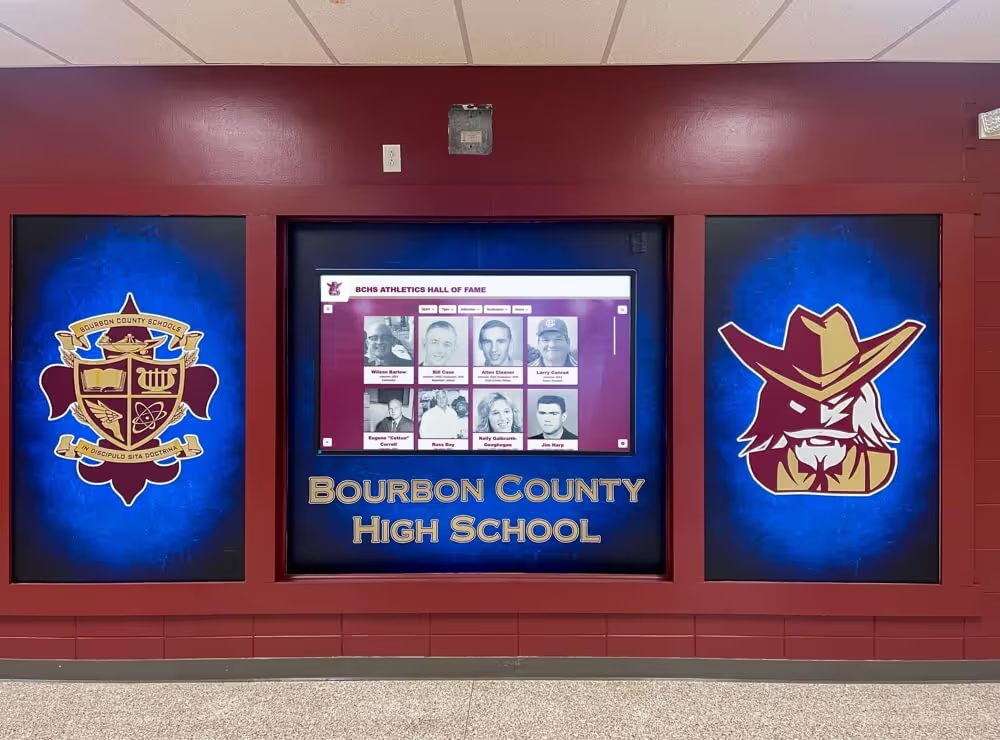
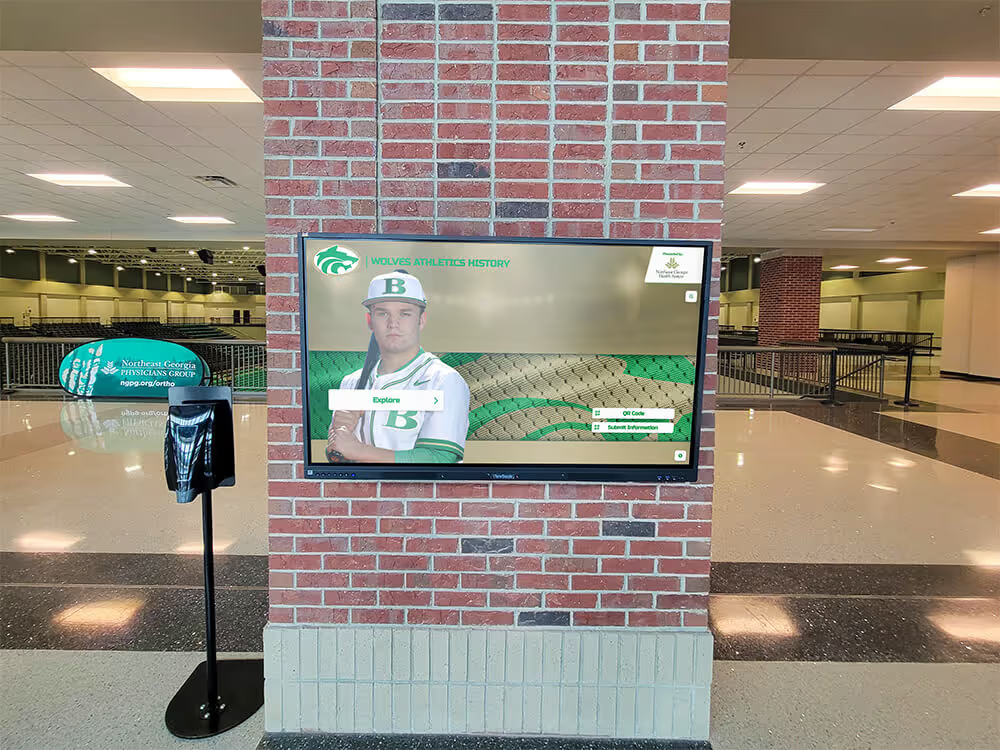
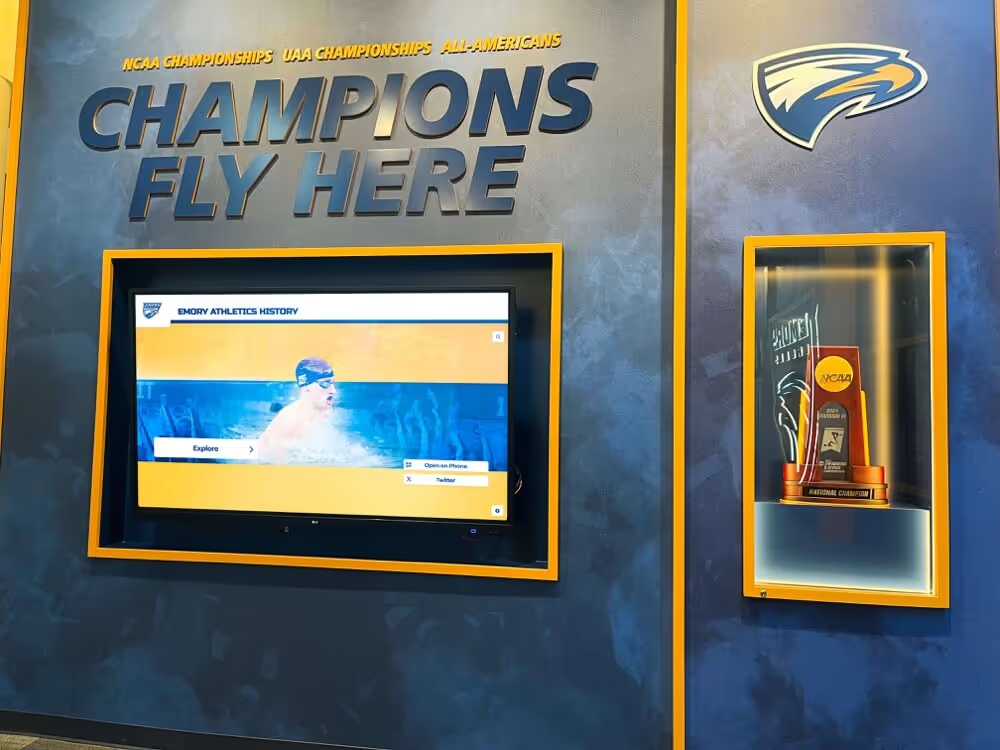
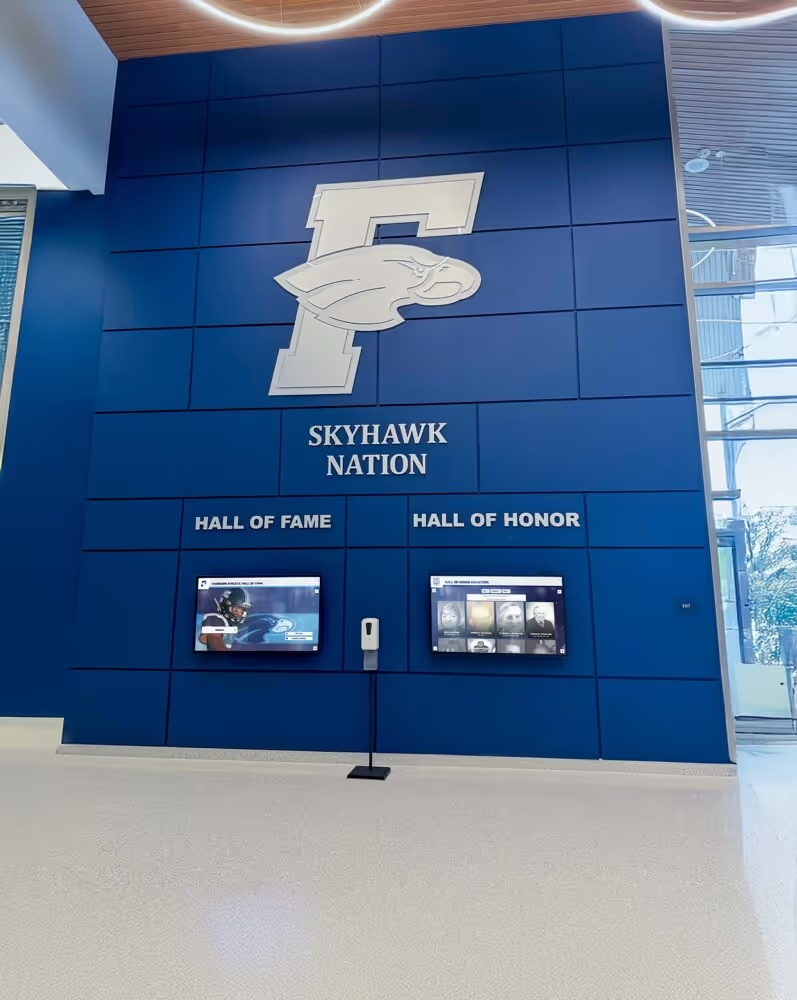
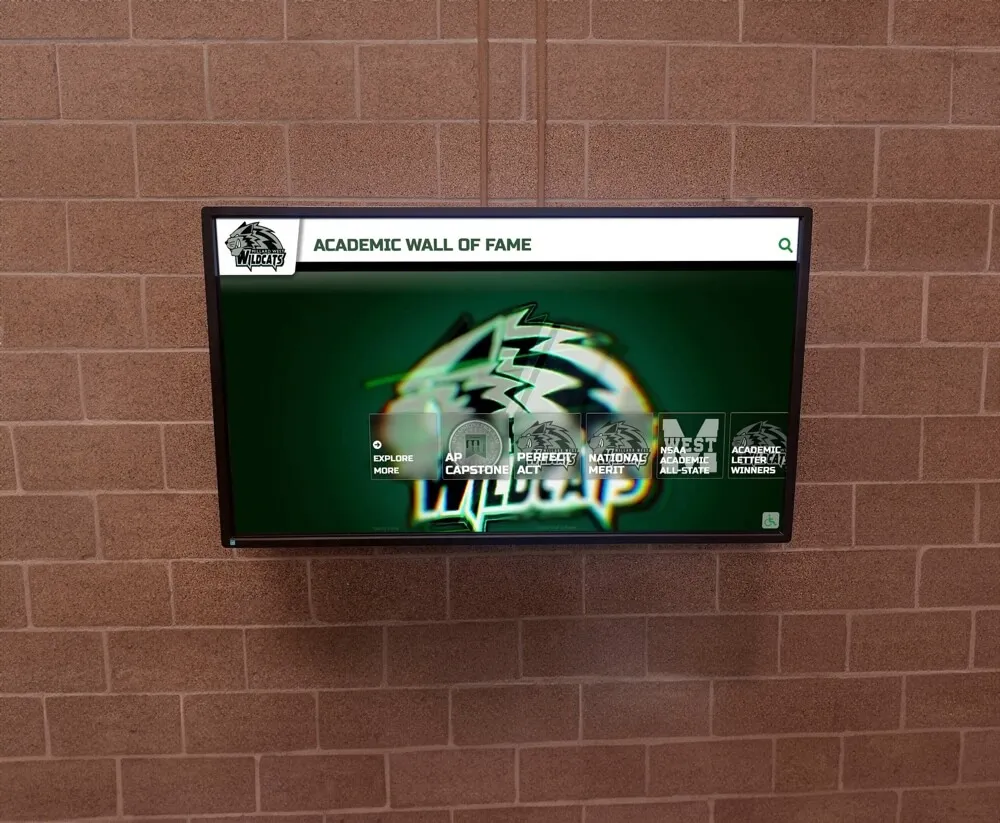
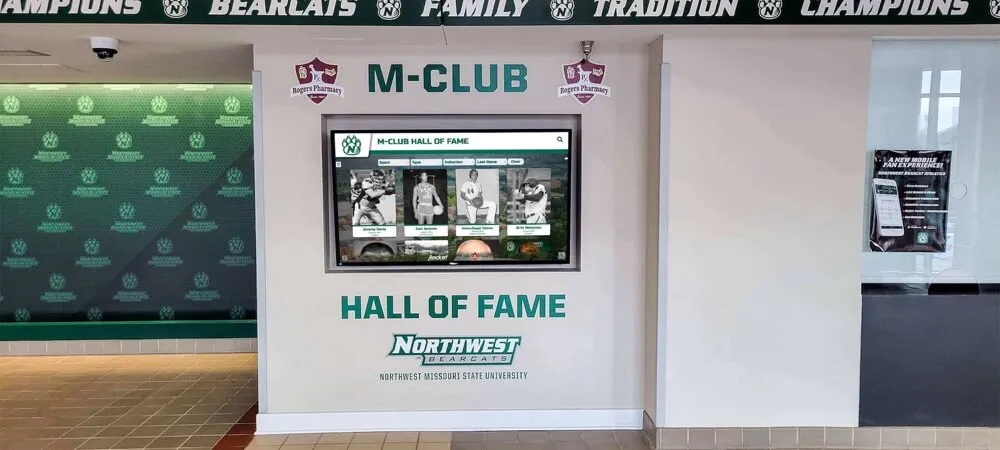
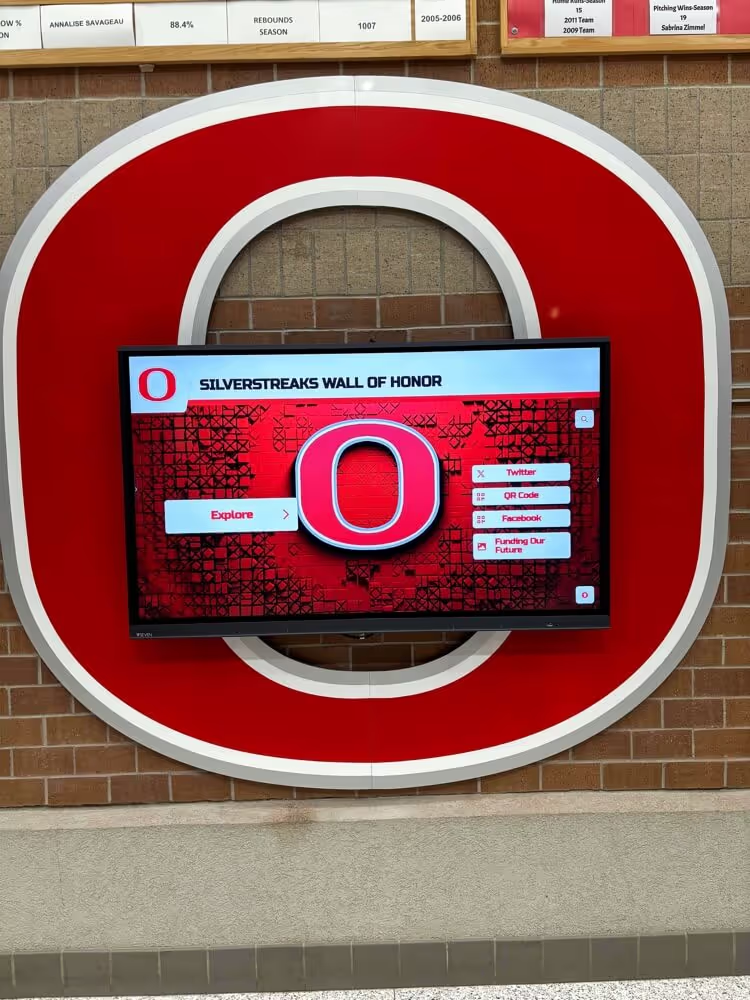
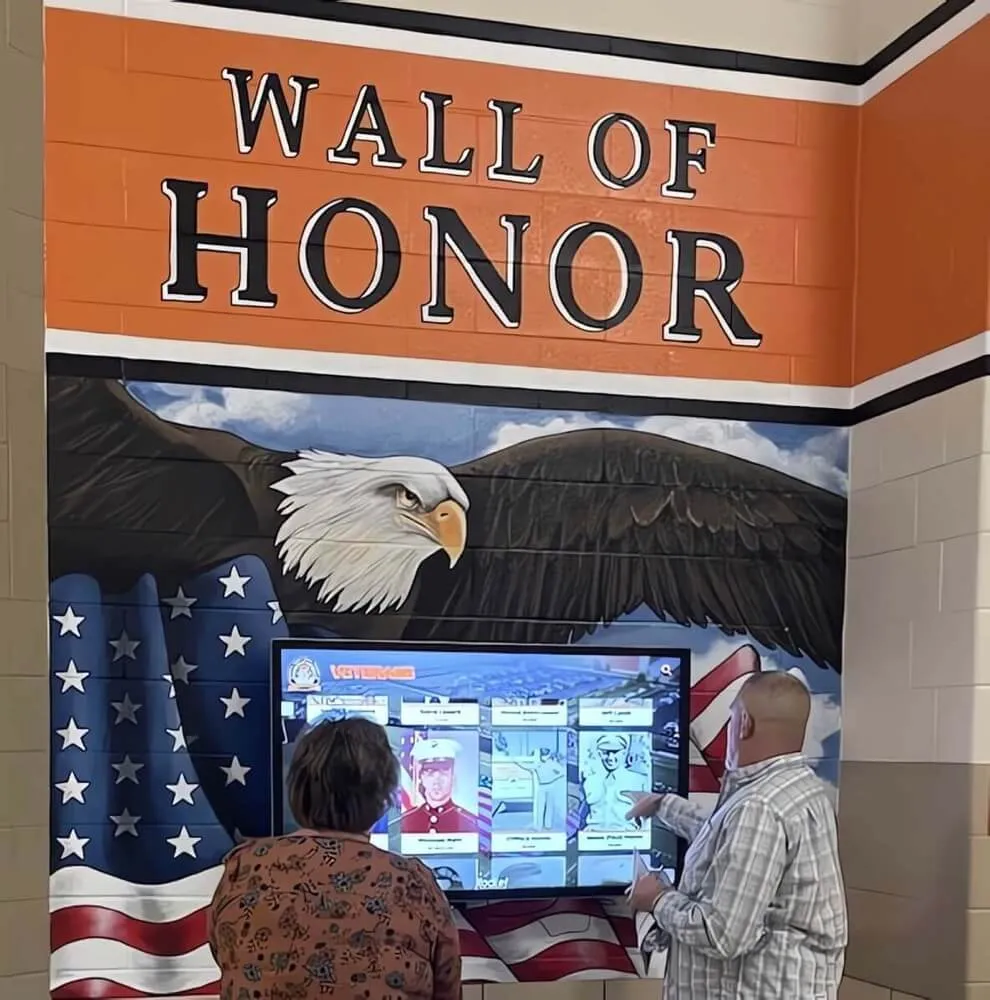
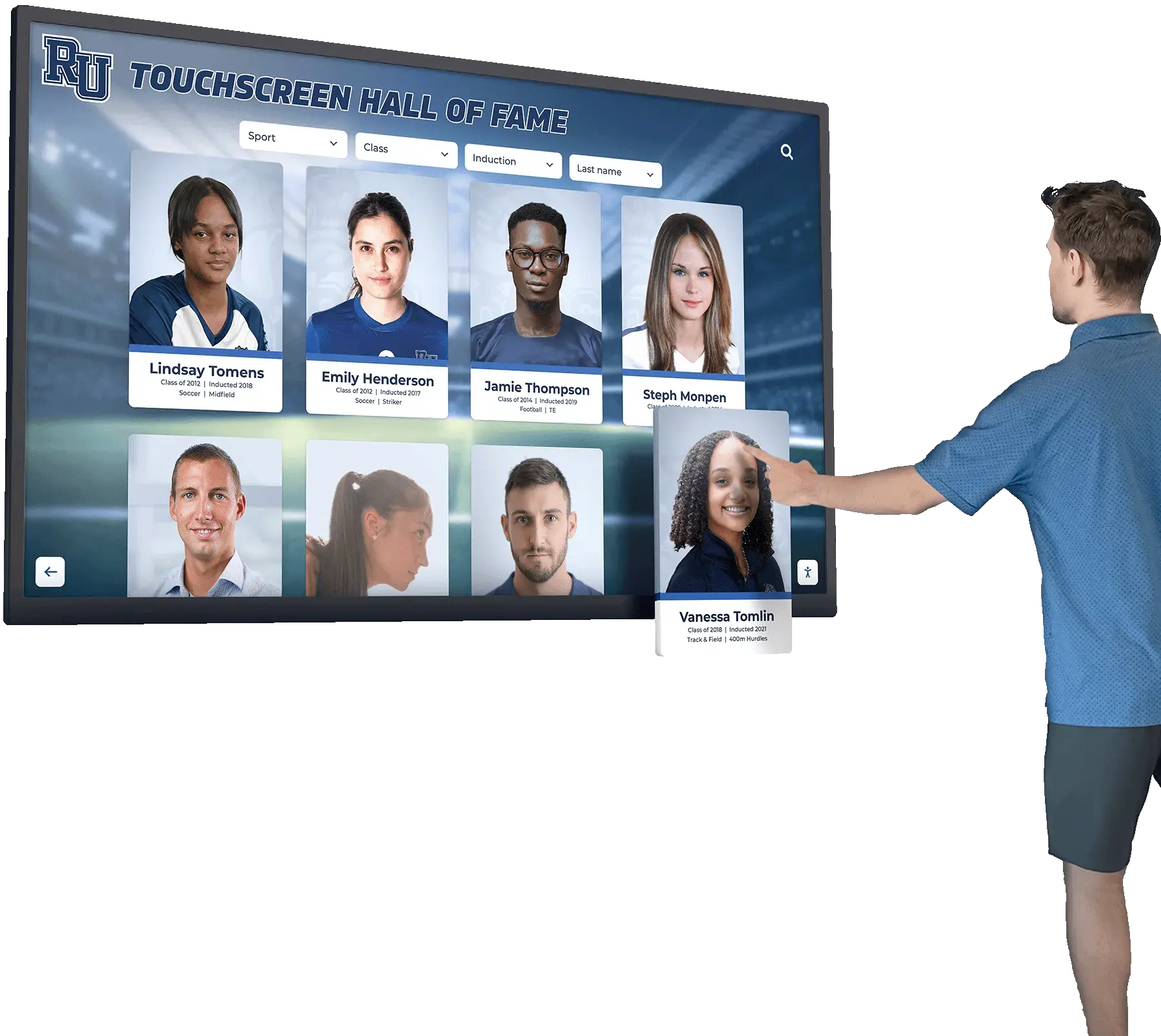
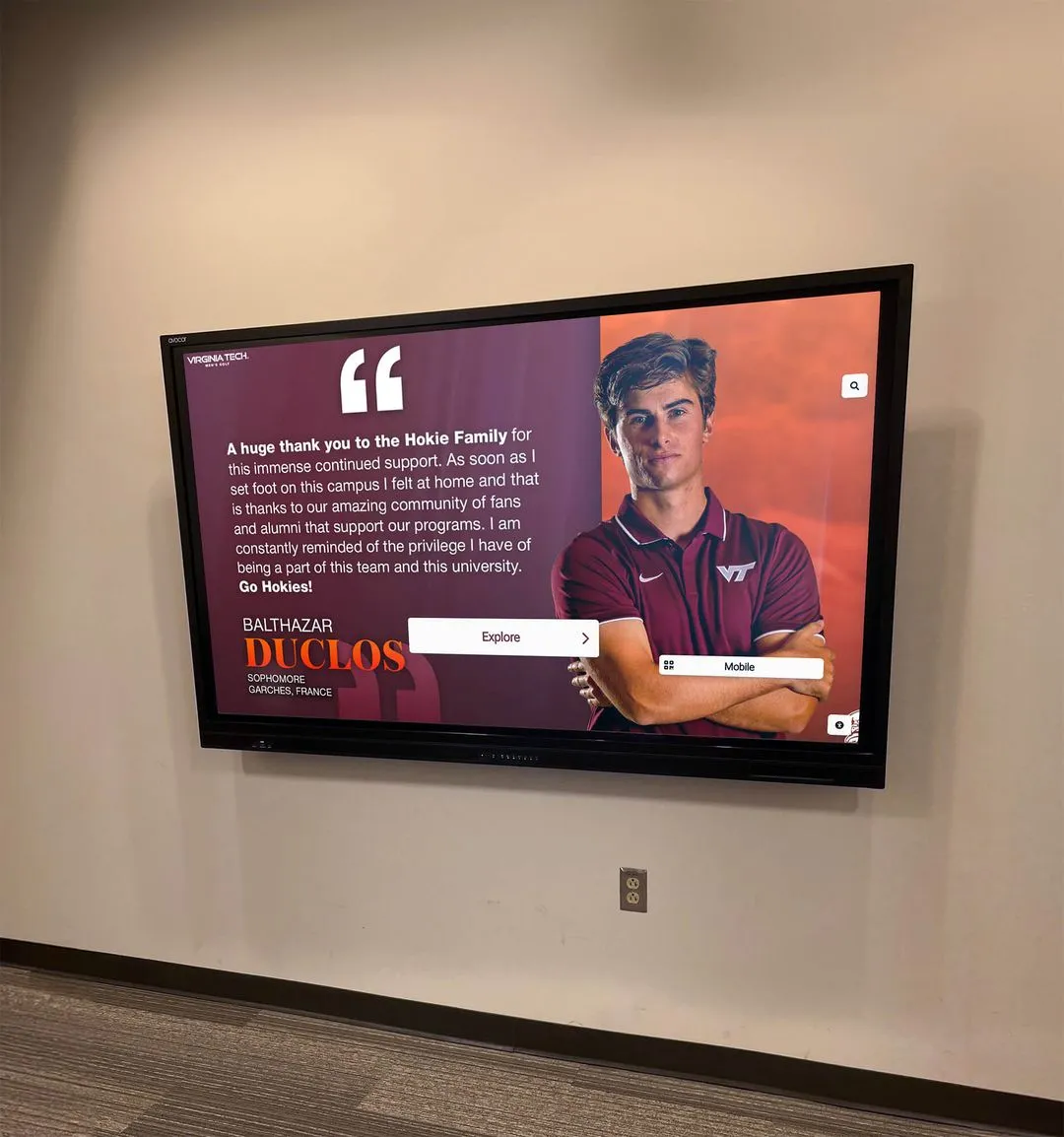
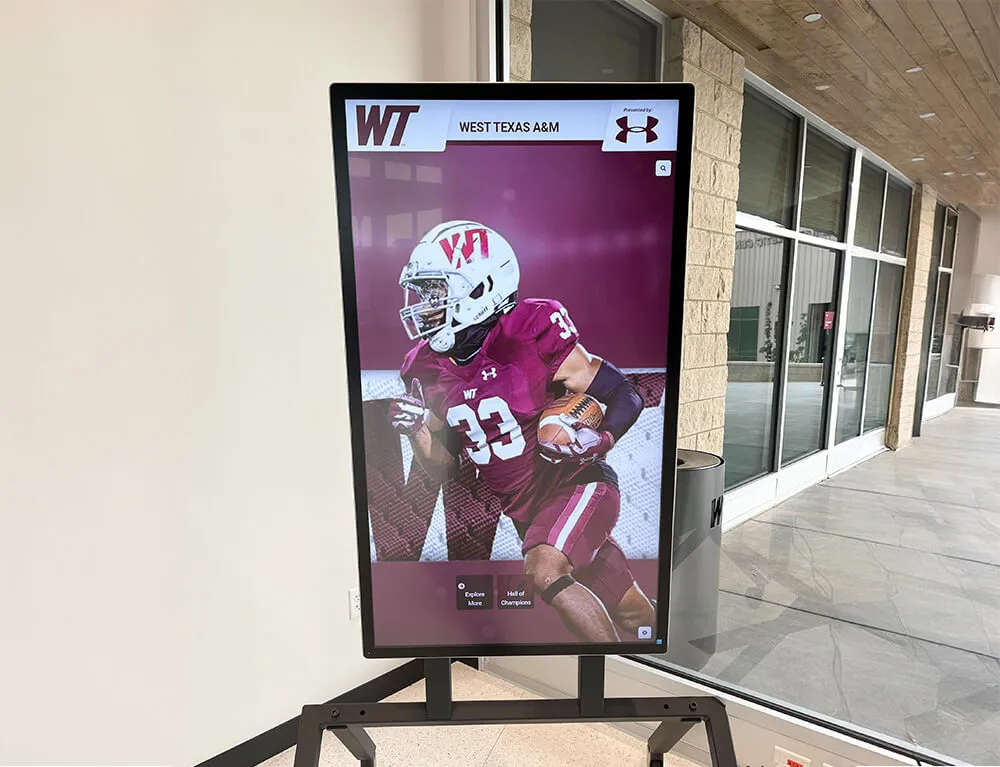
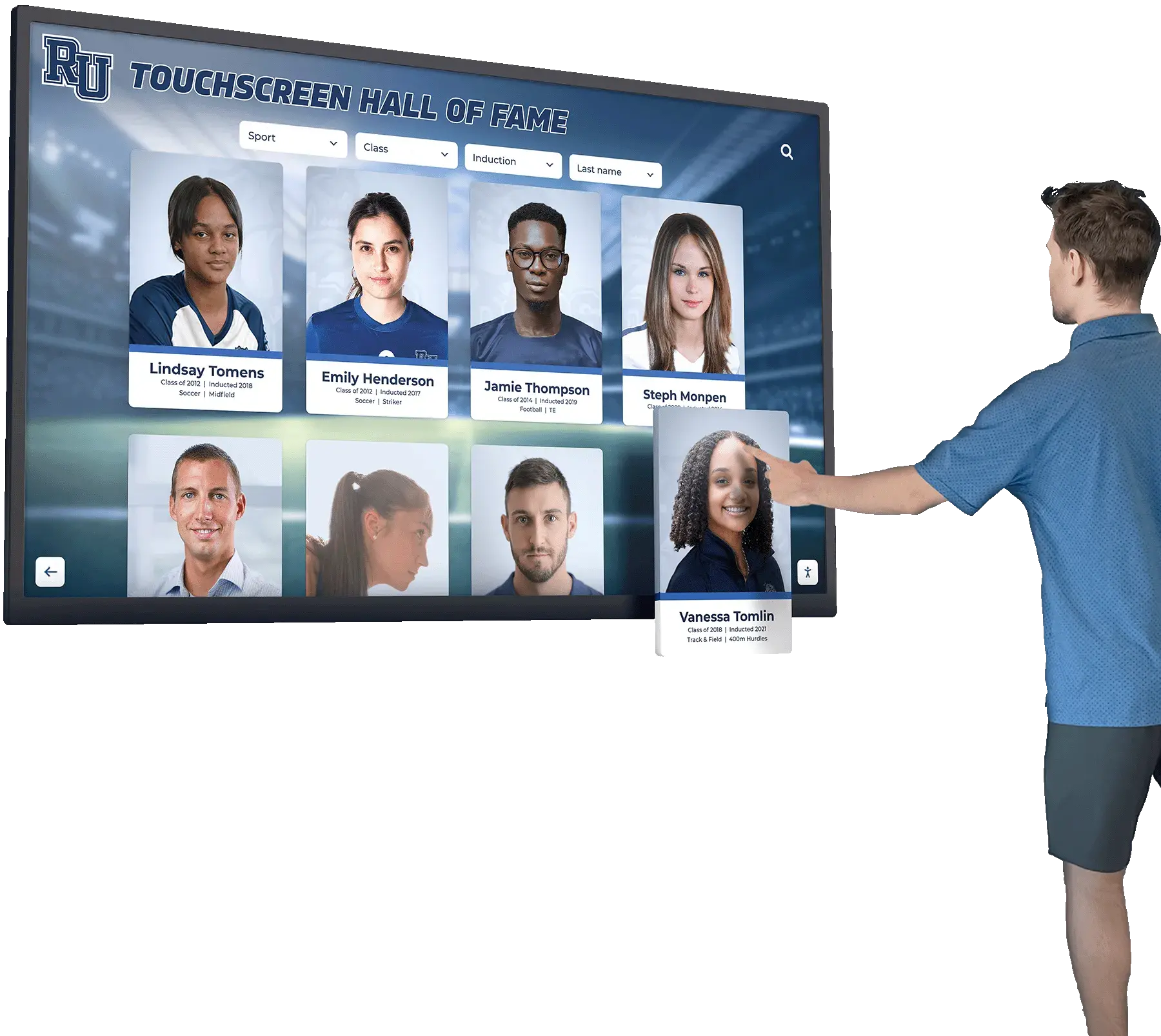
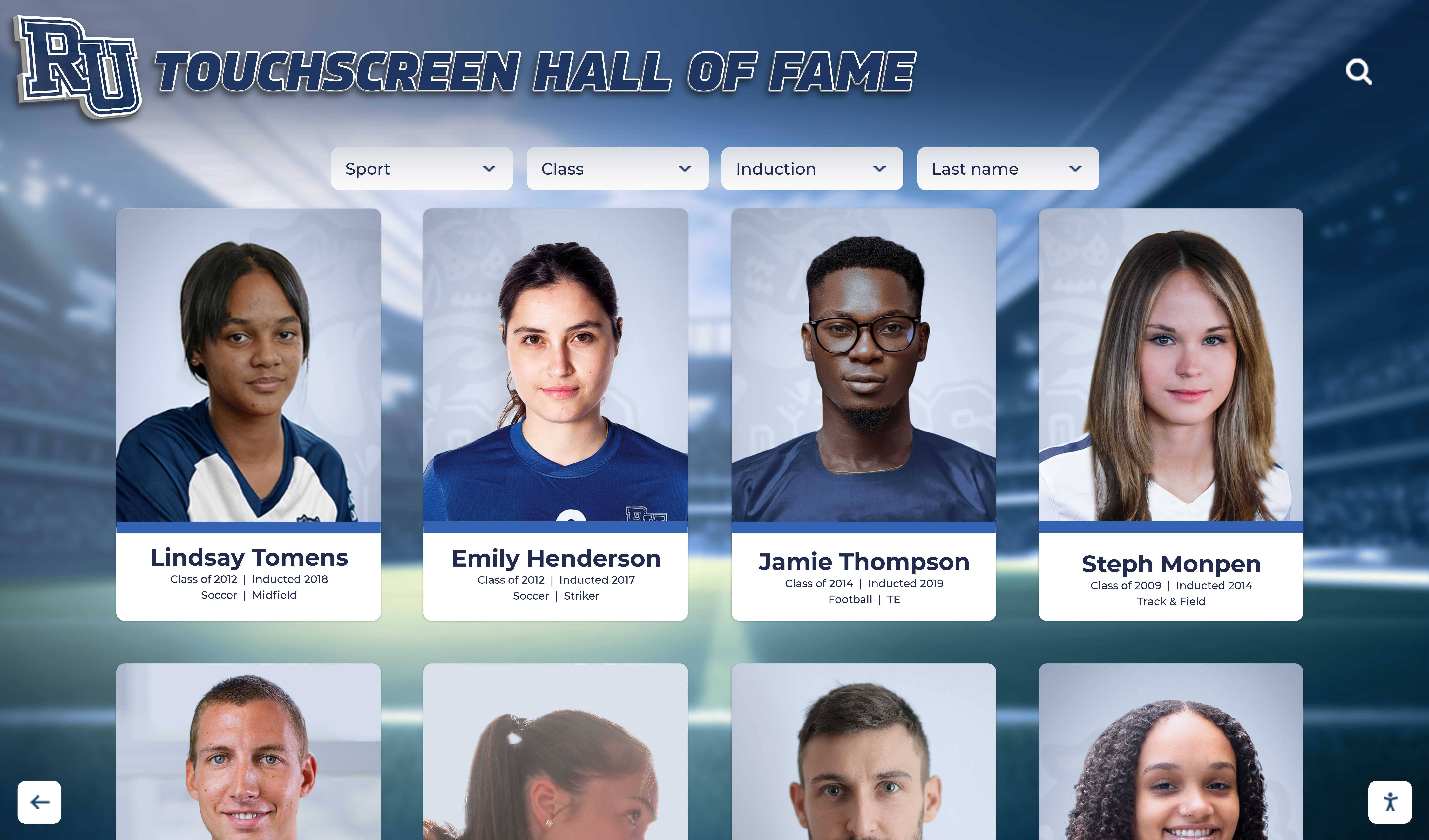

Interactive Touchscreen Displays Touchscreen installations merge the depth of a web-based database with the environmental presence of a physical display. Visitors can browse athlete profiles, filter by sport or graduation year, watch archived footage, and explore team histories—all from a display installed in the athletic facility. This format particularly suits schools that want both deep information access and visible, ambient recognition that requires no special effort from the visitor.
For programs evaluating the technology options involved in building a digital athletic alumni presence, a comprehensive comparison of hall of fame tools for athletic programs reviews the leading platforms across each display type. Schools that have used milestone events to drive alumni reconnection will also find useful context in this high school reunion planning guide, which addresses how event-based outreach feeds directly into improved alumni records.
Keeping the Page Current: Maintenance and Data Workflows
An alumni page is not a project that gets completed—it is a living resource that requires regular care. Schools that treat it as a one-time effort end up with outdated information that erodes trust and reduces usefulness over time.
Assign Ownership Every alumni page needs a clearly identified owner: an athletic director, communications coordinator, or advancement staff member who is accountable for accuracy and updates. Without named ownership, the page drifts.
Establish an Update Cadence A realistic update schedule—whether quarterly, annually around homecoming, or on a season-by-season basis—creates predictability and ensures the page stays relevant. Annual updates timed to reunions or athletic recognition banquets are a common and workable structure for most programs.
Build a Verification Process for Historical Records Before publishing records, awards, or statistics sourced from memory or secondary accounts, establish a brief verification step: check yearbooks, newspaper archives, state athletic association records, or institution-held game programs. A record that turns out to be incorrect creates credibility problems that take considerable effort to repair.
Create Pathways for Alumni to Contribute Former athletes, their families, and program supporters often hold photographs, press clippings, and historical records the institution does not have. A clear submission pathway—a form, a designated email address, or an in-person drop-off option at alumni events—taps into this distributed archive and improves completeness over time.
For programs that want to move beyond a single page into a fuller recognition infrastructure, a review of sports awards approaches across program types provides useful orientation to the range of recognition models worth considering. Institutions that also recognize donors and supporters alongside athletes will find that the frameworks developed for donor recognition walls adapt well to the athletic alumni context—both involve cataloging long-term contributions and presenting them in ways that honor depth of commitment.
What Schools Often Miss
Even well-intentioned alumni pages share a few common gaps worth addressing proactively:
Managers, Trainers, and Support Staff Athletic programs run on the labor of equipment managers, athletic trainers, statisticians, and support personnel. Many pages omit these contributors entirely. Consider at minimum a section recognizing long-serving staff and management alumni.
Female Athletes and Title IX Era History Programs that expanded women’s athletics significantly after 1972 sometimes underinvest in preserving the records of early women’s team athletes. A complete page treats the full breadth of the program’s history, not only its most prominent sports.
Deceased Alumni Former athletes who have passed away deserve recognition on the alumni page. A brief notation, respectfully worded, honors their memory and acknowledges that the program’s history is not limited to living alumni.
Program Gaps and Discontinuities Some programs were discontinued and later reinstated, or changed competitive levels or conference affiliations over time. Documenting these transitions accurately—rather than presenting history as an uninterrupted arc—creates a more credible and complete record.
Conclusion
A well-built sports team alumni page is one of the most durable investments an athletic program can make. It serves former athletes, current student-athletes, families, donors, and prospective recruits simultaneously—and it grows more valuable with each passing season as the program’s history deepens.
The schools that get this right treat the alumni page as infrastructure rather than a marketing project: they assign ownership, establish data standards, build verification habits, and create clear pathways for the athletic community to contribute. The result is a resource that earns trust and continued use across decades.
If your program is ready to move beyond a static list of names into a fully realized digital recognition experience—searchable, visually compelling, and straightforward to keep current—Rocket Alumni Solutions provides platforms that combine web-based alumni archives with interactive touchscreen displays built specifically for athletic programs. Schedule a demo to see how other schools are managing their sports team alumni pages today.