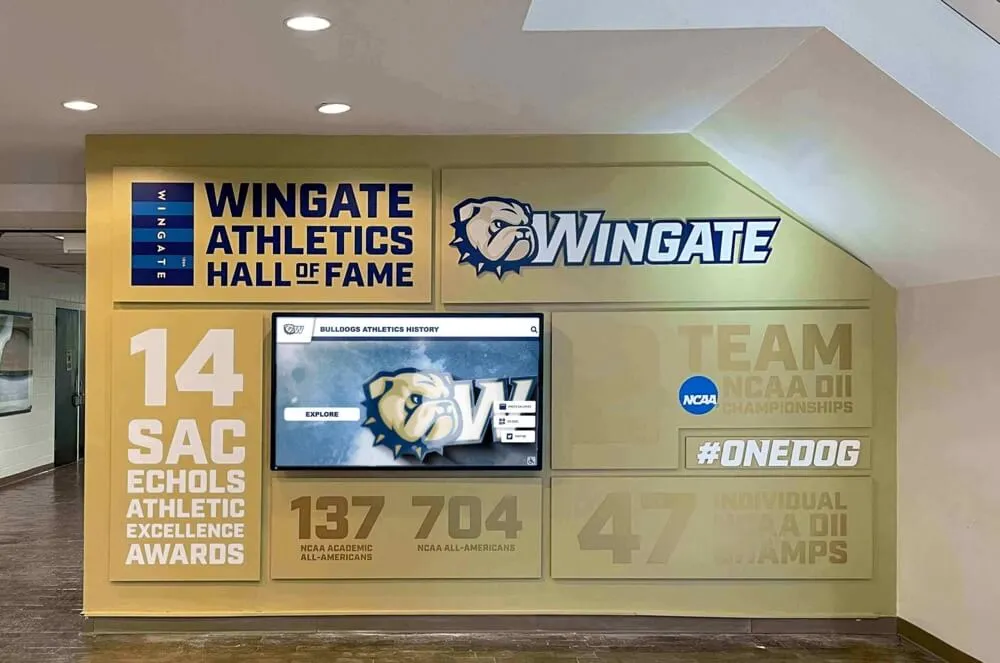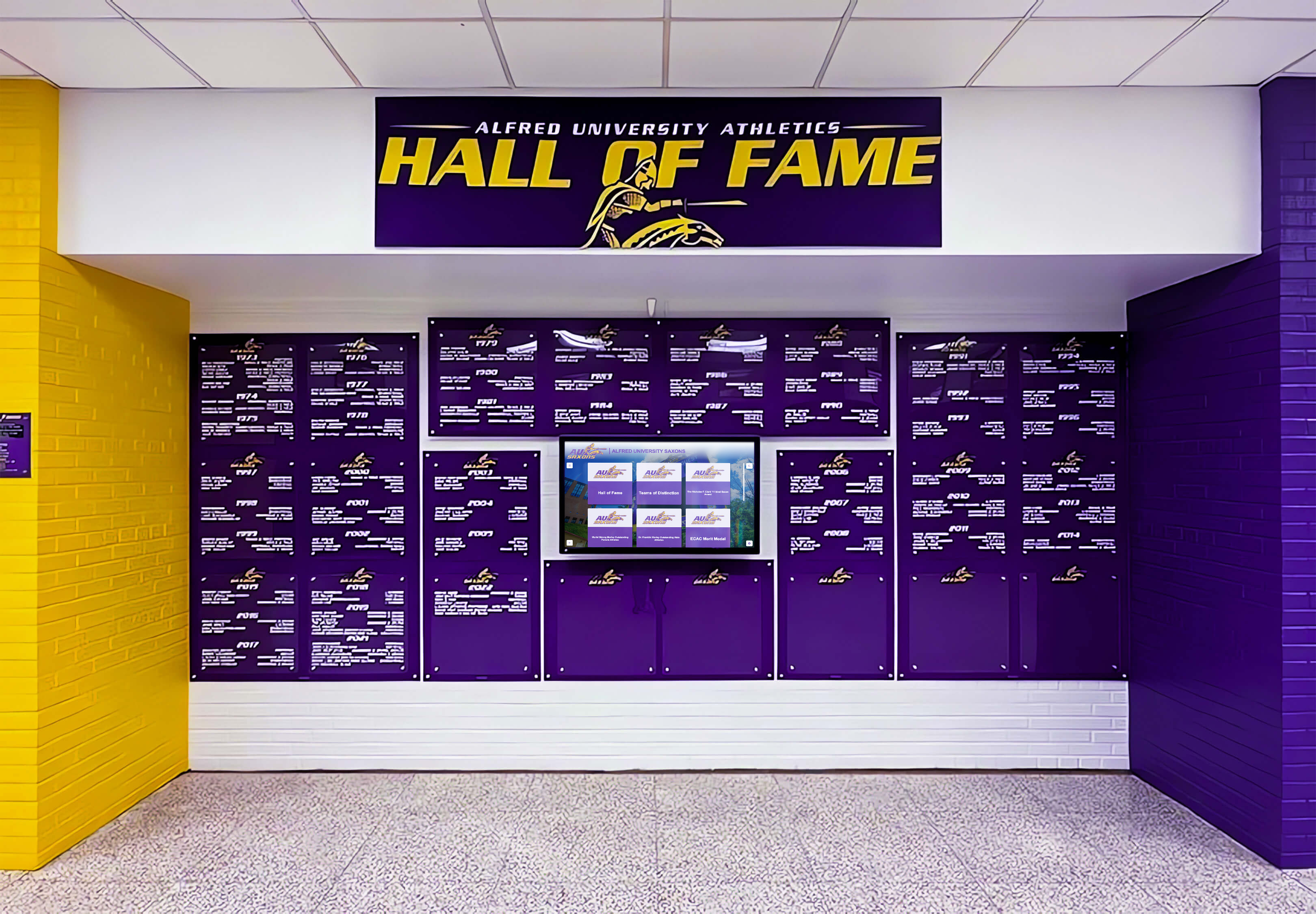
Every athletic program has a story worth telling. Decades of championship banners, record-breaking seasons, coaches who shaped careers, and student-athletes whose dedication defined what a school stands for—these are the threads of a living history most schools have never fully woven together. A dedicated school sports museum transforms scattered trophies, faded photographs, and box-stored jerseys into a cohesive permanent display that honors the past, motivates current athletes, and builds a lasting sense of pride throughout the entire school community.
Whether your school has decades of documented championship history or is just beginning to formalize its athletic legacy, this guide walks through every stage of building a school sports museum—from initial planning and artifact collection through physical design, digital integration, and long-term maintenance. The result will be a space that does justice to the athletes who built your program while inspiring everyone who walks through your doors.
Defining What a School Sports Museum Actually Is
The term “school sports museum” covers a wide range of formats, from a single dedicated room with archival displays to a multi-wall hallway installation featuring interactive touchscreens and rotating exhibits. Understanding the spectrum helps programs identify the right scope for their facilities, budgets, and goals.
Beyond the Traditional Trophy Case
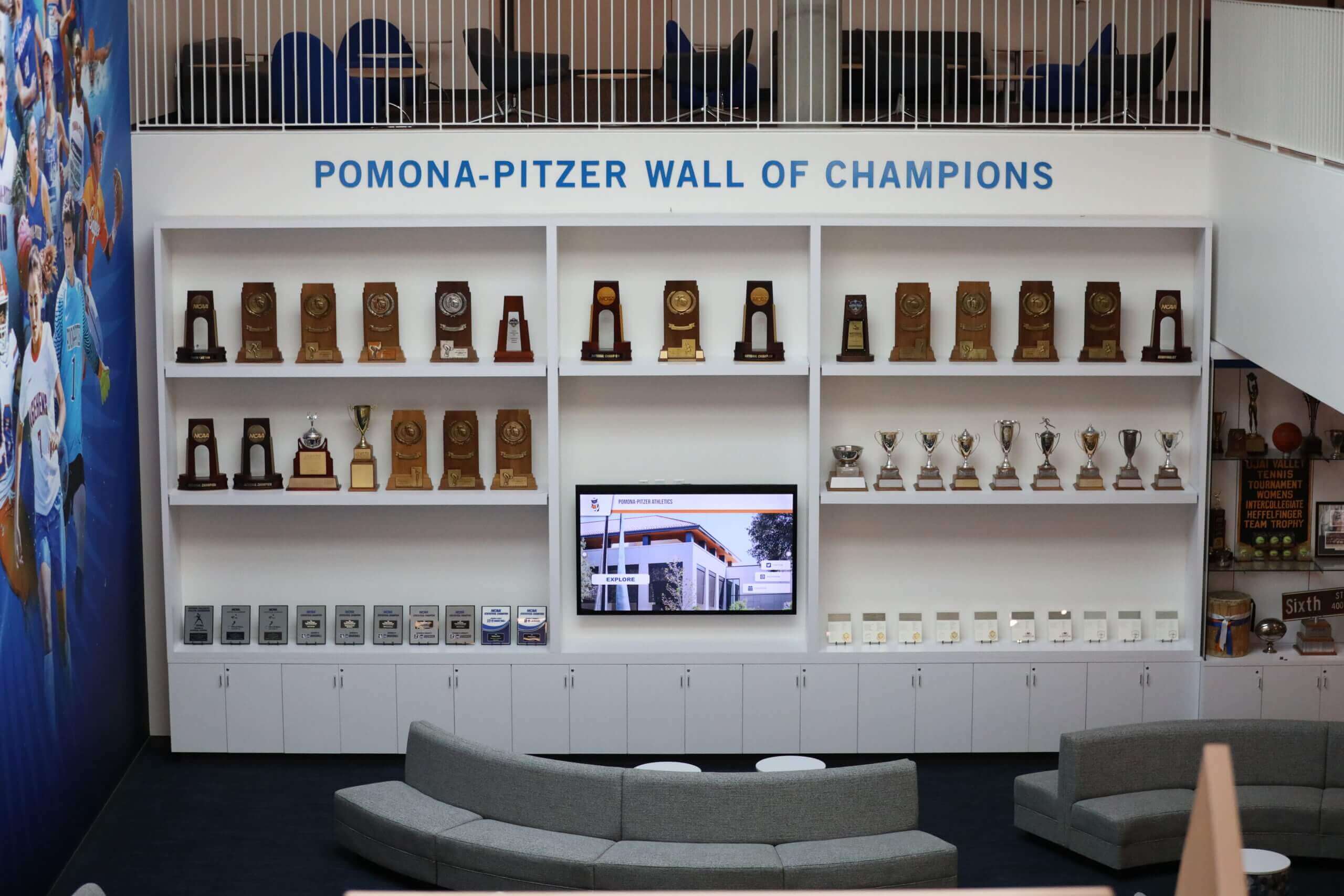
For many schools, athletic recognition begins and ends with a glass trophy case near the gymnasium entrance. Trophy cases serve a real purpose—they provide visible proof of competitive success and add visual interest to utilitarian hallways—but they fall short as museum-grade experiences. Space constraints limit how many artifacts can be displayed, labels rarely tell the full story behind any given championship, and the static nature of glass-and-shelf displays means content rarely changes once installed.
A true school sports museum expands on this foundation by organizing artifacts into a cohesive narrative, incorporating multiple media formats, and committing to ongoing content stewardship. Understanding the differences between traditional and digital school display cases helps programs make informed decisions about which formats best serve their specific goals and budgets.
Formats and Scales
School sports museums take many forms depending on available space and budget:
Dedicated museum rooms offer the most immersive experience, with controlled lighting, climate management for artifact preservation, and the physical separation from daily traffic that encourages visitors to slow down and engage.
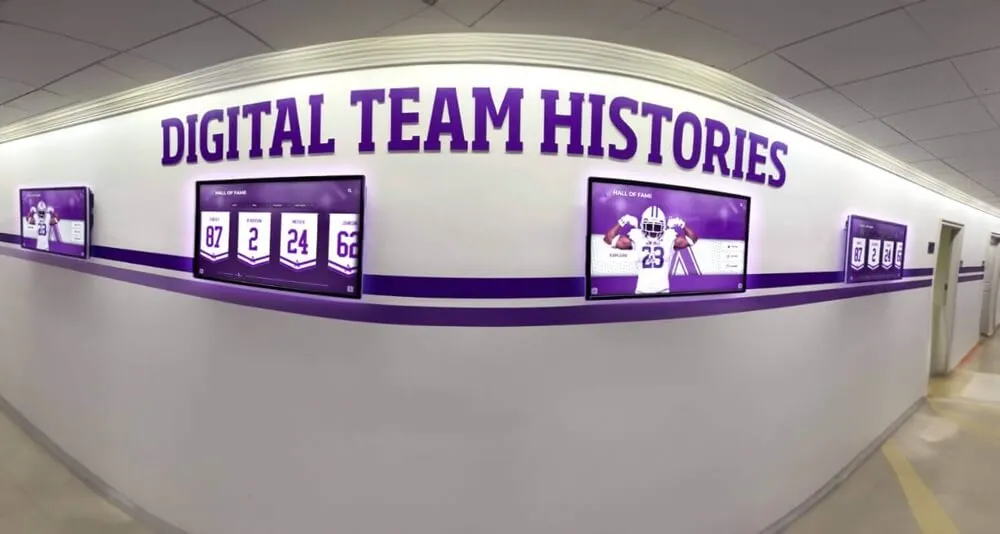
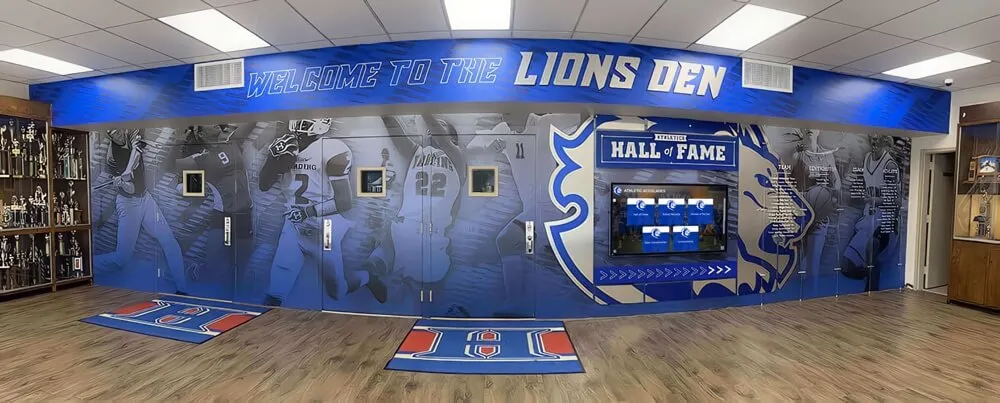
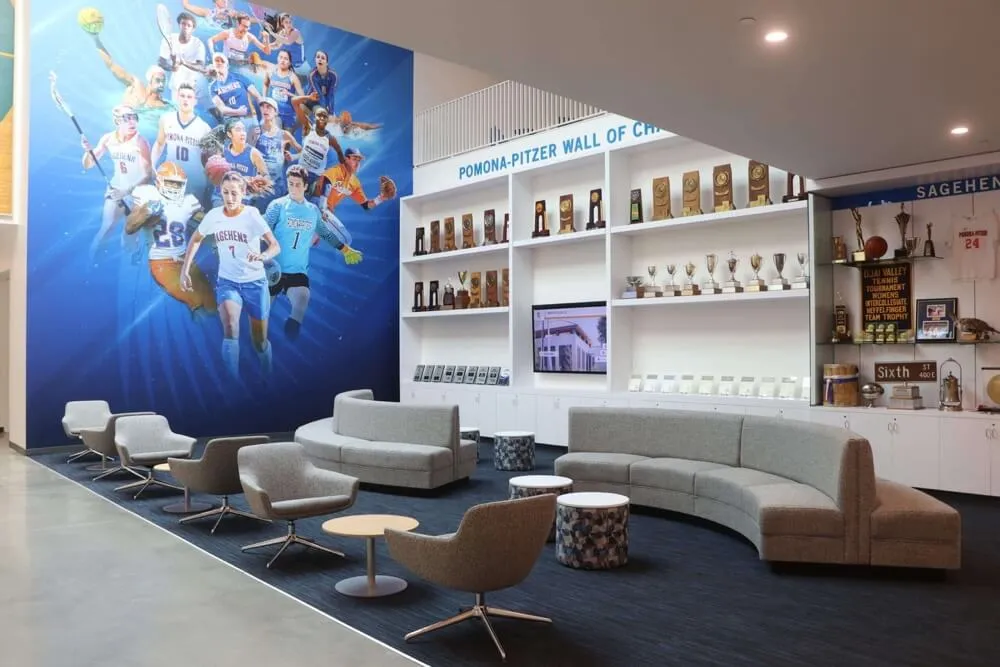
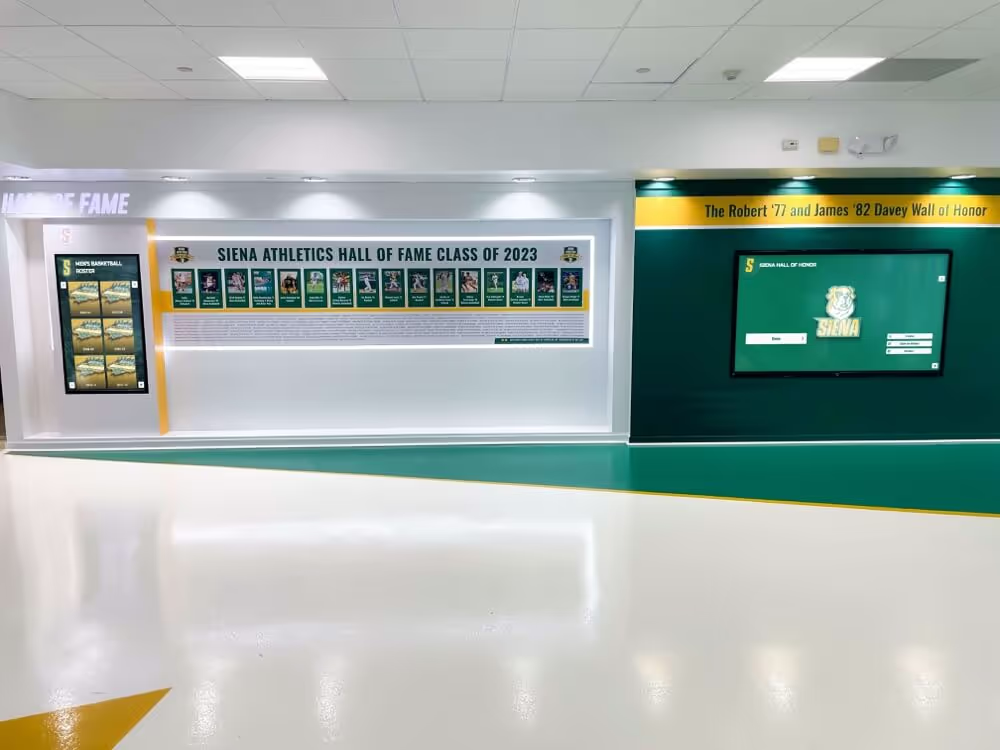
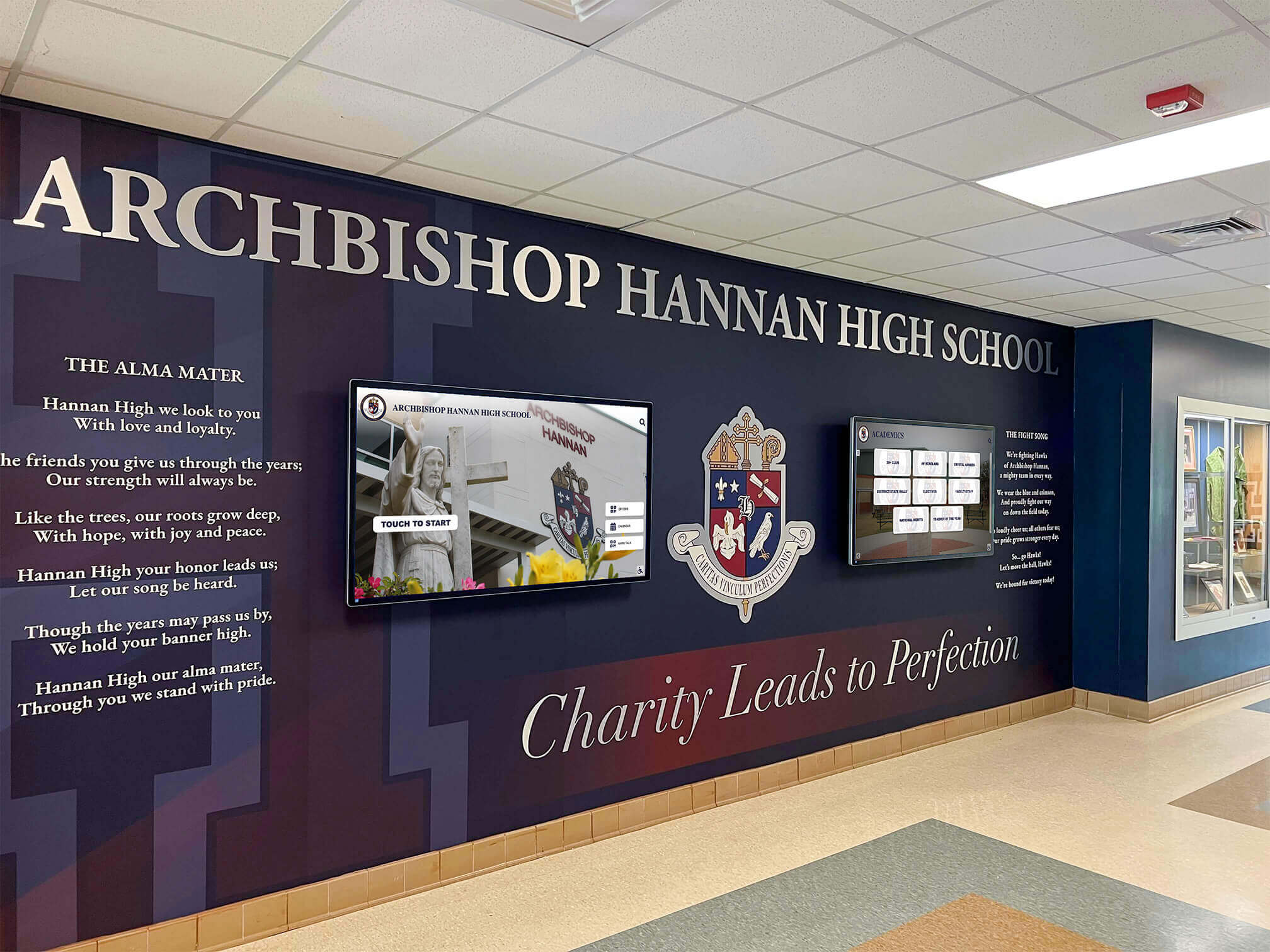
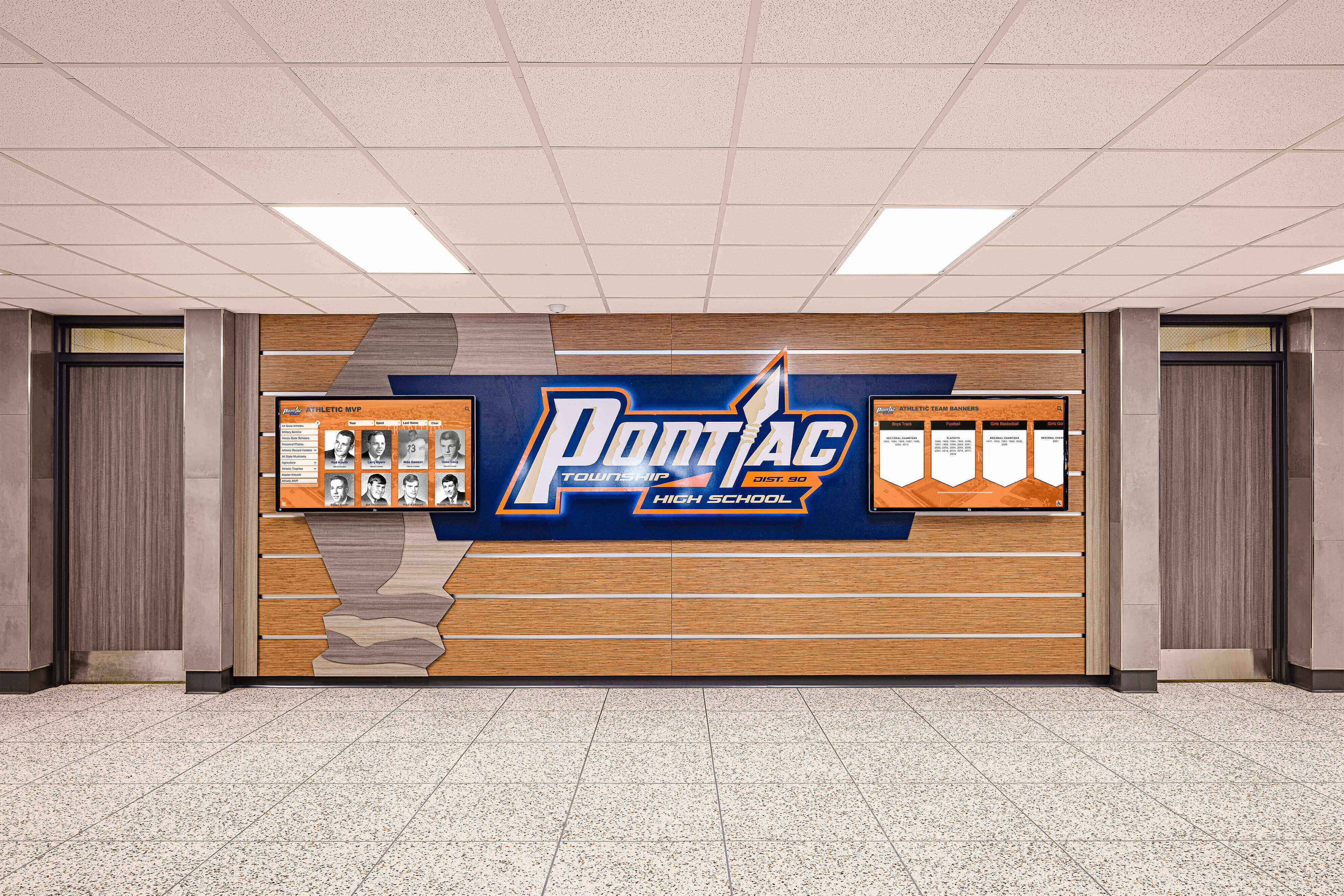
Athletic hallway installations turn high-traffic corridors into linear museum experiences, placing displays where athletes, students, and visitors naturally walk. These installations integrate murals, plaques, digital screens, and mounted artifacts into a continuous story running the length of a hallway.
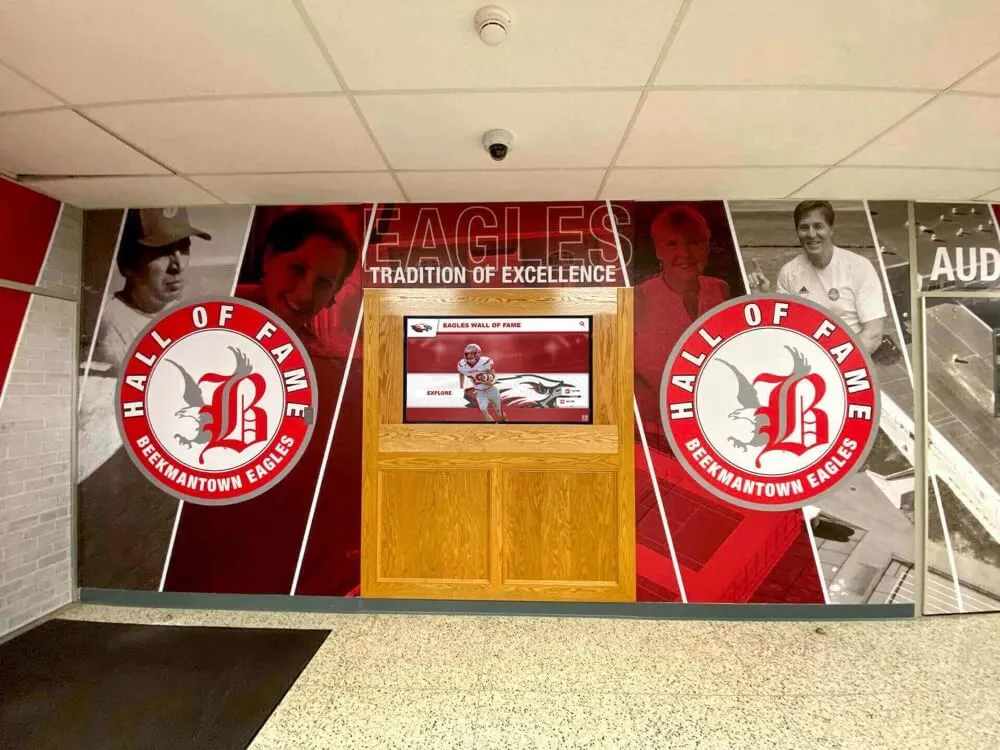
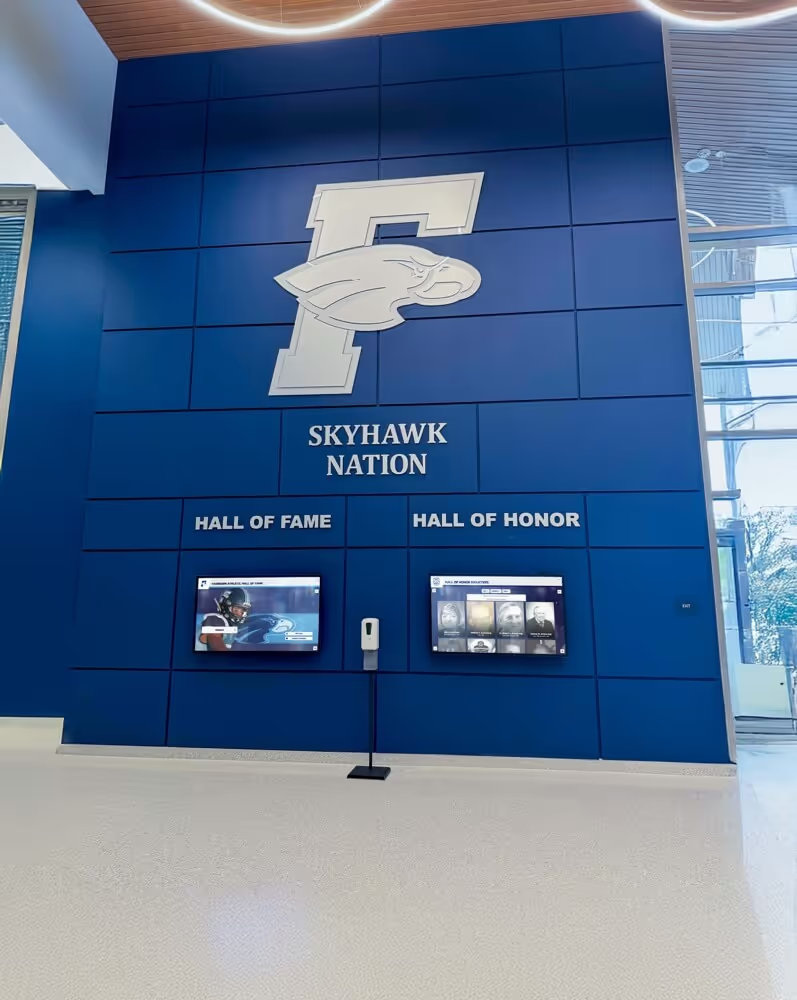
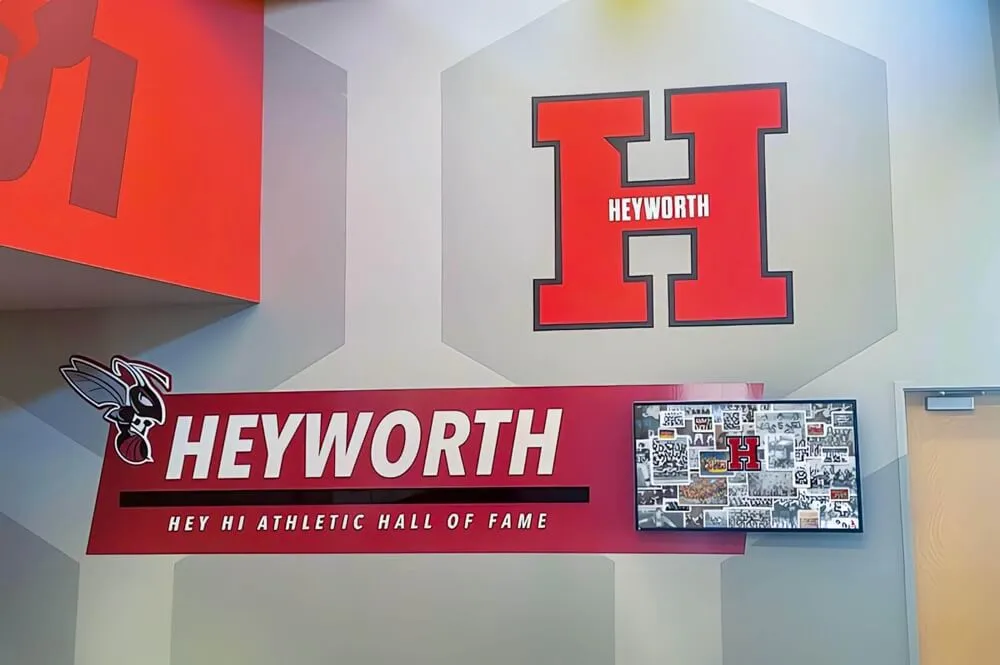
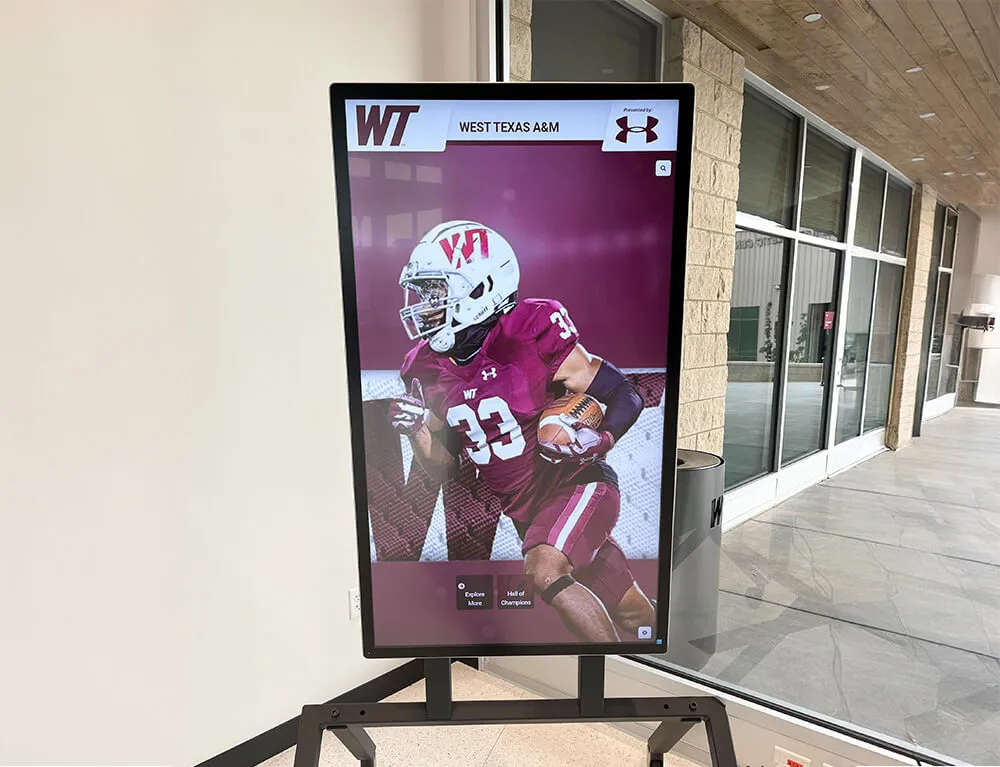
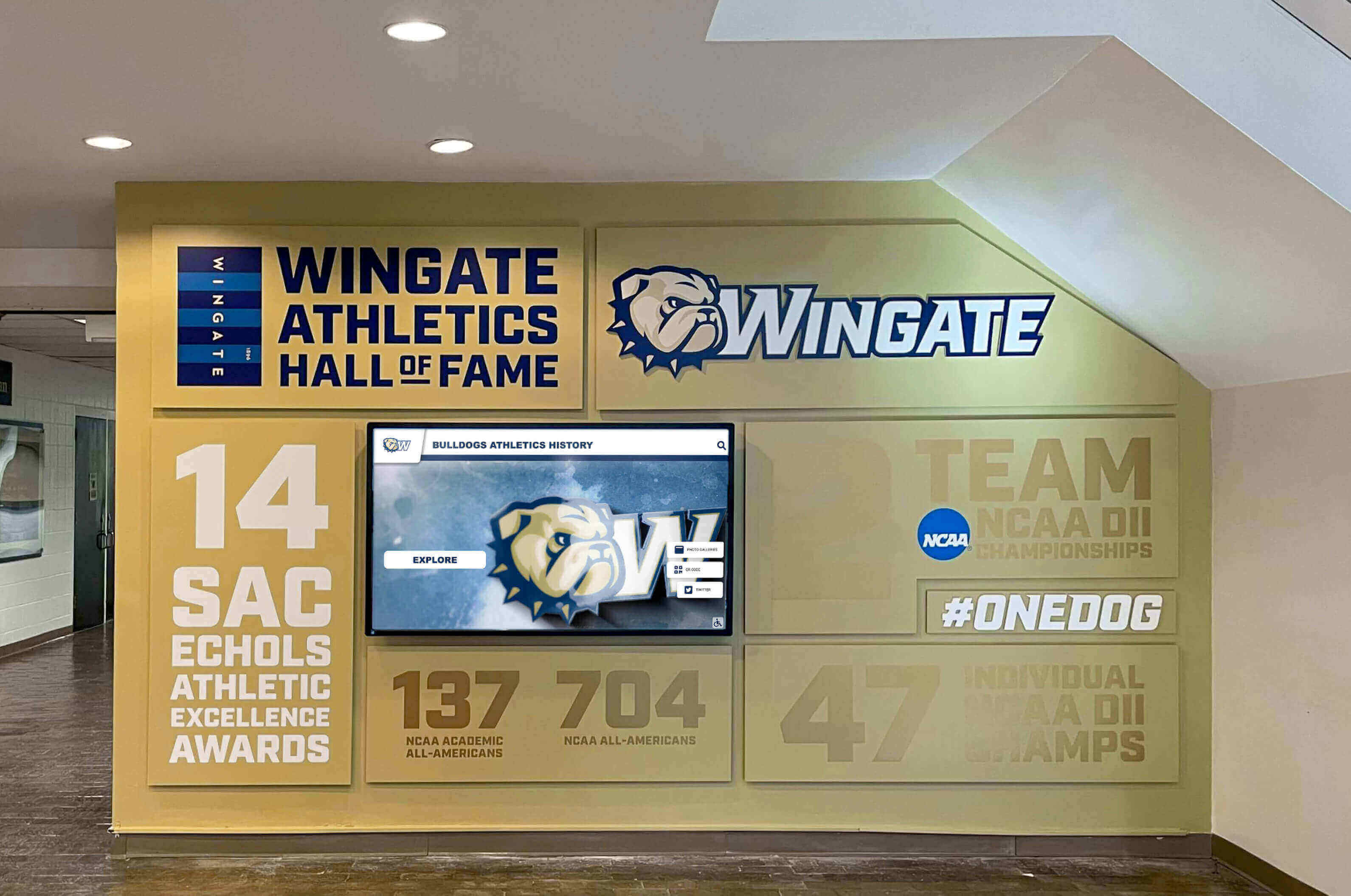
Lobby feature walls create a dramatic first impression for any visitor entering a gymnasium or athletic facility. A well-designed lobby feature wall combining large-format photography, championship recognition, and an interactive touchscreen communicates program identity immediately upon entry.
Multi-space hybrid systems connect displays across several locations—trophy cases near the gym, record boards in the weight room, hall of fame portraits near the main office, and digital kiosks in the lobby—creating a campus-wide museum experience rather than a single concentrated space.
Planning Your School Sports Museum
Successful school sports museums begin with deliberate planning that establishes goals, scope, and process before a single artifact is collected or a single display is designed.
Setting Clear Institutional Goals
Every school sports museum should serve identifiable purposes beyond simply looking impressive. Common goals include:
- Athlete motivation and identity: Current athletes who understand their program’s history develop stronger connections to the teams they represent, which research on team culture consistently links to improved effort and cohesion.
- Alumni engagement and giving: Former athletes who see their achievements honored are more likely to stay connected to programs, attend events, and support fundraising campaigns.
- Recruiting: Prospective student-athletes evaluating programs want to see evidence of tradition, competitive excellence, and institutional investment in athletics.
- Community pride: Athletic success is often central to community identity, particularly in towns and cities where school sports are deeply embedded in local culture.
- Historical preservation: Institutional memory erodes over time as coaches change, staff turn over, and documents get lost. A museum provides archival structure that preserves history across administrative transitions.
Defining which goals matter most shapes every subsequent decision—from what to collect, to how to organize displays, to what technology to invest in.
Conducting a History Audit
Before building displays, programs need to understand what history actually exists and what documentation survives. A systematic history audit typically involves:
Reviewing existing physical artifacts: Take inventory of all trophies, plaques, banners, jerseys, equipment, and memorabilia currently held by the athletic department, whether in display cases, storage rooms, or office shelves.
Consulting archive sources: Local newspaper archives, yearbooks, school annuals, game programs, and official school records often contain championship documentation, team photographs, and athlete statistics unavailable anywhere else. Digitizing old yearbooks and historical records for hall of fame displays is a foundational step that unlocks decades of visual content for both physical and digital exhibits.
Reaching out to alumni and former coaches: Community members who were part of championship teams often retain photographs, trophies, news clippings, and game footage that never made it into official institutional records. Alumni outreach at this stage typically surfaces materials schools didn’t know existed.
Cataloging digital records: Video recordings of championships, highlight reels, broadcast archives, and digital photograph libraries often exist in various formats and storage locations. Creating a centralized catalog of what exists and where prevents valuable content from being overlooked.
Space Assessment and Allocation
Physical planning requires honest assessment of available spaces. Key considerations include:
- Traffic flow patterns and which spaces see the most visitors
- Lighting conditions and whether supplemental lighting is feasible
- Wall and floor surface characteristics affecting mounting options
- Climate conditions relevant to artifact preservation
- Power and network access for digital display integration
- ADA accessibility requirements for all visitors
Schools with limited dedicated spaces often find that athletic hallways, gymnasium lobbies, and main office corridors offer more square footage than expected once existing clutter is cleared and display space is intentionally mapped.
What to Collect and Curate
A school sports museum’s quality depends directly on the depth and diversity of its collection. Comprehensive programs represent multiple sports, multiple eras, and multiple forms of contribution rather than centering exclusively on football and basketball championships from the last decade.
Physical Artifacts
Championship hardware: Trophies, plaques, and championship banners form the visual foundation of most athletic displays. These should be documented with complete context—not just “State Champions” but the sport, year, season record, and notable players or coaches associated with each achievement.
Jerseys and uniforms: Retired jerseys of standout athletes and representative uniforms from different eras of program history offer tangible connections to the past. Proper framing and climate-appropriate storage preserve fabrics that can deteriorate quickly without care.
Equipment and game items: Balls from significant games, equipment used by notable athletes, and artifacts from historic competitions create physical touchstones that photographs alone cannot replicate.
Photographs: Team portraits, action shots from significant games, coach photographs, and candid images from throughout program history form the visual backbone of any sports museum collection. Original prints should be digitized for preservation and display flexibility.
Documentary Materials
Statistical records: Win-loss records by season, individual performance records, scoring leaders, and competitive milestones belong in any serious athletic archive. These numbers tell the story of program evolution across decades in a form that allows meaningful comparison.
News coverage: Newspaper articles, magazine features, and broadcast coverage documenting significant wins, championships, and athlete achievements represent important primary sources. Creative approaches to displaying sports memorabilia and athletic history often incorporate framed news clippings as striking visual elements alongside physical artifacts.
Game programs and schedules: Original programs from significant games, season schedules from championship years, and event programs from milestone ceremonies add archival depth to collections.
Video and audio: Game footage, championship recordings, and interview content with coaches and athletes capture details no photograph can convey. Even lower-quality archival footage carries historical value worth preserving.
Deciding What to Include
Not every artifact, photograph, or statistic needs permanent display space. Effective curation means making deliberate choices about what tells the most compelling story. General principles include:
- Prioritize breadth across sports over depth in any single program
- Represent multiple eras rather than clustering recognition around recent decades
- Balance team achievements with individual excellence
- Include coaches, contributors, and support staff alongside athletes
- Highlight milestones, records, and firsts alongside outright championships
Physical Display Design and Strategy
Once a collection is assembled and goals are defined, physical design decisions determine how the museum looks and functions as a space.
Wall Murals and Graphic Environments
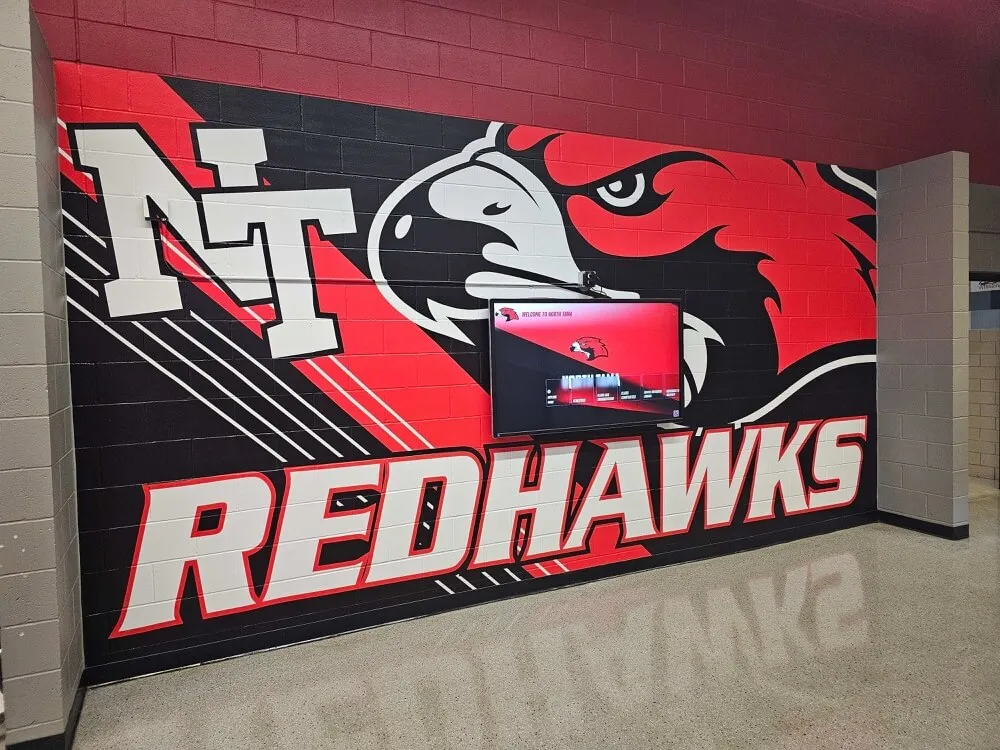
Large-format graphic murals transform bare institutional walls into immersive athletic environments. Custom murals typically incorporate school colors and mascot identity, layered imagery combining historical and contemporary photography, typography highlighting significant records or championship years, and integrated mounting locations for physical artifacts, plaques, and digital screens.
Murals work particularly well as backdrops for trophy and plaque displays, making individual recognition elements feel part of a cohesive visual environment rather than isolated objects on bare walls.
Plaque Systems and Recognition Walls
Dedicated plaque walls provide formal recognition for hall of fame inductees, championship teams, record holders, and other honored categories. Effective plaque systems use consistent formats across inductees to create visual coherence, include enough biographical detail to tell each person’s story, allow systematic expansion as new honorees are added, and use materials durable enough to maintain appearance over decades.
Banner Programs
Championship banners hung from gymnasium ceilings or athletic hallway walls provide immediate visual confirmation of program success and tradition. Banner programs typically recognize team championships, conference titles, and major individual awards. The cumulative effect of multiple banners over years communicates program culture more powerfully than any single display element.
Understanding creative ways to display trophies and awards helps schools move beyond the standard shelf-and-glass approach toward integrated environments where hardware becomes part of a larger visual story rather than an isolated collection.
Environmental Considerations
Physical displays in athletic environments face specific challenges. High humidity near pool facilities damages photographs and electronics. Heavy foot traffic areas require mounting systems that withstand contact. Areas near exterior doors experience temperature fluctuation affecting adhesives and materials. Involving facilities staff in physical planning prevents expensive problems after installation.
Athletic facilities benefit from thinking holistically about how recognition spaces connect to the overall design of the building. Thoughtful locker room and athletic space design that incorporates recognition elements reinforces program culture not just in public-facing areas but in the spaces where athletes prepare and reflect.
Digital and Interactive Display Technology
Modern school sports museums increasingly incorporate digital display technology that overcomes the fundamental limitations of physical-only installations: finite space, static content, and limited storytelling capacity.
Interactive Touchscreen Walls of Fame
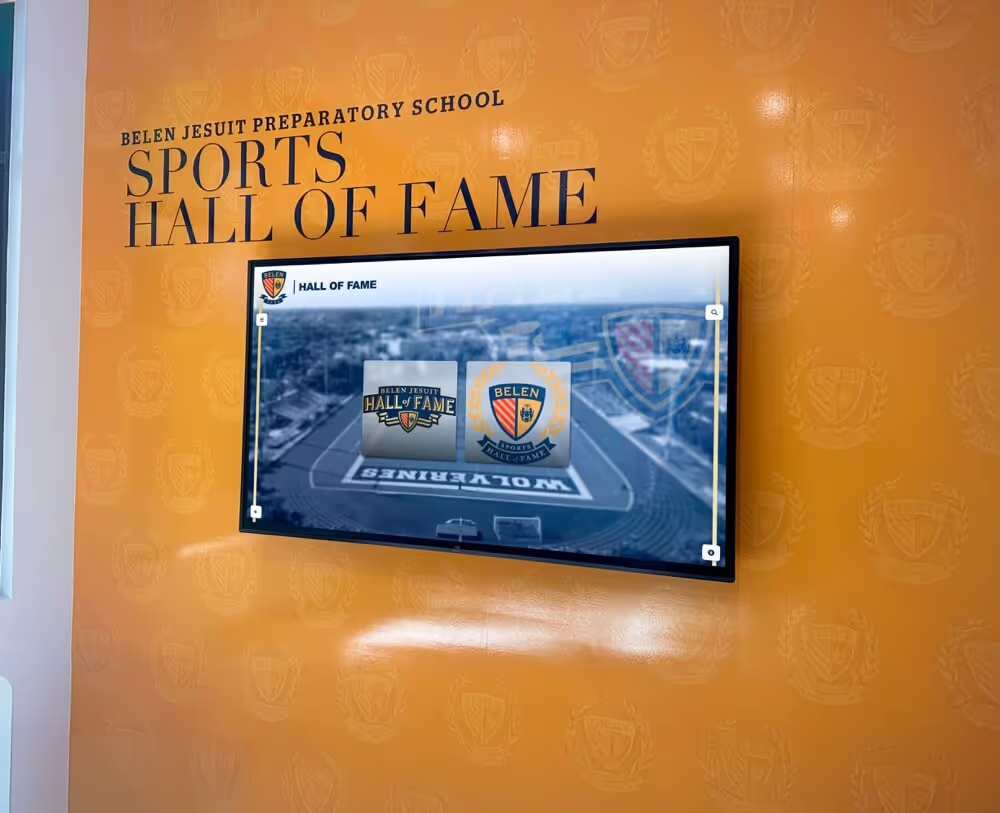
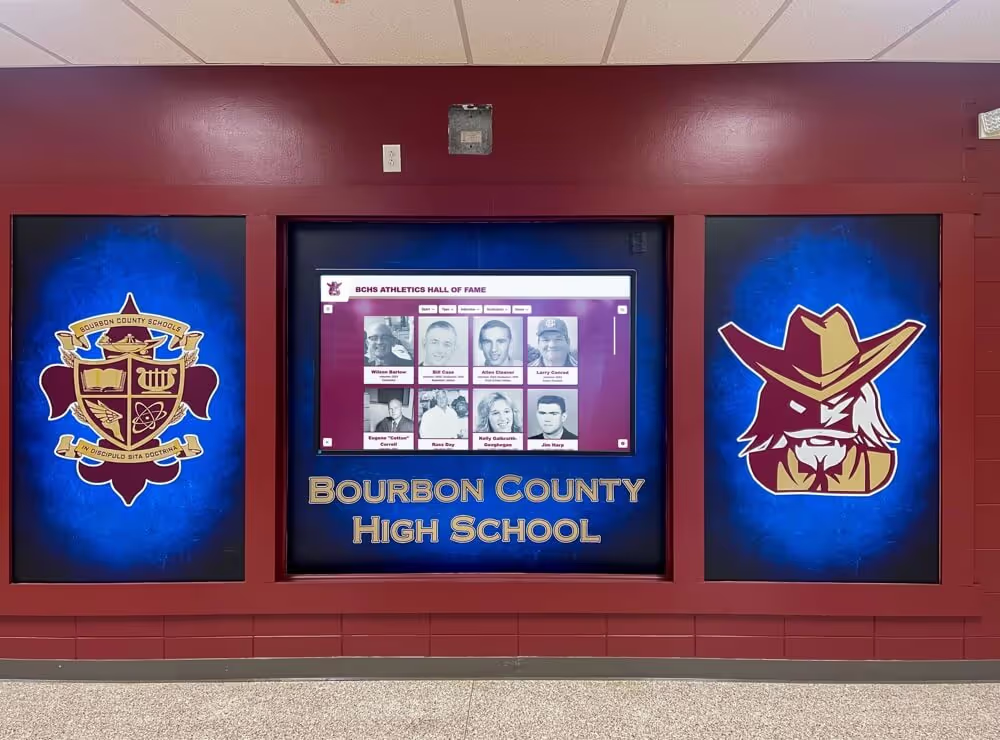
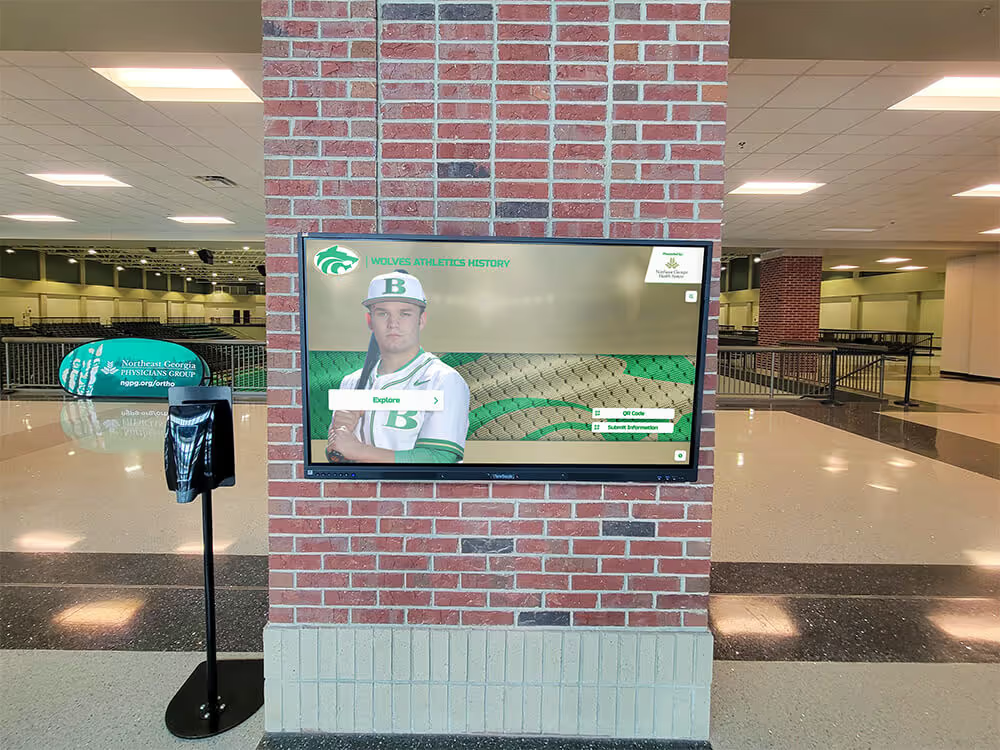
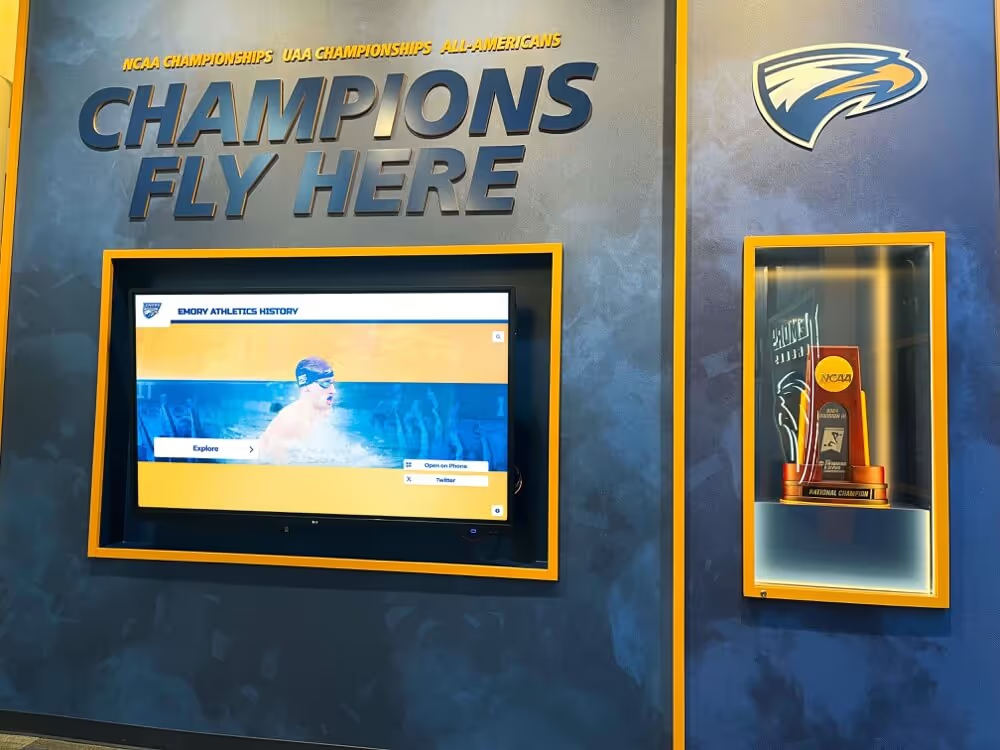
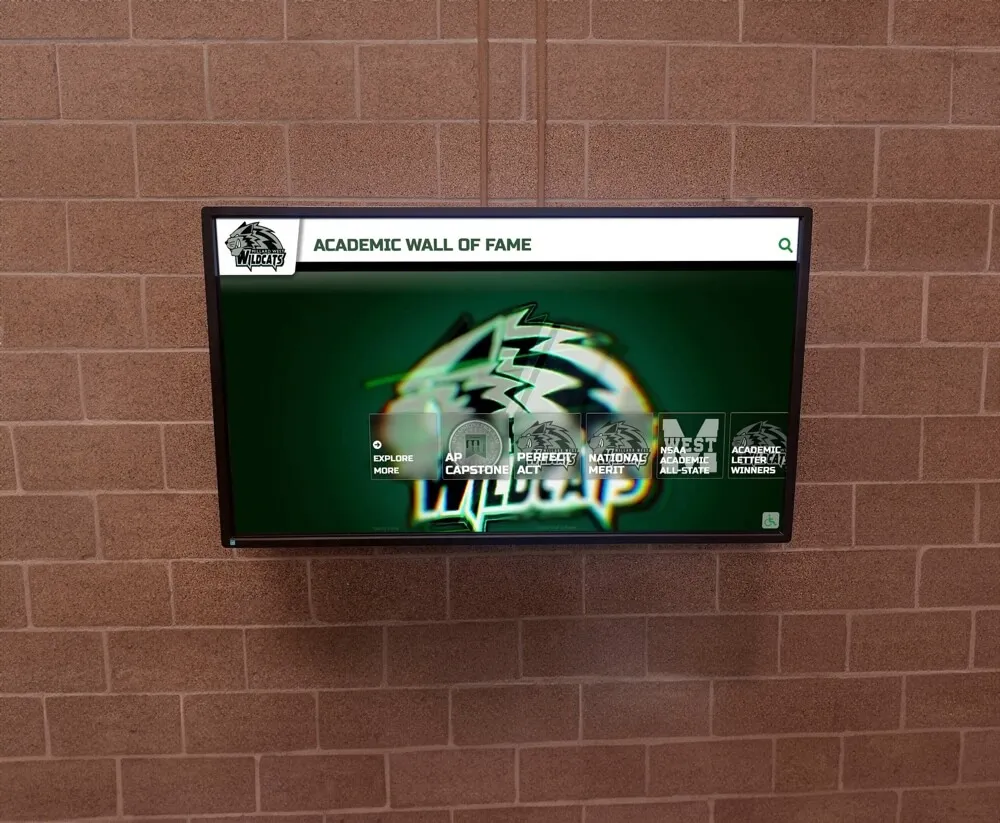
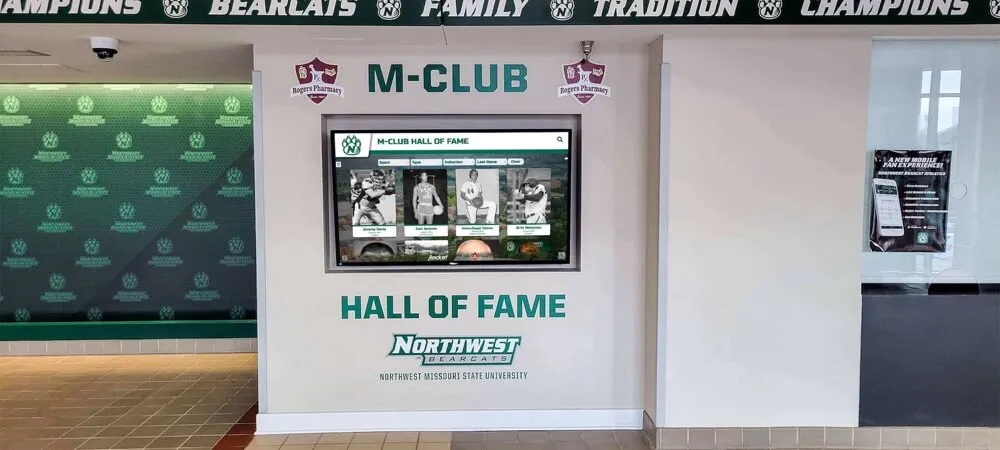
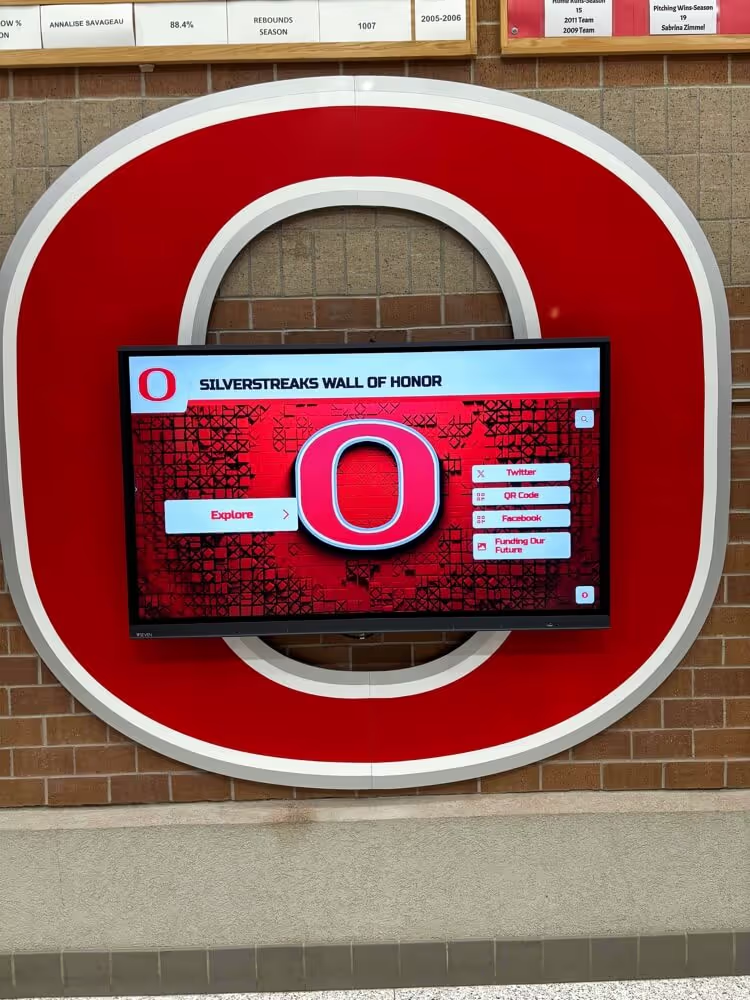
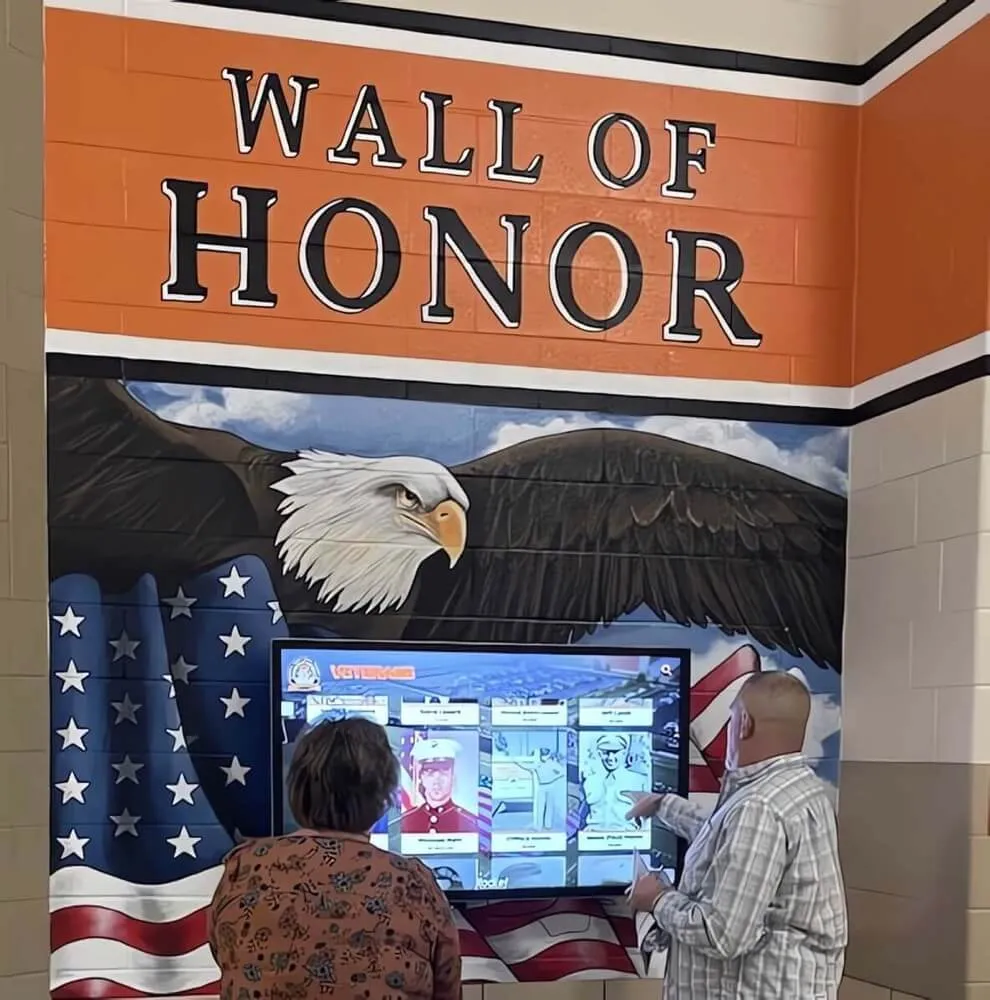
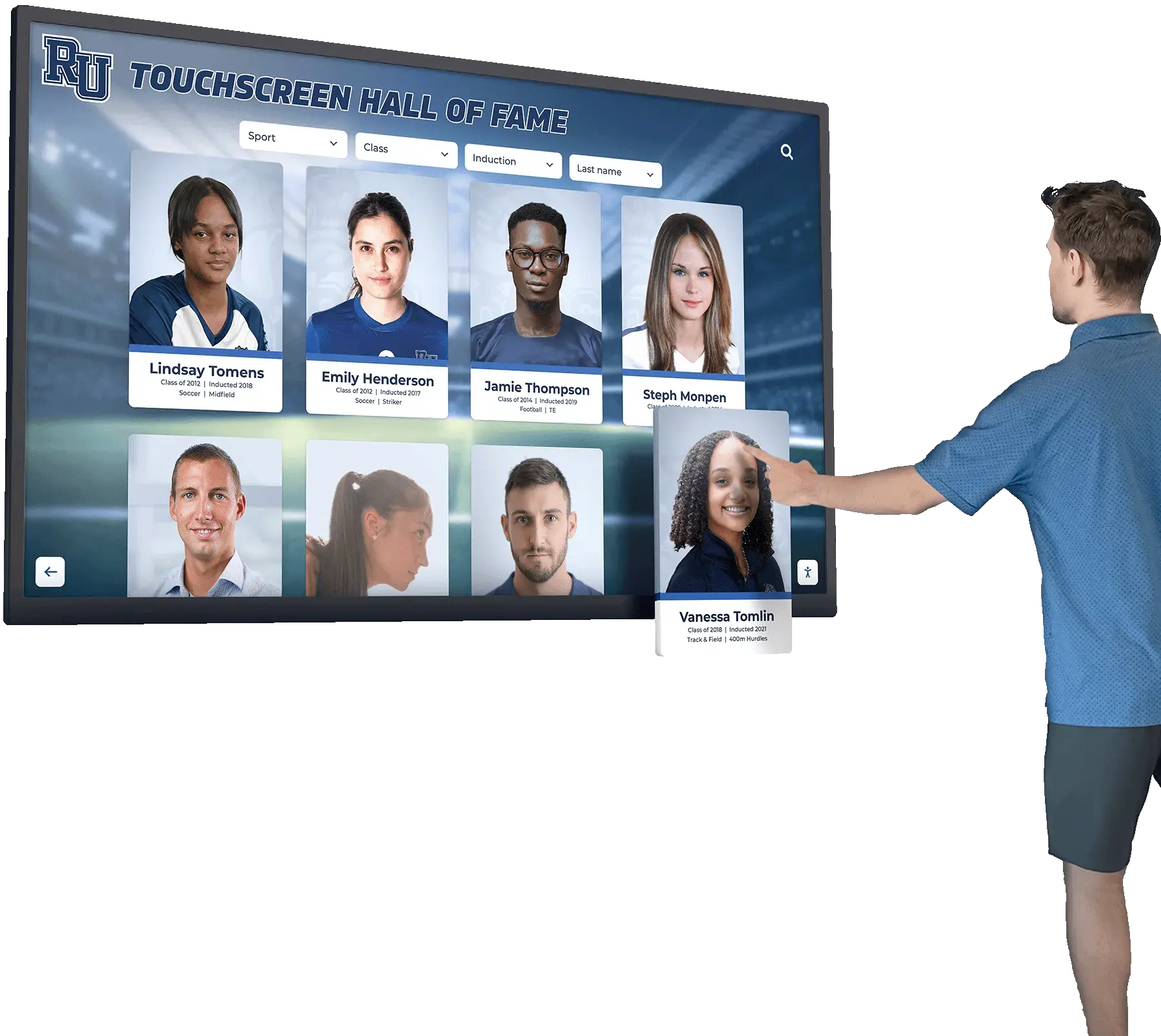
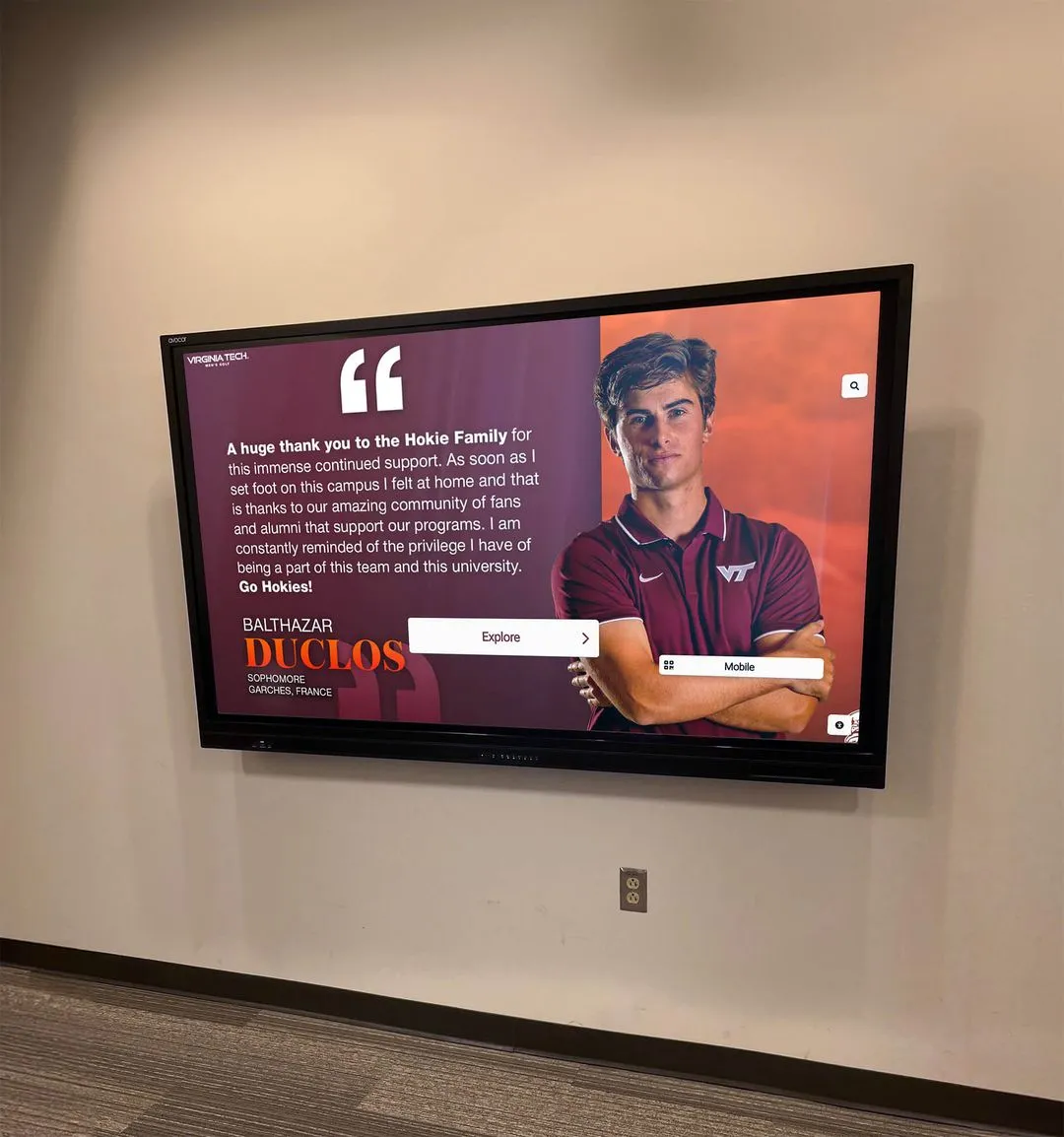
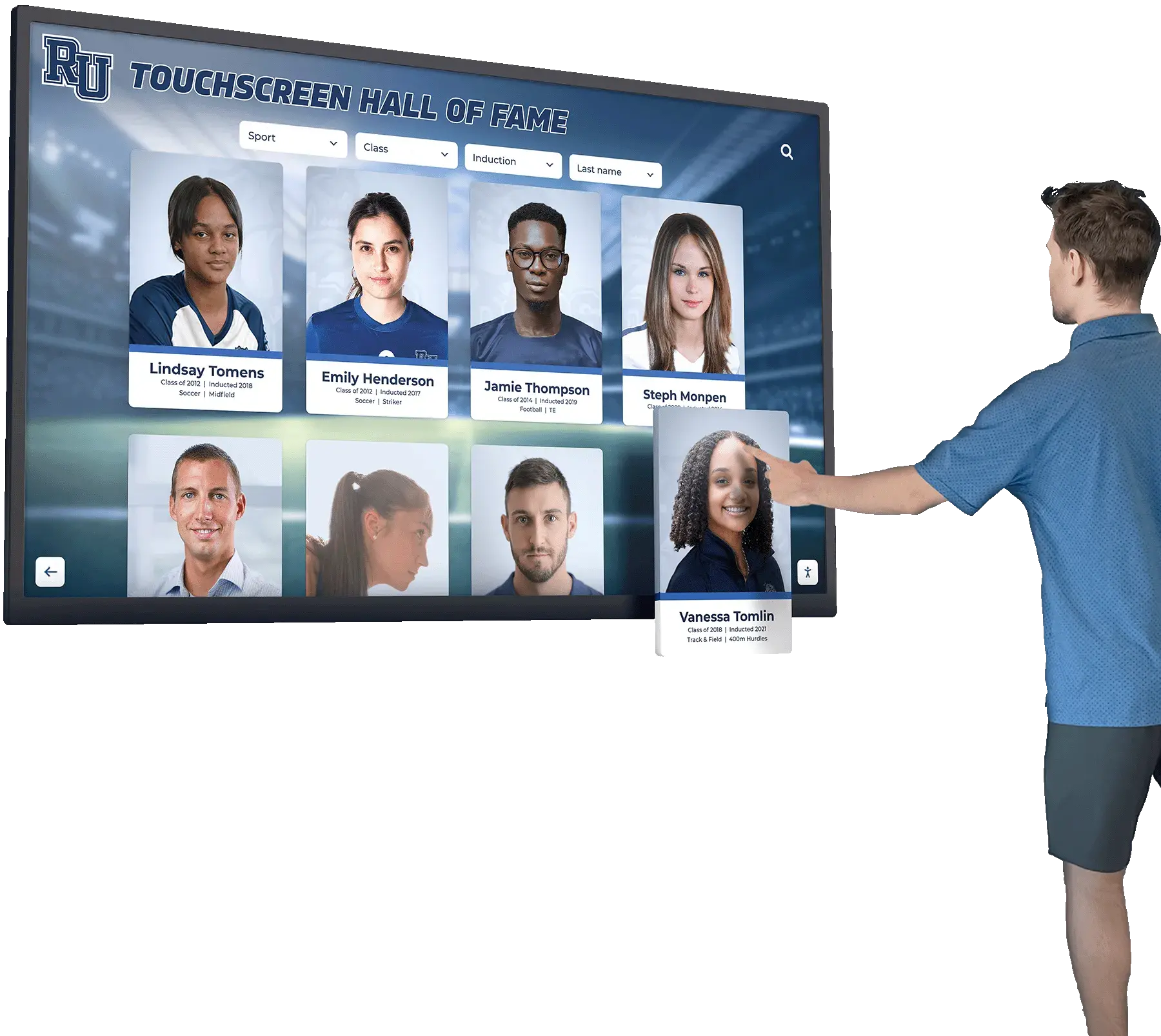
Large-format interactive touchscreen displays have become the centerpiece of forward-thinking athletic facilities. These systems allow schools to present comprehensive hall of fame profiles including photographs, career statistics, championship achievements, and biographical details for every honoree regardless of how many people the program has recognized over decades—without any physical space constraints.
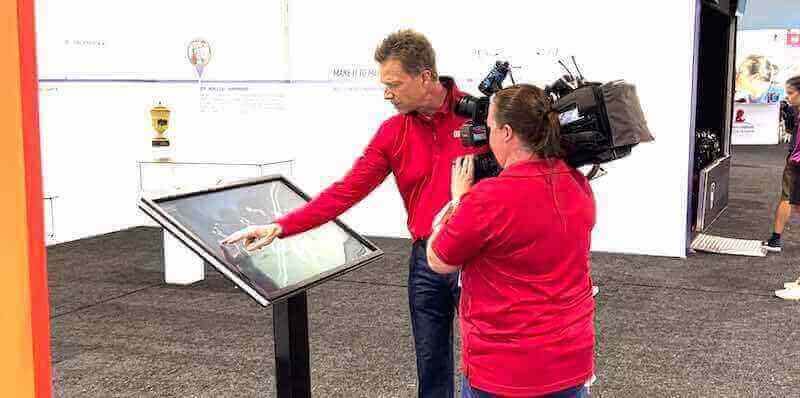
Museum kiosks and interactive display technology have evolved rapidly, giving schools access to professional-grade visitor experiences at price points previously available only to large cultural institutions. When visiting families, prospective recruits, or alumni can explore program history at their own pace—searching by sport, year, or athlete name—they engage with the archive in a way that static plaques simply cannot enable.
Digital Record Boards
Dynamic digital record boards display current program records in real time, updating automatically when current athletes break historical marks. This creates permanent recognition that motivates current athletes by making the gap between their performance and program records visible and tangible. Sports generating extensive statistical data—swimming, track and field, wrestling, baseball, golf—particularly benefit from comprehensive record board systems that display more categories than any painted wood board could accommodate.
Digital record boards generate campus engagement in ways that static boards cannot, connecting current performance to historical context and giving every athlete a visible standard to chase throughout their career.
Video Integration
Dedicated video displays presenting highlight reels, championship game footage, and athlete profiles bring static recognition walls to life. Scheduled content rotations keep displays fresh for repeat visitors while ensuring new athletes encounter different chapters of program history.
Choosing the Right Platform
Selecting display technology for a school sports museum requires balancing capability, ease of use, and long-term sustainability. Staff who will manage content need tools they can operate independently without vendor involvement every time an update is needed. Choosing the right interactive display software for school lobby touchscreens involves evaluating content management workflows, hardware compatibility, support availability, and total cost of ownership over the display system’s lifespan.
Reviewing the best digital showcase platforms helps programs compare options across key dimensions before committing to a technology investment that will anchor the museum for years.
Online Museum Extensions
Physical displays serve visitors who come to campus. An online extension of the school sports museum serves alumni who live far away, recruits researching the program before visiting, journalists and community members interested in program history, and former athletes searching for their own records and profiles. A well-maintained online hall of fame extends the reach of any physical museum installation and drives the kind of alumni engagement that generates lasting program support. Understanding how to effectively implement digital signage across school environments provides a foundation for building connected display ecosystems that serve both on-campus and remote audiences.
Organizing and Categorizing Your Collection
Effective organization transforms a collection of artifacts and data into a coherent museum experience. Two primary organizational frameworks—chronological and sport-based—each have strengths depending on program context.
Chronological Organization
Organizing displays by decade or era works well for schools with rich multi-sport histories where overarching program eras carry significant meaning. A chronological approach allows visitors to understand how the school’s athletic identity evolved, which sports dominated in different periods, how facilities and coaching philosophies changed, and how individual achievements connect to broader institutional history.
Developing comprehensive athletic history timelines for display requires research, curation, and design decisions that balance completeness with visual clarity—providing enough depth to be meaningful without overwhelming visitors with unrelated detail.
Sport-Based Organization
Organizing displays by sport works well for schools where individual programs have distinct identities worth celebrating separately. Dedicated sections for football, basketball, track, swimming, and other sports allow deeper recognition within each program and make it easier for alumni from particular sports to find their own histories.
Sport-based organization also scales more naturally as programs add new sports over time.
Hybrid Approaches
Many effective school sports museums combine both frameworks: a chronological overview providing the master narrative, supplemented by sport-specific recognition sections providing depth for individual programs. Hall of fame inductees, record holders, and all-time team achievements often work best in dedicated sections regardless of which framework governs the broader organization.
Documentation Standards
Every display element deserves thorough documentation connecting it to its historical context:
- Trophies should identify the specific competition, year, and team involved
- Photographs should include identified individuals, the event depicted, and the date
- Records should specify the competition context and date achieved
- Hall of fame plaques should provide enough biographical detail to tell the honoree’s complete story
Consistent documentation standards applied from the beginning prevent the gradual loss of context that renders many athletic archives confusing or incomplete over time.
Engaging Alumni and the Community
A school sports museum’s launch and ongoing vitality depend significantly on community engagement that brings alumni back into connection with programs they helped build.
Artifact Donation Campaigns
Many schools discover their best artifacts in alumni attics and basements rather than institutional storage rooms. Formal artifact donation programs invite former athletes and coaches to contribute photographs, trophies, game programs, uniforms, and other memorabilia to the school collection. Effective campaigns clearly communicate what types of items the museum is seeking, how donated artifacts will be displayed and attributed, preservation standards ensuring items will be properly cared for, and what tax documentation donors may receive for significant contributions.
Alumni Outreach and Oral History
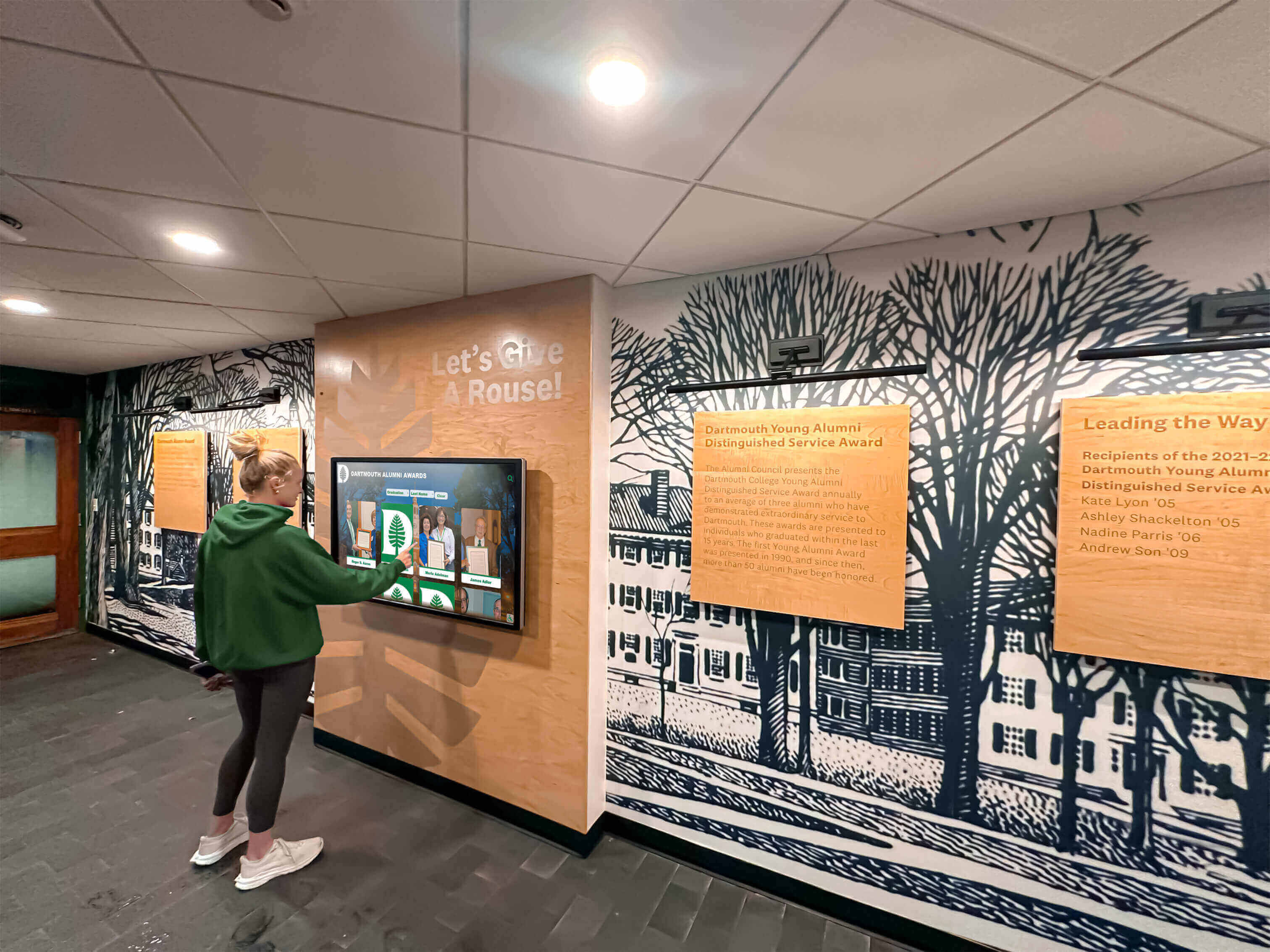
Former athletes and coaches carry institutional knowledge no artifact collection can fully replace. Oral history programs—recorded interviews documenting career memories, championship stories, and program evolution—preserve this knowledge in formats that can be incorporated directly into digital displays. Programs that build dedicated alumni recognition displays—similar to high school basketball alumni displays that celebrate program history—create compelling reasons for former athletes to reconnect with the institution and contribute to ongoing museum development.
Launch Events and Dedications
Museum openings deserve ceremonies that match their significance. Dedication events typically include remarks from current athletic leadership, recognition of alumni whose contributions shaped the collection, formal unveiling of significant display elements, and opportunities for attendees to explore the space and connect with the history it preserves. These events generate media coverage that extends community awareness of the museum while creating the kind of positive institutional momentum that sustains ongoing engagement.
Recognizing All Athletes Equitably
One of the most important principles in building a school sports museum is ensuring that recognition extends across all athletic programs, not just the most high-profile ones. A swimmer who broke a school record deserves recognition comparable to a football player who earned all-conference honors. A cross-country runner who competed for four years and served as team captain contributed meaningfully to program culture even without championship hardware.
How schools celebrate student-athletes on National Student Athlete Day and throughout the year reflects their commitment to genuine athletic recognition—and a well-designed sports museum embodies these values in permanent form.
Digital display systems are particularly valuable for equitable recognition because they eliminate the physical space constraints that force programs to choose which sports receive wall space. A touchscreen system can showcase every letter winner, every record holder, and every champion from every sport the school fields, with equal visual prominence regardless of the sport’s cultural cachet.
Maintaining and Growing Your Museum
A school sports museum is never truly finished. Ongoing maintenance and strategic growth ensure the space remains relevant, accurate, and inspiring across decades of program development.
Annual Update Processes
Building update processes into the museum’s operating procedures prevents the gradual decay that turns active museums into static relics. Annual update cycles typically include:
- Adding current year’s championships, records, and notable achievements
- Updating record boards to reflect broken marks
- Processing new hall of fame inductees through established selection criteria
- Digitizing newly donated artifacts and photographs
- Refreshing digital content with new video and multimedia materials
Content Management Systems
Digital displays benefit enormously from content management systems that allow non-technical staff to update profiles, add photographs, and refresh content without vendor involvement. Choosing platforms with intuitive content management tools ensures updates happen regularly rather than waiting for technical support availability.
Expanding Scope Over Time
Museums that begin with limited scope—perhaps covering only championship sports or only the past 25 years—should plan for systematic expansion over time. Strategic expansion might involve adding sports not initially represented, extending historical coverage deeper into institutional history, incorporating new technology as it becomes available, creating online extensions reaching alumni beyond campus, or developing programming like athlete recognition nights that tie into the museum’s physical space.
Budget Planning and Phasing
School sports museum projects succeed most consistently when budgeted and phased realistically rather than designed ideally then cut down to fit available resources.
Phased Implementation
Many schools implement school sports museums in phases aligned with budget cycles and fundraising capacity:
Phase 1 — Foundation: Physical trophy case upgrades, organized plaque systems for hall of fame recognition, basic photo displays with proper documentation, and digitization of existing artifacts.
Phase 2 — Enhancement: Graphic mural installations, expanded physical artifact displays, initial digital record board implementation, and online hall of fame launch.
Phase 3 — Full Integration: Interactive touchscreen wall of fame installation, multimedia video displays, comprehensive digital content management system, and online museum extension with full historical archive.
Phased implementation allows programs to begin building their museum with modest investments while planning toward a fully realized long-term vision.
Funding Sources
School sports museum projects attract funding from multiple sources often unavailable to other school budget requests:
- Alumni giving campaigns targeting former athletes who directly benefit from recognition improvements
- Athletic booster organizations that regularly fund facility enhancements
- Corporate and local business sponsorships offering naming opportunities within museum spaces
- School capital campaigns incorporating athletic facilities alongside academic priorities
- Memorial recognition gifts honoring former coaches, athletes, or community supporters
The combination of alumni engagement and visible permanent recognition often makes sports museum projects among the most fundable athletic facility improvements a school can undertake.
Conclusion
A school sports museum is one of the highest-value investments an athletic program can make. The athletes who built your program’s tradition deserve recognition that matches the significance of their achievements. The coaches who shaped generations of competitors deserve permanent documentation of their influence. And the current generation of student-athletes deserves to inherit a program that honors its past clearly enough to inspire genuine pride in what they represent.
Building a museum that accomplishes all of this requires intentional planning, systematic collection, thoughtful design, and committed ongoing stewardship—but the result is a space that pays dividends in athlete motivation, alumni engagement, community connection, and recruiting effectiveness for as long as the program exists.
Modern recognition technology has made comprehensive school sports museums accessible to programs of every size and budget. Solutions from Rocket Alumni Solutions provide the touchscreen walls of fame, digital displays, and content management tools that allow schools to build museum-quality athletic recognition spaces that honor decades of history while staying fresh and relevant for every new generation of athletes, students, and visitors.