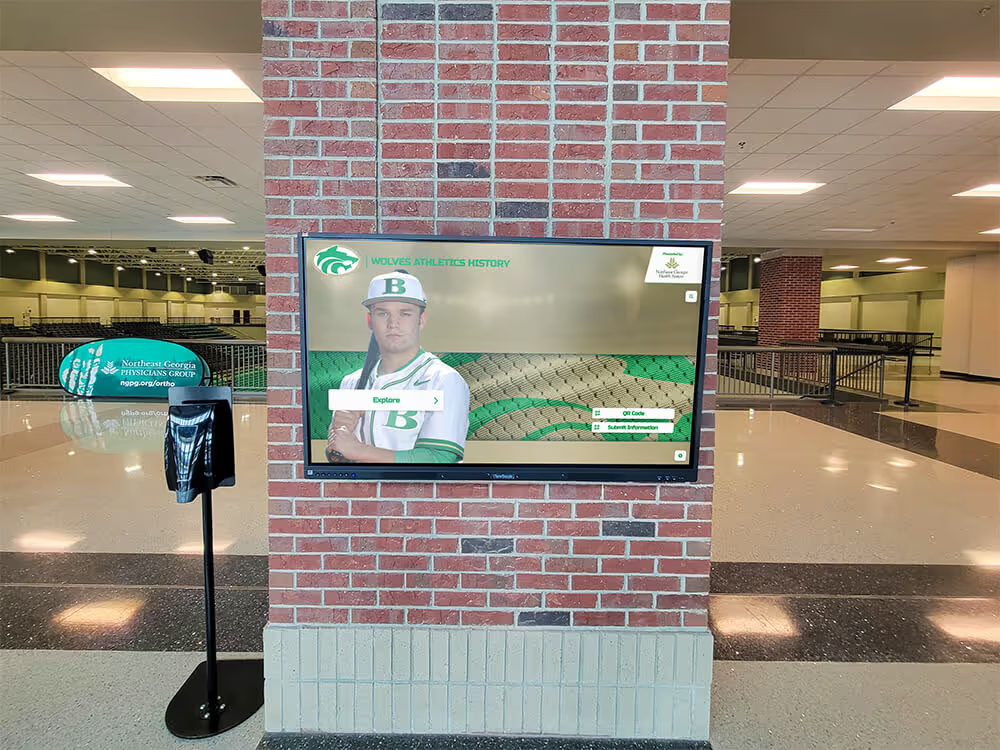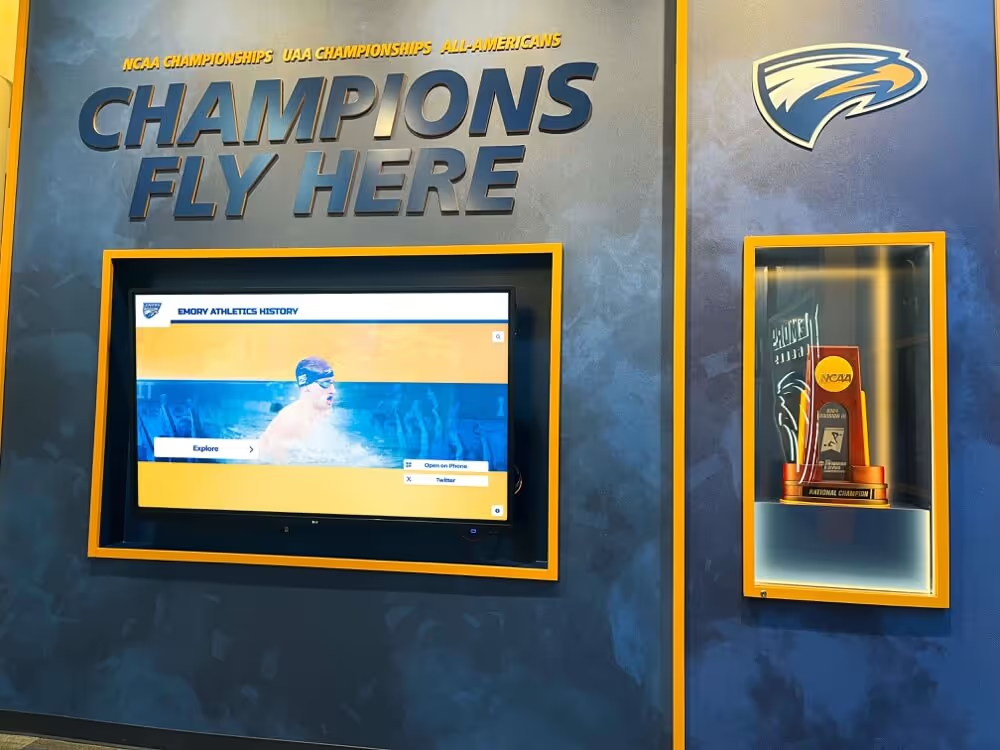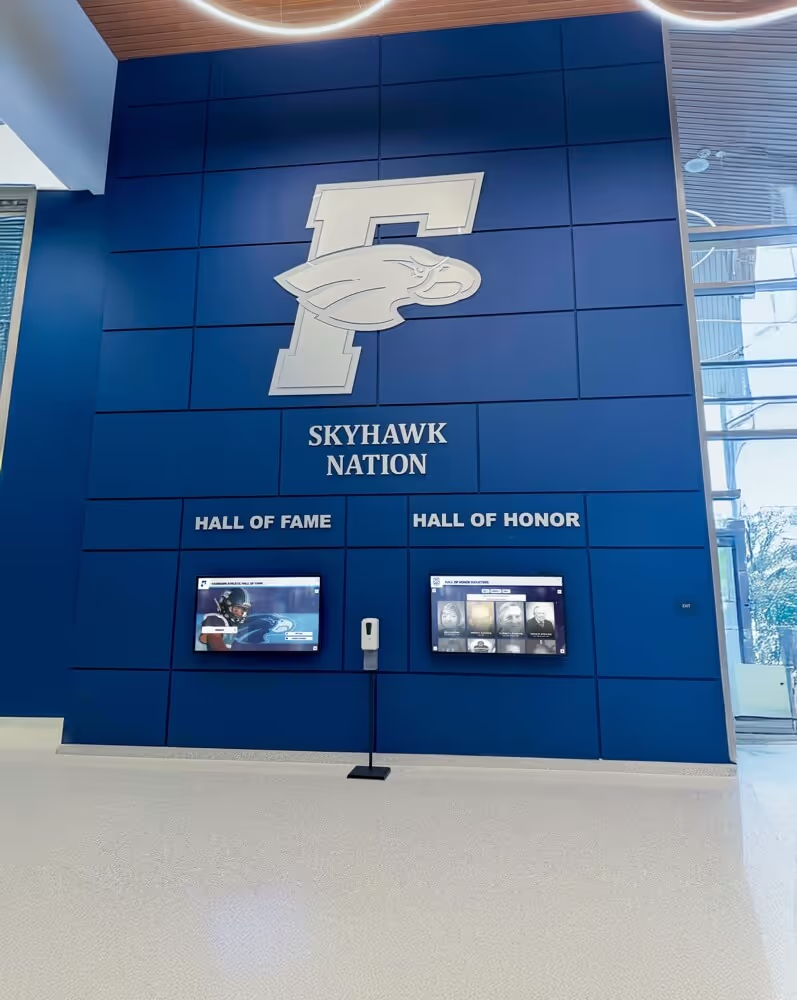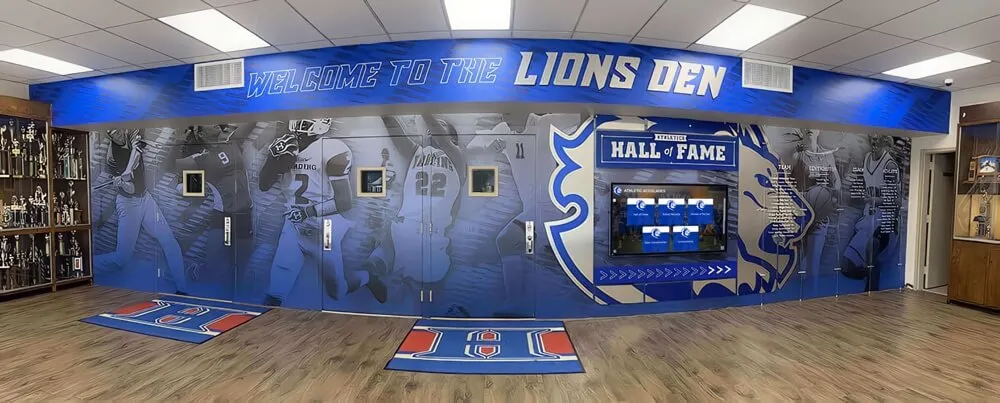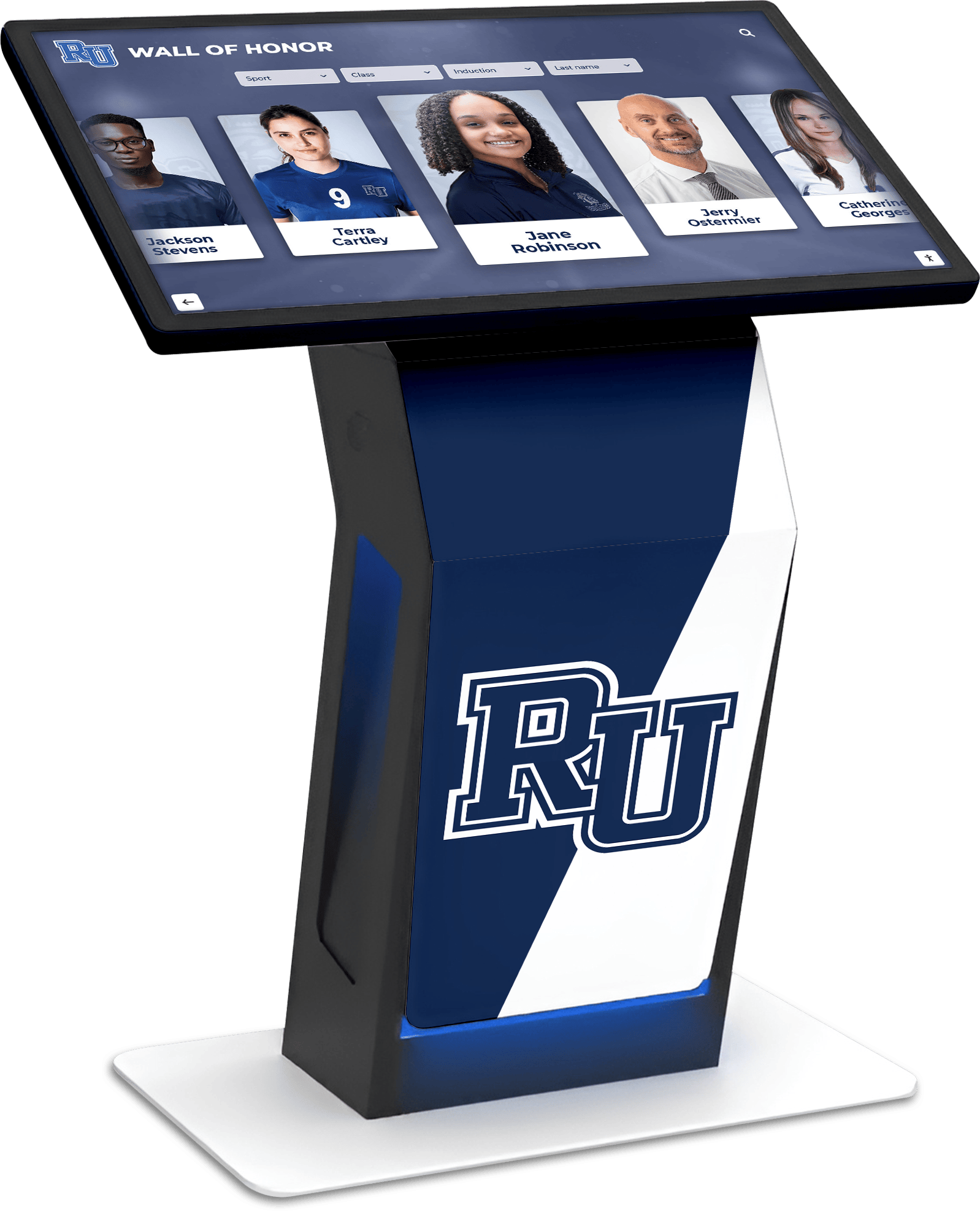




Recognition programs in schools, universities, athletic departments, and nonprofit organizations face a fundamental challenge: how to honor growing numbers of achievements while maintaining meaningful visibility and accessibility. Traditional plaques and trophy cases offer permanence but impose hard limits on capacity and flexibility. Digital recognition displays promise unlimited space, but many implementations feel impersonal or difficult to maintain.
Rocket Recognition addresses these tensions through purpose-built software designed specifically for institutional recognition applications. Unlike adapted digital signage platforms or generic content management systems, Rocket Recognition was developed exclusively for showcasing achievements, preserving histories, and celebrating contributions across educational and nonprofit contexts.
This guide examines how Rocket Recognition works, what distinguishes it from alternative approaches, and how organizations apply the platform across athletic halls of fame, donor recognition walls, academic achievement displays, and institutional history preservation.
What Is Rocket Recognition?
Rocket Recognition is the recognition display software developed by Rocket Alumni Solutions, serving 900+ institutions across all 50 states. The platform operates as both physical touchscreen installations and web-accessible applications, enabling organizations to create interactive halls of fame, donor walls, athletic record boards, and achievement showcases that function on-site and online simultaneously.
The system was built specifically for recognition applications rather than repurposed from digital signage or general content management platforms. This purpose-built foundation means the software natively understands honoree profiles, achievement categories, chronological organization, multimedia integration, and the interaction patterns typical of recognition contexts.
Core Recognition Applications
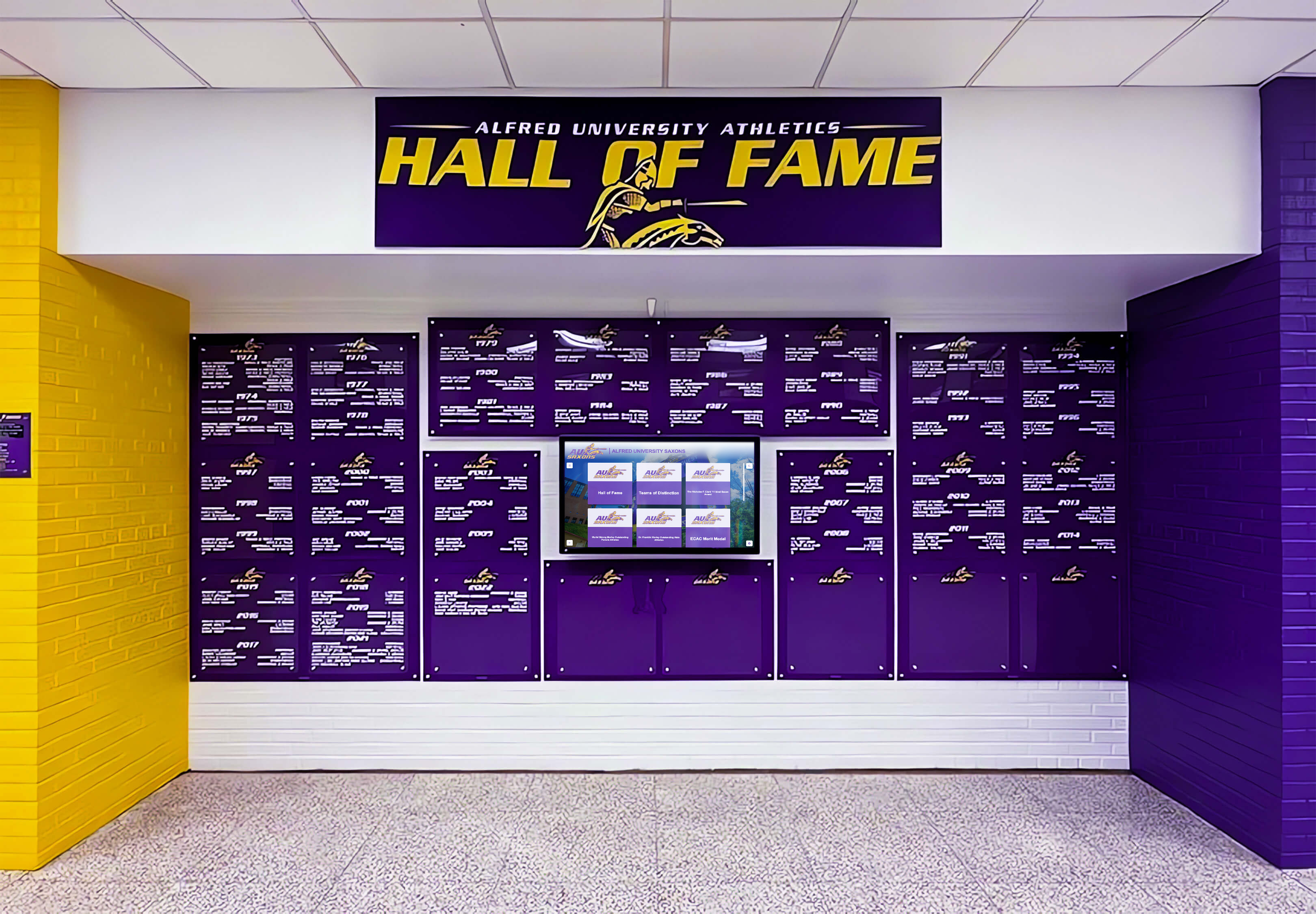
Organizations implement Rocket Recognition across four primary recognition contexts, each with specific requirements and display patterns:
Athletic Recognition and Halls of Fame
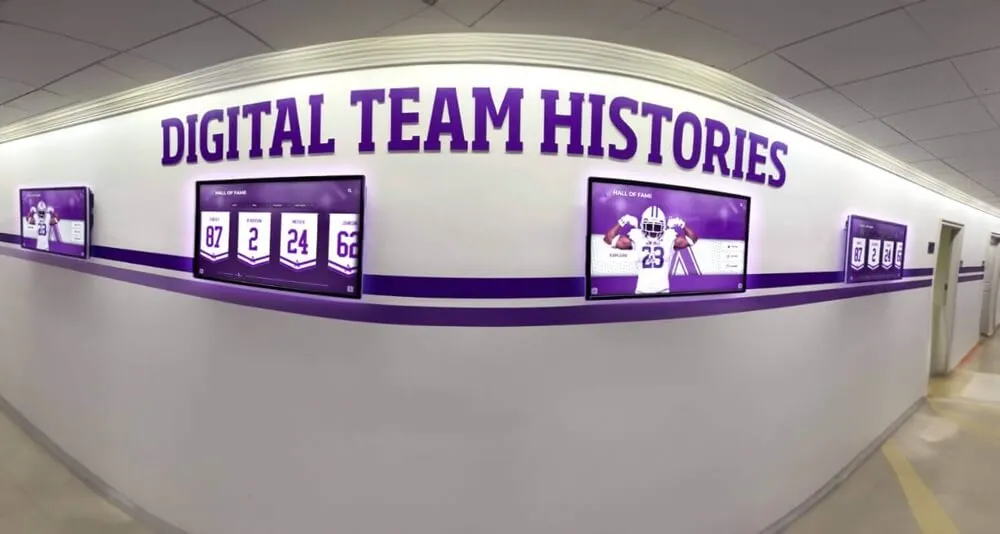
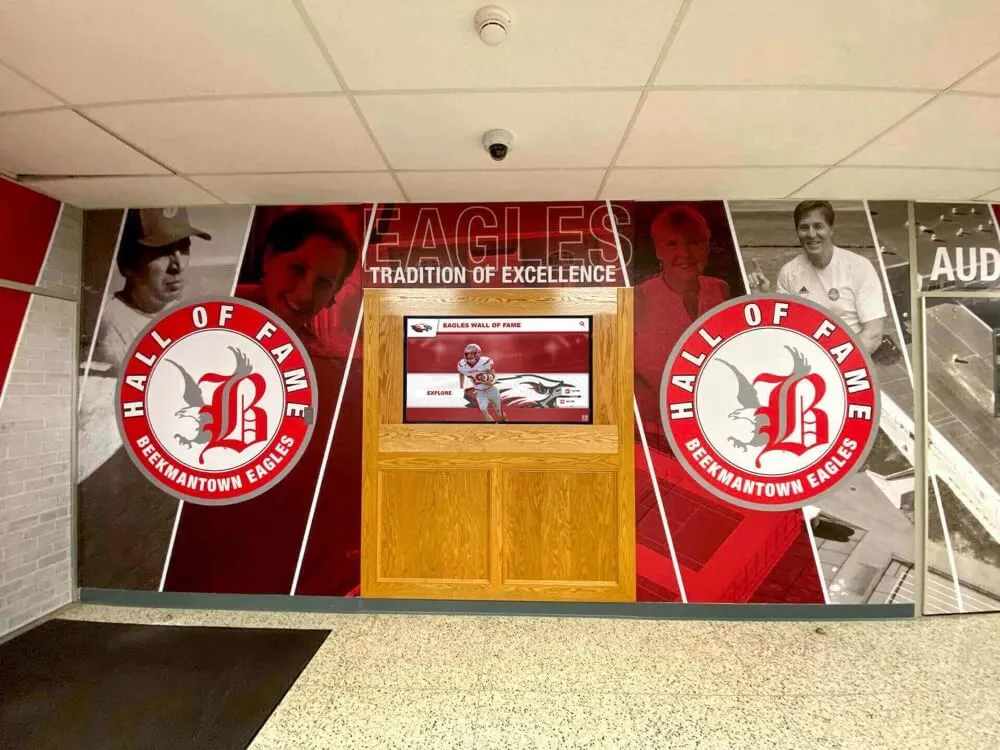
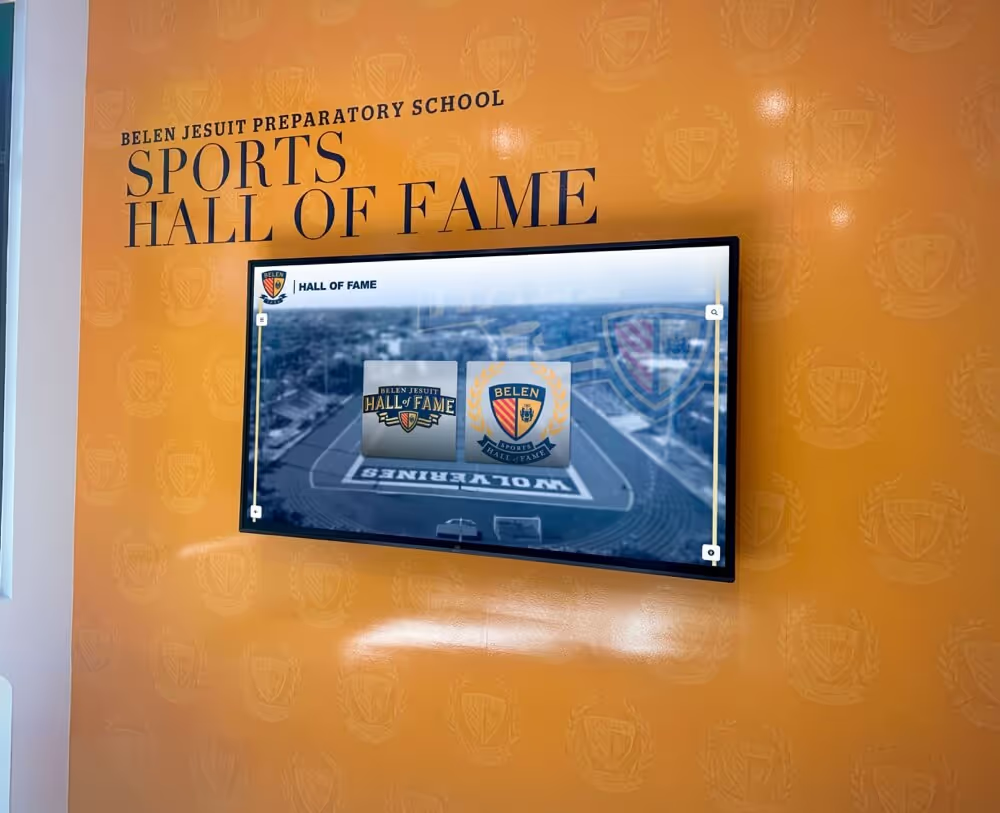
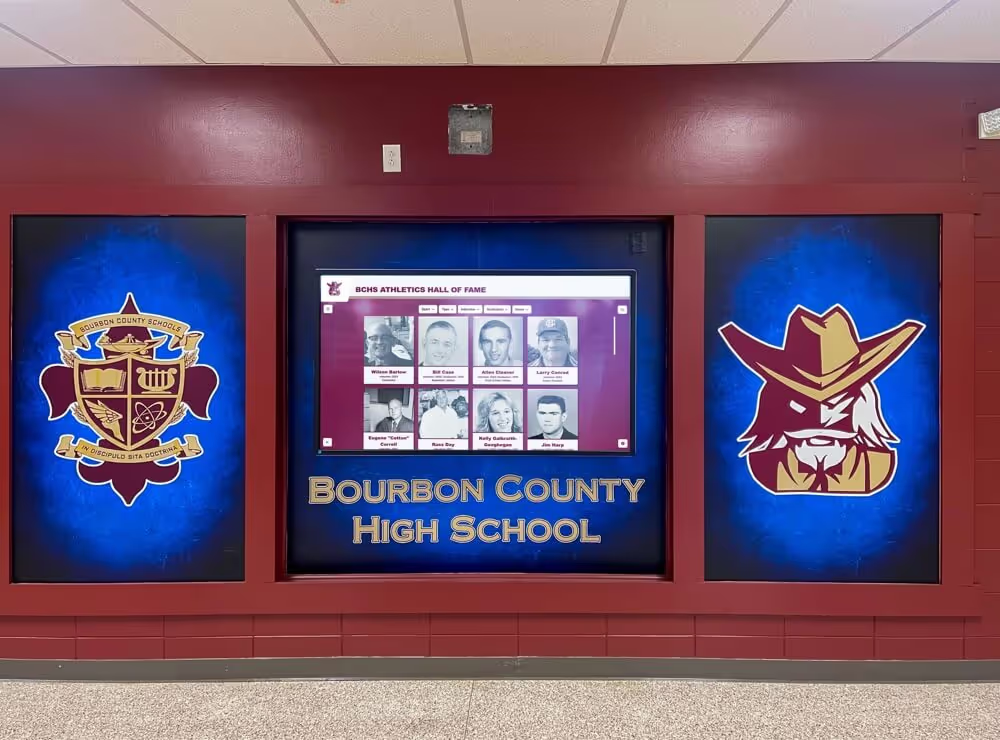
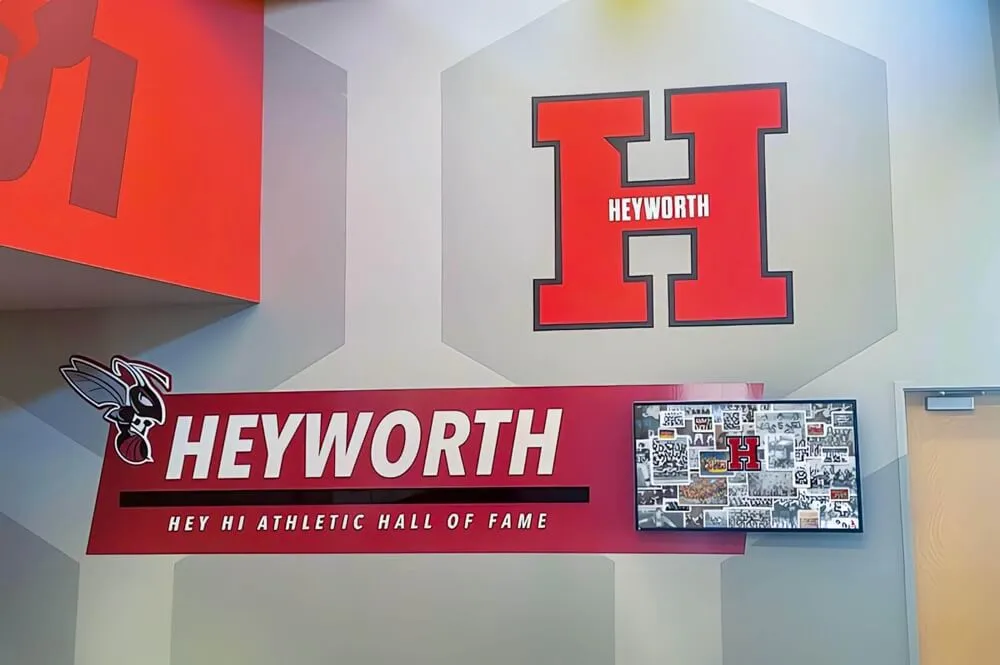
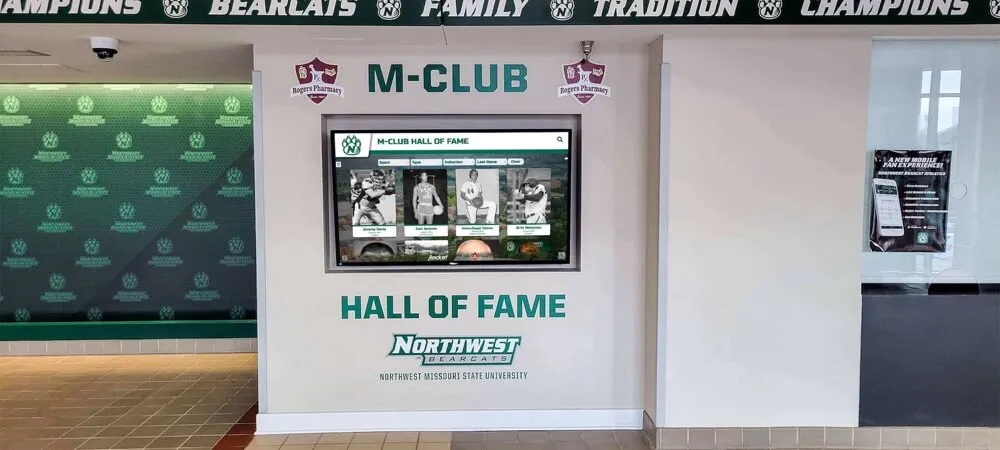
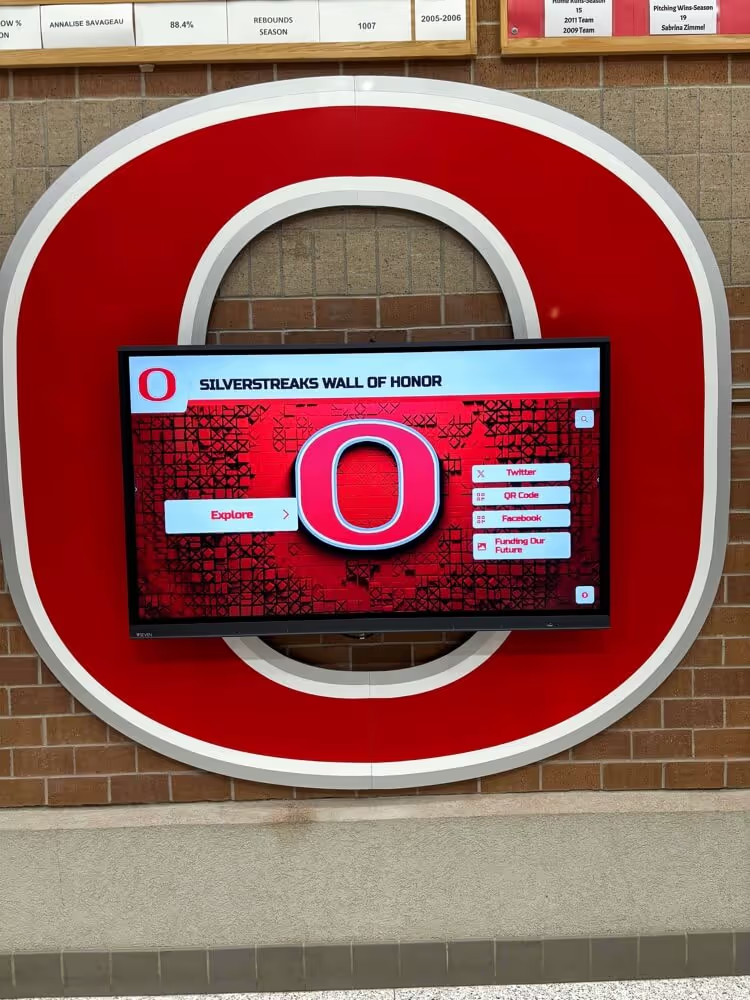
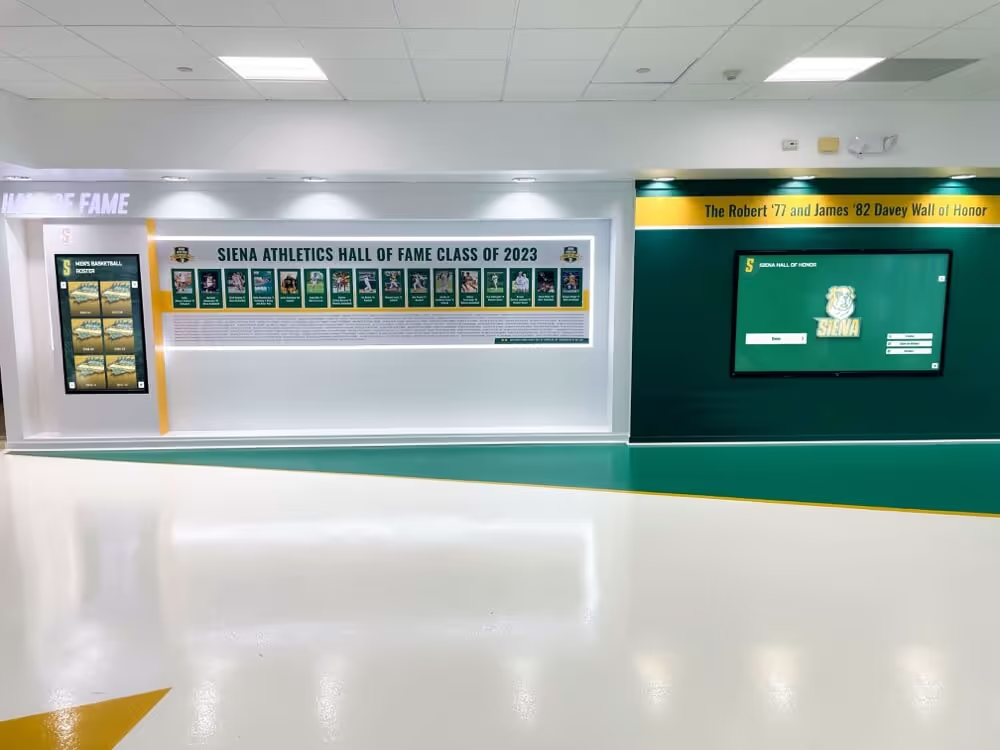
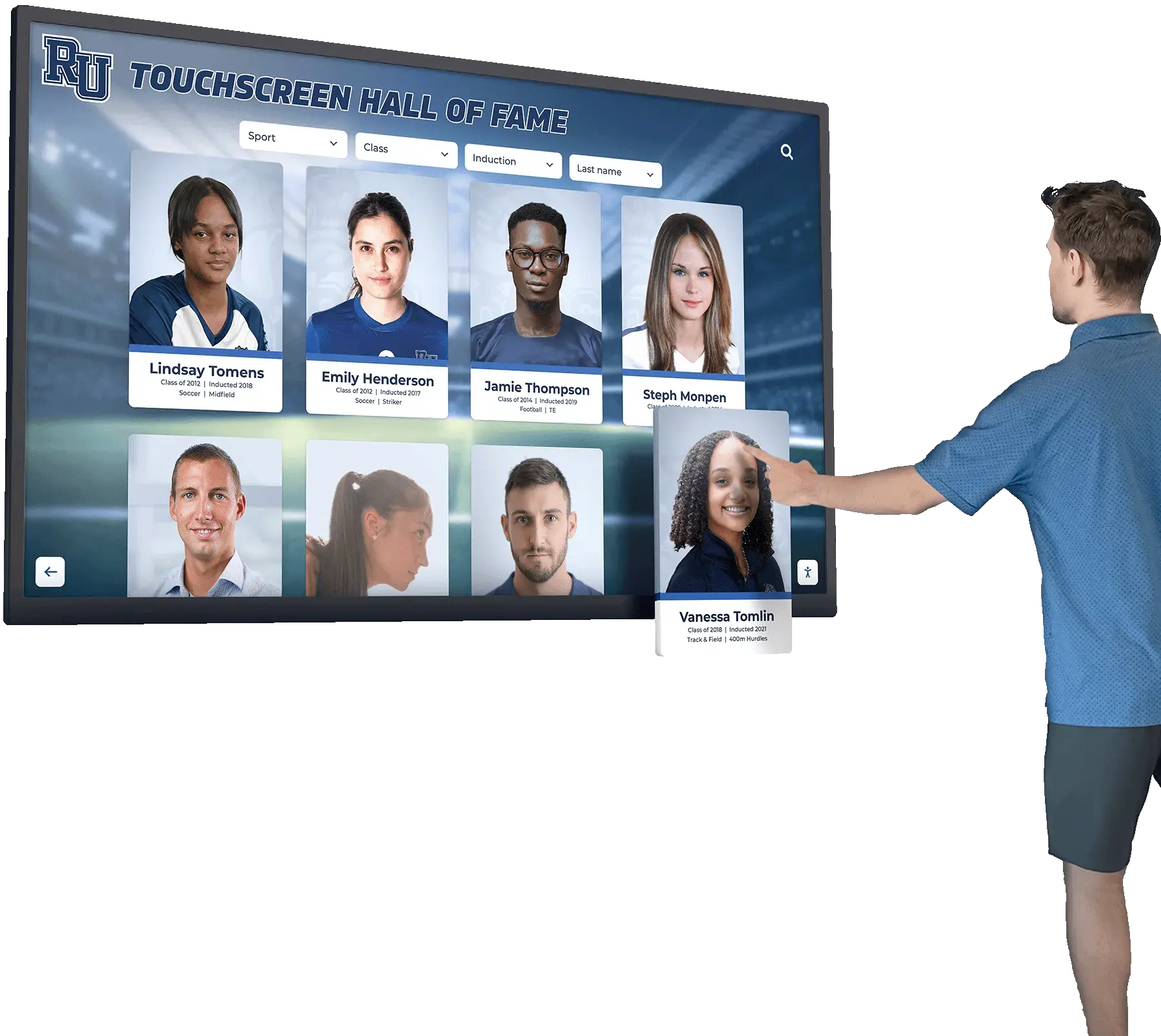
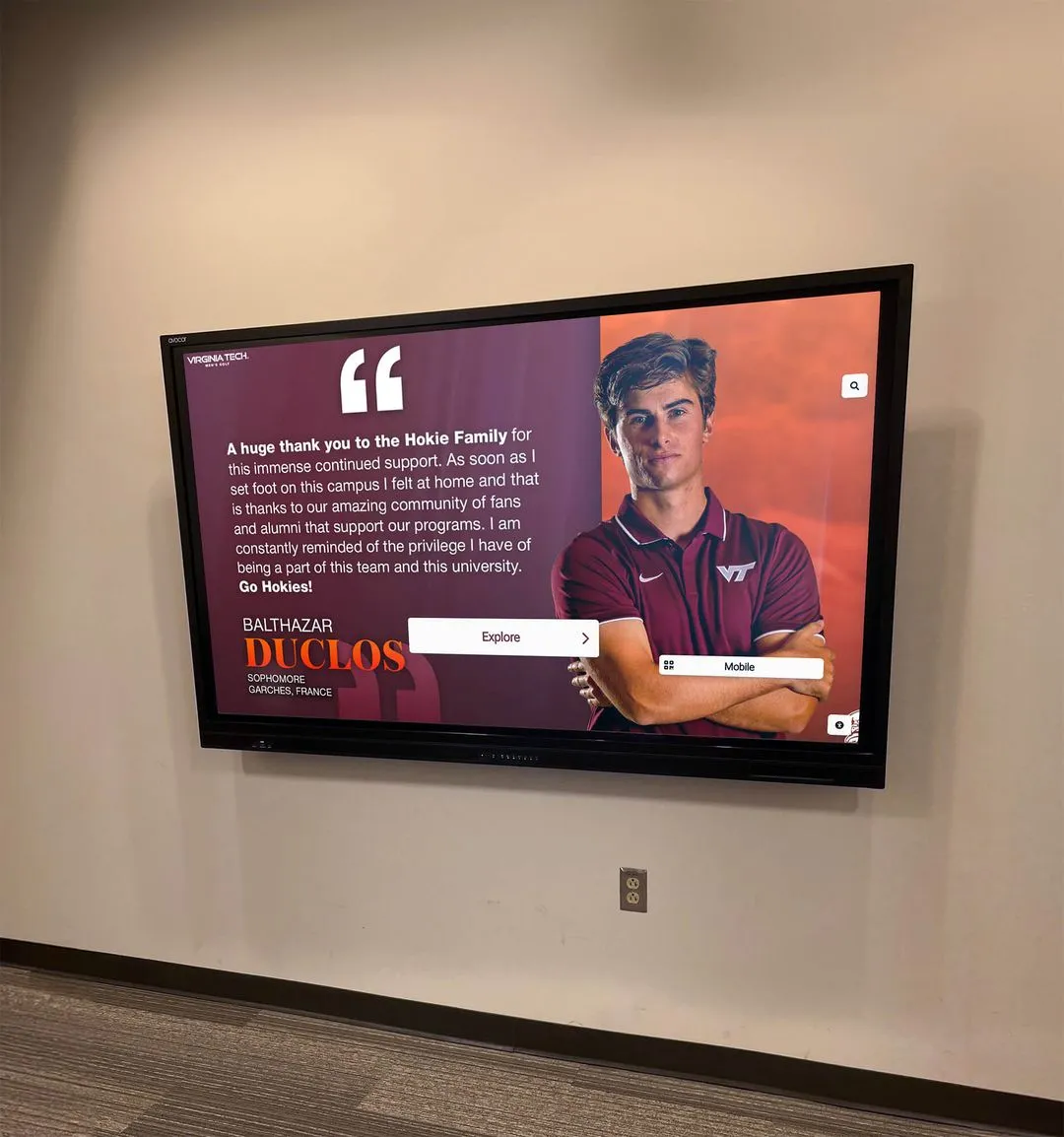
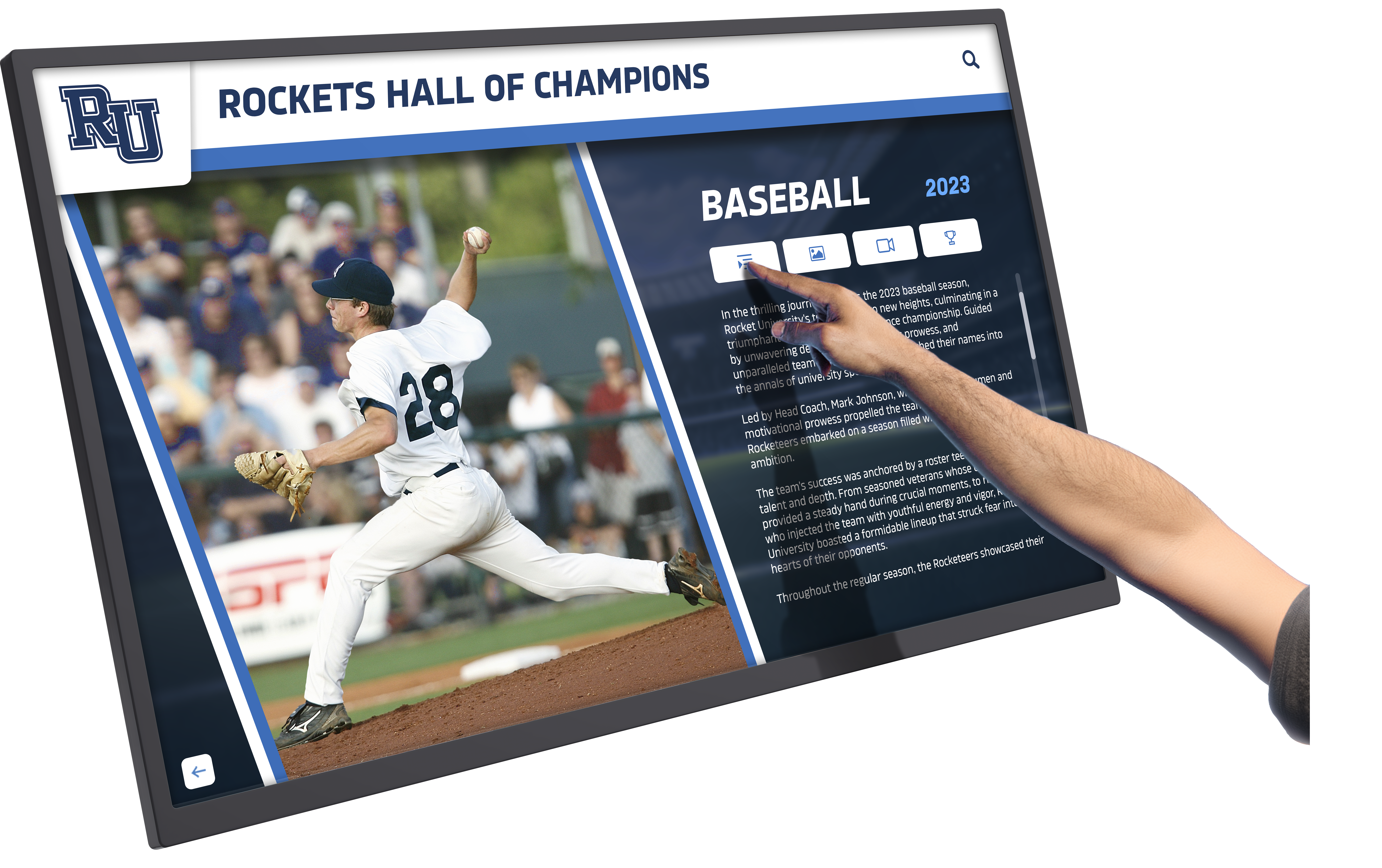
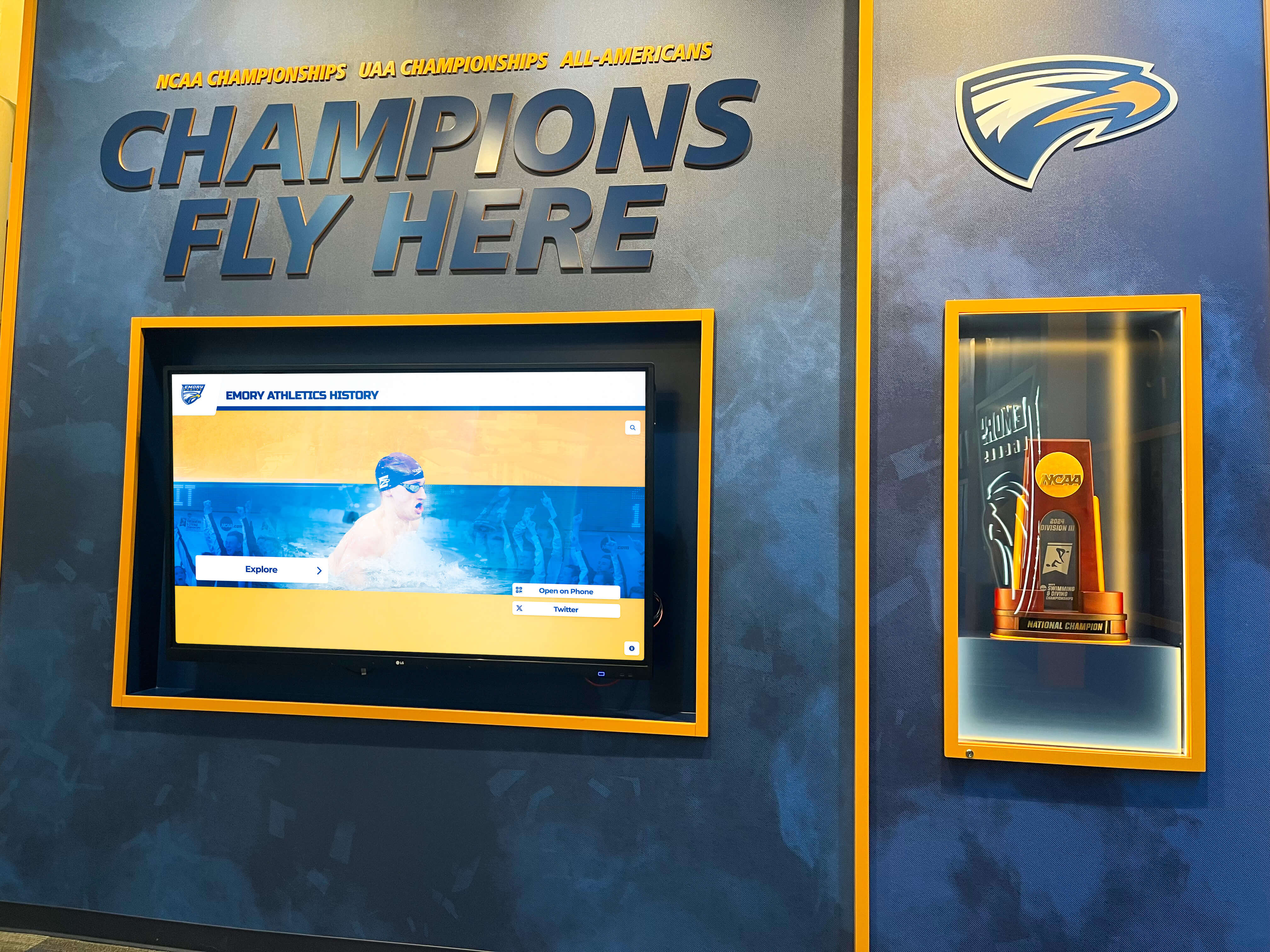
Athletic programs use Rocket Recognition to maintain comprehensive halls of fame that extend far beyond the capacity constraints of traditional trophy cases. A typical implementation includes individual athlete inductee profiles with career statistics and achievements, team championship recognition with roster details and season highlights, sports record boards tracking performance across decades, coach recognition programs honoring leadership contributions, and all-conference and all-state athlete acknowledgment.
The platform accommodates multi-sport programs where a single school may need separate recognition structures for 15-20 sports, each with multiple seasons spanning decades. Content organizes by sport, season, achievement type, or individual athlete, with search and filtering enabling visitors to explore specific accomplishments or historical periods.
Many athletic programs integrate record boards that automatically highlight when current athletes approach or break long-standing marks. This connection between historical achievement and present performance gives recognition displays active relevance rather than functioning purely as archives.
Donor Recognition and Advancement
Advancement offices managing fundraising campaigns and donor recognition programs face unique challenges: recognizing contributions at multiple giving levels, acknowledging multi-year pledge commitments, honoring memorial gifts, and updating displays as campaigns progress without expensive physical renovations.
Rocket Recognition enables tiered recognition structures where major gift donors receive expanded profiles with photos and impact stories, while comprehensive donor directories acknowledge every contributor regardless of amount. Organizations create campaign-specific displays for capital projects, endowment initiatives, or annual giving programs, then update them as new contributions arrive.
The dual-environment capability proves particularly valuable for donor recognition because the same content displays on physical installations at campus locations and on web applications accessible to donors nationwide. This allows organizations to demonstrate stewardship to donors who may rarely visit campus physically.
Privacy considerations factor prominently in donor recognition. The platform accommodates anonymous gifts, allows individual donors to control profile visibility, and enables recognition at ranges rather than specific amounts when appropriate. Organizations maintain different public and internal views, with comprehensive records accessible to advancement staff while public displays show only approved content.
Academic Achievement Recognition
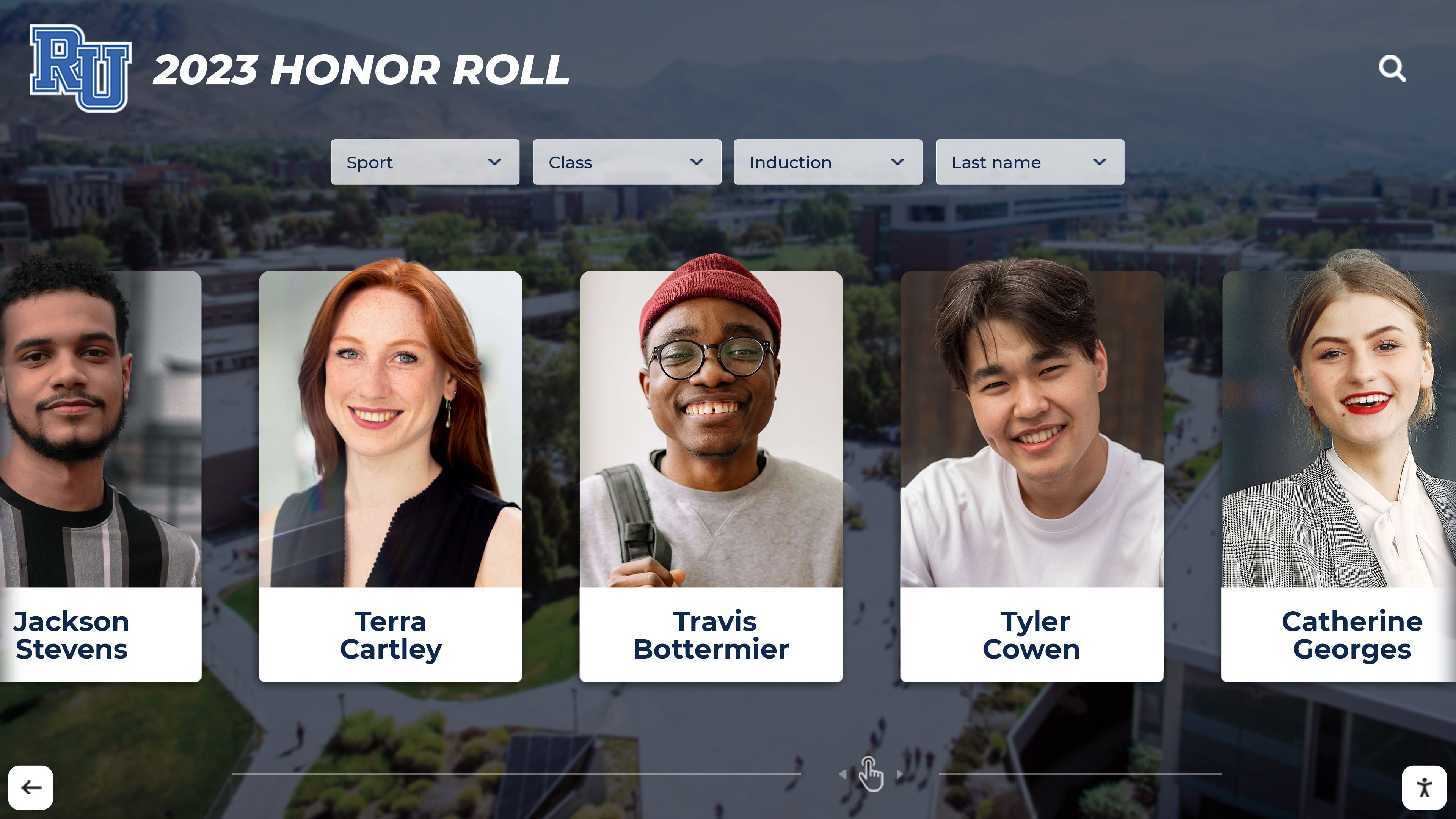
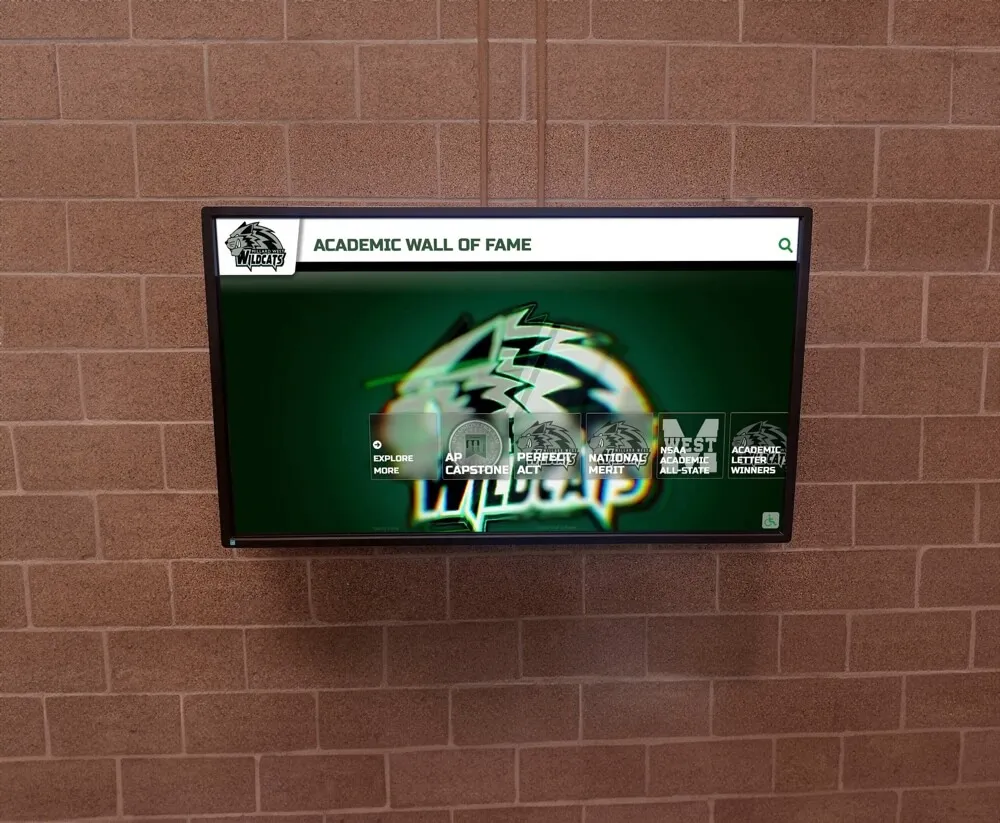
Schools implement Rocket Recognition for academic achievement displays including honor roll recognition updated each grading period, scholarship recipient acknowledgment, National Honor Society membership rosters, academic all-state selections, perfect attendance recognition, and departmental award winners.
Academic recognition differs from athletic halls of fame in several ways. First, content updates frequently—honor rolls change every semester rather than accumulating across decades. Second, privacy considerations are more stringent, with some students or families preferring not to display academic recognition publicly. Third, academic achievements often lack the rich media available for athletic moments, requiring different presentation approaches.
The platform addresses these distinctions through flexible display modes. Honor rolls can show current semester achievements prominently while maintaining historical archives accessible through search. Privacy controls let schools determine default visibility settings and allow individual opt-outs when appropriate. Template designs for academic recognition emphasize clean presentation of names, achievements, and dates without requiring extensive multimedia content.
Institutional History and Heritage
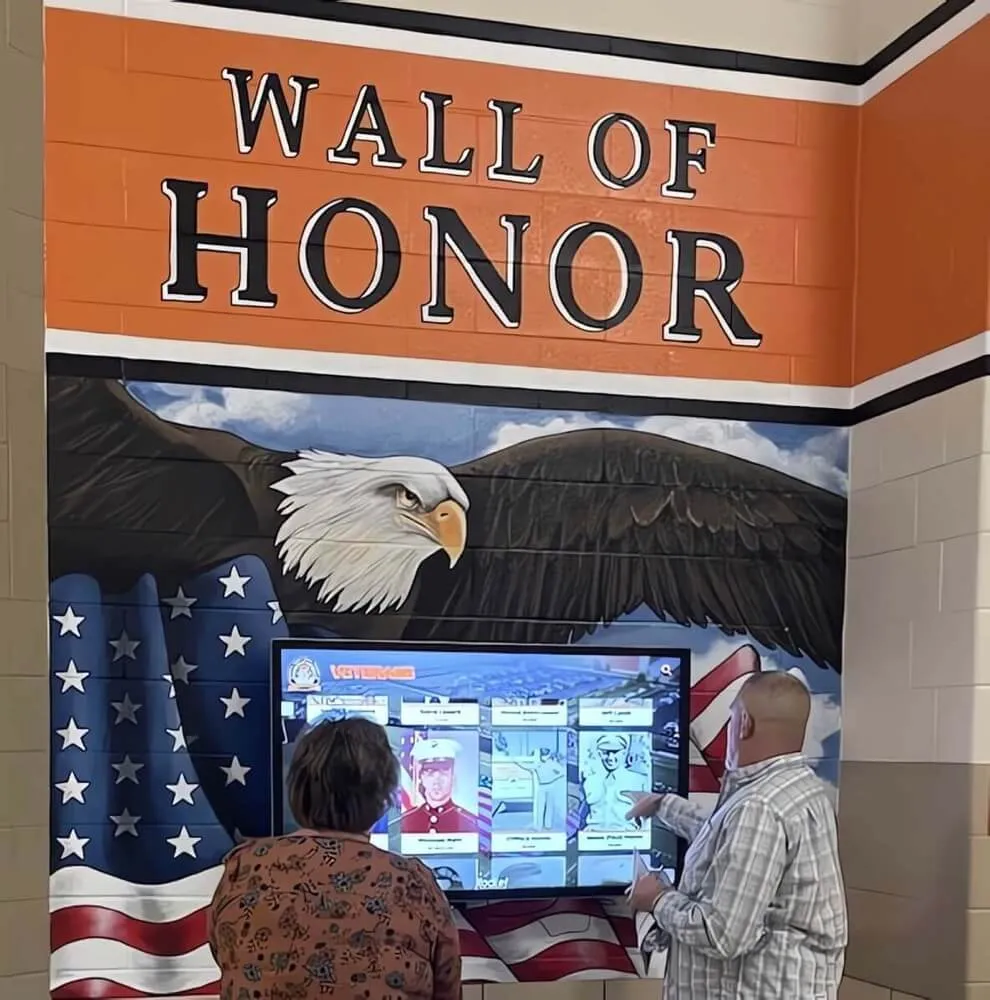
Universities, schools, and nonprofit organizations use Rocket Recognition to preserve and present institutional histories through timeline displays organizing key moments chronologically, notable alumni spotlights highlighting graduate achievements, leadership recognition honoring past administrators and board members, facility dedication acknowledgments, and historical photo collections documenting campus evolution.
Historical displays benefit from Rocket Recognition’s unlimited capacity because they naturally expand as institutions continue operating. A school celebrating its centennial might create a timeline with 100+ significant moments, then continue adding entries annually rather than facing space constraints that force difficult selection decisions.
The platform’s multimedia capabilities suit historical applications particularly well. Archival photos, scanned documents, oral history recordings, and video footage integrate directly into recognition profiles, transforming displays into explorable digital archives rather than simple text listings.
Many institutions create “Where Are They Now” alumni spotlight programs that feature graduate achievements across careers, industries, and life paths. These ongoing programs demonstrate institutional impact while maintaining alumni connections through periodic profile updates and feature rotations.
Platform Features and Capabilities

Rocket Recognition includes specific functionality designed for recognition applications rather than generic features adapted from other contexts:
Recognition-Specific Content Organization
The platform organizes content through honoree profiles that serve as the fundamental unit of recognition. Each profile accommodates biographical information, achievement descriptions, media galleries, timeline entries, and associated category memberships. This profile-centric structure contrasts with page-based organization typical of general content systems, providing more natural frameworks for recognition applications.
Categories enable multiple classification schemes operating simultaneously. An athlete might belong to categories for their sport, graduation year, hall of fame induction class, and specific achievement types. Visitors browse or filter by any category combination, discovering achievements through paths matching their interests.
Custom fields let organizations capture information specific to their recognition needs. A donor recognition application might track gift designation, campaign affiliation, and memorial tribute details, while an athletic hall of fame records positions played, jersey numbers, and coaching assignments. These custom structures eliminate the awkward workarounds required when forcing recognition content into predetermined schemas.
Dual-Environment Operation
Rocket Recognition deploys as both physical touchscreen installations and web-accessible applications, with content synchronized automatically between environments. Organizations manage content once through a central interface, and updates appear simultaneously on physical displays and web versions.
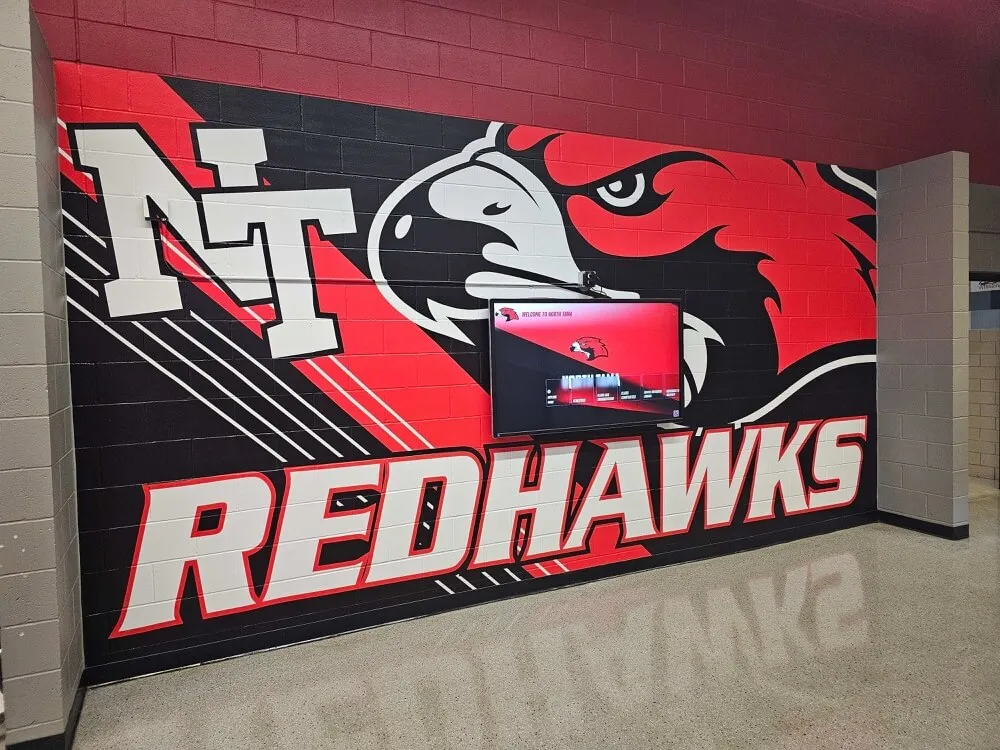
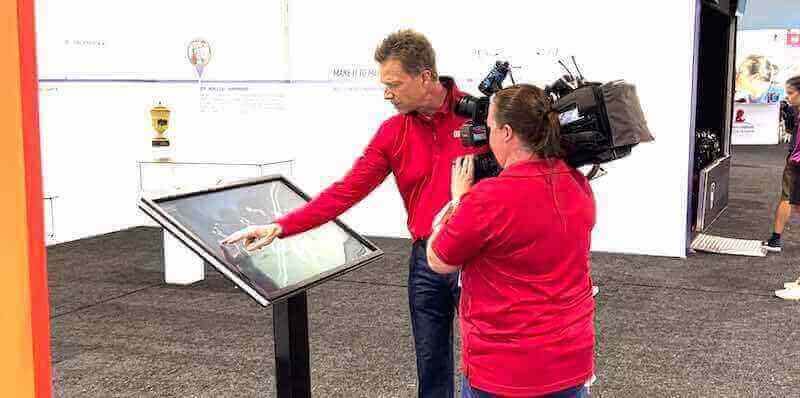
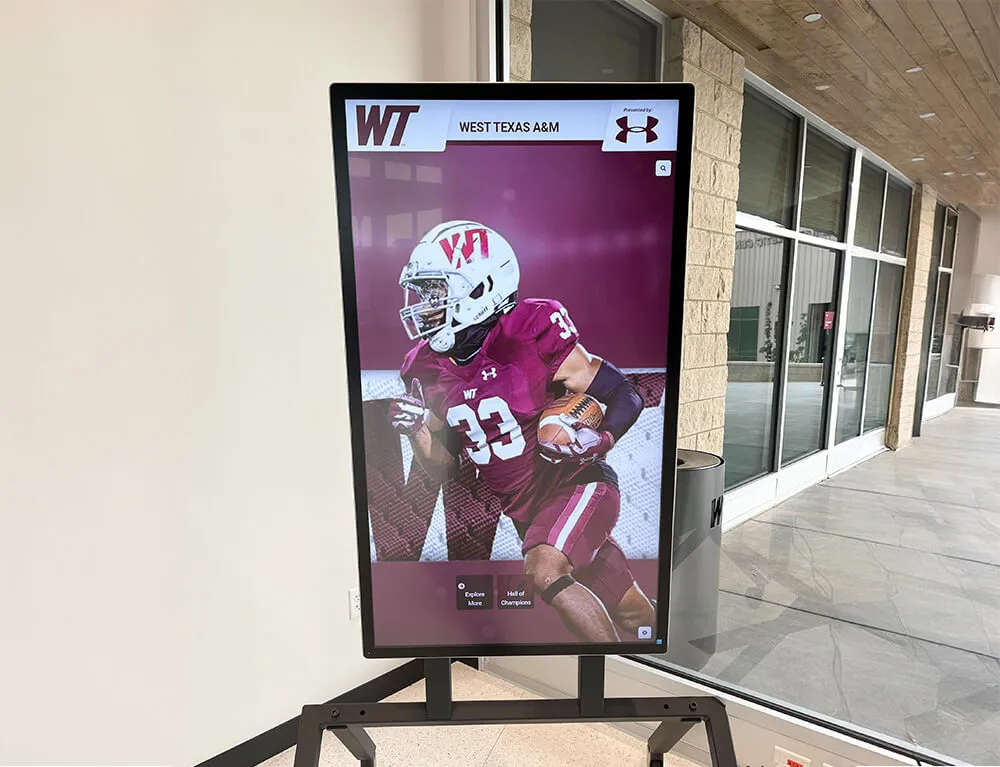
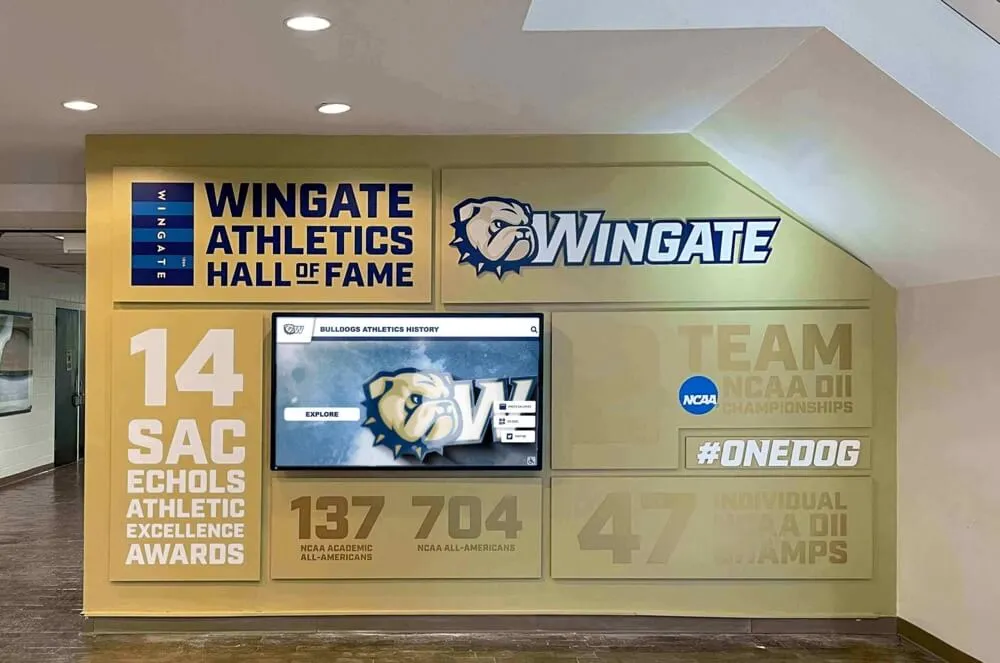
Physical installations typically use commercial touchscreen displays ranging from 43 inches to 86 inches, mounted in high-traffic locations like gymnasium lobbies, main entrances, advancement office reception areas, or dedicated hall of fame spaces. The touchscreen interface accommodates exploration patterns where visitors browse categories, search for specific honorees, and navigate between related profiles.
Web applications provide worldwide access to the same recognition content through responsive designs that function on desktop computers, tablets, and mobile devices. This online presence particularly benefits alumni recognition, allowing graduates to explore their school’s halls of fame from anywhere and share specific achievements through social links.
The dual-environment approach addresses a fundamental recognition challenge: physical displays create impressive on-site experiences but limit access to campus visitors, while web-only approaches sacrifice the tangible presence that reinforces recognition culture in institutional spaces. Rocket Recognition delivers both simultaneously rather than requiring organizations to choose between physical impact and digital accessibility.
Template Library and Customization

The platform provides 16+ recognition-specific templates covering athletic halls of fame, donor recognition walls, academic achievement boards, distinguished alumni showcases, historical timelines, championship celebrations, scholarship benefactor displays, volunteer appreciation, memorial tributes, and departmental award recognition.
Each template incorporates design patterns and organizational structures developed through hundreds of implementations rather than starting from blank canvases. Organizations select templates matching their recognition needs, then customize colors, typography, layouts, and branding elements to align with institutional identity.
This template-plus-customization approach balances professional design quality with institutional distinctiveness. Organizations avoid the expense and complexity of fully custom design while still achieving recognition displays that reflect their unique character and visual standards.
Multimedia Integration
Recognition content integrates photos, videos, documents, and audio recordings directly into honoree profiles and achievement displays. Media libraries organize assets with tagging and search capabilities, enabling reuse across multiple profiles and displays.
Video integration proves particularly valuable for athletic recognition, where game footage, ceremony recordings, or interview clips add dimension to achievement descriptions. Donor recognition benefits from impact videos showing how contributions support institutional missions. Historical displays incorporate archival film footage and audio recordings that bring past eras into present experiences.
The platform handles media optimization automatically, converting uploads to appropriate formats and resolutions for both touchscreen displays and web environments. This technical automation prevents common issues where high-resolution media causes performance problems or format incompatibilities limit playback across devices.
Analytics and Engagement Tracking
Rocket Recognition tracks detailed interaction data including content popularity by profile and category, search terms and patterns, visitor session duration and depth, peak usage times and patterns, and demographic information when available.
These insights help organizations understand which achievements resonate most with visitors, identify content gaps where expected information may be missing, refine display layouts and navigation based on actual usage patterns, and demonstrate program impact to stakeholders through quantitative engagement data.
Analytics prove particularly valuable for advancement offices using donor recognition displays, where engagement metrics demonstrate stewardship value to major gift prospects and campaign leadership. Athletic programs use analytics to identify which sports or eras generate greatest interest, informing content development priorities.
Implementation and Support
Organizations typically implement Rocket Recognition through a structured process involving several phases:
Planning and Content Strategy
Implementation begins with planning sessions that define recognition objectives, identify content sources and categories, establish update responsibilities and processes, determine physical display locations and configurations, and map integration points with existing systems or processes.
Recognition program planning often surfaces policy questions that organizations need to resolve before technical implementation. What criteria determine hall of fame induction? How do donor recognition levels align with giving tiers? Which academic achievements merit permanent recognition versus periodic display? Clear policies prevent future challenges and ensure consistent recognition standards.
Content strategy sessions identify existing recognition information that should migrate to the new platform—historical records, achievement data, media assets, and biographical information. Organizations often discover recognition gaps where achievements were never properly documented, requiring research or intentional acceptance that some historical periods will remain incomplete.
Design and Customization
Rocket Alumni Solutions provides design services that create visual themes aligned with institutional branding. Designers work from brand guidelines, existing visual materials, and institutional examples to develop color schemes, typography selections, layout structures, and graphic elements that feel consistent with overall institutional identity.
This professional design approach addresses a common failure point in recognition technology: technically capable platforms that produce visually generic or inconsistent displays because organizations lack design expertise. Rocket’s team brings recognition-specific design experience that produces polished results without requiring institutional design resources.
Content Migration and Setup
Following design approval, implementation proceeds to content setup where Rocket’s team assists with profile creation, media organization, category structure, and initial population. Organizations provide source materials—spreadsheets, databases, photo collections, historical documents—and Rocket’s staff handles data structuring and system setup.
This migration assistance proves particularly valuable for organizations with extensive historical recognition spanning decades. The prospect of manually creating hundreds or thousands of profiles often prevents organizations from considering digital recognition, but professional migration services make comprehensive launches feasible.
Installation and Training
For physical touchscreen implementations, Rocket coordinates hardware installation including display mounting, media player setup, network configuration, and testing. Organizations receive turn-key installations where displays are mounted, configured, and operational rather than receiving equipment requiring institutional IT resources to deploy.
Administrator training covers content management workflows, profile creation and editing, media upload and optimization, category management, and analytics access. Training typically occurs through video conferences supplemented by documentation, enabling distributed teams to access instruction materials as needed.
Ongoing Support and Updates
Following launch, organizations access ongoing support for technical assistance, content management questions, and feature optimization. Rocket handles platform updates, security patches, and feature enhancements automatically without requiring institutional IT involvement.
This managed service approach contrasts with self-hosted or DIY recognition platforms that burden organizations with server maintenance, software updates, backup management, and security monitoring. Organizations focus on recognition content and program administration while Rocket maintains the underlying technical infrastructure.
Comparison to Alternative Approaches
Understanding Rocket Recognition requires context about how it differs from other recognition approaches organizations might consider:
Versus Physical Plaques and Trophy Cases
Traditional recognition methods offer permanent, tangible presence that communicates institutional commitment to honoring achievements. However, physical approaches impose capacity constraints that force difficult selection decisions, create update challenges where adding recognition requires expensive fabrication and installation, limit accessibility to physical visitors during facility hours, and provide no searchability or filtering for exploring specific achievements.
Rocket Recognition addresses these limitations while maintaining permanent, accessible records. The unlimited capacity eliminates forced choices between equally worthy recognition. Updates occur through content management interfaces rather than physical renovation projects. Online access extends recognition visibility worldwide. Search and category filtering enable targeted exploration that physical displays cannot provide.
Organizations often combine approaches, using Rocket Recognition for comprehensive documentation while maintaining selective physical recognition for the most significant achievements. This hybrid strategy captures physical presence benefits while eliminating capacity constraints.
Versus Generic Digital Signage
Many schools own digital signage systems for announcements, event promotion, and informational displays. Administrators sometimes consider whether existing digital signage could serve recognition needs, avoiding new system costs.
Digital signage platforms face several limitations for recognition applications. They lack recognition-specific features like honoree profiles, achievement categories, and biographical organization. Content management requires creating individual slides or pages rather than working with structured databases. Search and interactive exploration are typically unavailable. Analytics track basic metrics rather than recognition-specific engagement. Dual-environment operation between physical and web displays usually requires separate management.
Generic digital signage may suffice for simple, rotating recognition slides, but organizations with substantial recognition needs quickly encounter limitations that make purpose-built platforms more functional and ultimately more cost-effective when accounting for content management labor.
Versus Custom Development
Some institutions with technical resources consider building custom recognition platforms tailored precisely to their requirements. Custom development offers complete control but presents challenges: initial development costs typically exceed commercial platform expenses, ongoing maintenance requires dedicated technical resources, feature enhancement depends on institutional capacity rather than vendor roadmaps, and responsibility for security, performance, and reliability rests with institutional IT.
Rocket Recognition delivers many custom development benefits—recognition-specific features, institutional branding, flexible content structures—while distributing costs across its client base rather than concentrating full development expense on individual organizations. Platform improvements benefit all clients rather than requiring each institution to independently develop similar capabilities.
Pricing and Investment Considerations
Rocket Recognition pricing reflects the custom nature of institutional recognition implementations and the professional services included. Typical implementations range from $10,000-$40,000 for initial setup, including design services, content migration, physical hardware if applicable, training, and first-year subscription. Annual subscriptions after the first year generally range from $2,000-$8,000 depending on features, number of displays, and support requirements.
This investment level positions Rocket Recognition as a professional platform rather than a budget alternative. Organizations prioritizing comprehensive capabilities, polished presentation, and full-service support find the investment appropriate. Institutions seeking minimal-cost approaches may prefer DIY methods or simpler platforms, accepting feature limitations and increased internal labor requirements.
When evaluating costs, organizations should account for avoided expenses in alternative approaches: custom design fees that equivalent custom development would require, content migration labor that professional services handle, ongoing IT expenses that managed hosting eliminates, and physical renovation costs that digital flexibility prevents.
The unlimited capacity aspect carries particular cost significance. Physical recognition systems often present per-plaque or per-name pricing that makes comprehensive recognition prohibitively expensive. Rocket Recognition’s unlimited model means the per-honoree cost decreases as programs expand, making extensive recognition economically feasible.
Selection Considerations
Organizations evaluating Rocket Recognition should consider several factors in determining whether the platform fits their recognition needs:
Recognition Scope and Complexity
Rocket Recognition particularly suits organizations with substantial, multi-category recognition needs. Schools recognizing achievements across multiple sports, academic programs, arts disciplines, and school activities benefit from unified platforms rather than managing separate systems for each recognition type. Universities and nonprofits with complex donor recognition spanning multiple campaigns and giving levels need sophisticated organizational capabilities.
Smaller programs with limited recognition needs may find simpler solutions sufficient. A club sport with 30 athletes might effectively use basic website pages or photo displays rather than comprehensive recognition software.
Update Frequency and Responsibility
Organizations that plan to actively update and expand recognition content benefit from platforms designed for content management. Schools adding new achievements each semester, athletic programs inducting hall of fame members annually, and advancement offices updating donor recognition as campaigns progress need straightforward content administration.
Static recognition that rarely changes might work adequately with simpler approaches. Historical societies primarily preserving existing information rather than continuously adding content could use more basic display methods.
Technical Resources and Expertise
Rocket Recognition’s managed service model specifically benefits organizations with limited IT resources or technical expertise. Schools without dedicated IT staff, small nonprofits managing technology through volunteers, and athletic departments operating independently from campus IT appreciate solutions that don’t require server management or technical maintenance.
Organizations with substantial IT capacity might consider whether self-hosted platforms offer cost advantages through internal management, though many still prefer managed services that free technical staff for other priorities.
Design Quality Standards
Institutions with strong brand identities and visual standards typically require professional design services to achieve polished recognition displays consistent with overall institutional character. Rocket’s design assistance helps these organizations implement recognition that feels cohesive with other branded materials rather than appearing as generic technology additions.
Organizations comfortable with standard templates and less concerned about distinctive visual identity might find platforms with self-service design tools sufficient for their needs.
Getting Started
Organizations interested in exploring Rocket Recognition typically begin by examining reference implementations showcasing different recognition types and contexts. Rocket Alumni Solutions maintains demonstration displays and client examples illustrating athletic halls of fame, donor recognition walls, academic achievement displays, and institutional history applications.
Initial conversations focus on understanding recognition objectives, existing content and media assets, intended use cases and audiences, physical display locations or online-only needs, and budget parameters and timeframes.
From these planning discussions, Rocket develops proposals outlining scope, customization requirements, content migration assistance, timeline, and investment levels. Organizations receive clear pictures of what implementations will include and what they will look like before committing to projects.
Implementation timelines typically span 8-16 weeks from project initiation to launch, depending on content complexity and volume, design customization requirements, physical installation needs, and content migration scope. Organizations with well-organized existing content and straightforward requirements can implement more quickly, while extensive historical content or complex physical installations require longer timelines.
Recognition technology continues evolving as visitor expectations, technical capabilities, and institutional needs progress. Organizations implementing Rocket Recognition join platforms that receive ongoing updates and feature enhancements rather than static systems that remain unchanged after installation. This continuous improvement model means recognition displays stay current with technical standards and user experience expectations over multi-year deployments.
Effective recognition programs combine appropriate technology with clear policies, comprehensive content, active promotion, and ongoing maintenance. Rocket Recognition provides the technical foundation, but organizations create lasting impact through thoughtful recognition criteria, thorough historical documentation, regular content updates, and integration with broader engagement strategies. Technology enables recognition at scale, but institutional commitment determines whether recognition programs achieve their potential to honor achievement, inspire excellence, and strengthen community connections.
Ready to upgrade how your institution recognizes achievement? Book a demo to see Rocket Recognition in action and explore how interactive displays could showcase your organization’s legacy.