The number 23 no longer belongs to any player on the roster. It belongs to history. That is the message a high school sends when it retires a jersey number — this digit, worn by an extraordinary athlete, will never be reassigned. No future player pulls it from the equipment room, no coach issues it at preseason, no statistician records it in a new column. The number belongs permanently to the athlete who earned that honor, and to the legacy of the program that produced them.
Retired jersey numbers are one of the most exclusive distinctions in scholastic athletics. Yet many high schools navigate the process informally: criteria are vague, displays age and fade, and younger athletes have no idea whose number that faded banner represents. This guide covers how to build a deliberate, meaningful retired-number tradition — from setting fair selection standards to choosing display systems that keep honored athletes visible for decades.
Walk into virtually any successful high school gymnasium and you will find at least one number hanging above the court or mounted on the wall — a two-digit symbol that quietly commands the room. Students who have been in the building for years may walk past it daily without knowing the story behind it. Visitors see a number and wonder about the person it represents. Current athletes glance upward during warm-ups and feel, even without knowing every detail, that something important happened here.
That power — the quiet authority of a retired number — is exactly why the tradition is worth doing well. When high schools establish clear criteria, thoughtful processes, and durable display systems, retired jersey numbers become living connections between athletic generations rather than forgotten relics. When schools handle the tradition carelessly, the numbers lose their meaning and the honor itself is diminished.
Understanding the full scope of what retired jersey numbers involve — how they are chosen, displayed, maintained, and kept alive within program culture — gives athletic directors, coaches, and administrators the foundation to build traditions their communities will value for generations.

What Retiring a Jersey Number Actually Means
The phrase “retiring a jersey number” gets used loosely, but the underlying commitment is substantial. When a high school retires a number, it makes a permanent institutional pledge: that digit will not be worn by another athlete in that sport while the school operates. The decision is not seasonal, not temporary, and not easily reversed.
The Difference Between Retired Numbers and Other Honors
High schools have many ways to recognize outstanding athletes — all-conference plaques, hall of fame inductions, banner years, end-of-season awards. Retired jersey numbers occupy a category apart from all of them.
Annual awards rotate every year. This year’s most valuable player is replaced next year by another. The recognition is meaningful but time-bound.
Hall of fame inductions honor multiple athletes from different eras in the same recognition tier. A school might induct five to ten athletes in a given year. Hall of fame membership is prestigious — but it is inherently shared.
Retired jersey numbers are categorically different. They involve no future competition for the same recognition. Once a number is retired, no future athlete occupies that same symbolic position. The number itself becomes a permanent monument rather than a rotating distinction.
This exclusivity is precisely what makes retired numbers so powerful — and why the decision to retire a number deserves far more deliberation than most annual awards. Recognizing 1,000-point scorers in basketball is a meaningful tradition, but even that career milestone is shared by multiple athletes across program history. A retired number stands alone.
Why Numbers Carry Symbolic Weight
Numbers become personal identifiers in athletic culture in ways that trophies and plaques never quite do. Athletes develop relationships with their numbers across seasons — they warm up with it, compete with it, appear in game photos wearing it, and are identified by it in game-night programs and local coverage. Teammates and opponents know athletes by their numbers as much as their names.
When a number is retired, that personal identification becomes permanent and institutional. The number no longer belongs to anyone who happens to be assigned it — it belongs to the specific athlete who gave it meaning. That symbolic permanence creates emotional resonance that other recognition formats rarely match.
Setting Criteria: Who Earns This Honor?
The hardest part of any retired-number tradition is deciding which athletes qualify. Without clear standards, retirement decisions become arbitrary — driven by personal relationships, recency bias, or donor influence rather than genuine merit. Clear criteria protect the honor’s integrity and give every coach and athlete a fair reference point.
Athletic Achievement Standards
Most high schools center their criteria on athletic performance, measured through objective benchmarks whenever possible.
Record-setting performance provides the clearest criteria. When an athlete holds or held program records in career points, goals, wins, or other relevant statistics — records that stood for meaningful periods — those achievements offer defensible grounds for retirement consideration. The key phrase is “meaningfully above all predecessors and successors.” A record broken the following season tells a different story than one that stands for fifteen years.
Championship impact reflects how athletes performed in high-stakes situations. Athletes who led programs to unprecedented state titles, who delivered defining performances in championship moments, or who anchored multiple consecutive title runs demonstrate a kind of excellence that statistics alone sometimes miss.
External validation through all-state selections, regional player of the year recognition, or All-American designation shows that exceptional observers beyond the school’s own community recognized the athlete’s distinction. Multiple such recognitions across seasons strengthen the case.
Post-graduation success is weighted differently by different schools. Some programs require that athletes go on to compete at the collegiate or professional level before their high school numbers become retirement-eligible. Others argue that high school achievement should be evaluated on its own merits. The important thing is deciding which approach your program takes before individual cases arise — not making different rules for different athletes.
Character and Institutional Values
Athletics programs are educational institutions, not just competitive organizations. Most schools that have thought carefully about retired jersey numbers include character requirements alongside performance benchmarks.
Academic standing is a common threshold — some schools require minimum GPA standards, Academic All-State recognition, or successful graduation as baseline requirements for retirement eligibility. The reasoning is straightforward: if the honor is coming from a school, it should reflect the school’s complete educational mission.
Conduct and sportsmanship during competition matters. Ejections, flagrant violations, or a pattern of poor sportsmanship undermines the claim that an athlete represents the program’s best. The number that hangs in the gym is an implicit statement: this is who we are. Athletes who created disciplinary incidents worth remembering create complications for that message.
Leadership and team culture is harder to quantify but often central to why a number truly deserves retirement. The athletes whose legacies endure across generations are rarely just statistical leaders — they are remembered by teammates as people who elevated those around them, who built culture, who made competing in that program something worth inheriting.
How Many Numbers to Retire — and How Often
Exclusivity is not cruelty — it is what gives the honor its weight. A program that retires eight numbers in a single school year has not preserved the tradition’s significance. Programs that maintain truly exceptional standards might retire one number per sport every ten to fifteen years. Smaller programs with shorter histories might retire their first number only once in an institution’s lifetime.
As a practical guide: if a committee finds itself debating whether to retire multiple numbers in the same season, the criteria probably need to be stronger. The question to ask is not “did this athlete deserve recognition?” but “was this athlete’s contribution genuinely irreplaceable in program history?” Those are different questions, and only the second one warrants a retired number.

The Selection Process: Making Decisions That Last
Even excellent criteria are only as good as the process that applies them. A rigorous, transparent selection process produces decisions the broader community trusts — and trust is what a retired number needs to carry its intended weight.
Committee Structure
Selection decisions should never rest with a single person. Athletic directors who retire numbers based on personal judgment, even good judgment, create perceptions of favoritism that undermine institutional credibility. A well-structured committee distributes that responsibility.
Effective committees typically include the athletic director, the head coach of the relevant sport, at least one other senior coach or athletic administrator, and ideally a former athlete or booster representative with program perspective. Five to seven members provides enough diversity of perspective without creating unwieldy deliberation.
Committees work best when their composition is established in policy rather than assembled case by case. Creating the committee on the fly for each retirement consideration invites exactly the kind of informal back-channel influence the process is designed to prevent.
Waiting Periods and Nomination Timelines
Most programs that have thought carefully about retired numbers impose waiting periods between graduation and retirement eligibility — commonly five to ten years. The rationale is sound: recent athletic achievement benefits from emotional proximity that doesn’t always reflect historical importance. Athletes who seemed dominant in a given era sometimes look different in retrospect when the rest of the program’s history is visible.
Waiting periods also allow post-graduation achievement to factor into consideration for schools that weight it. An athlete who earns All-American recognition at the Division I level while their high school number remains available makes a stronger case than one whose high school career was exceptional but whose subsequent chapter is still unwritten.
Nominations should enter through a defined channel — perhaps annual coach submissions, formal proposals from athletic booster leadership, or periodic systematic reviews of program history. Open, informal suggestions from social media or fan petition create pressure that distorts deliberation.
Documentation and Reasoning
For each number retired, schools should create written records explaining the decision: which criteria the athlete met, what the committee evaluated, and what reasoning drove the outcome. These records protect institutional memory across coaching and administrative transitions and provide administrators with defensible answers when community members question why certain athletes were honored and others were not.
The reasoning matters especially when decisions are close. An athlete who missed one criterion but whose overall case was overwhelming should have that reasoning documented — not to open the decision to future challenge, but to show that the committee engaged the complexity rather than simply waiving standards.
Traditional Display Approaches for Retired Numbers
Once a number is retired, it needs a permanent, visible home. The display approach schools choose shapes how much meaning the tradition actually carries in daily athletic culture.
Banner and Rafter Displays
The most iconic display approach involves hanging fabric banners from gymnasium rafters or ceiling supports. Large, visible from anywhere in the facility, rafter banners create the dramatic visual effect most associated with retired-number traditions at the professional level.
High schools face practical variations on this approach depending on ceiling height, facility configuration, and budget. Full gymnasium banners measuring four to six feet in height create genuine impact in facilities with adequate ceiling clearance. Smaller facilities might use condensed banner formats — two to three feet — that still create visible presence without overwhelming low ceilings.
The durability challenge with fabric banners is real. High school gymnasiums experience significant temperature fluctuation, humidity variation, and light exposure that degrade fabric and printing over years. Schools that retired numbers twenty or thirty years ago often find those banners faded, sagging, or illegible — which creates the uncomfortable situation of honoring an athlete with something that communicates neglect rather than reverence. Budget for periodic banner replacement, or consider more durable materials from the outset.
Wall Installations and Display Cases
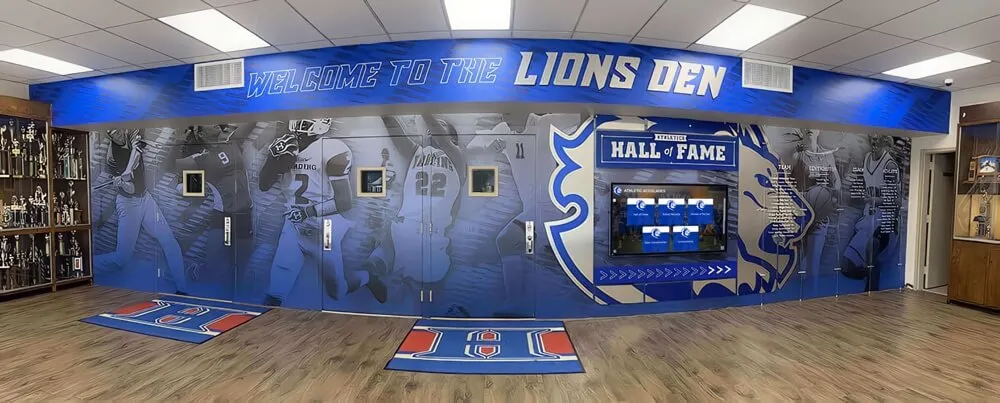
Wall-mounted retired-number displays work particularly well in athletic lobbies, trophy case areas, or hallways connecting athletic facilities. A dedicated retired-numbers wall with consistent formatting creates organized recognition that grows impressively as additional honorees are added over decades.
Physical jersey displays — actual game-worn jerseys in shadowbox frames — provide tangible connection to honored athletes. These require UV-protective glass and climate-conscious placement to prevent fabric degradation, but they offer something no printed banner can match: the actual garment the athlete wore.
The limitation of purely physical displays is space. A program retiring numbers across multiple sports over multiple decades eventually runs out of wall. Schools should plan display systems that can accommodate future retirements gracefully rather than retrofitting awkward additions to displays designed for a fixed number of honorees.
For comprehensive ideas on wall installations, wall display case ideas for schools offers practical guidance on formats, materials, and placement strategies.

Painted and Graphic Displays
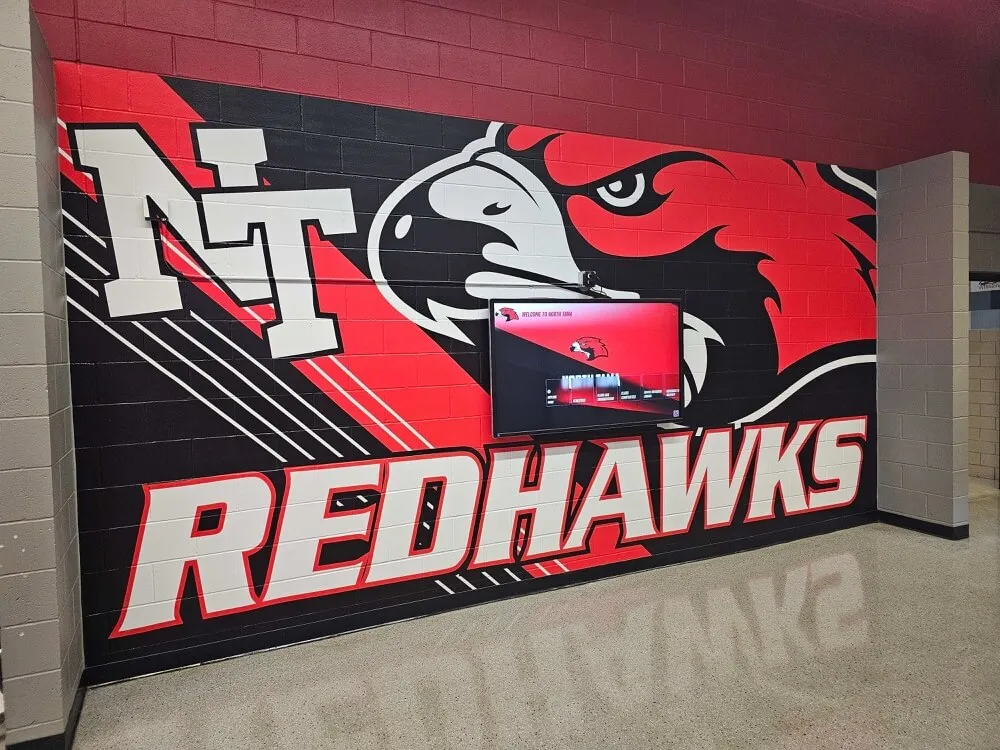
Some high schools integrate retired numbers into permanent building graphics — painted murals, vinyl wall treatments, or coordinated athletic branding that incorporates retired numbers as visual elements. These approaches blend recognition with facility aesthetics, creating environments where honored numbers feel embedded in the facility’s identity rather than added to it.
Graphic displays offer excellent durability compared to fabric banners and can be refreshed during routine facility painting without requiring specialized installation. The tradeoff is that integrated graphics are harder to update: adding a new retirement to a painted mural requires a new painting project rather than a banner installation.
Modern Digital Recognition for Retired Jersey Numbers
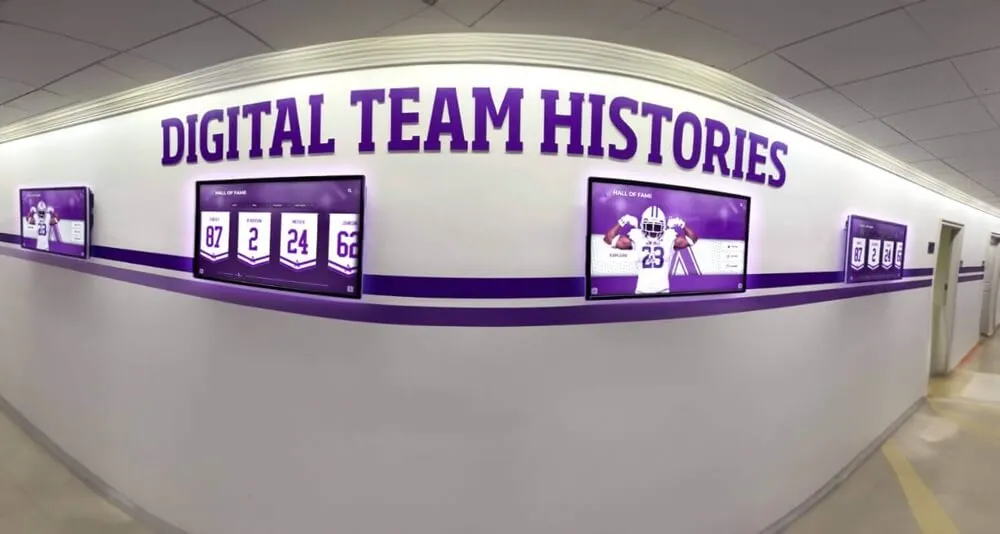
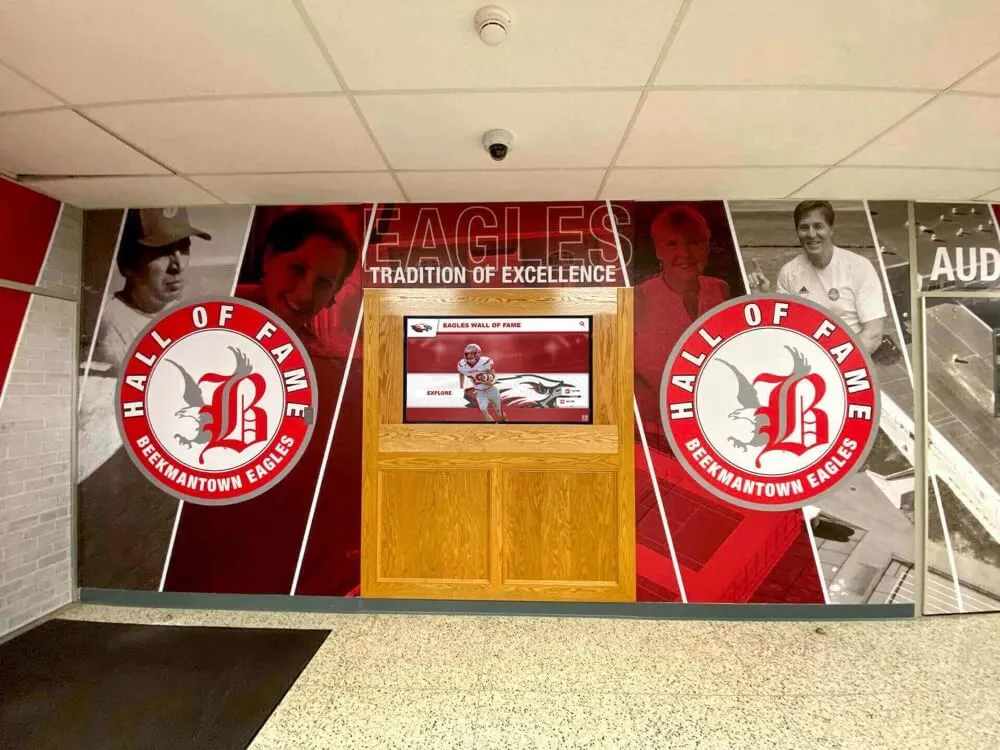
Digital display systems have changed what high schools can accomplish with retired-number recognition. The limitations that define traditional approaches — space constraints, static presentation, deterioration over time — largely disappear with digital platforms built for athletic recognition.
What Digital Systems Add to Retired-Number Traditions
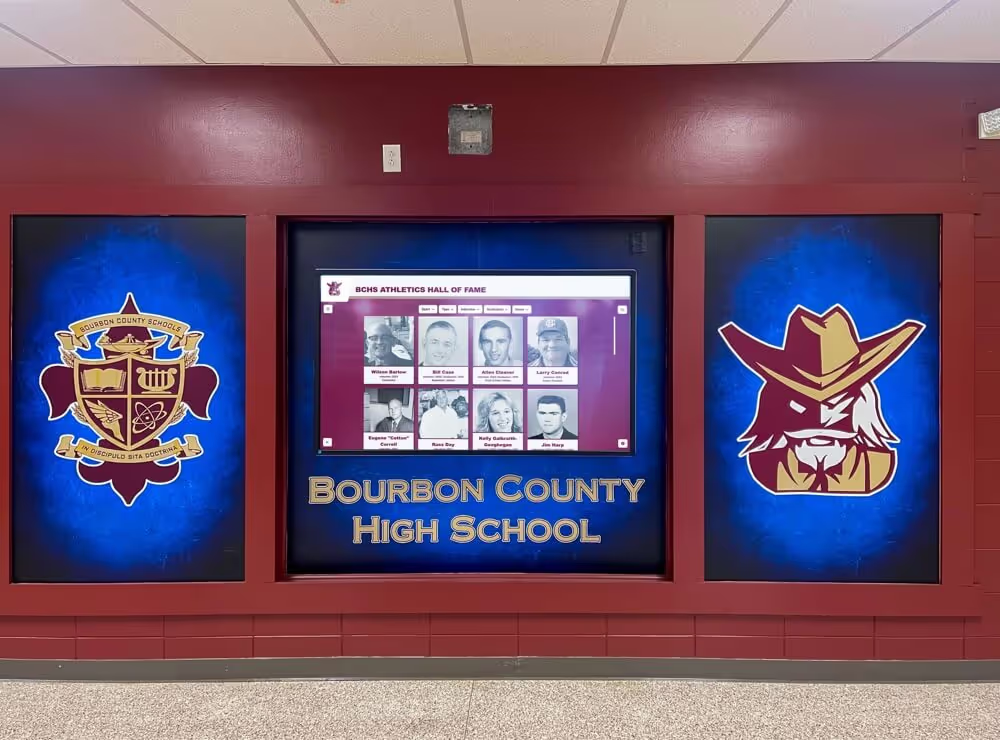
The most immediate advantage is storytelling depth. A fabric banner communicates a name, a number, and a year. A digital display built for athletic recognition can tell the entire story: career statistics, game highlights, championship moments, coach testimonials, athlete reflections, photo galleries from seasons spanning multiple years, and updates tracking where honored athletes went after graduation.
This depth matters not just for nostalgia but for the tradition’s stated purpose — inspiring current athletes. A current varsity player who can watch a four-minute highlight compilation of their program’s retired-number athlete, see the statistics, hear from the coaches who knew them, and understand specifically what made that athlete exceptional is far more inspired than a player who walks past a faded banner with a name they vaguely recognize.
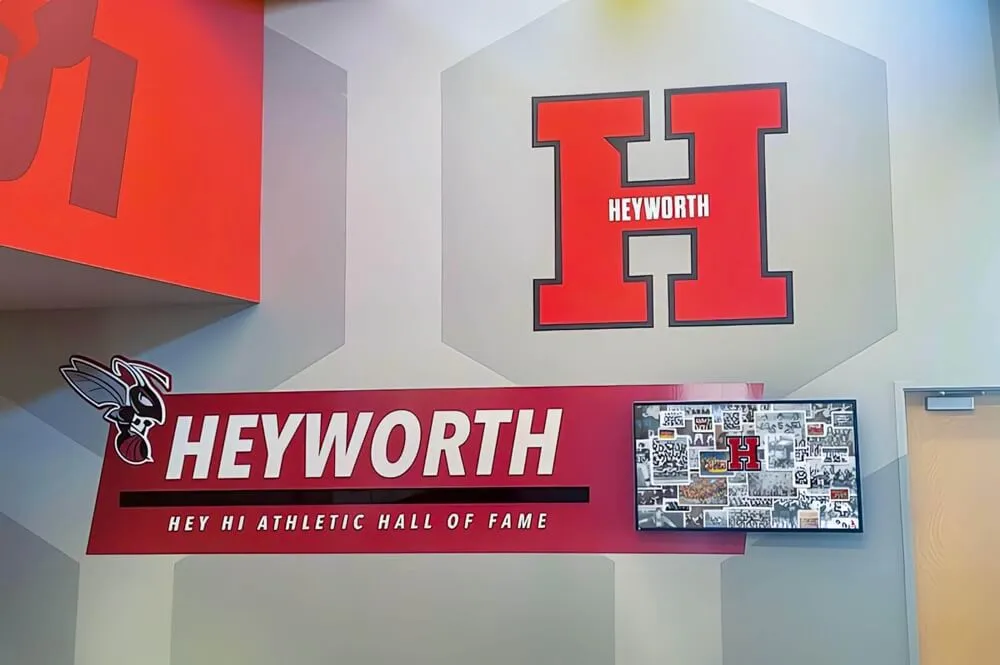
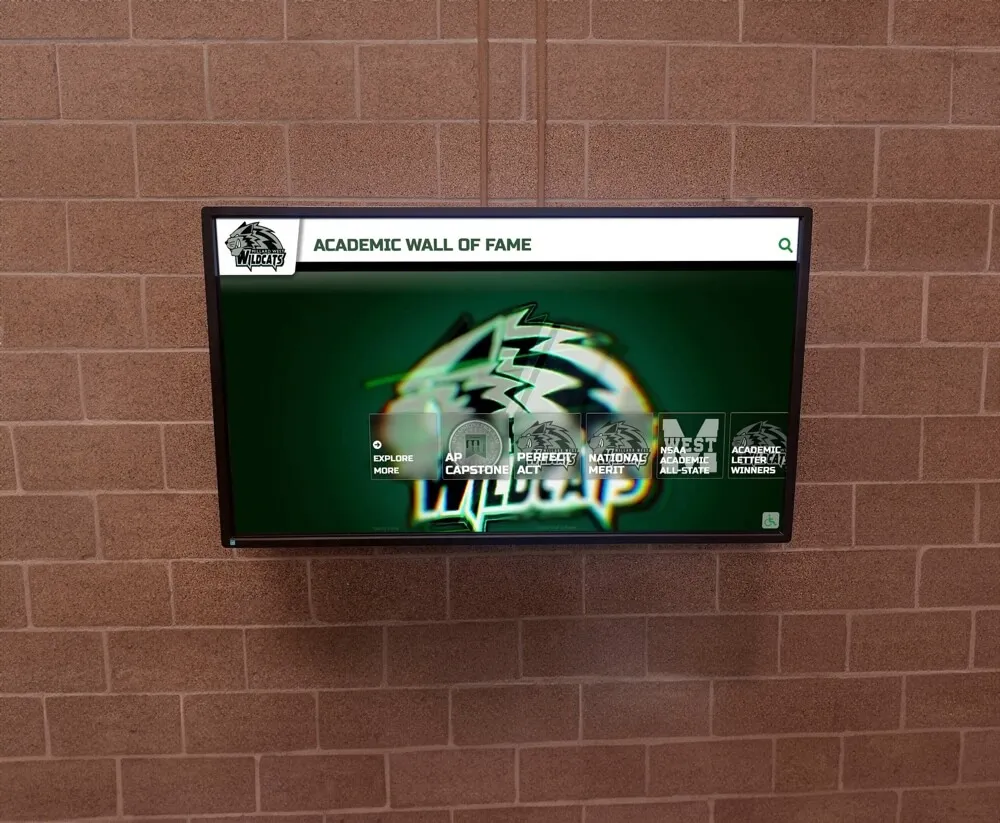
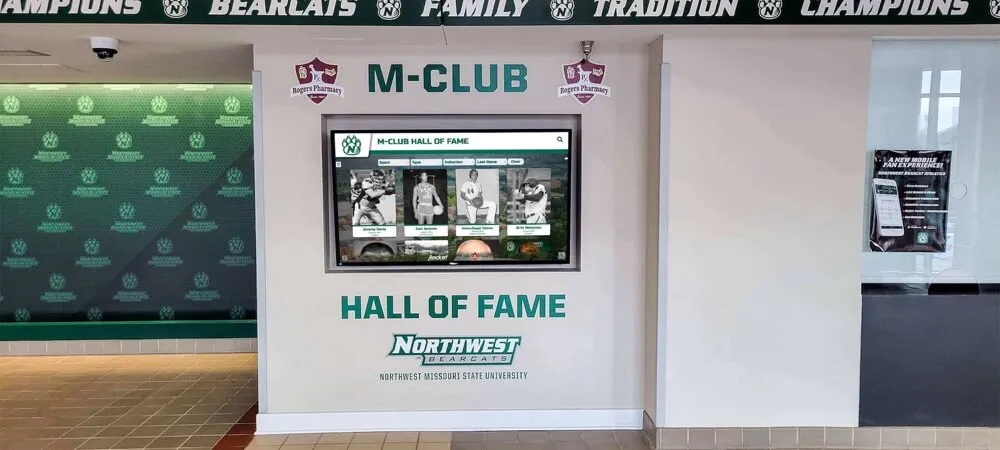
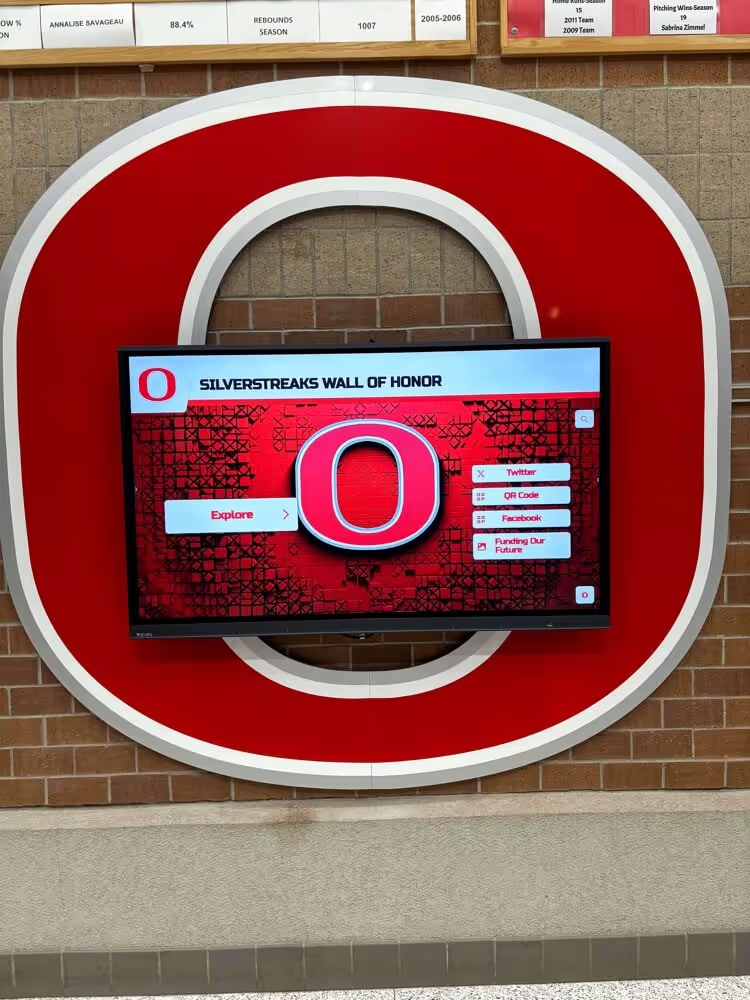
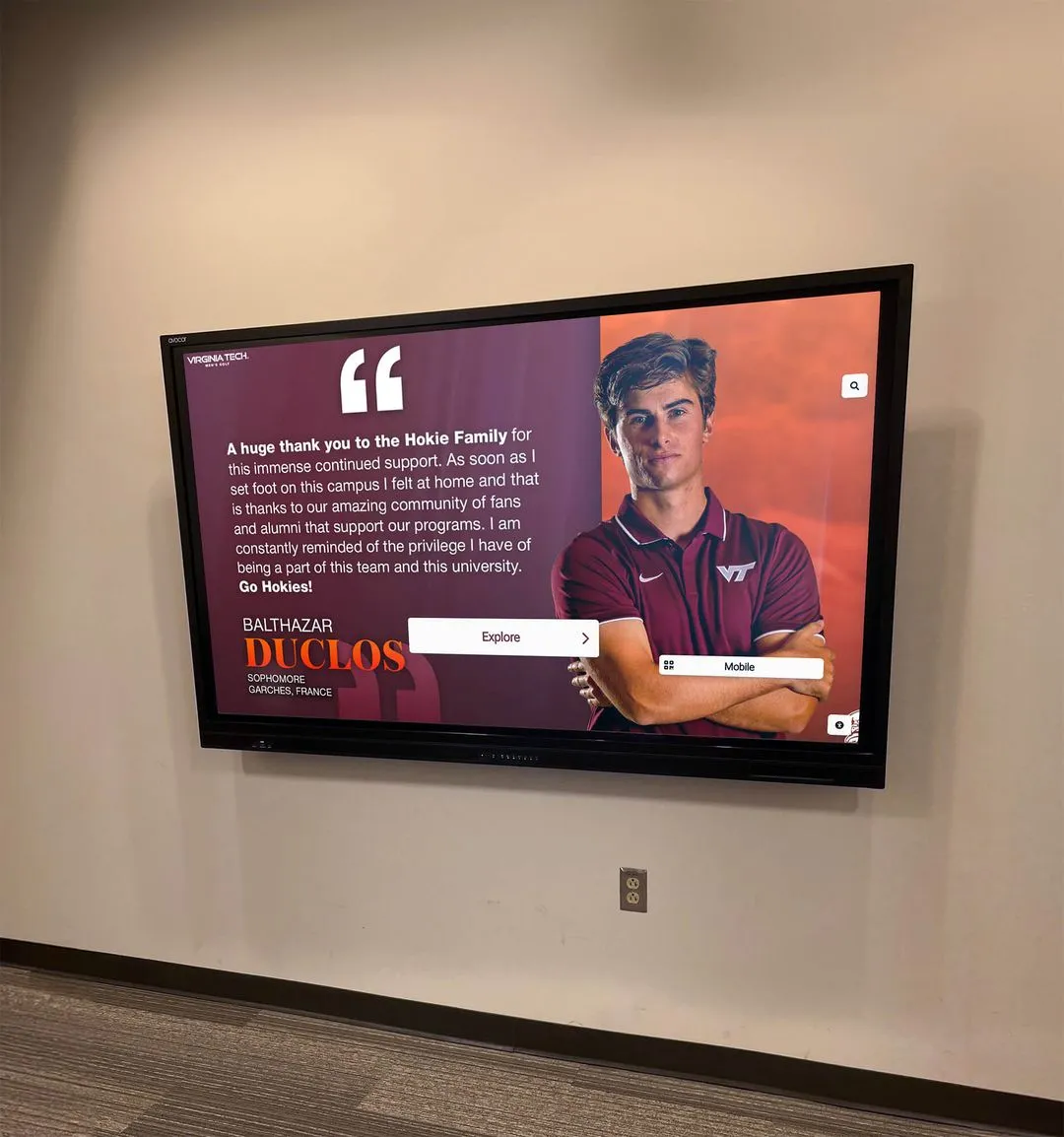
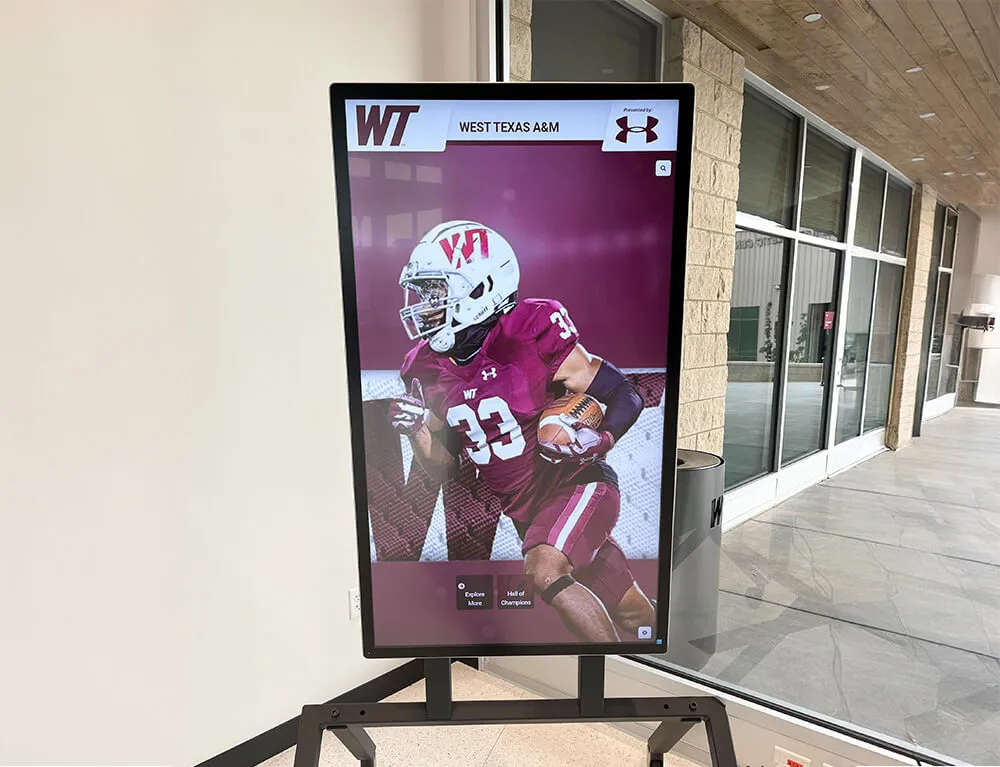
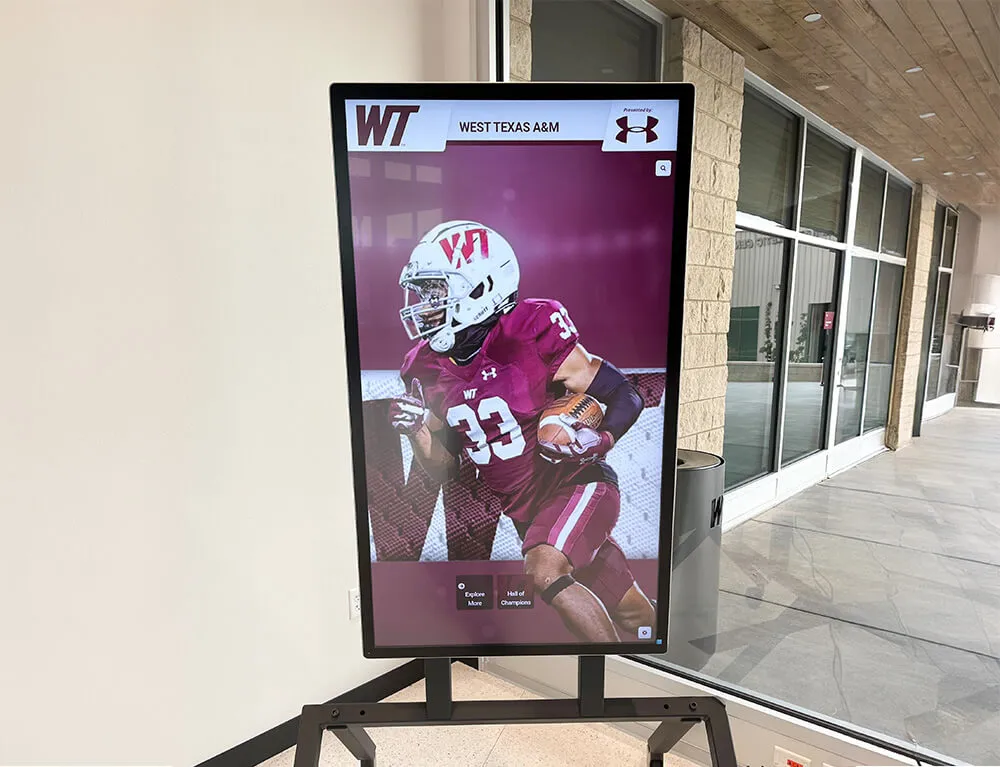
Modernizing recognition walls with digital technology creates this kind of engagement while solving the physical limitations traditional displays cannot escape.
Unlimited Expansion Without Space Costs
A school that retires twenty numbers across ten sports over forty years needs twenty display locations under a traditional approach. With digital systems, all twenty (or two hundred) honored athletes exist within the same footprint. Adding a new retirement requires content creation and a software update — not a construction project or a decision about which older honoree gets moved to make room.
This unlimited expansion capacity changes how schools think about the relationship between present recognition and historical depth. Rather than balancing space against additional honorees, programs can build genuinely comprehensive digital archives that honor every athlete who meets retirement criteria without the practical constraints that cause programs to quietly stop retiring numbers because there is nowhere to put them.
Digitizing historical records without damage is a related challenge schools tackle when building digital recognition systems — bringing decades of photographic and statistical history into a format that integrates cleanly with new recognition.
Interactive Engagement for Current Athletes and Visitors
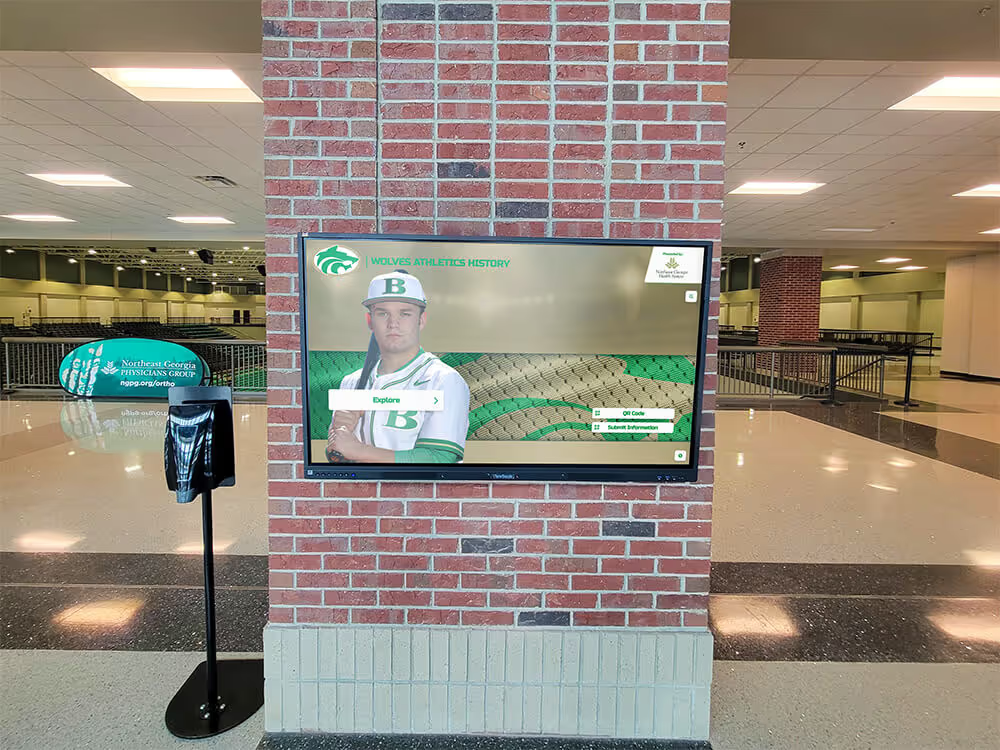
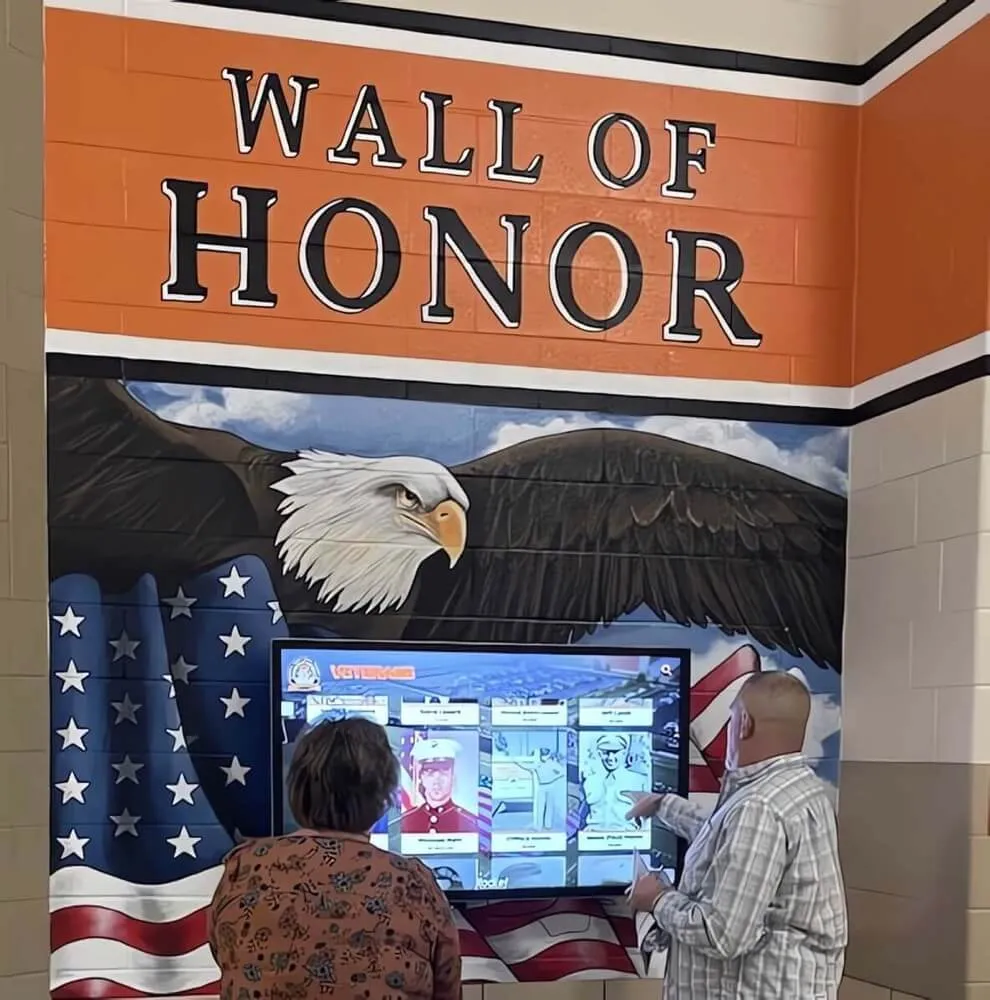
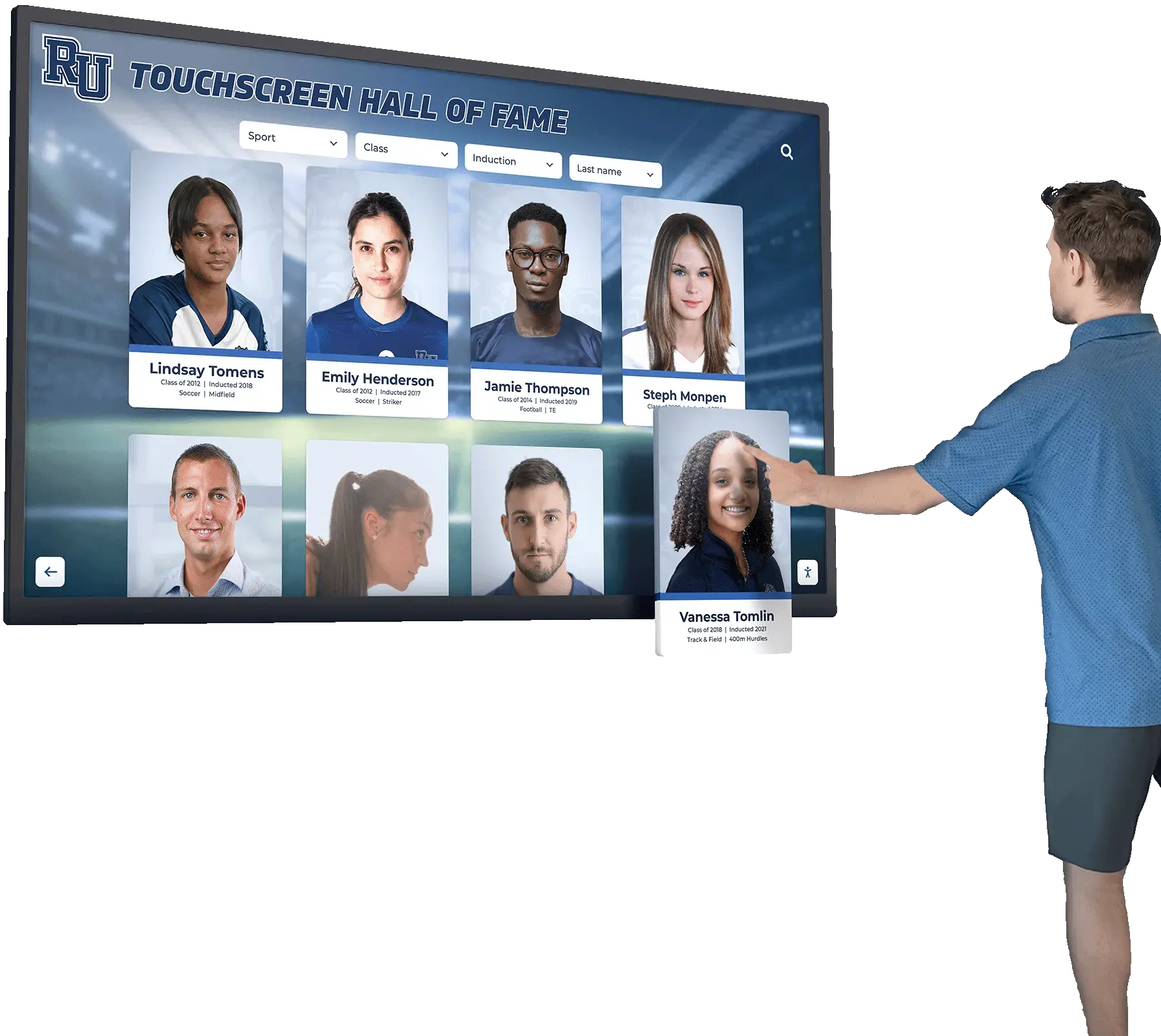
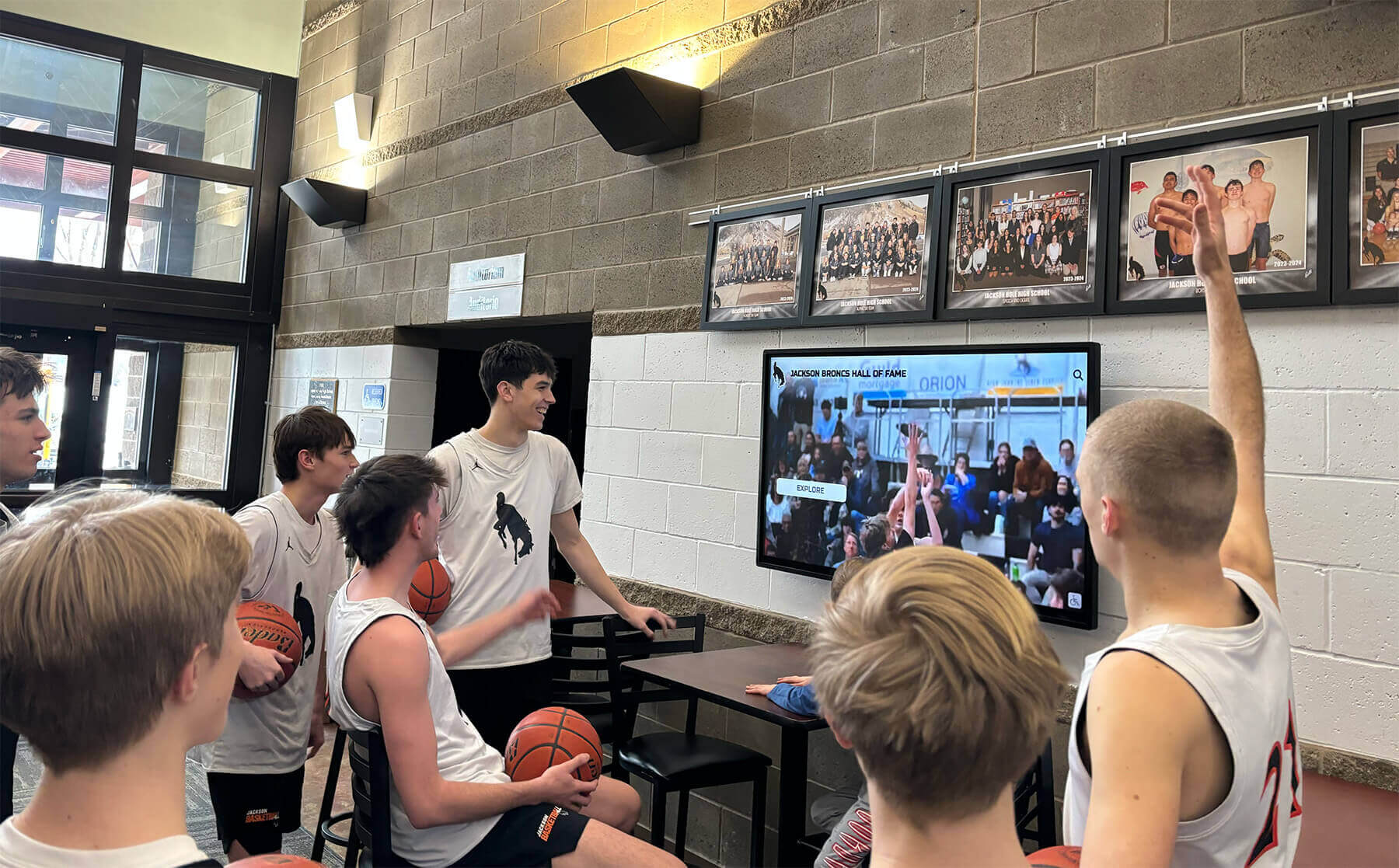
Static displays, however well designed, create passive viewing experiences. Visitors look, perhaps read, and move on. Interactive digital platforms create genuine exploration: visitors search by sport or era, drill into specific athlete profiles, watch video content, and browse statistical comparisons between historical and current athletes.
This interactive quality has measurable impact on how long people engage with recognition content. Families attending games who discover an interactive display in the gymnasium lobby will spend real time with it — exploring program history, looking for athletes they recognize, sharing content with their networks. That extended engagement is both an end in itself and a practical tool for alumni relations, community pride, and recruiting visits.
Web-Based Recognition That Extends Beyond the Building
The reach of retired-number recognition should not stop at the gymnasium walls. Digital platforms built for athletic recognition typically include web-based access, making honored athletes’ profiles available to alumni across the country, media covering current team successes, prospective students and families researching programs, and community members who want to reconnect with program history.
This web extension creates search-indexed content that improves how schools’ athletic programs appear in online searches — putting retired-number traditions in front of audiences who would never see a physical display. An alumnus living three states away who searches their alma mater’s basketball history can encounter the school’s retired-number traditions through a web-accessible digital system.
For schools exploring the full range of options, the best digital wall of fame approaches covers the technology landscape and implementation considerations in detail.
Hybrid Approaches: Physical and Digital Together
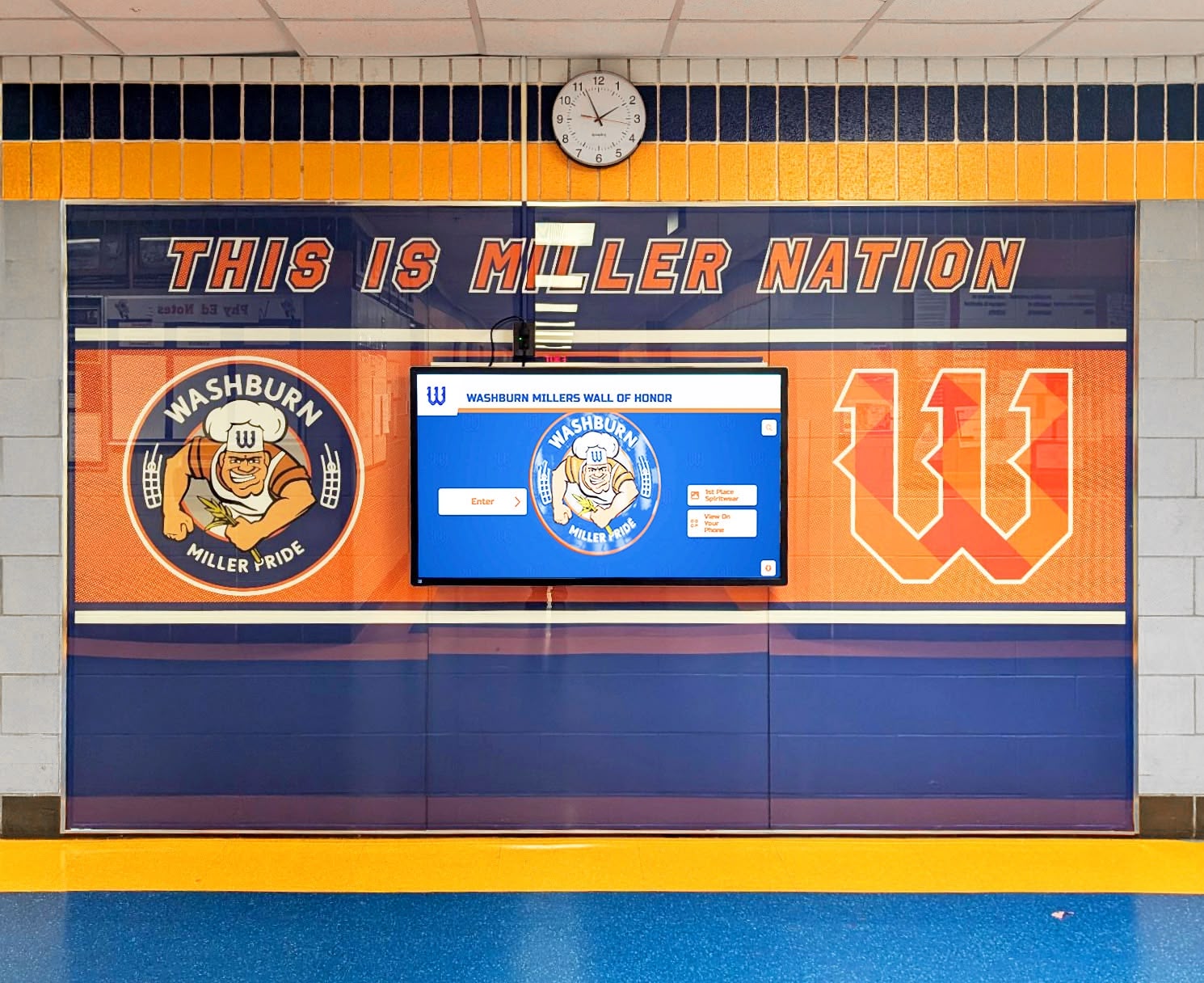
Many programs find that the best solution combines both approaches. Physical banners or framed displays provide the tangible, atmospheric presence that has defined athletic culture for generations — the visual drama of looking up and seeing a retired number hanging overhead. Digital systems add the storytelling depth, unlimited expansion, and remote accessibility that physical displays cannot provide.
A common hybrid implementation mounts QR codes adjacent to physical retired-number displays, linking to full digital profiles. Visitors who want the instant visual impact get it from the physical display; visitors who want to know the full story scan the code and explore. This approach respects what traditional formats do well while adding layers impossible without technology.
High School-Specific Considerations
Retired jersey number traditions developed in professional and collegiate contexts, but high schools operate under different constraints and serve different community functions. Several considerations apply specifically to the high school environment.
Number Range Limitations
Most high school sports use number ranges more limited than professional leagues. High school basketball typically uses numbers 0 through 55 to comply with rules requiring no digit above 5 (allowing referees to indicate personal fouls with hand signals). Football uses 1 through 99 with positional conventions. These constraints mean that retiring popular numbers — single digits in basketball, common skill-position numbers in football — can create meaningful availability issues for current athletes.
Schools should track remaining available numbers before making retirement decisions, particularly in basketball programs with long histories. Retiring eight or ten single-digit basketball numbers across decades can genuinely constrain what numbers coaches can assign. Some programs address this by retiring numbers to specific positions — a retired point guard number stays available for centers — though purists find this approach dilutes the tradition.
Multi-Sport Athletes
High schools produce multi-sport athletes more commonly than professional leagues. An athlete who was exceptional in both basketball and baseball presents a genuine question: should both numbers be retired, the primary sport’s number only, or should a multi-sport achievement be recognized through hall of fame induction rather than number retirement?
There is no single right answer, but the policy should be established before the situation arises. Deciding for the first multi-sport athlete sets precedent that applies to all subsequent cases.
The Role of Retired Numbers in Senior Recognition Events
Many high schools find natural connections between retired-number traditions and other recognition programming. Retired jersey traditions complement senior night programming when current senior athletes who may one day be retirement candidates are introduced with explicit reference to the honored numbers visible in the facility — creating live connections between present achievement and future legacy.
Similarly, team captain responsibilities often include educating younger teammates about program history, including the stories behind retired numbers — an organic transmission mechanism that keeps traditions alive within team culture across coaching generations.
Budget and Resource Reality
High schools operate on constrained budgets, and recognition programs compete against facility maintenance, equipment, and staffing for limited resources. The good news is that building a meaningful retired-number tradition does not require large initial investment.
A well-executed banner installation for a single retirement typically costs $300 to $600 including design, printing, and mounting. A dedicated recognition wall installation runs $5,000 to $20,000 depending on scope and materials — but that one-time investment accommodates many future retirements. Digital systems involve higher initial costs (hardware, software, and content creation) but eliminate ongoing per-retirement production costs and provide recognition capabilities impossible with physical formats alone.
Athletic booster organizations frequently fund recognition initiatives with enthusiasm — retired-number ceremonies generate community engagement that translates to booster participation and fundraising momentum.

Keeping Retired Numbers Alive in Program Culture
Retiring a number is not a one-time event — it is the beginning of an ongoing relationship between the institution and the honored athlete’s legacy. Programs that treat retirement as a one-night ceremony followed by a physical display they rarely think about are missing most of the tradition’s potential value.
Annual Touchpoints
Creating structured annual moments when retired numbers receive focused attention keeps their stories present in program culture rather than fading into background decoration. Homecoming events, season openers, or designated recognition nights can include brief acknowledgments of all retired numbers — showing highlight footage, announcing honored athletes’ current roles, or inviting retired-number honorees back to attend games.
Some programs assign current athletes to research and present on one retired-number athlete each season. The assignment creates genuine knowledge transfer: current athletes discover stories they would not have encountered otherwise, develop pride in program history, and build motivation that a faded banner in the rafters rarely generates on its own.
Using Retirements in Recruiting
Retired jersey numbers are tangible evidence of program excellence and institutional commitment to honoring great athletes. During campus visits and recruiting conversations, explicitly walking prospective athletes through the retired-number tradition — explaining criteria, sharing honored athletes’ stories, and demonstrating how the school recognizes its best — communicates something that statistics and conference records alone cannot.
Recruits who understand that a program remembers and celebrates its greatest athletes are receiving information about institutional culture: this is a place that takes excellence seriously enough to honor it permanently.
For programs considering the full landscape of recognition options, championship rings and athletic honors explores the broader spectrum of permanent recognition that retired numbers fit within.
Cross-Sport Recognition Equity
Athletic programs that retire numbers primarily in high-visibility sports — football and basketball — while neglecting athletes who excelled in track, wrestling, swimming, or other disciplines send an unintended message about which athletes the institution truly values. Equitable retired-number policies that apply consistent criteria across all sports build more inclusive athletic cultures and recognize genuine excellence wherever it appears.
Track and field award programs explore how high schools can recognize excellence across a wide range of athletic contexts — an approach that complements thoughtful retired-number criteria.
For schools interested in the broader landscape of touchscreen and digital recognition solutions, touchscreen displays for high school gyms and lobbies provides detailed implementation guidance. And digital hall of fame and recognition wall examples shows what schools across the country have built with modern recognition technology.
Common Mistakes to Avoid
Programs building or refining retired-number traditions frequently encounter the same pitfalls. Awareness of these common mistakes prevents them.
Criteria drift: Starting with strong standards but gradually lowering them over time — often through well-intentioned exceptions — produces an ever-expanding list of retired numbers that eventually loses its meaning. Each exception becomes precedent for the next request. Maintaining written criteria and requiring any exceptions to be explicitly documented prevents this erosion.
Neglecting historical athletes: Programs that only retire numbers for recent athletes implicitly suggest that excellence before a certain era did not count. Systematic historical reviews identifying athletes from program history who would have met current criteria — and retroactively honoring them — corrects this bias.
Ignoring display maintenance: Nothing communicates institutional indifference faster than a retired-number display that is cracked, faded, incorrectly labeled, or crowded out by newer additions. Assigning specific staff responsibility for recognition maintenance and building small annual budgets for upkeep prevents the slow deterioration that affects many programs over years.
Making it purely ceremonial: The ceremony is the beginning, not the culmination. Programs that invest in a memorable retirement event and then never mention the honored athlete again have built a tradition with no ongoing substance. Intentional cultivation of the tradition through education, annual touchpoints, and recruiting conversations transforms retired numbers from ceremonial relics into living program assets.
Building Your Program’s Retired-Number Tradition
For schools starting from scratch or looking to significantly strengthen existing programs, a phased approach produces better outcomes than trying to implement everything at once.
Start with criteria: Before retiring any numbers or announcing any ceremonies, write down what the criteria are and get agreement from key stakeholders — athletic director, head coaches, booster leadership. Criteria established before specific cases are under consideration are far more defensible than criteria that appear constructed around particular athletes.
Review history: Systematically examine program records to identify historical athletes who would have met current criteria. Inaugural retired-number classes that honor athletes from multiple eras communicate that the tradition is about genuine excellence across program history — not a recent innovation.
Design for the future: Display systems that can accommodate ten or twenty retirements over the next thirty years are better investments than systems designed for one or two current honorees. Whether choosing physical installations or digital platforms, think about how the system will grow.
Educate and engage: The tradition is only as strong as the community’s understanding of it. Coaches who tell stories about retired-number athletes, administrators who share those stories with parents and recruits, and digital systems that make the information accessible to anyone who looks all contribute to a living tradition that maintains its power.
Rocket Alumni Solutions builds purpose-designed recognition platforms for high schools and universities — systems specifically engineered for athletic halls of fame, retired jerseys, and the full range of scholastic achievement recognition. For programs ready to move beyond faded banners and static trophy cases, a platform that handles unlimited honorees, rich multimedia content, and intuitive content management transforms retired-number traditions into perpetually engaging program assets.
Conclusion
Retired jersey numbers are among athletics’ most powerful traditions precisely because they are permanent. That permanence is also what makes the decision to retire a number weighty and what makes careless execution so costly. Numbers retired without clear criteria, displayed in formats that deteriorate, and never actively woven into program culture fail both the athletes they honor and the current athletes they are meant to inspire.
Programs that do this well share a few characteristics: clear, demanding criteria applied consistently over time; selection processes that distribute authority and document reasoning; display systems designed to remain impressive for decades; and active cultivation that keeps honored athletes’ stories alive within program culture. These programs build traditions that inspire athletes across generations — which is, ultimately, what a retired number is for.
The number hanging in the rafters says: someone competed here with such extraordinary dedication and excellence that we ensured the number would belong to them forever. When current athletes understand that message — when they know the story behind each number and believe the standards it represents — the tradition fulfills its deepest purpose.
Ready to build a retired-number recognition system that lasts as long as the honor itself? Explore how Rocket Alumni Solutions helps high schools and athletic programs create modern, permanent recognition that honored athletes and current students both deserve.
Frequently Asked Questions
What is the standard waiting period before a high school can retire a jersey number?
Most programs impose a waiting period of five to ten years between an athlete’s graduation and retirement eligibility. This interval serves several purposes: it creates emotional distance that enables more objective evaluation, allows post-graduation achievement to factor in for schools that weight it, and ensures that retirement decisions reflect genuine historical perspective rather than recency bias. Programs that retire numbers immediately after graduation frequently face pressure to apply the same immediacy to subsequent athletes, which can accelerate criteria erosion over time.
Can a retired number ever be unretired or reassigned?
Unretiring a number is rare and typically controversial, but most programs acknowledge that certain circumstances can warrant it. The most common triggers are serious criminal convictions or conduct fundamentally incompatible with being honored as a role model for current athletes. Programs should establish policies for this scenario proactively — deciding before a specific case arises what thresholds would warrant unretirement, what due process the athlete receives before a decision is made, and how such decisions would be communicated. Some schools create an archived status that removes active display while acknowledging the historical recognition occurred, as a middle path between maintaining and fully reversing the honor.
How should schools handle athletes who were exceptional in multiple sports?
Multi-sport athletes present genuine complications for retired-number policies. A common approach is to retire the number only in the athlete’s primary or most decorated sport, preventing the proliferation of multiple retired numbers for a single person. Other schools retire numbers in all sports where the athlete met retirement-level criteria independently. The critical principle is that the policy should be established before the first multi-sport case arises — not crafted around a specific athlete — so that the same standard applies to all future cases.
What are the most important elements of a retired jersey number display?
Effective retired-number displays share several characteristics: prominent placement in high-traffic locations where athletes and visitors encounter them regularly; clear identification including the athlete’s name, number, sport, and years competed; sufficient durability to remain impressive for decades rather than deteriorating; and ideally, enough storytelling context that viewers understand why this specific number was retired rather than just that it was. Digital platforms add multimedia depth and unlimited expansion capacity beyond what physical formats can achieve, making them increasingly popular for programs building long-term recognition systems.
How does retiring a jersey number differ from hall of fame induction?
Hall of fame inductions honor multiple athletes in shared recognition tiers — a school might induct five athletes in a single ceremony, and the hall of fame grows to include dozens or hundreds of honorees over decades. Retired jersey numbers occupy a more exclusive category: each is permanent, individual, and forecloses a specific number from future use. A hall of fame honors excellence broadly; a retired number makes a specific, permanent institutional commitment to one athlete’s singular legacy. Many programs use both — hall of fame induction for a broader set of exceptional athletes, retired numbers for the most historically significant within that set.
What should schools include in the ceremony when retiring a number?
The most meaningful retirement ceremonies combine formal institutional recognition with genuine personal storytelling. Athletic director or principal remarks framing the honor’s significance, coach testimonials sharing specific stories and memories rather than generic praise, teammate reflections offering personal perspective, video presentations incorporating game footage and historical photos, and the athlete’s own remarks addressing current players all contribute to ceremonies that create lasting impressions. The physical moment — unveiling a banner, revealing a display, or activating a digital profile — should serve as the culmination of a program that has built genuine emotional investment rather than an isolated act. Documentation through professional photography, video recording, and printed programs ensures the ceremony itself becomes a permanent record.