Few honors in athletics carry the weight and permanence of a retired jersey. When a school raises a jersey to the rafters or displays it in a place of honor, that decision transcends a simple award ceremony—it represents institutional recognition that this athlete's contributions were so exceptional, so historically significant, that their number will forever belong to them alone. This ultimate form of athletic recognition creates lasting legacies that inspire current athletes, engage alumni, and define program identity across generations.
Yet jersey retirement remains one of the most challenging recognition decisions schools face. Unlike annual awards or hall of fame inductions that can honor dozens of athletes, jersey retirement represents the highest echelon of recognition—reserved for the truly extraordinary. This comprehensive guide explores how schools establish meaningful jersey retirement traditions, develop fair selection criteria, plan memorable ceremonies, and leverage modern digital solutions to ensure these honors remain visible and inspirational for decades to come.
Jersey numbers occupy unique space in athletic culture. Unlike trophies that sit in cases or plaques that hang on walls, jersey numbers are worn by athletes every time they compete. They become personal identifiers, shorthand for athletic identity, and symbolic representations of the individuals who wore them. When schools retire jerseys, they acknowledge that certain athletes transcended typical excellence to achieve something genuinely exceptional—performances, character, and contributions that defined eras and shaped program history.
The tradition of retiring jerseys originated in professional sports, where leagues began honoring their greatest legends by ensuring no future player would wear those numbers again. Schools and universities adopted this practice to celebrate student-athletes whose achievements warranted similar permanent recognition. Today, retired jerseys hang in gymnasiums and athletic facilities across the country, serving as constant reminders of athletic excellence and inspiring current athletes to pursue their own greatness.
However, as jersey retirement has become more common, many schools struggle with essential questions: What level of achievement warrants this permanent honor? How do we balance recognizing exceptional athletes with maintaining jersey availability for future teams? Should character and citizenship matter alongside athletic performance? How do we ensure retired jerseys remain visible and meaningful rather than becoming forgotten relics?
This guide addresses these challenges by providing frameworks for jersey retirement decisions, proven approaches to ceremony planning, and contemporary solutions that transform how schools honor and display these prestigious recognitions.
Understanding Jersey Retirement: History and Significance
Before establishing or enhancing jersey retirement programs, schools benefit from understanding the tradition’s origins, evolution, and distinctive place in athletic recognition hierarchy.
Origins of Jersey Retirement
The practice of retiring jersey numbers began in professional baseball during the 1930s. The New York Yankees retired Lou Gehrig’s number 4 in 1939 following his emotional farewell speech after being diagnosed with ALS. This unprecedented gesture established jersey retirement as the ultimate athletic honor—recognition so profound that the number itself becomes synonymous with the athlete who wore it.
Other professional sports leagues adopted similar traditions. Basketball, football, hockey, and other sports began retiring jerseys of athletes whose contributions transcended statistics to represent something larger about their franchises and sports. The practice communicated a powerful message: this athlete’s legacy is so important that we ensure their number remains theirs alone forever.
Educational institutions embraced jersey retirement as athletics became increasingly central to school identity. High schools, colleges, and universities recognized that student-athletes could achieve performances and demonstrate character worthy of the same permanent recognition professional athletes received. Schools adapted the tradition to their specific contexts, creating selection criteria and ceremonies befitting educational environments while maintaining the honor’s prestigious significance.
Jersey Retirement vs. Other Athletic Honors
Understanding where jersey retirement sits within the broader recognition hierarchy helps schools establish appropriate selection standards.
Honor Roll and All-Conference Recognition: These annual acknowledgments celebrate strong seasonal performance. Dozens or hundreds of athletes may receive these honors throughout program history. They recognize consistent excellence without suggesting exceptional historical significance.
Team Awards and Championships: MVP awards, captain recognition, and championship participation honor significant achievements but remain seasonal in scope. Many athletes receive these recognitions throughout careers without approaching jersey retirement consideration.
Hall of Fame Induction: Athletic halls of fame honor athletes whose careers represent sustained excellence and significant contributions. Schools typically induct multiple athletes annually or every few years, creating comprehensive recognition of athletic achievement across generations. Hall of fame status represents exceptional distinction—but still falls short of jersey retirement’s exclusivity.
Jersey Retirement: This represents the absolute pinnacle—recognition reserved for athletes whose achievements were so extraordinary, whose impact was so profound, that they fundamentally shaped program history. Schools might retire 5-10 jerseys across decades or even centuries of athletic history. The extreme selectivity ensures jersey retirement maintains its significance as the ultimate honor.
This hierarchy helps stakeholders understand that jersey retirement isn’t simply another award but rather recognition reserved for genuine athletic legends whose accomplishments justify permanent distinction.
The Cultural Impact of Retired Jerseys
Retired jerseys serve multiple important functions within athletic programs and broader school culture.
Living History and Tradition: Retired jerseys transform abstract history into tangible presence. When current athletes walk into gymnasiums and see numbers hanging overhead, they connect with program legacy in immediate, visceral ways. These physical symbols make history relevant rather than distant.
Aspirational Standards: Retired jerseys communicate achievement possibilities to current and future athletes. They establish concrete examples of what exceptional dedication, performance, and character can accomplish. Rather than abstract concepts of excellence, athletes see specific individuals who achieved recognition worthy of permanent honor.
Alumni Engagement: Jersey retirement ceremonies create powerful reunion occasions bringing back honored athletes, their teammates, and entire eras of alumni. These events strengthen connections between past and present, facilitating mentorship relationships and reinforcing lifelong bonds to institutions.
Institutional Identity: The athletes whose jerseys schools retire often define institutional identity and reputation. Their stories become central to how schools describe themselves, recruit prospective students, and engage communities. Retired jerseys symbolize what programs value and celebrate.
Motivational Presence: Unlike trophies tucked away in cases, retired jerseys maintain constant visibility in spaces where athletes train and compete daily. This ongoing presence creates sustained motivational impact rather than recognition that quickly fades from awareness.
Understanding these cultural dimensions helps schools recognize that jersey retirement decisions shape institutional identity and culture in lasting, significant ways.
Establishing Jersey Retirement Criteria: Who Deserves This Honor?
The most challenging aspect of jersey retirement involves determining which athletes warrant this exclusive recognition. Clear, thoughtful criteria prevent arbitrary decisions while ensuring honored athletes genuinely represent the program’s highest achievements.
Athletic Achievement Standards
Most jersey retirement criteria emphasize athletic performance, though schools calibrate specific standards to their competitive contexts.
Record-Setting Performance: Many schools retire jerseys of athletes who set records that stood for extended periods or remain unbroken. These objective measures provide clear, defensible criteria. Records might include career scoring totals, single-game performances, win-loss records for pitchers, or championship achievements. The key is identifying accomplishments that clearly distinguished athletes from all predecessors and successors.
Championship Success: Some schools emphasize championship participation and success in jersey retirement decisions. Athletes who led teams to state championships, national titles, or unprecedented postseason success demonstrate excellence in the highest-pressure situations. Multiple championships or individual championships in sports like wrestling, tennis, or track strengthen retirement cases.
All-State and All-American Recognition: Consistent recognition at state and national levels indicates sustained excellence validated by external evaluators rather than just internal school assessment. Athletes earning multiple all-state selections or achieving All-American status demonstrate performance transcending local success to achieve broader competitive distinction.
Professional or Olympic Achievement: Some schools heavily weight post-high-school athletic success in retirement decisions. Athletes advancing to professional leagues or representing countries in Olympic competition validate that their high school excellence was just the beginning of genuinely exceptional athletic careers. However, schools must decide whether high school performance alone can warrant retirement or if continued success becomes necessary.
Statistical Dominance: Beyond specific records, some athletes dominate statistical categories so thoroughly that their overall statistical profile sets them apart. Leading multiple statistical categories, achieving statistical performances multiple standard deviations above typical athletes, or demonstrating sustained excellence across multiple seasons all provide objective evidence supporting retirement consideration.
The challenge lies in calibrating these standards appropriately. Small rural schools competing in lower divisions shouldn’t apply the same absolute achievement thresholds as large suburban programs in elite conferences. Standards should reflect the competitive context while still representing genuine exceptional excellence within that environment.

Character and Citizenship Considerations
Many schools supplement athletic achievement criteria with character requirements, ensuring retired jerseys honor athletes who exemplified institutional values alongside their performance.
Sportsmanship and Conduct: Athletes being considered for jersey retirement should have demonstrated exemplary conduct during competition. Ejections, flagrant fouls, or unsportsmanlike behavior undermine retirement consideration regardless of statistical achievement. The honor should represent not just what athletes accomplished but how they conducted themselves in pursuit of success.
Academic Excellence: Some schools require minimum academic standards for jersey retirement—perhaps graduation requirements, minimum GPA thresholds, or academic all-conference recognition. This ensures honored athletes succeeded as student-athletes rather than focusing exclusively on athletics at the expense of educational responsibilities.
Leadership and Team Culture: Athletes worthy of jersey retirement often demonstrated leadership transcending personal achievement. They elevated teammates, built positive culture, and contributed to program success beyond their individual statistics. Coaches and teammates should recognize these athletes as leaders who made everyone around them better.
Post-Graduation Citizenship: Some schools consider athletes’ post-graduation conduct in retirement decisions. Athletes who return to support programs, mentor current athletes, and represent institutions positively strengthen their retirement cases. Conversely, serious legal issues or ethical violations following graduation might prevent or reverse retirement recognition.
Community Involvement: Character considerations might include community service, volunteer work, or positive representation of the school beyond athletic venues. Athletes who invested in communities while competing demonstrate values beyond personal athletic success.
The balance between athletic achievement and character varies by institution. Some schools maintain that jersey retirement should honor athletic performance specifically, with character serving as baseline requirement rather than primary criterion. Others give character equal weight to performance, viewing jersey retirement as honoring complete excellence rather than just athletic statistics.
Practical Considerations: Jersey Number Management
Beyond achievement criteria, schools must address practical aspects of jersey retirement to maintain athletic program functionality.
Number Availability for Future Athletes: Each retired jersey reduces available numbers for future athletes. Sports with limited number ranges (basketball typically uses 0-55, football uses 1-99) must balance honoring past athletes with ensuring current athletes have sufficient number options. Schools competing in sports where specific positions traditionally wear certain number ranges face particular challenges when retiring popular numbers.
Threshold for Retiring Numbers: To maintain exclusivity, most schools should retire jerseys sparingly. Retiring 1-2 numbers per sport per decade creates sustainable recognition. Schools retiring 5-10 numbers per sport within short periods risk diluting the honor’s significance while creating practical number shortage issues.
Alternative Recognition Options: For athletes who achieved great success but don’t quite meet retirement thresholds, schools might implement alternative honors like hall of fame induction, distinguished athlete recognition, or honored number status where future athletes can wear the number but must request permission and understand its significance.
Sport-Specific Policies: Schools should consider whether jersey retirement policies should vary by sport. High-participation sports like track or swimming might warrant different approaches than traditional team sports. Individual sports where athletes compete under their names rather than numbers might require adapted recognition approaches.
Unretiring Numbers: While rare, some schools establish policies allowing number unretirement after extended periods (perhaps 25-50 years) or with honored athletes’ permission when worthy future athletes specifically request historic numbers. These policies should be established proactively rather than created reactively when number shortages emerge.
Selection Committee and Process
Fair, credible jersey retirement decisions require systematic selection processes rather than ad hoc determinations.
Committee Composition: Effective selection committees typically include athletic directors, senior coaches including the sport-specific head coach, athletic administrators, former athletes or coaches with program perspective, and potentially school administrators or board members. Committee size typically ranges from 5-9 members providing diverse perspectives while remaining manageable for deliberation.
Nomination Process: Schools should establish clear processes for how athletes enter retirement consideration. Options include formal nomination by coaches or administrators, automatic consideration for athletes meeting objective criteria, or periodic systematic review of program history identifying potential candidates. Transparent nomination procedures prevent perception that retirement decisions happen through informal back-channel processes.
Evaluation Framework: Committees benefit from structured evaluation frameworks rather than pure subjective judgment. Rubrics might score candidates on multiple dimensions: athletic achievement (career statistics, records, championships), individual recognition (all-state selections, postseason awards), character and leadership, post-graduation success, and cultural impact. Scoring systems provide consistency across candidates evaluated years apart.
Deliberation Standards: Committees should establish deliberation procedures including confidentiality requirements, voting thresholds (perhaps requiring supermajority or unanimous approval given the honor’s permanence), and documentation standards ensuring reasoning gets preserved for institutional memory.
Waiting Periods: Most schools impose minimum waiting periods between athlete graduation and retirement consideration—typically 5-10 years. These periods allow time for post-graduation achievement assessment, create emotional distance enabling objective evaluation, and ensure retirement decisions reflect complete career perspective rather than recent memory.
Comprehensive guidance on establishing athletic halls of fame provides additional insights applicable to jersey retirement selection processes.
Planning Meaningful Jersey Retirement Ceremonies
Once schools select athletes for jersey retirement, ceremony planning becomes critical. These events should honor athletes appropriately while creating memorable experiences for entire communities.
Timing and Scheduling Strategies
Strategic ceremony timing maximizes attendance, emotional impact, and community engagement.
Season Selection: Most schools conduct retirement ceremonies during the honored athlete’s sport season, enabling thematic connection to current competition. Retiring a basketball jersey during basketball season creates natural context, allows current players to participate meaningfully, and ensures gym decoration already reflects the sport. However, schools with multiple retirement honorees across different sports might consolidate ceremonies into single annual events.
Event Pairing: Many schools pair retirement ceremonies with specific game events. Homecoming games provide built-in audiences including alumni. Rivalry games or championship contests create high-energy atmospheres befitting celebrations. Senior nights offer opportunities to honor past legends while celebrating current seniors. Pairing ceremonies with existing events maximizes attendance while embedding recognition into program traditions.
Standalone Events: Some schools host dedicated jersey retirement ceremonies separate from competitions. This approach provides complete focus on honored athletes without competing for attention with ongoing games. Standalone events work particularly well when multiple jerseys are being retired simultaneously or when honored athletes’ careers deserve extended celebration impossible to fit into game timeframes.
Anniversary Timing: Aligning ceremonies with meaningful anniversaries—perhaps 25 or 50 years since graduation, championship victories, or record-setting performances—adds historical resonance. Anniversary timing facilitates reunion attendance from teammates and provides natural storytelling hooks connecting past and present.
Multi-Day Programming: For particularly significant retirements, schools might create multi-day programming including practice sessions where honored athletes interact with current teams, school-wide assemblies sharing athlete stories with broader student bodies, alumni receptions facilitating networking across generations, and formal ceremonies followed by post-event celebrations.
Ceremony Program Elements
Effective ceremonies balance formal recognition with personal storytelling, creating emotionally resonant experiences rather than perfunctory acknowledgments.
Opening Context: Ceremonies should begin with clear context explaining jersey retirement’s significance within institutional traditions. Many attendees, particularly younger students and new community members, may not fully understand what retirement represents. Brief historical context about previous retirements and the honor’s meaning establishes appropriate tone.
Athletic Director or Principal Remarks: Senior administrators should formally announce the retirement, explaining the selection process and articulating why this athlete merits the institution’s highest honor. These remarks position retirement within institutional values and strategic priorities, demonstrating school-wide support beyond just athletic department recognition.
Coach Testimonials: Coaches who worked with honored athletes provide personal insights that statistics alone cannot convey. These testimonials should share specific stories, memorable moments, and observations about what made athletes exceptional beyond their measurable achievements. Effective coach remarks blend humor, emotion, and genuine appreciation while avoiding generic praise.
Teammate Perspectives: Former teammates offer unique perspectives on honored athletes’ leadership, character, and impact on team culture. Their testimonials humanize athletes beyond legendary status, sharing personal memories and inside stories that reveal character alongside achievement.
Video Presentations: Multimedia presentations incorporating game footage, historical photos, championship moments, and interviews with coaches and teammates create emotional engagement impossible through spoken remarks alone. Quality videos become permanent records that can be referenced in future recognition contexts and digital displays.
Honoree Remarks: Honored athletes should have opportunities to share reflections on their experiences, express gratitude to coaches and teammates, and address current athletes about program values and traditions. These moments create powerful connections between past and present while allowing athletes to define their own legacies.
Jersey Presentation and Unveiling: The ceremony’s culmination involves physical presentation of the framed jersey to the athlete and unveiling the jersey’s permanent display location. This visual moment—whether raising a banner to rafters, revealing a display case, or activating a digital presentation—creates iconic imagery that becomes central to ceremony documentation.
Current Team Recognition: Involving current athletes meaningfully—perhaps through honor guard roles, shared stage presence, or brief remarks acknowledging the inspiration honored athletes provide—bridges past and present. This inclusion reinforces that retired jerseys exist not as museum pieces but as living elements of ongoing program culture.
Family and Community Acknowledgment: Recognizing families who supported athletes throughout their careers and community members who contributed to their development demonstrates institutional appreciation extending beyond individual athletes to entire support systems.

Creating Lasting Ceremony Documentation
Jersey retirement ceremonies create defining moments deserving comprehensive documentation preserving memories and enabling future reference.
Professional Photography: Quality photographs capture ceremony moments, honored athlete interactions, and emotional reactions. These images become essential for program archives, media coverage, and future recognition materials. Schools should assign professional photographers or skilled volunteers to capture comprehensive photo documentation rather than relying on casual attendee snapshots.
Video Recording: Complete video recordings preserve ceremony content for posterity. Recorded ceremonies enable absent community members to experience events later, provide content for digital recognition displays, and create permanent historical records. Schools might live-stream ceremonies through social media platforms, expanding access beyond physical attendees while creating easily shareable content.
Press Coverage: Schools should proactively engage local media about upcoming retirements, providing press releases, photo opportunities, and interview access. Media coverage extends recognition reach throughout communities while documenting achievement in external sources that validate institutional claims of excellence.
Printed Programs: Ceremony programs serve dual purposes—guiding attendees through events while creating lasting keepsakes. Quality programs should include honored athlete biographies, career statistics and achievements, testimonials from coaches and teammates, historical context about previous retirements, and information about current teams maintaining traditions. These programs become valued memorabilia that families treasure for decades.
Social Media Documentation: Comprehensive social media coverage through posts, stories, and longer-form content extends ceremony reach exponentially beyond physical attendees. Schools should create ceremony hashtags, encourage attendee photo sharing, and post highlights showcasing key moments. This digital documentation creates lasting online records easily accessible to broader communities.
Permanent Display Creation: The retirement ceremony marks the beginning rather than end of recognition. Schools must create permanent physical or digital displays ensuring retired jerseys remain visible and inspirational for years and decades following ceremonies. These displays become focal points where future generations learn about program legends and connect with institutional athletic history.
Guidance on creating athletic recognition displays provides frameworks applicable to jersey retirement implementation.
Traditional vs. Modern Display Options for Retired Jerseys
Once schools conduct retirement ceremonies, they face important decisions about how and where to display retired jerseys to maximize their visibility, longevity, and inspirational impact.
Traditional Physical Display Approaches
Classic approaches to displaying retired jerseys have defined athletic facility aesthetics for generations, each offering distinct advantages and considerations.
Banner Displays Hung from Rafters: The most iconic approach involves hanging large fabric banners featuring jersey numbers, athletes’ names, and years worn. These banners create dramatic visual impact in gymnasiums and field houses, drawing eyes upward and creating impressive atmosphere during competitions. Banners work particularly well in high-ceiling facilities where vertical space provides natural display locations. However, they require careful installation ensuring secure mounting, need periodic replacement as materials deteriorate from heat and environmental exposure, and risk becoming difficult to read from floor level depending on ceiling height and lighting conditions.
Framed Jersey Displays: Schools often display actual game-worn jerseys in shadowbox frames mounted on walls in high-traffic areas like gymnasium lobbies, athletic halls, or trophy case areas. Framed jerseys provide tangible connection to honored athletes—these are the actual garments they wore during competitions. This approach requires careful preservation including UV-protective glass preventing fabric deterioration, climate-controlled environments minimizing humidity and temperature fluctuations, and secure mounting preventing theft or damage. Framed jerseys offer intimate viewing opportunities but require dedicated wall space and can accumulate dust and deterioration over time.
Trophy Case Integration: Some schools incorporate retired jersey recognition into existing trophy case displays, combining jerseys with athlete photos, achievement plaques, and related memorabilia. This integrated approach creates comprehensive recognition showcasing multiple achievement dimensions simultaneously. However, limited trophy case space constrains how many retirements can be accommodated, and cluttered displays risk reducing individual retirement visibility and impact.
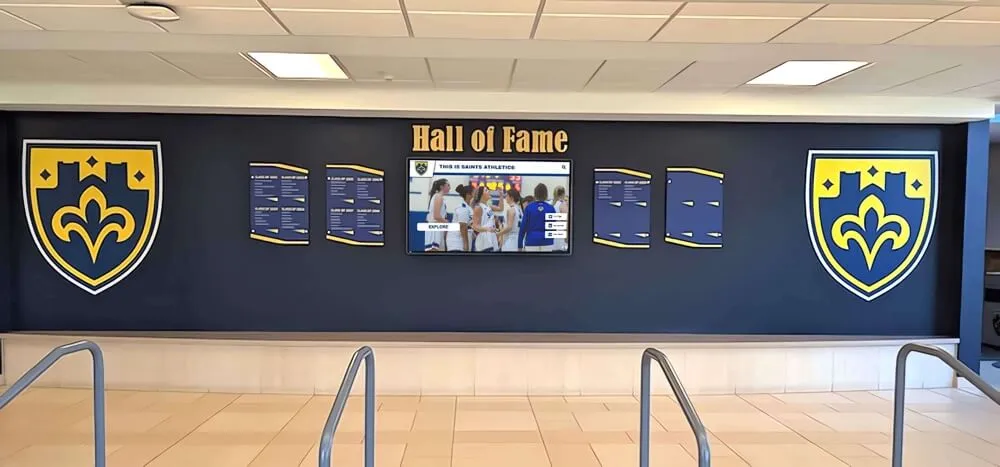
Dedicated Wall Installations: Purpose-built retirement walls featuring individual plaques or displays for each retired jersey create organized, dedicated recognition spaces. These installations often include consistent formatting across all honorees, room for expansion as future retirements occur, and prominent placement in high-traffic areas ensuring regular visibility. Well-designed walls become signature program features that define facility identity and create powerful first impressions for visitors and recruits.
Outdoor Recognition: Some schools display retired jersey information through exterior building plaques, walkway installations, or outdoor monument spaces. These approaches provide 24/7 visibility to broader communities beyond those accessing interior athletic facilities. However, outdoor displays face weathering challenges and may receive less focused attention than interior placements where people naturally gather.
Each traditional approach shares common challenges: physical space constraints limiting how many retirements can be accommodated, deterioration requiring periodic maintenance or replacement, static presentation offering limited storytelling beyond basic identification, and practical considerations when facilities undergo renovation or repurposing.

Modern Digital Recognition Solutions
Contemporary technology enables schools to honor retired jerseys through digital displays that overcome traditional approaches’ limitations while adding engagement capabilities impossible with static physical recognition.
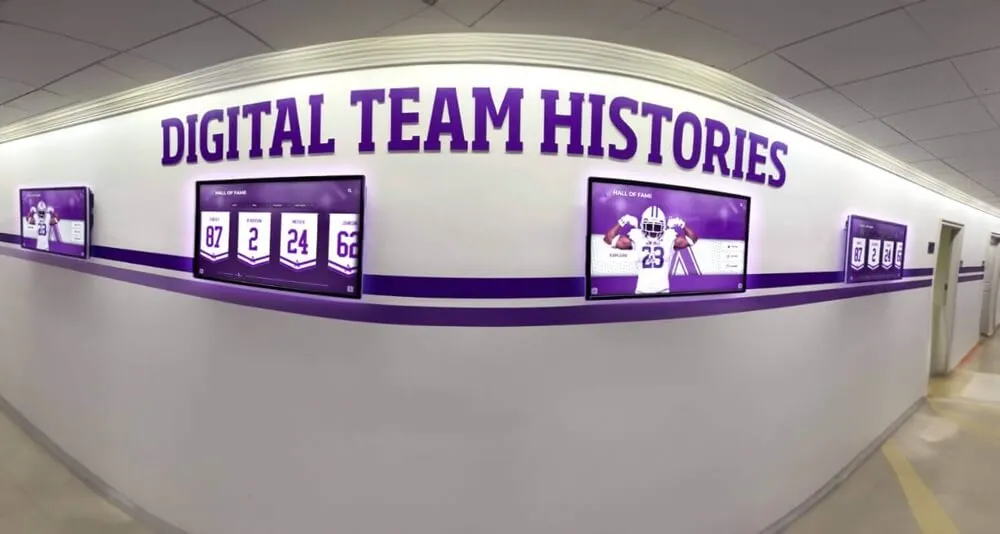
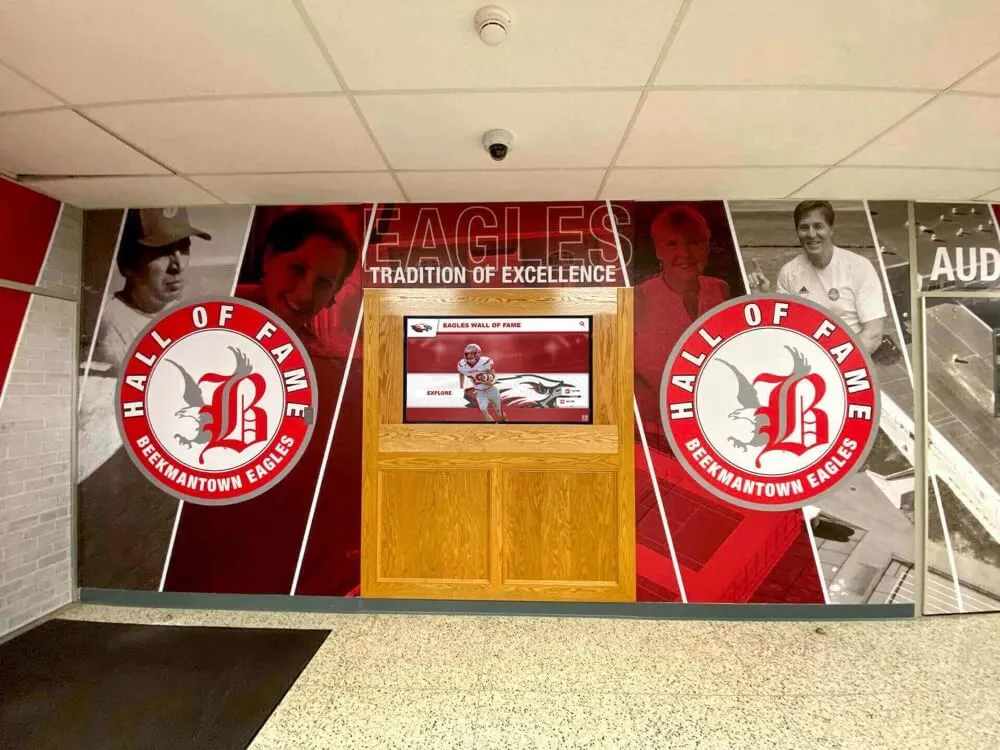
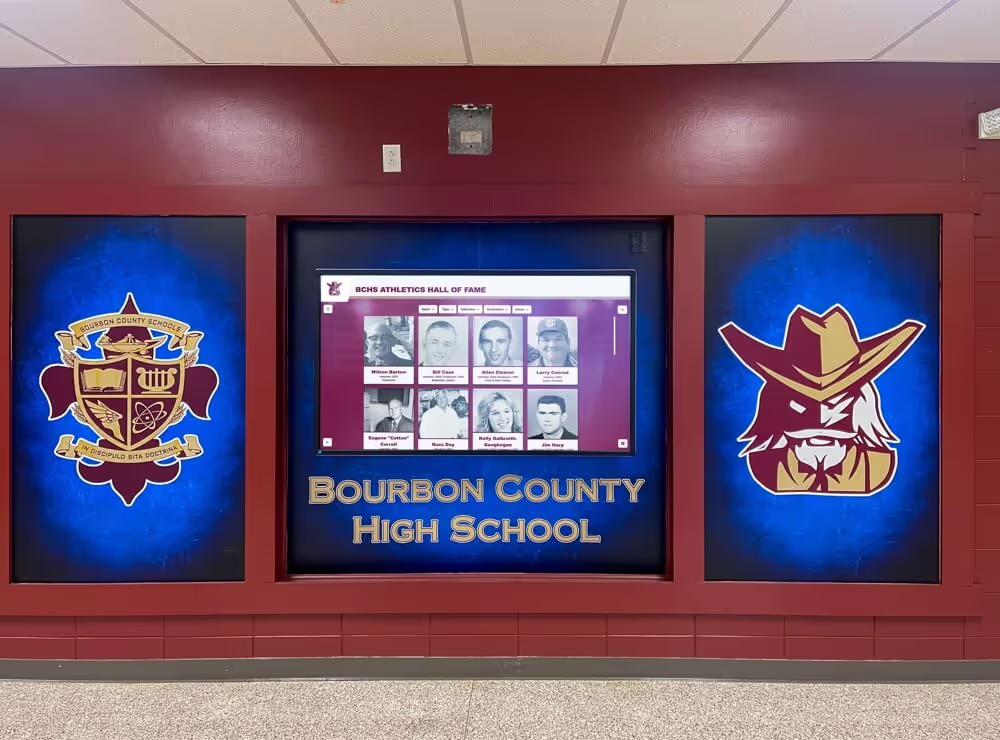
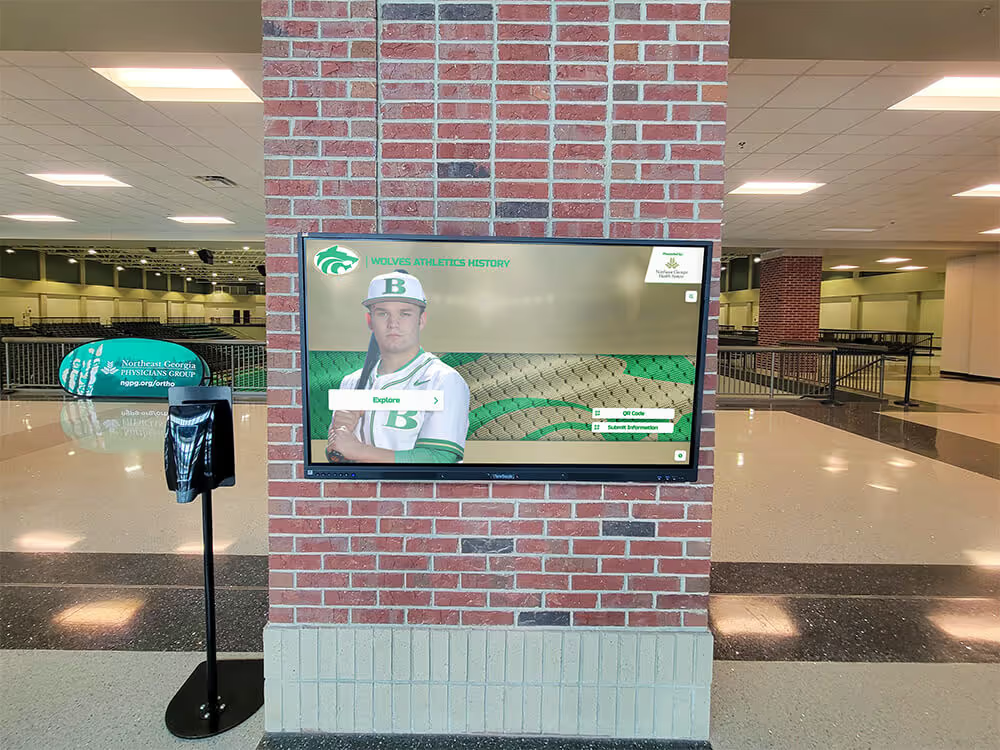
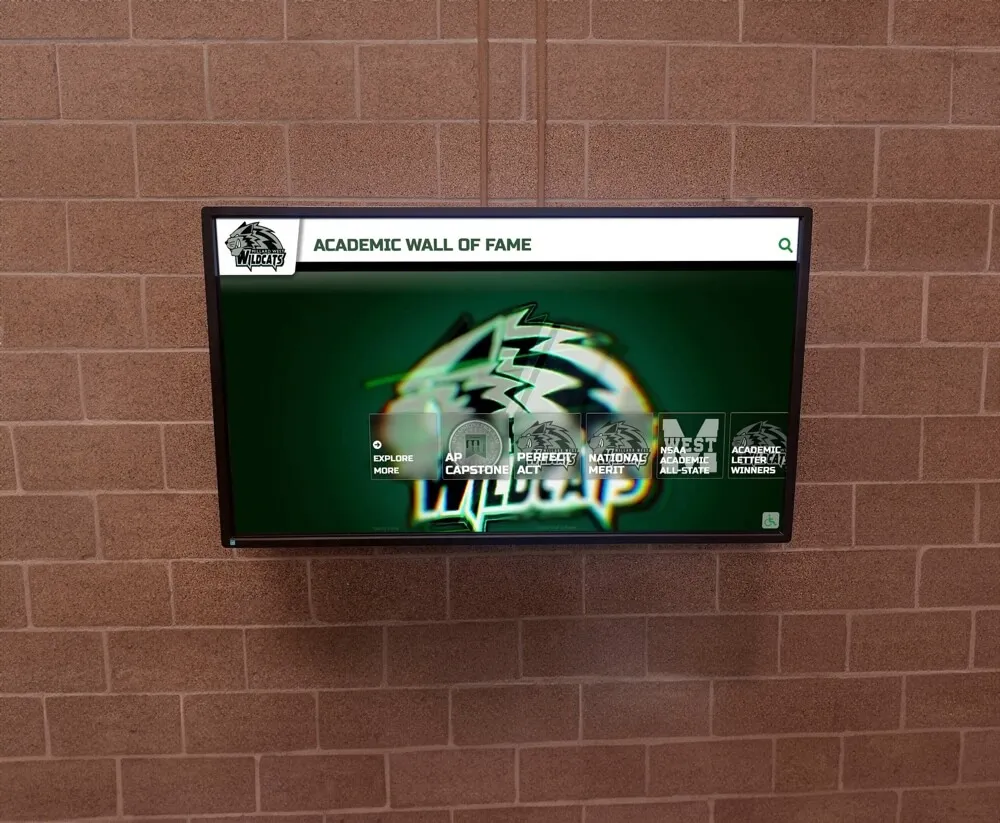
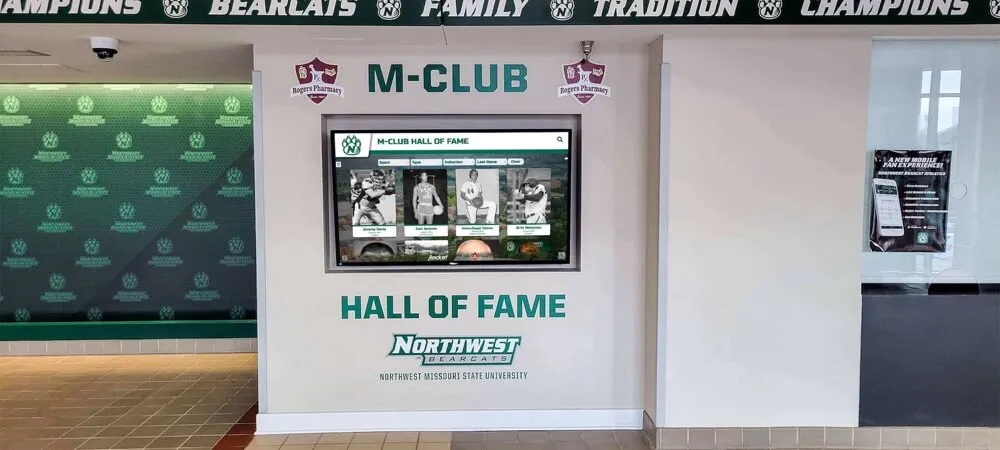
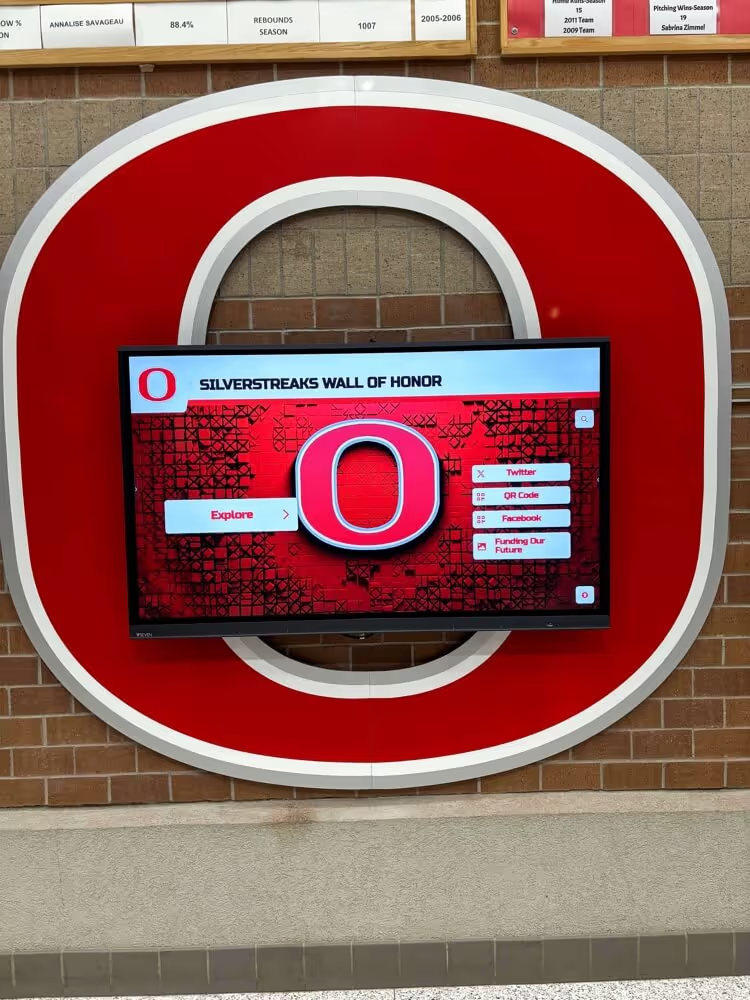
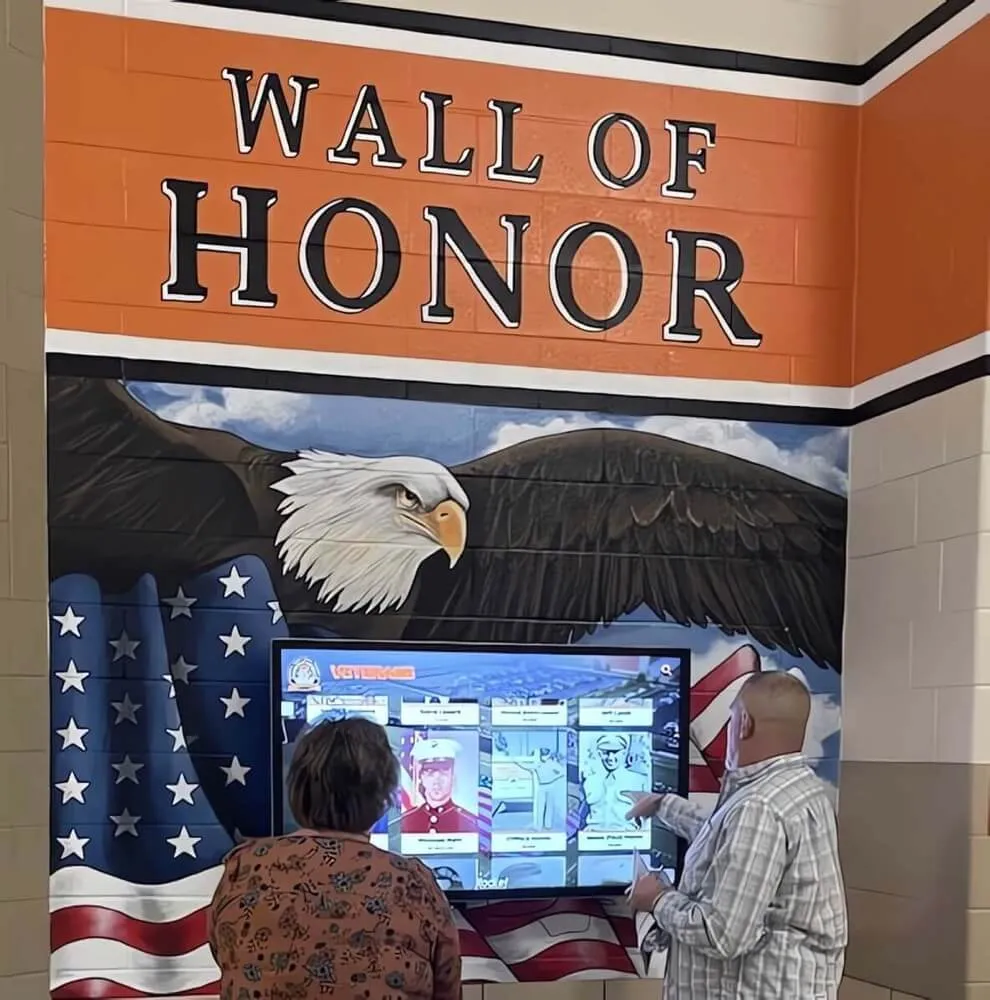
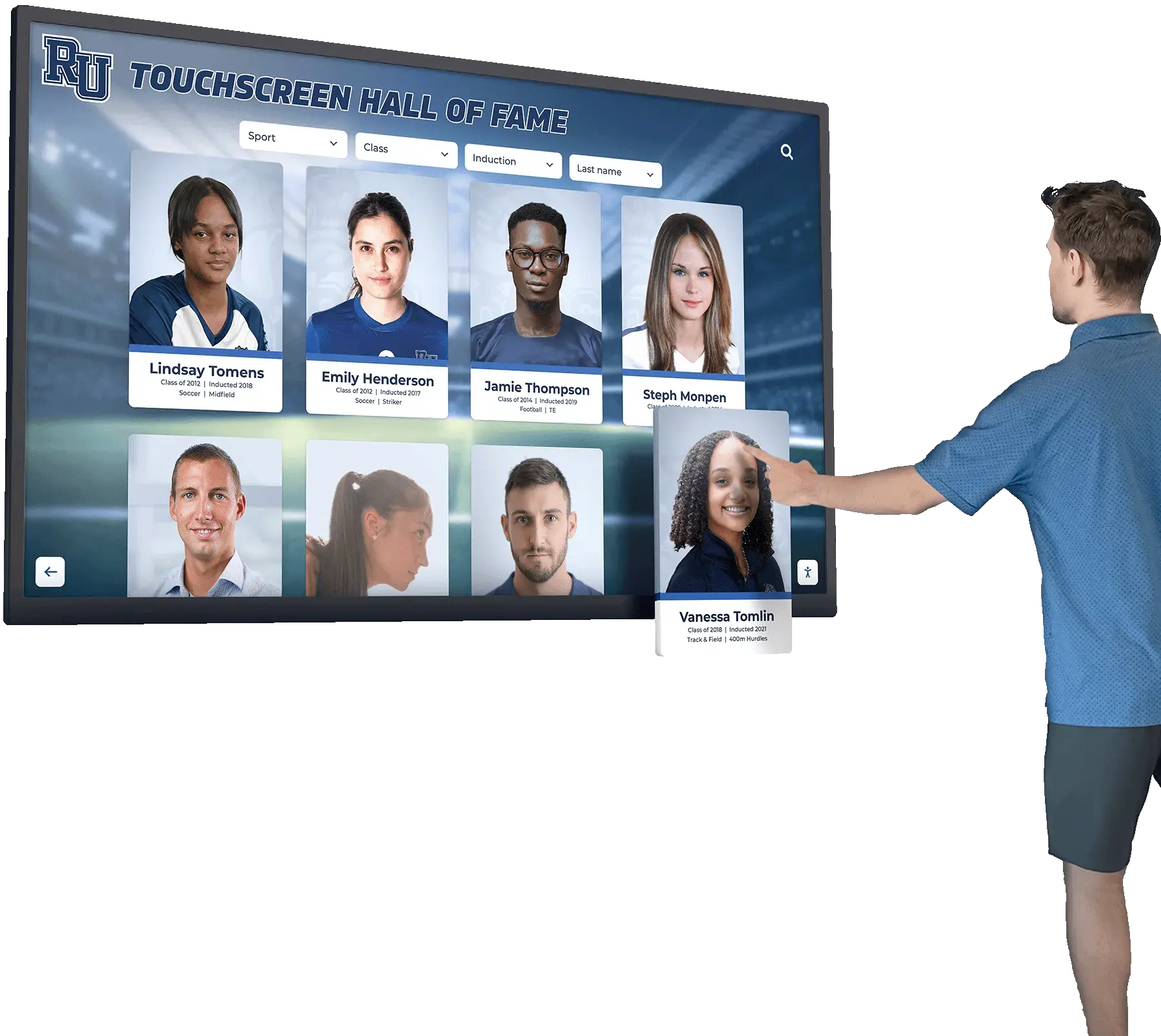
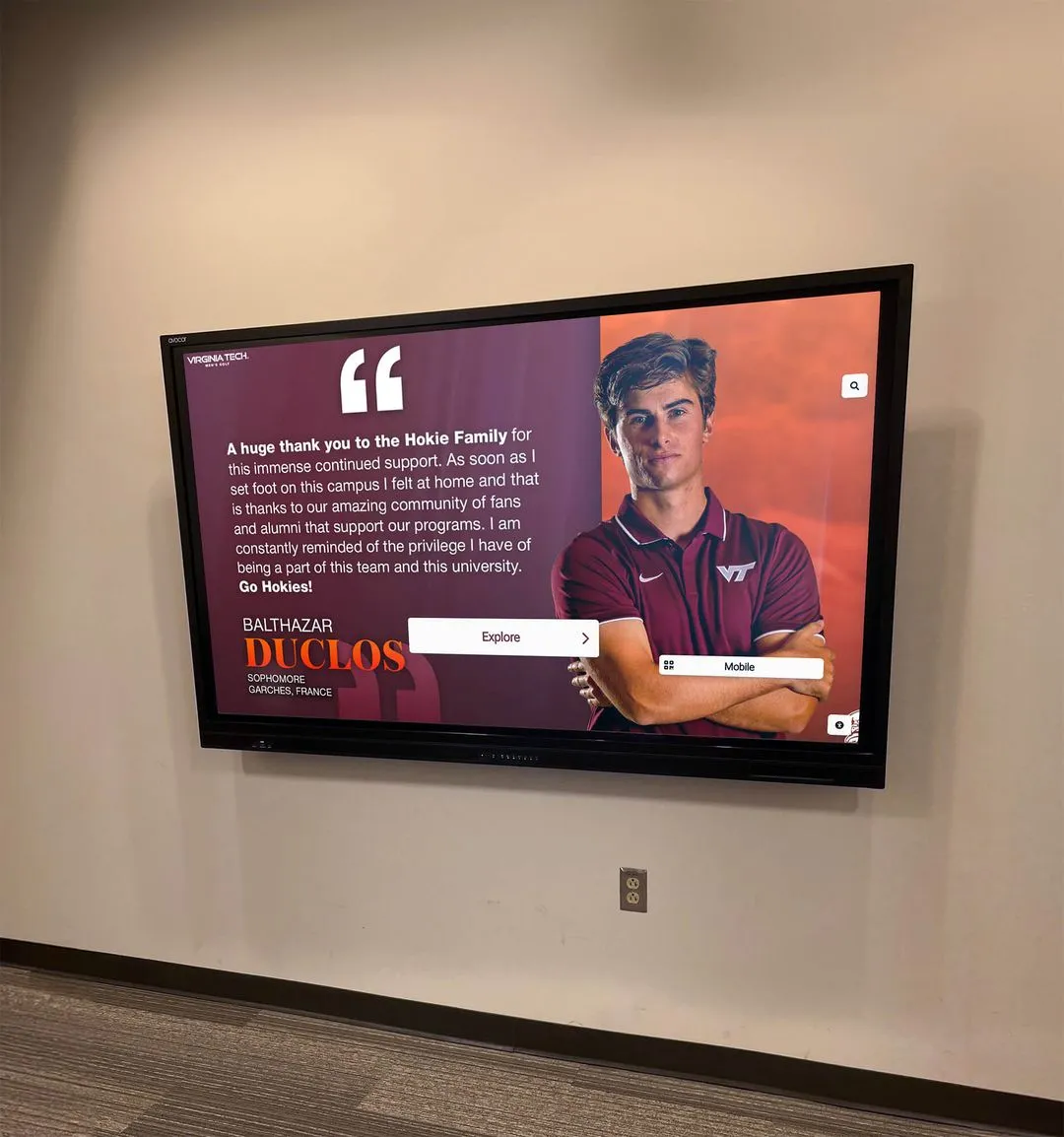
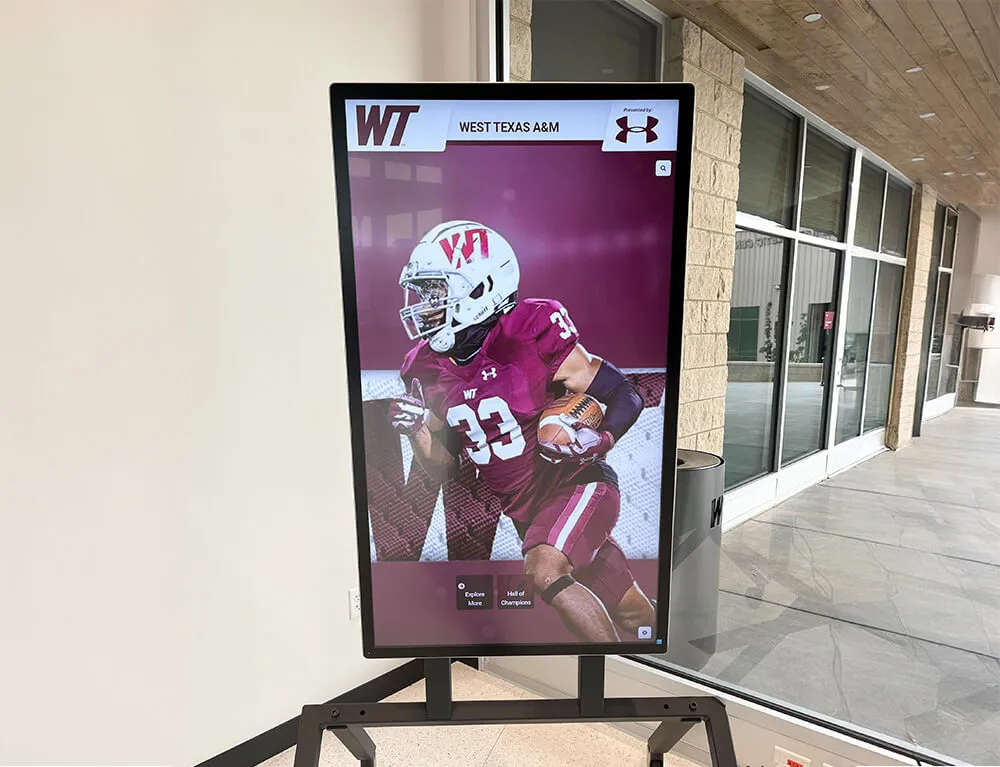
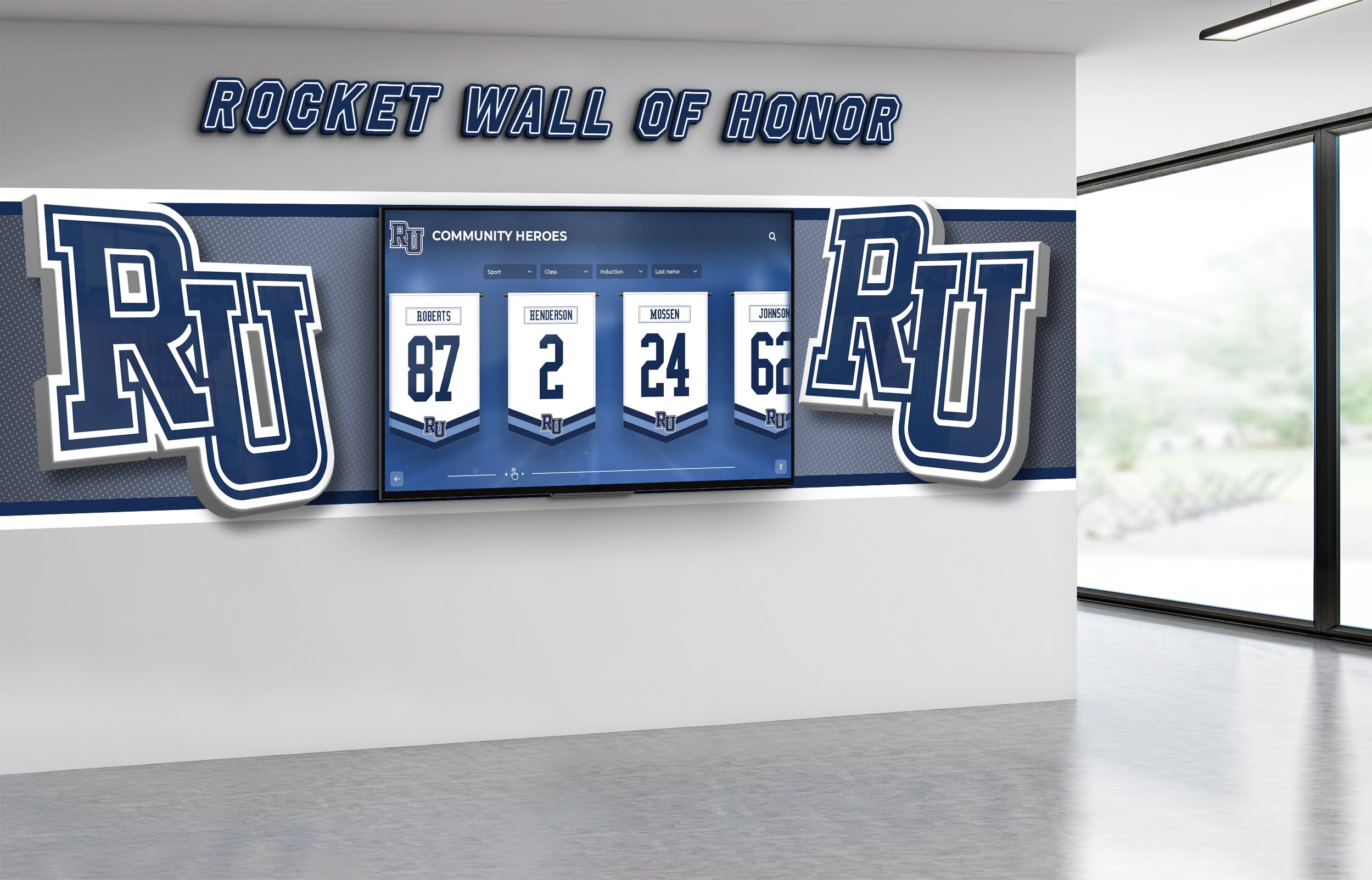
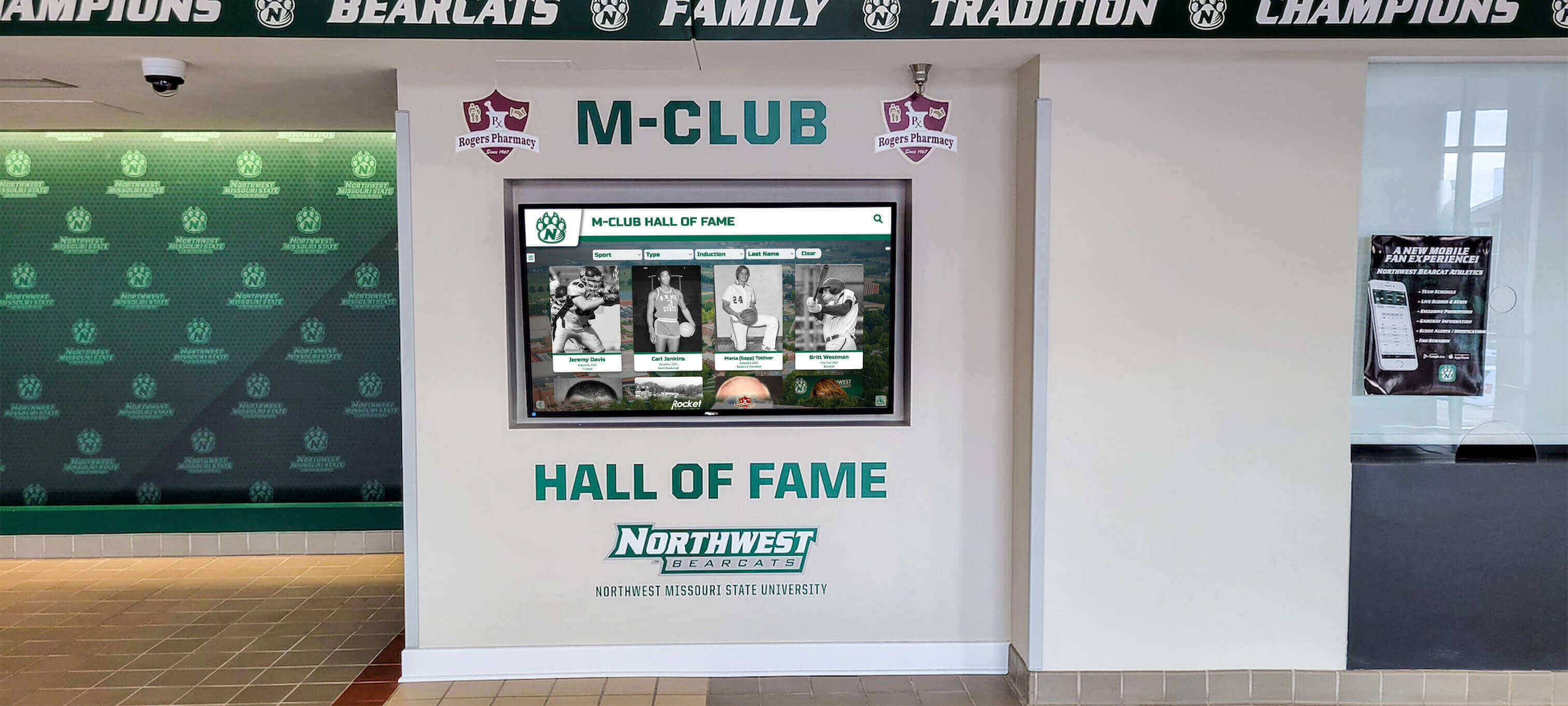
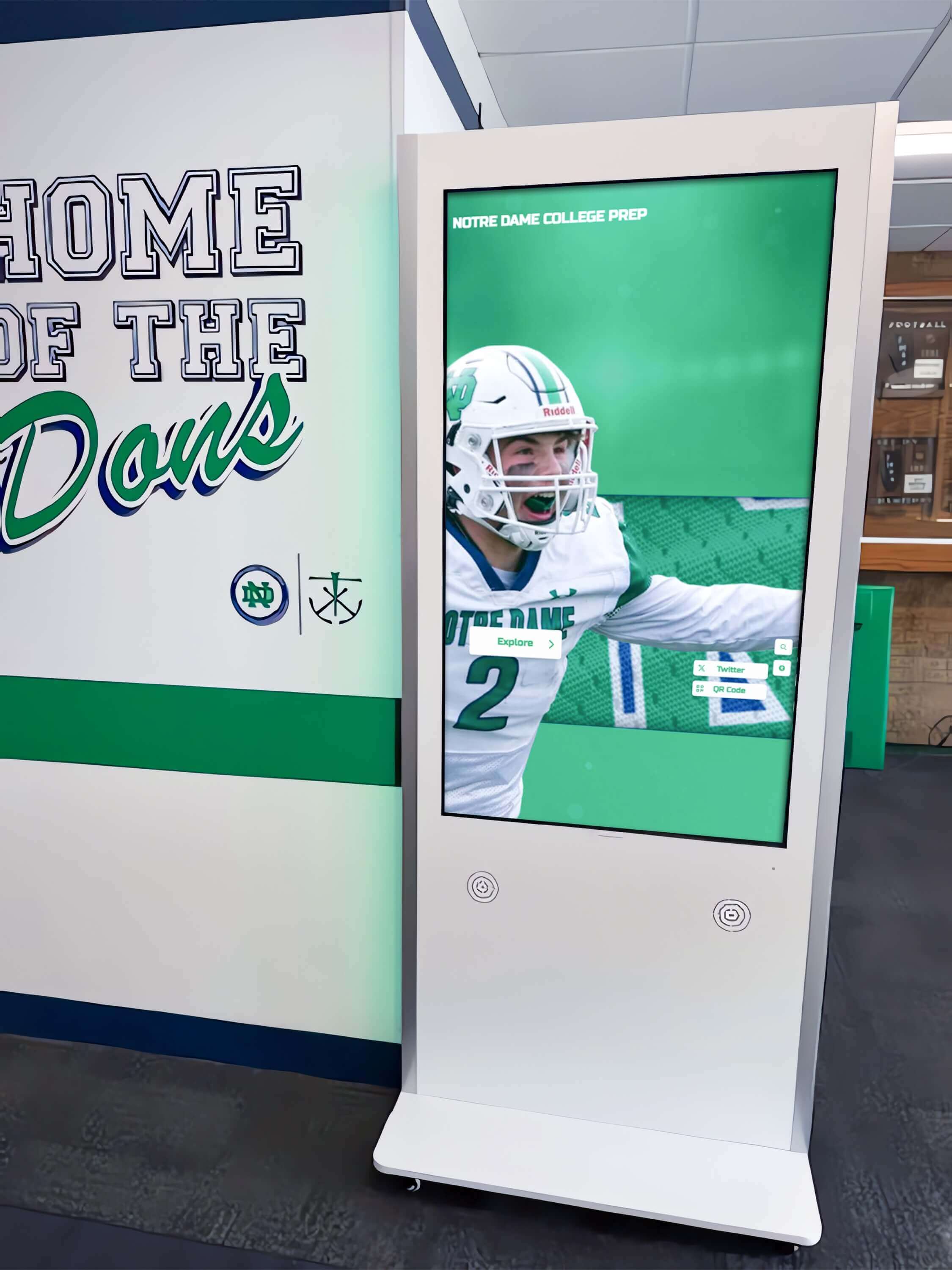
Interactive Touchscreen Displays: Purpose-built digital platforms deployed in athletic facilities transform jersey retirement recognition through several key advantages. Unlike physical displays limited by space constraints, digital systems accommodate unlimited retired jerseys—programs can honor dozens of athletes without requiring additional wall space or facility modifications. Interactive interfaces enable visitors to actively explore athlete stories rather than passively viewing plaques, dramatically increasing engagement time and emotional connection.
Digital recognition allows rich multimedia storytelling impossible with traditional displays. Each retired jersey can be accompanied by career highlight videos, championship footage, photo galleries documenting athletic journeys, statistics and achievement breakdowns, coach and teammate testimonials, and personal reflections from honored athletes. This comprehensive content brings retirements to life, helping current athletes understand not just that jerseys were retired but why these specific athletes earned such distinction.
Updates and additions happen instantly through cloud-based content management systems. When schools retire new jerseys, recognition appears immediately without engraving delays, fabrication timelines, or installation logistics. Digital systems also enable content refreshment—schools can add anniversary retrospectives, update athlete career trajectories, and incorporate new photos or videos as they become available.
Strategic Placement Considerations: Digital displays should be positioned in locations where athletes, families, and visitors naturally congregate. Gymnasium lobbies where people enter before competitions, athletic center entrances serving as program gateways, hallways connecting athletic facilities where foot traffic concentrates, and weight room or locker room areas where athletes spend daily time all provide high-visibility locations ensuring retired jersey recognition remains constantly present in athletes’ awareness rather than becoming forgotten relics.
Web-Based Recognition Extensions: Digital jersey retirement recognition should extend beyond physical displays to web-based platforms accessible from anywhere. Online retirement archives enable alumni to explore their heroes’ achievements remotely, provide easily shareable content families can distribute throughout their networks, support media research when covering current team successes, and create search-engine-indexed content that enhances school athletic program visibility and reputation.
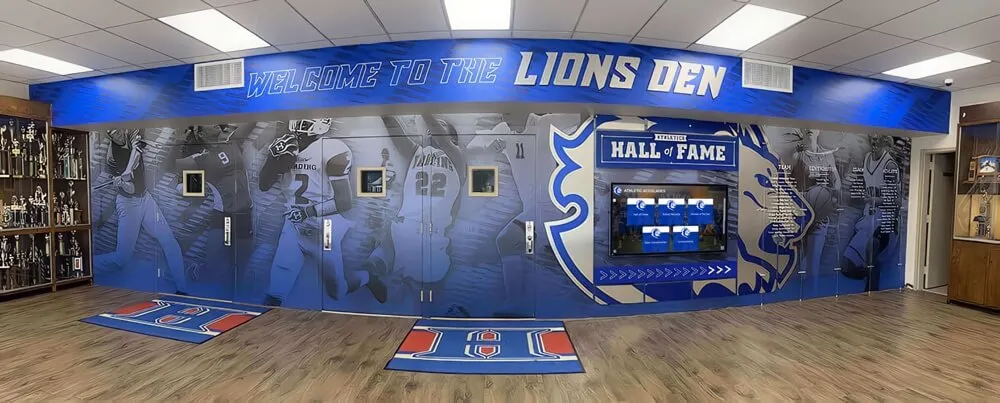
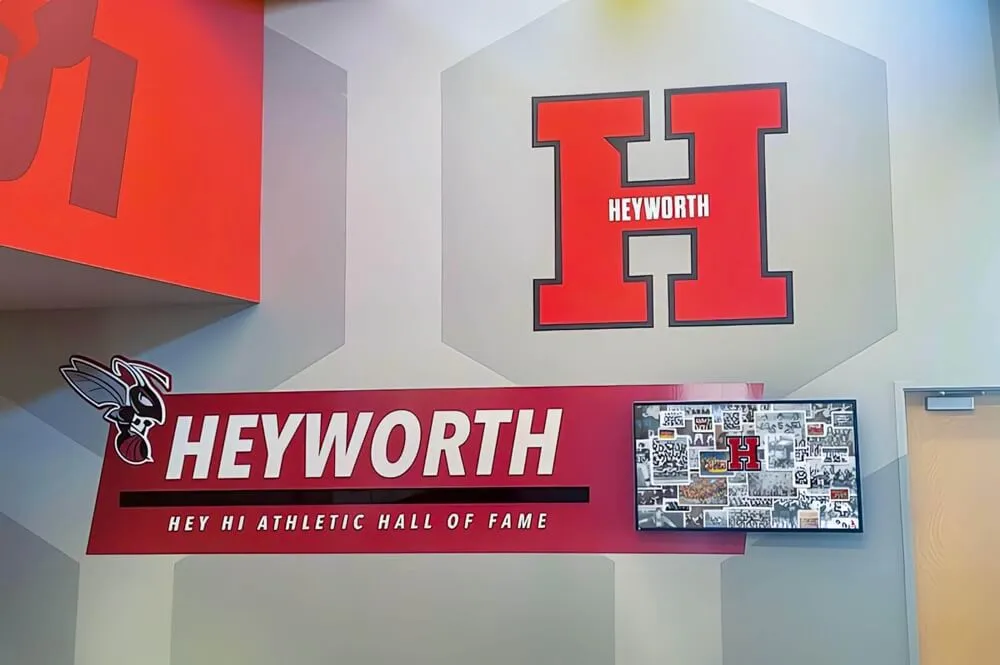
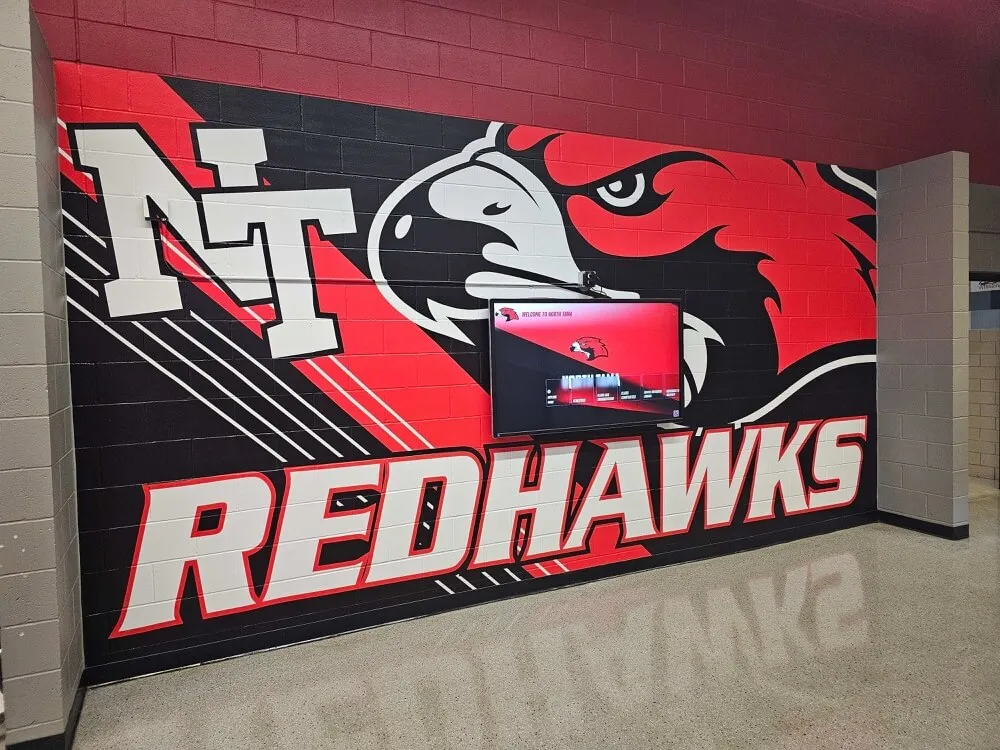
Hybrid Approaches: The most sophisticated implementations blend traditional and digital recognition strategically. Physical jerseys or banners provide tangible presence and traditional aesthetics many stakeholders value, while adjacent digital displays add rich storytelling, engagement capabilities, and unlimited expansion capacity. QR codes on physical displays can link to comprehensive digital content, creating bridges between traditional and contemporary recognition approaches.
Solutions like Rocket Alumni Solutions specialize in purpose-built platforms designed specifically for educational athletic recognition rather than generic digital signage requiring adaptation. These systems provide intuitive content management that athletic administrators can handle independently, sport-specific templates and organizational frameworks, proven approaches developed through hundreds of school implementations, and ongoing platform development ensuring recognition systems evolve alongside technology rather than becoming obsolete.
Insights into implementing digital recognition displays provide practical frameworks for schools considering contemporary solutions.
Maintenance and Preservation Strategies
Regardless of display approach, long-term maintenance ensures retired jersey recognition remains impressive rather than deteriorating into shabby reminders of institutional neglect.
Physical Display Maintenance: Traditional recognition requires regular attention including cleaning glass and frames preventing dust accumulation, inspecting mounting hardware ensuring secure attachment, replacing UV-damaged or faded banners maintaining visual appeal, updating information as athlete post-graduation achievements warrant mention, and addressing facility changes when renovations affect display locations. Schools should assign specific staff responsibility for recognition maintenance rather than assuming upkeep will happen organically.
Digital Platform Management: Digital recognition systems require different maintenance including content updates as new information becomes available, software updates ensuring platforms benefit from improvements and security patches, hardware refresh every 7-10 years as display technology evolves, and user experience refinement based on analytics showing how visitors engage with content. Working with providers committed to ongoing platform development prevents digital recognition from becoming outdated technology requiring expensive replacement.
Historical Documentation: Whether using traditional or digital approaches, schools should maintain comprehensive archives documenting all retirements including ceremony recordings and photos, athlete biographical information and achievement documentation, selection committee reasoning and deliberation records, and media coverage and community responses. These archives support institutional memory preventing knowledge loss when administrators and coaches transition while providing source material for anniversary recognition and historical retrospectives.
Common Challenges and Controversial Decisions
Jersey retirement programs inevitably generate challenges requiring thoughtful navigation to maintain credibility and community support.
Managing Expectations and Disappointments
Not everyone will agree with every retirement decision—or lack thereof.
Athletes Who Don’t Meet Criteria: Some athletes and families believe jersey retirement is warranted despite not meeting established standards. These situations require diplomatic but firm communication about why criteria exist and why consistency matters. Athletic directors should personally communicate decisions to affected athletes and families, explaining reasoning with respect while maintaining that established standards apply equally to all athletes regardless of personal relationships or community pressure.
Comparisons to Previous Retirements: New community members sometimes question why currently honored athletes received retirement while other seemingly comparable athletes did not. Schools benefit from maintaining clear documentation explaining each retirement decision’s rationale, enabling administrators to address comparisons substantively rather than defensively. When past retirement decisions appear inconsistent with current standards, schools might acknowledge that criteria have evolved while honoring previous decisions made in good faith based on understanding at the time.
Political and Donor Pressure: Influential alumni, major donors, or community figures sometimes advocate for specific retirements regardless of whether athletes meet established criteria. Maintaining program integrity requires independence from external pressure, even when disappointing powerful stakeholders. Selection committee structures involving multiple perspectives rather than single decision-makers help resist inappropriate influence while demonstrating that retirement decisions reflect collective institutional judgment rather than individual administrator preferences.
Addressing Post-Retirement Conduct Issues
Schools occasionally face painful situations when athletes whose jerseys were retired subsequently engage in serious misconduct.
Criminal Convictions and Ethical Violations: When honored athletes commit serious crimes or ethical violations fundamentally contradicting institutional values, schools must decide whether retirements should be reversed. Policies established proactively prevent reactive decision-making during crises. Many schools maintain that criminal convictions for violent crimes, serious fraud, or other major offenses warrant unretirement, while others argue that retirement honored high school achievement specifically and should not be reversed based on separate adult conduct.
Lesser Misconduct: Not all post-retirement issues warrant unretirement. Schools should differentiate between conduct fundamentally violating institutional values versus personal struggles or mistakes warranting compassion. Minor legal issues, professional failures, or personal difficulties generally shouldn’t trigger unretirement absent severe circumstances directly contradicting why athletes were honored initially.
Due Process Considerations: Before unretiring jerseys based on misconduct, schools should establish investigation processes ensuring decisions rest on verified information rather than allegations, providing honored athletes opportunities to provide context or explanation, documenting reasoning thoroughly, and treating similar situations consistently. Rushed decisions made during media firestorms often prove regrettable once fuller information emerges.
Communication Strategies: Unretirement decisions require careful communication explaining reasoning while maintaining respect for the complicated realities involved. Schools should acknowledge both the athlete’s past achievements and the conduct necessitating unretirement, express disappointment rather than anger or condemnation, and emphasize that decisions reflect institutional values rather than personal judgments about honored athletes as whole people.
Handling Number Shortage Issues
As schools retire jerseys over decades, available number ranges gradually constrain causing practical problems.
Creative Number Solutions: When traditional numbers become scarce, schools might permit non-traditional numbers previously unused, allow double-digit numbers where single-digits are standard, or utilize zeros and triple-digit numbers expanding available ranges. While purists resist these adaptations, practical necessity sometimes requires creative approaches maintaining program functionality.
Conditional or Temporary Retirement: Some schools implement honored number status rather than permanent retirement. Future athletes can wear honored numbers but must request permission, understand the significance, and demonstrate character and dedication worthy of the legacy. This approach maintains recognition while preserving number availability. Temporary retirement for specified periods (perhaps 25 years) after which numbers return to circulation represents another compromise, though honored athletes and families often resist suggestions that recognition should have expiration dates.
Sport-Specific Policies: Schools might retire jerseys in some sports while implementing alternative recognition in others where number constraints are more severe. Basketball programs with limited number ranges might retire jerseys more selectively than football programs with broader number availability.
Inclusivity and Equity Considerations
Jersey retirement traditions often reflect historical biases requiring contemporary correction.
Gender Equity: Many schools’ retired jerseys disproportionately honor male athletes, reflecting historical underinvestment in women’s athletics and bias in recognition decisions. Proactive reviews identifying overlooked female athletes, adjusted criteria recognizing excellence within different competitive contexts, and commitment to equitable retirement moving forward address these imbalances while honoring deserving athletes.
Multi-Sport Athlete Recognition: Athletes excelling in multiple sports sometimes face retirement complications. Schools must decide whether to retire numbers in all sports athletes played or only their primary sport, whether multi-sport success should influence retirement decisions, and how to recognize athletic versatility when sport-specific achievement alone might not meet retirement thresholds.
Team vs. Individual Sport Balance: Individual sport athletes (track, wrestling, tennis) sometimes receive less retirement consideration than athletes in high-profile team sports (football, basketball, baseball). Fair policies ensure excellence in any sport receives appropriate recognition rather than allowing program prestige to override achievement evaluation.
Comprehensive exploration of youth sports awards and recognition provides broader context for implementing equitable athletic recognition systems.
Creating Ongoing Engagement with Retired Jersey Traditions
Beyond initial ceremonies and displays, schools should actively maintain retired jersey relevance and visibility rather than allowing recognition to fade into background obscurity.
Annual Recognition Traditions
Systematic traditions keep retired jerseys visible and meaningful within ongoing program culture.
Annual Homecoming Recognition: Many schools feature retired jersey honorees during homecoming weekends, inviting them to attend games, participate in ceremonies, and interact with current athletes. These annual touchpoints maintain relationships between institutions and honored athletes while enabling younger community members to connect with program legends.
Current Team Education: Coaches should systematically educate current athletes about retired jersey honorees—sharing their stories, showing highlight footage, and explaining what made them exceptional. When current athletes understand who wore which retired jerseys and why those athletes earned such distinction, the recognition maintains motivational relevance rather than becoming mere decoration.
Milestone Anniversary Celebrations: Significant retirement anniversaries—25 years, 50 years—provide opportunities for special recognition events. These milestone celebrations bring honored athletes back for extended visits, update their stories with life achievements beyond athletics, and create multi-generational connections as original teammates and subsequent generations of athletes gather together.
Record-Setting Comparisons: When current athletes approach or break records held by honored athletes, schools should explicitly recognize these connections. Highlighting when current players are challenging legends whose jerseys hang in the gym creates narrative drama while demonstrating that retired numbers represent beatable standards rather than untouchable mythology.
Digital Content Rotations: Schools using digital recognition displays should rotate featured content regularly, highlighting different retired jersey honorees monthly or seasonally. This regular rotation ensures all honorees receive featured attention periodically rather than static presentation where some athletes dominate visibility while others fade into digital background.

Leveraging Retired Jersey Recognition for Recruitment and Development
Jersey retirement recognition serves strategic purposes beyond simply honoring past athletes.
Recruiting Tool: Retired jerseys communicate program prestige and achievement history to prospective student-athletes and families. During recruiting visits and campus tours, highlighting retired jersey honorees demonstrates institutional commitment to recognizing excellence while providing concrete examples of what exceptional athletes can achieve within programs. The visible presence of retired jerseys signals that programs develop athletes capable of achieving genuinely exceptional success.
Alumni Mentorship Programs: Honored athletes often prove eager to support current programs through mentorship relationships. Schools should systematically connect retired jersey honorees with current athletes, facilitating formal mentorship programs, periodic visits and speaking engagements, career guidance and networking support, and involvement in program fundraising and development. These ongoing relationships ensure honored athletes remain active program contributors rather than occasional ceremonial guests.
Fundraising and Development: Jersey retirement recognition supports institutional advancement efforts through fundraising opportunities tied to retirements and anniversary celebrations, naming opportunities for facilities or programs connected to honored athletes, and alumni engagement strategies leveraging retired jersey honorees’ networks and influence. Honored athletes typically become enthusiastic institutional advocates who can open doors and relationships supporting broader institutional goals.
Technology-Enabled Engagement Strategies
Modern technology creates engagement opportunities impossible in previous eras.
Social Media Storytelling: Schools should develop content calendars featuring retired jersey honorees through throwback Thursday posts, anniversary recognitions, “where are they now” updates, and comparative statistics between historical and current athletes. This regular social media presence keeps retired jersey traditions visible within digital spaces where younger generations naturally engage.
Video Interview Archives: Schools should systematically create video oral history interviews with retired jersey honorees, capturing their reflections, stories, and perspectives before memories fade or honorees pass away. These video archives become invaluable historical resources and provide rich content for digital recognition displays, social media, and educational purposes.
Interactive Comparison Tools: Digital platforms can enable visitors to compare current athletes’ statistics to retired jersey honorees’ achievements, creating engaging interactive experiences. These comparisons help visitors understand the exceptional nature of retired jersey achievements while following current athletes’ progress toward potentially joining ranks of program legends.
Mobile App Integration: Schools with athletic program mobile apps should integrate retired jersey content, enabling fans to explore honoree profiles during games, access historical context about program traditions, and share favorite athletes and moments through social networks. Mobile integration ensures recognition extends beyond static physical displays to dynamic digital engagement.
Strategies for high school end-of-year awards programs provide complementary recognition approaches that work alongside jersey retirement traditions.
Planning Your School’s Jersey Retirement Program
For schools establishing new jersey retirement traditions or enhancing existing programs, systematic planning creates foundations for long-term success.
Starting from Scratch: Establishing First Retirements
Schools without existing retirement traditions face unique opportunities and challenges.
Historical Research: Begin by systematically researching program history to identify athletes who might meet retirement criteria if they were competing today. Review championship records, statistical databases, coaching recollections, and athletic department archives identifying candidates. This historical perspective ensures inaugural retirements don’t overlook deserving athletes from earlier eras simply because they preceded formal recognition systems.
Criteria Development: Work with athletic administrators, coaches, and athletic booster leadership to develop clear retirement criteria appropriate to your institution’s competitive context and values. Draft criteria should be circulated for stakeholder feedback before finalization, ensuring broad buy-in and addressing potential concerns before they become controversial.
Inaugural Class Considerations: First retirement classes often include multiple honorees recognizing accumulated achievements from program history. These inaugural classes create critical mass generating community excitement while establishing retirement tradition as significant institutional recognition. However, avoid retiring so many jerseys simultaneously that the honor’s exclusivity becomes diluted.
Phased Implementation: Schools might implement jersey retirement by sport gradually rather than attempting simultaneous cross-sport launches. Beginning with the school’s most prominent or successful sport enables focused attention and resource investment while establishing templates applicable to subsequent sports.
Communication and Marketing: Generate enthusiasm through comprehensive communication explaining what jersey retirement represents, why selected athletes meet criteria, how traditions will continue, and when ceremonies will occur. Build anticipation through regular updates, social media campaigns, and community engagement creating excitement around inaugural retirements.
Enhancing Existing Programs
Schools with established retirement traditions might identify opportunities for program enhancement.
Criteria Review and Modernization: Periodically review whether existing criteria remain appropriate or require updating. As competitive landscapes evolve and institutional values shift, retirement criteria might need refinement ensuring ongoing relevance. Any criteria modifications should be explained transparently to stakeholders while honoring previous retirement decisions made under earlier standards.
Display Modernization: Traditional physical displays might benefit from digital augmentation or complete technology transition. Enhanced displays provide opportunities to feature neglected earlier retirements more prominently, add storytelling and multimedia content enriching recognition, and accommodate additional retirements without space constraints limiting traditional displays.
Engagement Program Development: Schools whose retirements have become static historical artifacts should implement engagement strategies bringing honored athletes back regularly, educating current athletes about program legends, and maintaining visibility through social media and digital content. Active engagement transforms retired jerseys from background decoration into living program elements.
Gap Identification: Systematic program review might reveal recognition gaps—overlooked deserving athletes, underrepresented sports or demographics, or historical eras lacking appropriate representation. Proactive gap remediation demonstrates institutional commitment to fair, comprehensive recognition rather than recognition of convenience favoring recent memory over historical achievement.
Anniversary and Milestone Planning: Develop long-term calendars tracking retirement anniversaries and planning appropriate celebrations. Systematic anniversary recognition ensures all honorees receive ongoing attention rather than recognition concentrated on recent retirements while earlier honorees fade from awareness.

Budget Considerations and Funding Strategies
Jersey retirement implementation requires investment, though costs vary significantly based on approach sophistication.
Traditional Physical Display Costs: Banner production and installation typically ranges from $200-$800 per retirement depending on size, materials, and installation complexity. Framed jersey displays cost $150-$500 including professional framing and mounting. Dedicated wall installations require $5,000-$25,000 initial investment depending on scope, materials, and design complexity, plus $100-$300 per individual retirement addition.
Digital Recognition Investment: Interactive touchscreen display hardware costs $3,000-$8,000 per display installation including mounting and network infrastructure. Software platforms and licensing vary by provider with subscription models typically ranging $1,200-$4,800 annually depending on features and support levels. Initial content development requires $3,000-$10,000 depending on how many retirements need documentation and multimedia production quality. Digital solutions require higher initial investment but provide unlimited expansion capacity and engagement capabilities impossible with traditional approaches.
Ceremony Costs: Ceremony expenses include venue rental if using non-school facilities ($0-$2,000), catering for receptions ($500-$3,000 depending on attendance), physical recognition items for honorees ($100-$500 per athlete), printed programs and collateral materials ($200-$800), photography and videography services ($500-$2,000), and audio-visual equipment rental if needed ($200-$1,000).
Funding Strategies: Schools fund retirement programs through athletic budgets as operating expenses, athletic booster fundraising specifically for recognition initiatives, individual or family sponsorship of specific retirements, naming opportunities where donors sponsor recognition displays, alumni fundraising campaigns positioned as legacy investments, and corporate sponsorships from local businesses supporting athletic programs. Many schools find that jersey retirement projects generate enthusiastic support when positioned as permanent recognition celebrating program excellence.
Conclusion: Building Lasting Traditions Through Jersey Retirement
Jersey retirement represents athletics’ highest honor—recognition so prestigious that schools permanently dedicate numbers to individual athletes, ensuring no future athlete will wear those digits again. This permanent distinction creates lasting legacies that inspire current athletes, engage alumni, and define program identity across generations.
Successful jersey retirement programs share common characteristics regardless of institutional size or resources. They establish clear, demanding criteria ensuring only genuinely exceptional athletes receive recognition. They implement fair, transparent selection processes building community confidence in retirement decisions. They create memorable ceremonies honoring athletes appropriately while engaging broader communities. They develop sustainable displays ensuring retired jerseys remain visible and inspirational rather than fading into obscurity. They maintain active engagement with honored athletes and ongoing traditions keeping retirements relevant within current program culture.
The schools that honor their athletic legends most effectively understand that jersey retirement extends beyond one-time recognition. It represents ongoing commitment to preserving institutional history, celebrating excellence, and inspiring future generations through tangible connection to athletic achievement at its highest level. Modern recognition technologies enable schools to honor retired jerseys more comprehensively than ever before through interactive digital displays that tell rich stories, web platforms extending recognition beyond campus boundaries, unlimited expansion capacity accommodating growing retirement traditions, and multimedia capabilities bringing athletic excellence to life for new generations.
Whether your school is establishing its first retirement tradition or enhancing programs spanning decades, the principles remain constant: honor genuine excellence authentically, implement fair processes consistently, celebrate achievements memorably, and create recognition that serves your institution’s unique traditions and values. The athletes whose jerseys hang in your gym or display digitally in your facilities deserve recognition matching their dedication and achievement—thoughtful planning ensures your jersey retirement traditions deliver that honor for generations to come.
Ready to transform how your school honors its greatest athletic legends? Modern platforms like Rocket Alumni Solutions provide purpose-built recognition systems specifically designed for educational institutions, offering unlimited recognition capacity, rich multimedia storytelling, intuitive content management, and proven approaches that help schools build the jersey retirement traditions their legendary athletes deserve.
Frequently Asked Questions
What criteria should schools use to determine which athletes deserve jersey retirement?
Most effective criteria combine exceptional athletic achievement with character considerations. Athletic performance standards might include record-setting achievements that stood for extended periods, championship success at state or national levels, all-state or All-American recognition earned multiple times, statistical dominance clearly distinguishing athletes from all predecessors and successors, or exceptional post-graduation success in professional or Olympic athletics. Character requirements often include exemplary sportsmanship and conduct during competition, strong academic performance demonstrating student-athlete balance, leadership that elevated teammates and built positive culture, and post-graduation citizenship reflecting positively on institutions. Schools should calibrate specific standards to their competitive contexts—small rural schools shouldn’t apply the same absolute thresholds as large suburban programs in elite conferences, but standards should still represent genuine exceptional excellence within each environment. Most importantly, criteria should be documented clearly, communicated publicly, and applied consistently across all athletes regardless of sport, era, or personal relationships.
How many jerseys should a school retire, and how often?
Jersey retirement should remain highly selective to maintain the honor’s significance. Most schools should retire 1-2 jerseys per sport per decade as general guideline, though the specific number depends on program history and competitive success. Schools consistently winning championships might identify more retirement-worthy athletes than programs with limited success, but even successful programs should maintain exclusivity. Retiring 5-10 jerseys within short periods risks diluting the honor while creating practical number availability issues for current athletes. The key is ensuring retired jerseys represent truly exceptional achievements—not just very good athletes but genuine program legends whose accomplishments fundamentally shaped program identity and history. If a school finds itself considering numerous retirements simultaneously, it might indicate criteria need strengthening or suggest implementing alternative recognition levels like hall of fame induction or honored number status that acknowledge excellence while reserving retirement for the absolute highest achievers.
Should schools retire jerseys based solely on high school performance, or should post-graduation success be required?
Schools disagree on whether post-high-school achievement should factor into retirement decisions. Some maintain that retirement should honor high school excellence specifically, arguing that what athletes accomplish in high school is what directly impacted their programs and communities. This approach recognizes high school-era achievement and allows retirement to proceed relatively soon after graduation. Other schools emphasize post-graduation success, viewing continued excellence at collegiate, professional, or Olympic levels as validation that high school performance represented beginning of genuinely exceptional athletic careers rather than peak achievement. This approach requires longer waiting periods enabling post-graduation assessment. Many schools adopt hybrid criteria where exceptional high school performance alone can warrant retirement if truly extraordinary (perhaps unbroken records, multiple championships, or unprecedented statistical dominance) while post-graduation achievement provides alternative pathway for athletes whose high school careers were excellent but not quite reaching highest threshold. The key is establishing clear policies before selection situations arise rather than making different decisions for comparable athletes based on personal relationships or community pressure.
What should schools do if a retired jersey honoree commits serious crimes or ethical violations after retirement?
This difficult situation requires policies established proactively before crises occur. Most schools maintain that certain serious offenses warrant unretiring jerseys—typically violent crimes, serious fraud, or conduct fundamentally contradicting institutional values. However, schools should differentiate between conduct directly violating why athletes were honored versus separate adult struggles or mistakes. Criminal convictions for offenses completely incompatible with being honored role models typically justify unretirement. Lesser misconduct, personal struggles, professional failures, or minor legal issues generally shouldn’t trigger unretirement absent exceptional circumstances. Before unretiring jerseys, schools should establish investigation processes ensuring decisions rest on verified information rather than allegations, provide honored athletes opportunities to provide context, document reasoning thoroughly, and treat similar situations consistently rather than making different decisions based on public pressure or media attention. Unretirement decisions require careful communication acknowledging both past achievements and conduct necessitating the difficult decision while expressing disappointment rather than condemnation. Some schools create emeritus or archived status removing active display while acknowledging the historical recognition occurred, though this compromise satisfies few stakeholders completely.
How can schools display retired jerseys when facility renovations or new construction changes athletic spaces?
Facility changes create complications for permanent recognition, particularly physical displays like hanging banners or wall-mounted installations. Schools facing renovations should involve athletic administrators and recognition stakeholders in facility planning from the beginning, ensuring new designs accommodate existing retired jersey displays appropriately. When complete redesigns make preserving original display approaches impractical, schools might relocate retired jersey recognition to new prominent locations within renovated facilities, redesign displays to fit new aesthetic and architectural realities, or transition to digital recognition systems that provide flexibility adapting to facility changes without requiring physical reinstallation. Digital recognition offers particular advantages when facilities undergo frequent updates—content remains accessible through cloud-based platforms and can be deployed on new hardware in updated facilities without losing recognition content or requiring complete system replacement. Schools should communicate planned facility changes to honored athletes and families beforehand, explaining how retirements will be preserved and enhanced rather than diminished through facility improvements. The worst approach is discovering during or after renovation that retired jersey displays were removed, damaged, or eliminated without planning for appropriate alternative recognition.
Should multi-sport athletes have their number retired in all sports they played?
Multi-sport excellence presents interesting retirement complications. Some schools retire numbers in all sports where athletes competed at retirement-worthy levels, acknowledging well-rounded athletic excellence and avoiding artificial distinctions between sports. However, this approach can consume multiple numbers per athlete, exacerbating number availability constraints. Other schools retire jerseys only in athletes’ primary sports—typically where they achieved greatest distinction or spent most seasons. This preserves number availability while focusing recognition on where athletes made greatest impacts. A third approach recognizes multi-sport excellence explicitly through hall of fame induction or special multi-sport athlete recognition while retiring jerseys in single primary sports. Schools should establish policies addressing multi-sport situations proactively rather than making different decisions for different athletes. Regardless of approach, multi-sport excellence should enhance retirement cases—athletes who starred in multiple sports demonstrated exceptional athletic ability and year-round commitment that should be acknowledged even if practical considerations prevent retiring numbers across all sports.
How can digital displays enhance retired jersey recognition compared to traditional banners?
Digital recognition platforms offer several significant advantages over traditional physical displays. Space constraints disappear—digital systems accommodate unlimited retired jerseys without requiring additional wall space, facility modifications, or difficult decisions about which retirements to display prominently. Rich multimedia storytelling becomes possible through career highlight videos, championship footage, photo galleries, statistics breakdowns, and testimonials impossible with static banners or plaques. Content updates happen instantly when schools retire additional jerseys or when honored athletes achieve new milestones worth acknowledging. Interactive engagement transforms passive viewing into active exploration as visitors search athletes, browse by sport or era, and discover detailed stories. Analytics provide insights into which athletes receive most interest and how visitors engage with content, informing future recognition decisions. Remote accessibility through web platforms extends recognition beyond physical facility boundaries to anyone anywhere. Digital platforms also provide flexibility for facility renovations—content persists through cloud management and can be deployed on updated hardware in new spaces. However, many stakeholders value traditional displays’ tangible permanence and aesthetic appeal. Hybrid approaches combining physical presence with digital enhancement often provide optimal balance between tradition and contemporary capabilities.