



Every recognition plaque tells a story—not just through the words engraved on its surface, but through the thoughtfulness invested in its design, the care taken in its wording, and the meaning it conveys to the recipient. Whether honoring decades of dedicated service, celebrating championship victories, or acknowledging academic excellence, the physical form that recognition takes matters profoundly to those receiving it.
Organizations face a fundamental challenge when planning recognition: creating awards that feel genuinely meaningful rather than obligatory, that recipients proudly display rather than tuck away in drawers, and that continue inspiring others long after the initial presentation ceremony ends. The difference between forgettable plaques and treasured recognition lies not in extravagant budgets but in thoughtful design choices aligned with what recipients truly value.
Understanding Traditional Recognition Plaques
Traditional plaques have served as recognition standards for generations, offering tangible, permanent acknowledgment that recipients can display prominently in offices, homes, or institutional facilities.
Classic Plaque Materials and Their Applications
Different materials communicate distinct messages about recognition significance while suiting various contexts and budgets.
Wood Plaques Walnut, cherry, oak, and maple wood plaques provide warmth and traditional elegance. These classic choices work particularly well for academic recognition, professional service awards, and contexts where traditional aesthetics align with organizational culture. Wood plaques range from simple rectangular designs with basic engraving to elaborate presentations featuring multiple plates, borders, and dimensional elements.
Wood finishes vary from natural stains highlighting grain patterns to darker, more formal finishes. The material’s natural variation means each plaque carries subtle uniqueness—an appropriate metaphor for individual achievement recognition.
Metal Plaques Brass, bronze, aluminum, and stainless steel offer durability and formality. Metal plaques excel in outdoor settings where weather resistance matters, institutional contexts requiring permanence, or recognition intended to convey gravitas and lasting significance. These materials withstand decades of display without degradation, making them ideal for wall-mounted installations in high-traffic areas.
Brass and bronze develop distinctive patinas over time, creating visual connections to history and tradition. Organizations honoring multi-generational achievement often prefer these materials precisely because aging enhances rather than diminishes their appearance.
Acrylic and Glass Contemporary recognition increasingly incorporates acrylic and glass elements, offering modern aesthetics with design flexibility. Laser engraving creates precise, high-contrast text and graphics on these materials, while color printing adds vibrant design elements impossible with traditional engraving.
Acrylic plaques work well for budget-conscious recognition requiring professional appearance, while glass recognition—particularly when combined with wood bases or metal accents—creates premium presentations suitable for highest-level awards.
Combination Materials Many effective plaque designs combine multiple materials—wood bases with brass plates, acrylic faces with wood frames, or glass elements mounted on stone. These combinations balance aesthetic appeal with practical considerations like text legibility, update flexibility, and cost management.
Traditional Plaque Design Elements
Beyond material selection, several design choices significantly impact recognition effectiveness.
Shape and Size Considerations Rectangle remains the most common plaque shape, offering maximum text space and familiar presentation. However, shield shapes convey athletic excellence, circular designs create distinctive appearance, and custom shapes can incorporate organizational logos or thematic elements.
Size should balance display prominence with practical constraints. Desk plaques typically measure 7x9 to 9x12 inches, while wall-mounted recognition ranges from 10x12 inches for individual awards to several feet for major recognition displays. Larger sizes communicate greater significance but require appropriate display space.
Border and Edge Treatments Decorative borders frame recognition content while adding visual interest. Options include simple beveled edges for understated elegance, ornate borders with scrollwork for traditional formality, modern geometric patterns for contemporary aesthetics, and custom borders incorporating organizational branding.
The border choice should align with overall organizational culture and the specific recognition context—formal borders for distinguished service, simpler treatments for team achievement, or distinctive designs for specialized awards.
Mounting and Display Methods Consideration of how recipients will display recognition influences design choices. Desk plaques need stable bases or stands, wall-mounted awards require concealed hanging hardware, and flexible options might include both easel backs and wall-mounting capabilities.
For institutional displays recognizing multiple recipients, consistency in mounting approach creates cohesive appearance while facilitating expansion as additional honorees are recognized over time.
Effective Recognition Wording and Messaging
The text engraved on recognition plaques carries perhaps more weight than any design element—these words become permanent record of achievement and organizational values.
Core Components of Recognition Text
Recipient Name and Title Always verify spelling, preferred name forms, and current titles. Nothing undermines recognition faster than errors in these fundamental elements. Consider including graduation years, employment dates, or achievement years for context.
Recognition Statement This central element explains what is being recognized. The most effective statements balance brevity with specificity, avoiding both generic platitudes and excessive detail. Strong recognition statements typically include the specific achievement or quality being honored, context explaining significance, and connection to organizational values or mission.
Date and Organization Include presentation dates, organizational names, and potentially additional context like “On the occasion of…” or “In celebration of…” These elements document recognition history while reinforcing institutional connection.
Signatures Printed or engraved signatures from leadership add personal dimension and institutional authority. Consider signatures from organizational heads, board chairs, selection committee representatives, or other figures whose endorsement carries meaning.
Recognition Wording Templates by Category
Academic Achievement Recognition For student achievement certificates and academic awards:
“In recognition of exceptional academic excellence and dedication to scholarly achievement, [Name] has demonstrated outstanding commitment to learning and intellectual growth. Your achievements honor our institution’s tradition of academic distinction.”
“Presented to [Name] in celebration of achieving [specific accomplishment], exemplifying the pursuit of knowledge and academic integrity that defines our educational mission.”
Athletic Recognition For sports awards, whether celebrating end-of-year sports awards or career achievements:
“In honor of [Name], whose athletic excellence, team leadership, and competitive spirit have brought distinction to our program. Your achievements on and off the field exemplify championship character.”
“Recognizing [Name] for [specific achievement], demonstrating the dedication, perseverance, and sportsmanship that represent the highest ideals of athletic competition.”
Service and Volunteer Recognition For acknowledging dedicated service, including volunteer appreciation:
“In grateful recognition of [Name], whose generous commitment of time, talent, and passion has made immeasurable impact on our organization and community. Your service embodies the spirit of giving that strengthens us all.”
“Presented to [Name] in appreciation of [number] years of dedicated volunteer service. Your unwavering commitment and countless contributions have touched lives and created lasting positive change.”
Employee Recognition For career milestones and professional achievement:
“In recognition of [Name] upon reaching [milestone], celebrating years of dedicated service, professional excellence, and meaningful contributions that have advanced our mission and strengthened our organization.”
“Honoring [Name] for exceptional performance and leadership. Your commitment to excellence, collaborative spirit, and innovative contributions have set standards that inspire colleagues and drive organizational success.”
Retirement Recognition For honoring careers at conclusion, similar to retirement celebration ideas:
“In heartfelt appreciation of [Name] upon retirement after [number] years of distinguished service. Your professionalism, dedication, and positive impact on colleagues and our organization leave a lasting legacy that will continue inspiring excellence for years to come.”
“Honoring [Name] as you embark on well-earned retirement. Your career exemplifies commitment, expertise, and leadership. While we will miss your daily presence, your contributions have become permanent part of our organizational story.”
The Modern Alternative: Digital Recognition Systems
While traditional plaques serve many contexts well, organizations increasingly discover limitations that digital recognition solutions effectively address.
Space Constraints and Scalability Challenges
Physical plaques require wall space—a resource that eventually exhausts even in spacious facilities. Schools honoring decades of athletic achievement find hallways filled with recognition displays, with no obvious solutions for accommodating future honorees. Corporations recognizing employee milestones face similar challenges as recognition programs mature and wall space disappears.
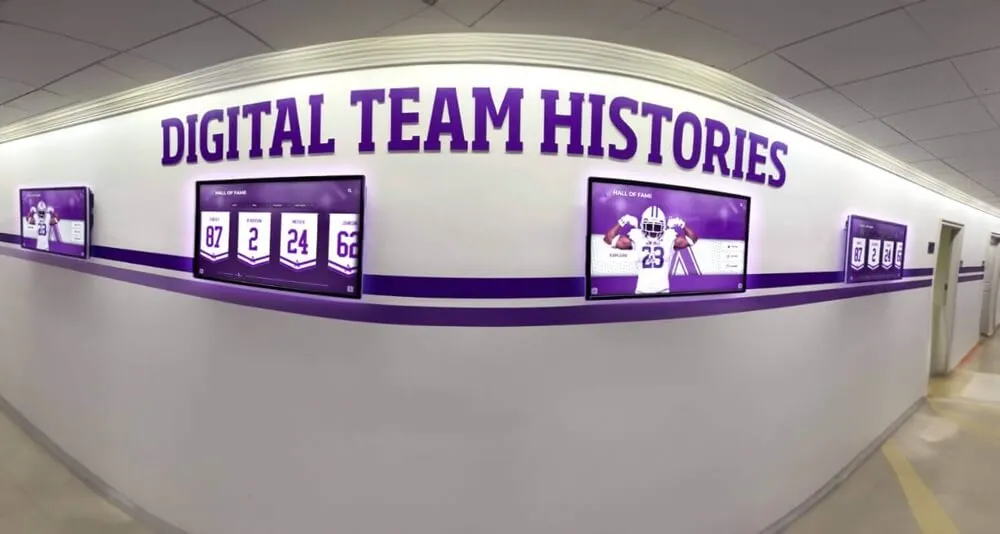
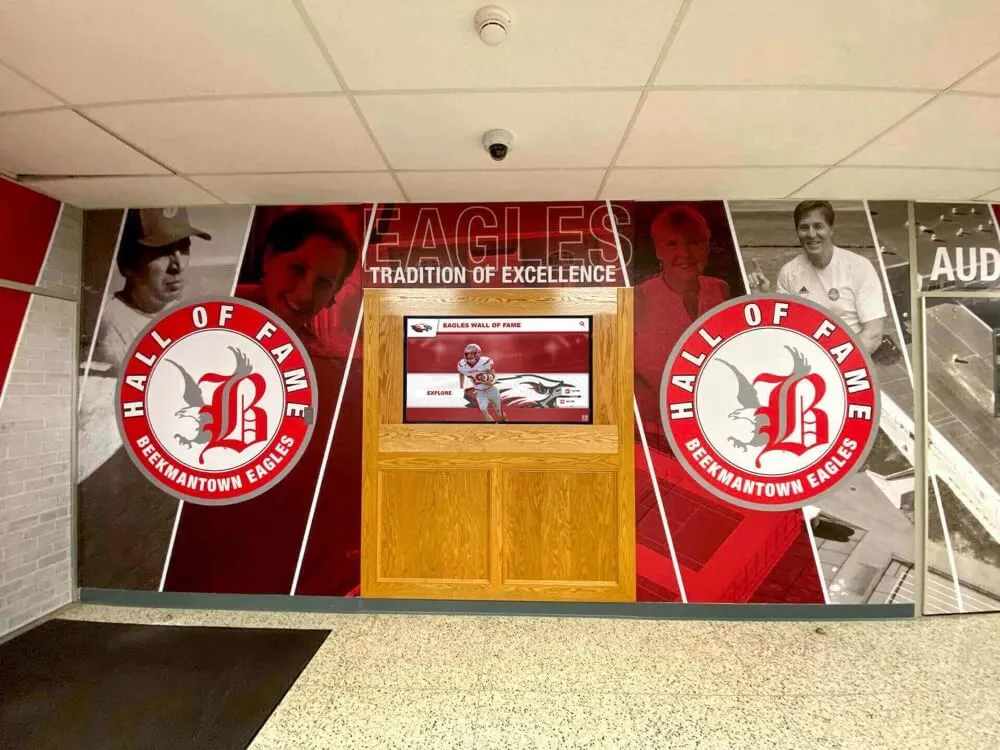
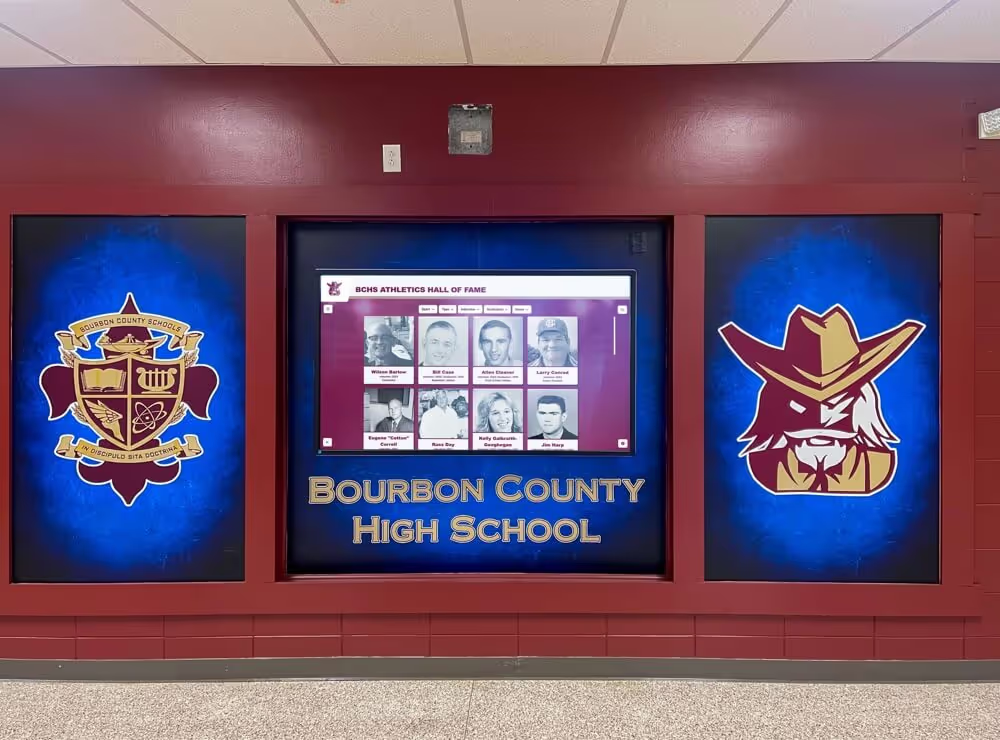
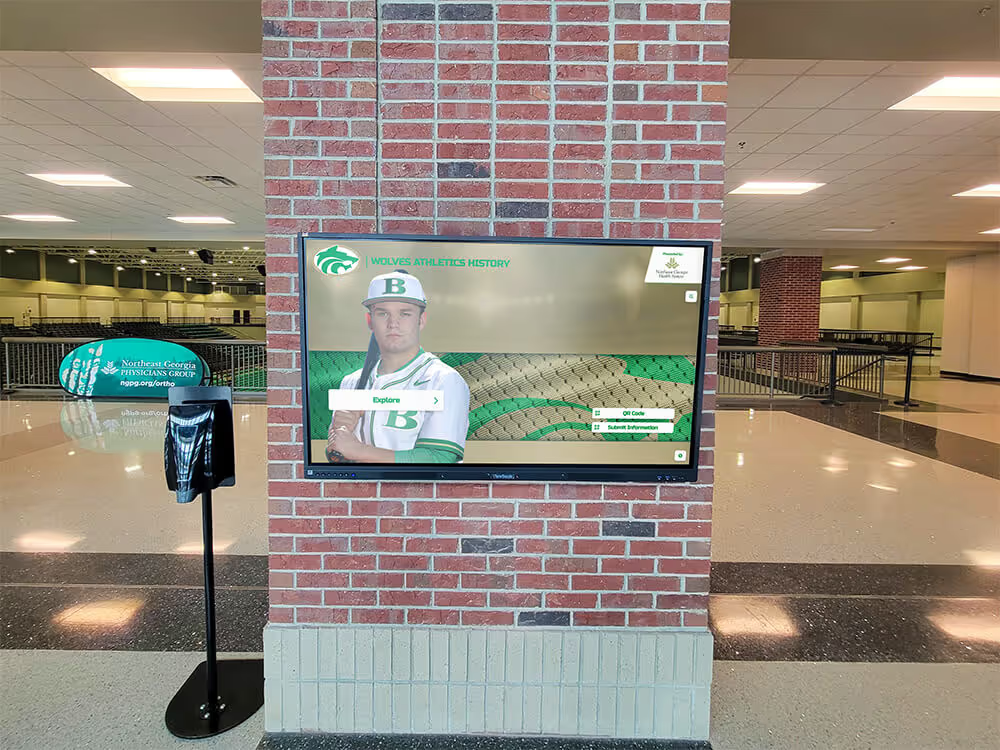
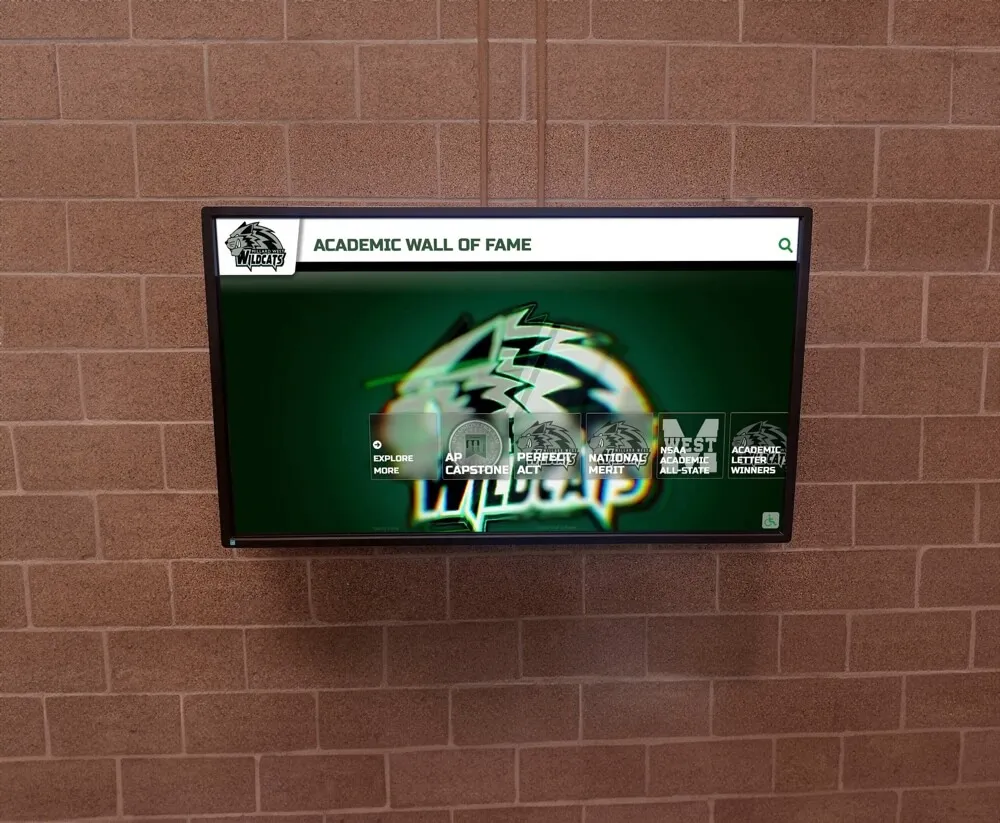
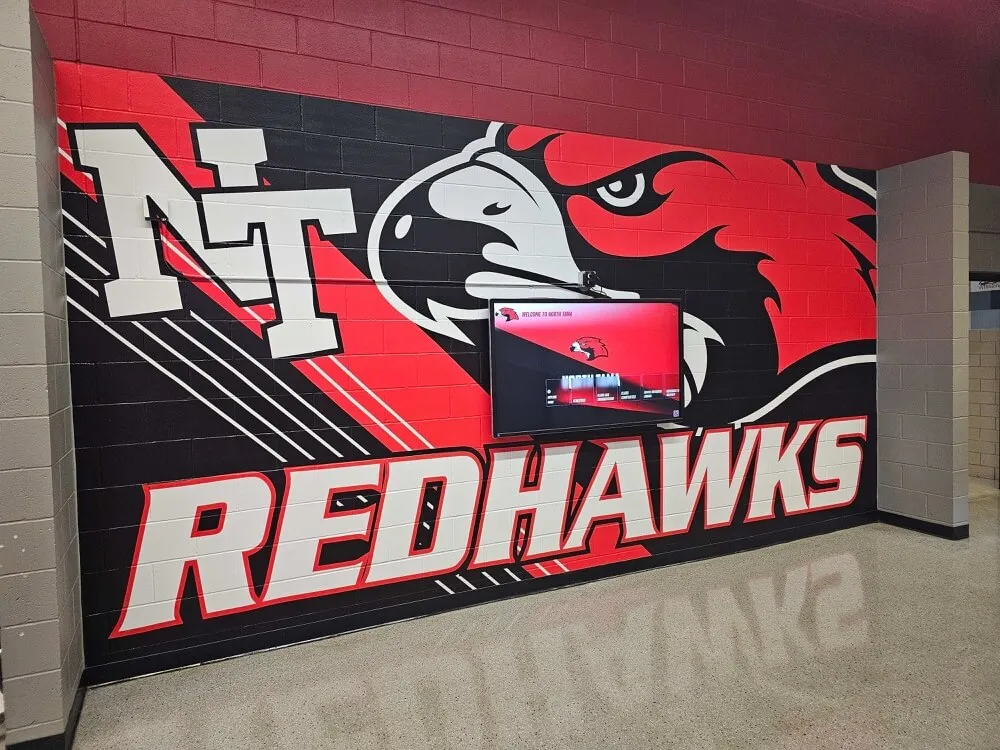
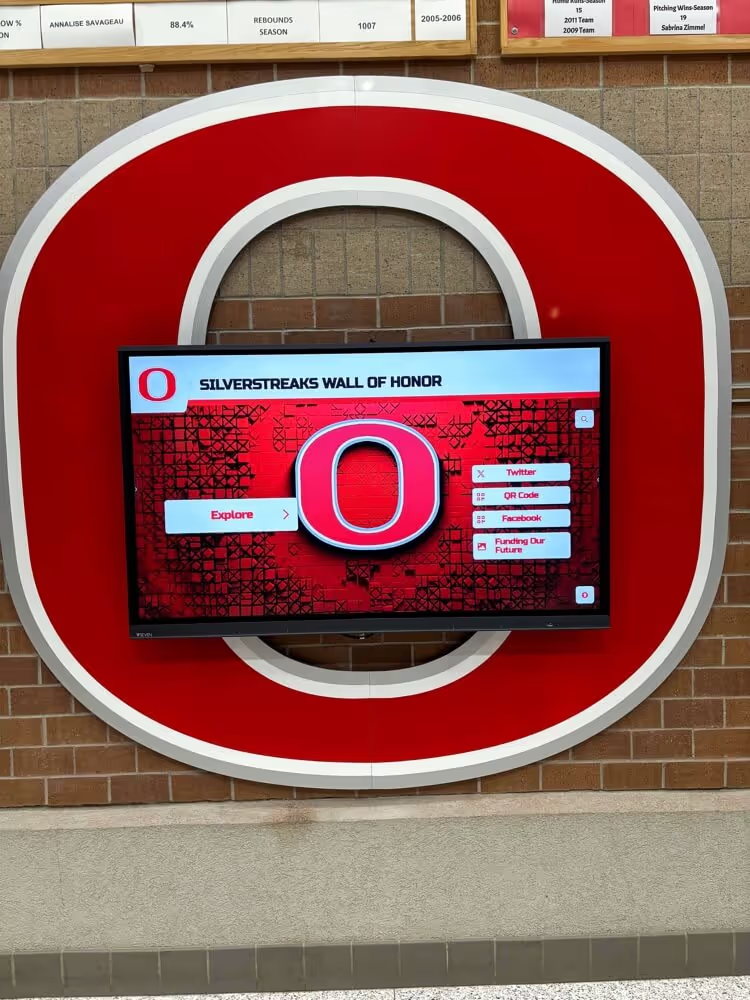
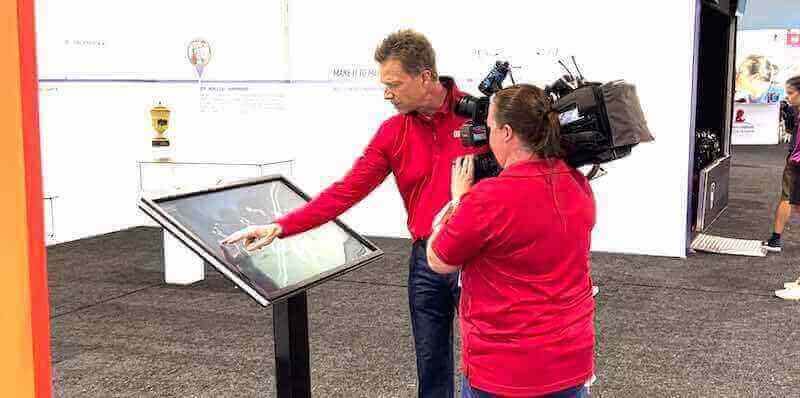
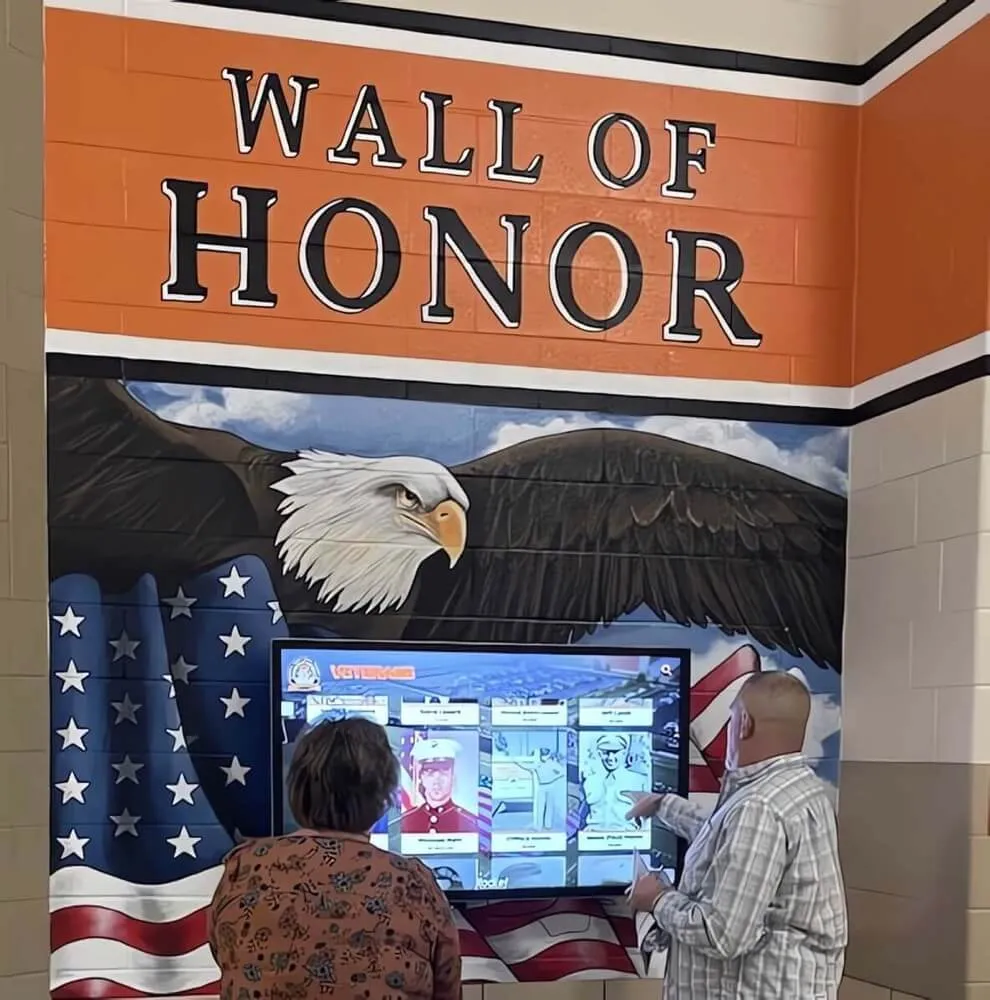
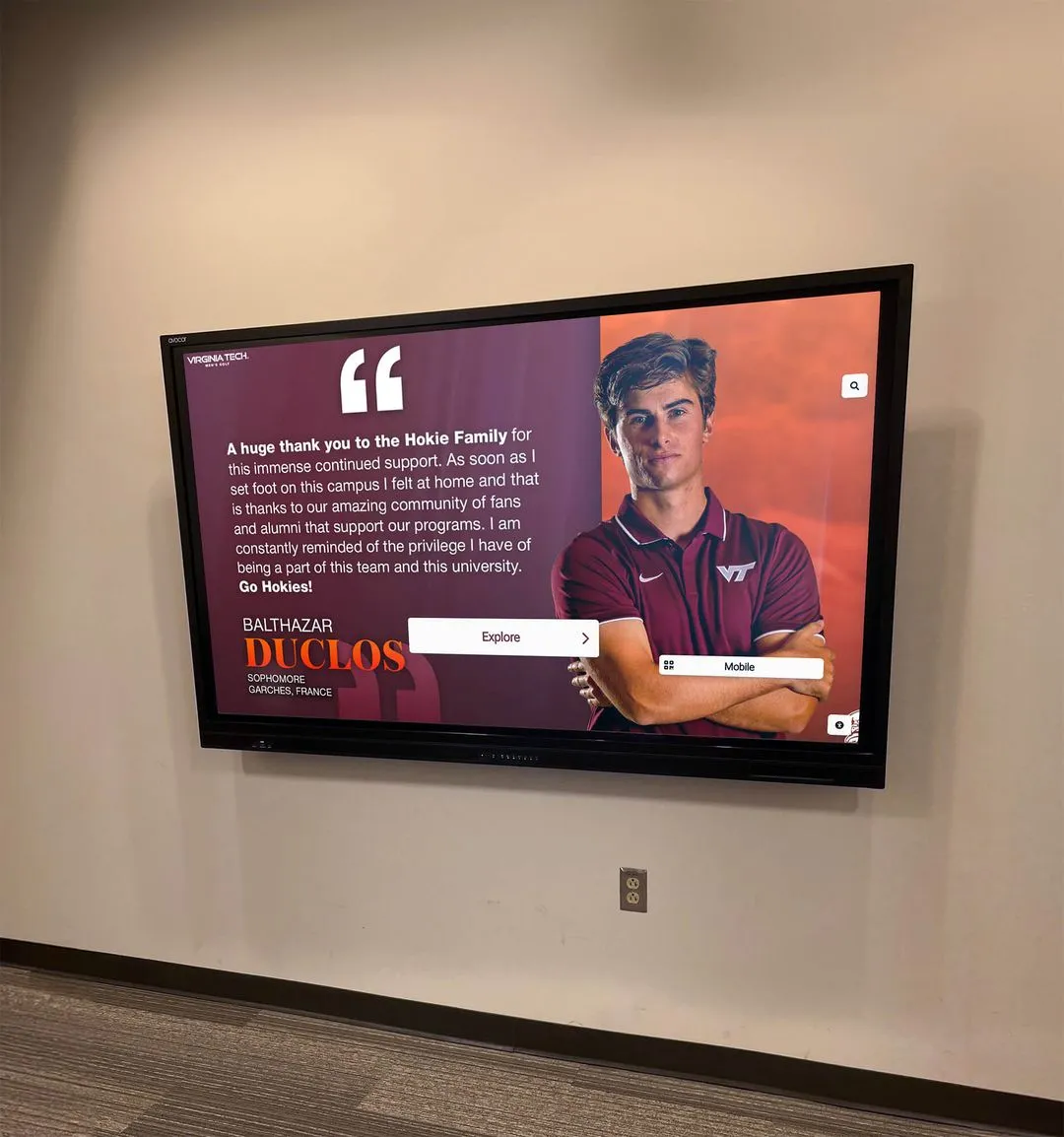
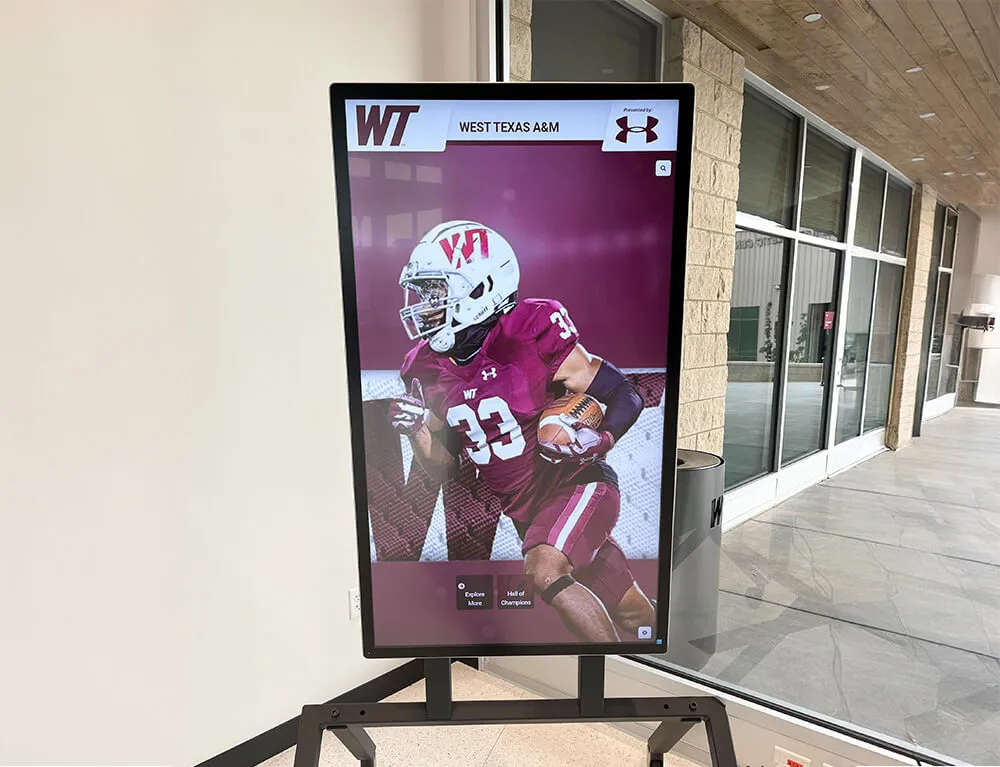
Digital recognition systems like those from Rocket Alumni Solutions solve this fundamental constraint by offering unlimited recognition capacity within a consistent footprint. Whether honoring 50 individuals or 5,000, the display size remains constant while content scales infinitely.
This scalability proves particularly valuable for growing programs. Organizations can establish comprehensive recognition from inception without worrying about running out of space or needing expensive renovations to accommodate future honorees.

Enhanced Storytelling Through Multimedia
Traditional plaques limit recognition to text and perhaps small photos. Digital displays transform recognition into rich multimedia experiences incorporating high-resolution photo galleries documenting careers and achievements, video interviews where honorees share stories and wisdom, scanned documents, awards, and memorabilia, audio clips from speeches or performances, and interactive timelines showing achievement progression.
This enhanced storytelling creates emotional connections that static plaques cannot match. When visitors can watch video of a championship game, hear a distinguished alumnus describe their journey, or explore photo galleries spanning someone’s career, recognition becomes immersive experience rather than simple information display.
Programs recognizing students of the month or maintaining honor roll recognition benefit from ability to regularly update content, keeping recognition current and relevant rather than fixed at a moment in time.
Interactive Exploration and Search Capabilities
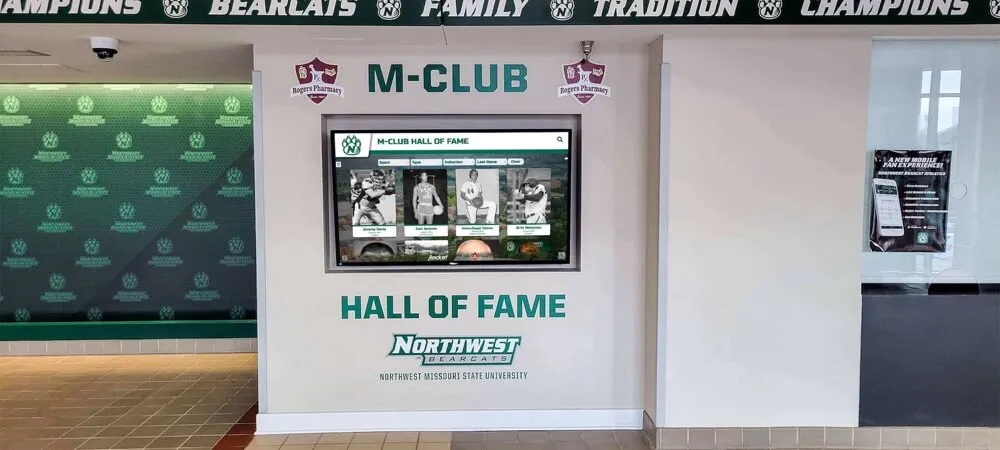
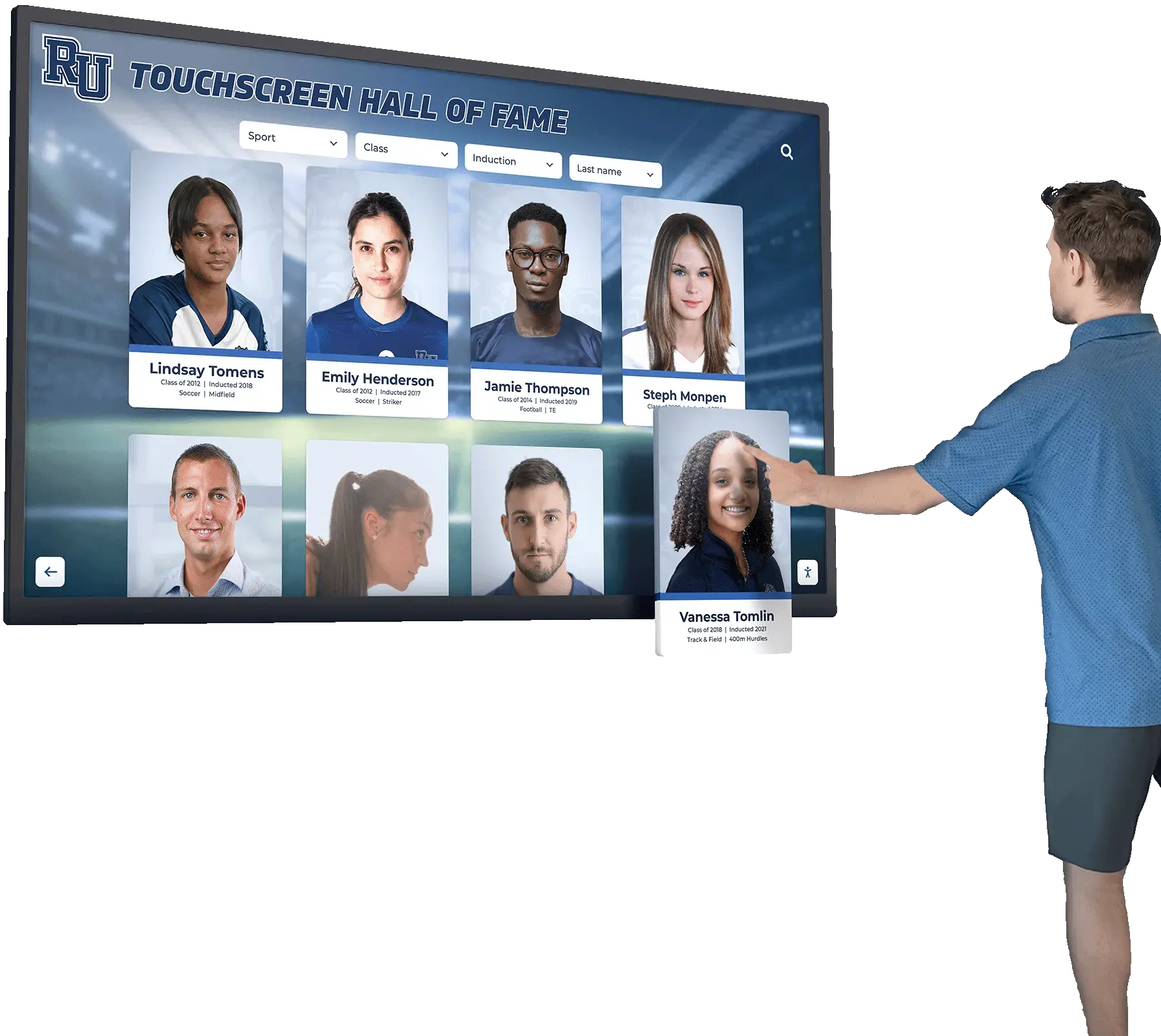
Physical plaque walls display recognition chronologically or by category, with limited ability for visitors to find specific individuals or explore by interest. Digital systems offer powerful search and filtering—finding specific honorees by name instantly, browsing by graduation year or employment period, filtering by achievement category or department, exploring related honorees with shared characteristics, and discovering random profiles through featured content.
This interactivity encourages deeper engagement. Instead of passively viewing static displays, visitors actively explore, making personal connections to individuals or achievements that resonate with their interests or backgrounds.
Cost Effectiveness Over Time
Initial costs for traditional plaques appear lower—$100-300 per plaque versus $15,000-40,000 for comprehensive digital systems. However, lifetime economics often favor digital approaches when considering total costs.
Traditional plaque programs incur recurring costs for each new honoree recognized, installation labor for mounting new plaques, periodic renovations when wall space exhausts, replacement costs when information needs updating, and maintenance of expanding physical displays.
Digital systems involve initial setup investment followed by minimal incremental costs—no per-recognition manufacturing expenses, instant content updates without physical changes, unlimited capacity without renovation costs, and minimal maintenance of single display regardless of content volume.
Organizations recognizing dozens of individuals annually often find digital approaches financially superior within 5-10 years, while also providing significantly enhanced recognition experience.
Hybrid Approaches: Combining Traditional and Digital Recognition
Many organizations discover that combining traditional and digital elements creates optimal recognition experiences, preserving what works about classic approaches while adding digital capabilities.
Perpetual Plaques with Digital Profiles
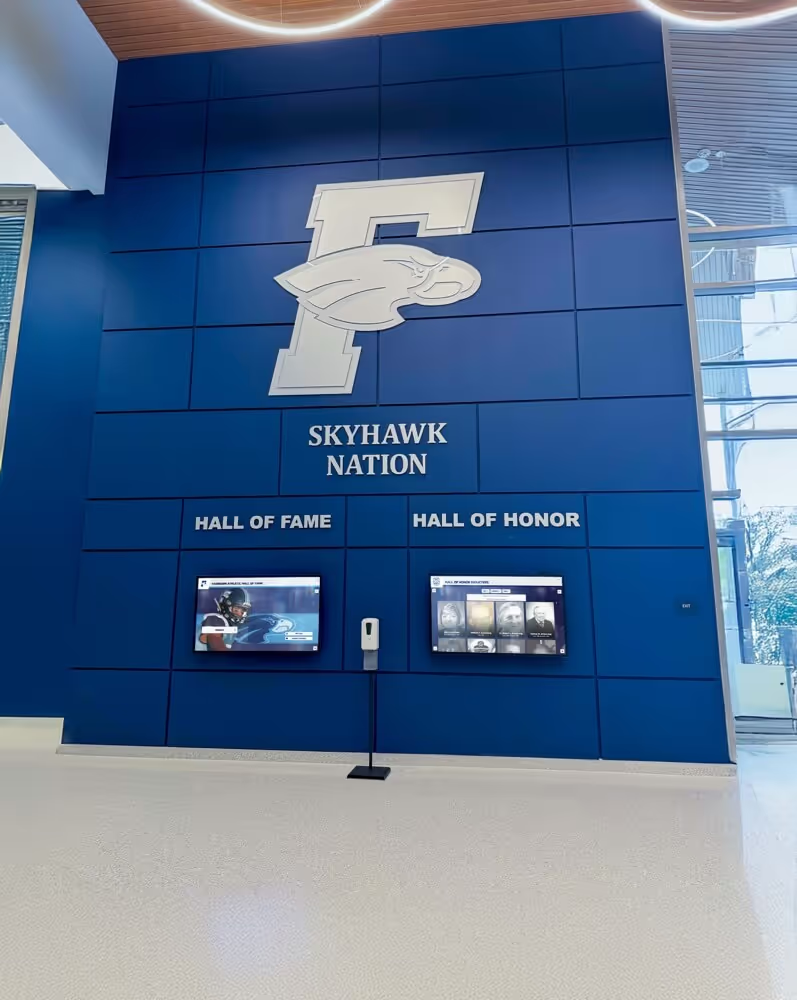
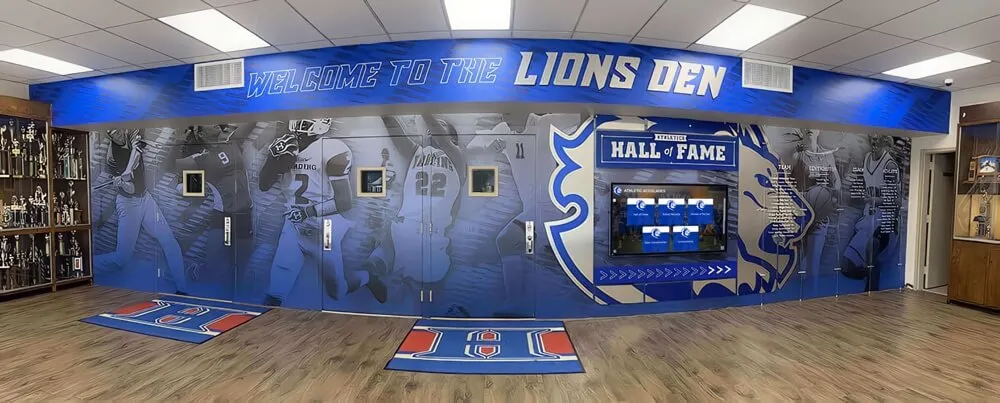
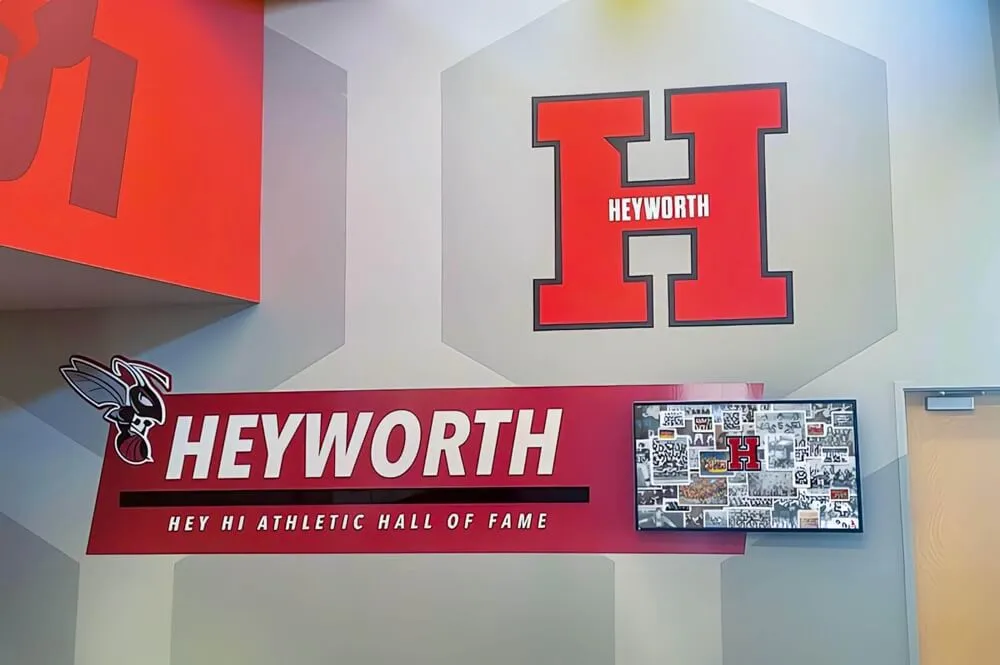
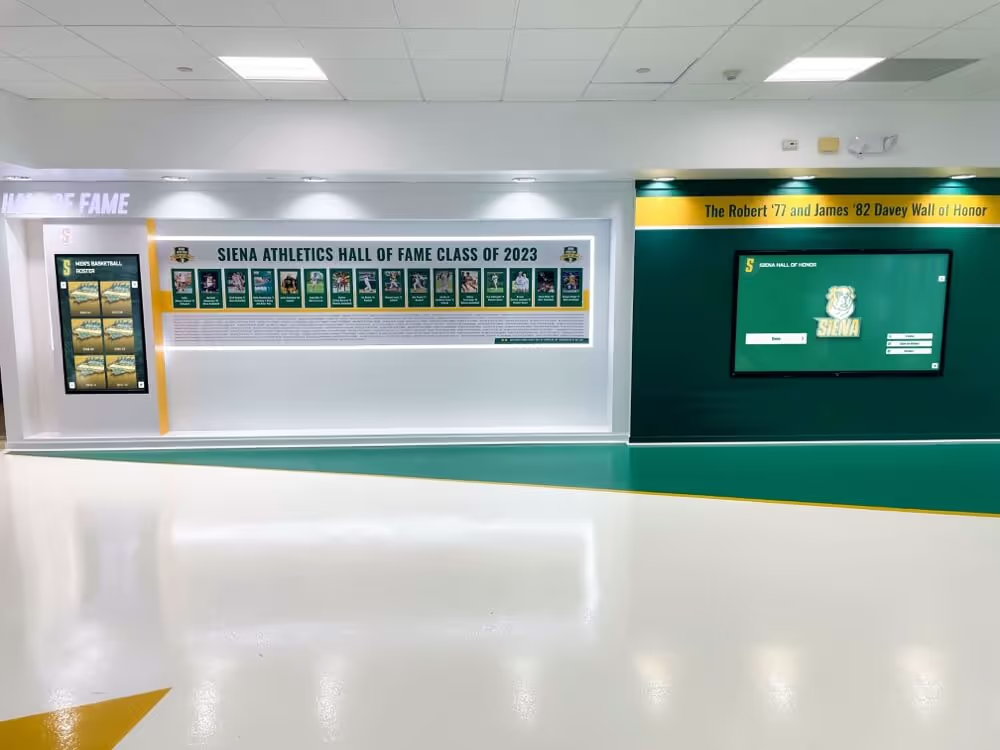
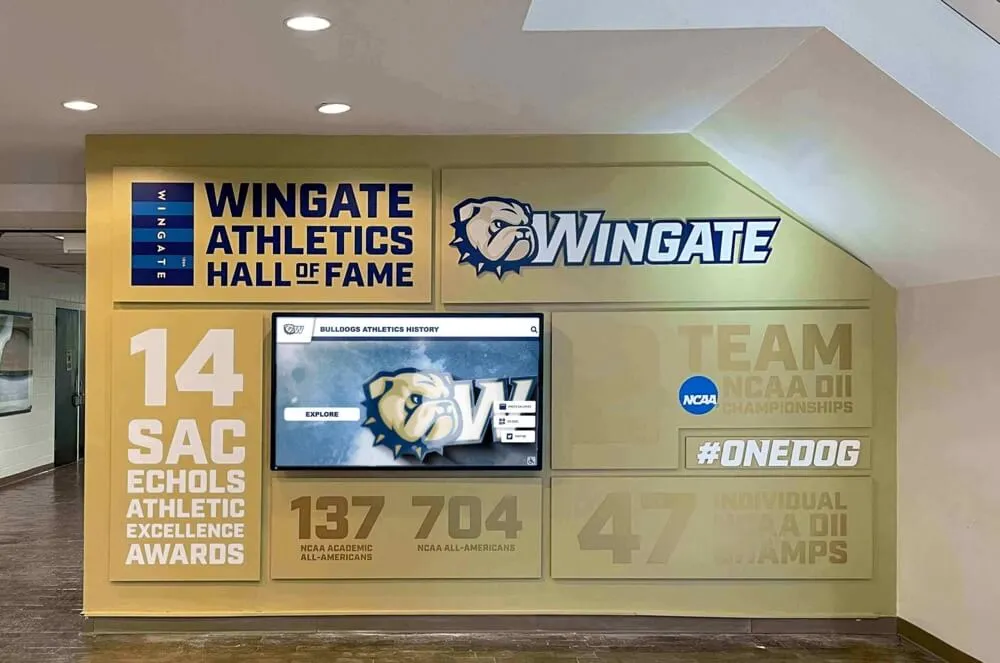
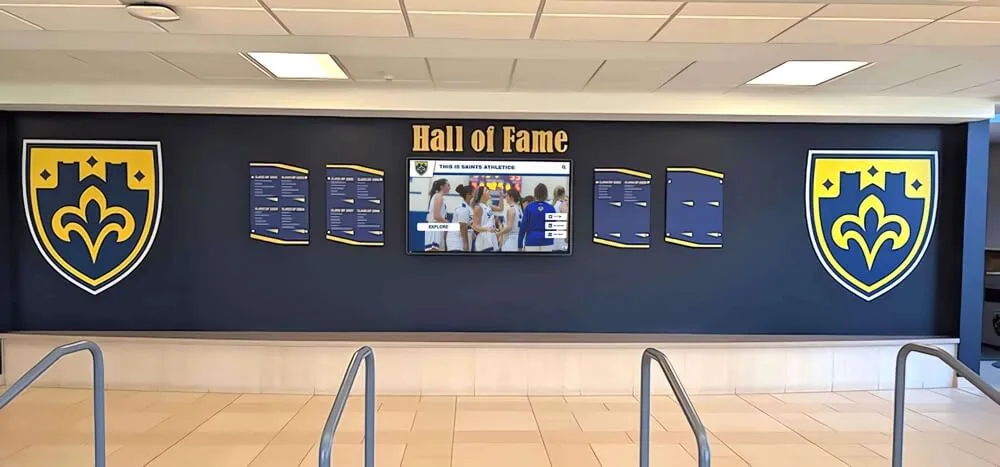
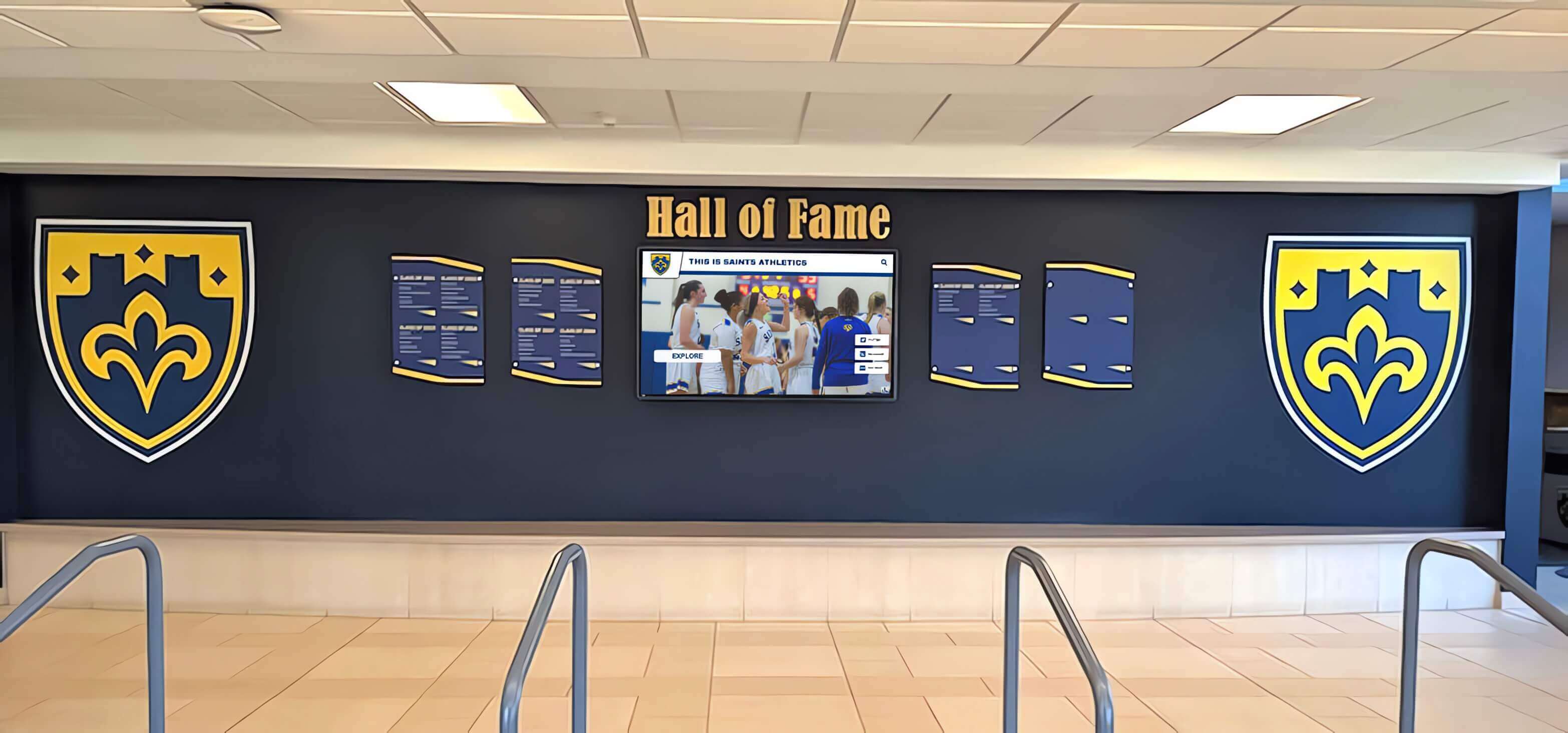
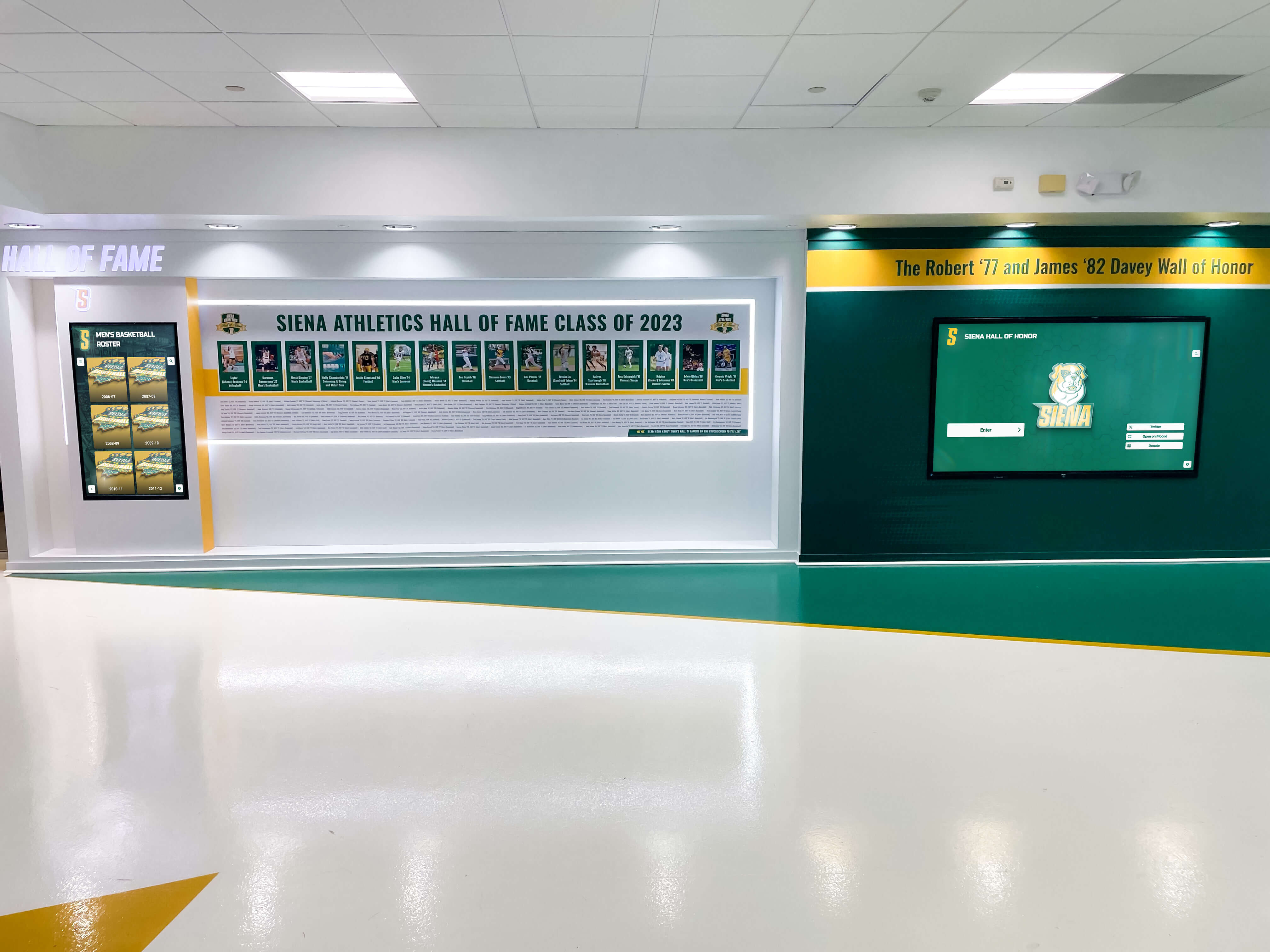
One effective hybrid approach maintains traditional perpetual plaques listing all honorees’ names—creating visual impact and permanence—while complementing with nearby digital displays offering detailed profiles, multimedia content, and searchable databases.
This combination satisfies those who value tangible recognition while providing engagement and storytelling depth that digital media enables. The plaque serves as introduction, the digital display as comprehensive story.
Trophy Cases with Interactive Displays
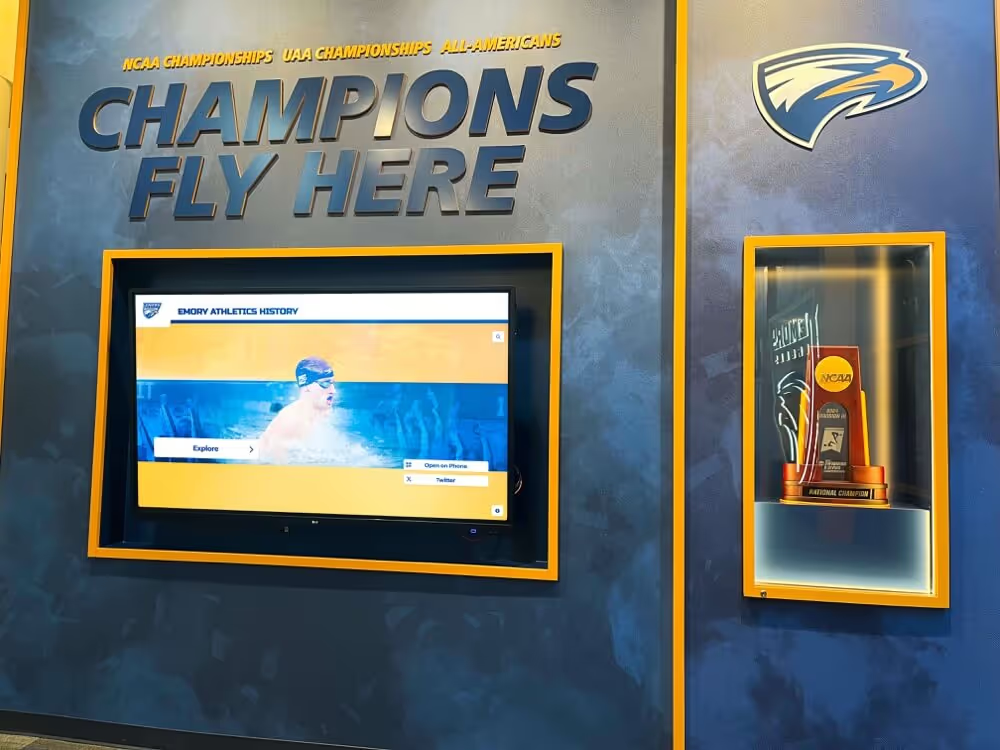
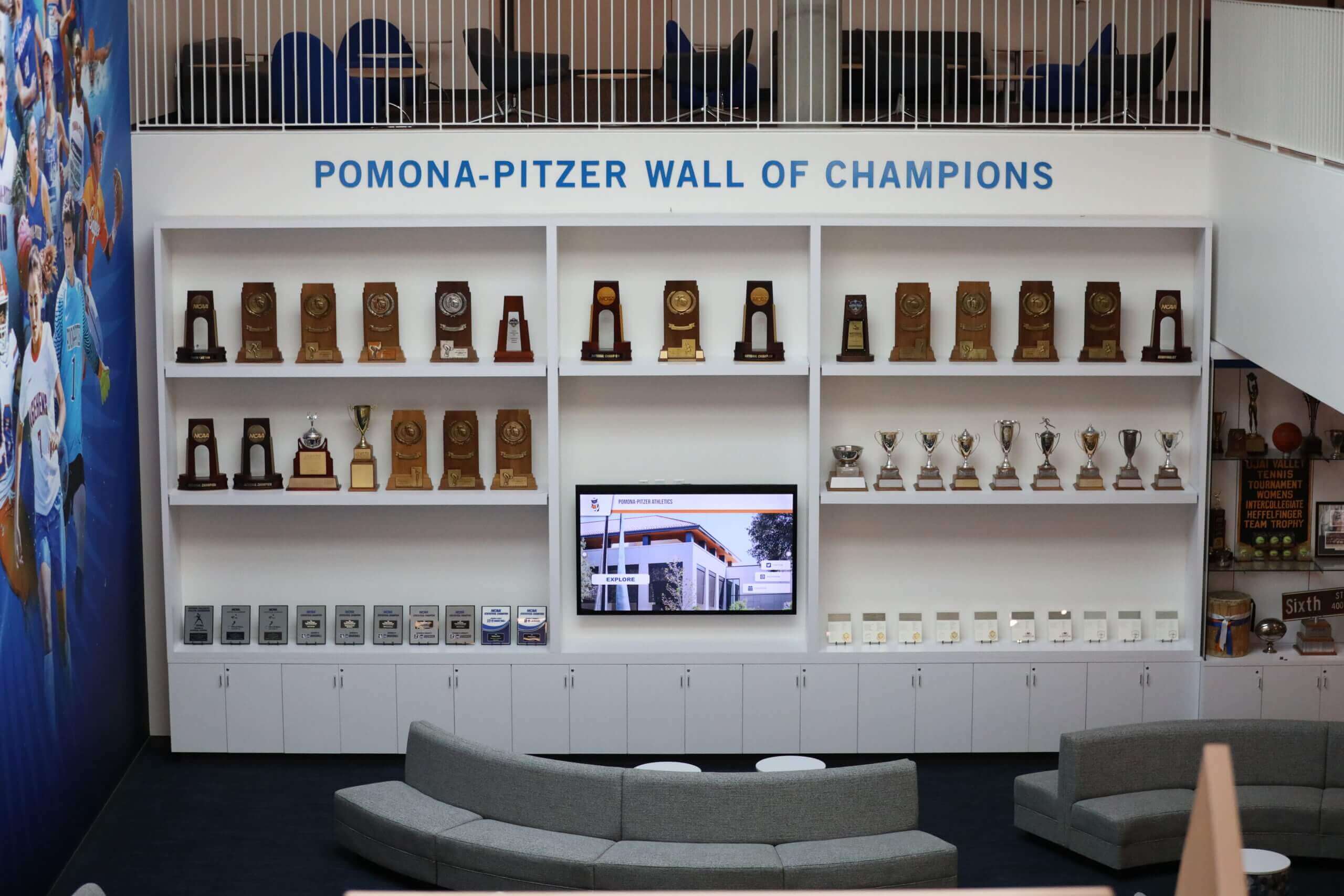
Trophy case displays effectively integrate physical awards with digital storytelling. The three-dimensional trophies, championship balls, or medals provide tangible connection to achievement, while adjacent touchscreens explain context, show video of championship moments, and share team member profiles.
This approach works particularly well for athletic recognition where physical awards carry significant meaning but limited ability to convey full achievement narratives.
Physical Awards for Recipients, Digital Recognition for Display
Some organizations provide traditional engraved plaques to honorees as personal awards they can display in homes or offices, while simultaneously creating digital recognition displays for institutional spaces. Recipients receive tangible recognition to keep, while the organization gains all the benefits of digital display flexibility, scalability, and enhanced storytelling.
This model requires slightly higher initial costs but often represents best balance between individual appreciation and institutional recognition program sustainability.
Best Practices for Choosing Recognition Methods
Several considerations guide organizations toward recognition approaches that best serve their specific needs.
Assess Your Recognition Program Scale and Growth
Organizations recognizing small numbers annually with stable recognition criteria may find traditional approaches perfectly adequate. Programs honoring dozens annually or expecting significant growth should carefully consider scalability implications before committing to space-limited physical plaques.
Project recognition volume 10-20 years forward. If that projection shows hundreds or thousands of eventual honorees, digital systems likely represent wiser long-term investments despite higher initial costs.
Consider Your Audience and Engagement Goals
If recognition primarily serves honorees themselves—providing personal awards they display privately—traditional plaques serve well. If recognition aims to inspire broader audiences, create engagement, or strengthen community connections, digital interactivity significantly enhances impact.
Similarly, if you want recognition displays serving multiple purposes—wayfinding, storytelling, alumni networking, historical documentation—digital systems offer flexibility that static plaques cannot match.

Evaluate Maintenance and Update Requirements
Traditional plaques require minimal ongoing maintenance—periodic cleaning and occasional repair. However, they offer limited flexibility for corrections or updates once installed. If recognition information may need updating, traditional approaches create challenges.
Digital systems require some technical maintenance—software updates, screen cleaning, occasional troubleshooting—but offer instant content corrections and updates. Organizations should honestly assess whether they have staff capacity and technical comfort for basic digital system management.
Budget for Total Lifecycle Costs
Compare not just initial installation costs but projected total expenses over 10-20 years including recurring recognition additions, potential renovations or expansions, maintenance and upkeep, and content updates or corrections.
Amortizing total lifecycle costs often reveals different economic pictures than initial price comparisons suggest. Digital systems with higher upfront investment frequently show lower total cost of ownership for programs recognizing substantial numbers over time.
Align Recognition Approach with Organizational Culture
The recognition method you choose sends messages about organizational values and identity. Traditional plaques communicate respect for tradition, formality, and permanence. Digital displays signal innovation, engagement, and forward-thinking approaches.
Neither is inherently superior—alignment with authentic organizational culture matters most. Schools with century-long traditions might appropriately emphasize classic approaches, while innovative organizations might prefer cutting-edge recognition technology. Hybrid models work well for organizations balancing traditional values with contemporary engagement goals.
Implementation Considerations for Any Recognition Program
Regardless of whether you choose traditional plaques, digital displays, or hybrid approaches, several implementation best practices ensure program success.
Establish Clear Selection Criteria
Recognition credibility depends on transparent, consistently applied selection standards. Document specific criteria for recognition eligibility, nomination and selection processes, committee composition and decision authority, and timeline for annual recognition cycles.
Clear criteria prevent perception of favoritism while ensuring recognition honors genuinely significant achievement rather than popularity or politics.
Invest in Quality Content Development
Whether engraving plaque text or creating digital profiles, recognition content deserves careful attention. Poor writing, factual errors, or inadequate research undermine recognition impact and disrespect honorees.
Allocate sufficient time and resources for biographical research, professional writing and editing, photo acquisition and optimization, fact-checking and accuracy verification, and honoree review before finalization.
Quality content distinguishes meaningful recognition from perfunctory acknowledgment.
Plan for Long-Term Program Sustainability
Recognition programs succeed or fail based on sustained commitment over time. Initial enthusiasm often carries first-year implementation, but ongoing success requires systematic approaches ensuring annual selection processes continue, content for new honorees gets developed consistently, recognition displays receive regular maintenance, and program receives adequate budget allocation year after year.
Assign clear ownership and accountability for program management, establish documented procedures for recurring tasks, and secure leadership commitment to long-term program support.
Promote Recognition Visibility
Recognition impact extends beyond honorees themselves to audiences who encounter recognition displays. Maximize this broader impact through strategic promotion including announcement ceremonies celebrating new honorees, social media features highlighting recognition stories, integration into organizational tours and events, email campaigns to relevant stakeholders, and press coverage for particularly notable achievements.
Recognition programs that maintain consistent visibility create ongoing value far exceeding simple honoree appreciation.
Conclusion: Recognition That Creates Lasting Impact
Whether implemented through traditional engraved plaques, innovative digital displays, or thoughtful combinations of both approaches, effective recognition programs share common characteristics: they honor genuine achievement through meaningful selection criteria, they communicate respect and appreciation through careful wording and quality presentation, they create lasting records that inspire future excellence, and they reflect authentic organizational values and culture.
The recognition method you choose matters less than the thoughtfulness you invest in design, content, and ongoing program management. Generic plaques purchased from catalogs and minimally customized rarely create lasting impact. Recognition carefully tailored to your specific organizational context and honoree characteristics—whether physical or digital—generates appreciation that extends far beyond the initial presentation ceremony.
For organizations recognizing substantial numbers, planning comprehensive programs, or seeking maximum engagement impact, modern digital recognition systems offer compelling advantages in scalability, storytelling capability, and long-term cost effectiveness. Solutions like Rocket Alumni Solutions provide specialized platforms designed specifically for educational institutions and organizations, combining intuitive technology with professional support that makes implementation straightforward even for non-technical staff.
Ready to explore recognition approaches that honor achievement while creating sustainable programs capable of celebrating excellence for decades to come? Whether considering traditional plaques, digital alternatives, or hybrid solutions, investing time in thoughtful recognition planning creates returns that compound over years through strengthened culture, enhanced engagement, and inspired excellence across your entire organization.