Presidential academic scholarships represent the pinnacle of educational recognition at schools and universities nationwide. These prestigious awards celebrate students who demonstrate exceptional academic performance, leadership qualities, and commitment to their educational communities. Yet many institutions struggle with how to effectively identify deserving candidates, implement transparent selection processes, and showcase recipients in ways that inspire future scholars while honoring current achievement.
This comprehensive guide examines every dimension of presidential academic scholarship programs including how leading institutions define eligibility criteria and achievement standards, proven selection processes that ensure fairness and transparency, traditional and modern recognition approaches, digital display solutions that showcase recipients prominently, and strategies for building scholarship programs that genuinely elevate academic culture while inspiring future generations of scholars.
Schools and universities that invest strategic attention in presidential scholarship recognition report meaningful outcomes including increased academic achievement across student populations as peers aspire to scholarship recognition, enhanced institutional reputation as academic excellence receives visible celebration, stronger alumni connections as former scholarship recipients remain engaged with programs honoring their achievement, and improved recruitment results as prospective high-achieving students recognize institutional commitment to academic recognition.
Understanding Presidential Academic Scholarship Programs
Before implementing specific selection criteria or recognition strategies, educational leaders benefit from understanding what distinguishes presidential academic scholarships from other forms of academic recognition.
Defining Presidential Scholarships vs. Other Academic Awards
Presidential scholarships occupy the highest tier of institutional academic recognition, distinguished by several key characteristics that separate them from standard academic awards.
Institutional Significance and Prestige: Presidential academic scholarships carry the institution’s highest authority—named for the president or chancellor position rather than individual donors or departments. This naming convention signals that recipients represent the institution’s very best students, selected to embody institutional values and academic standards. Unlike departmental awards recognizing achievement within specific disciplines, presidential scholarships celebrate comprehensive excellence across all dimensions of educational engagement.
Comprehensive Achievement Standards: While standard academic awards might recognize grade point averages or subject-specific performance, presidential scholarships typically require exceptional achievement across multiple dimensions including outstanding academic performance measured through GPA and rigorous coursework, demonstrated leadership in school organizations or community contexts, meaningful service contributions benefiting school or broader communities, and character qualities aligning with institutional values and mission.
Financial and Recognition Components: Presidential scholarships often combine substantial financial awards with comprehensive recognition programs. Financial components may include full or partial tuition coverage, renewable awards spanning multiple academic years, or stipends supporting educational expenses beyond tuition. Recognition elements create visibility for scholarship recipients through public ceremonies, permanent displays, and ongoing acknowledgment throughout recipients’ academic careers.
The Strategic Value of Presidential Scholarship Programs
Beyond recognizing individual student achievement, presidential scholarship programs deliver strategic value to institutions willing to invest in their development and promotion.
Creating Aspirational Academic Culture: When institutions prominently showcase presidential scholarship recipients, they establish visible proof that academic excellence receives recognition and reward. This visibility creates powerful peer influence effects—students see accomplished peers celebrated for academic achievement and develop concrete goals to achieve similar recognition. The aspirational effect proves particularly significant in educational environments where athletic achievement traditionally receives more visible recognition than academic accomplishment.
Competitive Recruitment Advantages: High-achieving students and their families actively seek institutions demonstrating genuine commitment to academic excellence. Presidential scholarship programs—particularly when showcased through prominent recognition displays and well-publicized selection processes—signal to prospective students that the institution values scholarship and invests in recognizing academic achievement. Many admissions offices report that visible academic recognition programs influence enrollment decisions among top-tier applicants choosing between multiple acceptance offers.
Alumni Engagement and Institutional Pride: Presidential scholarship recipients often become the most engaged alumni, maintaining connections with institutions that recognized their achievement. When schools create permanent recognition displays honoring scholarship recipients across decades, they provide touchpoints for alumni returning to campus and strengthen emotional connections to institutional identity. Former scholarship recipients frequently become significant donors, volunteer mentors, and program advocates throughout their lives.
Establishing Presidential Scholarship Eligibility Criteria
The foundation of any credible presidential academic scholarship program lies in clear, defensible eligibility criteria that identify truly exceptional students while ensuring fair evaluation across diverse applicant pools.
Academic Performance Standards
Academic achievement forms the cornerstone of presidential scholarship eligibility, though defining appropriate performance thresholds requires careful consideration.
Grade Point Average Requirements: Most presidential scholarship programs establish minimum GPA thresholds ensuring only students demonstrating sustained academic excellence qualify for consideration. Common approaches include requiring cumulative GPAs of 3.75 or higher on 4.0 scales, demonstrating exceptional performance across all coursework rather than selective excellence. Some programs establish perfect or near-perfect GPA requirements (3.9-4.0), creating extremely selective recognition for only the highest-achieving students. Institutions should consider whether weighted or unweighted GPAs provide more equitable evaluation, as weighted systems account for advanced placement and honors coursework difficulty.
Course Rigor and Academic Challenge: Beyond simple GPA calculations, leading presidential scholarship programs evaluate the rigor of coursework students pursue. Selection criteria might prioritize students completing advanced placement, international baccalaureate, or dual enrollment courses demonstrating willingness to pursue academic challenges, students maintaining exceptional performance despite demanding course loads, and students who select rigorous electives beyond minimum graduation requirements. Course rigor evaluation recognizes that maintaining a 4.0 GPA while taking standard-level courses differs fundamentally from achieving similar performance while completing college-level coursework.
Standardized Testing Achievement: While standardized testing requirements face increasing scrutiny, many presidential scholarship programs continue incorporating test performance as one component among multiple evaluation criteria. Programs might establish minimum ACT or SAT score thresholds, recognize exceptional performance on subject-specific tests like AP exams or SAT Subject Tests, or consider standardized testing as supplementary evidence supporting other achievement indicators rather than absolute requirements.
Leadership and Service Contributions
Presidential scholarships typically recognize students who contribute to their educational communities beyond classroom achievement, demonstrating leadership and service that benefit others.
Leadership Experience Evaluation: Selection committees assess leadership through various lenses including elected positions in student government, clubs, or organizations; sustained involvement with increasing responsibility over multiple years rather than superficial participation; and evidence of positive impact on organizations or initiatives led. Leadership evaluation should value diverse contribution types—recognizing that students lead through formal positions, grassroots organizing, creative initiatives, and quiet service rather than exclusively through high-profile elected roles.
Community Service and Impact: Many presidential scholarship programs require evidence of meaningful community service demonstrating students’ commitment to contributing beyond their immediate self-interest. Evaluation criteria might include sustained service involvement over extended periods rather than isolated volunteer hours, evidence of genuine impact on communities or causes served, and service motivated by authentic commitment rather than merely accumulating resume credentials. Quality and impact matter more than simple hour counts—students organizing peer tutoring programs or leading community improvement initiatives demonstrate different engagement levels than those completing perfunctory volunteer requirements.
Character, Citizenship, and Institutional Fit
Beyond measurable achievements, presidential scholarship recipients should embody character qualities and values aligning with institutional mission and culture.
Recommendation and Reference Evaluation: Letters of recommendation from teachers, counselors, or community leaders provide insight into students’ character, work ethic, and interpersonal qualities that transcripts cannot capture. Effective recommendation protocols request specific information about students’ intellectual curiosity and love of learning, collaboration skills and treatment of peers, resilience when facing challenges, and alignment with institutional values like integrity, respect, or service.
Personal Statement and Interview Assessment: Many selective presidential scholarship programs require personal statements or interviews allowing selection committees to evaluate students’ communication skills, self-awareness and reflection capacity, articulation of goals and motivations, and genuine interest in the institution and its mission. These qualitative components help committees distinguish between students with similar quantitative credentials, identifying those whose values and aspirations align most closely with what the scholarship represents.
Implementing Fair and Transparent Selection Processes
Even with clear eligibility criteria, selection processes significantly impact presidential scholarship credibility and community acceptance. Transparent, well-structured processes ensure deserving students receive recognition while maintaining confidence in program integrity.
Selection Committee Composition and Governance
Selection committees should represent diverse perspectives while maintaining expertise to evaluate student achievement meaningfully.
Committee Member Representation: Effective selection committees typically include academic administrators who understand institutional priorities and academic standards, faculty members from various departments providing subject-specific expertise, counselors or student services professionals familiar with candidates’ complete school engagement, and sometimes alumni representatives offering perspective on long-term impact of scholarship recognition. Committee size should balance diverse representation against decision-making efficiency—five to seven members typically provide sufficient perspective without creating unwieldy groups where consensus becomes difficult.
Term Limits and Rotation: Committee member term limits prevent entrenchment while ensuring fresh perspectives. Staggered three-year terms maintain continuity while allowing periodic membership renewal. This rotation ensures that no particular faction permanently controls selection processes while preserving institutional knowledge about program history and precedent.
Conflict of Interest Policies: Clear conflict of interest policies protect selection integrity. Committee members should recuse themselves from discussions involving family members, students they supervise directly, or situations where personal relationships might compromise objective evaluation. Documentation of recusals demonstrates commitment to fair processes while protecting committee members from appearance of impropriety.
Application and Nomination Procedures
Transparent application processes ensure all eligible students can pursue presidential scholarship recognition while providing selection committees with information needed for thorough evaluation.
Open Application vs. Nomination Systems: Institutions must decide whether presidential scholarships accept open applications from all eligible students or require nominations from faculty, counselors, or administrators. Open application systems ensure that deserving students aren’t overlooked because nominating authorities fail to recognize their qualifications, potentially expanding applicant diversity. Nomination-based systems reduce committee workload by pre-screening candidates while leveraging faculty expertise in identifying exceptional students. Many programs combine approaches, accepting both nominations and self-applications to balance these considerations.
Application Components and Requirements: Comprehensive applications typically request academic transcripts documenting GPA and course rigor, standardized test scores if applicable to evaluation criteria, detailed activity resumes showing leadership and service involvement, personal statements addressing specific prompts about goals and values, and letters of recommendation from teachers and mentors. Application requirements should request sufficient information for thorough evaluation without creating burdensome processes that discourage qualified students from applying.
Timeline and Deadline Management: Clear timelines help students plan application efforts while ensuring committees have adequate evaluation time. Typical cycles include fall application period openings with extensive promotion ensuring awareness, winter application deadlines allowing students sufficient preparation time, late winter/early spring committee evaluation periods, and spring announcement and recognition events celebrating new scholarship recipients. Consistent annual timing creates community expectations while allowing adequate planning for all involved parties.
Evaluation Frameworks and Decision-Making
Selection committees need systematic evaluation frameworks ensuring consistent assessment across candidates with diverse strengths and backgrounds.
Rubric-Based Assessment: Many programs develop detailed scoring rubrics establishing point values or rating scales for different evaluation criteria. Rubrics might weight academic achievement most heavily (40-50% of total score) while considering leadership and service contributions (25-35%), character and personal qualities (15-25%), and alignment with institutional values. Numerical scoring creates consistency across multiple committee members evaluating large applicant pools while allowing documentation of selection rationales.
Holistic Review Processes: Beyond rubric scoring, effective committees engage in holistic review discussions considering each candidate’s complete profile rather than reducing complex individuals to numbers. Holistic review allows committees to recognize exceptional achievement despite unusual circumstances, value diverse forms of contribution and leadership, and select candidates whose complete profiles demonstrate presidential scholarship potential even if no single credential stands out as exceptional.
Deliberation and Consensus Building: Final selection decisions benefit from structured deliberation processes where committee members share perspectives, discuss candidates’ relative strengths, and build consensus around final recipients. Many committees use initial independent scoring followed by collective discussion of top-rated candidates, allowing both individual judgment and collaborative wisdom to inform decisions.
Traditional Presidential Scholarship Recognition Methods
Once selection processes identify recipients, institutions must determine how to recognize and celebrate their achievement in ways that honor students while inspiring others.
Formal Award Ceremonies and Convocations
Presidential scholarship announcements typically occur during formal events creating ceremonial significance befitting the award’s prestige.
Annual Scholarship Convocations: Many institutions host dedicated scholarship recognition convocations where presidential scholarship recipients receive formal acknowledgment before assembled students, families, and faculty. These events typically include presidential remarks establishing award significance and context, individual recipient recognition with brief biographical summaries, presentation of scholarship certificates or medallions, and often keynote addresses from distinguished alumni or community leaders emphasizing education’s transformative power.
Convocation formats create memorable moments families treasure while signaling to entire student bodies that academic achievement receives institutional celebration equal to athletic championships or other high-profile accomplishments. The formality and ceremony elevate scholarship recognition to special occasion status, reinforcing that recipients join an elite tradition of institutional excellence.
Integration with Existing Recognition Events: Some schools incorporate presidential scholarship recognition into established events like honors assemblies, graduation ceremonies, or annual awards nights. Integration maximizes attendance efficiency since families already gather for these occasions while connecting presidential scholarships to broader recognition contexts. However, integration risks diluting the scholarship’s distinctive prestige if not handled thoughtfully—presidential scholarship recognition should receive prominent placement and sufficient time to honor recipients appropriately.
Physical Recognition Displays and Plaques
Traditional physical displays create permanent visible recognition within school facilities, providing ongoing acknowledgment beyond single ceremony moments.
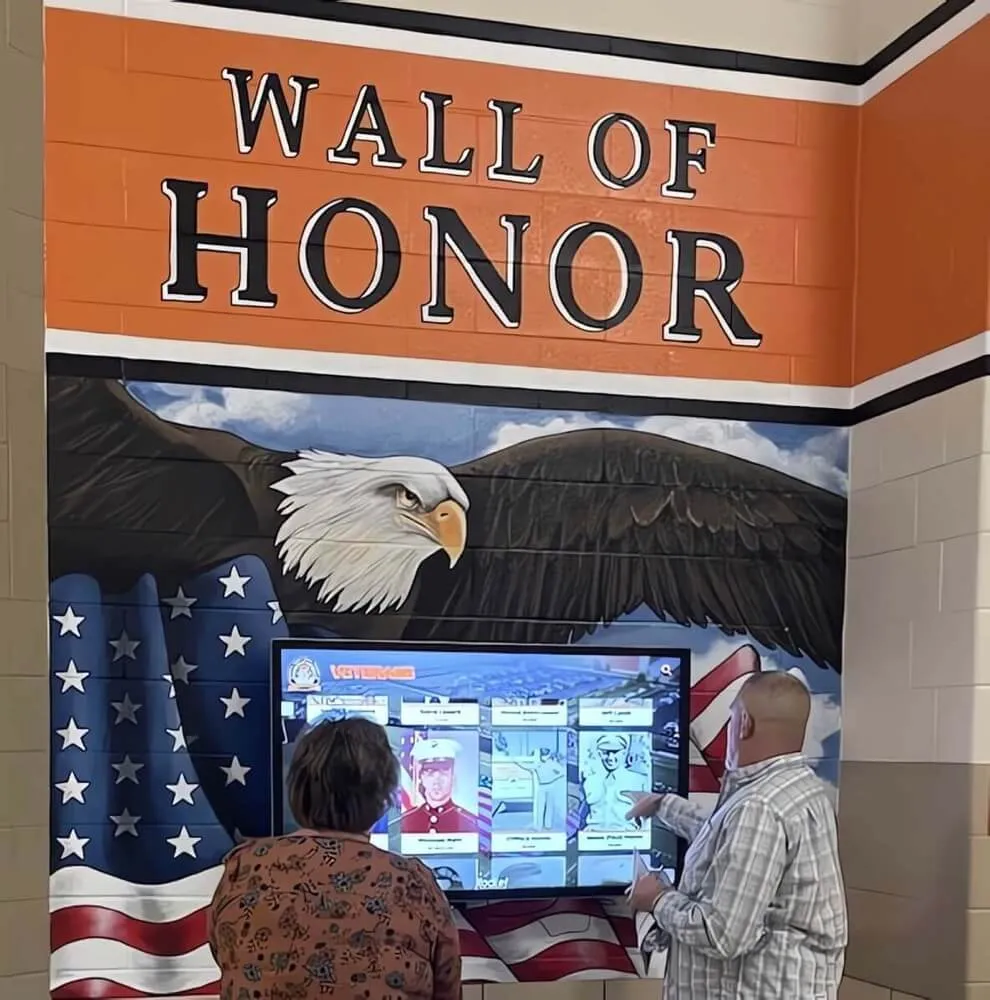
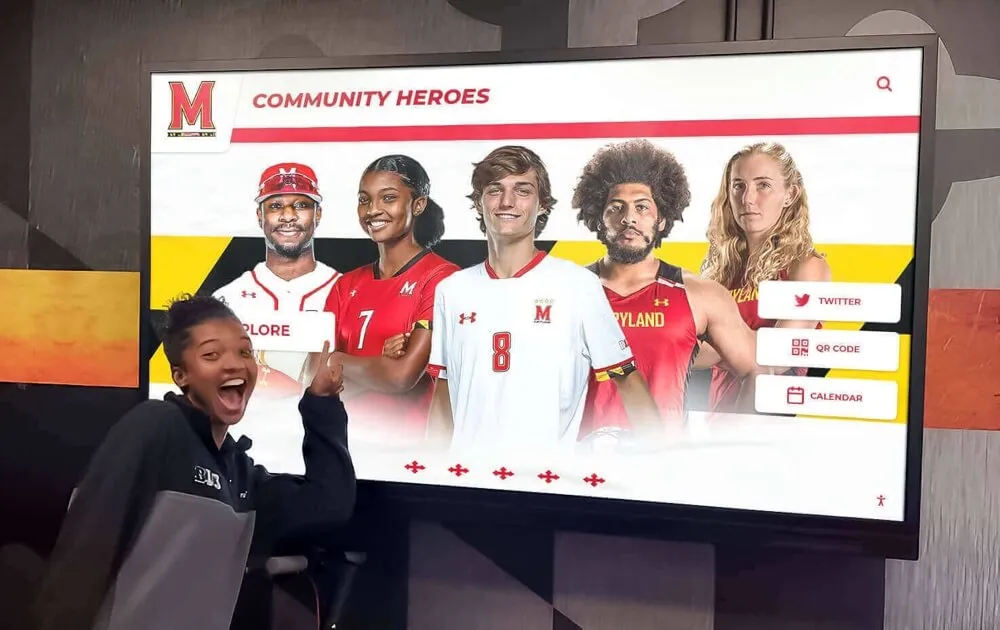
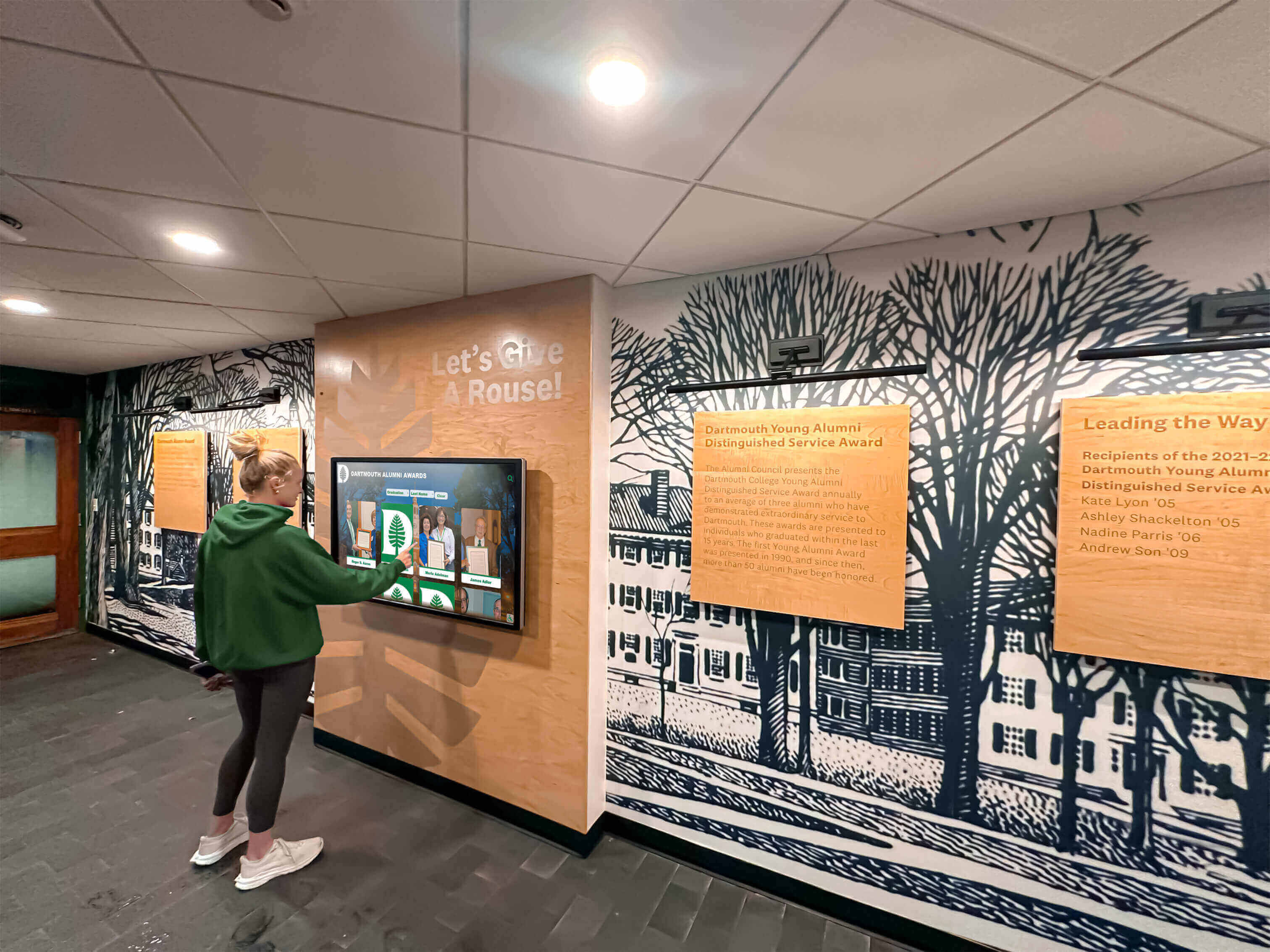
Dedicated Presidential Scholar Recognition Walls: Many institutions create dedicated display spaces featuring all presidential scholarship recipients across program history. Traditional approaches include individual plaques mounted on dedicated walls featuring recipient names, graduation years, and brief biographical information; photograph displays with formal portraits and achievement summaries; or trophy case installations with scholarship medallions and supporting materials. These permanent installations honor recipients long after graduation while creating visible historical documentation of the program’s evolution and the exceptional students it has recognized.
Limitations of Physical Display Approaches: Despite their traditional appeal, physical recognition displays face significant constraints including finite space that eventually limits recognition capacity as programs mature, difficulty updating information as recipients achieve post-scholarship accomplishments, limited storytelling capacity beyond basic biographical facts, and ongoing maintenance costs for producing plaques and updating installations. Schools with presidential scholarship programs spanning decades often face impossible choices about which historical recipients to display prominently when wall space runs out.
Publication and Media Recognition
Many institutions extend presidential scholarship recognition through publications and media coverage reaching broader communities.
School Publications and Communications: Presidential scholarship recipients typically receive feature coverage in school newsletters, magazines, websites, and social media channels. This publicity serves multiple purposes including celebrating individual achievement publicly, providing family-friendly shareable content, demonstrating institutional commitment to academic excellence to broader communities, and creating recruiting materials showcasing the quality of students the institution attracts and develops.
Local Media Engagement: Schools often coordinate with local newspapers and media outlets to publicize presidential scholarship recipients, generating community awareness while providing positive press coverage for institutions and individual students. Media coverage proves particularly valuable for institutions seeking to enhance community reputation for academic excellence beyond athletics or other traditionally high-visibility programs.
Modern Digital Recognition Solutions for Presidential Scholars
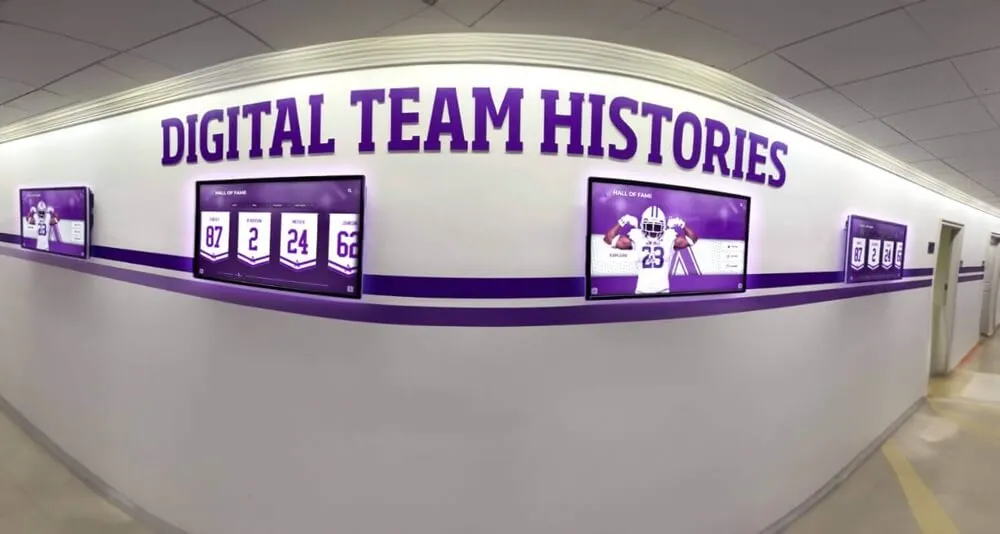
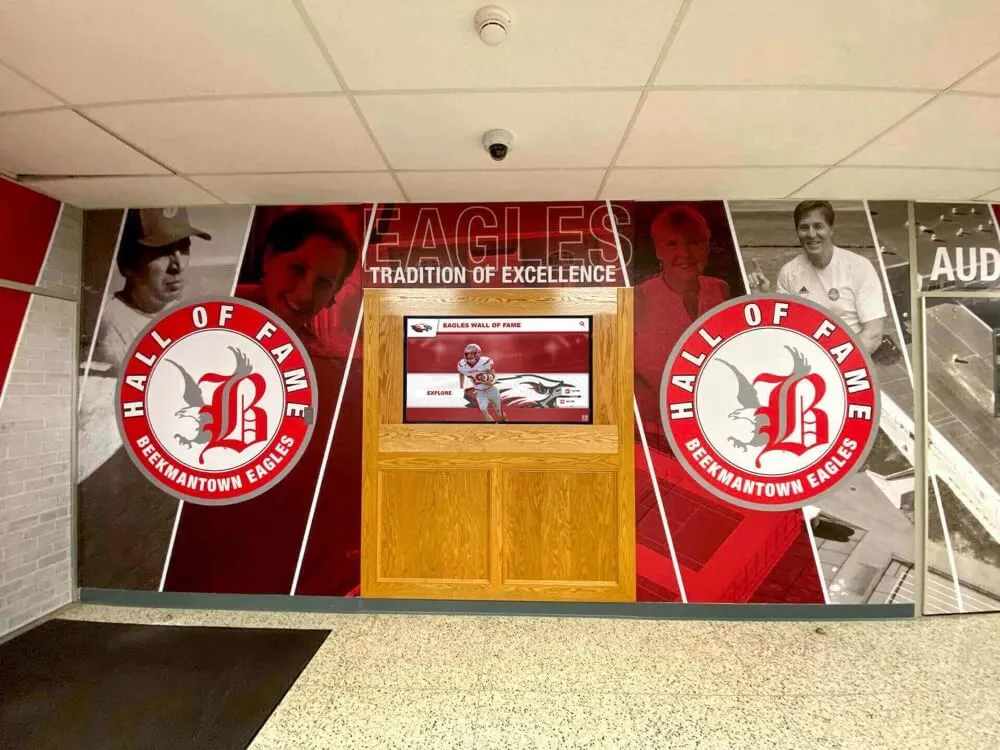
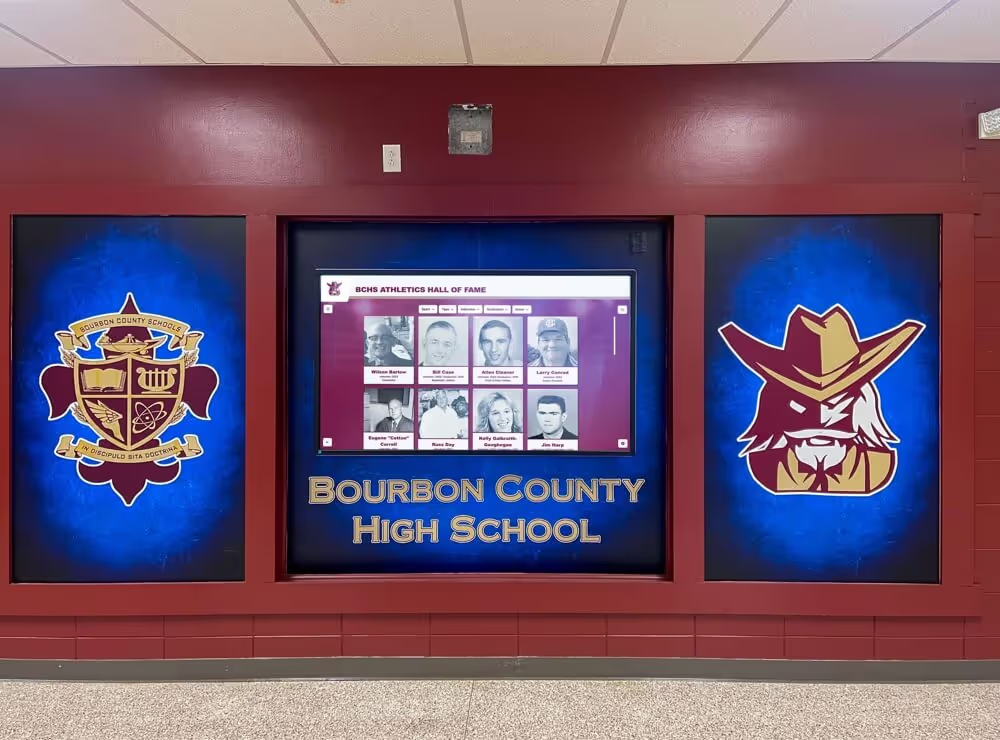
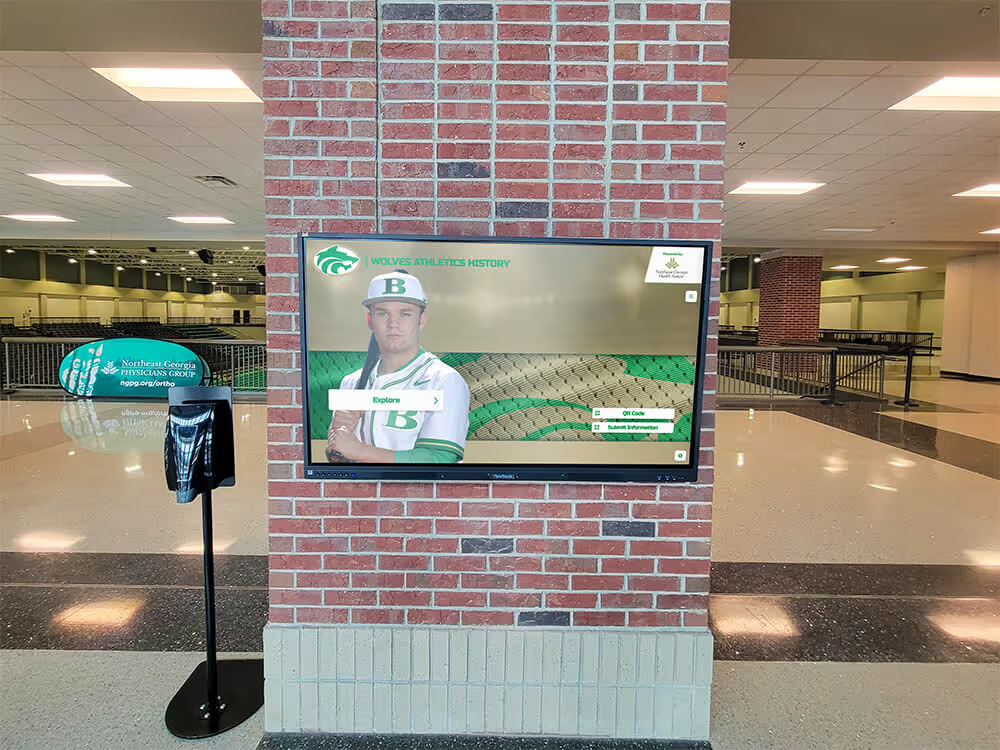
Digital recognition platforms address fundamental limitations of traditional approaches while offering capabilities impossible through physical displays alone, transforming how institutions showcase presidential scholarship recipients.
Comprehensive Digital Hall of Fame Platforms
Modern digital recognition systems like those from Rocket Alumni Solutions provide institutions with powerful tools for celebrating presidential scholarship recipients comprehensively.
Unlimited Recognition Capacity: Digital platforms eliminate physical space constraints that plague traditional recognition approaches. Schools can showcase every presidential scholarship recipient across program history regardless of how many decades the program has existed. As programs mature and recipient numbers grow, digital systems simply accommodate additional profiles without requiring facility renovations or removing historical recipients to make room for recent honorees.
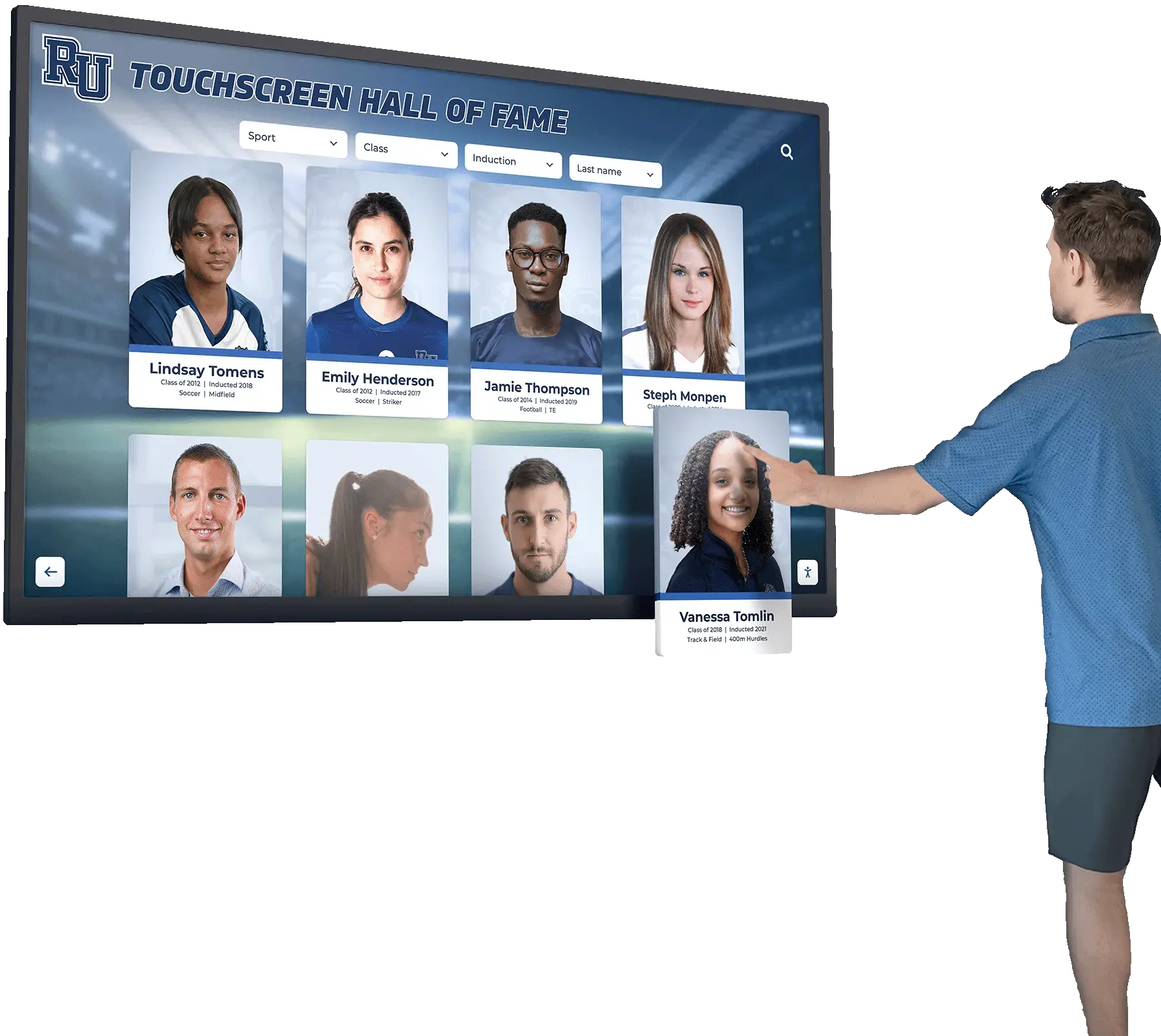
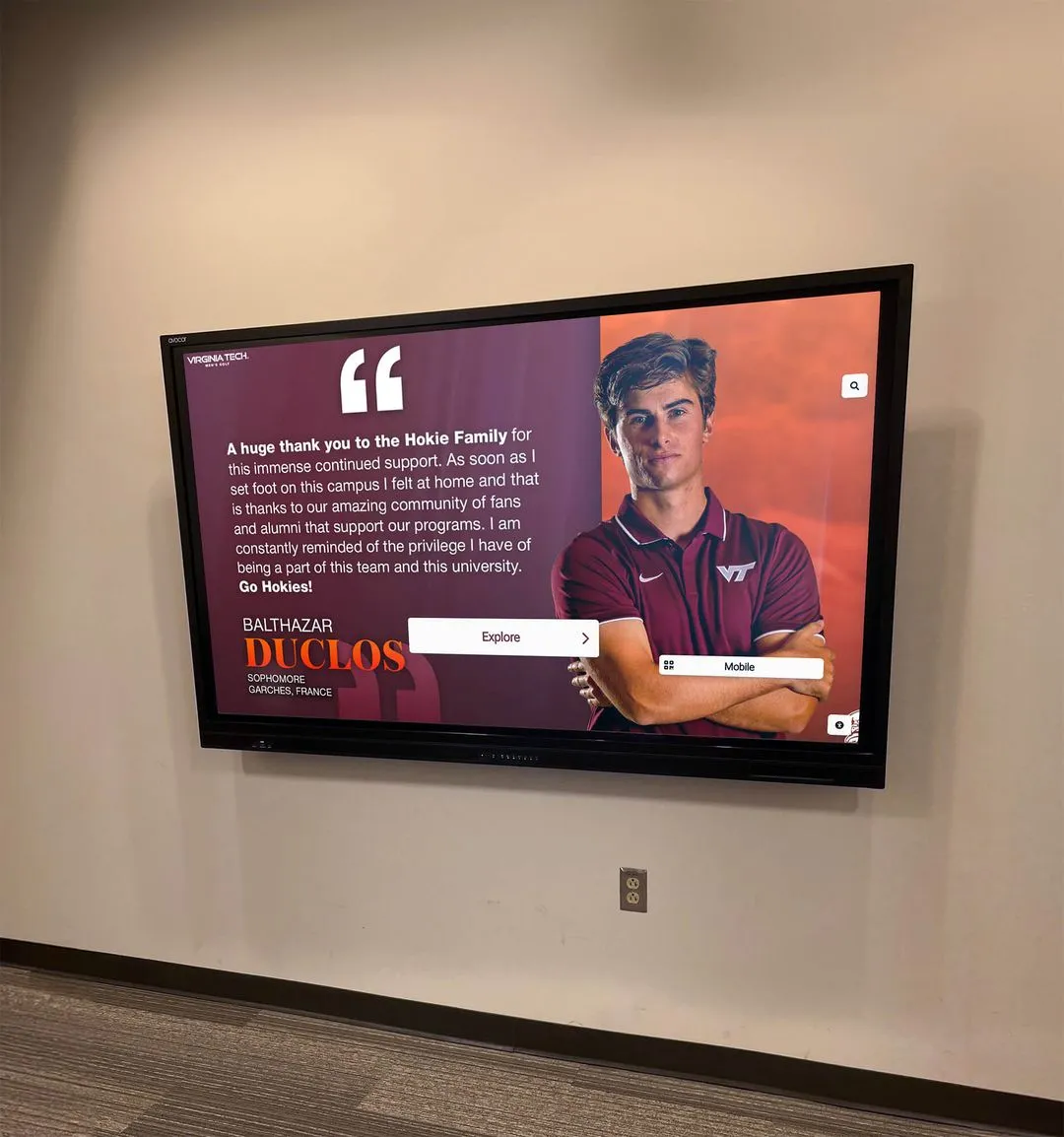
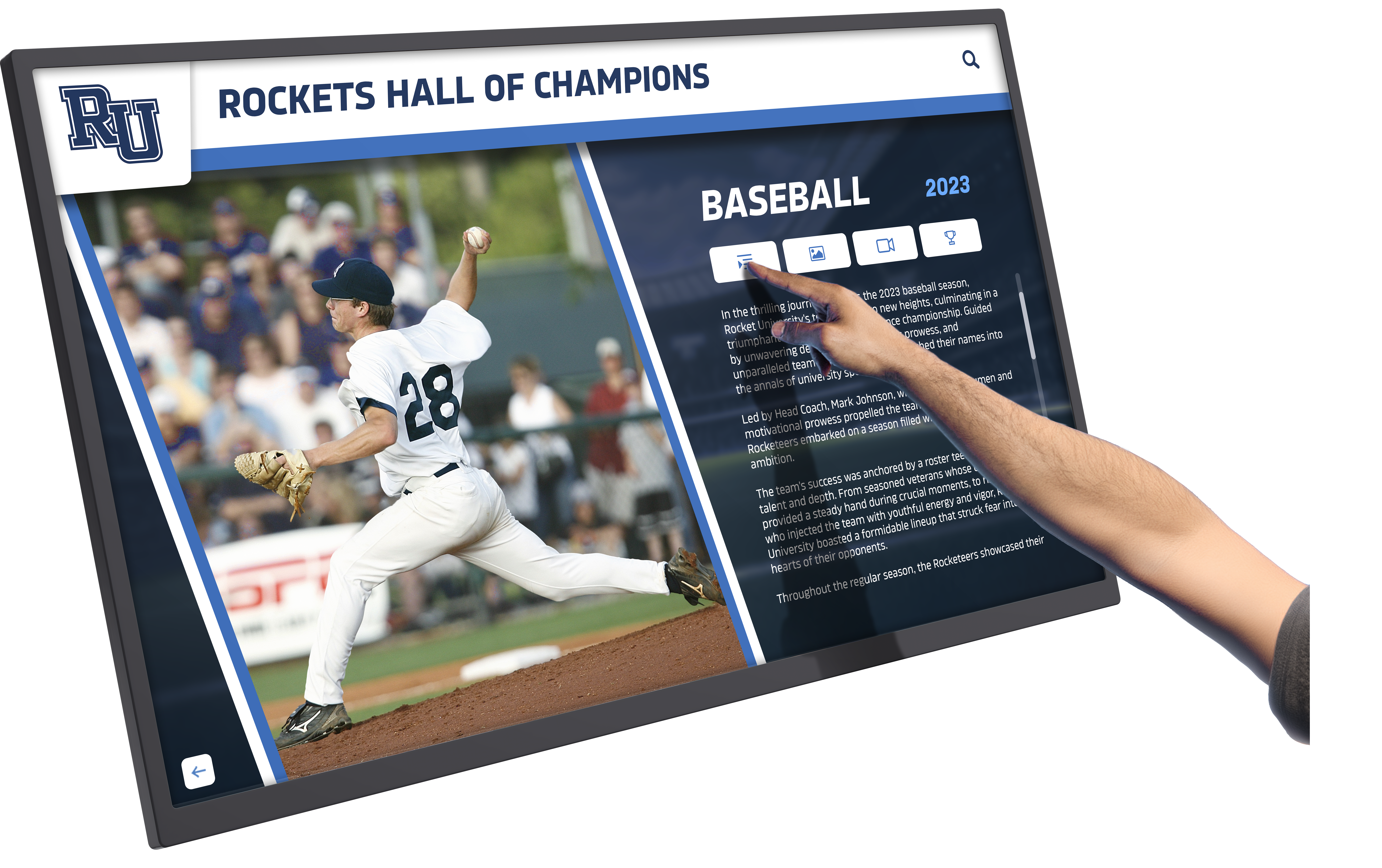
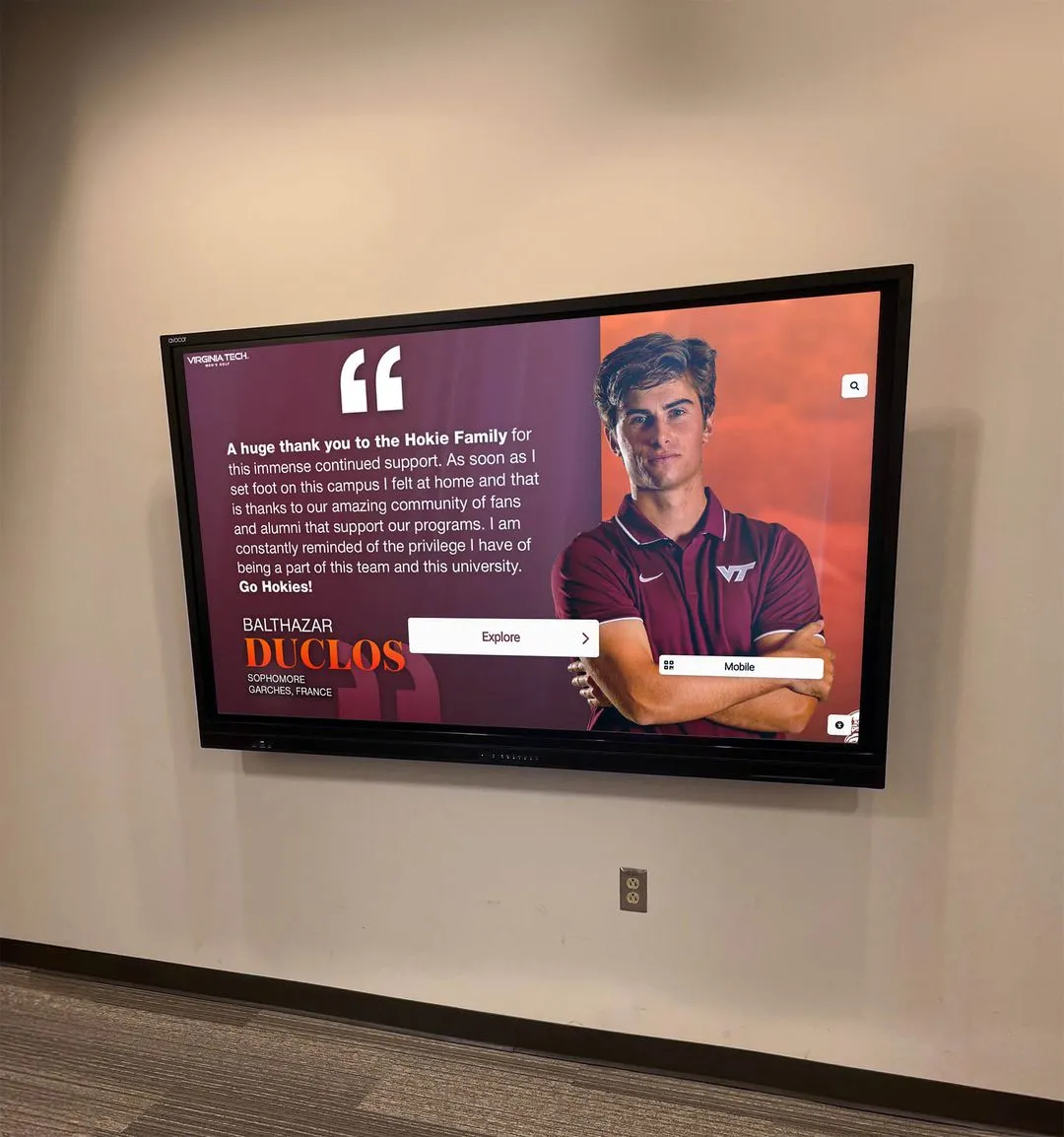
Rich Multimedia Presentations: Digital displays enable recognition far more comprehensive than traditional plaques or bulletin boards. Each presidential scholarship recipient can receive detailed profiles including high-resolution photographs, complete academic achievement summaries, leadership and service accomplishments, personal statements or video interviews, and updates about post-scholarship achievements and career paths. This rich content creates engaging presentations that help community members understand what distinguishes presidential scholars beyond simple names and graduation years.
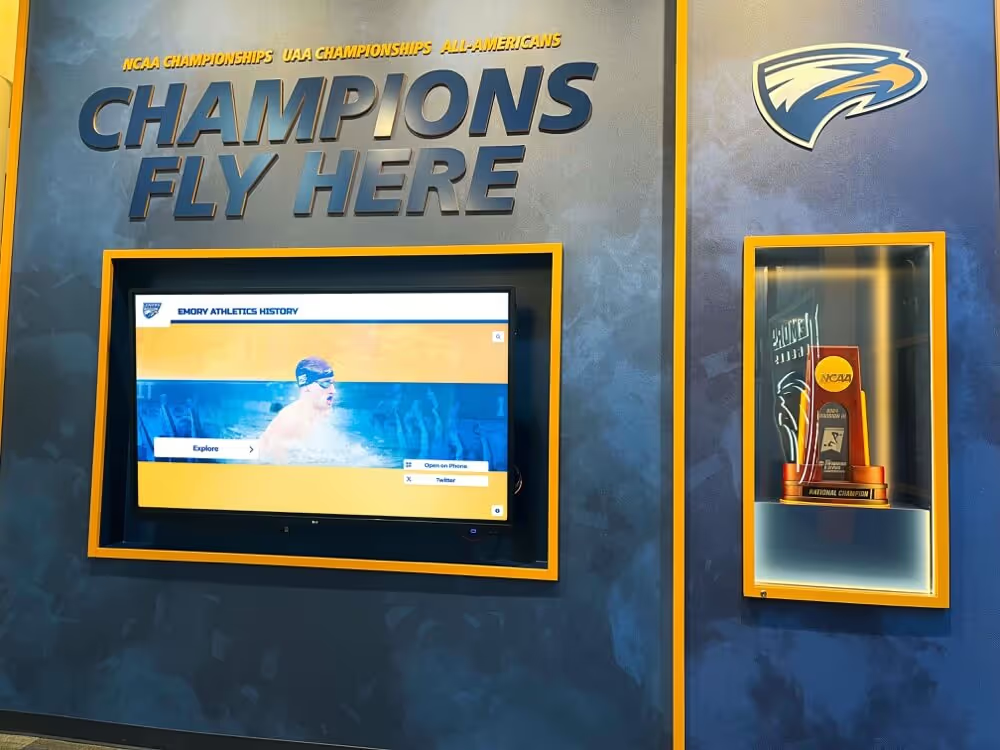
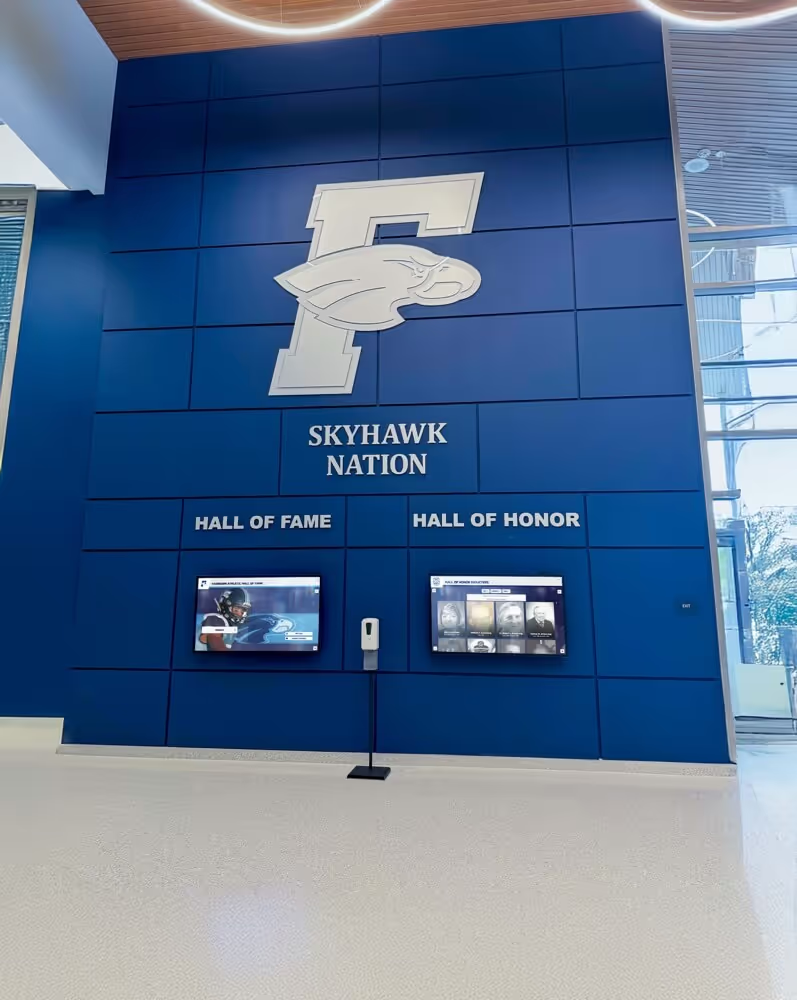
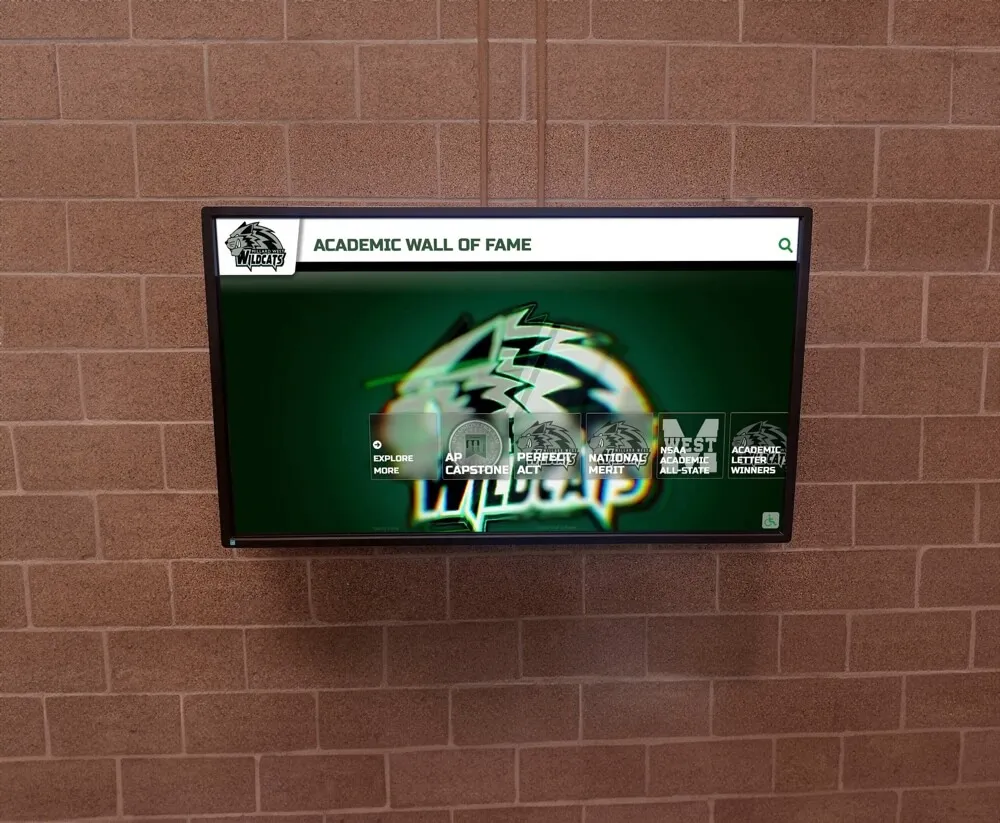
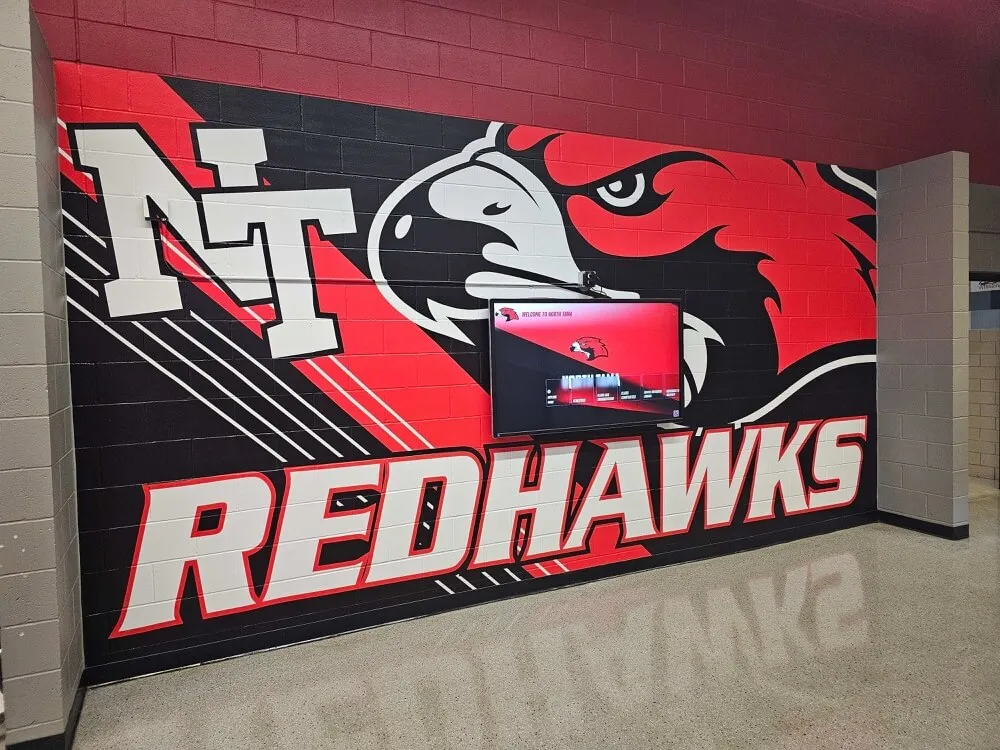
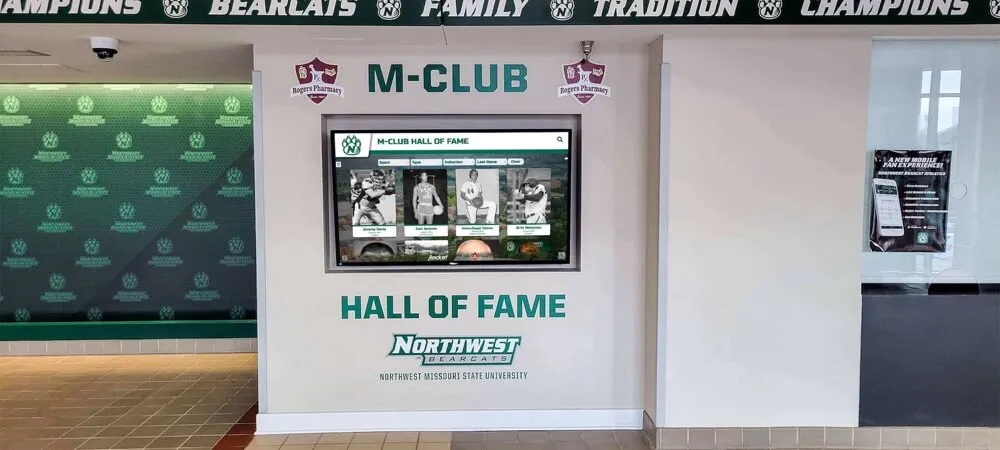
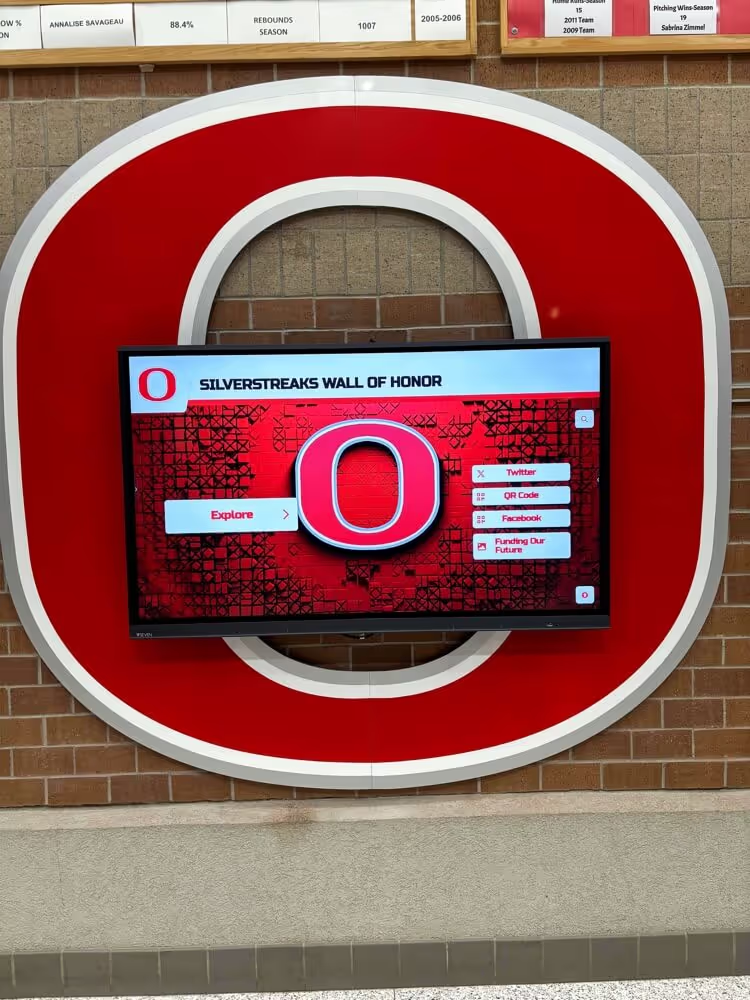
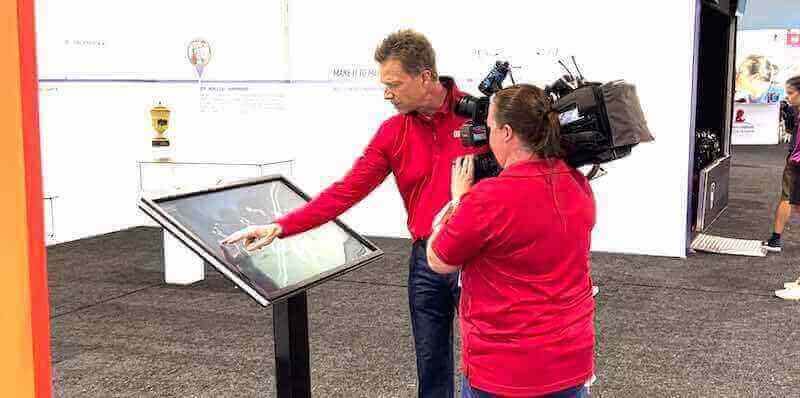
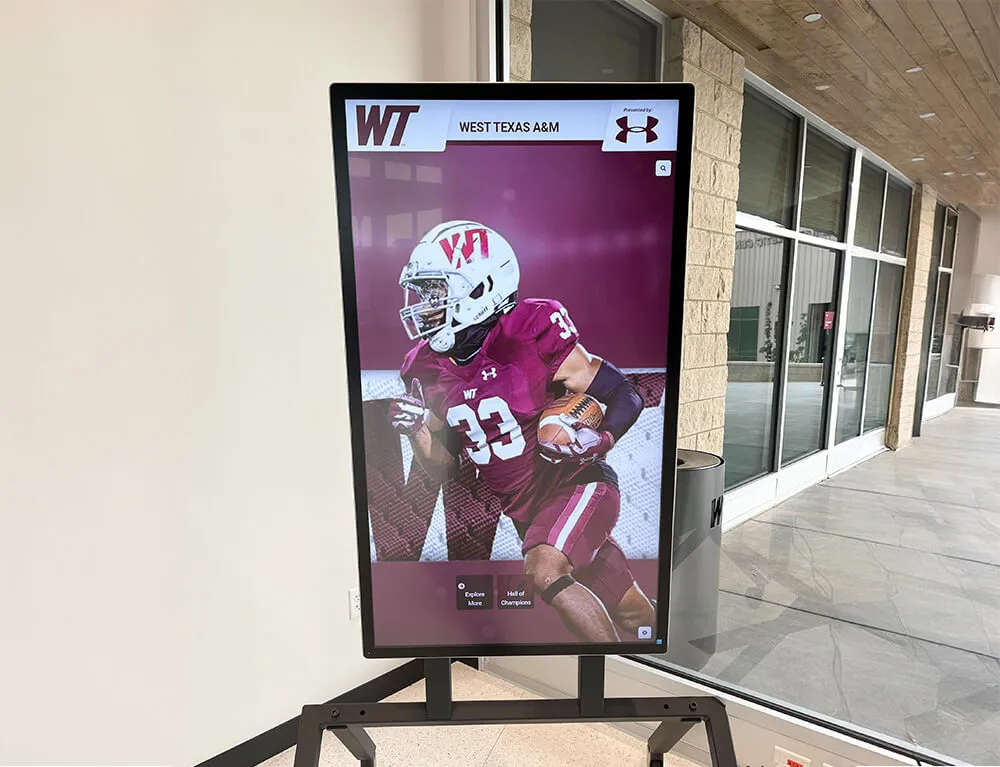
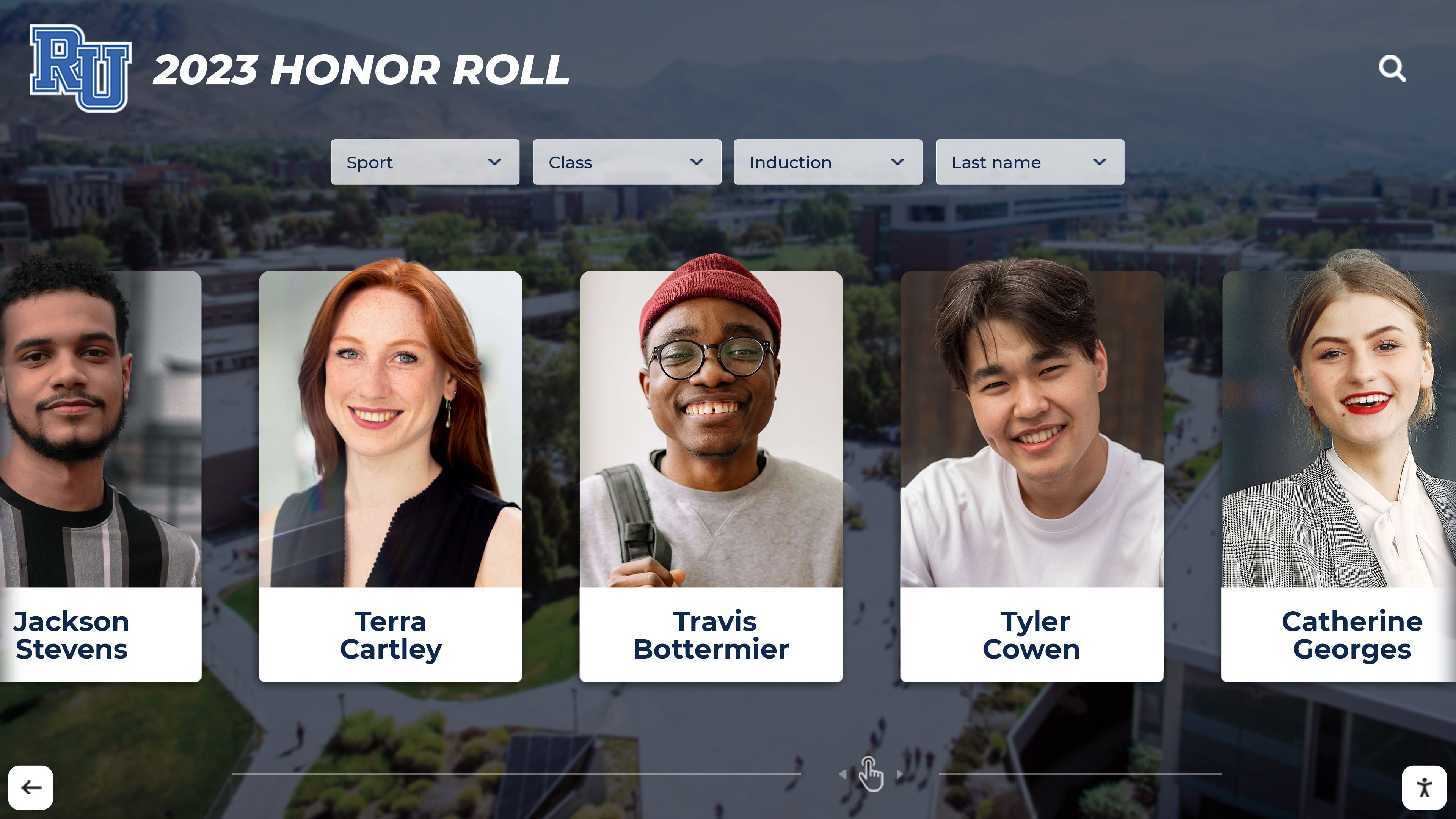
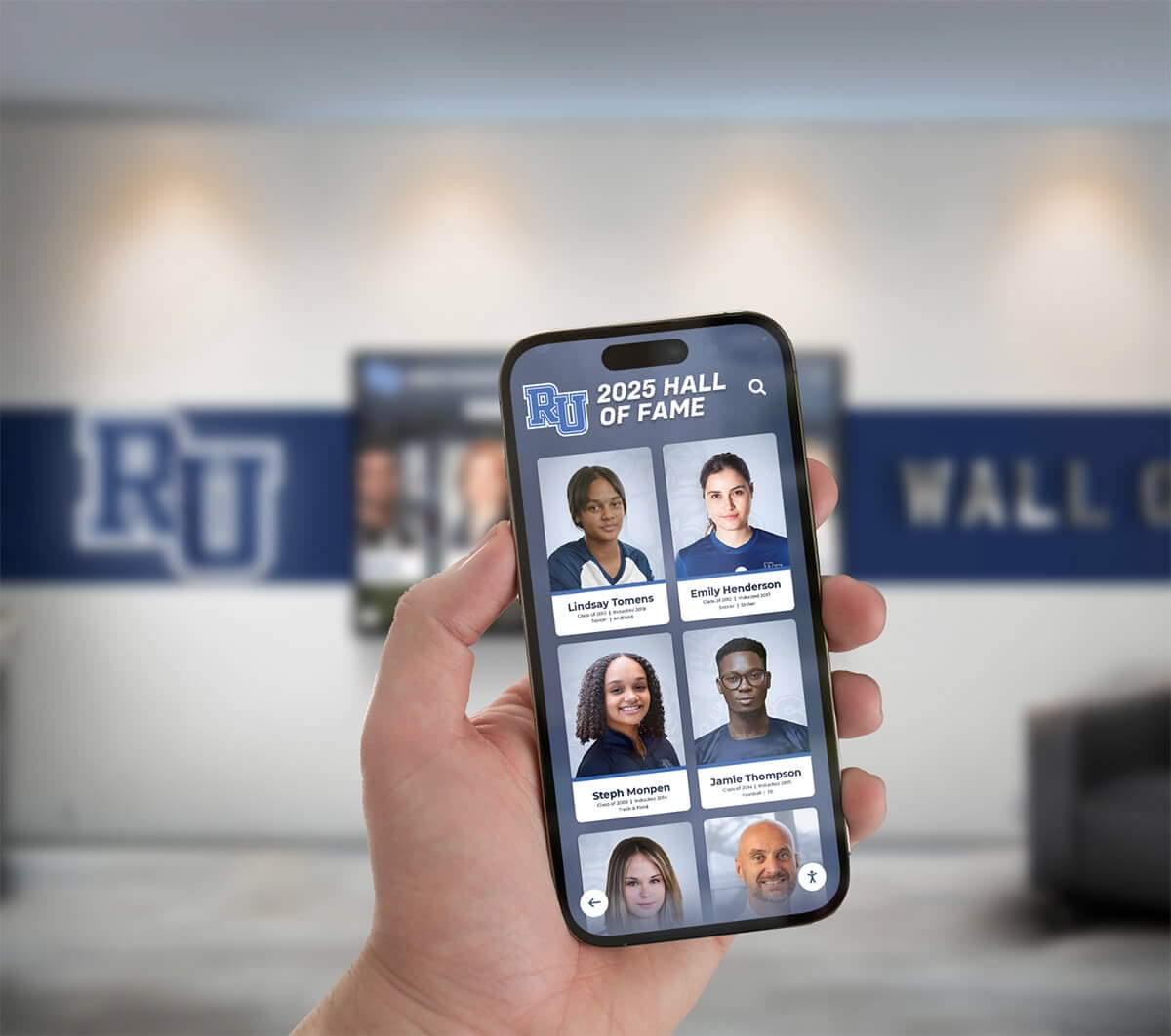
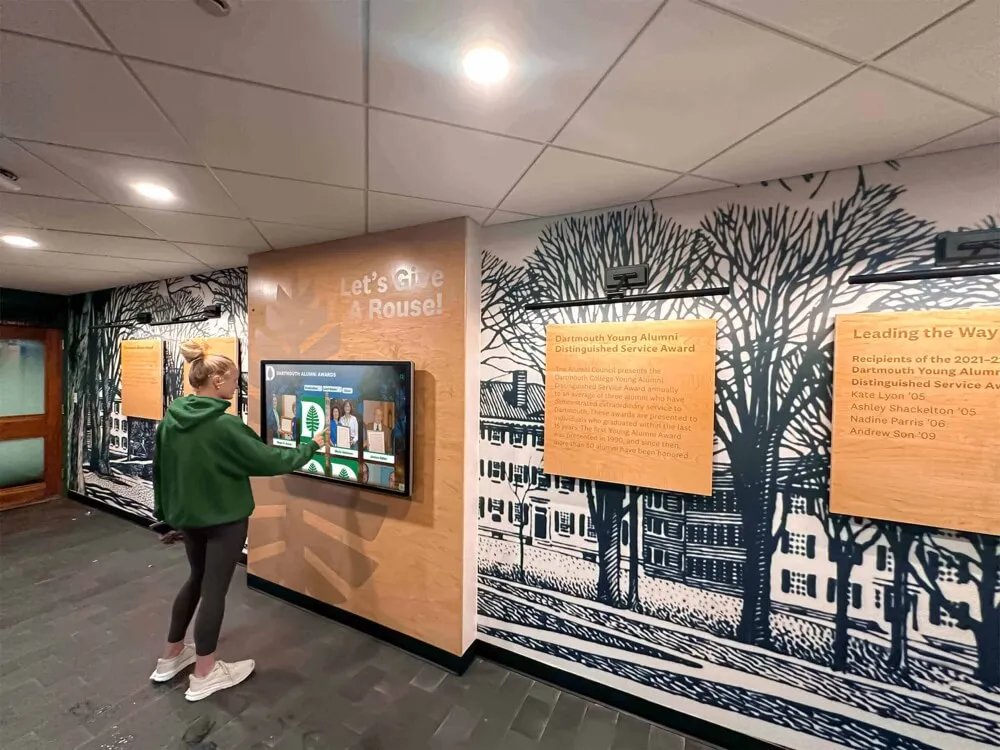
Interactive Search and Exploration: Touchscreen displays from providers like digital wall of fame specialists allow users to search and filter presidential scholars by graduation year, academic major, current profession, or other criteria. This interactivity transforms passive name-reading into active exploration where prospective students might research scholars who pursued similar interests, alumni can find former classmates, and current students can explore diverse paths previous scholars followed.
Remote Content Management: Cloud-based content management systems enable recognition coordinators to update scholar profiles instantly from any location without requiring facility access or installation work. When scholarship recipients achieve notable accomplishments—prestigious graduate programs, significant career milestones, community leadership—staff can update digital profiles immediately, keeping recognition current and relevant rather than permanently frozen at graduation.
Academic Achievement Dashboards and Statistics
Beyond individual scholar profiles, digital platforms can present program-level data and statistics demonstrating collective excellence.
Program History and Growth Visualization: Digital displays can showcase presidential scholarship program evolution through interactive timelines, total scholars recognized across program history, demographic diversity of scholar populations, and academic majors or fields of study represented. This program-level presentation demonstrates institutional commitment to academic recognition while providing historical context showing how scholarship traditions developed.
Achievement Benchmarks and Standards: Schools can display current scholarship eligibility criteria and selection standards, helping prospective applicants understand requirements while creating transparency about program expectations. Some institutions share achievement statistics like average GPAs of scholarship recipients, most common leadership roles or service activities, or post-graduation outcomes demonstrating scholars’ success trajectories. This data helps current students understand what distinguishes presidential scholars while providing aspiration targets for those pursuing future recognition.
Integration with Broader Recognition Ecosystems
Digital presidential scholarship recognition works most powerfully when integrated with comprehensive recognition systems celebrating diverse forms of student achievement.
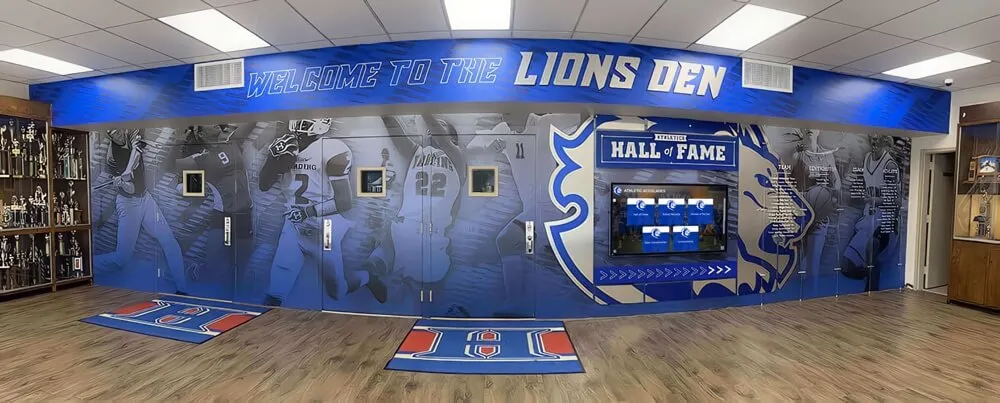
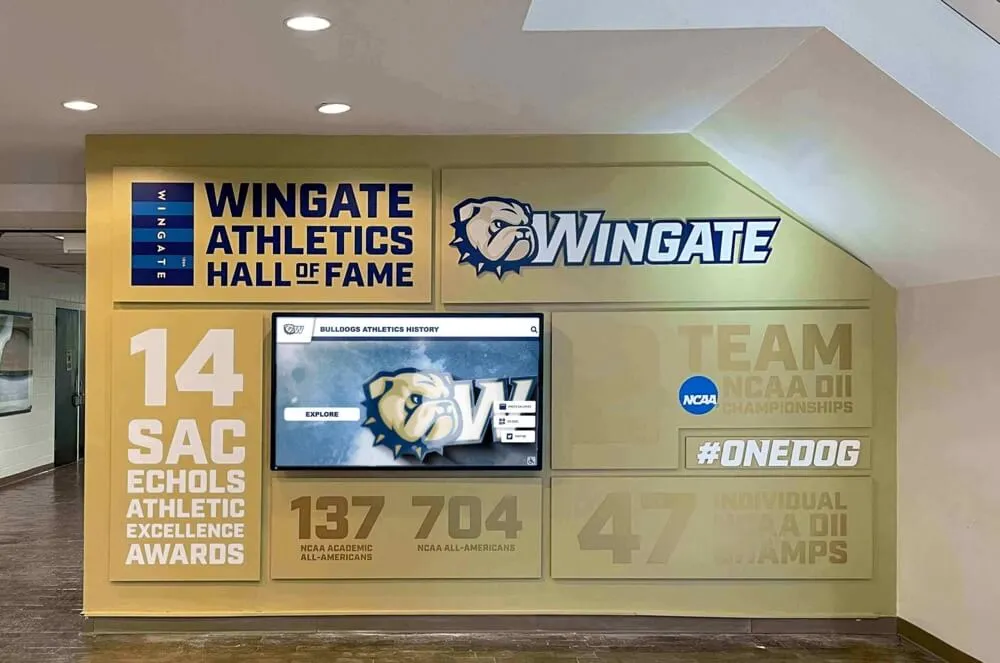
Combined Academic and Athletic Recognition: Many schools implement unified digital platforms showcasing both presidential scholarship recipients and athletic hall of fame inductees, demonstrating equal institutional commitment to academic and athletic excellence. Combined systems prevent the common dynamic where athletic achievement receives prominent physical displays in high-traffic locations while academic recognition gets relegated to administrative hallways or academic buildings.
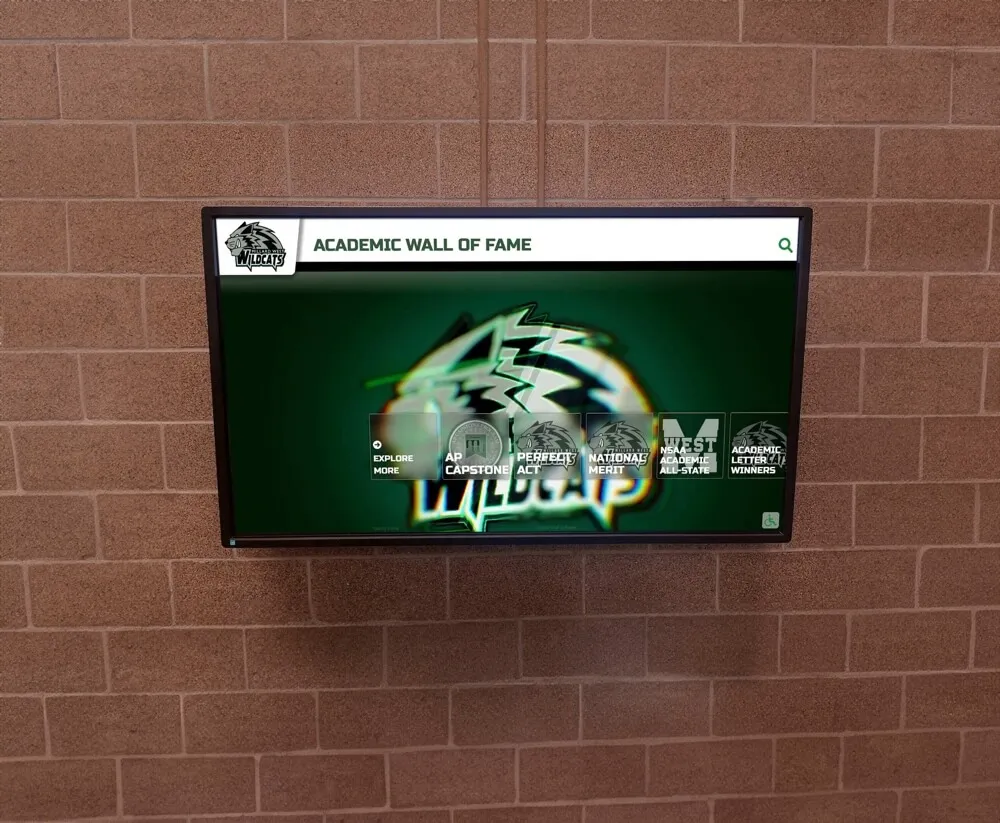
Comprehensive Student Achievement Platforms: Beyond presidential scholarships, digital systems can recognize academic letter awards, honor roll achievement, subject-specific excellence, and other academic accomplishments. Comprehensive platforms create complete pictures of student achievement cultures while ensuring various recognition tiers all receive appropriate visibility.
Best Practices for Presidential Scholarship Recognition Programs
Learning from successful programs while avoiding common pitfalls accelerates presidential scholarship program development and maximizes their impact on institutional culture.
Establish Clear Program Identity and Branding
Presidential scholarship programs benefit from distinctive identities that differentiate them from other academic recognition while creating consistent branding across years.
Program Naming and Identity: While “Presidential Scholarship” serves as common nomenclature, institutions should consider whether additional naming elements strengthen identity. Some programs incorporate institutional names, founding years, or distinctive thematic elements reflecting institutional missions. Clear identity helps students, families, and broader communities immediately recognize the program’s significance and understand its relationship to institutional values.
Visual Design and Presentation Standards: Consistent visual presentation reinforces program prestige and professionalism. Schools should develop standard design templates for certificates, medallions, recognition displays, and digital presentations ensuring cohesive appearance across all recognition touchpoints. Professional design demonstrates institutional investment while creating memorable visual associations with presidential scholarship recognition.
Promote Program Awareness and Application Access
Even exceptional presidential scholarship programs fail to achieve maximum impact if eligible students remain unaware of opportunities or perceive application processes as inaccessible.
Proactive Student Outreach: Schools should actively promote presidential scholarship opportunities through counselor presentations in relevant classes, targeted communications to students meeting academic thresholds, information sessions explaining eligibility and application processes, and mentorship connecting prospective applicants with current or former scholarship recipients. Proactive outreach prevents the common problem where only already-engaged high-achieving students pursue recognition while equally qualified but less-connected students never apply.
Accessible Application Support: Application processes should remove unnecessary barriers while maintaining appropriate standards. Schools might provide writing workshops supporting personal statement development, application review opportunities where counselors offer feedback before final submission, or explicit encouragement to students from underrepresented backgrounds who might question whether they belong in presidential scholar communities. Support systems help ensure that application success reflects genuine merit rather than differential access to adult guidance and resources.
Create Ongoing Scholar Engagement and Community
Presidential scholarship recognition shouldn’t end with initial award ceremonies—maintaining scholar engagement creates communities that enrich recipients’ experiences while amplifying program impact.
Scholar Cohort Activities: Many programs organize activities bringing scholarship recipients together including regular meetings or dinners facilitating peer connections, service projects where scholars collaborate on community contributions, and mentorship programs pairing senior scholars with incoming recipients. Cohort activities transform presidential scholarships from individual awards into community experiences where scholars support each other’s growth and development.
Alumni Scholar Networks: Maintaining connections with scholarship alumni creates powerful networks benefiting current scholars while keeping former recipients engaged with institutions. Alumni networks might offer career mentorship connecting current scholars with professionals in fields they’re exploring, speaking opportunities where alumni share post-graduation experiences, or reunion events during homecoming or commencement weekends. Alumni hall of fame displays celebrating distinguished scholar achievements further strengthen these connections.
Measure and Communicate Program Impact
Documenting presidential scholarship program outcomes helps institutions demonstrate value while identifying opportunities for continuous improvement.
Outcome Tracking and Analysis: Schools should track metrics demonstrating program impact including scholar academic performance during and after scholarship years, graduate school admission rates and institutions attended, career outcomes and professional achievements, and alumni engagement levels compared to non-scholar populations. Outcome data helps institutions understand program effectiveness while providing evidence supporting continued investment in scholarship recognition.
Impact Communication and Storytelling: Beyond statistics, compelling individual stories bring program impact to life. Schools might feature scholar profiles highlighting transformative experiences enabled by scholarship recognition, document scholars’ service contributions and leadership impact, or showcase how scholarship communities influenced personal and professional development. These narratives prove more memorable and persuasive than numerical data alone when communicating program value to stakeholders.
Building Academic Excellence Culture Through Recognition
Presidential scholarship programs achieve maximum impact when integrated into comprehensive strategies building institutional cultures where academic achievement receives celebration, support, and aspiration equal to other forms of student excellence.
Balancing Academic and Athletic Recognition
Many schools struggle with imbalanced recognition cultures where athletic achievement receives significantly more visible celebration than academic accomplishment, sending implicit messages about what the institution truly values.
Ensuring Recognition Equity: Presidential scholarship recognition should receive comparable visibility and resource investment to athletic recognition. This equity might manifest through locating digital academic recognition displays in high-traffic areas equivalent to where athletic achievements appear, dedicating equivalent ceremony time and production quality to academic recognition events, and investing comparable resources in professional photography, videography, and display production for academic honorees.
Complementary Excellence Narratives: Rather than positioning academic and athletic achievement as competing priorities, effective institutions celebrate both as complementary forms of excellence representing different dimensions of student potential. Some schools feature combined displays showcasing scholar-athletes who excel in both domains, demonstrating that academic and athletic excellence need not be mutually exclusive.
Creating Academic Achievement Visibility
Beyond presidential scholarship recognition specifically, building achievement cultures requires making academic excellence visible throughout daily school experiences.
Prominent Display Locations: School entrance displays and main lobby installations ensure that visitors, prospective families, and daily traffic all encounter academic achievement recognition. Relegating academic displays to administrative hallways or academic buildings while reserving high-traffic areas for athletics sends clear messages about institutional priorities. Strategic display placement demonstrates genuine commitment to academic recognition.
Integrated Digital Signage: Lobby digital signage can rotate through diverse achievement recognition including presidential scholars, honor roll students, academic competition teams, and subject-specific excellence. Dynamic rotation ensures that various achievement types all receive visibility while maintaining fresh content that captures attention better than static displays.
Inspiring Future Scholars Through Current Recognition
Presidential scholarship recognition achieves maximum motivational impact when current students can clearly see achievement paths and understand what distinguishes scholarship recipients.
Transparent Achievement Communication: Schools should clearly communicate scholarship eligibility criteria and selection standards, helping students understand concrete actions and achievements that position them as future scholarship candidates. This transparency transforms vague aspiration (“I’d like to be a presidential scholar someday”) into concrete goal-directed behavior (“I need to maintain a 3.75 GPA while pursuing leadership opportunities”).
Near-Peer Modeling: Current students find particular inspiration in achievements by near-peers—students just one or two years ahead who recently earned presidential scholarship recognition. Highlighting recent recipients and making them accessible as mentors or speaking resources helps younger students see scholarship achievement as attainable rather than distant or impossible.
Common Challenges and Solutions in Presidential Scholarship Programs
Understanding frequent program challenges helps institutions implement more effective approaches that better serve students and achieve intended outcomes.
Challenge 1: Limited Diversity in Scholar Populations
Many presidential scholarship programs struggle with recipient diversity that doesn’t reflect broader student population demographics, raising concerns about access and equity.
Addressing Underlying Barriers: Limited diversity often reflects systemic barriers rather than student capability. Solutions include reviewing eligibility criteria that might inadvertently exclude students facing challenging circumstances, providing application support specifically targeted to underrepresented student populations, considering holistic review that accounts for context and obstacles students overcome, and engaging in proactive outreach ensuring all eligible students understand opportunities and feel encouraged to apply.
Challenge 2: Maintaining Program Relevance Across Generations
Presidential scholarship programs established decades ago sometimes struggle to remain relevant as educational contexts, student populations, and institutional missions evolve.
Periodic Program Review and Evolution: Effective programs undergo regular review assessing whether eligibility criteria remain appropriate for current contexts, selection processes reflect contemporary best practices, recognition methods effectively reach and inspire current student generations, and program outcomes align with intended institutional goals. Programs should balance maintaining traditions that create continuity across generations with evolving to remain relevant and impactful.
Challenge 3: Balancing Selectivity with Recognition Capacity
Programs must navigate tension between maintaining prestige through selectivity and recognizing sufficient students to create meaningful motivation across broader populations.
Tiered Recognition Structures: Some institutions address this tension by creating presidential scholar tiers including highest-tier recognition for truly exceptional achievement, secondary recognition for outstanding students who narrowly miss top tier, and program-specific presidential scholarships within individual schools or departments. Tiered approaches maintain elite recognition for ultimate scholarship while creating additional recognition opportunities motivating broader student populations.
Challenge 4: Sustaining Recognition Beyond Initial Award
Presidential scholarship recognition often peaks at initial award ceremonies but fades during scholars’ subsequent years, missing opportunities for ongoing engagement and visibility.
Multi-Year Recognition Integration: Programs can maintain scholar visibility through featuring scholars in school communications across all their enrollment years, creating ongoing leadership opportunities specifically for presidential scholars, recognizing additional scholar achievements and milestones as they occur, and maintaining prominent display presence throughout scholars’ complete academic careers rather than only at award time.
Conclusion: Presidential Scholarships That Transform Educational Culture
Presidential academic scholarship programs represent far more than financial awards or resume credentials. When designed thoughtfully and implemented with genuine institutional commitment, these programs transform educational cultures by establishing visible proof that academic excellence receives recognition equal to any other form of achievement, creating aspirational standards that motivate entire student bodies toward higher performance, demonstrating to prospective students and families that institutions value and celebrate scholarship, engaging alumni through ongoing connection to traditions honoring their achievement, and building communities of scholars who support each other’s growth while contributing to institutional excellence.
The students who earn presidential scholarship recognition dedicate countless hours to academic excellence, demonstrate leadership that strengthens their communities, embody character qualities reflecting institutional values, and represent the very best of what educational institutions develop. They deserve recognition systems that honor the significance of their achievements while inspiring future generations to pursue similar excellence.
Whether your institution is establishing its first presidential scholarship program or modernizing recognition approaches that no longer serve contemporary needs, the strategies outlined in this guide help create scholarship programs worthy of the exceptional students they celebrate. From establishing fair, transparent selection processes to implementing modern digital recognition platforms that showcase achievement comprehensively, effective presidential scholarship programs balance honoring individual accomplishment with building the achievement cultures that elevate entire institutions.
Modern digital recognition technology has transformed what’s possible for schools and universities seeking to celebrate presidential scholars effectively. Solutions from Rocket Alumni Solutions enable institutions to create comprehensive digital platforms that showcase every presidential scholarship recipient across program history with rich multimedia presentations, provide interactive exploration allowing community members to discover scholar achievements and stories, inspire current students through visible examples of what academic excellence produces, and maintain ongoing recognition that evolves as scholars achieve new milestones. Discover how digital recognition systems can transform your institution’s ability to honor presidential scholars while building the culture of academic excellence that develops future generations of exceptional students.