An NHS induction ceremony is one of the most meaningful academic recognition events a high school holds each year. When a student stands before their peers, family, and faculty to be inducted into the National Honor Society, that moment carries real weight — it marks years of disciplined study, community service, demonstrated leadership, and personal character. Advisors who approach the ceremony as a genuine celebration, rather than an administrative checkbox, create experiences that inductees remember for decades. This guide covers practical ceremony structures, creative recognition ideas, venue strategies, and modern display options that make every NHS induction feel worthy of what your students have achieved.
Few school events carry the combination of family pride, peer respect, and institutional significance that surrounds an NHS induction. Parents reschedule work obligations. Students spend weeks wondering whether their name appears on the invitation list. Underclassmen watch and quietly decide what standards they want to hold themselves to. That kind of gravity demands a ceremony designed to honor it — not an assembly-line event rushed through the gymnasium between practice schedules.
The good news is that building a meaningful NHS induction ceremony does not require a large budget or professional event staff. It requires clear intention, thoughtful planning, and a genuine commitment to making inductees feel recognized for the specific qualities that earned their membership: scholarship, leadership, service, and character. Those four pillars, which National Honor Society uses to define membership eligibility, should shape every element of the ceremony itself.

Understanding the Purpose Behind Your NHS Induction Ceremony
Before planning logistics, advisors benefit from clarifying what the ceremony is actually for — and who it primarily serves.
The Ceremony Serves Inductees First
The most common mistake NHS advisors make is designing ceremonies primarily around administrative convenience: fitting the event into an available auditorium slot, keeping it under forty-five minutes so it does not conflict with after-school activities, or processing inductees in alphabetical batches for efficient certificate distribution. Efficiency matters, but efficiency as a primary design criterion produces ceremonies that feel like they serve the school rather than the students being honored.
Inductees should feel individually recognized, not collectively processed. That requires ceremony design that communicates genuine knowledge of each student’s achievement — not generic praise that could apply to anyone who maintained a 3.5 GPA.
The Ceremony Inspires Underclassmen
NHS inductions are also recruitment events for the school’s culture of academic excellence. Freshmen and sophomores who attend watch current juniors and seniors being inducted and form beliefs about what standards their school values. A ceremony that feels meaningful and prestigious communicates that academic excellence earns genuine institutional recognition. A rushed or impersonal event communicates the opposite.
Positioning NHS induction as a prestigious occasion — through careful venue selection, formal program design, and visible family and faculty involvement — strengthens academic culture throughout the entire school community.
The Ceremony Creates Lasting Community Memory
Families talk about NHS inductions at dinner tables, share photographs on social media, and reference the moment for years. Advisors who build ceremonies worthy of those conversations — ceremonies where parents genuinely feel proud and students feel genuinely honored — contribute to the kind of school reputation that attracts academically motivated families and retains excellent teachers.

Planning Your NHS Induction Ceremony: A Timeline for Advisors
A well-executed induction ceremony requires eight to twelve weeks of preparation. Advisors who start planning earlier face fewer last-minute compromises.
Ten to Twelve Weeks Before: Foundation Work
Confirm your candidate list. NHS chapters typically complete their review and notification process in the weeks following semester grade reports. Advisors should have a finalized induction candidate list — including students who have accepted — before making any ceremony commitments.
Reserve your venue. The best ceremony spaces fill quickly. Auditoriums, performing arts centers, and academic commons book out weeks in advance, particularly in spring. Secure your date before it disappears to a spring musical rehearsal or end-of-year testing schedule.
Set your ceremony committee. Student officers play an important role in NHS inductions, and involving them in ceremony planning creates ownership and authentic student voice. A small advisory committee of current NHS officers, plus one or two faculty advisors, can manage most ceremony planning without overwhelming any individual.
Establish your budget. Even modest ceremonies require spending on printed programs, certificates, NHS pins or medallions, venue preparation, and potentially light refreshments for a post-ceremony reception. Knowing your budget early prevents late compromises.
Six to Eight Weeks Before: Program Design
Draft your ceremony program. Map out every element of the ceremony in sequence, with estimated times for each component. Most successful NHS inductions run sixty to ninety minutes for the formal program, followed by a fifteen to thirty minute reception. Programs shorter than forty-five minutes often feel rushed; programs longer than ninety minutes lose family engagement.
Identify your speakers. NHS inductions typically include remarks from a school principal or academic dean, the chapter president, and often a faculty speaker or community member who embodies NHS values. Confirm availability and provide clear guidance about expected length and content for each speaker.
Plan inductee moments. The most memorable NHS ceremonies give inductees an active role rather than treating them as passive recipients. Consider having inductees light individual candles from a chapter candle during a candle-lighting ceremony, recite the NHS pledge together, or write brief personal statements read aloud during their individual recognition.
Order your materials. NHS membership materials — including the official NHS pin — typically require three to four weeks for ordering and delivery. Certificates and printed programs require similar lead times if working with an outside printer.
Three to Four Weeks Before: Communication and Logistics
Send formal invitations. NHS induction invitations should communicate the ceremonial weight of the occasion. Printed or professionally designed digital invitations sent to families signal that this is a formal event deserving of their full attention. Include practical details: venue address, parking, start time, dress code, and an RSVP mechanism for accurate headcount.
Brief your students. Inductees need to know what to expect and what is expected of them. Hold a required pre-ceremony orientation covering how they will be called forward, where to stand, how to receive their pin, and any speaking roles or group recitations they will participate in. Eliminate uncertainty before the ceremony so inductees can be present in the moment rather than anxious about procedure.
Coordinate with faculty and staff. Teachers who have written recommendation letters or who have been particularly influential in inductees’ academic careers deserve invitations. Faculty presence at NHS inductions reinforces the school community’s commitment to academic excellence.
One to Two Weeks Before: Final Preparation
Conduct a full dress rehearsal. Walk through the entire ceremony with inductees, student officers, and all speakers. Identify any sequencing problems, timing issues, or logistical questions while there is still time to solve them. Test all microphones, presentation equipment, and lighting in the actual venue.
Finalize printed materials. Confirm every inductee name is spelled correctly on programs and certificates. A misspelled name on an NHS certificate is the kind of error families notice and remember.
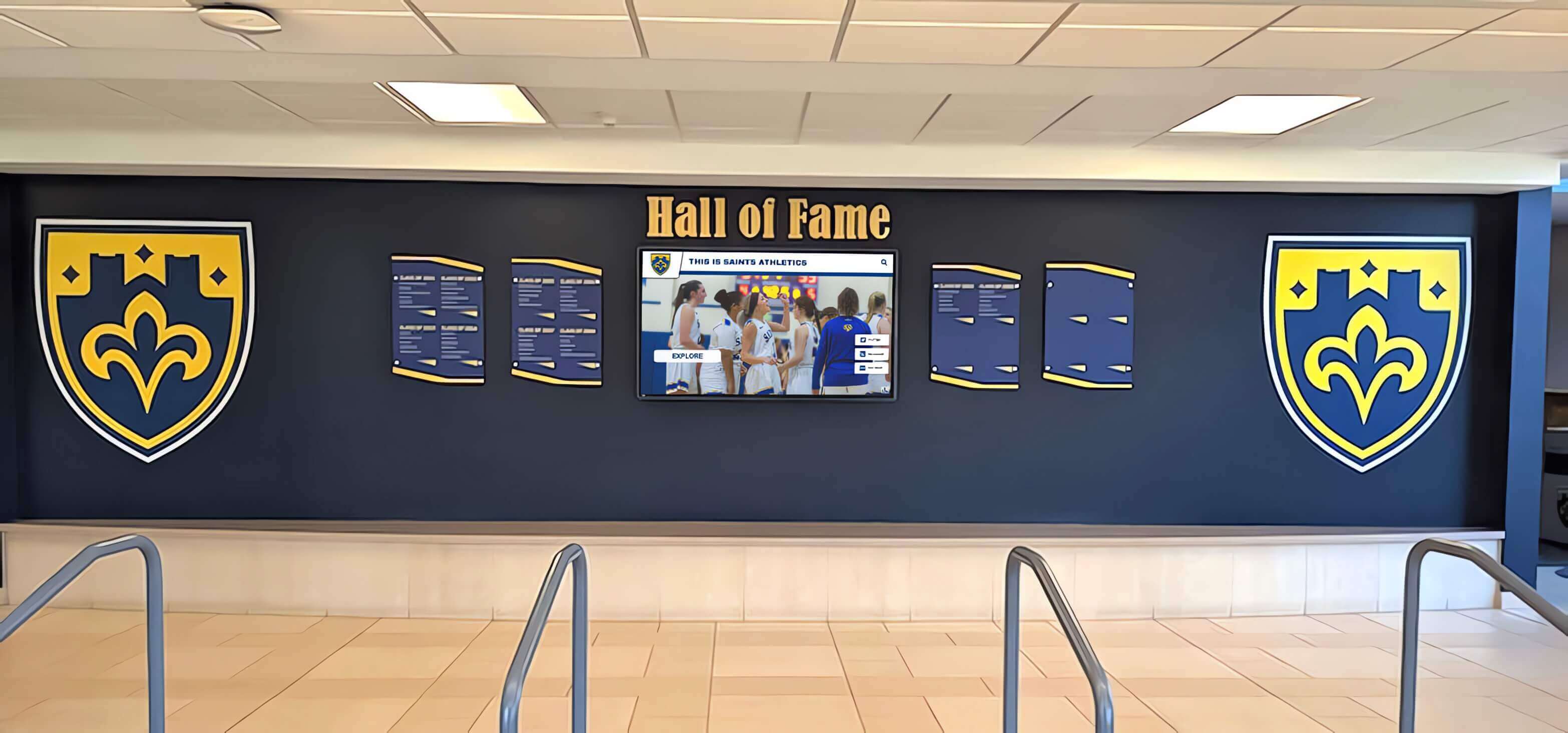
Prepare your recognition display. If you are using a physical or digital recognition wall, ensure all inductee profiles, photos, and information are ready to be displayed at or after the ceremony. Recognition that students and families can interact with during the reception adds substantial value to the overall event experience.
Choosing Your Venue: Setting That Matches the Occasion
Ceremony venue communicates how much the institution values what it is recognizing. A school auditorium with proper lighting and sound, arranged formally with reserved seating for inductees and families, feels appropriately prestigious. An improvised ceremony in a cafeteria with folding chairs sends a different message entirely.
School Auditoriums and Performing Arts Centers
For most schools, the main auditorium or performing arts center is the ideal venue. These spaces offer professional sound systems, stage lighting, built-in seating with clear sightlines, and a ceremonial atmosphere that elevates the occasion. Reserve the auditorium rather than settling for whatever space is available.
Key considerations for auditorium ceremonies:
- House lighting adjustments create formality; work with your technical staff in advance
- Stage setup should feel organized and purposeful, not cluttered
- Reserved seating sections for inductees and their families prevent confusion
- Backdrop behind the stage — school banners, a digital display, or a simple professional drape — creates visual context for family photographs
Alternative Venue Options
Schools without auditoriums or with very large induction classes sometimes choose alternative venues that offer different qualities.
University or community venues — a nearby college auditorium, city hall chamber, or civic center — communicate that the event is significant enough to move beyond the school building. These spaces offer professional infrastructure and a sense of occasion worth considering for schools with substantial induction classes or strong alumni engagement.
Outdoor ceremonies in courtyard gardens or athletic amphitheaters work well for spring inductions in appropriate climates. Natural settings with proper audio reinforcement can feel genuinely elegant rather than improvised.
Library and academic commons spaces emphasize the intellectual community aspect of NHS membership. A ceremony held among bookshelves and academic resources carries symbolic resonance appropriate for an academic honor society. Ideas for designing welcoming institutional spaces can inspire creative ceremony staging even in non-traditional settings.
NHS Ceremony Program Structure: What to Include
The ceremony program is the architecture that holds everything together. Effective NHS induction programs balance formal structure with personal meaning, moving from institutional context through individual recognition toward shared commitment.
Opening Elements
Processional. Inductees processing into the venue together — ahead of their families or as a group before families are seated — creates immediate visual impact and signals that this is a formal occasion. Select meaningful music: many chapters use academic or classical selections; others choose contemporary pieces that carry personal meaning to the inductee class.
Welcome and opening remarks. A brief welcome from the chapter advisor or school principal establishes context and tone. Opening remarks should acknowledge what NHS membership represents, express genuine pride in the inductee class, and set expectations for the ceremony to follow. Limit opening remarks to five minutes; they set tone, not substance.
Introduction of NHS history and pillars. For guests unfamiliar with NHS, a brief explanation of the four pillars — scholarship, leadership, service, and character — grounds the recognition that follows. Many chapters assign this section to a current NHS member rather than an advisor, which creates better student voice and positions current officers as peers welcoming new inductees.
The Induction Core
Inductee recognition. How you call forward and recognize each inductee is the heart of the ceremony. Several formats work well depending on class size and available time.
For smaller classes (under thirty inductees), individual recognition with a brief biographical statement — including a notable achievement, leadership role, or service contribution — creates the most personal experience. A faculty member or current officer reads each statement while the inductee comes forward to receive their pin and certificate.
For larger classes (thirty to sixty inductees), grouped recognition by class year or homeroom, followed by individual name calling and pin presentations, balances comprehensiveness with pacing. Include a sentence or two about each inductee’s specific accomplishments even in larger ceremonies — generic recognition of “outstanding achievement” falls flat when the ceremony’s purpose is honoring individual excellence.
For very large induction classes, some chapters hold separate ceremonies by class year or combine individual pinning with a multimedia display showing each inductee’s photo and a brief achievement statement, allowing families to see their student recognized specifically while the program moves efficiently.
Candle lighting ceremony. The NHS candle lighting ritual is one of the most meaningful and widely used induction traditions. The advisor lights a central candle representing the society’s ideals; chapter officers each light personal candles representing the four pillars; inductees then light their individual candles from an officer’s flame, symbolizing their acceptance of NHS values. The moment the room fills with candlelight creates genuine ceremony — the kind of sensory memory that lasts years.
NHS pledge. Inductees reciting the NHS pledge together as a group creates collective commitment and shared identity. Reading the pledge in unison, with new inductees joining established members for the first time, marks the precise moment of membership.
Keynote or faculty remarks. An inspirational speaker — a distinguished alumnus, a community leader who exemplifies NHS values, or a faculty member who has known the inductee class well — provides meaningful context for why academic excellence, service, and character matter beyond high school. The most effective keynote remarks in NHS settings are specific and honest rather than generic motivational language. Speakers who reference particular inductees by name, or who share genuine stories about what excellence in this school’s specific community looks like, create moments families talk about afterward.
Closing Elements
Welcome of inductees by current members. Established NHS members formally welcoming inductees into the chapter creates peer-to-peer recognition that feels distinct from faculty or administrative recognition. A brief statement from the chapter president on behalf of current membership — acknowledging inductees as peers who have earned their place — carries particular weight with students.
Closing remarks and charge. The ceremony closes with a forward-looking charge to inductees: not just congratulations for past achievement, but an articulation of what NHS membership asks going forward. The advisor or principal charge should be brief, specific to this inductee class if possible, and genuinely aspirational rather than reciting standard platitudes.
Recessional. New members processing out together — now as NHS members — mirrors the processional and creates formal closure. Many chapters process inductees out before families to allow the first post-ceremony moments of family celebration outside the formal setting.
Recognition Ideas That Make NHS Induction Memorable
Ceremony structure provides the frame; specific recognition elements create the memories. The following ideas range from simple additions requiring minimal preparation to more substantial recognition approaches that extend beyond ceremony night.
Personal Recognition Touches
Inductee photographs displayed during the reception. A slideshow or printed display showing each inductee’s photo and a brief achievement statement gives families something specific to look for and discuss. This can be as simple as a television slideshow or as polished as a dedicated recognition display.
Personalized certificates and pins presented by a meaningful person. Rather than having the advisor distribute all certificates, consider having inductees’ parents or family members do the actual pinning during the ceremony. The image of a parent pinning an NHS pin on their child is among the most photographed moments in high school recognition — it creates lasting family memory while involving the people who supported the achievement.
Faculty-written tributes. Ask each inductee’s nominating teacher or advisor to write a brief tribute about why they nominated this student. These tributes can be read at the ceremony, printed in the program, or posted on a recognition display. Specific, personal recognition from a teacher who knows a student’s academic journey creates meaning that generic praise cannot match.
Inductee personal statements. Invite inductees to submit a sentence or two reflecting on what NHS membership means to them or what they hope to contribute as a member. These statements, read during individual recognition or printed in programs, give inductees voice in their own recognition moment.
Ceremony Traditions Worth Starting (or Continuing)
The most powerful ceremony elements are often those that become traditions repeated year after year, giving current inductees a sense of joining something that preceded them and will continue after them.
The NHS candle lighting ritual described above is the most universal NHS tradition for good reason — it is simple to execute, visually powerful, and symbolically resonant. If your chapter does not currently use this tradition, consider adopting it.
Chapter history recognition. Before inducting new members, briefly acknowledging notable alumni from previous induction classes — graduates who have gone on to distinguished academic, professional, or service careers — connects current inductees to institutional legacy. This does not require elaborate display; a brief list in the program or two minutes of acknowledgment from the chapter president is sufficient.
Senior NHS member reflections. Having outgoing senior members briefly share what NHS membership meant to them and what advice they have for inductees creates authentic peer-to-peer mentorship visible to the full community. Keep this to two or three brief reflections to maintain ceremony pace.
Community service spotlight. Before or during the ceremony, highlight a specific service project the NHS chapter has completed in the current year. Connecting the ceremony to concrete community impact reinforces that NHS membership means active service rather than passive honor.
Well-organized recognition events share principles with strong end-of-year programs — recognizing every participant’s contribution in ways that feel specific and genuine rather than formulaic.
Post-Ceremony Reception Ideas
A reception following the formal ceremony extends the recognition experience and gives families, inductees, and faculty time for personal connection.
Photograph stations. Designate a backdrop area — your school banner, a recognition display, or a simple step-and-repeat — where families can take formal photographs. Many families attend NHS inductions specifically to capture the moment, and a well-designated photograph area prevents hallway chaos while creating better documentation.
Refreshments with intentional presentation. Reception food does not need to be elaborate, but presentation matters. White tablecloths, simple flower arrangements, and labeled refreshments communicate that the reception is an extension of the ceremony rather than an afterthought. NHS colors — blue and gold — translate easily into table decorations without significant cost.
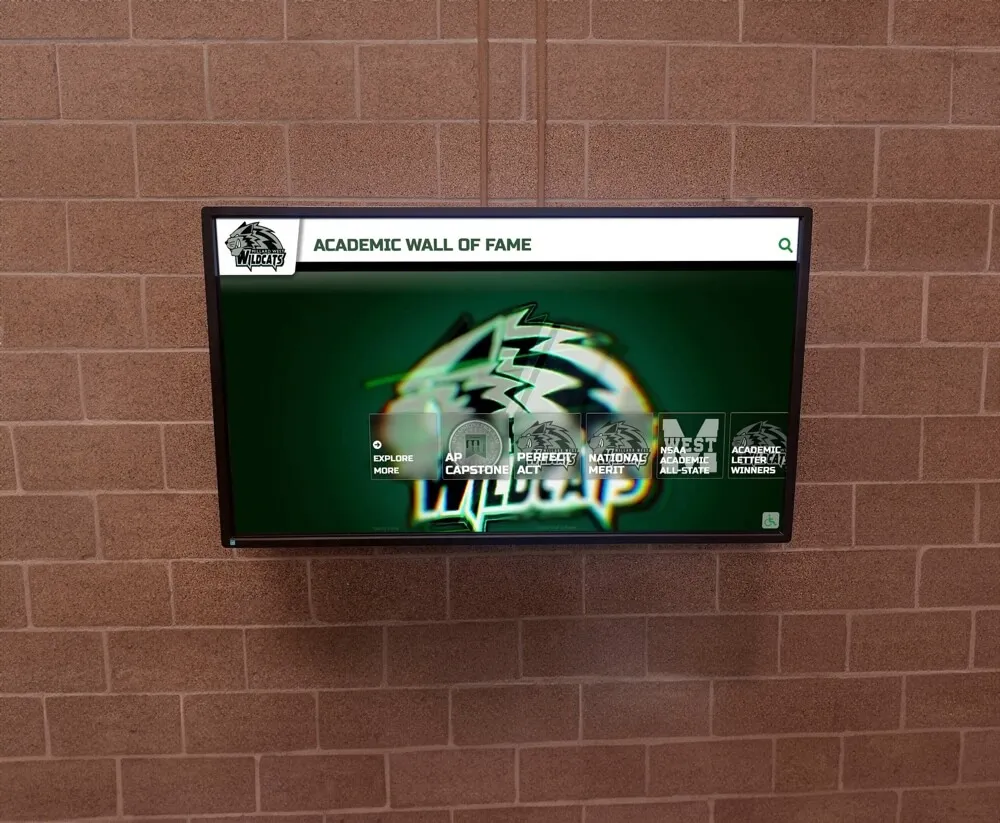
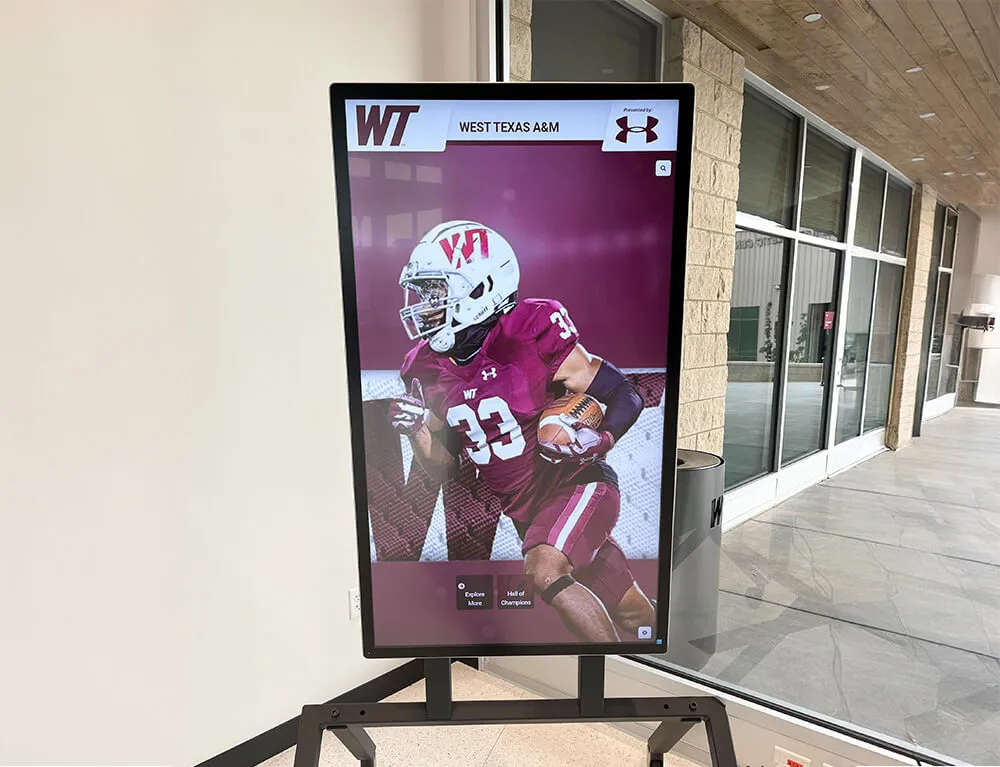
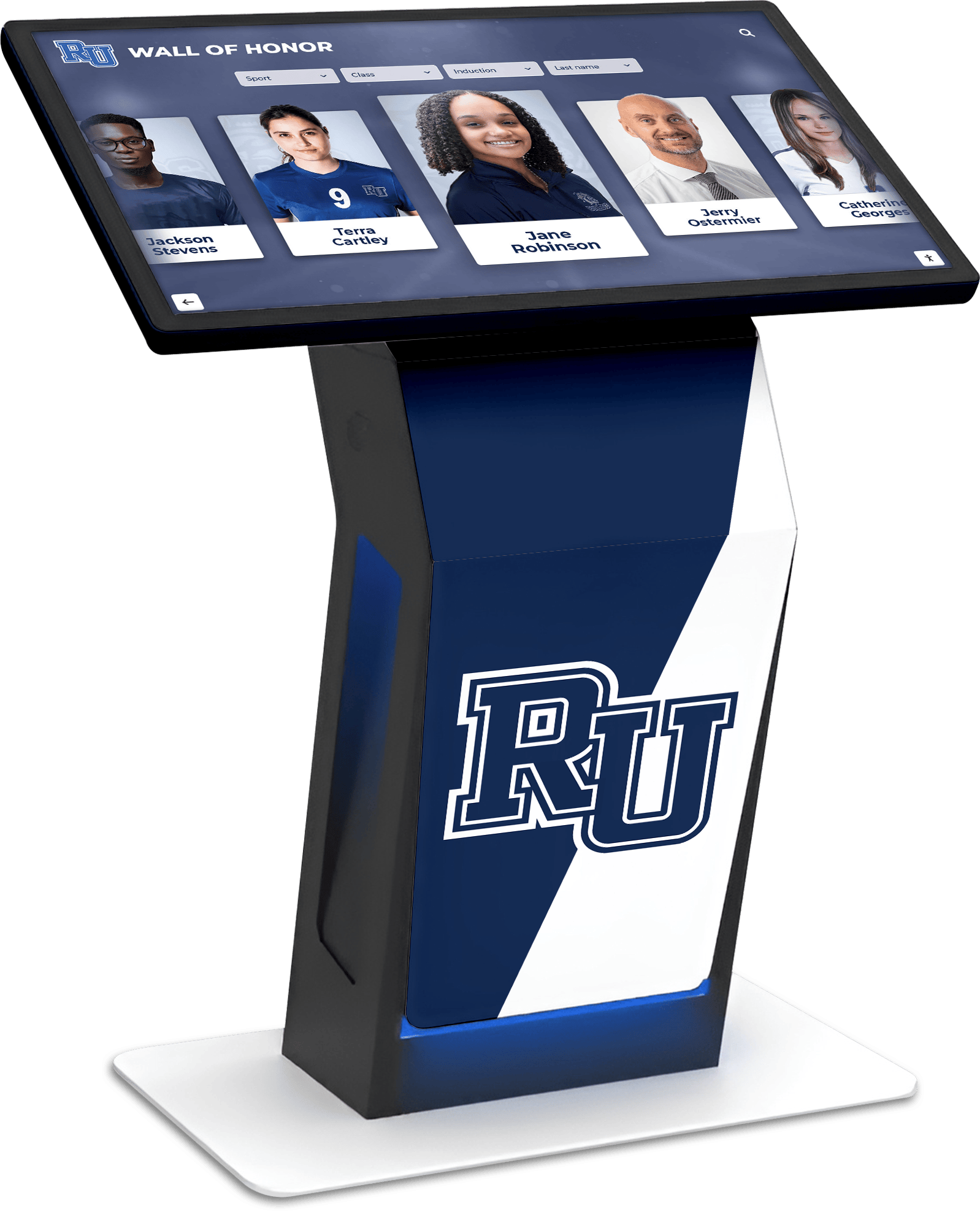
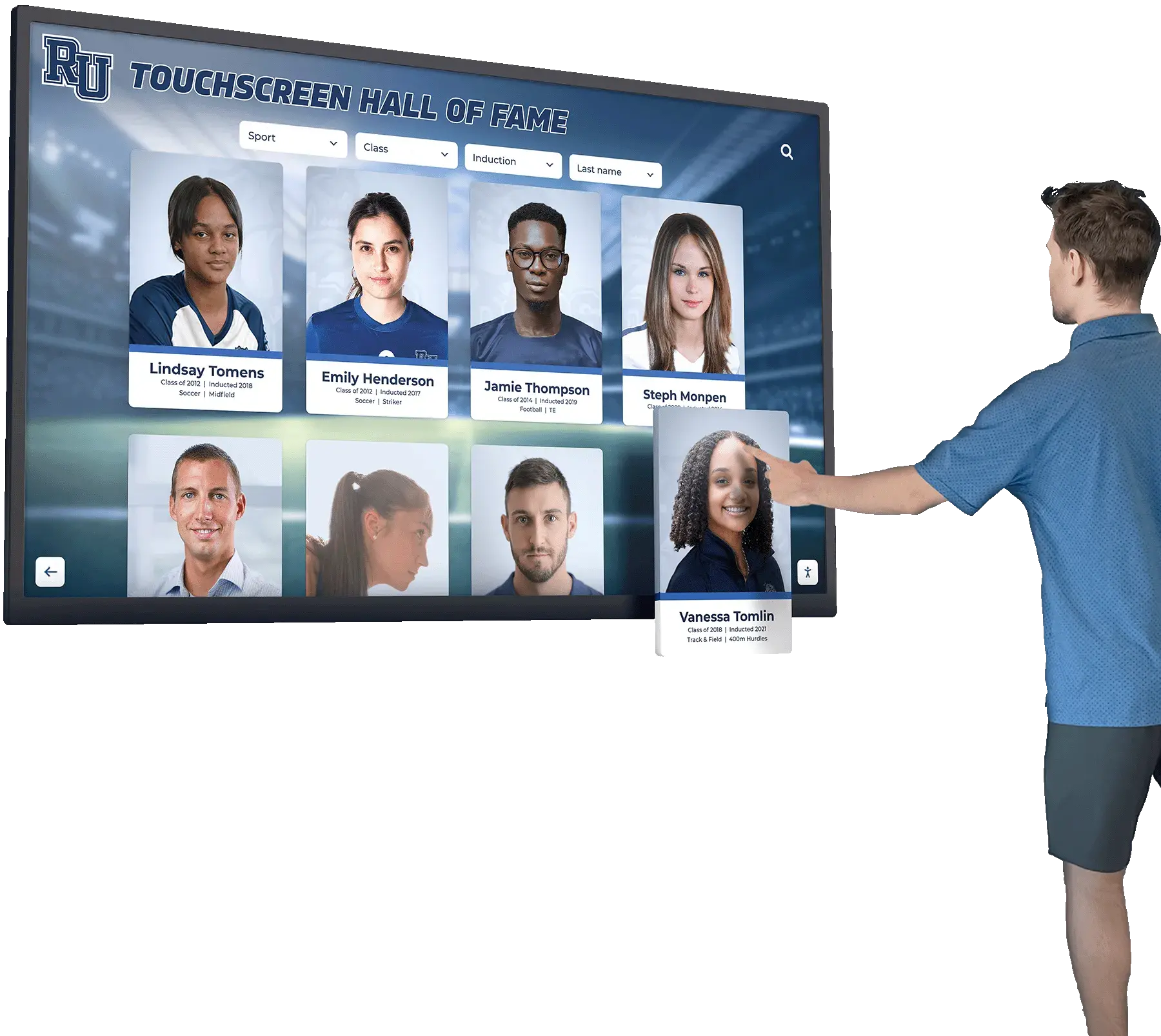
Recognition display interaction. If your school has a digital recognition display or touchscreen kiosk, the reception creates a natural opportunity for families to explore inductee profiles, review NHS chapter history, and see their student’s information presented in a permanent context. Schools using solutions like Rocket Alumni Solutions can update inductee profiles before the ceremony so families immediately encounter their student’s recognition on the display.
Guest book or message boards. A structured opportunity for families and faculty to write personal notes to inductees — whether physical cards collected and given to students afterward or a digital message board — creates tangible documentation of the community’s recognition that students can keep.
Technology Integration: Building Recognition That Lasts Beyond Ceremony Night
The NHS induction ceremony creates a moment of recognition. The most forward-thinking schools build systems that extend that recognition throughout the school year and beyond graduation.
Digital Recognition Displays for NHS
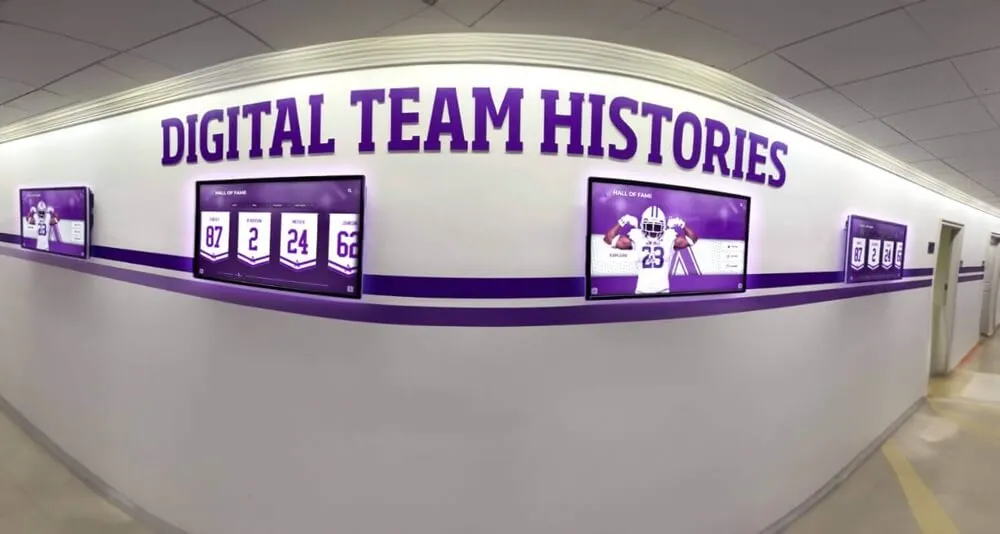
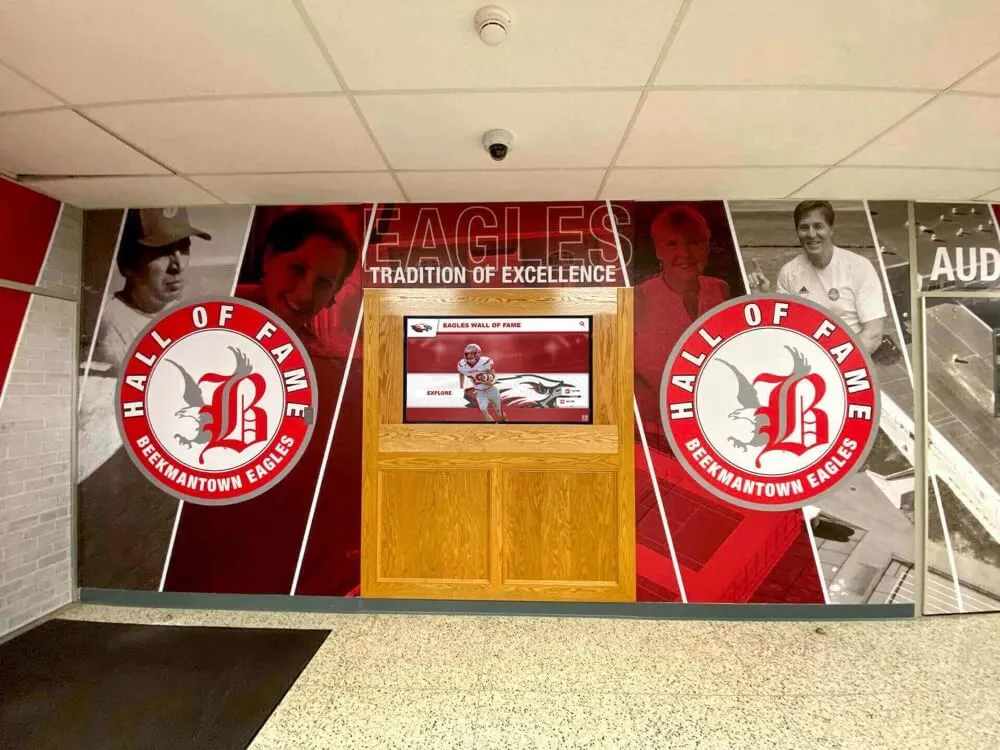
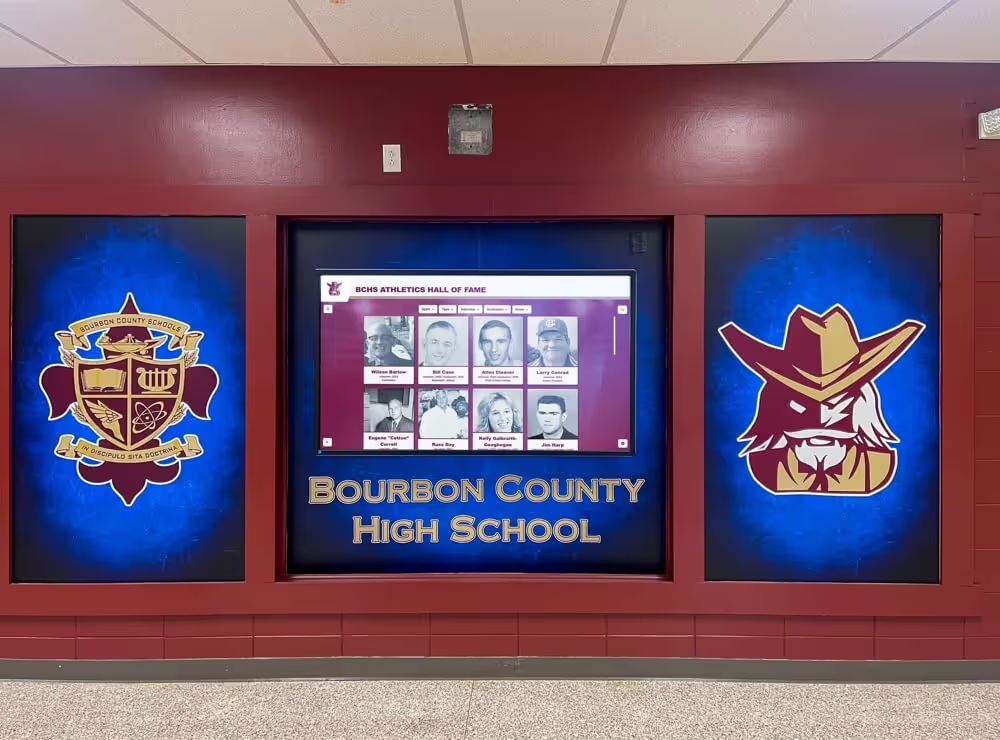
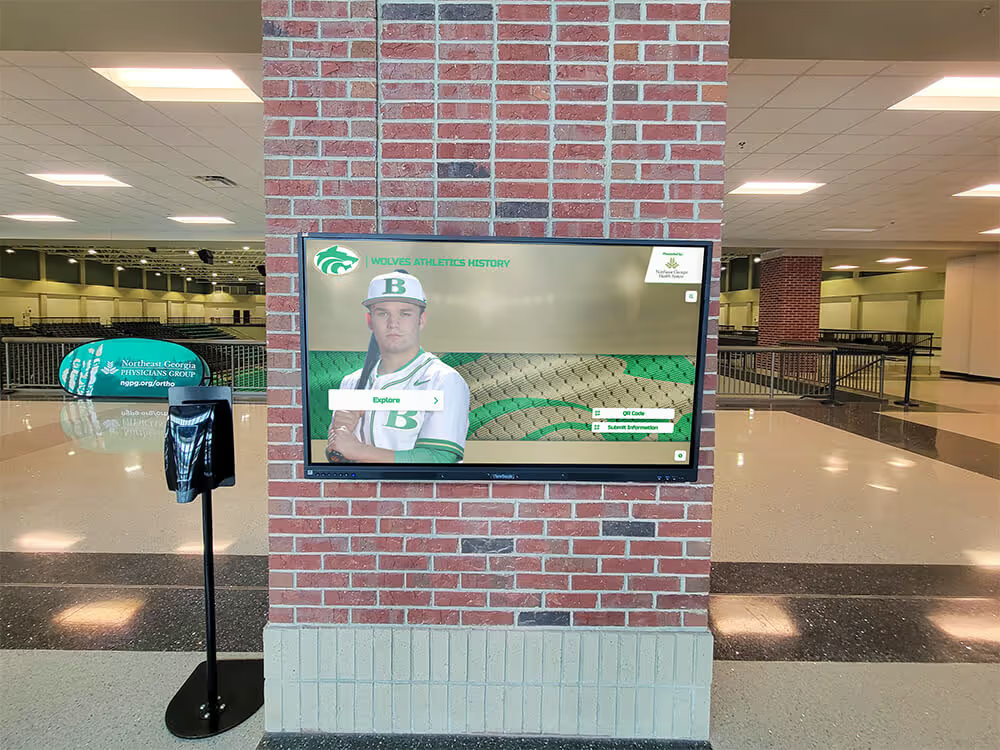
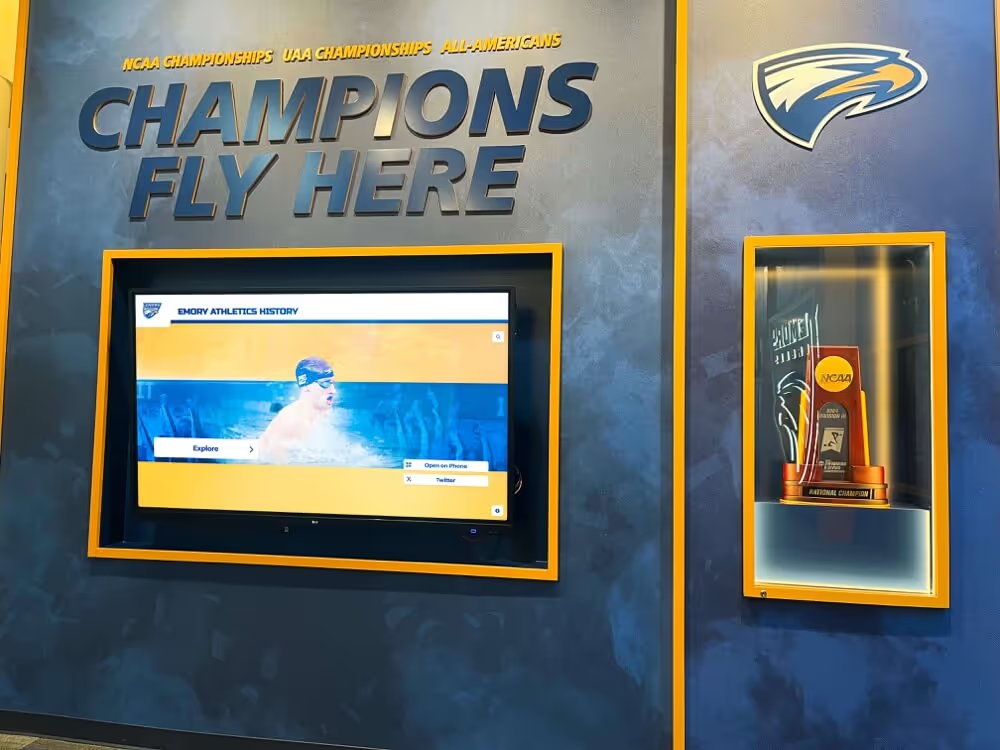
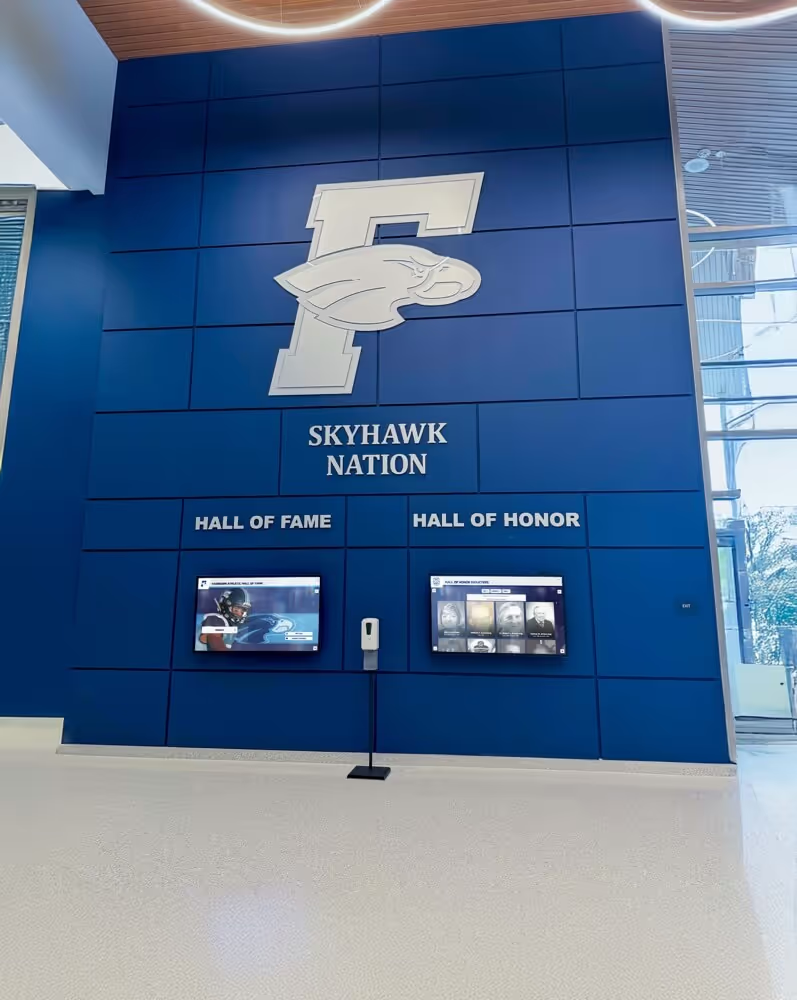
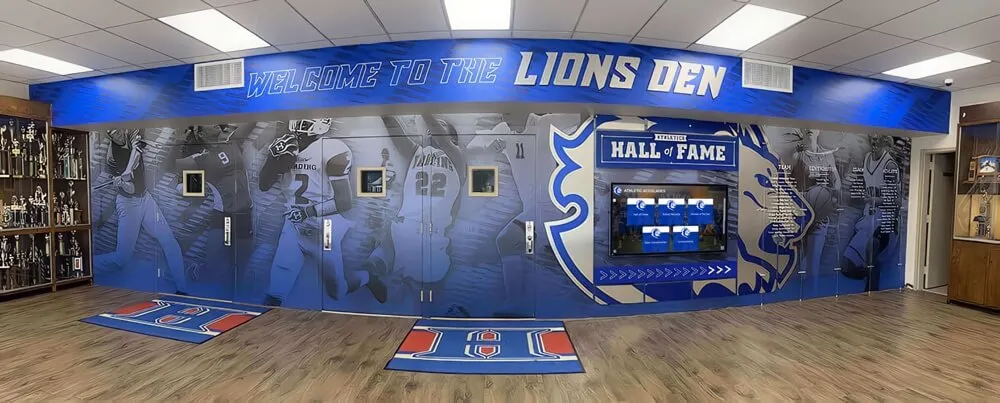
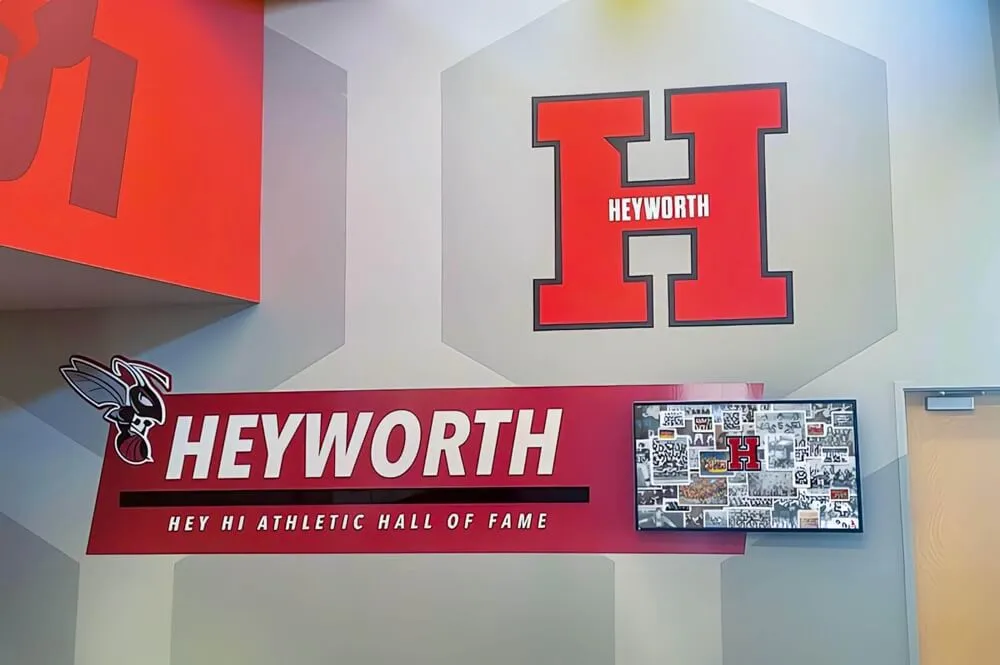
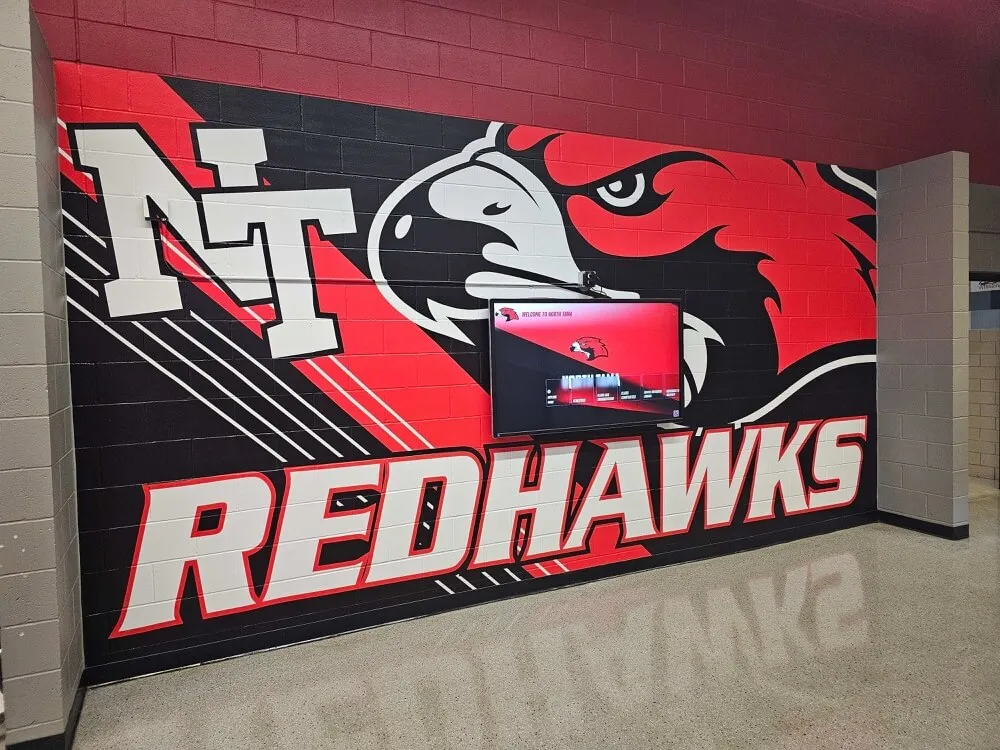
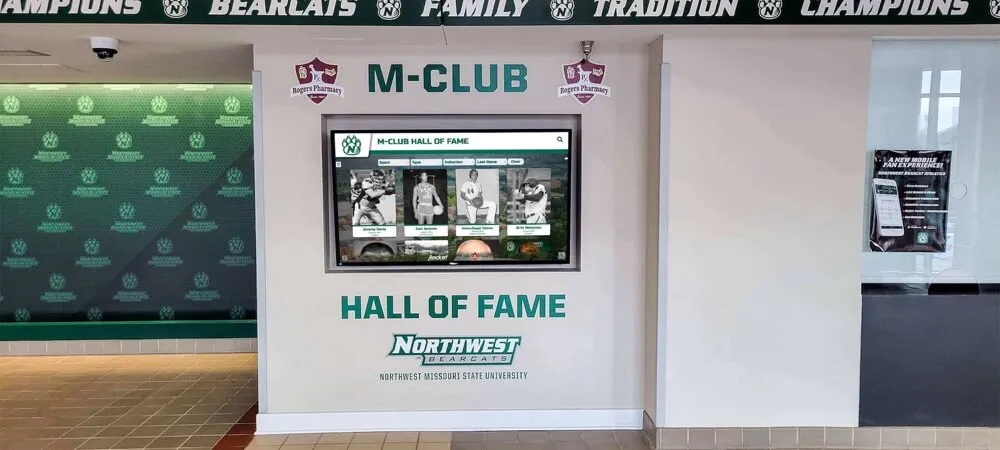
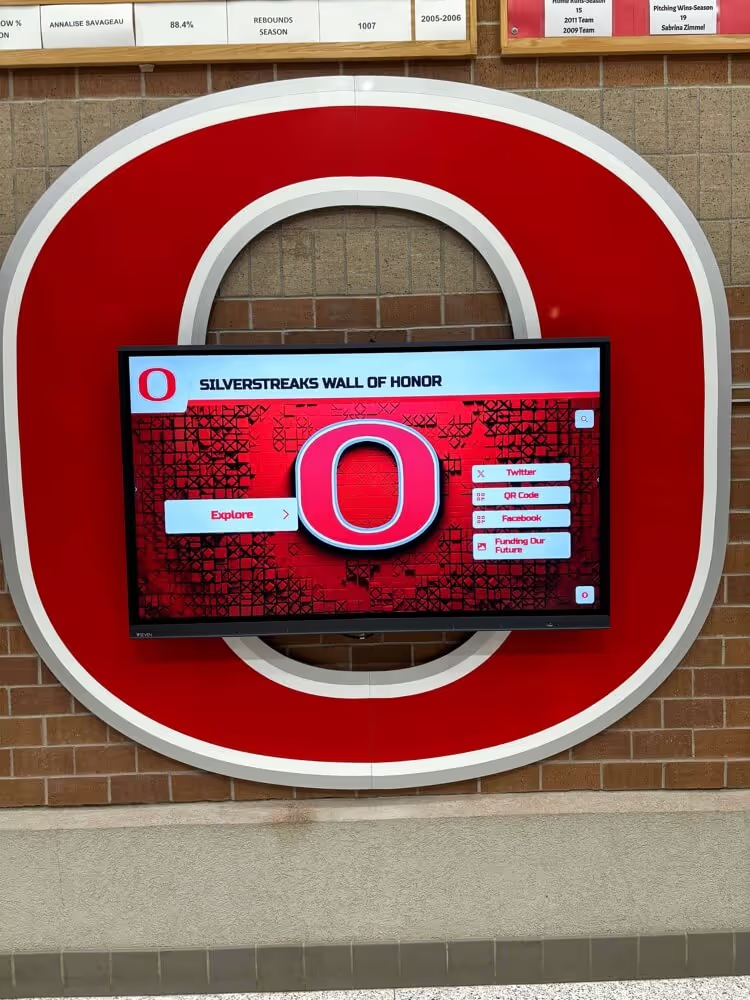
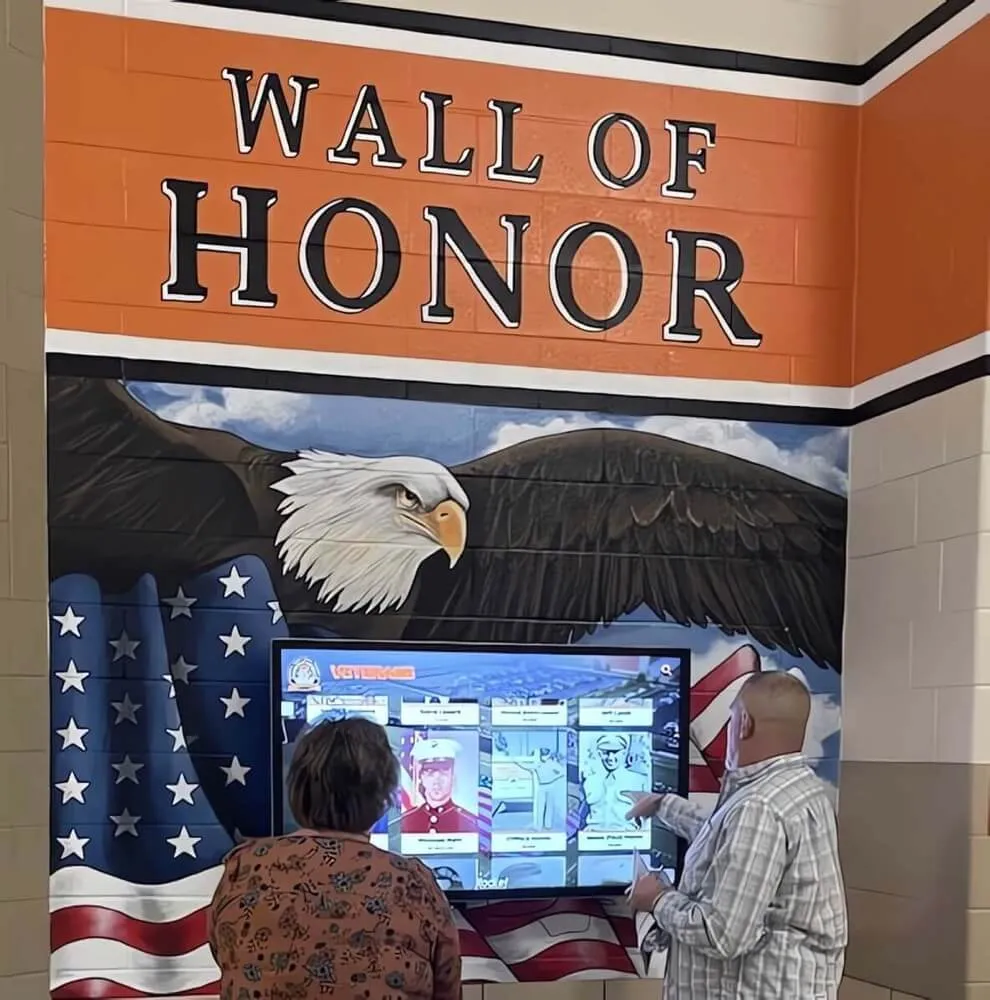
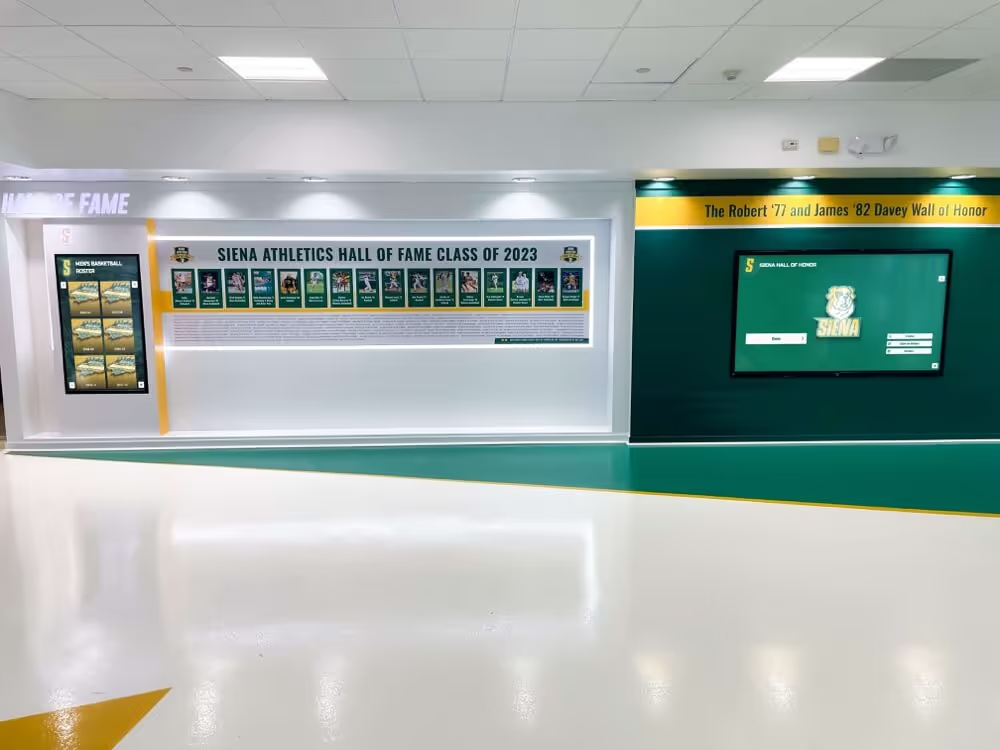
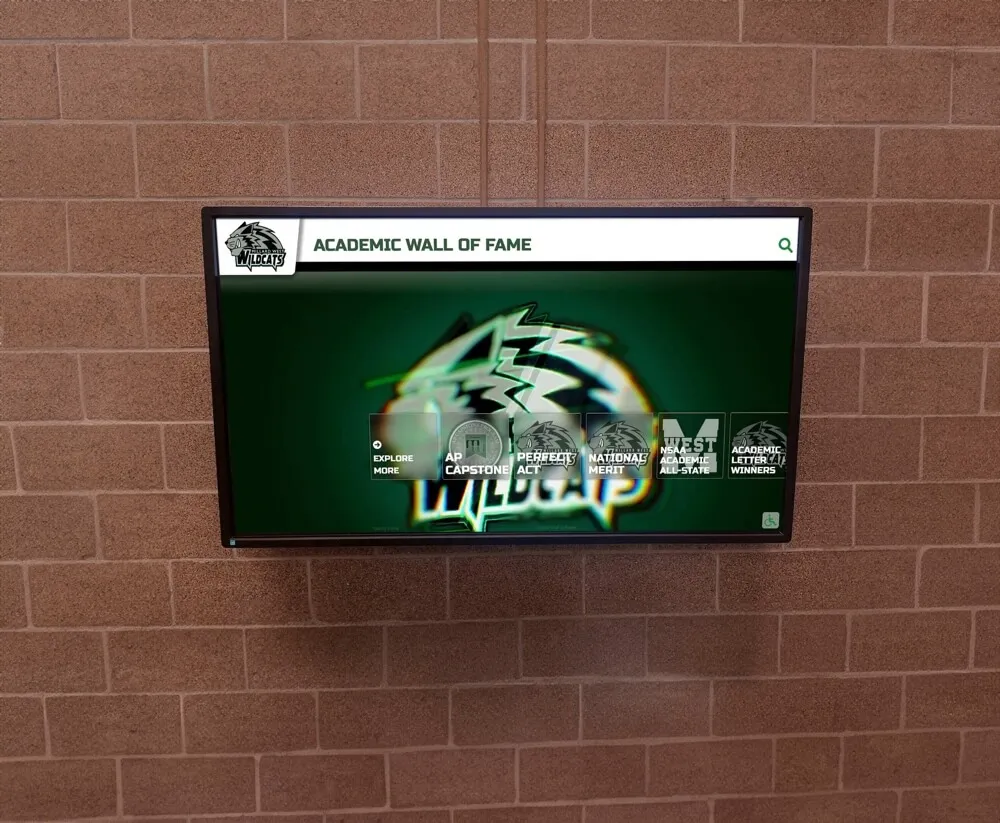
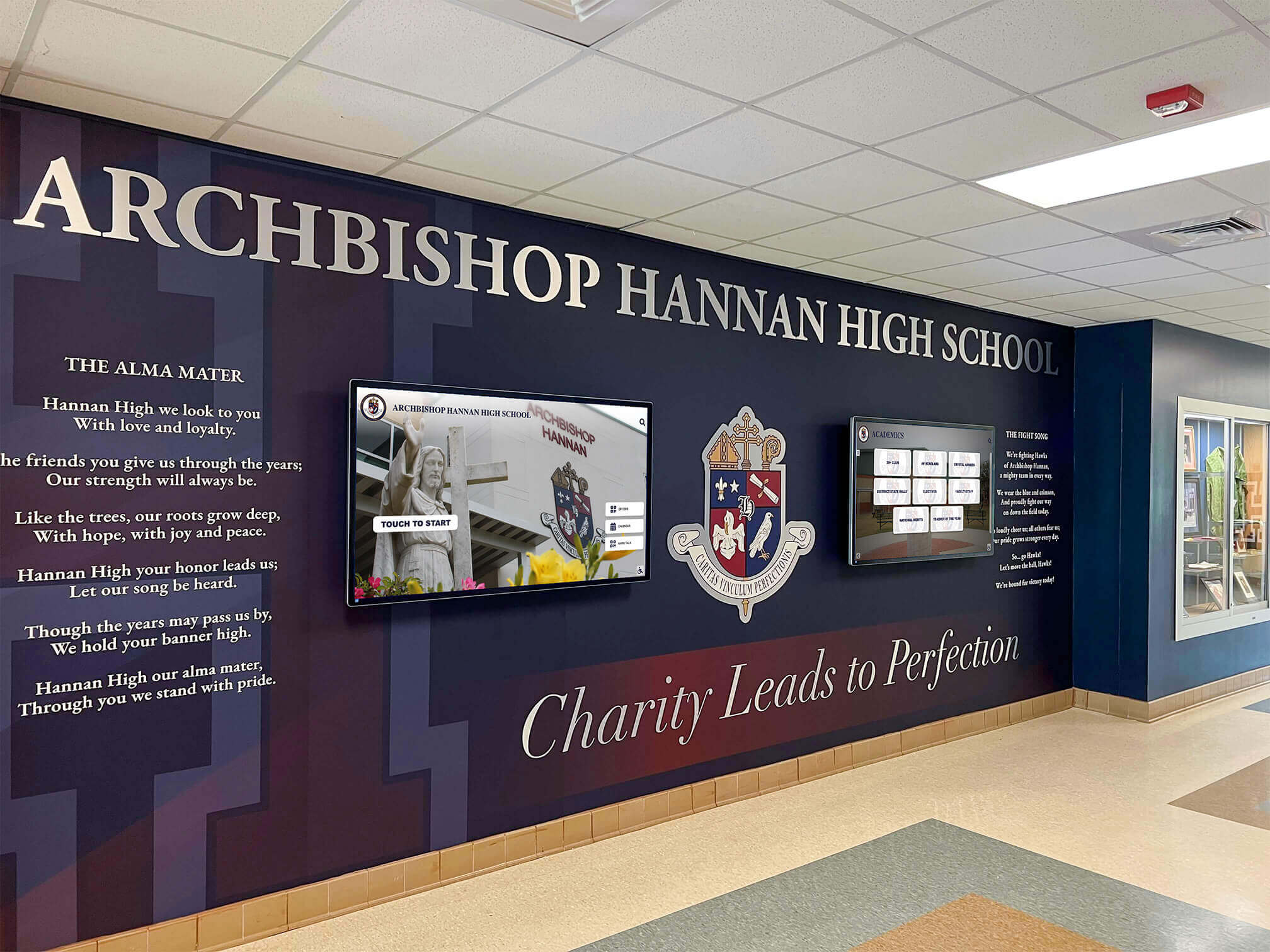
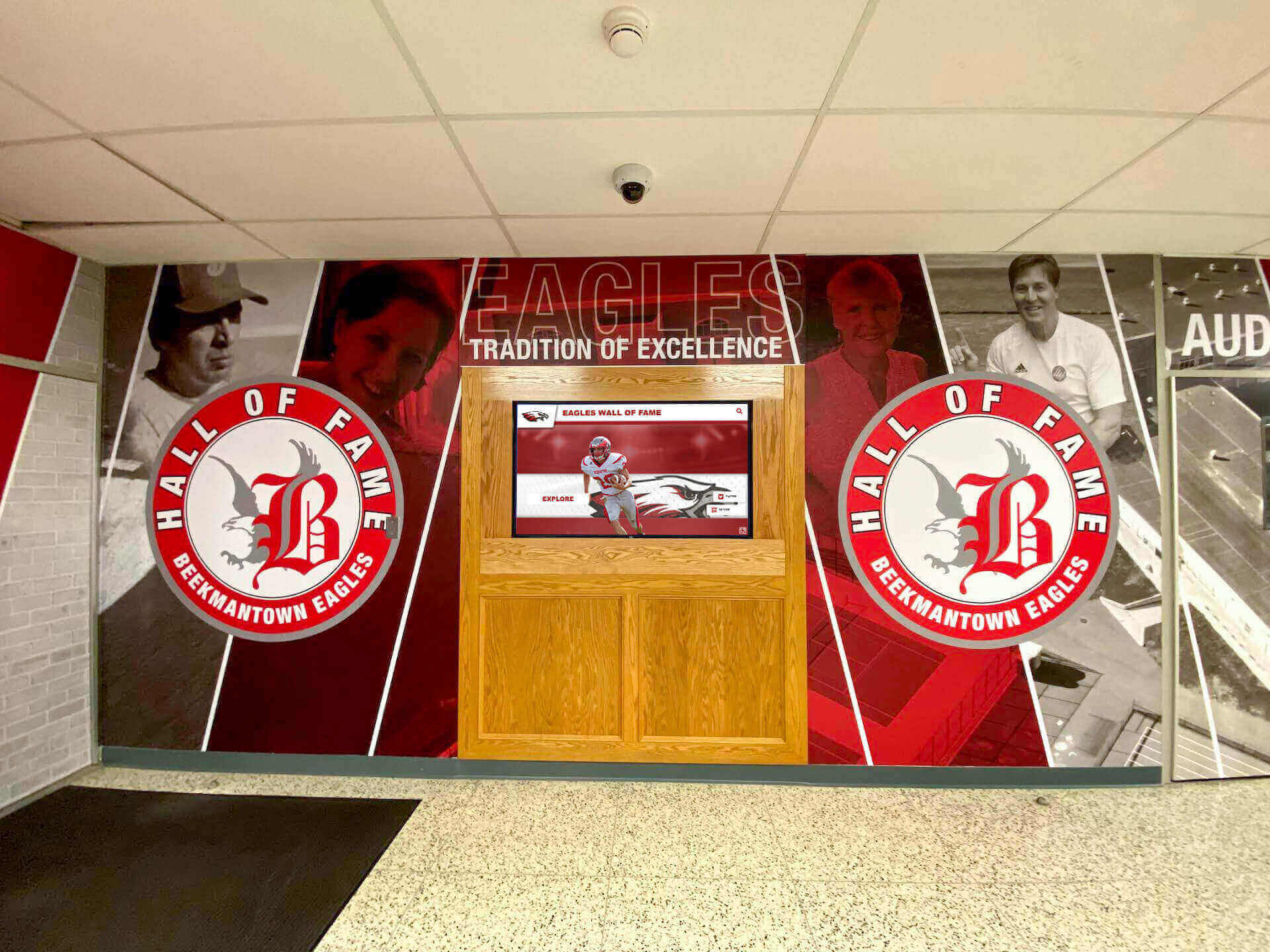
Interactive digital displays positioned in high-traffic school locations — main lobbies, academic hallways, counseling areas — provide ongoing visibility for NHS inductees that ceremony night alone cannot deliver. These displays do several things simultaneously that physical plaques or printed lists cannot accomplish.
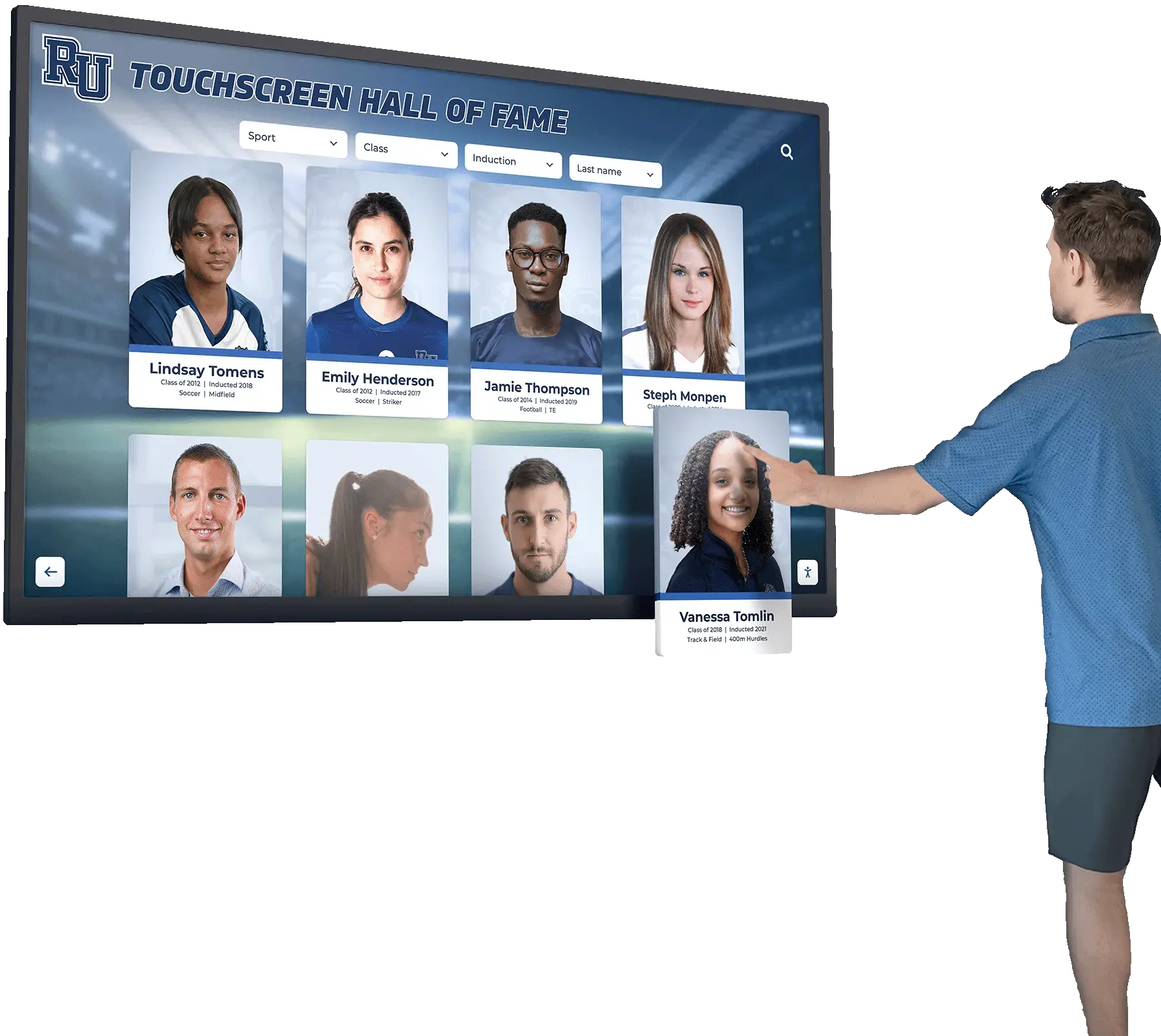
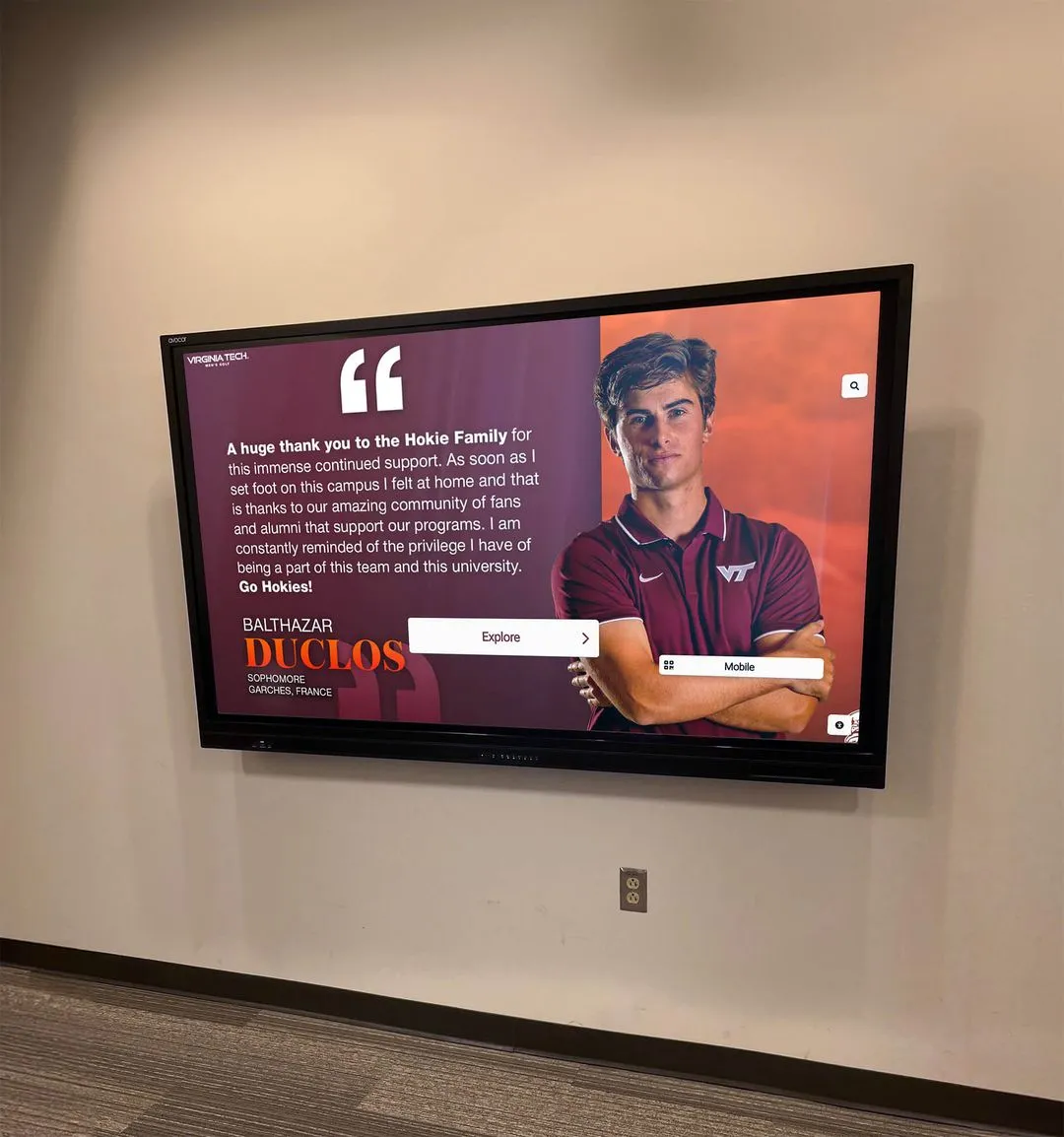
Rich individual profiles. Each inductee’s digital profile can include their photograph, academic accomplishments, leadership roles, service history, and a personal statement — far more information than a plaque with a name and graduation year. Families and visitors browsing the display encounter the actual students behind the recognition rather than a list of names.
Historical depth. Schools with long NHS histories can maintain searchable archives of every inductee class, allowing current students to discover predecessors who attended the same school and achieved NHS membership. This historical context connects current inductees to institutional legacy in ways that feel immediate and discoverable.
Continuous visibility. A digital display in the school lobby shows NHS members every day — to students, families visiting for conferences, prospective families touring the school, and the broader community. This ongoing visibility communicates institutional values more powerfully than a single annual ceremony. Explore how touchscreen kiosk software and interactive displays can be configured to showcase academic recognition in school environments.
Easy updates. When a new induction class is recognized, digital platforms allow advisors to add new profiles quickly without coordinating with physical fabrication vendors or waiting for engraving. The display stays current in a way that physical recognition walls often cannot.
Extending Recognition for Academic Achievers
NHS inductees are part of a broader population of academically exceptional students whom schools recognize through various programs. Building connected recognition systems — where NHS membership, honor roll achievement, AP Scholar designations, and other academic distinctions appear in a unified display — creates a more comprehensive picture of a school’s academic excellence culture. Schools that have created STEM recognition walls demonstrate how academic achievement in specific domains can be celebrated with the same permanence typically reserved for athletic accomplishment.
Similarly, recognition programs honoring students who achieve perfect or near-perfect standardized test scores can share infrastructure and visibility with NHS recognition, creating a campus culture where academic achievement receives the same institutional investment as athletic achievement.
Photography and Video Documentation
Professional photography at the ceremony. Hiring a photographer for NHS induction — or designating a skilled photography student under faculty supervision — creates archival documentation that benefits individual families and the institution for years. Ceremony photographs appear in yearbooks, on recognition displays, in school publications, and in college application portfolios. The cost of professional photography is modest relative to the value of having quality documentation.
Highlight videos. A brief edited video of ceremony highlights, posted to the school website and social media channels within a few days of the event, extends the ceremony’s reach to community members who could not attend and provides families with shareable content. Many schools already produce video content for athletic events; applying the same attention to NHS induction reinforces that academic achievement warrants equivalent institutional investment.
Individual inductee photos for recognition displays. Collect individual photographs — headshots or professional-style portraits — from each inductee before the ceremony so display profiles are ready to launch immediately after induction. Families who attend the reception and find their student already featured on the school’s recognition display experience the immediacy of recognition in a way that delayed physical installations cannot provide.
Making NHS Recognition a School-Wide Priority
NHS induction succeeds most powerfully when it exists within a broader school culture that visibly values academic excellence throughout the year — not only during the ceremony itself.
Connecting NHS to Your School’s Academic Recognition Ecosystem
Schools with the strongest academic cultures treat NHS membership as one element of a comprehensive recognition system that includes honor roll acknowledgment, subject-area awards, college acceptance announcements, and academic achievement displays. When students see that academic excellence receives ongoing institutional attention — not just a single ceremony night — they internalize that the school genuinely values what NHS represents.
Consider how NHS recognition connects to other academic programs your school maintains. Students who become NHS inductees are often the same students who achieve honor roll recognition, lead academic clubs, and represent the school at academic competitions. Building recognition systems where these achievements appear together — rather than in isolated silos — creates a more complete portrait of academic excellence in your community. For schools thinking about how recognition programs support broader institutional goals, guidance on building community through school events provides relevant frameworks for thinking about recognition as community-building infrastructure.
Involving School Leadership and Faculty
NHS induction benefits significantly from visible school leadership involvement. When a principal personally presents certificates, an athletic director attends to honor scholar-athletes, or department chairs attend to celebrate students from their disciplines, it communicates institutional commitment to academic recognition.
Faculty involvement matters beyond ceremony attendance. Teachers who receive genuine acknowledgment for the role they play in students’ academic development feel connected to NHS recognition in a personal way. Some schools include a brief faculty recognition moment within NHS ceremonies — acknowledging teachers who wrote recommendation letters or who have mentored multiple NHS inductees over their careers. Thoughtful recognition programs for school administrators and faculty demonstrate that institutions understand recognition works in multiple directions — honoring students and the educators who helped them achieve.
Alumni NHS Members as Community Resources
Schools with long NHS histories have a resource many underutilize: alumni who were inducted in previous years and have since gone on to distinguished careers in medicine, law, education, technology, service, and countless other fields. Alumni NHS members who return to speak at inductions provide exactly the role-model function that makes NHS induction ceremonies inspiring to underclassmen.
Even a brief recorded video message from a distinguished alumni NHS member — congratulating the new induction class and reflecting briefly on what the standards that earned their membership have meant in their subsequent life — creates powerful ceremony content without requiring alumni travel or elaborate production. Maintaining archives of NHS inductees across graduation years, with notes about subsequent achievements, makes identifying compelling alumni speakers straightforward. Schools exploring approaches to preserving and displaying historical achievement records can build the kind of institutional memory that makes alumni engagement sustainable.
The Student Pathway to NHS: Making Standards Visible
One underutilized opportunity in NHS recognition is making the pathway to membership explicitly visible to current underclassmen. When freshmen and sophomores understand what NHS requires — the GPA threshold, the service hours, the leadership roles, the character standards — they can begin working toward membership from their first days in high school rather than discovering the criteria as juniors scrambling to build a qualifying record.
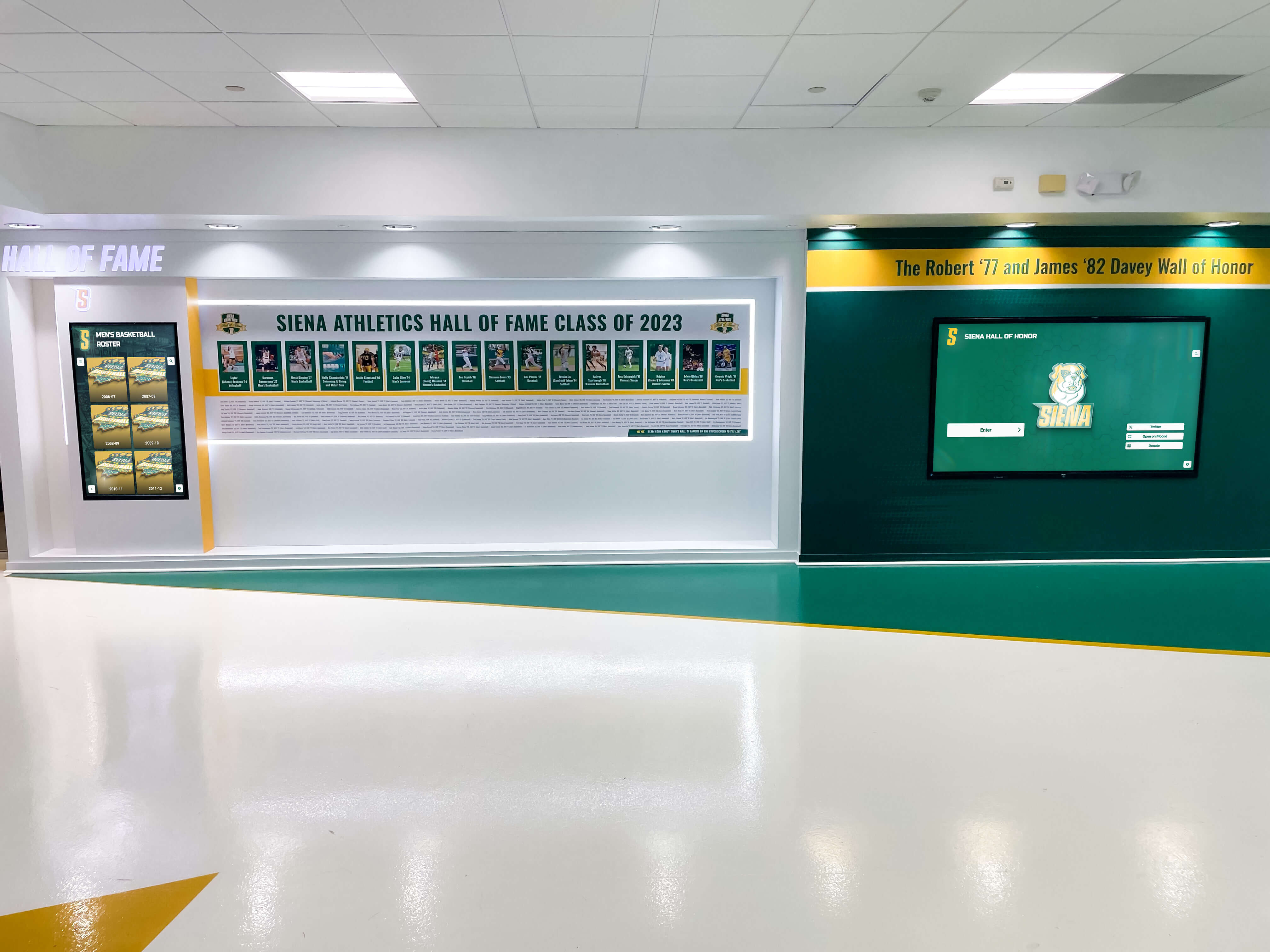
Consider dedicating a section of your NHS recognition display to explaining membership requirements, showing the number of students inducted each year, and celebrating the achievement required for membership. Resources for students who are aiming for academic distinction — like guidance for aspiring valedictorians and top academic achievers — reflect the culture you are trying to build: one where academic excellence is an explicit and achievable goal students pursue intentionally, not something that happens to students passively.
Common NHS Induction Ceremony Challenges and Solutions
Even well-planned ceremonies encounter predictable obstacles. Anticipating them reduces stress and improves execution.
Managing Large Induction Classes
Schools with fifty or more inductees face the genuine tension between comprehensive individual recognition and maintaining ceremony pace. Several approaches help:
Split ceremonies by class year. Inducting juniors and seniors in separate ceremonies allows each class to receive fuller individual recognition without combined programs running past two hours.
Use multimedia to supplement verbal recognition. A digital slideshow displaying each inductee’s photo and brief achievement statement while their name is called allows families to see personalized recognition even when individual verbal biographies are abbreviated for time.
Extend recognition into the reception. What cannot fit into the formal program can live in a recognition display, printed program, or reception-area digital presentation that families explore after the formal ceremony concludes.
Handling Honoree Families with Different Expectations
NHS inductions draw families with different levels of familiarity with the ceremony format. Some families have attended multiple NHS inductions; others are experiencing their first. Clear pre-ceremony communication — a detailed invitation explaining what to expect, when to arrive, where to sit, and how photographs will be handled — reduces confusion and allows families to be present rather than anxious.
Maintaining Ceremony Quality Year Over Year
NHS chapters face advisor turnover, which creates continuity challenges. Advisors who create detailed ceremony documentation — a complete run-of-show, vendor contacts, vendor feedback, lessons learned, and a master planning timeline — give successor advisors the foundation for a quality ceremony rather than requiring each new advisor to rebuild from scratch. Planning guides similar to those used for year-end athletic recognition banquets apply directly to NHS induction planning — the core logistics of venue, catering, program, and recognition materials follow similar patterns across recognition event types.
Conclusion: Building an NHS Induction Ceremony Worthy of Your Students
The students who earn NHS membership have done something genuinely difficult. They have maintained high academic standards while developing leadership skills, completing service hours, and demonstrating the kind of character their teachers and advisors are willing to put their names behind. That combination — sustained across three or four years of high school — is worth honoring with a ceremony that reflects its significance.
The most effective NHS induction ceremonies share common characteristics regardless of school size or budget. They treat inductees as individuals rather than processing them as a class. They involve the families and teachers who supported the achievement. They create specific memorable moments — through candle lighting, personal tributes, or inductee statements — that give the ceremony emotional texture beyond certificate distribution. And they build toward recognition systems that extend NHS membership visibility beyond ceremony night into the ongoing life of the school community.
Investing in modern recognition infrastructure — digital displays that show inductee profiles year-round, photo archives that preserve induction class history, and online recognition platforms accessible to families and alumni — transforms NHS induction from an annual ceremony into a permanent institutional statement about what your school values. Every year’s inductees become part of a continuously growing record of academic excellence that future students encounter and aspire to join.
Ready to build recognition infrastructure that honors your NHS inductees all year long, not just on ceremony night? Rocket Alumni Solutions provides interactive digital displays, touchscreen kiosks, and recognition platforms purpose-built for schools that take academic excellence seriously. Explore how schools use these tools to create lasting recognition worthy of what their students achieve.
Frequently Asked Questions
When should an NHS chapter hold its induction ceremony?
Most NHS chapters hold inductions in spring, typically between February and May, after confirming second-semester grade eligibility and completing the review and notification process. Spring timing allows inductees to enjoy membership recognition for the remainder of the school year. Some chapters hold fall inductions for students who met all requirements by the end of the previous spring semester; this approach gives senior inductees more time in the chapter but requires establishing a candidate review process over the summer.
How long should an NHS induction ceremony be?
Plan for a formal program of sixty to ninety minutes followed by an optional fifteen to thirty minute reception. Programs shorter than forty-five minutes often feel rushed and impersonal; programs exceeding ninety minutes risk losing family engagement and running into evening schedule conflicts. For very large induction classes, consider splitting into multiple ceremonies rather than extending a single program beyond two hours.
What should inductees wear to NHS induction ceremonies?
Most NHS chapters request business casual or semi-formal attire, consistent with the ceremonial occasion. Some chapters specify white or specific chapter colors for inductees to create visual unity during the processional and ceremony. Communicate dress code expectations clearly in pre-ceremony materials to avoid confusion.
What materials does an NHS chapter need for induction?
Essential materials include official NHS membership pins (available through the NHS national office and authorized vendors), certificates of induction, printed programs, and candles if using the candle lighting tradition. Optional materials include chapter-branded stoles or honor cords for seniors to wear at graduation, photo frames for certificate presentation, and customized recognition items specific to your chapter’s tradition.
How do you recognize NHS inductees beyond the ceremony?
Permanent recognition through digital display systems, school website features, yearbook coverage, and social media announcements extends ceremony recognition into the ongoing life of the school community. Some schools add inductee names to physical plaques in main hallways; others use digital recognition displays that can be updated annually without fabrication costs. The most impactful long-term recognition combines visible in-school displays with accessible online platforms that families, alumni, and community members can engage with at any time.
Can family members participate in the NHS pinning ceremony?
Yes, and many advisors encourage it. Having a parent or family member perform the actual pinning — while the advisor or chapter president presents the certificate — creates a deeply personal recognition moment that photographs beautifully and carries lasting emotional weight. If you incorporate family pinning, communicate the logistics clearly in pre-ceremony materials so families know whether to come forward or remain seated, and ensure your stage setup accommodates the additional participants gracefully.
How should NHS chapters handle students who cannot attend the induction ceremony?
Confirm with absent inductees that they still accept membership and want to be recognized. Absent inductees can typically be acknowledged verbally during the ceremony, with their certificate and pin delivered in a private meeting with the advisor shortly after. Avoid simply omitting absent inductees from ceremony recognition without acknowledgment — families present often notice and the absence can create confusion about the student’s status.