Each September, approximately 16,000 high school juniors across the United States receive notification that changes their academic trajectory: designation as a National Merit Semifinalist. This recognition, representing the top 1% of test-takers nationwide, opens doors to substantial scholarship opportunities, college recruitment, and lasting academic distinction. For school administrators and counseling professionals, understanding the National Merit program’s criteria, selection process, and timeline enables effective student support while creating opportunities to celebrate these exceptional achievements publicly.
This comprehensive guide examines every dimension of National Merit Semifinalist designation including PSAT/NMSQT qualifying requirements, state-specific selection indices, the advancement process from Semifinalist to Finalist and Scholar, and proven strategies schools use to honor these top academic achievers through recognition programs, digital displays, and scholar walls that inspire future students while celebrating current excellence.
The National Merit Scholarship Program, administered since 1955 by the National Merit Scholarship Corporation (NMSC), identifies and honors the nation’s highest-achieving high school students based on PSAT/NMSQT performance. Beyond the immediate prestige, Semifinalist designation signals academic excellence to selective colleges, unlocks full-tuition scholarship opportunities at numerous universities, and provides students with distinguishing credentials strengthening college applications and future opportunities.
Schools benefit substantially when students achieve National Merit recognition. These accomplishments reflect positively on academic programs, teaching quality, and institutional rigor. Public recognition of Semifinalists demonstrates program excellence to prospective families, strengthens community perception of academic quality, and creates inspiring examples for current students pursuing academic achievement. Strategic recognition through academic honor walls and digital scholar displays transforms individual achievements into institutional assets celebrating excellence while motivating future scholars.
Understanding the National Merit Program: Overview and Timeline
Before exploring specific qualification criteria, school administrators benefit from understanding the program’s structure, timeline, and progression from initial testing through final Scholar designation.
Program Structure and Levels of Recognition
The National Merit program progresses through distinct recognition levels, each representing increasingly selective achievement thresholds.
Commended Students (approximately 34,000 nationally): Students scoring in the top 3-4% nationally on the PSAT/NMSQT receive Commended Student recognition in September of their senior year. While Commended Students don’t advance to Semifinalist status or compete for National Merit Scholarships administered by NMSC, this distinction represents significant achievement worth celebrating through academic recognition programs. Many colleges offer institutional scholarships to Commended Students, and this credential strengthens college applications demonstrating consistent high achievement.
Semifinalists (approximately 16,000 nationally): The top 1% of test-takers in each state—roughly 16,000 students nationally—receive Semifinalist designation. This state-based selection approach accounts for population differences and ensures geographic distribution. Semifinalists become eligible to continue in the competition for National Merit Scholarships by completing detailed applications including academic records, recommendations, essays, and SAT score confirmation.
Finalists (approximately 15,000 nationally): About 95% of Semifinalists advance to Finalist status by meeting academic standards, submitting complete applications, and demonstrating consistent high achievement. Finalist designation itself carries substantial value—many colleges offer automatic full-tuition scholarships to any National Merit Finalist who designates that institution as their first-choice school. These college-sponsored awards represent the largest scholarship category within the National Merit ecosystem, often valued at $100,000-$200,000 over four years.
Scholars (approximately 7,500 nationally): From the Finalist pool, NMSC awards approximately 7,500 scholarships across three categories: National Merit $2,500 Scholarships (2,500 one-time awards selected by NMSC), corporate-sponsored scholarships (approximately 1,000 renewable awards for children of company employees or students pursuing specific majors), and college-sponsored scholarships (approximately 4,000 renewable awards from participating institutions). Scholar designation represents the program’s highest level, indicating both exceptional academic achievement and successful scholarship award.
Complete Program Timeline
Understanding the multi-year timeline helps schools support students effectively and plan recognition appropriately.
Sophomore Year - Spring: While the qualifying test occurs junior year, academically ambitious students often take the PSAT 10 during sophomore year for practice and baseline assessment. This preliminary testing familiarizes students with format, timing, and content areas, enabling targeted preparation before the qualifying junior-year administration.
Junior Year - October: Students take the PSAT/NMSQT, typically the second or third Wednesday in October. This single test administration determines National Merit eligibility—no alternative dates or makeup tests exist except for approved accommodations or documented emergencies. The 2-hour, 45-minute test includes Reading (60 minutes, 47 questions), Writing and Language (35 minutes, 44 questions), and Math (70 minutes, 48 questions). Scores range from 320-1520, calculated by combining Evidence-Based Reading and Writing (160-760) with Math (160-760). Schools receive score reports in December, though National Merit qualifying status remains unknown until the following September.
Senior Year - September: NMSC notifies students and schools of Semifinalist and Commended designations. Semifinalists receive detailed application instructions and deadlines—typically early October—for completing requirements to advance to Finalist consideration. This tight timeline requires immediate attention and support from counseling staff. Schools often issue press releases, announce achievements through local media, and implement recognition programs celebrating these exceptional students.
Senior Year - October: Semifinalists must submit complete applications including essay responses, academic transcripts demonstrating consistent high achievement (typically 3.5+ unweighted GPA), SAT scores confirming PSAT performance (generally requiring 1400+ SAT composite matching top 1% threshold), and recommendation from a school official. Application quality affects Finalist advancement, making thorough counselor support valuable during this critical period.
Senior Year - February: NMSC notifies approximately 15,000 students of Finalist designation. This advancement signals successful completion of application requirements and continued eligibility for National Merit Scholarships. Finalist notification prompts additional school recognition and enables students to pursue college-sponsored scholarship opportunities by designating first-choice institutions through NMSC’s reporting system.
Senior Year - March-June: NMSC announces scholarship recipients on rolling basis. National Merit $2,500 Scholarship winners receive notification in March. Corporate-sponsored scholarship recipients hear in April and May. College-sponsored scholarship recipients receive notification beginning in March and continuing through June, depending on when students designate first-choice institutions and those schools’ specific notification timelines.

PSAT/NMSQT Qualifying Criteria and State-by-State Selection Indices
National Merit Semifinalist designation depends entirely on PSAT/NMSQT scores, with qualifying thresholds varying significantly by state due to the program’s state-based selection approach.
Understanding Selection Index Calculation
Rather than using the 320-1520 total score, NMSC calculates a Selection Index specifically for National Merit purposes using a formula emphasizing verbal skills.
Selection Index Formula: Selection Index = (Reading Test Score × 2) + (Writing and Language Test Score × 2) + (Math Test Score × 1)
Each test section produces scores ranging from 8-38. Doubling Reading and Writing/Language while counting Math once creates a Selection Index ranging from 48-228. This calculation weights verbal abilities more heavily than mathematical skills—a 38/38/32 (Reading/Writing/Math) produces identical Selection Index (216) as a 36/36/36 balanced performance, though the latter demonstrates more consistent cross-disciplinary achievement.
Why This Formula? NMSC’s emphasis on verbal skills reflects the program’s original design prioritizing humanities and liberal arts achievement. Critics note this approach may disadvantage students with exceptional mathematical abilities but relatively lower verbal scores, though qualifying indices remain achievable for well-rounded high achievers regardless of specific strength areas.
State-by-State Qualifying Indices and Geographic Variation
National Merit uses state-based selection ensuring geographic diversity and accounting for regional performance variations. This approach creates substantially different qualifying requirements depending on residence state.
High-Bar States (Selection Index 221-224): The most competitive states typically include Massachusetts, Maryland, New Jersey, California, and Virginia. These states’ high concentrations of academically competitive high schools, strong public education systems, and college-focused cultures create dense populations of high-achieving test-takers. A Selection Index of 221 might qualify in most states but fall short in these highly competitive environments requiring 223-224.
Moderate-Threshold States (Selection Index 217-220): Most states fall within this range including New York, Connecticut, Washington, Colorado, Illinois, Texas, Pennsylvania, and North Carolina. These thresholds require exceptional but achievable performance—typically around 1470-1490 on the SAT-equivalent scale. Students targeting National Merit in these states should aim for Selection Indices of 218-220 to provide margin above fluctuating cutoffs.
Lower-Threshold States (Selection Index 209-216): States with smaller populations, more rural demographics, or less competitive testing environments establish lower qualifying thresholds. Mississippi, Wyoming, West Virginia, North Dakota, and Alaska frequently appear among states with the lowest cutoffs. Students in these states achieve Semifinalist designation with scores that would miss qualification in high-bar states by substantial margins.
Year-to-Year Variability: State cutoffs fluctuate 1-3 points annually based on that year’s test difficulty and score distribution. An unusually difficult test produces lower average scores, potentially decreasing cutoffs. Conversely, if tests prove easier and more students achieve high scores, cutoffs may increase. Schools should reference historical ranges rather than assuming specific cutoff numbers, though patterns remain relatively consistent across years.
State of Residence vs. High School Location: NMSC determines qualifying state based on student’s mailing address, not high school location. This distinction matters for students attending boarding schools or special programs outside their home states. A Massachusetts resident attending high school in New Hampshire still qualifies (or fails to qualify) based on Massachusetts’s higher cutoff, not New Hampshire’s lower threshold.
Preparing Students for PSAT/NMSQT Success
Schools supporting students pursuing National Merit recognition should implement systematic preparation strategies.
Sophomore Practice and Assessment: Encouraging academically strong sophomores to take PSAT 10 establishes baseline scores, familiarizes students with testing format, and identifies specific content areas requiring strengthening before the junior-year qualifying administration. Score reports provide detailed performance feedback across content categories enabling targeted preparation.
Targeted Skill Development: Selection Index calculation’s emphasis on verbal skills means Reading and Writing/Language improvement produces double the Selection Index impact compared to Math score increases. Students should prioritize reading comprehension strategies, grammar and usage rules, and rhetorical analysis skills. That said, Math remains important—exceptional verbal performance combined with weak math scores limits potential Selection Indices.
Official Practice Resources: The College Board provides official PSAT/NMSQT practice tests through Khan Academy and downloadable PDFs. These official materials offer the most accurate representation of actual test content, format, and difficulty. Schools should direct students toward these free, high-quality resources before considering commercial test preparation services.
Test-Day Logistics: Simple logistics matter for optimal performance. Ensure students know testing location, bring acceptable calculators, eat substantial breakfast, and sleep adequately the night before. The PSAT occurs on a single October morning—missing this administration due to absence eliminates National Merit eligibility entirely except in documented emergency situations.
Managing Expectations: Only the top 1% of test-takers in each state achieve Semifinalist designation. Schools should celebrate this achievement when it occurs while helping students understand that not qualifying doesn’t reflect poorly on their abilities or college prospects. Many exceptional students miss Semifinalist cutoffs by narrow margins while still earning admission to highly selective colleges and receiving substantial merit scholarships through institutional programs.
Advancing from Semifinalist to Finalist: Application Requirements and Timeline
Semifinalist designation represents significant achievement, but only approximately 15,000 of the 16,000 Semifinalists advance to Finalist status. Understanding application requirements enables counselors to support students effectively through this critical process.
Required Application Components
The Semifinalist application demands multiple components submitted within tight October deadlines.
Detailed Personal Essay: Students respond to a prompt provided by NMSC, typically addressing their accomplishments, interests, career goals, or unusual circumstances. The essay demonstrates writing ability, self-awareness, and articulation of goals and values. Unlike college essays allowing creative approaches, National Merit essays reward straightforward, well-organized responses clearly addressing the prompt without excessive stylistic flourishes. Students should emphasize academic interests, intellectual curiosity, and substantive achievements rather than personal challenges unless those directly relate to the prompt.
Academic Transcript and GPA Verification: Schools submit official transcripts documenting all high school coursework through junior year. While NMSC doesn’t publish specific GPA requirements, Finalists typically demonstrate consistent high achievement throughout high school—generally 3.5+ unweighted GPA in rigorous coursework. Students with exceptional PSAT scores but weak academic records may not advance to Finalist status. The program seeks students demonstrating sustained excellence, not isolated test performance.
SAT Score Confirmation: Students must take the SAT and submit scores confirming their PSAT performance represented consistent ability rather than an isolated exceptional test day. NMSC doesn’t publish specific required SAT scores, but students should aim for scores consistent with top 1% performance—generally 1400+ composite, with stronger emphasis on Evidence-Based Reading and Writing aligning with the Selection Index formula’s verbal emphasis. Students who dramatically underperform on the SAT relative to PSAT may raise questions about test-day conditions or score validity affecting Finalist advancement.
School Official Recommendation: A school counselor, principal, or other designated official completes a recommendation form addressing the student’s academic performance, character, and contributions to school community. This recommendation should emphasize intellectual curiosity, academic integrity, positive character, and meaningful contributions beyond grades and test scores. Generic recommendations add little value—specific examples and anecdotes strengthen applications substantially.
Student Activities and Leadership: Students document extracurricular activities, community service, employment, awards, and leadership positions. The application format provides limited space, requiring selective presentation of most significant involvements rather than comprehensive lists. Quality matters more than quantity—depth of commitment and impact in fewer activities carries more weight than superficial participation across many organizations.
Why Some Semifinalists Don’t Advance to Finalist Status
Approximately 1,000 of 16,000 Semifinalists fail to advance to Finalist status for several reasons.
Incomplete Applications: Missing deadlines, failing to submit required documents, or providing incomplete information prevents advancement. The tight September notification to early October deadline catches some students unprepared. Proactive counseling staff should identify Semifinalists immediately upon notification and ensure they understand requirements and timeline.
Inadequate Academic Record: Students with excellent PSAT scores but inconsistent grades, disciplinary issues, or weak rigor relative to what their schools offer may not advance. A student earning mostly B’s in standard courses despite attending a school offering robust AP programs demonstrates misalignment between testing ability and academic effort concerning to NMSC.
Inadequate SAT Confirmation: Students who test significantly lower on the SAT than their PSAT Selection Index predicted may not confirm. While NMSC acknowledges some score variation between tests, dramatic disparities raise questions. Students should take the SAT seriously and prepare adequately rather than assuming PSAT performance alone suffices.
Disqualifying Conduct Issues: Serious disciplinary violations, academic integrity issues, or criminal conduct may disqualify students even with qualifying scores and strong academics. NMSC seeks students of high character, not merely exceptional test-takers.
School Recommendation Concerns: While rare, school officials who cannot honestly recommend students due to integrity concerns, behavioral issues, or misrepresentations may provide recommendations that prevent advancement or explicitly indicate concerns about the student’s character or conduct.
Supporting Semifinalists Through the Application Process
School counselors play critical roles facilitating successful applications.
Immediate Notification and Orientation: Upon September notification, counselors should meet individually with each Semifinalist reviewing requirements, deadlines, and support resources. Providing written timeline checklists, application guides, and contact information ensures students understand the process immediately.
Essay Review and Feedback: Offering to review essay drafts provides valuable support. Counselors should assess whether responses clearly address prompts, demonstrate appropriate tone and maturity, and present students effectively without hyperbole or inappropriate content. Direct writing assistance isn’t appropriate, but developmental feedback helping students strengthen their own work provides meaningful support.
Transcript Review and Submission: Counselors should verify transcripts are current, accurate, and complete before submission. Identifying transcript errors early prevents delays or complications. Official recommendation completion requires thoughtful attention—generic recommendations don’t serve students well, while specific, substantive endorsements strengthen applications.
SAT Planning and Preparation: Ensuring Semifinalists have SAT testing scheduled and understand the confirmation requirement prevents last-minute scrambling. Students should aim to take the SAT by November (October sitting if possible, November as backup) ensuring scores arrive by NMSC’s deadlines. Encouraging appropriate preparation ensures SAT scores confirm PSAT performance adequately.
Tracking and Follow-Up: Maintaining checklists tracking each Semifinalist’s application completion status, following up with students approaching deadlines, and confirming submission of all materials ensures no student loses Finalist advancement opportunity due to preventable oversights.

Scholarship Opportunities and Financial Value of National Merit Recognition
Beyond prestige, National Merit recognition unlocks substantial scholarship opportunities through multiple pathways.
Three Categories of National Merit Scholarships
Students should understand all scholarship types and their relative values.
National Merit $2,500 Scholarships: NMSC directly awards 2,500 one-time $2,500 scholarships selected from the Finalist pool. Selection considers PSAT/NMSQT scores, SAT confirmation, academic record, school recommendation, student activities, and essay. These merit-only awards require no financial need demonstration. While $2,500 represents relatively modest value compared to other National Merit scholarship types, these awards carry particular prestige as NMSC’s own selections recognizing exceptional overall achievement, not just qualifying scores.
Corporate-Sponsored Scholarships: Approximately 1,000 scholarships funded by corporations and professional organizations are awarded to Finalists meeting specific criteria—children of company employees, residents of communities where companies operate, or students pursuing particular fields of study. These awards range from one-time $2,500 payments to renewable awards of $2,000-$10,000 annually for four years. Total value may reach $40,000 for maximum renewable awards. Students should investigate whether family employers or relevant organizations sponsor National Merit scholarships, as these opportunities face less competition than open categories.
College-Sponsored Scholarships: The most financially significant category includes approximately 4,000 renewable scholarships offered by participating colleges and universities to Finalists designating those institutions as first choice. Award values vary dramatically—from modest $500-$2,000 annual stipends at some colleges to full tuition and comprehensive packages valued at $100,000-$200,000 over four years at others. Many public universities in states including Alabama, Florida, Oklahoma, Texas, and Arizona offer automatic full-tuition or comprehensive packages to any National Merit Finalist designating that institution as first choice. These generous offers represent recruiting strategies attracting high-achieving out-of-state students who enhance incoming class profiles.
Strategic Scholarship Maximization
Understanding program mechanics enables strategic decision-making maximizing financial value.
College-Sponsored Award Strategy: Students attending colleges offering substantial National Merit packages should designate those institutions as first choice through NMSC’s reporting system. Designation timing matters—colleges cannot offer official National Merit-sponsored awards until students designate first choice status, though many provide unofficial confirmations earlier. Students should communicate with college financial aid offices confirming National Merit scholarship policies before designation decisions.
Official vs. Unofficial College Awards: Many colleges offer generous merit scholarships to National Merit Finalists that are not official NMSC college-sponsored awards. These unofficial awards may carry equal or greater value than official National Merit scholarships, but students receiving them remain eligible to win National Merit $2,500 or corporate-sponsored awards. Students receiving official NMSC college-sponsored awards cannot also win $2,500 or corporate awards. This distinction means students with strong corporate-sponsored scholarship prospects attending colleges offering both official NMSC-sponsored awards and unofficial Finalist scholarships should carefully evaluate which designation strategy maximizes total aid.
College List Development: Students building college lists should investigate institutional scholarship policies for National Merit Finalists at each prospective school. Some highly selective private universities offer no special consideration for National Merit status, while numerous public universities and less-selective private institutions provide automatic substantial awards. Families where National Merit scholarships represent critical affordability factors should ensure college lists include institutions offering guaranteed significant awards to Finalists.
Financial Need Considerations: National Merit scholarships represent merit awards unrelated to financial need. Families qualifying for need-based aid should understand how National Merit scholarships affect overall financial aid packages. At colleges meeting full demonstrated need, outside scholarships typically replace loans, work-study, or institutional grant aid rather than reducing family contribution. Students should consult with financial aid offices at specific institutions understanding exactly how National Merit awards integrate with need-based packages.
Lesser-Known Benefits and Opportunities
Beyond direct scholarship dollars, National Merit status provides additional advantages.
Enhanced College Admissions Consideration: While Semifinalist or Finalist designation alone doesn’t guarantee admission to highly selective colleges, this credential strengthens applications by validating academic achievement through external evaluation. Admissions officers recognize National Merit status represents top 1% nationwide performance, providing context for academic accomplishment especially from less-well-known high schools.
Honors Program Invitations: Many colleges automatically invite National Merit Finalists to apply for or directly admit them to honors programs providing enhanced curriculum, priority registration, research opportunities, smaller classes, and specialized advising. These programs deliver substantial value beyond financial savings through enriched educational experiences.
Additional Institutional Opportunities: Some universities offer National Merit Finalists additional benefits including priority housing selection, guaranteed research assistant positions, enhanced study abroad funding, or special faculty mentorship programs. These non-monetary benefits may ultimately provide more lasting value than scholarship dollars alone.
Resume Credential: National Merit Finalist status represents a lasting credential appearing on resumes, graduate school applications, and professional profiles throughout careers. This recognition signals exceptional academic achievement recognizable to employers and graduate programs years after high school.
How Schools Publicly Recognize and Celebrate National Merit Semifinalists
Strategic public recognition transforms individual achievement into institutional assets celebrating excellence while inspiring current students pursuing academic distinction.
Traditional Recognition Methods
Schools have long celebrated National Merit Semifinalists through established approaches that remain effective.
Press Releases and Media Announcements: Schools should issue press releases to local media announcing Semifinalist designations. Most community newspapers enthusiastically cover these achievements, providing positive publicity for students, families, and schools. Press releases should include student names, brief biographical information, intended colleges/majors when known, and quotes from principals or counselors celebrating this exceptional achievement.
School Board Recognition: Presenting Semifinalists at school board meetings provides formal district-level acknowledgment. Many districts present certificates, ask students to stand for applause, and allow brief remarks. This public recognition demonstrates district pride in academic achievement while creating memorable moments for students and families.
Honor Ceremonies and Assemblies: Schools often hold academic awards ceremonies celebrating various achievements including National Merit recognition. Presenting certificates or medallions during formal ceremonies emphasizes that academic excellence receives comparable recognition to athletic championships. Some schools create special events specifically for top academic achievers, while others integrate National Merit recognition into existing awards programs.
Newsletter and Social Media Announcements: School newsletters, websites, and social media platforms should prominently feature National Merit Semifinalists. Posting student photos, brief biographical profiles, and achievement details builds community awareness while celebrating excellence. These digital announcements reach broader audiences than traditional media, particularly engaging parents, students, and alumni through Facebook, Instagram, and other platforms where schools maintain active presence.
Senior Recognition: Many high schools include National Merit status in graduation programs, senior awards presentations, and commencement speeches. This lasting recognition ensures the broader school community understands these exceptional achievements while providing permanent documentation in official school records.
Physical Recognition Displays
Permanent and semi-permanent physical displays create lasting visible recognition inspiring future students.
Traditional Plaque Walls: Many schools maintain academic achievement plaque walls in prominent locations including main entries, libraries, or guidance office areas. Individual engraved plaques for each Semifinalist or Finalist create permanent recognition lasting throughout students’ high school careers and beyond. These traditional installations demonstrate institutional commitment to celebrating academic excellence comparably to athletic achievements recognized through trophy cases and championship banners.
Honor Roll Displays: Schools maintaining comprehensive honor roll displays should create distinct sections highlighting National Merit Semifinalists and Finalists. Separate recognition for this elite achievement distinguishes it from general honor roll acknowledgment, emphasizing its exceptional nature. Some schools use different colors, sizes, or locations ensuring National Merit recognition stands out visually from less selective honors.
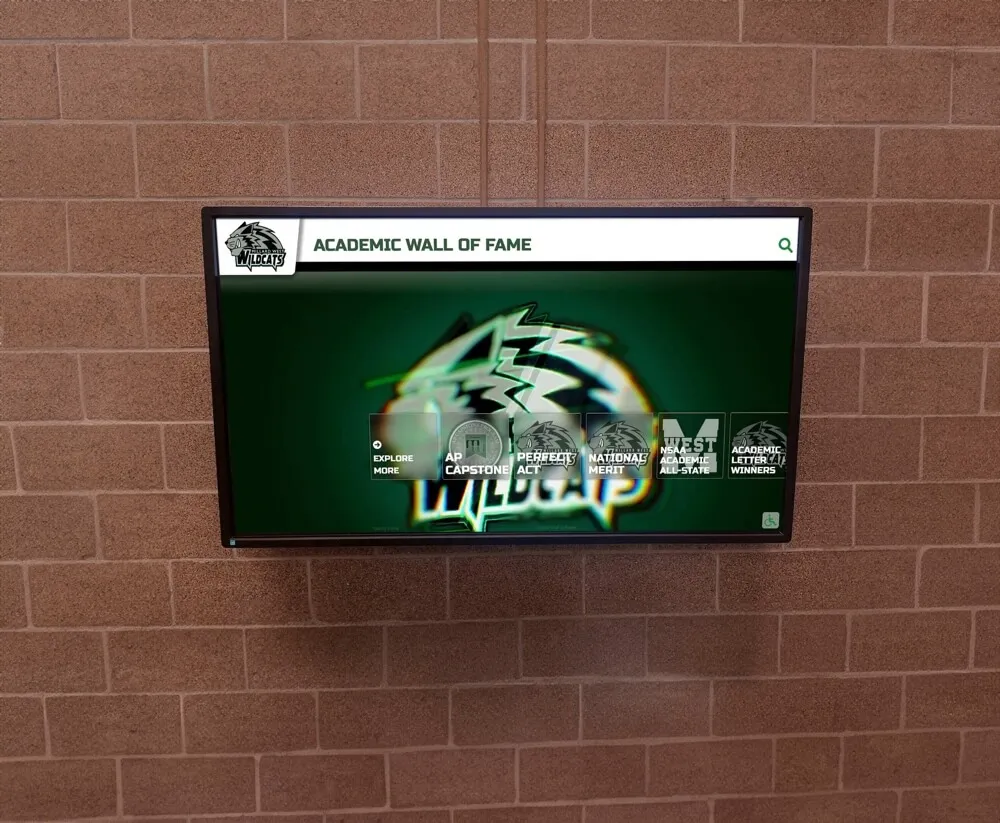
Academic Excellence Showcases: Progressive schools create comprehensive academic achievement displays comparable to athletic halls of fame. These installations highlight National Merit Semifinalists alongside other top academic honors including National AP Scholar designations, Perfect ACT/SAT scores, Intel Science Fair winners, National History Day champions, and other exceptional academic achievements. Comprehensive academic showcases validate that intellectual achievement deserves recognition infrastructure comparable to athletic accomplishments.
Yearbook Recognition: Documenting National Merit Semifinalists in yearbooks creates permanent records celebrating these achievements. Special senior recognition sections, academic achievement pages, or dedicated National Merit features ensure this accomplishment receives appropriate documentation in official school histories.
Modern Digital Recognition Approaches
Contemporary recognition increasingly leverages digital technology providing dynamic, expandable, and engaging display capabilities.
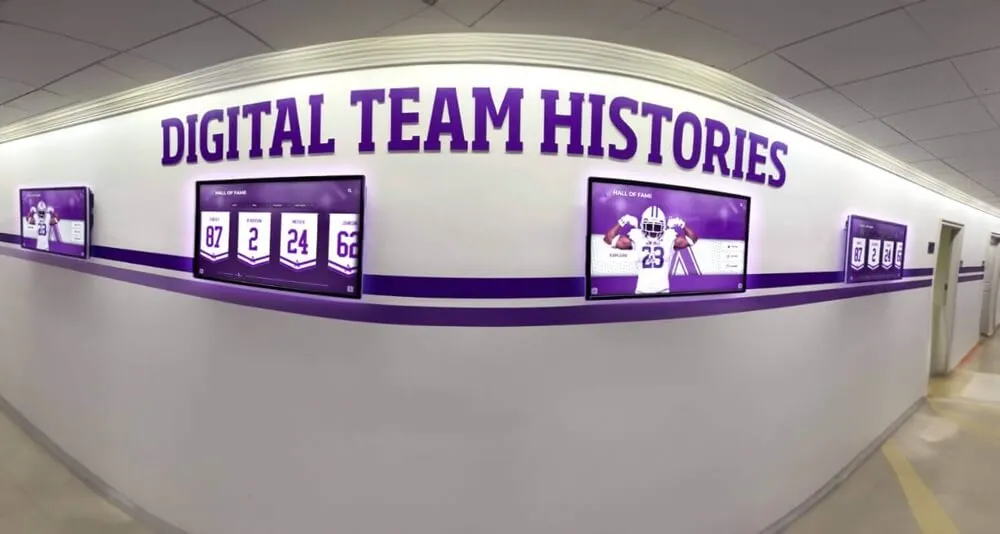
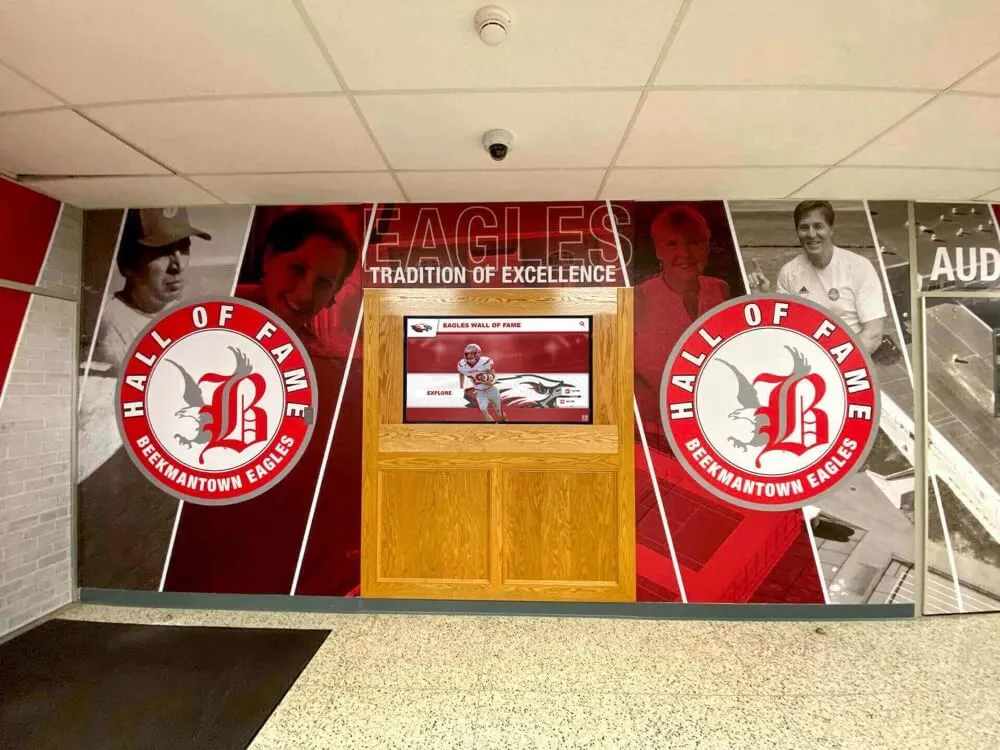
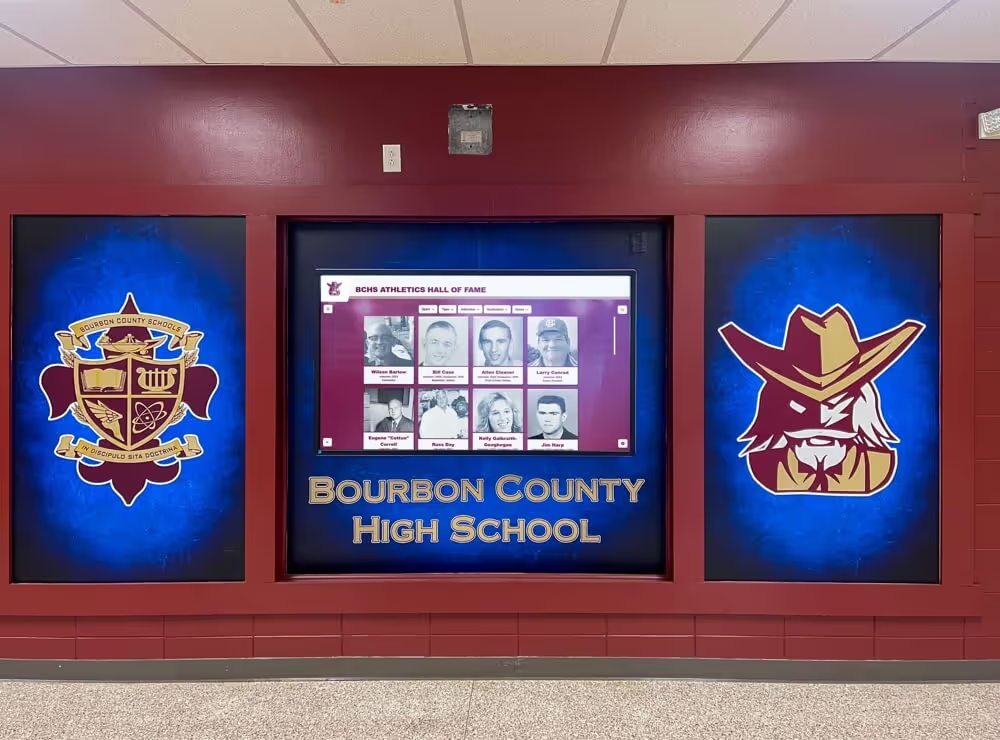
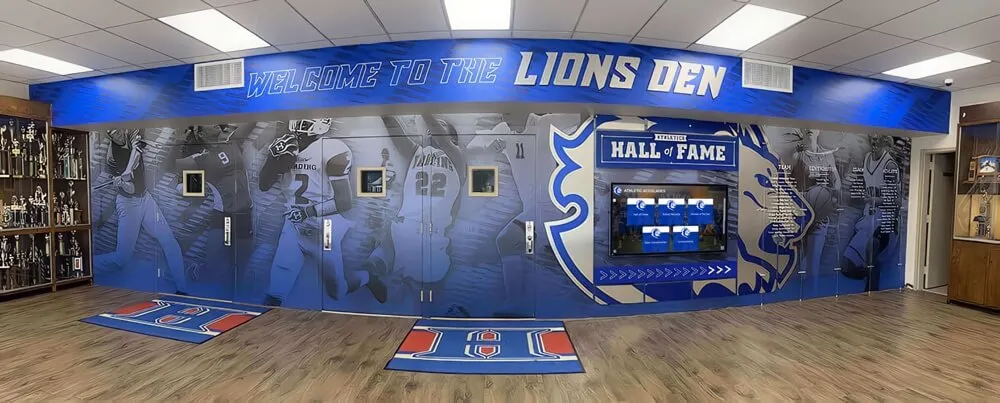
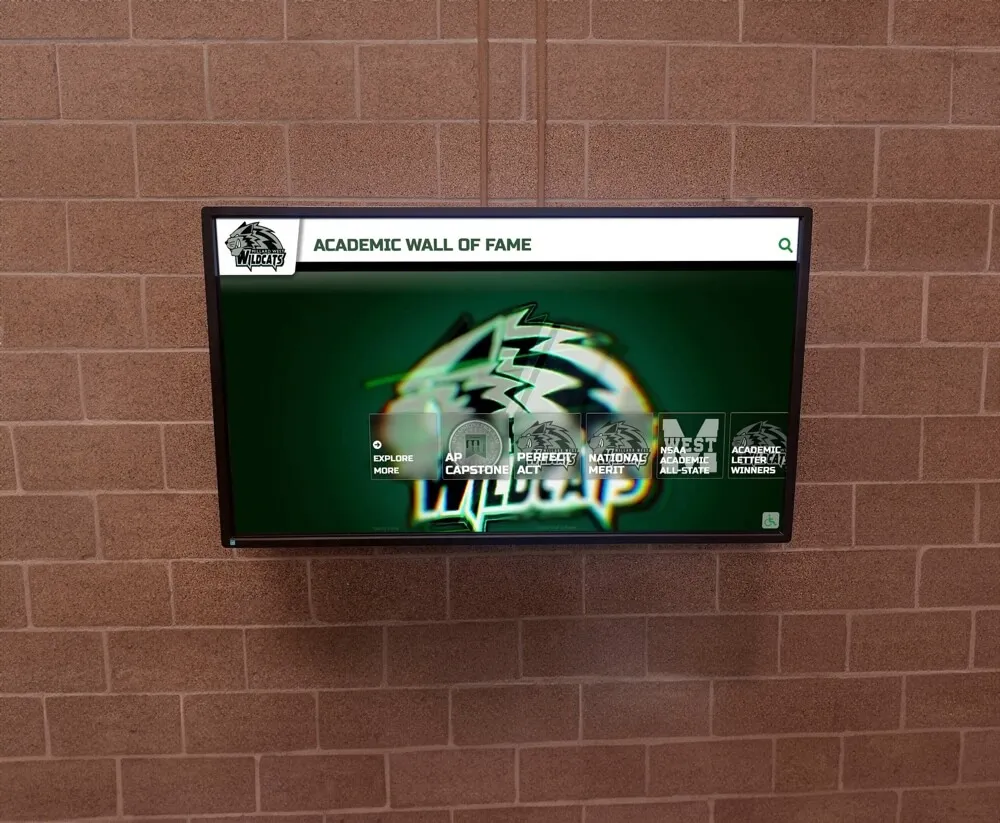
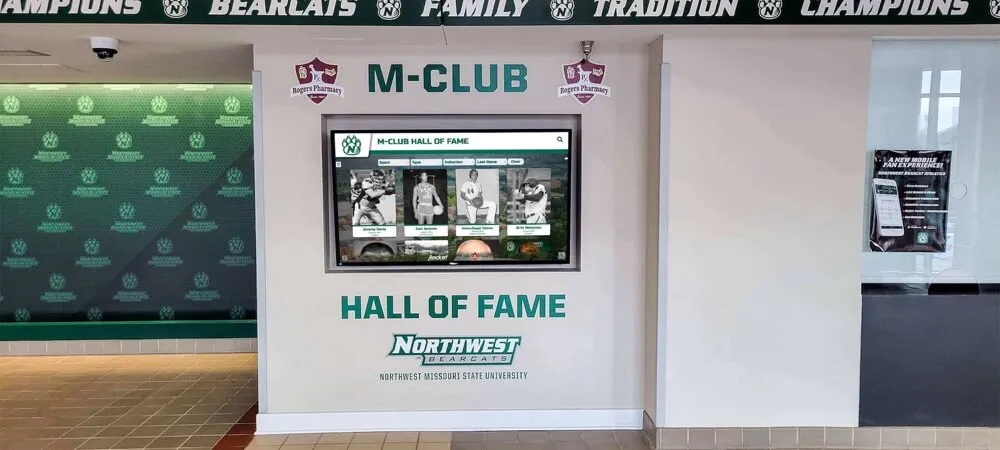
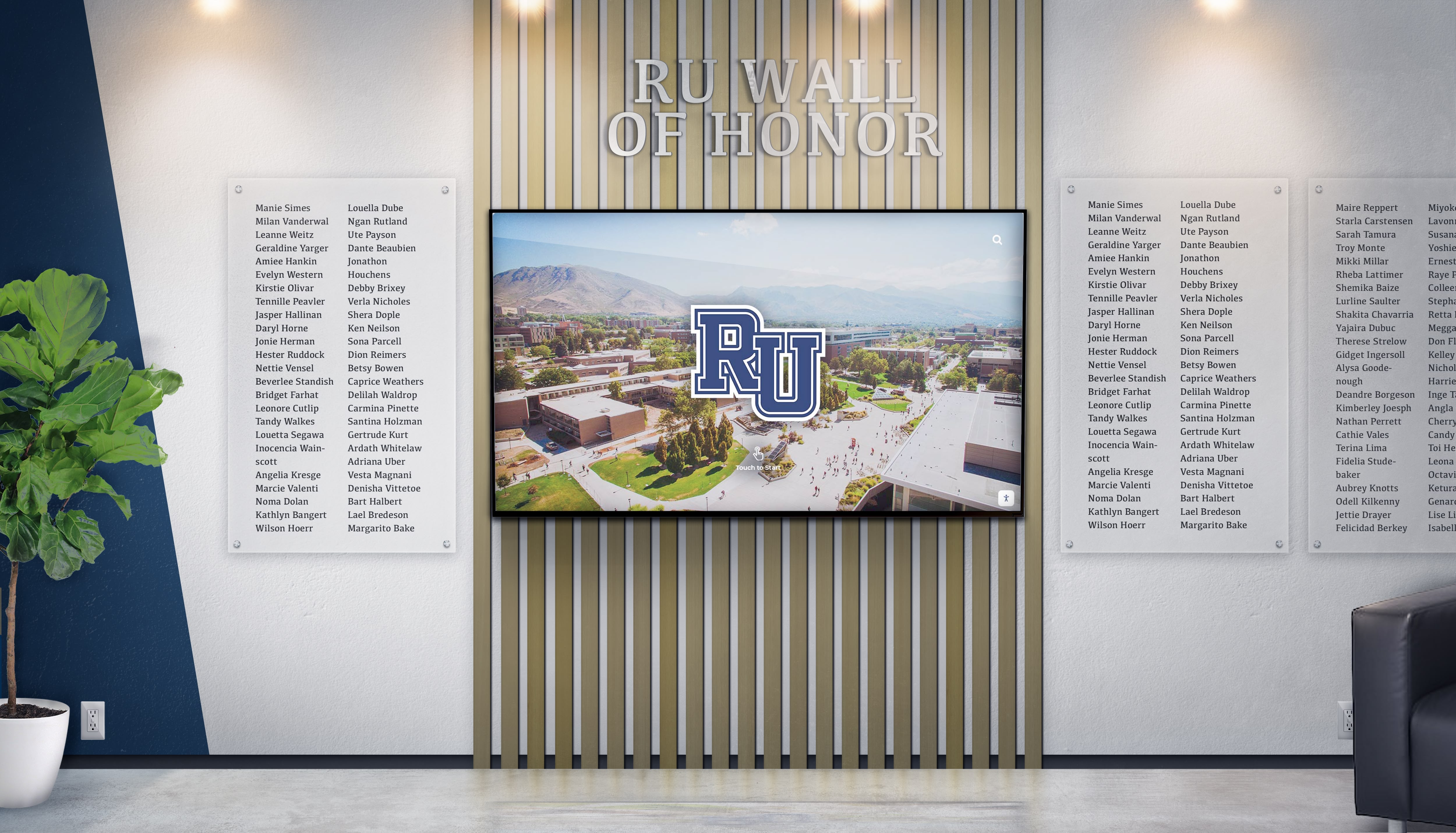
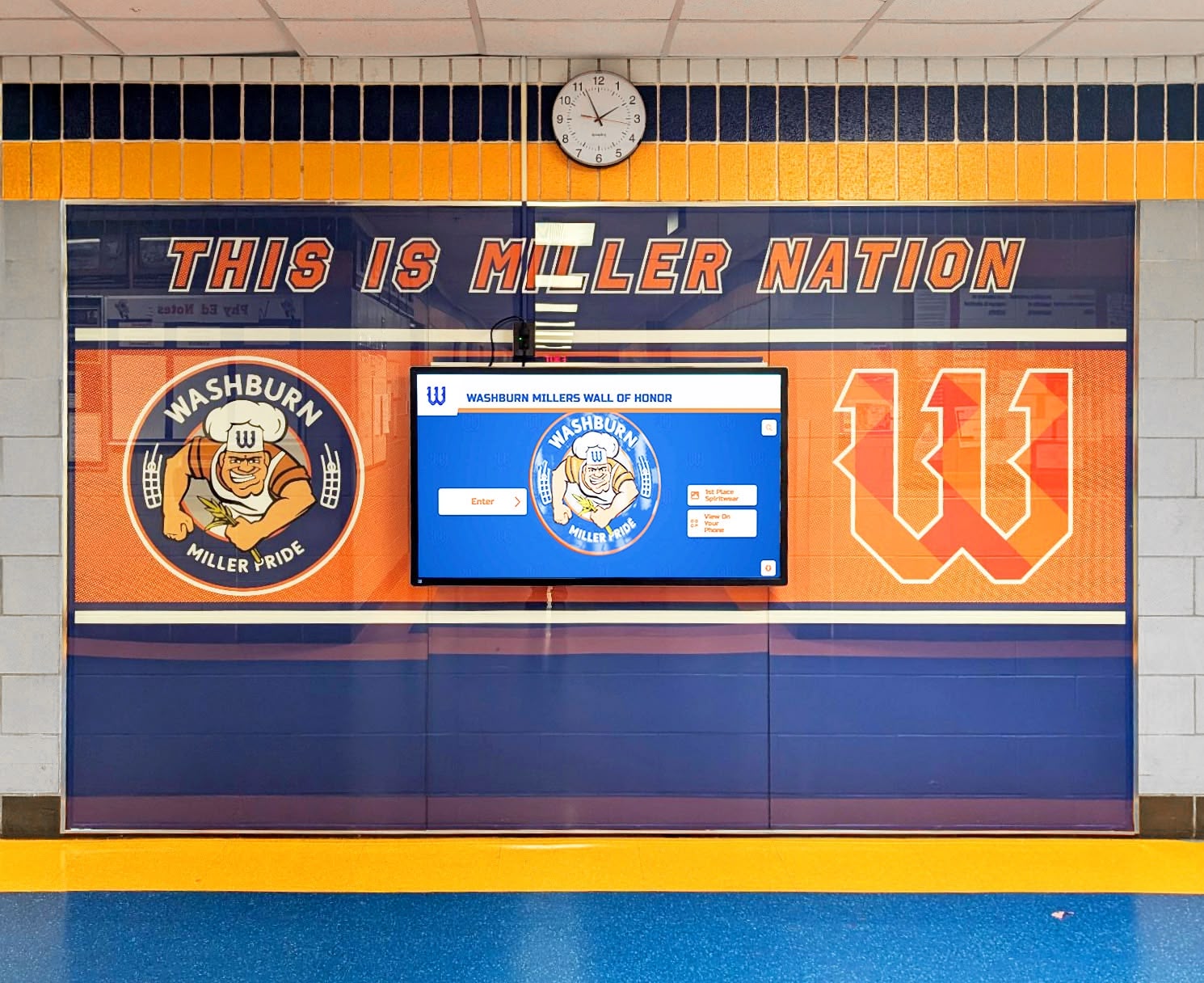
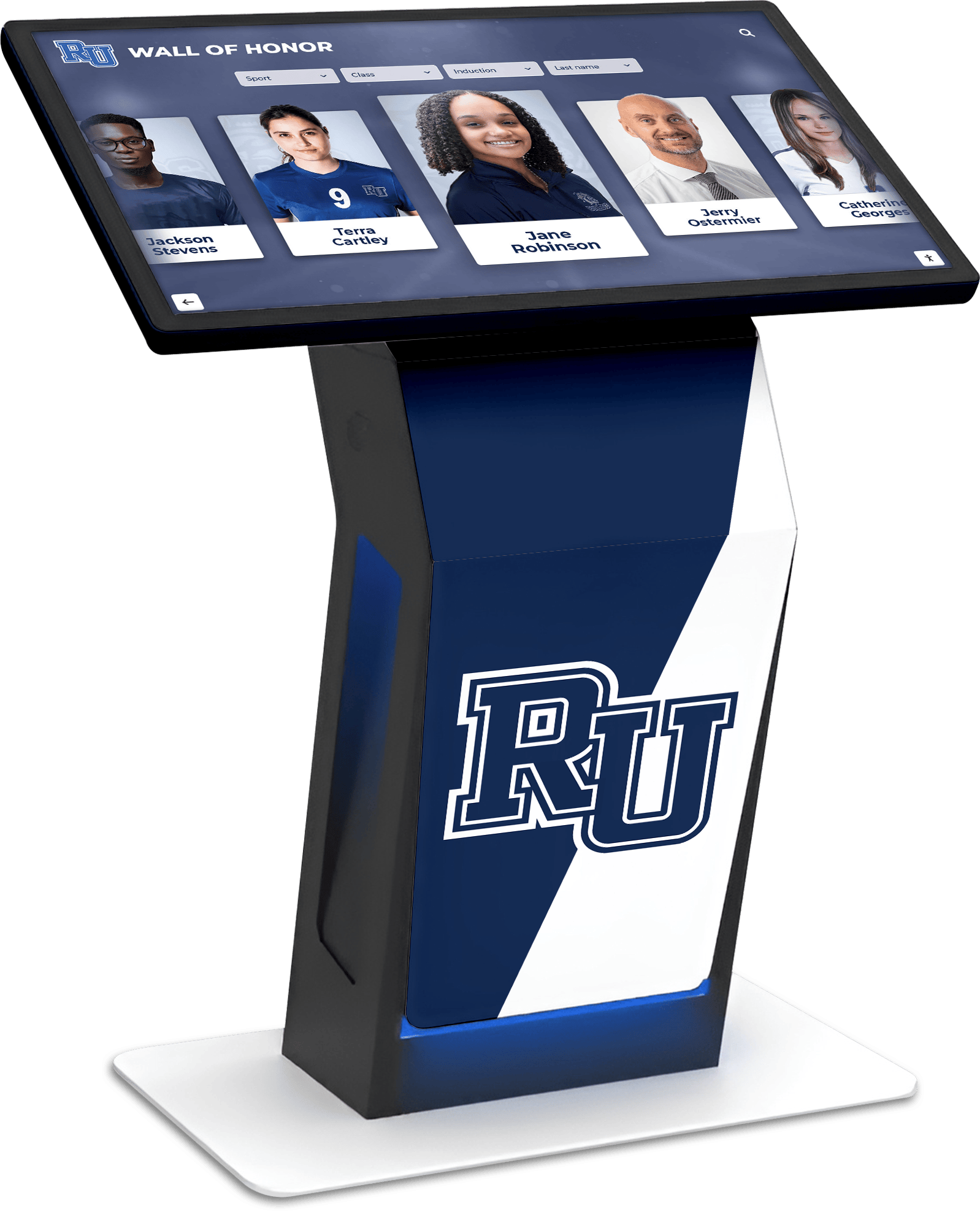
Digital Recognition Walls and Touchscreen Displays: Interactive digital displays transform academic recognition by enabling unlimited recognition capacity, regular content updates, rich multimedia presentations, and interactive engagement impossible with traditional plaques. These systems allow schools to feature National Merit Semifinalists alongside comprehensive academic achievement recognition without space constraints limiting traditional approaches. Digital displays accommodate growing inductee populations annually without requiring physical expansion, making them particularly valuable for schools with limited wall space but significant recognition needs.
Rotating Digital Showcases: Digital displays enable rotating recognition showcasing National Merit Semifinalists periodically alongside other achievement categories. September and October presentations can feature current-year Semifinalists prominently, while other periods highlight different honors including perfect attendance, state competition qualifiers, or scholarship winners. This rotation ensures sustained attention to academic achievement throughout school years rather than static displays easily overlooked once initial novelty fades.
Interactive Biographical Content: Digital systems enable rich content beyond what traditional plaques accommodate. Schools can include student photos, biographical information, intended colleges and majors, future career interests, favorite quotes, and advice to younger students. This enhanced content creates more personal, engaging recognition helping current students see National Merit achievers as relatable peers rather than distant academic superstars.
Historical Archive and Searchability: Digital recognition systems maintain searchable historical archives documenting all past National Merit Semifinalists and Finalists. Alumni, families, and community members can explore decades of academic achievement, search for specific individuals, and appreciate institutional commitment to academic excellence across generations. This historical perspective strengthens school identity while demonstrating sustained academic quality.
Integration with Comprehensive Scholar Walls: Academic scholar walls increasingly incorporate National Merit recognition within broader recognition ecosystems celebrating various forms of academic distinction. Integrated approaches present National Merit alongside AP Scholars, Science Olympiad winners, debate champions, and other academic achievers, creating comprehensive celebrations of intellectual achievement parallel to athletic recognition traditions. This holistic approach ensures multiple pathways to recognition while maintaining appropriate emphasis on National Merit’s exceptional selectivity.
Communicating the Value of Academic Achievement
Effective recognition programs explicitly communicate why National Merit achievement matters and what it represents.
Educational Signage and Context: Recognition displays should include brief explanatory context helping viewers understand National Merit significance. Simple statements like “National Merit Semifinalists represent the top 1% of test-takers nationwide” or “Only 16,000 of approximately 1.6 million PSAT test-takers achieve Semifinalist designation annually” provide perspective for community members unfamiliar with the program’s selectivity.
Comparison to Other Recognitions: Positioning National Merit recognition alongside other widely understood achievements helps communicate its significance. References to comparable selectivity rates for highly selective colleges, major scholarship programs, or national competitions provide relatable comparisons helping broader audiences appreciate the accomplishment’s magnitude.
College and Career Outcomes: Where privacy allows, highlighting where National Merit Semifinalists attend college and what scholarships they receive demonstrates tangible value. Learning that previous Semifinalists earned full-ride scholarships to flagship state universities or gained admission to Ivy League institutions helps current students understand this achievement’s practical benefits beyond prestige alone.
Supporting Future National Merit Candidates: Building Strong Academic Programs
Schools can implement systematic approaches increasing the likelihood of future students achieving National Merit recognition.
Academic Program Development
Strong National Merit performance correlates with comprehensive academic program quality across multiple dimensions.
Rigorous Curriculum and Course Offerings: Schools should ensure academically talented students access appropriately challenging coursework including robust Advanced Placement, International Baccalaureate, or dual enrollment offerings. Strong English and social studies programs particularly support verbal skills emphasized in Selection Index calculation. Mathematics programs should develop problem-solving abilities and quantitative reasoning extending beyond computational mechanics. Science programs building reading comprehension of technical texts, analytical reasoning, and evidence evaluation contribute to skills assessed across PSAT sections.
Reading Culture and Literacy Emphasis: National Merit success correlates strongly with extensive reading habits developed over years, not months of test preparation. Schools building strong reading cultures through classroom emphasis on complex texts, independent reading programs, book discussion opportunities, and modeling of faculty enthusiasm for reading create environments producing strong verbal skills naturally. Students reading regularly across genres—including challenging fiction, nonfiction, journalism, and academic texts—develop comprehension, vocabulary, and analytical abilities supporting PSAT success.
Writing Instruction and Feedback: Consistent writing instruction emphasizing clarity, organization, evidence-based argumentation, and grammatical correctness builds skills directly supporting PSAT Writing and Language performance. Regular writing assignments with substantive feedback, revision opportunities, and explicit instruction in grammar and usage strengthen abilities tested in that section. Schools should ensure English curriculum includes systematic grammar instruction, not merely writing practice assuming students will acquire grammatical knowledge implicitly.
Critical Thinking and Analytical Reasoning: National Merit success reflects more than content knowledge—it requires analytical reasoning, critical thinking, and problem-solving abilities. Classroom instruction emphasizing why over what, requiring students to analyze rather than merely recall, and developing sophisticated thinking skills builds cognitive abilities supporting PSAT performance across all sections. Socratic discussion, debate, project-based learning, and inquiry approaches cultivate these higher-order skills.
Strategic Student Identification and Support
Schools should systematically identify students with National Merit potential and provide appropriate support.
Early Identification Through PSAT 8/9 and PSAT 10: The College Board offers PSAT 8/9 for eighth and ninth graders and PSAT 10 for sophomores. Schools administering these assessments identify students with National Merit potential years before the qualifying junior-year administration. Early identification enables targeted support, appropriate course placement, and test preparation ensuring students maximize junior-year performance.
Targeted Student Conversations: Counselors should meet with students showing National Merit potential—typically those scoring 1300+ on PSAT 10—discussing the program, what achievement would require, and how to strengthen skills in preparation for junior-year testing. These conversations help students understand they have legitimate opportunities for this prestigious recognition while clarifying what improvement areas would maximize chances.
Test-Taking Strategy Instruction: While schools shouldn’t narrow curriculum to test preparation, providing some direct instruction in test-taking strategies, time management, and question format familiarity helps students perform at their capability level. Official College Board materials provide appropriate resources without requiring commercial test prep purchases. Schools might offer optional test prep workshops, study groups, or brief strategy sessions for interested students.
Managing Pressure and Expectations: While supporting students pursuing National Merit recognition, schools must avoid creating unhealthy pressure or implying that not achieving Semifinalist designation represents failure. The vast majority of exceptional students—including those attending highly selective colleges—don’t achieve Semifinalist status. Schools should celebrate these achievements enthusiastically when they occur while maintaining perspective that many paths to success exist beyond National Merit recognition.
Creating Culture Celebrating Academic Achievement
Beyond specific preparation, schools cultivate environments where academic excellence receives recognition, respect, and celebration comparable to athletic and artistic achievements.
Visibility of Academic Honors: Academic recognition displays should occupy prominent, high-traffic locations comparable to athletic trophy cases. Relegating academic recognition to obscure library corners or counseling office walls signals that intellectual achievement holds lower status than athletic accomplishments. Schools should evaluate whether physical space allocation and recognition infrastructure appropriately prioritize academics.
Administrative Emphasis and Messaging: Principal addresses, assembly announcements, and school communications should celebrate academic achievements enthusiastically and frequently. Schools where administrators attend every football game but skip academic awards ceremonies communicate clear priority hierarchies students absorb. Genuine celebration of intellectual achievement requires authentic administrative commitment demonstrated through actions and attention allocation, not merely stated values.
Peer Culture and Social Norms: Student peer culture powerfully influences whether academic excellence receives respect or ridicule. Schools should actively cultivate peer cultures where intellectual curiosity, academic achievement, and scholarly interests gain respect rather than mockery. Honor societies, academic competitions, intellectual discussion opportunities, and visible recognition of scholars help establish norms where academic excellence receives admiration comparable to athletic prowess.
Parent and Community Engagement: Schools should actively communicate with parents and communities about academic achievements, creating awareness and appreciation for intellectual accomplishments. Academic achievement press coverage, celebratory events including parents, and communication about college outcomes and scholarship successes help build community cultures valuing academic excellence. When communities understand and appreciate these achievements, students receive reinforcement from multiple sources supporting academic ambitions.

National Merit Recognition as Part of Comprehensive Academic Honor Programs
National Merit Semifinalists represent one category within broader spectrums of academic achievement deserving recognition.
Integrated Academic Recognition Frameworks
Progressive schools develop comprehensive frameworks recognizing diverse academic accomplishments rather than isolated honors.
Multiple Pathways to Recognition: Not all academic excellence manifests through standardized testing. Comprehensive recognition programs honor National Merit Semifinalists alongside students achieving distinction through science competitions, debate and speech success, creative writing awards, mathematics competitions, history contests, foreign language achievement, and other intellectual pursuits. This pluralistic approach ensures students with different talents and interests find recognition pathways while avoiding narrow definitions of academic excellence centered exclusively on test performance.
Cumulative GPA and Class Rank Recognition: Traditional honors including valedictorian, salutatorian, and top decile designation recognize sustained achievement across all courses and years. These honors reward consistency, work ethic, and broad competence across disciplines rather than exceptional performance in narrow areas. Recognition programs should appropriately honor these comprehensive achievements alongside more specialized distinctions like National Merit.
Subject-Specific and Departmental Honors: Subject-area awards recognizing top students in mathematics, science, English, social studies, foreign languages, and arts celebrate depth within disciplines. These departmental honors enable more students to receive recognition while validating excellence in diverse fields. Combined with cross-disciplinary honors like National Merit, subject awards create layered recognition systems acknowledging various forms and levels of achievement.
Service, Character, and Citizenship Recognition: Academic honor programs benefit from including character-based recognition celebrating integrity, service, leadership, and citizenship. Not all valuable students are top test-scorers, and schools should communicate that excellence manifests through multiple dimensions including how students treat others, contribute to communities, and demonstrate ethical behavior.
Avoiding Unintended Negative Consequences
While celebrating National Merit Semifinalists, schools should consciously avoid problematic outcomes.
Preventing Narrow Definition of Success: Over-emphasizing National Merit recognition risks communicating that this specific achievement represents the pinnacle of academic success, marginalizing students excelling in other legitimate ways. Schools should contextualize National Merit as one form of academic distinction among many valuable achievements.
Addressing Test Preparation Industry Pressure: Extensive focus on National Merit may encourage families to invest heavily in commercial test preparation creating advantage for affluent students while pressuring all families toward expensive services. Schools should provide reasonable support through official free materials while discouraging excessive test preparation disconnected from genuine learning and skill development.
Managing Competition and Student Anxiety: Excessive emphasis on National Merit competition can contribute to unhealthy stress, anxiety, and competitive dynamics among high-achieving students. Schools should celebrate achievement without creating zero-sum competitions where peers become rivals rather than collaborative learners. Recognition should focus on absolute achievement rather than comparison, celebrating all Semifinalists equally rather than ranking or creating hierarchies among these exceptional students.
Equity and Access Considerations: National Merit traditionally reflects demographic patterns where affluent, suburban, predominantly white and Asian American students achieve Semifinalist designation disproportionately. Schools should examine whether National Merit recognition patterns reflect genuine opportunity access or systemic inequities in academic preparation, testing familiarity, or opportunity structure. While celebrating individual achievement appropriately, schools should simultaneously work toward more equitable systems ensuring students from all backgrounds access the curriculum, instruction, and support enabling them to develop abilities for exceptional academic achievement.
Frequently Asked Questions
What PSAT score do you need to become a National Merit Semifinalist?
National Merit Semifinalist qualification depends on Selection Index—not the 320-1520 total score—calculated as (Reading × 2) + (Writing/Language × 2) + (Math × 1), ranging from 48-228. Required Selection Index varies by state from approximately 209-224. High-competition states like Massachusetts, New Jersey, Maryland, California, and Virginia typically require 221-224, while most states fall in the 217-220 range, and lower-competition states may accept 209-216. These thresholds fluctuate 1-3 points annually based on test difficulty and score distributions. Students should target Selection Indices several points above their state’s historical range providing margin against annual variation. NMSC bases selection on state of residence (mailing address), not high school location.
Do National Merit Semifinalists automatically become Finalists?
No—approximately 95% of the 16,000 Semifinalists advance to Finalist status, meaning roughly 1,000 don’t advance despite qualifying scores. Advancement requires completing detailed applications including essay responses, submitting academic transcripts demonstrating consistent high achievement (typically 3.5+ unweighted GPA), providing SAT scores confirming PSAT performance (generally 1400+ composite), and obtaining school official recommendations. Students with incomplete applications, inadequate academic records, SAT scores substantially below PSAT levels, serious disciplinary issues, or concerning school recommendations may not advance. The September Semifinalist notification to early October application deadline creates tight timelines requiring immediate attention and thorough completion of all requirements.
How much money do National Merit Scholarships provide?
National Merit scholarship values vary dramatically by category. National Merit $2,500 Scholarships are one-time awards. Corporate-sponsored scholarships range from one-time $2,500 to renewable $2,000-$10,000 annually (up to $40,000 total). College-sponsored scholarships offer the greatest variation and potentially highest values—from modest $500-$2,000 annual stipends to full-tuition packages worth $100,000-$200,000 over four years. Many public universities in states including Alabama, Florida, Oklahoma, Texas, and Arizona offer automatic full-tuition or comprehensive packages to any Finalist designating that institution as first choice. Students should research specific colleges’ National Merit policies as institutional awards often exceed official NMSC scholarship values substantially.
When do students find out if they are National Merit Semifinalists?
NMSC notifies students and schools of Semifinalist designations in early September of students’ senior year—approximately eleven months after taking the qualifying PSAT/NMSQT in October of junior year. Students don’t receive any indication of potential National Merit qualification when PSAT scores release in December of junior year—only Selection Index scores and state percentiles. The extended gap between testing and notification creates uncertainty, though students can compare their Selection Index to historical state cutoffs estimating likelihood of qualification. Semifinalists must complete applications by early October (typically 4-6 weeks after notification), creating compressed timelines for essay writing, document gathering, and submission.
Can students retake the PSAT/NMSQT to improve their National Merit chances?
No—only the single PSAT/NMSQT administration during junior year counts for National Merit purposes. Students take this test once (typically the second or third Wednesday in October), and that performance solely determines qualification. No retakes, alternative test dates, or score improvement opportunities exist except documented emergencies qualifying for makeup administrations. This single-sitting requirement means the October test morning represents students’ only National Merit opportunity. Sophomores can take PSAT 10 for practice and baseline assessment, and seniors who missed junior-year testing due to exceptional circumstances might qualify for senior-year administration, but normal progression involves one junior-year opportunity. Students should prepare appropriately and ensure optimal test-day conditions given the single chance for qualification.
Do colleges care about National Merit Semifinalist status in admissions?
National Merit Semifinalist or Finalist designation strengthens college applications, particularly at institutions outside the most selective tier. Highly selective colleges (acceptance rates under 10%) receive many applicants with National Merit recognition, so this distinction alone doesn’t substantially differentiate candidates, though it validates academic achievement and certainly doesn’t hurt. Many public flagship universities and selective private colleges view National Merit status very positively as it represents objective external validation of academic excellence. Some colleges offer automatic substantial merit scholarships to all Finalists regardless of financial need, making National Merit status financially transformative at these institutions. Beyond admissions decisions themselves, National Merit recognition frequently triggers scholarship offers, honors program invitations, and special opportunities at colleges recruiting high-achieving students. The designation carries particular value for students from less-well-known high schools where National Merit provides nationally-normed context for academic achievement.
Should schools invest in physical or digital displays for National Merit recognition?
Both approaches offer distinct advantages—optimal solutions often combine elements of each. Traditional engraved plaques create tangible, prestigious, permanent recognition with no ongoing costs but face space limitations and can’t accommodate growing inductee populations without wall expansion. Digital recognition systems require initial hardware investment and modest annual software costs but provide unlimited capacity, regular content updates, rich multimedia capabilities, and interactive engagement traditional plaques can’t match. Comprehensive digital recognition solutions enable schools to celebrate National Merit Semifinalists alongside other academic honors, athletic achievements, and alumni accomplishments within integrated systems. Many schools implement hybrid approaches with traditional plaques for timeless recognition combined with digital displays providing dynamic content, greater recognition capacity, and engaging presentations. Budget, available space, total scholars recognized annually, and institutional preferences all influence optimal approaches.
What’s the difference between National Merit Commended Students and Semifinalists?
Both designations recognize exceptional PSAT/NMSQT performance, but they represent different achievement levels and opportunities. Commended Students (approximately 34,000 nationally) score in the top 3-4% nationwide—high achievement worth celebrating—but don’t qualify for state-based Semifinalist designation. Commended Students don’t advance in the National Merit Scholarship competition or compete for NMSC-administered awards, though many colleges offer institutional merit scholarships to Commended Students, making this recognition financially valuable even without National Merit Scholarship access. Semifinalists (approximately 16,000 nationally) represent the top 1% of test-takers in each state and become eligible to compete for National Merit Scholarships by completing applications and advancing to Finalist status. While Commended designation represents significant achievement, Semifinalist status carries greater prestige, scholarship opportunities, and college recruiting advantages. Schools should celebrate both achievements appropriately while clarifying the distinction so students, families, and communities understand different recognition levels.
Ready to celebrate your school’s National Merit Semifinalists and other academic achievers through comprehensive digital recognition? Explore how Rocket Alumni Solutions creates engaging scholar walls and interactive displays showcasing academic excellence, inspiring future students while honoring top performers through beautiful, dynamic recognition systems that grow with your program for years to come.