Every October, as high school juniors across America take the PSAT/NMSQT, approximately 1.5 million students enter one of the nation’s most competitive academic competitions. Most students take this standardized test as practice for the SAT or to identify academic strengths and weaknesses. However, for the highest-scoring participants, PSAT performance launches them into the National Merit Scholarship Program—a prestigious recognition pathway that can culminate in substantial scholarship awards, enhanced college admission prospects, and lifetime membership in an elite academic community.
The National Merit Scholarship Corporation, established in 1955, administers this program to identify and honor academically exceptional students nationwide. The organization’s mission centers on recognizing scholastic excellence and encouraging the pursuit of higher education through a multi-stage competition culminating in scholarship awards. Over nearly seven decades, the National Merit Scholarship Program has recognized millions of high-achieving students, distributed hundreds of millions in scholarship funds, and established a reputation as one of America’s most credible indicators of academic excellence.
Understanding the National Merit Semifinalist recognition process matters for students pursuing academic excellence, parents supporting high-achieving children, counselors guiding college preparation, and school administrators seeking to properly celebrate exceptional scholars. The path from PSAT test-taker through Semifinalist recognition to potential Finalist designation and scholarship awards involves specific criteria, strict timelines, and strategic decisions that significantly impact outcomes.
For schools fortunate enough to produce National Merit Semifinalists, these achievements represent validation of educational quality, curriculum rigor, and commitment to academic excellence. Properly recognizing Semifinalists communicates that scholarly achievement receives the same visibility and celebration traditionally reserved for athletic accomplishments while inspiring younger students to pursue similar academic distinction.
This comprehensive guide explores everything about National Merit Semifinalist recognition—from understanding selection criteria and state-specific cutoff scores through navigating the advancement process toward Finalist status, and ultimately implementing meaningful recognition programs that honor these exceptional students while strengthening school culture around academic excellence.
Understanding the National Merit Scholarship Program Structure
Before examining Semifinalist selection specifically, understanding the overall program structure provides essential context for how Semifinalist designation fits within the broader National Merit competition.
Program Timeline and Major Milestones
The National Merit Scholarship Program follows a structured 18-month timeline from initial PSAT administration through final scholarship awards.
Junior Year (Year 1):
- October: Juniors take the PSAT/NMSQT, the qualifying test for National Merit recognition
- Scores are submitted to National Merit Scholarship Corporation for evaluation
- Top performers’ results are held for program entry consideration
Senior Year Fall (Year 2):
- September: Approximately 50,000 students receive Letters of Commendation recognizing high PSAT performance (top 3-4% nationally)
- September: Approximately 16,000 students are designated National Merit Semifinalists (top 1% nationally)
- Semifinalists receive detailed application requirements and deadlines
Senior Year Winter:
- October-November: Semifinalists submit comprehensive applications including academic records, essays, recommendations, and confirming SAT scores
- December-February: National Merit Scholarship Corporation evaluates applications
- February: Approximately 15,000 Semifinalists (about 94%) advance to Finalist status
Senior Year Spring:
- March-June: Scholarship winners are announced in waves
- Winners include National Merit $2,500 Scholarship recipients (approximately 2,500 students), corporate-sponsored Merit Scholarship winners (approximately 1,000 students), and college-sponsored Merit Scholarship recipients (approximately 4,000 students)
- Remaining Finalists who don’t win National Merit Scholarships still carry prestigious Finalist designation valued by colleges
This extended timeline requires sustained engagement across students’ most demanding academic years, testing not only intellectual capability but also organizational discipline and commitment to completing complex application requirements.
Recognition Levels: Commended Students, Semifinalists, and Finalists
The National Merit program creates three distinct recognition tiers, each carrying different prestige levels and scholarship implications.
Commended Students (Top 3-4% Nationally): Approximately 34,000 students annually receive Letters of Commendation recognizing exceptional PSAT performance. Commended Students scored high enough to rank in the top 3-4% nationally but didn’t reach their state’s Semifinalist cutoff. This recognition carries genuine prestige, enhances college applications, and validates strong academic performance. However, Commended Students cannot advance further in the National Merit competition or receive National Merit Scholarships specifically, though they may qualify for other merit-based aid from colleges and organizations.
Semifinalists (Top 1% Nationally): Approximately 16,000 students achieve Semifinalist designation by reaching state-specific PSAT cutoff scores placing them in the top 1% of their state’s test-takers. Semifinalist recognition represents a significant achievement that substantially enhances college applications, often results in scholarship opportunities from colleges and outside organizations, and creates eligibility to advance toward Finalist status and National Merit Scholarships. Schools celebrate Semifinalist achievements prominently, understanding this designation validates exceptional academic performance and college readiness.
Finalists (Top 0.9% Nationally): Approximately 15,000 Semifinalists advance to Finalist status by completing application requirements, maintaining strong academic records, confirming PSAT performance through SAT scores, and receiving endorsement from school officials. Finalist designation represents the program’s highest recognition level, making students eligible for the three categories of National Merit Scholarships. Even Finalists who don’t ultimately receive National Merit Scholarships benefit tremendously from this prestigious distinction throughout college admission processes and beyond.
Scholarship Award Categories and Values
Finalists compete for three types of National Merit Scholarships, each sponsored by different sources with varying values.
National Merit $2,500 Scholarships: The National Merit Scholarship Corporation directly funds 2,500 one-time scholarships of $2,500 each, awarded on a state-representational basis ensuring geographic distribution. These scholarships can be used at any accredited U.S. college or university, providing maximum flexibility for recipients. Selection considers Finalists’ abilities, skills, and accomplishments without regard to financial need, making awards purely merit-based recognition of exceptional academic talent.
Corporate-Sponsored Merit Scholarships: Approximately 1,000 scholarships are funded by corporations and business organizations for Finalists meeting specified criteria—often children of employees, residents of communities where corporations operate, or students pursuing particular fields of study. Award amounts vary substantially from one-time payments to renewable scholarships worth $500-$10,000 annually across four years. Some corporate scholarships are restricted to specific colleges while others allow use at any accredited institution.
College-Sponsored Merit Scholarships: Approximately 180 colleges and universities sponsor Merit Scholarships for Finalists who attend their institutions and meet additional criteria set by the sponsoring college. These scholarships typically provide $500-$2,000 annually and are renewable for up to four years, though some institutions offer significantly more generous awards—occasionally full-tuition scholarships—for National Merit Finalists. Students can receive only one National Merit Scholarship regardless of how many they’re offered, requiring strategic decisions about which award to accept.
Beyond official National Merit Scholarships, many additional colleges offer substantial merit aid specifically for National Merit Semifinalists and Finalists, even if students don’t receive National Merit Scholarships directly. Several universities provide full-tuition or full-ride scholarships specifically recruiting National Merit scholars, making this recognition pathway to college affordability for academically exceptional students.
National Merit Semifinalist Selection: Criteria and Process
Achieving Semifinalist status requires meeting specific performance thresholds on the PSAT/NMSQT, understanding state-based selection systems, and satisfying basic eligibility requirements.
PSAT/NMSQT as the Qualifying Examination
The Preliminary SAT/National Merit Scholarship Qualifying Test serves as the sole determinant for National Merit program entry, making this single test exceptionally high-stakes for college-bound high school students.
Test Structure and Scoring: The PSAT/NMSQT includes three scored sections: Reading, Writing and Language, and Math. Each section receives a score from 8-38. The sum of all three section scores (multiplied by 2) creates the Selection Index, ranging from 48 to 228. This Selection Index—not the standard PSAT total score—determines National Merit recognition eligibility.
For example, a student scoring 36 Reading, 36 Writing and Language, and 35 Math would calculate their Selection Index as (36 + 36 + 35) × 2 = 214. This Selection Index gets compared against state cutoffs to determine Semifinalist qualification.
Test Administration and Timing: Students must take the PSAT/NMSQT during their junior year (third year of high school) to qualify for National Merit recognition. Tests taken during sophomore year or earlier don’t qualify, though they provide valuable practice. The test is administered nationwide on specific dates in October, typically offering a Saturday administration and a Wednesday administration for students whose religious beliefs prevent Saturday testing.
Schools schedule PSAT/NMSQT administrations and coordinate registration. Students typically register through their high schools several weeks before test dates. Test fees are approximately $18, though fee waivers are available for students with financial need. Some schools cover testing costs for all students, recognizing the value of universal access to National Merit opportunity.

Score Release and National Merit Notification: PSAT scores become available to students in December following October testing. However, official National Merit recognition doesn’t occur until the following September—nearly a year after testing—when Semifinalist and Commended Student notifications are sent. This extended timeline reflects the thorough evaluation process the National Merit Scholarship Corporation conducts comparing results across all states and adjusting cutoffs based on annual performance distributions.
State-Based Selection Index Cutoff Scores
Unlike many national academic competitions using uniform standards nationwide, National Merit Semifinalist designation employs state-specific cutoff scores, creating significant variation in qualification difficulty depending on geographic location.
Why State-Based Cutoffs Exist: The National Merit Scholarship Corporation established state-based selection ensuring proportional representation from all states. Without geographic distribution, highly populated states with many strong academic programs would dominate Semifinalist selections while less populated or lower-performing states would receive minimal representation. State-based selection guarantees that exceptional students from all regions receive recognition and scholarship opportunities regardless of where they attend high school.
The allocation roughly follows each state’s percentage of the national graduating class, though slight adjustments ensure appropriate recognition distribution. This system means students compete primarily against peers within their state rather than against the entire national testing population.
Understanding Cutoff Score Variation: State cutoff scores vary considerably based on multiple factors including overall test performance levels in each state, student population size, and annual score distribution fluctuations. Recent cutoff scores have ranged from approximately 207-209 Selection Index in states with lower thresholds to 221-224 Selection Index in the most competitive states.
States with historically higher cutoffs typically include:
- New Jersey (221-223)
- Massachusetts (221-222)
- Maryland (221-222)
- Virginia (221)
- California (220-221)
- Texas (220-221)
States with historically moderate cutoffs include:
- Florida (217-218)
- Pennsylvania (217-218)
- Illinois (217-218)
- North Carolina (217-218)
- Washington (218-219)
States with historically lower cutoffs include:
- Montana (207-209)
- Wyoming (207-209)
- West Virginia (207-209)
- Arkansas (209-211)
- Mississippi (209-211)
These cutoffs fluctuate slightly year-to-year based on annual performance distributions, so students should research specific cutoffs for their graduation year rather than assuming historical ranges remain constant.
Strategic Implications for Mobile Families: Families who relocate during students’ high school years should understand that state assignment follows where students attend high school when taking the qualifying PSAT/NMSQT junior year, not previous residence or graduation location. A student living in Maryland through sophomore year who moves to Montana before junior year would compete against Montana’s cutoff, potentially significantly improving Semifinalist qualification chances given the substantial cutoff difference between these states.
However, any relocation decisions should prioritize educational quality, family needs, and student well-being rather than gaming National Merit qualification, as attending weaker schools to benefit from lower state cutoffs often proves counterproductive to overall academic development and college preparation.
Basic Eligibility Requirements Beyond Test Scores
Meeting state cutoff scores represents the primary Semifinalist qualification criterion, but students must also satisfy several basic eligibility requirements.
Enrollment Status: Students must be enrolled in high school (not home-educated or enrolled in college full-time) and progressing normally toward graduation. They must be U.S. citizens or lawful permanent residents intending to become U.S. citizens at earliest opportunity.
Full-Time Enrollment: Students must take the PSAT/NMSQT as full-time high school students. Students enrolled primarily in college courses while technically remaining high school students may face eligibility questions requiring documentation of high school enrollment status.
No Prior High School Diploma: Students cannot have graduated high school or received a GED certificate before taking the qualifying PSAT. Students must be advancing toward first-time high school graduation.
Test Validity: Scores must result from a legitimate test administration without irregularities, violations of testing rules, or validity concerns. Any testing irregularities can disqualify students regardless of performance level.
Geographic Considerations: Students attending U.S. high schools abroad through Department of Defense schools or at U.S. territories participate in the program with specific allocation procedures. Students attending international schools in foreign countries typically cannot participate in the National Merit Scholarship Program, though some exceptions exist for U.S. citizens abroad.
Advancing from Semifinalist to Finalist Status
Achieving Semifinalist recognition represents a major milestone, but approximately 94% of Semifinalists must complete additional requirements to advance to Finalist status and remain eligible for scholarship consideration.
Comprehensive Application Requirements
The Semifinalist application represents a substantial undertaking requiring careful attention to detail and thorough documentation of academic excellence.
Academic Record Documentation: Semifinalists must submit complete high school transcripts showing consistently strong academic performance throughout high school. The National Merit Scholarship Corporation evaluates GPA, course rigor including honors and Advanced Placement enrollments, and overall academic trajectory. While no specific GPA cutoff exists, successful Finalists typically maintain unweighted GPAs of 3.5 or higher with strong performance across all core academic subjects.
Students with academic weaknesses—failed courses, significant GPA declines, or disciplinary issues affecting academic standing—may face challenges advancing to Finalist status. The academic record review ensures Semifinalists demonstrate sustained excellence rather than isolated test-taking success.

Essay Submission: Semifinalists write and submit an essay of approximately 500-600 words addressing a prompt provided by the National Merit Scholarship Corporation. Essay prompts typically ask students to describe personal characteristics, development of their abilities and interests, significant educational experiences, career aspirations, or personal goals.
The essay provides context beyond grades and test scores, allowing students to demonstrate writing ability, self-awareness, intellectual curiosity, and personal qualities that distinguish them as exceptional scholars worthy of Finalist recognition. Strong essays go beyond superficial responses to provide genuine insight into students’ intellectual development and aspirations.
School Official Endorsement: High school principals or designated officials must submit endorsements confirming academic records, verifying no disciplinary issues impacting Finalist consideration, and certifying students’ information accuracy. This endorsement requirement ensures independent verification of students’ qualifications and appropriate conduct throughout high school.
Schools occasionally decline to endorse Semifinalists with serious disciplinary issues, academic integrity violations, or other concerns contradicting the program’s emphasis on character and responsible citizenship alongside academic achievement. Such cases are rare but underscore that National Merit recognition extends beyond test scores alone.
Confirming SAT Scores: Semifinalists must take the SAT and achieve scores confirming PSAT performance. The National Merit Scholarship Corporation doesn’t publish specific SAT score requirements, but students generally should score at least 1400 (out of 1600) to comfortably confirm their Selection Index performance.
This confirming score requirement prevents Semifinalist designation based solely on single exceptional test performances that might not represent students’ consistent ability levels. Strong SAT scores validate that PSAT performance reflected genuine academic capability rather than fortunate circumstance.
Students should take the SAT by December of senior year at the latest, ensuring scores arrive in time for Finalist consideration. Earlier SAT administrations—August, September, or October—provide more comfortable timelines with opportunities for retesting if initial scores fall short.
Timeline for Application Submission
Semifinalist applications must be completed and submitted by specific deadlines, typically in mid-October following Semifinalist notification in early September. This compressed timeline means students receive roughly 5-6 weeks to complete all requirements including transcript requests, essay writing, SAT scheduling, and coordination with school officials for endorsements.
Given these tight timelines, students should begin preparation immediately upon Semifinalist notification rather than waiting until closer to deadlines. Many components—particularly school endorsements and transcript processing—depend on school staff availability and administrative procedures that may require several weeks.
Planning for Finalist Announcement: The National Merit Scholarship Corporation evaluates applications throughout fall and winter, announcing Finalist designations in February. Schools receive Finalist notification and certificates recognizing students’ advancement. This mid-senior-year timing means Finalist designation can be included in college applications submitted earlier (often by January) only if students specifically note Semifinalist status with “Finalist determination pending.” However, Finalist recognition can be communicated to colleges after initial applications through supplementary updates.
Success Rates and Common Advancement Obstacles
Approximately 15,000 of 16,000 Semifinalists (94%) advance to Finalist status, meaning the vast majority of students who achieve Semifinalist recognition ultimately reach the program’s highest tier.
Why Some Semifinalists Don’t Advance: The approximately 1,000 Semifinalists who don’t advance to Finalist status typically encounter obstacles including incomplete or late-submitted applications, academic records showing significant weaknesses or declines, inadequate confirming SAT scores, school officials declining to provide endorsements due to disciplinary or integrity concerns, or failure to meet basic eligibility requirements discovered during verification.
The high advancement rate means students taking application requirements seriously and maintaining strong academic performance almost certainly advance to Finalist status. The process serves primarily to verify that Semifinalists’ test performance reflects genuine and sustained academic excellence rather than creating additional competitive eliminations.
Special Considerations for Homeschool and Alternative Education Students
Homeschool students and those in alternative education settings can participate in the National Merit program but face additional documentation requirements.
Homeschool Eligibility: Homeschool students must take the PSAT/NMSQT at an official test center, often at local high schools that permit outside students to test. They must document homeschool enrollment status, provide detailed academic transcripts or portfolios, and obtain endorsements from appropriate officials overseeing their education—often homeschool organization leaders, umbrella school administrators, or educational officials in their jurisdictions.
Homeschool students should contact the National Merit Scholarship Corporation early in their junior year clarifying specific requirements ensuring they can complete all necessary documentation if they achieve Semifinalist status.
Students in Alternative Programs: Students in early college programs, dual enrollment, or other non-traditional high school settings must document their high school student status and enrollment progression toward first-time high school graduation. These students should work closely with program administrators and guidance counselors to ensure proper documentation addressing potential eligibility questions.
How Schools Honor National Merit Semifinalists
Schools that produce National Merit Semifinalists gain opportunities to celebrate exceptional academic achievement while demonstrating educational excellence to broader communities. Proper recognition communicates that intellectual accomplishment receives visibility and honor comparable to athletic achievement while inspiring younger students to pursue similar excellence.
Traditional Recognition Approaches and Their Limitations
Schools have long recognized National Merit Semifinalists through conventional methods that, while meaningful, often lack the prominence and permanence these exceptional achievements deserve.
Press Releases and Media Coverage: Most schools announce National Merit Semifinalists through press releases to local media, school newsletters, and website postings. These announcements generate community awareness and family pride, particularly in smaller communities where local papers feature such achievements prominently. However, media coverage proves transient—newspaper articles from September fade from public consciousness within days or weeks, and website news posts get archived as newer content replaces them.
Current underclassmen who might be inspired by Semifinalist achievements rarely encounter previous years’ press releases. Prospective families touring schools typically don’t see archived news items. The fleeting nature of media recognition means Semifinalist achievements, while celebrated initially, often disappear from institutional visibility relatively quickly.
Recognition Ceremonies and Award Presentations: Schools frequently honor Semifinalists during fall academic awards assemblies, back-to-school nights, or special recognition ceremonies where students receive certificates and recognition before peers, teachers, and families. These ceremonial moments create meaningful experiences for students and immediate recognition within school communities.
However, ceremonies represent point-in-time events that non-attendees miss entirely. Students in younger grades may not attend upper-class assemblies. Ceremony recognition, while valuable, doesn’t create lasting visibility that continues inspiring students months and years after the initial celebration.
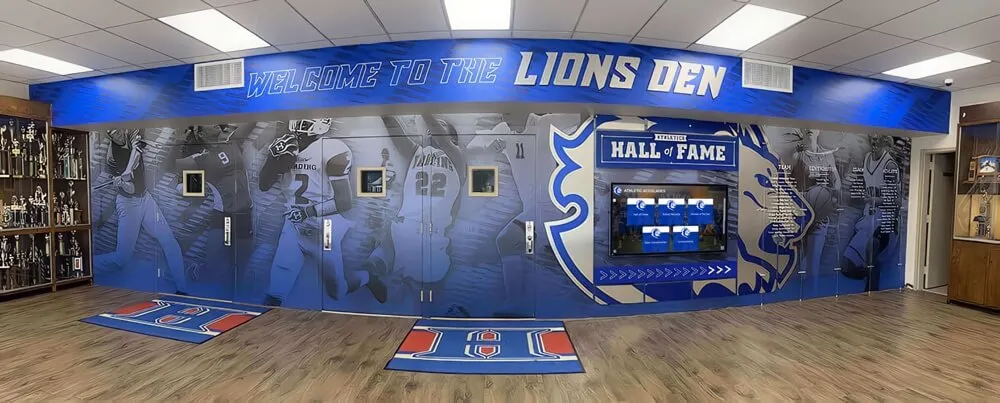
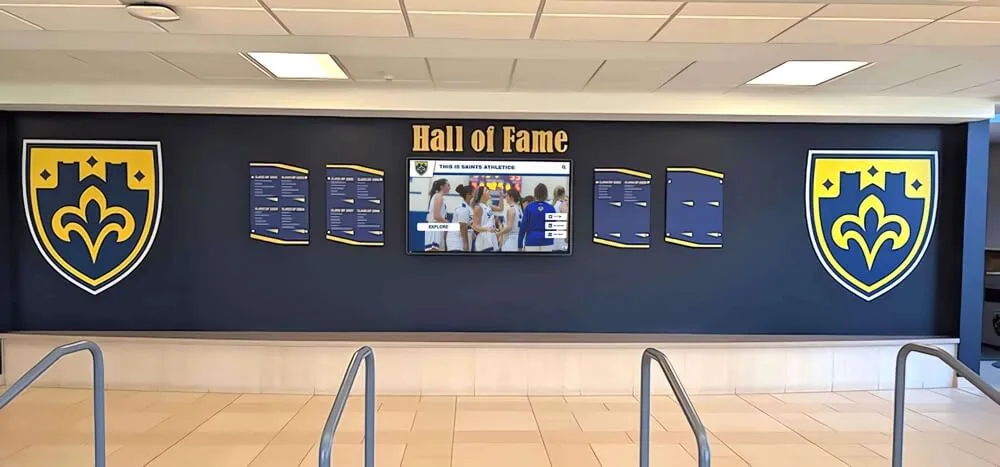
Trophy Cases and Wall Displays: Traditional trophy cases and hallway plaques represent schools’ most common permanent Semifinalist recognition approaches. These displays typically list Semifinalist names, graduation years, and perhaps photographs arranged chronologically or alphabetically.
Trophy case recognition faces several significant limitations. Physical space constraints restrict how many students can be recognized before displays become overcrowded and difficult to read. Information depth remains minimal—typically just names and years—without room for comprehensive profiles, achievement details, or personal narratives that humanize accomplishments. Updates require physical modifications including new plaques, nameplates, or printed materials that consume budgets and require installation time. Visual deterioration occurs as materials fade, yellow, or become damaged over time, ultimately requiring complete replacement.
When National Merit recognition sits among dozens of other awards in cluttered trophy cases, the exceptional nature of Semifinalist designation—achieved by only 1% of test-takers nationwide—gets lost. Visitors cannot distinguish between Semifinalist recognition and less selective achievements, undermining the special significance this honor deserves.
The Case for Enhanced Digital Recognition
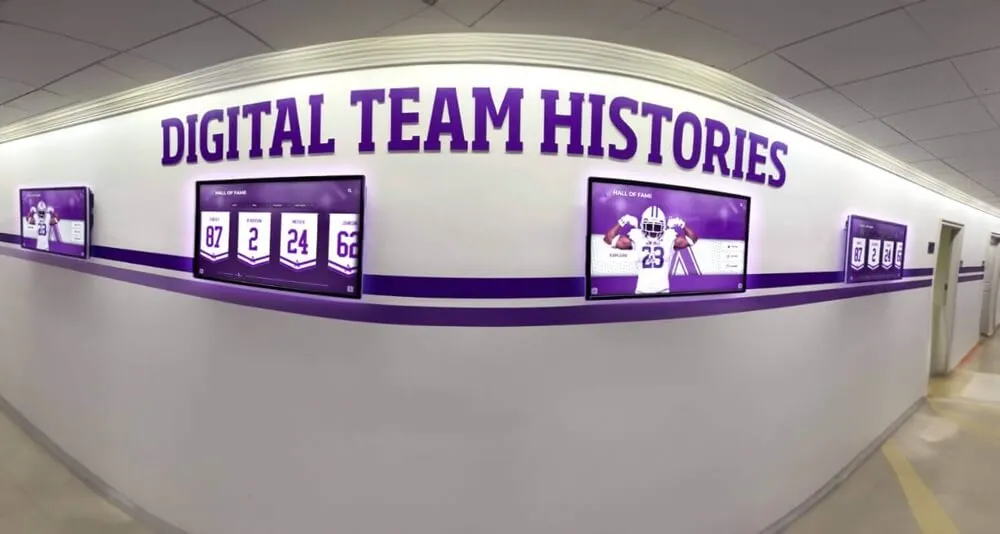
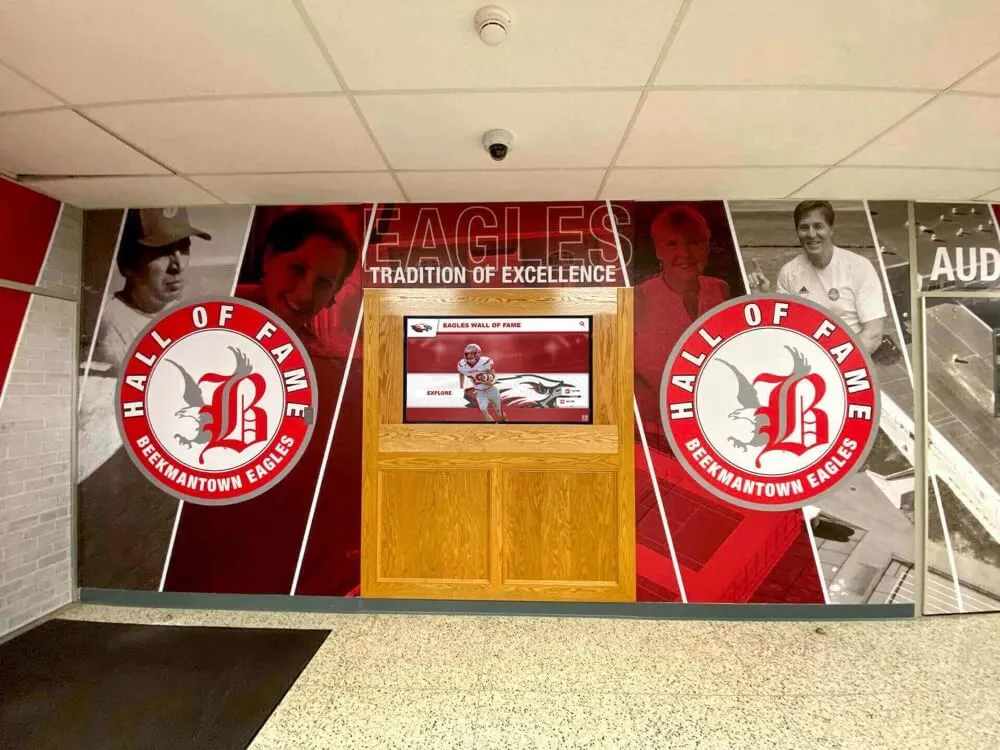
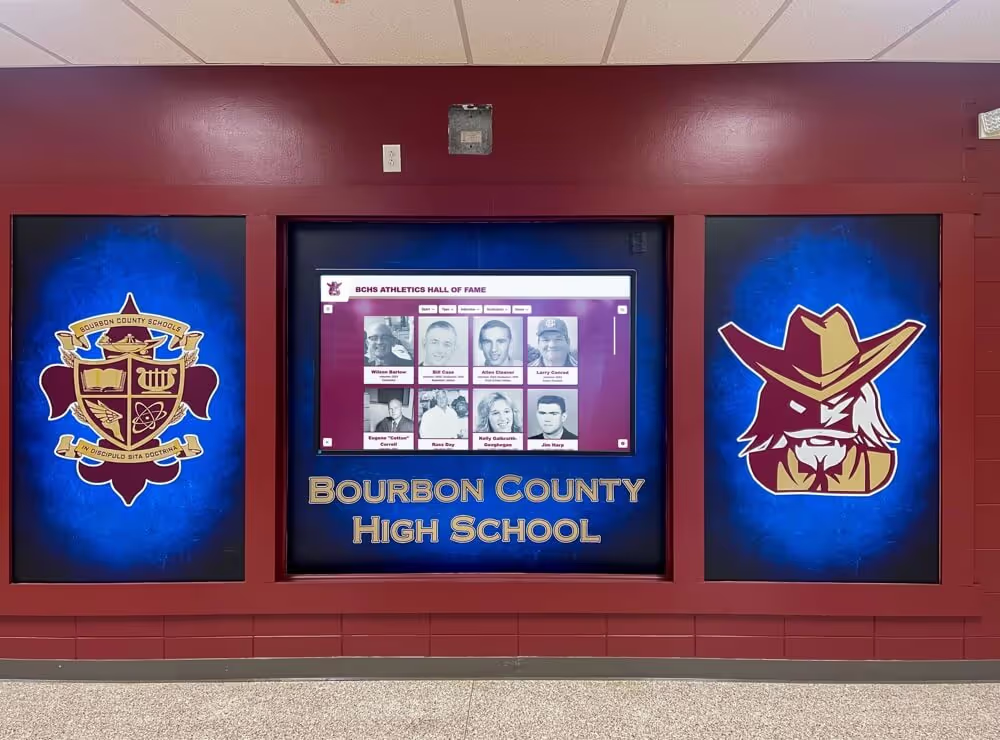
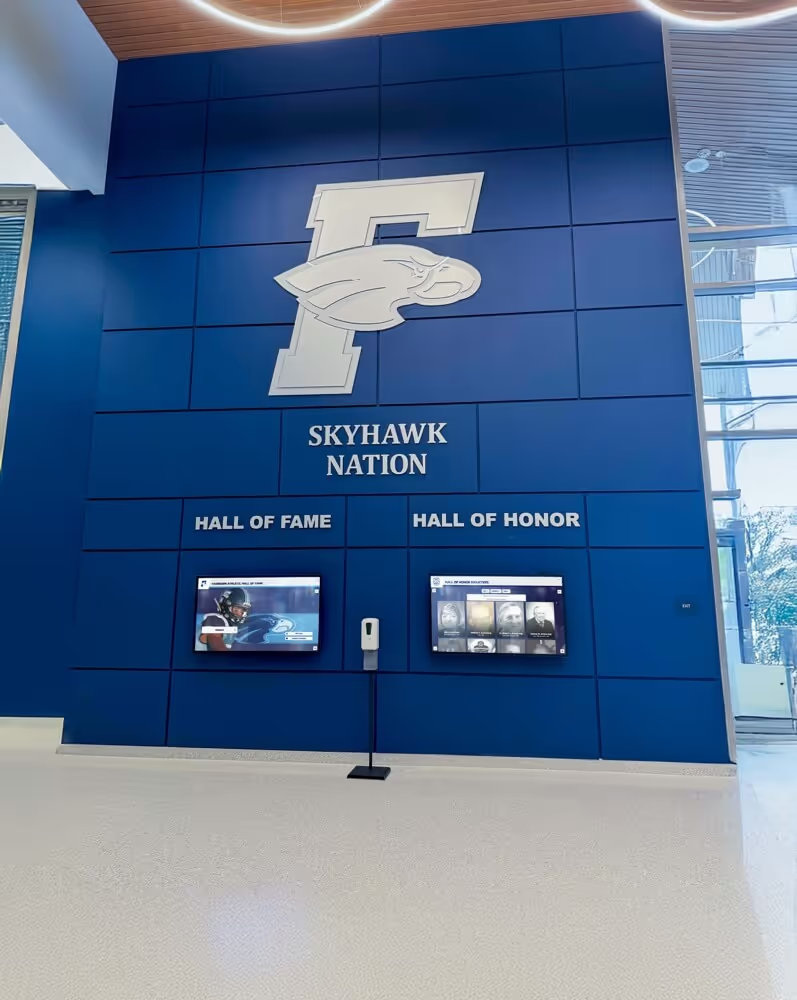
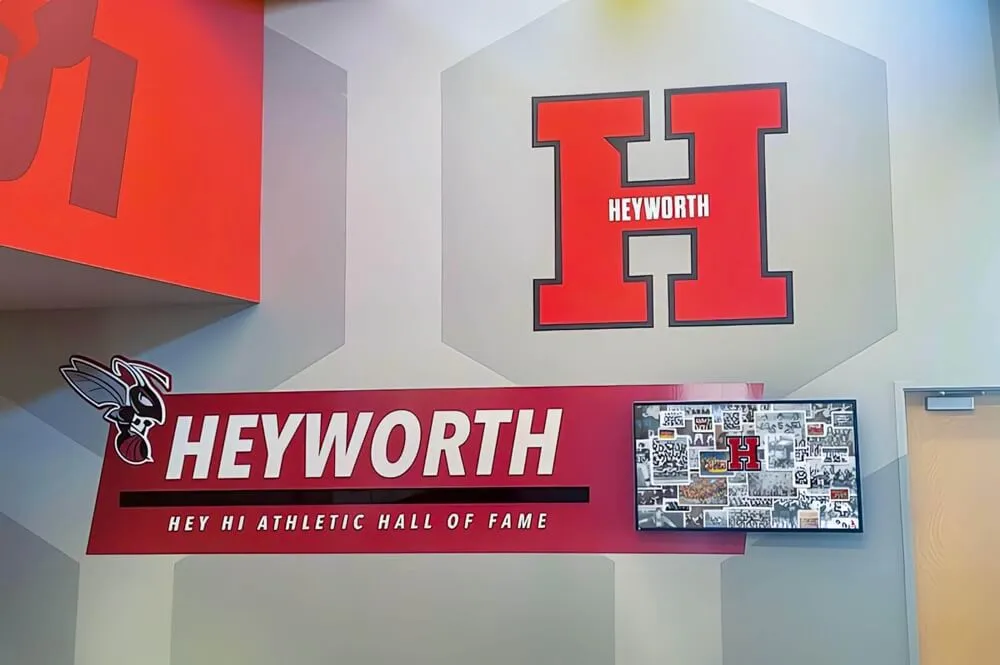
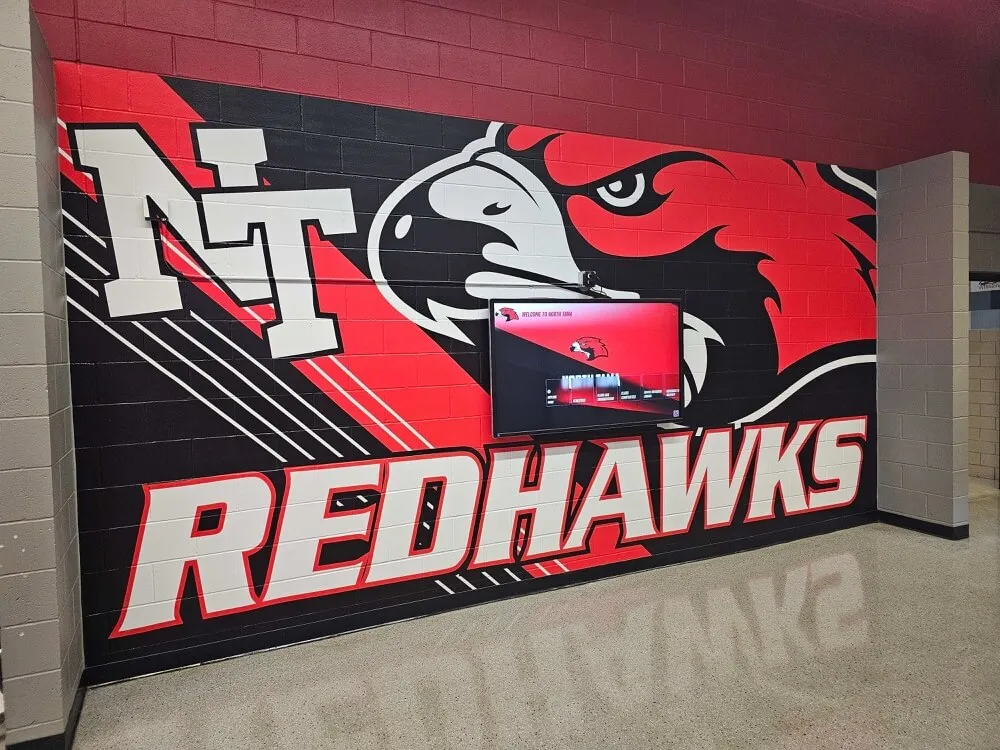
Modern digital recognition displays address every limitation of traditional approaches while introducing capabilities that fundamentally transform how schools celebrate National Merit Semifinalists and other academic achievements.
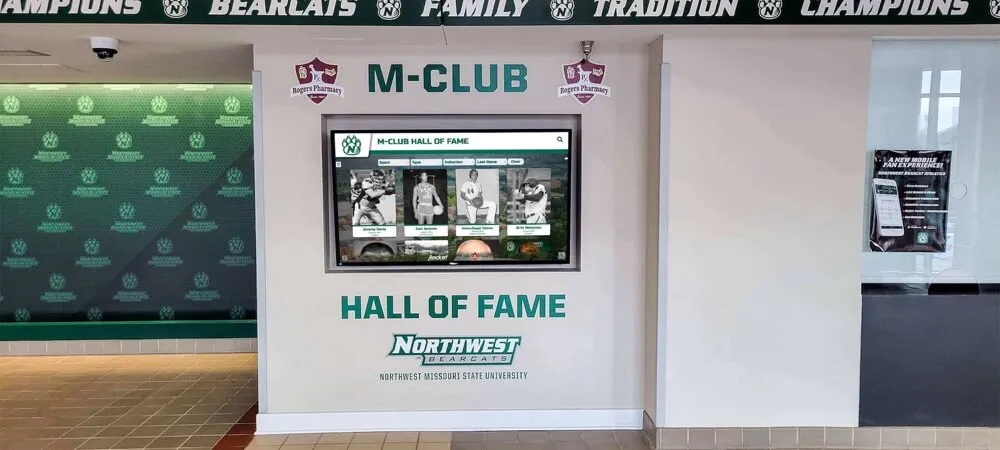
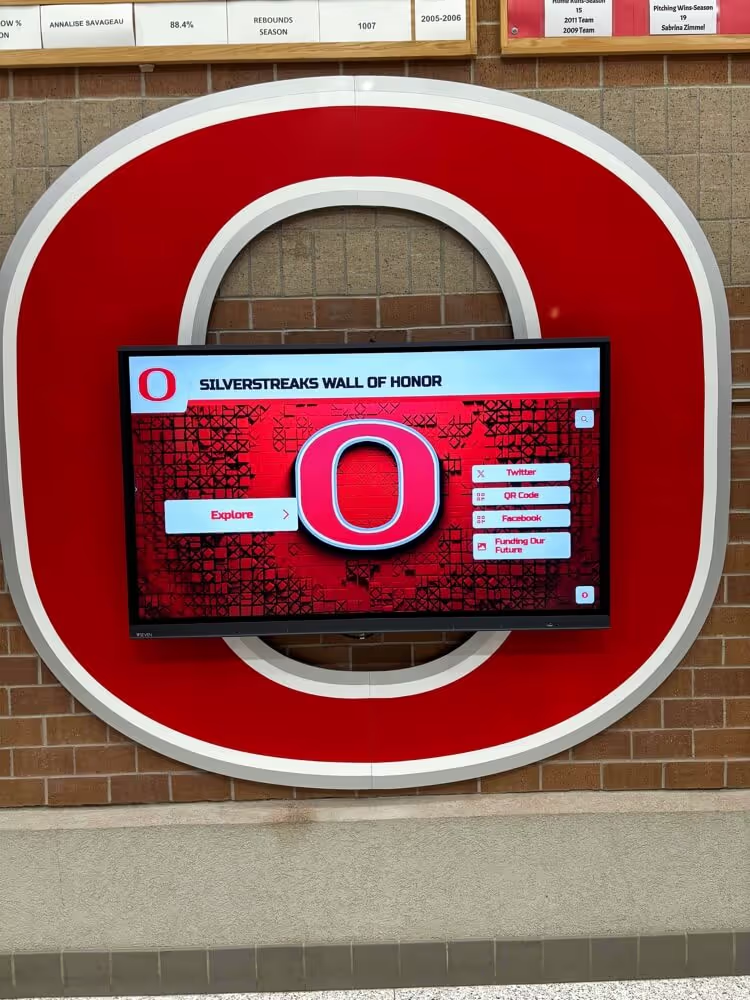
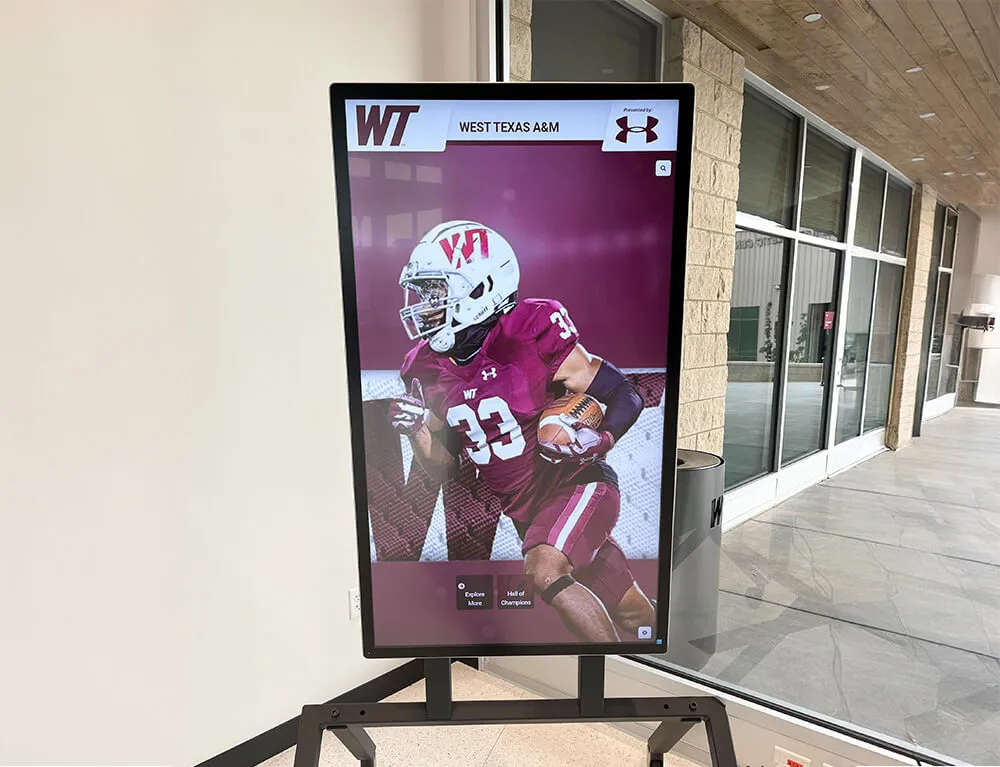
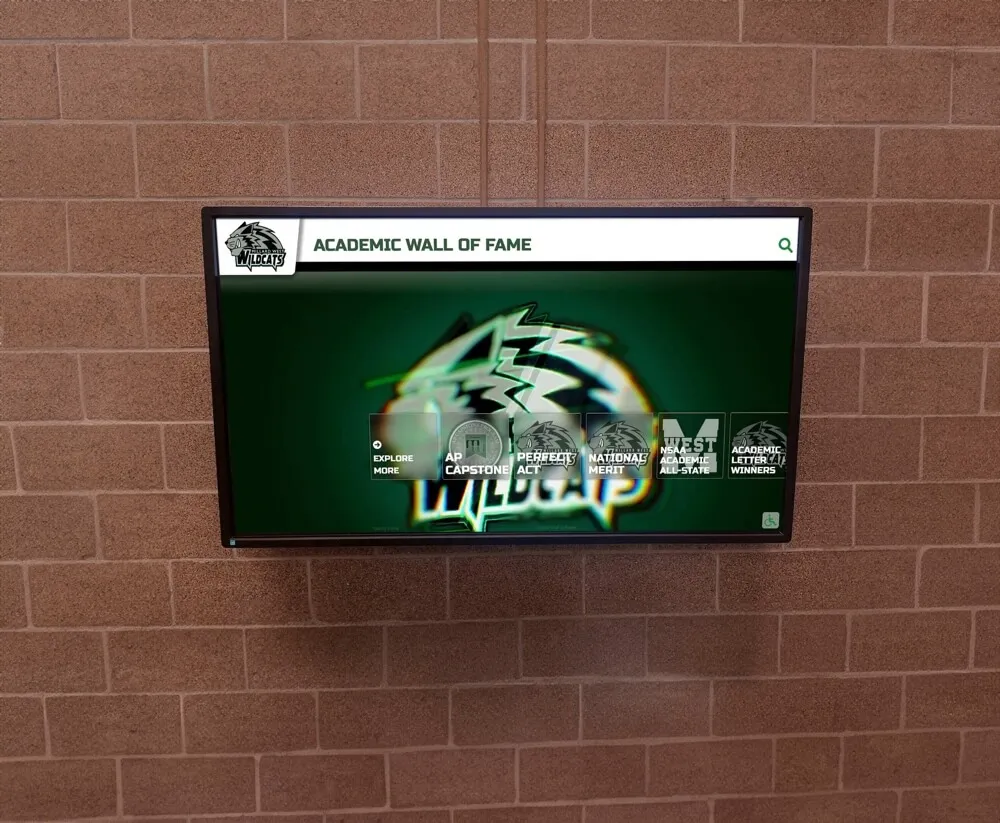
Unlimited Recognition Capacity: Digital systems eliminate physical space constraints entirely. Schools can create comprehensive profiles for every National Merit Semifinalist in institutional history—from recent designees to Semifinalists from decades past—without competing for limited wall space. Each Semifinalist receives extensive profile space impossible with traditional plaques, and adding new honorees requires no additional physical space or hardware investment.
This unlimited capacity proves particularly valuable for schools fortunate enough to produce multiple Semifinalists annually across different graduating classes. Rather than difficult decisions about which achievements fit available space, schools honor all Semifinalists comprehensively, demonstrating sustained excellence in developing academically exceptional students across generations.
Rich Multimedia Storytelling: Digital platforms transform basic name-and-year recognition into compelling narratives bringing Semifinalist achievements to life. Comprehensive profiles can include professional photography from academic events and competitions, video messages from Semifinalists sharing their journeys and advice for younger students, complete academic profiles documenting GPA, course rigor, and other achievements beyond PSAT scores, college selection information and higher education paths Semifinalists pursued, post-graduation updates showing career achievements and continued success, and quotes from students reflecting on what National Merit recognition meant to their development.
This depth creates emotional connections and provides inspirational context that plaques and brief yearbook captions cannot match. When current students explore digital profiles featuring extensive detail about Semifinalists who previously attended their school, they gain comprehensive understanding of excellence required and pathways to achieve it.
Instant Real-Time Updates: When students earn Semifinalist designation, schools can add comprehensive profiles to digital displays immediately—no waiting weeks or months for physical materials to arrive or installation to happen. This timeliness dramatically increases recognition impact by honoring achievement while excitement and attention remain high.
Solutions like Rocket Alumni Solutions provide intuitive content management systems allowing counselors or administrators to publish new recognition within hours using simple web-based interfaces. The immediate visibility reinforces to current students that Semifinalist achievement receives prompt, prominent recognition worthy of its exceptional significance.
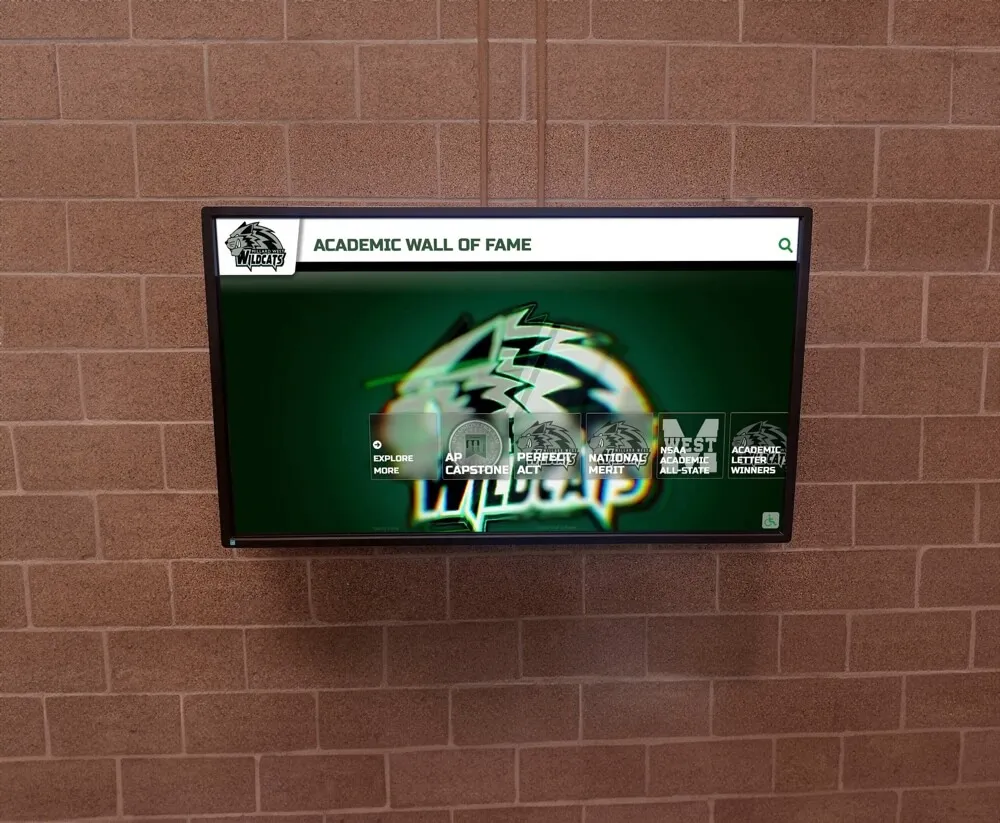
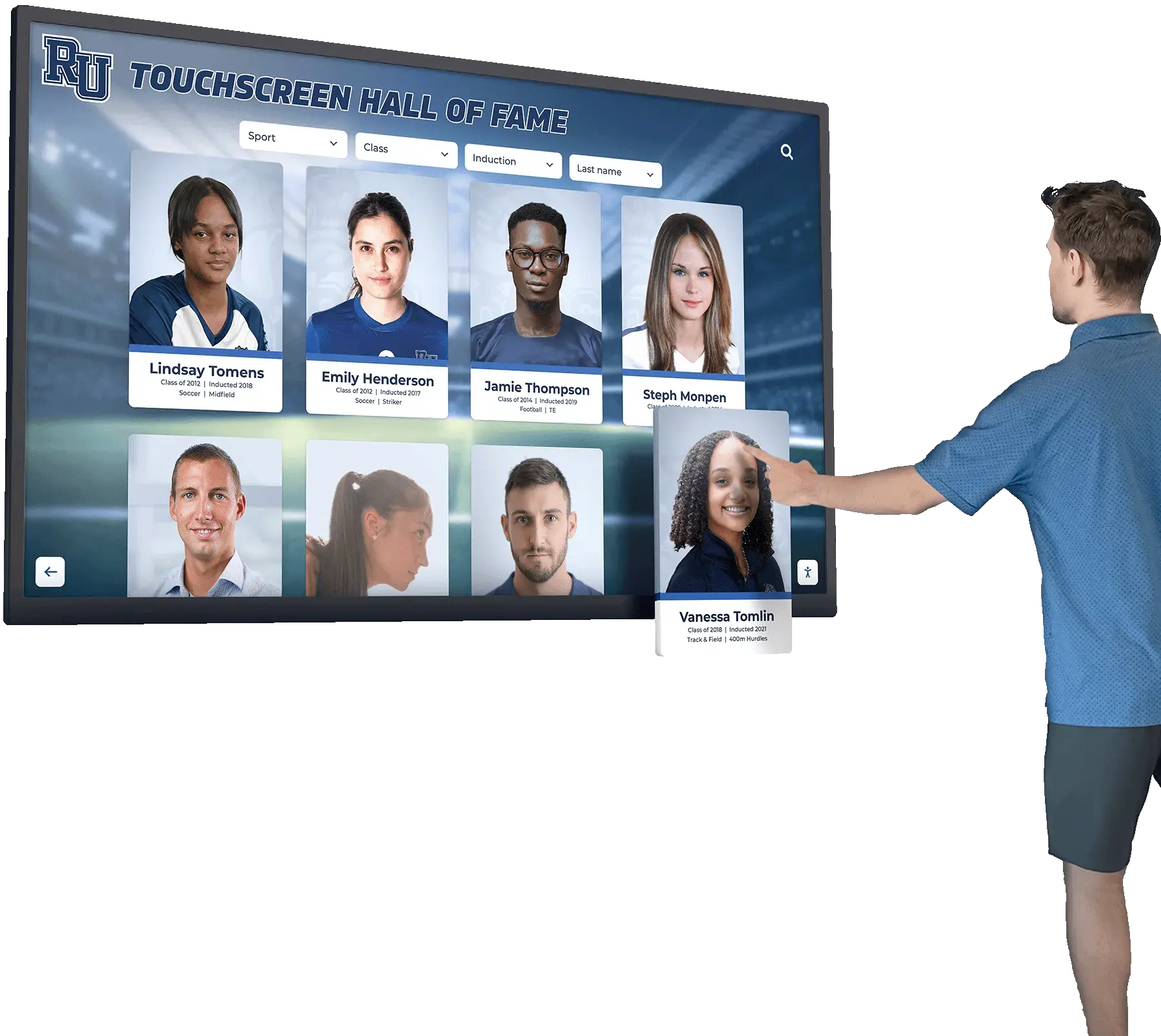
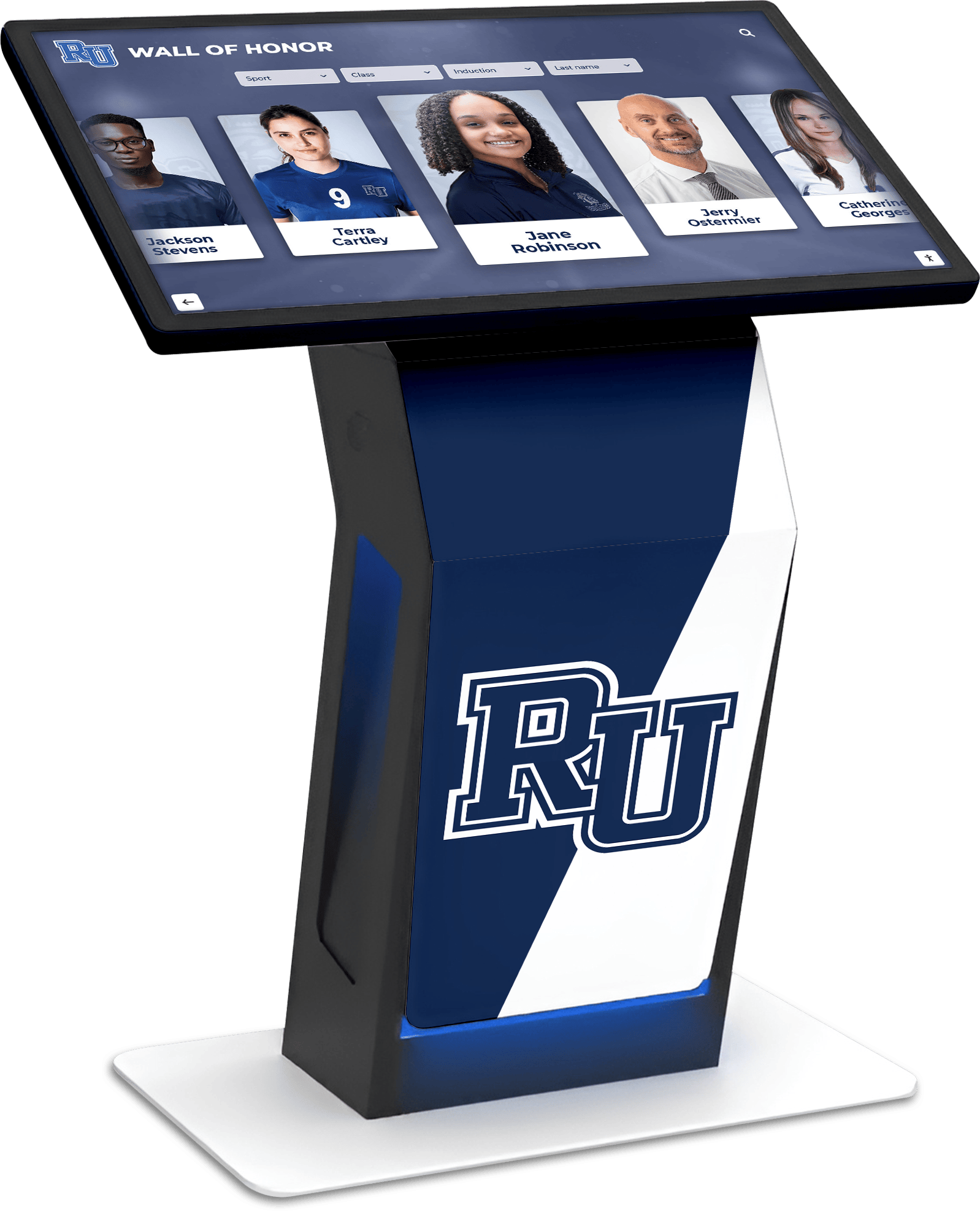
Interactive Exploration and Discovery: Touchscreen interfaces enable active exploration rather than passive viewing. Students, visitors, and community members can search for Semifinalists by name or graduating class, view comprehensive profiles with academic details and personal narratives, explore college and career progressions showing long-term success, compare achievements across different years and graduating classes, and discover connections between Semifinalists and other school achievements.
This interactivity increases engagement time dramatically. Research from similar academic recognition displays shows users typically spend 3-7 minutes exploring well-designed digital content compared to brief glances at traditional trophy cases—an order of magnitude increase in engagement that translates to enhanced inspiration and deeper connections with recognized achievements.
Accessibility Beyond Campus: Digital recognition extends beyond physical display locations through web-based versions of content accessible from anywhere. National Merit alumni can share their recognition with children and grandchildren from any location, college recruiters can research school academic excellence before campus visits, prospective families can explore scholarly achievement during decision-making, and community members worldwide can celebrate achievement regardless of physical proximity to school facilities.
This accessibility multiplies recognition impact far beyond what traditional physical displays can achieve, ensuring that Semifinalist achievements remain visible and accessible to global audiences.
Implementing Comprehensive Academic Recognition Programs
National Merit Semifinalist recognition delivers maximum value when integrated within broader academic recognition ecosystems celebrating diverse excellence rather than existing as isolated displays.
Connecting Multiple Achievement Levels: Rather than creating standalone National Merit displays, integrate Semifinalist recognition within comprehensive academic achievement systems that showcase honor roll achievements, academic competition successes, AP Scholar designations, valedictorians and salutatorians, departmental academic awards, and National Honor Society inductees.
This integration creates complete pictures of academic excellence demonstrating how National Merit Semifinalist recognition represents the pinnacle of a school consistently producing high-level scholars across multiple recognition tiers. Visitors understand that Semifinalist achievement caps broader cultures of academic excellence rather than representing isolated successes.

Balancing Academic and Athletic Recognition: Many schools have historically provided more prominent recognition to athletic achievement than academic accomplishment, creating cultural imbalances that undervalue intellectual excellence. Implementing equally prominent recognition for National Merit Semifinalists and other academic honorees alongside athletic halls of fame communicates that institutions value both physical and intellectual excellence at the highest levels.
When prospective families tour campuses and encounter academic walls of honor receiving the same prominent placement and sophisticated presentation as athletic recognition, they understand that schools genuinely celebrate comprehensive excellence across all achievement domains.
Creating Inspirational Environments: Leverage National Merit recognition strategically to support current student development. Share Semifinalists’ study strategies and preparation approaches, document course-taking patterns and academic rigor Semifinalists pursued, provide advice from past Semifinalists to current students preparing for PSAT, highlight that many Semifinalists developed gradually rather than always being top students, and demonstrate multiple pathways to academic excellence beyond single test scores.
Recognition becomes not just celebration of past achievement but inspiration and roadmap for current students pursuing academic excellence at the highest levels. Comprehensive digital profiles allow this depth of inspirational content impossible through traditional plaques listing only names and years.
Best Practices for National Merit Recognition Programs
Schools successfully implementing National Merit recognition share common approaches that maximize impact while maintaining sustainable programs.
Celebrate Immediately Upon Notification: National Merit announces Semifinalists in early September, creating perfect timing for recognition during fall events including back-to-school nights where parents attend, fall academic awards ceremonies, and homecoming celebrations with high community visibility. Immediate recognition capitalizes on timely community interest and communicates that the school values these achievements at the highest levels.
Schools should prepare recognition protocols in advance so Semifinalist announcements trigger immediate systematic responses including press releases to local media, website feature stories and social media announcements, recognition during upcoming school events, and digital display profile creation for permanent recognition.
Contextualize the Achievement’s Selectivity: Ensure recognition communicates that National Merit Semifinalist designation represents achievement by only the top 1% of test-takers nationwide, not just another academic honor. Include statistics about program selectivity, information about scholarship opportunities Semifinalist status creates, explanations of the rigorous advancement process toward Finalist status, and context about colleges’ high regard for this distinction.
This emphasis helps students, families, and community members understand achievement significance while motivating aspiring students to pursue this elite recognition themselves.
Follow Semifinalists Through Finalist and Scholar Designations: Update recognition as Semifinalists advance to Finalist status in February and when scholarship winners are announced in spring. This ongoing recognition demonstrates sustained institutional interest in students’ success beyond initial September announcements while celebrating additional milestones as students achieve them.
Digital recognition systems make these updates simple through content management interfaces requiring only minutes to reflect new statuses, ensuring displays remain current without extensive administrative burden.
Feature Long-Term Outcomes: When possible, maintain connections with National Merit alumni documenting their collegiate experiences, scholarship impacts, career achievements, and long-term success. Profiles showing Semifinalists who graduated decades ago and achieved remarkable careers demonstrate lasting impact of academic excellence and inspire current students by connecting present achievement to future opportunity.
Alumni engagement strengthened through ongoing recognition often results in former students sharing their experiences with current students, providing mentorship, and maintaining connections with their alma maters throughout their careers.
Preparing Students for National Merit Success
Schools committed to helping students achieve National Merit recognition can implement strategic programs supporting preparation and maximizing qualification opportunities.
PSAT Preparation Programs and Strategies
While natural academic ability matters, strategic preparation significantly impacts PSAT performance and National Merit qualification chances.
Establishing School-Wide Preparation Programs: Schools can support student preparation through practice test administrations simulating actual testing conditions, curriculum alignment ensuring coursework develops tested skills, test-taking strategy instruction teaching time management and question approaches, and review sessions targeting commonly tested content and question types.
These preparation programs prove particularly valuable for students from backgrounds where families may lack experience with standardized testing, ensuring all students receive support to demonstrate their full academic potential regardless of external preparation resources.
Sophomore PSAT as Preparation Opportunity: Encouraging sophomores to take the PSAT provides invaluable practice under actual testing conditions, familiarization with question formats and timing constraints, diagnostic information identifying strengths and weaknesses, and reduced pressure since sophomore scores don’t affect National Merit eligibility.
Students experiencing the PSAT as sophomores enter junior year testing with clear understanding of what to expect, reducing anxiety and enabling focused preparation targeting specific improvement areas identified through sophomore performance.
Targeted Junior Preparation: For students whose sophomore PSAT scores suggest potential National Merit qualification, schools can offer enhanced preparation including summer preparation programs before junior year, small group instruction for students near state cutoff projections, individualized preparation plans addressing specific weaknesses, and regular practice testing monitoring progress.
This targeted support helps students who demonstrate potential maximize their performance during the qualifying junior-year administration.
Creating Cultures That Value Academic Testing Achievement
Beyond tactical preparation, schools create environments where National Merit and similar academic achievements receive recognition comparable to athletic accomplishments.
Visible Celebration of Academic Excellence: When schools celebrate National Merit Semifinalists with the same enthusiasm, visibility, and prestige they provide athletic champions, students internalize that intellectual achievement matters as much as physical accomplishment. Prominent academic recognition displays in main entrances and high-traffic areas, celebratory assemblies honoring Semifinalists with full school attendance, school-wide announcements treating academic achievements as newsworthy, and administrative enthusiasm matching that shown for athletic accomplishments all communicate clear institutional values.
This visible celebration creates cultural expectations that academic achievement deserves pursuit and recognition, motivating students across all grade levels to engage seriously with academic opportunities including National Merit preparation.
Peer Recognition and Academic Aspiration: When accomplished upperclassmen wearing academic honor regalia at graduation, featured in comprehensive digital recognition, and celebrated throughout communities become visible role models, younger students develop academic aspirations matching athletic ambitions. Making academic achievement cool rather than only athletic success reshapes school culture toward valuing comprehensive excellence.
Schools implementing sophisticated digital recognition systems showcasing current and historical National Merit Semifinalists create constant reminders that intellectual achievement matters deeply and deserves prominent celebration.
Supporting Students Through the Advancement Process
Once students achieve Semifinalist status, schools play crucial roles supporting advancement to Finalist designation and scholarship consideration.
Application Assistance: Counselors and administrators should provide systematic support including detailed timeline explanations ensuring students understand requirements, essay review and feedback improving submission quality, transcript processing assistance ensuring timely documentation, SAT scheduling guidance and score reporting coordination, and school endorsement processing completing required official documentation.
This structured support ensures administrative requirements don’t become obstacles preventing Semifinalists from advancing to Finalist status. The 94% advancement rate can increase even higher with proactive school support managing procedural requirements.
Connecting Students with Scholarship Resources: Beyond National Merit Scholarships specifically, Semifinalist and Finalist designations create eligibility for numerous additional scholarship opportunities from colleges directly, outside organizations and foundations, and corporate sponsors seeking to support exceptional students. Schools should help students identify full-tuition scholarship programs for National Merit Finalists, merit aid packages enhanced by Semifinalist/Finalist status, outside scholarships prioritizing or requiring National Merit recognition, and strategic college application approaches maximizing scholarship opportunities.
This broader support ensures students benefit maximally from National Merit recognition beyond official program scholarships, potentially transforming college affordability through merit-based financial aid.
Conclusion: Honoring Intellectual Excellence at the Highest Levels
National Merit Semifinalist recognition represents achievement by only the top 1% of America’s high school students—an elite distinction validating years of academic dedication, intellectual curiosity, and scholarly commitment. Students earning this prestigious honor have demonstrated exceptional standardized testing performance, sustained academic excellence, and potential for continued achievement at the nation’s most selective colleges and universities.
For schools producing National Merit Semifinalists, these accomplishments represent validation of educational quality, curriculum rigor, teaching excellence, and institutional commitment to developing intellectually exceptional students. Properly recognizing Semifinalists honors individual achievement while demonstrating to broader communities that schools develop scholars competing successfully at the highest national levels.

Modern digital recognition displays transform how schools celebrate National Merit Semifinalists and other academic achievements. By combining unlimited recognition capacity with rich multimedia storytelling, intuitive interactivity, and sophisticated content management, these platforms create lasting value across multiple dimensions—honoring individual achievement with depth impossible through traditional plaques, validating institutional excellence in developing exceptional scholars, inspiring current students by making elite achievement visible and aspirational, strengthening alumni connections through ongoing recognition, demonstrating academic commitment to prospective families, and preserving institutional history for future generations.
The transition from brief trophy case plaques to comprehensive interactive recognition represents more than technological upgrade—it reflects evolved understanding that academic achievement deserves recognition matching its significance. Every National Merit Semifinalist featured in digital displays becomes part of an ongoing story about dedication, intellectual curiosity, and excellence that motivates current students, enhances recruiting, and strengthens institutional culture around academic achievement.
Schools fortunate enough to produce National Merit Semifinalists possess remarkable achievements deserving proper celebration. Whether your institution produces multiple Semifinalists annually or celebrates occasional exceptional scholars, these achievements represent validation of educational excellence that merits prominent, comprehensive recognition.
Begin planning today how to properly honor your National Merit Semifinalists. Research your institution’s history documenting past Semifinalists and establishing recognition traditions. Establish systematic processes for celebrating current and future Semifinalists immediately upon designation. Evaluate digital recognition platforms selecting solutions designed specifically for academic recognition needs. Engage stakeholders including administrators, counselors, teachers, and families building broad support for recognition investment. And commit to sustainable workflows ensuring recognition remains current and relevant for decades to come.
Solutions like Rocket Alumni Solutions provide comprehensive platforms combining proven technology, intuitive management, and dedicated support specifically designed for schools celebrating academic achievement at all levels. From initial planning through years of ongoing use, the right technology partner transforms recognition from administrative task into celebration centerpiece that truly honors and inspires academic excellence.
Your National Merit Semifinalists achieved recognition placing them among America’s top 1% of students through years of dedication to intellectual excellence—they deserve recognition that matches their commitment and inspires the next generation of scholars from your institution.