



Intent: research
The National Honor Society, established in 1921, serves more than one million students in all 50 states and many international locations. NHS membership represents a distinction that extends far beyond academic grades alone—students must demonstrate sustained excellence across four pillars: scholarship, service, leadership, and character. Selection involves rigorous application processes, faculty review panels, and ongoing membership requirements that distinguish NHS from purely GPA-based recognition programs.
According to the National Association of Secondary School Principals, which oversees NHS operations, member students complete an average of 175 service hours during their NHS tenure, demonstrate leadership in multiple school or community organizations, and maintain academic performance placing them within the top 15% of their classes. These substantial achievements warrant recognition approaches that match the significance of NHS membership while inspiring younger students to pursue the scholarship, service, leadership, and character development that NHS selection requires.
This research guide provides actionable data for schools seeking to implement or enhance National Honor Society recognition programs, drawn from implementation surveys, engagement analytics, and effectiveness assessments across diverse institutional contexts.
Research Methodology and Sample Composition
Data Collection Framework
This analysis synthesizes three primary data sources collected between January 2026 and October 2026:
Implementation Survey Data: 312 secondary schools across 42 U.S. states that deployed digital recognition systems specifically featuring National Honor Society members. Sample composition included traditional public high schools (187 institutions, 59.9%), private/independent schools (78 institutions, 25.0%), charter schools (32 institutions, 10.3%), and parochial schools (15 institutions, 4.8%).
School Size Distribution:
- Small (enrollment under 500): 89 schools (28.5%)
- Medium (enrollment 500-1,200): 132 schools (42.3%)
- Large (enrollment 1,200-2,500): 67 schools (21.5%)
- Very Large (enrollment over 2,500): 24 schools (7.7%)
Geographic Distribution: Schools participating in implementation surveys included representatives from suburban contexts (47.1%), urban settings (31.4%), and rural communities (21.5%), providing cross-sectional insight into recognition approaches across diverse institutional environments.
Engagement Analytics: Quantitative usage data from 143 schools using Rocket Alumni Solutions platforms with analytics capabilities enabled, tracking interaction patterns, session duration, search behavior, and content engagement for NHS recognition displays over minimum 12-month measurement periods.
Effectiveness Assessment: Follow-up surveys conducted 18-24 months post-implementation with 87 schools measuring perceived impact on NHS recruitment, member satisfaction, school culture, and community engagement related to digital NHS recognition programs.
Survey respondents included NHS advisors (43.2%), principals or assistant principals (28.2%), guidance counselors (17.6%), and technology coordinators (11.0%) responsible for student recognition program implementation and management.
Current State: How Schools Recognize NHS Members
Traditional NHS Recognition Approaches
Before examining digital recognition data, understanding baseline traditional approaches provides context for comparative effectiveness and engagement patterns.
Recognition Methods Currently Employed: Schools surveyed reported using multiple recognition approaches simultaneously, with traditional methods including:
- Paper certificates provided at induction ceremonies: 94.6% of schools
- Names listed in school newsletters or announcements: 87.2% of schools
- Bulletin board displays in guidance offices or hallways: 71.2% of schools
- Engraved plaques mounted in lobbies or academic wings: 43.9% of schools
- Inclusion in yearbook or school publications: 89.7% of schools
- Recognition during graduation ceremonies: 78.5% of schools
While these traditional approaches provide formal acknowledgment, NHS advisors report significant limitations including limited visibility (bulletin boards in low-traffic areas receive minimal attention), ephemeral recognition (newsletter mentions disappear quickly as new content replaces older announcements), space constraints (engraved plaques eventually fill, requiring difficult decisions about whose names to display), minimal context (simple name lists provide no information about member contributions or achievements), labor-intensive updates (manual processes for bulletin boards and publications consume 4-8 hours per grading period), and inability to showcase ongoing NHS activities (static displays cannot reflect current service projects or leadership initiatives).
Transition to Digital NHS Recognition
Schools implementing digital recognition systems for NHS members report several primary motivations driving investment:
Space Limitations: 67.3% of schools cite physical display capacity constraints as a primary driver, particularly institutions with long NHS chapter histories where decades of members cannot be accommodated on finite wall space available for traditional plaques or bulletin boards.
Recognition Quality Concerns: 58.7% of schools report dissatisfaction with existing recognition’s perceived meaningfulness, noting that minimal acknowledgment feels inadequate given NHS selection rigor and member commitment requirements.
Desire for Historical Archives: 51.6% of schools want to document NHS membership across multiple decades, creating institutional memory that celebrates chapter history while honoring alumni who may return to campus and rediscover their NHS recognition years after graduation.
Need for Dynamic Content: 49.4% of schools seek ability to update NHS recognition regularly, reflecting current activities, service projects, and member achievements throughout the year rather than limiting recognition to static annual updates.
Multi-Purpose Recognition Systems: 43.3% of schools implement comprehensive recognition platforms serving multiple purposes—NHS, honor roll, athletic achievements, arts recognition, and alumni engagement—making digital investment more cost-effective through consolidated systems serving diverse recognition needs.
Implementation Approaches and Configuration Options
Display Location Strategies
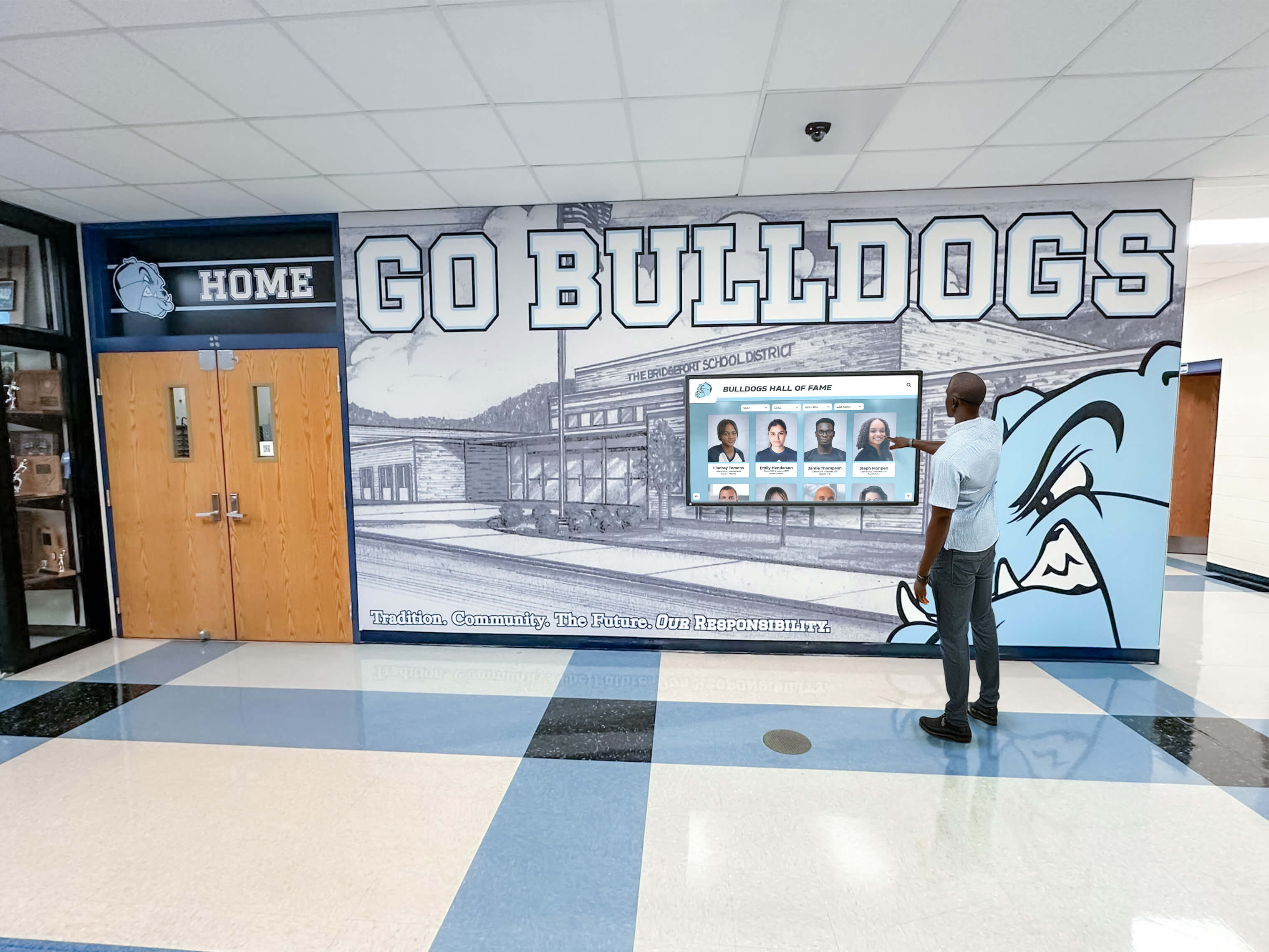
Strategic placement significantly influences NHS recognition visibility and effectiveness. Schools implementing digital displays report choosing locations based on traffic patterns, target audiences, and contextual relevance:
Primary NHS Recognition Display Locations:
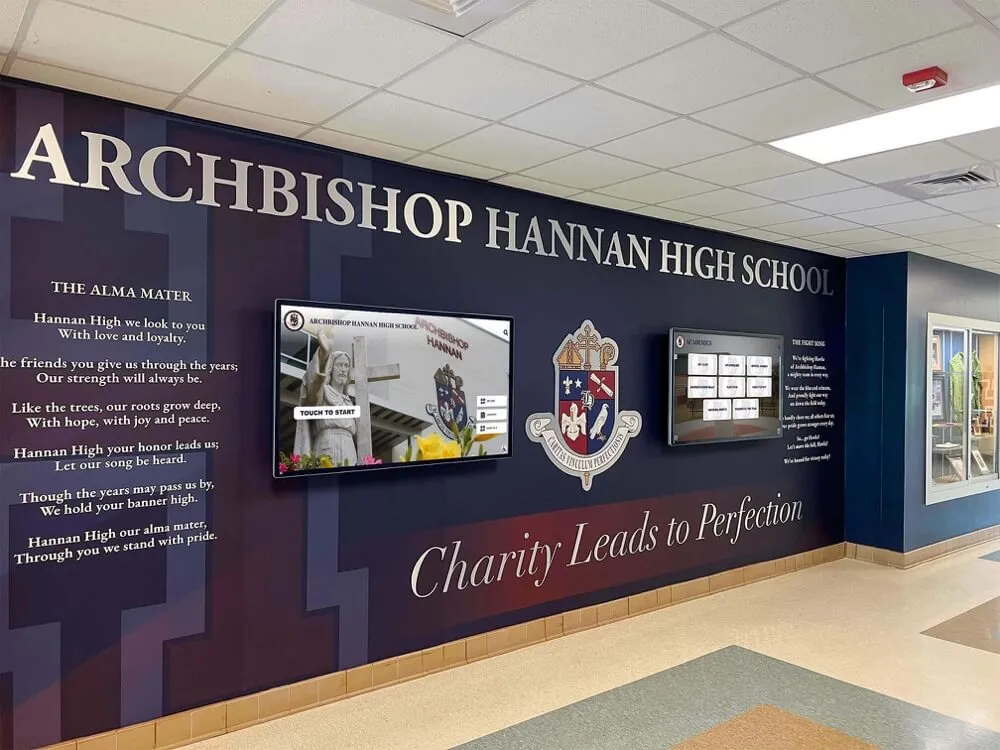
- Main entrance lobbies: 52.6% of schools (highest visibility for visitors, families, prospective students)
- Guidance counseling suites: 38.8% of schools (contextually relevant for college preparation discussions)
- Academic wings or honor hallways: 34.3% of schools (appropriate setting among other academic recognition)
- Libraries or media centers: 27.2% of schools (scholarly environment matches NHS academic emphasis)
- Cafeterias or student commons: 18.9% of schools (high traffic ensures broad student visibility)
Schools with resources for multiple display locations report distributing NHS content across 2-3 strategic placements rather than concentrating recognition in single areas, ensuring diverse student populations encounter recognition during normal school day activities regardless of individual schedules or campus navigation patterns.
Visibility Impact Analysis: Schools with displays in main entrance locations report 67% higher estimated daily viewership compared to displays in guidance offices or low-traffic locations, based on school-reported traffic pattern estimates. However, guidance suite placements receive 2.3x higher engagement per viewer as students in those locations actively explore content during counseling appointments when they have dedicated time and interest in academic planning topics.
Content Structure and Information Architecture
Schools structure NHS recognition content through various organizational approaches, each with distinct advantages for different institutional priorities:
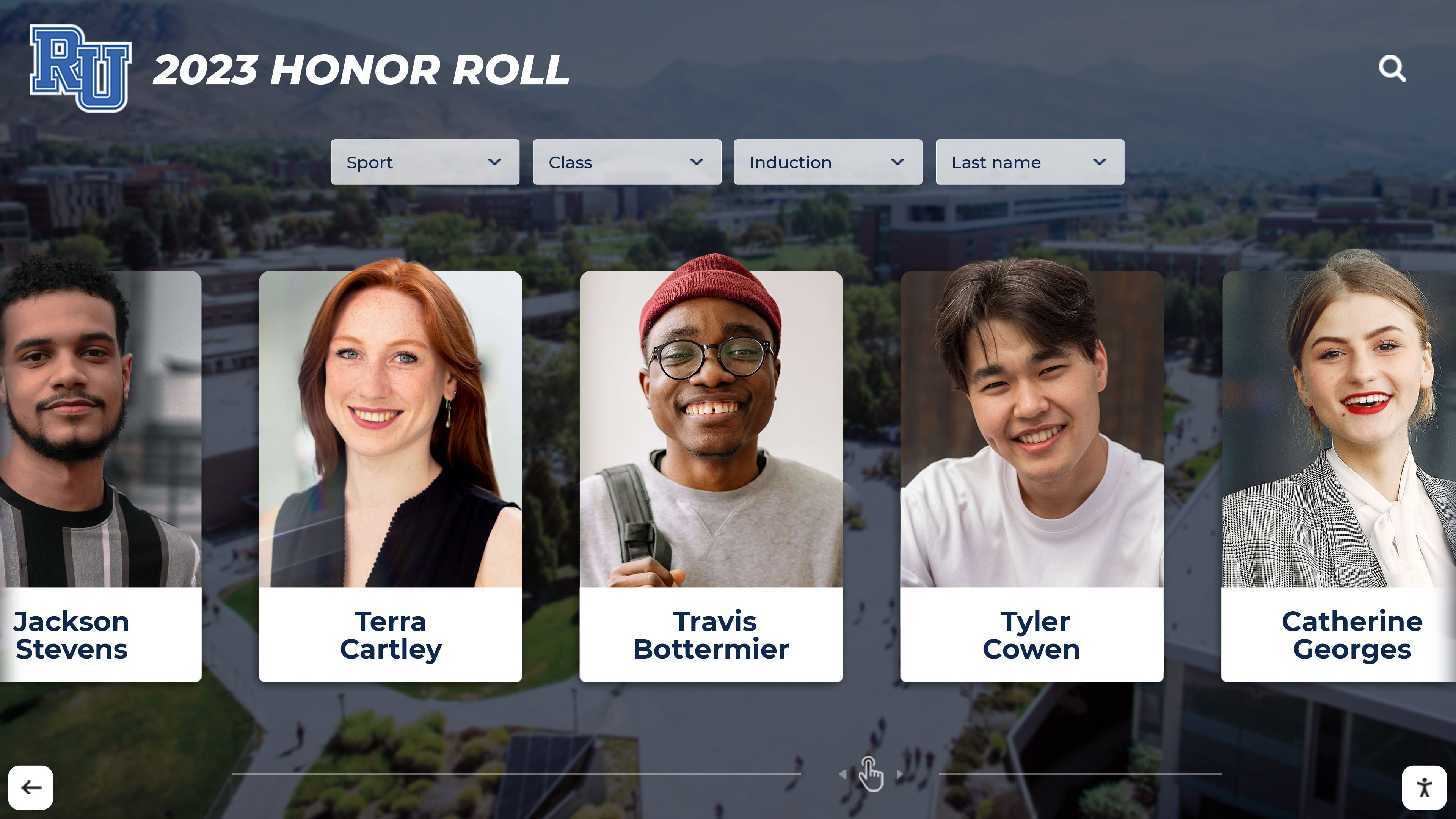
Individual Member Profiles (Most Common Approach): 78.4% of schools create individual profile entries for each NHS member including photographs, graduation year, academic interests, leadership roles, and service contributions. This comprehensive approach enables detailed recognition celebrating individual members’ unique contributions while providing younger students with concrete achievement examples.
Profile content typically includes:
- Professional photograph or school portrait
- Student name and graduation year
- NHS induction date and chapter role (if applicable)
- Academic interests or intended college major
- Leadership positions held during NHS membership
- Service projects or community contributions
- Personal statement or advice for younger students
- College destination (for graduated members)
Class or Cohort Organization: 43.7% of schools organize NHS recognition by induction year or graduating class, grouping members together to emphasize cohort identity and peer connections. This approach works particularly well for schools with large NHS chapters where individual profile browsing might overwhelm viewers, enabling users to explore specific graduating classes or induction years efficiently.
Service Project Documentation: 31.7% of schools supplement individual member profiles with dedicated content highlighting major NHS service initiatives, creating narratives about collective chapter impact alongside individual recognition. This dual approach honors both personal achievement and collaborative service demonstrating NHS commitment to community contribution.
Historical Archives: 47.8% of schools include historical NHS members from previous decades alongside current recognition, creating comprehensive chapter histories. Digital platforms’ unlimited capacity makes this archival approach feasible without physical space constraints that limit traditional displays to recent years only.
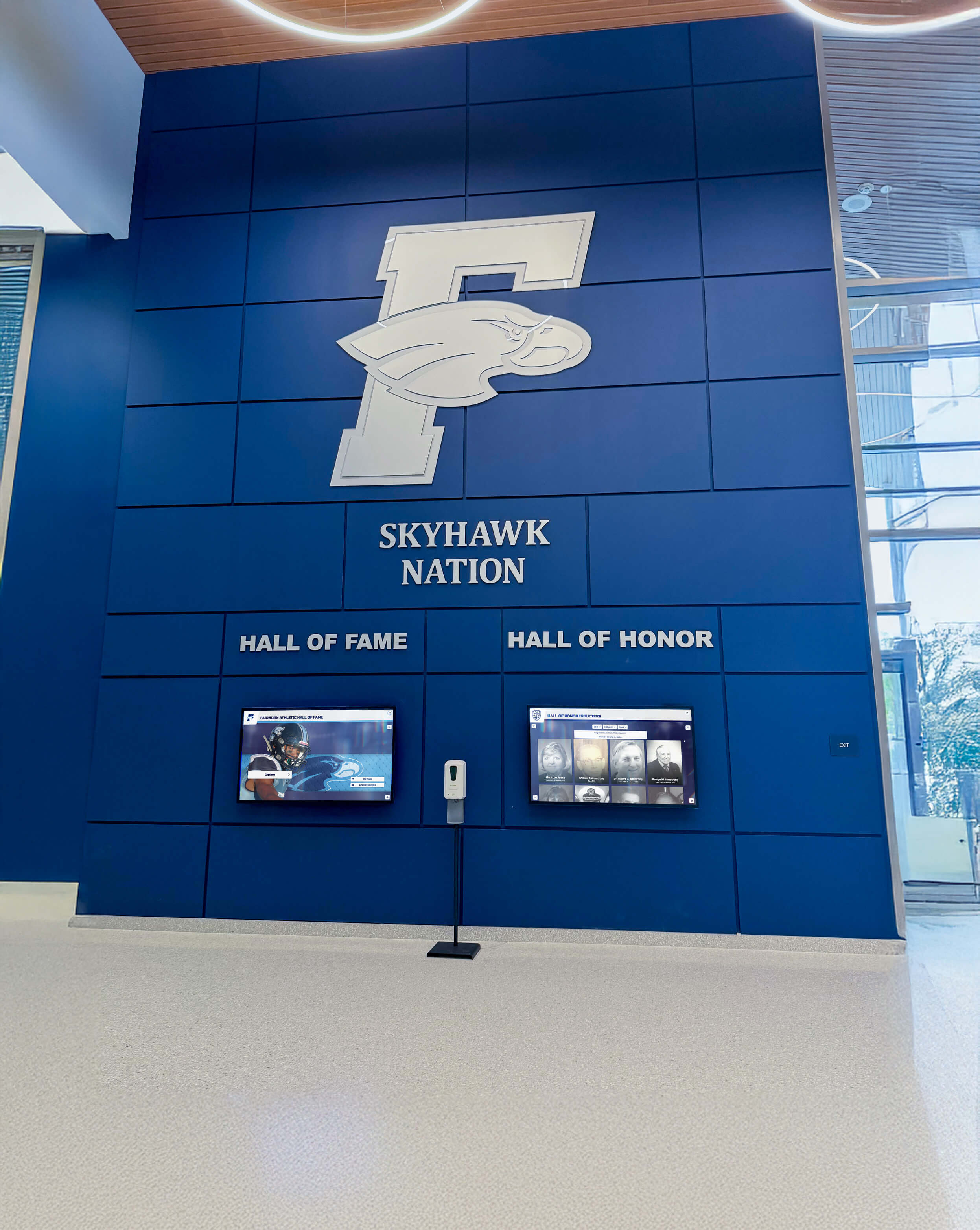
Integration with Broader Recognition Programs
NHS recognition programs achieve maximum effectiveness when integrated within comprehensive systems celebrating diverse student achievements rather than existing as isolated displays:
Integrated Recognition Platform Adoption: 64.7% of schools implementing NHS digital recognition use platforms that also feature honor roll students, AP Scholars, athletic achievements, arts recognition, and other distinctions. This comprehensive approach creates more substantial installations commanding greater attention while improving cost-effectiveness by consolidating multiple recognition purposes into single technology investments.
Schools report that integrated platforms provide several advantages including unified user experience (consistent navigation and design across all recognition categories), simplified content management (single administrative interface for all recognition types), improved discoverability (students exploring athletic recognition discover NHS content through browsing, extending visibility), comprehensive student stories (displaying all achievements for multi-faceted students rather than fragmenting recognition across separate systems), and stronger budget justification (serving multiple stakeholder groups through consolidated investment).
Separate NHS-Specific Displays: 35.3% of schools maintain NHS recognition on dedicated displays separate from other recognition programs, creating focused emphasis on NHS membership’s distinctive requirements and four-pillar selection framework. Schools choosing this approach typically have strong established NHS traditions where separate recognition reinforces chapter identity and prestige.
Engagement Patterns and Usage Analytics
Quantitative Interaction Data
Analytics from 143 schools with tracking-enabled systems provide detailed insight into how students, families, and community members engage with NHS digital recognition:
Overall Engagement Volume: Schools report median monthly interaction totals of 247 sessions (users actively exploring NHS content), with substantial variation based on school size, display locations, and promotional efforts. Small schools (under 500 enrollment) average 164 monthly sessions, medium schools (500-1,200 enrollment) average 268 monthly sessions, large schools (1,200-2,500 enrollment) average 412 monthly sessions, and very large schools (over 2,500 enrollment) average 587 monthly sessions.
Session Duration Patterns: Average interaction duration for NHS recognition content measures 3.7 minutes, substantially longer than brief glances static bulletin boards receive. Session duration analysis reveals that 34% of sessions last under 1 minute (quick searches for specific individuals), 41% of sessions last 1-5 minutes (browsing multiple profiles), 19% of sessions last 5-10 minutes (detailed exploration), and 6% of sessions exceed 10 minutes (comprehensive review or repeated viewing).
These engagement durations indicate genuine interest rather than passive encounters, with substantial percentages of viewers spending multiple minutes actively exploring NHS recognition content beyond simple name verification.
Peak Usage Periods: NHS recognition displays demonstrate pronounced seasonal engagement patterns:
- Highest engagement: September-October (post-induction ceremony) with 156% of baseline traffic
- Secondary peak: April-May (junior class anticipation, senior graduation) with 134% of baseline
- Sustained activity: November-March maintaining 85-105% of annual average
- Summer decline: June-August dropping to 42% of baseline during vacation periods
Schools report induction ceremony periods drive traffic spikes averaging 340% above baseline as newly inducted members, their families, and peers explore recognition enthusiastically during celebration periods. Strategic promotion during these high-interest windows maximizes visibility and engagement.
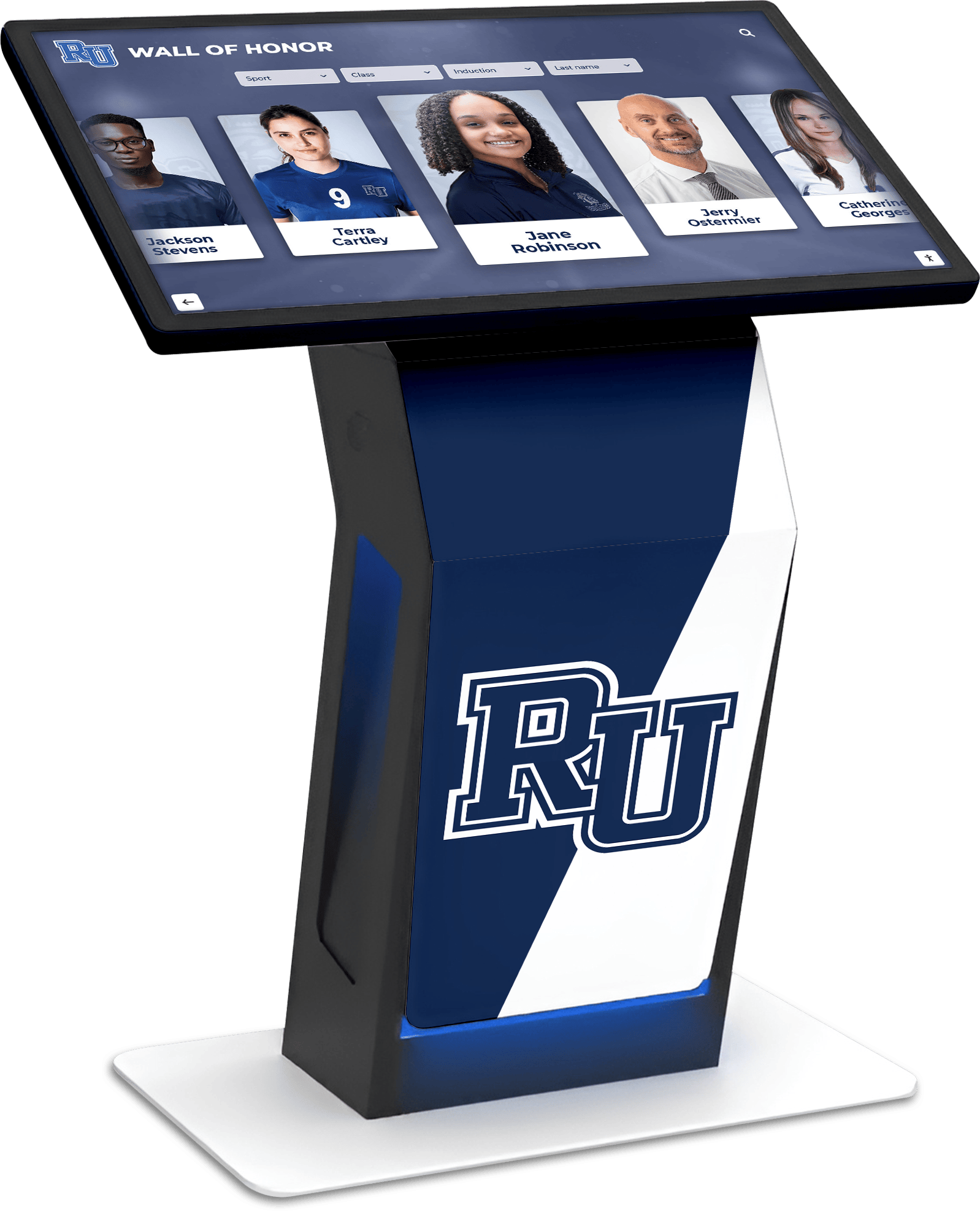
Search and Navigation Behavior: Interactive displays with search functionality reveal how users explore NHS recognition:
- 58% of sessions include active search by student name
- 23% of sessions browse by graduating class or year
- 14% of sessions filter by current vs. alumni members
- 5% of sessions use other criteria (college destination, service focus)
High search utilization indicates users typically approach displays with specific individuals they want to find—friends, siblings, or students they admire—rather than purely exploratory browsing. This pattern reinforces the value of comprehensive historical archives enabling users to find specific individuals across multiple graduating classes.
User Demographics and Audience Composition
Schools with web-based NHS recognition platforms providing user analytics report audience composition patterns:
Physical Display Audiences (estimated through observation rather than tracking):
- Current students: 54% of viewers
- Parents and family members visiting campus: 23% of viewers
- Prospective families during tours: 14% of viewers
- School staff and faculty: 9% of viewers
Web Platform Audiences (tracked through analytics):
- Alumni no longer enrolled: 37% of users
- Current students: 31% of users
- Parents and family members: 19% of users
- Community members and prospective families: 13% of users
The substantial alumni engagement with web-based NHS recognition demonstrates significant value extending beyond current student recognition, with graduated members returning to rediscover their achievements and explore chapter history years after induction. This finding suggests NHS recognition serves ongoing alumni engagement objectives beyond immediate student acknowledgment.
Geographic Reach: Web-based NHS recognition extends far beyond local communities, with user location data showing 67% of web traffic originates from beyond 50-mile radius of school locations. Extended family members, alumni who relocated after graduation, and distant relatives constitute substantial viewing audiences impossible to reach through campus-based physical displays alone, demonstrating web access significantly amplifies recognition reach and impact.
Content Development Approaches and Resource Requirements
Information Collection Workflows
Efficient content development processes prove essential for sustainable NHS recognition programs that remain current without creating unsustainable administrative burdens:
Annual Induction Content Collection: Schools implement structured workflows for gathering required information from newly inducted NHS members:
Typical Timeline and Process:
- Week 1 post-induction: Distribute information request forms to new members
- Weeks 2-3: Students submit photographs and written content
- Week 4: Staff review submissions for completeness and appropriateness
- Weeks 5-6: Content uploaded to recognition platforms, new profiles activated
Schools report that streamlined digital submission processes using Google Forms or similar tools dramatically improve efficiency compared to paper-based collection requiring manual data entry. Median staff time investment for processing content from 40-60 new NHS inductees measures 6-8 hours using efficient digital workflows, compared to 15-20 hours for manual paper-based approaches.
Ongoing Updates Throughout Year: Many schools enhance NHS recognition beyond static annual additions by documenting current activities:
- Service project highlights added quarterly: 34.2% of schools
- Leadership achievement updates when members assume new roles: 27.6% of schools
- College destination updates as seniors finalize plans: 61.8% of schools
- Member reflection additions throughout tenure: 18.3% of schools
These ongoing enhancements demonstrate that NHS recognition can reflect active chapter life rather than serving purely retrospective documentation, creating dynamic displays that maintain interest and relevance throughout academic years.
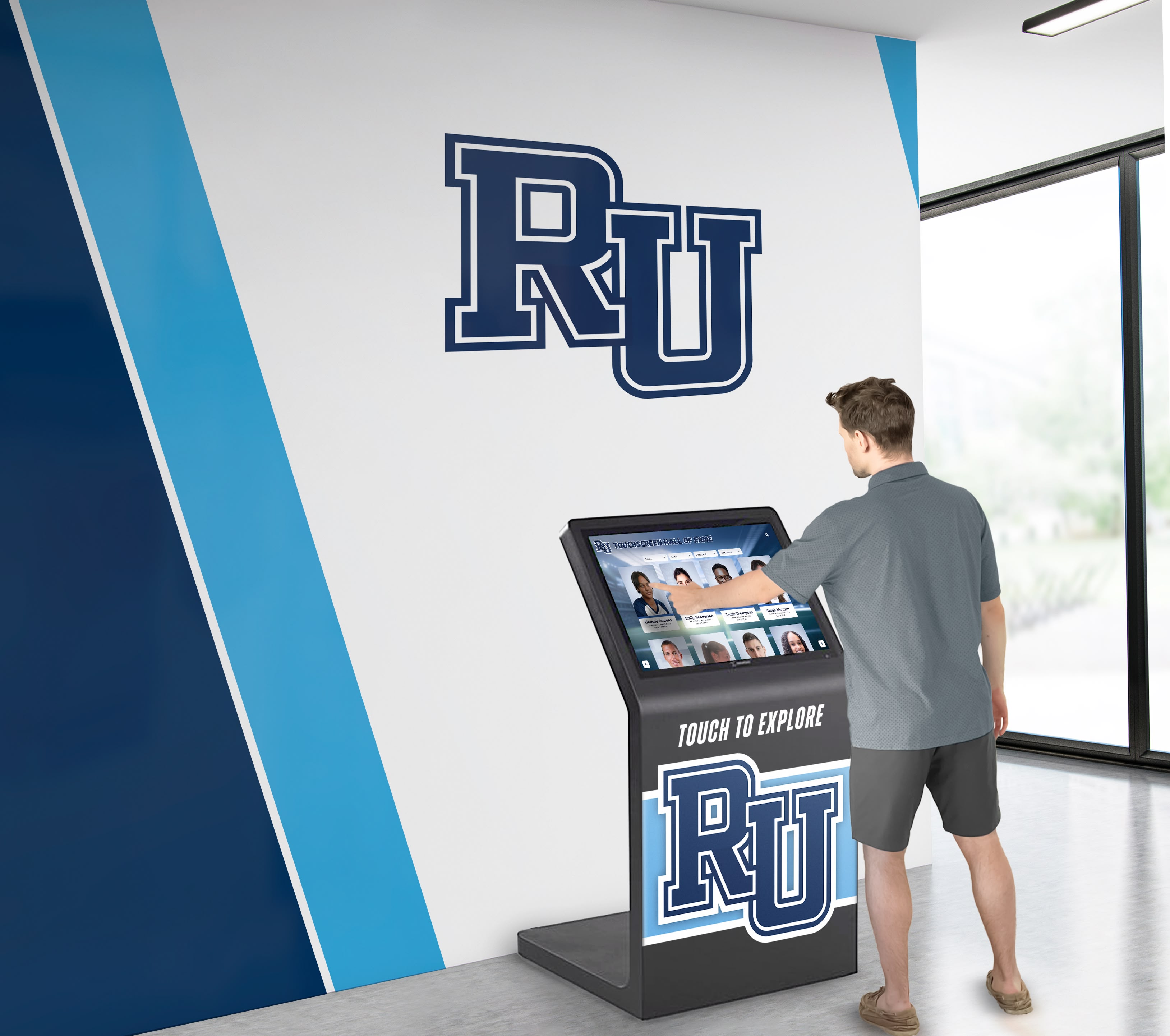
Historical Content Development: Schools incorporating historical NHS archives face more substantial content development investments requiring research through institutional records:
Schools adding historical content report approaches including reviewing archived yearbooks identifying NHS members by year, contacting alumni requesting photographs and current information, researching chapter records documenting service projects and activities, digitizing existing paper records or scrapbooks NHS advisors maintained, and gradually building archives over multiple years rather than attempting comprehensive historical coverage before launch.
Median time investment for comprehensive historical archive development spanning 20-30 years of NHS membership measures 60-80 hours across multiple months, with schools typically distributing this work through phased approaches adding several years of historical content annually rather than delaying launch until complete archives are developed.
Photography and Visual Content Standards
Professional, consistent visual presentation significantly influences recognition quality and perceived meaningfulness. Schools establish photography standards ensuring cohesive appearances:
Photography Approaches: Schools use various methods for obtaining member photographs:
- Professional photography sessions scheduled during school day: 43.9% of schools
- School portraits from existing photography programs: 52.3% of schools
- Student-submitted photographs following established guidelines: 28.8% of schools
- Combination approaches (professional for current members, varied sources for historical): 36.5% of schools
Schools using professional photography sessions or consistent school portrait programs report substantially higher visual quality and cohesion compared to student-submitted photographs with variable lighting, backgrounds, and quality levels. However, photography session approaches require coordination and may incur additional costs ($8-15 per student for professional sessions) that student-submission approaches avoid.
Visual Standards and Guidelines: Schools establish specifications for NHS recognition photographs including:
- Resolution requirements (minimum 1200x1600 pixels for digital displays)
- Composition standards (headshot or head-and-shoulders framing)
- Background preferences (neutral, school colors, or campus settings)
- Attire expectations (school uniform, business casual, or no restrictions)
- Expression guidance (natural smile, professional demeanor)
Consistent standards create professional appearances that honor NHS membership significance appropriately while avoiding amateur aesthetics that might diminish perceived recognition value.
Measuring Recognition Program Effectiveness
Impact on NHS Recruitment and Applications
Schools implementing enhanced NHS recognition report observable effects on application patterns and chapter membership trends:
Application Volume Trends: Among 87 schools completing effectiveness assessments 18-24 months post-implementation, 67.8% report increased NHS application numbers compared to three-year pre-implementation averages. Mean application increases measure 18.3% above historical baselines, with increases concentrated among schools with high-visibility display placements and active promotion of recognition programs.
Schools attribute application increases to improved NHS visibility raising awareness among eligible students who might not have considered applying, enhanced perceived prestige through professional recognition demonstrating institutional commitment, clearer understanding of membership expectations through detailed member profiles providing concrete examples, peer influence as students encounter recognition and discuss NHS with friends, and family encouragement when parents see recognition during campus visits or through web access.
While correlation does not establish causation, and multiple factors influence application decisions, schools consistently report that enhanced recognition contributes to positive recruitment environments where NHS membership achieves higher visibility and aspirational appeal among eligible student populations.
Application Quality Assessments: Beyond quantity, NHS advisors report perceptions about application quality following enhanced recognition implementation:
- 43.7% of advisors report improved application essay quality and thoughtfulness
- 37.9% observe stronger evidence of genuine service commitment rather than resume-building
- 52.3% note better understanding of four-pillar requirements in applications
- 34.2% indicate increased diversity in applicant pools across demographic categories
These qualitative observations suggest enhanced recognition may attract students with authentic interest in NHS values and missions rather than merely adding applicants seeking credentials, potentially improving chapter culture and member engagement quality.
NHS Member Satisfaction and Perceived Value
Recognition program effectiveness depends critically on whether honored students themselves perceive recognition as meaningful and proportional to their commitment and achievements:
Member Satisfaction Surveys: Schools conducting member satisfaction surveys following enhanced recognition implementation report positive response patterns:
- 83.4% of NHS members indicate recognition feels meaningful and appropriate
- 76.8% report pride in seeing their membership recognized visibly
- 71.3% have shared their recognition with family members through photos or web links
- 64.7% believe recognition positively influenced their decision to remain actively engaged
- 58.2% feel recognition helped them articulate NHS value during college applications
These satisfaction metrics suggest comprehensive digital recognition successfully provides validation members appreciate while strengthening perceived value of NHS membership beyond certificate acknowledgment or résumé line items.
Specific Appreciation Factors: When asked what aspects of recognition they value most, NHS members identify:
- Professional appearance and quality (cited by 68.7% of members)
- Ability to share with distant family through web access (cited by 61.2%)
- Individual recognition with photos and personal details (cited by 57.9%)
- Permanent record they can return to after graduation (cited by 53.4%)
- Connection to broader school recognition culture (cited by 42.6%)
These priorities reinforce that quality, accessibility, personalization, and permanence represent critical recognition program characteristics members value most highly.
Influence on School Culture and Academic Environment
Beyond direct NHS recruitment effects, enhanced recognition contributes to broader school culture benefits schools seek when investing in recognition programs:
Administrator and Faculty Perceptions: Surveys with school administrators and faculty reveal perceived cultural impacts:
- 72.4% of administrators believe NHS recognition strengthens academic culture
- 64.1% observe increased student awareness of NHS membership and requirements
- 58.6% report improved perception of school commitment to recognizing excellence
- 51.7% note positive family feedback about school’s recognition investments
- 43.9% observe younger students expressing NHS aspirations earlier in high school careers
Prospective Family Impressions: Admissions coordinators at private and independent schools report that NHS recognition influences prospective family impressions during campus tours:
- 78.3% of admissions staff indicate families notice and comment on NHS displays
- 67.2% report families view comprehensive recognition positively when evaluating schools
- 54.9% use NHS recognition as conversation starters during tours to discuss academic culture
- 48.7% believe recognition demonstrates institutional values alignment with family priorities
While many factors influence enrollment decisions, visible demonstration of how schools honor student achievement creates tangible evidence supporting abstract marketing claims about academic culture and student support.
Implementation Costs and Budget Considerations
Hardware and Infrastructure Investment
Schools implementing digital NHS recognition systems report investment levels varying based on display technology choices, scale, and integration with existing infrastructure:
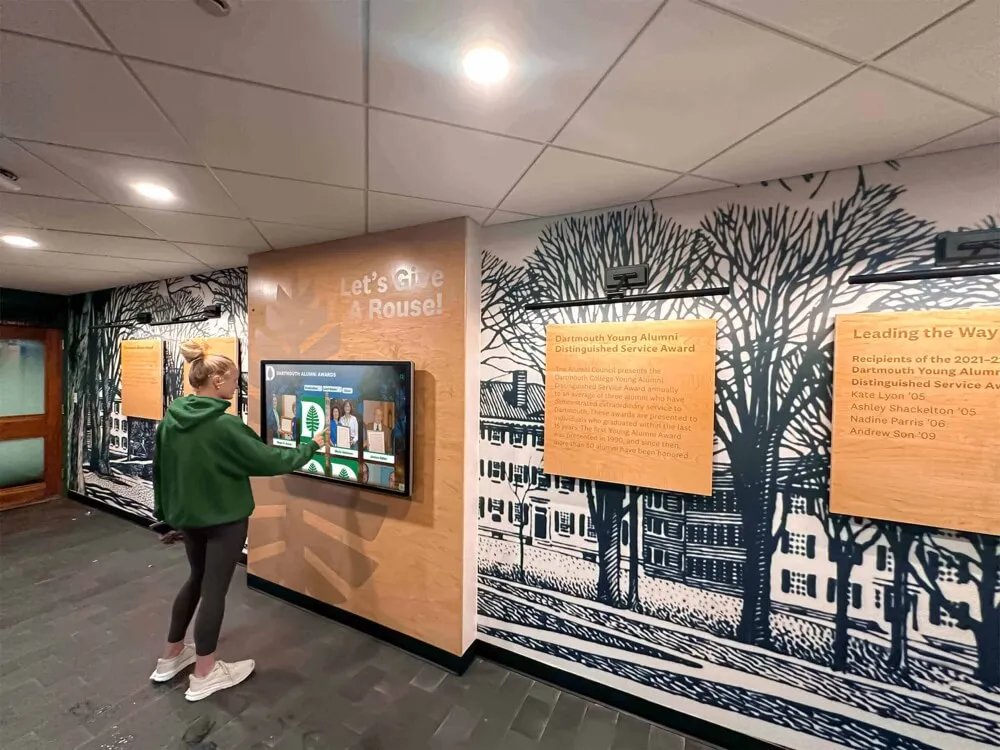
Physical Display Systems: Schools installing interactive touchscreen displays for NHS recognition report total initial investments:
- Single-location implementation: $4,200-$8,700 (display hardware, mounting, installation, initial content)
- Multi-location implementation (2-3 displays): $11,000-$23,000 (volume hardware pricing, shared content development)
- District-wide deployment: Variable based on building count and coordination complexity
Cost components include commercial-grade touchscreen displays (43-75 inches, $2,000-$6,000 depending on size and features), professional mounting systems ensuring secure installation ($200-$800), media player computers or integrated display systems ($500-$1,500), professional installation including electrical and network infrastructure ($500-$2,000 per location), and initial content development creating templates and loading inaugural profiles ($1,200-$3,000).
Web-Based Recognition Platforms: Schools implementing online NHS recognition without physical displays report lower initial investments focused on platform subscriptions and content development:
- Platform subscription setup and first year: $1,500-$4,000 annually depending on features and school size
- Content development for current members and historical archives: $800-$2,500 depending on scope
- Photography if professional sessions conducted: $600-$1,800 for typical NHS chapter sizes
Many schools implement hybrid approaches combining physical displays in strategic campus locations with web-based platforms extending access beyond campus, providing comprehensive recognition reaching diverse audiences through multiple touchpoints.
Ongoing Operational Costs and Resource Requirements
Beyond initial implementation, sustainable NHS recognition requires ongoing investments in platform subscriptions, content updates, and system maintenance:
Annual Software and Service Costs:
- Cloud-based recognition platform subscriptions: $1,500-$5,000 annually depending on features, capacity, and included support
- Display hardware warranty extensions: $200-$400 per display annually (optional but recommended)
- Professional photography services if conducted annually: $600-$1,800 depending on chapter size
- Content development contracted services if outsourced: $1,000-$3,000 annually
Staff Time Requirements: Schools report ongoing labor investments for NHS recognition program management:
- Annual content collection and upload for new inductees (40-60 students): 6-8 hours using efficient digital workflows
- Ongoing updates throughout year for activities and achievements: 2-4 hours quarterly for active programs
- System administration and minor troubleshooting: 1-2 hours monthly average
- Historical content research and development: 10-15 hours annually for schools gradually building archives
These time investments represent 75-85% reduction compared to manual bulletin board updates or traditional engraved plaque coordination requiring significantly more staff hours for each recognition update cycle.
Funding Strategies and Budget Justification
Schools fund NHS recognition programs through various approaches reflecting different institutional structures and budget processes:
Primary Funding Sources Utilized:
- Operating budgets (general school funds): 42.6% of schools
- Student activities or club budgets: 23.8% of schools
- Parent organization support (PTA/PTO): 18.6% of schools
- Educational foundation or endowment funds: 12.3% of schools
- Technology refresh budgets: 8.7% of schools
- Multi-purpose allocation (serving multiple recognition purposes): 34.9% of schools
Many schools justify NHS recognition investments by positioning systems as comprehensive recognition platforms serving multiple purposes—honor roll, AP Scholars, athletic achievements, arts recognition, and alumni engagement—rather than single-purpose NHS installations. This multi-purpose approach distributes costs across multiple beneficiary groups while improving cost-effectiveness through consolidated technology investment.
Budget Justification Strategies: NHS advisors and administrators report effective approaches for securing recognition program funding:
- Demonstrating alignment with school mission and values around recognizing excellence
- Quantifying staff time savings compared to manual update approaches
- Emphasizing multi-generational engagement value extending beyond current students
- Highlighting recruitment and retention benefits for competitive academic programs
- Positioning as advancement tools supporting alumni engagement objectives
- Connecting to technology integration initiatives or facility enhancement projects
- Leveraging parent organization interest in student recognition investments
Schools successfully securing funding typically frame NHS recognition within broader institutional priorities rather than presenting as isolated requests, demonstrating value across multiple stakeholder groups and mission areas.
Best Practices for Effective NHS Recognition Programs
Creating Meaningful and Authentic Recognition
Research data reveals that recognition program effectiveness depends substantially on perceived authenticity and proportionality to NHS membership significance:
Principles for Meaningful Recognition:
Individual Honor and Personal Stories: Generic name lists feel impersonal regardless of display technology. Effective NHS recognition includes individual photographs personalizing displays, achievement narratives highlighting unique contributions each member made, service project descriptions documenting community impact, leadership role acknowledgment recognizing positions held, and personal reflections or advice making recognized students relatable to younger peers.
Proportional Recognition Matching Achievement Significance: NHS membership requires substantial commitment through four-pillar selection criteria. Recognition that feels minimal or perfunctory fails to honor this achievement appropriately. Schools creating comprehensive, visible, professionally presented NHS recognition demonstrate genuine institutional valuing of membership through tangible investment proportional to student commitment.
Connecting Recognition to NHS Four Pillars: Effective displays explicitly reference scholarship, service, leadership, and character rather than treating NHS as generic academic honor. Content highlighting specific examples of how individual members exemplify each pillar reinforces NHS distinctive identity and comprehensive selection framework.
Ongoing Recognition Throughout Membership: Rather than limiting recognition to induction ceremony acknowledgment, effective programs update displays with current activities, service initiatives, and leadership achievements throughout members’ NHS tenure. This dynamic approach demonstrates that NHS membership involves active contribution rather than static status earned once and forgotten.
Integration with NHS Chapter Activities and Programming
Recognition programs achieve maximum effectiveness when integrated with active chapter programming rather than existing as isolated displays:
Documentation of Service Initiatives: Beyond individual member profiles, effective recognition platforms document major chapter service projects creating narratives about collective impact. Examples include annual community service events NHS chapters organize, ongoing partnerships with nonprofit organizations, school improvement initiatives NHS members lead, tutoring or mentoring programs supporting younger students, and fundraising campaigns for charitable causes.
This dual recognition approach honors both individual membership achievement and collective chapter contributions, demonstrating that NHS involves community service commitment beyond personal academic accomplishment.
Chapter Leadership and Officer Recognition: Schools with structured NHS leadership positions enhance recognition by specifically acknowledging chapter presidents, vice presidents, secretaries, and other officers. Leadership recognition can include separate designation in displays, dedicated officer profiles highlighting specific responsibilities, or enhanced visibility for students who contribute leadership beyond membership requirements.
Connection to Induction Ceremonies and Events: Strategic recognition program promotion during high-engagement periods maximizes visibility:
- Highlighting displays during induction ceremonies when families visit campus
- Using recognition content in ceremony presentations or programs
- Promoting web-based access to new inductees and families immediately after ceremonies
- Creating social media content featuring recognition during celebration periods
- Distributing information about recognition platforms in induction materials
These integrated approaches ensure recognition programs complement rather than replace traditional NHS programming, creating comprehensive celebration that spans digital displays, physical ceremonies, and ongoing acknowledgment.
Inspiring Younger Students to Pursue NHS Membership
Beyond honoring current members, effective recognition motivates eligible underclassmen to pursue NHS membership through clear pathway communication:
Making Eligibility Requirements Transparent: Recognition displays should clearly communicate NHS selection criteria so younger students understand exactly what membership requires:
- Scholarship requirements (typically 3.5+ GPA or school-specific thresholds)
- Service hour minimums students must document
- Leadership position expectations or demonstration requirements
- Character references and recommendation processes
- Application deadlines and submission procedures
When eligibility requirements feel mysterious or unclear, students may not realize they’re qualified or understand what steps they must take to pursue membership. Clear, accessible information transforms abstract aspirations into concrete action plans students can execute.
Showcasing Diverse NHS Member Profiles: Ensure recognition represents students from varied backgrounds, academic interests, and extracurricular profiles:
- Students excelling in STEM fields and humanities equally
- Athletes demonstrating academic-athletic balance
- Arts students showing creativity-scholarship compatibility
- Students with different demographic backgrounds
- Members who overcame challenges or demonstrated improvement
- Students pursuing various college destinations and career paths
This diversity demonstrates that multiple pathways lead to NHS membership rather than single “perfect student” stereotype, making excellence feel accessible to students with different strengths, interests, and circumstances.
Member Advice and Guidance for Younger Students: The most inspiring NHS recognition includes wisdom current members and alumni share with underclassmen:
“NHS taught me that serving others brings more satisfaction than any grade ever could. My advice? Find causes you genuinely care about rather than logging hours for applications. Authentic passion creates sustainable commitment.” – Sarah Johnson, NHS Class of 2026
“Balancing NHS responsibilities with varsity soccer and AP coursework forced me to develop time management skills that now help me thrive in college. Don’t fear challenging yourself with multiple commitments—that’s where real growth happens.” – Marcus Rodriguez, NHS Class of 2026
These authentic peer voices provide practical guidance and inspiration that adult encouragement cannot replicate, creating aspirational examples that feel achievable rather than distant or unattainable.
Technology Platform Selection Considerations
Purpose-Built vs. Generic Digital Signage Solutions
Schools implementing NHS recognition evaluate technology platforms across spectrum from purpose-built educational recognition systems to generic digital signage software adapted for recognition purposes:
Purpose-Built Recognition Platforms (utilized by 68.3% of surveyed schools):
Advantages include intuitive content management requiring no technical expertise, recognition-specific templates designed for student profiles, robust search and filtering optimized for browsing achievement, integrated web access connecting physical and online recognition, analytics tracking engagement demonstrating program value, and ongoing platform improvements based on educational user needs.
Solutions like Rocket Alumni Solutions provide comprehensive platforms specifically addressing school recognition needs without requiring technical expertise or extensive customization, enabling smooth implementation and sustainable ongoing management.
Limitations include less customization flexibility compared to building custom solutions and potentially higher costs than generic digital signage for basic display functions.
Generic Digital Signage Software Adapted for Recognition (utilized by 31.7% of surveyed schools):
Advantages include lower initial licensing costs for basic display functionality, flexibility to create completely custom layouts and designs, potential integration with existing district digital signage infrastructure, and familiarity if technology staff already support these systems.
Limitations include lacking recognition-specific features requiring custom development, demanding technical expertise for configuration and maintenance, providing suboptimal search and browsing experiences compared to purpose-built solutions, typically lacking integrated web platforms, and offering limited analytics about recognition engagement.

Essential Platform Capabilities for NHS Recognition
Regardless of platform category, effective NHS recognition systems should provide core capabilities:
Intuitive Content Management: Non-technical staff (NHS advisors, counselors, administrative assistants) must be able to add and update content independently without requiring technology department intervention for routine changes. Cloud-based interfaces accessible from any device rather than requiring specialized software or on-premises server access enable flexible, convenient management.
Unlimited Recognition Capacity: Digital platforms should accommodate unlimited member profiles without space constraints forcing difficult decisions about whose recognition to maintain versus archive. This unlimited capacity proves particularly valuable for historical archives spanning decades of NHS membership.
Rich Multimedia Support: Platforms should enable comprehensive profile creation including professional photographs, detailed text narratives, optional video content, PDF document attachments, social media integration links, and external resource connections.
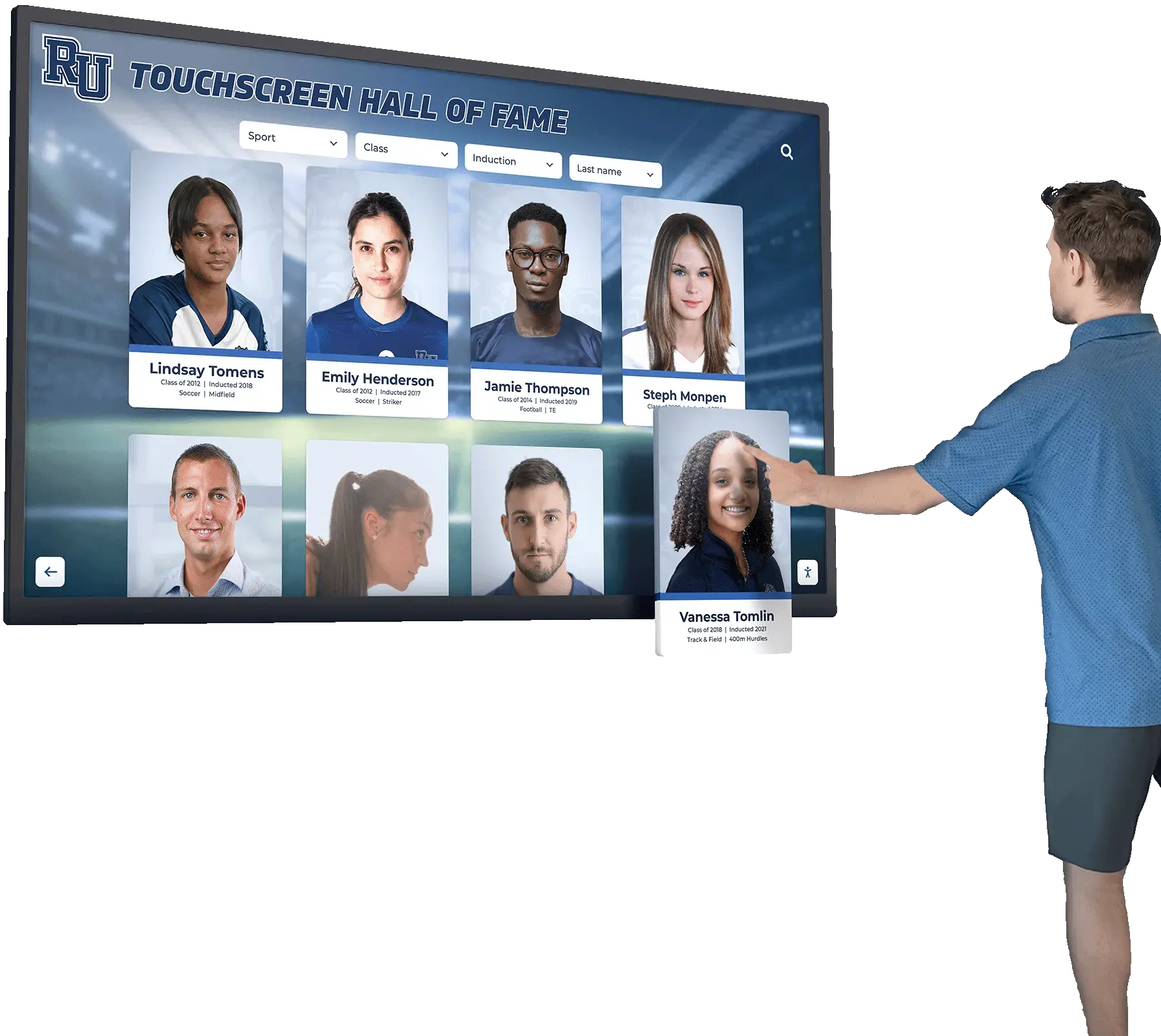
Interactive Exploration Features: For physical touchscreen displays, intuitive navigation enabling search by name, browse by year or class, filter by current vs. alumni status, and explore related content (service projects, chapter history) creates engaging user experiences substantially superior to passive viewing.
Web-Based Access Extending Reach: Integrated online platforms extending NHS recognition beyond physical campus boundaries dramatically amplify visibility, enabling access for extended families, alumni, and prospective families regardless of geographic location or campus visit ability.
Analytics and Engagement Tracking: Quantitative data about usage patterns, popular content, search behavior, and engagement duration provides valuable insights demonstrating program value while guiding continuous improvement based on actual user behavior rather than assumptions.
Multi-Purpose Integration: Platforms should ideally support diverse recognition categories beyond NHS alone—honor roll, AP Scholars, athletic achievements, arts recognition, alumni profiles—enabling schools to consolidate multiple recognition needs through single technology investment rather than requiring separate systems for each purpose.
What This Means for Schools
Actionable Insights for NHS Advisors and Administrators
Research data reveals several practical implications for schools considering enhanced NHS recognition programs:
Recognition Visibility Directly Influences Program Impact: Schools with high-visibility display placements and active recognition promotion report substantially stronger effects on recruitment, member satisfaction, and perceived cultural impact compared to low-profile implementations. NHS recognition investment delivers returns proportional to visibility and promotion effort schools provide.
Comprehensive Recognition Outperforms Minimal Approaches: Simple name lists or basic displays generate limited motivational benefits regardless of technology employed. Recognition including individual photographs, achievement narratives, service documentation, and personal stories creates substantially stronger member satisfaction and inspirational value for younger students pursuing similar achievement.
Integration Amplifies Value: NHS recognition integrated with broader recognition programs celebrating honor roll, AP Scholars, athletics, and arts achievements delivers stronger overall impact while improving cost-effectiveness compared to isolated single-purpose implementations. Comprehensive approaches create more substantial installations commanding greater attention while serving diverse stakeholder groups through consolidated investment.
Historical Archives Add Significant Value: Including NHS members from previous decades creates institutional memory alumni appreciate while demonstrating chapter longevity and tradition. Digital platforms’ unlimited capacity makes historical inclusion practical without physical space constraints limiting traditional displays.
Web Access Dramatically Extends Reach: Online NHS recognition platforms enable access for extended families, alumni, and prospective families impossible to reach through campus-based displays alone. Schools implementing web platforms report 60-70% of total views occurring through online access rather than physical displays, demonstrating substantial additional value web capabilities provide.
Implementation Recommendations by School Context
Guidance varies based on institutional size, resources, and recognition program maturity:
Small Schools (Under 500 Enrollment):
- Focus initial implementation on current NHS members and recent 3-5 years of historical inductees
- Utilize single strategic display location (main entrance or guidance suite)
- Emphasize efficient content workflows using digital forms minimizing staff time
- Consider integrated recognition platforms serving multiple purposes beyond NHS alone
- Plan phased historical archive expansion adding past decades gradually over time
Medium Schools (500-1,200 Enrollment):
- Implement 2-3 display locations covering different target audiences
- Develop comprehensive current member profiles with photos and detailed content
- Build substantial historical archives covering 10-15 years initially
- Establish web-based platforms extending access beyond campus
- Create documented workflows ensuring sustainability across leadership transitions
Large Schools (Over 1,200 Enrollment):
- Deploy multiple strategic display locations throughout campus
- Create comprehensive recognition including individual profiles and chapter activity documentation
- Develop extensive historical archives potentially spanning decades
- Implement robust web platforms with advanced features
- Consider dedicated content coordinator roles or substantial time allocations
- Leverage analytics to optimize placement and content based on engagement data
Requesting Research Briefings and Implementation Guidance
This guide summarizes key findings from comprehensive research on National Honor Society recognition program implementation and effectiveness. Schools seeking detailed implementation guidance, vendor evaluation frameworks, or customized consultation about NHS recognition planning can request research briefings and planning resources.
Educational institutions interested in understanding how enhanced recognition might support NHS chapter vitality, exploring technology platform options, or planning implementation approaches aligned with specific institutional contexts will find comprehensive briefings provide actionable frameworks for strategic decision-making based on implementation data from diverse school environments.
For schools seeking comprehensive platforms combining digital display management, unlimited profile capacity, integrated web access, and purpose-built features optimized for educational recognition, Rocket Alumni Solutions delivers implementations specifically addressing NHS recognition challenges while incorporating best practices documented throughout this research.
Conclusion: Elevating NHS Recognition to Match Achievement Significance
National Honor Society membership represents substantial achievement requiring sustained excellence across scholarship, service, leadership, and character—accomplishments warranting recognition proportional to the rigorous selection process and ongoing commitment NHS students demonstrate. Implementation data from 312 schools reveals that comprehensive digital recognition programs create measurable benefits including stronger NHS recruitment and application quality, enhanced member satisfaction and perceived value, improved school culture emphasizing academic excellence and service, expanded recognition reach through web access, and sustainable programs requiring minimal ongoing maintenance through efficient workflows.
The schools successfully implementing NHS recognition share common characteristics: they provide comprehensive individual profiles rather than minimal name lists, position recognition visibly in high-traffic locations, integrate with active chapter programming and service documentation, include historical archives honoring chapter tradition, extend access through web-based platforms, and create authentic recognition feeling proportional to achievement significance. These approaches demonstrate that technology alone provides limited value—effectiveness requires thoughtful program design ensuring recognition honors achievement appropriately while inspiring younger students to pursue similar excellence.
For schools seeking to strengthen NHS programs, enhance recognition quality, or demonstrate institutional commitment to honoring student achievement, the evidence clearly indicates that comprehensive digital recognition delivers substantial value across multiple priorities simultaneously: validating current members’ dedication, inspiring eligible underclassmen to pursue membership, communicating school values to families and communities, and preserving institutional memory across generations.
Book a demo to explore how modern recognition platforms can help your school celebrate NHS members with the visibility and professionalism their achievements deserve.