



Every November, high school football stadiums across Michigan become stages for athletic excellence as teams compete for state championship glory. The roar of the crowd as a quarterback launches a game-winning touchdown pass in the finals. The tears of joy when players hoist the championship trophy after years of dedication. The pride radiating through an entire community as their team brings home a state title. These moments represent the pinnacle of high school football in Michigan—achievements earned through countless hours of practice, physical sacrifice, and unwavering team commitment.
But what happens to these remarkable achievements after the final whistle blows? Too often, championship memories fade within weeks. A brief celebration. A trophy tucked into an already overcrowded case. Social media posts that disappear into digital archives. And within a few years, incoming freshmen may never discover that their school once won state championships, robbing them of inspiration and disconnecting them from the proud tradition they’re now part of.
This comprehensive guide explores Michigan high school football state championships—from understanding the tournament structure and bracket format to examining the rich championship history and discovering modern solutions for celebrating and preserving these remarkable achievements in ways that honor champions appropriately and inspire future excellence.

Understanding the Michigan High School Football Playoff System
Before exploring championship history and recognition solutions, understanding how Michigan’s playoff system works provides essential context for appreciating the achievement that state championships represent.
The Michigan High School Athletic Association (MHSAA)
The Michigan High School Athletic Association governs high school athletics across the state, including the football playoff system and state championship tournaments. Established in 1924, the MHSAA oversees athletic competitions for over 750 member high schools, ensuring fair play, competitive equity, and championship opportunities across diverse school sizes and competitive levels.
The MHSAA organizes Michigan high school football championships across eight divisions based on enrollment numbers, ensuring schools compete against similarly sized institutions. This divisional structure creates championship opportunities for schools ranging from small rural communities to large urban districts, recognizing that a state championship for a school with 100 students represents an achievement just as significant as one earned by a school enrolling 2,000 students.
Eight-Division Championship Structure
Michigan’s eight-division system creates one of the most comprehensive state championship structures in high school football:
Division 1: Largest schools (approximately 1,200+ students in grades 9-11) Division 2: Large schools (approximately 950-1,199 students) Division 3: Upper-mid-sized schools (approximately 730-949 students) Division 4: Mid-sized schools (approximately 545-729 students) Division 5: Lower-mid-sized schools (approximately 390-544 students) Division 6: Smaller schools (approximately 270-389 students) Division 7: Small schools (approximately 160-269 students) Division 8: Smallest schools (fewer than 160 students)
The MHSAA recalculates these enrollment thresholds every two years using current enrollment data, ensuring divisions remain balanced and competitive as school populations shift. This regular recalibration means schools occasionally move between divisions, though most maintain relatively stable divisional placement over time.
This divisional structure means Michigan crowns eight state champions annually—one in each division—creating approximately 400 total state championship opportunities since the playoff system’s inception. Each championship represents defeating the best programs competing at that enrollment level across the entire state.
Playoff Qualification and Format
Understanding how teams qualify for Michigan’s state championship tournament illuminates the competitive gauntlet that championship teams must navigate.
Qualification Requirements: Teams must achieve at least six wins during the regular season to qualify for playoff consideration. Once this threshold is met, teams with the best overall records in each division receive playoff berths. The MHSAA selects 32 teams per division (256 teams total across all eight divisions) to compete in the playoff tournament.
Playoff Points System: When more teams meet the six-win requirement than available playoff spots, the MHSAA uses a playoff points system that rewards teams for defeating strong opponents. This system considers both wins and the quality of those wins, similar to strength-of-schedule metrics used in college football rankings.
Single-Elimination Tournament: Once playoff brackets are set, Michigan employs a single-elimination format. Lose once, and a team’s championship hopes end immediately. This high-stakes structure creates intense pressure, memorable upsets, and dramatic championship runs that become part of school legend.
Five Rounds to Glory: Championship teams must win five consecutive playoff games to claim state titles:
- Round 1 (District Finals): 32 teams reduced to 16
- Round 2 (Regional Finals): 16 teams reduced to 8
- Round 3 (Quarterfinals): 8 teams reduced to 4
- Round 4 (Semifinals): 4 teams reduced to 2
- Round 5 (Finals): 2 teams compete for state championship
Championship games historically took place at Ford Field in Detroit, providing players with the unforgettable experience of competing on the same field where the Detroit Lions play. This prestigious venue elevates state championships beyond ordinary high school games, creating memories that athletes and communities treasure for lifetimes.
Timeline and Schedule Structure
The Michigan high school football championship tournament follows a carefully structured timeline that creates annual anticipation across the state.
Regular Season: Typically runs from late August through late October, with most teams playing nine regular-season games. This schedule allows teams to establish competitive records and playoff positioning before tournament selection.
Playoff Selection: Announced in late October, playoff bracket selections create immediate buzz as communities discover their team’s playoff opponent and potential championship path. The bracket release transforms abstract championship hopes into concrete tournament roadmaps.
Playoff Rounds: Begin in early November and continue through late November, with each round typically occurring on Friday or Saturday nights. This compressed three-week schedule maintains momentum and intensity while accommodating Michigan’s late-fall weather challenges.
Championship Weekend: Usually occurs during Thanksgiving weekend in late November, creating memorable holiday associations and allowing families gathering for Thanksgiving to attend championship games together. This timing adds emotional resonance to championship victories, forever linking them with family celebrations.
Weather plays a significant role in Michigan’s late-season football, particularly during playoff rounds. Teams accustomed to autumn sunshine may face rain, snow, freezing temperatures, or wintry conditions during championship runs, adding an additional element of adversity that successful teams must overcome. Championship teams often cite weather survival as integral parts of their championship stories.
Michigan High School Football Championship History and Tradition
Understanding Michigan’s rich championship history helps schools appreciate the tradition they’re now part of and provides context for properly recognizing current achievements.
Evolution of the Championship System
Michigan high school football championships have evolved significantly since organized competitions began.
Early Championships (1920s-1940s): Initial championship determinations relied on media polls and coaches’ consensus rather than playoff tournaments. Newspapers crowned state champions based on season records and performances against quality opponents. This subjective system created controversies when multiple undefeated teams claimed championships, lacking definitive resolution.
Pre-Playoff Era (1950s-1960s): As high school football’s popularity exploded in post-war Michigan, calls for objective championship determination grew louder. However, logistical challenges—travel distances, scheduling complexities, venue availability—prevented implementing statewide tournaments immediately.
Initial Playoff System (1975): The MHSAA introduced Michigan’s first official playoff system in 1975, initially featuring just four classes (based on school size). This groundbreaking change transformed Michigan high school football by creating clear championship pathways and eliminating controversial poll-based selections. The 1975 playoffs featured 16 teams per class, requiring four victories to claim state championships.
Expansion to Eight Divisions (1999): Recognizing that four classifications still created competitive imbalances—particularly disadvantaging both very small and very large schools—the MHSAA expanded to eight divisions in 1999. This change nearly doubled annual state championship opportunities and ensured schools competed against more similarly sized opponents throughout tournament play.
Modern Era (2000s-Present): The eight-division system has proven remarkably successful and stable, with only minor adjustments to enrollment thresholds and playoff qualification criteria over the past two decades. The system balances competitive equity with manageable tournament logistics, creating championship opportunities that feel both attainable and meaningful across all school sizes.
This evolution reflects broader trends in high school athletics—moving from informal arrangements toward structured, equitable systems that maximize participation and ensure championship opportunities exist regardless of school size or geographic location.
Notable Championship Programs and Dynasties
Certain Michigan high school football programs have established championship dynasties that exemplify sustained excellence and create rich institutional traditions.
While championship success distributes across diverse schools statewide—small-town programs, suburban schools, urban districts—some programs consistently appear in championship contention, developing reputations as elite football institutions. These programs share common characteristics including strong youth football feeders, exceptional coaching continuity, community investment in athletic facilities, and cultures that emphasize football excellence across generations.
Characteristics of Championship Programs:
Programs that regularly compete for state championships demonstrate patterns worth noting:
Coaching Continuity: Championship programs often feature long-tenured head coaches who develop consistent philosophies, build multi-year player development systems, and create program cultures extending beyond individual seasons. When coaches remain at schools for 10-20+ years, they establish traditions, relationships, and institutional knowledge that advantage their programs competitively.
Youth Program Integration: Elite programs connect closely with youth and middle school football programs, ensuring consistent system implementation, skill development, and football fundamentals instruction beginning at early ages. Players entering high school programs already understand offensive schemes, defensive concepts, and program expectations, creating competitive advantages.
Community Support: Championship-level programs typically benefit from strong community backing including well-maintained facilities, booster organizations funding equipment and travel, excellent attendance at games creating home-field advantages, and community pride that attracts families to districts partially for football opportunities.
Multi-Sport Athletes: Contrary to specialization trends in some states, many Michigan championship programs feature athletes competing in multiple sports. These multi-sport athletes develop diverse athletic skills, avoid overuse injuries from year-round football, and contribute to broader school athletic success beyond just football.
Academic-Athletic Balance: Successful programs recognize that academic success supports athletic achievement. Programs emphasizing academic eligibility, study habits, and balanced student-athlete development often demonstrate more sustained success than those prioritizing athletics exclusively.
Understanding what enables championship success helps schools recognize that state titles result from comprehensive program development rather than just talented individual players or single-season efforts.
Championship Records and Milestones
Championship history includes remarkable records and milestones that demonstrate both individual program excellence and evolving competitive landscapes.
Multiple Championships: Some programs have won state championships in multiple divisions as enrollments shifted and divisional placements changed. These programs demonstrate sustained excellence across different competitive contexts and roster cycles.
Consecutive Championships: Winning back-to-back state championships represents extraordinary achievement. Teams must navigate high expectations, leadership transitions as seniors graduate, opponents specifically preparing to defeat defending champions, and the psychological challenge of maintaining championship intensity. Programs achieving consecutive championships demonstrate exceptional program depth and culture.
Undefeated Championship Seasons: Finishing seasons with perfect records while claiming state championships represents ultimate team achievement. These undefeated championship teams occupy special places in school history, representing seasons where everything aligned—talent, coaching, schedule, health, and performance converging perfectly.
Championship Game Records: Individual performance records from championship games create memorable moments that define championships. Quarterbacks throwing for 400+ yards, running backs rushing for 200+ yards, defensive players recording multiple sacks or interceptions—these performances become integral parts of championship stories, creating heroes whose names remain synonymous with championship glory decades later.
Playoff Scoring Records: The intense pressure and elite competition in playoff games make offensive explosions particularly impressive. Teams scoring 50+ points in championship games or throughout playoff runs demonstrate offensive prowess that overwhelmed even the state’s best defenses.
These records and milestones provide frameworks for contemporary programs to measure their achievements against historical standards, creating continuity linking current teams with championship traditions established decades earlier.
Why Proper Championship Recognition Matters
State championships represent remarkable achievements deserving recognition infrastructure that matches their significance. Understanding why proper recognition matters helps schools prioritize these investments.
Impact on Current Athletes and Team Culture
Visible championship recognition profoundly influences current athletes and shapes overall program culture in measurable ways.
Concrete Goal Visualization: When freshmen entering football programs see comprehensive displays documenting state championship teams, abstract aspirations become tangible targets. These displays show specific athletes who previously walked the same hallways, played on the same fields, and ultimately achieved championship glory—demonstrating that elite success is attainable within their program. This visualization transforms “maybe someday” dreams into “this is possible for us” determination.
Standard Setting and Expectations: Championship recognition establishes performance expectations that shape program culture. When schools prominently display championship achievements, they communicate that winning state titles represents the standard rather than unexpected surprises. This expectation elevation influences practice intensity, off-season commitment, and player mindset throughout programs.
Research from athletic programs nationwide indicates that schools with comprehensive championship recognition report 31% higher participation rates in off-season strength programs and measurably improved player retention across four years compared to schools with minimal recognition infrastructure.
Connection to Program History: Proper recognition connects current athletes with program tradition and legacy. Players understand they’re not just playing for current season success but contributing to multi-generational traditions. This historical connection creates deeper meaning, stronger commitment, and enhanced pride in representing their schools.
Inspiration During Adversity: When teams face adversity—losing streaks, injuries, challenging opponents—visible reminders of past championship success provide inspiration and evidence that their program has overcome challenges before. These reminders help teams maintain belief during difficult stretches that might otherwise fracture confidence.
Community Pride and School Identity
Championship recognition extends far beyond current athletic teams, influencing community identity and school culture broadly.
Community Gathering Points: Championship displays create conversation focal points where community members naturally gather, reminisce, and connect. Alumni visiting schools gravitate toward championship recognition, sparking conversations with current students about shared school pride despite decades separating their experiences.
Prospective Family Impressions: Families touring schools during enrollment consideration notice championship recognition, interpreting prominent displays as evidence of comprehensive programs supporting student success across athletics, academics, and extracurricular activities. Schools conveying pride in athletic achievement often demonstrate similar commitment to other programs.
Alumni Engagement and Connection: Championship recognition provides tangible connection points for alumni, particularly those who participated in or attended games during championship seasons. These connections strengthen emotional bonds with institutions, supporting alumni engagement initiatives and advancement efforts extending beyond athletics.
Local Media and Publicity: When schools implement impressive championship recognition displays, local media often cover these installations as newsworthy stories celebrating community achievement. This publicity reinforces school pride, communicates institutional investment in honoring students, and generates positive visibility extending beyond typical athletic coverage.
Preserving Institutional Memory Across Generations
Perhaps most importantly, proper recognition ensures championship achievements don’t disappear from institutional memory as years pass.
Preventing Historical Loss: Without deliberate preservation efforts, championship documentation frequently disappears. Programs that won state titles decades ago often discover they’ve lost rosters, statistics, photographs, and detailed information about these achievements. Comprehensive recognition systems prevent this historical erosion by systematically documenting championships at the time they occur and maintaining this information permanently.
Contextualizing Current Achievements: Preserved championship history allows current achievements to be understood within institutional context. When programs win state championships after 30-year droughts, comprehensive historical records enable communities to appreciate this achievement’s full significance—understanding not just that a championship was won but how rare and special this accomplishment was within their specific program history.
Educating New Community Members: As school communities experience turnover—new teachers, new families, new students—preserved championship history educates these community members about institutional traditions they’re now part of. Without accessible historical information, championship traditions fade as those with personal memories graduate, retire, or move away.
Multi-Generational Connections: Comprehensive championship archives enable multi-generational family connections. Current students discover that grandparents, parents, or older siblings also achieved athletic success at the same school, creating family legacy narratives that strengthen institutional bonds across generations. These discoveries occur naturally when schools maintain accessible championship records allowing exploration and discovery.
The transition from physical trophies and paper records to digital recognition systems addresses many preservation challenges, ensuring championship information remains accessible, searchable, and protected from physical deterioration indefinitely.
Traditional Championship Recognition Approaches
Before examining modern digital solutions, understanding traditional recognition methods clarifies their strengths, limitations, and appropriate contexts for continued use.
Trophy Cases and Physical Displays
Glass-fronted trophy cases displaying championship trophies, plaques, and physical artifacts represent the most common traditional recognition approach.
Strengths: Physical championship trophies carry weight and tangible presence that digital content cannot replicate. The actual trophy a championship team hoisted creates visceral connections that photographs alone don’t provide. Trophy cases require no electricity, software, or technical maintenance, functioning reliably for decades. Well-designed cases enhance facility aesthetics, particularly in traditional architectural contexts.
Limitations: Space constraints create inevitable capacity problems. Trophy cases fill completely within 15-25 years depending on athletic program success, forcing difficult decisions about removing older items or leaving new achievements unrecognized. Championship trophies occupy substantial space while conveying limited information—viewers see that a championship was won but learn nothing about rosters, game scores, season narratives, or championship paths unless supplementary materials accompany physical items.
Information Density Challenges: A state championship trophy occupies 18-24 inches of shelf space while displaying minimal information. Viewers might see the year and division but typically learn nothing about who competed, what games were played, key performances, or season context that makes championships meaningful.
Cost Considerations: Quality trophy cases cost $3,000-$10,000 installed depending on size, construction quality, and design sophistication. Additional cases required as earlier ones fill represent substantial ongoing investment. Custom cases designed to match facility aesthetics often cost considerably more than standard commercial models.
Best Applications: Trophy cases appropriately serve selective recognition of major championships, providing prestigious display for institutions’ most significant accomplishments. They work best when complemented by additional recognition systems providing comprehensive documentation that physical displays cannot accommodate.
Championship Banners and Wall Displays
Fabric banners hung from gymnasium ceilings or walls displaying championship years and divisions provide visible recognition in athletic facilities.
Strengths: Championship banners create dramatic visual impact in gymnasiums where fans naturally gather. The sight of numerous championship banners filling gymnasium rafters conveys program excellence instantly and powerfully. Banners typically cost $200-$600 each, making them affordable recognition options. Properly installed banners last 10-15 years without maintenance.
Limitations: Banner content remains static—displaying only championship years and divisions without additional context. Viewers see that championships were won but access no information about teams, players, seasons, or championship games. Banners in gymnasiums limit visibility to those attending athletic events rather than reaching broader school populations.
Implementation Challenges: Hanging championship banners requires appropriate mounting infrastructure—ceiling heights accommodating banners, structural supports capable of bearing banner weight, and access for installation and eventual removal. Schools lacking appropriate gymnasium architecture may find banner displays impractical.
Visibility Concerns: Banners hung at ceiling height become difficult to read from gymnasium floors, particularly detailed text or smaller information. This visibility limitation means banners function primarily as broad symbolic recognition rather than detailed information sources.
Best Use Cases: Championship banners serve well for creating visual atmosphere in athletic venues, providing immediate recognition that guests, visiting teams, and communities notice when attending games. They work best alongside other recognition methods providing detailed championship documentation that banners cannot display.
Yearbook and Archive Documentation
School yearbooks traditionally serve as championship documentation, dedicating pages to state championship seasons with photographs, rosters, and season summaries.
Strengths: Yearbooks preserve championship information systematically, ensuring documentation exists for historical reference. Many schools maintain complete yearbook archives spanning decades, creating continuous historical records. Yearbook documentation happens naturally as part of annual publication processes, requiring no separate initiatives.
Limitations: Yearbook information remains inaccessible except to those with physical access to specific yearbook volumes. Students researching championship history must locate correct yearbooks, physically retrieve them from libraries or archives, and manually search for relevant pages. This access friction means most students never explore championship history despite documentation existing.
Degradation and Loss: Physical yearbooks deteriorate over time—pages yellow, bindings break, photographs fade, and volumes occasionally disappear as archives experience loss or damage. Schools sometimes discover they no longer possess complete yearbook collections, creating historical gaps in championship documentation.
Limited Distribution: Only yearbook purchase during specific years provide individuals with championship documentation. Alumni possessing yearbooks from their graduation years have no access to championships occurring before or after their enrollment unless they specifically acquire other yearbook volumes.
Discoverability Challenges: Even when yearbook archives exist, students rarely explore them spontaneously. Unlike visible displays that capture attention naturally, yearbooks require deliberate research initiatives that seldom occur without specific motivations.
While yearbooks provide valuable archival documentation, they function poorly as primary championship recognition given accessibility limitations and minimal daily visibility to school populations.
Limitations of Traditional Recognition Methods
Collectively, traditional championship recognition approaches face limitations that modern solutions address:
Static Content: Once created, traditional displays cannot update or expand without physical modification. Adding new championship information requires printing new banners, manufacturing new plaques, or reorganizing trophy cases—creating friction that often results in displays showing outdated information.
Capacity Constraints: Physical space limitations mean traditional displays eventually reach capacity. Schools must choose between removing historical recognition to accommodate new achievements or leaving new championships inadequately recognized—neither option serving recognition objectives well.
Limited Information Depth: Physical displays cannot accommodate comprehensive championship documentation. The full story of championship seasons—complete rosters, game-by-game results, individual statistics, championship game narratives, photographs beyond a few key images—exceeds what physical displays practically accommodate.
No Search or Discovery: Traditional displays offer no search functionality. Someone wanting to find championships won during specific years, identify all championships in particular divisions, or discover which athletes competed on championship teams must examine every display manually, hoping relevant information appears somewhere.
Geographic Limitations: Physical displays only benefit those physically visiting specific locations. Alumni living elsewhere, prospective families researching schools remotely, or community members unable to visit facilities cannot access championship information displayed exclusively through physical installations.
Maintenance Burden: Physical displays require periodic maintenance—replacing faded elements, repairing damaged cases, updating lighting, cleaning displays—that schools often defer as higher priorities compete for limited maintenance resources. Neglected physical displays deteriorate, undermining rather than enhancing recognition.
These limitations don’t negate the value of traditional recognition—physical trophies and championship banners serve important purposes—but they explain why many schools now implement digital solutions that overcome these constraints while complementing traditional physical recognition.
Modern Digital Championship Recognition Solutions
Digital recognition technologies fundamentally transform what schools can accomplish in preserving and celebrating state championship achievements.
Interactive Touchscreen Displays
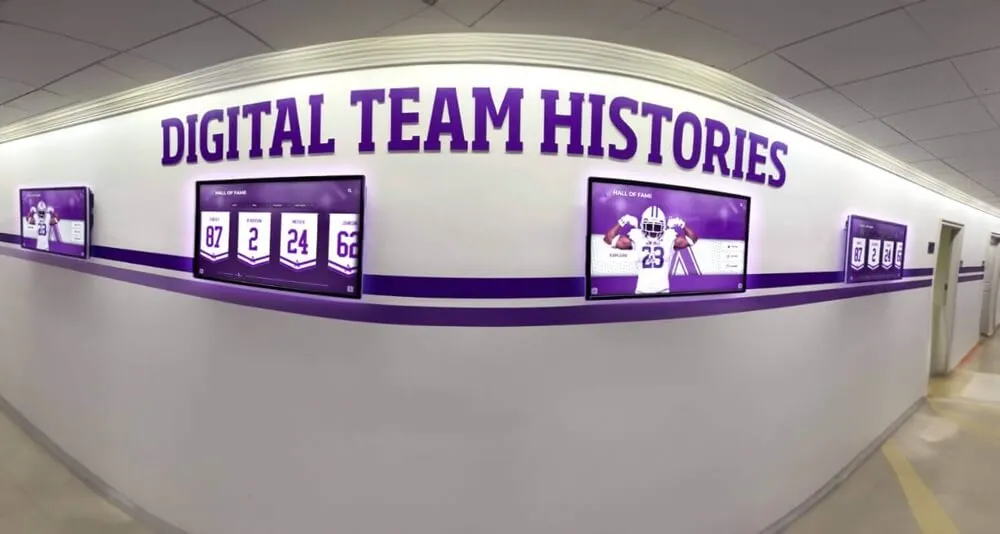
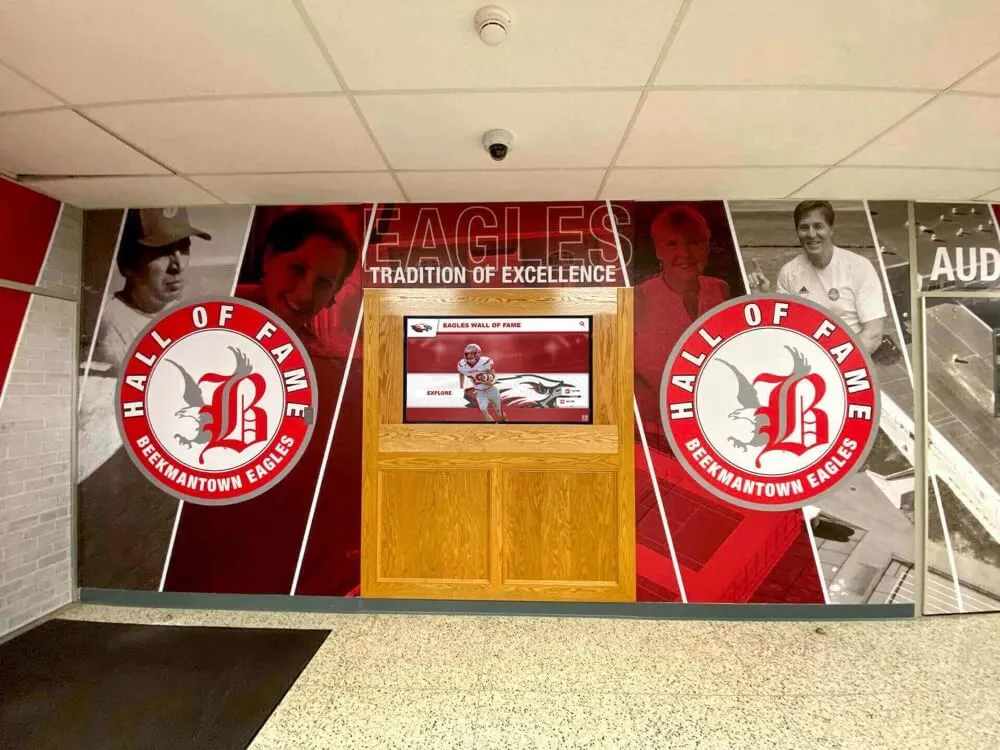
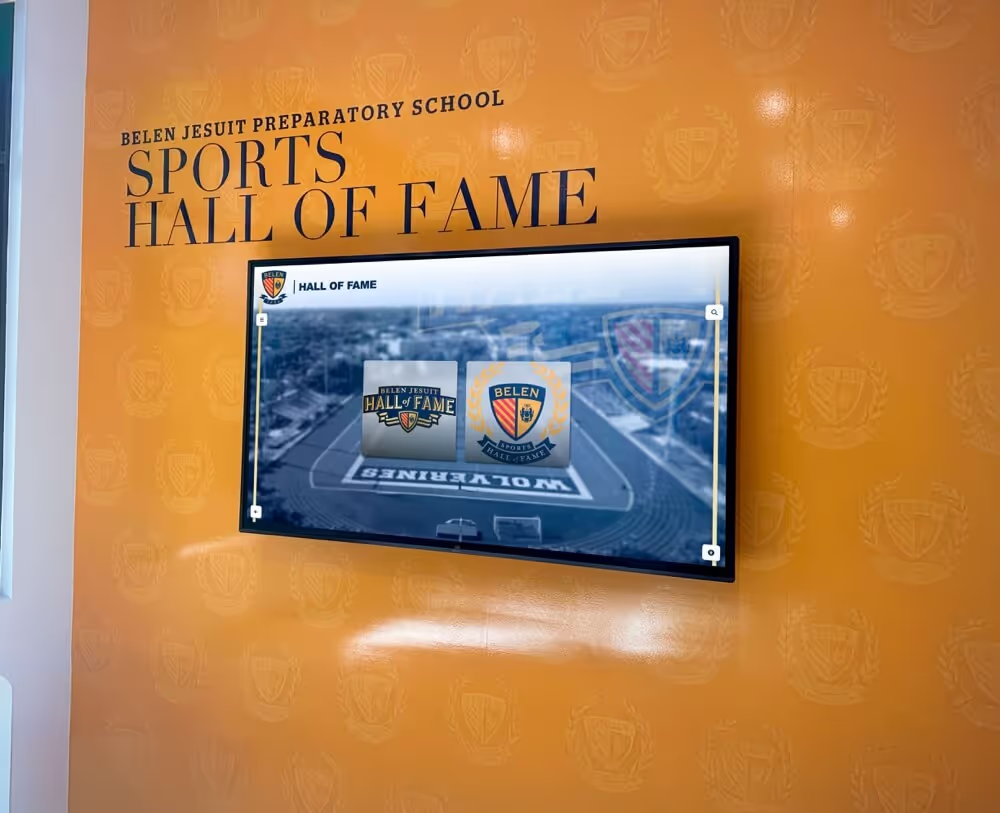
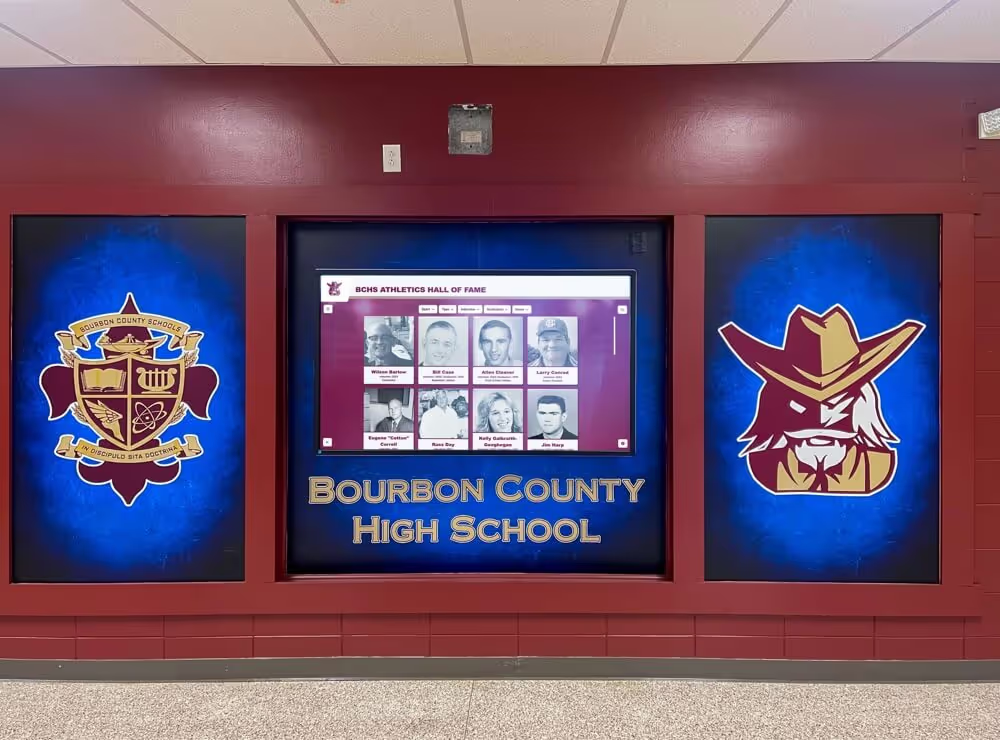
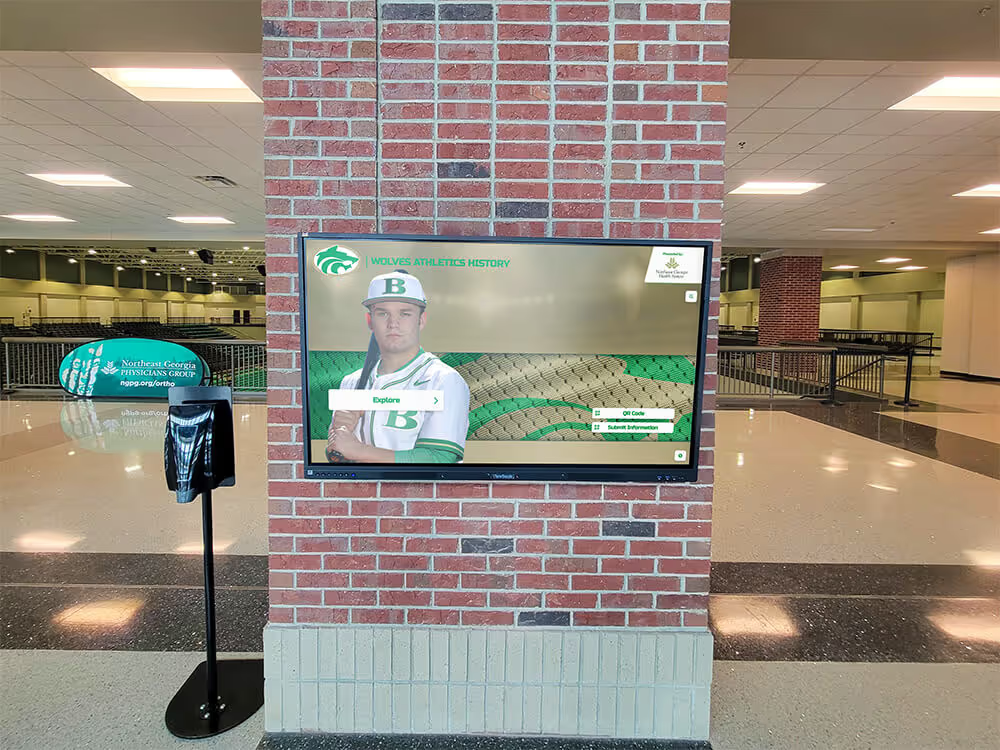
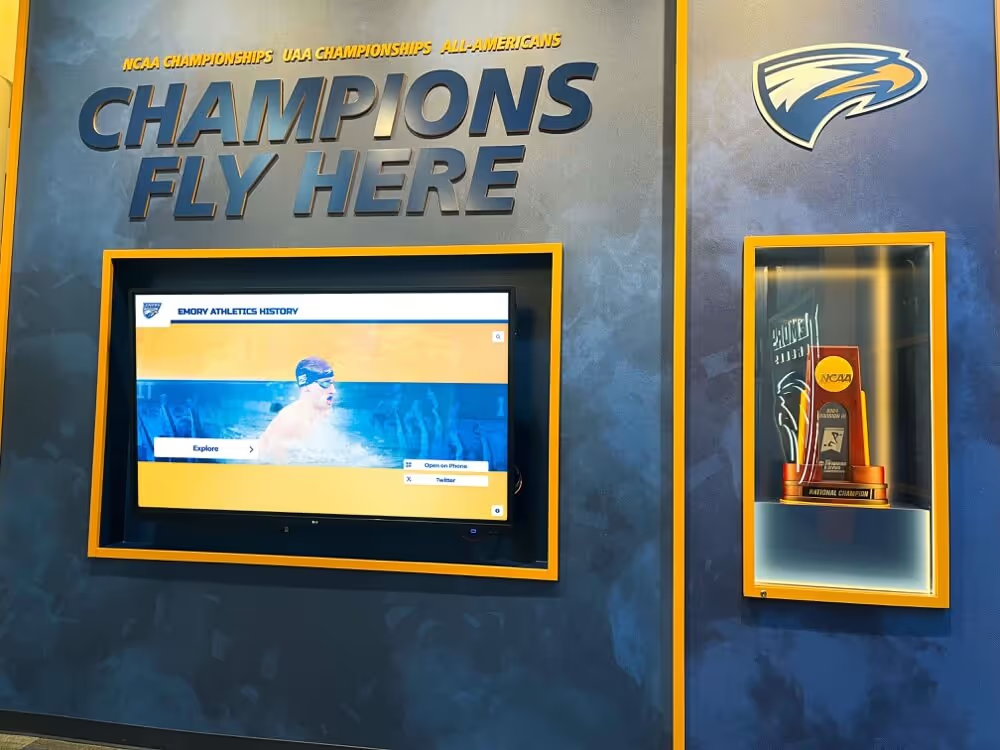
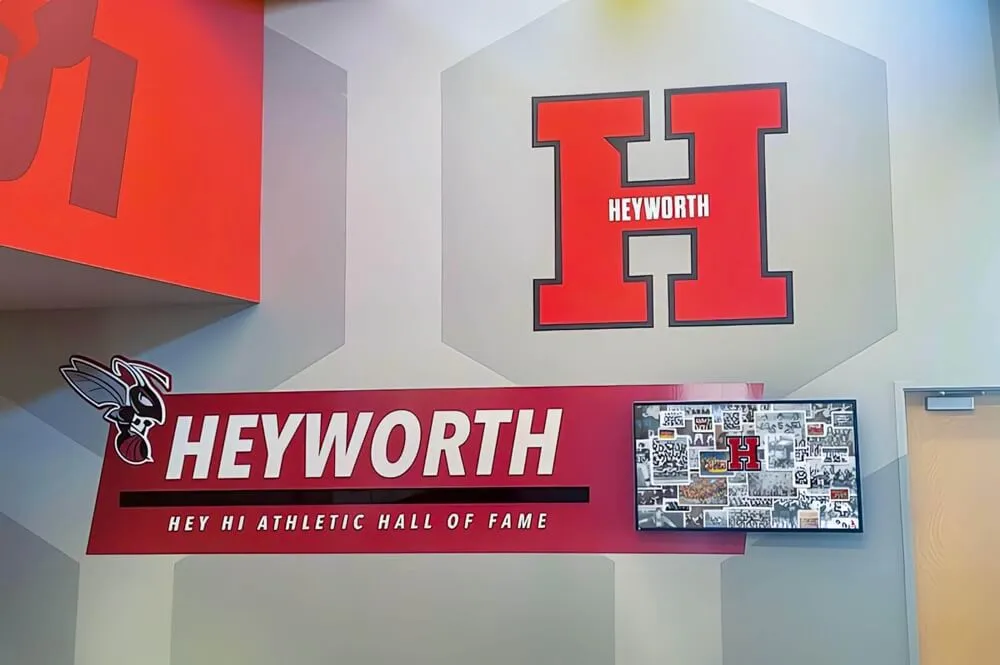
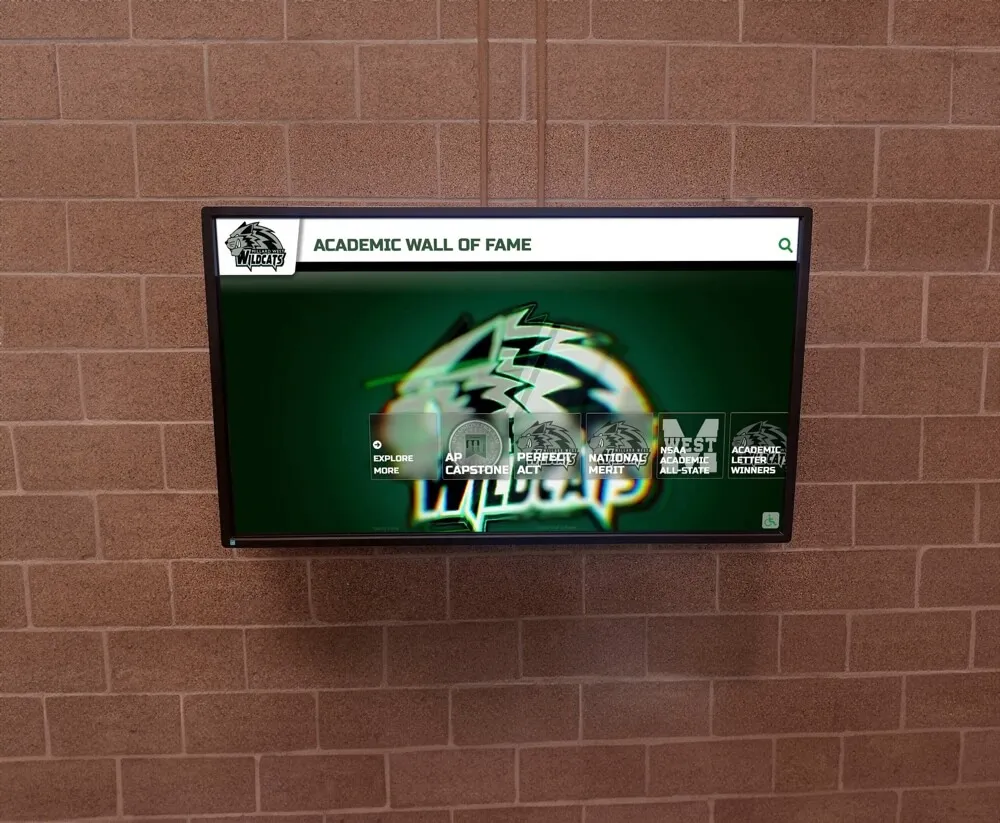
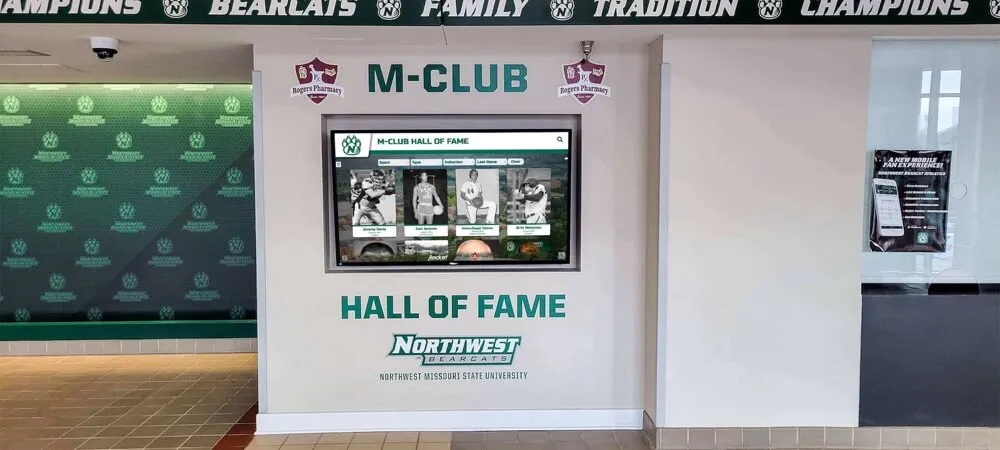
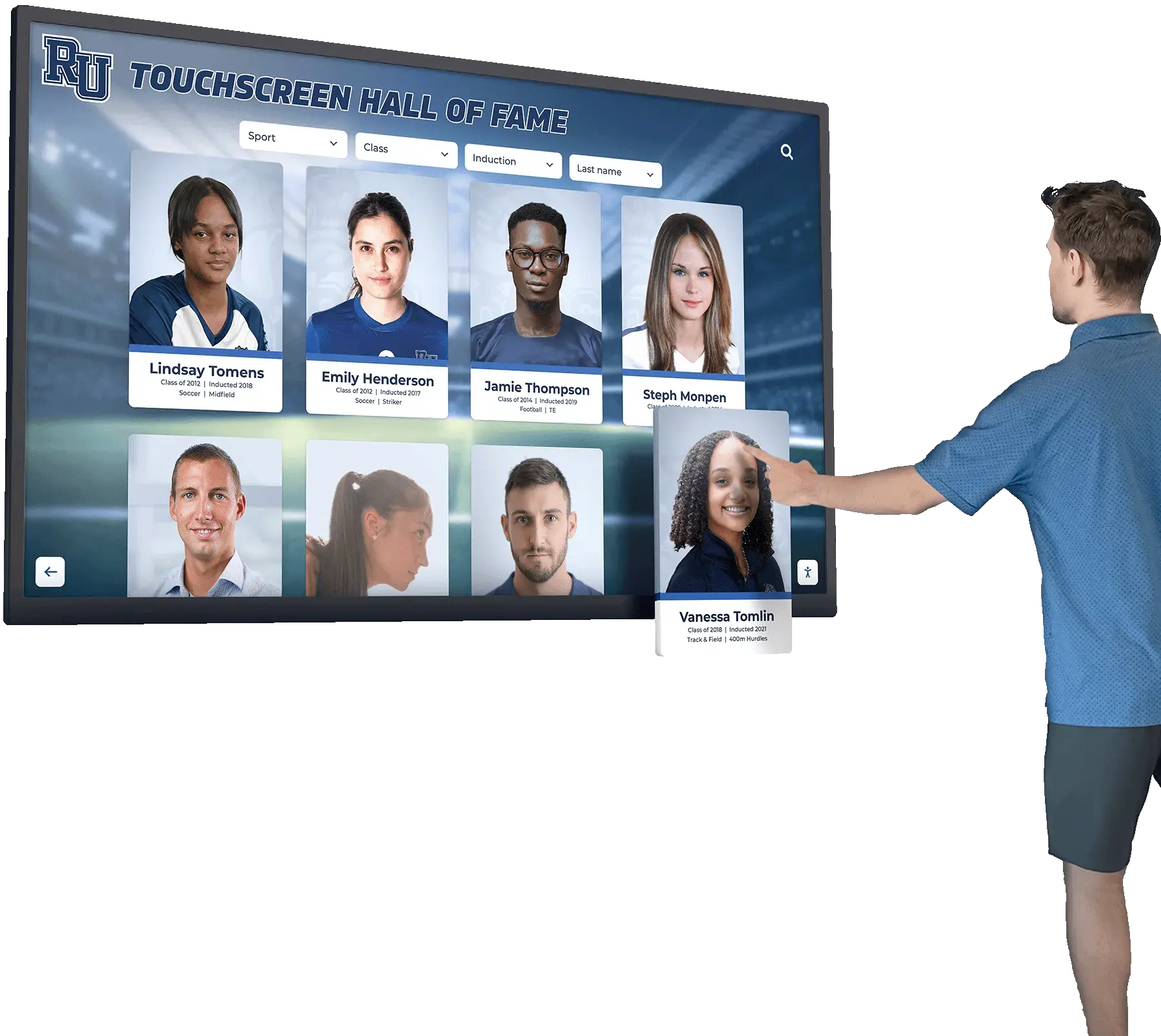
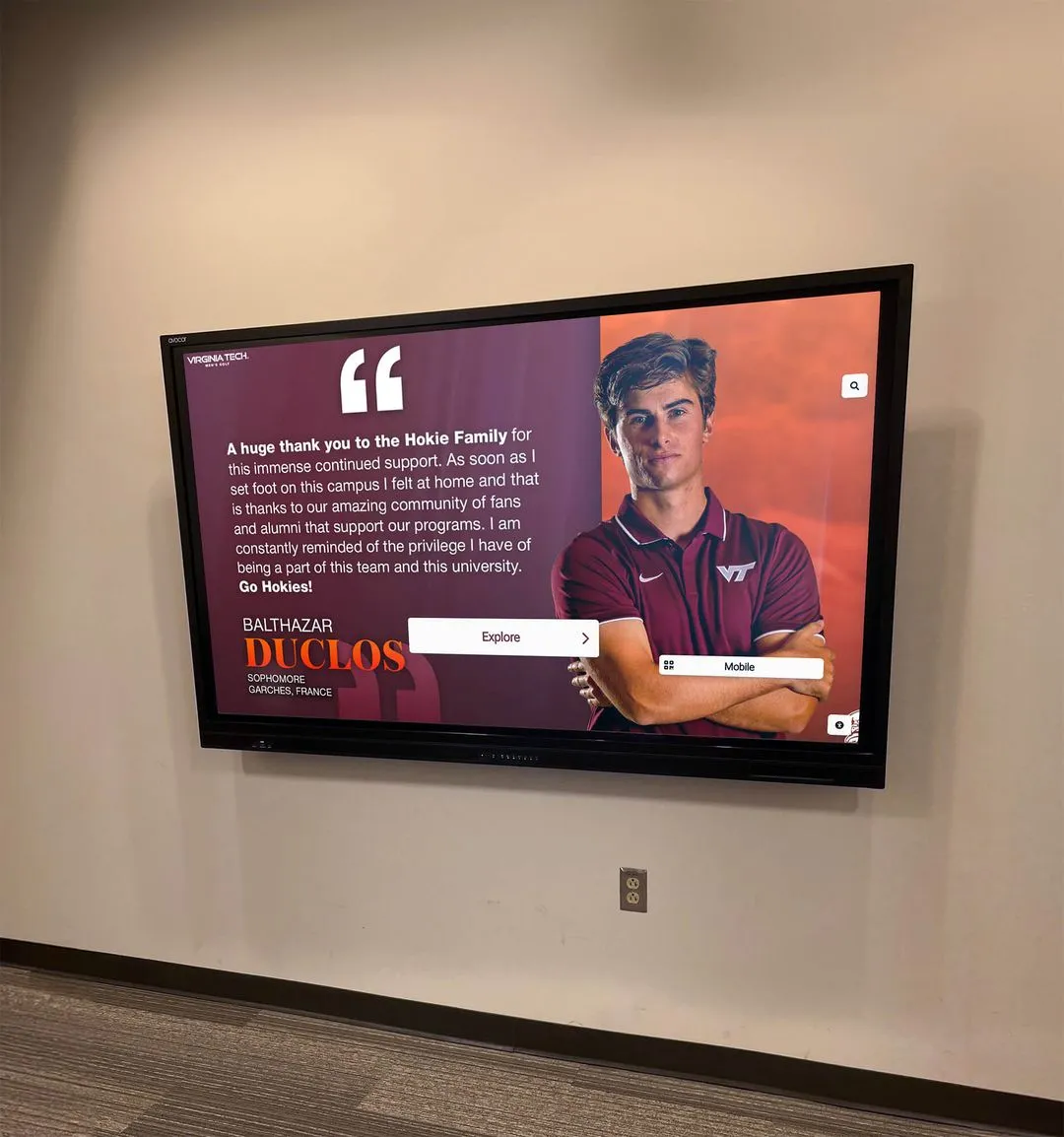
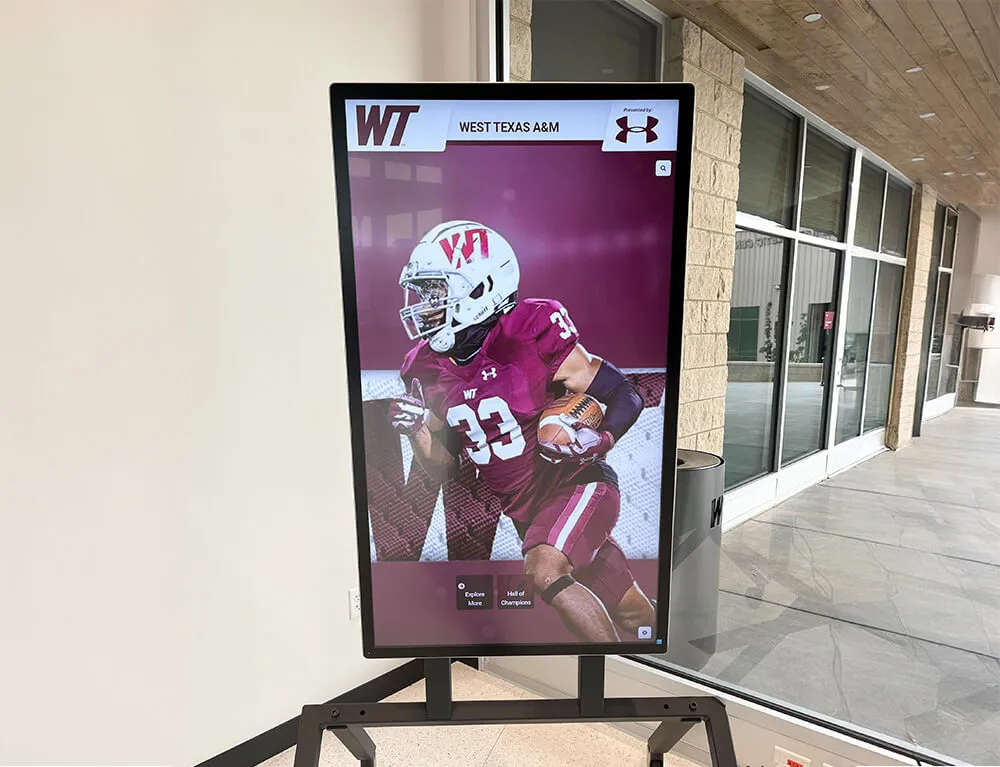
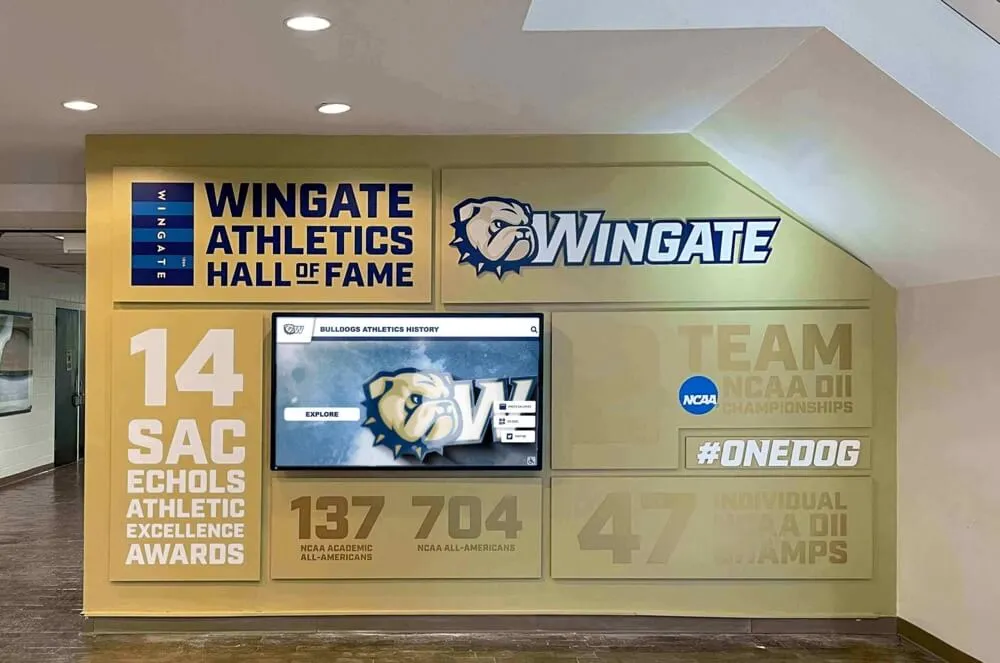
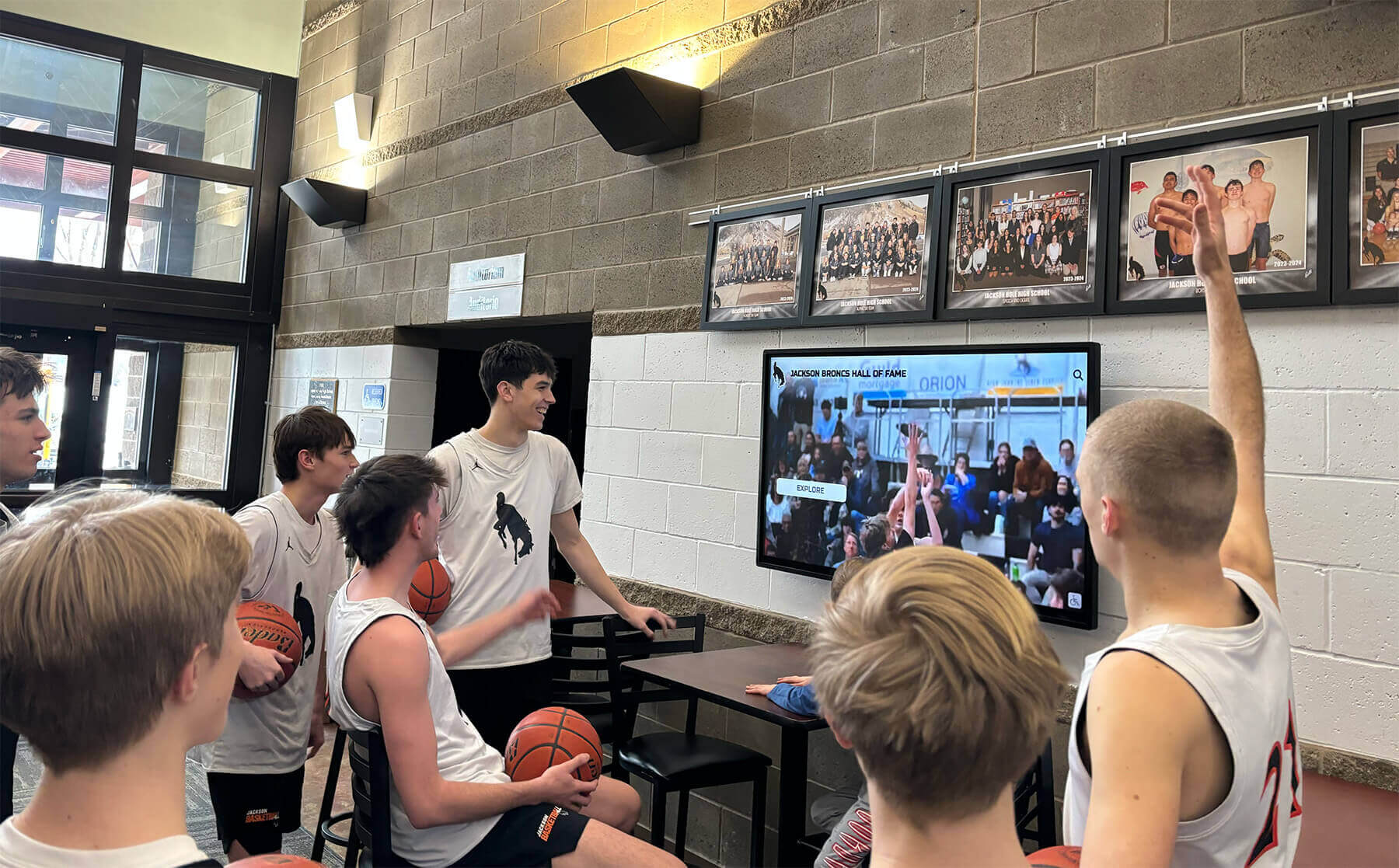
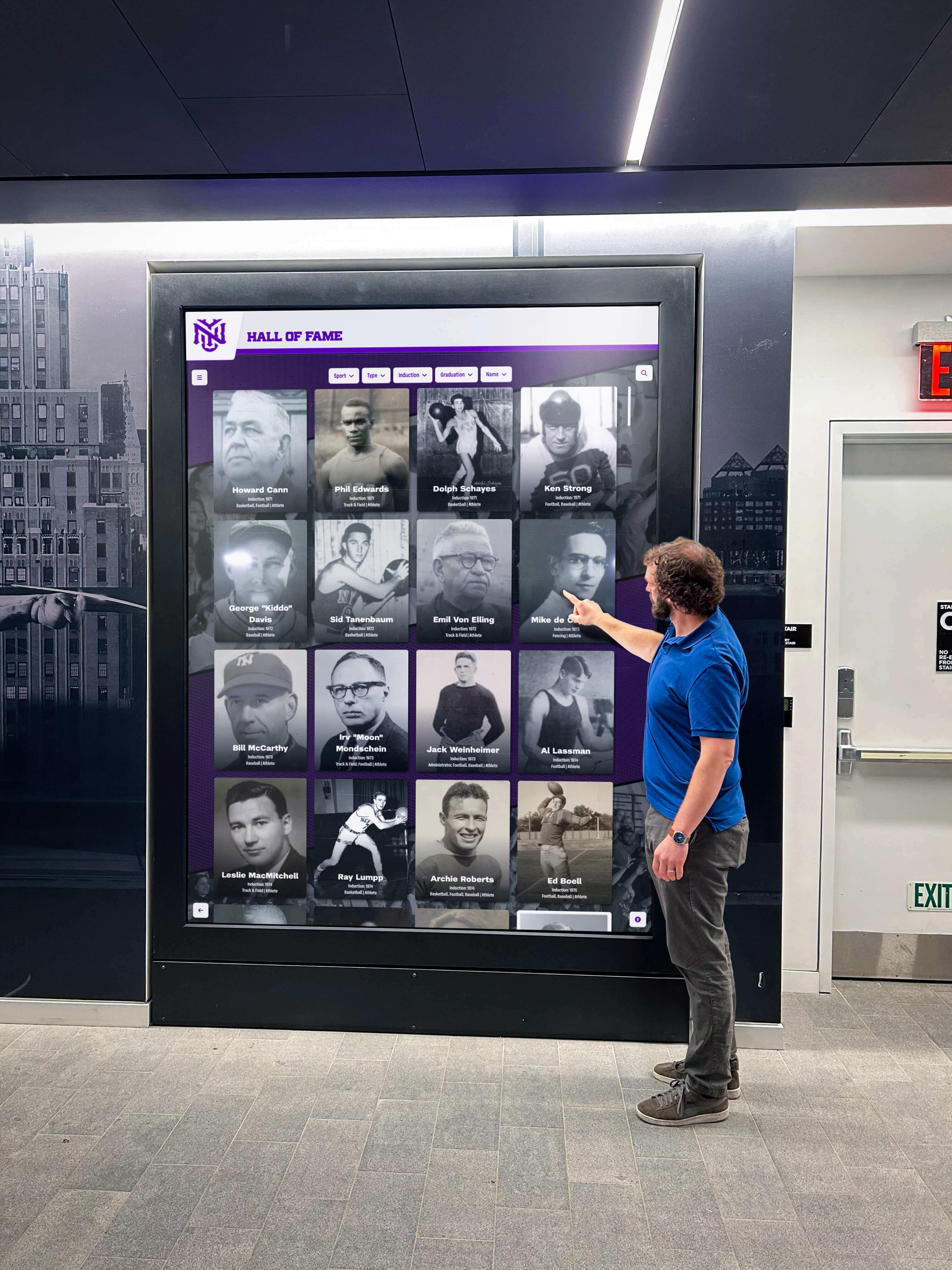
Interactive touchscreen systems allow athletes, students, families, and visitors to explore championship history comprehensively through intuitive touch interfaces.
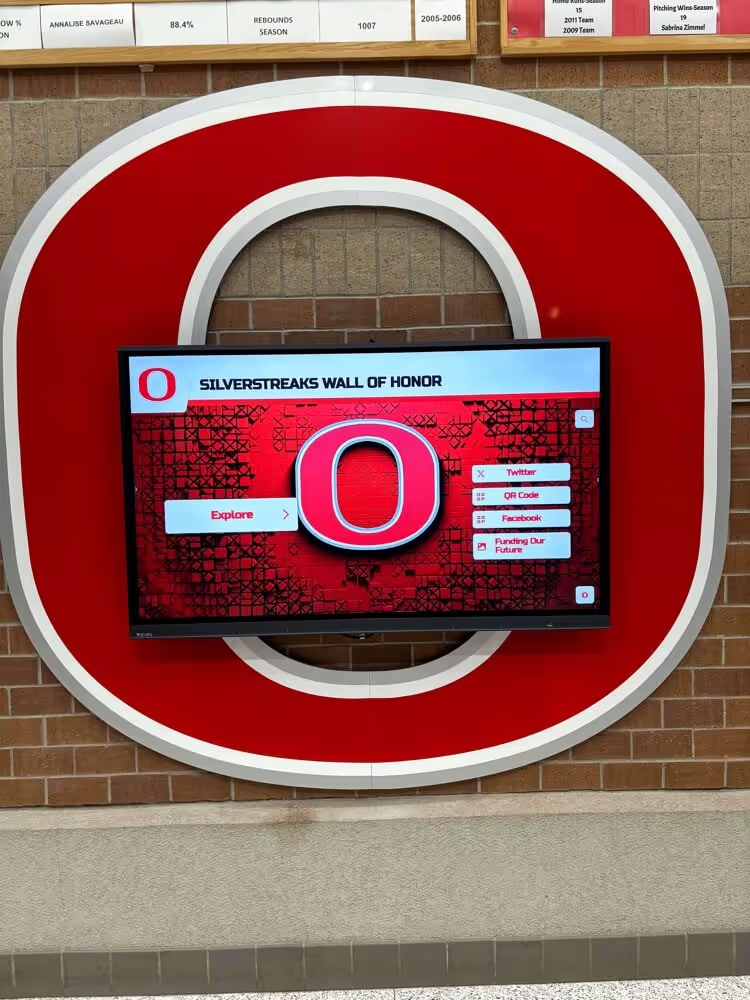
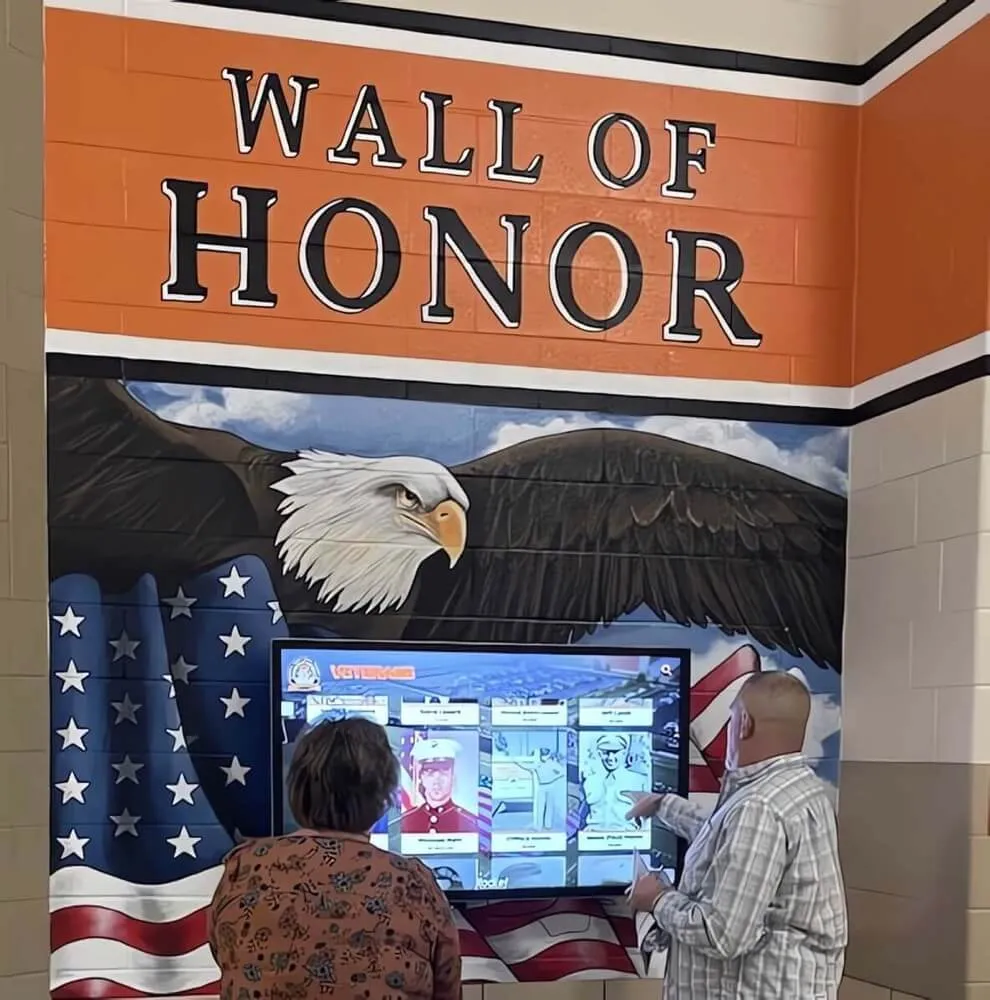
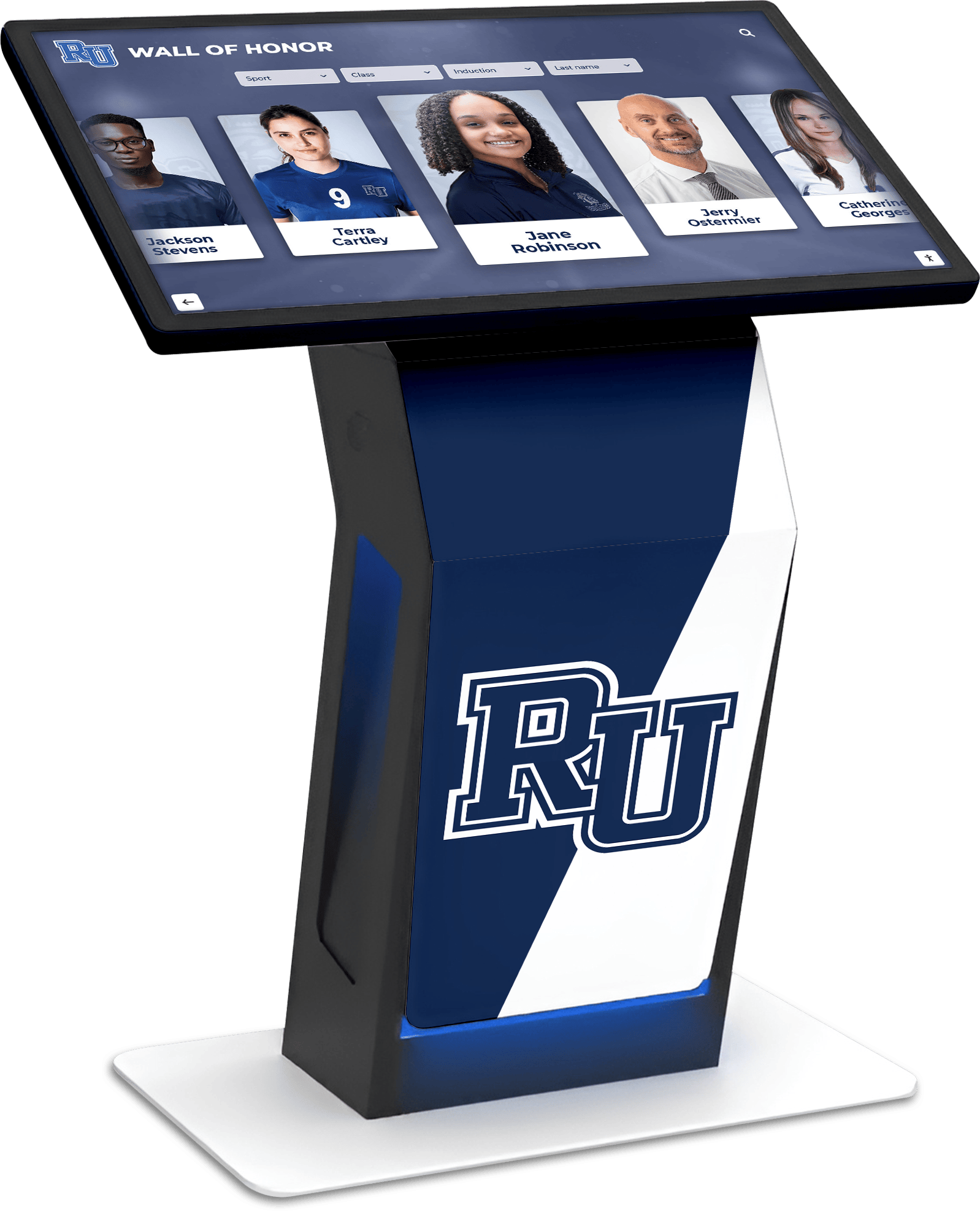
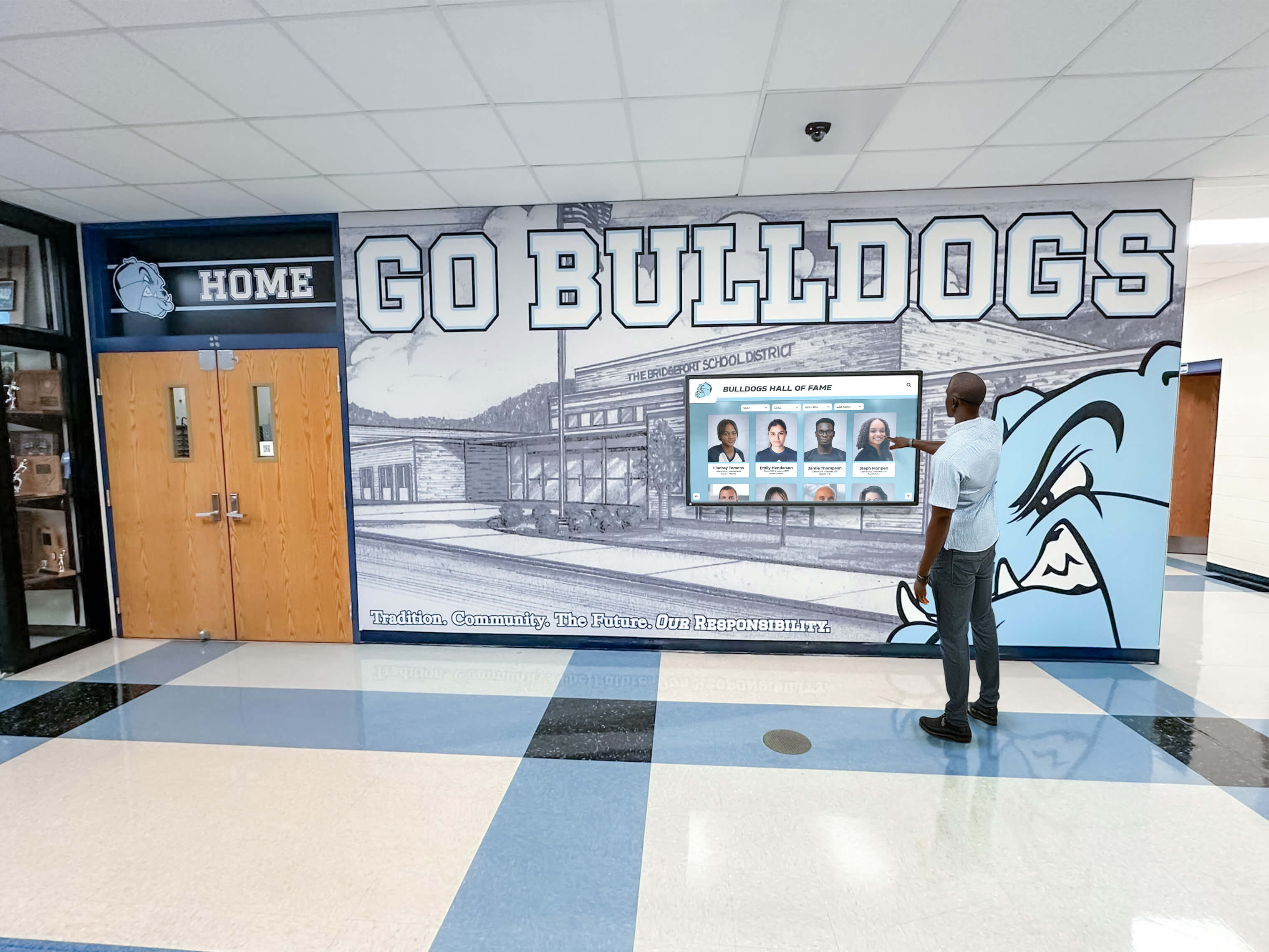
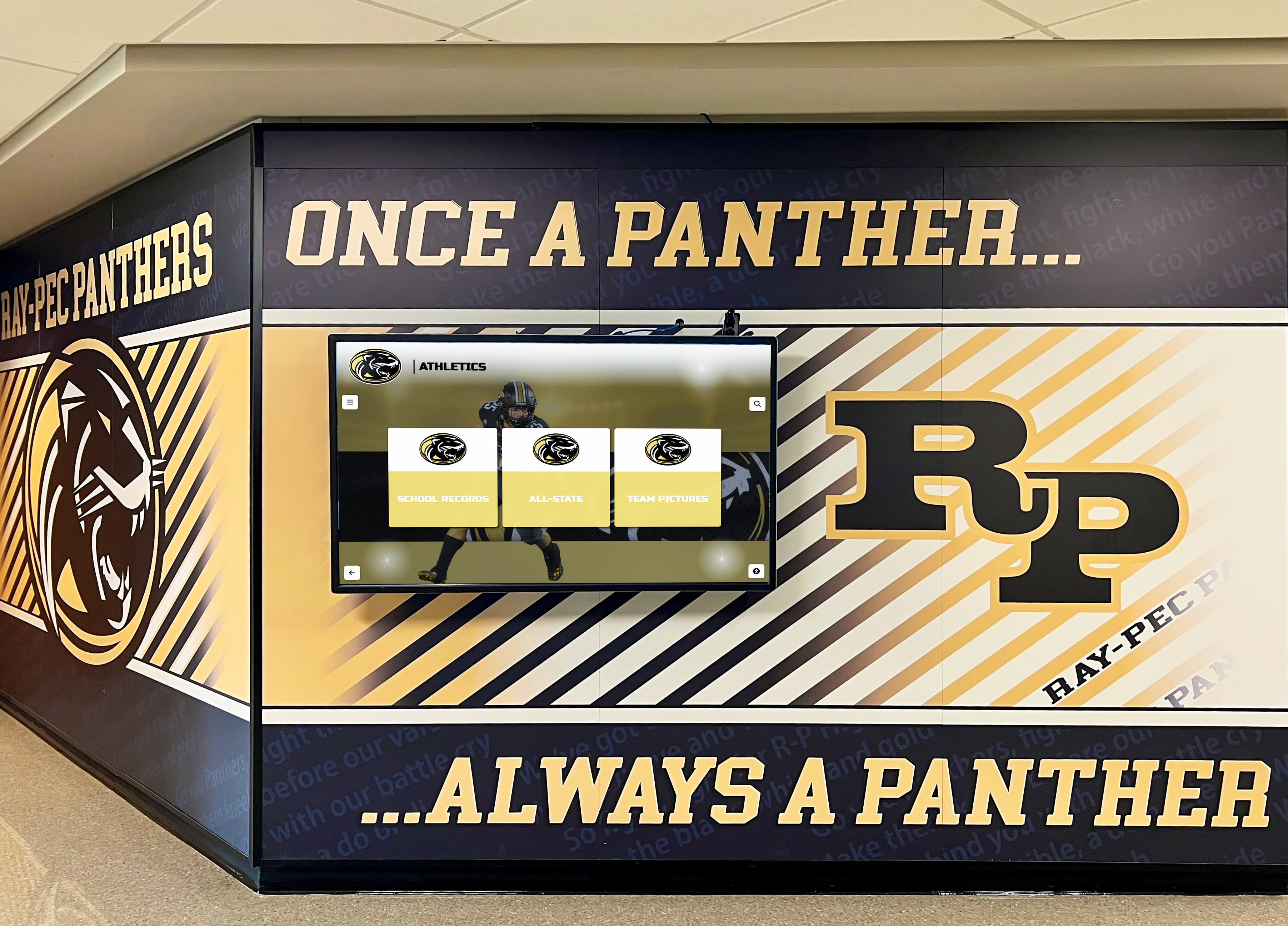
Technology Overview: Commercial-grade touchscreens (typically 43-55 inches) installed in high-traffic locations—main lobbies, athletic facility entrances, cafeterias—connect to content management systems enabling rich interactive experiences. Users navigate through championship information by tapping screens to explore different years, divisions, teams, and individual athletes.
Content Capabilities: Interactive systems accommodate comprehensive championship documentation including:
- Tournament bracket progressions showing each playoff game result
- Complete team rosters with athlete photographs
- Individual player statistics and career highlights
- Championship game summaries and scoring details
- Season records, schedules, and result histories
- Coach biographies and career accomplishments
- Photographs and videos from championship seasons
- Comparisons across multiple championship teams
- Searchable databases enabling instant information discovery
Information Depth Advantages: Unlike physical displays limited to visible surfaces, interactive systems provide unlimited information depth. Initial screens might show championship years and divisions, with tap interactions revealing increasingly detailed information—season summaries, then complete rosters, then individual athlete profiles with career statistics, photographs, and accomplishments. This progressive disclosure accommodates both casual viewers wanting overview information and dedicated researchers seeking comprehensive details.
Update Flexibility: Digital content management systems allow authorized staff to add new championship information, update existing content, correct errors, and enhance displays continuously without physical modifications. Adding new state championship information requires 30-60 minutes of data entry rather than ordering new banners, manufacturing plaques, or reorganizing trophy cases.
Engagement Analytics: Interactive displays generate usage analytics quantifying engagement—total interactions, most-viewed content, average session duration, peak usage times, and content navigation patterns. This data demonstrates display value to administrators and informs content strategy by revealing which championship information resonates most with audiences.
Accessibility Considerations: Properly designed interactive systems accommodate diverse users including adjustable text sizes for readability, high-contrast color schemes meeting accessibility guidelines, screen positioning accessible to wheelchair users, and intuitive navigation requiring minimal technical proficiency.
Investment Profile: Quality interactive touchscreen installations typically cost $6,000-$15,000 including display hardware, mounting and installation, initial content development, and first-year software licensing. Annual software and support costs range $1,200-$3,600 depending on features and support levels.
Interactive touchscreens deliver strongest value when championship documentation matters beyond just listing years and divisions, when school populations want to explore detailed historical information, when budgets accommodate higher initial investment for richer capabilities, and when locations with viewer dwell time enable meaningful interaction rather than glance-viewing.
Comprehensive Athletic Recognition Platforms
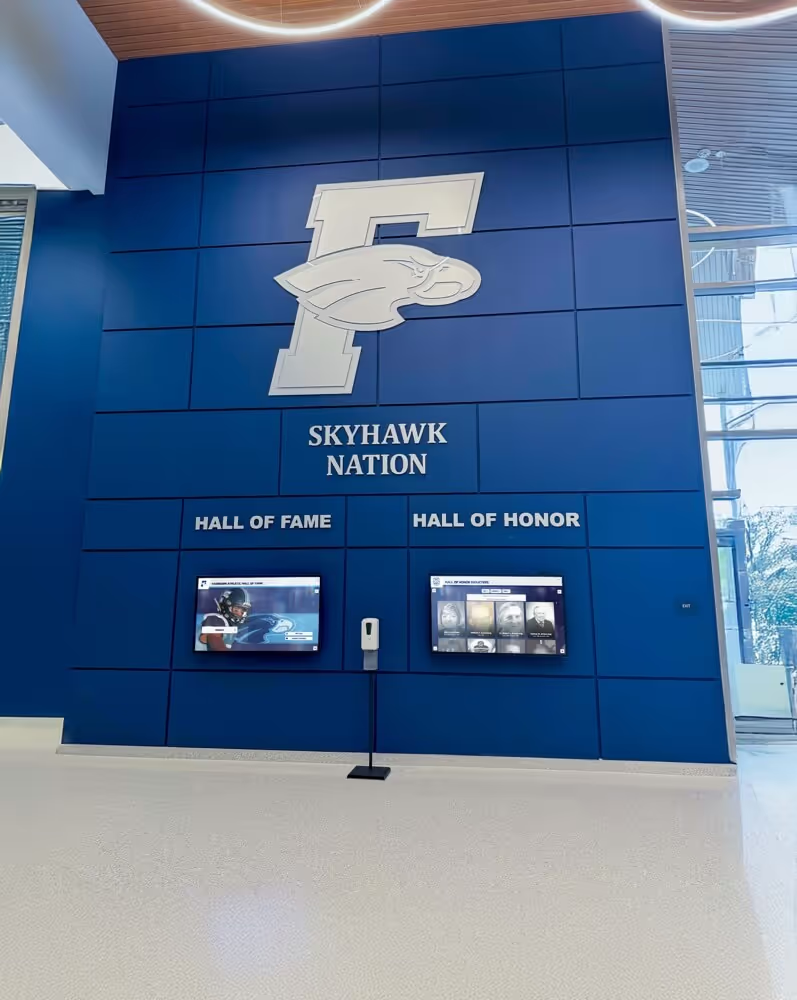
Purpose-built athletic recognition platforms integrate championship displays within broader systems that also showcase athlete profiles, team records, individual achievements, and hall of fame programs.
Platform Architecture: Rather than standalone championship displays, integrated platforms position state football championships within comprehensive athletic recognition infrastructure. Students exploring championship teams can naturally navigate to individual athlete profiles, view their complete athletic careers, discover related achievements in other sports, and explore decades of athletic history through unified interfaces.
Multi-Sport Integration: Comprehensive platforms serve needs extending beyond just football championships. Schools investing in these systems gain infrastructure supporting all athletic programs—championship documentation, record books, athlete recognition, team histories, and hall of fame systems—creating value that continues year-round across all sports rather than serving single-sport purposes.
Content Synergies: Integrated platforms create content efficiencies. Athlete profiles developed for general recognition purposes automatically populate championship team rosters. Championship documentation feeds into broader athletic history narratives. Statistical databases support both individual achievement recognition and team accomplishment documentation. This integration reduces total administrative burden compared to maintaining separate systems for different athletic recognition purposes.
Multi-Location and Multi-Platform Distribution: Advanced platforms synchronize content across physical touchscreens installed in facilities, web-accessible versions viewable on any device, mobile applications, and displays in different locations—ensuring identical current information appears everywhere. Updates made once propagate automatically to all access points.
Long-Term Value Accumulation: Comprehensive platforms accumulate value over time as content libraries grow. Each year’s championship season adds to expanding historical archives. Athletic records update continuously. Athlete profiles multiply as classes graduate. After 5-10 years, platforms become comprehensive institutional athletic archives providing value extending far beyond original implementation objectives.
Alumni and Community Engagement: Platform content becomes valuable for alumni relations, advancement initiatives, and community engagement. Alumni athletes discover their profiles within searchable databases, reconnecting with institutional memories. Championship teams reunite using platform content as conversation focal points. Community members explore local athletic history, strengthening community-school bonds.
Administrative Efficiency: Centralized content management allows athletic directors or administrators to maintain championship information, athlete profiles, team records, and recognition programs through unified systems rather than managing multiple disconnected solutions. This consolidation reduces learning curves, prevents information duplication, and streamlines workflows.
Investment Considerations: Comprehensive athletic recognition platforms represent substantial investment—$10,000-$30,000 for initial implementation including displays, software, content development, and installation, plus $2,500-$8,000 annually for hosting, support, and updates. This investment exceeds basic digital signage significantly, requiring demonstration that comprehensive capabilities justify higher costs.
Best Applications: Integrated platforms deliver strongest returns when athletic recognition needs extend beyond just football championships to comprehensive multi-sport documentation, when budgets can accommodate higher investment for complete solutions, when long-term perspective values building cumulative athletic history rather than just addressing immediate championship recognition needs, and when schools want institutional-grade recognition infrastructure similar to what college programs maintain.
Web-Based Championship Archives
Some schools implement web-accessible championship archives allowing anyone with internet access to explore championship history through school websites or dedicated athletic portals.
Accessibility Advantages: Web-based archives provide unlimited geographic access. Alumni living across the country, prospective families researching schools, community members, and media can access championship information anytime from any location without visiting physical facilities. This accessibility exponentially expands recognition reach compared to physical displays accessible only on campus.
Content Management Simplicity: Web-based systems allow staff to update championship information through standard content management interfaces similar to updating websites. This familiar workflow reduces training requirements and enables quick updates without specialized technical skills.
Cost Efficiency: Web-only solutions typically cost significantly less than physical touchscreen installations since they require no hardware purchases, physical installation, or facility modifications. Schools with existing websites can often add championship archive sections for minimal incremental cost.
Limitations: Web archives lack the physical presence that captures attention naturally in school facilities. Students must deliberately seek out web archives rather than encountering championship recognition passively while walking hallways. This visibility limitation means web-only solutions provide excellent supplementary resources but function poorly as primary recognition when institutional objectives include influencing school culture through visible recognition.
Search Engine Visibility: Properly implemented web archives become discoverable through search engines, allowing people researching Michigan high school football championships, specific teams, or individual athletes to discover your school’s information. This discoverability creates unexpected connections and extends recognition impact beyond immediate school communities.
Integration with Physical Displays: Optimal implementations combine physical displays in facilities (capturing attention, creating presence, influencing culture) with web-accessible versions (extending reach, enabling research, serving alumni). Physical and digital components complement rather than compete, collectively creating more comprehensive recognition ecosystems than either approach alone.
Hybrid Recognition Systems
Many schools successfully implement hybrid approaches combining traditional physical recognition with complementary digital systems—leveraging each method’s strengths while compensating for limitations.
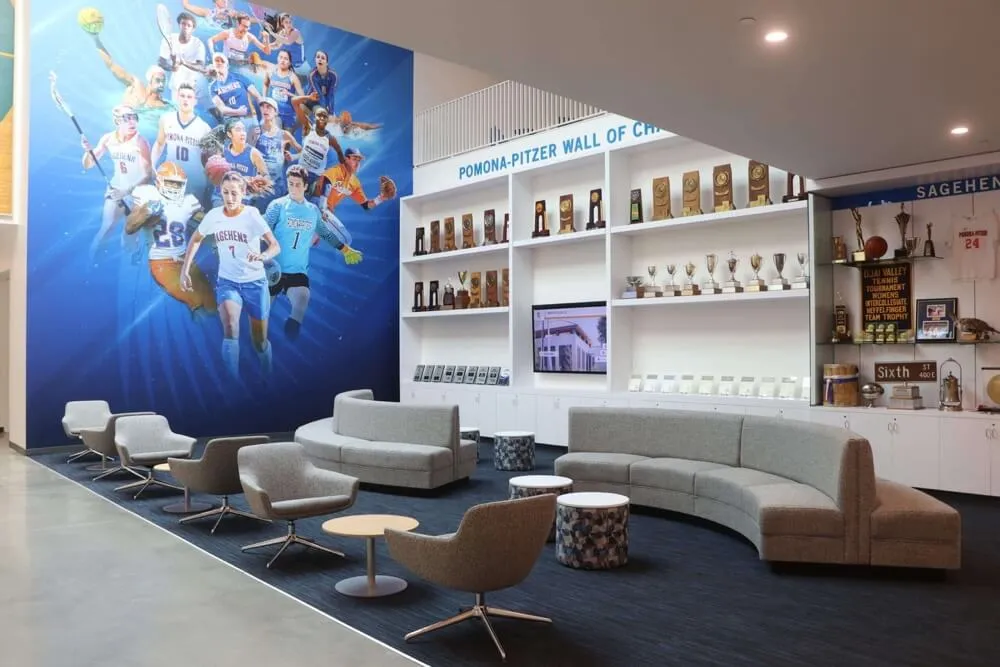
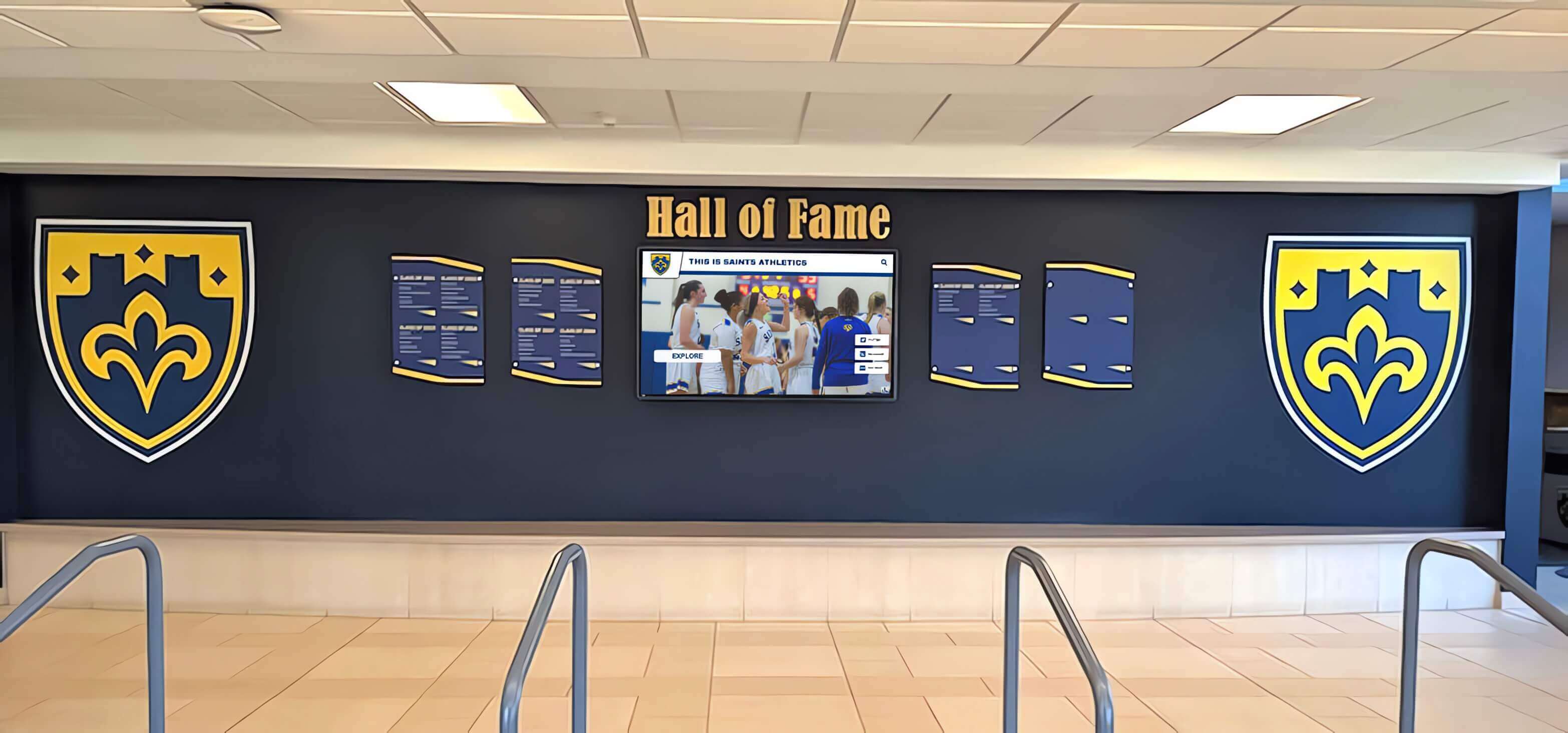
Trophy Cases Plus Digital Content: Physical championship trophies provide tangible gravitas and visceral connections, while adjacent digital displays offer comprehensive championship documentation that physical items cannot accommodate. Visitors see actual trophies teams hoisted while accessing complete championship stories through interactive content.
Championship Banners Plus Interactive Exploration: Gymnasium banners create visual atmosphere and immediate recognition, while lobby touchscreens enable detailed championship exploration for those wanting deeper information. This combination serves both casual observers (satisfied by banner recognition) and dedicated researchers (exploring comprehensive digital content).
Physical and Virtual Integration: Some systems use physical displays as entry points to digital content through QR codes or augmented reality applications. Visitors scanning codes printed on trophy cases or banners access digital content on their phones—linking physical and digital recognition methods into integrated experiences.
Coordinated Aesthetic Design: Successful hybrid implementations coordinate design elements across physical and digital components—consistent color schemes, compatible typography, unified branding—creating cohesive recognition environments rather than disconnected elements that appear unrelated.
Maintenance Coordination: Hybrid systems require coordinated maintenance ensuring all components—physical displays, digital content, web archives—remain current and consistent. Clear responsibility assignments and unified update workflows prevent situations where some components receive attention while others deteriorate.
Schools implementing hybrid recognition should view physical and digital elements as complementary components within comprehensive recognition strategies rather than choosing between traditional versus modern approaches.
Implementing Championship Recognition: Best Practices
Successful championship recognition implementation requires more than just purchasing displays—following proven best practices ensures recognition achieves intended objectives.
Content Planning and Structure
Effective championship recognition requires thoughtful content planning ensuring information communicates clearly and serves audience needs.
Essential Championship Information: Comprehensive championship recognition should document:
- Championship year and division
- Final season record
- Playoff bracket progression with game results
- Championship game score and key statistics
- Complete team roster with player positions
- Coaching staff with position designations
- Season highlights and notable achievements
- Postseason individual awards and honors
- Historical context (previous championships, drought length, etc.)
- Photographs from championship season
Information Architecture: Organize championship content hierarchically, presenting most important information prominently while making detailed information accessible through exploration. Primary screens might show championship years, divisions, and records, with interaction revealing increasingly comprehensive details.
Historical Context Integration: Position championships within broader program history. When presenting a 2018 championship, show that it ended a 35-year championship drought or represented the program’s fifth title. This contextualization helps viewers appreciate each championship’s specific significance within institutional narratives.
Consistent Formatting: Establish consistent documentation standards across all championship years, ensuring similar information appears for every title. This consistency enables meaningful comparisons across eras and prevents newer championships receiving comprehensive documentation while older ones show only minimal details.
Regular Content Audits: Periodically review championship content for accuracy, completeness, and appropriate detail. Correct identified errors promptly and enhance documentation when additional information becomes available through alumni contacts, archival research, or historical discovery.
Technical Implementation Considerations
Proper technical implementation ensures recognition systems function reliably and appear professionally finished.
Display Location Selection: Position recognition displays where target audiences naturally congregate and have time to engage—main building lobbies, athletic facility entrances, cafeterias, student centers. High-traffic locations without dwell time serve poorly for interactive content requiring extended viewing.
Electrical and Network Infrastructure: Ensure reliable power delivery with surge protection and concealed wiring maintaining professional appearance. Provide strong network connectivity (hardwired Ethernet preferred) for content management and updates. Address infrastructure requirements during installation rather than discovering inadequacies after completion.
Mounting and Positioning: Secure displays to structural supports safely supporting equipment weight plus safety margins. Position screen centers at 50-60 inches above floor for optimal viewing. Minimize glare through positioning that avoids direct sunlight or overhead lighting reflecting on screens.
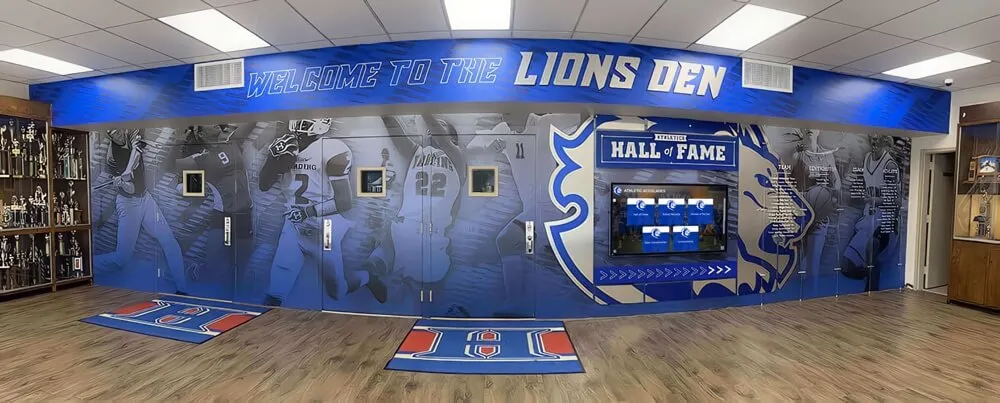
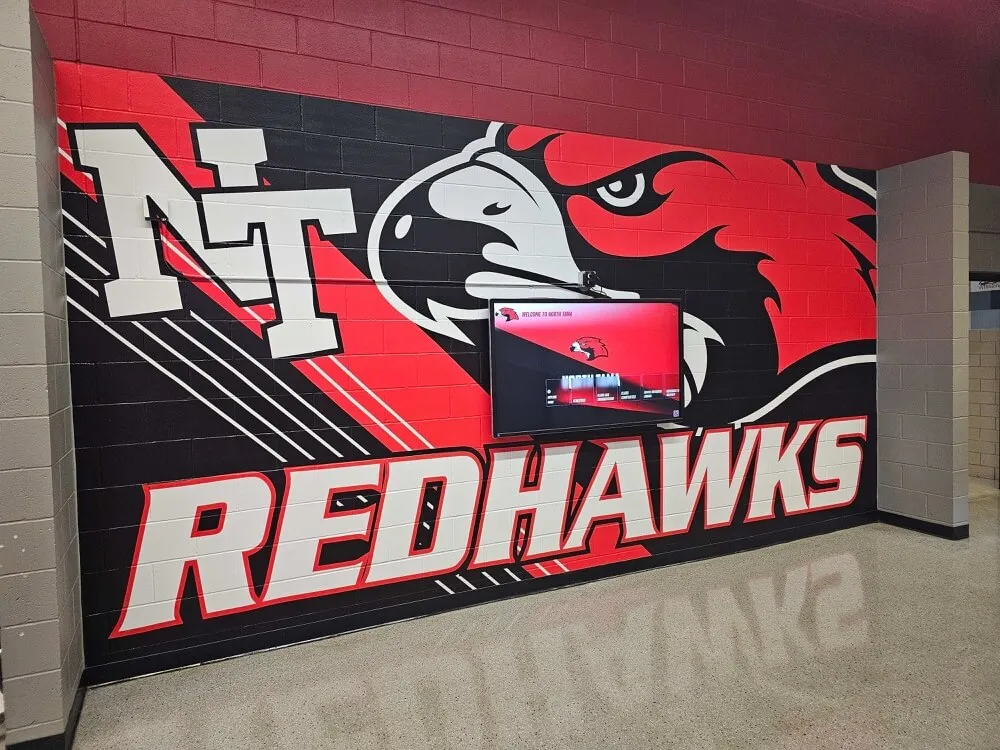
Integration with Facilities: Design recognition displays as integrated facility elements rather than afterthought additions. Consider mounting within architectural features, coordinating hardware finishes with surroundings, concealing cables and equipment, and positioning that complements existing recognition elements.
Maintenance Access: Ensure installations accommodate future maintenance including accessible power connections, removable mounting enabling display servicing, and sufficient clearance for technicians working on equipment. Permanent installations with no maintenance access create expensive problems when displays require service.
Staff Training and Support
Recognition investments deliver value only when personnel know how to operate and maintain systems effectively.
Administrator Training: Staff managing championship displays need comprehensive training covering system operation, content management for adding championships and updating information, troubleshooting common problems, and accessing vendor support when needed.
Documentation Development: Create clear documentation covering system capabilities, step-by-step procedures for common tasks, vendor contact information and support processes, and warranty terms. Keep documentation accessible to current staff and successors who assume responsibility after personnel changes.
Backup Personnel Designation: Train multiple staff members on recognition system management, preventing single-person dependencies that create vulnerabilities when individuals are unavailable, ill, or depart. Cross-training ensures continuity through personnel transitions.
Ongoing Support Arrangements: Establish clear vendor support terms defining included technical assistance, response time expectations for support requests, escalation procedures for serious problems, and continuing education as systems update with new features.
Measuring Recognition Effectiveness
Schools should establish metrics demonstrating recognition value and informing continuous improvement.
Engagement Metrics: Interactive displays provide built-in analytics quantifying total interactions, session durations, most-viewed content, and usage patterns. These metrics demonstrate effectiveness and guide content strategy.
Observational Assessment: Even non-interactive displays benefit from periodic observation noting how many people pause to view recognition, typical viewing duration, what content generates interest, and improvement opportunities. Qualitative assessment supplements quantitative metrics.
Stakeholder Feedback: Survey students, athletes, families, and alumni gathering perception data including recognition awareness, information usefulness, improvement suggestions, and overall satisfaction. Feedback ensures recognition serves actual stakeholder needs rather than institutional assumptions.
Culture Impact Assessment: Monitor whether enhanced championship recognition correlates with changes in athletic program participation rates, off-season training engagement, booster organization involvement, or prospective family perceptions during school tours.
Regular measurement cycles—quarterly metric reviews, annual comprehensive assessments—enable continuous improvement and demonstrate ongoing value justifying continued investment and potential expansion.
Championship Recognition and Title IX Compliance
Schools implementing championship recognition must ensure compliance with Title IX requirements for equitable treatment across male and female athletics.
Equal Recognition Requirements
Title IX mandates that schools provide equal recognition opportunities for male and female athletes, including championship recognition.
Equivalent Visibility: Championship recognition for girls’ sports must receive visibility equivalent to boys’ sports recognition. If football state championships appear in main lobbies with interactive displays, comparable championships in girls’ sports (basketball, volleyball, soccer, etc.) must receive equivalent prominent recognition.
Equal Investment: Schools must invest proportionally in recognition across male and female athletics. Spending substantial sums on football championship recognition while providing minimal recognition for girls’ championships creates Title IX compliance concerns.
Comprehensive Coverage: Recognition systems should document championships across all sports, ensuring female athletes see their achievements celebrated alongside male athletes within unified recognition infrastructure.
Avoiding Tokenism: Simply adding minimal girls’ athletic recognition to extensive boys’ recognition doesn’t constitute equity. Recognition quality, comprehensiveness, and prominence must be genuinely equivalent.
Benefits of Integrated Multi-Sport Recognition
Comprehensive recognition platforms naturally support Title IX compliance by treating all sports equitably within unified systems.
Unified Infrastructure: When schools implement recognition systems documenting all athletic championships within single platforms, all sports automatically receive equivalent treatment. Football championships, volleyball championships, basketball championships, and others appear within consistent formats using identical display infrastructure.
Equal Information Depth: Digital platforms accommodate comprehensive documentation for all sports equally. Every championship—regardless of sport—can include complete rosters, season summaries, playoff progressions, and championship game details presented in equivalent detail.
Visibility Equity: Physical displays showing content from all sports in rotation ensure equivalent visibility over time. Female athletes see their championships featured with the same frequency and prominence as male athletics.
Combined Pride: Multi-sport recognition celebrating all athletic achievements strengthens overall school culture and demonstrates institutional commitment to comprehensive athletic excellence rather than prioritizing specific sports.
Schools implementing championship recognition should proactively ensure Title IX compliance, recognizing that equitable recognition benefits all athletes and strengthens comprehensive athletic programs.
Future Trends in Championship Recognition
Emerging technologies and evolving practices will continue transforming how schools recognize state championship achievements.
Enhanced Data Integration
Future recognition systems will increasingly integrate automatically with tournament management platforms, scoring systems, and statistical databases, enabling real-time bracket updates as playoff games conclude and automatic population of championship information without manual data entry.
This integration eliminates update burdens currently challenging many implementations, ensures perfect accuracy rather than risking manual errors, and enables immediate information availability rather than delayed updates awaiting staff processing.
Video Content and Multimedia
As video creation becomes increasingly accessible, championship recognition will incorporate more multimedia content including game highlights, championship moment compilations, coach and player interviews, and documentary-style championship season narratives. This richer content creates more engaging recognition experiences and preserves championship stories in formats conveying emotion and context that text and photographs alone cannot capture.
Alumni Engagement Features
Advanced recognition platforms may enable alumni athletes to contribute content directly—submitting photographs, sharing championship memories, updating biographical information, and connecting with former teammates. This interactive participation transforms recognition from static institutional content to living community resources that grow richer over time through alumni contributions.
Mobile and Augmented Reality
Mobile applications and augmented reality experiences may allow viewers to point smartphones at physical championship trophies or banners, revealing supplementary digital content including videos, detailed statistics, and historical context that physical displays cannot accommodate. This hybrid approach combines traditional recognition aesthetics with digital information depth.
Artificial Intelligence Content Enhancement
AI technologies may eventually assist in content creation—generating championship season summaries from game statistics, creating video highlight compilations automatically, producing athlete profile content from statistical databases, and identifying relevant photographs from image libraries. While human oversight remains essential, AI assistance could reduce content development burden substantially.
Schools should maintain pragmatic perspectives on emerging technologies, adopting innovations offering clear value improvements rather than implementing technology for novelty. Proven reliable solutions typically serve schools better than experimental approaches with uncertain long-term viability.

Conclusion: Honoring Michigan Football Championship Excellence
Michigan high school football state championships represent remarkable achievements deserving recognition infrastructure matching their significance. These championships result from years of dedication, countless hours of practice, physical sacrifice, and team commitment that extends far beyond the five playoff games required to win state titles.
Schools that implement comprehensive championship recognition create lasting benefits including cultural influence inspiring current athletes toward excellence, preserved institutional memory ensuring achievements remain visible across generations, strengthened community pride connecting schools with broader populations, and demonstrated respect for student-athletes who achieved at elite levels.
The optimal recognition approach for any specific school depends on unique combinations of budget availability, technical capabilities, space characteristics, and institutional priorities. Schools with minimal budgets may find that thoughtfully implemented traditional recognition—quality trophy cases, championship banners, well-maintained displays—adequately serves recognition purposes when positioned prominently and maintained consistently.
Schools prioritizing comprehensive historical documentation, interactive exploration, and long-term digital preservation increasingly benefit from modern recognition platforms. While requiring higher investment, these systems deliver capabilities traditional displays cannot match—unlimited information depth, easy updates, cumulative historical documentation, search functionality, and engagement analytics quantifying value.
Many schools successfully implement hybrid approaches combining physical trophies and banners (providing tangible presence and visual impact) with digital interactive systems (offering comprehensive documentation and exploration capabilities). These combinations leverage each method’s strengths while compensating for individual limitations, creating recognition ecosystems more comprehensive than any single approach alone.
Regardless of selected approach, implementation quality determines success as much as technology choice. Thoughtful content planning, proper technical installation, adequate staff training, realistic capacity assessment, and ongoing maintenance commitment separate recognition that delivers lasting value from installations that fail despite adequate initial investment.
Purpose-built platforms like Rocket Alumni Solutions provide schools with comprehensive athletic recognition infrastructure specifically designed for educational contexts. These systems combine championship bracket displays with athlete profiles, team histories, record books, and hall of fame programs in unified environments optimized for schools, ensuring Michigan high school football state championships receive recognition matching their significance while serving broader athletic recognition needs extending across all sports and decades of institutional history.
The state championships your football teams compete for—and occasionally win—deserve recognition ensuring these achievements receive appropriate visibility during exciting championship seasons while preserving accomplishments permanently within institutional memory. Effective championship recognition amplifies school pride, honors athletic excellence, strengthens community connections, and creates experiences that athletes, students, and supporters value across generations.
By carefully evaluating recognition options against your specific institutional context, implementing systems matched to actual capabilities and resources, and maintaining displays consistently over time, your school can create championship recognition infrastructure that transforms fleeting victory celebrations into enduring pride celebrating athletic achievement at its highest level—honoring the champions who brought glory to your school while inspiring future athletes to pursue their own championship dreams.