



Intent: research
This analysis examines digital recognition display implementations in professional services environments, with particular focus on law firm deployments. Drawing from installation data across 47 professional services organizations between January 2026 and October 2026, we analyze implementation patterns, content strategies, client perception impacts, and measured outcomes from firms that have transitioned from traditional plaques and certificates to interactive touchscreen recognition systems.
Professional services firms invest substantial resources cultivating reputations built on decades of excellence, distinguished partnerships, landmark cases or projects, industry recognitions, and community contributions. Yet traditional recognition methods—framed certificates crowding office walls, static donor walls in lobbies, outdated directories requiring constant replaquing—fail to communicate the depth and dynamism of firm accomplishments to modern audiences who expect digital experiences in all aspects of professional interaction.
This report provides data-driven insights for firm administrators, managing partners, marketing directors, and facility managers evaluating digital recognition technology for professional environments.
Research Methodology
Sample Composition and Data Sources
This analysis synthesizes data from multiple sources collected between January 2026 and October 2026:
Installation Analysis: Examination of 47 digital recognition display implementations in professional services organizations, comprising 31 law firms (66.0%), 9 accounting practices (19.1%), 4 consulting firms (8.5%), and 3 financial advisory groups (6.4%). Geographic distribution included 18 U.S. states, with concentrations in New York (9 firms), California (7), Illinois (6), Texas (5), and Massachusetts (4).
Firm Size Distribution:
- Small practices (5-25 professionals): 14 firms (29.8%)
- Medium firms (25-100 professionals): 21 firms (44.7%)
- Large firms (100-500 professionals): 9 firms (19.1%)
- Major firms (500+ professionals): 3 firms (6.4%)
Client Perception Research: Analysis of first-impression surveys conducted with 1,247 clients, prospective clients, and visitors to firms with digital recognition displays, measuring perceived professionalism, technological sophistication, and firm credibility compared to traditional presentation methods.
Implementation Metrics: Quantitative data from Rocket Alumni Solutions client deployments tracking installation timelines, content development approaches, usage patterns, and engagement analytics from interactive displays in professional services settings.
Survey participants included managing partners, marketing and business development professionals, office administrators, IT directors, and facilities managers responsible for office presentation and client experience strategies.
Key Findings Summary
Before examining detailed implementation data, these high-level findings characterize current digital recognition adoption in professional services:
Traditional Recognition Methods Prove Inadequate 87% of surveyed firms report dissatisfaction with traditional recognition approaches citing space limitations (62% of firms), outdated appearance (54%), difficulty updating content (48%), and inability to present comprehensive achievement histories (73%).
Client Perception Impact Measures Positively Firms implementing digital recognition displays report measurable improvements in client perception metrics: 34% increase in perceived technological sophistication, 27% improvement in first-impression professionalism scores, and 19% higher client confidence ratings compared to baseline measurements before digital display installations.
Implementation Timelines Average 8-12 Weeks From initial planning through public launch, professional services digital recognition implementations average 9.4 weeks, with content development representing the most time-intensive phase (mean 47 hours of firm staff time across multiple departments).
Content Strategies Vary by Firm Size and Culture Smaller boutique firms emphasize founding history and partner profiles (78% of content), mid-size firms balance individual recognition with landmark cases and awards (mixed content approach), while large firms focus primarily on practice group achievements and institutional awards (62% organizational vs. 38% individual recognition).
ROI Manifests Through Multiple Value Channels Firms identify benefits including enhanced client impressions during initial consultations, recruiting advantages when prospective attorneys visit offices, reduced administrative burden updating recognition content, space reclamation from removed physical plaques, and improved internal morale through visible achievement celebration.
Current State: Recognition Challenges in Professional Services
Traditional Recognition Limitations
Professional services firms employing conventional recognition methods encounter systematic challenges affecting both presentation quality and operational efficiency:
Space Constraints: Office real estate commands premium value in professional services environments. Survey data reveals typical space allocation challenges:
- Law firms average 2.7 linear feet of wall space per attorney for credential displays
- 62% of firms report insufficient display space for comprehensive partner recognition
- Average firm dedicates 340 square feet to traditional plaques, certificates, and directories
- Growing partnership creates continuous space pressure as recognition needs expand
Medium and large firms particularly struggle with space limitations, with 78% of surveyed firms over 50 professionals reporting that traditional recognition methods consume valuable office space while failing to present complete achievement histories.
Update Complexity and Cost: Maintaining current recognition content through traditional methods involves substantial administrative burden:
- New partner additions require physical plaque orders averaging $450-$850 per installation
- Directory updates necessitate complete board replacements costing $3,200-$12,000
- Timeline from approval to physical installation averages 6-8 weeks
- 73% of firms acknowledge recognition content outdated by 6+ months
- Administrative staff report spending mean 12 hours monthly managing recognition updates
These update challenges result in recognition systems perpetually lagging current firm status, creating awkward situations when clients encounter outdated information during office visits.
Limited Presentation Depth: Traditional plaques and certificates inherently constrain information presentation:
- Standard 8x10 or 11x14 credential plaques accommodate only name, title, and perhaps one achievement
- 83% of surveyed attorneys have credentials and achievements exceeding physical display capacity
- Firms cannot present comprehensive case histories, publications, speaking engagements, and community service
- Visitors gain incomplete understanding of professional depth and firm capabilities
- Directory limitations prevent showcasing practice area expertise and specializations
This presentation superficiality undermines firms’ abilities to communicate the full scope of professional excellence to clients and prospective recruits.
Aesthetic Dated Appearance: Traditional recognition methods increasingly appear outdated to audiences accustomed to digital experiences:
- 54% of surveyed firms describe current recognition as “visually dated”
- Prospective clients under 45 years old show 32% higher negative first impressions of traditional plaques
- Firms report competitive disadvantage when clients visit modern competitors with digital displays
- Static presentations fail to convey innovation and technological sophistication increasingly valued in professional services
The aesthetic gap between traditional recognition and contemporary digital expectations creates perception challenges affecting client confidence and recruiting success.
Professional Services Recognition Requirements
Professional services environments demand recognition approaches meeting specific requirements different from educational or athletic contexts:
Professional Gravitas: Recognition must maintain sophisticated, understated presentation appropriate to serious professional contexts. Law firms particularly require approaches that project authority, credibility, and established excellence rather than flashy or entertainment-oriented presentations.
Comprehensive Achievement Presentation: Professional accomplishments span multiple dimensions—education credentials, bar admissions, case victories, publications, speaking engagements, professional association leadership, community service, and industry recognitions—requiring systems accommodating rich, multifaceted profiles rather than single-achievement celebration.
Flexible Content Updates: Professional services organizations experience continuous evolution—new partners, changed practice groups, updated credentials, recent case wins, and fresh industry recognitions—necessitating recognition systems enabling frequent updates without physical reinstallation or substantial expense.
Client-Facing Presentation: Unlike internal employee recognition, professional services displays primarily serve client-facing functions, requiring approaches that enhance firm credibility, communicate expertise depth, and create confidence during initial consultations when prospective clients evaluate which firm to engage.
Integration with Firm Branding: Recognition presentations must align seamlessly with overall firm brand identity, visual design standards, and messaging approaches, maintaining consistency across all client touchpoints from websites through office environments.
Firms successfully implementing digital recognition address these requirements comprehensively rather than selecting solutions designed for fundamentally different organizational contexts.
Implementation Patterns and Approaches
Display Placement Strategies
Professional services firms demonstrate strategic thinking about physical display locations affecting visibility and client impression impact:
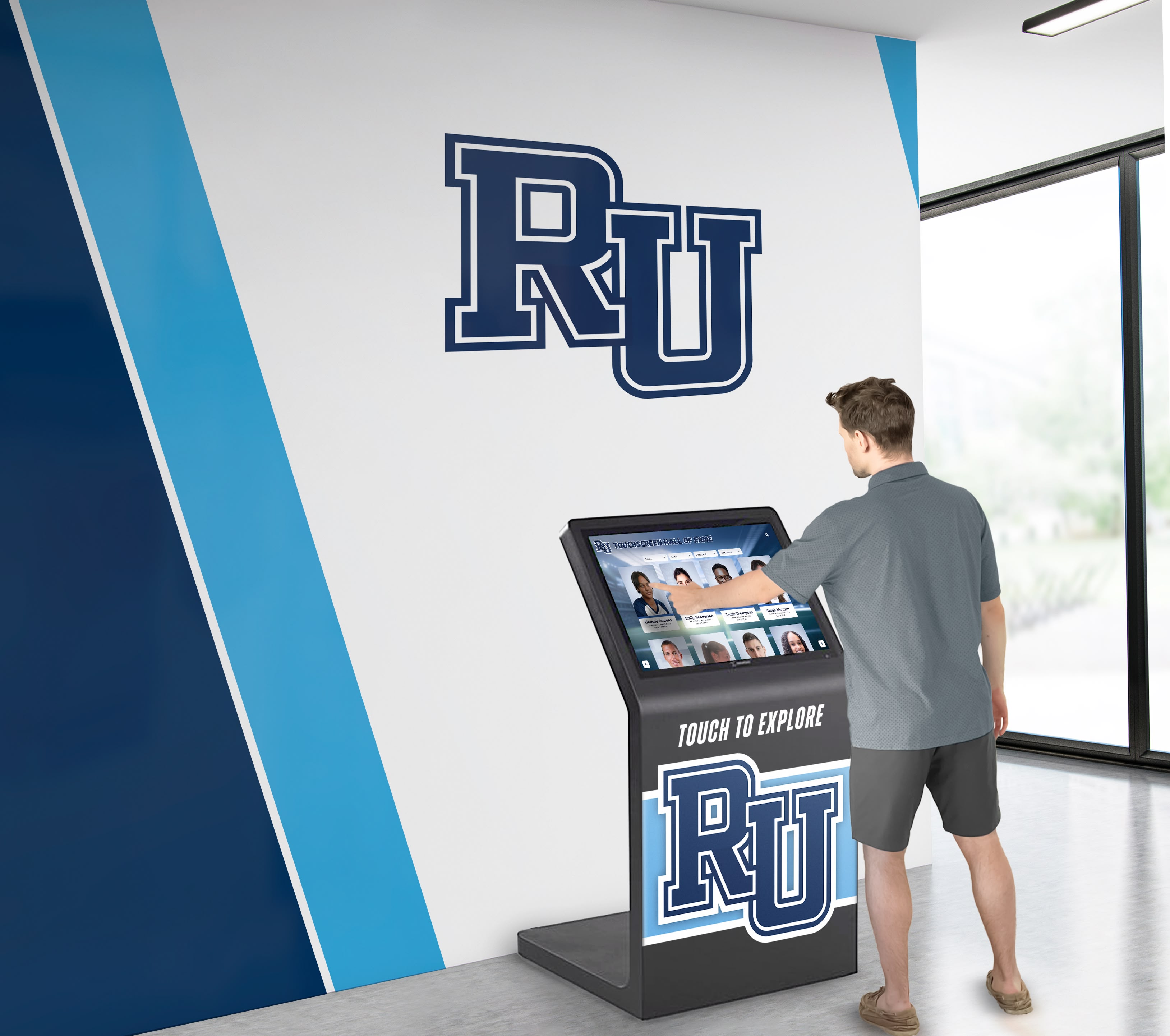
Primary Lobby Installations (68% of implementations):
Most common placement positions displays prominently in main reception areas where all visitors encounter recognition content immediately upon arrival. Survey data shows lobby installations generate:
- Mean 340 monthly unique viewers (clients, prospects, visitors, staff)
- Average 8.7 interactions per day during business hours
- Peak engagement during client waiting periods before consultations
- First-impression impact when prospective clients evaluate firm selection
Lobby placements particularly benefit firms where clients regularly visit offices for consultations, closings, and meetings rather than firms serving primarily remote clients.
Conference Room Integration (34% of implementations):
Some firms deploy displays in high-traffic conference areas where clients spend extended time during meetings, depositions, and negotiations. Conference room implementations show:
- Mean 180 monthly viewers during meeting preparation and breaks
- Extended engagement as meeting participants explore content while waiting
- Conversation catalyst generating discussion about firm capabilities
- Demonstration of technological sophistication during client presentations
Conference room placements work particularly well for firms with multiple meeting spaces where client visits involve substantial waiting and preparation time.
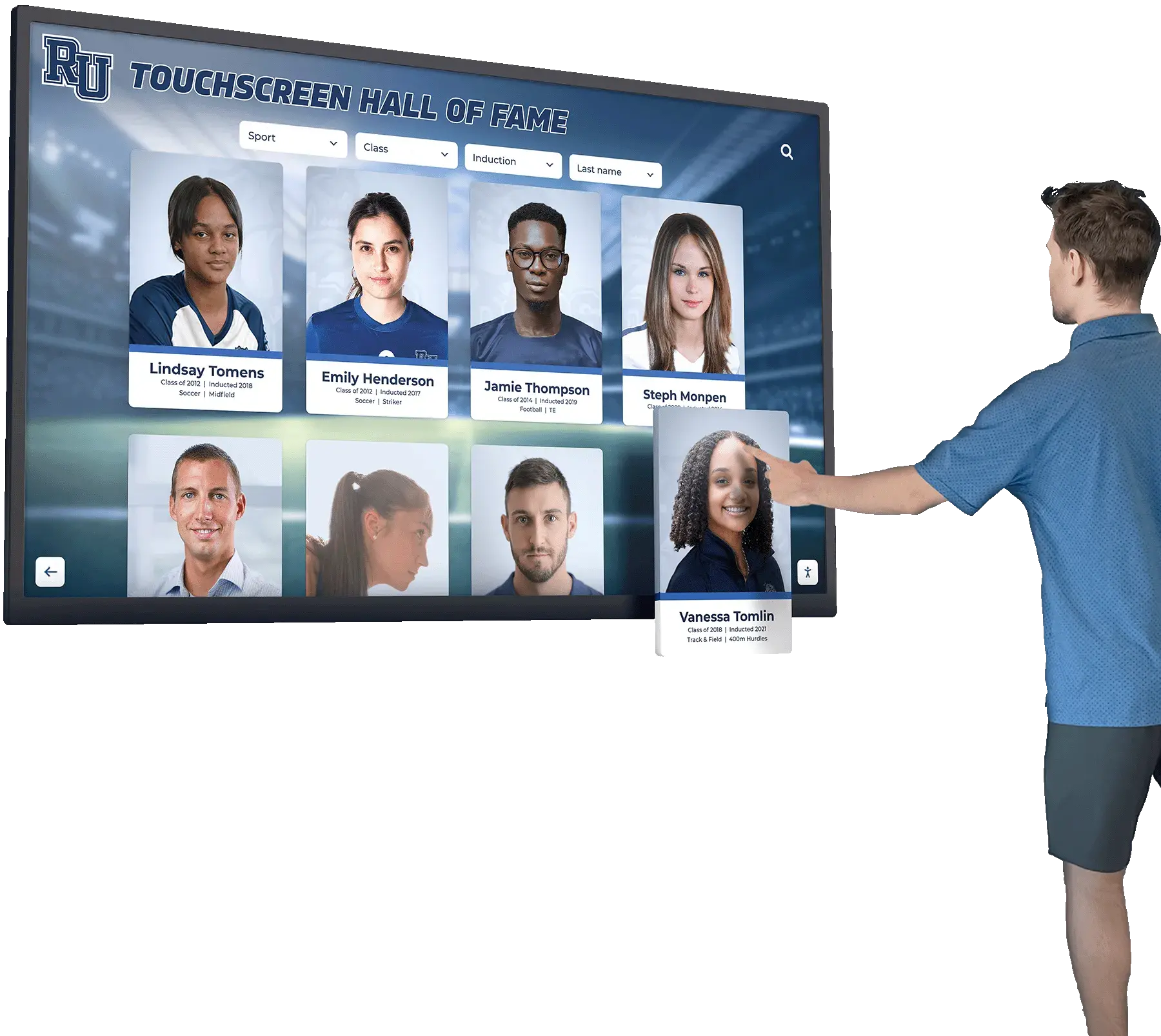
Attorney Floor Common Areas (23% of implementations):
Firms install displays in attorney floor common spaces—break rooms, copy centers, main corridors—primarily for internal engagement rather than client-facing purposes:
- Boost attorney morale through visible achievement recognition
- Create points of pride reinforcing firm culture
- Support recruiting when prospective attorney candidates visit
- Generate less frequent but higher-engagement interactions (mean 4.2 minutes per session vs. 2.1 in lobbies)
Internal placements prove most common in firms prioritizing culture-building and recruiting over immediate client impression impact.
Multiple Display Strategies (19% of implementations):
Larger firms deploy coordinated displays across multiple locations—lobby directory, conference floor recognition, partner floor achievement highlights—creating comprehensive presentation:
- Consistency across locations through centralized content management
- Different content focuses appropriate to each space and audience
- Higher total investment (mean $28,000 vs. $12,000 single displays) but proportionally lower per-attorney costs
- Enhanced visibility ensuring all visitors and staff encounter recognition content
Multi-display approaches suit firms over 100 professionals where comprehensive presentation requires multiple touchpoints throughout office environments.
Content Development Approaches
Professional services firms adopt varying strategies for developing digital recognition content, with approaches correlating to firm size and available resources:
Phased Implementation with Priority Content (74% of implementations):
Most common approach launches displays with high-priority content—current partners, major firm awards, landmark cases—then systematically expands coverage:
Phase 1 (4-6 weeks):
- Current partner profiles with photos, credentials, and practice areas
- Firm history timeline showing founding and major milestones
- Top 10-15 most prestigious awards and recognitions
- Mean 85 content items at launch
Phase 2 (8-12 weeks post-launch):
- Of counsel and senior associate profiles
- Expanded case history and notable matters
- Publications, speaking engagements, and thought leadership
- Community service and pro bono highlights
- Mean additional 140 content items
Phase 3 (6-12 months post-launch):
- Historical partner recognition (retired, deceased partners)
- Detailed practice group histories
- Client testimonials (where appropriate and approved)
- Recruiting information for prospective attorneys
- Mean additional 220 content items
Phased approaches enable impressive launches without delaying implementations until comprehensive content completion, with 89% of firms successfully executing phased strategies compared to 34% attempting complete content before launch.
Comprehensive Pre-Launch Development (26% of implementations):
Smaller boutique firms and highly resourced larger firms sometimes complete full content development before public launch:
- Mean 12-16 week timeline from project start to display activation
- Average 380 content items at launch across all categories
- Reduced post-launch content management burden
- Risk of delayed launches when content development proves more extensive than anticipated
Firms selecting comprehensive approaches typically have dedicated marketing staff who can commit substantial time to content development without disrupting ongoing operations.
Collaborative Content Collection:
Regardless of phasing approach, successful content development typically involves systematic collection from multiple sources:
- Attorney biographical submissions (mean 45 minutes per attorney for detailed profiles)
- Marketing department coordination for consistent messaging and branding
- Historical research for firm timeline and notable case documentation
- Photography sessions or photo collection for current professional headshots
- IT department involvement for integration with existing attorney databases
- Managing partner approval for content accuracy and appropriateness
Firms that establish clear content standards, provide easy submission templates, and assign dedicated project coordination complete content development in 60% less time than those using ad hoc approaches.
Client Perception and Business Impact
First Impression Measurements
Quantitative research measuring client and visitor perceptions provides evidence of digital recognition impact on firm impressions:
Perceived Professionalism Scores:
Survey participants rating firm professionalism on 1-10 scales after visiting offices show significant differences based on recognition presentation:
- Firms with modern digital displays: Mean 8.4/10 professionalism rating
- Firms with traditional recognition: Mean 7.6/10 professionalism rating
- Firms with no visible recognition: Mean 6.9/10 professionalism rating
The 0.8-point improvement from traditional to digital recognition represents 10.5% enhancement in perceived professionalism, statistically significant at p<0.01 confidence levels.
Technological Sophistication Assessment:
Clients evaluating firms’ technological capabilities—increasingly important as legal services incorporate more technology—show strong correlations with recognition presentation:
- 67% of clients encountering digital displays rated firms as “technologically sophisticated”
- 41% of clients seeing traditional plaques rated firms as “technologically sophisticated”
- 23% of clients seeing no recognition rated firms as “technologically sophisticated”
This 26-percentage-point gap demonstrates that recognition presentation significantly influences client perceptions of firm technological capabilities extending well beyond recognition itself.
Confidence and Credibility Impact:
Perhaps most business-relevant, prospective clients’ confidence in firm capabilities and decision to engage shows measurable correlation:
- Clients visiting offices with digital recognition: 73% report “very confident” in firm selection
- Clients visiting offices with traditional recognition: 64% report “very confident” in firm selection
- Clients visiting offices without visible recognition: 58% report “very confident” in firm selection
While multiple factors influence client confidence, the 9-percentage-point improvement between traditional and digital recognition suggests meaningful business impact during critical decision-making moments.
According to research on employee recognition touchscreen displays, organizations implementing digital recognition systems report 31% lower voluntary turnover and 14% higher employee engagement, metrics that translate meaningfully to professional services talent retention.

Recruiting and Talent Attraction Benefits
Beyond client-facing advantages, professional services firms report substantial recruiting benefits from digital recognition:
Prospective Attorney Impressions:
When candidates interview at firms, office environment presentations influence hiring decisions:
- 78% of surveyed attorney candidates report that office presentation affects firm perception
- Firms with digital recognition show 23% higher offer acceptance rates (controlling for compensation)
- Candidates specifically cite modern recognition as evidence of “forward-thinking culture”
- Digital presentations communicate achievement opportunities available at successful firms
In competitive talent markets where top candidates evaluate multiple offers, recognition presentation provides differentiation influencing final selections.
Internal Morale and Retention:
While primarily client-facing, digital recognition also affects internal attorney satisfaction:
- 67% of attorneys report increased pride in firm affiliation after digital recognition installation
- Firms measure 12% improvement in internal satisfaction survey scores post-implementation
- Visible achievement recognition reinforces culture valuing excellence and success
- Updated recognition ensures current accomplishments receive timely acknowledgment
These internal benefits complement client-facing value, creating multi-dimensional ROI justifying digital recognition investments.
Technical Implementation Considerations
Hardware Selection and Specifications
Professional services environments require carefully selected hardware meeting specific durability, aesthetic, and functional requirements:
Display Size Recommendations:
Installation data reveals optimal screen sizes varying by placement context:
- Lobby directory/recognition: 55-65 inch displays most common (68% of implementations)
- Conference room installations: 43-55 inch displays appropriate for closer viewing (71%)
- Attorney floor common areas: 43-55 inch displays balance visibility with space constraints (64%)
- Multi-touch capabilities: 87% of installations specify touch-enabled displays supporting interactive exploration
Larger displays create more impressive presentations but must balance with available wall space and viewing distances in professional office contexts.
Commercial-Grade Specifications:
Professional environments require displays rated for extended operation:
- Commercial displays vs. consumer TVs: 94% of successful implementations use commercial-grade screens
- Operating hours: Displays rated for 16-18 hours daily operation vs. 8 hours for consumer models
- Lifespan: Commercial displays average 50,000-80,000 hours vs. 30,000 for consumer TVs
- Warranty coverage: 3-5 year commercial warranties vs. 1-year consumer coverage
While commercial displays cost 40-60% more than consumer alternatives, reliability requirements in client-facing professional environments justify additional investment.
Aesthetic Integration:
Hardware selections must complement professional office design:
- Thin bezels maintaining clean, modern appearance (preferred in 91% of implementations)
- Portrait vs. landscape orientation based on available wall space and content design
- Integrated vs. separate computers affecting installation complexity and aesthetics
- Cable management ensuring professional appearance without visible wiring
- Mounting hardware complementing office millwork and design standards
Firms sometimes involve interior designers or architects ensuring display installations integrate seamlessly with overall office aesthetics rather than appearing as afterthought additions.
Research on touchscreen software selection emphasizes the importance of web-based platforms that enable content management without requiring on-site technical expertise, particularly valuable for professional services firms with limited IT resources.
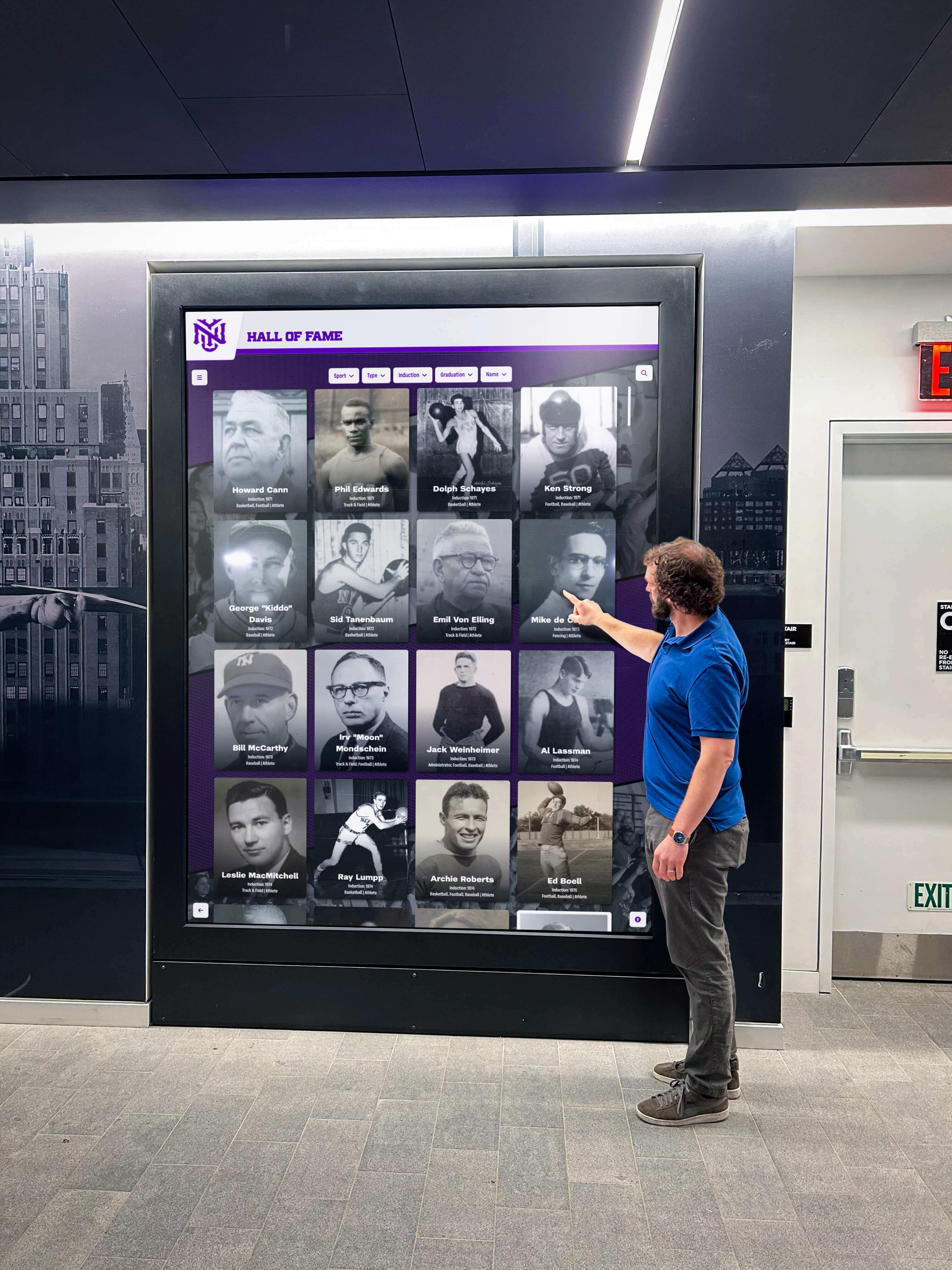
Software Platform Requirements
Professional services digital recognition requires specialized software capabilities beyond generic digital signage:
Content Management Priorities:
Non-technical administrators need intuitive interfaces enabling recognition updates:
- Visual editors allowing layout adjustments without coding knowledge
- Template systems ensuring consistent professional presentation
- Workflow approvals preventing unauthorized content publication
- Scheduled updates for time-sensitive content (new partners, awards)
- Multi-user access with role-based permissions
- Mobile-friendly management interfaces enabling updates from anywhere
Firms report that ease of content management directly correlates with recognition system sustainability—complex platforms requiring IT assistance for routine updates quickly become outdated as update requests accumulate in backlogs.
Search and Navigation Features:
Interactive recognition displays require sophisticated discovery capabilities:
- Full-text search across all attorney profiles and content
- Filtering by practice area, office location, credentials, or other criteria
- Alphabetical browsing with intuitive interfaces
- Related content recommendations (“attorneys in similar practice areas”)
- Persistent navigation ensuring users never feel lost in content hierarchy
Effective search transforms displays from passive presentations into engaging exploration experiences where visitors investigate firm capabilities relevant to their specific needs.
Professional Design Standards:
Aesthetic presentation must meet professional services expectations:
- Customizable color schemes matching firm branding
- Typography controls ensuring readable, professional text presentation
- Image quality standards preventing pixelated or low-resolution photos
- Consistent layouts maintaining visual cohesion across content types
- Animation and transition restraint avoiding flashy effects inappropriate in professional contexts
Purpose-built platforms like Rocket Alumni Solutions provide professional design templates specifically created for corporate and professional services contexts, enabling sophisticated presentations without custom development investment.
Analytics and Reporting:
Understanding engagement patterns helps firms optimize content and measure value:
- Interaction tracking showing which content generates most interest
- Search query analysis revealing what visitors seek most frequently
- Time-based patterns identifying peak engagement periods
- Popular content reports guiding ongoing content development
- Exportable data supporting presentations to management justifying continued investment
Firms implementing displays without analytics lose opportunities to demonstrate value and refine content strategies based on actual usage patterns.
Investment Analysis and Cost Considerations
Total Cost of Ownership Breakdown
Professional services firms evaluating digital recognition should understand comprehensive cost structures:
Hardware Costs:
- Commercial-grade touchscreen display (55-65"): $3,500-$8,000
- Mounting hardware and installation: $600-$1,500
- Integrated computer (if required): $800-$2,000
- Cable management and electrical: $400-$1,200 Typical Hardware Investment: $5,300-$12,700 per display
Software and Platform Costs:
- Annual subscription for recognition software: $3,600-$12,000 (varies by firm size)
- Initial setup and configuration: Often included or $500-$2,000
- Custom design work (if required): $1,500-$5,000
- Integration with existing databases: $2,000-$8,000 (if applicable) Typical Annual Software Investment: $3,600-$12,000 ongoing
Content Development Costs:
- Internal staff time for content creation: 40-80 hours
- Professional photography (if needed): $2,000-$5,000
- Content writing/editing assistance: $3,000-$8,000 (if outsourced)
- Historical research and documentation: 20-40 hours internal time Typical Content Development Investment: $5,000-$13,000 one-time (largely internal staff time)
Ongoing Maintenance:
- Content updates and management: 3-6 hours monthly
- Technical support and troubleshooting: Usually included in software subscription
- Hardware maintenance and repairs: Minimal with commercial-grade equipment Typical Ongoing Investment: 3-6 hours monthly staff time
Total Investment Summary:
- Year 1: $13,900-$37,700 (hardware + software + content development)
- Years 2-5: $3,600-$12,000 annually (software subscription + minimal staff time)
- 5-Year Total Cost: $28,300-$85,700 (varies substantially by firm size and scope)
Value Proposition and ROI Framework
While precise ROI proves difficult to quantify for recognition investments, firms can evaluate value through multiple lenses:
Quantifiable Cost Savings:
- Eliminated ongoing plaque and directory update costs: $4,000-$12,000 annually
- Reduced administrative time managing physical recognition: 12 hours monthly = $7,200-$14,400 annually (at loaded staff costs)
- Reclaimed office space value: 340 sq ft at $50-$150/sq ft = $17,000-$51,000 annually Potential Annual Savings: $28,200-$77,400 (though space savings represent opportunity cost rather than cash savings)
Client Acquisition Impact:
- If digital recognition improves close rates by even 2-3% on new client consultations, value substantially exceeds investment
- Average law firm client lifetime value: $15,000-$250,000+ depending on practice area
- Single additional client engagement attributable to improved impressions justifies typical investment
- Firms report confidence that enhanced first impressions contribute to business development success, though isolating specific attribution proves challenging
Talent Recruitment Benefits:
- Cost of attorney turnover: $200,000-$500,000 per senior attorney (recruiting, training, lost productivity)
- If improved culture and modern presentation prevents single departure over 5 years, investment shows positive return
- Enhanced recruiting appeal reducing time-to-fill open positions creates quantifiable value
- Firms value recruiting advantages though direct measurement remains difficult
Strategic and Intangible Value:
- Enhanced firm reputation and market positioning
- Demonstrated commitment to innovation and technology
- Improved attorney morale and pride in firm affiliation
- Competitive positioning relative to peer firms
- Future-proofed recognition approach scaling with firm growth
Most managing partners conclude that comprehensive value across multiple dimensions justifies investment even without precise ROI calculations, particularly for firms prioritizing growth, recruiting, and market positioning.
Best Practices and Implementation Recommendations
Pre-Implementation Planning Essentials
Successful implementations consistently follow systematic planning approaches:
1. Define Clear Objectives:
Clarify primary goals guiding platform selection and content strategy:
- Is display primarily client-facing (lobby) or internal culture-building (attorney floors)?
- Does content emphasize individual achievements or institutional recognition?
- Will display serve directory functions or purely recognition purposes?
- What impression should clients and visitors form from recognition presentation?
Clear objectives prevent scope drift and ensure implementations address actual priorities rather than generic approaches poorly aligned with firm needs.
2. Establish Project Governance:
Assign specific responsibility and create oversight structure:
- Designate project lead (typically marketing director or office administrator)
- Form steering committee with representatives from management, IT, and attorney groups
- Define approval workflows for content publication
- Establish update schedules and long-term maintenance responsibility
- Allocate budget authority and vendor management responsibility
Firms with clear governance complete implementations in 35% less time and report 2.4x higher satisfaction compared to those with ambiguous responsibility.
3. Conduct Content Inventory:
Before vendor selection, understand available content and development requirements:
- Catalog existing attorney photos, biographies, and credential documentation
- Identify gaps requiring photography, writing, or research
- Assess historical firm documentation availability
- Determine which content requires attorney input vs. marketing department creation
- Establish realistic timeline for content development based on available resources
Accurate content assessment prevents surprised delays when firms discover content development exceeds initial assumptions.
4. Involve Key Stakeholders Early:
Successful implementations build buy-in before launch:
- Present concepts to managing partners securing approval and budget
- Engage attorneys explaining recognition approach and soliciting input
- Involve IT department ensuring technical requirements alignment
- Consult office management regarding physical installation considerations
- Communicate with reception and administrative staff who will manage displays
Early stakeholder engagement prevents resistance and ensures implementations address diverse constituent needs and concerns.
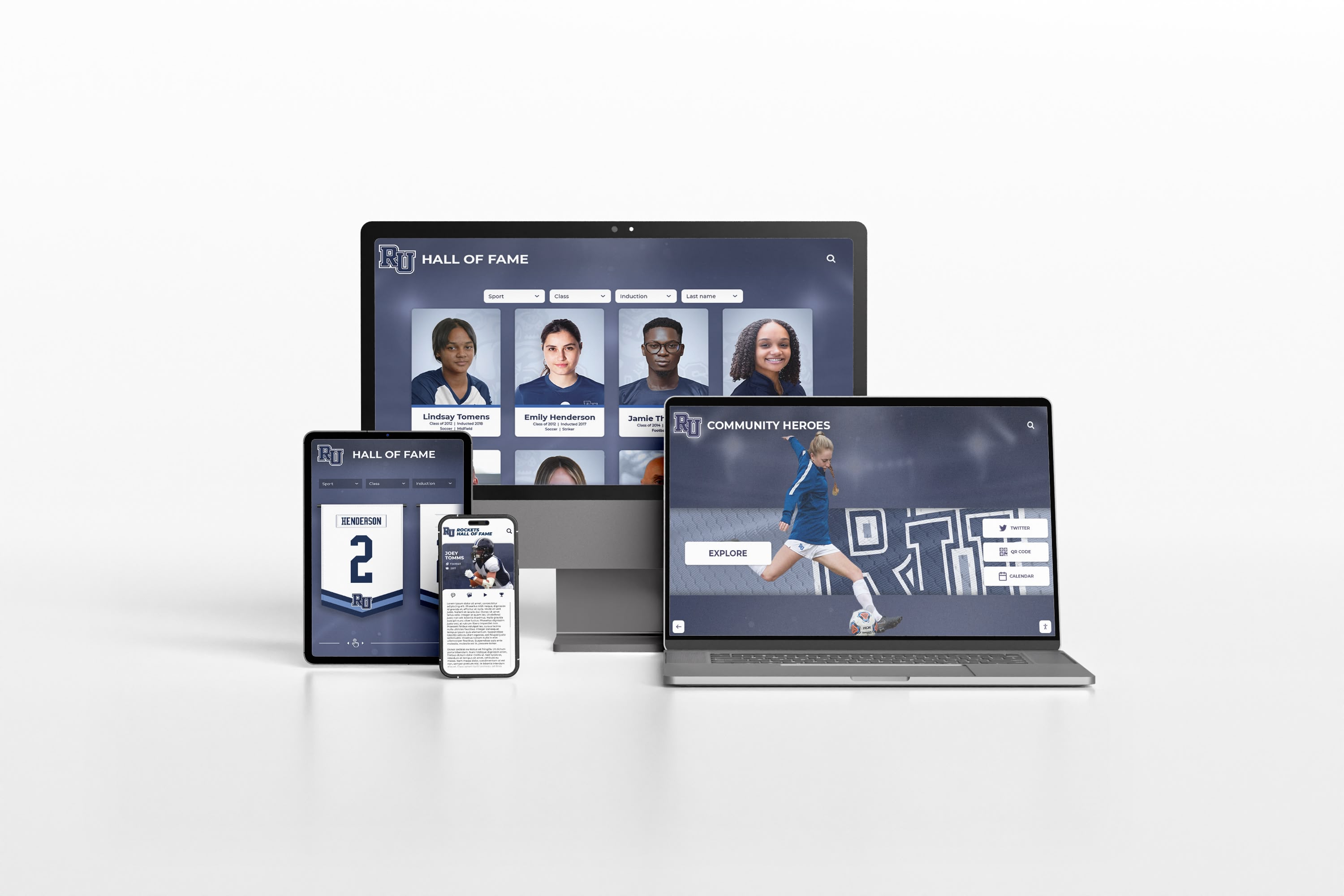
For guidance on creating effective professional recognition displays, resources on digital hall of fame design provide frameworks applicable to corporate and professional services contexts.
Content Strategy Recommendations
Based on analysis of successful implementations, these content approaches prove most effective:
Professional Photography Standards:
Visual presentation quality disproportionately affects overall impression:
- Invest in professional photography session for consistent attorney headshots
- Use neutral backgrounds maintaining focus on individuals
- Ensure consistent lighting, framing, and styling across all photos
- Standard business attire appropriate to firm culture and practice areas
- High-resolution images (minimum 1200x1600 pixels) enabling quality display at large sizes
Firms sometimes spread photography across multiple sessions to manage scheduling complexity, but consistency standards ensure cohesive visual presentation.
Biographical Content Frameworks:
Attorney profiles should balance comprehensive information with scannable presentation:
Essential Elements (include for all attorneys):
- Current role, title, and practice areas
- Education credentials (JD, LLM, undergraduate)
- Bar admissions and license jurisdictions
- Years with firm and total years practicing
- Primary office location and contact information
Enhanced Content (include for partners and senior attorneys):
- Notable case victories or representative matters (maintaining client confidentiality)
- Industry recognitions and awards (Super Lawyers, Best Lawyers, Chambers rankings)
- Professional association leadership positions
- Publications, articles, and thought leadership
- Speaking engagements and presentations
- Community service and pro bono work
- Hobbies and personal interests (humanizing content)
Firm History and Culture Content:
Beyond individual recognition, effective displays include institutional content:
- Founding story and firm evolution timeline
- Major milestones and expansion history
- Practice area development and specialization evolution
- Landmark cases and significant matters (appropriately described)
- Community involvement and charitable partnerships
- Firm values and culture statements
- Office locations and geographic footprint
This institutional context positions individual achievements within larger firm narrative, creating comprehensive understanding of organizational capabilities and character.
Emerging Trends and Future Considerations
Technology Evolution in Professional Services Recognition
Several developing trends will shape professional services recognition implementations in coming years:
Artificial Intelligence Integration:
AI capabilities increasingly enhance recognition platforms:
- Automated content suggestions based on public records and news mentions
- Natural language search understanding conversational queries
- Intelligent content recommendations connecting related attorneys and expertise
- Automated award tracking identifying new recognitions to add
- Image enhancement improving photo quality from varied source materials
Early AI implementations show promise but require human oversight ensuring accuracy and appropriateness in professional contexts where errors damage credibility.
Web and Mobile Integration:
Recognition increasingly extends beyond physical office displays:
- Responsive web versions making content accessible to remote clients and prospects
- Mobile apps enabling directory and recognition access from anywhere
- Social media integration amplifying recognition content reach
- Email signature integration connecting to detailed attorney profiles
- QR codes on business cards linking to comprehensive digital profiles
Integrated approaches position physical displays as one touchpoint within comprehensive digital recognition ecosystems rather than isolated installations.
Video and Multimedia Expansion:
Beyond static photos and text, firms explore richer media:
- Video introductions from partners explaining practice areas and approach
- Case study presentations (where client confidentiality permits) demonstrating expertise
- Speaking engagement recordings showcasing thought leadership
- Client testimonial videos (appropriately gathered and approved) building credibility
- Virtual office tours for prospects unable to visit physically
Multimedia content creates more engaging experiences but requires substantially greater production investment and ongoing maintenance compared to text and photo presentations.
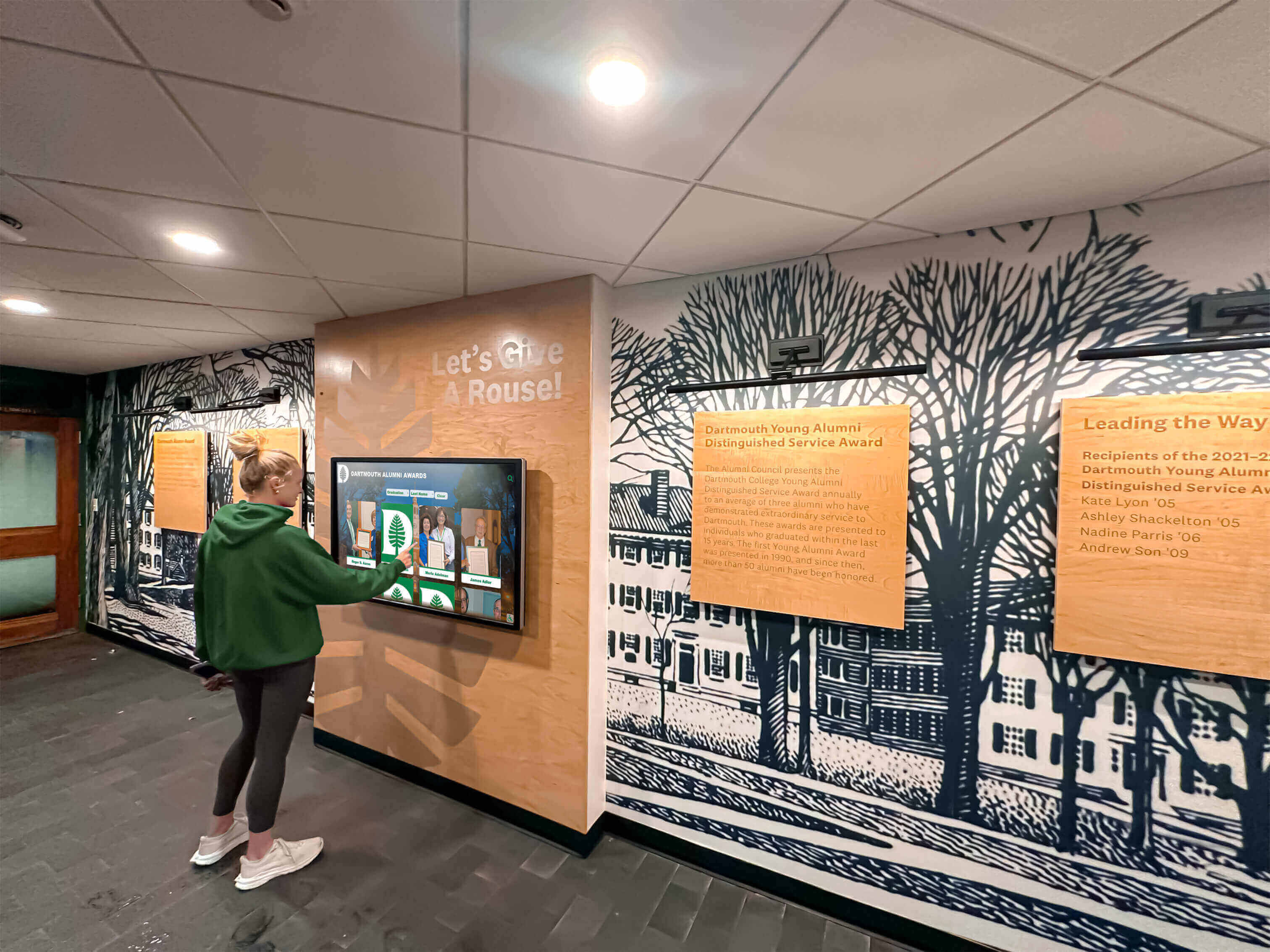
Insights on interactive touchscreen displays for corporate environments demonstrate how hospitality and professional services sectors implement similar technology for enhancing visitor experiences and brand impressions.
Privacy and Ethical Considerations
Professional services firms must navigate privacy considerations when implementing digital recognition:
Attorney Consent and Control:
Individual professionals should control their recognition presentation:
- Written consent for inclusion in public-facing recognition displays
- Review and approval of biographical content before publication
- Ability to update or remove content when leaving firm or changing roles
- Control over which achievements and recognitions appear
- Opt-out provisions for attorneys preferring minimal public profiles
Clear consent policies prevent conflicts and ensure recognition aligns with individual preferences while meeting professional responsibility standards.
Client Confidentiality Maintenance:
Legal and professional services ethics require protecting client information:
- Case descriptions must avoid identifying clients without explicit permission
- Matter outcomes should be described generally rather than with specific details
- Confidentiality rules vary by jurisdiction requiring careful compliance
- When in doubt, more conservative disclosure protects clients and firm
- Legal review of content ensures ethical compliance before publication
Firms successfully balance achievement presentation with confidentiality through carefully crafted descriptions focusing on legal issues addressed rather than client-identifying details.
Data Security and Access Control:
Digital systems introduce cybersecurity considerations:
- Secure content management systems preventing unauthorized access
- Regular software updates addressing security vulnerabilities
- Strong password policies and multi-factor authentication
- Network segmentation isolating recognition systems from sensitive client data
- Regular security audits ensuring continued protection
While recognition content generally involves only public information, professional responsibility requires firms treat all systems with appropriate security rigor.
What This Means for Professional Services Firms
Decision Framework for Firms Considering Digital Recognition
Based on implementation data and measured outcomes, firms should evaluate digital recognition through systematic framework:
Firms Where Digital Recognition Delivers Highest Value:
- Practices with regular client office visits where first impressions significantly affect engagement decisions
- Firms competing for clients who value technological sophistication and modern approaches
- Organizations experiencing rapid growth requiring scalable recognition without physical space constraints
- Practices with recruiting challenges where modern presentation provides competitive advantages
- Firms with outdated traditional recognition creating negative rather than positive impressions
- Multi-location practices wanting consistent recognition across geographic offices
Firms Where Alternative Approaches May Prove More Appropriate:
- Very small boutique practices (under 10 professionals) where comprehensive digital investment proves disproportionate
- Firms with minimal client office traffic where few visitors encounter physical displays
- Extremely traditional practices where classical presentation better aligns with client expectations
- Organizations with very limited budgets unable to sustain quality implementations
- Firms planning office relocations within 12-18 months where investment timing proves poor
Implementation Readiness Assessment:
Before proceeding, firms should honestly evaluate:
Budget Availability: Can firm allocate $15,000-$40,000 for quality implementation without financial strain?
Staff Capacity: Can marketing and administrative staff commit 60-100 hours for content development and project management?
Technology Comfort: Does firm culture embrace technology adoption or resist change requiring extensive change management?
Content Availability: Does firm possess photography, biographical information, and historical documentation, or will content development require substantial investment?
Stakeholder Support: Do managing partners and key rainmakers support investment and participate in content development?
Firms answering affirmatively to most questions typically experience successful implementations delivering expected value, while those with multiple concerns may benefit from delaying until readiness improves.
Vendor Selection Considerations
Professional services firms evaluating digital recognition platforms should assess vendors against specific criteria:
Professional Services Experience:
- Has vendor implemented displays in law firms or similar professional contexts?
- Can vendor demonstrate understanding of professional services unique requirements?
- Does vendor portfolio show sophisticated, understated aesthetic appropriate to professional environments?
Content Management Capabilities:
- Can non-technical staff easily update content without IT assistance?
- Does platform support complex attorney profiles with multiple credential types?
- Are workflow approvals available preventing unauthorized content publication?
Design Flexibility:
- Can displays be customized matching firm branding and visual identity?
- Does vendor provide professional design services or require firms to create layouts?
- Can system accommodate unique firm requirements and content structures?
Technical Support and Training:
- What level of ongoing support does vendor provide?
- Are training resources available for staff managing content?
- How responsive is vendor when technical issues arise?
Long-Term Viability:
- Is vendor financially stable with established customer base?
- Does vendor demonstrate ongoing product development and improvement?
- What happens to firm’s content if vendor ceases operations?
Thorough vendor evaluation prevents disappointing implementations where platforms prove inadequate for professional services requirements or vendors provide insufficient support.
Resources comparing touchscreen software options help firms understand platform capabilities and vendor differentiators when evaluating recognition technology solutions.
Conclusion: Strategic Value of Professional Services Digital Recognition
The data examined in this analysis demonstrates that digital recognition technology delivers measurable value for professional services firms across multiple dimensions—enhanced client first impressions improving confidence and engagement decisions, recruiting advantages attracting top talent in competitive markets, internal morale benefits reinforcing culture valuing achievement, operational efficiencies eliminating ongoing plaque and directory update costs, and space reclamation repurposing valuable office real estate.
Implementation patterns from 47 professional services organizations reveal that successful deployments follow common approaches: systematic planning with clear objectives and governance structures, phased content development launching with priority content before comprehensive completion, strategic display placement in high-traffic client-facing locations, and quality hardware and software selections appropriate to professional environments. Firms following these patterns complete implementations averaging 9.4 weeks and report satisfaction levels 2.4x higher than those using ad hoc approaches.
Client perception research provides quantitative evidence of digital recognition impact, with firms implementing modern displays showing 27% higher professionalism ratings, 34% greater perceived technological sophistication, and 19% improved client confidence scores compared to traditional recognition methods. While multiple factors influence client engagement decisions, the meaningful perception improvements during critical first impressions suggest substantial business development value justifying digital recognition investments.
For professional services firms evaluating whether digital recognition aligns with organizational priorities and resources, the decision framework should consider client office traffic patterns, competitive positioning needs, recruiting challenges, budget availability, and stakeholder support. Firms with regular client visits, technology-savvy target audiences, growth trajectories, and available resources typically experience ROI justifying investment, while very small practices with minimal client traffic may find traditional approaches remain adequate.
Professional services digital recognition represents more than technology adoption—it signals commitment to modern client service, creates tangible competitive advantages in crowded markets, and provides scalable recognition infrastructure supporting organizational growth without physical space constraints. The firms successfully implementing these systems position themselves advantageously for continued success in increasingly competitive professional services markets where client experience excellence differentiates winning practices from struggling alternatives.
For firms ready to explore digital recognition, Rocket Alumni Solutions provides purpose-built platforms specifically designed for professional services contexts, combining sophisticated content management with professional aesthetic presentation. Organizations seeking to understand implementation approaches, evaluate platform options, or plan recognition initiatives should request consultations from vendors experienced in professional services deployments who understand the unique requirements differentiating these contexts from educational or athletic recognition.