Graduating with honors represents one of the highest academic achievements a university student can earn—a permanent credential that distinguishes exceptional scholars on transcripts, resumes, and diplomas for life. Yet the landscape of Latin honors remains surprisingly complex, with GPA cutoffs, calculation methods, and recognition practices varying dramatically across institutions. A 3.7 GPA might earn magna cum laude honors at one university while qualifying only for standard cum laude at another, creating confusion for students planning their academic trajectories and institutions designing recognition systems that fairly acknowledge outstanding achievement.
This comprehensive guide explores everything you need to know about Latin honors levels in 2026—from understanding the three traditional designations and their historical origins to examining how universities calculate GPA cutoffs, implement percentile-based versus fixed-threshold approaches, and visually distinguish honors through academic regalia. Whether you’re a student pursuing honors, an administrator establishing recognition policies, or simply seeking to understand these prestigious academic credentials, this guide provides the detailed information you need.
Understanding the Three Levels of Latin Honors
American universities traditionally recognize three levels of undergraduate academic honors, each with Latin names reflecting the tradition’s origins in medieval European universities. These designations appear on diplomas, transcripts, and in commencement programs, serving as permanent markers of exceptional academic achievement.
Cum Laude: “With Praise”
Cum laude represents the foundational level of Latin honors, recognizing students who achieve academic performance significantly above average but below the two higher tiers. The threshold typically ranges from 3.5 to 3.7 GPA at most institutions, though specific requirements vary considerably.
At schools using percentile-based systems rather than fixed GPA cutoffs, cum laude typically recognizes students in approximately the top 30% to top 15% of their graduating class, depending on institutional selectivity and grading cultures. More selective institutions often set higher bars, recognizing only the top 20-25% with any honors designation, which pushes cum laude thresholds upward.
The designation carries genuine weight in post-graduation contexts. Graduate programs and employers recognize cum laude as evidence of sustained academic excellence over four years—a meaningful differentiator from candidates without honors recognition. While perhaps less impressive than the higher tiers, cum laude still represents accomplishment achieved by a minority of graduates and demonstrates the discipline, intelligence, and work ethic required to maintain high academic standards throughout an undergraduate career.
Magna Cum Laude: “With Great Praise”
Magna cum laude occupies the middle tier of Latin honors, recognizing academic achievement that significantly exceeds the cum laude threshold. Most universities set magna cum laude GPA requirements between 3.7 and 3.85, though again with considerable institutional variation.

In percentile-based systems, magna cum laude typically recognizes students in approximately the top 15% to top 7% of graduating classes. The exclusivity creates meaningful distinction—where perhaps 20-25% of graduates might earn cum laude, only 8-12% typically achieve magna cum laude status, making the designation substantially more selective.
The jump from cum laude to magna cum laude often represents the difference between very good and truly excellent academic performance. Students achieving magna cum laude typically demonstrate not just intelligence and effort but exceptional mastery of their subject matter, frequently excelling even in the most challenging upper-level courses within their majors. Graduate programs and competitive employers recognize this distinction, often viewing magna cum laude as a strong signal of capability for advanced academic work or high-level professional challenges.
Summa Cum Laude: “With Highest Praise”
Summa cum laude represents the pinnacle of undergraduate academic honors, reserved for the very top graduates who achieve near-perfect or perfect academic records. GPA thresholds typically range from 3.85 to 4.0, with many highly selective institutions requiring perfect or near-perfect 3.95+ GPAs for this highest distinction.
At schools using percentile approaches, summa cum laude typically recognizes only the top 5% to top 2% of graduates—and at the most selective institutions, sometimes only the top 1%. This extreme selectivity ensures summa cum laude carries genuine distinction as a marker of exceptional, sustained academic excellence across an entire undergraduate career.
Earning summa cum laude typically requires not just high grades but strategic academic planning, as even single B grades can disqualify students at institutions with 3.9+ thresholds. Students achieving this distinction often demonstrate extraordinary intellectual capability, exceptional work ethic, and sophisticated understanding of how to navigate academic systems to maintain the highest possible performance across diverse course requirements.
Many graduation ceremonies create special moments recognizing summa cum laude graduates, understanding these students represent the absolute top tier of academic achievement.
How Universities Calculate Latin Honors: GPA Cutoffs vs. Percentile Systems
Universities employ two fundamentally different approaches to determining which students earn Latin honors: fixed GPA thresholds that remain constant across graduating classes, or percentile-based systems that adjust recognition based on class rank. Understanding these approaches helps contextualize what honors designations actually mean at different institutions.
Fixed GPA Threshold Approach
Many universities establish specific GPA cutoffs that remain consistent from year to year. A representative fixed-threshold system might look like:
- Summa Cum Laude: 3.90-4.00 GPA
- Magna Cum Laude: 3.75-3.89 GPA
- Cum Laude: 3.60-3.74 GPA
Fixed thresholds offer transparency and predictability. Students know from freshman year exactly what GPA they need to achieve each honors level, allowing them to set concrete academic goals and track progress toward those targets throughout their undergraduate careers. This clarity supports academic planning and enables students to make informed decisions about course selection, workload management, and strategic academic choices.

However, fixed thresholds can create significant variation in honors distribution across graduating classes. In years when a class performs exceptionally well—perhaps due to grade inflation, easier courses, or a particularly talented cohort—a much larger percentage might achieve honors than in other years. Conversely, particularly challenging years might see fewer students meeting thresholds. This variability sometimes concerns administrators who prefer more consistent honors distribution.
Fixed thresholds also interact with institutional grading cultures. Schools with more generous grading may see 30-40% of graduates earning some level of honors using thresholds that would recognize only 15-20% at institutions with stricter grading standards. This creates challenges when comparing honors across institutions with different grading philosophies.
Percentile-Based Ranking Systems
Percentile-based approaches award Latin honors to students ranking within specified portions of their graduating class regardless of absolute GPA. A typical percentile system might designate:
- Summa Cum Laude: Top 3% of class
- Magna Cum Laude: Top 3-10% of class
- Cum Laude: Top 10-25% of class
Percentile systems ensure consistent honors distribution across years. Exactly the same percentage of each graduating class receives recognition regardless of whether that year’s cohort performed exceptionally well or struggled academically. This consistency appeals to institutions seeking predictable outcomes and helps ensure honors retain meaningful exclusivity regardless of year-to-year variations in student performance.
The percentile approach also automatically adjusts for grade inflation or deflation. As institutional grading standards shift over time—whether upward due to grade inflation or downward due to rigor reforms—percentile-based honors automatically recalibrate, ensuring the top students still receive recognition without requiring periodic threshold adjustments.
However, percentile systems sacrifice the transparency of fixed thresholds. Students cannot know definitively whether they’ll earn honors until final class rankings are calculated, since their standing depends on peer performance rather than absolute achievement. A 3.8 GPA might earn magna cum laude one year but only cum laude the next, depending on classmate performance—potentially frustrating for students who worked toward what they believed were safe margins.
Hybrid Approaches and Departmental Variations
Some institutions implement hybrid systems combining elements of both approaches. Common hybrid models include:
GPA Floors with Percentile Caps: Setting minimum GPA requirements (e.g., 3.5 for any honors consideration) but then awarding specific honors levels based on percentile ranking among students meeting those minimums. This ensures both absolute achievement standards and controlled distribution.
Departmental Latin Honors: Many universities offer both overall Latin honors based on cumulative GPA and departmental honors within specific majors. Departmental honors often use different criteria—sometimes requiring thesis completion, research projects, or comprehensive examinations beyond pure GPA thresholds—creating additional recognition opportunities for students who excel within particular disciplines even if their overall performance doesn’t qualify for university-wide honors.
Several institutions have developed innovative recognition approaches that complement traditional Latin honors, including graduation celebrations that highlight diverse student achievements.
Institutional Variations: Latin Honors GPA Cutoffs Across University Types
Latin honors requirements vary significantly across different types of institutions, reflecting varying student populations, grading cultures, institutional missions, and competitive contexts. Understanding these variations helps students select schools aligned with their academic goals and helps institutions benchmark their recognition standards against peer institutions.
Highly Selective Private Universities
Elite private universities—including Ivy League institutions and similar highly selective schools—typically set exceptionally high Latin honors thresholds reflecting their rigorous academic environments and talented student bodies.
Representative examples of thresholds at highly selective institutions:
Harvard University uses a percentile-based system with approximately:
- Top 5% earning summa cum laude
- Next 10% earning magna cum laude
- Next 15% earning cum laude
Yale University historically employed GPA thresholds around:
- Summa cum laude: 3.95-4.0
- Magna cum laude: 3.85-3.94
- Cum laude: 3.75-3.84
Stanford University awards honors to approximately the top 15% of each graduating class:
- Top 3% for highest honors
- Next 7% for high honors
- Next 5% for honors
These elevated thresholds reflect both the exceptional incoming credentials of students admitted to highly selective institutions and the competitive academic cultures that develop when concentrating high-achieving students. The compressed GPA distributions at these schools—where perhaps 40-50% of students maintain GPAs above 3.7—necessitate higher cutoffs to maintain honors exclusivity.

Large Public Research Universities
Large state research universities typically set somewhat lower Latin honors thresholds than elite privates, though still maintaining meaningful selectivity. Representative examples:
University of California, Berkeley uses:
- Highest Distinction: Top 3%
- High Distinction: Top 10%
- Distinction: Top 20%
University of Michigan employs approximate thresholds:
- Summa cum laude: Top 3-5%
- Magna cum laude: Top 10-15%
- Cum laude: Top 25%
University of Texas at Austin sets college-specific percentiles, typically:
- Summa cum laude: Top 4%
- Magna cum laude: Top 8-12%
- Cum laude: Top 20-25%
Public research universities face unique challenges in setting honors thresholds. Their larger, more academically diverse student populations create wider GPA distributions than at highly selective privates, enabling somewhat lower absolute GPA cutoffs while still maintaining exclusivity. Additionally, many flagship state universities balance honors recognition between being accessible enough to reward strong performance and exclusive enough to carry genuine distinction.
Regional Public Universities and Liberal Arts Colleges
Regional public universities and smaller liberal arts colleges often set Latin honors thresholds that make recognition accessible to larger percentages of graduates while still requiring above-average performance.
Typical GPA thresholds at these institutions might include:
- Summa cum laude: 3.85-3.90
- Magna cum laude: 3.65-3.75
- Cum laude: 3.50-3.60
These somewhat lower thresholds (compared to highly selective institutions) reflect different student populations and institutional missions. Regional universities serving broader populations establish honors standards that challenge students while remaining achievable for those who work diligently, balancing recognition of excellence with encouragement of strong performance across diverse student backgrounds.
Many smaller institutions supplement traditional alumni recognition programs with Latin honors displays that celebrate academic excellence across generations.
Academic Regalia and Visual Distinctions for Latin Honors
Beyond transcript and diploma notations, Latin honors typically receive visual recognition through academic regalia worn during commencement ceremonies. These visible distinctions allow institutions to publicly celebrate honors graduates and enable family, friends, and fellow graduates to immediately recognize academic achievement.
Honor Cords and Their Color Significance
Honor cords represent the most common visual distinction for Latin honors graduates. These decorative braided cords drape around graduates’ necks over academic gowns, with specific colors typically indicating honors levels.
Common Honor Cord Color Schemes:
The most traditional approach uses gold cords in varying configurations:
- Summa cum laude: Double gold cords or gold cords with additional distinction
- Magna cum laude: Single gold cord with silver accent or specific braiding
- Cum laude: Single gold cord
Some institutions use color gradations:
- Summa cum laude: Gold cords
- Magna cum laude: Silver cords
- Cum laude: Bronze or copper cords
Others employ single-color systems where all Latin honors recipients wear identical gold cords, with diploma and transcript notations providing the specific distinction level.

Institutional color schemes sometimes reflect school colors or traditions. A university with purple and white as official colors might use purple cords for summa cum laude, white for magna cum laude, and purple-white combination for cum laude, integrating honors recognition into broader institutional identity.
Graduation Stoles and Sashes
Some institutions use stoles or sashes instead of or in addition to cords for Latin honors recognition. Stoles are fabric strips worn draped over both shoulders, typically decorated with embroidered text indicating the specific honors designation.
Stole Characteristics:
- Often include embroidered Latin text: “Summa Cum Laude,” “Magna Cum Laude,” or “Cum Laude”
- May incorporate institutional colors, logos, or specific honors program branding
- Typically made from satin or similar formal fabric matching academic regalia formality
- Create more visible distinction than cords, particularly in large ceremonies where cord colors become difficult to distinguish from a distance
Stoles work particularly well for institutions wanting to create highly visible honors recognition in large outdoor ceremonies or venues where distance makes subtle cord color distinctions difficult to perceive.
Medal and Pin Recognition
Beyond cords and stoles, some institutions provide medals, pins, or other physical tokens recognizing Latin honors achievement:
Honor Society Medallions: Students inducted into honor societies like Phi Beta Kappa often receive medallions worn around necks over academic regalia, supplementing Latin honors cords.
Lapel Pins: Small enamel or metal pins attached to graduation gowns provide subtle but permanent keepsakes graduates can retain after ceremonies.
Honor Patches: Some institutions create embroidered patches sewn onto graduation gowns, creating permanent visual records captured in commencement photographs.
These physical tokens serve dual purposes—providing immediate visual recognition during ceremonies while creating lasting mementos graduates can preserve as tangible symbols of their academic achievements.
Universities increasingly complement traditional regalia with digital recognition displays that celebrate honors graduates in high-traffic campus locations.
Establishing Latin Honors at Your Institution: Best Practices and Considerations
For universities establishing new Latin honors systems or reviewing existing programs, several key considerations shape effective recognition that meaningfully acknowledges achievement while maintaining appropriate selectivity and institutional fit.
Determining Appropriate Thresholds for Your Student Population
Setting appropriate honors thresholds requires understanding your institution’s specific context, grading culture, and student population. Generic adoption of another school’s thresholds without accounting for institutional differences often produces problematic results—either recognizing too many students (diluting honors meaning) or too few (making recognition feel unattainable).
Analyzing Grade Distribution Data: Begin by examining several years of institutional GPA distribution data. What percentage of recent graduating classes achieved GPAs of 3.5+, 3.7+, 3.85+, and 3.95+? This analysis reveals where natural threshold cutoffs would fall and how many students would receive recognition at various possible threshold levels.
For example, if your data shows that 35% of graduates achieve 3.5+ GPAs, setting cum laude at 3.5 creates an honors program that recognizes more than one-third of graduates—potentially too inclusive to carry genuine distinction. Conversely, if only 8% achieve 3.7+, setting summa cum laude at 3.9 might create an unrealistically exclusive highest tier.
Benchmarking Against Peer Institutions: Research Latin honors practices at peer and aspirational institutions—schools with similar student populations, selectivity levels, and institutional missions. If most comparable institutions recognize approximately 20-25% of graduates with some honors level, adopting thresholds producing similar distributions helps ensure your honors carry equivalent weight in external contexts like graduate admissions or employment.
However, avoid simply copying peer thresholds without verifying they’ll produce appropriate results at your institution, since grading cultures vary even among similar schools.

Deciding Between Fixed GPA and Percentile Approaches
The choice between fixed GPA thresholds and percentile-based ranking systems involves tradeoffs between transparency, consistency, and administrative complexity.
Fixed GPA thresholds offer:
- Complete transparency allowing students to set concrete goals
- Simplicity in calculation and communication
- Consistency with how students conceptualize academic performance
- Potential for significant year-to-year variation in honors distribution
Percentile systems provide:
- Guaranteed consistent honors distribution across graduating classes
- Automatic adjustment for grade inflation or deflation over time
- Protection against threshold erosion without requiring periodic adjustments
- Lack of transparency—students can’t know if they’ll achieve honors until final rankings
Many institutions find hybrid approaches—GPA minimums combined with percentile caps—offer compelling middle ground, ensuring both absolute achievement standards and predictable distribution.
Creating Complementary Departmental Honors Programs
University-wide Latin honors based on cumulative GPA represent just one recognition approach. Departmental honors within specific majors create additional opportunities for students to earn distinction within their chosen fields.
Departmental honors programs often incorporate elements beyond pure GPA:
- Completion of honors thesis or capstone research project
- Presentation at departmental symposia or conferences
- Comprehensive examinations demonstrating mastery
- Minimum credit hours in advanced coursework within the major
- Faculty committee evaluation of overall academic achievement
These multi-dimensional requirements create recognition opportunities for students who excel within their disciplines even if elective courses outside their majors prevent them from achieving university-wide Latin honors based on cumulative GPA. A biology major with a 3.9 in all biology courses but a 3.6 overall (due to required humanities courses) might earn departmental honors even without university-wide recognition.
Departmental programs also acknowledge that academic excellence manifests differently across disciplines. The research capabilities, critical thinking, and disciplinary mastery demonstrated through an honors thesis provide different evidence of achievement than pure GPA, creating richer, more nuanced recognition of scholarly accomplishment.
Communicating Latin Honors Requirements Clearly
Regardless of which system you adopt, transparent communication proves essential. Students should understand from their first semester exactly what requirements they must meet for each honors level and how their progress tracks toward those standards.
Key communication elements include:
Clear published thresholds or percentile targets in official academic catalogs, student handbooks, and registrar websites. If using percentile systems, explain both the approximate percentiles and historical GPA ranges that have corresponded to each level.
Regular GPA reporting that shows students their current standing relative to honors thresholds, ideally through student portals providing real-time tracking.
Academic advising integration ensuring advisors can help students understand honors requirements and make strategic course selections supporting their goals.
Calculation method transparency explaining which terms, courses, and grades count toward honors GPA calculations—particularly addressing questions about transfer credits, pass/fail courses, repeated courses, and other special circumstances.
Forward-looking projections helping students understand what grades they need in remaining semesters to achieve various honors levels, supporting strategic academic planning.
Modern universities increasingly leverage interactive digital displays to showcase academic honors recipients in ways that inspire current students.
Beyond Traditional Latin Honors: Alternative and Supplementary Recognition
While the three-tier Latin honors system remains the dominant undergraduate recognition framework, many institutions have developed alternative or supplementary approaches that address limitations of traditional honors or recognize additional dimensions of achievement.
Expanded Honor Designation Systems
Some universities employ more than three honors tiers, creating additional gradations of recognition:
Four-Tier Systems might include:
- Summa cum laude (highest honors)
- Magna cum laude (high honors)
- Cum laude (honors)
- Cum dignitate (with distinction) as a fourth tier below cum laude
This expanded framework creates more granular recognition, acknowledging students performing above average but below traditional cum laude thresholds. However, it also risks creating confusion and diluting the established meaning of traditional three-tier systems.
Honors with Distinction: Some institutions supplement Latin honors with additional “distinction” designations recognizing specific achievements:
- Honors with Distinction in Research
- Honors with Distinction in Creative Work
- Honors with Distinction in Leadership
These supplementary designations appear alongside traditional Latin honors, creating multi-dimensional recognition acknowledging that academic excellence manifests through various scholarly and creative activities beyond pure GPA achievement.
College-Specific Honors Programs
Many universities operate specialized honors colleges or programs that exist parallel to Latin honors, offering intensive academic experiences for high-achieving students:
University Honors Programs typically involve:
- Special honors courses or sections with smaller class sizes
- Interdisciplinary seminars exploring complex topics
- Undergraduate research requirements or opportunities
- Honors thesis or capstone project completion
- Living-learning community participation
Students completing these programs earn honors program credentials appearing on transcripts and diplomas alongside or instead of traditional Latin honors. A student might graduate “cum laude” based on GPA while also earning “University Honors Program” recognition for completing program requirements.
These parallel systems acknowledge that sustained participation in rigorous honors programming throughout an undergraduate career represents different achievement than pure GPA, particularly at institutions where grade inflation makes high GPAs relatively common.

Holistic Excellence Recognition
Some institutions have moved toward or supplemented GPA-based honors with holistic recognition systems acknowledging broader dimensions of undergraduate achievement:
Comprehensive Excellence Awards might recognize students who demonstrate:
- Academic achievement (GPA component)
- Research or creative scholarship
- Leadership and service contributions
- Community engagement
- Professional or career preparation
These holistic approaches address criticism that traditional Latin honors recognize only narrow academic performance measured through grades, ignoring the diverse ways students contribute to institutional communities and develop as scholars, leaders, and engaged citizens.
However, holistic systems introduce significant subjectivity and administrative complexity compared to straightforward GPA calculations, creating implementation challenges and potential inconsistency concerns.
Displaying and Celebrating Latin Honors Achievement
Beyond individual recognition through regalia and credentials, institutions benefit from creating visible displays that celebrate Latin honors recipients and inspire current students by showcasing what’s possible through dedicated academic effort.
Traditional Static Displays
Many universities maintain permanent displays recognizing Latin honors recipients in high-traffic campus locations:
Engraved Plaques and Honor Boards: Traditional wooden or metal plaques mounted in libraries, academic buildings, or student centers list names of summa cum laude graduates by year. These permanent installations create lasting institutional records while providing visible aspirational models for current students.
Trophy Cases: Glass-fronted display cases in administrative buildings or academic halls showcase honors-related materials including sample honor cords, medals, certificates, and historical information about institutional honors traditions.
Commencement Programs: Published commencement programs listing all graduates with Latin honors designations create permanent printed records distributed to all ceremony attendees, ensuring public recognition of achievement.
While these traditional approaches effectively create permanent records, they face limitations in updating frequency, space constraints, and ability to provide detailed information about individual honorees.
Modern Digital Recognition Solutions
Contemporary universities increasingly adopt digital solutions that overcome traditional display limitations while creating more engaging recognition experiences:
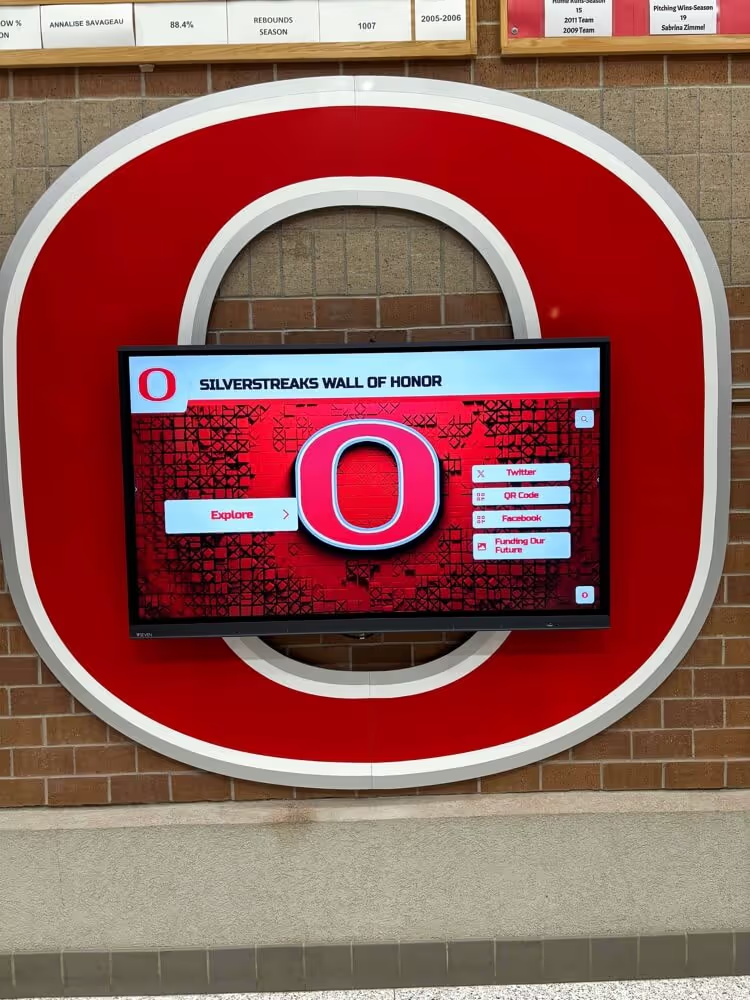
Digital Recognition Walls: Large-format touchscreen displays installed in libraries, student unions, or academic buildings allow visitors to explore databases of honors graduates, typically featuring:
- Searchable listings by name, year, major, and honors level
- Individual profile pages with photos, biographical information, and post-graduation achievements
- Statistical breakdowns showing honors trends across years and departments
- Interactive features allowing visitors to filter, sort, and explore the data
- Integration with alumni networking platforms connecting current students with successful graduates
These digital hall of fame systems provide unlimited capacity—displaying thousands of honorees without space constraints—while enabling easy updates as new graduates earn recognition each year.
Mobile and Web Applications: Digital platforms accessible via smartphones, tablets, and computers extend recognition beyond physical campus locations, allowing:
- Prospective students to explore academic excellence at institutions they’re considering
- Current students to research successful alumni from their majors
- Family members and alumni to locate specific graduates in honors databases
- Researchers and journalists to analyze institutional honors trends and statistics
Social Media Integration: Many institutions create digital campaigns celebrating honors graduates through coordinated social media posts, video profiles, and online features that amplify recognition beyond campus boundaries while showcasing institutional academic quality to broader audiences.
Several universities have found success partnering with companies specializing in academic recognition technology. Rocket Alumni Solutions, for example, provides comprehensive digital platforms that institutions use to showcase Latin honors graduates alongside athletic achievements, donor recognition, and other forms of institutional accomplishment—creating unified recognition systems that celebrate excellence across all dimensions of campus life.

Commencement Recognition Practices
Graduation ceremonies provide key opportunities for public celebration of Latin honors achievement:
Separate Honors Recognition Ceremonies: Some institutions host special pre-commencement receptions or ceremonies exclusively for Latin honors recipients, allowing more intimate celebration and creating community among top academic achievers.
Distinguished Seating: Designating specific ceremony sections for honors graduates ensures they sit together, creating visible concentration of honor cords that emphasizes collective achievement.
Individual Name Reading with Honors: During diploma conferral, announcing each graduate’s specific honors level—“John Smith, summa cum laude”—provides public recognition while helping attendees understand the honors system’s multi-tiered structure.
Keynote Speakers from Honors Alumni: Selecting commencement speakers from distinguished alumni who themselves graduated with honors creates powerful connection between current honorees and successful graduates who followed similar academic paths.
These ceremony elements transform Latin honors from abstract notations into celebrated accomplishments, reinforcing for students, families, and communities that academic excellence matters and receives meaningful institutional recognition.
The Value and Impact of Latin Honors Recognition
Understanding whether Latin honors actually matter—whether these designations carry genuine value beyond symbolic recognition—helps students decide how much effort to invest pursuing them and helps institutions assess whether their honors systems accomplish intended goals.
Academic and Professional Outcomes
Research on Latin honors impact yields mixed but generally positive findings about their value in post-graduation contexts:
Graduate School Admissions: Latin honors provide meaningful positive signals in graduate admissions, particularly for competitive programs. While honors alone don’t guarantee admission, they strengthen applications by demonstrating sustained academic excellence across an entire undergraduate career—a more robust achievement indicator than single semester performance or individual course grades.
Admissions committees particularly value summa cum laude recognition, understanding it represents top-tier performance that typically correlates with graduate school success. Magna cum laude provides moderate advantage, while cum laude offers modest benefit distinguishing holders from non-honors graduates but not dramatically impacting competitive admissions decisions.
Employment Prospects: The employment value of Latin honors varies significantly by industry and career path. Traditional professional fields including law, medicine, academia, and consulting tend to value honors recognition, viewing it as evidence of intelligence, work ethic, and capability. Many prestigious employers specifically seek or prefer candidates with honors credentials during resume screening.
However, in other industries—particularly entrepreneurship, creative fields, and technology sectors—Latin honors carry less weight, with employers focusing more on practical skills, portfolios, project experience, and demonstrated capabilities than academic credentials.

Scholarship Opportunities: Numerous competitive scholarships and fellowships use Latin honors as screening criteria or evaluation factors. Rhodes, Marshall, Fulbright, and similar prestigious awards typically expect or strongly prefer honors recognition among competitive applicants, making Latin honors potentially valuable for students pursuing these opportunities.
Lifetime Credential Value: Unlike honors that expire or become outdated, Latin honors represent permanent credentials. A summa cum laude notation remains on transcripts forever, providing lasting evidence of undergraduate achievement that retains value across entire careers, particularly in fields where academic credentials matter for advancement, credibility, or professional opportunities.
Institutional Benefits of Robust Honors Programs
Beyond individual benefits, institutions gain multiple advantages from well-designed Latin honors systems:
Recruitment Tool: Strong honors programs help recruit academically talented students. Prospective students serious about academics often research and compare honors requirements across institutions, favoring schools with clear, achievable yet meaningful honors pathways.
Academic Culture Enhancement: Visible honors recognition helps create aspirational academic cultures. When institutions publicly celebrate honors graduates through displays, ceremonies, and recognition programs, they signal that academic excellence matters and receives genuine institutional appreciation—potentially influencing campus culture toward greater academic engagement.
Alumni Engagement: Latin honors create natural affinity groups among successful graduates, supporting alumni programming and engagement. Honors alumni often demonstrate stronger connection to institutions and higher rates of philanthropic support, particularly when institutions maintain visible recognition of their achievements.
Institutional Prestige: High rates of honors graduates—particularly at selective levels like summa cum laude—serve as informal quality metrics. While not formal ranking factors, strong honors programs contribute to overall institutional reputation for academic excellence, potentially supporting recruitment, fundraising, and institutional positioning.
Many institutions enhance the impact of their honors programs by integrating recognition across campus touchpoints, including digital trophy walls that celebrate both academic and athletic excellence.
Common Questions About Latin Honors
Do graduate schools care about Latin honors?
Yes, most graduate programs consider Latin honors as part of holistic admissions review. Honors demonstrate sustained high achievement rather than single-semester performance, providing useful signals about academic capability and preparation for graduate-level work. Summa cum laude carries particular weight, while cum laude provides modest advantage. However, honors represent just one factor among many—research experience, test scores, recommendations, and fit often matter equally or more depending on program competitiveness.
Can you graduate with honors at all universities?
Most accredited four-year universities offer some form of Latin honors or equivalent recognition, though specific programs vary. Community colleges and some specialized institutions may not offer traditional Latin honors, instead using alternative recognition like honors programs or dean’s lists. Always check specific institutional requirements and programs when selecting schools if honors recognition matters for your goals.
What GPA do you need for magna cum laude?
Magna cum laude GPA requirements vary significantly across institutions, typically ranging from 3.7 to 3.85, though some highly selective schools set even higher thresholds. Percentile-based systems typically award magna cum laude to students in approximately the top 7-15% of graduating classes. Check your specific institution’s requirements, as considerable variation exists even among similar schools.
How do you wear honor cords at graduation?
Honor cords drape around the neck over graduation gowns, with the cords hanging down the front with the V-shaped opening of the gown. If wearing multiple cords for different honors or organizations, layer them together around the neck. The cords should hang evenly on both sides. Position cords outside of stoles if wearing both. Adjust positioning before the ceremony to ensure they’re visible in photographs and don’t become tangled during the processional.
Are departmental honors different from Latin honors?
Yes, departmental honors recognize achievement specifically within your major department, often requiring honors thesis completion, research projects, or comprehensive examinations beyond pure GPA. Latin honors (cum laude, magna cum laude, summa cum laude) are university-wide recognitions based on cumulative GPA across all courses. You can potentially earn both—many students graduate with both university-wide Latin honors and departmental honors in their major, with both appearing on transcripts and diplomas.
Does summa cum laude guarantee graduate school admission?
No, summa cum laude helps strengthen graduate applications but doesn’t guarantee admission. Competitive graduate programs conduct holistic review considering research experience, letters of recommendation, test scores, statement of purpose, relevant experience, and fit with program faculty and resources. Summa cum laude demonstrates strong academic capability, but successful applications require multiple strong components. However, honors do provide meaningful advantage, particularly when combined with other strong credentials.
Creating Lasting Recognition for Academic Excellence
Latin honors represent centuries-old traditions recognizing exceptional academic achievement—traditions that continue evolving as institutions develop new approaches to celebrating student excellence. Whether you’re pursuing honors as a student, establishing recognition systems as an administrator, or simply seeking to understand these prestigious credentials, the fundamental principle remains constant: acknowledging sustained academic excellence benefits individuals, institutions, and communities by validating effort, inspiring achievement, and creating aspirational standards that elevate educational quality.
As universities continue innovating recognition approaches—adopting digital displays, developing holistic assessment frameworks, and creating multi-dimensional honors programs—the core value of celebrating academic accomplishment endures. The most effective recognition systems balance honoring tradition with embracing innovation, maintaining meaningful selectivity while ensuring accessibility, and providing both individual validation and institutional benefit.
For institutions seeking to enhance how they celebrate Latin honors graduates and other forms of achievement, modern digital recognition solutions offer powerful capabilities traditional static displays cannot match. Interactive platforms enable unlimited capacity, easy updates, rich multimedia content, and engaging visitor experiences that inspire current students while honoring past achievement. Contact Rocket Alumni Solutions to explore how digital recognition displays can transform how your institution celebrates academic excellence and preserves the achievements of honors graduates for generations to come.