



Lacrosse senior night represents one of the most meaningful moments in a student-athlete's high school career—an evening to celebrate years of dedication, recognize personal growth, and honor the contributions seniors have made to their program. For many lacrosse players, this ceremony marks the culmination of countless hours spent practicing stick skills, the bonds formed with teammates who became family, and the leadership lessons learned through competition. A well-planned senior night transforms a regular season game into an unforgettable celebration that honors the legacy these athletes leave behind.
This comprehensive guide provides everything lacrosse coaches, booster clubs, and athletic directors need to plan memorable senior night ceremonies. From detailed planning timelines and ceremony format suggestions to meaningful gift ideas and lasting recognition strategies, this resource helps programs create celebrations that appropriately honor graduating lacrosse players while strengthening team culture and program tradition.
Understanding Lacrosse Senior Night Traditions
Senior night holds special significance in lacrosse culture, a sport where team unity and individual skill development must work in harmony. Unlike some team sports where a few players dominate playing time, lacrosse programs often feature larger rosters where every position—attack, midfield, defense, and goalie—plays distinct and critical roles in team success.
Why Senior Night Matters in Lacrosse Programs
Recognition of Individual Commitment Lacrosse demands exceptional dedication from players who often begin training long before high school tryouts. Many seniors have devoted 8-10 years to developing stick skills, understanding field positioning, and mastering the game’s unique combination of physical athleticism and technical precision. Senior night provides formal recognition of this sustained commitment, validating thousands of hours spent at practice, club tournaments, and summer training camps.
Honoring Diverse Contributions Successful lacrosse teams depend on players filling varied roles—from offensive threats who consistently find the back of the net to defensive specialists who shut down opponents’ top scorers, from faceoff specialists who control possession to backup goalies who push starters through competition. Senior night ensures recognition extends beyond statistical leaders to honor every graduating player’s unique contributions to program success.
Strengthening Program Culture and Tradition Thoughtfully planned senior night ceremonies reinforce program values and create traditions that resonate across generations. When underclassmen watch seniors honored with genuine celebration and heartfelt tributes, they understand what the program values and envision their own future senior night recognition. This continuity strengthens team culture and motivates younger players to invest similarly in program excellence.
Family Recognition and Gratitude Parents and guardians have supported these athletes through early morning practices, weekend tournaments, equipment purchases, and countless trips to training facilities. Senior night acknowledges families’ investments and sacrifices, providing public gratitude for the support systems that enabled athletes’ development. This family recognition strengthens relationships between programs and the communities that sustain them.
Creating Lasting Memories Years after graduation, former lacrosse players remember their senior night with remarkable clarity—the emotions walking onto the field with parents, the words their coaches spoke, the reactions from teammates and spectators. A well-executed ceremony creates powerful memories that athletes carry throughout life, reminding them of accomplishments achieved and relationships formed through lacrosse participation.
Timing Considerations for Lacrosse Senior Night
Strategic timing ensures maximum attendance and appropriate emotional context for senior celebrations.
Home Game Selection Most lacrosse programs schedule senior night during one of their final regular season home games, balancing several considerations:
- Late enough to feel momentous: Typically scheduled during the final 2-3 home games when season conclusion feels imminent
- Early enough for full attendance: Scheduled before playoff intensity when families might face travel or scheduling conflicts
- Meaningful opponent: Many programs prefer rivalry games or conference matchups that draw larger crowds
- Weather considerations: Spring lacrosse programs in northern climates may prioritize games with more reliable weather conditions for outdoor ceremonies
Coordinating with Other Spring Sports Spring athletic seasons create scheduling complexity as baseball, softball, track and field, tennis, and lacrosse programs all compete for field space, facility access, and community attention. Effective coordination ensures:
- Parents with athletes in multiple sports can attend all senior nights
- Community members interested in supporting multiple programs have opportunities to attend various celebrations
- Facility resources aren’t overextended with simultaneous senior night events
- Athletic department recognition efforts feel coordinated rather than chaotic
Many athletic programs maintain master calendars showing all spring senior night dates during preseason planning, allowing families to plan accordingly and preventing conflicts that force difficult attendance choices.
Boys’ vs. Girls’ Lacrosse Timing Schools fielding both boys’ and girls’ lacrosse teams must decide whether to conduct separate senior nights or combine celebrations. Each approach offers distinct advantages:
Separate Senior Nights:
- Allows focused attention on each program’s seniors
- Accommodates different season schedules if boys’ and girls’ seasons don’t align perfectly
- Provides program-specific recognition reflecting unique team culture and achievements
- Enables gender-specific gifts or recognition elements if desired
Combined Senior Nights:
- Reduces planning burden on booster clubs and athletic departments
- Creates larger, more festive atmosphere with combined attendance
- Reflects programs’ shared identity and mutual support
- Simplifies scheduling for families with seniors in both programs
No universal right answer exists—programs should consider their specific circumstances, team preferences, and logistical constraints when deciding which approach best serves their communities.
Planning Timeline for Lacrosse Senior Night
Successful senior celebrations require advance planning ensuring all elements come together seamlessly on game day. This timeline provides a framework programs can adapt to their specific needs.
6-8 Weeks Before Senior Night
Senior Information Collection Begin gathering comprehensive information about each senior that will inform programs, speeches, and recognition materials:
- Complete player profiles: full name (as they prefer to be recognized), jersey number, position(s), years on team
- Athletic achievements: all-conference honors, team awards, statistical highlights, memorable performances
- Academic accomplishments: GPA, academic honors, college plans, intended major
- Personal details: hobbies, future goals, favorite memories, what they’ll miss most about lacrosse
- Family information: parents’/guardians’ names, siblings, family members who should be recognized during ceremony
Create standardized forms that seniors complete, ensuring consistent information while allowing athletes to express personal perspectives in their own words.
Establish Planning Committee Designate specific responsibilities among coaching staff, booster club members, and athletic department personnel:
- Ceremony coordinator: oversees overall planning and day-of execution
- Program/materials coordinator: manages printed programs, displays, slideshow creation
- Gift coordinator: researches options, collects funds, purchases and wraps gifts
- Logistics coordinator: manages setup/cleanup, coordinates with facilities, arranges seating
- Communications coordinator: publicizes event, manages photography/videography, handles social media
Clear role assignments prevent overlooked details and ensure multiple people understand the plan if last-minute substitutions become necessary.
Budget Development Calculate total expenses and identify funding sources:
Typical lacrosse senior night expenses:
- Senior gifts: $40-100 per senior (varies significantly based on gift selection)
- Framing for photos or plaques: $15-30 per senior
- Flowers or floral arrangements: $5-15 per senior family
- Printed programs: $50-150 depending on quantity and quality
- Catering for post-game reception (if planned): $8-15 per person
- Photography/videography services: $200-500 if hiring professionals
- Decorations and signage: $100-200
Funding typically comes from:
- Booster club budgets dedicated to senior recognition
- Team fundraising specifically designated for senior night
- Senior player families contributing predetermined amounts
- General athletic department recognition budgets
- Local business sponsorships
Programs should determine budget and funding sources early, as this directly impacts gift selection and ceremony elaborateness.
4-6 Weeks Before Senior Night
Gift Selection and Ordering Finalize gift choices and place orders with sufficient time for customization and delivery. Detailed gift suggestions appear later in this guide, but ordering timeline is critical:
- Custom framed items: 3-4 weeks lead time for framing services
- Personalized apparel or equipment: 2-3 weeks for screen printing or embroidery
- Engraved items: 2-3 weeks for professional engraving
- Group photo items: 2-3 weeks for photography sessions and printing
Program and Materials Creation Begin designing printed programs and visual materials:
Printed Programs should include:
- List of all seniors with photos, positions, and key accomplishments
- Senior quotes or reflections on their lacrosse experience
- Recognition of parents/families supporting each athlete
- Team roster and season statistics
- Coaching staff recognition
- Thank you to boosters, sponsors, and supporters
Visual Materials might include:
- Video tribute featuring senior highlights, photos throughout their careers, and well-wishes from teammates
- Poster displays showing seniors’ progression from freshman year through senior season
- Banner recognizing senior class that can later become permanent program decoration
- Digital slideshow running before game and during pre-game ceremony
2-3 Weeks Before Senior Night
Publicity and Invitations Generate awareness and encourage attendance:
- Send formal invitations to senior families including ceremony timeline and any requested participation
- Publicize event through school announcements, athletic department communications, and social media
- Notify local media about senior night, particularly for athletes with significant achievements or interesting stories
- Create Facebook event or other social media presence encouraging community attendance
- Coordinate with other school groups (band, spirit squad, student section leaders) about enhanced participation
Ceremony Script Finalization Develop detailed ceremony script including:
- Introduction and welcome
- Individual senior recognition with biographical details and accomplishments
- Parent recognition and thank you
- Coach’s remarks about each senior or senior class collectively
- Gift presentation
- Photo opportunities
- Timeline and cues for all ceremony elements
Assign speaking roles and ensure all participants (announcer, coaches, administrators, booster representatives) understand their responsibilities and timing.
Logistics Confirmation Confirm practical arrangements:
- Sound system testing and microphone availability
- Seating arrangements for senior families on field/sideline
- Table setup for gift display if presenting before game
- Coordination with officials about ceremony timing relative to game schedule
- Photography/videography positioning and responsibilities
- Backup plan for weather if outdoor ceremony might face conditions issues
Week of Senior Night
Final Preparations Execute remaining tasks:
- Pick up or receive delivery of all gifts and inspect for quality/accuracy
- Print programs and prepare for distribution
- Finalize video tribute or slideshow
- Create signage directing attendees to ceremony location and seating
- Assign specific volunteers to setup/cleanup duties with detailed instructions
- Hold brief rehearsal if ceremony includes complex elements or multiple speakers
- Confirm attendance of anyone with speaking or presentation roles
Day-of Setup Arrive early on game day to establish ceremony elements:
- Position chairs or seating area for senior families
- Set up gift display table
- Test audio/visual equipment including microphones and video display
- Arrange flowers or decorative elements
- Position photographers/videographers
- Distribute printed programs to volunteers for handing to attendees
- Designate volunteer to escort seniors and families to ceremony positions
Ceremony Format and Program Structure
While lacrosse senior night ceremonies vary based on program tradition and community preferences, effective celebrations share common structural elements that honor athletes while maintaining reasonable time commitments that respect spectators’ schedules.
Pre-Game vs. Halftime Ceremonies
Programs must decide when to conduct senior recognition relative to game action.
Pre-Game Ceremonies (most common in lacrosse):
Advantages:
- Ensures full senior attention before game competition begins
- Allows seniors to fully enjoy their final home game after recognition
- Provides flexibility if ceremony runs longer than anticipated
- Enables family photos and socializing without conflicting with game intensity
- Seniors can change into game uniforms after ceremony if wearing special attire
Considerations:
- May delay game start (coordinate with officials about timing)
- Some spectators may arrive during ceremony if they time arrival for scheduled game start
- Weather exposure for longer period if outdoor ceremony faces adverse conditions
Halftime Ceremonies:
Advantages:
- Guaranteed audience attendance from start to finish
- Fixed time window prevents ceremony from extending indefinitely
- Allows seniors to play first half without ceremony emotions affecting performance
Considerations:
- Time pressure may feel rushed
- Seniors experience emotion in middle of competitive game
- Coordination with coaching staff to ensure seniors can fully participate despite ceremony duties
- Brief window may not accommodate large senior classes
Most lacrosse programs prefer pre-game ceremonies, which better suit lacrosse’s typical pacing and allow proper focus on recognition without competitive pressure.
Individual Player Recognition Approach
The core of any senior night involves honoring each graduating player individually. Effective recognition balances thoroughness with pacing that maintains audience engagement.
Announced Introduction Format: Each senior is typically introduced with:
Escort to Field: Senior walks to designated recognition area accompanied by parents, guardians, or family members. Some programs invite siblings, while others limit to parents to manage number of people on field.
Biographical Announcement: Public address announcer shares:
- Senior’s full name and jersey number
- Position(s) played throughout career
- Years on team (varsity and junior varsity if applicable)
- Key achievements: all-conference honors, team awards, significant statistical accomplishments
- Academic honors: honor roll, National Honor Society, special recognitions
- Future plans: college attendance and intended major (and if continuing lacrosse)
- Brief personal detail: favorite lacrosse memory, what they’ll miss most, or personal message
Photo Opportunity: Senior and family pause for photographs, creating lasting memories and providing content for program archives and family collections.
Gift Presentation: Coaching staff or booster representatives present senior gift(s), with brief handshake, hug, or personal word.
Typical time allocation: 1.5-2 minutes per senior, meaning a class of 8 seniors requires 12-16 minutes total for individual introductions.
Balancing Detail with Pacing: Programs with very large senior classes (12+ athletes) may need abbreviated format:
- Group seniors by position for shared introductions followed by individual name announcements
- Prepare comprehensive printed program with full bios while keeping announcements more concise
- Save detailed coach comments for team-only gathering or small reception rather than public ceremony
The goal is honoring each senior meaningfully without ceremony length that loses audience attention or significantly delays game start.
Coach Remarks and Team Reflections
Beyond individual introductions, ceremony typically includes coach commentary about the senior class collectively or individuals specifically.
Collective Senior Class Remarks: Head coach addresses the senior class as a group:
- Reflecting on the class’s journey together from first practices through senior season
- Highlighting collective accomplishments: team records, championships, program milestones achieved during their tenure
- Acknowledging the leadership and culture these seniors established
- Expressing personal gratitude for the privilege of coaching them
- Offering wisdom or encouragement for their futures beyond lacrosse
Time allocation: 3-5 minutes for head coach remarks
Individual Senior Comments: Some coaches prefer sharing brief individual comment about each senior:
- Unique qualities that senior brought to program
- Specific memory that captures who they are as player and person
- Personal growth observed across their years
- Thank you for specific contributions to team success
This approach is more time-intensive but can feel more personal, particularly in programs with smaller senior classes or where coach relationships are especially close. If pursued, comments should be genuinely individualized rather than formulaic to justify the additional time commitment.
Senior Player Remarks: Programs sometimes invite seniors to address teammates and spectators:
- Thank you to families, coaches, teammates, and supporters
- Reflection on what lacrosse participation meant to them
- Advice or encouragement for underclassmen continuing program legacy
- Favorite memories or acknowledgment of special relationships
This element can be powerful but requires advance preparation to ensure seniors comfortable speaking publicly have opportunity while not forcing reluctant public speakers into uncomfortable positions. A designated team captain might speak on behalf of entire senior class, or written remarks might be shared in program if verbal addresses aren’t comfortable fit.
Special Elements That Enhance Ceremonies
Several additional elements can elevate senior night from basic recognition to truly memorable celebration:
Video Tribute: A 3-5 minute video compilation featuring:
- Photos showing seniors’ progression from youth lacrosse through high school careers
- Game footage highlighting memorable plays and celebrations
- Behind-the-scenes practice and team bonding moments
- Messages from teammates, underclassmen, and fellow seniors
- Senior quotes reflecting on their experience
- Highlight goals, assists, saves, and defensive stops set to music
Video tributes create emotional impact and preserve memories in format families treasure long after graduation. Many programs compile videos that become permanent program archives, with senior night providing premiere viewing before posting to team websites or social media.
Underclassmen Tunnel or Guard of Honor: Non-senior players form two lines creating tunnel through which seniors and families walk during individual introductions. This symbolic gesture honors seniors while reinforcing team unity and allowing younger players to actively participate in celebration. Some teams accompany tunnel with creative elements like raising sticks to create overhead arch or holding signs with senior names and jersey numbers.
Alumni Attendance and Recognition: Inviting program alumni, particularly recent graduates now playing collegiate lacrosse, connects current seniors to program’s continuing legacy. Alumni presence demonstrates lacrosse careers can extend beyond high school and provides networking opportunities for seniors. Some programs incorporate brief alumni remarks or recognition as part of ceremony, while others simply ensure alumni presence and post-ceremony socializing opportunities.
Flowers or Symbolic Gifts: Presenting roses, carnations, or small floral arrangements to senior families has become common tradition. Some programs give flowers to mothers specifically, while others provide arrangements for families generally. This gesture acknowledges family support and provides tangible token families take home from ceremony.
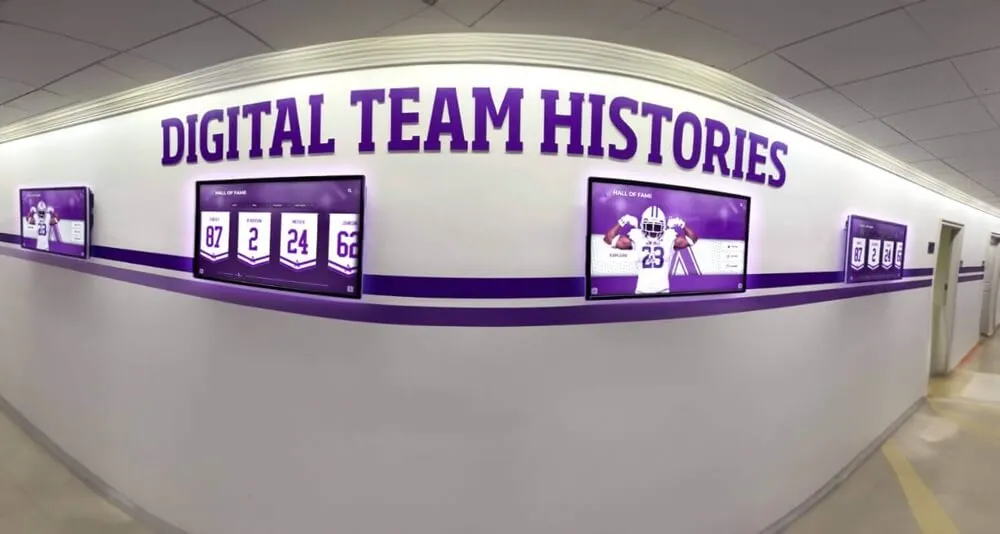
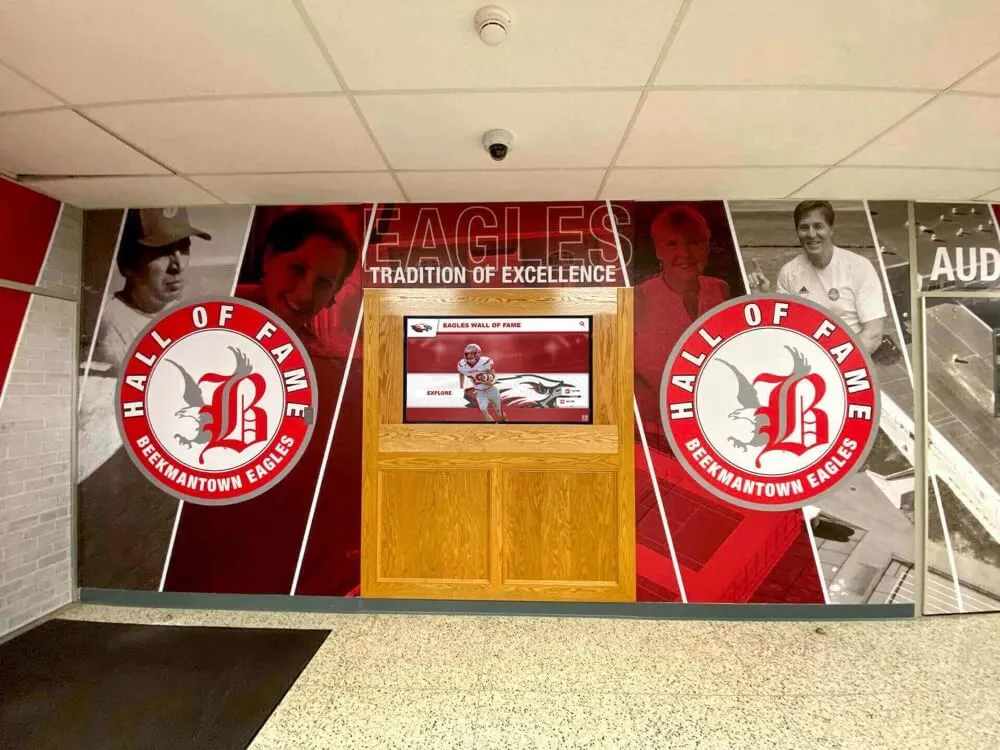
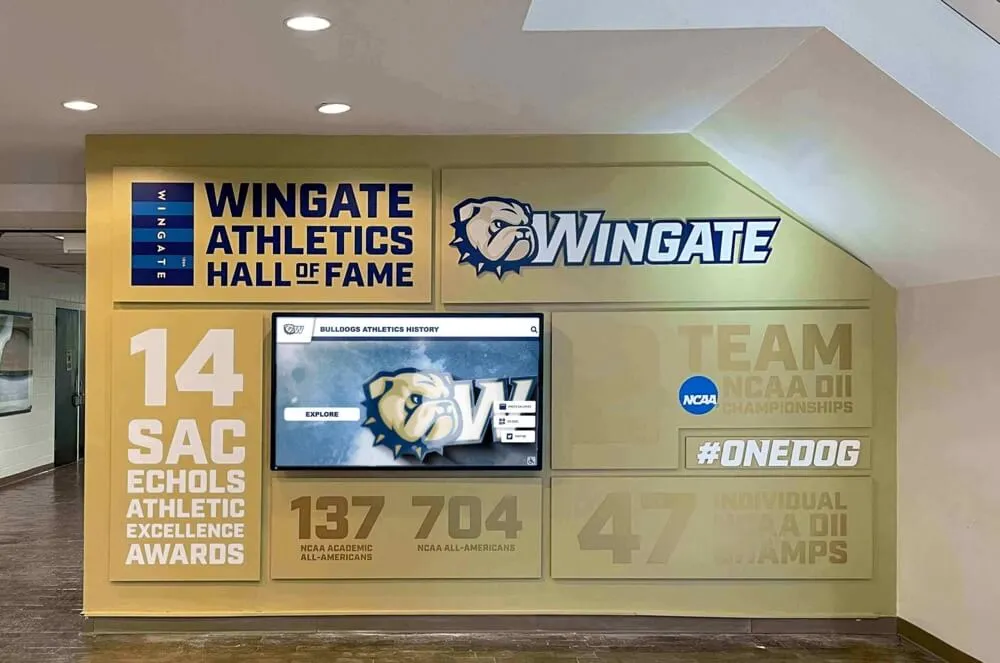
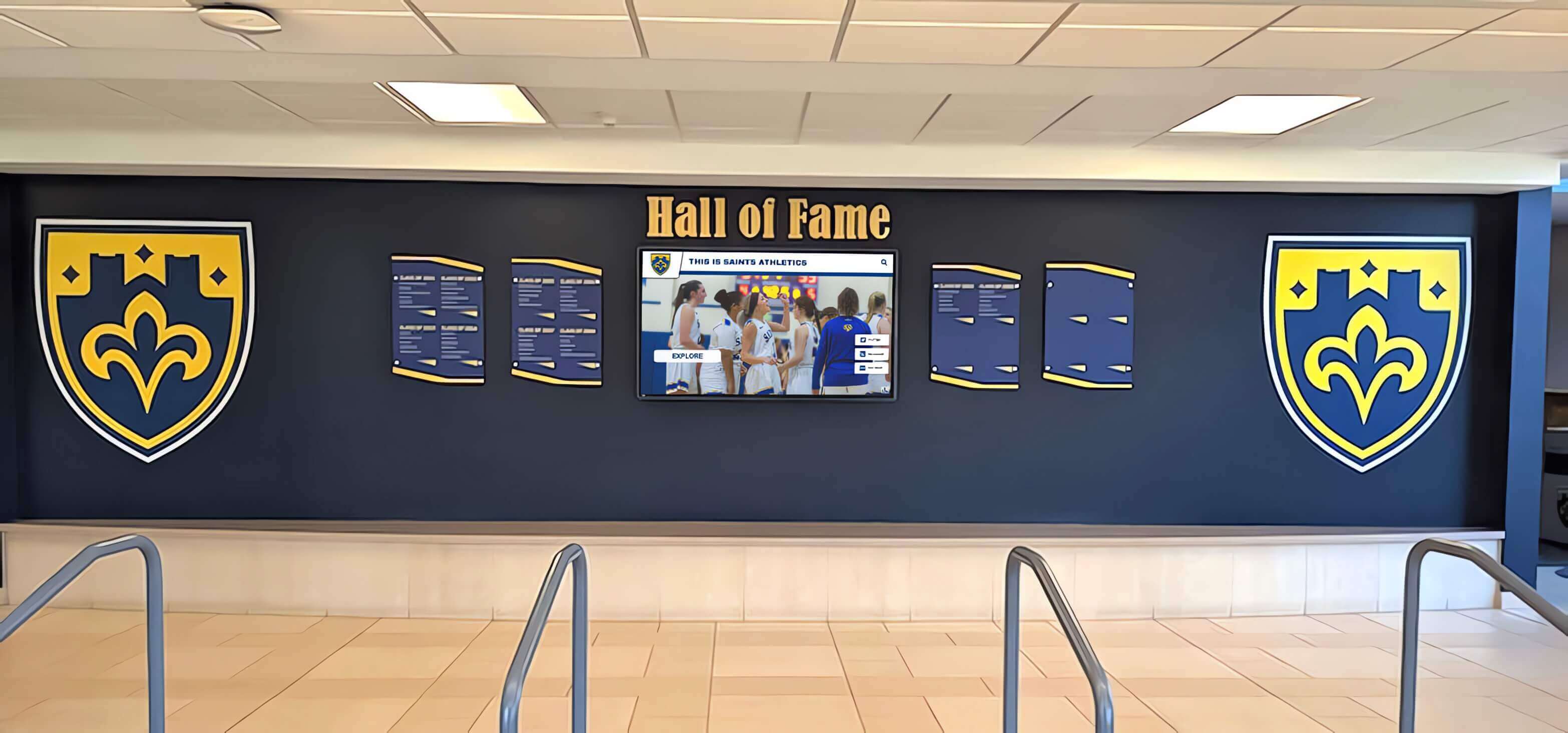
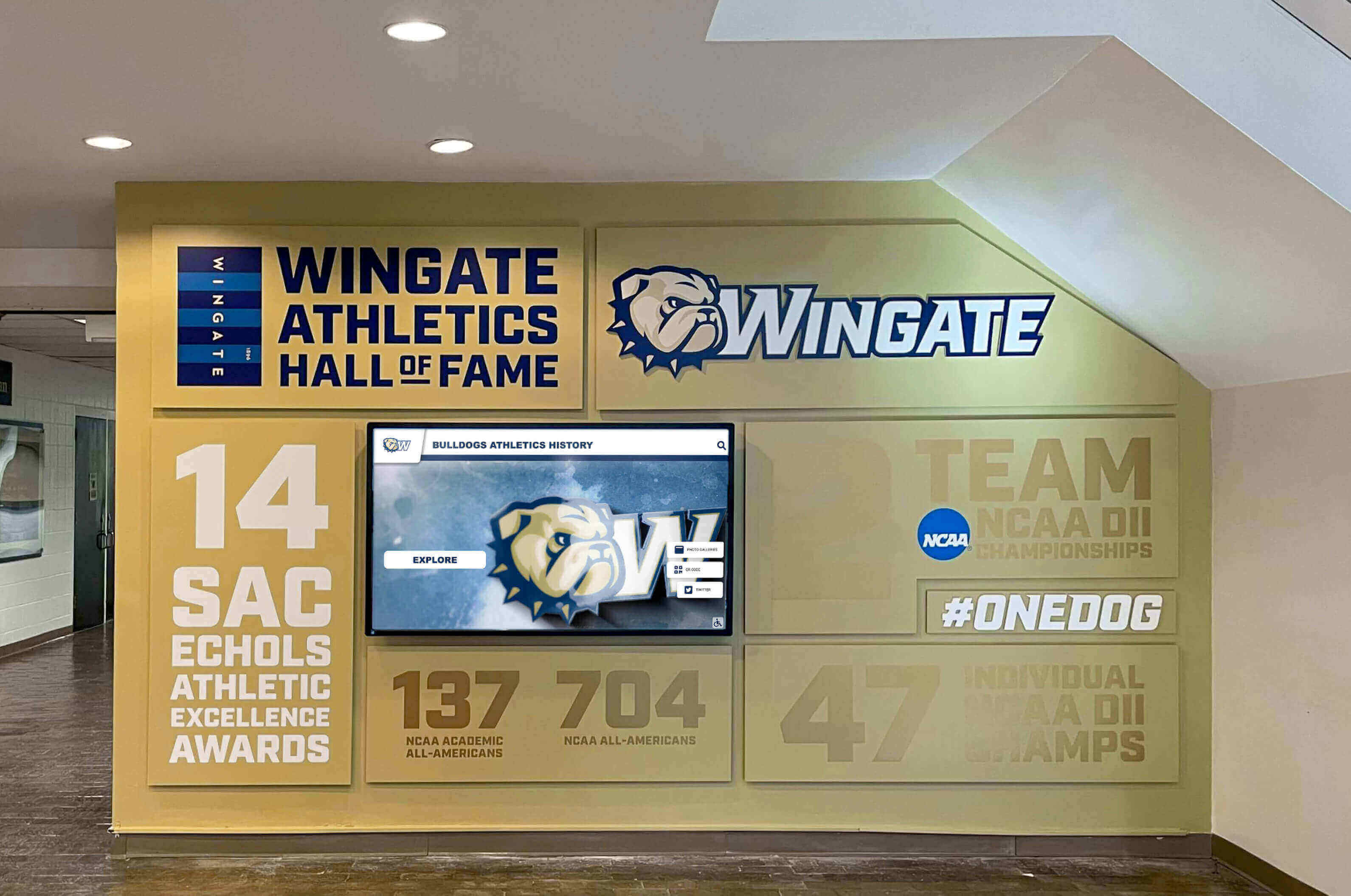
Jersey Retirement or Special Recognition: Exceptional players who achieved remarkable milestones might receive special recognition beyond standard senior night honors. True jersey retirement (permanently removing number from circulation) should be reserved for truly legendary contributions, but programs might create jersey shadow boxes or special plaques for athletes who earned all-state recognition, broke program records, or demonstrated extraordinary character deserving additional acknowledgment. Solutions like digital athletic recognition displays allow programs to permanently honor special achievements while maintaining appropriate hierarchy between different recognition levels.
Meaningful Gift Ideas for Lacrosse Seniors
Gift selection balances several considerations: appropriateness to the significance of the occasion, budget constraints, and lasting value beyond the moment. The most meaningful gifts commemorate specific senior night while also serving as permanent reminders of lacrosse experiences.
Traditional Physical Gifts
Framed Photos: Professionally framed photographs remain among the most popular senior night gifts:
- Senior in game action during home game
- Team photo from senior season
- Individual portrait in full uniform
- Compilation collage showing progression through high school years
- “Senior spotlight” designed graphic featuring player photo, statistics, and accomplishments
Cost: $25-60 depending on frame quality and photo size Benefit: Tangible display item for home that preserves memories and serves as conversation piece
Personalized Apparel: Custom clothing items seniors can wear immediately and keep indefinitely:
- Senior-specific team warm-up jacket or hoodie with “Senior” designation and year
- Custom t-shirt featuring senior class names and jersey numbers
- Personalized jersey with special senior night design or color scheme
- Embroidered gear bag with player name and “Senior 2026” designation
Cost: $35-75 depending on item and customization extent Benefit: Functional item seniors can use while tangibly representing senior status
Engraved Stick or Equipment: Lacrosse-specific recognition on equipment seniors use:
- Lacrosse stick with shaft engraved with player name, position, and years played
- Equipment bag with custom embroidery
- Gloves with interior personalization
- Helmet with special decal or interior engraving
Cost: Varies significantly ($30-200) depending on whether program provides new equipment or personalizes seniors’ existing gear Benefit: Directly connects recognition to lacrosse participation and provides functional item
Memory Books or Scrapbooks: Compiled documentation of senior’s lacrosse career:
- Bound photo album featuring pictures from freshman through senior seasons
- Scrapbook with newspaper clippings, statistics, game programs, and photos
- Digital photo book professionally printed through online services
- “Lacrosse journey” compilation with progression documentation
Cost: $40-80 for professionally printed books; $20-40 for materials if compiled manually Benefit: Comprehensive memory preservation that families treasure
Personalized Keepsakes
Custom Engraved Items: Non-equipment items featuring personalization:
- Engraved metal or wooden lacrosse stick plaques displaying player name, number, years, and message
- Custom lacrosse ball display case with engraved plate
- Engraved picture frame with lacrosse theme
- Personalized keychain, dog tag, or medallion featuring lacrosse imagery and senior info
Cost: $20-50 depending on item and engraving complexity Benefit: Compact keepsake that seniors can keep indefinitely regardless of living situation
Team-Signed Items: Objects signed by entire team creating unique memento:
- Jersey or practice jersey signed by all teammates and coaches
- Team stick signed along shaft by all players
- Game ball from senior night game with signatures
- Poster-sized team photo with room for all signatures around border
Cost: $15-40 for base item plus collection of signatures Benefit: Tangible connection to team relationships that seniors value most
Championship or Season Documentation: Items commemorating team’s accomplishments during senior tenure:
- Framed display featuring championship medals, patches, or tournament brackets
- Custom plaque listing program accomplishments achieved during senior’s career
- Composite showing team photos from each year senior participated
- Record book page showing any school records senior holds or contributed to
Cost: $30-70 depending on complexity and materials Benefit: Connects individual recognition to team success and program achievement
Experience-Based Gifts
While physical gifts dominate senior night traditions, some programs incorporate experience elements:
Senior Night Game Ball: Designating official game ball(s) from senior night game for seniors:
- Ball(s) used during game collected afterward and distributed to seniors
- Signed by all teammates and coaching staff
- May be presented in display case or given as-is for seniors to display as they choose
Cost: Minimal (game balls already budgeted) Benefit: Direct connection to senior night game with unique provenance
Team Dinner or Reception: Post-game gathering exclusively for team, allowing extended celebration:
- Team dinner at restaurant or catered event at school
- Senior-focused reception with food, music, and photo opportunities
- Outdoor celebration at local park or team supporter’s property
Cost: $10-25 per person typically Benefit: Extended time together as team without game competition pressure
Video Memories: Professional or parent-created video compilation:
- Season highlight video featuring all seniors
- Individual senior tribute videos shown during ceremony
- “This is your lacrosse life” video surprising seniors with messages from coaches, teammates, and family
Cost: $200-500 for professional production; minimal for parent volunteers with editing capability Benefit: Multimedia memory preservation that can be shared digitally
Budget-Conscious Options for Programs with Limited Resources
Not all programs have substantial budgets for senior gifts. Meaningful recognition doesn’t require expensive items:
Coach’s Letters: Personalized, handwritten letters from head coach to each senior:
- Reflecting on senior’s journey and growth
- Highlighting specific memories and qualities the coach will remember
- Offering guidance and encouragement for future
- Expressing genuine gratitude for senior’s contributions
Cost: Only coach’s time Benefit: Extremely personal recognition that many seniors treasure more than material items
Team Photo Collages: Parent volunteers creating photo compilations:
- Printed collage featuring senior throughout four years
- Digital photo frame pre-loaded with senior’s lacrosse photos
- Simple frame with team photo and list of teammates’ names
Cost: $10-25 depending on printing and framing choices Benefit: Meaningful memory preservation at minimal expense
Handmade Team Items: Creative projects undertaken by underclassmen:
- Poster board with messages and signatures from all current teammates
- Decorated shoebox or memory box containing notes from each teammate
- Hand-drawn or painted representation of senior’s jersey number
- Compiled book of “letters to senior” from each underclassman
Cost: Art supplies only ($5-10 per senior) Benefit: Demonstrates thought and team connection, often more meaningful than expensive purchased items
The best gifts reflect genuine appreciation and thoughtful recognition of each senior’s individual contributions. Programs should select gifts within budget that feel appropriate to their team culture rather than feeling pressured to match other programs’ spending levels.
Creating Lasting Recognition Beyond Senior Night
While senior night provides important ceremonial recognition, the most effective programs extend honors beyond single evening, creating permanent visibility of senior achievements that inspires future generations while maintaining alumni connections.
Permanent Physical Recognition Options
Athletic Hallway Displays: Dedicated space showcasing program history including senior classes:
- Composite photos of each senior class
- Individual senior photos with names and graduation years
- Program achievement timelines showing progression through years
- Conference championship recognition and playoff accomplishments
Traditional approaches using printed photos and plaques face capacity constraints as years accumulate, but they create visible program history in high-traffic areas where students encounter them daily. Many programs implementing elementary through high school recognition approaches find that comprehensive displays strengthen school culture across age groups.
Trophy Case Recognition: Incorporating senior recognition into athletic trophy displays:
- Plaques listing seniors by graduation year
- Individual achievement recognition for seniors who earned special honors
- Team accomplishment documentation showing which seniors contributed
Space limitations frequently constrain trophy case additions, requiring programs to develop rotation strategies or focus on most significant achievements rather than comprehensive documentation.
Team-Specific Spaces: Locker room or team area displays exclusively for lacrosse program:
- Wall of seniors showing graduating class photos
- Individual locker plaques with senior names permanently mounted
- Achievement wall documenting program records and all-conference selections
- Championship banners and senior class recognition combined
These private spaces allow extensive recognition without competing for limited public display areas, though they reach smaller audiences primarily consisting of current team members.
Digital Recognition Systems
Modern technology enables recognition that addresses traditional space constraints while creating engagement opportunities impossible with static displays.
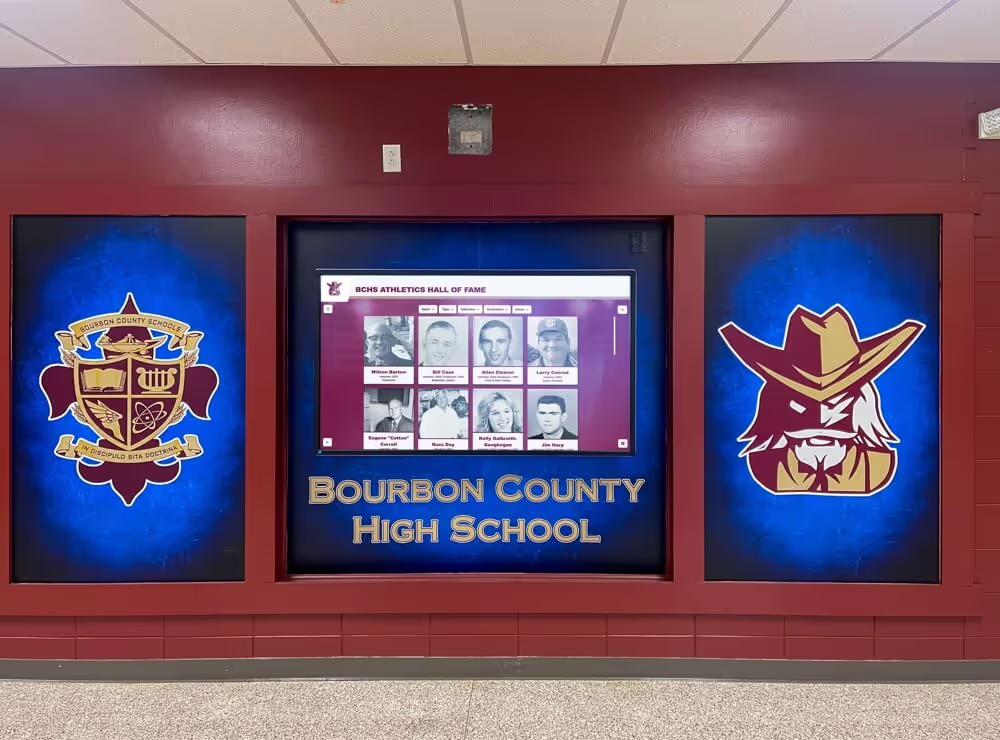
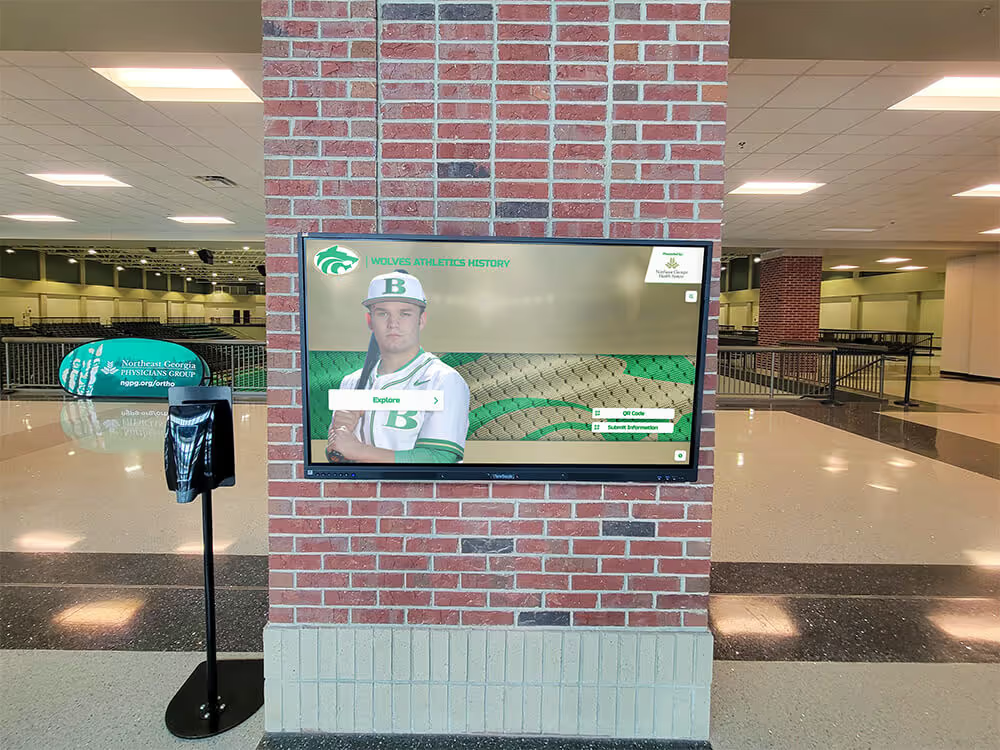
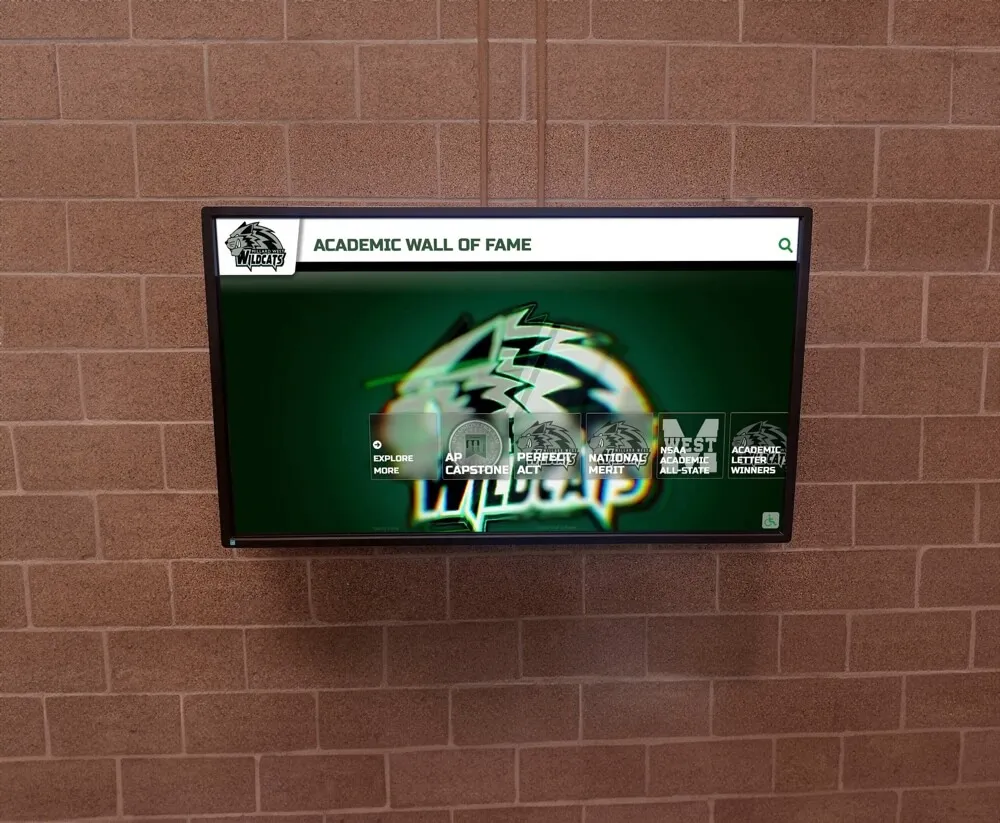
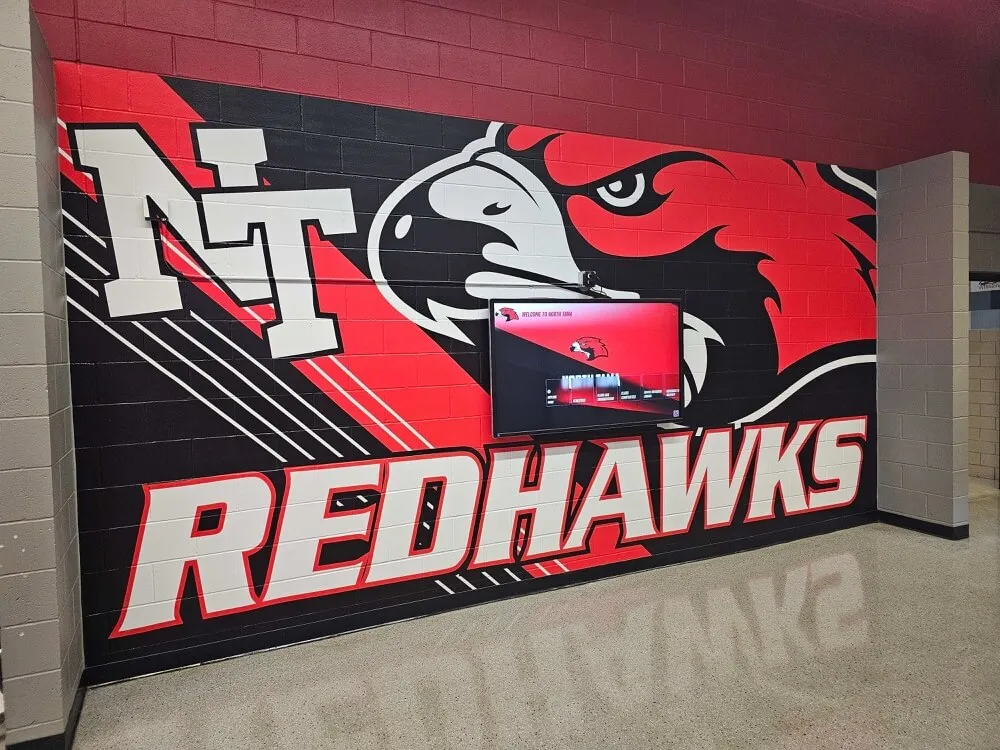
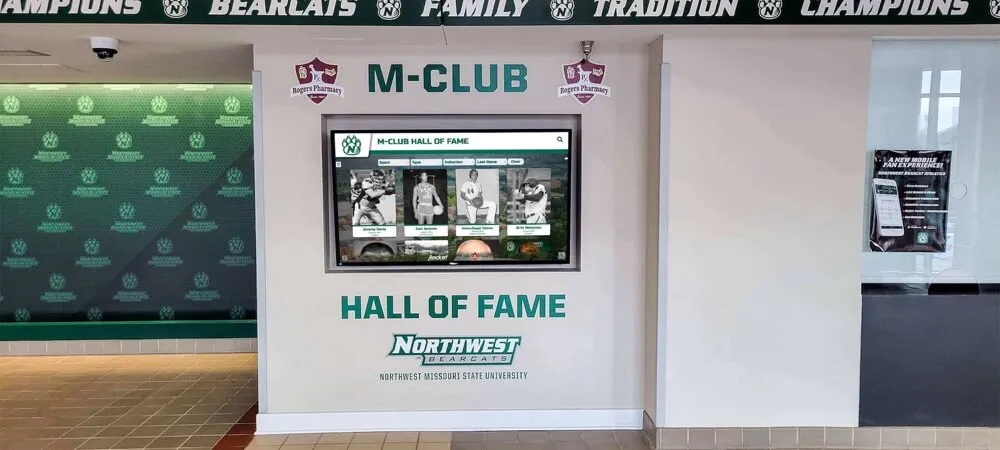
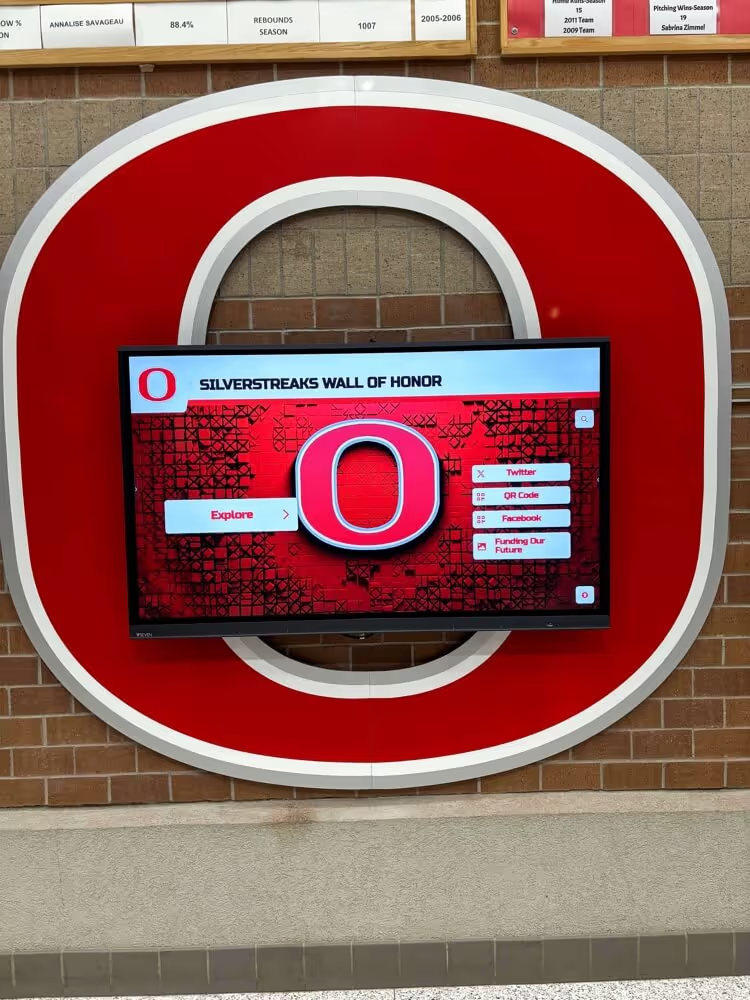
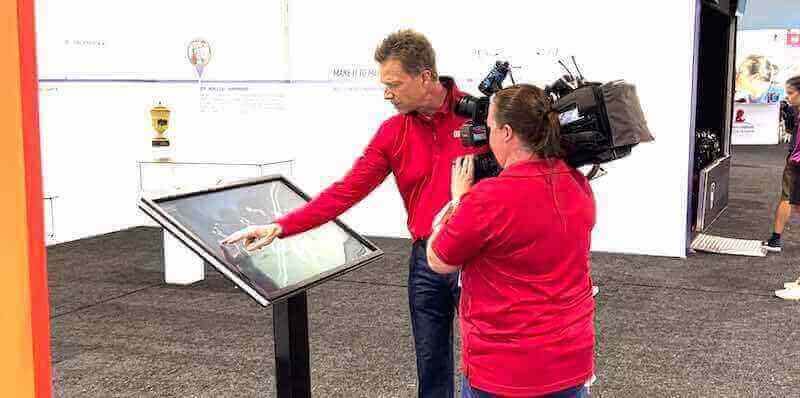
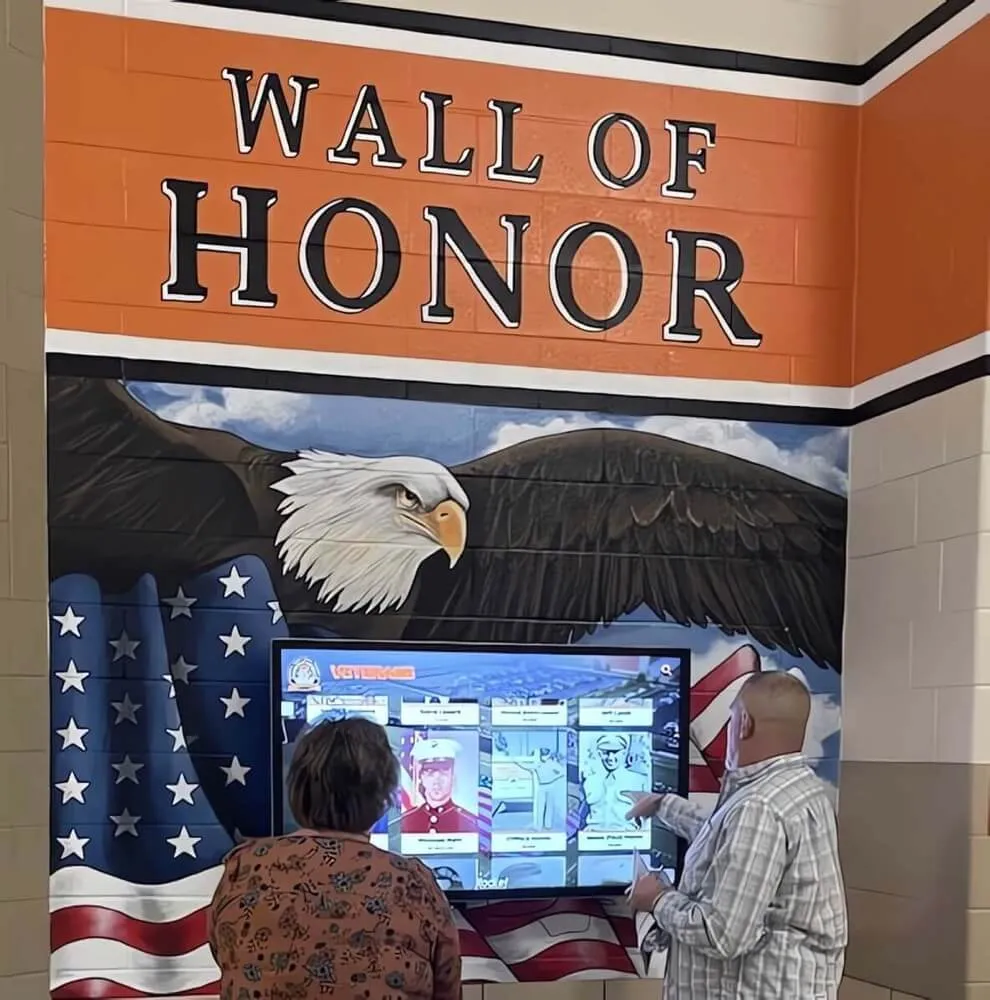
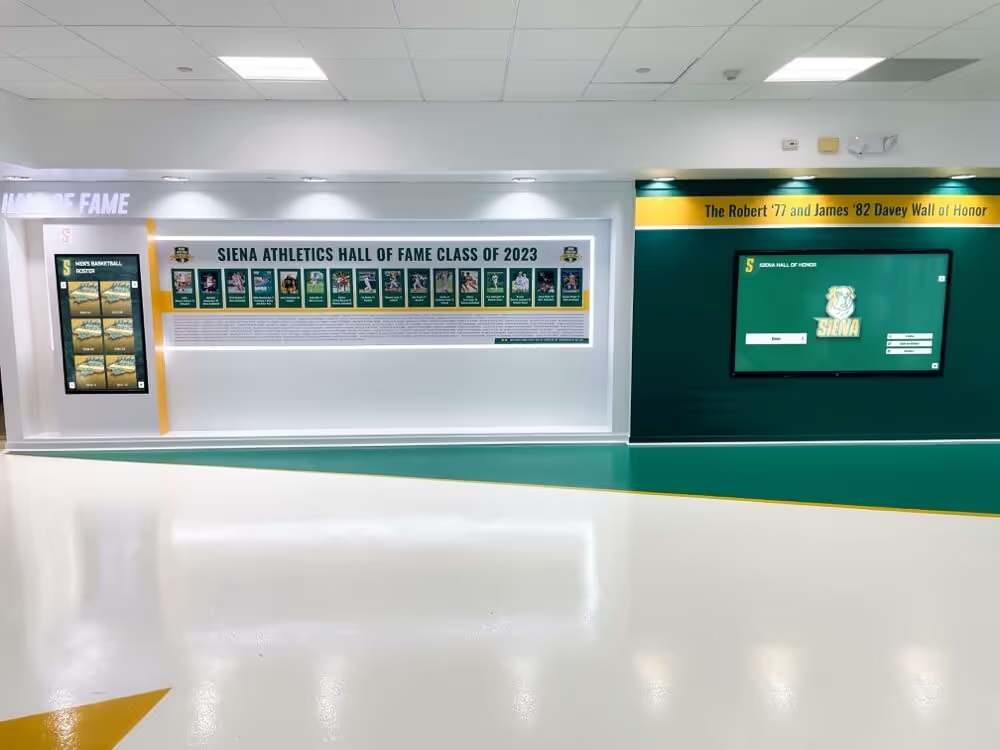
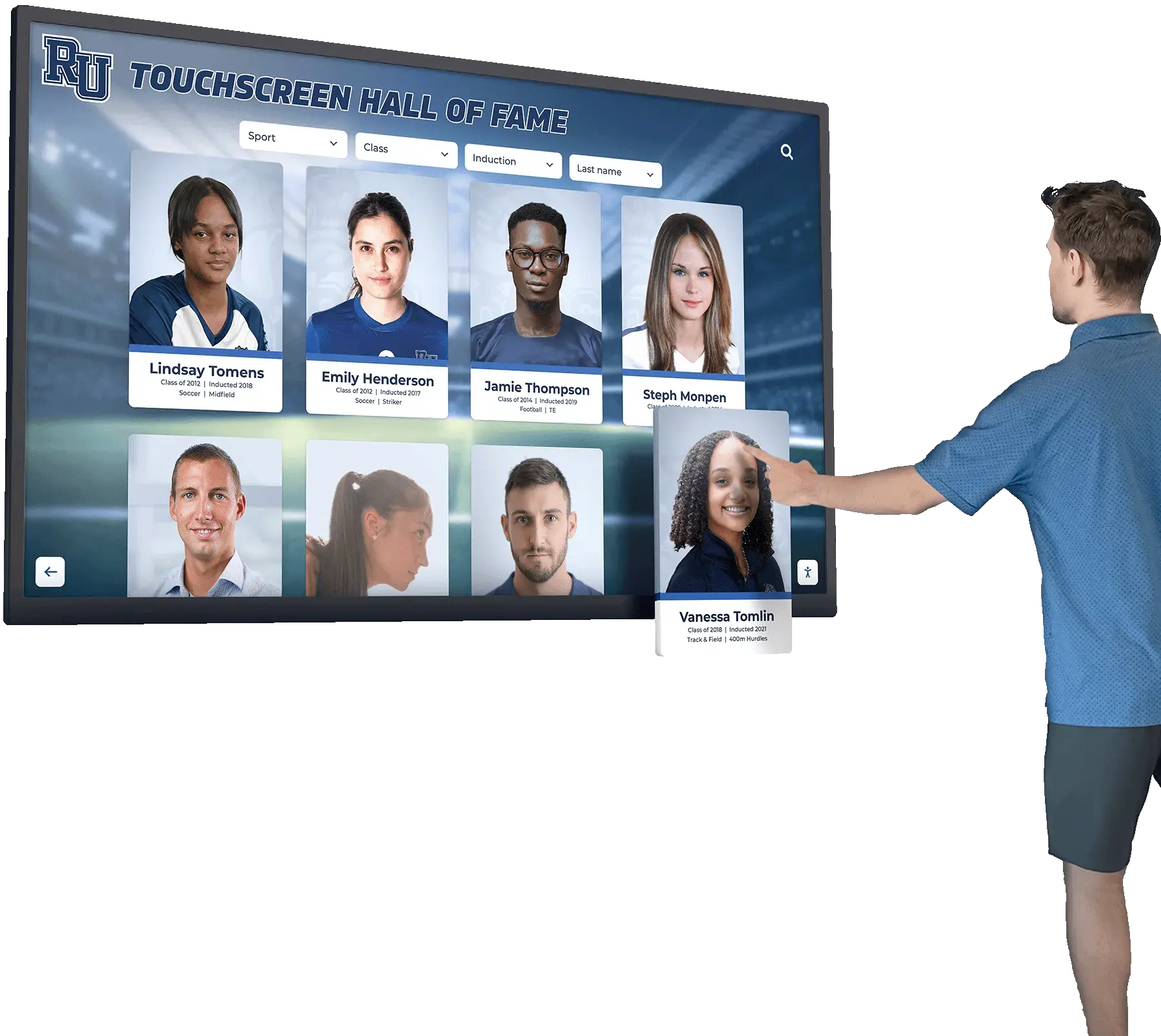
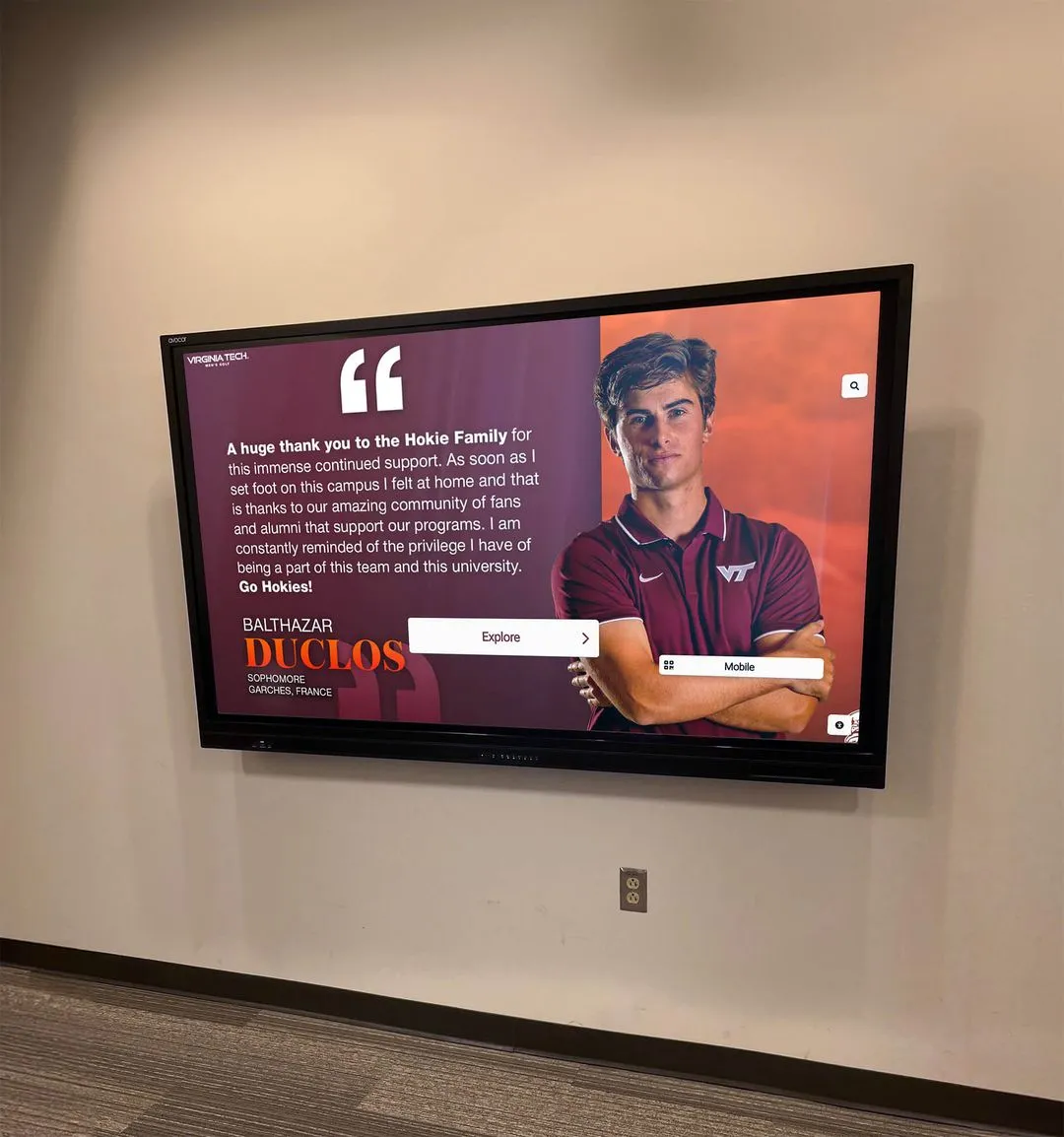
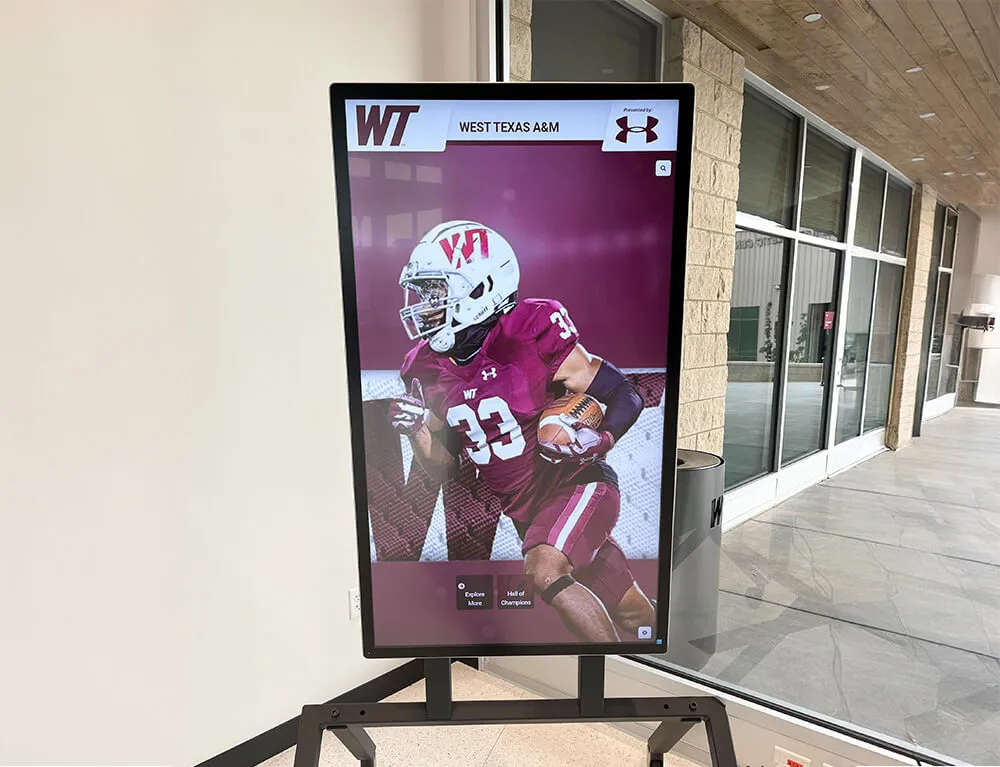
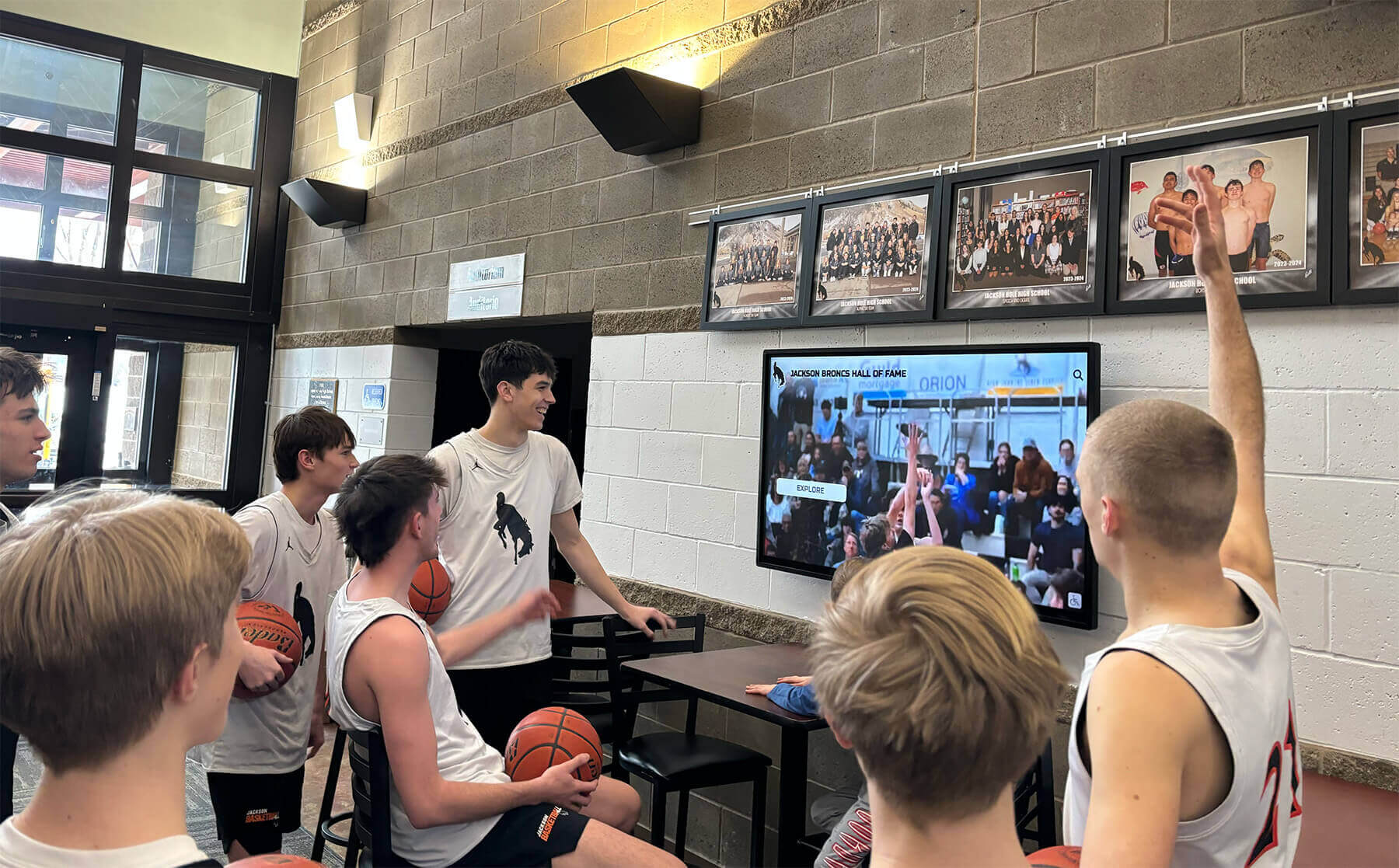
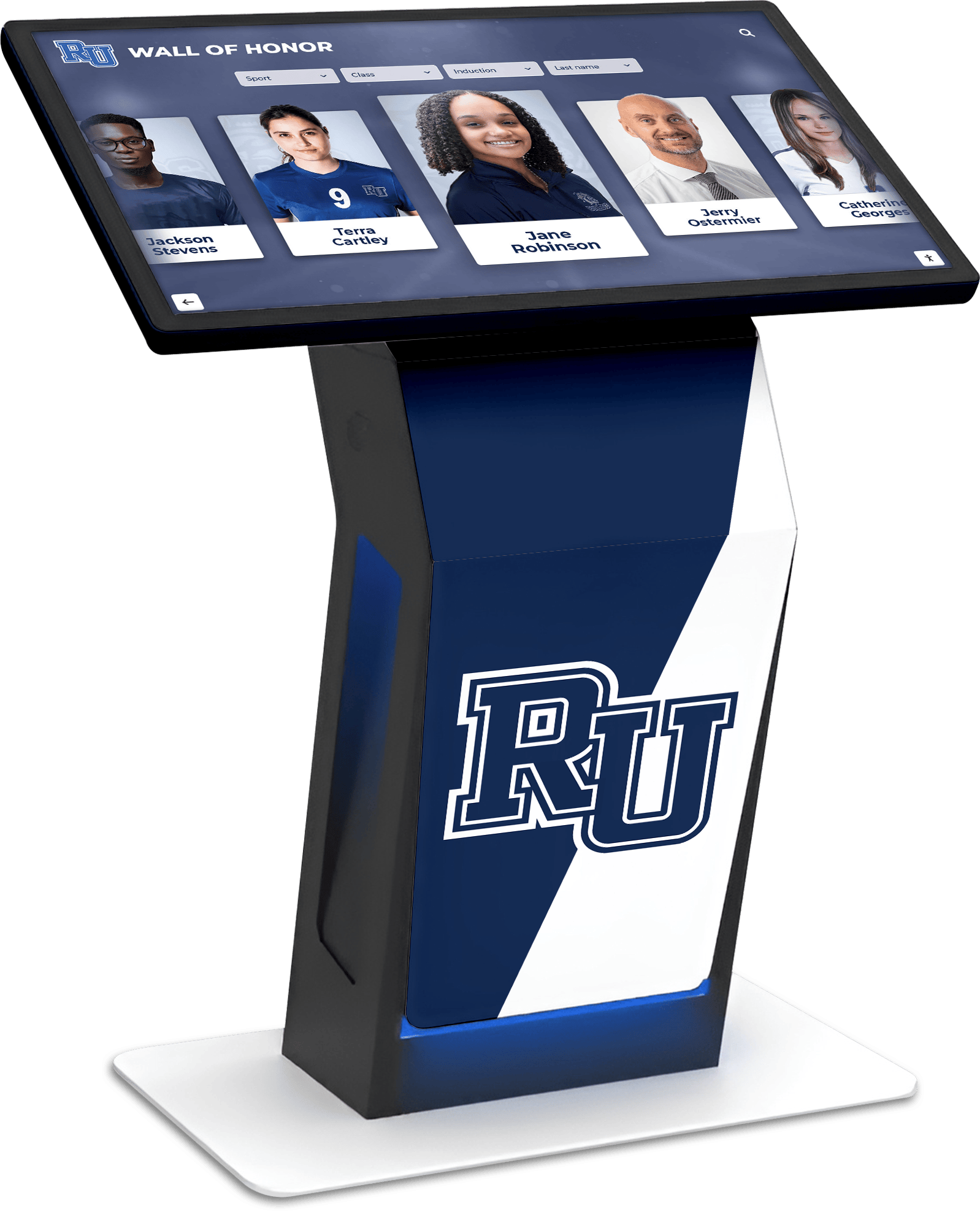
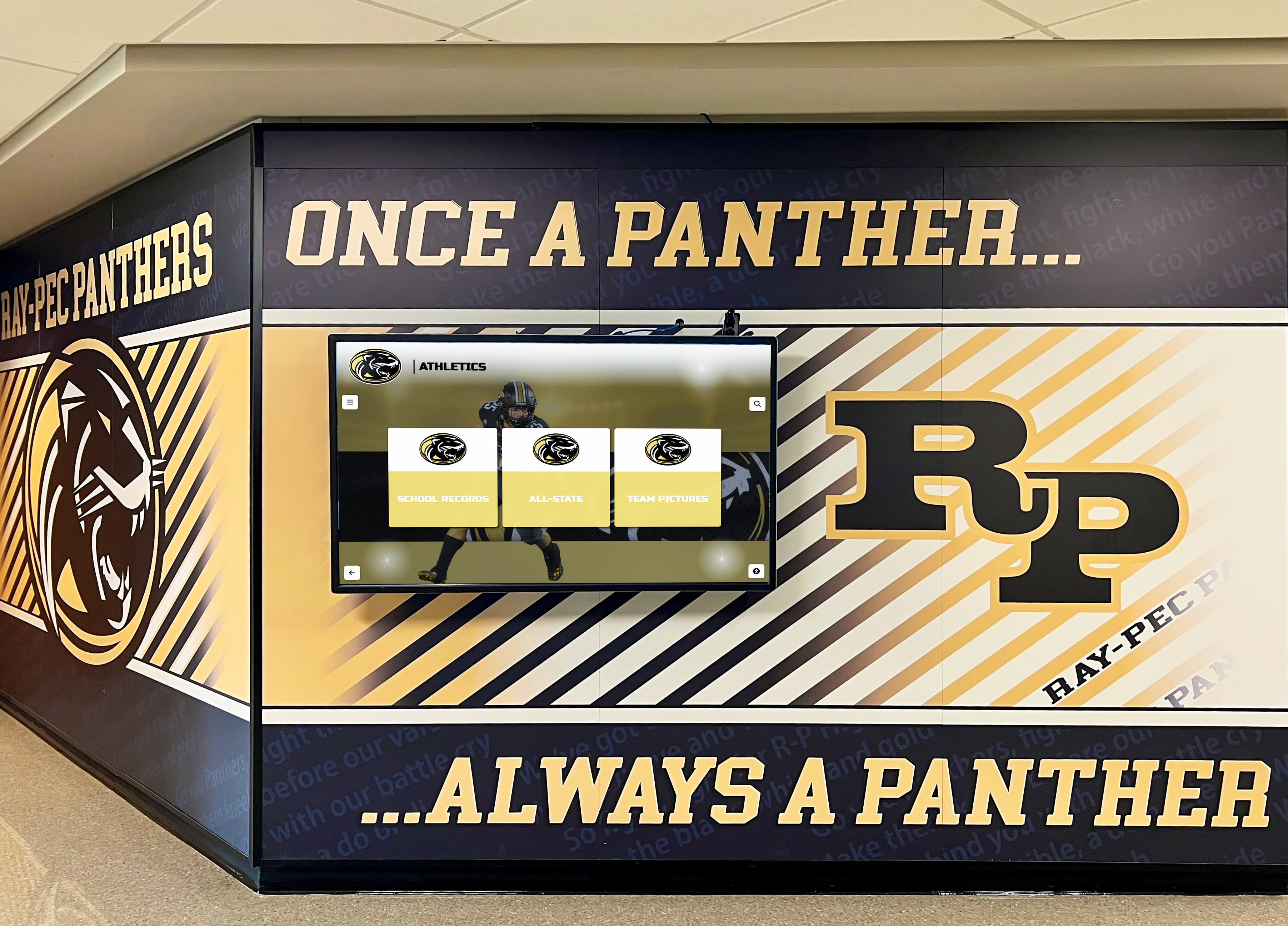
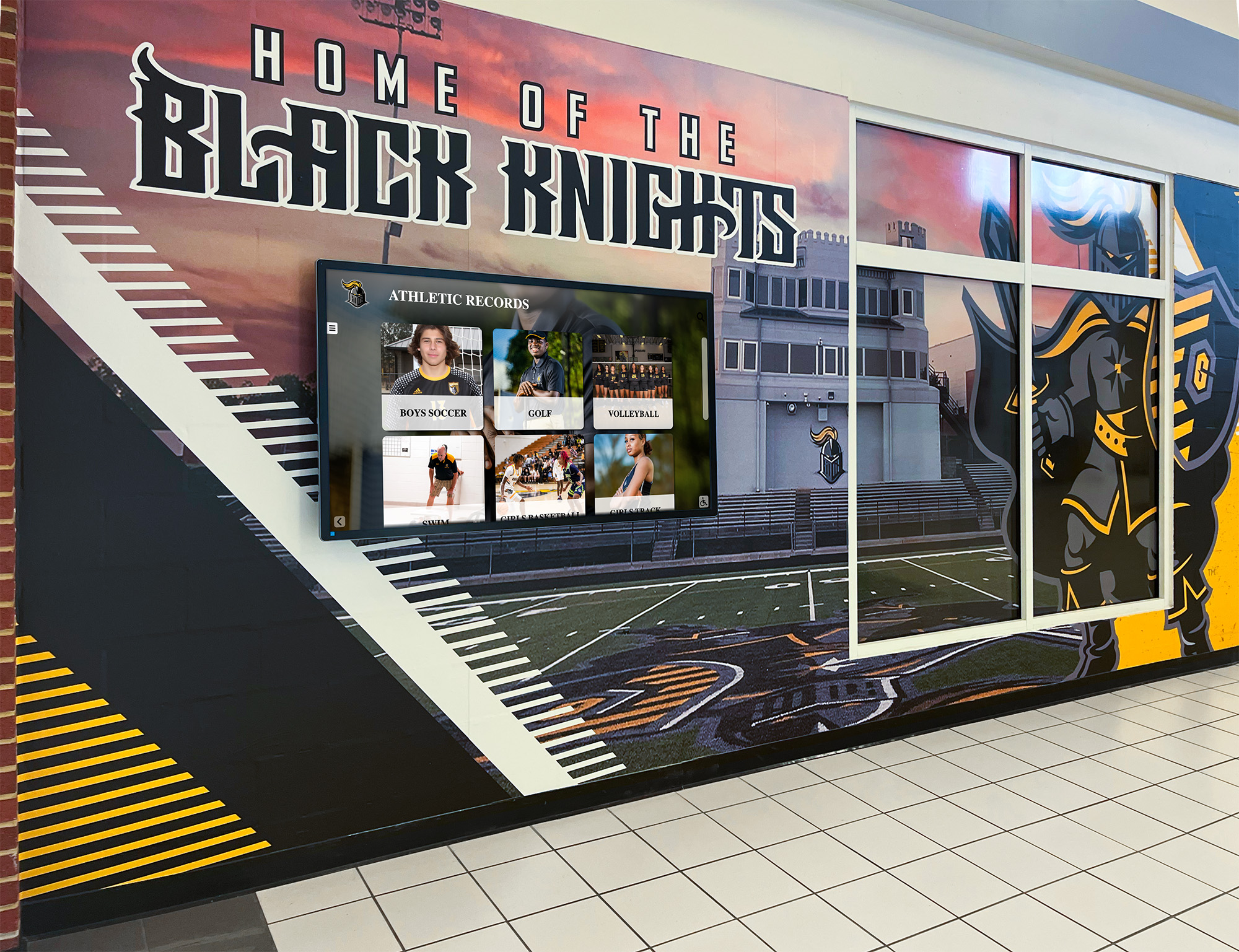
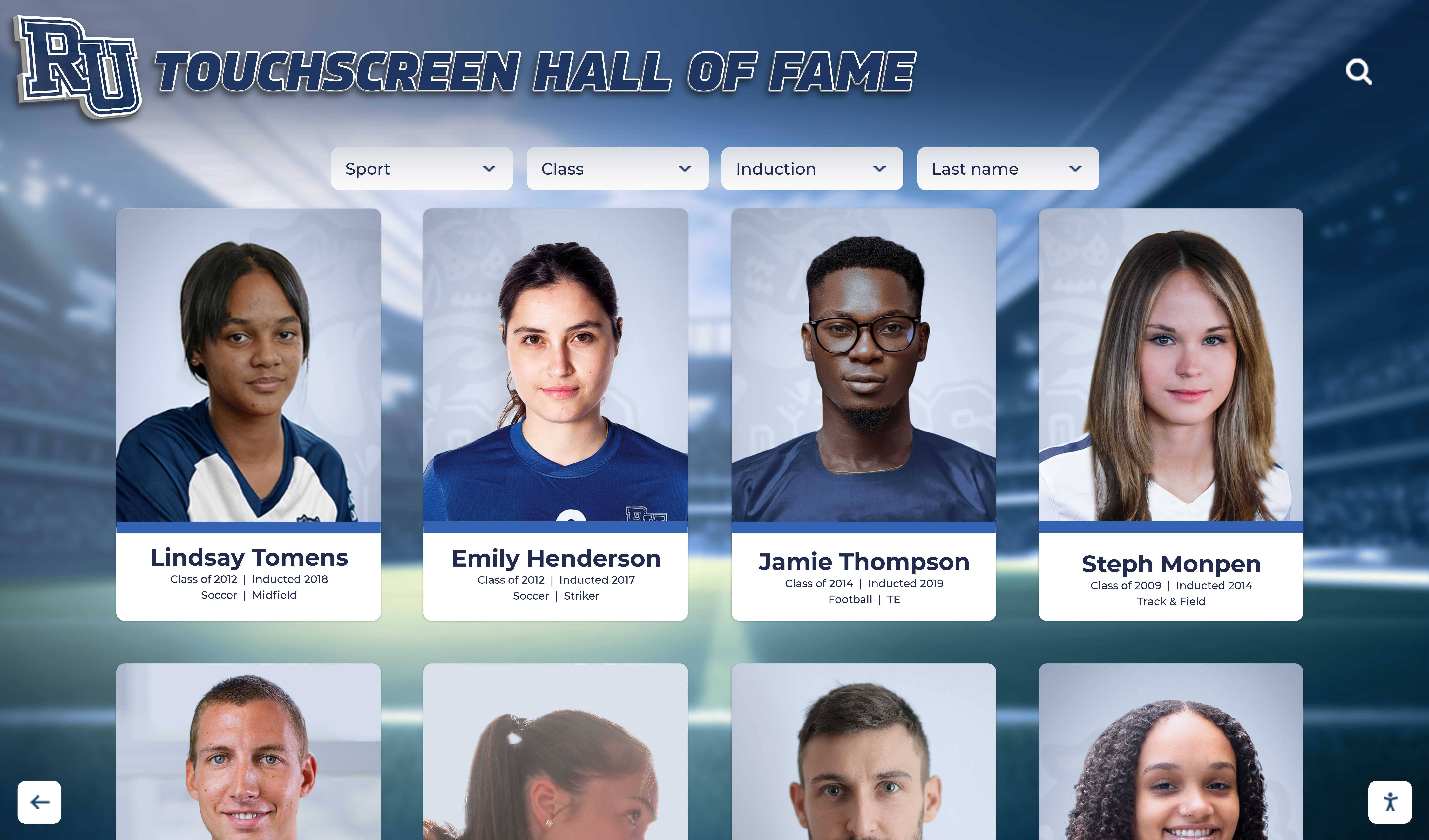
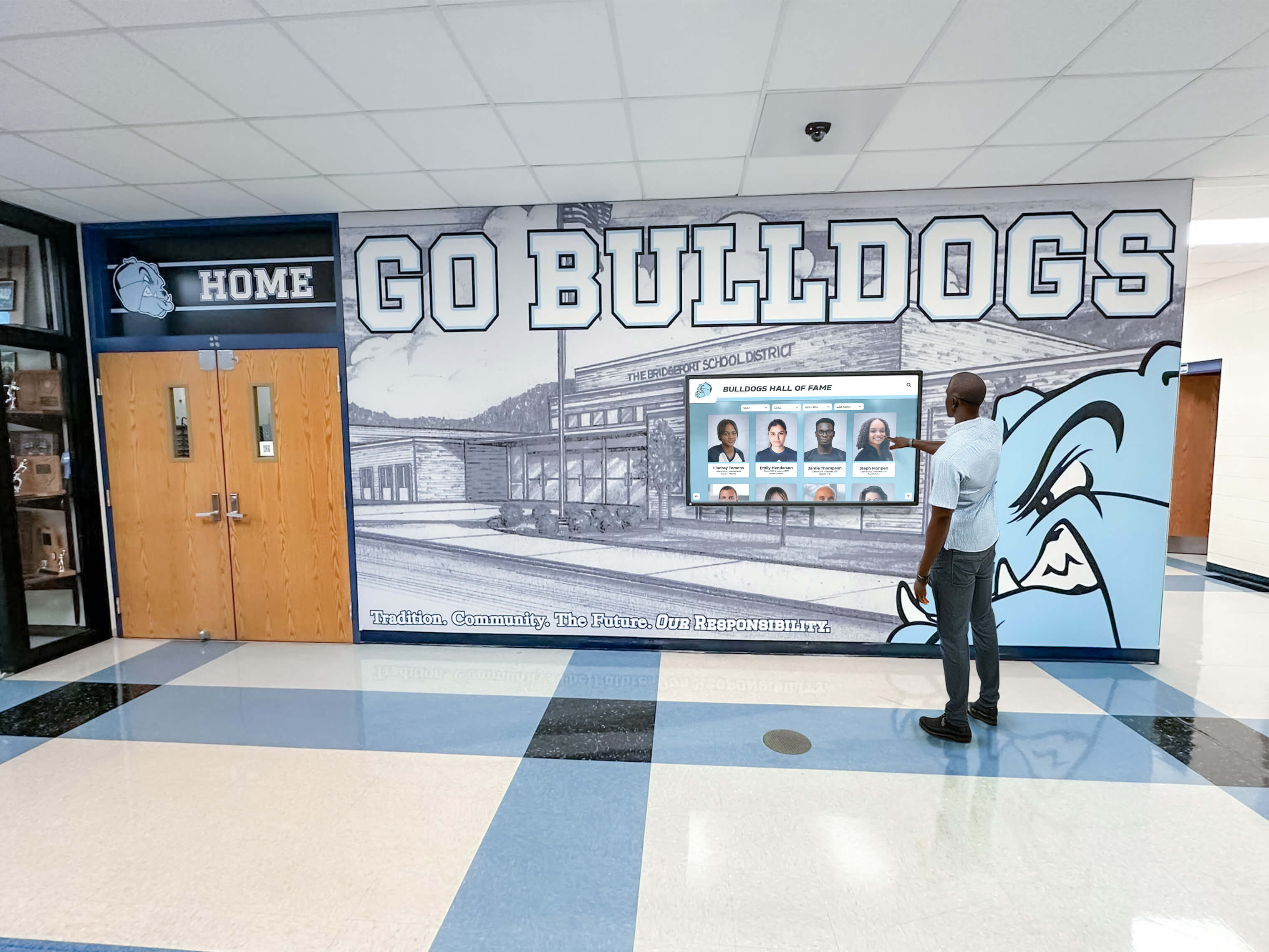
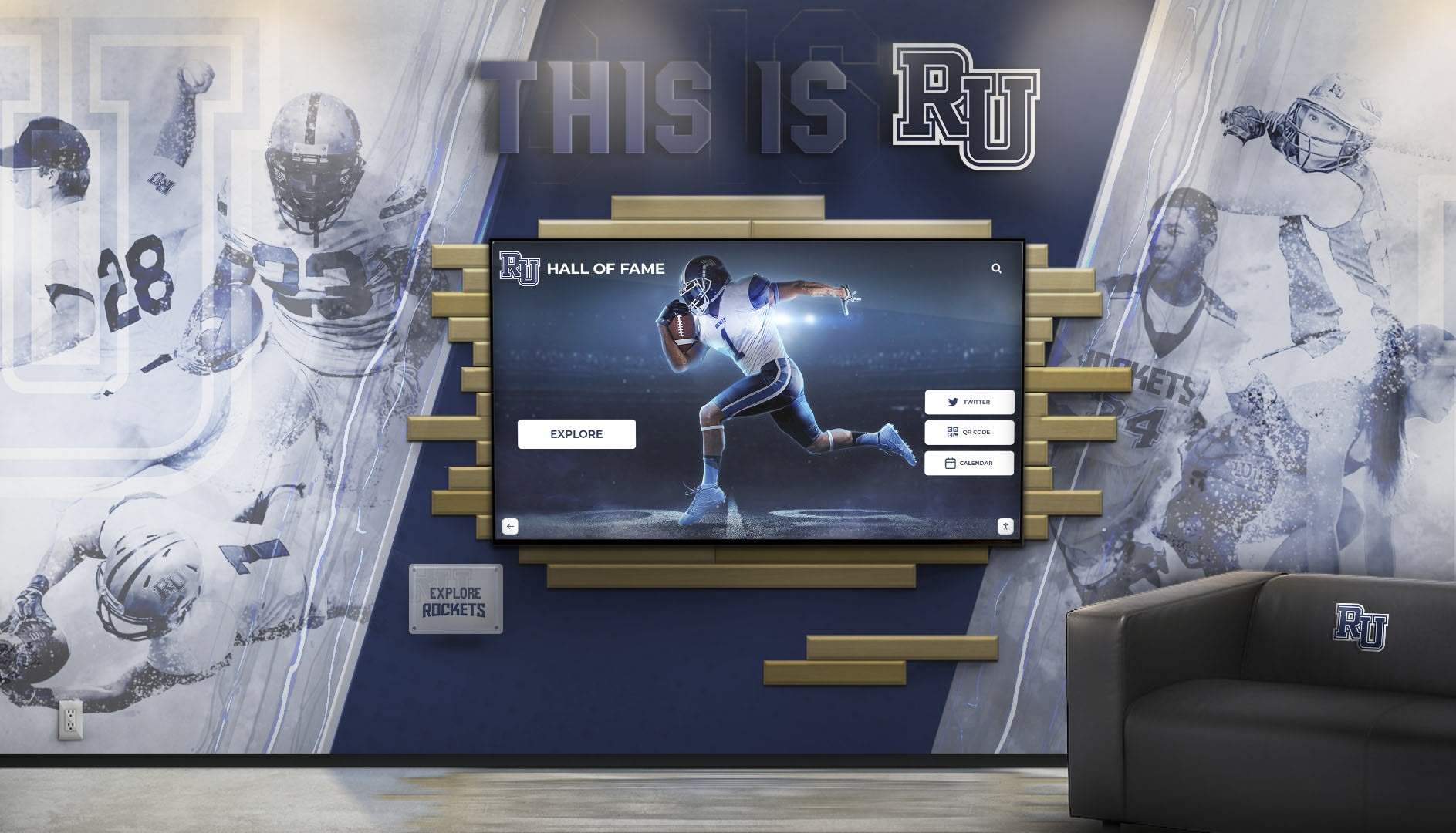
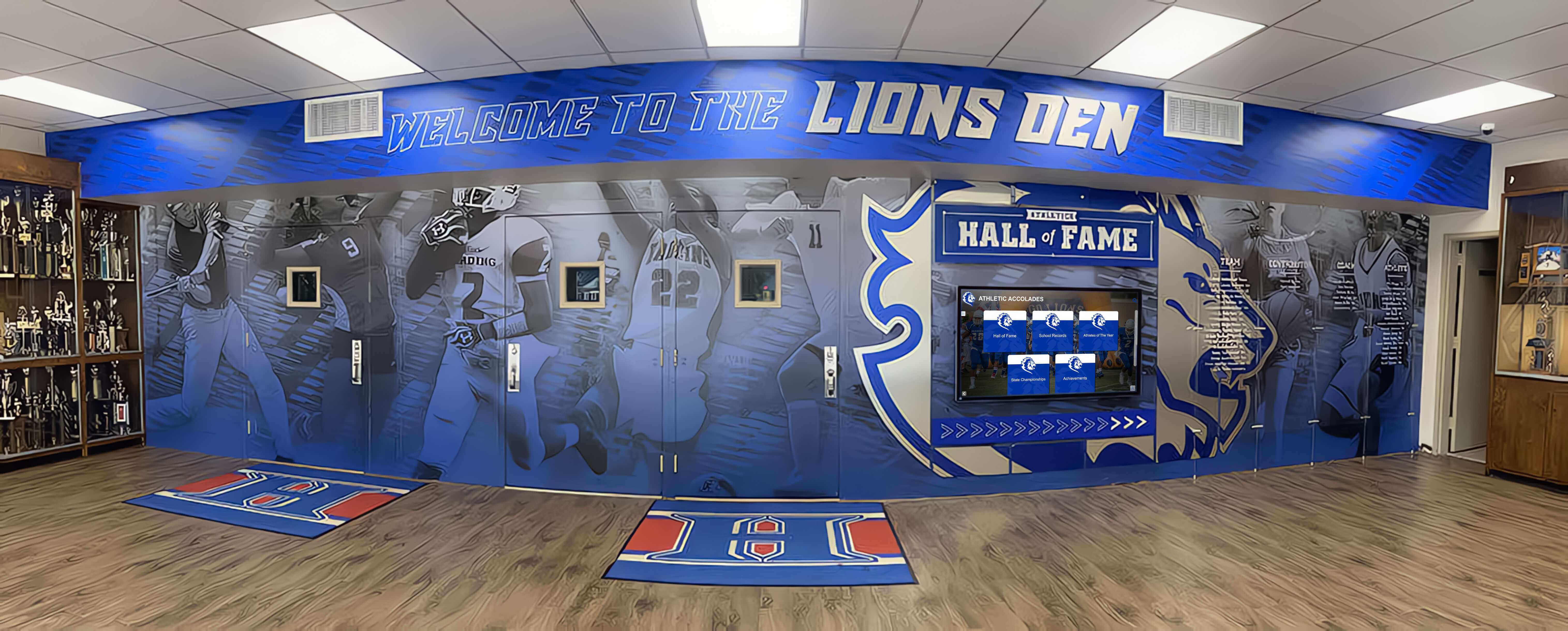
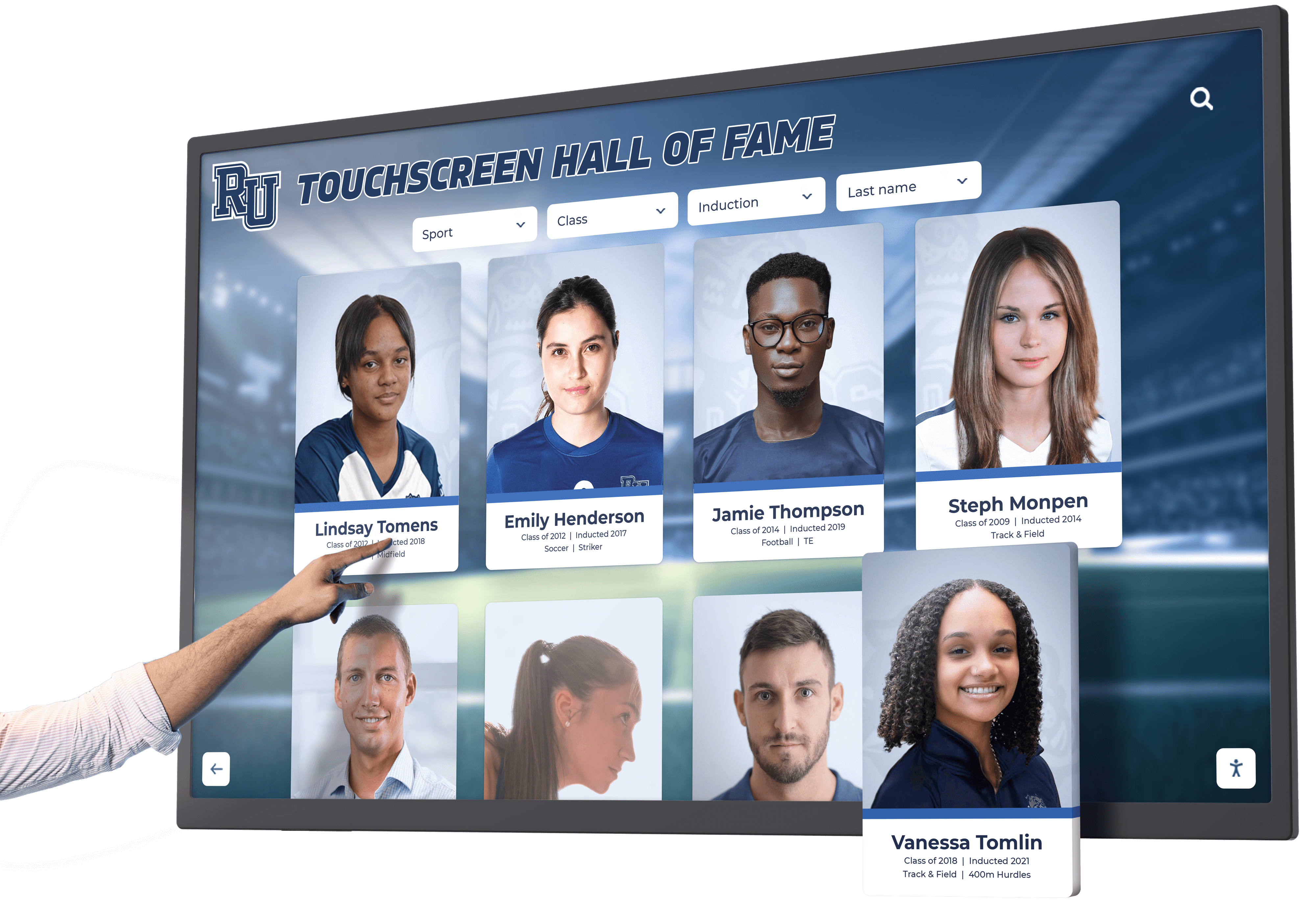
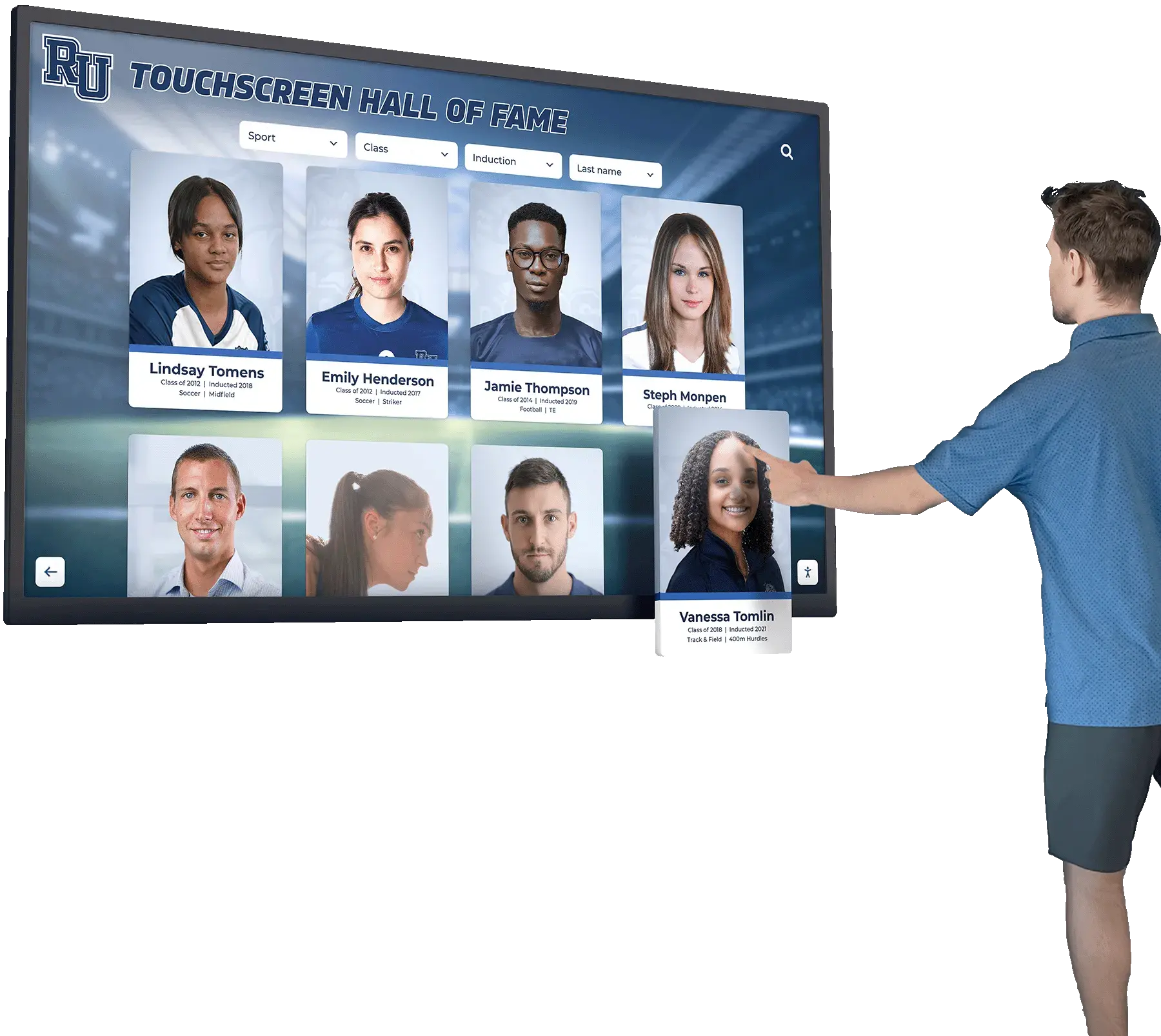
Interactive Touchscreen Displays: Purpose-built systems like those from Rocket Alumni Solutions provide comprehensive athletic recognition:
Unlimited Capacity: Digital platforms accommodate every senior from program history without space limitations. Adding new senior classes requires simple content updates rather than physical space allocation.
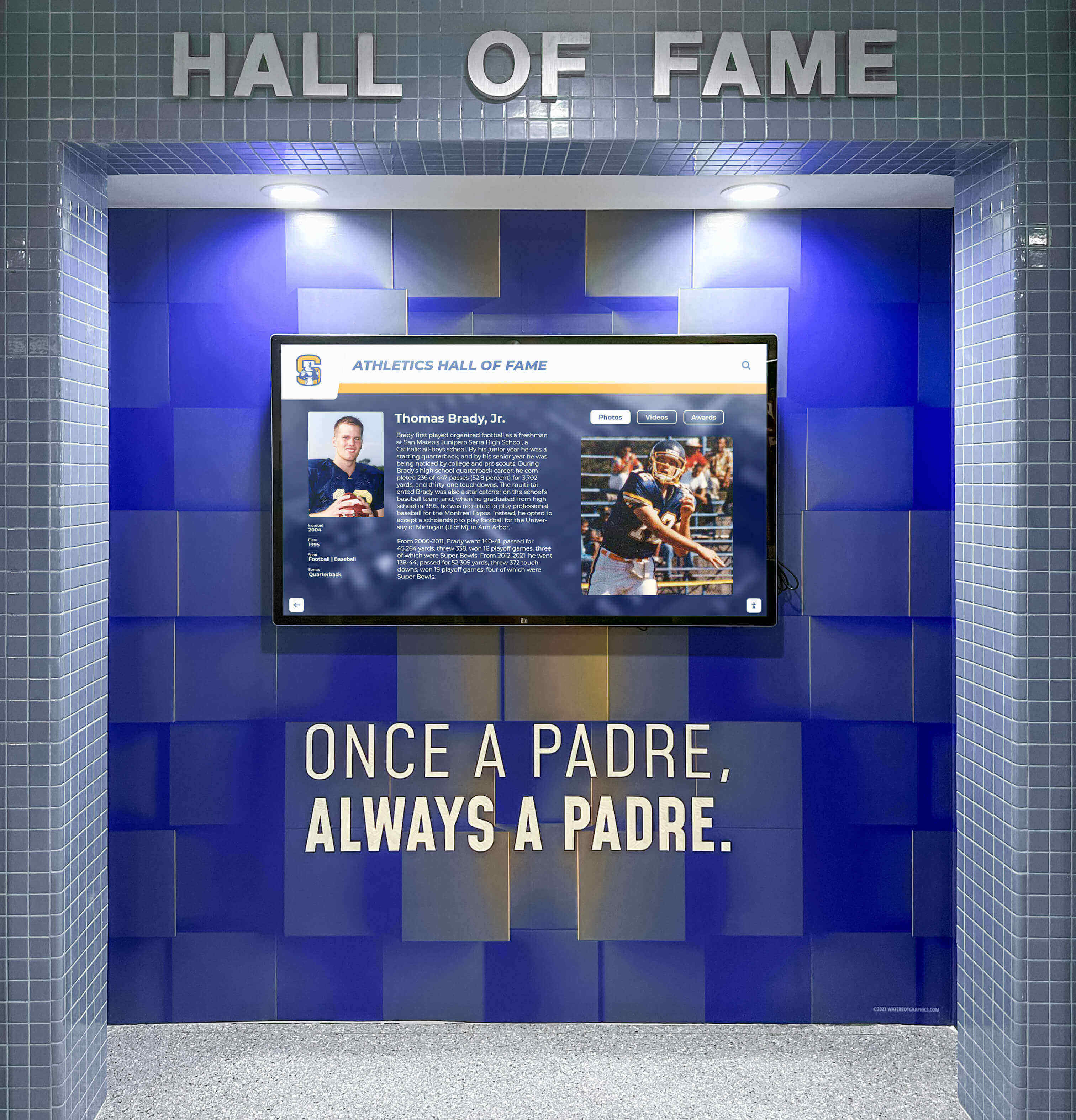
Rich Profiles: Each senior can have comprehensive digital profile featuring multiple photos, complete statistics, achievement documentation, video highlights, and biographical information. This depth of recognition impossible with traditional plaques creates meaningful individual honors.
Interactive Exploration: Students, families, and visitors can search for specific seniors, browse by graduation year, filter by position or achievement level, and discover program history through intuitive touchscreen interfaces. This engagement transforms passive viewing into active exploration.
Easy Updates: Cloud-based management allows coaches or administrators to add new seniors, update information, or enhance profiles within minutes from any device. This eliminates long production timelines and installation logistics associated with physical recognition updates.
Extended Access: Web-based versions of recognition content extend beyond physical displays, allowing alumni to access their profiles from anywhere, prospective families to research program culture before campus visits, and college coaches to understand program quality when evaluating recruits.
Programs exploring digital recognition for comprehensive athletic achievement documentation can learn from approaches proven effective with college commitment showcases and similar milestone celebrations.
Social Media Recognition: Ongoing digital recognition through program social media:
- Senior spotlight features posted regularly throughout season
- “Throwback Thursday” posts featuring alumni seniors from past years
- Achievement announcements when seniors earn honors
- Anniversary recognition (“On this day 5 years ago, the Class of 2020 celebrated senior night”)
Social media recognition extends visibility beyond those physically present at games while creating shareable content that amplifies recognition as families and friends engage with posts.
Program Website Archives: Dedicated sections of team websites documenting program history:
- Senior class rosters with photos and biographical information
- Historical team records and statistical leaders
- Photo galleries from past seasons and senior nights
- Alumni updates showing seniors’ post-graduation accomplishments
Website archives provide permanent, searchable documentation of program legacy that supports multiple purposes from historical research to alumni engagement to recruitment presentations.
Alumni Engagement Opportunities
Recognition effectiveness extends when programs maintain connections with graduated seniors, transforming one-time honoring into ongoing relationships.
Alumni Networks: Formal or informal systems maintaining contact with program graduates:
- Email distribution lists for program updates
- Alumni social media groups or pages
- Annual alumni games or reunions
- Mentorship programs connecting current players with alumni
These networks enable former seniors to remain engaged with programs they helped build while providing current players with role models and potential guidance for college processes, career development, and life transitions.
Return Recognition: Acknowledging graduates’ post-high school accomplishments:
- Celebrating when alumni seniors make collegiate rosters
- Recognizing alumni athletic or academic achievements
- Updating recognition displays with alumni career information
- Inviting alumni back for special recognitions or hall of fame inductions
Programs that continue recognizing alumni strengthen relationships while demonstrating to current seniors that program investment in them doesn’t end at graduation. Research on comprehensive alumni recognition strategies shows such ongoing engagement increases alumni support for current programs.
Giving Back Opportunities: Channels through which alumni seniors can support programs:
- Coaching or mentoring current players
- Financial contributions to equipment funds or facility improvements
- Volunteering at camps, clinics, or special events
- Sharing expertise or connections that benefit current players
When programs create meaningful pathways for alumni engagement, graduated seniors often become program’s most passionate supporters and advocates.
Special Considerations for Lacrosse Senior Night Planning
Beyond universal senior recognition elements, lacrosse programs face specific considerations that should inform planning decisions.
Accommodating Position-Specific Recognition
Lacrosse’s specialized positions—attack, midfield, defense, and goalie—each contribute differently to team success. Effective recognition acknowledges these distinct roles:
Statistical Context for Different Positions: When sharing senior statistics or accomplishments, provide context appropriate to positions:
- Attack players: goals scored, assists, shooting percentages
- Midfielders: two-way contribution statistics, ground balls, caused turnovers alongside offensive production
- Defenders: caused turnovers, ground balls recovered, opponent scoring held below averages
- Goalies: save percentage, goals against average, saves in crucial games
Avoid creating impression that only offensive production matters by ensuring defensive players receive equal recognition for contributions that may not appear in traditional stat lines.
Role Player Acknowledgment: Teams need players who excel in specific roles beyond traditional statistics:
- Faceoff specialists who control possession
- Defensive specialists who shut down opponents’ top scorers
- Backup goalies who push starters through practice competition
- Leadership voices in locker room who never appear in box scores
Recognition should explicitly honor these role players whose contributions directly enable team success even without statistical prominence.
Managing Gender-Specific Traditions
Lacrosse includes both men’s/boys’ and women’s/girls’ variants with distinct cultures and traditions. Programs should:
Respect Tradition Differences: Boys’ and girls’ lacrosse evolved with different rules, equipment, and cultural elements. Recognition should honor each program’s specific traditions rather than imposing universal approaches that don’t fit particular team cultures.
Ensure Equitable Recognition: While traditions may differ, recognition quality and investment should be equitable. If boys’ program provides certain gift value or ceremony elaborateness, girls’ program should receive equivalent treatment reflective of equal importance.
Consider Combined vs. Separate: As discussed in timing section, decisions about whether to conduct joint or separate senior nights for boys’ and girls’ programs depends on specific program cultures, scheduling realities, and team preferences. Neither approach is inherently superior—programs should choose what best serves their specific communities.
Weather Contingency Planning
Spring lacrosse schedules coincide with unpredictable weather in many regions. Solid contingency planning prevents ceremony disruption:
Indoor Backup Locations: Identify indoor spaces that could accommodate ceremony if field conditions are problematic:
- Gymnasium with families seated in bleachers and seniors walking court
- School auditorium or performing arts center
- Large commons area or cafeteria with space for ceremony elements
- Indoor practice facility if school has dedicated turf building
Modified Ceremony Formats: Develop abbreviated ceremony versions requiring minimal setup in case last-minute weather changes force adjustment:
- Streamlined format with all seniors introduced together rather than individually
- Elimination of elaborate visual elements requiring extensive setup time
- Pre-recorded video shown on screens rather than live presentation requiring field setup
Communication Plans: Establish clear communication channels informing attendees about any location or timing changes:
- Email and text message alerts to senior families
- Social media announcements
- Phone tree through team roster
- Clear signage on game day directing attendees if location changes
Having detailed weather contingency plans prevents stressful last-minute scrambling while ensuring seniors receive appropriate recognition regardless of conditions.

Balancing Ceremony with Game Competition
Senior night occurs during actual competition, creating tension between appropriate recognition and maintaining game integrity:
Coach Communication with Officials: Before game, head coach should communicate with officials:
- Informing them ceremony will occur pre-game and approximate duration
- Confirming they understand potential slight delay in scheduled start time
- Ensuring officials comfortable with timing and coordinated on signals for starting official pregame procedures after ceremony concludes
Opponent Coordination: Common courtesy involves informing opposing team about senior night:
- Advance notice allows opponent to plan arrival timing appropriately
- Discussing whether opponent will remain in locker room during ceremony or be on field
- Coordinating warm-up schedules to accommodate ceremony without rushing either team’s preparation
Maintaining Game Focus: While celebrating seniors is important, coaches should help seniors maintain competitive focus:
- Scheduling allows seniors adequate time to transition from ceremony emotions to game mindset
- Coaching staff connects ceremony to motivation for strong senior night performance
- Underclassmen support helps seniors stay engaged in game preparation despite ceremony attention
The goal is memorable celebration that enhances rather than distracts from seniors’ final home game experience.
Inclusive Recognition for All Seniors
Programs should ensure all graduating players receive equitable recognition regardless of playing time, status, or prominence:
Equal Ceremony Treatment: Every senior receives same ceremony format:
- Equal time during individual introductions
- Same gift quality regardless of statistical production
- Equivalent representation in printed programs and visual materials
- Identical family recognition elements
Programs sometimes struggle when star players vastly overshadow teammates in achievement or visibility. Ceremony provides opportunity to demonstrate that program values all contributions, not just those producing statistics or headlines.
Role Player Appreciation: Explicitly recognize contributions of seniors who didn’t see extensive playing time:
- Practice players who made starters better through daily competition
- Team leaders whose impact came through culture-building and mentorship
- Injured players who contributed from sidelines while dealing with health challenges
- Late-program additions who brought energy and perspective
These players often internalize belief that they mattered less to program success. Senior night explicitly communicates their value and expresses genuine gratitude for their participation.
Varied Recognition for Varied Contributions: While ceremony treatment should be equal, recognition content can acknowledge individuals’ unique contributions:
- Statistical leaders celebrated for on-field production
- Team captains honored for leadership
- Academic achievers recognized for classroom excellence
- Character role models acknowledged for impact on program culture
This differentiation honors individuals’ specific contributions while maintaining equitable ceremony structure and gift quality.
Post-Senior Night Follow-Through
The work doesn’t end when ceremony concludes. Several post-event activities maximize recognition impact and preserve memories.
Documentation and Memory Preservation
Photography and Videography Distribution: Ensure comprehensive documentation reaches seniors and families:
- Professional or volunteer photographers capturing ceremony moments
- Video recording of complete ceremony for archives and family keepsake
- Individual senior/family photos during recognition moment
- Team photo with all seniors and coaches
Distribution timeline:
- Preview photos posted to social media within 24-48 hours of event
- Complete photo gallery shared via Google Photos, Dropbox, or similar service within one week
- Video editing and distribution within 2-3 weeks of ceremony
Program Archives: Add senior night materials to permanent program records:
- Printed programs filed in program archives
- Photos added to digital and physical program history collections
- Video tribute and ceremony recording preserved in program media library
- Senior information forms saved for future reference
These archives serve multiple purposes: supporting hall of fame selection processes years later, providing historical perspective for program milestones, enabling recognition of significant anniversaries, and offering research resources when alumni inquire about former teammates or program history.
Social Media and Public Recognition
Thank You Posts: Acknowledge seniors and families publicly through program social media:
- Individual senior features posted in days following ceremony
- Thank you message to families for supporting athletes throughout careers
- Appreciation for community attendance and support at senior night
- Recognition of booster club members and volunteers who planned event
Alumni Transition: Help seniors transition from current players to program alumni:
- Follow them on personal social media accounts
- Engage with their posts about future plans and new experiences
- Share their college commitment information and updates
- Invite them to return for future games or events as alumni
Extended Recognition Window: Continue spotlighting seniors through remainder of season:
- “Senior Spotlight” features highlighting different senior each week
- Recognition of additional honors earned after senior night (all-conference, all-state selections)
- Celebration of playoff achievements and season conclusion
- Graduation recognition and well-wishes as seniors leave high school
Feedback and Program Improvement
Gathering Input: Collect feedback informing future senior night planning:
- Brief survey to senior families about ceremony experience
- Coach and administrator debriefing identifying what worked well and improvement opportunities
- Volunteer and booster club discussion about logistics and planning process
- Senior athletes’ perspectives on what felt meaningful and what could be enhanced
Documentation for Future: Create planning documentation supporting next year’s committee:
- Timeline checklist based on this year’s experience
- Budget breakdown with actual costs for each element
- Vendor contact information and recommendations
- Templates for programs, scripts, and materials that can be adapted
- Lessons learned document highlighting challenges encountered and solutions discovered
This institutional knowledge prevents future planning committees from starting from scratch while enabling continuous improvement across years.
Transition Planning for Underclassmen
Senior night naturally prompts reflection on program continuity:
Leadership Transition: Explicitly transitioning leadership from graduating seniors to rising seniors:
- Announcement of next year’s captains or leadership team
- Passing of symbolic program items (team flag, captain’s armband, program traditions)
- Seniors sharing advice and expectations with underclassmen assuming leadership
- Coaching staff emphasizing program continuity and confidence in next generation
Motivation and Inspiration: Helping underclassmen connect senior celebration to their own futures:
- Reminding juniors that their senior night will arrive quickly
- Encouraging sophomores and freshmen to envision their role in future senior classes
- Discussing how current underclassmen will carry forward traditions seniors established
- Connecting recognition to program expectations and investment in all players
Effective senior night simultaneously honors graduating players while reinforcing program culture and motivating continuing players to uphold standards and traditions.
Overcoming Common Senior Night Challenges
Even well-planned celebrations encounter predictable challenges. Being prepared for common issues enables quick resolution without compromising ceremony quality.
Weather Disruptions
Challenge: Outdoor ceremony faces rain, cold temperatures, or severe weather concerns.
Solutions:
- Develop detailed indoor backup plans (location, setup modifications, communication plan) during initial planning stages
- Monitor weather forecasts closely in days before event, making location decisions early enough to communicate effectively
- Maintain flexibility and positive attitude if circumstances force changes, helping seniors understand program’s priority is honoring them regardless of location
- Consider scheduling senior night for game with statistically better weather prospects if program has multiple options
Unexpected Senior Absence
Challenge: Senior unable to attend due to illness, family emergency, or other unavoidable circumstance.
Solutions:
- Contact absent senior’s family immediately to express concern and discuss alternative recognition
- Proceed with ceremony acknowledging absent senior’s importance and explaining situation respectfully to attendees
- Schedule private recognition for absent senior at next opportunity: practice, subsequent game, or special arranged time
- Ensure absent senior receives same gifts, documentation, and honor as those present
- Consider incorporating absent senior into ceremony through video message or representative family member participating if appropriate
Ceremony Timing Challenges
Challenge: Ceremony runs longer than planned, delaying game start or compressing elements.
Solutions:
- Build time buffer into planning (if targeting 15-minute ceremony, schedule 20 minutes to avoid running over)
- Assign timekeeper monitoring progress and signaling if pacing needs adjustment
- Prepare abbreviated script version that can be deployed if necessary without eliminating seniors
- Communicate with officials about flexibility while respecting need to start game reasonably close to schedule
- Practice transitions and timing during rehearsal if conducting complex ceremony with multiple elements
Unequal Family Situations
Challenge: Some seniors have large, enthusiastic families present while others have limited or no family attendance.
Solutions:
- Assign “program family” members (assistant coaches, boosters, administrators) to walk with seniors whose families cannot attend
- Train announcer to maintain equally enthusiastic energy and equal time for each senior regardless of family presence
- Avoid ceremony elements that might highlight family size differences (largest family cheer contest, etc.)
- Ensure all seniors receive same gifts and recognition regardless of family attendance
- Connect privately with seniors in difficult family situations, acknowledging challenge while emphasizing program is their family
Budget Limitations
Challenge: Program lacks funds for gifts or ceremony elements leaders believe appropriate.
Solutions:
- Focus on thoughtful, meaningful recognition rather than expensive gifts—handwritten coach letters, team-created memory books, and personalized team items can be profoundly meaningful at minimal cost
- Engage community support: local businesses may donate or discount senior gifts, parents may volunteer skills (photography, graphic design, printing), and fundraising specifically for senior recognition often generates community response
- Implement cost-effective digital recognition approaches that provide lasting value within budget constraints
- Ensure ceremony quality and heartfelt recognition rather than gift expense—seniors remember how program made them feel far more than specific items received
The key to managing challenges is advance planning, clear communication, genuine care for seniors’ experience, and flexibility when circumstances require adjustment from original plans.
Involving Booster Clubs and Parent Organizations
Lacrosse booster clubs and parent organizations typically play central roles in senior night planning and execution. Effective collaboration between coaches, administrators, and volunteer groups ensures successful celebrations while managing responsibilities and expectations.
Clarifying Roles and Responsibilities
Coaching Staff Responsibilities:
- Providing senior information and biographical content
- Developing ceremony script and speaking remarks
- Coordinating with officials and opposing team
- Managing team participation and preparation
- Serving as primary contact with athletic administration
Booster Club/Parent Organization Responsibilities:
- Managing ceremony budget and fundraising if necessary
- Researching and purchasing senior gifts
- Creating printed programs and visual materials
- Coordinating setup and cleanup logistics
- Managing family communication regarding participation
Athletic Administration Responsibilities:
- Approving ceremony plans and budget
- Coordinating facility use and setup
- Managing public address announcements
- Supporting photography/videography arrangements
- Ensuring alignment with school policies and district requirements
Clear delineation prevents confusion, ensures accountability, and reduces overlap or gaps in planning coverage.
Establishing Planning Timeline and Communication
Regular Planning Meetings: Schedule consistent meetings bringing together key stakeholders:
- Initial planning meeting 6-8 weeks before senior night establishing overall approach
- Mid-planning meeting 3-4 weeks before reviewing progress and addressing emerging issues
- Final planning meeting week before finalizing details and confirming all elements
Communication Channels: Establish clear communication methods:
- Email distribution list including all planning committee members
- Shared planning document (Google Doc, shared folder) with master checklist and responsibilities
- Designated point person coordinating communication flow and managing updates
- Emergency contact information for day-of issues requiring quick resolution
Managing Expectations and Budgets
Budget Transparency: Openly discuss financial realities:
- Clearly communicate available funds and how they’ll be allocated
- Explain funding sources (booster club reserves, designated fundraising, family contributions)
- Present realistic gift options within budget constraints rather than aspirational ideas requiring unavailable resources
- Ensure all involved parties understand financial parameters before detailed planning begins
Tradition vs. Innovation: Balance continuing successful traditions with thoughtful improvements:
- Honor elements that past senior classes and families valued
- Thoughtfully consider proposed changes, evaluating whether innovations genuinely enhance recognition or simply represent change for its own sake
- Allow reasonable experimentation while maintaining core recognition elements
- Document successful innovations for future years while preserving institutional knowledge
Avoiding Planning Conflicts: Anticipate and address potential disagreement sources:
- Differences between what coaches prioritize versus what parents emphasize
- Varying opinions about ceremony formality and elaborateness
- Competing preferences among different senior families
- Resource allocation disputes between senior recognition and other program needs
Address conflicts through transparent discussion focused on what best serves seniors while respecting program culture and resource realities.
Integrating Senior Night with Broader Program Recognition
Senior night represents one element within comprehensive recognition ecosystems. The most effective programs integrate senior celebrations with year-round acknowledgment of achievement, continuous visibility of program history, and multi-year traditions that span generations of players.
Connecting to Season-Long Recognition
Senior night shouldn’t be graduating players’ only meaningful recognition. Effective programs provide multiple touchpoints:
Pre-Season Senior Acknowledgment:
- Introducing seniors during preseason events or parent meetings
- Designating senior leadership roles and responsibilities
- Special senior privileges or responsibilities (locker assignments, leadership meetings, etc.)
In-Season Recognition:
- Highlighting seniors during regular game announcements
- Senior spotlight features in programs throughout season
- Social media recognition of senior achievements as they occur
- Special acknowledgment of senior milestones (100th career goal, etc.)
Post-Season Continuation:
- Recognition at end-of-season banquets separate from senior night
- Playoff achievement celebration specifically acknowledging senior leadership
- Academic achievement recognition for graduating seniors
- Transition from current players to program alumni
When senior night is embedded within season-long recognition, the ceremony feels like meaningful capstone rather than isolated event.
Building Multi-Year Program Traditions
The most powerful senior nights connect current celebrations to program legacy:
Historical Context: Helping attendees understand senior night within program history:
- Acknowledging total number of seniors recognized across program history
- Connecting current seniors to notable alumni (family connections, position predecessors, etc.)
- Highlighting program achievements seniors contributed to during their tenure
- Positioning seniors as part of continuing tradition they’ll pass to future generations
Many programs implementing comprehensive digital hall of fame systems find these platforms naturally connect current celebrations to historical context, strengthening seniors’ understanding of their place in program legacy.
Alumni Integration: Active involvement of graduated players:
- Inviting recent alumni to attend senior night
- Having alumni who achieved special distinction (all-state, college athletics, etc.) present awards
- Alumni video messages congratulating current seniors
- Post-ceremony socializing opportunities connecting seniors with graduated players
Tradition Development: Creating repeatable elements that become recognized parts of program identity:
- Specific ceremony structure that repeats annually with modifications for particular senior class
- Gift traditions (every senior receives certain type of item)
- Symbolic elements (seniors signing permanent program item, planting tree, etc.)
- Music or other artistic elements that recur annually
These traditions create continuity across generations, helping seniors feel connected to something larger than single season or individual class.
Leveraging Senior Night for Program Development
While senior night primarily focuses on honoring graduates, well-executed celebrations also serve broader program purposes:
Recruitment and Retention: Senior night demonstrates to younger players and prospective athletes:
- Program’s commitment to recognizing and celebrating participants
- Culture of valuing individuals beyond just their competitive contributions
- Investment program makes in creating meaningful experiences
- Level of family engagement and community support program enjoys
Community Building: Senior celebrations strengthen connections between program and broader community:
- Drawing community attendance builds program visibility and support
- Recognizing families publicly acknowledges community investment in athletes
- Creating shareable moments extends program presence through social media
- Demonstrating professional organization and thoughtful culture attracts continued support
Alumni Network Development: Senior night initiates transition from current player to program alumnus:
- Establishing patterns of returning for recognition events
- Creating touchpoints maintaining connection after graduation
- Positioning program as ongoing relationship rather than concluding upon graduation
- Building alumni network that supports future players through mentorship, donations, and advocacy
Programs viewing senior night within broader strategic context maximize return on planning investment while creating celebrations that genuinely serve multiple important purposes.
Conclusion: Creating Senior Night Celebrations That Truly Honor Lacrosse Athletes
Lacrosse senior night represents far more than procedural recognition of graduating players—when thoughtfully planned and authentically executed, these ceremonies create powerful moments that honor years of dedication, validate athletes’ contributions, strengthen program culture, and establish lasting memories that seniors carry throughout their lives.
The most effective senior night celebrations share several characteristics regardless of specific format choices or program resources. They honor each senior individually and equitably, ensuring every graduating player feels genuinely valued regardless of playing time or statistical production. They balance appropriate formality and ceremonial significance with authentic emotion and personal connection. They involve families in meaningful recognition that acknowledges support systems enabling athletes’ participation. They preserve memories through quality photography, videography, and documentation. They connect current celebrations to program traditions and history, helping seniors understand their place in continuing legacy. They extend beyond single evening through season-long recognition, permanent displays, and ongoing alumni relationships.
Programs planning lacrosse senior night should focus first on authentic recognition reflecting genuine appreciation rather than elaborate productions that prioritize appearance over substance. Seniors consistently report that heartfelt coach remarks, thoughtful personal recognition, and clear expressions of gratitude matter far more than expensive gifts or elaborate ceremony elements. Within budget constraints and resource realities, programs can create profoundly meaningful celebrations by investing time in personal touches, thoughtful planning, and genuine recognition that communicates to each senior: “You mattered to this program, we’re grateful for your contributions, and we celebrate who you’ve become through lacrosse participation.”
Beyond immediate senior night planning, forward-thinking programs should consider how recognition extends beyond single ceremony. Solutions like interactive digital recognition displays transform temporary senior night tributes into permanent program recognition, allowing unlimited capacity for honoring all graduates, comprehensive profiles telling complete athlete stories, easy updates as new seniors join program legacy, and extended access enabling alumni to show families their recognition years after graduation.
Whether programs implement sophisticated digital systems, maintain traditional physical displays, or use creative low-budget approaches, the essential element remains consistent: genuine appreciation for graduating lacrosse players expressed through thoughtful ceremony, meaningful gifts, and lasting recognition that honors both individual contributions and collective program legacy. When programs get senior night right—when ceremonies authentically celebrate athletes while strengthening program culture and maintaining alumni connections—they create experiences that resonate far beyond single evening, shaping how seniors remember their lacrosse careers and inspiring underclassmen to pursue similar dedication and excellence.
Frequently Asked Questions About Lacrosse Senior Night
When should we schedule lacrosse senior night?
Most lacrosse programs schedule senior night during one of their final 2-3 regular season home games, balancing several considerations: late enough that season conclusion feels imminent and the moment carries emotional weight, early enough that playoffs haven’t begun and families can plan attendance without travel conflicts, and during a game against meaningful opponent (rival, conference competition) that draws strong attendance. Programs should also coordinate with other spring sports to prevent conflicts forcing family members to choose between multiple senior nights on the same evening. Weather reliability may influence selection for outdoor ceremonies, favoring later-season dates with more predictable spring conditions.
What is an appropriate budget for lacrosse senior night gifts?
Gift budgets vary significantly based on program resources, community economics, and local traditions. Typical ranges span $40-100 per senior for meaningful gifts including framed photos, personalized apparel, equipment items, or memory books. However, programs with limited budgets can create extremely meaningful recognition at much lower cost through handwritten coach letters, team-created memory items, simple framed photos, or personalized certificates. The key is thoughtfulness and personal connection rather than expense—seniors overwhelmingly report that heartfelt recognition matters far more than gift monetary value. Programs should establish budgets early in planning and select gifts appropriate to available resources rather than feeling pressured to match other programs’ spending levels.
How long should the senior night ceremony last?
Most effective lacrosse senior night ceremonies run 15-25 minutes total, including individual senior introductions (approximately 1.5-2 minutes per senior), collective coach remarks about the senior class (3-5 minutes), gift presentations, and photo opportunities. Programs with very large senior classes (12+ graduating players) may need to develop more efficient formats to keep ceremony within reasonable time frame respecting spectators’ schedules and officials’ game timeline. Ceremonies significantly exceeding 30 minutes risk losing audience attention and delaying competition. Time buffer should be built into planning to accommodate inevitable unexpected elements while targeting completion within scheduled window.
Should we conduct senior night before the game or at halftime?
Pre-game senior night ceremonies are most common in lacrosse and generally work better than halftime recognition. Pre-game timing ensures seniors’ full attention before competitive intensity begins, allows flexibility if ceremony runs slightly longer than anticipated, provides extended photo and socializing opportunities without conflicting with game action, and enables seniors to change into game uniforms after ceremony if wearing special attire. Halftime ceremonies offer guaranteed audience presence and fixed time windows, but create time pressure, expose seniors to emotional ceremony mid-competition, and provide limited flexibility. Programs should coordinate timing with officials about any delay to scheduled game start resulting from pre-game ceremony, typically accommodating 10-15 minute ceremonies without issue.
What gifts do lacrosse seniors appreciate most?
The most appreciated gifts balance practical utility, personal connection to lacrosse participation, and lasting memory preservation. Consistently valued options include professionally framed action photos or career collages that become permanent home displays, personalized apparel (senior-specific warm-ups, custom hoodies) seniors can wear immediately and keep indefinitely, comprehensive memory books documenting four-year lacrosse journey through photos and memorabilia, and handwritten coach letters expressing personal appreciation and specific memories. Notably, seniors consistently report that heartfelt personal recognition and genuine coach/teammate expressions of appreciation matter more than gift monetary value. Programs should focus on thoughtful gifts reflecting individual seniors’ contributions rather than expensive items lacking personal connection.
How can we create permanent recognition for lacrosse seniors beyond senior night ceremony?
Permanent recognition extends senior night honors beyond single evening through multiple approaches. Traditional options include athletic hallway displays featuring senior class composite photos, trophy case plaques listing graduates by year, and team-specific locker room walls documenting program history. However, physical approaches face space constraints as years accumulate. Modern digital recognition systems like Rocket Alumni Solutions provide unlimited capacity for honoring all seniors with comprehensive profiles featuring photos, statistics, achievements, and biographical information accessible through interactive touchscreen displays and web-based platforms. These systems allow easy updates as new senior classes graduate while maintaining complete program history, and many programs find they strengthen alumni connections as graduates can access their recognition remotely years after graduation.
What should we do if weather threatens outdoor senior night ceremony?
Spring lacrosse schedules coincide with unpredictable weather requiring solid contingency planning. Programs should identify indoor backup locations during initial planning—gymnasiums, auditoriums, large commons areas, or indoor practice facilities—ensuring space could accommodate ceremony if outdoor conditions become problematic. Develop modified ceremony format requiring minimal setup in case last-minute weather changes force adjustment, potentially streaming individual seniors together rather than elaborate individual introductions. Establish clear communication channels (email, text alerts, social media, phone trees) informing attendees about any location or timing changes well before event. Monitor weather forecasts closely in days before senior night, making location decisions early enough for effective communication. Having detailed contingency plans prevents stressful last-minute scrambling while ensuring seniors receive appropriate recognition regardless of weather conditions.
How do we ensure all seniors feel equally valued regardless of playing time or achievement level?
Equitable recognition requires deliberate planning ensuring every graduating player receives same ceremony treatment regardless of statistical production or playing time. Provide equal time during individual introductions for all seniors, same gift quality for every graduate, equivalent representation in printed programs and visual materials, and identical family recognition elements. Announcer should maintain equally enthusiastic energy for each senior introduction regardless of achievement level. Explicitly recognize contributions of role players who didn’t see extensive playing time through highlighting practice effort that made starters better, leadership impact on team culture, dedication despite injuries or limited opportunities, and positive influence on program regardless of statistics. Senior night provides opportunity to demonstrate that program values all contributions—from statistical leaders to practice players—and genuine gratitude for every senior’s participation creates inclusive culture that resonates with entire team.