



Illinois high school basketball represents one of the nation’s most storied traditions, producing legendary programs, passionate fan communities, and generations of exceptional athletes. From small-town gymnasiums packed with entire communities to the state tournament in Peoria drawing statewide attention, basketball in Illinois transcends sport—it becomes cultural identity, community pride, and shared heritage that connects generations.
Whether you’re a school administrator seeking to honor your basketball program’s heritage, an athletic director planning recognition systems, a coach building program culture, or a basketball enthusiast exploring Illinois’s basketball legacy, this guide provides insights into the traditions, competitive landscape, and modern approaches to celebrating the basketball excellence that defines Illinois high school athletics.
The History and Significance of Illinois High School Basketball
Basketball holds special significance in Illinois, where the sport’s development paralleled the state’s growth and where high school programs created traditions that influenced basketball culture nationwide.
Early Development and State Tournament Origins
The Illinois High School Association organized the first state basketball tournament in 1908, making it one of the oldest continuous state tournaments in the nation. This early establishment reflected basketball’s rapid growth in Illinois schools during the sport’s developmental years, just decades after Dr. James Naismith invented the game in 1891.
The early tournaments featured dramatically different formats than today’s multi-class system. Until 1972, Illinois conducted a single-class tournament regardless of school size, meaning small rural schools competed directly against large Chicago-area programs for the state championship. This unique system created legendary underdog stories and established basketball as the ultimate equalizer in Illinois sports culture.
The single-class era produced memorable moments like Hebron’s 1952 championship—a tiny school with just 98 students defeating powerhouse programs to claim the state title. These David-versus-Goliath narratives became embedded in Illinois basketball lore, reinforcing the sport’s democratic nature where excellence, teamwork, and determination mattered more than enrollment numbers.
The transition to multi-class tournaments in 1972 reflected changing realities as enrollment disparities grew increasingly pronounced. While some traditionalists lamented losing the single-class format, the classification system enabled more schools to compete realistically for championships while preserving competitive balance across different school sizes.
The Cultural Role of Basketball in Illinois Communities
Basketball’s significance in Illinois extends far beyond gymnasium walls, functioning as social glue binding communities together, particularly in smaller towns where high school athletics provide central gathering points for community identity.
In many Illinois communities, basketball season structures social calendars. Friday and Saturday nights center around games that entire towns attend, creating multigenerational gatherings where grandparents, parents, and children share experiences. Local businesses close early on game nights, restaurants fill with pre- and post-game crowds, and community conversations revolve around team performance, player development, and upcoming matchups.
This deep cultural integration creates powerful emotional connections between basketball programs and community identity. Successful programs enhance community pride and cohesion, while basketball struggles become shared community concerns. Athletic directors and coaches feel responsibility not just to student-athletes but to entire communities invested in program success.
The cultural significance manifests in remarkable gymnasium atmospheres. Illinois high school basketball environments, particularly during postseason play, create intensity rivaling college atmospheres. Student sections coordinate cheers and themes, bands provide constant energy, and community members demonstrate passionate support that elevates player performance and creates memorable competitive experiences.
Understanding the IHSA Basketball Tournament Structure
The Illinois High School Association (IHSA) governs high school basketball throughout the state, organizing the competitive structure that determines conference champions, regional qualifiers, and ultimately state champions across multiple classifications.
Classification System and Tournament Format
Illinois currently divides schools into four classifications for basketball based on enrollment: Class 1A (smallest schools), Class 2A, Class 3A, and Class 4A (largest schools). This classification system ensures competitive balance while enabling schools of similar sizes to compete for state championships.
The tournament structure progresses through several stages leading to the state finals held annually at the Peoria Civic Center. The postseason begins with regional tournaments where schools within geographic regions compete for advancement. Regional champions advance to sectionals, which determine teams advancing to super-sectionals. Super-sectional winners advance to the state finals, with the final four teams in each class competing for the state championship.
This multi-stage format creates escalating pressure and increasing stakes at each level. Early rounds feature intense local rivalries as nearby schools compete for regional titles. Sectional and super-sectional rounds introduce unfamiliar opponents from different areas, requiring teams to scout and adjust strategically. By the time teams reach Peoria for state finals, they’ve navigated multiple elimination rounds demonstrating sustained excellence throughout postseason play.
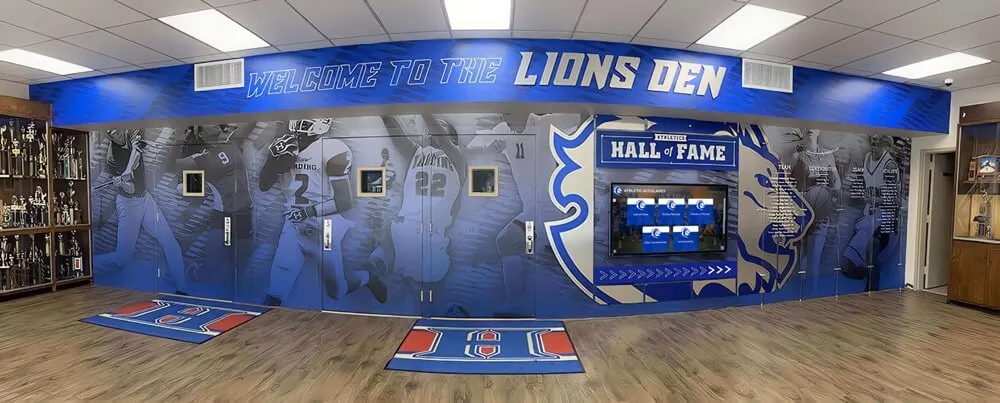
The bracket system used in Illinois creates dramatic single-elimination tension. Unlike regular season where losses can be absorbed, tournament basketball requires winning every game to advance. This format produces unforgettable moments—buzzer-beaters determining seasons, upsets shocking higher-seeded teams, and championship runs requiring sustained excellence across multiple weeks.
Regular Season Competition and Conference Structure
Before postseason tournaments capture statewide attention, regular season competition establishes team identities, determines playoff seeding, and creates the narratives that carry into tournament play. Illinois basketball features diverse conference structures reflecting the state’s geographic and enrollment diversity.
Major conferences include established associations with long traditions and fierce rivalries. The Southwest Suburban Conference, DuPage Valley Conference, Central State Eight Conference, and numerous other associations organize regular season competition while creating championship opportunities and recognition throughout the season.
Conference championships hold significant meaning in Illinois basketball culture. Winning conference titles demonstrates sustained excellence across full seasons against familiar opponents who understand your system and personnel. Programs build identities around conference success, creating trophy cases displaying conference championship hardware and hanging championship banners recognizing these accomplishments.
Beyond conference competition, many Illinois programs schedule challenging non-conference games against nationally recognized programs, participate in holiday tournaments featuring elite competition, or arrange showcase games that test their capabilities against diverse styles and talent levels. These strategic scheduling decisions help programs prepare for tournament intensity while building experience against high-quality opponents.
Notable Rule Considerations and Shot Clock Implementation
Illinois high school basketball operates under National Federation of State High School Associations (NFHS) rules with some state-specific interpretations. One significant recent development involves shot clock implementation, a topic of ongoing discussion in Illinois basketball circles.
Unlike college and professional basketball with established shot clocks, high school basketball in Illinois traditionally operated without shot clock restrictions. This allowed teams to control tempo strategically, with some programs succeeding through deliberate pace reducing possessions and emphasizing efficient scoring opportunities.
The debate around shot clock adoption reflects tensions between traditional approaches and evolving basketball philosophy. Proponents argue shot clocks increase game pace, reduce stalling tactics, prepare players for college basketball featuring shot clocks, and create more entertaining spectator experiences. Opponents express concerns about implementation costs for timing equipment, potential disadvantages for smaller schools emphasizing tempo control, and alteration of strategic diversity that makes high school basketball distinctive.
As of 2026, Illinois continues evaluating shot clock implementation, with ongoing pilot programs and stakeholder discussions examining feasibility, impact on game quality, and equity considerations across schools with varying resources.
Legendary Illinois High School Basketball Programs
Illinois basketball history features programs that established dynasties, created lasting traditions, and produced athletes who achieved at highest levels. Understanding these legendary programs provides context for the state’s basketball excellence.
Historic Championship Programs
Several Illinois programs have achieved remarkable sustained excellence, winning multiple state championships and establishing reputations as perennial contenders.
Thornridge High School in Dolton achieved legendary status with back-to-back undefeated state championships in 1971 and 1972 before the multi-class era. The 1972 team, considered among the greatest high school teams in national history, finished 33-0 while dominating opponents by an average of over 30 points per game. Led by Quinn Buckner, who later starred at Indiana University and in the NBA, Thornridge’s dominance established benchmarks for excellence in Illinois basketball.
Pekin High School claimed three consecutive state championships from 1964-1967 in the single-class era, demonstrating sustained excellence against all competition regardless of size. Their dynasty established Pekin as a basketball community where success became expected and where program tradition influenced subsequent generations.
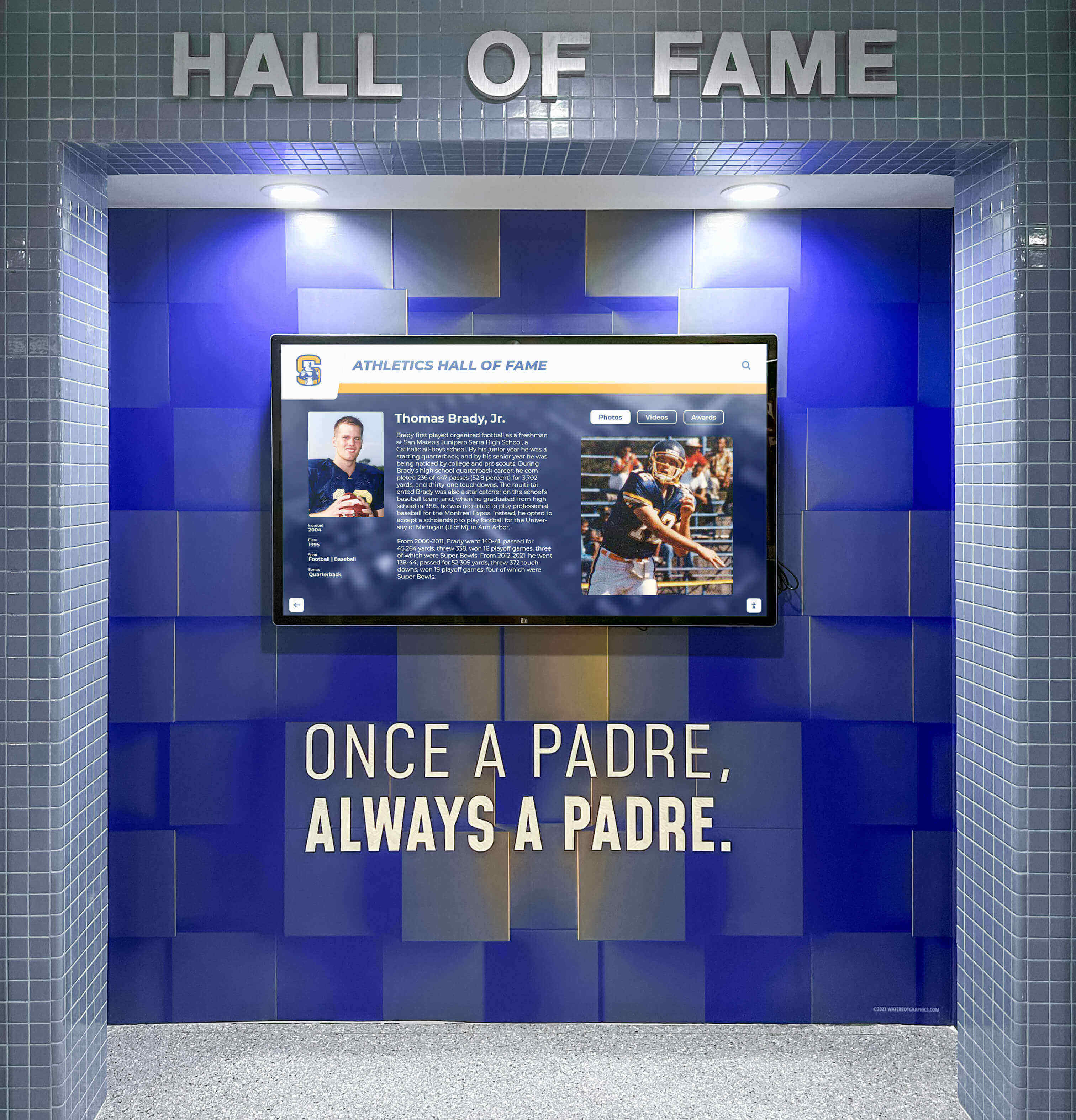
Centralia High School dominated early Illinois basketball, winning multiple state championships in the 1910s, 1920s, and 1930s while establishing basketball culture in southern Illinois. Their success during basketball’s developmental decades influenced how communities throughout the region embraced the sport and built programs emphasizing excellence.
Simeon Career Academy in Chicago became synonymous with basketball excellence during the 1980s and beyond, producing numerous NBA players including Derrick Rose, Jabari Parker, and other notable professionals. Their sustained success in the state’s largest classification demonstrates organizational excellence and player development capabilities rivaling college programs.
Programs Known for Player Development
Beyond championship achievements, certain Illinois programs earned reputations for developing players who excelled at higher competitive levels, creating pipelines from high school to college and professional basketball.
Chicago-area programs collectively produced remarkable numbers of Division I college players and NBA professionals. Schools like Whitney Young, Curie High School, and Morgan Park established consistent track records identifying, recruiting within their communities, and developing talent that attracted major college programs.
Peoria Manual became renowned for producing college-ready guards, with numerous players advancing to successful college careers at high-major programs. Their development system emphasized ball-handling, decision-making, and basketball IQ that translated effectively to higher levels.
Small-town programs occasionally produced individual superstars who achieved at highest levels. Players like Cazzie Russell from Chicago Carver, Nick Anderson from Simeon, and others demonstrated that talent development occurs across diverse settings when programs emphasize fundamentals, competition, and comprehensive skill development.
These player development successes enhance program reputations, aid recruiting as talented players seek proven development environments, and create network effects as alumni support their programs while maintaining connections that benefit current players.
Illinois Basketball’s Most Notable Players and Coaches
Individual excellence defines Illinois basketball history, with players and coaches whose contributions elevated programs while influencing basketball beyond high school competition.
Legendary Players Who Started in Illinois
Illinois high schools produced numerous basketball legends who achieved at highest competitive levels while maintaining connections to programs that developed them.
Isiah Thomas starred at St. Joseph High School in Westchester before achieving Hall of Fame success at Indiana University and with the Detroit Pistons. His explosive athleticism, leadership, and competitive intensity established standards for Illinois point guard excellence that influenced subsequent generations.
Dwyane Wade developed at Richards High School in Oak Lawn before becoming a marquee college player at Marquette and NBA champion with the Miami Heat. His high school journey from overlooked prospect to elite talent demonstrates transformative player development possible in Illinois programs.
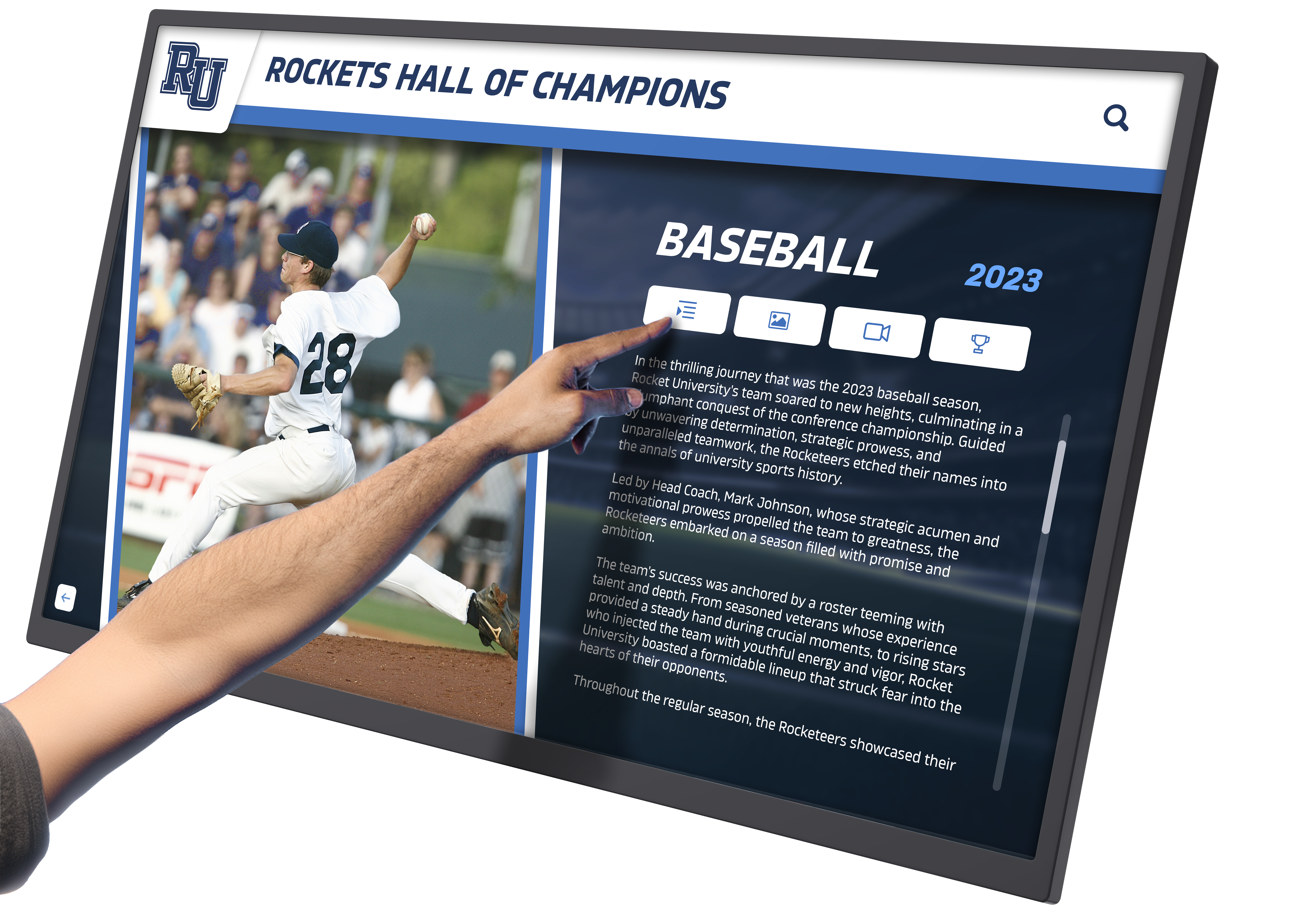
Derrick Rose, Chicago’s native son, dominated at Simeon Career Academy before becoming the youngest MVP in NBA history. His high school career captivated Chicago basketball communities and demonstrated the elite talent developing in Illinois programs.
Shawn Marion developed his versatile game at Clarksville High School before successful college and NBA careers. His unique skill set and basketball versatility reflected creative player development emphasizing multiple dimensions rather than position-specific limitations.
Cazzie Russell starred at Carver High School in Chicago before becoming a first-team All-American at Michigan and successful NBA player. His scoring prowess and competitive excellence established him as an Illinois basketball legend whose high school success predicted college and professional achievement.
These and numerous other Illinois products achieved at highest levels while representing programs that provided foundations for their success. Their achievements bring prestige to Illinois basketball while demonstrating the quality of competition, coaching, and development available in the state’s high school programs.
Influential Coaches Building Championship Traditions
Behind successful programs stand exceptional coaches whose leadership, teaching, and program building created sustained excellence and influenced coaching approaches throughout Illinois basketball.
Ron Nikcevich built Thornridge’s legendary championship program, emphasizing team basketball, defensive intensity, and comprehensive player development that produced historically dominant teams. His coaching philosophy influenced multiple coaching generations throughout Illinois.
Dawson Hawkins created Simeon’s basketball dynasty, developing systems that consistently produced elite talent while maintaining championship expectations. His ability to recruit within Chicago, develop players comprehensively, and sustain excellence across decades established him among Illinois coaching legends.
Max Kurland established Centralia as an early basketball power, building programs emphasizing fundamentals, conditioning, and competitive intensity that dominated early Illinois basketball while creating traditions lasting generations.
Successful Illinois coaches share common characteristics: they emphasize fundamental skill development over gimmicks, build team chemistry and culture emphasizing collective success, maintain high expectations while supporting player development, establish program systems surviving coaching transitions, and develop relationships throughout basketball communities that support recruiting and program building.
These coaching legacies live on through assistant coaches and players who absorbed their philosophies and replicated successful approaches in their own programs, creating coaching trees that spread Illinois basketball excellence throughout the state and beyond.
How Illinois Schools Celebrate Basketball Excellence
Honoring basketball achievement preserves program heritage while inspiring current athletes and strengthening community connections. Illinois schools employ various approaches to recognizing basketball excellence, from traditional displays to innovative digital solutions.
Traditional Recognition Approaches
Illinois schools traditionally honored basketball achievement through physical displays occupying prominent gymnasium and hallway spaces.
Championship Banners hanging from gymnasium rafters represent the most visible basketball recognition, documenting conference championships, regional and sectional titles, and state tournament achievements. These banners create immediate visual statements about program tradition while surrounding current players with tangible evidence of excellence to emulate.
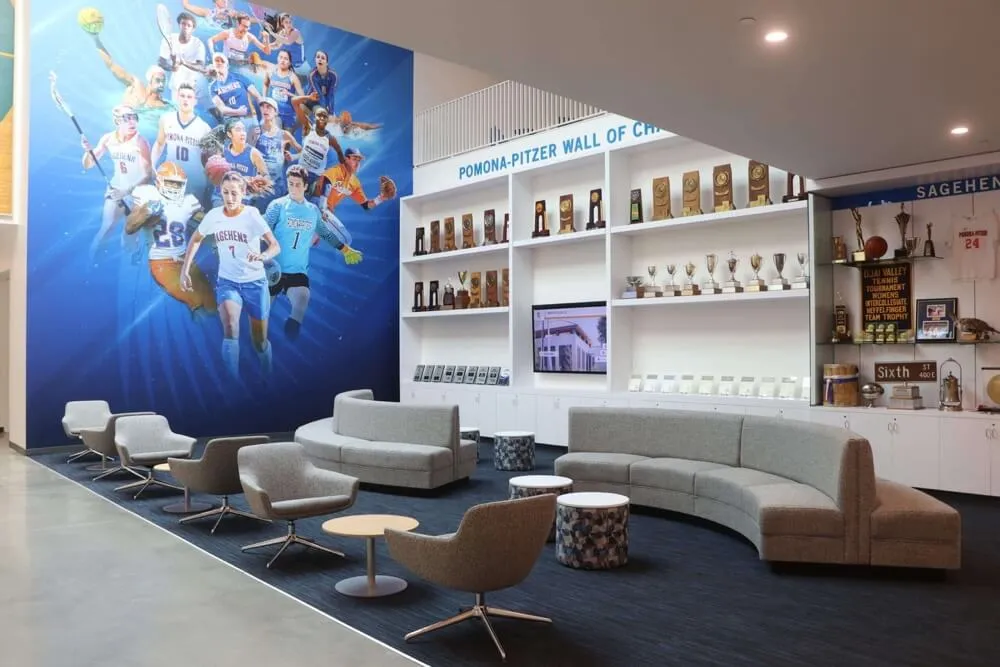
Trophy Cases showcase championship trophies, individual player awards, and memorabilia documenting program history. Well-maintained trophy cases in high-traffic areas ensure recognition visibility to students, visitors, and community members reinforcing basketball’s importance in school culture.
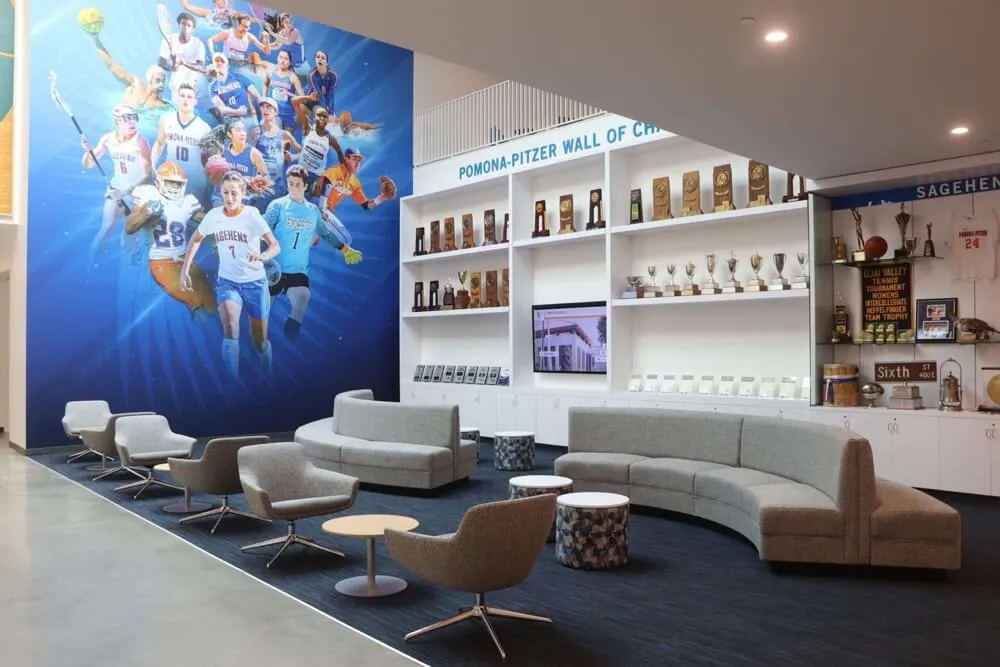
Wall Plaques recognize individual achievements like 1,000-point scorers, all-state selections, and hall of fame inductees. These permanent installations create legacy walls documenting exceptional individual contributors while inspiring current players to pursue similar recognition.
Retired Jerseys represent the highest individual honor many programs bestow, permanently displaying jersey numbers of exceptional contributors on gymnasium walls. This recognition celebrates athletes who achieved at extraordinary levels while establishing exclusive company current players aspire to join.
While these traditional approaches provide tangible, visible recognition, they face limitations including space constraints restricting capacity as programs accumulate achievement across decades, update difficulties requiring expensive physical modifications for additions, static presentation limiting information to basic names and achievements, and single-location accessibility restricting recognition to gymnasium visitors.
Modern Digital Recognition Solutions
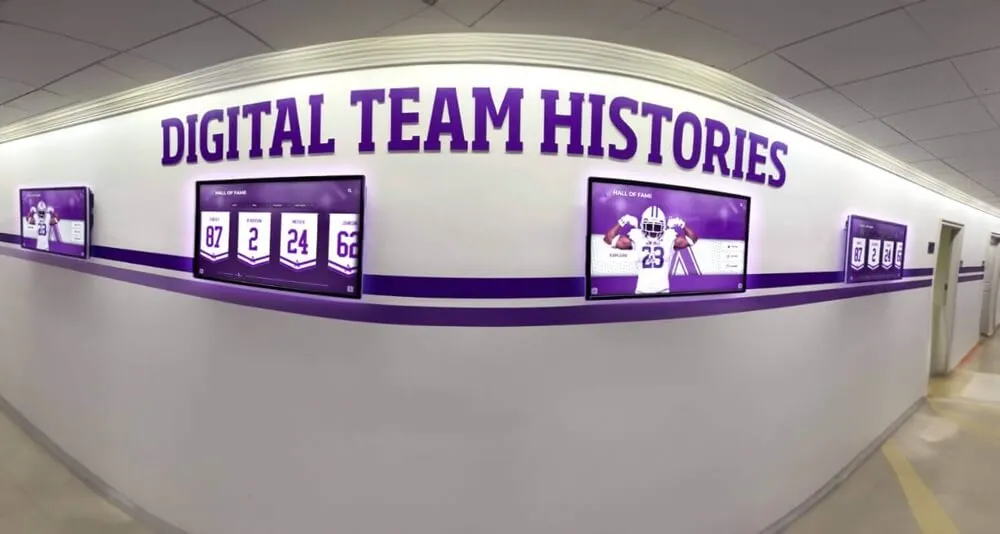
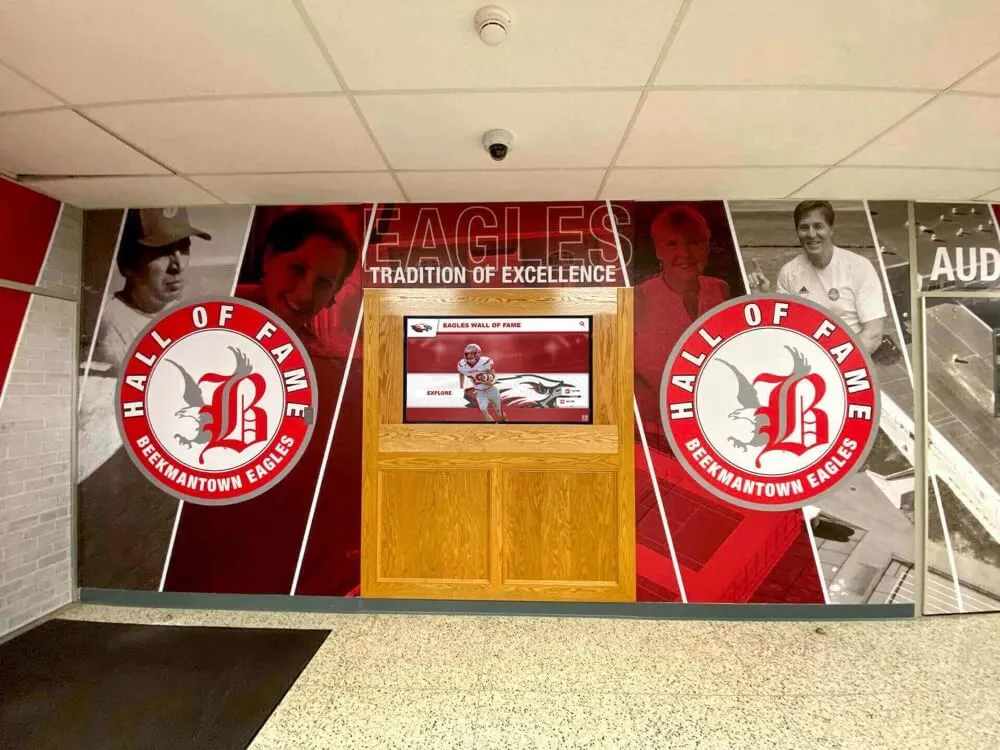
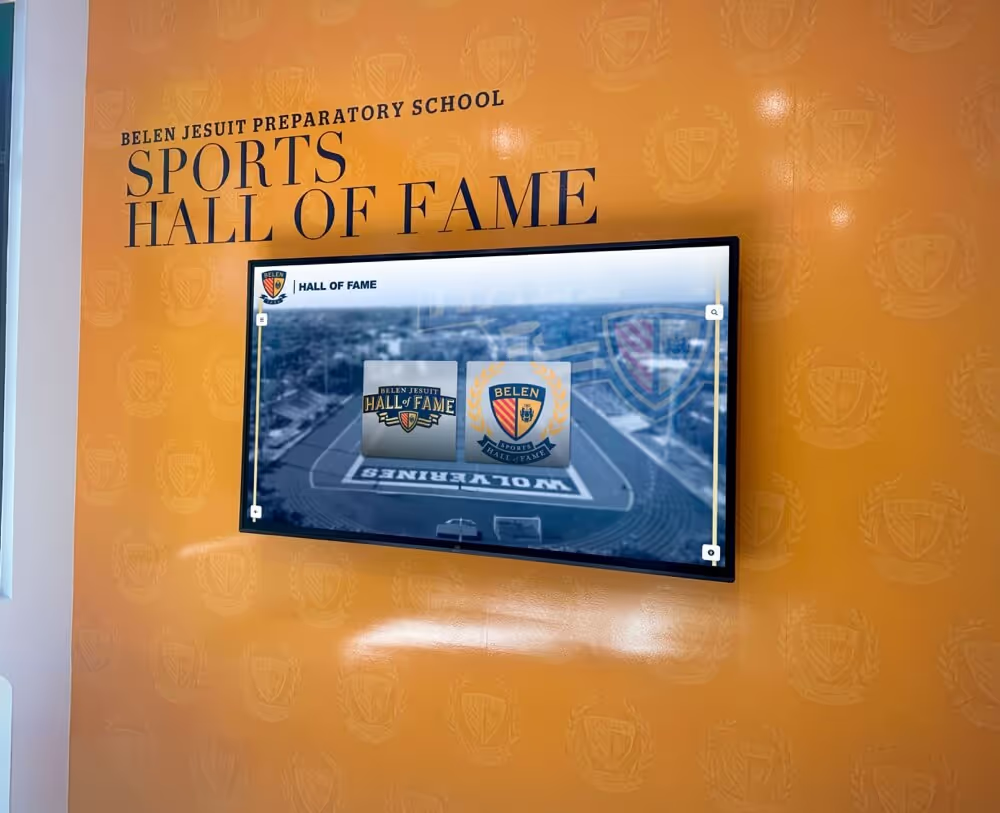
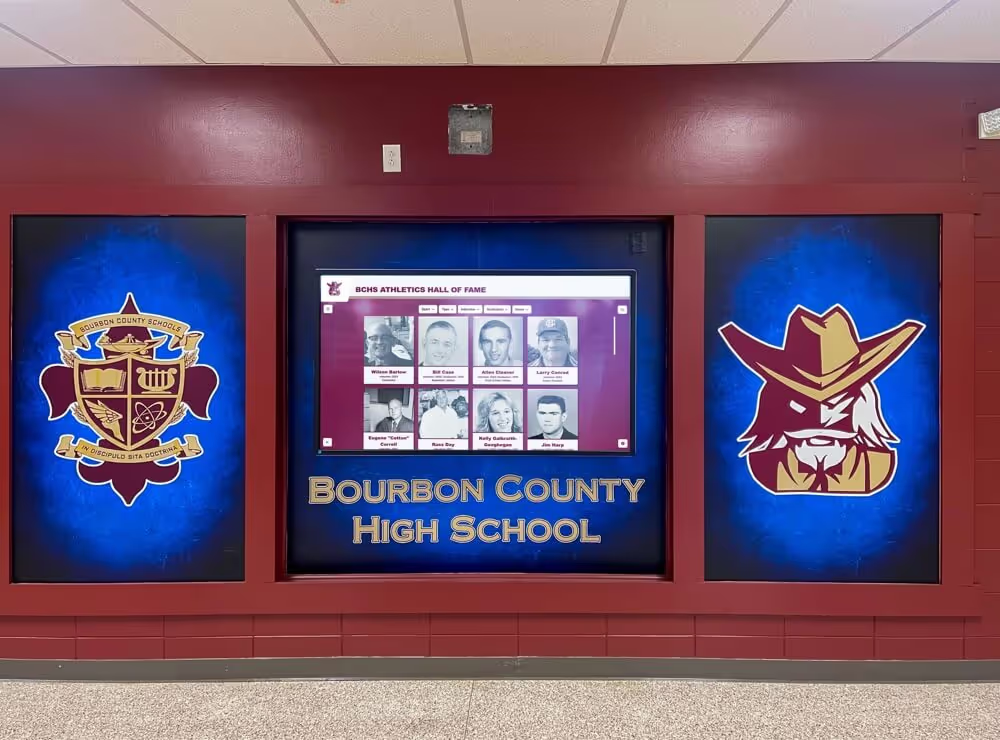
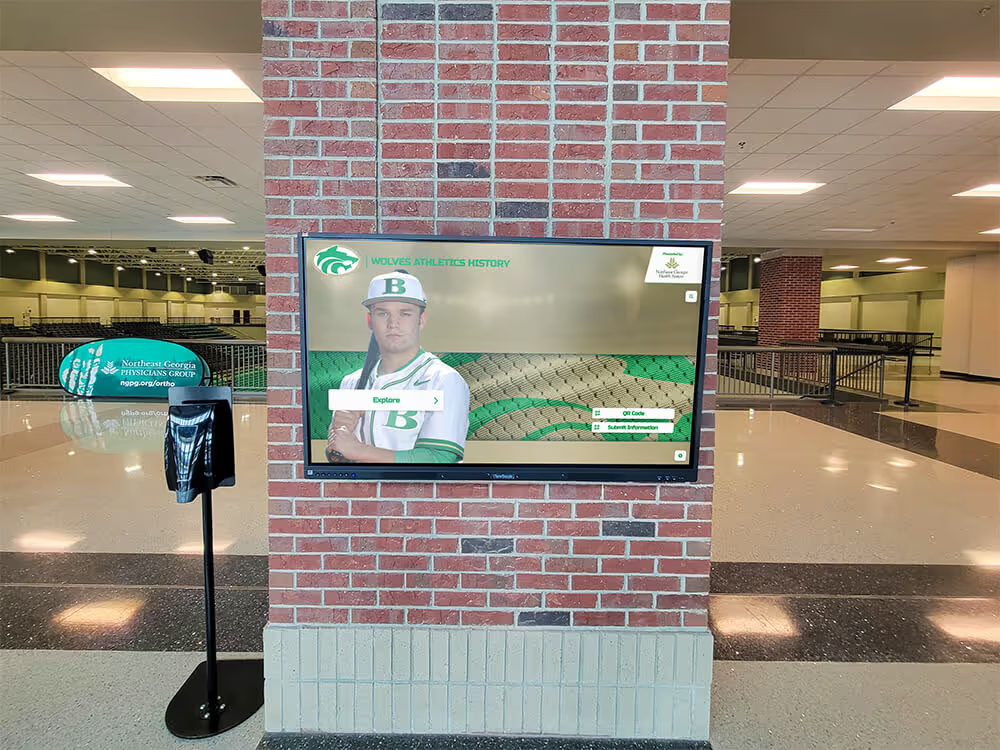
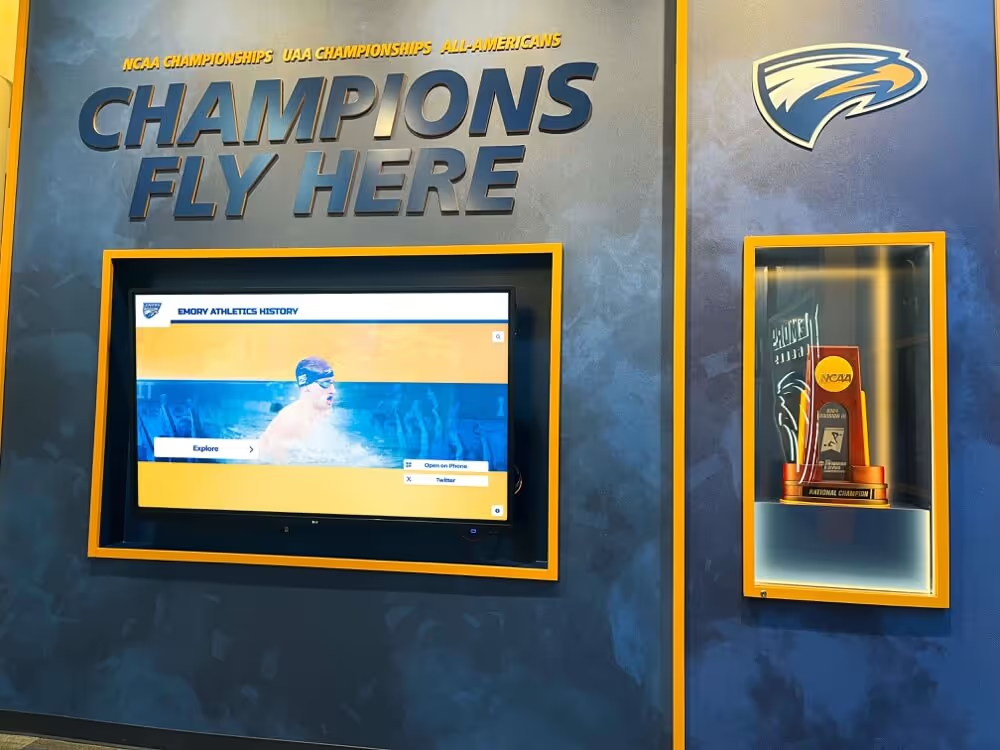
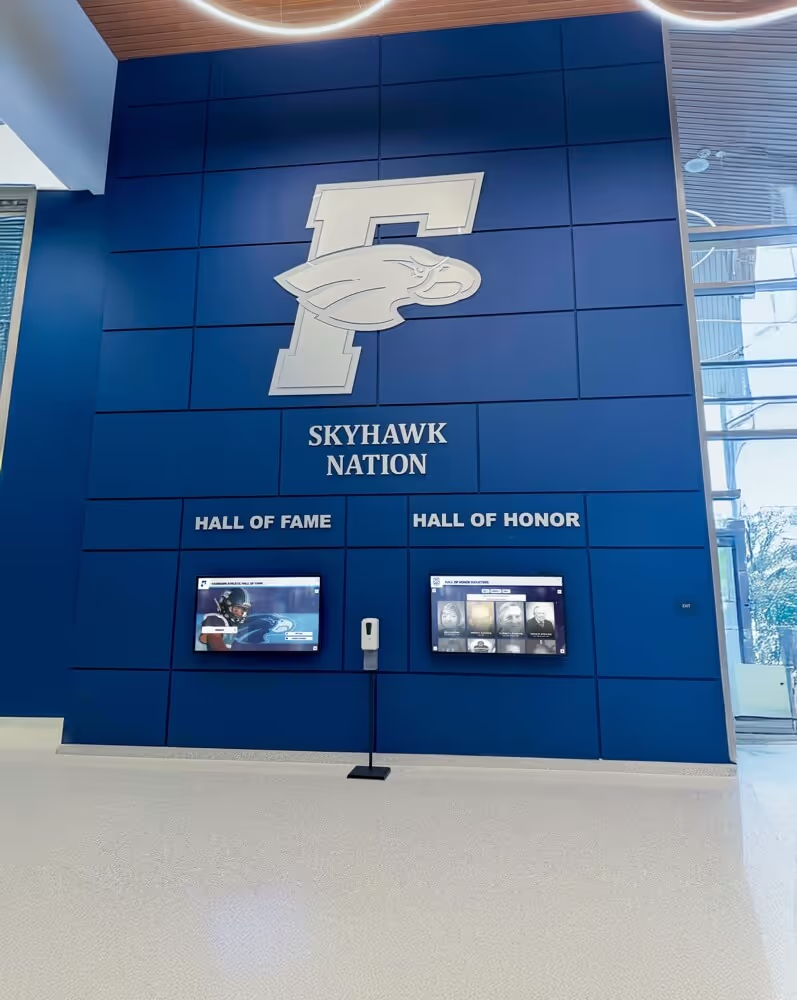
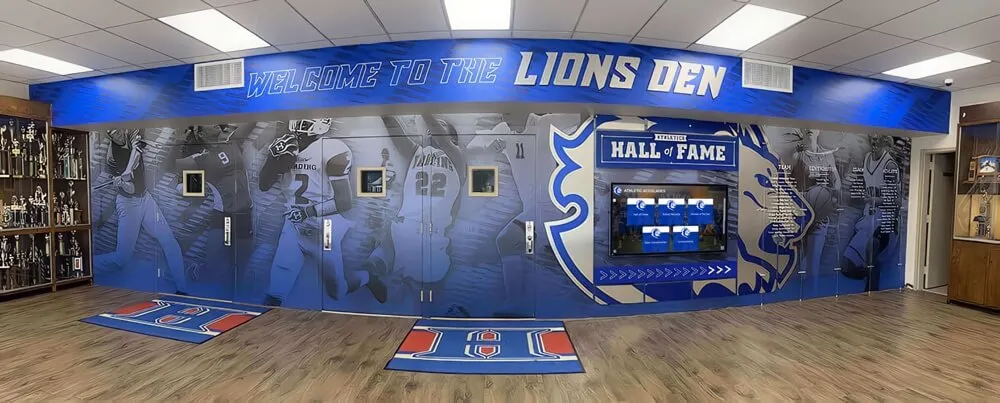
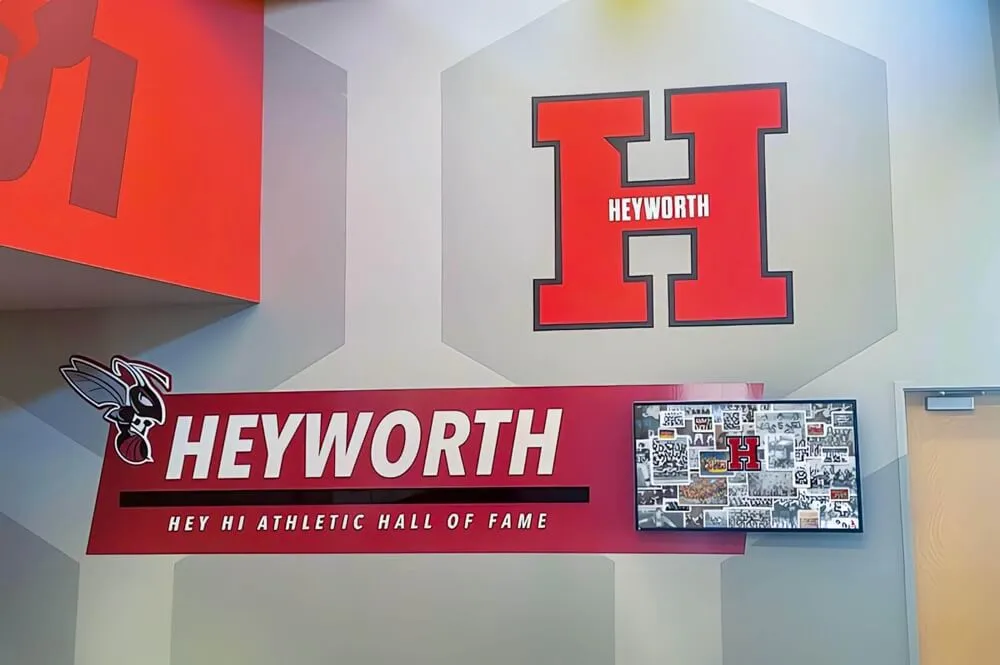
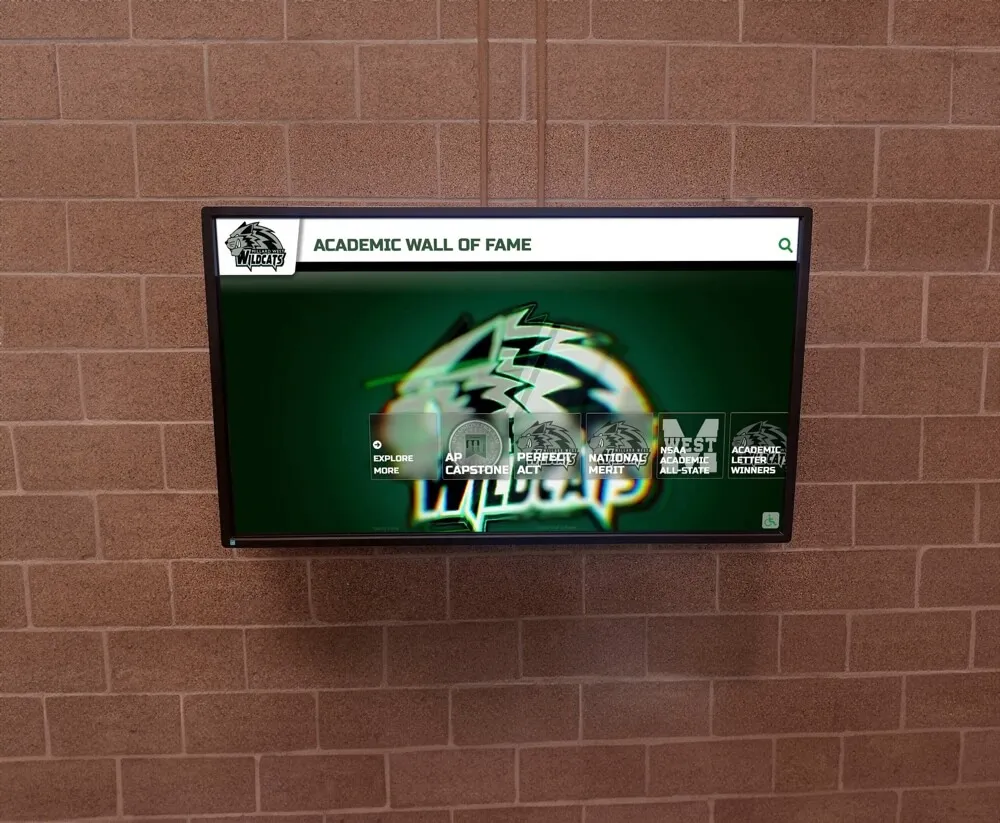
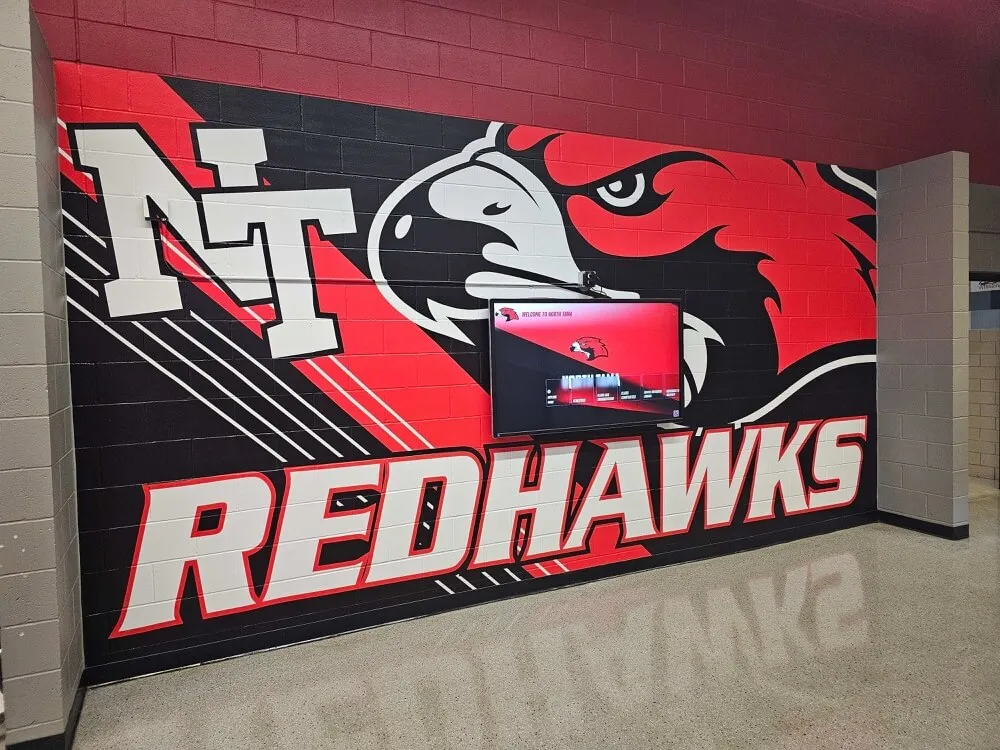
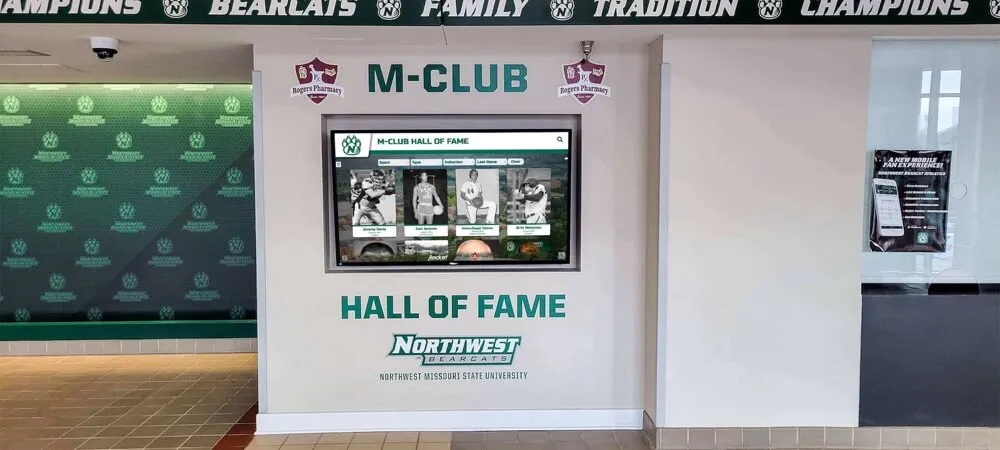
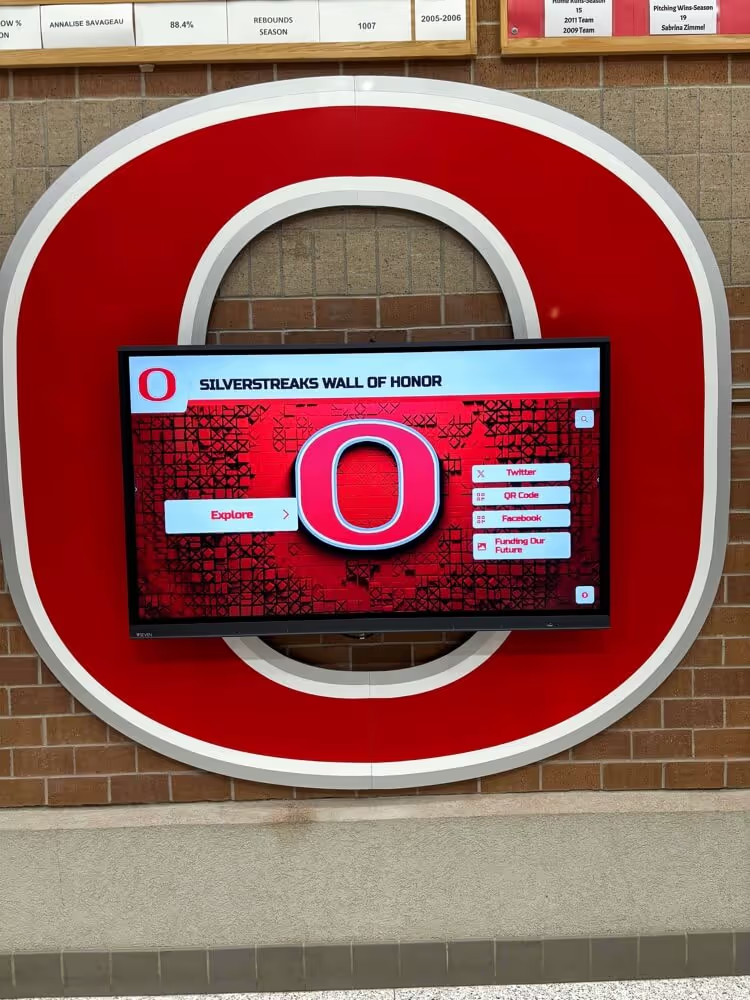
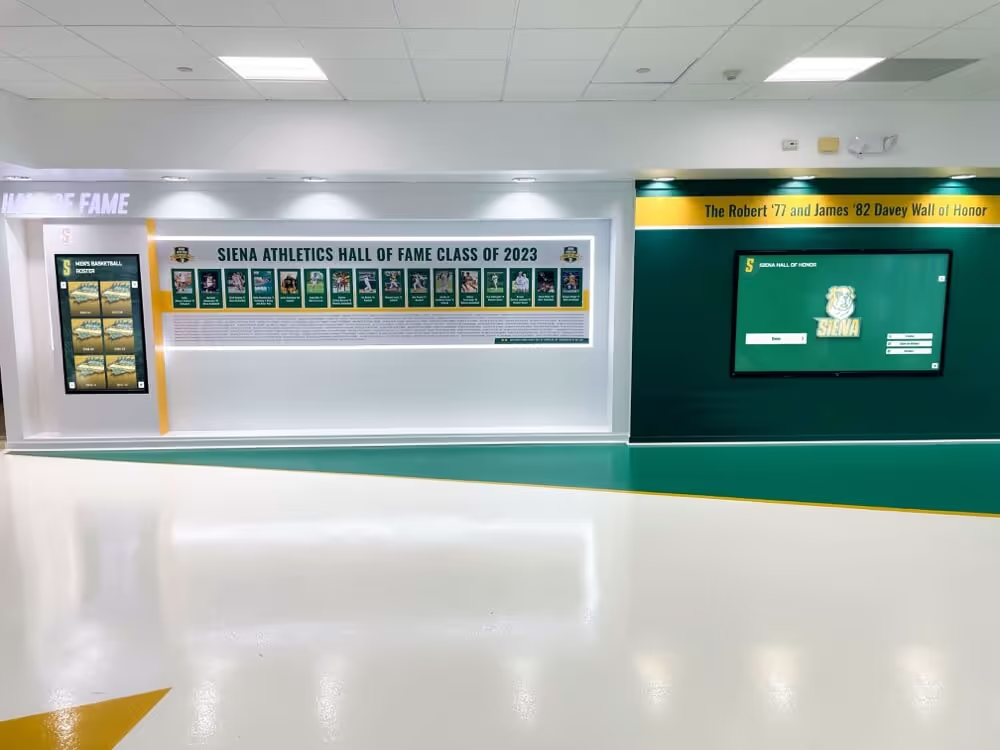
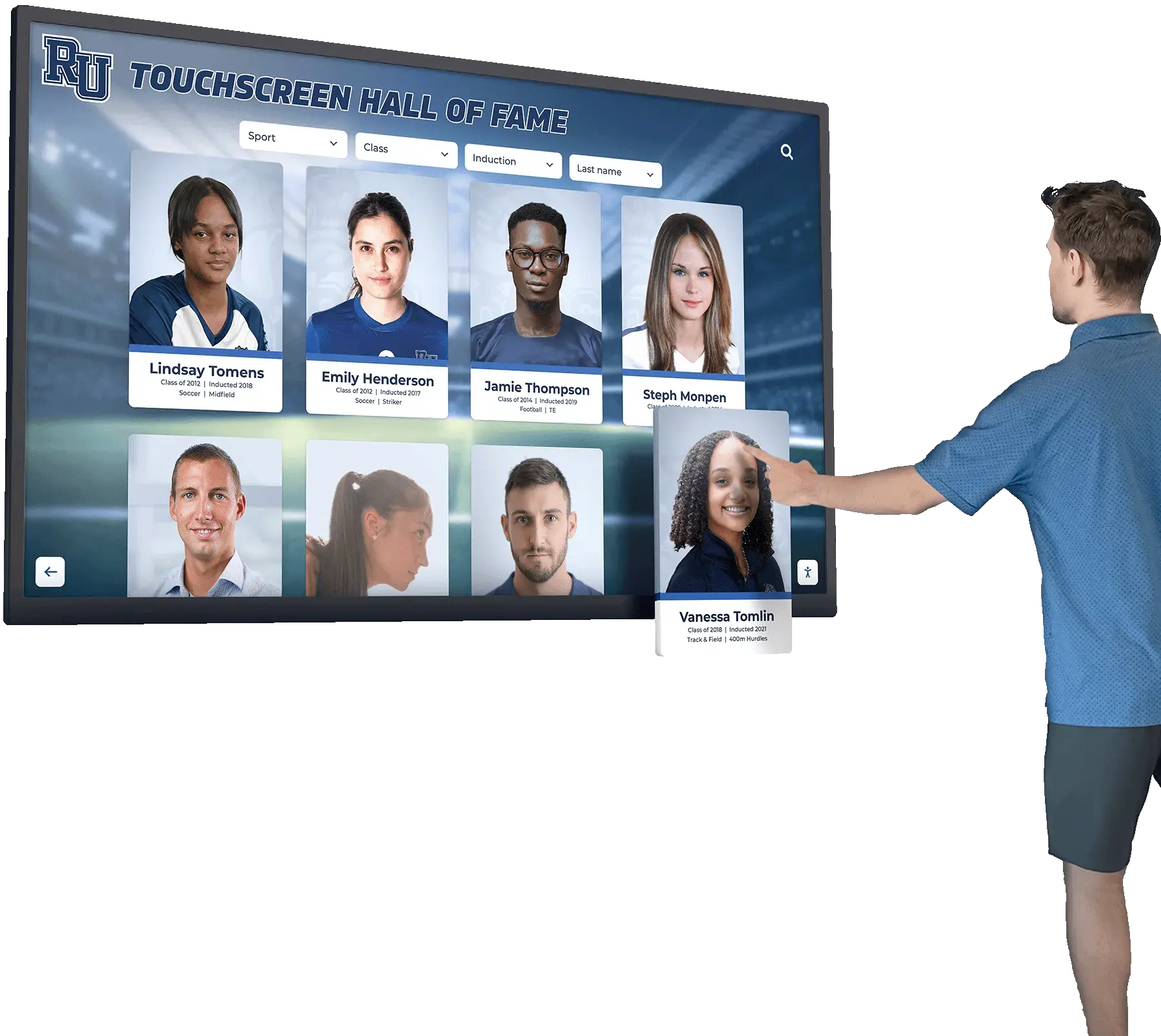
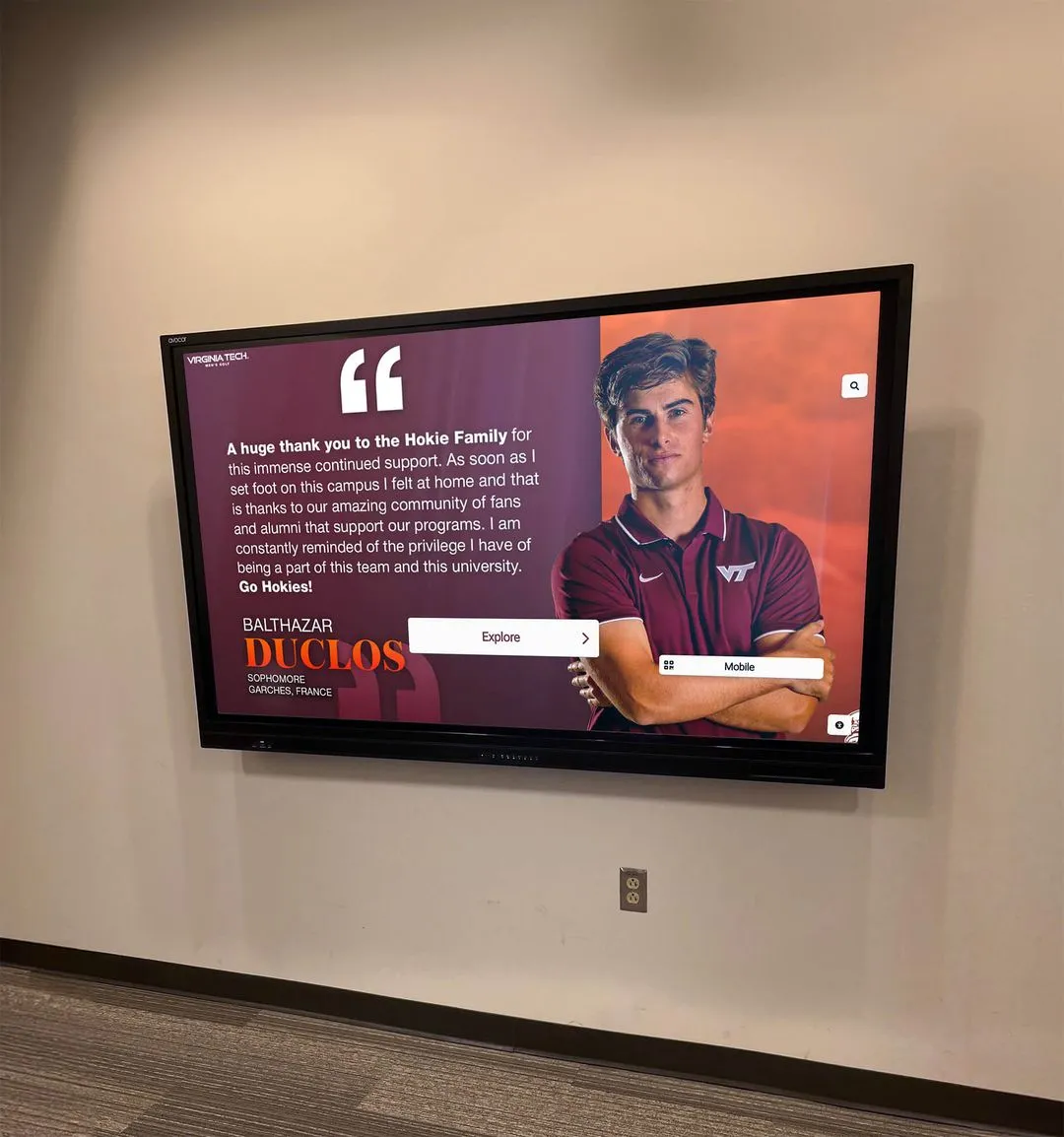
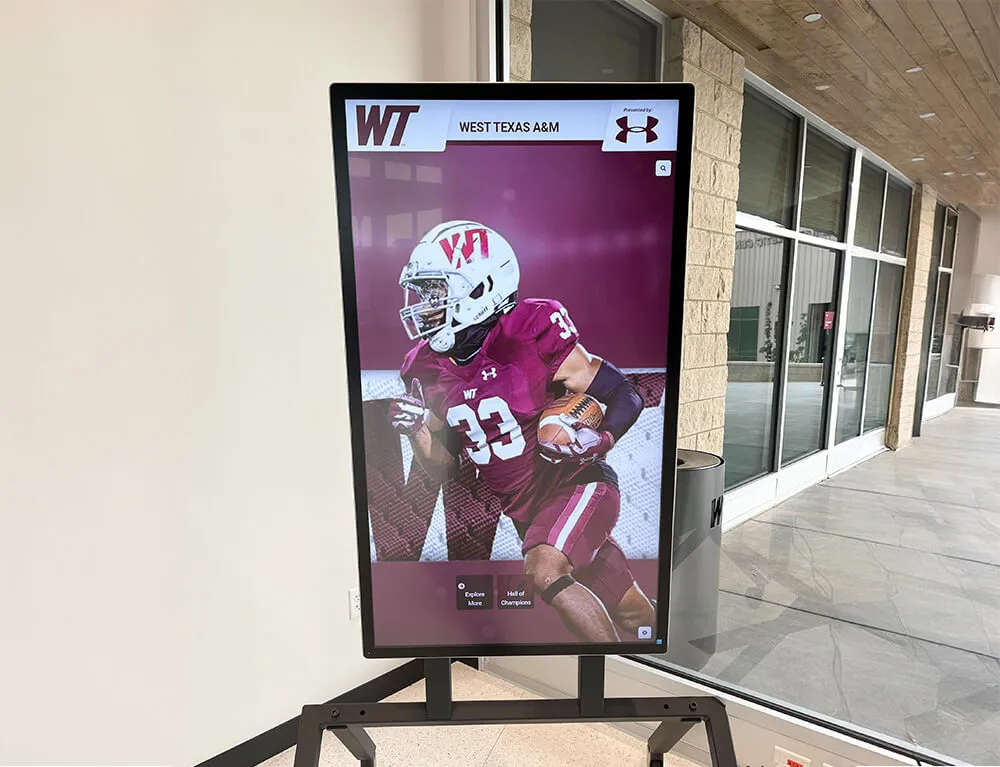
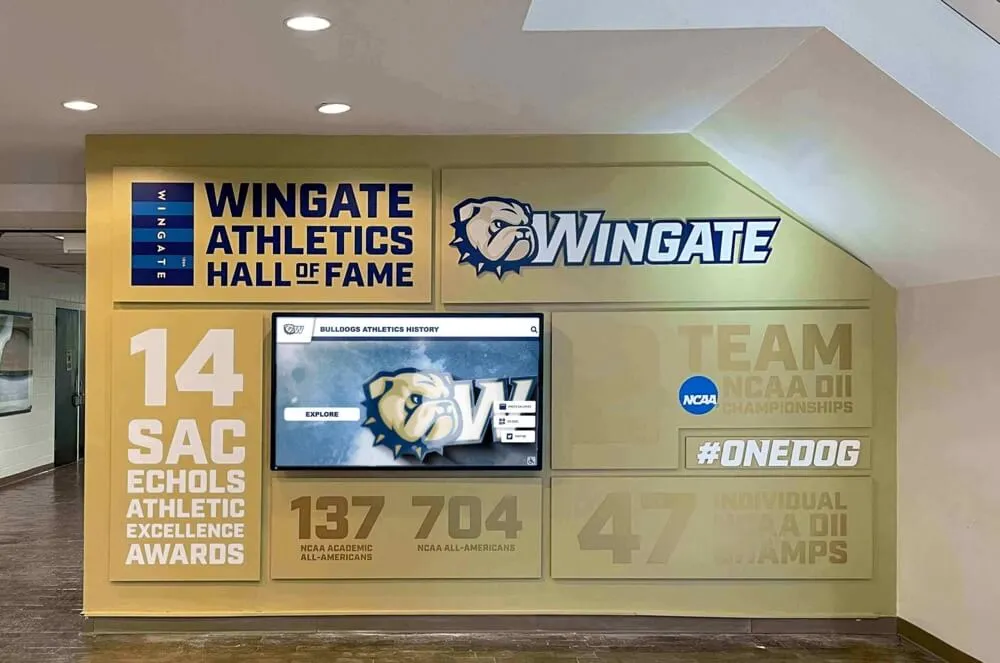
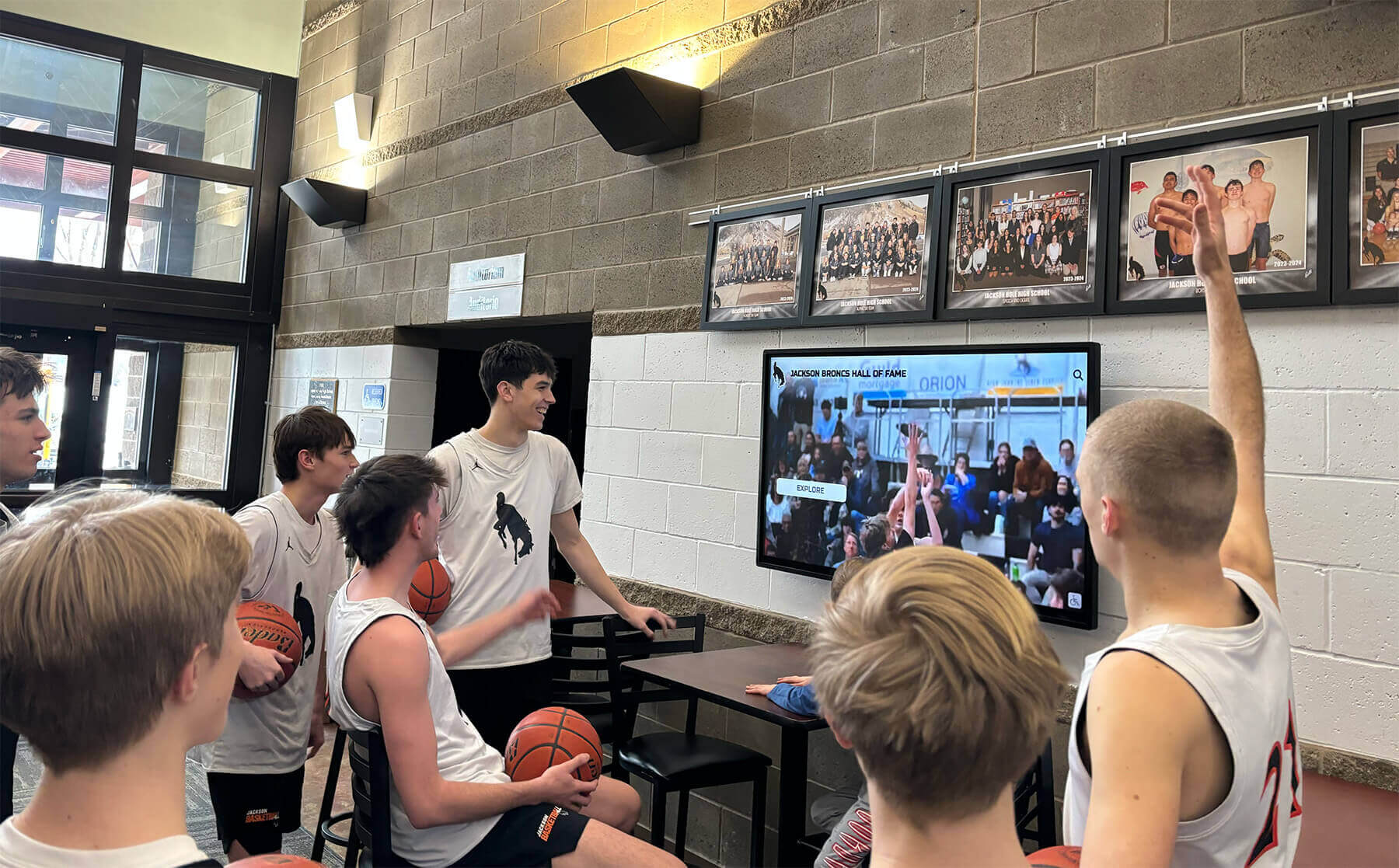
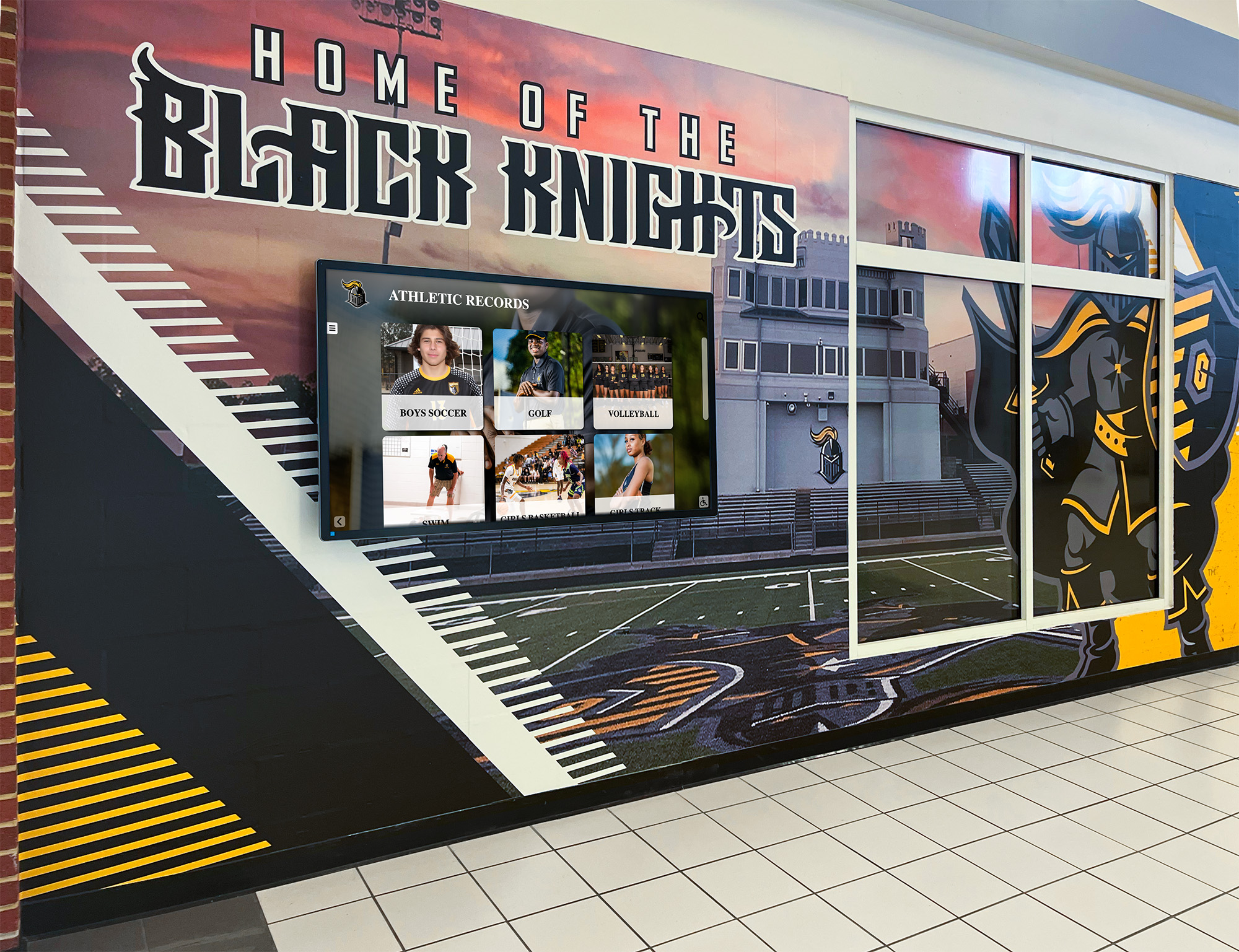
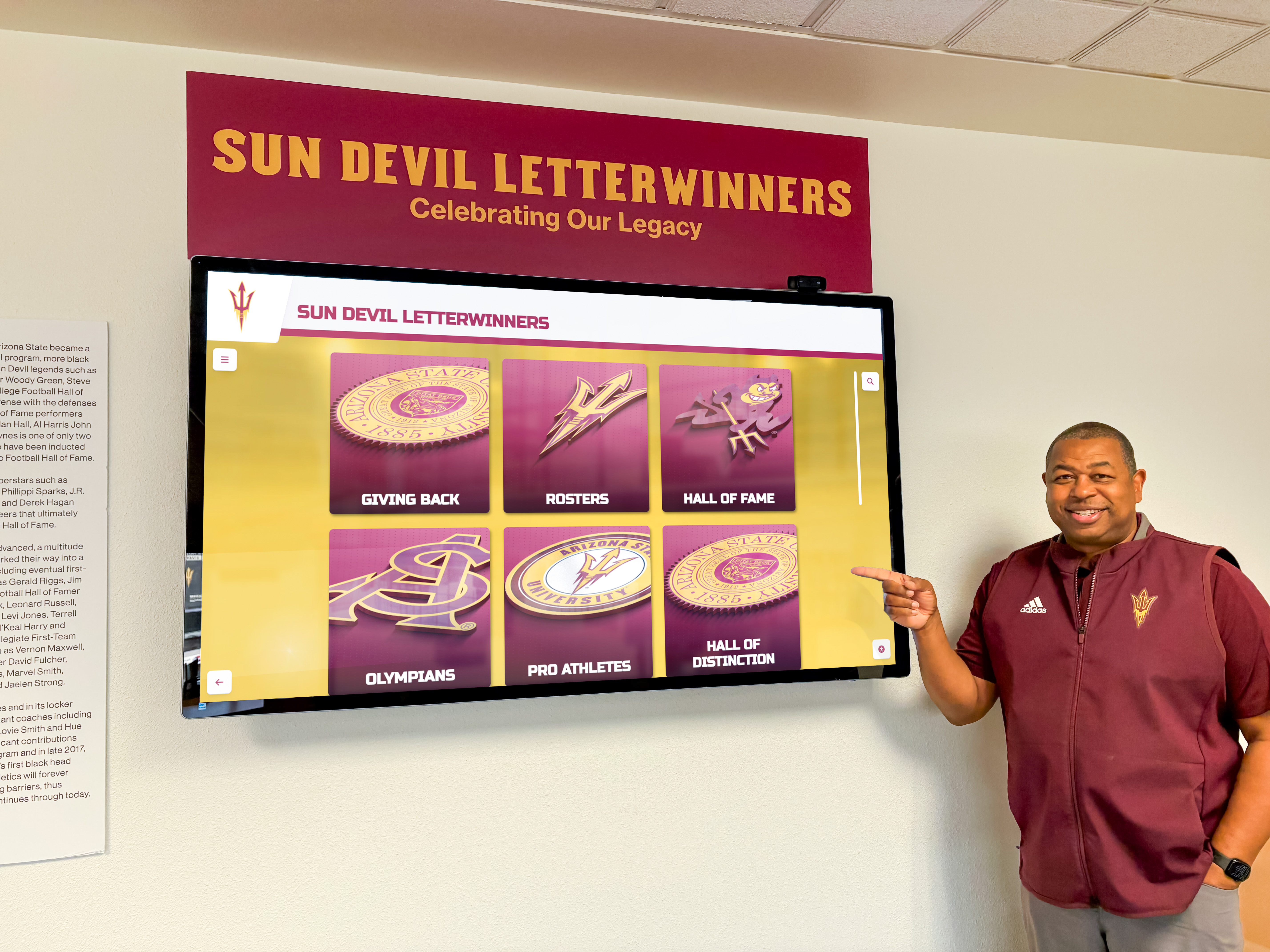
Digital recognition technology addresses traditional limitations while enhancing engagement through interactive multimedia experiences that bring basketball achievement to life. Digital athletic displays transform how Illinois schools celebrate basketball excellence.
Unlimited Recognition Capacity: Digital systems accommodate comprehensive basketball program histories without space constraints. Every 1,000-point scorer, all-conference selection, state tournament participant, and significant contributor receives appropriate recognition rather than only those whose plaques fit available wall space.
Rich Multimedia Content: Digital displays present high-quality photographs, video highlights, career statistics, detailed narratives, and achievement documentation creating engaging experiences far beyond static plaques. Visitors explore comprehensive profiles bringing athletes and achievements to life through multimedia storytelling.
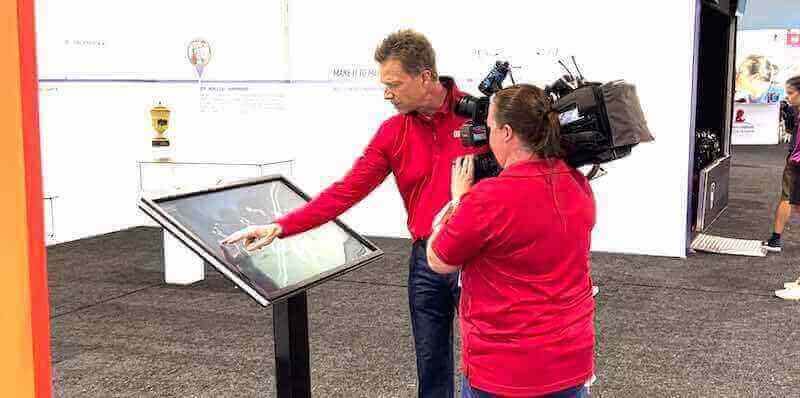
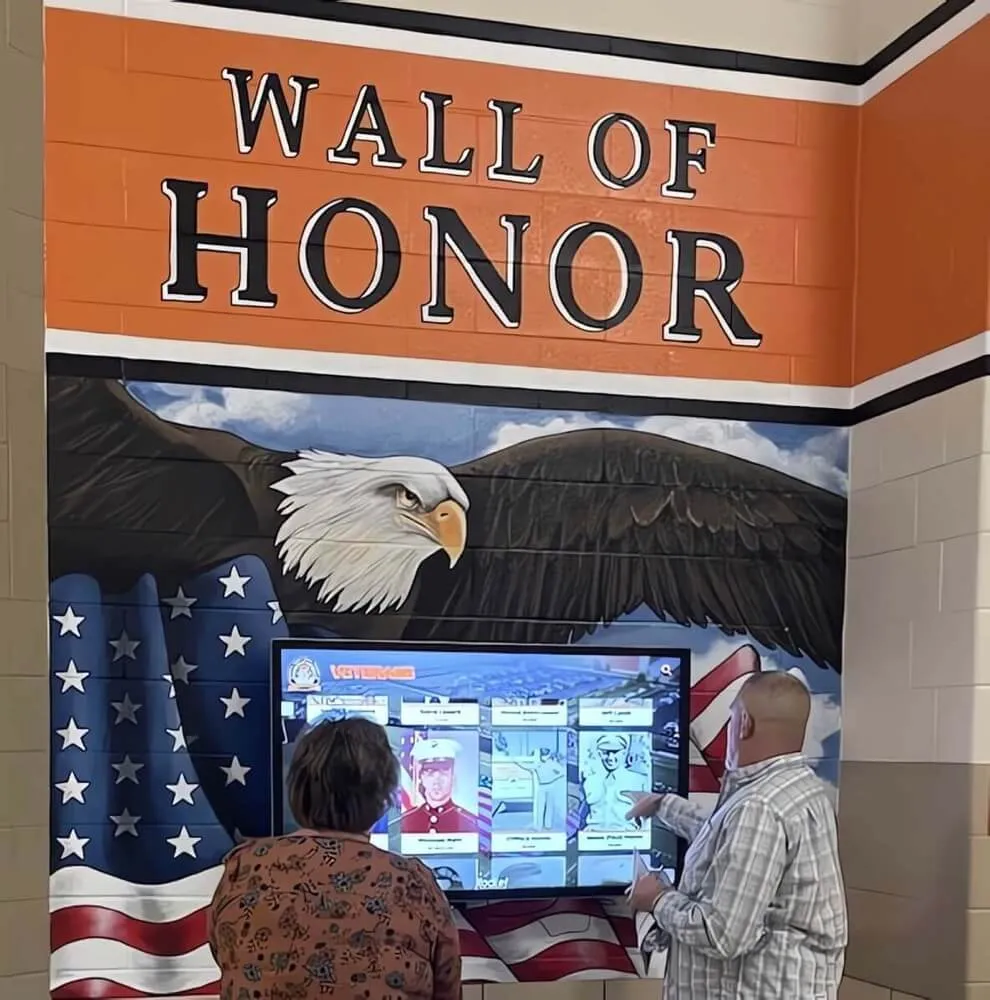
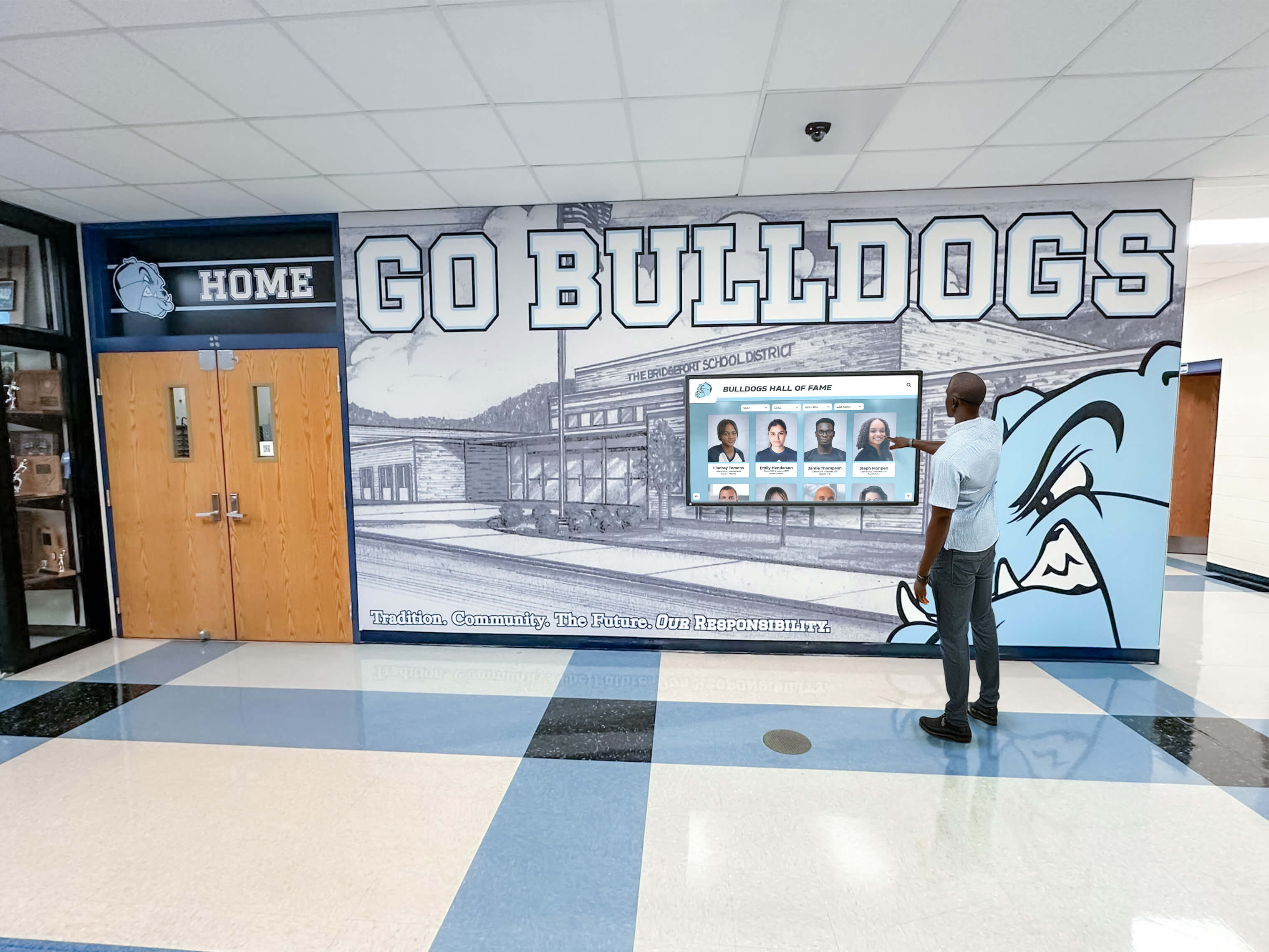
Interactive Exploration: Touchscreen interfaces enable visitors to search for specific players, filter by decade or achievement type, explore championship teams, and discover connections between teammates and coaches. This active engagement creates longer, more meaningful interactions compared to passive viewing of traditional displays.
Instant Updates: Cloud-based platforms enable immediate recognition additions during basketball seasons. When athletes reach scoring milestones, earn postseason honors, or achieve noteworthy accomplishments, schools update displays immediately rather than waiting for physical fabrication.
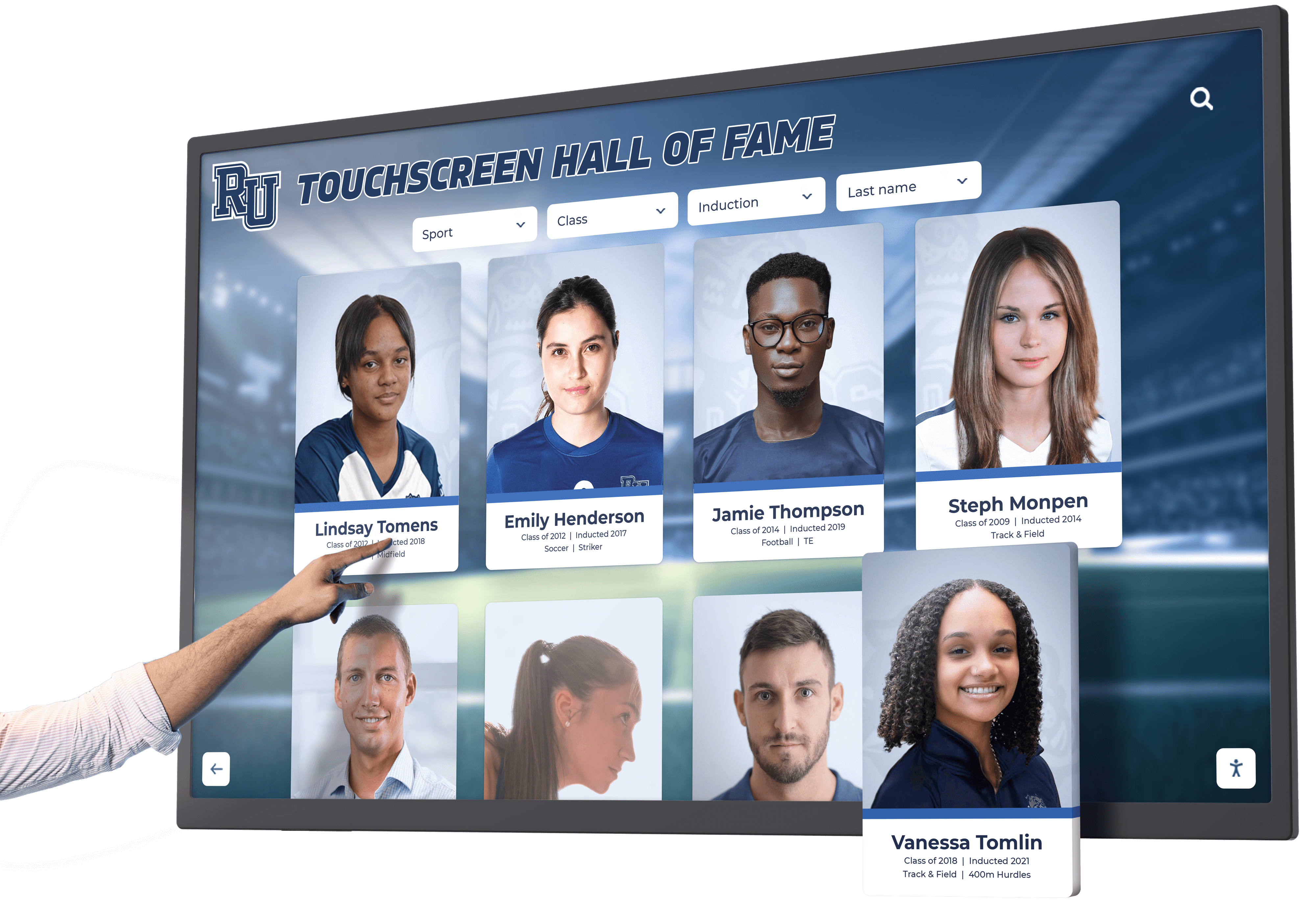
Web-Based Access: Digital recognition extends beyond physical locations through companion websites enabling alumni worldwide to explore basketball history. This accessibility strengthens alumni connections while creating shareable content families and communities appreciate.
Analytics and Engagement Data: Digital systems track visitor interactions revealing which content generates greatest interest, how visitors navigate information, and engagement patterns informing content development priorities.
Solutions like Rocket Alumni Solutions provide purpose-built platforms specifically designed for athletic recognition, addressing unique needs of basketball programs through sports-specific features, statistical integration, and recognition frameworks optimized for celebrating team and individual achievement.
Creating Comprehensive Basketball Halls of Fame
Many Illinois schools establish dedicated basketball halls of fame recognizing exceptional contributors through formal induction ceremonies and permanent displays. Creating effective halls of fame requires thoughtful planning addressing several key considerations.
Selection Criteria and Standards: Clear criteria ensure fair, consistent evaluation of candidates. Typical basketball hall of fame standards include achievement thresholds like 1,000-point scorers, all-state selections, conference player of year honors, and state tournament contributions. Character considerations ensure recognition extends to those demonstrating sportsmanship, leadership, academic commitment, and positive community representation alongside athletic excellence.
Nomination and Selection Processes: Establishing transparent processes maintains credibility and fairness. Successful approaches include forming diverse selection committees representing coaches, administrators, former players, and community members, implementing nomination procedures enabling broad participation, and documenting selection criteria and processes publicly to ensure transparency.
Induction Ceremonies: Recognition ceremonies create memorable experiences for inductees, families, and communities. Effective ceremonies feature formal presentations during high-visibility events like halftime of key games, speeches from inductees sharing personal reflections, video tributes showcasing career highlights, presentation of commemorative items, and opportunities for families to participate in recognition.
Ongoing Management: Sustainable recognition programs establish clear administrative responsibility ensuring regular induction cycles, content updates and additions, technology maintenance for digital systems, and promotional efforts keeping recognition visible to target audiences.
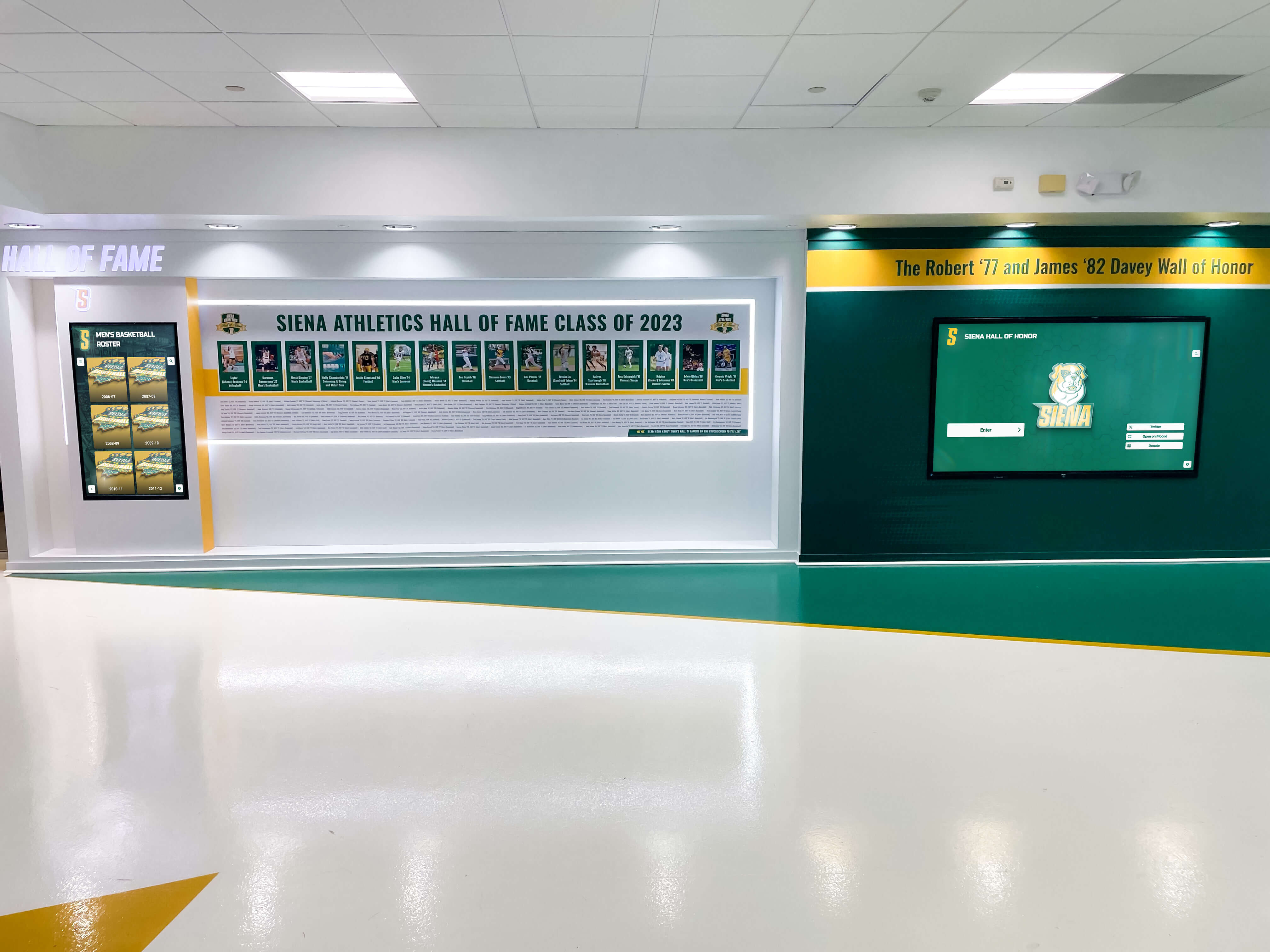
Creating basketball recognition programs serves multiple strategic purposes beyond honoring past achievement. Recognition strengthens recruiting by demonstrating program tradition to prospective student-athletes, enhances alumni engagement by showing former players their contributions remain valued, preserves program history that might otherwise fade, and inspires current players by showcasing concrete examples of excellence achieved within their program.
Building Basketball Program Culture Through Recognition
Recognition systems significantly influence program culture, shaping how current players understand expectations, what achievement looks like, and what traditions they’re continuing when they wear program uniforms.
Using History to Inspire Current Athletes
Past achievement becomes motivational when presented compellingly to current players. Effective coaches leverage recognition displays strategically, referencing historical achievements when teaching concepts, connecting current players to successful predecessors who played their positions or faced similar challenges, and establishing excellence standards through documented achievement history.
Senior night celebrations and team banquets provide opportunities to explicitly connect current players with program tradition through recognition presentations, alumni speakers sharing experiences and lessons learned, and formal acknowledgment of how current teams contribute to ongoing program legacies.
Digital recognition enhances these connections through easily accessible historical content. Coaches display specific athlete profiles during film sessions demonstrating concepts, show championship team footage illustrating successful strategies, and reference historical statistics providing context for current performance expectations.
Honoring Achievement at Multiple Levels
Comprehensive recognition programs acknowledge diverse achievement types rather than only exceptional elite performance. This inclusive approach motivates broader player populations while maintaining appropriate distinctions between achievement levels.
Elite Recognition: Reserve highest honors for truly exceptional achievement—state championships, all-state selections, 1,000-point scorers, athletes competing professionally or collegiately, and statistical record holders.
Significant Achievement Recognition: Acknowledge solid contributors who may not reach elite standards but demonstrated commitment and success—all-conference selections, regional or sectional championship contributors, varsity letter winners, and players reaching noteworthy statistical milestones.
Participation Recognition: Create inclusive acknowledgment for all program participants, emphasizing that every roster member contributes to team success regardless of individual statistics or playing time.
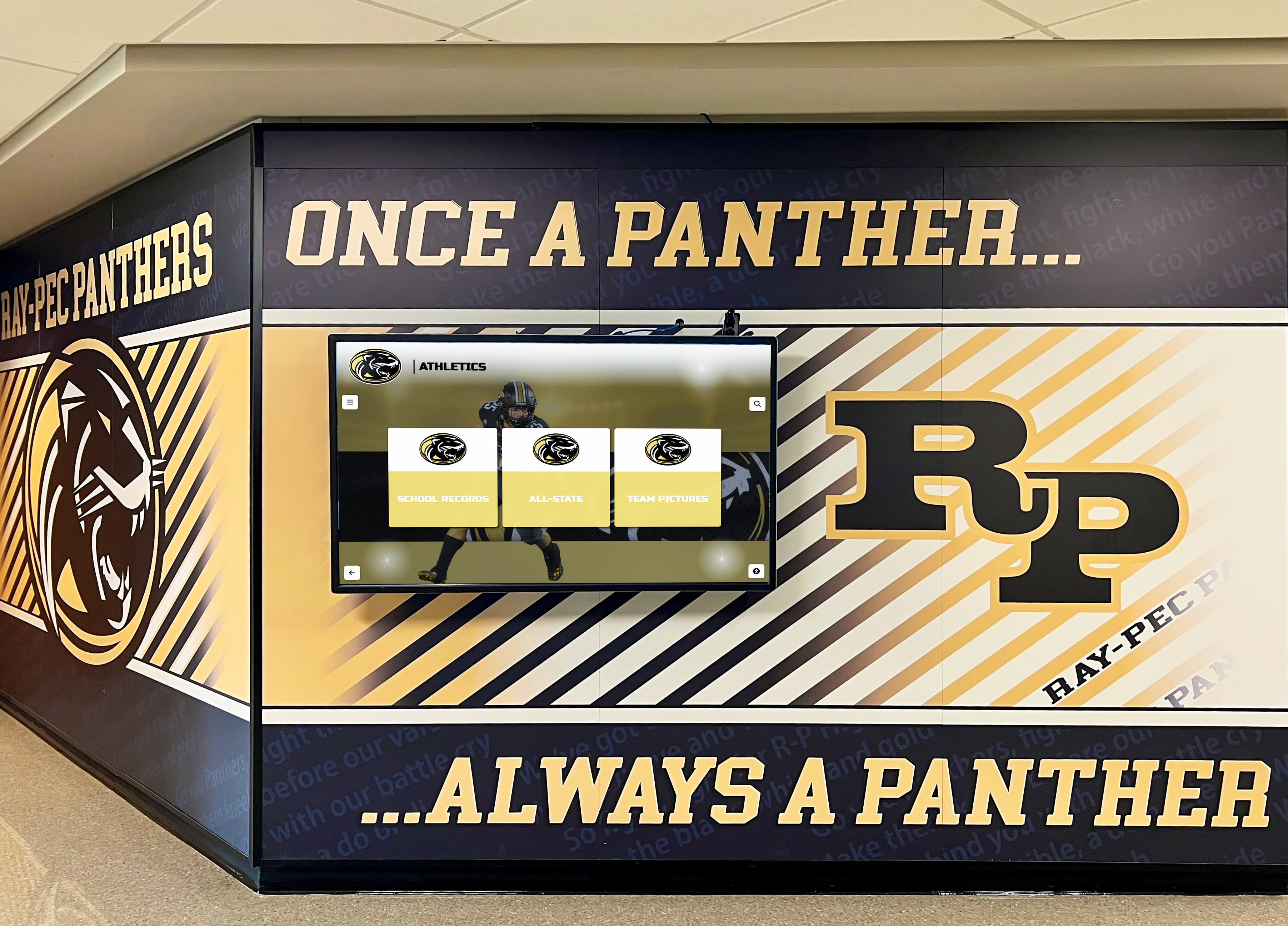
Tiered recognition proves particularly practical with digital platforms accommodating different content depths for various achievement levels. Elite figures receive comprehensive multimedia profiles while solid contributors receive professional recognition appropriate to their accomplishments. This balanced approach celebrates excellence while acknowledging that championship teams require contributions from entire rosters.
Celebrating Team Achievement Alongside Individual Success
Basketball inherently balances individual skill and team coordination. Effective recognition programs honor both dimensions, celebrating exceptional individual achievement while emphasizing team accomplishments demonstrating collective excellence.
Championship Team Recognition: Document conference championships, regional and sectional titles, state tournament appearances, and memorable season achievements comprehensively. Include team photographs, roster listings, season records, key moments, and narratives describing what made teams special.
Position Group and Role Recognition: Acknowledge specific contributions beyond traditional statistics—defensive specialists limiting opponents’ best players, role players providing crucial depth, leaders creating positive culture, and teammates demonstrating commitment during practices and off-season development.
This balanced approach reinforces that individual achievement occurs within team contexts and that basketball success requires diverse contributions from players filling various roles. Sports banquet awards provide excellent opportunities to publicly recognize these varied contributions while celebrating collective achievement.
Illinois Basketball’s Future: Trends and Developments
Illinois high school basketball continues evolving, influenced by broader basketball trends, changing student populations, and technological developments transforming how programs operate and compete.
Evolving Playing Styles and Competitive Approaches
Basketball strategy evolves continuously as coaches innovate and adapt to rule changes, talent characteristics, and competitive trends. Several contemporary developments influence Illinois high school basketball.
Positionless Basketball: Traditional position definitions blur as coaches emphasize versatile skill sets enabling players to contribute multiple ways. Guards develop interior skills, post players expand perimeter capabilities, and offenses emphasize interchangeable parts rather than fixed position roles.
Three-Point Emphasis: The three-point shot’s increased prominence at college and professional levels influences high school approaches. Programs emphasizing perimeter shooting spread defenses, create efficient scoring opportunities, and mirror playing styles athletes encounter at higher levels.
Pace and Space Philosophy: Many programs embrace up-tempo approaches emphasizing quick transitions, early offense opportunities, and floor spacing creating driving lanes and open shots. This style proves entertaining for spectators while developing decision-making skills valuable at higher levels.
Defensive Versatility: Successful programs develop defensive systems enabling switching, multiple looks, and adjustments rather than rigid scheme adherence. This flexibility helps teams adapt to diverse opponents during tournament play requiring strategic adjustments.
These stylistic trends reflect basketball’s continuous evolution while demonstrating that Illinois programs remain responsive to broader developments influencing the sport’s competitive landscape.
Technology Integration and Data Analytics
Technology increasingly influences basketball program operations, player development, and competitive preparation at the high school level.
Video Analysis: Digital video platforms enable detailed game film review, opponent scouting, and individual player development tracking. Coaches break down game footage identifying strategic adjustments, players review their performance for self-improvement, and programs maintain comprehensive video libraries documenting seasons.
Statistical Tracking: Detailed statistics beyond traditional box scores inform coaching decisions and player evaluation. Programs track advanced metrics like shooting efficiency by location, turnover types, defensive effectiveness, and other granular data revealing performance patterns.
Communication Platforms: Digital tools facilitate team communication, scheduling coordination, practice planning, and information distribution. Coaches share video clips, practice plans, and strategic information efficiently while maintaining organized communication with players and families.
Recruiting Exposure: Social media and recruiting platforms increase visibility for talented players seeking college opportunities. Programs develop online presences showcasing facilities, tradition, and player development while athletes create highlight reels and profiles attracting college interest.
Technology integration proves most effective when supporting rather than replacing fundamental coaching and player development. The best programs use technology strategically while maintaining focus on relationships, teaching, and skill development that remain central to basketball success.
Addressing Equity and Inclusion
Illinois basketball communities increasingly emphasize ensuring equitable opportunities, inclusive environments, and recognition practices celebrating diverse contributions across all program participants.
Gender Equity: Title IX requirements mandate equitable opportunities for female student-athletes. Schools ensure girls’ basketball programs receive resources, facilities, recognition, and support comparable to boys’ programs. Recognition systems acknowledge women’s basketball achievement proportionally while celebrating excellence across both programs.
Inclusive Recognition: Effective programs recognize diverse contribution types beyond traditional statistics—leadership, sportsmanship, academic achievement, community service, and team-first attitudes. This inclusive approach ensures various ways of contributing receive validation while broadening definitions of basketball success.
Accessible Facilities: Modern facility planning emphasizes accessibility ensuring all community members can attend games, access recognition displays, and participate in basketball experiences regardless of physical abilities. Digital recognition systems provide particular accessibility advantages through adjustable interfaces and compatibility with assistive technologies.
Cultural Competency: Programs serving diverse student populations emphasize cultural awareness, inclusive communication, and environments where athletes from all backgrounds feel valued and supported in pursuing basketball excellence.
Funding Recognition Programs: Practical Approaches for Illinois Schools
Budget realities significantly influence Illinois schools’ ability to implement comprehensive basketball recognition programs. Strategic approaches help schools maximize recognition value within financial constraints.
Leveraging Booster Club Support
Basketball booster clubs provide essential financial support for programs throughout Illinois. Recognition projects appeal to booster constituencies seeking visible, lasting program improvements benefiting current athletes while honoring tradition.
Successful booster-funded recognition initiatives typically involve presenting recognition as fundraising campaigns with specific goals and timelines, demonstrating how recognition enhances program culture and recruiting, highlighting visibility of donor contributions through recognition displays, and creating naming opportunities or donor recognition components acknowledging major contributors.
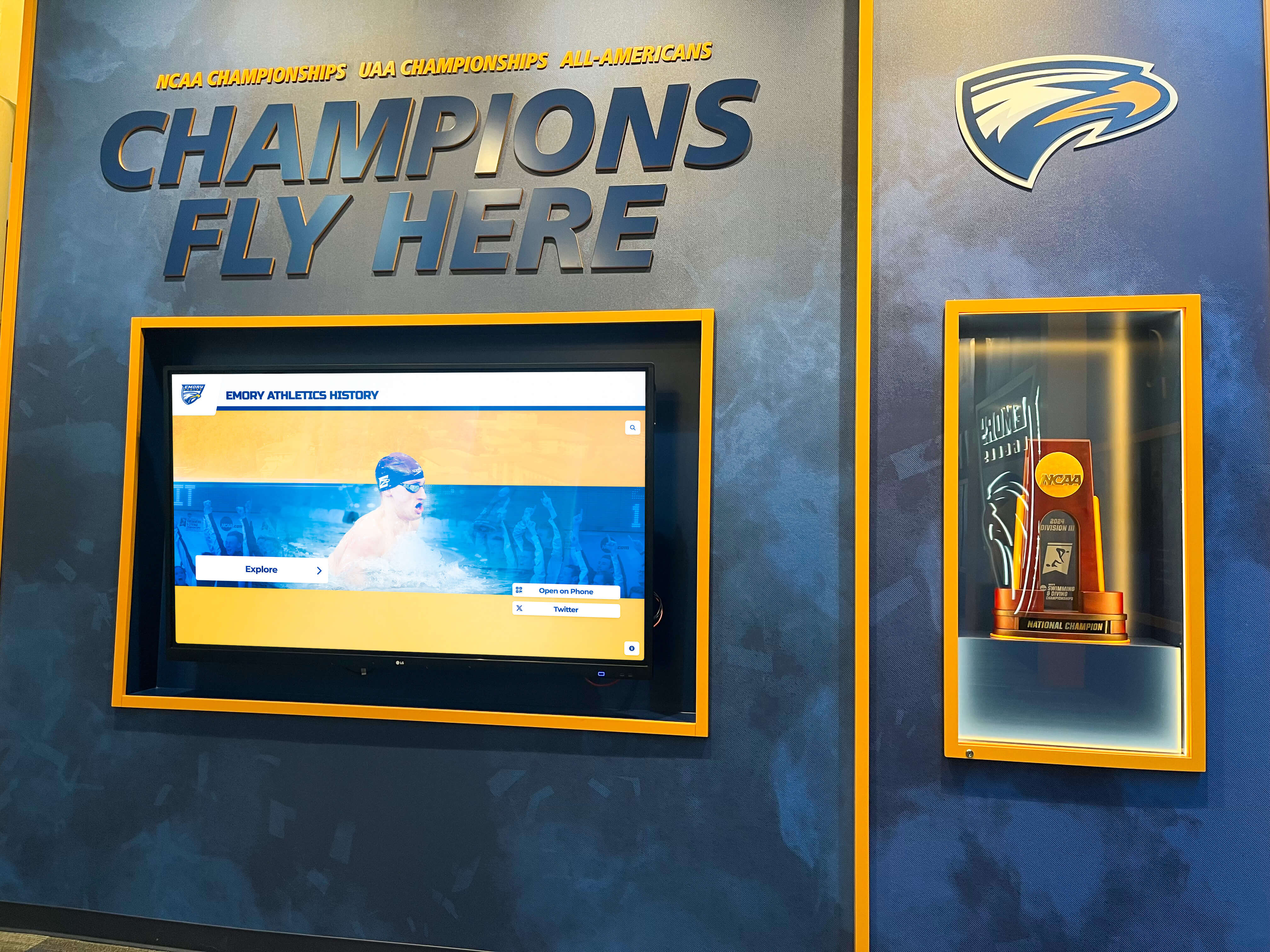
Booster club fundraising for recognition projects proves particularly effective when framed as permanent program improvements providing long-term value rather than annual operational expenses requiring recurring support. Quality recognition displays serve programs for 10-15+ years, making initial investments highly cost-effective when viewed across their useful lifespans.
Alumni Engagement and Giving
Former basketball players represent natural constituencies supporting recognition initiatives that honor their achievements and preserve program heritage they helped build. Strategic alumni engagement converts this natural affinity into financial support.
Effective approaches include hosting alumni events during basketball seasons creating reconnection opportunities, sharing recognition plans specifically with basketball alumni explaining how their achievements will be honored, creating dedicated giving opportunities for basketball recognition initiatives, and recognizing major donors through naming opportunities or special acknowledgment in recognition displays.
Alumni often respond particularly positively when recognition includes their era, teammates they competed alongside, and coaches who influenced them. Digital recognition systems enable comprehensive historical coverage ensuring all alumni eras receive appropriate acknowledgment, which strengthens fundraising appeals by demonstrating inclusive recognition rather than limiting focus to recent or exceptional years.
Phased Implementation Strategies
Schools with limited initial resources can implement recognition systems incrementally, starting modestly and expanding as resources permit and value becomes evident.
Phase 1: Begin with focused recognition of most significant achievements—recent state tournament teams, current hall of fame inductees, retired jerseys, and program statistical leaders. This establishes quality standards and recognition frameworks while requiring modest initial investment.
Phase 2: Expand historical coverage systematically adding previous decades, conference championship teams, all-conference selections, and additional individual achievers. This phased content development spreads work across multiple years while continuously expanding recognition comprehensiveness.
Phase 3: Add enhanced features like extensive multimedia content, interactive components, web-based companion platforms, and integration with broader school recognition systems. These advanced capabilities build on established recognition foundations rather than attempting comprehensive implementation immediately.
Phased approaches prove sustainable by matching investment to available resources, demonstrating value before seeking additional support, maintaining momentum through regular additions, and preventing budget exhaustion that derails ambitious initial plans before programs gain traction.
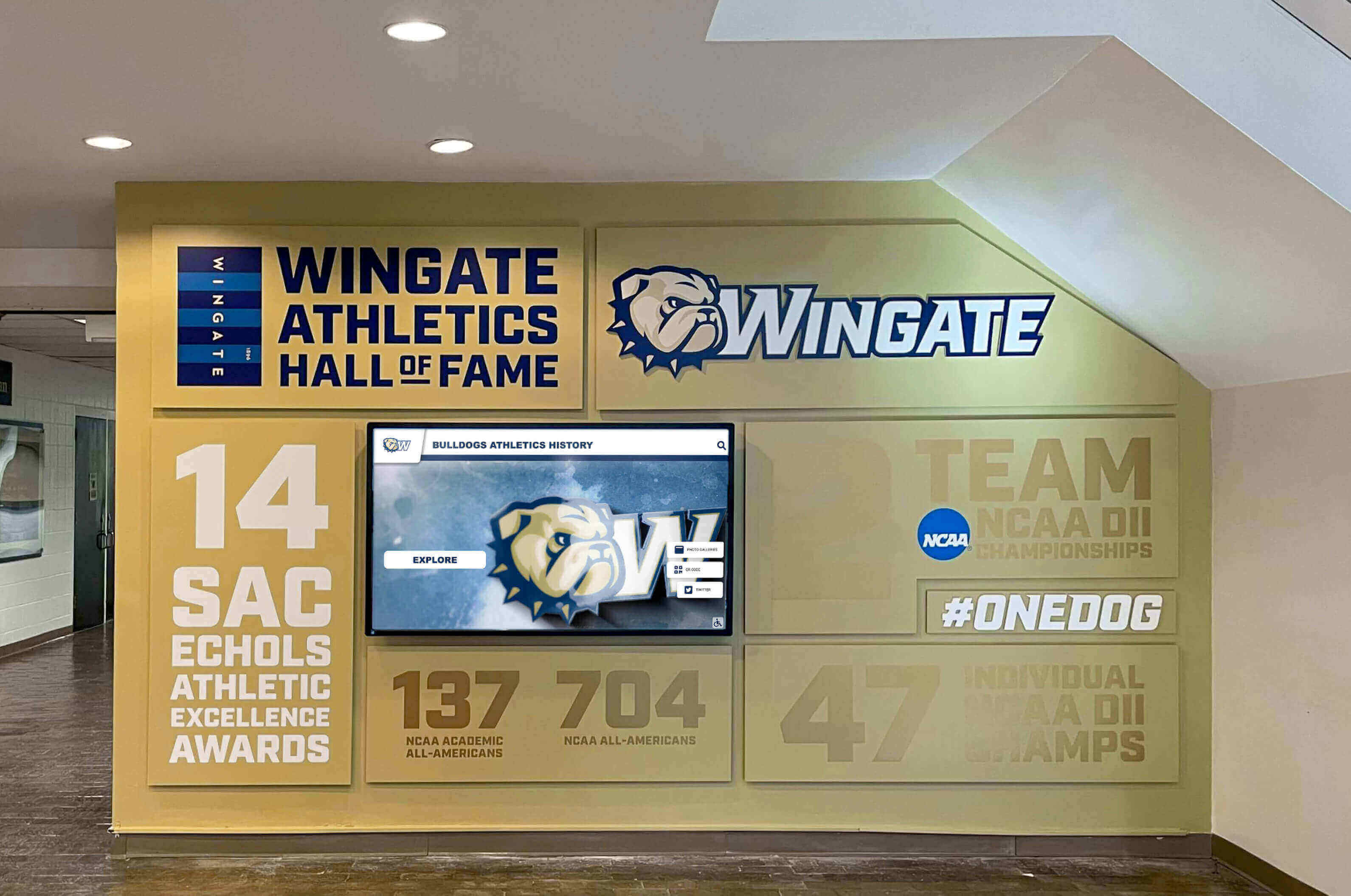
Digital recognition systems particularly support phased approaches because software platforms accommodate unlimited future growth without requiring hardware replacements or physical space expansions. Schools invest in core display hardware initially, then expand content comprehensiveness over time as resources and research efforts permit.
Best Practices for Illinois Basketball Recognition Programs
Learning from successful recognition implementations helps schools avoid common pitfalls while maximizing program effectiveness and community impact.
Establishing Clear Selection Criteria
Recognition credibility depends on consistent, transparent standards applied fairly across all candidates. Successful Illinois basketball halls of fame document criteria including athletic achievement thresholds appropriate to program history and competitive level, character and citizenship considerations ensuring recognition extends to positive role models, eligibility requirements like minimum years since graduation, and nomination and selection processes ensuring fair evaluation.
Written criteria prevent inconsistent decisions based on changing committee composition or individual biases. When standards are documented and publicly available, selection decisions become defensible and communities understand recognition basis.
Maintaining Comprehensive Historical Records
Recognition quality depends on accurate, detailed historical information. Schools should systematically collect and preserve achievement documentation including game statistics and season records, newspaper articles and media coverage, photographs from games and team activities, championship documentation and tournament brackets, player biographical information and post-graduation accomplishments, and coach records and achievement documentation.
Digitizing historical materials serves dual purposes—preserving fragile originals while creating recognition content. Schools should scan photographs, convert paper records to digital formats, and record interviews with coaches and players creating comprehensive historical archives supporting recognition while protecting against material deterioration.
Creating Engaging Ceremonial Experiences
Induction ceremonies significantly impact recognition meaning and program visibility. Effective ceremonies feature timing during high-visibility events like homecoming or marquee games maximizing attendance, formal presentations honoring each inductee individually with achievement highlights, emotional video tributes showcasing career moments and personal stories, speeches from inductees sharing reflections and gratitude, and recognition of family members who supported athletic journeys.
Planning recognition ceremonies requires attention to logistics, scripting, technical requirements, and hospitality details ensuring smooth execution and positive experiences for all participants.
Integrating Recognition with Broader School Culture
Basketball recognition proves most effective when integrated into comprehensive school recognition systems celebrating achievement across athletics, academics, arts, and community service. This integration prevents athletic recognition from appearing isolated or favored over other achievement types while enabling resource sharing across recognition platforms.
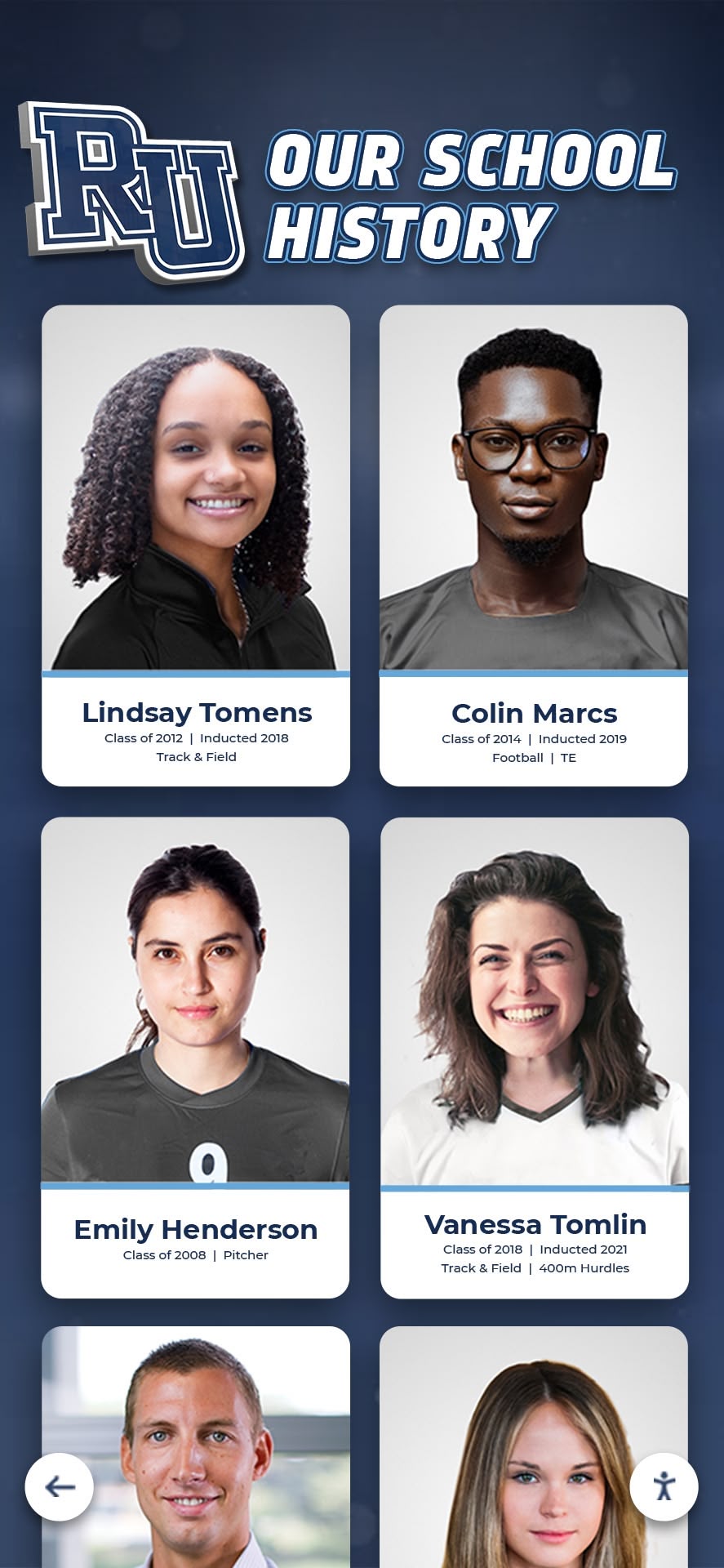
Schools implementing comprehensive recognition programs often find that single platforms supporting multiple recognition types prove more cost-effective and administratively efficient than separate systems for different achievement categories.
Conclusion: Celebrating Illinois Basketball Excellence for Future Generations
Illinois high school basketball represents more than sport—it embodies community identity, shared tradition, competitive excellence, and personal development opportunities that shape students and strengthen communities. From the historic gyms hosting legendary programs to emerging programs building new traditions, basketball excellence throughout Illinois deserves recognition preserving heritage while inspiring future athletes.
Effective basketball recognition serves multiple essential purposes. It preserves program history ensuring extraordinary achievements and exceptional contributors remain visible to future generations. It inspires current athletes by showcasing concrete examples of excellence they can aspire to match or exceed. It strengthens alumni connections by demonstrating schools value athletic contributions and maintain pride in shared tradition. It enhances recruiting by providing tangible evidence of program quality and competitive culture. And it builds community pride by celebrating achievement representing schools and communities with distinction.
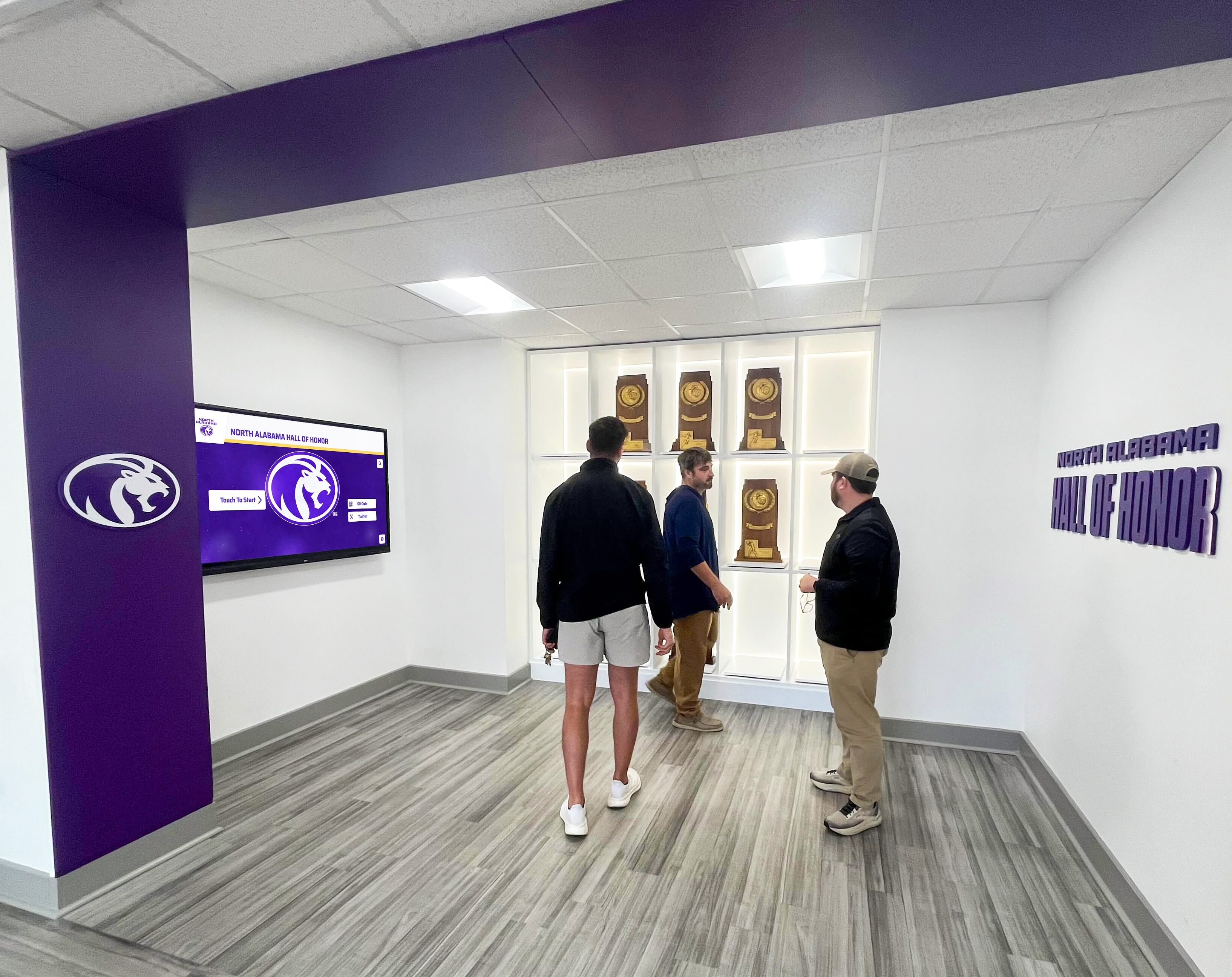
Whether implementing traditional physical displays, modern digital interactive recognition systems, or hybrid approaches combining both elements, successful basketball recognition programs share common characteristics. They establish clear selection criteria applied consistently, create comprehensive content telling compelling stories beyond statistics, maintain accessibility through prominent placement and intuitive organization, provide regular updates keeping recognition current and relevant, and integrate recognition with broader athletic and school programming maximizing impact.
The evolution from space-constrained trophy cases to unlimited-capacity digital platforms has transformed recognition possibilities for Illinois basketball programs. Schools no longer face impossible choices about which achievements fit limited wall space. Digital solutions enable comprehensive recognition of entire program histories while creating engaging multimedia experiences resonating with contemporary audiences and extending access to alumni communities worldwide.
For Illinois schools seeking to honor basketball excellence while inspiring future champions, modern recognition technology provides practical approaches serving communities for generations. From celebrating all-state athletes to documenting state championship runs, comprehensive recognition systems deliver lasting value justifying investment while strengthening programs and institutions.
Ready to explore recognition options for your Illinois basketball program? Whether starting from scratch or enhancing existing recognition with modern capabilities, Rocket Alumni Solutions provides specialized support from planning through implementation and ongoing management. Discover how purpose-built recognition technology can transform your school’s ability to celebrate basketball excellence while inspiring future generations of athletes who will add their own chapters to your program’s proud Illinois basketball legacy.