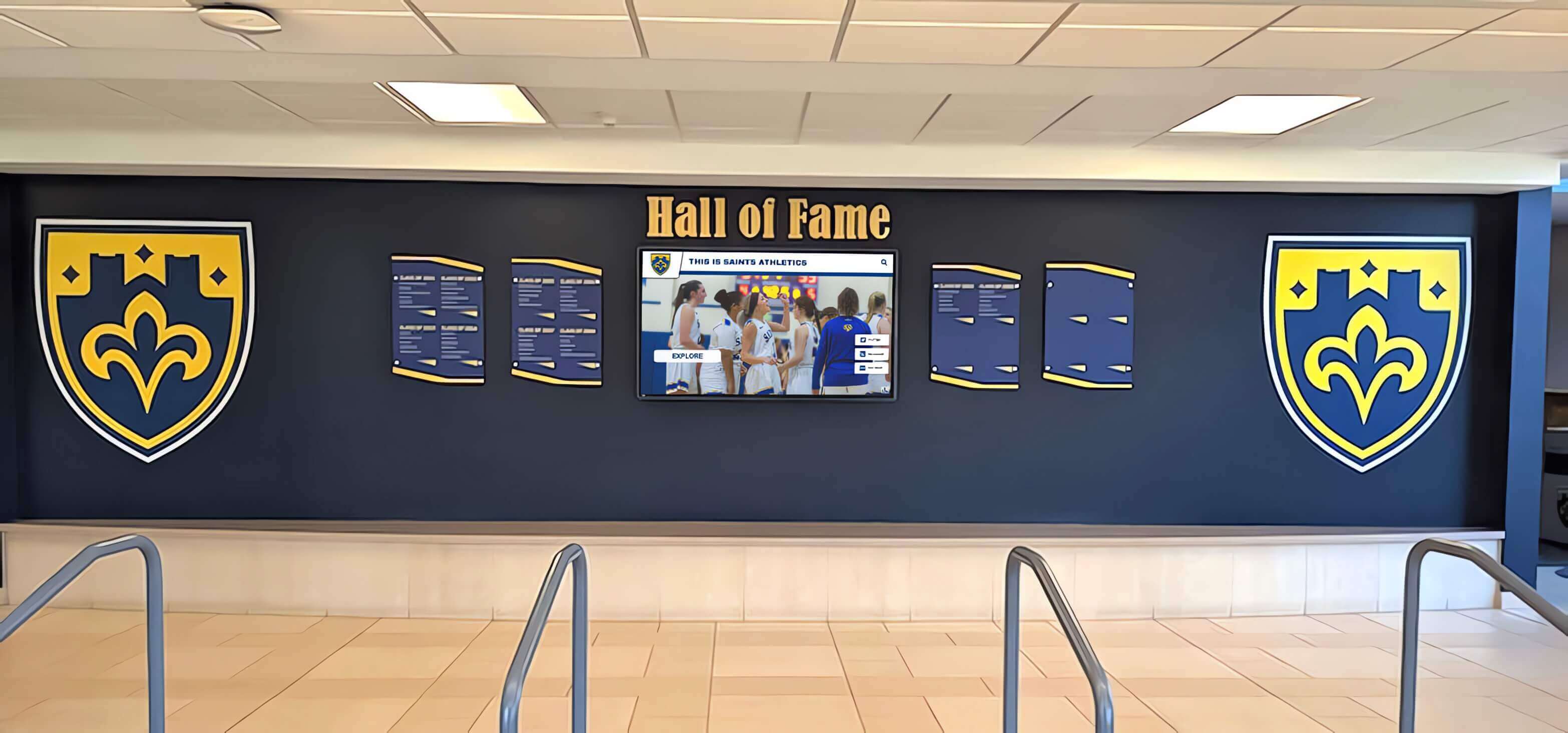




School administrators considering how to start a hall of fame face a pivotal opportunity: creating a recognition program that celebrates excellence, preserves institutional memory, and strengthens school culture for generations. A well-designed hall of fame represents far more than names on plaques—it embodies values, inspires achievement, engages alumni, and demonstrates sustained commitment to honoring the students, athletes, staff, and community members who define institutional excellence.
Yet many administrators hesitate, uncertain where to begin with limited precedents at their schools. This comprehensive guide provides systematic frameworks for establishing halls of fame from initial concept through implementation and sustainable operations. Whether your focus is athletics, academics, alumni achievement, or comprehensive recognition across multiple categories, these proven strategies help you build programs serving your school's unique needs.
Recognition matters profoundly in educational communities. Students who see achievement celebrated develop aspirations to contribute their own excellence. Alumni witnessing ongoing recognition of accomplishments strengthen emotional connections to institutions long after graduation. Staff members honored for dedication feel valued and appreciated. Communities observing schools that celebrate contributions develop pride in local educational institutions.
Traditional recognition approaches—occasional awards ceremonies, informal acknowledgments, temporary displays—fail to create lasting systematic recognition that accumulates over decades. Physical space constraints force difficult decisions about which accomplishments warrant permanent commemoration. Budget limitations prevent updating displays regularly. And without formal structures, recognition often depends on individual administrators’ personal knowledge, creating inconsistency and inevitable oversights as staff transitions occur.
School administrators increasingly recognize that strategic recognition programs addressing these limitations deliver substantial returns. Formal halls of fame provide frameworks ensuring consistent, equitable recognition across years regardless of personnel changes. They preserve institutional memory documenting excellence that would otherwise be forgotten. They create engagement opportunities bringing alumni back to campus. They inspire current students by making achievement visible and celebrated. And they communicate institutional values to prospective families evaluating school quality.
This guide helps school administrators navigate every dimension of establishing halls of fame that deliver these benefits—from defining purpose and scope through selecting honorees, implementing recognition systems, and maintaining programs that remain vibrant for decades.
Understanding What a School Hall of Fame Can Achieve
Before addressing implementation logistics, administrators must clarify exactly what their hall of fame should accomplish for their specific institution.
Defining Primary Objectives
Different schools pursue hall of fame recognition for varying reasons based on institutional history, current challenges, and strategic priorities.
Preserving Institutional Heritage and Memory: Schools with significant history benefit from halls of fame that systematically document excellence across decades or centuries. This objective emphasizes comprehensive historical record-keeping, celebrating founding leaders and early contributors, maintaining connections to traditions that define institutional identity, and ensuring future generations understand school heritage. Historical preservation proves particularly important for older institutions where collective memory of earlier achievements risks fading as longtime community members age.
Inspiring Current Students Through Achievement Models: Many schools view halls of fame primarily as motivational tools demonstrating achievement possibilities. This objective prioritizes making excellence visible throughout campus facilities, providing role models students can aspire to emulate, illustrating that dedication and hard work earn lasting recognition, and building achievement culture where excellence becomes institutional expectation. When student inspiration drives purpose, selection criteria and display strategies emphasize contemporary achievers students can relate to personally.
Engaging and Reconnecting Alumni: Advancement-focused administrators often emphasize hall of fame potential for strengthening alumni relationships supporting institutional development. This objective centers on creating return-to-campus opportunities through induction ceremonies, facilitating networking among alumni across generations, demonstrating institutional appreciation for alumni contributions, and maintaining emotional connections that support fundraising and volunteer engagement. Alumni engagement strategies built around recognition programs consistently generate stronger participation than approaches lacking tangible acknowledgment.
Building School Pride and Community Identity: Hall of fame recognition communicates institutional quality to multiple external audiences including prospective families evaluating school choice, community members forming perceptions of local schools, media covering educational institutions, and potential donors assessing where charitable investments might make impact. Schools emphasizing this objective focus on prominent display placement, comprehensive achievement documentation, and recognition systems that demonstrate sustained excellence across multiple dimensions.
Most effective halls of fame serve multiple objectives simultaneously, but clarifying primary purposes helps administrators make strategic decisions throughout planning about what to recognize, how to select honorees, where to position displays, and how much to invest in various implementation elements.
Determining Recognition Scope and Categories
School administrators must define precisely which achievements and individuals their halls of fame will honor.
Single-Purpose vs. Comprehensive Recognition: Some schools establish narrowly focused halls of fame recognizing only athletic excellence, academic achievement, or distinguished alumni. Others create comprehensive programs honoring diverse contributions including athletics, academics, arts, service, faculty excellence, and community contributions. Single-purpose approaches provide clear focus and simplified selection processes. Comprehensive programs acknowledge that institutional excellence manifests across many dimensions, though they require more complex governance and larger investment.
Individual vs. Group Recognition: Will your hall of fame honor individual achievers exclusively, or also recognize outstanding teams, classes, or groups? Academic recognition programs often focus on individual student achievement, while athletic halls of fame frequently honor championship teams alongside standout athletes. The choice depends on institutional values regarding individual versus collective excellence and practical considerations about managing different recognition categories.
Recent vs. Historical Coverage: Newer schools with limited history might establish halls of fame recognizing recent excellence with shorter waiting periods between achievement and induction. Established institutions with century-plus histories face different challenges—comprehensive historical recognition requires substantial research documenting achievements from eras with incomplete records. Many schools implement phased approaches, initially focusing on recent well-documented excellence before systematically working backward through history as resources permit.
Student vs. Broader Community Recognition: Will your hall of fame exclusively honor students and student achievement, or also recognize faculty, staff, alumni, and community contributors who shaped school excellence? Limiting scope to students provides clear boundaries and prevents category proliferation. Expanding to broader constituencies acknowledges that schools succeed through contributions beyond student accomplishment, though it complicates selection processes.
Clear scope definition prevents mission creep that makes halls of fame unwieldy while ensuring recognition aligns with institutional capacity and values.
Establishing Governance Structures and Selection Criteria
Selection processes fundamentally determine hall of fame credibility, sustainability, and community acceptance.
Creating Effective Selection Committees
Committee composition and authority directly impact whether halls of fame maintain fairness and credibility over decades.
Committee Structure and Membership: Effective selection committees balance multiple perspectives while maintaining manageable size. Common structures include school administrators providing institutional perspective and continuity, faculty representatives familiar with student achievement and character, alumni representatives from various graduation eras, current student representatives bringing contemporary viewpoints in some cases, and community members offering external objectivity. Committee sizes typically range from 7-13 members—large enough to represent diverse perspectives but small enough for productive deliberation.
Stagger member terms to maintain institutional knowledge while enabling regular rotation introducing fresh perspectives. Three-year terms with partial rotation annually ensure continuity without entrenchment. Establish clear appointment processes specifying who appoints members and what qualifications they should possess.
Authority and Decision-Making Processes: Clarify committee authority boundaries. Will committees make final induction decisions, or submit recommendations requiring administrator or board approval? Final authority models empower committees and insulate decisions from political pressure, while recommendation models maintain ultimate institutional control. Most schools grant committees substantial autonomy while reserving formal approval authority for circumstances requiring institutional judgment beyond achievement assessment.
Document voting procedures—simple majority, supermajority requirements, whether abstentions are permitted, how ties are resolved. Establish whether deliberations remain confidential or become public, and what appeals processes exist if selection decisions are questioned.
Administrative Support Requirements: Selection committees require administrative infrastructure beyond volunteer members. Designate staff responsible for scheduling meetings and managing logistics, receiving and organizing nomination materials, conducting background research supporting deliberations, maintaining records documenting selection decisions, and coordinating communication with nominees and inductees. Even part-time designated administrative support dramatically improves committee effectiveness compared to purely volunteer models lacking coordination.
Developing Objective Selection Standards
Clear, publicly documented criteria enable consistent decision-making and help stakeholders understand recognition requirements.
Quantitative Achievement Metrics: Measurable accomplishments provide objective foundations for selection. Common quantitative criteria vary by recognition category. For athletics: career statistics and school records, championship participation and titles, all-conference or all-state recognition, individual awards received, and collegiate or professional achievement. For academics: GPA and class rank, standardized test scores, academic competition results, scholarship awards, and post-graduation educational achievement. For alumni: career accomplishments and leadership positions, community service contributions, recognition received from external organizations, and impact within professional fields.
These quantitative measures should reflect genuine excellence rather than arbitrary thresholds. Schools must calibrate standards to their specific context—achievement levels warranting recognition at small rural schools differ substantially from large suburban institutions with extensive resources and competition.
Qualitative Character Considerations: Most schools supplement quantitative achievement with character requirements ensuring inductees exemplify institutional values. Qualitative considerations might include citizenship and conduct during school attendance, leadership demonstrated through activities and positions, sportsmanship and ethical behavior, positive representation of school values, and contributions to school culture beyond individual achievement. Character criteria prove more challenging to assess objectively than statistics, requiring careful definition and documentation standards.
Time-Based Eligibility Requirements: Most halls of fame impose waiting periods between graduation and induction eligibility. Waiting periods allow assessment of sustained excellence and post-school achievement, create emotional distance enabling objective evaluation rather than recency bias, and provide perspective on which achievements prove historically significant versus temporarily impressive. Typical waiting periods range from 5-25 years depending on how heavily schools weight post-graduation accomplishment versus in-school achievement.
Shorter periods (5-10 years) work when schools emphasize in-school excellence primarily. Longer periods (15-25 years) suit programs prioritizing career accomplishment and sustained impact. Many schools adopt 10-year standards as reasonable compromises.
Balancing Multiple Selection Criteria: Few candidates excel uniformly across all criteria. Establish frameworks for how committee members should weight competing considerations. Should exceptional achievement in one dimension overcome moderate character concerns? Can extraordinary character compensate for achievement slightly below typical thresholds? Providing guidance without eliminating judgment enables more consistent decision-making across different committee compositions.
Examine how employee recognition programs in workplace contexts balance similar criteria tensions between individual performance, team contributions, and cultural values—many principles transfer directly to educational recognition.
Nomination and Selection Process Design
Systematic processes ensure thorough, fair evaluation of candidates while managing administrative burden.
Creating Nomination Procedures
Open, accessible nomination systems prevent halls of fame from becoming insider clubs recognizing only those known to committee members.
Soliciting Nominations: Establish open nomination periods when any community member—alumni, current students, faculty, staff, parents—can submit candidates. Publicize nomination windows through school communications, alumni networks, social media, and local media. Multiple outreach channels ensure awareness reaches diverse constituent groups.
Some schools accept nominations continuously, while others establish annual windows (typically 3-6 months before selection). Annual windows concentrate committee work but may discourage nominations if windows are missed. Continuous acceptance accommodates flexible timing but requires regular committee meetings processing submissions.
Standardized Nomination Forms: Develop nomination forms capturing essential information consistently including candidate biographical information, specific achievements warranting recognition, evidence supporting claims (statistics, awards, documentation), character references and testimonials, and nominator contact information for follow-up questions. Standardization ensures committees receive comparable information for all candidates rather than inconsistent submissions requiring extensive additional research.
Make forms accessible online with simple submission processes. Overly complex nomination procedures discourage submissions, particularly from older alumni less comfortable with technology. Balance information needs against accessibility.
Self-Nomination Policies: Decide whether candidates can nominate themselves or whether third-party nominations are required. Self-nomination enables individuals to advocate for their own recognition and ensures knowledge of achievement reaches committees. However, some schools perceive self-nomination as self-promoting, preferring that peers or community members initiate recognition. Many schools accept both, recognizing that requiring third-party nominations may disadvantage candidates lacking strong continuing school connections despite deserving achievement.
Evaluation and Selection Processes
After receiving nominations, committees must systematically assess candidates and make selection decisions.
Preliminary Screening: Before full committee review, conduct preliminary screening verifying basic eligibility: Have candidates met minimum waiting period requirements? Do they meet threshold achievement standards? Is required documentation included? Preliminary screening prevents committees wasting time on clearly ineligible nominations while focusing deliberation on qualified candidates.
Designated administrators or committee chairs typically handle screening, bringing qualified nominations forward for full committee consideration. Document screening decisions to demonstrate process integrity.
Research and Documentation: For candidates passing preliminary screening, conduct thorough background research. Review school records documenting achievement, consult with faculty or coaches familiar with candidates’ time at school, contact references provided in nominations, search news archives for contemporary coverage of achievements, and verify post-graduation accomplishments through professional networks or databases. Comprehensive research enables informed committee discussions based on complete information rather than partial knowledge.
Appoint committee members or administrative staff as researchers ensuring systematic investigation for all candidates rather than relying on members’ existing knowledge.
Structured Committee Deliberation: Facilitate organized discussions following consistent formats. Present each candidate systematically with achievement summary, supporting evidence review, character assessment, and open discussion. Use evaluation rubrics or scoring systems if helpful for applying criteria consistently. Permit adequate deliberation time while maintaining efficiency—extensive discussion for every candidate becomes unwieldy, but rushed decisions compromise quality.
Record deliberations through meeting minutes documenting major discussion points, concerns raised, and voting outcomes. Documentation protects against future challenges questioning selection integrity while providing precedents guiding future committees.
Voting and Final Selection: Establish clear voting procedures specifying majority requirements, whether secret ballot or open voting is used, how many candidates will be inducted annually, and whether unanimous approval is required or simple majority suffices. Many schools require supermajority (2/3) approval for induction, ensuring broad consensus while preventing single members blocking worthy candidates.
Determine induction class sizes based on your hall of fame scope. Athletic-only programs might induct 3-8 individuals annually, while comprehensive programs recognizing multiple categories might induct 10-20. Initial induction classes often include larger numbers recognizing accumulated historic achievement.
Understanding approaches schools use for staff recognition programs offers insights applicable to faculty and staff hall of fame categories many schools establish.
Choosing Recognition Formats and Display Solutions
Once selection frameworks are established, administrators must determine how inducted individuals will actually be honored and displayed.
Traditional Physical Recognition Approaches
Despite digital innovations, many schools value traditional physical recognition elements for their permanence and tangible presence.
Wall Plaques and Engraved Recognition: Individual plaques mounted on dedicated walls provide permanent recognition requiring no power or ongoing maintenance. Effective plaque installations include consistent formatting creating visual coherence across all inductees, organized arrangements (alphabetical, chronological, by category, or by induction year), designated expansion space for future inductees, professional engraving ensuring quality and longevity, and prominent placement in high-traffic school areas. High-quality bronze or brass plaques typically cost $75-$200 each depending on size and detail.
Wall space limitations eventually constrain how many inductees can be recognized physically. Schools must plan either for large enough walls to accommodate decades of future inductions, or acknowledge that physical display will eventually reach capacity requiring rotation or supplementation with other formats.
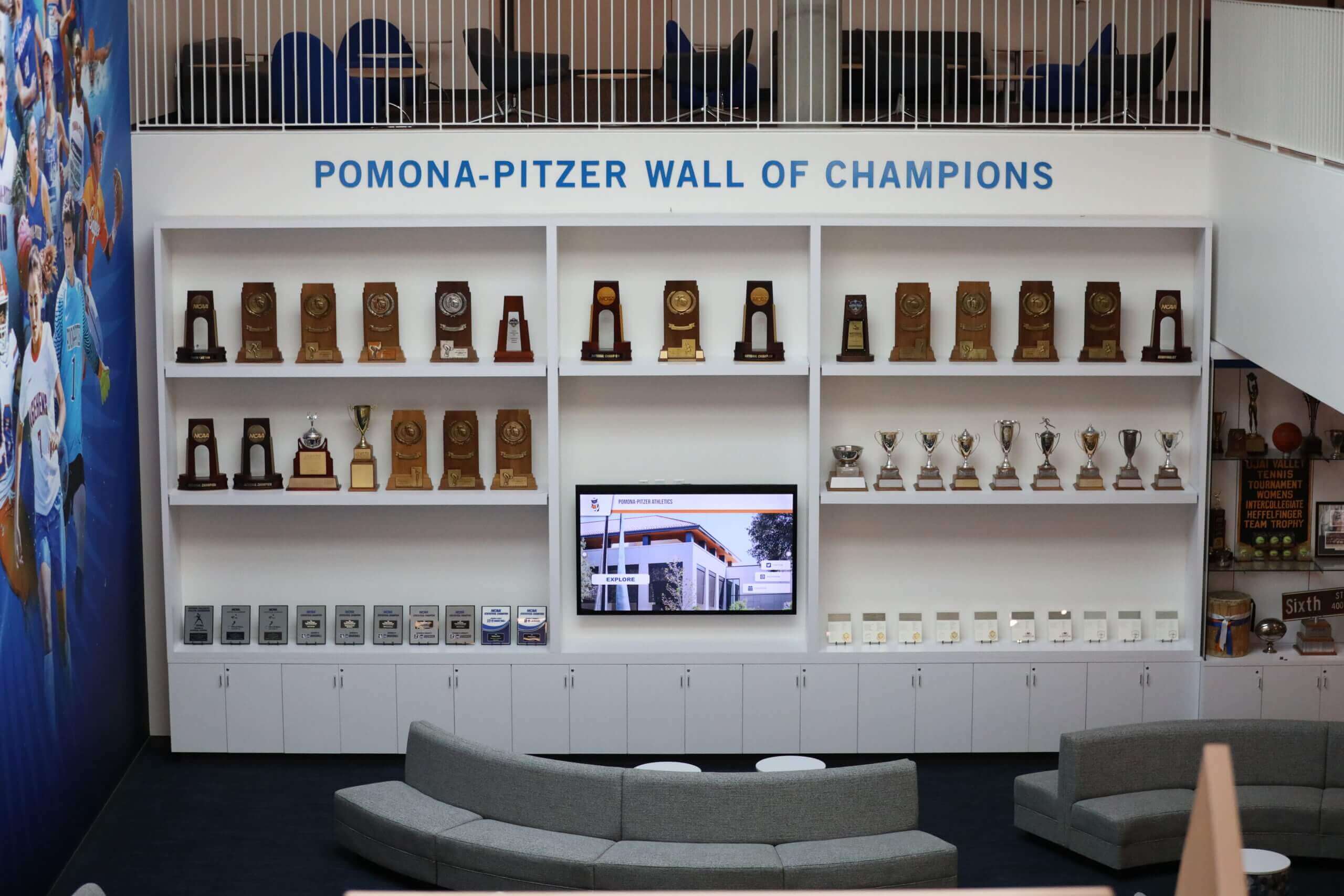
Trophy Cases and Display Cabinets: Dedicated trophy cases in main entrances, athletic facilities, or prominent common areas provide centralized recognition. Effective implementations feature climate-controlled environments protecting displayed items, professional lighting highlighting artifacts and plaques, organized layouts grouping related achievements, regular rotation featuring different eras and categories, and integration with contextual information explaining displayed items. Quality display cases range from $3,000-$15,000 depending on size and features.
Cases work best as curated exhibits rather than cluttered collections. Selective display of most significant items creates more impact than comprehensive crowding.
Permanent Installations and Artistic Elements: Some schools create permanent artistic installations—bronze statues, stone monuments, architectural features, or commissioned artwork—commemorating halls of fame at highest recognition levels. These premium elements convey importance and permanence but require substantial investment ($15,000-$100,000+) and cannot easily be updated. They work well for the most distinguished overall recognition or as visual anchors for halls of fame with other formats providing detailed inductee information.
Physical recognition provides tangible permanence resonating with stakeholders expecting “real” recognition. However, space constraints, update difficulties, and costs eventually limit physical approaches, which is why many schools combine traditional elements with digital solutions.
Digital Recognition Solutions and Interactive Displays
Digital recognition technologies enable comprehensive halls of fame without traditional space limitations while adding engagement capabilities impossible with static displays.
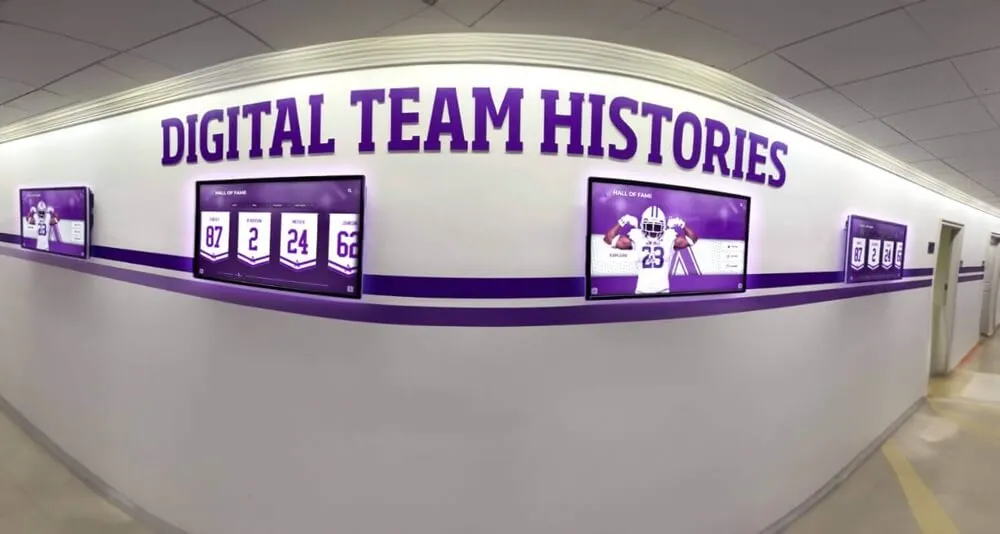
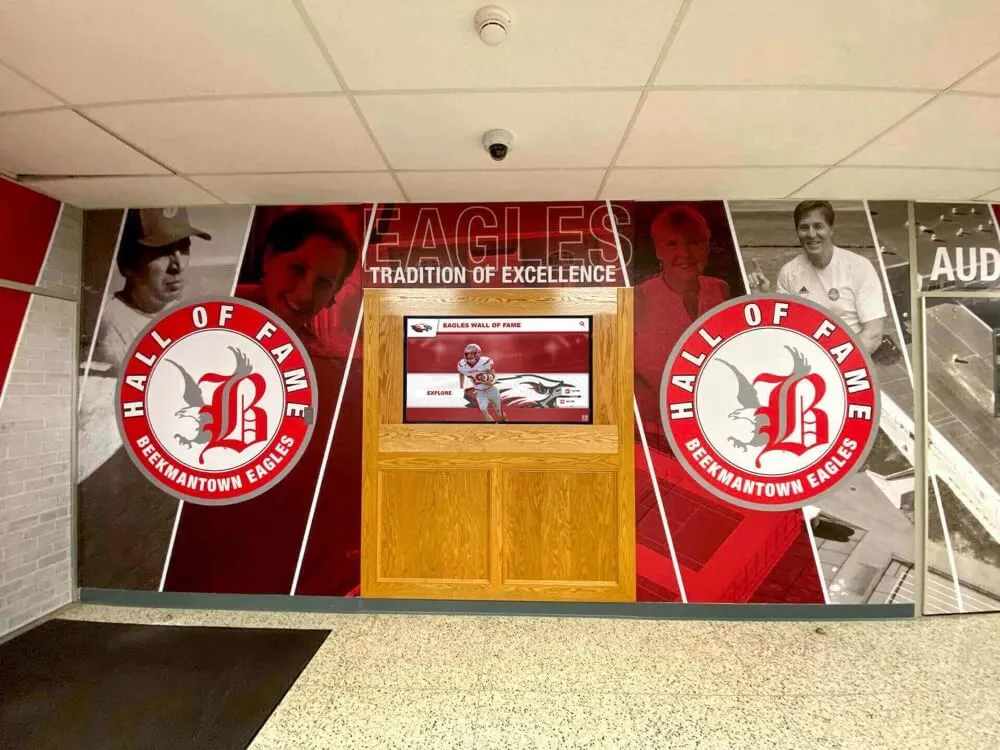
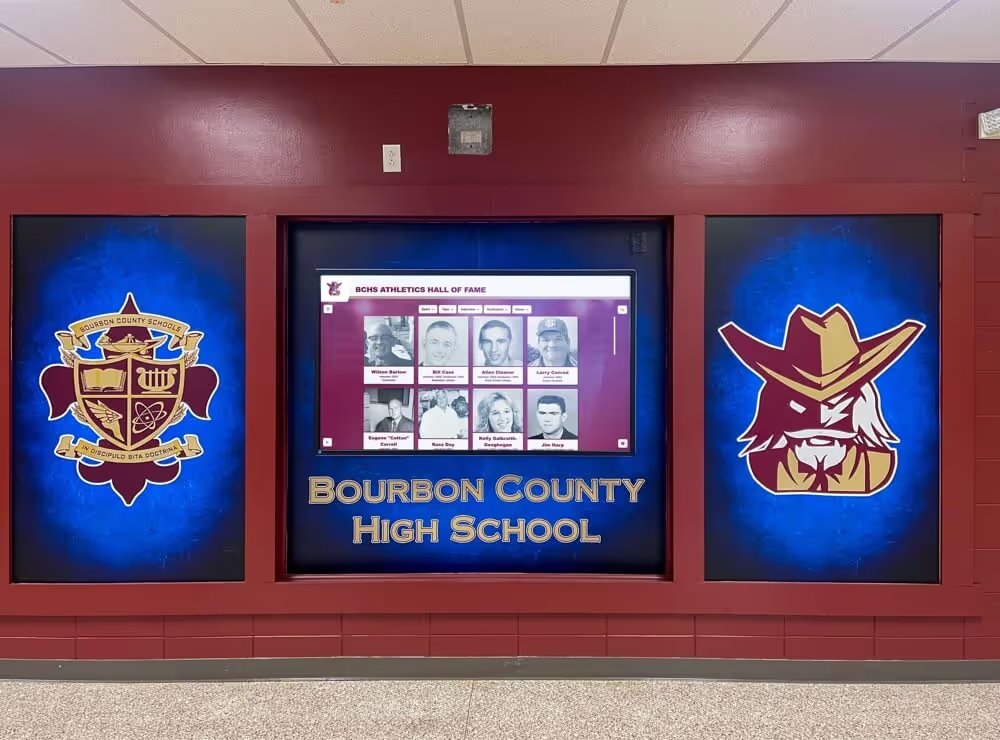
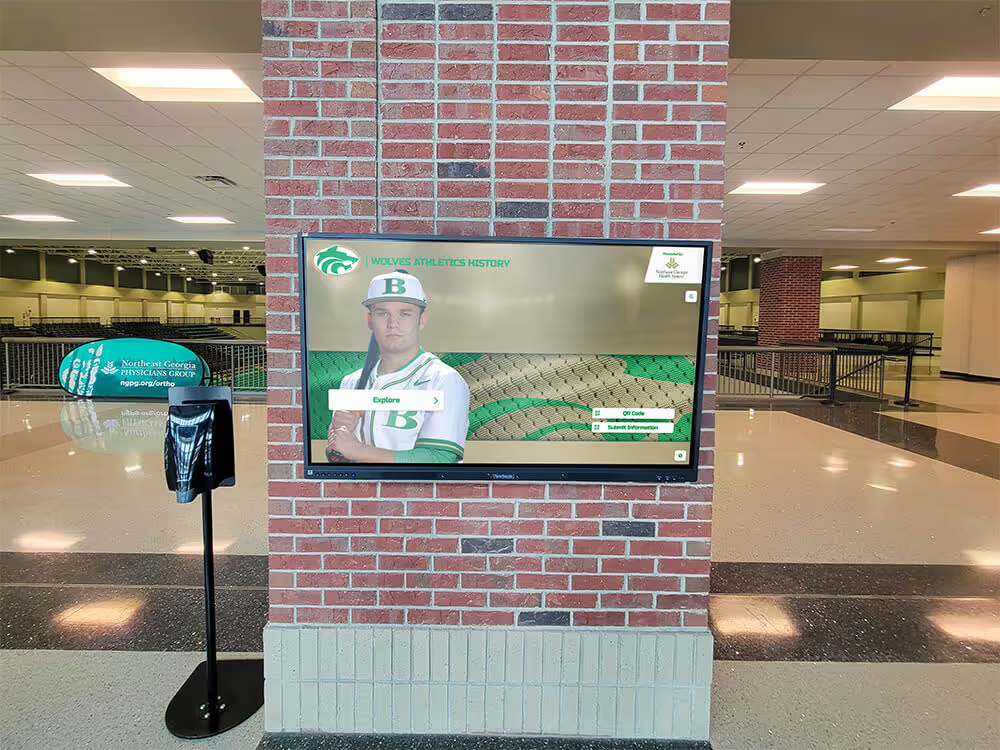
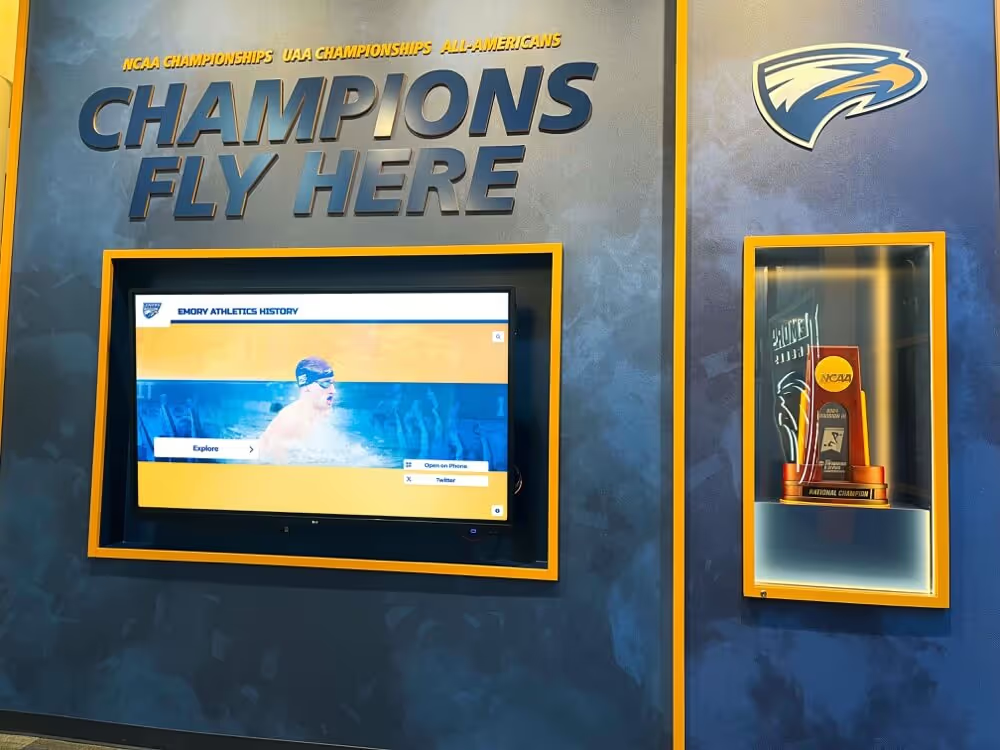
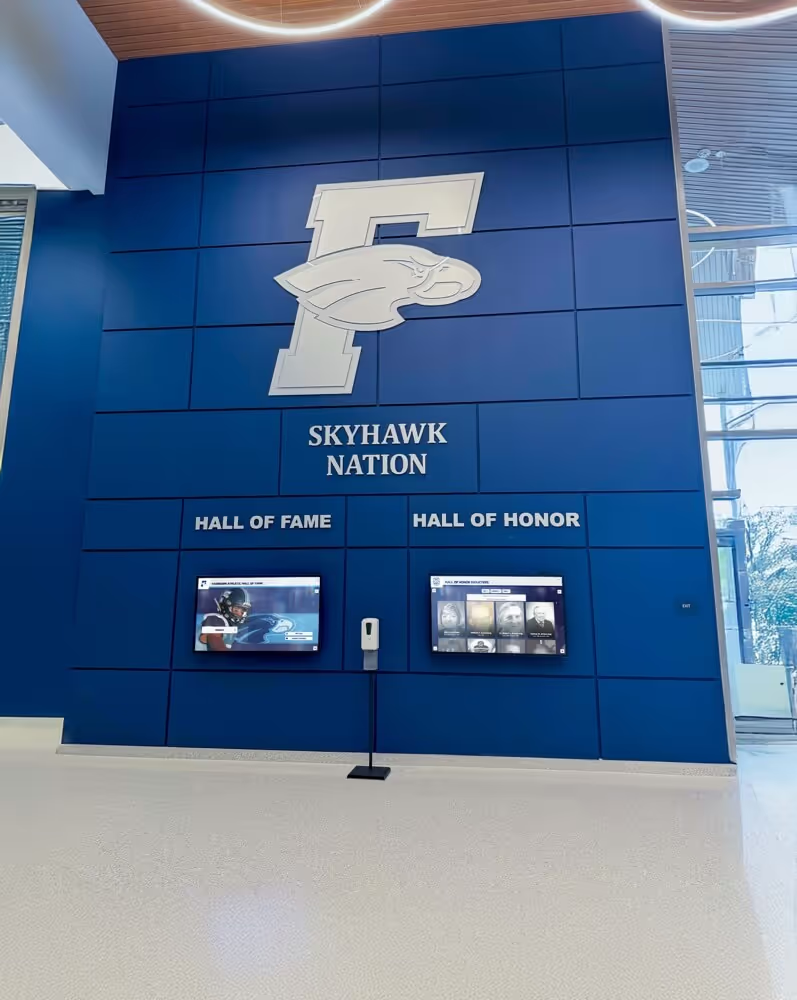
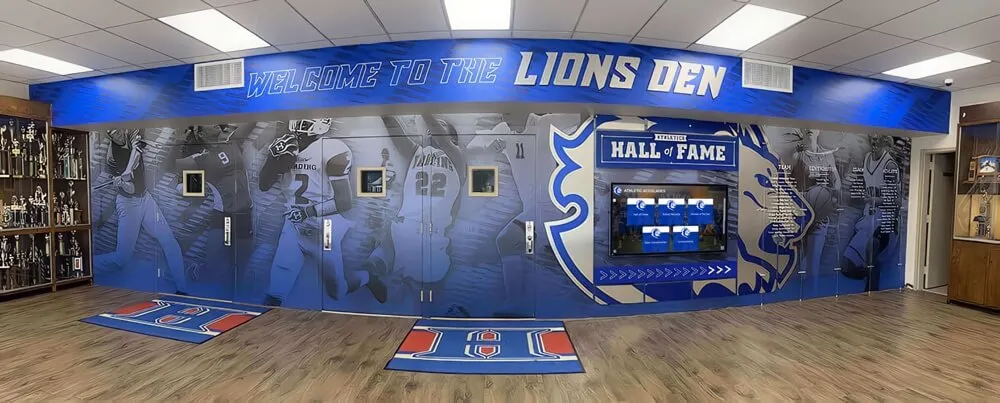
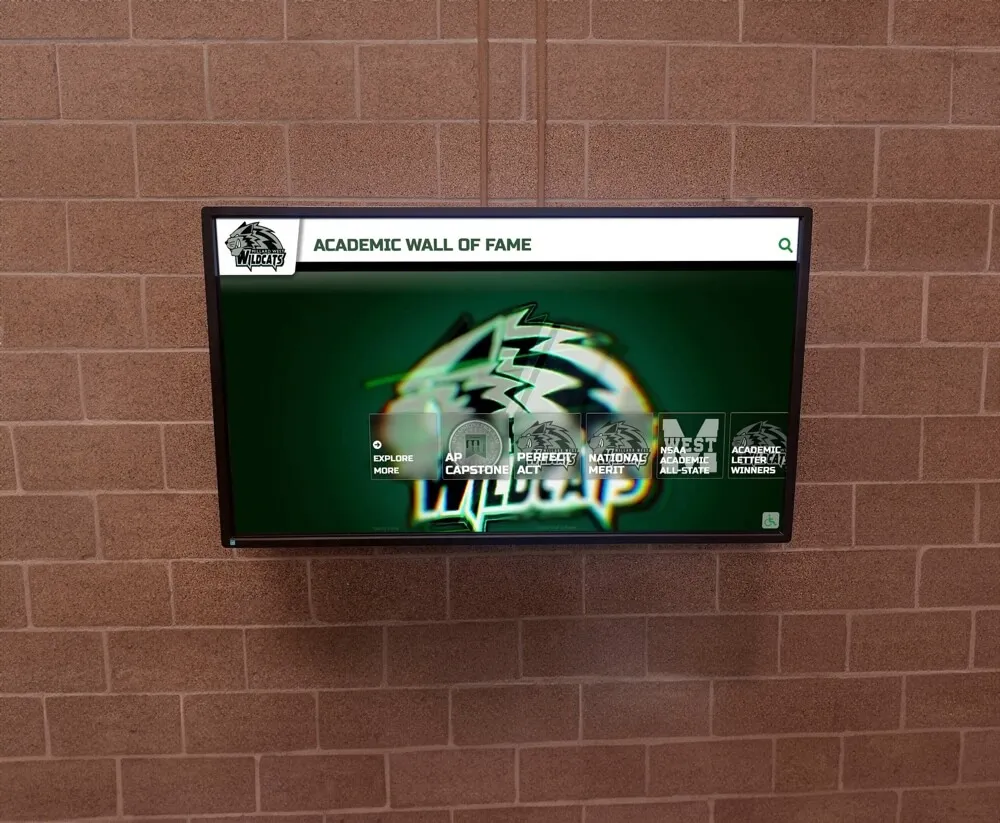
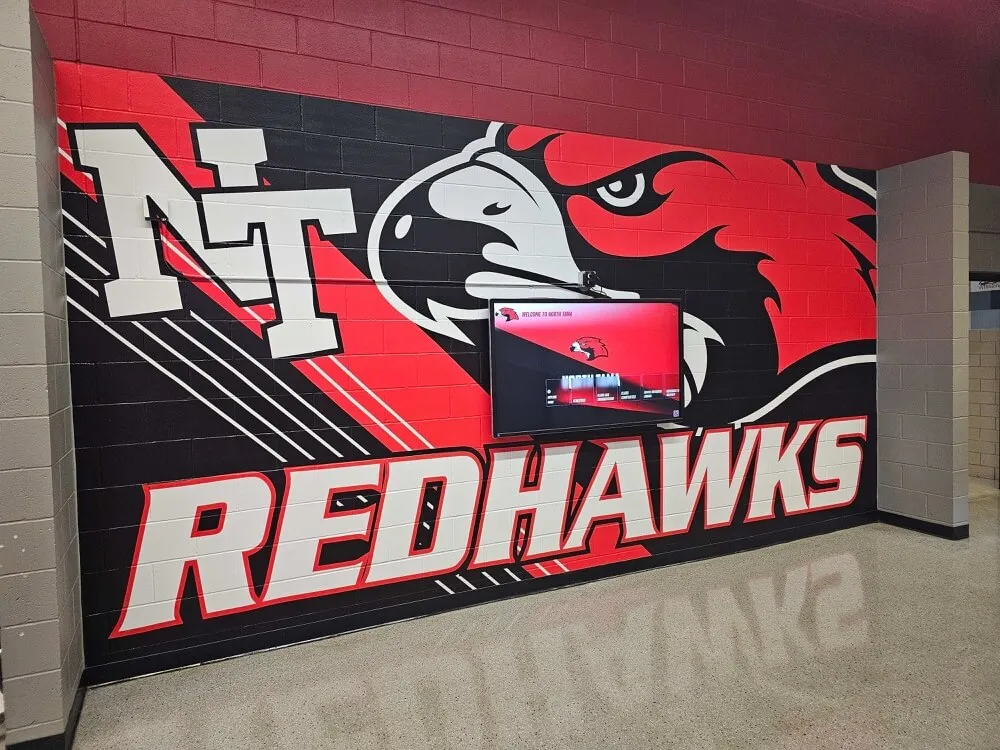
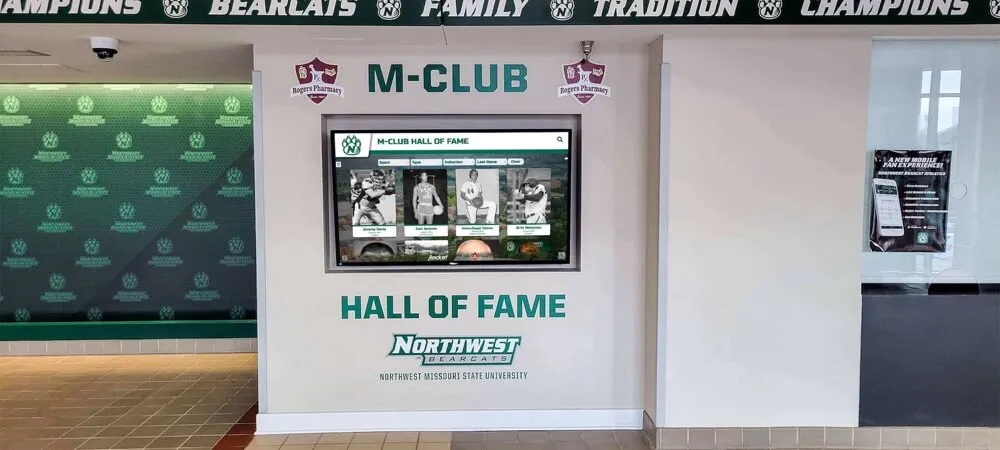
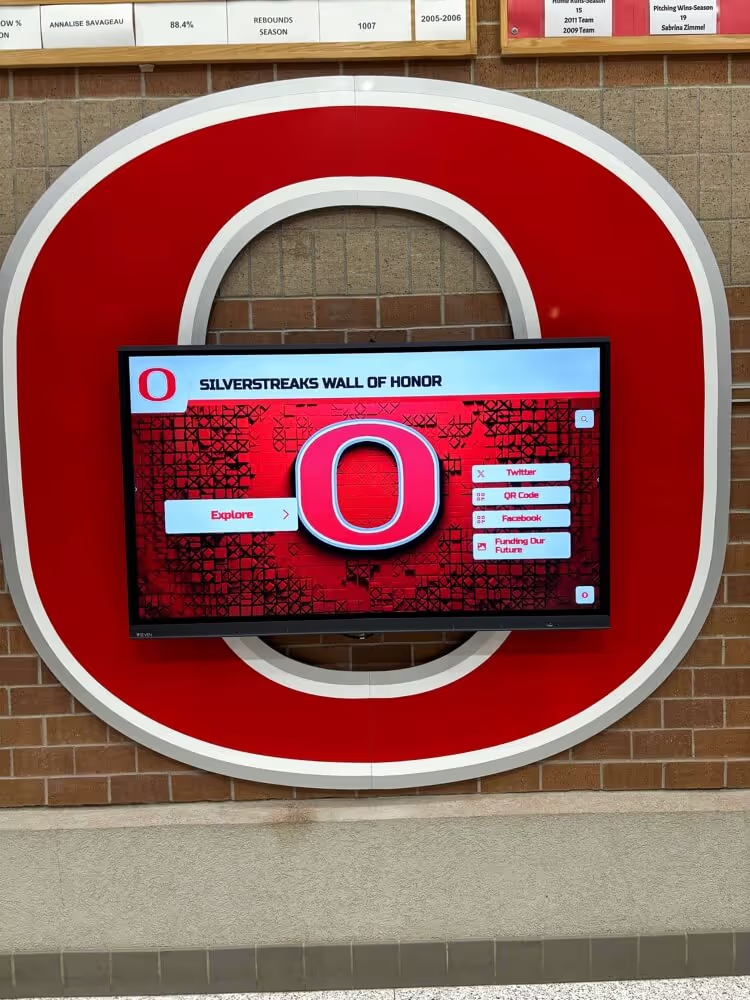
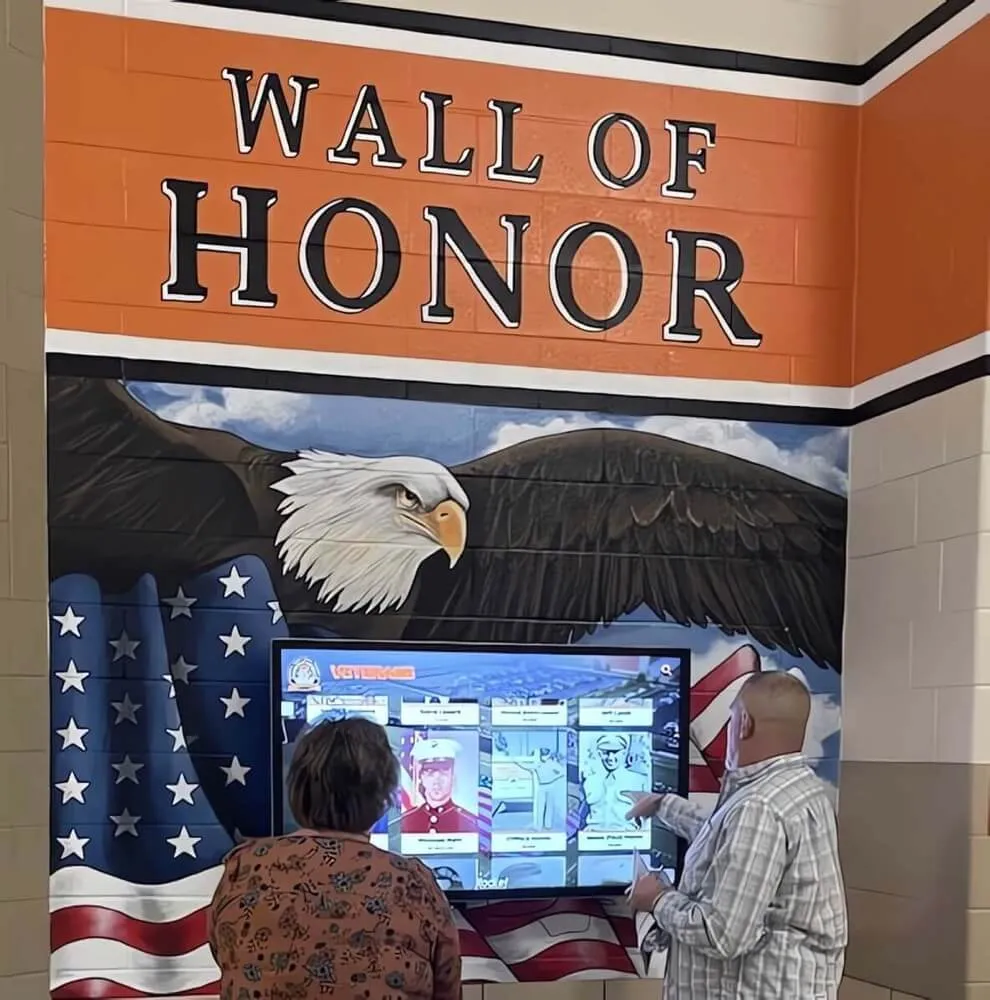
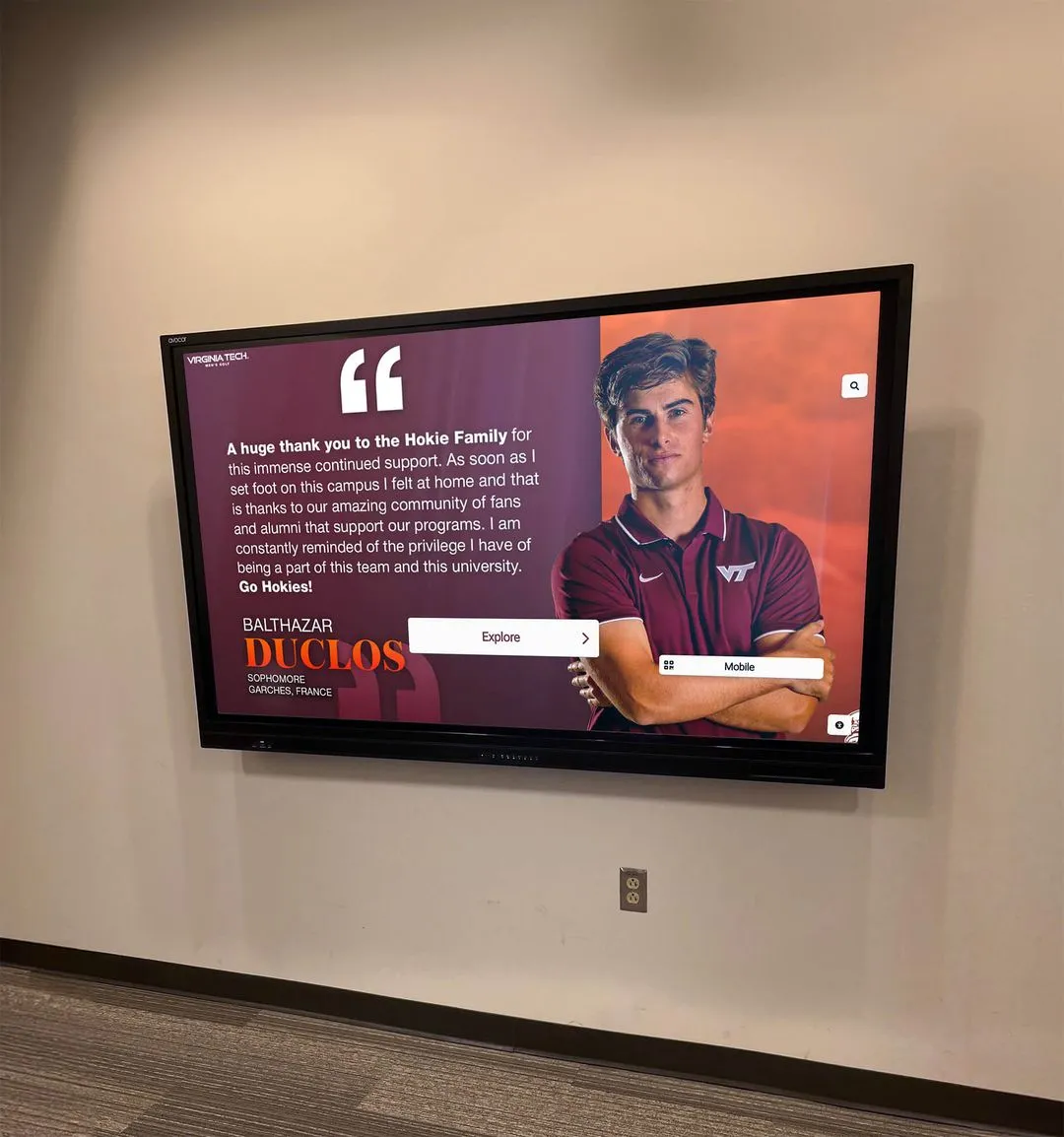
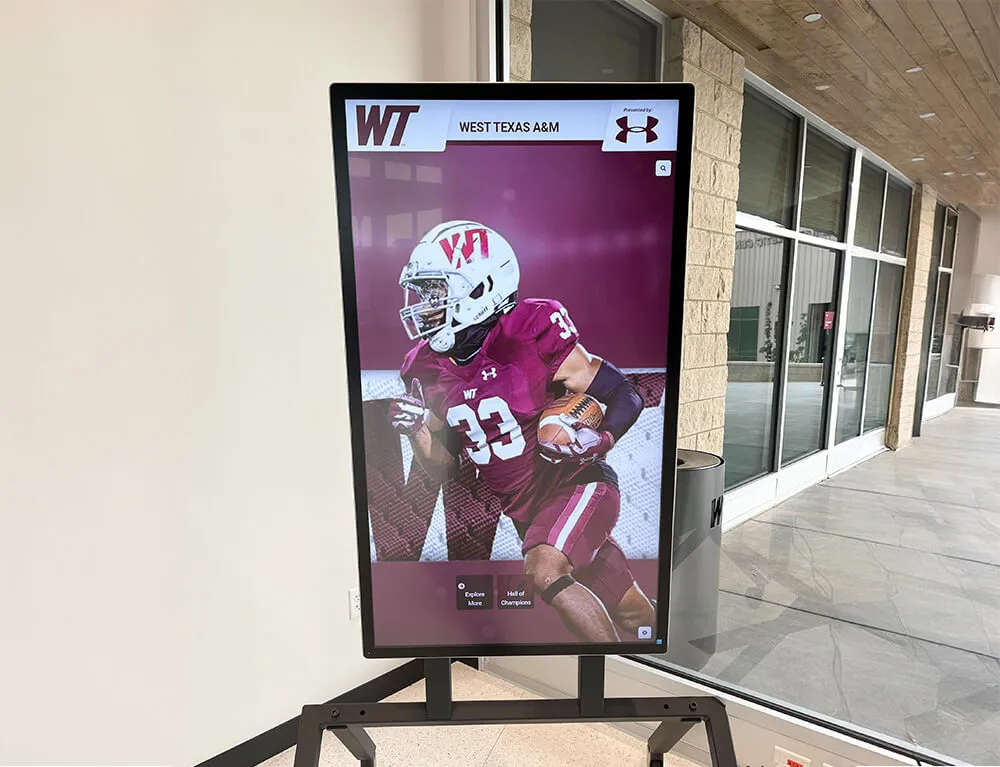
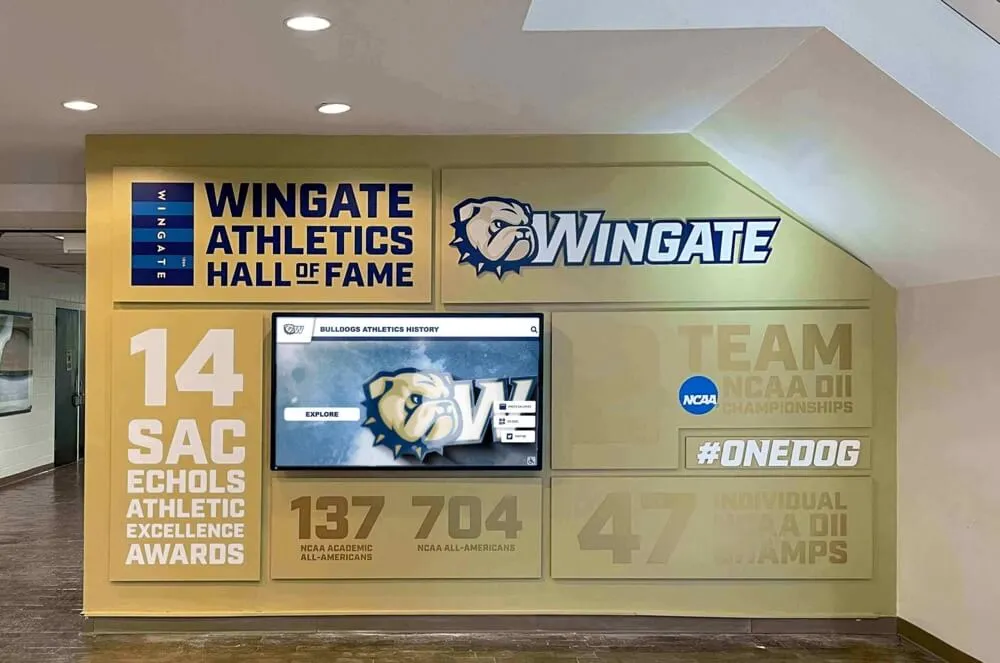
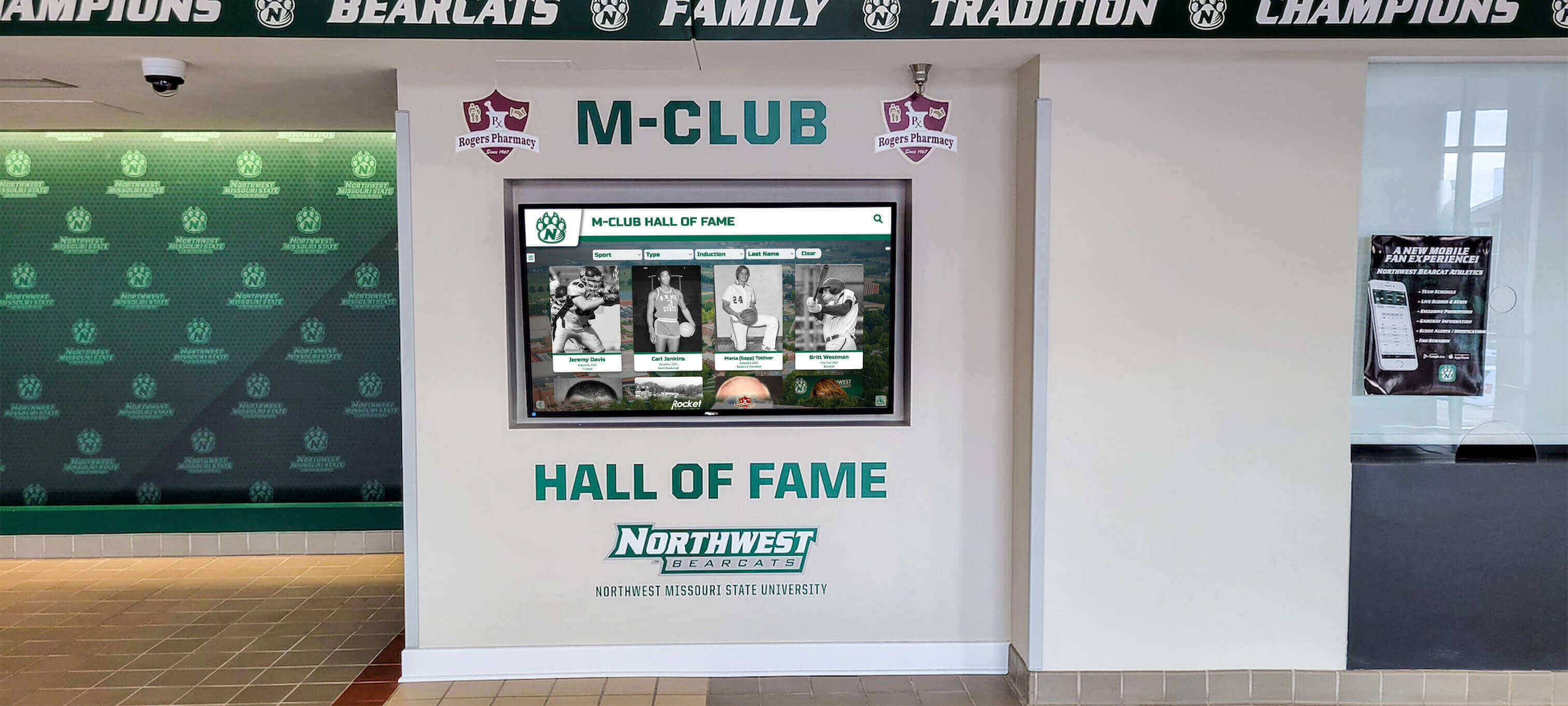
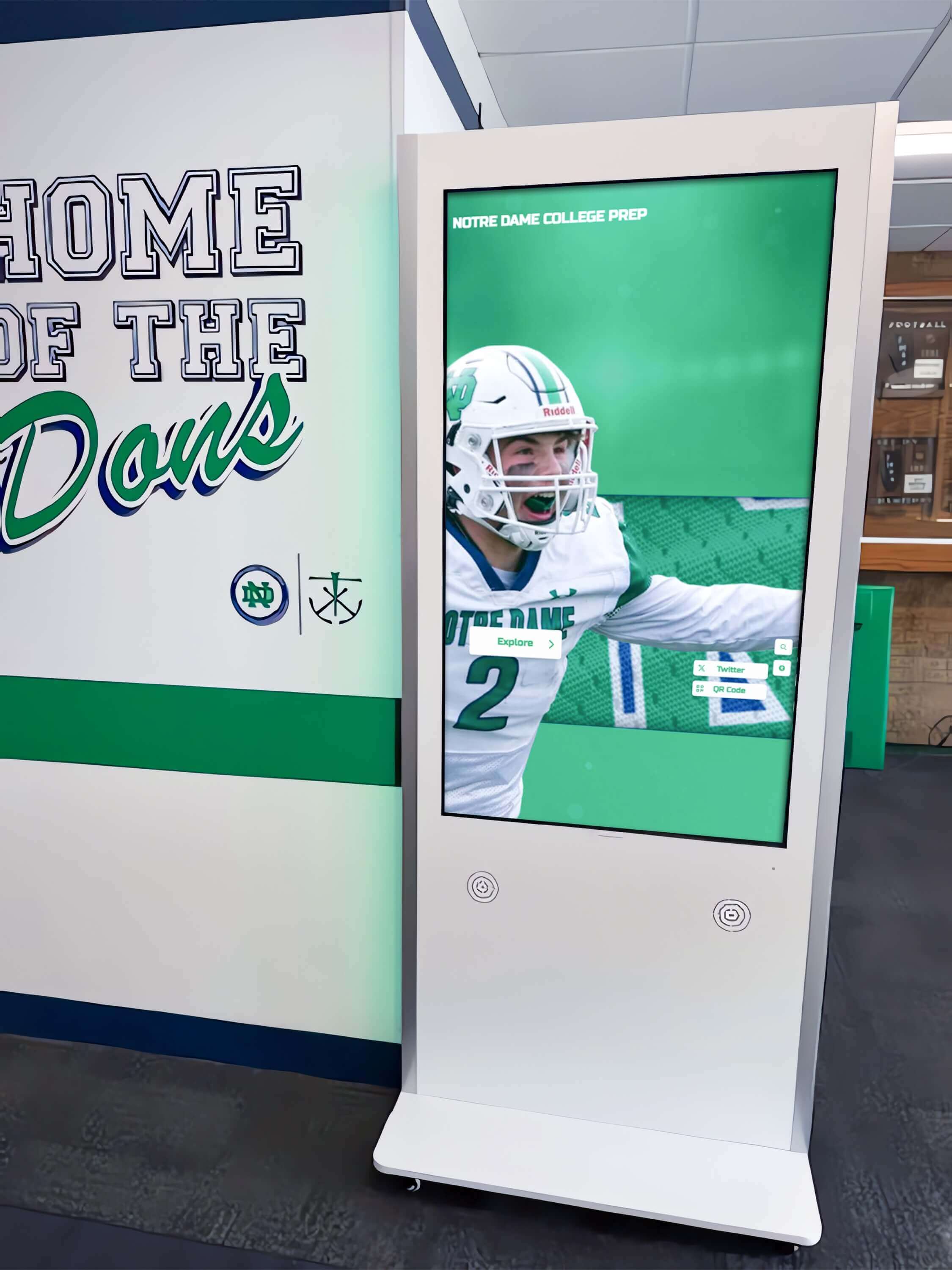
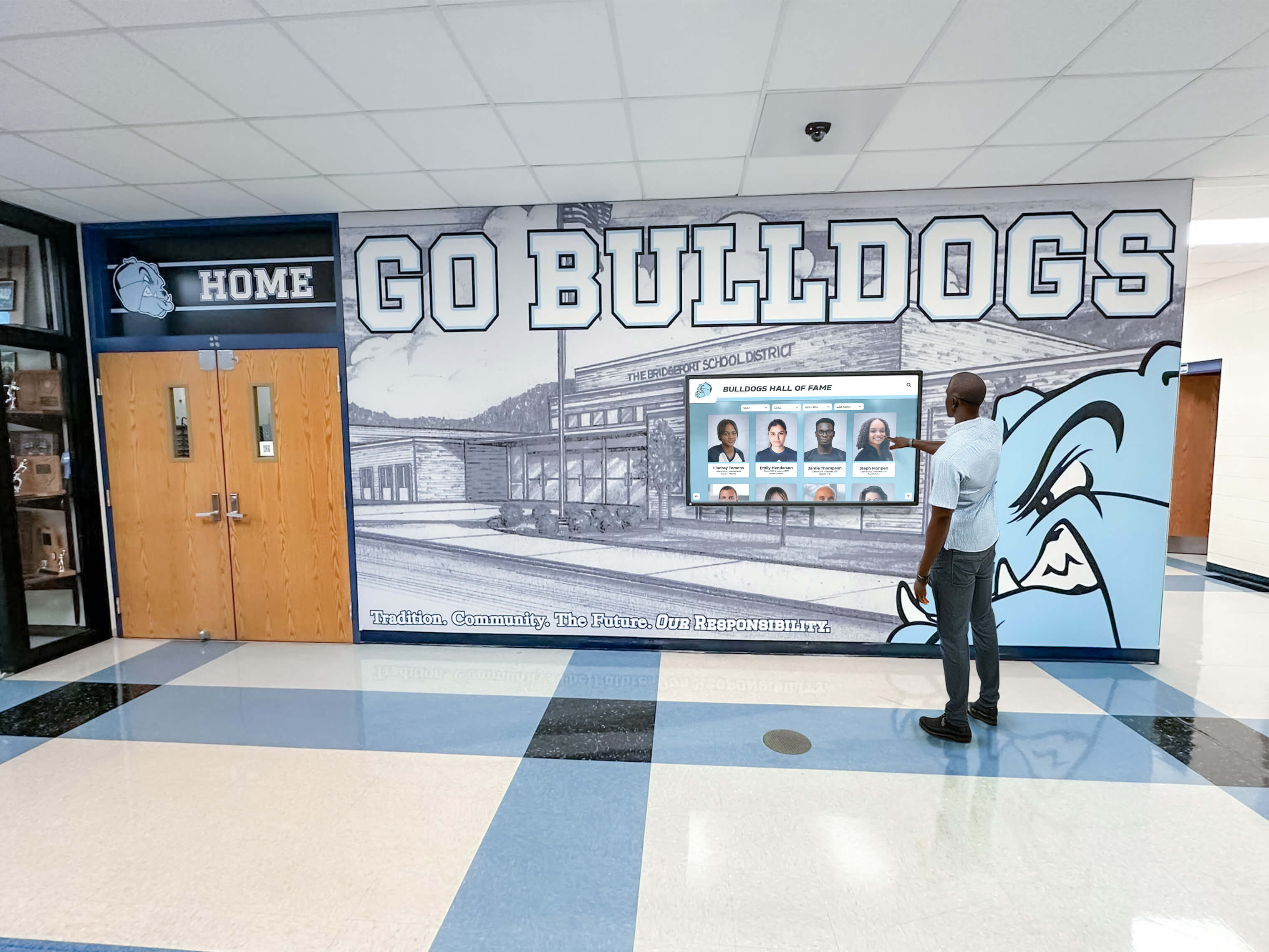
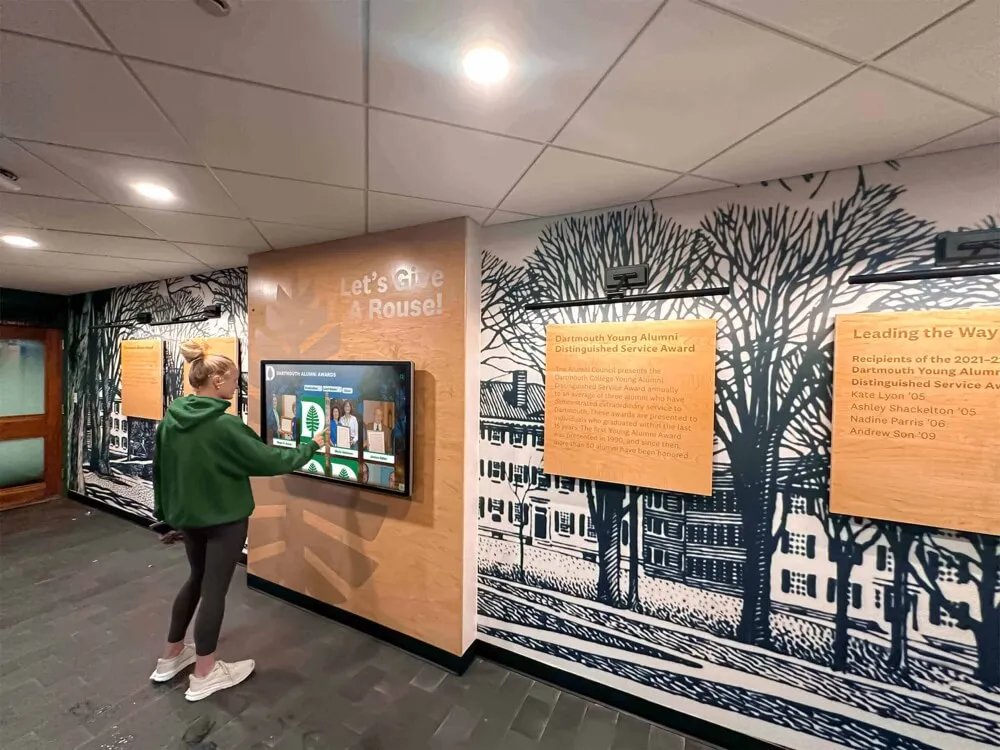
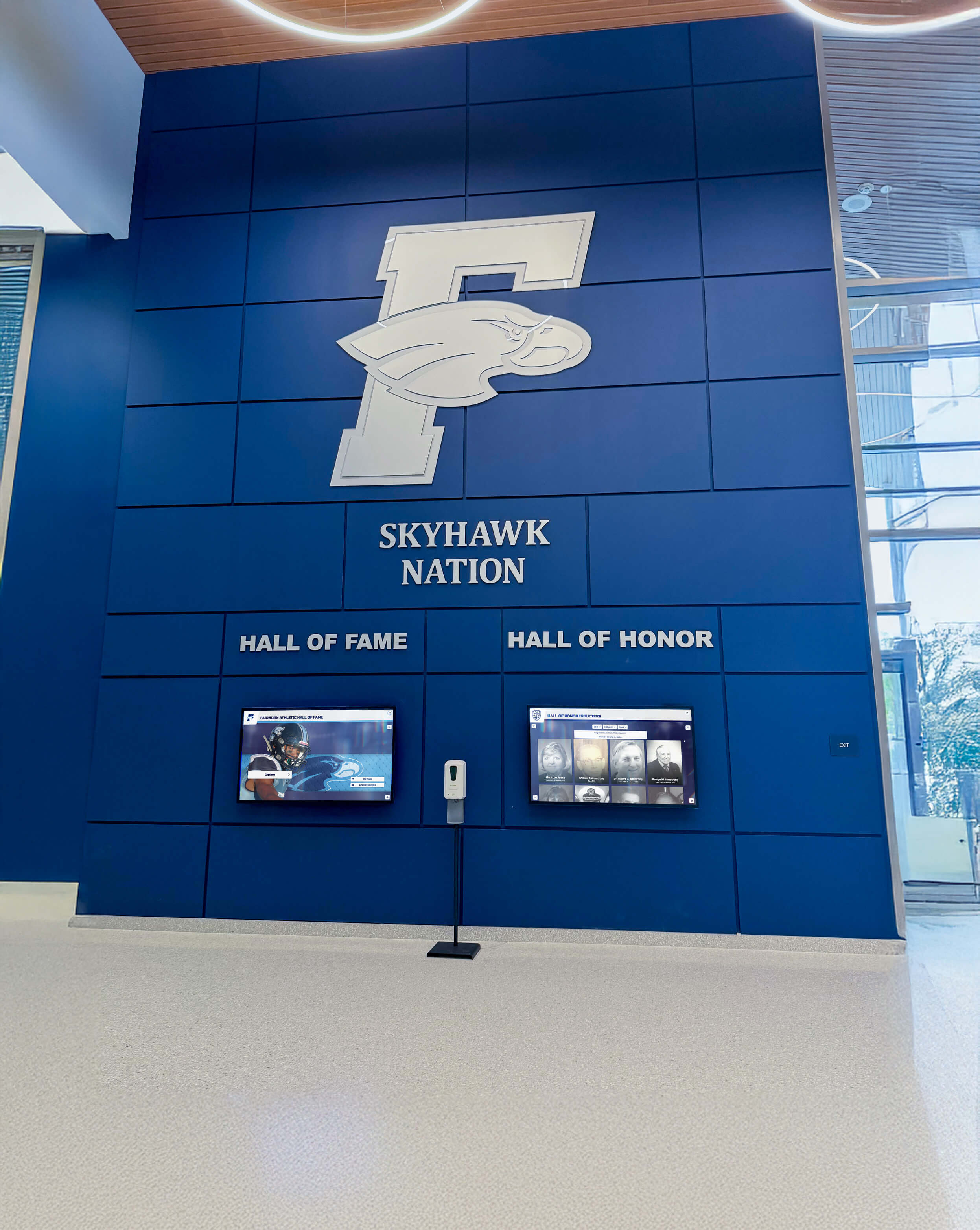
Interactive Touchscreen Displays: Purpose-built interactive touchscreen systems deployed throughout school facilities transform recognition approaches. Digital platforms enable unlimited inductee profiles without space constraints, rich multimedia content with photos, videos, and detailed narratives, searchable databases allowing visitors to find specific individuals or categories, instant content updates adding new inductees without physical modification, and engaging interactive experiences converting passive viewing into active exploration.
Schools implementing digital halls of fame typically position touchscreens in main entrances and lobbies, athletic facility entrances and gathering areas, library or media center locations, alumni center spaces, and areas visible during tours for prospective families. Solutions like Rocket Alumni Solutions offer platforms specifically designed for educational recognition with intuitive content management, multiple category support, and templates addressing school-specific needs without requiring technical expertise.
Touchscreen displays typically require $3,000-$8,000 per unit for hardware plus $3,000-$12,000 annually for software platforms depending on features and inductee capacity. This investment enables recognizing hundreds or thousands of individuals—far more comprehensive than physical-only approaches at comparable cost.
Web-Based Recognition Platforms: Online halls of fame accessible via school websites extend recognition beyond physical campus boundaries. Web platforms enable alumni worldwide to explore achievements from anywhere, provide searchable databases accessible to media and researchers, create social sharing opportunities extending recognition reach, and support alumni networking by connecting former classmates and colleagues. Web components complement physical displays rather than replacing them—together they create comprehensive ecosystems serving diverse audiences.
Purpose-built platforms typically include both on-site touchscreen displays and corresponding web portals from single systems, eliminating redundant content management.
Hybrid Physical-Digital Integration: The most sophisticated implementations strategically blend traditional and digital recognition. Physical elements provide permanence and tradition valued by stakeholders, while digital platforms deliver unlimited capacity, rich storytelling, and easy updates. Integrated approaches might include physical plaques in traditional locations supplemented by nearby touchscreens providing detailed profiles, QR codes on physical displays linking to digital content when scanned, physical induction ceremonies captured on video and integrated into digital profiles, and annual physical recognition elements (certificates, gifts) combined with permanent digital documentation.
Examining digital hall of fame implementation approaches reveals practical considerations about technology selection, content organization, and user experience design applicable across school contexts.
Content Development and Historical Documentation
Comprehensive inductee recognition requires systematic content development capturing achievement details.
Conducting Historical Research
Schools with significant history face substantial documentation challenges for earlier eras with incomplete records.
Identifying Historical Information Sources: Effective historical research draws from multiple sources including school yearbooks documenting students, activities, and achievements, school newspapers and publications from various eras, official school records (when privacy regulations permit access), local newspaper archives covering school events and notable individuals, consultation with retired faculty and longtime staff members, alumni outreach requesting photos and memorabilia, and athletic booster or support group informal records. Digital archives maintained by local historical societies often contain school-related materials useful for historical documentation.
Systematic review of these sources enables reconstructing achievement records even from eras lacking comprehensive documentation. While some historical details remain irretrievably lost, thorough research locates more information than expected.
Phased Historical Implementation: Rather than delaying hall of fame launch until comprehensive historical documentation exists, implement in phases starting with well-documented recent decades before systematically working backward through earlier eras. This approach delivers immediate value while making historical research an ongoing project rather than precondition blocking implementation.
Initial phases might recognize recent 20-30 years while subsequent research identifies earlier deserving individuals added in future induction cycles. This phased timeline makes large-scope projects manageable within realistic resource constraints.
Engaging Alumni in Research Efforts: Alumni often possess deep knowledge of specific eras and can contribute substantially to historical documentation. Engage alumni volunteers through outreach requesting information about outstanding individuals from their years, soliciting photographs and memorabilia for inclusion in displays, conducting oral history interviews with older alumni documenting institutional memory, and recruiting research volunteers willing to comb through archives identifying notable achievements.
Alumni participation in research serves dual purposes—gathering needed information while building engagement and ownership in hall of fame success.
Creating Compelling Inductee Profiles
Effective hall of fame content transcends bare facts to tell achievement stories that inspire and inform.
Essential Profile Components: Quality inductee profiles include biographical information and background, specific achievement highlights and statistical records, context explaining significance within school history, personal reflections or quotes when available, photographs from school years and potentially current images, and career accomplishments following school when relevant to selection. Written narratives should capture what made each inductee exceptional rather than simply listing accomplishments.
Profile length depends on display format. Physical plaques might include only names, years, and brief achievement descriptions (50-100 words). Digital profiles can provide much greater detail (300-500 words) with multimedia supplementation.
Multimedia Content Collection: Digital platforms enable rich multimedia bringing recognition to life beyond text. Systematically collect competitive action photos showing inductees in their element, formal portraits and team photos, video highlights when available (particularly valuable for athletes), scanned historical documents and newspaper clippings, audio or video interviews with inductees reflecting on experiences, and testimonials from coaches, teachers, or classmates. This multimedia creates engagement impossible with text-based profiles alone, particularly for younger visitors accustomed to visual media.
Even when historical video doesn’t exist, photos can be compiled into video slideshows with music creating more dynamic presentation than static images alone.
Writing Style and Tone: Hall of fame content should maintain appropriate tone celebrating achievement while remaining factual and avoiding hyperbole. Balance factual documentation with narrative storytelling making profiles interesting to read. Use active voice and specific details rather than generic descriptors. Verify all factual claims—statistics, awards, dates—before publication to prevent errors undermining credibility.
Consider how profiles might be used beyond hall of fame displays themselves—media often reference hall of fame content when covering school stories, and families share profiles celebrating loved ones. Quality writing enhances hall of fame value across these secondary uses.
Reference approaches used in student achievement recognition displays for content structure and presentation ideas applicable to hall of fame profiles.
Implementation Planning and Budget Development
Moving from concept to reality requires systematic planning addressing timeline, budget, and resource allocation.
Creating Realistic Implementation Timelines
Hall of fame establishment typically requires 12-24 months from initial planning through formal launch.
Phase 1: Planning and Framework Development (3-6 months): Initial phases establish foundational elements including defining objectives and recognition scope, developing selection criteria and governance structures, appointing selection committee members, determining recognition formats (physical, digital, hybrid), and securing preliminary budget authorization. Rushing these foundational decisions creates problems persisting throughout hall of fame existence. Invest adequate time building consensus on approach before proceeding to implementation.
Phase 2: First Selection Cycle and Content Creation (4-8 months): Once frameworks are established, conduct first selection cycle including publicizing nomination period and soliciting submissions, evaluating nominations and selecting inaugural inductees, researching and documenting inductee achievements, writing profiles and creating multimedia content, and conducting any needed historical research for comprehensive coverage. Initial selection cycles often require more time than subsequent annual processes as systems are tested and refined.
Phase 3: Display Implementation (2-4 months): Final implementation includes physical display design and installation if using traditional recognition, digital platform configuration and content loading for technology solutions, staff training on content management and system operation, developing promotional materials and communications, and planning formal dedication ceremony. Timeline depends on recognition format complexity—simple plaque walls install faster than elaborate multimedia systems.
Phase 4: Launch and Dedication: Formal launch events celebrate hall of fame establishment while recognizing inaugural inductees. Time launch strategically during homecoming weekends, significant school anniversaries, or dedicated hall of fame weekends maximizing attendance from alumni and community. Launch ceremonies should celebrate inducted individuals while explaining selection processes and encouraging ongoing community engagement with nominations and support.
Phase 5: Ongoing Annual Operations: After initial launch, sustainable annual cycles include regular nomination periods and selection processes, annual induction ceremonies celebrating new classes, content updates and additions to recognition displays, physical maintenance or digital platform management, and continuous promotion maintaining hall of fame visibility. Establishing these recurring processes as institutional routines ensures sustainability beyond founding administrators’ tenures.
Developing Comprehensive Budgets
Hall of fame implementation requires significant investment, though costs vary based on approach sophistication.
Initial Implementation Costs: One-time establishment expenses depend heavily on recognition format. Traditional physical recognition costs include display cases or dedicated wall preparation ($3,000-$15,000), individual plaques or nameplates ($75-$200 each for quality engraving), professional design services if using custom elements ($2,000-$8,000), and any facility renovation required for display installation ($5,000-$25,000 if significant work needed).
Digital recognition investments include touchscreen hardware ($3,000-$8,000 per display depending on size and features), software platforms and licensing (varies by provider—typically $3,000-$12,000 annually), installation and network infrastructure ($1,000-$3,000 per location), and initial content development ($5,000-$20,000 depending on inductee numbers and multimedia complexity).
Comprehensive implementations blending physical and digital elements typically require $25,000-$75,000 initial investment, though smaller schools can launch more modest programs for $10,000-$20,000 by focusing on core elements and expanding over time.
Annual Operating Costs: Ongoing expenses include annual induction ceremony costs ($2,000-$8,000 for venue, refreshments, programs, and physical recognition items), content updates and new inductee additions ($1,000-$3,000 staff time or contracted services), digital platform subscriptions ($3,000-$12,000 annually depending on system), physical display cleaning and maintenance ($500-$2,000), and administrative staff time managing processes (varies but typically 100-200 hours annually including research, committee coordination, and ceremonies).
Many schools find initial investment represents primary expense, with ongoing costs remaining modest once systems are established and processes become routine.
Funding Strategies: Schools fund halls of fame through various mechanisms including normal capital budgets or facility improvement funds, dedicated fundraising campaigns from alumni and community supporters, naming opportunities and major gift solicitations, class reunion gifts and legacy giving programs, and athletic or academic booster organization support. Many schools discover that hall of fame projects generate enthusiastic donor support when positioned as permanent recognition celebrating institutional excellence donors value deeply.
Phased implementation spreads costs across multiple budget cycles rather than requiring full investment immediately, making projects more financially feasible.
Planning Effective Induction Ceremonies
Annual ceremonies serve multiple purposes—formally recognizing inductees, engaging community, and creating traditions building institutional culture.
Ceremony Format and Program Design
Successful ceremonies balance meaningful recognition with respect for attendees’ time.
Program Elements: Effective ceremonies typically include opening remarks from school leaders establishing context, introduction of selection committee members, individual recognition of each inductee with brief remarks highlighting achievements, video presentations or multimedia showcasing inductee accomplishments, opportunities for inductees to speak briefly sharing reflections, participation by current students or teams connecting past to present, closing remarks and reception time enabling networking. Ceremony length should respect busy schedules—90 minutes to 2 hours typically accommodates meaningful recognition without losing audience attention.
Balance providing each inductee appropriate individual recognition with maintaining program flow. Brief (2-3 minute) individual segments provide focused attention without excessive length when inducting multiple individuals.
Physical Recognition Elements: Ceremonies should include presentation of tangible recognition items inductees retain including engraved plaques or framed certificates, commemorative programs listing all inductees, school-branded gifts or memorabilia, and personalized elements (jerseys, photos, etc.) when budget permits. These physical items provide lasting remembrance beyond ceremony itself and often become treasured possessions families preserve for generations.
Timing and Scheduling Considerations: Strategic timing maximizes attendance and impact. Common approaches include homecoming weekends creating natural alumni return occasions, spring ceremonies avoiding fall athletic schedule conflicts, dedicated hall of fame weekends with multi-day programming, and alignment with major school events (reunions, anniversaries) when many alumni are already on campus. Survey stakeholders about preferred timing rather than assuming—alumni preferences may differ from administrator assumptions about convenient scheduling.
Documentation and Sharing: Record ceremonies through professional photography capturing individual honorees and group photos, video recording for archives and future reference, and live-streaming enabling remote viewing for those unable to attend. Make recordings accessible through school websites and share clips via social media extending ceremony reach beyond those physically present. Digital platforms can integrate ceremony videos directly into inductee profiles creating permanent documentation.
Understanding successful approaches to end-of-year recognition events provides insights into ceremony planning, student engagement, and celebration formats applicable to hall of fame inductions.
Maintaining Year-Round Engagement
Effective halls of fame remain active presences rather than recognition updated once annually then ignored.
Regular Content Updates: Digital displays enable ongoing content rotation keeping recognition fresh including monthly featured inductee profiles, seasonal highlights aligned with current school activities (featuring athletes from current sport seasons, for example), milestone anniversary celebrations (inductees celebrating 25, 50 years since graduation), and new achievement updates as inductees accomplish notable career milestones. This regular rotation maintains interest and ensures all inductees receive featured attention periodically rather than only at induction.
Alumni Networking and Communication: Hall of fame inductees represent highly engaged alumni populations. Facilitate ongoing connections through online communities or social media groups for inductees, periodic reunion events beyond annual ceremonies, participation in mentorship programs connecting inductees with current students, and involvement in school fundraising and advancement efforts. These relationships strengthen mutual value of recognition beyond one-time ceremony.
Integration with School Culture: Current students benefit when hall of fame recognition weaves into daily school life through references in school communications and assemblies, featured profiles in student publications, physical displays ensuring daily visibility in high-traffic areas, and inductee participation in school events when possible. When students regularly encounter hall of fame recognition, it shapes culture and provides aspirational models demonstrating achievement possibilities.
Addressing Common Implementation Challenges
School administrators establishing halls of fame encounter predictable obstacles that preparation helps navigate successfully.
Managing Selection Fairness and Consistency
Hall of fame credibility depends on perceptions of fair, consistent selection processes maintained across years.
Preventing Recency Bias: Selection committees naturally remember recent individuals more vividly than those from decades past. This recency bias skews recognition disproportionately toward recent graduates unless actively countered through mandatory consideration of nominees from various eras, systematic historical research identifying overlooked earlier achievements, and objective criteria not inherently favoring recent nominees. Establish requirements that each selection cycle include mix of recent and historical inductees preventing entire classes dominated by one era.
Managing Political Pressure and Influence: Administrators often face advocacy from influential community members, donors, or board members promoting specific candidates. Maintaining selection integrity requires clear published criteria applied consistently, confidential deliberation processes preventing external influence during committee discussions, documentation justifying selections based on established standards, and willingness to decline inducting individuals not meeting criteria regardless of outside pressure. Committee composition including members with institutional loyalty but relative independence from political pressure helps resist inappropriate influence.
Ensuring Equitable Representation: Schools must monitor whether recognition systems equitably honor achievements across demographic groups, sports programs, academic disciplines, and other dimensions where imbalances might emerge. Conduct periodic equity audits examining inductee demographics compared to overall school population, establish criteria ensuring appropriate representation when imbalances appear, and recognize that genuine historical inequities in opportunities (limited women’s athletics in earlier eras, for example) may legitimately result in unequal historical representation even with fair contemporary processes.
Maintaining Long-Term Program Vitality
Halls of fame risk becoming outdated and ignored without sustained attention.
Preventing Stagnation: Static recognition quickly loses impact. Establish routines for adding new inductee content immediately after ceremonies, updating existing profiles with career developments, rotating featured content seasonally, and incorporating new multimedia as it becomes available. Digital platforms make these updates straightforward, while physical displays require more substantial effort requiring planned update cycles.
Technology Refresh Planning: Digital recognition systems require periodic technology refresh as hardware ages and software evolves. Budget for display hardware replacement every 7-10 years, software platform updates or migrations to improved systems as technology advances, and network infrastructure improvements supporting evolving technology. Working with providers committed to ongoing platform development ensures recognition systems benefit from improvements rather than becoming obsolete. Digital recognition technology platforms continue evolving with enhanced features, mobile integration, and improved user experiences that schools should access through regular platform updates.
Adapting to Changing Priorities: Institutional values and societal priorities evolve over decades. Hall of fame selection criteria, emphasized achievements, and recognition language may require revision to reflect contemporary values while respecting historical context. Periodically review whether current criteria remain appropriate, incorporate stakeholder feedback about recognition priorities, and make thoughtful adjustments when warranted while maintaining core standards ensuring consistency.
Handling Sensitive Situations
Recognition programs occasionally generate controversy requiring administrative judgment.
Addressing Inductee Misconduct: Establish policies proactively addressing what happens when inductees’ subsequent conduct contradicts institutional values. Some schools remove individuals following serious criminal convictions or profound ethical violations, while others maintain that recognition honored achievements at specific times regardless of subsequent behavior. Create clear policies before controversies arise preventing reactive decision-making during crises. Whatever approach you adopt, apply it consistently and explain rationale transparently.
Correcting Historical Inequities: Many schools recognize that historical recognition reflected biases of earlier eras—underrepresentation of women’s achievements, minority populations, or certain activity categories. Administrators should honestly assess whether historical patterns reflected genuine achievement differences or systemic bias, conduct targeted research identifying overlooked accomplishments from underrepresented groups, and potentially establish expedited recognition processes rectifying historical oversights. This work demonstrates institutional commitment to equity while strengthening hall of fame comprehensiveness.
Managing Difficult Nominations: Committees occasionally face nominations for individuals whose achievements warrant recognition but whose character or subsequent conduct raises concerns. Develop frameworks for these discussions helping committees balance competing considerations. Clear criteria established proactively enable more consistent decision-making when difficult cases arise.
Measuring Success and Demonstrating Value
School administrators must justify hall of fame investments through demonstrated value to multiple stakeholder groups.
Quantitative Success Indicators
Measurable metrics reveal whether halls of fame achieve intended objectives.
Engagement and Utilization Metrics: Digital platforms provide analytics documenting actual usage including number of visitors and session duration, most-viewed inductee profiles, search terms revealing visitor interests, and peak usage times. Physical displays require informal observation or visitor counting. Growing engagement indicates successful implementation, while declining interest suggests needed adjustments.
Alumni Participation and Connection: Hall of fame effectiveness supporting alumni engagement appears in ceremony attendance trends over time, inductee response rates to communication and update requests, hall of fame references in alumni social media activity, participation in broader alumni programs and events, and correlation with alumni giving patterns. Strong participation indicates recognition successfully maintains connections supporting institutional advancement.
Institutional Recognition and Visibility: Recognition contributes to broader school reputation through media coverage referencing hall of fame inductees, prospective family feedback mentioning recognition during recruitment, social media reach and engagement with recognition content, and recognition received from peer institutions or educational associations. Consistent positive mentions suggest hall of fame enhances institutional visibility effectively.
Qualitative Impact Assessment
Beyond numbers, stakeholder perspectives reveal whether halls of fame deliver meaningful value.
Current Student Perspectives: Students can articulate whether hall of fame recognition influences their experience through surveys or focus groups assessing whether students view inductees as role models, understand achievement pathways to recognition, feel pride in school traditions and excellence, and value opportunities to meet inducted individuals. Student awareness and engagement indicates recognition successfully shapes school culture.
Alumni and Inductee Feedback: Inducted individuals provide crucial perspectives through feedback about ceremony experience quality, ongoing connection maintained through hall of fame, pride in recognition received, and suggestions for improvements. Inductee satisfaction indicates recognition delivers meaningful value to those being honored.
Administrative Assessment: School leaders should evaluate whether implementation aligns with initial objectives, requires sustainable administrative effort, generates positive community response, supports broader advancement goals, and justifies ongoing investment versus alternative resource uses. Honest administrative assessment guides adjustments improving program effectiveness.

Taking First Steps Toward Implementation
For administrators ready to establish recognition programs, systematic planning creates foundations for long-term success.
Conducting Needs Assessment
Begin with honest evaluation of current recognition and clear articulation of desired improvements.
Current State Analysis: Document existing recognition through inventory of physical displays and informal recognition practices, assessment of historical documentation quality and accessibility, stakeholder satisfaction surveys about current approaches, and administrative resources currently dedicated to recognition. This baseline clarifies specific problems new halls of fame should address.
Stakeholder Input: Gather perspectives from multiple groups including current students and recent alumni, faculty and staff members, long-term alumni from various eras, parents and community supporters, and school leadership and board members. Understanding diverse priorities helps ensure design satisfies multiple constituencies while avoiding approaches pleasing no one.
Institutional Objective Alignment: Clarify how hall of fame implementation supports broader institutional goals including student development and achievement culture, alumni engagement and advancement objectives, community relations and institutional reputation, and program excellence across academics, athletics, and activities. Explicit connections between recognition and strategic objectives help secure necessary support and resources.
Building Implementation Coalitions
Successful implementation requires coalition building and resource commitment.
Identifying Champions: Projects need dedicated advocates including school administrators supporting resource allocation, engaged alumni willing to lead fundraising and volunteer efforts, faculty or staff members contributing expertise and time, and board members or community leaders lending credibility. These champions sustain momentum when obstacles arise during extended timelines.
Securing Resources: Early resource commitment prevents stalled projects. Work to identify initial funding through operating budgets, capital campaigns, donations, or phased approaches, allocate adequate staff time for planning and coordination, and commit to ongoing support for annual processes. Underfunded or understaffed programs struggle regardless of initial design quality.
Choosing Implementation Partners: Evaluate whether internal resources can handle implementation or external support would prove valuable including content development (internal staff, professional services, or hybrid), display design and installation (facilities staff or contractors), digital platforms (custom development, licensed systems, or turnkey solutions), and ongoing management (internal capacity or contracted support). Purpose-built platforms specifically designed for educational recognition often deliver best value by handling technical complexity while providing school-friendly interfaces for content management.
Pilot Testing and Phased Implementation
Rather than attempting comprehensive implementation immediately, consider phased approaches reducing risk.
Starting with Core Recognition: Initial phases might include establishing basic selection criteria and committee structure, recognizing inaugural small induction class within existing resources, implementing simple physical or digital display in single high-traffic location, conducting initial modest induction ceremony, and demonstrating value before seeking expanded investment. This incremental approach proves feasibility while building support for future expansion.
Learning and Iterating: Treat initial implementation as learning opportunity gathering feedback from all stakeholder groups, assessing what worked well and what requires adjustment, refining processes based on experience, and documenting lessons guiding future development. Early iterations rarely achieve perfection, but systematic learning enables continuous improvement.
Planning Future Expansion: After successful core implementation, expand systematically including additional display locations and recognition categories, enhanced digital capabilities and web accessibility, historical research adding earlier eras, expanded annual programming and ceremonies, and integration with broader advancement efforts. Phased expansion allows sustainable growth maintaining quality throughout.
Conclusion: Creating Recognition Programs That Last Generations
Establishing school halls of fame represents significant undertakings requiring sustained planning, implementation effort, and ongoing management. When executed thoughtfully, recognition programs deliver remarkable value compounding over decades—strengthening school culture, preserving institutional memory, engaging alumni, inspiring current students, and celebrating the individuals whose excellence defines institutional identity.
School administrators should approach hall of fame establishment systematically through clear articulation of institutional objectives and recognition scope, thoughtful development of selection criteria and governance structures maintaining fairness and credibility, strategic choices about recognition formats balancing tradition with innovation, realistic implementation planning with adequate resources, and sustained commitment to annual processes and continuous improvement.
The most successful halls of fame share common characteristics regardless of institutional size or resources: They honor diverse achievements fairly across demographics and categories. They maintain consistent selection processes building credibility over time. They evolve continuously rather than remaining static after initial implementation. They engage stakeholders actively through ceremonies and ongoing communication. And they align with broader institutional values and strategic goals rather than existing as isolated projects.
Contemporary recognition technologies enable schools to honor achievement more comprehensively than ever before. Digital platforms eliminate space constraints that forced previous generations to make painful choices about which accomplishments warranted recognition. Interactive experiences engage visitors actively rather than passive glancing. Web accessibility extends recognition beyond campus boundaries to alumni worldwide. Yet technology merely enables recognition—the substance lies in the achievements honored and institutional values halls of fame express.
Whether establishing first formal recognition programs or modernizing traditions spanning decades, the principles remain constant: honor achievement authentically, implement sustainable processes, engage stakeholders meaningfully, and create recognition systems serving your institution’s unique needs. The students, athletes, scholars, staff members, and community contributors who invest themselves in your school deserve recognition matching their dedication—thoughtful planning ensures your hall of fame delivers that honor for generations to come.
For schools ready to implement comprehensive digital solutions combining recognition displays, content management, and interactive engagement, platforms like Rocket Alumni Solutions provide purpose-built tools specifically designed for educational institutions. These systems make professional hall of fame implementation accessible to schools regardless of technical expertise or administrative capacity, transforming recognition from daunting challenge to achievable reality.