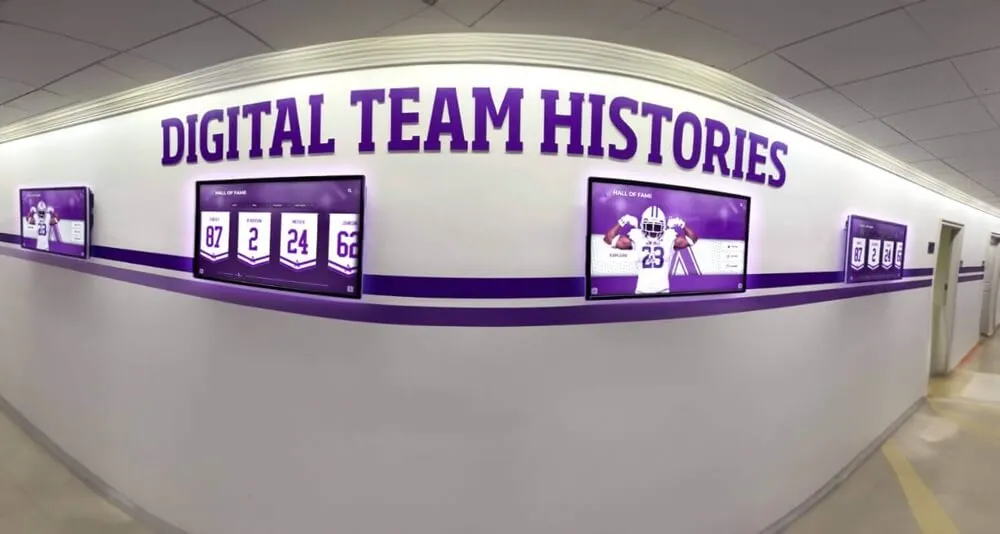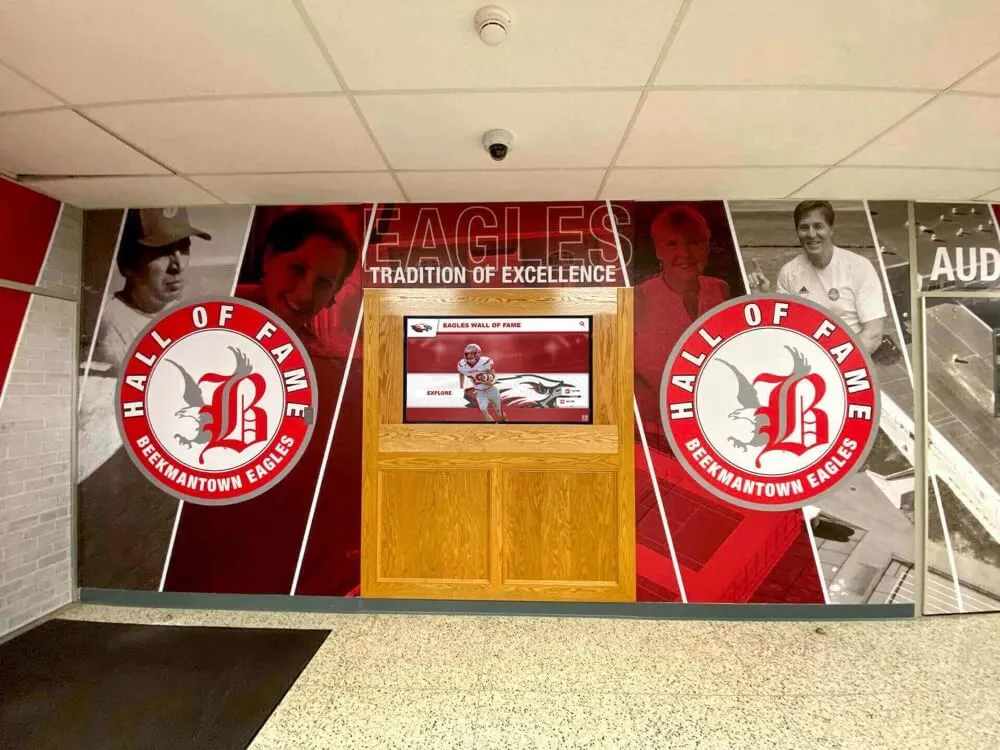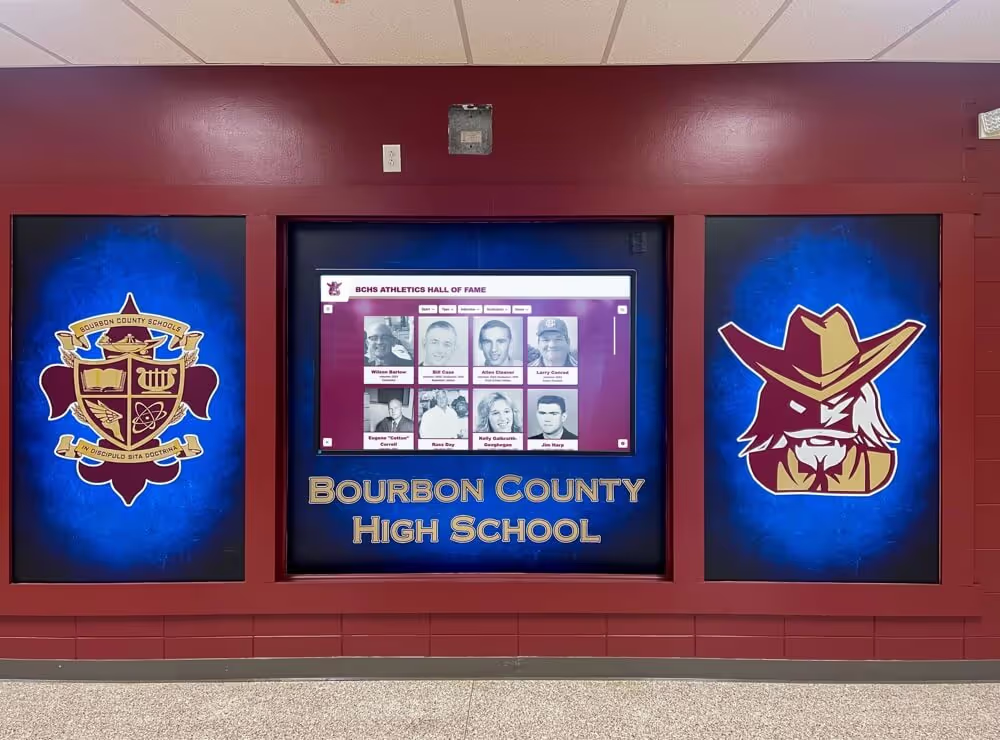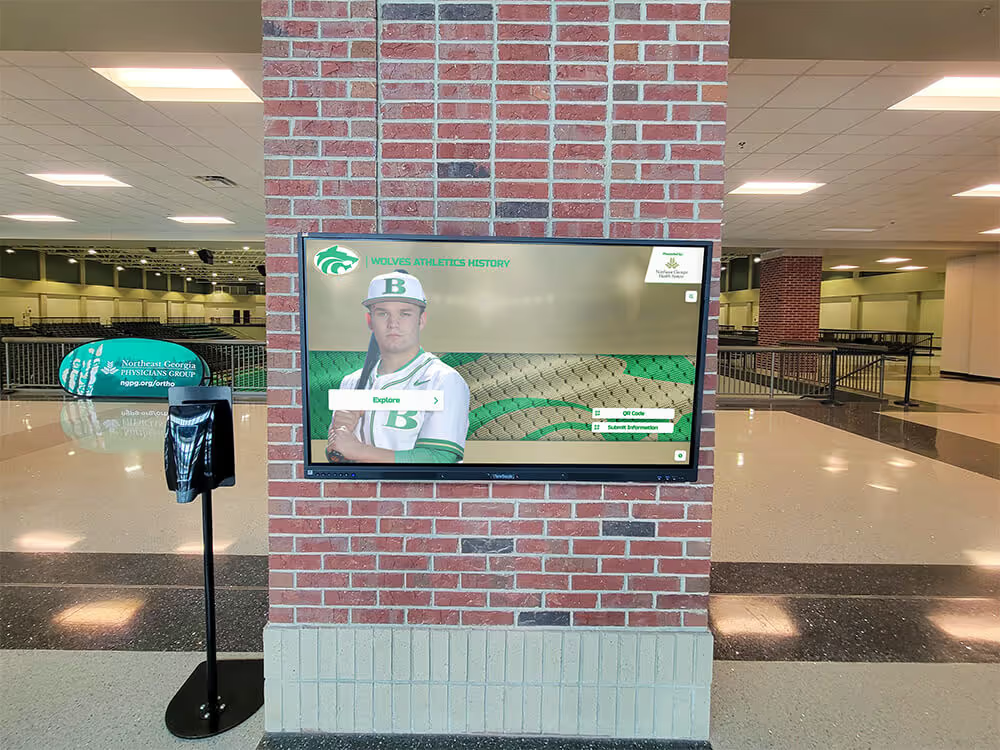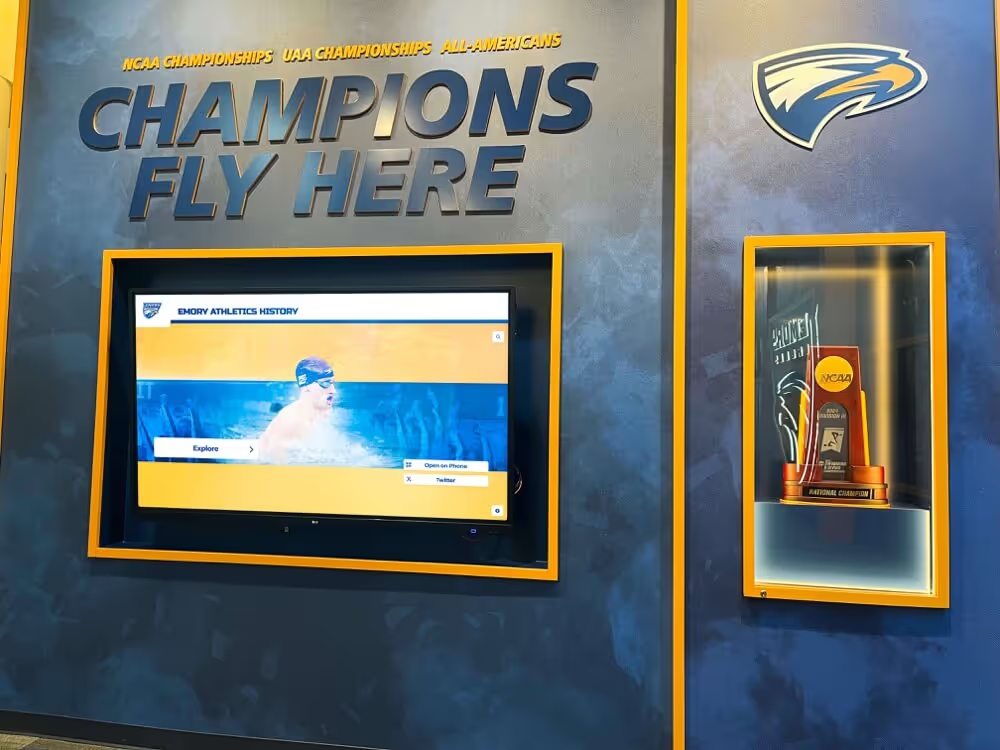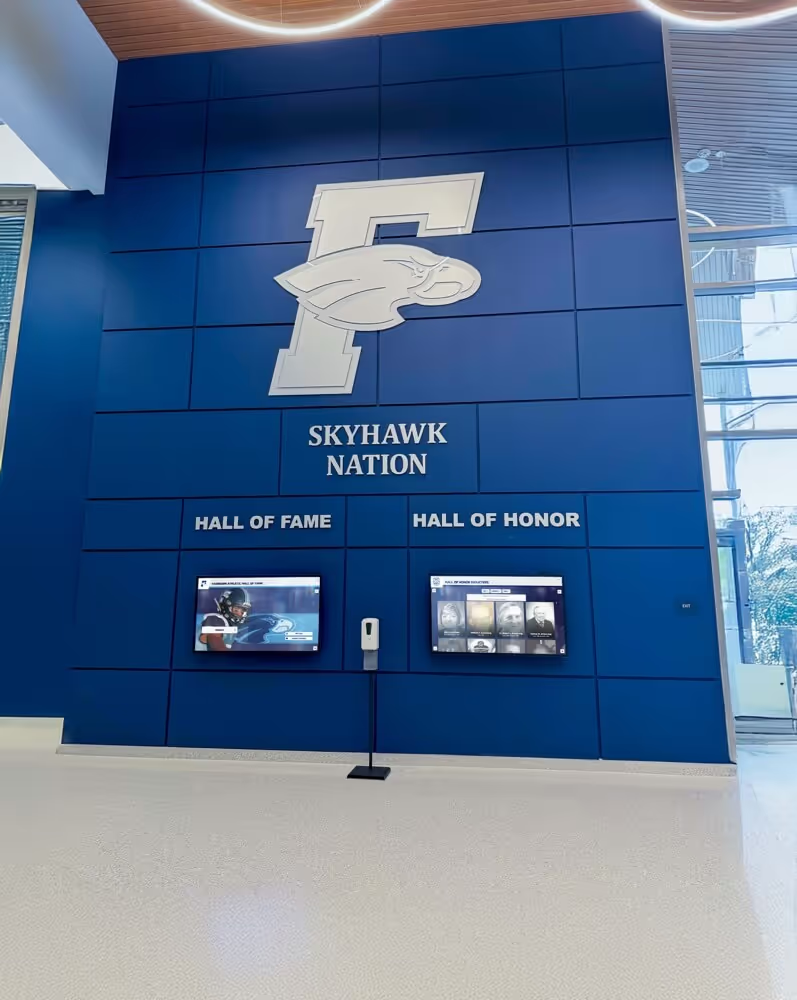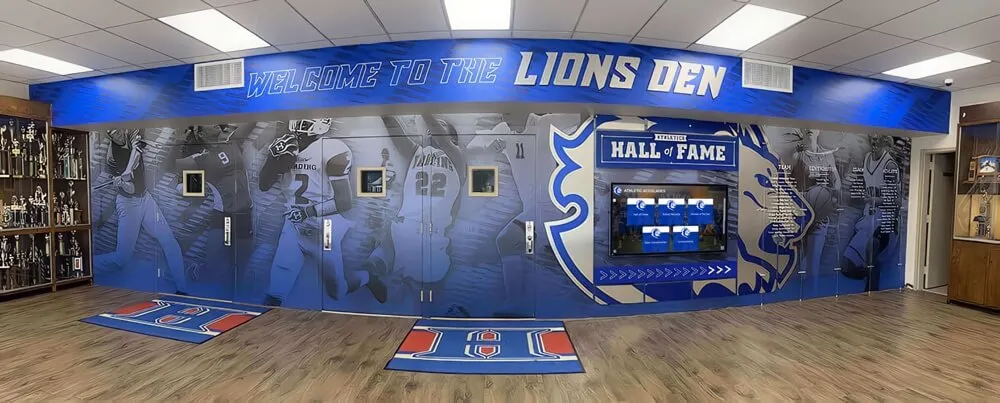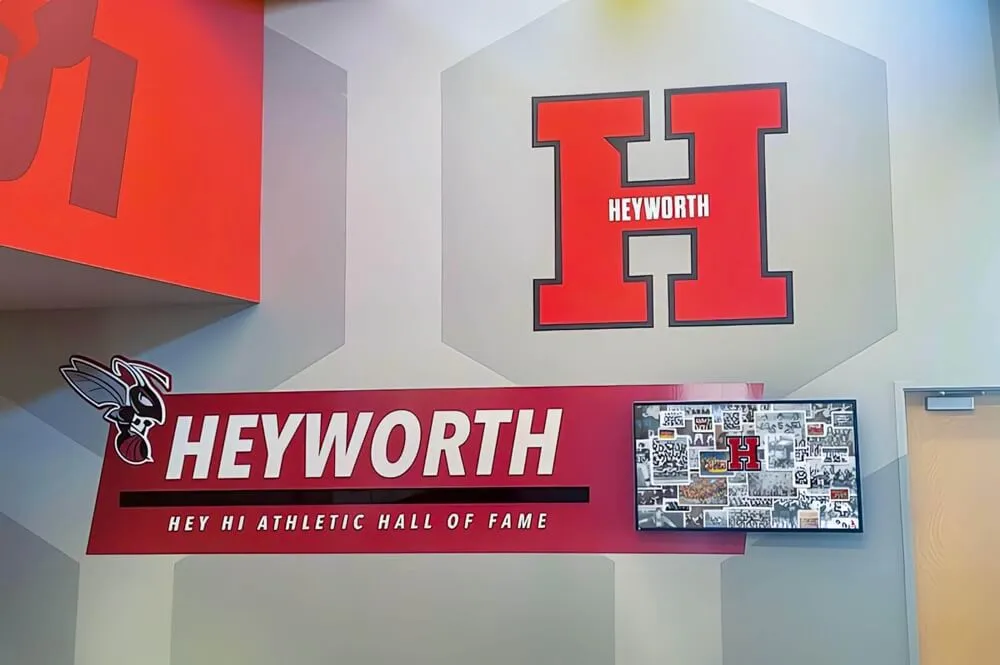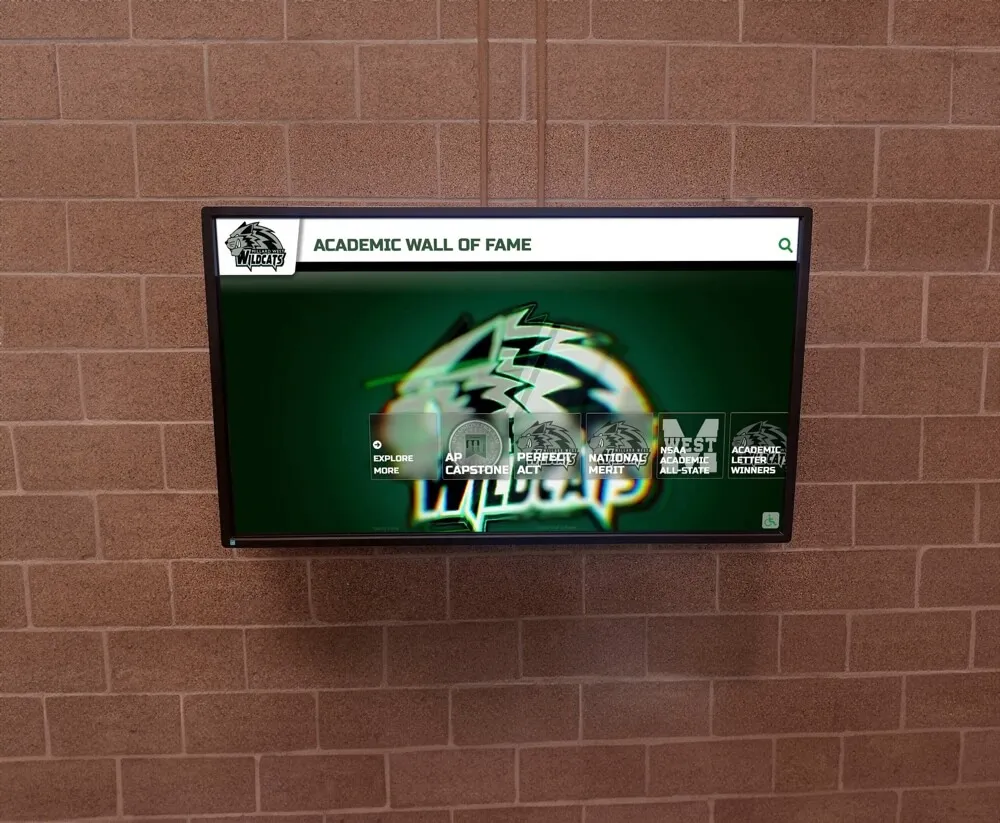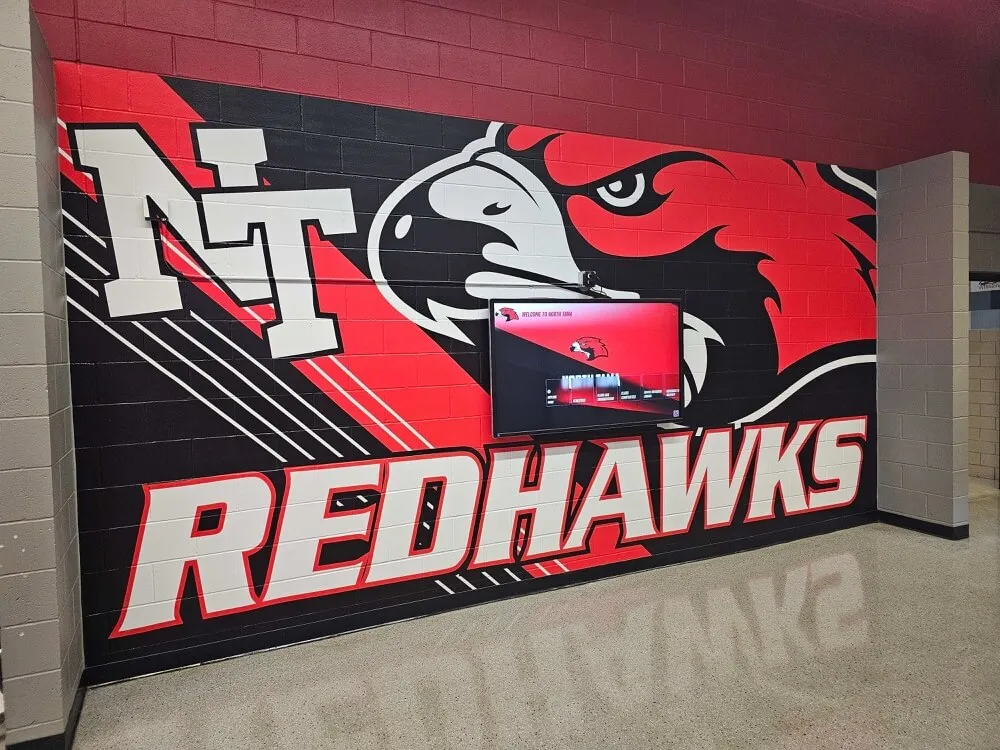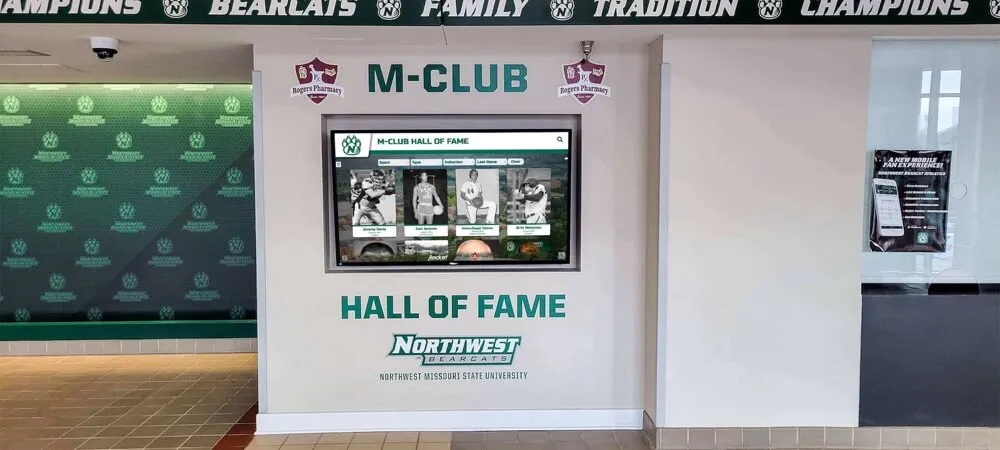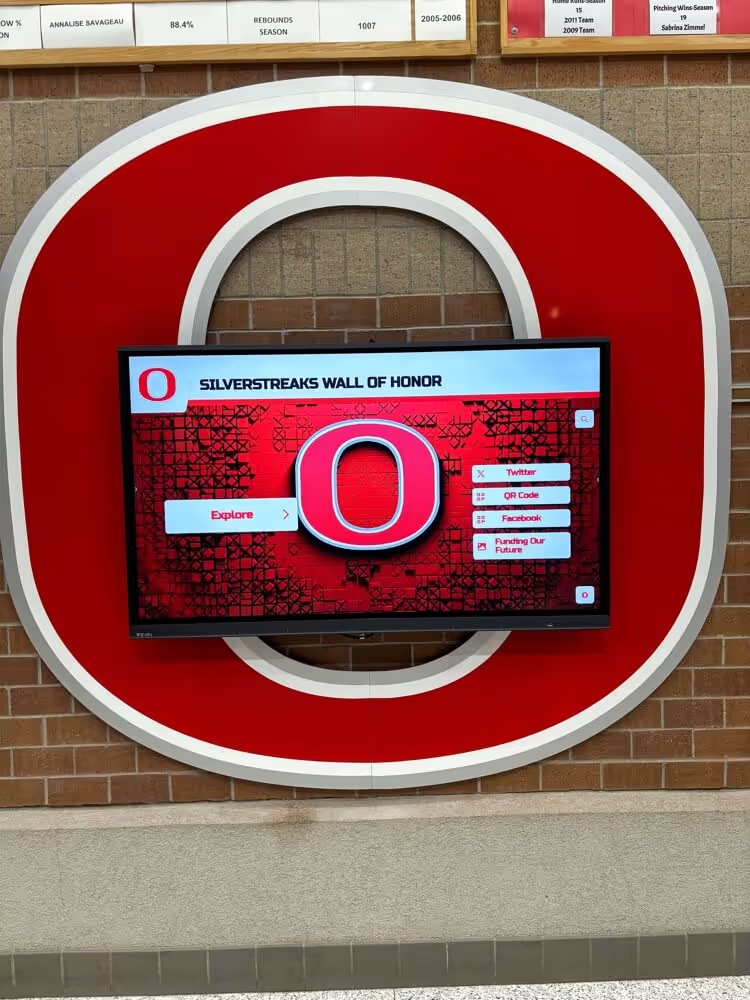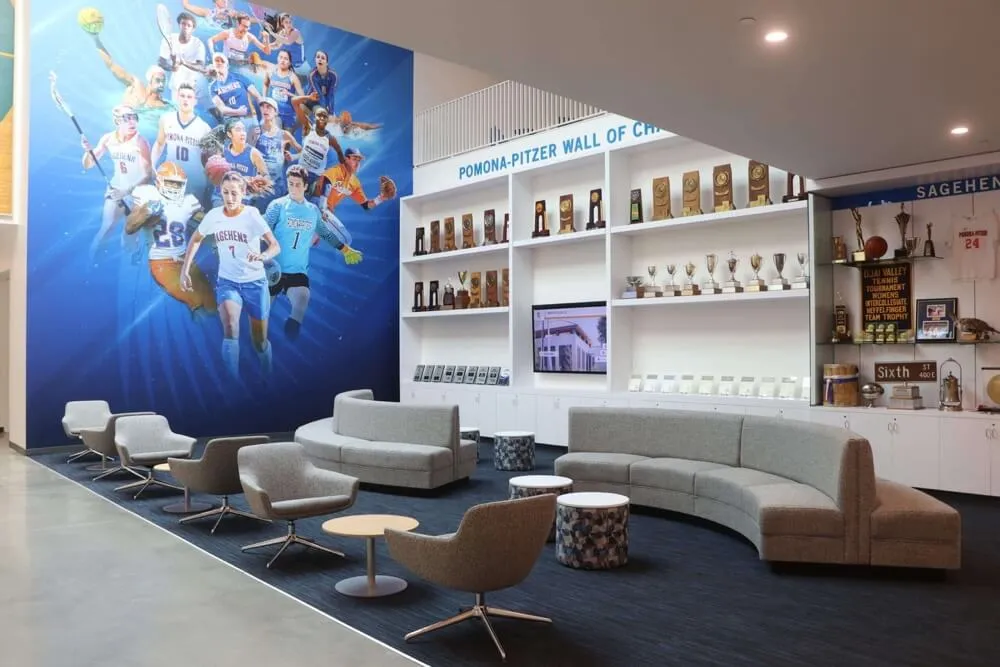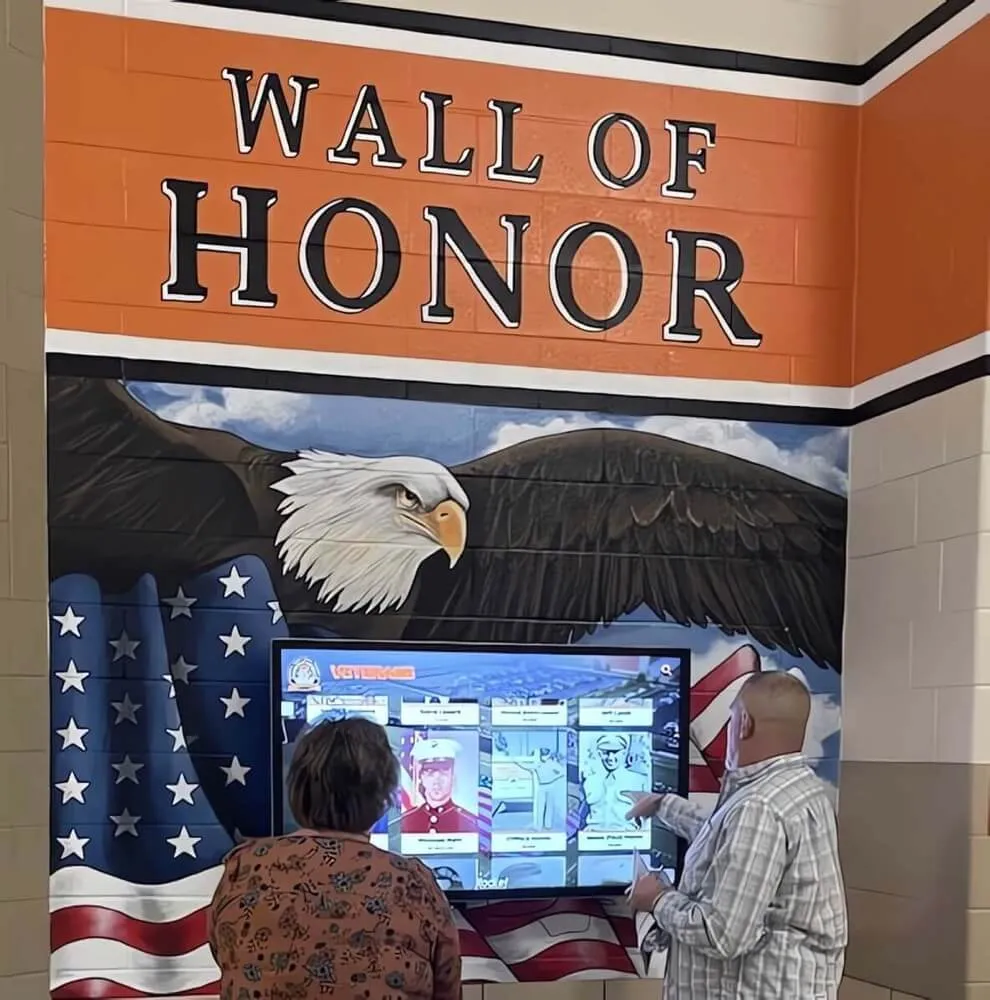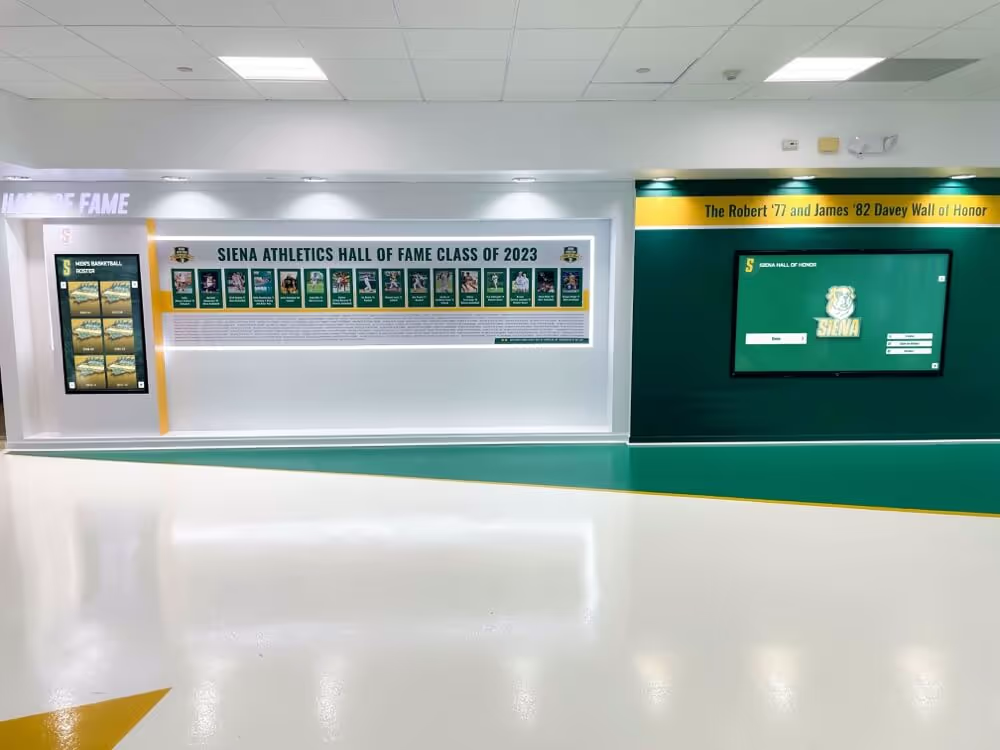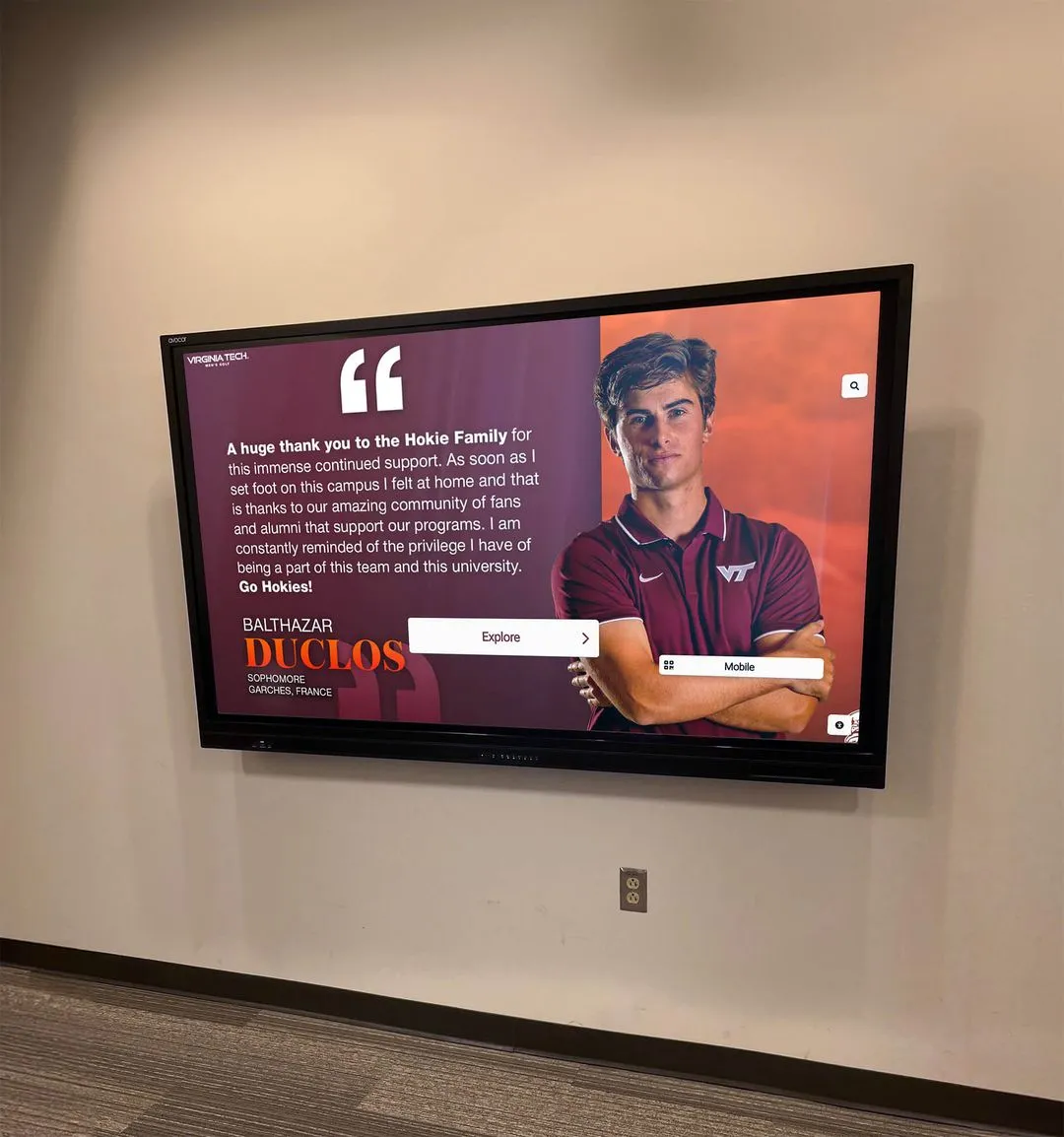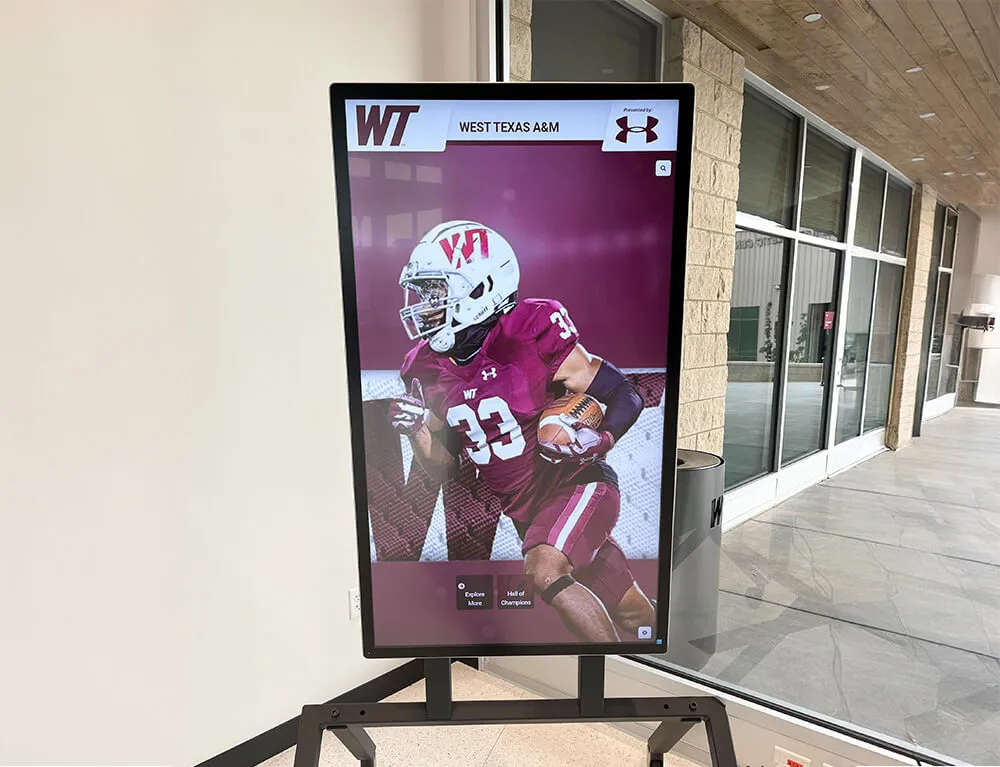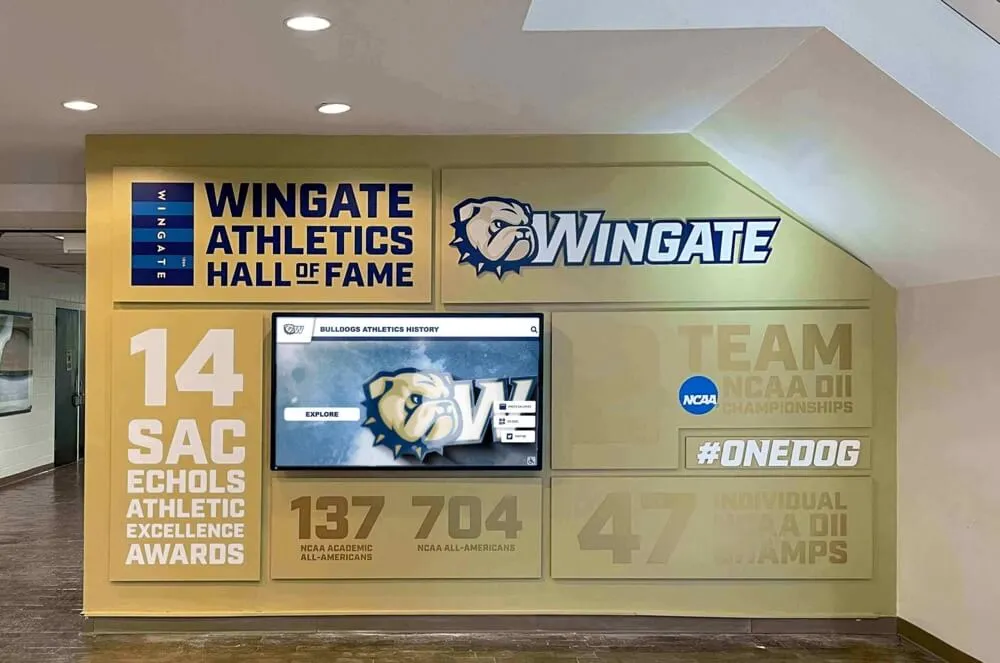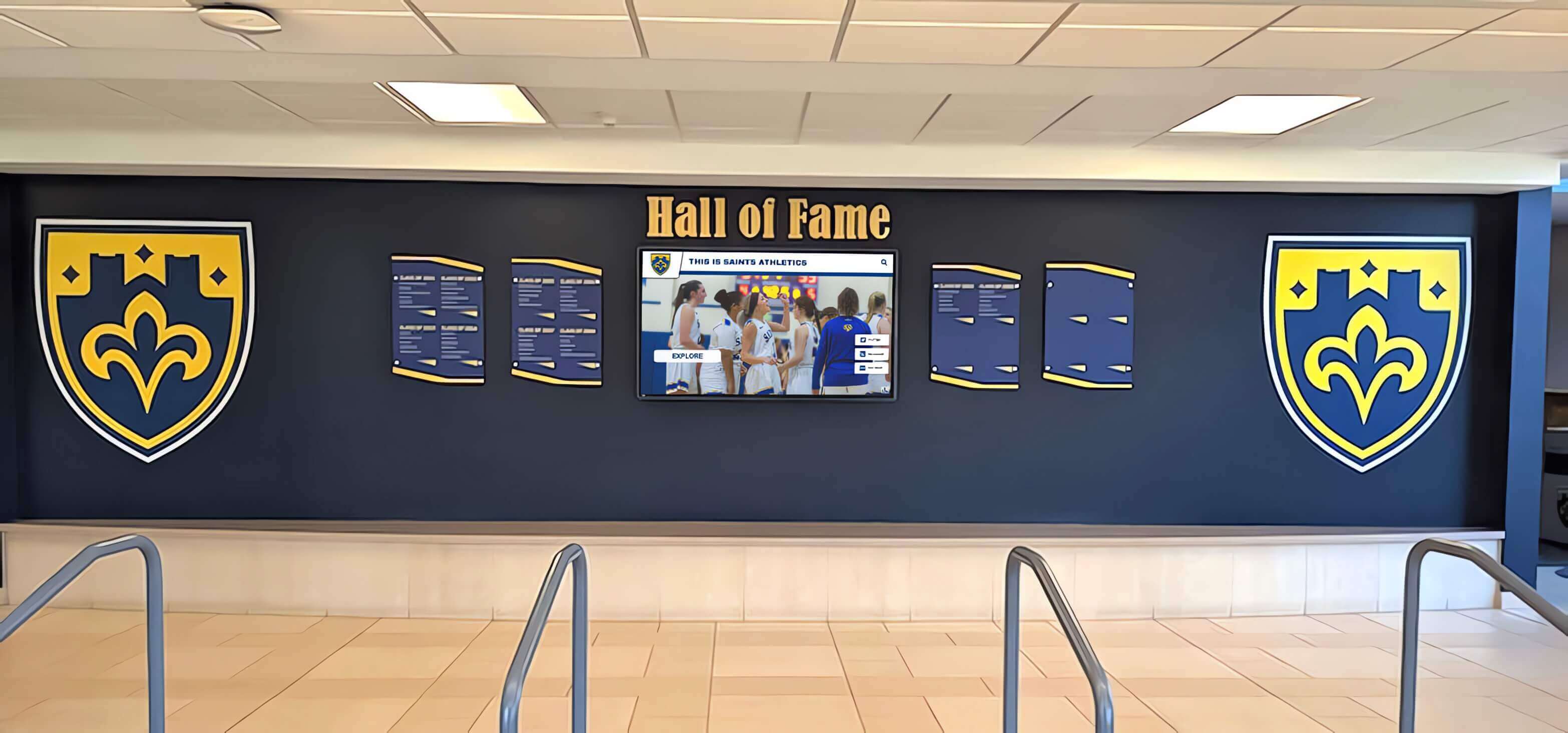
A well-designed hall of fame display functions as far more than a recognition tool—it serves as a visual ambassador for your institution’s identity, values, and legacy. When prospective students and families walk through your campus, they form impressions not just from facilities and programs but from the stories your environment tells about who you are and what you celebrate. Hall of fame displays reveal institutional priorities through what you choose to honor, demonstrate continuity by connecting past excellence to present culture, inspire current students by showcasing relatable pathways to achievement, and strengthen alumni connections by maintaining visible presence of their contributions.
However, creating displays that effectively communicate authentic institutional narratives requires moving beyond traditional approaches that treat recognition as simple data presentation. Schools must think like curators and storytellers, carefully selecting which stories to tell, organizing content to create meaningful narrative arcs, integrating contextual information that brings achievements to life, designing visual hierarchies that guide visitor attention, and creating interactive opportunities that enable personal exploration rather than passive viewing.
The difference between pedestrian displays that list honorees and compelling installations that tell stories lies not primarily in budget or technology, but in design intentionality—deliberate choices about content, organization, visual presentation, and engagement mechanics that transform recognition from mere acknowledgment into meaningful storytelling.
Understanding Your School’s Unique Narrative
Before designing any hall of fame display, schools must first clearly understand the specific story they want to tell—recognizing that every institution possesses distinct character, values, traditions, and historical arcs that should shape recognition approaches.
Identifying Your Institutional Identity
Effective hall of fame display design begins with honest institutional self-assessment clarifying the unique characteristics that define your school’s identity and distinguish it from peer institutions.
Core Values and Mission Alignment
Your hall of fame should visibly reflect the values your school professes to embody. If your mission emphasizes character development alongside academic excellence, recognition must extend beyond pure achievement metrics to honor integrity, service, leadership, and positive impact. If your institution prioritizes innovation and creative thinking, displays should showcase groundbreaking contributions and unconventional pathways rather than merely traditional accomplishments.
Review your mission statement, strategic plans, and institutional messaging. The values and priorities articulated in these foundational documents should directly inform what types of achievements your hall of fame celebrates, how you frame accomplishments, and which stories receive prominent placement. Disconnect between stated values and actual recognition sends confusing messages about what your institution truly celebrates.
Distinctive Heritage and Traditions
Every school possesses unique historical elements—founding stories, defining moments, enduring traditions, legendary figures, and cultural characteristics that shape identity. Your hall of fame display design should incorporate these distinctive elements rather than adopting generic approaches indistinguishable from any other institution.
For schools with deep historical roots, consider how architectural elements, historical imagery, archival materials, and vintage photography can create authentic period context. For newer institutions, emphasize the visionary thinking behind your founding, the innovative approaches you’ve pioneered, and the trajectory of growth and impact you’ve achieved in shorter timeframes.
Demographic and Cultural Context
Your school’s community demographics, geographic location, cultural characteristics, and student population should inform display design decisions. Urban schools serve different communities than rural institutions; religiously-affiliated schools emphasize different values than secular programs; highly diverse student populations require different representation approaches than homogeneous communities.
Design displays that reflect and honor your actual community rather than aspirational demographics. If your student body represents significant cultural diversity, your hall of fame must visibly celebrate achievements across all represented groups—not just dominant populations. Geographic context matters too; schools in communities with strong military traditions might emphasize service recognition differently than those in arts-focused metropolitan areas.
Defining Success Beyond Traditional Metrics
Traditional hall of fame displays often default to easily quantifiable achievements—championship records, academic honors, standardized test scores. While these metrics have value, they tell incomplete stories that exclude many forms of meaningful contribution.
Expanding Recognition Categories
Comprehensive school hall of fame display design acknowledges diverse achievement types including athletic excellence and championships, academic distinction and scholarly achievement, artistic accomplishment in performing and visual arts, leadership and service contributions, innovation and creative problem-solving, character demonstration and positive influence, and career accomplishments as alumni.
By recognizing varied achievement forms, you communicate that excellence manifests in multiple ways, create more inclusive recognition environments where diverse students see pathways to honor, and present more complete pictures of what your school produces beyond singular achievement dimensions.
Highlighting Journey Alongside Outcomes
Stories become compelling not just through outcomes but through the journeys that led there. Effective displays provide context about obstacles overcome, growth demonstrated, unique circumstances that made achievements remarkable, and processes that led to success.
A state championship becomes more meaningful when visitors learn it came from a team that lost its first three games, regrouped through adversity, and demonstrated extraordinary resilience. An academic honor carries greater weight when contextualized with information about the challenging circumstances the student overcame to achieve it. This contextual storytelling transforms simple achievement listings into narratives that inspire and instruct.
Celebrating Collective Achievements
While individual honors remain important, schools also create legacy through collective accomplishments—championship teams, musical ensemble performances, collaborative research projects, service initiatives, and cultural traditions. Your hall of fame design should balance individual and team recognition, acknowledging that many significant achievements require coordinated group effort.
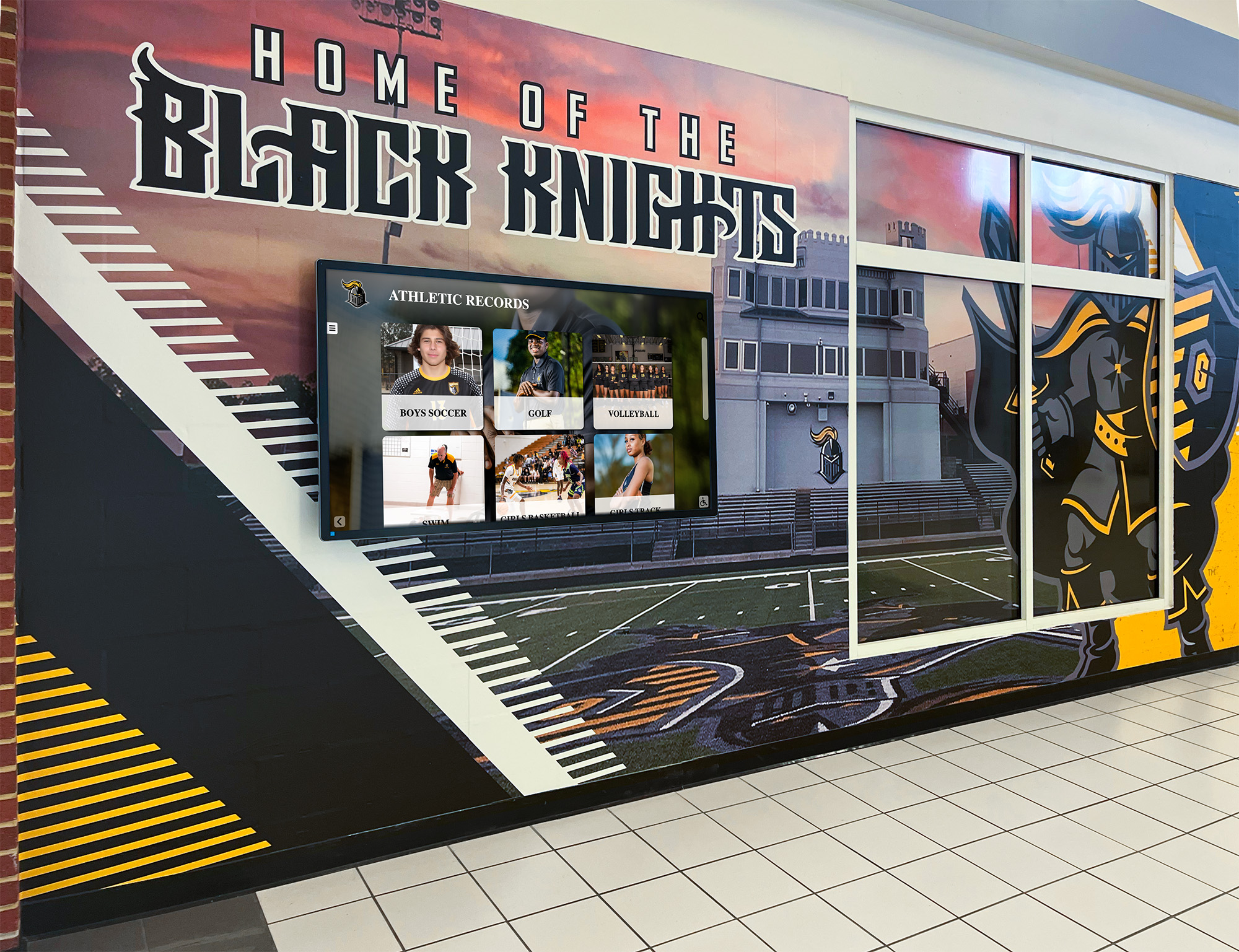
Include team photos, roster listings, coaching staff acknowledgment, and narrative descriptions of collective accomplishments. Consider featuring digital displays that showcase team histories and allow visitors to explore rosters, view highlights, and understand the collaborative nature of success.
Strategic Content Organization for Narrative Flow
How you organize content dramatically impacts whether your hall of fame tells a coherent story or simply presents disconnected information. Strategic organization creates narrative arcs that guide visitors through meaningful experiences.
Chronological vs. Thematic Organization
Two primary organizational approaches offer different advantages for school hall of fame display design: chronological presentation organized by time periods and thematic organization grouped by achievement categories or themes.
Chronological Organization: Institutional Timeline Approach
Chronological organization presents achievements in historical sequence, creating timeline narratives that reveal institutional evolution. This approach works particularly well for schools with significant history wanting to emphasize heritage, institutions that have experienced distinct eras or transformational periods, and displays where historical context significantly enhances achievement understanding.
Benefits include creating clear narrative progression showing institutional growth, providing historical context that helps visitors understand achievements within their time periods, and enabling connection between current programs and historical foundations. However, purely chronological organization can scatter related achievements across distant time periods, making thematic connections less obvious.
Consider hybrid approaches that maintain chronological framework while using visual cues, color coding, or secondary organization to highlight thematic connections across different time periods.
Thematic Organization: Category-Based Approach
Thematic organization groups achievements by categories—athletics, academics, arts, service, leadership—regardless of when they occurred. This approach suits institutions wanting to emphasize program breadth, schools with newer histories where chronological depth provides less value, and displays where category-based exploration better serves visitor interests.
Thematic organization creates focused sections where visitors interested in specific achievement types can efficiently locate relevant content, emphasizes program strength across disciplines, and simplifies navigation for targeted exploration. However, it can obscure historical development and make institutional evolution less apparent.
Creating Visual Hierarchy and Focal Points
Effective display design guides visitor attention through deliberate visual hierarchy—ensuring high-priority content receives appropriate prominence while supporting information remains accessible without overwhelming.
Anchor Content and Signature Stories
Every school possesses certain landmark achievements, legendary figures, or defining moments that represent institutional identity at its finest. These anchor stories deserve prominent placement and enhanced presentation distinguishing them from standard entries.
Identify 3-5 signature stories that most powerfully represent your school’s character and legacy. These might include founding narratives and institutional origins, transformational achievements that elevated your school’s reputation, legendary figures whose impact extended far beyond their tenure, defining moments that revealed institutional character, or traditions that have shaped school culture across generations.
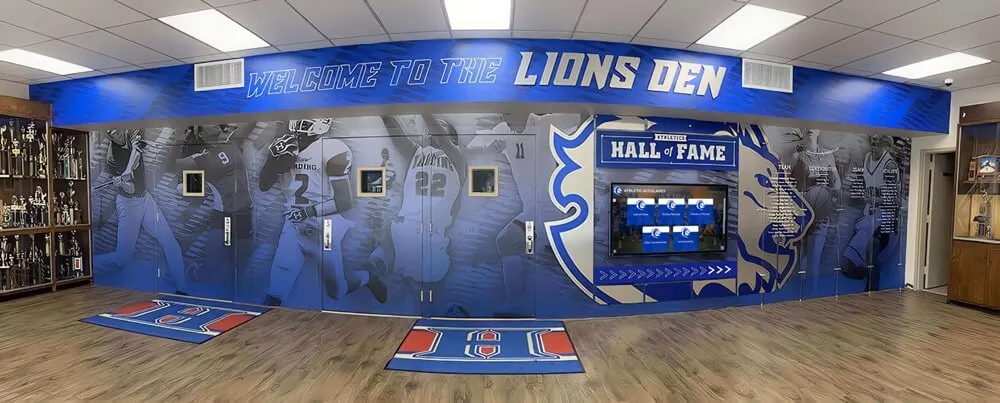
Design anchor content with enhanced visual presence through larger formats, premium placement at entry points or central locations, multimedia integration providing richer storytelling depth, and additional context explaining why these particular stories hold special significance.
Progressive Disclosure: From Overview to Detail
Visitors approach displays with varying engagement levels. Some want quick overviews; others seek deep exploration. Effective design accommodates both through progressive disclosure—presenting essential information immediately visible while making additional details accessible to those wanting deeper engagement.
At the first level, provide high-level overviews: achievement categories, time periods covered, and signature highlights that orient visitors to available content. At the second level, offer individual achievement summaries: names, dates, accomplishments, and basic context. At the third level, enable deeper exploration through extended biographies, achievement context, multimedia content, and related stories for those wanting comprehensive information.
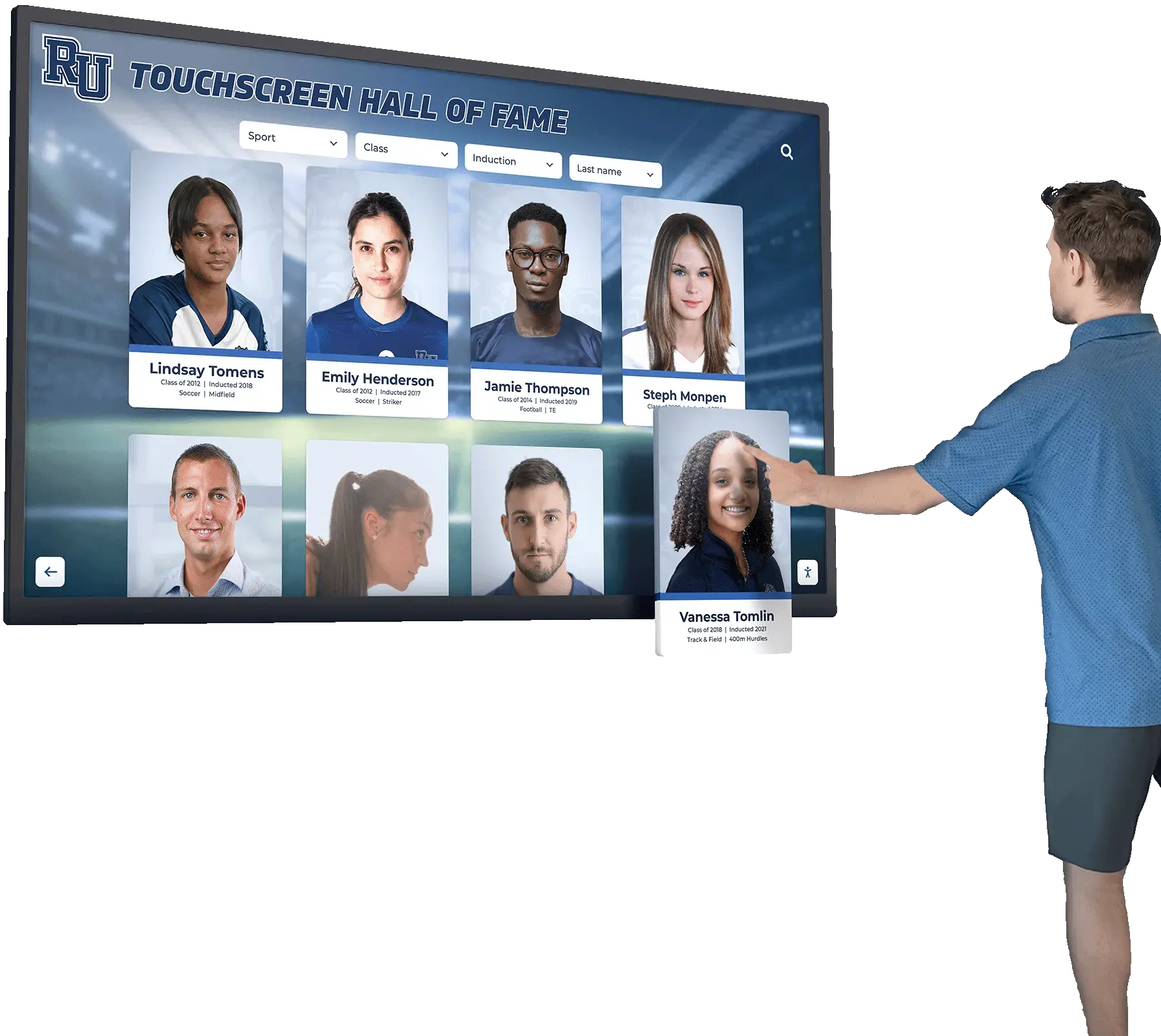
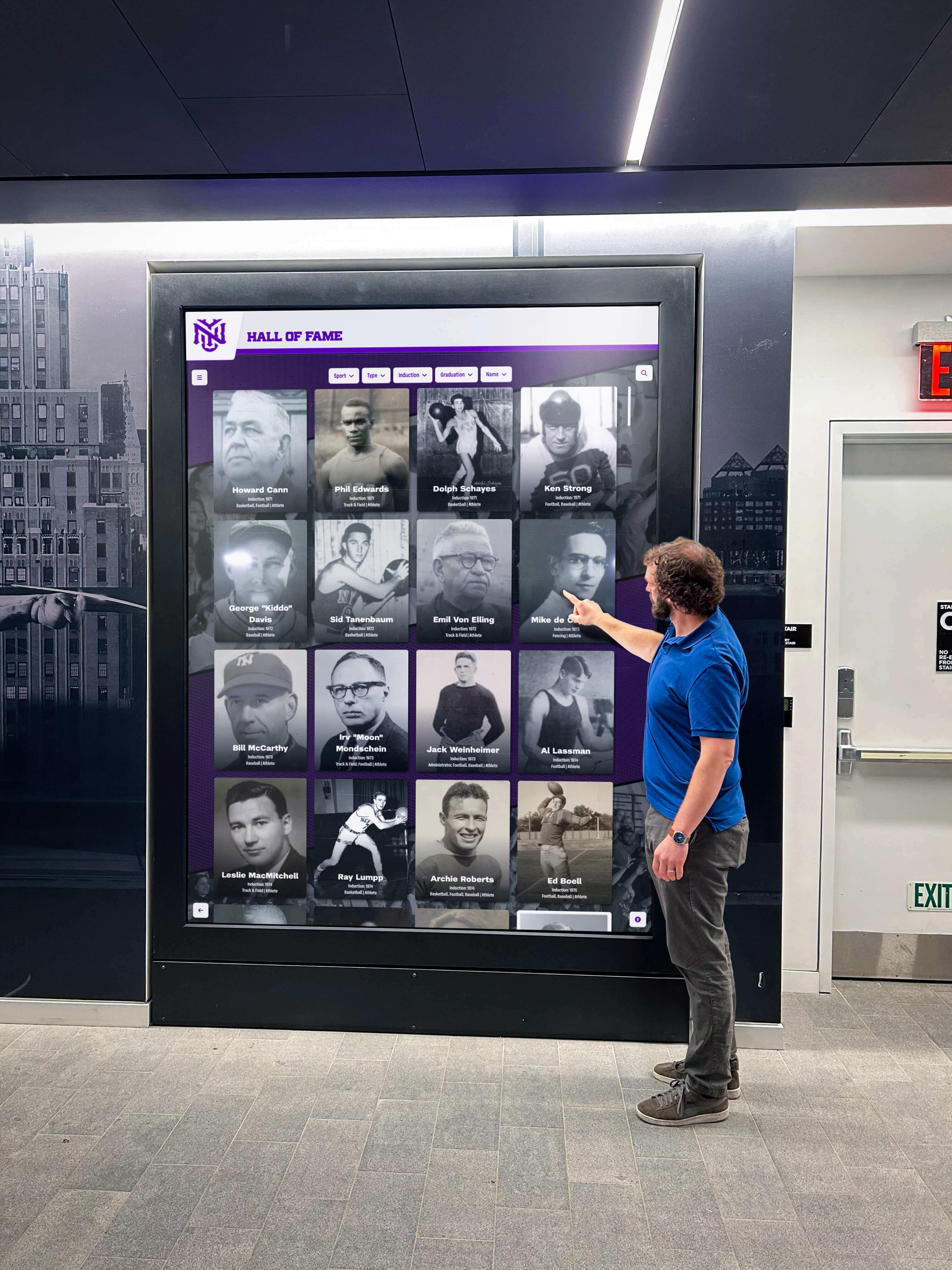
Interactive touchscreen displays excel at progressive disclosure, allowing brief surface-level browsing while enabling visitors who find particularly interesting stories to access extensive additional content without overwhelming those seeking simpler overviews.
Connecting Past to Present
Hall of fame displays that effectively tell school stories don’t present history as disconnected from current reality—they create explicit connections between past excellence and present culture, demonstrating continuity and ongoing legacy.
Legacy and Influence Narratives
When featuring historical achievements, explicitly articulate ongoing influence and contemporary relevance. A pioneering teacher from decades past might be connected to current pedagogy they influenced, innovative programs they established that continue today, or former students they inspired who became influential educators themselves.
Alumni achievements should connect to current student opportunities—“This Olympic athlete developed skills in our track program that today offers…” or “This successful entrepreneur credits teachers still serving our school…” These connections demonstrate that excellence isn’t merely historical but represents ongoing institutional characteristics.
Where Are They Now Updates
Static displays featuring historical figures often feel museum-like rather than connected to living community. Alumni spotlight features with current updates—what honored alumni are doing today, recent accomplishments, ongoing connections to your school—maintain relevance and demonstrate that recognition celebrates living community rather than just historical archive.
Digital displays particularly enable regular “where are they now” updates keeping content fresh and maintaining ongoing story rather than frozen-in-time presentation.
Visual Design Principles for Compelling Storytelling
Content organization provides structure, but visual design determines whether displays engage visitors emotionally and communicate institutional character authentically.
Authentic Branding and Institutional Identity
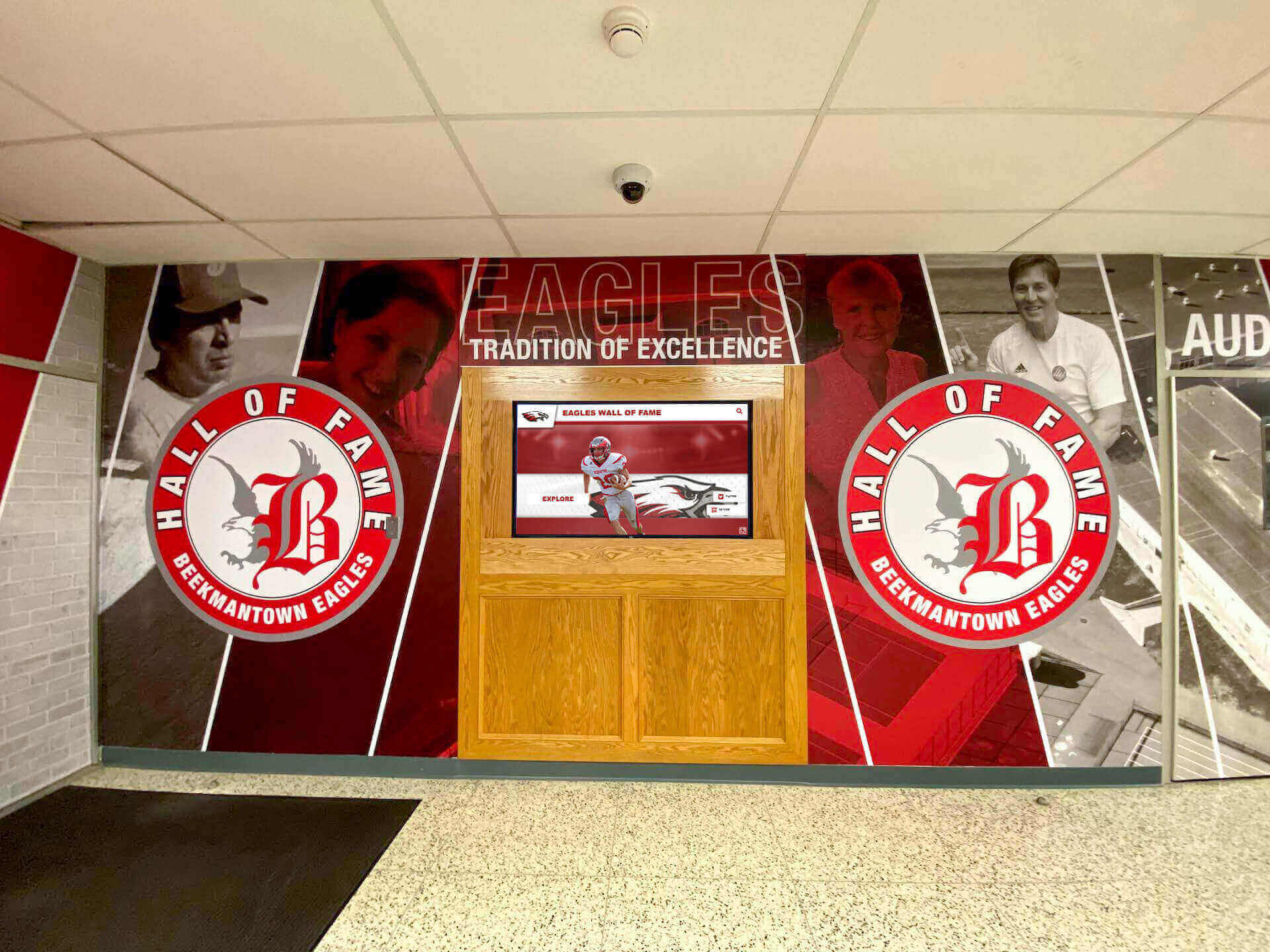
Your hall of fame display should be instantly recognizable as belonging to your specific school—visually communicating identity through consistent branding elements, color schemes, typography, and design language.
Color Psychology and School Pride
School colors represent more than arbitrary preferences—they carry deep emotional associations for students, alumni, and communities. Effective hall of fame display design leverages institutional colors prominently and consistently, creating instant visual connection to school identity.
However, avoid simplistic approaches that merely splash school colors everywhere without thoughtfulness. Use primary institutional colors for major structural elements, headers, and accent features. Incorporate secondary and tertiary colors for variety and visual interest while maintaining cohesion. Consider how color combinations affect readability and accessibility, ensuring sufficient contrast for all visitors.
Typography Reflecting Institutional Character
Typography choices subtly communicate institutional personality. Traditional serif fonts suggest heritage, stability, and academic tradition—appropriate for established institutions emphasizing historical continuity. Modern sans-serif typography conveys contemporary thinking, innovation, and forward focus—fitting newer schools or those emphasizing cutting-edge approaches.
Select 2-3 complementary typefaces providing visual hierarchy: a distinctive display font for headlines and major elements that reinforces institutional character, a highly readable body font for extended text ensuring accessibility, and potentially a third accent font for special elements if needed.
Consistency matters enormously. Once typography system is established, maintain it rigorously throughout all display elements to create professional cohesion.
Architectural Integration and Environmental Context
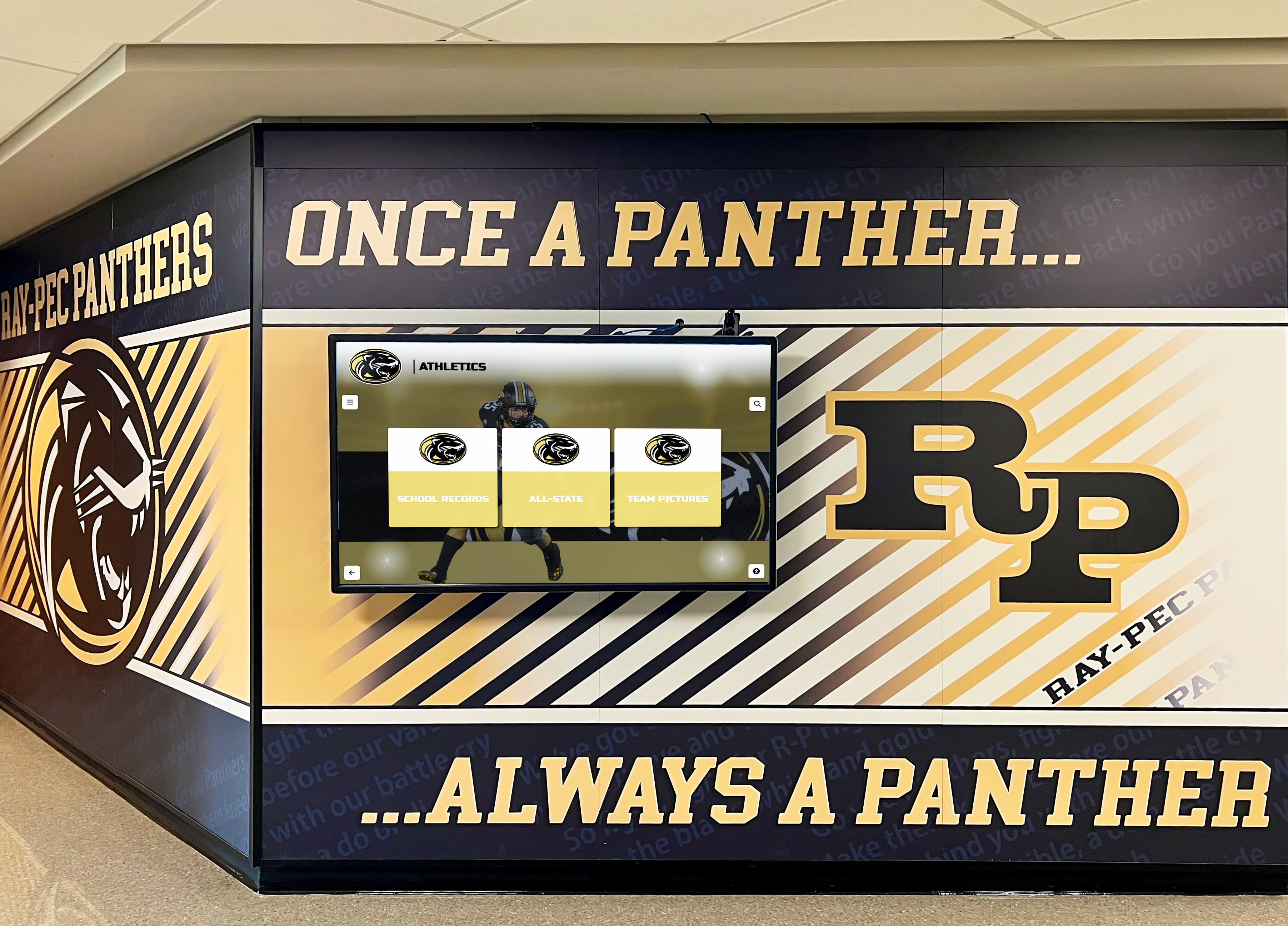
Hall of fame displays shouldn’t appear as afterthought additions but should integrate thoughtfully with existing architectural character and environmental context.
Study the space where your display will be located. Consider existing architectural styles, materials, and design language in your building. A hall of fame in a historic building with traditional architecture might incorporate classic design elements, heritage materials like wood and brass, and vintage-inspired graphics that complement rather than clash with surroundings.
Conversely, displays in modern facilities should embrace contemporary design language through clean lines, minimalist aesthetics, and cutting-edge presentation technologies that feel native to the environment rather than anachronistic.
Photography and Imagery That Tells Stories
Photography represents the most powerful storytelling element in hall of fame displays—images communicate emotion, character, and narrative in ways text cannot.
Action and Context Over Posed Portraits
While formal portraits have a place, the most compelling hall of fame photography captures subjects in action, demonstrating their excellence, or in meaningful contexts that illuminate their stories.
For athletic recognition, action photography showing athletes competing at their highest level tells more compelling stories than simple headshots. For academic achievements, photos of students engaged in research, performances, presentations, or creative work provide context about what they accomplished. For leadership recognition, images showing honorees actually leading—speaking to groups, working with teams, engaging in service—illustrate impact more effectively than static portraits.
When formal portraits are necessary, supplement them with contextual action photography providing visual storytelling depth.
Historical Photography as Narrative Element
For institutions with significant history, archival photography offers powerful storytelling opportunities—vintage images revealing how your school, students, facilities, and programs have evolved across decades.
Incorporate historical photos not just as decorative nostalgia but as deliberate narrative elements. Show facilities then and now to illustrate growth, display student life across different eras to reveal cultural evolution, and include historical team photos, event images, and candid shots that transport viewers to different periods while creating explicit visual connections to present day.
High-quality scanning and restoration of historical photographs pays significant dividends, transforming faded archival materials into compelling visual content suitable for modern display presentation.
Diversity and Representation in Visual Content
Your display imagery must authentically reflect your actual community demographics and achievement breadth—not idealized versions that exclude significant populations.
Deliberately audit photo selections ensuring balanced representation across gender, racial and ethnic backgrounds, achievement categories, and different eras. If your photo selections skew heavily toward particular demographics despite more diverse actual achievement, actively seek additional imagery that presents more complete pictures.
This matters not just for equity but for practical effectiveness—students must see people like themselves honored to believe pathways to recognition are available to them. Displays that visually suggest excellence belongs primarily to particular demographic groups alienate significant populations and undermine your recognition program’s motivational potential.
Multimedia Integration and Interactive Storytelling
While traditional static displays have value, multimedia and interactive elements dramatically enhance storytelling capabilities, creating richer engagement opportunities that purely physical displays cannot match.
Video Content and Oral Histories
Video brings hall of fame stories to life through honoree voices, game footage, performance recordings, and narrative documentaries that provide emotional depth impossible through static text and images.
First-Person Storytelling
Interview videos featuring honorees reflecting on their achievements, sharing defining moments, discussing influences and mentors, and offering advice to current students create powerful personal connections. These oral histories preserve voices and perspectives that written biographies cannot fully capture while making recognition feel contemporary and alive rather than archival.
For honored alumni, video interviews conducted during campus visits or reunion events provide opportunities to capture reflections while demonstrating ongoing connections to your institution. For historical figures no longer available for interviews, consider interviewing people who knew them, creating second-hand oral histories that preserve memory and context.
Achievement Documentation
For athletic achievements, highlight videos of championship games, record-breaking performances, and signature moments bring accomplishments to life far more vividly than statistics alone. For performing arts, recordings of standout performances showcase actual talent rather than merely describing it. For academic achievements, recordings of presentations, research explanations, or creative work demonstrations provide concrete understanding of what students accomplished.
Digital display solutions enable seamless video integration, allowing visitors to browse available content and select videos of particular interest rather than forcing passive viewing of predetermined sequences.
Interactive Exploration and Discovery
Passive displays limit visitors to consuming predetermined content in fixed sequences. Interactive approaches enable personal exploration, discovery, and deeper engagement with stories of particular interest.
Search and Filter Capabilities
Interactive touchscreen systems allow visitors to search by name, filter by achievement category or time period, explore by sport or academic discipline, and discover connections between related honorees—creating personalized pathways through content based on individual interests.
This interactive capability particularly benefits alumni seeking familiar names, prospective students interested in specific programs, and researchers exploring institutional history. Rather than forcing all visitors through identical experiences, interactive systems accommodate diverse interests and engagement levels.
Layered Information Architecture
Interactive displays excel at presenting information in layers—brief summaries visible immediately with additional details accessible through further interaction. Visitors can choose their own depth of engagement: browsing dozens of honorees at surface level, exploring several in moderate detail, or diving deep into one or two stories of particular interest.
This flexibility serves diverse visitor needs while preventing overwhelming information density that plagues displays attempting to present comprehensive detail in static formats with finite space.
Gamification and Discovery Elements
Thoughtful gamification encourages deeper exploration. Consider implementing virtual scavenger hunts challenging visitors to find honorees meeting specific criteria, achievement quizzes testing knowledge of institutional history, connection mapping showing relationships between different honorees, or “discover your path” features matching current students with honored alumni in similar programs.
These interactive elements work particularly well for engaging current students who might otherwise view hall of fame displays as irrelevant historical content rather than inspiration sources for their own journeys.
Digital Updates and Living Content
Traditional physical displays become outdated the moment they’re installed—new achievements occur, additional context emerges, and featured individuals accomplish new things. Digital hall of fame solutions address this limitation through easy content updates maintaining relevance.
Regular Content Refreshment
Digital displays enable adding new inductees without physical construction, updating honoree profiles with recent accomplishments and current information, rotating featured stories highlighting different achievements across time, and incorporating seasonal or event-based content maintaining freshness.
This update capability transforms hall of fame displays from static monuments into living recognition that evolves alongside your community—maintaining relevance and engagement rather than slowly becoming outdated.
Social Media and Current News Integration
Advanced digital systems can integrate live social media feeds from honored alumni, current news about inductee accomplishments, upcoming events related to recognition programs, and real-time athletic statistics and records—creating dynamic content that changes continually rather than remaining frozen.
This integration particularly engages younger visitors accustomed to constantly updating digital content, making hall of fame displays feel contemporary rather than museum-like.
Physical Design Considerations and Installation
Beyond content and digital capabilities, physical design and installation quality significantly impact whether displays successfully tell your school’s story.
Location and Traffic Patterns
Hall of fame display effectiveness depends heavily on placement—even excellent design fails if located where your community rarely encounters it.
High-Visibility Placement
Prioritize locations with consistent foot traffic: main entrances and lobby areas where all visitors pass, hallways connecting high-traffic destinations, near athletic facilities or gymnasiums for sports-focused recognition, and outside administrative offices where alumni and visitors frequently gather.
Avoid relegating hall of fame displays to low-traffic areas like isolated hallway wings, basement locations, or spaces primarily accessed by limited populations. Recognition tucked away in rarely visited corners fails to inspire broad communities or communicate institutional values to visitors.
Appropriate Scale for Space
Display scale must match available space. Undersized installations in large lobbies appear insignificant and fail to command attention. Oversized displays in constrained spaces overwhelm environments and prevent comfortable viewing.
Measure spaces carefully during planning, considering viewing distances (visitors should be able to see content clearly from 3-10 feet depending on information hierarchy), traffic flow (displays shouldn’t obstruct movement or create congestion), and environmental proportions (installations should feel architecturally integrated rather than awkwardly scaled).
Lighting Considerations
Poor lighting sabotages excellent content. Natural daylight creates glare on traditional displays and washes out screens, while insufficient artificial lighting makes content difficult to read and creates unwelcoming environments.
For physical displays, provide dedicated lighting highlighting content while minimizing glare and shadows. For digital screens, use high-brightness commercial displays (minimum 500 nits for ambient light environments) and anti-glare screen treatments managing reflection.
Durability and Maintenance
Hall of fame displays represent long-term investments requiring materials and technologies that maintain quality across years of continuous use.
Commercial-Grade Components
Resist consumer-grade shortcuts. Consumer TVs fail quickly under continuous operation commercial displays handle easily; cheap printed graphics fade and degrade where professional materials maintain quality; and low-cost interactive technologies break down under heavy public use.
Invest in commercial-grade displays rated for 24/7 operation, UV-resistant professional printing for physical graphics, commercial touchscreen technology designed for public environments, and professional mounting and framing systems ensuring secure long-term installation.
Accessibility and Maintenance Access
Design installations allowing reasonable maintenance access. Digital displays require occasional service, content updates need convenient management, and physical elements require periodic cleaning and upkeep.
Ensure administrative access to digital systems for content updates without requiring IT specialist intervention, reasonable physical access for cleaning, component service, and routine maintenance, and documentation providing guidance for future staff managing displays as personnel changes over time.
Measuring Success and Gathering Feedback
Once hall of fame displays are installed, gather data about their effectiveness in telling your school’s story and engaging your community.
Visitor Engagement Metrics
For interactive digital displays, track usage data including frequency of interaction, popular content categories, search patterns revealing visitor interests, and time spent engaging with different content types. This data reveals which stories resonate most strongly and which content might need enhancement.
Community Feedback
Solicit qualitative feedback from students (do displays inspire them?), alumni (do they feel appropriately honored and connected?), prospective families (do displays effectively communicate institutional character?), and staff (do displays accurately represent school values?).
Consider periodic surveys, focus groups, or simple feedback opportunities near displays gathering impressions and improvement suggestions.
Achievement of Strategic Goals
Define success metrics aligned with your strategic goals. If your hall of fame aims to increase alumni engagement, track alumni attendance at events, donation participation, and volunteer involvement. If goals emphasize student inspiration, assess whether students report feeling motivated by displayed stories and whether they can articulate institutional values communicated through recognition.
Displays that don’t achieve intended strategic outcomes require assessment—either the display design needs improvement or the underlying strategy needs refinement.
Conclusion: Recognition That Tells Authentic Stories
Effective school hall of fame display design transcends simple achievement listing, instead creating narrative-driven recognition experiences that reveal institutional character, inspire current communities, strengthen alumni connections, and communicate authentic values to all who encounter them.
The schools that create most compelling displays approach recognition as storytelling—thoughtfully selecting which stories to tell, organizing content to create meaningful narrative arcs, designing visual presentations that communicate authentically, integrating multimedia and interactive elements that bring stories to life, and maintaining living content that evolves alongside institutional communities.
Your school’s story deserves recognition design that honors its uniqueness, celebrates its genuine character, and inspires everyone who encounters it. Whether renovating existing displays or creating new recognition from scratch, the principles outlined here provide framework for transforming simple acknowledgment into compelling storytelling that serves your institution for generations.
Ready to Design a Hall of Fame Display That Tells Your School’s Story?
Rocket Alumni Solutions specializes in creating custom digital hall of fame displays that transform institutional recognition into compelling storytelling experiences. Our team works with schools and universities nationwide to design recognition solutions authentically reflecting unique institutional identities, values, and legacies—combining strategic content planning, professional visual design, interactive technology, and ongoing support to create hall of fame displays that genuinely inspire and engage your community.