The single most important principle in honor wall planning is to design for the honorees you haven’t inducted yet. Schools that size a recognition display for today’s roster—without accounting for annual additions—spend more on renovations over ten years than the original installation cost. A well-planned honor wall defines its content fields, layout grid, and expansion path on day one, so every future induction cycle is a simple addition rather than an expensive re-design.
This guide walks school administrators, athletic directors, alumni coordinators, and facilities teams through the full honor wall planning process: choosing a layout that scales, defining what each entry must contain, projecting annual growth, and deciding when a digital display solves space problems that a physical wall cannot.
What Is Honor Wall Planning?
Honor wall planning is the structured process of deciding—before any fabrication or installation—how a school’s recognition display will accommodate new inductees year after year without requiring major physical changes. It covers four overlapping decisions:
- Layout and capacity: How much wall space exists, and how many honorees can it hold at different panel sizes?
- Content fields: What information will each entry include—name, year, sport, photo, bio, QR code?
- Annual growth model: How many new honorees will be added each cycle, and for how many years must the display remain unchanged?
- Static vs. digital: At what point does physical space make digital expansion more practical than adding more panels?
Schools that work through all four decisions before purchasing materials report fewer mid-cycle redesigns and lower long-term cost per honoree.
Step 1: Audit Your Available Wall Space
Start with a precise measurement of the wall or corridor where the display will live. Record:
- Total square footage of usable wall area (excluding doors, windows, fire pull stations, and ADA-required clearance zones)
- Height range: Panel rows above 84 inches become hard to read without a ladder; rows below 18 inches conflict with floor-level clearances
- Structural constraints: Load-bearing studs, conduit runs, or masonry that limits anchor points
- Lighting: Honor walls in dim corridors require integrated lighting or reflective materials to remain legible
A common mistake is treating every square foot of wall as usable. Subtract at least 20 percent for framing margins, expansion buffer at edges, and visual breathing room between sections. The remaining area is your true capacity for panel placement.
Step 2: Define Content Fields Before Choosing Panel Size
Panel dimensions must be driven by content requirements—not the other way around. Schools that pick a panel size first, then discover they need to add a photo or achievement summary, face a costly reorder. Define your content fields first using this framework:
Minimum Required Fields (Every Honor Wall)
- Honoree name (full legal name or preferred name)
- Graduation year or induction year
- Category (sport, academic program, alumni decade, faculty tenure)
Common Extended Fields
- Headshot or action photograph
- One-to-three-line achievement summary
- School mascot or sport icon
- QR code linking to a digital profile, video tribute, or statistics archive
Optional Fields for High-Profile Programs
- Career statistics or notable records
- College placement or professional career line
- Donor recognition notation (if the honoree is also a benefactor)
- NFC chip for contactless profile access
Once content fields are locked, map them to a minimum panel size. The table below shows how content complexity drives physical panel dimensions:
| Content Complexity | Minimum Panel Size | Honorees per 8 ft × 8 ft Section |
|---|---|---|
| Name + year only | 6″ × 8″ | ~90 |
| Name + year + category | 8″ × 10″ | ~55 |
| Name + year + category + bio | 10″ × 12″ | ~35 |
| Name + year + photo + bio | 12″ × 16″ | ~20 |
| Full profile + photo + QR code | 16″ × 20″ | ~12 |
Design for the richest content you expect to add in the next fifteen years. Adding a photo field later means replacing every existing panel to maintain visual consistency.
Step 3: Build an Annual Growth Model
The most overlooked step in honor wall planning is projecting how many honorees will be inducted each year—and for how many years the current physical installation must hold them all.
Calculating Annual Induction Volume
- Athletic programs: Most schools induct 3–8 athletes per annual class. Multi-sport programs with separate categories (football, basketball, baseball, track, etc.) may induct 10–20 per cycle.
- Academic/faculty recognition: Typically 2–5 honorees per annual or biennial cycle.
- Alumni walls: Volume depends on nomination criteria; open-nomination programs can generate 15–30 submissions per year.
Use the conservative end of your projected range for capacity planning. It is far easier to add panels ahead of schedule than to scramble for wall space when a bumper induction class arrives.
Projecting a 10-Year and 20-Year Horizon
| Annual Induction Rate | 5-Year Total | 10-Year Total | 20-Year Total |
|---|---|---|---|
| 5 honorees/year | 25 | 50 | 100 |
| 10 honorees/year | 50 | 100 | 200 |
| 15 honorees/year | 75 | 150 | 300 |
| 20 honorees/year | 100 | 200 | 400 |
Cross-reference this table with your available capacity from Step 1. If your wall can hold 120 honorees at your chosen panel size and you induct 15 per year, you have approximately eight years before the wall fills. Plan your expansion strategy—additional wall sections, a companion digital display, or a full digital migration—before that deadline arrives.
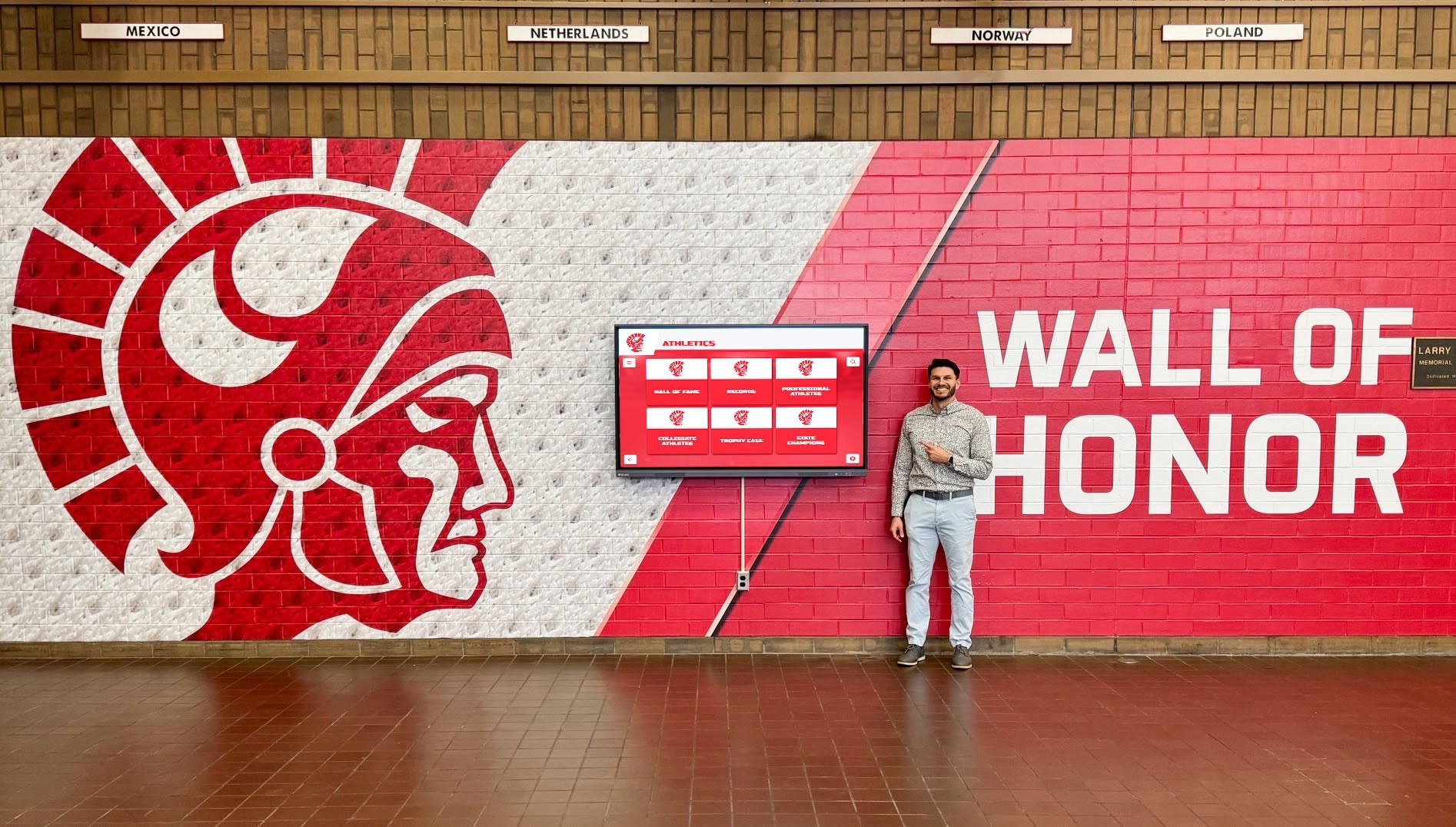
Step 4: Choose a Layout Architecture That Scales
Layout architecture determines how new honorees integrate with existing ones visually. There are three primary approaches:
Chronological Row Layout
Honorees are arranged in rows by induction year, oldest at top left, newest added at the bottom right. This is the most common and easiest to maintain: each new class simply continues from the last occupied position.
Best for: Programs with consistent annual induction volumes and walls that have clear vertical expansion room.
Risk: Once the bottom row is filled, expansion requires either a new wall section or retrofitting an overflow display.
Category-Grid Layout
The wall is divided into zones by sport, program type, or decade. Each zone expands independently. An athletic hall of fame might dedicate one grid section to football, another to basketball, another to academics.
Best for: Schools with diverse recognition categories that induct at different rates.
Risk: One fast-growing category may fill its section years before others, creating an unbalanced wall that looks incomplete.
Anchor-and-Expand Layout
A permanent anchor section (often a founding class or top-tier honorees with larger panels) occupies the center of the wall. New induction classes are added in matching panels radiating outward on either side.
Best for: Schools with a prestigious founding class and high-traffic corridors where the display serves as a visual centerpiece.
Risk: Requires more planning upfront to reserve adequate expansion lanes on both sides of the anchor.
Step 5: Decide When Digital Solves What Physical Cannot
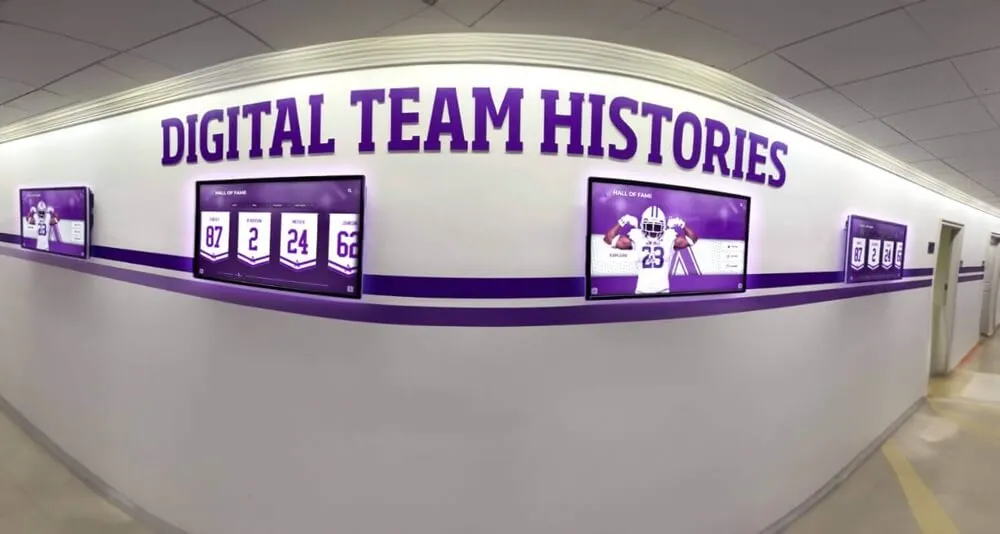
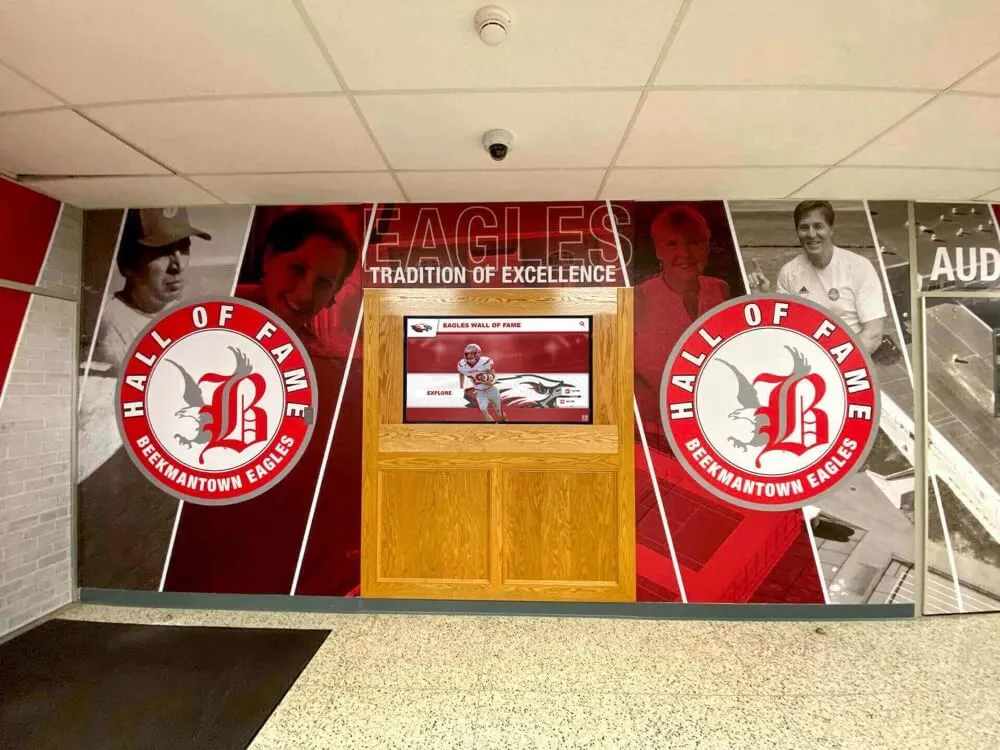
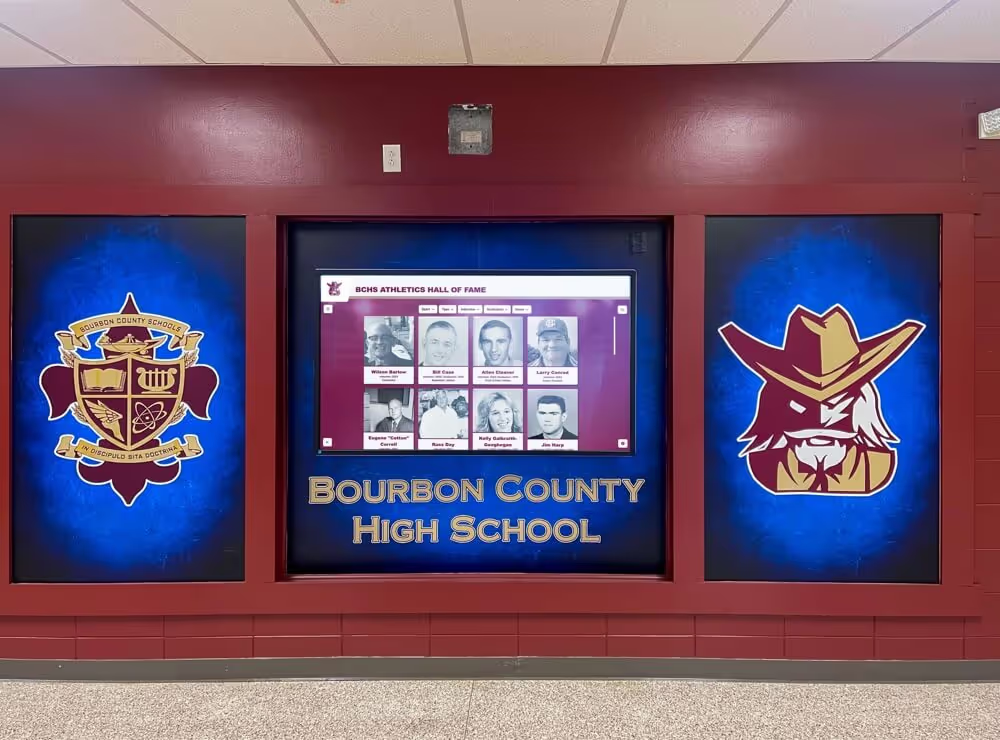
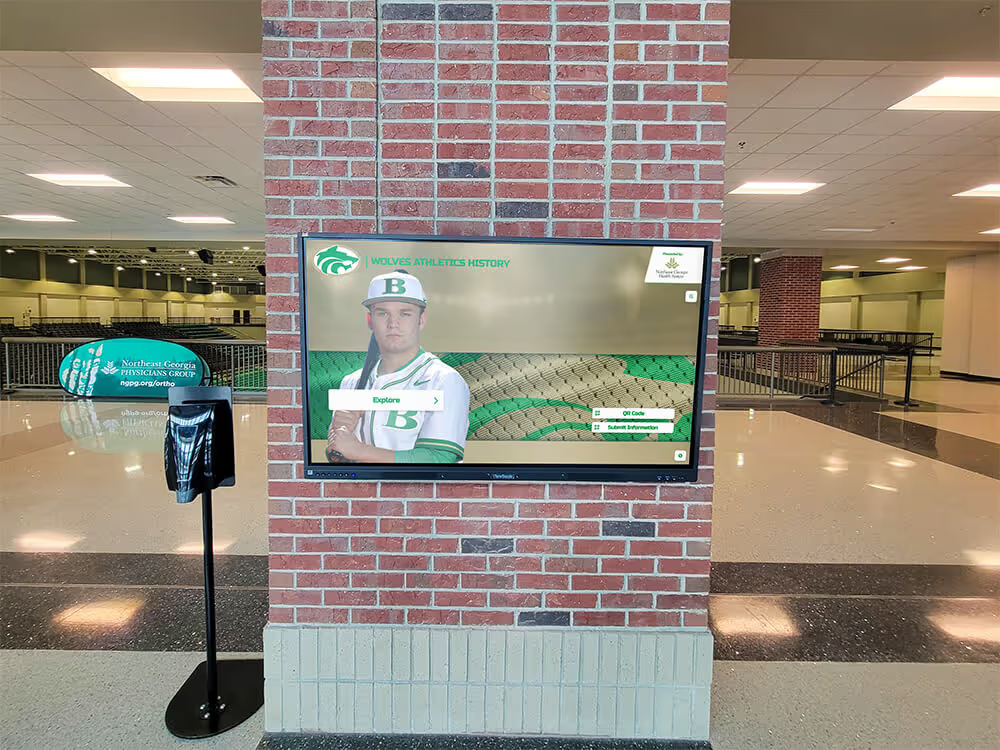
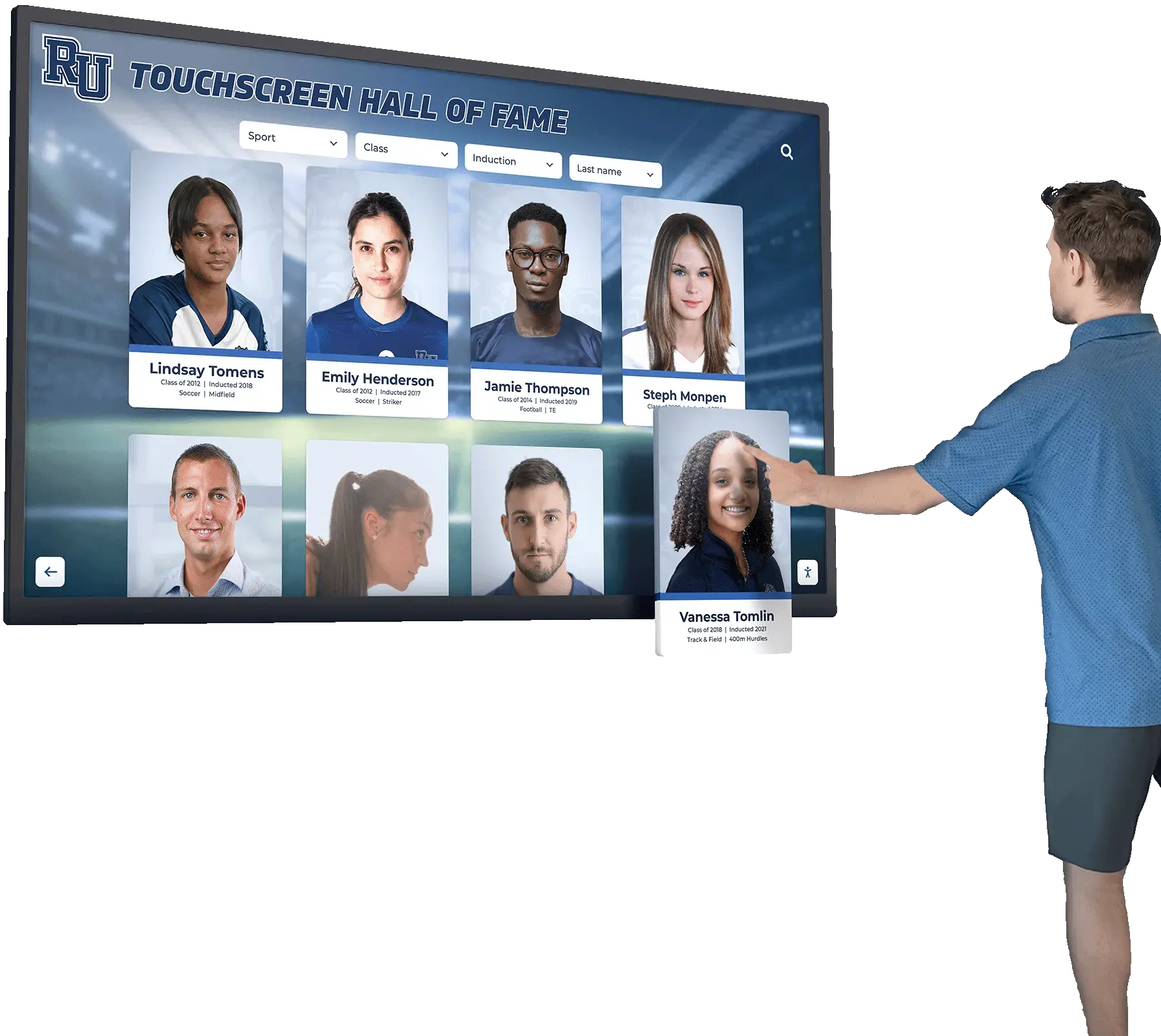
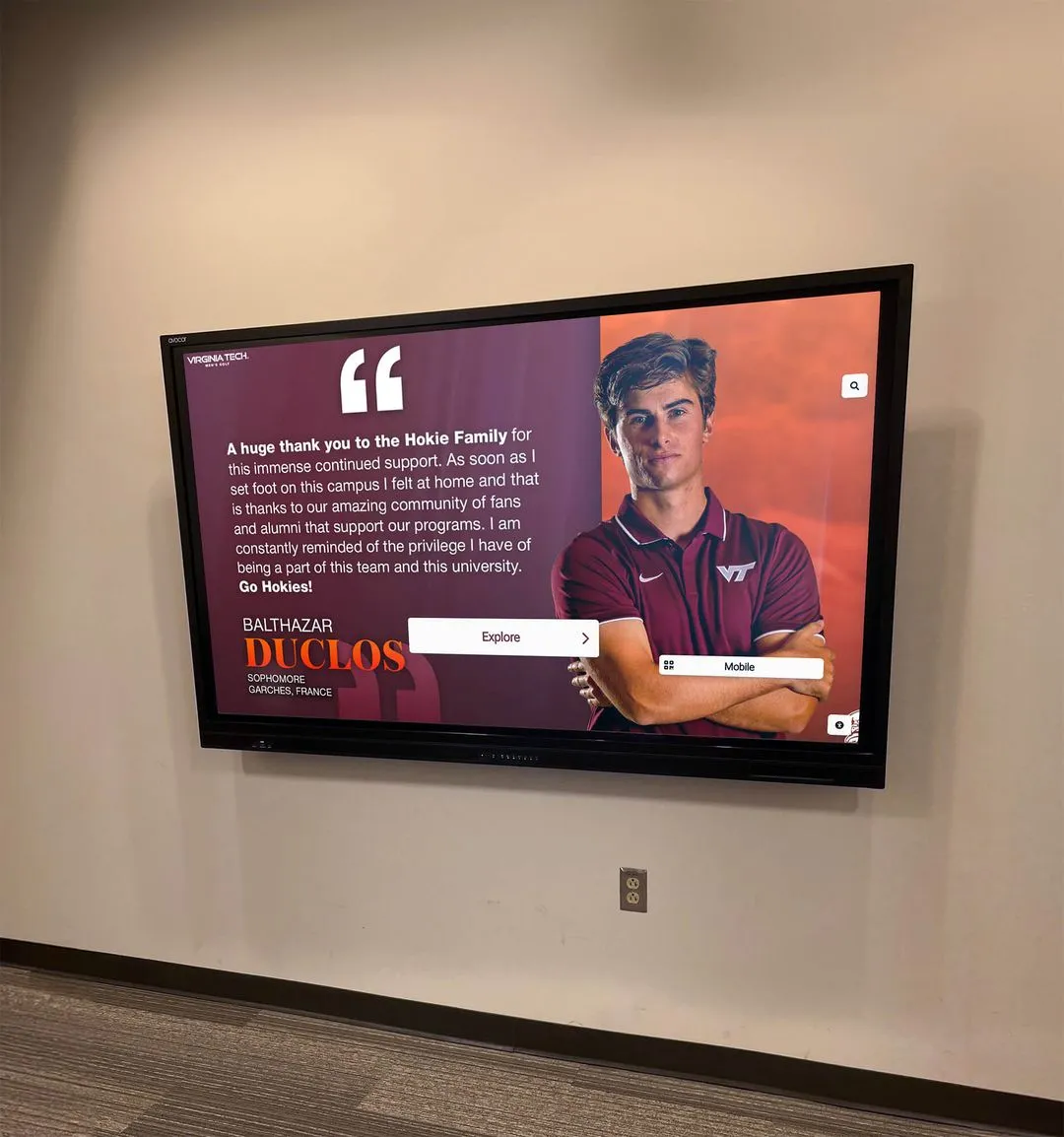
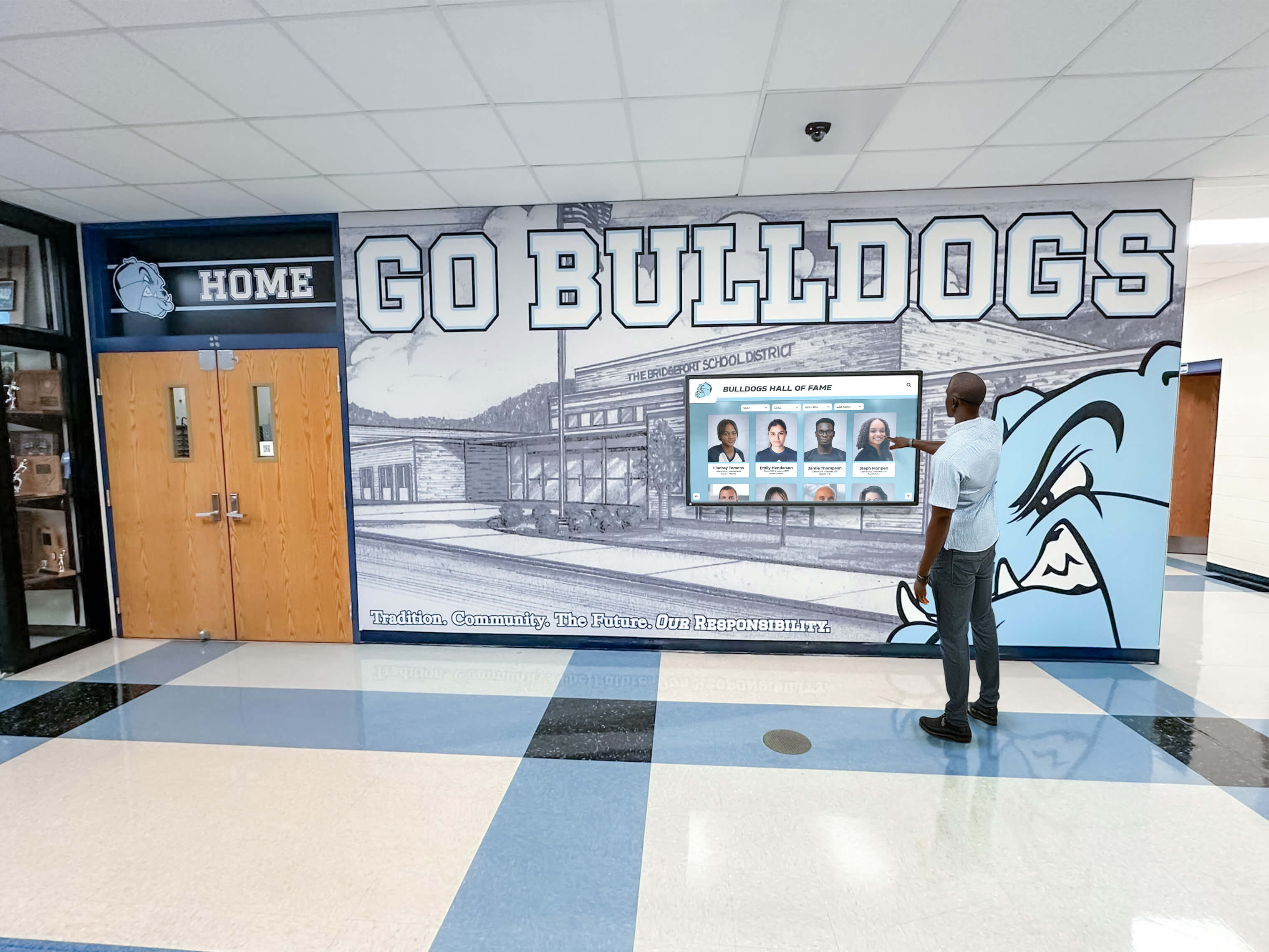
Physical honor walls have a hard ceiling: when the wall is full, it’s full. Digital displays—interactive touchscreen kiosks, large-format screens, or hybrid physical-digital installations—remove that ceiling entirely.
Signs You Need a Digital Component
- Your 10-year growth model exceeds your physical wall capacity
- You want to include video tributes, audio recordings, or career statistics that panels cannot hold
- Your honoree pool spans multiple campuses, buildings, or satellite programs
- You are planning a renovation and want the recognition program to survive facility changes intact
- Donors or major benefactors expect a visually prominent, media-rich acknowledgment
How Schools Use Digital Displays Alongside Physical Walls
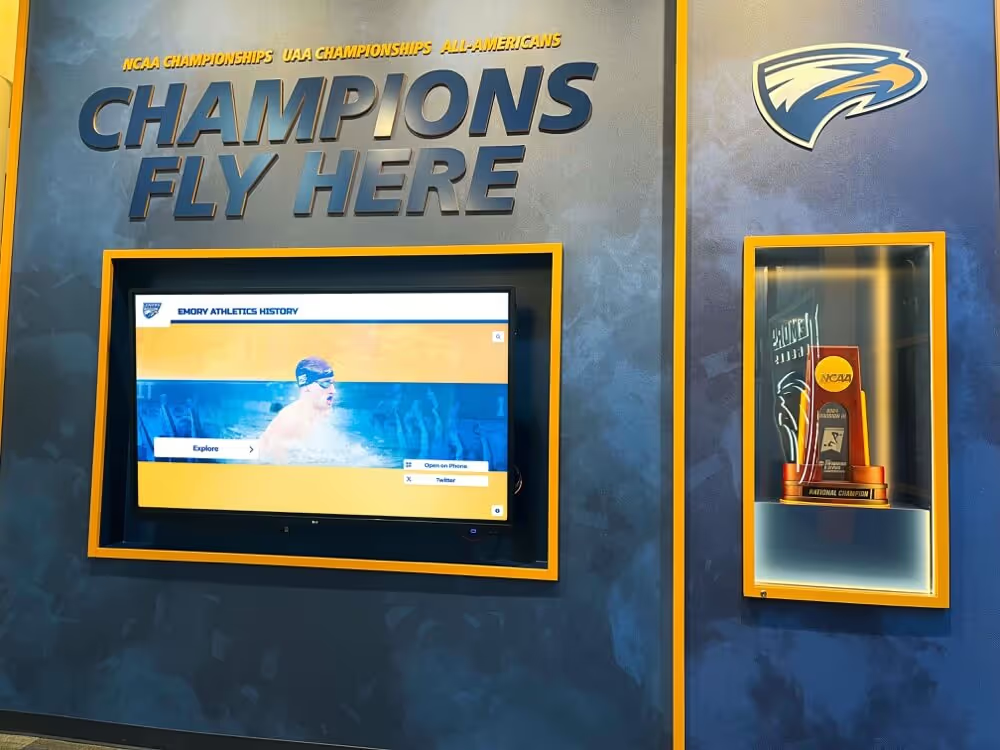
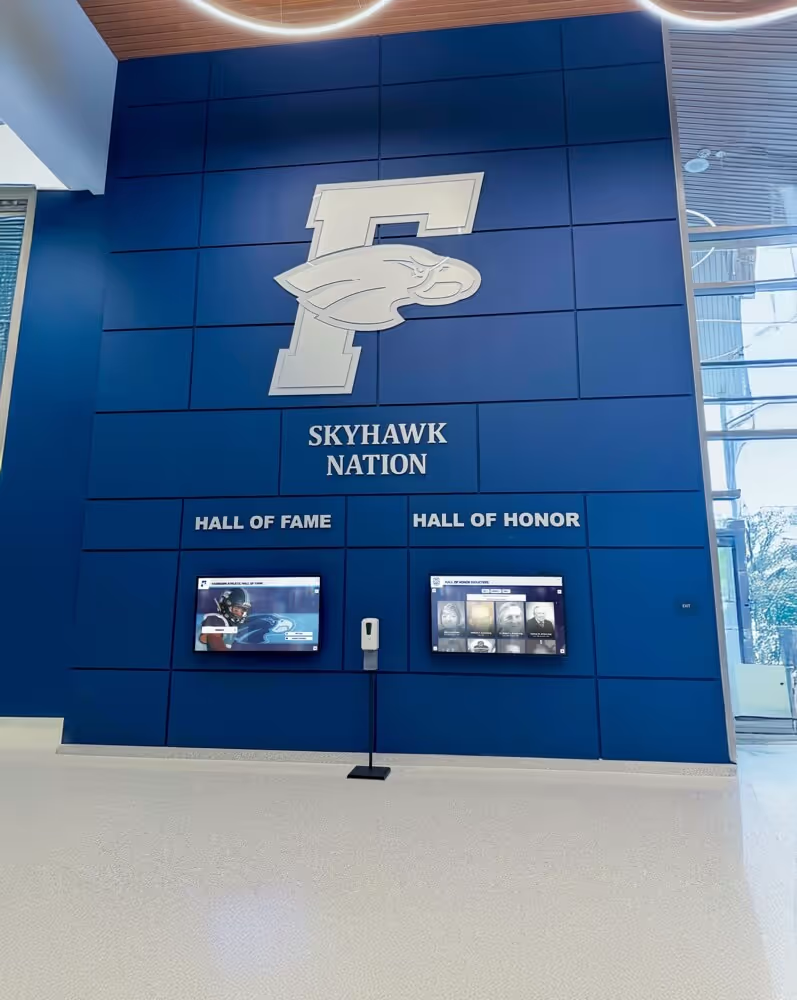
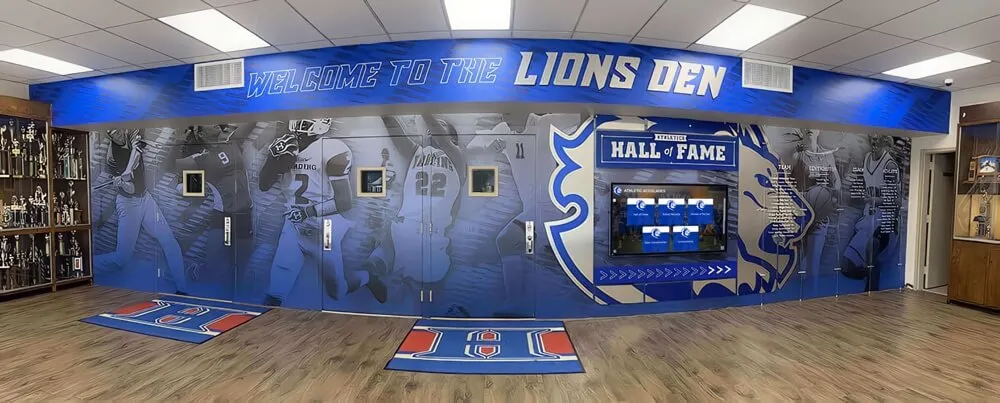
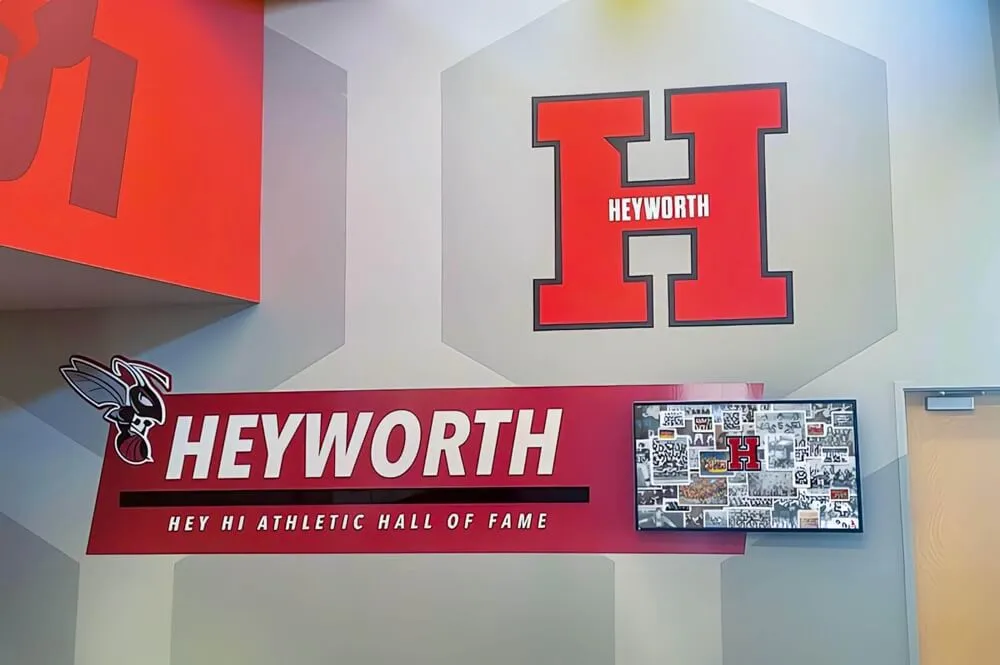
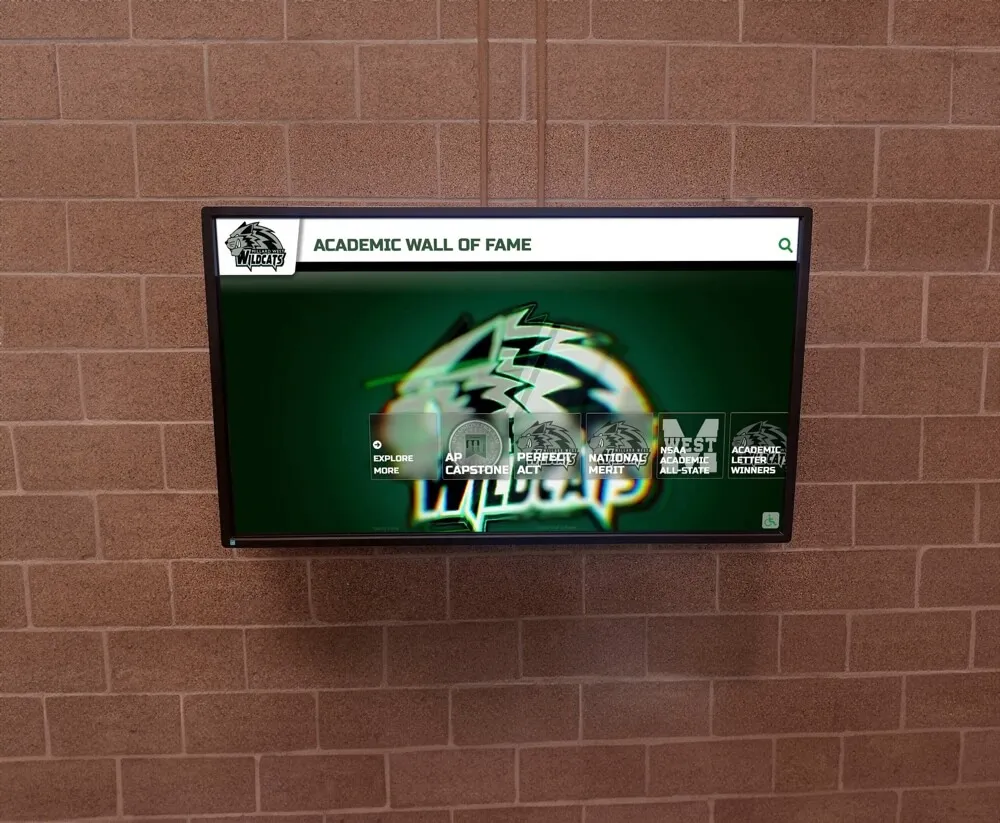
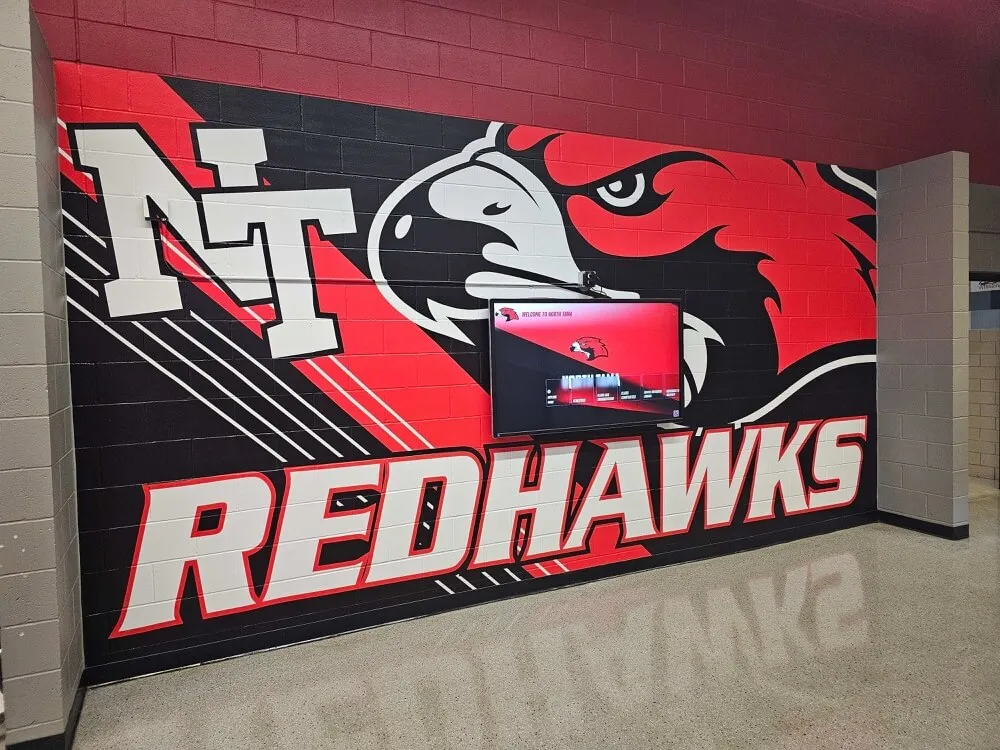
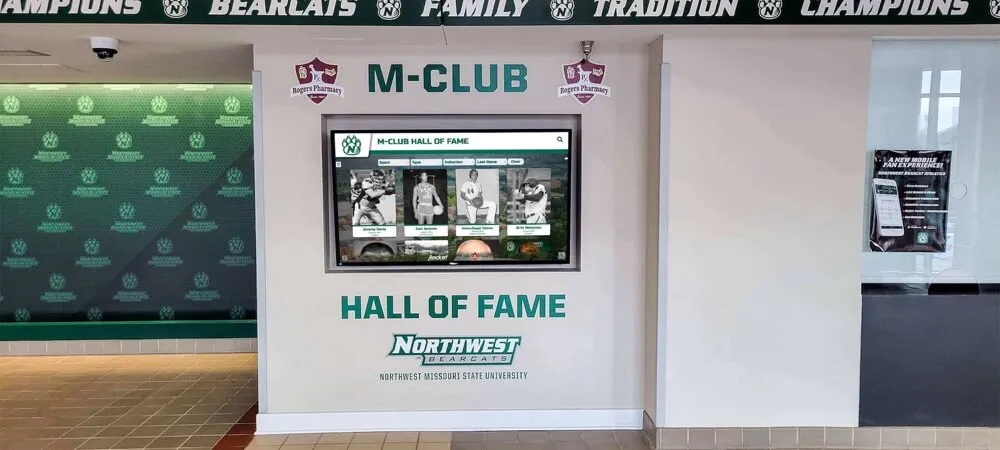
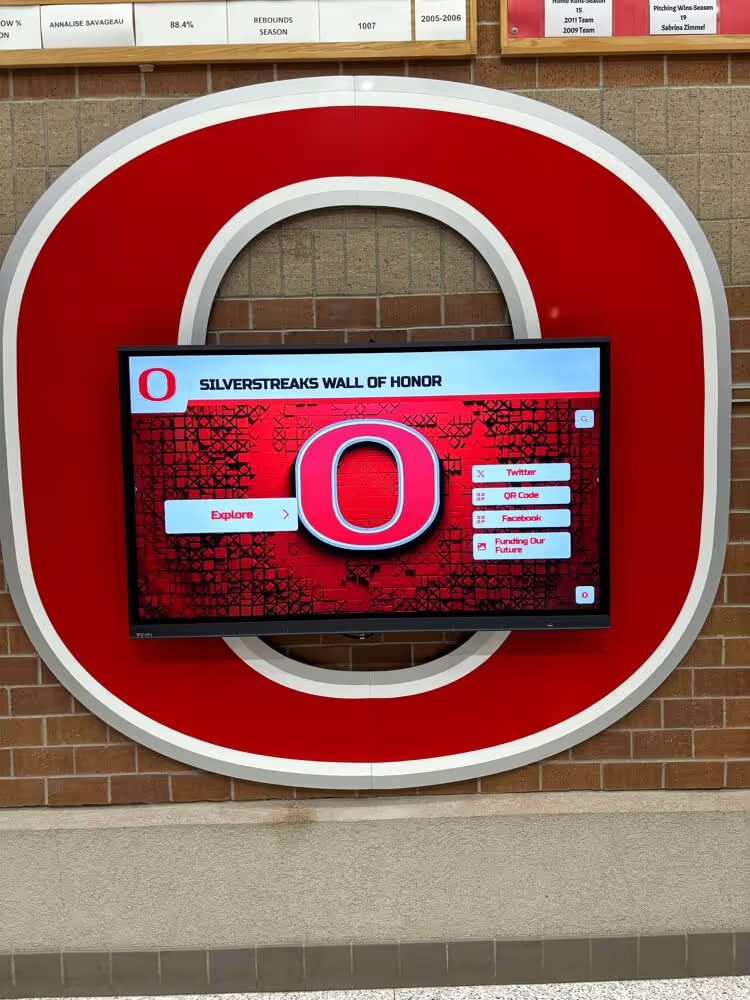
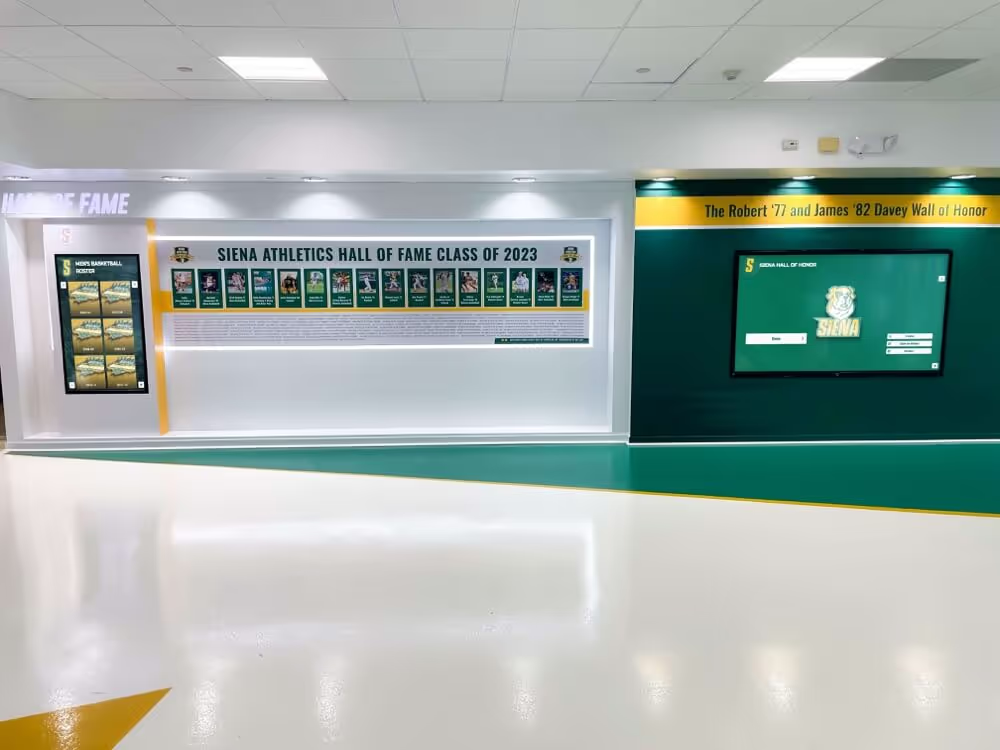
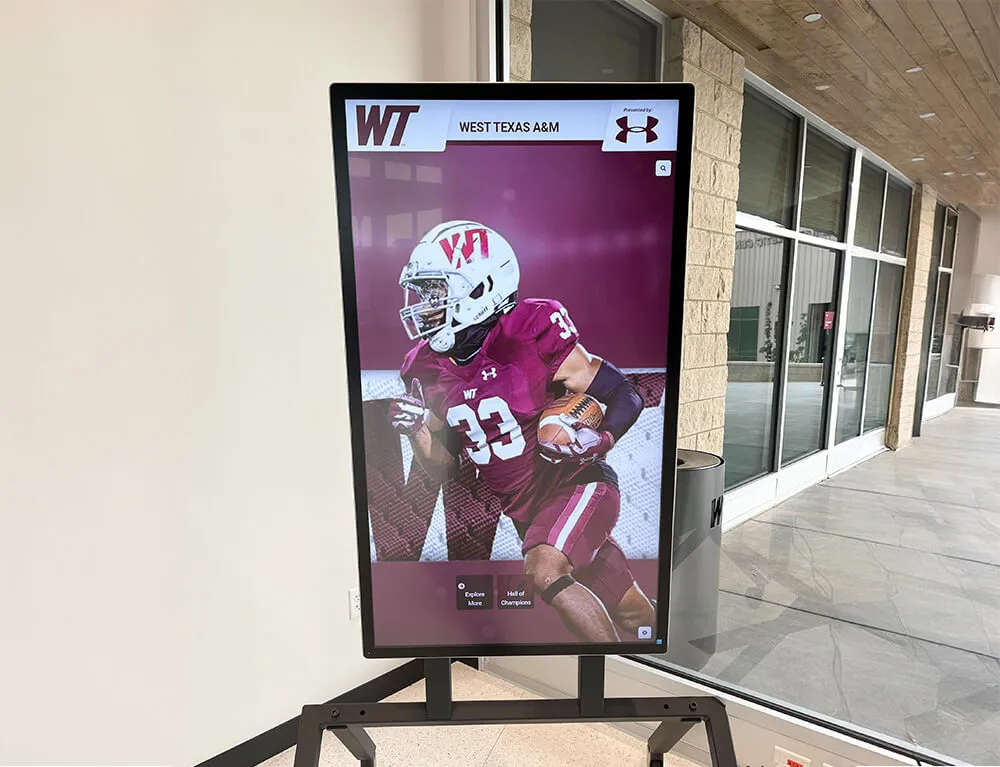
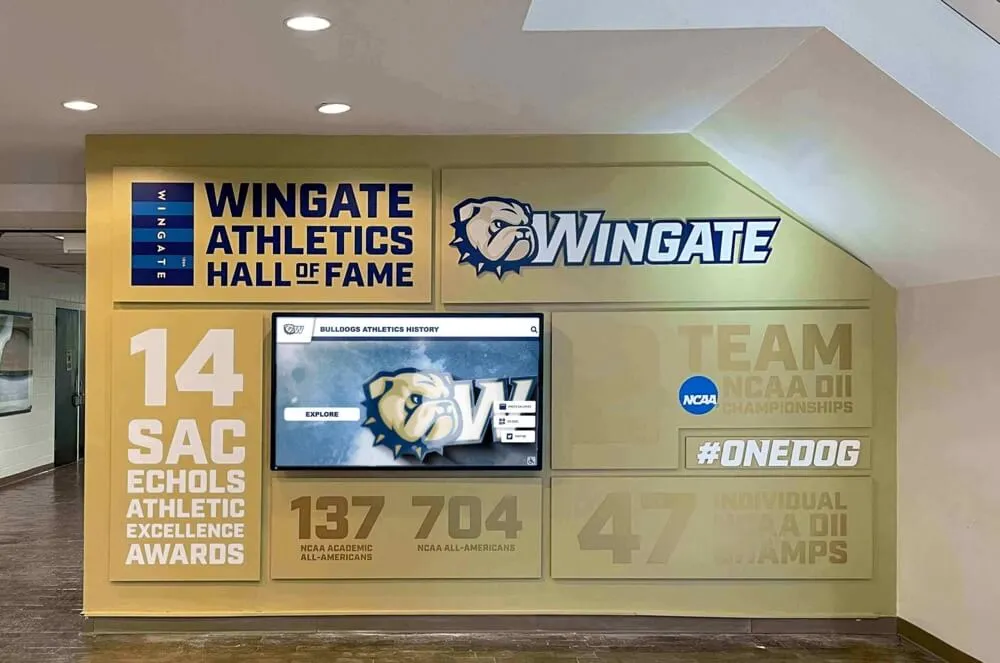
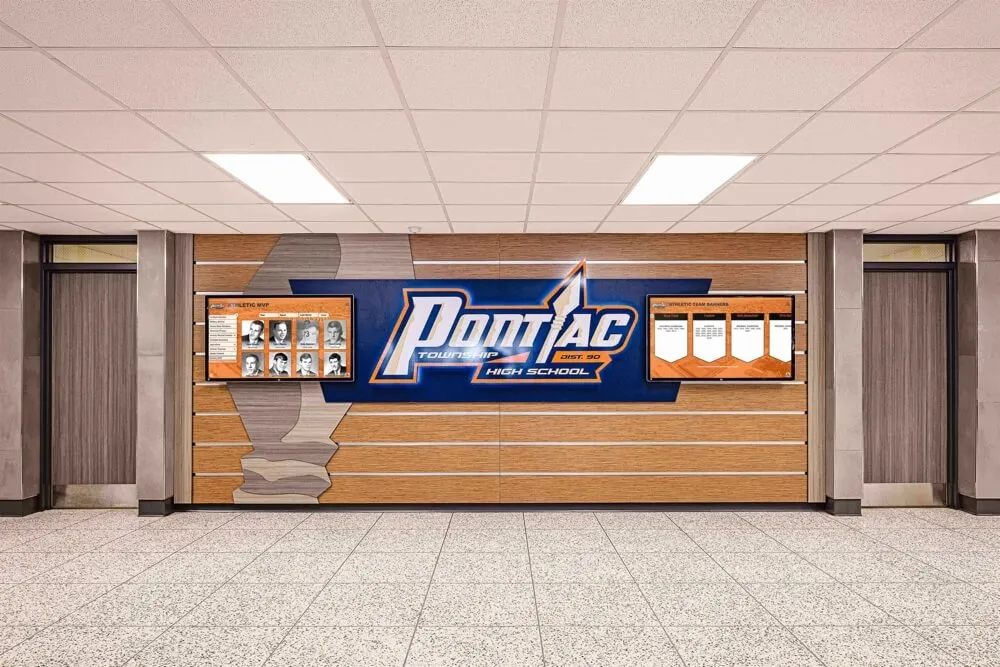
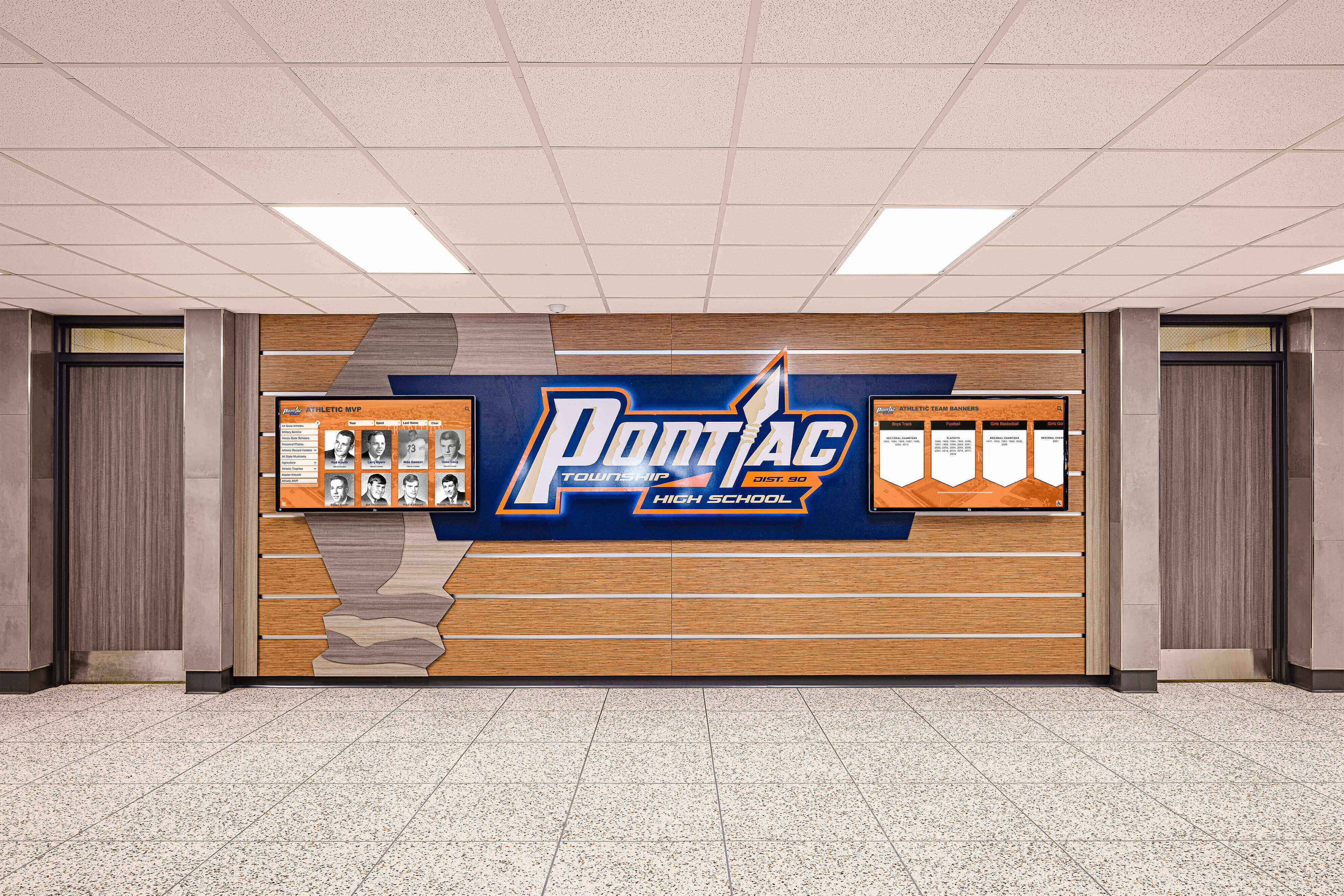
Many schools run a hybrid model: a physical honor wall of permanent plaques for the founding or founding-era inductees, paired with a touchscreen kiosk or large screen that holds the full archive. The physical wall provides the ceremonial, tactile presence that alumni and families respond to emotionally; the digital layer provides unlimited capacity and searchability.
For a deeper look at what goes into a digital transition, see our guide to digital recognition walls for school renovations.
Honor Wall Planning Checklist
Use this checklist before committing to a fabrication or installation contract:
Capacity Planning
- Total usable wall square footage measured and documented
- Panel size selected based on content fields, not available wall space
- 10-year and 20-year capacity projections completed at conservative induction rates
- Expansion buffer (at least one full row or section) reserved and marked off-limits at launch
Content Standards
- All content fields defined and locked before fabrication
- Photo format specified (headshot dimensions, resolution minimum, background standard)
- Achievement summary length capped (character or word limit per panel)
- QR or NFC inclusion decision made before panel template is finalized
Layout and Fabrication
- Layout architecture chosen (chronological row, category grid, or anchor-and-expand)
- Mounting system confirmed (rail-mounted for future repositioning vs. adhesive for permanent install)
- Material weight assessed against wall anchoring capacity
- ADA compliance checked for protruding panels below 80 inches
Growth and Governance
- Annual induction cycle calendar set and communicated to stakeholders
- Nomination and selection process documented before the first class is announced
- Digital overflow plan defined (what triggers migration to a digital display?)
- Budget line for annual additions included in multi-year facilities or athletic budget
How Honor Wall Planning Connects to Broader Recognition Programs
An honor wall is rarely a standalone project. The most sustainable recognition programs connect the physical or digital display to a wider ecosystem:
- Modular hall of fame panels — how panel-based systems give schools consistent visual grammar as they expand year over year
- Alumni walls — graduate recognition that extends beyond athletes to faculty, donors, and community leaders
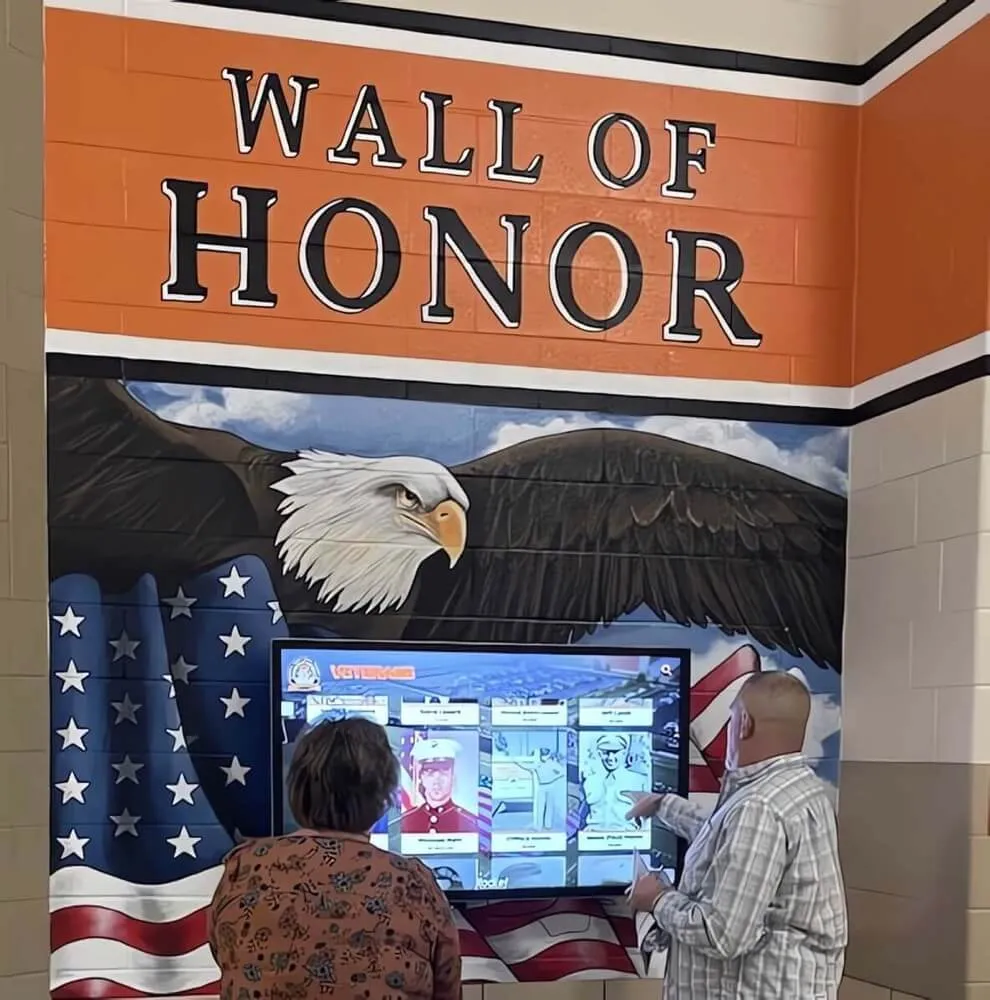
- Memorial and tribute plaques — permanent honors for veterans, faculty, and alumni whose legacy transcends a single sport or program
- Back-to-school recognition launches — how to time a new honor wall reveal for maximum visibility with students, families, and community
Each of these programs benefits from the same planning discipline: define content fields, project growth, reserve capacity, and choose a layout architecture before buying materials.
Frequently Asked Questions About Honor Wall Planning
How far in advance should a school begin honor wall planning?
Twelve to eighteen months before the intended unveiling is the minimum for a new installation. Schools replacing an existing display should add another three to six months for the decommissioning plan, especially if legacy plaques need to be preserved or redistributed to honoree families.
How many honorees should be in a founding class?
There is no universal rule, but most schools induct between 10 and 30 honorees in a founding class to give the wall an immediate sense of prestige and visual fullness. A wall that launches with three panels looks unfinished. Founding classes often include retroactive inductees from the program’s entire history rather than restricting the first class to recent graduates.
Can a school change its panel design after the wall is already installed?
Yes, but it requires replacing existing panels to maintain visual consistency—which can be expensive if the original supplier no longer offers the same material or finish. This is one of the strongest arguments for choosing a well-established vendor with a long product lifespan and for documenting exact materials, finishes, and dimensions in a written specification that lives in your facilities records.
What is the right spacing between panels?
A minimum of one inch between panels in a grid layout is standard. Many designers use one-and-a-half to two inches to allow for minor alignment corrections during installation and to give the wall a cleaner look under directional lighting. Tighter spacing saves horizontal space but makes individual panels harder to read in high-traffic corridors.
When does a digital display make more sense than expanding a physical wall?
When the cost of adding a new wall section—demo, framing, finishing, fabrication, and installation—exceeds the cost of a digital kiosk or large-format screen capable of holding hundreds of additional profiles, the digital option is almost always the better long-term investment. For schools with renovation budgets, that crossover point typically arrives between years eight and twelve of a physical honor wall’s life.
How should a school handle honorees who wish to update their information?
Physical panels are essentially permanent once fabricated. Build a process for collecting verified updates—changed names, corrections to stats, additions of post-graduation achievements—and use QR codes or a companion website to publish living profiles alongside the static physical display. This preserves the permanence of the physical panel while allowing the digital layer to stay current.
Honor wall planning is infrastructure work, not aesthetic work. The schools with the most admired recognition displays didn’t choose the nicest-looking panels—they chose the most defensible content standards, the most honest growth projections, and the most flexible layout architecture. The wall that looks intentional and well-maintained twenty years from now is the one whose administrators asked the hard capacity questions before anyone picked up a drill.