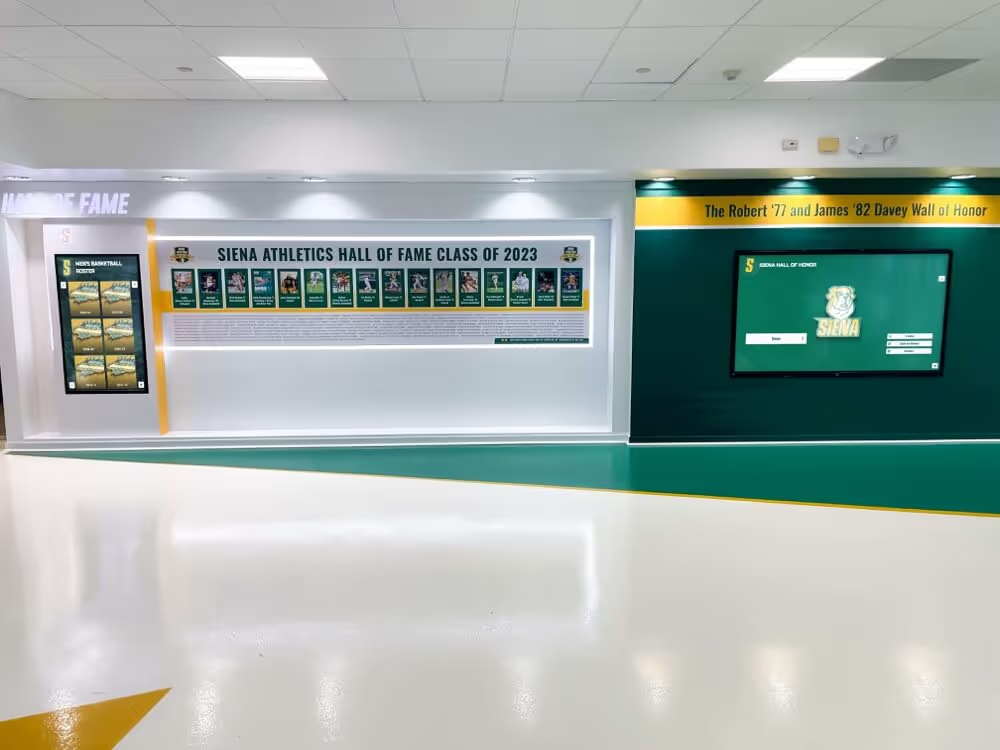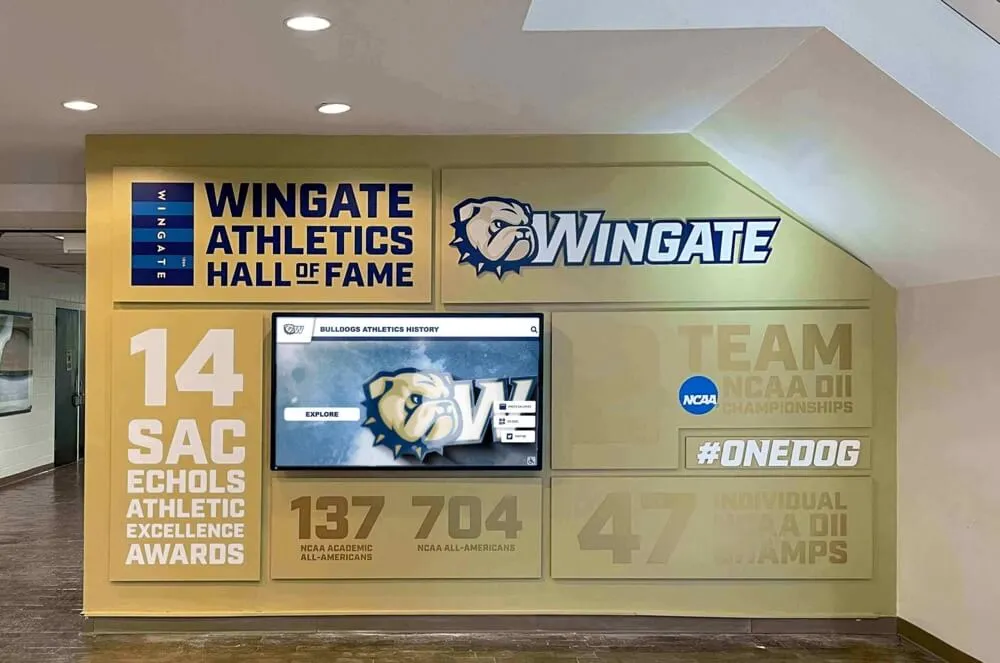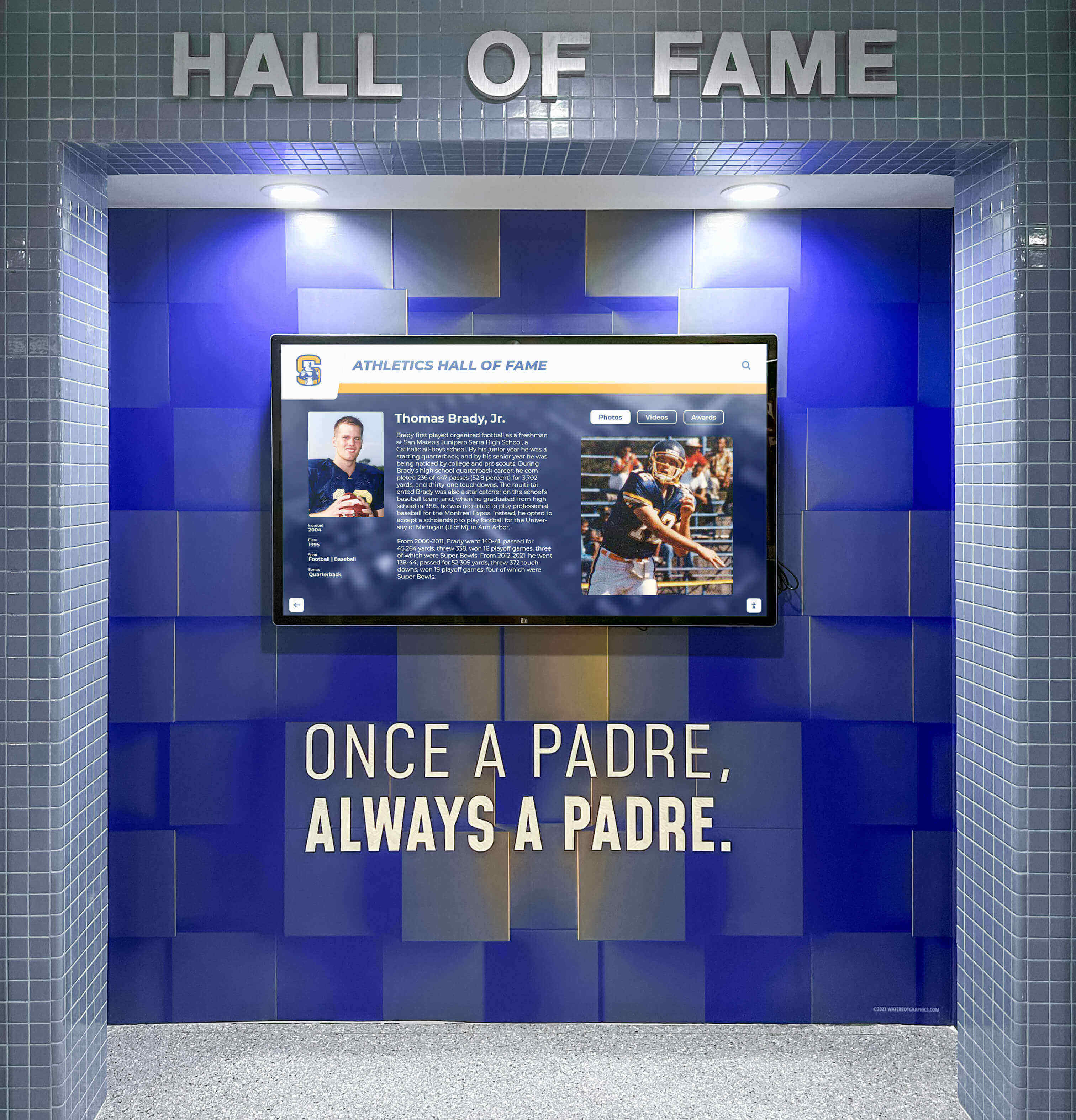




Walk into any historic hockey arena and you’ll encounter fragments of its past—faded championship banners hanging from rafters, dusty trophy cases lined with tarnished hardware, perhaps a few retired jerseys or commemorative plaques. These traditional recognition methods served their purpose for decades, but they share critical limitations: finite physical space, inability to tell complete stories, static presentation that fails to engage modern audiences, and no capacity for updates as new achievements occur.
Hockey programs—whether youth organizations, high school teams, college programs, or professional franchises—accumulate championships, records, and memorable moments continuously. Each season adds new players to honor, teams to celebrate, and milestones to preserve. Traditional recognition methods force difficult decisions about which achievements receive limited display space, often relegating extraordinary accomplishments to storage boxes or forgotten archives simply because wall space ran out years ago.
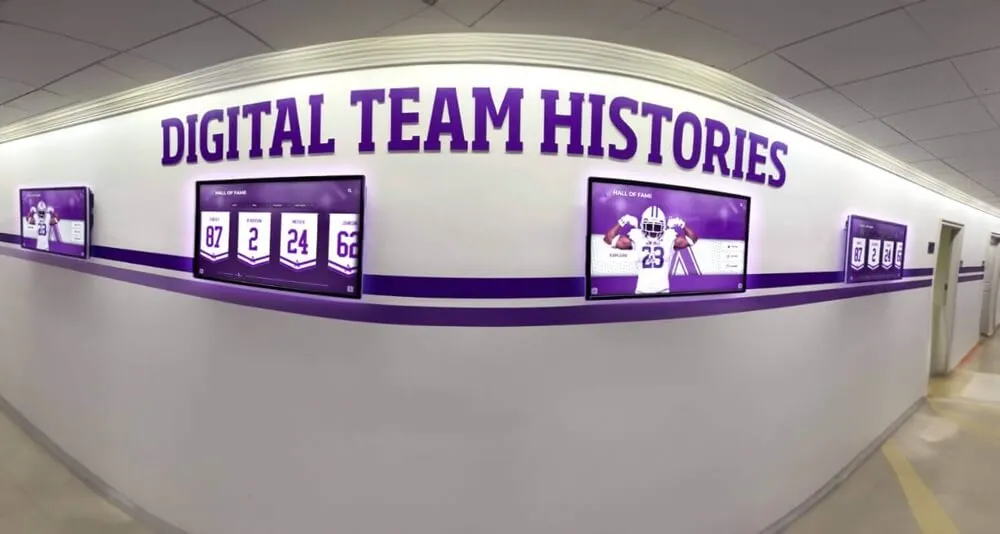
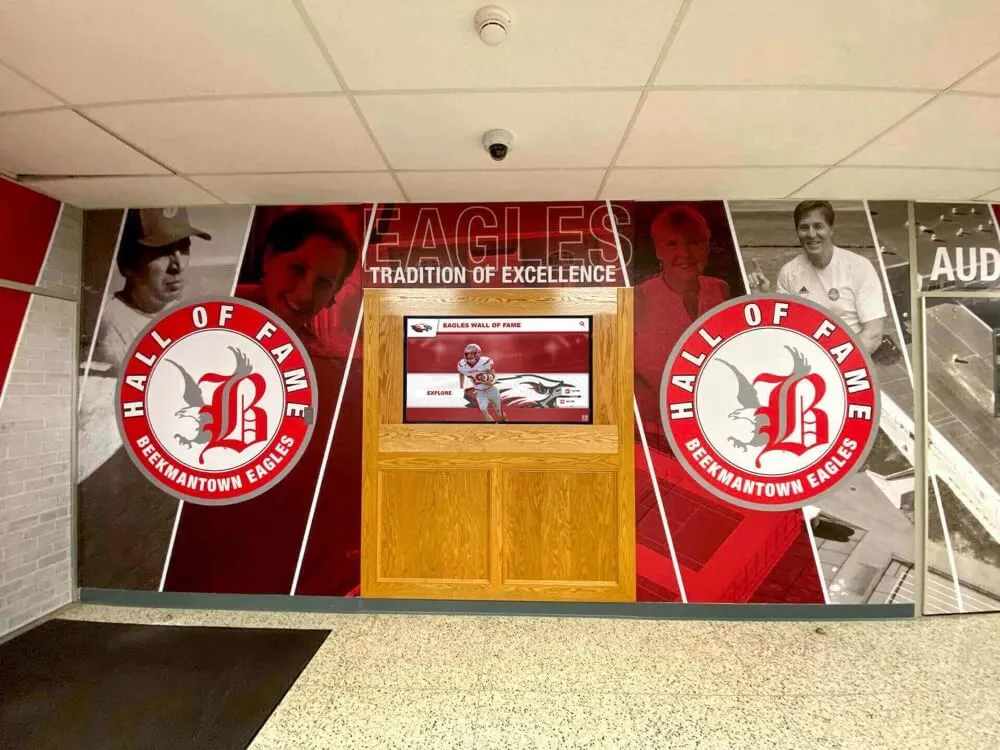
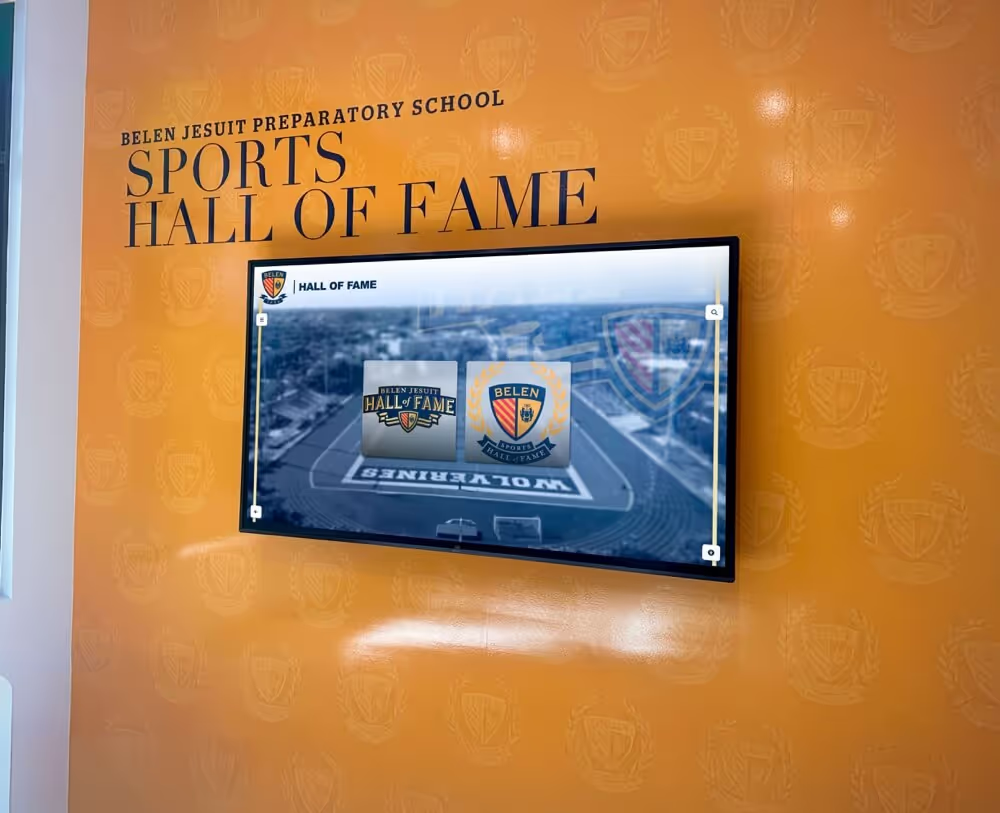
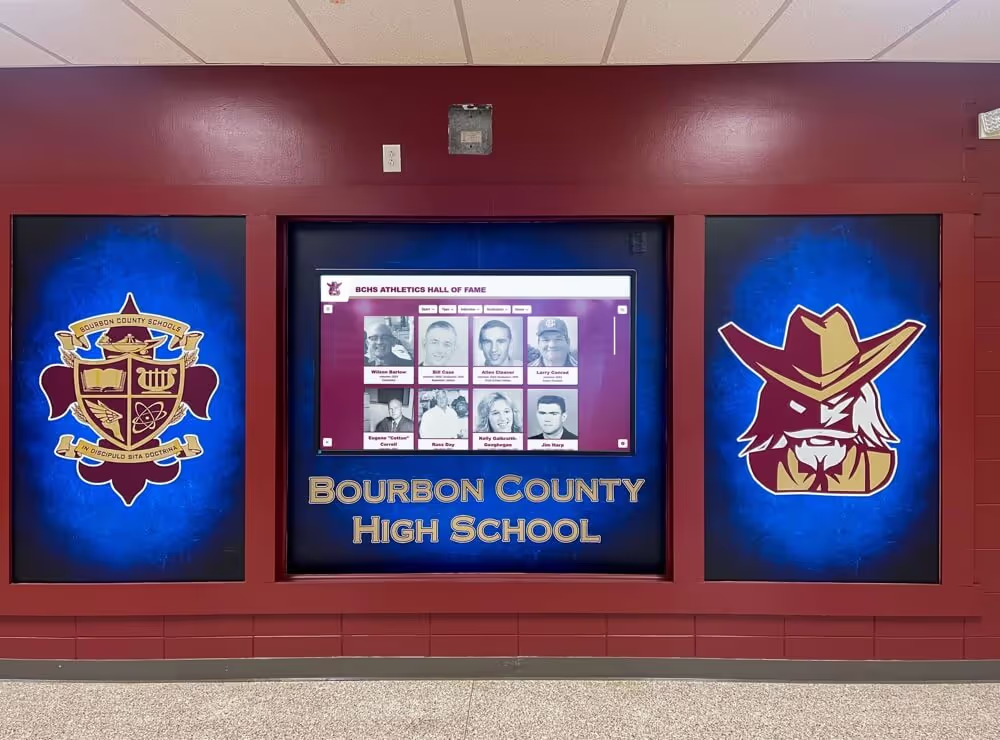
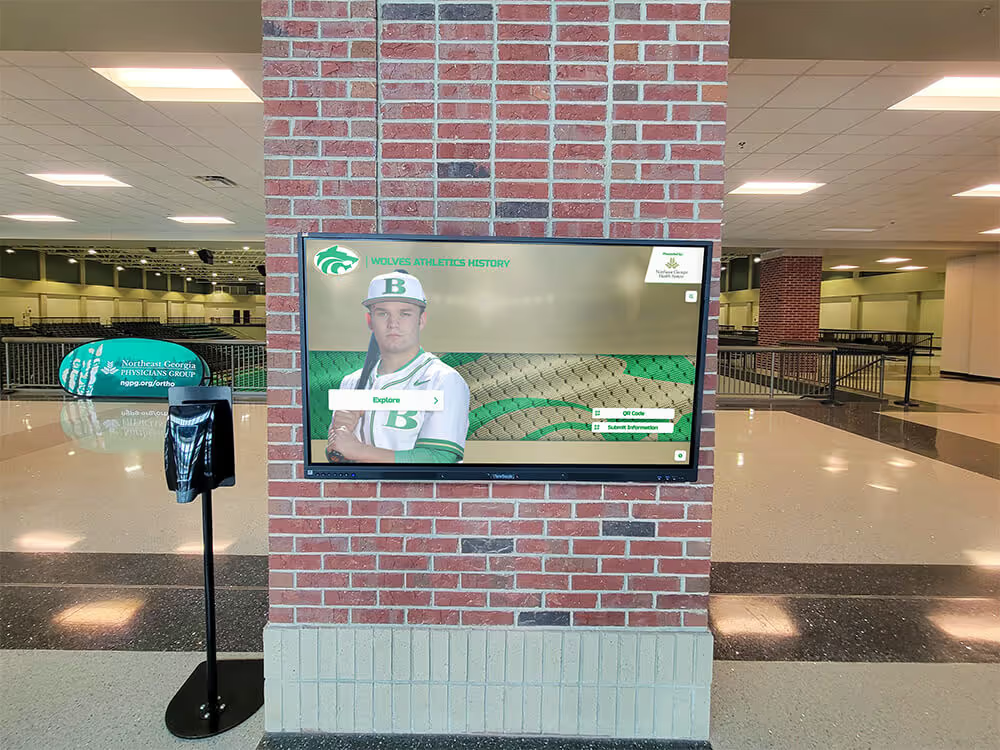
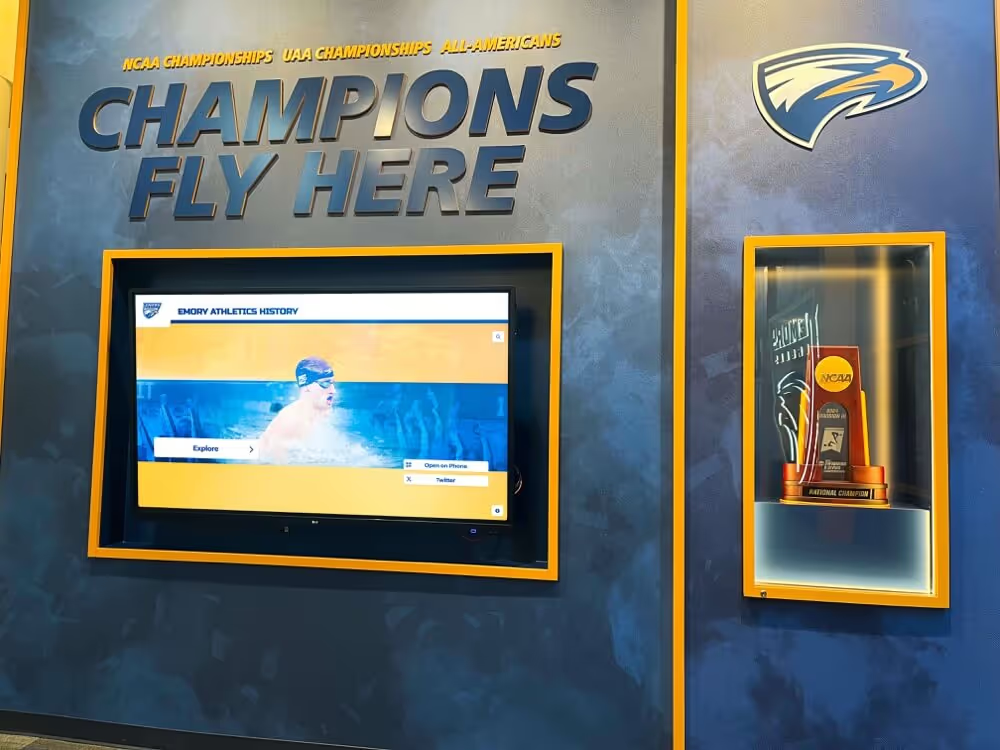
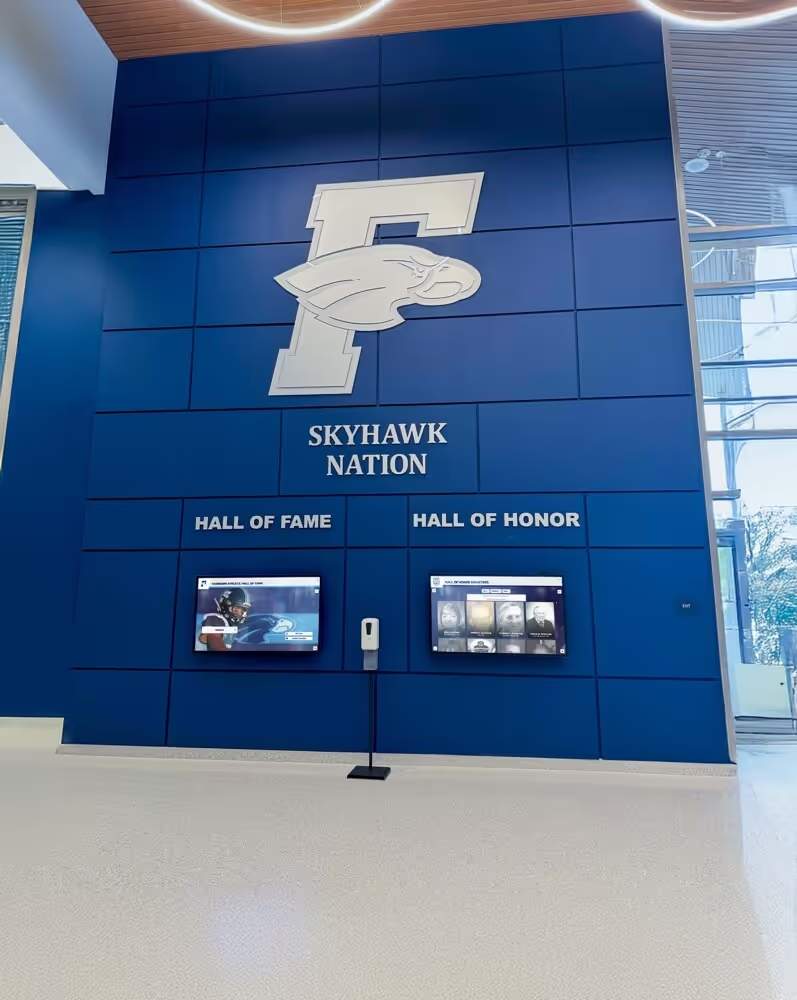
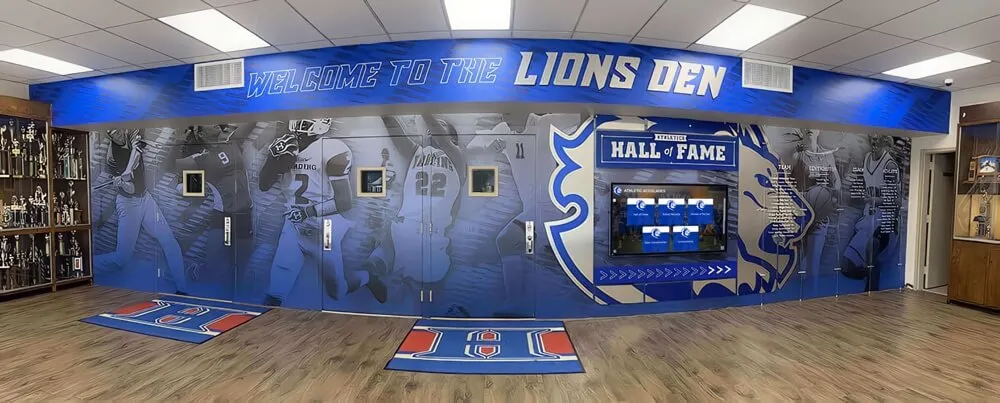
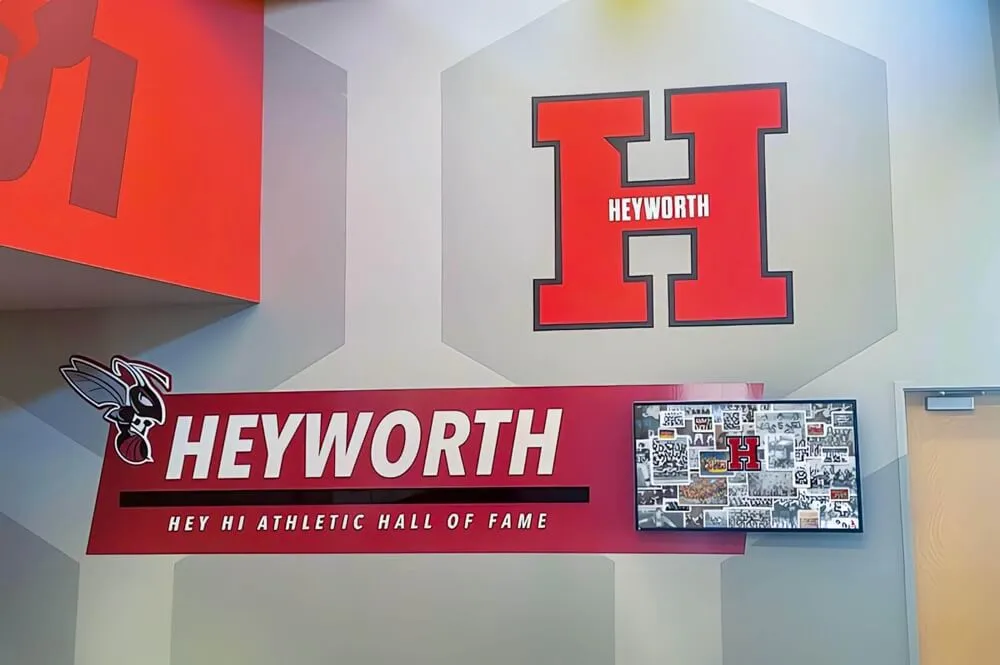
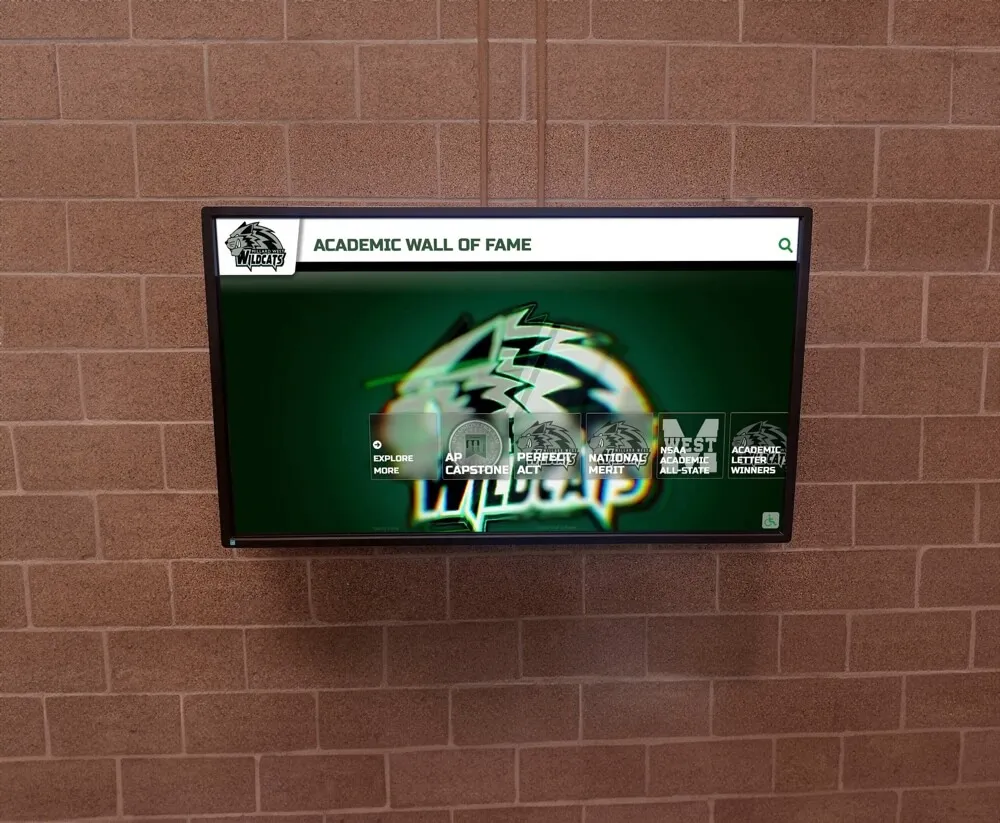
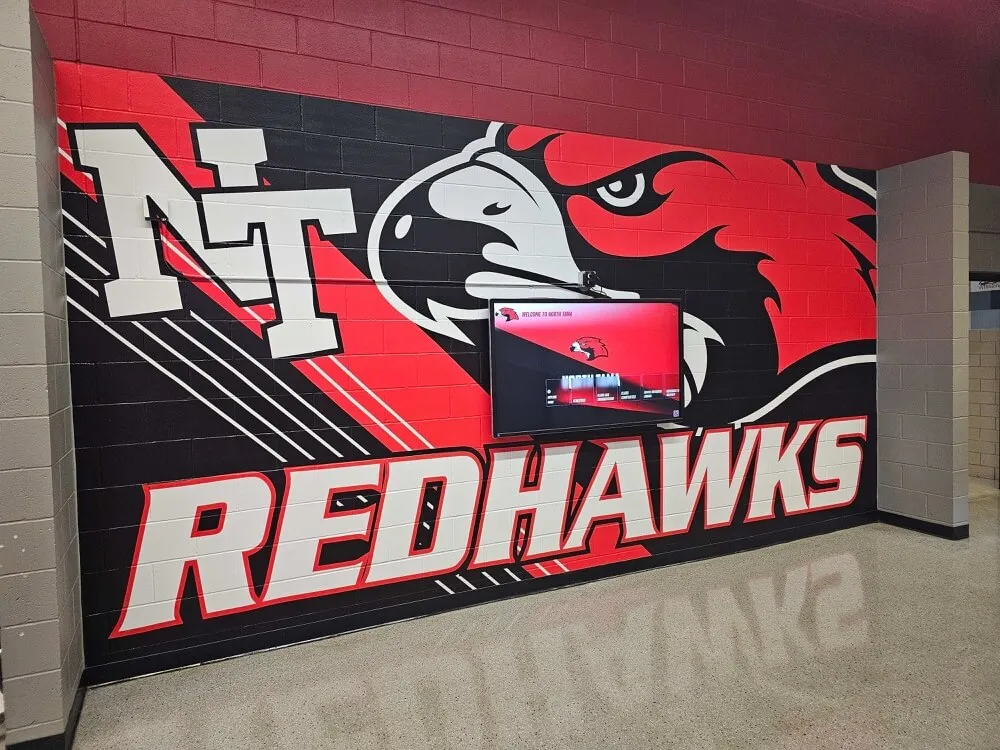
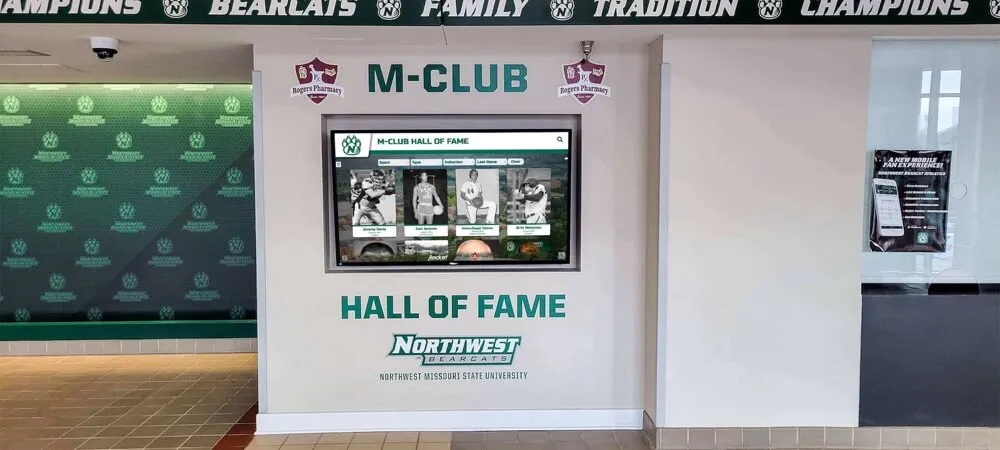
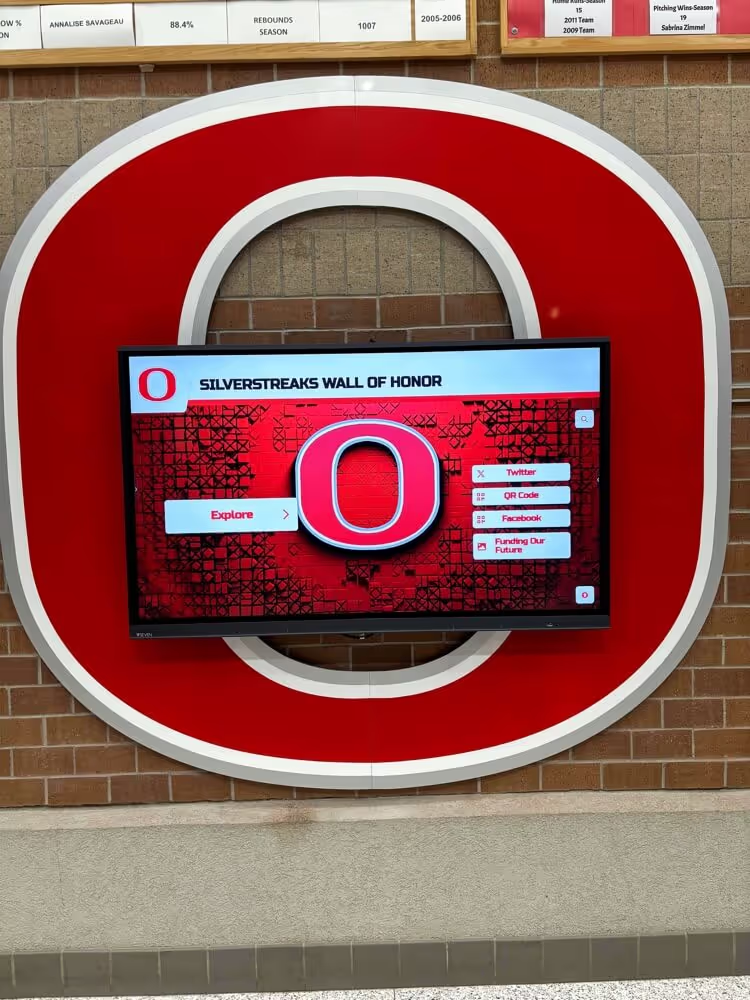
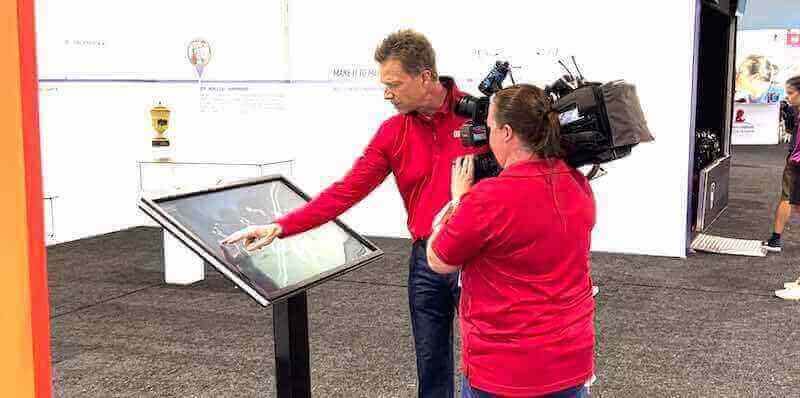
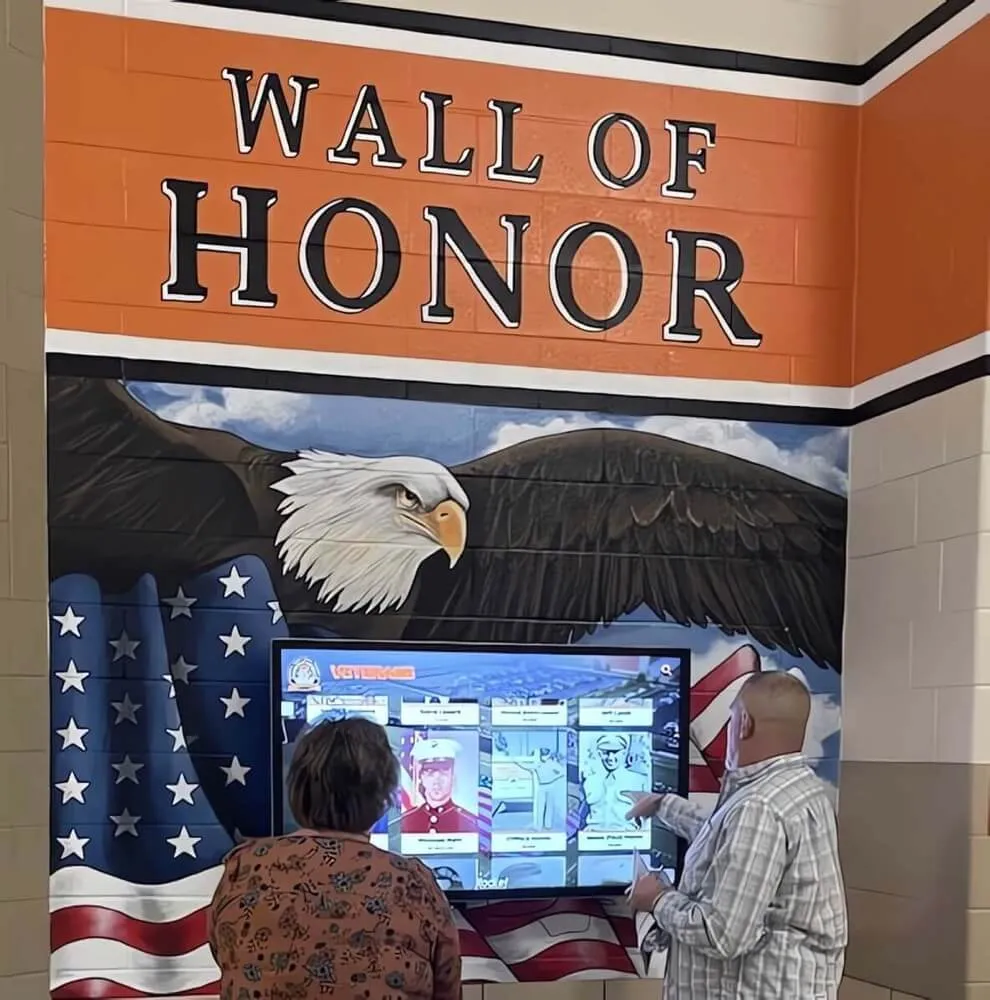
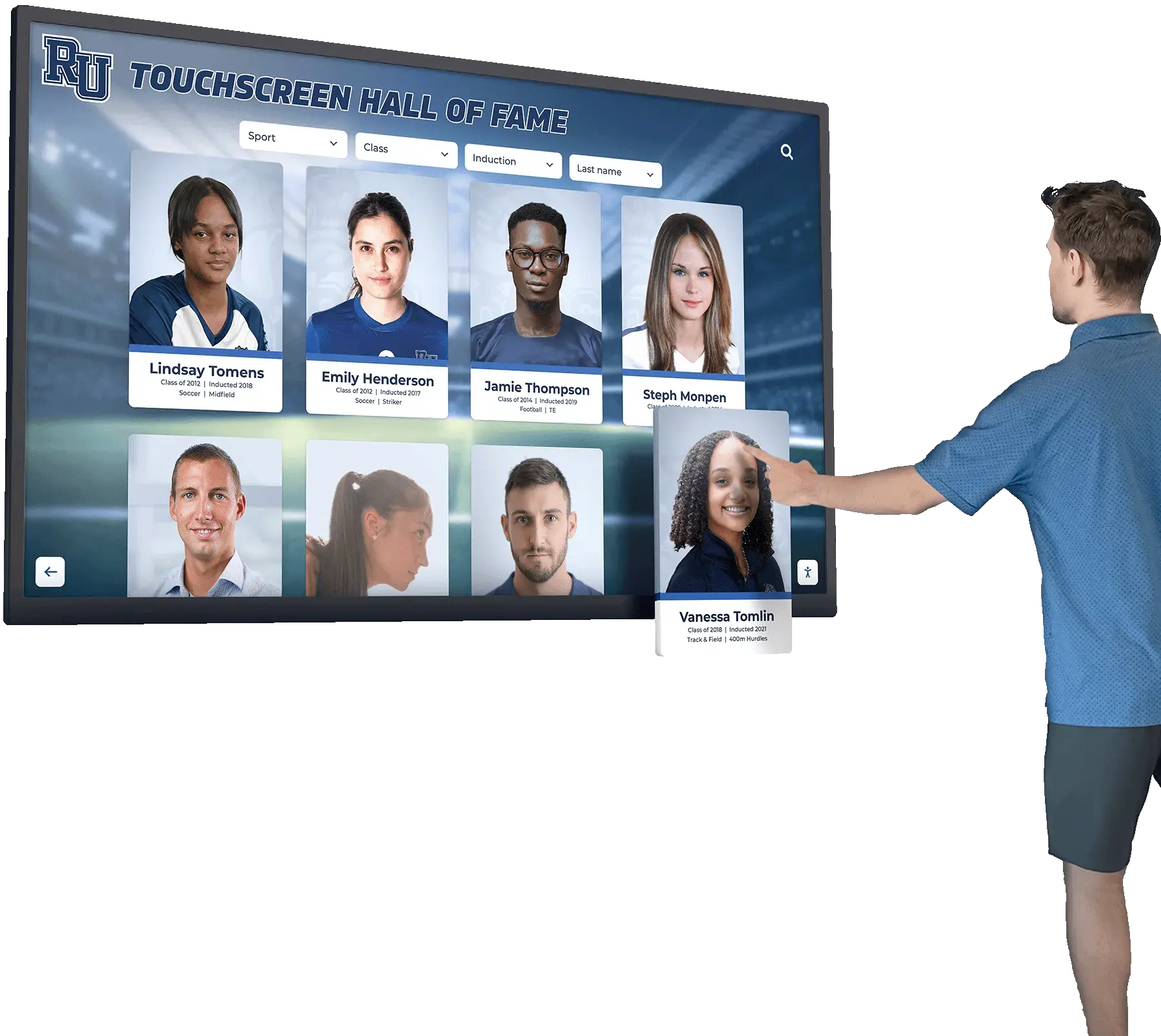
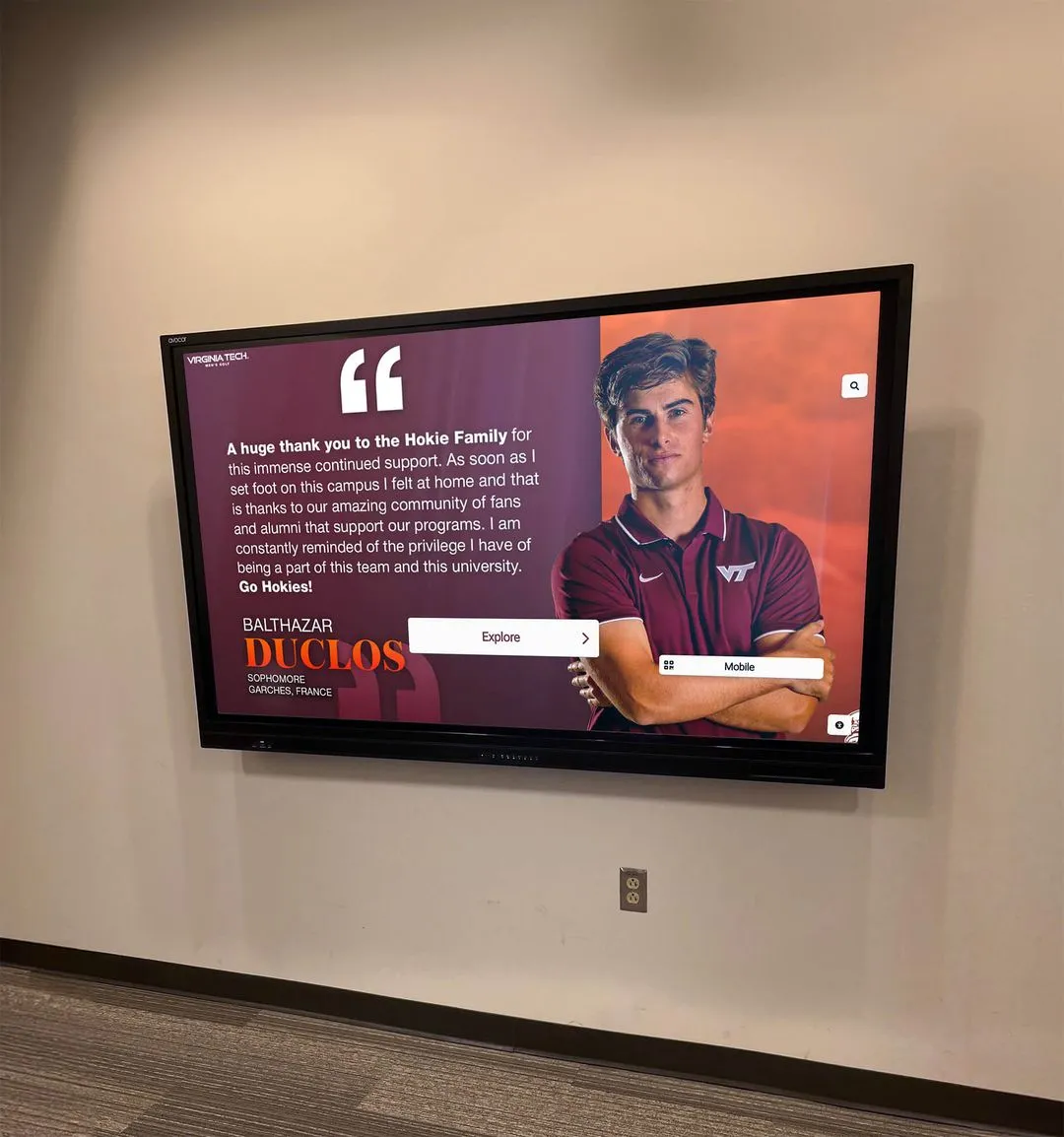
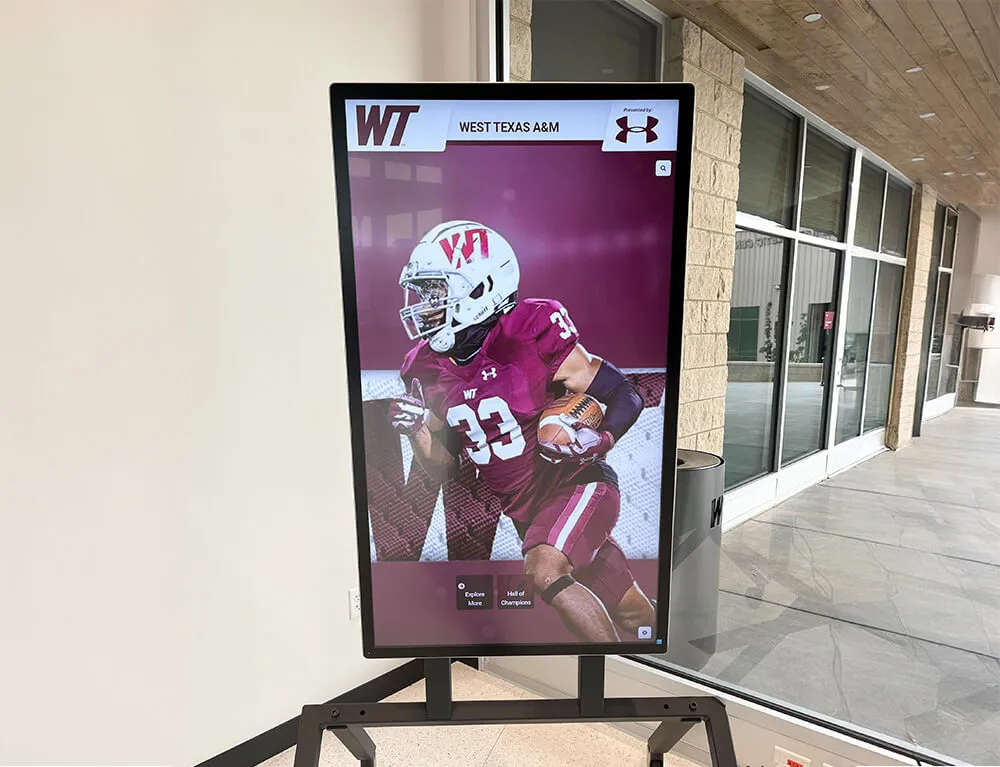
Digital touchscreen technology is transforming hockey arena recognition. Interactive displays eliminate space constraints while creating engaging multimedia experiences that bring team history to life through video highlights, photo galleries, detailed statistics, and searchable databases accessible through intuitive touch interaction. Solutions like Rocket Alumni Solutions provide purpose-built platforms specifically designed for sports recognition, enabling hockey facilities to honor every team, celebrate every achievement, and preserve complete arena legacy in ways traditional displays never could.
This comprehensive guide explores how interactive touchscreen displays are revolutionizing hockey rink recognition, from understanding the technology and benefits to implementation strategies, content development approaches, and real-world examples of facilities successfully preserving hockey heritage through digital innovation.
The Evolution of Hockey Arena Recognition
Before examining modern touchscreen solutions, understanding how hockey recognition has evolved provides essential context for why digital transformation matters so profoundly.
Traditional Recognition Methods and Their Limitations
Hockey facilities have relied on several standard approaches to honor past teams and achievements.
Championship Banners: Hanging fabric banners from arena rafters displaying championship years represents the most visible traditional recognition. These banners create impressive visual impact while celebrating the most significant team achievements. However, banners face limitations including limited rafter space restricting how many can be displayed, deterioration over time from temperature fluctuations and dust, inability to provide detailed information beyond championship year and perhaps team name, poor visibility for spectators due to height and viewing angles, and difficulty updating or replacing as new championships occur.

For programs with long championship traditions, rafter space becomes a limiting factor. Some facilities resort to combining multiple years on single banners or removing older championships to make room for recent ones—decisions that diminish historical achievements and create controversy among alumni and community members.
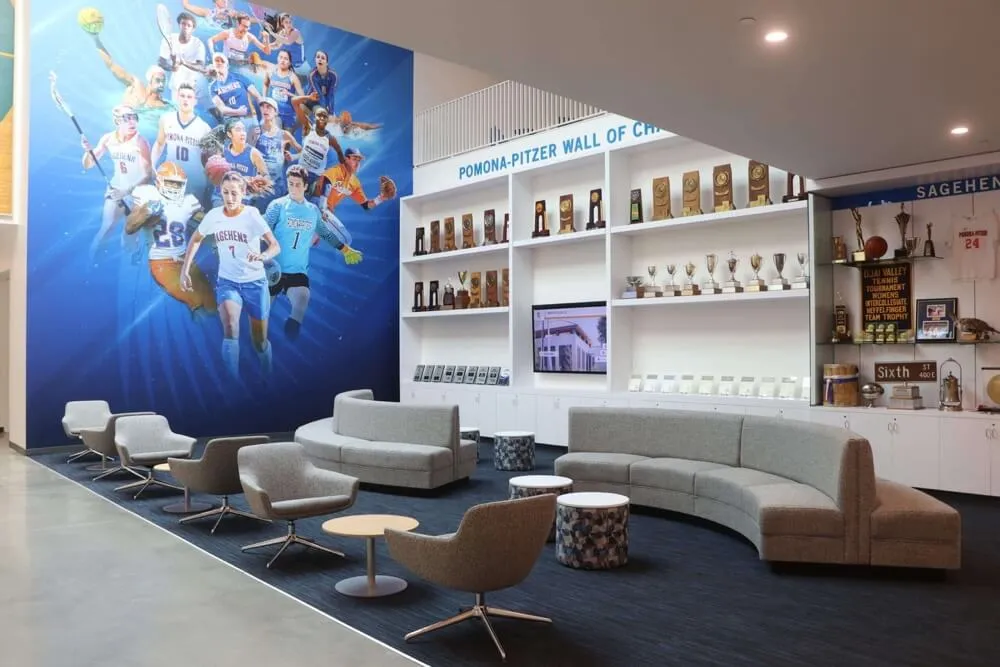
Physical Trophy Cases: Glass-enclosed cases displaying trophies, plaques, and memorabilia line the lobbies and hallways of most hockey facilities. These permanent displays convey prestige through physical presence and create gathering places where community members can encounter hockey tradition.
Trophy cases share significant drawbacks including finite physical space limiting display capacity, maintenance requirements for cleaning and organization, security concerns with valuable memorabilia, limited biographical information beyond basic engraving, inability to incorporate video or multimedia content, and difficulty reorganizing as collections grow and priorities shift.
Most established hockey programs long ago filled available trophy case space, forcing administrators to make difficult decisions about which achievements deserve display and which get relegated to storage.
Retired Jerseys: Some hockey facilities retire jersey numbers of their most accomplished alumni, displaying jerseys in prominent locations throughout arenas. This highly selective recognition honors exceptional individual achievements while creating visual interest in facility design.
Jersey retirement works best when reserved for truly elite accomplishments—professional careers, Olympic participation, or transformative program impact. When jersey retirement becomes routine for any notable player, the honor loses meaning and facilities become cluttered with excessive retired numbers creating confusion for current programs.
Photo Collages and Wall Displays: Many arenas feature photo collages or historical displays on walls near entrance areas or locker rooms. These displays celebrate team history through imagery while creating visual interest in facility design.
Static photo displays provide limited context about who appears in photos, when images were taken, or what achievements they represent. Without detailed captions, photos become increasingly meaningless as years pass and institutional memory fades. These displays also become outdated quickly, requiring complete replacement rather than incremental updates as new achievements occur.
The Space Constraint Challenge
The most persistent problem facing hockey arena recognition is simply running out of physical space.
Consider a typical competitive youth hockey organization operating for 30 years with teams across multiple age groups. Each season produces numerous championships, tournament victories, and individual awards. Even selective recognition of only major accomplishments quickly exceeds available display capacity in most facilities.
Similarly, high school and collegiate hockey programs accumulate decades of team achievements, record-setting performances, all-conference and all-American selections, professional alumni, and coaching milestones. No reasonable amount of physical display space can comprehensively honor this volume of achievement.
The space constraint forces impossible choices: Which championships matter most? Which players deserve individual recognition? Should recent achievements take priority over historical ones? Do more prominent teams receive better display space than others? These decisions often create controversy, hurt feelings, and the perception that some achievements matter more simply because of display limitations rather than actual merit.
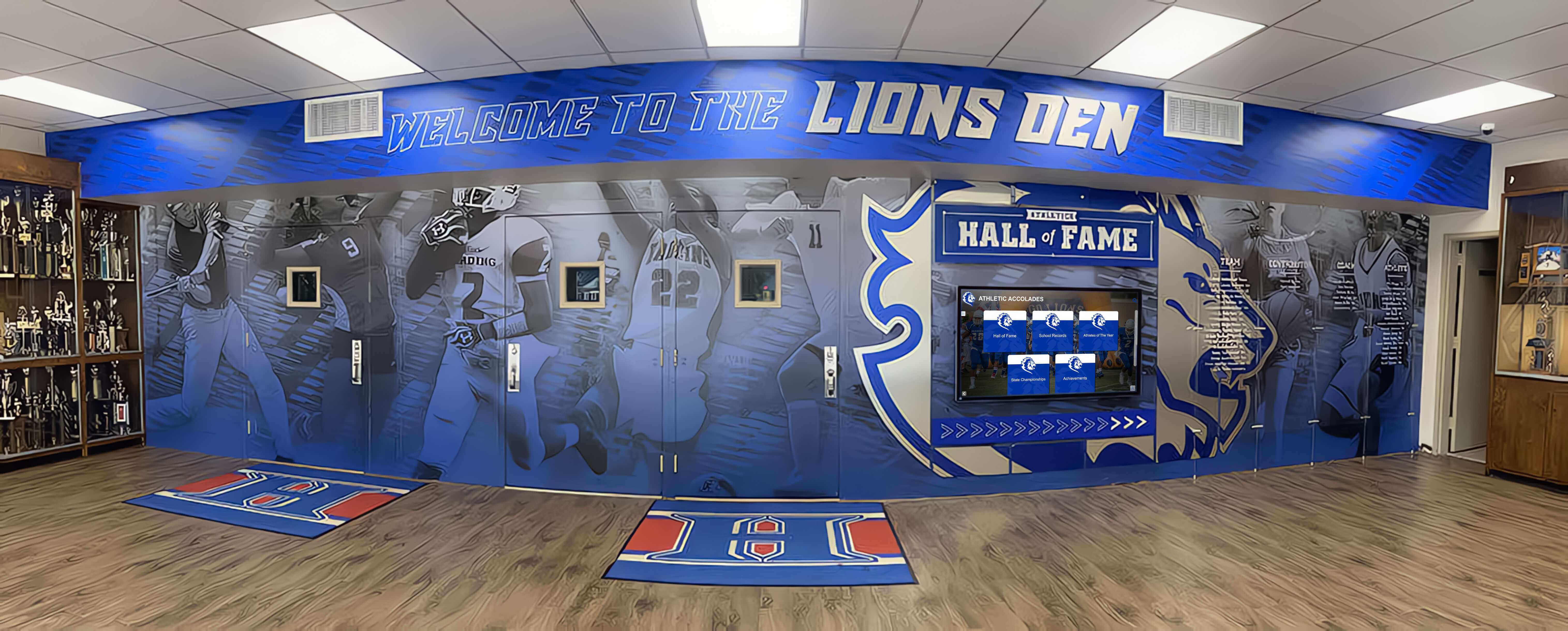
Limited Storytelling Capability
Traditional recognition methods communicate minimal information about the achievements they honor.
A championship banner shows the year and perhaps team level. A trophy case displays hardware with brief engraving. A photo shows images without context about who appears or what the image represents. None provide the rich storytelling that makes achievements meaningful and memorable for visitors who didn’t experience them firsthand.
Hockey achievements deserve comprehensive storytelling including detailed team rosters with player names and positions, season records and tournament results, memorable game highlights and championship-clinching moments, coaching staff and leadership, individual statistical achievements and records, where team members are today, photos from practices, games, and celebrations, and video highlights when available from championship games or memorable performances.
Traditional displays cannot accommodate this depth of content. Digital platforms make comprehensive storytelling not just possible but practical and engaging.
How Touchscreen Displays Transform Hockey Rink Recognition
Interactive touchscreen technology addresses every limitation of traditional hockey recognition while creating new possibilities for celebrating team achievement and engaging arena visitors.
Unlimited Recognition Capacity
The most transformative benefit of digital touchscreen displays is essentially infinite recognition capacity.
A single large-format touchscreen can feature detailed profiles for hundreds of teams and thousands of individual players without any physical space constraints. Hockey facilities can honor every championship team throughout their history, recognize every record-setting performance, celebrate every player who contributed to program success, and preserve complete organizational legacy regardless of how many decades of achievement have accumulated.
For hockey programs struggling with limited trophy case space, digital recognition eliminates impossible decisions about which achievements deserve display. Every team receives equal comprehensive recognition rather than selective display based on arbitrary space allocation.
One youth hockey organization calculated that achieving equivalent recognition capacity with traditional trophy cases would require 40 additional cases costing over $100,000 plus installation—if they had wall space available, which they didn’t. A single 65-inch touchscreen display provided superior recognition capacity at a fraction of the cost while occupying minimal lobby space.
Interactive Multimedia Storytelling
Digital touchscreens enable rich multimedia storytelling impossible with physical displays.
Video Content Integration: Nothing brings hockey memories to life like video footage of championship moments. Touchscreen platforms incorporate game highlights showing championship-winning goals, tournament victories, rivalry game triumphs, memorable saves and defensive plays, and celebratory moments in locker rooms and on ice.
For older teams predating video availability, photo montages with audio narration or text overlays create engaging visual storytelling using historical photographs.
Comprehensive Photo Galleries: Digital displays feature extensive photo galleries for each team including official team portraits, action photography from games and practices, coaching staff and support personnel, facilities and venues where teams played, championship celebrations, and historical context photos showing program evolution.
These visual elements transform abstract team listings into vivid memories that engage visitors emotionally rather than simply conveying information.
Detailed Rosters and Biographical Information: Traditional trophy cases provide minimal space for player names, typically just small engraved plates. Digital platforms feature complete rosters with comprehensive player information including full names and positions, years of participation, statistical highlights and individual records, honors and awards received, post-playing career updates when available, and connections to other teams or family members in program history.
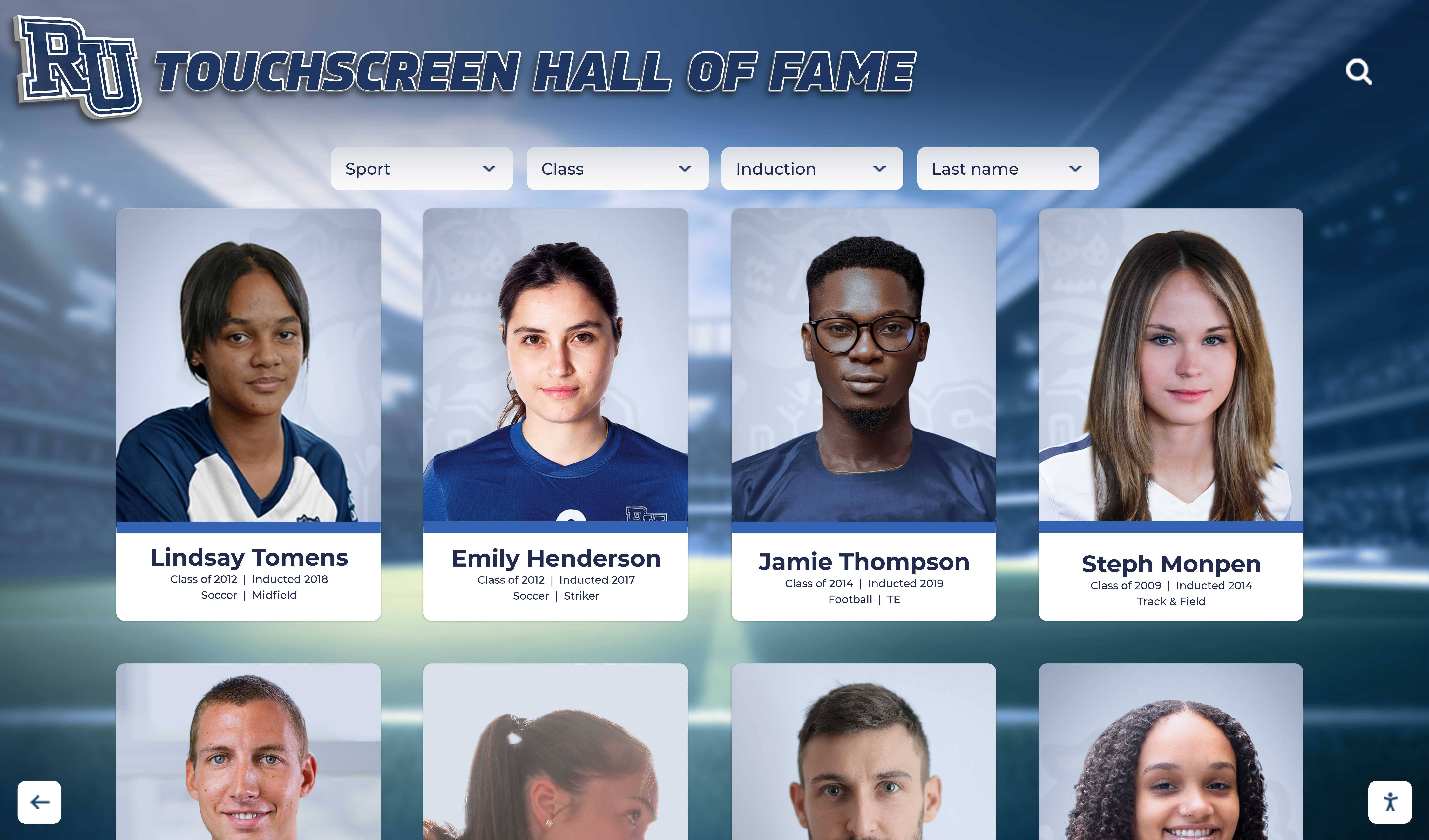
This biographical depth creates personal connections that make recognition meaningful for players, their families, and community members who remember them.
Statistical Tracking and Record Books: Hockey thrives on statistics—goals, assists, points, wins, shutouts, championships. Digital displays provide comprehensive statistical tracking showing individual career leaders across all statistical categories, single-season record holders, team records and accomplishments, tournament and playoff achievements, historical comparisons across different eras, and milestone accomplishments throughout program history.
Statistics that would require enormous physical space in traditional displays fit elegantly in searchable digital databases accessible through intuitive touch interaction.
Powerful Search and Discovery Features
One of the most valuable features of touchscreen recognition is the ability for visitors to instantly find specific content.
Name Search: Alumni visiting the arena can immediately search for their own teams or family members who played in the program. Rather than scanning dozens of team photos hoping to spot familiar faces, visitors simply type names into the search function and instantly access all relevant content.
Team and Year Filtering: Visitors can quickly browse by specific time periods, team levels, or particular seasons. Someone looking for all teams from the 1990s, or all bantam championship teams, or all teams that won specific tournaments can filter content accordingly.
Achievement Categories: Digital systems organize content by achievement type—league championships, tournament victories, undefeated seasons, playoff runs, record-setting performances—enabling visitors to explore content aligned with their interests.
Related Content Connections: Smart digital platforms automatically connect related content. Viewing one player’s profile reveals teammates from the same teams, family members who also played in the program, or coaches who worked with multiple championship teams across different eras.
These discovery features transform recognition displays from passive exhibits into interactive exploration experiences where visitors actively engage with content rather than simply walking past static displays.
Real-Time Updates and Ongoing Additions
Digital touchscreen platforms enable continuous recognition updates as achievements occur.
Immediate Championship Recognition: When teams win championships during the current season, administrators can update the display immediately rather than waiting months or years for new trophy case engraving or banner production. This real-time recognition demonstrates organizational pride in current success while maintaining historical context alongside past achievements.
Player Career Updates: As alumni progress through careers and achieve milestones, their profiles can be updated to reflect current information. Former youth players who reached collegiate or professional hockey receive updated recognition acknowledging their continued success.
Historical Content Expansion: Digital platforms facilitate gradual historical content expansion. Facilities can launch with comprehensive recent content while systematically researching and adding older teams and players over time. Content gaps that might delay traditional display installations don’t prevent digital system launches.
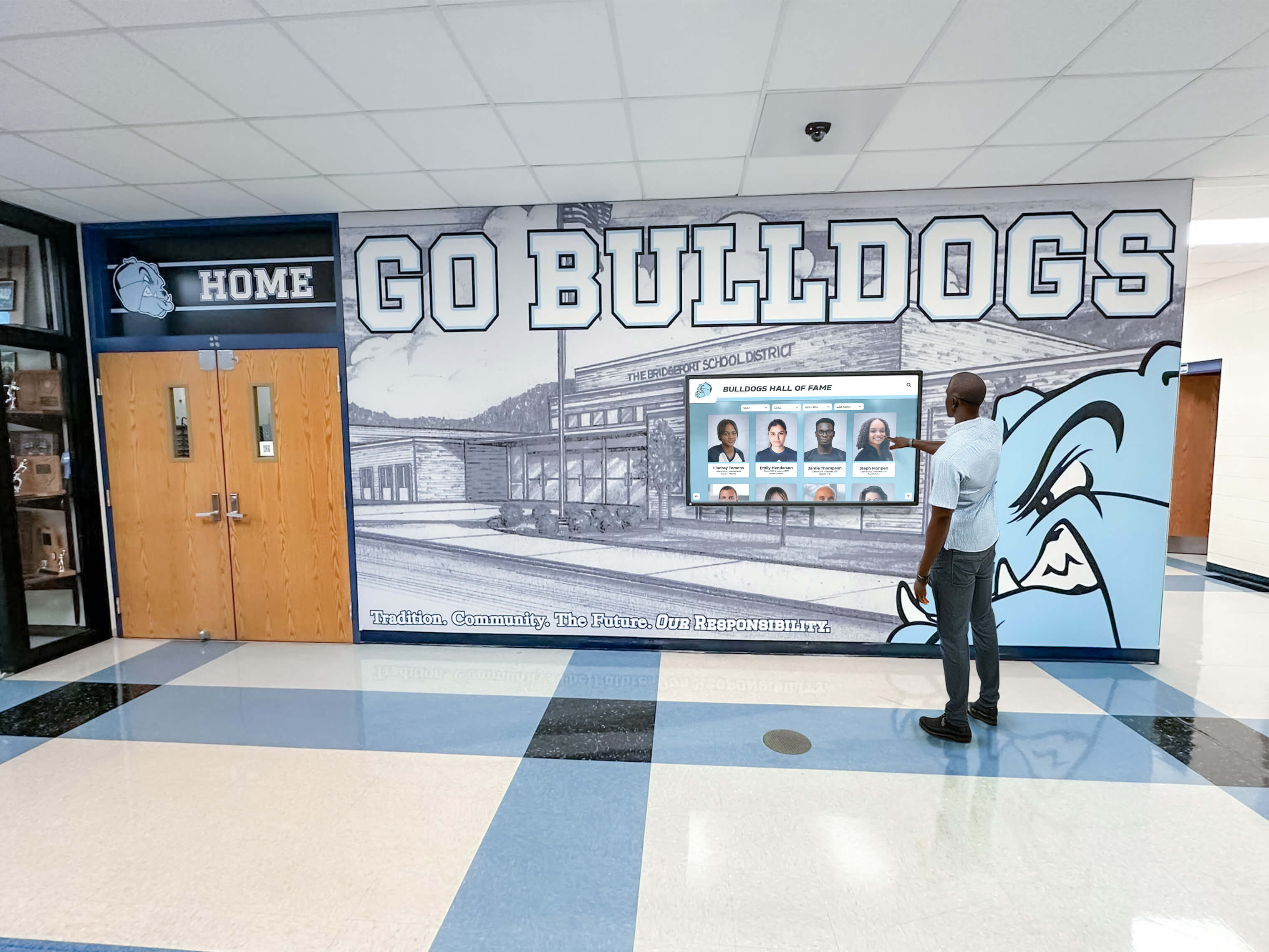
Crowdsourced Content Contributions: Some digital recognition platforms include features enabling alumni and community members to submit photos, stories, and corrections, gradually enriching content through community contributions. This crowdsourcing harnesses collective memory to build more comprehensive historical records than any single administrator could compile independently.
Enhanced Visitor Engagement
Modern audiences expect interactive digital experiences. Touchscreen displays meet these expectations while significantly increasing engagement with recognition content.
Schools and athletic facilities implementing interactive touchscreens report visitors spending 5-8 minutes actively exploring content versus 30-60 seconds glancing at traditional trophy cases. This extended engagement creates meaningful connections with program history rather than superficial awareness that championships exist without understanding their significance.
Visitors frequently photograph touchscreen content to share on social media or with family members, extending recognition reach beyond the physical arena to digital communities where alumni and supporters gather. This organic sharing provides ongoing visibility for program achievements while strengthening emotional connections between community members and hockey tradition.
For recruiting prospective players, interactive touchscreen displays create impressive experiences showcasing program legacy and commitment to honoring achievement. When families visit facilities evaluating program fit for their youth players, professionally presented digital recognition demonstrates organizational excellence and pride in tradition that builds confidence in the program.
Implementation Considerations for Hockey Arena Touchscreens
Successful touchscreen recognition requires careful planning addressing location, technology, content, and ongoing management.
Selecting Optimal Display Locations
Display placement significantly impacts engagement and visibility.
High-Traffic Lobby Areas: Main entrance lobbies represent ideal locations where every visitor—players, families, opponents, officials, spectators—passes regularly. Prominent lobby placement ensures maximum visibility while creating focal points for gathering and discussion.
Locker Room Hallways: Displays in areas where current players pass daily provide persistent cultural messaging about program tradition and standards of excellence. Players encounter recognition regularly rather than occasionally, reinforcing organizational values and inspiring commitment to adding their own chapters to program history.
Spectator Concourses: For larger arenas with significant spectator capacity, displays in concourse areas where fans congregate before games, during intermissions, and after events create entertainment and engagement opportunities. Interactive touchscreens give fans ways to explore program history while waiting, enhancing overall arena experience.
Tournament and Event Hosting: Facilities that regularly host tournaments or showcases can use touchscreen displays to highlight not just home program achievements but also participating organizations’ histories when relevant. This hospitality-focused approach creates positive impressions for visiting teams and families.
Technology and Hardware Selection
Choosing appropriate touchscreen technology ensures reliable operation in arena environments.
Display Size Recommendations:
- 43-50 inches: Compact installations in hallways or smaller lobbies
- 55-65 inches: Standard recognition displays for most hockey facilities
- 75-86 inches: Large arenas with spacious lobbies or high-traffic concourses
- Multiple displays: Facilities with extensive achievement histories or multiple high-traffic areas
Most hockey arenas find 55-65 inch displays optimal, providing excellent visibility without overwhelming space.
Commercial-Grade Hardware: Arena environments require displays rated for continuous operation including 16-24 hour daily operation capability, 50,000-70,000 hour lifespan (6-8 years), high brightness (400-700 nits) for well-lit lobbies, temperature tolerance for facilities with varying climate control, and vandal-resistant enclosures for public areas.
Consumer televisions lack durability for public installations and typically fail within 2-3 years under continuous operation, making commercial-grade investment essential for long-term reliability.
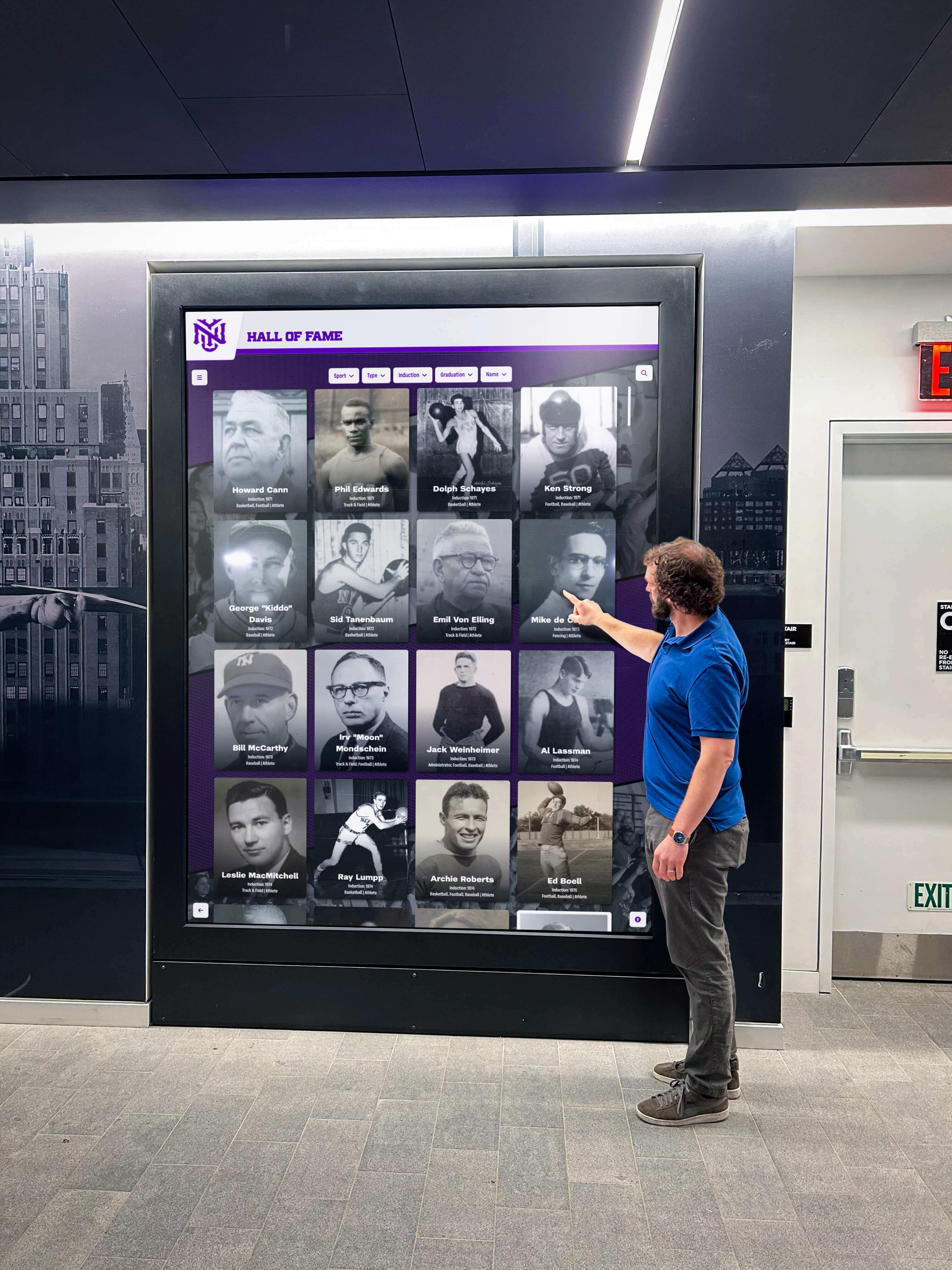
Touch Technology Options: Modern touchscreens use primarily infrared or capacitive touch sensing. Infrared technology provides cost-effective multi-touch capability for large displays and works with gloved hands (relevant in cold arena environments), while capacitive provides smartphone-like responsiveness for smaller displays. Most hockey arena installations use infrared technology for its combination of large-screen availability, durability, and all-weather operation.
Network Connectivity: Touchscreen displays require reliable network connectivity for remote content management and software updates. Wired Ethernet connections provide most reliable performance, though WiFi can work for installations where running network cables proves impractical.
Content Development Strategies
Compelling recognition requires comprehensive content that appropriately honors achievements while engaging visitors.
Team Profile Components: Effective team recognition includes season year and team level, complete roster with player names and positions, coaching staff and support personnel, season record and playoff results, championship or tournament achievements, memorable games and defining moments, team photos from throughout season, individual awards and honors, statistical highlights and records, and where available video highlights from championship games or memorable performances.
Historical Research Approaches: Building comprehensive content for historical teams requires systematic research including reviewing organizational archives and historical records, consulting with longtime coaches and administrators, reaching out to alumni for information and materials, digitizing historical photos from personal collections, researching local newspaper archives for game coverage and season summaries, cross-referencing league and tournament records, and interviewing community members with institutional memory.
This research takes time, but digital platforms allow incremental content addition. Facilities can launch with well-documented recent content while gradually expanding historical coverage over months or years.
Photo and Media Collection: Visual content transforms recognition from text-heavy databases into engaging experiences. Sources for imagery include official team photos from photographers or school archives, action photography from games and tournaments, candid photos from practices and team events, archival photographs from personal collections, historical facility photos showing arena evolution, video footage from championship games when available, and newspaper or media organization archives with historical coverage.
Professional photo scanning services can digitize historical prints at appropriate resolution for digital display while preserving original materials.
Player and Coach Biographical Content: Beyond roster listings, rich biographical information creates meaningful recognition including playing positions and jersey numbers, years of participation in program, post-playing career updates showing where alumni are today, family connections to program (siblings, children who also played), memorable accomplishments or signature moments, coaching career information for program alumni who returned as coaches, and first-person quotes or reflections when available from alumni interviews.
This biographical depth transforms team recognition from abstract listings into personal stories that engage visitors emotionally.
Ongoing Content Management
Digital recognition systems require ongoing management to remain valuable and current.
Immediate Season-End Updates: After each season concludes, recognition displays should be updated promptly to add current championship teams, update playoff brackets and tournament results, recognize individual award winners and honors, add season-ending team photos and any available video highlights, and update statistical records and career leaders.
Timely updates demonstrate organizational commitment to recognition while maintaining display currency and relevance for visitors.
Annual Content Expansion: Most successful implementations schedule annual content expansion projects dedicated to filling historical gaps in coverage, adding newly discovered photos or media, conducting alumni outreach for biographical updates, creating new video content or historical retrospectives, and verifying data accuracy and correcting identified errors.
These structured expansion efforts gradually build more comprehensive recognition coverage over years.
Community Engagement Maintenance: Digital recognition platforms benefit from ongoing community engagement activities including social media posts highlighting featured content from displays, alumni reunion events gathering feedback and content contributions, regular email communications seeking historical materials from community members, recognition of milestone anniversaries for championship teams, and response to community-submitted corrections or content additions.
This ongoing engagement strengthens community investment in recognition programs while continuously improving content quality and comprehensiveness.
Benefits Beyond Recognition: Strategic Value for Hockey Programs
While honoring achievement represents the primary purpose of recognition displays, interactive touchscreens provide additional strategic benefits for hockey organizations.
Recruitment and Program Marketing
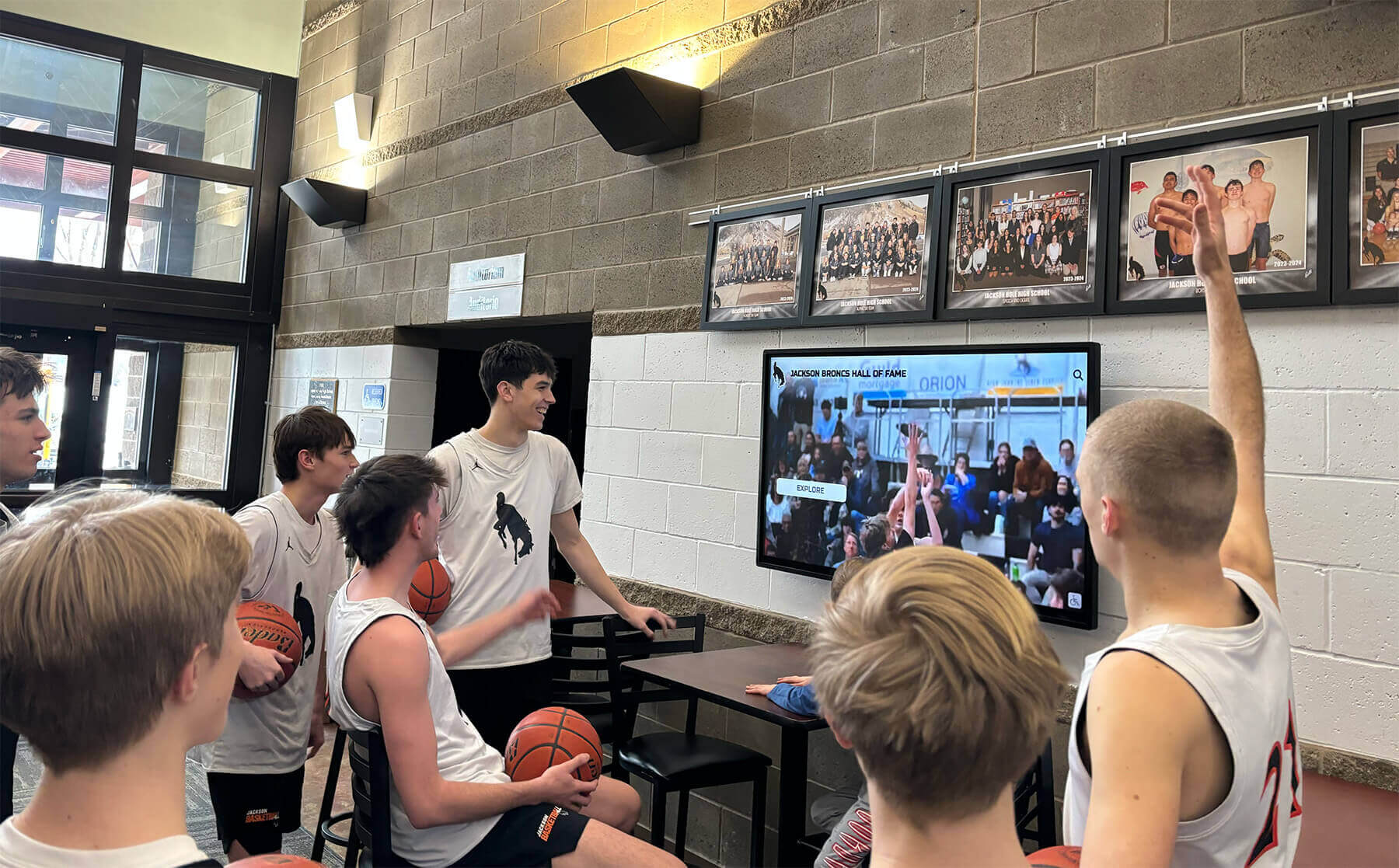
For competitive hockey programs where player recruitment matters, recognition displays serve as powerful marketing tools. When prospective players and families visit facilities evaluating program fit, professionally presented digital recognition showcasing program legacy creates strong impressions demonstrating organizational excellence, commitment to player development and recognition, proud tradition and history of achievement, and modern, forward-thinking organizational culture.
These impressions influence decisions when families choose between competitive programs. Comprehensive digital recognition for youth sports programs signals that organizations value and celebrate player achievement throughout their time in the program.
Alumni Engagement and Community Building
Alumni represent valuable resources for hockey programs—potential volunteer coaches, officials, board members, donors, and program ambassadors promoting the organization within the community. Strong alumni engagement depends on maintaining connections and demonstrating that their contributions to program history remain valued.
Interactive recognition displays strengthen alumni engagement by honoring their playing careers comprehensively, providing easy ways for alumni to show families and friends their program participation, creating gathering places during alumni events and reunions, demonstrating organizational appreciation for historical contributions, and facilitating connections between alumni from different eras through related content features.
Programs with active alumni networks report that recognition displays become focal points during alumni gatherings, with former players spending significant time exploring their own teams and those of friends, rivals, and family members.
Fundraising and Donor Recognition
Many hockey facilities fund operations partially through fundraising from community members, alumni, and local businesses. Digital recognition displays can integrate donor recognition alongside team achievement content, acknowledging supporters who make program success possible.
Recognition displays become fundraising tools themselves when organizations create naming opportunities for displays or major content features. Donors funding touchscreen installations receive appropriate recognition while contributing to preservation of program legacy benefiting entire community.
Some organizations find that honoring donors digitally alongside athletic achievements creates more appealing donor recognition than traditional plaques. Digital donor recognition walls provide flexibility to update donor information as giving continues over years while creating visually compelling presentations impossible with physical plaques.
Facility Enhancement and Community Pride
Modern hockey facilities compete not just on ice quality but on overall experience. Outdated facilities with minimal amenities struggle to attract teams, tournaments, and events generating revenue and visibility.
Professional digital recognition displays enhance facility perception demonstrating investment in quality, creating visually impressive lobbies and gathering spaces, providing entertainment for spectators before games and during intermissions, and signaling modern, well-maintained organizational operations.
Community pride in hockey tradition also strengthens when achievements receive professional recognition. Prominent displays honoring team success become sources of civic identity that residents share with visitors and newcomers, strengthening community cohesion around shared hockey heritage.
Real-World Applications: Touchscreen Recognition in Hockey Arenas
Understanding how different types of hockey facilities implement interactive recognition provides practical insights and inspiration.
Youth Hockey Organizations
Community youth hockey organizations serve hundreds of players across multiple age groups and skill levels, accumulating extensive achievement histories over decades of operation.
Typical Implementation: A youth hockey organization operating from a community ice arena installs a 55-inch touchscreen in the main lobby area featuring comprehensive team histories going back 25 years, organized by age group and season, championship team profiles with rosters and photos from league and tournament victories, individual award recognition (most valuable players, sportsmanship, leading scorers), house league and travel team achievements, coaching recognition honoring longtime volunteer coaches, and historical facility photos showing arena and program evolution.
Results: Families regularly gather around the display before and after practices, with players showing parents and grandparents their team profiles. Alumni visiting with younger siblings spend time exploring their own playing history. Tournament visitors from other organizations comment positively on the recognition, creating favorable impressions of program quality and organization.
High School Hockey Programs
High school hockey programs blend athletic excellence with academic institution identity, creating recognition needs spanning sports achievement and school community pride.
Typical Implementation: A competitive high school hockey program installs a 65-inch touchscreen near the arena entrance featuring varsity and junior varsity team histories throughout school history, state tournament appearances and championship teams, individual record holders and career statistical leaders, all-conference and all-state selections, alumni who reached collegiate or professional hockey, retired jersey recognition for the most exceptional alumni, and integration with broader school athletic recognition accessible through the same display.
Similar to successful Minnesota high school hockey recognition programs, comprehensive digital platforms honor complete program legacy while inspiring current players.
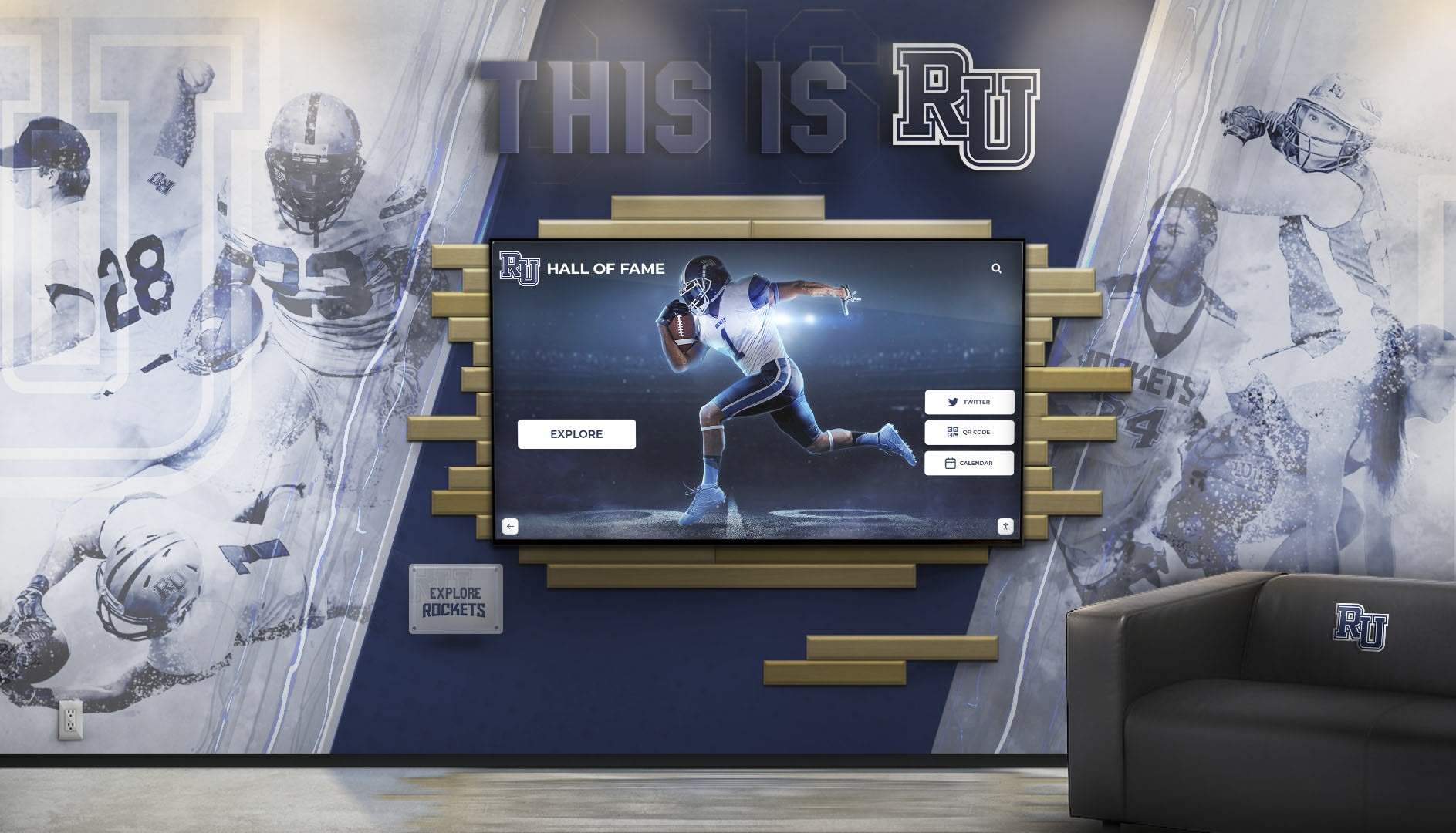
Results: Current players regularly view profiles of championship teams and record holders, with coaches using recognition displays in team meetings to illustrate program standards and tradition. Prospective students touring the school encounter impressive athletic recognition showcasing school spirit and competitive excellence. Alumni attending games spend time exploring their own playing careers and those of classmates and rivals.
College and University Hockey Arenas
Collegiate hockey programs at Division I, II, and III institutions represent the highest level of amateur hockey competition, with extensive histories worthy of comprehensive recognition.
Typical Implementation: A Division I collegiate hockey program installs multiple 75-inch touchscreens—one in the main arena concourse and another in the athletic center building—featuring complete varsity team histories with season records and playoff results, conference championships and NCAA tournament appearances, individual award winners including All-Americans and conference honors, player statistical records across numerous categories, professional alumni tracking former players in NHL and other leagues, coaching history recognizing legendary program coaches, facility history documenting arena development and improvements, and rivalry game histories against traditional opponents.
Results: Students and fans spend time during intermissions exploring program history, creating enhanced game day experiences. Recruiting visits showcase program tradition professionally, supporting recruiting efforts. Alumni events center around recognition displays with former players sharing memories triggered by photos and content. Media covering games reference display content in features about program history and milestone achievements.
Professional and Junior Hockey Organizations
Professional hockey teams and elite junior programs maintain extensive histories tracking player development through organizational systems, creating valuable recognition content spanning decades.
These organizations implement premium recognition displays featuring complete franchise history tracking teams across different leagues and eras, player development tracking showing progression through organizational systems, alumni professional career tracking for players who advanced through the organization, retired number recognition and franchise legends, franchise milestones and significant achievements, community impact showcasing organizational contributions beyond hockey competition, and championship retrospectives featuring rich multimedia content from title seasons.
Professional quality recognition enhances fan experience while honoring organizational legacy appropriately for programs with significant traditions and community profiles.
Planning Your Hockey Arena Touchscreen Recognition Project
Organizations ready to implement interactive touchscreen recognition should follow systematic planning processes ensuring successful outcomes.
Initial Assessment and Goal Definition
Begin by clearly defining what you want to achieve with digital recognition.
Key Planning Questions:
- What specific teams and time periods will recognition cover?
- What content types will you include (teams, individual records, coaching, facility history)?
- Who are your primary audiences (current players, alumni, fans, recruits, community)?
- What budget is available for initial investment and ongoing operation?
- Who will manage content development and ongoing maintenance?
- How does recognition align with broader organizational goals and priorities?
- What success metrics will demonstrate value and effectiveness?
Answering these questions provides clear direction for technology selection, content development strategies, and implementation planning.
Budget Development and Funding
Understanding complete costs helps organizations plan appropriate budgets and secure necessary funding.
Initial Investment Components:
- Commercial touchscreen display: $3,500-$8,000 depending on size
- Installation and integration: $1,500-$3,500 including mounting, networking, and configuration
- Software platform setup: $0-$3,000 depending on vendor and customization
- Initial content development: $2,000-$10,000 depending on scope and approach
- Total Initial Investment: $7,000-$24,500
Most hockey arena installations fall in the $12,000-$18,000 range for quality 55-65 inch displays with reasonable initial content.
Ongoing Annual Costs:
- Software subscription: $1,200-$3,600 for hosted content management platform
- Content updates and additions: $1,000-$5,000 depending on update frequency
- Technical support: Often included with software subscription
- Total Annual Operating Cost: $2,200-$8,600
Funding Approaches: Hockey organizations successfully funding touchscreen recognition typically use multiple sources including operating budgets from registration fees, fundraising from booster organizations or parent associations, alumni contributions specifically for recognition projects, corporate sponsorships from local businesses, facility improvement budgets for arena enhancements, and grant opportunities from youth sports foundations or community organizations.
Vendor Selection and Partnership
Choosing the right technology vendor significantly impacts implementation success and long-term satisfaction.
Vendor Evaluation Criteria:
- Specific experience with sports and hockey recognition
- Quality of user interface and content management system
- Content migration support for historical information
- Training and ongoing support availability
- Client references from similar hockey organizations
- Contract terms, pricing structure, and renewal policies
- Long-term platform development and vendor stability

Rocket Alumni Solutions specializes in sports recognition for hockey programs, schools, and athletic facilities, providing purpose-built platforms designed specifically for team and player recognition rather than generic content management systems requiring extensive customization. With over 700 schools and organizations using the platform, proven success in hockey environments makes implementation straightforward and reliable.
Implementation Timeline and Project Management
Realistic timeline planning ensures smooth implementation without rushing critical phases.
Typical Implementation Timeline:
- Planning and vendor selection: 2-4 weeks
- Hardware procurement and shipping: 2-3 weeks
- Initial content development and platform configuration: 4-8 weeks
- Installation and technical setup: 1-2 weeks
- Final testing and training: 1 week
- Launch event and community communication: Ongoing
- Total Project Duration: 10-18 weeks from initial planning to launch
Content development represents the most variable timeline component. Organizations with well-organized archives and available historical information complete initial content faster than those requiring extensive research and outreach.
Some organizations implement phased approaches launching with recent well-documented content while gradually expanding historical coverage over months following launch. This approach accelerates initial deployment while avoiding delays from comprehensive historical research.
Launch and Community Communication
Effective launch strategies maximize community awareness and engagement with new recognition.
Launch Event Components:
- Formal unveiling ceremony inviting alumni, community supporters, and media
- Demonstration sessions showing community members how to explore content
- Media coverage highlighting new recognition and featured content examples
- Social media campaign showcasing display features and encouraging visits
- Integration with other events (alumni nights, special games, tournaments)
Launch events demonstrate organizational pride in hockey tradition while creating momentum for ongoing community engagement with recognition content.
The Future of Hockey Arena Recognition
Digital recognition technology continues evolving with emerging capabilities that will further transform how hockey facilities honor achievement.
Artificial Intelligence and Automated Content Features
AI-powered features will increasingly streamline content management and enhance user experiences.
Emerging AI Capabilities:
- Automated photo tagging identifying players in team photos
- Natural language search understanding conversational queries
- Content recommendation suggesting related teams or players based on viewing patterns
- Automated highlight video creation from game footage
- Voice interaction enabling hands-free browsing
- Facial recognition for personalized experiences (where privacy considerations permit)
These capabilities will reduce content management workload while creating more intuitive, engaging user experiences.
Mobile Integration and Extended Experiences
Recognition increasingly extends beyond physical displays to mobile devices enabling access from anywhere.
Mobile Experience Features:
- Companion apps mirroring touchscreen content on smartphones
- QR codes near displays enabling content sharing to personal devices
- Push notifications about new content additions or featured teams
- Social media integration facilitating content sharing
- Alumni profile claiming enabling former players to update their own information
- Virtual tours of historical content for remote community members
Mobile integration dramatically extends recognition reach beyond arena walls to global audiences of alumni and supporters.
Augmented Reality and Immersive Experiences
AR technology will create new ways to experience hockey history within arena environments.
Potential AR Applications:
- Smartphone cameras overlaying historical information on physical championship banners
- Virtual recreation of historic games viewable through AR headsets
- Interactive timeline experiences in physical spaces
- 3D trophy and memorabilia viewing on mobile devices
- Player statistics overlays during current games showing historical comparisons
As AR technology matures and becomes mainstream, recognition experiences will increasingly blend physical and digital elements creating immersive historical encounters.
Conclusion: Preserving Hockey Heritage for Future Generations
Hockey programs create extraordinary memories—championship victories, individual achievements, legendary players, defining moments that shape community identity. These accomplishments deserve recognition that matches their significance to the players who achieved them, the families who supported them, and the communities that celebrated them.
Traditional recognition methods served their purpose for decades, but they cannot accommodate the volume of achievement most hockey programs accumulate over time. Physical space constraints force impossible decisions about which accomplishments deserve display while countless extraordinary achievements remain unrecognized simply because trophy cases filled years ago.
Interactive touchscreen displays transform recognition from space-constrained compromise to comprehensive celebration. Digital platforms eliminate physical limitations while creating engaging multimedia experiences that bring team history to life through video, photos, detailed information, and intuitive exploration impossible with traditional displays.
Key Benefits of Touchscreen Recognition for Hockey Arenas:
- Unlimited capacity honoring every team, player, and achievement comprehensively
- Rich multimedia storytelling through video highlights, photo galleries, and detailed content
- Interactive search enabling visitors to instantly find specific teams, players, or achievements
- Real-time updates maintaining current, relevant recognition as new achievements occur
- Enhanced engagement with visitors spending meaningful time exploring program history
- Professional presentation enhancing facility quality and organizational perception
- Strategic value supporting recruitment, alumni engagement, and fundraising
- Cost-effective long-term solution compared to continuous physical trophy purchases
For hockey organizations serious about honoring tradition, engaging community, and preserving program legacy, interactive touchscreen recognition represents transformational investment with returns extending far beyond the technology itself. When alumni visit arenas and can immediately find and share their team profiles, when current players encounter comprehensive program history daily, when families exploring program fit see professional recognition of decades of achievement—touchscreen displays achieve their purpose of celebrating excellence while inspiring future champions.
Solutions like Rocket Alumni Solutions provide purpose-built platforms specifically designed for hockey recognition, offering intuitive content management, unlimited recognition capacity, and sport-specific features ensuring your achievements receive the engaging, professional presentation they deserve. The combination of proven technology, user-friendly design, and dedicated support helps hockey facilities transform recognition programs while honoring the accomplishments that define their communities.
Your teams and players deserve recognition that tells their complete stories, celebrates their achievements meaningfully, and preserves their legacy for future generations. Interactive touchscreen displays make comprehensive, engaging, and inspirational recognition not just possible, but practical and affordable for hockey organizations of all sizes—from youth leagues to collegiate programs and beyond.
The memories created on your ice deserve to live forever. Digital recognition ensures they will.