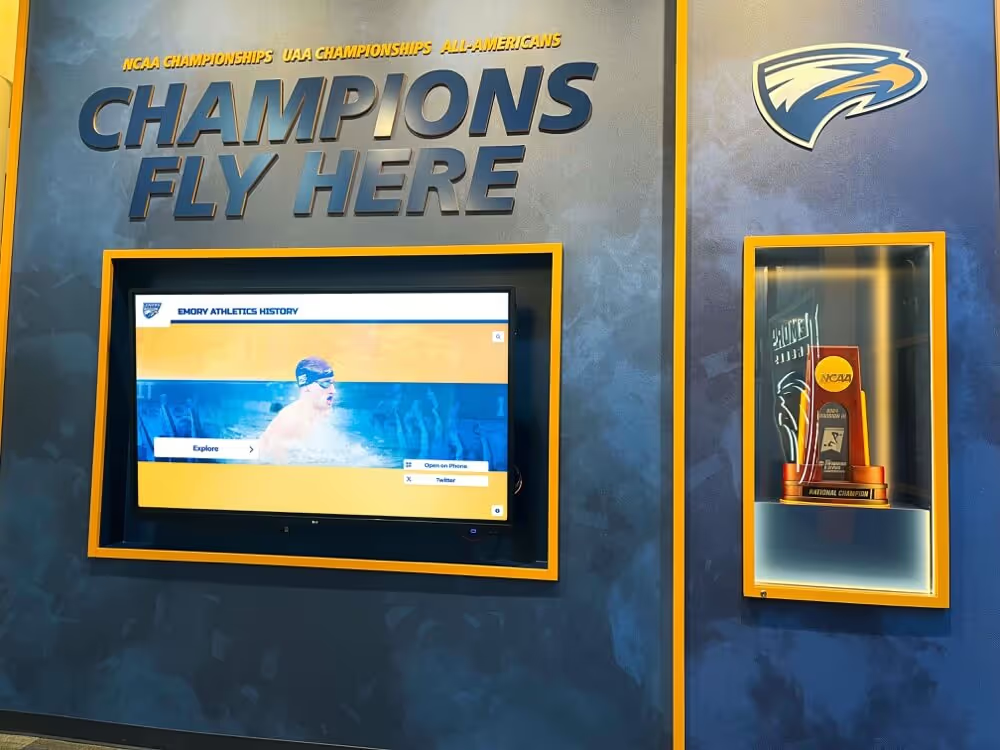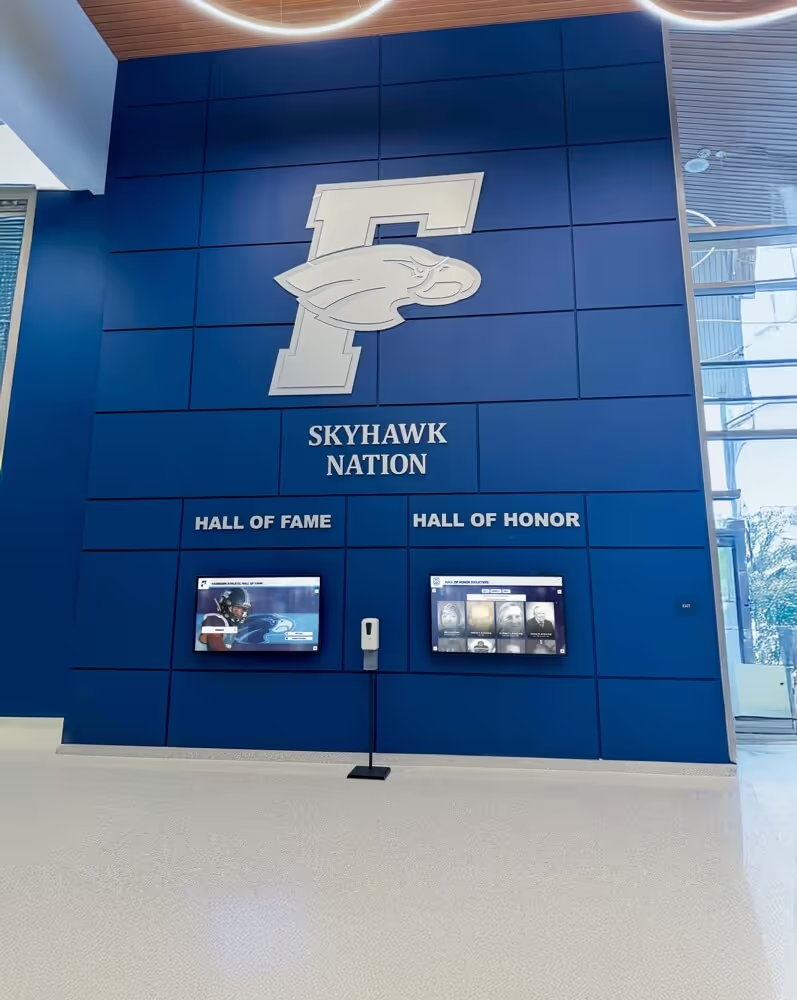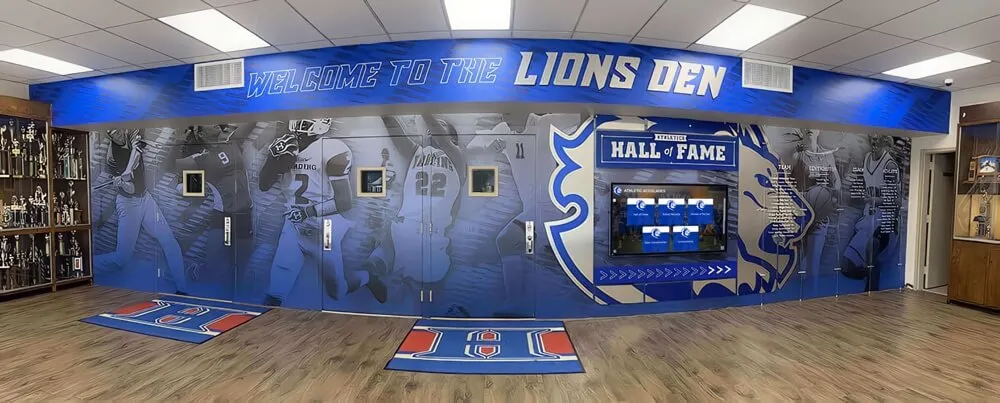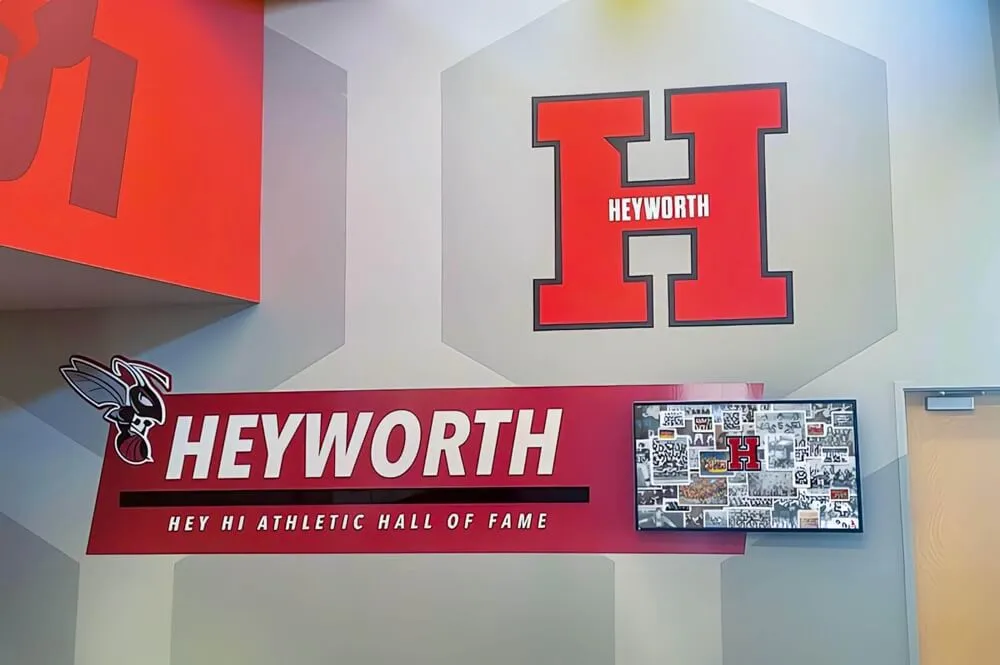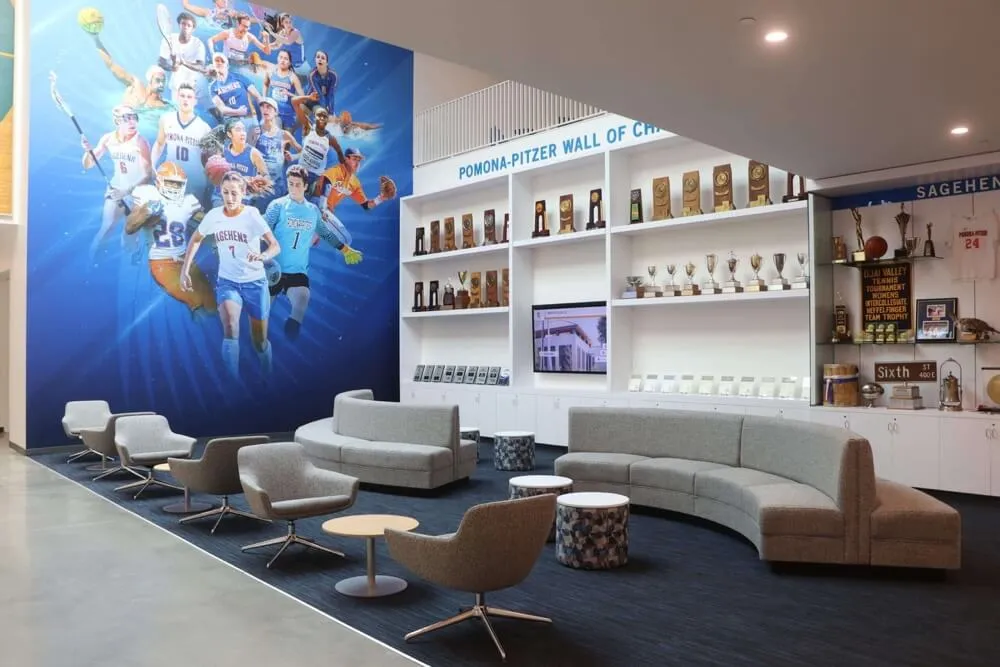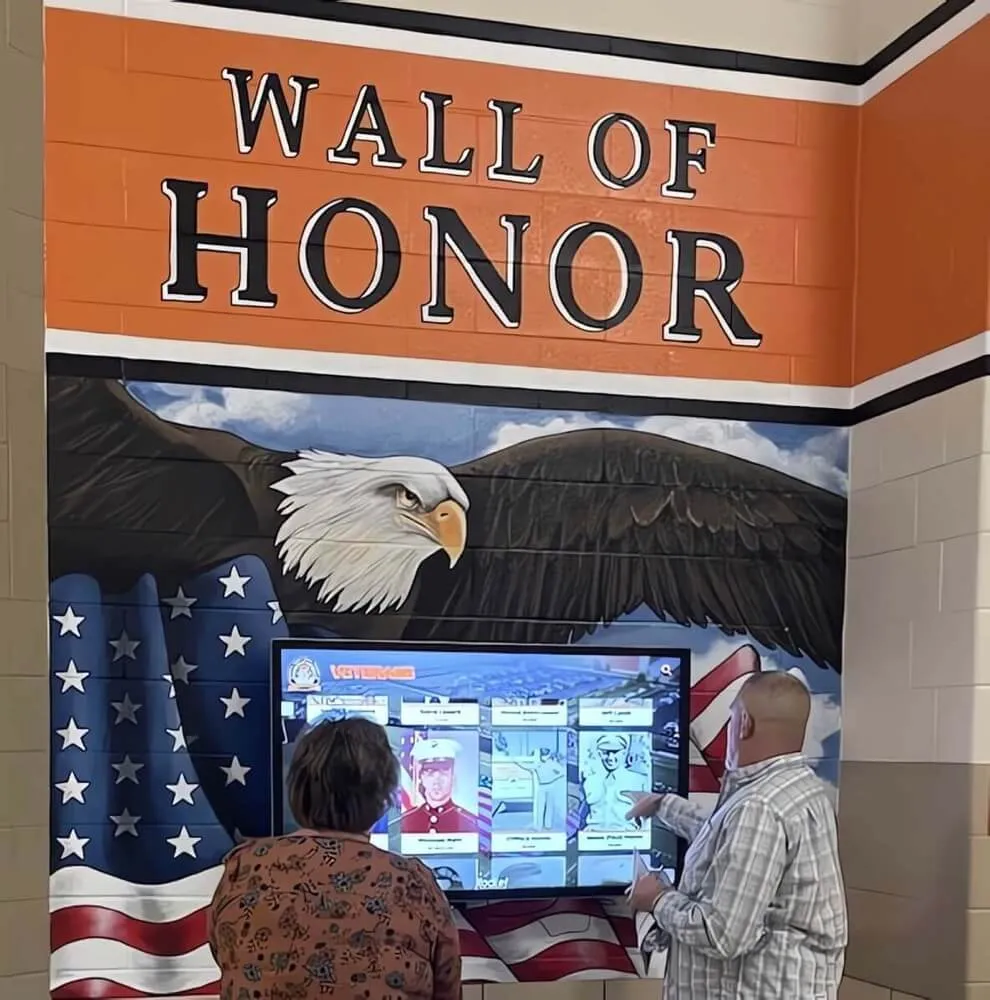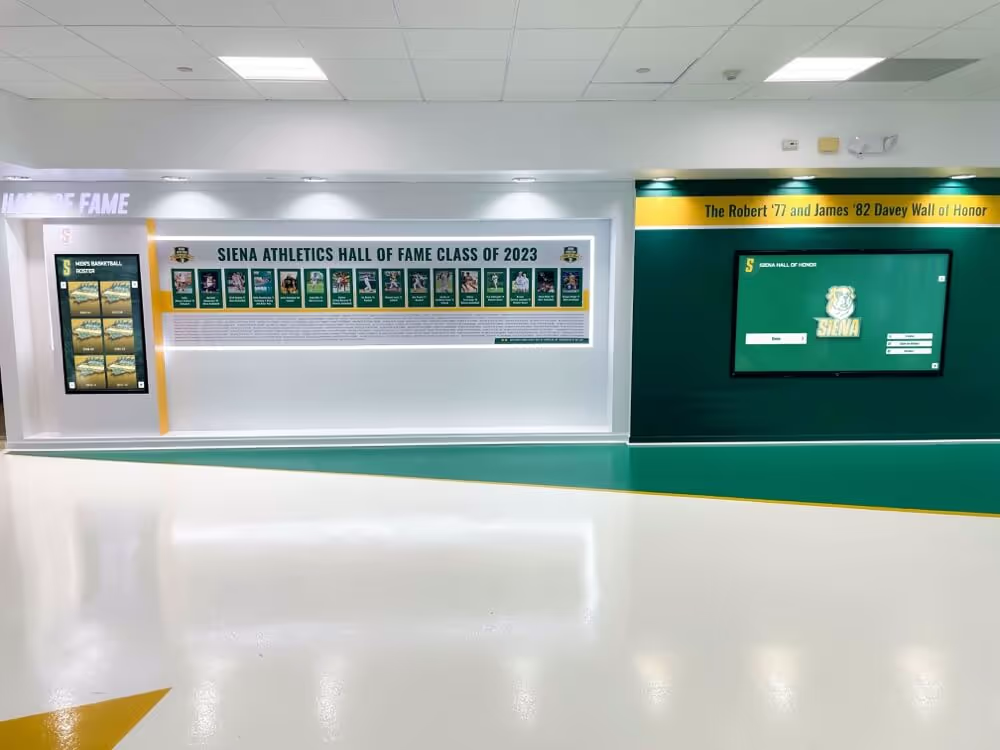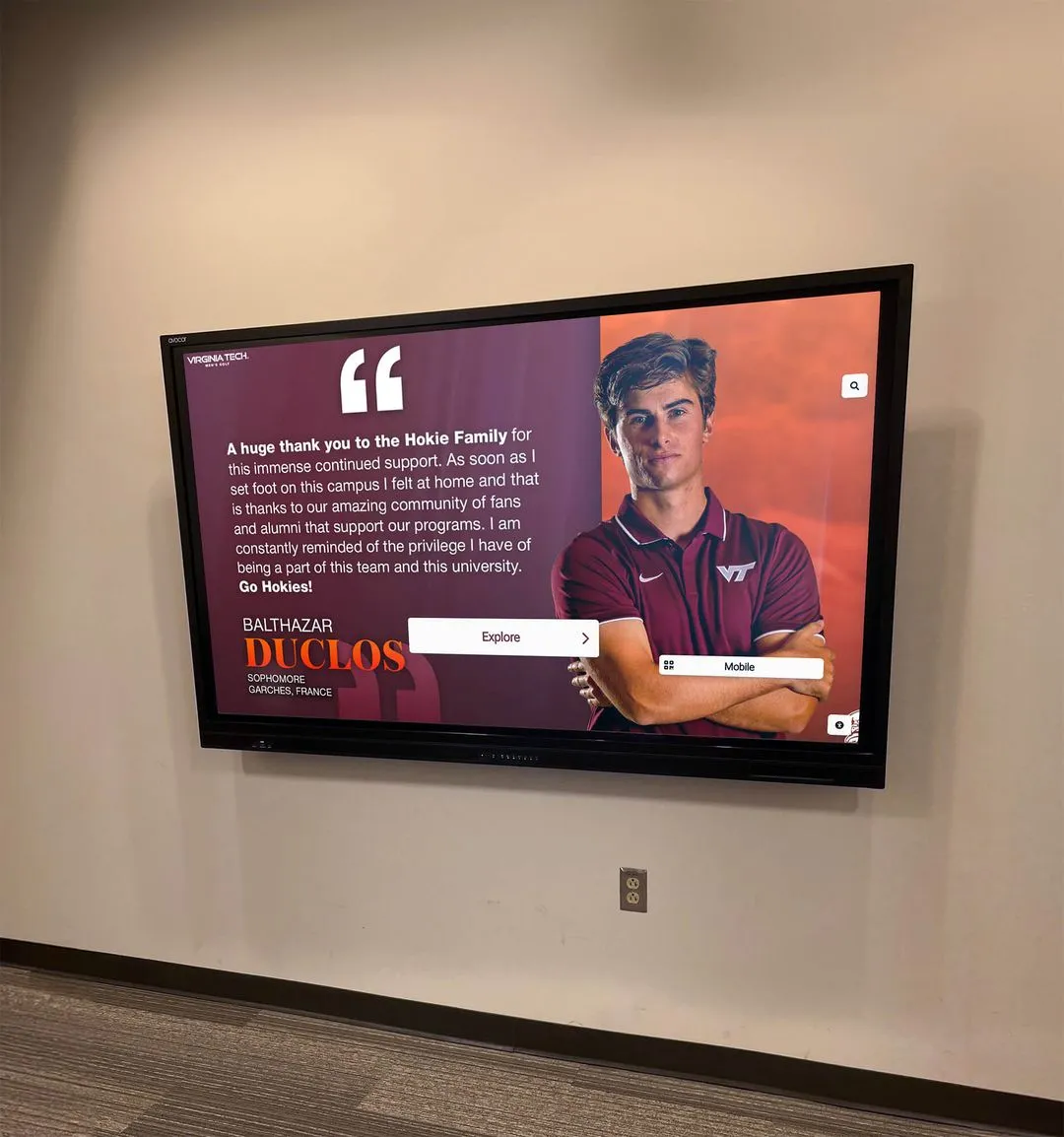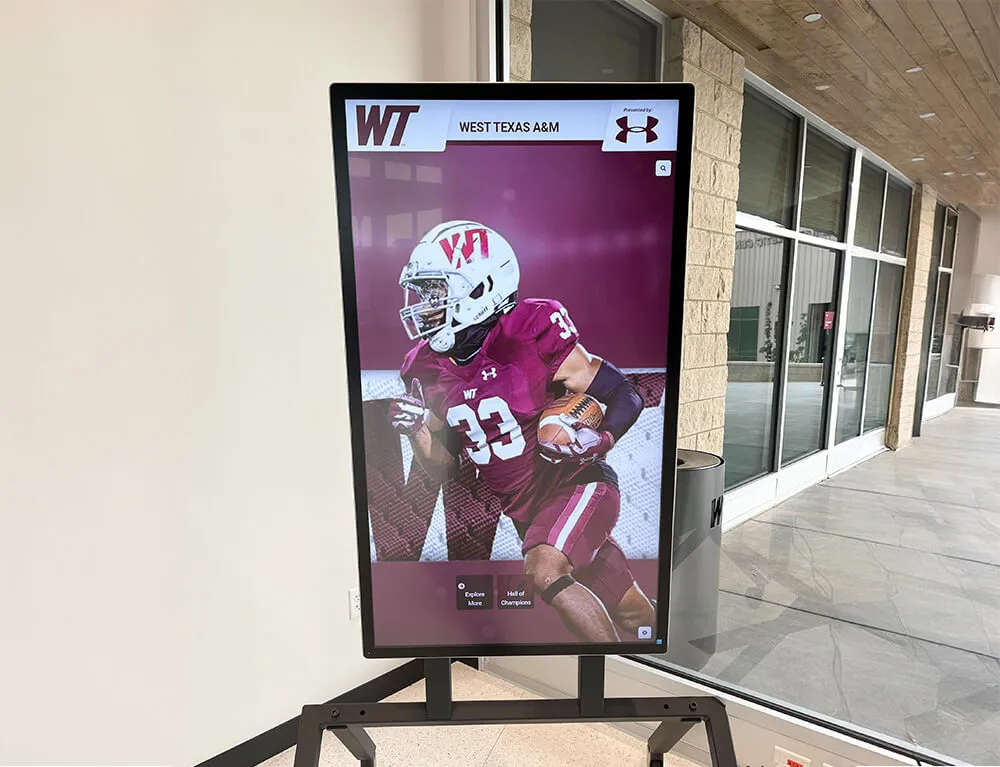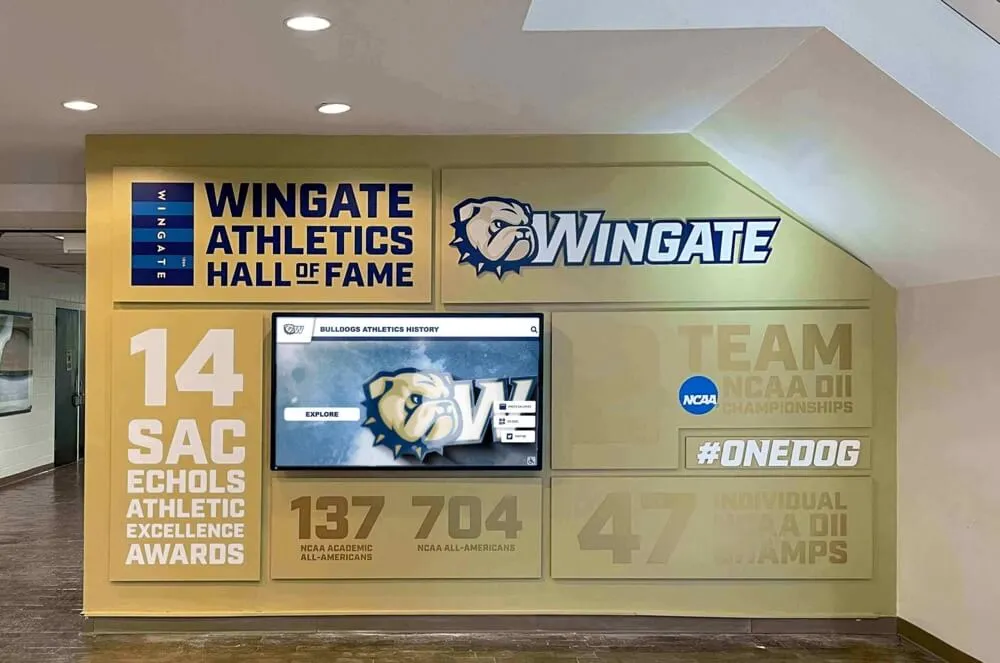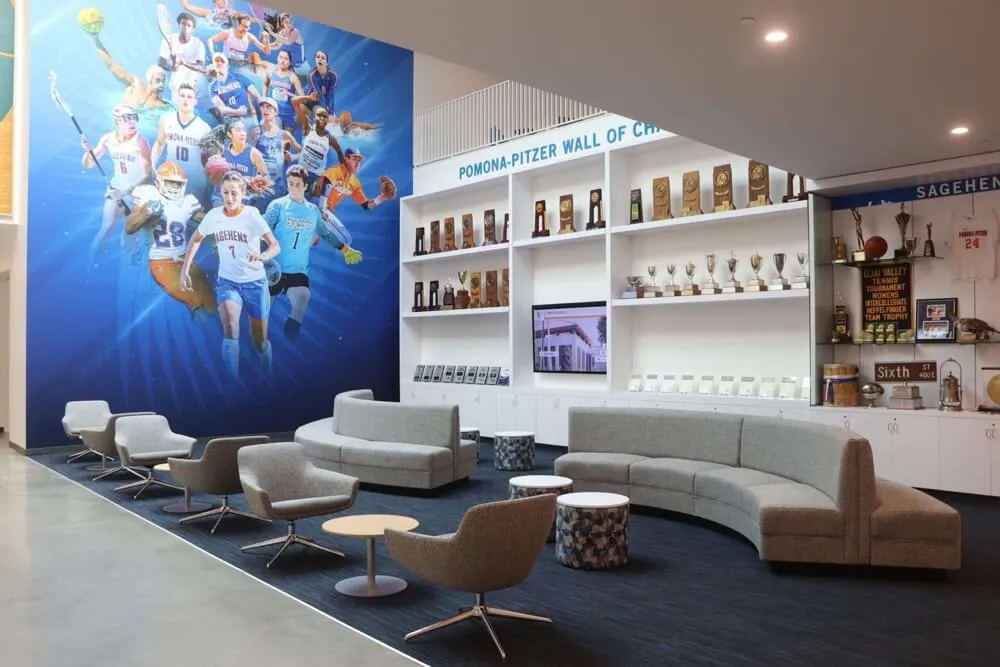
The most future-proof approach to hall of fame wall panels is to design for capacity you do not yet have. Schools that build recognition displays around a fixed number of inductees inevitably face expensive retrofits within a decade. Modular panel systems—physical or digital—solve this by treating expansion as a first-class design requirement rather than an afterthought.
This planning guide walks school administrators, athletic directors, advancement teams, and alumni offices through every decision point: sizing individual panels correctly, projecting annual induction volume, choosing between static and digital wall systems, and ensuring the display you install today still looks intentional when you add row after row of honorees in the years ahead.
Why Panel Flexibility Matters More Than Wall Aesthetics
Most hall of fame walls fail not because they look bad on opening day, but because they run out of space. A plaque wall installed in 1998 for 40 honorees may hold 120 by 2026—patches added, rows tightened, fonts shrunk to squeeze in new names. The result signals an institution that didn’t plan ahead, the opposite impression a recognition program should create.
Modular hall of fame wall panels prevent this by treating the display as a living system. Each panel is a self-contained unit: same dimensions, same materials, same visual grammar. Adding a new induction class means adding panels in a consistent grid, not renegotiating an entire wall layout. Schools that make this design choice report dramatically lower per-class costs over ten years compared to custom-fabricated plaque walls that require professional revision each cycle.
Panel-Sizing Checklist: Getting Dimensions Right Before You Buy
The most common planning mistake is selecting panel dimensions based on what fits the current wall space rather than what the content requires. Use this checklist before finalizing any panel purchase or fabrication order.
Content Inventory per Inductee
Before specifying panel size, document exactly what each panel must hold:
- Photo dimensions: Headshot only, or action/team photo? Minimum print resolution required?
- Biographical text: Name, graduation year, sport/category, key achievements—count characters for your longest expected entry
- Logo or seal: School seal, sport icon, or category badge?
- QR code or NFC element: Will panels link to digital profiles or video tributes?
- Border and margin: Accessibility-safe contrast margins and breathing room around text
A panel sized for a name and graduation year will look cramped the day an athletic director decides to add a three-line achievement summary. Size panels for the richest content you expect to include—ever.
Physical Panel Sizing Guidelines
| Content Complexity | Recommended Panel Size | Honorees per 8 ft × 8 ft Section |
|---|---|---|
| Name + year only | 6″ × 8″ | ~90 |
| Name + year + sport | 8″ × 10″ | ~55 |
| Name + year + sport + short bio | 10″ × 12″ | ~35 |
| Name + year + photo + bio | 12″ × 16″ | ~20 |
| Full profile with photo + bio + QR | 16″ × 20″ | ~12 |
These figures assume standard grid spacing. Actual capacity depends on your mounting system, wall dimensions, and whether you use a single section or wrap panels across multiple walls.
Structural Considerations
- Rail vs. adhesive mounting: Rail-mounted panels allow repositioning and expansion without wall damage; adhesive mounting is cheaper but permanent
- Material weight: Aluminum-composite panels are lighter than solid aluminum and easier to add in upper rows without structural reinforcement
- ADA clearance: Panels installed below 80 inches require a protruding-object clearance check if they extend more than 4 inches from the wall
Building an Annual Growth Model
A growth model translates your induction policy into a space projection, giving facilities teams a concrete planning horizon. Without one, “we’ll cross that bridge when we come to it” is how halls of fame end up embarrassingly overcrowded.
Step 1: Establish Your Annual Induction Rate
Review the past five years of induction records if available. If you are launching a new program, use these benchmarks from peer institutions:
- Small schools (under 500 students): 3–6 inductees per year
- Mid-size schools (500–1,500 students): 5–12 inductees per year
- Large schools and universities: 10–25+ inductees per year
- Multi-category programs (athletics + academics + donors): multiply by the number of active categories
For a deeper look at how peer schools benchmark their archiving practices, see the Academic History Archiving Schools Benchmark Report 2025.
Step 2: Project Space Consumption Over 10 and 20 Years
Using your annual induction rate and chosen panel size, calculate cumulative panel count at 5, 10, and 20 years. A school inducting 8 honorees per year using 12″ × 16″ panels will add roughly 8 panels annually—96 panels over 12 years. At ~20 panels per 8-foot section, that is nearly 5 full sections over the program’s first decade.
Map that projection onto your available wall space now. If you run out of room in year 7, you need a plan before year 7.
Step 3: Reserve Expansion Zones
When designing the initial installation, deliberately leave 20–30% of your planned wall space empty. This is not wasted space—it is your expansion budget. Communicate the reserved zone to facilities staff so it does not get assigned to trophy cases, bulletin boards, or painted murals before year 3 inductees arrive.
Step 4: Define Retirement or Archive Policy
Some institutions never retire inductees from the main wall. Others move older classes to a secondary archive display or digital archive after a set period, keeping the primary wall focused on recent decades. Define this policy before the wall fills—retroactive decisions about whose panel gets moved feel arbitrary and create community tension.
Organizing Panels by Category, Era, or Sport
How panels are organized dramatically affects how a hall of fame reads visually and educationally. The three most common organizational schemes each have tradeoffs.
Chronological Organization
Panels arranged by induction year create a historical timeline visitors can walk through. This scheme is intuitive and self-expanding—new inductees always attach to the most recent end. The downside: browsing a specific sport or category requires scanning the entire wall.
Category Organization
Panels grouped by sport, academic discipline, or donor tier allow visitors to navigate directly to what interests them. Athletic halls of fame with discrete sport sections feel more browsable. The tradeoff is that each section must accommodate variable growth rates—a cross country section might double in five years while the debate section adds one honoree.
Plan for uneven growth by leaving proportionally more empty space in categories with higher expected induction volume. Label empty spaces explicitly (“Reserved for Future Inductees”) so the intentionality is visible.
Hybrid Organization
Many schools use chronological organization within category groupings: sections by sport or discipline, panels within each section ordered by year. This hybrid serves both casual visitors and family members looking for a specific person.
For programs that also recognize academic letter award recipients, coordinating the visual language between the hall of fame wall and academic recognition displays creates a cohesive recognition environment. See how schools approach academic letter awards and scholarly achievement recognition for design language considerations.
Static Panel Systems vs. Digital Walls: Comparison Table
The decision between physical hall of fame wall panels and a digital display system is the highest-stakes choice in the planning process. It affects upfront cost, ongoing operational burden, content richness, and—critically—long-term expansion capacity.
| Factor | Static Panel System | Digital Wall / Touchscreen |
|---|---|---|
| Upfront cost | Lower (materials + installation) | Higher (hardware + software + installation) |
| Ongoing cost | Minimal (new panels per class) | Annual software/licensing fees; hardware refresh cycle |
| Expansion model | Physical panels added to wall | Software records added; no physical space consumed |
| Content richness | Photo + text + QR code | Video, audio, full bio pages, searchable database |
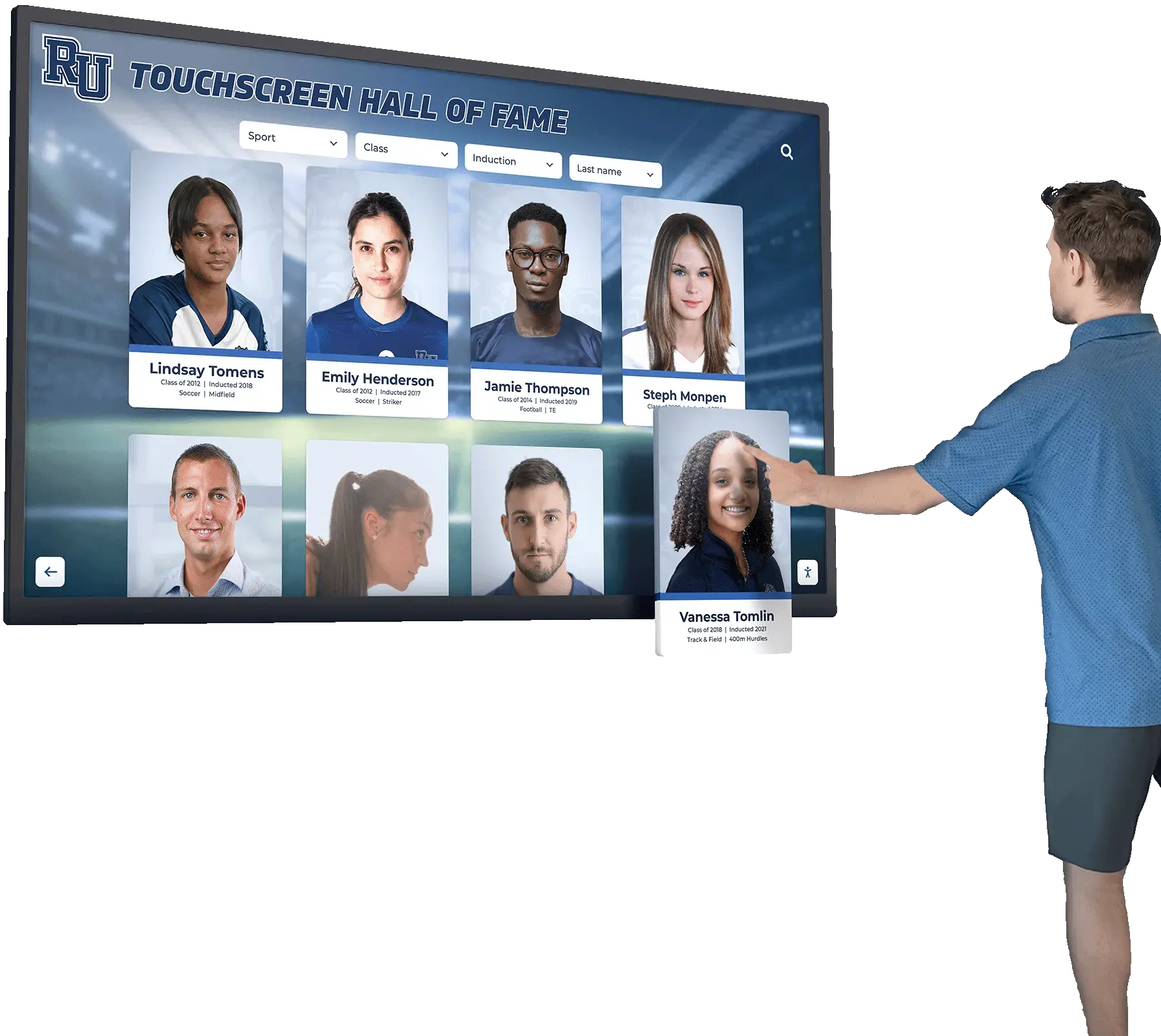
| Interactivity | None (unless QR linked) | Touchscreen browsing, search by name/year/sport |
| Space constraint | Hard limit (wall area) | Effectively unlimited (cloud or on-device storage) |
| Maintenance burden | Low (panels are durable) | Software updates, hardware upkeep, content management |
| Perceived prestige | Traditional; physical permanence | Modern; reflects institutional investment in technology |
| Accessibility | Fixed in physical location | Content accessible remotely via web or app |
| Failure modes | Vandalism, fading, damage | Screen failure, software bugs, content management gaps |
Recommendation by school size and budget:
- Small schools on tight budgets: Start with a well-designed static panel system using modular rails. A phased physical build is far more sustainable than an underfunded digital system with neglected content. For budget-conscious planning, see affordable hall of fame solutions for small school budgets.
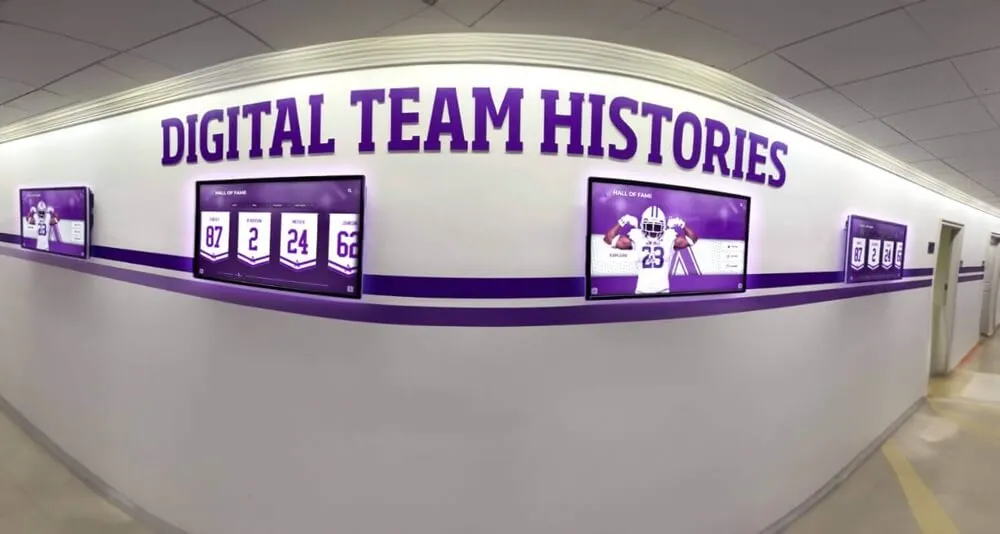
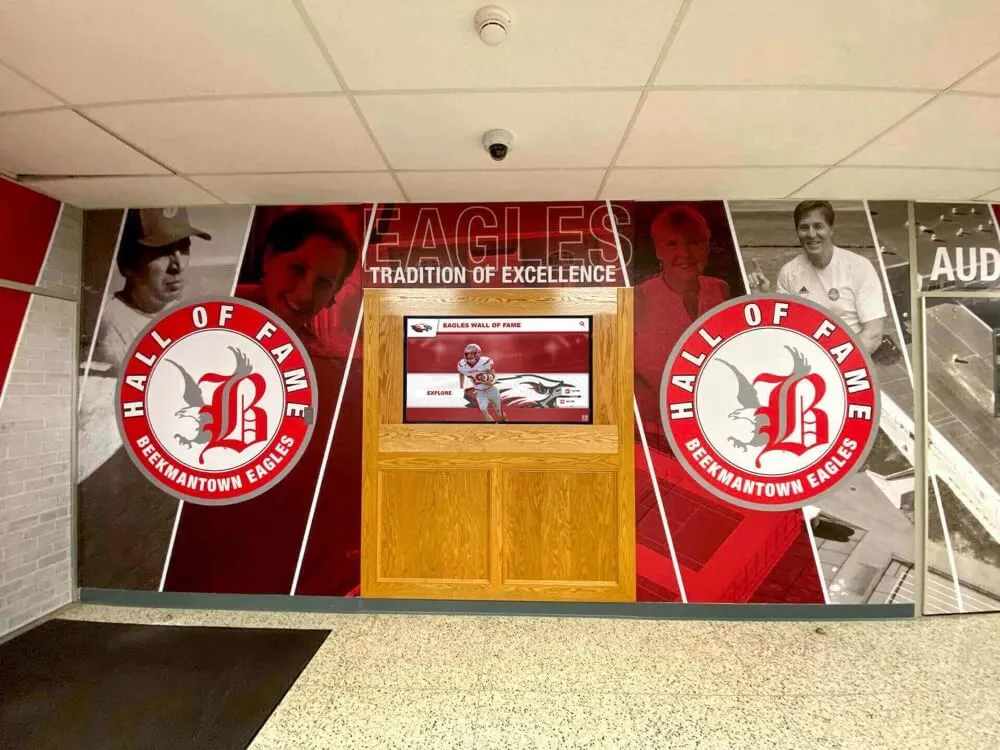
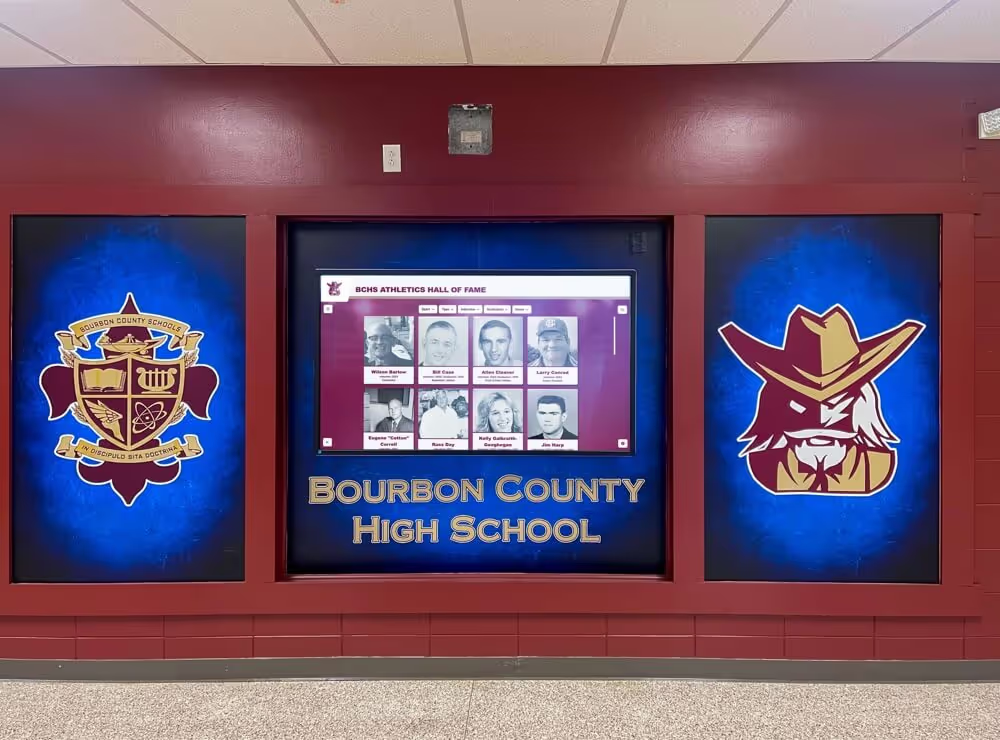
- Mid-size schools with active alumni programs: Hybrid approach—physical panels for permanent honoree recognition, supplemented by a digital touchscreen kiosk that hosts extended profiles, video tributes, and searchable archives.
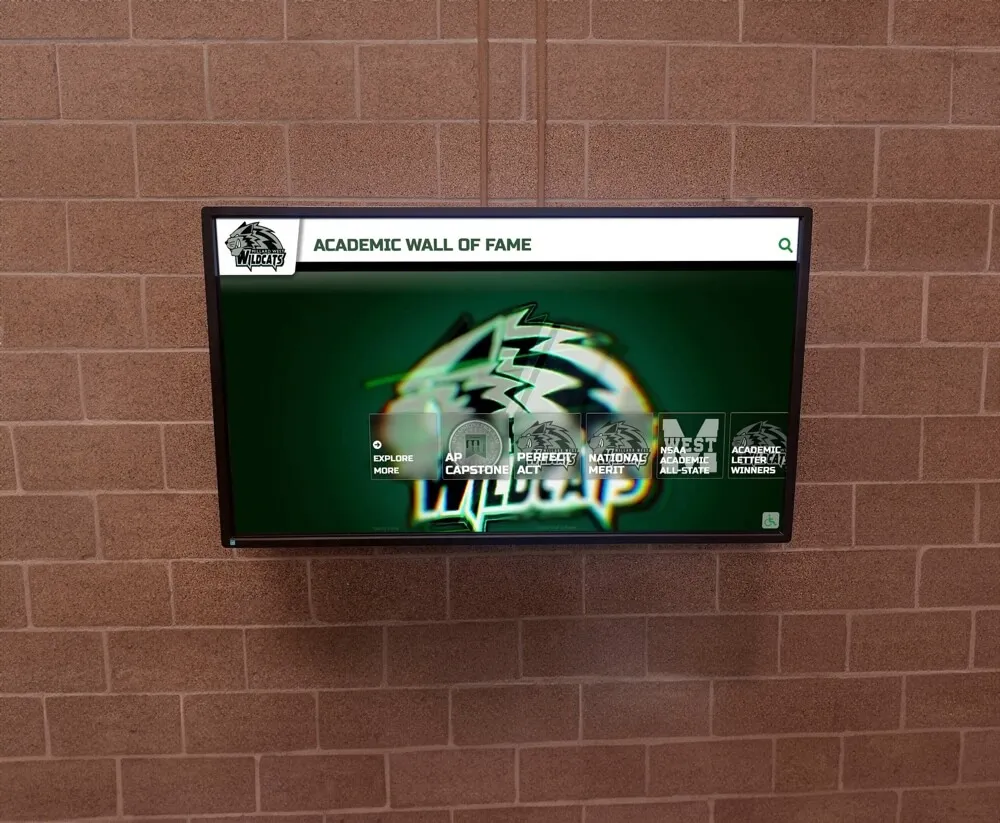
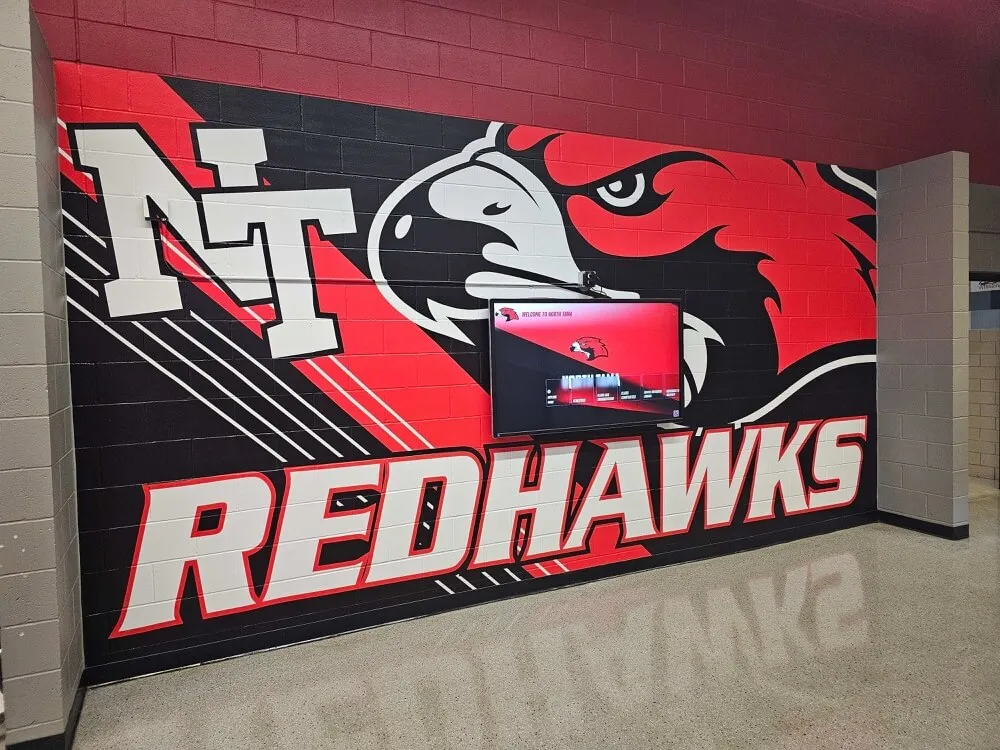
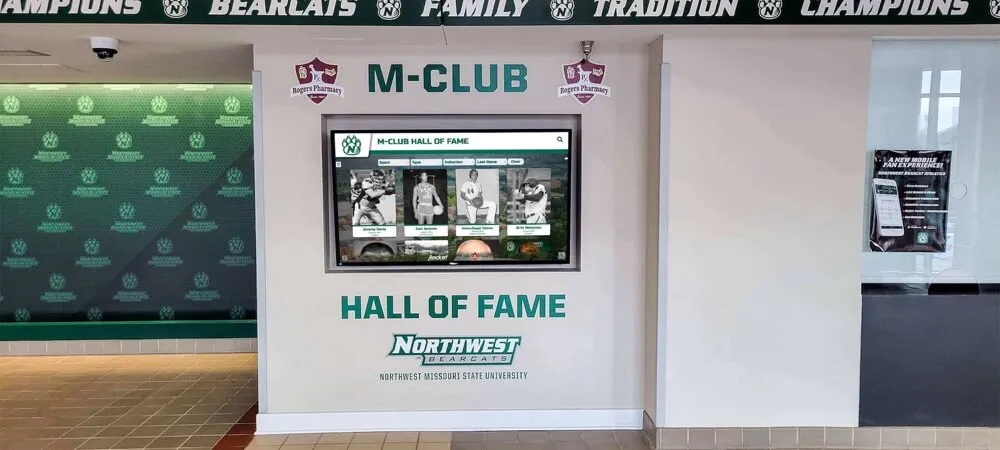
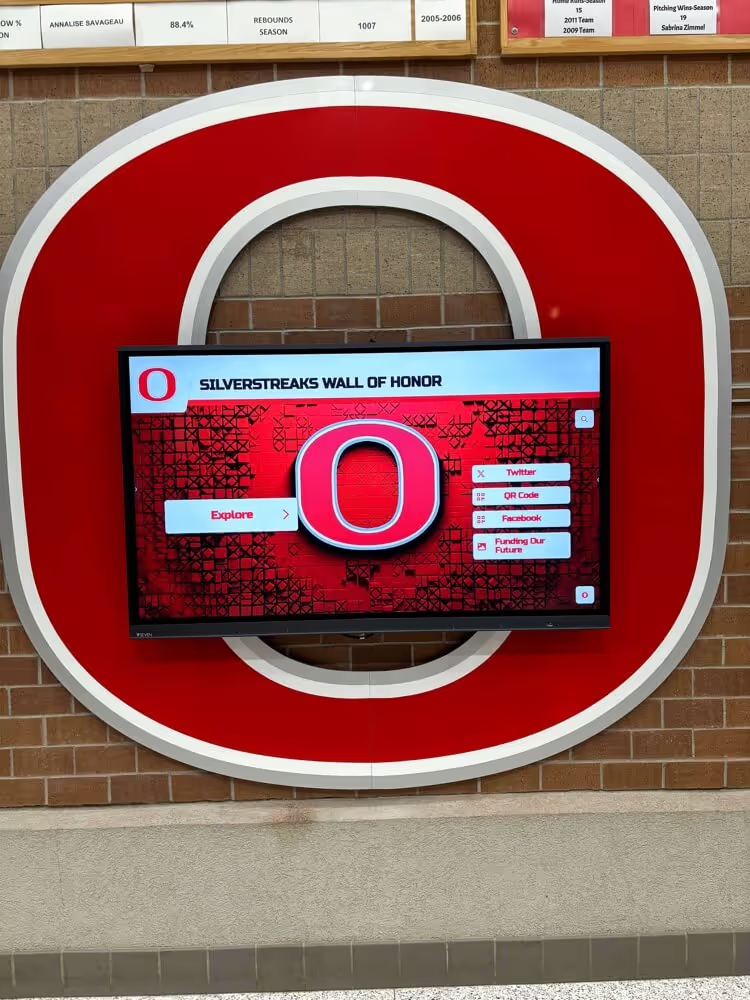
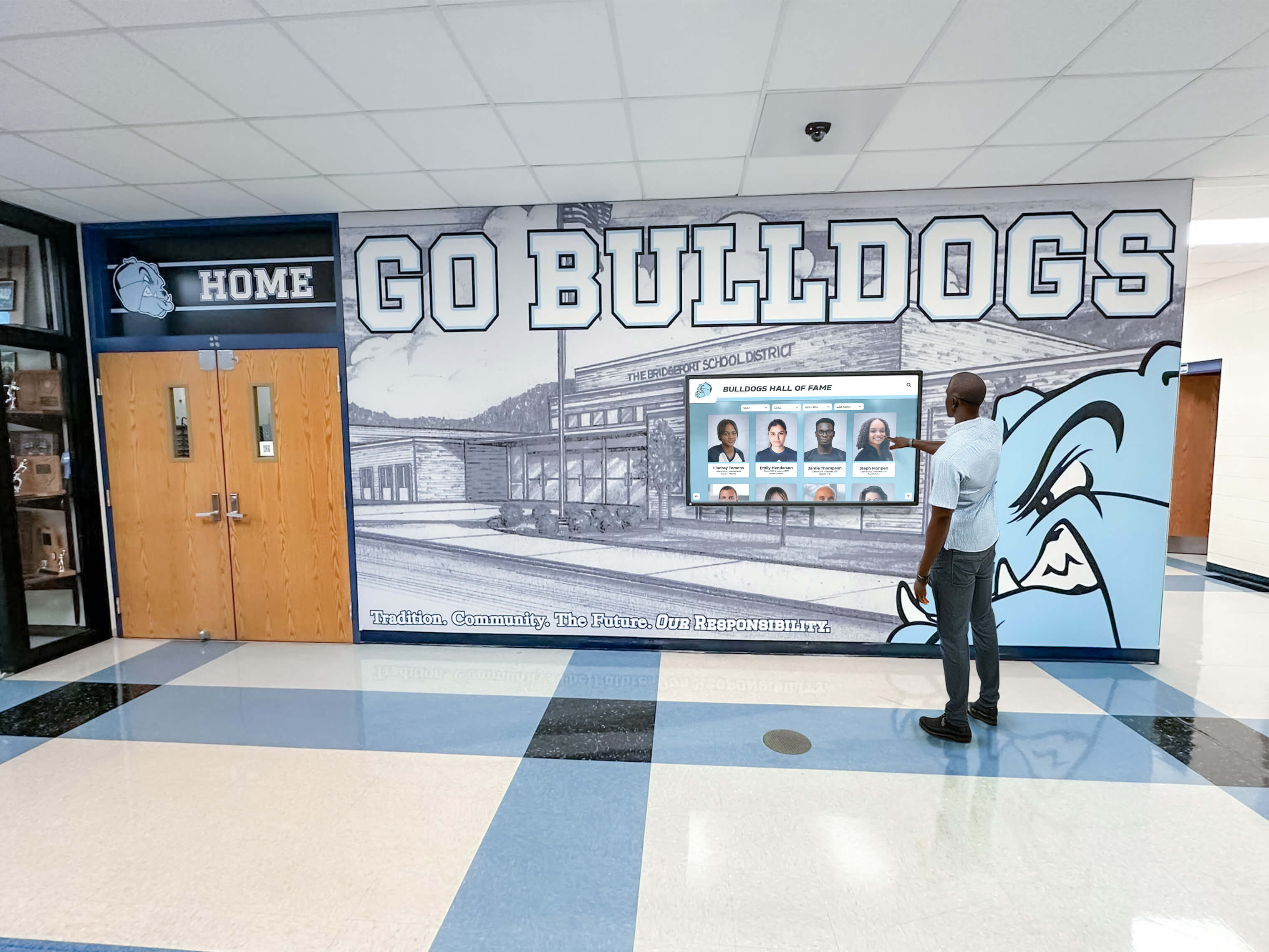
- Large schools, universities, and programs with significant donor recognition needs: Full digital wall system. When you are inducting 15+ honorees per year across multiple categories, the space constraint of physical panels becomes a real operational problem within a single decade. Digital systems like Rocket eliminate that constraint entirely, while enabling richer storytelling through video and interactive timelines.

Designing for Annual Expansion Without Visible Seams
A well-planned modular system looks intentional after 20 additions. A poorly planned one shows every annual addition as a visible afterthought. These design principles prevent the latter.
Establish a Visual System, Not Just a Size
Consistent materials, colors, and typography across all panels—regardless of induction year—make expansions invisible. If your founding 20 panels use brushed aluminum with black text, every subsequent panel must match exactly. Document the specification (material, finish, font, point size, color codes) in a facilities manual and revisit it before every induction cycle.
Use a Grid with Intentional Spacing
Random spacing between panels looks improvised. A defined grid—with known horizontal and vertical gaps—turns the empty space into part of the design. When you add panels, you fill the grid; the wall’s geometry remains consistent.
Plan Header Infrastructure Independently
Section labels (“Athletics,” “Class of 2010–2019,” “Academic Honorees”) should be permanently installed and sized to span the full planned section, not just the currently occupied portion. A header that perfectly frames 12 panels looks undersized when the section grows to 30. Install headers at full planned width from day one.
What to Do When You Run Out of Wall Space
Despite careful planning, walls eventually fill. Schools have several options that do not require demolition or a brand-new facility project.
Extend to adjacent walls: Hallway corners and perpendicular walls can integrate with the original display using consistent materials and connecting design elements.
Add a secondary archive display: A separate “Legacy Wall” or archive section in a library, alumni center, or conference room for older induction classes keeps the primary wall focused on recent decades without removing any honoree permanently.
Transition to digital: A wall that has reached physical capacity is the most natural moment to introduce a digital display system. Physical panels remain as a permanent record; the digital system accommodates all future inductees with no space constraints. For programs considering this transition, the all-state athlete recognition digital displays guide covers the practical steps for moving recognition workflows to digital systems.
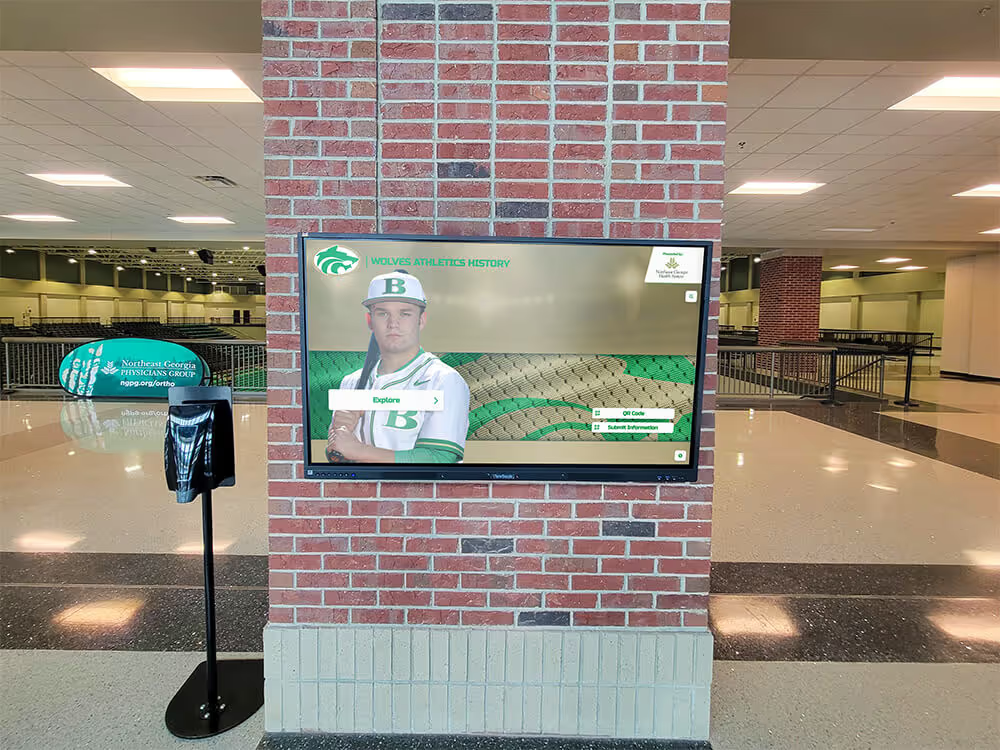
Go digital-first with a touchscreen kiosk: When even a secondary wall is not feasible, a free-standing touchscreen kiosk in a high-traffic area (lobby, gymnasium entrance, alumni center) delivers the full hall of fame experience with zero wall space required. See the allstar achievement touchscreen displays guide for implementation considerations.
Frequently Asked Questions
How many inductees can a standard hall of fame wall panel hold? Each panel typically features one honoree. Panel size determines content richness, not capacity: a 12″ × 16″ panel holds one person’s photo, name, graduation year, sport or category, and a short achievement summary. Wall sections are sized to hold multiple panels—typically 12–20 panels per 8-foot section depending on panel dimensions and spacing.
How often should schools add new panels to their hall of fame wall? Most schools induct annually, often timed to homecoming, alumni weekend, or end-of-year ceremonies. Annual additions keep the recognition program active and give the community regular reasons to engage with the display. Bi-annual programs risk losing momentum; inductions less frequent than every two years tend to feel ceremonially significant but institutionally neglected in the years between.
What is the difference between a modular panel system and a custom plaque wall? A modular system uses standardized, interchangeable panels mounted on a consistent rail or grid infrastructure. New panels match existing ones exactly and can be added without modifying the surrounding display. A custom plaque wall is fabricated as a single designed artifact; adding inductees typically requires ordering custom-sized fill-in pieces or redesigning sections, which is costlier and harder to keep visually consistent over time.
When does a digital wall make more sense than physical hall of fame wall panels? Digital walls make most sense when: (1) annual induction volume is high enough that physical panels would exhaust wall space within 10–15 years; (2) the program wants to include video tributes, searchable archives, or remote access for alumni; (3) the institution wants to recognize multiple categories (athletics, academics, donors, service) without dedicating separate wall sections to each. Physical panels remain the better choice when budget is constrained, the induction volume is modest, or the institution values the permanence of a physical installation.
How should schools document panel specifications for future expansion? Create a one-page “Display Specification Sheet” stored in facilities management records and updated after each induction cycle. It should include: panel manufacturer and model number, exact material and finish specifications, typography (font name, point size, weight, color hex), mounting system model and hardware supplier, grid spacing measurements, and header/label specifications. Without this document, matching panels five years later becomes a guessing game that shows.
Can hall of fame wall panels include QR codes linking to digital content? Yes, and this is increasingly common as a cost-effective hybrid approach. A physical panel with a QR code can link to a dedicated web page or digital profile containing extended biography, photos, video highlights, and statistics. This gives physical panels many of the content-richness benefits of digital displays at a fraction of the cost, while preserving the permanence of a physical installation.
Planning modular hall of fame wall panels is ultimately an exercise in institutional humility: acknowledging that your recognition program will outlast any single installation decision, and designing accordingly. Schools that build for expansion from day one spend less, maintain visual consistency longer, and honor more inductees with greater dignity over time. Whether you choose a physical panel system, a digital wall, or a hybrid approach, the principles are the same—document your specifications, project your growth, reserve your expansion space, and treat every new induction class as a test of how well you planned.