Every school has stories worth telling—state champions who trained before dawn, coaches who shaped generations, alumni who went on to remarkable careers, and teams whose records still stand decades later. The challenge isn’t finding achievements worth honoring; it’s creating a hall of fame wall that does justice to those stories, stays current as new honorees emerge, and makes visitors stop, look, and feel something. Whether you’re designing your first recognition display from scratch or modernizing a wall that’s been the same since the 1990s, the right hall of fame wall ideas can transform a corridor into a living tribute that the entire community takes pride in.
This guide covers the full spectrum of hall of fame wall ideas, from time-tested traditional designs to modern digital touchscreen solutions, with practical advice for selecting the approach that fits your space, budget, and long-term recognition goals.
Why Hall of Fame Walls Matter More Than Ever
Before exploring specific hall of fame wall ideas, it’s worth understanding why these displays carry such outsized importance relative to their physical footprint. A well-designed recognition wall creates several effects that are difficult to replicate through other means.
Institutional memory: Schools and athletic programs accumulate achievement over decades, but institutional memory is fragile. Coaches retire, athletic directors change, records get lost in filing cabinet transitions, and photographs fade or disappear. A permanent hall of fame wall preserves this history in a form that’s visible and accessible every day, not buried in archives.
Motivational signaling: Current athletes who walk past a display featuring three-time state champions from their program receive an immediate, visceral signal about what this program expects and what it’s capable of. That effect—seeing what’s achievable in your specific context—is more powerful than any motivational speech.
Alumni engagement: Recognition walls create lasting touchpoints that keep former athletes and students connected to their schools. Alums who see their names, photos, or achievements displayed during homecoming visits or when accompanying their own children to events feel a renewed sense of belonging that translates into engagement, volunteerism, and financial support. A thoughtful alumni welcome area anchored by a strong recognition wall sets the tone for every returning visitor.
Recruiting advantage: When prospective student-athletes tour your facilities, visible recognition of program excellence communicates tradition and ambition more effectively than any brochure. A well-maintained hall of fame wall signals that the program takes its history seriously and will honor the athlete’s future contributions.
Traditional Hall of Fame Wall Ideas
Physical recognition displays have anchored school and athletic program halls of fame for generations, and with good reason. Traditional materials—engraved shields, framed portraits, bronze plaques—carry a weight and permanence that digital alternatives still strive to match. Many of the best hall of fame installations combine traditional and digital elements, but understanding classic design options provides the foundation for any recognition wall project.
Shield and Plaque Wall Displays
Engraved wooden or metal shields remain among the most recognizable hall of fame wall elements. Each shield typically includes the inductee’s name, year, sport or category, and key achievement—state champion, All-American, career record holder, or similar distinction. Shields can be arranged in rows by year of induction, grouped by sport or category, or organized alphabetically for easier navigation.
The advantages of shield-based displays include durability, visual consistency, and the ceremonial weight that comes from seeing dozens or hundreds of shields covering an entire wall. Arriving at a gym and seeing forty years of state champions displayed in matching shields communicates something immediate about program culture that few other design choices can match.
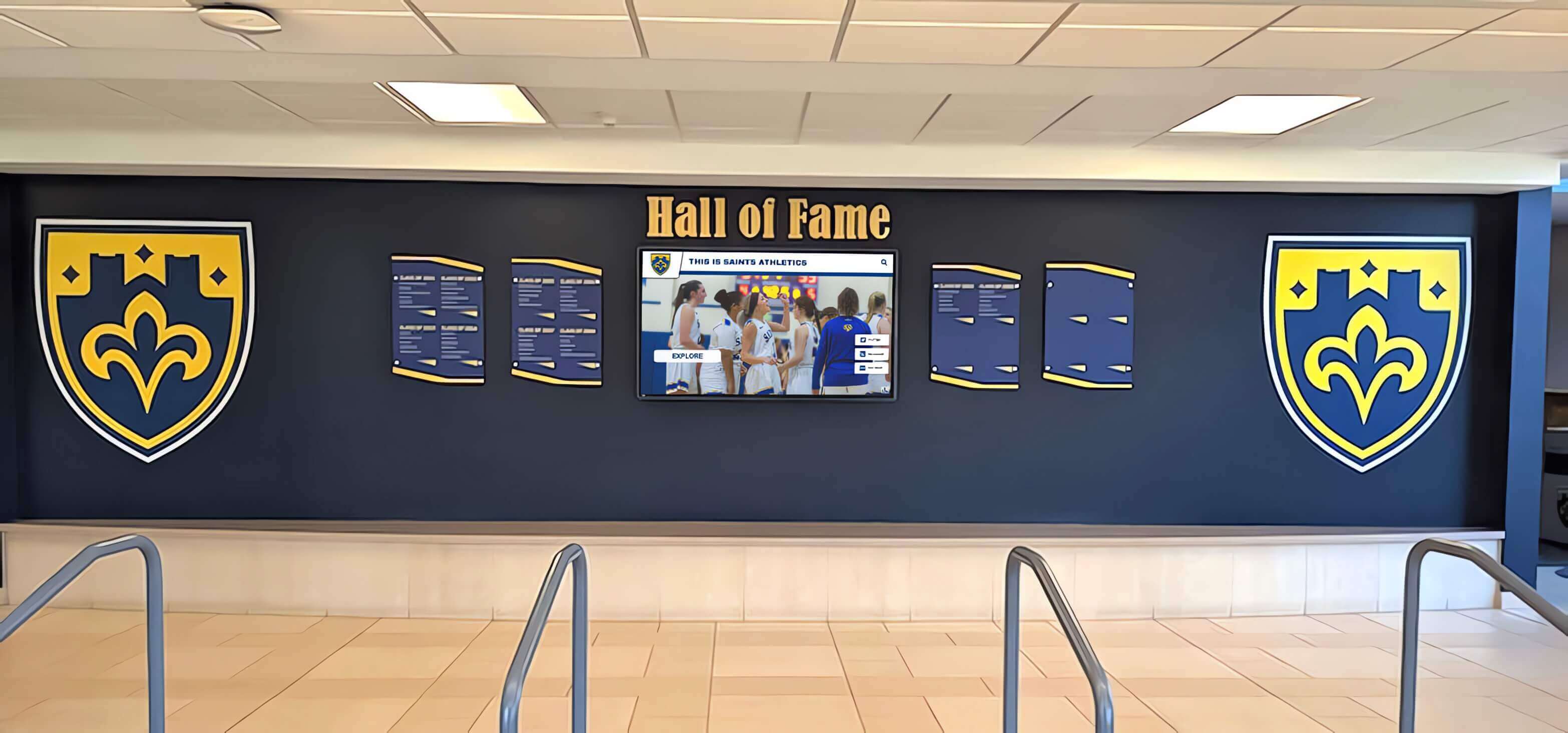
Design considerations for shield walls: Color consistency matters enormously—shields in school colors create visual cohesion that looks intentional rather than accumulated. Size uniformity across induction years prevents the display from looking like it was assembled across different eras (which it probably was). When designing a new shield wall or refreshing an existing one, establishing a standard size, color, and font and retroactively replacing or supplementing older shields creates a unified presentation.
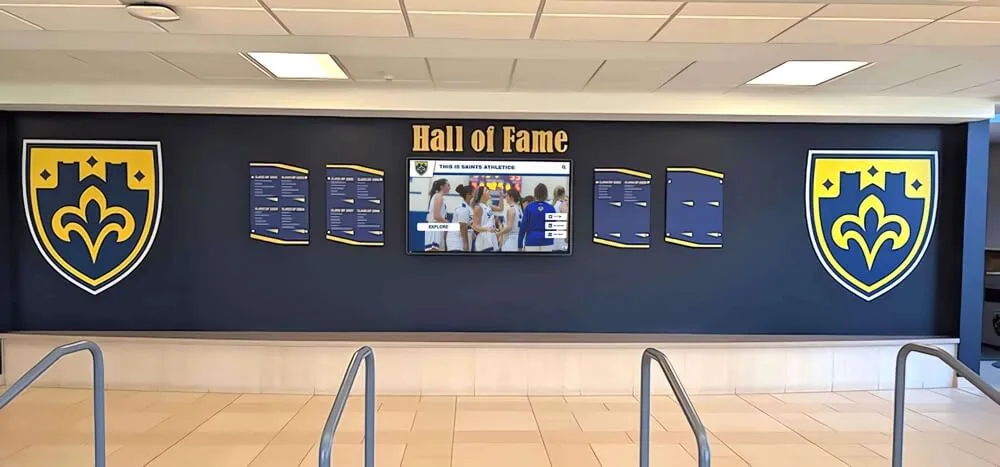
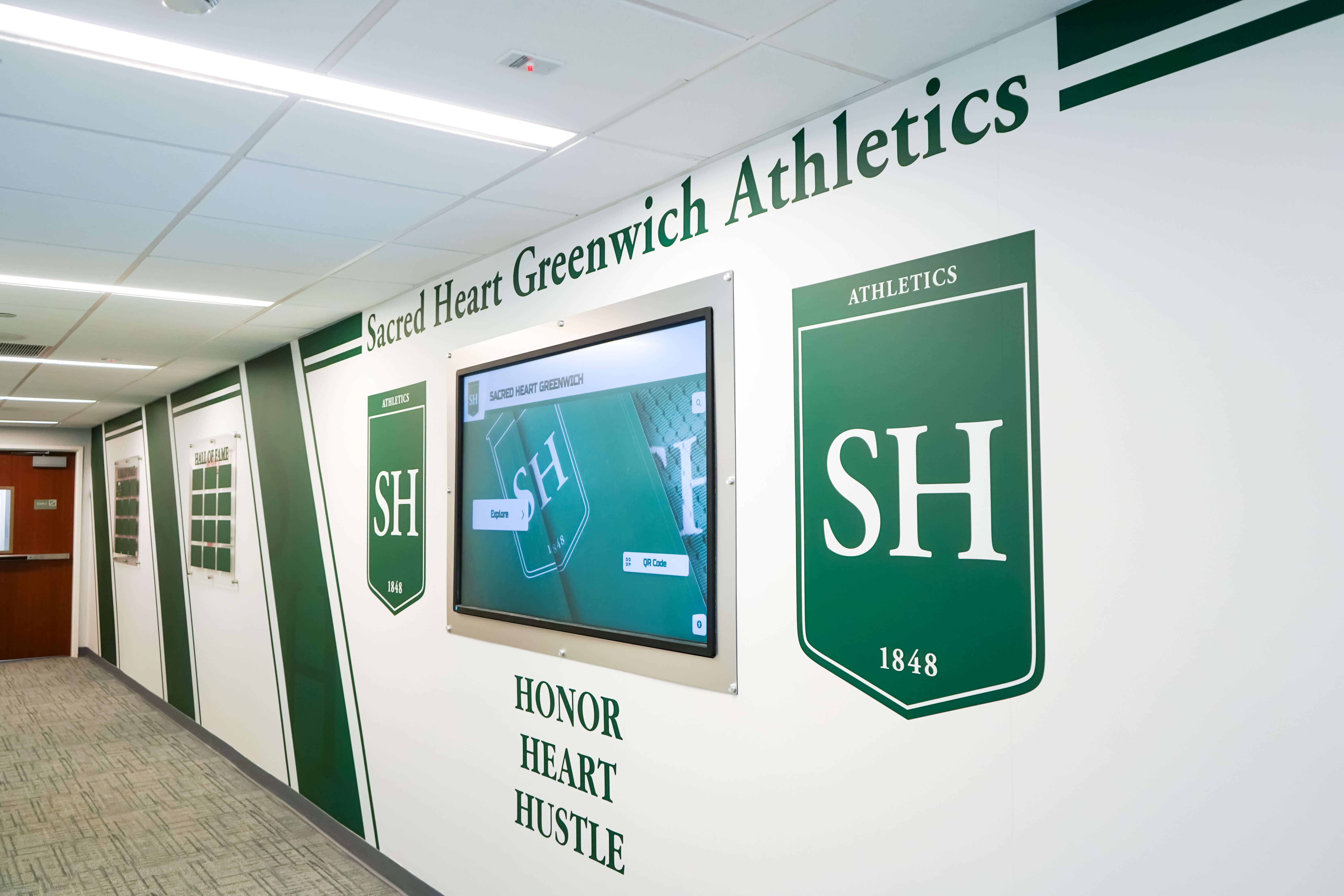
Sacred Heart Greenwich and similar programs use shield-based displays effectively by pairing the traditional format with excellent photography, quality materials, and careful attention to layout, proving that classic approaches executed with care rival anything more modern.
Portrait and Photography Walls
Photographs create recognition walls with personality. A wall of individual portraits—each inductee captured in action or in formal athletic attire—puts faces to names and makes the recognition immediately human. Large-format portraits or panoramic team photographs add drama and scale that smaller plaques cannot match.
Photography-based recognition works particularly well for programs with strong visual archives or access to professional photography. High schools with dedicated yearbook photography programs, colleges with athletic media staff, and any institution that prioritized documentation over the decades have material that can anchor genuinely compelling portrait walls.
Challenges: Photograph quality varies significantly across decades. Early induction classes may have only low-resolution or damaged images, creating visual inconsistency. Digital restoration services can improve older photographs substantially, but budget constraints affect feasibility. Some programs solve this by mixing high-quality historical photographs with professionally commissioned portraits for recent inductees.
Mural-Based Recognition Displays
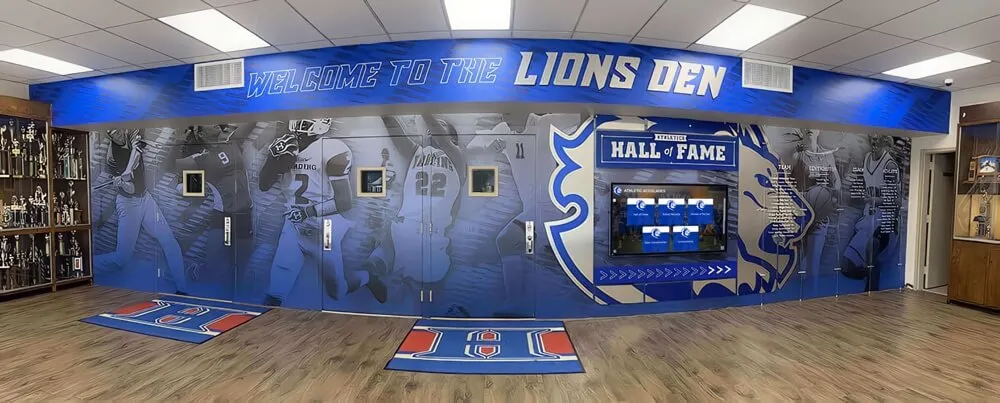
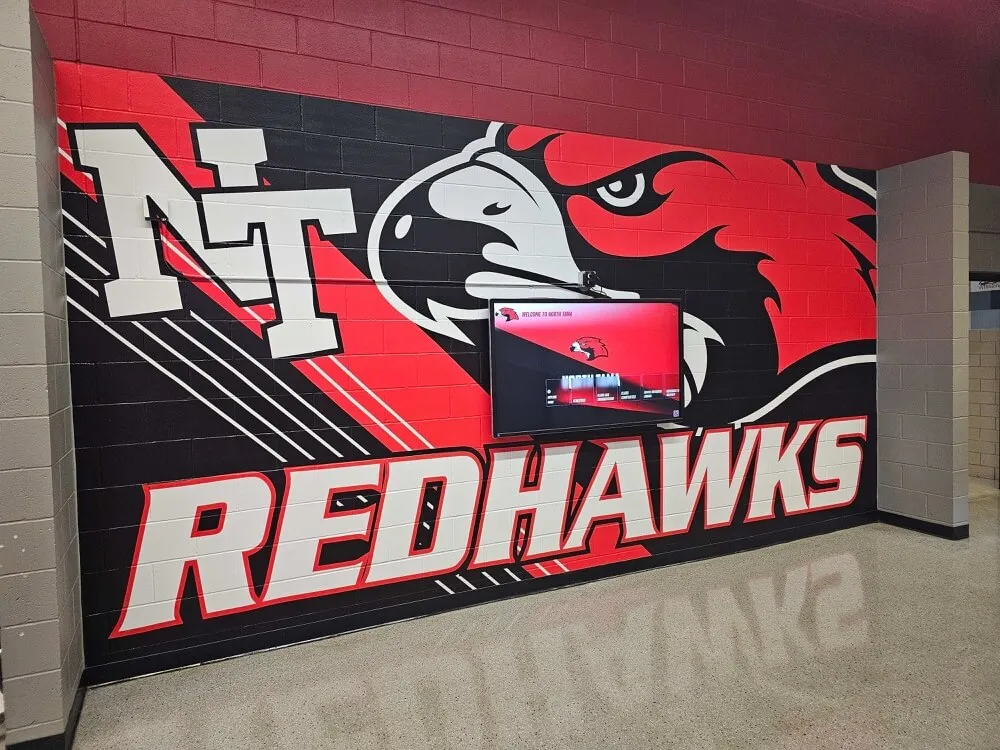
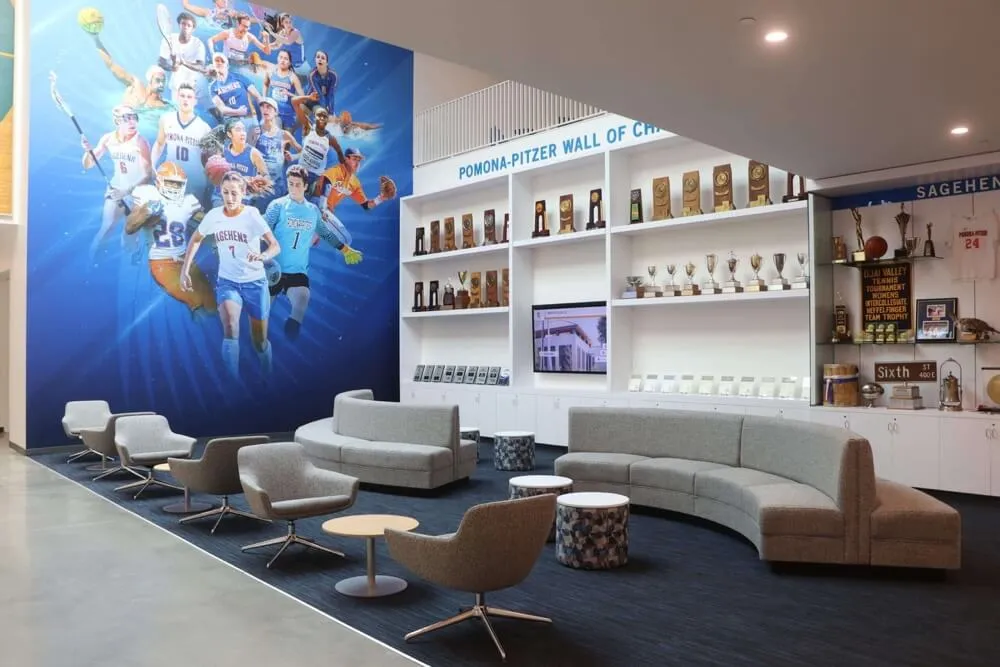
Full-wall murals incorporating team colors, mascots, and athletic imagery create dramatic hallway and lobby installations that communicate program identity powerfully. When murals incorporate inductee names, years, and achievements into the visual design rather than attaching separate plaques to an existing painted surface, the result feels integrated and intentional rather than added on.
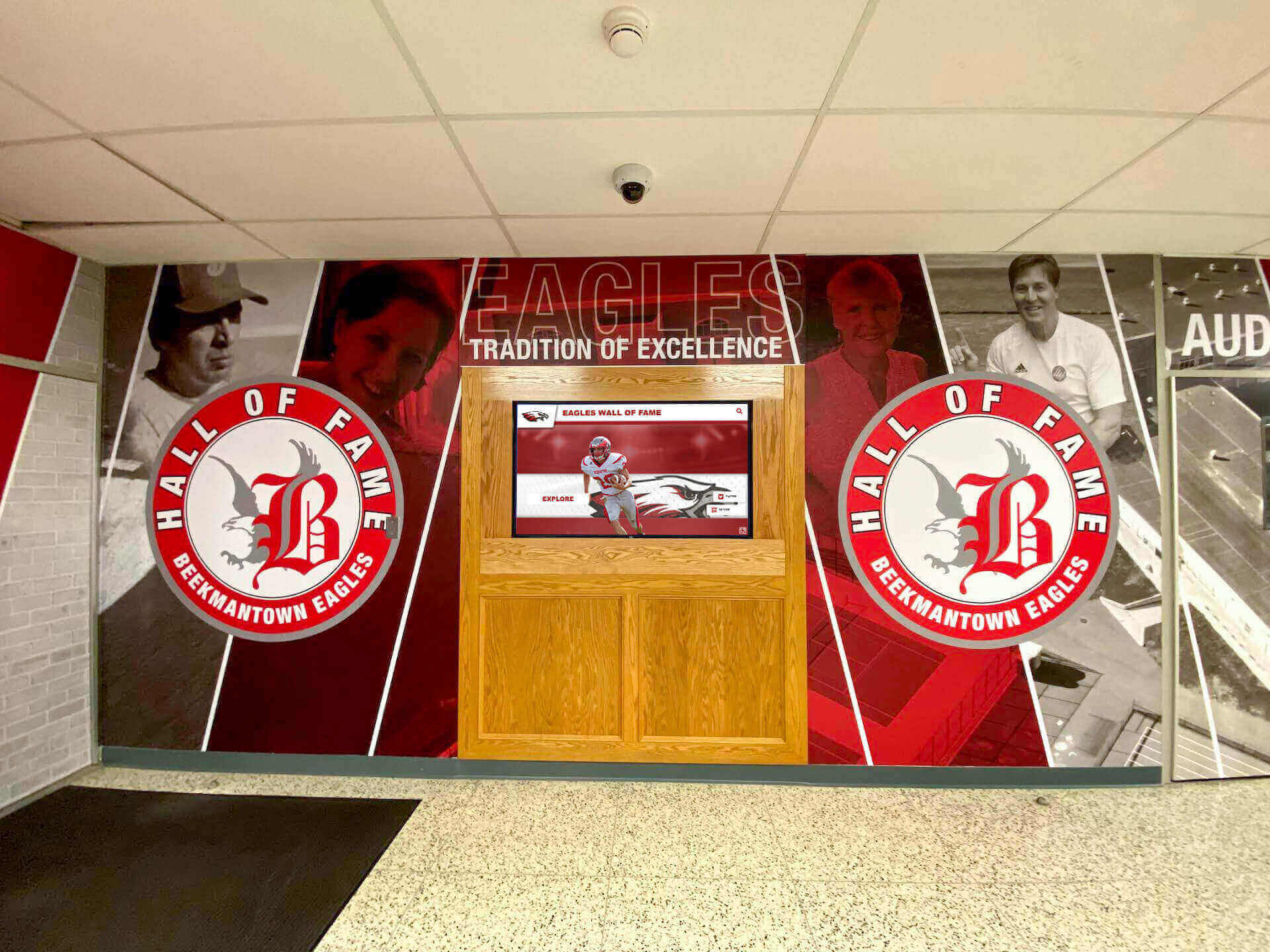
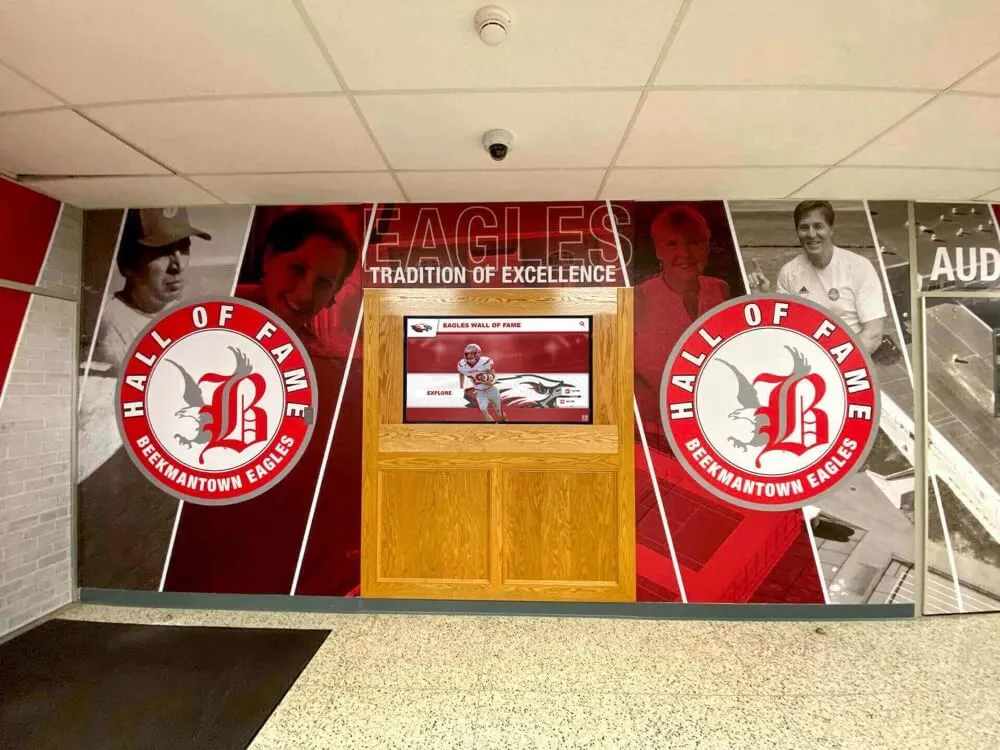
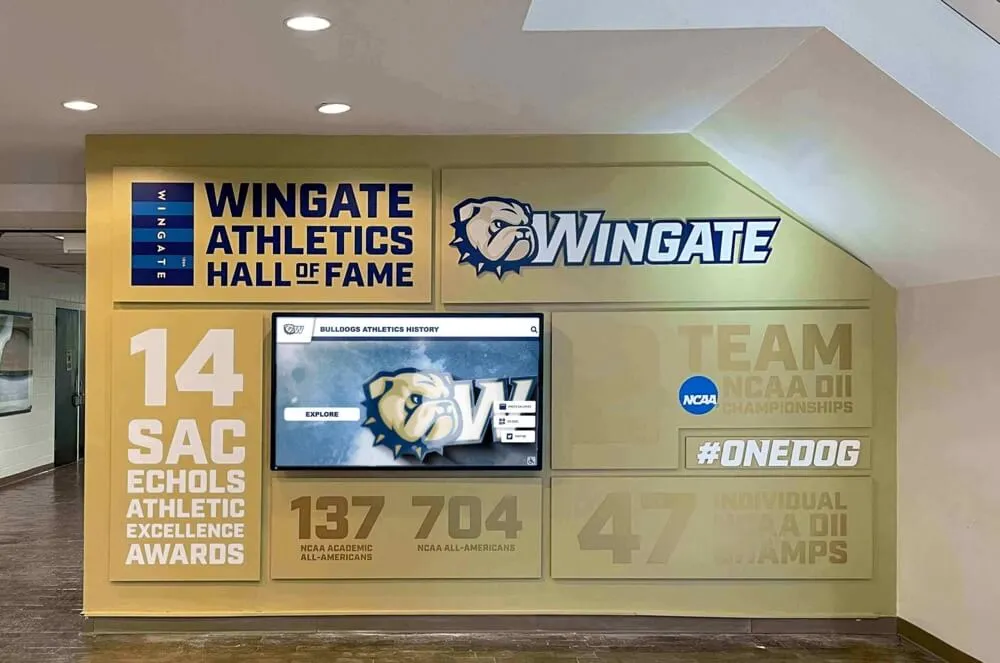
Mural installations work best in high-visibility locations—main gym lobbies, main hallway intersections, athletic wing entrances—where the visual scale justifies the investment. Programs that integrate digital displays into mural installations get the emotional resonance of painted art combined with the updatability of digital content, a combination that many of the most impressive school recognition installations now use.
Trophy Case and Display Case Integration
Trophy cases have housed athletic achievement for over a century. While often dismissed as dated, well-curated trophy displays remain effective recognition tools when managed carefully rather than allowed to accumulate without curation.
Effective trophy case management involves:
- Categorizing by significance: State championship trophies deserve prominent placement; participation trophies from non-championship years belong in archives or secondary displays
- Adding context: Small labels identifying the team, season, coach, and key athletes transform anonymous trophies into historical documents
- Incorporating memorabilia: Jerseys, game balls, championship rings, and equipment add texture to displays that otherwise risk looking like a hardware collection
- Maintaining condition: Regular cleaning, consistent lighting, and periodic reorganization signal that the display is actively curated, not abandoned
For schools building new recognition walls, integrating trophy cases into a broader hall of fame design—rather than treating cases as separate elements—creates cohesive environments that guide visitors through program history as a unified experience.
Digital Hall of Fame Wall Ideas
Digital displays have transformed what’s possible in school and athletic recognition, enabling content that physical materials cannot match: video highlights, statistics that update automatically, searchable athlete profiles, and interactive exploration of program history.
Interactive Touchscreen Hall of Fame Displays
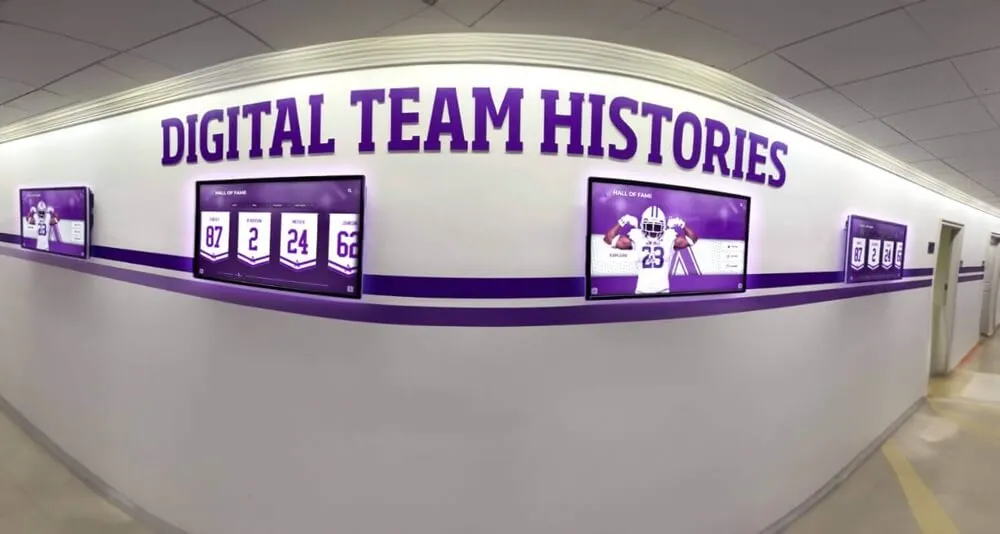
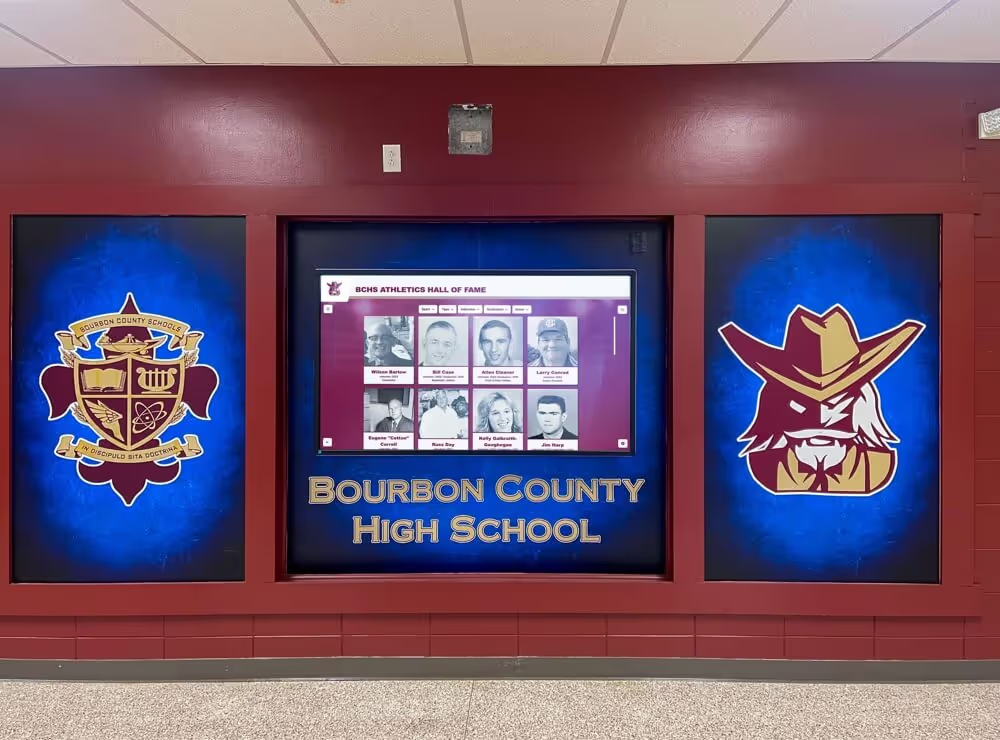
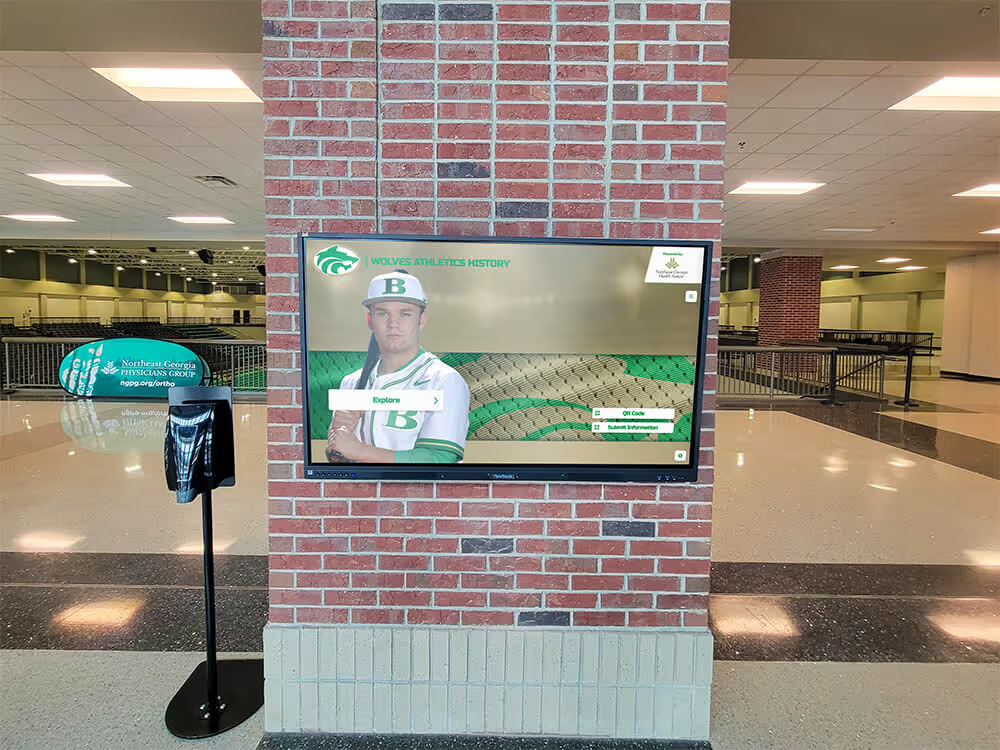
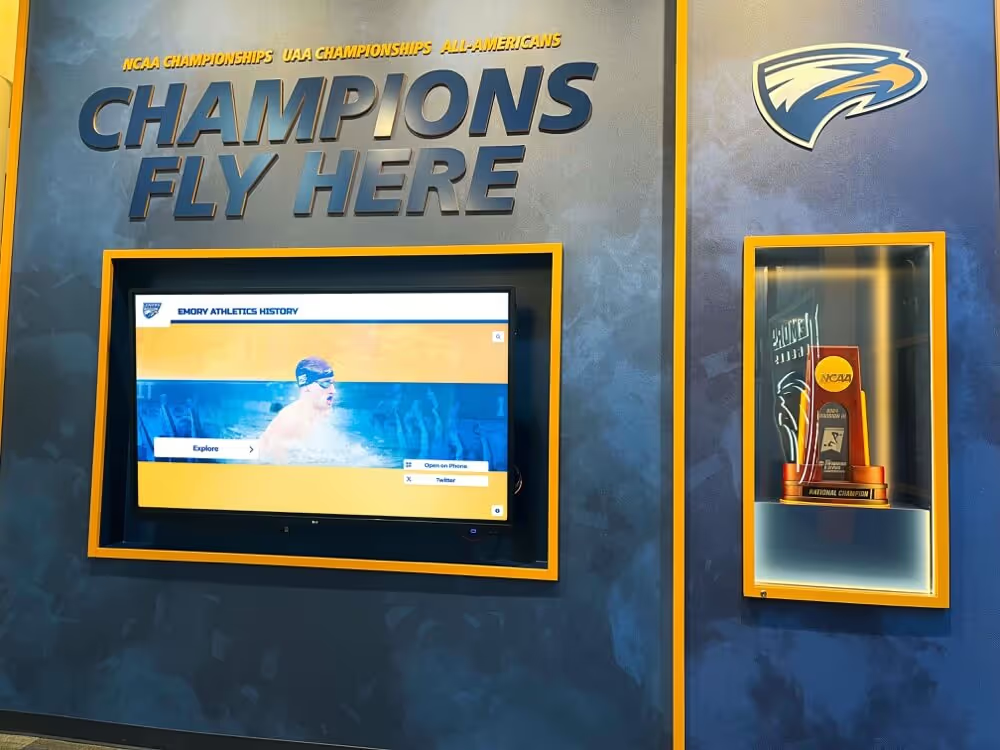
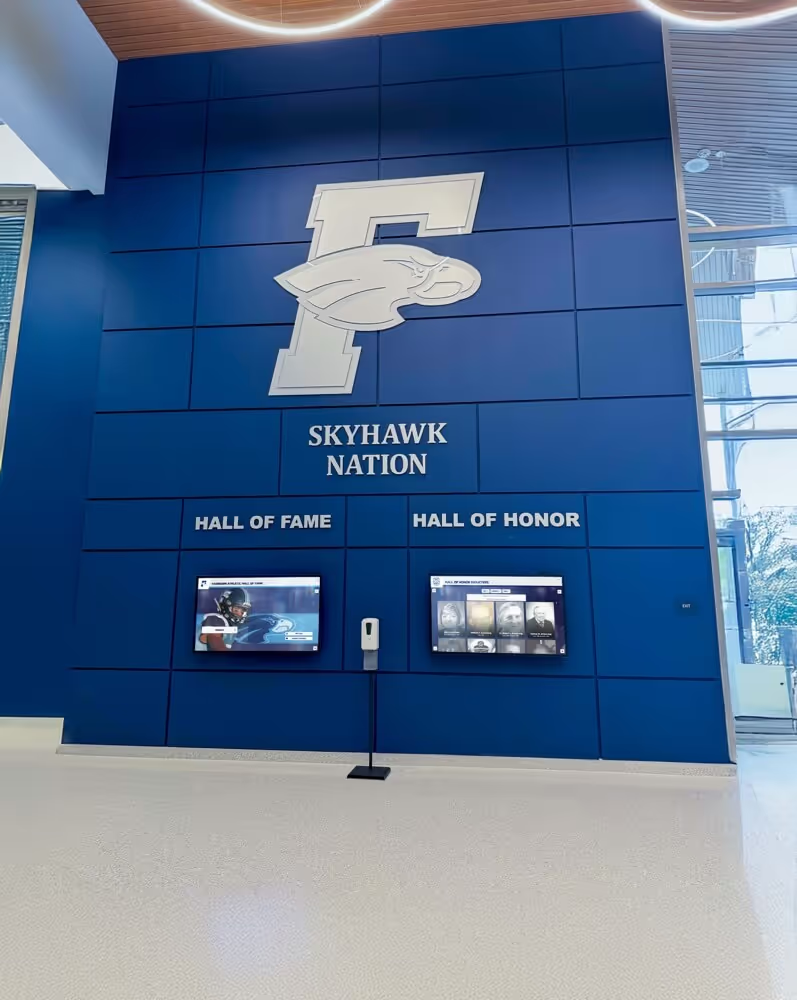
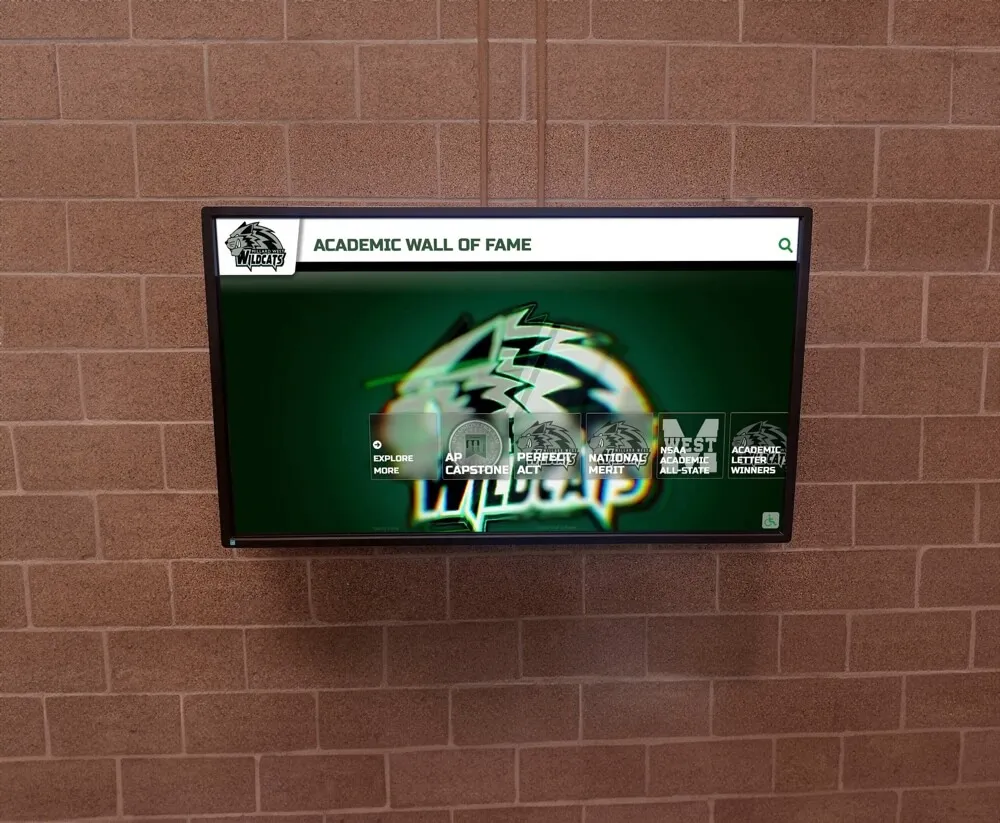
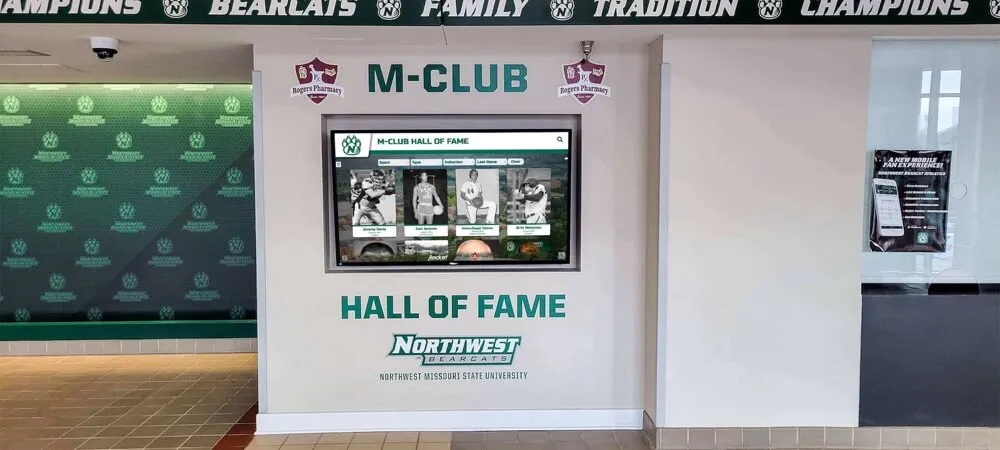
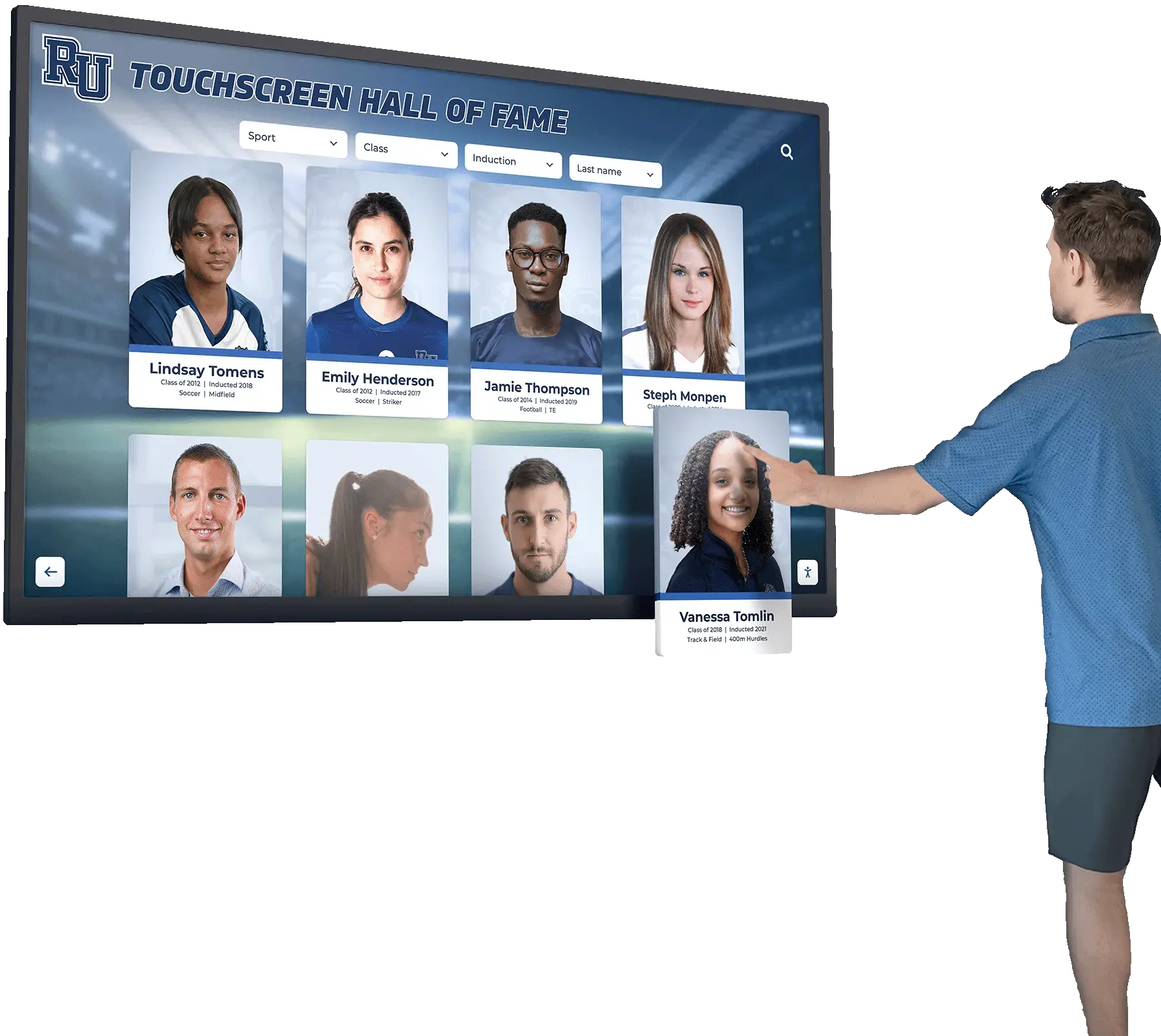
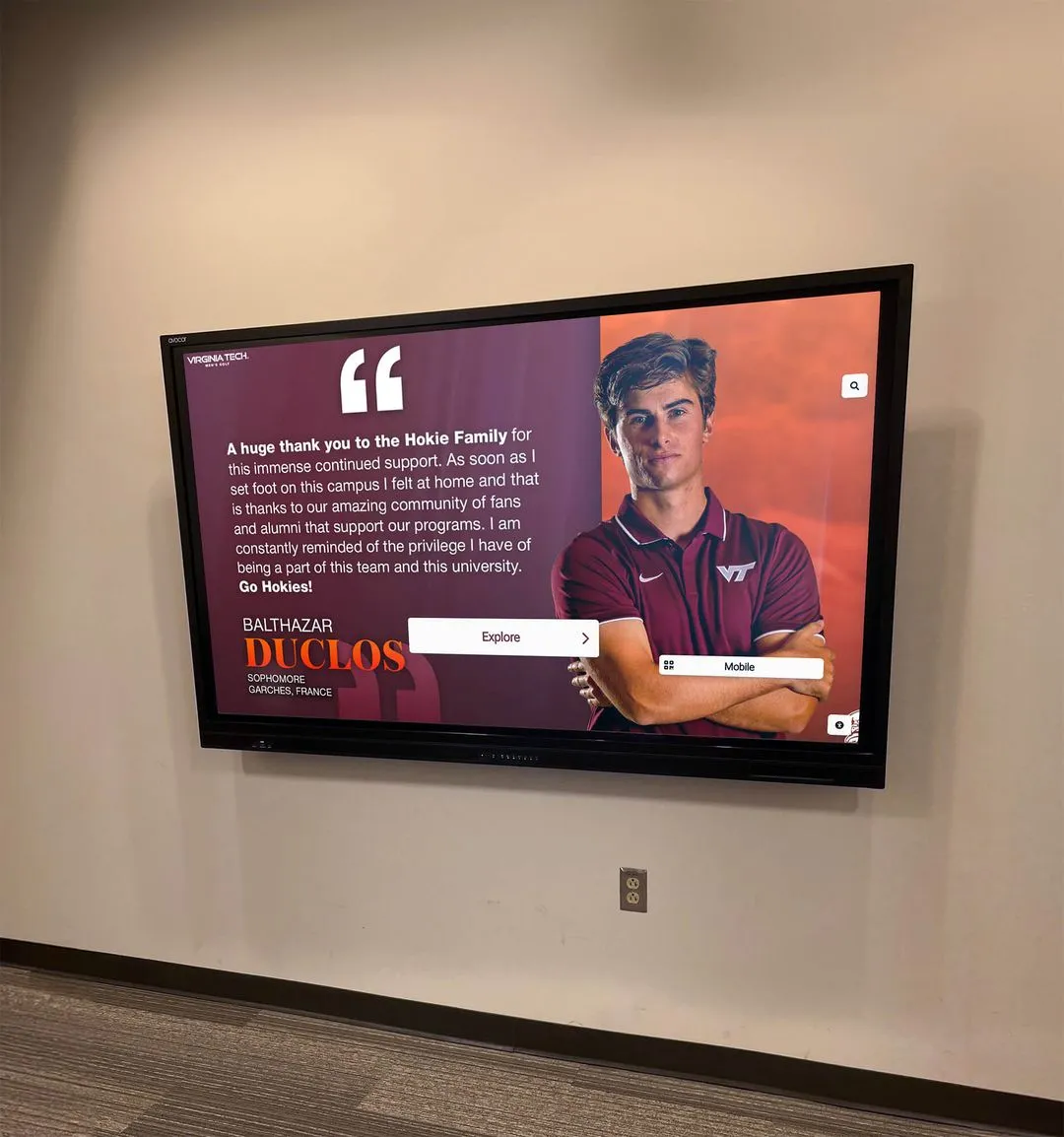
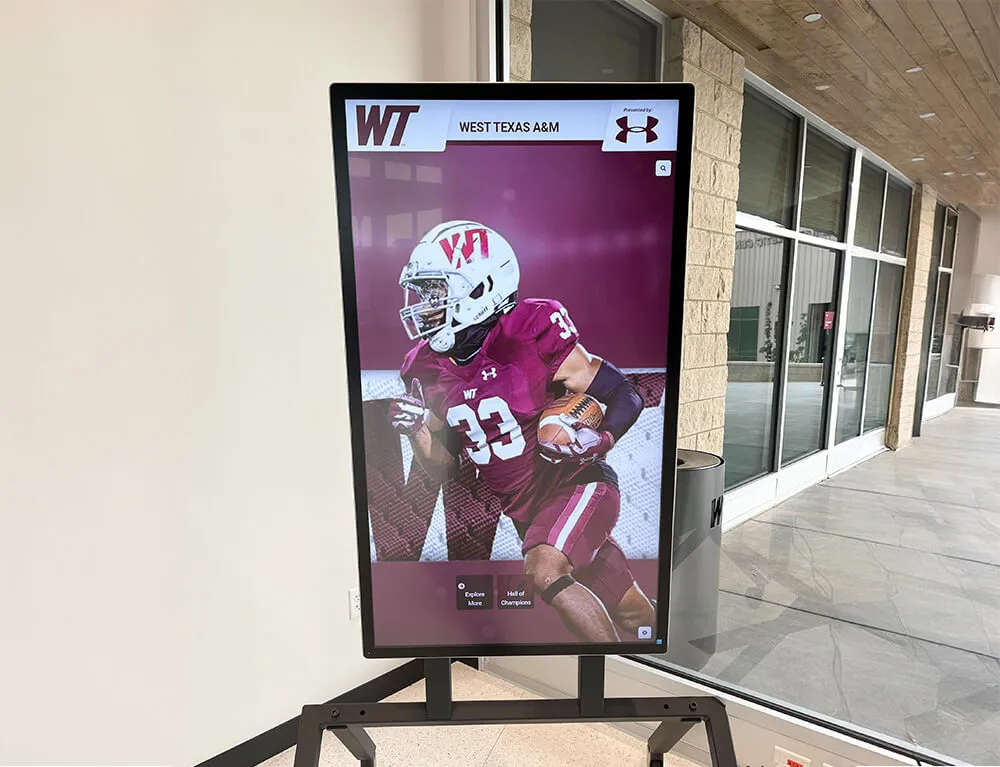
Interactive touchscreen installations represent the most significant evolution in hall of fame wall design in recent years. Rather than a static display that visitors observe, touchscreen systems allow users to search by athlete name, sport, or year, explore individual profiles with photographs and achievement details, watch video highlights, and navigate decades of program history in seconds.
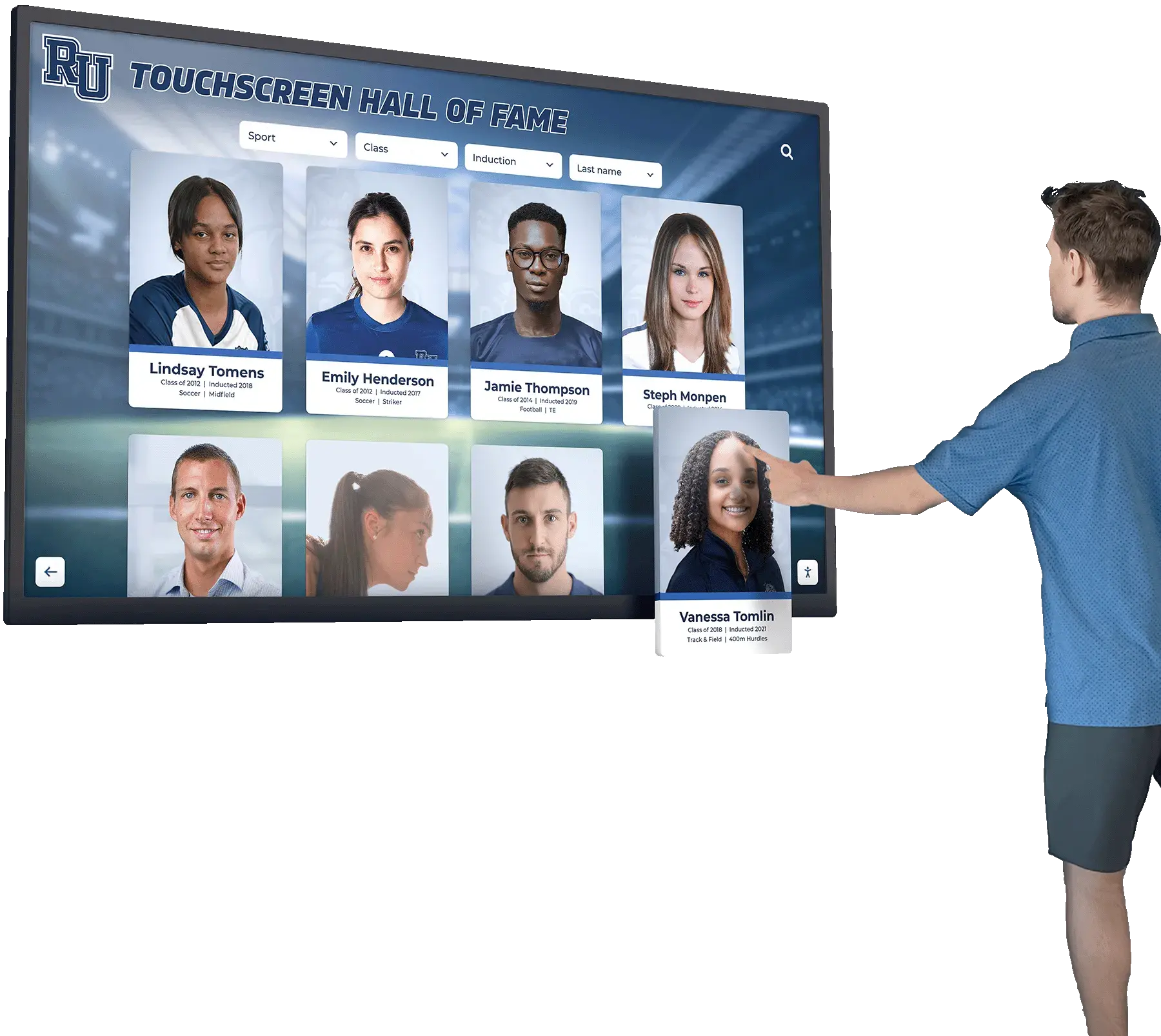
The depth of content that touchscreen systems can deliver far exceeds what any physical display accommodates. A single touchscreen can contain hundreds of inductee profiles, thousands of photographs, decades of statistics, and video content spanning program history—content that would require thousands of square feet of physical wall space to display conventionally.
Engagement dynamics change fundamentally with interactive displays. Visitors who might glance at a trophy case and keep walking will spend ten minutes exploring a touchscreen system, searching for names they know, discovering achievements they weren’t aware of, and sharing what they find with companions. This extended engagement creates stronger emotional connections to program history and more meaningful recognition experiences.
For more on how interactive digital displays are transforming recognition environments beyond athletics, the complete guide to digital display installations covers design principles applicable across institutional contexts.
Video Walls and Dynamic Digital Signage
Large-format video displays—single large screens or multi-screen arrays—create dramatic visual environments in athletic lobbies and corridors. Unlike static displays, video walls cycle through content: highlight reels from championship seasons, tribute videos for recently inducted honorees, real-time sports updates, and rotating recognition of current team achievements alongside historical hall of fame inductees.
Video content adds emotional resonance that still images and text cannot match. Watching footage of a legendary coach during their championship years, or seeing a hall of fame athlete’s record-breaking performance, creates connections to program history that no plaque can replicate.
Practical considerations: Video wall content requires ongoing management. Programs that invest in display hardware without planning for content creation and curation often end up with expensive screens showing generic screensavers. The most successful digital recognition implementations pair hardware installation with content management systems that make regular updates manageable for staff without dedicated media production expertise.
Hybrid Physical-Digital Recognition Walls
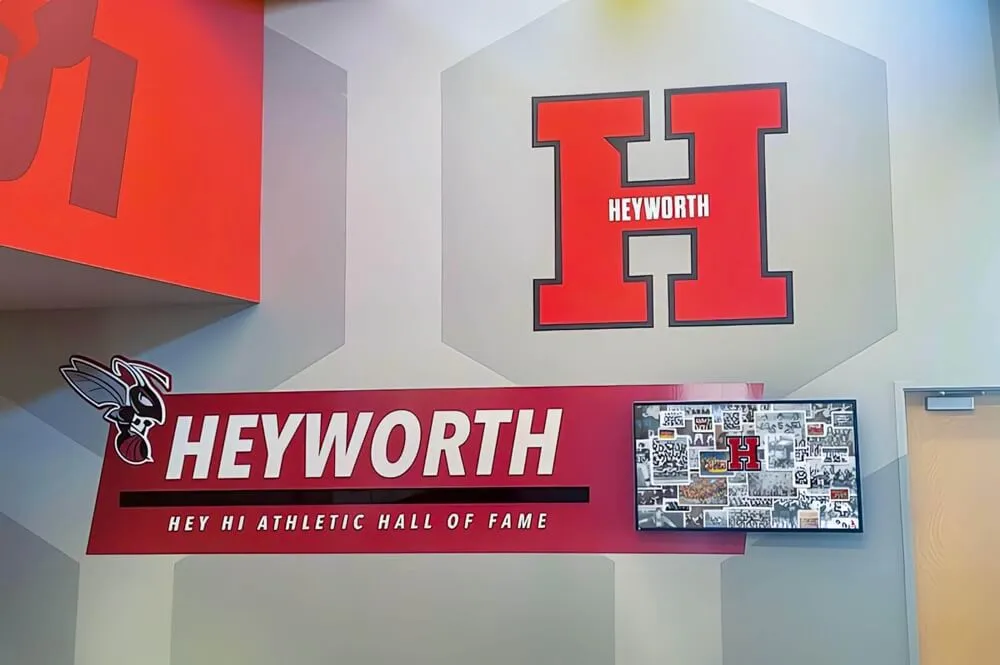
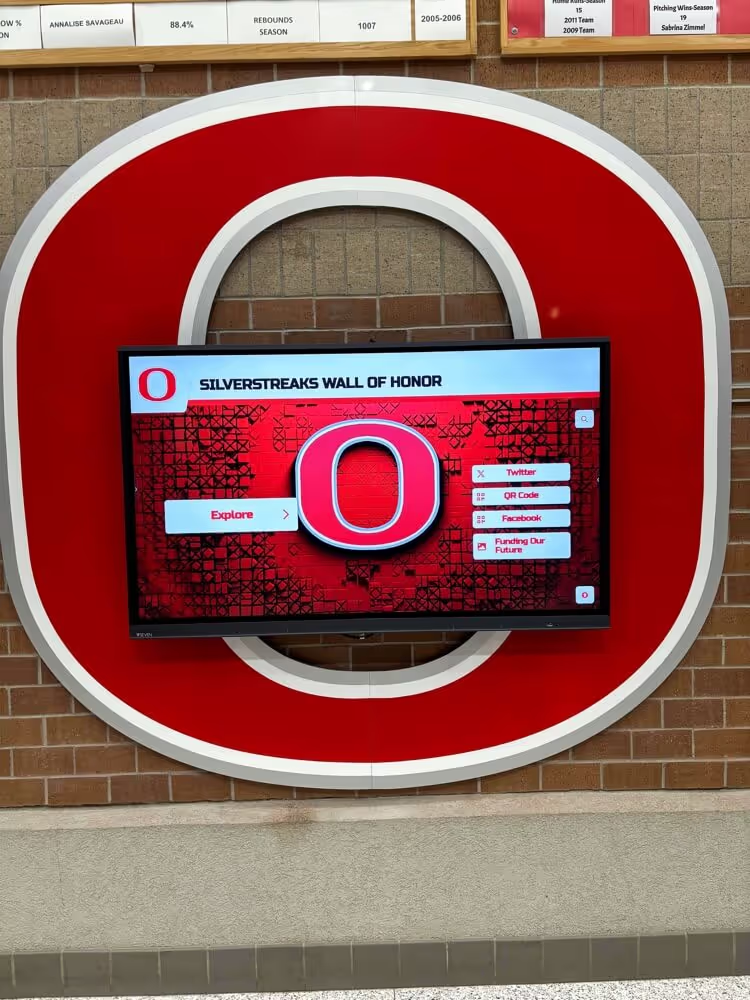
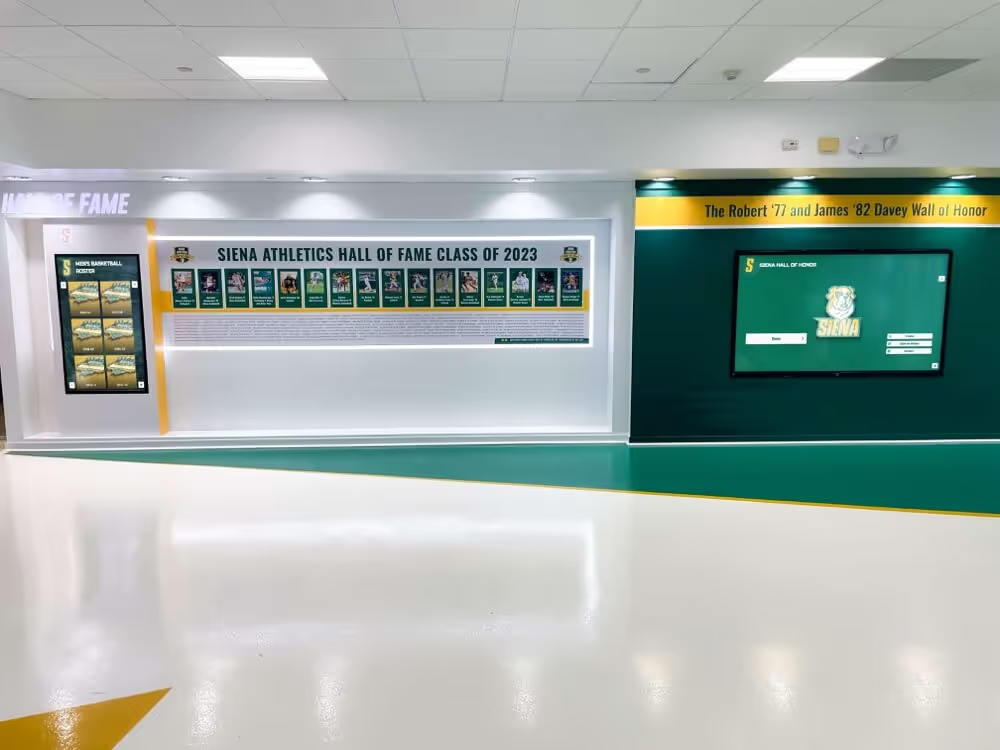
Many of the most effective hall of fame wall ideas combine traditional physical elements with integrated digital displays. A common approach places engraved shields or plaques alongside embedded screens displaying the athlete profiles corresponding to each physical element—giving visitors the tactile, permanent feeling of physical recognition paired with the depth and interactivity of digital content.
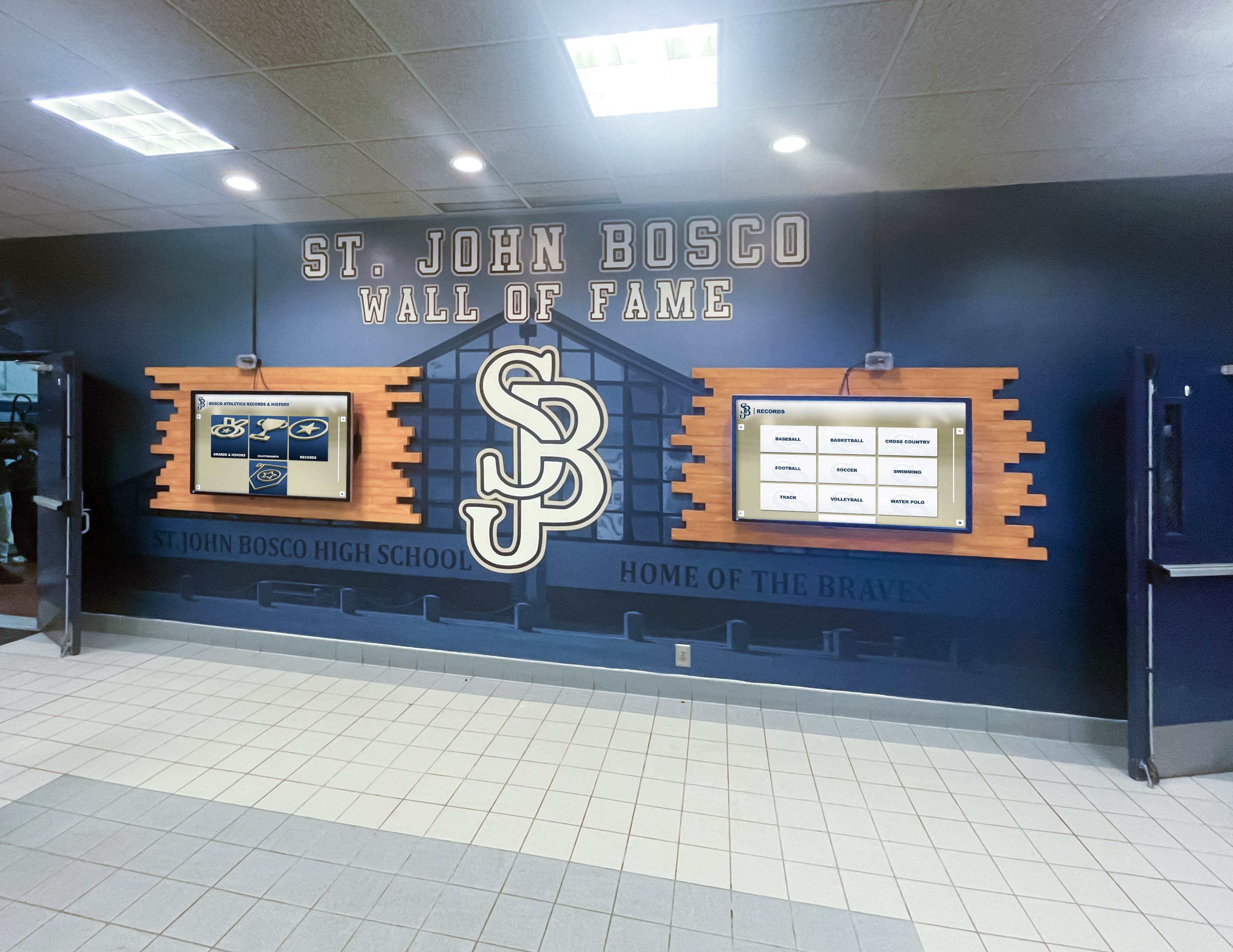
Hybrid installations solve a key limitation of purely physical displays: scale. As programs add inductees year after year, physical walls run out of space. A hybrid system can maintain the visual character of traditional recognition while digitally accommodating growth without requiring physical expansion or removal of existing inductees.
Athletic Program-Specific Hall of Fame Wall Ideas
Athletic departments benefit from recognition walls that reflect the specific culture, history, and achievements of their programs. The best athletic hall of fame wall ideas distinguish between categories of achievement and honor each appropriately.
Sport-Specific Recognition Displays
Programs with multiple athletic offerings—most high schools field a dozen or more varsity sports—face a choice: unified recognition across all sports or sport-specific displays for programs with distinct facilities and strong individual identities.
Sport-specific displays work well when:
- Programs occupy dedicated facilities (wrestling rooms, natatoriums, track facilities, dedicated gyms)
- Individual sports have extensive recognition histories justifying dedicated space
- Program traditions differ significantly across sports
Unified displays work better when:
- Physical space is limited
- Budget constraints require consolidated investments
- Programs want to foster cross-sport community and shared institutional pride
Many schools use a combination: a central hall of fame recognizing all-sports achievement alongside sport-specific display cases or banner systems in individual facility entrances.
For athletic programs developing recognition alongside broader departmental goals, reviewing athletic department mission statement examples helps ensure recognition walls align with the values and priorities programs want to communicate.
Athletic Record Boards
Record boards—displaying program bests across individual statistical categories—serve a function adjacent to but distinct from hall of fame walls. While halls of fame honor individuals across career achievement and contribution, record boards highlight specific athletic accomplishments: fastest times, highest scoring averages, most career wins, most consecutive championships.
Effective record boards create ongoing aspirational targets for current athletes. A swimmer who knows exactly how close they are to a program record in their event has a concrete, visible goal to pursue. That motivational function is most powerful when record boards are prominently displayed in training and competition facilities where athletes encounter them daily.
For ideas on how to design record boards that complement broader recognition displays, the guide to athletic record board design covers formats and best practices in detail.
Team Achievement and Championship Displays
Championship banners remain among the most powerful recognition tools in athletic facilities—high-visibility, permanent, and emotionally resonant in a way that wall-mounted plaques rarely match. A gymnasium ceiling lined with state championship banners from multiple decades communicates program excellence immediately to every visitor, recruit, and opposing team that enters.
Championship display design decisions include:
- Banner size and format: Larger banners for more significant achievements; consistent sizing within championship tiers
- Display location: Ceiling banners for championships; wall displays for runner-up or regional recognition
- Content: Year, sport, classification, and coach alongside the championship designation
- Maintenance: Faded or damaged banners undermine the recognition effect they’re intended to create; periodic replacement maintains visual quality
Effective award recognition ideas extend beyond traditional banners to include creative approaches that keep recognition feeling fresh and relevant to current audiences.
School-Wide Hall of Fame Wall Ideas
Athletic recognition is often the most visible component of school recognition walls, but comprehensive hall of fame programs honor achievement across all dimensions of school life: academics, community service, arts, and the broader alumni record.
Academic and Scholar-Athlete Recognition
Academic hall of fame displays honor students whose intellectual achievements merit permanent recognition: valedictorians, National Merit Scholars, students who achieved perfect standardized test scores, Ivy League and selective college matriculants, and alumni who have achieved distinction in academic or professional careers.
Scholar-athlete recognition—which honors students who achieved excellence in both athletic and academic domains—bridges the gap between athletic and academic recognition in a format that communicates institutional values about well-rounded achievement.
Alumni Achievement Walls
Alumni walls recognize graduates who have achieved distinction in their careers and communities: elected officials, CEOs, military leaders, notable artists, scientists, educators, and entrepreneurs. These displays reinforce the message that a school’s impact extends far beyond graduation day and that achievement within these halls has equipped generations to succeed in the world.
Strong alumni recognition programs create active engagement loops: honored alumni return for events, contribute to programs they feel proud of, and bring visibility and credibility to institutions that honor them. For ideas on building ongoing engagement around alumni recognition, strategies for creating active alumni community programs provide frameworks applicable to recognition wall initiatives.
Programming alumni recognition events around hall of fame inductions creates peak engagement moments. Planning a meaningful alumni recognition event that incorporates the hall of fame wall as a centerpiece gives returned graduates a tangible connection to the institution’s ongoing story.
Community Heroes and Service Recognition
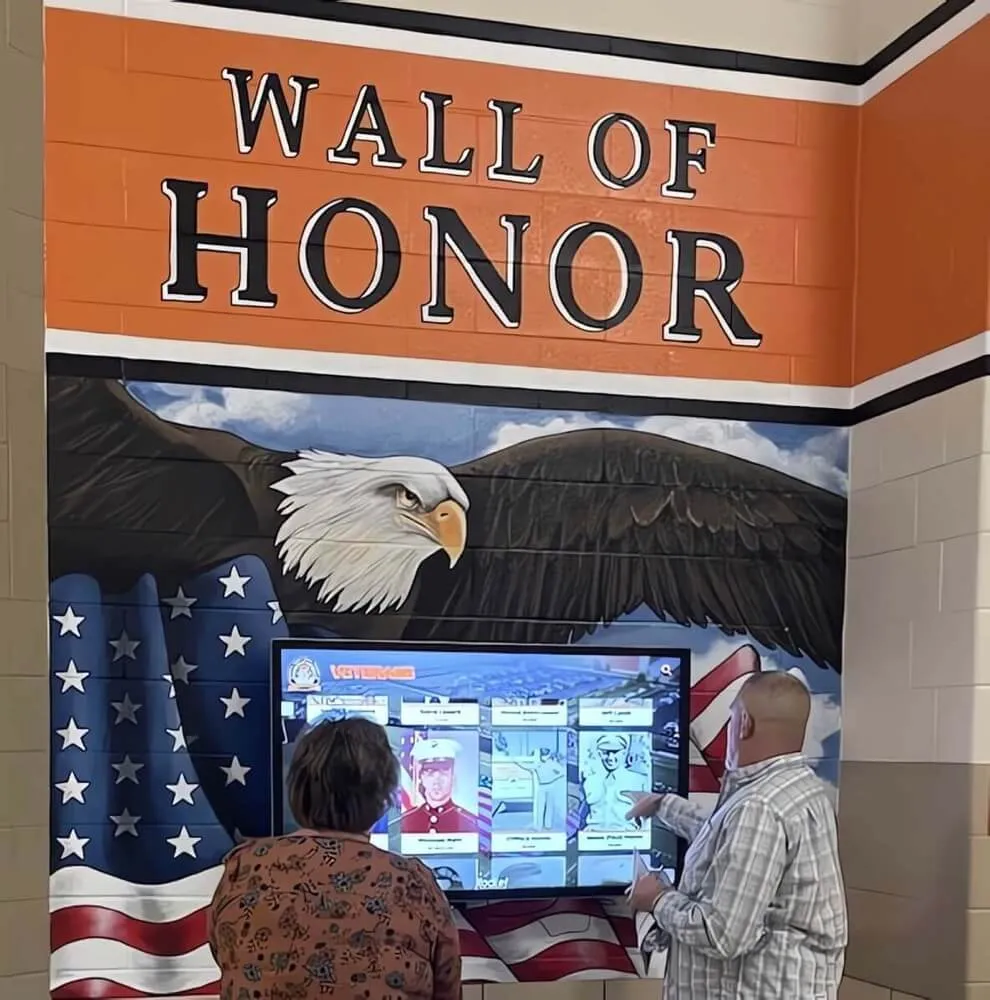
Community heroes displays honor students, staff, and alumni who have demonstrated exceptional service: military veterans, first responders, healthcare workers, community organizers, and others who have distinguished themselves through dedication to others. These displays communicate that recognition at this institution extends beyond competitive achievement to honor character, sacrifice, and contribution.
Military recognition walls honoring students who have served—particularly those who have served in programs like ROTC that connect directly to their school experience—hold particular meaning for communities with strong military traditions. Thoughtful displays documenting the military service of alumni, including scholarship programs that supported their paths, create lasting tributes with deep community resonance. Resources on ROTC scholarship programs offer context for schools developing military service recognition components.
Ongoing Recognition: Alumni of the Month and Rotating Features
Permanent halls of fame document history, but ongoing recognition programs keep recognition walls dynamic and current. Alumni of the month programs, rotating spotlights on recent graduates, and seasonal feature sections ensure that visitors return to find new content rather than the same static display.
Ongoing recognition programs also serve a bridge function between current students and the historical record—when students see recent graduates honored alongside legendary alumni from decades past, they understand that achievement here is an ongoing process, not just a historical artifact. Complete guidance on building sustainable alumni of the month recognition programs helps programs structure these ongoing features effectively.
Planning Your Hall of Fame Wall: Practical Considerations
The most compelling hall of fame wall ideas require thoughtful planning to implement effectively. Several practical factors shape which approaches work for specific institutions.
Location and Traffic Patterns
The most powerful recognition walls occupy spaces where the target audiences naturally pass: main lobby entrances, gymnasium corridors, athletic wing hallways, and trophy case areas adjacent to competition facilities. Placement in high-traffic areas maximizes the recognition wall’s impact on all three primary audiences: students and athletes who encounter the display daily, visitors who arrive for events and community gatherings, and alumni who return for reunions and athletic events.
Secondary locations—dedicated athletic halls of fame rooms, library display areas, trophy rooms—work well for extended content that benefits from a dedicated contemplative space, but should be considered supplementary to primary lobby and corridor displays.
Effective athletic facility management integrates recognition wall planning into broader space planning decisions, ensuring displays serve the facility’s long-term recognition goals rather than filling available wall space by default.
Content Strategy and Induction Criteria
Before designing any physical or digital installation, institutions need clear induction criteria. Who qualifies? What achievement thresholds apply? Are coaches and contributors eligible alongside athletes? How long must inductees have been out of the program before becoming eligible?
Vague criteria create problems: controversial selections that damage community trust in the recognition program, inconsistency that makes the display feel arbitrary, and conflicts among stakeholders with different views about who deserves permanent recognition.
Clear criteria create the opposite: a display that everyone understands, selections that the community celebrates rather than debates, and a track record of consistency that makes future inductions predictable and fair.
Scalability and Long-Term Planning
A hall of fame wall that looks great at launch but has no room for growth creates problems within years. Every recognition display should be designed with a 20-year expansion plan in mind.
Physical displays need designated expansion zones—wall sections reserved for future inductees, display case space held for incoming additions, modular designs that accommodate new sections without disrupting the existing installation’s visual coherence.
Digital displays solve scalability differently: content capacity is essentially unlimited, and the same physical footprint serves a program with 50 inductees as easily as one with 500. This scalability advantage is one of the primary reasons schools and athletic programs increasingly choose digital or hybrid solutions.
Modern Digital Solutions: Transforming Recognition Walls
The hallmark of recognition wall design in 2026 is the combination of physical permanence with digital depth—installations that feel appropriately weighty and institutional while delivering content experiences that static displays cannot approach.
Rocket Alumni Solutions specializes in exactly this combination, creating touchscreen hall of fame wall systems designed for schools, universities, and athletic programs. Their installations combine durable physical hardware designed for high-traffic environments with content management software that allows administrators to add new inductees, update profiles, and manage recognition content without technical expertise.
Key capabilities of modern digital recognition walls include:
Searchable inductee databases: Visitors can search by name, sport, year, or achievement rather than scanning physical displays that may not highlight what they’re looking for.
Rich media profiles: Each inductee profile can include multiple photographs, career statistics, achievement summaries, video highlights, and current biographical information—far more content than any physical plaque accommodates.
Content management that doesn’t require technical staff: Cloud-based content management platforms allow school administrators or athletic directors to update recognition displays directly, adding new inductees, updating existing profiles, and managing content without IT department involvement.
ADA-compliant design: Digital touchscreen systems can meet ADA accessibility requirements through adjustable display heights, audio options, and high-contrast visual design—compliance requirements that some traditional physical displays struggle to meet.
Analytics and engagement data: Digital systems can track which profiles visitors explore most, what content generates the most engagement, and how visitors navigate through program history—information that helps institutions continually improve their recognition programs.
Getting Started with Your Hall of Fame Wall Project
Whether you’re planning your first hall of fame wall or modernizing an existing display, beginning with clear goals rather than specific formats makes the process more effective.
Define your recognition goals: What does success look like? A display that inspires current athletes? One that engages alumni during events? One that impresses recruits and visiting families? Different goals suggest different design priorities.
Audit your historical records: What inductee information, photographs, and achievement documentation already exists? Gaps in historical records shape what’s feasible with either physical or digital approaches.
Assess your space: Physical dimensions, traffic patterns, lighting conditions, and existing infrastructure all influence which recognition wall ideas are practical for your specific environment.
Establish governance first: Induction criteria, selection committee composition, nomination processes, and annual class size decisions should be resolved before any physical installation begins. A display that creates controversy through its selection process undermines the recognition goals it’s meant to serve.
Plan for ongoing management: Who will be responsible for adding new inductees, maintaining the display, and keeping content current? Systems that don’t account for ongoing management often deteriorate quickly after initial installation.
Conclusion
The best hall of fame wall ideas share a common characteristic: they’re designed for the people who matter most to the institution, not for the aesthetics of the display itself. Current athletes who walk past recognition walls every day, alumni who return to see whether they’re remembered, families who want to understand what this program stands for, and visitors who form impressions about institutional character in the first moments after arrival—all of these audiences need to be considered in every design decision.
Whether your approach involves classic engraved shields, dramatic custom murals, modern interactive touchscreen systems, or a thoughtful combination of all three, the most successful hall of fame walls are those that make people stop, feel something genuine, and leave with a stronger connection to what the institution has built over decades.
Ready to design a recognition wall that your community will be proud of for generations? Explore how Rocket Alumni Solutions helps schools and athletic programs create hall of fame displays that honor the past while engaging the present.