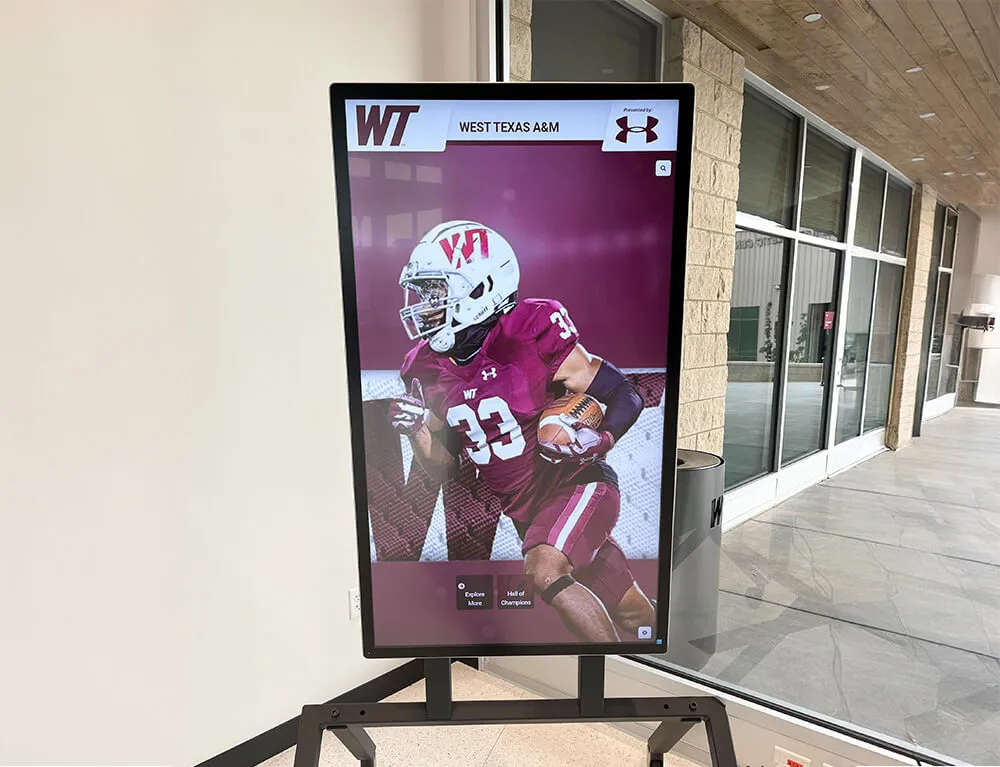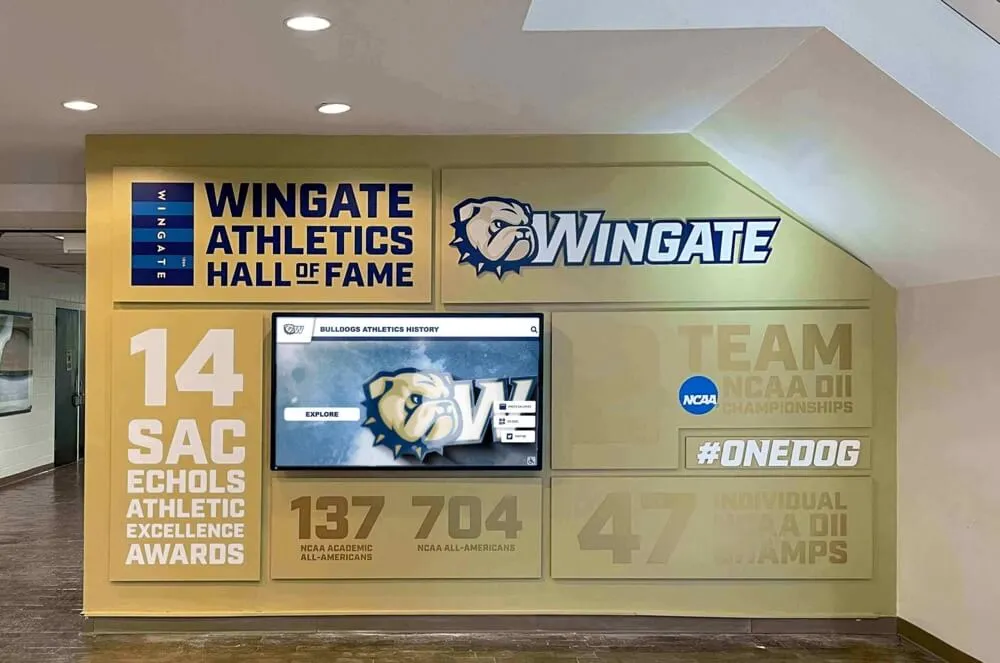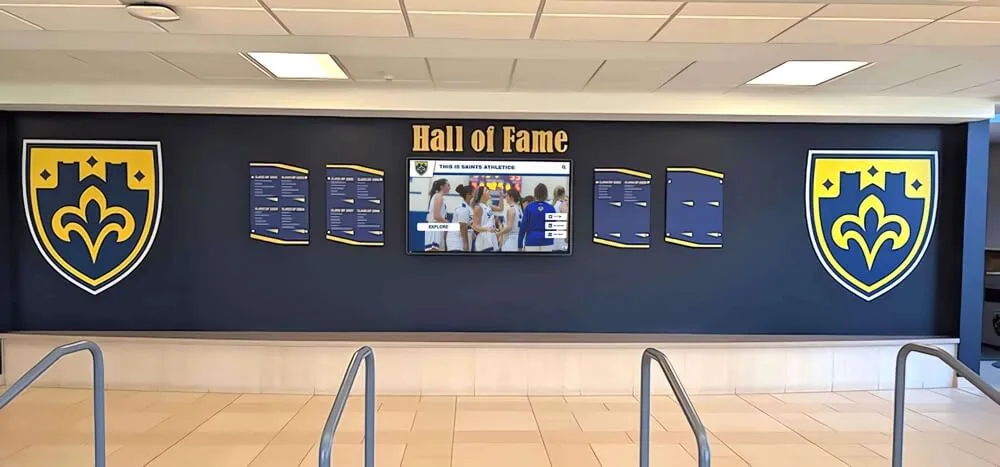
Every organization accumulates achievement worth celebrating—championship seasons, distinguished alumni, groundbreaking contributors, and moments that define institutional identity. Yet many schools, athletic programs, and organizations struggle to showcase these accomplishments effectively. Outdated plaques gather dust in forgotten hallways, championship trophies sit crammed in overcrowded cases, and the names of deserving honorees fade from institutional memory. When recognition fails to inspire or engage, it loses its power to motivate future achievement, strengthen community connections, and preserve the stories that give organizations meaning.
This comprehensive guide explores hall of fame wall ideas that work across contexts—from high school athletic programs to university donor recognition, from corporate achievement walls to community halls of fame. We’ll examine design principles that create impact, explore both traditional and innovative display approaches, and share practical strategies for implementing recognition systems that honor past excellence while inspiring future achievement.
Understanding the Purpose Behind Your Hall of Fame Wall
Before selecting specific design elements, clarifying your hall of fame wall’s fundamental purpose ensures design choices align with institutional needs and community expectations.
Defining Your Recognition Objectives
Different organizations pursue hall of fame walls for different reasons, and these underlying objectives should shape every design decision. Athletic programs often prioritize inspiring current athletes by showcasing what excellence looks like within their specific tradition, creating visible standards that communicate program expectations to newcomers while honoring those who achieved them.
Academic institutions may emphasize alumni engagement, creating recognition experiences that keep distinguished graduates connected to schools and universities long after commencement. When alumni see their achievements honored prominently, they maintain emotional bonds translating into mentorship, financial support, and advocacy.
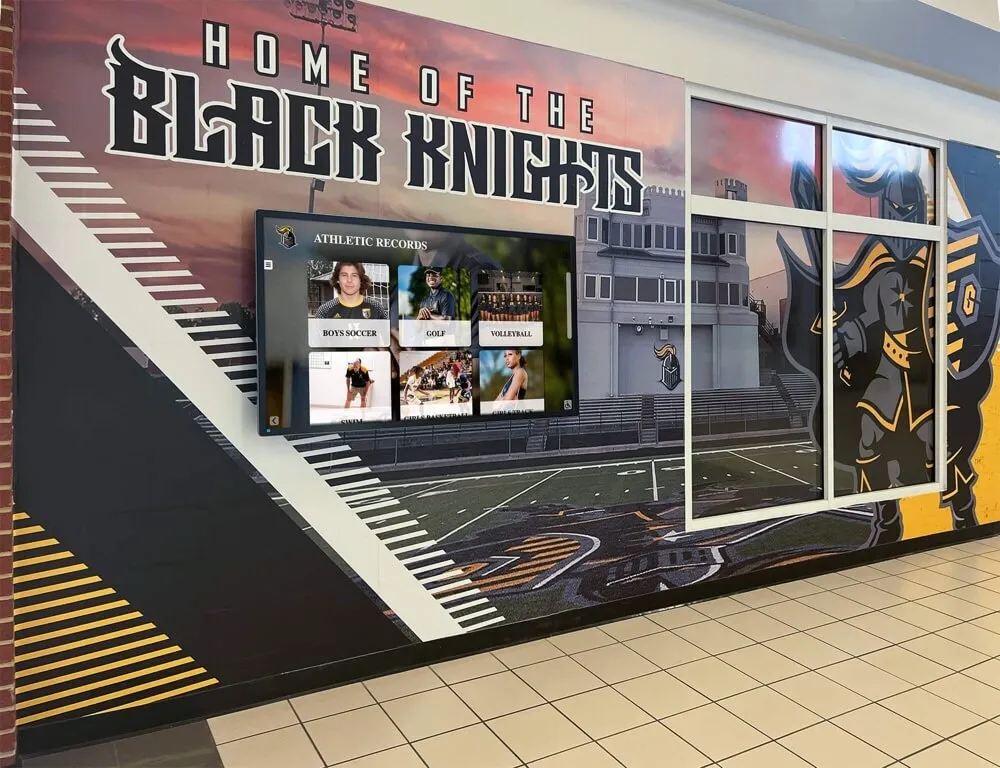
Community organizations and corporate settings often use hall of fame walls to preserve institutional history that might otherwise be lost as leadership changes and founding members retire. These displays become repositories of organizational memory, documenting evolution and achievement across decades.
Understanding your primary objectives—inspiration, engagement, preservation, or recruitment—helps prioritize design elements serving those specific goals. A display intended to inspire young athletes requires different design approaches than one created primarily to engage donors or preserve historical records.
Identifying Your Audience
Hall of fame walls serve multiple audiences simultaneously, but effective designs recognize which audiences matter most. Current participants—athletes, students, employees, or members—interact differently with recognition displays than visitors, prospective members, or alumni returning after years away.
Current participants seek inspiration and aspiration. They want to understand what achievement looks like, learn stories behind recognized accomplishments, and visualize themselves joining those honored. Designs serving this audience emphasize accessibility, storytelling, and clear connections between current opportunities and recognized achievements.
Visitors and prospects form impressions about institutional quality and culture based on recognition displays. Families touring schools evaluate programs partly through visible evidence of tradition and achievement. Designs for this audience prioritize visual impact, professionalism, and communication of institutional values alongside specific accomplishments.
Alumni and former members look for personal connections and nostalgia. They search for familiar names, remember shared experiences, and feel validated seeing their contributions honored. Designs serving this group ensure comprehensive historical coverage, searchability across decades, and opportunities to share stories with family members.
Most effective hall of fame walls balance these competing audience needs through layered design approaches offering different engagement levels depending on visitor interests and available time.
Essential Design Principles for Impactful Hall of Fame Walls
Regardless of specific format or budget, successful hall of fame walls share fundamental design principles creating meaningful recognition experiences.
Creating Visual Hierarchy and Impact
Hall of fame walls compete for attention with countless other visual stimuli in busy hallways, lobbies, and gathering spaces. Effective designs create immediate visual impact that draws viewers in while organizing information so visitors can navigate easily.
Visual hierarchy begins with placement and scale. Prominent locations in high-traffic areas ensure maximum visibility—main building entrances, central hallways, athletic facility lobbies, or gathering spaces where stakeholders naturally congregate. Recognition hidden in basement corridors or tucked behind secondary doors fails to achieve impact regardless of design quality.
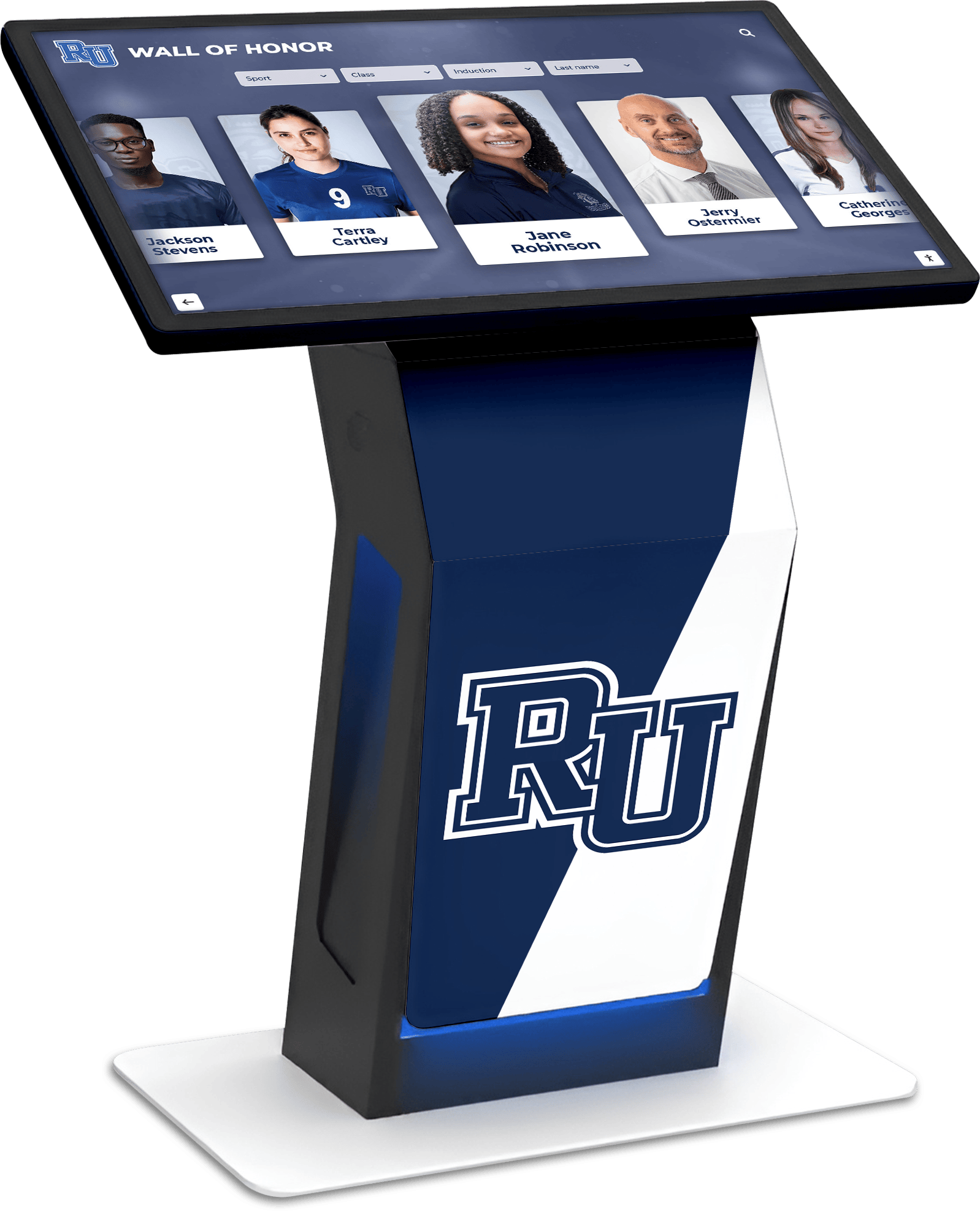
Once you’ve secured prominent placement, scale creates presence. Undersized displays look tentative and apologetic while appropriately-scaled recognition commands attention and communicates institutional commitment. A six-foot recognition wall makes stronger statements than scattered individual plaques, though available space and budget obviously constrain possibilities.
Color schemes and materials contribute significantly to visual hierarchy. Coordinating recognition displays with institutional colors, architectural elements, and existing aesthetics creates cohesive environments rather than disconnected additions. Contrasting colors can highlight featured content—gold lettering on navy backgrounds, for example, creates classic sophistication while ensuring readability.
Balancing Information Density and Clarity
One of the most common hall of fame wall design failures involves cramming excessive information into limited space, creating cluttered displays overwhelming rather than engaging visitors. Effective designs provide enough information to be meaningful while maintaining visual clarity and readability.
For traditional plaques and physical displays, this balance often requires difficult choices about what information to include. At minimum, most recognition displays include honoree names, years of recognition or graduation, and primary achievement categories. Beyond these basics, consider whether additional details—statistics, quotes, biographical information, or photographs—enhance or clutter displays.
Tiered information approaches work well, providing brief essential details immediately visible while offering opportunities for interested visitors to access deeper information. A name plaque with a QR code linking to full biographical details, for example, maintains visual clarity while accommodating those wanting comprehensive stories.
Typography significantly impacts readability. Fonts should be large enough to read comfortably from typical viewing distances—generally no smaller than 18-24 point for body text and larger for headings and names. Sans-serif typefaces often provide better readability on recognition walls than decorative fonts that may look attractive but prove difficult to read.
Planning for Growth and Updates
Perhaps the most overlooked design consideration involves accommodating future additions. Hall of fame walls celebrating achievement necessarily grow as organizations continue accumulating accomplishments, and designs failing to plan for expansion create problems within years.
Modular approaches provide inherent scalability. Instead of creating fixed-size displays that fill available space completely, modular systems anticipate additions through empty panels, expandable grid layouts, or digital formats accommodating unlimited growth. When planning physical displays, consider ordering extra blank plaques or panels matching original materials and finishes—securing matching materials years later often proves difficult or impossible.
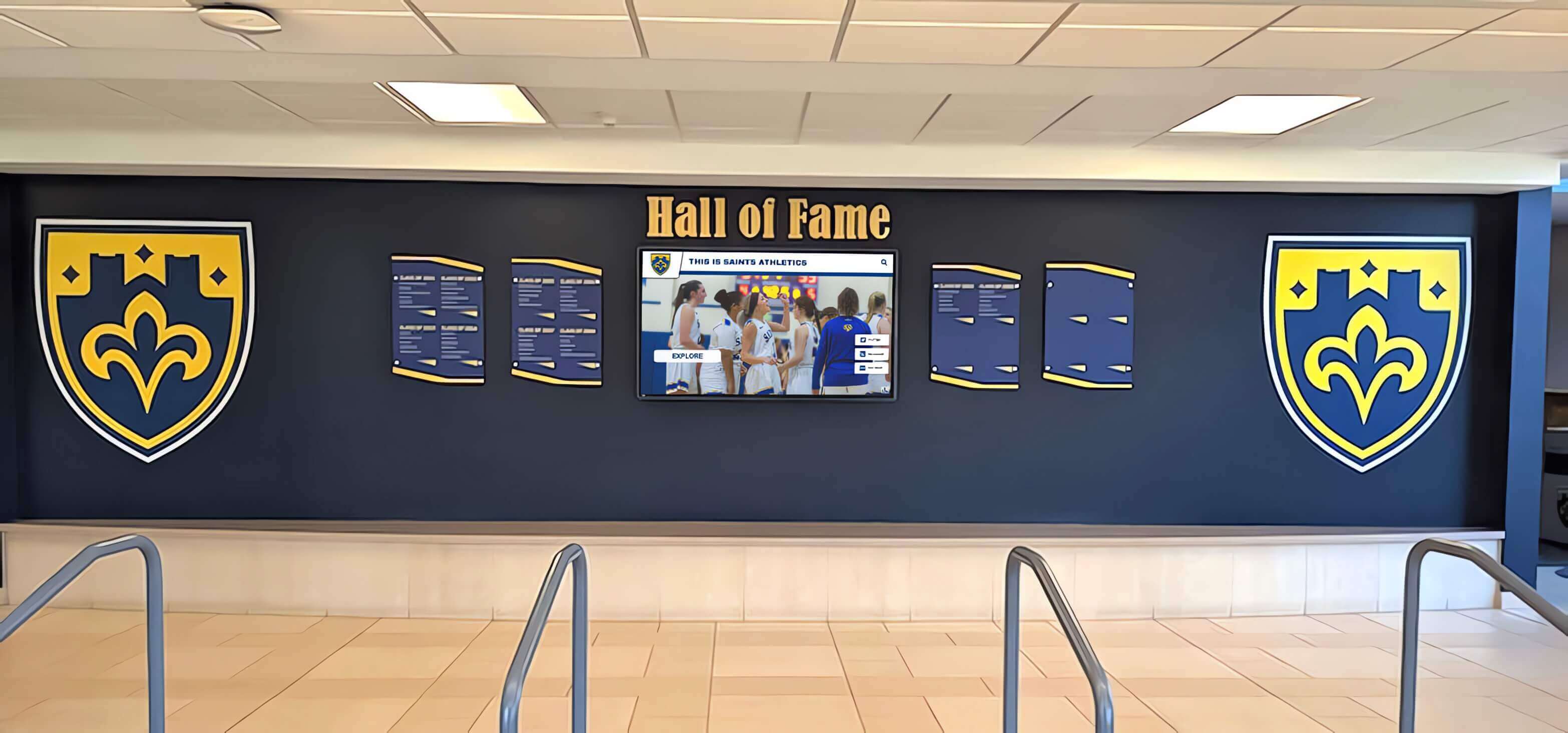
Some programs intentionally leave visible space on recognition walls, clearly indicating room for future honorees. This approach transforms empty space from design flaw into aspirational statement—current athletes or members see specific spaces waiting for achievements they might earn.
Digital displays offer obvious advantages for accommodating growth since adding new content requires software updates rather than physical modifications. However, even digital systems require planning for expansion as content libraries grow and new recognition categories emerge.
Traditional Hall of Fame Wall Design Approaches
Physical recognition displays have served institutions for generations, and traditional approaches continue offering value in many contexts despite increasing digital alternatives.
Plaque and Trophy-Based Recognition
Engraved plaques mounted on walls represent the most traditional hall of fame format. Individual honoree plaques arranged in grids create classic recognition aesthetics familiar across schools, athletic programs, and organizations. Materials typically include brass, bronze, aluminum, or synthetic alternatives offering durability and traditional appearance.
Traditional plaque approaches offer several advantages: they require no ongoing technology maintenance, they create tangible permanent recognition, they convey prestige through substantial materials, and they work in any physical environment without electricity or network connectivity.
However, plaque-based systems face significant limitations. Physical space constraints limit how many people you can recognize before walls fill completely. Updating or correcting information requires replacing entire plaques—an expensive proposition. Static formats provide minimal information beyond names and dates, offering no storytelling capacity, biographical details, or visual documentation of achievements.
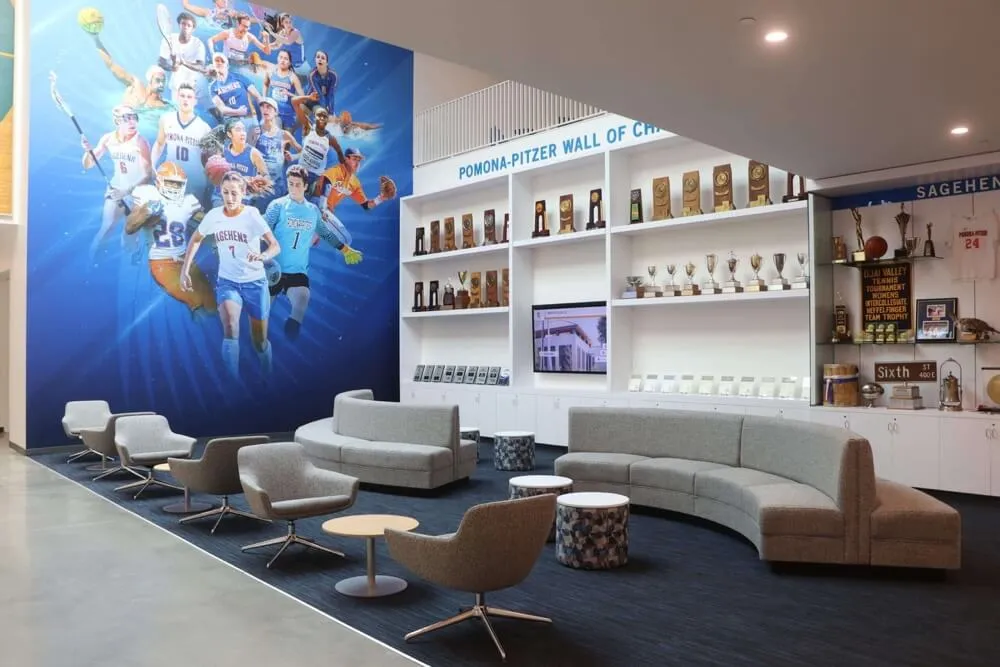
Trophy cases similarly provide traditional recognition for team championships, individual awards, and athletic achievements. Well-designed trophy displays create impressive visual statements, particularly when coordinated with architectural lighting emphasizing featured items. Many programs combine trophy cases with plaques honoring individual contributors, creating comprehensive recognition experiences.
Photo Gallery Displays
Photographic displays add visual interest and personality to recognition walls, helping visitors connect with honored individuals beyond just names on plaques. Well-executed photo galleries transform abstract lists of names into collections of real people with faces, stories, and personalities.
Photo-based approaches work particularly well for team recognition and athletic programs, where action photography captures competitive moments and championship celebrations. Portrait-style photographs serve better for individual honors, alumni recognition, or contributor categories.

Consistent formatting creates professional appearance across photo galleries. Standardized frame sizes, matting colors, and layout grids prevent haphazard appearances undermining recognition dignity. When incorporating historical photographs spanning decades, converting all images to uniform black-and-white or sepia tones can create cohesive aesthetics despite varying original photo qualities.
Photo galleries require more space than simple plaque lists to achieve impact, since photographs need sufficient size for detail visibility. Planning for adequate spacing between images prevents crowded appearances while allowing room for descriptive labels identifying subjects, dates, and achievements.
Wall Murals and Artistic Integration
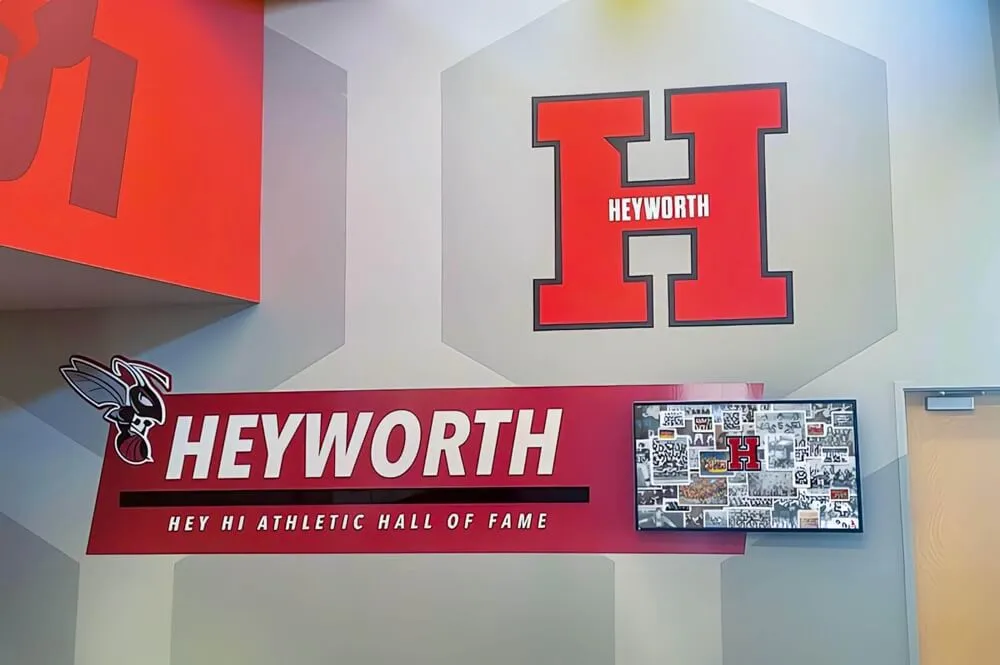
Institutional murals incorporating recognition elements create distinctive hall of fame walls that function as both art installations and achievement displays. These approaches work particularly well in schools and athletic facilities where visual branding and spirit-building complement recognition purposes.
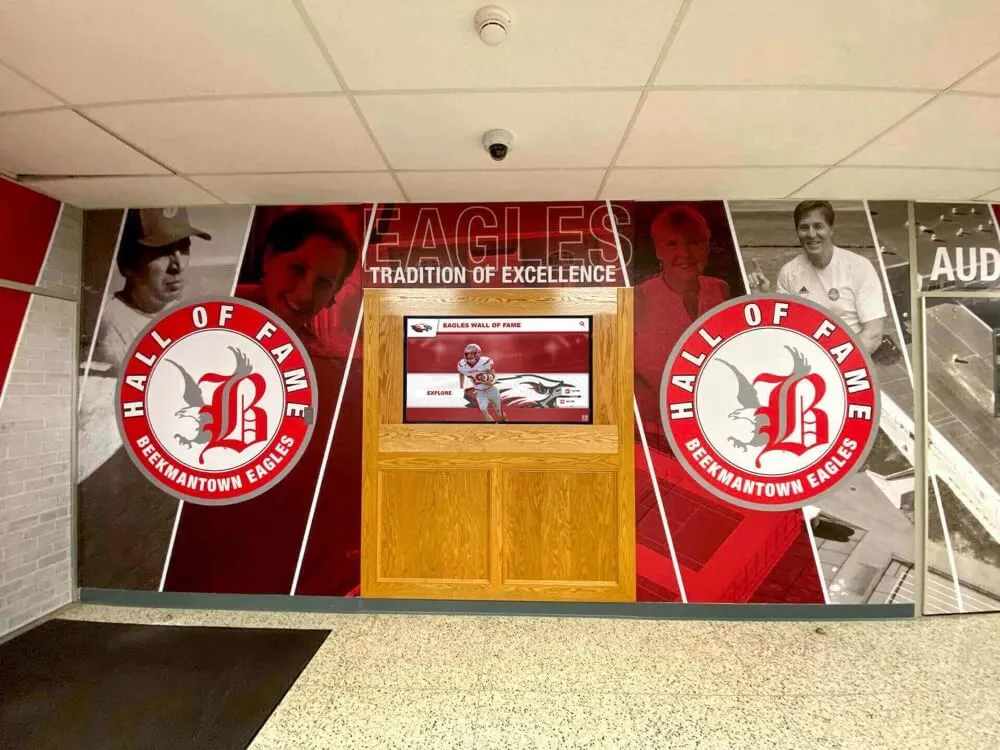
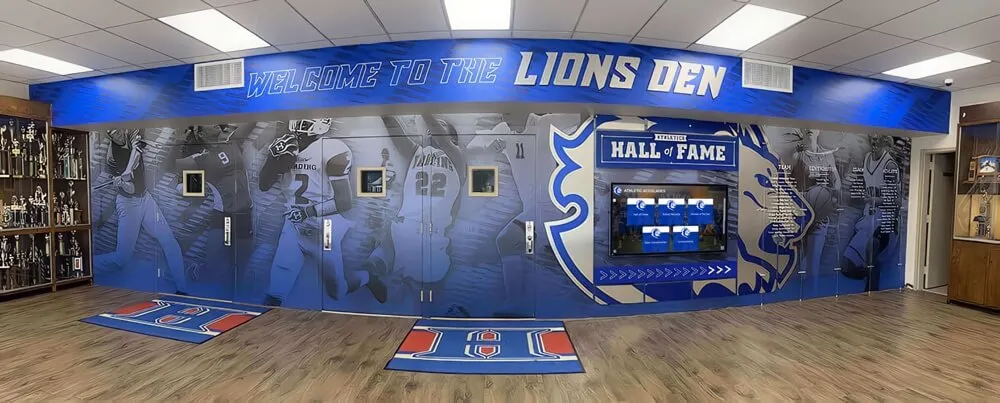
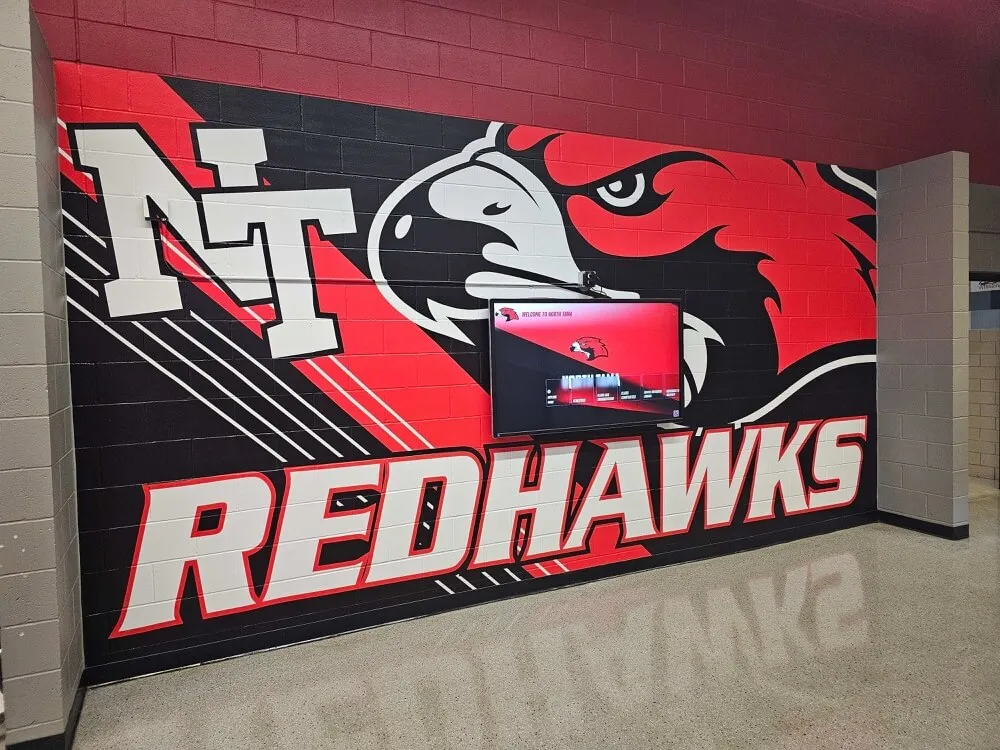
Athletic programs often commission murals featuring mascots, team colors, and athletic imagery as backdrops for recognition elements. These designs create immersive environments celebrating program identity while honoring individual achievements. The mural provides visual impact and institutional branding while integrated plaques, screens, or other recognition elements provide specific honoree details.
Artistic approaches require careful planning to ensure recognition elements remain readable and prominent rather than getting lost in busy backgrounds. Typography, color contrast, and spatial relationships between artistic elements and informational content need coordination ensuring both components succeed without competing for attention.
Many successful mural-based halls of fame incorporate dimensional elements—raised lettering, shadowbox displays, or mounted frames—that create depth and visual interest while ensuring recognition details stand out from painted backgrounds.
Modern Digital Hall of Fame Wall Solutions
Digital technology has transformed recognition possibilities, offering capabilities traditional physical displays cannot match while introducing new considerations around implementation and maintenance.
Interactive Touchscreen Displays
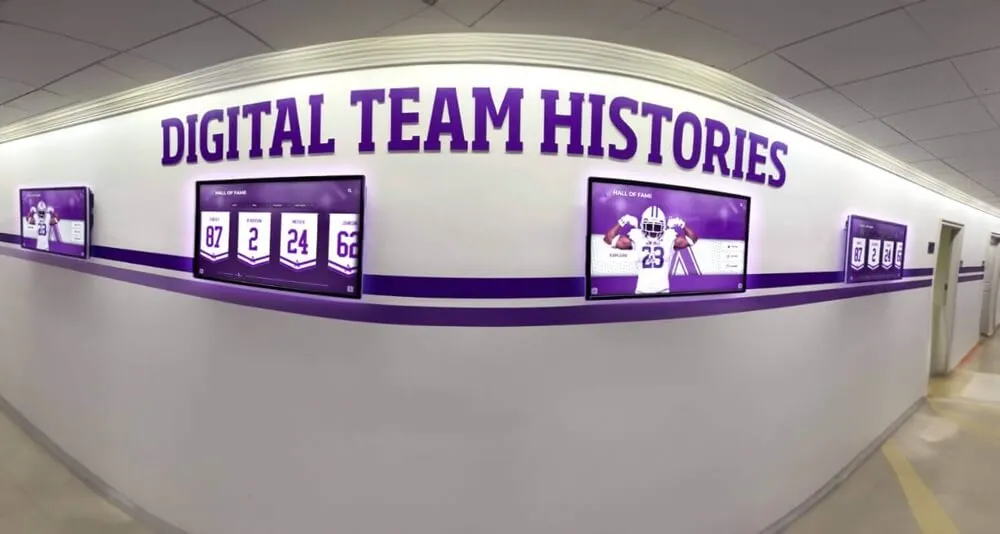
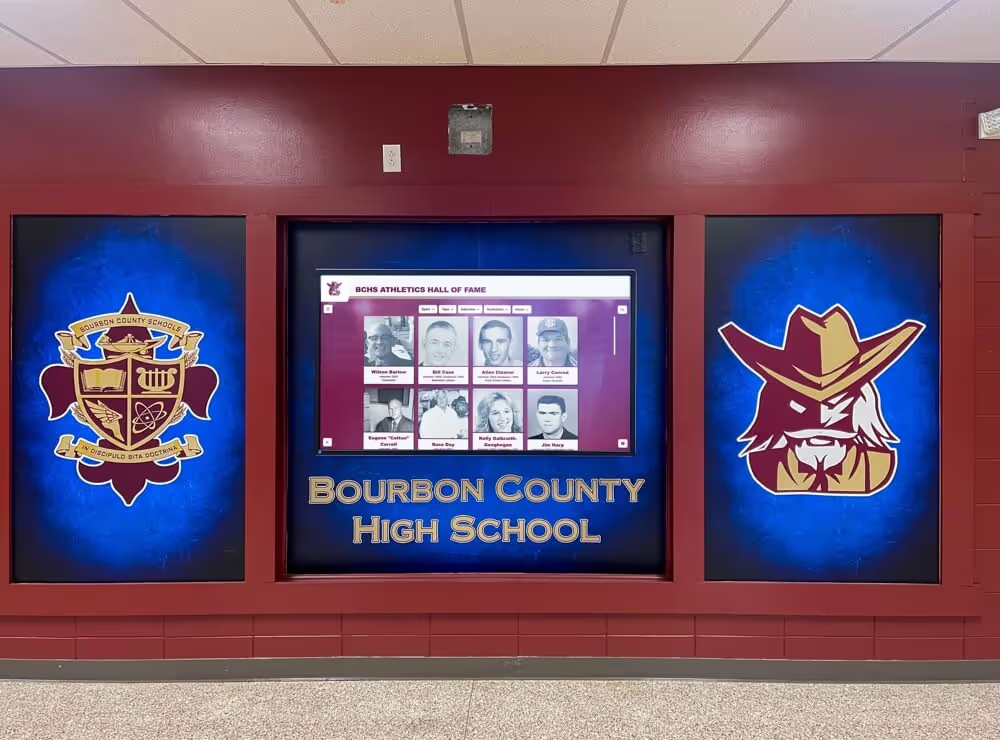
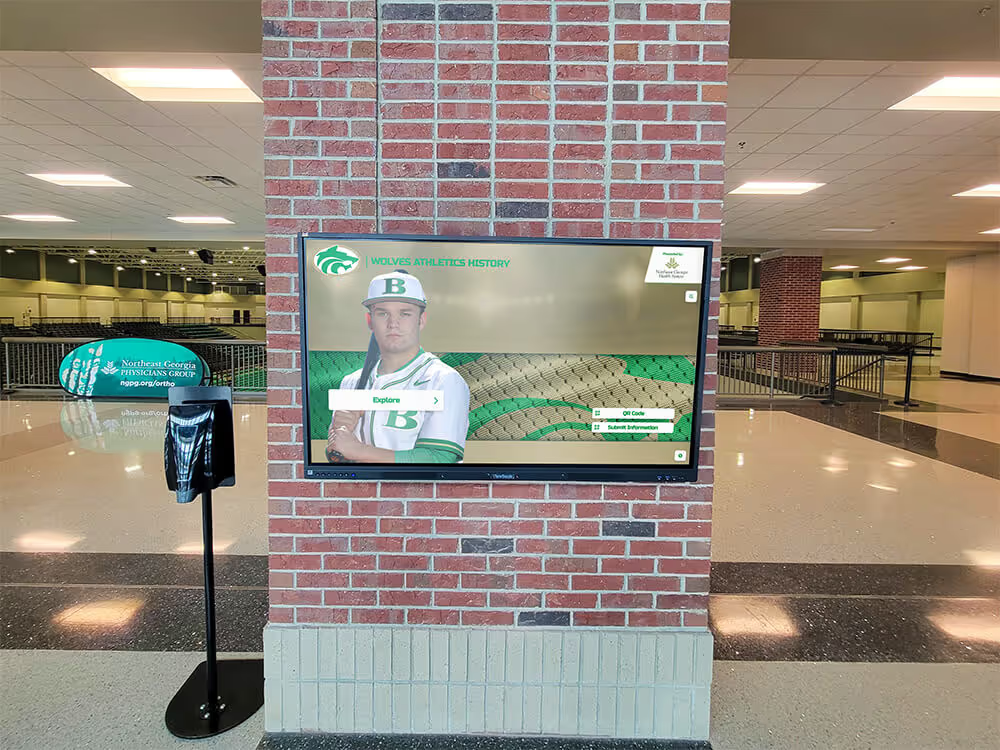
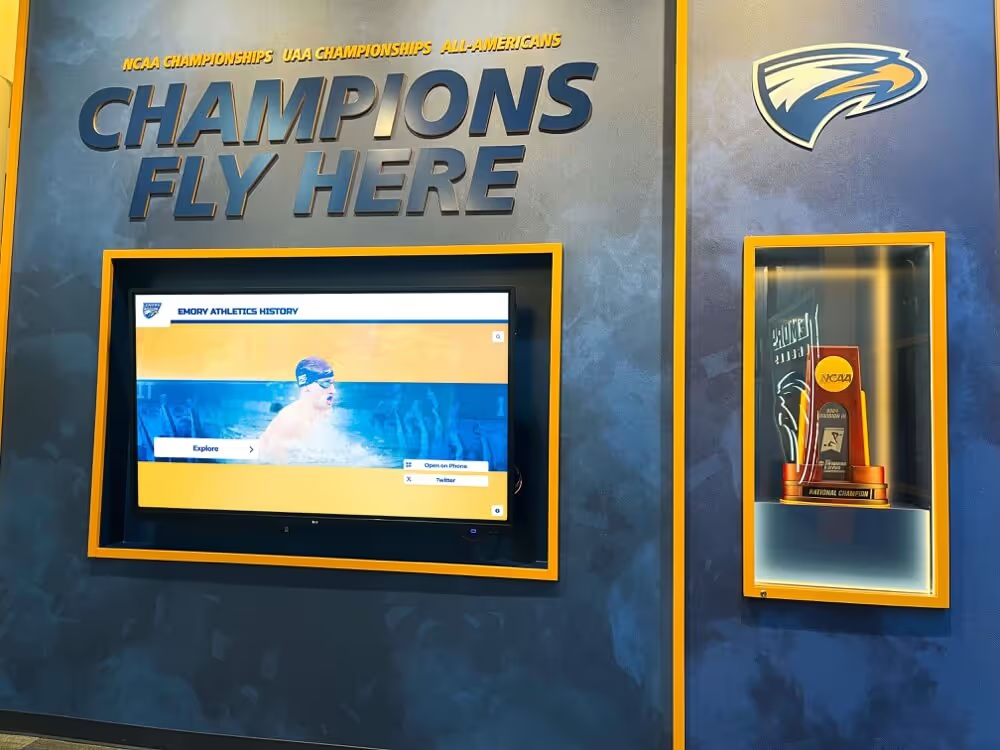
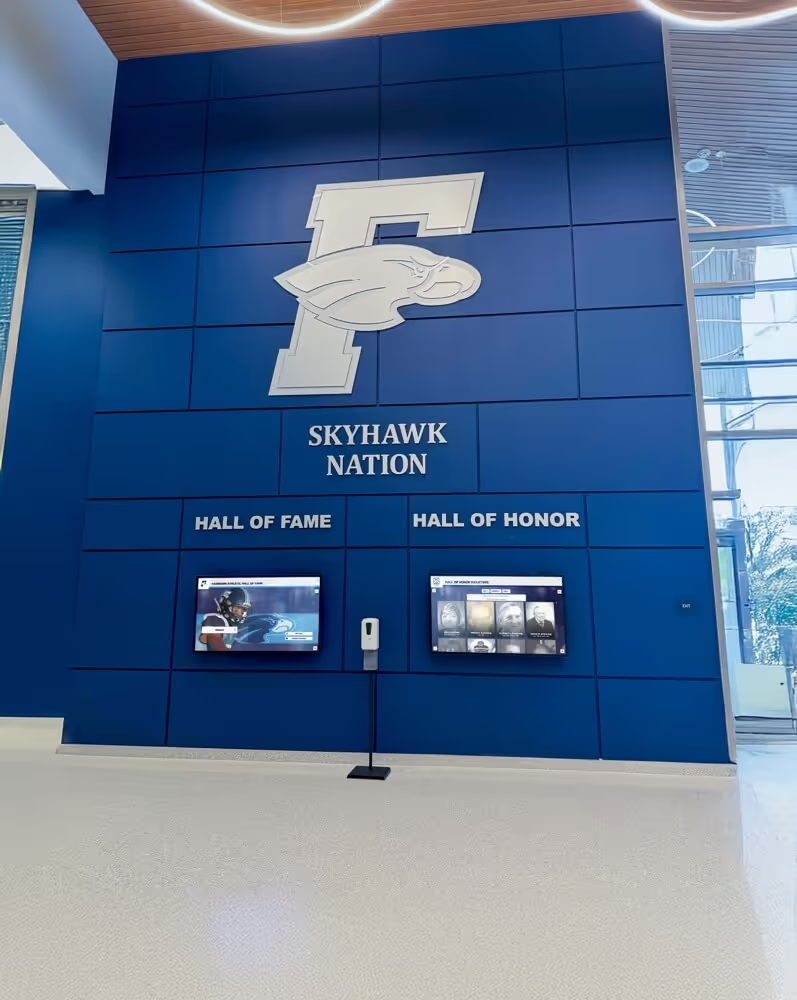
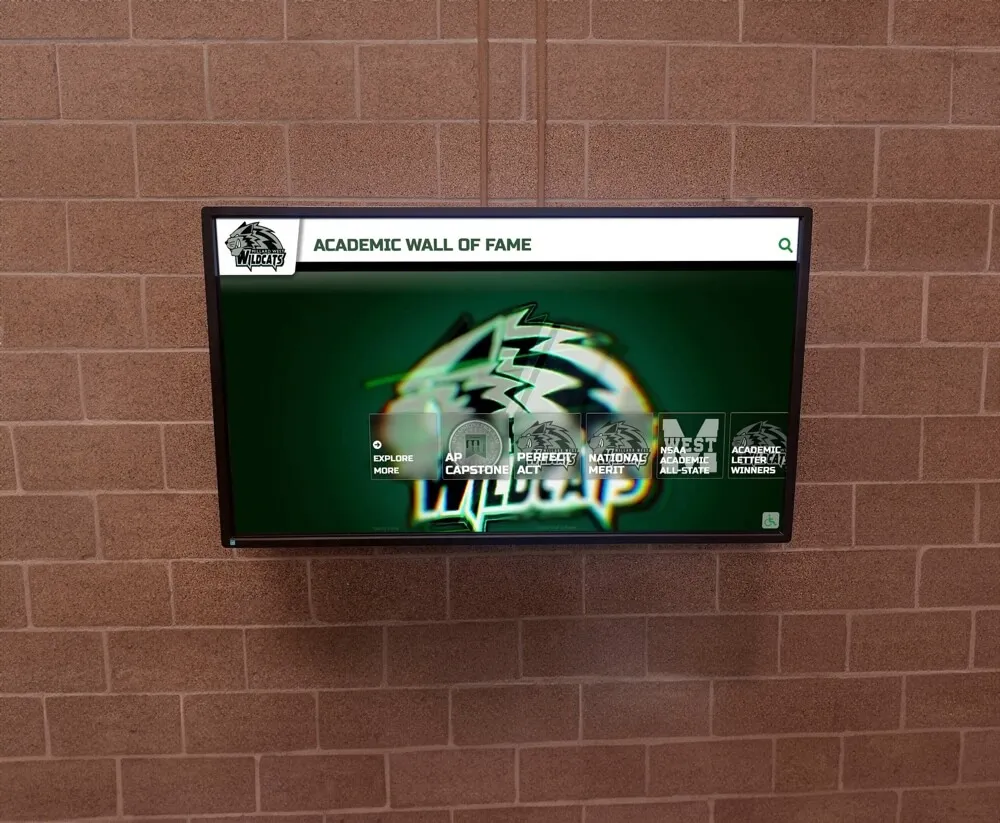
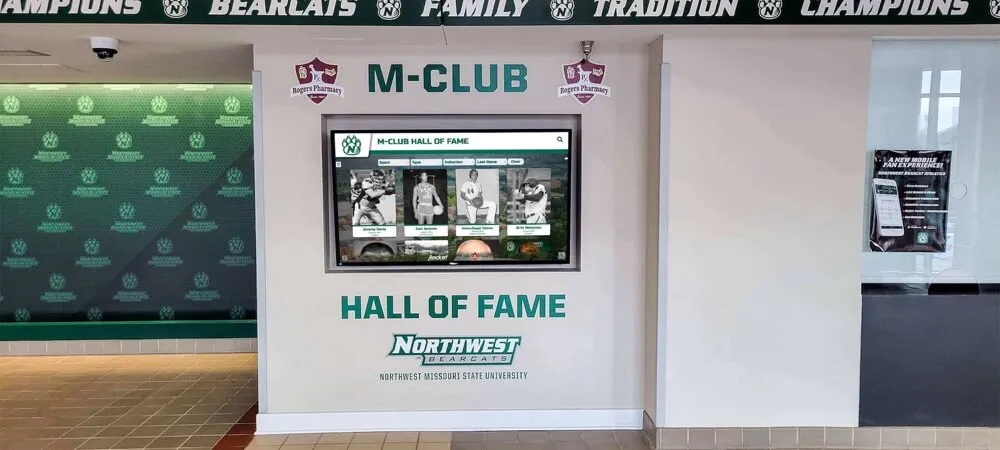
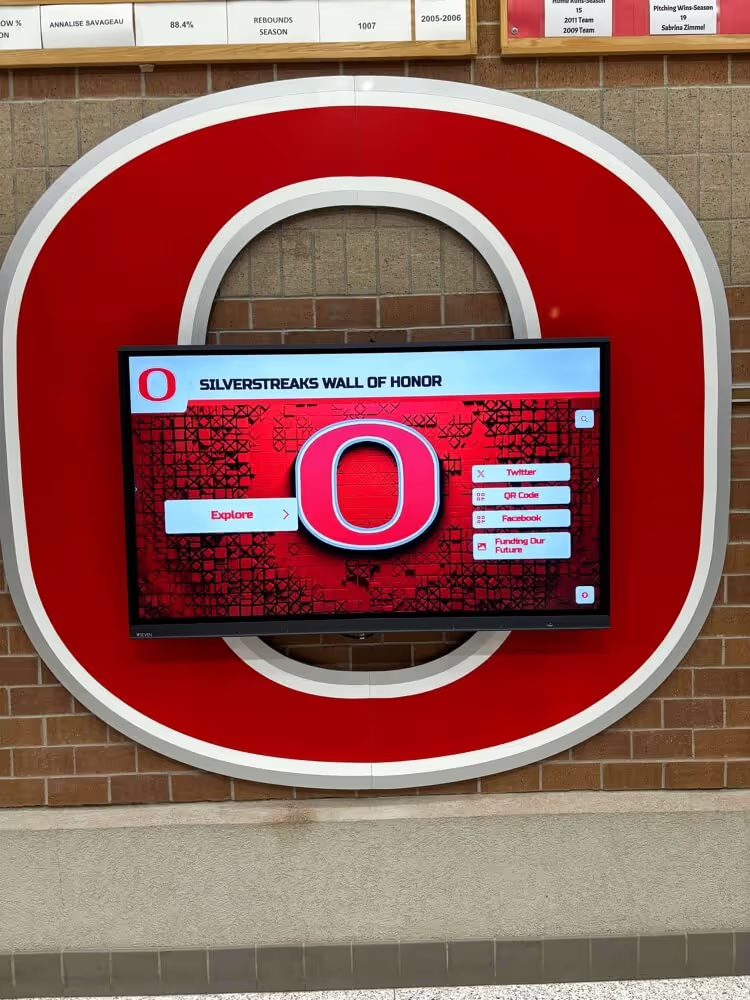
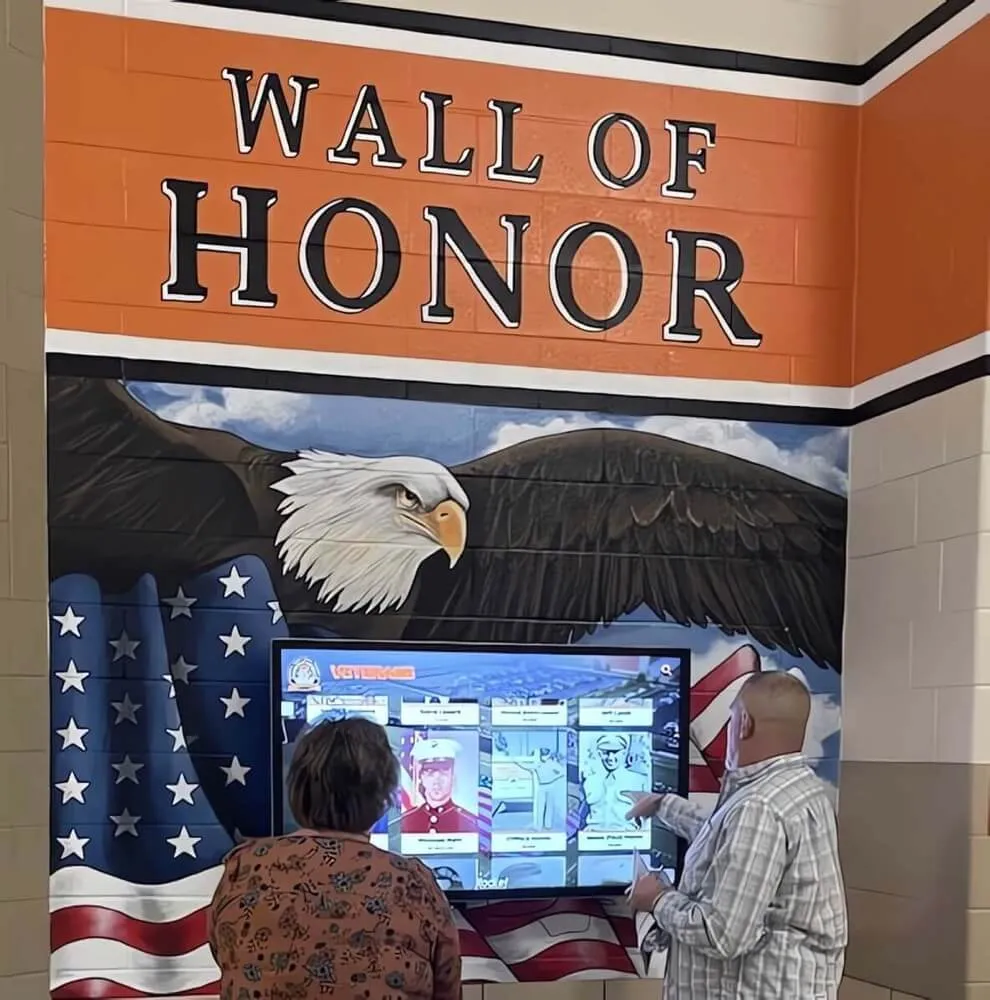
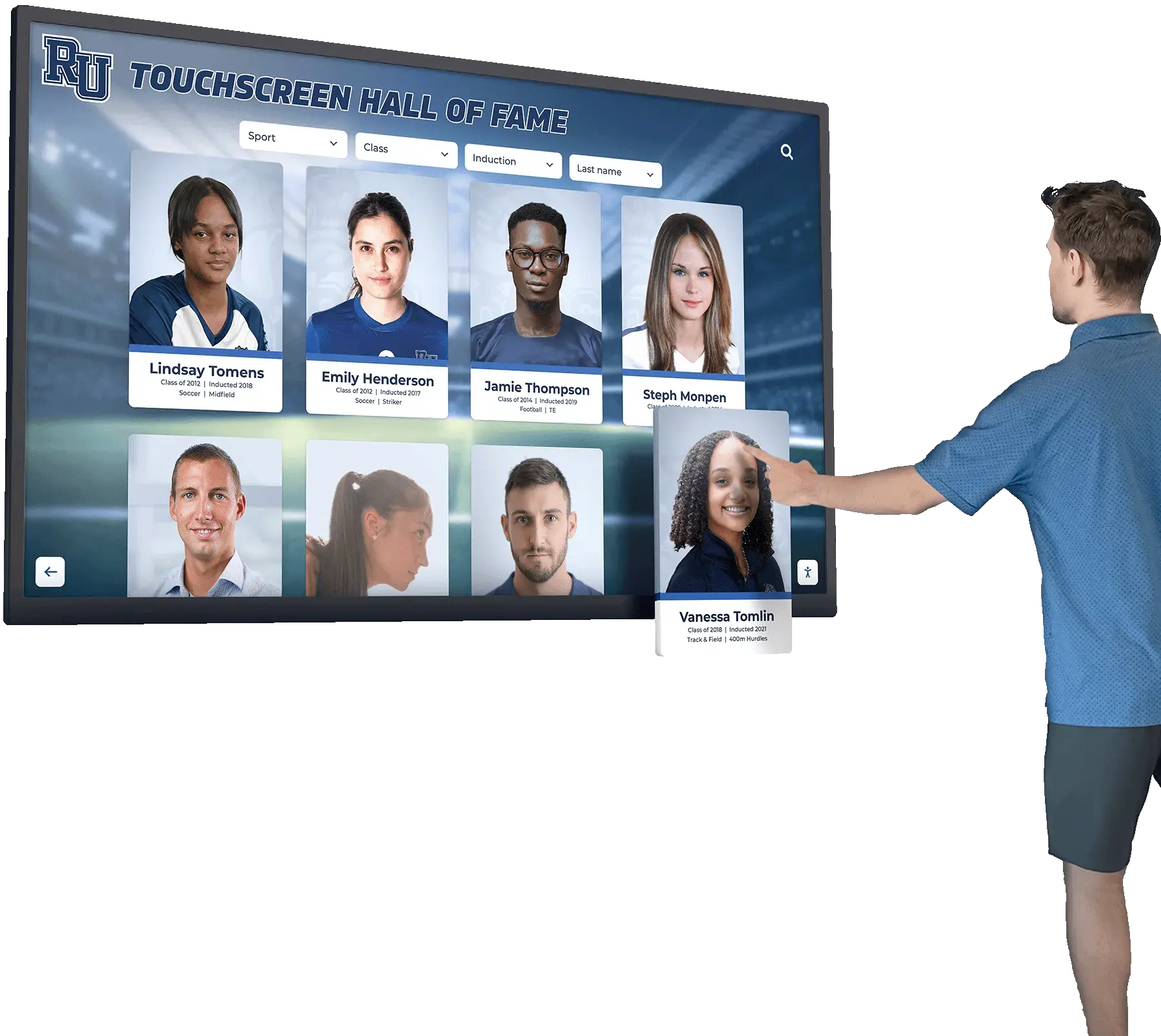
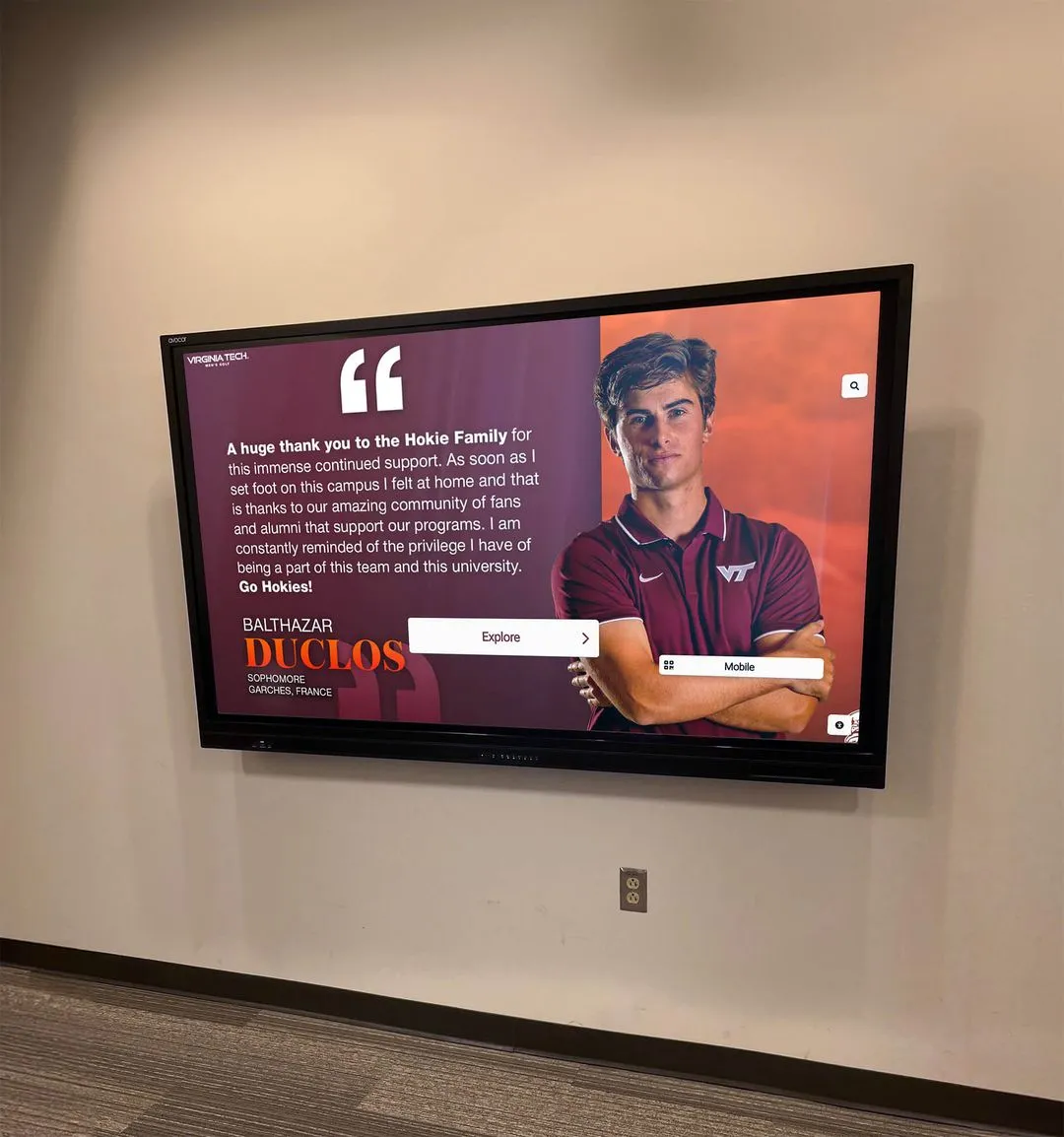
Interactive touchscreen systems represent the most sophisticated digital recognition approach, creating engaging experiences allowing visitors to explore achievements, search for specific individuals, view photographs and videos, and access detailed biographical information impossible to display on physical plaques.
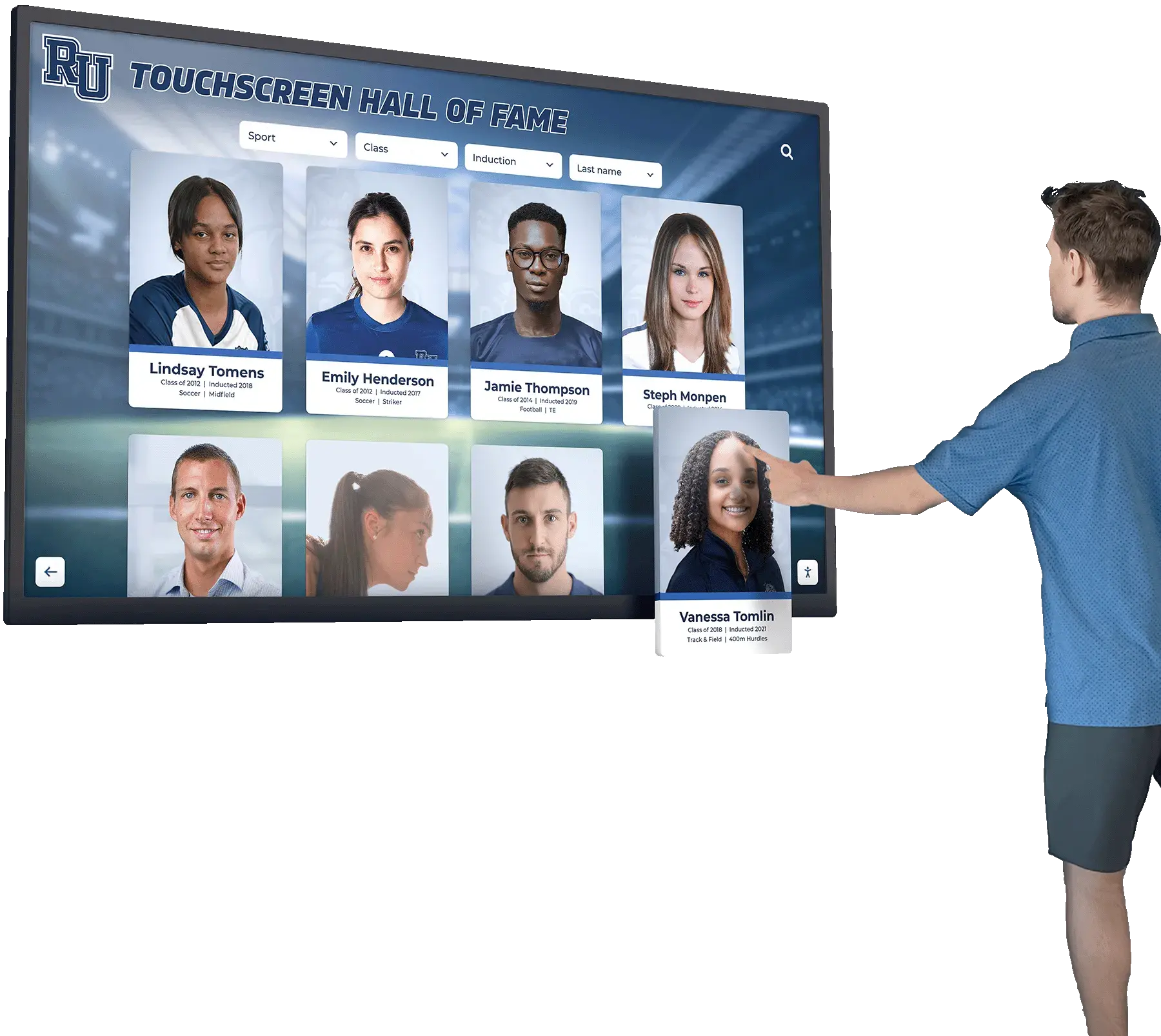
Touchscreen displays excel at accommodating growth since adding new honorees requires content updates rather than physical modifications. Database-driven systems can recognize thousands of individuals without space constraints, making them ideal for institutions with extensive recognition histories or multiple recognition categories.
Search and filter capabilities help visitors find specific information quickly. A parent attending a school event can search for their child’s name to see recognition details, or an alumnus returning for a reunion can locate classmates and teammates from decades past. These personalized discovery experiences create emotional connections physical displays struggle to match.
Interactive systems also support rich media content including video tributes, recorded speeches, action photography, scanned historical documents, and audio interviews. These multimedia elements bring recognition to life, providing context and storytelling that names and dates alone cannot convey.
The technology does introduce implementation considerations including hardware costs for commercial-grade touchscreens, content development requiring photography, writing, and design, software platforms managing recognition databases, and ongoing maintenance addressing both hardware and software needs.
Hybrid Approaches Combining Physical and Digital Elements
Many organizations find optimal solutions combining traditional physical recognition with digital enhancements, leveraging strengths of both approaches while mitigating limitations.
Common hybrid configurations include traditional plaque walls with nearby digital kiosks providing detailed information, trophy cases incorporating screens displaying related media content, QR codes on physical plaques linking to online profiles, and digital displays rotating through honoree profiles in spaces adjacent to permanent physical recognition.
These combined approaches satisfy stakeholders who value traditional recognition permanence while delivering the storytelling capacity and information depth digital formats enable. They also provide redundancy—if digital systems experience technical difficulties, physical recognition elements ensure honorees remain visible.
Video Walls and Digital Signage
Large-format video walls and digital signage displays create dramatic recognition experiences in spacious lobbies, athletic facilities, or gathering areas. These systems cycle through honoree profiles, championship highlights, historical photographs, and recognition content on screens commanding attention through size and motion.
Video walls work particularly well in spaces where visitors gather and wait—main building entrances, athletic facility lobbies, or reception areas and foyers where people naturally spend time. Unlike interactive touchscreens requiring active engagement, video walls deliver content passively while still creating impact.
Professional content development ensures video wall installations succeed. Amateur slideshow presentations undermining recognition dignity, while thoughtfully produced content with appropriate pacing, professional graphics, and compelling imagery creates experiences worthy of honored achievements.
Specialized Hall of Fame Wall Ideas by Context
Different organizational contexts benefit from recognition approaches tailored to their specific needs, audiences, and resources.
Athletic Program Recognition Walls
Athletic halls of fame face unique design challenges balancing team and individual recognition across multiple sports, accommodating championship trophies alongside individual honors, and creating displays that inspire current athletes while honoring past achievement.
Many successful athletic recognition walls organize content by sport, creating dedicated sections for football, basketball, track, soccer, and other programs. This sport-specific organization helps visitors navigate content while allowing each program to develop distinct visual identity within the overall hall of fame framework.
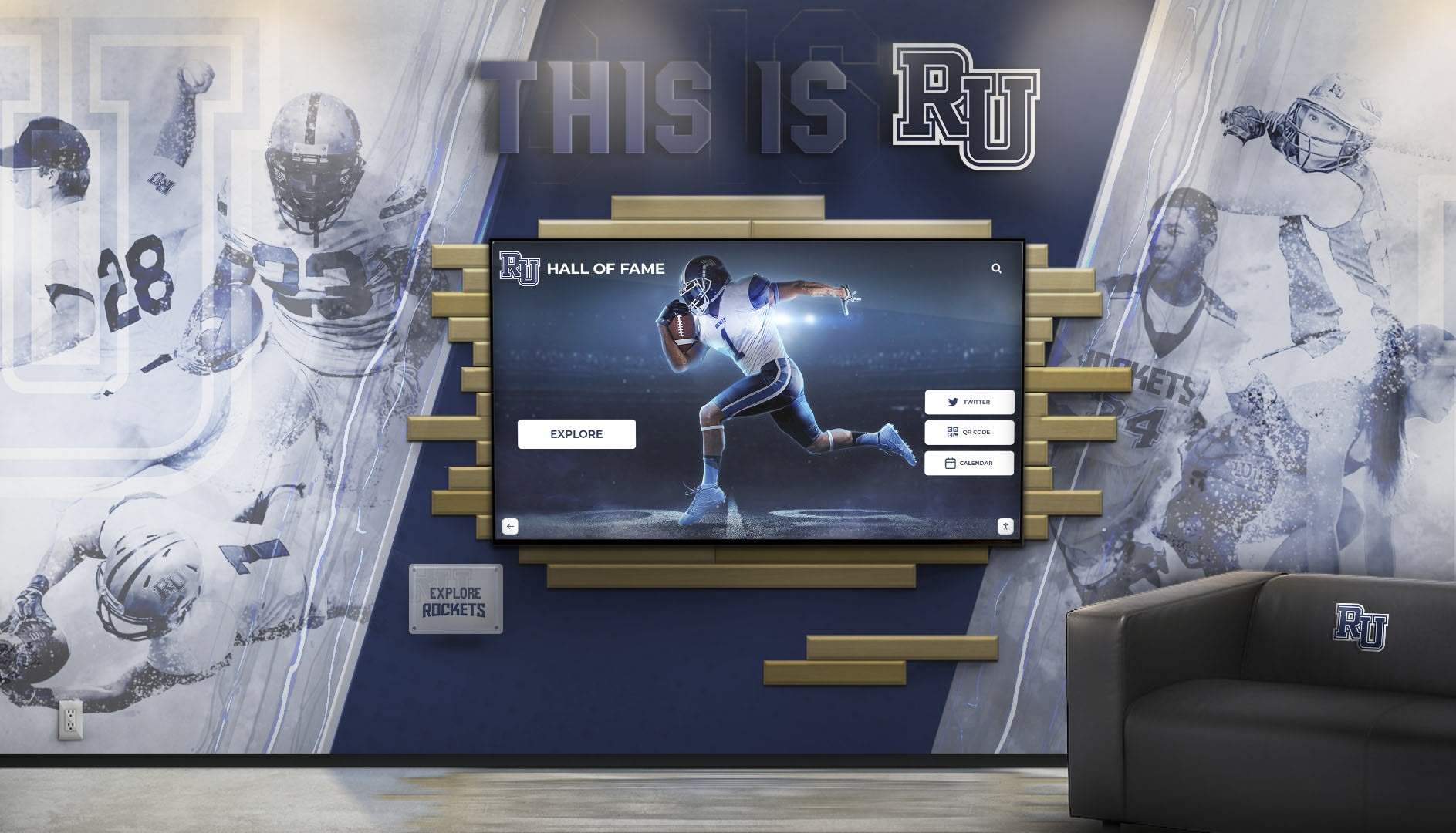
Championship recognition typically receives prominent placement, with team photographs, trophy displays, and roster lists celebrating collective achievement. Individual honors—all-conference selections, state champions, collegiate scholarship recipients—provide additional recognition layers highlighting personal excellence contributing to program success.
Consider incorporating elements that strengthen connections between past and present, such as retired jersey displays, record boards showing current and historical performance standards, or timeline formats documenting program evolution across decades. These design choices help current athletes understand their place within longer program traditions while seeing concrete examples of excellence they might achieve.
Academic and Scholar Recognition
Academic halls of fame honor intellectual achievement, scholarship, and educational excellence through recognition formats adapted to scholarly contexts. Rather than emphasizing athletic statistics and championship trophies, academic recognition highlights grade point averages, scholarship awards, research contributions, and post-graduation achievements.
Academic recognition programs often organize honorees by graduating class, creating year-by-year documentation of scholarly excellence. This chronological approach helps current students identify with recent graduates while seeing the long tradition of academic achievement their institution cultivates.
Portrait photography works well for academic recognition, conveying dignity and professionalism appropriate to scholarly honors. Including brief biographical information about post-graduation achievements—graduate schools attended, career accomplishments, or community contributions—demonstrates how academic excellence translates into life success beyond school.
Donor and Contributor Recognition
Organizations recognizing financial supporters and volunteers face different design considerations than athletic or academic halls of fame. Donor walls must balance appropriate recognition gratitude with institutional dignity, provide giving level differentiation, and encourage ongoing philanthropy while honoring past generosity.
Donor recognition wall designs typically incorporate tiered structures reflecting different contribution levels—leadership circles, major donors, and general supporters. Visual hierarchy communicates these distinctions through placement, sizing, or material differentiation while ensuring all recognized donors receive appropriate acknowledgment.
Many donor walls include naming opportunities allowing significant contributors to dedicate recognition to family members, honor loved ones, or establish legacy giving. These dedication capabilities add emotional dimensions to recognition while creating meaningful connections between donors and institutions.
Digital donor recognition displays offer particular advantages for capital campaigns and ongoing fundraising by accommodating growing supporter lists, providing easy updates as new gifts arrive, and enabling interactive features allowing donors to share personal messages or dedication stories.
Corporate and Professional Achievement Walls
Businesses and professional organizations use hall of fame walls to celebrate employee achievements, honor company founders, recognize sales excellence, or document organizational milestones. Corporate recognition requires professional aesthetics reflecting brand identity while creating meaningful acknowledgment motivating continued excellence.
Corporate halls of fame often emphasize achievement categories aligned with business objectives—sales performance, innovation contributions, safety records, customer service excellence, or length of service. Clear criteria and transparent selection processes ensure recognition maintains credibility and perceived fairness among employee populations.
Professional photography and high-quality materials prove particularly important in corporate contexts where recognition quality reflects on organizational brand and culture. Cheap-looking displays undermine recognition value while professional installations communicate authentic appreciation for employee contributions.
Creating Engaging Content for Your Hall of Fame Wall
Regardless of display format, content quality determines whether recognition creates meaningful experiences or fades into background noise.
Telling Compelling Achievement Stories
Names and dates provide factual information, but stories create emotional connections. Effective hall of fame walls incorporate narrative elements that help visitors understand not just what honorees achieved, but how they achieved it, what obstacles they overcame, and what their accomplishments meant.
Brief biographical summaries work well for individual recognition—one or two paragraphs capturing achievement highlights, personal background, and post-recognition accomplishments. These summaries should be written in accessible language avoiding jargon while conveying genuine achievement significance.
Quotes from or about honorees add personality and authenticity. A championship coach’s philosophy in their own words, a distinguished alumnus reflecting on formative experiences, or testimonials from those impacted by contributors’ generosity create human dimensions beyond statistical records.
For athletic recognition, game descriptions and championship highlights help visitors appreciate achievement context. Rather than simply noting “State Champions, 1998,” describing the championship game’s dramatic conclusion or unexpected journey to the title game creates memorable content.
Incorporating Visual Documentation
Photography and video transform recognition from abstract acknowledgment into tangible documentation of real people and actual achievements. Visual content serves both historical preservation and emotional engagement purposes.
Action photography captures competitive moments—the game-winning shot, the championship celebration, the intense focus during competition. These images convey achievement immediacy while providing visual interest breaking up text-heavy displays.
Portrait photography ensures personal recognition, particularly important when honoring individuals from decades past whom current community members may not remember. Consistent portrait formatting—similar backgrounds, lighting, and framing—creates professional cohesion across images from different eras and sources.
Historical photographs documenting institutional evolution add contextual richness to recognition displays. Images of earlier facilities, vintage team photographs, or historical events help visitors understand how honored achievements fit within broader organizational development.
Video content works particularly well for digital displays, allowing achievement documentation through game footage, recorded speeches, or interview-style tribute pieces. These dynamic formats capture attention while providing storytelling capacity static images and text cannot match.
Maintaining Accuracy and Sensitivity
Recognition content requires careful verification ensuring factual accuracy while demonstrating appropriate sensitivity to various stakeholder perspectives.
Achievement claims should be documented and verifiable. Statistics, dates, records, and accolades need confirmation through official sources—record books, championship documentation, or institutional archives. Errors undermine recognition credibility and can create embarrassing corrections requiring expensive updates.
Biographical information requires honoree confirmation or family verification when possible. Personal details including name spelling, graduation years, or professional accomplishments should be fact-checked rather than assumed. Many organizations request honorees review content before publication, ensuring accuracy while giving individuals agency over how their achievements are described.
Sensitivity considerations include ensuring diverse representation across recognition programs, using appropriate language and terminology reflecting current standards, recognizing that some historical achievements may involve problematic contexts, and providing dignity even when updating or removing recognition due to changed circumstances.
Practical Implementation: From Concept to Completion
Transforming hall of fame wall ideas into reality requires careful planning, realistic budgeting, and systematic execution.
Establishing Project Scope and Budget
Hall of fame wall projects range from modest plaque installations costing a few thousand dollars to comprehensive digital systems requiring five or six-figure investments. Establishing realistic budgets aligned with project scope prevents mid-project compromises undermining design vision.
Budget components typically include physical materials like plaques, frames, mounting hardware, or structural modifications, technology costs for digital systems including hardware, software, and installation, content development encompassing writing, photography, design, and production, professional services such as contractors, electricians, or specialized installers, and ongoing expenses including maintenance agreements, content updates, or replacement reserves.
Many organizations phase implementation, starting with core recognition elements and adding enhancements as additional funding becomes available. Phased approaches require planning ensuring initial installations can integrate seamlessly with future additions rather than requiring complete redesigns.
Building Stakeholder Support and Involvement
Successful hall of fame walls require broad stakeholder support throughout planning, implementation, and ongoing maintenance. Building this support begins with inclusive processes inviting input from those most invested in recognition outcomes.
For athletic programs, involving coaches, athletic directors, booster clubs, and former athletes ensures diverse perspectives shape selection criteria and design choices. Academic recognition benefits from faculty involvement, administrative guidance, and alumni input. Donor walls obviously require development office leadership while incorporating donor feedback.
Selection committees should represent stakeholder diversity while maintaining reasonable size enabling efficient decision-making. Five to nine members typically balance representation against coordination complexity.
Regular communication keeps broader communities informed and engaged throughout project development. Updates about design progress, honoree selections, and timeline milestones maintain excitement while inviting ongoing feedback. This transparency builds anticipation for completed installations while demonstrating responsiveness to stakeholder input.
Working with Professional Vendors and Designers
While some modest recognition projects succeed as internal initiatives, most hall of fame walls benefit from professional design expertise and vendor partnerships ensuring quality outcomes.
Professional designers help translate vision into practical plans, navigate technical considerations, create visual concepts for stakeholder review, and coordinate various project components from architecture to content development. Their expertise often prevents expensive mistakes while ensuring finished installations meet professional standards.
Vendor selection should consider experience with similar recognition projects, portfolio quality demonstrating design capabilities, technical expertise particularly for digital systems, project management competency ensuring timeline adherence, and post-installation support addressing maintenance needs.
Request detailed proposals including project timelines, itemized budgets, examples of similar completed work, and references from comparable organizations. Multiple vendor consultations provide perspective on different approaches while establishing competitive context for pricing.
Installation and Launch Planning
Implementation planning addresses the practical details transforming approved designs into completed installations ready for public unveiling.
Installation timing should consider organizational calendars, avoiding conflicts with major events while targeting opportunities for maximum visibility. Many schools schedule hall of fame installations during summer when facilities access is easier, with formal dedications coinciding with homecoming weekends or other high-attendance events ensuring honorees and communities can celebrate together.
Coordinate necessary approvals including facility management for structural modifications, technology departments for network connectivity and digital system integration, and administrative leadership for final design approval and funding authorization.
Plan memorable dedication experiences worthy of honored achievements. Invitation lists should include honorees and families, selection committee members, institutional leadership, media representatives, and broader community members. Formal programs might incorporate speeches from honorees, leadership remarks, tours highlighting recognition features, and receptions providing informal celebration opportunities.
Maintaining and Updating Your Hall of Fame Wall
Recognition installations require ongoing maintenance ensuring they remain accurate, attractive, and inspiring years after initial completion.
Annual Addition Processes
Most halls of fame grow annually through new induction classes adding fresh honorees. Systematic processes ensure smooth integration of additions without disrupting existing recognition.
For physical displays with modular designs, annual additions involve ordering new plaques or panels matching original specifications. Ordering well in advance of induction ceremonies ensures materials arrive in time while allowing for potential production delays.
Digital systems require content development workflows similar to original installations—gathering honoree information, collecting photographs, writing biographical content, and integrating materials into recognition databases. Templates and standardized formats streamline these processes while ensuring consistency with existing content.
Addressing Recognition Updates and Corrections
Even carefully vetted recognition content occasionally requires updates correcting errors, reflecting changed information, or addressing honoree requests for modifications.
Physical recognition systems face expensive correction challenges since replacing engraved plaques or reprinting materials involves both costs and visual consistency considerations—new materials may not match aging originals perfectly. This reality emphasizes the importance of thorough verification before initial installation.
Digital systems enable straightforward corrections through content database updates, one of their significant advantages over static physical displays. However, even digital corrections should follow approval processes ensuring changes receive appropriate authorization rather than allowing casual edits undermining content integrity.
Long-Term Preservation and Refreshing
Physical recognition materials deteriorate over time through normal wear, environmental exposure, and aging. Preservation planning extends recognition lifespan while maintaining professional appearance.
Regular cleaning prevents dust accumulation and grime buildup dulling finishes and obscuring information. Appropriate cleaning methods vary by material—metal plaques require different care than acrylic panels or photographic prints. Facility maintenance teams should receive specific guidance about proper cleaning techniques for recognition installations.
Periodic assessments identify needed repairs, replacements, or refreshes before deterioration becomes obvious. Planning for these maintenance cycles—perhaps every five to ten years depending on materials and environments—prevents recognition from appearing neglected.
Digital systems require technology lifecycle planning, recognizing that hardware becomes obsolete and software platforms evolve. Setting aside replacement reserves or establishing refresh schedules prevents situations where critical recognition systems fail without funding available for updates.
Measuring Hall of Fame Wall Impact and Success
Recognition installations represent significant investments deserving assessment beyond initial completion celebrations.
Qualitative Success Indicators
Many recognition impacts resist precise measurement but remain evident through qualitative observation and stakeholder feedback.
Community response provides important success indicators. Pay attention to whether people stop to engage with recognition displays, if honorees express appreciation for how achievements are presented, when prospective members or students mention recognition during recruitment, and whether alumni reference hall of fame experiences when reconnecting with institutions.
Anecdotal evidence carries weight—the athlete inspired by seeing a predecessor’s accomplishment, the donor moved by seeing their contribution honored, or the alumnus sharing recognition experiences with visiting family members all indicate meaningful impact even without quantitative metrics.
Usage Analytics for Digital Systems
Digital recognition platforms enable usage tracking providing insights about how people engage with recognition content.
Common analytics include total interaction counts showing overall engagement levels, session duration indicating whether visitors browse briefly or explore deeply, search queries revealing which individuals or achievements generate most interest, and content views identifying which types of information attract attention.
These metrics help optimize content strategies, identify gaps or weaknesses, demonstrate return on investment to leadership and funders, and guide future enhancements and additions.
Recognition Program Outcomes
Beyond direct display engagement, successful recognition programs influence broader institutional outcomes worth monitoring.
Alumni engagement metrics may show increased event attendance, improved giving participation, or enhanced volunteer involvement correlating with recognition program launches. Athletic programs might track whether visible hall of fame displays influence recruiting conversations with prospective student-athletes.
While isolating recognition impact from other factors proves difficult, trending multiple indicators over time can suggest whether recognition programs contribute to desired institutional outcomes beyond immediate honoree satisfaction.
Conclusion: Creating Recognition Experiences That Endure
Hall of fame wall ideas succeed when they move beyond simple name lists to create experiences honoring achievements while inspiring future excellence. Whether you choose traditional plaques, digital touchscreens, artistic murals, or hybrid approaches, thoughtful design focused on your specific community needs creates recognition worthy of those being honored.
The most effective recognition installations share common characteristics regardless of format: they showcase achievement prominently in high-visibility locations, they tell compelling stories connecting visitors emotionally with honored individuals, they accommodate growth as new achievements accumulate, they reflect institutional identity through coordinated design and messaging, and they balance honoring the past with inspiring the future.
As you develop your hall of fame wall, remember that recognition serves purposes extending far beyond honoring past achievement. Great recognition systems strengthen community identity, preserve institutional memory, inspire current participants to pursue excellence, and create shared experiences bringing people together across generations. These enduring impacts make recognition investments worthwhile when approached with care, creativity, and commitment to honoring those who built your traditions.