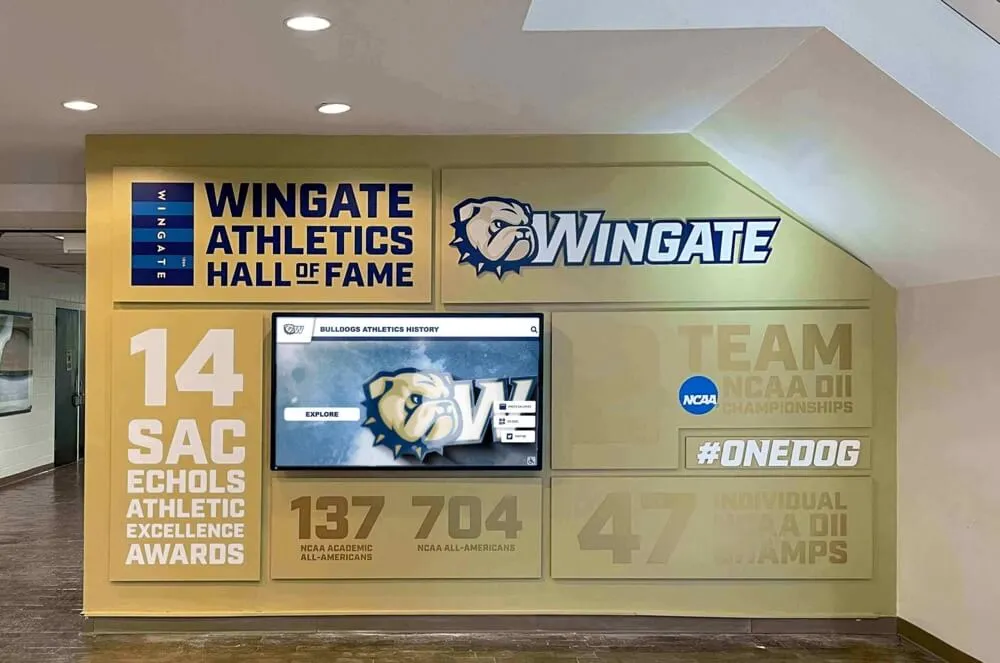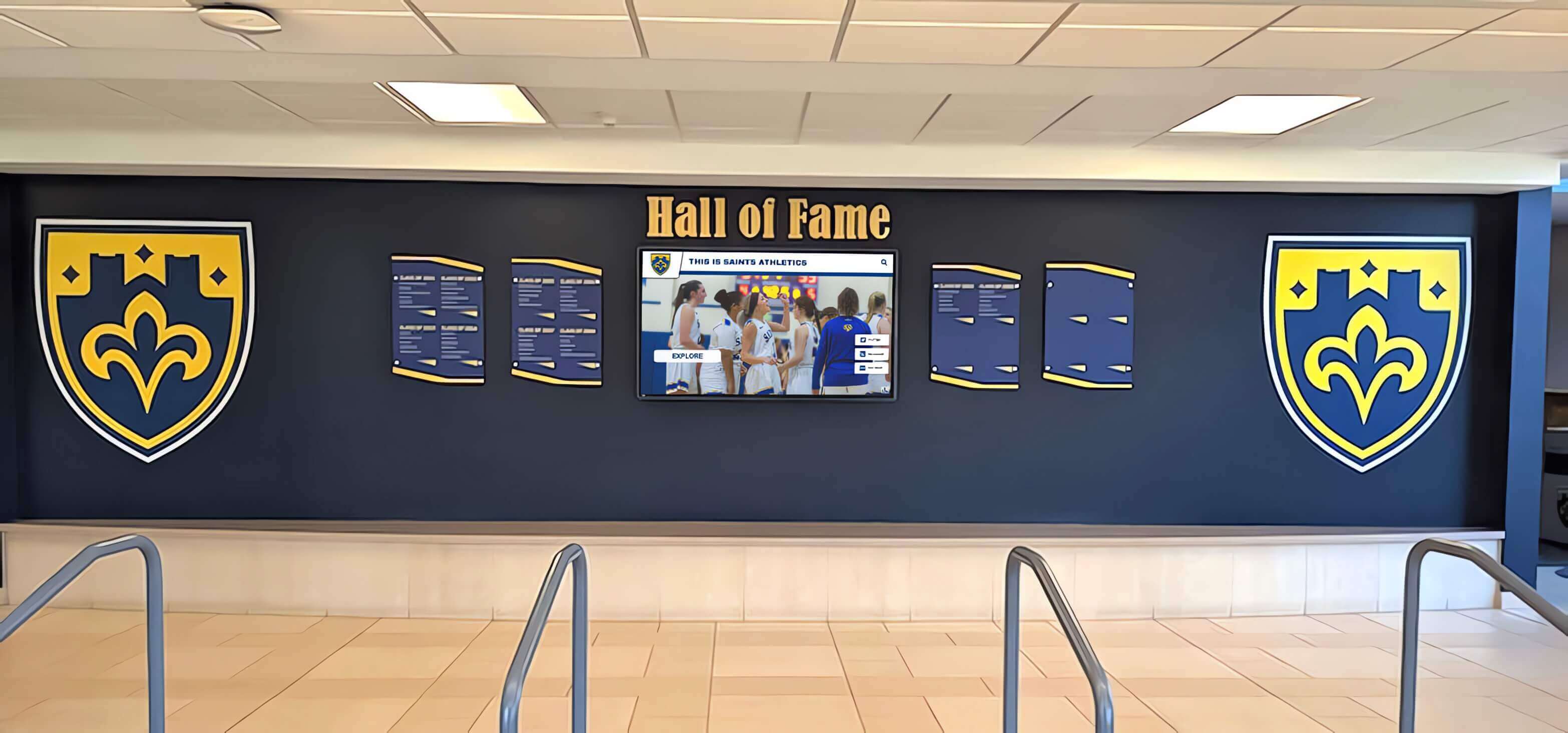
Before a single plaque is ordered or a single screen is mounted, there is a decision that shapes every other choice in a school’s athletic recognition program: how much space does the display actually have to work with? Hall of fame wall dimensions determine what formats are possible, how many inductees can be featured without the display becoming cluttered, whether the chosen format can grow over time, and whether the finished installation will feel like a destination or an afterthought squeezed into a leftover corner.
This guide walks through the space-planning process in practical terms — what to measure, what those measurements mean for each display format, and how to match the right recognition solution to the available wall.
What this space-planning guide covers:
- What to measure before evaluating any display format
- Dimensions reference table for common school recognition contexts
- How hallway, lobby, and gymnasium locations differ as planning environments
- Physical plaque and banner capacity by wall width
- Digital screen footprint options and clearance requirements
- Planning for inductee growth without running out of space
- When wall constraints make the case for going digital
Start with an Accurate Site Survey
Space planning works from measurements, not estimates. Before calling a vendor or requesting a quote, conduct a site survey of every candidate location in the facility. The results will inform every subsequent decision, including format, budget, and long-term growth strategy.
Measure these dimensions at each candidate location:
- Wall width: Measure the full usable width of the flat wall surface, not the room width. Note interruptions: doorways, fire suppression pull stations, trophy case protrusions, window frames, and corner transitions all reduce usable surface.
- Ceiling height: Measure from finished floor to ceiling — not to the drop ceiling grid, but to the hard ceiling above it if the display will be mounted higher than typical. Note HVAC registers, light fixtures, and sprinkler heads that constrain vertical placement.
- Floor clearance depth: Measure from the face of the wall to the nearest obstruction in front of it — a corridor wall, locker bank, trophy case, or furniture piece. This determines viewing distance and whether ADA clearance requirements can be met.
- Electrical access: Note the location of existing outlets and whether conduit runs are exposed or inside the wall. Digital displays require power; note whether a licensed electrician would need to rough in new circuits.
- Lighting conditions: Observe the location at multiple times of day. Direct window glare, overhead fluorescent spill, and gymnasium overhead lighting all affect legibility and screen visibility differently.
Photograph each wall from center distance and from both approach angles. These photos become the working document for any layout discussion with vendors or a facilities team.
Hall of Fame Wall Dimensions Reference Table
The table below organizes common school athletic recognition contexts by available wall width and ceiling height, then maps each to realistic display format options. Use it as a starting framework — every location requires a site-specific assessment.
| Wall Width | Ceiling Height | Typical Location | Physical Plaque Capacity | Digital Screen Options | Notes |
|---|---|---|---|---|---|
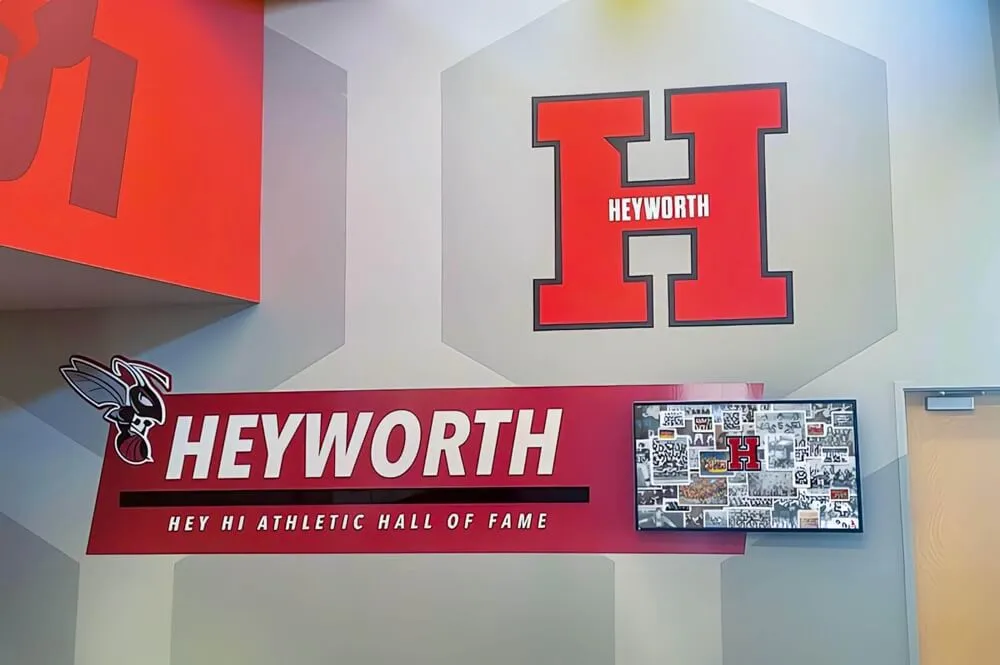
| 6–9 ft | 8–10 ft | Hallway alcove, office corridor | 18–30 standard plaques | Single 55" display | Limited depth; ADA clearance critical |
| 10–15 ft | 9–11 ft | Main hallway feature wall | 30–60 plaques or 4–6 banner bays | Single 65–75" display or dual 55" | Mid-range flexibility; common in renovated schools |
| 16–24 ft | 10–14 ft | Gymnasium lobby, athletic wing entrance | 60–120 plaques or 8–12 banner bays | Dual 65–75" or video wall (2×1) | Sufficient for multi-sport programs |
| 25–40 ft | 12–20 ft | Main lobby, field house atrium | 120–240 plaques; large mural possible | Multi-display array, 2×2 video wall, or hybrid physical/digital | Full-scale display; most format flexibility |
| 40+ ft | 14+ ft | Arena concourse, dedicated HOF room | Essentially unlimited with proper layout | Large-format arrays, interactive kiosk banks | May require wayfinding design |
Note: Plaque capacity estimates assume standard 8.5"×11" engraved plaques with 1" spacing. Larger plaque formats (12"×18") reduce total count. Actual capacity depends on header space, section dividers, and aisle clearance for touchscreen formats.
Hallway Locations: Constraints and Opportunities
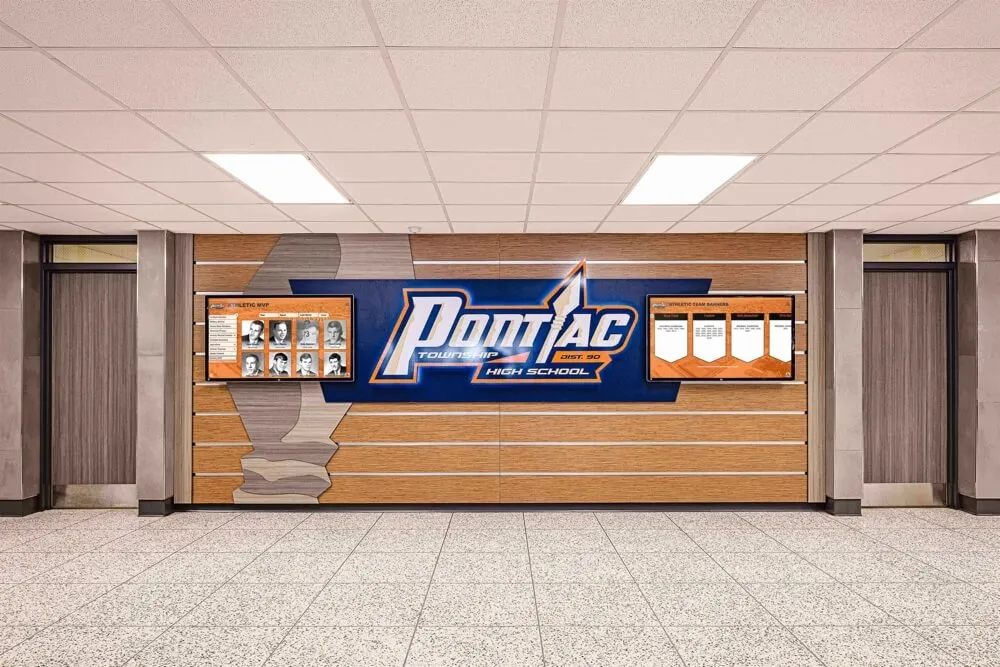
School hallways are the most common location for athletic recognition displays, and they present the most constrained planning environment. A typical secondary school corridor is 8 to 12 feet wide, leaving limited depth between the display face and foot traffic on the opposite side.
ADA clearance requirements apply in publicly accessible corridors. The ADA requires a minimum 36-inch clear path of travel; 44 inches is the recommended clear width for two-way traffic. Any protruding wall element — including a display cabinet, trophy case, or mounted screen with a surround frame — that extends more than 4 inches from the wall at heights between 27 and 80 inches above the floor must fall within ADA protrusion limits.
For hallway planning, this means:
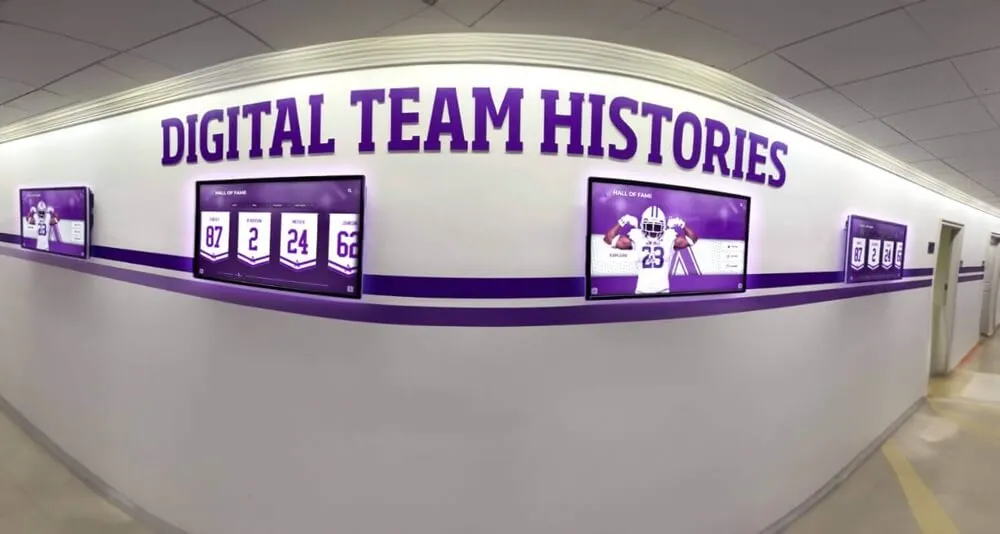
- Flush-mounted displays (directly against the wall) are preferable to framed or projecting assemblies
- Freestanding display cases reduce effective corridor width and may trigger accessibility review
- A 55-inch display mounted flush adds roughly 3.5 to 4 inches of protrusion — within ADA limits for most screen sizes, but worth confirming with your facilities team
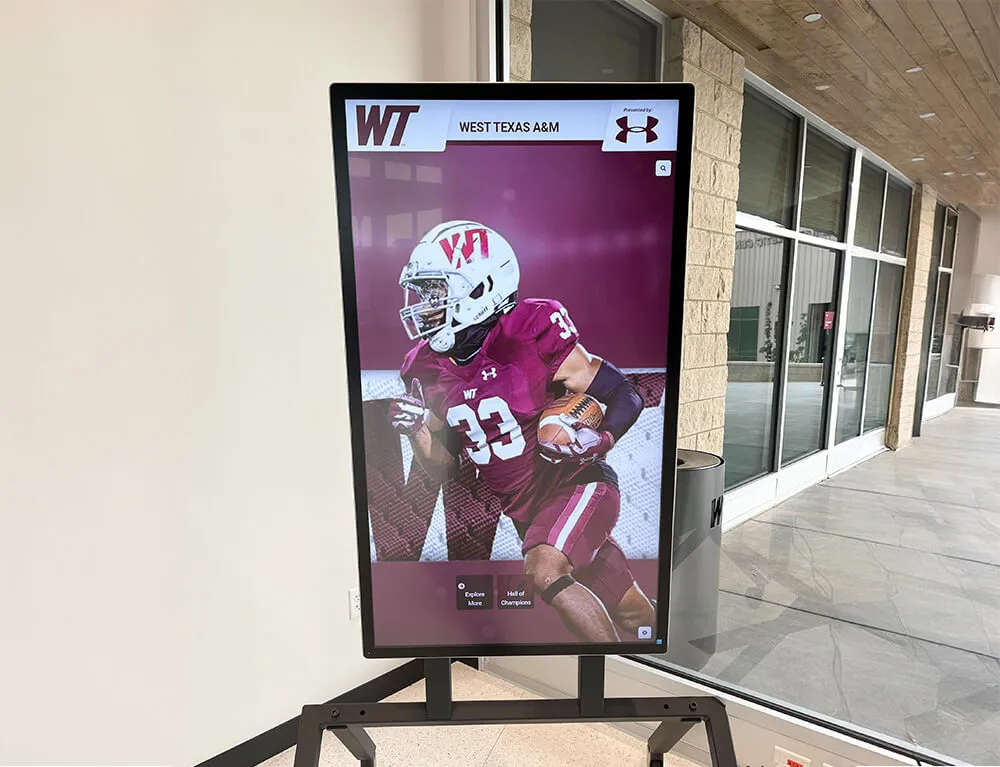
Hallway sight lines favor narrower but taller displays. Athletes, coaches, and visitors approaching from 20 or 30 feet away will see a tall display before they see a wide one. For schools with limited wall width but good ceiling height, a vertically oriented display (portrait mode) uses available space more effectively than a landscape-mounted screen forced into a tight corridor bay.
Gymnasium Lobby and Athletic Wing Entrances
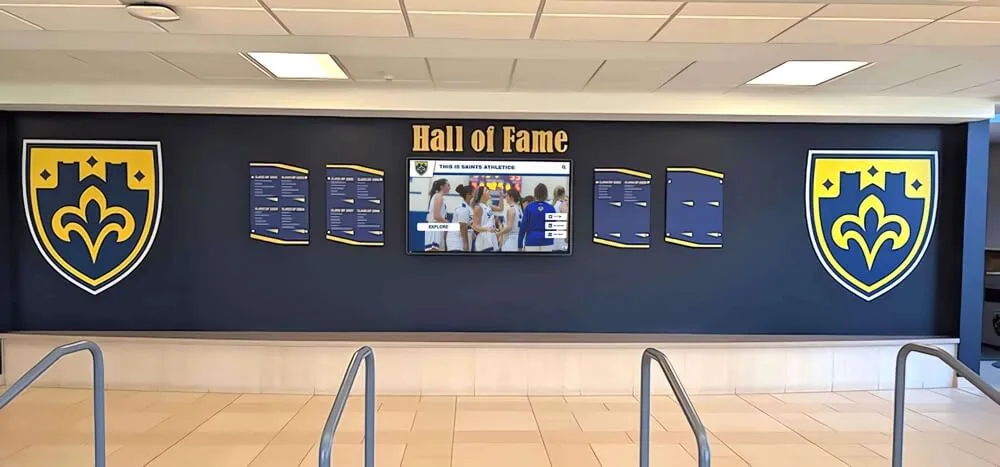
Gymnasium lobbies and the entrance zones of dedicated athletic wings offer the most consistently favorable combination of wall space, ceiling height, and visitor dwell time. Students arrive early for games; parents wait during warm-ups; visitors experience the space without the time pressure of passing between classes.
Planning advantages in gymnasium lobbies:
- Wall widths of 16 to 30 feet are common in purpose-built athletic facilities
- Ceiling heights frequently reach 12 to 16 feet, allowing vertical design elements like championship banners integrated above a display zone
- Lower foot-traffic density reduces ADA protrusion urgency compared to hallway locations
- Electrical infrastructure is often more accessible than in classroom corridors
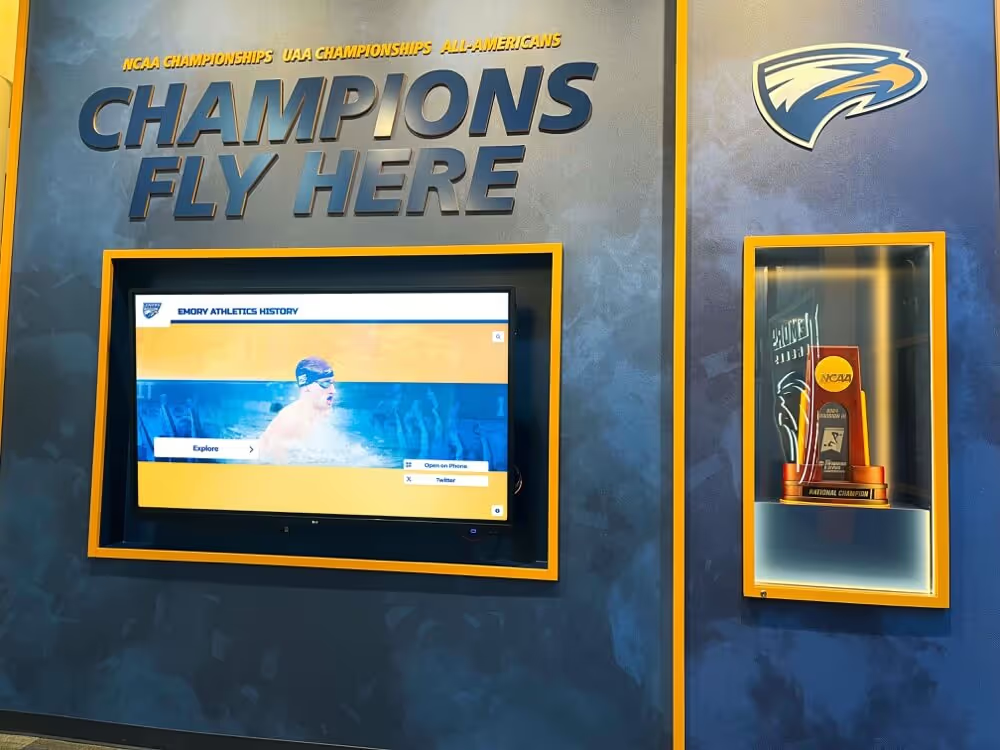
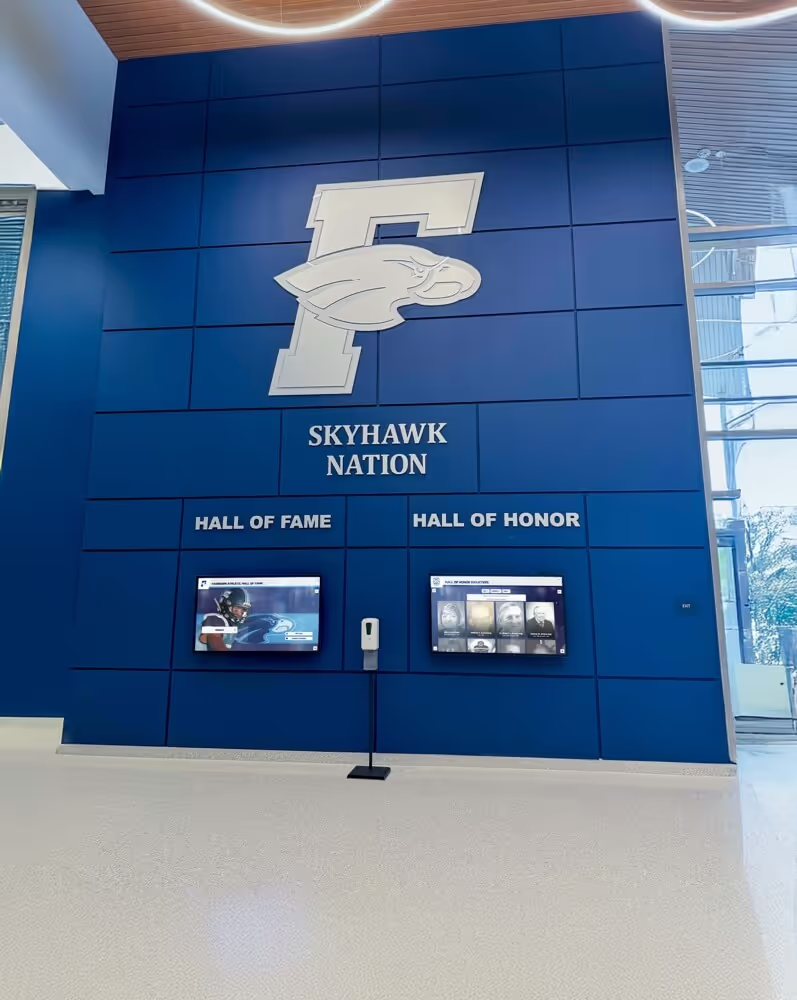
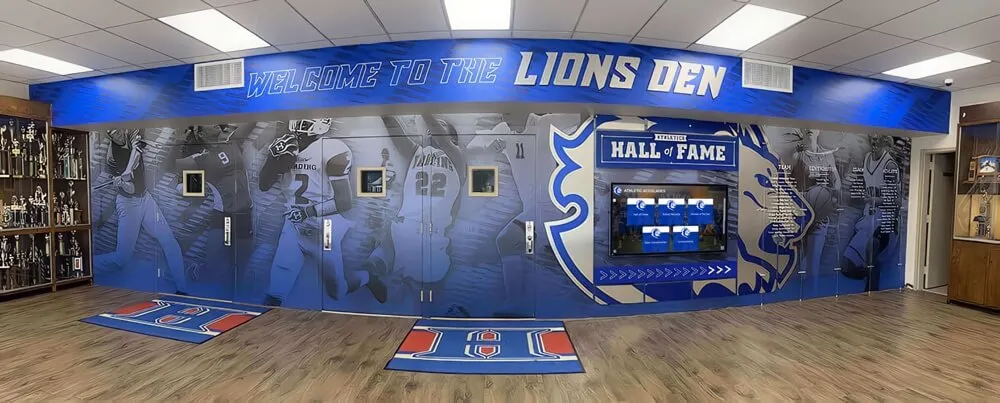
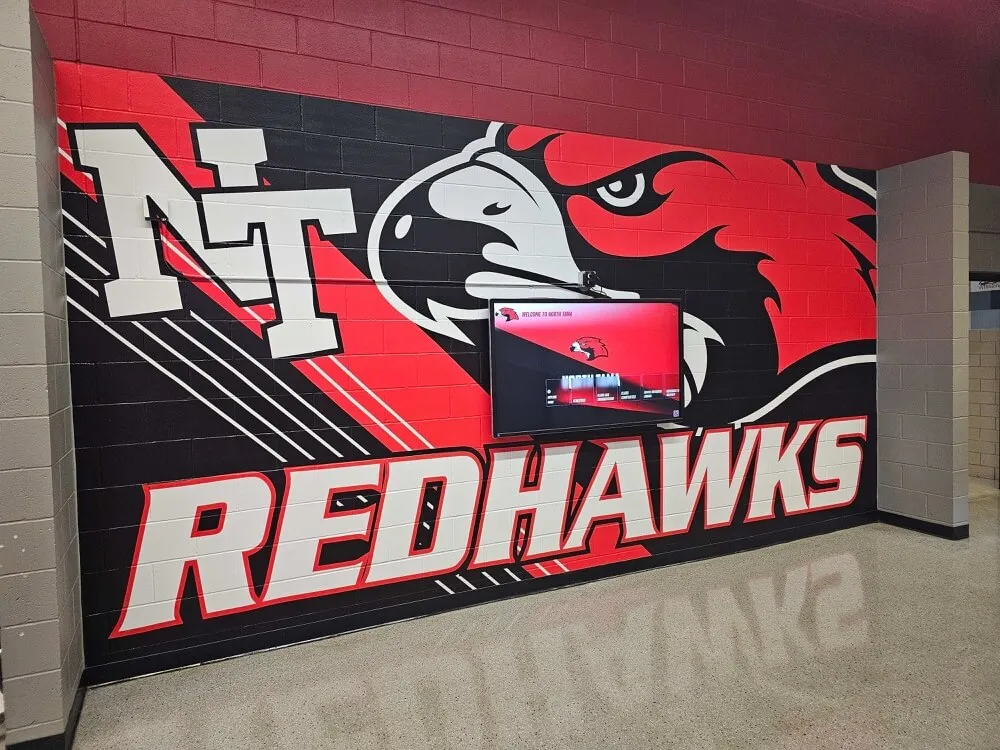
The practical display question in gymnasium lobbies is usually not whether a recognition wall is feasible, but which format best uses the available scale. A 20-foot lobby wall can accommodate a large physical installation, a multi-screen digital array, or a hybrid approach that combines structural mural elements with one or more interactive displays. Schools exploring the range of format options for spaces in this size range can find a detailed breakdown of layouts in this overview of digital wall of fame design ideas, layouts, and content planning for schools.
One planning consideration that gymnasium lobbies introduce is shared-use pressure. These spaces often serve as concession staging areas during large events, gathering spaces after games, and sometimes as overflow seating entries. A recognition display that extends into the active traffic zone during events creates maintenance exposure and potential damage risk. Layout planning should account for game-night crowd patterns, not just typical school-day conditions.
Physical Plaque and Banner Capacity by Format
For schools evaluating traditional physical recognition formats alongside digital options, understanding how many inductees a given wall dimension can accommodate helps set realistic expectations for program longevity.
Standard engraved plaques (typically 8.5" × 11" with a 1-inch border and 1-inch spacing between plaques) fit approximately three plaques per linear foot of wall in a horizontal row. A 12-foot wide wall with three rows of plaques between 5 and 7 feet of height can accommodate roughly 90 to 100 individual honorees. Once that capacity is reached, the school faces a choice: start a second display zone, reduce the size of each plaque, or transition to a format with greater capacity.
Championship banners vary significantly by program convention. Standard high school championship banners typically run 24 to 30 inches wide and 48 to 72 inches tall. A 20-foot wide wall can display 8 to 10 banners in a single row below ceiling — a format that works well in a gymnasium but consumes wall width rapidly if banners are the primary display element.
Photo and portrait-based displays — common in more recent athletic recognition installations — require more horizontal space per honoree than text plaques but create a visually richer experience. An 8-by-10-inch portrait format with a name plate below runs approximately 12 to 14 inches wide per honoree; a 15-foot wall accommodates roughly 12 to 14 full-row portraits, though most layouts use multiple rows at varying heights.
The critical long-term planning question for any physical format: how many inductees does the school expect to add over the next 10 to 20 years? A program that adds 4 inductees per year will outgrow a 100-plaque wall in 25 years — sooner if the initial installation catches up on years of unrecognized history. Planning for growth is not optional; it’s the single most common mistake in initial recognition wall projects. For context on how digital formats solve the physical growth constraint, this resource on digital hall of fame and donor wall displays covers the core mechanics.
Digital Screen Footprint Planning
Digital display hardware introduces its own dimensional considerations. Unlike physical plaques, screens have standardized sizes that don’t flex — a 65-inch commercial display is a 65-inch commercial display, and the layout must accommodate its fixed footprint.
Common school athletic display configurations:
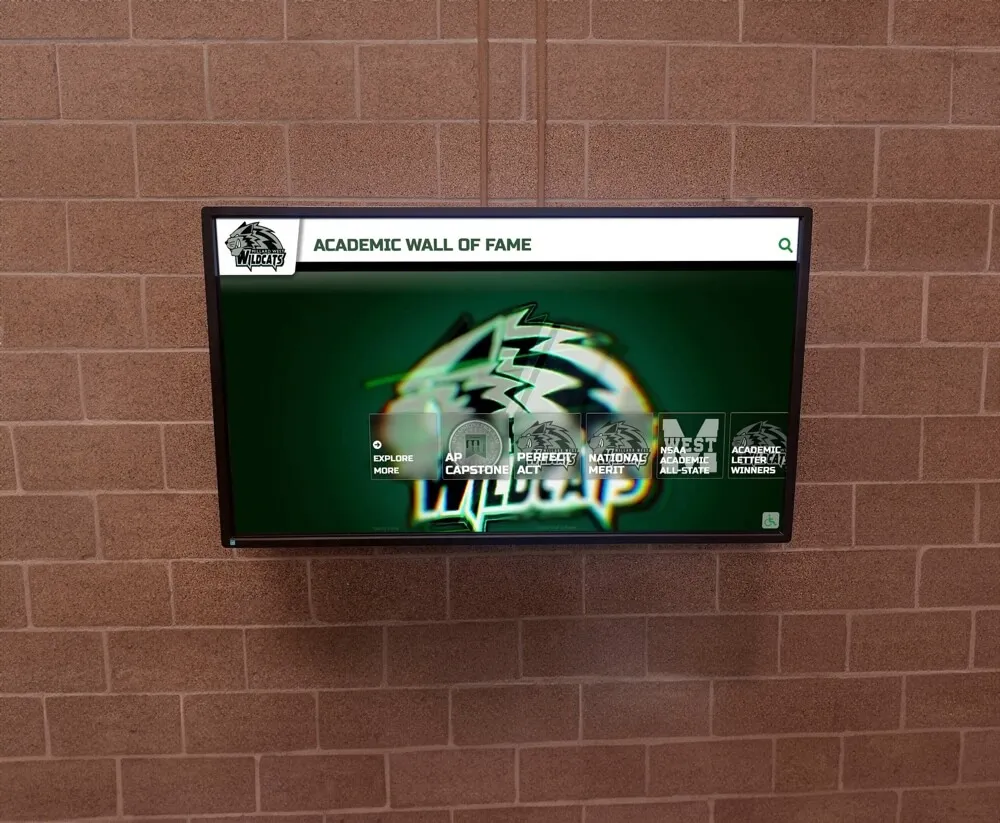
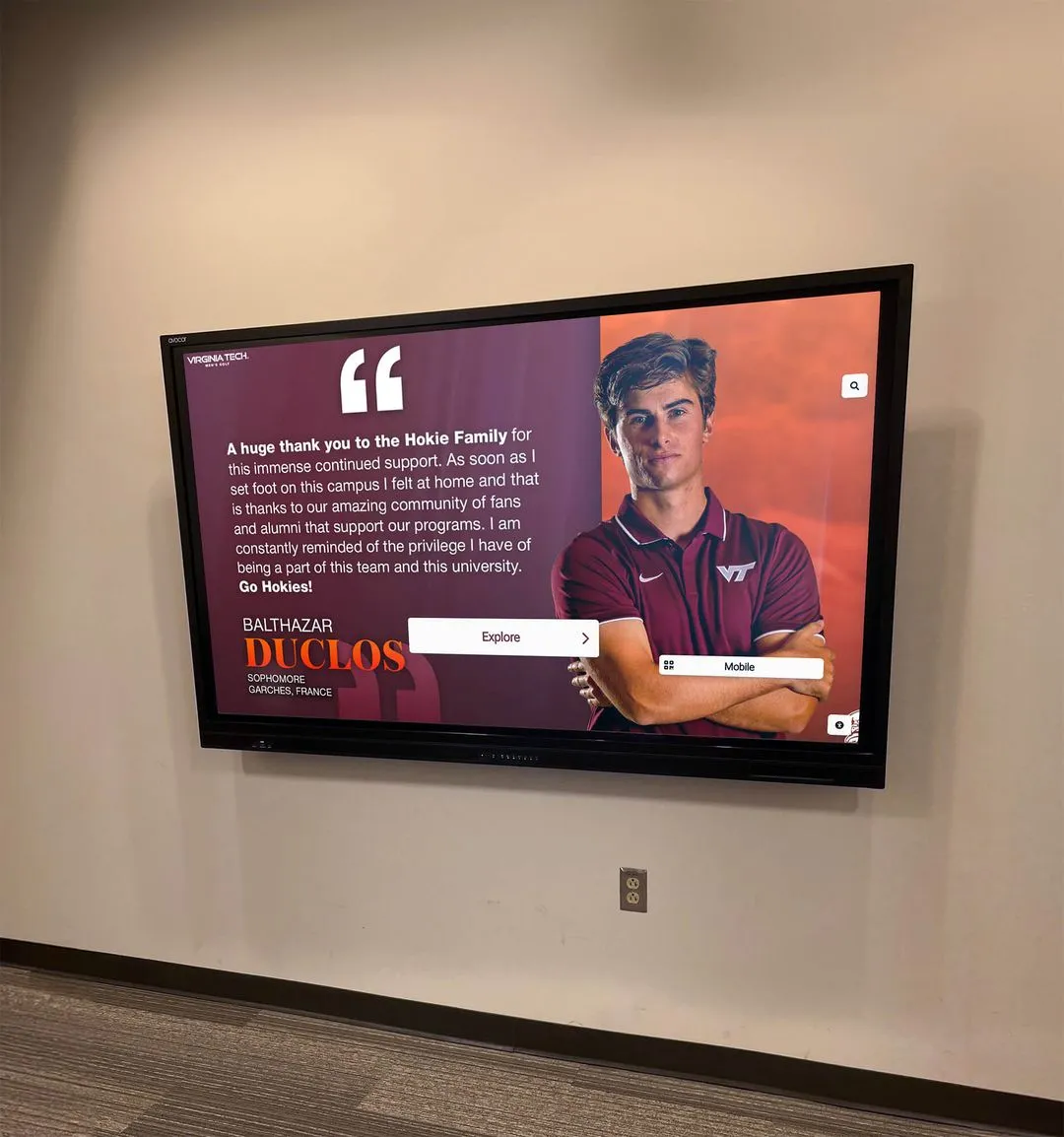
Single 55" display: Footprint approximately 49" W × 31" H (panel only; add 4–6" for mounting hardware and frame). Suitable for hallway alcoves, office corridors, and small dedicated spaces. Best for programs with modest current inductee counts or locations where a flagship interactive profile station supplements a larger physical installation nearby.
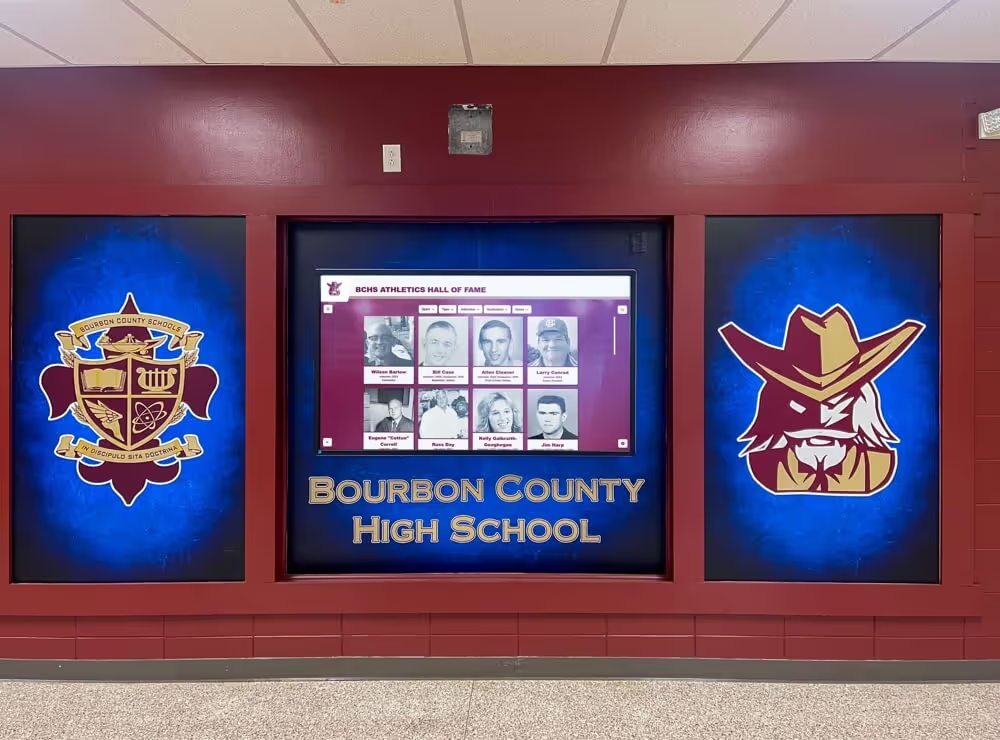
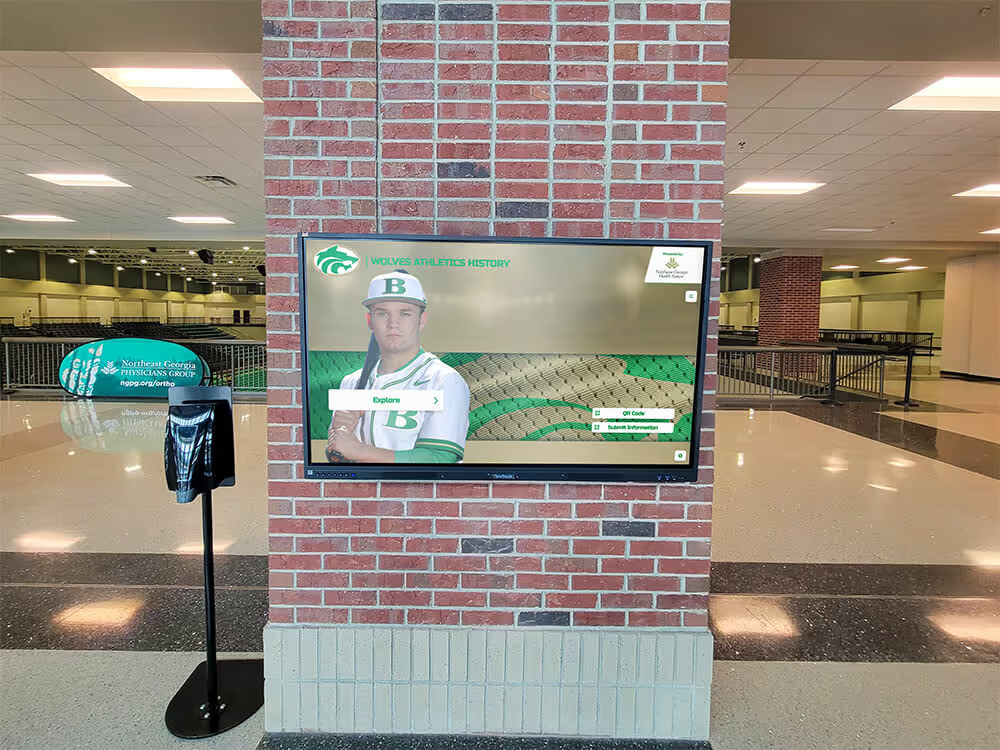
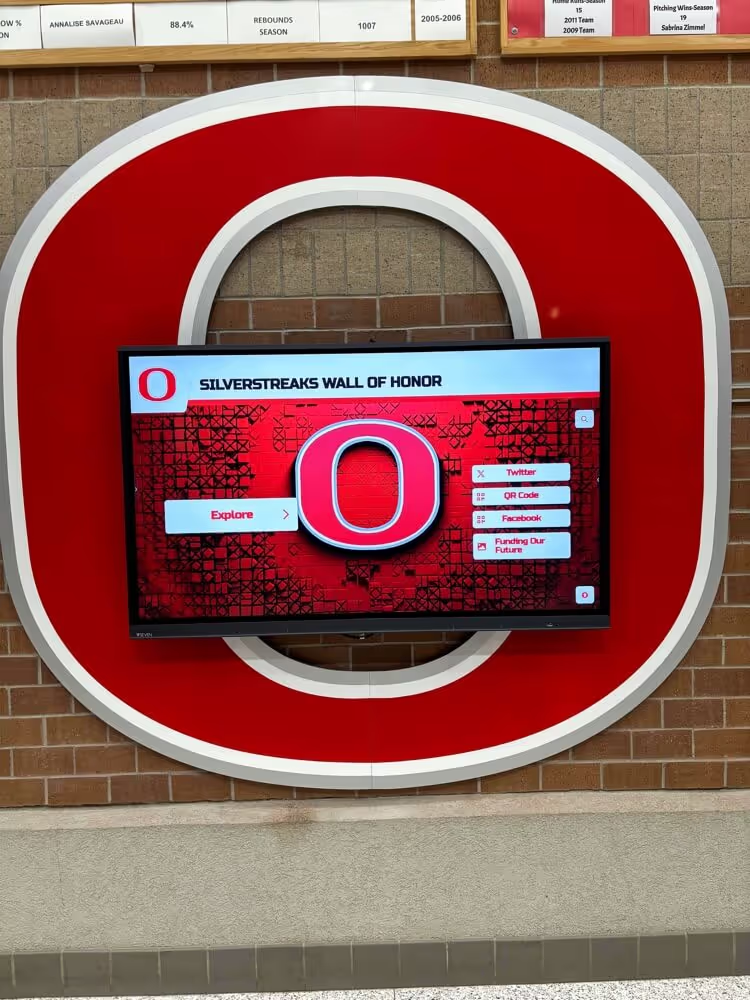
Single 65–75" display: Footprint approximately 57–66" W × 34–43" H. The most common format for gymnasium lobby feature displays at high schools. Provides enough screen real estate for rich athletic profile content, video highlights, and interactive navigation without requiring a multi-display infrastructure.
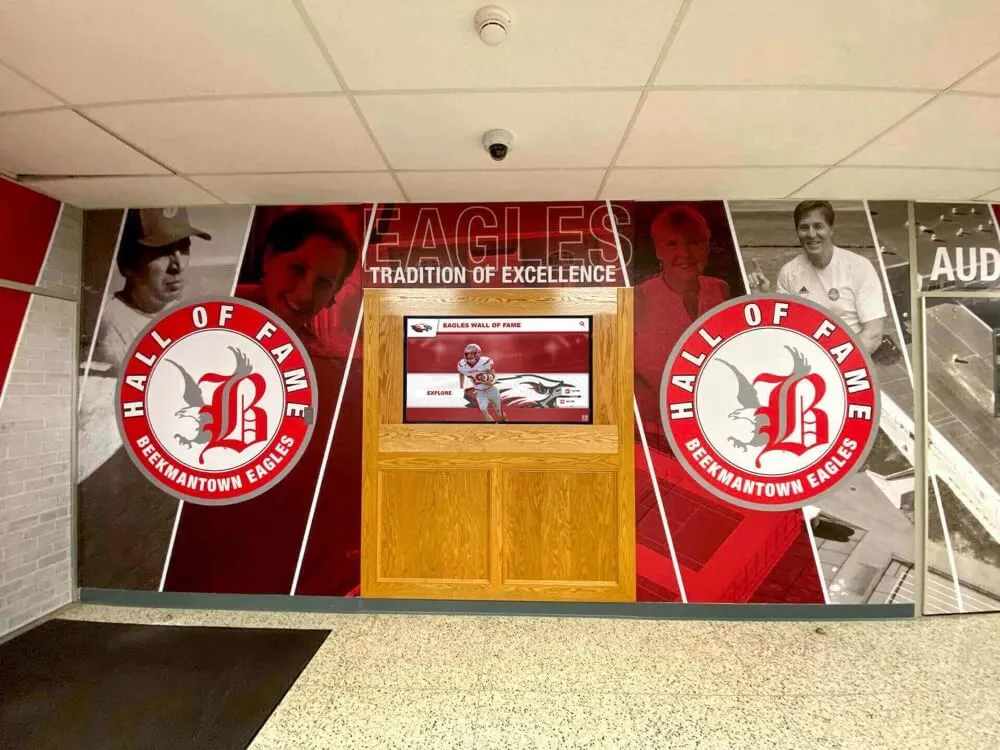
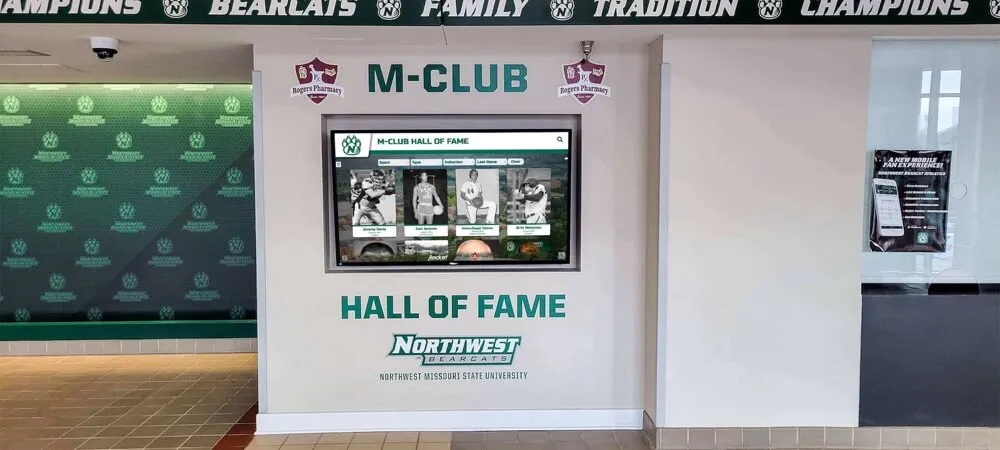
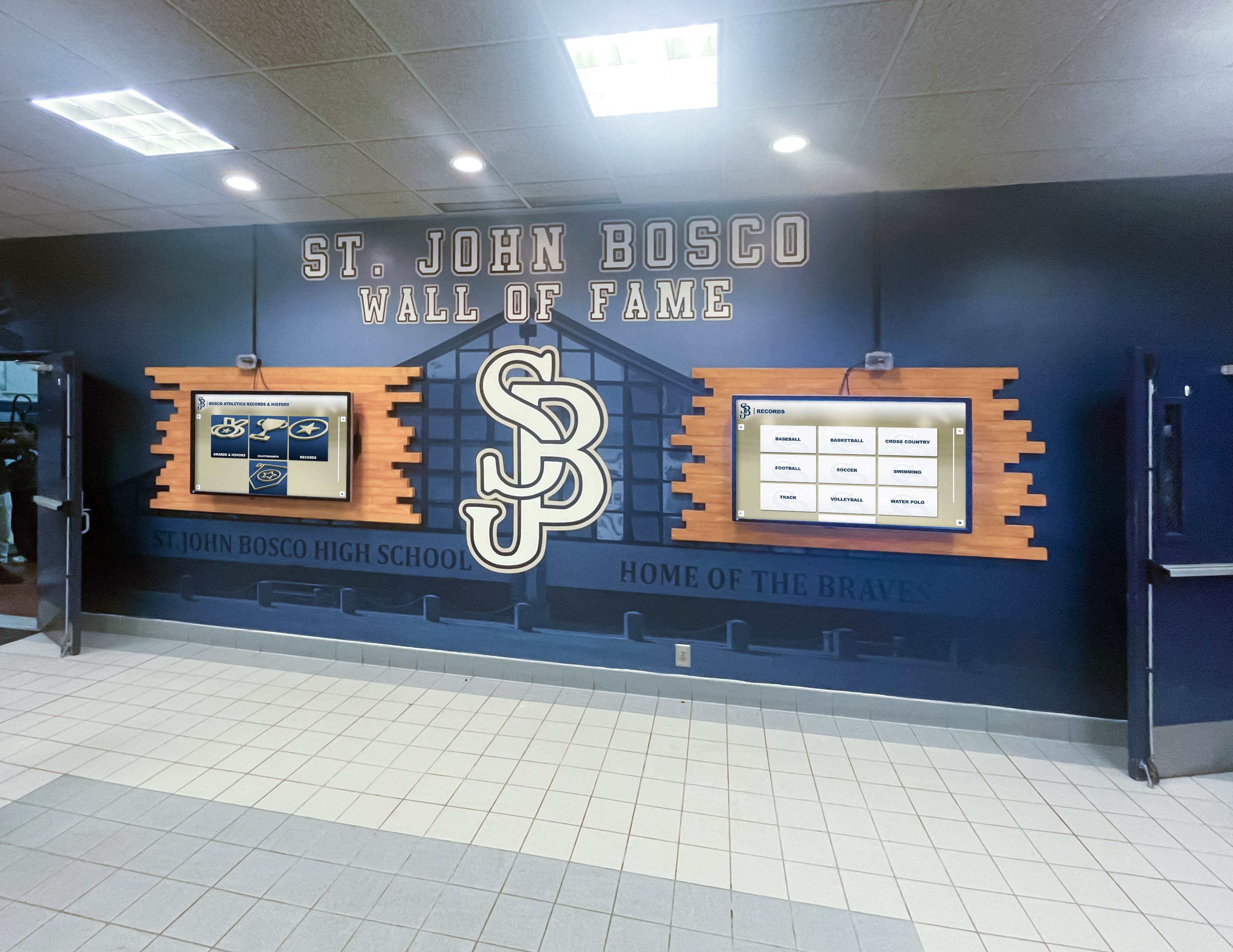
Dual-display side-by-side: Two 65" displays on a single wall section create a roughly 10-foot wide active display area. This configuration works well on 12-to-16-foot walls where the displays are flanked by physical recognition elements — championship banners, team photos, or mascot graphics. A detailed look at how dual-display formats serve both athletic recognition and donor or sponsor acknowledgment is available through this comparison of digital hall of fame and donor wall dual-purpose displays.
Video wall (2×2 or 3×1): Four or more displays configured in a grid or horizontal array. Requires a wall width of at least 14 feet for a 2×2 grid of 55" panels. These installations create dramatic visual presence in main lobby and arena concourse environments, but require professional AV integration and significantly higher infrastructure investment. Their visual impact is hard to match with smaller formats when the space supports them.
Touchscreen interactive kiosks: Freestanding or wall-recessed touchscreen kiosks (typically 43", 55", or 65" diagonal) operate independently of wall-mounted display arrays. They introduce a floor footprint consideration — a freestanding kiosk typically requires a 3-by-3-foot base clearance plus visitor engagement space of 3 to 4 feet in front. For hallway environments, this means confirming ADA clearance on both sides of the kiosk’s footprint.
Hybrid Physical-Digital Layouts
Many school athletic recognition installations combine physical and digital elements to balance the permanence and legibility of traditional formats with the growth capacity and content richness of digital displays. Hybrid layouts use wall dimensions differently than single-format installations.
A common hybrid pattern for a 16-to-24-foot wall:
- Left bay (4–6 ft): Championship banner column, mural element, or mascot graphic
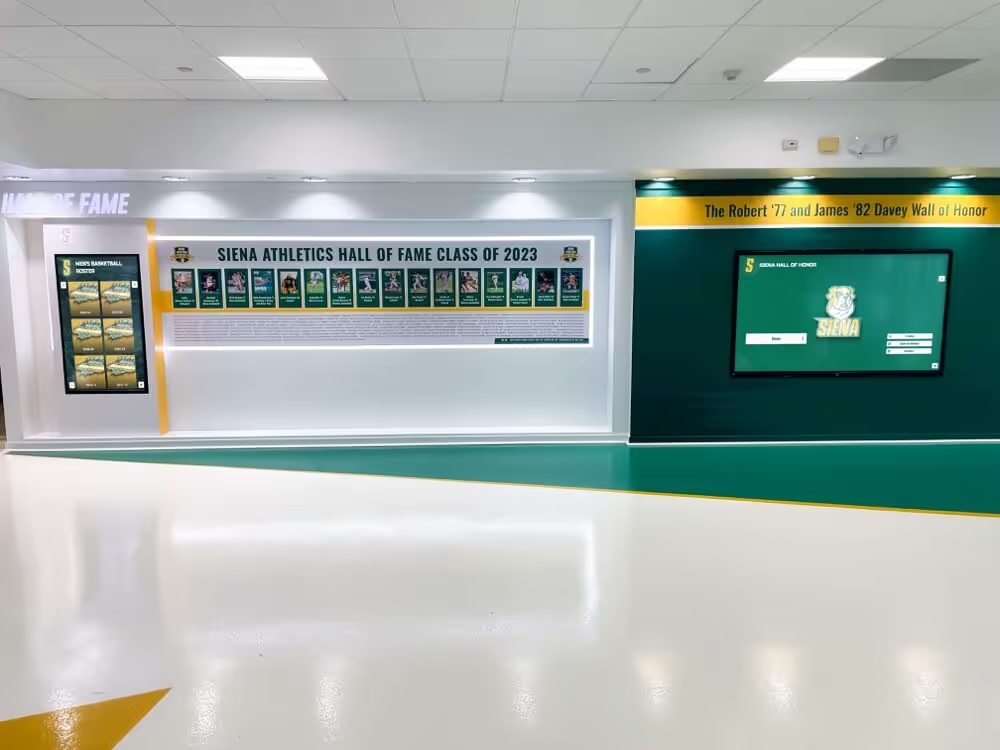
- Center zone (6–10 ft): One or two digital displays showing rotating inductee profiles, team records, and highlights
- Right bay (4–6 ft): Physical plaques for legacy inductees or founding honorees, or a second banner column
This layout dedicates the highest visual-attention zone (center) to dynamic digital content while using flanking wall space for traditional physical elements that honor the history of the program. The physical elements provide permanence that families and inductees value; the digital zone provides the growth capacity and media richness that static formats cannot.
For schools adding donor or sponsor recognition alongside athletic inductees — a common arrangement in schools with booster programs or naming-rights arrangements — the hybrid layout can also reserve a dedicated section for donor recognition without the two programs competing visually. A closer look at how these dual-recognition systems work in practice is available at this resource on digital hall of fame and donor wall dual recognition systems.
When Wall Space Constraints Push Toward Digital
Some school locations simply do not offer wall dimensions that support the recognition program the institution wants to run. A school with 40 years of athletic history and a 10-foot hallway corridor cannot display that history on plaques without a cramped, difficult-to-navigate installation. In these cases, digital formats resolve the dimensional constraint rather than workarounds within it.
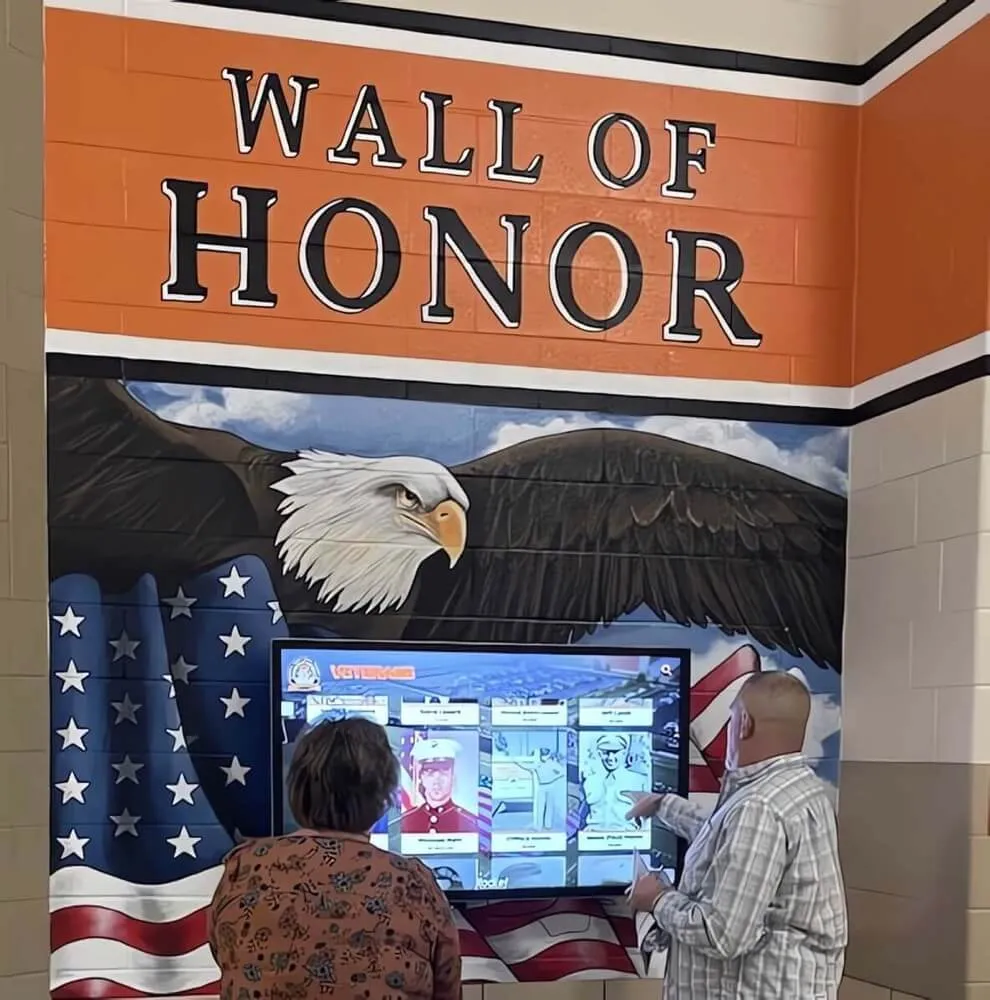
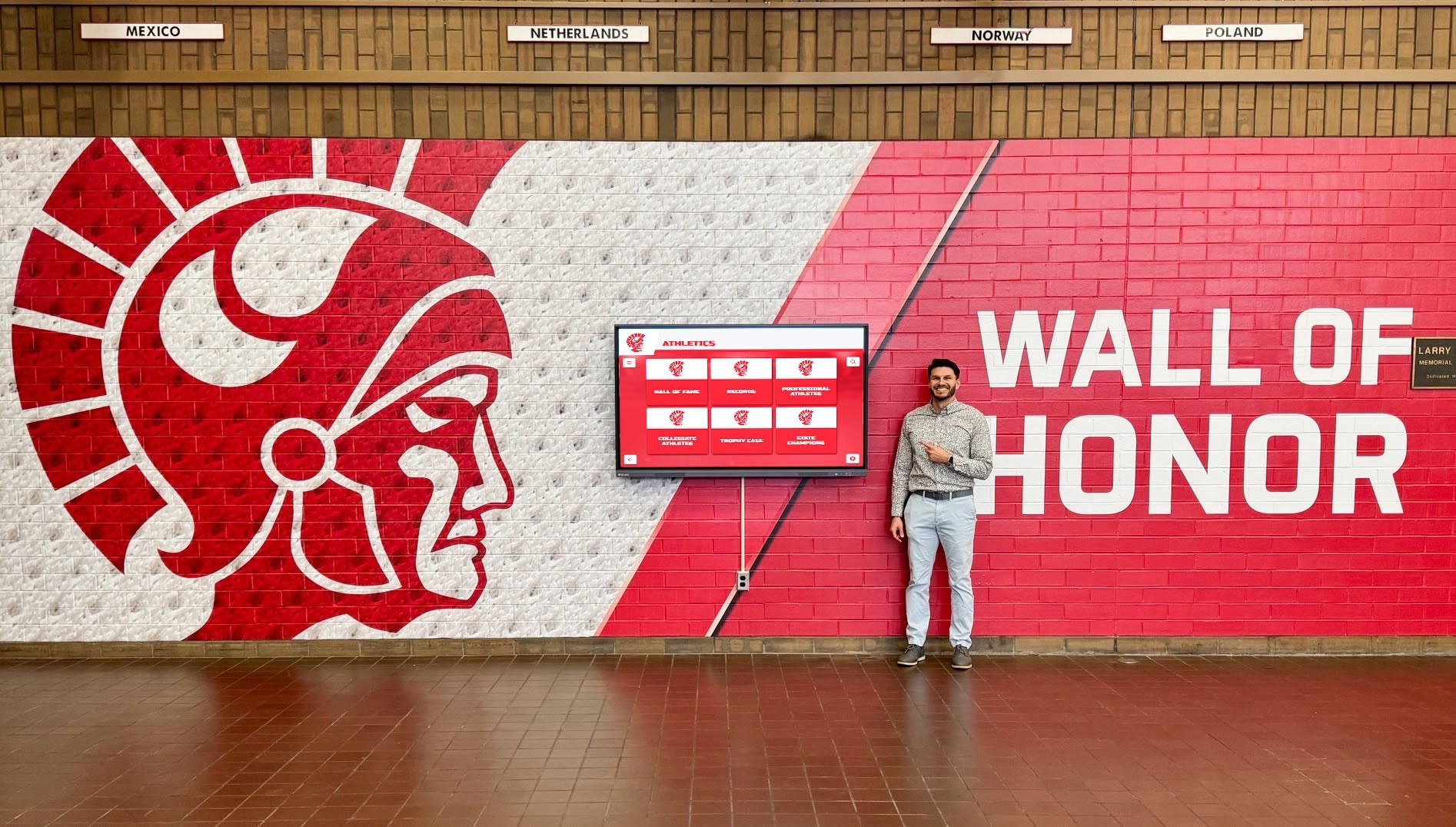
A single 65-inch interactive touchscreen display can present the full recognition history of a multi-sport program spanning decades — every inductee, every championship team, every school record — in a footprint that fits any wall with 60 inches of clear width and standard ceiling height. Viewers navigate by sport, year, or inductee name rather than scanning rows of plaques. The display grows indefinitely as new inductees are added, without ever requiring additional wall space.
This changes the planning calculus for constrained locations. Rather than asking “how many plaques can we fit in this hallway,” the question becomes “what size screen fits here, and does it provide the visibility and dwell-time experience the program deserves?” For the vast majority of school hallway environments, the answer is a 55" or 65" display that fits comfortably, meets ADA requirements, and delivers a far richer recognition experience than any fixed-capacity physical format.
Schools researching interactive display options can explore how touchscreen formats handle inductee profiles, video content, and year-round content updates through this overview of touchscreen digital hall of fame wall and interactive awards displays.
Coordinating Dimensions with Other Facility Stakeholders
Athletic recognition displays are facilities projects as much as they are recognition program decisions. Before finalizing any design that requires structural mounting, electrical work, or significant wall surface commitment, coordinate with the facility stakeholders who will need to approve or support the project.
Typical approvals and coordination required:
- Facilities director or plant operations: structural anchoring, electrical access, ADA compliance review
- Fire marshal or safety officer: clearance from pull stations, exit signage, and egress routes
- IT department: network connectivity for internet-connected digital displays; whether school WiFi reaches the intended location or a dedicated network drop is needed
- Principal or school board: any recognition system visible to the public and bearing the school’s name typically requires administrative and board approval before procurement
Starting stakeholder conversations with accurate dimensional data — wall width, ceiling height, floor clearance, electrical access — moves those conversations from abstract to concrete more quickly. Facilities staff can identify constraints that aren’t visible in a photograph: conduit runs inside the wall, structural columns behind drywall, or roof drain lines that limit anchor points.
For schools where the recognition program serves donor acknowledgment as well as athletic induction — and where the facilities and advancement offices both have a stake in the outcome — a useful reference for how those programs can share infrastructure is available through this discussion of digital hall of fame displays, donor wall, and sponsor recognition.
Planning for the Long Term
The most reliable indicator of a well-planned athletic recognition wall is that it still serves the program effectively 15 years after installation. Walls that run out of space, require disruptive renovations within a decade, or cannot accommodate format changes as technology evolves signal a planning process that optimized for the present rather than the future.
Questions to answer before committing to a format:
- How many inductees does the program expect to add over the next 20 years? Does the chosen format accommodate that number without requiring structural changes?
- If the school renovates the athletic wing in the next decade, can the recognition elements be relocated or adapted without complete replacement?
- Does the format support sponsors, donors, or booster recognition if the program expands to include those categories?
- If staff who currently manage the display leave, can successors update content without vendor involvement?
Digital formats generally score better on all four questions than physical-only installations: they grow indefinitely, migrate to new wall locations with minimal rework, accommodate additional recognition categories in the same footprint, and allow staff content updates through web-based management systems. For schools weighing these long-term considerations against initial investment, this resource on digital hall of fame, donor wall, and sponsor recognition covers how schools structure programs that serve multiple recognition purposes from a single installation.

Bringing the Dimensions Together
Hall of fame wall dimensions set the parameters, but parameters only constrain — they don’t decide. A school with a 10-foot hallway wall has real options: a well-designed single-screen digital display can deliver a richer recognition experience in that footprint than a cramped plaque installation. A school with a 30-foot gymnasium lobby has the luxury of combining formats — physical history alongside a dynamic digital zone — in a way that honors tradition and embraces growth simultaneously.
The process of measuring the wall, mapping the constraints, and then matching a format to what the space actually supports is straightforward work, but it has to happen before the design conversation, not after a vendor proposal has already set expectations.
Schools that do this planning well — measure first, evaluate formats second, involve facilities stakeholders early, and build with the next two decades of inductees in mind — end up with recognition programs their communities use, value, and take pride in. That outcome is available at almost any wall size if the planning starts from the right foundation.
For schools ready to explore what an interactive digital hall of fame display would look like in their specific space, this overview of touchscreen digital hall of fame wall and interactive awards covers the format options in detail. And for programs thinking through how athletic and donor recognition can share the same digital infrastructure, this look at digital hall of fame and donor wall dual-purpose displays outlines how schools structure that combination effectively.
Ready to See What Fits Your Space?
Rocket Alumni Solutions works with schools and athletic programs across the country to design interactive digital hall of fame displays that fit real wall dimensions — from compact hallway installations to full gymnasium lobby systems. Bring your measurements and they'll build a layout around your space.
Schedule a Free Demo