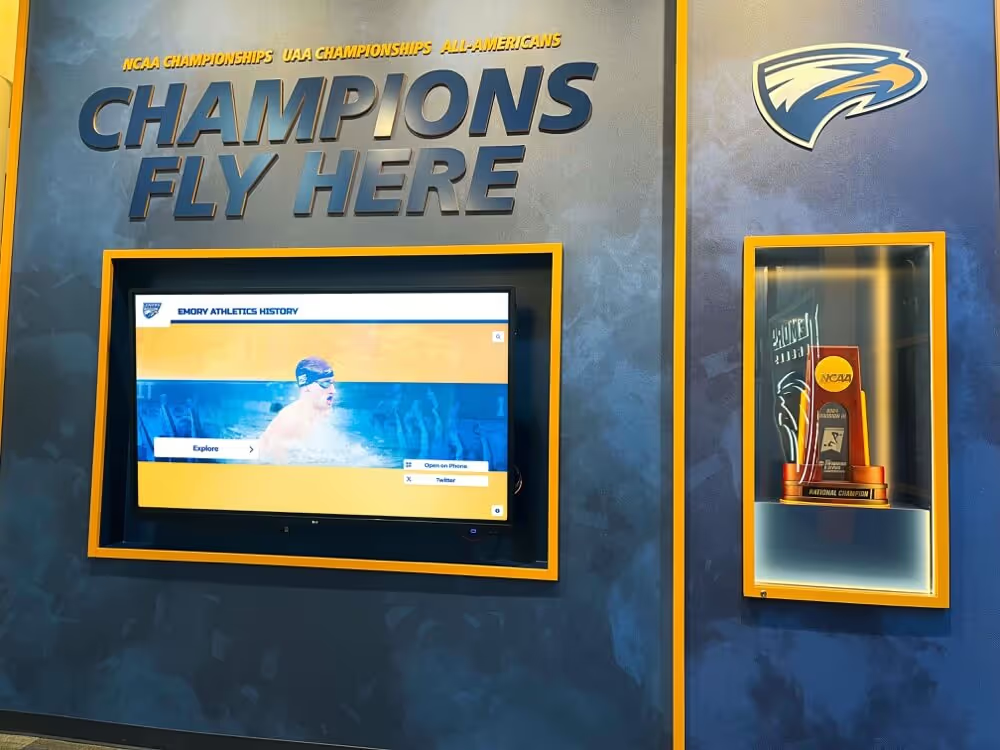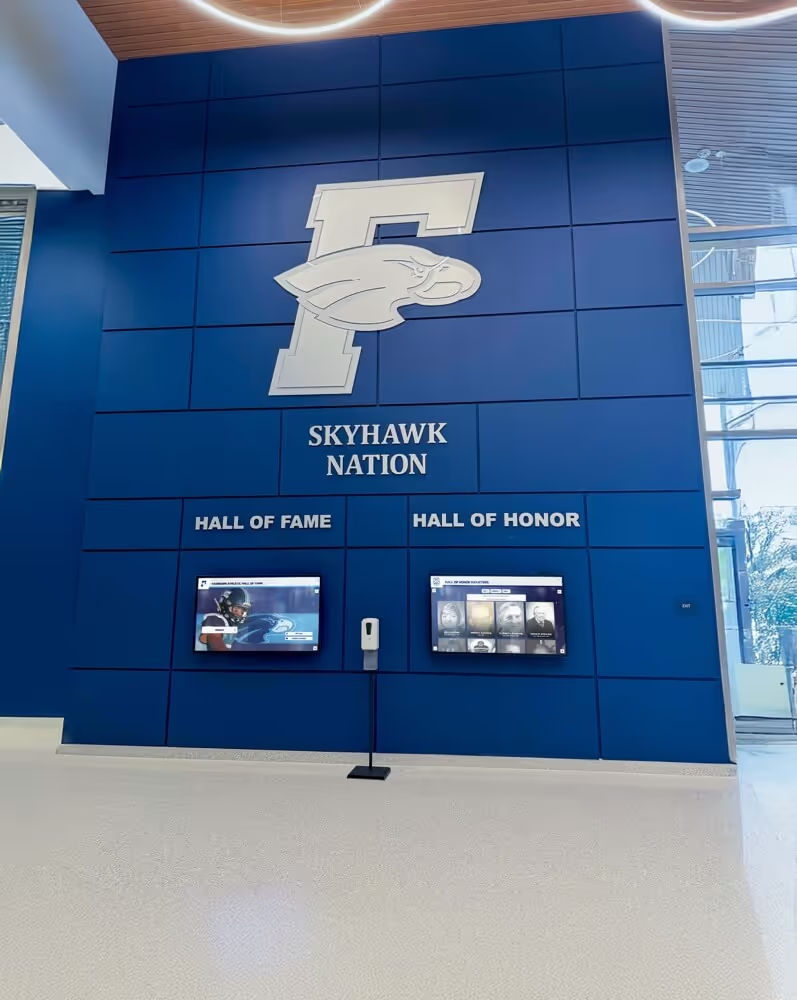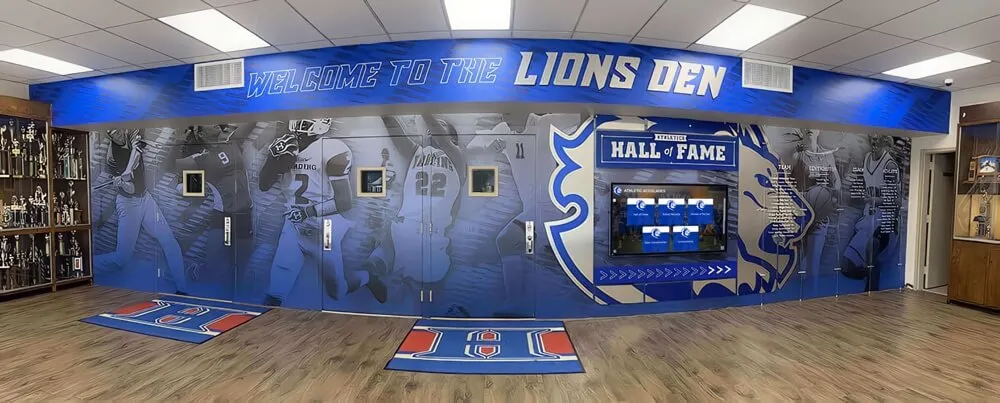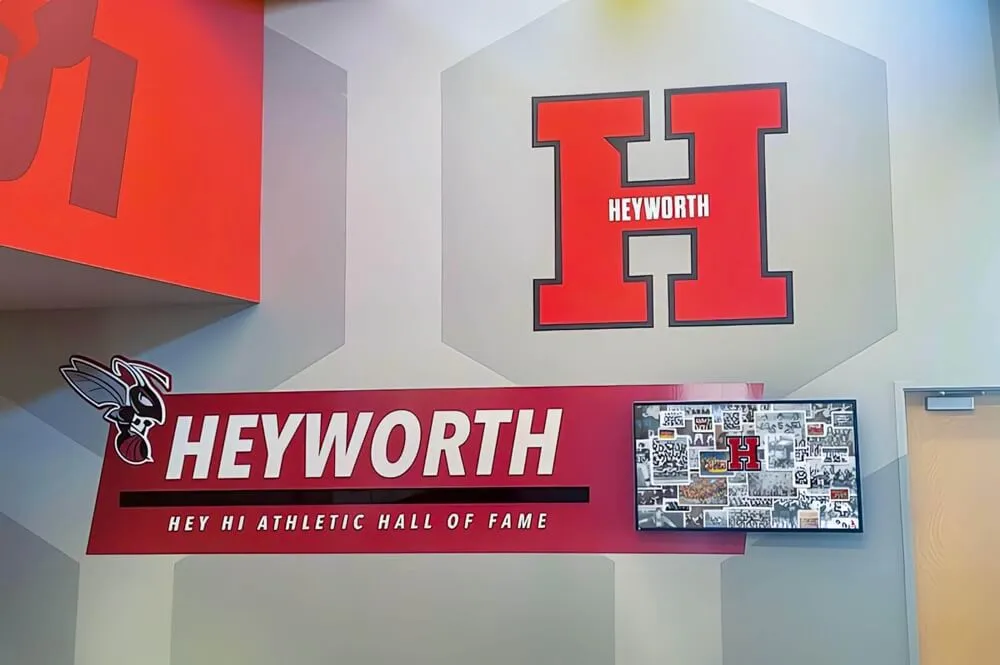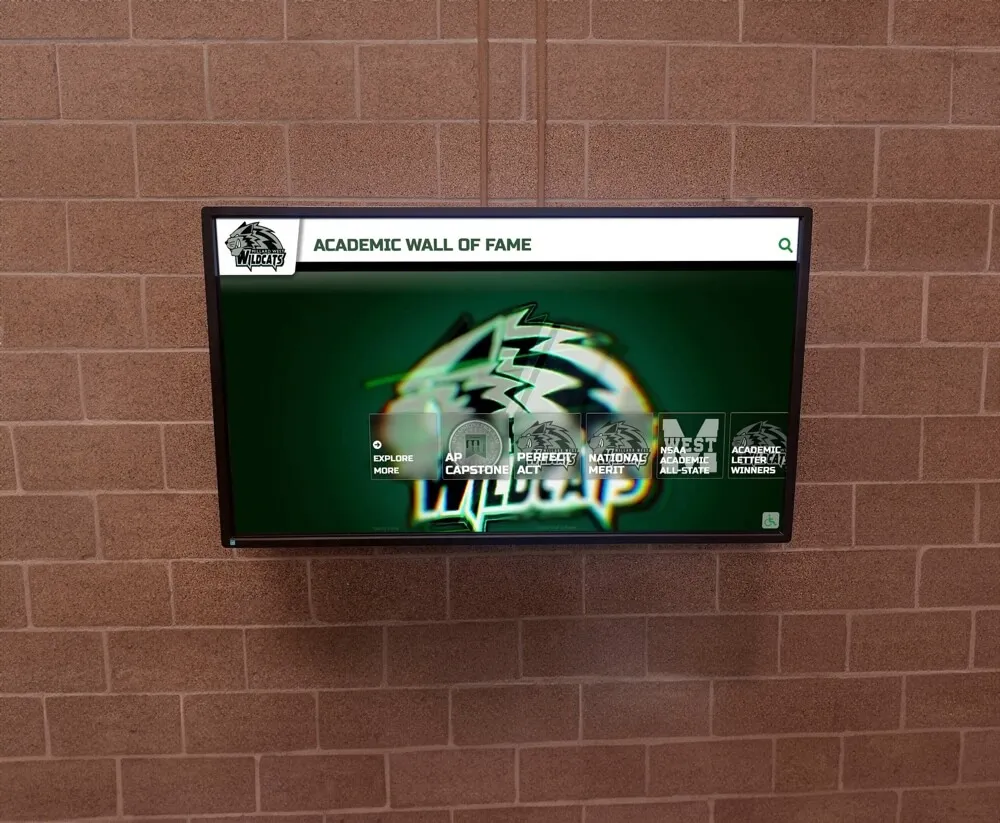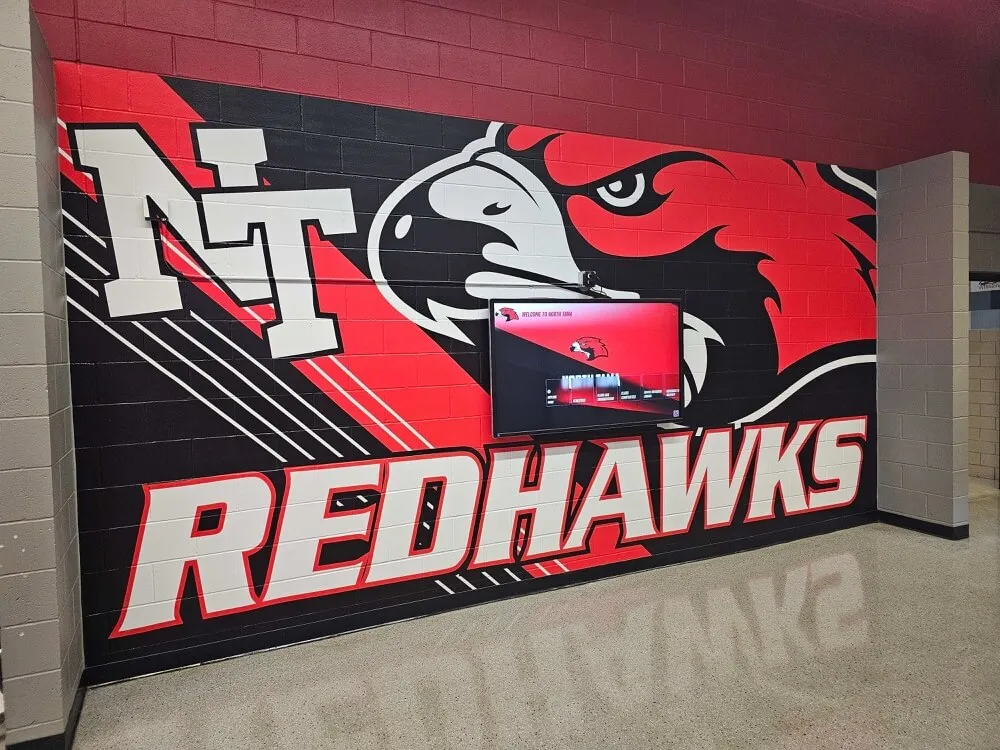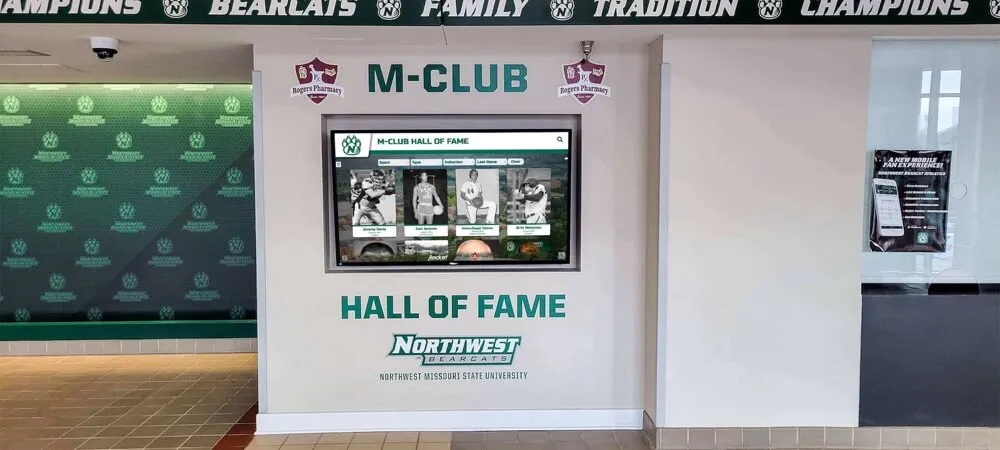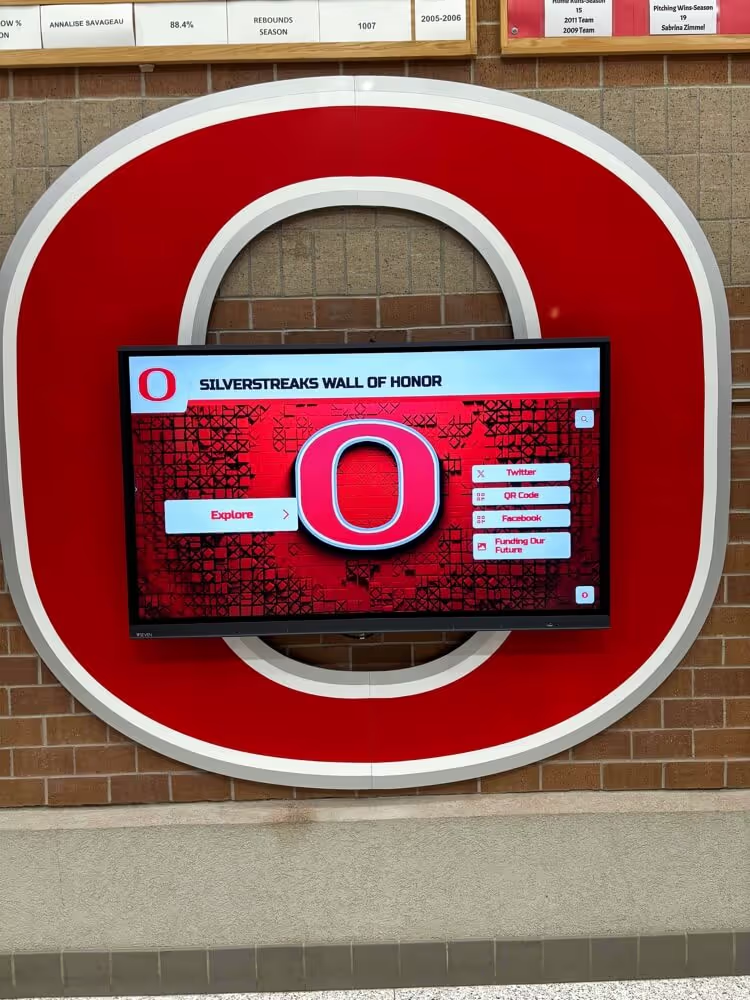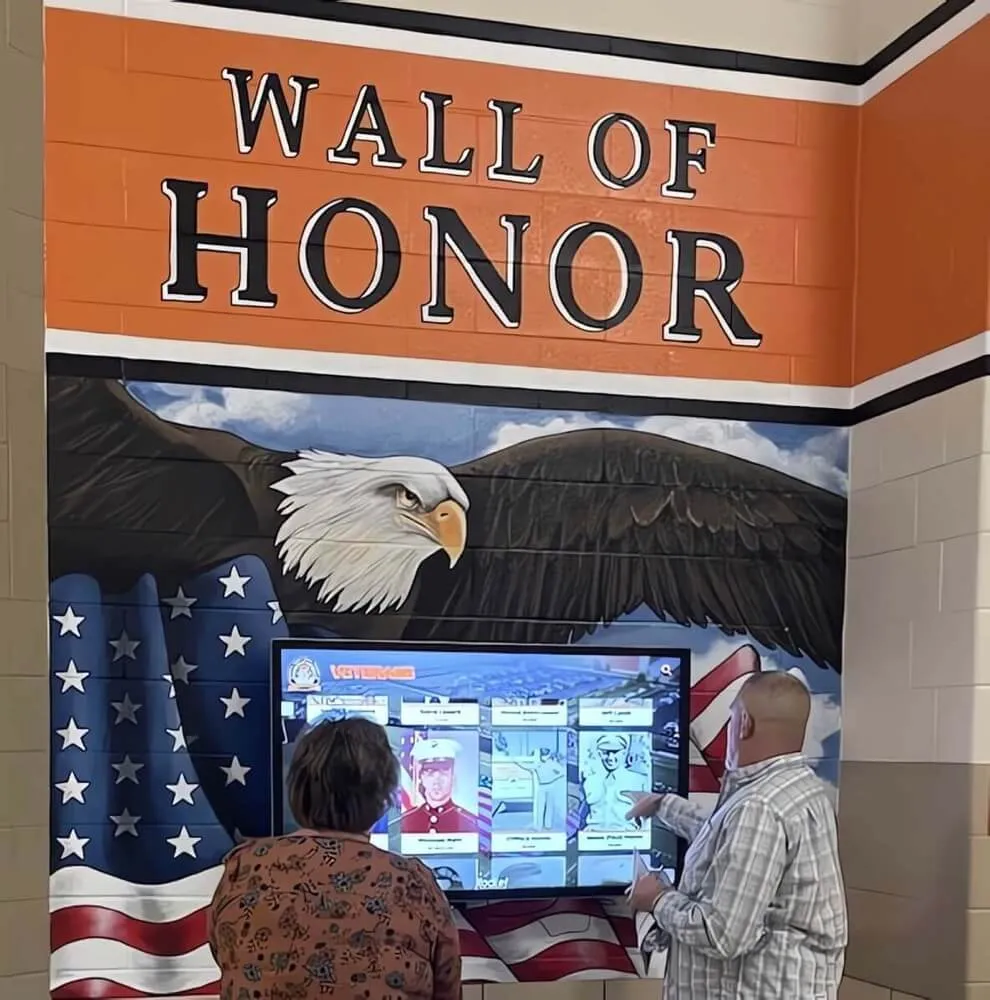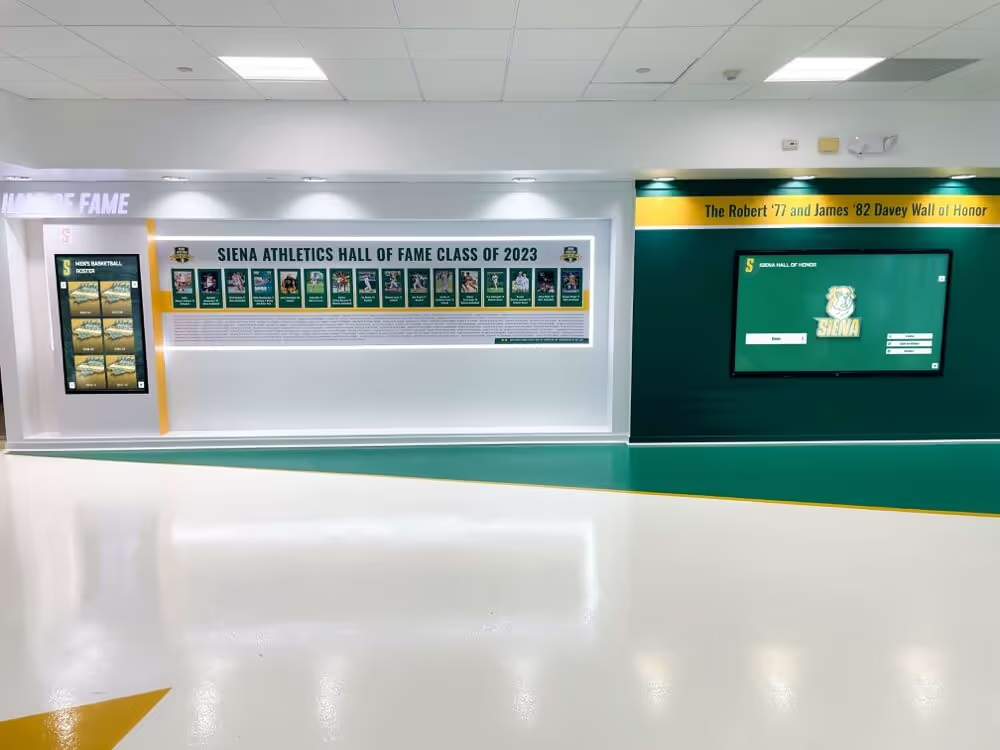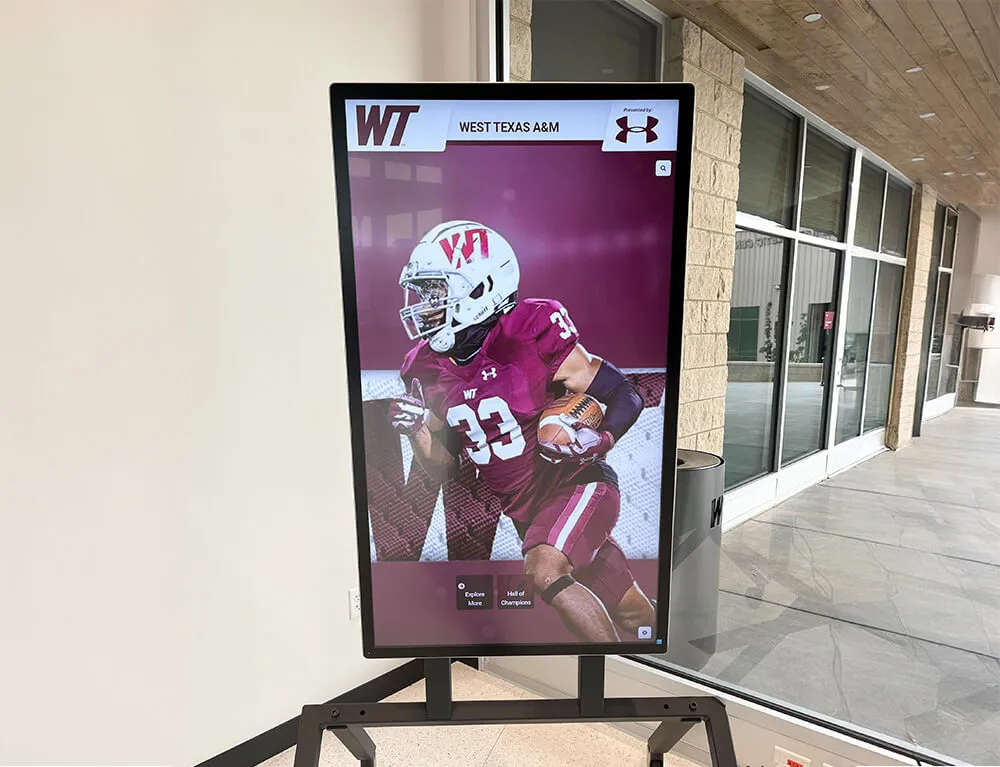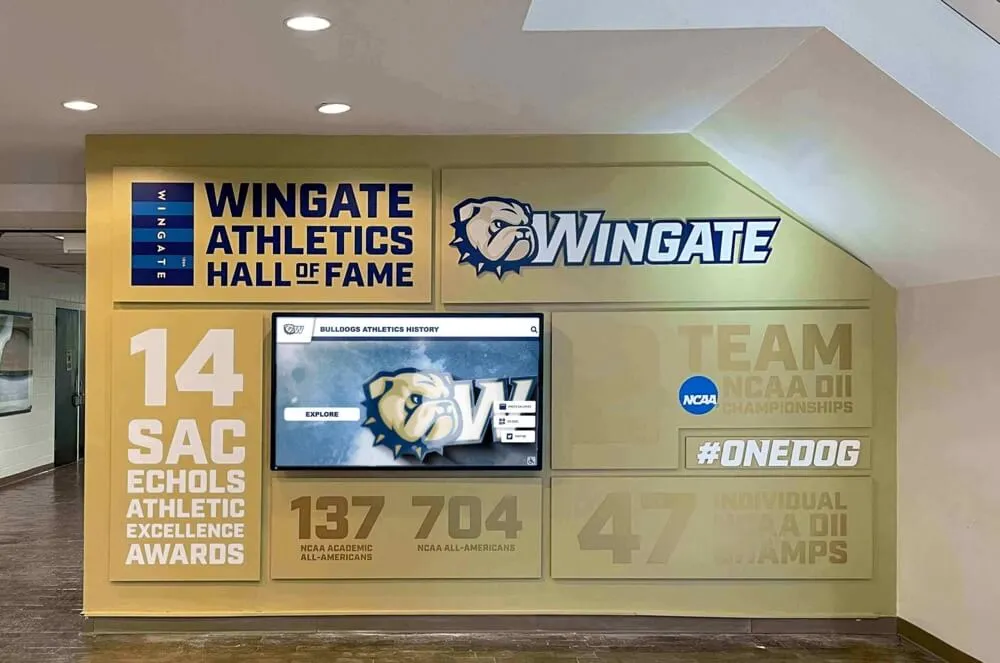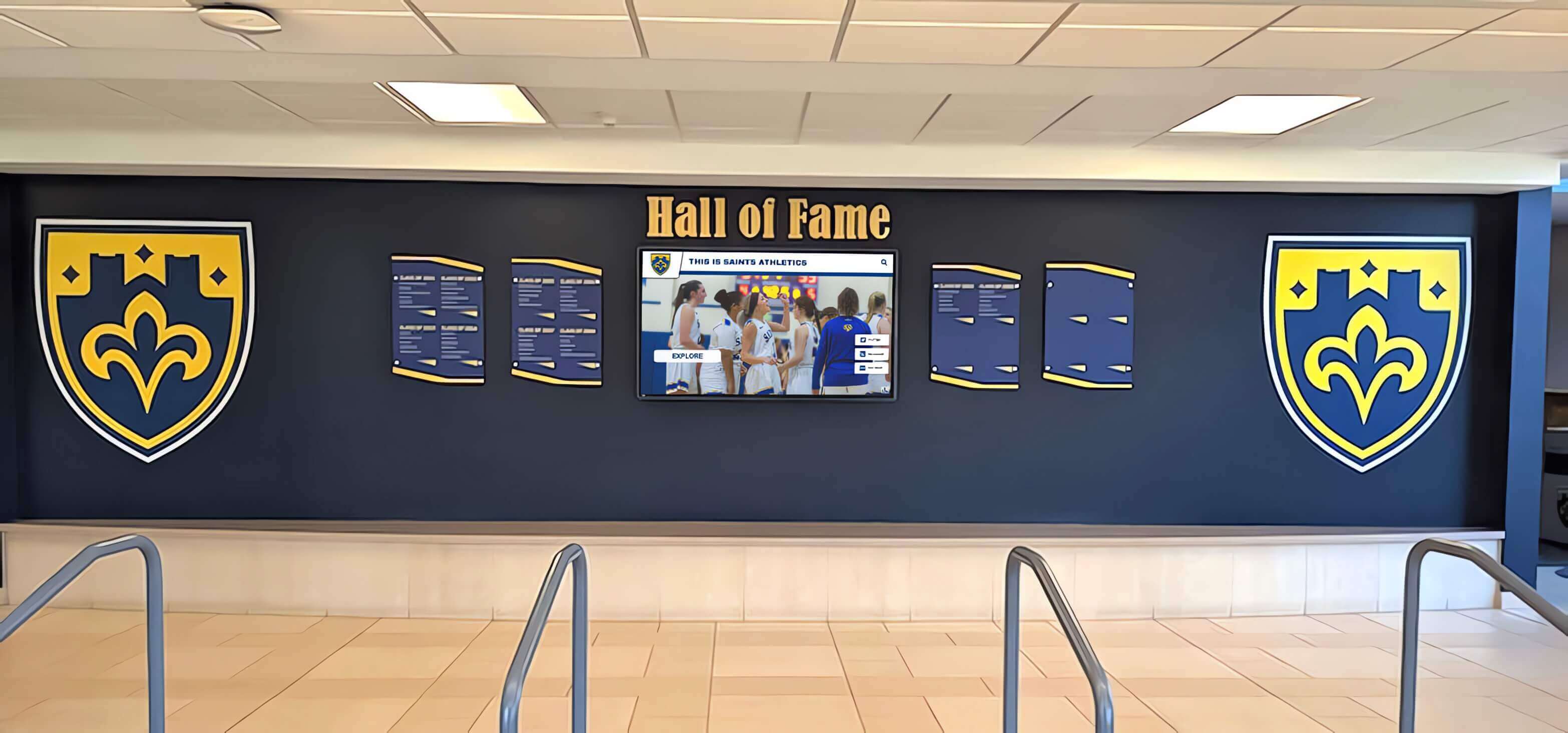
Walk into any school athletic wing built before 2010 and you’ll find the same scene: rows of engraved shields crowding corridor walls, a glass trophy case overflowing onto a folding table beside it, and somewhere near the gym entrance, a laminated sign listing last year’s inductees because there’s no room to engrave another plaque before the next induction ceremony.
The physical infrastructure of school recognition programs hasn’t changed much in fifty years — but the number of students, athletes, coaches, and donors those programs need to honor keeps growing. That mismatch is forcing athletic directors, advancement offices, and facilities teams into a decision that has no obvious default answer: which hall of fame plaques and signs should stay permanently on the wall, and which recognition elements belong in a digital system instead?
Quick Comparison: Static Plaques, Signs, and Digital Displays
The table below captures the core differences at a glance before diving into the reasoning behind each category.
| Recognition Element | Static Plaque / Sign | Digital Display |
|---|---|---|
| School name / mascot / founding year | Ideal — set once, never changes | Unnecessary — static content wastes dynamic capacity |
| Championship banners and milestone dates | Strong fit — tangible and permanent | Works as supplementary archive |
| Individual inductee profiles | Expensive, space-limited | Ideal — unlimited capacity, searchable |
| Annual record boards | Must be re-engraved yearly, costs add up | Ideal — instant updates, no fabrication cost |
| Donor recognition walls | Appropriate for named gifts at or above threshold | Strong for broader giving tiers and running totals |
| Hall of fame induction classes | Fills quickly; 10 inductees/year = 100 plaques per decade | Ideal — scales indefinitely without new wall space |
| Wayfinding and building signage | Ideal — clear, permanent, ADA-compliant | Overkill for directional needs |
| Multimedia (photos, video, stats) | Not supported | Ideal — photos, career statistics, video highlights |
| Emergency and schedule information | Outdates immediately | Strong for rotating real-time content |
| Legacy murals and branding elements | Ideal — high-impact, no maintenance | Not applicable |

Why the Static vs. Digital Question Matters More Now Than It Did a Decade Ago
School recognition programs have expanded significantly since the early 2000s. Where a program once inducted five to eight athletes per year, many now honor academic achievers, fine arts contributors, community service leaders, and veteran faculty alongside athletes. Induction classes of twelve to twenty honorees are no longer unusual.
At five to ten plaques per inductee (depending on whether families receive copies), an induction class of fifteen generates 75 to 150 physical plaques annually. After a decade, that’s 750 to 1,500 plaques competing for the same corridors that housed the first fifty years of a school’s history.
The result is predictable: older plaques migrate to storage, hallways become cluttered, and the recognition system meant to inspire students instead becomes a facilities management problem. Schools that haven’t planned the static vs. digital split in advance often discover the problem only when wall space disappears entirely.
What Belongs on a Permanent Plaque or Sign
Institutional Identity Markers
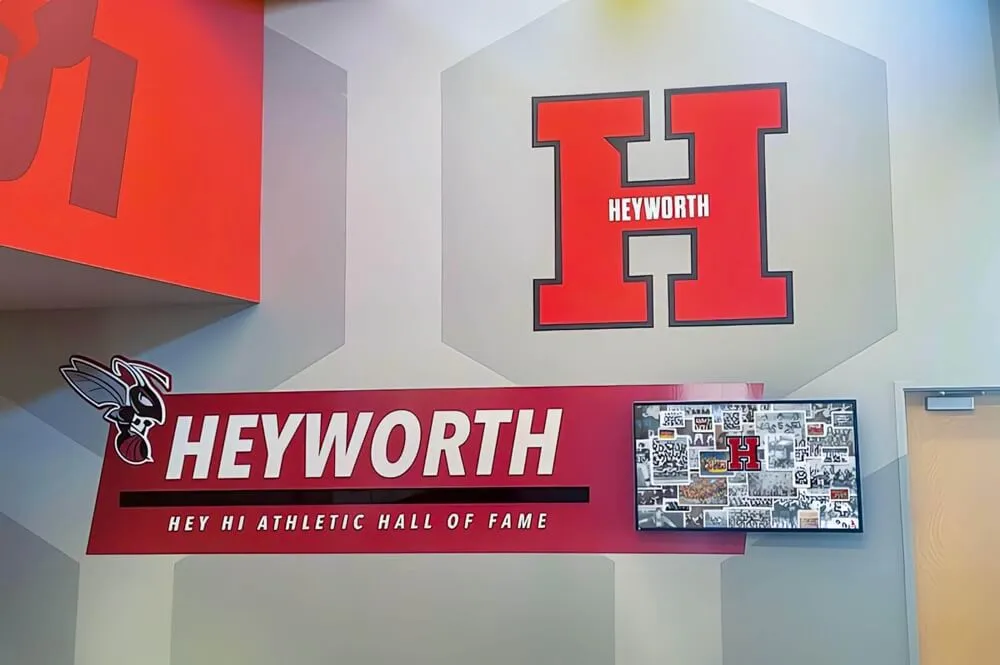
Some information is genuinely permanent and deserves permanent materials. Founding year dedications, building dedication plaques naming major donors who funded construction, school motto engravings, and dimensional mascot installations communicate who the institution is rather than what it has accomplished in a given year. These elements don’t need updates, never become outdated, and benefit from the weight and authority physical materials carry.
A stainless steel or bronze plaque marking the year a gymnasium was built and the community members who funded it serves its purpose for a century without any intervention. Digital displays would be absurd here — nobody needs a touchscreen to look up a building’s dedication.
Championship Banners and Historic Milestone Signs
Banners hung from gymnasium rafters and corridor signs marking first state championships, conference titles, or centennial anniversaries belong in physical form. Part of what makes these displays meaningful is their physical scale and permanence. A state championship banner commanding fifteen feet of gym ceiling communicates magnitude in a way that no screen can replicate.
The distinction to maintain: championship banners are display pieces, not informational databases. The banner tells you the year and the achievement. Deeper context — who scored the winning points, which coach built the program, how the season unfolded — belongs in a digital inductee profile where it can be told in full.
Named Gift Donor Plaques Above a Threshold
Donors who fund named facilities or make gifts above a defined threshold (often $25,000 and up, though every institution sets its own) typically expect physical recognition. Engraved donor plaques on named rooms, courts, and fields fulfill this expectation and carry the weight the gift deserves. The physical plaque acknowledges the donor every day without any action required from staff.
Smaller giving tiers, annual fund contributors, and booster club members work well in digital recognition walls that can acknowledge hundreds of names without consuming corridor real estate. A digital donor recognition display can include giving levels, campaign totals, and year-by-year donor lists that would require dozens of physical plaques to replicate.
Wayfinding and ADA Signage
Room identification signs, emergency exit markers, ADA-compliant facility signage, and directional wayfinding are regulatory requirements in many cases and practical necessities in all cases. These belong in permanent, tamper-resistant materials. Putting wayfinding on digital displays creates maintenance dependencies — a software update, power outage, or display failure leaves visitors unable to navigate the building.
What Belongs in a Digital Display
Inductee Profiles in the Hall of Fame
This is where the static-vs-digital calculation most clearly favors digital. A physical plaque typically holds a name, graduation year, sport, and three to five lines of achievement text. That’s the most a 12-inch-by-9-inch engraved plate can accommodate without becoming illegible.
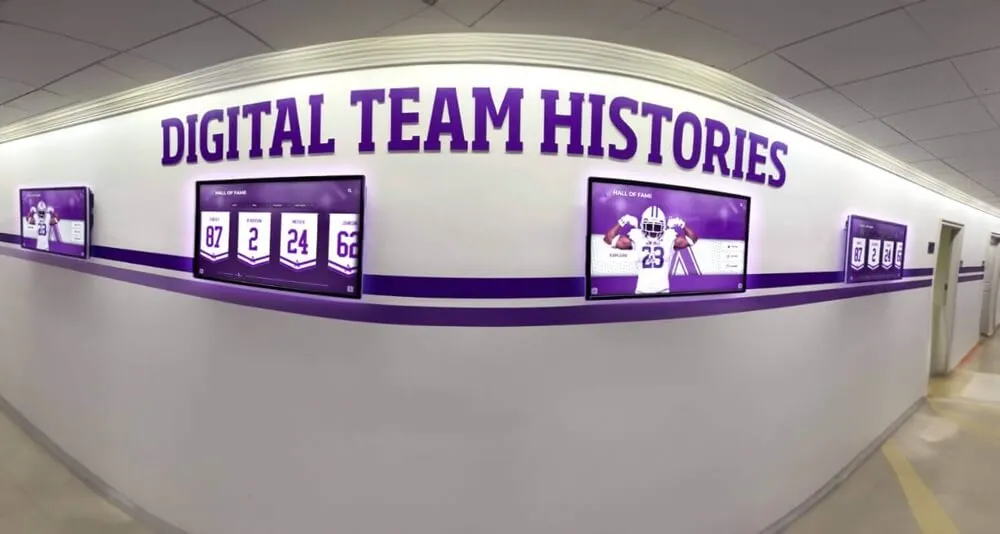
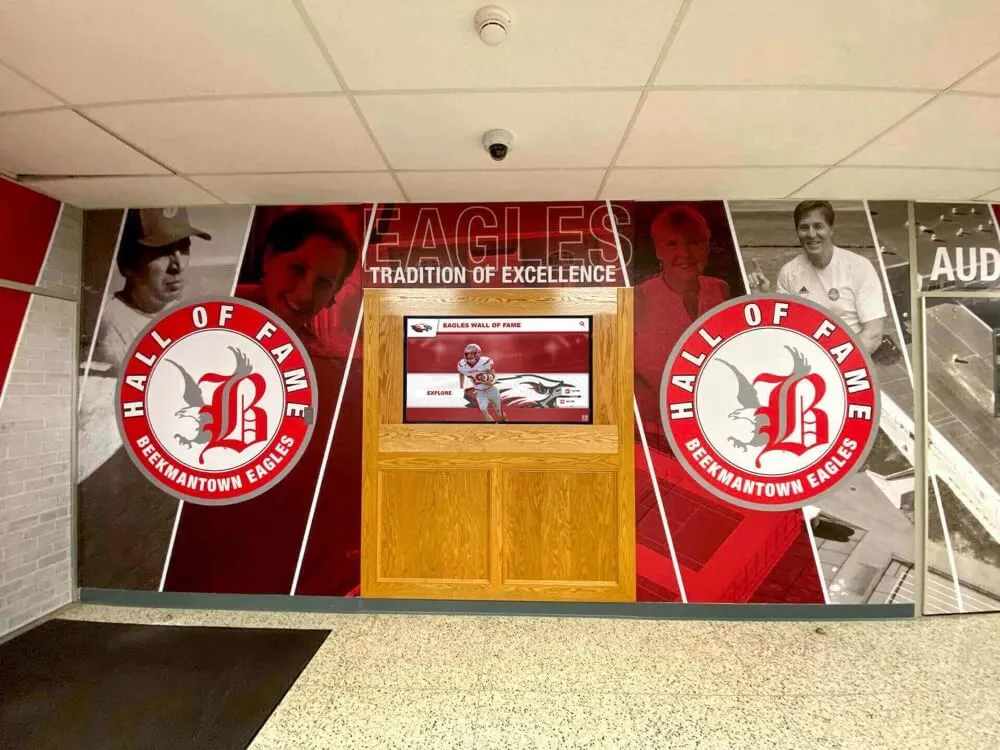
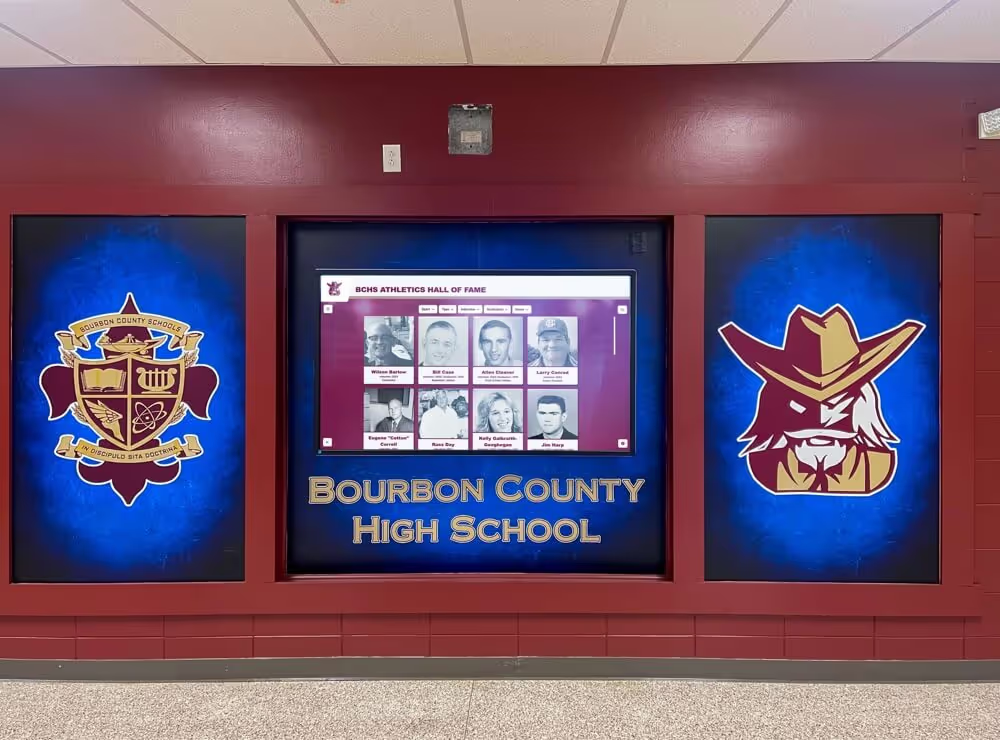
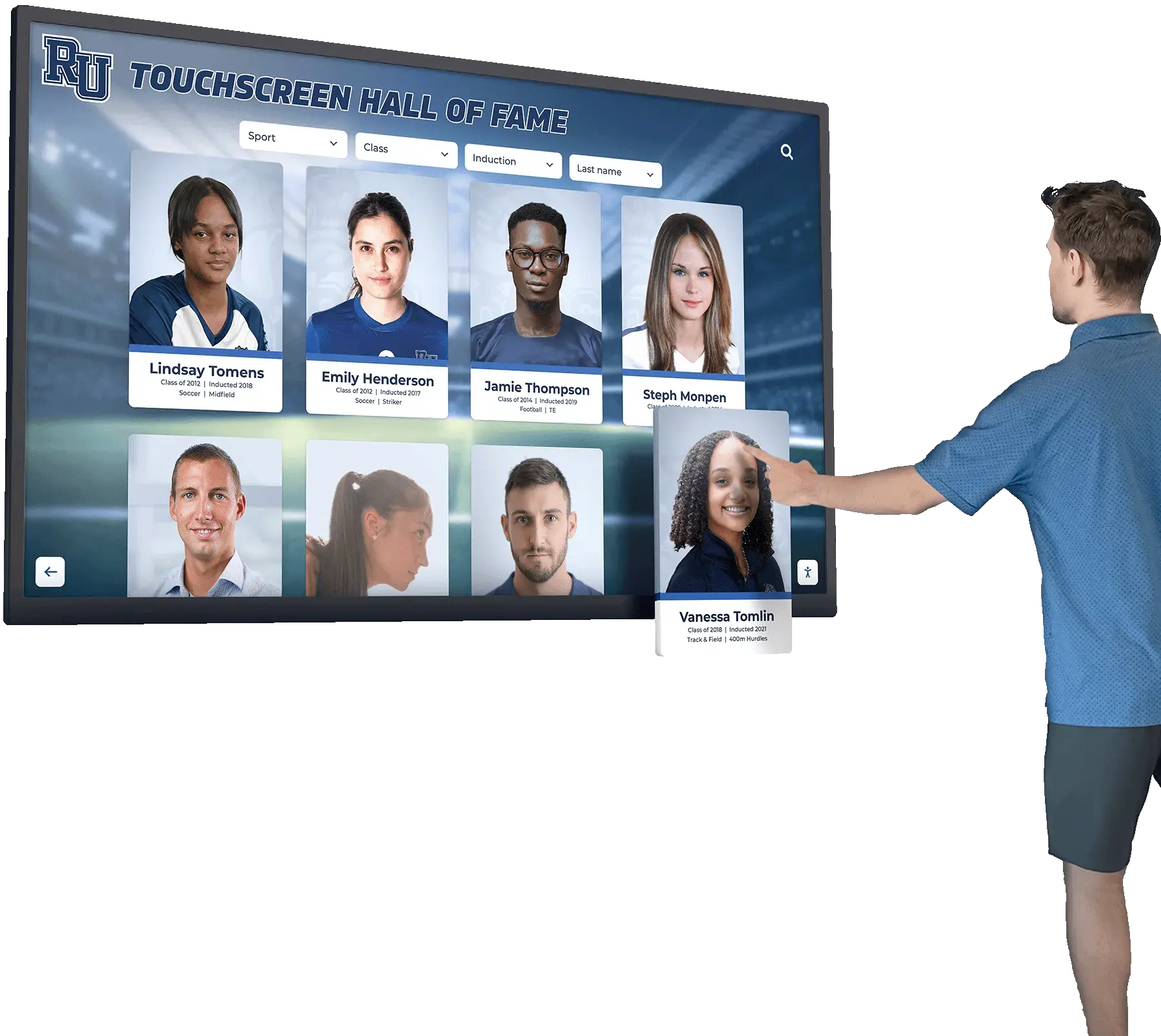
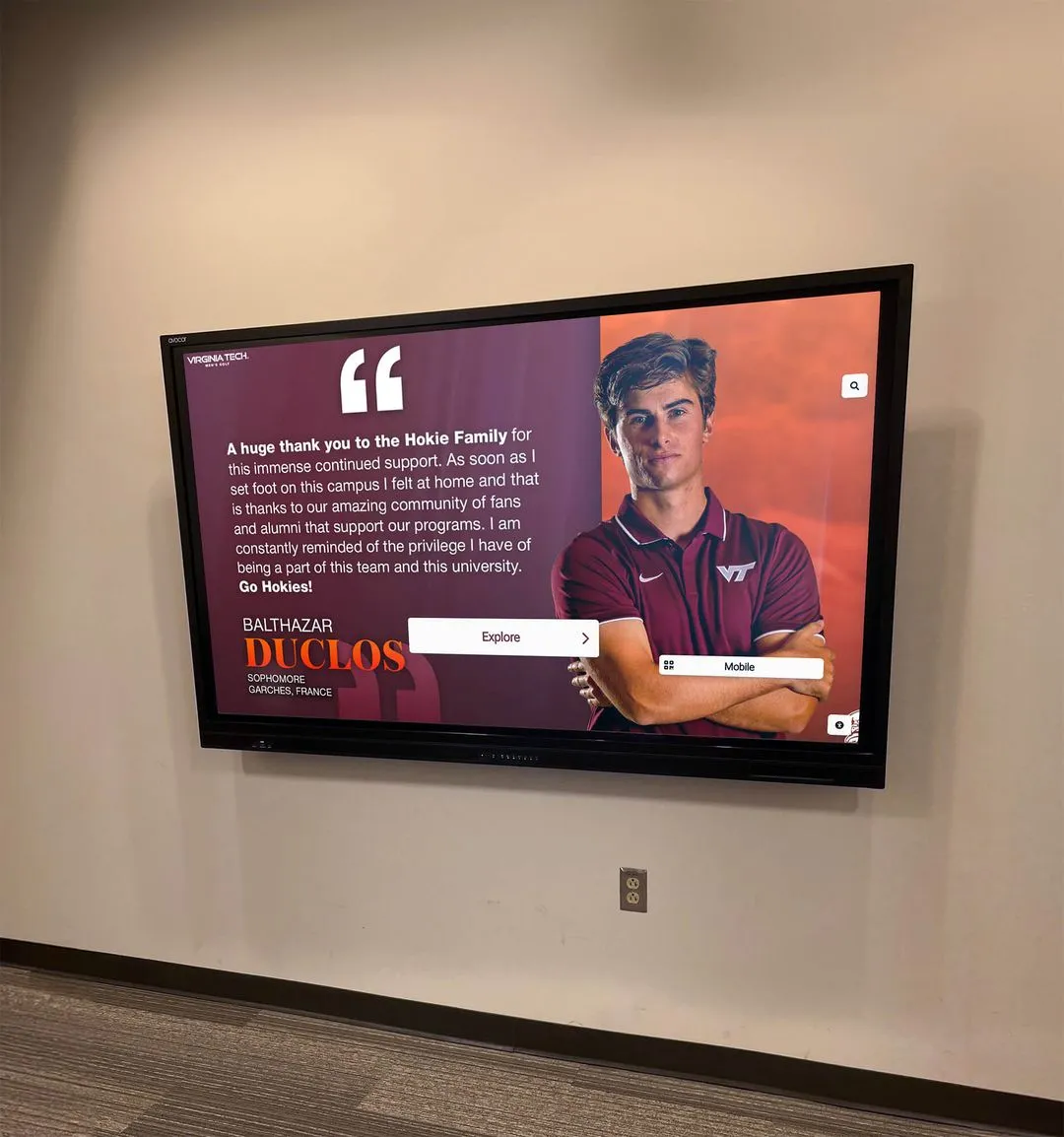
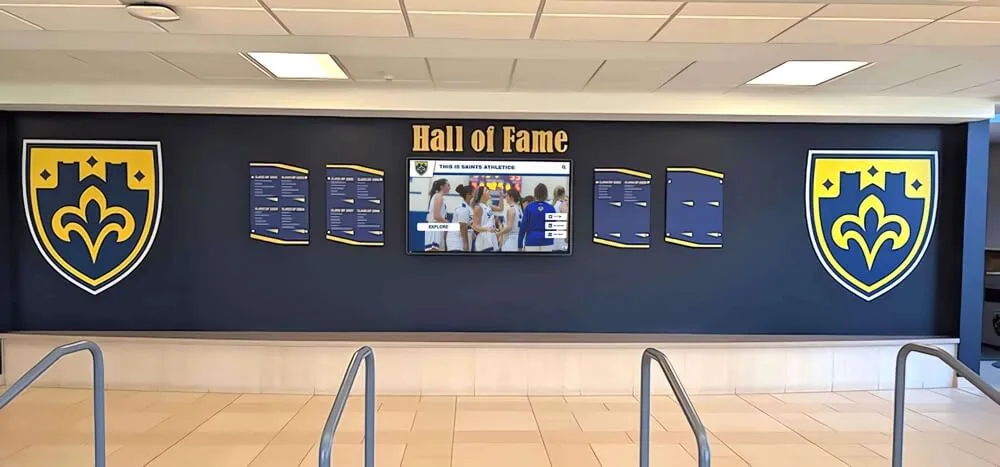
A digital inductee profile, by contrast, can hold a full career biography, action photography, game statistics by season, coaching relationships, post-graduation professional achievements, video highlights, and family connection notes. The information schools should include in digital inductee profiles far exceeds what any physical plaque can contain — and visitors can access it all through a single touchscreen interface without requiring additional wall space for each inductee.
When schools calculate real costs, this advantage compounds. A bronze plaque runs $300 to $600. An inductee added to a digital hall of fame system costs effectively nothing once the platform is in place, since software licenses are typically flat annual fees rather than per-inductee charges.
Annual Athletic Records and Performance Boards
Record boards — top times in swimming, highest batting averages, fastest mile splits, career scoring leaders — update every season. In physical form, that means re-engraving inserts, replacing plaques, or maintaining perpetual boards with adhesive nameplates that fall off or yellow with age.
Digital record boards update instantly when a new record falls. No vendor lead time, no engraving cost, no maintenance appointment needed. The athletic director edits the entry and the display updates across all connected screens immediately. Digital record board platforms built specifically for schools manage this workflow through simple content management dashboards that don’t require technical staff to operate.
Growing Inductee Lists and Historical Archives
If your school has inducted hall of famers for thirty years, you may have 150 to 300 individual honorees. Displaying all of them on physical plaques would consume hundreds of linear feet of wall space. Most schools end up displaying only the most recent decade — which means alumni inducted in the 1990s become invisible to current students who walk the same hallways.
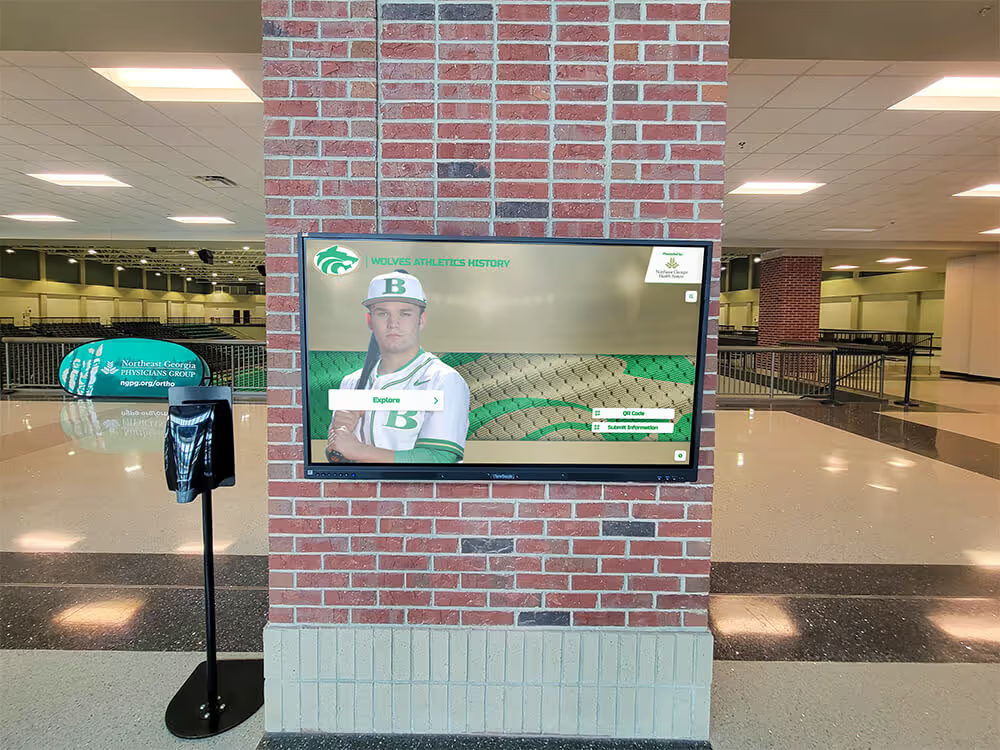
A digital hall of fame makes the entire historical archive browsable from a single terminal. A sophomore athlete can search for players from thirty years ago, filter by sport, read full biographies, and understand the program’s complete legacy — without the school maintaining 300 individual physical plaques.
For schools working through how to structure applications and gather information before reviewing nominees, digital platforms also streamline the nomination and vetting process, keeping all candidate materials in one place rather than spread across paper applications and email threads.
Recognition That Needs Regular Updates
Anything that changes annually — athletic schedules, upcoming event promotions, seasonal award nominees, career milestone trackers — wastes physical materials and staff time if managed through plaques and signs. A digital display handles rotating content, scheduled publishing, and real-time updates without any physical intervention.
Emergency communications, weather closures, and time-sensitive administrative messages work well on displays already installed for recognition purposes. Schools that invest in digital recognition infrastructure often find those same screens serving communications functions that previously required separate bulletin board systems.
The Space Math Schools Often Skip
Schools typically underestimate how quickly physical plaque programs outgrow available wall space. Consider a program that:
- Inducts 10 to 12 hall of famers per year
- Maintains physical plaques measuring 12 inches wide by 9 inches tall
- Spaces plaques 3 inches apart horizontally and 4 inches vertically
A single 8-foot-wide corridor section accommodates roughly 6 plaques per row. At 12 inductees per year, you fill that section in one year. A corridor wall 8 feet wide and 5 feet of usable height holds approximately 30 plaques before the display looks crowded. That’s 2.5 years of induction classes.
Schools that began hall of fame programs in the 1980s and now face decades of backlog understand this math viscerally. The solution isn’t necessarily eliminating plaques — it’s being intentional about which recognition elements justify the physical real estate and which should migrate to formats that scale without wall constraints.
The Hybrid Model Most Schools Land On
In practice, the most effective school recognition programs combine physical and digital elements rather than replacing one with the other entirely. A typical hybrid approach looks like this:
Keep static:
- Founding and dedication plaques on buildings and major facilities
- Championship banners displayed in gymnasiums
- Named donor plaques for major gifts
- Institutional identity signage (school seals, motto plaques, dimensional mascot installations)
- Wayfinding and ADA signage
Move digital:
- Individual hall of fame inductee profiles
- Annual record boards
- Historical achievement archives
- Donor recognition tiers below the named-gift threshold
- Rotating event and schedule communications
- Photo and video content from key seasons and milestones
This split preserves the tangible, authoritative weight of physical materials for elements that earn it — permanent milestones, major donors, institutional identity — while leveraging digital’s capacity, searchability, and multimedia richness for the growing body of recognition content that physical materials can’t sustainably support.
What to Look for in a Digital Hall of Fame Platform
Schools evaluating digital platforms to complement their physical plaque programs should look for several capabilities that distinguish dedicated hall of fame software from generic digital signage.
Dedicated inductee profile management: The system should support structured profiles with biographical text fields, career statistics, photographs, and multimedia — not just a slideshow tool. Software built specifically for school hall of fame displays includes inductee databases, search functionality, and browsing interfaces that digital signage platforms don’t offer out of the box.
Content management without technical staff: Athletic directors and advancement offices need to update profiles and records without filing IT tickets. Look for web-based dashboards accessible from any browser that don’t require software installation or technical training.
Installation support: A platform is only useful if the hardware actually goes up. Understanding who installs digital hall of fame displays — and whether turnkey service is included — matters as much as the software features. Some vendors handle mounting, power, and network configuration; others ship hardware and expect schools to coordinate installation independently.
Pricing transparency: Turnkey digital hall of fame display pricing varies significantly based on screen size, number of displays, software licensing model, and installation complexity. Schools should understand the full cost structure — hardware, software, installation, and ongoing support — before comparing vendors. Some providers bundle everything into a single annual fee; others separate hardware purchase from software subscription.
Scalability without per-inductee costs: Unlike physical plaques, the digital system shouldn’t charge more as the inductee count grows. A platform that charges per profile discourages comprehensive historical documentation — exactly the opposite of what a hall of fame should accomplish.
Where Rocket Alumni Solutions Fits the Hybrid Model
Rocket Alumni Solutions builds digital hall of fame platforms designed specifically for K-12 schools, colleges, and universities operating alongside existing physical recognition infrastructure. The platform supports unlimited inductee profiles with biographical content, career statistics, photographs, and video — the content categories that physical plaques cannot accommodate — while complementing rather than replacing the physical identity elements schools keep on permanent walls.
The system includes content management tools designed for non-technical staff, touchscreen hardware options for lobbies and athletic corridors, and professional installation services that handle mounting, electrical, and network setup. For schools evaluating the full scope of what a digital hall of fame setup involves, understanding what’s included in turnkey pricing — hardware, software, training, ongoing support — makes comparison straightforward.
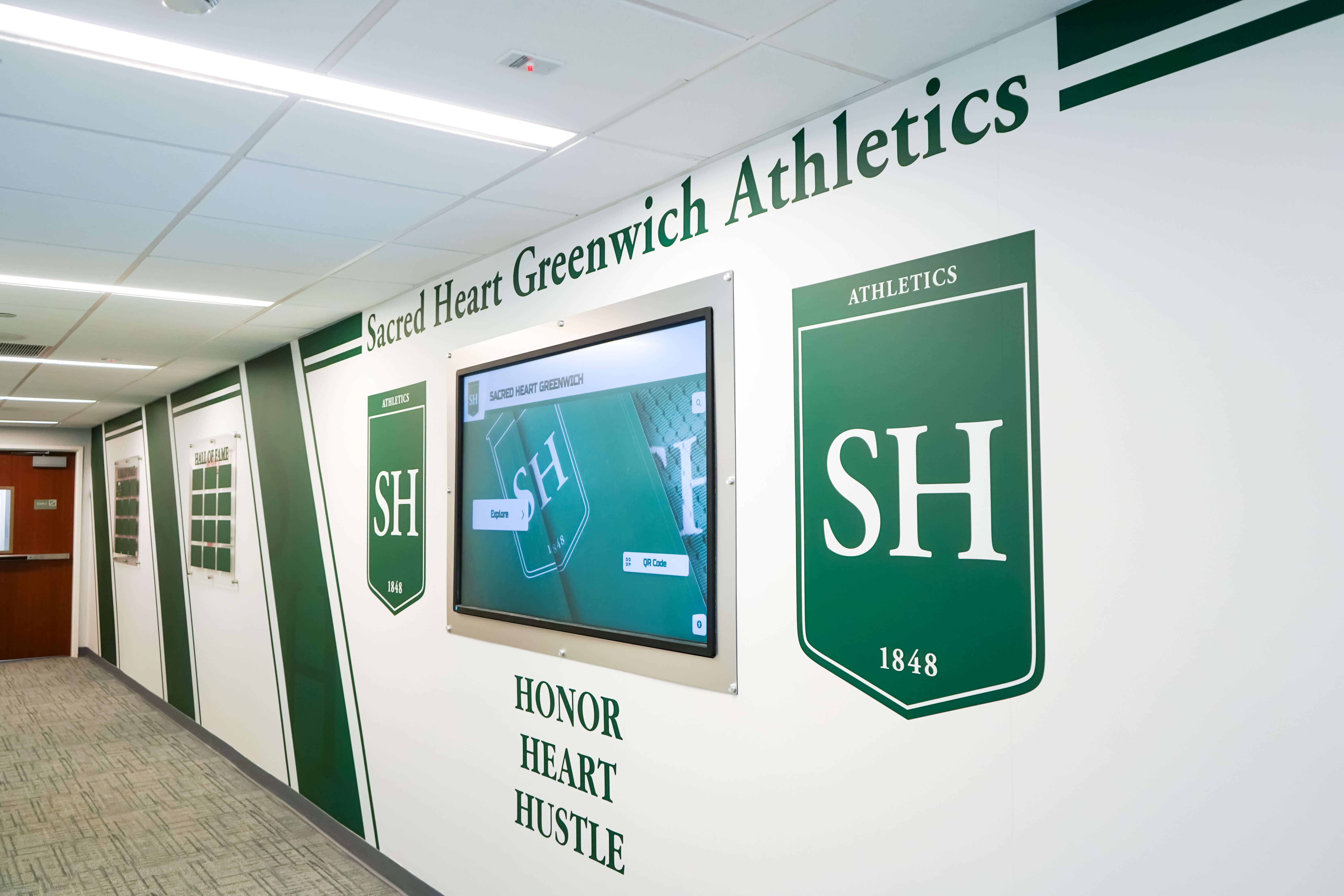
Schools that have already committed resources to physical plaque programs don’t need to abandon that investment. Rocket’s platform works alongside existing walls, adding digital depth to physical displays without requiring schools to remove or replace what they’ve already built.
For programs still planning initial installations, resources like the digital hall of fame ultimate buying guide for high schools and detailed turnkey pricing breakdowns help administrators frame budget conversations with the specificity decision-makers need.
Making the Decision for Your School
The static vs. digital question doesn’t have a universal answer — it depends on how many honorees your program recognizes annually, how much wall space you have, how your community values physical vs. digital recognition, and what budget you can sustain over time.
A useful starting framework: if the recognition element changes year over year, grows without a natural endpoint, requires multimedia to tell the story fully, or needs to serve hundreds rather than dozens of honorees, it belongs in digital. If it marks a permanent institutional milestone, honors a major donor relationship, or carries physical authority that no screen can replicate, it deserves permanent materials.
Most schools discover they’re overusing physical materials for content that would serve inductees better digitally — and underusing physical materials for the permanent identity elements that actually benefit from weight, texture, and permanence.
Getting the split right means inductees from thirty years ago remain as visible as those inducted last spring, record-breakers see their achievements updated the same week, and hallways stay organized rather than accumulating plaques until something has to move to a storage room.
See How the Hybrid Model Works in Practice
Rocket Alumni Solutions helps schools determine exactly which recognition elements belong on walls and which belong on screens — then builds the digital side of that system with professional installation and simple content management tools.
Schedule a Free Demo