This comprehensive guide explores everything you need to know about hall of fame plaques in 2026—from understanding design options and material choices to crafting meaningful wording and implementing effective display strategies. Whether you’re establishing your first athletic hall of fame or enhancing an existing recognition program, this guide provides practical approaches, proven examples, and innovative solutions that transform how your school honors athletic excellence.
Hall of fame plaques serve as permanent recognition for athletes and coaches who have made exceptional contributions to school athletic programs. Unlike temporary displays or seasonal recognition, plaques create lasting tributes that remain visible year after year, building a legacy of excellence that connects past achievements with present aspirations. They transform hallways and trophy areas into inspirational spaces where current athletes can see the standards set by those who came before them.
Yet creating effective hall of fame plaques involves numerous decisions that significantly impact both appearance and budget. Schools must choose appropriate materials, determine optimal sizes, develop design templates that work across decades of inductees, craft wording that honors achievements meaningfully, and implement display strategies that showcase plaques effectively while accommodating future growth. Making informed choices in each area ensures your hall of fame plaques achieve their recognition purpose while remaining sustainable for your program.
This guide addresses these decisions systematically, providing specific examples, budget considerations, and strategic frameworks that help athletic directors and recognition committees design plaque programs aligned with their values, aesthetics, and resources.
Understanding Hall of Fame Plaque Design Options
Plaque design establishes the visual identity of your hall of fame program while communicating the prestige and significance of the honor. Effective designs balance aesthetic appeal with practical considerations including budget, consistency across years, and long-term durability.
Traditional Metal Plaques
Metal plaques represent the most common choice for school athletic halls of fame, offering durability, professional appearance, and various customization options that accommodate different budgets and aesthetic preferences.
Brass Plaques Brass provides classic elegance with distinctive golden coloring that develops rich patina over time. These premium plaques typically cost $200-$450 depending on size and engraving complexity. Brass works particularly well for programs emphasizing tradition and prestige, though the higher cost may limit how many inductees schools can honor annually. The material’s weight and durability ensure plaques remain impressive for decades, making brass an investment in long-term program prestige.
Aluminum Plaques Aluminum offers cost-effective alternatives at $75-$200 per plaque while maintaining professional appearance through various finish options including brushed, polished, or powder-coated surfaces. Modern printing and engraving technologies allow aluminum plaques to achieve sophisticated looks that rival more expensive materials. Schools working with tighter budgets or inducting larger numbers annually often find aluminum provides the best balance of quality and affordability.
Bronze Plaques Bronze creates the most premium option with exceptional durability and distinctive appearance that communicates maximum prestige. At $300-$600+ per plaque, bronze suits programs with substantial budgets or those reserving hall of fame induction for truly exceptional honorees. The material’s weight, texture, and color create unmistakable quality that inductees and visitors immediately recognize. Bronze plaques often feature cast relief elements adding dimensional interest beyond flat engraving.
Stainless Steel Options Stainless steel delivers contemporary aesthetics with superior corrosion resistance at $150-$350 per plaque. The material’s modern appearance appeals to schools seeking sleek, updated recognition styles rather than traditional looks. Stainless steel accommodates various finishing techniques including etching, engraving, and color infills that create striking visual effects while maintaining the clean, professional appearance that complements contemporary school architecture.
Wood-Based Plaque Designs
Wooden plaques offer warmth and traditional craftsmanship that metal alternatives cannot replicate. These designs particularly suit schools with classic architectural styles or programs emphasizing heritage and tradition.
Solid Wood Plaques with Metal Plates This popular approach combines wood’s visual warmth with metal’s engraving precision. Plaques feature hardwood backing (typically walnut, cherry, or oak) with attached brass or aluminum nameplates. Cost ranges from $100-$300 depending on wood quality and plate material. The combination creates distinctive two-tone aesthetics while keeping engraving costs lower than full metal plaques. Wood grain adds organic visual interest that makes each plaque subtly unique.
Engraved Wood Options Laser engraving technology now enables direct engraving on quality hardwoods, creating elegant single-material plaques at $75-$175. Modern laser systems achieve remarkable detail in wood, allowing inclusion of school logos, athlete portraits, and decorative elements alongside text. These plaques work particularly well for programs seeking cohesive appearance with existing wood trophy cases or traditional school aesthetics. However, wood requires more careful environmental control than metal, making it less suitable for high-humidity or outdoor locations.
Perpetual Plaque Systems Perpetual plaques feature master boards with space for multiple small nameplates added annually. A large decorative header identifies the hall of fame, with organized rows of plates below listing inductees chronologically. This approach costs $500-$1,500 for the initial master board plus $15-$40 per annual nameplate addition. Perpetual systems work well for newer programs or those with limited wall space, though they provide less individual prominence than dedicated plaques for each honoree.
Essential Elements of Effective Plaque Wording
The text on hall of fame plaques must communicate achievement meaningfully while fitting within the physical constraints of the plaque size. Effective wording balances specificity with brevity, honoring accomplishments without overwhelming readers with excessive detail.
Core Information Components
Every hall of fame plaque should include certain fundamental information that identifies the honoree and contextualizes their recognition.
Honoree Name and Years The athlete’s or coach’s full name appears prominently, typically in the largest text on the plaque. Include the years of participation or service to provide historical context. For athletes, this usually means graduation year or competition years (e.g., “Class of 2023” or “1998-2002”). For coaches, list either years of service or specific decades associated with their tenure (e.g., “Head Coach 1985-2010” or “1990s Era”).
Sport or Position Identify the sport and, for athletes, their primary position. This contextualizes achievements and helps viewers understand the specific athletic contribution. Simple designation like “Football - Quarterback” or “Track & Field - Distance Running” provides necessary context without consuming excessive space.
Induction Year and Class Specify when the honoree was inducted into the hall of fame. This information helps viewers understand the chronology of recognition and acknowledges that induction occurred after the individual’s athletic career concluded. Formats like “Inducted 2026” or “Hall of Fame Class of 2026” work effectively. Some programs include induction class size if particularly selective (e.g., “2026 Inductee - One of Five Selected”).
Achievement Summary This crucial section communicates why the honoree earned recognition. Space limitations mean this must distill potentially lengthy careers into concise highlights. The challenge lies in selecting which achievements most meaningfully represent the individual’s impact and excellence.
Achievement Highlight Strategies
Different approaches to presenting achievements create varying effects and suit different types of honorees.
Statistical Highlights For athletes with impressive quantifiable achievements, statistics communicate excellence objectively. However, context matters—raw numbers without comparison points may not convey significance to future viewers unfamiliar with program history. Effective statistical highlights include comparative context:
- “School career rushing record: 4,847 yards (2019-2022)”
- “State champion 100m and 200m (2018), still holds school records in both events”
- “Only three-time All-Conference selection in basketball program history”
- “Career .412 batting average, school record that stood for 15 years”
Championship and Team Success Team accomplishments provide another achievement framework, particularly for athletes who contributed to historic team success or coaches who built championship programs:
- “Three-time state champion wrestler (145 lbs), team captain senior year”
- “Led team to first state football championship (2015), tournament MVP”
- “Member of back-to-back state championship volleyball teams (2008-2009)”
- “Head coach during school’s only undefeated season (1998), 13-0 record”
Individual Honors and Recognition Awards and honors from outside organizations validate excellence through third-party recognition:
- “Four-year varsity starter, two-time All-State selection, conference MVP 2017”
- “State Player of the Year (2020), went on to Division I scholarship”
- “Three-time Academic All-American, team valedictorian”
- “Conference Coach of the Year five times, 300+ career victories”
Impact and Legacy Statements For honorees whose contributions transcended statistics, narrative statements capture intangible impact:
- “Transformed girls soccer from club to state powerhouse over 20-year coaching career”
- “First athlete to earn college scholarship in program history, inspiring generations”
- “Led by example through work ethic and sportsmanship, team captain three years”
- “Founded booster club that funded facility improvements benefiting thousands”
Many programs combine approaches, using 2-3 bullet points or a brief paragraph incorporating statistics, honors, and impact statements. The key lies in selecting information that will remain meaningful decades later when current context fades.
Sample Plaque Wording Templates
Practical examples help illustrate how the principles above translate into actual plaque text that fits typical size constraints while honoring achievements meaningfully.
Athlete Plaque Examples
Basketball Player Example:
MICHAEL CHEN
Basketball - Point Guard
Class of 2019

Inducted 2025

School career scoring record: 1,847 points
Three-time All-Conference selection
Led team to 2019 regional championship
Team captain and MVP senior year
Division II scholarship recipient
Multi-Sport Athlete Example:
SARAH MARTINEZ
Soccer & Track | Class of 2022

Inducted 2026

All-State soccer midfielder (2021, 2022)
State champion 4x400m relay (2022)
Four-year varsity starter both sports
Academic All-Conference all four years
Embodies scholar-athlete excellence
Record-Setting Swimmer Example:
JAMES MORRISON
Swimming & Diving | 2016-2020

Hall of Fame Class of 2026

Holds five school records including
100m butterfly (51.2) and 200m IM (1:58.4)
Conference champion three consecutive years
State qualifier all four seasons
First swimmer to reach NCAA Division I
Coach Plaque Examples
Long-Tenured Head Coach:
COACH PATRICIA WILLIAMS
Girls Basketball Head Coach
1988-2018

Inducted 2024

418 career victories, 12 conference titles
Led program to three state championships
(1996, 2004, 2011)
Conference Coach of the Year six times
Mentored 47 college scholarship athletes
Built tradition of excellence spanning three decades
Transformative Program Builder:
COACH ROBERT THOMPSON
Football Head Coach | 1995-2012

Hall of Fame 2026

Transformed struggling program into powerhouse
185-63 record, eight playoff appearances
State runner-up (2008), two conference titles
Graduation rate: 98% among players
Known for developing character alongside skill
Legacy continues through coaching tree
Specialist Coach Recognition:
COACH MARIA GONZALEZ
Track & Field - Distance Coach
2001-Present

Inducted 2025

Developed 23 individual state champions
Nine cross country team state titles
Produced first sub-4:00 miler in school history
Unmatched commitment to athlete development
Coached three Olympians through club affiliations
Continues building championship culture
These templates demonstrate how effective wording combines key facts, quantifiable achievements, and impact statements within typical plaque space constraints. Programs should develop their own templates ensuring consistency across inductees while allowing customization for individual circumstances.
Strategic Display Approaches for Maximum Impact
How schools display hall of fame plaques significantly affects their recognition impact. Effective displays create prominent focal points that attract attention, facilitate viewing, and communicate the prestige of the honor while accommodating program growth over time.
Traditional Wall-Mounted Displays
Wall mounting remains the most common display approach, offering flexibility and visual prominence when implemented thoughtfully.
Chronological Grid Arrangements Organizing plaques chronologically in uniform rows creates clean, organized appearance that viewers can easily navigate. This approach works well when induction class sizes remain consistent and wall space accommodates predictable growth. Key considerations include:
- Consistent spacing between plaques (typically 2-4 inches) creating visual rhythm
- Alignment precision ensuring professional appearance rather than amateur installation
- Lighting design ensuring all plaques receive adequate illumination
- Planning for future additions preventing awkward gaps or crowding
- Height positioning (ideal center point 60-65 inches from floor) enabling comfortable viewing
Sport-Specific Groupings Some programs organize displays by sport rather than chronologically, creating dedicated sections for basketball, football, track, etc. This approach helps viewers quickly locate athletes from specific programs and can distribute displays across multiple locations near relevant facilities. However, sport groupings complicate growth management when some sports produce more inductees than others, potentially creating visual imbalances.
Prominence-Based Layouts Alternatively, programs might feature different plaque sizes or positioning based on achievement level—larger central plaques for the most exceptional honorees surrounded by smaller plaques for others. While this creates visual hierarchy, it introduces complexity around establishing objective criteria for different prominence levels and may create perceptions of favoritism if not handled carefully.
Trophy Case Integration
Many schools incorporate hall of fame plaques into existing trophy case displays, creating comprehensive recognition centers that combine plaques with team trophies, photos, and memorabilia.
Benefits of Case Display:
- Protection from dust, vandalism, and environmental exposure
- Controlled lighting enhancing plaque visibility and appearance
- Opportunity to combine plaques with related artifacts (jerseys, photos, equipment)
- Security from theft or damage compared to open wall displays
- Professional presentation through glass fronts and organized layouts
Integration Challenges:
- Limited space constraining how many plaques fit in finite case dimensions
- Difficulty viewing plaques behind glass if cases have reflection or viewing angle issues
- Ongoing case reconfigurations as inductee numbers grow beyond initial capacity
- Access requirements when adding new plaques annually
- Competing demands if cases also house team trophies and other recognition
Schools pursuing case integration should design systems with substantial growth capacity beyond current needs, establish consistent plaque sizes that maximize case efficiency, and implement annual reorganization plans preventing cluttered appearance as inductee numbers increase.
Dedicated Hall of Fame Rooms
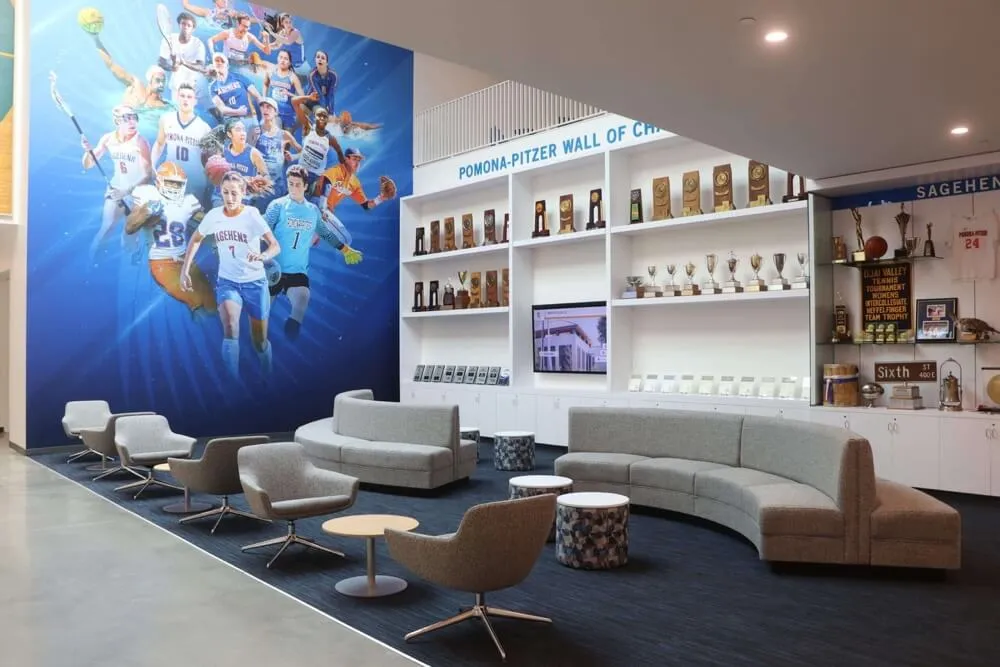
Larger schools with substantial athletic program histories sometimes dedicate entire rooms to hall of fame recognition, creating immersive experiences that combine plaques with extensive memorabilia, interactive elements, and program history displays. While most schools lack space and resources for dedicated rooms, those that can implement them create powerful recognition environments.
These spaces often incorporate various display methods including traditional wall plaques, trophy cases showcasing championship memorabilia, historical photo galleries, and seating areas where visitors can spend time exploring athletic program heritage. The investment required typically ranges from $25,000 to $100,000+ depending on room size and sophistication, limiting this approach to schools with exceptional resources or major fundraising campaigns specifically designated for recognition infrastructure.
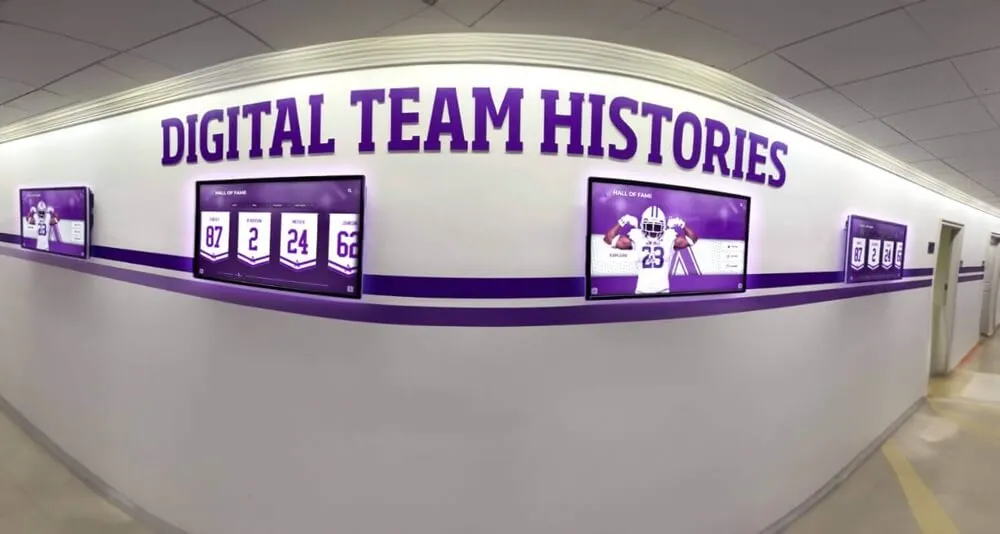
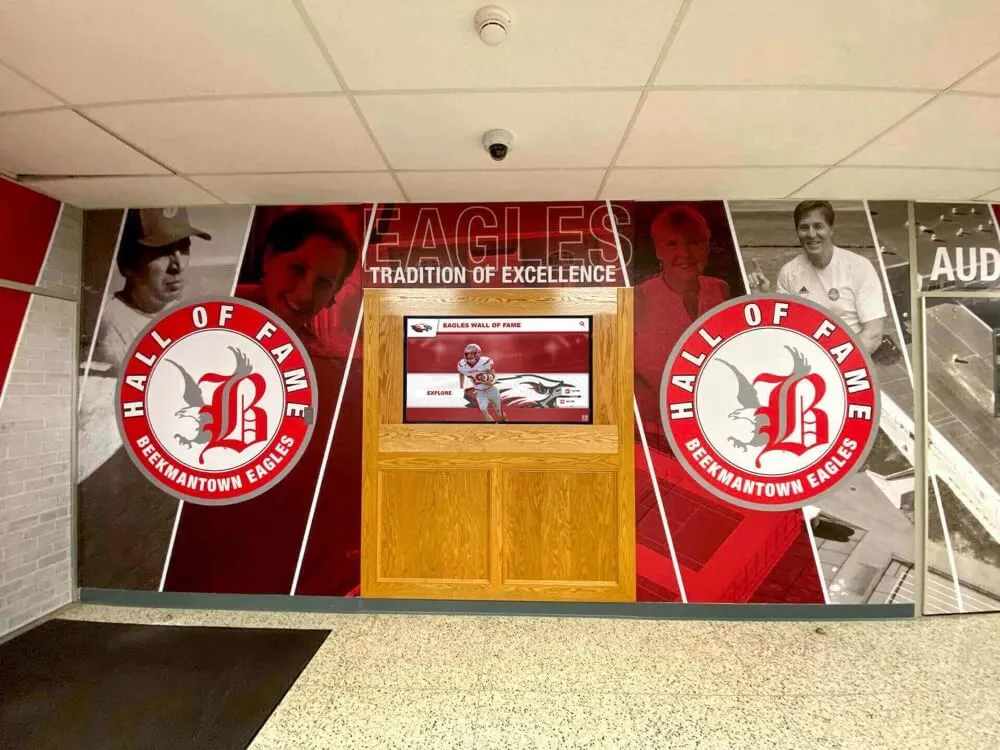
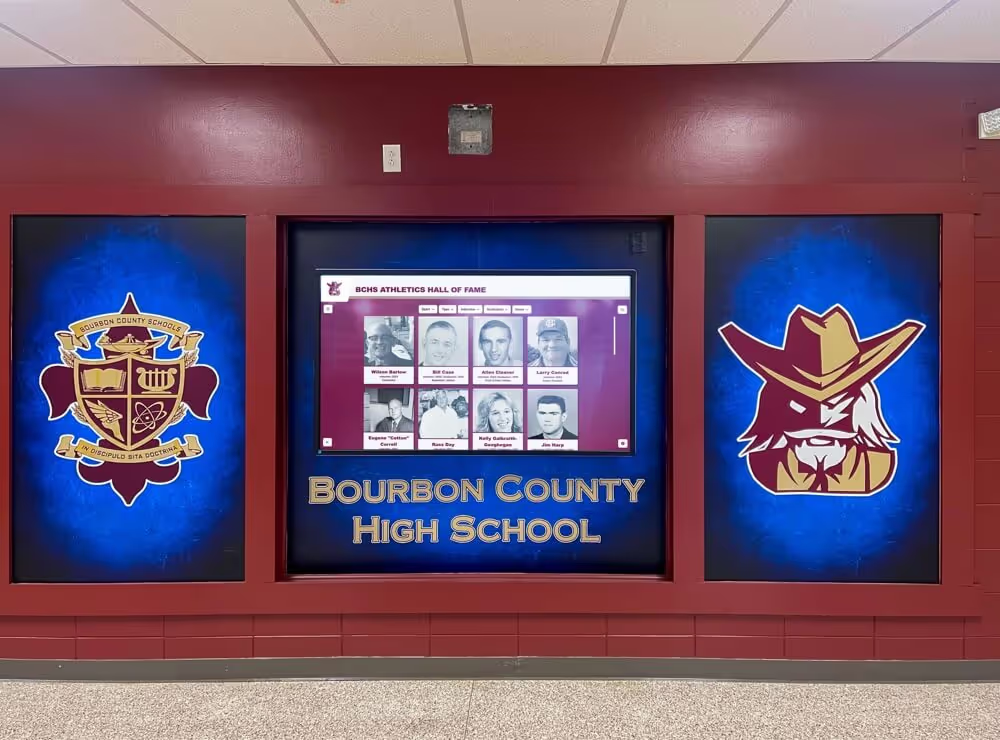
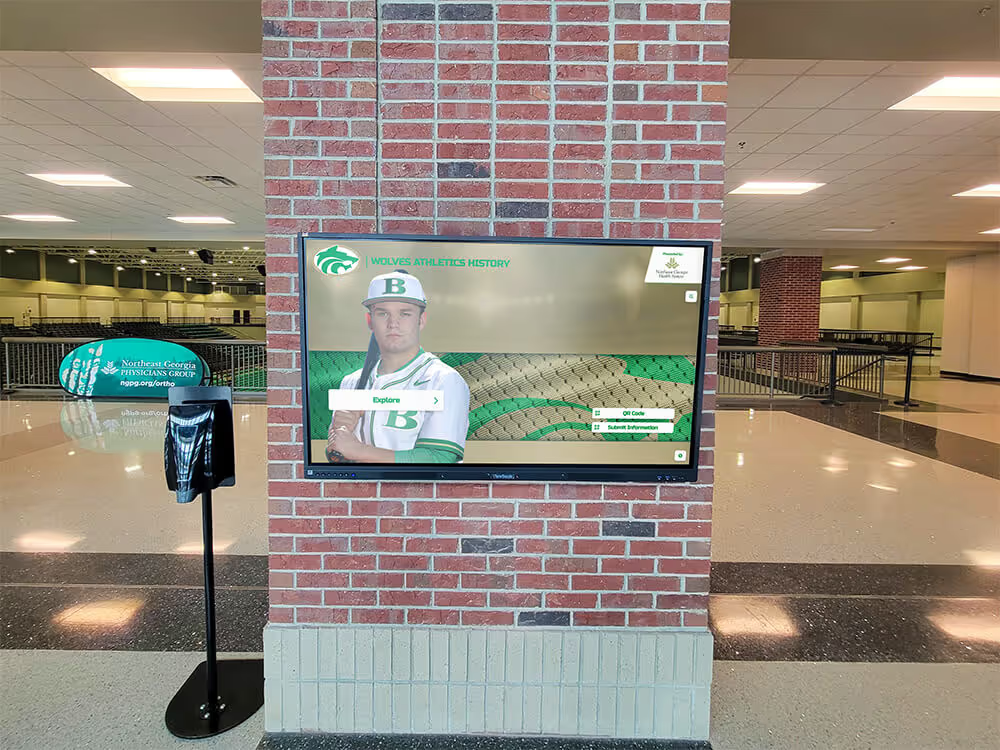
Modern Alternatives: Digital Hall of Fame Displays
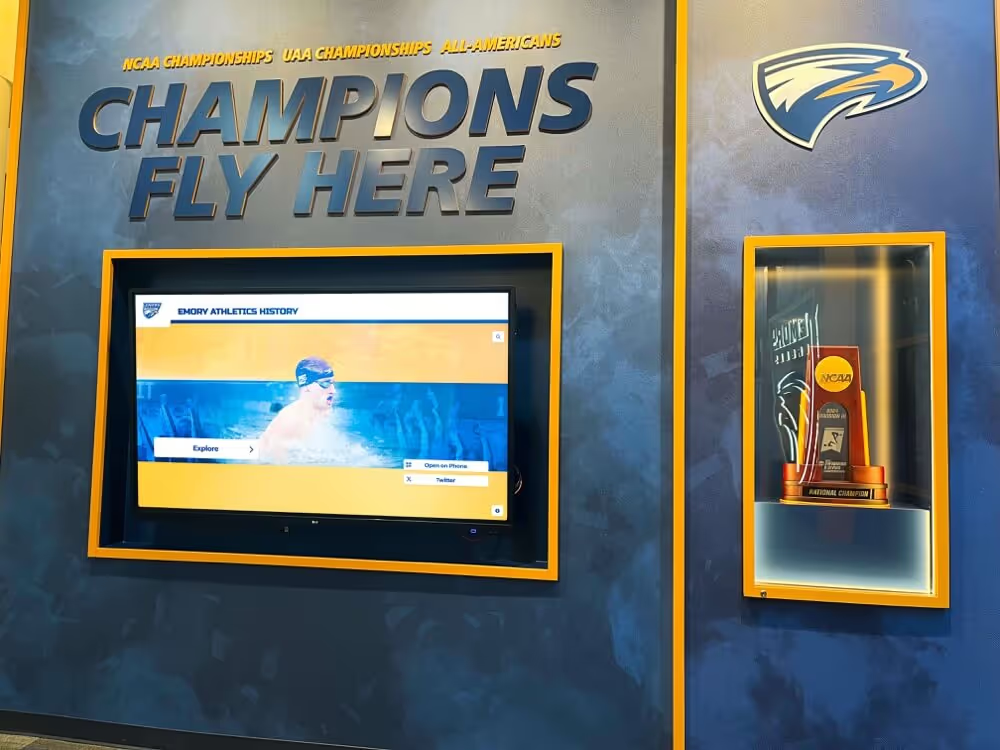
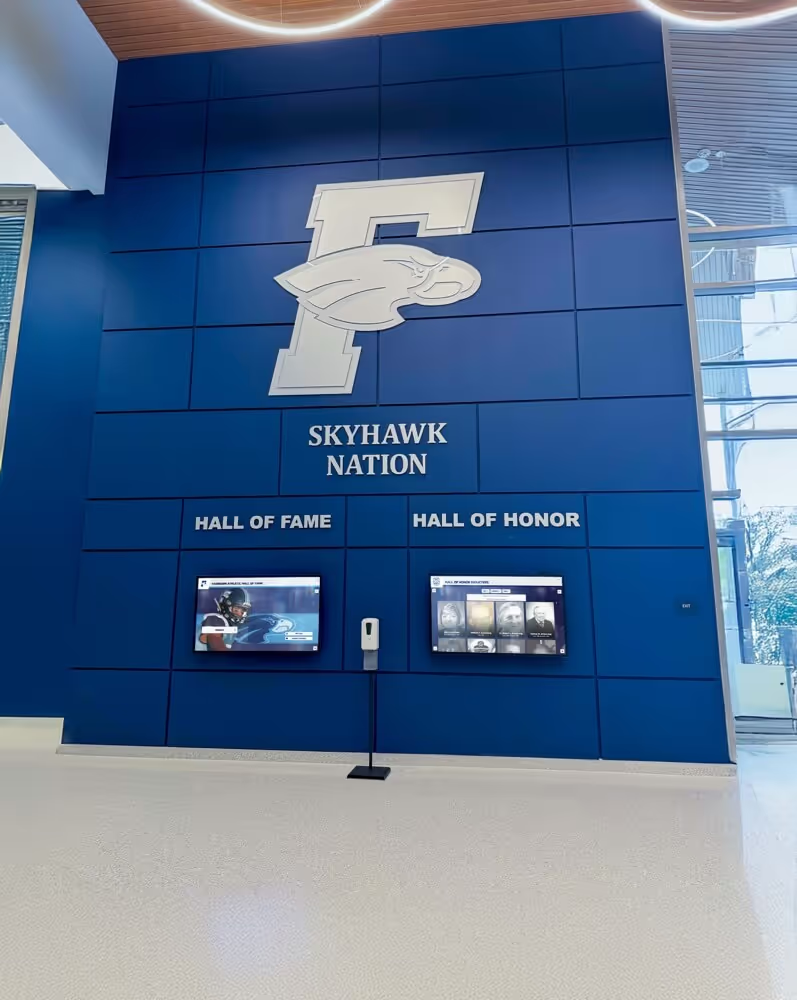
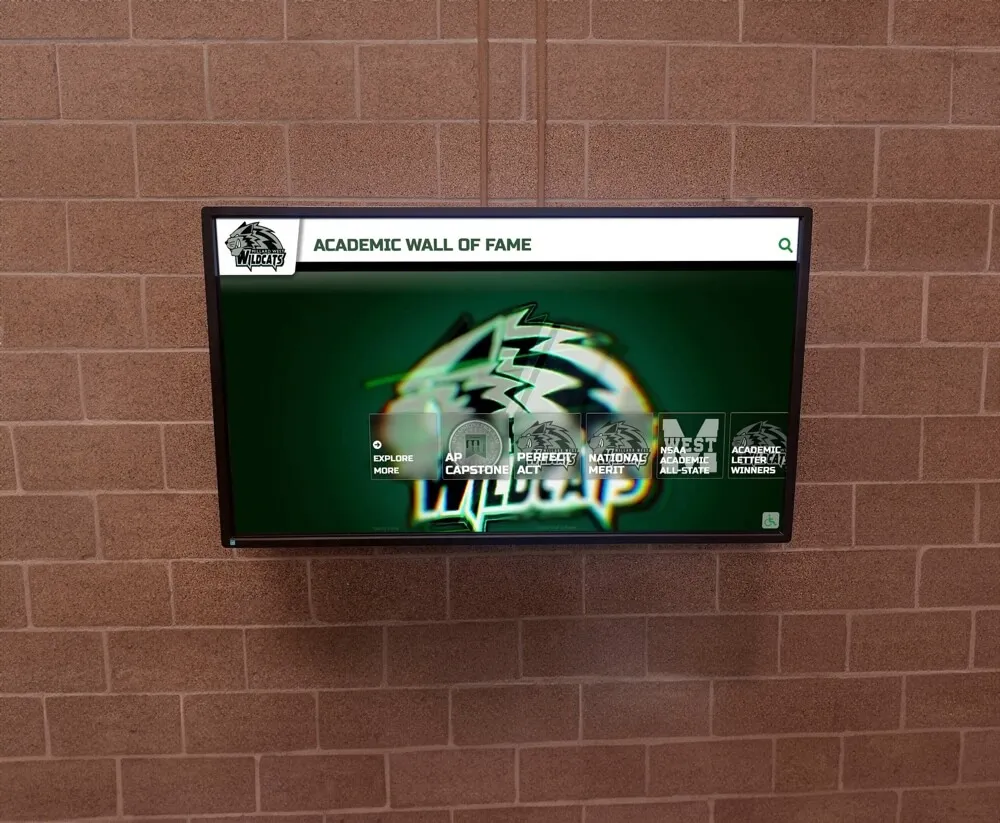
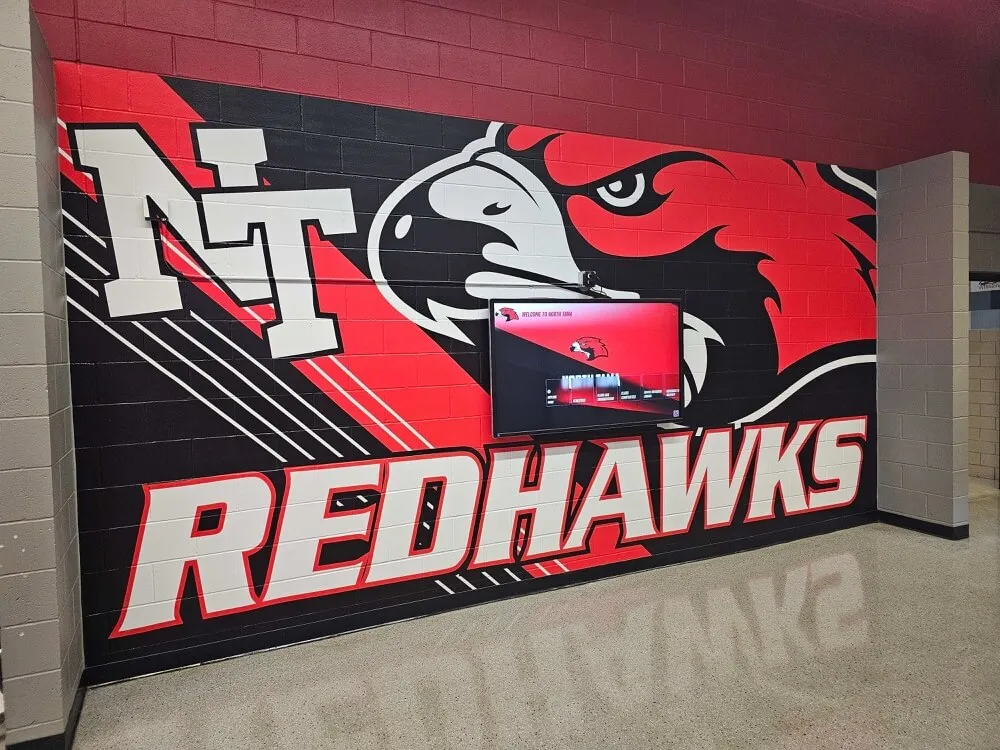
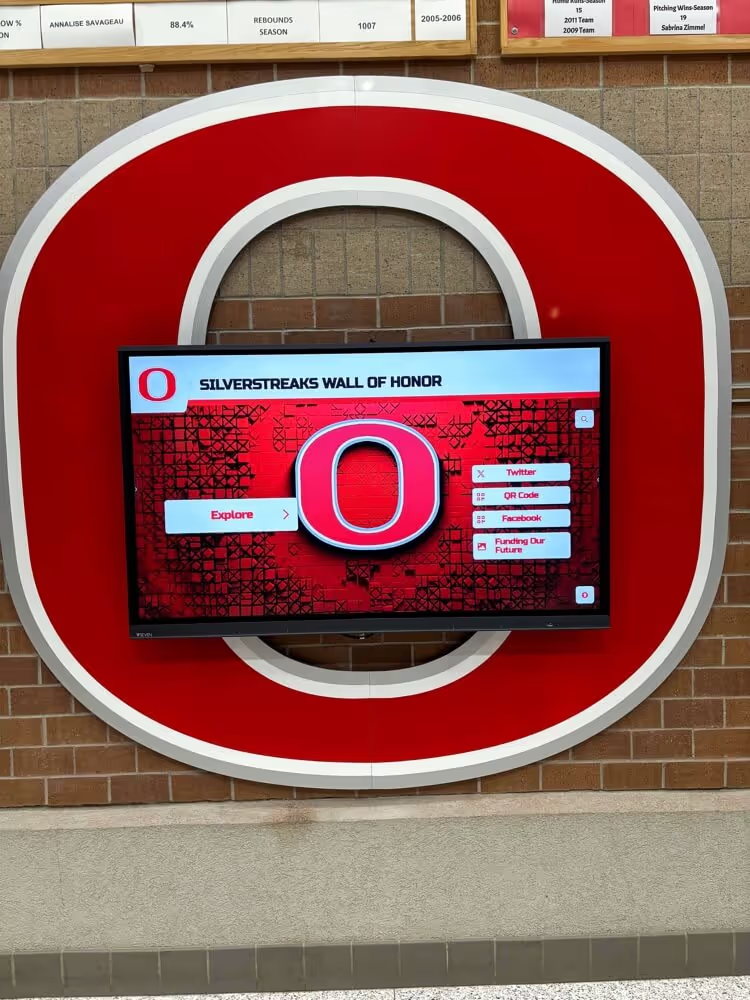
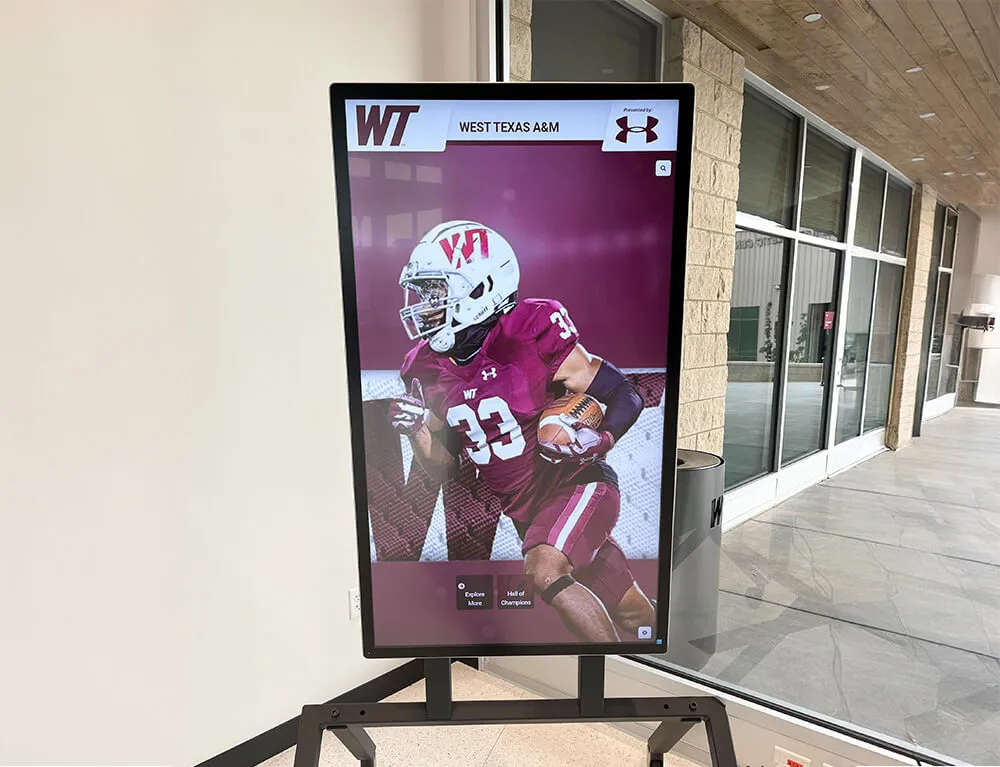
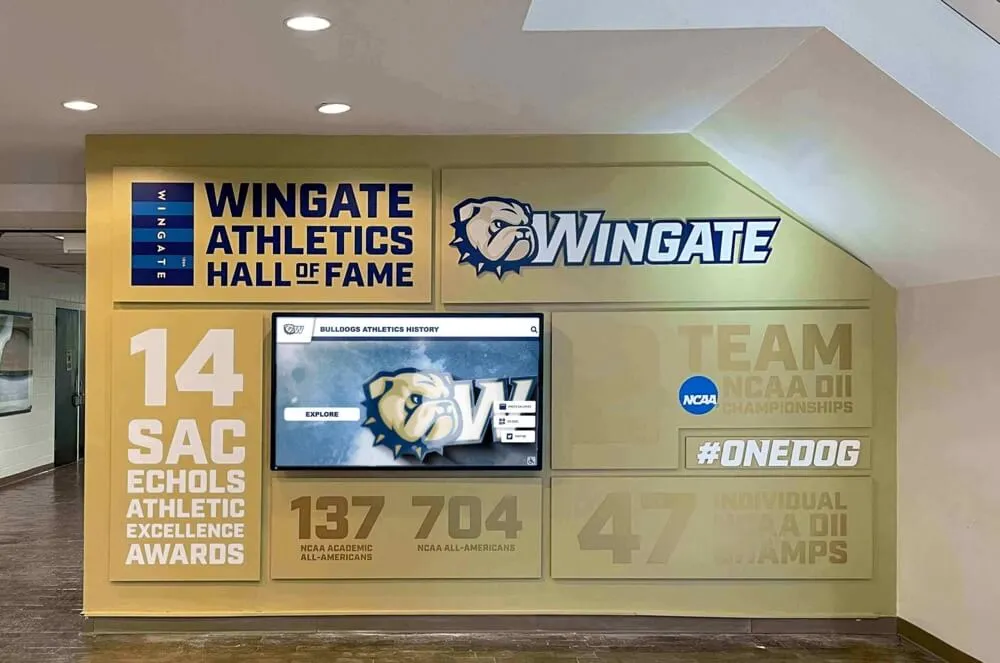
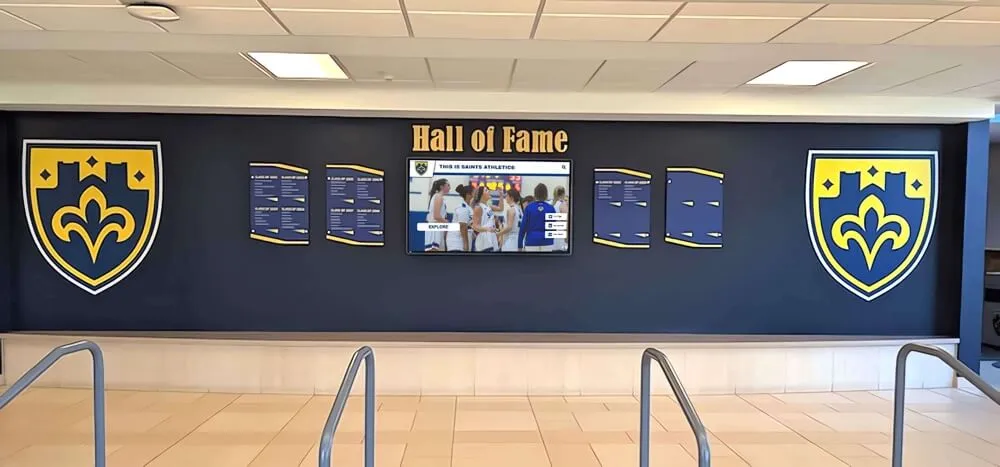
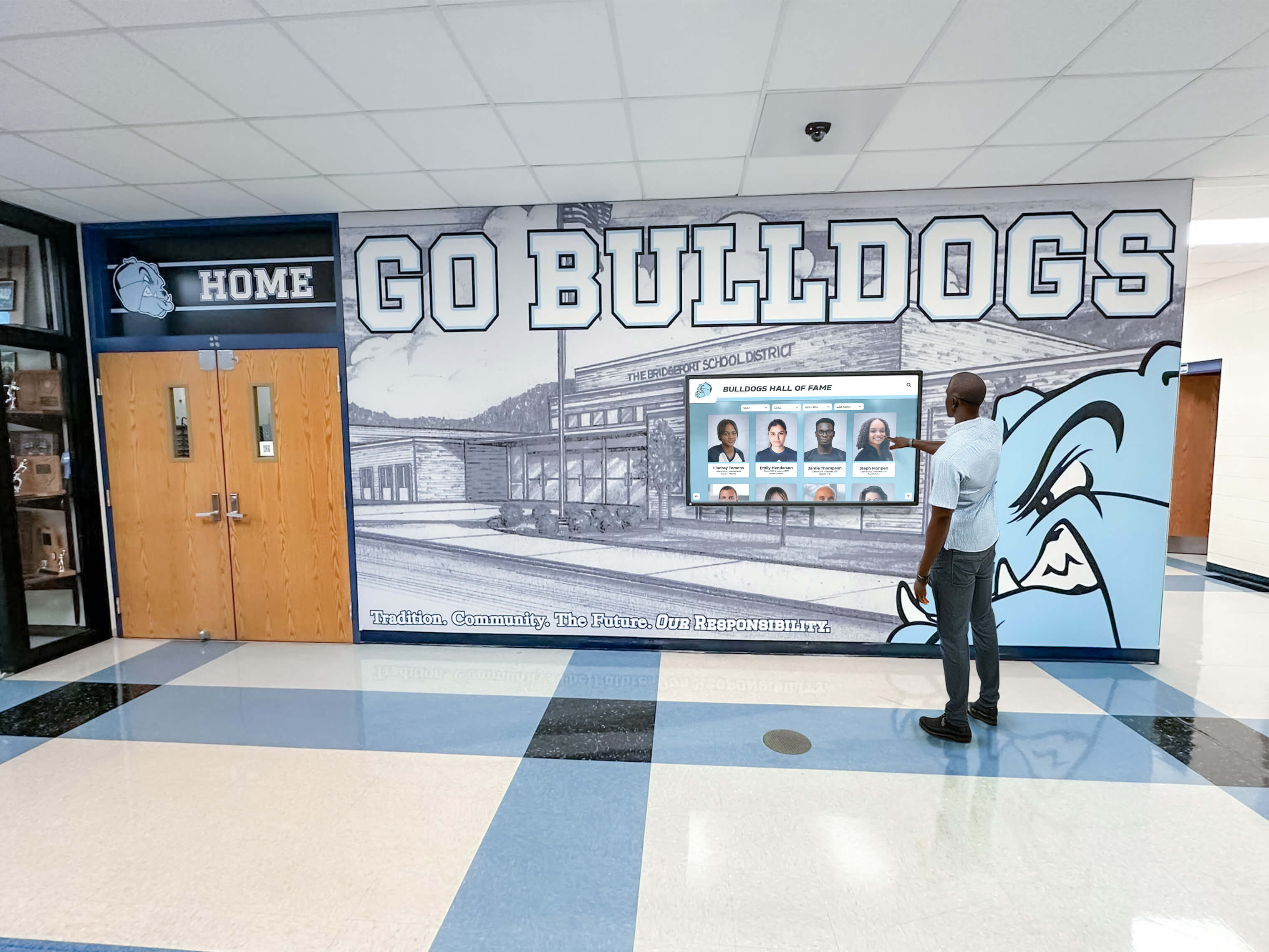
While traditional plaques offer timeless appeal and permanence, digital recognition technologies now provide compelling alternatives that address several limitations of physical plaques while offering capabilities impossible with traditional approaches.
Advantages of Digital Recognition Platforms
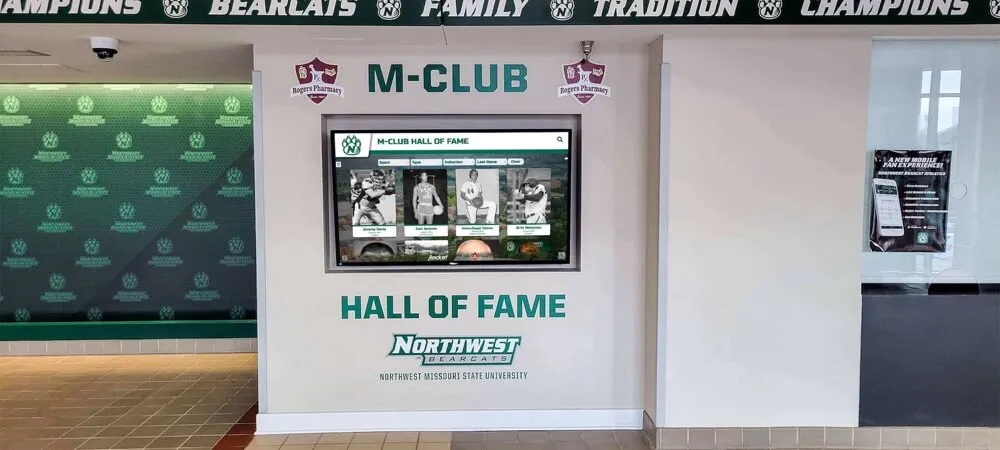
Digital displays transform hall of fame recognition from static plaques to dynamic, interactive experiences that engage viewers more deeply while providing practical operational benefits.
Unlimited Space and Scalability Physical plaques consume wall space that eventually fills regardless of how much schools initially allocate. Digital platforms eliminate space constraints—schools can honor unlimited inductees without worrying about running out of display area. This proves particularly valuable for older schools with extensive athletic histories or programs inducting larger classes annually.
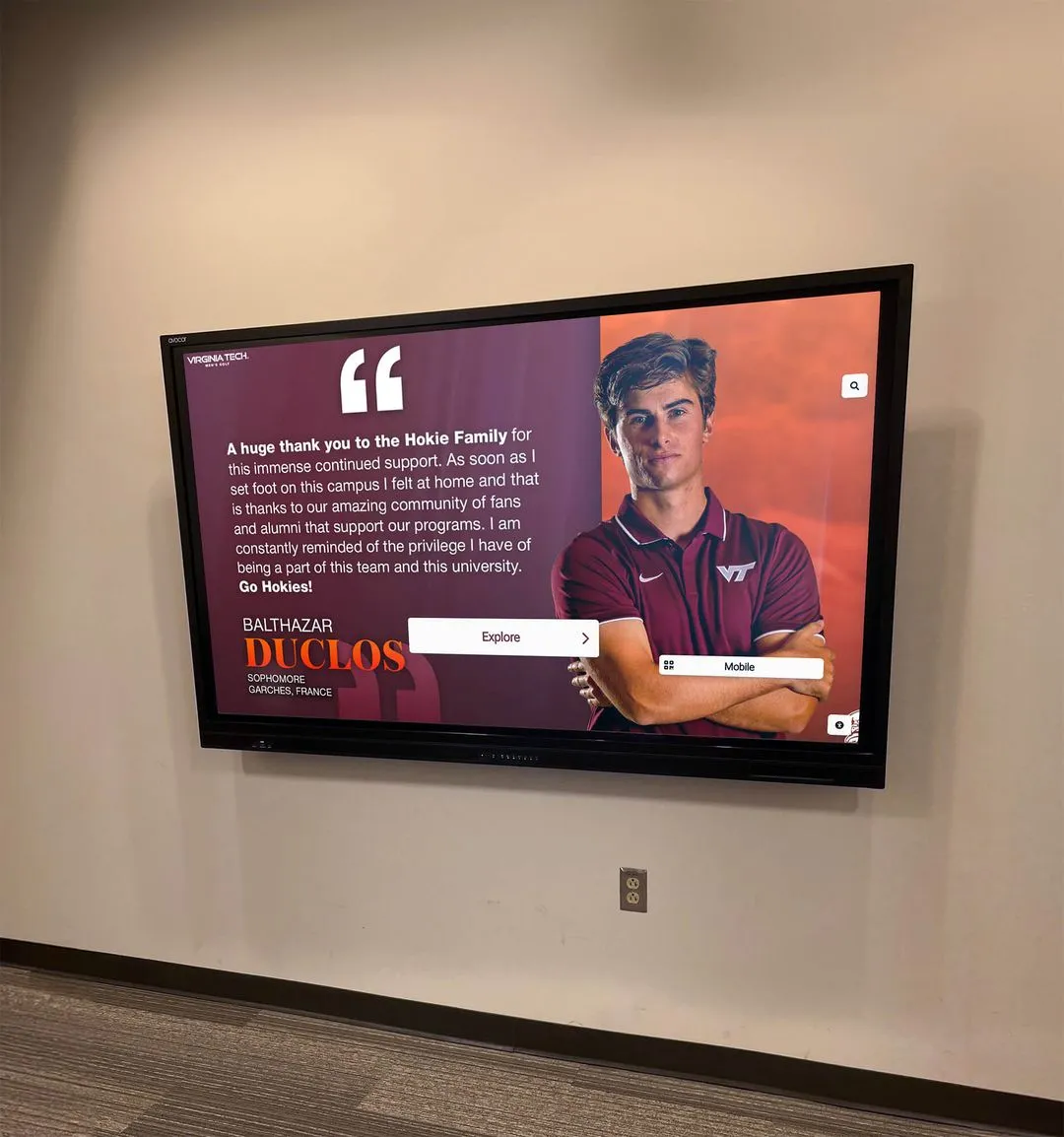
Rich Multimedia Content Traditional plaques limit recognition to text and perhaps a small photo. Digital platforms enable comprehensive profiles featuring photo galleries, video highlights, career statistics, audio interviews, news clippings, and other media that bring athletic achievements to life. Current athletes and alumni can watch game footage of inducted athletes, hear coaches discuss their impact, and explore achievements in depth impossible to convey on physical plaques.
Easy Updates and Corrections Engraving errors or information changes require expensive plaque replacement in traditional systems. Digital content updates instantly, allowing schools to correct mistakes, add newly discovered information, or update profiles when inductees achieve post-career accomplishments. This flexibility ensures accuracy without ongoing costs.
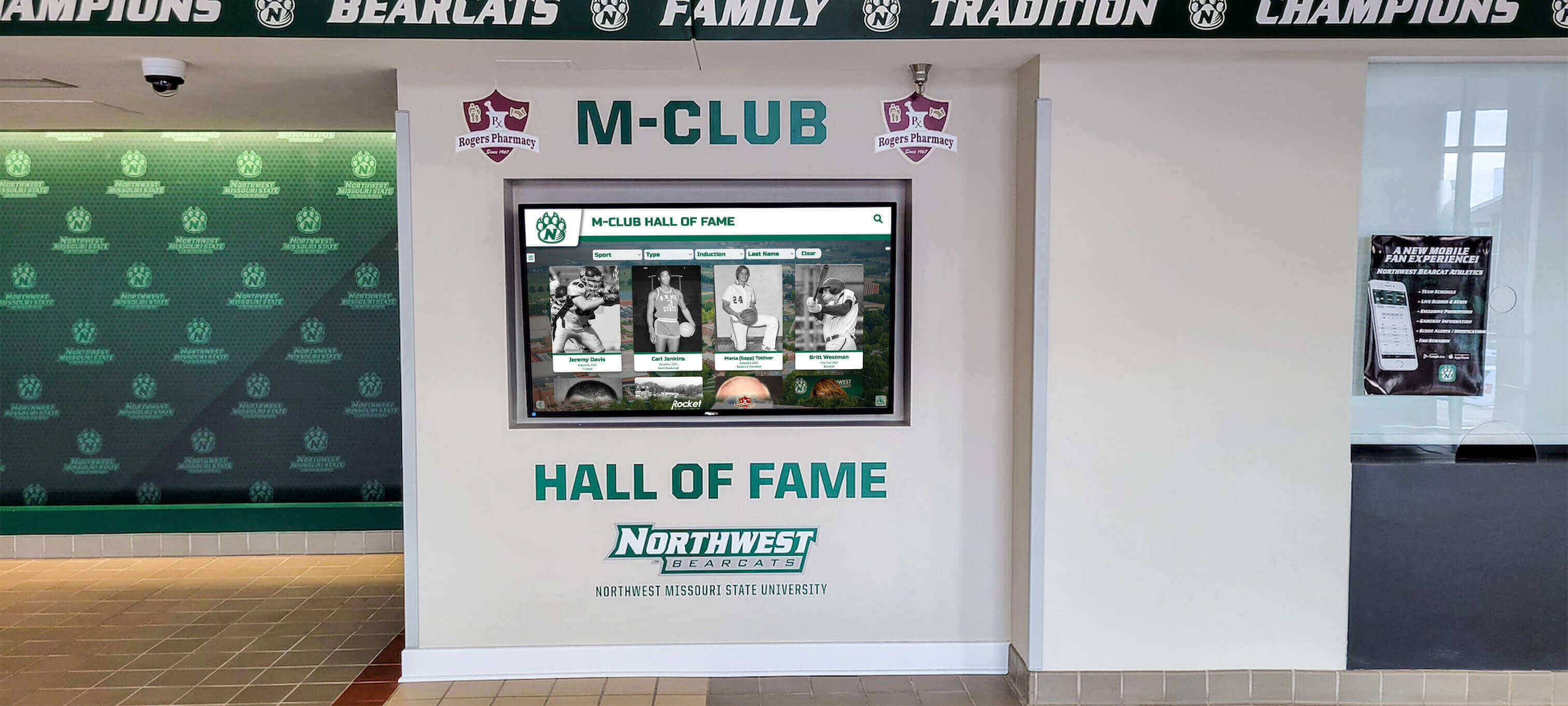
Search and Filter Capabilities Interactive digital hall of fame displays let users search by name, sport, year, or achievement criteria—helping visitors quickly find specific athletes among hundreds of inductees. Physical plaque walls require viewers to visually scan dozens or hundreds of plaques, making specific searches time-consuming.
Statistical Comparisons and Context Digital systems can automatically generate achievement comparisons, ranking lists, and statistical context that help viewers understand significance. For example, systems can show where an inductee ranks in all-time scoring or identify all state champions in a particular event across decades. This contextual information makes achievements more meaningful than isolated statistics on individual plaques.
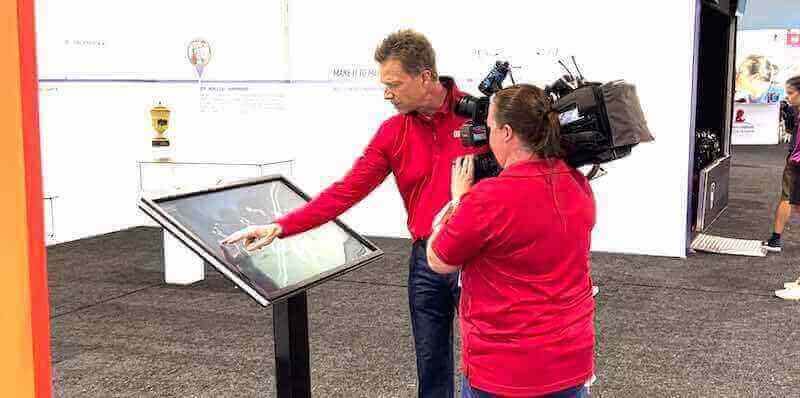
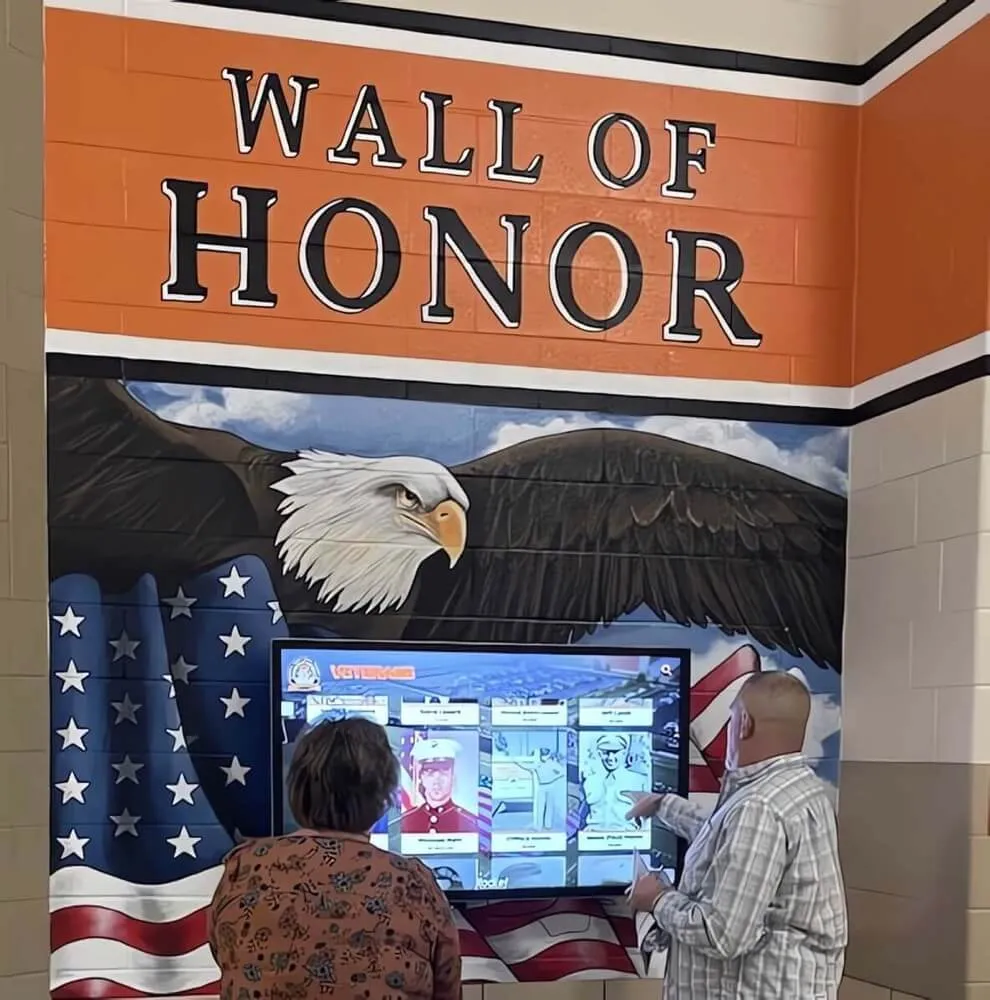
Cost Efficiency Over Time While digital displays require higher initial investment ($8,000-$35,000 for quality touchscreen systems), they eliminate ongoing per-inductee costs. Schools inducting 5-10 honorees annually at $250 per plaque spend $1,250-$2,500 each year. Over 15-20 years, digital systems become more cost-effective while providing far superior recognition experiences.
Hybrid Approaches Combining Traditional and Digital
Many schools implement hybrid recognition strategies that preserve traditional plaque aesthetics while incorporating digital enhancements. These approaches respect tradition while leveraging modern technology advantages.
QR Code Integration Schools can add small QR codes to physical plaques that visitors scan to access extended digital profiles. This maintains the visual and physical presence of traditional plaques while connecting them to rich online content including photos, videos, and comprehensive achievement details. Implementation costs remain minimal (just QR code stickers or engraving) while significantly expanding recognition depth.
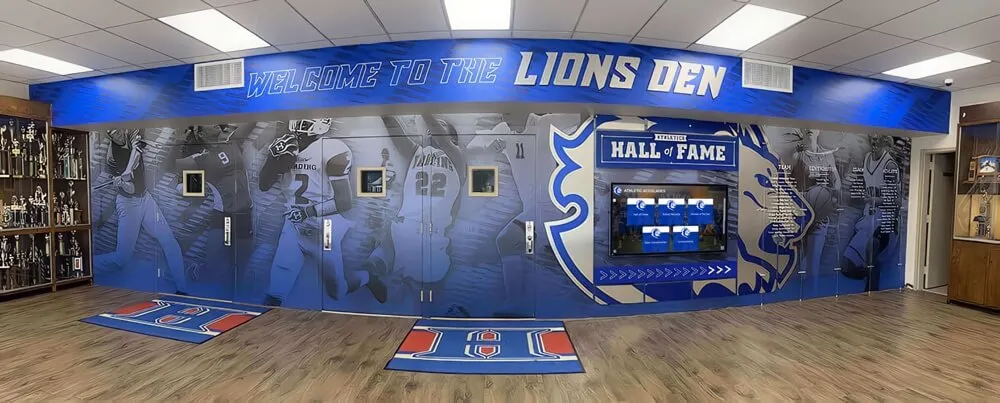
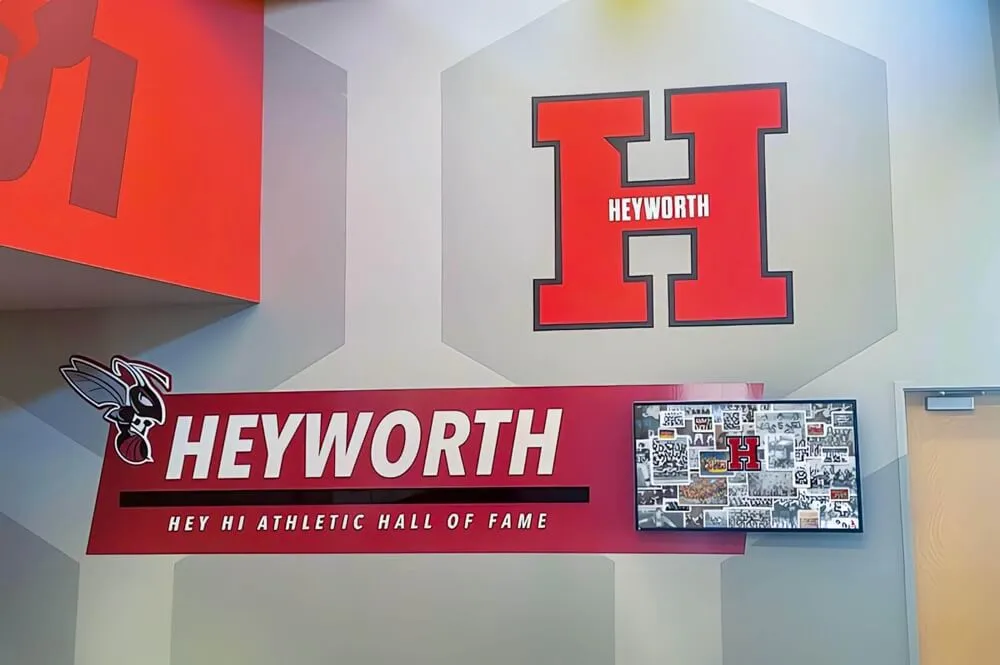
Paired Physical and Digital Recognition Another hybrid approach installs traditional plaques in high-traffic hallways while placing interactive digital displays in athletic facilities. This gives inductees both the permanent physical recognition they value and the enhanced digital presence that engages current athletes more effectively. The combination addresses different audiences—plaques appeal to inductees, alumni, and community members valuing tradition, while digital displays resonate with current students comfortable with technology.
Physical Plaques with Digital Updating Some innovative systems use small electronic ink displays within physical plaque frames, combining traditional appearance with digital updating capabilities. These specialized products cost more than standard plaques ($400-$700) but enable content updates without physical replacement while maintaining the visual aesthetic of traditional recognition.
Schools exploring modern approaches to student recognition should evaluate their specific priorities, budgets, and audience preferences when deciding between traditional plaques, fully digital systems, or hybrid approaches combining both.
Budget Planning and Long-Term Cost Management
Establishing hall of fame recognition programs requires understanding not just initial costs but also long-term financial implications as programs grow over years and decades.
Initial Setup Costs
New hall of fame programs face several one-time establishment costs beyond individual plaque expenses:
Design and Templating Professional graphic design ensuring visual consistency and aesthetic quality typically costs $300-$800 for developing plaque templates that work across all future inductees. This investment ensures cohesive appearance and prevents the hodgepodge look that results from ad-hoc design decisions.
Display Infrastructure Wall preparation, mounting systems, lighting installation, and any architectural modifications required for effective plaque display can range from minimal costs for simple wall mounting ($200-$500) to substantial investments for trophy case installations ($3,000-$15,000) or dedicated hall of fame room construction ($25,000-$100,000+).
Initial Class Recognition Programs often induct inaugural classes recognizing multiple deserving athletes from past years rather than starting with just current-year inductees. Inaugural classes of 10-25 honorees at $150-$400 per plaque create initial investments of $1,500-$10,000 beyond infrastructure costs. While substantial, inaugural classes establish program significance and create immediate visual impact rather than sparse displays that take years to build.
Selection Process Development Establishing clear criteria, forming selection committees, creating nomination processes, and developing communication plans require staff time investment even if not direct financial costs. Schools should budget 20-40 hours for process development ensuring the program foundation supports sustainable long-term operation.
Annual Operating Costs
Beyond establishment, hall of fame programs incur ongoing annual expenses:
Per-Inductee Plaque Costs The primary annual expense comes from plaques for each year’s inductees. Programs inducting 3-8 honorees annually at $150-$400 per plaque typically spend $450-$3,200 yearly. Over 20 years, cumulative costs reach $9,000-$64,000 just for plaques—a significant long-term financial commitment schools must sustain.
Induction Ceremony Expenses Many programs host annual ceremonies recognizing new inductees, creating community celebration while honoring athletes. Ceremony costs vary dramatically based on scope—simple recognition at existing events might add minimal costs ($100-$300) while dedicated hall of fame banquets with catering, programs, and special guests can reach $2,000-$5,000 annually.
Display Maintenance and Expansion Periodic plaque cleaning, lighting maintenance, and display expansion as wall space fills create irregular costs. Schools should budget $200-$500 annually for these ongoing needs, with larger periodic investments ($1,000-$5,000) every 5-10 years for significant display expansions or renovations.
Administrative Coordination Staff time coordinating nominations, managing selection processes, organizing ceremonies, and handling communications represents hidden costs. While rarely budgeted explicitly, schools should recognize that sustainable programs require dedicated coordination averaging 15-30 hours annually—the equivalent of $500-$1,200 in professional time.
Cost Reduction Strategies
Schools can implement several approaches to manage hall of fame expenses while maintaining program quality:
Booster and Alumni Funding Many programs fund hall of fame recognition through boosters or alumni contributions rather than operating budgets. Donor recognition strategies used for fundraising campaigns can apply to hall of fame programs—inductee families often willingly contribute toward recognition costs, and alumni networks may fund plaques honoring coaches who influenced their development.
Sponsorship Opportunities Some schools secure local business sponsorships for hall of fame displays, with sponsors receiving tasteful acknowledgment in exchange for funding support. This approach works best when sponsorship integration remains subtle—small acknowledgment plaques rather than prominent branding that commercializes what should be pure recognition.
Perpetual Plaque Systems As discussed earlier, perpetual plaque approaches dramatically reduce per-inductee costs (typically $15-$40 per nameplate) compared to individual plaques ($150-$400). The tradeoff involves less individual prominence and visual impact, but programs with very tight budgets may find perpetual systems enable recognition that would otherwise be unaffordable.
Strategic Material Selection Choosing aluminum or printed materials instead of brass or bronze can cut plaque costs by 40-60% while maintaining professional appearance. Most viewers cannot discern material differences from normal viewing distances—the design quality and content matter more than substrate materials.
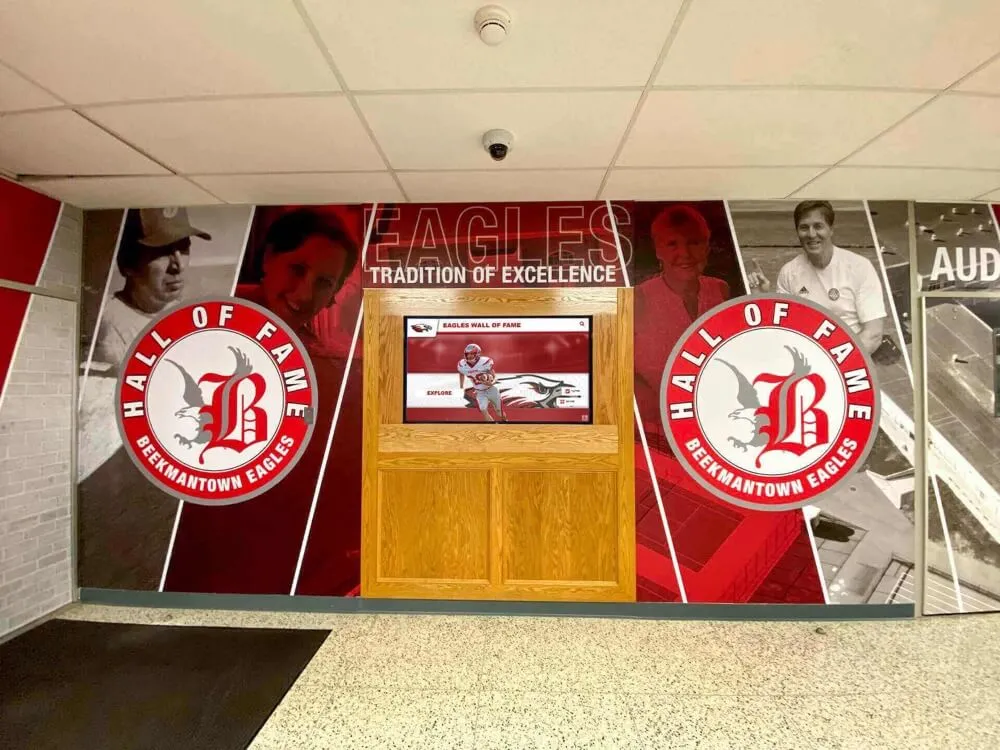
Selection Criteria and Establishing Standards
Beyond design and display logistics, successful hall of fame programs require clear selection criteria that ensure recognition maintains meaning and prestige over time.
Defining Eligibility Requirements
Programs need explicit standards determining who qualifies for consideration:
Athletic Achievement Thresholds Most programs establish minimum achievement levels such as All-Conference selection, state competition qualification, statistical milestones (1,000 points scored, etc.), or participation in championship teams. Clear thresholds help selection committees evaluate candidates objectively rather than relying entirely on subjective judgment.
Time-Based Eligibility Nearly all programs require waiting periods between graduation/career conclusion and eligibility—typically 3-10 years. This cooling-off period prevents recency bias, allows post-graduation accomplishments to emerge, and ensures recognition honors sustained excellence rather than momentary success. The specific waiting period should balance timeliness with perspective.
Character and Citizenship Standards Many programs include character requirements ensuring hall of fame represents not just athletic excellence but complete embodiment of program values. While more subjective than athletic criteria, character standards prevent honoring individuals whose later actions contradicted values the program promotes. Schools should develop clear policies addressing how post-career controversies affect eligibility.
Coach vs. Athlete Criteria Differences Coaching recognition typically considers factors including tenure length, win-loss records, championship achievements, athlete development success, program building accomplishments, and community impact. These differ substantially from athlete criteria, requiring separate evaluation frameworks while maintaining comparable prestige levels.
Managing Selection Processes
The selection process itself significantly affects program credibility and sustainability:
Committee Composition Selection committees typically include athletic directors, coaches, administrators, and community representatives. Balanced composition prevents any single perspective from dominating decisions while ensuring various types of contributions receive fair consideration. Committee terms should rotate preventing entrenchment while maintaining institutional knowledge through staggered replacements.
Nomination and Review Procedures Transparent nomination processes where athletic directors, coaches, alumni, and community members can submit candidates with supporting documentation ensure worthy honorees aren’t overlooked. Multi-stage review processes including preliminary screening and final committee voting help manage large nominee pools systematically.
Class Size Decisions Programs must determine how many inductees to recognize annually. Smaller classes (3-5) maintain exclusivity and prestige but take decades to honor all deserving candidates. Larger classes (8-12) recognize more honorees but may dilute the honor’s significance. Most programs find 4-7 annual inductees balance these competing considerations, though appropriate class size depends on school size and program history.
Handling Difficult Cases Clear policies should address sensitive situations including deceased candidates, individuals who transferred schools, multi-sport athletes, student-athletes vs. coaches, and how post-career controversies affect eligibility. Proactively establishing guidelines prevents committees from making ad-hoc decisions that may create unfortunate precedents.
Complementary Recognition Approaches
Hall of fame plaques often work best as part of comprehensive recognition ecosystems that celebrate athletic achievement through multiple channels:
Physical Trophy Cases Traditional display case installations for schools showcase team trophies, championship memorabilia, and historical artifacts complementing individual hall of fame recognition. The combination tells complete program stories rather than isolated achievement snapshots.
Retired Jersey Displays Some schools complement hall of fame plaques with retired jersey recognition for the most exceptional athletes. This creates additional honor tiers while providing visual variety in recognition displays. Jerseys work particularly well when displayed near plaques of the athletes who wore them, connecting tangible artifacts with biographical information.
Record Boards Digital or physical record boards displaying all-time performance leaders in various statistical categories provide context for hall of fame achievements while recognizing additional athletes who may not reach induction thresholds. Sport-specific digital record displays can feature hundreds of athletes across dozens of event categories.
Annual Team Recognition While hall of fame honors career excellence, complementary recognition celebrating current season achievements through honor roll displays and senior night celebrations creates layered recognition systems addressing both immediate and long-term achievement.
Coach Recognition Programs Dedicated coach recognition beyond hall of fame induction—including coach appreciation initiatives and career milestone acknowledgments—ensures the leaders shaping athletic programs receive appropriate recognition throughout their careers rather than only after retirement.
Alumni Achievement Tracking Alumni recognition programs that celebrate post-graduation accomplishments in athletics, academics, and professional achievement complement hall of fame recognition by maintaining connections with former athletes beyond their competitive careers.
Implementation Timeline and Process
Schools establishing new hall of fame plaque programs should follow systematic processes ensuring successful launches:
Months 6-12 Before Launch: Planning and Development
- Form planning committee including stakeholders from athletics, administration, and community
- Research approaches from peer schools identifying best practices and common pitfalls
- Develop selection criteria, nomination procedures, and committee structures
- Create budget plans identifying funding sources and long-term cost projections
- Design plaque templates ensuring visual consistency and professional quality
- Identify display locations and begin necessary facility preparations
Months 3-6 Before Launch: Initial Implementation
- Finalize and formally adopt selection criteria and procedures
- Solicit nominations for inaugural class through systematic outreach
- Review nominations and select inaugural inductees
- Order plaques ensuring adequate production time for quality results
- Complete display installation and lighting arrangements
- Plan induction ceremony details and communication strategies
Launch Period: Ceremony and Installation
- Host induction ceremony honoring inaugural class and celebrating program establishment
- Install plaques in prepared display locations
- Publicize recognition through local media, school communications, and social platforms
- Document ceremony and installation for historical records and future promotion
Ongoing Annual Cycle:
- Open nomination period at consistent time each year (typically early in academic year)
- Review nominations and make selections according to established timeline
- Notify inductees with sufficient advance notice enabling ceremony attendance
- Order plaques maintaining production timeline
- Host annual ceremony and installation
- Update promotional materials and historical records
Schools should document procedures in written guidelines ensuring program continuity as personnel change over time. Clear documentation prevents institutional knowledge loss that can derail programs when key leaders retire or move to other positions.
Conclusion: Creating Lasting Recognition That Inspires Excellence
Hall of fame plaques represent more than simple name displays—they create tangible connections between past excellence and present aspirations, transforming hallways into inspiration sources that motivate current athletes while preserving institutional memory for future generations. When implemented thoughtfully with appropriate design choices, meaningful wording, effective display strategies, and sustainable funding approaches, hall of fame programs become defining elements of athletic department culture that endure for decades.
The investment required—whether choosing traditional metal plaques at $150-$500 each or modern digital alternatives at $8,000-$35,000 for comprehensive systems—creates lasting value that compounds annually as programs build recognition legacies spanning generations of athletes and coaches. Schools that commit resources to proper hall of fame development demonstrate authentic valuation of athletic excellence while creating powerful recruitment tools, community pride sources, and historical archives documenting program evolution.
Whether your school pursues traditional brass plaques mounted chronologically on gymnasium walls, sophisticated trophy case integrations combining plaques with memorabilia, or cutting-edge digital displays featuring multimedia athlete profiles, the fundamental purpose remains constant: honoring achievement in ways that inspire continued excellence throughout your athletic program. By following the design principles, wording strategies, display approaches, and implementation frameworks outlined in this guide, your school can create hall of fame recognition that meaningfully celebrates athletic achievement while building traditions that strengthen program culture for generations to come.
Transform Your School’s Athletic Recognition
Ready to establish or enhance your athletic hall of fame? Rocket Alumni Solutions specializes in digital recognition displays that combine the prestige of traditional hall of fame plaques with modern interactive technology. Our touchscreen systems eliminate ongoing per-inductee costs while providing unlimited space for athlete profiles featuring photos, videos, statistics, and achievements impossible to convey on physical plaques.
Explore how digital hall of fame displays can complement or replace traditional plaque approaches while creating more engaging recognition experiences that current athletes actually interact with. Schedule a demonstration to see how schools nationwide are modernizing athletic recognition while preserving the honor and tradition that make hall of fame programs meaningful.