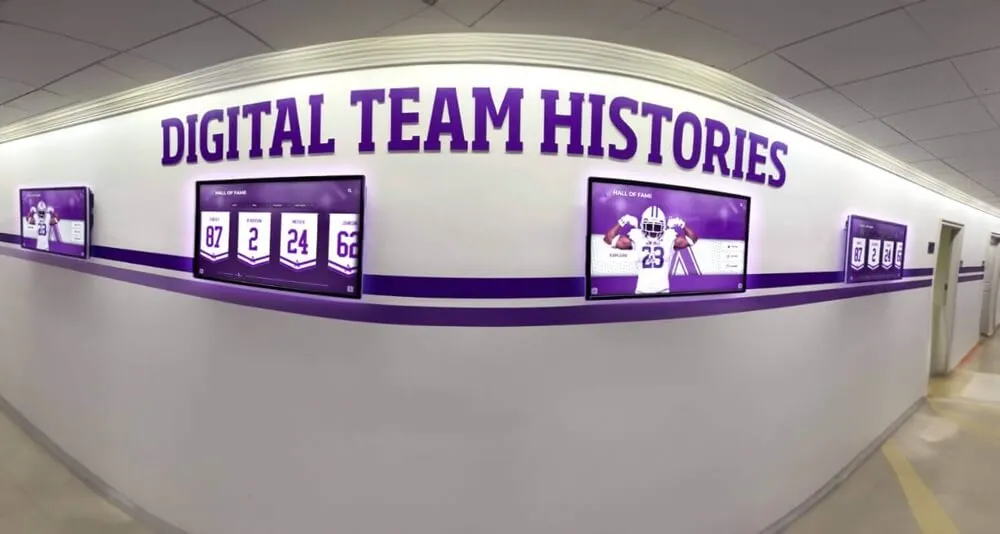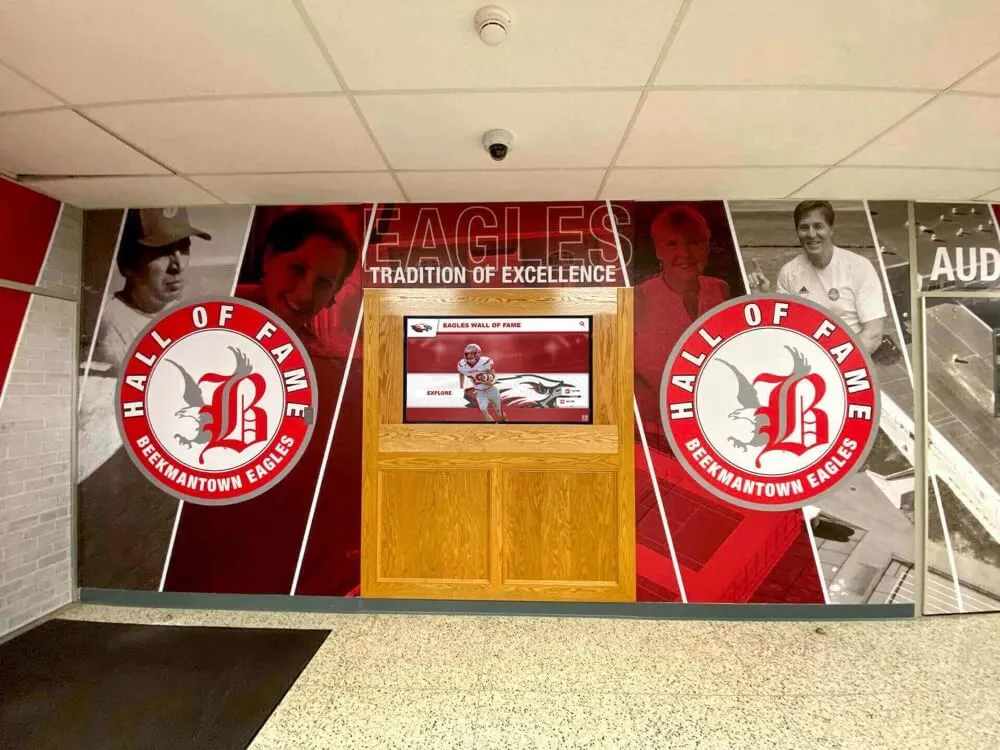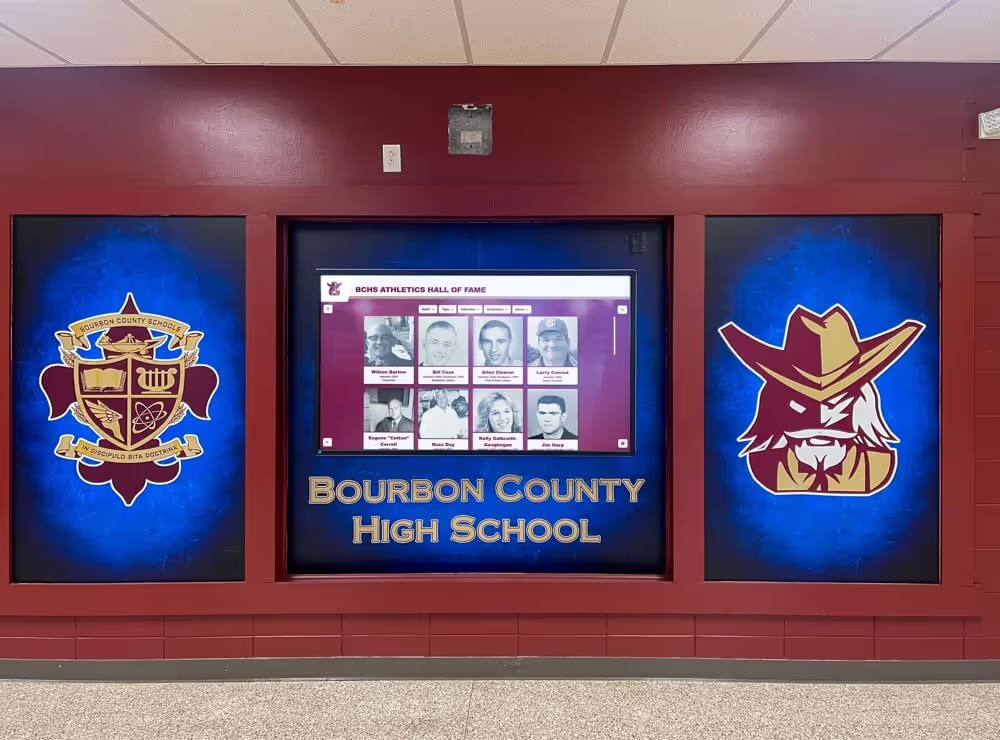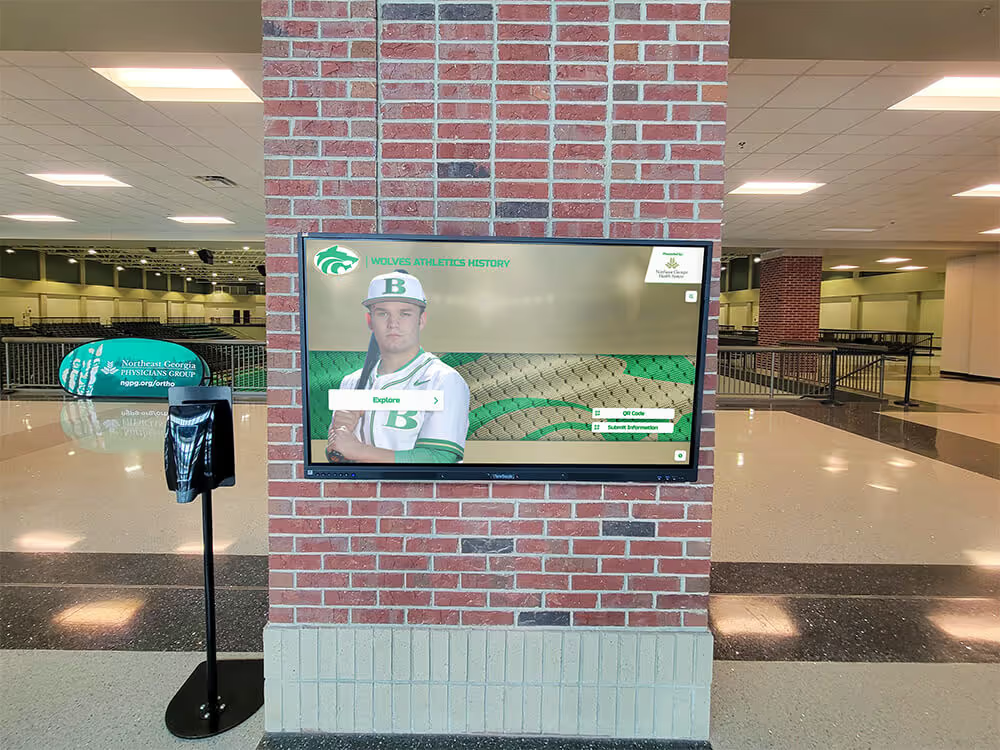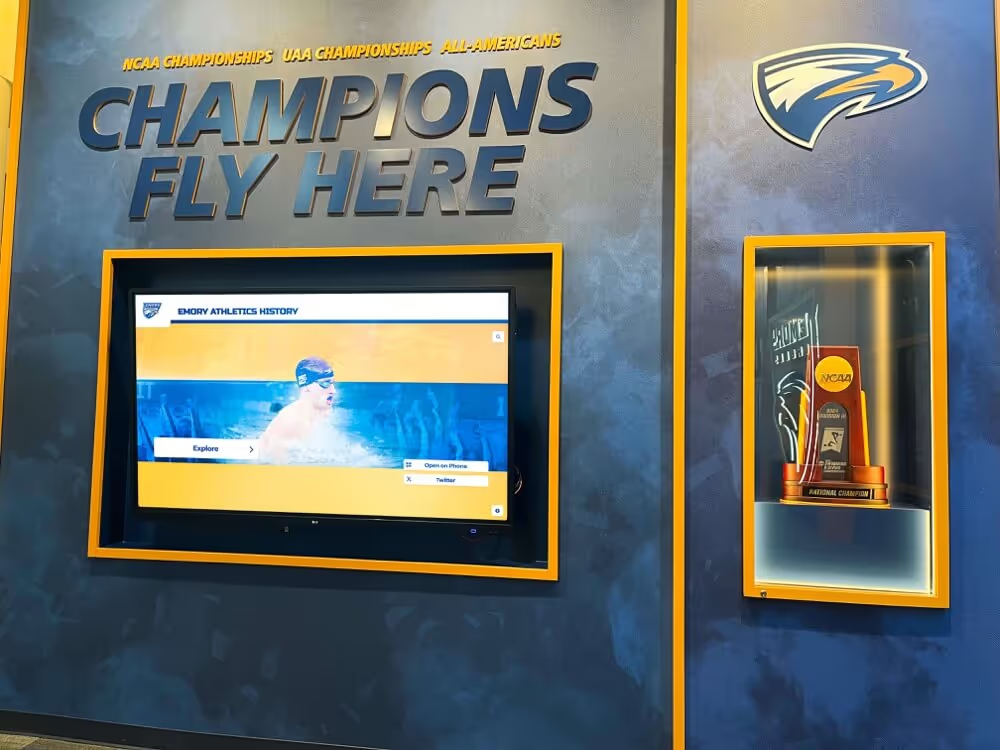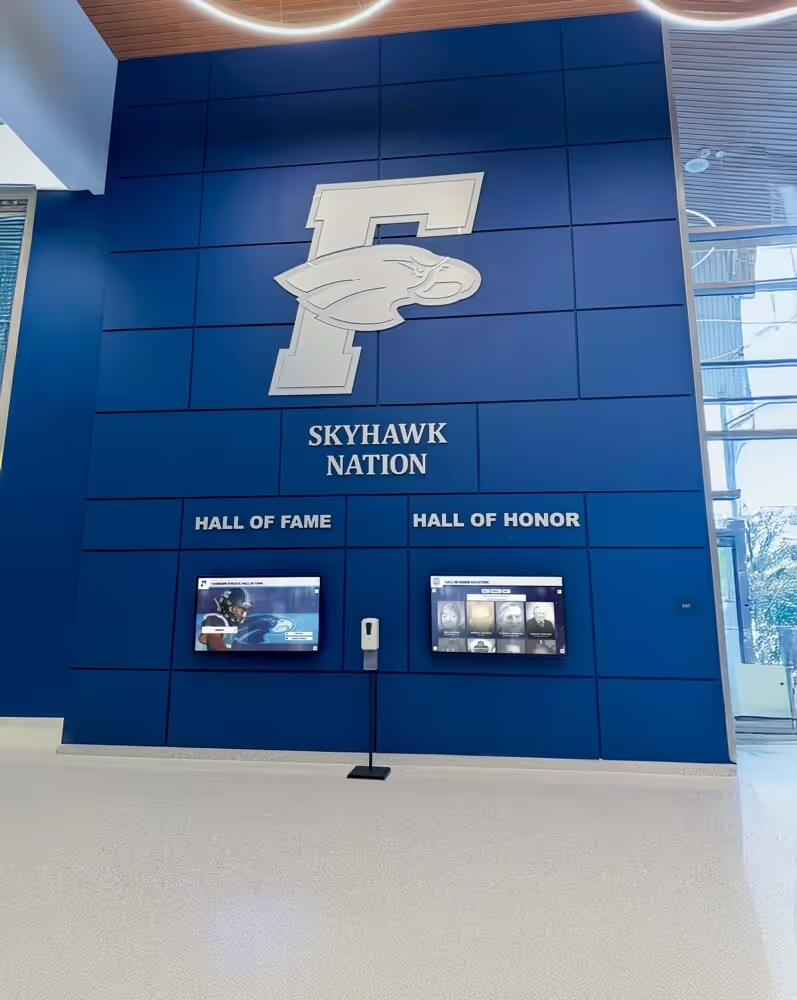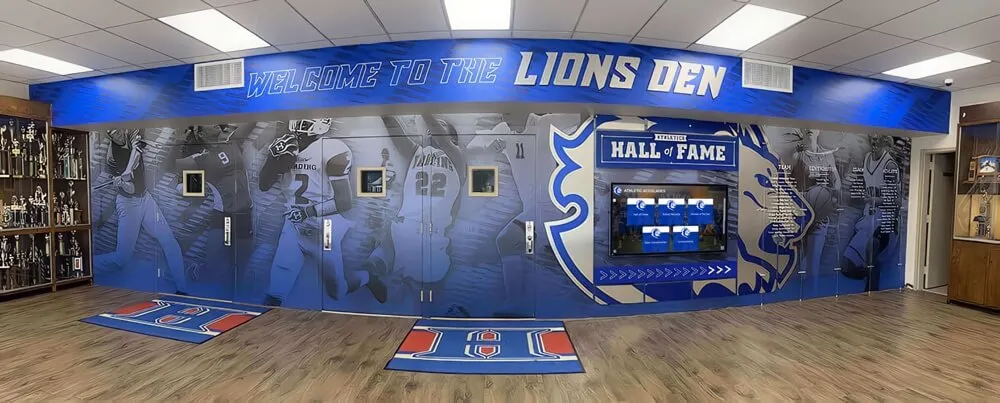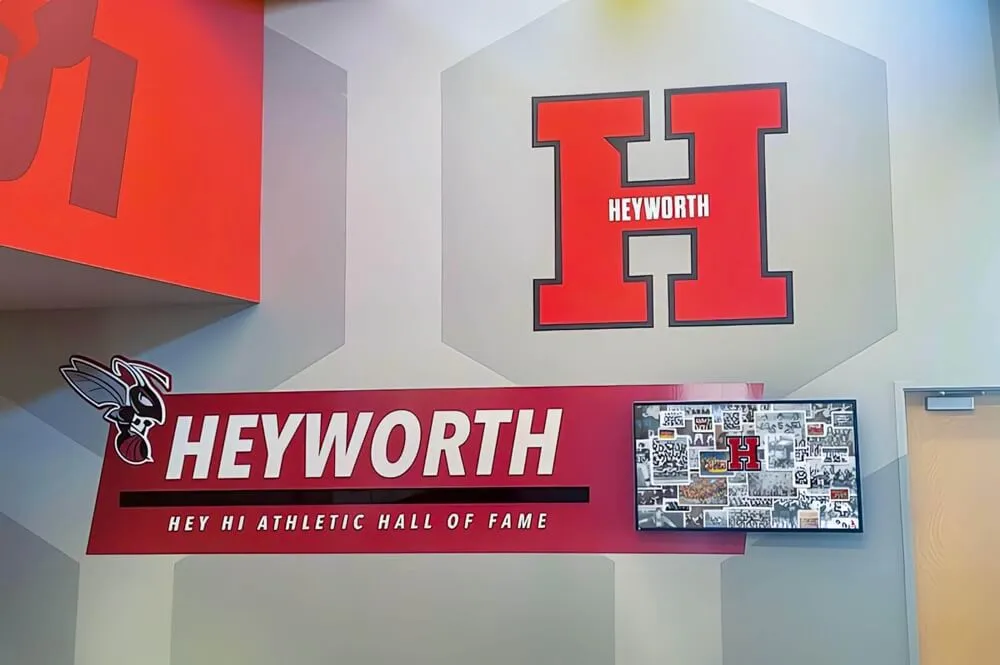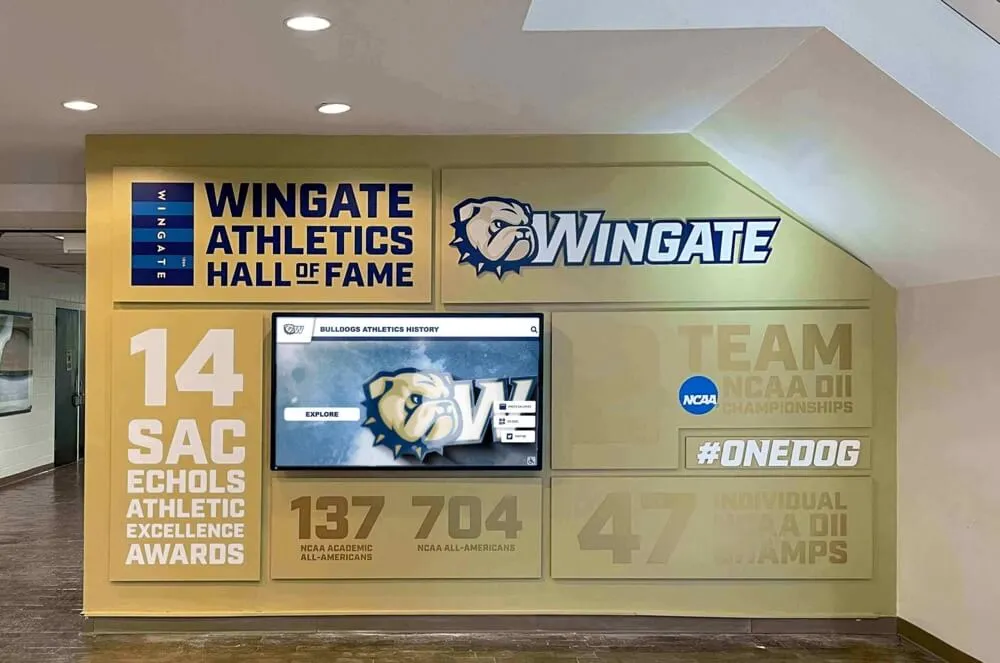
Every athletic director has been there: a box of old photos, a stack of plaques, and the nagging realization that nobody wrote down which year the state championship team graduated—or whether that jersey number belonged to the all-conference forward or the team manager. Inconsistent hall of fame photo captions are one of the most common and most fixable problems in school athletic recognition. Getting this right the first time, or cleaning it up systematically, transforms a collection of images into a searchable archive that serves athletes, families, donors, and future administrators for decades.
This guide establishes a clear, practical standard for hall of fame photo captions—covering exactly which fields to include, how to format them, and how these standards apply whether you’re building a physical plaque wall, a digital trophy case, or a touchscreen wall of fame.
The Four Core Caption Fields
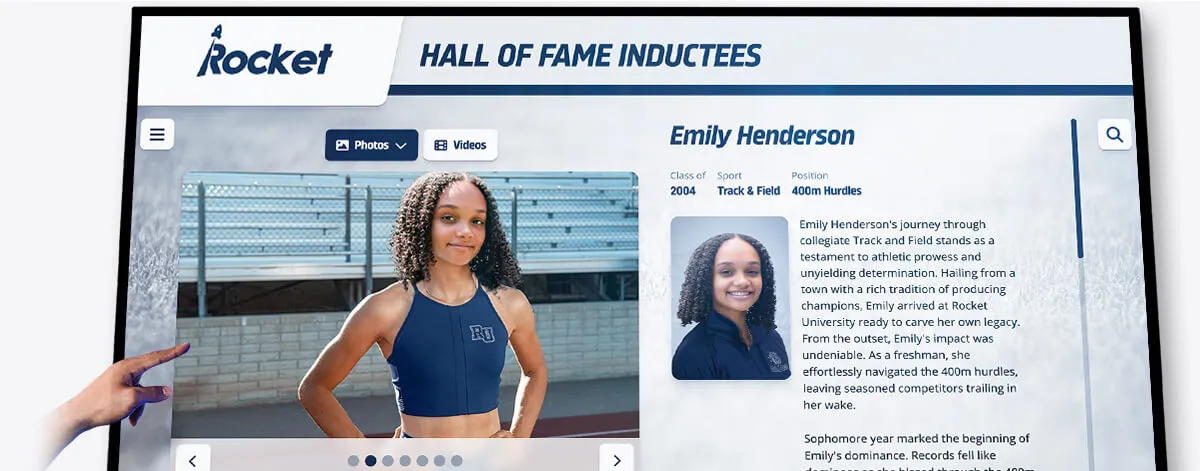
Every hall of fame photo—whether it depicts an individual inductee, a championship team, or a record-setting moment—should include four foundational data fields. These aren’t optional additions; they’re the minimum for any caption that will hold its value over time.
1. Full Legal Name (with Nickname Where Applicable)
Use the athlete’s full legal name as it appeared on school enrollment records. Middle names are optional unless there are duplicate names in your hall of fame (e.g., two inductees named “Mike Johnson” who played the same sport). When an athlete was widely known by a nickname, include it in parentheses immediately after the first name:
Examples:
- Maria Elena (Ellie) Reyes
- James T. (Big Jim) Kowalski
- Coach Patricia Anne Simmons
Avoid using nicknames alone—future archivists and search systems need the legal name as an anchor. For coaches and administrators inducted into the hall of fame, include their title as part of the caption label, not embedded in the name itself.
For team photos, list all members from left to right, row by row (back row first, front row second). Identify the row structure explicitly:
Back row, left to right: [names]. Front row, left to right: [names]. Coaching staff: [names and titles].
2. Sport, Team, or Activity
Name the specific sport and level. “Basketball” is not enough—specify varsity, junior varsity, or freshman. For schools with both boys’ and girls’ programs, make the gender designation explicit in every caption to prevent ambiguity decades later.
Standard format: [Sport] — [Level] — [Gender if applicable]
Examples:
- Football — Varsity
- Swimming & Diving — Varsity Women’s
- Track & Field — Varsity Men’s (Sprints/Jumps)
- Head Coach, Women’s Soccer
For dual-sport athletes, list all sports in the caption—both the sport associated with the specific photo and any other sports for which they’re being recognized. If your hall of fame has separate categories for individual sports, note which category the inductee falls under in addition to their full athletic profile.
Activities beyond traditional sports follow the same logic. If your school recognizes color guard varsity letter recipients or performing arts achievers alongside athletic honorees, the activity name replaces the sport name but the structure stays identical.
3. Year or Year Range
This is where most schools make their first mistake: using graduation year as a proxy for athletic career without stating it clearly. Use both the season year and the graduation year when they differ, and always specify which year you mean.
For individual inductees:
- Class of [graduation year] | Competed [first season]–[final season]
- Example: Class of 1998 | Competed 1994–1998
For team photos and championship recognition:
- State the season year, not the academic year: 1997 State Championship Season rather than 1996–97 Season (choose one format and stay consistent across your entire archive)
- For multi-year dynasty teams, note the full championship run: State Champions 2018, 2019, 2021
For coaches:
- Head Coach, [Sport], [start year]–[end year]
- If still active: Head Coach, [Sport], [start year]–present
When exact years are unknown or disputed, use “circa” rather than leaving the field blank or guessing: circa 1983. A documented approximation is more useful than an undocumented gap.
4. Awards, Titles, and Notable Achievements
The fourth field is where captions most often become inconsistent—some are exhaustive lists, others are empty. The standard should be: include every verifiable, school-level-or-higher achievement, omitting internal honors.
Always include:
- State championship participation and placement (1st, 2nd, 3rd)
- All-state designations (with year and classification)
- All-conference / all-district designations (with year and conference name)
- Individual state or national records (with the record, year set, and whether it still stands)
- Post-secondary athletic achievement: college letters, division-level play, professional contracts
- National award names (e.g., Gatorade Player of the Year, McDonald’s All-American)
Include when relevant:
- Academic All-State or Academic All-American designations
- Team captaincy (year held)
- Scholarship awards tied to athletic performance
Omit from standard captions:
- Internal team awards (“Most Improved,” “Best Attitude”) that weren’t formally voted and recorded—these are meaningful, but they belong in a separate biographical note, not the standardized caption
- Informal social media or fan recognition
For coaching inductees, the achievement field should capture win-loss records for key seasons, conference championships won, state appearances, and any coach-of-year awards from recognized state or national organizations. A resource like best coach award ideas can help administrators think through which coaching honors carry institutional weight.
Recommended Caption Format Templates
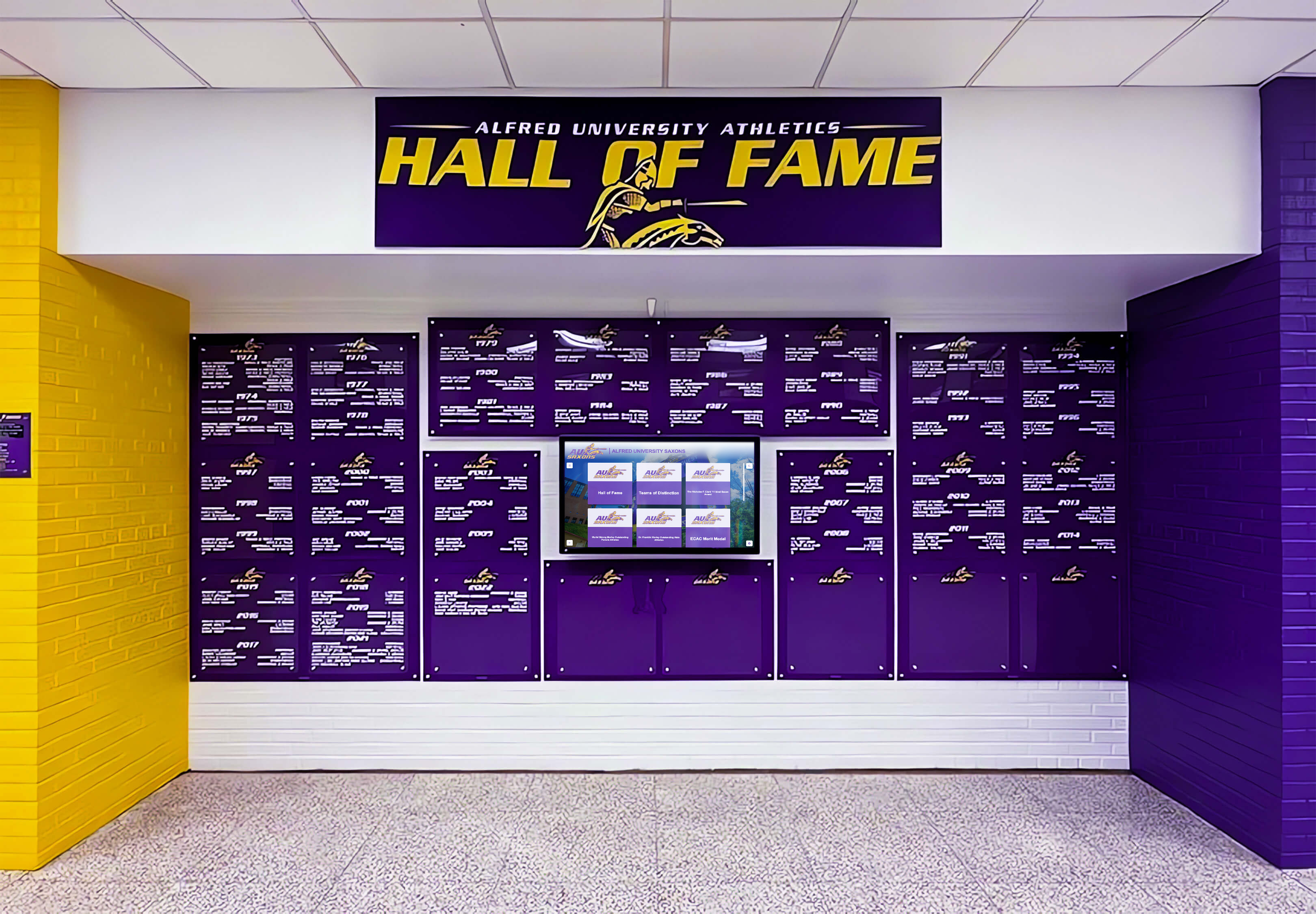
Standardizing caption format across your entire hall of fame is as important as the content itself. Use a consistent template so that every caption can be read, parsed, and searched in the same way.
Individual Athlete Caption Template
[Full Legal Name] | [Sport] — [Level] | Class of [Year]
Competed: [Start Year]–[End Year]
[Awards and Achievements, listed one per line or comma-separated]
[Optional: One sentence of narrative context]
Example:
Marcus D. Williams | Football — Varsity | Class of 2009
Competed: 2005–2009
2x All-State (2008, 2009), All-Conference (2007, 2008, 2009)
District 7 Career Rushing Record: 4,412 yards (set 2009, still standing)
Signed with Western State University, 2009
Championship Team Caption Template
[Year] [Sport] — [Level] [Championship Title]
[Final record or placement]
[Coach name and title]
[Roster: Back row L–R: names. Front row L–R: names.]
Coach Inductee Caption Template
[Full Name] | Head Coach, [Sport(s)]
Tenure: [Start Year]–[End Year]
Career Record: [W–L–T if applicable]
[Championships and major awards, one per line]
Supplemental Fields for Digital and Searchable Displays
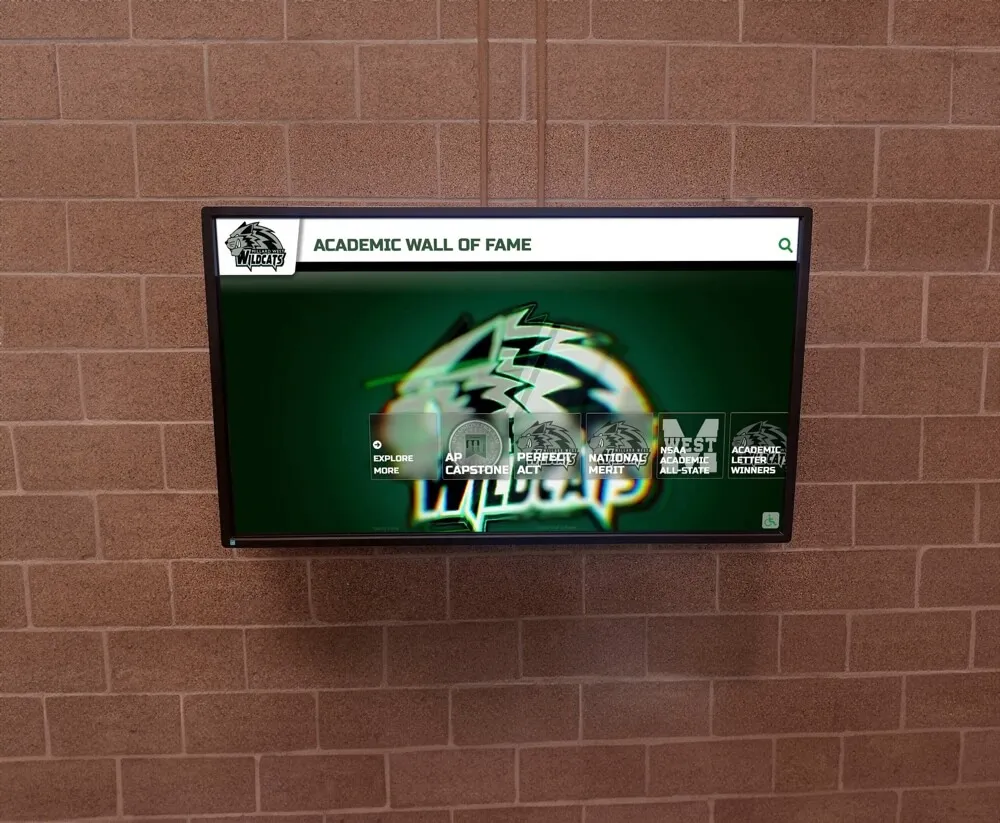
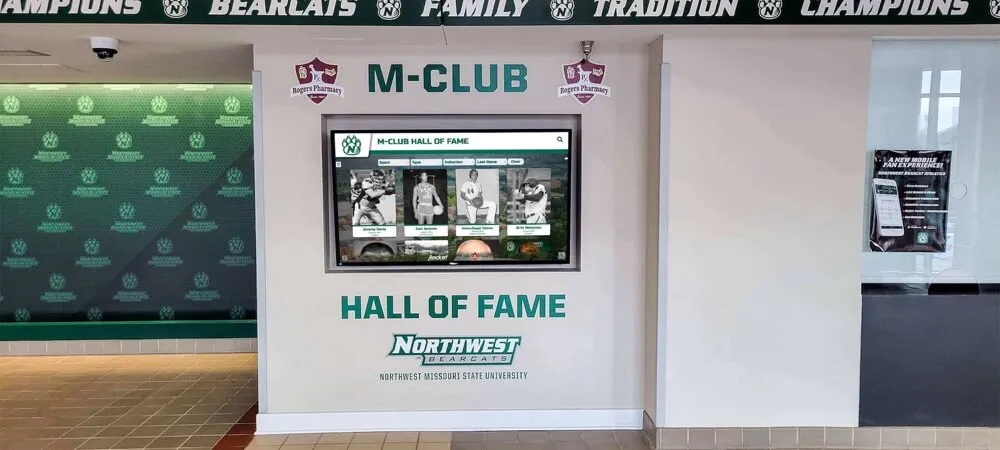
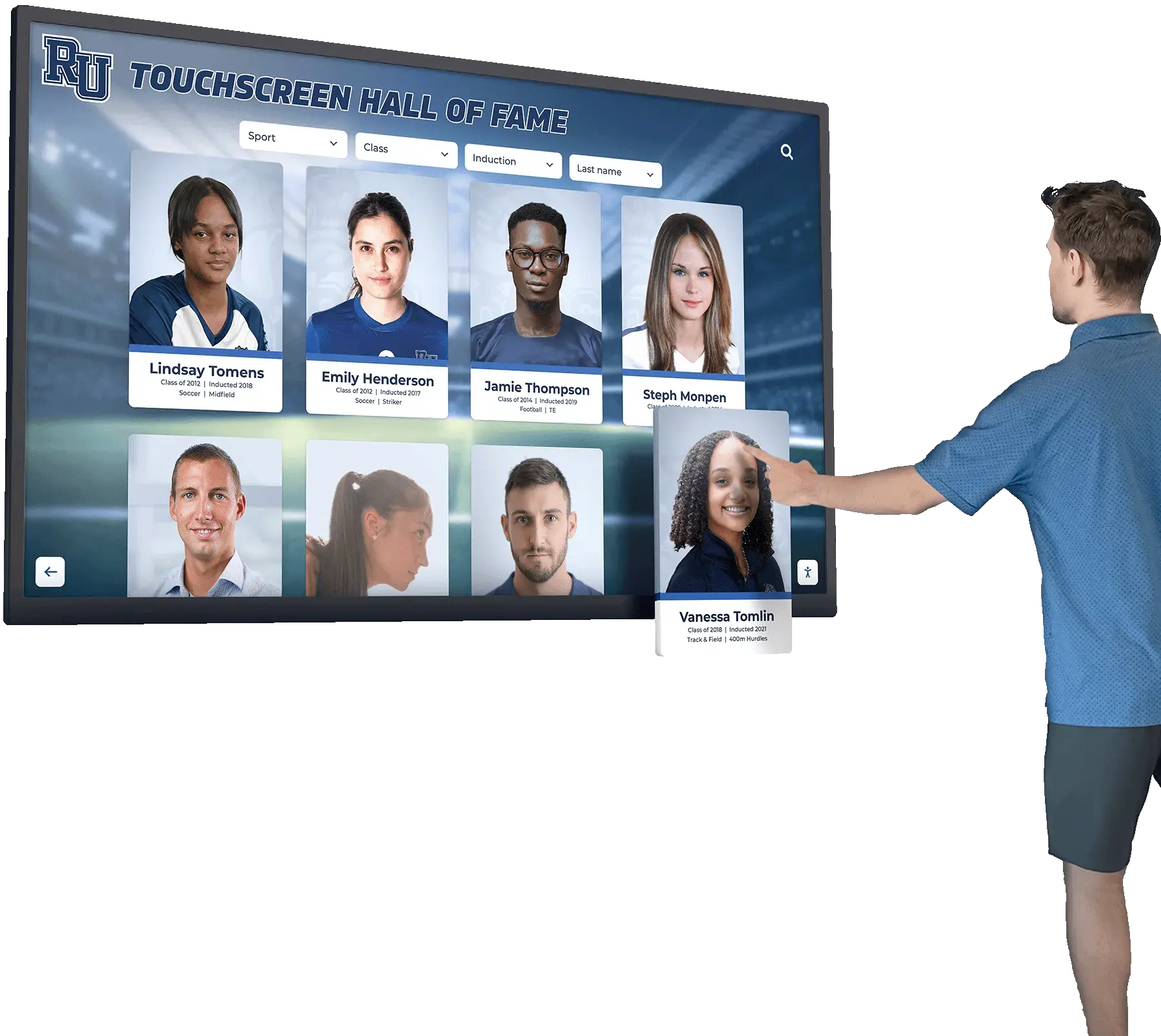
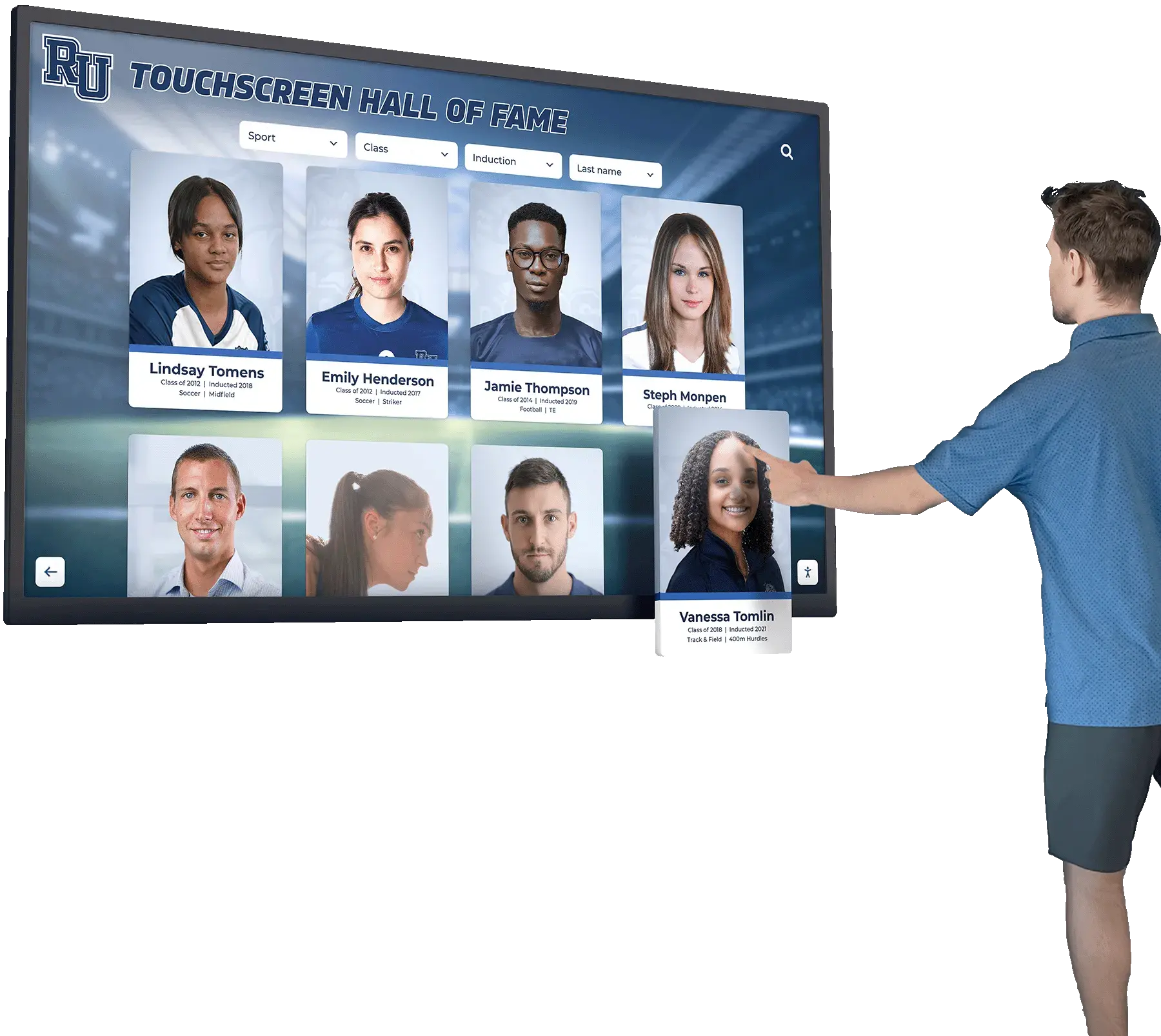
Physical plaques have space constraints that force brevity. Digital hall of fame displays—whether a digital trophy case, a wall-mounted touchscreen kiosk, or a web-accessible archive—can carry extended metadata that supports search, filtering, and future integration.
When building or migrating to a digital hall of fame, add these supplemental fields to every inductee record even if they don’t appear in the primary displayed caption:
Search and filter metadata:
- Jersey number(s) worn
- Position(s) played
- Height and weight at time of competition (for sports where this is conventional)
- Conference name and classification (e.g., IHSA Class 4A, WIAA Division II)
- Sport category tags (for filtering by sport on digital displays)
Archive and attribution metadata:
- Photo source and original photographer (if known)
- Date photo was taken (not just the induction year)
- Date caption was written or last verified
- Staff member who verified the information
- Source documents used (yearbook page, newspaper clipping, official program)
These supplemental fields become especially valuable when your record board images and hall of fame profiles need to cross-reference each other, or when you’re integrating with an athletic department database.
Common Caption Mistakes to Avoid
Using Nicknames as Primary Identifiers
“Big Mike,” “The Wall,” and “Coach T” are beloved in the memory of the community—but they’re a search and verification nightmare. Future staff cannot look up “Big Mike” in a transcript database. Always anchor captions with the legal name.
Leaving Year Fields Blank for Unknown Dates
A missing year corrupts the chronological integrity of your hall of fame and makes it impossible to place an inductee in context. If the year is unknown, do the research: yearbooks, trophy cases, newspaper archives, former coaches. If a year genuinely cannot be verified, use “circa” with your best estimate and document your source.
Listing Awards Without Specificity
“All-state” means nothing without the year and the awarding organization. “State champion” requires the year and placement. “All-conference” needs the conference name. Every award in a caption should be independently verifiable from publicly available records.
Omitting the Level of Competition
“Basketball” on a plaque at a high school that has fielded freshman, JV, and varsity teams for 60 years is not enough. Future readers need to know whether an inductee was a varsity starter or a JV standout—both deserve recognition, but they tell different stories.
Inconsistent Date Formats
Pick one convention and apply it universally: either the season year (1997) or the academic year (1996–97). Mixing conventions within the same hall of fame creates confusion and makes cross-referencing difficult.
Copying From Other Sources Without Verification
Newspaper clippings and yearbook write-ups are excellent sources, but they contain errors. Before any award claim appears in an official caption, verify it against the awarding organization’s records. This is especially important for records that “still stand”—confirm their current status before publication.
Caption Standards for Recognition Beyond Athletics
The same framework applies when your recognition program extends beyond traditional sports. Schools that recognize performing arts program awards alongside athletic halls of fame need to establish parallel standards: full name, activity/ensemble, year, and verified awards. The caption template adapts slightly—“Position” becomes “Role” or “Instrument”—but the four core fields remain identical.
When programs like color guard or winter guard are included in the hall of fame, establishing consistent caption standards prevents a two-tier system where athletes receive richly documented profiles while performing arts honorees receive sparse entries.
Building a Verification Workflow Before Induction
Caption accuracy is easiest to achieve at the time of induction, not years later. Implement a verification workflow that runs before a new inductee’s profile goes live:
- Draft the caption using all available sources (yearbook, newspaper archive, school records, coach recollection)
- Send to the inductee (or family for posthumous inductions) for factual review—they often catch errors and can provide missing details
- Cross-reference awards with the awarding organization’s official records (state athletic associations publish all-state lists; national organizations maintain searchable award archives)
- Athletic director sign-off confirms competitive details and records
- Log the sources in the supplemental metadata fields so future staff know exactly where each fact came from
This five-step process takes extra time at induction but eliminates the painful retroactive corrections that plague archives built on unverified recollections. Planning an athletic banquet or induction ceremony is the right moment to formalize this workflow so it becomes institutional practice rather than individual effort.
Organizing Captions for Multi-Sport Athletes
Multi-sport athletes are common in school programs, and they require a decision: does the hall of fame carry one profile covering all sports, or separate entries for each? Both approaches work, but each demands consistent caption treatment.
Single unified profile: List all sports in the Sport field (e.g., Football, Baseball, Track & Field — Varsity). List all awards chronologically, grouped by sport. Include one career timeline spanning all sports.
Sport-specific entries: Each entry carries the caption template for that sport only. Add a cross-reference line pointing to the athlete’s other entries: See also: [Name], Football.
Whichever model you choose, document it in your hall of fame policy so future inductors apply it consistently. A sports season recap approach can help contextualize multi-sport athletes who dominated a single school year across different seasons.

How Digital Displays Change Caption Requirements
Physical plaques constrain captions to whatever fits on an engraved plate or printed insert. Digital walls of fame eliminate that constraint—but they also raise the bar for caption quality, because every field becomes searchable, filterable, and linkable.
When building or migrating to a digital recognition system, plan caption fields in three layers:
Display layer (visible in the primary profile view): Full name, sport, year range, top 3–5 achievements. This mirrors what you’d engrave on a plaque.
Expanded layer (visible when a user taps “More” or expands the profile): Full award list, biographical narrative, team affiliations, records.
Archive layer (internal metadata, not publicly displayed): Source documents, verification log, photo attribution, staff notes.
A signing day display system demonstrates how even current-year recognition benefits from structured metadata—the same caption framework that works for alumni hall of fame profiles can standardize how signing day announcements are documented before they’re filed into the permanent archive.
Migrating Existing Caption Data
Most schools beginning a hall of fame digitization project will have inconsistent legacy captions—some detailed, some nearly empty, some using formats that made sense to whoever created them in 1987 but are unclear today. Migration is a project, not a sprint.
A practical migration approach:
Audit first. Catalog every existing caption field by field to identify which fields are present, which are missing, and which have inconsistencies. A simple spreadsheet with one row per inductee and columns for each required field makes the gaps visible immediately.
Prioritize inductees still reachable. Living inductees and their immediate families can verify and enrich legacy captions faster than archival research can. Reach out before digitization, not after.
Use the state athletic association archive. Most state high school athletic associations maintain records of all-state teams, state tournament results, and championship records going back several decades. This is the fastest path to verified award data for most inductees.
Document what you cannot verify. Rather than inventing or omitting, mark unverified fields clearly in internal metadata. A caption that says “All-State 1974 (unverified, source needed)” is more useful than one that either drops the award or publishes it without verification.
Establish a correction policy. Once captions are published on a digital or physical display, establish a clear process for submitting corrections—and a staff member responsible for handling them. Inductees and families notice errors and deserve a fast path to resolution.
Connecting Caption Standards to Donor and Sponsor Recognition
Captions aren’t only about athletes. Many halls of fame include donor recognition walls, scholarship boards, and sponsor acknowledgments alongside athletic profiles. The same principles apply: full name (organization name for institutional donors), recognition category, and year(s) of contribution. Consistent caption standards across all recognition types—not just athletics—make it easier to maintain a unified system and demonstrate professionalism to major donors.
When a donor’s name appears on a building, a scholarship, or a named award, and that recognition is documented in the hall of fame, linking the donor’s profile to the athletes who received their scholarship or played in their named facility creates meaningful connection that static plaques cannot replicate.
Next Steps: Standardizing Your Hall of Fame Caption System
Photo captions are the foundation your hall of fame archive is built on. Inconsistency at the caption level propagates into every display, search result, and future migration. The investment in getting this right—whether you’re starting a new program or retrofitting an existing one—pays dividends every time a family member looks up a parent, every time a donor sees their name properly documented, and every time a new administrator inherits an archive that actually makes sense.
Start with a caption audit. Pull your current inductee list and score each profile against the four core fields: full name, sport/level, year range, and verified awards. The gaps you find are your roadmap.
Write a one-page caption policy. Document your chosen formats, your verification workflow, and your standards for award specificity. One page, approved by the athletic director, eliminates most future inconsistency.
Plan for digital migration. Even if your hall of fame is currently physical plaques only, build captions now to the standard your digital system will eventually require. It’s far easier to build the metadata once than to rebuild it during a future migration.
When you’re ready to move from a manual system to a searchable, touchscreen-enabled athletic hall of fame with structured caption fields, role-based content management, and professional design—see how Rocket Alumni Solutions builds it for schools like yours.