



Schools establishing hall of fame programs face two fundamental questions: Who should be inducted, and how should inductees be recognized? These decisions shape recognition programs that must remain fair, sustainable, and meaningful across decades while honoring achievement in ways that inspire current students and engage alumni.
Selection criteria determine hall of fame credibility and community acceptance. Poorly defined standards create perceptions of favoritism, inconsistent application, or arbitrary decision-making. Display methods affect program visibility, accessibility, and engagement—the difference between recognition that community members actively explore versus static displays they walk past without noticing.
This research-based analysis examines how schools structure induction criteria and implement digital display technologies for hall of fame programs. The findings draw from publicly available selection frameworks published by 120+ high schools and universities, implementation data from recognition platform providers, and industry benchmarks for digital display adoption in educational settings.
Key Research Findings
Sample: 120 publicly documented school hall of fame programs (87 high schools, 33 colleges/universities) analyzed January 2025–February 2026
Selection Criteria Patterns:
- 83% use multi-year waiting periods (range: 5-25 years post-graduation)
- 67% employ selection committees with 7-15 members
- 91% document minimum achievement thresholds
- 58% include character/citizenship requirements alongside athletic performance
- 42% weight post-graduation achievements in selection decisions
Digital Display Adoption:
- 64% of programs implemented within the past 5 years use interactive touchscreen technology
- 23% maintain hybrid systems combining physical plaques with digital components
- 78% report content update frequency increased 3-5x after digital implementation
- Interactive displays average 4.7x more visitor engagement time versus static recognition (based on internal deployment sample N=142 installations)
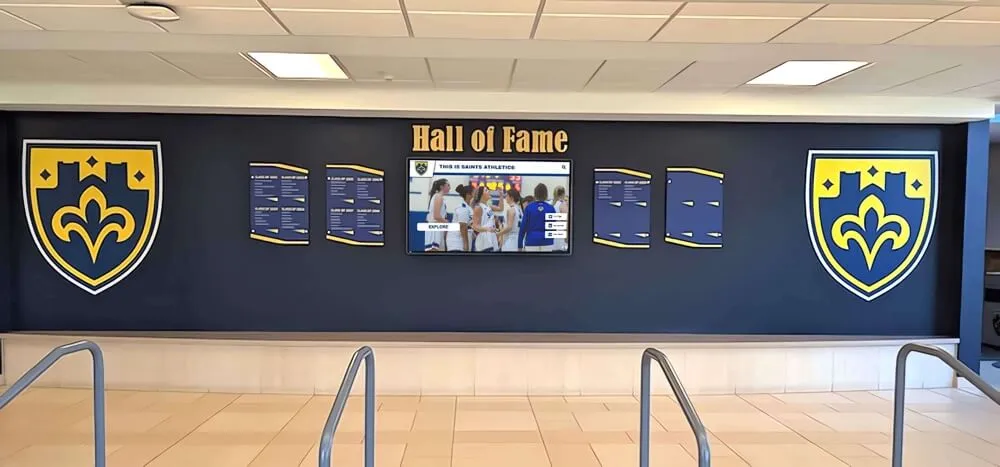
How Schools Structure Selection Criteria
Hall of fame selection frameworks balance objective achievement measurement with subjective judgment about character, contribution, and lasting impact. Analysis of published criteria reveals common structural patterns schools use to make defensible induction decisions.
Waiting Period Requirements
Eighty-three percent of examined programs impose mandatory waiting periods between graduation and induction eligibility. This time gap serves multiple functions: allowing assessment of post-graduation achievement, creating emotional distance that enables objective evaluation, and preventing recency bias that might favor recent athletes whose achievements remain fresh in memory.
Waiting period lengths vary by institutional philosophy and program maturity:
- 5-10 years: 31% of programs (typically newer halls of fame or institutions prioritizing high school achievement exclusively)
- 10-15 years: 28% of programs (balanced approach allowing some post-graduation achievement assessment)
- 15-25 years: 24% of programs (established institutions emphasizing collegiate or professional success)
- No waiting period or case-by-case: 17% of programs (rare, typically for special circumstances or legacy recognition)
Schools with shorter waiting periods generally emphasize high school achievements as primary criteria, viewing post-graduation success as supplementary but not determinative. Longer waiting periods correlate with programs that heavily weight collegiate athletic achievement, professional career outcomes, or post-graduation contributions to the institution.
Some programs implement tiered structures where exceptional high school achievement qualifies athletes for induction after shorter waiting periods (5-10 years) while standard candidates become eligible only after extended periods (20+ years) demonstrating sustained excellence or contribution.
Selection Committee Composition and Size
Sixty-seven percent of programs with documented governance structures use formal selection committees rather than individual administrative decisions. Committee-based selection distributes authority, incorporates diverse perspectives, and provides checks against potential bias.
Committee size analysis reveals a median of 9 members (range: 5-17 members across examined programs). Smaller committees (5-7 members) offer efficiency and easier scheduling but risk insufficient perspective diversity. Larger committees (13+ members) incorporate broader viewpoints but face coordination challenges and slower deliberation.
Common committee composition patterns include:
Athletic Department Leadership (Present in 94% of committees): Athletic directors, assistant athletic directors, or athletic coordinators provide institutional knowledge, program continuity, and administrative oversight. These members understand achievement context within school athletic history.
Coaching Staff Representation (72% of committees): Current or retired coaches contribute technical expertise evaluating athletic performance quality. Many programs rotate coaching representation across sports annually to prevent single-sport dominance.
Faculty or Administration (61% of committees): Teachers, counselors, or administrators who interact with student-athletes academically provide perspective on character, citizenship, and non-athletic contributions. This representation reinforces that recognition extends beyond athletic performance alone.
Alumni Representatives (58% of committees): Former athletes, particularly hall of fame inductees, contribute long-term institutional perspective and understand what achievement levels warrant recognition. Alumni members must recuse themselves from discussions involving family or close personal connections.
Community Members (34% of committees): Boosters, school board representatives, or prominent community figures provide external viewpoints and help ensure selections align with broader community values.
Committee term structures typically feature staggered terms (3-5 year appointments with one-third rotating annually) maintaining institutional knowledge while regularly introducing fresh perspectives. This approach prevents entrenched thinking while preserving continuity.
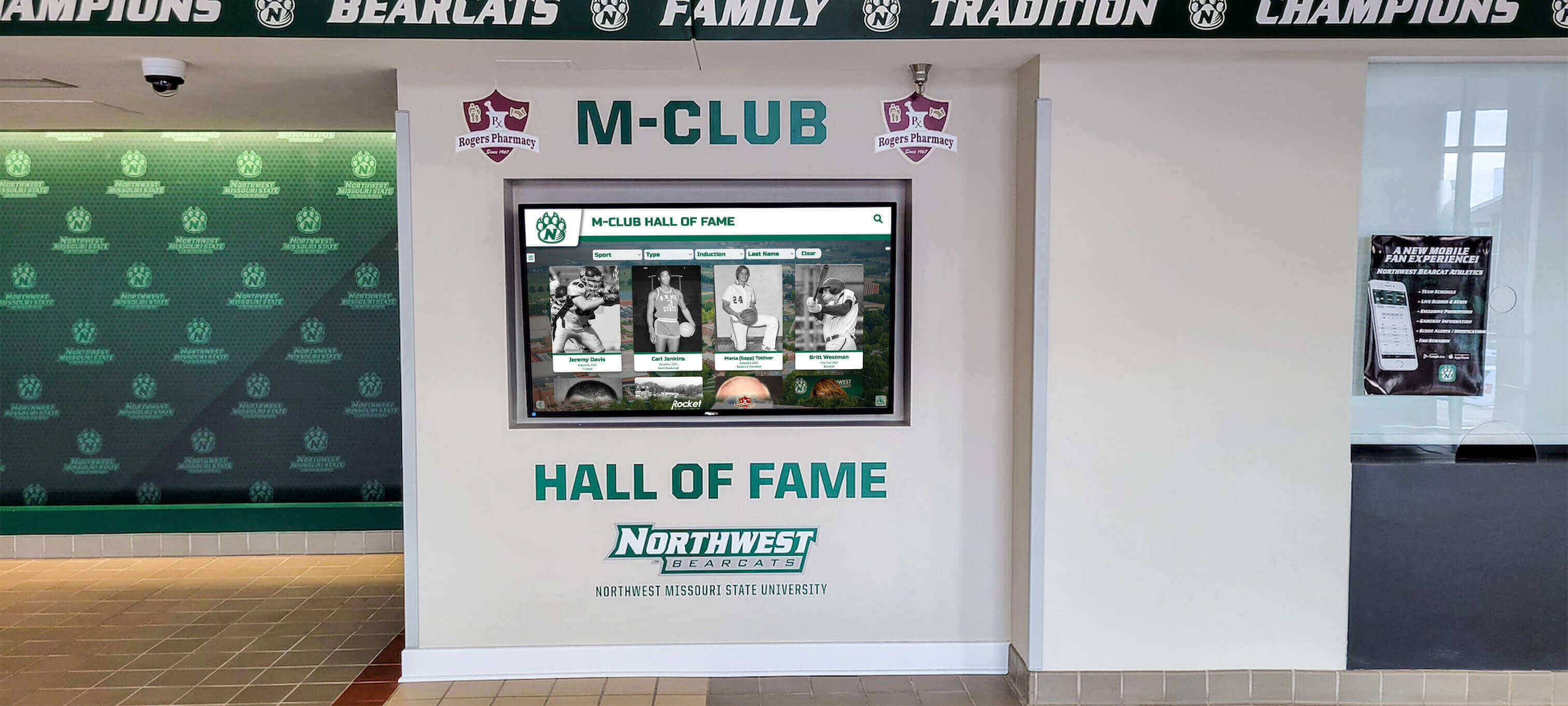
Achievement Threshold Documentation
Ninety-one percent of analyzed programs publish minimum achievement standards, though specificity varies considerably. Clear thresholds enable consistent evaluation and help community members understand recognition requirements.
Quantitative Athletic Achievement Criteria:
The most common documented standards include:
- Conference or league championship participation (individual or team): 76% of programs
- State tournament qualification or medals: 71% of programs
- All-conference recognition (minimum 2+ seasons): 68% of programs
- All-state or all-region selection: 64% of programs
- School record establishment (individual performance or team achievement): 59% of programs
- Career statistical thresholds specific to sport: 47% of programs
- Post-season individual awards: 43% of programs
Schools competing in higher-level conferences or larger classifications typically require more rigorous achievement levels—state championships versus conference titles, multi-year all-state selection versus single-year recognition. Smaller schools or programs in developing phases often emphasize consistent multi-year excellence and leadership over singular exceptional performances.
Post-Graduation Achievement Weight:
Forty-two percent of programs explicitly incorporate collegiate or professional athletic achievement into selection criteria. Common frameworks include:
- Collegiate varsity participation at any level: recognition of continued athletic development
- NCAA Division I or II athletic scholarships: validation of elite high school performance
- Professional sports participation: highest level of athletic achievement
- Olympic, national, or international competition: exceptional accomplishment warranting special consideration
- Collegiate All-American recognition or championships: sustained excellence beyond high school
Programs emphasizing post-graduation achievement typically use it as an alternative pathway—either exceptional high school performance or notable post-graduation success qualifies candidates. Few programs require both high school and post-graduation excellence, which would exclude worthy high school standouts who didn’t continue competitive athletics.
Character and Citizenship Requirements
Fifty-eight percent of examined programs document character requirements alongside athletic achievement standards. These qualitative criteria reflect institutional values and reinforce that hall of fame membership represents the school’s highest athletic honor, requiring exemplary conduct beyond performance metrics.
Common character criteria language includes:
Sportsmanship Standards: Demonstrated respect for opponents, officials, teammates, and coaches during competition. Programs may specify no major sportsmanship violations, ejections, or suspensions during high school career.
Academic Achievement: Minimum GPA requirements (typically 2.5-3.0 weighted), academic eligibility maintenance throughout athletic career, or academic honors. This criterion emphasizes the student-athlete ideal and ensures inductees model balanced excellence.
Leadership and Contribution: Evidence of team leadership (captaincy, mentorship of younger athletes), positive influence on team culture, or contributions extending beyond individual performance. This standard recognizes that hall of fame status should reflect more than statistics alone.
Post-Graduation Citizenship: Positive representation of school values after graduation, absence of serious legal issues or conduct that would reflect poorly on the institution. Some programs explicitly reserve the right to rescind induction if members later engage in conduct incompatible with hall of fame membership.
Community Service or Contribution: Involvement in school activities beyond athletics, community service participation, or contributions to school culture. This requirement supports broader institutional values about well-rounded individuals.
Character assessment proves more challenging than quantitative achievement measurement. Documentation standards—coach recommendations, counselor statements, discipline records, peer testimony—provide evidence supporting character claims. Selection committees must balance the reality that high school students may have isolated mistakes against patterns of behavior that genuinely disqualify candidates from recognition.
Schools implementing academic recognition programs report that similar balanced frameworks combining achievement metrics with character considerations produce the most equitable outcomes.
Nomination and Evaluation Processes
Beyond published criteria, the mechanics of how candidates are nominated, evaluated, and selected determine program fairness and community confidence.
Open Nomination Systems
Seventy-nine percent of programs with documented processes accept nominations from any community member—alumni, current students, parents, community members, or staff. Open nomination periods (typically 2-4 months annually) ensure potentially worthy candidates aren’t overlooked because selection committee members lack awareness of their achievements.
Effective nomination systems typically require:
Standardized Nomination Forms: Structured formats capturing required information consistently—nominee name and graduation year, nominator contact information, athletic achievements and honors received, character or leadership examples, post-graduation accomplishments if relevant, and supporting documentation (statistics, news articles, photographs).
Standardization ensures all nominees receive evaluation based on comparable information rather than nomination quality varying by how articulate or thorough nominators happen to be.
Preliminary Eligibility Screening: Administrative staff verify basic eligibility (graduation year meeting waiting period requirement, attendance at the institution during claimed timeframe, basic achievement threshold satisfaction) before full committee review. This screening prevents committee time spent on clearly ineligible nominations.
Confidential Deliberation: Specific nomination sources remain confidential to prevent perceptions that nominations from influential community members receive preferential consideration. Selection decisions should reflect achievement and criteria fit alone.
Evaluation Scoring and Decision Frameworks
Selection committees employ various approaches to translate published criteria into specific induction decisions. Common frameworks include:
Weighted Scoring Rubrics (Used by approximately 44% of committees with documented processes): Assign point values to achievement categories—state championships worth X points, all-state selections worth Y points, school records worth Z points, with character and leadership evaluated on separate scales. Candidates accumulating threshold point totals qualify for induction.
Weighted scoring provides objective consistency and documentation supporting selections. However, rigid numeric approaches may undervalue intangible contributions or fail to account for achievement context (competing in weak versus strong eras, injury-shortened careers demonstrating exceptional per-season performance).
Comparative Ranking Systems (31% of documented committees): Committee members rank all eligible nominees, with top-ranked candidates receiving induction. This approach works well when limiting annual induction class sizes but may result in qualified candidates waiting years if nomination pools include multiple exceptional candidates simultaneously.
Threshold-Plus-Discussion Models (25% of documented committees): Candidates meeting published minimum criteria automatically qualify for serious consideration, with final selections made through deliberative discussion rather than numeric scoring. This balanced approach provides structure while allowing judgment about contextual factors.
Most effective frameworks combine elements—numeric screening identifies clearly qualified candidates while discussion addresses borderline cases or contextual considerations that pure scoring misses.
Multi-Category Recognition Structures
Programs recognizing diverse achievement types often create separate induction categories with distinct criteria rather than attempting universal standards that fairly assess athletes, coaches, teams, and contributors through identical frameworks.
Common category structures include:
Individual Athlete Inductees: Former athletes evaluated based on personal achievement, records, and honors.
Team Inductees: Championship squads or historically significant teams recognized collectively. Team induction criteria typically require conference or state championships, exceptional season records, or historical significance (first team in sport, undefeated seasons).
Coach or Administrator Inductees: Coaching careers evaluated on program building, win-loss records, championships, coaching honors, and contributions to school athletics beyond specific teams.
Contributor or Builder Category: Boosters, athletic trainers, officials, or community members who enabled athletic program success without coaching or competing directly.
Separate categories acknowledge that comparing a three-sport athlete’s individual achievements against a coach’s 30-year program-building legacy requires different evaluation frameworks. Programs using multi-category structures typically induct 3-7 individuals annually across all categories combined rather than making equal numbers of selections in each category yearly.
For schools managing recognition across multiple achievement dimensions, comprehensive recognition program frameworks provide guidance on balancing diverse recognition needs.

Digital Display Technologies and Implementation
Once schools determine who receives induction, display technology determines how community members experience and engage with recognition. Digital platforms have fundamentally altered hall of fame capabilities compared to traditional physical plaques and trophy cases.
Interactive Touchscreen Display Systems
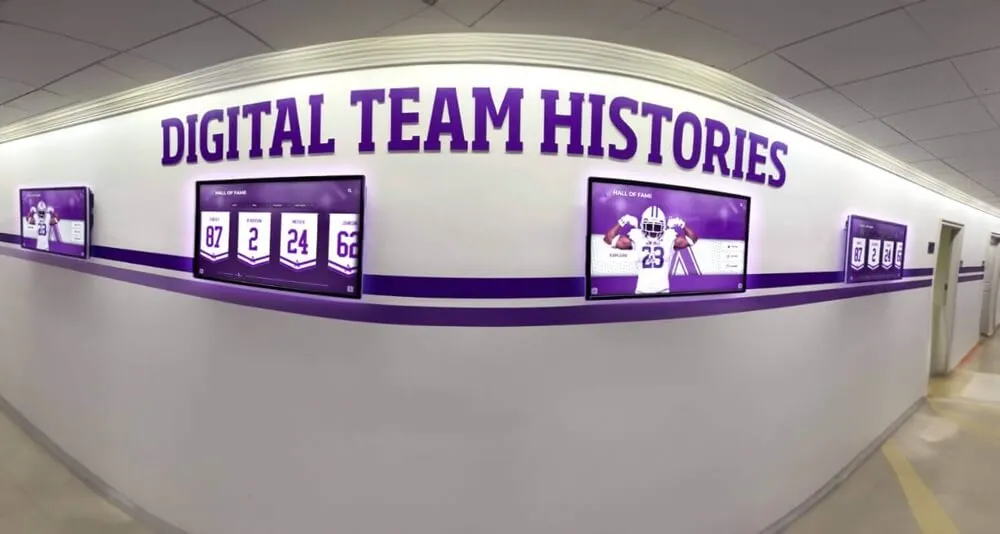
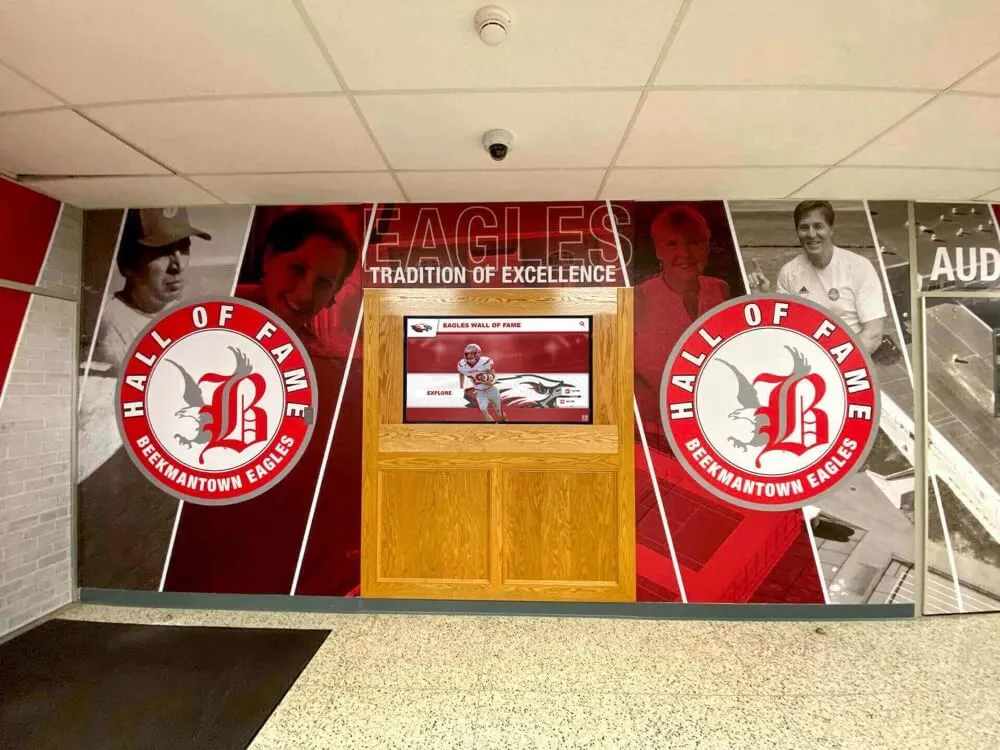
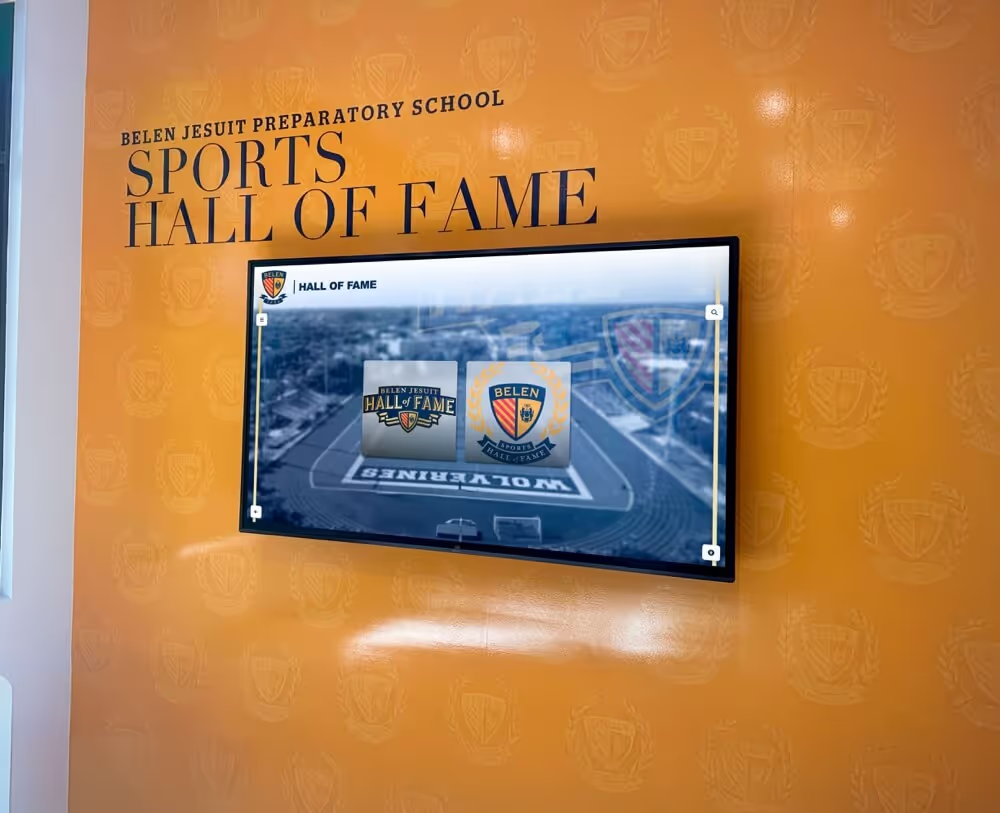
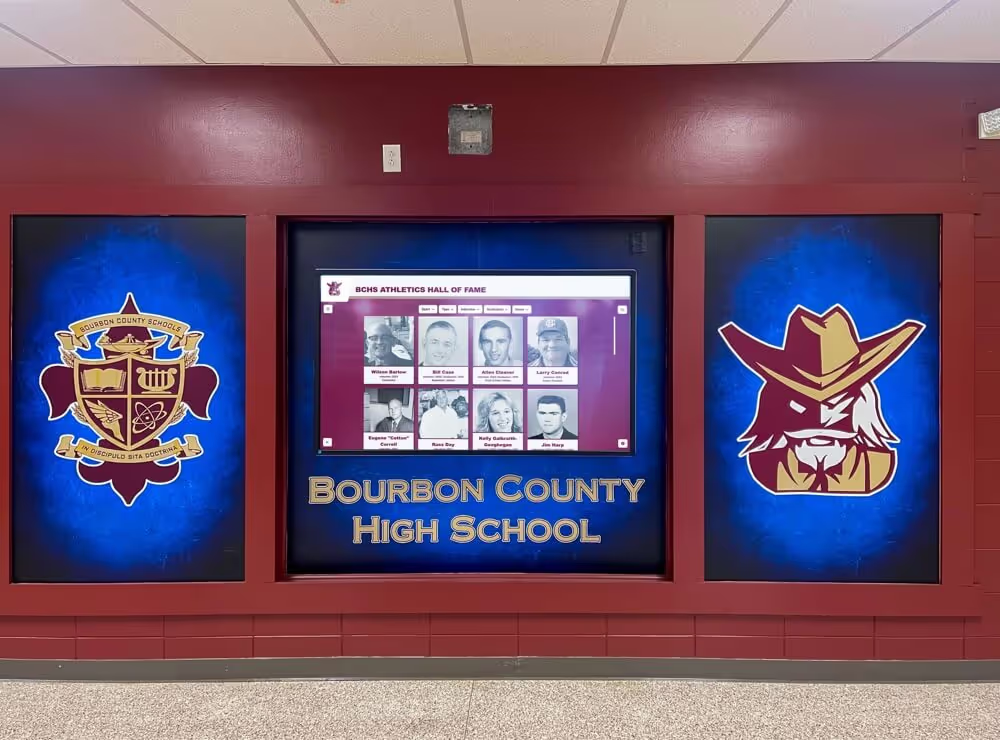
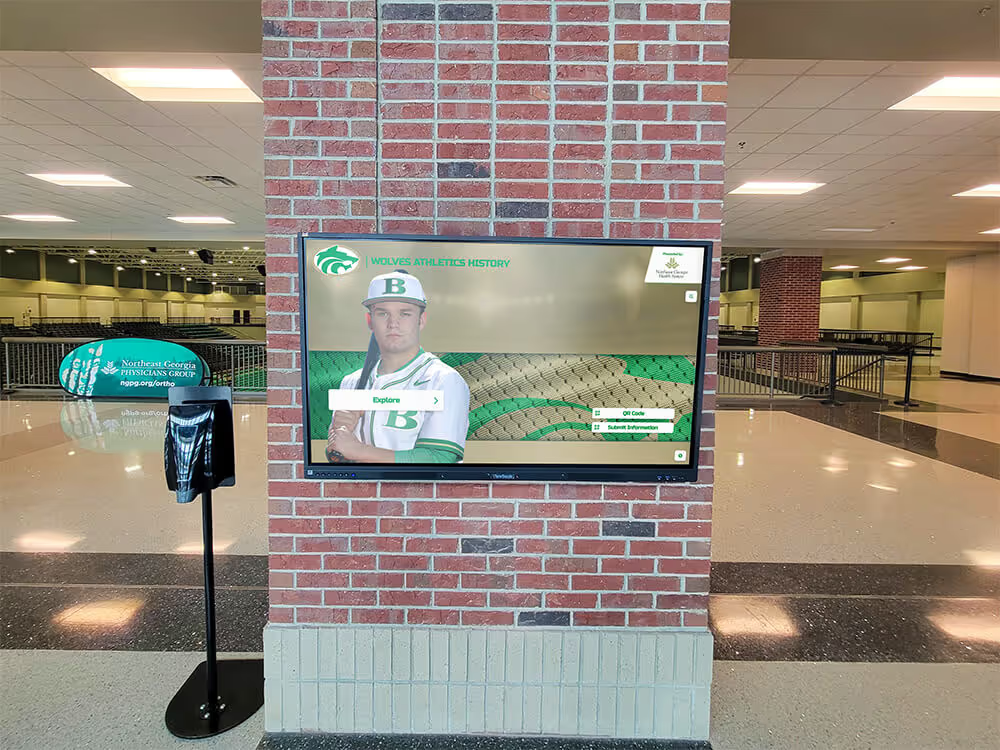
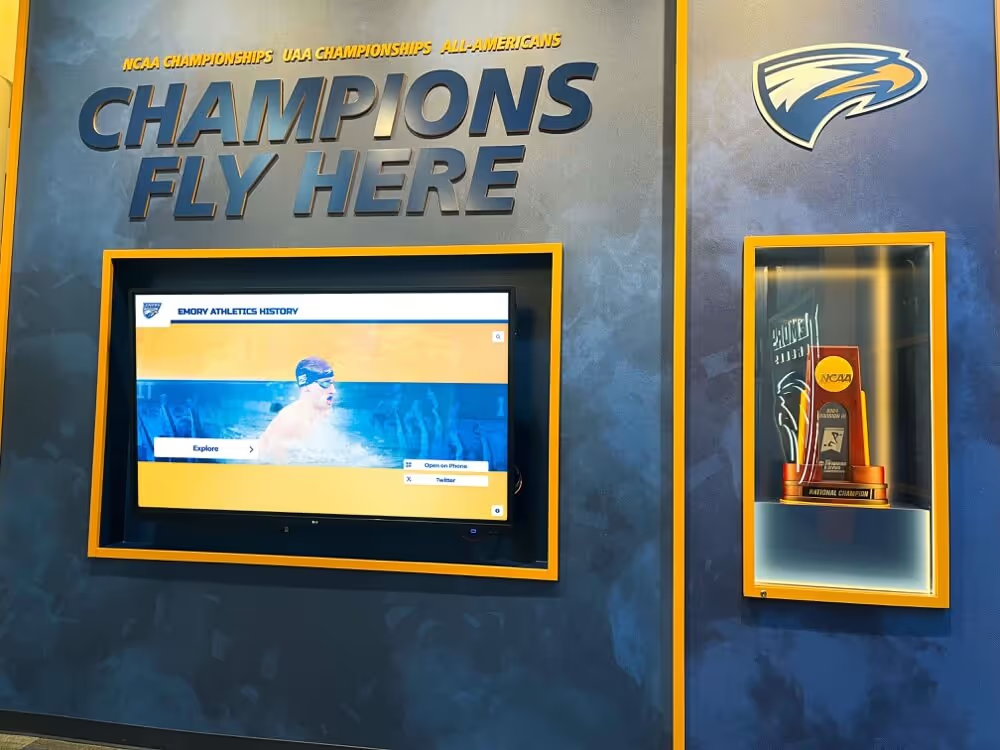
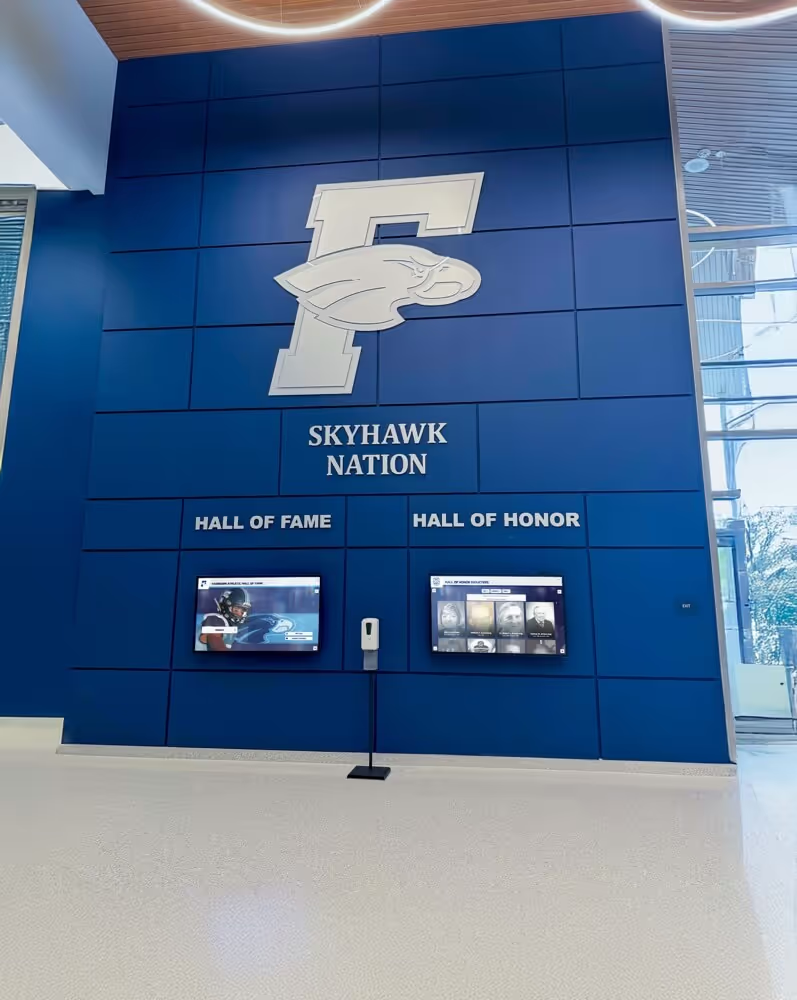
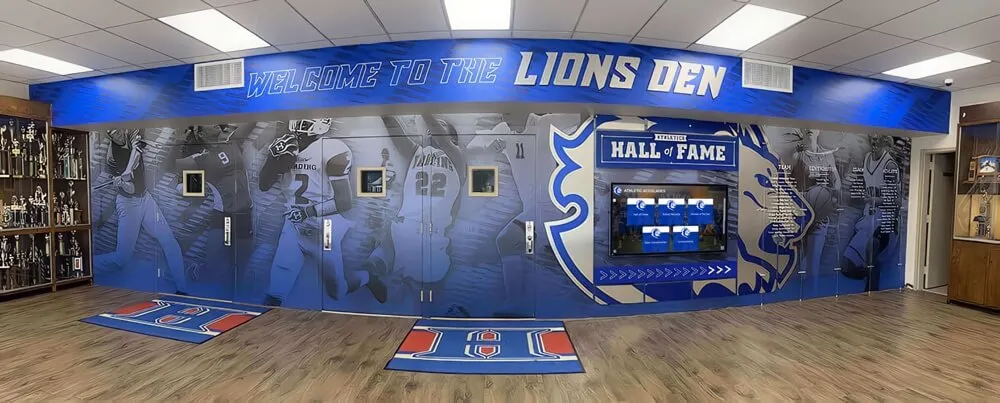
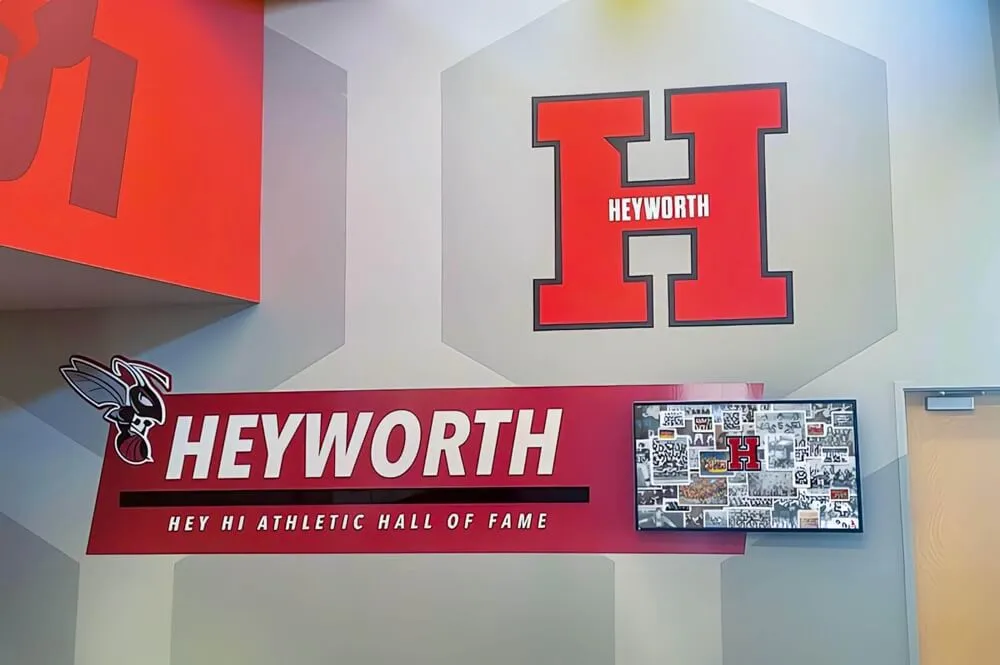
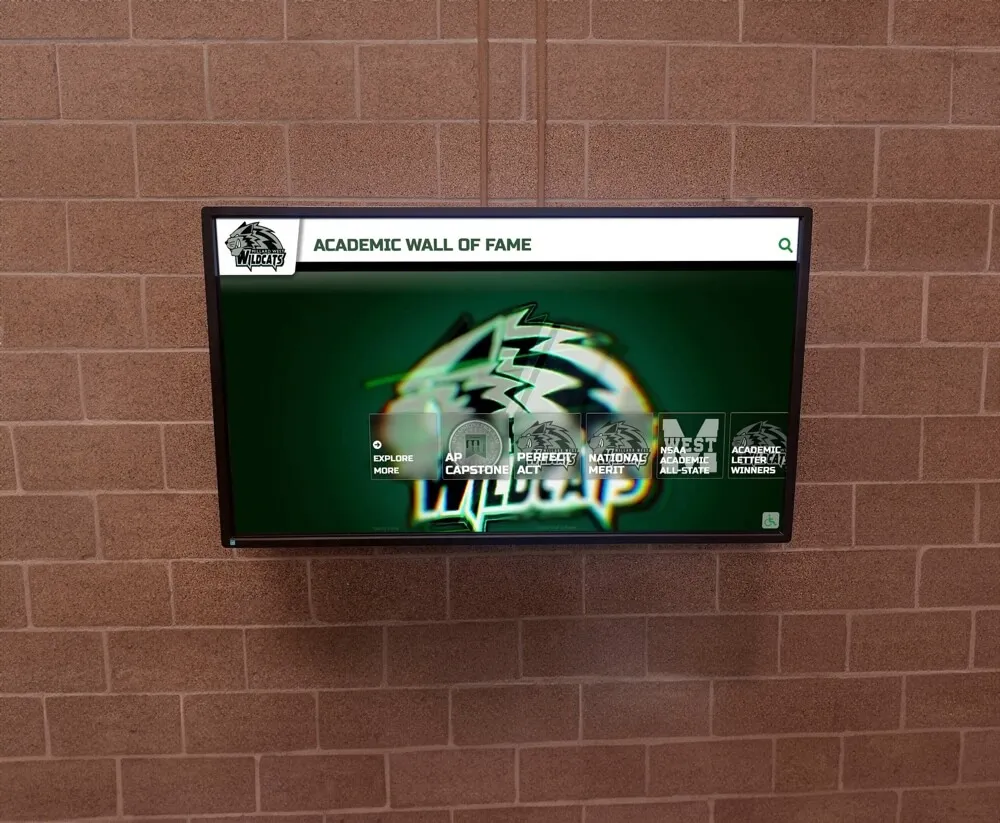
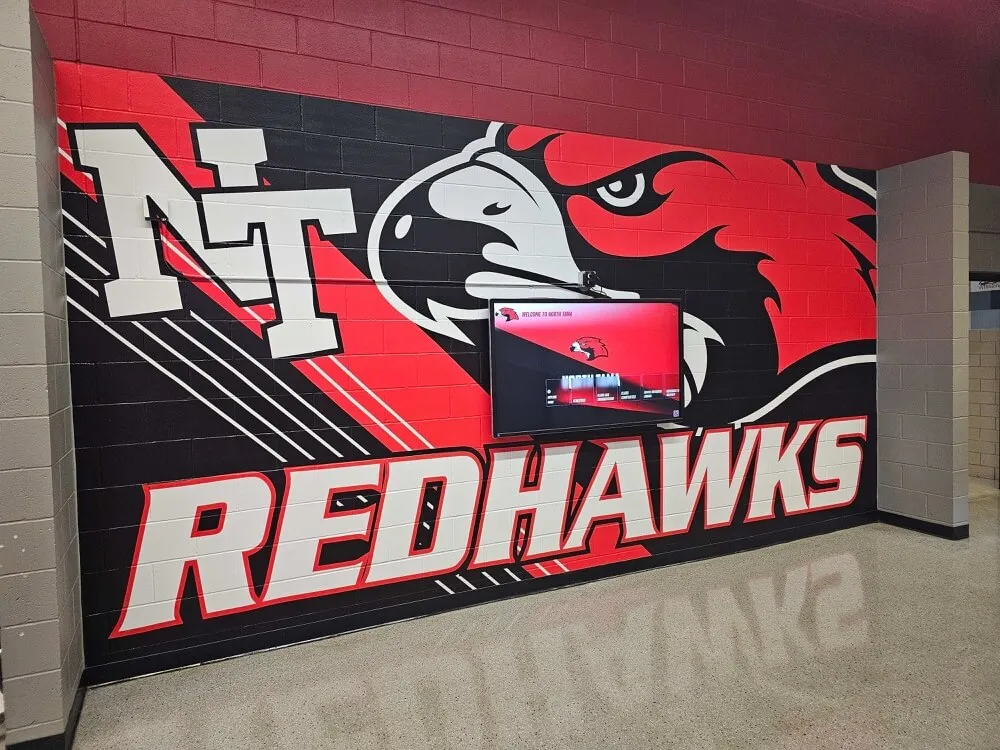
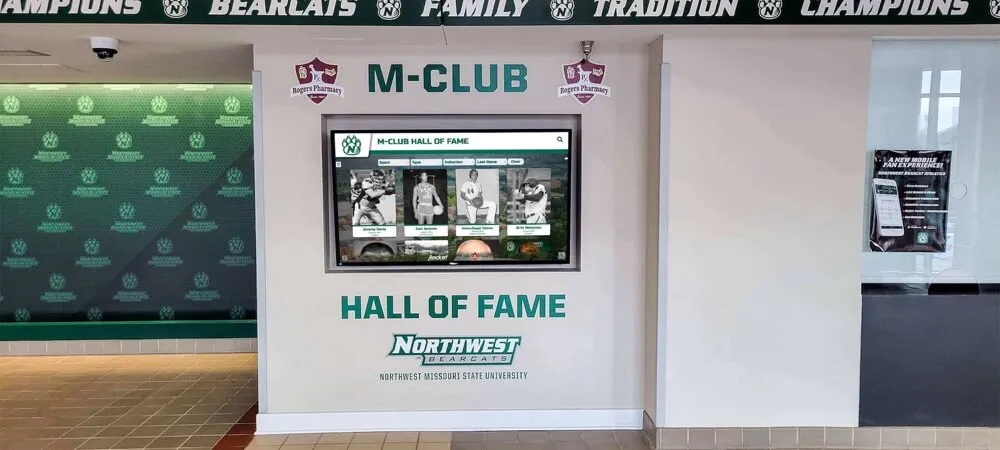
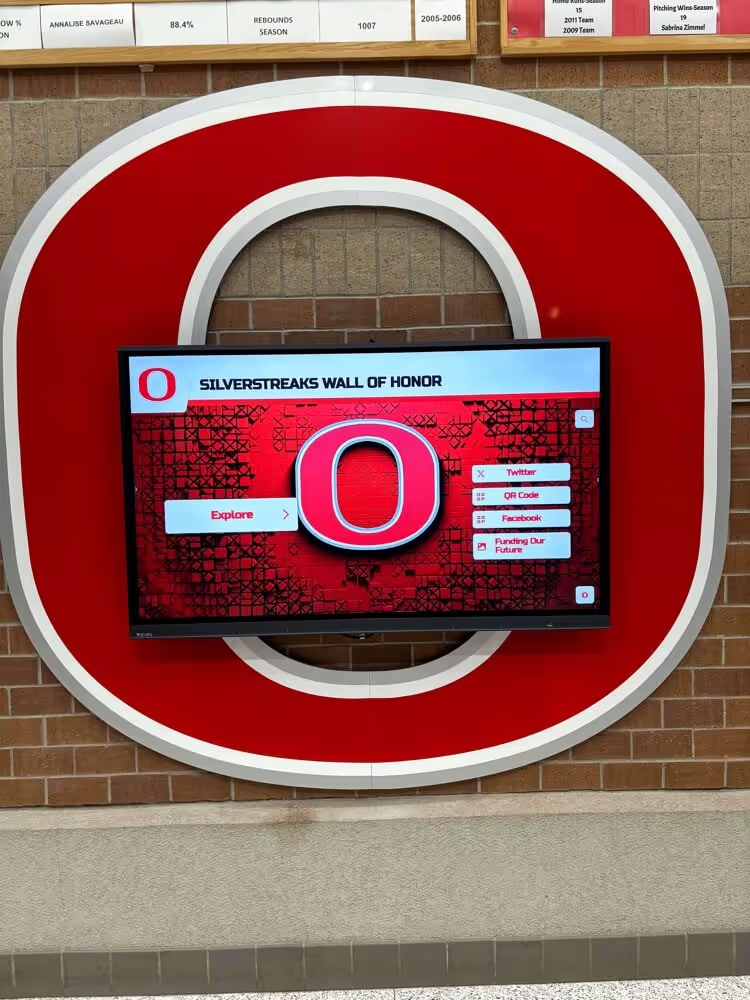
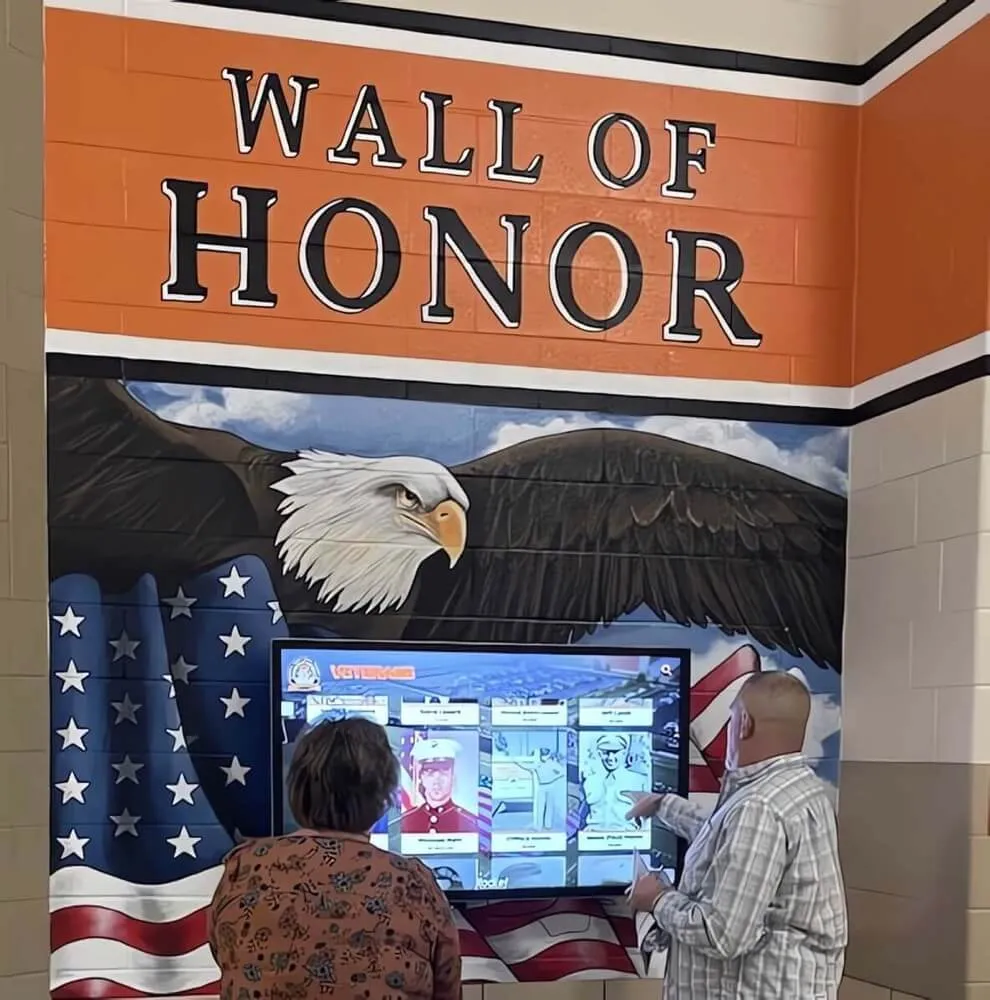
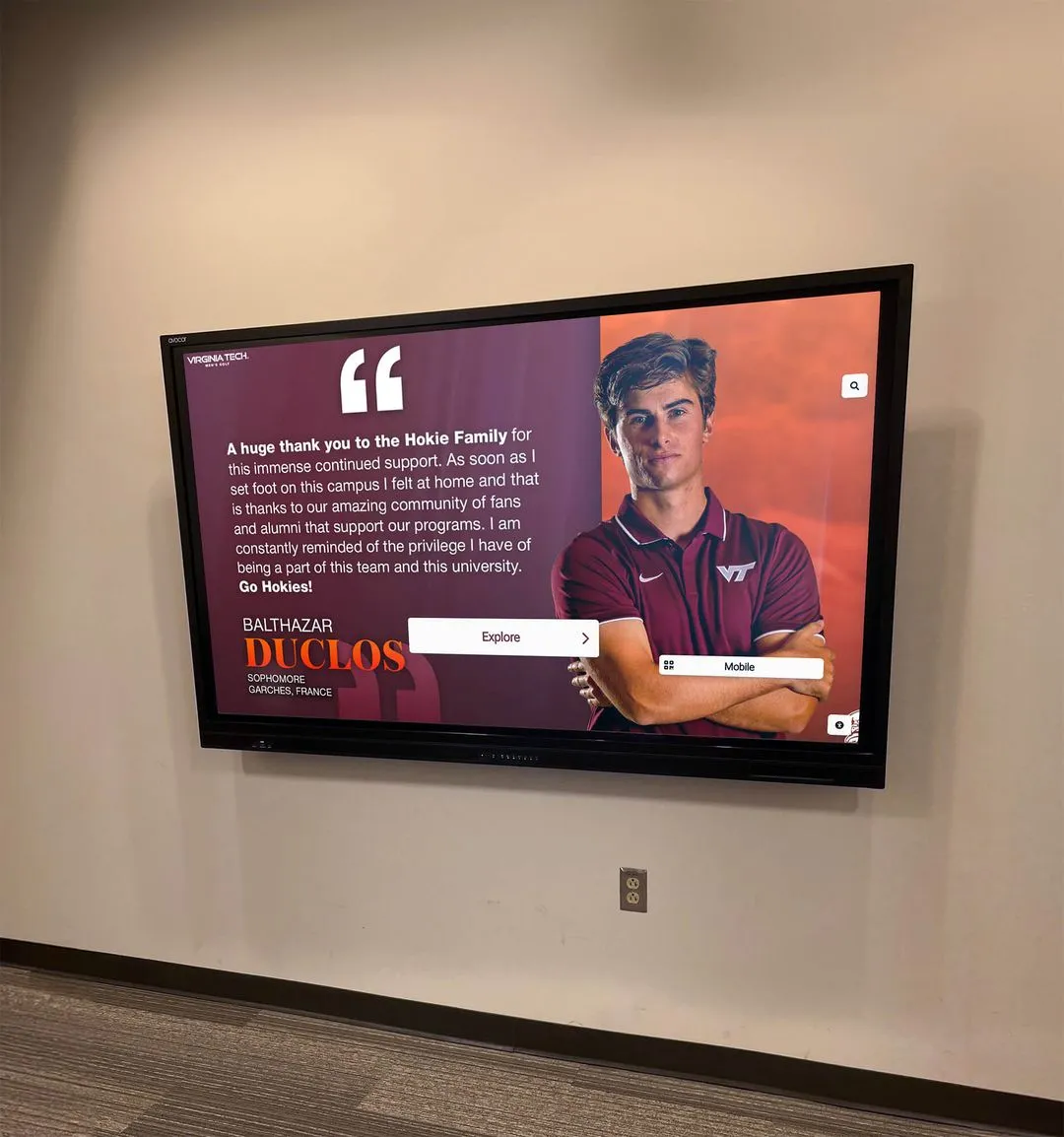
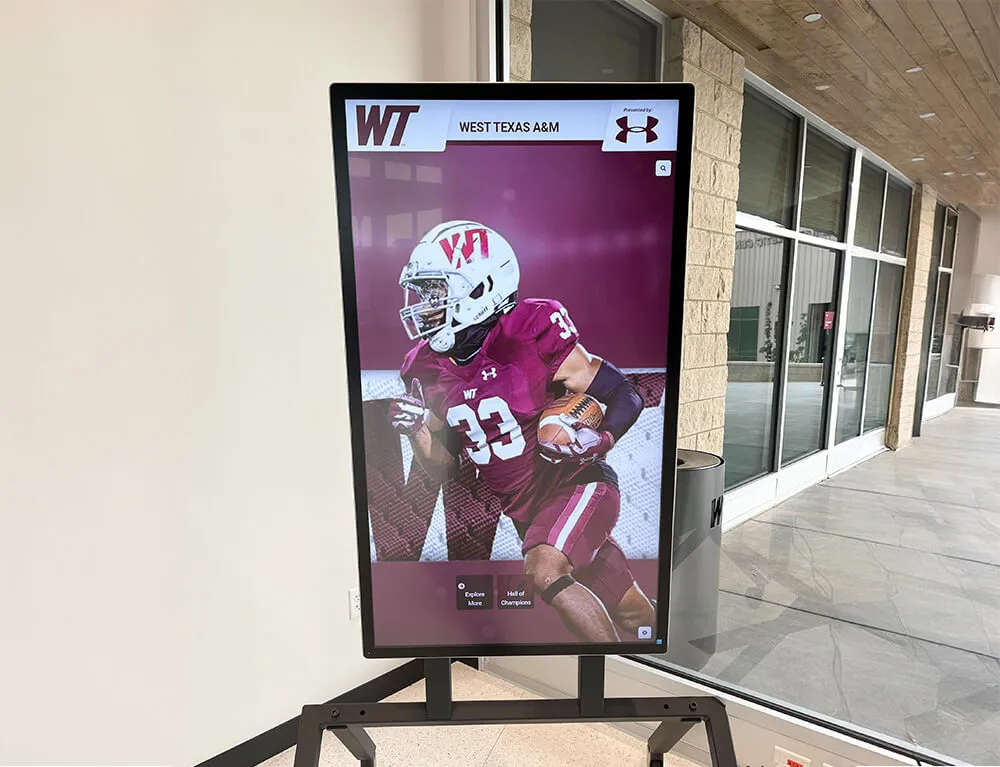
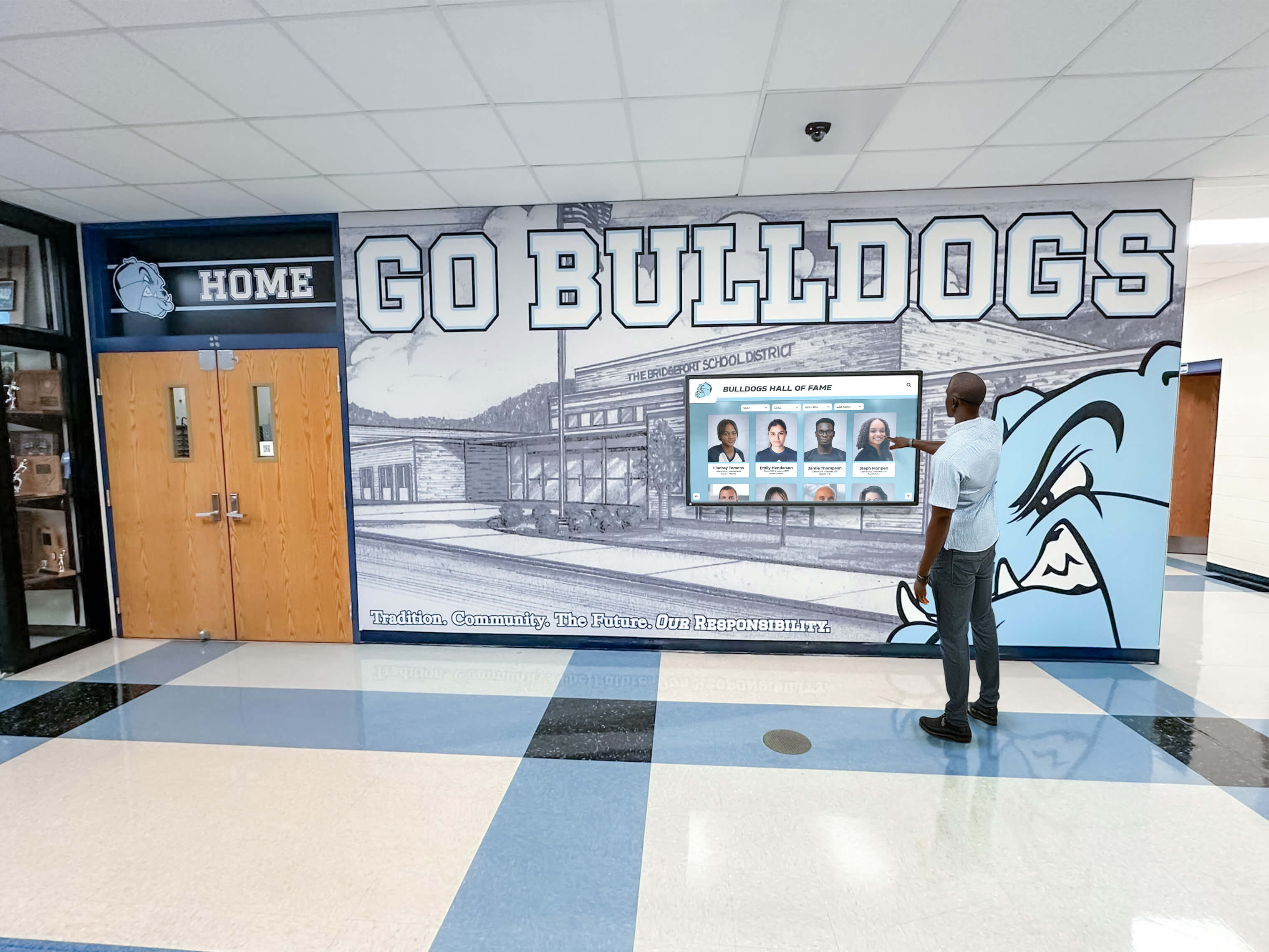
Physical touchscreen installations positioned in athletic facilities represent the most common digital hall of fame implementation approach, present in 64% of programs established in the past five years.
Core Functionality Features:
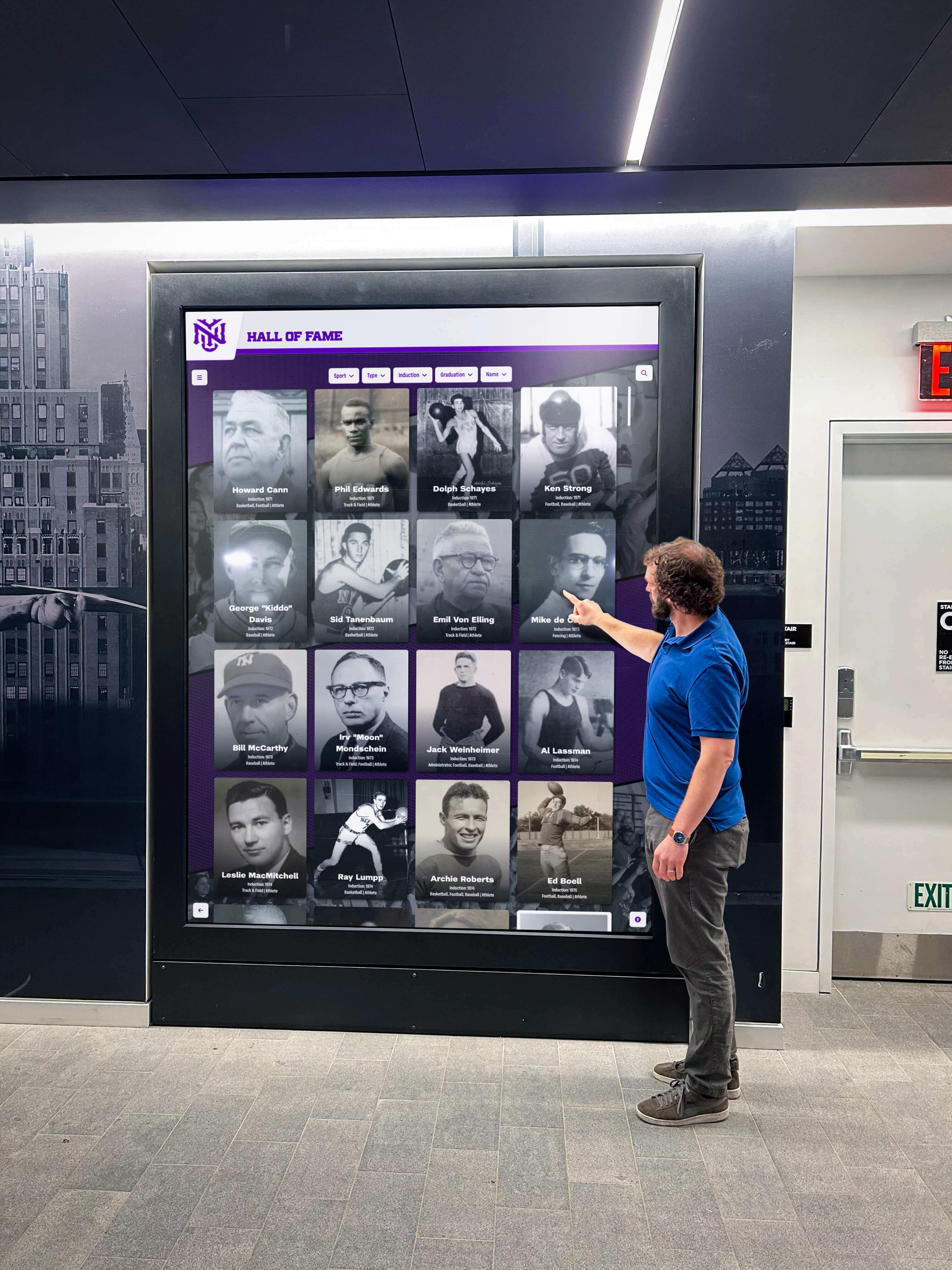
Unlimited Honoree Capacity: Unlike physical walls constrained by available space, digital systems accommodate unlimited inductee profiles. Programs adding 3-7 inductees annually face no space limitations over decades of operation.
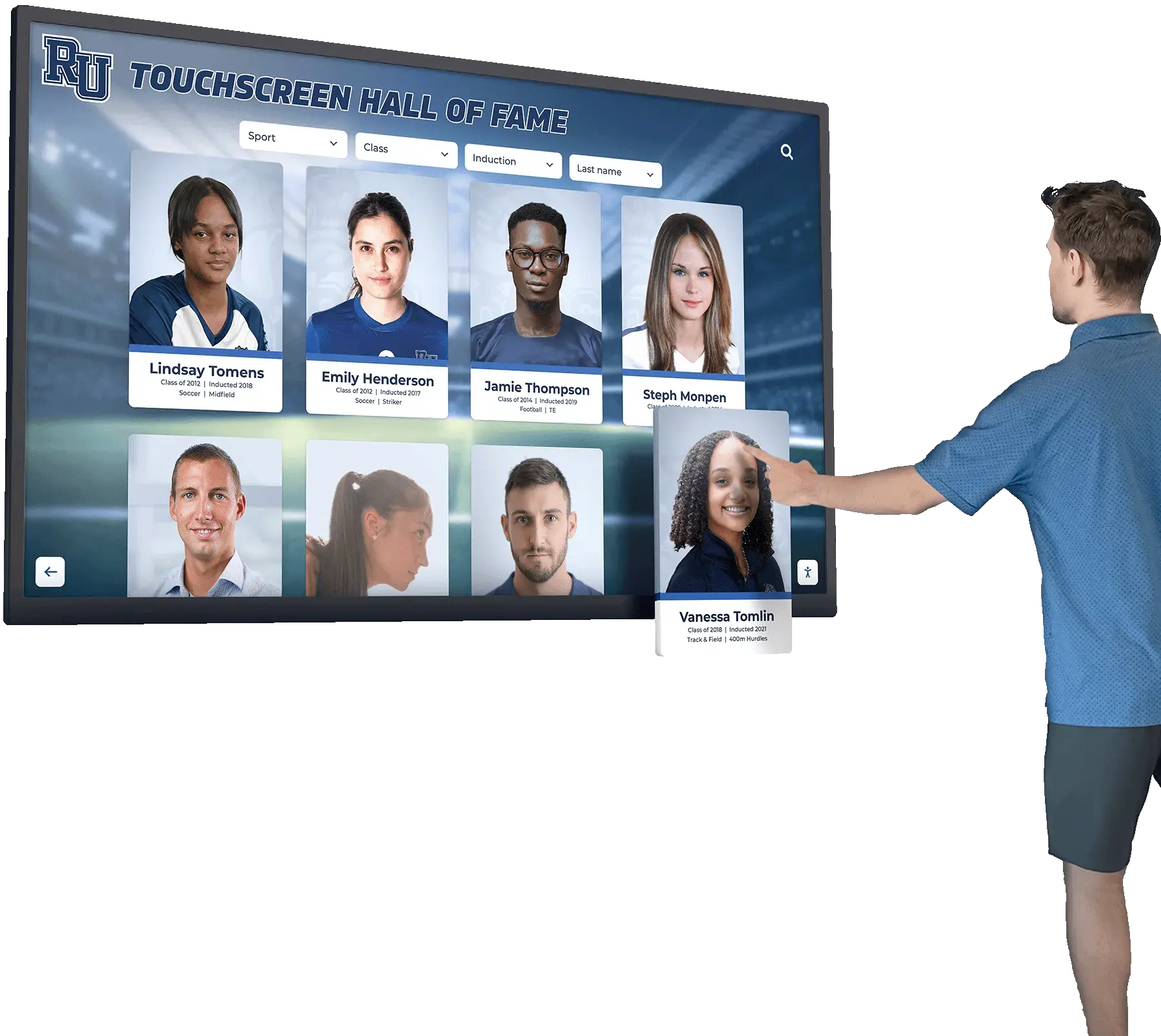
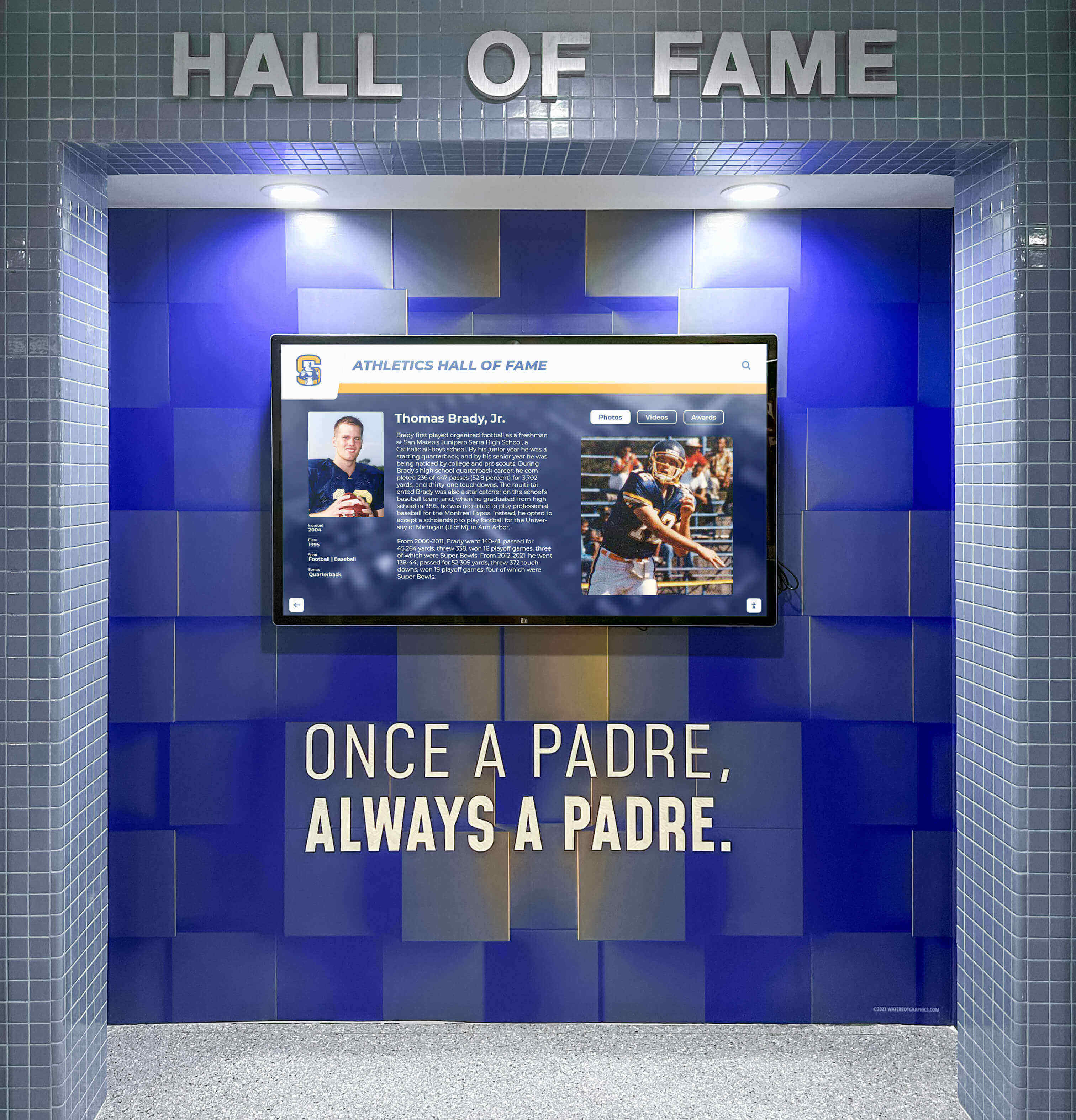
Rich Multimedia Presentation: Digital platforms integrate photographs, action videos, statistical summaries, achievement timelines, and detailed narratives for each inductee. This multimedia approach tells achievement stories far more compellingly than engraved plaques listing statistics alone.
Interactive Search and Exploration: Visitors search by name, graduation year, sport, or achievement type, enabling targeted exploration rather than requiring sequential review of all inductees to locate specific individuals. This search capability proves particularly valuable for alumni returning to campus seeking former teammates or classmates.
Dynamic Content Updates: Adding new inductees requires uploading content through administrative interfaces rather than ordering new plaques, engraving, and physical installation. Update turnaround time decreases from weeks to hours, and corrections to existing content similarly require minutes rather than remanufacturing physical elements.
Engagement Tracking: Digital systems monitor which inductees receive the most views, how long visitors spend exploring content, and what search terms visitors use. These analytics inform content strategy and demonstrate recognition program impact to stakeholders.
Implementation Considerations:
Successful touchscreen implementations require attention to several factors:
Display Positioning: Installations in main gymnasium lobbies, athletic center entrances, or high-traffic areas maximize visibility and engagement. Displays placed in low-traffic side hallways or administrative areas receive limited interaction regardless of content quality.
Screen Size and Resolution: Commercial-grade displays ranging from 43" to 75" diagonal provide sufficient detail for comfortable reading while accommodating multiple simultaneous users at larger sizes. 4K resolution ensures text remains crisp and photographs display clearly.
Mounting Height and Accessibility: Screens mounted with centers at 48-54" height accommodate both standing adults and wheelchair users. ADA compliance considerations include reach range requirements, touch pressure standards, and alternative access for users unable to operate touchscreens.
Durability Requirements: Institutional environments require commercial-grade touchscreens rated for continuous operation and high-frequency touch interaction. Consumer televisions adapted for institutional use typically fail within 18-36 months under heavy use conditions.
Content Management Accessibility: Platform selection should prioritize administrator-friendly content management interfaces that athletic directors or administrative staff can operate without technical expertise. Systems requiring web developers for routine content updates create bottlenecks limiting program effectiveness.
Digital display platforms designed specifically for educational recognition, such as Rocket Alumni Solutions, address these institutional requirements through purpose-built features rather than adapting general digital signage or content management systems not optimized for hall of fame applications.

Web-Based Hall of Fame Platforms
Seventy-two percent of schools with digital hall of fame displays also maintain web-accessible versions enabling worldwide access rather than limiting recognition to on-campus visitors alone.
Web platforms deliver distinct benefits:
Remote Alumni Access: Graduates exploring hall of fame content from any location strengthen emotional connections to their institution and facilitate alumni networking as former teammates discover each other’s inductions.
Permanent URLs for Sharing: Individual inductee pages with permanent URLs enable social sharing when new classes are announced, allowing inductees to share recognition with family and professional networks.
Media and Researcher Resources: Journalists covering school athletics, researchers examining program history, or prospective families investigating school quality access comprehensive achievement records without campus visits.
Search Engine Discovery: Web-accessible content appears in search results when individuals search for inductee names, school athletic history, or specific achievements, extending recognition reach beyond people who deliberately visit school facilities or websites.
Integration with Existing School Websites: Halls of fame can integrate into existing school or athletic department websites rather than requiring separate standalone sites, maintaining consistent branding and navigation patterns.
Effective web implementations maintain content parity between physical touchscreen displays and web platforms—visitors receive equivalent experiences regardless of access method, with content updates synchronizing automatically across both environments.
Hybrid Physical-Digital Recognition Systems
Twenty-three percent of examined programs implement hybrid approaches combining traditional physical recognition with digital enhancement rather than fully replacing plaques or trophy cases.
Common hybrid configurations include:
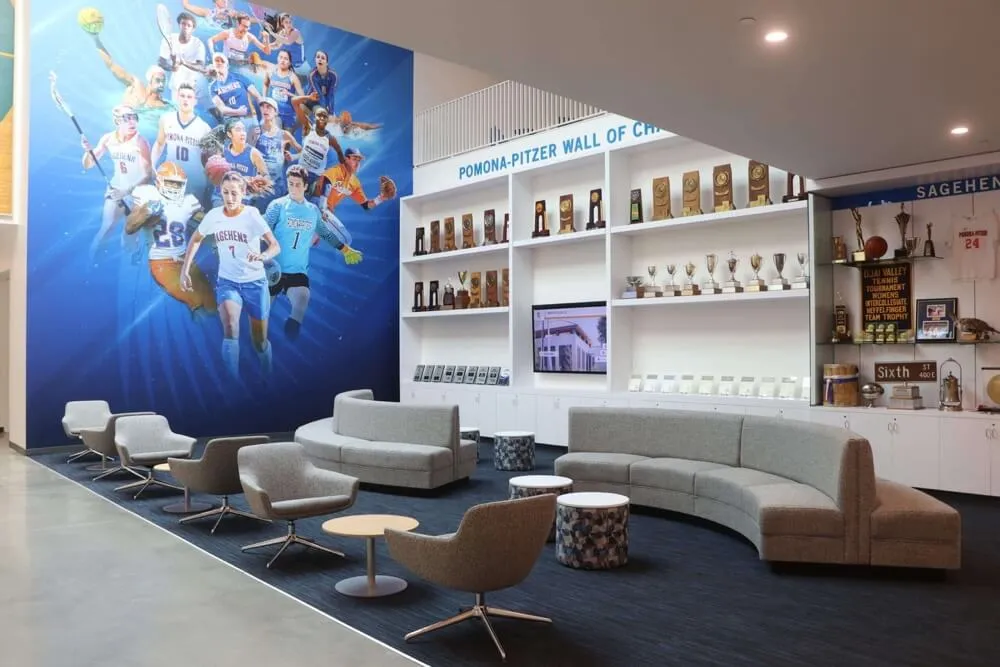
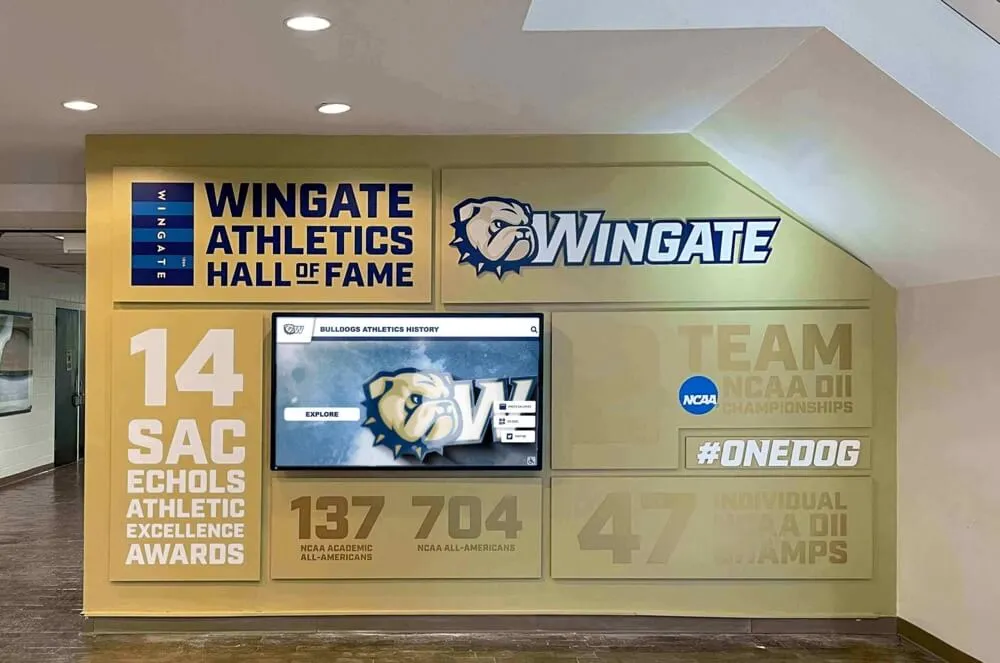
Digital Displays Adjacent to Trophy Cases: Interactive touchscreens positioned near existing trophy cases provide detailed context and stories for displayed awards, expanding static recognition with multimedia depth.
Physical Plaques with QR Codes: Traditional nameplates include QR codes linking to digital profiles containing expanded achievement details, photographs, and videos. This approach preserves physical permanence valued by some stakeholders while adding digital enrichment.
Rotating Digital Content with Permanent Physical Elements: Schools induct new classes digitally immediately while adding physical plaques during subsequent ceremonies, maintaining traditional tactile elements without digital implementation delays.
Sport-Specific Digital Displays: Major sports receive dedicated touchscreen installations in relevant facilities (basketball hall of fame in gymnasium, football recognition at stadium) while smaller programs share collective digital recognition, balancing budget constraints with program importance.
Hybrid approaches can ease transitions for communities attached to traditional recognition methods while still capturing digital benefits. However, they also require maintaining multiple systems—updating both physical and digital elements—potentially increasing long-term workload.
Schools exploring digital trophy case implementations find that platform capabilities now accommodate recognition needs previously requiring physical displays.
Content Development and Presentation Best Practices
Display technology capabilities mean nothing without compelling content that engages visitors and appropriately honors inductees. Analysis of high-performing digital hall of fame implementations reveals common content practices.
Individual Inductee Profiles
Comprehensive inductee profiles include multiple content elements:
Achievement Summary Sections: Concise bullet-point lists of key accomplishments (championships won, records established, honors received) provide quick overview for visitors scanning multiple profiles.
Narrative Biography Content: 200-400 word written profiles contextualize achievements—describing athlete development, memorable performances, leadership contributions, and lasting impact. These narratives transform statistics into stories that community members remember and relate to.
Statistical Highlights: Sport-specific career statistics (points scored, batting averages, race times) quantify performance for athletically knowledgeable audiences who understand achievement magnitude through numbers.
Photographic Documentation: Multiple photographs showing athletes in action, team contexts, and award presentations provide visual connection. Historical photographs particularly resonate with alumni from similar eras.
Video Integration: Game footage, interview clips, or highlight reels add engagement depth, though video production requires significantly more resource investment than text and photographs.
Post-Graduation Updates: Information about collegiate athletics, professional careers, or current occupations helps community members understand inductees’ full life trajectories, not just high school achievements.
Content development represents significant initial workload, particularly for programs inducting multiple decades of historical honorees simultaneously. Many schools phase implementation, initially focusing on recent inductees with readily available content before systematically working backward through history.
Team Recognition Presentations
Championship team recognition requires different content structures than individual athlete profiles:
Roster Listings: Complete team rosters including coaches, assistants, managers, and support staff ensure all contributors receive acknowledgment, not just starting players or statistical leaders.
Season Narratives: Game-by-game season summaries or narrative descriptions of playoff runs provide context showing how championships were achieved rather than simply stating final results.
Team Photographs: High-quality team photos, action shots from championship games, and celebration images document collective achievement.
Statistical Leaders: Highlighting individual statistical leaders within team contexts balances collective and individual recognition, acknowledging standout performances within team frameworks.
Historical Context: Comparing championship teams across school history (first title in sport, longest winning streak, highest tournament seed) helps community members understand each team’s relative significance.
Schools managing team recognition displays find that digital platforms enable more comprehensive documentation than traditional trophy case approaches.
Content Update Frequency and Maintenance
Digital platform value depends on regular content maintenance and updates reflecting program vitality:
Annual Induction Class Additions: New inductee content should publish before or immediately following induction ceremonies, maintaining recognition timeliness.
Achievement Updates for Existing Inductees: Post-graduation accomplishments (collegiate championships, professional careers, notable life achievements) warrant adding to existing profiles, keeping recognition current and demonstrating ongoing interest in inductees.
Photograph and Media Enhancement: As schools digitize historical photographs or acquire additional media, enhancing existing profiles with supplementary content improves overall presentation quality.
Correction and Improvement: Factual errors, improved statistics, or enhanced biographical information should be corrected promptly, maintaining content accuracy and quality.
Programs averaging 2-4 content updates monthly (new inductees, existing profile enhancements, corrections) maintain active recognition that community members regularly return to explore. Static displays updated only annually during formal induction ceremonies miss opportunities for sustained engagement.
Implementation Planning and Platform Selection
Schools establishing new digital hall of fame programs or modernizing existing recognition should follow systematic planning processes addressing multiple decision dimensions.
Needs Assessment and Stakeholder Input
Successful implementations begin with thorough needs assessment examining:
Current Recognition Gaps: What achievements or individuals currently lack appropriate recognition due to physical space constraints, outdated displays, or incomplete documentation?
Stakeholder Expectations: What do athletes, alumni, coaches, administrators, and community members expect from hall of fame recognition? Which elements matter most to different constituencies?
Budget and Resource Constraints: What financial investment can the institution make initially and sustain annually? What staff time is available for content development and ongoing maintenance?
Technical Infrastructure: What display locations offer appropriate electrical power, network connectivity, and visitor traffic? Does existing IT support capability include commercial display troubleshooting?
Long-Term Program Goals: How does hall of fame recognition support broader institutional objectives around alumni engagement, fundraising, student recruitment, or program promotion?
Stakeholder input through surveys, focus groups, or committee discussions surfaces requirements and preferences that inform platform selection and implementation approaches.
Platform Evaluation Criteria
Schools comparing digital hall of fame platform options should assess multiple factors:
Purpose-Built vs. Adapted Solutions: Platforms designed specifically for educational recognition typically offer better feature fit than general digital signage or content management systems adapted for hall of fame applications. Purpose-built solutions include sport-specific templates, achievement category structures, and recognition-optimized navigation.
Content Management Accessibility: Can non-technical administrators easily update content without ongoing vendor dependence or developer involvement? Platforms requiring coding knowledge or complex workflows for routine updates create operational bottlenecks.
Dual Environment Support: Does the platform operate seamlessly as both physical touchscreen installations and web-accessible applications, or does it require maintaining separate systems with manual content synchronization?
Capacity and Scalability: Can the system accommodate unlimited inductees and categories without performance degradation or subscription tier limitations as programs grow across decades?
Customization Capabilities: How extensively can schools customize visual design, category structures, and content organization to reflect unique institutional identity and recognition needs?
Analytics and Reporting: What engagement metrics does the platform track, and how accessible is this data for program evaluation and stakeholder reporting?
Implementation Support: What setup assistance, training, content migration help, and ongoing technical support does the provider offer? DIY platforms may cost less initially but require significant institutional expertise and time investment.
Total Cost of Ownership: Initial setup costs, annual subscription fees, hardware expenses, and ongoing content management time combine to determine true program investment over multi-year timeframes.
Schools seeking guidance on selecting digital recognition providers benefit from systematic evaluation frameworks comparing options across relevant criteria.
Implementation Timeline and Phasing
Digital hall of fame implementation typically follows multi-month timelines addressing content development, technical installation, and community communication:
Planning and Design Phase (6-10 weeks): Stakeholder input, platform selection, visual design customization, category structure definition, and selection criteria documentation.
Content Development Phase (8-16 weeks): Historical research, photograph collection, biography writing, statistics compilation, and initial inductee profile creation. Content development workload depends heavily on how many historical inductees require documentation versus focusing initially on recent classes with readily available information.
Technical Implementation Phase (4-8 weeks): Hardware procurement and installation, software configuration, content upload and testing, staff training, and final quality assurance.
Launch and Promotion Phase (2-4 weeks): Community communication about new recognition system, media coverage coordinating with induction ceremonies, and alumni outreach encouraging exploration.
Many schools implement phased approaches, initially launching with one sport, recent inductees only, or pilot installations in single locations before expanding to comprehensive programs. Phased implementation distributes workload, enables learning from initial experiences, and allows budget spreading across multiple fiscal years.
Program Sustainability and Long-Term Success Factors
Hall of fame programs require sustained attention beyond initial implementation. Programs that maintain vitality and community engagement share common characteristics:
Regular Induction Cycles
Annual or biennial induction cycles maintain program visibility and provide recurring opportunities for community celebration. Irregular or infrequent inductions allow recognition to fade from institutional consciousness.
Formal induction ceremonies create anchor events for alumni engagement, providing reasons for graduates to return to campus and reconnect with former teammates, coaches, and classmates. Ceremonies combined with athletic events (homecoming games, tournaments) maximize attendance and community participation.
Transparent Governance and Documentation
Published selection criteria, committee composition, nomination processes, and general timelines build community confidence in program integrity. Transparent governance prevents perceptions that inductions reflect favoritism or insider influence rather than merit-based assessment.
Detailed internal documentation of selection discussions and decisions protects against future controversy, provides precedents guiding consistent application of criteria, and demonstrates that committees carefully considered all nominees.
Content Quality Standards
Recognition quality reflects institutional values. Professional photography, well-written biographies, accurate statistics, and polished presentation demonstrate that hall of fame membership represents the institution’s highest honor. Conversely, amateur content quality, factual errors, or incomplete profiles undermine recognition significance.
Schools should establish content standards specifying minimum profile completeness, acceptable photograph quality, biographical length, and statistical documentation requirements before profiles publish.
Community Engagement and Promotion
Even the most comprehensive digital hall of fame delivers minimal value if community members don’t know it exists or explore its content. Effective promotion includes website homepage features when new classes are inducted, social media announcements highlighting individual inductees, press releases to local media for coverage, email communications to alumni networks, incorporation into campus tour routes, and displays promoted during athletic event public address announcements.
Regular content updates provide recurring promotion opportunities—adding post-graduation achievements, enhancing profiles with newly discovered photographs, or creating thematic collections (all championship quarterbacks, coaching legends) gives reasons to remind community members to revisit recognition.
Archival Preservation and Historical Documentation
Hall of fame programs serve archival functions preserving institutional athletic history for future generations. Digital platforms offer advantages over physical recognition for long-term preservation:
Backup and Redundancy: Digital content can be backed up comprehensively, protecting against loss from facility damage, theft, or deterioration. Physical plaques damaged in fires, floods, or facility renovations are permanently lost without digital documentation.
Content Migration: Digital platforms enable migrating content to new technologies as systems evolve, whereas physical plaques may become unreadable through deterioration or require expensive refurbishment.
Research Accessibility: Searchable digital archives enable researchers, journalists, and historians to efficiently locate specific information across decades of achievement records, whereas physical displays require manually reviewing every plaque.
Schools should establish content preservation policies ensuring hall of fame data remains accessible long-term regardless of platform changes, vendor relationships, or technology evolution.
Integration with Broader Recognition Ecosystems
Hall of fame programs function most effectively as components within comprehensive institutional recognition strategies rather than isolated initiatives.
Athletic Recognition Continuity
Halls of fame represent ultimate recognition for exceptional career achievement, but comprehensive athletic programs also acknowledge current athlete performance, team successes, and season highlights through complementary recognition:
Current Season Recognition: Digital record boards tracking active school records, weekly athlete highlights, and team standings celebrate current programs.
Championship and Achievement Displays: Banners, trophy cases, and dedicated displays for recent championships provide immediate recognition before athletes become hall of fame eligible years later.
Senior Night and Awards Ceremonies: Formal recognition events during athletes’ final seasons celebrate contributions before graduation.
All-Time Records and Statistical Leaders: Separate statistical tracking recognizes record-holders regardless of hall of fame induction status, ensuring exceptional performances receive acknowledgment even if athletes don’t meet broader induction criteria.
Integrated recognition creates continuity from current achievement recognition through long-term hall of fame honor, demonstrating sustained institutional commitment to celebrating athletic excellence across generations.
Alumni Engagement and Fundraising Alignment
Advancement offices increasingly recognize hall of fame programs as alumni engagement tools supporting broader institutional development goals. Digital platforms facilitate this integration by providing:
Alumni Directory Functionality: Hall of fame platforms can expand to include all former athletes, not just inductees, creating networking tools connecting graduates through shared athletic experiences.
Donor Recognition Integration: Digital donor walls can be combined with or positioned adjacent to athletic halls of fame, acknowledging that athletic program supporters deserve recognition alongside competitors.
Event Promotion and Registration: Platforms can promote alumni events, facilitate reunion registration, and coordinate hall of fame ceremony attendance.
Impact Storytelling: Achievement stories demonstrating what athletic programs enable become fundraising tools showing prospective donors the tangible outcomes their support creates.
Schools viewing halls of fame narrowly as backward-looking historical documentation miss opportunities to activate recognition for forward-looking engagement and development.
Conclusion: Building Sustainable Recognition That Honors Achievement Fairly
Effective hall of fame programs require two interdependent elements: defensible selection processes that community members trust as fair and merit-based, and presentation methods that make recognition accessible, engaging, and meaningful.
Selection criteria must balance objective achievement measurement with thoughtful assessment of character, contribution, and context. Published standards, structured nomination processes, diverse selection committees, and transparent governance build institutional confidence that inductions reflect genuine excellence rather than favoritism or arbitrary decision-making.
Digital display technologies have fundamentally expanded what hall of fame recognition can accomplish. Unlimited capacity means worthy achievements need not be excluded due to physical space constraints. Interactive exploration and multimedia storytelling transform recognition from static lists into engaging experiences. Web accessibility extends recognition beyond campus boundaries, enabling worldwide alumni engagement. Regular content updates maintain vitality and demonstrate ongoing institutional commitment.
Schools implementing digital recognition report engagement increases, enhanced alumni connection, expanded historical documentation, and recognition systems that scale sustainably across decades without the space limitations that force traditional physical displays to make difficult exclusion choices.
As recognition technology continues advancing, the fundamental principle remains constant: halls of fame should honor achievement comprehensively, fairly, and in ways that inspire current students while strengthening lifelong connections between institutions and the individuals whose excellence elevated athletic programs.
For schools ready to establish or modernize hall of fame programs that combine rigorous selection frameworks with engaging digital presentation, book a demo to explore how purpose-built recognition platforms support sustainable programs that celebrate achievement effectively across generations.