The gymnastics floor routine stands as one of the most captivating events in competitive gymnastics, combining explosive tumbling passes, graceful choreography, athletic artistry, and musical interpretation into a 90-second performance that showcases the complete gymnast. From Level 4 compulsory routines through elite international competition, floor exercise demands mastery across multiple dimensions—power and precision in tumbling, rhythm and creativity in dance, dramatic expression in presentation, and mental fortitude under competitive pressure.
Whether you’re working toward basic level requirements or developing optional routines that showcase individual strengths and personality, this guide provides practical insights for creating floor routines that maximize scoring potential while building the confidence and performance skills that translate far beyond the competition floor.
Understanding Floor Exercise Requirements and Scoring
Floor exercise requirements vary significantly across competitive levels, from the compulsory routines gymnasts learn at lower levels through the creative optional routines that showcase individual style and strengths at higher levels.
Level Structure and Progressive Requirements
USA Gymnastics organizes competitive gymnastics into progressive levels, each with specific floor exercise requirements that build systematically toward advanced skills. Level 4 floor routines introduce fundamental tumbling connections and basic dance elements through standardized compulsory choreography. Level 5 marks the transition to optional routines where gymnasts begin selecting their own music and developing personalized choreography while meeting specific tumbling and skill requirements.
Levels 6-10 (formerly Junior Olympic levels) progressively increase difficulty requirements for tumbling passes, requiring more complex skills, higher flight, and more sophisticated connections. Elite gymnasts competing at NCAA Division I programs, international competitions, and the Olympic level perform floor routines featuring the most difficult tumbling combinations in the sport alongside sophisticated choreography that reflects individual artistry and competitive maturity.
Understanding your current level’s specific requirements proves essential for routine construction. Each level specifies mandatory tumbling pass compositions, required dance elements such as leaps and turns, time limits typically 90 seconds, and artistry expectations that increase with competitive level.

Scoring System Fundamentals
Floor exercise scoring operates on the Code of Points system evaluating both difficulty and execution. The Difficulty Score (D-Score) reflects the challenge level of skills performed, calculated from tumbling pass difficulty values, connection bonus values when skills are linked, composition requirements fulfilled, and artistry elements executed. The Execution Score (E-Score) begins at 10.0 and deducts for errors including form breaks such as bent knees or flexed feet, landing errors including steps, hops, or falls, rhythm and connection mistakes, and insufficient amplitude or artistry.
Final scores combine D-Score and E-Score, meaning gymnasts must balance attempting challenging skills that increase difficulty scores against maintaining clean execution that preserves execution scores. Strategic routine construction considers individual strengths when determining this balance.
Choreography Development for Floor Routines
Effective floor choreography creates more than just transitions between tumbling passes—it tells stories, showcases personality, demonstrates artistry, and maximizes artistic impression scores while positioning gymnasts optimally for their tumbling.
Music Selection Strategies
Gymnastics floor music serves as the foundation for choreography, setting tempo, establishing mood, and providing rhythmic structure for the entire routine. Selecting appropriate music requires consideration of tempo that matches your natural rhythm and movement speed, typically 90-120 beats per minute, musical structure with clear phrases aligning with routine sections, energy progression building throughout the 90 seconds to a strong finish, age-appropriateness reflecting the gymnast’s maturity level, and personality connection allowing authentic expression and performance confidence.
Many gymnasts work with specialized floor music editing services that create custom compilations from multiple songs, ensuring smooth transitions, appropriate energy progression, and exact timing that allows choreography to fill the entire 90-second window without rushing or leaving awkward pauses. Popular music styles for floor routines include contemporary pop for upbeat, athletic presentations, classical arrangements for elegant, sophisticated routines, cultural music reflecting heritage or personal background, and dramatic instrumental music for powerful, intense performances.
The right music choice amplifies routine impact while the wrong selection can make even technically proficient gymnastics feel disconnected or uncomfortable. Many coaches recommend selecting music that makes the gymnast genuinely excited to perform, as authentic emotional connection translates directly into more convincing artistry and stronger competitive presence.
Choreographic Elements and Dance Skills
Floor routines require specific dance elements that contribute to both difficulty scores and artistic impressions. Required elements typically include leaps with split requirements of 180 degrees or more, turns demonstrating balance and control, jumps showing power and amplitude, and rhythmic sequences connecting movements with musicality.

Effective choreography integrates these requirements naturally rather than presenting them as isolated skill demonstrations. Transitional choreography between tumbling passes should maintain energy, utilize the entire floor exercise area strategically, reflect the music’s character and tempo, showcase personality and performance quality, and position gymnasts optimally for their next tumbling pass approach.
Many gymnasts benefit from working with choreographers who specialize in gymnastics floor routines, understanding both Code of Points requirements and artistic possibilities. These specialists create choreography that enhances individual strengths, disguises relative weaknesses, and develops cohesive routines where tumbling and dance elements flow naturally together.
Artistry and Performance Quality
Beyond executing required skills, outstanding floor routines demonstrate artistry through musical interpretation, dramatic expression, performance confidence, and aesthetic quality. Judges evaluate whether gymnasts perform with genuine engagement rather than mechanical execution, whether choreography authentically reflects music rather than simply filling time, whether performance communicates emotion and personality, and whether the entire routine demonstrates cohesive artistic vision.
Developing artistry requires intentional practice distinct from skill training. Many coaches incorporate performance exercises including dancing full routine choreography without tumbling to focus on artistic elements, practicing facial expressions and dramatic gestures, performing for teammates and parents to build performance comfort, and video review examining performance quality and identifying improvement opportunities.
Gymnasts who view floor routines as artistic performances rather than technical demonstrations typically achieve higher artistry scores and create more memorable competitive moments. This mindset shift often proves challenging for athletes who naturally focus on perfecting technical skills, but coaches can cultivate it through consistent emphasis on the performance dimension of gymnastics.
Tumbling Progression and Technique
Gymnastics floor tumbling represents the most visible and exciting component of floor routines, requiring explosive power, spatial awareness, precise technique, and extraordinary courage to execute skills involving multiple flips and twists while maintaining performance continuity.
Building Fundamental Tumbling Skills
Floor tumbling progression builds systematically from foundational skills through advanced combinations. Beginning gymnasts typically master forward and backward rolls establishing basic rotation patterns, handstands developing strength and body position awareness, cartwheels and roundoffs creating foundational power generation, and front and back handsprings introducing flight and faster rotation.
These foundational skills teach essential concepts including proper hand placement and push techniques, hollow and arch body positions critical for rotation control, spatial awareness necessary for safe landing, and progressive skill building that reduces injury risk while developing confidence.
Gymnasts should never skip fundamental skill development regardless of how eager they are to attempt advanced tumbling. The technical precision developed through hundreds of basic skill repetitions directly determines success and safety in advanced skills. Many elite gymnasts continue practicing fundamental drills throughout their careers to maintain technique quality that allows them to perform their most difficult skills consistently.
Developing Tumbling Pass Composition
Floor routines typically include 3-4 tumbling passes, each with strategic purposes within the overall routine composition. Opening tumbling passes usually feature the most difficult skills when energy and focus are highest. Middle passes might showcase different tumbling directions or specific required elements. Closing passes should finish with impact, demonstrating that gymnasts maintain power and technique throughout the routine.
Effective tumbling pass construction considers connection value opportunities where specific skill combinations earn bonus points, difficulty distribution ensuring passes meet level requirements, gymnast’s directional preferences as some athletes tumble better in certain directions, and stamina management spacing high-energy passes with recovery opportunities.
Coaches typically develop tumbling progressions that allow gymnasts to upgrade skills gradually as strength, technique, and confidence improve. A gymnast might begin a season performing a roundoff-back handspring-back tuck and progress to roundoff-back handspring-layout or even roundoff-back handspring-full twist as the year advances.
Common Tumbling Errors and Corrections
Even gymnasts with strong tumbling fundamentals encounter common technical errors that limit consistency and increase deduction risk. Frequent tumbling mistakes include insufficient power generation from hurdles or roundoffs limiting flip height and rotation, early or late twisting initiation affecting landing control, poor body position during flight increasing fall risk, and inconsistent hand placement compromising power transfer and rotation quality.
Correcting these errors requires technical analysis identifying root causes rather than simply attempting skills repeatedly hoping for improvement. Video analysis helps gymnasts see exactly what their bodies do during skills, often revealing errors they cannot feel while executing them. Targeted conditioning addressing specific weakness strengthens muscles required for proper technique. Drill work isolates particular skill components allowing focused improvement without full skill fatigue. And sometimes mental imagery and visualization help gymnasts understand correct technique before attempting physical execution.
Gymnasts serious about tumbling improvement should maintain training journals documenting which skills they practiced, what technical focuses they emphasized, what felt successful versus challenging, and what their coach identified for future emphasis. This systematic approach accelerates skill development compared to unfocused practice hoping for random improvement.
Mental Preparation and Performance Confidence
Physical preparation alone cannot create consistently excellent floor routines—mental skills separating good gymnasts from great competitors include performance confidence, competitive focus, anxiety management, and resilience when facing setbacks or unexpected challenges.
Building Competition Confidence
Confidence represents perhaps the single most important factor determining floor routine success under competitive pressure. Gymnasts who doubt their abilities hesitate during skills, creating technical errors and increasing injury risk. Those who trust their preparation execute with commitment, dramatically improving success rates even when not performing perfectly.
Developing genuine competitive confidence requires preparation strategies including consistent training creating skill reliability, mental rehearsal visualizing successful routine execution, positive self-talk replacing doubt with encouraging internal dialogue, and progressive exposure performing for increasingly large or evaluative audiences. Many gymnasts benefit from working with sports psychologists who specialize in helping athletes develop mental skills that complement physical training.
Coaches play critical roles in confidence development by emphasizing progress over perfection, celebrating courageous attempts even when skills aren’t landed perfectly, creating supportive team environments where gymnasts encourage rather than judge each other, and maintaining realistic expectations appropriate for each athlete’s current developmental level. Programs that successfully build gymnast confidence typically produce more successful competitive results than those focused exclusively on technical skill development while neglecting mental preparation.
Managing Performance Anxiety
Nearly all gymnasts experience some degree of performance anxiety before and during competitions. Normal nervousness actually enhances focus and physical readiness, but excessive anxiety undermines performance through physical tension interfering with skill execution, mental distraction preventing focus on technique, negative thought patterns creating doubt and hesitation, and emotional overwhelm reducing performance enjoyment.
Effective anxiety management techniques include controlled breathing exercises activating relaxation responses, progressive muscle relaxation reducing physical tension, focusing routines directing attention toward controllable elements, reframing anxiety as excitement channeling nervous energy positively, and establishing pre-competition rituals creating familiar comfort in unfamiliar environments.
Some gymnasts benefit from working with the same floor music during practice that they’ll use in competition, as musical familiarity provides psychological comfort during competitive performances. Others find that performing mock competitions during practice—complete with competitive formats, judging, and audience—reduces anxiety by making actual meets feel more familiar and less threatening.
Developing Performance Routines
Consistent pre-performance routines help gymnasts achieve optimal mental states for competition. Effective routines might include specific warm-up sequences preparing bodies systematically, music visualization mentally rehearsing choreography and tumbling, positive affirmations reinforcing confidence and capability, and physical triggers like specific stretches or breathing patterns signaling readiness.
The key to effective performance routines lies in consistency—performing the same preparation sequence before every competition creates psychological comfort and automatically triggers readiness states without requiring conscious effort. Many elite gymnasts report that their pre-competition routines feel almost meditative, creating focused calm that allows them to perform their best when pressure is highest.
Training Strategies for Floor Routine Excellence
Developing outstanding floor routines requires systematic training approaches that address all routine components while managing the physical demands of repeated tumbling and the mental challenges of sustained practice focus.
Effective Practice Structure
Quality floor routine practice balances multiple training priorities within limited available time. Most gymnastics training sessions allocate specific time blocks for tumbling skill development focusing on technique quality, choreography rehearsal building movement memory and musical connection, full routine run-throughs developing stamina and performance flow, and conditioning maintaining strength and flexibility necessary for skill execution.
Breaking practice into focused segments typically proves more effective than simply running full routines repeatedly, which creates excessive fatigue without allowing targeted improvement. Many coaches structure floor practice beginning with warm-up and basic skill review establishing technique focus, progressing to tumbling pass work when athletes are fresh and energy is high, then transitioning to choreography and dance elements requiring less explosive power, and concluding with performance run-throughs integrating all elements under moderate fatigue that simulates competition conditions.
This progression respects the physical reality that explosive tumbling requires fresh legs and sharp focus while choreography practice can continue productively even with moderate fatigue. Smart practice structure allows gymnasts to maximize improvement while managing injury risk and maintaining motivation throughout long training sessions.
Conditioning for Floor Exercise
Floor routine demands require specific physical preparation including explosive power for tumbling take-offs and high amplitude skills, core strength controlling body positions during rotation, flexibility achieving required split positions and aesthetic lines, stamina maintaining performance quality through 90-second routines, and ankle strength absorbing repeated landing impact safely. Comprehensive gymnastics conditioning programs address all these dimensions rather than emphasizing only one fitness component.
Many programs incorporate plyometric exercises developing explosive power, core conditioning including hollow holds and compression drills, flexibility training with systematic stretching protocols, cardiovascular conditioning building aerobic base for sustained effort, and landing drills conditioning ankles and legs for impact absorption. Athletes who maintain consistent conditioning alongside skill practice typically progress faster, perform more consistently, and experience fewer injuries than those who neglect physical preparation.
Video Analysis and Feedback
Video analysis provides invaluable feedback that gymnasts cannot obtain from internal feel or real-time coaching observation. Recording practice routines and reviewing them systematically helps athletes compare actual execution to intended technique, identify specific technical errors requiring correction, recognize performance quality strengths and weaknesses, and track improvement progress over weeks and months.
Most coaches recommend that gymnasts watch videos with specific analytical focus rather than general observation. Questions guiding productive video review include whether landing positions show proper technique and control, whether body positions during skills match optimal form, whether choreography demonstrates full commitment and artistry, whether energy and performance quality sustain throughout routines, and whether music and movement align with intended timing and expression.
Regular video review creates self-awareness that accelerates improvement and helps gymnasts take ownership of their development rather than depending entirely on coach feedback for technical understanding.
Special Considerations for Different Levels
Floor routine development strategies should align with competitive levels, recognizing that beginning gymnasts, developing athletes, and elite performers require different emphases within their training and routine construction.
Level 4-6 Developmental Gymnasts
Beginning competitive gymnasts focus primarily on mastering fundamental skills that create foundations for future progression. At these levels, routine development priorities include establishing proper basic technique in all required skills, building performance confidence through successful skill execution, developing musicality and basic choreographic awareness, and creating positive competitive experiences that build rather than damage confidence.
Coaches working with developmental gymnasts should resist pressure to rush skill progression, understanding that solid fundamentals developed patiently create safer, more successful advanced gymnastics than attempting difficult skills before athletes are truly ready. Parents can support developmental gymnasts by celebrating effort and courage rather than focusing exclusively on scores, understanding that early competitive gymnastics serves primarily as skill and confidence development rather than determining ultimate potential.
Level 7-10 Competitive Gymnasts
Mid-level competitive gymnasts typically possess solid fundamental skills and begin developing the advanced tumbling and sophisticated choreography that distinguishes memorable floor routines. At these levels, priorities shift toward increasing tumbling difficulty safely and progressively, developing distinctive choreographic style reflecting personality, refining performance quality and artistic maturity, and building competitive mental skills for high-pressure situations.
These gymnasts benefit from expanded training including specialized choreography coaching beyond basic gymnastics instruction, strength and conditioning programs supporting increased tumbling difficulty, mental skills training developing competitive confidence and focus, and opportunities to learn from watching elite performances and understanding what makes routines excellent. The coaches and programs that successfully develop competitive-level gymnasts understand that growth requires comprehensive support extending beyond simply learning skills in the gym.
Elite and Collegiate Gymnasts
Elite gymnasts competing at the highest levels require sophisticated approaches integrating technical excellence, artistic maturity, and psychological resilience. At this level, seemingly small details significantly impact competitive outcomes including precise timing optimizing connection bonus opportunities, strategic choreography maximizing artistry scores, consistent execution minimizing deductions across multiple competitions, and mental preparation maintaining peak performance under intense pressure.
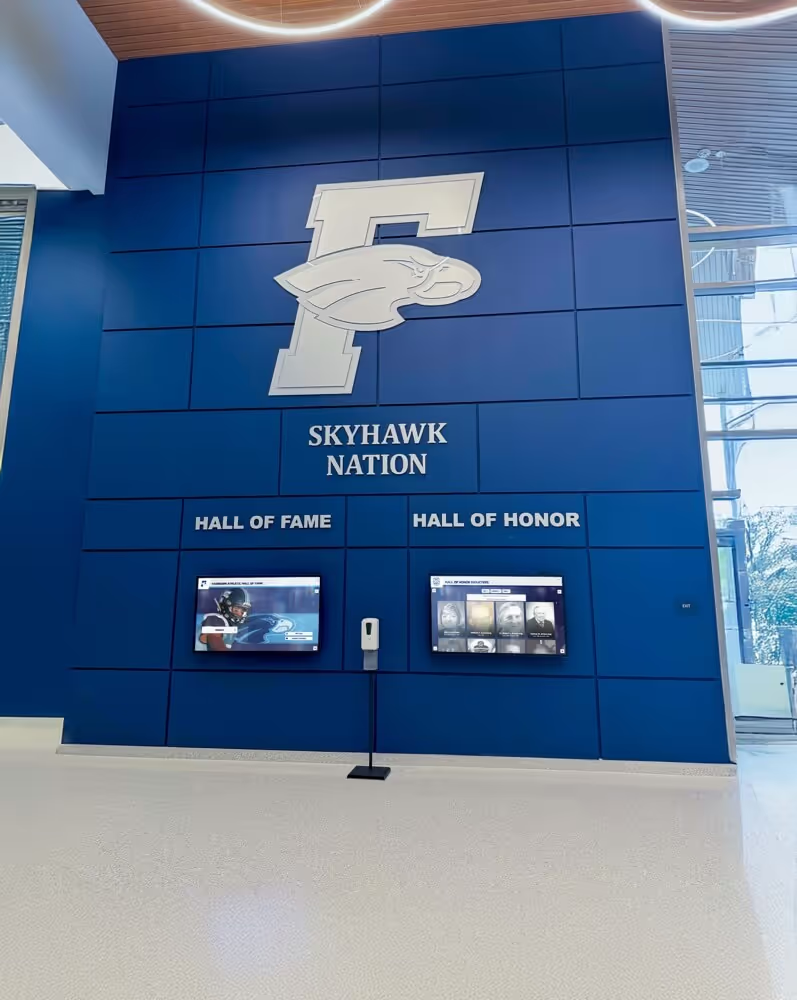
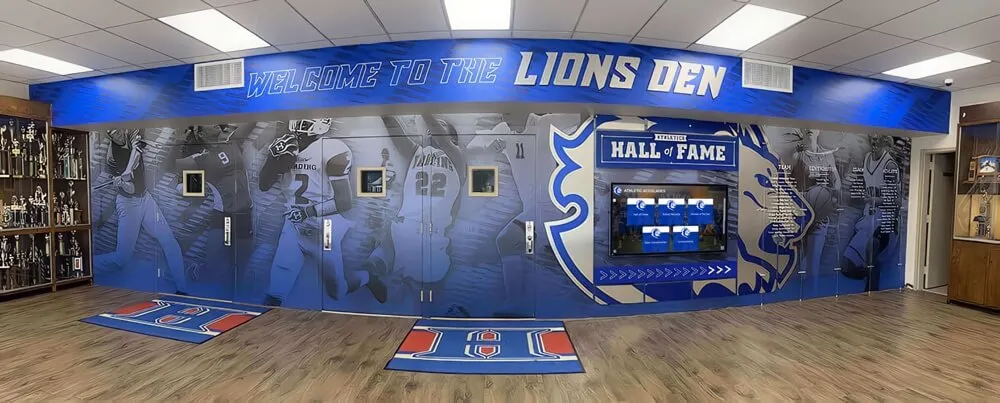
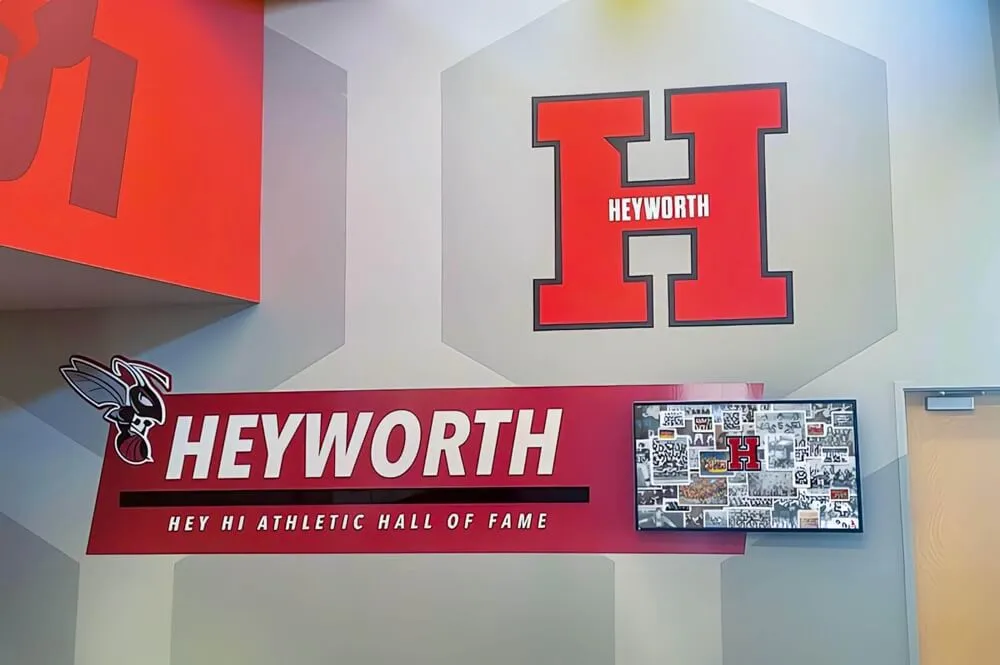
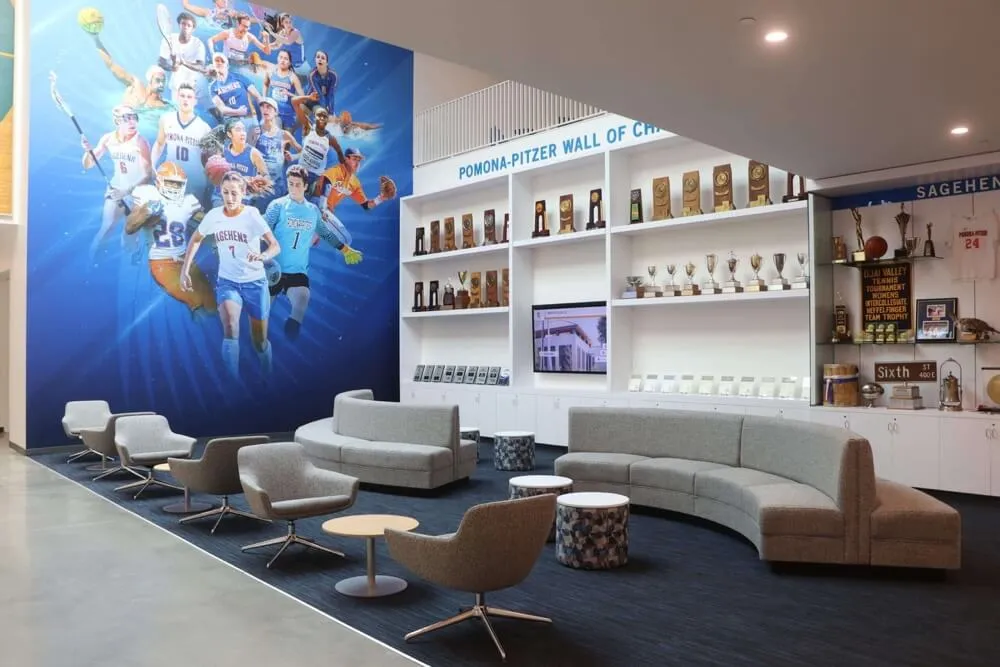
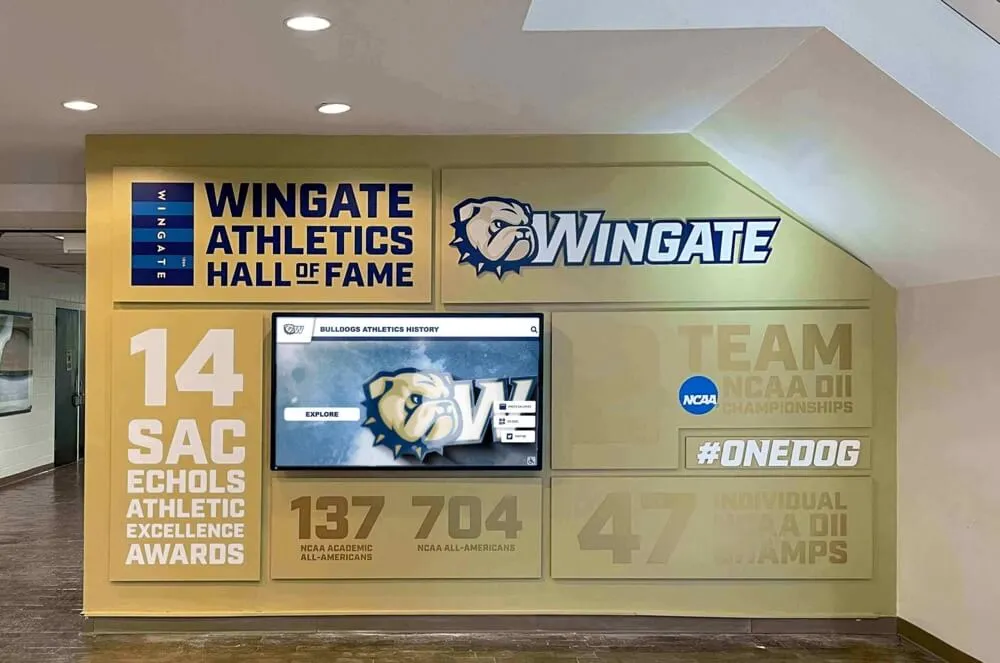
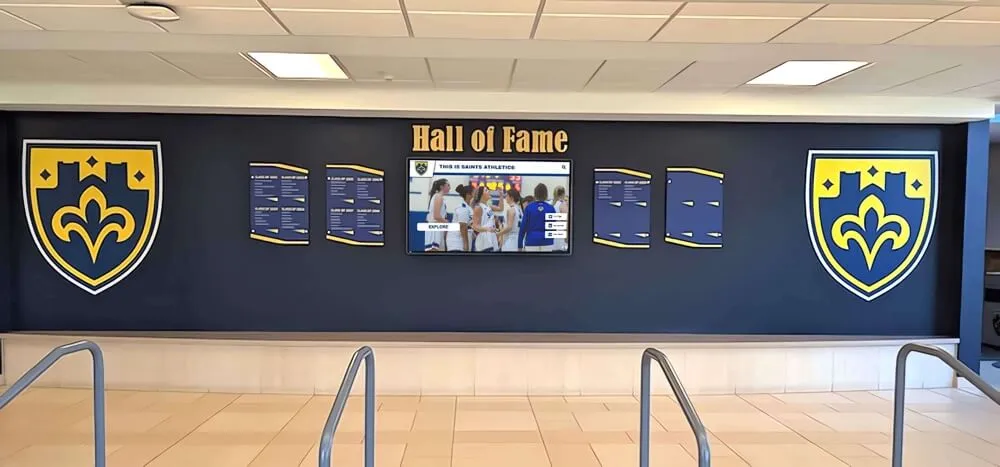
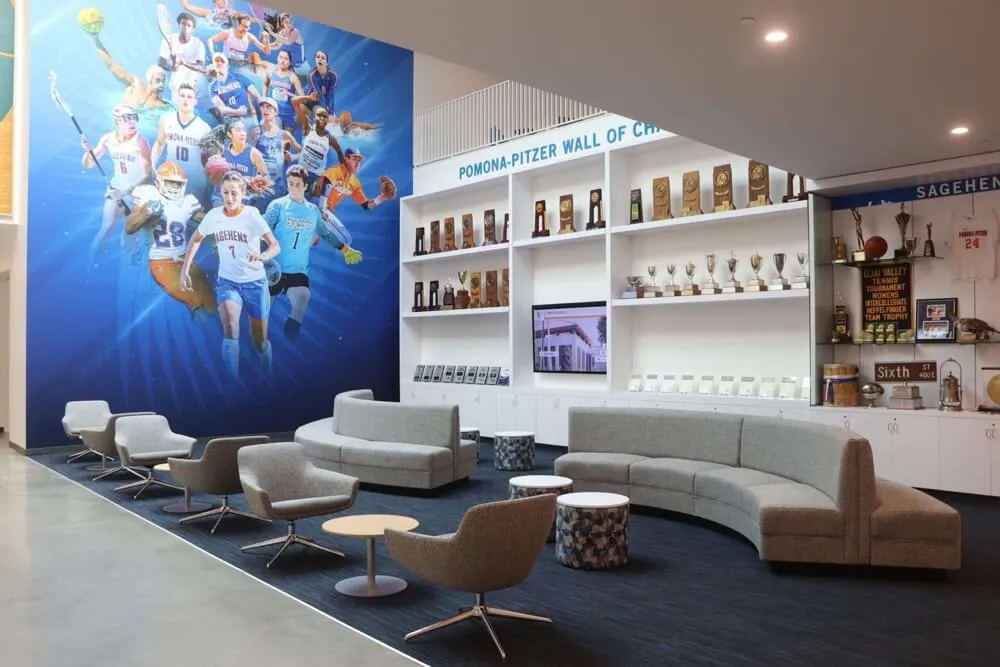
Many elite programs incorporate sports psychology support, professional choreography services, advanced video analysis technology, individualized strength and conditioning programs, and comprehensive recovery protocols managing the physical toll of training maximum difficulty skills. Schools honoring outstanding gymnastics achievements often showcase these accomplishments through gymnasium wall displays that celebrate state championships, All-American honors, and exceptional performances that define program excellence.
Music and Choreography Resources
Developing outstanding floor routine music and choreography often requires specialized resources beyond what most gymnastics coaches can provide alongside their technical instruction responsibilities.
Floor Music Services and Selection
Numerous services specialize in creating custom gymnastics floor music, offering gymnasts access to professionally edited compilations tailored to their specific needs. These services typically provide extensive music libraries spanning multiple genres and styles, custom editing that combines multiple songs into cohesive routines, precise timing ensuring music fits exactly within 90-second requirements, and level-appropriate selections matching competitive maturity expectations.
When selecting floor music, consider whether the music genuinely resonates with the gymnast’s personality and preferences, whether tempo and energy align with the athlete’s natural movement qualities, whether musical structure provides clear phrases for choreography organization, and whether the selection stands out without being distractingly unusual or controversial. The right music enhances routine impact while inappropriate selections can undermine even technically excellent gymnastics.
Working with Choreographers
Professional gymnastics choreographers understand both Code of Points requirements and artistic possibilities, creating routines that maximize scoring potential while showcasing individual strengths and personality. Benefits of working with specialized choreographers include expertise in current judging trends and scoring opportunities, creativity bringing fresh ideas beyond standard gym choreography, efficiency developing complete routines in concentrated sessions, and outside perspective identifying unique strengths coaches might overlook from daily familiarity.
When selecting a choreographer, seek references from other gymnasts and coaches, review video examples of previous work assessing style compatibility, discuss your specific goals, strengths, and level requirements, and establish clear expectations regarding session formats, timelines, and costs. The investment in professional choreography often produces significant competitive returns through improved artistry scores and more distinctive, memorable routines.
Recognizing Gymnastics Excellence and Building Program Traditions
Outstanding gymnastics performances deserve recognition that celebrates achievement, inspires current athletes, and builds program traditions extending beyond individual competitive seasons.
Honoring Championship Performances and Milestones
Significant gymnastics accomplishments worthy of formal recognition include state championship performances and placements, All-American honors at national competitions, record-breaking scores at team or school levels, qualification to prestigious invitational competitions, and achievement of particularly difficult skills or combinations. Programs that systematically recognize these milestones create cultures celebrating excellence while providing concrete goals that motivate developing athletes.
Many schools implement recognition strategies including sports team photo displays showcasing gymnastics achievements alongside other sports, dedicated gymnastics program websites documenting historical performances and current team members, senior recognition tributes honoring graduating athletes and their contributions, and social media celebrations amplifying recognition beyond immediate program community. These recognition practices strengthen team culture, increase family engagement, and demonstrate that programs value achievement beyond simply moving to the next competition.
Creating Lasting Recognition for Program Excellence
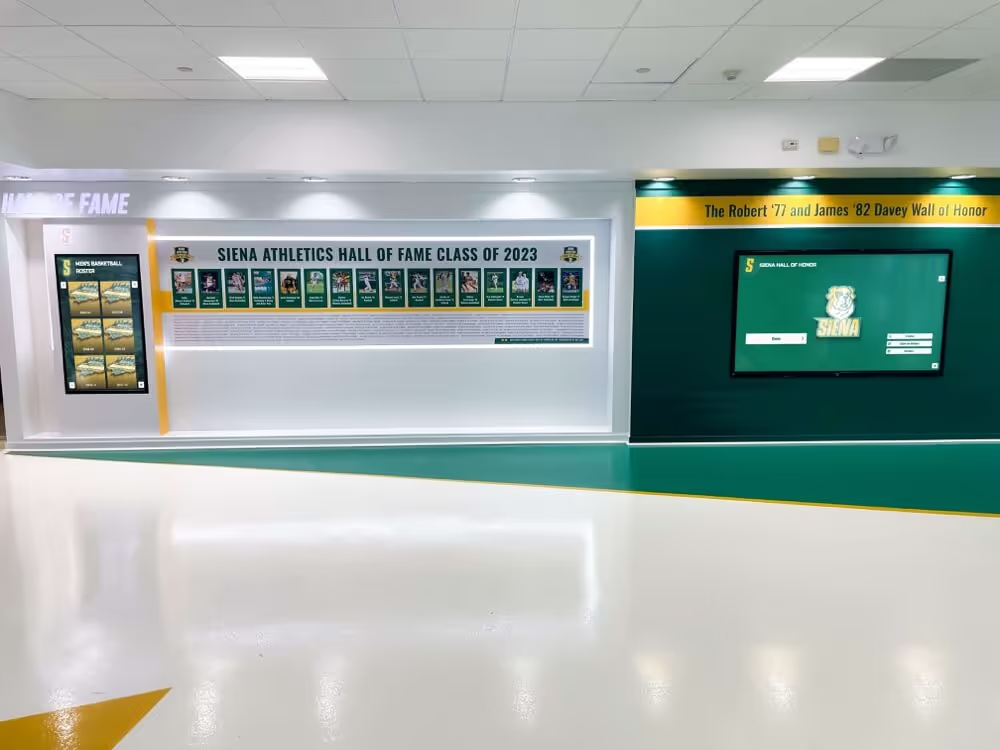
As gymnastics programs mature over years and decades, systematic recognition becomes increasingly important for preserving institutional memory and maintaining connections with alumni athletes. Comprehensive recognition approaches might include program record boards tracking best all-around scores, individual event scores, and team championships, hall of fame programs honoring exceptional gymnasts, coaches, and contributors, athletic banquet celebrations connecting current athletes with program alumni, and historical documentation preserving meet results, photos, and significant program milestones.
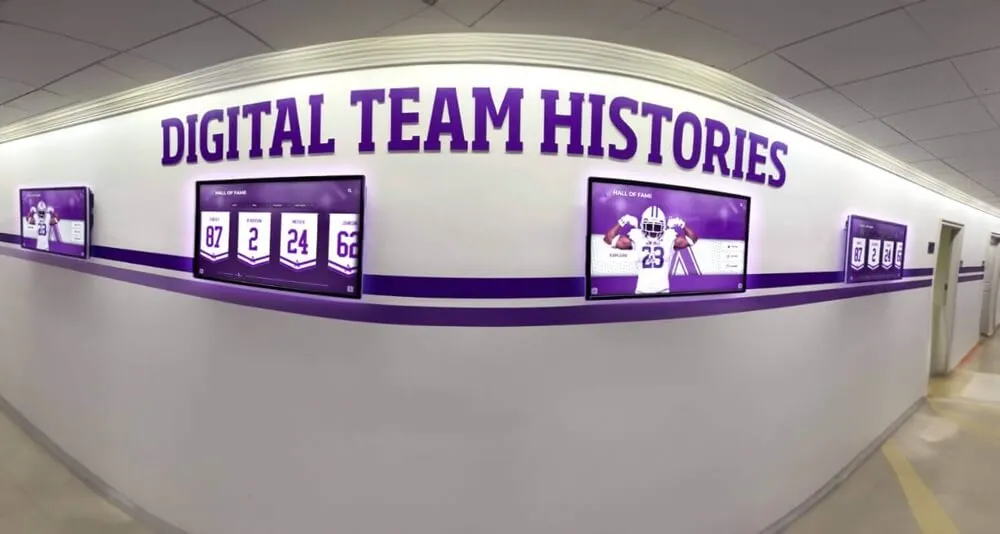
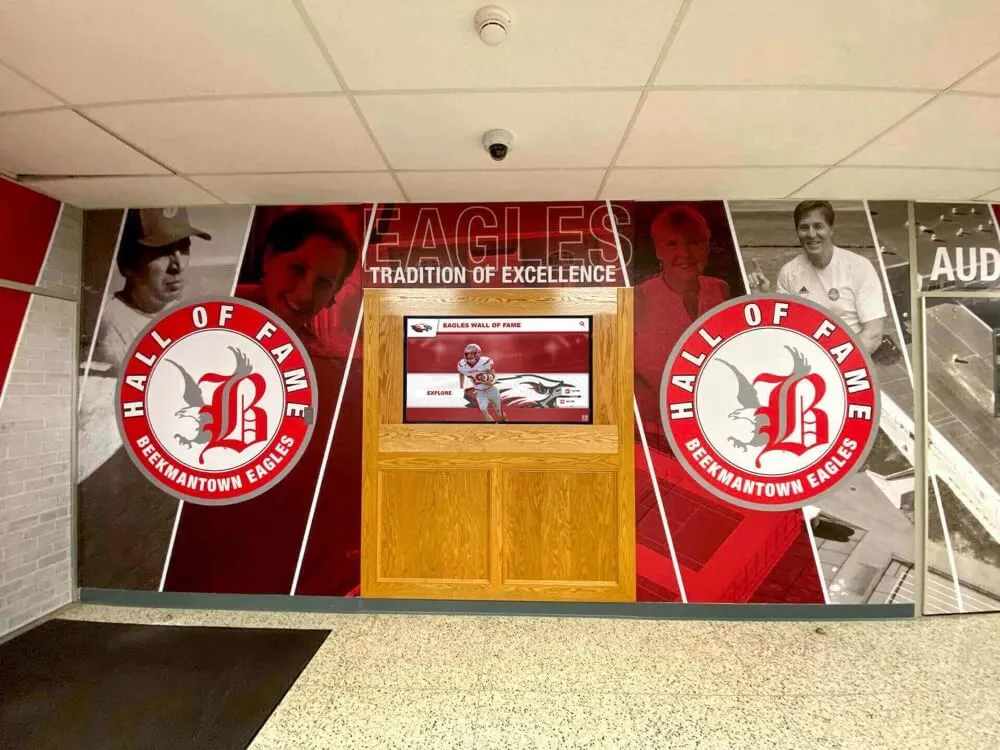
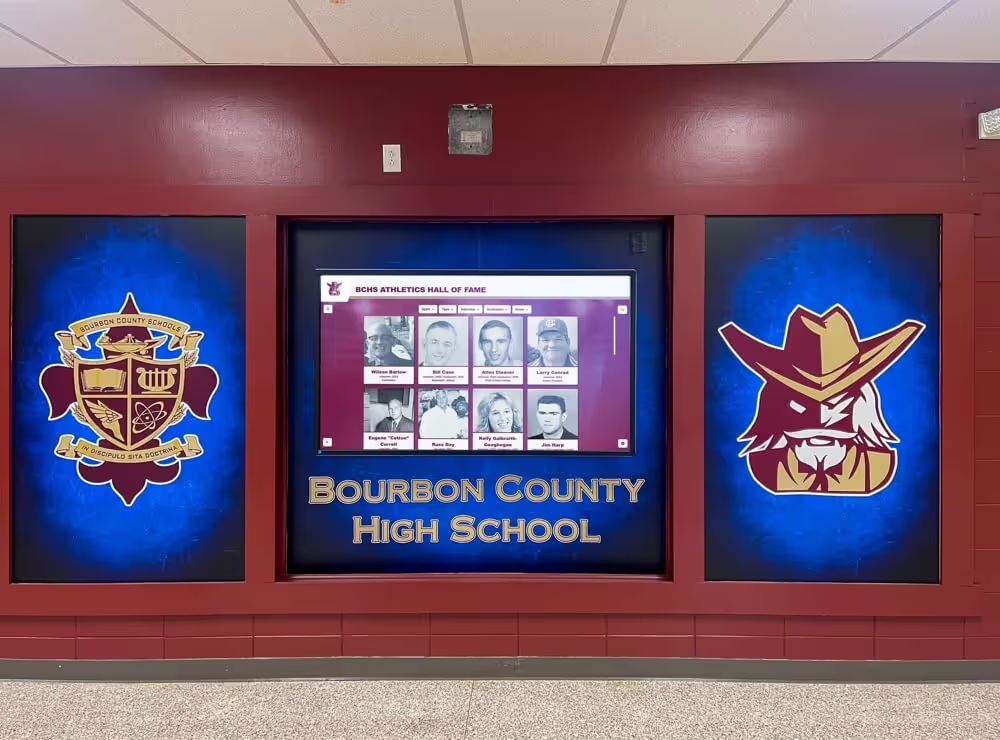
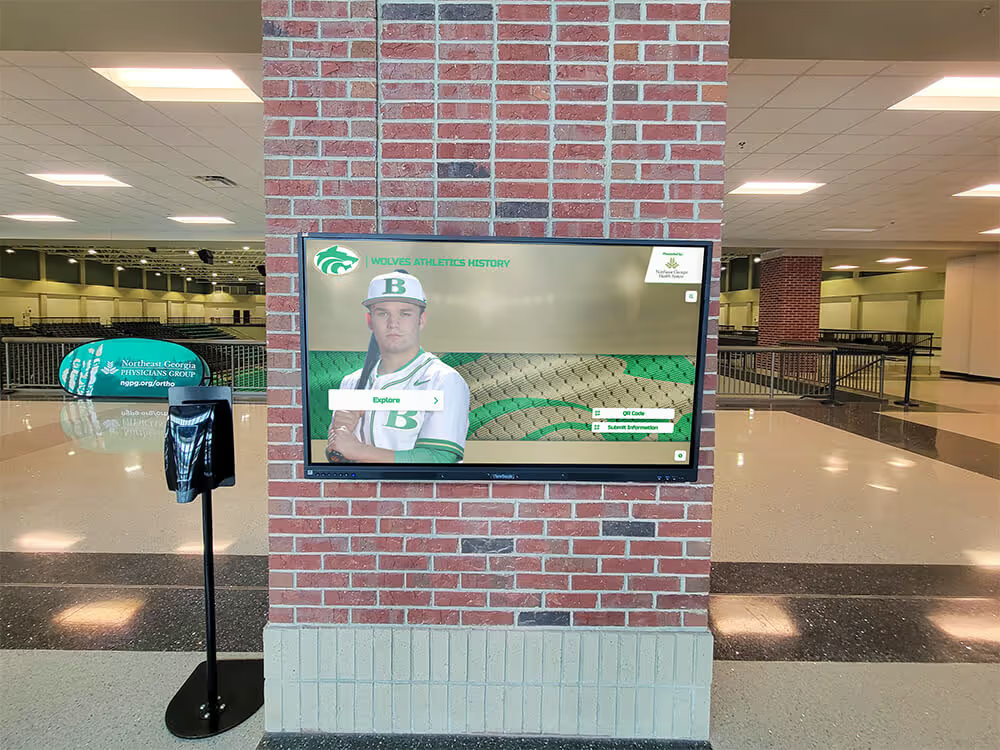
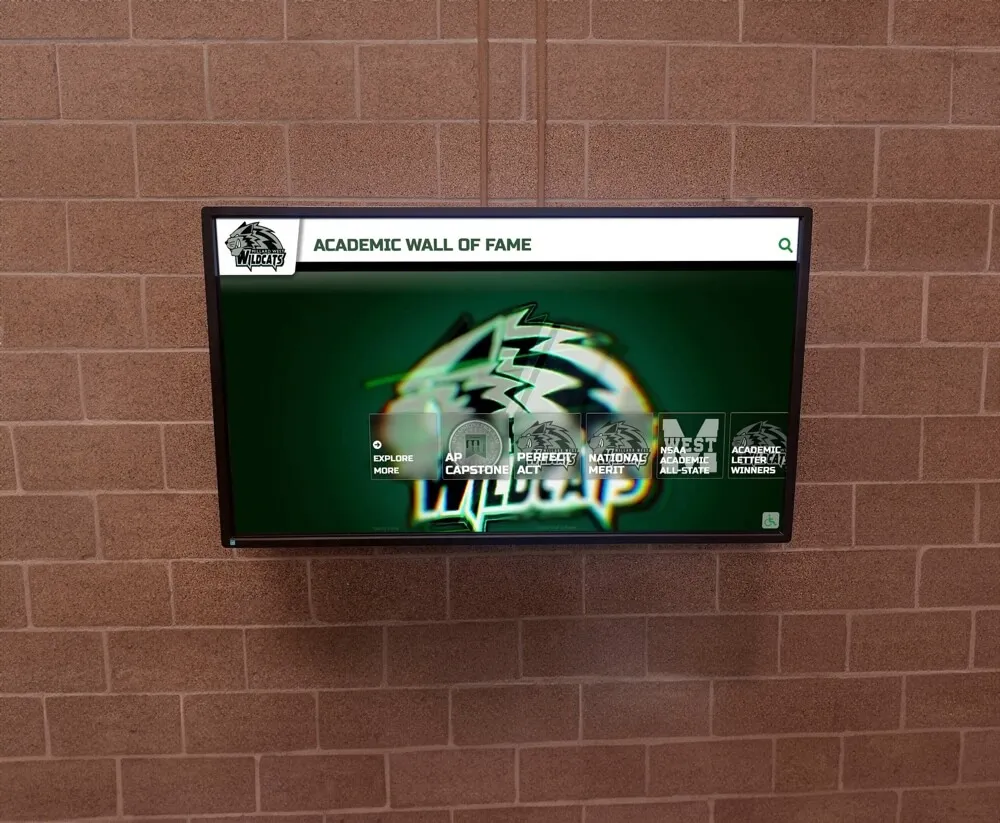
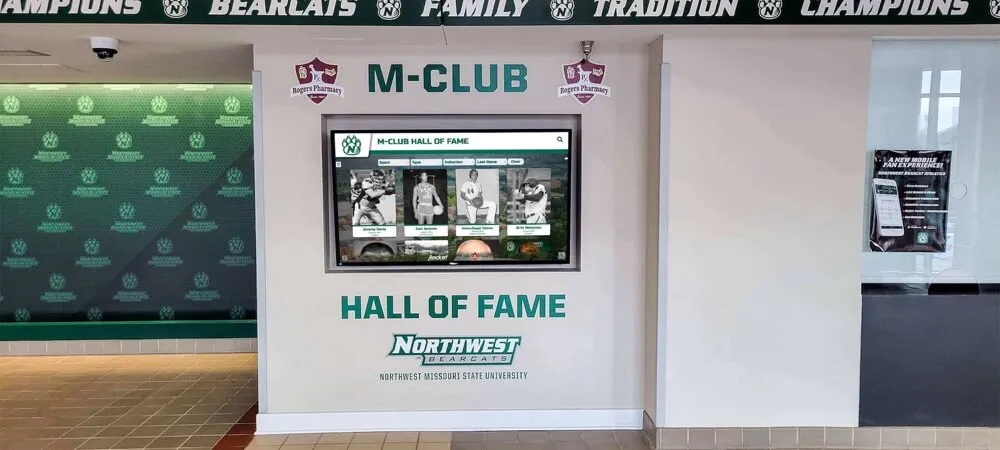
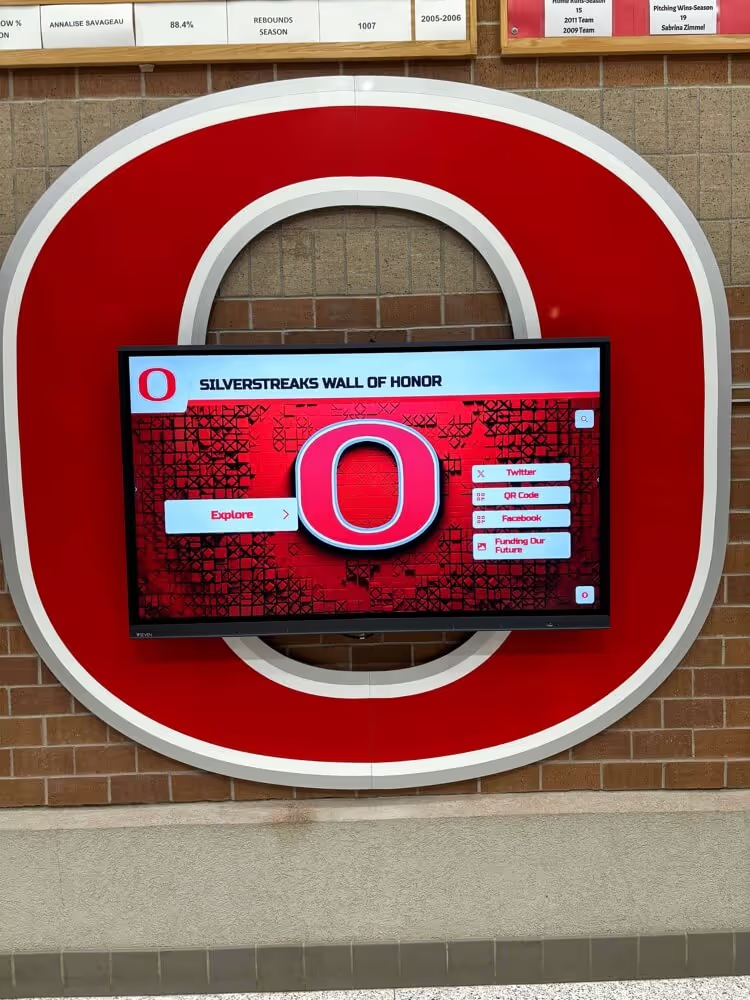
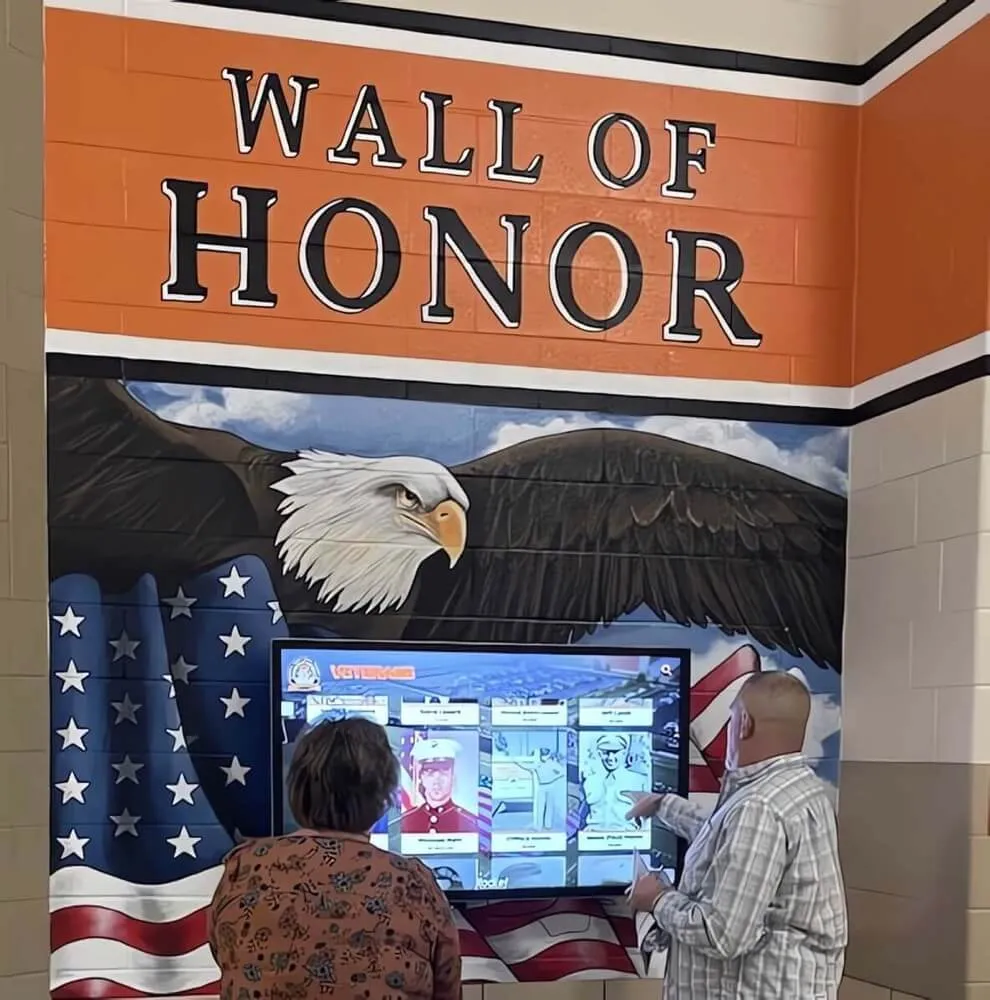
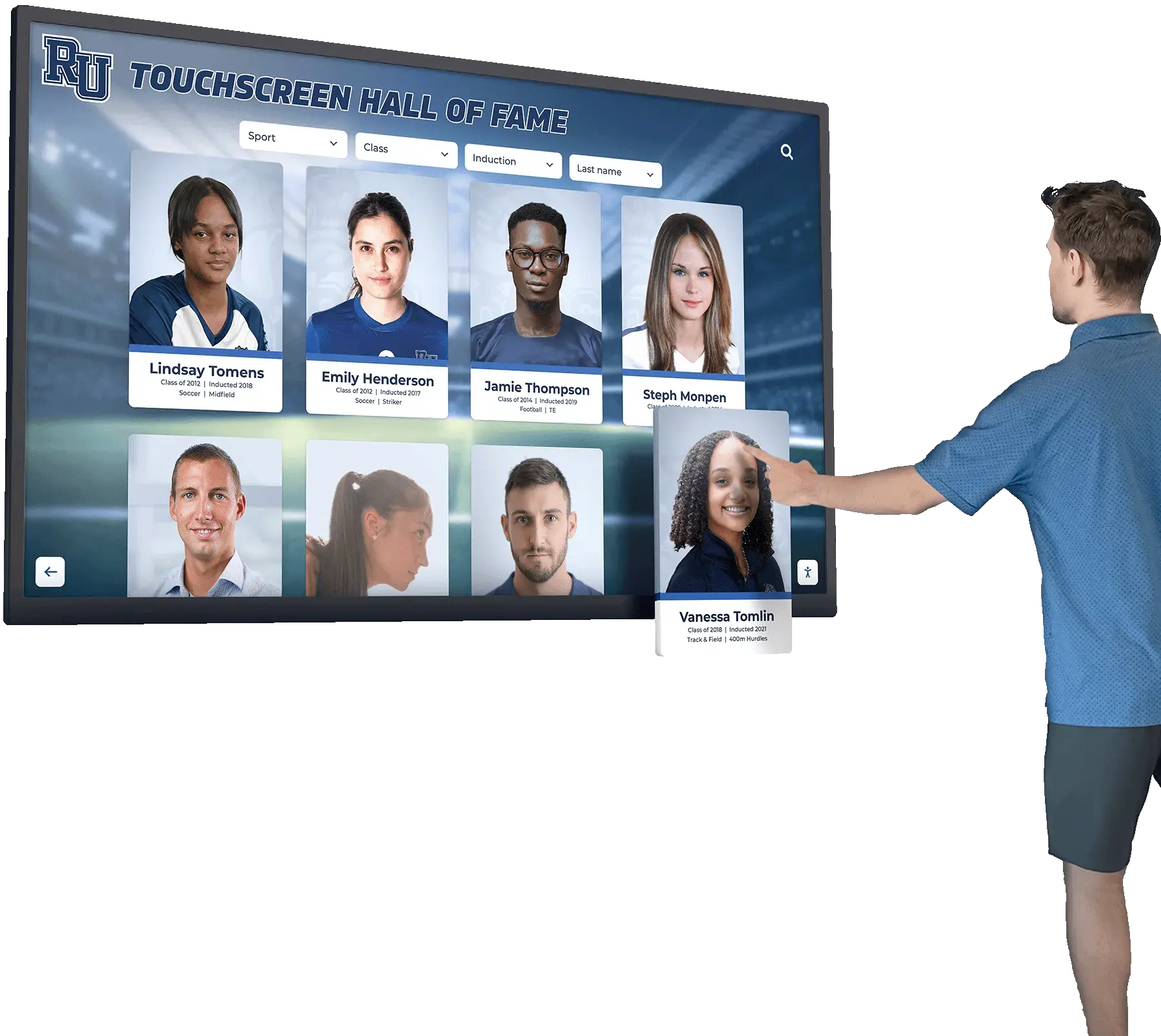
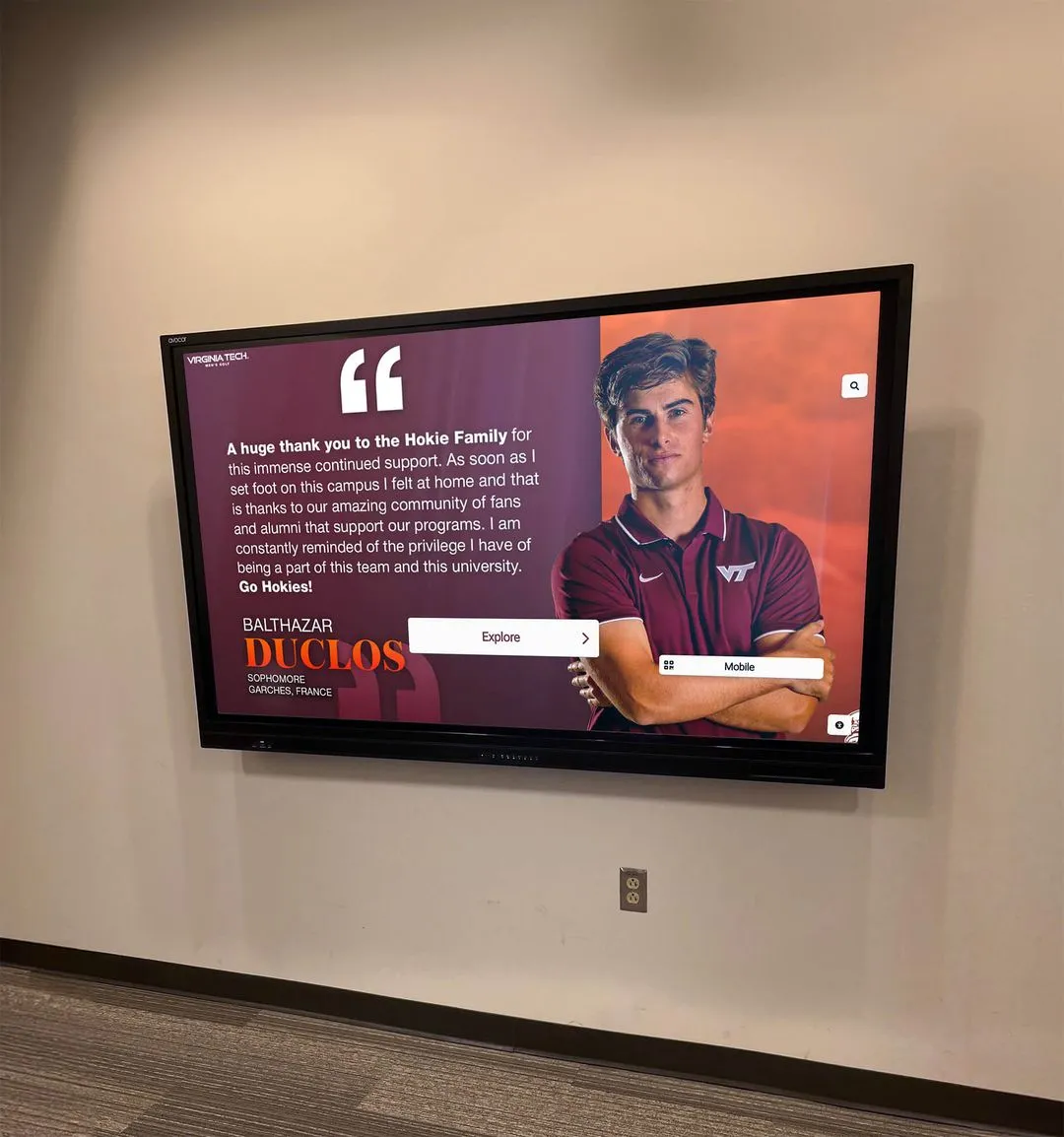
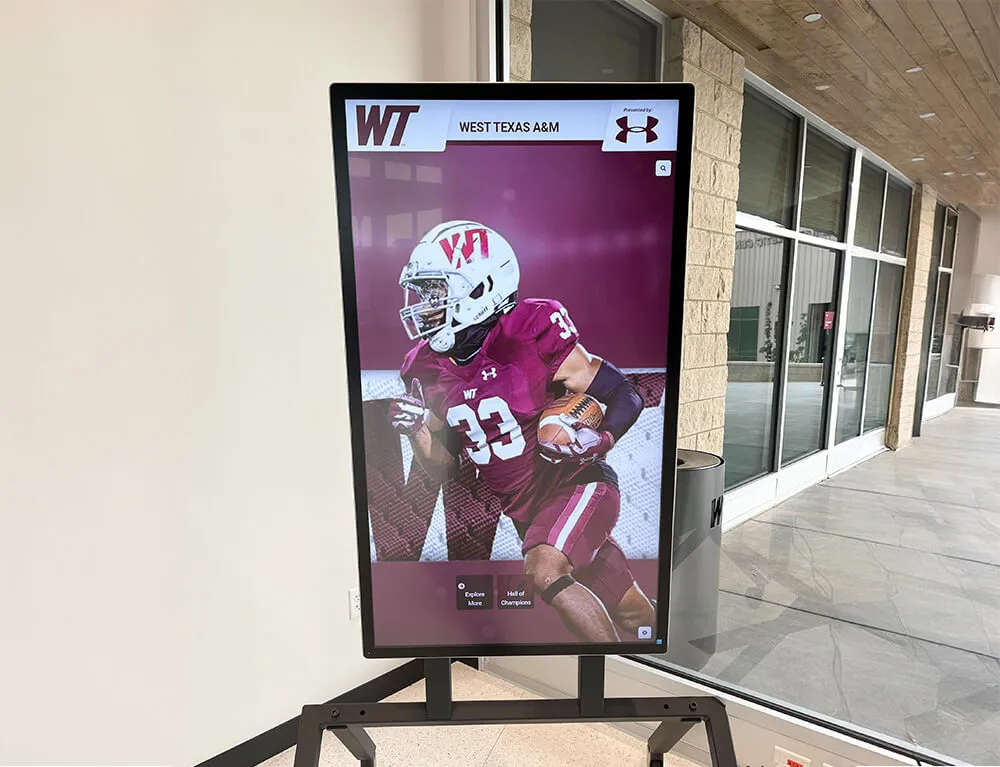
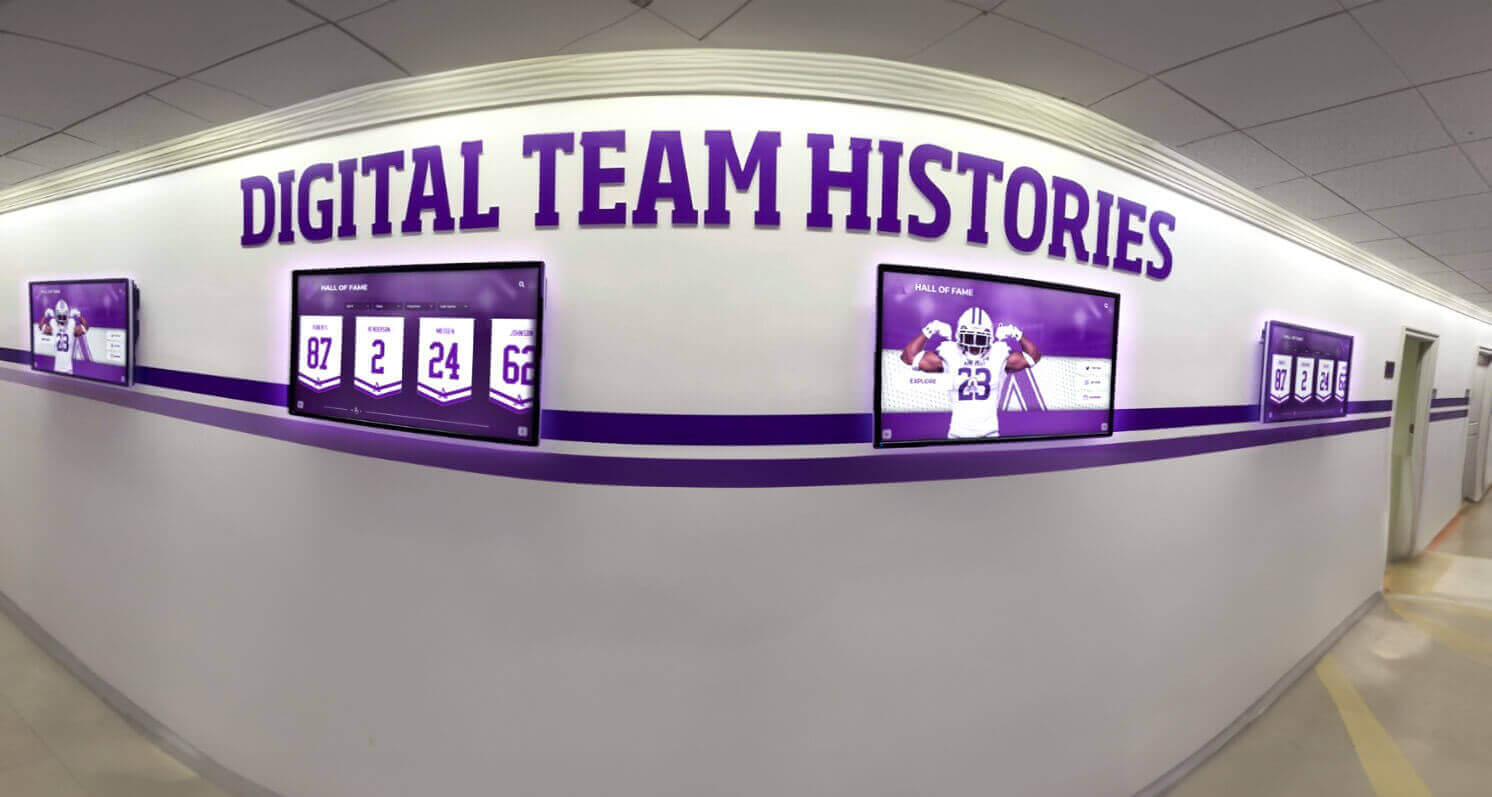
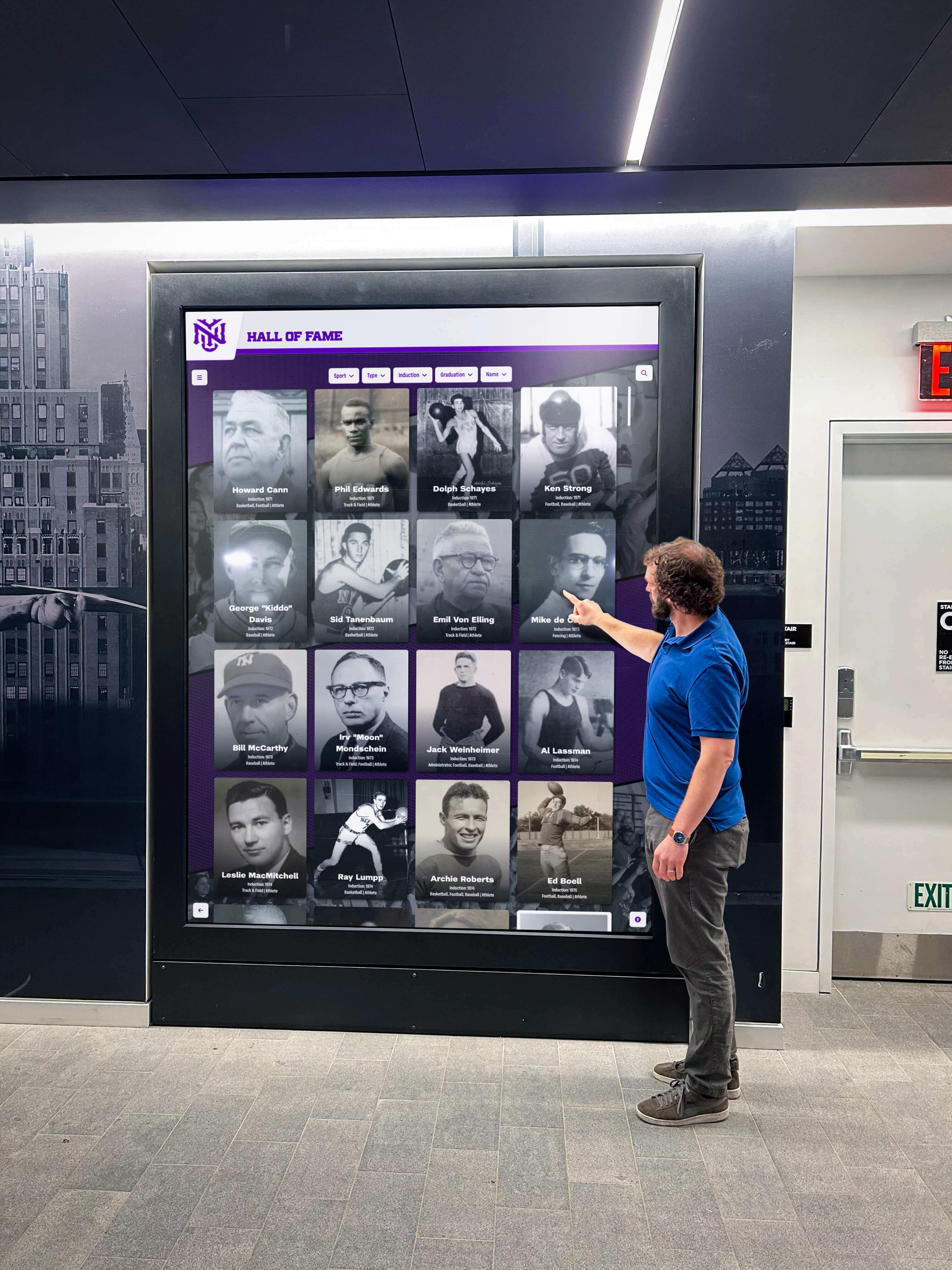
Modern digital recognition walls make comprehensive recognition accessible even for programs without unlimited budgets, eliminating space constraints of traditional trophy cases while enabling rich multimedia presentations that bring achievements to life. Schools can showcase gymnasts’ floor routine performances alongside their academic achievements, leadership contributions, and post-graduation accomplishments, telling complete stories rather than simply listing scores.
Programs considering recognition systems should evaluate solutions that accommodate unlimited athlete profiles without space constraints, enable easy updates as new achievements occur, provide searchable databases allowing visitors to find specific athletes or seasons, integrate multimedia content including photos and videos, and support multiple sports within unified platforms. The right recognition approach creates lasting value extending decades beyond initial implementation, strengthening alumni connections and building traditions that define program identity.
Supporting Youth Gymnastics Development
Beyond competitive excellence, many gymnastics programs emphasize personal development, character building, and lifelong fitness habits that extend far beyond athletic careers. Programs supporting comprehensive athlete development might offer leadership opportunities for experienced gymnasts mentoring younger teammates, community service initiatives connecting gymnastics with broader social contribution, educational programming around nutrition, injury prevention, and healthy athletic identity, and life skills training addressing goal-setting, time management, and resilience. Programs often celebrate these achievements at annual sports banquets that honor both competitive success and character development.
Recognition of these broader contributions alongside competitive achievement demonstrates that programs value complete personal development rather than simply producing winning performances. Athletes honored through comprehensive teacher and student recognition programs that celebrate leadership, character, and community involvement often maintain stronger connections with programs throughout their lives than those recognized exclusively for medals and titles.
Injury Prevention and Safe Progression
Floor exercise gymnastics involves significant physical demands and inherent risks requiring careful attention to injury prevention and safe skill progression throughout training and competitive careers.
Common Floor Exercise Injuries
Gymnasts performing floor routines face particular injury risks including ankle sprains and chronic ankle instability from repeated landing impact, knee injuries from landing mechanics or twisting forces, wrist and elbow injuries from hand-support skills and tumbling, lower back stress from repeated hyperextension during skills, and overuse injuries developing from insufficient recovery between training sessions.
Injury prevention strategies should include comprehensive warm-up protocols preparing bodies for explosive activity, progressive skill development ensuring readiness before attempting advanced skills, proper landing technique instruction emphasizing safe impact absorption, adequate rest and recovery preventing overtraining accumulation, and immediate attention to pain or discomfort rather than training through concerning symptoms.
Coaches should maintain conservative approach to skill progression, understanding that the temporary disappointment of slower advancement proves far preferable to the potentially career-ending consequences of serious injuries resulting from premature skill attempts. Parents can support safe gymnastics by trusting coach expertise regarding appropriate progression timelines, ensuring adequate rest and recovery outside gym training, and encouraging athletes to communicate honestly about pain or injury concerns rather than hiding problems to avoid missing practice.
Creating Safe Training Environments
Beyond individual skill progression decisions, gymnastics programs should maintain safe training environments through proper equipment maintenance ensuring mats, springs, and apparatus remain in good condition, appropriate supervision ratios allowing coaches to spot skills safely, systematic skill progressions documented across level requirements, emergency action plans prepared for serious injury situations, and positive team cultures where athletes feel comfortable expressing safety concerns without fear of negative consequences.
Programs prioritizing safety alongside competitive success typically produce healthier, longer gymnastics careers than those emphasizing achievement at all costs. The most successful gymnastics programs understand that sustainable excellence requires protecting athlete wellbeing while pursuing competitive goals.
Cross-Training and Complementary Skills
While floor routine excellence requires extensive specific practice, complementary training in related disciplines often enhances gymnastics performance while reducing overuse injury risk from excessive repetition of identical movements.
Ballet and Dance Training
Many elite gymnasts incorporate ballet or contemporary dance training that enhances floor routine performance through improved flexibility particularly in hip and ankle mobility, enhanced musicality and rhythmic awareness, refined movement quality and aesthetic presentation, stronger turnout and extension in leaps and jumps, and better performance presence and dramatic expression. Cross-training strategies from other athletic disciplines often provide valuable insights for developing explosive power and technique refinement.
Even one dance class weekly can significantly improve gymnastics artistry, particularly for athletes who naturally focus primarily on tumbling while treating choreography as an afterthought. Dance training helps gymnasts understand movement as artistic expression rather than simply technical skill demonstration, directly translating into higher artistry scores in competitive floor routines.
Trampoline and Tumbling
Trampoline training provides valuable opportunities to develop air awareness, practice twisting mechanics with more flight time than floor tumbling provides, build spatial orientation confidence, and condition for explosive power in a lower-impact environment than repeated floor tumbling. Many gymnasts find that trampoline work accelerates floor tumbling progression by allowing them to understand rotation and twisting mechanics before attempting skills on the less forgiving floor surface.
However, trampoline training requires qualified instruction and appropriate safety protocols, as the extended flight time that makes it valuable for learning also creates risks when performed without proper supervision and progression.
Strength Training and Conditioning
Systematic strength training beyond basic gymnastics conditioning enhances floor routine performance through increased explosive power for tumbling, improved core strength for body position control, enhanced stamina for maintaining performance quality throughout routines, and injury prevention by strengthening muscles and connective tissues. Age-appropriate strength training should begin in early adolescence under qualified supervision, progressing from bodyweight exercises through weighted resistance as athletes mature physically and technically.
Many gymnastics programs partner with strength and conditioning specialists who understand sport-specific demands and developmental considerations, ensuring that training enhances rather than interferes with gymnastics skill development.
Building Team Culture Around Floor Exercise
While gymnastics competition ultimately comes down to individual performance, team culture significantly influences how gymnasts approach training, handle competitive pressure, and develop throughout their careers.
Fostering Supportive Team Environments
Gymnastics programs should actively cultivate team cultures where athletes genuinely support each other’s success rather than viewing teammates primarily as competitors. Positive team environments feature celebration of individual progress and achievements regardless of competitive placement, encouragement during difficult skill learning when gymnasts feel frustrated or fearful, collaborative problem-solving where more experienced athletes mentor developing teammates, and team identity extending beyond simply training at the same facility.
Coaches build supportive cultures through intentional team-building activities, recognition that celebrates diverse contributions beyond top competitive performances, leadership opportunities allowing experienced athletes to contribute to program development, and explicit expectations that teammates support rather than undermine each other. The athletes who train in truly supportive team environments typically achieve better competitive results and maintain longer, healthier gymnastics careers than those in excessively competitive or negative training atmospheres.
Performance Opportunities Beyond Competition
Many gymnasts benefit from performance opportunities beyond formal competitions, including exhibition performances at school or community events, demonstration routines for prospective team members, participation in gymnastics festivals or showcases, and video projects documenting routines for sharing with extended family and friends. These alternative performance contexts build confidence, provide practice performing under observation without competitive pressure, create positive associations with performing floor routines, and allow gymnasts to share their sport with broader communities.
Programs that create diverse performance opportunities often develop athletes with stronger performance skills and greater comfort with competitive pressure than those who only perform in formal judged competitions.
Floor Routine Evolution: From Fundamentals to Mastery
Understanding floor routine development as a multi-year journey rather than a single-season goal helps gymnasts, coaches, and parents maintain appropriate expectations while celebrating incremental progress that compounds into significant long-term achievement.
Long-Term Athletic Development Perspective
Gymnastics excellence develops over years of systematic training, with floor routines evolving through predictable stages. Beginning gymnasts ages 6-9 focus on fundamental movement patterns, basic tumbling progressions, and simple choreography building body awareness and movement vocabulary. Developing gymnasts ages 10-13 build on fundamentals while adding difficulty, developing personal style, and beginning to understand performance quality. Competitive athletes ages 14-18 refine advanced skills while maximizing difficulty and artistry within their capabilities. Elite and collegiate gymnasts ages 18+ perform at peak technical and artistic levels while managing competitive pressure at the highest levels.
This developmental timeline acknowledges that truly excellent floor routines require extensive preparation across multiple training years. Programs and families who understand this long-term perspective avoid the trap of pushing excessive difficulty prematurely while celebrating the incremental progress that leads ultimately to excellence.
Individualizing Development Paths
While general developmental timelines provide useful frameworks, individual gymnasts progress at different rates based on natural abilities, training frequency and quality, physical development timing, mental maturity and resilience, and intrinsic motivation and goal commitment. Effective coaches individualize training approaches and progression timelines, understanding that forcing all athletes through identical progressions on identical schedules produces suboptimal outcomes and increases injury risk.
Some gymnasts excel at tumbling while struggling with choreography and artistic elements. Others demonstrate beautiful movement quality but require more time developing power for advanced tumbling. The best coaches identify individual strengths and challenges, designing training that maximizes each athlete’s potential rather than applying one-size-fits-all approaches that inevitably fit some athletes poorly.
Conclusion: Excellence Through Comprehensive Preparation
Outstanding gymnastics floor routines result from comprehensive preparation spanning technical skill development, artistic choreography, musical connection, mental training, and physical conditioning. Success requires recognizing that all these elements contribute equally to competitive excellence—extraordinary tumbling cannot compensate for poor choreography and weak artistry any more than beautiful dance can overcome inadequate tumbling progression.
Gymnasts committed to floor routine excellence should embrace systematic skill progression that builds difficulty safely over multiple training years, choreography and music that authentically reflect personality and strengths, consistent mental skills practice developing competitive confidence and performance presence, comprehensive physical preparation supporting explosive power, flexibility, and stamina, and supportive team environments where athletes encourage each other’s development and celebrate diverse achievements.
Coaches developing floor routine programs should maintain conservative skill progression protecting long-term athlete health, provide or facilitate access to specialized choreography and music resources, teach mental skills alongside physical techniques, create team cultures emphasizing support over excessive internal competition, and implement recognition systems that honor achievement while inspiring continued excellence. Programs that successfully develop comprehensive floor routine excellence often showcase achievements through modern recognition solutions that celebrate state championships, record-breaking performances, and individual milestones that define program legacies.
Whether your program needs to honor state meet champions, recognize All-American gymnasts, or celebrate decades of competitive excellence, Rocket Alumni Solutions provides touchscreen recognition displays that bring gymnastics achievements to life through searchable databases, multimedia presentations, and unlimited athlete profiles that preserve your program’s legacy for generations.
Parents supporting gymnasts through their competitive journeys should celebrate effort and progress alongside competitive outcomes, trust coach expertise regarding appropriate skill progression timelines, ensure adequate rest and recovery supporting healthy training loads, maintain perspective recognizing that gymnastics serves broader developmental purposes beyond medals, and appreciate that the discipline, resilience, and performance skills developed through floor routine training provide lifelong benefits extending far beyond competitive careers.
The 90 seconds of a gymnastics floor routine represent countless training hours, systematic skill progression, artistic development, mental preparation, and competitive experience. Those who approach floor exercise with comprehensive preparation across all these dimensions discover that the pursuit of excellence itself proves as rewarding as the competitive achievements it produces, building capabilities, confidence, and memories that endure throughout life.
Whether you’re a beginning gymnast learning your first floor routine, a developing athlete working toward advanced skills and personal style, or an elite performer competing at the highest levels, remember that every champion started with fundamentals, progressed through systematic skill development, faced setbacks requiring resilience, and ultimately discovered that gymnastics excellence reflects dedication, comprehensive preparation, and genuine love for the sport. Your floor routine journey is uniquely yours—embrace it fully while building the skills, confidence, and experiences that will serve you far beyond the competition floor.