Walk into most high school gymnasiums across America, and you’ll see them hanging from the rafters—championship banners documenting decades of athletic achievement. These fabric monuments celebrate state titles, conference championships, and retired jersey numbers, creating visual testimony to program excellence that inspires current athletes while honoring past success.
Yet as athletic programs evolve and recognition needs expand, many schools and organizations face critical decisions about how best to display achievements. Traditional gym banners have served programs well for generations, but modern digital display technology now offers compelling alternatives with distinct advantages. Understanding the strengths, limitations, and ideal applications of each approach helps athletic directors, administrators, and booster clubs make informed recognition investments.
Whether you’re planning new recognition for a championship team, considering facility renovations that impact display options, or evaluating long-term athletic recognition strategy, this comparison provides the framework for decisions that will serve your program for decades.
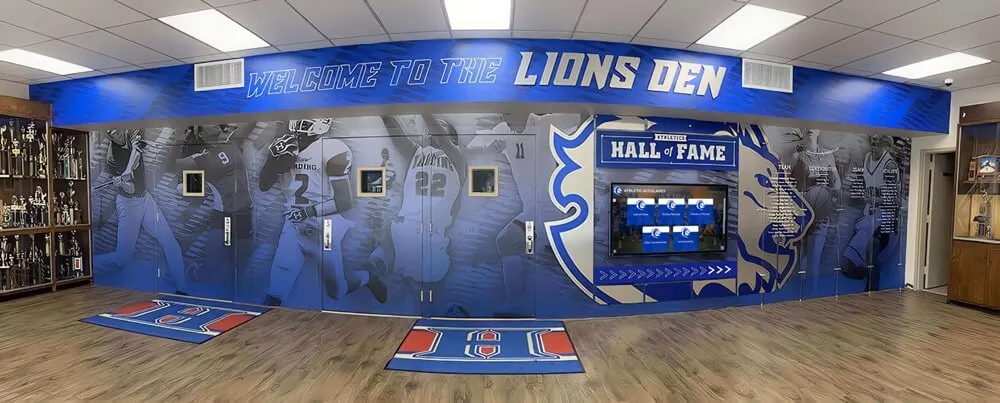
The Traditional Gym Banner: History and Appeal
Before exploring alternatives, it’s important to understand why gym banners became athletic recognition’s standard approach and what makes them valuable to programs and communities.
The Enduring Appeal of Championship Banners
Gym banners connect current athletes to program heritage in viscerally powerful ways. When basketball players take the court beneath state championship banners earned by teams decades earlier, they feel the weight and inspiration of tradition. These visual reminders declare that excellence has been achieved here before and can be achieved again—a psychological impact that shouldn’t be underestimated.
The physicality of traditional banners matters. They occupy substantial space, creating commanding visual presence in gymnasiums and field houses. Unlike digital screens that might blend into modern environments, championship banners stand out through size, placement, and traditional aesthetics that communicate prestige and permanence. Many communities take tremendous pride in seeing their school’s accomplishments displayed prominently, creating identity and cohesion around athletic success.
Traditional gym banners also require no electricity, internet connectivity, or technical maintenance. Once properly hung, they remain visible indefinitely without operational costs. This simplicity appeals to programs with limited technical resources or concerns about technology dependence for recognition that should remain accessible regardless of infrastructure challenges.
Common Banner Types in Athletic Programs
Athletic facilities typically display several distinct banner categories, each serving specific recognition purposes.
Championship Banners celebrate team titles at various competitive levels—conference championships, sectional or regional tournaments, state finals, and occasionally national competitions. These banners typically feature the sport name, championship level, and year, sometimes including key statistics like final records or tournament results. Championship banners usually receive premium placement in facility centers where visibility proves greatest.
Retired Jersey Banners honor exceptional individual athletes by permanently retiring their uniform numbers, reserving them from future use. This elite recognition typically requires extraordinary achievement—state player of the year honors, significant program records, or advancement to professional levels. Retired jersey banners feature the athlete’s name, number, years competed, and sometimes key accomplishments or statistics.
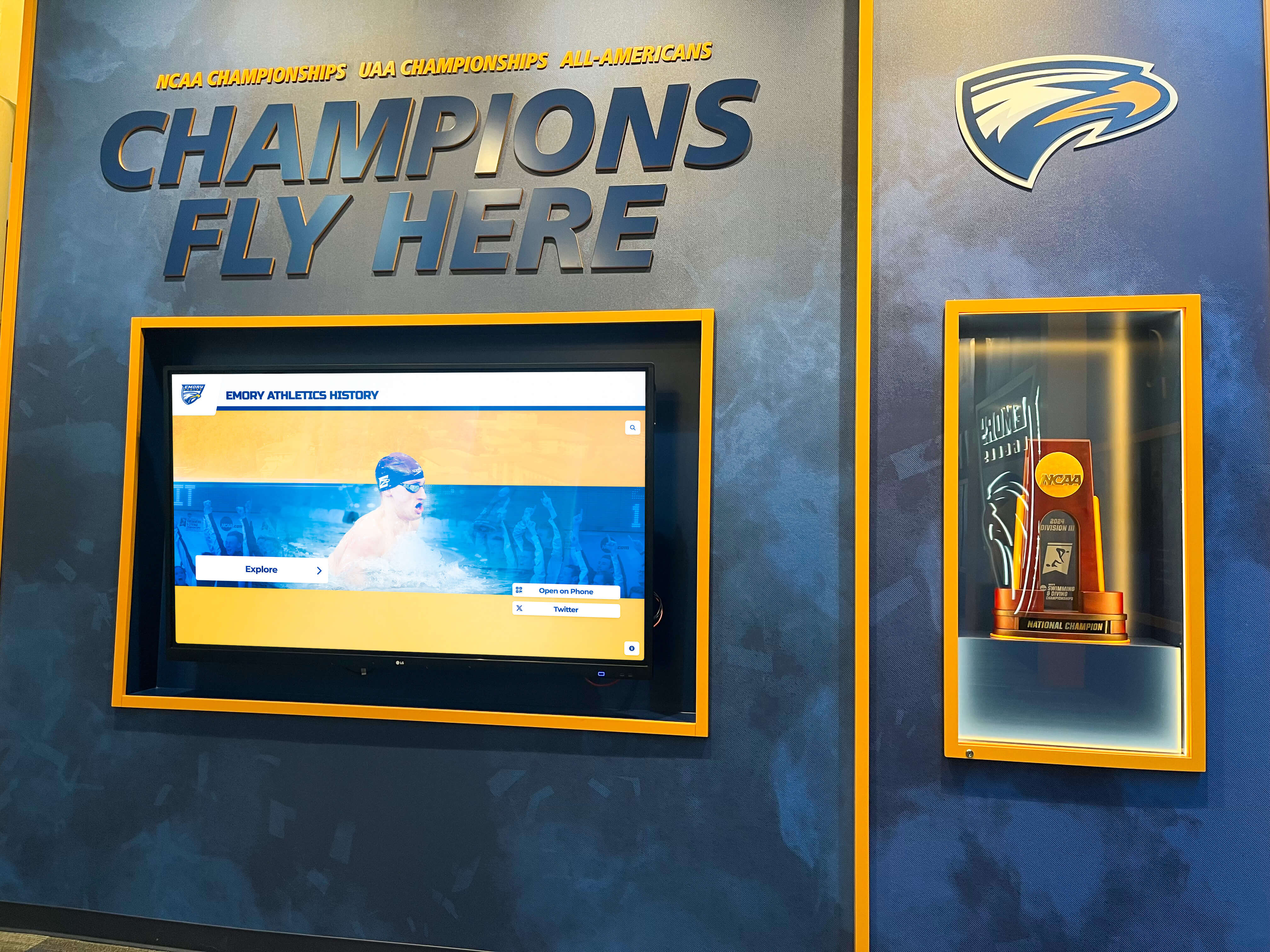
Conference or League Affiliation Banners display organizational membership and competitive conference identity. These banners reinforce program tradition while creating visual context about competitive environment and peer institutions.
Season Record Banners recognize exceptional team performance even without championships—undefeated seasons, win streaks, or historically outstanding records that merit commemoration despite falling short of titles.
Production and Installation Considerations
Creating traditional gym banners involves several steps requiring coordination between athletic departments, designers, and manufacturers.
Standard banner production begins with design development including layout, colors, fonts, and specific achievement details. Most schools maintain consistent design templates across years ensuring visual cohesion among banners from different eras. Professional manufacturers then print designs on durable fabric materials—typically heavy-duty vinyl or canvas that withstands years hanging in gymnasiums experiencing temperature fluctuations and humidity.
Production costs vary based on size, material quality, and complexity. Basic championship banners might cost $150-$400 each, while elaborate retired jersey banners with detailed graphics can exceed $500-$800. Rush production for timely post-season display often adds premium charges.
Installation requires professional services or maintenance staff comfortable working at heights. Banners hang from gymnasium rafters or ceiling structures via various mounting systems—cables, rods, or specialized hardware. Installation labor costs range from $100-$300 per banner depending on facility height and complexity.
Total investment for single championship banner recognition—design, production, and installation—typically falls between $300-$800, with costs increasing for premium materials or complex designs.
Limitations of Traditional Gym Banners
While cherished tradition, gym banners face practical constraints that increasingly challenge athletic programs seeking comprehensive recognition solutions.
Space Limitations and Capacity Constraints
Every gymnasium has finite ceiling space for banner display. Successful athletic programs accumulating championships across multiple sports and decades eventually face difficult decisions about which achievements receive premium recognition placement.
Do you display only state championships, removing conference titles to accommodate new achievements? Does the 1970 state title deserve equal prominence with last year’s championship? Should successful sports like basketball, volleyball, and football dominate banner space while less prominent programs receive minimal recognition? These questions create tension between honoring comprehensive program history and maintaining meaningful hierarchy distinguishing exceptional achievement.
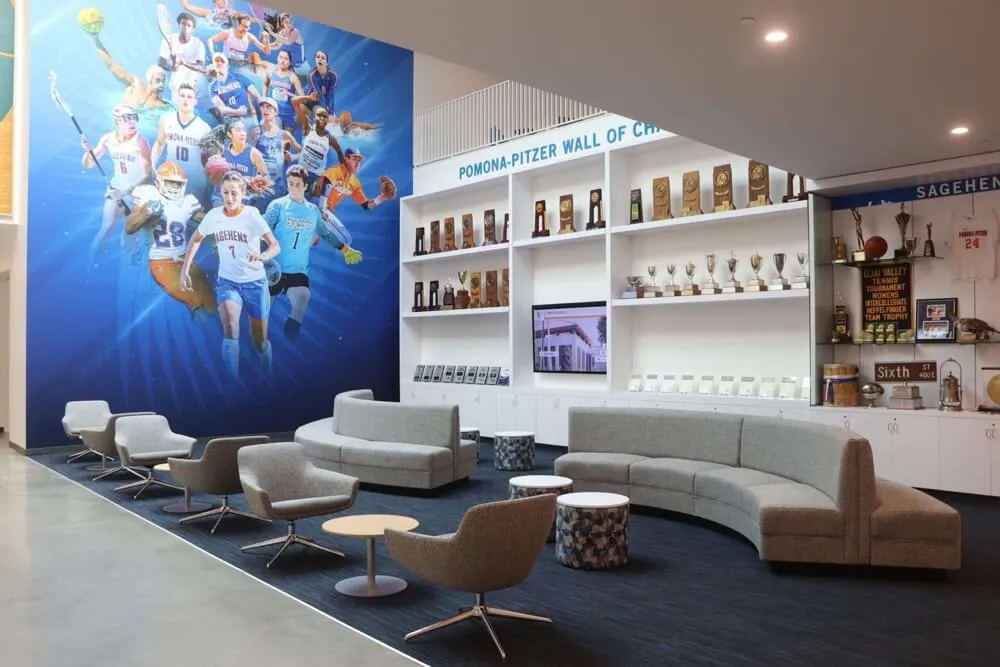
Some facilities eventually remove older banners to accommodate recent achievements, storing them away where nobody sees them—effectively erasing history to make room for present. This approach saddens alumni whose accomplishments disappear from visibility while failing to serve current athletes who lose connection to complete program heritage.
High Costs for Updates and Additions
Each new championship requires new banner production and professional installation, creating recurring expenses that accumulate substantially over time. A school winning three state championships annually across different sports spends $1,200-$2,400 yearly just maintaining current recognition, before considering other athletic department needs.
These costs sometimes delay recognition, with championships going uncelebrated for months or seasons until budgets accommodate banner production. Such delays diminish excitement and fail to capitalize on recognition’s motivational impact when achievement remains fresh.
Banner replacement for damaged or faded displays creates additional expense. Fabric materials hanging in gymnasiums for decades deteriorate through sun exposure, humidity, and time—colors fade, materials weaken, and eventually banners require replacement to maintain professional appearance. This ongoing renewal represents significant lifetime costs rarely calculated in initial recognition decisions.
Static Information and Limited Detail
Traditional banners display minimal information—typically sport name, championship level, year, and perhaps basic statistics. Space constraints and visibility considerations from gymnasium distances limit how much detail banners can effectively communicate.
This means most recognition content remains generic. Visitors see that basketball won state in 2015 but learn nothing about the team’s journey, key players, memorable games, or what made that season special. Individual athletes on championship teams receive no specific acknowledgment unless they separately earn retired jersey honors—a high bar reserving recognition for extreme elite.
Updates prove impossible once banners hang. If you later discover an error, wish to add information, or want to include subsequently relevant details (like athletes advancing to professional levels), the banner cannot accommodate changes without complete replacement.
Visibility and Engagement Challenges
In large gymnasiums or field houses, ceiling-hung banners often sit far from viewing audiences. Text must be large for basic readability, limiting information density. Detailed statistics, athlete names, or nuanced achievement descriptions simply aren’t viable at distances where banners hang.

Visitors cannot interact with banners or explore deeper information. They provide passive viewing only, missing opportunities for engagement that modern audiences increasingly expect. Young athletes might notice state championship banners without understanding the teams, players, or stories behind accomplishments—losing rich context that could inspire them more powerfully than simple visual acknowledgment.
For alumni, traditional banners offer limited connection points. A former athlete visits their high school gym and sees their championship year hanging above but experiences no deeper engagement with their memories, teammates, or individual contributions to that achievement.
Digital Display Options for Athletic Recognition
Modern technology provides alternative approaches to athletic recognition that address traditional banner limitations while introducing distinctive capabilities reshaping how programs celebrate achievement.
Understanding Digital Athletic Recognition Systems
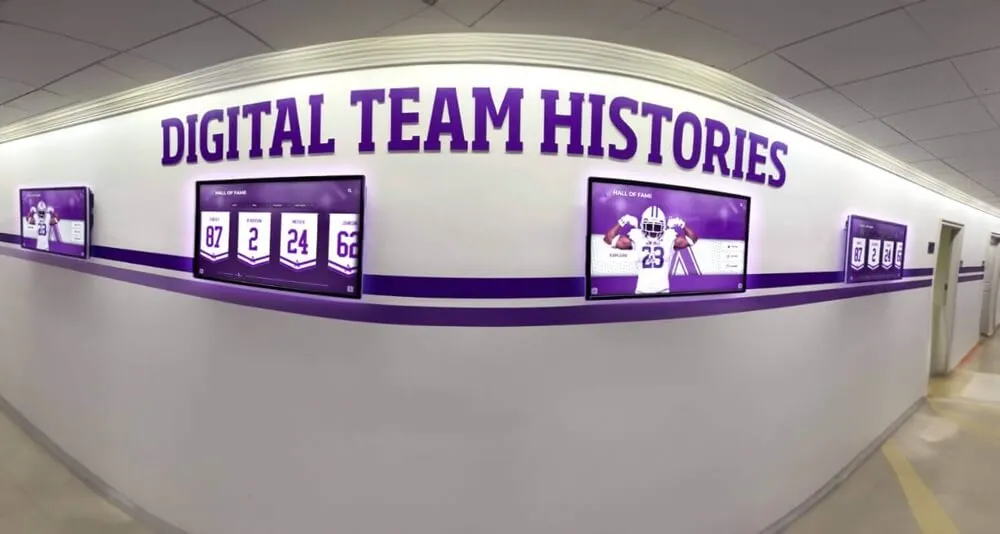
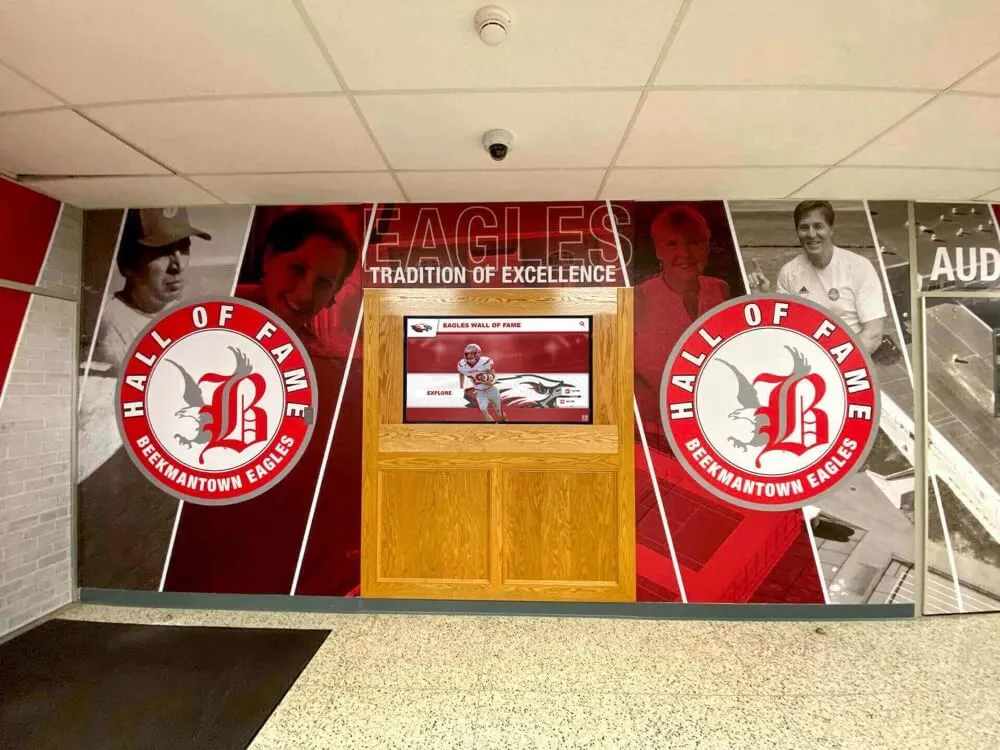
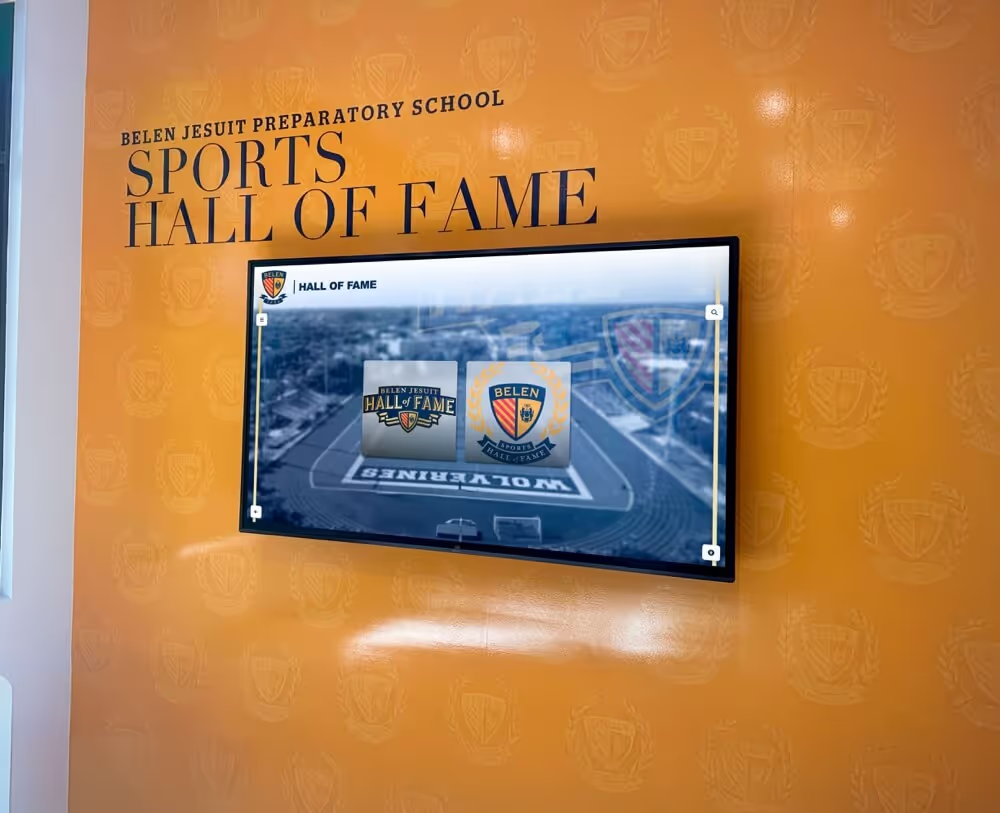
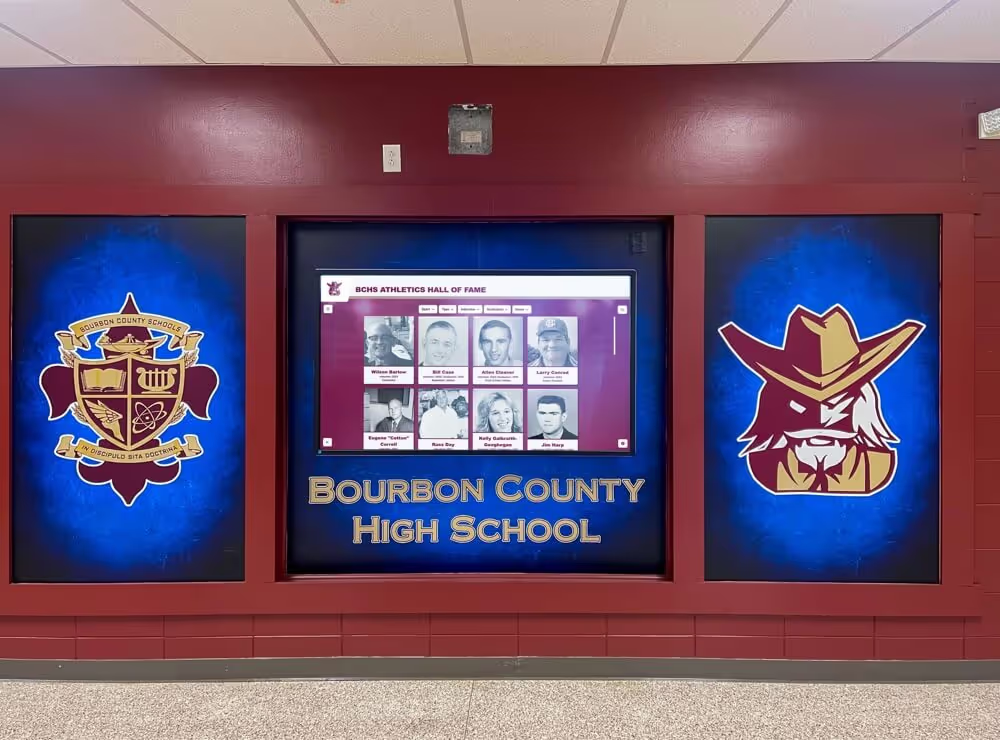
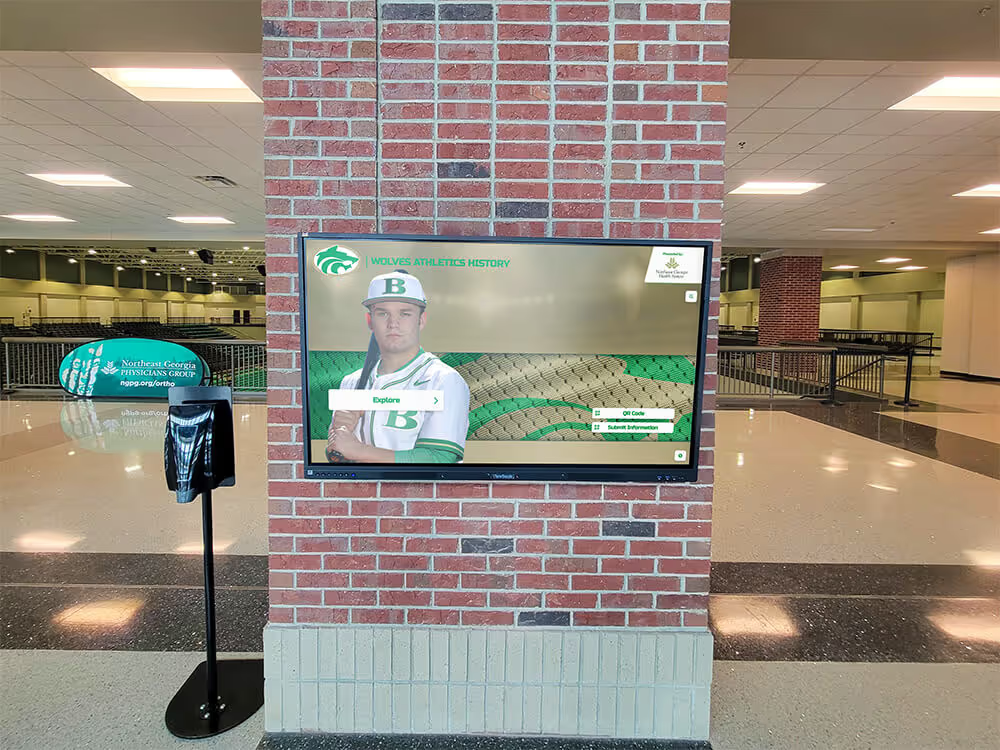
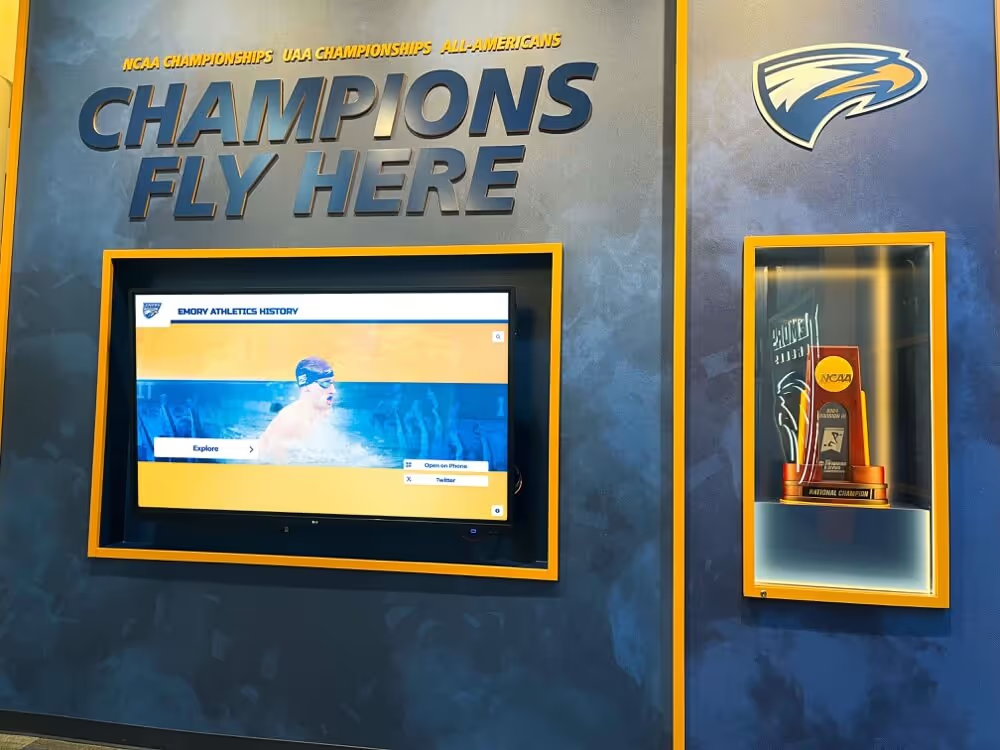
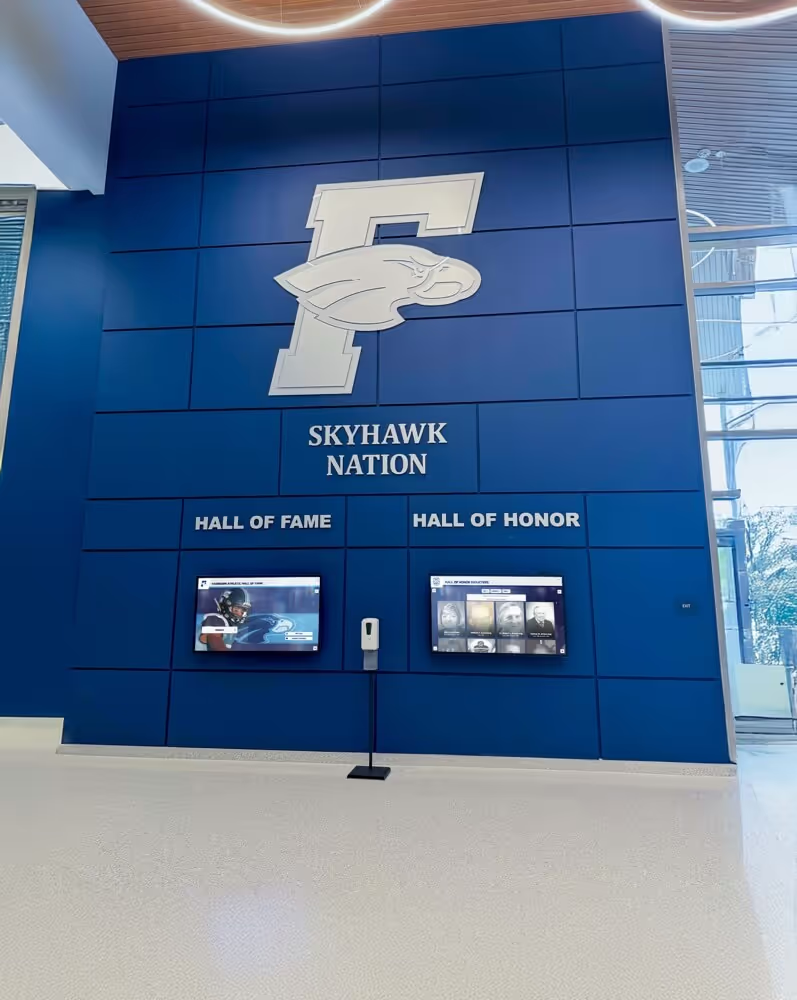
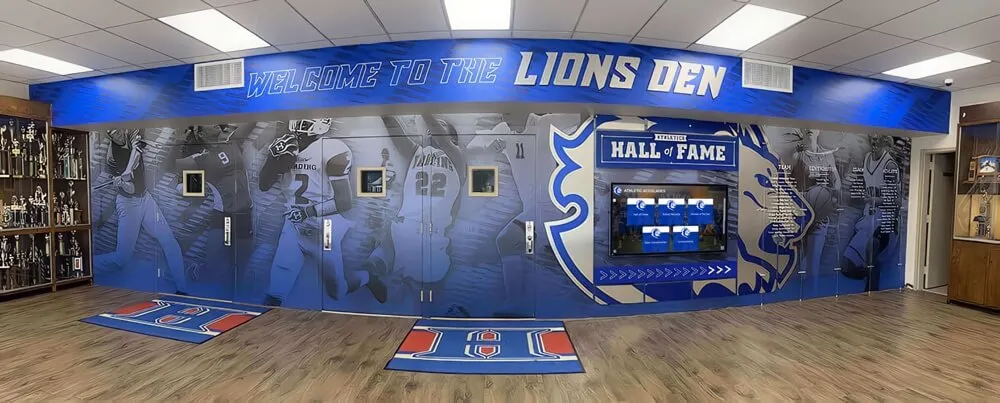
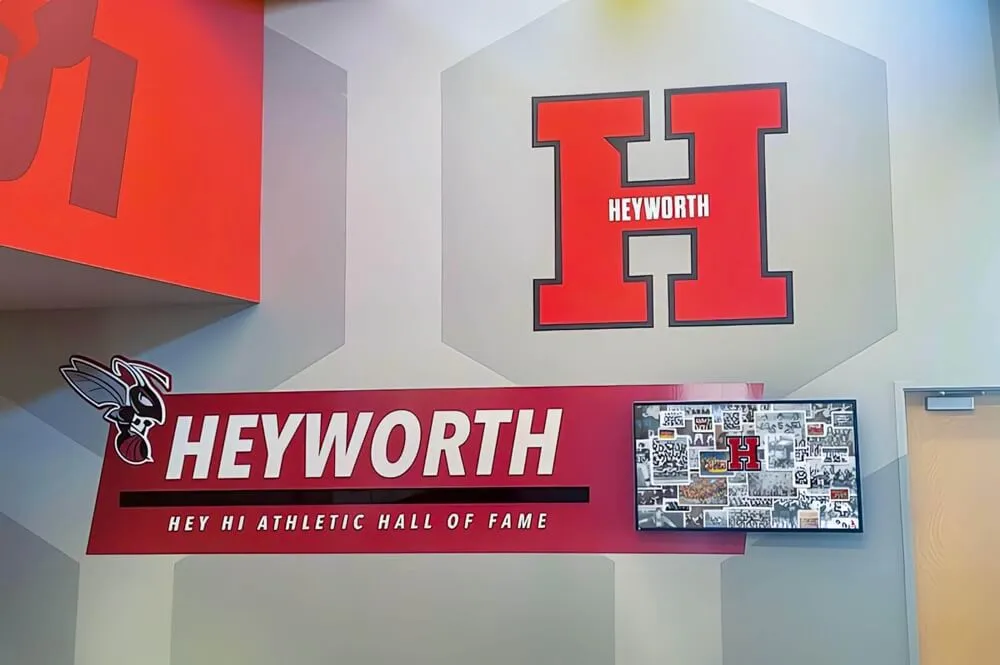
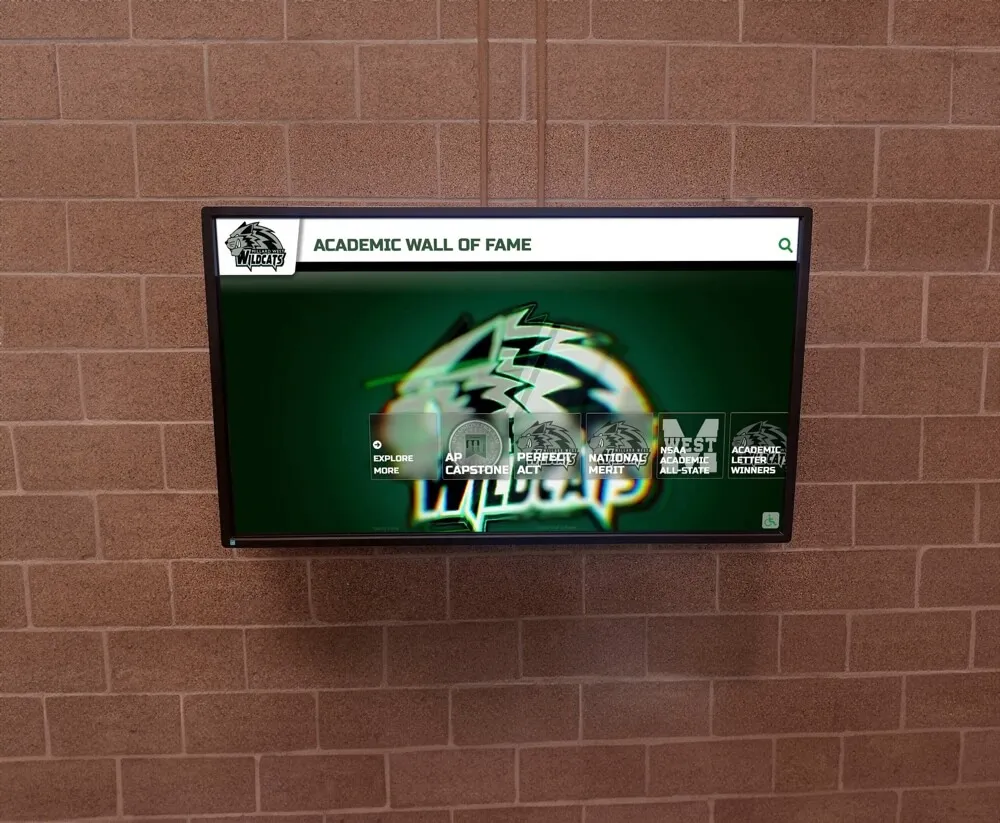
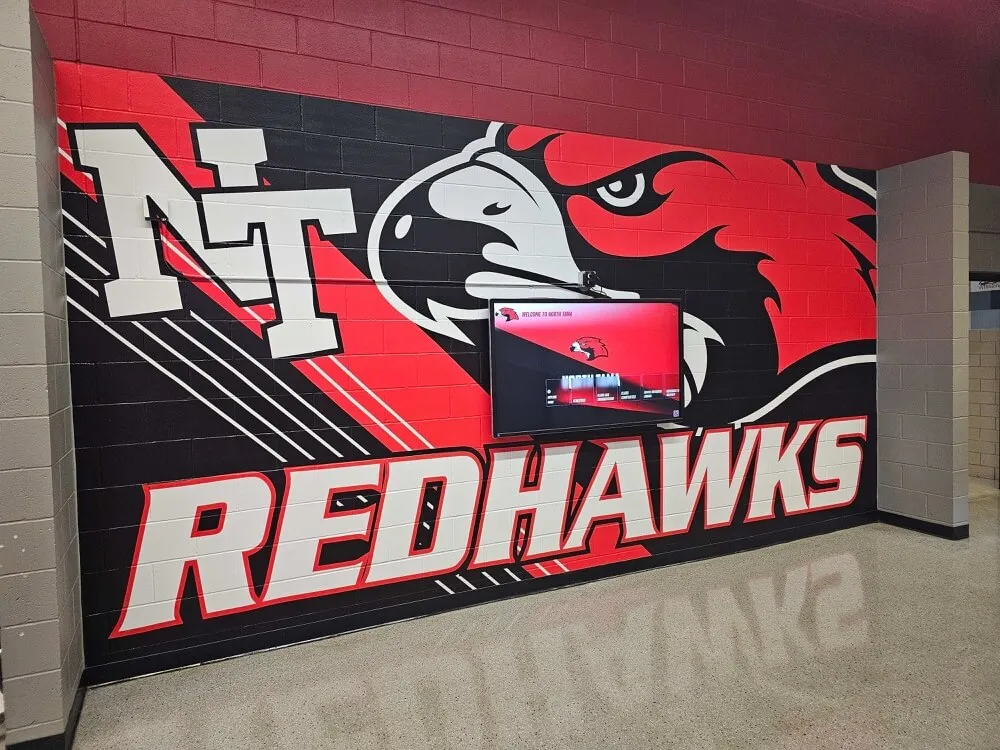
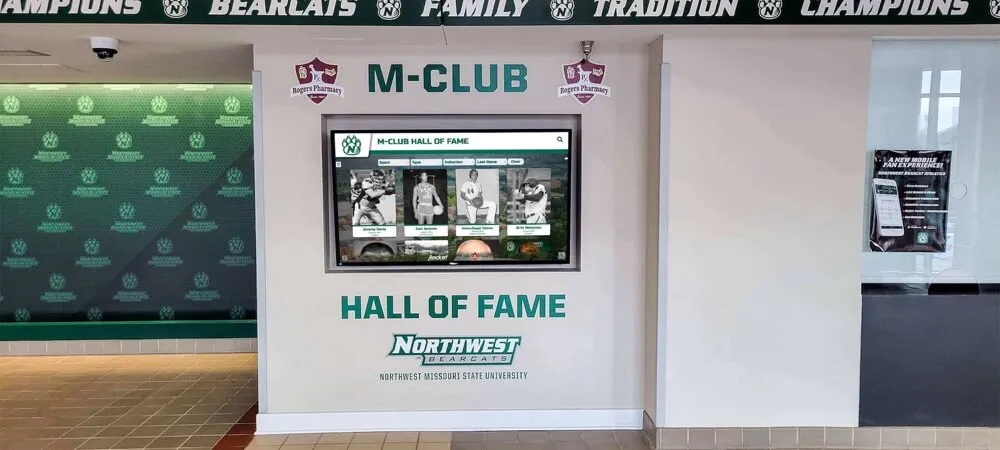
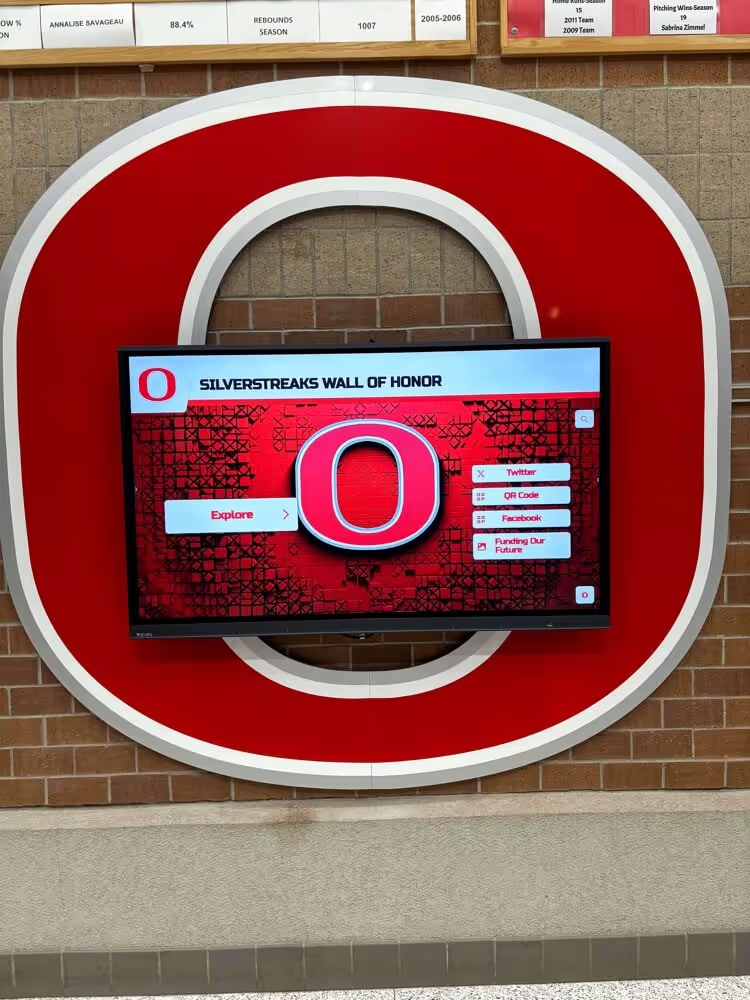
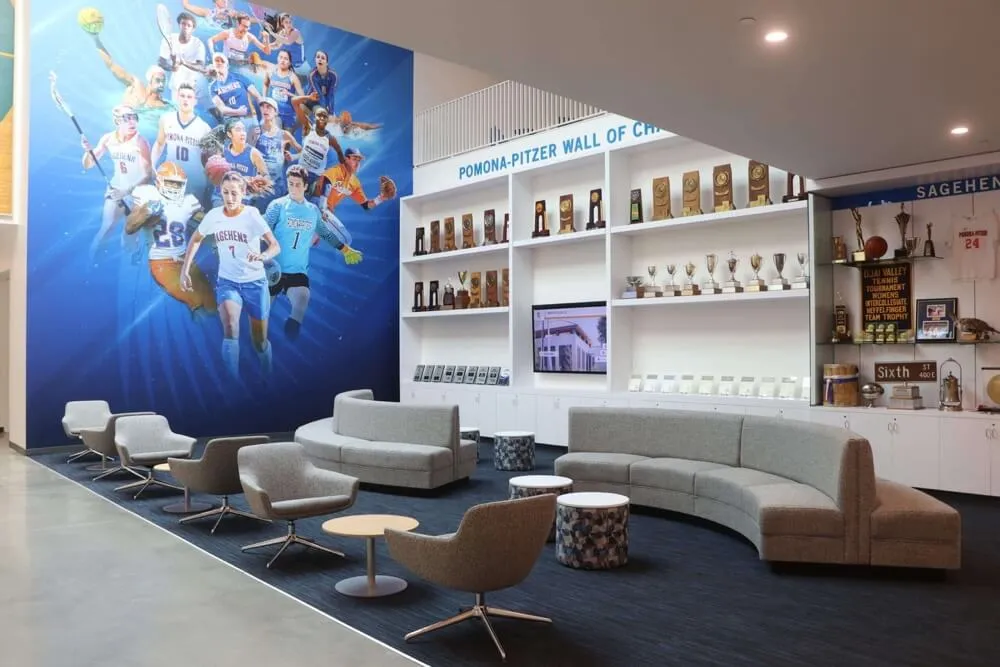
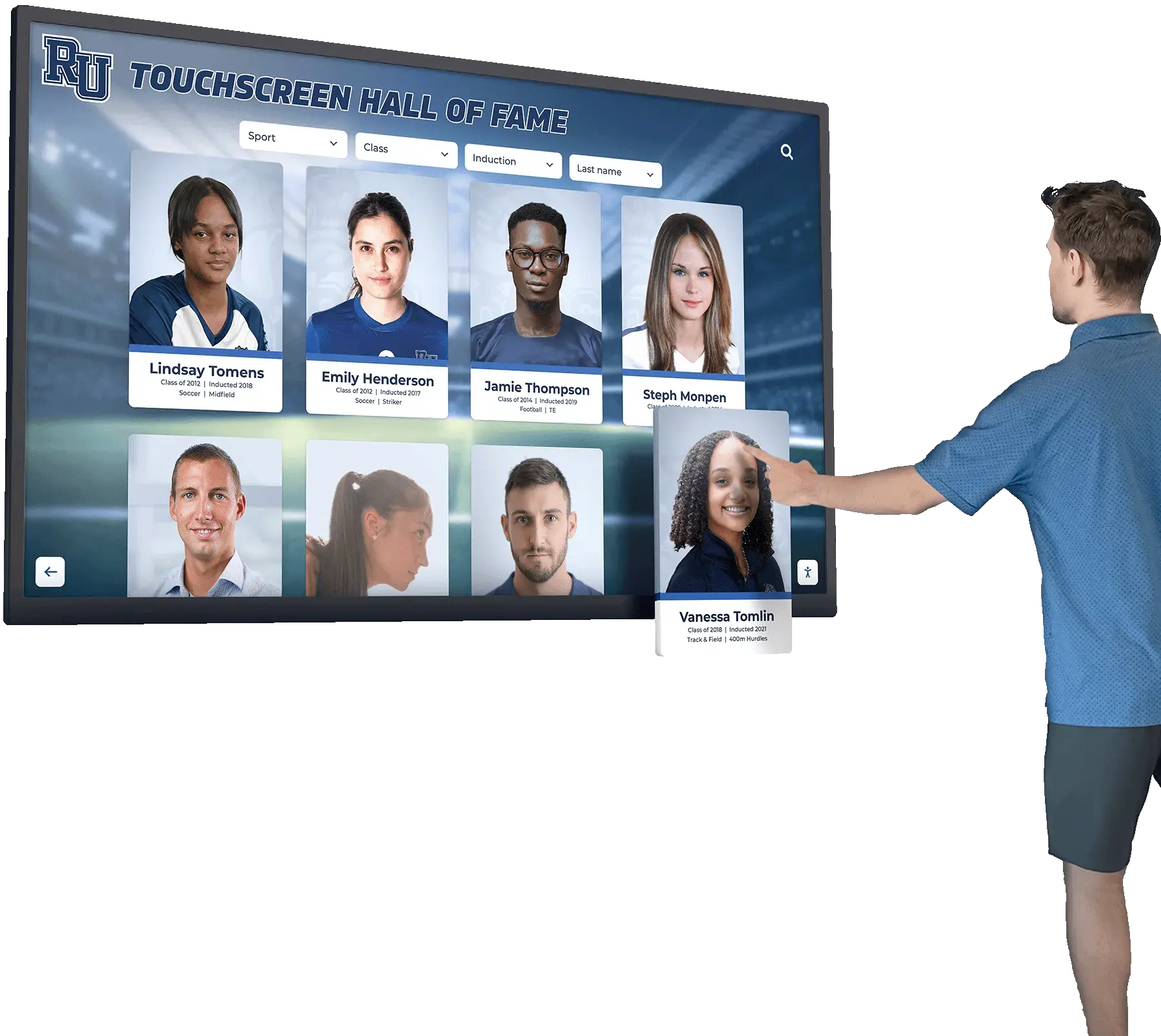
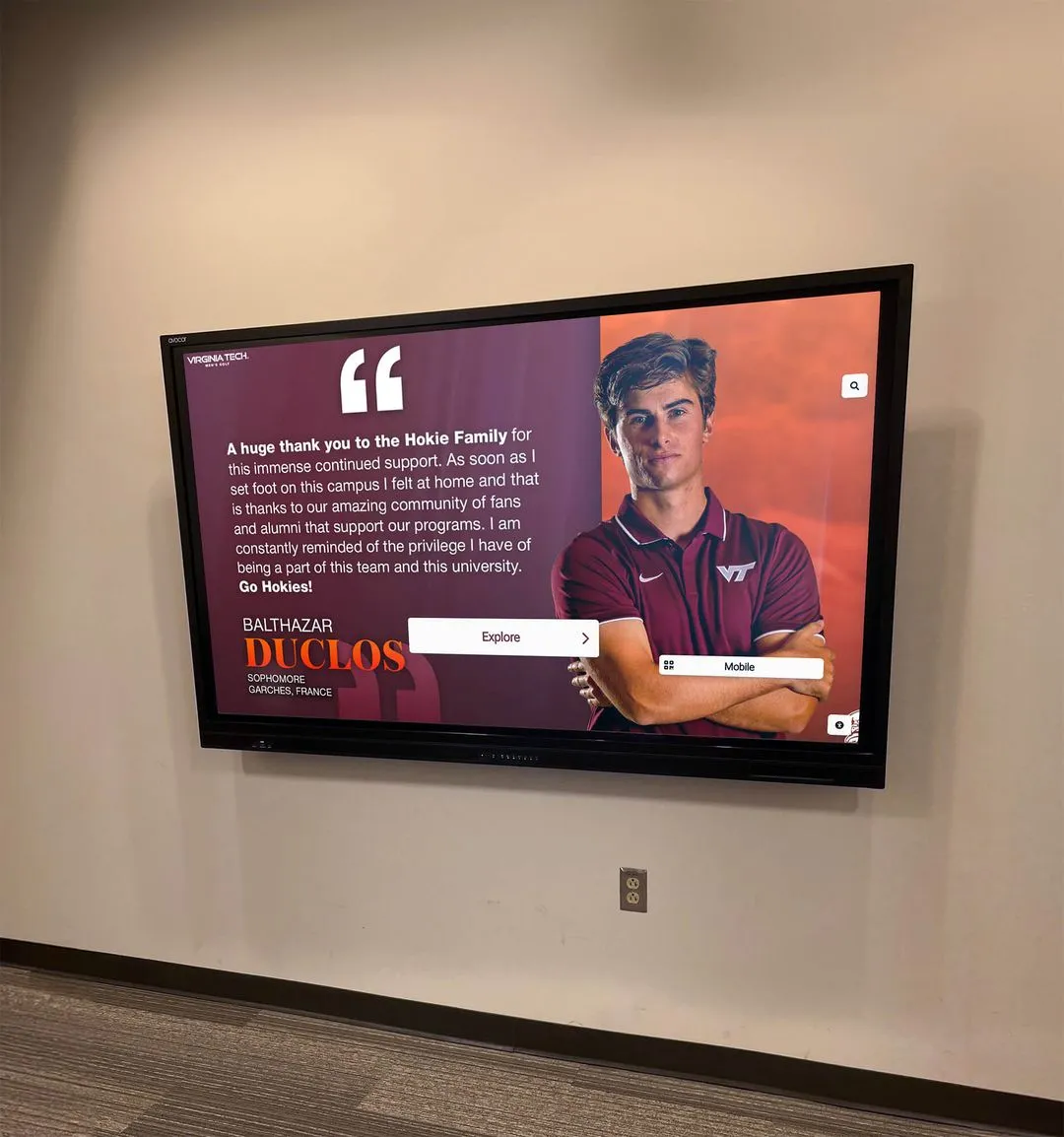
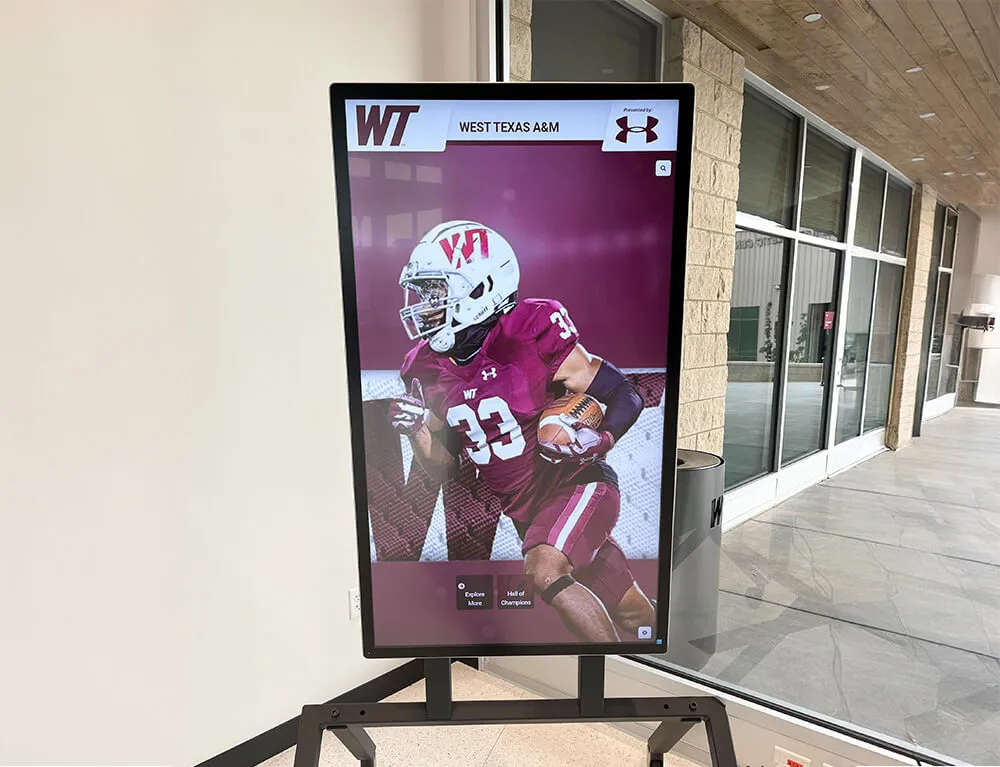
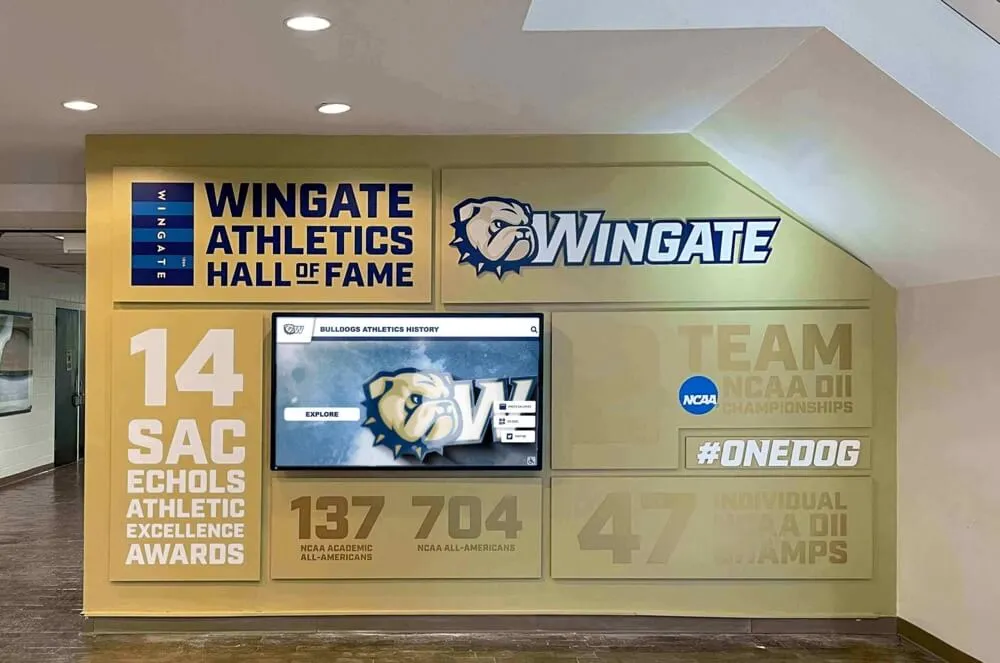
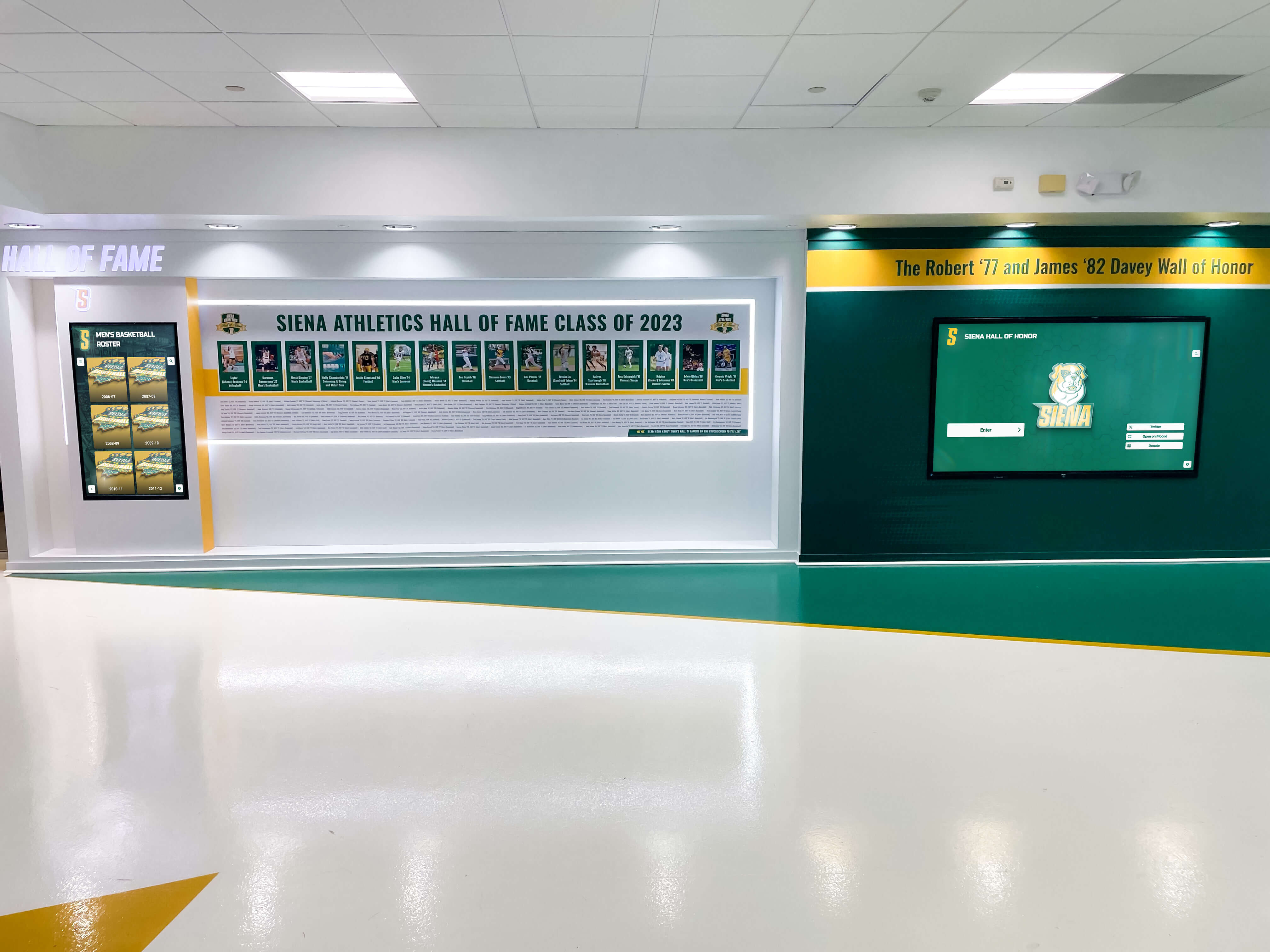
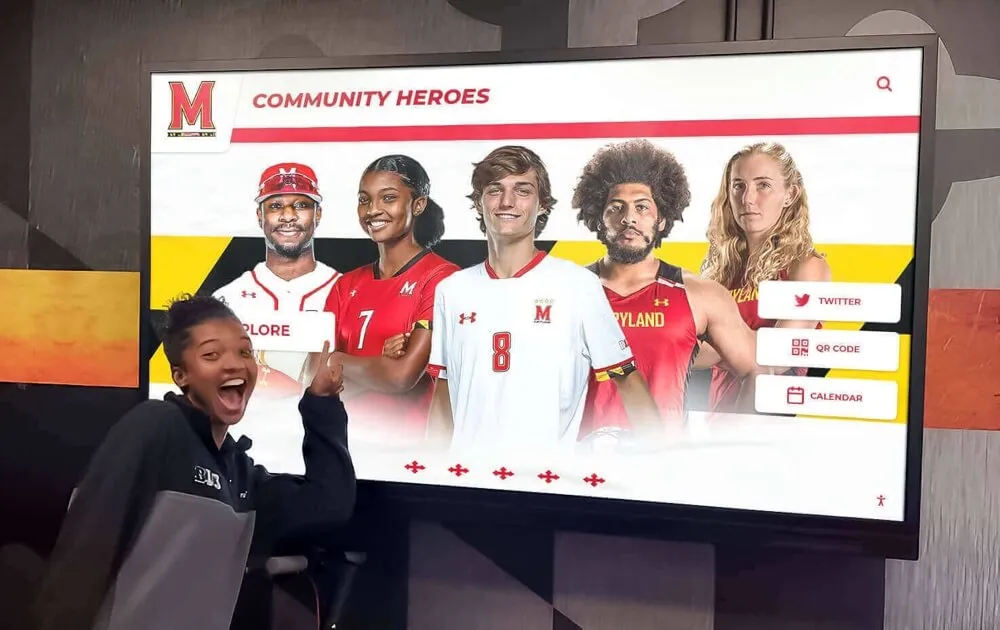
Digital recognition displays utilize large commercial-grade touchscreens or non-interactive monitors in gymnasium lobbies, athletic hallways, or facility common areas. Unlike generic digital signage showing rotating announcements, purpose-built athletic recognition systems feature dedicated content celebrating program achievements, athlete profiles, championship teams, and sports history.
These systems typically consist of professional-grade display hardware—55-inch to 85-inch screens designed for continuous operation in institutional settings—combined with cloud-based content management software specifically designed for athletic recognition. Administrators access web-based platforms from any device to add new content, update existing information, organize categories, and manage all recognition aspects without technical expertise.
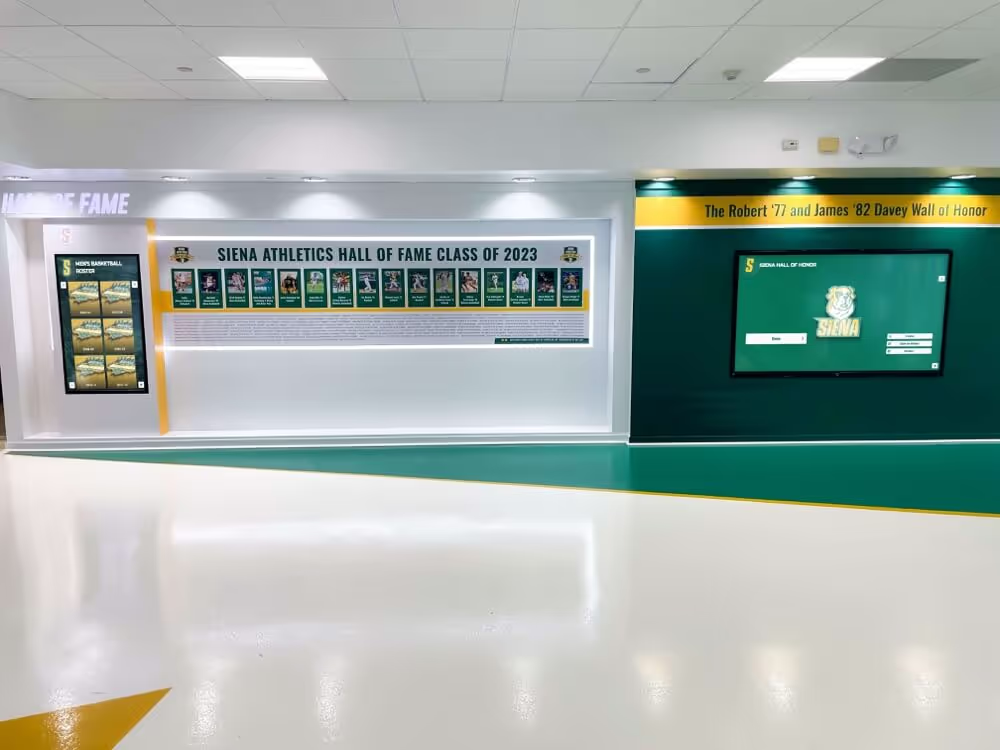
The displays themselves can be permanently mounted touchscreens inviting interactive exploration, or non-interactive screens showing rotating content highlighting different achievements, teams, and athletes. Some programs implement multiple displays serving different purposes—touchscreens in main lobbies for comprehensive exploration, supplementary monitors in hallways showing rotating highlights and current season content.
Online companion platforms extend recognition beyond physical displays, allowing alumni worldwide to access content from computers or mobile devices, creating always-available digital presence that traditional physical-only recognition cannot match.
Unlimited Recognition Capacity
Perhaps digital displays’ most significant advantage over traditional banners involves unlimited capacity. Software platforms accommodate thousands of athlete profiles, hundreds of championship teams, complete statistical records, and comprehensive program history without physical space constraints.
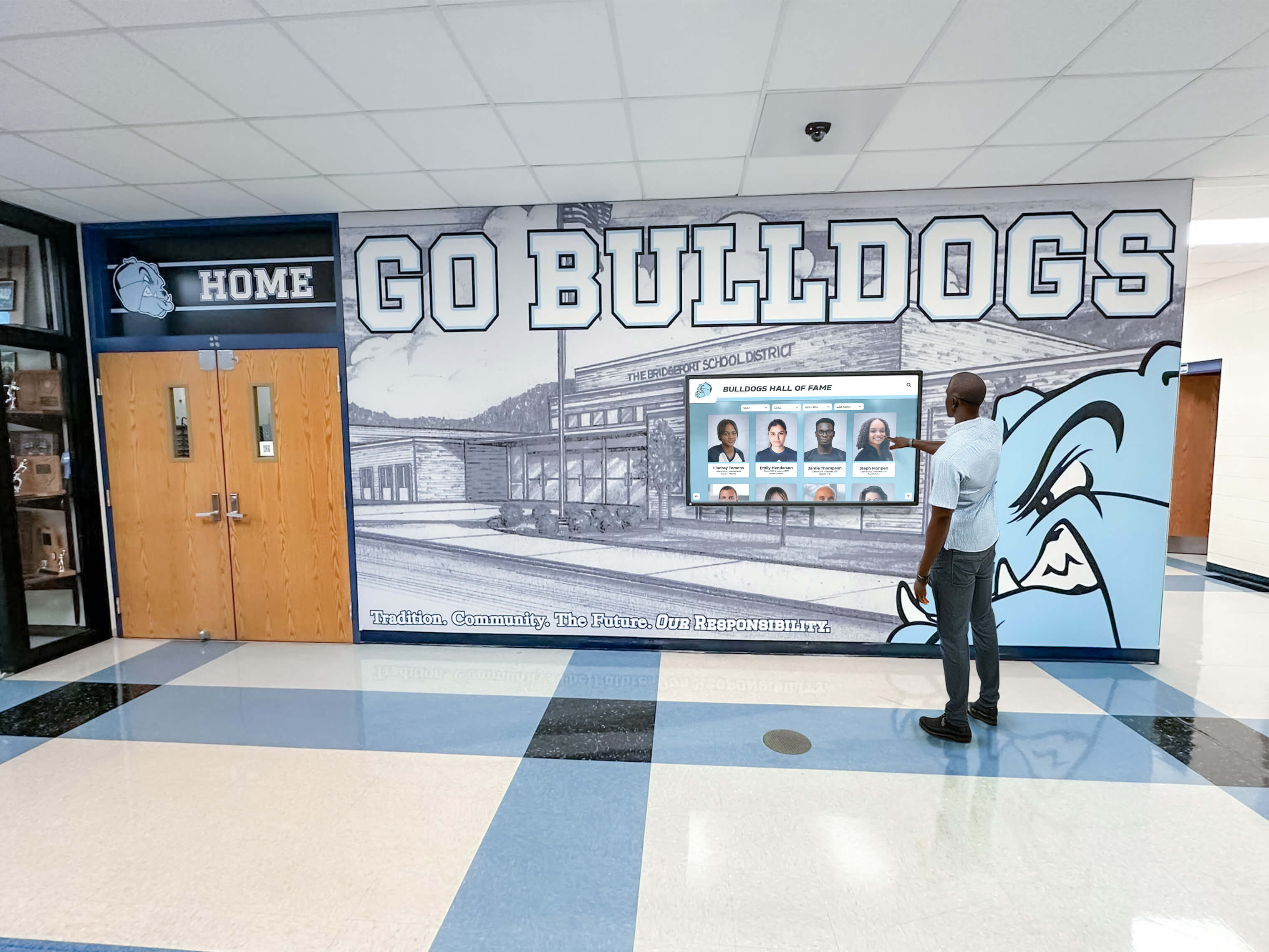
This capacity enables genuinely comprehensive recognition impossible with physical banners. Every athlete on every championship team can receive individual acknowledgment with statistics, photographs, and biographical information rather than only team-level recognition. Conference championships, sectional titles, and significant season achievements can all be documented without competing for finite banner space. Historical recognition extending decades back becomes practical rather than selectively highlighting only most recent or most prestigious accomplishments.
Programs with extensive success across multiple sports particularly benefit from unlimited digital capacity. Football, basketball, volleyball, soccer, track, wrestling, swimming, and all other sports receive equitable comprehensive recognition rather than space allocation battles where high-profile sports dominate while others receive minimal acknowledgment.
Athletic directors consistently report that unlimited capacity proves liberating after years of difficult decisions about what achievements fit limited banner space. Digital systems enable recognizing everything that merits celebration rather than maintaining artificial exclusivity forced by physical constraints.
Instant Updates and Additions
When teams win championships, digital recognition can be updated within hours rather than waiting weeks or months for banner production and installation. Content managers simply log into cloud platforms, create new championship entries with relevant details and photos, and publish—instantly making recognition visible on all connected displays.
This immediacy serves multiple purposes. It capitalizes on achievement excitement while enthusiasm remains high among athletes, families, and communities. It demonstrates organizational responsiveness and appropriate prioritization of athletic success. And it creates immediate motivational impact for current athletes who see their accomplishments celebrated rapidly rather than waiting indefinitely for formal recognition.
Beyond new achievements, instant update capability enables ongoing content enhancement. As programs collect additional photographs, learn about athletes’ post-graduation successes, or discover historical information, they can continuously enrich recognition content rather than accepting static displays that never improve after initial creation.
Error correction proves simple—identifying mistakes in published content allows immediate fixes rather than expensive banner replacement. Evolving organizational preferences can be accommodated through design updates maintaining consistency as institutional branding or aesthetic standards change.
Rich Multimedia Content and Storytelling
Digital platforms support content types impossible with physical banners, transforming recognition from simple documentation into compelling storytelling that creates emotional connections and deeper engagement.
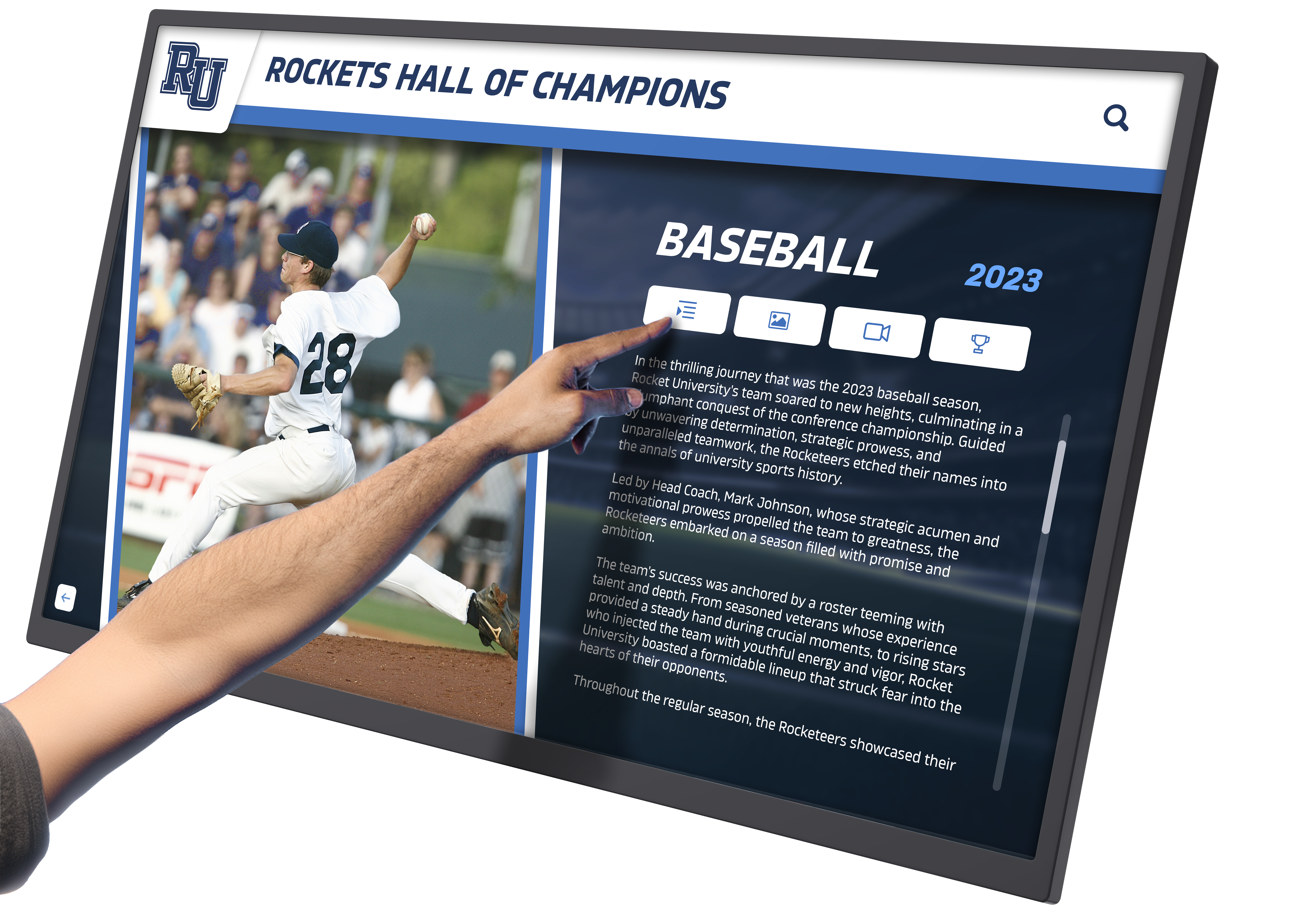
Comprehensive Photography: Multiple high-quality images per athlete or team—action shots, formal portraits, celebration moments, behind-the-scenes photographs—bring achievements to life visually while creating professional presentations impossible on fabric banners viewed from gymnasium distances.
Video Highlights and Interviews: Championship game footage, athlete interviews reflecting on careers, coach testimonials about team success, and documentary-style retrospectives provide rich context transforming recognition from facts into stories. Visitors can watch actual moments that created achievements rather than simply reading about them.
Detailed Statistics and Career Information: Complete statistical records, season-by-season performance progression, comparative context placing achievements within program history, and comprehensive biographical information give athletes meaningful individual recognition rather than names on generic team lists.
Narrative Descriptions and Context: Written content explaining championship journeys, obstacles overcome, significant moments, team dynamics, and lasting impacts helps audiences understand achievement significance and appreciate what made seasons or careers special. These narratives preserve institutional memory that might otherwise fade as communities and coaching staffs change over decades.
This multimedia richness particularly benefits athlete profiles. Where retired jersey banners might include name, number, and years competed, digital profiles can feature dozen photographs, video highlights, complete career statistics, coach quotes, post-graduation updates, and detailed achievement descriptions—creating comprehensive tributes that genuinely honor exceptional contributors rather than token acknowledgment.
Interactive Exploration and Search Capabilities
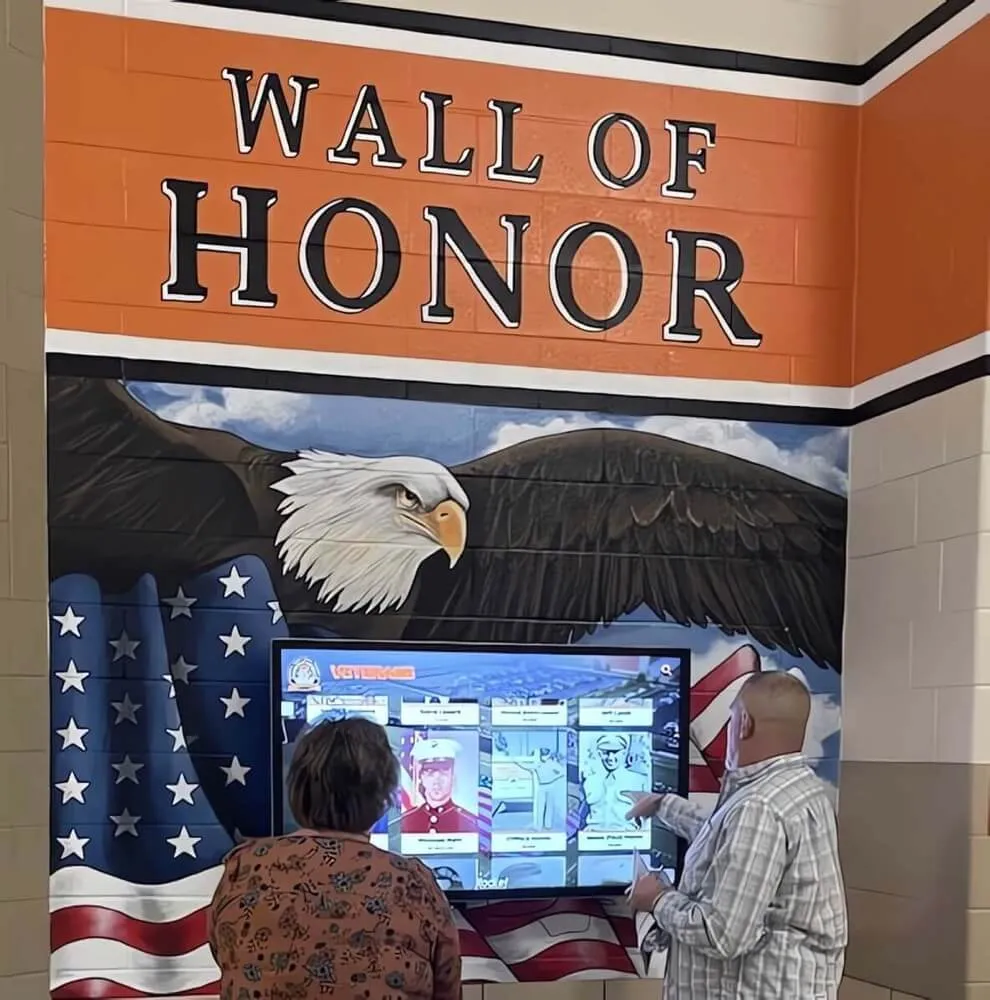
Touchscreen displays invite active participation rather than passive viewing, enabling visitors to explore recognition content matching their specific interests rather than consuming generic presentations identically for all audiences.
Search functionality allows users to find specific athletes, coaches, teams, or years instantly rather than scanning through decades of chronologically organized content. Parents visiting campuses during recruiting can search their hometown to discover which athletes from their communities attended previously. Alumni can quickly locate their own profiles or those of former teammates. Young athletes can explore position-specific achievements or players who advanced to collegiate or professional levels.
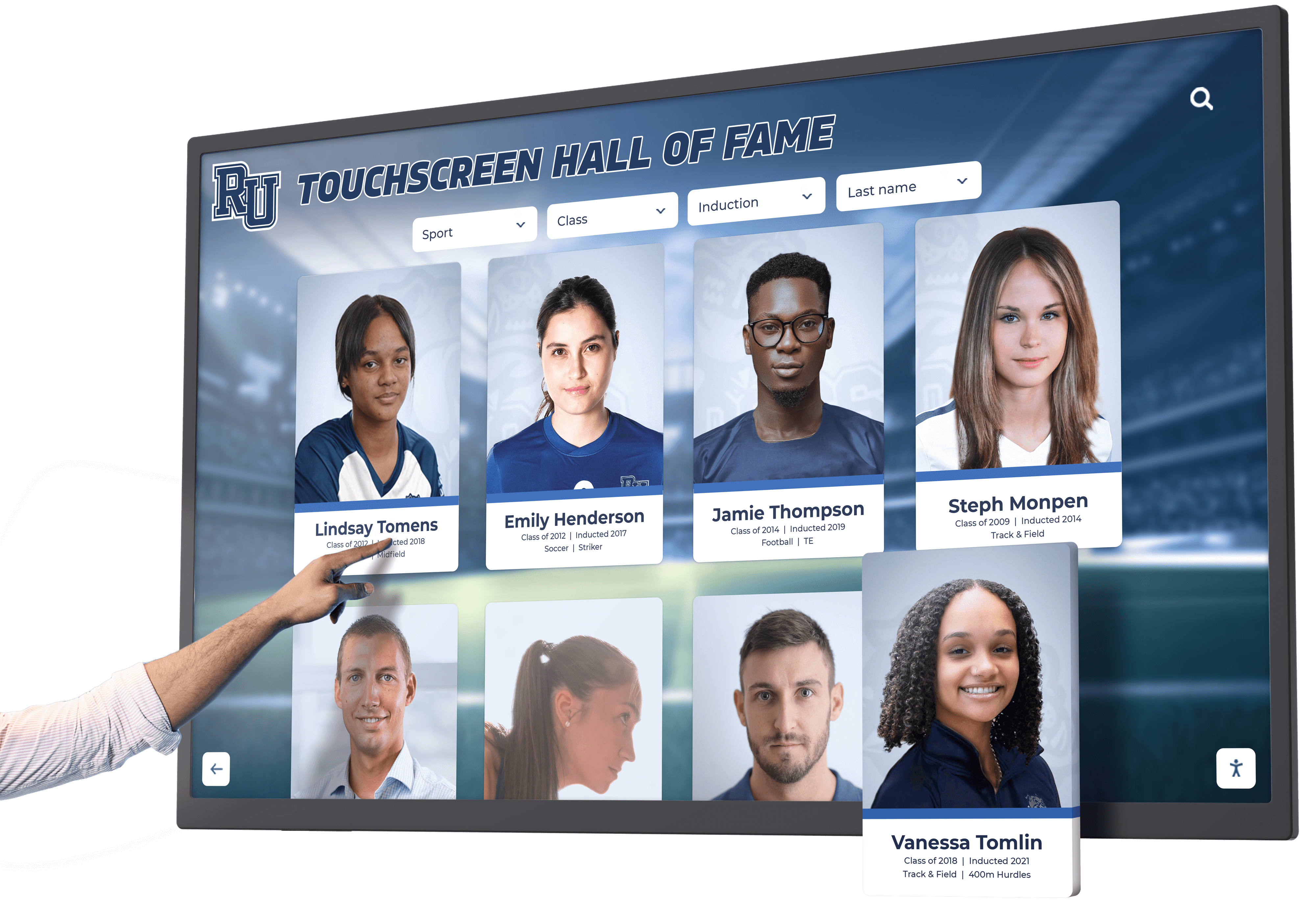
Filtering capabilities enable browsing by sport, decade, achievement type, or custom categories. This organization helps visitors discover content they’d never find through passive banner viewing—perhaps championship teams from specific eras, all conference players of the year across different sports, or athletes who competed in multiple sports.
Interactive features transform brief glances at banners into meaningful engagement sessions. Analytics from digital recognition platforms consistently show average interaction times of 3-7 minutes as visitors actively explore profiles and discover unexpected connections—orders of magnitude longer than seconds spent passively viewing traditional banners.
For athletic recognition programs seeking to inspire current athletes while honoring past achievement, this deeper engagement proves invaluable.
Cost Analysis: Traditional vs. Digital Recognition
Understanding complete lifetime costs rather than only initial investments helps programs make informed recognition decisions aligned with budgets and strategic priorities.
Traditional Banner Costs Over Time
While individual banners appear relatively affordable at $300-$800 each, lifetime costs accumulate substantially for successful athletic programs continuously adding achievements.
A moderately successful athletic department winning 5-10 championships annually across all sports (varsity and JV across multiple sports) spends $2,000-$6,000 yearly on banner production and installation alone. Over ten years, this totals $20,000-$60,000 in recognition costs before considering banner replacement for deteriorating displays.
These costs only cover championship team recognition. Adding retired jersey banners, conference title recognition, or special achievement displays increases expenses proportionally. Banner storage costs arise when ceiling space fills and older displays require removal. And these calculations exclude design costs if programs don’t maintain consistent templates enabling simple text substitution for new banners.
However, traditional banners involve no ongoing operational costs—no monthly fees, no technical support contracts, no electricity expenses. Once hung, they remain visible indefinitely without additional payment.
Digital Display Investment and Operating Costs
Digital recognition systems require higher initial investment but provide dramatically expanded capability and capacity.
Initial Setup Costs:
- Commercial-grade touchscreen display hardware: $8,000-$20,000 depending on size and capabilities
- Professional installation and mounting: $1,500-$3,500
- Software platform setup and configuration: $0-$2,000 (varies by provider)
- Initial content development: $2,000-$8,000 depending on scope and who creates content
Total initial investment typically ranges from $12,000-$35,000 for comprehensive athletic recognition display including hardware, installation, software, and initial content for school program history.
Ongoing Annual Costs:
- Software platform subscription: $1,200-$4,800 annually depending on features and number of displays
- Technical support and maintenance: typically included in subscription
- Content updates: internal time investment or $500-$2,000 if outsourced
- Electricity: approximately $50-$150 annually
Annual operating costs typically total $1,500-$7,000 depending on program choices and whether content management occurs internally or through contracted services.
Return on Investment Analysis
Comparing costs requires examining complete recognition value rather than only expenses.
Over ten-year technology lifecycle, total digital recognition investment ranges from approximately $27,000-$105,000 including initial setup and annual operating costs. This may seem substantial compared to traditional banner costs—until considering what each approach provides.
Digital systems recognize unlimited athletes rather than only championship teams. They accommodate decades of comprehensive program history rather than only fitting selective highlights into finite space. They enable instant additions without recurring production costs for each new achievement. They provide rich multimedia content creating deeper engagement than static text banners. And they extend recognition online to worldwide audiences rather than only facility visitors.
When calculating cost per athlete recognized or cost per engagement minute generated, digital systems often prove dramatically more cost-effective than traditional approaches despite higher absolute investment. Programs recognizing hundreds of athletes and teams comprehensively through digital systems effectively spend less per honoree than banner costs would total for significantly more selective recognition.
Additionally, digital systems avoid opportunity costs of delayed recognition. Championships celebrated immediately through instant digital updates provide motivational and engagement value impossible when waiting months for banner production and installation.
Hybrid Approaches: Combining Traditional and Digital
Rather than viewing banners and digital displays as competing alternatives, many programs successfully implement hybrid strategies leveraging each approach’s unique strengths.
Complementary Recognition Systems
Thoughtfully designed hybrid approaches position traditional banners and digital displays for different recognition purposes rather than duplicate content across both formats.
Traditional Banners for Elite Championships: Reserve ceiling-hung gym banners exclusively for highest achievement levels—state championships and retired jerseys only. This maintains banners’ traditional prestige and visual impact while preventing ceiling space from filling with routine conference titles that might diminish championship recognition significance.
Limiting banners to true elite achievement keeps gymnasium ceilings visually clean and focused on most prestigious accomplishments, maintaining traditional aesthetics and powerful symbolic impact that contributed to banners’ enduring appeal.
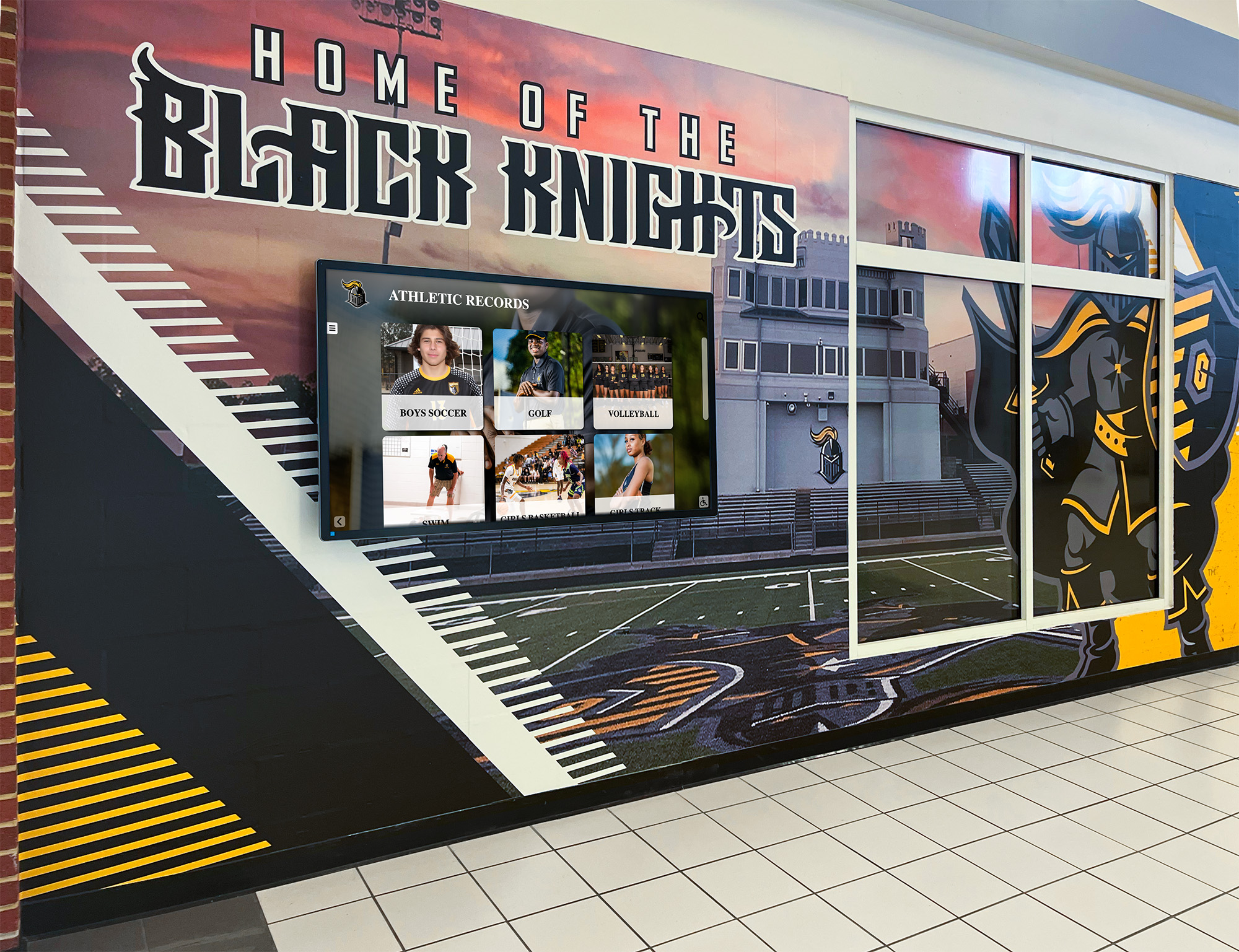
Digital Displays for Comprehensive Recognition: Deploy digital systems for complete program documentation including all championship levels (conference, sectional, regional, state), comprehensive athlete profiles for award winners and significant contributors across all sports, coaching histories and milestone achievements, statistical records and program leaders, and historical documentation preserving institutional athletic heritage.
This comprehensive digital content serves audiences seeking deeper engagement with program history while avoiding visual clutter that would result from attempting similar scope through physical displays.
Strategic Placement Maximizing Both: Install digital recognition displays in high-traffic areas where visitors naturally gather—gymnasium lobbies, athletic hallway entrances, or school main entries—creating first impressions before visitors enter competition spaces. Reserve traditional championship banners for gymnasium interiors where athletes compete beneath them, preserving psychological and motivational impact of physical tradition surrounding athletic performance.
This placement strategy ensures both recognition types receive appropriate visibility serving their distinct purposes rather than competing for attention or creating redundant content in same spaces.
Transition Strategies for Existing Programs
Schools with extensive existing banner recognition sometimes transition gradually to hybrid approaches rather than immediate complete replacement.
Phase 1: Install digital displays focusing on comprehensive athlete and team profiles rather than duplicating existing banner content. This adds recognition capacity without forcing difficult decisions about existing displays.
Phase 2: As physical banners age and require replacement, evaluate whether to reproduce them or transition that recognition to digital platforms while establishing more selective future banner criteria reserving gymnasium ceiling space for elite achievements.
Phase 3: Eventually achieve stable hybrid equilibrium where new championships automatically follow established patterns—elite titles receive both banner and digital recognition, while other achievements receive comprehensive digital documentation without banner production.
This gradual approach respects tradition and existing investments while evolving toward more sustainable long-term recognition strategies addressing space constraints and capacity needs.
Making the Right Choice for Your Program
Selecting appropriate recognition approaches requires evaluating your specific situation, priorities, and constraints rather than assuming one solution universally fits all contexts.
Key Decision Factors
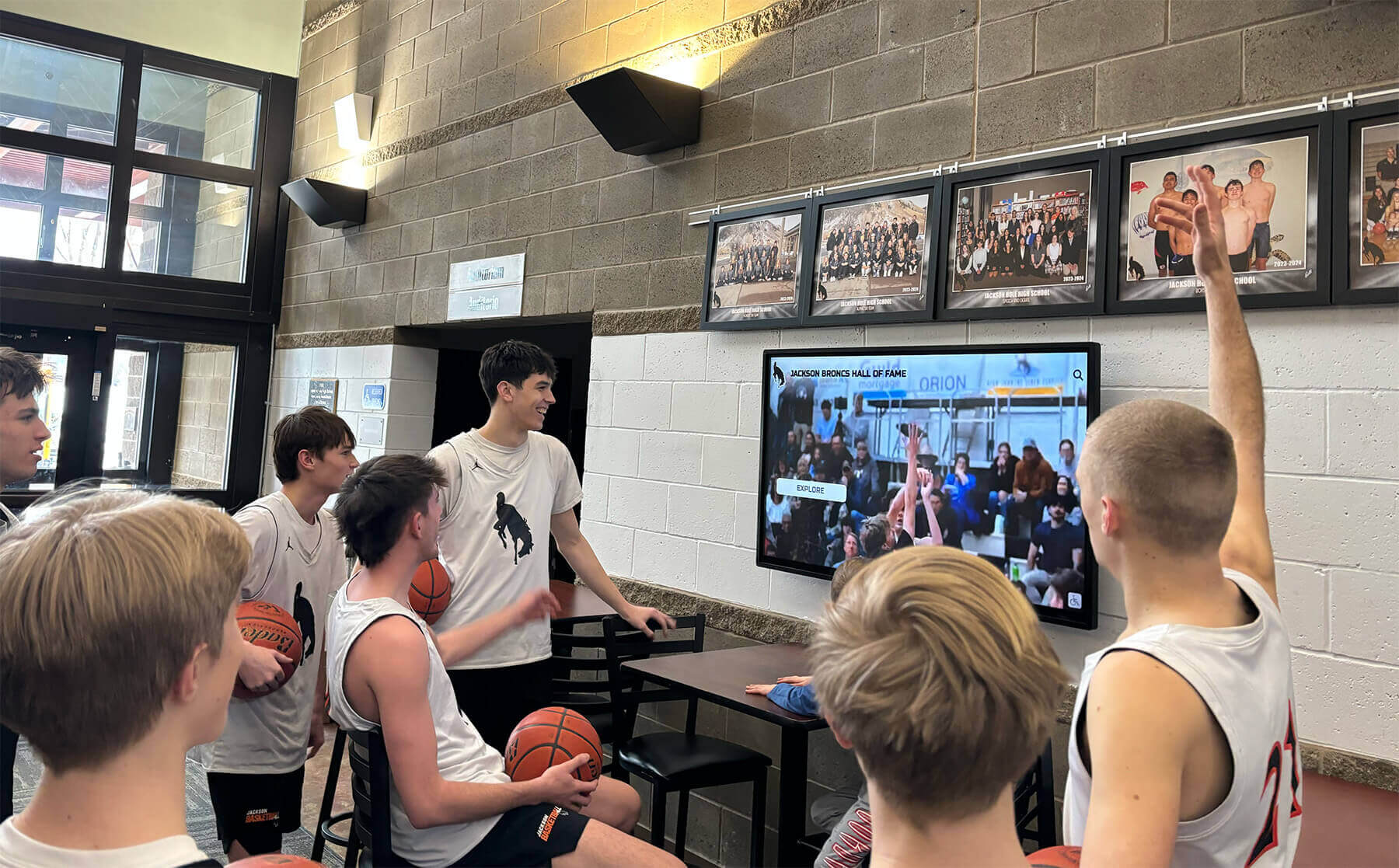
Space Availability and Limitations: Programs with limited gymnasium ceiling space filling with existing banners benefit dramatically from digital solutions providing unlimited capacity. Facilities with abundant space and modest championship frequency may comfortably continue traditional approaches without immediate capacity concerns.
Budget and Financial Resources: Traditional banners involve lower initial investment but accumulate substantial costs over time for successful programs. Digital systems require significant upfront investment but provide greater long-term value through expanded capability. Programs must honestly assess both immediate budget availability and long-term recognition investment capacity.
Recognition Scope and Inclusiveness: Schools seeking comprehensive recognition honoring broad athletic populations—not just championship teams but significant individual contributors, award winners, and program builders—benefit from digital capacity accommodating extensive content. Programs focused primarily on championship team documentation may find traditional banners sufficient.
Technical Capacity and Comfort: Digital systems require modest technical capability—content managers comfortable with web-based platforms, staff who can troubleshoot occasional issues, and organizational comfort with technology dependence. Some communities prefer simplicity and permanence of traditional physical recognition requiring zero technical involvement.
Community Values and Preferences: Athletic recognition serves communities as much as athletes. Understanding stakeholder preferences matters. Some communities deeply value traditional aesthetics and may resist digital transition feeling it diminishes cherished tradition. Others embrace technological solutions and appreciate expanded recognition modern systems enable.
Questions to Guide Your Decision
Before committing to recognition investments serving programs for decades, consider these strategic questions:
How many championships does your program typically win annually across all sports? (Higher volumes favor digital’s instant updates and unlimited capacity)
Has your gymnasium ceiling space for banners filled or will it within 5-10 years? (Capacity constraints strongly favor digital)
Do you want to recognize individual athletes comprehensively or primarily team achievements? (Individual recognition requires digital’s expanded capacity)
Can your program invest $15,000-$35,000 initially for long-term recognition infrastructure? (Budget availability enables digital; constraints may necessitate traditional)
Does your community strongly value traditional aesthetics or embrace technological advancement? (Community culture should influence approach)
Do you have staff comfortable managing web-based content platforms? (Technical comfort enables digital success)
How important is recognition accessibility beyond facility visitors—alumni worldwide, recruiting families, media? (Online recognition platforms extend reach exponentially)
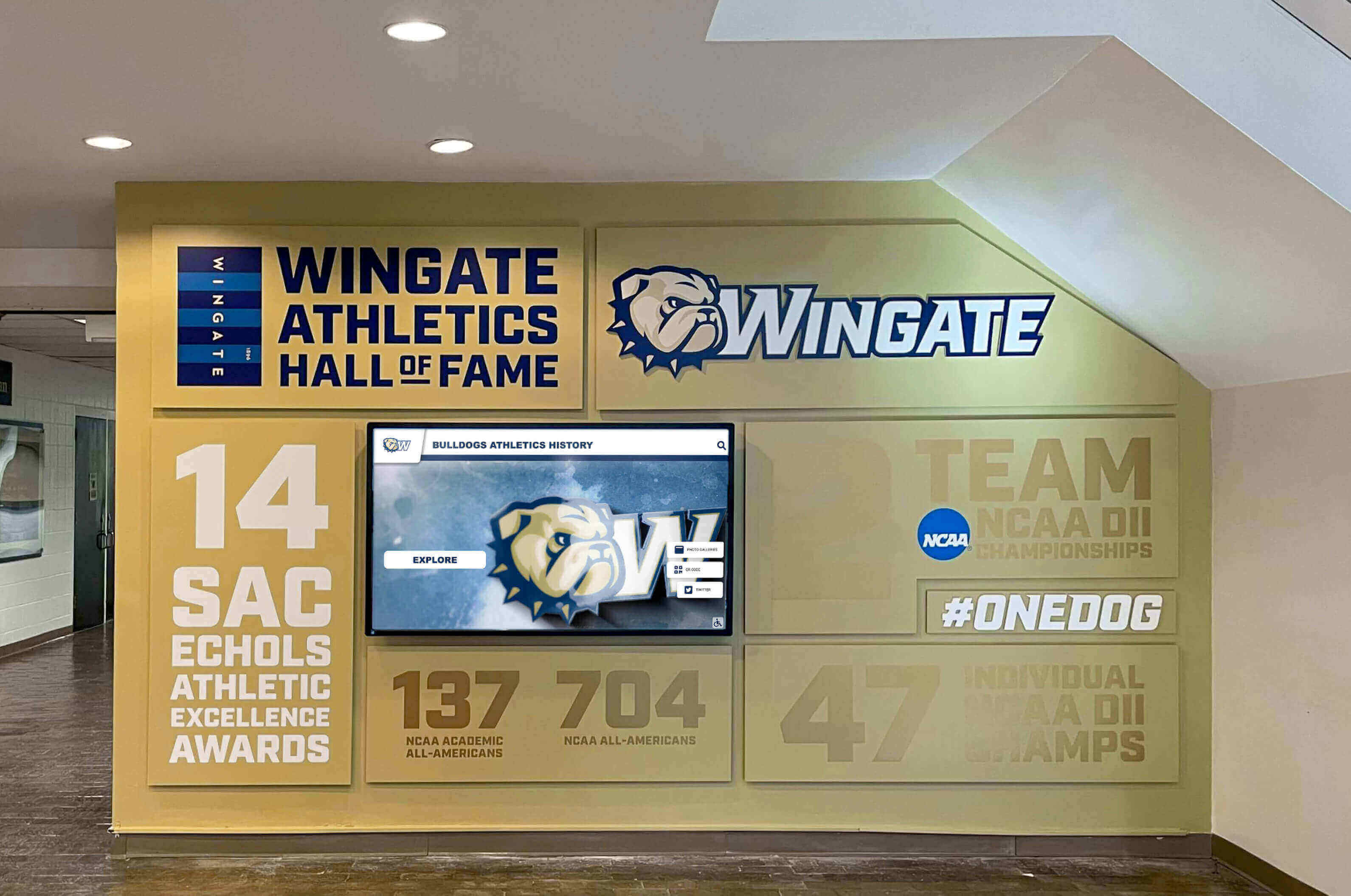
Honest answers reveal whether traditional banners, digital systems, or hybrid approaches best serve your specific context.
Implementation Best Practices
Regardless of chosen approach, thoughtful implementation ensures recognition programs achieve maximum impact while remaining sustainable across leadership transitions and budget fluctuations.
Establishing Recognition Standards and Criteria
Clear criteria determine what achievements merit recognition at various levels, preventing inconsistency and ensuring fairness across sports and eras.
Championship Recognition Standards: Define which championship levels receive recognition—state titles only, or also conference and sectional championships? Apply standards consistently across all sports rather than allowing high-profile programs different treatment than others.
Individual Recognition Criteria: Establish clear requirements for retired jersey honors or individual profiles—what achievement levels qualify? Many programs reserve retired jerseys for athletes reaching professional levels, earning national recognition, or holding significant program records. Individual athlete recognition in digital systems might include all-conference selections, award winners, and team captains.
Historical Recognition: Decide how to handle historical achievements—will you attempt comprehensive documentation of program history or focus on recent decades? Many schools phase historical recognition, beginning with recent eras where documentation exists and systematically working backward as resources allow.
Content Development and Maintenance
Recognition quality depends significantly on content quality. Blurry photographs, incomplete information, or obvious errors undermine program credibility regardless of display technology.
Collecting Comprehensive Information: Systematically gather athlete photos, statistics, achievement details, and biographical information. Establish processes where coaches provide content for each season immediately after completion while information remains readily available and memories stay fresh.
Maintaining Design Consistency: Whether traditional banners or digital content, consistent visual design creates professional appearance and reinforces program identity. Develop templates and style guides ensuring recognition maintains cohesive look across different eras and achievement types.
Assigning Clear Responsibility: Sustainable programs assign specific staff members responsibility for recognition maintenance rather than assuming it will naturally occur. Whether athletic secretaries, assistant athletic directors, or dedicated volunteers, someone must own content development and platform management.
Celebration and Promotion
Recognition achieves maximum impact when actively promoted rather than passively existing in facilities hoping people notice.
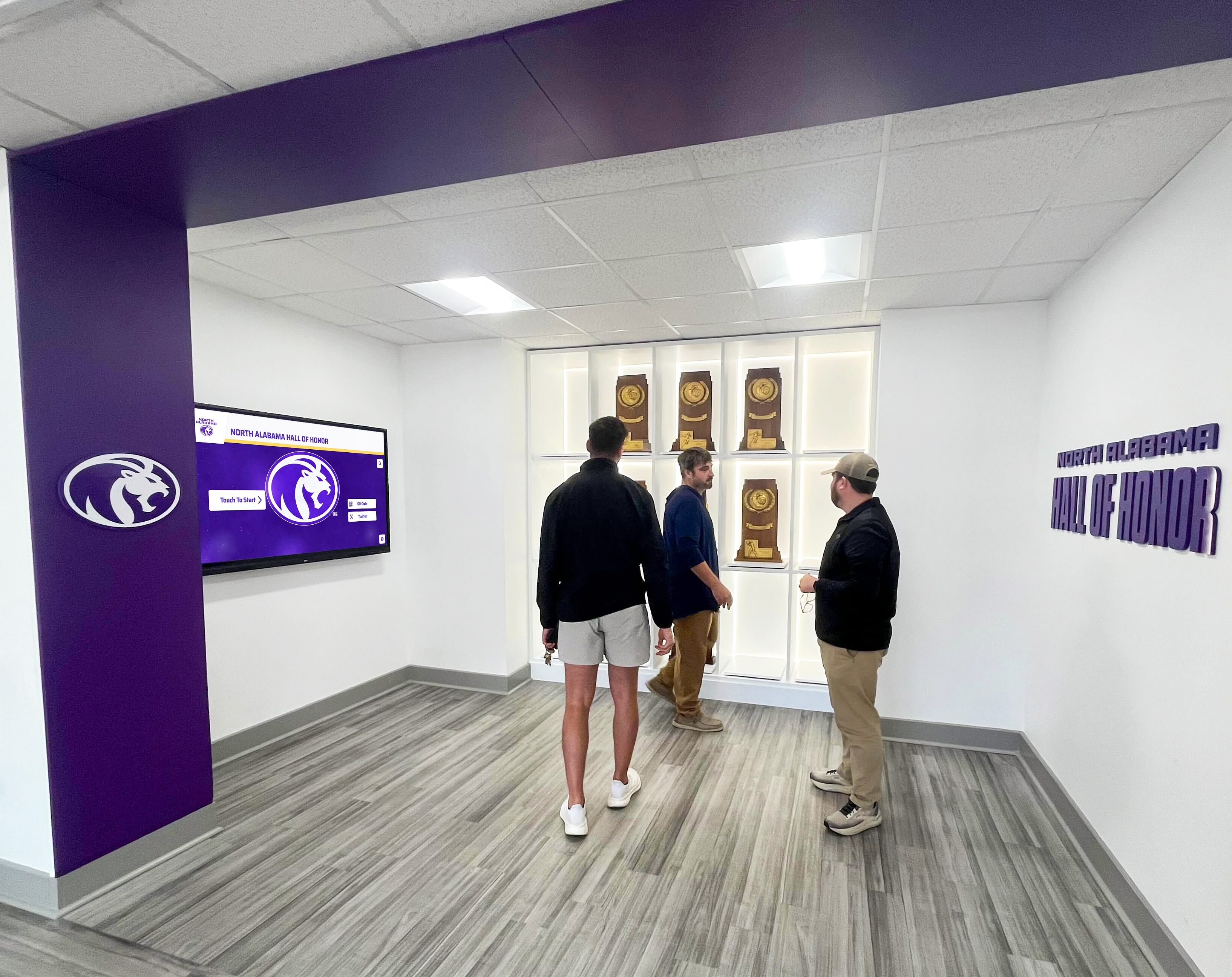
Formal Unveiling Ceremonies: Create meaningful moments when revealing new recognition—whether banner dedications or digital display launches. Recognition ceremonies with athletes, families, and communities present generate excitement while demonstrating organizational commitment to honoring achievement.
Social Media Amplification: Share recognition content through school social media channels, tagging athletes and families, creating shareable moments that extend recognition visibility far beyond facility visitors. Digital systems particularly enable this by providing ready-to-share content without requiring banner photography.
Integration with Athletic Programs: Actively incorporate recognition into coaching—reference specific achievements during goal-setting, share past athlete stories as motivation, help current athletes understand program traditions they’re joining. Recognition creates value when woven into program culture rather than existing as separate decoration disconnected from daily athletic experience.
The Future of Athletic Recognition
Technology continues evolving, creating new recognition possibilities while traditional approaches retain enduring value in specific contexts.
Emerging Technology Trends
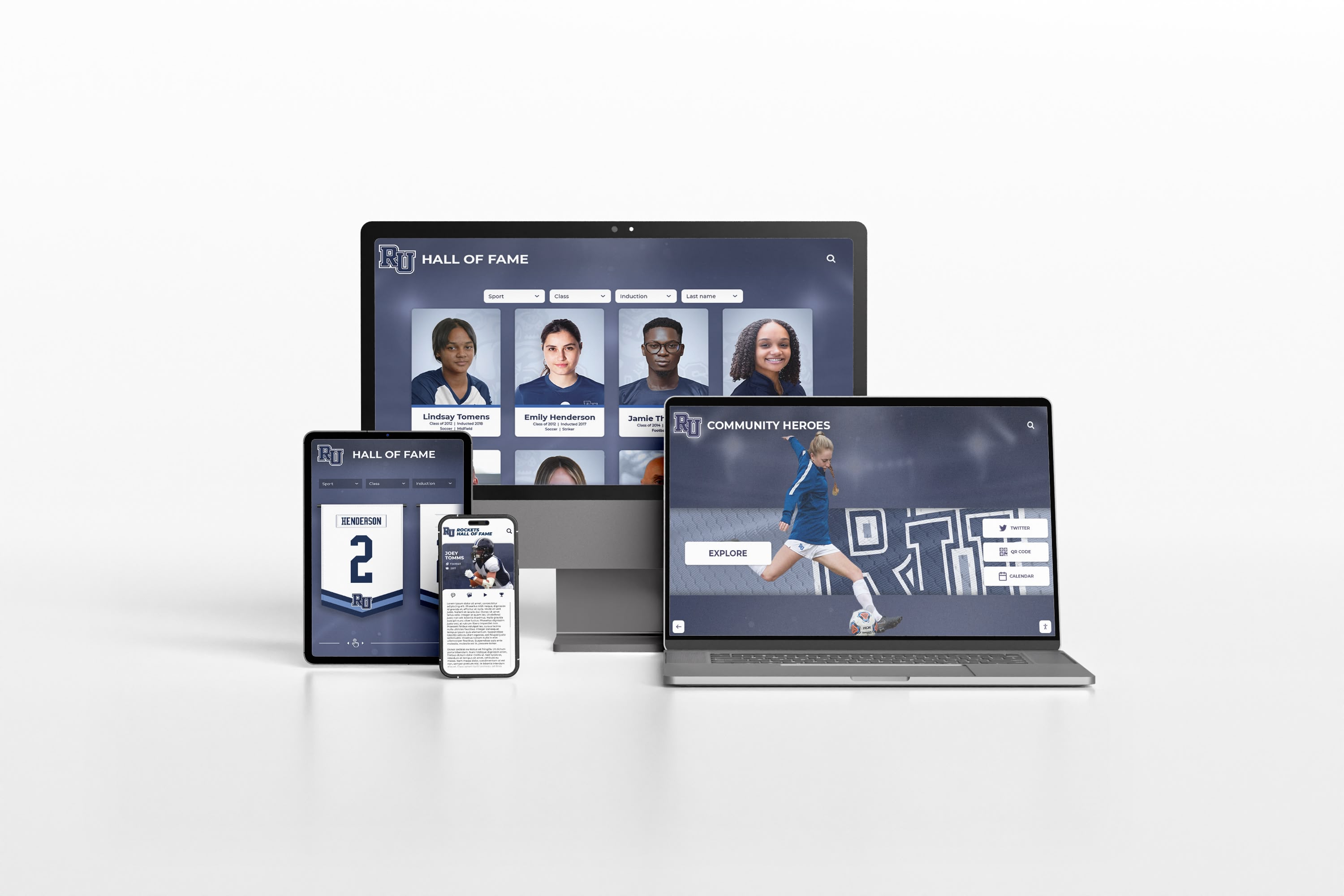
Mobile Integration and QR Codes: Many programs supplement physical recognition—whether banners or digital displays—with QR codes linking to online platforms where visitors access extended content on personal devices. This bridges physical and digital experiences, accommodating how modern audiences prefer consuming and sharing information.
Augmented Reality Enhancements: Emerging applications enable visitors to point smartphones at traditional banners triggering augmented reality overlays providing additional information, video content, or interactive elements. This technology potentially preserves traditional aesthetics while adding digital capabilities.
Data Integration and Live Updates: Advanced digital systems connect with scoring and statistics platforms, automatically updating displays with current season information, live game statistics during competitions, and real-time achievement recognition. Digital record boards showcasing evolving statistics throughout seasons create ongoing engagement rather than static historical recognition only.
Social Media Feeds and User-Generated Content: Platforms increasingly enable incorporating social media content, allowing athletes and fans to contribute photos and stories enriching official recognition. This crowdsourced approach builds content comprehensively while creating participation opportunities strengthening community connection to recognition programs.
Balancing Innovation with Tradition
Athletic recognition ultimately serves human needs—honoring past achievement, inspiring current athletes, connecting communities to program heritage, and creating institutional pride. Technology should enhance these purposes rather than replace meaningful tradition with innovation for its own sake.
The most successful programs thoughtfully evaluate which aspects of traditional recognition deliver irreplaceable value worth preserving and which limitations genuinely constrain program ability to recognize achievement appropriately. This balanced perspective yields recognition strategies respecting heritage while embracing capability improvements addressing real constraints.
Professional Resources and Solutions
Schools and organizations seeking to implement or upgrade athletic recognition benefit from specialized providers understanding educational athletics’ unique needs and constraints.
Solutions like Rocket Alumni Solutions provide purpose-built platforms specifically designed for athletic recognition combining comprehensive content management capabilities, sport-specific organization and categorization, proven reliability across hundreds of school installations, flexible display options from touchscreens to non-interactive monitors, online companion platforms extending recognition beyond facilities, and responsive support understanding school budget cycles and decision-making processes.
Purpose-built athletic recognition platforms prove more effective than repurposing generic digital signage systems lacking specialized features schools need. Athletic-specific solutions understand requirements like organizing content by sport and season, handling team rosters and individual athlete profiles appropriately, supporting championship documentation with proper context, and maintaining content through coaching and administrative staff changes inevitable over recognition systems’ decades-long service.
Whether implementing traditional banner programs, transitioning to digital systems, or developing hybrid strategies, working with providers experienced in educational athletics ensures recognition investments deliver intended value while remaining manageable for staff members juggling recognition alongside numerous other responsibilities.
Conclusion: Recognition That Serves Your Program
The question isn’t whether gym banners or digital displays are objectively better—both offer legitimate value in appropriate contexts. The question is which approach best serves your specific program’s needs, constraints, and community values while honoring athletic achievement appropriately.
Traditional gym banners provide timeless appeal, physical presence, operational simplicity, and cherished tradition connecting generations of athletes to program heritage. They remain excellent choices for programs with adequate space, modest championship frequency, and communities valuing traditional aesthetics.
Digital recognition systems offer unlimited capacity, comprehensive multimedia storytelling, instant updates, interactive exploration, and extended online reach serving worldwide audiences. They prove particularly valuable for programs facing space constraints, seeking inclusive recognition beyond elite championships, or wanting rich content preserving complete athletic heritage.
Hybrid approaches combining both methods strategically leverage each approach’s unique strengths while addressing respective limitations—traditional banners for elite gymnasium-displayed championships, digital systems for comprehensive documentation and deeper engagement.
Whatever approach you choose, the purpose remains constant: honoring athletic achievement meaningfully, inspiring current athletes through visible examples of excellence, preserving institutional heritage for future generations, and strengthening community pride in program accomplishment. Recognition that genuinely serves these purposes—whether hanging from gymnasium rafters or displayed on interactive touchscreens—creates lasting value justifying investment while celebrating the student-athletes whose dedication and achievement make programs successful.
Ready to explore recognition solutions for your athletic program? Whether considering traditional banners, evaluating digital displays, or planning comprehensive hybrid strategies, solutions designed specifically for athletic recognition help transform how schools honor achievement while inspiring future champions who will add their own chapters to program legacy.