



Walking across the graduation stage represents a milestone achievement for every student who completes their academic journey. But for those who earned top academic honors, graduation ceremonies include special recognition acknowledging years of intellectual dedication, challenging coursework, and sustained scholarly excellence that distinguished them from their peers.
Whether announced as “graduating summa cum laude,” introduced as class valedictorian, or recognized with honor cords and special regalia, graduation honors create visible distinctions celebrating students whose academic performance reached the highest levels their institutions recognize. These honors appear on diplomas, transcripts, and permanent academic records, following graduates throughout their educational and professional careers as evidence of exceptional intellectual capability and sustained dedication to learning.
Yet many students, families, and even educators find the various graduation honors systems confusing. What exactly does “cum laude” mean, and how does it differ from “magna cum laude”? What GPA must students achieve to earn these distinctions? How do schools determine who becomes valedictorian versus salutatorian? This comprehensive guide clarifies the different graduation honors levels, explains their requirements and significance, and explores how modern schools celebrate academic excellence through traditional ceremonies and contemporary digital recognition platforms.

Understanding Latin Honors: Cum Laude, Magna Cum Laude, and Summa Cum Laude
The most widely recognized graduation honors system uses Latin phrases that have celebrated academic excellence for centuries, creating tiered recognition that distinguishes different levels of scholarly achievement.
The Origins and Meaning of Latin Honors
Latin honors originated in medieval European universities where Latin served as the academic language. These traditions crossed the Atlantic to American higher education in the 19th century and remain the predominant honors system at colleges and universities nationwide, while many high schools have adopted similar Latin honors programs to recognize exceptional graduates.
The Three Traditional Latin Honor Levels:
- Cum Laude (pronounced “koom LOW-day”): Translates to “with honor” or “with praise,” recognizing strong academic achievement
- Magna Cum Laude (pronounced “MAG-nuh koom LOW-day”): Translates to “with great honor,” celebrating exceptional academic excellence
- Summa Cum Laude (pronounced “SOO-muh koom LOW-day”): Translates to “with highest honor,” representing the pinnacle of academic achievement
This tiered structure creates clear hierarchies of academic distinction, allowing institutions to recognize varying degrees of excellence rather than treating all high-achieving students identically.
GPA Requirements for Latin Honors
While Latin honors follow standard naming conventions, specific GPA requirements vary significantly across institutions. Each school establishes its own thresholds based on institutional standards and grade distributions, though common patterns emerge across secondary and higher education.
Typical High School Latin Honors Requirements:
High schools implementing Latin honors programs typically establish GPA thresholds on the standard 4.0 scale, often accounting for weighted GPA calculations that recognize honors and Advanced Placement coursework rigor:
- Cum Laude: Cumulative GPA of 3.5-3.7 (often 3.50-3.69 range)
- Magna Cum Laude: Cumulative GPA of 3.7-3.9 (often 3.70-3.89 range)
- Summa Cum Laude: Cumulative GPA of 3.9+ (often 3.90 or above, sometimes 4.0+ weighted)
Some high schools establish percentage-based criteria rather than absolute GPA cutoffs—perhaps designating the top 25% as cum laude, top 10% as magna cum laude, and top 3% as summa cum laude. This approach ensures consistent recognition percentages even as grade distributions fluctuate across graduating classes.
Typical College and University Latin Honors Requirements:
College Latin honors requirements show more variation than high school systems, with highly selective institutions often maintaining more stringent standards than less competitive schools:
- Cum Laude: Typically 3.5-3.7 GPA range, representing perhaps top 20-30% of graduates
- Magna Cum Laude: Typically 3.7-3.85 GPA range, representing perhaps top 10-15% of graduates
- Summa Cum Laude: Typically 3.85-4.0 GPA range, representing perhaps top 3-5% of graduates
Elite universities sometimes restrict summa cum laude to extraordinarily small percentages—perhaps only 1-2% of each graduating class—making this distinction exceptionally rare and prestigious. Students should always verify their specific institution’s requirements through academic advising offices or published student handbooks, as variations can significantly impact qualification.

How Weighted vs. Unweighted GPAs Affect Latin Honors
Schools must decide whether to calculate Latin honors eligibility using weighted or unweighted GPAs, a determination that significantly impacts who qualifies for recognition.
Unweighted GPA Calculations:
Unweighted GPAs calculate all courses on the standard 4.0 scale regardless of difficulty. An A in regular English and an A in AP English both count as 4.0, treating all achievement identically regardless of course rigor.
Unweighted systems provide simplicity and transparency while potentially disadvantaging students who challenge themselves with difficult coursework. Students taking multiple Advanced Placement or honors courses may earn slightly lower grades than peers in less rigorous classes, creating situations where GPA-based recognition inadvertently punishes academic risk-taking.
Weighted GPA Calculations:
Weighted GPAs award additional points for honors and Advanced Placement courses, typically using 4.5 or 5.0 scales for advanced coursework. An A in AP English might count as 5.0 while an A in regular English counts as 4.0, creating incentives for students to pursue challenging curricula.
Weighted systems reward course rigor and academic ambition, ensuring students aren’t penalized for challenging themselves intellectually. However, they introduce complexity as different courses receive different weighting, and students with access to more AP offerings may have advantages over peers at schools with limited advanced course availability.
Institutional Variations:
Many schools use hybrid approaches—perhaps calculating Latin honors on weighted GPAs while also establishing minimum core GPA requirements on unweighted scales, or considering both weighted GPA and course rigor qualitatively through faculty review. Some institutions calculate separate Latin honors for different degree programs or majors, recognizing that grade distributions vary significantly across disciplines like engineering versus humanities.
Latin Honors and Class Rank
While Latin honors reward absolute GPA achievement, they differ from class rank-based honors like valedictorian or salutatorian that compare students directly against one another. A student might graduate magna cum laude (based on achieving specific GPA thresholds) while ranking fifth in their class (based on relative standing among all graduates).
Some schools award both Latin honors and rank-based designations, creating comprehensive recognition acknowledging both absolute excellence and comparative standing. Others have eliminated class rankings entirely while maintaining Latin honors, viewing tiered GPA recognition as more meaningful than precise numerical rankings that can disadvantage students by tiny fractional GPA differences.
Understanding how your institution approaches Latin honors versus class rank helps students and families interpret academic achievements accurately and appreciate the different dimensions of recognition systems celebrate.
Valedictorian and Salutatorian: Top Honors by Class Rank
While Latin honors recognize students meeting specific achievement thresholds, valedictorian and salutatorian designations identify the highest-ranking graduates within specific classes, creating exclusive recognition for students who outperformed all peers across their entire academic careers.
Understanding Valedictorian Recognition
The valedictorian represents the graduating student with the highest cumulative GPA in the class, earning the distinction of delivering the valedictory address at graduation ceremonies and receiving recognition as the class’s top academic achiever.
Historical Origins:
The term “valedictorian” derives from the Latin “vale dicere” meaning “to say farewell.” Historically, the highest-ranking graduate delivered farewell speeches at commencement ceremonies, creating traditions that persist in contemporary graduation practices where valedictorians typically address graduating classes, families, and school communities.
Selection Criteria:
Most schools determine valedictorians using straightforward calculations identifying the student with the highest cumulative GPA across their complete high school or college career. However, specific policies vary regarding course requirements, GPA calculation methods, and tie-breaking procedures. Many schools now recognize the complexity of valedictorian selection and have adapted their approaches to ensure fairness.
Common Valedictorian Policy Variations:
- Single valedictorian: Traditional approach recognizing only the highest-ranked student
- Co-valedictorians: Multiple students sharing distinction when GPAs are identical or separated by negligible margins
- Multiple valedictorians: Progressive approaches recognizing all students achieving maximum possible GPAs (often 4.0 or weighted equivalents)
- No valedictorian: Schools that have eliminated individual ranking in favor of Latin honors or other recognition approaches
Weighted vs. Unweighted Calculations:
The weighted versus unweighted GPA debate particularly impacts valedictorian selection. Students taking the most challenging course loads available might earn slightly lower grades than peers in less rigorous courses, potentially losing valedictorian status despite demonstrating greater academic ambition. Many schools address this by calculating valedictorian status using weighted GPAs that reward course difficulty, though this introduces its own complexities.
Understanding Salutatorian Recognition
The salutatorian ranks second in the graduating class by GPA, typically delivering the salutatory address welcoming guests to graduation ceremonies and receiving recognition as one of the class’s top achievers.
Historical Context:
“Salutatorian” derives from the Latin “salutare” meaning “to greet.” The second-ranking graduate traditionally welcomed ceremony attendees through opening remarks, creating the salutatory speech tradition that many schools maintain.
Selection Process:
Salutatorian designation simply goes to the student with the second-highest cumulative GPA in the graduating class. Like valedictorian selection, specific policies vary regarding GPA calculations, course requirements, and handling situations where multiple students have identical or near-identical GPAs.
Modern Variations:
Some schools have eliminated salutatorian recognition entirely, viewing it as arbitrary to celebrate the second-ranked student while not similarly recognizing third, fourth, or other top performers. These institutions often shift toward Latin honors systems or broader recognition approaches celebrating all students meeting rigorous achievement thresholds rather than distinguishing individual rankings by tiny GPA margins.

Handling Ties and Multiple Top Students
Grade inflation and increased academic achievement have created situations where many students complete high school with perfect or near-perfect GPAs, making traditional single valedictorian selection increasingly problematic.
Co-Valedictorian Approaches:
Schools facing multiple students with identical top GPAs often designate all qualifying students as co-valedictorians, honoring each student’s achievement rather than implementing arbitrary tiebreakers. These students might share speaking responsibilities during graduation ceremonies or rotate who delivers primary addresses.
Percentage-Based Top Honors:
Some institutions have shifted from individual valedictorian/salutatorian designations toward recognizing the top 1%, 5%, or 10% of graduates with special honors. This acknowledges that many students achieve at exceptional levels while avoiding situations where students separated by 0.01 GPA points receive dramatically different recognition.
No Individual Rankings:
Progressive schools have eliminated valedictorian and salutatorian designations entirely, implementing comprehensive Latin honors systems or other recognition approaches that celebrate all exceptional students without creating competitive hierarchies around minute GPA differences. These schools view education as collaborative rather than competitive, preferring recognition systems that acknowledge diverse achievements rather than focusing exclusively on numerical GPA rankings.
Honor Roll and Distinguished Honor Roll Recognition
While Latin honors and valedictorian designations recognize cumulative achievement across entire academic careers, honor roll and distinguished honor roll provide semester-by-semester or term-by-term recognition acknowledging sustained excellence throughout students’ educational journeys.
Defining Honor Roll Achievement
Honor roll recognition celebrates students achieving specified GPA thresholds during individual academic terms, creating recurring motivation and acknowledgment for consistent academic excellence.
Typical Honor Roll Requirements:
High schools commonly establish honor roll criteria around 3.0-3.5 GPA thresholds for individual terms:
- Honor Roll: Often requires 3.0-3.5 GPA for the specific term
- Distinguished Honor Roll or High Honor Roll: Often requires 3.5-4.0 GPA for the specific term
- Principal’s List or Headmaster’s List: Sometimes used for perfect 4.0 GPAs
These term-based recognitions differ from cumulative Latin honors by acknowledging recent achievement rather than overall career performance. Students might qualify for honor roll every term across four years, accumulating multiple recognitions demonstrating sustained consistency.
The Value of Recurring Term-Based Recognition
Term-by-term honor roll systems provide motivational advantages that cumulative honors cannot match:
Immediate Feedback and Motivation:
Students receive recognition shortly after completing each academic term rather than waiting until graduation. This immediate feedback reinforces achievement and motivates sustained effort throughout educational careers, creating recurring goal-setting opportunities each semester.
Recovery Opportunities:
Students who struggle during particular terms can earn recognition again in subsequent terms by improving performance. This recovery possibility encourages persistence and growth rather than viewing early difficulties as permanent barriers to academic recognition.
Visible Tracking of Consistency:
Multiple honor roll achievements across many terms demonstrate sustained excellence more compellingly than single cumulative GPA numbers. College admissions officers and scholarship committees view consistent honor roll achievement as strong evidence of reliable academic capability and sustained dedication to learning. Schools can showcase honor roll achievements through modern digital displays that track student progress over time.

Honor Roll Policies and Variations
Schools implement honor roll programs with varying specific requirements reflecting institutional priorities and student populations:
Grade-Based Requirements:
Some schools establish letter grade criteria rather than GPA thresholds—perhaps requiring all As for distinguished honor roll or no grades below B for standard honor roll. This approach provides clarity and simplicity while ensuring students understand exactly what performance earns recognition.
Core Course vs. All Course Calculations:
Institutions must decide whether to calculate honor roll eligibility using all courses or only core academic subjects (English, Mathematics, Science, Social Studies, World Languages). Core-only calculations prevent physical education, health, or elective courses from disproportionately influencing academic recognition while ensuring focus remains on primary intellectual achievement.
Attendance and Conduct Requirements:
Progressive honor roll programs incorporate non-academic criteria including attendance standards requiring minimum presence rates, conduct expectations requiring satisfactory behavioral records, and citizenship criteria ensuring students demonstrate character alongside academic capability. These comprehensive approaches recognize that true excellence encompasses both intellectual achievement and responsible behavior.
Honors Graduates vs. Regular Graduates: The Broader Distinction
Beyond specific Latin honors tiers and individual rankings, many institutions create binary distinctions between honors graduates and regular graduates, establishing clear thresholds separating exceptional achievement from standard completion.
Defining “Honors Graduate” Status
Honors graduate designation recognizes students meeting specified achievement criteria that distinguish them from peers completing standard graduation requirements without additional academic distinction.
Common Honors Graduate Criteria:
Schools establish honors graduate thresholds using various approaches:
- Minimum cumulative GPA: Often 3.0, 3.25, or 3.5 depending on institutional standards
- Course rigor requirements: Completion of specified numbers of honors, AP, or advanced courses
- Credit hour minimums: Achievement of GPA thresholds across substantial course loads rather than minimal requirements
- Standardized testing: Sometimes incorporation of ACT or SAT achievement demonstrating external validation of academic capability
Visual Recognition of Honors Graduates
Schools create visible distinctions during graduation ceremonies through special regalia that distinguishes honors graduates from regular graduates:
Honor Cords:
Colored cords worn around necks over graduation gowns represent the most common honors graduate recognition. Different colors or color combinations might indicate different honor levels—perhaps gold for cum laude, silver for magna cum laude, and white for summa cum laude, though specific color schemes vary by institution.
Honor Stoles:
Wider fabric stoles draped over shoulders provide alternative or supplementary recognition for honors graduates, often featuring institutional colors, embroidered text indicating specific honors, or academic symbols celebrating scholarly achievement.
Honor Medallions:
Metal medallions on chains or ribbons create additional visible distinctions for highest-achieving graduates, sometimes reserved exclusively for summa cum laude graduates, valedictorians, or other top achievers.
Special Seating or Procession Order:
Some ceremonies seat honors graduates in designated sections or position them prominently in graduation processions, creating additional visibility for exceptional achievers during commencement events.
These visual distinctions serve multiple purposes: they allow audiences to identify exceptional achievers during ceremonies, create tangible recognition students photograph and remember, provide motivation for younger students witnessing visible rewards for academic excellence, and communicate institutional values celebrating scholarly achievement.
The Role of Advanced Placement and Honors Courses in Graduation Honors
Course selection profoundly impacts graduation honors eligibility, with Advanced Placement, International Baccalaureate, honors, and dual enrollment courses often receiving special consideration in recognition calculations.
How Rigorous Coursework Affects GPA and Honors
Students pursuing challenging curricula demonstrate academic ambition deserving recognition, leading many schools to implement weighted GPA systems or qualitative review processes ensuring course rigor factors into honors determinations.
Weighted GPA Advantages:
Weighted systems typically award 0.5-1.0 additional GPA points for honors courses and Advanced Placement classes. A student earning a B (3.0) in AP Calculus might receive 4.0 or 4.5 GPA credit, recognizing the enhanced difficulty compared to regular mathematics courses.
This weighting serves multiple purposes: it encourages students to challenge themselves academically rather than selecting easier courses for higher grades, recognizes that achievement in difficult courses demonstrates greater capability than identical grades in standard courses, and ensures students aren’t penalized for intellectual risk-taking when pursuing the most challenging educational opportunities available.
Unweighted GPA Considerations:
Schools using unweighted GPAs for honors calculations sometimes address course rigor through alternative means including separate “most rigorous curriculum” designations for students completing extensive advanced coursework, qualitative faculty review of transcripts considering course difficulty, or hybrid systems examining both unweighted GPA and course rigor profiles.
AP Scholar Awards and Graduation Honors
Advanced Placement achievement generates its own recognition system through College Board AP Scholar awards, which some schools integrate with institutional graduation honors. Students earning qualifying AP exam scores across multiple tests receive designations including AP Scholar, AP Scholar with Honor, AP Scholar with Distinction, State AP Scholar, and National AP Scholar.
Schools increasingly incorporate AP achievement into comprehensive academic recognition programs, celebrating students who excel both in GPA-based metrics and external standardized assessments. Modern digital recognition platforms enable schools to showcase multiple dimensions of academic excellence simultaneously.

Balancing Course Rigor with GPA Optimization
Students pursuing graduation honors face strategic decisions about course selection, balancing intellectual challenge with GPA maintenance:
The Grade Optimization Dilemma:
Students focused exclusively on GPA maximization might avoid challenging courses where earning top grades proves difficult, selecting less rigorous alternatives where A grades come more easily. This approach potentially boosts GPAs while limiting intellectual growth and reducing college preparedness.
The Rigor Priority Approach:
Students prioritizing intellectual development and college preparation might pursue maximum course rigor regardless of slight GPA impacts, accepting occasional B grades in extremely challenging courses. This approach potentially reduces honors eligibility while demonstrating greater academic ambition and better preparing students for college-level work.
Institutional Guidance:
Schools should clearly communicate how they balance GPA and course rigor in honors calculations, enabling students to make informed decisions rather than feeling forced to choose between intellectual challenge and recognition eligibility. Weighted GPA systems, qualitative transcript review, and transparent policies help students understand they won’t be penalized for pursuing the most challenging educational opportunities available.
Special Graduation Honors Categories
Beyond GPA-based Latin honors and class rankings, schools increasingly recognize diverse forms of academic excellence through specialized honors categories celebrating specific achievements and contributions.
Department Honors and Subject-Specific Recognition
Many institutions award department honors recognizing exceptional achievement in particular academic disciplines:
Subject-Specific Criteria:
Department honors typically require sustained excellence in courses within specific disciplines including completion of advanced or AP courses in the subject area, exceptional GPA in all subject-specific courses, faculty nomination recognizing outstanding intellectual engagement, and sometimes independent research or capstone projects demonstrating subject mastery.
Value of Subject Recognition:
Department honors acknowledge that intellectual excellence manifests in diverse forms. Students whose greatest strengths lie in specific domains deserve recognition for deep expertise even if overall GPAs don’t reach highest honors thresholds. This approach celebrates passion and specialization alongside comprehensive achievement.
Research Honors and Thesis Recognition
Colleges and some advanced high school programs offer research honors for students completing significant independent scholarly work:
Typical Requirements:
- Completion of substantial research projects or senior theses
- Faculty advisor mentorship and approval
- Public presentation or defense of research findings
- Written thesis meeting academic standards for originality and rigor
- Sometimes publication or presentation at academic conferences
Research honors recognize intellectual contributions beyond course completion, celebrating students who demonstrate scholarly capabilities through original work that advances knowledge in their fields.
Service and Leadership Honors
Comprehensive recognition systems acknowledge that excellence extends beyond pure academics:
Service Honors Criteria:
- Completion of specified community service hours
- Sustained engagement with service organizations or initiatives
- Demonstrated positive impact through service contributions
- Sometimes integration of service reflection or service-learning coursework
Leadership Honors Recognition:
- Student government participation and elected leadership roles
- Club and organization leadership demonstrating positive influence
- Peer mentorship or tutoring supporting other students
- School culture contributions through inclusive leadership
These recognition categories communicate that schools value character, contribution, and leadership alongside intellectual achievement, celebrating well-rounded graduates who excel across multiple dimensions rather than only GPA-based metrics.
Modern Digital Recognition of Graduation Honors
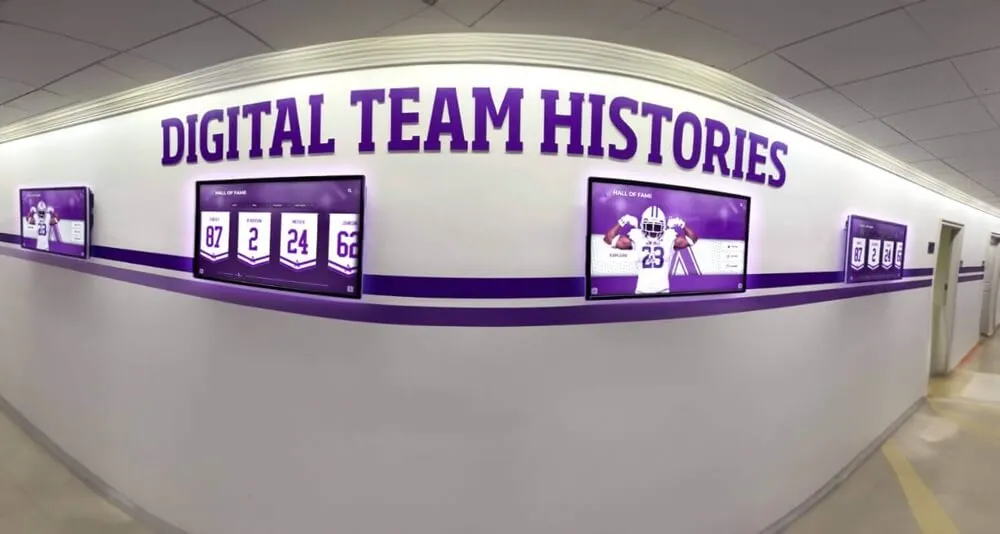
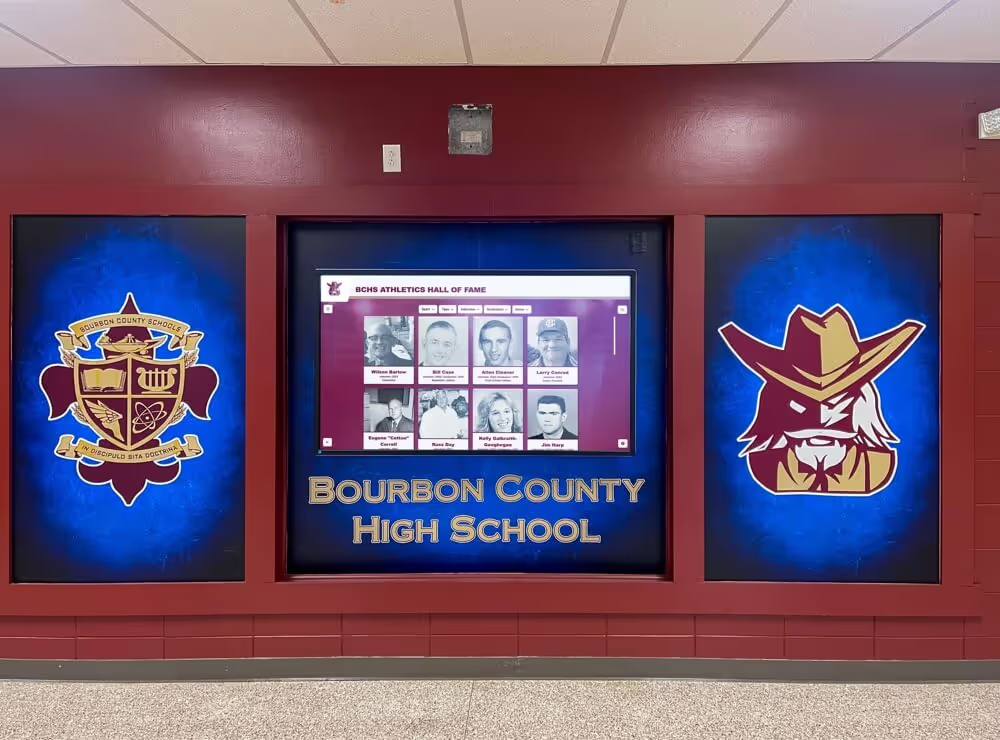
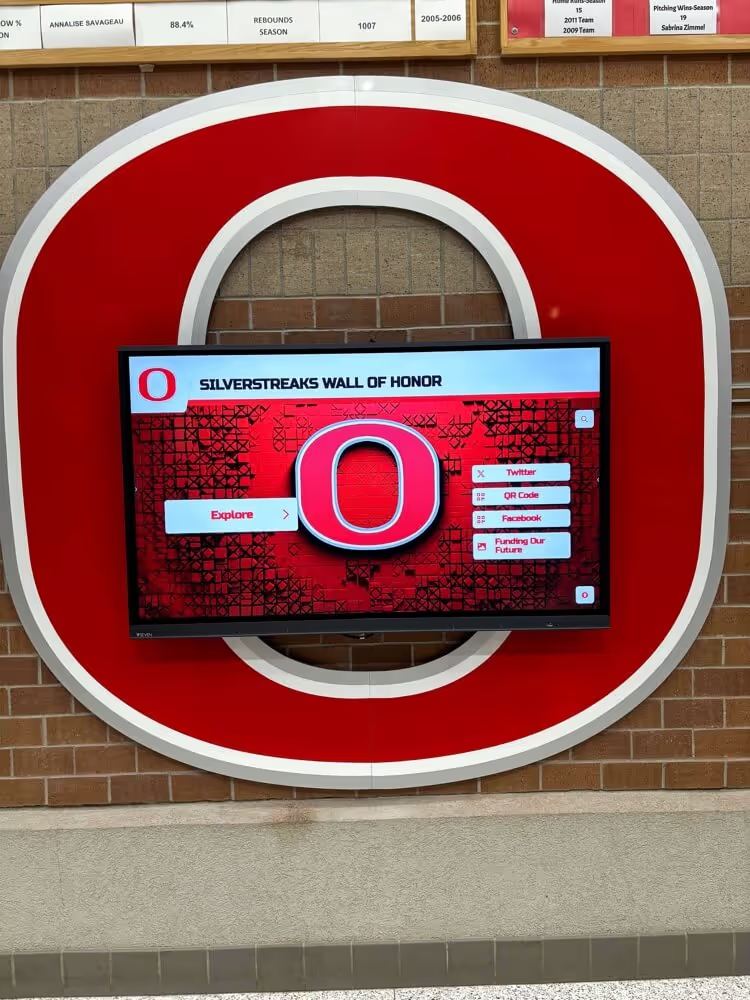
While diplomas, transcripts, and ceremony regalia provide traditional honors recognition, contemporary schools increasingly leverage digital platforms that extend visibility and create engagement impossible through static approaches.
Benefits of Digital Academic Recognition Systems
Digital recognition platforms offer capabilities transforming how schools celebrate graduation honors and academic excellence:
Comprehensive Achievement Profiles:
Digital systems enable rich student profiles including professional photographs, detailed academic achievement narratives listing all earned honors, course histories demonstrating rigor and breadth, extracurricular accomplishments and leadership roles, scholarship information and college destinations, and advice for current students pursuing similar achievements.
This profile depth creates compelling recognition impossible through printed honor roll lists or ceremony programs, transforming basic acknowledgment into engaging stories that inspire underclassmen while appropriately celebrating graduates.
Unlimited Recognition Capacity:
Digital platforms accommodate unlimited honorees without physical space constraints. Schools never face difficult prioritization decisions about which achievements to display prominently—every honors graduate receives comprehensive recognition accessible to school communities indefinitely.
Multi-Year Tracking and Trends:
Digital systems enable visualization of achievement trends across years, class-by-class honor recipient numbers, and historical program development. Schools can showcase how academic culture has evolved while maintaining permanent records celebrating every exceptional student across institutional history. Many schools create comprehensive special awards programs that recognize diverse forms of excellence.
Interactive Exploration Features:
Touchscreen interfaces enable active engagement rather than passive viewing. Students, families, and visitors can search for specific graduates by name to find siblings or community members, browse by graduating class exploring historical cohorts, filter by specific honors levels separating summa cum laude from cum laude, and discover connections between academic achievement and post-graduate outcomes.
This interactivity increases engagement dramatically compared to static trophy cases or printed materials, creating deeper connections with content and stronger inspiration for current students.
Implementing Digital Academic Honors Recognition
Schools considering digital recognition solutions should address several key factors ensuring successful implementation:
Strategic Display Placement:
Position touchscreen displays in high-traffic locations where students, families, and visitors naturally congregate including main entrance lobbies creating first impressions, guidance counseling areas where students discuss academic planning, libraries or academic commons where scholarly work occurs, and designated college and career centers focusing on future pathways.
Content Management and Sustainability:
Purpose-built platforms designed specifically for educational recognition provide intuitive content management requiring no technical expertise, flexible templates optimized for academic achievement profiles, automated updates from student information systems reducing manual entry, and multi-user access enabling counselors, administrators, and staff to contribute content.
Integration with Ceremonies and Traditional Recognition:
The most successful digital implementations complement rather than replace traditional honors recognition. Maintain diploma ceremonies, honor cord distribution, and printed programs while adding digital dimensions that extend recognition visibility, enable richer storytelling beyond ceremony constraints, and create year-round engagement rather than limiting recognition to graduation events. Schools planning graduation ceremonies can integrate traditional and digital recognition seamlessly.
Connecting Recognition to Outcomes:
Digital platforms enable schools to connect honors achievement with post-graduate success including college admission destinations for honors graduates, scholarship amounts correlating with academic achievement levels, career outcomes demonstrating long-term impact of academic excellence, and graduate school pathways for alumni continuing educational journeys.
These connections transform recognition from purely ceremonial acknowledgment into evidence demonstrating tangible value of academic dedication, motivating current students by showing how honors achievement translates into concrete opportunities and outcomes.
The Impact of Graduation Honors on College Admissions and Scholarships
Understanding how graduation honors influence college opportunities helps students appreciate recognition significance beyond ceremonial acknowledgment.
Honors Recognition in College Admissions
College admissions officers carefully examine applicant transcripts seeking evidence of academic capability and sustained intellectual engagement:
GPA and Class Rank Importance:
Cumulative GPA and class rank remain among the most important factors in selective college admissions. Students graduating with Latin honors, valedictorian or salutatorian designation, or top-percentage class rankings demonstrate exceptional achievement that admissions committees view extremely favorably.
Course Rigor Evaluation:
Admissions officers don’t evaluate GPAs in isolation—they examine transcript rigor determining whether students pursued the most challenging courses available. Honors graduates who achieved high GPAs while completing extensive AP, IB, or honors coursework demonstrate both capability and ambition that colleges value highly.
Holistic Review Context:
While graduation honors significantly strengthen applications, selective colleges practice holistic review considering academics alongside extracurricular involvement, leadership and service contributions, essays and personal narratives, letters of recommendation, and demonstrated intellectual curiosity and character.
Graduation honors provide strong academic credentials but represent only one component of competitive applications. Students should pursue honors achievement while developing comprehensive profiles showcasing diverse strengths and authentic engagement.
Honors Impact on Merit Scholarships
Many merit scholarship programs explicitly incorporate graduation honors into eligibility criteria and award determinations:
Automatic Scholarships:
Some universities offer guaranteed merit scholarships to applicants meeting specific GPA thresholds or graduating within top class percentages. Summa cum laude graduates or valedictorians might automatically qualify for full-tuition scholarships at institutions recruiting top academic talent.
Competitive Scholarship Advantages:
For competitive scholarships requiring applications and selection processes, graduation honors strengthen candidacy by demonstrating sustained academic excellence, validating intellectual capability through external recognition, and providing evidence of achievement relative to peers beyond simple GPA numbers.
Scholarship Renewal Requirements:
Understanding graduation honors systems helps college students maintain merit scholarships with GPA-based renewal requirements. Students familiar with cum laude thresholds and honor roll standards can set appropriate academic goals ensuring scholarship retention across undergraduate careers.
Many schools now plan comprehensive scholarship award ceremonies that celebrate both the achievements and the opportunities they create.
Communicating Honors Achievement to Colleges
Students should strategically communicate graduation honors throughout college application processes:
Application Materials:
Prominently feature honors designations in application profiles, include Latin honors or honor roll achievement in activity lists and honors sections, reference honors in essays when relevant to intellectual development narratives, and ensure recommenders understand your honors achievement to include in letters.
Interview Discussions:
When granted admissions interviews, be prepared to discuss how you achieved honors recognition, what challenges you overcame maintaining high achievement, how course rigor affected your learning and development, and what you learned through sustained academic dedication.
Transcript Submission:
Ensure official transcripts clearly indicate graduation honors, Latin honor designations, or honor roll achievement. Request verification from school counselors that honors appear prominently on submitted materials.
Frequently Asked Questions
What GPA do you need to graduate cum laude?
What is the difference between magna cum laude and summa cum laude?
How is valedictorian determined when students have the same GPA?
Can you graduate with honors in high school?
What do honor cords mean at graduation?
Do graduation honors appear on your diploma and transcript?
How do weighted GPAs affect graduation honors calculations?
Conclusion: Celebrating Academic Excellence Through Tiered Recognition
Graduation honors systems—whether Latin honors distinguishing cum laude through summa cum laude achievement, valedictorian and salutatorian designations recognizing top class rankings, or honor roll acknowledging sustained term-by-term excellence—serve vital purposes in educational communities. These tiered recognition structures celebrate students who demonstrate exceptional intellectual dedication, provide clear goals motivating academic engagement throughout educational careers, distinguish achievement levels enabling appropriate recognition for varying degrees of excellence, and create tangible evidence of scholarly capability that students carry into future educational and professional pursuits.
Understanding the different graduation honors levels, their specific requirements, and their significance empowers students to set strategic academic goals while helping families, educators, and institutions appreciate the remarkable achievements these distinctions represent. From students pursuing perfect GPAs targeting summa cum laude recognition through those consistently earning honor roll placement demonstrating sustained engagement, comprehensive honors systems acknowledge diverse expressions of academic excellence deserving celebration.
Modern educational recognition increasingly combines time-honored traditions—diplomas bearing Latin honors, graduation ceremonies featuring valedictorian addresses, honor cords distinguishing exceptional achievers—with contemporary digital platforms that extend visibility and create engagement impossible through static approaches alone. These integrated systems honor recognition heritage while embracing capabilities serving students, families, and school communities more effectively than traditional methods could achieve independently.
Ready to transform how your school celebrates academic honors and exceptional scholarly achievement? Rocket Alumni Solutions provides comprehensive platforms designed specifically for educational recognition, offering intuitive content management, engaging interactive displays, unlimited recognition capacity, and proven approaches helping schools build the academic recognition cultures their high-achieving students deserve. From cum laude graduates through valedictorians and every exceptional student demonstrating sustained intellectual excellence, comprehensive recognition systems ensure all achievements receive the visibility, celebration, and permanence that strengthens academic culture for current and future generations. Your students invest years pursuing intellectual growth, challenging themselves with rigorous coursework, and building capabilities that serve them throughout entire lives—they deserve recognition systems honoring those achievements with the prestige, visibility, and meaning that graduation honors have represented for generations.