Understanding football referee signals transforms the viewing experience from confusing chaos into strategic chess match. Every flag thrown, whistle blown, and hand gesture made communicates specific information about what just happened on the field. Yet for parents watching their children play, casual fans at Friday night games, and even some players, these signals often remain mysterious—leading to frustration when penalties change game momentum without clear understanding of what occurred.
This comprehensive guide decodes every major football referee signal, organized by category for easy reference. Whether you’re a parent trying to understand why your child’s touchdown was called back, a new official learning proper mechanics, a coach teaching players to recognize penalties, or a dedicated fan wanting to follow the game with greater understanding, this visual guide provides the clarity you need.
Understanding Football Officiating Basics
Before diving into specific signals, understanding how officials work together and when signals are used provides essential context.
The Officiating Crew Structure
Football games require multiple officials working together, each with specific responsibilities and coverage areas. High school games typically use four to seven officials, while college and professional games employ seven-person crews. The referee (wearing white hat) leads the crew and has final authority on rule interpretations. Other positions include umpire (positioned behind defensive line), head linesman and line judge (on opposite sidelines), back judge, field judge, and side judge (covering deep portions of field).
This crew structure means penalties can be called by different officials depending on where the infraction occurs. The official who throws the flag reports the foul to the referee, who then announces the penalty and demonstrates the corresponding signal so all spectators, coaches, and players understand what happened.
When and Why Officials Use Signals
Officials use hand signals for multiple purposes beyond just penalty calls. Signals communicate what penalty occurred after flags are thrown, indicate first downs and changes of possession, signal touchdowns and other scoring plays, show when the clock should start or stop, and communicate spot of the ball and measurements.
The standardized nature of these signals ensures consistency across all levels of football. A holding signal looks identical whether shown by a youth league official or an NFL referee, creating universal understanding that transcends specific leagues or levels of play.
Offensive Penalty Signals
Offensive penalties occur when the team with the ball commits infractions. These penalties typically result in loss of yardage and replay of the down.
False Start
The Signal: Both hands brought up to shoulder height, then rotated forward in a rolling motion at the waist level.
What It Means: An offensive lineman or back moved illegally before the snap. Once offensive players are set in their stance, they cannot move in a way that simulates the start of the play until the ball is snapped. False starts are among the most common offensive penalties, particularly in youth football where players still learning timing and discipline frequently jump early.
The Consequence: Five-yard penalty, replay the down. The play is blown dead immediately when false start is called—the ball never actually snaps because officials stop play to prevent an unfair advantage.
Holding (Offense)
The Signal: One arm extended forward, grabbing the wrist with the opposite hand and pulling downward, simulating the action of grabbing and holding.
What It Means: An offensive player illegally grabbed, tackled, or held a defensive player to prevent them from making a play. Offensive holding often occurs when blockers lose position and desperately grab defenders to prevent pressure on the quarterback or tackle of the ball carrier. Distinguishing legal blocking from holding creates ongoing interpretation challenges—officials allow hand contact within the frame of a defender’s body, but extending hands beyond or grabbing jersey material typically draws flags.
The Consequence: Ten-yard penalty from the spot of the foul, replay the down. Holding calls frequently negate big offensive plays, creating frustration when long touchdowns get called back.
Illegal Formation
The Signal: Both hands placed on hips, forming a distinctive stance that resembles the universal signal for disappointment or frustration.
What It Means: The offensive formation violated rules requiring seven players on the line of scrimmage and specific eligibility rules for receivers. Proper offensive formations must have at least seven players positioned on the line of scrimmage (where the ball sits), with the remaining players at least one yard behind. Additionally, only specific players are eligible to catch passes based on their jersey numbers and lineup positions.
The Consequence: Five-yard penalty, replay the down. This penalty occurs frequently in youth football where players still learning positioning often line up incorrectly.
Illegal Motion
The Signal: One arm extended horizontally at shoulder height, moved side to side to indicate horizontal movement.
What It Means: An offensive player was moving toward the line of scrimmage or moving laterally at the snap. Offensive players are allowed to go in motion before the snap, but only one player can be in motion, they must be moving parallel to or away from the line of scrimmage (not forward), and any player who was set must be stationary for a full second before the snap if they’re not the player in motion.
The Consequence: Five-yard penalty, replay the down.
Illegal Shift
The Signal: Both arms extended horizontally and moved in a pushing motion.
What It Means: Multiple offensive players moved simultaneously before the snap without properly resetting. Teams can shift multiple players at once to change formation, but all players who shifted must come to a complete stop and remain set for at least one second before the snap.
The Consequence: Five-yard penalty, replay the down.
Ineligible Receiver Downfield
The Signal: One hand placed on top of the head, then arm extended toward the line of scrimmage with a pushing motion.
What It Means: An offensive lineman (ineligible receiver) crossed the line of scrimmage before a forward pass was thrown. Interior offensive linemen (tackles, guards, center) cannot release downfield on passing plays until the ball is thrown, preventing them from gaining unfair advantages as blockers while receivers run routes.
The Consequence: Five-yard penalty, replay the down. This penalty occurs more frequently in spread offenses where offensive linemen sometimes release too early on screen passes.
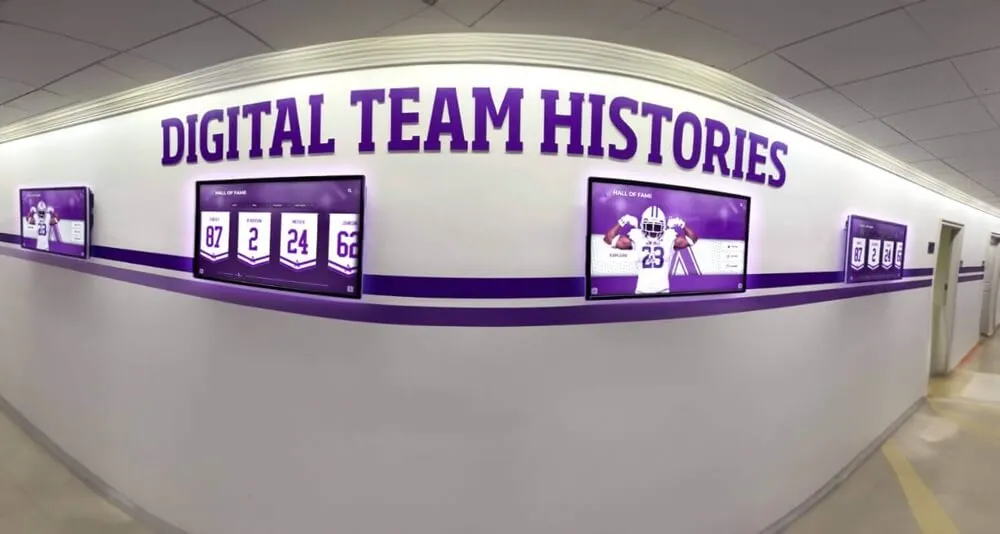
Programs that celebrate football excellence understand all aspects of the game, including the rules that govern fair play. Many schools now showcase their football traditions through comprehensive athletic recognition displays that honor championship teams, record-breaking players, and the history that builds community pride.

Defensive Penalty Signals
Defensive penalties occur when the team without the ball commits infractions, typically resulting in automatic first downs and yardage gains for the offense.
Holding (Defense)
The Signal: Same as offensive holding—one arm extended forward, grasping the wrist with the opposite hand and pulling down.
What It Means: A defensive player illegally held, grabbed, or tackled an offensive player away from the point of attack. Defensive holding typically occurs when defenders grab receivers running routes or linemen pursuing ball carriers. The distinction between legal hand-fighting and illegal holding requires judgment about whether the defensive player impeded the offensive player’s movement and opportunity.
The Consequence: Five-yard penalty and automatic first down. Even on third-and-long situations, defensive holding grants a fresh set of downs, making it particularly costly.
Pass Interference (Defense)
The Signal: Both arms extended fully forward at shoulder height with palms facing out, creating a pushing motion.
What It Means: A defensive player illegally contacted a receiver before the ball arrived, preventing them from having a fair opportunity to catch a catchable pass. Pass interference represents one of football’s most impactful penalties. Officials look for defenders who arrive early and create contact through the receiver’s body (not playing the ball), grab or hook receivers running routes, or restrict receivers’ ability to extend arms for catches.
The Consequence: Ball placed at the spot of the foul (can result in massive yardage gains) and automatic first down. In college and high school, pass interference is limited to a 15-yard maximum penalty from the previous spot. Pass interference non-calls or controversial calls frequently determine game outcomes, creating intense scrutiny of officials’ judgment.
Illegal Contact
The Signal: One arm extended forward with open hand making a pushing motion, similar to pass interference but with single arm.
What It Means: A defensive player contacted an eligible receiver beyond five yards from the line of scrimmage before the ball was thrown. Defenders can jam receivers within five yards of the line of scrimmage, but beyond that point they cannot make contact unless playing the ball or if the receiver has already touched them.
The Consequence: Five-yard penalty and automatic first down.
Defensive Offside
The Signal: Both hands placed on hips (similar to illegal formation signal), or hands on hips with pointing gesture toward the defensive team.
What It Means: A defensive player was across the line of scrimmage when the ball was snapped. Defensive players must remain behind the line of scrimmage (imaginary line where ball sits) until the snap. Edge rushers trying to time the snap sometimes cross early, and interior defensive linemen occasionally creep forward before the ball moves.
The Consequence: Five-yard penalty, replay the down. Unlike false start, offside doesn’t automatically stop play—if the offense gains an advantage by running the play, they can decline the penalty and keep the result.
Encroachment
The Signal: Same as offside—hands on hips.
What It Means: A defensive player entered the neutral zone and made contact with an offensive player before the snap. Encroachment results in an immediate dead ball, preventing the play from running. The distinction between offside and encroachment depends on whether contact occurred or whether an offensive player moved in reaction to the defensive violation.
The Consequence: Five-yard penalty, replay the down. Dead ball foul, so the play never runs.
Roughing the Passer
The Signal: One arm raised and swung downward in a chopping motion toward the opposite arm, simulating a hitting action.
What It Means: A defensive player hit the quarterback after the ball was released, with excessive force, or in a prohibited manner. Once the quarterback releases the ball, they become a protected player and defenders cannot deliver forceful blows. Officials look for late hits after clear release, hits to the head or neck area, hitting with helmet, and tackling with full body weight landing on the quarterback.
The Consequence: Fifteen-yard penalty and automatic first down. This major penalty often extends drives and changes game momentum dramatically.
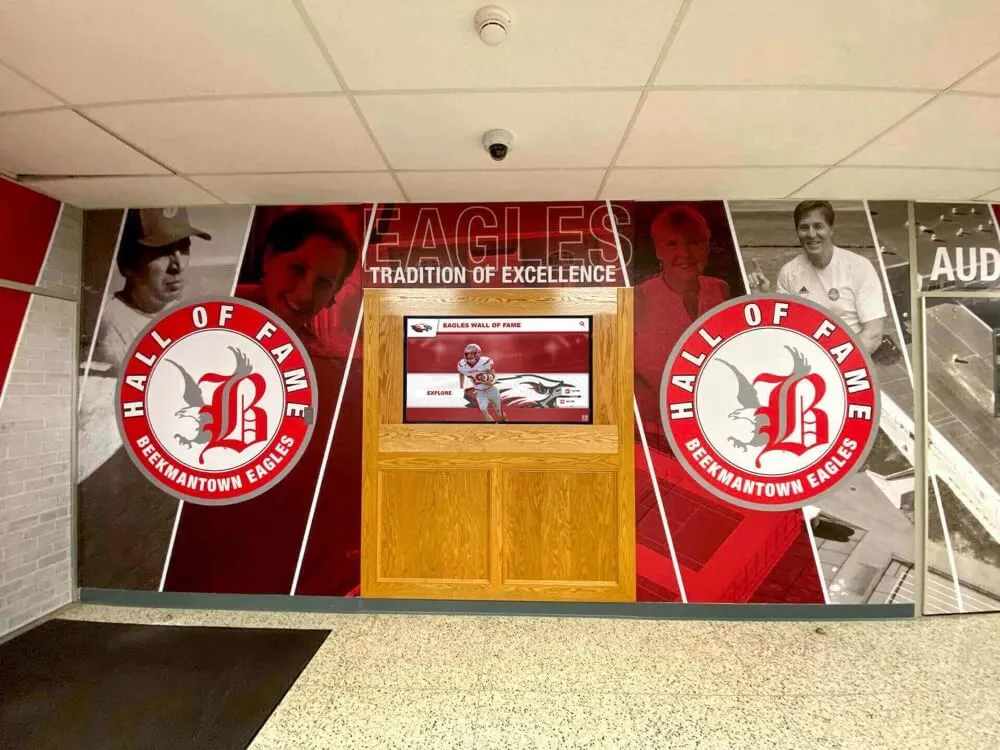
Many football programs honor their quarterbacks and defensive stars through interactive digital recognition systems that allow visitors to explore player achievements, watch highlight videos, and understand the history of excellence that defines championship programs.
Personal Foul Signals
Personal fouls involve player safety violations and unsportsmanlike conduct, carrying severe penalties due to their impact on game integrity and player welfare.
Unnecessary Roughness
The Signal: One arm raised overhead with fist clenched, then brought down forcefully in a striking motion.
What It Means: A player used excessive force or engaged in actions beyond necessary to make a play. Unnecessary roughness covers various infractions including hitting out of bounds, tackling a player clearly down, striking with fists, kicking, and any contact deemed excessively violent beyond normal football contact. Officials make judgment calls about what constitutes “excessive” based on game context, player vulnerability, and force applied.
The Consequence: Fifteen-yard penalty. If committed by defense, automatic first down. Egregious violations can result in player ejection.
Unsportsmanlike Conduct
The Signal: Both arms extended downward at sides with palms facing backward, sometimes accompanied by verbal explanation to coaches about specific behavior.
What It Means: A player, coach, or team personnel acted in a manner violating sportsmanship standards. Unsportsmanlike conduct covers taunting opponents, using profane language toward officials, excessive celebration, making obscene gestures, disrespecting opponents, throwing equipment, and other actions deemed detrimental to game integrity.
The Consequence: Fifteen-yard penalty. Two unsportsmanlike penalties against the same player or coach typically result in ejection. This penalty can be assessed on either team including during dead ball situations.
Face Mask
The Signal: Arm raised to face level, hand grasping imaginary face mask and pulling downward in a twisting motion.
What It Means: A player grabbed an opponent’s face mask and twisted, pulled, or controlled the opponent’s head. Face mask penalties protect against serious neck injuries that can result from twisting or yanking the helmet. Officials distinguish between incidental grazing (no penalty) and grasping-and-twisting (15-yard penalty).
The Consequence: Fifteen-yard penalty. If committed by defense, automatic first down. This penalty changed from having separate five-yard and fifteen-yard versions to only the major 15-yard penalty at most levels.
Horse Collar Tackle
The Signal: Hands positioned at shoulder/neck area with pulling down motion simulating grabbing inside of jersey or pads.
What It Means: A defender tackled a ball carrier by grabbing inside the back collar or shoulder pads and pulling straight down. This tackling technique creates significant injury risk as players get pulled backward and land awkwardly. The penalty applies when defenders grab inside the jersey or pads from behind and yank players down.
The Consequence: Fifteen-yard penalty and automatic first down if committed by defense.
Targeting
The Signal: Both fists crossed at wrists above head in an “X” formation.
What It Means: A player lowered their head and made forceful contact with the crown of their helmet to an opponent’s head or neck area. Targeting penalties emerged as football addressed concussion concerns and player safety. This serious infraction focuses on preventing devastating helmet-to-helmet hits and players launching themselves as missiles. All targeting calls receive booth review at college level.
The Consequence: Fifteen-yard penalty and player ejection. If targeting occurs in the second half, the ejected player also misses the first half of the next game. This severe penalty reflects football’s emphasis on eliminating the most dangerous contact.
Celebrating football excellence means honoring the athletes who competed with intensity while respecting opponents and officials. Programs increasingly recognize all-state selections, championship teams, and sportsmanship award winners through modern athletic recognition platforms that preserve program history for future generations.
Administrative and Game Management Signals
Beyond penalties, officials use numerous signals to communicate game administration, scoring, and clock management.
First Down
The Signal: Arm extended straight forward, parallel to ground, pointing in direction the offensive team is advancing.
What It Means: The offense has achieved a new first down, earning a fresh set of four downs to advance ten more yards. This signal confirms the offense gained sufficient yardage and resets the down-and-distance markers.
Touchdown
The Signal: Both arms raised straight overhead, fully extended.
What It Means: A player crossed the goal line with possession of the ball, or a receiver caught a pass in the end zone with possession and at least one foot (two feet in NFL) inbounds. The touchdown signal ranks among football’s most recognized gestures, creating immediate understanding that six points were scored.
The Context: Officials don’t signal touchdown until confirming several factors—ball crossed goal line plane, player had possession throughout, receiver completed the catch process if applicable, and no penalty occurred negating the score.
Field Goal Good
The Signal: Both arms raised straight overhead, similar to touchdown signal.
What It Means: The kicked ball passed through the uprights above the crossbar, earning three points. The official positioned behind the end zone makes this determination and signals whether the kick was successful.
Field Goal No Good
The Signal: Both arms extended horizontally at shoulder height, waving side to side.
What It Means: The kicked ball did not pass through the uprights, resulting in no points and change of possession.
Safety
The Signal: Palms pressed together above head, hands forming a peak or triangle shape.
What It Means: The offensive team was tackled in their own end zone, fumbled out of their end zone, or committed a penalty in their end zone, resulting in two points for the defense and possession given to the team that was scored upon via free kick.
Time Out
The Signal: Both hands formed into “T” shape with one hand vertical and other horizontal on top, creating the universal time out gesture.
What It Means: Play is stopped for an official time out. This signal indicates when teams call time outs, officials stop play for injuries, TV time outs occur, or administrative issues require clock stoppage. The official also points toward the team that called the time out.
Start the Clock
The Signal: Arm raised overhead, then brought down in a cutting or winding motion, simulating starting a clock.
What It Means: The game clock should begin running. Officials signal this after incomplete passes (where clock stops), after change of possession, when players go out of bounds (at lower levels), and various other situations where the clock had stopped.
Stop the Clock
The Signal: One arm raised straight overhead with palm open facing forward.
What It Means: The game clock should stop running immediately. This occurs after incomplete passes, when runners go out of bounds (depending on level and game situation), during change of possession, when penalties occur, and during official reviews or measurements.
Delay of Game
The Signal: Both arms folded across chest, or rotating hands around each other in a rolling motion at chest height.
What It Means: The offense failed to snap the ball before the play clock expired. The play clock (typically 40 or 25 seconds depending on situation) prevents teams from delaying the game indefinitely. When it reaches zero before the snap, officials throw flags.
The Consequence: Five-yard penalty, replay the down.
Many successful football programs celebrate their traditions not just through trophies, but through comprehensive recognition displays that showcase championship seasons, record-breaking performances, and the athletes who made program history.
Spotting and Measurement Signals
Officials use specific signals related to ball placement, measurements, and chains movement.
Forward Progress Stopped
The Signal: Arm extended forward, then pulled back sharply to the body with fist clenched, similar to blowing a whistle gesture.
What It Means: The ball carrier’s forward momentum was stopped, establishing where the ball should be spotted. Forward progress rules prevent defenders from pushing running backs backward after initial contact stops their advance—the ball spots where forward movement ended, not where the pile finally stops.
Incomplete Pass
The Signal: Both arms crossed at wrists and waved side to side at waist level, creating a sweeping “no good” gesture.
What It Means: A forward pass was not caught legally. This occurs when receivers drop passes, balls hit the ground before possession is established, receivers step out of bounds before catching, or passes are thrown away. The incomplete signal confirms no team gains possession and the next down begins from the same yard line.
Touchback
The Signal: Both arms waved from side to side above the head in a sweeping motion.
What It Means: The ball will be placed at the receiving team’s 25-yard line (or 20-yard line depending on level) following a kickoff or punt into the end zone that isn’t returned. Touchbacks also occur when fumbles go out of bounds in the end zone.
Loss of Down
The Signal: Both hands placed behind head at neck level, or one hand patting the top of the head.
What It Means: Due to a penalty, the offensive team loses the down in addition to yardage. Intentional grounding, illegal forward pass beyond the line of scrimmage, and certain other infractions carry both yardage penalties and loss of down, making them particularly costly.
Illegal Touching
The Signal: Hands tapping shoulders or chest repeatedly.
What It Means: A player illegally touched a forward pass, punt, or kicked ball. This occurs when ineligible receivers touch passes first, players step out of bounds then touch passes, or kicking team players touch punts before the receiving team touches them. The specific circumstances create different consequences.

Special Situations and Less Common Signals
Football includes numerous specialized rules and corresponding signals for unique game situations.
Illegal Participation
The Signal: Hands moved in circular motion at waist level, or specific pointing motions.
What It Means: A player who left the field returned and participated in the play illegally, or a player participated who shouldn’t be on the field. This unusual penalty ensures teams maintain proper player counts and substitutions follow rules.
The Consequence: Fifteen-yard penalty.
Illegal Substitution
The Signal: Arms crossed and rotated at chest level, or hands moved in substitution motion.
What It Means: A team had too many players on the field during the play, or players substituted in a manner violating rules. Teams must have exactly eleven players when the ball is snapped—no more, no fewer.
The Consequence: Five-yard penalty, replay the down.
Intentional Grounding
The Signal: Both arms held parallel at waist level, moved in a swinging or crossing motion.
What It Means: The quarterback threw the ball away with no realistic chance of completion to avoid being sacked, without an eligible receiver in the area and while still in the pocket. Intentional grounding prevents quarterbacks from simply throwing balls away whenever pressure arrives. To avoid the penalty, quarterbacks must throw near eligible receivers, get outside the tackle box (pocket), or throw past the line of scrimmage.
The Consequence: Loss of down and ten-yard penalty from the spot of the foul. If intentional grounding occurs in the end zone, it results in a safety.
Illegal Forward Pass
The Signal: One arm moved forward in a passing motion, followed by both hands placed on hips or a waving-off gesture.
What It Means: A forward pass was thrown from beyond the line of scrimmage, or a second forward pass was attempted on the same play. Only one forward pass is legal per play, and it must be thrown from behind the line of scrimmage.
The Consequence: Five-yard penalty and loss of down from the spot of the pass.
Clipping
The Signal: Striking one hand against the back of the opposite knee, simulating a low block from behind.
What It Means: A blocker hit an opponent from behind at or below the waist. Clipping creates serious injury risk as players can’t protect themselves from low blocks they don’t see coming. Once common throughout football, clipping is now prohibited in nearly all situations with limited exceptions in close-line play.
The Consequence: Fifteen-yard penalty.
Chop Block
The Signal: Striking motion with one hand against the opposite thigh while making a cutting downward motion.
What It Means: Two offensive players blocked one defensive player with one blocker going high and another going low, or a low block occurred while a teammate engaged the same defender high. Chop blocks create devastating knee injuries and are strictly prohibited.
The Consequence: Fifteen-yard penalty.
Football programs that build winning traditions understand that celebrating athletic achievement requires honoring the complete story—not just championships won but the discipline, sportsmanship, and respect for the game demonstrated along the way. Modern recognition platforms allow programs to tell these complete stories through engaging digital displays that showcase values alongside victories.
Learning Signals as a Parent, Player, or Coach
Understanding referee signals enhances football engagement for everyone involved in the sport.
For Parents and Spectators
Parents watching youth football benefit tremendously from signal knowledge. When flags fly and whistles blow, knowing what happened eliminates confusion and reduces frustration. Rather than wondering why your child’s big run was called back, understanding the holding signal provides immediate clarity about what went wrong and what your child needs to work on.
Parents who understand signals can also better support young officials—recognizing that officiating youth sports presents enormous challenges and that missed calls happen even when officials work diligently. This understanding creates more positive game environments where kids learn sportsmanship alongside athletic skills.
For Young Players
Players learning football should study referee signals as part of their rules education. Recognizing signals during games helps players understand what they did wrong, make immediate adjustments, and avoid repeated penalties. A young offensive lineman who understands the holding signal can identify what hand placement or body position drew the flag and correct it during the next series.
Coaches often teach signals during film sessions, pointing out penalties on video and connecting referee signals to specific actions. This visual learning reinforces proper technique and helps players internalize rules through repetition.
For Coaches Working with Officials
Experienced coaches know that respectful communication with officials produces better outcomes than constant arguing. Understanding signals allows coaches to ask informed questions during appropriate moments rather than simply complaining about calls they don’t comprehend.
Coaches can request clarification: “Referee, can you tell me what you saw on that holding call?” demonstrates professional engagement compared to “That was a terrible call!” Understanding signals also helps coaches recognize when officials missed calls versus when plays were actually clean despite their initial perception.
Many athletic directors recognize the comprehensive nature of building successful programs—from teaching fundamentals to honoring tradition—through strategic recognition initiatives that celebrate multiple dimensions of athletic excellence.
Common Signal Confusions and How to Distinguish Them
Several referee signals look similar, creating confusion even for experienced spectators.
Holding vs. Illegal Use of Hands
Both penalties involve illegal hand usage, but holding involves grasping and restricting movement while illegal use of hands focuses on hand placement on face masks or outside the body frame. The holding signal simulates grasping and pulling down, while illegal use of hands often includes pushing motions or signals directed at specific body areas.
Offside vs. False Start vs. Encroachment
These three penalties all relate to line-of-scrimmage violations but carry important distinctions. False start (offense moves early) results in an immediate dead ball because the offense created an unfair advantage. Offside (defense crosses early without contact) allows the play to run since the offense wasn’t disadvantaged. Encroachment (defense crosses and makes contact) creates an immediate dead ball because the defense caused an offensive reaction.
The signals appear similar—hands on hips—but officials often point toward the offending team or add verbal announcements clarifying which specific infraction occurred.
Pass Interference vs. Illegal Contact vs. Holding
These three defensive penalties all involve illegal contact with receivers but differ in timing and location. Illegal contact occurs beyond five yards from the line of scrimmage before the ball is thrown. Defensive holding involves grasping and restraining (can occur anywhere on field, before or during the route). Pass interference occurs after the ball is in the air and involves contact preventing the receiver from making a play on a catchable ball.
The signals differ slightly—pass interference uses both arms pushing forward, illegal contact uses one arm pushing, holding uses the grasping-and-pulling motion—but game context (when in the play sequence the flag was thrown) often provides the clearest distinction.
Regional and Level Variations in Signals
While most football referee signals remain consistent across levels, some variations exist worth noting.
High School vs. College vs. NFL
The core signals remain identical across all levels, but certain rules differences affect when specific signals appear. Pass interference enforcement differs—NFL spots the ball at the foul location regardless of distance, while high school and college limit pass interference to 15 yards maximum. Targeting rules exist in college and high school but weren’t emphasized in NFL until recently, making the crossed-arms “X” signal less common at professional levels historically.
Youth League Modifications
Youth football leagues often modify rules to emphasize player development and safety, which affects officiating. Some youth leagues eliminate blitzing, change kickoff rules, implement mercy rules with running clocks, or modify contact rules. While signals remain the same, the frequency of certain penalties changes dramatically. Face mask penalties occur more often in youth leagues where players still learning proper technique grab helmets accidentally. Offside happens more frequently as young players learn snap counts and timing.
Canadian Football Differences
Canadian football uses similar but not identical signals. The larger field, twelve players per side, three-down format, and different rules create officiating variations. While many signals translate directly, certain penalties unique to Canadian football (like no yards violations on punts) require different signals unfamiliar to American football audiences.
Regardless of level, celebrating football achievement requires understanding the complete context of competition. Programs increasingly use interactive recognition platforms to honor not just championship teams but scholar-athletes, leadership award winners, and community contributors who demonstrate excellence beyond the field.
The Role of Technology in Modern Football Officiating
Technology increasingly supplements traditional referee signals, though the fundamental signal system remains essential.
Instant Replay and Signal Confirmation
Replay review affects how signals function at higher levels of football. Coaches can challenge calls, and booth officials can initiate reviews of scoring plays, turnovers, and other critical moments. When reviews occur, officials signal the outcome using the same traditional signals after confirming or overturning the call through video evidence.
The replay official signal—forming a rectangle with hands to simulate a TV screen, or pointing toward the press box—indicates a play is under review. Once review concludes, officials signal the final decision using standard signals: touchdown confirmed, first down stands, incomplete pass after review, etc.
Communication Technology
Modern officiating crews wear communication headsets allowing officials to discuss calls without gathering in lengthy huddles. This technology speeds up games and improves accuracy as officials across the field can quickly share what they saw before making final determinations.
Despite this technology, signals remain essential because they communicate with players, coaches, and spectators who aren’t part of the officials’ communication network. A referee might discuss a holding call with the umpire via headset, but must still demonstrate the holding signal to explain the penalty to everyone watching.
Goal-Line and Sideline Technology
NFL and some college programs now use enhanced camera systems, sensors in pylons, and other technology to determine whether balls crossed goal lines or players stepped out of bounds. These systems assist officials but don’t replace signal communication. Officials still signal the final ruling—touchdown, touchback, out of bounds, etc.—after considering all available evidence including technology assistance.
Teaching Referee Signals to Youth Players
Coaches working with young athletes should incorporate signal education into their teaching approach.
Film Session Integration
During film review, coaches should pause after penalties and ask players to identify what signal the official made and what penalty occurred. This active learning reinforces signal knowledge while connecting penalties to specific plays and teaching moments.
“Watch the referee here—see how he grabbed his wrist and pulled down? That’s the holding signal. Now let’s watch what our tackle did with his hands that caused that call.”
Practice Penalty Recognition
During practice, coaches can demonstrate signals and have players identify them, creating a game-like quiz environment that makes learning fun. Call out scenarios—“Third and five, defensive pass interference”—and have players demonstrate the correct signal, compete in teams, and connect signals to game situations.
Sportsmanship Through Understanding
Teaching signals promotes sportsmanship by helping players understand that penalties usually result from mistakes in technique or positioning rather than malicious intent or bad officiating. When players recognize what the official saw and signaled, they develop accountability for their actions rather than blaming officials for doing their jobs.
This sportsmanship foundation proves essential as players progress through competitive levels. Programs that celebrate not just winning but character development create cultures of excellence that extend far beyond football season. Many schools now recognize sportsmanship award winners and community leadership through comprehensive recognition systems that honor multiple dimensions of student achievement.
Celebrating Football Excellence and Tradition
Understanding football referee signals represents one small but meaningful aspect of appreciating the game’s complexity. From youth leagues teaching fundamentals to championship programs competing at the highest levels, football builds communities through shared experiences, tradition, and the pursuit of excellence.
Programs that have built distinguished football traditions often seek meaningful ways to honor their history while inspiring current and future players. Championship teams, record-breaking athletes, dedicated coaches, and the moments that define programs deserve recognition that matches their significance to school and community identity.
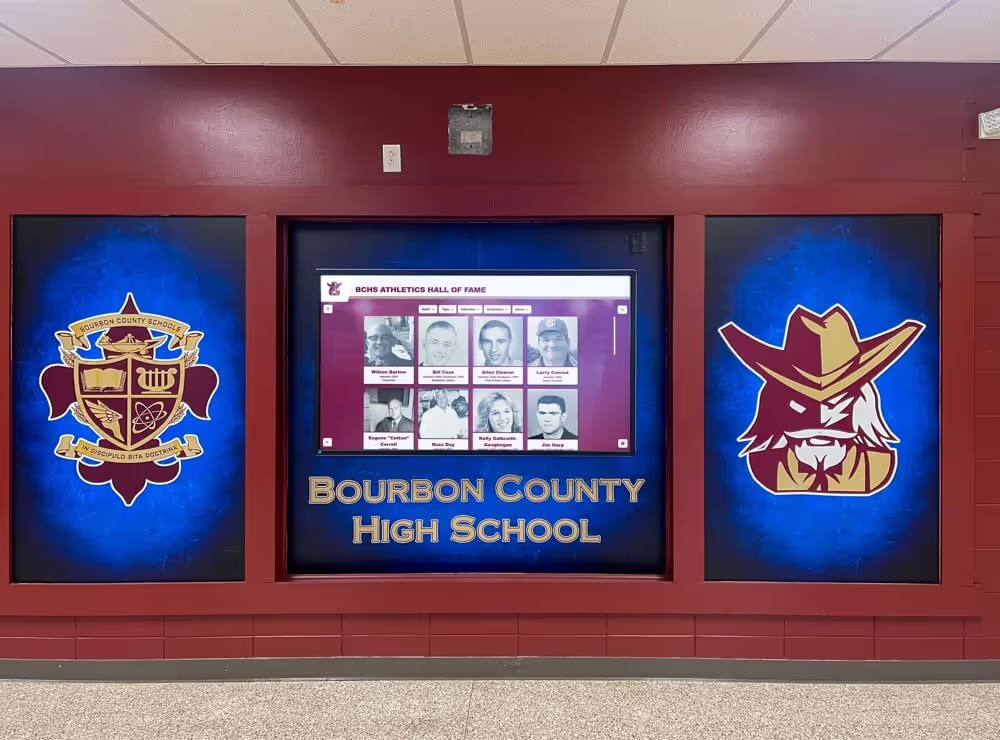
Modern athletic recognition has evolved far beyond static trophy cases collecting dust in forgotten hallways. Interactive digital recognition displays now allow programs to showcase comprehensive athletic histories through engaging platforms featuring searchable databases of every letterwinner across decades, video highlights of championship moments, interactive timelines showing program evolution, statistical leaderboards celebrating record holders, and dynamic content that updates easily as new achievements occur each season.
These platforms serve multiple purposes: inspiring current athletes by showcasing the standards set by those who came before, engaging alumni who return to campus and reconnect with their playing days, welcoming recruits and their families by demonstrating program tradition and commitment to honoring achievement, and building community pride by making athletic history accessible and celebrated.
For athletic directors, coaches, and administrators exploring recognition solutions that authentically celebrate their football programs while providing practical functionality, Rocket Alumni Solutions specializes in creating interactive digital halls of fame and recognition displays designed specifically for schools and athletic programs. Their platforms combine comprehensive features with intuitive content management, allowing programs to maintain living histories that grow alongside their traditions.
Conclusion: Signals as the Language of Football
Football referee signals form a universal language that transcends team loyalties, competitive levels, and regional variations. Learning this language transforms passive spectating into active engagement, helps players develop accountability and rules knowledge, enables coaches to communicate effectively with officials, and deepens appreciation for the skill and judgment required to officiate football well.
Whether you’re a parent watching your child play for the first time, a player working to understand what penalties you need to avoid, a coach teaching the game, or a dedicated fan wanting to follow every nuance, mastering referee signals provides essential knowledge that enhances your football experience.
The next time you see a flag fly and a whistle blow, watch the official’s hands. That signal tells a story—what happened, who was responsible, what the consequence will be, and how the game will proceed. Understanding that story makes you a more informed participant in the great tradition of football.