



FFA Awards Digital Display: Transforming Agricultural Education Recognition
FFA (Future Farmers of America) chapters across the United States represent some of the most accomplished student organizations in secondary education, with members earning prestigious degrees, proficiency awards, and competition honors that deserve meaningful recognition. Yet many agricultural education programs struggle to showcase these achievements in ways that inspire current students while honoring past accomplishments. Traditional trophy cases and paper certificates quickly become outdated, overcrowded, and fail to capture the full scope of FFA excellence that programs cultivate year after year.
This comprehensive guide explores how modern digital display solutions transform FFA awards recognition—creating dynamic, engaging platforms that celebrate American FFA Degrees, Agricultural Proficiency Awards, Career Development Event championships, and leadership achievements while building stronger agricultural education cultures throughout school communities.
The National FFA Organization stands as one of America’s premier youth leadership development organizations, serving over 945,000 members in all 50 states, Puerto Rico, and the U.S. Virgin Islands. FFA members participate in agricultural education programs that combine classroom instruction, hands-on supervised agricultural experience (SAE), and FFA activities—creating comprehensive learning experiences that develop future agricultural leaders, innovators, and professionals who will shape the industry for decades to come.
According to the National FFA Organization, their awards and recognition programs acknowledge members who demonstrate excellence through their SAEs, leadership activities, and competitive achievements. These honors range from chapter-level recognition to state awards and national distinctions that appear on college applications and professional résumés throughout students’ careers. Yet the significance of these achievements often goes unrecognized beyond brief ceremony acknowledgments and certificates filed away in folders or boxes.
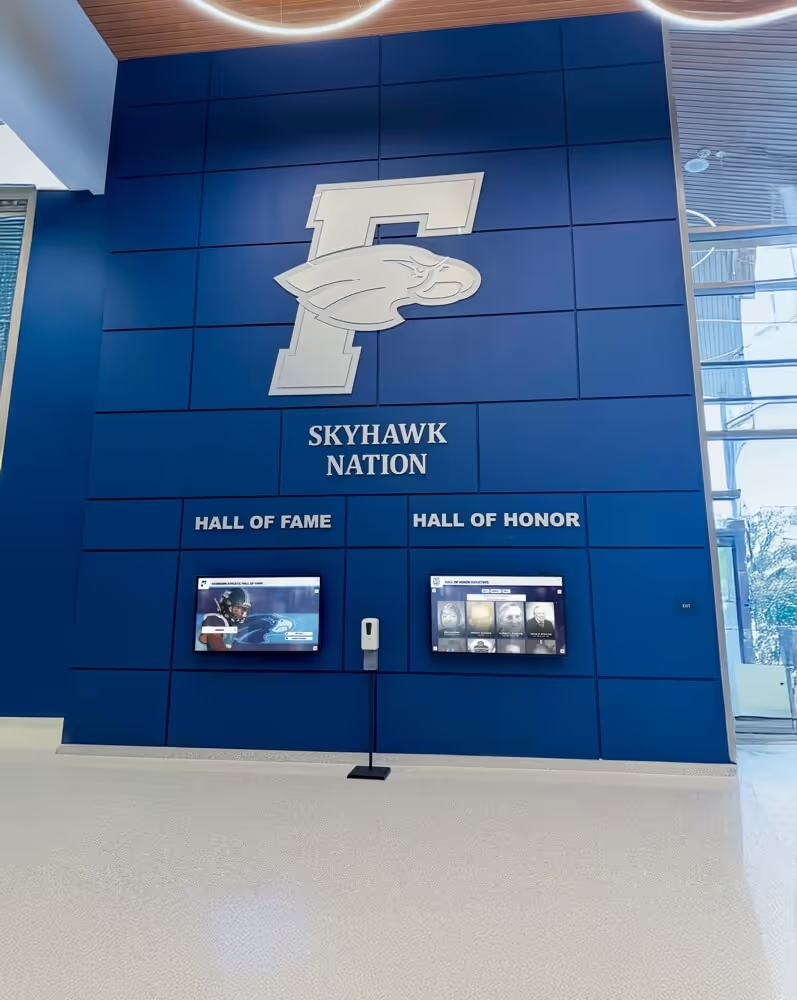
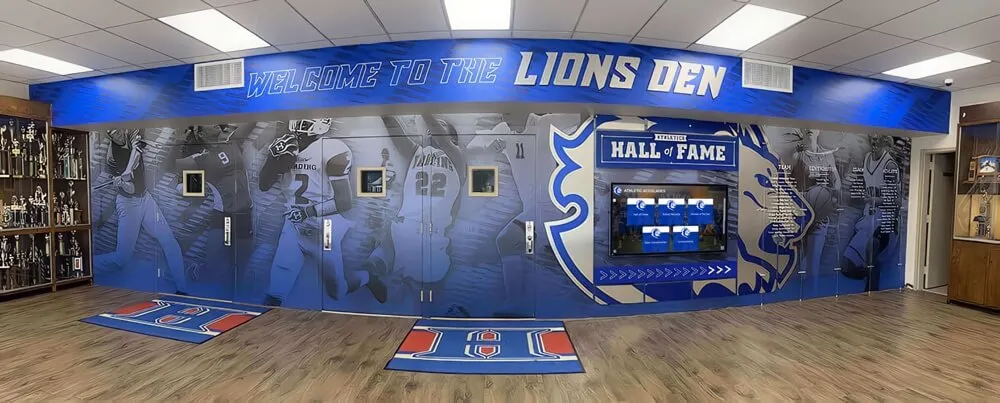
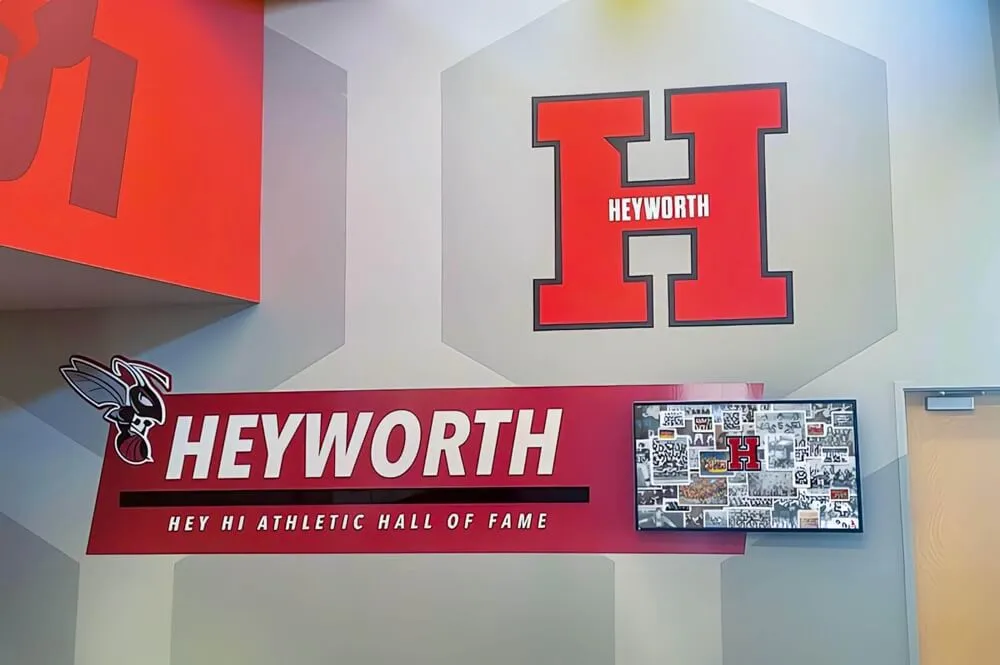
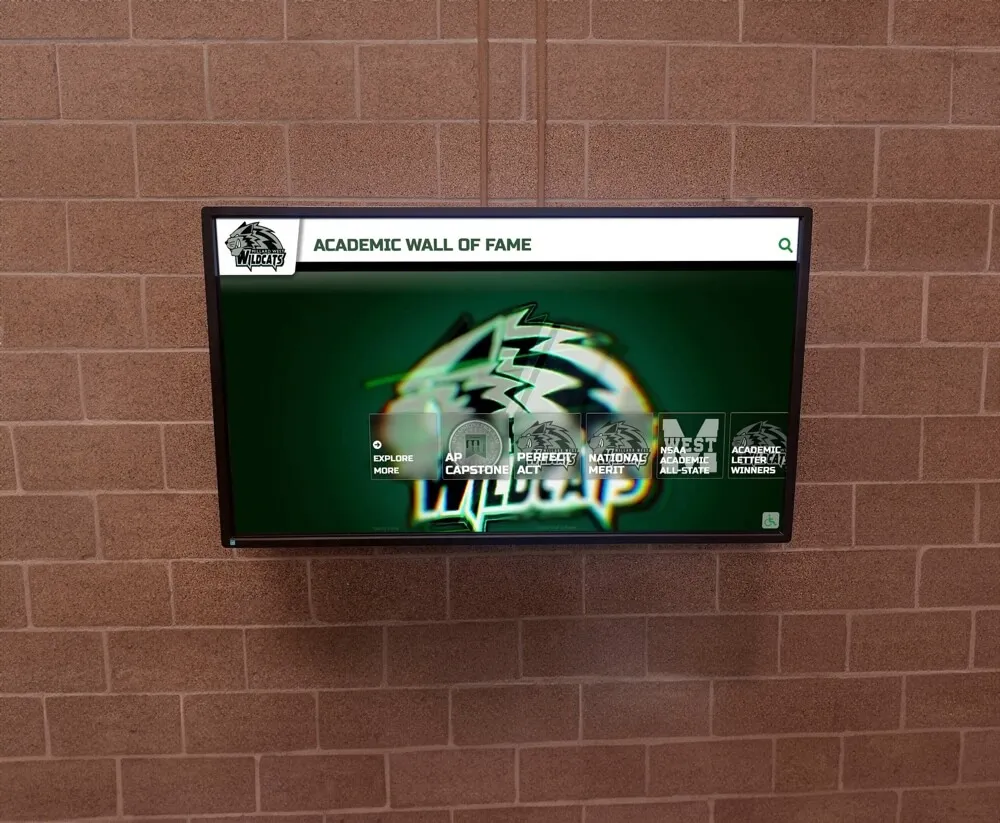
In 2026, agricultural education programs increasingly leverage digital display technology to transform how schools celebrate FFA achievements. Interactive touchscreen systems, comprehensive digital platforms, and cloud-based recognition solutions allow programs to showcase member accomplishments prominently and professionally—ensuring these important milestones receive visibility proportional to their significance while inspiring younger students to pursue similar excellence through their own FFA journeys.
Understanding the FFA Awards and Recognition Landscape
Before implementing recognition displays, agricultural educators benefit from understanding the complete spectrum of FFA achievements and what each represents in terms of member commitment, skill development, and career preparation validation.
FFA Degree Programs: Building Leadership Through Progressive Achievement
FFA degrees represent progressive recognition levels acknowledging increasing commitment, accomplishment, and leadership development throughout members’ agricultural education experiences.
Discovery FFA Degree
The Discovery FFA Degree recognizes middle school FFA members in grades 7-8 who participate in chapter activities, demonstrate agricultural knowledge, and complete at least two Discovery FFA program activities. This foundational recognition validates younger students’ early agricultural education engagement and introduces them to FFA’s recognition culture before high school.
Greenhand FFA Degree
The Greenhand FFA Degree honors first-year high school FFA members who demonstrate knowledge of FFA history, creed, motto, salute, and agricultural career opportunities while developing initial plans for supervised agricultural experiences. This entry-level recognition marks students’ commitment to agricultural education and establishes baseline expectations for continued FFA participation and growth.
Chapter FFA Degree
Chapter FFA Degrees recognize sophomore, junior, or senior members who complete at least one year of agricultural education instruction, demonstrate satisfactory progress in their SAE programs, participate actively in chapter activities, and demonstrate agricultural knowledge beyond basic introductory levels. This mid-level achievement validates sustained commitment to agricultural education and FFA involvement beyond initial participation.

State FFA Degree
State FFA Degrees represent significant achievement, requiring members to complete at least two years of agricultural education instruction, earn and productively invest at least $1,000 through their SAE programs (or work 300+ hours), demonstrate outstanding leadership through meaningful chapter participation, and maintain satisfactory academic records. State degrees validate exceptional commitment to agricultural education and represent achievements many colleges recognize during admissions evaluation.
American FFA Degree
The American FFA Degree represents FFA’s highest honor, awarded to members who have demonstrated the highest level of commitment to FFA and made significant accomplishments in their supervised agricultural experiences. Recipients must have earned State FFA Degrees, completed at least three years of agricultural education instruction, operated and maintained records to show outstanding growth in their SAE programs, earned and productively invested at least $10,000 (or worked 2,250+ hours), and demonstrated superior leadership through extensive chapter and community involvement.
According to the National FFA Organization’s awards program updates, approximately 4,800 American FFA Degrees are conferred annually during the National FFA Convention—representing less than one-half of one percent of all FFA members nationwide. This extreme selectivity makes American Degree recipients among the most accomplished youth in American agricultural education.
Agricultural Proficiency Awards: Recognizing Specialized Excellence
Beyond degree programs, Agricultural Proficiency Awards honor FFA members who have developed specialized skills through their SAE programs that they can apply toward future agricultural careers. The National FFA Organization offers proficiency awards in approximately 53 different categories spanning agricultural production, agricultural processing, agricultural services, and agricultural mechanics—ensuring diverse agricultural interests receive specific recognition.
Proficiency Award Categories and Pathways
The College Board categorizes proficiency opportunities across seven career pathways:
- Agribusiness Systems: Including awards for agricultural sales, agricultural services, entrepreneurship, and agricultural communications
- Animal Systems: Recognizing excellence in beef production, dairy production, equine science, poultry production, and veterinary science
- Environmental Service Systems: Honoring achievements in natural resources management, wildlife management, and environmental science
- Food Products and Processing Systems: Acknowledging excellence in food science, agricultural processing, and specialty crop production
- Natural Resources Systems: Celebrating accomplishments in forestry, turf grass management, and outdoor recreation
- Plant Systems: Recognizing achievements in grain production, forage production, nursery operations, and fruit and vegetable production
- Power, Structural, and Technical Systems: Honoring excellence in agricultural mechanics, agricultural power and equipment, and agricultural construction
Proficiency awards progress from chapter level through area/regional recognition to state awards and ultimately national recognition announced during the National FFA Convention. National finalists receive expense-paid trips to the convention, significant scholarship awards, and national recognition that significantly strengthens college applications and agricultural industry networking opportunities.
Career and Leadership Development Events: Competitive Excellence
Career Development Events (CDEs) and Leadership Development Events (LDEs) provide competitive opportunities for FFA members to demonstrate knowledge and skills in specific agricultural disciplines and leadership contexts.
Career Development Events assess students’ abilities to apply classroom learning and SAE experiences to real-world agricultural challenges through competitions in areas like agricultural sales, livestock judging, floriculture, veterinary science, agricultural mechanics, food science, and dozens of other agricultural disciplines. Teams and individuals compete at chapter, sub-state, state, and national levels—with national CDE winners announced at the National FFA Convention.
Leadership Development Events evaluate members’ leadership capabilities through competitions including creed speaking, prepared public speaking, extemporaneous speaking, agricultural issues discussion, chapter conducting, and parliamentary procedure. These events develop communication, critical thinking, and leadership competencies essential for future agricultural leadership regardless of specific career pathway.

Recognition of CDE and LDE achievement validates specialized agricultural knowledge, competitive performance under pressure, teamwork capabilities, and dedication to excellence—qualities that agricultural employers and college admissions committees highly value when evaluating candidates.
Chapter and Program Awards: Celebrating Collective Excellence
Beyond individual recognition, FFA honors chapters and agricultural education programs demonstrating outstanding collective achievement:
National Chapter Awards recognize chapters excelling in student development, chapter development, and community development across three size divisions. Gold-rated chapters demonstrate comprehensive excellence across all FFA program components—classroom instruction, SAE supervision, FFA activities, and community engagement.
Agricultural Education Three-Circle Model Recognition acknowledges programs demonstrating exceptional integration of classroom/laboratory instruction, supervised agricultural experience, and FFA student leadership development. This holistic recognition validates program quality beyond individual student accomplishments.
Program Quality Standards Recognition honors agricultural education programs meeting rigorous national standards for instructional facilities, equipment, curriculum, teacher qualifications, student organizations, and community partnerships.
These collective recognitions demonstrate program strength and effectiveness to school administrators, community stakeholders, and prospective families—validating agricultural education’s value proposition and justifying continued program investment and support.
Traditional vs. Modern FFA Recognition Display Approaches
Agricultural education programs have multiple options for showcasing FFA achievements, each with distinct advantages, limitations, and sustainability considerations that influence long-term effectiveness.
Traditional FFA Recognition Methods
Classic approaches to FFA recognition have served agricultural programs for decades, providing tangible acknowledgment through established formats that students, families, and communities understand and appreciate.
Trophy Cases and Display Cabinets
Most agricultural education facilities feature trophy cases displaying plaques, medals, ribbons, and trophies earned through CDEs, LDEs, and other competitive events. These physical displays provide tangible evidence of program success while creating visual impact that demonstrates competitive excellence to visitors, prospective students, and school administrators evaluating program effectiveness.
However, trophy case displays face significant limitations including physical space constraints that quickly fill as achievements accumulate, dust accumulation and deterioration requiring regular maintenance, static presentation that can’t convey achievement context or tell member stories, and eventual overcrowding that forces difficult decisions about which accomplishments warrant continued display versus storage or removal.
Degree and Award Plaques
Many FFA chapters mount permanent plaques listing American FFA Degree recipients, State FFA Degree recipients, or other major award winners. These formal displays acknowledge significant achievement with tangible permanence that students and families value as lasting program tributes.
These traditional plaques have notable limitations including expensive updates requiring professional engraving services for each annual addition, limited space eventually forcing difficult prioritization decisions, minimal context beyond names and years, and visual clutter when plaques accumulate without coherent organization.
Certificate and Photo Boards
Traditional bulletin boards featuring member photos, certificates, and achievement descriptions create visible recognition in agricultural education classrooms, shops, and common areas. When well-maintained, these displays provide daily visibility that keeps accomplishments in front of current members throughout the year.
The challenge with bulletin board recognition lies in maintenance demands that prove unsustainable for busy agricultural educators. Creating professional-looking boards requires significant time and artistic skill. As achievements accumulate, finding space becomes increasingly difficult. Updating displays annually proves time-consuming, and boards often become dated when teachers lack time for regular refreshing.

Modern Digital Display Solutions for FFA Recognition
Contemporary technology has transformed FFA recognition possibilities, enabling agricultural education programs to overcome traditional limitations while adding powerful new capabilities that enhance recognition quality and motivational impact.
Interactive Touchscreen Recognition Displays
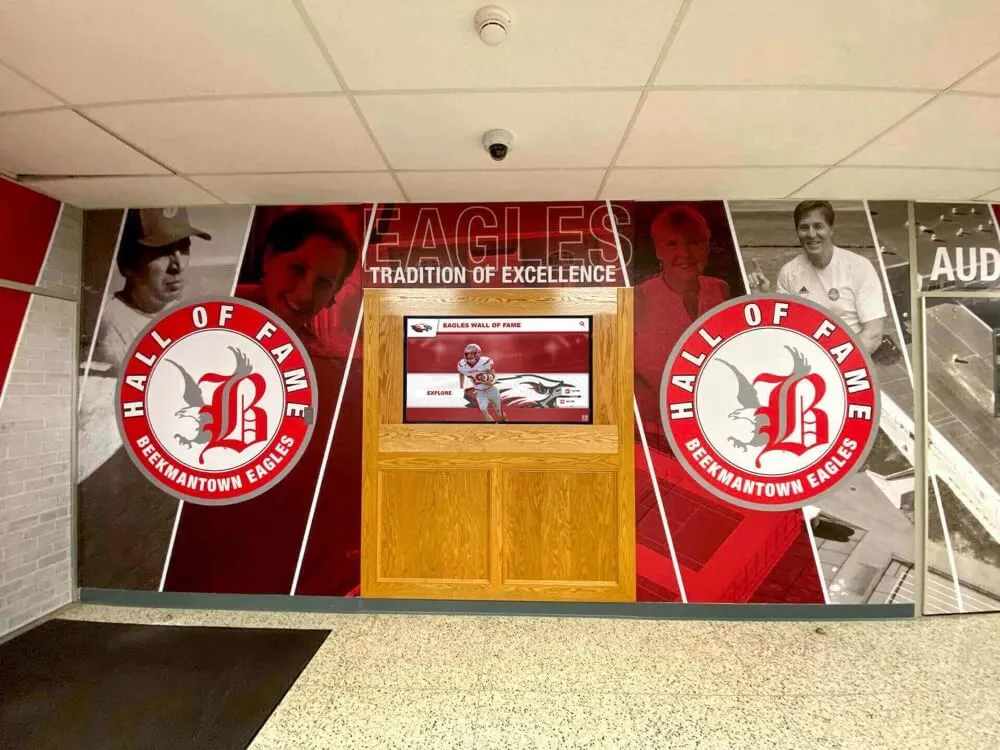
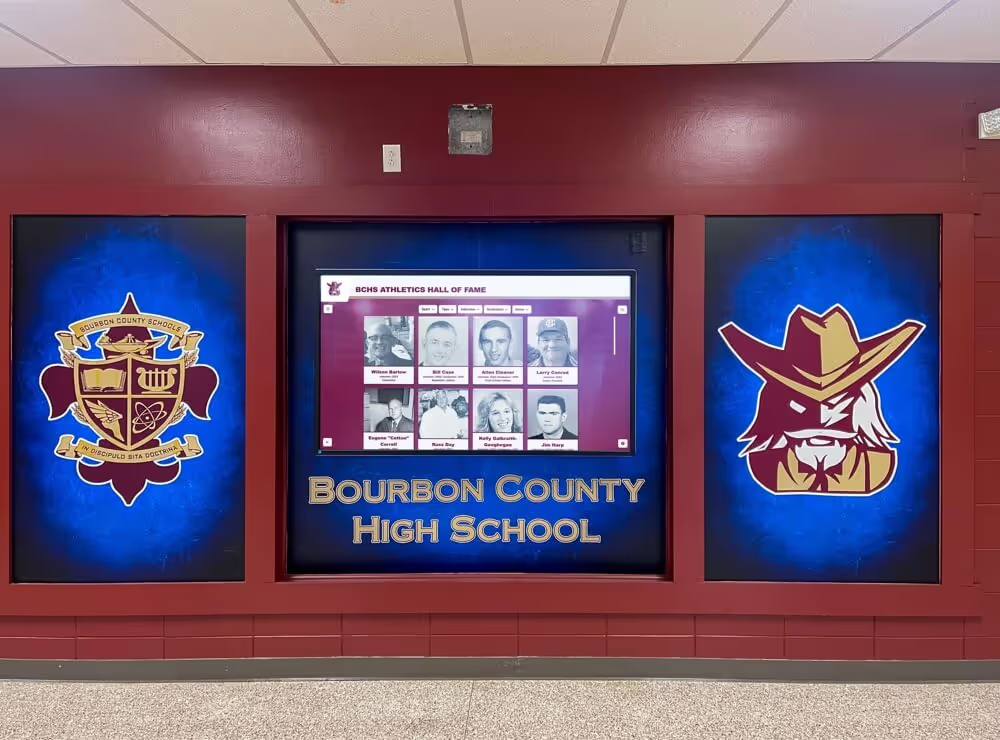
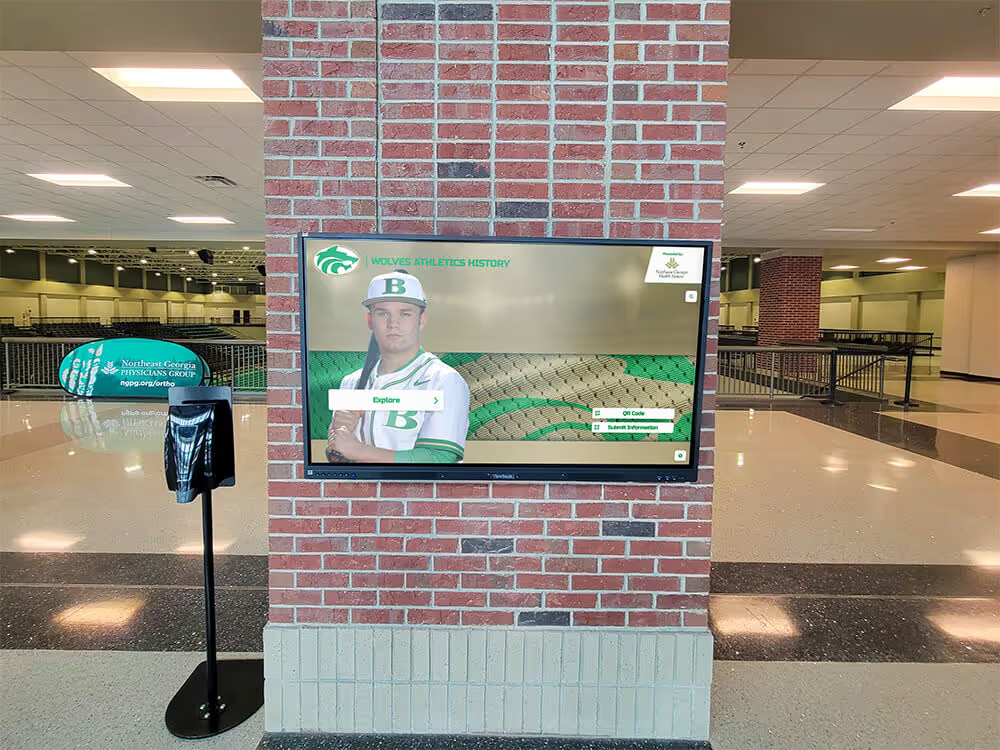
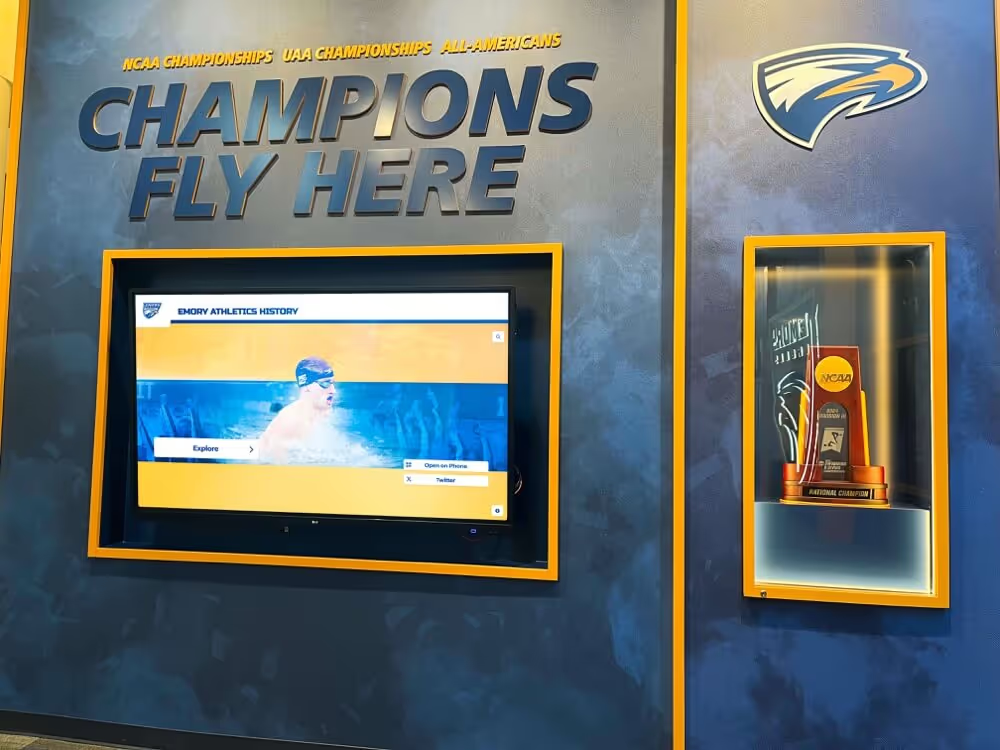
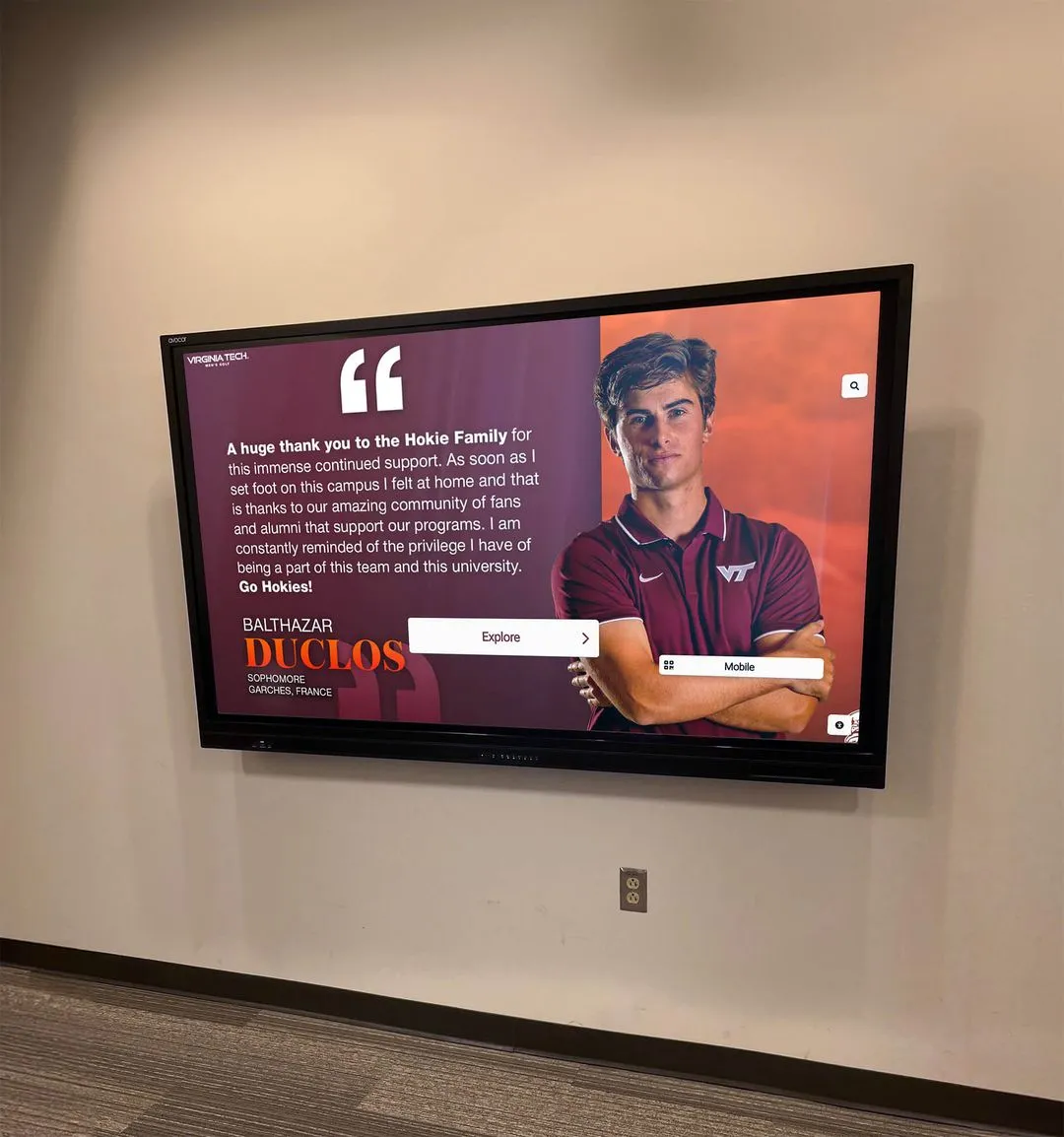
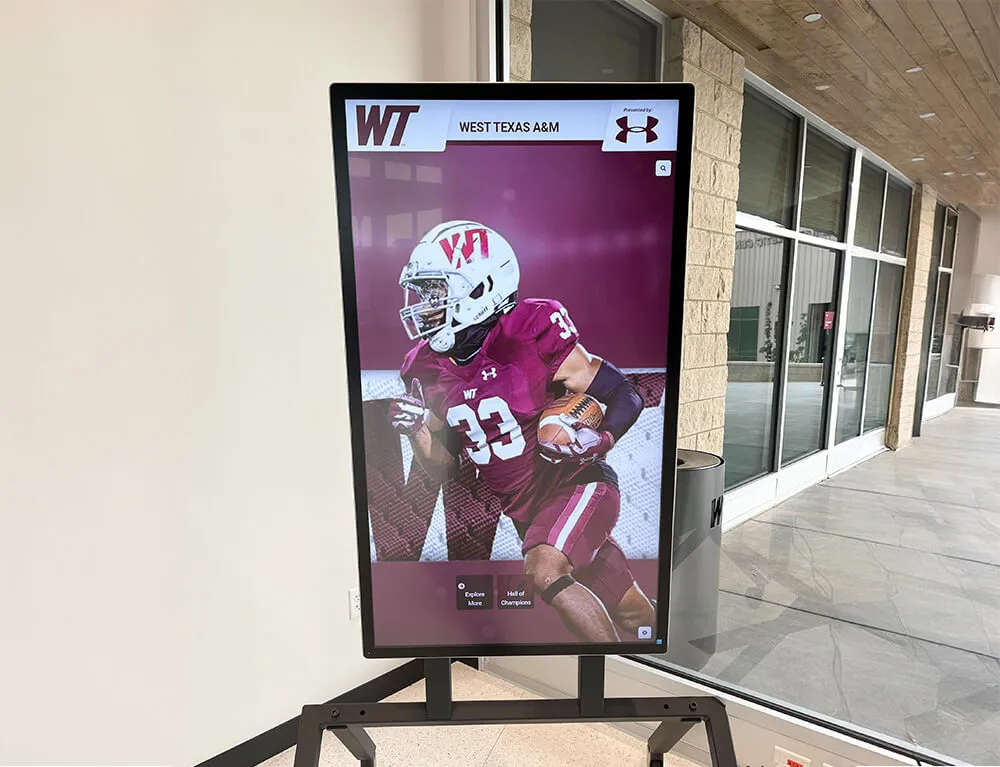
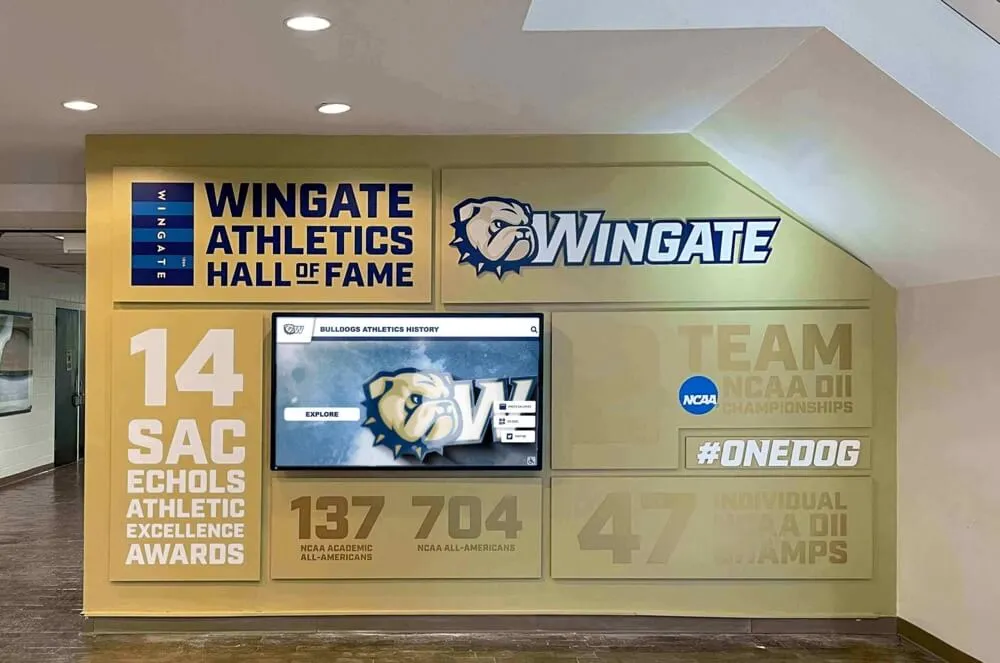
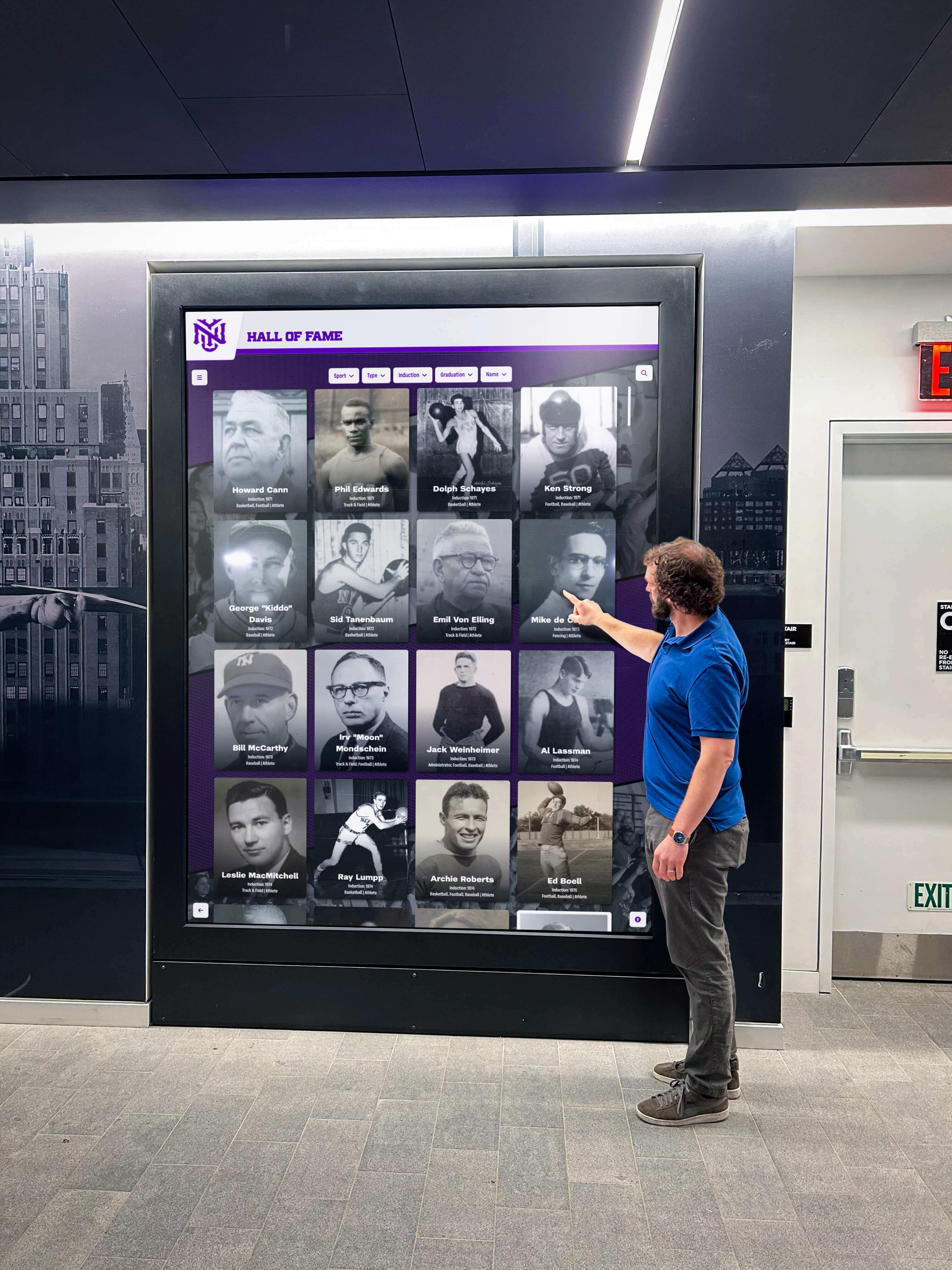
Interactive digital recognition systems installed in agricultural education facilities, school lobbies, or common areas allow visitors to explore FFA achievements through intuitive touch interfaces. These systems provide several advantages over traditional approaches:
Unlimited Recognition Capacity: Digital displays accommodate unlimited member profiles without physical space constraints that force difficult prioritization decisions. Whether recognizing 20 American Degree recipients or 200, the display footprint remains constant. Programs never face decisions about removing older recognition to create space for new honorees—ensuring every achievement receives permanent commemoration.
Rich Multimedia Content: Digital recognition systems can include professional photographs showing members at conventions, competitions, or SAE activities; detailed achievement descriptions explaining exactly what students accomplished; video messages from or about members discussing their agricultural journeys; SAE project documentation with photos and results; college destinations and career plans; and advice for younger members preparing for similar achievements.
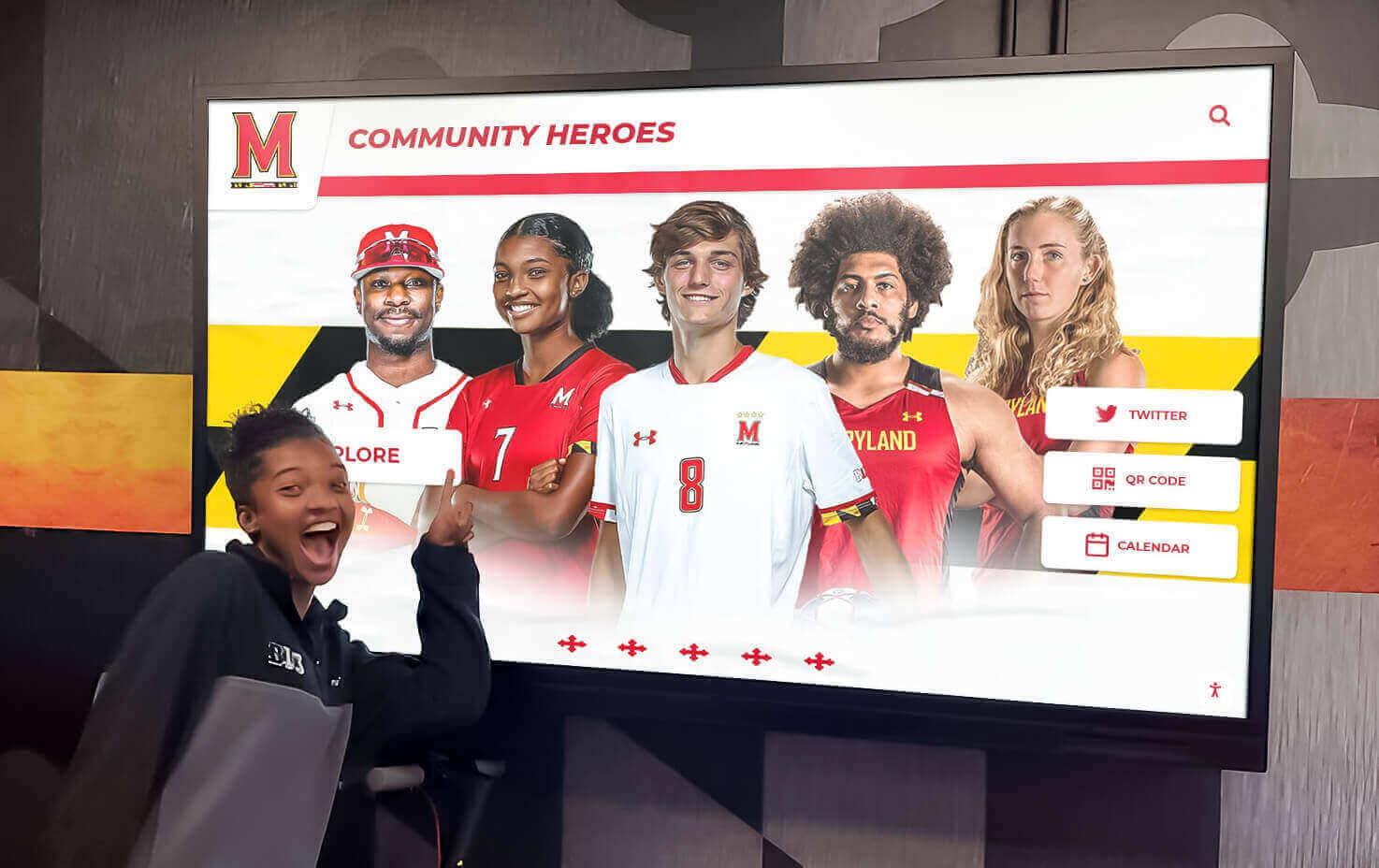
Interactive Exploration: Users can search recognition displays by member name, graduation year, degree level, proficiency award category, CDE/LDE achievement, or career pathway. This interactive browsing helps visitors discover members with similar interests or from specific graduating classes—creating personalized exploration experiences that static displays cannot provide.
Instant Content Updates: Adding new FFA award recipients to digital displays requires simple content management system updates rather than physical installation work that may take weeks or months. Recognition coordinators can add newly conferred American Degree recipients immediately after the National FFA Convention in October, keeping displays perpetually current without delay or labor-intensive physical updating processes.
Solutions like Rocket Alumni Solutions provide purpose-built platforms designed specifically for educational recognition displays, offering intuitive content management that agricultural educators without technical backgrounds can use independently while delivering engaging user experiences that capture student attention and create meaningful connections with recognized achievements.
Web-Based Recognition Platforms
Online recognition platforms complement or substitute for physical displays by making FFA achievement recognition accessible to anyone with internet access, dramatically extending recognition reach beyond campus boundaries.
Global Accessibility: Alumni, distant family members, community agricultural industry partners, and prospective families can explore FFA achievements on web-based platforms from anywhere globally at any time. Recognition extends far beyond those who can physically visit agricultural education facilities—creating ongoing visibility that persists throughout the year rather than being limited to on-campus visit opportunities.
Social Media Integration: Web-based recognition platforms integrate seamlessly with social media, enabling one-click sharing that exponentially extends recognition reach. When students share their profiles or classmates’ achievements from recognition displays with their networks through Facebook, Instagram, or other platforms, agricultural program visibility expands dramatically while facilitating networking among graduates now pursuing diverse agricultural careers.
Recruitment and Program Advocacy Value: Comprehensive online recognition displays create valuable content demonstrating agricultural education program quality to administrators, school board members, and community stakeholders. When agricultural educators advocate for program funding, facility improvements, or expanded offerings, detailed FFA recognition displays provide concrete evidence of program effectiveness and student success rather than relying solely on anecdotal claims.
For agricultural education programs looking to implement comprehensive recognition systems, exploring proven approaches to academic recognition programs and CTE program digital displays provides valuable insights about effective implementation strategies.
Designing Effective FFA Awards Digital Displays
Thoughtful design transforms simple award lists into compelling recognition experiences that honor achievements appropriately while inspiring viewers and building lasting agricultural education culture.
Essential Digital Display Components for FFA Recognition
Effective FFA awards digital displays typically include several key elements that work together to celebrate achievement comprehensively.
Core Information Display
Every recognition profile should clearly present fundamental achievement information:
- Member name and graduation year providing clear identification
- FFA degree level (Discovery, Greenhand, Chapter, State, American) prominently displayed
- Proficiency award categories and level (chapter, area, region, state, national) clearly stated
- CDE/LDE participation and placement achievements with specific context
- Professional photograph with consistent styling creating visual appeal and personal connection
Enhanced Content Elements
Recognition displays gain significant impact by including additional context beyond basic data:
- Detailed SAE descriptions explaining projects, entrepreneurship ventures, or placement experiences members developed
- Specific agricultural career pathway alignment showing member focus areas
- College destination and agricultural major or career field connecting recognition to future plans
- Agricultural industry internships, certifications, or special accomplishments beyond standard FFA programming
- Member reflection on agricultural education experience and advice for younger FFA members
- Teacher or advisor testimonials providing context about member growth and dedication
- Community agricultural partnerships or industry recognition received

The difference between basic and compelling recognition displays often lies in specificity and narrative detail that transforms dry data into engaging stories. Rather than simply listing “Marcus Johnson—American FFA Degree,” comprehensive recognition displays might present:
“Marcus Johnson earned his American FFA Degree in 2026 after developing a diversified livestock production SAE operation that generated over $45,000 in agricultural sales throughout his high school career. His integrated operation included purebred Hampshire swine breeding, commercial beef cattle backgrounding, and a custom livestock fitting service—demonstrating exceptional agricultural entrepreneurship. Marcus captured State FFA Degree recognition as a junior, earned National Bronze ratings in Agricultural Sales and Diversified Livestock Production proficiency categories, and served as chapter president during his senior year while maintaining a 3.9 GPA. He studies Animal Science at Iowa State University, planning to return home to expand his family’s agricultural operation while serving Iowa agriculture through extension education and industry leadership. Marcus advises younger FFA members: ‘Start your SAE program early and think bigger than you believe possible—agricultural entrepreneurship creates opportunities far beyond what traditional employment offers when you’re willing to work hard and learn from both successes and setbacks.’”
This narrative approach tells a story that inspires readers while honoring the member’s genuine achievement and unique agricultural journey rather than reducing accomplishment to mere statistics.
Visual Design Principles for FFA Digital Displays
Whether creating traditional displays or digital recognition systems, consistent visual design principles apply to maximize impact and accessibility while reinforcing agricultural education program identity.
FFA Brand Integration
Effective displays balance FFA brand elements with local chapter identity:
- Incorporate official FFA colors (National Blue and Corn Gold) in appropriate contexts
- Use FFA emblems and symbols correctly according to National FFA brand guidelines
- Feature chapter logo, school mascot, and institutional branding creating local connection
- Balance national FFA affiliation with local agricultural program identity
- Create visual consistency across all recognition elements
Professional Photography Standards
High-quality, consistently styled photographs create professional impressions while helping viewers connect personally with honorees. Establish standards for image resolution ensuring clarity on large displays, composition typically using headshot or head-and-shoulders framing with some action shots showing members engaged in agricultural activities, and background consistency preferably using neutral or agricultural settings that reinforce program focus without distracting from subjects.
Clear Information Hierarchy
Organize recognition content with obvious visual structure—prominent names and major awards displayed first with supporting details accessible through progressive disclosure or clearly subordinated text treatments. Visitors should immediately identify recognition recipients and major achievements before exploring additional context, ensuring that scanning displays quickly reveals who earned recognition without requiring detailed reading.
Agricultural Context Through Imagery
Supplement member portraits with contextual imagery showing agricultural activities, SAE projects, competition settings, and career pathway environments. These supporting images help viewers understand the breadth and practical nature of agricultural education beyond classroom instruction alone, demonstrating hands-on, real-world agricultural engagement that distinguishes agricultural education from traditional academic programming.
Strategic Display Location and Installation Planning
Strategic placement maximizes FFA recognition display visibility and impact, ensuring that target audiences regularly encounter displays during normal activities while showcasing agricultural program excellence to key stakeholder groups.
High-Visibility Locations Within Agricultural Education Facilities
Position FFA awards digital displays in areas with consistent foot traffic where students, families, and visitors naturally encounter displays:
- Agricultural education classroom entrances: First-impression areas where students enter agricultural learning environments daily, creating regular exposure that reinforces achievement culture
- Agricultural mechanics shops: High-traffic agricultural facilities where hands-on learning occurs and where diverse student populations encounter agricultural programming
- School agricultural areas: Spaces near greenhouse facilities, animal science areas, or outdoor agricultural laboratories where agricultural identity concentrates
- FFA chapter rooms: Dedicated spaces where members gather for meetings, activities, and chapter business—creating natural contexts for recognition
- Agricultural program common areas: Lobbies, student gathering spaces, or informal areas where agricultural students congregate during unstructured time
Strategic Campus-Wide Placement
Extend FFA recognition visibility beyond agricultural education spaces into broader school environments:
- Main school entrances and lobbies: First-impression areas where all stakeholders form initial perceptions about school values and program quality
- Guidance counseling areas: Locations where students and families discuss career planning, making FFA recognition contextually relevant for college and career conversations
- School cafeteria or commons areas: High-traffic social spaces where recognition reaches broad student audiences who may not otherwise encounter agricultural programming
- Library or media centers: Academic spaces where diverse students work and where agricultural recognition demonstrates program academic rigor alongside agricultural technical skills
- School administrative offices: Areas where school board members, community visitors, and prospective families encounter evidence of program quality and student success
This campus-wide visibility strategy serves dual purposes—honoring FFA members while advocating for agricultural education program value to broader school communities who may underestimate agricultural education’s academic rigor, leadership development, and career preparation effectiveness.
Implementing Your FFA Awards Digital Display Program
Successful recognition display programs require thoughtful planning addressing both immediate implementation needs and long-term sustainability that ensures recognition remains meaningful and current across agricultural educator transitions and program evolution.
Establishing Program Goals and Scope
Clear goal-setting ensures FFA recognition display programs address agricultural education priorities while meeting student needs effectively.
Primary Recognition Display Objectives
Define what your FFA awards digital display program should accomplish:
- Honoring Individual Achievement: Validate member accomplishments and hard work through visible, meaningful recognition that feels proportional to achievement significance
- Inspiring Current Members: Create aspirational examples that motivate younger FFA members to pursue degrees, proficiency awards, and competitive excellence through visible success models
- Demonstrating Program Quality: Signal to administrators, school board members, and community stakeholders that agricultural education produces exceptional outcomes worthy of continued investment
- Strengthening Agricultural Identity: Reinforce agricultural education program distinctiveness and value proposition within broader school contexts where agricultural programs may feel marginalized
- Recruiting Prospective Members: Showcase FFA achievement to prospective members and families, demonstrating program opportunities and success pathways
- Preserving Agricultural Education Legacy: Document program excellence for future generations, creating permanent institutional memory that survives educator transitions
Scope Decisions
Determine recognition display program boundaries through clear policies:
Achievement Levels to Recognize: Will your display recognize all FFA degrees equally, or create tiered recognition emphasizing higher distinctions? Some programs provide comprehensive recognition for all Greenhand through American Degrees while highlighting American Degree recipients with enhanced visibility. Other programs limit formal digital display inclusion to State FFA Degree recipients and above, acknowledging chapter degrees through different recognition methods.
Historical vs. Current Recognition: Will displays include only current members and recent graduates, or create historical archives recognizing FFA members from previous decades? Historical recognition provides valuable program documentation and demonstrates sustained excellence over time, but requires additional research and content development effort that busy agricultural educators must realistically assess.
Integration Breadth: Should FFA recognition displays exist separately or integrate with broader school recognition encompassing athletic achievements, academic honors, and other student accomplishments? Integrated approaches create comprehensive recognition systems celebrating diverse excellence and may justify larger installations and budgets through consolidated impact, while separate FFA-specific displays provide focused emphasis on agricultural education distinctiveness.
Content Collection and Management Workflows
Efficient workflows ensure recognition display programs remain current without excessive administrative burden that leads to abandonment or neglect amid busy agricultural educators’ diverse responsibilities.
Annual Content Collection Cycles
Establish predictable rhythms for identifying and adding new FFA award recipients to digital displays:
Post-Convention Recognition: The National FFA Convention occurs annually in late October, with American FFA Degrees conferred during the event and State FFA Degrees typically awarded at spring state conventions. Establish processes for collecting degree recipient information immediately after these events and beginning recognition display preparation promptly while achievement excitement remains fresh.
Proficiency Award Documentation: National proficiency award finalists receive notification in late summer before the national convention. State proficiency winners emerge from spring state conventions. Area and chapter proficiency winners are determined at local levels according to chapter timelines. Create systematic processes for documenting proficiency achievements at all levels as they occur throughout the year rather than attempting retrospective documentation.
CDE/LDE Achievement Tracking: Career and Leadership Development Event results occur throughout the year—with chapter contests in winter, area/regional contests in late winter/early spring, state contests in spring, and national contests during the National FFA Convention. Implement tracking systems documenting competitive achievements as they occur, noting team members, placement results, and significant accomplishments warranting recognition display inclusion.
Member Information Gathering: Develop efficient systems for collecting required information from recognized members through standardized processes:
- Request professional photographs following established style guidelines ensuring visual consistency
- Collect detailed SAE descriptions explaining projects, scope, results, and learning outcomes
- Gather college destination and agricultural career field information connecting recognition to future plans
- Request member reflections, advice, or statements providing inspiration for younger FFA members
- Obtain permission for public recognition and image use ensuring compliance with privacy regulations
- Verify all information accuracy before publication through review processes catching errors
Consider using digital forms that automatically organize information for recognition displays rather than manual paper-based collection requiring agricultural educator data entry time.
Leveraging Technology for Streamlined Recognition Management
Modern digital solutions address common recognition challenges while enhancing program quality and reducing administrative burden compared to traditional approaches—particularly valuable for agricultural educators balancing recognition responsibilities with teaching, SAE supervision, FFA activity coordination, and facilities management.
Cloud-Based Content Management
Modern recognition display systems use cloud-based content management enabling authorized agricultural educators to add or modify recognition content from any internet-connected device without requiring physical access to display locations or specialized technical skills. Rather than requiring complex installations or specialized software, coordinators simply log into web-based interfaces and make changes that automatically sync to all recognition display endpoints.
Cloud management provides several advantages including accessibility enabling recognition updates from agricultural education offices, home devices, or even smartphones when urgent changes are needed; collaboration support allowing multiple agricultural educators in team-taught programs to work on recognition content simultaneously; automatic backup protecting against data loss; version control tracking changes over time; and scalability supporting addition of new recognition display locations easily.
Multi-Location Synchronization
Agricultural education programs with multiple teaching facilities, school district implementations, or area program partnerships benefit from recognition platforms that synchronize content across all locations automatically. Add an American Degree recipient profile once at a central management interface, and it appears automatically on recognition displays in the agricultural education classroom, school main lobby, district career center, and any other configured locations—maintaining perfect consistency without manual replication across multiple physical or digital displays.
Analytics and Engagement Tracking
Digital recognition platforms with analytics capabilities provide valuable insights about how community members engage with FFA recognition content:
- Popular profiles: Which recognized members receive the most views or interaction
- Search patterns: What search terms or filters do users employ when exploring recognition displays
- Peak usage times: When do visitors engage with recognition displays most frequently
- Session duration: How long do typical users spend exploring recognition content
- Feature utilization: Which interactive features receive the most use
These insights help recognition coordinators understand what content resonates most strongly, identify underutilized features that may need better promotion or redesign, and demonstrate program value to administrators through quantitative engagement data justifying continued investment in agricultural education program resources and recognition systems.
Maximizing FFA Recognition Display Impact
Beyond basic implementation, sophisticated approaches enhance recognition display effectiveness and create stronger motivational impacts throughout agricultural education communities while building sustained program support.
Connecting Recognition to FFA Recruitment and Retention
Strategic recognition display implementation supports FFA membership growth and retention—critical metrics for agricultural education program health and sustainability.
Inspiring Prospective Members
Position recognition displays prominently during agricultural education recruitment activities:
- Feature displays during eighth-grade agricultural education recruitment presentations
- Highlight recent alumni achievements showing career pathway outcomes and college destinations
- Create specific display content featuring first-generation FFA members demonstrating accessibility
- Showcase diverse agricultural career pathways represented in proficiency awards and SAE experiences
- Include testimonial video content from members discussing how FFA transformed their opportunities
Supporting Member Retention
Use recognition displays to reinforce continued FFA engagement throughout members’ high school careers:
- Celebrate intermediate milestones like Greenhand and Chapter Degrees as stepping stones toward higher recognition
- Feature progression stories showing members’ growth from freshmen through American Degree recipients
- Highlight diverse achievement pathways demonstrating that multiple routes to recognition exist
- Create specific content showcasing members with similar backgrounds to current at-risk members
- Develop displays emphasizing long-term benefits and alumni success attributable to sustained FFA engagement

Leveraging Recognition for Agricultural Education Program Advocacy
FFA recognition displays serve powerful advocacy purposes beyond member motivation, providing tangible evidence of agricultural education program effectiveness when communicating with key stakeholder groups.
Demonstrating Value to School Administrators
Agricultural educators can leverage comprehensive recognition displays when advocating for program resources:
- Reference specific achievement counts and levels when requesting budget allocations
- Highlight college destinations and scholarship awards demonstrating college preparation effectiveness
- Emphasize national recognition and state-level achievements positioning agricultural education alongside other highly-regarded programs
- Document year-over-year recognition growth demonstrating program quality improvement trends
- Connect achievement levels to instructional quality, facility adequacy, and program support resources
Building Community Support
Agricultural industry partners, agribusiness supporters, and community stakeholders respond positively to visible evidence of agricultural education success:
- Feature displays during advisory committee meetings, demonstrating tangible outcomes of community investment
- Share display content through agricultural program newsletters and social media reaching community agricultural networks
- Highlight members’ SAE experiences showing connections to local agricultural businesses and partnerships
- Showcase career pathways and college agricultural programs representing program pipeline development
- Emphasize industry certifications, internships, and agricultural employment demonstrating workforce development impact
Ensuring Recognition Remains Meaningful and Sustainable
Long-term recognition program success requires attention to authenticity and sustainable implementation that survives inevitable transitions in agricultural education staffing and program leadership.
Maintaining Personal Connection
Generic recognition lacks emotional impact. Members want to feel individually seen and valued through recognition displays. Enhance recognition meaningfulness through personalized agricultural educator congratulations messages referencing specific SAE projects and growth, individual recognition letters or certificates acknowledging unique achievement contexts, public celebration during FFA chapter meetings and school assemblies, and connection of recognition to members’ specific agricultural interests and career aspirations.
Creating Sustainable Workflows
Recognition programs fail when they create unsustainable burden for agricultural educators already managing complex teaching, supervision, and activity coordination responsibilities. Ensure sustainability through realistic scope aligned with available time and resources, automated content collection using digital forms and standardized processes, cloud-based management eliminating complex technical requirements, scheduled recognition cycles preventing constant emergency updates, and distributed responsibility sharing recognition coordination among agricultural education team members or FFA officer teams.
Funding Strategies for FFA Recognition Display Systems
Understanding costs and identifying funding sources ensures recognition display program sustainability across budget cycles and agricultural educator transitions.
Investment Considerations
Digital Display Hardware and Installation Costs:
- Commercial-grade touchscreen displays range from $3,000-8,000 per location depending on size and quality specifications
- Professional mounting systems and installation typically cost $500-1,500 per location
- Network infrastructure upgrades if required may add $500-2,000 depending on existing capabilities
- Protective enclosures or climate-controlled installations may require additional investment
Recognition Software and Content Management:
- Purpose-built recognition platforms typically range from $1,500-5,000 annually depending on features and display count
- Initial content development including profile creation and system setup ranges from $2,000-5,000
- Ongoing content updates require minimal time when using intuitive management platforms
- Cloud hosting, backup, and technical support typically included in annual subscription fees
Long-Term Value Proposition: While digital recognition displays require higher initial investment compared to traditional plaques or trophy cases, many agricultural education programs find they provide better long-term value through unlimited recognition capacity eliminating future physical expansion costs, dramatically reduced ongoing labor requirements compared to manual updates, professional appearance persisting indefinitely without deterioration, enhanced engagement capabilities impossible with traditional recognition, and multi-purpose functionality supporting diverse recognition needs beyond FFA achievements alone.
Funding Source Options
Agricultural Education Program Budgets: Many programs fund recognition displays through regular instructional budgets, particularly when displays serve instructional purposes by providing exemplars for current students and documenting program outcomes for accountability purposes.
Career and Technical Education (CTE) Funding: Agricultural education programs operating within CTE frameworks may access dedicated CTE equipment or technology funding for recognition displays that demonstrate program quality and support recruitment objectives aligned with CTE mission priorities.
FFA Chapter Funds: Active FFA chapters with successful fundraising programs sometimes allocate chapter funds toward recognition displays benefiting current and future members while honoring past achievements—particularly when displays feature interactive elements supporting chapter recruitment and retention goals.
Agricultural Advisory Committee Support: Advisory committees comprising local agricultural industry partners, agribusiness representatives, and community stakeholders sometimes provide financial support for recognition displays showcasing the partnerships and pipelines agricultural education programs develop connecting students to agricultural industry opportunities.
School Foundation or Booster Organization Grants: School foundations, parent organizations, or agricultural education booster groups occasionally fund recognition displays through directed giving campaigns or grant applications—particularly when proposals emphasize multi-year impact and broad beneficiary populations.
Agricultural Industry Sponsorships: Local agricultural businesses, cooperatives, or industry organizations sometimes sponsor recognition displays as community investment demonstrating commitment to agricultural workforce development—particularly when sponsorship recognition appears appropriately within display designs.
For programs exploring comprehensive approaches to student recognition programs or seeking proven strategies for implementing interactive touchscreen displays, examining successful implementations across diverse educational contexts provides valuable implementation insights and lessons learned.
Measuring FFA Recognition Display Program Success
Like any significant agricultural education initiative, FFA recognition display programs warrant evaluation to ensure they achieve intended goals and justify the resources they consume from limited agricultural education budgets.
Defining Success Metrics
Effective evaluation begins with clear definition of what recognition display programs aim to accomplish. Common goals and corresponding metrics include:
Increased FFA Membership and Retention
- New member enrollment trends over time
- Retention rates from freshman through senior years
- Member participation rates in competitive events and leadership activities
- SAE program engagement and quality measures
Improved FFA Achievement Levels
- State FFA Degree recipients per year
- American FFA Degree recipients per year
- Proficiency award applications and state/national placements
- CDE/LDE competitive results and advancement to higher competition levels
Enhanced Program Visibility and Support
- Administrator perception surveys regarding agricultural education program value
- Community stakeholder feedback about program quality
- Social media engagement metrics for recognition content
- Advisory committee attendance and participation levels
Recognition Display Engagement
- Physical display traffic patterns and usage observation
- Digital display analytics showing views, interactions, and session duration
- Web platform traffic and search patterns
- Social media sharing of recognition content
Gathering Stakeholder Feedback
Quantitative metrics tell part of the story, but qualitative feedback from those experiencing recognition display programs provides crucial insights that numbers cannot fully capture.
FFA Member Perspectives
Current members can articulate whether recognition displays influence their motivation and FFA engagement through anonymous surveys asking if displays influenced their agricultural education enrollment or FFA participation decisions, focus groups discussing what types of recognition content they find most inspiring, member input on recognition priorities and display design preferences, and informal conversations about which featured members they find most relatable and inspirational.
Agricultural Educator Observations
Agricultural educators observe recognition program effects on student motivation, competitive participation, and chapter culture through faculty discussions about member engagement changes correlated with recognition display implementation, observations about which students reference displays when discussing their own FFA goals, documentation of recruitment conversation changes when displays provide concrete achievement examples, and tracking of competitive event participation trends potentially influenced by recognition visibility.
Family and Community Feedback
Parents, guardians, and community stakeholders can report recognition program impacts on their perceptions and support through parent survey questions about awareness of agricultural education program quality and FFA opportunities, community agricultural industry partner feedback about program visibility and perceived effectiveness, advisory committee member comments about recognition displays during meetings and facility visits, and prospective family responses during agricultural education program recruitment events and facility tours.
Conclusion: Building Agricultural Excellence Through Meaningful Recognition
FFA awards digital displays represent far more than ceremonial acknowledgment of past achievement. When agricultural education programs implement comprehensive, visible, engaging recognition systems, they create cultures where agricultural excellence receives consistent celebration, FFA members develop clear aspirational goals based on visible success models, families feel their students’ agricultural accomplishments are genuinely valued, communities understand agricultural education’s effectiveness through concrete evidence, and agricultural education programs build sustainable support through demonstrated outcomes and quality indicators.
Effective FFA recognition displays share common characteristics regardless of specific implementation approaches including visibility through prominent placement in high-traffic locations where diverse audiences encounter agricultural achievement, engagement through compelling storytelling rather than simply listing names and award levels, accessibility through multiple touchpoints spanning physical displays and web platforms, sustainability via efficient workflows that busy agricultural educators can maintain, integration within broader agricultural education and school cultures, inspiration by motivating younger members through tangible examples and relatable success stories, and authenticity ensuring recognition feels genuine and proportional to accomplishment.
The investment agricultural education programs make in comprehensive FFA recognition displays pays dividends across multiple priorities. Members who see their hard work recognized through prominent, professional displays feel validated by their agricultural education programs and communities. Younger members who regularly encounter recognition displays understand that agricultural excellence matters and see concrete examples to emulate through their own FFA journeys. Families whose students receive meaningful recognition develop stronger connections with agricultural education programs and agricultural communities. School administrators and community stakeholders gain tangible evidence of program quality through recognition displays showcasing concrete achievement data and compelling success narratives.
As agricultural education continues evolving in 2026 and beyond, modern recognition solutions like Rocket Alumni Solutions provide comprehensive platforms designed specifically for educational recognition displays—offering intuitive content management that agricultural educators without technical backgrounds can use independently, engaging interactive displays that capture student attention and create meaningful connections, unlimited recognition capacity that grows with programs without physical constraints, and proven approaches that help agricultural education programs build the recognition cultures their FFA members deserve.
Your FFA members achieve remarkable agricultural excellence through years of dedicated SAE work, competitive preparation, and leadership development—comprehensive digital recognition displays ensure those achievements receive the celebration, visibility, and inspiration value that strengthens agricultural education culture for current students and future generations while advocating for program sustainability and growth.
Frequently Asked Questions About FFA Awards Digital Displays
What types of FFA achievements should be included on digital recognition displays?
Comprehensive FFA recognition displays typically include FFA degree recipients (American, State, Chapter), Agricultural Proficiency Award winners at area/regional, state, and national levels, Career and Leadership Development Event participants and placing teams/individuals, chapter officer teams and leadership positions, chapter award recognition including National Chapter Awards, scholarship recipients and college destinations, and special recognitions like Washington Leadership Conference participants or state/national convention delegates. The most effective displays balance breadth ensuring diverse achievements receive recognition with depth providing meaningful context about featured accomplishments. Programs should establish clear inclusion criteria ensuring displays remain manageable while honoring significant achievements proportionally.
How often should FFA recognition displays be updated with new content?
FFA recognition displays should be updated on predictable cycles aligned with major recognition events throughout the agricultural education calendar. American FFA Degrees are conferred annually in late October during the National FFA Convention—displays should be updated within 2-4 weeks following the event. State FFA Degrees typically are awarded at spring state conventions—updates should occur promptly after these events. CDE/LDE results emerge throughout winter and spring competition seasons—displays should reflect major achievements within weeks of competitions concluding. Proficiency awards at various levels are determined on rolling timelines—systematic tracking ensures timely recognition. Digital displays dramatically simplify updates compared to traditional physical displays, enabling more frequent content refreshes that maintain currency and sustain member interest throughout the year.
Can smaller FFA chapters with limited achievements benefit from digital recognition displays?
Absolutely. Digital recognition displays benefit FFA chapters of all sizes by showcasing existing achievements more prominently and professionally than traditional methods allow, including historical recognition from previous years creating more comprehensive displays, highlighting chapter-level and area-level achievements that may not progress to state or national levels, featuring member SAE projects and experiences beyond formal award recognition, celebrating participation and growth alongside competitive placement, and demonstrating chapter growth trends over time. For smaller chapters, recognition displays provide powerful recruitment tools showing prospective members the opportunities available while motivating current members toward higher achievement levels. The unlimited capacity of digital displays means chapters never outgrow their recognition systems regardless of future growth.
How can agricultural educators with limited technical skills manage digital recognition displays?
Modern cloud-based recognition platforms like Rocket Alumni Solutions are specifically designed for educators without technical backgrounds, featuring intuitive web-based interfaces requiring no specialized software or training, simple content upload processes using familiar form-based data entry, template-based design systems eliminating need for graphic design skills, automated synchronization handling technical backend complexity invisibly, and comprehensive support resources including tutorials, documentation, and direct assistance. Most agricultural educators find they can independently add or modify recognition content in 10-15 minutes using these purpose-built platforms. The key is selecting recognition solutions designed specifically for educational contexts rather than attempting to adapt complex generic digital signage systems requiring technical expertise and ongoing IT support.
Should FFA recognition displays be located only in agricultural education facilities or positioned school-wide?
Strategic programs implement both approaches for maximum impact. Primary displays in agricultural education facilities serve FFA members directly while creating ownership and pride within agricultural program spaces. However, extending recognition into broader school environments provides critical advocacy benefits by demonstrating agricultural education program quality to administrators, counselors, and prospective families, increasing agricultural program visibility among students who may not otherwise encounter agricultural education, positioning agricultural achievement alongside athletic and academic recognition validating agricultural education program status, and building school-wide awareness that strengthens agricultural program support during budget and resource allocation decisions. Multi-location digital systems can synchronize content across all displays automatically, maintaining consistency without duplicating administrative effort.
What content makes FFA recognition displays most inspiring for younger members?
The most inspiring FFA recognition displays include relatable success stories featuring members with similar backgrounds or interests to current viewers, detailed SAE project descriptions showing concrete examples of what agricultural entrepreneurship and experiential learning look like in practice, progression narratives demonstrating members’ growth from Greenhand degrees through American Degrees over their high school careers, advice and reflections from recognized members offering practical guidance and encouragement, diverse achievement pathways showing that multiple routes to recognition exist beyond single “ideal” patterns, and connections to tangible outcomes including college destinations, agricultural careers, and industry opportunities. Generic lists of names and awards provide basic documentation but lack emotional resonance—recognition becomes inspiring when it tells authentic stories that help younger members envision themselves achieving similar success through dedication and strategic FFA engagement.