Drill team dance programs occupy a singular place in high school culture — they are athletic, artistic, competitive, and deeply tied to school identity all at once. Yet the recognition infrastructure surrounding these programs often lags behind what football, basketball, and other traditional sports receive. Championship banners get hung, but performance videos get lost. Seniors graduate, but their routines disappear from institutional memory. Hall of fame walls celebrate athletes but rarely feature the dancers who packed gyms, won state titles, and defined decades of school spirit. This guide examines how schools can build recognition systems proportional to what drill team dance programs actually achieve — and why getting this right matters for the students, coaches, and communities who invest in them.
Ask anyone who attended a high school with a nationally competitive drill team about the experience, and they will describe it in the same terms: the gym packed beyond capacity, the moment the lights dropped before the opening sequence, the electricity that was categorically different from anything else in the school calendar. Drill team dance performances are events — and events of that magnitude deserve recognition systems that preserve what they meant.
The gap between the experience of watching elite drill team dance and the recognition those programs typically receive is significant. Schools that have built genuine hall of fame infrastructure for their drill team programs — with photo archives, performance video reels, championship documentation, and interactive digital displays — report that alumni engagement around those programs rivals or exceeds engagement around any other school activity. The performances were that memorable. The recognition simply needs to match.
Understanding Drill Team Dance: Where Athletic Precision Meets Artistic Expression
Drill team dance is distinct from its military drill counterpart, though both share a common heritage in precision movement executed in synchrony. Where military drill emphasizes alignment, cadence, and formation exactness rooted in armed forces tradition, drill team dance fuses competitive dance technique with the visual discipline of synchronized ensemble performance.
The Dance-Style Distinction
A high school drill team dance program might field multiple performance units with different competitive focuses:
Kick line traditions trace to the high-stepping precision of synchronized performance lineages — straight-legged kicks, uniform timing, and formation clarity executed at speeds that demand both individual athleticism and ensemble discipline. Schools with strong kick traditions often build program identities entirely around this style, competing at state and national levels where tenths of a point separate championship finishes.
Jazz and contemporary dance units blend technical dance vocabulary — turns, leaps, extensions, floor work — with the visual impact of synchronized performance. These routines require both individual dance training and ensemble precision, demanding athletes who are simultaneously skilled soloists and disciplined ensemble performers.
Lyrical and modern drill team performances approach storytelling through movement, setting choreography to emotionally resonant music and prioritizing expressive quality alongside technical execution. These routines often produce the performances that audiences remember longest.
Hip hop and novelty categories embrace contemporary styles and often generate the highest crowd energy of any competitive category. Programs that develop genuine hip hop repertoire build distinct program identities that set them apart from programs competing primarily in classical styles.
Officer and captain performance divisions recognize individual excellence within team structures — the technical soloists and performance leaders whose individual achievements exist within the context of program achievement.
The Competitive Landscape
State drill team associations across the United States hold formal competitive seasons that parallel athletic championship structures. Organizations like the National Dance Alliance (NDA), Universal Dance Association (UDA), and state-specific associations run regional and national competitions where school programs compete for titles that carry genuine weight in program histories.
State championship titles, regional placements, and national competition finishes are the benchmarks against which drill team dance programs measure their competitive eras. A program that won state titles in three consecutive years produced something worth documenting — and worth building hall of fame recognition around.
The Culture of Drill Team Recognition
Drill team programs develop recognition cultures organically, often without the institutional infrastructure that athletic departments provide for team sports. The result is a patchwork: dedicated coaches and parents who preserve memories through personal archives, seniors who graduate with no permanent recognition of what they contributed, and programs with twenty-year championship histories that newcomers know nothing about.
What Recognition Looks Like in Strong Programs
Schools that have invested in drill team recognition infrastructure typically operate across several channels simultaneously:
Championship banners hung in gyms and auditoriums establish visible historical claims. A banner marking a state championship win in the year it occurred communicates program history to everyone who enters that space — students, parents, visitors, prospective members. Programs with long championship histories develop banner walls that tell a story across decades.
Hallway photo displays give program history a face. Framed photos of championship teams, officer classes, and senior groups create a visual record that connects current students to program traditions. Schools that maintain consistent photographic documentation across years develop archives with genuine emotional resonance.
Performance video reels have become the most powerful recognition artifact drill team dance programs can create. A well-produced highlight reel from a state championship performance — music, movement, the crowd’s reaction — is a document that current students find inspiring, alumni find moving, and prospective members find recruiting. Video is the medium that captures what drill team dance actually is in a way that trophies and plaques cannot.
Senior recognition nights mark individual athletes’ completion of their program membership with ceremonies proportional to the investment they made. Seniors who dedicated four years to a drill team program deserve recognition equivalent to what senior athletes receive in traditional sports. Resources on planning performing arts senior nights and recognition events offer models that translate directly to drill team recognition ceremonies.
The Recognition Gap
Despite their prominence in school culture, drill team dance programs routinely receive less institutional recognition infrastructure than comparably prominent athletic programs. A championship swim team gets a record board. A championship drill team gets a trophy on a shelf. A hall-of-fame quarterback gets his jersey retired. A hall-of-fame captain gets a mention in the yearbook.
The gap is not typically intentional — it reflects the historical categorization of drill team as a performing arts activity rather than an athletic one, and the resulting disconnection from athletic department recognition systems. Closing that gap requires deliberately building recognition infrastructure rather than waiting for it to develop organically.
Hall of Fame Criteria for Drill Team Dance Programs
What should a drill team dance hall of fame recognize? The answer varies by program, but well-designed drill team hall of fame systems typically operate across several recognition dimensions.
Individual Achievement Categories
Senior captain and officer recognition marks leadership achievement within program structures. Captains and officers who led programs through competitive success, managed team culture during difficult transitions, or elevated program quality through their individual contributions deserve permanent recognition.
Exceptional individual performance recognizes members whose technical excellence, performance quality, or competitive achievement distinguished them within program history. State competition soloists, nationally ranked performers, and individuals who earned recognition beyond their home program merit hall of fame consideration.
Program dedication and service acknowledges members whose multiyear commitment and contributions to program culture shaped what the program became. Not all hall of fame recognition is about competitive achievement — the athletes who were the backbone of a championship team for four years without headline accomplishments deserve permanent acknowledgment.
Team Achievement Categories
State and national championship recognition is the most straightforward team achievement to honor — specific competition results with titles, years, and competing team composition permanently documented.
Consecutive excellence recognizes programs that maintained high competitive standards across extended periods, even when individual year results varied. A program that placed in the top five at state for eight consecutive years achieved something worth documenting as team achievement even without a specific championship year.
Significant competitive firsts mark when a program first qualified for a competition level, first won a title in a new division, or first achieved a placement that had previously been out of reach. These firsts establish program milestones that define competitive eras.
Coaching achievement recognizes coaches and choreographers whose leadership produced competitive success and shaped program identity. A coach who built a program from regional competitor to state contender over fifteen years belongs in a hall of fame regardless of her specific competitive results.
The comprehensive awards and honors recognition framework schools use across academic and athletic programs applies equally to performing arts — the same principles of defined criteria, transparent selection, and proportional recognition that make athletic hall of fames credible apply to drill team hall of fames as well.
Building Championship Banners and Physical Display Systems
Physical recognition infrastructure for drill team dance programs begins with the same elements that athletic department displays use — and should be held to the same standards.
Championship Banner Standards
Championship banners for drill team dance programs should document:
- Competition name and governing organization
- Championship division or category
- Year of the championship
- Coach or program director of record
- Team name or program identifier
Banners hung in visible locations — the main gym, the auditorium lobby, the school’s main hallway — communicate program achievement to the broadest possible audience. Schools that tuck drill team banners in auxiliary spaces or practice facilities create recognition that only program insiders see.
The design considerations that go into inspiring athletic and performance spaces apply equally to the spaces where drill team recognition lives. Physical recognition displays work best when they are visible, prominent, and treated with the same design care as the performances they commemorate.
Photo Display Traditions
Framed team photos organized chronologically create visual timelines of program history. Strong photo display systems for drill team programs include:
Annual team photos in consistent formats that allow side-by-side comparison across years. Seeing how a program grew — in team size, uniform quality, visual presentation — is itself a compelling recognition story.
Competition performance photos that capture the actual work the program produces. Posed studio-style photos document who was there; action performance photos document what they did.
Officer and captain portraits given feature treatment proportional to the leadership roles they represent.
Coaching and staff photos that acknowledge the adults whose work made program achievement possible.
Performance Video Reels: The Most Powerful Recognition Artifact
No single recognition format captures what drill team dance actually is as effectively as video. A photo can show a formation. A trophy documents a result. A video reel shows the performance — the music, the movement, the synchrony, the crowd, the moment.
What Performance Video Archives Should Include
Strong drill team dance video archives document multiple layers of program history:
Full competition performances from state and national events, captured at the quality level the performance deserves. Championship performances especially warrant professional or semi-professional video documentation.
Game day and pep assembly performances that represent the school spirit dimension of drill team participation. These are the performances that current students, staff, and community members experienced directly, and they carry genuine nostalgia value.
Rehearsal and behind-the-scenes content that shows how performances are built — the hours of practice, the creative process, the team dynamics that make synchronized performance possible. This content humanizes program history in ways that polished competition footage alone cannot.
Competitive journey documentation from the weeks leading up to major competitions — the preparation, the anticipation, the team culture that produces championship results.
Curating for Hall of Fame Recognition
Not all video documentation serves hall of fame recognition purposes equally. The performance video reels that become hall of fame artifacts share several characteristics:
They document specific named performances that program history marks as significant — the state championship final, the program’s first national appearance, the senior night performance that became legendary in school memory. Named, dated, and contextualized performances become historical documents. Unlabeled footage of uncertain vintage becomes archive noise.
They are accessible. Video reels stored on retiring coaches’ personal devices, uploaded to unlisted platforms, or saved in formats that no current hardware can read are not recognition artifacts — they are lost history waiting to happen. Hall of fame video archives need to live in systems that maintain accessibility across years and technology transitions.
They connect to the larger recognition ecosystem. A performance video embedded in a digital hall of fame display, linked to the profiles of the athletes who performed in it, and accessible to alumni searching for their program years, does more recognition work than the same footage uploaded to a standalone video platform.
The connection between performance documentation and digital arts program display is direct — the same principles that make visual arts program recognition effective apply to performance program recognition, because both require documenting work that exists in time rather than as a static object.
Digital Hall of Fame Recognition for Drill Team Programs
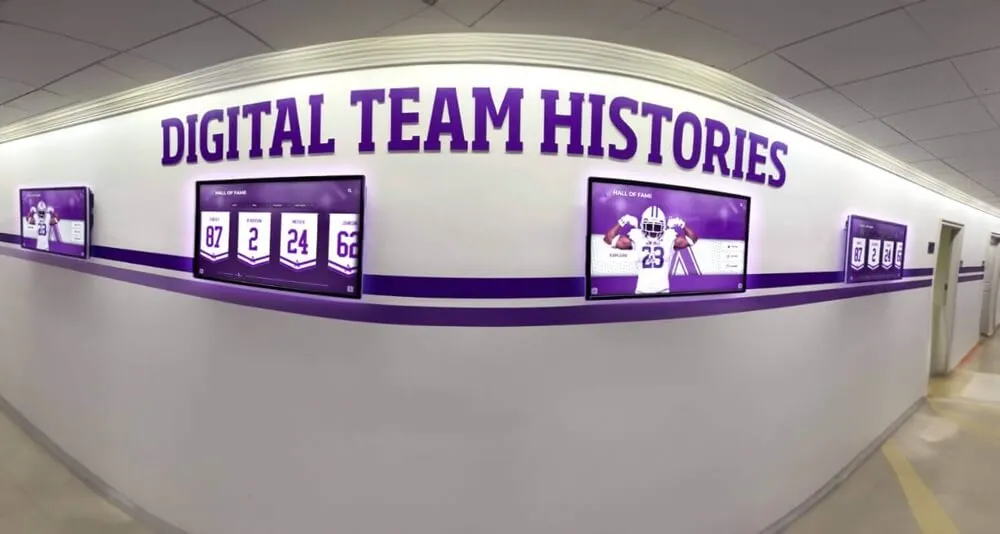
Physical banners and photo displays handle the visible, permanent layer of drill team recognition. Digital systems handle scale, accessibility, and depth — the dimensions of recognition that static physical formats cannot serve.
What Digital Drill Team Recognition Enables
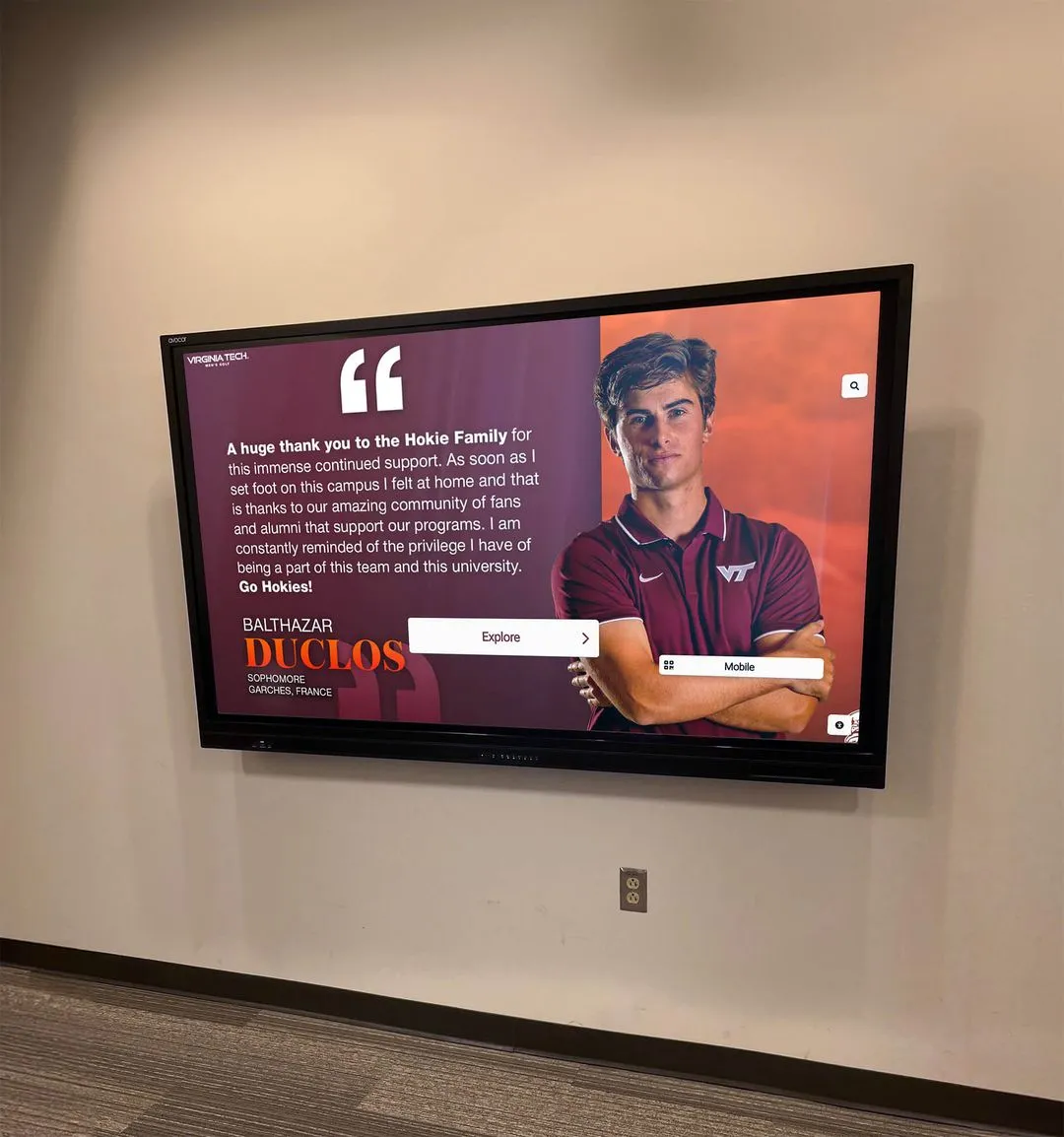
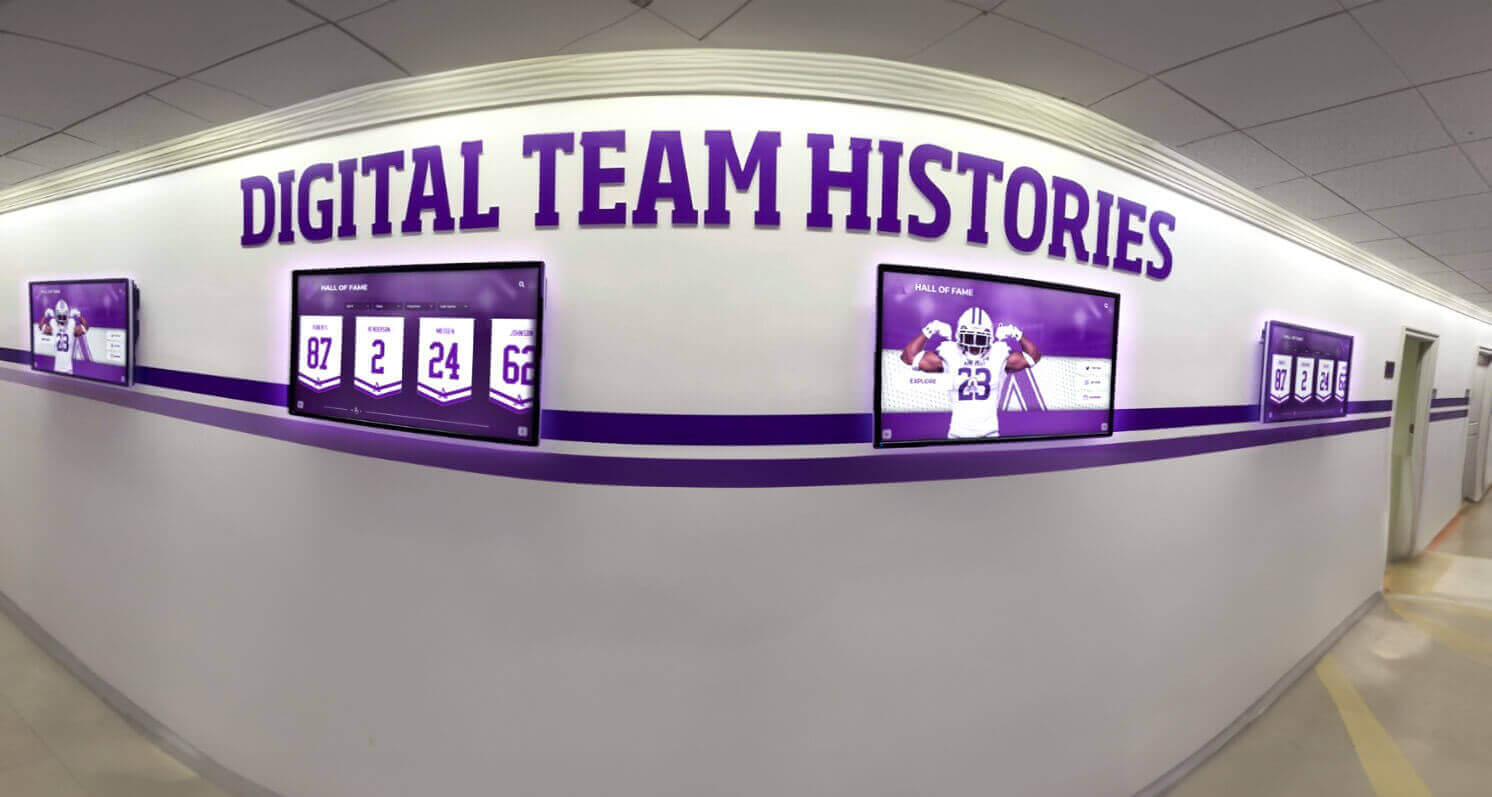

Video integration is the most transformative capability digital recognition platforms offer drill team programs. A touchscreen hall of fame display in the school lobby can show the championship performance from six years ago at the touch of a button. An alumna visiting campus twenty years after her senior year can find her team’s videos, recognize herself in formation, and share the moment with people she hasn’t seen since graduation.
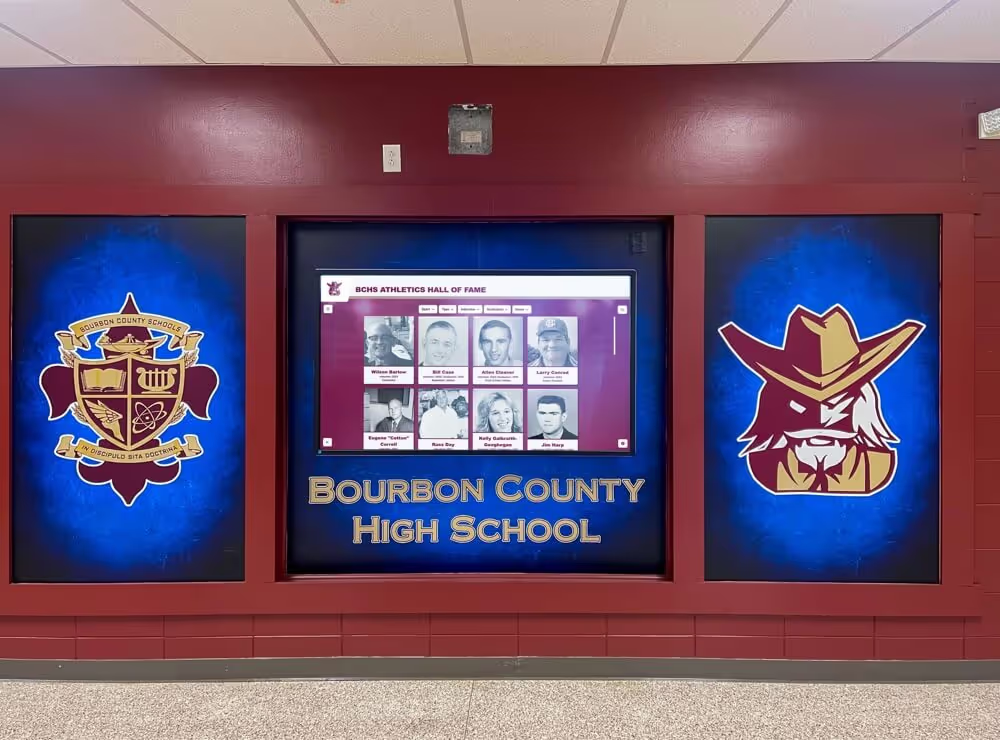
Deep athlete profiles connect individual recognition to program history. A drill team hall of fame inductee’s profile can include her biographical information, years of participation, offices held, competition results, and specific performances she appeared in — a recognition depth that plaques and banners cannot approach.
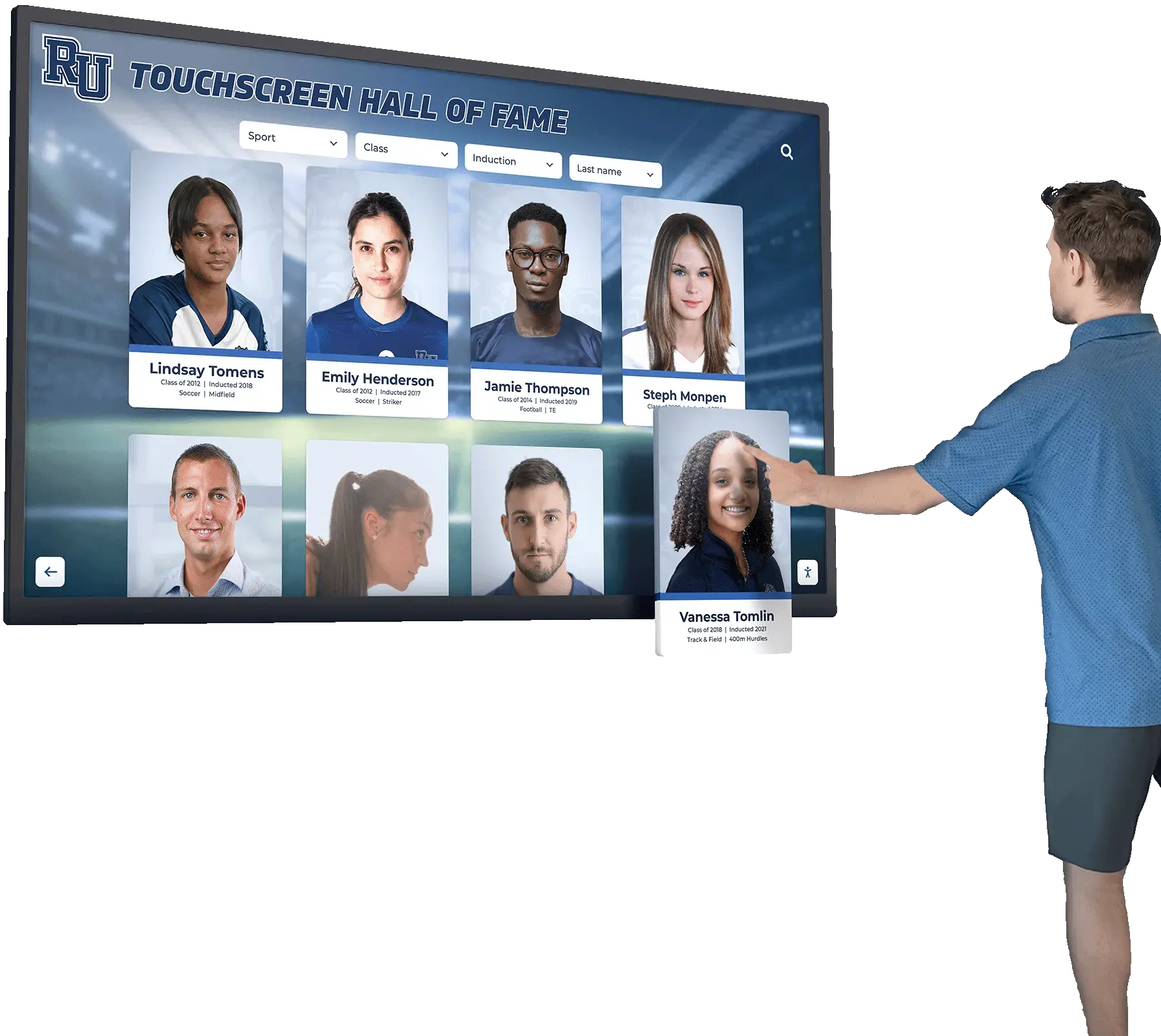
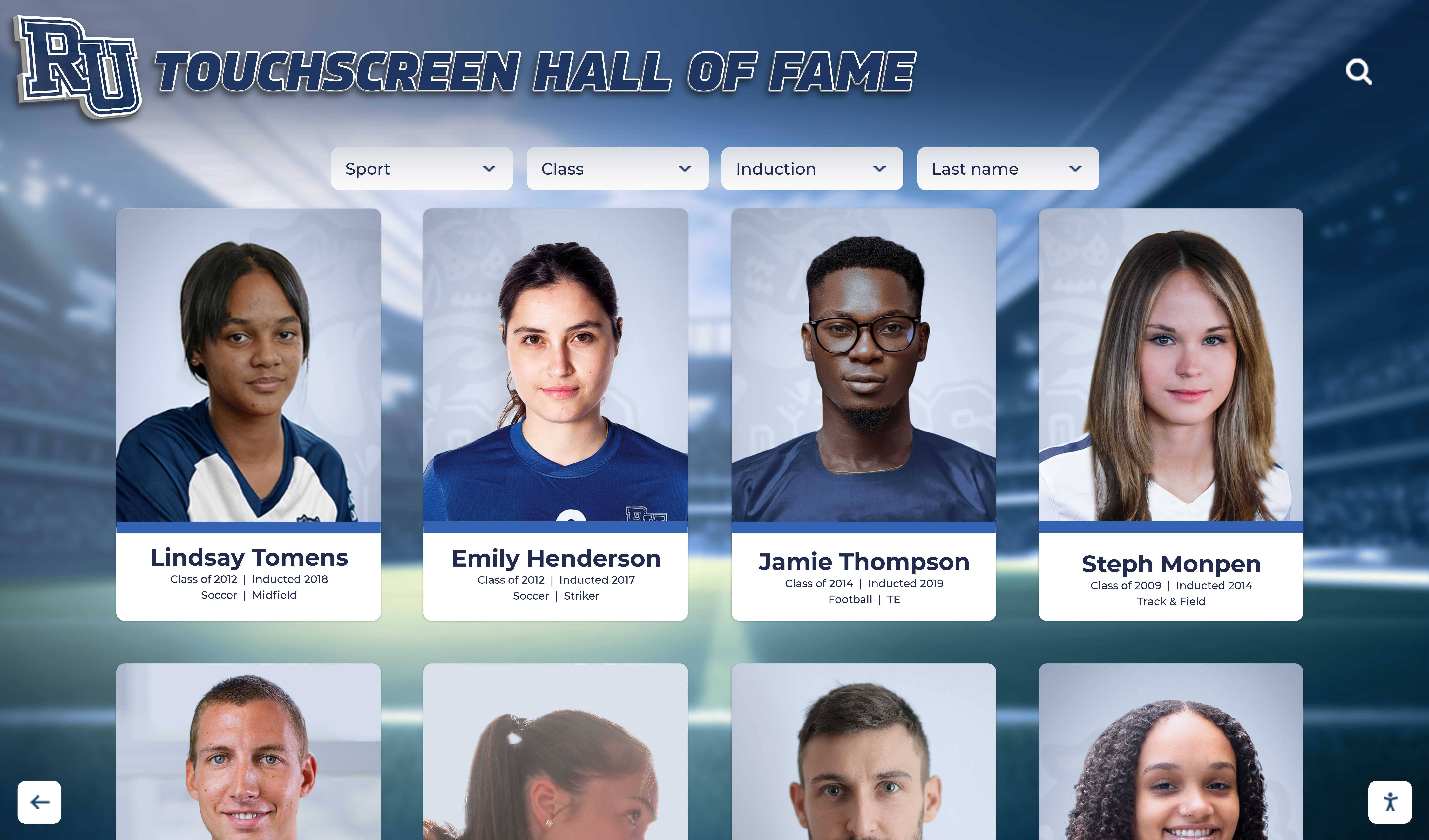
Searchability and navigation allow visitors to explore program history by year, by competitive achievement, by individual name, or by choreographic category. Alumni searching for specific seasons can find them. Parents of current students can discover what program their student joined the tradition of. Prospective members can explore the competitive legacy they would be entering.
Living updates keep recognition current without requiring physical renovation. When a new team wins a title, the display updates. When a new hall of fame class is inducted, their profiles go live. Digital recognition scales to program achievement without the physical infrastructure costs of adding new banners and cases.
Schools ready to explore how digital systems work in practice can find detailed product context in resources covering interactive touchscreen software built for educational recognition programs — including how content management, video embedding, and alumni navigation function in deployed systems.
Interactive Touchscreen Hall of Fame Displays
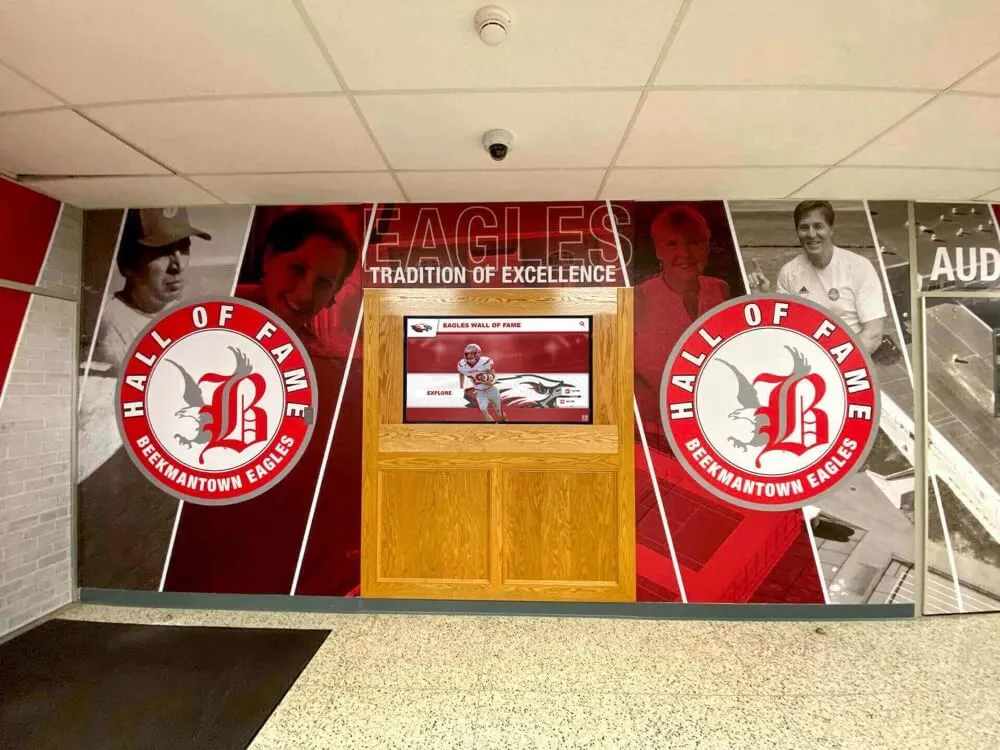
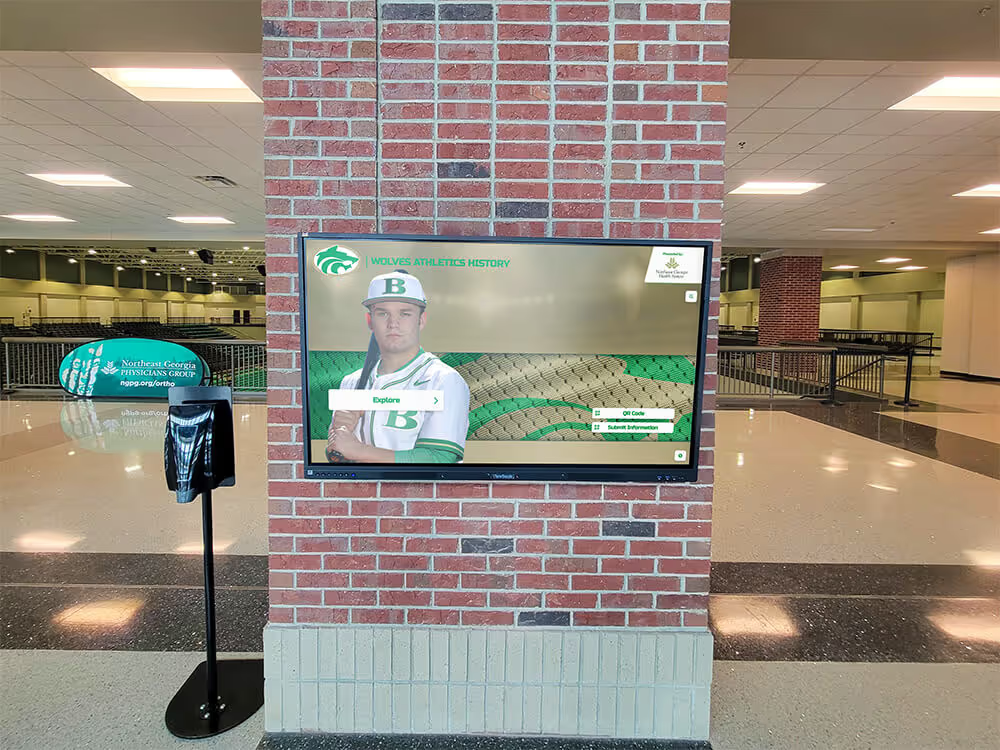
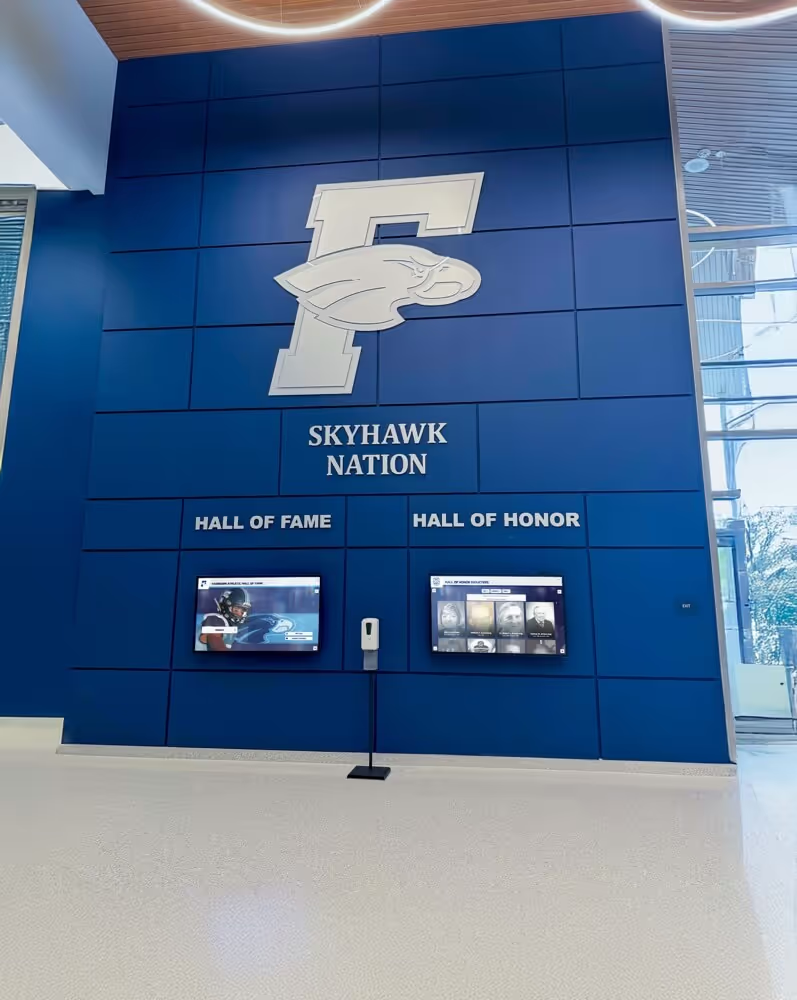
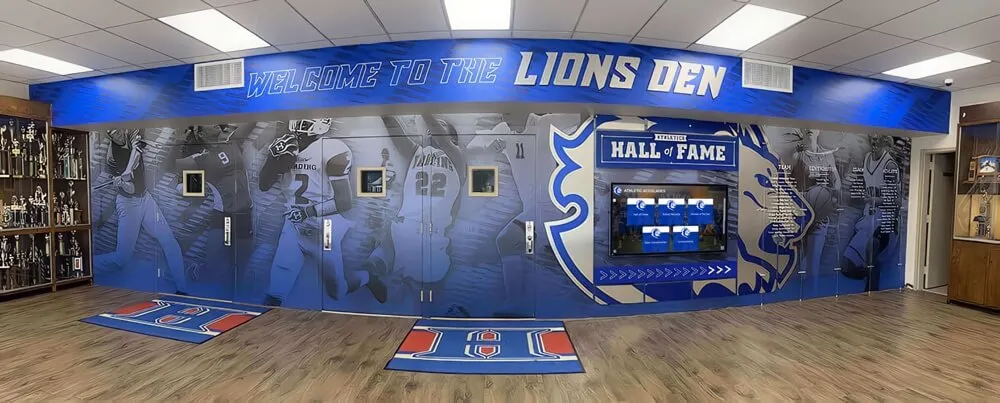
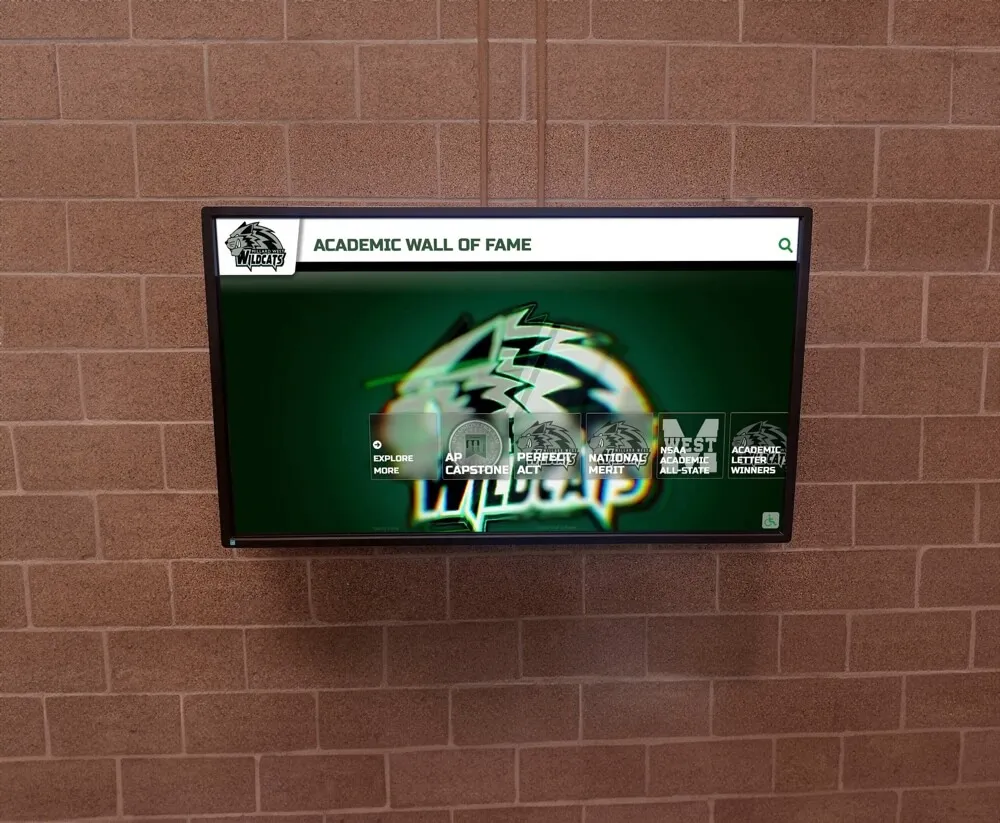
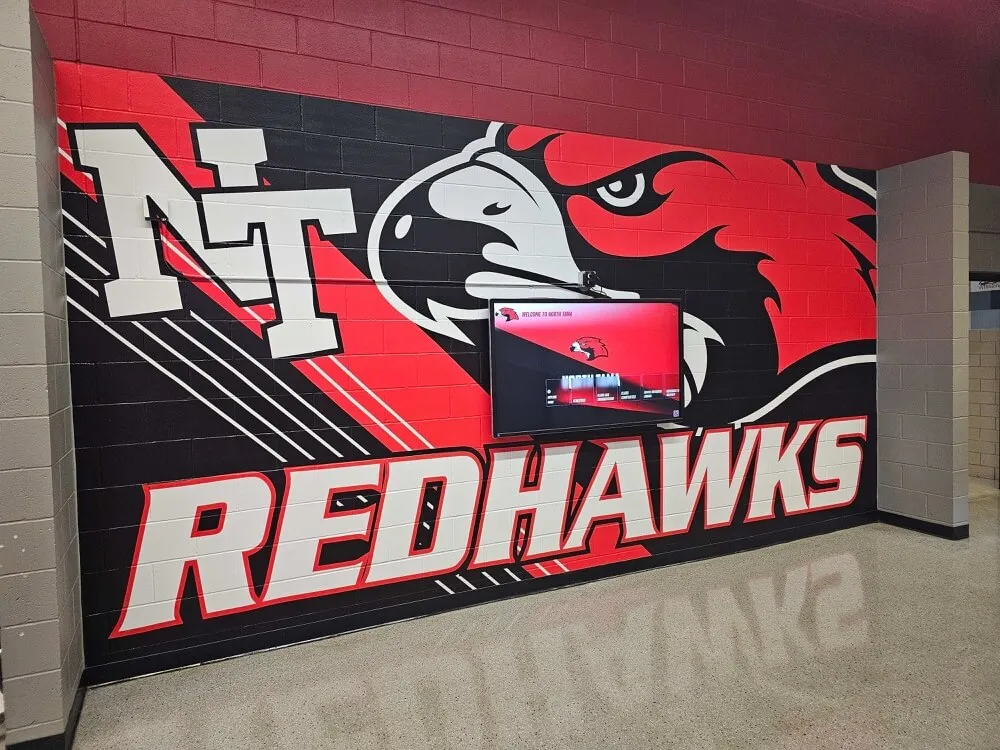
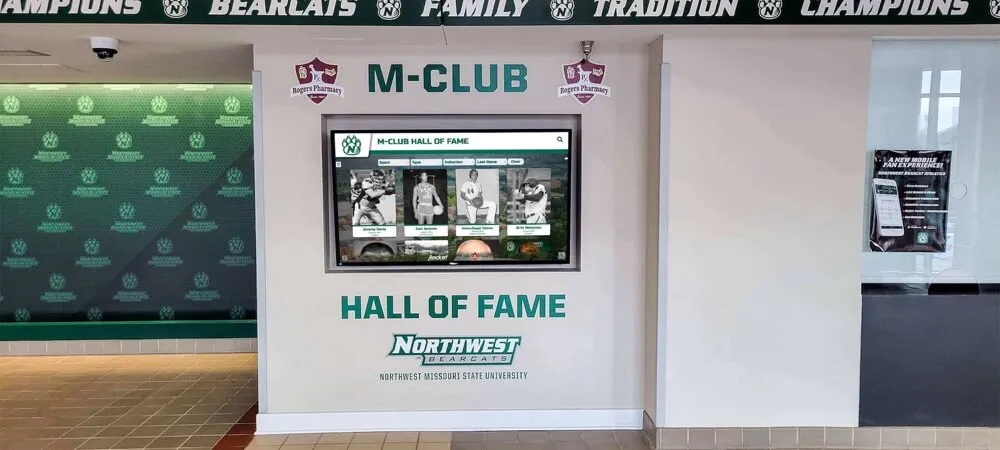
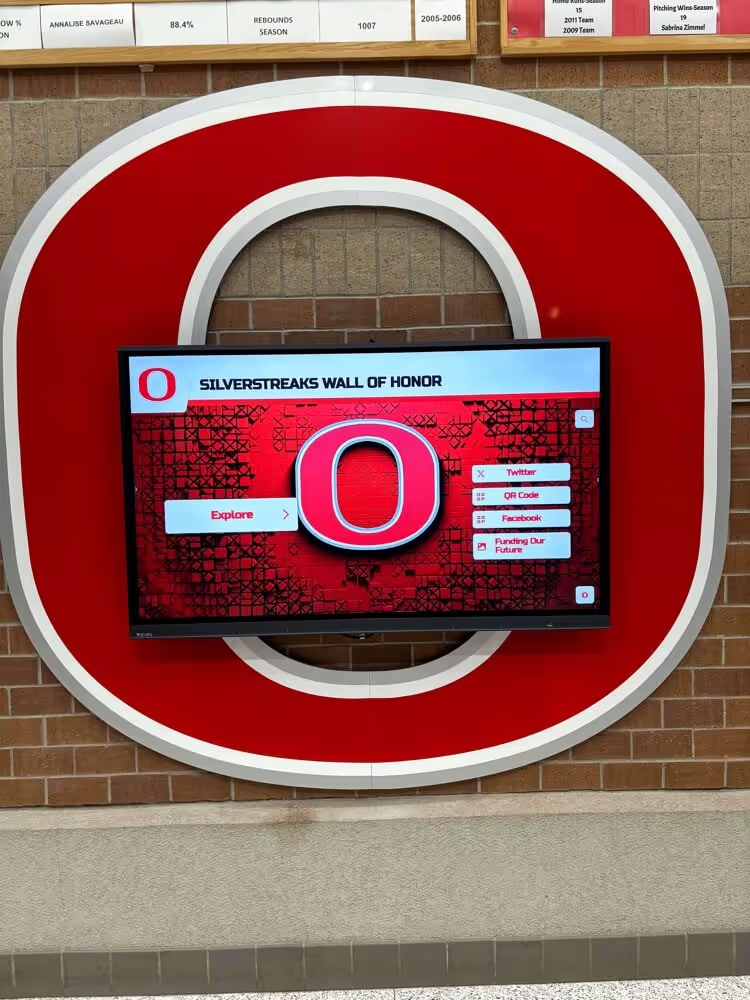
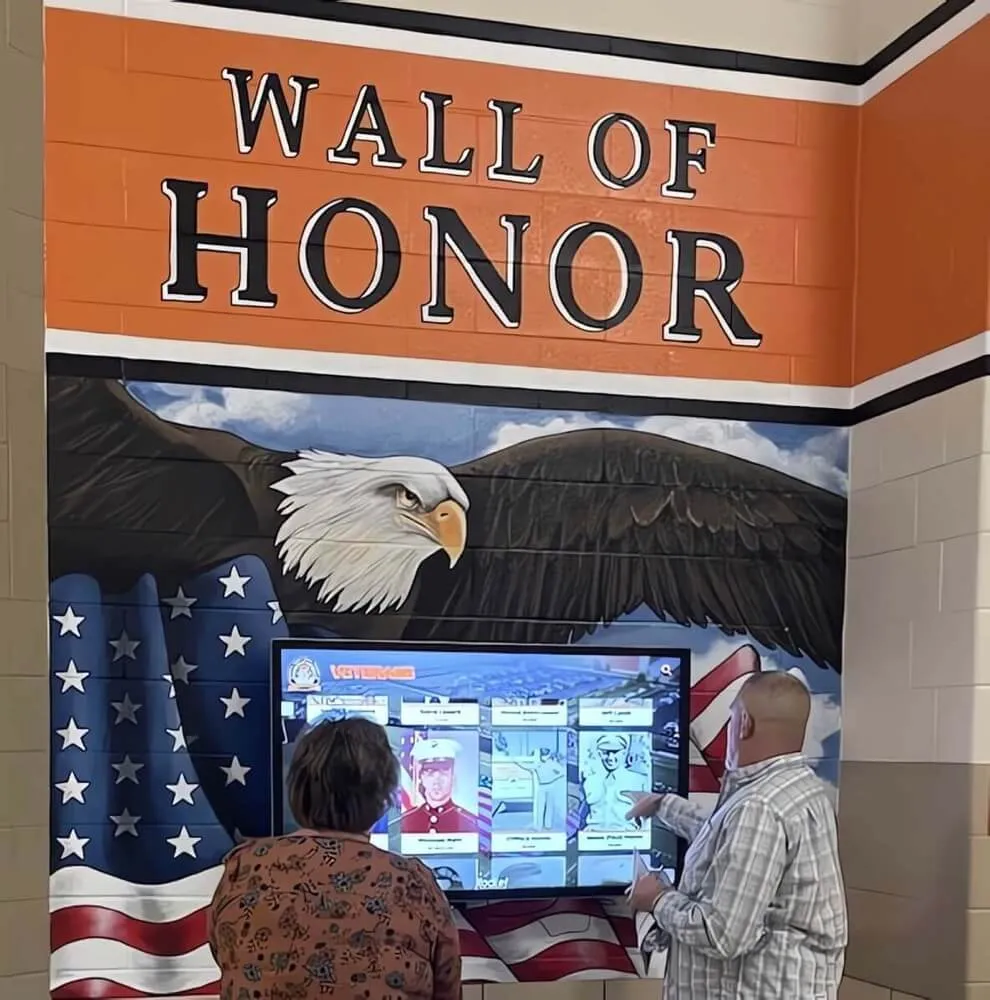
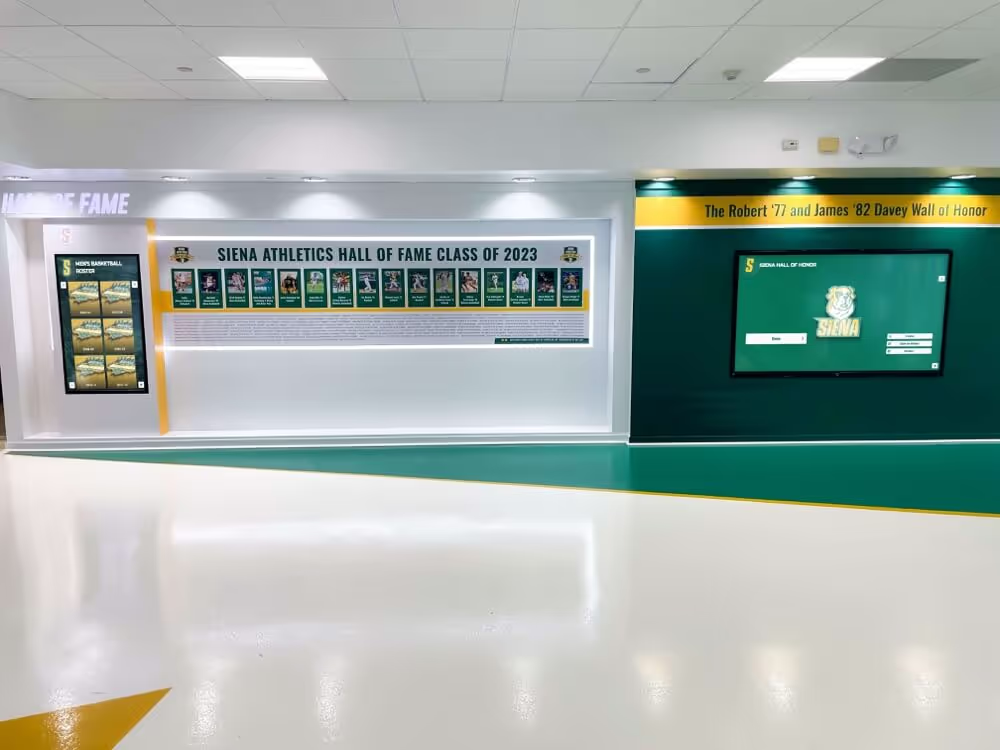
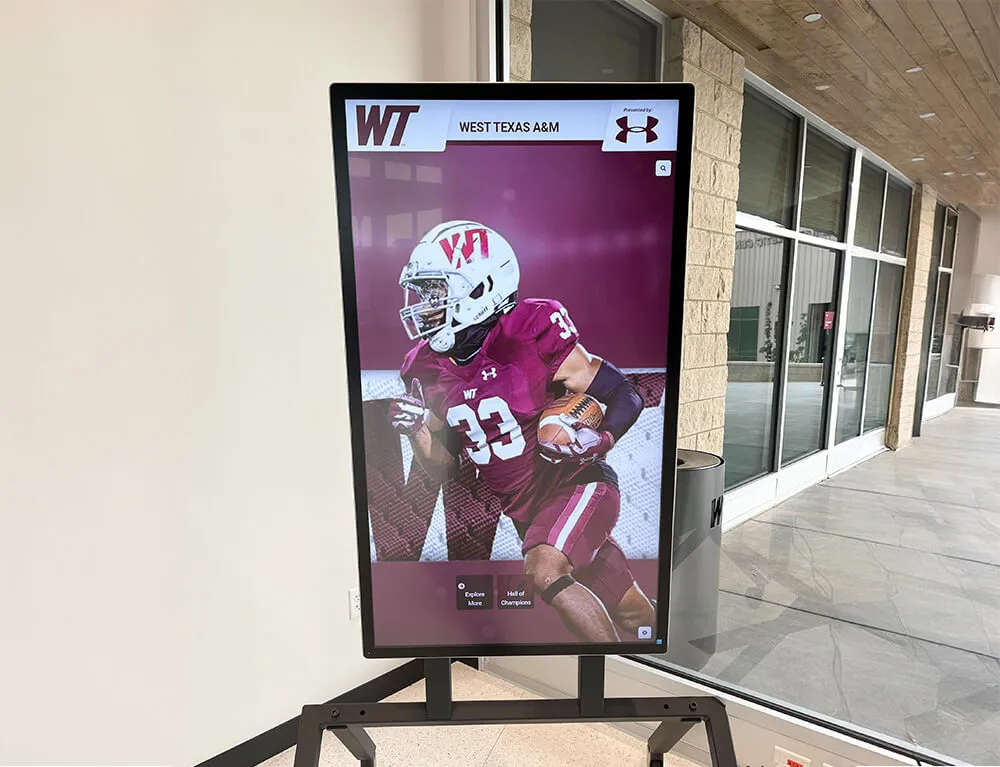
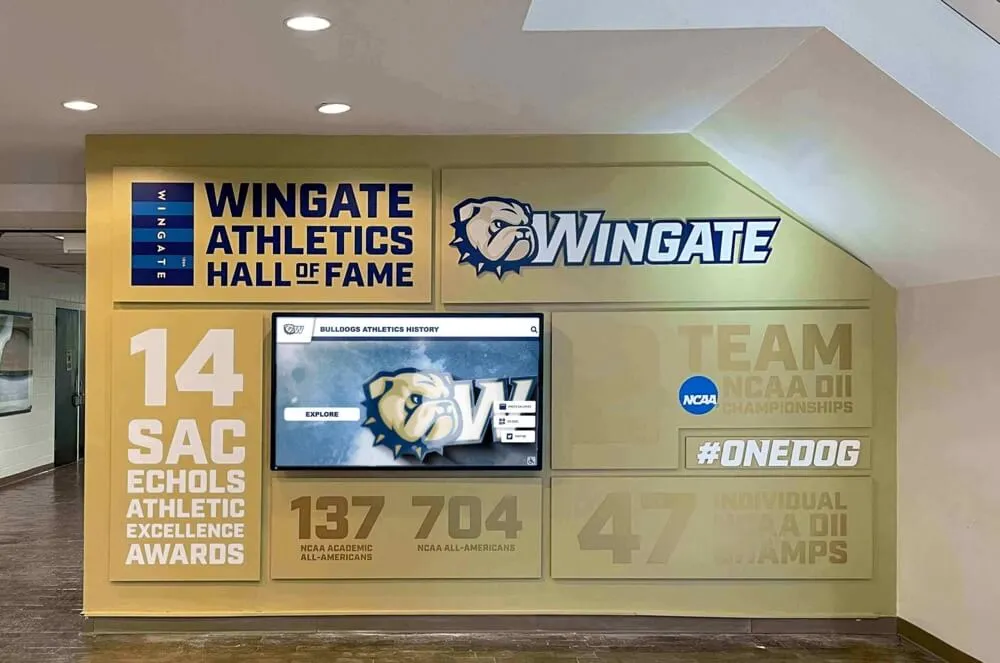
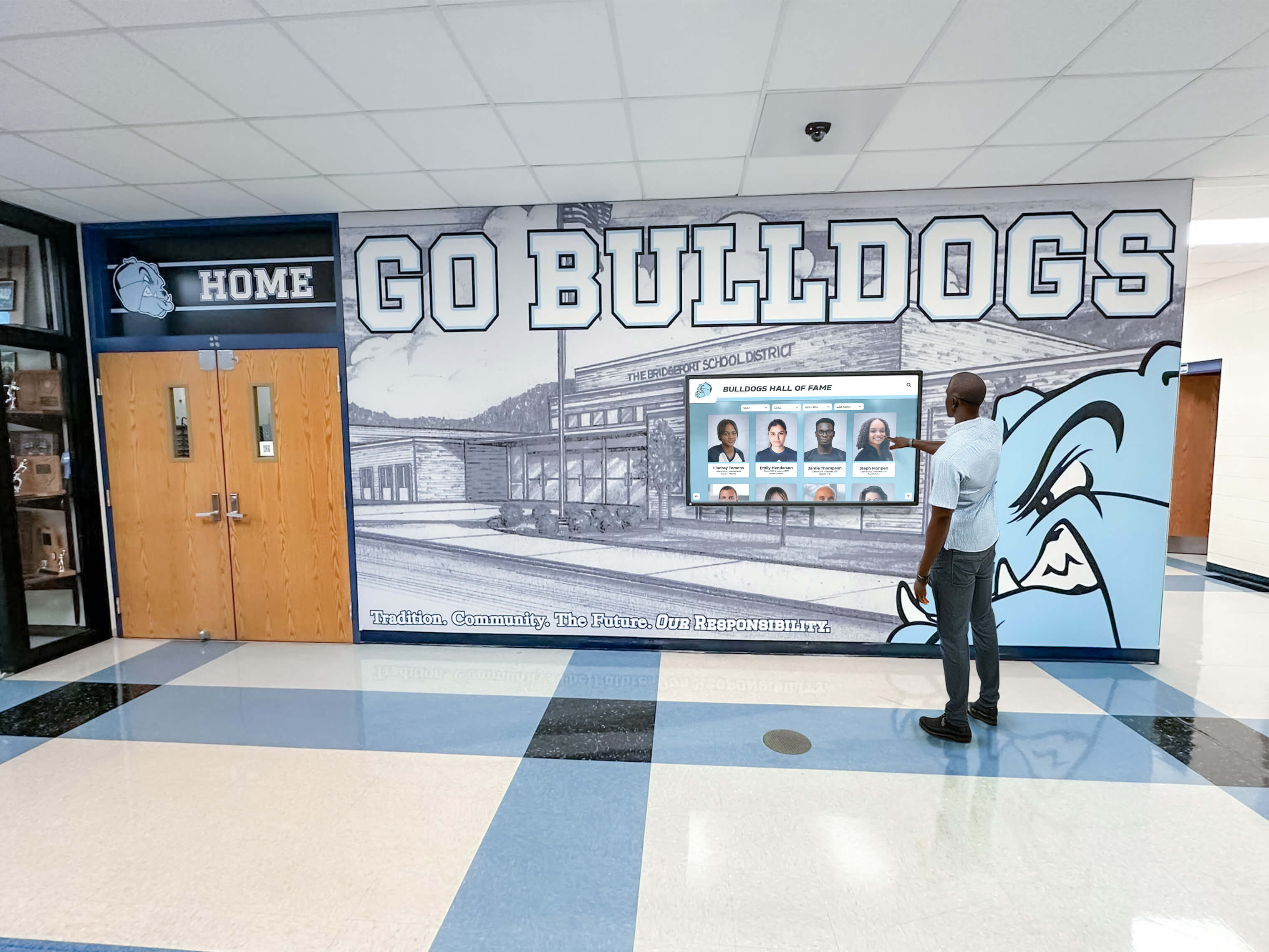
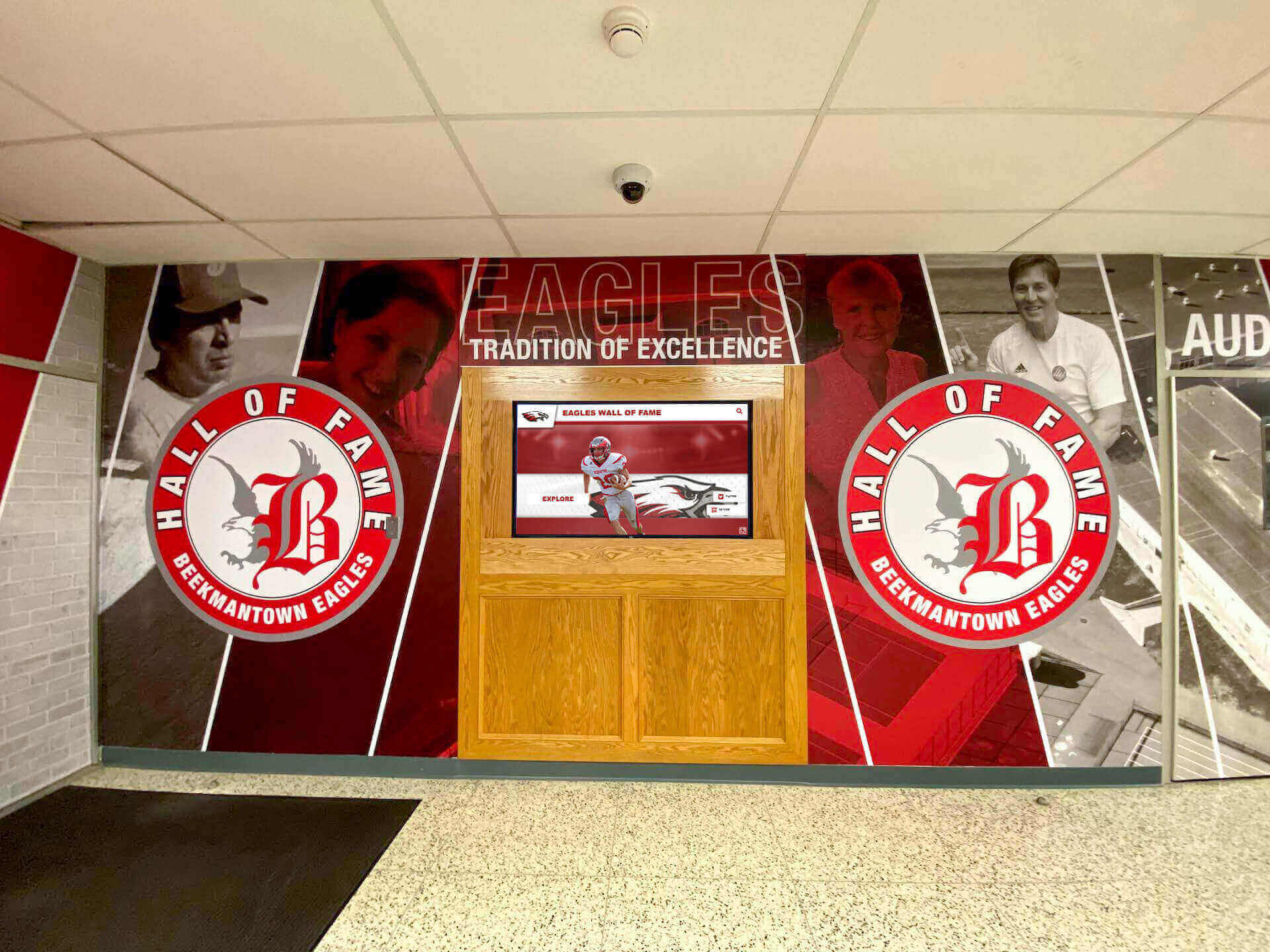
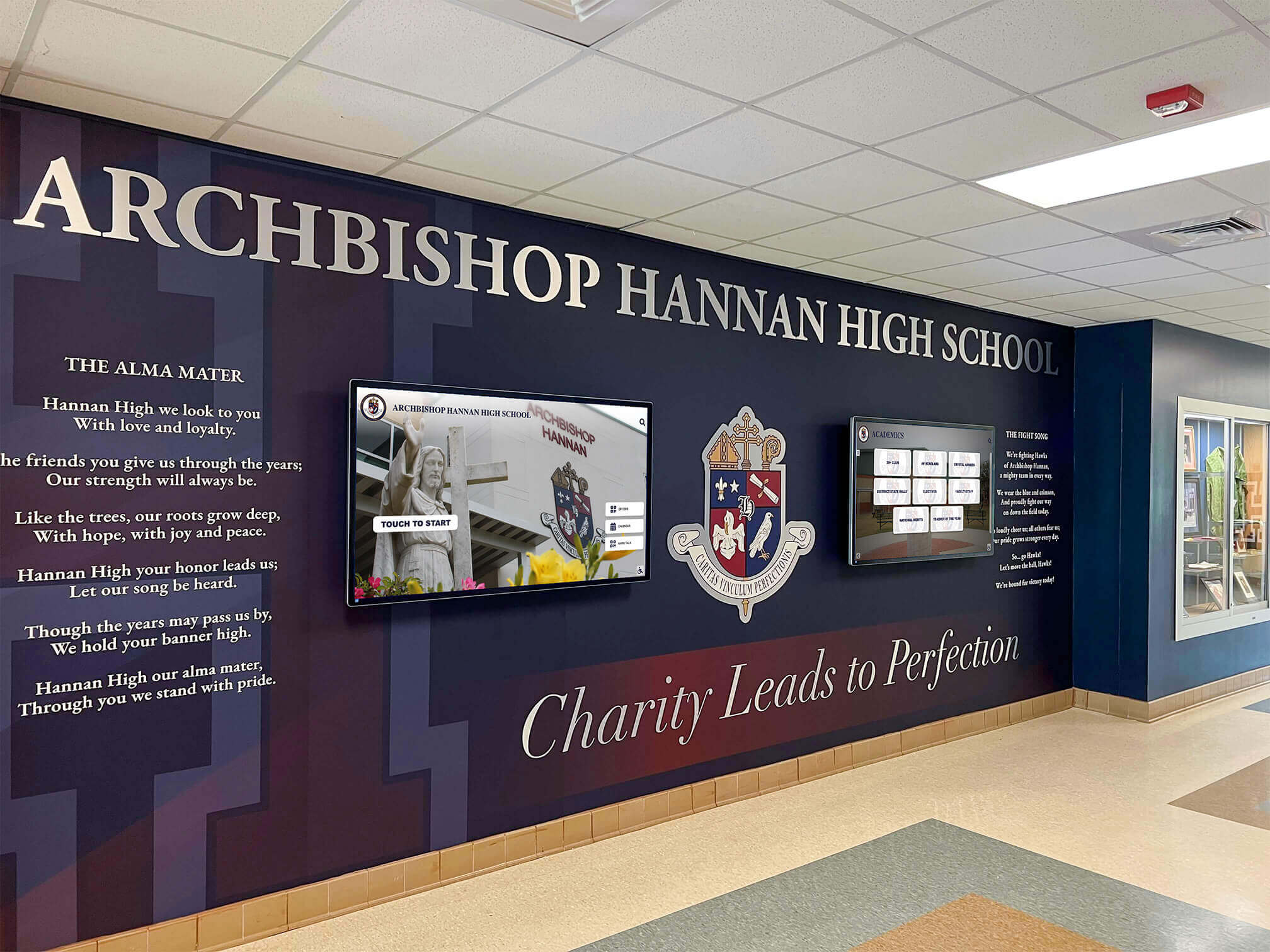
The most effective digital recognition installations for drill team programs combine interactive touchscreen displays with hardware positioned in high-traffic school spaces — the main lobby, the performing arts wing, the athletic complex, or adjacent to existing trophy cases.
Interactive touchscreen hall of fame systems built for drill team programs function differently from passive display boards:
Users navigate with intention. A visitor approaching a touchscreen to look up a specific drill team captain from a championship year engages more deeply with the recognition system than a visitor glancing at framed photos in a hallway. Intent drives engagement.
Video plays within context. When a user taps a performance video clip embedded within an athlete’s profile or a season’s recognition page, the video appears within the recognition framework — linked to the names, the achievements, and the history that give it meaning. Standalone video platforms strip that context.
Recognition deepens over time. Physical displays represent fixed investments — once they’re built, the recognition record is set. Digital systems compound over time, with each new season’s documentation adding to an archive that grows more valuable as program history accumulates.
The entrance and lobby spaces where these displays work best are examined in school entrance design resources that address how physical placement decisions affect whether recognition systems actually get noticed and used.
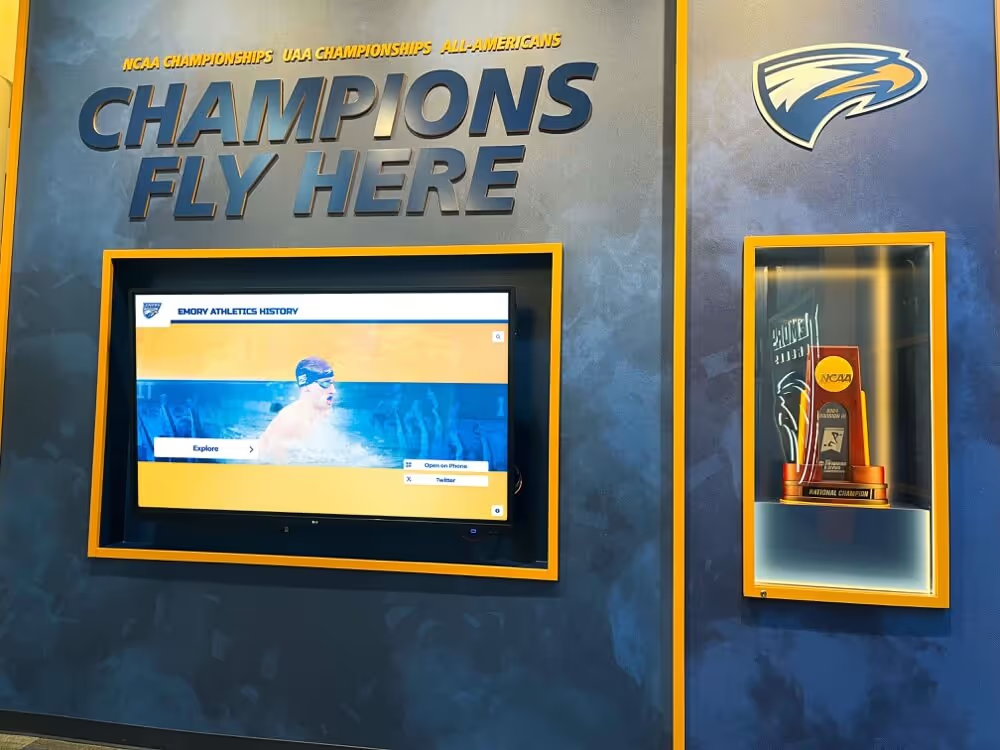
Schools that have installed comprehensive athletic information display systems increasingly include drill team and other performance programs within those systems, reflecting a more inclusive definition of what school achievement encompasses. The schools doing this most effectively are finding that including performing arts programs in athletic recognition infrastructure generates engagement from a broader demographic than traditional sport-only recognition systems.
Planning a Drill Team Dance Hall of Fame Induction Program
Many schools have competitive drill team histories but no formal induction process. Creating a hall of fame induction program gives program recognition a structure that generates annual engagement and gives recognition clear meaning.
Establishing Induction Criteria
Hall of fame induction criteria for drill team dance programs should balance competitive achievement with program contribution:
Minimum tenure requirements that reflect meaningful program investment — typically two to four years of active participation, though criteria should be flexible enough to recognize coaches or short-tenure members with exceptional impact.
Competitive achievement benchmarks that anchor recognition in objective performance results — state championship participation, national competition qualification, all-state or all-conference recognition, or documented individual competitive honors.
Program contribution dimensions that recognize athletes whose impact went beyond personal competitive results — captains who led programs through formative periods, members who mentored younger athletes, individuals who shaped program culture in lasting ways.
A nomination and selection process with clear criteria, consistent timelines, and a selection committee that includes former program members, coaches, and school administrators. Process legitimacy is essential to induction legitimacy.

The framework for planning school award ceremonies applies directly to drill team hall of fame induction events, which benefit from the same attention to ceremony quality, venue, and recognition materials that other formal award events require.
The Induction Event
Hall of fame induction ceremonies for drill team programs create natural alumni engagement opportunities that serve multiple purposes simultaneously: honoring inductees, connecting alumni to current programs, and creating community visibility for program achievement.
Effective induction events include:
Formal presentation of inductees with biographical remarks, career highlights, and recognition of their specific contributions. An inductee who sits through a generic ceremony feels processed. An inductee who hears specific acknowledgment of what they achieved and what it meant receives genuine recognition.
Performance integration where possible — current team members performing for an audience that includes the program’s former members creates a living connection between past and present that no speech can replicate.
Video tributes drawing on program archives to document inductee contributions in the medium that best captures drill team performance achievement.
Physical recognition materials — plaques, certificates, or display pieces — that inductees can take home and that reinforce the permanence of the recognition they received.
Special Awards Within Drill Team Dance Programs
Recognition within drill team programs extends beyond hall of fame inductions to annual and performance-specific awards that build recognition culture from the inside out.
The full spectrum of special student achievement awards available to school programs provides models that drill team programs can adapt to their specific recognition needs. Common drill team-specific awards include:
Outstanding Performer recognition at the team level, selected by coaches or peer vote to acknowledge the member whose individual performance quality was most exceptional across the competitive season.
Team MVP or Captain’s Award for the member who most exemplified program values through leadership, work ethic, and team contribution — the recognition that honors character as much as competitive result.
Most Improved designation acknowledging the member whose technical growth across the season was most dramatic — recognition that values effort and development alongside innate ability, and that serves program culture by making growth visible.
Spirit and Dedication Awards for members whose commitment, enthusiasm, and positive contribution to team culture made the program better regardless of their competitive role.
Choreography and Creativity recognition for members who contributed to routine creation, music selection, or artistic direction in ways that shaped what the program performed.
Senior Recognition as a standalone category acknowledging graduating seniors’ total program contributions with specificity — named achievements, years of service, and acknowledgment of what each senior specifically gave to the program.
Connecting Drill Team Recognition to Broader School Recognition Culture
Drill team dance programs exist within school recognition ecosystems where multiple programs compete for visibility, space, and institutional investment. Building drill team recognition that earns proportional space in that ecosystem requires demonstrating the value of what the program produces — and connecting that recognition to the broader school culture it serves.
The Alumni Connection
Drill team dance alumni are among the most engaged school alumni when recognition infrastructure exists to support that engagement. Programs that build genuine recognition archives — with accessible performance videos, digitized photo documentation, and interactive hall of fame systems — create alumni communities that rival those built around varsity team sports.
The reason is the nature of the shared experience itself. Drill team performance is inherently social and deeply memorable. Alumni who performed together in state championships, who traveled to national competitions together, who spent more hours in rehearsal than in most classrooms — those alumni carry bonds and memories that recognition infrastructure can activate decades later.
Schools exploring how to recognize and engage alumni connected to dance and cheer-adjacent performance programs will find that resources covering meaningful ways to acknowledge coaches and program leaders in cheer and dance — which share significant cultural overlap with drill team — offer models that translate well to drill team program engagement strategies.
Building Multi-Year Archives
The most valuable drill team recognition systems are built over time rather than in a single effort. Schools starting from scratch should prioritize:
Current season documentation first — establishing consistent workflows for the present before attempting to reconstruct the past. Excellent documentation of this year’s season is more achievable than comprehensive reconstruction of twenty years of program history.
Identifying key alumni contacts who hold personal archives — photos, videos, programs — from eras without official documentation. Alumni-sourced content often fills historical gaps that no institutional archive can address.
Digitizing existing physical records — team photos, plaques, competition programs, printed materials — before further deterioration or loss occurs. Physical records in coaches’ offices and school storage rooms are at risk with every staff transition.
Creating searchable metadata for all archived content — year, names, competition, category — so that archives remain discoverable rather than becoming digital versions of the same disorganized boxes they replaced.
For schools considering how digital recognition systems can serve as permanent homes for this kind of multi-year archive, Rocket Alumni Solutions provides interactive touchscreen hall of fame displays specifically designed to house performance video archives, athlete profiles, and program history alongside one another in systems that remain accessible and manageable over decades.
Frequently Asked Questions About Drill Team Dance Recognition
What is the difference between drill team dance and military drill team?
What achievements qualify for drill team hall of fame recognition?
How should schools preserve old drill team performance videos?
Where should a drill team hall of fame display be located in a school?
How can schools engage drill team alumni through recognition programs?
How do digital hall of fame displays handle video content for drill team programs?
How do drill team recognition systems differ from athletic recognition systems?
Drill team dance programs build something extraordinary — communities where athletic discipline and artistic expression combine to produce performances that define school culture, generate genuine community pride, and leave participants with formative experiences that stay with them for decades. What those programs produce deserves recognition infrastructure proportional to its actual significance: hall of fame systems with real induction standards, championship documentation displayed with the prominence competitive achievement warrants, and digital platforms that preserve performance videos and program history in forms that remain accessible and meaningful across time.
The schools that build this infrastructure find that it pays dividends beyond recognition for its own sake — in alumni engagement, in recruitment of talented prospective members, in the pride of current students who can see their program’s history and understand the tradition they are part of. Recognition that matches achievement inspires the next generation to pursue achievement of their own.
For schools ready to build recognition infrastructure worthy of their drill team programs, Rocket Alumni Solutions provides interactive touchscreen hall of fame displays, digital recognition walls, and performance archive platforms designed specifically for schools celebrating all forms of student achievement — including the programs that fill gyms, win championships, and define what a school’s best years looked and felt like.