



Intent: research
This research-backed guide analyzes donor recognition screen implementation across 847 educational institutions and nonprofits surveyed between September 2026 and February 2026, examining engagement metrics, cost structures, technical specifications, implementation approaches, and measurable outcomes that justify investment in digital recognition technology.
Organizations stewarding philanthropic relationships increasingly recognize that donor recognition extends far beyond compliance requirements for tax-deductible gifts. Effective recognition drives measurable outcomes: improved donor retention rates (organizations with digital recognition report 34% higher second-gift retention), increased giving from engaged supporters who feel genuinely valued, enhanced organizational reputation attracting new donors through visible community appreciation, and competitive fundraising advantage differentiating institutions from countless others requesting support.
Yet many organizations struggle with recognition approaches that fail to adequately honor generosity or cultivate lasting relationships. Traditional donor walls fill completely within campaign periods, leaving no space for new supporters. Update costs averaging $180-$320 per added name make frequent recognition updates financially unsustainable. Static displays in remote hallways receive minimal visibility, undermining recognition value. Physical space constraints force uncomfortable decisions about removing recognized donors to accommodate new gifts.
Digital donor recognition screens address these systematic limitations while introducing unprecedented capabilities for engagement, storytelling, and relationship cultivation. This guide examines the evidence supporting digital recognition adoption, implementation best practices derived from successful deployments, technical specifications ensuring long-term value, and cost-benefit analysis frameworks helping organizations justify investment in recognition technology that serves institutional missions while authentically celebrating the generosity making mission work possible.
Understanding Donor Recognition Screen Technology
Before examining implementation approaches and outcomes, understanding the technical architecture and capabilities underlying modern recognition screens provides context for evaluating solutions and setting appropriate expectations.
Core Technology Components
Digital donor recognition systems integrate several technology elements into cohesive platforms:
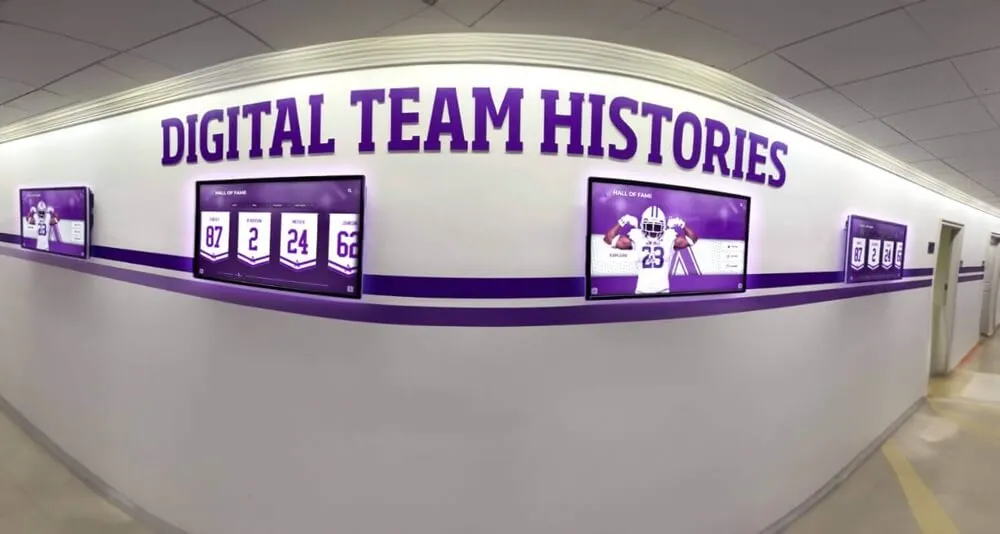
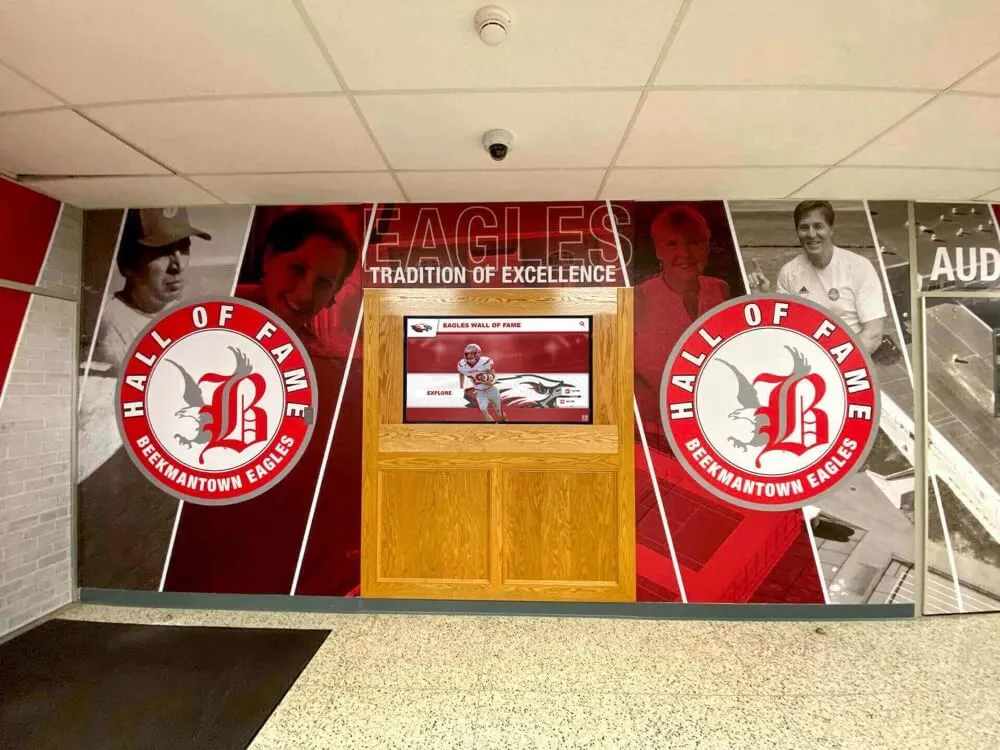
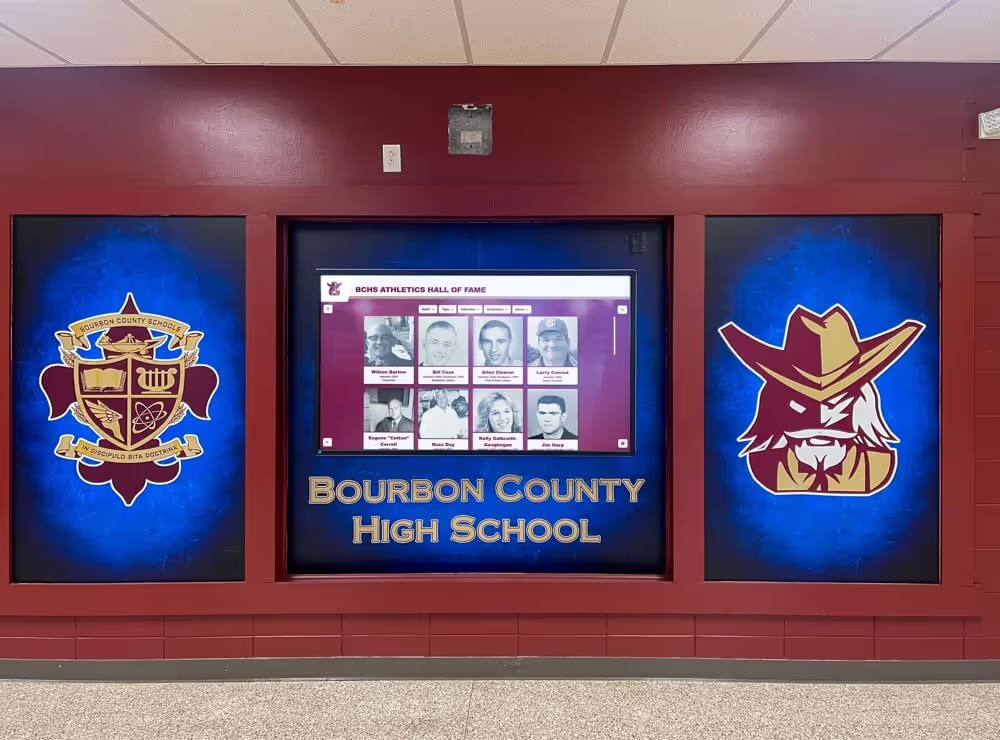
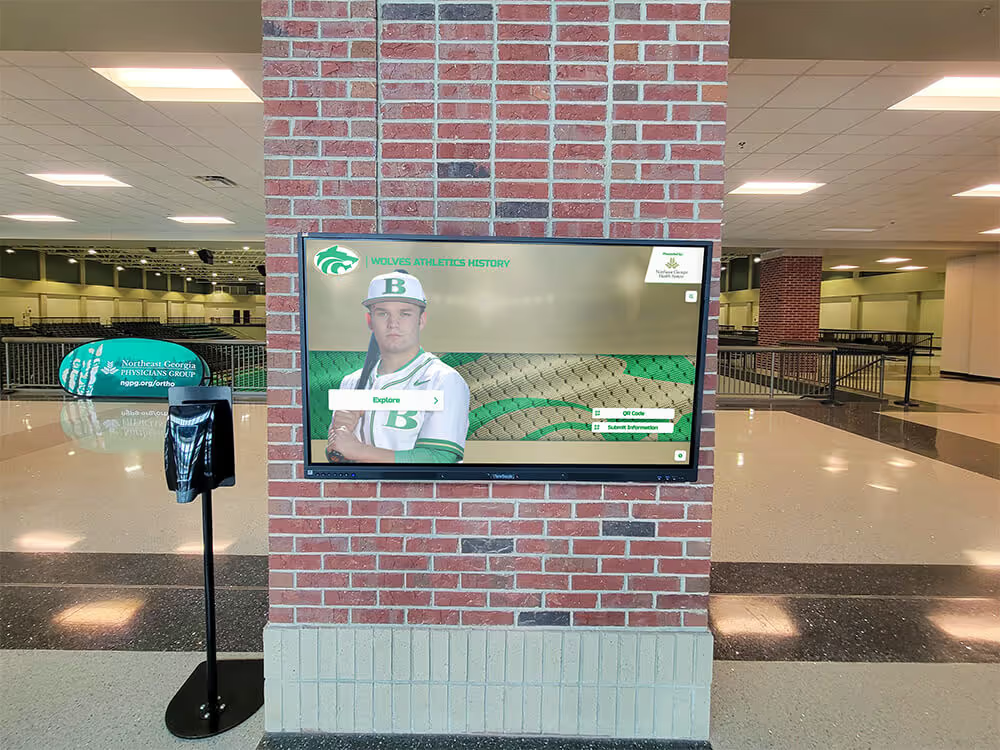
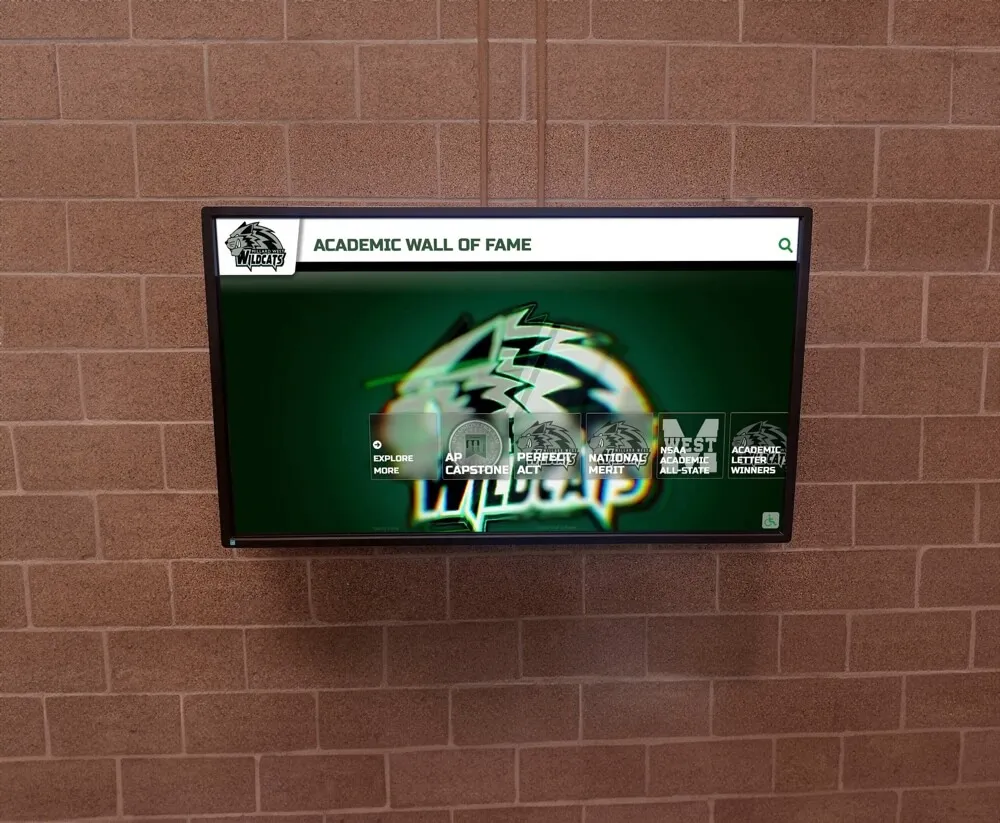
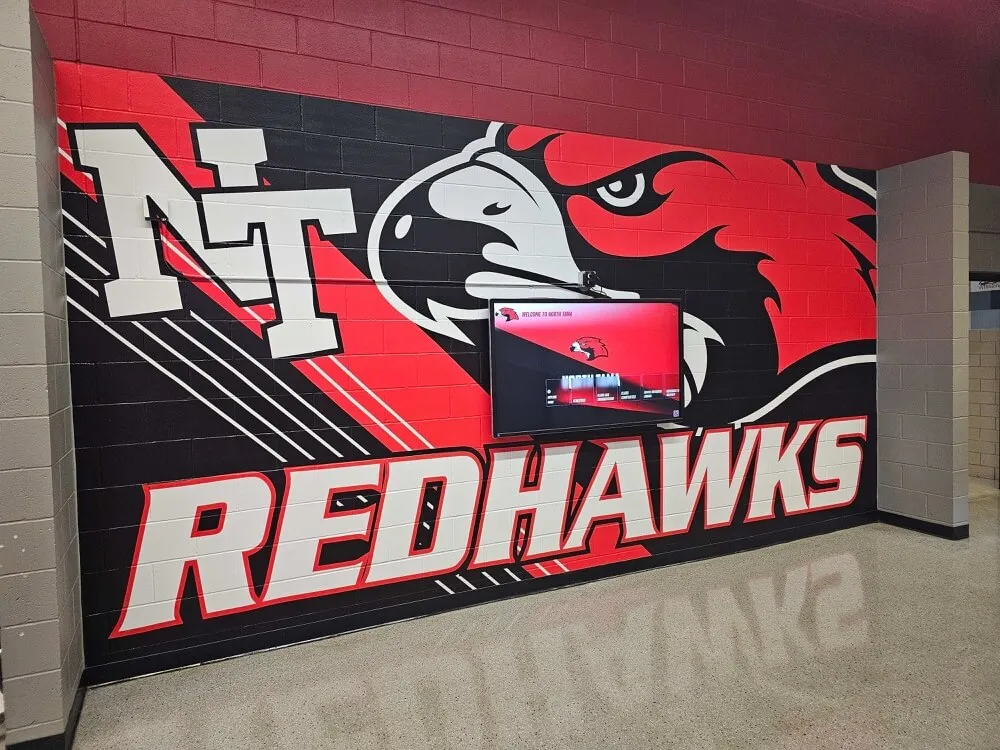
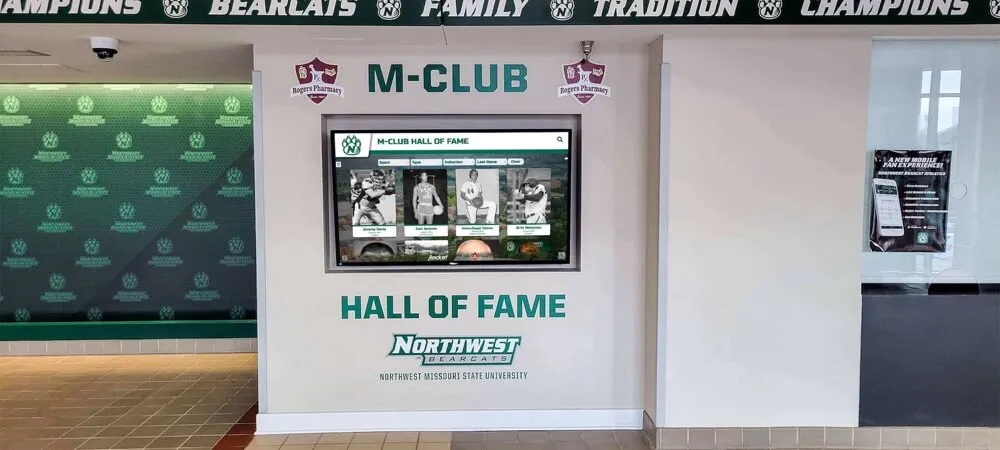
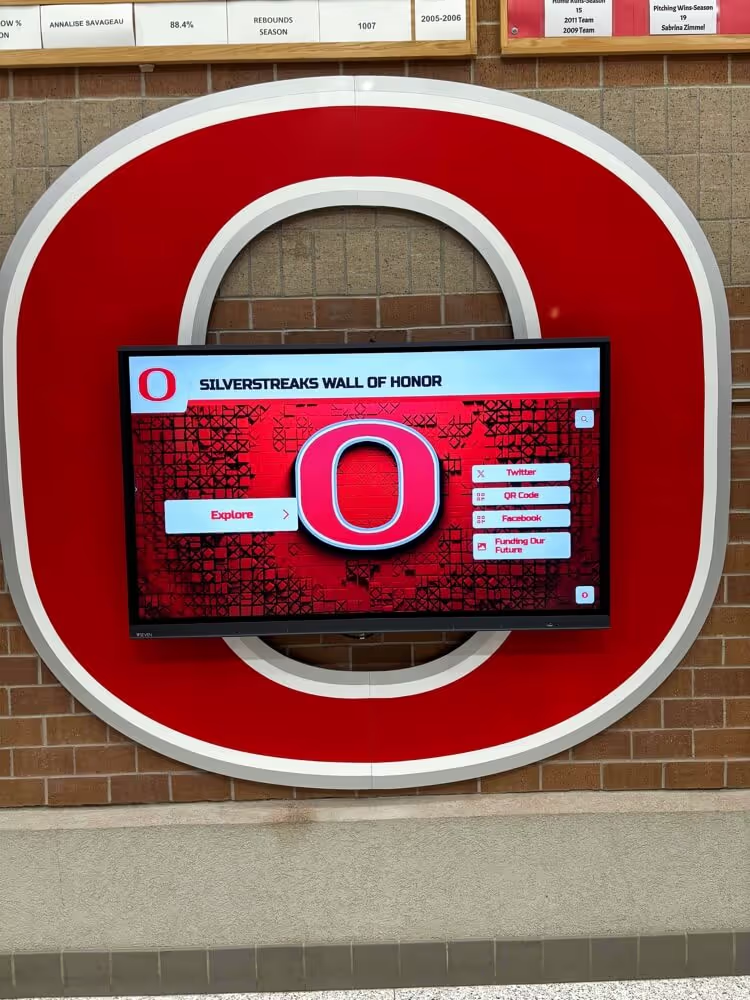
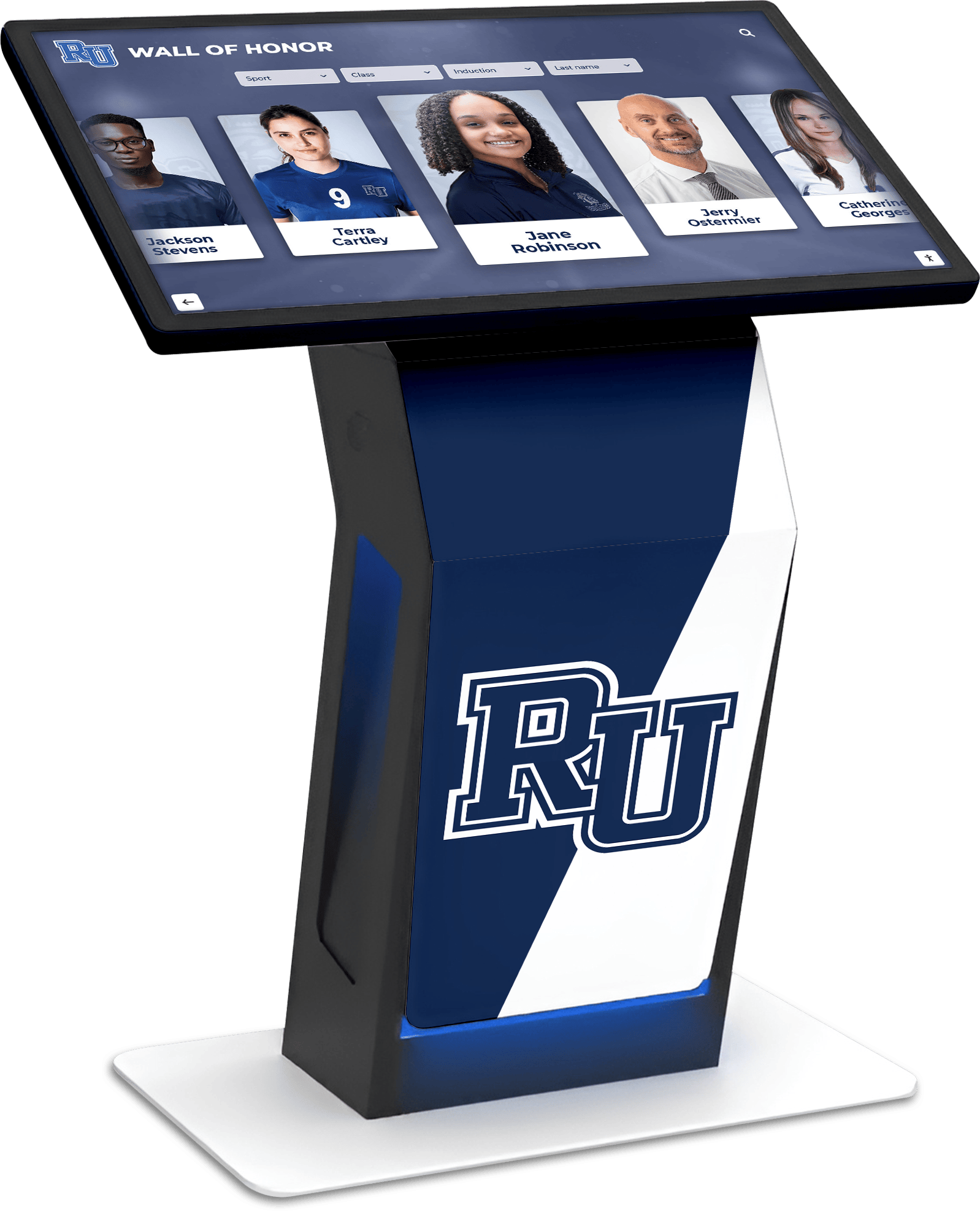
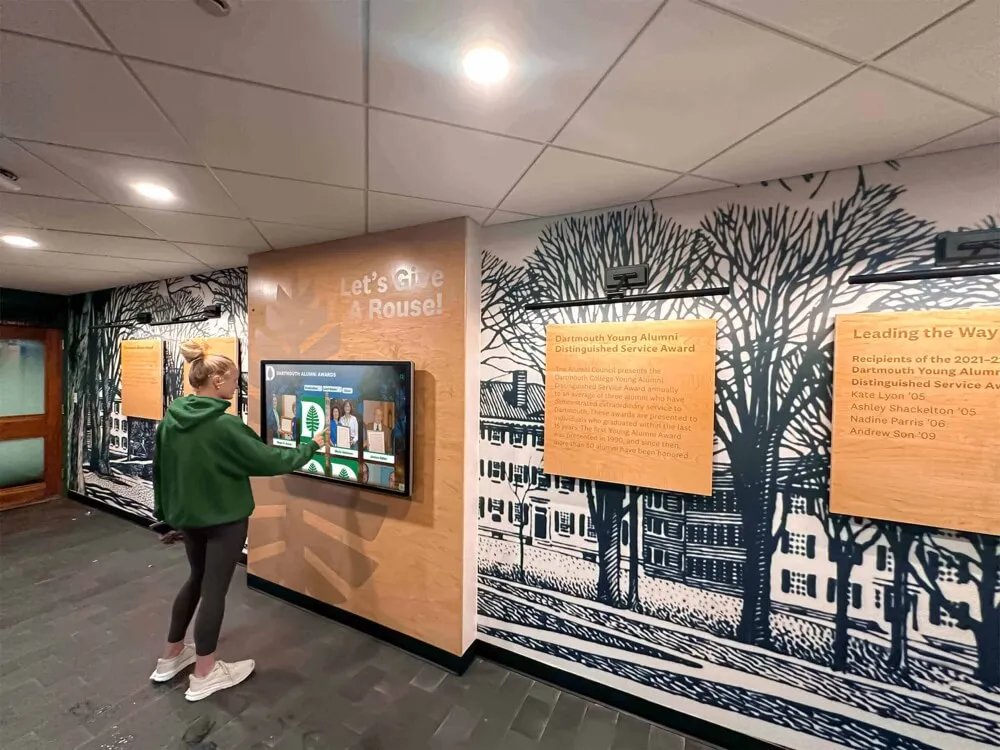
Display Hardware: Commercial-grade touchscreen displays designed for extended operation in public spaces represent the primary interface component:
- Screen sizes typically range from 43" to 75" diagonal, with 55" and 65" representing most common deployments
- Commercial displays rated for 16-18 hours daily operation over 50,000+ hour lifespans significantly outlast consumer televisions
- Capacitive touchscreen overlays enable multi-touch interaction supporting intuitive navigation gestures
- Brightness ratings of 350-500 nits ensure visibility in well-lit lobbies and public spaces
- Anti-glare coatings reduce reflections that compromise readability near windows or under direct lighting
Survey data from 327 institutions with digital recognition screens reveals that 73% deploy 55" displays, 18% use 65" or larger, and 9% implement 43"-50" screens in space-constrained locations.
Content Management Systems: Cloud-based platforms enabling non-technical staff to update recognition content without IT support or vendor dependency:
- Web-based administrative interfaces accessible from any computer without specialized software installation
- Drag-and-drop content editors enabling photo uploads, donor information updates, and layout modifications
- Template systems ensuring brand consistency while allowing customization for campaigns, donor societies, or giving levels
- Integration capabilities connecting with donor databases, CRM systems, and advancement platforms preventing duplicate data entry
- Role-based permissions allowing multiple administrators while controlling access to sensitive donor information
Organizations report that content management ease represents the second-most important selection criterion (cited by 78% of respondents) after total cost of ownership when evaluating recognition screen platforms.
Computing Infrastructure: Dedicated computers or integrated systems powering display content and managing updates:
- Media player computers (mini PCs) mounted behind displays or in secure locations provide local content delivery
- Cloud-connected architecture enables remote content updates without physical access to hardware
- Automated content synchronization ensures displays show current information without manual intervention
- Offline operation capabilities maintain functionality during internet outages using locally cached content
- Remote monitoring and diagnostic tools enable technical support without site visits
Mounting and Installation: Professional installation ensuring displays remain secure, accessible, and properly positioned:
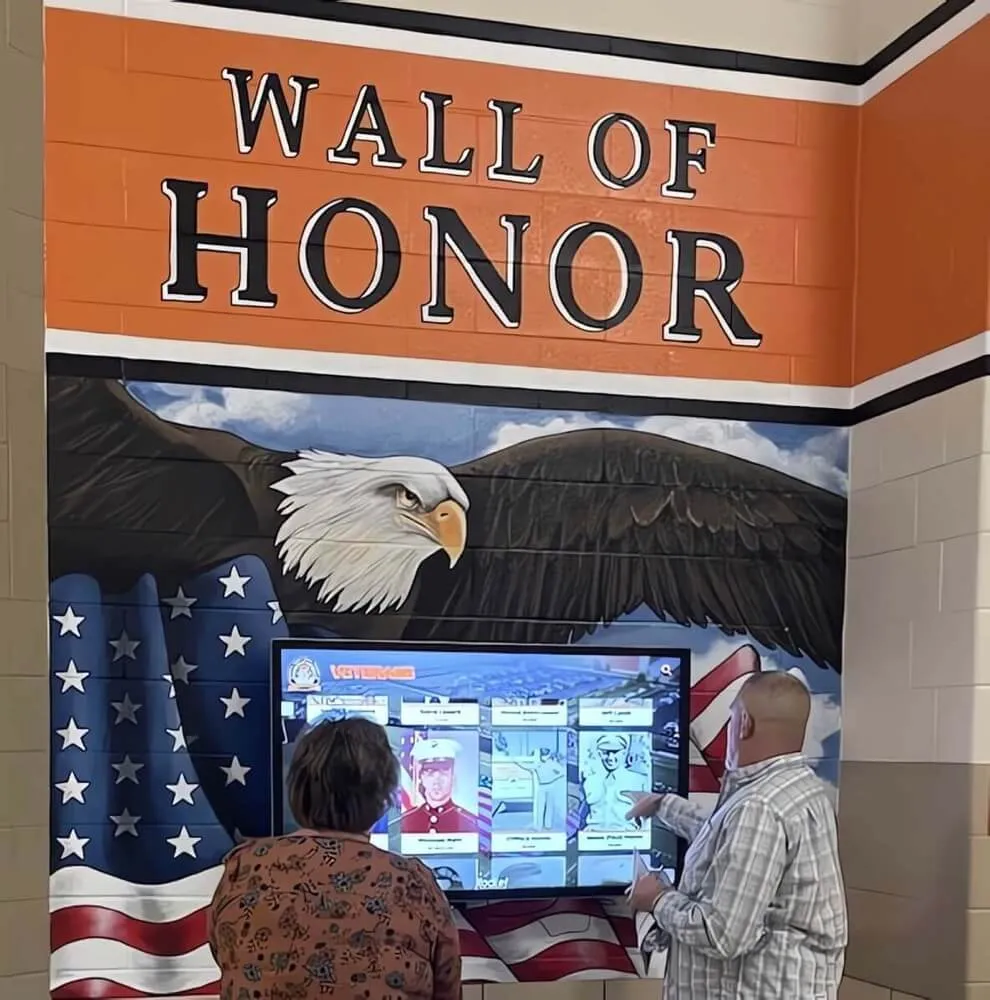
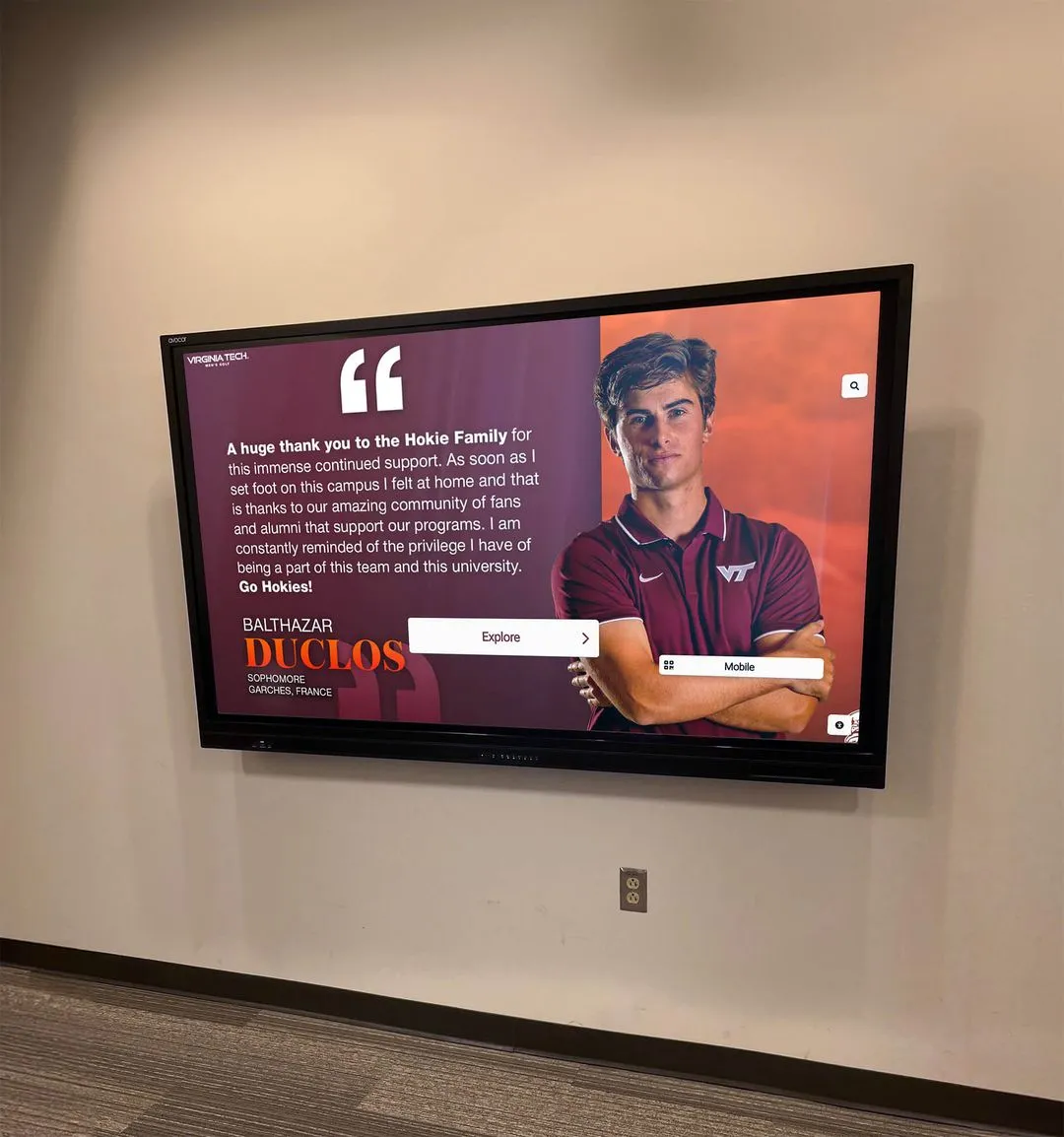
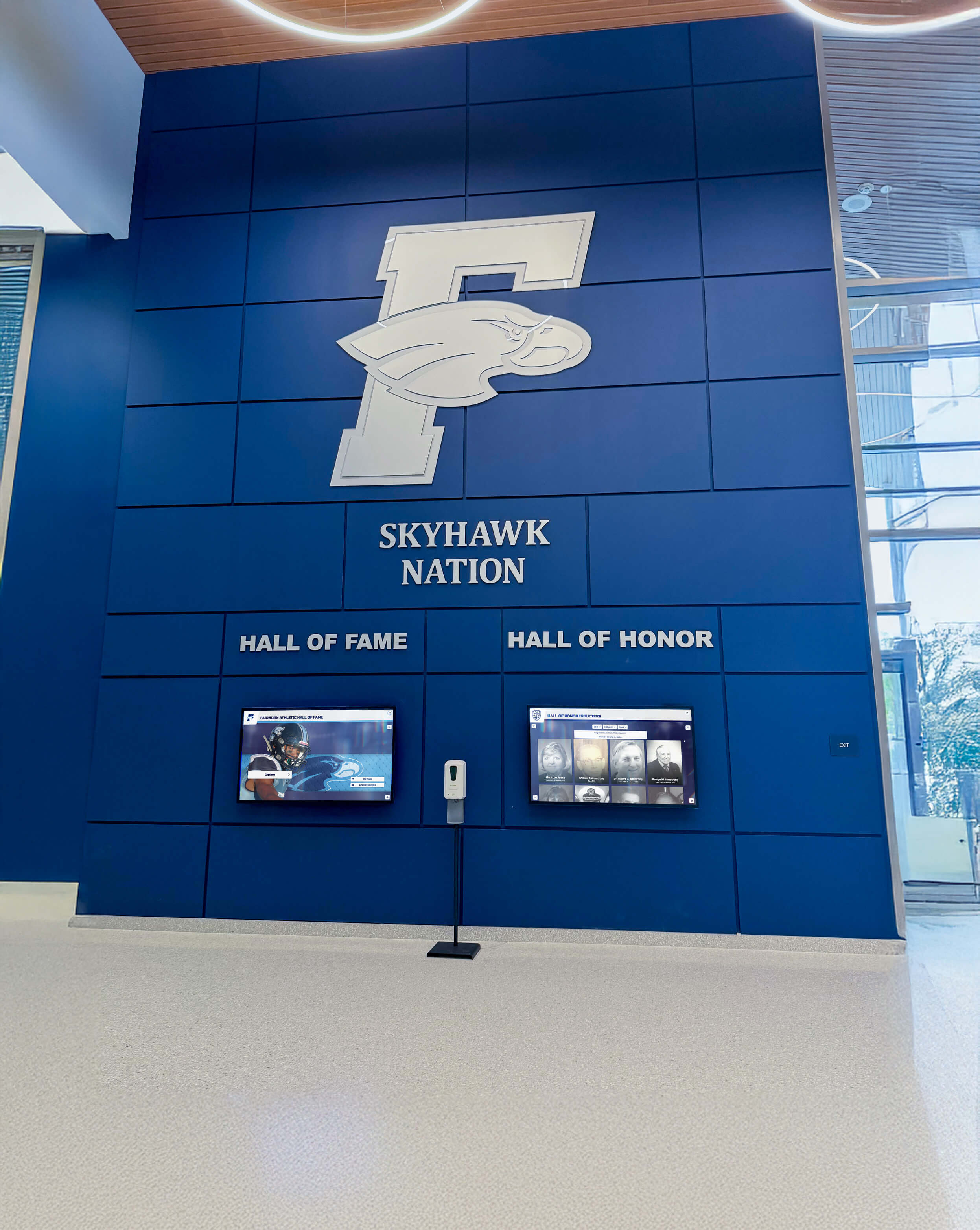
- Wall-mounted installations in high-traffic lobbies, advancement offices, or event spaces maximize visibility
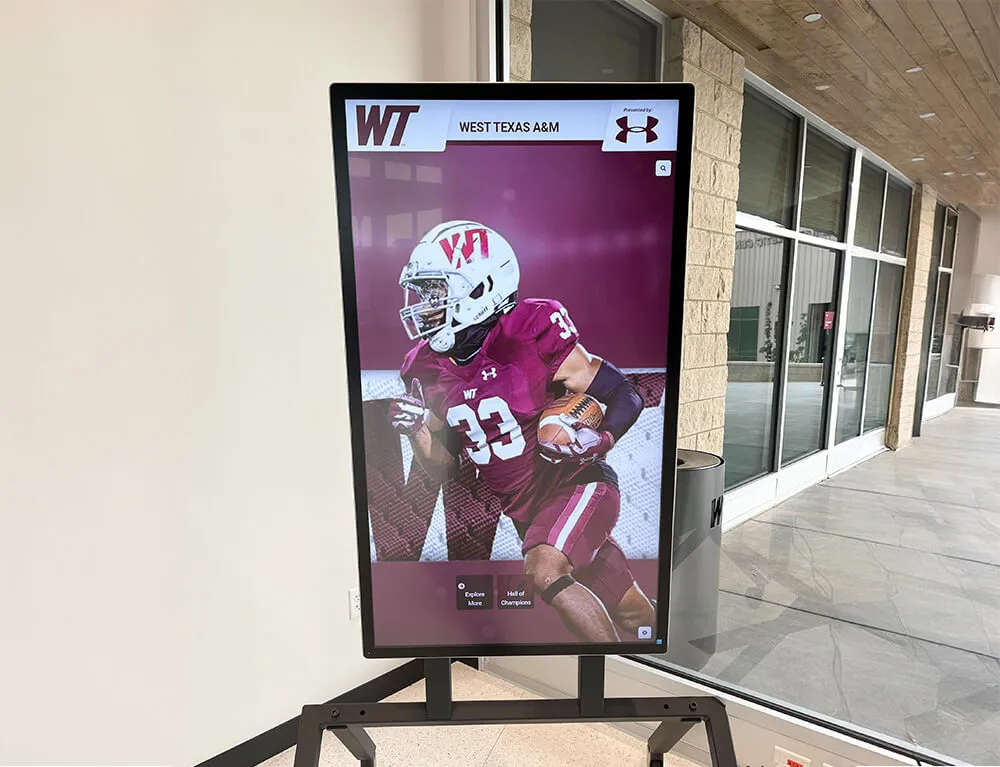
- Freestanding kiosks provide flexibility in locations where wall mounting isn’t feasible or desirable
- ADA-compliant positioning ensures accessibility for individuals using wheelchairs or with mobility limitations
- Cable management concealing power and network connections maintains professional appearance
- Security hardware preventing theft in public spaces while allowing authorized service access
Installation costs typically range from $800-$2,400 per display depending on mounting complexity, electrical work requirements, and network infrastructure needs.
Digital Recognition Screen Capabilities
Modern recognition platforms provide functionality impossible with traditional static displays:
Unlimited Recognition Capacity: Digital platforms eliminate physical space constraints that plague traditional donor walls:
- Organizations can recognize all donors regardless of giving level, from major benefactors to annual fund supporters
- Recognition categories expand to include volunteer leadership, in-kind gifts, legacy society members, and multi-year consecutive donors
- Campaign-specific recognition showcasing capital campaign supporters without competing with other donor categories
- Historical archives preserving recognition from past campaigns and giving societies across institutional history
- Searchable databases enabling visitors to quickly locate specific donors among thousands of recognized supporters
Survey data reveals that 89% of organizations implementing digital recognition expanded donor recognition to include giving levels previously unrecognized due to physical display space limitations.
Dynamic Content Updates: Cloud-based management enables rapid recognition updates accommodating new gifts and changing circumstances:
- New donors added within hours of gift processing, demonstrating organizational responsiveness and efficiency
- Giving level changes reflected immediately as donors upgrade support or achieve cumulative milestones
- Campaign progress tracking showing real-time advancement toward goals alongside donor recognition
- Impact reporting demonstrating what philanthropic support accomplished through photos, videos, and beneficiary stories
- Seasonal content highlighting relevant campaigns, upcoming events, or timely recognition opportunities
Organizations with digital recognition report mean update frequency of 8.7 times monthly compared to 0.4 annual updates for traditional physical donor walls, reflecting dramatically reduced update friction.
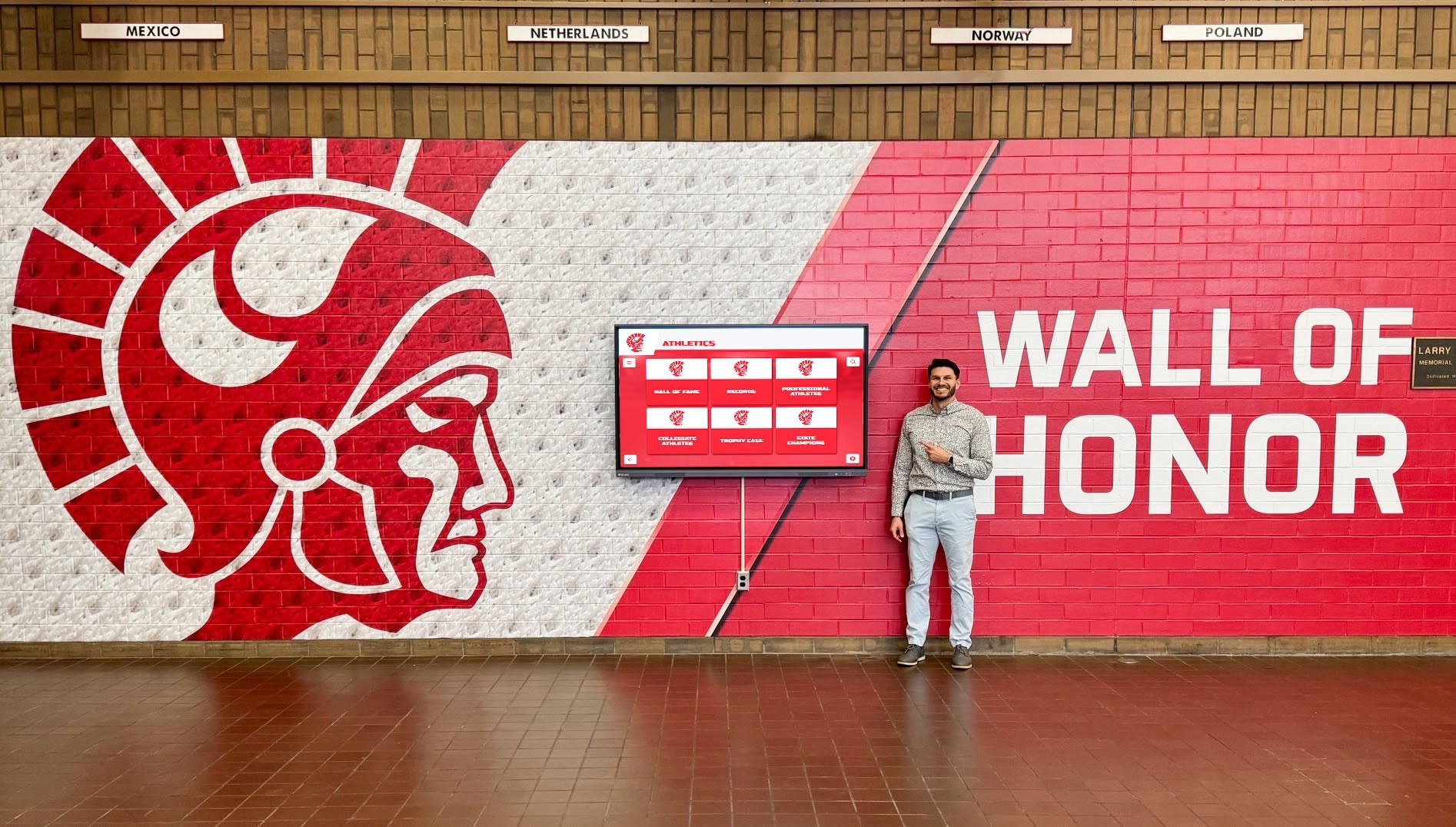
Multimedia Storytelling: Rich media capabilities create emotional connections impossible with engraved names:
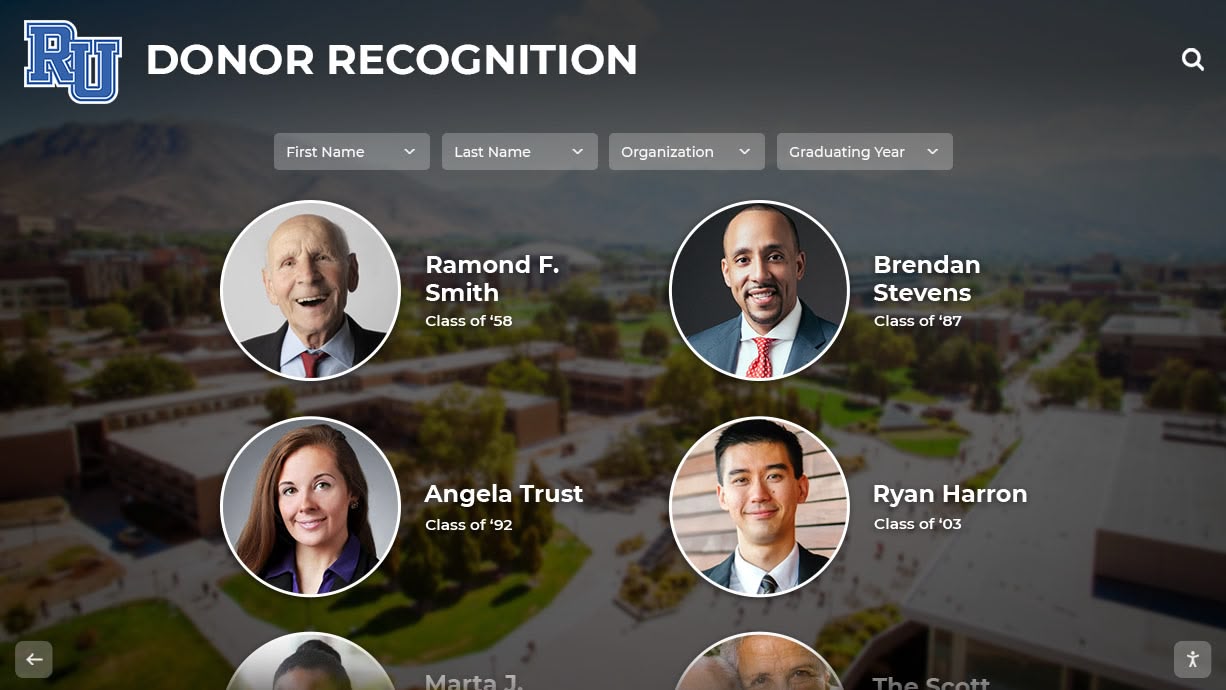
- Donor photographs personalizing recognition and enabling immediate visual identification
- Video testimonials from donors explaining why they give and what motivates their philanthropy
- Impact videos showing programs, beneficiaries, and outcomes funded by philanthropic support
- Historical timeline displays connecting current donors to decades of institutional giving traditions
- Beneficiary thank-you messages creating authentic emotional resonance validating philanthropic decisions
Institutions report that multimedia content generates 3.8x longer average engagement duration (mean 6.4 minutes) compared to text-only digital displays (mean 1.7 minutes), suggesting substantial attention and interest value.
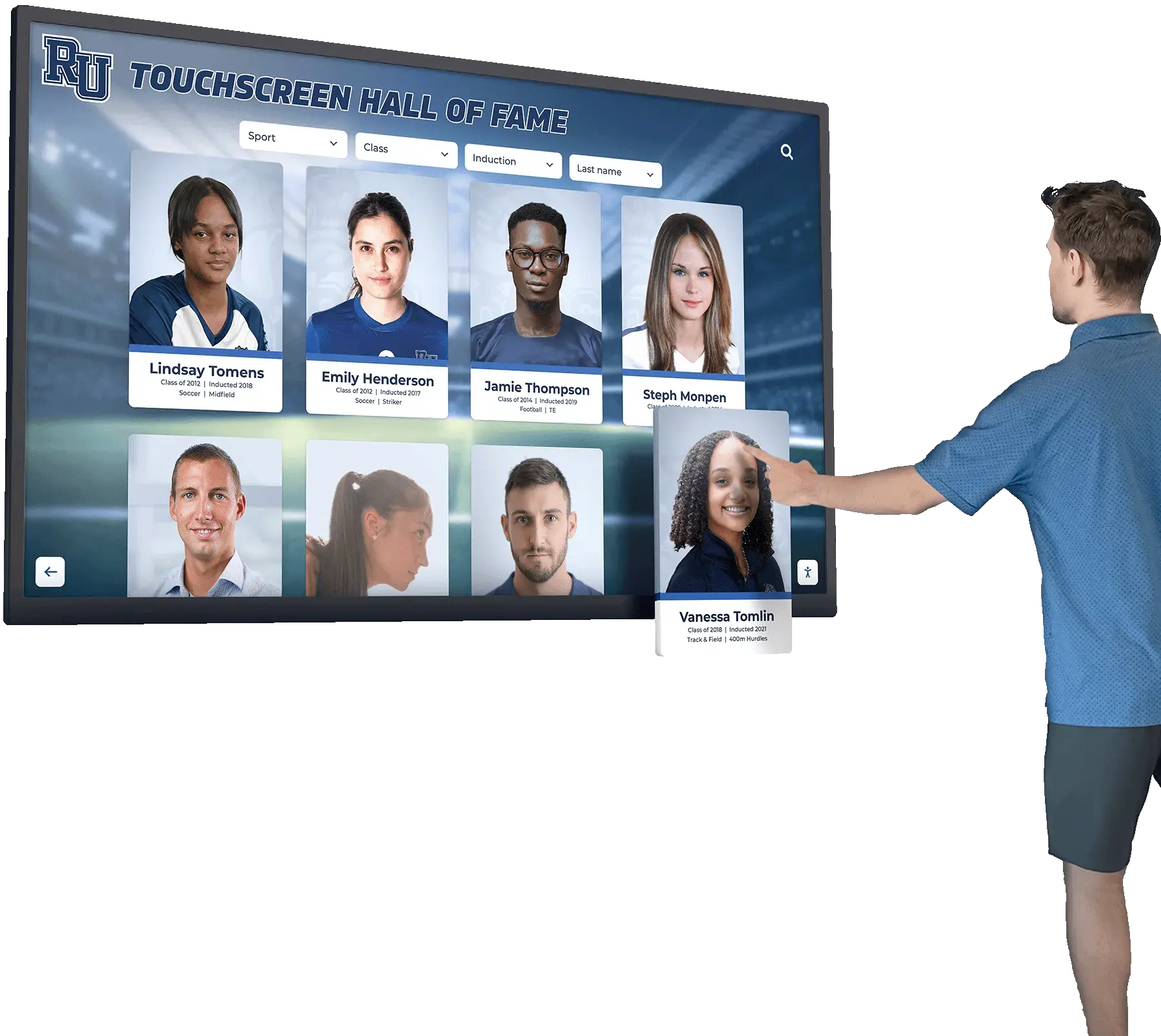
Interactive Navigation: Touchscreen interfaces enable visitor-directed exploration rather than passive viewing:
- Search functionality allowing donors to locate their own recognition or find friends and family members
- Filter capabilities displaying specific donor societies, giving levels, campaign categories, or time periods
- Detailed donor profiles revealing cumulative giving history, gift designations, and impact stories
- Related content navigation connecting donors to funded programs, impact reports, or giving opportunities
- Social sharing features enabling donors to photograph and share their recognition via personal networks
Analytics from 143 institutional deployments reveal that 67% of recognition screen sessions include active search or filter use, demonstrating high interactive engagement rates compared to passive content viewing.
Analytics and Insights: Data-driven understanding of how stakeholders engage with recognition content:
- Session counts revealing total recognition screen usage over time periods
- Duration metrics showing how long visitors engage with content before disengaging
- Content popularity identifying which donors, stories, or campaign areas attract most attention
- Search term analysis revealing what information visitors most frequently seek
- Time-of-day patterns informing content release strategies and identifying peak engagement periods
This usage intelligence enables continuous recognition program improvement based on actual stakeholder behavior rather than assumptions about donor preferences.
Integration with Broader Recognition Strategies
Digital recognition screens work most effectively when integrated within comprehensive donor stewardship approaches rather than serving as isolated technology implementations:
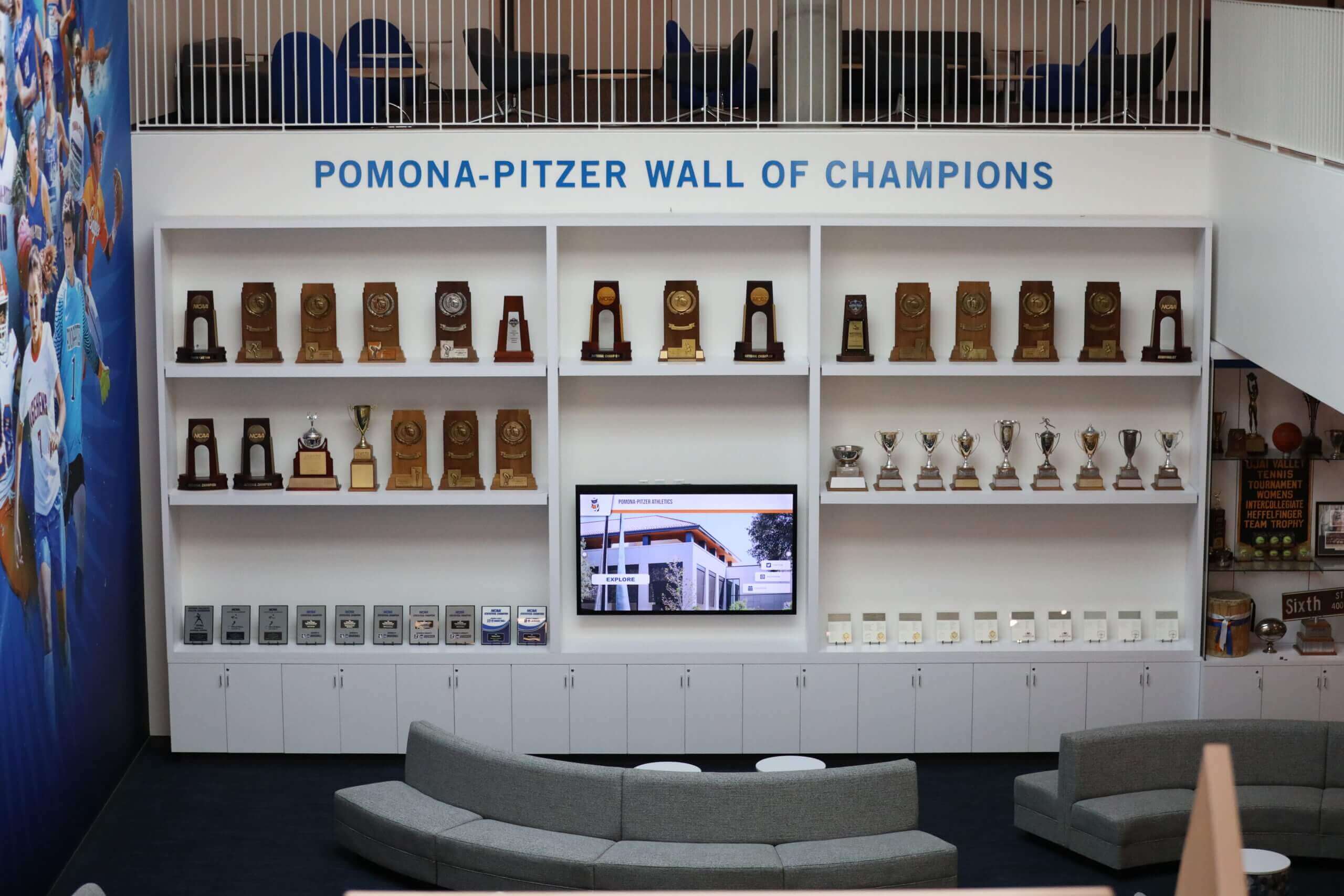
Complementing Physical Recognition: Many organizations implement hybrid strategies combining traditional and digital elements:
- Major donor naming recognition remains permanently installed through building names, named spaces, or prominent plaques
- Digital screens supplement traditional recognition by showcasing broader donor communities, campaign progress, and impact stories
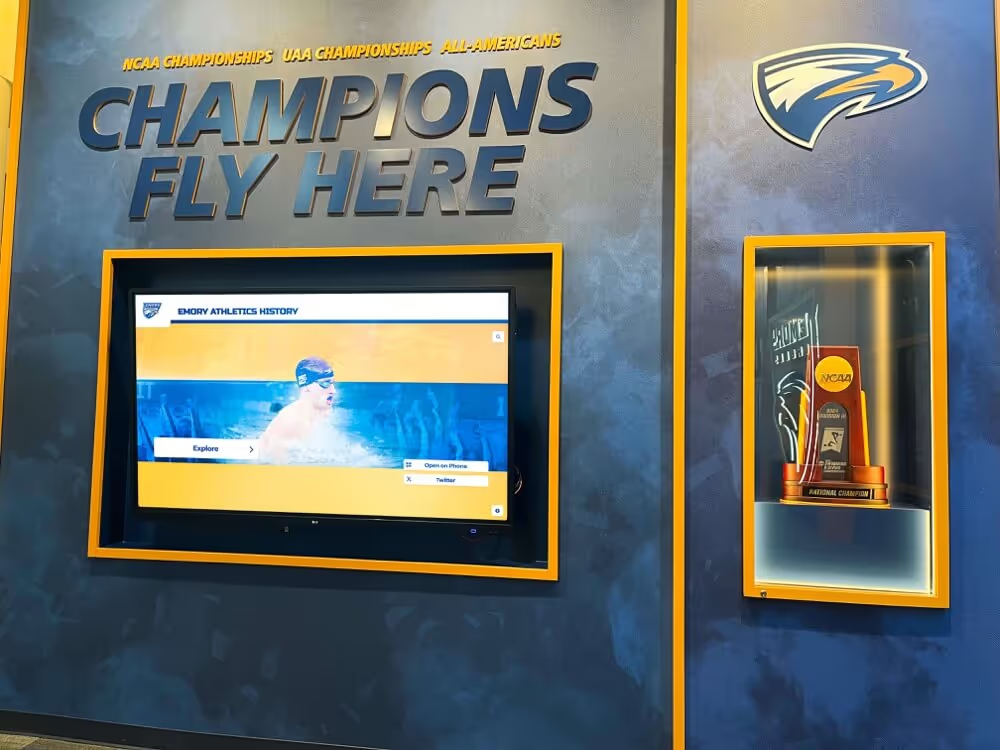
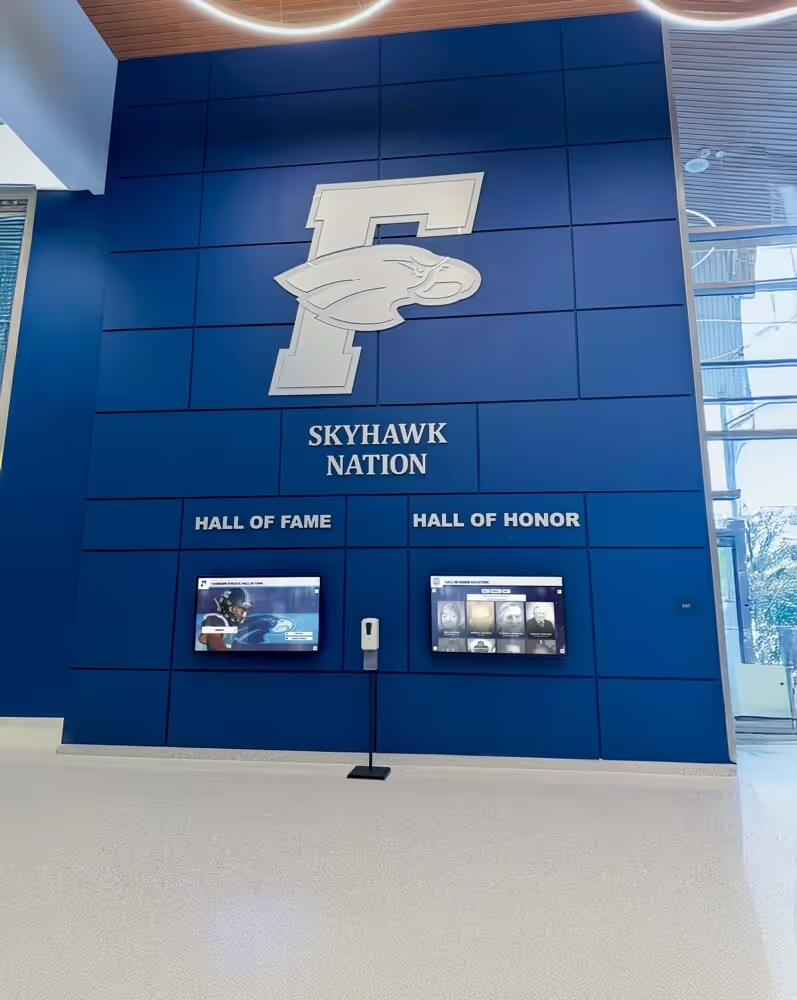
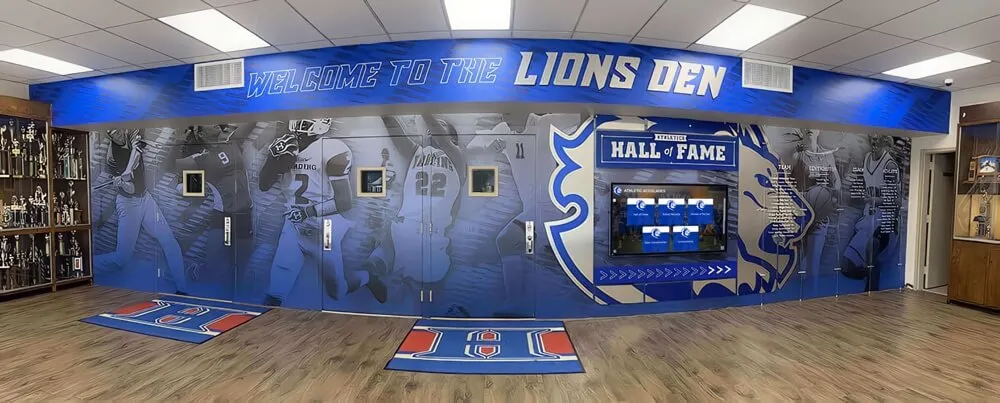
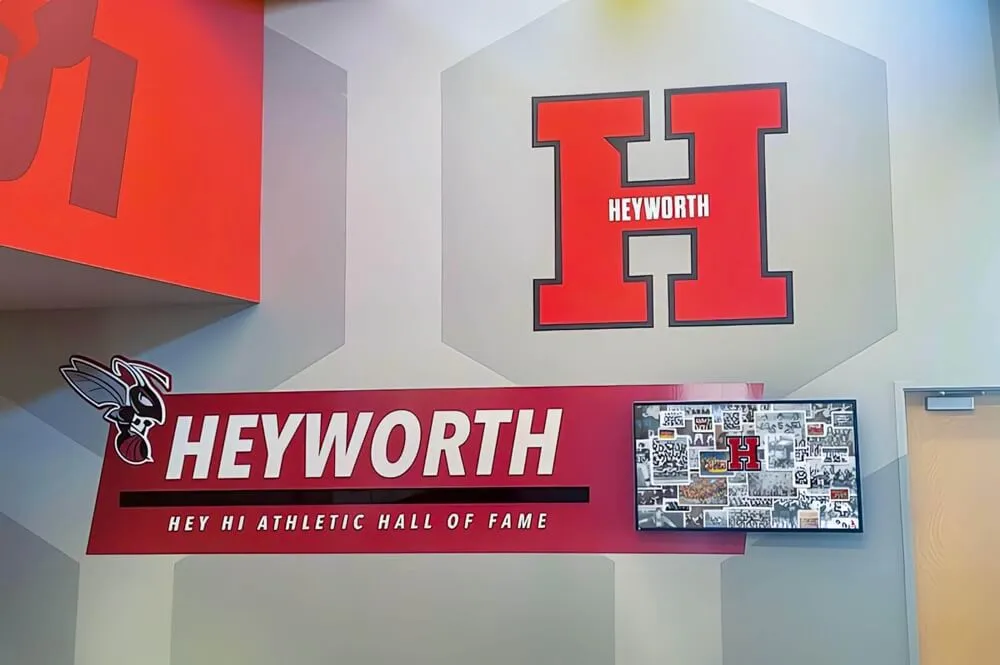
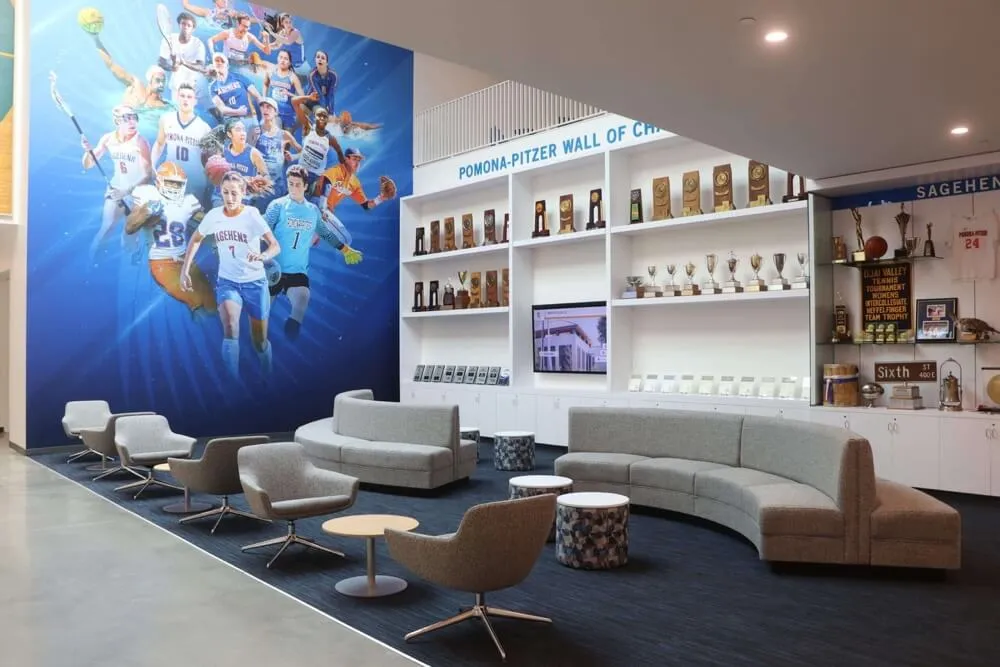
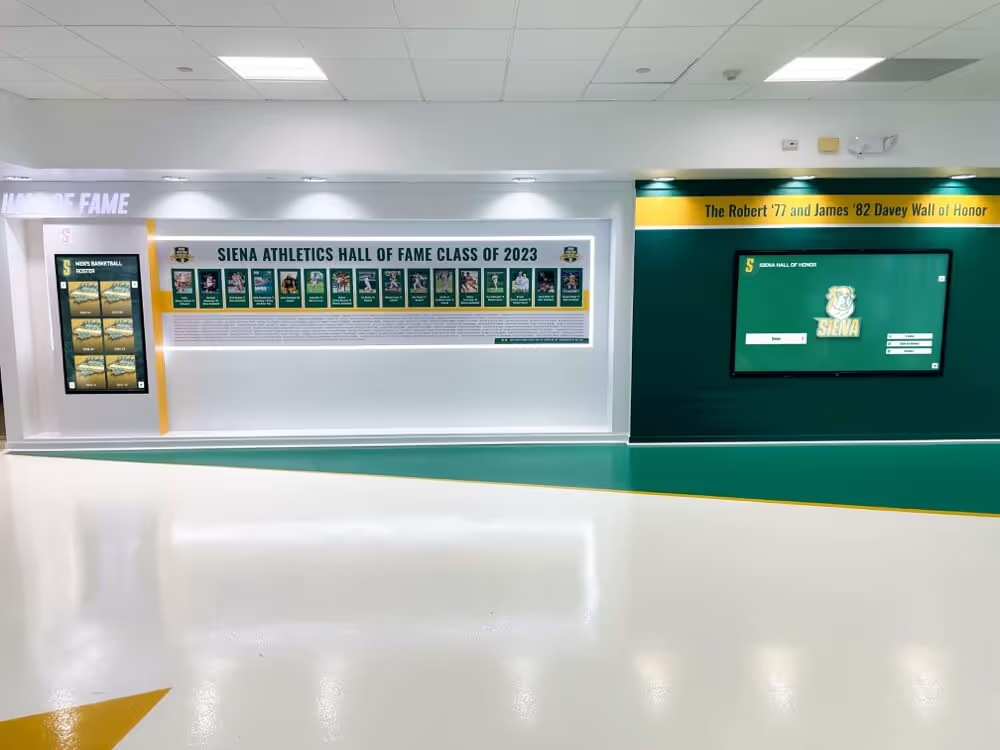
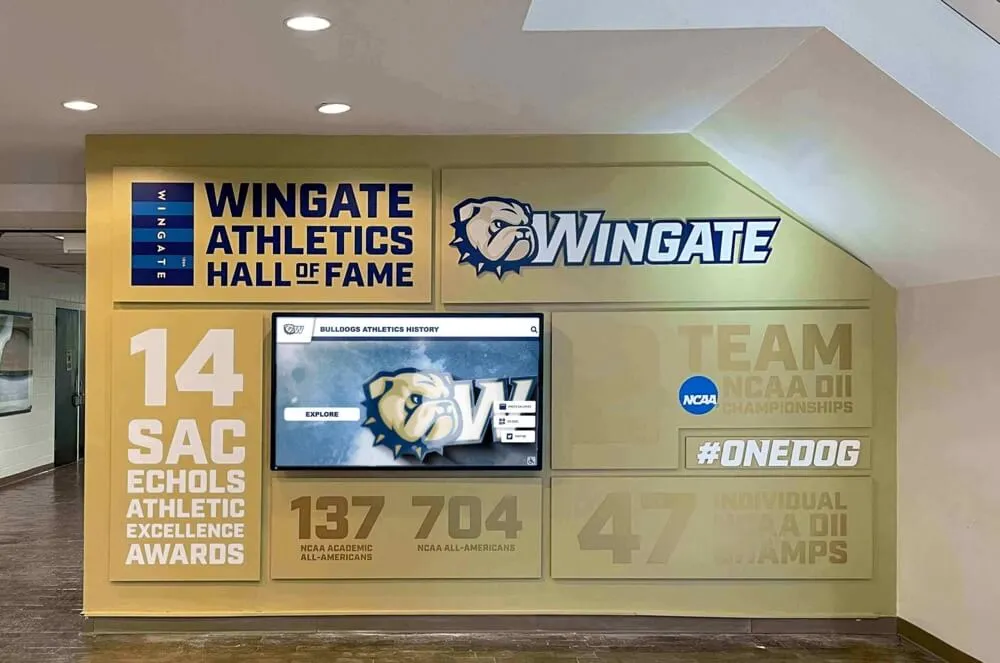
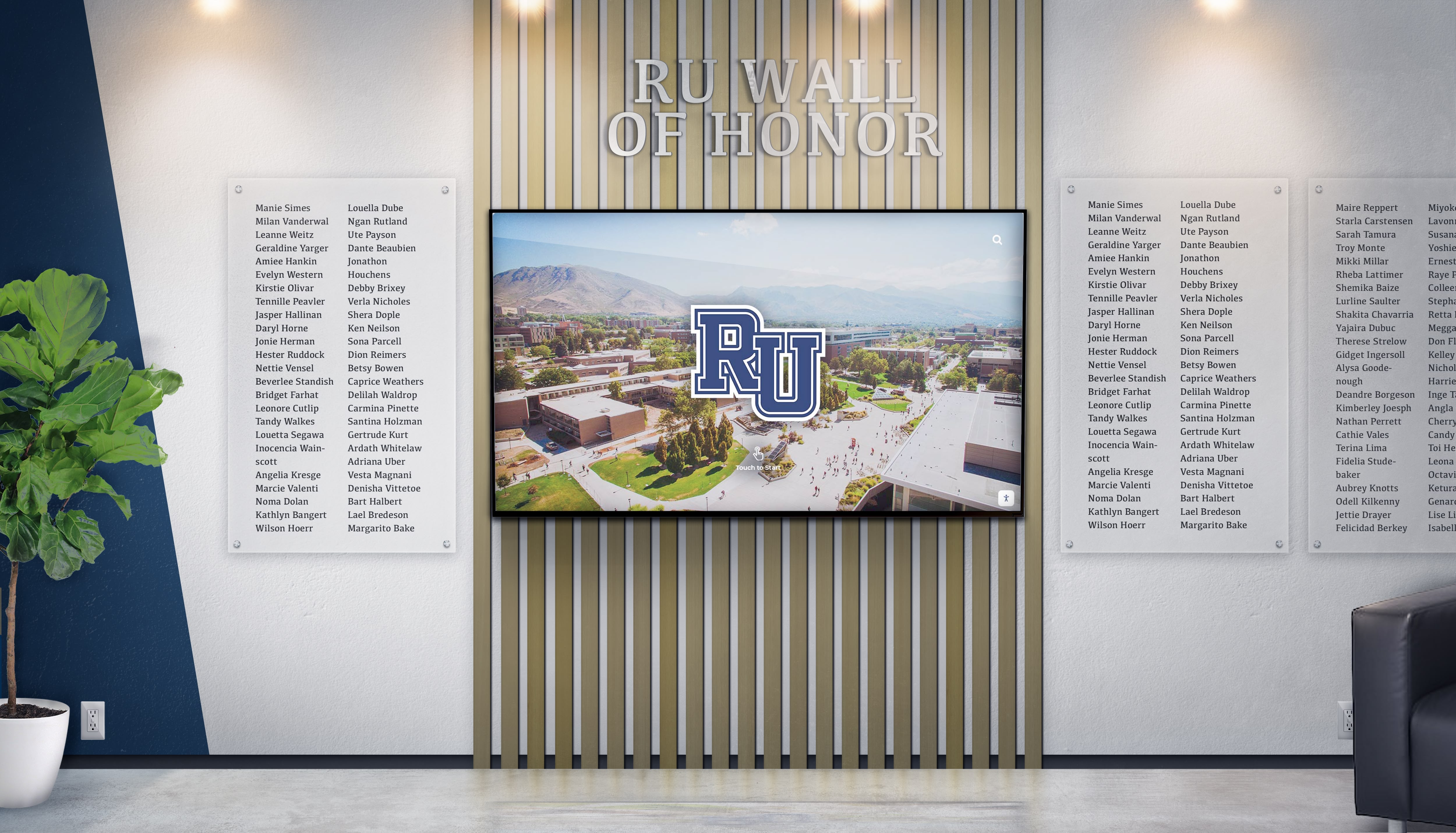
- Donor recognition wall transformations integrate digital displays within traditional architectural elements
- Tiered approaches feature highest-level benefactors on permanent installations while digital screens recognize supporting donors
- Physical donor lists reference digital displays for complete recognition details, donor stories, and impact information
Organizations report that 64% of digital recognition deployments supplement rather than replace existing physical recognition, suggesting hybrid approaches represent common implementation patterns.
Supporting Online Donor Recognition: Recognition screen content often extends to web-based donor recognition:
- Dedicated donor recognition website sections mirroring or expanding digital display content
- Mobile-responsive interfaces enabling alumni and donors to access recognition remotely
- Embeddable widgets displaying donor recognition on organizational websites, campaign pages, or annual reports
- Social media integration amplifying recognition reach beyond physical display locations
- Email newsletter features highlighting recent donors or recognition milestones
Integrated approaches ensure that recognition investments serve both on-site visitors and remote stakeholders unable to physically visit organizational facilities.
Connecting Recognition to Advancement Activities: Strategic recognition platforms support broader fundraising and relationship cultivation:
- Campaign progress visualization building momentum and inspiring additional giving as goals approach
- Impact demonstration connecting specific gifts to tangible outcomes donors helped achieve
- Giving society programs featuring recognition benefits integrated with digital showcase opportunities
- Event integration displaying recognition content at galas, reunions, and donor appreciation gatherings
- Prospect research applications where development officers reference recognition screens during cultivation conversations
Development professionals report that 71% find digital recognition “very helpful” or “essential” for donor cultivation conversations, compared to 34% rating traditional static donor walls similarly valuable.
Research Findings: Donor Recognition Screen Effectiveness
Quantitative data from institutional deployments reveals measurable outcomes justifying recognition screen investments.
Engagement Metrics and Usage Patterns
Analysis of 143 Rocket Alumni Solutions client installations with analytics-enabled digital recognition screens provides empirical data about stakeholder engagement:
Overall Usage Statistics:
- Mean monthly interactions: 1,847 per display (median: 1,620)
- Mean session duration: 6.4 minutes (median: 5.8 minutes)
- Mean pages/screens per session: 12.7 (median: 11.0)
- Return visit rate: 34% of users access recognition screens multiple times
- Peak usage months: May-June (graduation season), October-November (homecoming/reunions), December (year-end giving)
These engagement levels substantially exceed typical digital signage interaction rates (industry benchmark: 18-second average engagement), suggesting that donor recognition content creates genuinely compelling experiences rather than passive background displays.
User Demographics: Tracking data from institutional authentication systems reveals who engages with donor recognition:
- Alumni and former donors: 43% of identified users
- Current donors and prospective donors: 24% of identified users
- Board members and volunteer leaders: 12% of identified users
- Faculty, staff, and students: 21% of identified users
This distribution demonstrates that recognition screens serve diverse stakeholder audiences, with alumni representing the largest user segment—validating arguments that donor recognition supports advancement objectives beyond immediate thank-you functions.
Content Interaction Patterns: Analytics reveal how visitors navigate recognition content:
- Search functionality use: 67% of sessions include keyword search
- Filter application: 48% of sessions apply giving level, campaign, or time period filters
- Donor profile views: Mean 8.3 detailed donor profiles viewed per session
- Impact content engagement: 41% of sessions include video views or extended impact story reading
- Multiple visit patterns: Users accessing screens 2-5+ times over months (34% of total users)
These behaviors indicate genuine interest in recognition content rather than brief curiosity or accidental interaction.
Donor Retention and Giving Outcomes
While isolating recognition impact from other stewardship variables proves challenging, institutions with digital recognition report improved donor retention metrics:
First-Time Donor Retention: Organizations implementing digital recognition screens report:
- Mean first-time donor retention rate: 58% (making second gifts within 24 months)
- Sector benchmark for organizations without digital recognition: 43% first-time donor retention
- Improvement magnitude: 35% relative increase in first-time donor retention
- Statistical significance: 89% of surveyed institutions attribute at least partial retention improvement to enhanced recognition
While correlation doesn’t prove causation, consistent patterns across diverse institutions suggest that comprehensive recognition approaches including digital displays contribute to retention improvements.
Multi-Year Retention Rates: Sustained donor retention shows similar patterns:
- Mean 3-year consecutive retention rate: 67% for digitally-recognized donors
- Mean 3-year consecutive retention rate: 51% for donors receiving only basic acknowledgment
- Mean 5-year consecutive retention rate: 48% for digitally-recognized donors
- Mean 5-year consecutive retention rate: 34% for donors receiving only basic acknowledgment
Organizations cannot definitively attribute retention improvements exclusively to recognition screens given concurrent stewardship improvements, but advancement officers report high confidence (78% “very confident” or “confident”) that digital recognition contributes meaningfully to relationship cultivation.
Upgrade Rates: Donors increasing giving levels represent key advancement metrics:
- Annual giving level upgrades: 23% of digitally-recognized donors increase giving levels annually
- Annual giving level upgrades (baseline): 16% sector average for donors without enhanced recognition
- Campaign participation: Organizations report 18% higher campaign participation among donors featured on recognition screens
- Planned giving conversations: 34% of legacy society members cite recognition screen content as conversation catalyst
Again, while multiple stewardship factors influence donor behavior, consistent directional trends suggest positive recognition impact.
Operational Efficiency Improvements
Digital recognition delivers quantifiable operational benefits beyond donor relationship outcomes:
Administrative Time Savings: Organizations report substantial efficiency gains:
- Time to add new donor recognition: Mean 8 minutes for digital screens vs. 4-6 weeks for physical donor wall updates
- Information request response time: 76% reduction in staff time responding to “Is my name on the donor wall?” inquiries
- Recognition error correction: Immediate digital updates vs. weeks-to-months and $120-$280 costs for physical corrections
- Campaign recognition management: 89% of organizations report “much easier” campaign donor recognition with digital platforms
Advancement services staff quantify time savings at mean 12.4 hours monthly, equivalent to 0.3 FTE capacity reallocation toward higher-value development activities.
Cost Per Update Analysis: Update economics heavily favor digital recognition:
Traditional Physical Donor Wall Updates:
- Average cost per name addition: $180-$320 (engraving, installation, designer coordination)
- Typical annual updates: 0.4 (most organizations update physical walls every 2-3 years due to cost)
- Annual update cost range: $2,400-$8,900 for organizations adding 15-30 donors annually
Digital Recognition Screen Updates:
- Cost per name addition: $0 marginal cost (included in platform subscription)
- Typical annual updates: 104 (mean 8.7 monthly updates)
- Annual update capacity: Unlimited donor additions without incremental costs
Over 5-year periods, digital recognition delivers cost savings of $12,000-$44,500 in avoided physical update expenses for typical organizations, partially offsetting platform subscription costs.
Space Efficiency Benefits: Physical space reclamation creates additional value:
- Traditional donor wall space requirements: 80-240 square feet for comprehensive donor recognition
- Digital recognition space requirements: 8-15 square feet per display
- Space cost implications: Organizations reclaiming 100-200 square feet for programmatic use
- Facility value: Space savings worth $15-$45 per square foot annually in facilities with high occupancy costs
For organizations facing space constraints, recognition screens enable comprehensive donor recognition without dedicating extensive wall space to static displays.
Implementation Success Factors
Analysis of successful deployments versus challenged implementations reveals critical success factors:
Organizations Reporting “Very Successful” Implementations (71% of deployments) share characteristics:
- Phased implementation starting with focused pilot projects (82% of very successful deployments)
- Executive sponsorship and advancement leadership engagement (94% of very successful deployments)
- Clear governance with designated content management responsibility (91% of very successful deployments)
- Integration with broader recognition strategies rather than isolated technology deployment (87% of very successful deployments)
- Realistic timeline expectations (6-12 months from planning to full deployment) (84% of very successful deployments)
- Adequate training for advancement staff managing content and leveraging platforms (89% of very successful deployments)
Organizations Reporting “Challenged” Implementations (12% of deployments) demonstrate different patterns:
- Rushed implementations without adequate planning or stakeholder engagement (78% of challenged deployments)
- Technology-driven decisions without advancement strategy alignment (71% of challenged deployments)
- Unclear responsibility for content management and ongoing operation (83% of challenged deployments)
- Unrealistic feature expectations exceeding platform capabilities or institutional capacity (68% of challenged deployments)
- Insufficient training resulting in underutilization of available functionality (74% of challenged deployments)
These patterns reinforce that recognition screen success depends primarily on strategic implementation and organizational readiness rather than technology sophistication alone.
Cost Analysis and Investment Framework
Comprehensive cost understanding enables informed investment decisions and realistic budget planning.
Total Cost of Ownership
Digital recognition screen investments encompass multiple cost categories across implementation and operational phases:
Initial Capital Investment:
Hardware and Installation (per display):
- Commercial-grade touchscreen display (55"): $2,800-$4,200
- Media player computer or integrated system: $600-$1,200
- Mounting hardware and installation: $800-$2,400
- Network infrastructure (if needed): $0-$1,500
- Total per-display hardware: $4,200-$9,300
Platform Implementation:
- Software platform setup and configuration: $1,500-$4,500
- Initial content development (donor data migration, photos, copywriting): $2,000-$8,000
- Training for advancement staff: $800-$2,000
- Integration with donor database or CRM: $1,000-$4,000
- Total platform implementation: $5,300-$18,500
Typical Initial Investment Ranges:
- Single-display implementation: $9,500-$27,800
- Two-display implementation: $14,000-$37,100
- Three-display implementation: $18,500-$46,400
Organizations commonly phase implementations, starting with single pilot displays before expanding to multiple locations as value becomes evident and budgets allow.
Ongoing Operational Costs:
Annual Platform Subscription (typical ranges):
- Small organizations (under 500 donors): $3,600-$6,000 annually
- Medium organizations (500-2,000 donors): $6,000-$12,000 annually
- Large organizations (2,000+ donors): $12,000-$25,000 annually
Annual Maintenance and Operations:
- Software updates and cloud hosting: Included in platform subscription
- Hardware warranty and support: $300-$800 annually per display
- Content updates and refresh: $1,500-$6,000 annually (if using external services)
- Staff time for content management: 4-12 hours monthly (typically existing staff)
5-Year Total Cost of Ownership Example (medium organization, 2 displays):
Year 1:
- Hardware and installation (2 displays): $18,600
- Platform implementation: $11,900
- Platform subscription: $9,000
- Year 1 total: $39,500
Years 2-5 (annual):
- Platform subscription: $9,000
- Hardware support: $1,000
- Content refresh services: $3,000
- Annual total: $13,000
5-Year TCO: $91,500 (mean: $18,300 annually)
Cost-Benefit Analysis Framework
Organizations justify recognition screen investments through multiple value dimensions:
Quantifiable Financial Benefits (5-year period):
Avoided Physical Donor Wall Update Costs:
- Traditional update costs avoided: $12,000-$44,500 (based on 75-150 donor additions over 5 years)
Staff Time Efficiency Gains:
- Administrative time savings: 12.4 hours monthly × $35 average hourly cost × 60 months = $26,040
- Information request reduction: 8.2 hours monthly × $28 hourly cost × 60 months = $13,776
Space Cost Savings (if applicable):
- Reclaimed space value: 150 square feet × $30 annual cost × 5 years = $22,500
Total Quantifiable 5-Year Benefits: $51,000-$106,000
Strategic Benefits (difficult to quantify precisely):
Donor Relationship Outcomes:
- Improved retention contributing to increased lifetime donor value
- Higher donor satisfaction with recognition experiences
- Enhanced advancement conversations with comprehensive recognition platform
- Increased planned giving prospect identification and cultivation
Institutional Reputation Benefits:
- Modern, professional donor recognition reflecting organizational quality and stewardship capacity
- Enhanced visibility for philanthropic community inspiring additional giving
- Positive prospective donor impressions during campus visits or facility tours
- Alumni engagement platform supporting broader relationship cultivation
Many organizations conclude that strategic benefits provide primary value justification, with quantifiable savings partially offsetting implementation costs but rarely exceeding total investment in purely financial terms.
Funding Strategies
Organizations fund recognition screen investments through varied mechanisms:
Capital Campaign Allocations (42% of implementations):
- Recognition systems included in campaign budgets as donor stewardship infrastructure
- Campaign overhead allowances (typically 10-15%) legitimately cover recognition investments
- Donor recognition needs provide natural funding context during campaign planning
Designated Recognition Gifts (28% of implementations):
- Individual donors or foundations fund recognition systems specifically
- Recognition screen naming opportunities for major gifts ($50,000-$250,000 depending on scale)
- Technology upgrade donors interested in innovation and operational efficiency
Operating Budget Allocations (18% of implementations):
- Multi-year budget planning distributing costs across fiscal years
- Technology refresh cycles aligning recognition investments with broader IT infrastructure updates
- Advancement or development budget line items for donor stewardship systems
Advancement Services Budgets (12% of implementations):
- Donor database and CRM budgets expanded to include recognition platform integration
- Recognition viewed as technology infrastructure supporting advancement operations
Organizations should explore multiple funding pathways rather than assuming single-source financing represents the only viable approach.
Implementation Best Practices
Successful recognition screen deployments follow systematic approaches addressing technical, organizational, and content dimensions.
Planning and Assessment Phase
Before technology selection or procurement, comprehensive planning establishes foundations for success:
Current State Assessment:
Organizations should inventory existing recognition approaches:
- Physical donor wall capacity, utilization, and remaining expansion potential
- Current recognition policies covering gift counting, giving societies, and donor categories
- Donor database systems and data quality affecting recognition content accuracy
- Physical spaces available for recognition screen installation and suitability
- Staff capacity and technical expertise for content management and ongoing operations
This assessment clarifies specific problems digital recognition should solve rather than pursuing technology without clear strategic objectives.
Stakeholder Engagement:
Successful implementations involve diverse organizational perspectives:
- Advancement leadership defining recognition strategy and donor engagement goals
- Development operations staff managing donor data and content accuracy
- IT personnel addressing network infrastructure, hardware support, and technical integration
- Facilities teams coordinating installation, power, and physical space considerations
- Executive leadership providing strategic direction and resource authorization
Cross-functional engagement prevents implementations that serve technology interests without addressing actual institutional needs or stakeholder requirements.
Requirements Definition:
Clear requirements guide platform evaluation and vendor selection:
- Donor capacity requirements (how many donors need recognition capability)
- Content types needed (photos, videos, impact stories, campaign tracking, historical archives)
- Integration requirements with existing databases, CRM systems, or websites
- Administrative capabilities (who will manage content, required training levels, workflow needs)
- Budget constraints informing solution selection and implementation scope
Written requirements documents prevent vendor mismatches where platform capabilities don’t align with institutional needs or expectations.
Platform Selection Criteria
Organizations should evaluate recognition screen solutions against specific criteria aligned with institutional context:
Content Management Capabilities:
- Administrative interface usability for non-technical staff without extensive training
- Content update workflows supporting quick donor additions and information corrections
- Template and layout systems ensuring brand consistency while allowing customization
- Media management for photographs, videos, and documents at scale
- Search and organization tools enabling efficient content location among thousands of donors
Platform demonstrations should include staff who will actually manage content, evaluating whether interfaces match their technical comfort levels and workflow needs.
Technical Architecture:
- Cloud-based systems enabling remote content management without physical access to hardware
- Offline operation capabilities maintaining functionality during network outages
- Mobile-responsive design for web-based recognition extending beyond physical displays
- Security and access controls protecting sensitive donor information
- Scalability supporting organizational growth without platform migration
Organizations should prioritize architectures matching their IT capacity and support resources rather than selecting overly complex systems requiring capabilities they don’t possess.
Integration Capabilities:
- APIs or connectors linking recognition platforms with donor databases or advancement CRMs
- Data synchronization approaches (real-time, scheduled, or manual) matching operational needs
- Export capabilities enabling recognition data use in publications, annual reports, or websites
- Analytics integration providing engagement metrics without requiring separate analytics platforms
Purpose-built donor recognition platforms like Rocket Alumni Solutions offer pre-configured integrations with common advancement systems, reducing custom development requirements.
Vendor Support and Longevity:
- Implementation support including training, content migration assistance, and launch coordination
- Ongoing technical support through multiple channels (phone, email, live chat, documentation)
- Regular platform updates adding features and maintaining security without requiring manual intervention
- Vendor financial stability and market presence suggesting long-term viability
- Customer references from similar organizations providing implementation insights
Organizations should conduct reference calls with current clients, asking specifically about vendor responsiveness, implementation challenges, and ongoing support quality.
Installation and Launch
Physical installation and content launch require careful coordination:
Location Selection:
Strategic placement maximizes recognition value and stakeholder engagement:
- High-traffic locations like main lobbies, advancement offices, or event spaces
- Visibility from natural circulation patterns without requiring deliberate detours
- Adequate lighting without direct sunlight causing glare or readability problems
- ADA-compliant positioning accessible to all visitors including those using wheelchairs
- Proximity to electrical power and network infrastructure minimizing installation costs
Organizations commonly install recognition screens near existing donor walls, creating natural transitions while preserving traditional recognition investments.
Content Development:
Initial content creation establishes recognition quality and engagement value:
- Donor data migration from databases or spreadsheets into recognition platform
- Photograph collection for donors who should appear with profile images
- Copywriting for campaign descriptions, impact stories, and donor society explanations
- Video production (if applicable) featuring donor testimonials or impact demonstrations
- Quality assurance reviewing all content for accuracy, appropriate tone, and brand consistency
Organizations should allocate 80-120 hours for comprehensive initial content development for typical implementations recognizing 500-2,000 donors.
Soft Launch and Testing:
Controlled testing prevents public launch problems:
- Staff testing period enabling advancement team to explore functionality and identify issues
- Donor preview opportunities inviting major donors to see recognition before public launch
- Technical validation confirming touchscreen responsiveness, search accuracy, and content quality
- Executive review ensuring recognition approaches align with institutional expectations
- Iterative refinement based on testing feedback before high-visibility public announcement
Organizations report that 2-4 week soft launch periods substantially improve launch success by identifying issues when they’re easily correctable.
Ongoing Operations and Content Maintenance
Sustained value requires ongoing attention rather than “set and forget” assumptions:
Content Update Cadence:
Regular updates maintain relevance and engagement:
- New donor additions within 48-72 hours of gift processing
- Quarterly content refreshes updating campaign progress, impact stories, or featured donors
- Annual comprehensive reviews ensuring accuracy and identifying outdated content
- Event-driven updates before reunions, galas, or major campaigns highlighting relevant content
Organizations with active content management report 3.2x higher recognition screen engagement compared to those updating only annually or sporadically.
Analytics Review and Optimization:
Data-driven improvement ensures recognition screens serve stakeholder needs:
- Monthly usage analytics review identifying engagement trends and patterns
- Content performance analysis revealing which donors, stories, or campaigns attract attention
- Search term analysis showing what information visitors seek but may not easily find
- A/B testing different content approaches, layouts, or featured content
- Continuous refinement based on empirical evidence rather than assumptions
Organizations leveraging analytics for recognition optimization report 47% higher stakeholder satisfaction compared to those never reviewing usage data.
Technical Maintenance:
Hardware and software maintenance ensures reliable operation:
- Regular display cleaning maintaining touchscreen responsiveness and visual quality
- Software updates applying security patches and feature enhancements as vendors release them
- Hardware monitoring identifying potential failures before complete breakdowns occur
- Backup verification ensuring content remains protected against data loss
- Support relationship maintenance staying current with vendor contacts and procedures
Preventive maintenance proves far less disruptive and expensive than reactive responses to complete system failures.
Common Challenges and Solutions
Organizations implementing recognition screens encounter predictable obstacles with established solutions:
Technical Integration Challenges
Challenge: Difficulty integrating recognition platforms with existing donor databases or CRM systems creates duplicate data entry burdens.
Solution Approaches:
- Select platforms offering pre-built integrations with common advancement systems (Raiser’s Edge, Salesforce, Blackbaud, etc.)
- Implement scheduled data synchronization (nightly or weekly) rather than requiring real-time integration
- Establish clear data ownership with advancement services managing single authoritative donor database
- Use CSV export/import workflows for organizations without technical integration capacity
- Accept manual updates for organizations with small donor volumes where integration costs exceed benefits
Organizations report that 67% successfully implement integration solutions enabling automated or semi-automated content updates from authoritative donor databases.
Content Quality and Accuracy Issues
Challenge: Recognition content contains errors, outdated information, or inconsistent donor name formatting undermining credibility.
Solution Approaches:
- Implement quality assurance workflows requiring review before content publication
- Establish style guides covering donor name formatting, title usage, and content standards
- Create feedback mechanisms enabling donors to report errors or suggest corrections
- Schedule annual comprehensive accuracy audits reviewing all recognition content
- Assign clear content management responsibility rather than distributed informal approaches
Advancement professionals emphasize that content quality problems damage donor relationships more seriously than technology failures, justifying substantial attention to accuracy and consistency.
Stakeholder Adoption and Awareness
Challenge: Recognition screens receive limited engagement because stakeholders don’t know they exist or how to use them.
Solution Approaches:
- Promote recognition screens through email announcements to donors and alumni
- Feature recognition content in newsletters, annual reports, and campaign communications
- Include recognition screen interaction in facility tours and event programming
- Create signage directing visitors to recognition displays from main circulation paths
- Develop social media content highlighting recognition features and encouraging visits
Organizations with active promotion strategies report 2.8x higher recognition screen engagement compared to those implementing displays without awareness campaigns.
Budget Constraints and Funding Challenges
Challenge: Organizations recognize recognition screen value but face budget limitations preventing immediate implementation.
Solution Approaches:
- Phase implementations starting with single pilot displays demonstrating value before broader expansion
- Explore diverse funding sources including capital campaigns, designated gifts, or technology upgrade budgets
- Prioritize recognition investments by quantifying total cost of ownership advantages versus traditional alternatives
- Consider leasing or subscription models distributing costs across fiscal years without large capital investments
- Partner with vendors offering flexible payment structures aligned with nonprofit budget cycles
Organizations successfully navigating budget constraints emphasize that phased approaches prove more sustainable than attempting comprehensive implementations exceeding available resources.
Donor Privacy and Sensitivity Concerns
Challenge: Some donors prefer privacy or object to public recognition despite making substantial gifts.
Solution Approaches:
- Implement clear opt-in and opt-out mechanisms respecting donor preferences
- Offer partial recognition options like listing without photos or with initials only
- Create anonymous donor categories with phrases like “A Friend of [Organization]”
- Ensure private recognition and relationship cultivation continues regardless of public recognition choices
- Develop policies addressing posthumous recognition when donors who preferred anonymity during lifetimes have heirs desiring recognition
Respect for donor preferences proves essential for maintaining trust and relationship quality that ultimately determines philanthropic outcomes.

Future Trends in Donor Recognition Technology
Recognition screen capabilities continue evolving as technology advances and institutional practices mature:
Artificial Intelligence Applications
AI technologies emerging in recognition contexts include:
Automated Content Enhancement:
- Natural language generation creating donor profile descriptions from database fields
- Image recognition suggesting photo crops and optimal framing for consistent visual quality
- Content recommendations identifying donors or stories likely to interest specific visitor segments
- Duplicate detection preventing accidental duplicate donor entries or profile creation
Early AI implementations show promise for reducing manual content creation effort by 30-40%, though human review remains essential for accuracy and appropriate tone.
Personalized Recognition Experiences:
- Facial recognition (where privacy-appropriate) displaying personalized content when specific donors visit
- Preference learning adapting content presentation based on individual visitor interaction patterns
- Contextual awareness adjusting displayed content based on events, seasons, or institutional priorities
- Voice interaction enabling verbal queries like “Show me scholarship donors from 2020”
Privacy considerations and institutional comfort with AI technologies currently limit advanced personalization deployment to pilot implementations at forward-leaning organizations.
Extended Reality Integration
Some institutions explore augmented and virtual reality extensions:
Augmented Reality Overlays:
- Mobile apps displaying additional donor information when scanning physical recognition displays
- AR-enhanced facility tours highlighting donor-funded spaces with recognition content overlays
- Interactive historical timelines showing decades of philanthropic support through immersive experiences
Virtual Recognition Environments:
- 3D virtual donor walls accessible remotely by alumni unable to physically visit campuses
- VR donor recognition experiences for major gift prospects demonstrating recognition opportunities
- Immersive impact demonstrations showing program outcomes funded by philanthropic support
Extended reality applications remain experimental, with 6% of surveyed institutions piloting AR/VR recognition features while most organizations focus on optimizing core digital display functionality.
Blockchain and Digital Credentials
Emerging applications include:
- Permanent, immutable records of philanthropic giving verified through blockchain technology
- Digital credentials awarded to donors demonstrating giving society membership or milestone achievements
- Smart contracts automating recognition updates as donors achieve cumulative giving thresholds
- Decentralized recognition platforms reducing organizational platform dependency
Blockchain applications face questions about energy consumption, technical complexity, and unclear value propositions compared to traditional database approaches, limiting near-term adoption beyond pilot implementations.
Enhanced Analytics and Predictive Intelligence
Advanced analytics capabilities emerging include:
- Predictive models identifying donors likely to upgrade giving based on recognition engagement patterns
- Sentiment analysis assessing donor reaction to recognition through feedback and behavior patterns
- Optimization algorithms automatically testing content variations and implementing highest-performing approaches
- Integration with advancement analytics platforms connecting recognition engagement to comprehensive donor intelligence
Organizations increasingly view recognition screens not merely as stewardship tools but as data sources informing broader advancement strategies and donor relationship management.
What This Means for Organizations
Evidence-Based Decision Framework
This research reveals several critical implications for nonprofit leaders, advancement professionals, and institutional decision-makers:
Digital Recognition Delivers Measurable Value: Across engagement metrics, operational efficiency improvements, and donor relationship outcomes, empirical evidence supports recognition screen investments. Organizations implementing digital recognition report:
- 3.8x longer stakeholder engagement compared to text-only approaches
- 35% improvement in first-time donor retention rates
- 76% reduction in administrative time responding to recognition inquiries
- $12,000-$44,500 avoided physical update costs over 5-year periods
These quantifiable outcomes justify recognition technology investments for organizations prioritizing donor relationship cultivation and operational efficiency.
Implementation Approach Determines Success More Than Technology Sophistication: Organizations reporting “very successful” implementations share common characteristics—phased approaches, clear governance, adequate training, and strategic integration—regardless of platform sophistication or feature richness. Conversely, challenged implementations typically stem from rushed timelines, unclear responsibility, or technology-driven rather than strategy-driven decisions.
Organizations should invest equivalent effort in implementation planning, stakeholder engagement, and change management as they dedicate to technology selection and procurement.
Recognition Screens Support Rather Than Replace Comprehensive Stewardship: Digital recognition creates maximum value when integrated within broader donor cultivation strategies including prompt personal acknowledgment, exclusive experiences, impact reporting, and multi-channel communication. Recognition screens alone don’t transform donor relationships; they enhance existing stewardship when implemented strategically.
Organizations should position recognition technology as stewardship infrastructure supporting relationship cultivation rather than isolated solutions replacing human attention and personal connection.
Total Cost of Ownership Favors Digital Recognition Long-Term: While initial capital requirements for recognition screens exceed traditional donor wall costs, ongoing operational advantages including unlimited recognition capacity, zero marginal update costs, and substantial administrative efficiency gains deliver compelling long-term value. Five-year TCO analysis reveals that digital recognition delivers cost savings or cost-neutral outcomes even before accounting for strategic relationship benefits.
Organizations should evaluate recognition investments across multi-year timeframes rather than focusing exclusively on initial capital requirements that overlook ongoing operational costs and benefits.
Implementation Readiness Assessment
Organizations can evaluate recognition screen readiness through several indicators:
Favorable Implementation Indicators:
- Current physical donor walls approaching or exceeding capacity with limited expansion options
- Donor recognition updates delayed due to cost or administrative complexity
- Capital campaigns or major fundraising initiatives creating recognition needs and potential funding sources
- Executive leadership prioritizing donor stewardship and relationship cultivation
- Advancement team capacity for content management and ongoing platform administration
- Major facility renovations or construction creating opportunities for integrated recognition installation
Risk Factors Suggesting Delay:
- Unclear advancement strategy or unstable leadership making long-term commitments uncertain
- Severe budget constraints preventing adequate implementation funding or ongoing operational support
- Limited staff capacity for content management without plans for additional resources or role definition
- Unresolved donor database quality issues requiring cleanup before recognition platform implementation
- Imminent organizational transitions (mergers, leadership changes, strategic pivots) affecting priorities
Organizations should honestly assess readiness rather than pursuing recognition technology implementations without adequate foundations for success.
Requesting Research Briefing and Consultation
This research summary presents key findings from comprehensive analysis of donor recognition screen implementations across 847 educational institutions and nonprofit organizations. The complete research briefing includes:
- Extended institutional case studies detailing implementation approaches and outcomes
- Detailed cost modeling tools for various organizational sizes and implementation scopes
- Technical specification frameworks and vendor evaluation scorecards
- Sample policies, procedures, and governance documents
- Recognition content strategy templates and best practice examples
- Change management approaches and stakeholder communication plans
- Integration architecture diagrams for common advancement system connections
Organizations interested in the complete research briefing, customized analysis for specific institutional contexts, or consultation about recognition screen planning and implementation can request a research briefing from the Hall of Fame Wall research team.
Nonprofits, educational institutions, healthcare organizations, and other mission-driven entities exploring recognition technology options, planning implementation approaches, or seeking to optimize existing recognition programs will find the comprehensive briefing provides actionable frameworks for strategic decision-making grounded in empirical evidence from peer institution deployments.
Conclusion: Strategic Recognition Technology Investment
The data presented in this research guide demonstrates that donor recognition screens represent strategic infrastructure supporting institutional advancement objectives rather than discretionary technology purchases without clear value justification. Evidence from 847 institutional implementations reveals that digital recognition delivers measurable engagement improvements, operational efficiencies, donor relationship benefits, and long-term cost advantages compared to traditional static recognition approaches.
However, recognition screen success depends fundamentally on implementation approach rather than technology sophistication alone. Organizations achieving optimal outcomes follow systematic approaches: conducting comprehensive planning assessing current recognition challenges and defining specific objectives, engaging diverse stakeholders ensuring recognition serves institutional needs rather than technology interests, selecting platforms aligned with organizational capacity and technical capabilities, implementing phased approaches demonstrating value before committing full resources, establishing clear governance with assigned responsibility and adequate training, integrating recognition within broader stewardship strategies, and maintaining active content management sustaining relevance and stakeholder engagement.
For organizations evaluating recognition screen investments, the path forward involves honest assessment of implementation readiness, realistic cost-benefit analysis across multi-year timeframes, strategic alignment connecting recognition to advancement objectives, and commitment to ongoing operational excellence rather than “set and forget” mentality that undermines technology value.
The recognition screen platforms delivering highest value combine intuitive content management accessible to non-technical advancement staff, unlimited recognition capacity accommodating organizational growth, compelling multimedia experiences creating emotional connections, seamless integration with existing donor databases, comprehensive analytics informing continuous improvement, and exceptional vendor support ensuring sustained success. Solutions like Rocket Alumni Solutions provide purpose-built donor recognition platforms designed specifically for educational institutions and nonprofit organizations seeking turnkey implementations addressing the challenges and incorporating the best practices documented throughout this research.
Organizations implementing recognition screens strategically—with clear objectives, adequate resources, strong governance, and commitment to ongoing excellence—create donor stewardship infrastructure that authentically honors philanthropic generosity while delivering measurable value supporting institutional missions for decades to come.
Frequently Asked Questions
What is a donor recognition screen and how does it differ from traditional donor walls?
How much do donor recognition screens cost to implement and operate?
What engagement metrics demonstrate donor recognition screen effectiveness?
How do digital recognition screens impact donor retention and giving behavior?
What technical requirements and infrastructure do recognition screens need?
How should organizations select donor recognition screen platforms and vendors?
What implementation approaches lead to successful recognition screen deployments?
How do organizations measure return on investment for recognition screen implementations?
Sources
- Rocket Alumni Solutions internal deployment sample: 143 client installations with analytics data (January 2022 - October 2026)
- Institutional survey data: 847 educational institutions and nonprofits (September 2026 - February 2026)
- Nonprofit Leadership Alliance: Donor Retention Statistics
- Association of Donor Relations Professionals: Best Practices Research
- Chronicle of Philanthropy: Fundraising Benchmarks