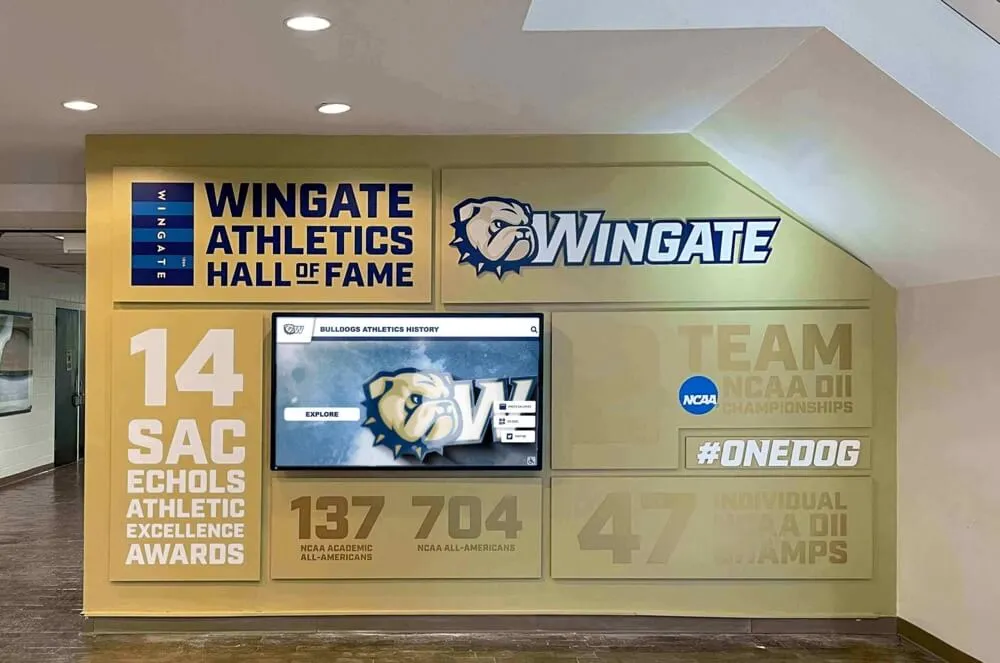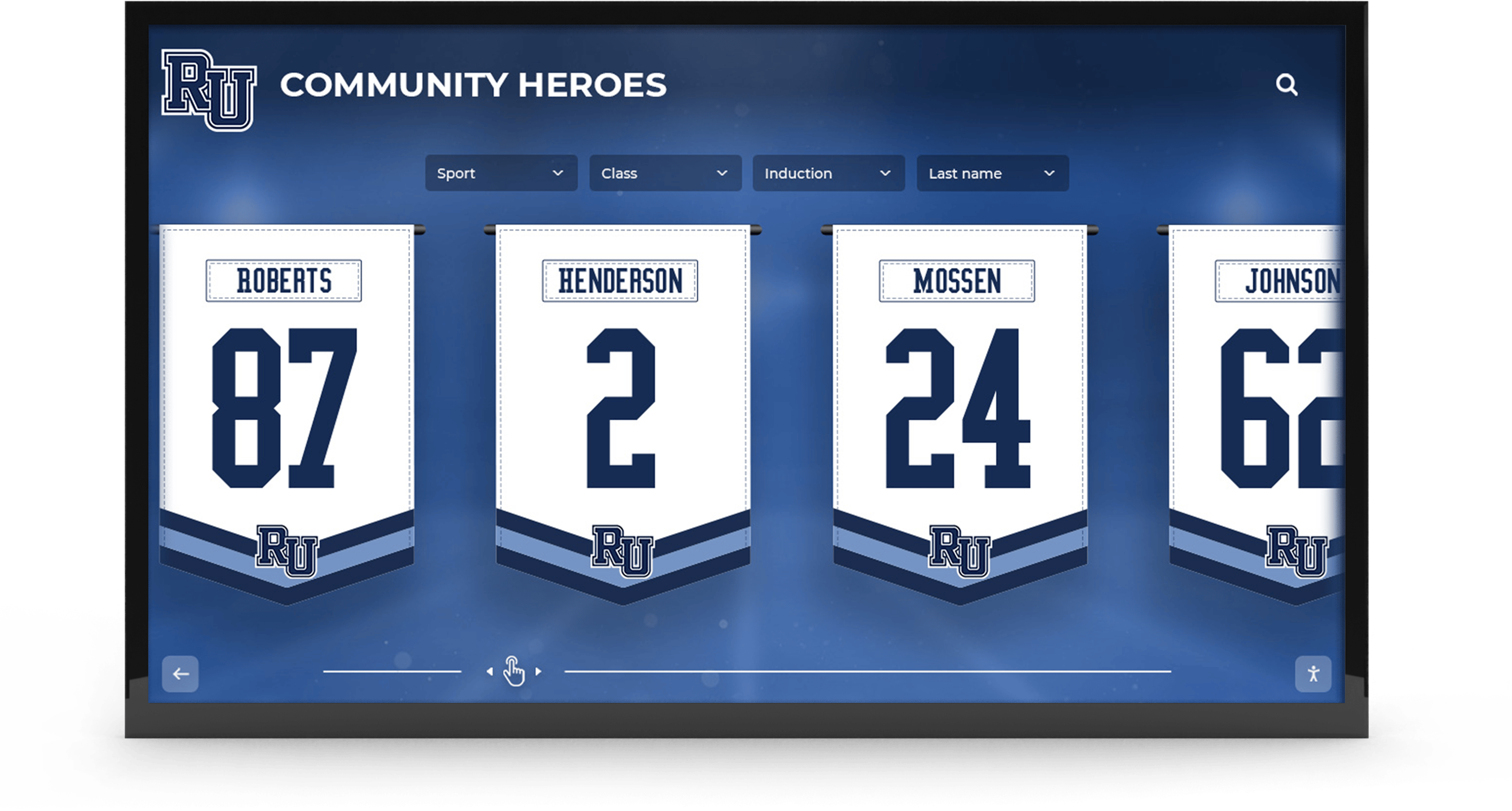




Booster clubs represent the backbone of athletic and extracurricular program funding for schools nationwide, raising millions of dollars annually through volunteer-driven fundraising efforts. Yet many booster organizations struggle to maintain donor engagement, achieve consistent giving year-over-year, and recognize supporters in ways that inspire continued generosity and community participation.
Donor recognition displays specifically designed for booster club environments solve critical fundraising challenges by creating visible celebrations of supporter generosity, establishing clear giving level expectations, building community around shared support missions, and generating social proof that motivates additional contributions. When properly implemented, recognition systems typically generate 200-350% return on investment within 24 months through improved donor retention, increased gift sizes, and enhanced volunteer recruitment.
This comprehensive guide examines donor recognition displays specifically through the booster club lens, exploring unique considerations these volunteer organizations face, proven recognition approaches that maximize fundraising outcomes, implementation strategies that respect limited resources, and measurement frameworks demonstrating return on investment to stakeholders and organizational leadership.
Understanding Booster Club Donor Recognition Needs
Booster clubs operate under distinct constraints and priorities that shape effective recognition strategies differently than institutional advancement offices or large nonprofit organizations.
The Volunteer-Driven Operational Reality
Unlike professional advancement offices with dedicated staff managing donor relations, booster clubs typically operate through volunteer boards juggling recognition responsibilities alongside full-time careers, family obligations, and other commitments. This volunteer reality creates specific requirements for recognition systems:
Time Constraints and Administrative Burden
Volunteer leaders managing recognition alongside numerous other duties cannot dedicate hours weekly to manual plaque updates, complex database maintenance, or time-intensive recognition administration. Effective booster club recognition must function efficiently through streamlined processes requiring minutes rather than hours for routine updates, automated workflows reducing manual intervention, systems accessible from multiple devices without specialized training, and cloud-based platforms enabling distributed management across volunteer teams.
Recognition approaches that worked in eras when dedicated staff managed operations become impractical for contemporary volunteer-led organizations where board members turn over frequently and institutional knowledge disappears with departing volunteers.
Budget Limitations and Cost Justification
Booster clubs carefully steward donated funds, facing scrutiny about “overhead” spending rather than direct program support. Recognition investments compete with equipment purchases, uniform replacements, facility improvements, and direct student support for limited financial resources. This budget consciousness requires recognition solutions demonstrating clear return on investment through measurable fundraising improvements, cost-effective approaches avoiding expensive ongoing update fees, scalable systems growing with organizations without proportional cost increases, and multi-year value rather than single-season utility.
Spending $5,000 on donor recognition generates legitimate concern when that amount could purchase sports equipment or fund team travel. Recognition systems must prove they generate sufficient additional donations to justify expenditure rather than representing pure expense.
Booster Club Donor Demographics and Motivations
Understanding what motivates booster club supporters shapes recognition design that resonates emotionally while encouraging continued giving.
Parent Donors Supporting Current Students
Parents whose children currently participate in supported programs represent the largest booster club donor segment. These supporters give primarily during their children’s active participation years, creating ongoing challenges replacing donors as students graduate. Parental motivations include ensuring quality experiences for their own children, supporting coaches and programs benefiting their families, social connection with other parents sharing similar interests, and community involvement through program support.
Recognition for parent donors should acknowledge family connections, celebrate student participation alongside parental support, create community building opportunities connecting families, and encourage continuing support as younger siblings join programs or alumni status develops.
Alumni Supporters Maintaining Connections
Former program participants—graduated athletes, band members, debate team alumni—often maintain giving relationships long after their direct participation ends. Alumni donors give from gratitude for formative experiences, desire to provide opportunities they enjoyed for current students, pride in program traditions and excellence, and maintained connections to coaches, directors, or program cultures that shaped their development.
Highlighting famous alumni and distinguished graduates provides recognition models that inspire current participants while demonstrating how programs create lasting impact extending far beyond immediate participation years.
Community Supporters and Local Businesses
Individuals and businesses without direct program connections but supporting school and community activities represent valuable donor segments. Community supporters give from civic pride and school district investment, business marketing and community visibility, relationship building with customer families, and general support for youth development opportunities.
Recognition for community donors should emphasize broader impact beyond individual participants, acknowledge business partnerships appropriately, demonstrate responsible stewardship of community resources, and create visibility that provides value to business sponsors seeking community connection.
Unique Booster Club Recognition Challenges
Several specific challenges distinguish booster club recognition from general nonprofit donor acknowledgment.
High Donor Turnover and Acquisition Needs
Unlike institutional fundraising building lifetime donor relationships, booster clubs face constant donor cycling as families graduate and new families enter programs. This turnover creates persistent acquisition pressure requiring annual recruitment of new supporters to replace natural attrition. Recognition systems must balance honoring long-term sustained supporters with welcoming new families and encouraging first-time giving, creating entry-level recognition making smaller contributions meaningful, establishing giving progression pathways as families increase capacity, and maintaining engagement during student participation years most likely to generate support.
Multiple Team or Program Support Within Organizations
Many booster clubs support multiple teams, activities, or programs under single organizational structures—all-sports boosters, comprehensive arts supporters, or school-wide parent organizations. Multi-program structures create recognition complexity around whether acknowledgment organizes by giving level regardless of designation, program-specific recognition honoring supporters of particular teams or activities, combination approaches recognizing both overall support and specific program preferences, and equitable treatment ensuring all programs receive appropriate recognition proportional to support received.
Facility Access and Physical Limitations
Unlike institutions controlling campus facilities, booster clubs often operate as independent organizations with limited control over physical recognition locations. School administrators may restrict where recognition can be displayed, existing facility layouts may lack appropriate high-visibility spaces, and access to facility walls for permanent installations may be prohibited or limited. These physical constraints increase the value of portable, flexible recognition solutions not requiring permanent facility modifications, digital approaches maximizing impact within limited physical footprints, and web-based recognition extending visibility beyond facility access limitations.
Types of Donor Recognition Displays for Booster Clubs
Booster organizations implement various recognition formats, each offering distinct advantages matching different organizational contexts, budgets, and operational capabilities.
Traditional Physical Recognition Approaches
Physical recognition provides tangible permanence donors find meaningful, though these approaches present maintenance and scalability challenges for volunteer-led organizations.
Individual Donor Plaques and Nameplates
Metal or acrylic plaques mounted on dedicated donor walls represent traditional recognition formats familiar to most supporters. Donor wall recognition ideas demonstrate how plaque systems offer straightforward implementation with clear upfront costs, individual personalization donors appreciate, physical permanence communicating lasting gratitude, and flexibility for gradual additions as new donors join.
However, plaque walls present ongoing costs of $125-350 per donor for fabrication and installation, space limitations eventually requiring wall expansion or difficult decisions about inclusion criteria, time delays from order to installation creating recognition lag, and update inflexibility when donor information changes or preferences evolve.
For booster clubs, plaque approaches work well when donor volumes remain modest (under 100 total donors), physical facility space exists without access restrictions, budgets accommodate ongoing per-donor costs, and volunteer capacity supports ordering and installation coordination.
Donor Brick Pavers and Walkways
Engraved brick installations around facilities, particularly athletic fields or performance venues, provide outdoor recognition with natural tie-ins to supported programs. Brick programs offer natural fundraising integration as “buy a brick” campaigns, scalability through large-capacity designs accommodating growth, reduced per-donor costs through bulk manufacturing, and visual impact creating community gathering spaces.
Brick installations require higher upfront investment ($15,000-45,000 for initial infrastructure), facility permissions and coordination with school maintenance, weather-appropriate materials and installation for outdoor environments, and long-term inflexibility as brick arrangements cannot easily reorganize or update.
Brick programs succeed for booster clubs with access to appropriate outdoor spaces, capital for initial installation investment, and campaign structures selling bricks as specific fundraising products rather than general giving recognition.
Recognition Banners and Signage
Vinyl or fabric banners displayed at athletic events or performance venues provide visible, cost-effective recognition particularly for business sponsors and major donors. Banner recognition offers lower per-donor costs than plaques ($50-200 per banner), easy installation and removal for events, high visibility during games and performances when audiences gather, and flexible design allowing regular updates and seasonal changes. Many schools use digital banners and recognition displays as modern alternatives to traditional fabric signage.
Banners present professional appearance challenges maintaining quality over time, limited detailed information capacity beyond logos and names, storage and maintenance requirements between events, and potential facility restrictions on temporary signage.
Booster clubs successfully use banners for sponsor recognition at events, seasonal campaign acknowledgment, and major donor visibility during high-traffic occasions complementing other year-round recognition approaches.
Digital Interactive Recognition Displays
Modern digital recognition systems address many traditional physical display limitations while creating engaging experiences that resonate with contemporary audiences and simplify volunteer administration.
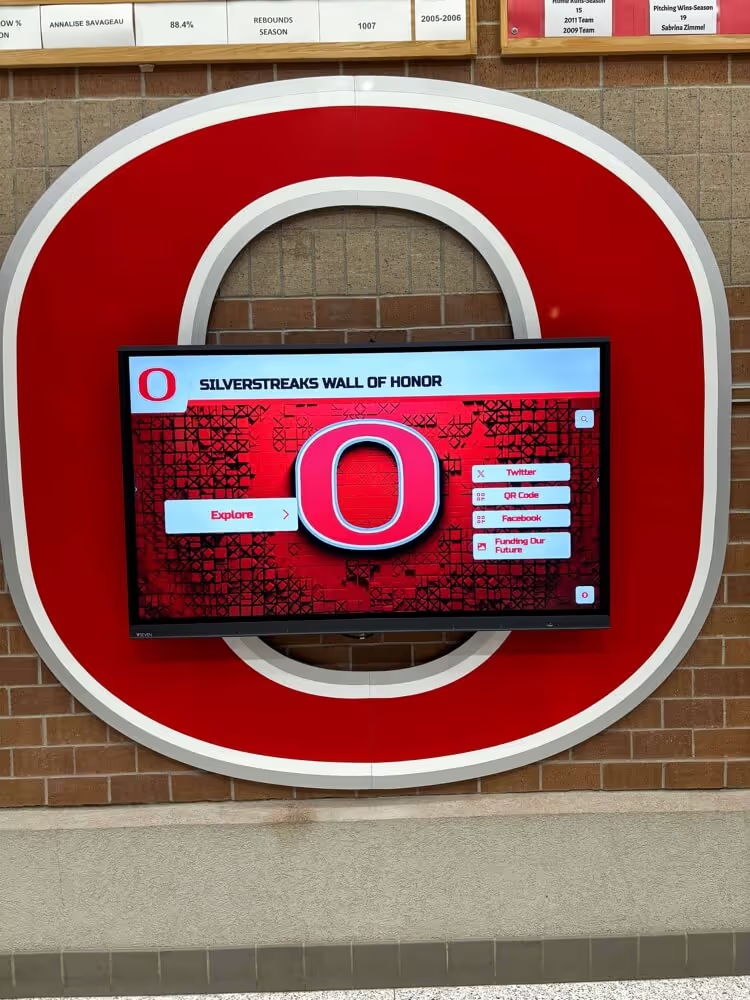
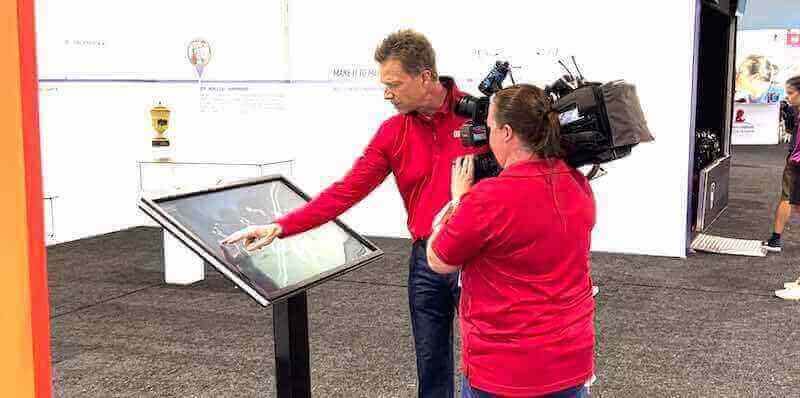
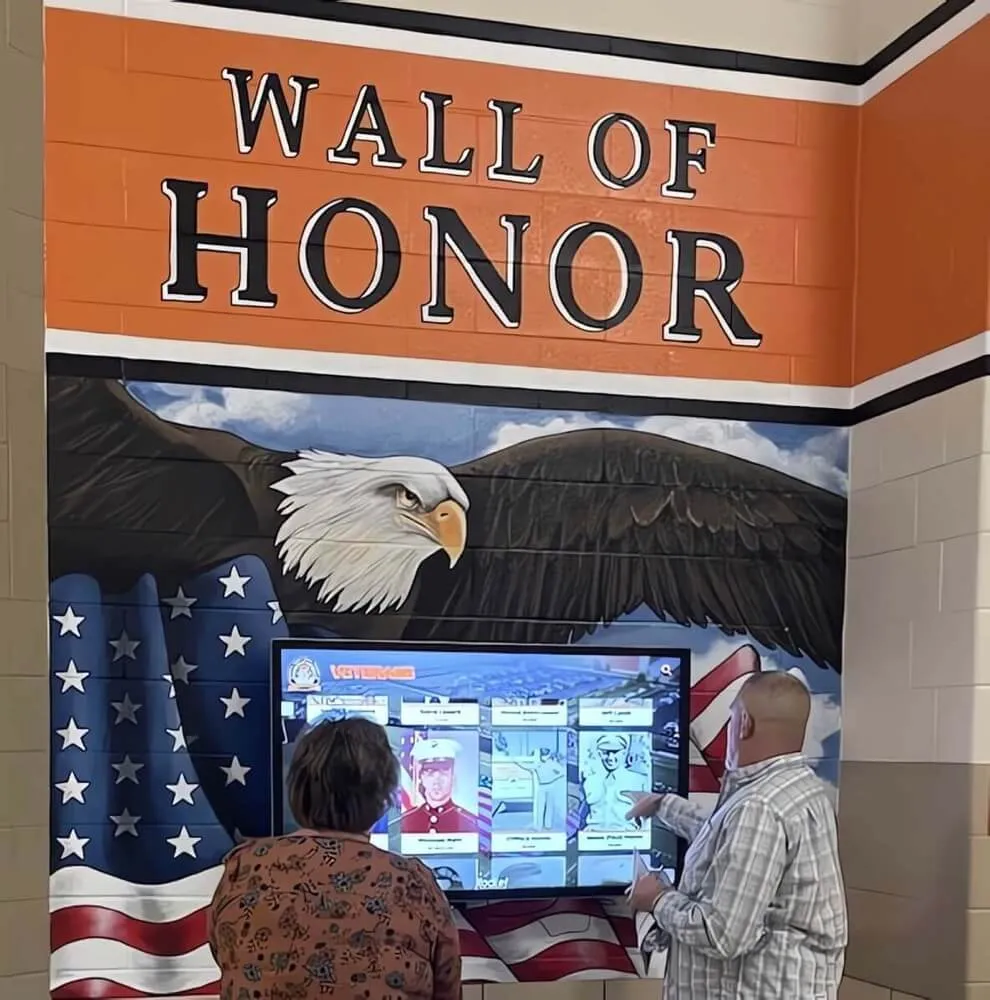
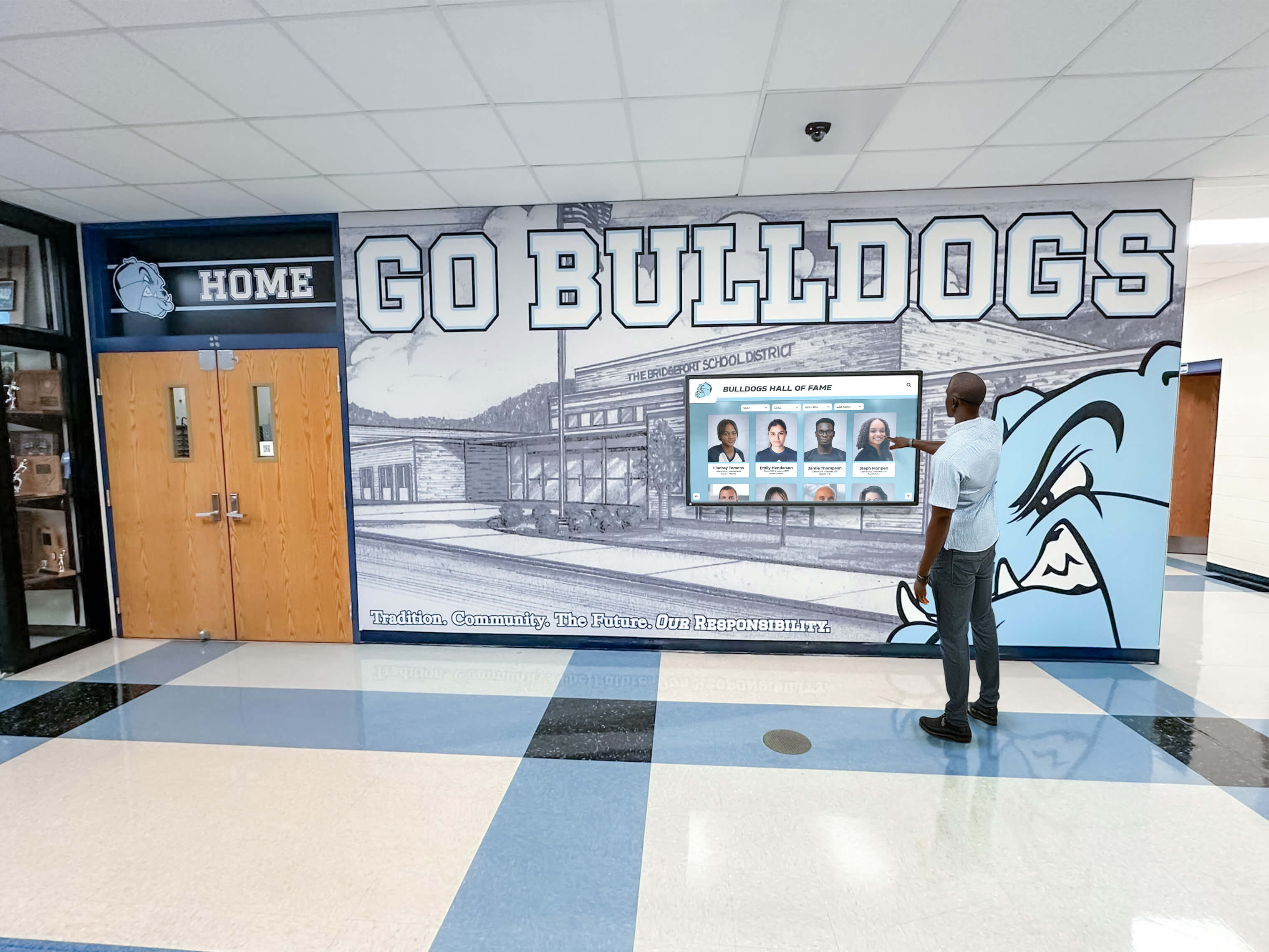
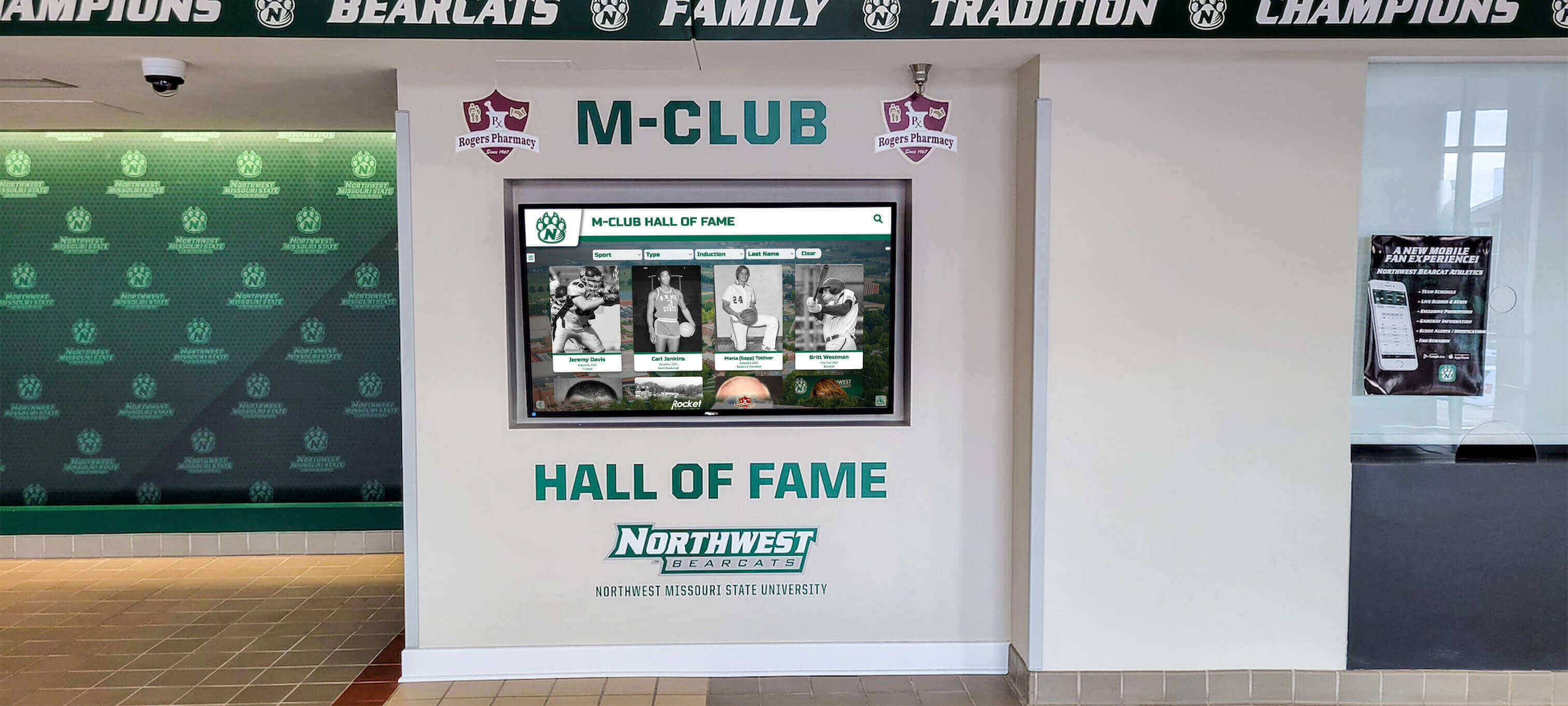
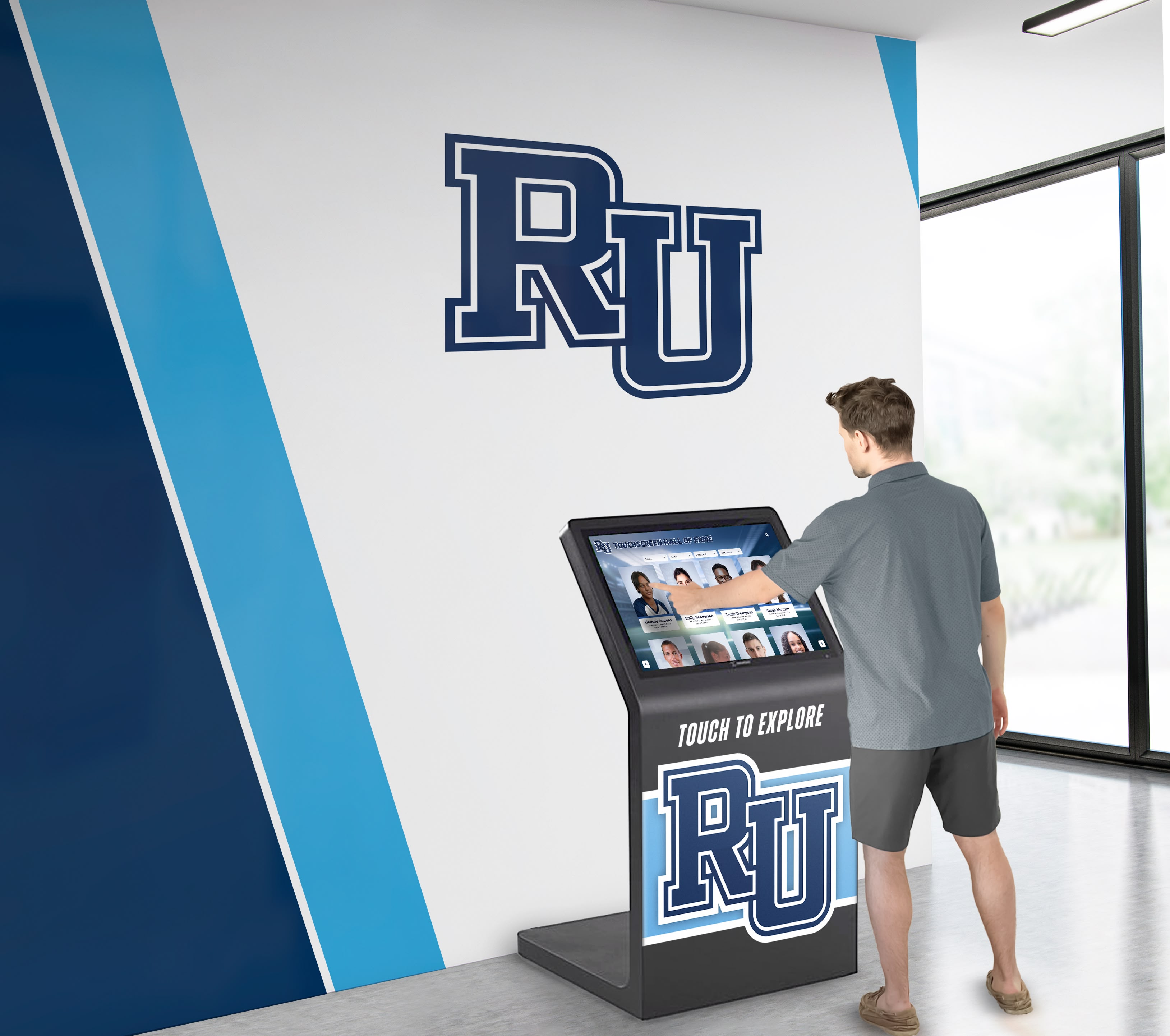
Touchscreen Recognition Kiosks
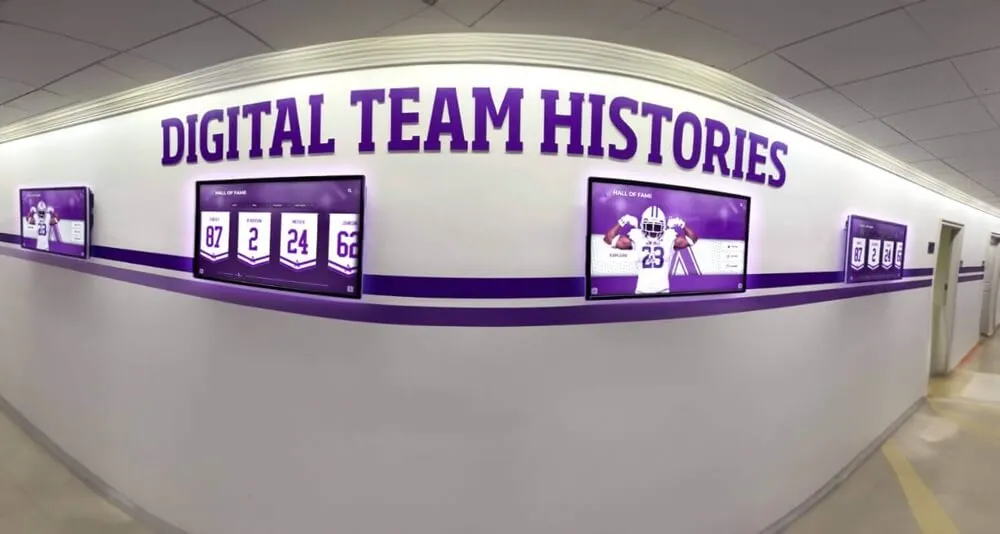
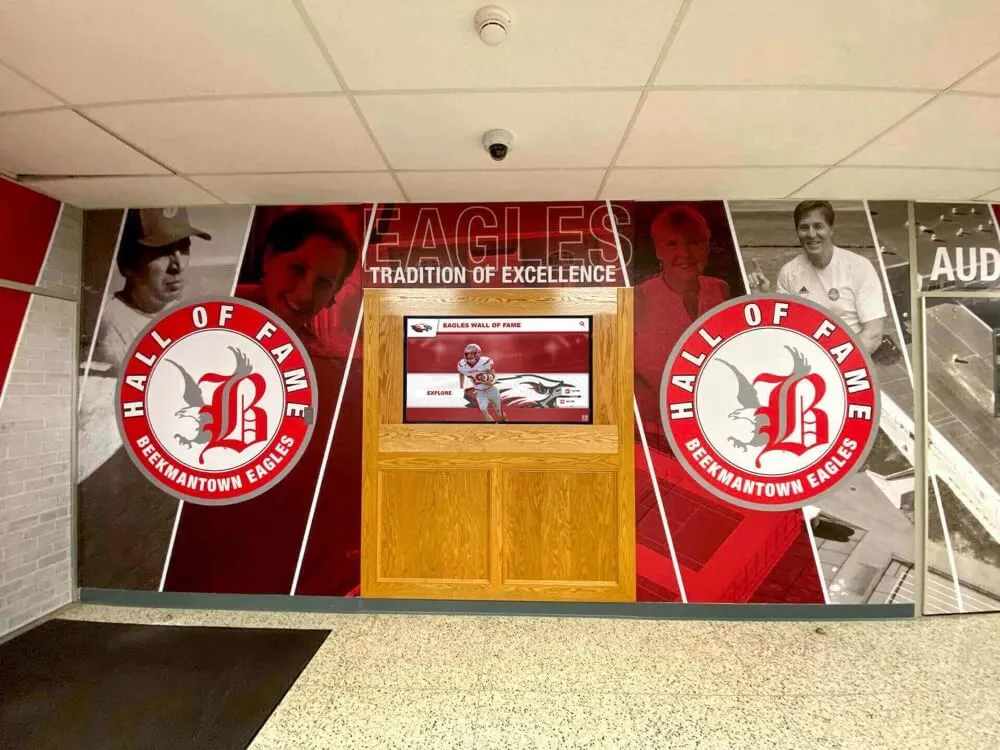
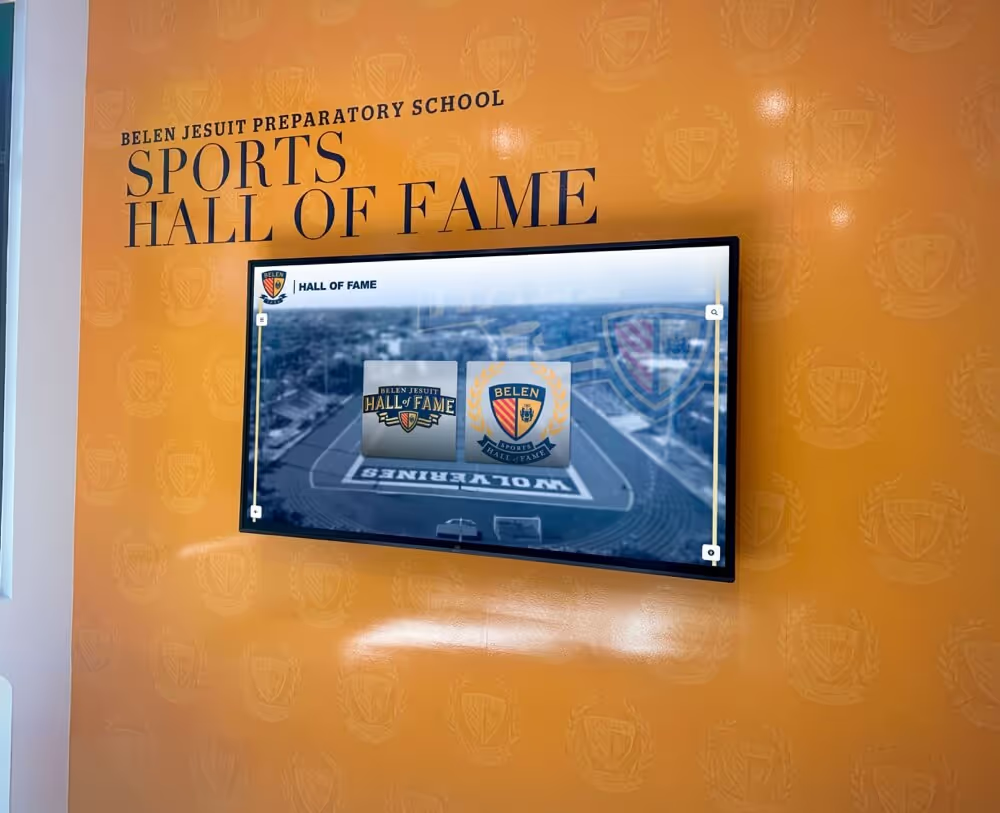
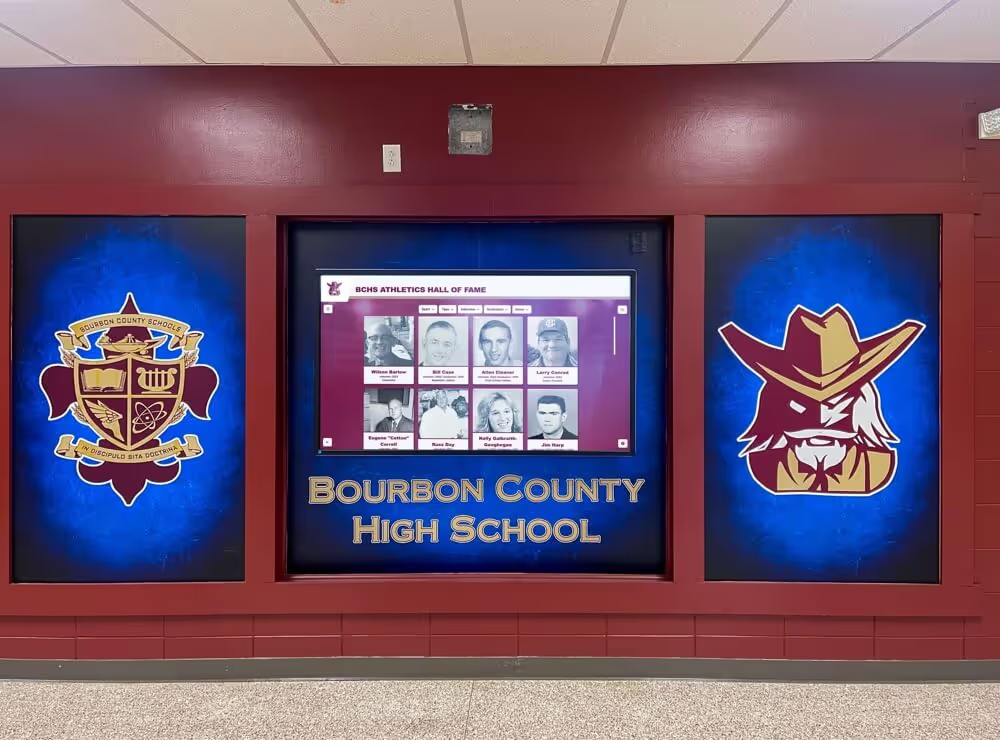
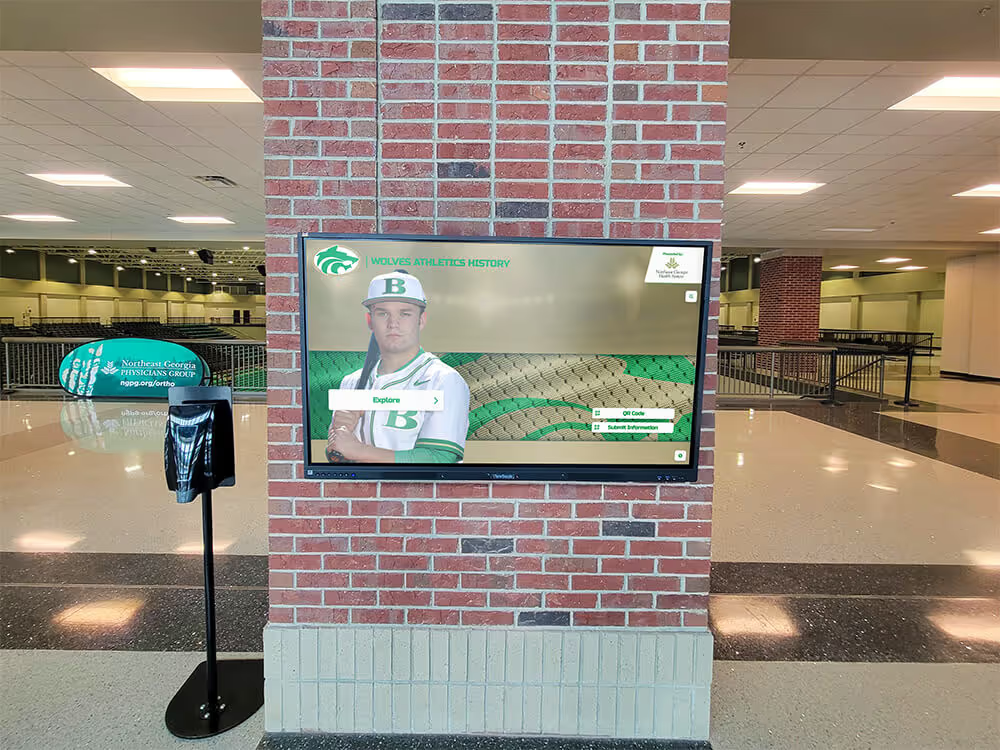
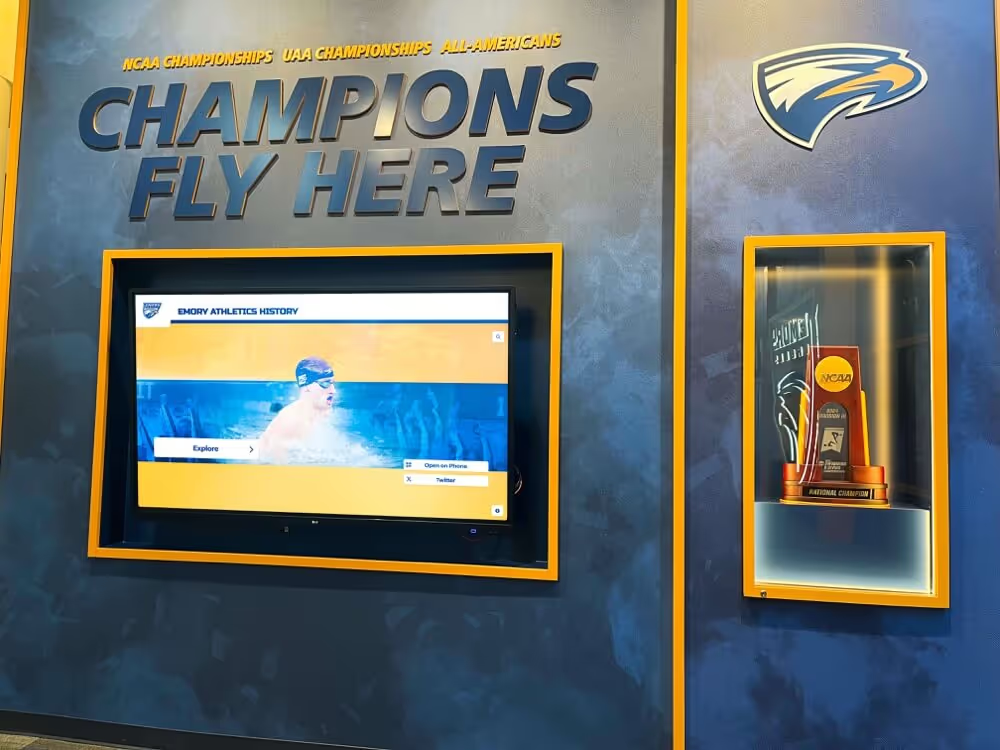
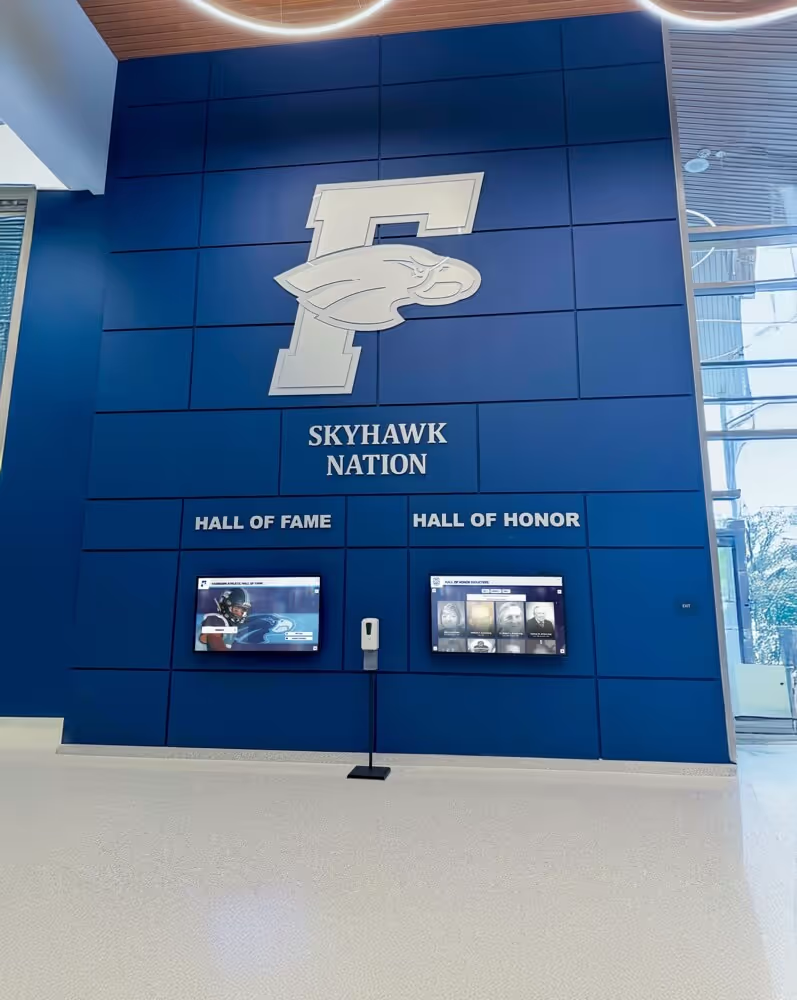
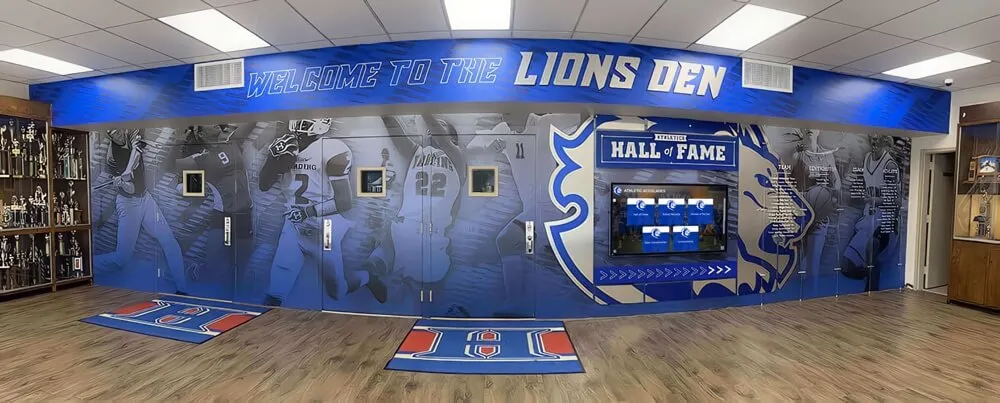
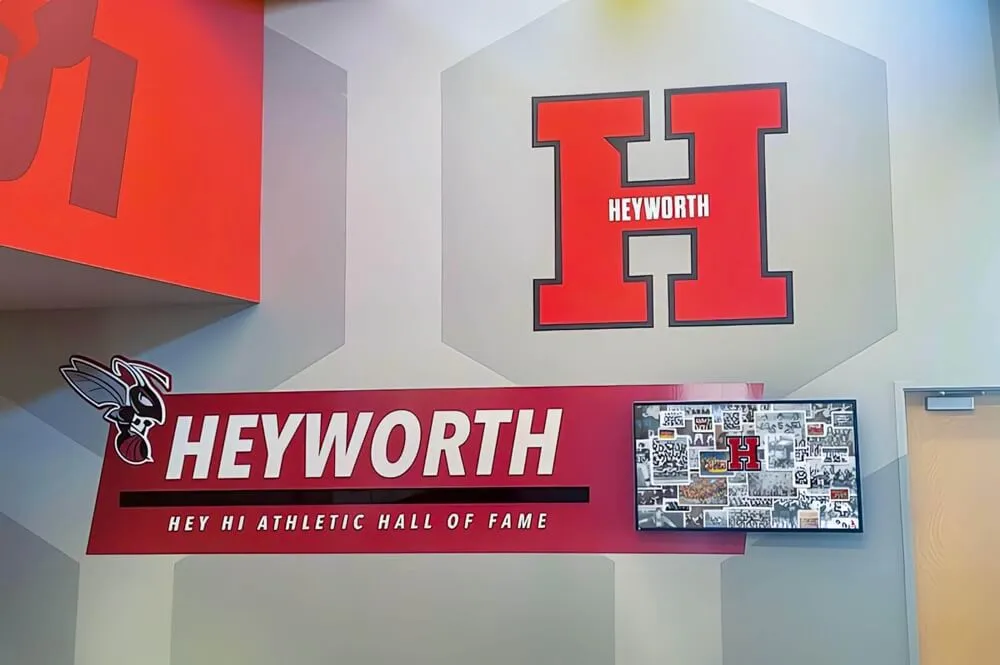
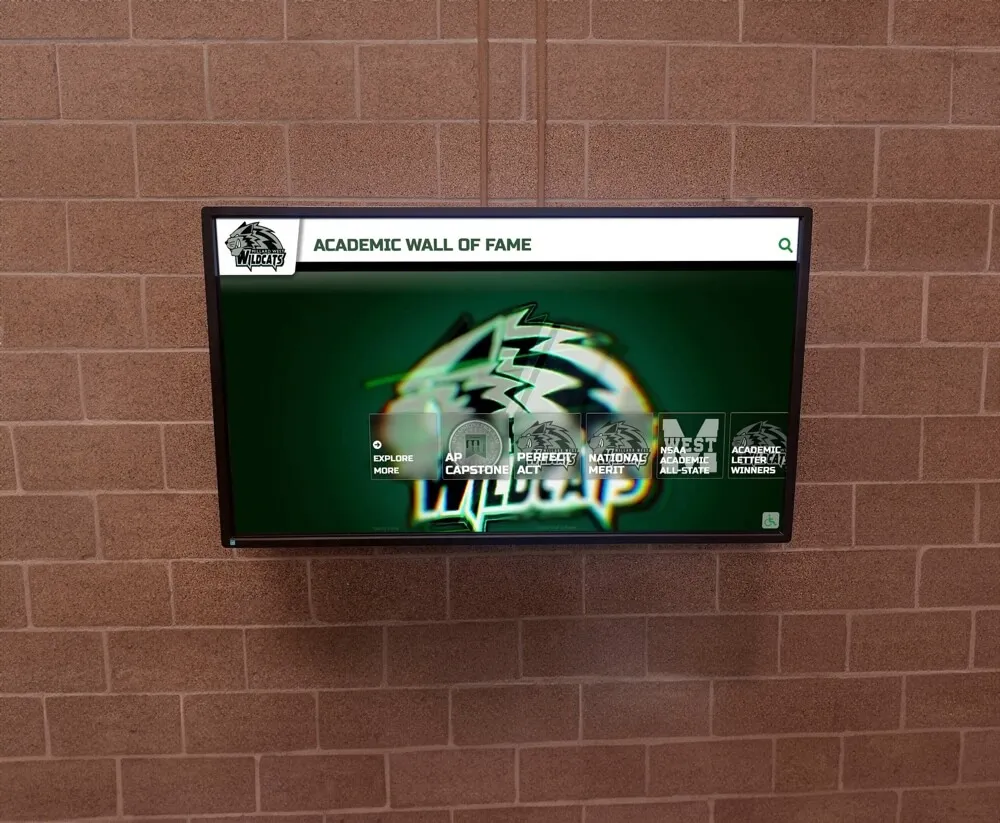
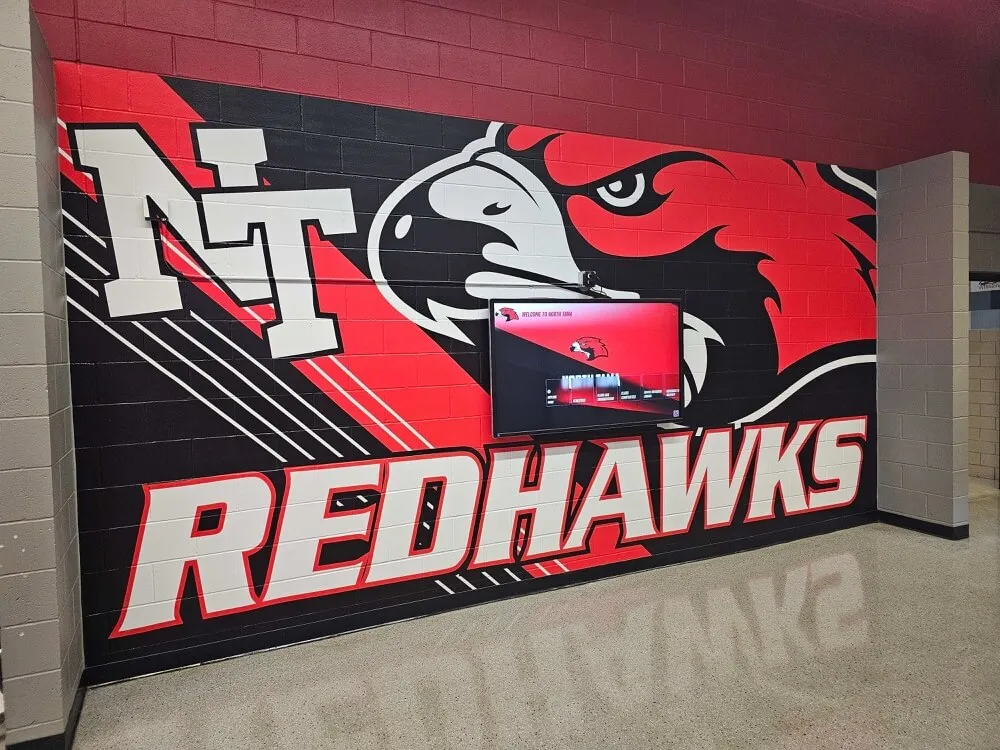
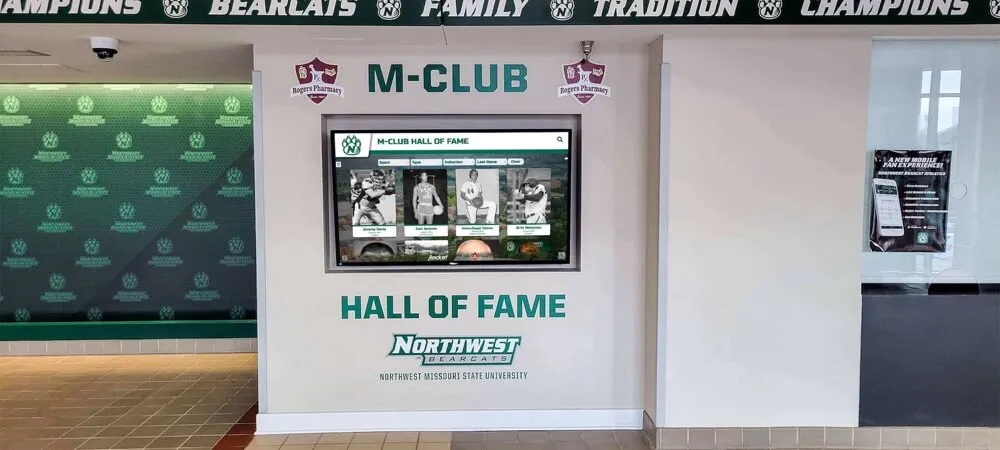
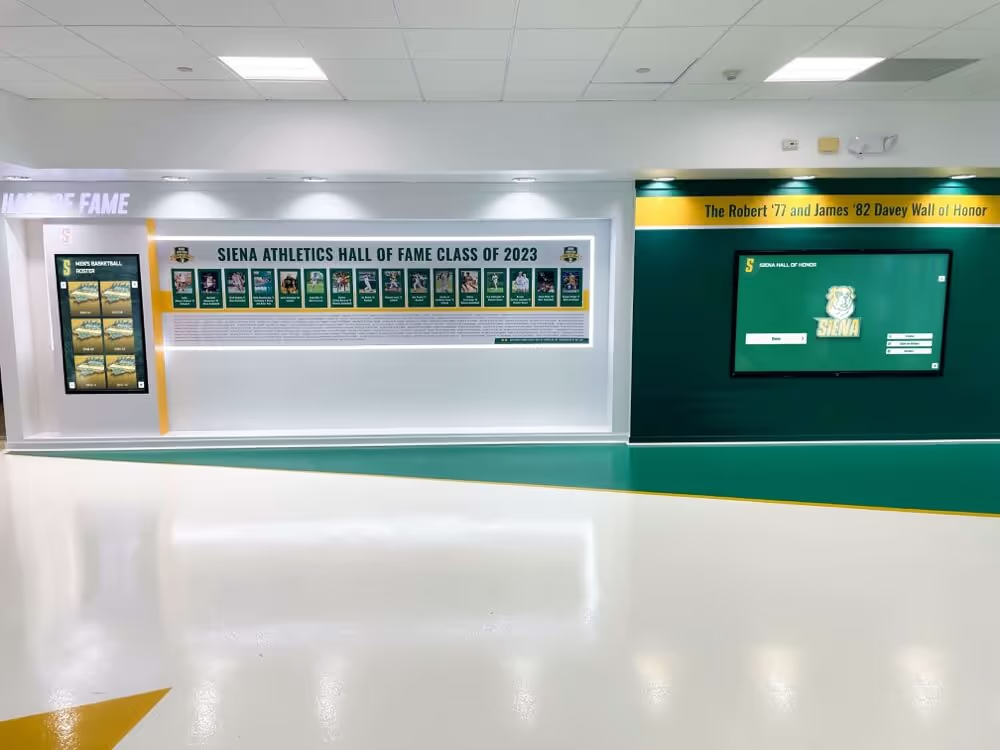
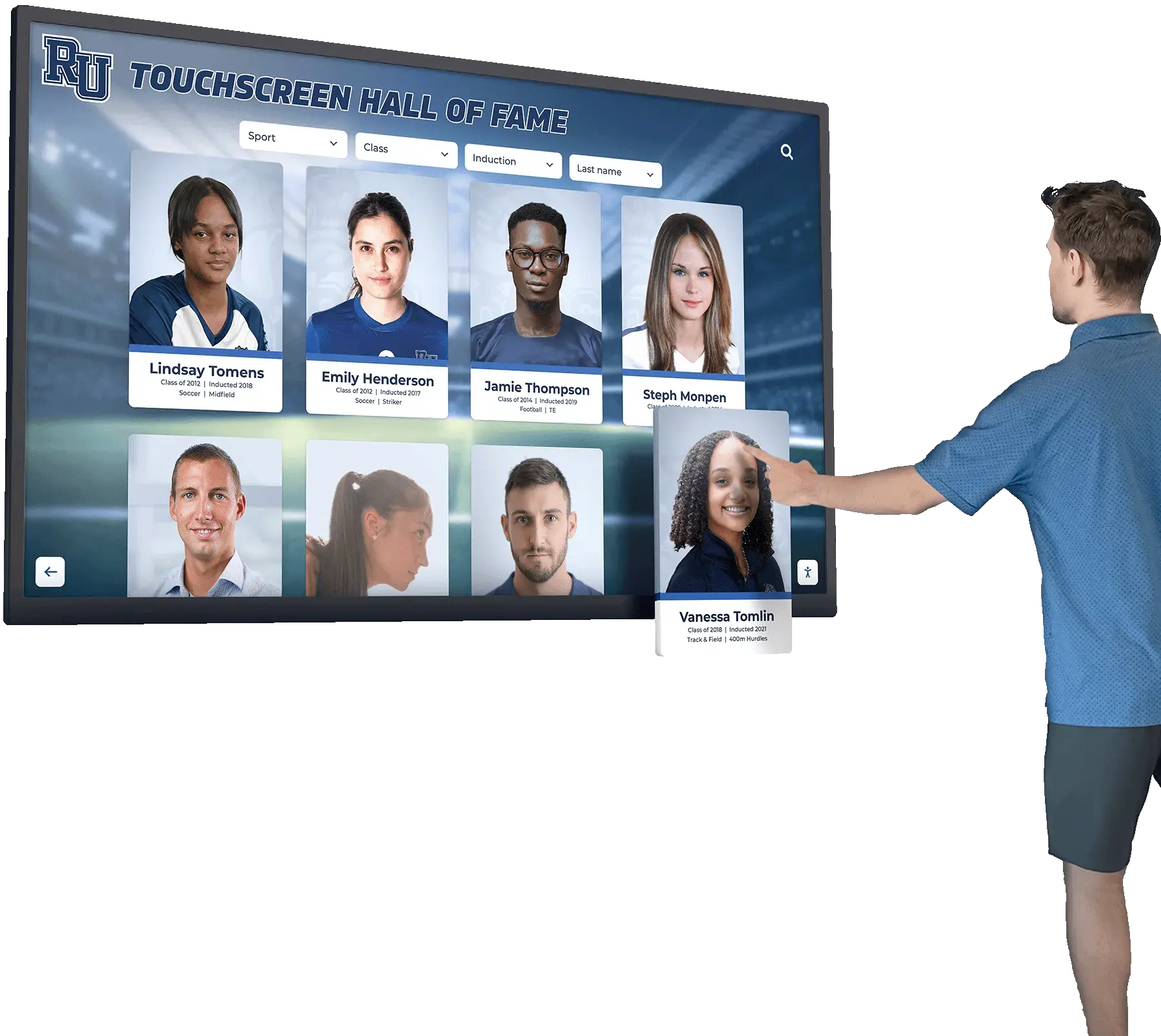
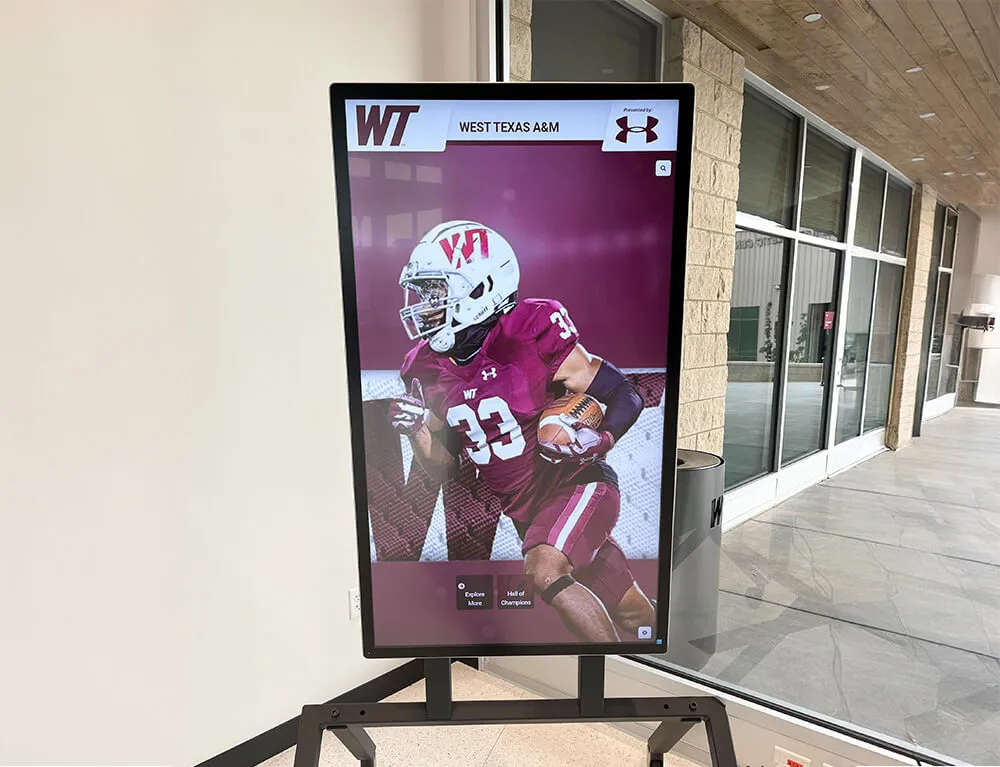
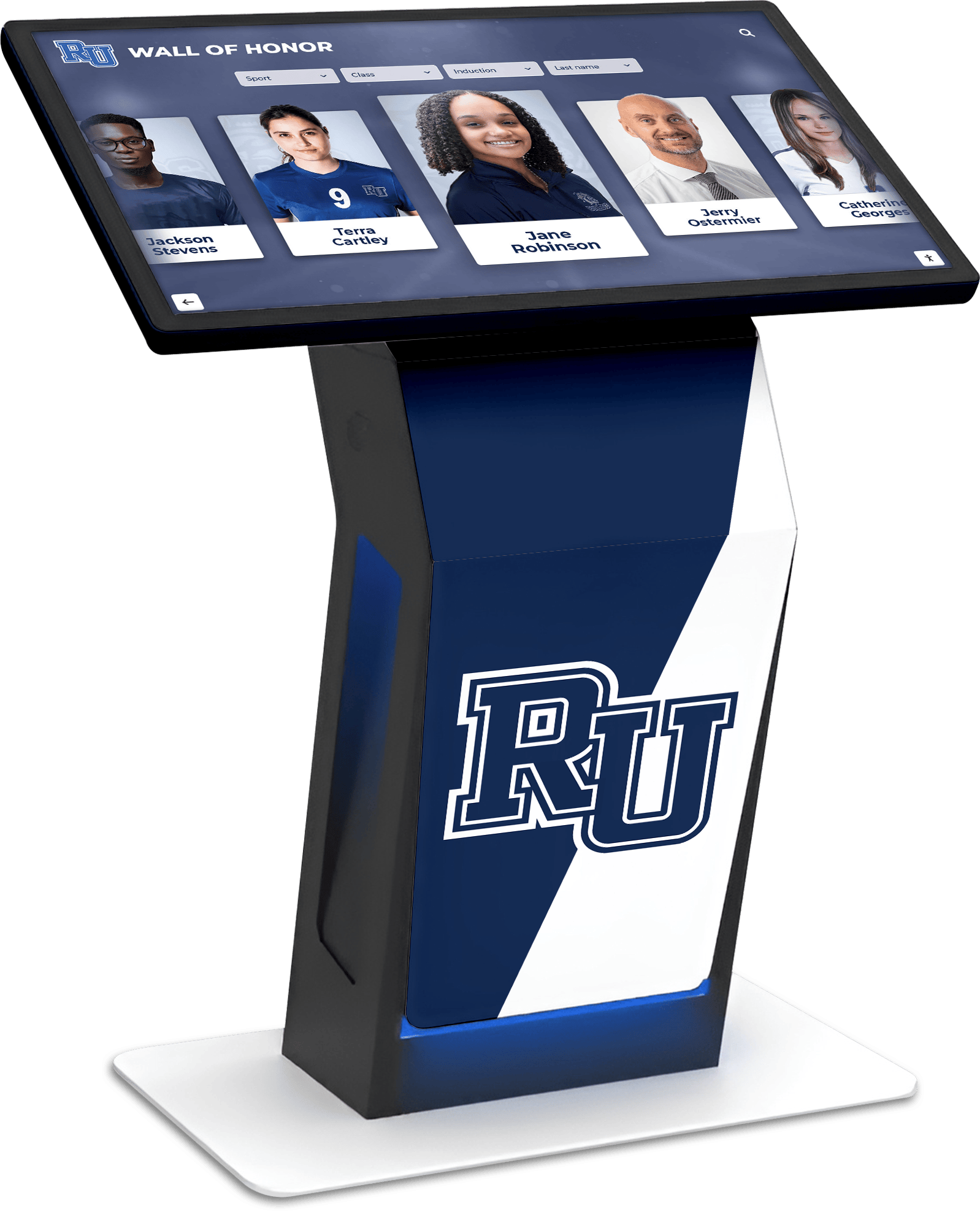
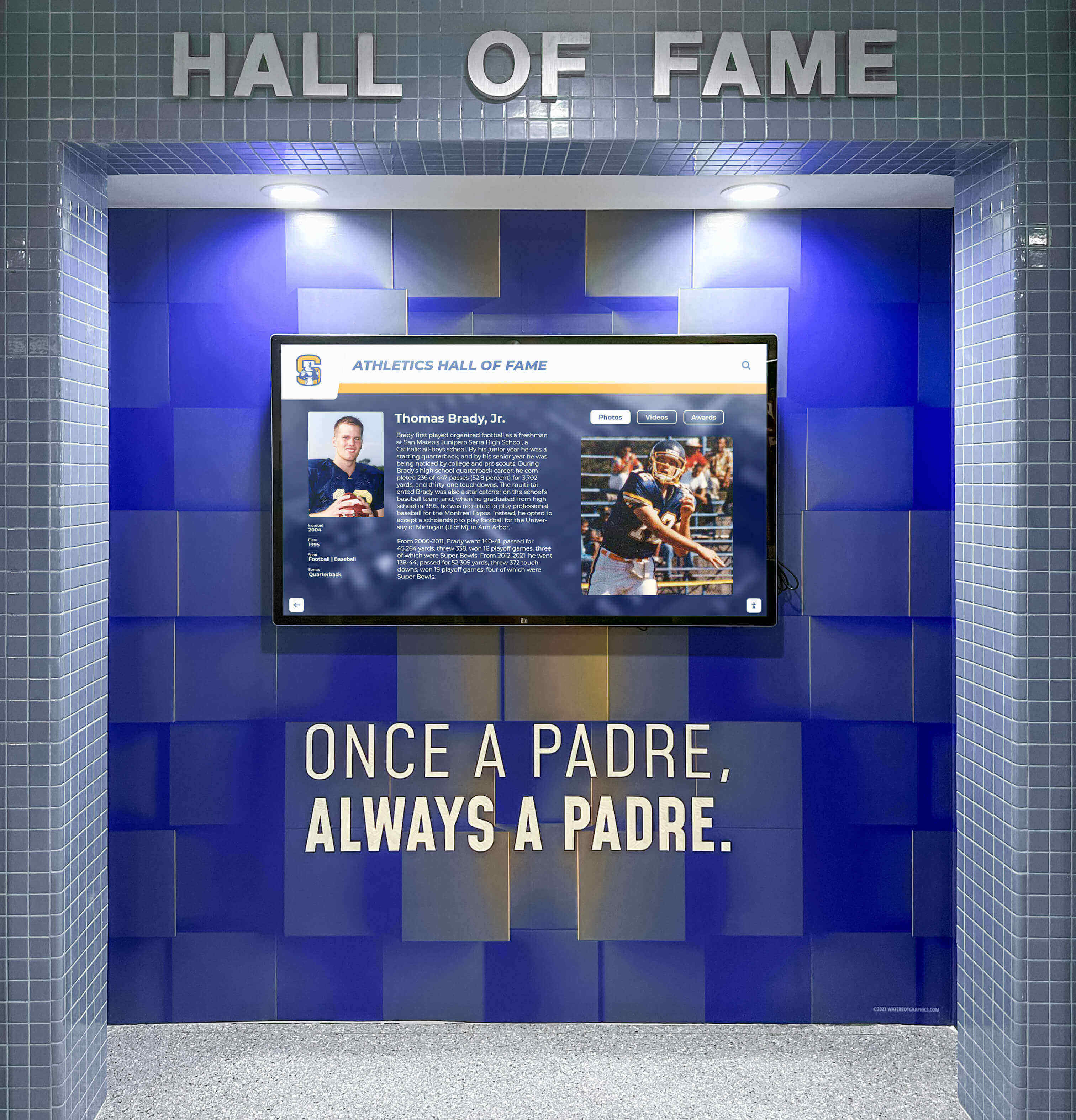
Commercial-grade touchscreen displays enable interactive donor exploration through intuitive interfaces accessible to all ages and technical comfort levels. Digital donor recognition displays provide unlimited capacity accommodating any donor volume without physical constraints, instant updates through cloud-based content management from any device, rich multimedia profiles with photos, videos, and detailed stories, powerful search enabling quick personal donor discovery, and detailed analytics tracking engagement and demonstrating value.
Digital recognition requires higher initial hardware investment ($8,000-18,000 per display), ongoing software subscription costs ($200-600 monthly depending on features), reliable facility electrical and network infrastructure, and basic technical comfort among volunteers managing content updates.
For booster clubs, digital recognition proves particularly valuable when donor volumes exceed physical display practical limits, volunteer time constraints make manual updates impractical, facilities offer appropriate indoor locations for displays, and organizational culture embraces technology adoption.
Video Recognition Displays
Large-format displays showing rotating donor recognition slideshows, thank you messages, and campaign updates provide dynamic visual recognition without requiring interactive engagement. Video boards offer lower-cost digital recognition option than touchscreens, simple content management through basic presentation software, flexibility displaying various content types beyond donor recognition, and eye-catching motion attracting attention in high-traffic areas.
Video displays provide less engagement depth than interactive systems, offer limited donor search or exploration capabilities, require regular content updates maintaining freshness, and may face visibility challenges in bright environments without adequate screen brightness.
Booster clubs use video displays well in gymnasium lobbies, concession stand areas, or main entrances where passive viewing fits traffic patterns and budgets favor simpler digital approaches.
Web-Based Recognition Platforms
Online donor recognition extends visibility beyond physical facility limitations while providing convenient access for geographically distributed supporter communities.
Dedicated Donor Recognition Websites
Standalone web platforms or sections within booster club websites create searchable donor databases accessible anytime from any device. Web recognition offers unrestricted geographic access serving distributed communities, minimal ongoing maintenance costs after initial setup, easy social sharing extending recognition reach, and integration with online giving platforms connecting recognition to donation processes.
Web-only recognition lacks physical presence in facilities where programs actually occur, depends on donors actively seeking recognition rather than encountering passively, requires digital marketing driving traffic to recognition pages, and may feel less prestigious than physical displays in some donor perceptions.
Booster clubs benefit from web recognition particularly when supporting geographically distributed alumni donors, complementing physical recognition with extended access, and building content libraries supporting social media and communications.
Social Media Recognition Integration
Systematic donor acknowledgment through social media channels creates public visibility while enabling organic sharing extending recognition reach throughout supporter networks. Social recognition offers zero-cost implementation beyond staff/volunteer time, viral potential as donors share their own recognition, regular touchpoint frequency maintaining engagement, and integration with fundraising campaigns creating giving momentum.
Social media recognition provides temporary rather than permanent visibility, creates pressure for frequent content creation, may overwhelm followers if overused, and reaches only digitally active audience segments.
Effective booster club practice combines social recognition for timely acknowledgment and campaign promotion with permanent recognition systems providing lasting donor celebration.
Hybrid Multi-Channel Recognition Approaches
The most effective booster club recognition typically combines multiple approaches creating comprehensive systems serving diverse donor preferences while maximizing visibility and administrative efficiency.
Physical + Digital Integration
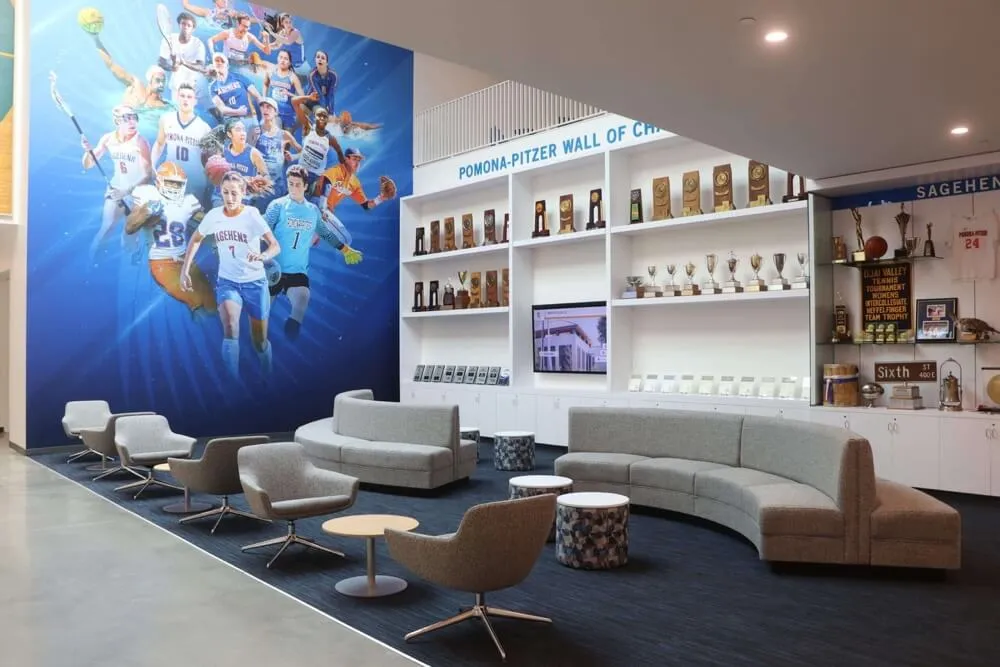
Many organizations install interactive touchscreen displays in primary facility locations while maintaining traditional plaques or signage for major donors or facility naming. This hybrid approach honors major donor preferences for tangible recognition, provides scalable digital capacity for broader supporter acknowledgment, respects different generational technology comfort levels, and maximizes recognition visibility through multiple touchpoints.
Facility + Web + Social Integration
Comprehensive recognition ecosystems span physical facility displays, web-accessible databases, and active social media acknowledgment. Multi-channel systems ensure recognition reaches diverse audiences through preferred platforms, create multiple donor cultivation and retention touchpoints, facilitate content reuse maximizing volunteer efficiency, and demonstrate sophisticated appreciation befitting donor generosity.
Best Practices for Booster Club Donor Recognition
Successful recognition implementation requires attention to specific practices maximizing fundraising impact while respecting operational realities of volunteer-led organizations.
Establishing Clear Recognition Criteria and Giving Levels
Transparent recognition structures ensure fairness, manage donor expectations, and create clear giving progression pathways encouraging donor development.
Defining Recognition Tiers
Most effective booster club recognition implements multiple giving levels with progressively enhanced acknowledgment. Typical tiered structures include:
- Lifetime Society ($10,000+ cumulative): Premier recognition with enhanced profiles, facility naming opportunities, special event invitations
- Champions Circle ($5,000-$9,999 cumulative): Featured recognition with detailed profiles and high-visibility placement
- Varsity Club ($2,500-$4,999 cumulative): Standard recognition with photos and biographical information
- Team Supporters ($1,000-$2,499 cumulative): Recognition listings with names and graduation years or family information
- Friends of the Program ($500-$999 cumulative): Collective acknowledgment in supporter galleries or honor rolls
- Program Participants (under $500): General thank you recognition encouraging future increased giving
Tier naming should reflect program culture and local preferences—athletic boosters might use sports-themed names while arts supporters prefer performance-based terminology. The key is creating meaningful distinction between levels while ensuring all contributors receive appropriate acknowledgment regardless of capacity.
Cumulative vs. Annual Recognition
Booster clubs must decide whether recognition reflects single-year giving, lifetime cumulative contributions, or both approaches. Cumulative recognition builds toward higher tiers over time, rewards sustained multi-year support, encourages donor retention and upgrade progression, and creates permanent society membership once thresholds are met. Annual recognition emphasizes current-year contributions, maintains flexible capacity for year-to-year changes, and focuses recognition on active donors rather than lapsed supporters.
Many organizations maintain both systems—annual campaign recognition for current fundraising momentum and lifetime recognition societies for sustained commitment. This dual approach serves both immediate and long-term fundraising objectives while honoring different forms of donor loyalty.
Transparency and Communication
Clear public communication about recognition criteria prevents confusion and ensures all supporters understand how acknowledgment works. Recognition policies should address minimum giving thresholds for each recognition tier, whether gifts are cumulative or annual, how multi-year pledges are recognized before full payment, treatment of in-kind donations and volunteer service, and naming rights policies for facility or program naming opportunities.
Publishing recognition criteria in fundraising materials, on booster websites, and in direct donor communications ensures transparency while enabling supporters to set clear giving goals aligned with desired recognition levels.
Timely Recognition and Prompt Acknowledgment
Recognition loses motivational power when significantly delayed after contribution receipt. Prompt acknowledgment demonstrates operational competence while maximizing psychological reinforcement.
Immediate Personal Thank You
All donations should receive immediate personal acknowledgment separate from formal recognition programs. Best practice includes emailed thank you receipt within 24 hours of gift receipt, personal phone call or handwritten note for gifts above certain thresholds, and involvement of program beneficiaries in thank you processes when appropriate.
This immediate gratitude creates positive emotional reinforcement independent of broader recognition systems, ensuring donors feel valued even before formal recognition updates occur.
Recognition Update Frequency
Digital recognition systems should update quarterly or more frequently, adding new donors within 30-60 days of contribution. Physical recognition faces longer timelines but should still add new donors at least annually, ideally aligned with recognition events or major gatherings where updates create natural publicity and celebration opportunities.
Delayed recognition beyond 90 days creates legitimate donor frustration suggesting their contributions matter less than earlier gifts receiving more prompt acknowledgment. Volunteer leaders should establish realistic update schedules balancing prompt recognition with practical capacity constraints.
Effective Content and Storytelling
Recognition that tells compelling stories rather than simply listing names creates emotional engagement inspiring additional support while deeply honoring current donors.
Beyond Names and Amounts
Rich donor profiles include personal connections to programs being supported, motivations for giving and what programs mean to families, impact stories showing outcomes contributions enable, family legacy information for multi-generational supporters, and professional or personal accomplishments demonstrating supporter success.
This storytelling depth transforms transactional acknowledgment into celebration of community connections and shared values around youth development, athletic or artistic excellence, and educational opportunity.
Student Voice and Beneficiary Perspective
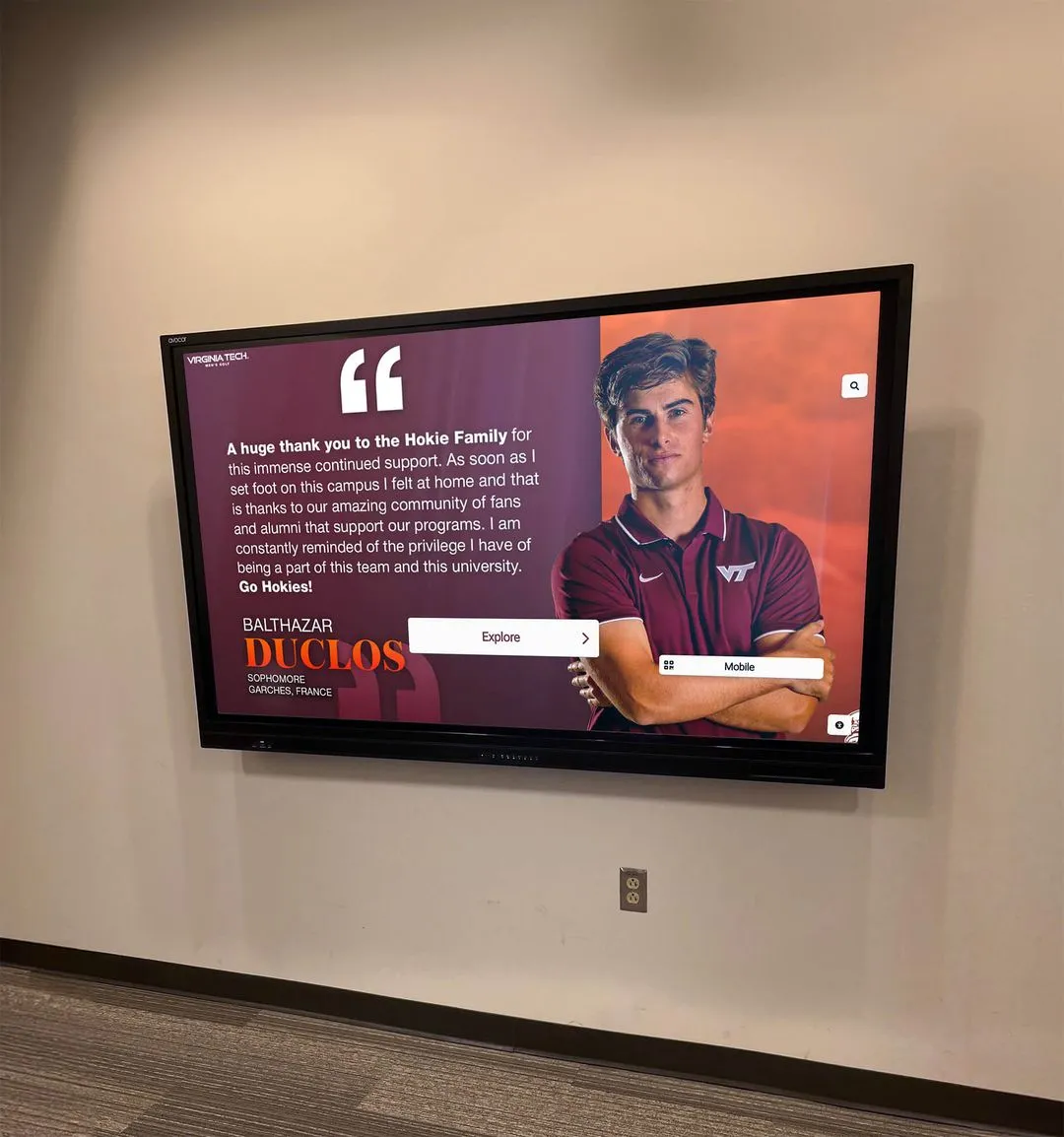
Including student athlete, performer, or participant testimonials about booster support impact creates powerful emotional resonance. Student perspectives can acknowledge how booster support enabled opportunities, thank donors personally for their generosity, share how programs shaped student development and experiences, and demonstrate direct connections between contributions and outcomes.
Beneficiary voices prove particularly persuasive for prospective donors evaluating whether contributions generate meaningful impact justifying financial support.
Visual Content Quality
High-quality photography elevates recognition professionalism and creates engaging displays. Professional or high-quality photos should show donors at program events or facilities, feature students benefiting from booster support, capture program activities boosters enable, and document facility improvements or equipment donations fund.
Visual richness demonstrates respect for donors while creating recognition displays people want to explore rather than ignore. Organizations can learn from digital trophy case approaches that combine donor recognition with program achievement showcases.
Integration with Fundraising Operations
Recognition functions most effectively when seamlessly integrated into broader fundraising systems rather than operating as disconnected acknowledgment activities.
Recognition as Solicitation Tool
Development materials should feature recognition program information prominently, showing prospective donors exactly how their contributions will be celebrated. Solicitation integration includes giving level charts showing recognition at each tier, photographs of existing recognition displays demonstrating quality, testimonials from recognized donors about meaning of acknowledgment, and clear explanations of naming opportunities for major gifts.
This prospective recognition visibility helps donors envision their own acknowledgment, providing additional motivation beyond intrinsic generosity and program support.
Event Integration and Celebration
Annual booster banquets, recognition receptions, or program celebrations should prominently feature donor acknowledgment. Gala fundraiser donor recognition strategies show how event recognition includes formal recognition of new lifetime society members, acknowledgment of top annual donors, unveiling of new recognition displays or major updates, and opportunities for donors to be photographed with students they support.
These celebration events create community around giving while generating social pressure and peer influence encouraging additional contributions as donors see peers honored for generosity.
Campaign Milestone Recognition
Major fundraising campaigns benefit from real-time progress displays showing movement toward goals. Campaign recognition can include thermometer-style displays tracking total funds raised, listing of campaign leadership donors establishing giving pace, countdown communication as goals approach, and celebration announcements when milestones are achieved.
Public progress visibility creates momentum and urgency while demonstrating campaign success encouraging additional participation.
Implementation Guide for Booster Clubs
Moving from recognition planning to operational reality requires systematic implementation addressing technology selection, content development, and sustainable management processes.
Selecting Appropriate Recognition Systems
Booster clubs should evaluate recognition options through specific criteria reflecting volunteer organization realities.
Assessment Framework
Critical selection factors include initial investment required and whether budget is realistically available, ongoing operational costs and budget sustainability, volunteer time required for implementation and management, technical complexity and learning curve for volunteer operators, scalability as donor base grows, update flexibility for adding donors and modifying content, and professional appearance befitting donor respect.
Organizations should create simple scoring rubrics weighting factors according to local priorities, enabling structured comparison across recognition alternatives rather than choosing based on incomplete or subjective impressions.
Platform-Specific Considerations
For physical recognition, consider fabrication quality and material durability, installation requirements and facility permissions, space requirements and available locations, expansion capacity for future growth, and weather resistance for outdoor installations.
For digital recognition, evaluate hardware reliability and commercial-grade construction, software interface intuitiveness for various users, cloud vs. local content management approaches, analytics capabilities for demonstrating engagement, technical support availability and responsiveness, and integration with existing websites or databases.
Purpose-built recognition platforms like Rocket Alumni Solutions designed specifically for school and booster environments typically provide better experiences than generic digital signage systems adapted for recognition purposes, offering intuitive donor management, recognition-specific features, and support teams understanding booster operational contexts.
Content Development and Donor Information Collection
Creating compelling recognition content represents the most time-intensive implementation phase, requiring systematic approaches to information gathering and profile creation.
Donor Information Gathering Process
Systematic collection includes reviewing historical contribution records identifying all qualifying donors, sending information request communications to donors requesting biographical details and photos, conducting phone interviews with major donors capturing detailed stories, researching public information about business sponsors or prominent community donors, and collecting student testimonials about program impact.
This research phase typically requires 2-4 months for initial implementation depending on donor volume and information availability, representing significant volunteer effort justifying careful planning and resource allocation.
Content Creation Workflows
Efficient content development includes creating standard templates for different recognition tiers ensuring consistency, establishing writing guidelines maintaining appropriate tone and style, developing review processes catching errors before publication, and implementing approval workflows for donor review of their profiles before public display.
Many booster clubs recruit volunteer writers or journalism students to assist with profile development, distribute workload while creating learning opportunities for aspiring writers practicing biographical storytelling.

Privacy and Sensitivity Considerations
Recognition systems must respect donor preferences and privacy concerns. Critical policies include providing opt-out options for donors uncomfortable with public recognition, offering anonymous giving choices for those preferring privacy, establishing clear guidelines about personal information displayed, requiring explicit permission before using donor photographs, and respecting sensitive circumstances like memorial gifts or complicated family situations.
Clear privacy policies communicated during gift acceptance prevent later conflicts while ensuring recognition practices align with donor values and preferences.
Ongoing Management and Sustainability
Recognition systems require sustained attention maintaining value over time. Successful long-term operation requires establishing clear volunteer responsibilities for recognition management, creating update schedules ensuring regular content freshness, implementing transition processes preserving institutional knowledge as volunteers change, budgeting for ongoing costs in annual financial planning, and regularly evaluating recognition effectiveness and making improvements.
Organizations should designate specific board members or committee chairs responsible for recognition oversight, preventing diffused accountability that results in neglect when numerous volunteers all assume someone else is handling maintenance.
Measuring Recognition Program Effectiveness
Demonstrating recognition value justifies continued investment while identifying improvement opportunities through data-driven assessment.
Fundraising Performance Metrics
The primary recognition program justification centers on improved fundraising results. Critical metrics include donor retention rates comparing year-over-year giving continuation, average gift size trends showing contribution amount changes, donor acquisition rates measuring new donor recruitment success, upgrade rates tracking donors moving to higher recognition tiers, and lifetime donor value calculations demonstrating total donor contribution over time.
Organizations should establish baseline metrics before recognition implementation, enabling clear before-after comparison demonstrating program impact on fundraising outcomes. While numerous factors influence fundraising, recognition improvements typically correlate with 15-30% donor retention gains and 10-25% average gift increases within 18-24 months of implementation.
Engagement and Awareness Indicators
Beyond direct fundraising metrics, recognition influences broader community engagement. Engagement indicators include booster membership trends among recognized vs. unrecognized donors, volunteer recruitment success among donor populations, attendance at booster events and programs, social media engagement and sharing of recognition content, and website traffic to recognition pages or online donor galleries.
These engagement metrics demonstrate recognition value beyond immediate fundraising, showing how acknowledgment strengthens broader organizational health and community connection supporting long-term sustainability.
Return on Investment Calculation
Organizations should calculate recognition ROI comparing program costs against incremental fundraising gains attributable to recognition. Basic ROI formula: (Additional Annual Giving Attributable to Recognition - Annual Recognition Costs) / Annual Recognition Costs × 100 = ROI %
For example, a booster club investing $12,000 in digital recognition seeing $35,000 additional annual giving beyond previous trends achieves 192% annual ROI: ($35,000 - $12,000) / $12,000 × 100 = 192%
This ROI calculation should be conservative, attributing only portion of giving increases to recognition rather than claiming all gains result solely from acknowledgment programs. Even conservative estimates typically demonstrate positive returns justifying continued investment.
Common Challenges and Solutions
Booster clubs implementing recognition programs encounter predictable obstacles. Anticipating challenges and preparing solutions increases implementation success.
Limited Volunteer Capacity
Challenge: Volunteer leaders lack time for complex recognition administration alongside numerous other responsibilities, causing recognition to become outdated, incomplete, or neglected when competing priorities emerge.
Solutions: Select recognition systems requiring minimal ongoing management through cloud-based platforms with intuitive interfaces, automated workflows reducing manual processes, delegation strategies distributing responsibilities across volunteer teams, and realistic initial scope avoiding overly ambitious programs volunteers cannot sustain.
Starting with modest recognition systems done well proves more effective than comprehensive programs volunteers cannot maintain consistently.
Budget Constraints and Funding Justification
Challenge: Booster boards face resistance spending donated funds on recognition rather than direct program support, particularly when recognition costs appear substantial relative to modest operating budgets.
Solutions: Present clear ROI projections demonstrating recognition generates additional donations exceeding investment, phased implementation spreading costs across multiple years, creative funding through recognition sponsorships or specific recognition-focused campaigns, and transparent communication about recognition as fundraising infrastructure enabling future program support.
Framing recognition as essential fundraising tool rather than optional enhancement helps board members understand strategic value justifying expenditure.
Facility Access and School Administration Coordination
Challenge: Booster clubs operating as independent organizations may face school administrator reluctance about physical recognition installations, facility modification restrictions, or competing demands for limited display space in school buildings.
Solutions: Early engagement with school leadership during recognition planning, proposals emphasizing mutual benefits for schools and booster organizations, portable or temporary installation options not requiring permanent facility changes, and alternative locations if primary preferences are unavailable.
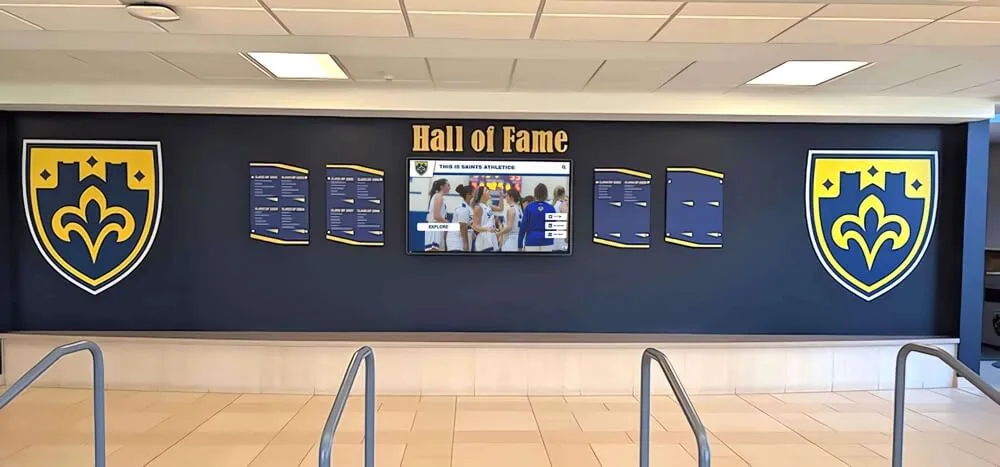
Digital recognition proves particularly valuable when facility restrictions limit physical installation options, providing high-impact acknowledgment within minimal physical footprints acceptable to facility managers.
Donor Data Privacy and Information Accuracy
Challenge: Managing sensitive donor information, ensuring accuracy, and respecting privacy preferences creates compliance burdens for volunteer organizations lacking professional development staff expertise.
Solutions: Clear donor information forms explicitly requesting permission for public recognition, systematic verification processes catching errors before publication, easy donor update mechanisms allowing self-service corrections, and defined privacy policies guiding volunteer decision-making about appropriate information display.
Simple donor information forms distributed with acknowledgment letters enable efficient collection while documenting consent for public recognition and photograph usage. Donor recognition display strategies provide additional guidance on managing donor information and privacy considerations.
Conclusion: Building Sustainable Recognition That Strengthens Fundraising
Donor recognition displays represent strategic investments in booster club fundraising infrastructure, generating measurable returns through improved donor retention, increased giving levels, and strengthened community engagement around program support. When designed with specific attention to volunteer organization operational realities—time constraints, budget limitations, facility access challenges—recognition systems deliver meaningful donor appreciation without creating unsustainable administrative burdens.
The most effective booster club recognition balances multiple considerations: clear tiered structures that create giving progression pathways, timely acknowledgment demonstrating operational competence and donor respect, compelling storytelling that honors supporters while inspiring additional giving, appropriate technology choices matching organizational capabilities and budgets, and sustainable management processes ensuring long-term program consistency.
Whether implementing traditional physical displays, modern digital recognition, or hybrid approaches combining multiple channels, success depends on treating recognition as integral fundraising strategy rather than optional acknowledgment activity. Organizations that commit to systematic donor celebration consistently achieve better fundraising outcomes, stronger volunteer engagement, and more sustainable program funding over time.
For booster clubs ready to implement or enhance donor recognition, modern solutions designed specifically for school environments simplify what previously required extensive professional expertise or technical knowledge. Purpose-built platforms enable volunteer-led organizations to deliver recognition experiences previously available only to institutions with dedicated advancement staff, democratizing access to tools that strengthen community support for student programs.
Frequently Asked Questions About Booster Club Donor Recognition
What recognition system works best for small booster clubs with limited budgets?
Small organizations often succeed with phased approaches beginning with simple web-based recognition requiring minimal investment beyond volunteer time for content creation. Free website builders or social media provide immediate acknowledgment capability while organizations build toward more comprehensive physical or digital recognition as budgets allow. Many small boosters implement annual recognition events or printed programs celebrating donors without requiring permanent infrastructure investment, creating meaningful acknowledgment within tight budget constraints while demonstrating fundraising impact justifying future recognition investment.
How should booster clubs recognize in-kind donations or volunteer service?
Non-financial contributions deserve appropriate acknowledgment even when recognition structures focus primarily on monetary giving. Effective approaches include separate volunteer recognition sections acknowledging time contributions, in-kind donor categories for equipment donations or services provided, combined recognition showing both financial and volunteer support, and equivalent value assignments estimating in-kind contribution worth for recognition tier purposes. Clear policies established during recognition planning prevent later disputes about appropriate acknowledgment for various contribution types while ensuring all forms of generosity receive meaningful appreciation.
Should business sponsors receive different recognition than individual donors?
Business supporters typically seek community visibility justifying sponsorship expenditures to company stakeholders or owners. Business recognition often includes company logos and branding in addition to names, specific acknowledgment of business category or industry, links to business websites in digital recognition, and visible placement during events where customers and community members gather. While maintaining overall recognition cohesion, thoughtful customization for business needs makes corporate sponsorship more valuable to supporters while respecting that business giving involves different motivations and stakeholders than individual family contributions.
How do booster clubs handle recognition when donors move giving levels between years?
Recognition systems should clearly specify whether acknowledgment reflects current-year giving, cumulative lifetime contributions, or both metrics. For annual recognition, donors appearing in tiers matching current-year gift levels creates accurate representation of present support but may frustrate previous major donors who reduced giving. Cumulative recognition maintains donors in highest tier ever achieved regardless of current giving, honoring sustained support but potentially including currently inactive donors. Many organizations maintain both systems—current annual campaign recognition and lifetime society acknowledgment—enabling recognition of both current engagement and long-term loyalty.
What donor information is appropriate to display publicly?
Standard recognition typically includes donor names with preferred formatting, graduation years for alumni or family affiliation for current families, general recognition tier without specific dollar amounts, and city/state location when relevant to business sponsors. More detailed profiles for major donors might add biographical information donors approve for publication, photos donors provide or authorize use of, motivational statements donors share about their support, and family legacy information when multiple generations have participated. All personally identifiable information beyond basic names requires explicit donor permission through consent forms or information request communications documenting approval for public display.
How can booster clubs measure whether recognition is actually improving fundraising?
Meaningful measurement requires establishing baseline metrics before recognition implementation, then tracking changes over subsequent years. Key indicators include donor retention percentages comparing year-over-year giving continuation, average gift amounts showing whether individual contributions increase, total donors comparing acquisition rates across years, and upgrade rates measuring donors moving to higher giving levels. While other factors influence fundraising, recognition implementation typically correlates with measurable improvements in these metrics within 12-24 months. Organizations should calculate conservative attribution—perhaps crediting 50-75% of improvements to recognition—and compute ROI based on incremental giving gains exceeding recognition costs. Even conservative analysis typically demonstrates positive returns justifying continued recognition investment and expansion.
Ready to implement donor recognition that strengthens your booster club fundraising? Solutions like Rocket Alumni Solutions provide intuitive platforms designed specifically for school support organizations, enabling volunteer-led groups to deliver professional recognition experiences without requiring technical expertise or extensive administrative time. Book a demo to explore how modern recognition technology can transform your donor engagement while respecting your operational realities and budget constraints.