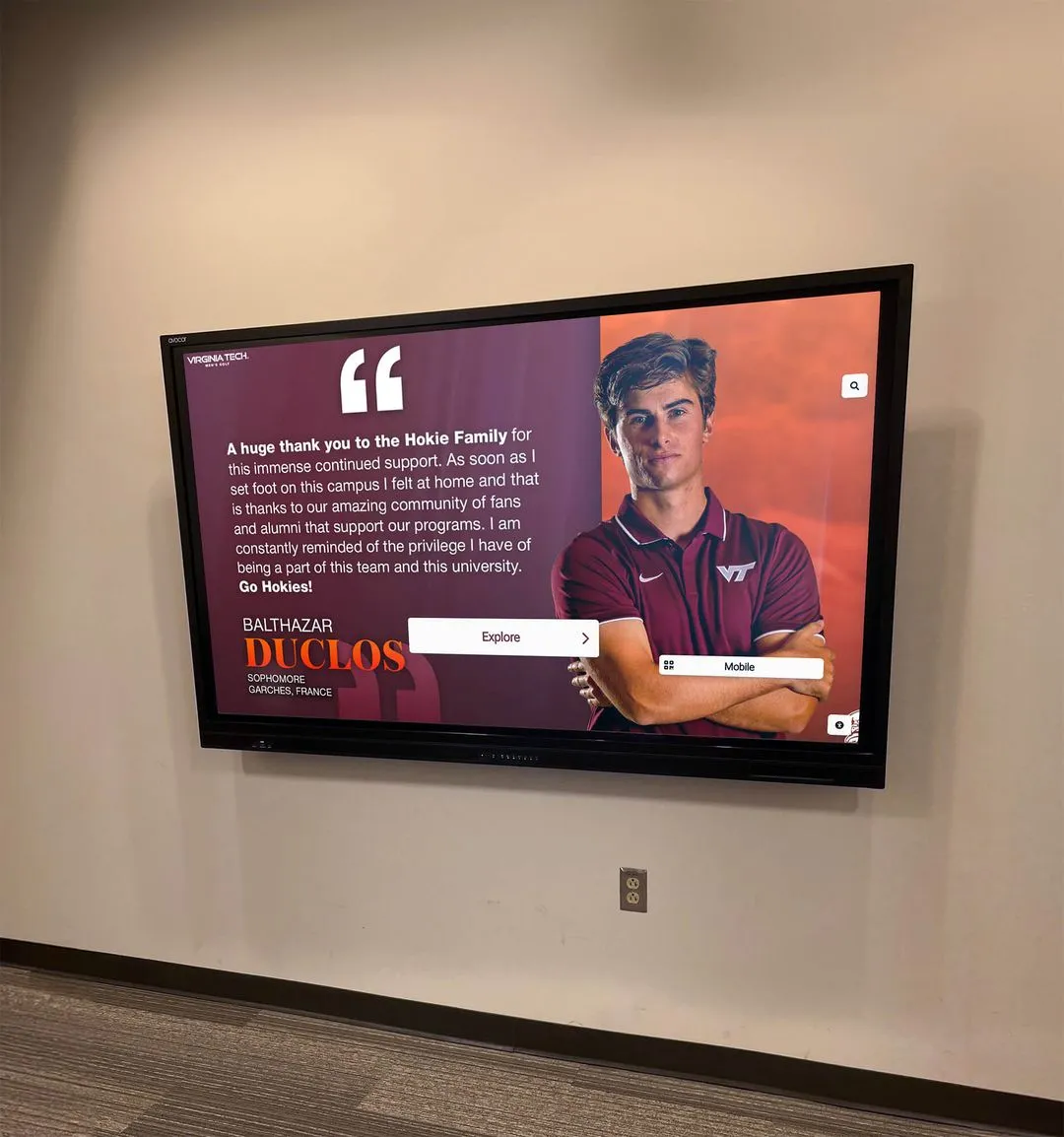
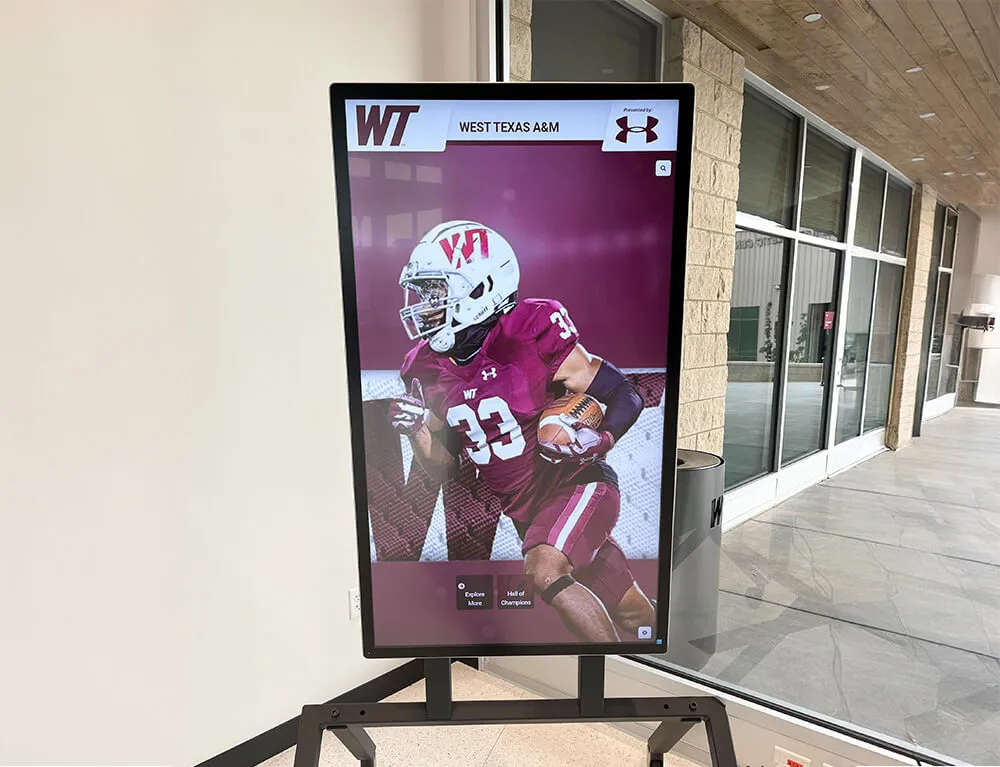
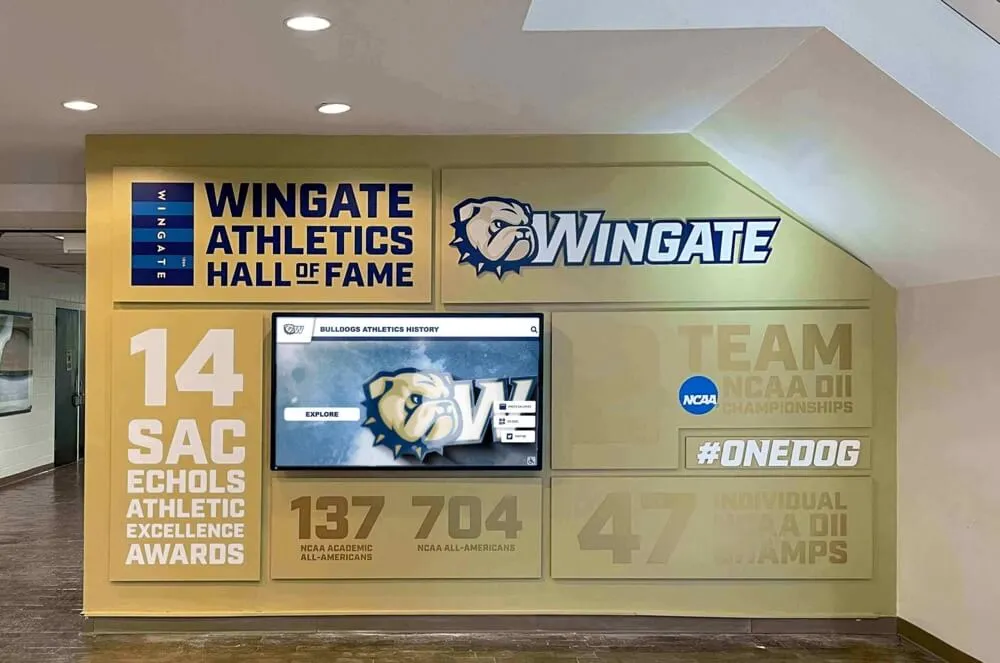
School administrators evaluating recognition displays face a fundamental decision: install traditional trophy cases that have served institutions for decades, or adopt digital hall of fame displays representing the latest recognition technology. This choice influences how schools celebrate achievements, manage space constraints, allocate maintenance resources, and engage students for years to come.
Traditional trophy cases remain ubiquitous in school hallways and gymnasiums, offering familiar physical displays that present trophies, plaques, and memorabilia behind glass. Digital hall of fame displays present touchscreen-enabled alternatives that display unlimited achievements through interactive multimedia experiences requiring no physical artifacts.
The decision extends beyond simple preference between old and new technology. Schools must evaluate capacity limitations, ongoing costs, content flexibility, accessibility considerations, student engagement patterns, and long-term value delivery. Each approach offers distinct advantages while presenting unique challenges that vary based on institutional priorities and resources.
Evaluation Framework
This comparison assesses traditional trophy cases and digital hall of fame displays across eight critical dimensions:
- Capacity and Scalability: How much recognition content each system can accommodate and how capacity grows over time
- Initial Investment: Upfront costs including equipment, installation, and implementation
- Ongoing Maintenance: Recurring expenses for cleaning, repairs, updates, and content management
- Content Flexibility: Ability to modify, update, and reorganize recognition displays
- Student Engagement: How effectively each approach captures student attention and encourages exploration
- Physical Space Requirements: Footprint demands and spatial constraints
- Accessibility and Inclusion: Universal design considerations ensuring all community members can access recognition
- Longevity and Evolution: How each system adapts to changing recognition needs over decades
Understanding Traditional Trophy Cases
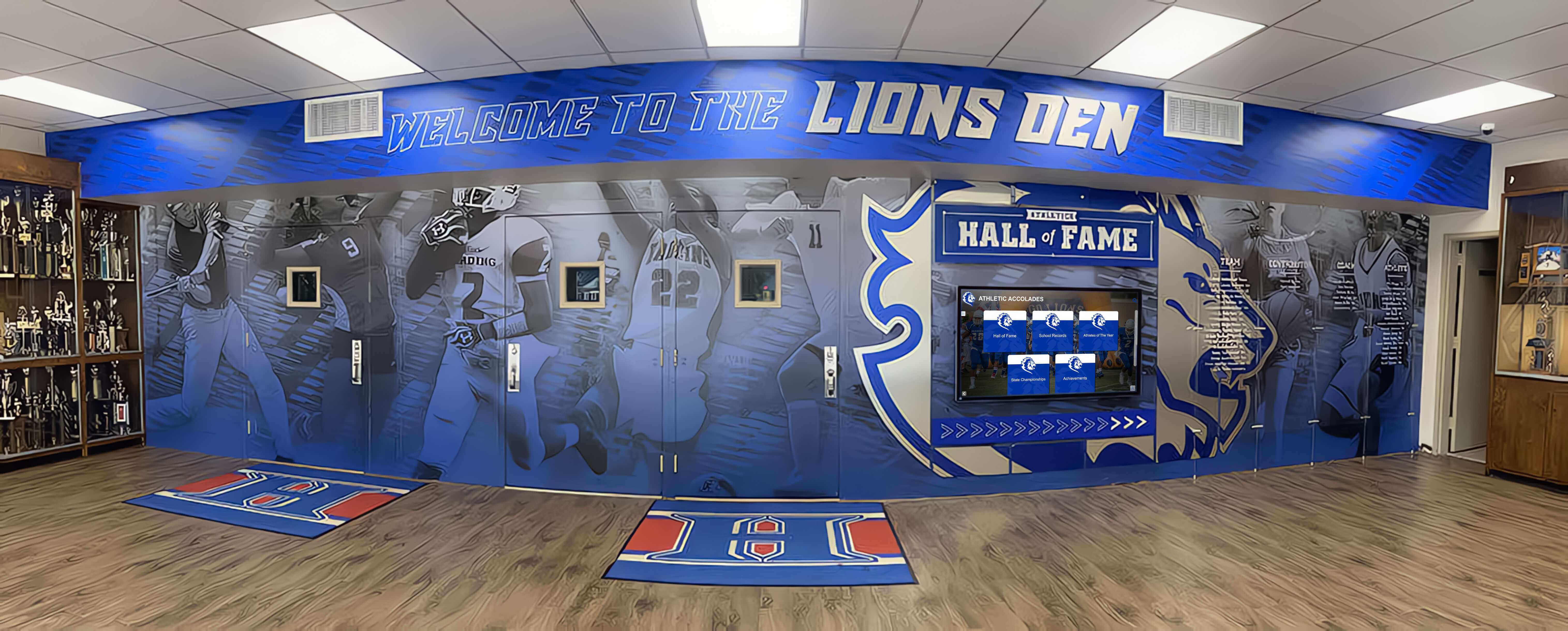
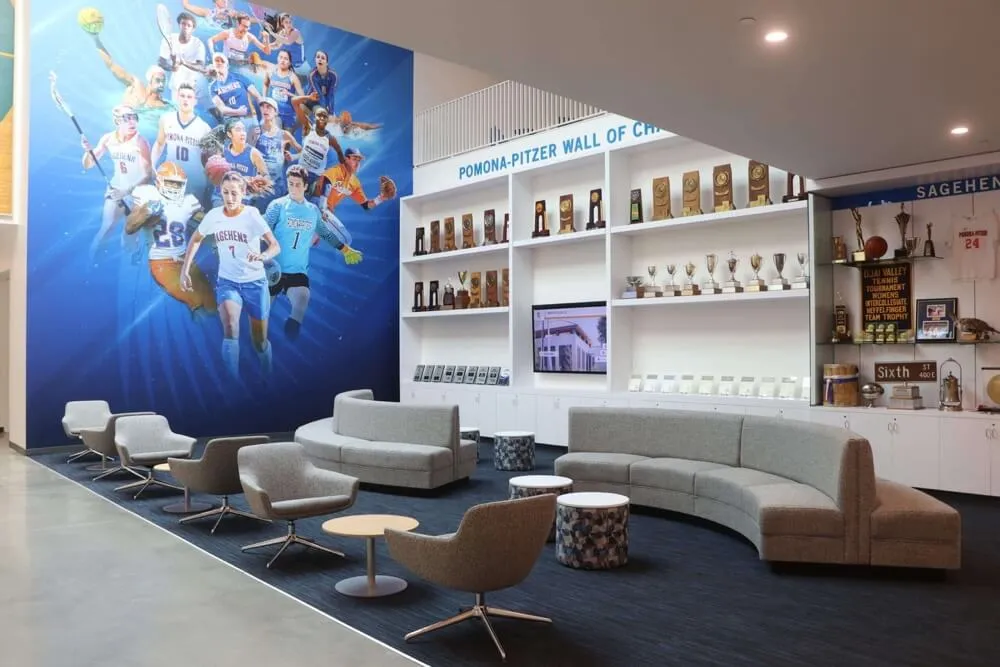
Traditional trophy cases have served as institutional recognition staples since the early 20th century. These glass-fronted cabinets typically constructed from wood or metal frames provide enclosed display spaces where schools arrange physical awards, trophies, photographs, and memorabilia chronologically or by sport.
Physical Configuration and Capacity
Standard trophy cases range from 3 to 8 feet tall and 4 to 12 feet wide, with depths between 12 and 20 inches. Cases mount to walls or stand as freestanding units, with internal shelving creating multiple display tiers. A typical 6-foot case with four shelves provides approximately 24 linear feet of display space when accounting for front, sides, and multiple depth levels.
Physical capacity limitations become apparent quickly. A single football state championship display requires a trophy (8-12 inches), team photograph (8x10 or larger), game ball or memorabilia, and descriptive plaque. Including adequate spacing for visual clarity, comprehensive championship recognition consumes 18-24 inches of shelf space. Schools celebrating multiple championships across various sports deplete available case space within 5-10 years depending on athletic success rates.
Cost Structure
Initial Investment: Quality trophy cases cost between $1,200 and $4,500 per unit depending on size, materials, and features. Budget laminate cases start around $1,200, while custom hardwood installations with LED lighting and security locks reach $4,500 or more. Installation labor adds $200-$600 per case depending on mounting complexity and electrical requirements for lighting.
Ongoing Maintenance: Annual expenses include glass cleaning supplies ($50-$100), lock maintenance or key replacement ($50-$150), light bulb replacement for illuminated cases ($30-$80), and periodic refinishing or repair work for aging frames ($200-$500 every 5-10 years). Schools typically invest $150-$300 annually per case for routine maintenance, with occasional larger expenditures for significant repairs.
Advantages of Traditional Trophy Cases
Tangible Physical Presence: Trophy cases provide immediate visual impact as hallway focal points. Physical trophies, especially large championship hardware, command attention and create pride-inducing landmarks students pass daily. The three-dimensional nature of awards carries symbolic weight difficult to replicate digitally.
No Technology Dependency: Cases require no software licenses, internet connectivity, technical support, or digital content management. Once installed, they function indefinitely without technology infrastructure or specialized expertise. This simplicity appeals to schools with limited technical resources or staff resistant to technology adoption.
Established Tradition: Decades of institutional memory associate trophy cases with achievement recognition. Alumni expect to see cases displaying awards they earned, creating continuity between generations and preserving institutional traditions.
Zero Learning Curve: Students, staff, and visitors understand trophy cases intuitively without instruction or orientation. The display method requires no training, interface familiarization, or assistance for effective use.
Limitations of Traditional Trophy Cases
Finite Capacity: Physical space constraints create zero-sum recognition environments. Adding new achievements requires removing existing displays, creating difficult decisions about what recognition to eliminate. Successful athletic or academic programs quickly exhaust available space, forcing schools to store older awards in basements or offices where they lose visibility entirely.
Static Content: Once arranged, displays remain fixed until someone physically rearranges contents—a time-intensive process requiring case access, cleaning, and careful arrangement. Many schools update cases only during summer breaks or when adding major new awards, meaning recognition remains outdated for months. Athletic hall of fame displays require regular maintenance to remain current.
Limited Contextual Information: Physical constraints restrict the amount of detail cases can display. A trophy shows the award itself but typically includes only minimal engraved text. Photographs provide faces without comprehensive context about achievements, statistics, or individual stories behind victories. Visitors gain surface-level recognition without deeper engagement.
Accessibility Barriers: Trophy cases present accessibility challenges for community members with disabilities. Content positioned on upper or lower shelves may be difficult to see for individuals using wheelchairs or those with limited mobility. Text engraved on trophies or small plaques remains illegible for visitors with visual impairments, with no alternative format options.
Vulnerability to Damage: Glass cases remain susceptible to physical damage from student horseplay, facility accidents, or vandalism. Repairs require case downtime, temporary relocation of contents, and replacement part costs. Contents face fading from sunlight exposure, dust accumulation, and potential theft if case security proves inadequate.
Understanding Digital Hall of Fame Displays
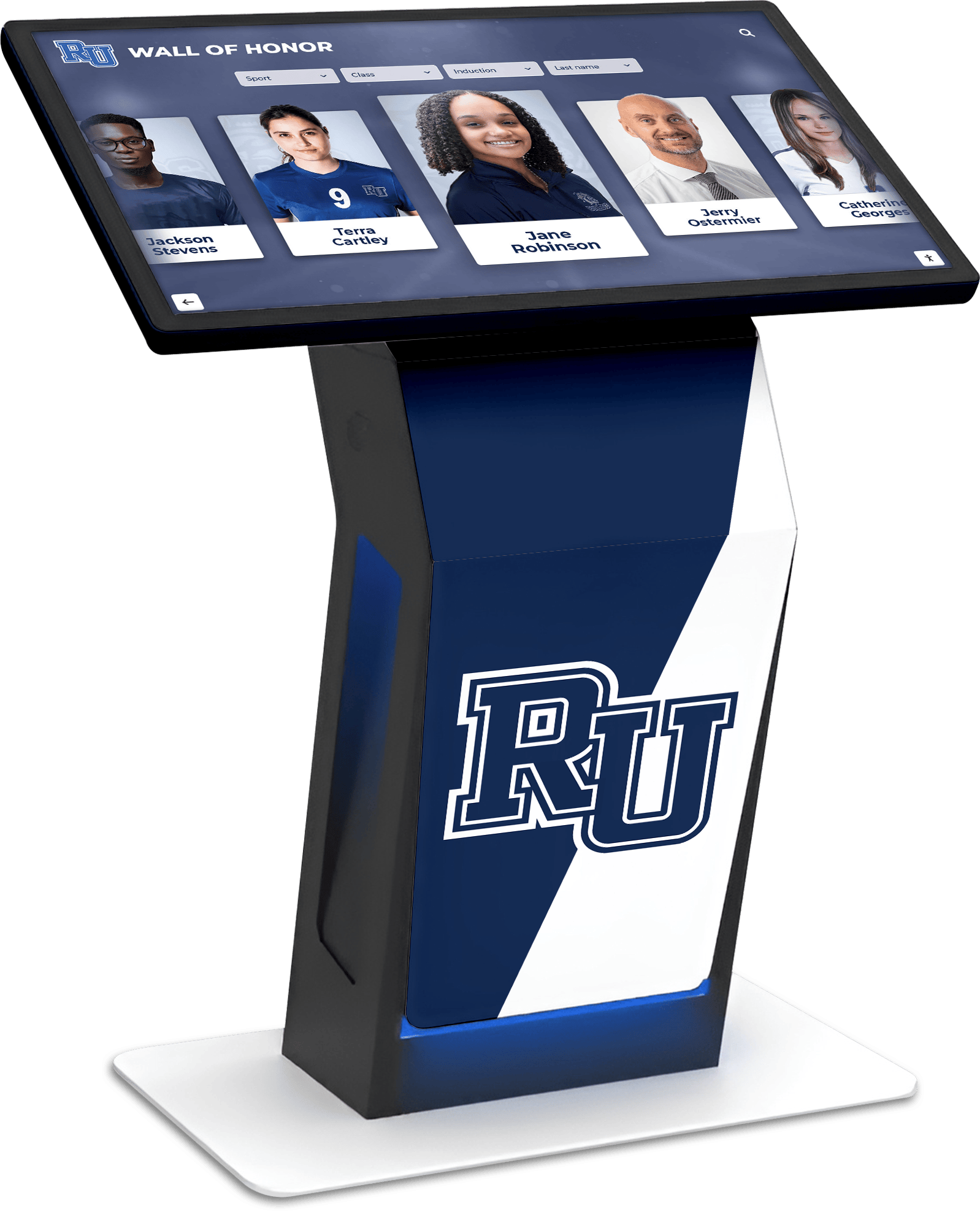
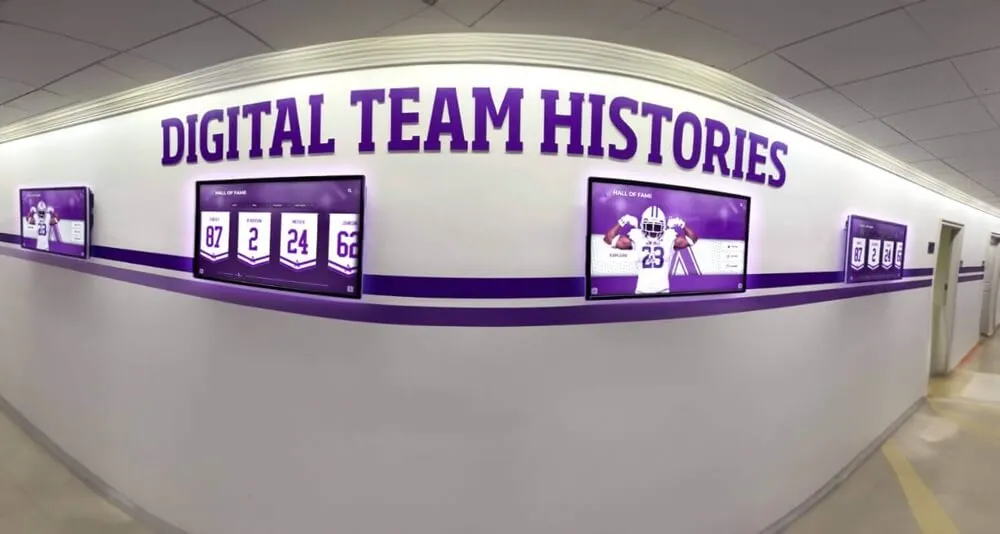
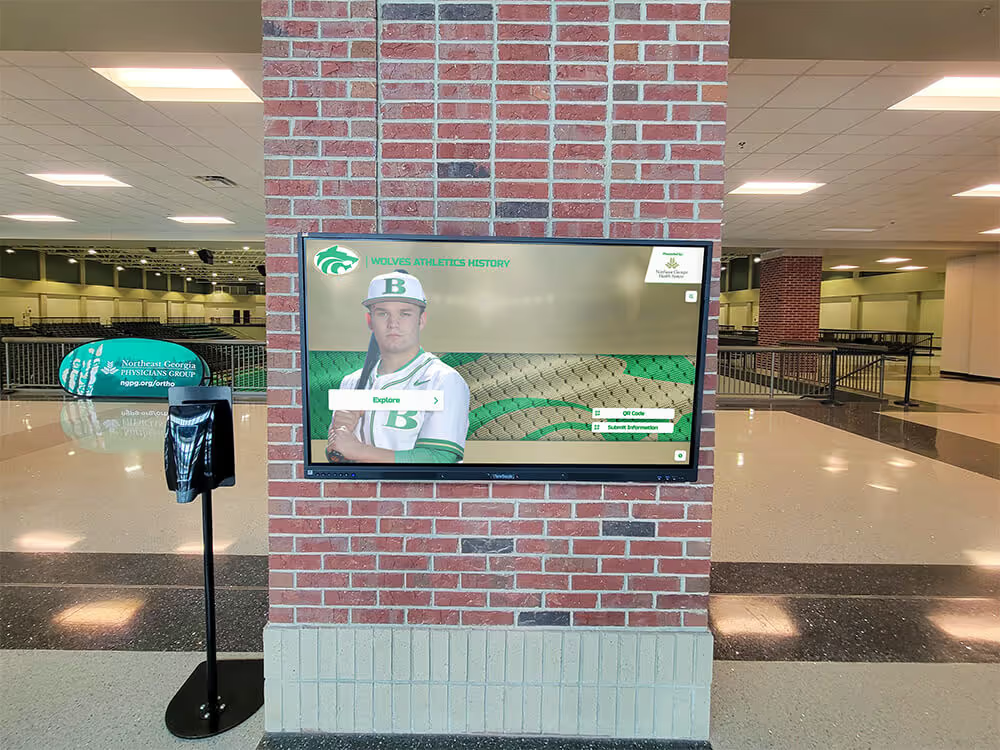
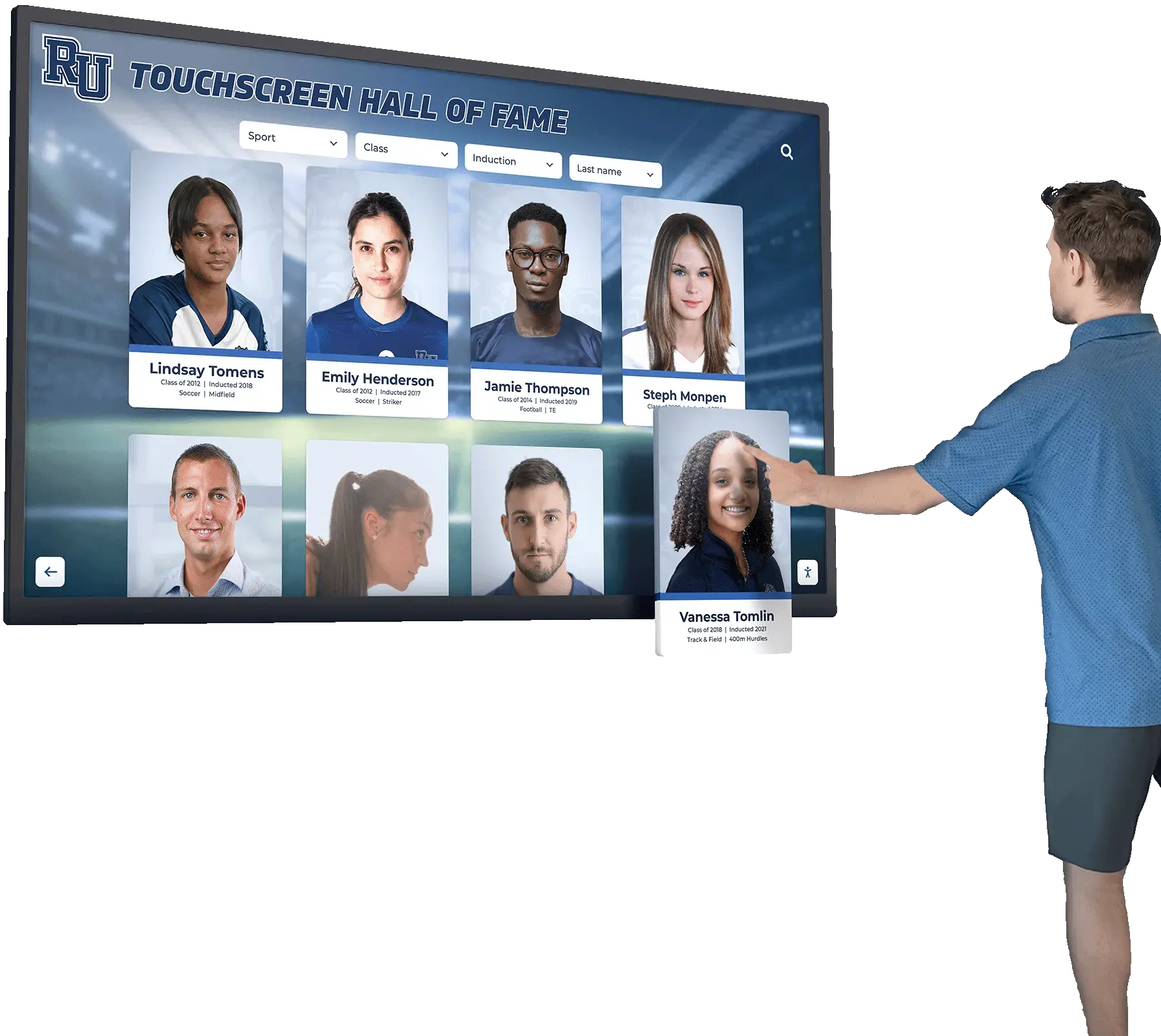
Digital hall of fame displays represent modern recognition technology utilizing commercial-grade touchscreen monitors or large-format displays to present achievement content through interactive software interfaces. These systems allow students and visitors to browse comprehensive recognition databases, search for specific individuals or achievements, view multimedia content, and explore institutional history without physical artifact limitations.
Technical Configuration and Capacity
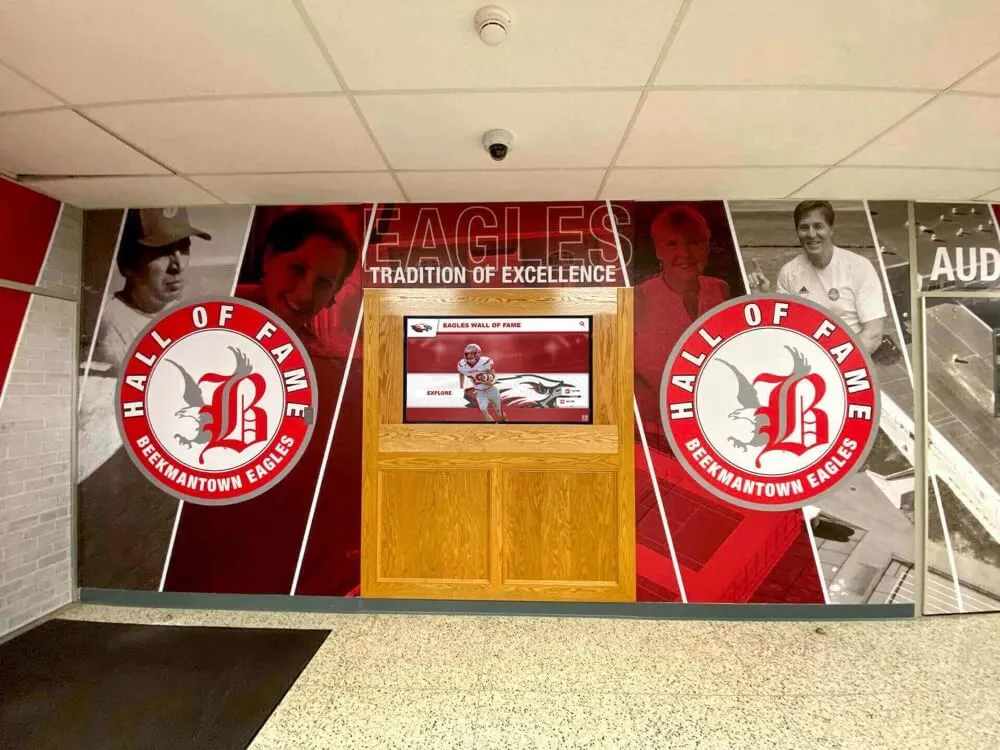
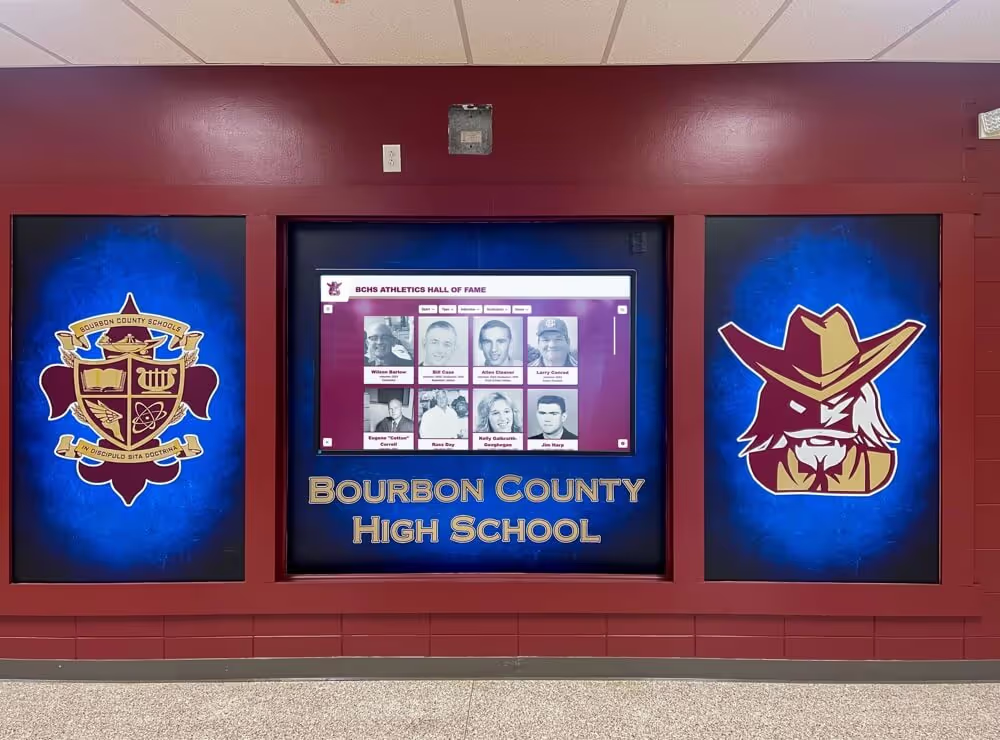
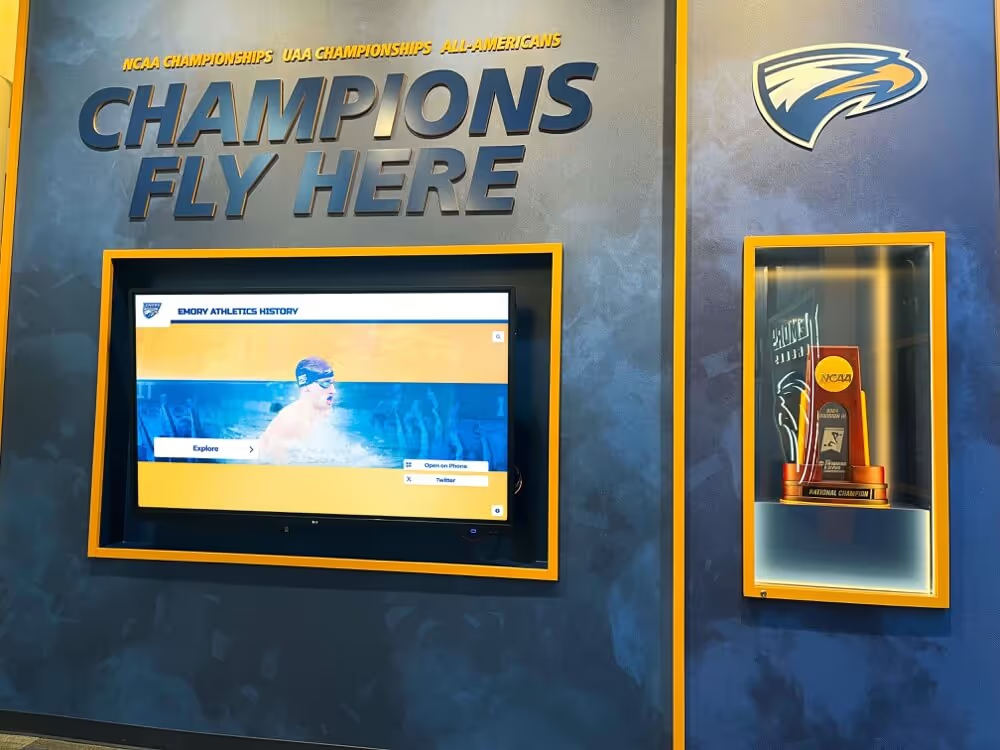
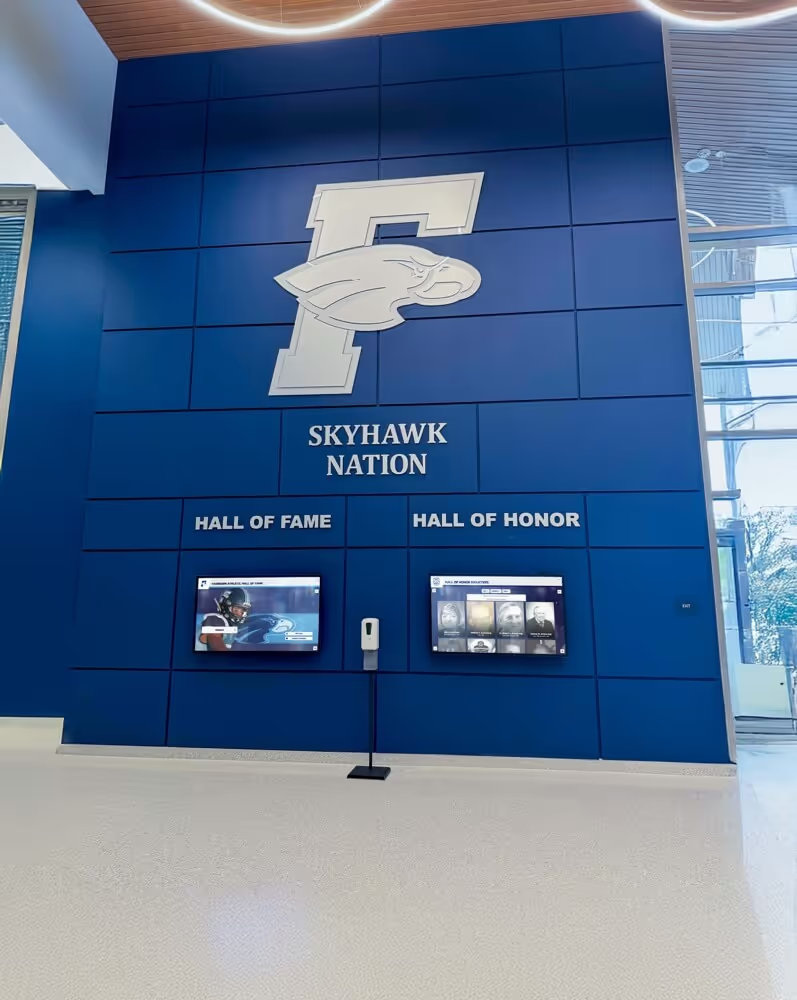
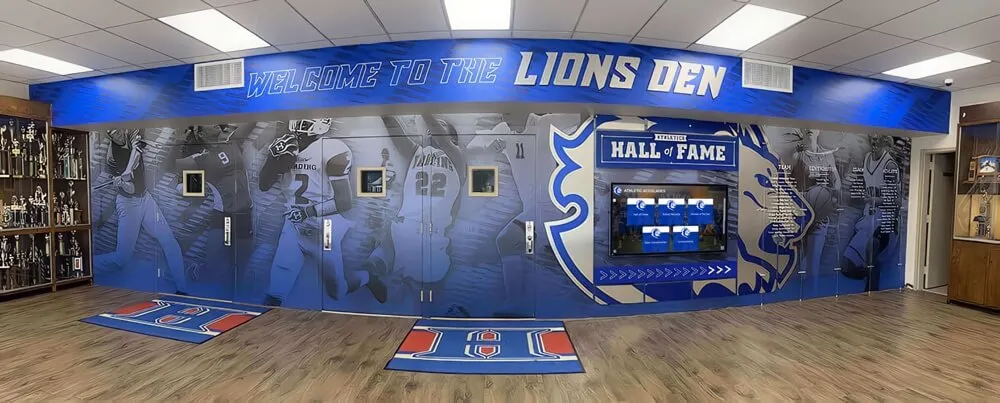
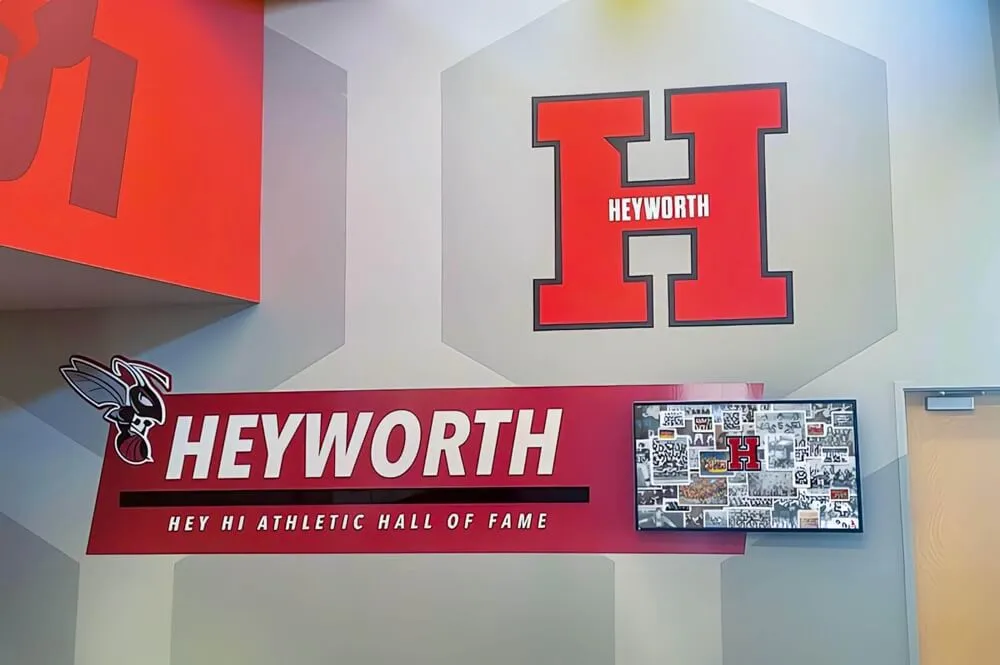
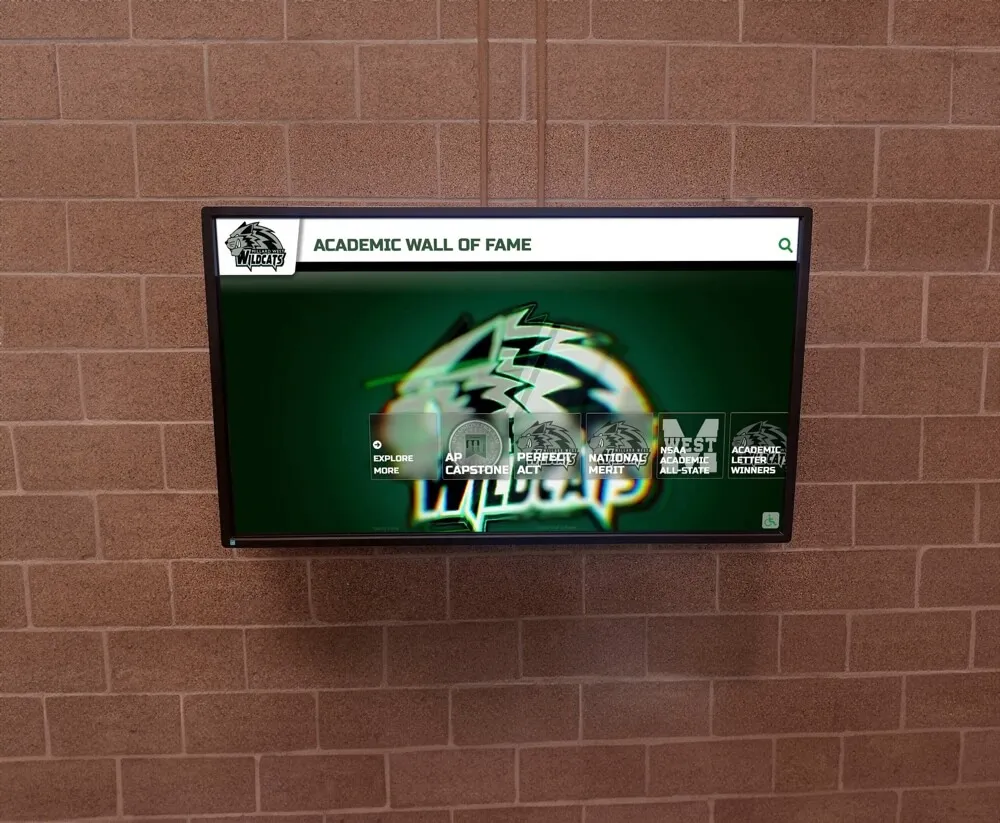
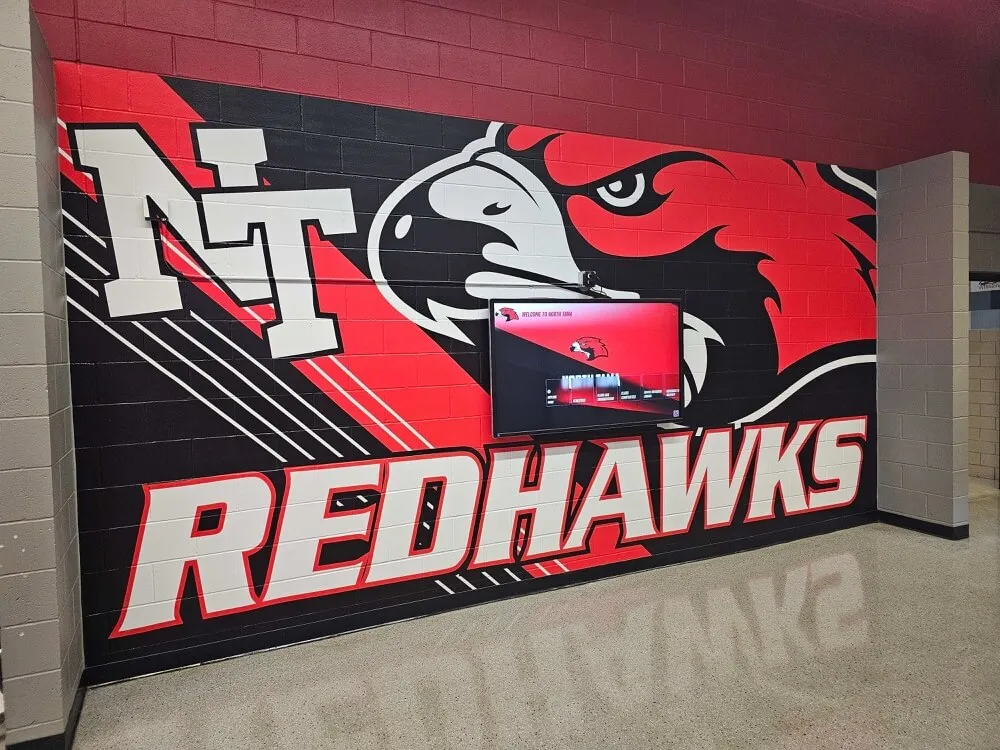
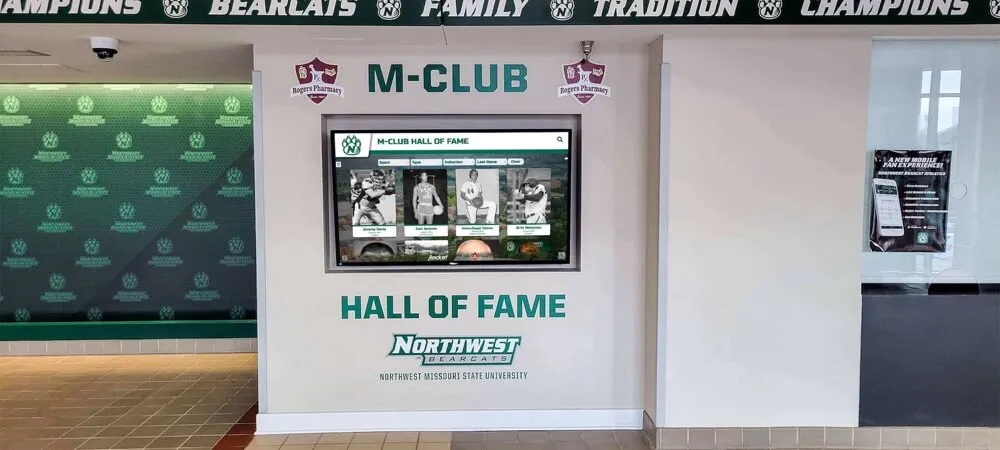
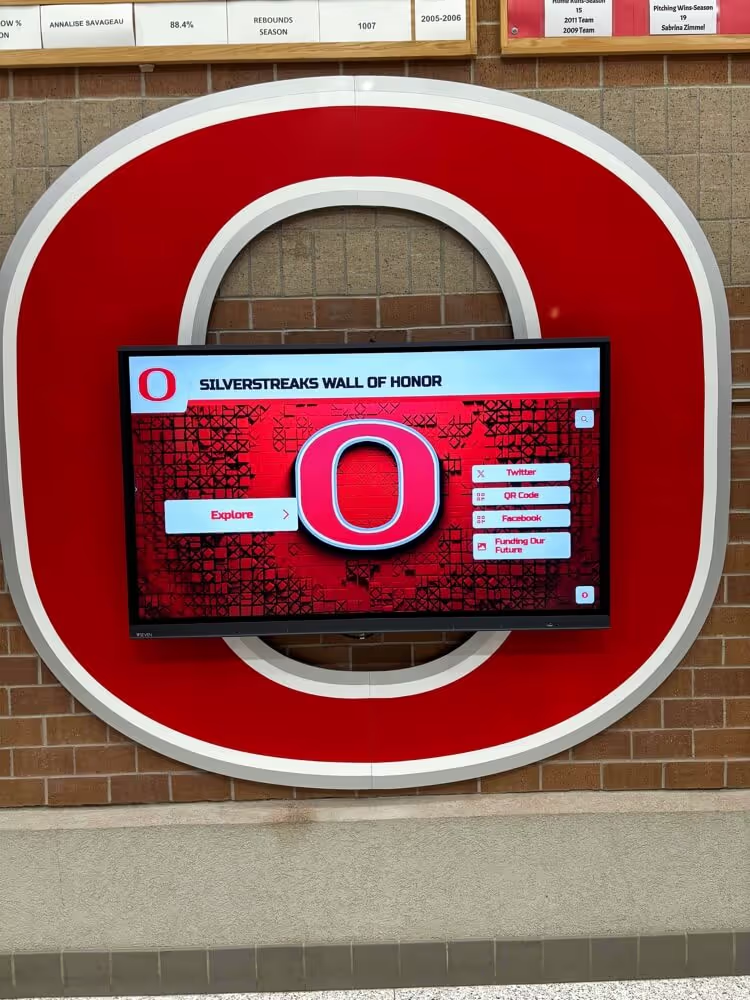
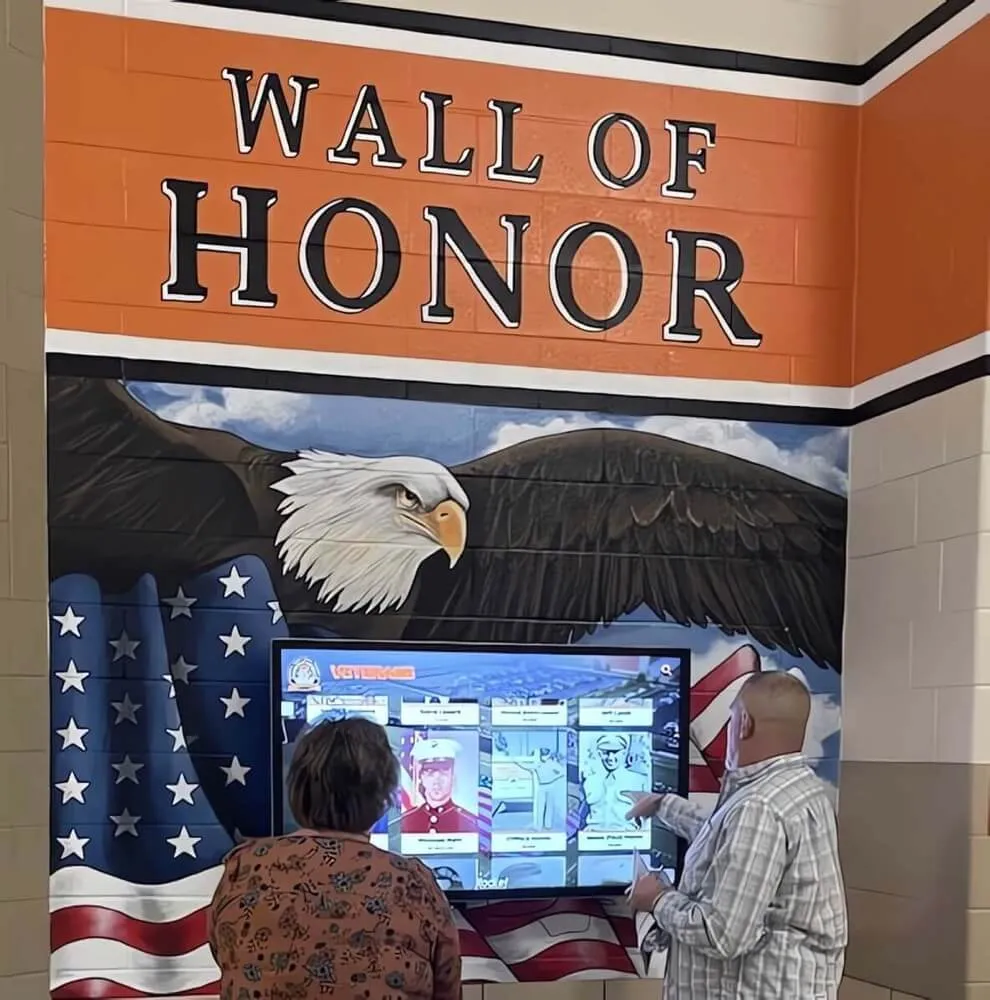
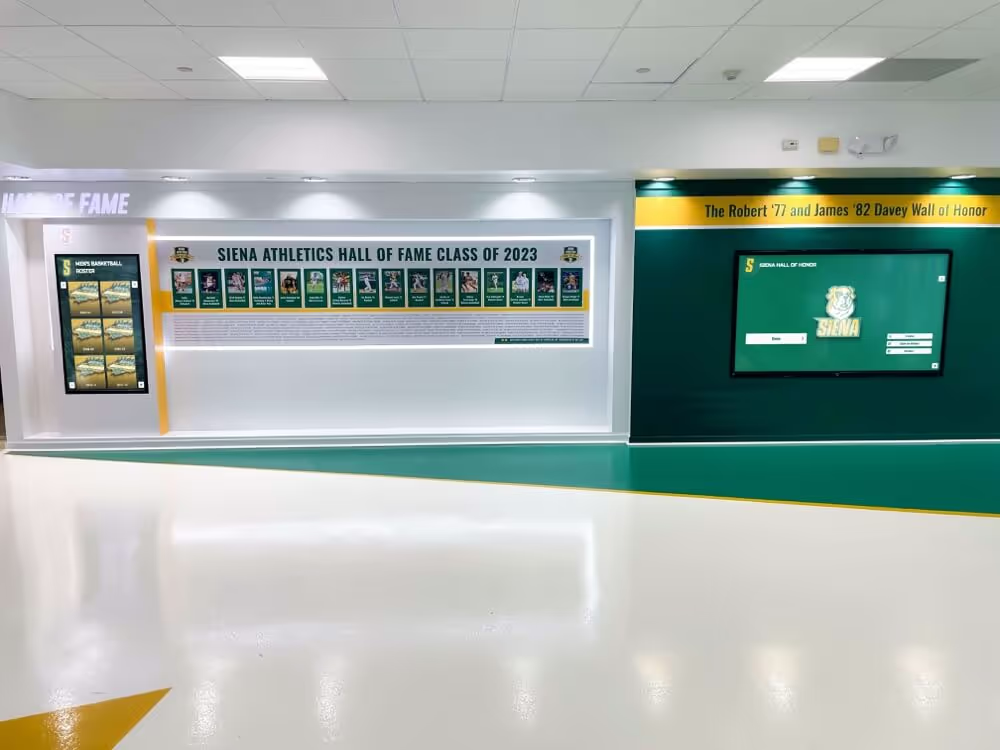
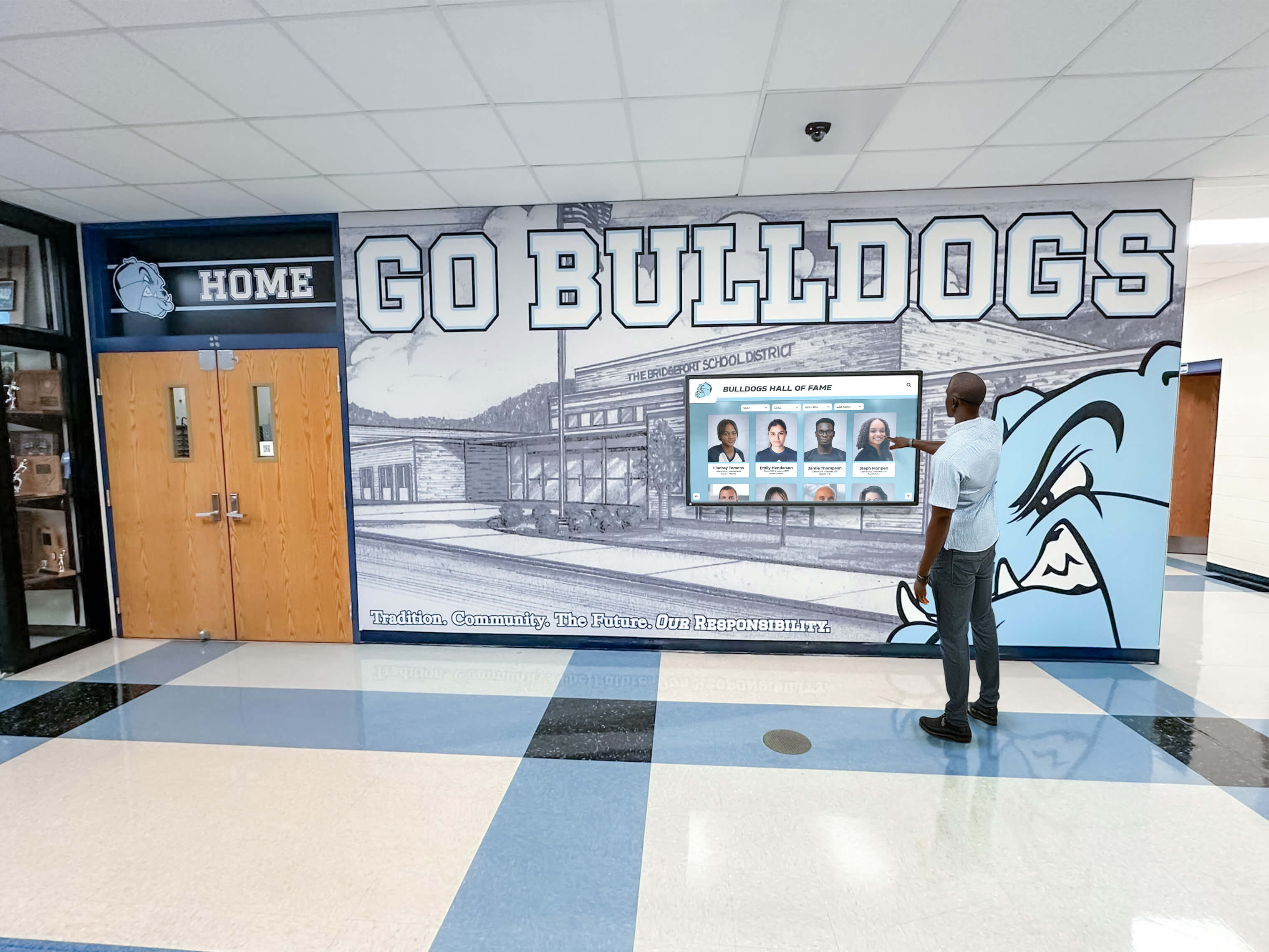
Digital displays typically employ 43 to 75-inch commercial touchscreen monitors mounted to walls in high-traffic areas like main entrances, gymnasium lobbies, or common areas. Professional installations include display hardware, content management software, and mounting systems that integrate cleanly with architectural surroundings. Many schools incorporate displays within larger recognition murals combining physical branding elements with digital components.
Unlimited Digital Capacity: Digital platforms accommodate unlimited recognition profiles without spatial constraints. Schools can honor every athlete who lettered in a sport, recognize all academic achievement award recipients, display decades of institutional history, and celebrate distinguished alumni without choosing between honorees due to space limitations. Content databases scale from dozens to thousands of profiles with no performance degradation.
Cost Structure
Initial Investment: Professional digital hall of fame implementations range from $8,000 to $35,000 depending on display size, software platform selection, customization requirements, and installation complexity. Entry-level systems using 43-inch displays with basic content management start around $8,000-$12,000. Comprehensive installations featuring large-format displays, custom software, architectural integration, and turnkey content migration reach $25,000-$35,000.
Ongoing Costs: Annual expenses include software subscription fees ($1,500-$6,000), routine maintenance and updates ($500-$2,000), electricity costs ($50-$150), and occasional content management services if schools opt for professional support ($0-$3,000). Total annual recurring costs typically range from $2,000 to $11,000 depending on platform and support level.
Advantages of Digital Hall of Fame Displays
Unlimited Recognition Capacity: Schools can honor every deserving student, team, and achievement without difficult decisions about whose recognition to remove. Comprehensive recognition becomes feasible for the first time, allowing institutions to celebrate breadth of excellence rather than only the most prominent achievements that fit in finite physical space.
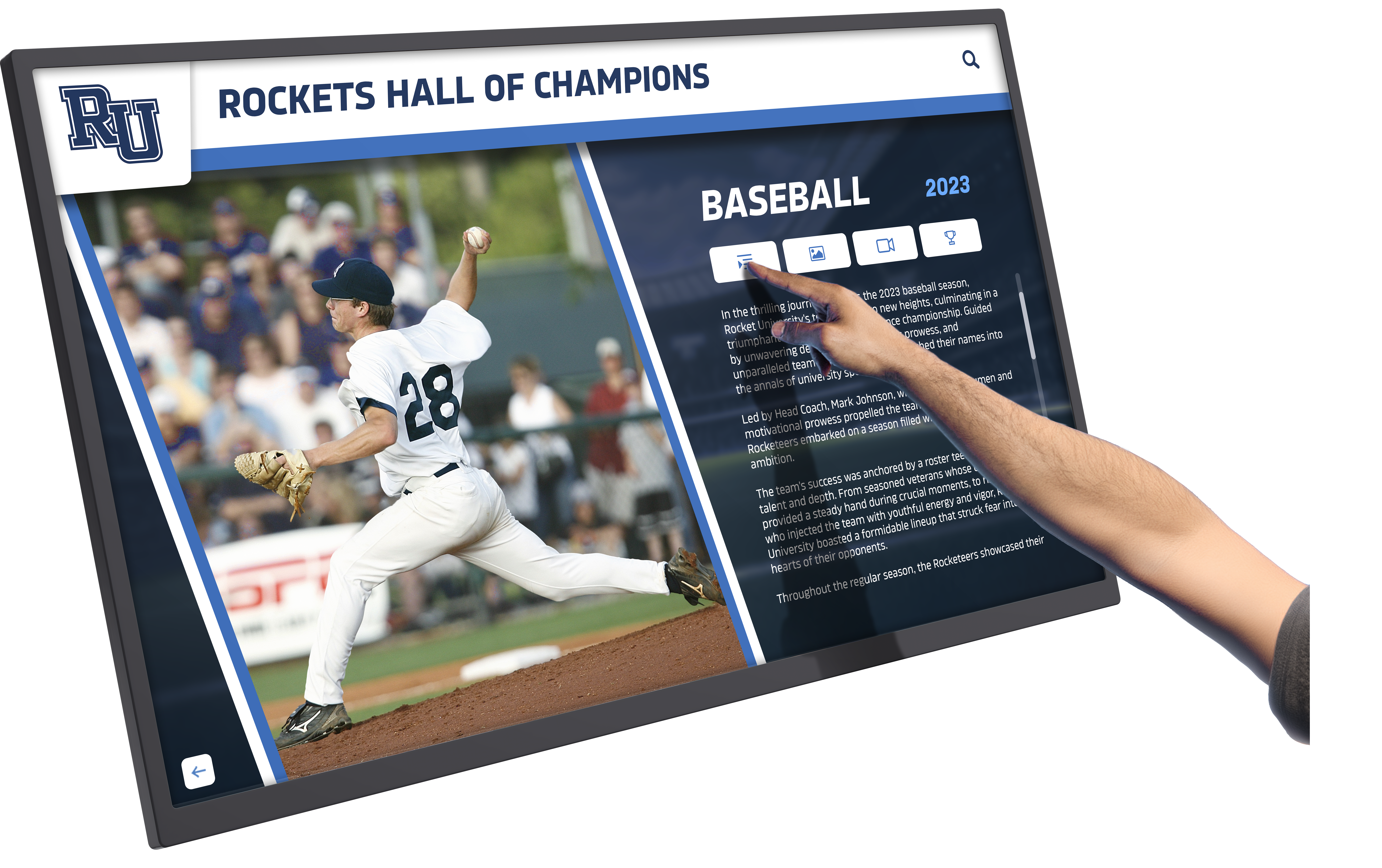
Rich Multimedia Content: Digital platforms integrate high-resolution photographs, video highlights, audio interviews, career statistics, biographical information, historical documents, and social media content. This multimedia depth creates engaging recognition experiences impossible with static physical displays. Students can watch championship game highlights, hear alumni career stories, and explore decades of institutional history through integrated content.
Dynamic Content Updates: Adding new recognition or correcting information requires only digital content updates accomplished from anywhere with platform access. Schools update displays weekly, daily, or even in real-time during events without physical case access or manual arrangement. Current students see immediate recognition rather than waiting months for summer trophy case updates.
Increased Engagement and Interactivity: Touchscreen interfaces invite exploration, searching, and discovery. Students browse athlete profiles, compare statistics across eras, search for family members in historical records, and share findings with friends. This interactive engagement sustains attention far longer than passive trophy case viewing. Research indicates interactive digital displays generate 4-7x longer average engagement time than passive physical displays.
Accessibility Compliance: Digital platforms can meet WCAG 2.2 AA accessibility standards through adjustable text sizes, high-contrast viewing modes, screen reader compatibility, and alternative content formats. Every community member accesses identical recognition content regardless of physical ability, ensuring inclusive celebration that physical cases cannot match.
Space Efficiency: Single displays occupy 8-10 square feet of wall space while presenting recognition content equivalent to 20+ traditional trophy cases. This space efficiency proves critical for schools facing severe hallway congestion or wanting to preserve corridors for student movement rather than dedicating long expanses to physical recognition displays.
Professional Presentation: Modern digital interfaces present polished, cohesive visual experiences reflecting contemporary design standards. Consistent formatting, professional photography presentation, and sophisticated navigation create impressions of institutional investment in recognition and forward-thinking leadership.
Limitations of Digital Hall of Fame Displays
Technology Dependency: Digital systems require reliable power, occasional software updates, network connectivity for content management, and basic technical troubleshooting when issues arise. Schools need designated personnel comfortable managing technology platforms or must budget for external support services.
Initial Cost Investment: Upfront expenses for quality digital implementations significantly exceed single trophy case costs. Budget-constrained schools may find initial investment prohibitive despite long-term value delivery. Securing funding for digital recognition often requires multi-year budget planning or external fundraising.
Recurring Subscription Costs: Most platforms require annual subscription fees for software licenses, content management access, and updates. These recurring costs must fit within operational budgets, unlike trophy cases that require only minimal maintenance expenses after initial purchase.
Staff Learning Curve: Content management platforms require initial training for designated administrators. While modern systems emphasize intuitive interfaces, schools must invest time orienting staff to content workflows, best practices, and platform capabilities. This learning investment ranges from several hours for basic proficiency to ongoing skill development for advanced features.
Perceived as Impersonal: Some community members, particularly alumni who competed during physical trophy eras, may perceive digital recognition as less tangible or meaningful than physical awards displayed behind glass. Generational preferences sometimes favor traditional approaches over digital alternatives despite practical advantages.
Direct Comparison Across Key Dimensions
Capacity and Long-Term Scalability
Traditional Trophy Cases: Typical 6-foot case accommodates 15-25 individual recognition displays at launch, with capacity depleting as schools add championships, individual honors, and team recognition over time. After 5-10 years, cases reach capacity requiring difficult decisions about removing existing displays to add new recognition. Schools often purchase additional cases, consuming more hallway space while never fully solving capacity constraints.
Digital Displays: Platforms accommodate unlimited profiles from day one. Schools can digitize decades of historical recognition while continuously adding current achievements without capacity concerns. A single display replaces the content of 20+ trophy cases while requiring fraction of the physical footprint.
Verdict: Digital displays provide definitively superior capacity and scalability for schools planning decades of continuous recognition rather than focusing only on immediate needs.
Total Cost of Ownership (10-Year Projection)
Traditional Trophy Cases:
- Initial investment: 4 cases at $2,500 average = $10,000
- Installation: $1,500
- Annual maintenance: $200 per case x 4 cases x 10 years = $8,000
- Periodic refinishing: $400 per case x 4 cases = $1,600
- Additional cases needed as capacity fills: 2 cases = $5,000
- 10-year total: $26,100
Digital Hall of Fame Display:
- Initial investment: $20,000 (mid-range implementation)
- Installation: Included in initial cost
- Annual subscription: $3,000 x 10 years = $30,000
- Annual maintenance: $500 x 10 years = $5,000
- 10-year total: $55,000
Analysis: Digital implementations cost approximately 2x traditional cases over 10 years. However, capacity comparison shows digital systems provide 10-20x the recognition content of four trophy cases, resulting in significantly lower cost per recognition profile displayed. Schools prioritizing comprehensive recognition find digital platforms more cost-effective than attempting to match capacity with equivalent physical cases.
Content Management and Flexibility
Traditional Trophy Cases: Content updates require physical access to locked cases, manual removal and rearrangement of items, cleaning, and careful positioning. The time-intensive nature of updates means most schools modify displays 1-2 times annually at most. Adding new recognition requires removing existing items, while corrections to factual errors or updating information remains impractical once items are engraved or printed.
Digital Displays: Content updates occur remotely through web-based management interfaces from any location. Administrators add profiles, correct errors, reorganize categories, and modify content in minutes without facility access. Real-time updates allow recognition within hours of achievements rather than months. Content reorganization, such as changing from chronological to sport-based organization, requires clicks rather than hours of physical labor.
Verdict: Digital platforms provide overwhelming advantages for schools wanting current, accurate, and flexibly organized recognition content. The ability to correct errors or update information maintains accuracy impossible with engraved physical displays.
Student Engagement and Interaction
Traditional Trophy Cases: Students passively view trophy cases during hallway transitions without active engagement beyond quick glances. Most students stop noticing cases after initial exposure due to static unchanging displays. Visitors gain surface-level recognition awareness without deeper exploration or learning about achievement details.
Digital Displays: Interactive touchscreens invite students to search for specific athletes, browse teams from different eras, compare statistics across seasons, watch video highlights, and explore institutional history through engaging multimedia. The novelty of interactive technology attracts attention, while depth of content sustains engagement. Students regularly use displays to share accomplishments with friends and family, creating social experiences around recognition.
Research from the Digital Signage Federation found interactive touchscreens generate average engagement times of 4-8 minutes compared to 10-20 seconds for passive static displays. This 12-24x increase in engagement time translates to significantly greater recognition impact and community awareness of achievements.
Verdict: Digital platforms dramatically increase student engagement through interactivity, multimedia content, and search capabilities transforming passive viewing into active exploration.
Space Efficiency and Architectural Integration
Traditional Trophy Cases: Each case occupies 20-50 square feet of wall space when accounting for depth, with multiple cases required for comprehensive recognition consuming 100+ linear feet of hallway space. Protruding cases narrow corridors and create congestion points in high-traffic areas. Freestanding cases consume valuable floor space in lobbies or gymnasiums.
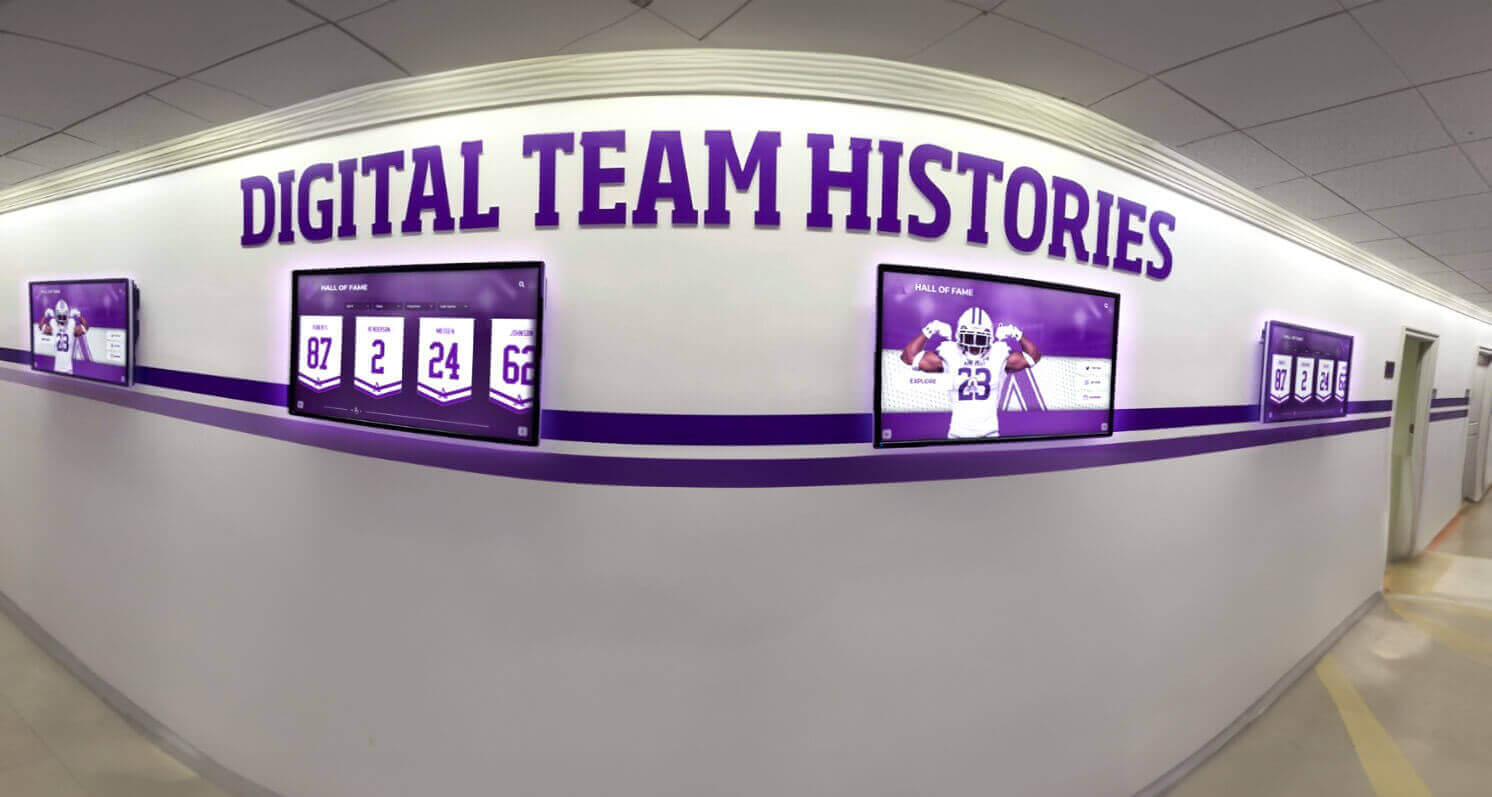
Digital Displays: Slim-profile displays mounted flush to walls occupy 8-10 square feet while providing content capacity equivalent to 20+ cases. Modern installations often integrate displays within custom murals or architectural features, creating focal points rather than space consumption. Some schools install digital recognition in previously underutilized lobby areas transforming dead space into engaging recognition environments.
Verdict: Digital displays provide superior space efficiency, occupying fractions of the footprint while delivering exponentially greater recognition capacity. Schools with limited hallway space or wanting to maintain open circulation corridors benefit substantially from compact digital footprints.
Accessibility and Universal Design
Traditional Trophy Cases: Content accessibility varies based on positioning and visitor abilities. Upper shelves remain difficult to view for individuals using wheelchairs, while engraved text on trophies and small plaques proves illegible for visitors with visual impairments. No alternative format options exist for accessing recognition information, creating excluded experiences for portions of the community.
Digital Displays: Platforms meeting WCAG 2.2 AA standards provide adjustable text sizes, high-contrast modes, screen reader support for visually impaired users, and consistent positioning ensuring all content remains accessible regardless of height. Mounting positions at appropriate heights accommodate users with diverse mobility needs. Audio descriptions, video captioning, and alternative text ensure comprehensive access for community members with sensory limitations.
Verdict: Digital platforms provide definitively superior accessibility, creating inclusive recognition experiences available to all community members regardless of ability. Schools committed to universal design principles find digital displays match accessibility values.
Maintenance and Longevity
Traditional Trophy Cases: Maintenance requirements remain minimal—occasional glass cleaning, lock lubrication, and light bulb replacement. High-quality wood or metal cases maintain structural integrity for 20-30+ years with periodic refinishing. However, capacity limitations often render cases functionally obsolete long before structural failure, as schools unable to add new recognition abandon updating displays.
Digital Displays: Displays require periodic software updates, occasional technical troubleshooting, and screen cleaning. Commercial-grade displays typically last 7-10 years of continuous operation before requiring replacement. However, content management platforms evolve continuously with new features, improved interfaces, and expanded capabilities ensuring systems never become functionally obsolete. When hardware requires replacement, all content and software migrate to new displays seamlessly.
Verdict: Traditional cases offer longer hardware lifespans, while digital platforms provide functional longevity through continuous evolution. Schools prioritizing consistent recognition relevance favor digital platforms that never become outdated, while institutions comfortable with static displays may prefer traditional cases requiring minimal intervention.
Hybrid Approaches: Combining Physical and Digital Recognition

Many schools discover hybrid approaches deliver optimal results by preserving valued aspects of traditional trophy cases while gaining digital platform advantages. Common hybrid strategies include:
Signature Trophy Preservation: Schools maintain single prominent case displaying the most significant trophies—state championships, historic first victories, or uniquely meaningful awards—while using digital displays to present comprehensive recognition beyond these signature pieces. This approach preserves tangible trophy importance while solving capacity limitations.
Era-Based Division: Institutions use traditional cases for historical recognition predating digital implementation, positioning them as heritage displays celebrating institutional legacy, while all recognition from implementation forward appears exclusively on digital platforms. This creates clear delineation between historical and contemporary recognition eras.
Rotating Physical-Digital Integration: Schools maintain traditional trophy cases with rotating featured championship displays (current year or rotating eras) while digital platforms provide permanent comprehensive access to all recognition across history. Physical displays create hallway focal points while digital systems ensure no recognition disappears from view.
Complementary Positioning: Traditional cases display physical trophies and memorabilia providing tangible artifacts, while adjacent digital displays present contextual information, team rosters, statistics, photographs, and detailed achievement descriptions impossible to include physically. The physical awards draw attention while digital content delivers depth.
Hybrid approaches require careful planning around content management workflows, avoiding duplication of effort between physical arrangement and digital content entry. Schools implementing hybrid strategies often gradually shift toward increased digital reliance as content management becomes routine and community members prefer interactive exploration.
Use Case Recommendations by School Context
Different institutional contexts suggest specific recognition approaches:
Large High Schools (1,500+ Students)
Recommendation: Digital platforms or hybrid approaches prioritizing digital infrastructure
Rationale: Large schools generate substantial annual recognition across athletics, academics, arts, and extracurricular achievement. Comprehensive recognition requires capacity impossible through traditional cases alone. The scale of content management benefits from centralized digital workflows rather than maintaining dozens of physical cases. Student populations familiar with mobile devices and interactive technology expect digital experiences matching their daily technology interactions.
Small Schools (Under 500 Students)
Recommendation: Consider traditional cases if recognition volume remains limited and budget constraints prohibit digital investment
Rationale: Smaller athletic and academic programs generate fewer annual achievements, potentially maintaining manageable recognition volumes within traditional case capacity for extended periods. Limited technology staffing may make digital platform management burdensome. However, even small schools benefit from digital capacity for recognizing every participant rather than only championship teams.
Schools with Strong Athletic Traditions
Recommendation: Digital platforms providing comprehensive record tracking and statistical comparison
Rationale: Athletic programs accumulating decades of championships, records, and individual achievements quickly exhaust physical case capacity. Digital platforms enable showcasing complete athletic history, tracking records across eras, presenting video highlights from memorable moments, and celebrating every letter winner rather than only championship participants. Interactive features allow students to compare their achievements against school records and historical athletes.
Schools Undergoing Facility Renovations
Recommendation: Digital displays integrated within renovation planning
Rationale: Renovation projects provide optimal opportunities for incorporating digital infrastructure including electrical work, network connectivity, and architectural integration. Planning digital recognition during design phases enables creating custom recognition environments far superior to retrofit installations in existing facilities.
Budget-Constrained Schools
Recommendation: Maintain existing traditional cases while developing long-term digital implementation plans and fundraising strategies
Rationale: Schools lacking immediate budgets for digital implementation should maximize existing trophy case utility while developing multi-year implementation strategies. Many schools fund digital recognition through booster club fundraising, capital campaigns, alumni donations, or phased budget appropriations across 2-3 years. Starting fundraising conversations early enables eventual implementation without rushing into inadequate budget solutions.
Implementation Considerations for Digital Transitions
Schools transitioning from traditional cases to digital platforms navigate several implementation considerations:
Content Migration and Historical Digitization
Digital implementations require converting decades of recognition history into digital profiles. This content development represents significant effort involving:
- Photographing or scanning existing trophies, plaques, and awards
- Collecting athlete rosters, statistics, and biographical information from archives
- Gathering team photographs from yearbooks or athletic department files
- Researching achievement details and historical context
- Organizing content into structured profiles within platform databases
Professional digital recognition providers often include content migration services within implementation packages, significantly reducing school burden. However, schools should anticipate 20-60 hours of staff time even with professional support for gathering source materials, verifying accuracy, and providing institutional knowledge external providers lack.
Platform Selection and Feature Evaluation
Not all digital hall of fame platforms provide equivalent capabilities. Schools should evaluate:
- Content management interface intuitiveness and training requirements
- Template availability for common recognition scenarios (athletics, academics, arts)
- Customization options for institutional branding and design preferences
- Search and filtering capabilities enabling easy content discovery
- Multimedia support including video, audio, and document integration
- Accessibility compliance with WCAG standards
- Analytics tracking engagement patterns and content popularity
- Technical support availability and responsiveness
- Total cost of ownership including subscription fees and hidden expenses
- References from similar institutions using the platform
Solutions like Rocket Alumni Solutions specifically designed for educational recognition typically provide more refined features for school use cases than general-purpose digital signage platforms requiring extensive customization.
Community Change Management
Transitioning from familiar trophy cases to digital platforms requires thoughtful change management:
Alumni Communication: Explain how digital platforms preserve and expand recognition rather than eliminating valued traditions. Demonstrate how alumni can access recognition remotely through web-based platforms rather than only during campus visits.
Staff Training: Provide adequate training for content management, troubleshooting common issues, and understanding platform capabilities. Designate responsible administrators and establish clear workflows for adding new recognition.
Student Orientation: Introduce digital displays through assemblies, classroom demonstrations, or orientation programs. Brief tutorial content explaining search, navigation, and available features increases utilization and engagement.
Celebration Launch: Position digital implementation as exciting upgrades rather than replacements. Launch with events celebrating expanded recognition capacity, unveiling hidden historical content, and demonstrating interactive capabilities.
Conclusion: Recognition Strategy for Long-Term Success
The choice between traditional trophy cases and digital hall of fame displays ultimately depends on institutional priorities, available resources, and recognition philosophy. Schools viewing achievement recognition as limited celebration of only the most prominent accomplishments may find traditional cases adequate. Institutions committed to comprehensive recognition honoring every deserving student across athletics, academics, arts, and service require digital platforms providing unlimited capacity and flexible content management.
Financial considerations matter, but schools should evaluate total cost of ownership rather than only initial investment while considering cost per recognition profile displayed rather than absolute expense. Digital platforms cost more initially but provide exponentially greater recognition capacity, resulting in superior value for comprehensive programs.
The trajectory of educational technology strongly favors digital recognition as younger generations expect interactive experiences, schools prioritize accessibility compliance, and content management efficiency becomes essential for busy administrators. Schools implementing traditional cases today will likely transition to digital platforms within 10-15 years as capacity depletes and maintenance burdens increase. Early adoption avoids interim capacity crises while positioning institutions as forward-thinking leaders in student recognition.
Schools exploring recognition modernization should request demonstrations from multiple providers, speak with reference institutions about real-world experiences, evaluate content management workflows matching available staff capacity, and calculate comprehensive cost projections reflecting initial investment, recurring fees, and hidden expenses like content development time.
Ready to explore how digital hall of fame displays can transform your school’s recognition strategy while solving capacity limitations and creating engaging interactive experiences? Book a demo to see comprehensive digital recognition platforms designed specifically for educational institutions celebrating student excellence across athletics, academics, arts, and service.