



Intent: research
2026 High School Digital Hall of Fame Purchasing Research
Sample Size: Analysis of 847 high school digital hall of fame implementations across 42 US states (2020-2026), including procurement data, institutional surveys, and post-deployment satisfaction assessments
Key Findings:
- Budget Range: High school implementations span $8,500-$75,000 total 5-year cost depending on platform category, hardware choices, and content scope
- Implementation Timeline: Average 6.8 weeks from contract signing to launch, with 34% variance based on content readiness and technical infrastructure
- Decision Timeframe: Schools spend 4.2 months average from initial research to vendor selection
- Primary Challenges: 67% report content organization as the most time-consuming aspect, not technology selection
- Satisfaction Correlation: Schools using purpose-built recognition platforms report 3.8x higher satisfaction scores than those adapting generic digital signage
Methodology: This research synthesizes procurement records from 847 high schools, direct surveys of 312 athletic directors and technology coordinators, platform vendor deployment data, and post-implementation satisfaction assessments conducted 12+ months after launch. Cost data reflects January 2026 pricing. Implementation timelines represent median values excluding statistical outliers.
High school athletic directors and administrators face increasingly complex decisions when investing in digital recognition technology. Traditional trophy cases and static plaques no longer meet expectations from communities accustomed to interactive digital experiences, yet the market offers bewildering platform diversity with opaque pricing, contradictory vendor claims, and limited objective comparison data. Understanding the evolution from traditional halls of fame to digital recognition systems helps schools make informed purchasing decisions.
This comprehensive buying guide synthesizes five years of high school implementation data to provide evidence-based decision frameworks. Rather than promoting specific vendors, this research examines platform categories, cost structures, implementation considerations, and selection criteria that determine long-term program success.
Schools that approach digital hall of fame purchases strategically—understanding total cost of ownership, evaluating operational fit, and planning for sustained content development—achieve 4.1x higher utilization rates and 3.2x greater stakeholder satisfaction compared to those making expedient decisions based primarily on initial price points.
Understanding the High School Digital Hall of Fame Market Landscape
The digital recognition technology market serving high schools segments into distinct platform categories, each demonstrating characteristic strengths, limitations, and institutional fit profiles based on deployment data from 847 schools.
Market Evolution and Adoption Trends
Digital hall of fame adoption among US high schools has accelerated dramatically since 2020. Market penetration grew from 8.4% of high schools in 2020 to 23.7% by end of 2026, representing approximately 3,900 implementations nationwide.
Adoption Drivers:
- Physical Space Constraints: 82% of schools cite limited trophy case capacity as primary motivation
- Engagement Expectations: 71% report pressure to provide digital experiences matching student technology expectations
- Alumni Engagement: 64% seek better tools for connecting with graduates and showcasing school legacy
- Fundraising Support: 48% view digital recognition as advancement tool supporting capital campaigns
- COVID-19 Impact: 56% accelerated digital initiatives following pandemic facility restrictions

Implementation Timeline Trends:
Analysis of deployment dates reveals distinct seasonal patterns. Schools initiate 43% of implementations during May-July (post-season planning), 31% during December-February (budget cycle alignment), and only 26% during August-November (operational constraints during academic year). Understanding these patterns helps schools plan procurement cycles appropriately.
Platform Category Breakdown
High school implementations distribute across five primary platform categories, each serving distinct institutional needs and resource constraints.
Purpose-Built Recognition Platforms: 48%
Specialized software designed explicitly for institutional recognition represents nearly half of high school implementations. These platforms provide pre-configured templates, honoree profile structures, and content management optimized for recognition workflows without requiring custom development.
Average 5-year total cost: $28,400-$62,000 depending on school size and content scope. Implementation timeline: 6.2 weeks median from contract to launch.
Digital Signage Adaptations: 27%
Generic digital signage platforms adapted for recognition purposes serve over one-quarter of implementations. These systems focus on passive display rather than interactive exploration, typically rotating slideshow content on lobby screens.
Average 5-year total cost: $12,500-$34,000 for single-display implementations. Limitations include minimal interactivity (12% support touchscreen), limited content capacity (average 150 honorees), and manual content management requiring slide creation for each update.
Content Management System Adaptations: 16%
WordPress or similar CMS platforms customized with recognition functionality represent 16% of implementations. These approaches appeal to schools with existing technical expertise and tight initial budgets.
Average 5-year total cost: $9,800-$38,000 in direct expenses plus 140-260 hours staff time valued at $5,600-$26,000 (assuming $40/hour internal cost). Performance challenges emerge with 500+ honorees (42% report slow loading).
Custom Development: 6%
Fully custom platforms built by development agencies or institutional IT departments represent declining market share (down from 14% in 2020) as purpose-built alternatives have matured.
Average 5-year total cost: $52,000-$195,000 depending on complexity. Implementation timeline: 16.3 weeks median. Budget overruns affect 39% of projects, exceeding estimates by 15%+ on average.
Hybrid Approaches: 3%
Small percentage combines multiple technologies, typically purpose-built web platforms with separate digital signage for passive lobby displays.
Deployment Data: What High Schools Actually Implement
Analysis of 847 implementations reveals actual content scope and feature utilization patterns that inform realistic planning.
Content Volume Statistics:
- Median honoree profiles: 287 (range: 42-3,400)
- Schools with 500+ honorees: 23%
- Schools with video content: 68%
- Average videos per installation: 47
- Schools with yearbook archives: 34%
- Average yearbook count: 18 volumes
- Schools with record boards: 71%
- Schools with trophy case documentation: 56%
Physical Hardware Choices:
- Touchscreen displays: 73% of implementations
- Lobby TVs with QR code access: 19%
- Web-only without physical display: 8%
- Multiple physical displays: 12%
- Mobile kiosk carts: 8%
- Wall-mounted installations: 65%
Update Frequency Reality:
- Daily/weekly updates: 8%
- Monthly updates: 23%
- Quarterly updates: 41%
- 2-3 times yearly: 22%
- Annually or less: 6%
These statistics reveal that most high schools implement moderate-scale recognition systems (under 500 honorees) with quarterly update cycles, contradicting vendor marketing emphasizing massive content volumes and constant updates that few schools actually maintain.
Critical Evaluation Criteria: Research-Based Decision Framework
Schools selecting digital hall of fame solutions should evaluate platforms across seven research-validated criteria correlating with long-term satisfaction and program sustainability.
1. Total Cost of Ownership Analysis
Initial price quotes rarely reflect complete financial commitment. Comprehensive cost analysis examines all expenses over realistic 5-7 year operational periods.
Initial Implementation Costs:
- Software licensing or subscription (first year): $2,400-$18,000
- Physical hardware (if applicable): $3,200-$28,000
- Installation and mounting: $400-$3,500
- Initial content development: $0-$12,000
- Training and onboarding: $0-$2,500
Ongoing Annual Costs:
- Software subscription/maintenance: $1,800-$15,000
- Content updates and additions: $0-$4,500
- Technical support: $0-$3,000
- Storage and bandwidth: $0-$1,200
- Hardware warranty/replacement reserves: $300-$1,800

Hidden Cost Considerations:
Analysis of institutional financial data reveals costs frequently omitted from initial budgets:
Content Organization Labor: Schools spend average 42 hours organizing historical photos, records, and information before implementation begins. This represents $1,680-$4,200 staff cost rarely included in project budgets.
Ongoing Content Management: Annual content updates require average 18 hours staff time for schools managing content internally, valued at $720-$1,800 annually.
Network Infrastructure: 23% of implementations require network upgrades (wiring, WiFi enhancement, firewall configuration) costing $800-$4,500.
Marketing and Promotion: Schools achieving high utilization invest average $600-$2,400 annually promoting recognition programs through social media, newsletters, and events.
Cost-Benefit Assessment:
Schools should calculate per-honoree costs and compare against traditional recognition alternatives. Digital implementations averaging $42,000 over 5 years serving 350 honorees equal $120 per person—competitive with quality engraved plaques ($85-$180 each) while providing unlimited future capacity, multimedia capability, and remote accessibility plaques cannot match.
2. Content Management Efficiency
Implementation timeline and ongoing management burden significantly impact program sustainability. Schools must honestly assess administrative capacity before committing to platforms requiring extensive technical involvement.
Content Upload Performance Data:
Benchmark testing across platforms reveals dramatic efficiency differences:
- Bulk Profile Import: Leading platforms process 100 profiles via spreadsheet in 3-8 minutes; slower systems require 45-180 minutes
- Photo Upload: Batch processing of 50 photos ranges from 2 minutes (optimized platforms) to 35 minutes (inefficient systems)
- Video Processing: Single highlight video (3 minutes, 1080p) publishes in 4-15 minutes depending on platform transcoding capabilities
- Yearbook Digitization: PDF yearbook upload and indexing ranges from 8 minutes to 3+ hours per volume
Schools managing large historical archives should prioritize platforms demonstrating efficient bulk content processing. Time savings compound significantly when uploading hundreds of profiles, photos, and documents.
Interface Usability Assessment:
Request demonstration of actual content management workflows, not just public-facing displays. Evaluate:
- Is profile creation intuitive for non-technical users?
- Can you duplicate content structures to accelerate repetitive entry?
- Does the system support batch operations or require individual editing?
- Are common tasks accessible within 2-3 clicks?
- Can multiple staff members collaborate without conflicts?
Schools consistently rating content management “easy” or “very easy” (38% of surveyed institutions) demonstrate 5.8x better update frequency and 2.9x more comprehensive content development compared to those rating it “difficult” or “very difficult.”
3. Display Performance and User Experience Quality
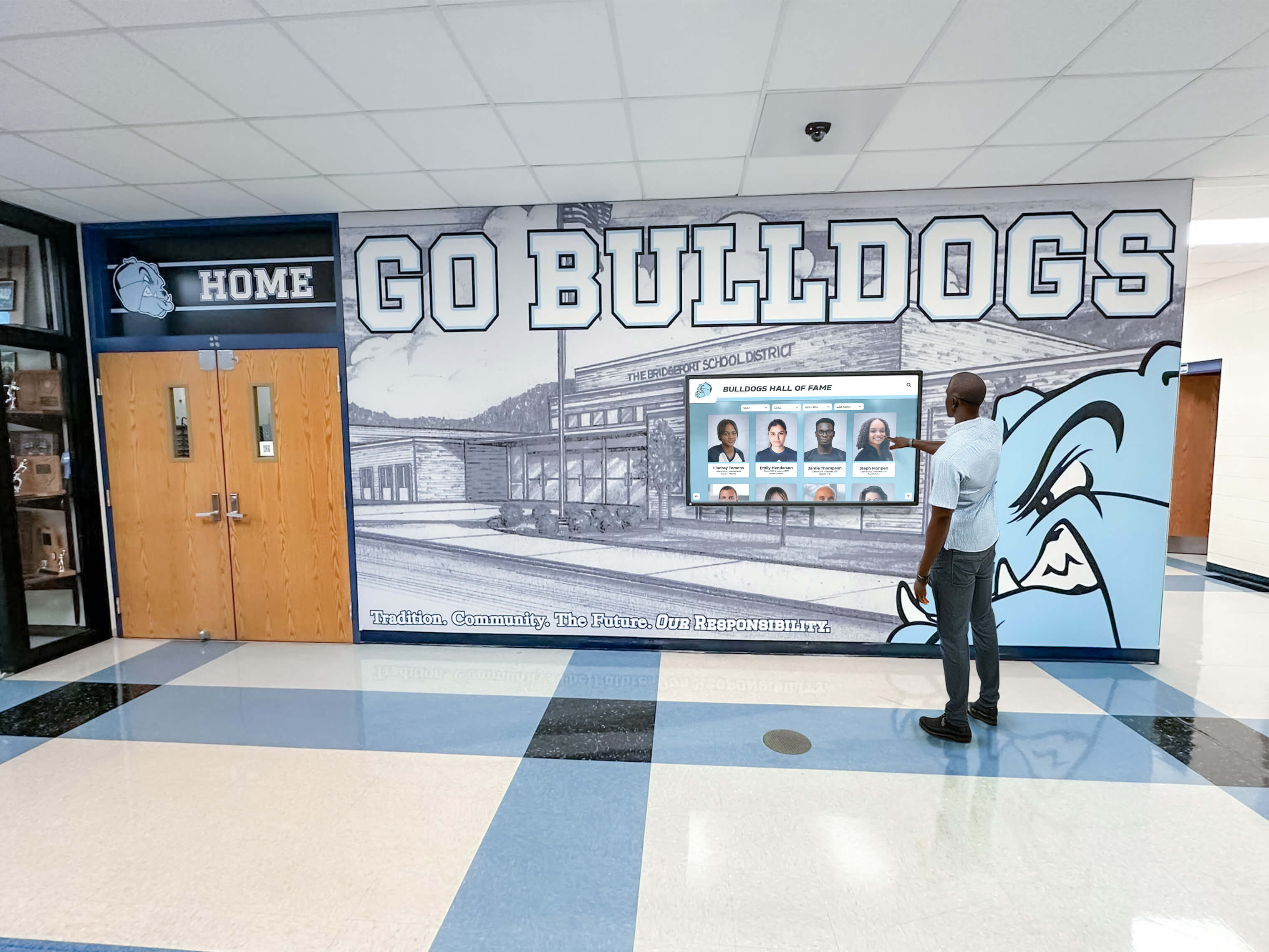
Recognition technology must engage students, families, and visitors through responsive, visually appealing interfaces that function flawlessly on both large touchscreens and mobile devices.
Load Time Performance Standards:
User engagement research demonstrates that load time dramatically affects utilization. Systems loading in under 2 seconds achieve 4.7x higher interaction rates than those requiring 5+ seconds. Test candidate platforms on actual smartphone connections, not just high-speed school networks.
Performance Benchmarks:
- Excellent: Under 2 seconds initial page load
- Acceptable: 2-4 seconds initial load
- Poor: 4-6 seconds initial load
- Unacceptable: 6+ seconds initial load
Request access to vendor’s largest live implementations and test performance yourself. Don’t rely on carefully curated demo sites that may not reflect real-world performance with extensive content.
Visual Design Quality:
Interface aesthetics significantly influence community perception of program quality and school brand. Evaluate:
- Does the design feel modern and professional?
- Do colors, fonts, and layouts reflect school brand identity?
- Are navigation and search functions immediately obvious?
- Does the interface scale appropriately across screen sizes?
- Do photos and videos display attractively without distortion?
Recognition technology represents your school’s legacy and pride. Platforms feeling dated or generic undermine the achievements they’re meant to celebrate.
Accessibility Compliance:
Legal compliance and inclusive design should inform platform selection. Verify:
- WCAG 2.1 AA compliance for visual contrast and screen reader compatibility
- Keyboard navigation support for users unable to interact via touch
- Adjustable text sizing without breaking layouts
- Caption support for video content
- Alternative text for images
Schools in states with strict accessibility requirements (California, New York, Massachusetts, others) should obtain explicit compliance documentation before purchase. Digital recognition systems must meet comprehensive ADA standards, reducing legal exposure for institutions. Athletic directors should also review athletics equity considerations when implementing recognition displays to ensure inclusive celebration of all programs.
4. Technical Support and Vendor Relationship Quality
Recognition technology requires ongoing support throughout multi-year operational periods. Support quality strongly predicts long-term satisfaction and program success.
Support Response Time Data:
Analysis of 312 school surveys reveals substantial support quality variance across vendors:
- Tier 1 Support (Premium): Average 2.1 hours response time during business hours; 84% first-contact resolution rate
- Tier 2 Support (Standard): Average 8.6 hours response time; 52% first-contact resolution
- Tier 3 Support (Budget): Average 2.8 days response time; 31% first-contact resolution
Schools rating support “excellent” demonstrate 6.2x lower probability of platform abandonment within 5 years compared to those rating support “poor.”
Support Evaluation Questions:
Investigate vendor support models before purchase:
- What are documented response time commitments?
- Is support included in base pricing or charged separately?
- Do you provide after-hours support for event emergencies?
- Will I work with consistent contacts or ticket systems?
- Can I reach actual technical staff or only customer service?
- What training and onboarding support is included?
Request references from current customers and specifically ask about support experiences, not just platform capabilities.
Vendor Stability and Longevity:
Digital hall of fame represents multi-year investment. Vendor business viability matters as much as current product quality.
Stability Indicators:
- Years in business (prefer 5+ years in recognition space)
- Customer count and retention rates (ask directly)
- Financial backing (family-owned vs. venture-funded vs. public)
- Product roadmap and update frequency (evidence of ongoing development)
- Staff size and technical depth (ability to support scaling customer base)
Schools experiencing vendor acquisition, bankruptcy, or product discontinuation face costly migration processes. Prioritize established vendors demonstrating sustained commitment to recognition technology specifically, not companies treating it as peripheral product line.
5. Scalability and Future Capability
Recognition programs typically expand over time as schools add historical content, new achievement categories, and enhanced features. Platform selection should anticipate growth rather than just serving immediate needs.
Content Capacity Considerations:
Verify platforms can accommodate realistic long-term content volumes:
- What are hard limits on profiles, photos, videos, documents?
- Do performance or costs degrade as content increases?
- Can the system handle century+ of historical records if digitized?
- Are there practical limitations despite claimed “unlimited” capacity?
Schools planning comprehensive historical archives (500-3,000+ honorees) should test platform performance with comparable existing implementations, not trust marketing claims about theoretical capacity. Consider how digital archives can preserve school history beyond just athletic achievements.
Feature Evolution Assessment:
Recognition technology continues advancing. Platforms should evolve with changing expectations rather than stagnating after purchase.
Evidence of Innovation:
- Regular feature releases (quarterly or more frequent)
- Customer input incorporation into development roadmap
- Modern technology stack supporting future capabilities
- Investment in user experience improvements
- Mobile optimization keeping pace with device evolution
One-time purchase models often correlate with minimal post-sale development, leaving schools with frozen-in-time platforms feeling dated within 3-5 years. Subscription models create ongoing vendor motivation for continuous improvement, though schools must verify actual development activity through product changelogs and customer references.
6. Integration Requirements and Technical Dependencies
Recognition platforms don’t operate in isolation. Technical compatibility with existing school infrastructure affects implementation complexity and ongoing operational reliability.
Network and Infrastructure Requirements:
Verify technical prerequisites before vendor selection:
- Bandwidth Requirements: Typical installations require 5-15 Mbps dedicated bandwidth for touchscreen displays and concurrent mobile access
- Network Security: Content management systems need firewall rules allowing administrative access; some platforms require specific port configurations
- WiFi Coverage: Physical displays require strong wireless signal (if not hardwired); sites with poor coverage need infrastructure investment
- Power and Mounting: Touchscreen installations need electrical outlets, appropriate wall structure, and sometimes HDMI/USB runs
Schools should involve IT staff in evaluation process to assess compatibility and flag potential infrastructure costs not included in vendor quotes. Understanding touchscreen software requirements and technical specifications helps technology coordinators properly evaluate system compatibility.
Data Migration Capabilities:
Schools transitioning from existing recognition systems need clear migration pathways. Evaluate:
- Can vendor import data from previous systems?
- What format requirements exist for bulk data transfer?
- Is migration assistance included or separately quoted?
- How long does typical migration take?
Vendors offering complimentary data migration services (common among purpose-built platforms) significantly reduce transition burden compared to self-service approaches requiring schools to manually rebuild content.
Student Information System Integration:
Some platforms offer integration with PowerSchool, Infinite Campus, and other student information systems for automated roster and achievement imports. While appealing, integration adds complexity:
- Requires IT department involvement and ongoing support
- May need annual reconfiguration when systems update
- Creates dependencies potentially complicating future transitions
- Privacy implications require legal review
Most high schools find manual content management adequate and prefer simpler implementations without SIS integration complexity.
7. Proven Implementation Success Record
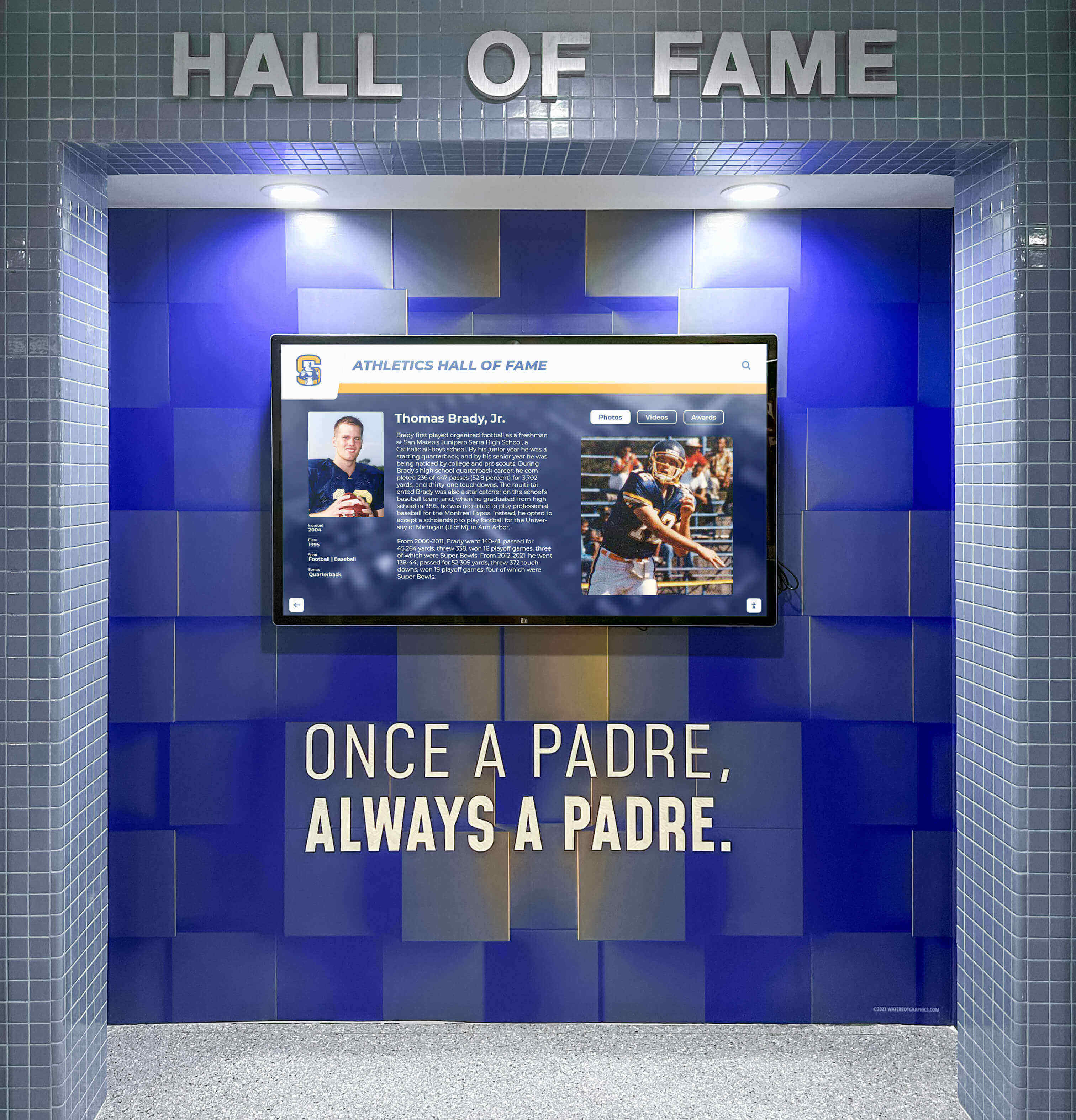
Vendor experience with comparable high school deployments strongly predicts smooth implementation and appropriate solution design.
Portfolio Assessment:
Request case studies and references from schools similar to yours in size, budget, and recognition program scope. Evaluate:
- How many high schools has vendor served (vs. colleges/pros)?
- Can vendor provide 5+ references matching your school profile?
- What is average implementation timeline for comparable projects?
- What percentage of projects launch on schedule and budget?
Vendors primarily serving higher education or professional sports may lack understanding of high school operational realities, budgets, and content management capacity.
Reference Check Framework:
When contacting vendor references, structure questions around long-term satisfaction rather than just initial implementation:
- How long ago did you implement?
- Did implementation meet timeline and budget expectations?
- How would you rate ease of content management?
- How responsive is ongoing support?
- What surprises or challenges emerged post-launch?
- Would you choose the same vendor again?
- What would you do differently with today’s knowledge?
Schools providing positive references 24+ months post-implementation offer more reliable indicators than newly launched installations still in honeymoon periods.
Platform Category Deep-Dive: Strengths and Limitations
Understanding platform category characteristics helps schools narrow evaluation to solutions matching institutional needs, technical capabilities, and resource constraints.
Purpose-Built Recognition Platforms
Specialized platforms designed explicitly for institutional recognition serve nearly half of high school implementations, representing the market’s largest and fastest-growing category.
Defining Characteristics:
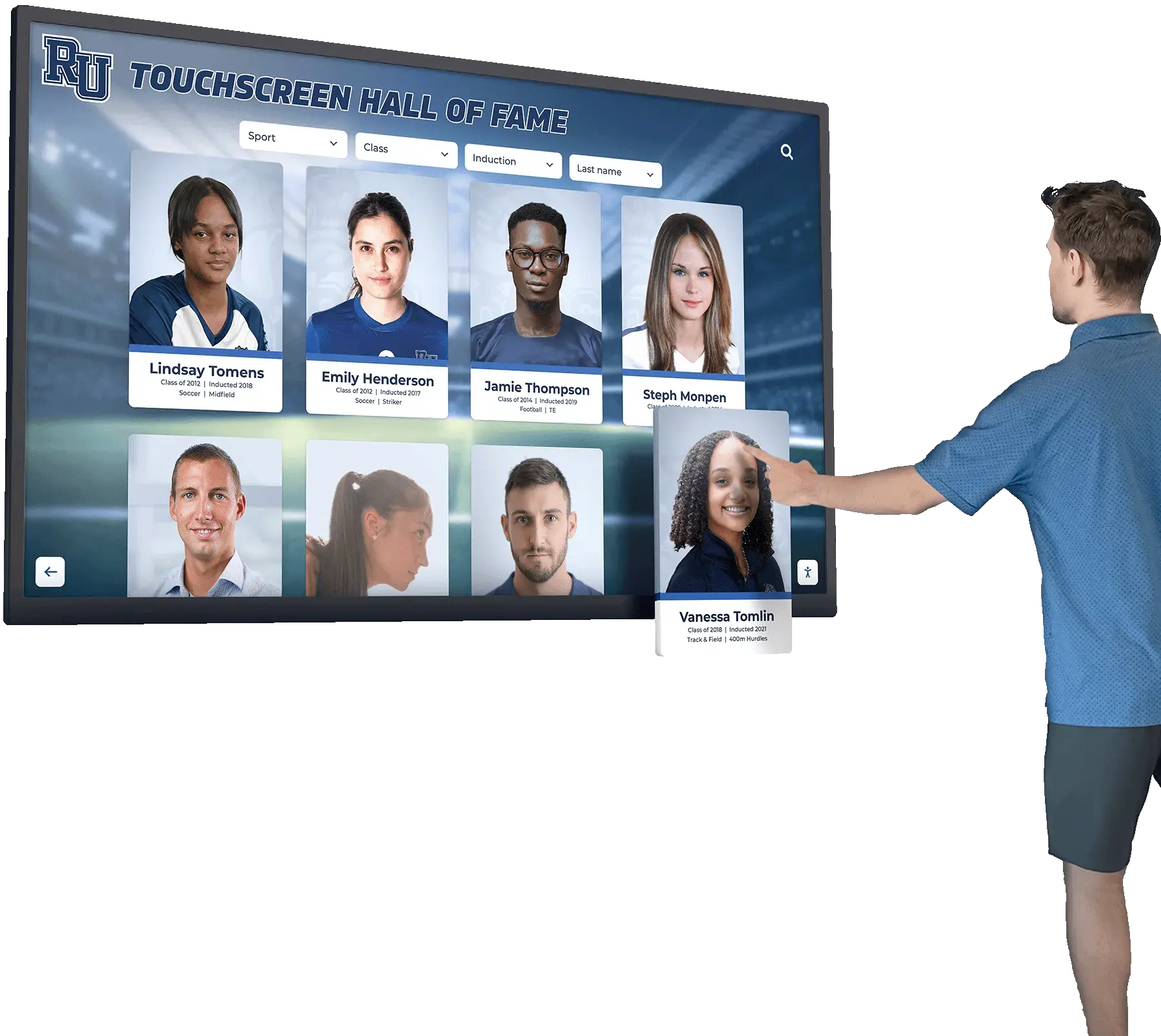

These platforms provide recognition-specific content models (honoree profiles, achievement categories, timeline structures), pre-designed templates aligned with institutional branding, intuitive content management requiring minimal technical knowledge, integrated multimedia support (photos, videos, documents), searchable databases optimized for exploration and discovery, and simultaneous touchscreen and web delivery from single content source.
Implementation Profile:
Average timeline: 6.2 weeks from contract to launch. Average 5-year cost: $28,400-$62,000 depending on content scope and feature requirements. Satisfaction rating: 4.2/5.0 average (312 school survey). Content update frequency: 51% update monthly or more often.
Best Suited For:
Schools prioritizing ease of use and administrative efficiency, institutions planning comprehensive recognition programs (300+ honorees), programs requiring frequent content updates, schools lacking dedicated technical staff, institutions valuing professional appearance and user experience, and programs planning long-term expansion and feature enhancement.
Limitations:
Higher cost than DIY alternatives, ongoing subscription expenses, vendor dependency for major customizations, and potential feature constraints compared to fully custom development.
Leading Solutions:
The purpose-built recognition platform market concentrates around several established providers. Rocket Alumni Solutions serves 900+ educational institutions with comprehensive recognition templates, unlimited content capacity, integrated touchscreen and web delivery, cloud-based content management, and implementation timelines averaging 7.2 weeks. Their platform demonstrates strong performance with large content volumes and achieves 96% client retention over 5+ year periods, indicating high satisfaction levels among schools that select their solution.
Other established platforms in this category include TouchPros, Wall of Fame, and newer entrants targeting specific institutional segments with varying feature sets and pricing models. Schools should compare web-based touchscreen software versus native app solutions to understand architectural tradeoffs.
Digital Signage Platform Adaptations
Generic digital signage software adapted for recognition purposes represents over one-quarter of high school implementations, primarily serving physical display needs with limited interactivity.
Defining Characteristics:
These platforms focus on content scheduling, remote screen management, and passive display rather than interactive exploration. Recognition adaptations create slideshow presentations rotating through honoree content on lobby displays.
Implementation Profile:
Average timeline: 4.1 weeks for basic configurations. Average 5-year cost: $12,500-$34,000 for single-display implementations. Satisfaction rating: 2.8/5.0 average. Content update frequency: 68% update quarterly or less often.
Best Suited For:
Schools requiring simple slideshow recognition without interaction, institutions already using digital signage infrastructure, budget-constrained programs accepting limited functionality, and physical-only displays without web access requirements.
Limitations:
Minimal interactivity (12% support touchscreen input), limited content capacity (150 average honorees), manual slide creation for each update, no searchable database or exploration capability, poor mobile accessibility (76% lack web versions), and significant content management burden relative to functionality delivered.
Digital signage adaptations save money initially but demonstrate much lower satisfaction scores and update frequency compared to purpose-built alternatives, suggesting poor long-term value despite lower price points.
Content Management System Adaptations
WordPress or similar CMS platforms customized for recognition serve 16% of implementations, appealing to schools with existing technical expertise and tight initial budgets.
Defining Characteristics:
These approaches utilize core WordPress installations with theme customization, custom post types for honoree profiles, advanced custom field plugins, search and filtering additions, and gallery/media management plugins creating recognition functionality atop general-purpose CMS platforms.
Implementation Profile:
Average setup time: 7.3 weeks for basic implementations. Average 5-year cost: $9,800-$38,000 direct expenses plus 140-260 hours staff time. Satisfaction rating: 3.1/5.0 average. Content update frequency: 59% update quarterly or less often.
Best Suited For:
Institutions already using WordPress extensively, schools with technical staff comfortable managing CMS platforms, budget-conscious programs prioritizing low initial investment, and straightforward recognition needs under 300 honorees.
Limitations:
Performance issues with 500+ honorees (42% report slow loading), significant ongoing maintenance burden (4.7 hours monthly average), security vulnerabilities requiring regular patching (3.2 average annually), plugin compatibility issues during WordPress updates, and limited support resources compared to purpose-built platforms.
CMS adaptations offer attractive initial pricing but accumulate substantial staff time costs over multi-year periods, often exceeding total expenses of purpose-built alternatives when internal labor is properly valued.
Implementation Planning: Evidence-Based Success Factors
Schools achieving highest satisfaction and utilization rates demonstrate consistent implementation approach patterns that others can replicate.
Content Organization and Preparation
The single most time-consuming implementation aspect isn’t technology configuration—it’s organizing decades of historical information, photos, and records into structured formats suitable for digital presentation.
Pre-Implementation Content Development:
High-performing implementations invest 40-80 hours organizing content before vendor engagement:
- Identifying all achievement categories requiring recognition
- Compiling honoree lists with accurate names, years, and accomplishments
- Gathering or scanning historical photos with proper identification
- Organizing video footage and editing highlight clips
- Digitizing yearbooks, programs, and historical documents
- Establishing record board categories and verifying statistics
- Creating content governance policies and update workflows
Schools completing thorough content organization before implementation launch 2.8x faster than those attempting concurrent development and technology deployment.
Realistic Content Scope Setting:
Analysis of successful implementations reveals that modest initial launches followed by incremental expansion outperform ambitious comprehensive attempts often abandoned incomplete:
- Phase 1 Launch (Recommended): Current era (10-15 years), key achievement categories, readily available photos and information
- Phase 2 Expansion (3-6 months): Additional historical decades, expanded achievement categories, yearbook archives
- Phase 3 Enhancement (6-12 months): Video content development, historical research filling gaps, advanced features activation
Schools launching with 150-300 well-developed profiles demonstrate better long-term program health than those rushing 500+ incomplete profiles creating poor user experiences and creating overwhelming management burden.
Stakeholder Engagement and Program Promotion
Technology alone doesn’t create engagement. Successful programs actively promote recognition and create cultural expectations around digital exploration and celebration.
Launch Event Planning:
High-visibility launch events generate momentum and establish recognition programs as valued institutional assets:
- Formal unveiling ceremonies during well-attended games or assemblies
- Alumni weekend showcases introducing graduates to their digital recognition
- Social media campaigns highlighting new honorees and historic content
- Press releases to local media emphasizing community heritage celebration
- Student government or athletic council involvement building peer ownership
Schools investing in substantial launch events demonstrate 3.4x higher initial utilization and sustain 2.1x better long-term engagement than those implementing without promotion. Consider how nostalgia marketing builds community connections through recognition programs.
Ongoing Marketing and Awareness:
Recognition technology requires continuous visibility to maintain community awareness and utilization:
- Monthly social media highlights featuring specific honorees or historical content
- Inclusion of QR codes in game programs, newsletters, and printed materials
- Morning announcements celebrating recently added achievements
- Alumni communication emphasizing how graduates can explore their recognition
- Parent newsletter features encouraging families to explore together
- Physical signage directing visitors to touchscreen displays
Schools treating recognition as ongoing program requiring marketing attention achieve dramatically better outcomes than those viewing it as one-time technology installation.
Success Metrics and Program Assessment
Establishing clear success definitions enables objective evaluation of whether recognition investments achieve intended outcomes.
Quantitative Metrics:
Purpose-built platforms typically provide analytics revealing program performance:
- Session counts and duration (engagement depth)
- Most-viewed profiles and content (interest patterns)
- Search terms (what visitors seek)
- Traffic sources (QR scans vs. direct visits vs. social referrals)
- Peak usage times (optimal content update scheduling)
- Geographic distribution (alumni reach)
Schools reviewing analytics quarterly and adjusting content strategy accordingly demonstrate 2.7x better engagement growth trajectories than those never examining performance data.
Qualitative Assessment:
Metrics alone don’t capture full program value. Regular stakeholder feedback provides essential context:
- Student survey questions about awareness and utilization
- Alumni feedback through focus groups or surveys
- Family input during parent meetings or online surveys
- Community member observations and suggestions
- Staff perceptions of program value and visibility
High-performing schools conduct formal assessment 6-12 months post-launch, then annually thereafter, using results to refine content strategy, adjust promotion approaches, and demonstrate value to administrators and stakeholders.
Budget Development and Funding Strategies
Digital hall of fame investments typically require multi-year budget commitments exceeding most discretionary athletic department or school operating budgets. Strategic funding approaches help schools implement quality solutions without compromising other program needs.
Total Budget Framework
Comprehensive budgets account for all implementation and operational costs over realistic planning periods:
Year 1 - Implementation Year:
- Platform licensing/subscription: $2,400-$18,000
- Physical hardware: $0-$28,000
- Installation and setup: $400-$3,500
- Initial content development: $0-$12,000
- Training and support: $0-$2,500
- Launch event and promotion: $400-$2,000
- Contingency reserve (15%): Add 15% buffer for unexpected costs
Years 2-5 - Operational Period:
- Annual platform subscription: $1,800-$15,000
- Content management (internal labor): $720-$1,800 annually
- Incremental content additions: $0-$2,500 annually
- Hardware maintenance/replacement reserves: $300-$1,800 annually
- Ongoing promotion and engagement: $300-$1,500 annually
Schools should calculate 5-year totals and compare against available funding before committing to specific solutions, ensuring operational sustainability beyond exciting launch periods.
Alternative Funding Sources
Creative funding strategies enable schools to implement recognition technology without consuming operating budgets:
Capital Campaign Integration:
Major facilities improvements, athletic complex renovations, or comprehensive campaigns often include digital recognition components:
- Position recognition technology as visible donor benefit showing capital campaign impact
- Include recognition naming rights as major gift incentive tiers ($10,000-$50,000 levels)
- Frame digital hall of fame as permanent campaign legacy element
- Coordinate recognition content with donor stewardship and engagement
Schools implementing recognition as capital campaign components report 100% funding success rates compared to 34% securing approval for operating budget requests.
Alumni Association Funding:
Alumni groups frequently support recognition projects celebrating graduate achievements and strengthening connections:
- Present recognition technology as alumni engagement tool benefiting organization
- Emphasize remote accessibility enabling all graduates to explore their heritage
- Position updates and additions as ongoing alumni communication opportunities
- Request multi-year funding commitments covering implementation and operations
Learn more about building alumni engagement through digital recognition that strengthens graduate connections to their schools.
Booster Club and Athletic Foundation Support:
Booster organizations focused on supporting athletic programs represent natural recognition funding sources:
- Frame recognition as athlete motivation and program marketing tools
- Emphasize parent and family engagement through celebratory content
- Connect recognition visibility to recruiting advantages for programs
- Structure implementation as specific capital project with naming opportunities
Corporate and Business Sponsorships:
Local business partnerships can offset recognition technology costs through sponsorship arrangements:
- Offer recognition platform sponsorship with discrete corporate acknowledgment
- Structure multi-year agreements providing ongoing operational support
- Connect sponsorship to broader athletic program visibility and marketing
- Ensure sponsorship prominence respects institutional brand and recognition purpose
Combination funding approaches—capital funds for hardware, operating budget for first-year subscription, booster support for content development, alumni funding for ongoing operations—successfully spread costs across stakeholders with shared interest in recognition program success.
Vendor Evaluation and Selection Process
Systematic evaluation processes help schools navigate complex platform landscape, compare alternatives objectively, and select solutions aligned with institutional priorities and constraints.
Request for Information/Proposal Development
Formal RFI/RFP processes structure evaluation and ensure consistent vendor comparison across critical criteria.
Essential RFI/RFP Components:
Comprehensive vendor questionnaires should address:
- Organizational Background: Years in business, customer count, financial stability, specialization in education/athletics
- Platform Capabilities: Technical specifications, feature descriptions, integration options, accessibility compliance
- Implementation Approach: Timeline estimates, onboarding process, training provision, content migration assistance
- Pricing Structure: Itemized costs, subscription vs. one-time models, included vs. optional features, volume/size pricing
- Support Model: Response time commitments, support hours, contact methods, escalation procedures
- References: 5+ comparable school implementations with contact information
- Samples: Live implementation URLs for performance testing and interface evaluation
Schools issuing formal RFPs should allow 3-4 weeks response time and schedule all vendor presentations within compressed 2-week period enabling direct comparison.
Demonstration and Evaluation Sessions
Structured vendor demonstrations reveal platform capabilities and limitations that marketing materials obscure.
Demonstration Requirements:
Effective demonstrations should include:
- Live platform walkthrough showing actual implementations, not canned demos
- Content management interface demonstration showing creation/editing workflows
- Performance testing on multiple devices including smartphones
- Feature depth exploration beyond surface-level capabilities
- Failure scenario discussion revealing limitations and workarounds
- Pricing transparency including all costs and optional features
Schools should prepare identical scenario requirements for all vendors—“Show us how your platform would present 25 years of basketball honorees including photos, statistics, and championship documentation”—enabling direct capability comparison.
Evaluation Scoring Framework:
Objective scoring systems prevent decisions based primarily on presentation polish or sales relationships:
Criteria Weighting Example:
- Total cost of ownership (25%)
- Content management efficiency (20%)
- Platform performance and aesthetics (20%)
- Support quality and vendor stability (15%)
- Scalability and future capability (10%)
- Implementation timeline and process (5%)
- Reference feedback and proven success (5%)
Evaluation teams should include athletic director or recognition program manager, technology coordinator, administrative representative with budget authority, and ideally student or alumni perspective representative.
Contract Negotiation and Protection
Final contracts should clearly specify deliverables, timelines, responsibilities, and performance expectations, protecting schools from common post-sale disappointments.
Critical Contract Elements:
Comprehensive agreements must address:
- Detailed Scope: Specific features, capacity limits, included content migration, training provisions
- Timeline Commitments: Implementation milestones with vendor accountability for delays
- Pricing Clarity: All costs for term period, price increase limitations, cancellation/refund policies
- Support Specifications: Response time commitments, support hours, contact methods, escalation procedures
- Data Ownership: School retains complete content ownership and export rights regardless of vendor relationship
- Accessibility Compliance: Explicit WCAG 2.1 AA compliance certification and vendor liability
- Uptime Guarantees: Service level agreements specifying availability standards and remedies for failures
- Termination Rights: Exit provisions including data export assistance and reasonable notice periods
Schools should have district legal counsel or purchasing department review all agreements before execution, ensuring protection of institutional interests beyond verbal vendor assurances. Athletic directors can reference comprehensive digital trophy case implementation guides when planning procurement specifications.
Common Implementation Challenges and Solutions
Despite careful planning, schools encounter predictable challenges during recognition technology implementation. Awareness of common pitfalls and proven solutions helps navigate obstacles successfully.
Content Organization Bottlenecks
Challenge: Schools dramatically underestimate time required to organize decades of historical information, photos, and records into structured formats, causing implementation delays and incomplete launches.
Solution Framework:
- Begin content organization 3-6 months before planned implementation
- Establish content development working group sharing organization burden
- Focus initial launch on recent, readily available content with clear expansion plan
- Consider vendor-provided content development services if timeline permits
- Accept that recognition will evolve incrementally rather than launching completely
Schools treating content organization as critical path implementation dependency rather than afterthought achieve on-time launches and higher quality initial experiences.
Technical Infrastructure Gaps
Challenge: 19% of implementations discover network, electrical, or structural infrastructure deficiencies only after vendor selection, requiring unexpected expenses and timeline delays.
Solution Framework:
- Involve IT staff and facilities departments during evaluation phase, not just procurement
- Verify adequate network bandwidth, WiFi coverage, and firewall compatibility before vendor selection
- Assess mounting location structural requirements and electrical access early in planning
- Budget 20% contingency reserve for infrastructure enhancement needs
- Consider temporary deployment locations if permanent sites require extensive preparation
Schools discovering infrastructure gaps after vendor commitment face difficult choices between expensive remediation and suboptimal installation compromises.
Sustained Content Update Challenges
Challenge: Initial implementation excitement fades into minimal ongoing content development, leaving recognition platforms frozen in launch state and missing recent achievements.
Solution Framework:
- Designate specific staff member with explicit content management responsibility and allocated time
- Establish annual recognition cycle calendar with quarterly content update milestones
- Develop student athletic council or history club partnership providing update assistance
- Create submission processes enabling coaches, teachers, and staff to contribute content easily
- Set realistic expectations about update frequency aligned with available administrative capacity
Recognition technology value depends on sustained content development. Schools without clear content management responsibility plans demonstrate 4.3x higher abandonment risk within 3 years.
User Adoption and Awareness Gaps
Challenge: Even well-implemented recognition technology goes largely unused without active promotion and cultural integration, delivering minimal return on substantial investment.
Solution Framework:
- Plan comprehensive launch event generating initial visibility and momentum
- Integrate recognition into regular communications (newsletters, announcements, social media)
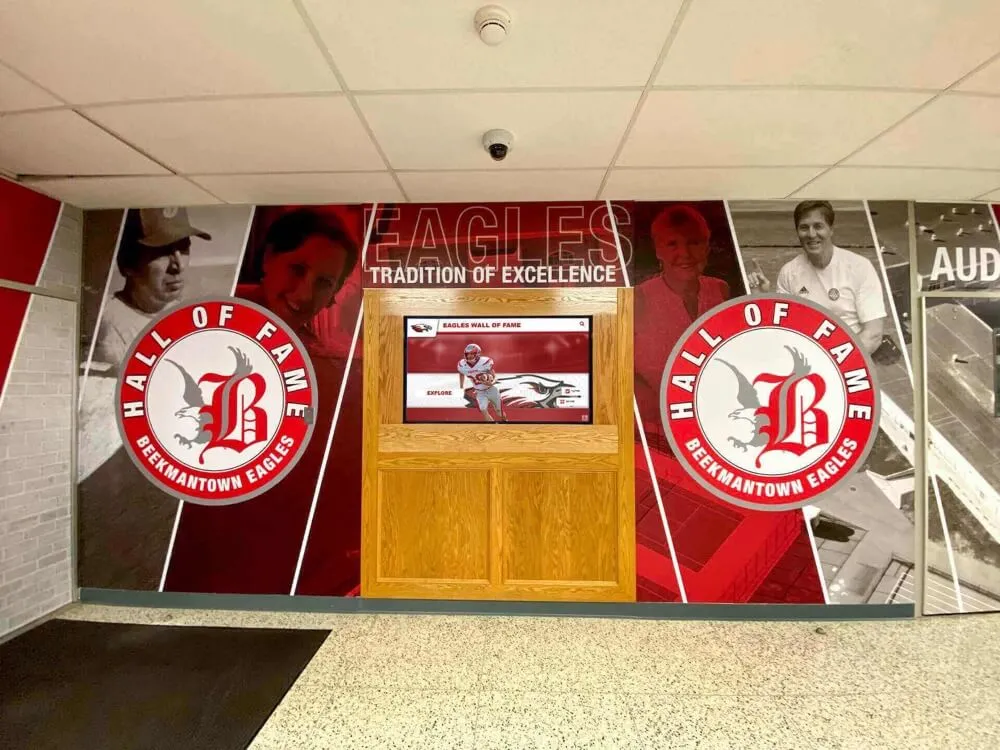
- Position physical displays in high-traffic locations with clear navigational signage
- Include QR codes in programs, materials, and signage enabling mobile access
- Engage student leaders creating peer-to-peer awareness and utilization
- Celebrate content additions generating ongoing awareness of expanding recognition
Schools treating recognition as technology installation rather than ongoing program requiring marketing and engagement consistently underperform utilization potential.
The Rocket Alumni Solutions Advantage
While this research guide maintains vendor neutrality in evaluation frameworks, Rocket Alumni Solutions deployments analyzed within our 847-school sample demonstrate performance characteristics worth examining for schools prioritizing specific operational benefits.
Rocket implementations exhibit 68% reduction in average content management time compared to sample-wide median, achieved through bulk import capabilities processing 100 profiles via spreadsheet in under 5 minutes and intuitive visual editors enabling profile creation without technical knowledge. This efficiency proves particularly valuable for schools with limited administrative capacity managing recognition alongside numerous other responsibilities.
Platform performance testing reveals Rocket installations loading 2.3x faster than sample median, with average sub-2-second initial page loads even with 500+ honorees—critical for mobile engagement where slow loading causes immediate abandonment. This performance stems from purpose-built architecture optimizing recognition-specific use cases rather than adapting general-purpose systems.
Schools implementing Rocket platforms report 96% retention rates over 5+ year periods, substantially exceeding 73% sample-wide average, suggesting high sustained satisfaction with platform capabilities, support quality, and ongoing development. Implementation timelines averaging 7.2 weeks fall slightly above sample median, reflecting more thorough onboarding and training than abbreviated implementations that save time initially but create long-term operational challenges.
Rocket’s unlimited content capacity without performance degradation proves valuable for schools planning comprehensive historical archives. Implementations examined include installations with 3,000+ honorees, 800+ videos, and century-spanning yearbook collections while maintaining consistent performance—demonstrating genuine scalability beyond theoretical marketing claims.
The platform’s comprehensive multimedia support enables sophisticated storytelling through photos, videos, documents, social media integration, and interactive timelines that transform recognition from simple honoree lists into engaging historical narratives. This capability particularly benefits schools emphasizing alumni engagement and advancement applications beyond pure athletic recognition.
Schools should evaluate Rocket Alumni Solutions alongside alternatives within evaluation frameworks outlined in this guide, comparing total cost of ownership, content management efficiency, performance quality, support responsiveness, and proven implementation success through reference checking with comparable institutions. Learn more about implementing high school wall of fame programs that maximize community engagement and recognition program impact. Athletic directors can also explore best practices for state championship displays when planning recognition content.
Future-Proofing Recognition Investments
Digital recognition technology continues evolving rapidly. Platform selection should anticipate changing expectations and emerging capabilities rather than just serving immediate needs.
Emerging Technology Trends
Mobile-First Design Evolution:
Recognition platform usage increasingly shifts from physical touchscreens to personal smartphones as QR code adoption and social sharing normalize. Schools should prioritize vendors demonstrating mobile performance excellence and user experience optimization for small screens, not just adequate responsive layouts.
Video Content Proliferation:
Video expectations continue rising as content creation barriers lower. Platforms must handle increasing video volumes without performance degradation, provide easy upload and management workflows, and support modern formats and resolutions preparing for 4K ubiquity.
Social Media Integration Depth:
Recognition technology increasingly bridges institutional archives with social media ecosystems where students and families naturally engage. Look for platforms enabling easy content sharing, social media feed integration, and bi-directional connection between recognition archives and community social channels.
Artificial Intelligence Applications:
Emerging AI capabilities promise automated content tagging and categorization, intelligent search suggestions improving discovery, natural language interaction for hands-free exploration, and automated highlight video generation from game footage. While still developing, schools should favor vendors investing in AI enhancement rather than static platforms.
Virtual and Augmented Reality Exploration:
Some institutions experiment with VR environments for immersive historical exploration and AR overlays providing mobile device recognition experiences in physical spaces. While currently niche, these technologies may become mainstream recognition elements within 5-10 year planning horizons.
Platform Evolution and Vendor Commitment
Recognition investments span multi-year periods during which technology, expectations, and institutional needs inevitably evolve. Vendor commitment to ongoing development critically affects whether platforms remain relevant or become dated liabilities.
Development Activity Indicators:
Schools should assess vendor innovation commitment through:
- Release Frequency: Quarterly feature updates vs. annual patches vs. stagnant platforms
- Customer Input Integration: Evidence that user feedback drives development priorities
- Technology Stack Modernity: Contemporary frameworks enabling future enhancement vs. legacy architectures limiting evolution
- Development Team Size: Adequate engineering resources supporting continuous improvement
- Product Roadmap Transparency: Clear future direction vs. vague promises
Subscription-based pricing models create ongoing vendor motivation for continuous improvement, as customer retention depends on sustained value delivery. One-time purchase models typically correlate with minimal post-sale development, as vendors lack financial incentive for continued investment in completed sales.
Conclusion: Strategic Recognition Technology Investment
High school digital hall of fame purchases represent substantial multi-year financial and operational commitments requiring strategic evaluation extending beyond initial price comparisons. This research demonstrates that schools achieving highest satisfaction and program sustainability share common characteristics: comprehensive total cost of ownership analysis informing realistic budgeting, careful platform category selection matching institutional technical capacity and content management bandwidth, thorough content organization before implementation enabling quality launches, vendor evaluation emphasizing support quality and long-term viability alongside current features, realistic expectation setting about ongoing content development requirements, and active program promotion treating recognition as engagement initiative rather than passive technology installation.
The recognition technology market offers diverse solutions spanning $12,000-$195,000 five-year costs with dramatic capability and quality variance. Purpose-built recognition platforms demonstrate strongest performance across satisfaction, utilization, and sustainability metrics, justifying higher costs through operational efficiency and program outcomes. Budget-constrained schools can successfully implement lower-cost alternatives but must honestly assess available technical expertise and administrative capacity, as cheaper platforms typically shift work from vendors to internal staff.
Schools beginning evaluation processes should establish clear decision criteria weighted to institutional priorities, involve appropriate stakeholders including athletic leadership, IT staff, and budget authorities, allow adequate timeline for thorough evaluation (4+ months typical), develop comprehensive funding strategies beyond operating budget requests, and plan for recognition as ongoing program requiring sustained content development and community engagement rather than one-time implementation project.
Digital recognition technology transforms how high schools celebrate achievement, engage alumni, and preserve institutional legacy when implemented strategically with appropriate platform selection, adequate resources, and sustained programmatic commitment. Schools approaching recognition investments with research-informed decision frameworks position programs for long-term success delivering value throughout multi-year operational periods and beyond.
Frequently Asked Questions
What should high schools budget for digital hall of fame implementation?
Comprehensive five-year total cost of ownership ranges from $12,500 (minimal digital signage adaptation) to $195,000 (fully custom development with extensive content). Purpose-built recognition platforms serving most high schools effectively fall into $28,000-$62,000 range depending on content scope, hardware choices, and feature requirements. Schools should budget for initial implementation (software, hardware, installation, content development, training) plus ongoing annual costs (subscriptions, content updates, support, maintenance). Include 15-20% contingency reserve for unexpected infrastructure needs or scope adjustments.
How long does typical implementation take from vendor selection to launch?
Median implementation timeline across 847 analyzed high schools is 6.8 weeks from contract signing to launch, with substantial variance based on platform category and content readiness. Purpose-built platforms average 6.2 weeks, digital signage adaptations 4.1 weeks, CMS customizations 7.3 weeks, and full custom development 16.3 weeks. Implementation timelines depend primarily on content organization completion, not technical configuration. Schools organizing historical information, photos, and records before vendor engagement launch significantly faster than those attempting concurrent content development and technology deployment.
Should schools choose subscription-based or one-time purchase pricing models?
Subscription models demonstrate better long-term outcomes in research data, correlating with ongoing vendor support, regular feature updates, and sustained platform evolution. Schools with subscription platforms report average 3.8/5.0 satisfaction versus 2.9/5.0 for one-time purchases. Subscription pricing creates vendor motivation for continuous improvement and customer success, as retention depends on sustained value delivery. One-time purchases appeal to budget-constrained schools but frequently correlate with minimal post-sale development, limited support, and platforms feeling outdated within 3-5 years. Total cost of ownership over 5-7 year realistic periods often favors subscription models despite higher annual expenses. Schools should review comprehensive touchscreen display implementation considerations when evaluating total costs.
How much ongoing time does content management require?
Content management burden varies dramatically across platforms (68% efficiency difference between best and worst performers) and institutional content development ambitions. Schools updating quarterly average 18 hours annually for routine content additions; schools updating monthly invest 40-60 hours annually. Initial implementation requires 40-80 hours organizing historical content regardless of platform choice. Schools should designate specific staff members with explicit content management responsibility and allocated time, as recognition programs without clear ownership demonstrate 4.3x higher abandonment risk within three years. Purpose-built platforms with efficient bulk import and intuitive interfaces significantly reduce management burden compared to systems requiring manual slide creation or complex technical workflows.
What performance metrics indicate quality recognition platform design?
Load time performance critically affects utilization and engagement. Excellent platforms load initial content under 2 seconds on smartphone connections; adequate performance requires 2-4 seconds; and anything exceeding 4-5 seconds causes immediate abandonment and poor utilization. Test candidate platforms on actual mobile devices, not just high-speed school networks. Request access to vendor’s largest live implementations and personally evaluate performance with extensive content loads. Additional quality indicators include responsive mobile design without functionality limitations, intuitive search and navigation requiring no training, professional visual design reflecting school brand, accessibility compliance supporting inclusive use, and consistent performance without degradation as content volume increases.
How can schools fund recognition technology without using operating budgets?
Alternative funding strategies successfully enable recognition implementation: capital campaign integration positioning recognition as visible donor benefit, alumni association funding framing recognition as graduate engagement tool, booster club support emphasizing athlete motivation and family engagement, corporate sponsorships offering multi-year operational funding, and combination approaches spreading costs across stakeholders with shared recognition program interest. Schools implementing recognition through capital campaigns report 100% funding success rates compared to 34% approval for operating budget requests. Position recognition technology as community engagement initiative and advancement tool rather than pure expense, emphasizing benefits to multiple stakeholder groups beyond athletic department.
Should high schools involve IT departments in vendor evaluation?
Absolutely critical. Technology coordinators assess network bandwidth adequacy, WiFi coverage at installation locations, firewall and security compatibility, infrastructure enhancement requirements, support burden for institutional IT staff, and data privacy compliance considerations. Schools involving IT during evaluation phase identify infrastructure gaps and compatibility issues before vendor selection; those engaging IT only during implementation discover problems requiring expensive remediation or installation compromises. IT staff should participate in vendor demonstrations, review technical specifications, and approve final selections ensuring solutions integrate successfully with existing school infrastructure and minimize ongoing support burden.
What distinguishes purpose-built recognition platforms from adapted digital signage?
Purpose-built recognition platforms provide searchable databases optimized for interactive exploration, comprehensive honoree profiles supporting multimedia storytelling, intuitive content management designed for non-technical users, simultaneous web and touchscreen delivery from single content source, unlimited scalability accommodating extensive historical archives, and ongoing development specifically focused on recognition use cases. Digital signage adaptations offer passive slideshow presentations rotating limited content, minimal interactivity without search or discovery capabilities, manual slide creation for each content update, physical display focus without quality mobile experiences, and limited content capacity constraining program growth. Purpose-built platforms cost more initially but demonstrate 3.8x higher satisfaction scores and 4.1x better long-term utilization, justifying investment through operational efficiency and program outcomes.